
Leaderboard



Popular Content
Showing content with the highest reputation on 11/19/2022 in all areas
-
Wonder how the DTI is going? I think the first day must be over and done with? Edit: Just found a short video showing the DTI (in Japanese). Gives a decent look at what the DTI is like, for those who have never been.7 points
-
Thanks for the translation Ray! No collection room for me, too big a family, I have 10 kids and 7 of them are still here!4 points
-
Hi Tony, In this case the answer is particularly simple. The mei is on the sashi omote, i.e. the blade is signed as a katana. Famous Kagemitsu in Osafune never did that. His DaiTo are always signed as tachi, i.e. on the haki omote. There were many minor smiths signing "Kagemitsu" during later periods though. The torokusho wrapped around the saya does not give detailed information, for it doesn't have to. It is just a paper legalizing the ownership as long as the blade is in Japan. It should never have left Japan. reinhard4 points
-
Belgian "like "waffles and Japanese "like " swords. it was more a poke at the english languge as childish fun4 points
-
Jean I do hope you are right with a signature like that! - but when I see four in a row I have my suspicions especially when they all show slightly 'off' faults. Is it a style that Umetada did or is it more Kinai or even Ito? Anyone ever get to buy a genuine Umetada Myoju for $60 ? The other three don't have any signatures so maybe they are copies of mine!
 3 points
 -
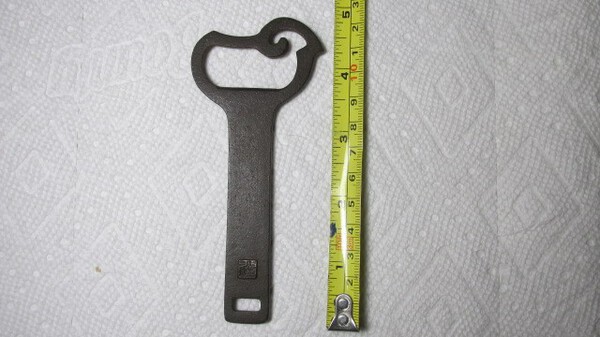
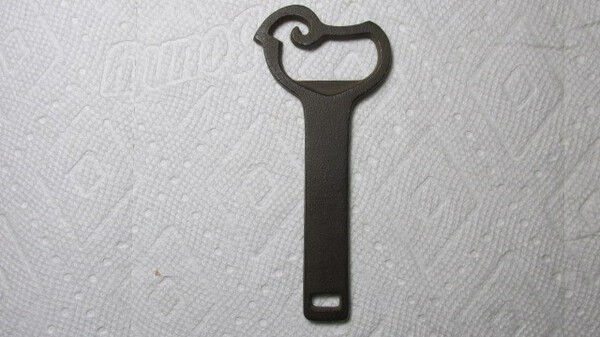
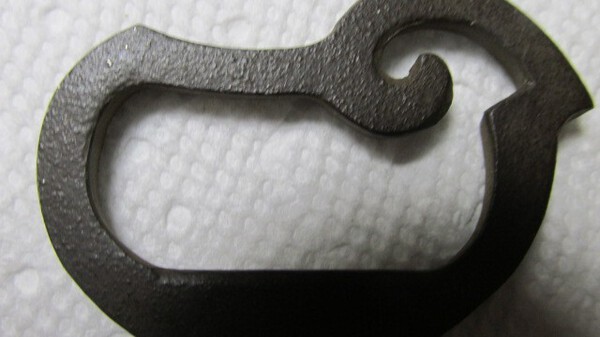
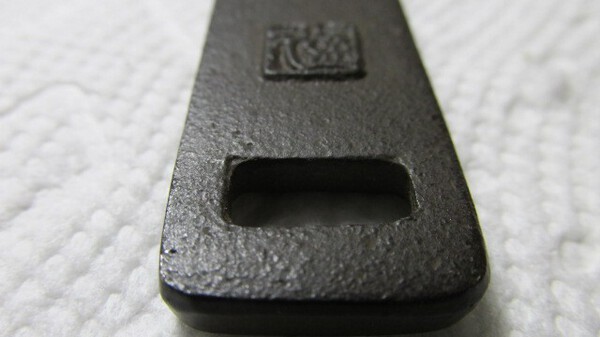
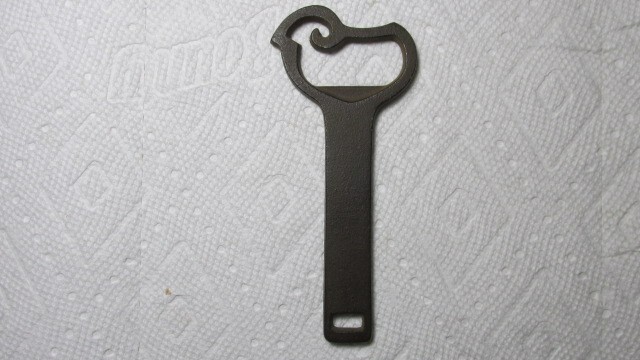
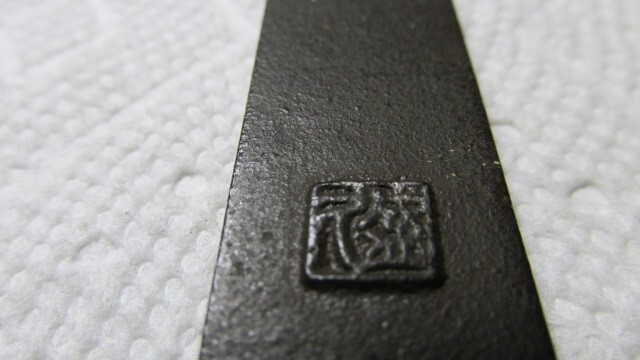
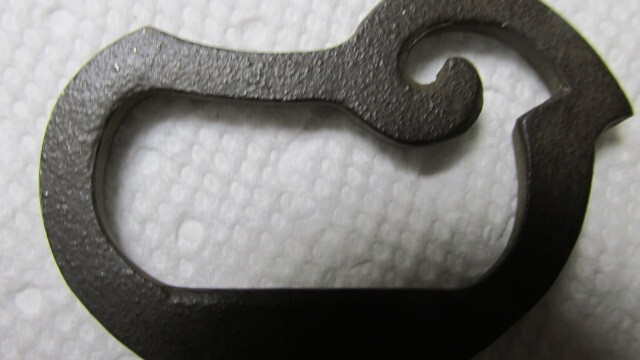
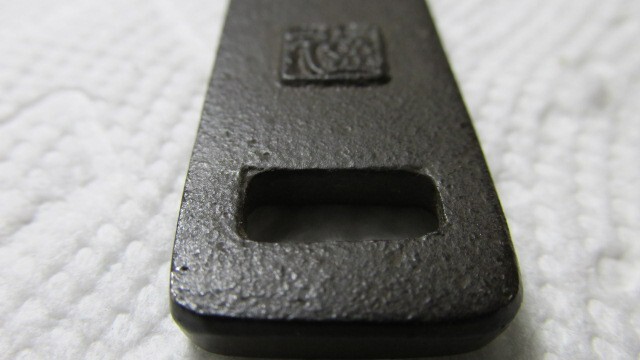
Hello all, So, where to start! I had a fun experiment all planned out (and I am not a scientist or metallurgist!). I figured the experiment would take 4 or 5 days to complete. The hypothesis was that a sand-cast cast-iron tsuba could be abraded (using an actual sharpening stone) to appear as if it was “hand forged”. What I was going to use for this experiment was a sand-cast cast-iron bottle opener, and an actual stone sharpening stone (using water instead of oil as a lubricant – like the Japanese craftsman of old did). Then “flash rust” it and steel wool the rust off of the piece so that there might appear a dark patina on the cast iron. So, I received the sand-cast cast-iron bottle opener today that I was going to abrade. I quote the dealer’s description of the piece- “Suzuki Morihisa Cast Iron Bottle Openers $42.00 Since 1625, The Suzuki Morihisa Iron Studio has produced the finest iron products in Japan. It was designated a Japanese National Treasure in 1974. They have created cast iron fittings, bells and teapots for Buddhist temples and royalty. We are happy to carry a modern extension on their historical craft - bottle opener representations of the Chinese Zodiac. Each is solid and feels perfect in hand. Sheep, Rooster and Monkey currently available. All are exclusive to Made Solid in the USA” Also, they go on to state- “About Suzuki Morihisa Studios Established in 1625, The Suzuki Morihisa Studio is now in it's 15th generation of family operation. Known for traditional Nanbu Tekki iron work, the studio has created Buddhist altar fittings, temple bells and teapots for the highest levels of Japanese culture and society. The Studio was designated a Japanese Cultural Treasure in 1974. Made Solid is the exclusive US retailer of Suzuki Morihisa Studio work.” Here is the link to the studio- https://www.madesolidinla.com/home-1/suzuki-morihisa-cast-iron-bottle-openers?utm_medium=email&utm_source=customer_notification Now, when I received the bottle opener I was amazed! There was no need to abrade it to appear as if it was “hand forged” (although that option is still available!). It was obvious (to me at least) that the piece could be easily abraded to make it appear “smoother” in texture (but it is smooth already!). And I didn’t really want to “ruin” a 50 dollar (including shipping) artistic bottle opener (after I post this I am going to see if it works on a couple bottles of beer!). So, what is my conclusion (remembering that this is all personal opinion!)? I think that a sand-cast cast-iron tsuba could have easily been made. Remembering that the only way to tell the difference between a sand-cast cast-iron tusba (that perhaps was hand finished and hand worked) and between a hand forged tsuba (that has not obviously been “folded”) is to subject them both to invasive or non-invasive metallurgical testing. Otherwise, it is just a “guess”! Also, I have included several pictures of the bottle opener. Dimensions of the piece are 4 ¾ in long (about 120.7 mm), weight is 65 grams, thickness varies from about 4.25 mm at the bottom to about 4.48 mm at the top of the motif. The adventure continues! With respect, Dan

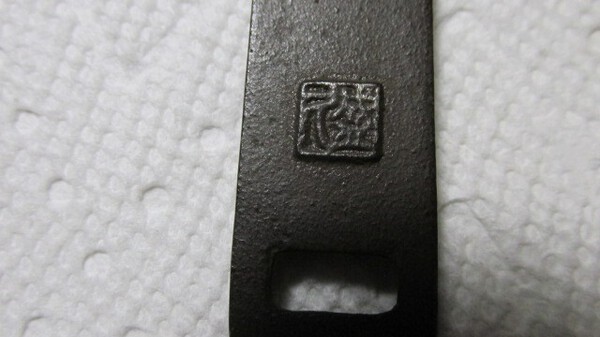 3 points
 -
No one is forcing anyone to submit blades for Juyo or any other shinsa. If you want a paper for any reason the options are clear and everyone is entitled to make the choice appropriate for them based on their goals and (especially) expertise.2 points
-
Not to drag this out any further, as the thread is already moving along, but I feel I should explain the rationale for my last few "heated" posts. Much earlier in this thread, one of the posters was chided and mocked. I felt compelled to say something then, just as I felt compelled to say something now about the repeated attempts to discredit or mock others. My last few posts were a response to what I was witnessing, and found distasteful and potentially hurtful to others (and I know through conversations with others, I was not the only one who saw them that way). The posts were carefully scripted to use some of these same strategies and tactics in such a way as to “mirror” them back to the sender. In that way, I was hoping to show that the same destructive tactics could be used against anyone. Normally, I would not choose to do that in any form of academic discussion, and I sincerely hope to never see the need to do so again. In terms of this being “my theory”, that is an interesting perspective, but one that I do not share. My approach is to always be open to new sources of researched information and will gladly pivot my thinking as soon as new evidence arises. Having “perfectly respectful criticisms of specific points” is an essential tool to the refinement of any theory, however it is only helpful when being “respectful” is the norm, rather than the exception. There are better ways to introduce a counter point, or offer up another avenue to consider, that will actually generate discussion, rather than to shut it down. Many contributors to this thread have done exactly that and it’s been a wonderful discussion that offers up opportunities to research new areas and continue to learn. I am looking forward to seeing whatever evidence turns up from either position in this discussion, so that we can hopefully get to some sort of agreeable conclusion.2 points
-
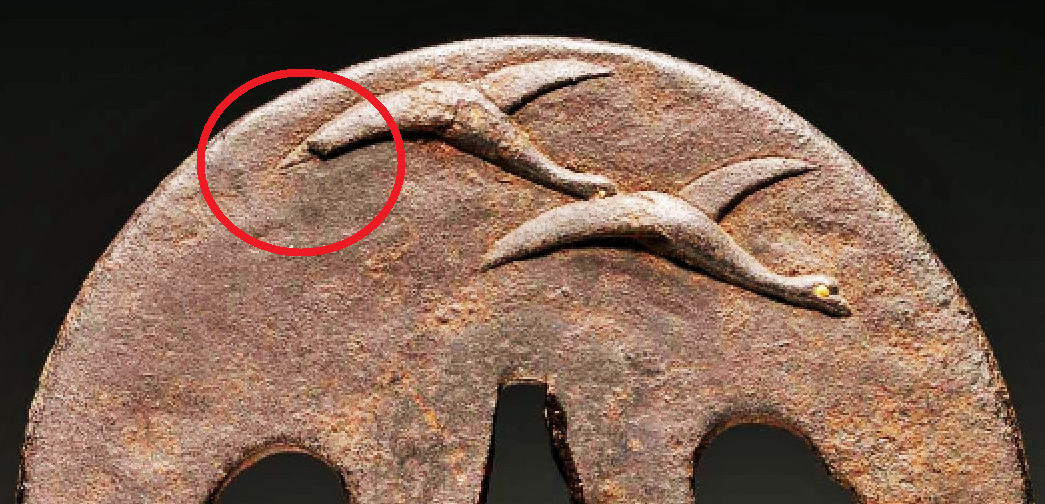
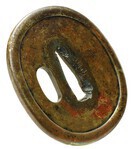
Hi Roger I believe this image taken from a guard in the Cleveland Museum of Art shows an iron on iron inlay. The wing tip on the left appears broken off - not sure how that would happen if it was carved from the original plate - Just my opinion.
 2 points
 -
Oh, I know. My reply was just as light hearted and in fun. I look forward to moving to the USA oneday and confusing everyone by becoming a white African American2 points
-
I feel the field is just too complex for 100% certain single line answers. I will trump my usual trumpet that I papered a considerable number of blades (probably 200?) in a lifetime, and not a single judgement received was completely impossible... Even if later every other judge in the field gave an opposite opinion. You sort of get a feeling "oh, they must have relied on how hamon behaves here". There are some judges "married" to sugata, others to nioi-guchi, ir other features which they value extraordinary high. The big issue is that with early koto very often the categories are completely invented in a sense that there is a miniscule (if any) number of signed examples. So you have a judge A who says "I define it as Houju" and a judge B who says "No, its ko Uda", or maybe "Hokke". And a simple reality that there is no signed/dated or even just signed sword with this set of features. Interestingly enough when people who are really good at this visit someone and look at stuff, they seldom say "This is X". "A very good item, can be this or that".2 points
-
Thank you, Michael, This is exactly what the NBTHK shinsa is all about. The NBTHK might not be infallible in every case, but in general they are doing pretty well. Of course there are some dealers whining about the "good old days" when they were able to tell their customers whatever they wanted to hear, uncontradicted. I see some of them here too, on NMB, eagerly trying to undermine NBTHKs's credibility for a simple reason. They are just not good enough for this kind of trade. reinhard2 points
-
Bruce: I think this may be one of the souvenir swords referenced by your article "The Mysterious Naval Landing Forces Sword." https://www.ebay.com/itm/255826611966 John C.
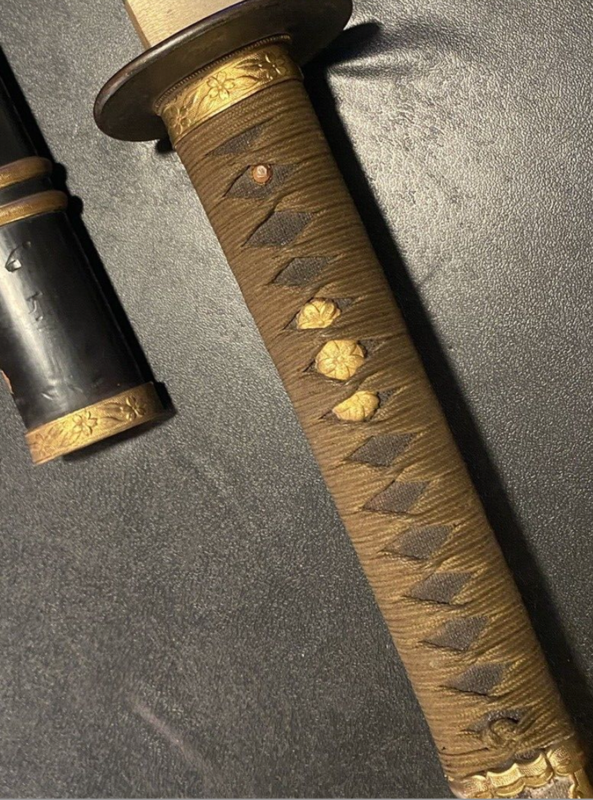 2 points
 -
This week I was happy to receive news that my mumei Yamato Taima daito attributed to Cho Aritoshi made Juyo. It will be awhile before I see the sword again, a good time to find more info on Cho Aritoshi. I've found the basic linage on data on him, but I hope to find out what pointed to him specifically. Mr. Tanobe wrote an extensive (covering entire shirasaya) prior to shinsa. This will eventually be translated to reveal this info (hopefully). Also the Juyo description will hold answer but that comes in the future. meanwhile, I wonder 1) how many Juyo Token have been attributed to Cho Aritoshi; 2) available, what was said about him on the Zufo description; 3) one past topic was from a member who had a TokuHo with sayagaki to Cho Aritoshi. Has that been translated? This is the fun part, to learn as much as possible about this wonderful sword. Thanks in advance. Ron STL2 points
-
Yes Chris, UMETADA MYOJU, I think (after a closer look). 梅忠明寿) Dale, I don't see an indication to it being cast.2 points
-
Here is another Aoi and blind. https://www.ebay.com.au/itm/165754149236
 2 points
 -
Congratulations 1) So far I believe there have been 39 swords by Aritoshi smiths or attributed as, in the 67 sessions. There are 4 signed tachi that have been awarded Jūyō status, and the one signed 長有俊 has been elevated to Tokubetsu Jūyō. I have found 2 other signed tachi by Aritoshi and one is dated to 1298, making the total of 6 signed tachi that I have been able to find so far. There is also gakumei katana signed 長有俊 that has made Jūyō. I cannot really say which is 1st gen and which is 2nd gen (Chō Aritoshi) but I took a look on the mumei attributions at Jūyō and I noticed I had made errors in falsely combining these 2 smiths under one category in my index and I just sorted it out. It seems that following are for towards Chō Aritoshi. 1 signed tachi, 1 gakumei katana, 13 mumei swords with Chō Aritoshi attribution and 7 swords with den Chō Aritoshi attribution. So I believe in total there would be 22 Jūyo swords that are towards Chō Aritoshi and 17 that are attributed towards the 1st gen. Of course this is only by looking at the one line attribution and not digging into what is said about these particular swords in the text portion.2 points
-
Colin, it might seem unfair but that is one of the charms and secrets as to why it is such a coveted rank. Firstly, Juyo swords by definition are the ones which deserve it / qualify for it on qualitative, aesthetic, historic grounds and secondly they are additionally swords which happen to excel (in their tradition, time period, smith, school etc) in their category and be superior to others in the same category. So, there are two sets of criteria: absolute and relative. Sometimes swords fail on the relative set of criteria, even though they might otherwise qualify on the absolute set. If someone analyses the published swords in the Zufu which passed in the unfortunate shinsa that disappointed someone, that someone then can probably deduce why his / her sword failed: it could be that his failed Hizento just was 5cm shorter than the ones that passed, or his failed Kagemitsu was gakumei but the one that passed was ubu and zaimei, or that there were too many submitted Bizento and they have their statistical distribution to adhere to (and hence have to pass some Yamato, some Shinto, some Gendaito) which obliterates his otherwise top-notch Yosozaemon Sukesada, etc etc. Sometimes, we feel deprived and cheated but that is how it is. If we do not like it, we can always choose not to submit. But if you play the game, it helps to have an understanding of how it works.2 points
-
https://web.archive.org/web/20201022000337/https://blog.yuhindo.com/hozon-is-a-test-juyo-is-a-competition/2 points
-
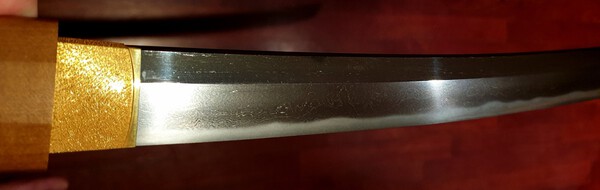
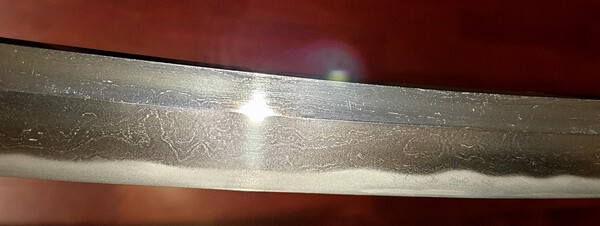
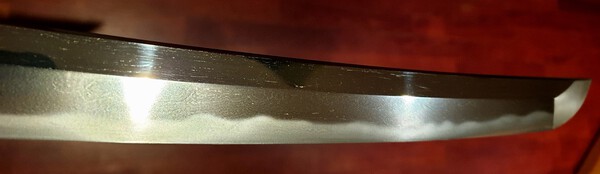
Offer for sale Miyairi school Wakizashi in Shirasaya Mei : Fujiyasu Masahira Era: Gendai Habaki: Double cooper Habaki with gold color Nagasa: 52,2 cm Sori: 0,9 cm Motohaba: 3.2 cm Sakihaba: 2.6 cm Kasane:. 0.7 cm Shirasaya with Sayagaki Masahira is a very important smith. He was one of the top students of Miyairi Akihira/Yukihira - a national living treasure route. Upon Miyairi Sensei unexpected passing, he took on training his son, Miyairi Kei (Nidai Yukihira). Miyairi Kei would go on to a spectacular career and achieved Mukansa in 2000. Although, Fujiyasu Masahira gave up on contest and competitions and therefore will never be Mukansa or higher, he was very successful when he did participate. There is a very interesting write up on him in "The New Generation of Japanese Swordsmiths", that describes his passion for finding his own unique way to forge swords and his reluctance to attempt to simply recreate old blades, which is what he seemed to perceive was the only way to win. Just a really interesting guy and talented smith. An interesting article about the work Fujiyasu Masahira you can be found eg. here https://nihontou.jp/choice03/toukenkobugu/masahira/01-e.html The blade is done in excellent Soshu Den, which the Miyairi group is well known for. As you can see in the Sayagaki, "Fujiyasu Masahira made this sword for Mr. Clinton in 1991". Asked price for this excellent modern Wakizashi is SOLD Price includes transport costs within Europe No customs duties within EU

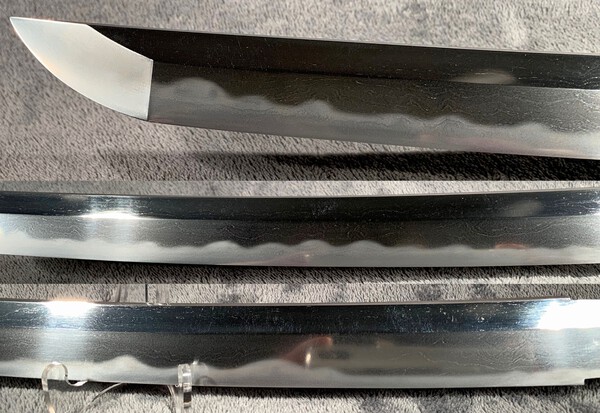
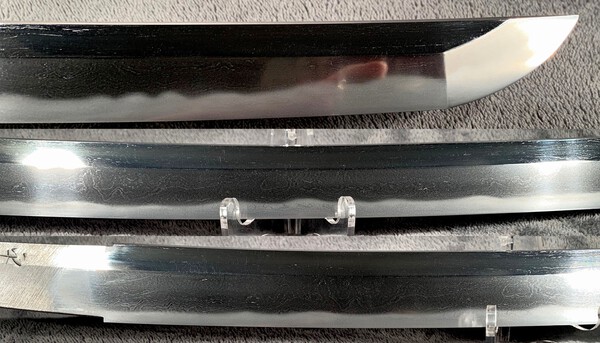



 1 point
 -
I will do me best to put this lucidly. I have been following closely the discussion on 'cast iron tsuba' here for a number of reasons. One amongst them is the question in my mind about any iron tsuba that has a carving in high relief on the plate, say occupying one quarter only of the face(or more or less), standing up from the rest of the plate by one to two mm, such as with Dragon and fish depictions on tsuba I have plus others. What had me wondering was the large amount of iron to be chiseled away to just leave a raised figure. A lot of work I would have thought. For all that, is that how it was done? In the Shibuiswords 'tsuba for sale' site, under SAGA.KANEIYE SCHOOL and TFTS UNIN SCHOOL etc section there is shown a tsuba by YAMASHIRO no KUNIEUSHIMI JU KANEIYE and marked 'For Study'. (I hope I got all that right)- but what was mentioned in the write up was a reference to "iron on iron inlay". It is the first time I have come across 'iron on iron inlay'. . Does anyone know how often this technique was employed, how frequently and does it account for many of the 'high relief' iron carvings on tsuba. The Tsuba makers seemed highly skilled at welding parts, such as spokes and such into the web of a tsuba. I always feel like I'm lifting my head above the parapet here in case I receive an incoming rebuke. Roger j1 point
-
Not saying I'm right and your wrong Alex but my perspective is pretty much the opposite of what describe. First and foremost I have to like what I am seeing regardless of whether it was signed or not or I know exactly who made it and when. I now have two signed blades the rest mumei and some have varying attribution. What they all have common is a beautiful shape and hada and all in good condition. As said this isn't necessarily right just different. It's a positive thing that there are so many different approaches1 point
-
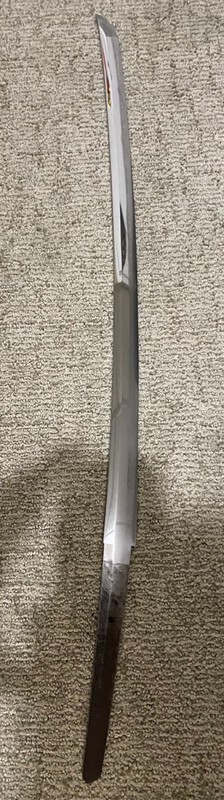
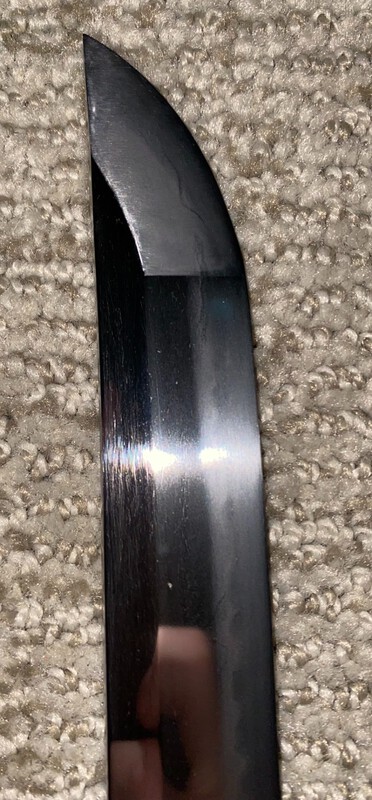
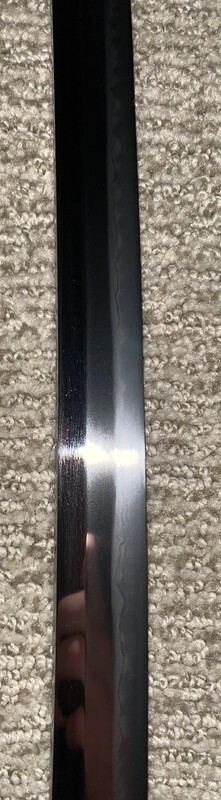
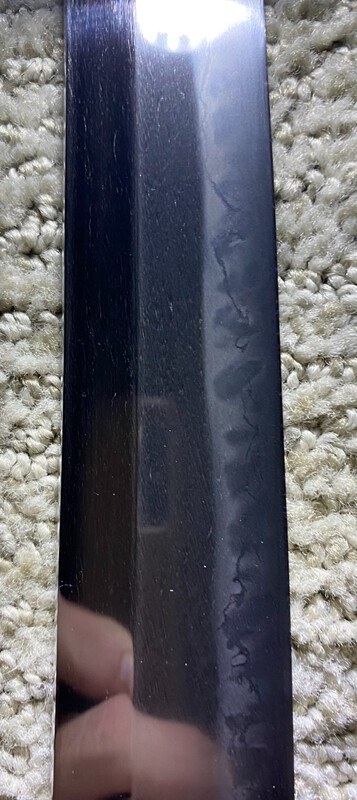
Another Nagamitsu tachi. I was able to pull a little more detail out on this as the kesho polish isn't as heavy. No stamps or dates on either.
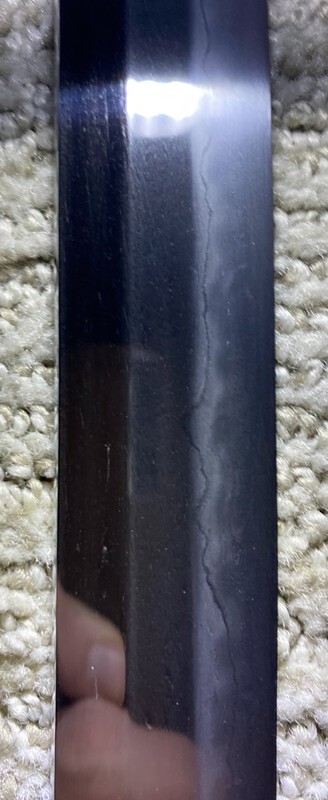
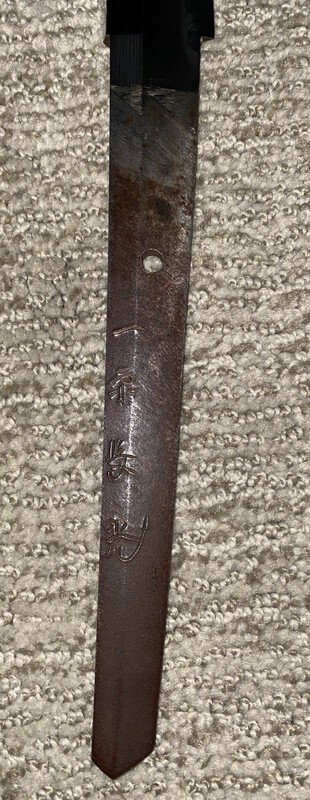 1 point
 -
Rare Pic of 9. Gen. Ishidō Hidekazu (石堂秀一) Name Ishidō Shuichi in 1906.
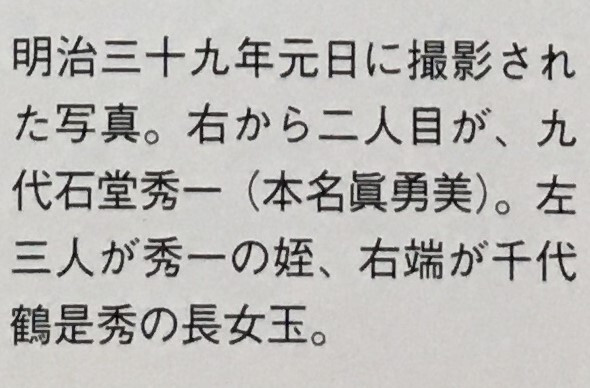
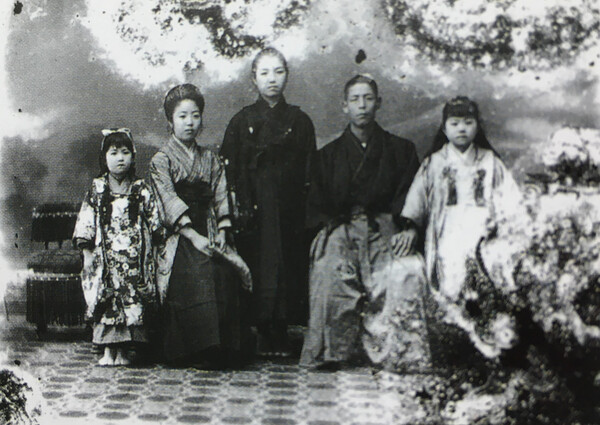 1 point
 -
Kunzan (Homma Junji) examples below. https://www.google.com/search?q=kunzan+sayagaki&tbm=isch&ved=2ahUKEwiYuP7Tvbr7AhWpxykDHbOFDyMQ2-cCegQIABAC&oq=kunzan+sayagaki&gs_lcp=ChJtb2JpbGUtZ3dzLXdpei1pbWcQAzIECCMQJzIFCAAQogRQ7AtYoyBg3CNoAHAAeACAAZ8BiAGKCZIBAzAuOZgBAKABAcABAQ&sclient=mobile-gws-wiz-img&ei=s-t4Y9iSDqmPp8kPs4u-mAI&bih=790&biw=412&client=ms-android-google&prmd=isvn1 point
-
Hi Brian, I believe the sayagaki is purporting to be Kunzan.1 point
-
Thanks Ray. The guy tagged you in the TT. He’s asking $3500. Polish looks good. I wonder if the papers belong to that sword. Would need to see nakago pics. Not a bad price if it’s ok. Sayagaki is optimistic I guess. Any idea who did it?1 point
-
I’ll try to do a video tomorrow. The one I did today didn’t work as well as I wanted to. If you’re trying to get something at DTI recommend reaching out to to Robert Hughes. He has a booth, and most likely knows any of the dealers that you are wanting to purchase the sword from.1 point
-
Good for assembling it on a chinese made sword.1 point
-
There is a Tanto of 24cm that is also known as Honjo Masamune, just saying. Are you sure they talked about the missing Tachi or the Juyo Tanto Stephen ?1 point
-
Ha! Love it! You could get a job at certain auction houses!1 point
-
Wonderful post! And that bottle opener is indeed a thing of beauty! I had always thought there was a difference in how the metal 'sings' when struck? Doesn't a folded metal tsuba have a brighter, more harmonic sound; whereas cast iron has a duller thud to it? Or is that my imagination?1 point
-
埋忠明寿 Umetada Myoju...1 point
-
Kawachi no kami Kunisuke1 point
-
True,Chinese food made outside of China still called Chinese food1 point
-
So Belgian waffles made and sold in the USA can't be called Belgian waffles? French fries...ok, maybe bad example1 point
-
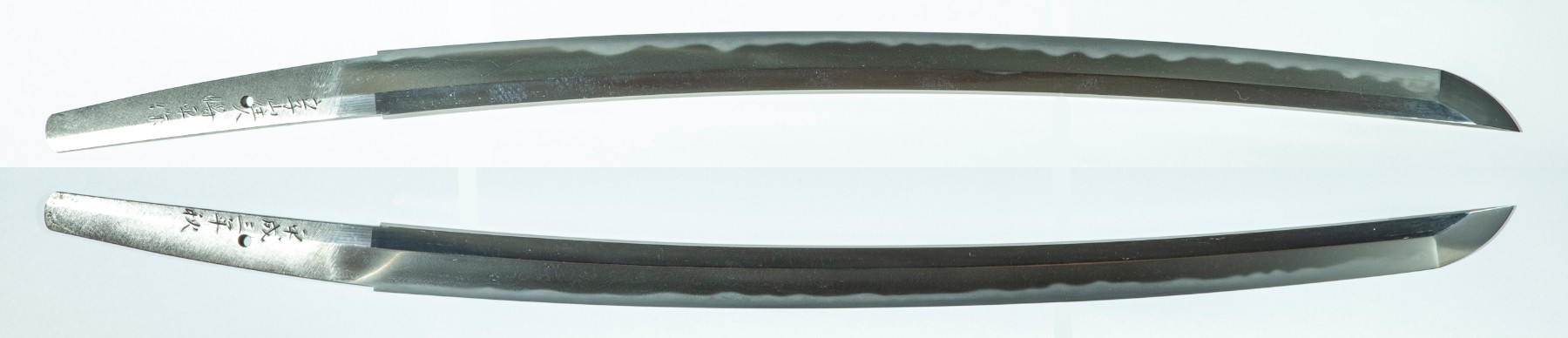
First two characters are 和州 (Washū). It means Yamato. The 州 on the saya is a variant that isn't in the MS font library.1 point
-
Dear Matthew. Welcome to NMB. Chris has given you a very condensed answer so let me unpack it a bit for you. Most swords carried during WWII are known as Shingunto, type 98 refers to a specific variant of these mounts. They are not mass produced in the conventional sense but they are all made to a specification. However it is often the case that older blades were remounted to carry to war, it used to be assumed that these were family blades given to the son to carry, in fact many of them were used to save on manufacturing and resources. Much less romantic and of course, impossible to say which applies to your sword. It is impossible to give you much information about the blade from photograps but if I had to guess I would suggest that it might be a Koto blade, which means from before 1600 Yours also has an older tsuba, the guard. A decent shot of this posted in the Tosogu section might attract some information. (Tosogu means fittings and a lot of collectors specialise in this.) Another intteresting feature is the hanger on the scabbard which is somewhat unusual and may suggest that the original scabbard was used under the leather combat cover. Any cleaning that you do should only ammount to wiping the blade with a light oil and perhaps some leather cream on the combat cover, anything else will harm the sword. If you do decide to do a full restoration then brace yourself, it's an expensive process. You may wish to preserve as is. It's an important link to your Grandfather and what he did. For a lot more information you might like to have a look here, http://ohmura-study.net/900.html Grab a coffee, there's a lot to go through! Feel free to ask further questions. All the best.1 point
-
Hi Ron, congratulations! I have a juyo (den) Cho Aritoshi that I really enjoy. See attached. My assumption also based on the settsu-mei has been that there were two generations Aritoshi with Cho Aritoshi being the second generarion. I have not finalized the translation in full but most of it is attached with help of a Japanese friend who is not a nihonto student so I need to edit some terminology still. Description It is said that Aritoshi was a swordmaker belonged to Yamato taima (or taema) school and he has two names: one is Aritoshi (有俊) consisting of two Chinese characters and another is Cho Aritoshi (長有俊) consisting of three Chinese characters. The former one can be seen produced in Einin 6 (1298). It is a common theory that mei of Cho Aritoshi (three Chinese characters) shows the second Aritoshi, the era is approx. Kenmu, shortened name of Chobei (no) jo Aritoshi. This sword is that jigane is koitame with slightly nagare masa, thick jinie sticked to pieces, hamon is suguha, kochoji, kogunome, kui chigai ba & niju ba & yubashiri on habuchi, thick nie is brightly saeru, etc, significantly see Cho Ariyoshi’s feature on jiba (jihada and hamon) and kiwameno syuko sareru (it is proved as the past authentication.). As Cho Ariyoshi’s feature, habuchi is a highlight of niju ba. This sword has strong hanie with Cho Aritoshi’s kiwame, niju ba with thick and condensed nie can be frequently seen on habuchi, hamon is clearly skillful. It is an excellent piece of work the sayagaki of Tanobe san does not mention it specifically: Sayagaki Tanobe Sensei 62th juyo token The Wasyu Cho Aritoshi. This sword is Osuriage Mumei. This sword smith was Taima school’s student, he was a sword smith in the Kenmu era. Hamon is Suguha and chogunome with deep and thick Nie. Also, Hamon has many Niju- ba and Yubashiri. This sword has a lot of characteristics of Aritoshi and is excellent. Nagasa 2 shaku 2 sun 2 bu Year of the Rooster 2017 enjoy your new acquisition! best regards John 62th Juyo Token.docx1 point
-
Ed, as Jan noted he is Fukuda Kanetake. He was an early wartime smith and is in the Gifu list of 1937. Not much available on him, and seems limited production. in this report: It does appear it is not Kanetake, but Fukuda Kanetsugu 関住福田兼次作 . He is very early war as Sho stamp....but it is of interest that he is not in the 1937 Gifu list.1 point
-
I'm so impressed by Jussi's tally of inforation, quite and undertaking it would seem. It puzzles me somewhat if there was one Cho Aritoshi or and Aritoshi followed by Cho. This sword was the late Arnold Frenels 8th sword he ever owned. I acquired it in trade for a wonderful Naginata by Horikawa Kunimichi naginata. Arnold had faith in this sword so Juyo status confirms his optimism. I enjoy keeping the "history" of recent background of swords like this and how they are recognized and given their proper recognition. Again, I hope perhaps there is a Zufu translation available or Tanobe sayagaki translated. We shall see... I have the NBThK listing (now outdated) of Juyo swords. Would this be listed under Yamato Taima swords? I may have some of these Zufu here that include Cho Aritoshi Juyo blade. Wish I could be fluent in Japanese...don't we all. Ron STL1 point
-
Just thought I’d post this link to an auction with some beautiful tsuba in. There are several others besides this one. https://www.the-saleroom.com/en-gb/auction-catalogues/zacke-wien/catalogue-id-galeri10073/lot-e21df883-8425-4ed8-859f-af41010a9d561 point
-
Ciao Luca, it was a popular pattern, so more likely a daishō composed in Edo times from two independent uchigatana tsuba from late Muromachi/Momoyama period.
 1 point
 -
Luca, as far as I know there was no copper sheet metal readily available in these times (nor brass wire), so I think you can exclude the option that TSUBA were made from the same plate. Do you remember the casting demonstration in one of Ford's videos? This seems to show that soft metal TSUBA were made individually from a cast ingot. Furthermore, I don't think that TSUBAKO let their work develop as it wants. Every step and dimension is deliberate and calculated, so no coincidence or hazard can be expected. Concerning your nice DAISHO, it may have been made by the same hand (or workshop), but perharps with some time between them. But I am afraid we will never know for sure.1 point
-
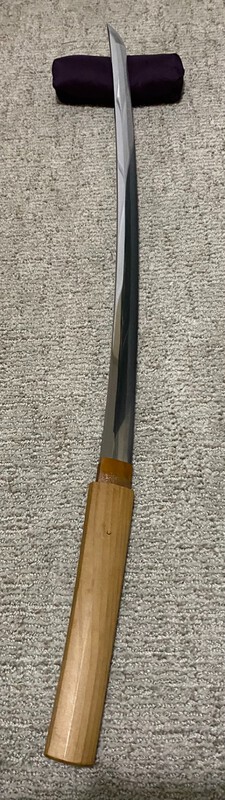
I know by that wooden floor and notorious purple rug you bought it from komonjo on eBay out of Berkeley California. He knows what he is selling so no lost National Treasures there… the guy passes tons of swords and found the perfect schtick selling an endless pipeline of gimei blades with big names chiseled on them on eBay and not giving much in regards to description. Some advice: in the future not only study the blade but kantei the seller as well..1 point
-
Maybe those 恒 mark swords were from this factory?

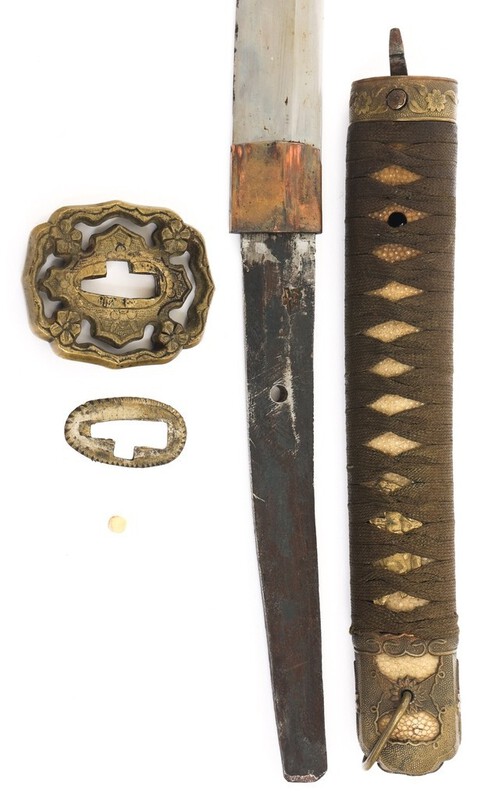 1 point
 -
A beautyful utsushi of Rai Kunimitsu Kokuho by 3rd Generation Naohiro , descendant from Taikai Naotane. signed "Bushu Musashimachi junin Naohiro


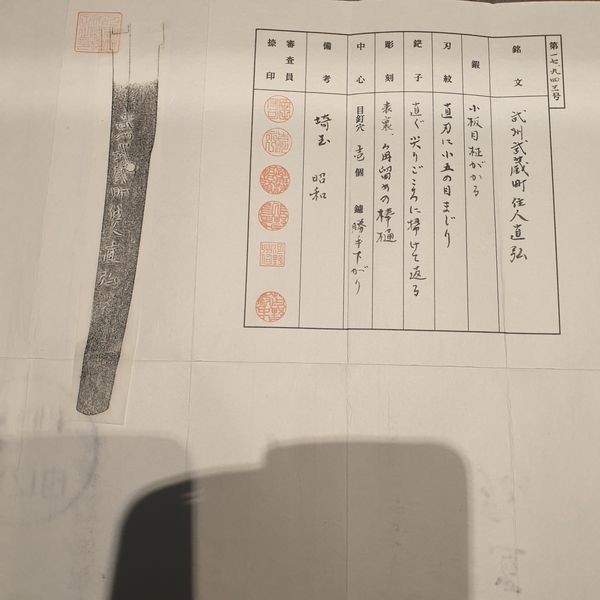
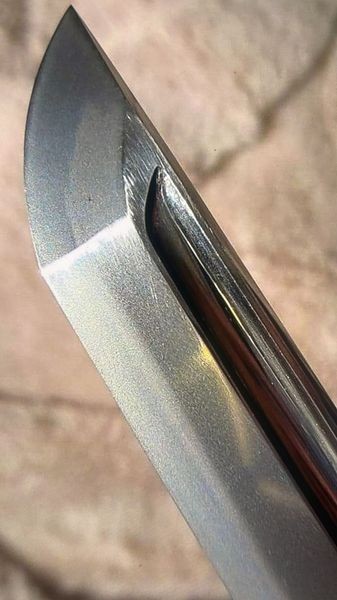
.jpg.495a0a7846a90b48237aa35fe8cfaad2.jpg)
.jpg.5c6b237f333321fc9c57c1e4245beae0.jpg) 1 point
1 point -
I have seen thousands of swords bought back from the SW Pacific area and have never come across one of these . I am sure Bob Colemans theory is correct. Anyone who is trying to convince themselves that these are late war productions is , I think ,kidding themselves . Ian Brooks1 point






























This leaderboard is set to Johannesburg/GMT+02:00