Jump to content

Dan tsuba

Gold Tier
  • Posts

    882
  • Joined

2 Followers

About Dan tsuba

  • Birthday 05/08/1950

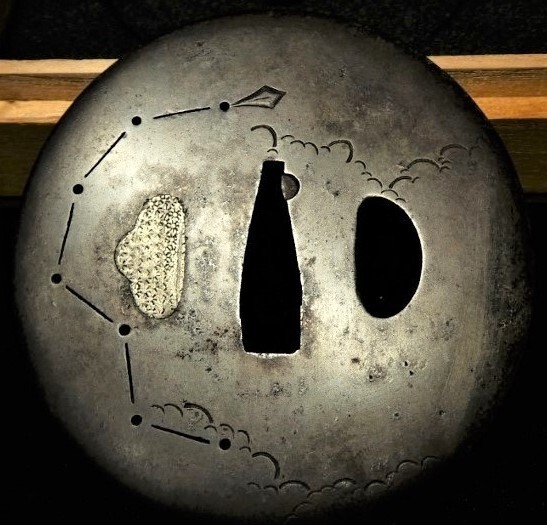
Profile Information

  • Location:
    USA
  • Interests
    Trying to explain (and show pictures of) possible alternative ways that tusba were made (other than being hand forged) in the Edo period (particularly on my “Tsuba casting molds ?” thread). Specifically, the possibility that cast iron tsuba were made (and sand cast or clay cast) in the Edo period. Not a popular subject, as it interferes with the status quo thinking of how tsuba were made in that period of Japanese history! Nonetheless, I think it is a subject worth considering!

Profile Fields

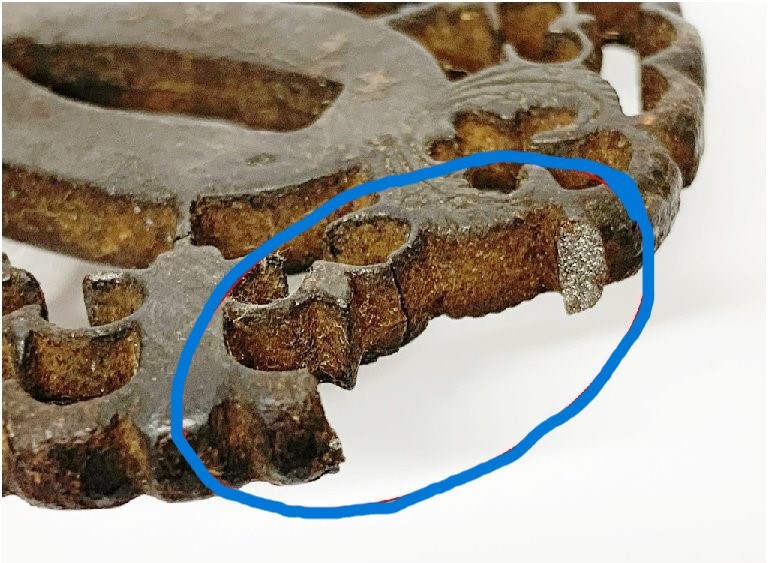
  • Name
    Dan

Recent Profile Visitors

4,533 profile views

Dan tsuba's Achievements

Daimyō

Daimyō (11/14)

  • Posting Machine Rare
  • Reacting Well
  • Very Popular Rare
  • Dedicated
  • Collaborator

Recent Badges

570

Reputation

  1. Mauro, In a previous post on this thread you stated “I don't think this type of pattern has anything to do with stars,...”. But you think the picture of the kozuka-ana shown by Nicolas is “Possibly the representation of a bat (flying in the night sky)”. I agree with Nicolas, and I can see the type of hat in the kozuka-ana that he is referring to.
  2. Well, Nicolas; As I see it, the stars (small holes) are not the important thing on the tsuba. The slots interconnecting those holes that show a pattern (a constellation) that the small holes (stars) make is the important motif design on the tsuba. But that is just my opinion.
  3. I don’t know. So, next time a tsuba with holes and slots (which I am certain those holes and slots depict constellations and not incomplete Shippo type patterns) gets sent in for shinsa what will the experts say? Will they say (and I quote from Piers post referring to a post from Mauro that showed (in my opinion) a constellation type tsuba that went through shinsa- “Shippō Mon (Chirashi) Sukashi Tsuba 七宝文散透鐔 (Scattered) Shippō pattern perforations” Or will the shinsa panel maybe now recognize that those holes and slots may represent something else? I mean just some more interesting stuff to present as food for thought!
  4. Well just some more interesting stuff. So perhaps concerning the orientation of the holes and slots depicting constellations on tsuba, the orientation of the motif may have something to do with the time of year that the craftsman that made the tsuba was looking at the constellation. As an example of this, I asked the question from AI on the internet - what does the big dipper appear like over Japan. The response is in quotes below- "Over Japan, the Big Dipper appears as a prominent northern asterism, easily identifiable by its ladle shape of seven bright stars. Known culturally as Hokutō Shichisei (Northern Dipper), its position and orientation in the night sky shift depending on the season and time of night. Because Japan lies between latitudes 24°N and 45°N, the Big Dipper behaves like a giant wheel turning counterclockwise around the North Star (Polaris). Its appearance changes throughout the year: Spring: The Dipper is high in the northeastern to overhead sky at dusk, appearing upright with the handle curving downward from right to left. Summer: It shines high in the western or northwestern sky after sunset, appearing to tip or stand on the edge of its bowl. Autumn: The asterism dips closer to the northern horizon and appears upside down, sometimes resting flat on the bottom of its bowl. Winter: It appears low in the northern to northeastern sky, beginning to sweep back upward in a nearly vertical position. Because of Japan's relatively southern location compared to regions like Scandinavia, the lowest parts of the handle may dip very close to the northern horizon during the fall, but it remains visible year-round. Historically, the stars have played a major role in Japanese folklore, Shintoism, and Buddhism, where the asterism is often associated with the god Amenominakanushi or the Bodhisattva Marici."
  5. Something I used a long, long, time ago to see a galaxy far, far, away! Star Wars! Ha, ha, ha, ha, etc! But, you can see the Big Dipper, the Little Dipper, Cassiopeia, the Pleiades (and all the other constellations) with the naked eye! I am certain that the supposedly shippo pattern tsuba with the holes and slots (as shown in previous posts above) are star maps showing constellations.
  6. So, in response to Sam's post above- Yes, I am sure that the constellations had different names in the Edo period of Japan and some of their constellation patterns of stars was different than the Greek constellations. But, there are just some star patterns that can’t be mistaken (or misinterpreted) no matter what their name (and like I stated in another post on this thread-25 years ago astronomy was my main hobby with my 5 telescopes!). I asked AI the following question- “cassiopeia constellation in edo Japan” The answer is below- “In Edo-period Japan (1603–1868), the northern constellation Cassiopeia was primarily interpreted through the lens of imported Chinese astronomy and Myōken worship (the deified Pole Star). Because of its distinct zig-zag shape, it also became a localized cultural symbol in arts and landscape design. The Celestial Context in Edo Japan Sino-Japanese Star Maps: The Japanese adopted the Chinese system of asterisms. In these historical charts, the stars of Cassiopeia were incorporated into larger celestial walls and palaces, such as the Huagai (The Canopy) and Gedao (The Flying Road across the River). [1, 2] Myōken Faith: To many samurai and commoners, the northern circumpolar skies held deep religious meaning. Myōken (the deified North Star/Big Dipper) was a revered figure. Because Cassiopeia rotates closely around the celestial pole, it was a tied to these essential navigational and spiritual poles of heaven. [1, 2, 3, 4] Western Influence: During the later Edo period, the eighth Shogun, Tokugawa Yoshimune, loosened restrictions on foreign books. Through the Dutch trading post in Dejima, Western star catalogs (including Ptolemy's Greek constellations) entered Japan, introducing the myth of the "Queen of Aethiopia" to Japanese astronomers. Cultural Symbolism and Gardens Ryoan-ji Temple: One of the most famous cultural applications is the interpretation of the rock garden at Ryōan-ji in Kyoto. Some architectural and garden historians have noted that the strategic placement of the 15 stones in the Zen garden acts as a mirrored reflection of the Cassiopeia constellation. [1, 2] Art and Literature: In the ukiyo-e and literary traditions of the Edo period, stars were intimately tied to seasons. The continual movement of circumpolar stars like Cassiopeia across the northern sky was utilized for both agricultural and horological timing.”
  7. Hello all! The weblink below is a monthly star chart guide to constellations and star patterns visible in Japan. It may be of interest. https://www.nao.ac.jp/en/gallery/chart-list.html Also, I put the question to AI of what constellations are visible to the naked eye in Japan. The answer is shown below- “Because Japan shares similar latitudes with the rest of the Northern Hemisphere, stargazers can view nearly all northern constellations year-round. Constellations change with the seasons, with summer and winter offering the clearest, brightest skies. [1, 2, 3, 4, 5] Key Constellations by Season Summer: The Summer Triangle dominates the night sky, made up of the bright stars Vega (in Lyra), Deneb (in Cygnus), and Altair (in Aquila). You can also spot Scorpius low on the southern horizon, recognizable by its red supergiant star, Antares. [1, 2, 3, 4, 5] Autumn: The skies cool down to reveal the Great Square of Pegasus. Andromeda and Perseus are also easily visible, and from very dark skies, you can spot the Andromeda Galaxy with the naked eye. [1] Winter: Winter provides some of the most spectacular viewing, featuring Orion (the Hunter) and his belt, and the dogs Canis Major (home to Sirius, the brightest star in the night sky) and Canis Minor. You can also clearly see Taurus and Gemi Spring: You can look for Ursa Major (the Big Dipper) swinging high overhead, which acts as a helpful pointer to the North Star in Ursa Minor. Leo (the Lion) is also prominent. [1, 2, 3, 4] Iconic Asterisms Subaru (The Pleiades): While technically an open star cluster in the constellation Taurus, this is arguably Japan's most famous naked-eye celestial sight. The cluster is known locally as Subaru (meaning "to unite") and is instantly recognizable. The Milky Way: The radiant band of the Milky Way is clearly visible to the naked eye throughout the summer and early fall. [1, 2, 3, 4]”
  8. Interesting discussion! Anyway, I have shown a picture below of shippo type patterns. Then the next picture is a shippo motif tsuba. The following picture is a constellation type tsuba. I personally don't think that the shippo type patterns look anything like the constellation pattern.
  9. Bruno, Thanks for the reference to that thread in 2011 ! I guess at least 4 members thought that the motif could be that of a constellation. But they didn't know which constellations. The constellations and star patterns shown on the tsuba in the first picture on that thread are the Big Dipper and the Pleiades (which is a star cluster). Those constellations and star patterns (along with the Cassiopeia constellation) are the only 3 star patterns that I have seen on tsuba (thus far!).
  10. Found this tsuba on a seller site. It also depicts the Big Dipper and Cassiopeia constellations. Although the seller doesn't describe it that way. I don't think the seller has any idea that it shows constellations.
  11. Hey Piers, that is weird? My post doesn't come up like that on my computer. I can assure you that the only thing that has been taken from anywhere in my post is the AI statement from the internet that I placed in quote marks. Onward!
  12. Hi Piers, I don't get what you mean in your post- "Whose words are those Dan, yours, AI’s or someone else’s?" Anyway, my main hobby 25 years ago was astronomy so I may know a little about what I am talking about. Heck, I still even have my 5 telescopes that I used!
  13. Shippo pattern or star maps? Below I have shown a couple of tsuba that have a pattern of holes and slots. These tsuba are not Shippo pattern, but are star maps. The holes in the tsuba are the stars, and the slots are the guides to move the eye from star to star so that the constellation or star pattern can be discerned in the night sky. Of course, all the constellations shown on these tsuba can be seen with the naked eye in the night sky (no telescope needed!). And from AI on the internet- “Yes, all three of these celestial formations can be clearly seen in Japan.” The pictures below show 2 tsuba. The first picture shown depicts the Big Dipper constellation at the top of the tsuba and the Pleiades (the 7 sisters) star pattern on the bottom of the tsuba. The second picture shown depicts the Big Dipper at the top of the tsuba and the constellation Cassiopeia (with its distinctive "W" shape) at the bottom of the tsuba.
  14. Hi Anthony, and welcome to this great forum! I can't tell you much about your tsuba other than I really like them! The first tsuba you pictured may be depicting some sort of Japense legend. The second tsuba you pictured seems to have a nice swirl type pattern in the metal. I think that since both the tsuba have filler (atagane) in one or both of the small holes (hitsu-ana) next to the triangular center slot (nakago-ana) it is a good thing and shows signs (to me) that the tsuba were customized somewhat. I am sure that much more knowlegeable members than I am will tell you exactly what you want to know about your tsuba.
  15. So, I was doing research on the forum about cast iron tsuba stuff and ran into this interesting thread started in 2023- https://www.militaria.co.za/nmb/topic/43762-iron-%E2%80%9Chorse%E2%80%9D-tsuba-all-opinions-welcome/ It discusses the iron horse themed tsuba and how many of them seem to be made from cast iron and some have been described in that thread as being made in the Edo period or the 18th century I have included 2 pictures below of one of the iron horse themed tsuba that I recently saw on a selling site. It is made from cast iron and is broken. I mean; it is just really difficult to determine if a tsuba is cast iron or hand forged (unless like in my picture shown it has been broken - then it is definitely cast iron as can be determined by the way it is broken). No one is going to spend the money for non-invasive metallurgical testing (as I have discussed throughout this thread) before buying a tsuba to determine if it is made from cast iron or is hand forged. As far as the age of a tsuba, that is also difficult to determine if it was made in the Edo period or not. I mean even with a mei of a craftsman in the Edo period on the tsuba, it could be gimei. So, once again, were cast iron tsuba made in the Edo period? My personal opinion is yes, they were!
×
×
  • Create New...