zanilu
-
Posts
567 -
Joined
-
Last visited
-
Days Won
5






zanilu's Achievements






-
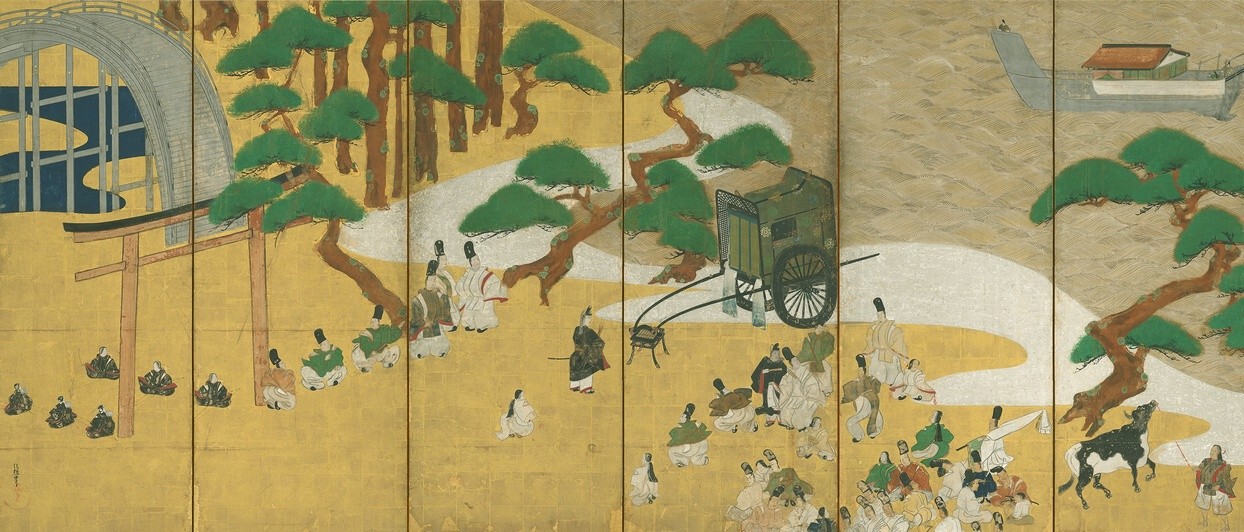
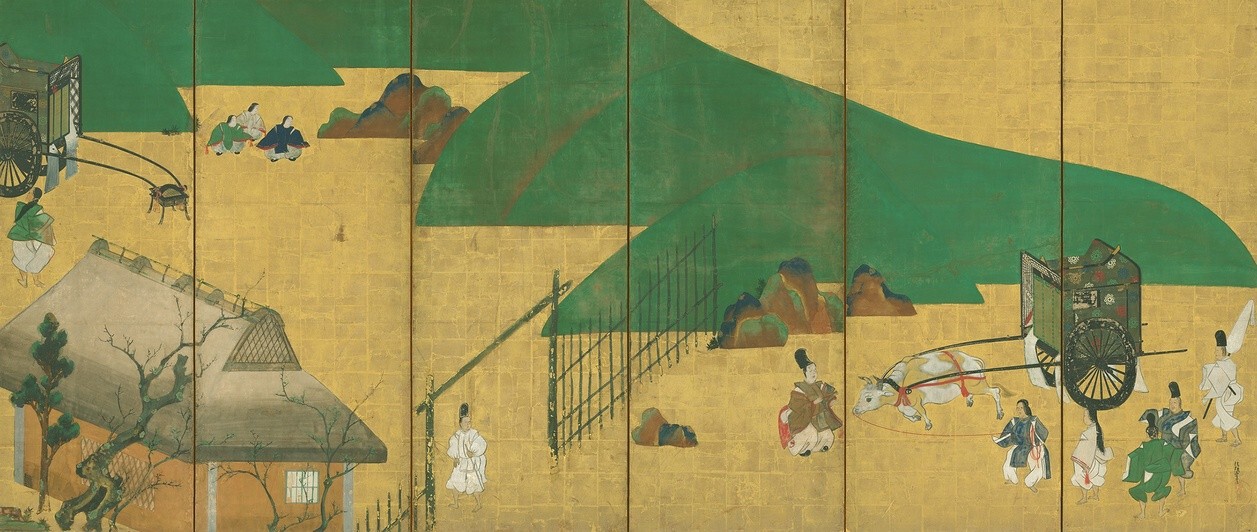
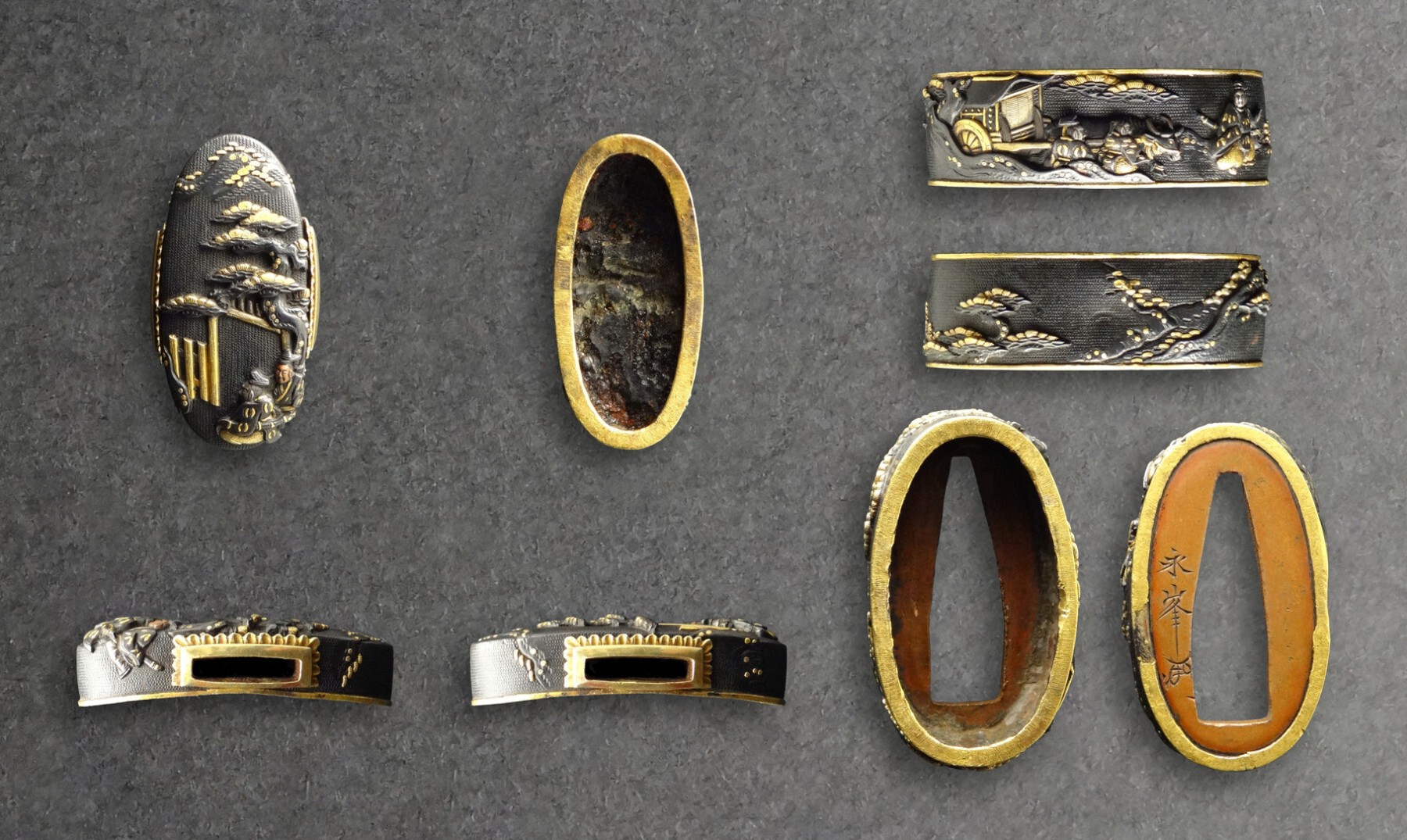
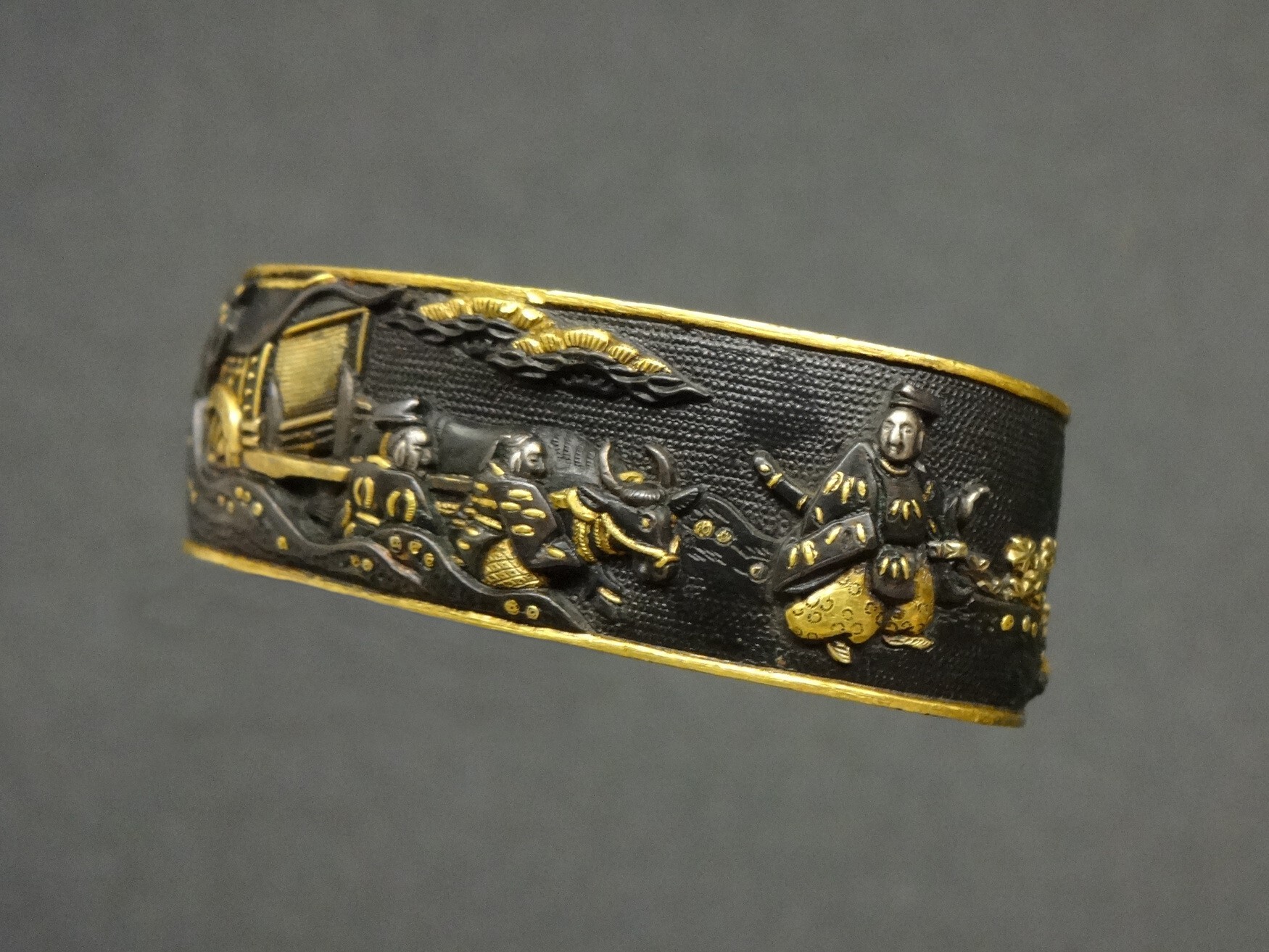
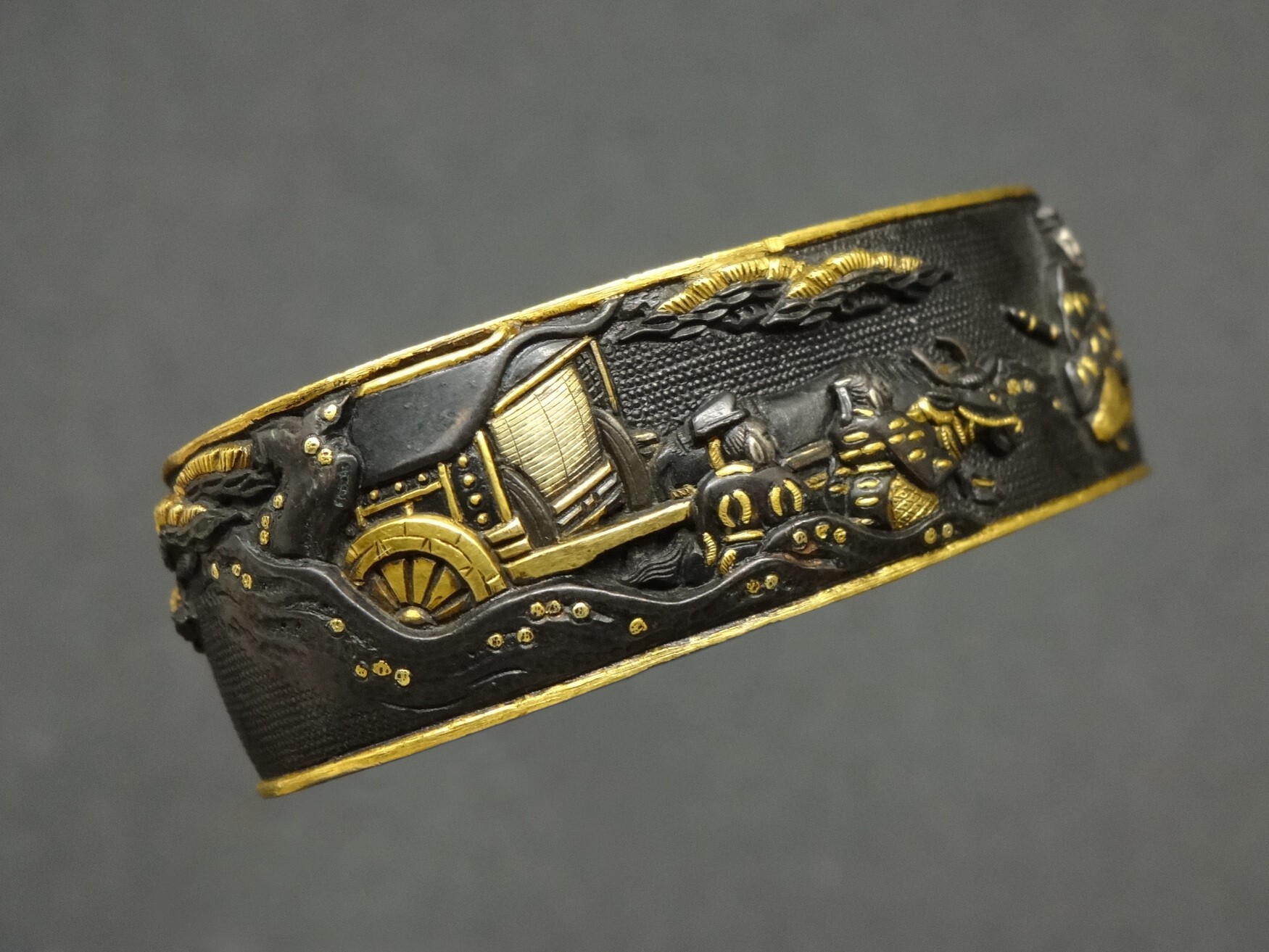
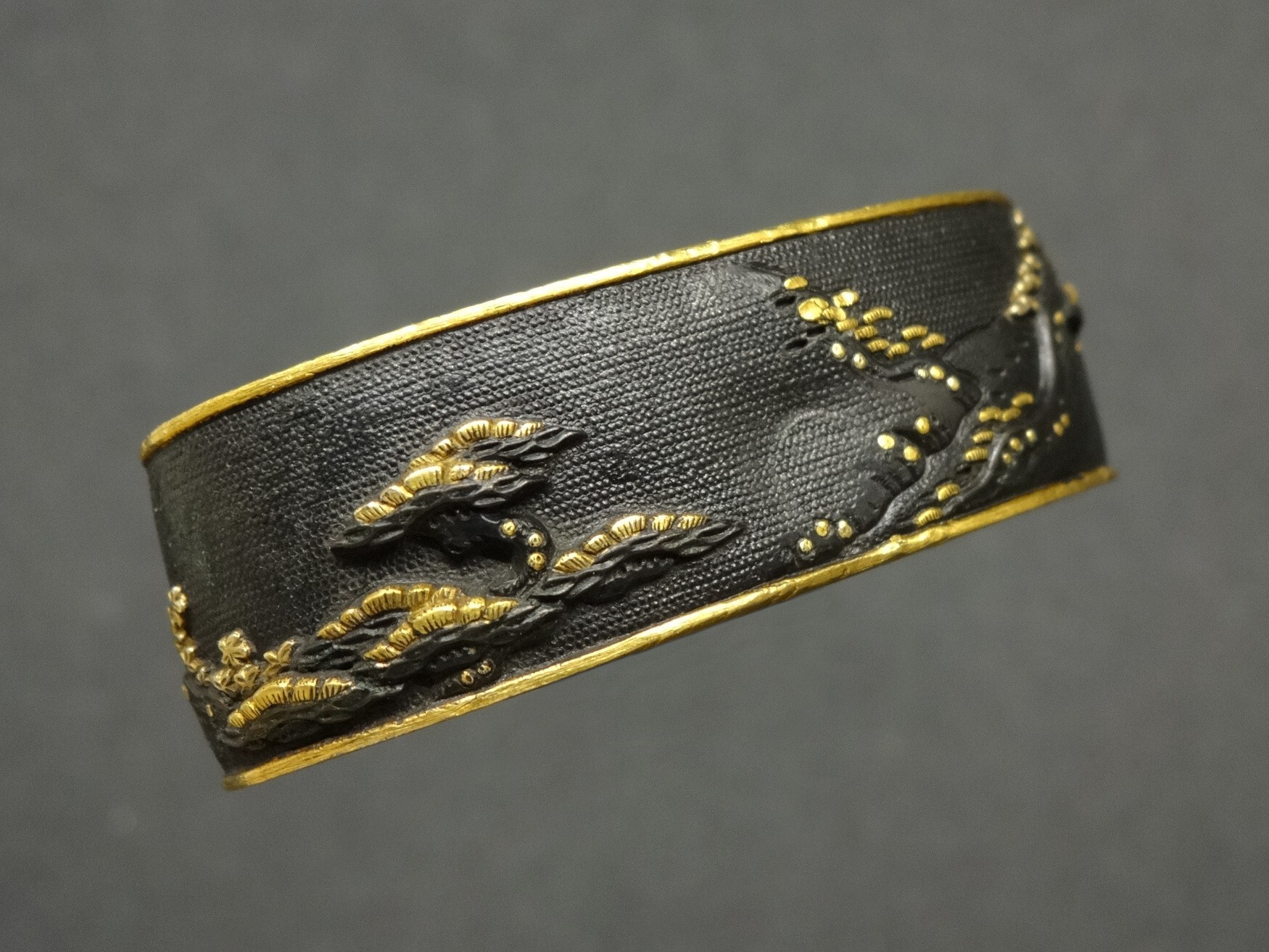
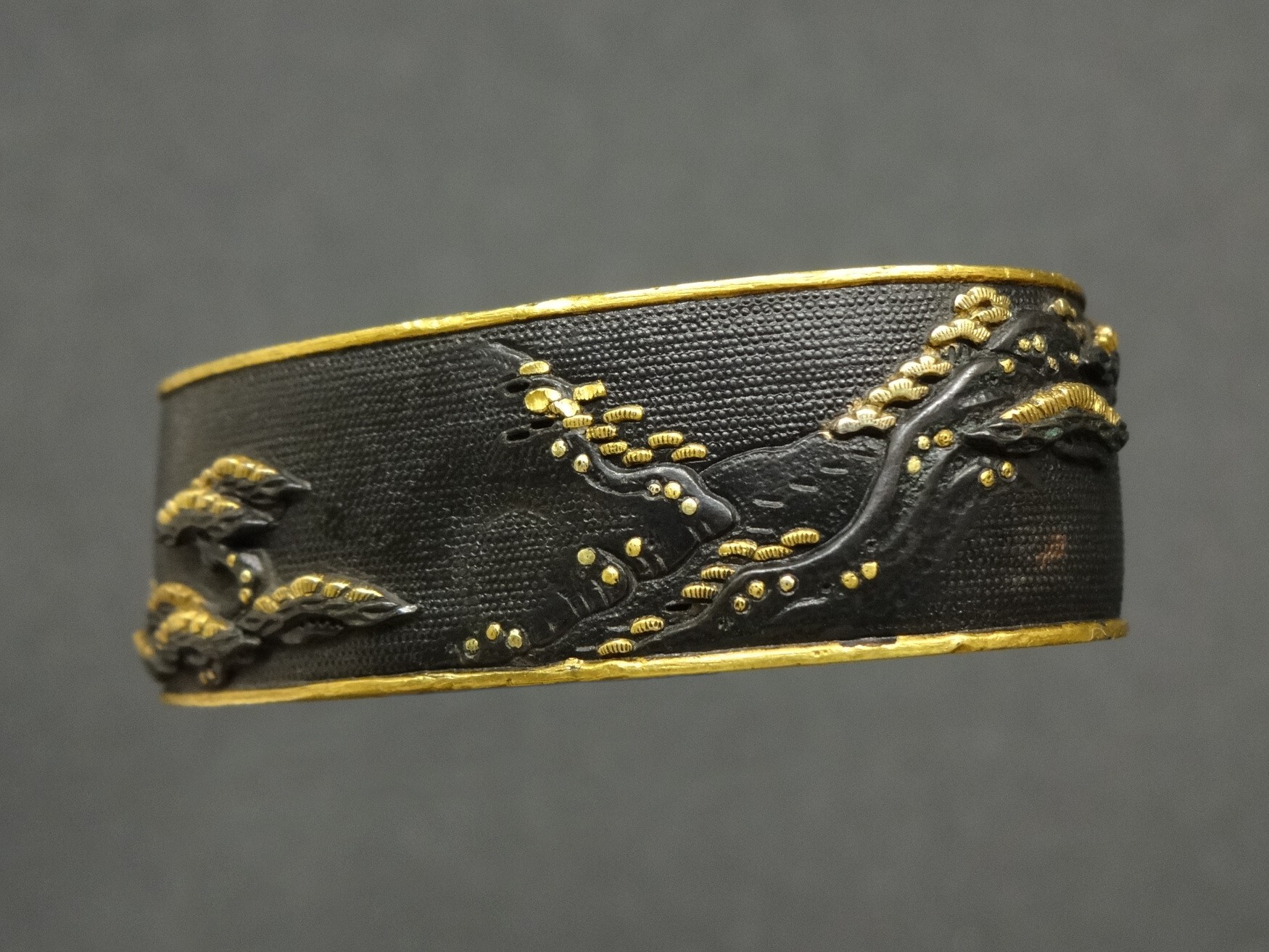
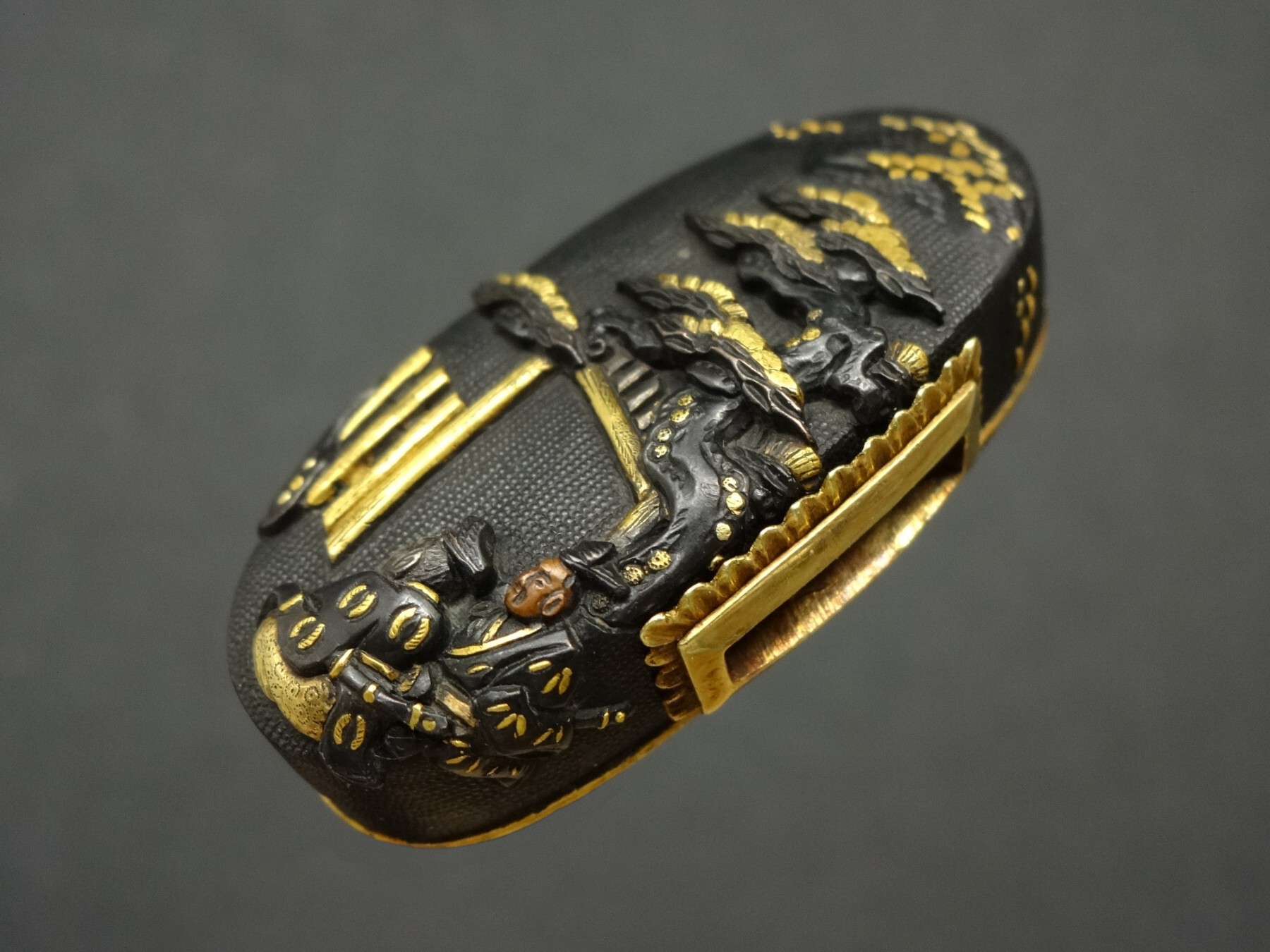
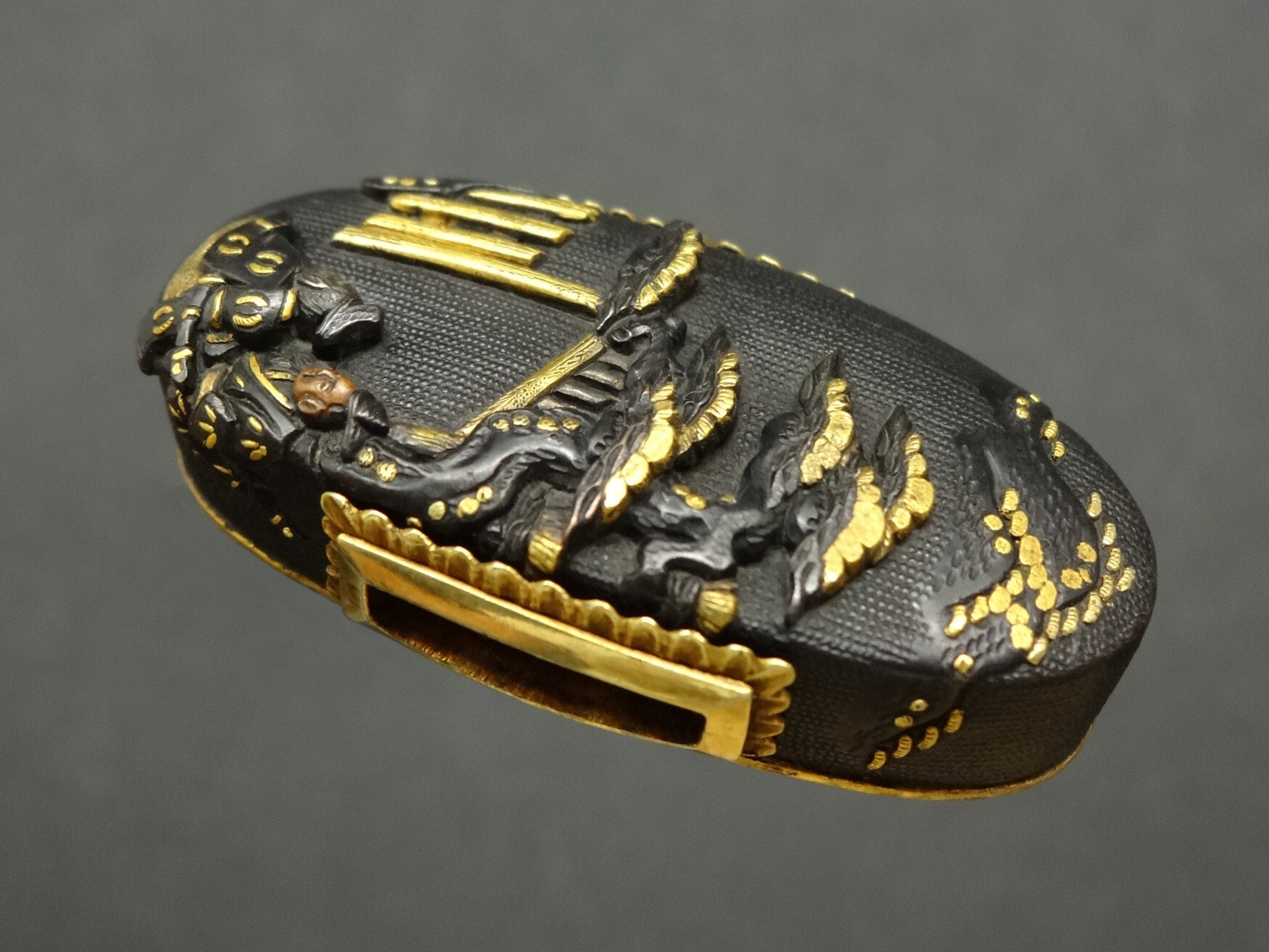
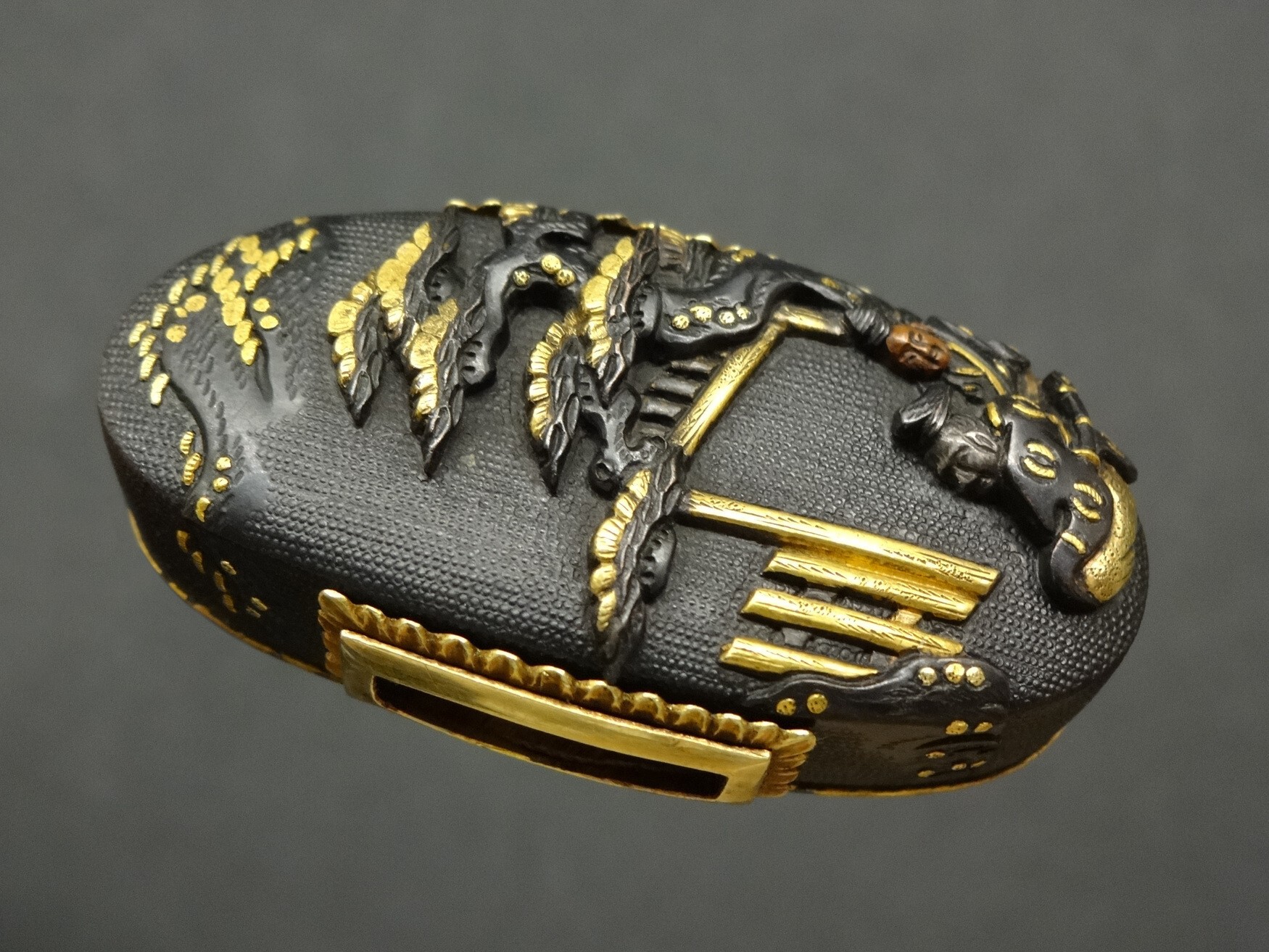
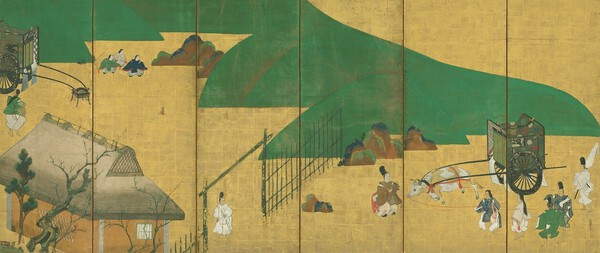
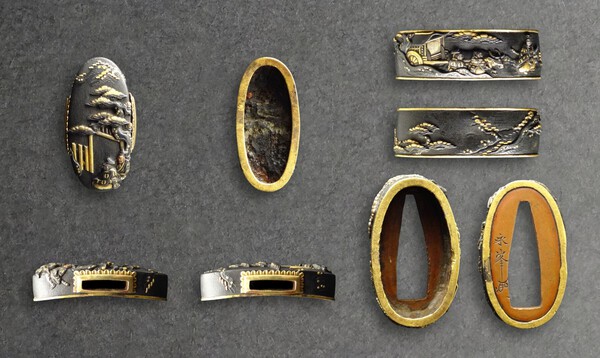
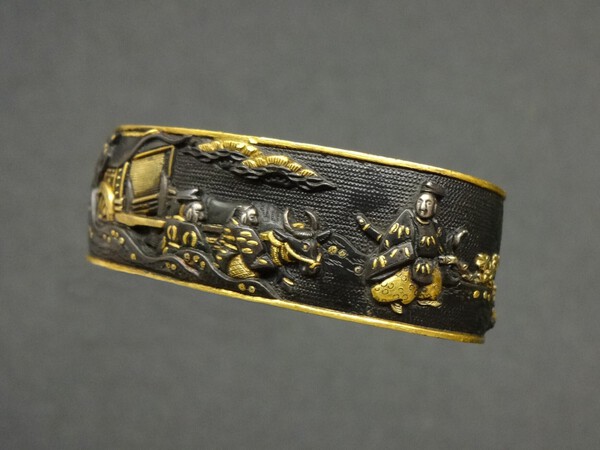
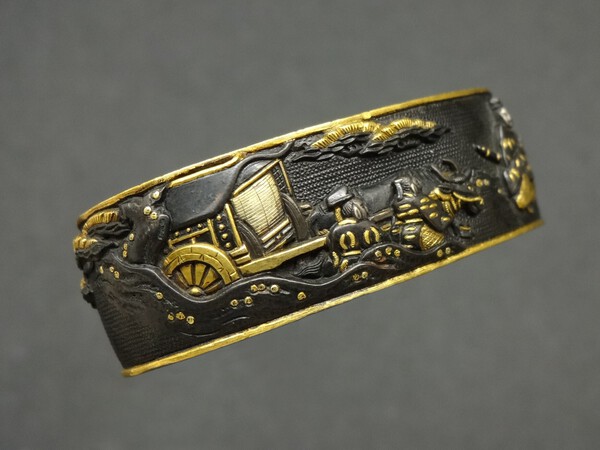
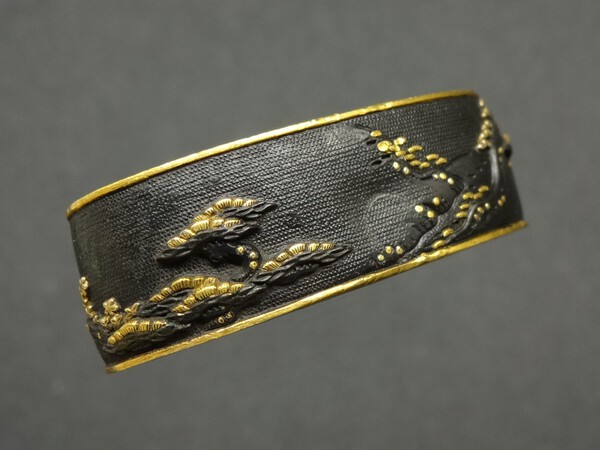
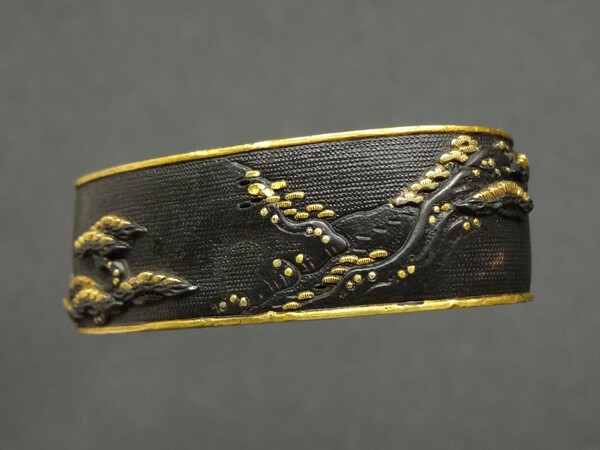
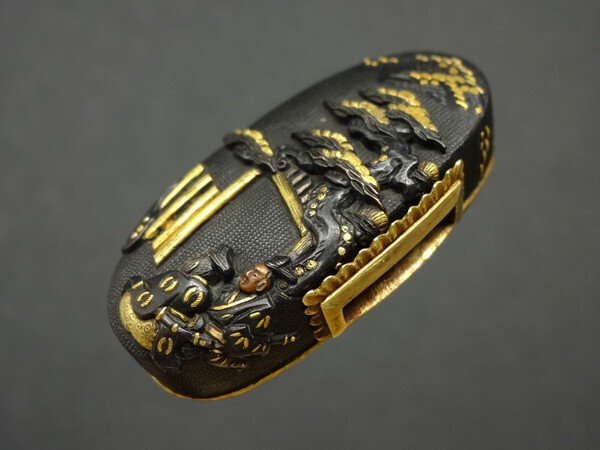
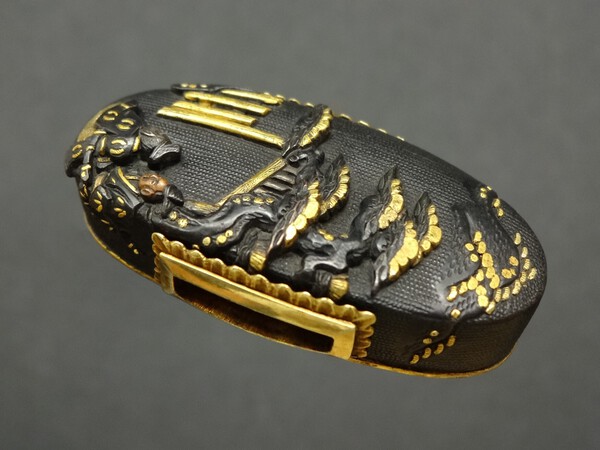
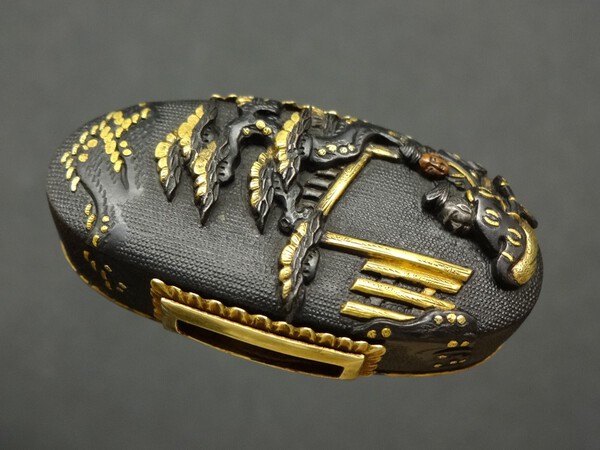
 Dear all I just wanted to share one of my latest acquisition. Dimensions: Fuchi 38.3 mm x 21.9 mm. thickness 12.5 mm. Kashira: 34.7 mm x 16.6 mm. thickness 9.8mm. It is a fuchi-kashira signed "Nagamine [Kao]" (永峯 [花押]) it is not papered but the signature, the quality of the execution and the composition of the subject fully fit into the caractersitics of the school as outlined in my summary of the Ayanokōji Nagamine school (https://www.militaria.co.za/nmb/files/file/122-the-school-of-ayanok%C5%8Dji-nagamine/). The fuchi shows some wear of the patina and the nanako ground but the conditions are farely good. On the omote (表) side of the fuchi (縁), an ox-drawn gosho-guruma (御所車) is shown against a landscape of pine trees and hills. The carriage is accompanied by attendants dressed in what looks like Heian clothing. The figure at the front is wearing a tachi (太刀). In ancient and medieval Kyoto, members of the imperial family and the aristocracy commonly travelled in ox-drawn carriages known as gosho-guruma (御所車). The presence of a gosho-guruma, particularly with its bamboo blinds lowered, conventionally suggests that a person of high rank - often an elegant lady, nobleman, or member of the imperial family - is inside the carriage. On the kashira (頭), a group of similarly dressed figures is shown standing in front of a fence or palisade with a gate. This architectural detail is particularly important for identifying the subject of the composition. There are two chapters of The Tale of Genji (源氏物語, Genji Monogatari) whose narratives could potentially correspond to the scenes depicted on this fuchi-kashira set. The first is Chapter 14, Miotsukushi (澪標, "Channel Buoys"), and the second is Chapter 16, Sekiya (関屋, "The Gatehouse"). In Miotsukushi, Genji encounters the Lady of Akashi at the entrance to Sumiyoshi Taisha (住吉大社). In Sekiya, Genji encounters Utsusemi (空蝉) at the Ōsaka Barrier (逢坂関). There is a particularly relevant pair of folding screens (byōbu, 屏風) by Tawaraya Sōtatsu (俵屋宗達), Tokyo National Museum, dating from the seventeenth century, which depicts precisely these two episodes. Miotsukushi Chapter 16 Sekiya Chapter 14 The screen representing the Sekiya episode clearly shows a gate whose form is remarkably similar to that depicted on the kashira of this fuchi-kashira set. This architectural detail provides an important clue. Although the general subject of the fuchi-kashira could initially be interpreted as either Miotsukushi or Sekiya, the presence of the distinctive gate strongly favors Sekiya as the intended theme. I hope you enjoy this fuchi-kashira set as I do. Regards Luca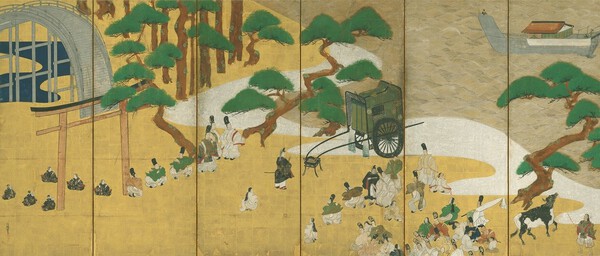
-
- 12
-

-

-
Starshippos
-
Non c'è peggior sordo di chi non vuol sentire. There is none so deaf as he who will not hear. Now down vote me if you want. I take it as badge of honor.
-
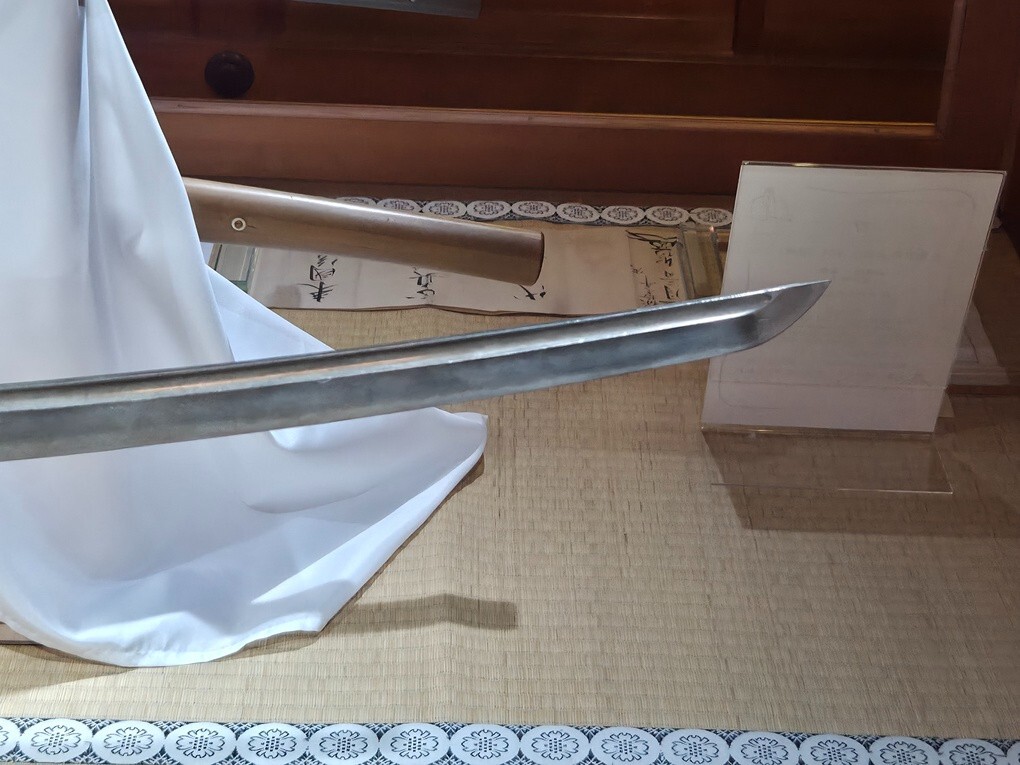
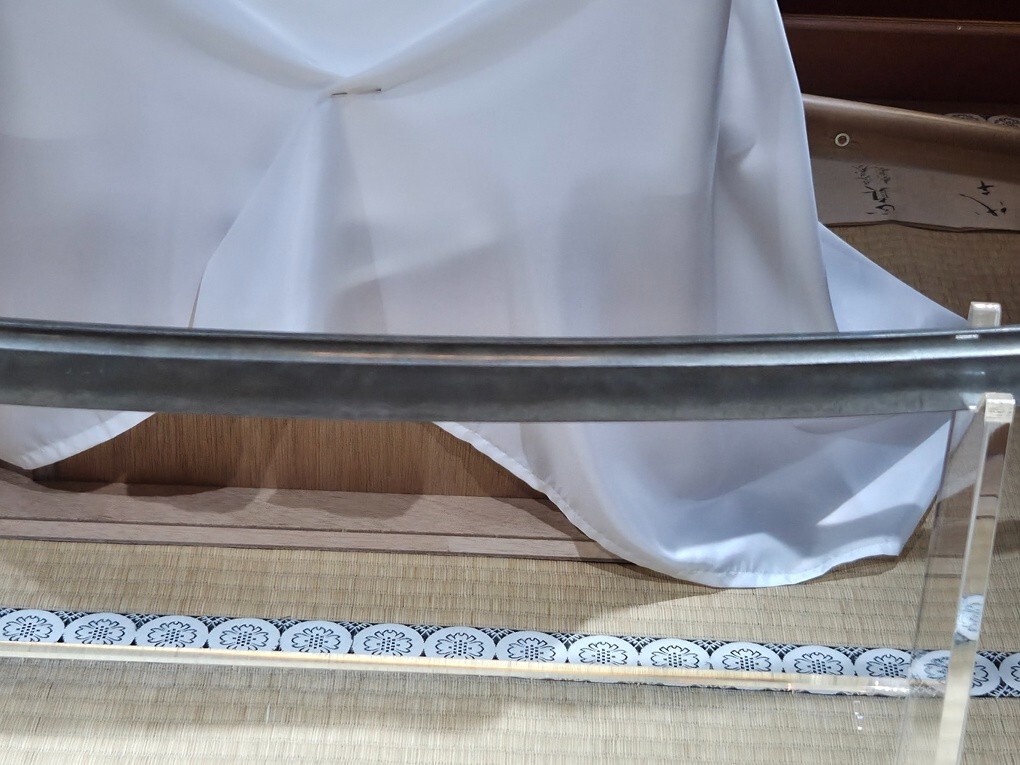
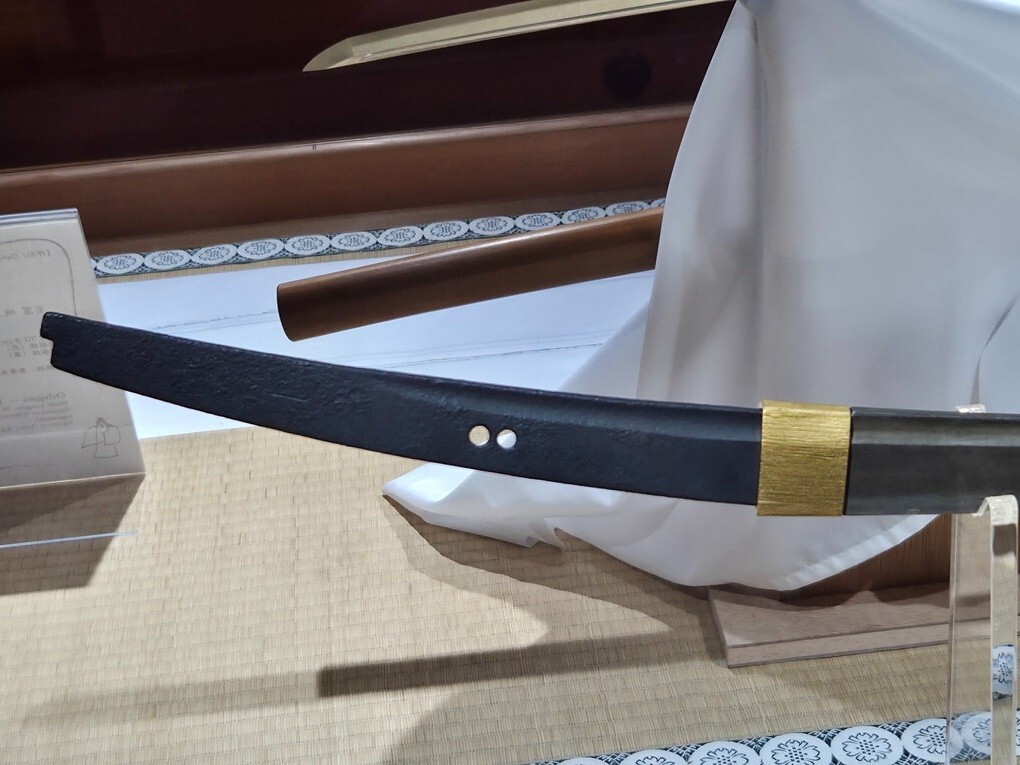
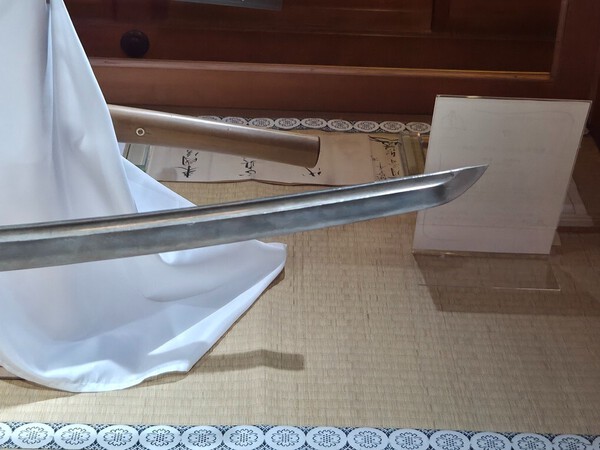
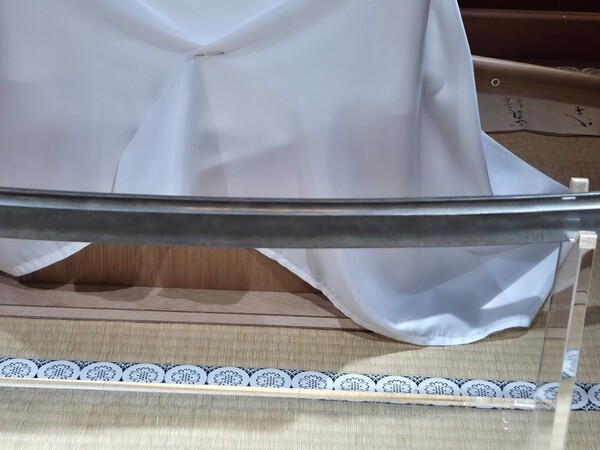
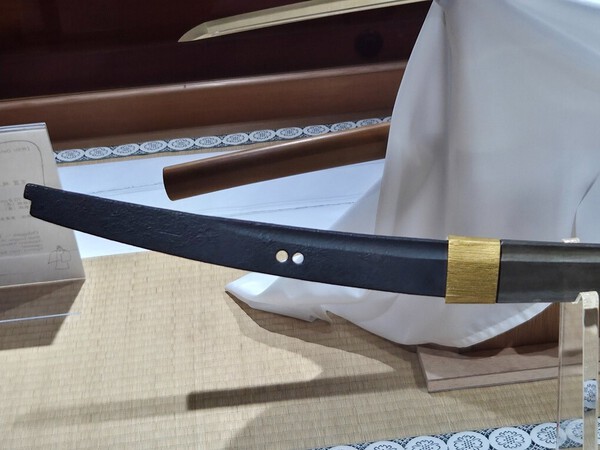
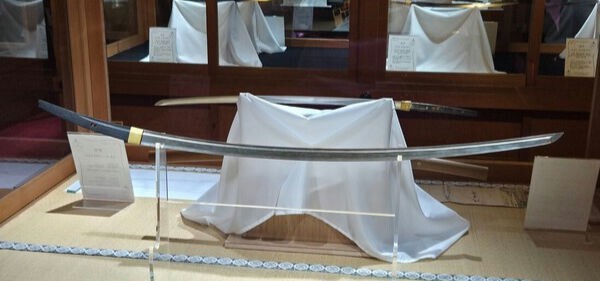
Dear All I was in Kyoto at the end of May and by chance I stumbled in a sword display at the Kitano-tenmangu Shrine. One of the sword attracted my attention even thou I am more a tosogu guy rather than a nohonto one (I am more in using them than admiring them). The pictures are what they are, the lights were not the best and I had only my mobile phone: If you want you can try a little kantei trying to identify it, otherwise tell me and I will post the solution. Enjoi Luca
-
Thanks
-
Just a question. I didn't find the option to by a pdf copy of the book only for the physical one! Can someone post here the link to the pdf? Regards Luca
-
Again thank you Bruno! Luca
-
Yes it looks like it. Thank you Dale for finding out another examples. Luca
-
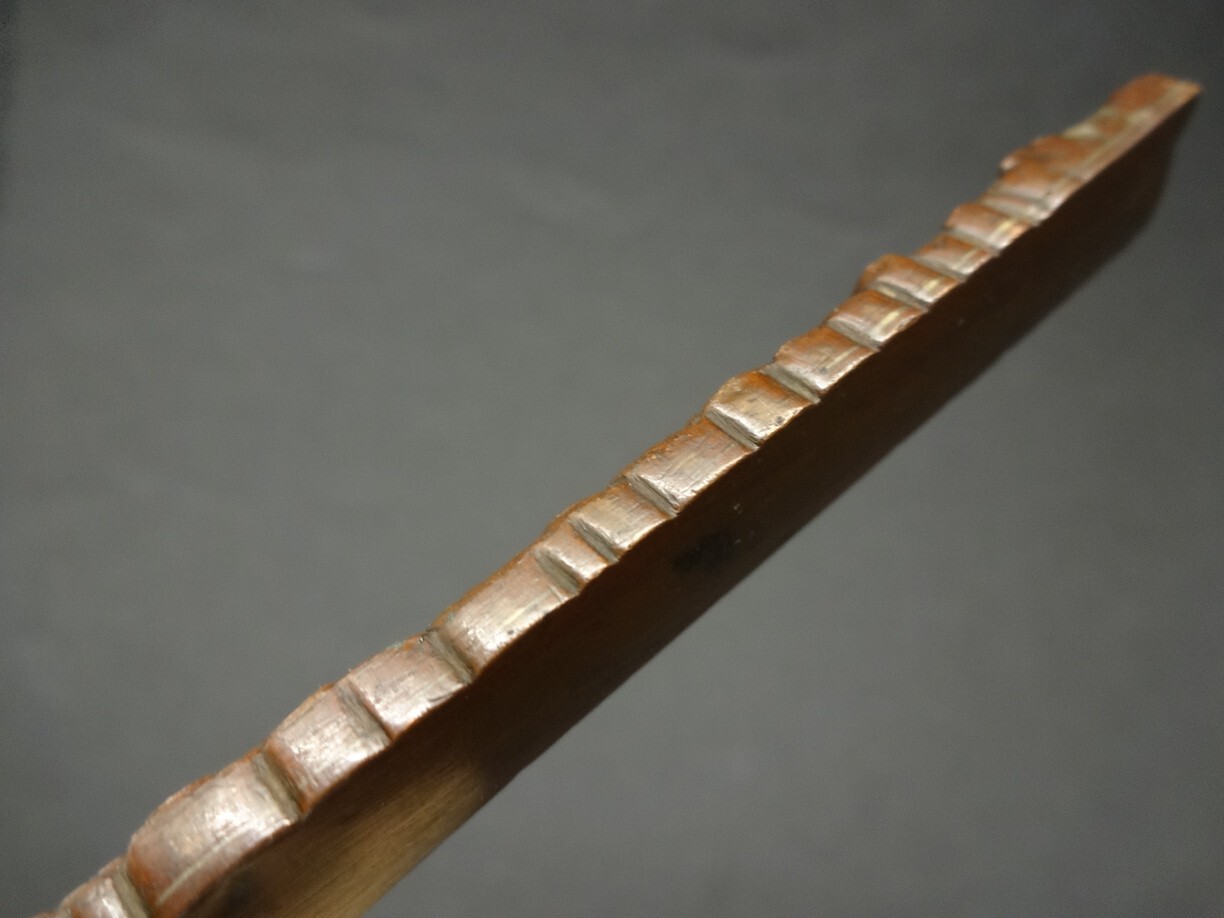
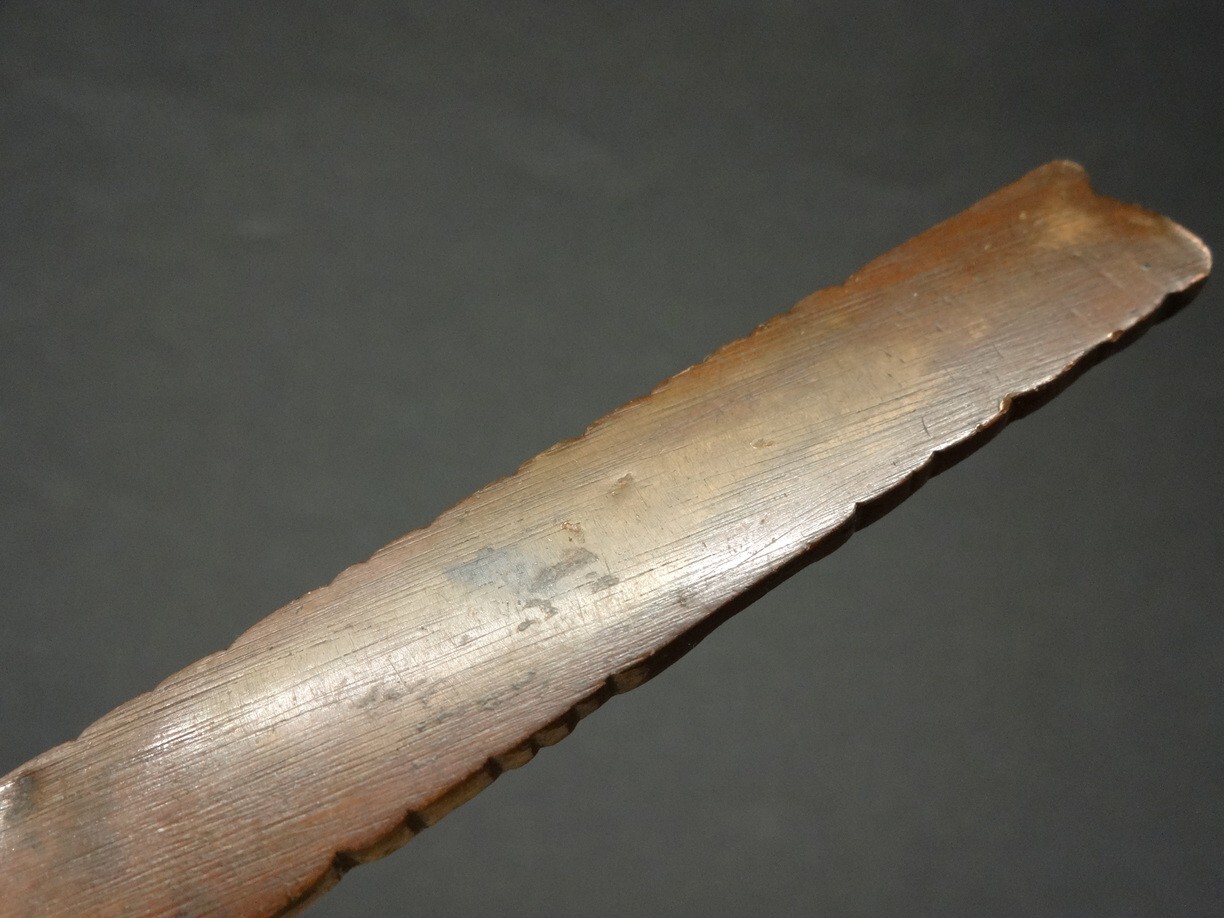
Bruno After reading Ford comments from the thread you have linked I gave a good look to my kozuka usina also a magnifying glass. I found no traces of casting tell tales at the same time I found chisel marks and also traces of the seam between the to and bottom halves. I did further searches online to find simular pieces, but aside from the example on ebay, that is slightly smaller than mine, I found nothing else. Maybe out resident picture hunter Dale @Spartancrest can do better than me. Regards Luca
-
Thank you Bruno!
-
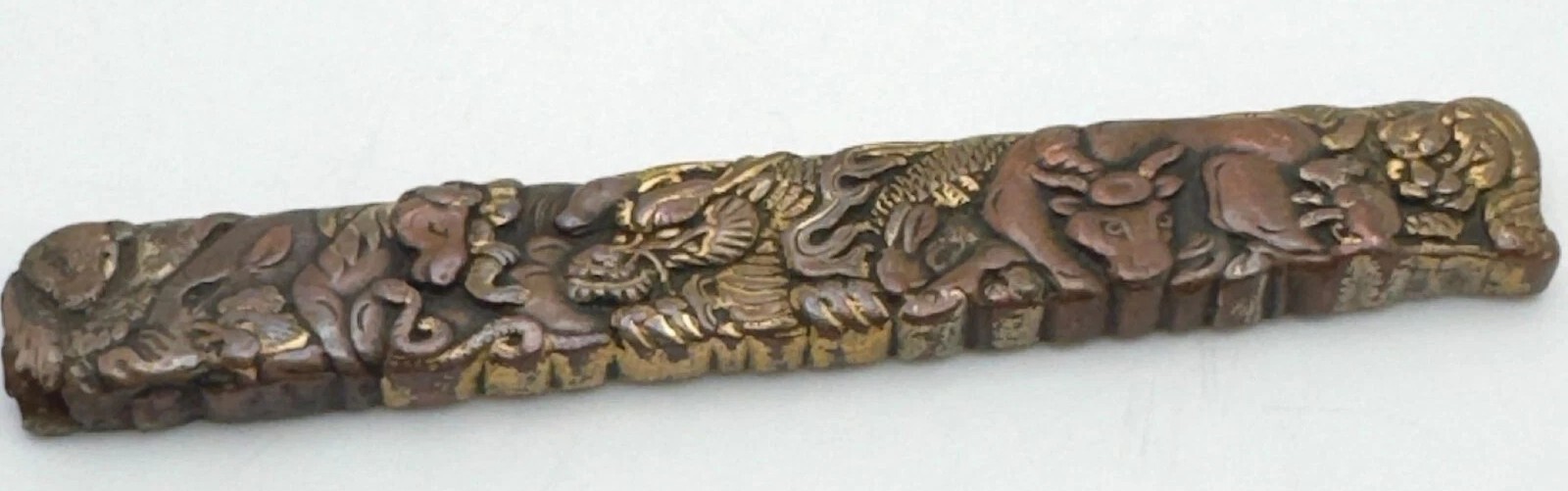
Thank you, that is exactly my feelings Bruno. The ebay link is the same from wich I took the two ending pictures of my post. All the best. Luca
-
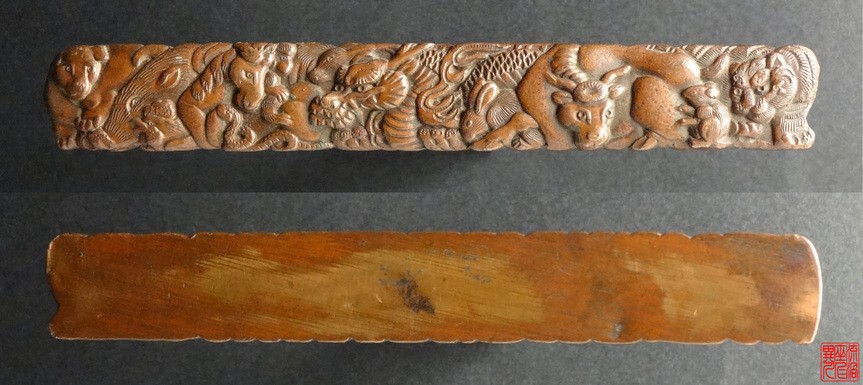
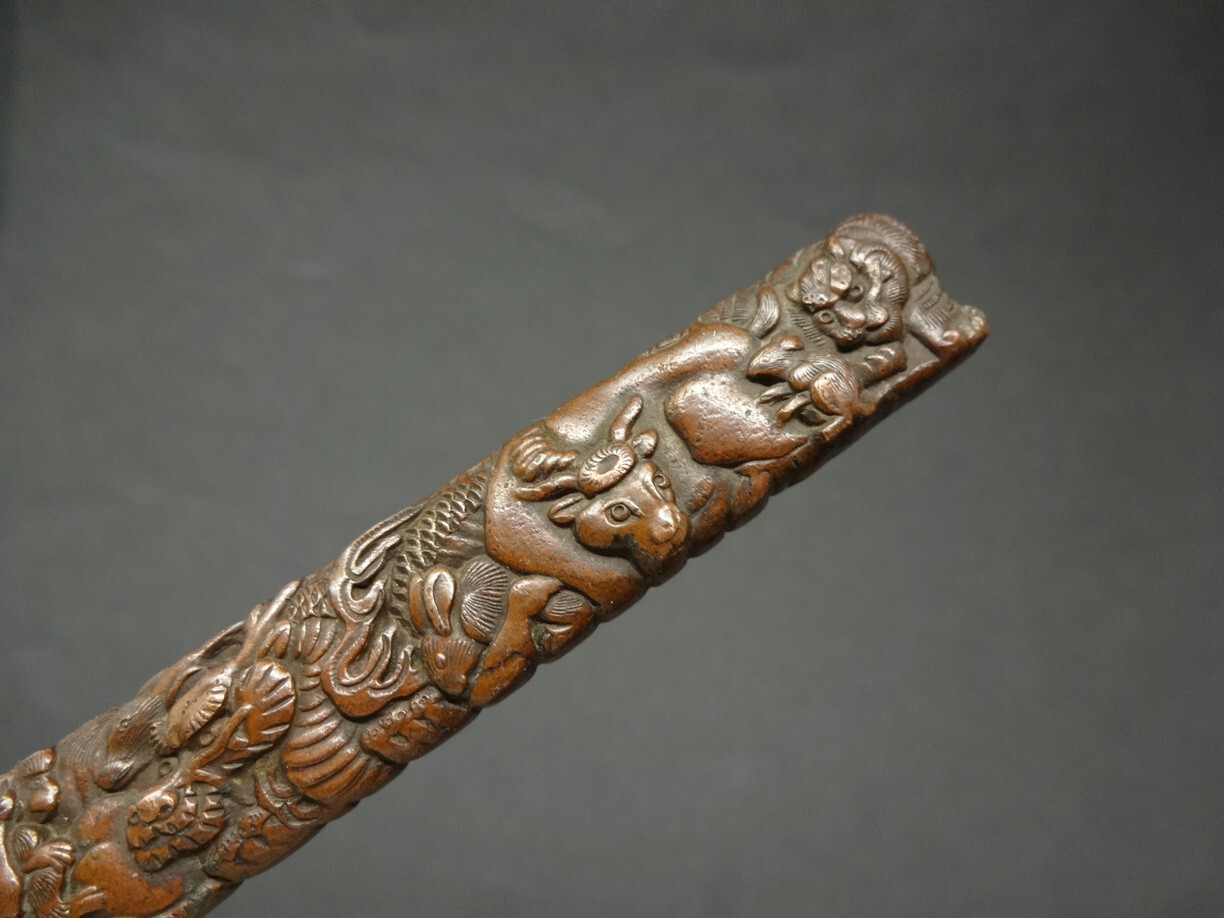
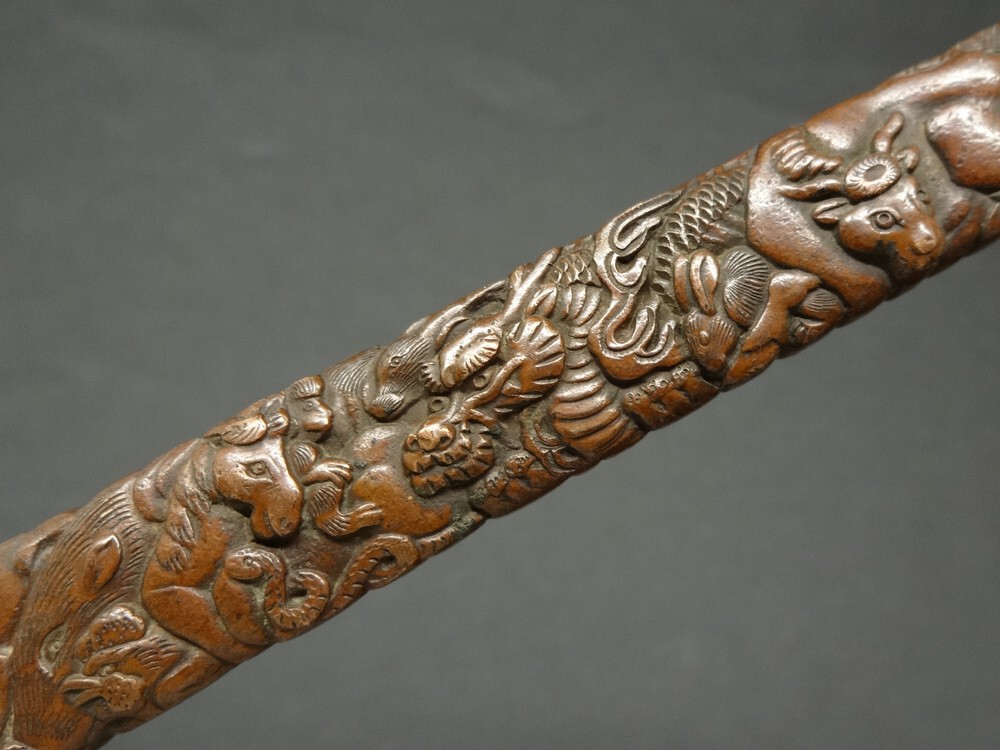
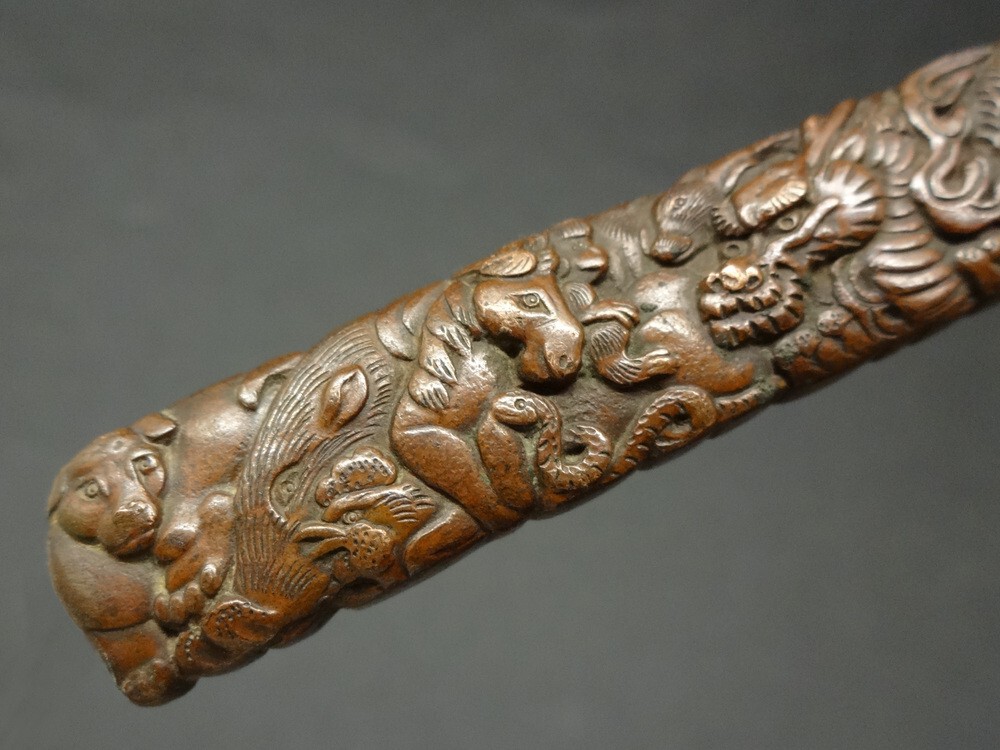
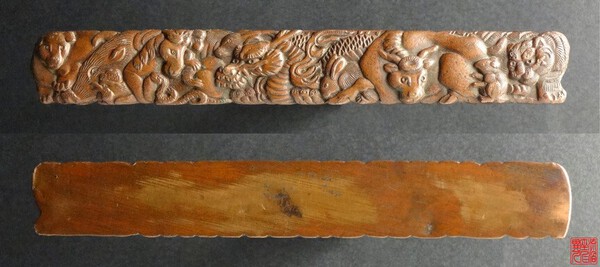
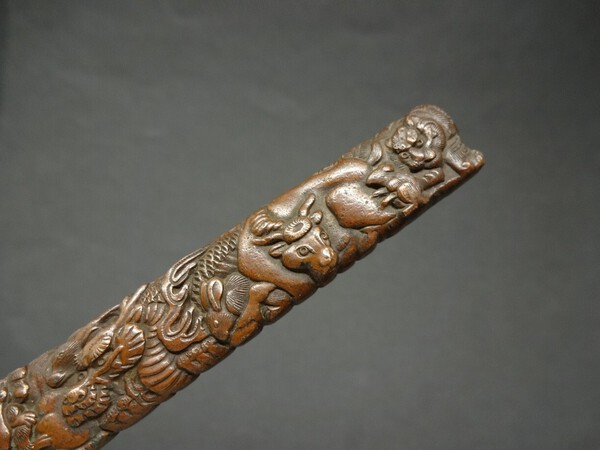
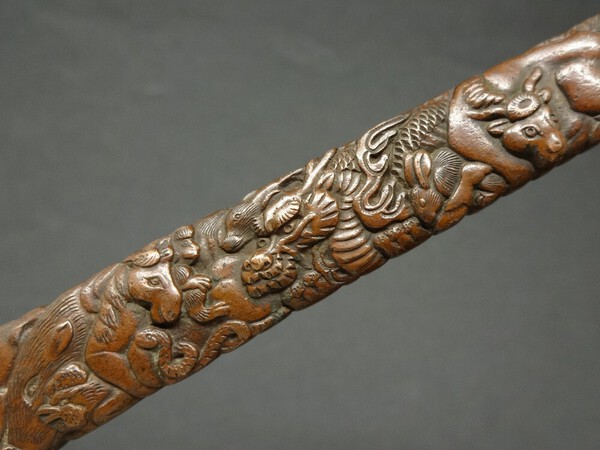
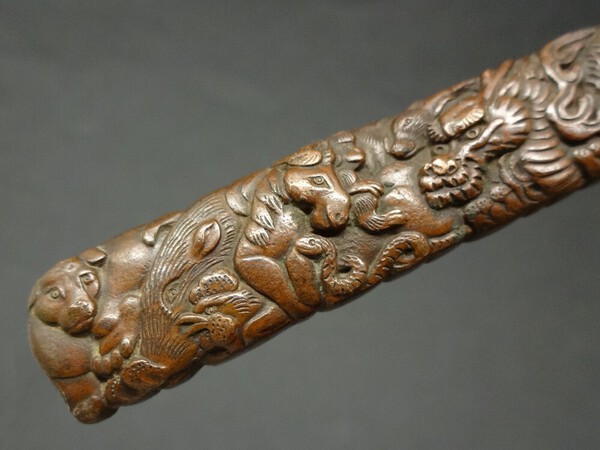
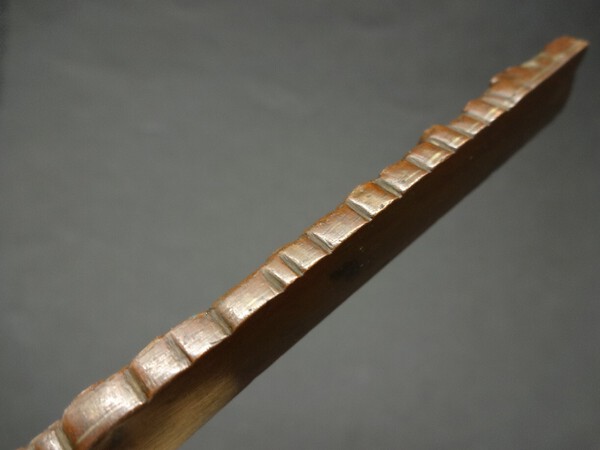
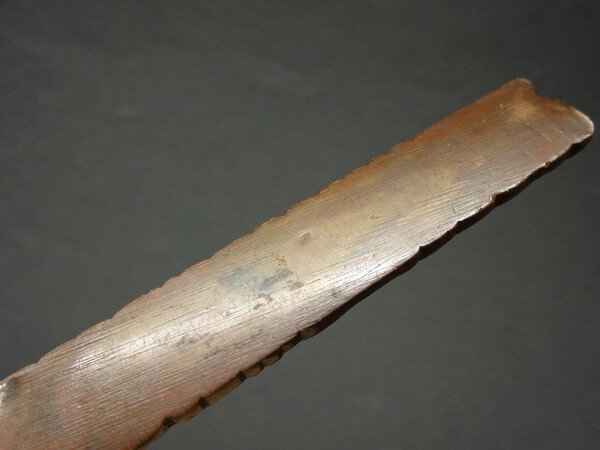
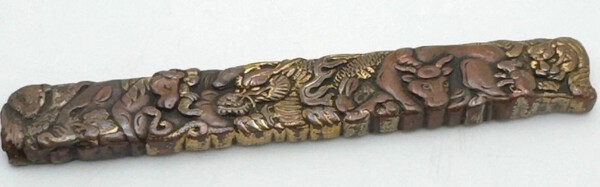
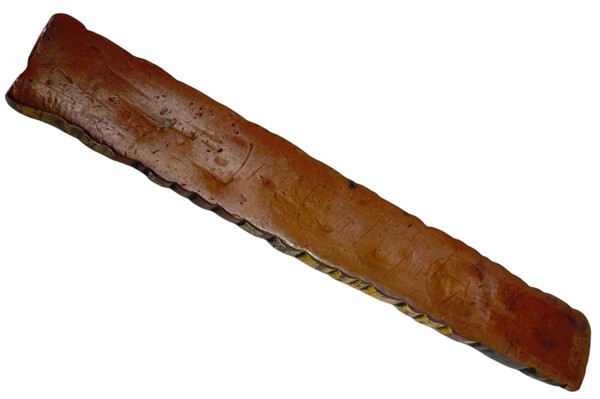
Dear All I have recently found this kozuka on a vintage sale at the Kitano Tenmagu shrine in Kyoto (this is not the only piece I have found but that is for a future post). Dimensions 93.9 mm x 13.2 mm, 5.5 mm thick. Looking at it I think it can be dated to the late the Edo period, maybe beginning of Meiji. But this is a gut feeling. I am completely at loss about the attribution, if any. Do you have any idea? I have also found an almost identical piece online, a little smaller (3.5") and with gold iroe. Any information is welcome. Regards Luca
-
Nice one Hokke, I didn't know it! Probably it is from another part of Italy. I intended another one... Luca