
Leaderboard



Popular Content
Showing content with the highest reputation on 10/26/2020 in all areas
-
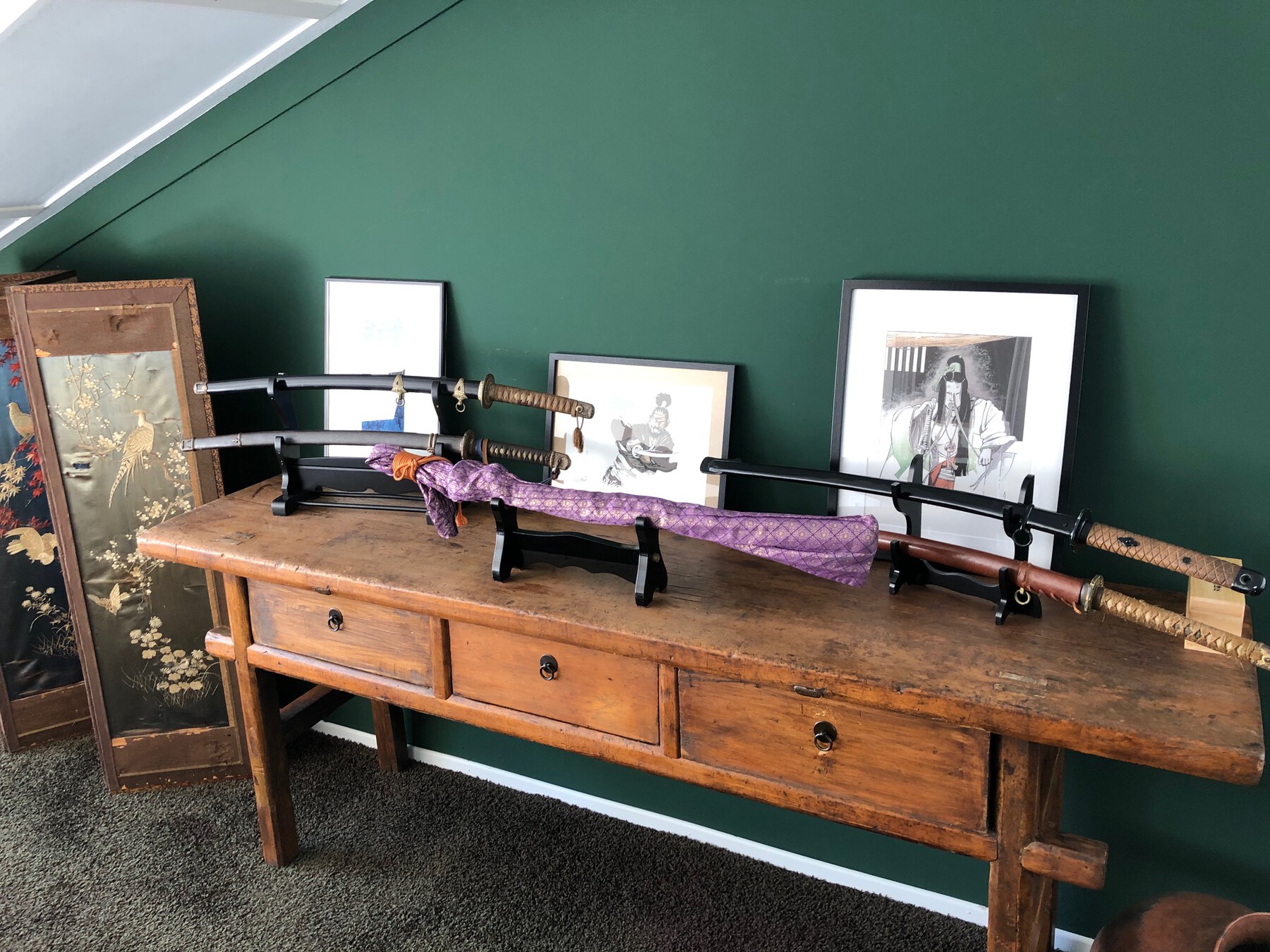
Hi all just used an old japanse worn out butchers table to display love seeing all you pictures, great initiatives have a great day erwin
 10 points
 -
I suppose it was a naïve question The samurai had been preparing for death for so many years but those involved in the 1st and 2nd wars were soldiers with the bushido spirit but not samurai When my mentor passed away just pre Covid I added this to his service sheet The joy of dewdrops Moto no mizu ni in the grass as they kaeru zo ureshi turn back to vapor kusa no tsuju I was asked to read it out but emotionally I couldn't but is was well received by friends and family4 points
-
Nice sword, nice patriotic phrase...sorry I can't add to the translation...that is definitely Morita san/Moriyama san task. I do have two swords with sayings on them...not death poems though, more 'optimistic' in tone...might be of interest. 1. Gendaito by unknown smith Seisui of Tokyo dated 12th Jan 1944. In Rinji mounts. LH column in sosho script says " Ippo susumrte tsuki, ippo susumite tatsu" (one step forward thrust, one step forward slash). Might be a kata from a sword fighting school. 2. Privately ordered Gendaito by RJT smith Okishiba Yoshisada of Osaka. Slogan is "Jin Chu Ho Koku" (loyalty, patriotism). A fairly common saying...I have seen it on Meiji era tangs/flags etc.

 4 points
 -
My Kato Jumyo special order Gendai-To, has a poem of resolve engraved on it. Apparently a verse from the philosopher Rai San'Yo.... Translates to (I think)....... "Even in the deepest swamp, you are obliged to your country". Maybe some of our Japanese speakers could confirm this translation.

 4 points
 -
You find some poems in that book. The nobility of failure by Ivan Morris The longest chapter is about WW2 Kamikaze with a lot ouf background that many never had heard.3 points
-
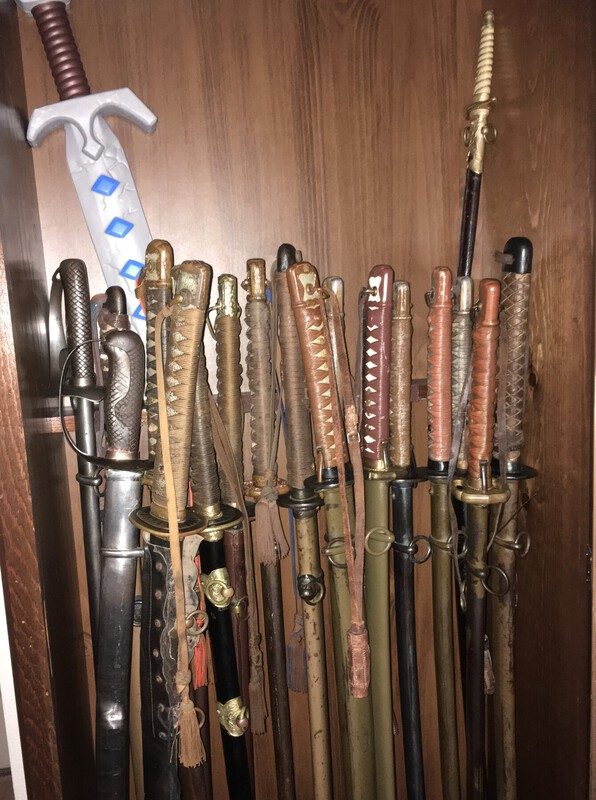
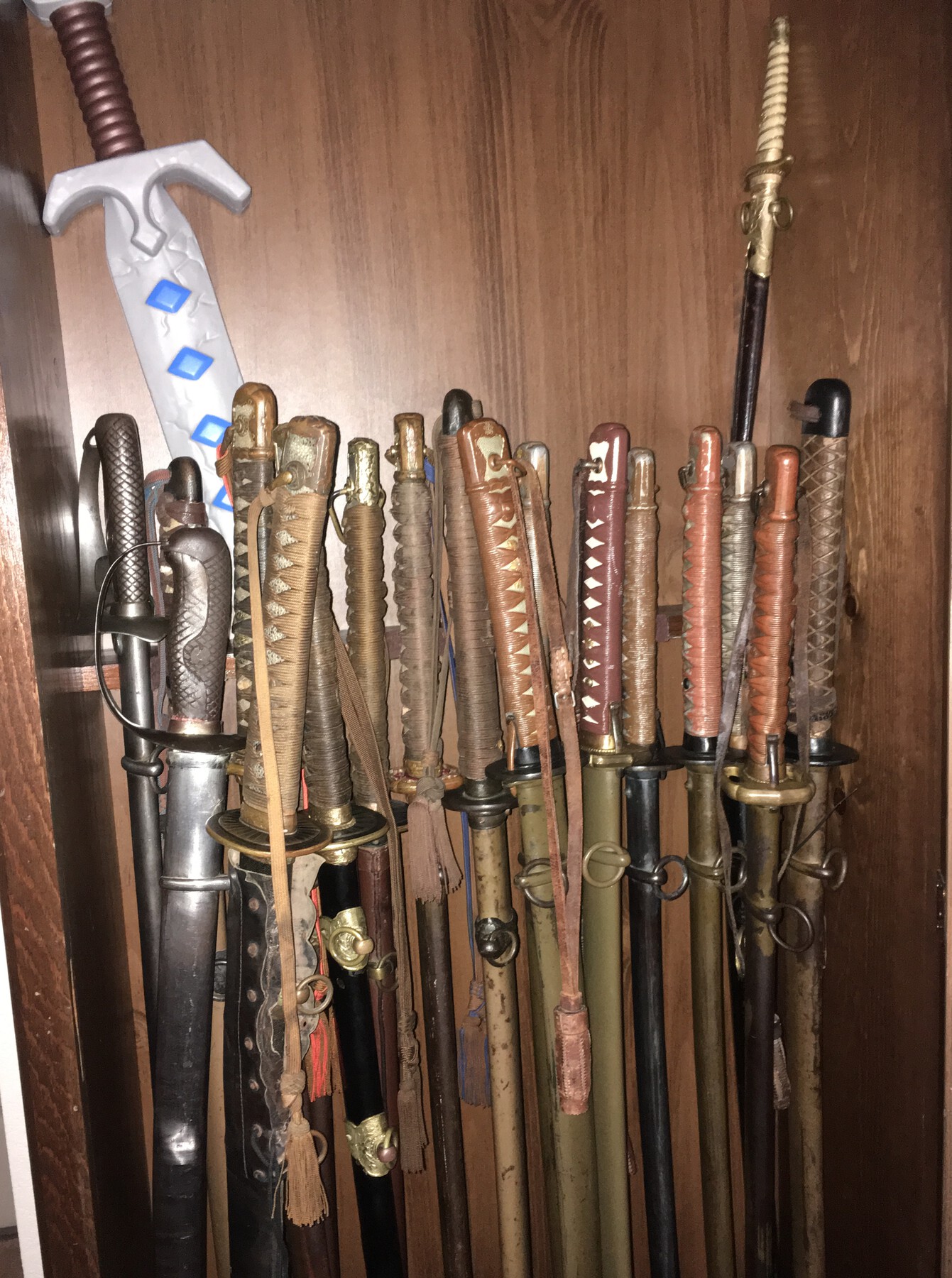
Mine are in my Dad's gun cabinet. Nothing classy.
.thumb.jpeg.e1c8b00e8e5f5e7f6487c37542860699.jpeg) 3 points
3 points -
For those who like tying their brains in knots and wringing them. I have a papered Yoroidōshi Tanto, signed 俊宗 which translates to Toshimuné, I think. It was papered Tokuju in Showa 43 by the NBTHK, but the Mei does not look strange in any way. The hamon is typically Mino but I cannot find any Toshimuné smiths recorded from Mino. The Kanji 宗 Muné and 俊 Toshi were used by some Kotō Mino smiths, for example there was a 正俊Masatoshi in Muromachi Sakakura/Seki. There were at least two Bizen smiths and one late Edo Tosa smith by that name but why would any of them create a tanto with a Seki hamon? If it is Gimei, why insert a lesser known Mei? Judging by the healthy Kasané it should be Bakumatsu, methinks. Simple Meikan moré? Did any Mino/Seki lineage smiths forge Sanbon-Sugi in other provinces? "Ladies and Gentlemen!", uh.... er, I mean, "Folks! The floor is open!"


 2 points
 -
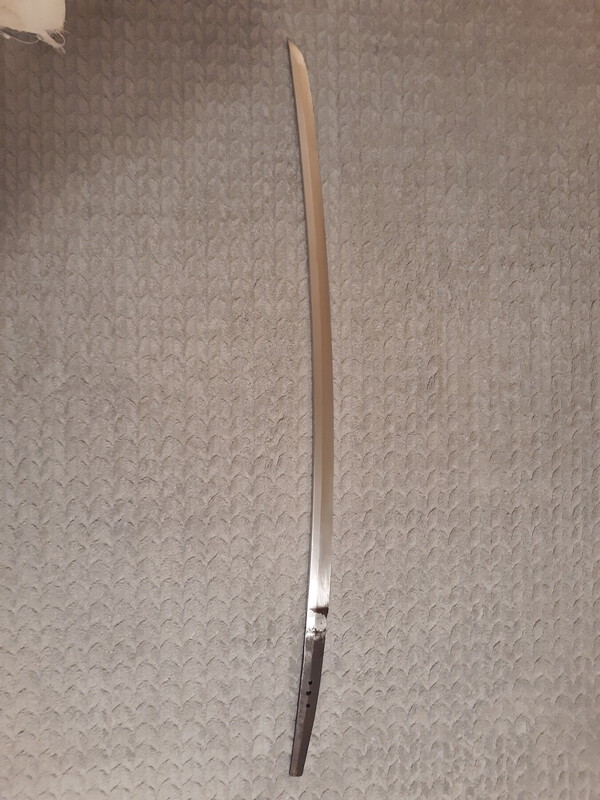
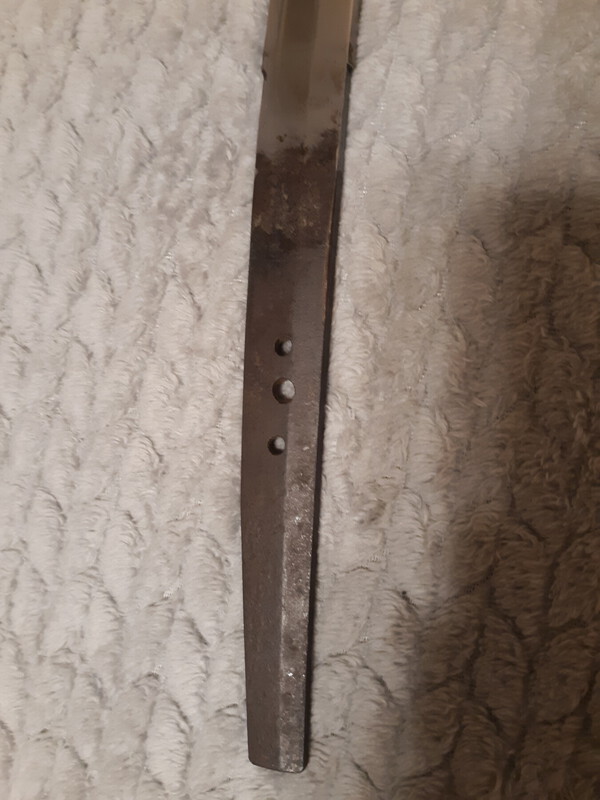
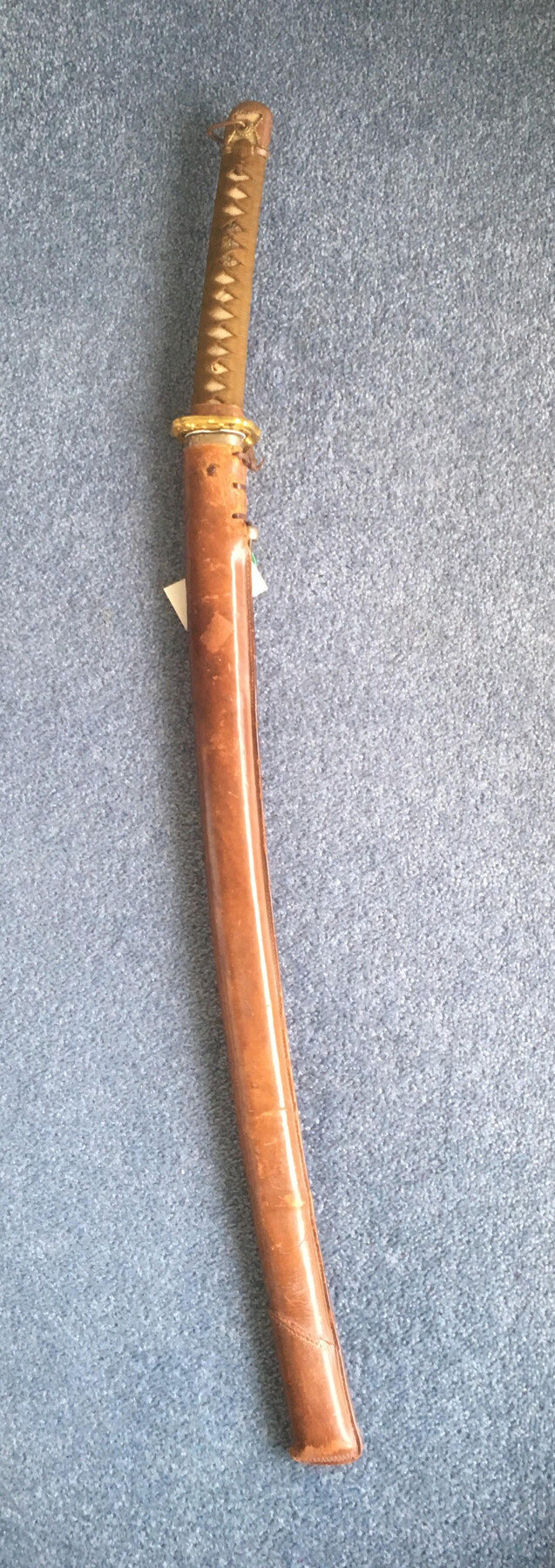
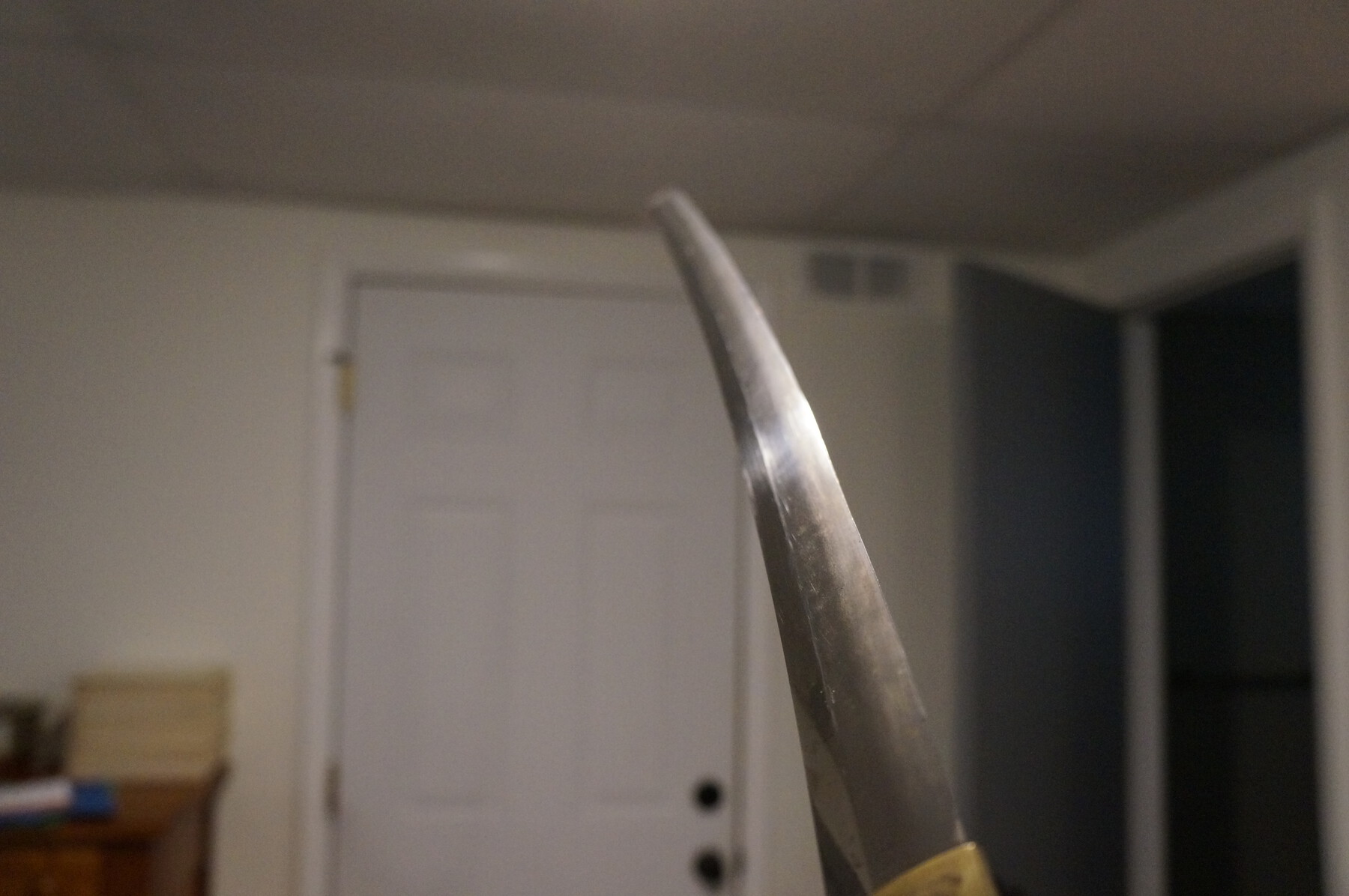
So I picked up a Katana mounted in WWII Type 94 Koshirae, I got curious on the blade itself and I need help putting a rough date on the blade. It is a mumei, so unsigned. I'm sure the blade itself dates before WWII, it has the steel grain, Hada, and a Hamon line. Is there any way to date this? The Hamon is very difficult to see, I assume it was mistreated in the past. Sorry, this is my first post so m still fairly unfamiliar with the site.
 2 points
 -
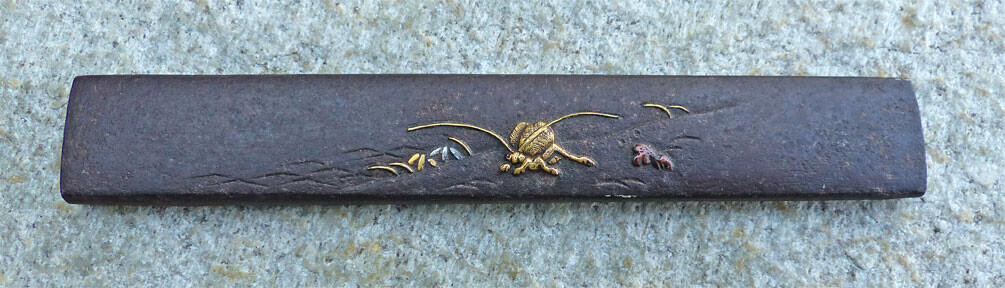
Here is a simple iron kozuka in gold, silver and shakudo. I have always liked the bug.

 2 points
 -
Taka-niku refers to the curvature of the vertical plates (hagi-ita) a helmet is composed of. This construction goes back to Yoshimichi and was adopted by Saotome smiths. Also seen sometimes on helmets of the Haruta school and later then also by some Myôchin smiths (very simplified explanation!). Example:
 2 points
 -
My bugs

 2 points
 -
Hi, Chris, I think they are paulownia (Kiri) leaves presented as 3-5-3 flower kiri mon as in your picture above.Silver sprinkles represent the flowers. Lot of variations of kiri mon are shown in page 249 in Gary Murtha's book Japanese sword guards.2 points
-
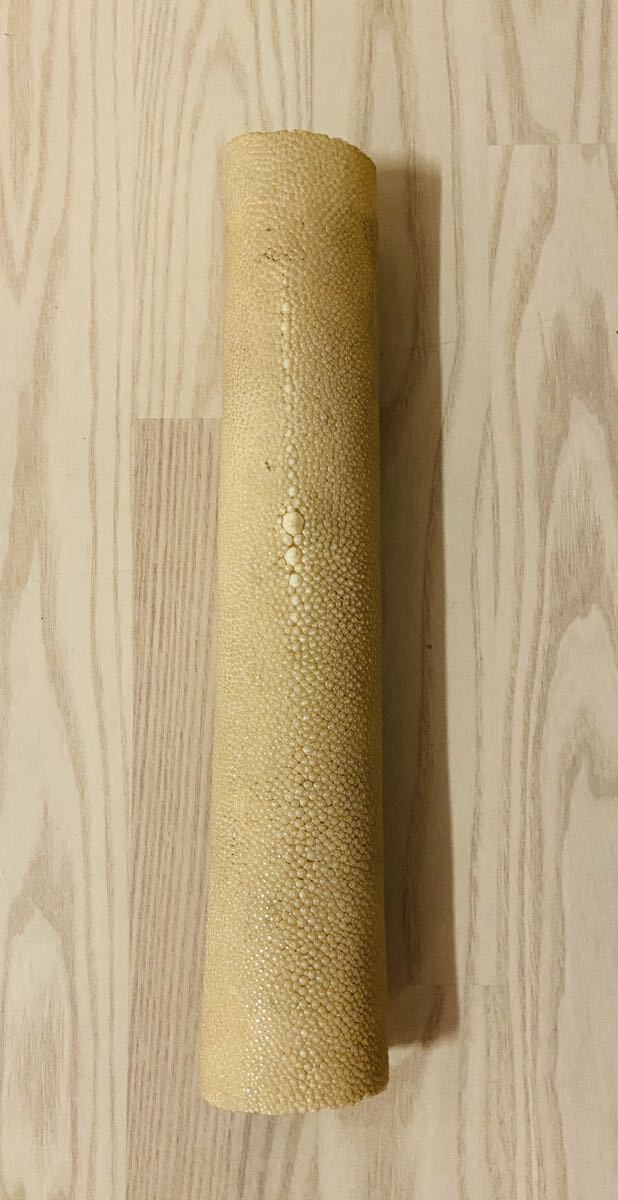
I found this old samekawa. What is interesting is the inner side.

 2 points
 -
Dear Piers. Firstly, I think you are absolutely correct in identifying this as a late Shinshinto work, although you don't give us the nagasa, the sugta, the kasane and the feel are all indicative of that. Jean is also spot on though perhaps understating the case. Mino smiths moved all over Japan in the Shinto period and many carried on with the work style. Echizen Seki and Inshu Kanesaki school for example. From what I can see I wouldn't have called the hamon sanbonsugi however, perhaps more togari gunome, which still has a Mino feel. I think a number of smiths got a bit lost during the Bakumatsu, perhaps those just starting up and not yet enjoying a reputation in particular. I like the koshirae. All the best.2 points
-
« Did any Mino/Seki lineage smiths forge Sanbon-Sugi in other provinces? » certainly Piers, there is no reason why they should not exist. The Diaspora of Mino smiths in Momoyama/early Edo was such that some must have brought sanbonsugi along in their luggages2 points
-
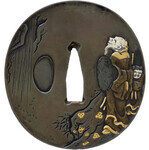
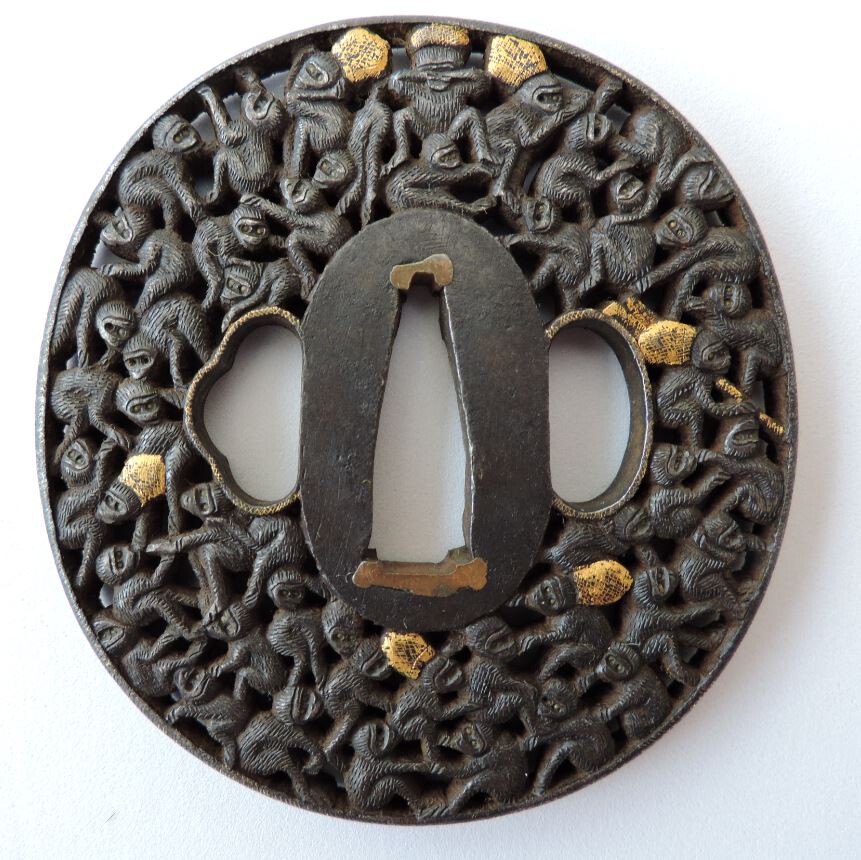
Hi John- Frontside attached. I try to limit to 15 to 20 tsuba, and it was not in my 2 main regions of tsuba interest. Off to Bonhams it went. I do think I first offered it on NMB back then. Back to the monkeys...
 2 points
 -
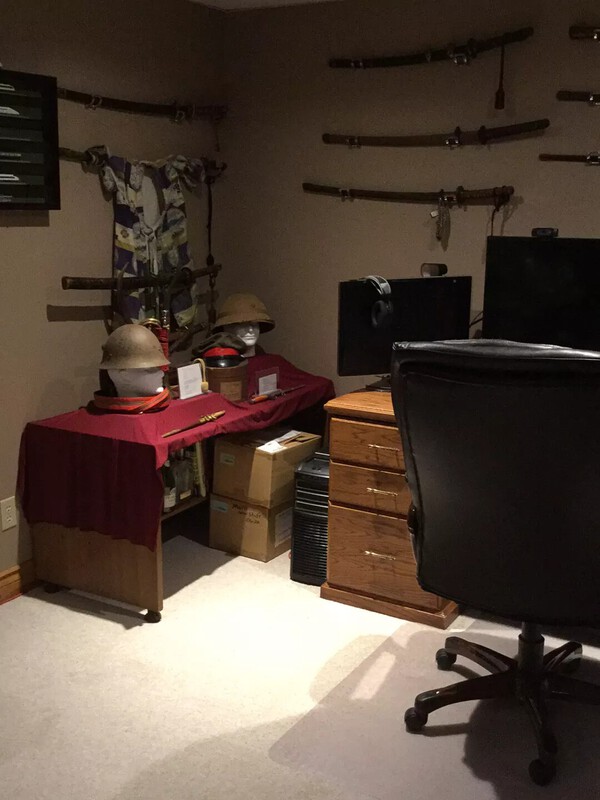
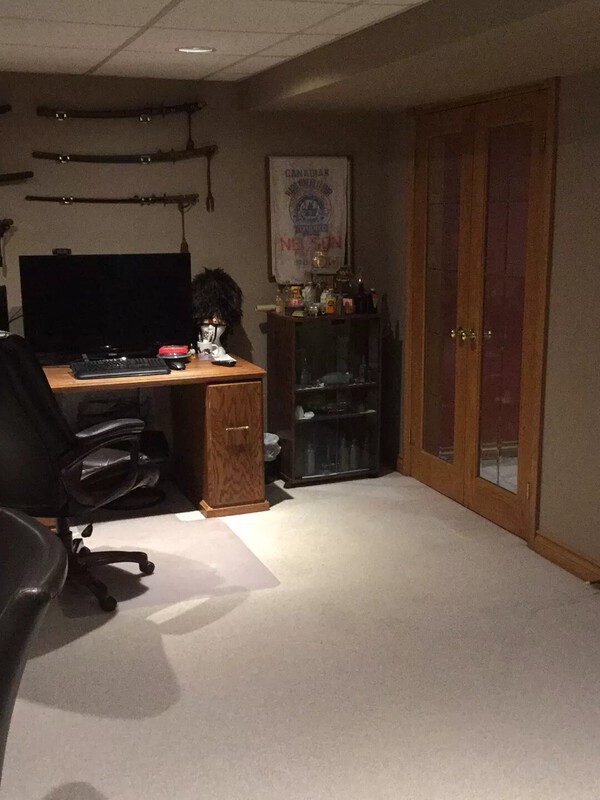
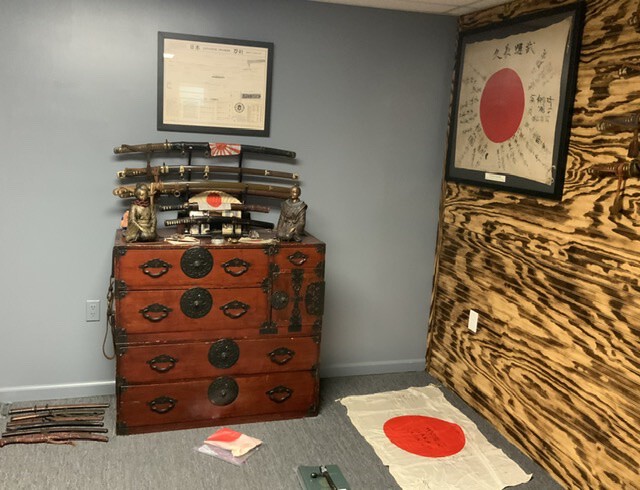
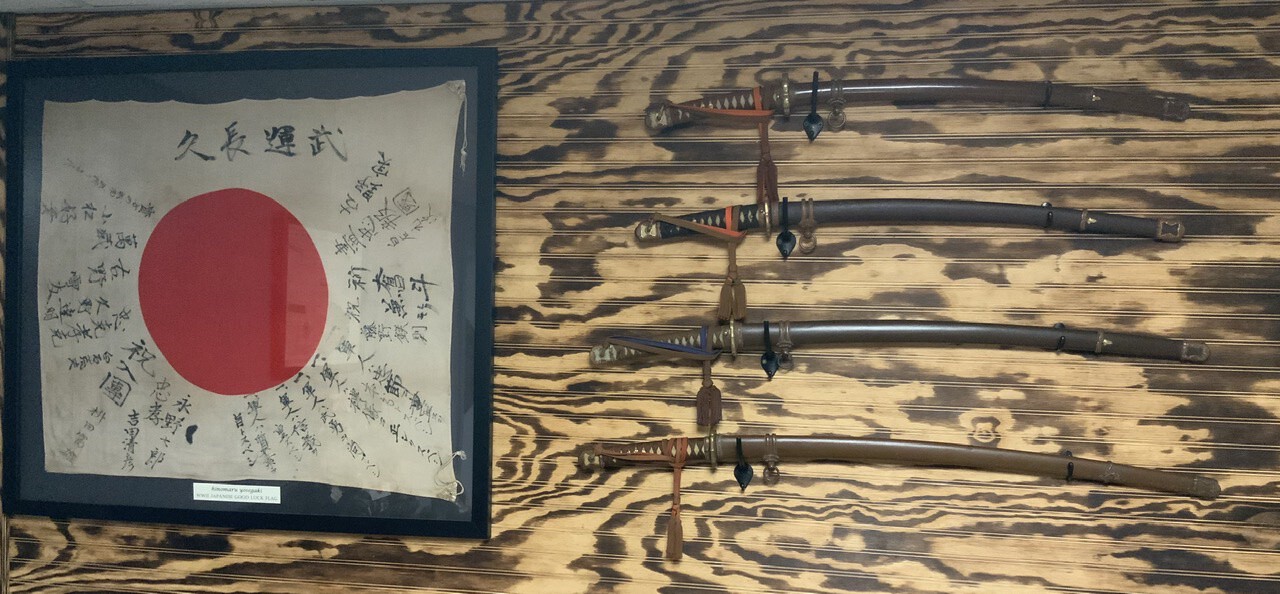
I have a set up in my office, there is more to the left... But it is a work in progress...
 2 points
 -
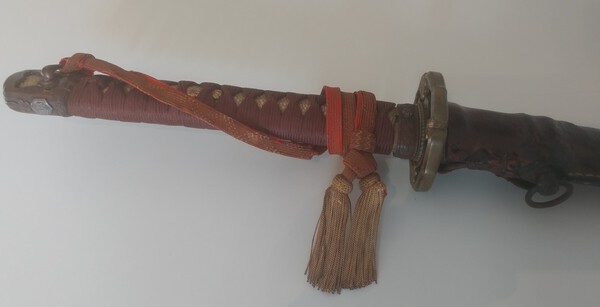
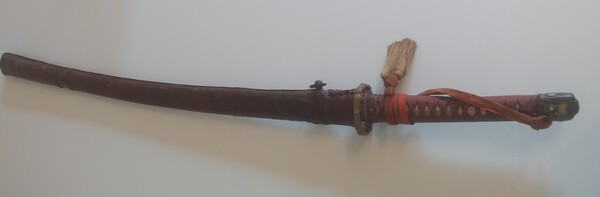
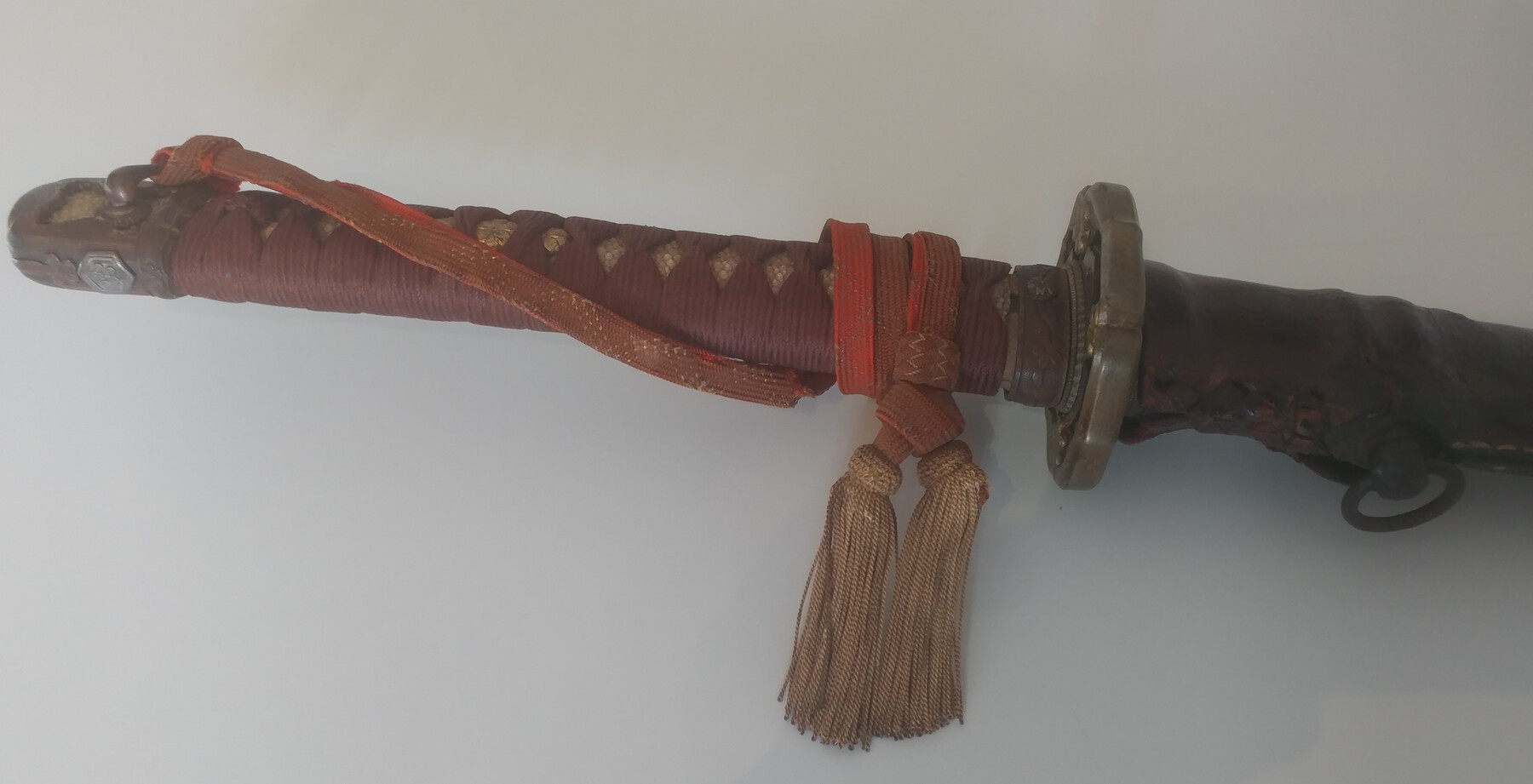
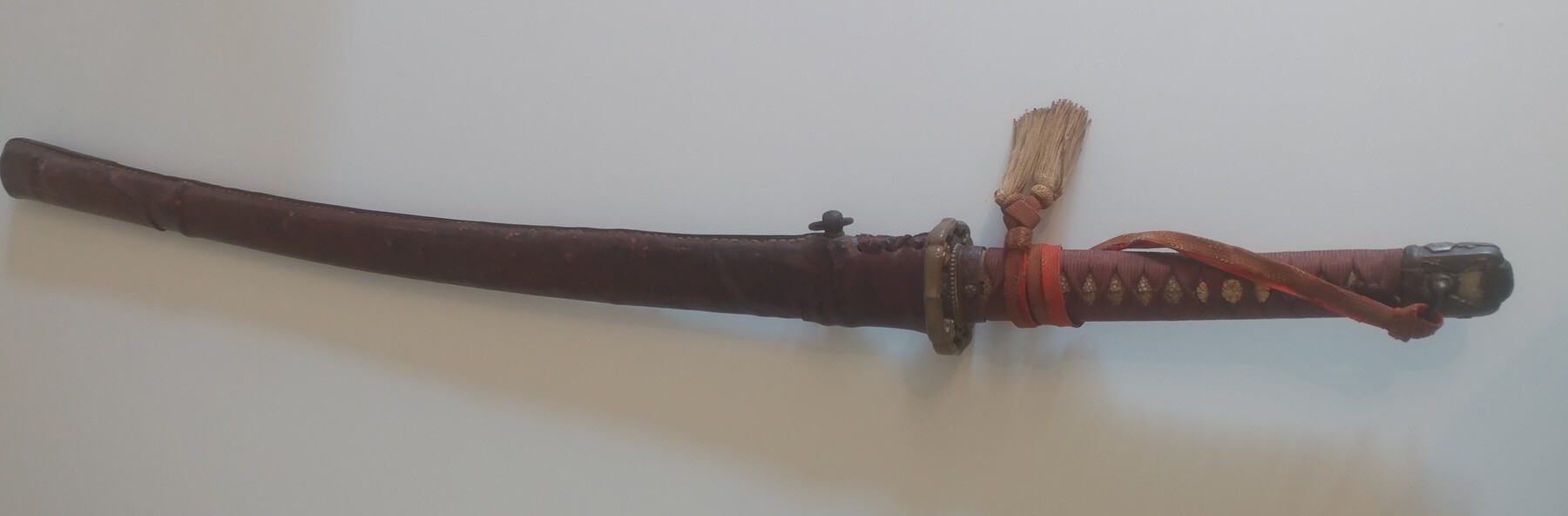
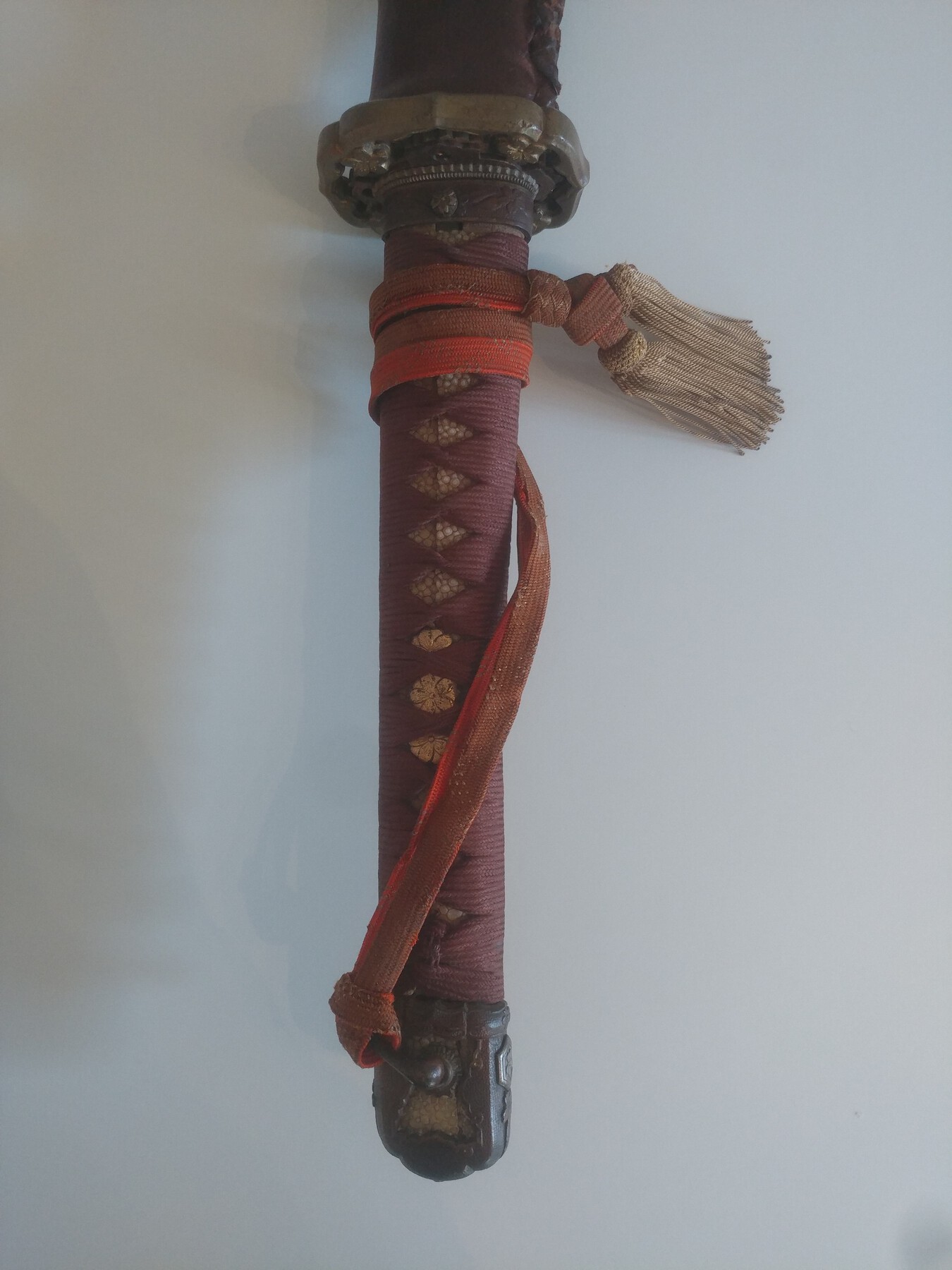
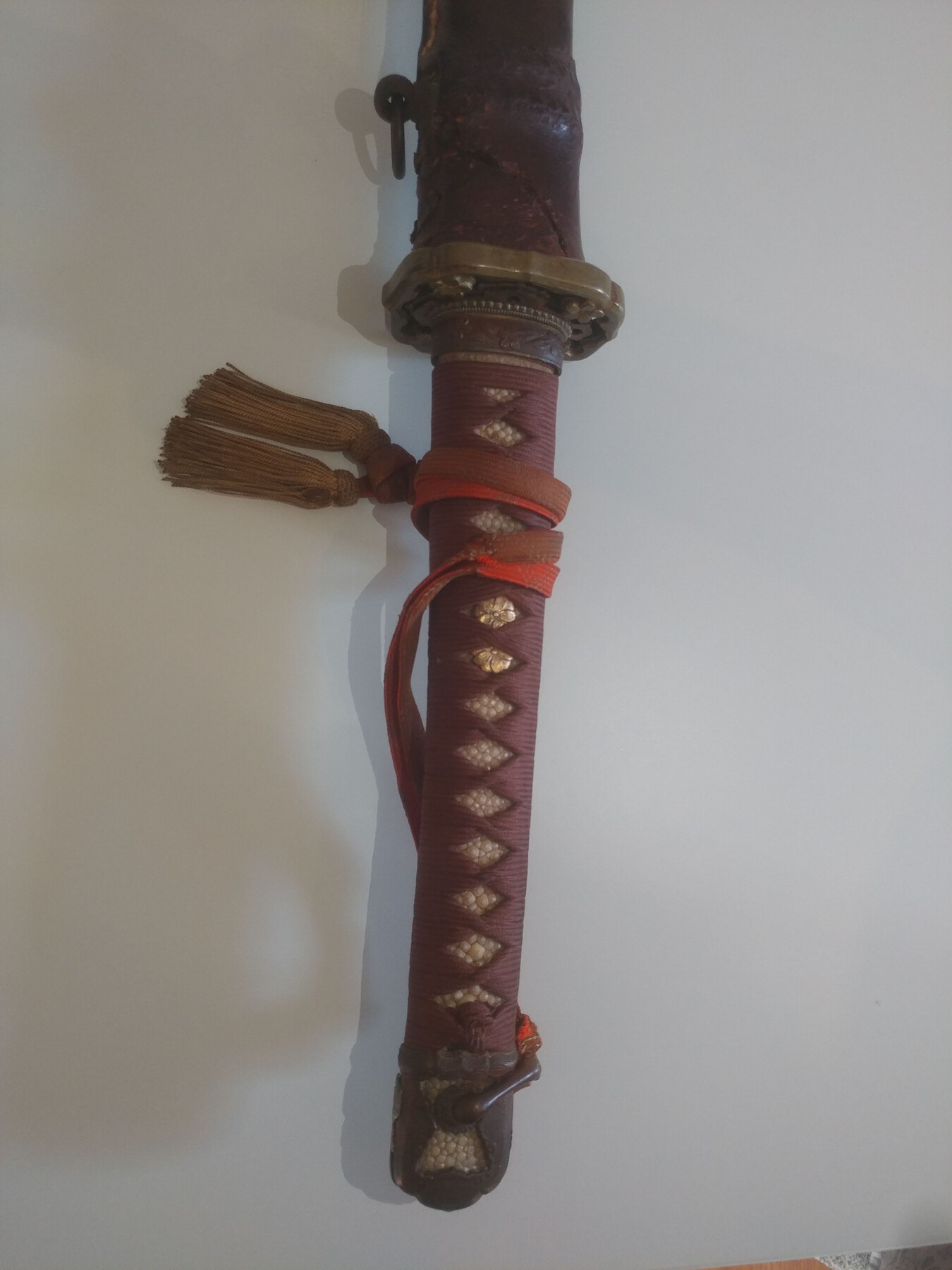
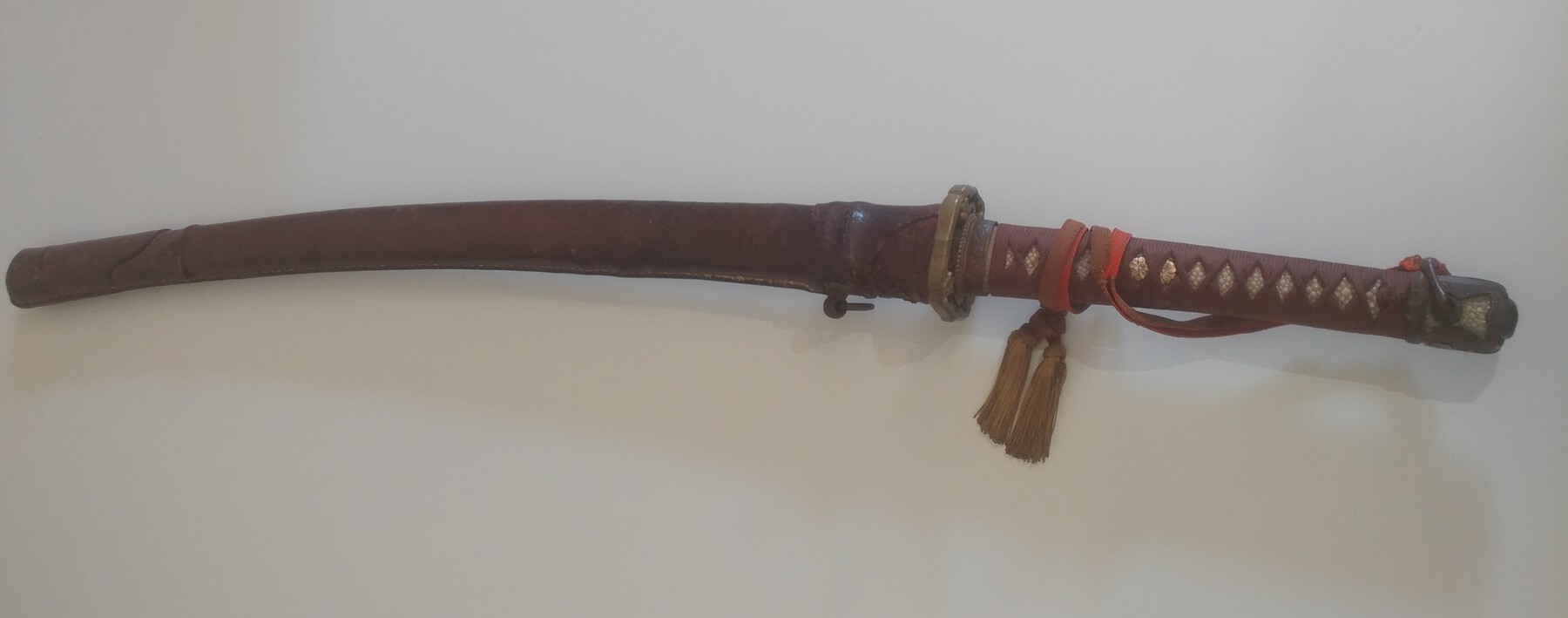
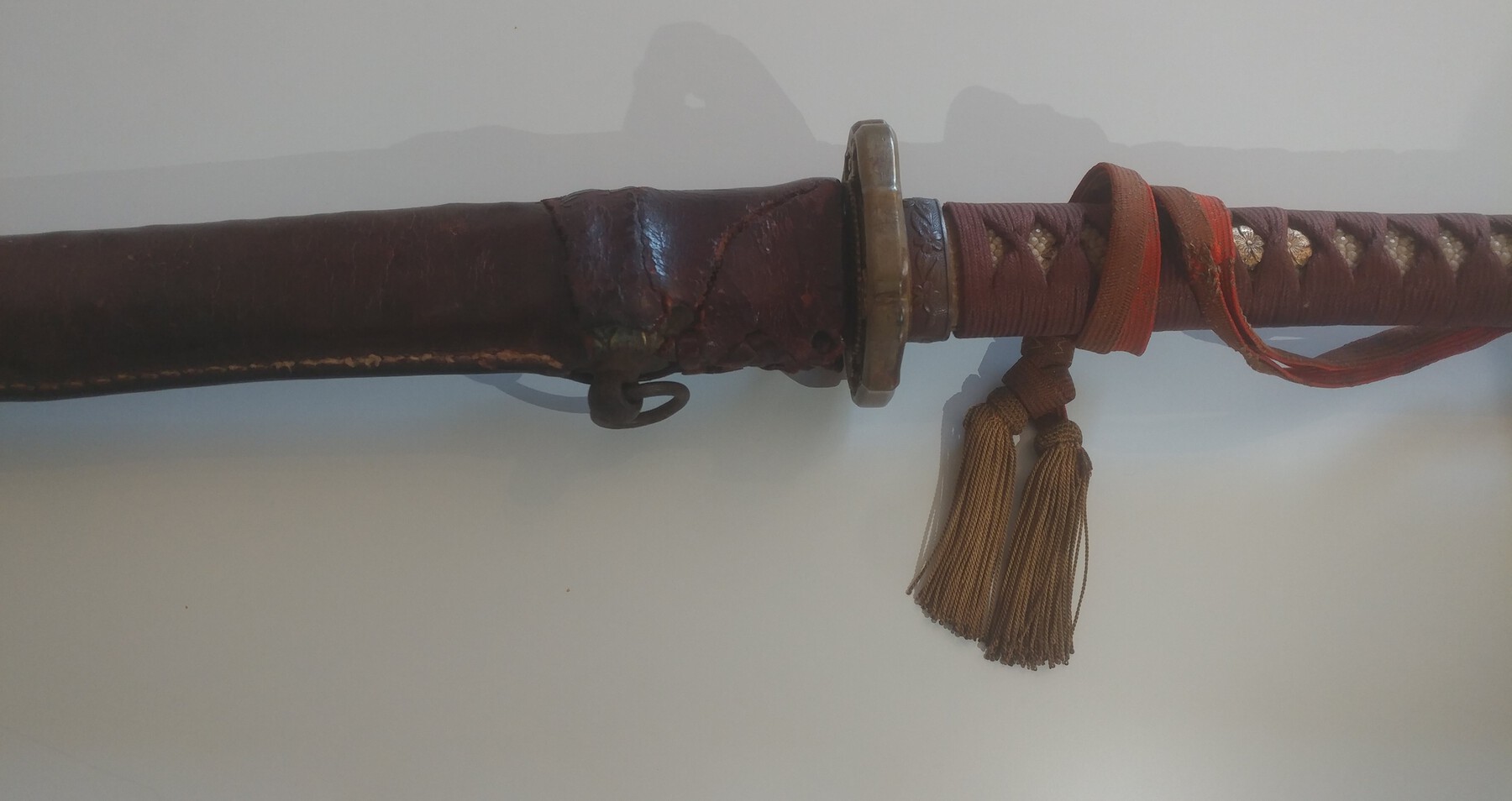
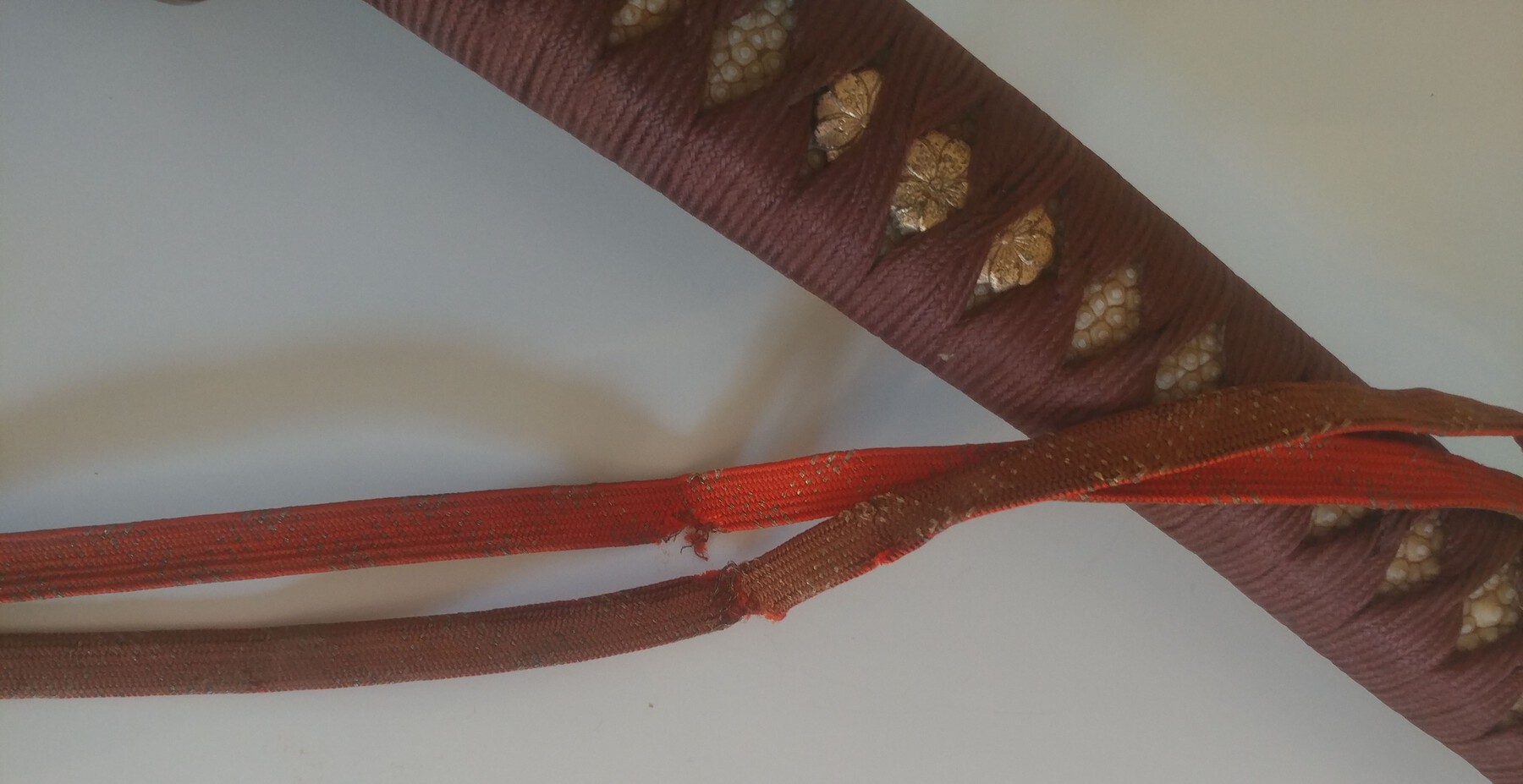
From my collection is an interesting early Shin Gunto Koshirae with high quality fittings, family Mon and General tassel. Sadly there is no provenance, this was purchased from Doug at Gunto Art Swords listed as a General's Koshirae found in Japan with a different General tassel attached. The current tassel is not original to the sword but is a good match patina wise. Anyway, I have enjoyed it for awhile and it has a few rare details that are of interest to collectors like the Kabutogane which is a reused Ishikuze (drag), this feature is listed in the Fuller & Gregory book (see pic). As there is no real provenance I'm listing it as an interesting early koshirae with worn General grade tassel, the tassel has seen better days and has some fraying but is authentic.

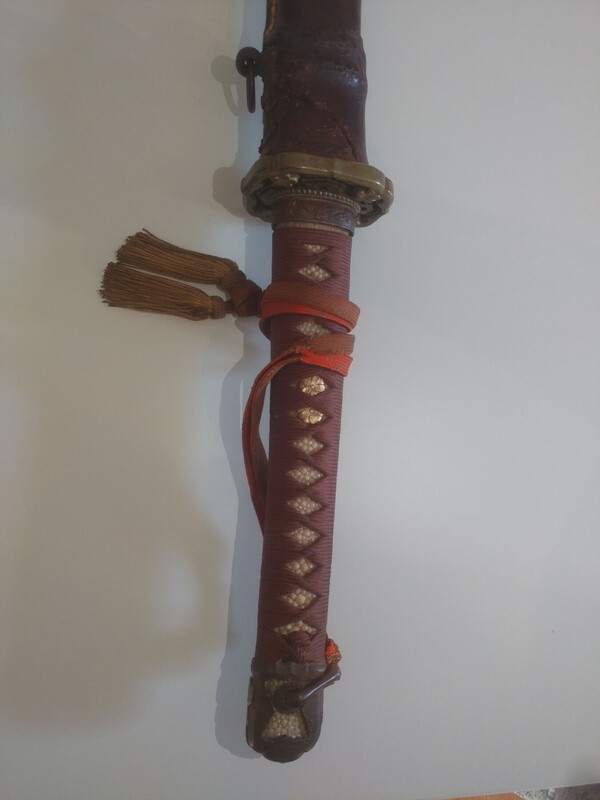
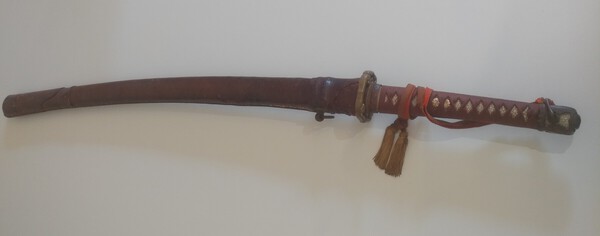

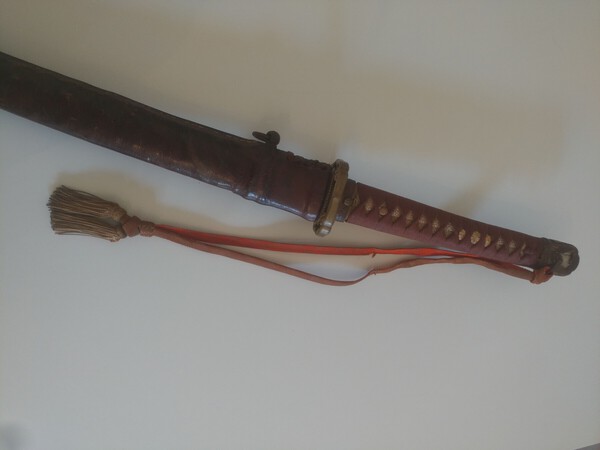
 1 point
 -
I am bit ashmed that I haven't participated in the online kantei yet (nor sending the card either for a long time)... However I got the TB magazine on friday and got my guess in on saturday. Like Ted said above in the spring this online form is a nice modern step by NBTHK.1 point
-
Rough jigane with Masame, periodic gunome, typical Mino, late Muromachi (seeing nakago would confirm the age)... I don't think any shinsa will go further than just copy the signature and declare it authentic. There are plenty of unlisted smiths. Also late Muromachi had Mino-Bizen styles going around quite a lot. You see Kaifu blades which are Naminohira, but there are also Mino ones. I am sorry to say something quite controversial, but I don't know why such blades need any papers. Its like one constantly see people showing with pride TH to ko-kinko, and I always have the question "what else did they expect?". Ok, maybe a small chance for ko-Mino. Kirill R.1 point
-
Like this I hope?

 1 point
 -
Stephen does a great job if you use his service. Can personally vouch.1 point
-
This could explain why the plates don't show signs of taka-niku, Luc - as one would expect with a Yoshi-ryu kabuto.1 point
-
I have in the past shipped for members. I do charge a small fee. I DO NOT BUY WITH MY OWN MONEY then expect payment. Id have have money in PP then refund if not won. I havent shipped a sword out of USA for some time up to you to give me correct shipping codes.1 point
-
Geraint, many thanks for your thoughtful answer. The Nagasa is 15.3 cm. Your interpretation of the hamon is interesting. I think I may be learning something. About the koshirae, there is a strange rectangular repair inside the Koikuchi, which may indicate that it once had a hidden coin slide. I have left it all with the Togishi to take out some ugly scratches on the mune. One of our NBTHK members mentioned that this type of Koshirae was popular after Haitorei. You could hide this inside against your breast inside your kimono, when people were forbidden to carry a sword. My sword sensei said little, except "why would anyone want to forge with this name?" He seemed to think everything (mei and aperwork) was legit. I guess that the blade did not excite him! PS The Nihonto Meikan says Toshimune and Hidenobu are the same person, if this is who we are talking about. The registration card is shown as Hokkaido and dated the same year as the NBTHK paperwork above.1 point
-
Maybe I'm wrong...but I think there is only one person here who might be able to read that. @k morita if he finds this post possibly?1 point
-
Hi Piers, Apologies if this is a silly question, but is there not a detailed write-up in the papers that might suggest its origin? You did say it had Tokubetsu Juyo papers...1 point
-
It looks to be quite old, perhaps 14th/15th century. For anything more informative we will need more detailed shots of the entire blade. Could you also please share some pictures of the Army mounts as well?1 point
-
Thanks for your help with the translations👍 //Robert1 point
-
The top right writing looks to be 三菱商事 - Mitsubishi Corporation.1 point
-
Hi Steve, Sorry to be picky but isn't that the ryou kuruma cut - so a single body cut through the hips and then dotan barai - into the earth mound below.1 point
-
56 is a rather strange number for a suji kabuto. But also this is an indication of the Tohoku region, and the 16th century. Cherish it Howard, it is a fine kabuto.1 point
-
Well, the first think I recommend, for your reading pleasure, is NMB member Guido's https://www.militaria.co.za/nmb/files/file/36-collecting-nihontō-–-what-how-and-who/ That's really invaluable, when it comes to deciding what your Nihonto interests are. Net, I highly recommend NMB member Markus' free, on-line https://markussesko.com/kantei/ This is a university-level discourse on everything you want to know, but, it gets deep, really fast. For books, Yumoto's https://www.amazon.com/Samurai-Sword-Handbook-John-Yumoto/dp/4805311347/ is a great primer, and I really like https://www.amazon.com/Facts-Fundamentals-Japanese-Swords-Collectors/dp/1568365837 but the best source is https://www.amazon.com/Connoisseurs-Book-Japanese-Swords/dp/1568365810/1 point
-
The Yushukan Museum at Yasukuni has a database of last will letters, of which, it publishes one every month. The back numbers go back to 2018 https://www.yasukuni.or.jp/english/about/will.html1 point
-
Piers, meant Kanemoto, sorry. Misstype. I learned very quickly that there was no Kanamoto as listed in the sellers original description. Spent my recent bits of free time looking up Kanemoto signatures/mei and found out how many different ones there are amongst all the generations and also the variations each individual Kanemoto used. It's just a larger pool than I've ever found myself in up to this point. The Kanemoto pool is a very busy and ancient one...1 point
-
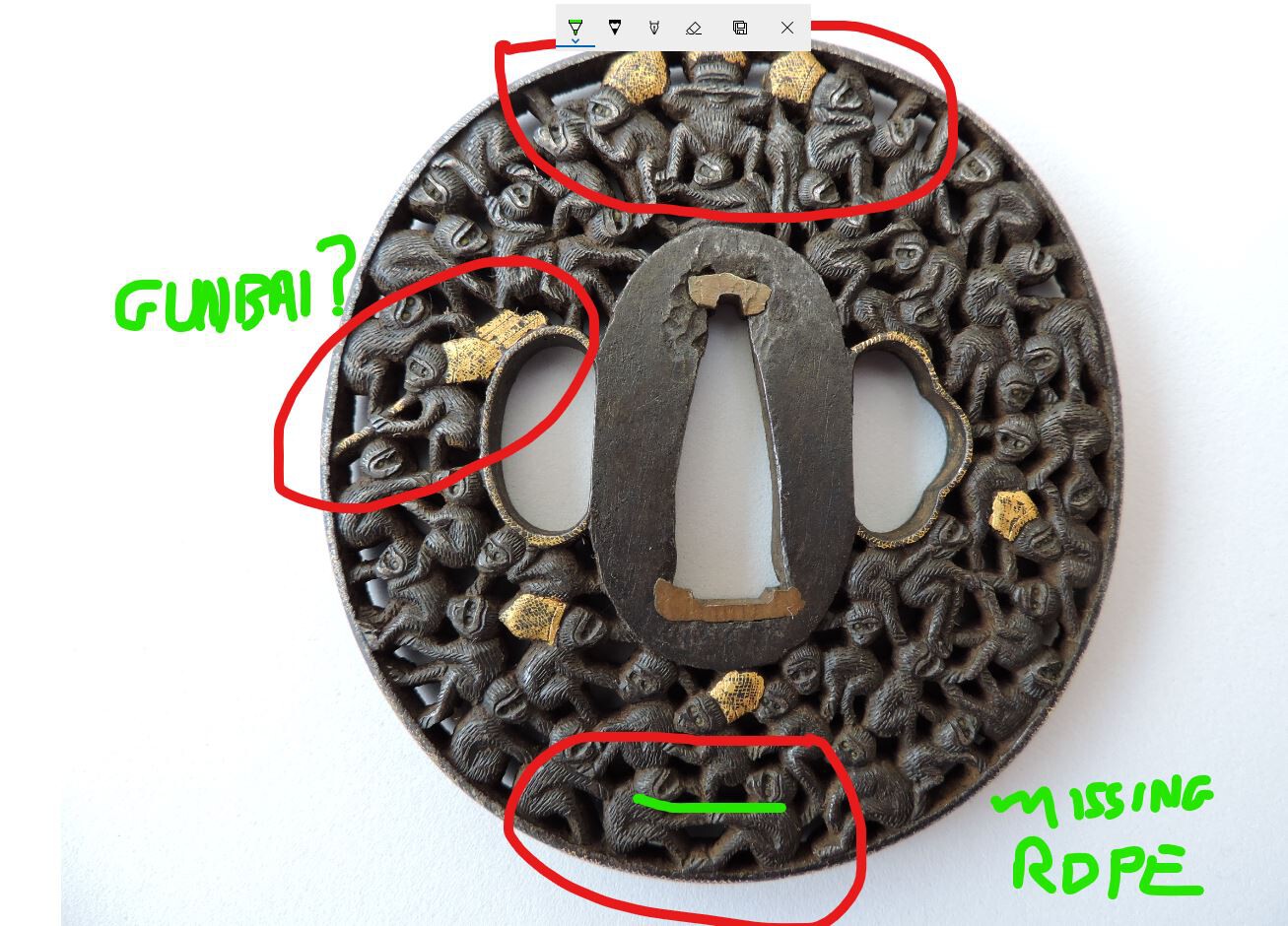
I thought that an unusual feature this 1000 monkey tsuba might be of interest. You might like to go straight to the pics and see if you can spot it. But first, for those unfamiliar with 1000 monkeys, some background info on this type of tsuba that I gleaned from literature (I’m no authority and much was taken from an excellent article by Robert Burawoy, Bushido, 3, number 1 p18-21). Makers: I believe that this design of tsuba originated with the three Mitsuhiro tsubako (father, brother and son) who lived in Yagami, a part of Nagasaki in the 18th and 19thC. Mitsuhiro I probably studied at the Nanban School in Nagasaki before moving to Yagami in Hizen province. The Nanban influence can be seen in the tsuba which is rather stiff and flat in design compared to Mitsuhiro II (regarded as far the best and died in 1823, aged 75) who’s monkeys are rounded and vary in both size and activity. Mitsuhiro III (died in the Meiji period aged 70) did not produce many works and these were like his father’s. Their works tend to be signed Hishu or Hizen Yagami Ju Mitsuhiro and they worked in both iron and brass (sentoku). This tsuba is mumei (unsigned) and may not have been made by any of the Mitsuhiro’s, as others copied their work. 1000 animal tsuba: I’ve seen tusba with both monkeys and horses, but there may be other animals in their designs. Monkeys are the most abundant and this tsuba contains about 40 monkeys, but had they been continued around the rim, as is common, there would have been about twice as many; but still far short of 1000. Therefore, many people refer to the design as 100 monkeys, but the Japanese description is ‘sen.biki.saru’ literally ‘1000 units of monkeys’. The Mitsuhiro’s obviously believed in marketing and stretching the truth (some tsuba are inscribed ‘sentoku kin wo mote kore wo tsukuru’, ‘made with sentoku’, but some believe they just used a cheaper brass alloy. Inventive marketing again!). Most of the monkeys just seem to be scrabbling around in these tsuba, but if you look carefully four groups are often involved in specific activities. Usually found at the top are the three wise monkeys (see, hear and speak no evil), as in this tsuba. In the bottom half can be found a pair monkeys sitting and facing each other with a loop of rope around their necks having some sort of neck wrestling contest (the monkeys appear in this tsuba without the rope). Another monkey can often be seen carrying some sort of baton, paddle or gunbai (as in this example) while another monkey is sometimes depicted as holding a giant peach (absent in this tsuba and I wonder if the peach is actually a tama jewel considering the Nanban influence on Mitsuhiro). If anyone has info on this odd choice of subjects, please comment. Although this tsuba is nicely carved it is rather flat, especially when compared to second generation work. The eyes of the monkeys seem to be inlayed with sub-mm spots of gold (a bit dirty to see clearly). Mitsuhiro I carved monkeys around the rim in a uniform manner, whereas Mitsuhiro II carved them in a variety of poses. This tsuba has a simple mimi with gold nunome cross hatchings, resembling examples of the I and III generation artists. So my evaluation is that the tsuba is quite skilfully carved and inlayed, but no way near the quality of Mitsuhiro II and possibly not by any of the other two generations either. However, this tsuba has an unusual feature (unique as far as my limited experience is concerned). Seven of the monkeys are wearing court caps highlighted in gold nunome and three of these are the three wise monkeys. Another is the one carrying the baton/gunbai and the other three seem be just part of the general melee. Any ideas why seven were selected? Although the three wise monkeys are of ancient origin they seem to have become famous after being carved over a door at the mausoleum of Togugawa Ieyasu at the Nikko Toshogu shrine (see pic). A gunbai (war fan) is the badge of authority of a commander and Toyotomi Hideyoshi (nick named Kozaru, Little Monkey) is also commemorated at the Nikko shrine. The rope wrestling and peach carrying monkeys are noticeable by their absence. In view of this I wonder if the tsuba was a special order from someone who did not like the Tokugawa’s and wanted to imply that Ieyasu, Hideyoshi etc. were a bunch of monkeys. In which case, I can understand why the maker did not want to sign this piece and be identified to anyone in the shogunate. Maybe my imagination is taking flight, so constructive comments welcome as always. Metrics: Height: 7.1 cm; Width: 6.7 cm; Thickness (rim): 0.45 cm; Weight: 106g Best regards, John (just someone making observations, asking questions and trying to learn)

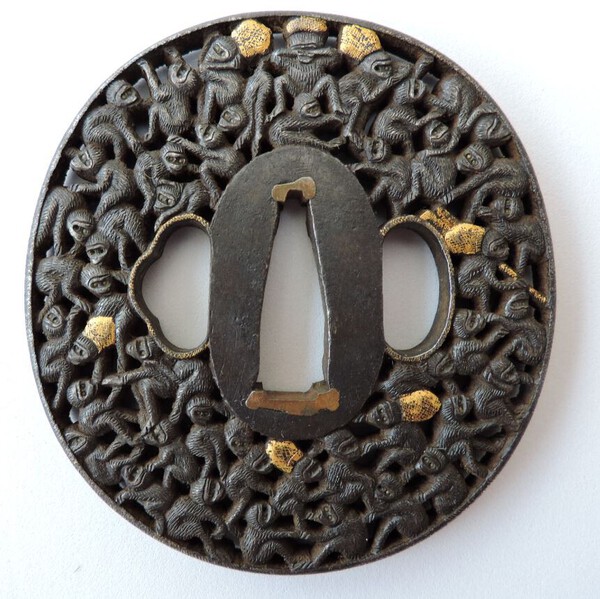

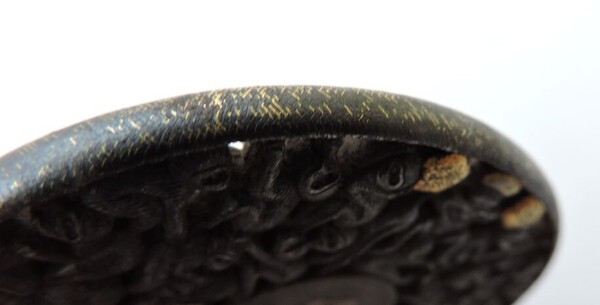
 1 point
 -
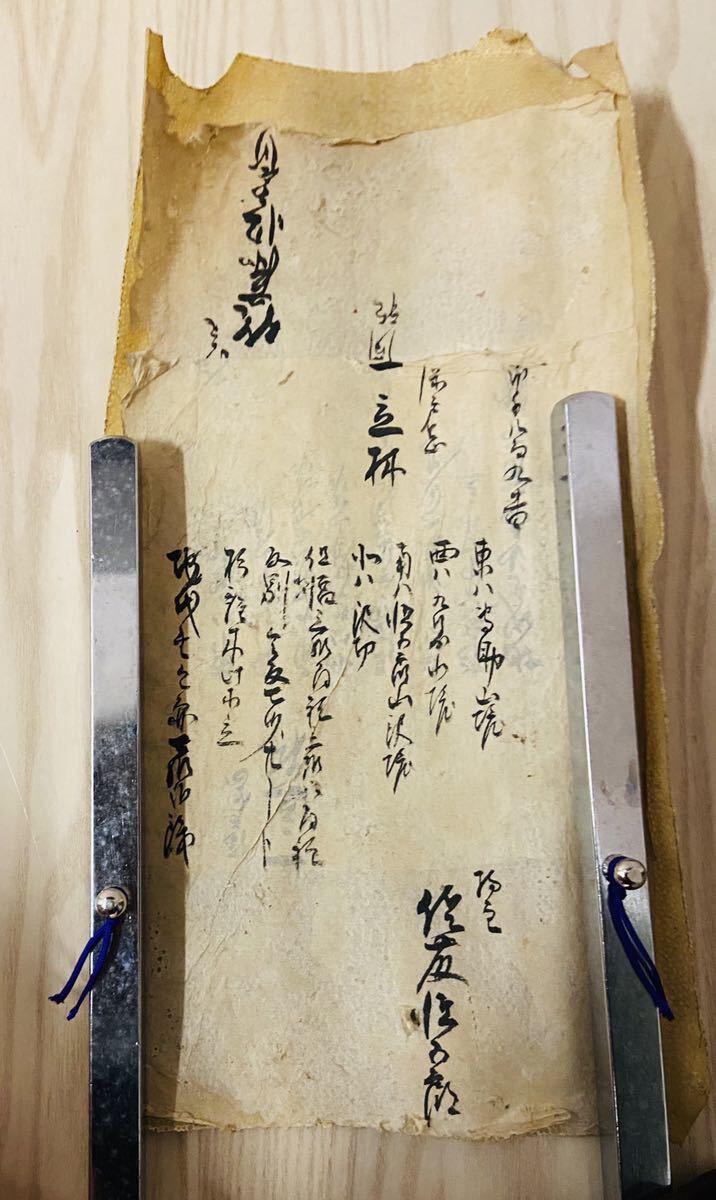
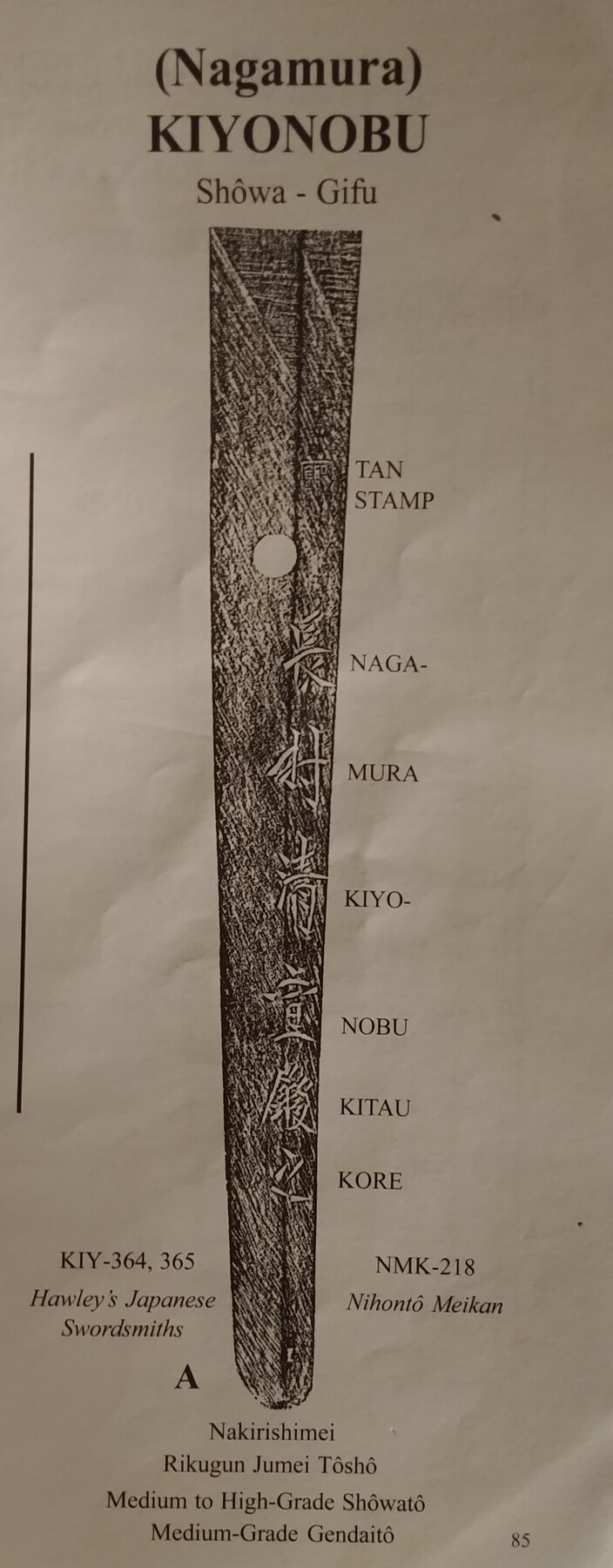
As Robert says, smith and date is 荘司次郎太郎直勝 Sōshi Jirō Tarō Naokatsu 天保十一年庚子八月日 Tempo 11 (year of rat) August 柳本越智敬隆所持 Owned by Yanagimoto Ochi Tadataka Cutting test inscription 同年十一月十三日於武州千住小塚原 両車土壇払山田五三郎様 Same year November 13th, at Kozukappara, Senjū, Bushū (Tōkyō) Two-body cut performed by Yamada Gosaburō1 point
-
I found this....a Kanetada gunto being surrendered http://guntoartswords.com/010802.html Mal1 point
-
Niel That is a cool Gunto! I think 深泥亦國恩 could be translated to Even the swamp is bestow from Motherland,meaning your country provide you everything, you should appreciate it. The translate you post"Even in the deepest swamp, you are obliged to your country", more go with 縱陷深泥亦報國恩. I like to hear the opinion from other members , Thomas, George, etc.1 point
-
There is a phrase in Chinese 落花隨風而逝-Falling flowers gone/die with the wind. Kind of similar meaning as the poem on the wood saya of your digger.1 point
-
A couple more

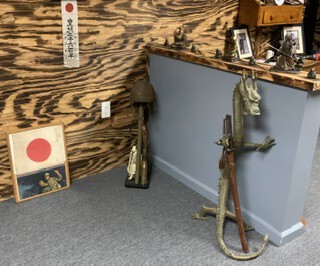 1 point
 -
Looks like Jiro Taro Naokatsu and a Tempo 11 date.1 point
-
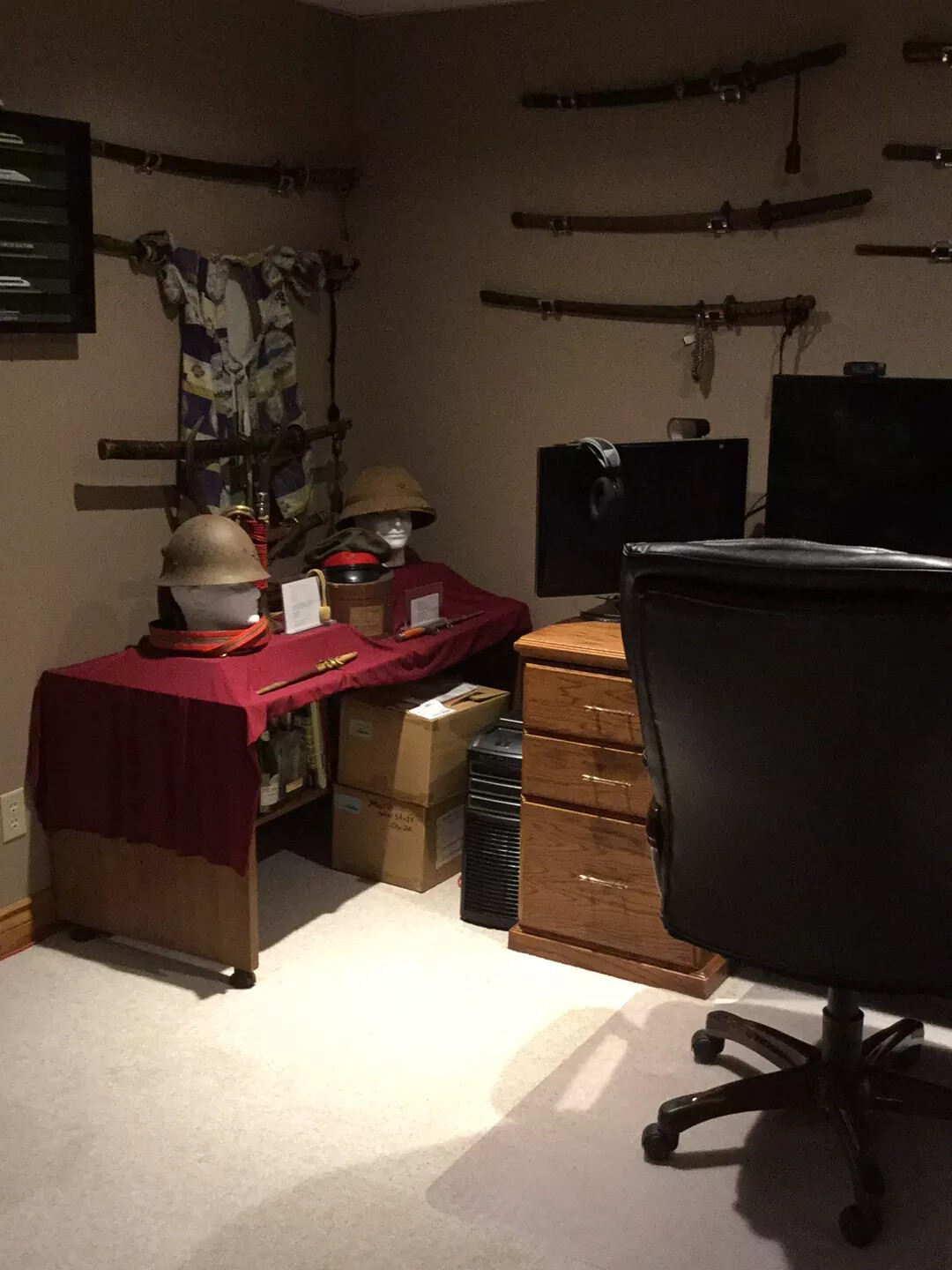
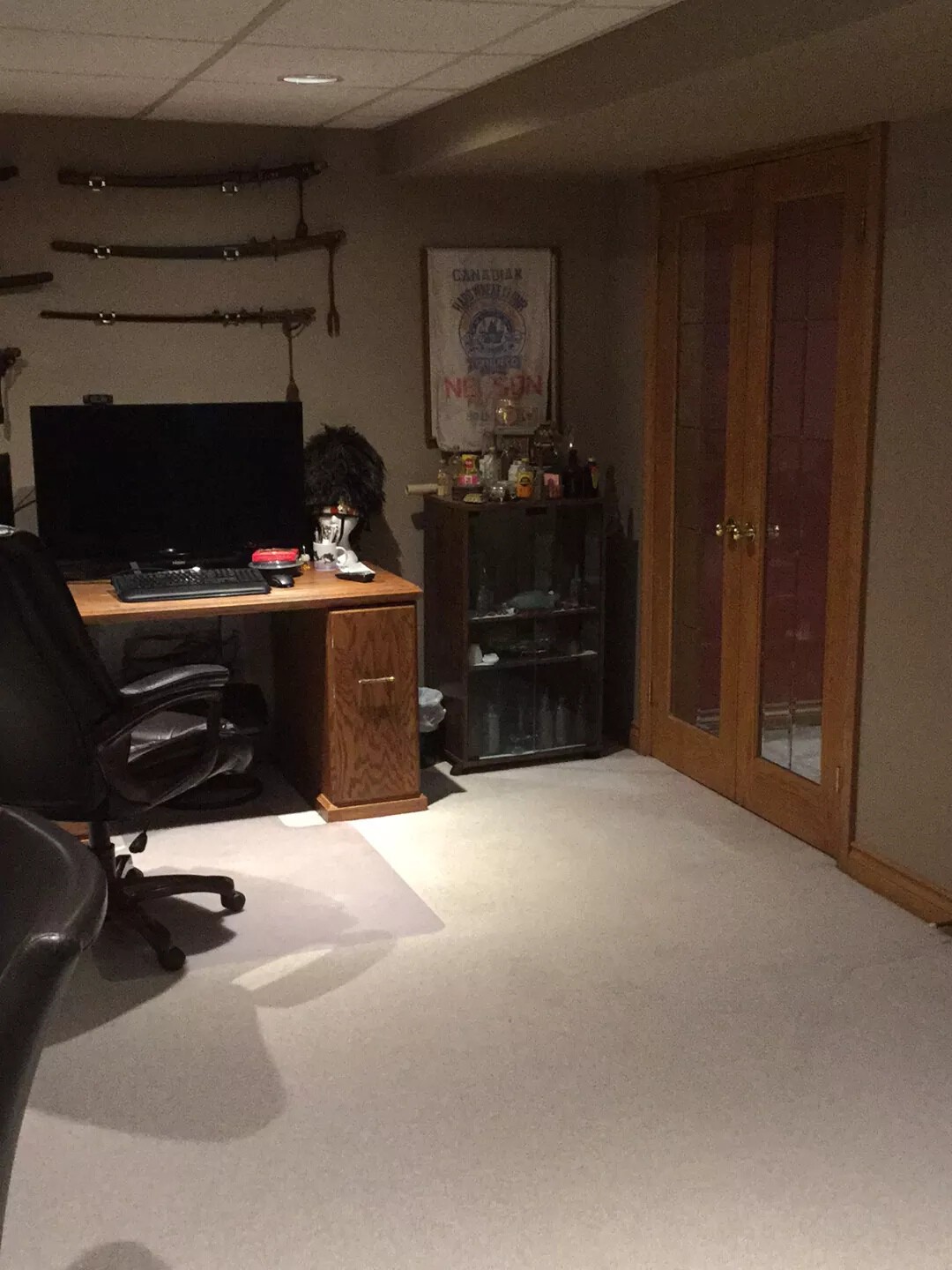
Here are a few pictures of a room that I am in the process of setting up in my new home. I always collected WW2 military and a few years ago said “ I just want one Japanese Sword” LOL . Look at me now. Hope you enjoy. MikeR

 1 point
 -
Dear Bruce. Matsuda Kanetaka possibly? All the best.1 point
-
Here is a picture of a few of mine. I find them very interesting, some very detailed, not usually inexpensive, and at least for me hard to find for sale. Hope you enjoy them and feel free to comment. If anyone would like a better picture of any individual piece please let me know. Thank you for looking. MikeR

 1 point
 -
here is some good read about the beginning of the hamon and utsuri. http://www.ksky.ne.jp/~sumie99/yakiotoshi.html a shinsakuto i have from the smith there shows the hamon beginning well past the hamachi in that yakiotoshi manner. the utsuri starts at the same point as well. very interesting to see a clean beginning of the hamon.1 point
-
The whole wakizashi status thing is a bit odd. Nowadays we tend to go with 24 + ins = Katana, anything under is a Wakizashi until we hit 12 inches and then it is a Tanto, but....... The Japanese army in WW2 counted a new purpose made blade over 22 inches as a Katana, and when under pressure in the late war happily took old blades over 21 inches. We also know of more than a few of these under 21 inches in military mounts. Back in the Edo period, a Wakizashi was legally limited to 18 inches and under, and later (but still Edo) further reduced to a maximum of 16 inches blade length. That is why you get so many swords made as Wakizashi, with that second mekugi-ana just a couple of inches away, altered to fit with the change in the law. Interestingly, the Chūshingura deliberately carried swords longer than legally allowed because they were about to make themselves outlaws anyway and the extra length would be an advantage in the coming combat. Personal opinion only here, back in the day the Daito was made to (or bought at) whatever length suited the customer, governed by his height, the intended use, his circumstances , and the school of swordsmanship he followed. As for the 24 inch rule, what a good way to save a lot of swords from the occupation government's policy of destruction, defining anything under 24 inches as a Wakizashi and except from destruction.
 1 point
 -
I encourage all NBTHK members to submit an answer to this. Enthusiastic participation is the only thing that will generate a motivation to retain it as a regular medium for access to education. In the past, I've heard objections about how difficult it is to navigate to and retrieve the transation, figure out what info goes where on the post card to submit an answer, get the right postage on the card, mail it. How much easier does it get? Submit your answers folks. Your willingness to respond and participate in the effort the Honbu has made to reach out to it's member in a difficult time will show them that these kinds of improvements are valued, effective, and efficient means of communicatig and learning. It's my feeling that if members don't show their appreciation and support by participating in this exercise, then they aren't entitled to complain about not having more on-line access in the future.1 point
-
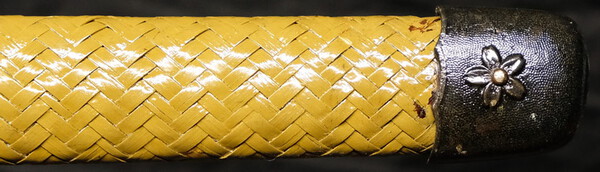
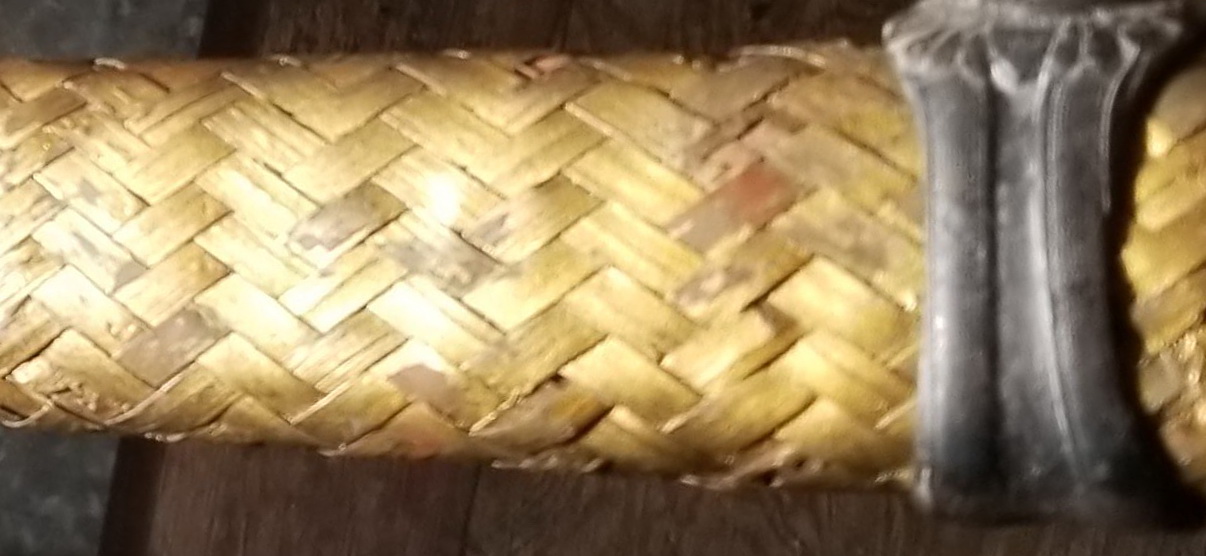
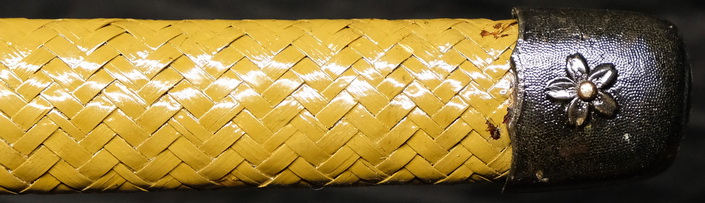
Hi there Bo and welcome to the Board, WHOAAAA, steady Neddy. Neil said it best and succinctly. I’m a “wordy” type and will expand somewhat. I saw "care of metal" creep into one of your replies: ============================================================= Post #8: ... I work with my hands and carry a careful temperament, and I have dedicated my life to edged weapons and metal tools, and learning how to build and care for them, but I am still early in the Katana chapter of my life. ... ============================================================= Just in case it passes your mind, the best way you can care for a Japanese blade is do not ever, EVER think you can improve on the polish of a Japanese sword, even a war period mass production piece. NEVER. NO EXCUSES. Always consult here first as there are hundreds of years of collective experience on polish alone, never mind anything else about Nihonto. Amateur polish of blades is the biggest bugbear of collecting Nihonto and has been discussed at great length on this Board. Professionals train under a Master in Japan for many years (read up to 10 years). Look through the articles section and put polish into the search field. As near as I can see the gold paint on your rattan scabbard has come from a spray can and not a liquid paint brushed on - the latter would “bulk up” in the criss-cross spaces. My feeling is you would be better served by having a khaki colour made up in a spray can in, say, an auto or specialty paint shop and use that sparingly and judiciously to cover the gold. VOILA! Original colour near as restored for appearance and no damage done anywhere else. CAVEAT: The solvent used in your made-up spray can might start to dissolve the gold paint and seep into your khaki. To forestall this I would suggest using various of the solvents mentioned above on a rag (glove up!) to see if any one of them would remove the gold paint before spraying. As I look at your clipped photo below it appears the gold paint may have fallen off in places revealing the colour underneath, or even the original rattan before it was painted in Japan. Now as to the colour, I googled <how to make khaki colour> and found lots of information that should suffice to guide you. I’ve clipped out the two colours given above from Neil and Ed and pasted them in below for comparison. I note that both Neil and Ed’s photos have some red colour splashed around the fittings -- any clues, anyone?? A thought about the spray paint. You might get the colour mixed in a jar or tin and use a small hobbyist spray gun to do the job, the sort of thing a touch-up specialist might use, or even those folk who do painted artwork on cars. I think it is quite proper to rebind the hilt and a good person for this would be David McDonald at: http://www.montanairon.com/swords.html See his article on hilt binding: http://www.montanairon.com/tsukamaki.html See also Dr Thomas buck: http://www.tsukamaki.net/ I’m sure Neil or John above could guide you on the correct style of wrap with a photo. Best regards, BaZZa aka Barry Thomas Melbourne, Australia.
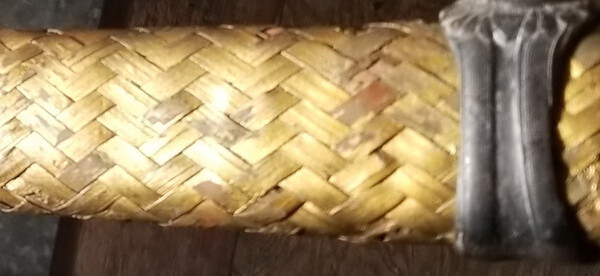
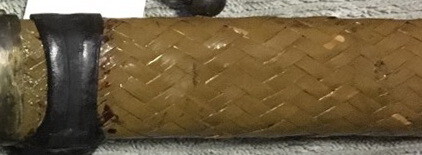
 1 point




.jpeg.4c7df1a4bca6d95e5568d84b42b9cc63.jpeg)































This leaderboard is set to Johannesburg/GMT+02:00