
Leaderboard



Popular Content
Showing content with the highest reputation on 02/08/2021 in all areas
-
I was in my 30s working as an engineer. One of my hobbies was blacksmithing at the time and I was deep in the study of ferrous metallurgy at the time. One day a friend said he knew someone who was selling a Japanese sword and wondered if I was interested because of my interest in blacksmithing. It was just $10 so I told him I would take it. I was stunned the next day with what I saw in the metallurgy of this blade. It was obviously very old and made with enormous skill. It was all I could do to hide my excitement and close the deal. I spent the next six years studying this blade by buying books, going to a few sword shows, and enlisting the help of Paul Allman and Dean Hartley. The first collector I showed it to in Georgia told me nothing about it but managed to make an offer of $11,000. When he pulled it from the saya his voice was crackled and his hands started to tremble. That told me more than his words could have. When I was finally sure of what the sword was I decided to have it polished and submitted for shinsa. The first shinsa before polish was by Kotoken Kajihara at a show in Birmingham , Alabama. He attributed it to the first generation Moriie. The NBTHK shinsa after polish left it with Juyo papers and an attribution to the Ichimonji school of the early to mid kamakura period. I still have the tachi and I have been hooked on Nihonto ever since. It’s hard to build a big collection after starting out so well. The blades I like are too expensive so I have spent more on books. I will leave a few nice polished blades and a lot of books when I’m gone for the next generation.7 points
-
5 points
-
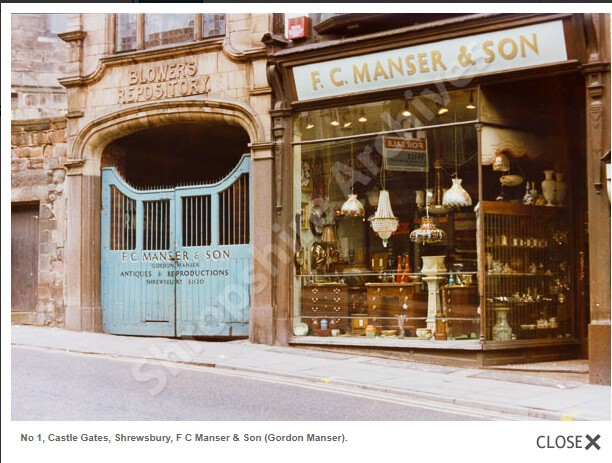
I was a collector from my early teen years and haunted the local antique and junk shops, not a huge difference in those days in that town, except for one. Manser's which was a classic dusty, packed, antique shop in Castle Gates Shrewsbury full of all sorts, mirrors, old furniture small sculptures, swords and guns. Thinking back my actual first real sword was a knackered wakizashi sans tsuka or any metal mounts except blade and habaki in a same and wood saya. It cost me £4. 10 shillings, and this keyboard does not even have a shilling symbol. Pre-internet, all my research done at the library, which fortunately was a good one because Shrewsbury is a county town and admin centre for a larger area. I was about 12, and oh dear how I abused that blade by current standards. I swapped it for some armour when I was in my twenties, which is just as well in some ways. I have to give Mr Manser and all those other dealers a lot of credit for their time and patience which they never begrudged. Just to give you a taste of the place, this is a photo of No 1, Castle Gates, Shrewsbury, F C Manser & Son (Gordon Manser).where I spent hours antique hunting and learning. I think this was his second shop, across the road from that first shop and where I bought an 1822/45 infantry officers sword from him, my second sword ever. (Unable to locate a pic of that first shop, it might have been demolished).
 4 points
 -
Planned sword production in China for the Japanese Army for fiscal year 1945, 1945-04-01 to 1946-03-31, was 10,000 swords. The information is coming from a September 1946 United States Army intelligence report on Japanese ordnance activities in China. The Americans interviewed both Japanese and Chinese ordnance officials and visited many of the factories making ordnance.
 4 points
 -
Darcy's offerings are truly top-shelf. Thanks, Brian, for starting this thread. You're right, we do need to expose ourselves to high(est)-level items, whether in blades or tosogu, lest we begin to see the merely good as great, and the "merely" great as magnificent. In fittings, Darcy does favor the soft-metal side of things; however, he occasionally throws a bone to some of the early iron works. Fortunately for me. https://yuhindo.com/nobuie/
 3 points
 -
I think if you look at some of the top end dealers in Japan you would be surprised at how reasonable Darcy's stuff is in comparison. Certainly with regard to swords, which I am much more comfortable assessing, I have seen Tokyo dealers typically running at 30-40% more than the equivalent on Yuhindo.3 points
-
work, work, work... Oh well, how about an Ishiguro Mitsuharu tsuba, a sweet little tanto tsuba, and a Bitchu no Kami Yasuhiro, Kii Ishido school wakizashi with koshirae. And more. Grey


 3 points
 -
My first must have been around 2000, probably a little earlier. It was a Seki, unsigned blade remounted in civilian koshirae. I bought it from one of my student’s father who had bought it around the late 1970s. Previously, I’d read what I could find about sword. That was the beginnings of the Internet, so what I had was a photocopy of yumoto's, a few magazines, and two or three webpages, namely Jim Kurrash's and Roger Stein's and the first incarnation of Aoi. I even contacted them to buy a sword, but giving my credit card number to people at the other end of the world, that could only speak a few words of English sobered me. Then, as the web developed, I found more web sites and read as much as I could. I even discovered NMB at its earliest, was tempted to register then forgot about as my knowledge was so poor in comparison I felt useless. Years passed, I read more, bought books from Amazon, went through moments of hype and despair at my slow progress, bought a sword, my first real Nihonto (the one that is being polished at the moment), read even more, bought some Chinese repros because they were affordable, became fluent in Chinese repros until I was fed up, turned myself again towards the real McCoy, bought one or two swords and read again. ...until it became clear I had crashed into the wall of knowledge and needed something new. So, this forum, where I’d lurked for years became the answer. Still far behind and frustrated knowledge wise but found people I like, new horizons (WW2 swords), focused my collection on what I really want, bought more books and finally came to terms with the notion I’ll never progress as much as I’d like.3 points
-
I felt that every black belt should have a katana. In 1976, I bought my first blade a WWII army blade. I went to the library and read every book they had on Japanese swords. Next step was the main library, and inter-library loan. I ended up reading all available books on the topic, in my city, my province, country and some from as far away as Japan. I purchased my second sword a Koto O tanto that was three times as much as my first sword. (I still have both blades.) I learned that there was something called the JSSUS - Japanese Sword Society of the United States. I joined and now am a Director/Ombudsman for the JSSUS. I joined other sword study groups and continued my studies. Every new book that Harry Watson translated was a treasure that people waited for... Please tell us your story. This thread was started because of the thread started by Adam aka waljamada on his project to make a Video for beginners.2 points
-
I’ve been lucky enough to stumble across a few nice swords over the last 30 years or so. I’m sure I won’t make any great contributions to the field but I will manage to have a few blades polished, preserved, and rescued from the trash heap. I have also managed to teach my children and grandchildren about Nihonto and bring a few new faces to the study. I will leave them a lot of books and a few nice swords for their growing collections. Be nice to them when you meet them. Shannon Hogg2 points
-
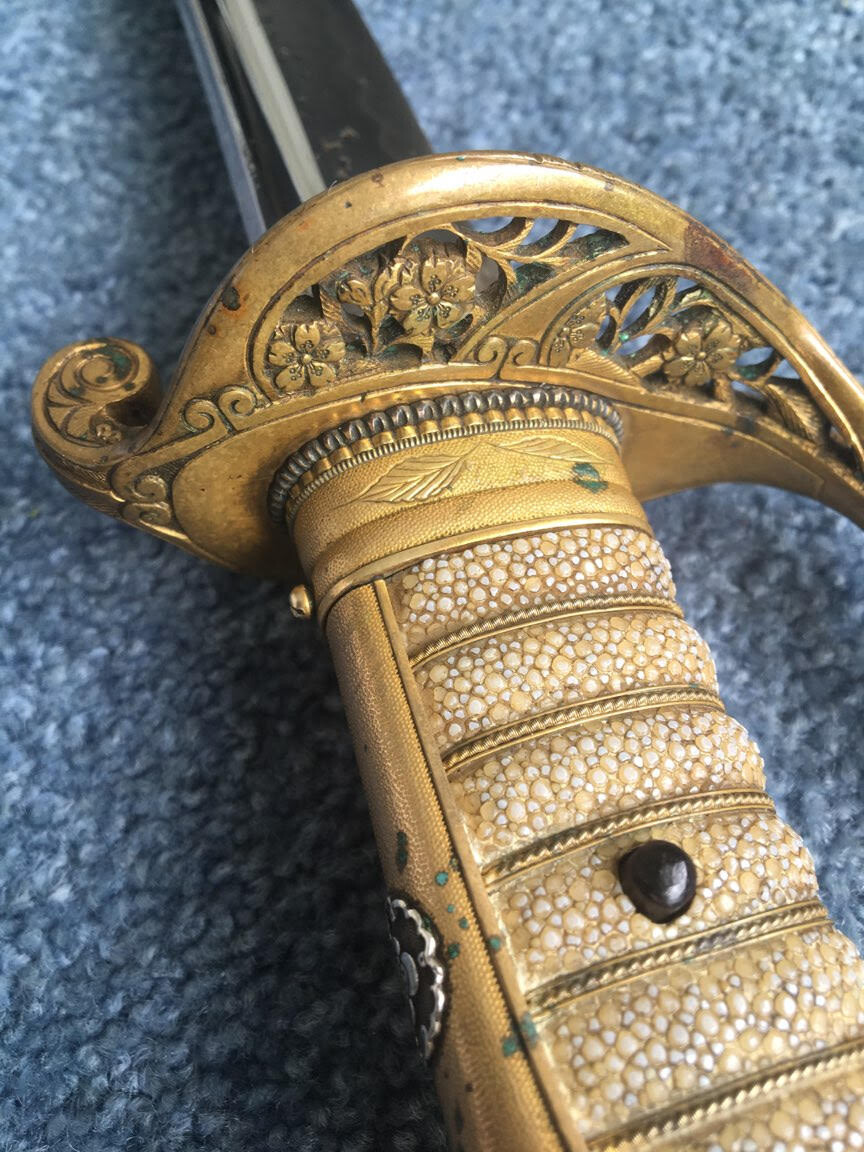
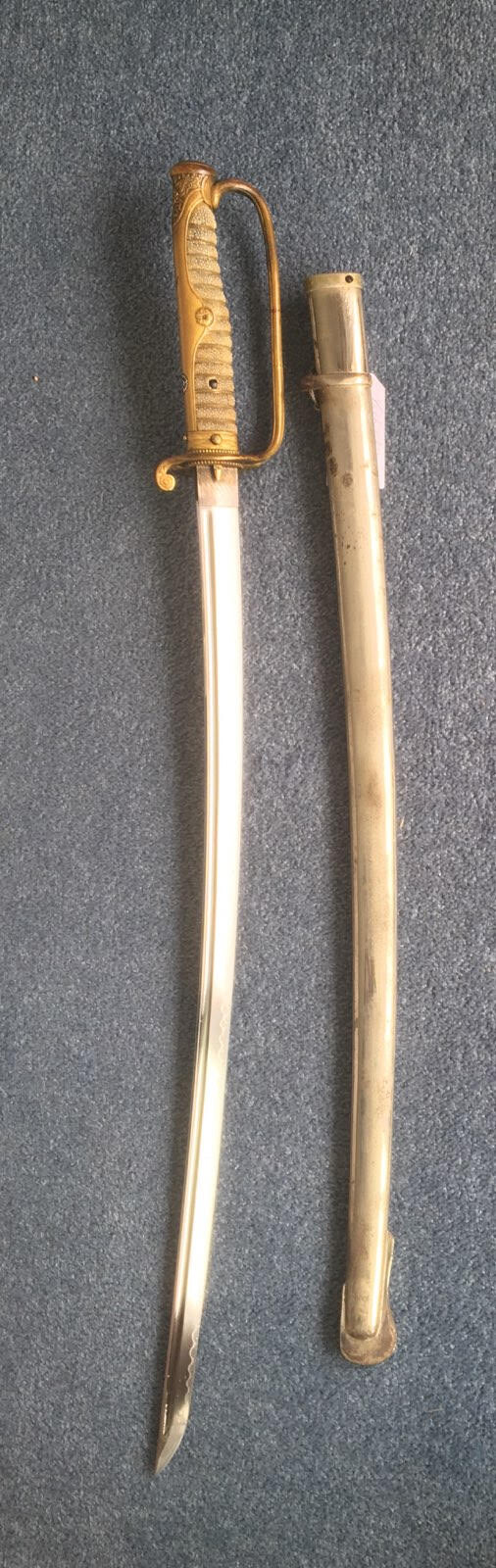
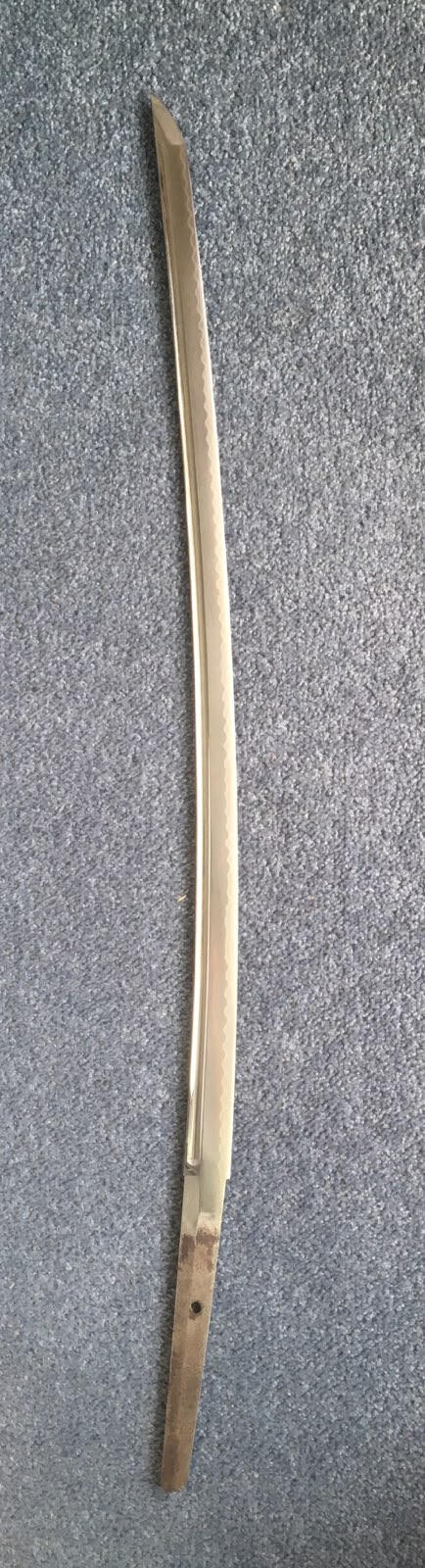
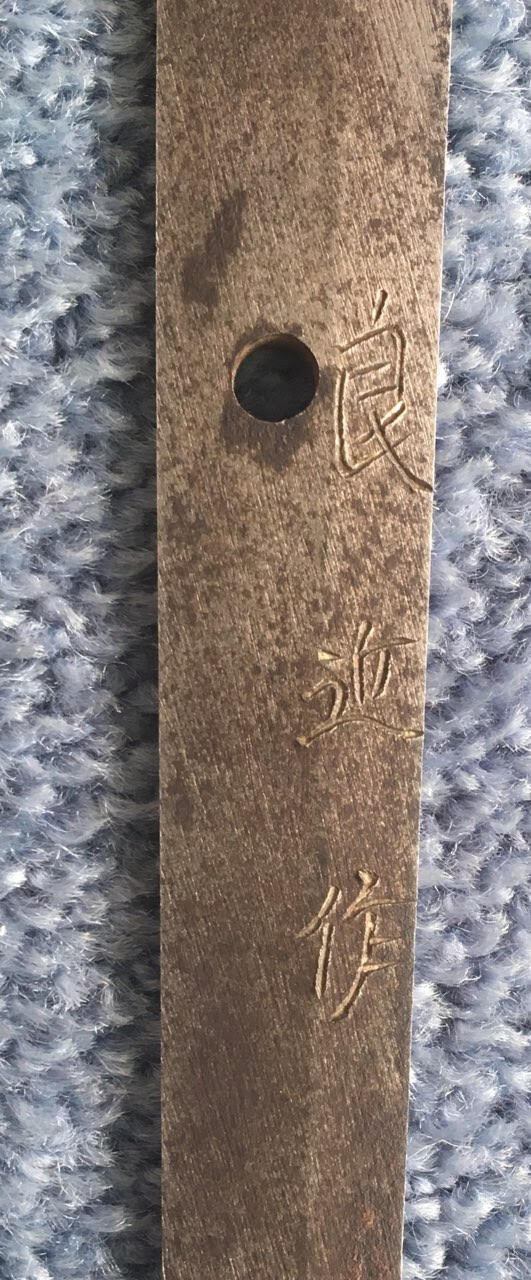
I think that the mei might be 實清 - Sanekiyo.2 points
-
Well better late than never...I'm 62 and been a Nihonto fan for 30 years. Bought my 1st sword in '94, 2nd in '18, 3rd in '19, 4th in '21. I had an old house restoration pause and feeding a porsche habit between '95 and '17, yes my other addictions! Anyway Porsche's gone, old house on the market as we speak, retirement at full speed ahead with Thailand as the destination! Mark2 points
-
It's within a Yuki 雪 Mon, which explains the border.2 points
-
i do thoughtly like your post and the way you expressed it. rather respectful. but i also 100% dont agree with the existance of island swords. the one simple thing that made me form this idea was a old man named SNOWY NOBLE, this man was a family friend. he was stockman that was on the kokoda and Bull tracks. as a army muler. he once told me that he and the inlisted blacksmiths making fake swords from what ever they could find by copying captured Japanese swords and selling them on, dishonest i know. i also handled one too. and the one thing the failed to get right was the mekugi, after that you could have said it was a ertz/island sword but if he said they were good enough to fool the US soldiers i will take his word for it. i know i cant express this person characteristics in words but if he said it, it happened to the letter. that is why i will never take island swords seriously. whe something is poorly made, and hard to distingish form fakes what can we do? dont get me wrong i would very much like there to be more IJA sword models to be found. means more to collect but for me its a string being streched imho call me a stick in the mud, but hey we all have our opinions and i do respect most of them posted here, i just disagree with some too
 2 points
 -
Absolutely agree, Hamish. A sword being published does not equate to authentication, nor is all information published beyond amendment. However, while the board members are often correct with initial impressions, we have collectively been wrong about enough swords that rather than dismissing swords out of hand, we should spend a few minutes to look. If speculative posts are not your thing, best to avoid them. If you want to state it is fake, perhaps do so constructively and provide some reasoning why. Here is a photo I saved of one of the swords F&G published as ersatz. I'd lump them with island swords, but a repeated pattern. No real information to add I'm afraid. I quite like seeing these swords irrespective of authenticity. It's interesting and informative and irrespective of outcome, I find the debate enjoyable when civil. Carry on @Bruce Pennington and @Stephen.
 2 points
 -
Hello Inna, I would say a genuine sword made in occupied islands near the end of the war for collaboration troops....Not a quality sword but a genuine piece of Militaria....And as said I would ignore that dealers description... Regards, Paul..2 points
-
If it's in Dawson, then it's legit, even if it looks like .... This also answers the question as to why we discuss such things,.... to find out what they really are! If we dismiss stuff just because we don't like it then we are not really engaged in research. Page 82 of F&G Japanese military and civil swords and dirks has a brief mention of very late war "home defence" officers swords. What I noticed was the blade description as having two widely spaced mekugi-ana, though only one is used. It looks to me like someone was making a standard blade that could be used for NCO or commissioned officer.2 points
-
I feel like I had always known about Japan, which is odd for a kid from Wisconsin. I grew up with my Grandparents living in a Wisconsin town that was also home to a Kikkoman factory. Japanese companies, as they do, keep as much as possible in house. All management and executives were Japanese with the factory workers being a make up of mostly local Wisconsinites. Due to this Japanese families were provided homes in the area to live during their usually 3 to 5 year stints at this factory. Furthermore my grandfather had been stationed on the U.S.S Intrepid during WW2 and due to this experience and his desire to move on/heal from the war he took a trip to Japan. He went as a tourist along with his wife (my grandmother) with an open mind and heart. He absolutely loved his time there and brought back statues of Samurai, geisha, a couple paintings and random bits and bobs decorating the house. This brings me to my childhood among the statues, bits and bobs and the Japanese families in the neighborhood. I met two brothers from Japan whom I became close friends with spending summers playing together. I sampled some of their mothers cooking, saw their cooler than ours transforming robot toys and his father's small collection of Japanese Swords he had purchased here in America. I noticed them...thought about them...then moved on, but it had parked in the back of my young brain. I grew older and discovered I could study abroad. Japan it was, my University just happened to have a partnership with JoChi University in Tokyo, where I ended up transferring and then graduating. I lived in Tokyo for 7 and a half years during which I visited their museums, went into a few antique and sword shops just browsing. Still never had a desire to own a katana of my own but I was soaking up the experiences as I went along. I moved back to America and another 7 and a half years later, without a single thought of katanas, I saw a WW2 parade sword at an antique mall. In that single instant an unavoidable desire burst forth in me to own an authentic antique Japanese sword. One would be mine. I have a powerful collector's gene. I scoured ebay, did some research and then found a seller with a bunch of swords in a nearby city. I contacted him and the next day I was at his War Relics shop. He brought out perhaps 6 or 7 swords and gave me a run down of why they were all in the 2 to 3k range and my hope balloon was slashed by the pricey blades. He then says, "You know what, there's one in back I was going to sell on ebay. Might be perfect for you." He brought out an early type 98 with 27" nagasa, punched tsuba, cat scratch habaki, shinto mumei with some rust on the top portion of the blade. Besides that bit-o-rust it was beautiful. I could feel the history, it smelled of age and had a whisper of old necessity now outdated. It felt important but stoic in its relegation to an artifact. A noble acceptance recognized in age of one well lived who knows its time has passed. Made me want to love it even more. He gave me a good price and I paid in cash to avoid paying tax. Told myself, "I only need to own one". That was a lie. I still though think to how that first sword made me feel. My childhood friends, my grandfather...all the people I met in the US and Tokyo. This sword was important, this sword meant something and still is and does. Just in a different way. War, battle, old ways...each sword belonged to a someone. One sword for one human. Held with intent and by someone who didn't want to lose it; lose their ability to fight, to live. This was important. This meant something. Now it means something to me. I want to learn more.2 points
-
Sometimes it is necessary to take a break from average fittings, cast repros and worn out mediocrity and remind ourselves of what top level stuff looks like. Puts things into perspective. It is just a refresher for the eyes and allows us to better judge some of the things that we tend to value higher than they perhaps really are. In other words, here is some mind blowing eye candy. Most of us will never be able to afford such items, but doesn't hurt to study them and appreciate the art of metalwork. Have a look. His current listings are particularly impressive (if you are not into the old iron subtle style) https://yuhindo.com/fittings-for-sale/ Takes my breath away. Especially those Ishiguro F/K for me.1 point
-
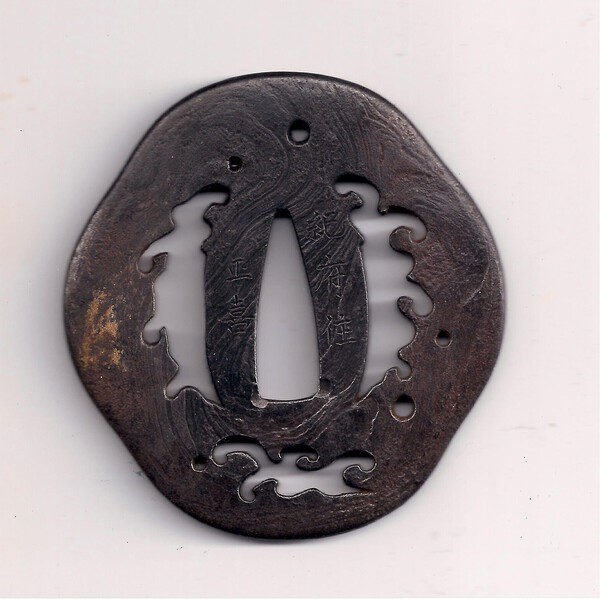
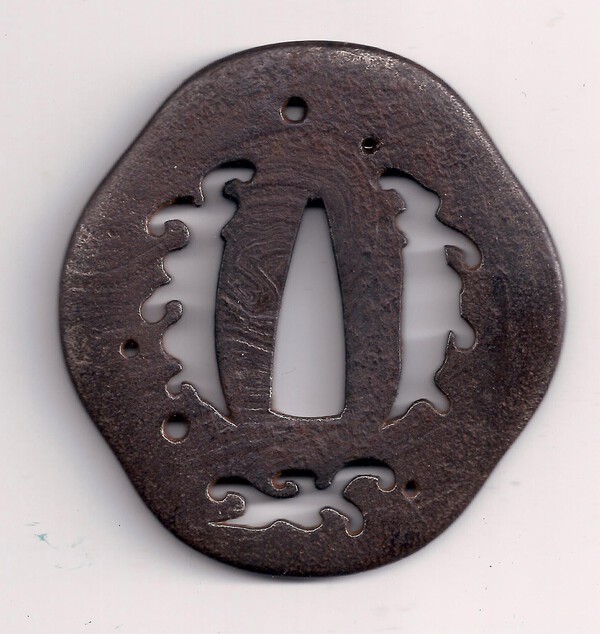
Hello I have this iron tsuba with Masayoshi signature but I can'nt translate the two kanji before no ju Can anyone translate this and say to me what type of tsuba (I think edo mokume tsuba ???) dimensions: 6,4 cm/6,1 cm - thick: 0,4 cm Thank you Bernard
 1 point
 -
I was a knight fan and grow up with old medieval movies with Errol Flynn and other Stars of the time. We had only a black and white TV in the 70's. And on weekends after the muppet show on saturday some 50s and 60s movie came on TV. My friends loved Winnetou but i was this knights guy and wished nothing more than a knight sword. As i was 10 my uncle gave me a rusty "knight" sword. It was one of these deco swords from the "Neckerman" catalogue. I was so happy. And i was sure this was a real one. The years gone by and with my first earned money after school i bought a saber from the french- german war. And so i came into the collectors hobby of blanc weapons. I lived in a small village with no antique shops and no public interest in antiques. So my interest was gone over the years. I sold all my stuff. And as ebay starts in the 90s i saw this beauty. and bought it not knowing what it is. I thought it must be very valuable with all that gold and silver. The blade was in bad condition but my experience from european swords was that this is patina and a sign of value and provenance. I really had no clue of Japanese weapons (ok nothing changed in that). But my love was awakened. And i start with the book " the samurai sword" my only book over a long time. I bought over the years many "gunto". All of this swords were mass produced. No star stamp, nothing important. I bought and sold the swords and collected Tsuba because i liked the motifs. But my knowledge didn't rise. In 2015 - i think i came to the NMB. This was a catalyst for me. For more interest and more knowledge in Japanese swords. So I'm a youngtimer in these hobby and i hope i get old to see and learn more. Btw i sold my first sword the kai gunto several years ago for a very less price. Sometimes i think i should had keep it. My last 50 cent on the story is, that today it is all more easy. You get in 5 minutes much more information than in the times before the internet. Now it is not important where you live and which friends you have. If you are interest in something you get the informations you need. Knowledge is so important in these hobby.
 1 point
 -
Hello all, Thanks to Bruno for the research of connected signatures. This Shigeyoshi on KINKO MEIKAN page 158 top left seems effectively corresponding to the one above. When I check on the Haynes book (The index of Japanese Sword Fittings and associated artists),the first comming TACHIBANA SHICHIZAEMON SHIGEYOSHI (H.08573.0) is given around 1625. The next one (H.08576.0) is cited around 1700 As written, this SHIGEYOSHI was said to have taken the UMETADA school from KYOTO to EDO; But : the many various signatures of UMETADA SHIGEYOSHI are not defined or understood fully at this time. In my opinion, this tsuba doesn't seem to correspond to 1625 era but later, obviously after 1750. So the question is still pending ..... Many thanks by advance for the efforts. Best Marc1 point
-
MAGNIFY https://www.touken-matsumoto.jp/swords_hires.php?prod_img=KA0360-hri.jpg BEST1 point
-
Mark, They are best regarded as a piece of art. What distinguishes good fittings from the ordinary is a combination of materials, composition and level of skill. Some of the finest metal workers to exist, not only in Japan but world wide were making the fittings for swords. Take a look at some of the examples here and on websites such as Darcy's and you can see the incredible skill employed in their manufacture. It is much like visiting a gallery of fine paintings.1 point
-
I thought you all might be interested. I have exchanged a couple of emails with Mr. Yashida and his staff. The staff has been most interested in my email tag line. "Suppose you were an idiot and suppose you were a member of congress. But I repeat myself" - Mark Twain. It has been most amusing trying to explain this quote. At one point they said "He wrote Tom Sawyer. Your name is Tom." I explained that I am not nearly as interesting as Tom Sawyer. I receive the following email from the staff last night and I must admit I am excited. I am thrilled to have the gun in what appears to be the Museums newsletter. I can't imagine contributing anything except the dummy who pushed the ball off the clip. Below is email from the staff of the museum. If this happens I will post the newsletter. Attach a picture of the Newsletter they sent me. Oh and I said ok. You can type ok really fast. Tom Dear Mr.Wines Thank you for your email. A week has passed since we received your last mail. Mr. Yoshida has been very busy both in his work and his private life. He is going to reply after completing some work whose deadline is nearing. So please wait for a while. I have something that Mr. Yoshida asked me to do. He publishes 国友地域学Kunitomo-chiikigaku(Study of the area Kunitomo) every month. He writes articles about persons and things related to Kunitomo. He sometimes asks the persons, who are interested in matchlocks or the history of that era, to write in the paper. I attach its photo. He would like to write about you and the matchlock you have in the paper(国友地域学). Mr. Yoshida wants me to ask you whether you allow him to write about you. If you say "OK", he will be very pleased. From Mr. Yoshida's assistant
 1 point
 -
NO just being DA, we are not to tak price just drool over the new Bentley in the show room. nothing wrong with that1 point
-
Ikkanshi Tadatsuna nidai, the four Mishina brothers, shodai Sukehiro, nidai Sukehiro, Sakakura Terukane, all are rated above their own father .1 point
-
Ohh shoot, thanks so much for the reminder! I edited the listing from another listing, and didn't check the last part of the title1 point
-
Yes jean Pierre, could well be. But you can find Sori in late Nambokucho era while it would often put a blade into Muromachi.1 point
-
I am not a metallurgist, or a swordsmith, but I do not believe that Sai-Ha leads to such pronounced re-curvature. If I were to harden this blade again, would I have a half-circle? As long as an edge is hard, the martensitic structure will occupy the appropriate space. It is a tensional structure. This structure dissolves when the blade is exposed to high heat again. Accordingly, the bend should relax again - at least to a certain degree. In addition, I think that a swordsmith would correct the shape before rehardening, if necessary, to obtain an appropriate sori of the finished blade.1 point
-
40 is the old of the younger. 50 is the youth of the older.1 point
-
The mei says “Hizen no Kuni Tadayoshi.” Here is one for comparison. https://www.toukenkomachi.com/index_en_tachi&katana_A021118.html Hoanh1 point
-
However, that also reads Tsunetoshi or Sanetoshi. Only the person himself knows the correct reading.1 point
-
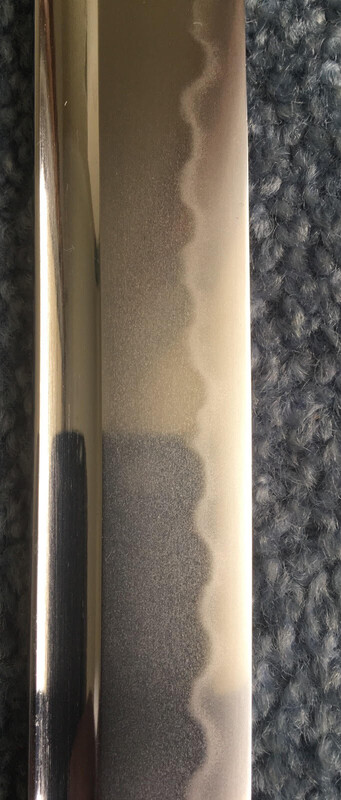
Renowned for their cutting ability, (Mori) YOSHICHIKA, was selected to make swords for the Japanese Imperial Guard. Some of his blades even have cutting tests engraved, where they were tested on pigs, (dead ones I hope!). From my research, there were father and son, (Shodai and Nidai) YOSHICKICKA. This blade was found in very old 'D' Guard mounts, so it is Shodai. There is however no date, no stamps. He resided in Tokyo, and made swords in the Taisho and Showa periods. Rated as a 1.5 million Yen smith, he is regarded as a high-grade Gendaito. This example exhibits mokume hada, gunome-midare hamon?, and habuchi. I would appreciate seeing other other examples of YOSICHICKA work and mei for my research.
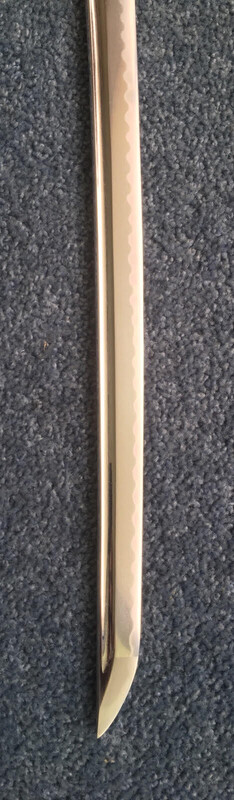


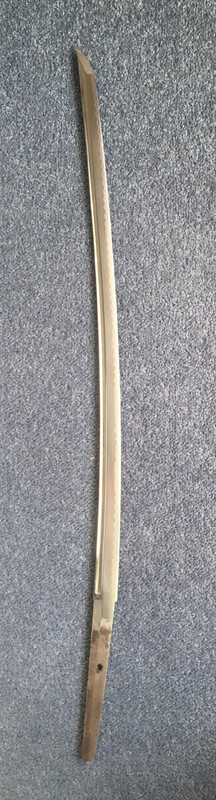 1 point
 -
Its preferred reading is Hiratoshi.1 point
-
Adam, This is a guide only there are always exceptions. I have seen Rai blades from the 14th century which were nearly 8mm thick. But as always in this type of assessment I tend to be guided by the "norm" the more exceptions to that you see the less likely it is to be what you might hope. For me the nakago, the way the shinogi distorts in it and the colour, combined with the thickness suggest the later date but as always this is only opinion not a statement of fact.1 point
-
Update, spot on with the translation although my one is slightly different from the normal style for this artist: http://militaria.co.za/nmb/topic/25446-owari-toda-hikozaemon-iron-tsuba/1 point
-
Thanks for the reminder Brian Darcy has fantastic tosogu that is rarely seen outside of DTI and high-level Japanese collections. Michael, your fuchigashira is breathtaking - truly amazing how they can convey so much in such a tiny space - the birds' postures and expressions are masterful true art.1 point
-
I accidentally discovered this thread. It would be interesting to see how the age group of nihonto enthusiasts has evolved over more than 10 years BTW, it was instructive reading and I could learn a little more about the healthy core of this forum. It seems that Jean is the "nihonto" positive for the longest time of those who published their story - admirable and honestly a little envious1 point
-
Forgive me I haven't read all the posts in detail but the basic premise at the start was the view that quality of workmanship decreased as one progressed through a school, i.e. 4th generation wasn't as good as 1st or whatever. In many cases this is true but it is by no means always the case. At the start I believe the original post mentioned nidai Hizen Masahiro, well in most of the texts I have read and the blades I have seen he was regarded as a better smith than his father. Shodai Masahiro was a great teacher but his son the better smith. Likewise second generation Kanesada more highly regarded than others, Sandai Tadayoshi, probably the best and so on. Its true that as manufacture progressed through the Muromachi demand meant quality suffered and therefore later smiths produced fewer great swords than their forefathers but this was due in part to available material and in part to time pressure. It doesn't necessarily mean the smiths were less skilled. Some extremely fine blades were produced by later generation smiths in many schools as always you need to judge the sword in front of you.1 point
-
I guess that the mei might be 戸田彦左衛門 - Toda Hikozaemon. Ref. Bottom center of the following image
 1 point
 -
What i can see on the pictures is that the hamon end at the ha-machi ! It does not run into the nakago ! The nakago show the signs of a suriage , or better o-suriage ! If the Hamon is original to the suriage the hamon should run into the nakago! Sorry , I don't want to open a tin of worms here , but for me this is a old blade with a new yaki-ire , or better a saiha (rehardening) This is also a explanation for the unusual strong sori. If the man who make the saiha does not correct the shape of the old blade before the rehardening the sori become very strong like in this blade. It make no sense for me to give a kantei on saiha blade . This are just my two cent.......1 point
-
As a kid I started collecting WWII stuff; family medals, bayonets and so forth. A low point was a collection of lumps of concrete I managed to get off the pill boxes that lined the coast here in Cornwall. (Even lower was the live cannon round I found on the beach art Arromanche but that is another story). A local antique dealer, Peter Watts, used to let me look around his shop and every once in a while I would have enough pocket money to buy a bayonet or something. Fascinated by antique guns, one day in Peter's shop I saw a wheel lock rifle, sans lock and went home raving about it, way out of my price range. My Mum went down and bought it for me for Christmas but not wanting me to find it asked Peter to hang onto it. A day later the police turned up and told him that a local collector had been robbed and the gun was part of the haul, of course he returned it and when my Mum went in to collect it told her the tale and said, "Why don't you have this instead, you can have it fir the deposit you payed on the gun." It turned out to be a katana, damaged in combat and remounted as a Burmese dha. I was fourteen at the time and there was nothing available in terms of books, the best computer was literally hand cranked and so one or two general books on sword collecting until at college I came across Stone's Glossary and the reprint of Sword and Same, did a written study on The Japanese Sword, including building a small tatara in the garden and forging some metal.. It got me my degree and I started work as a teacher in another town. Cycling past an antique shop I saw a katana in the window and had to stop for a look. Stunning! Big katana in good mounts. Pulled the blade out a little and the sticker on the blade said £30. Automatic reaction I asked what they could do on it and it came down to £28. It is still the only time I have ever gone overdrawn but I bought it and cycled home with it. I still have both swords. All the best.1 point
-
Better go for dogecoin but the other part sounds good 👌
 1 point
 -
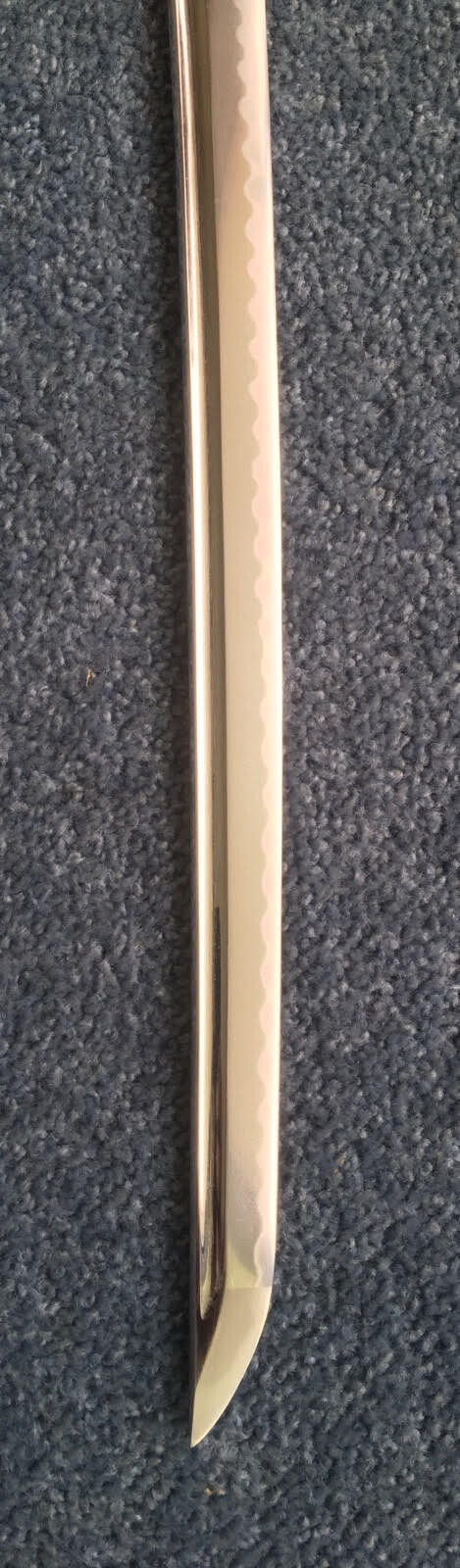
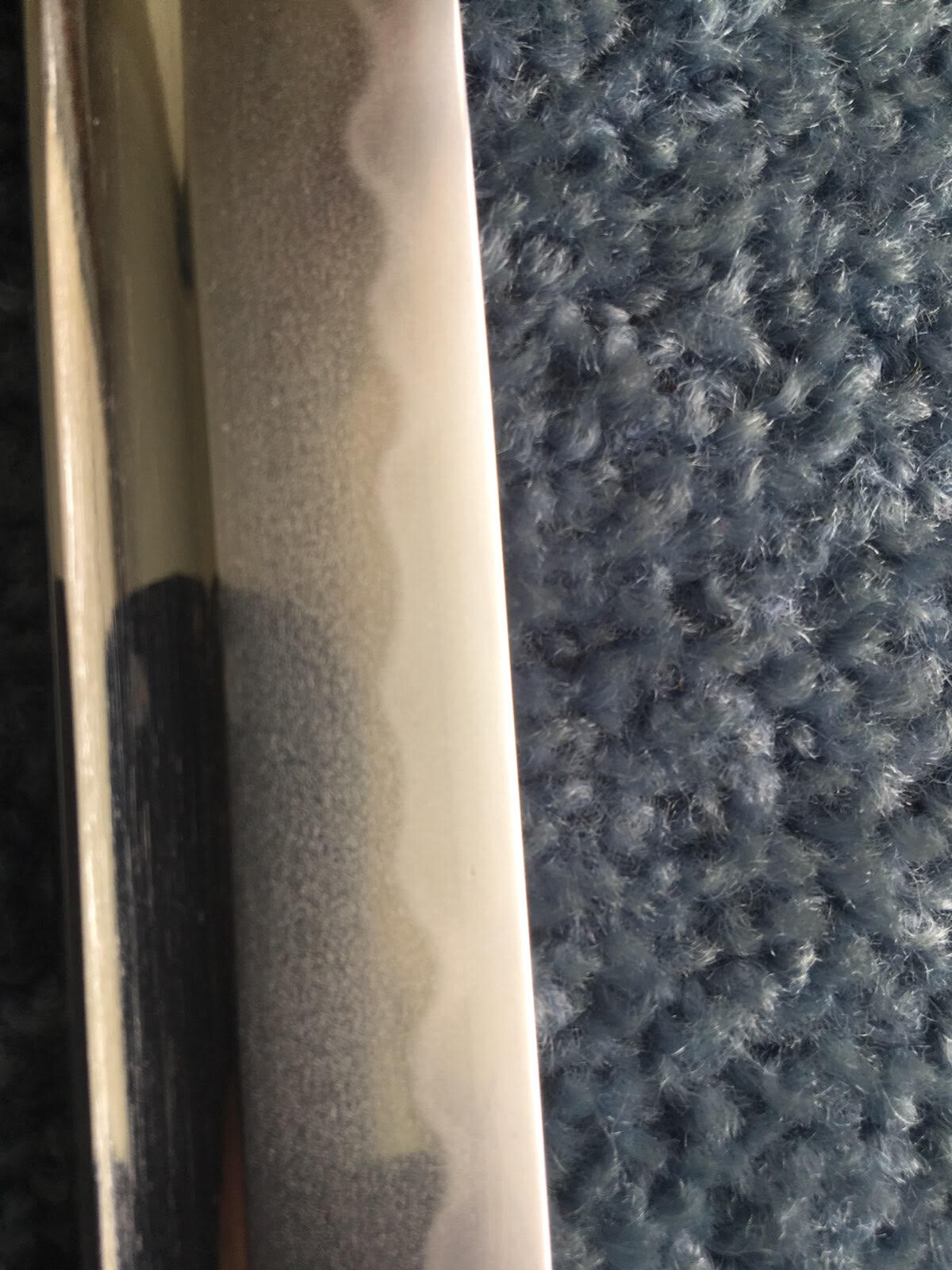
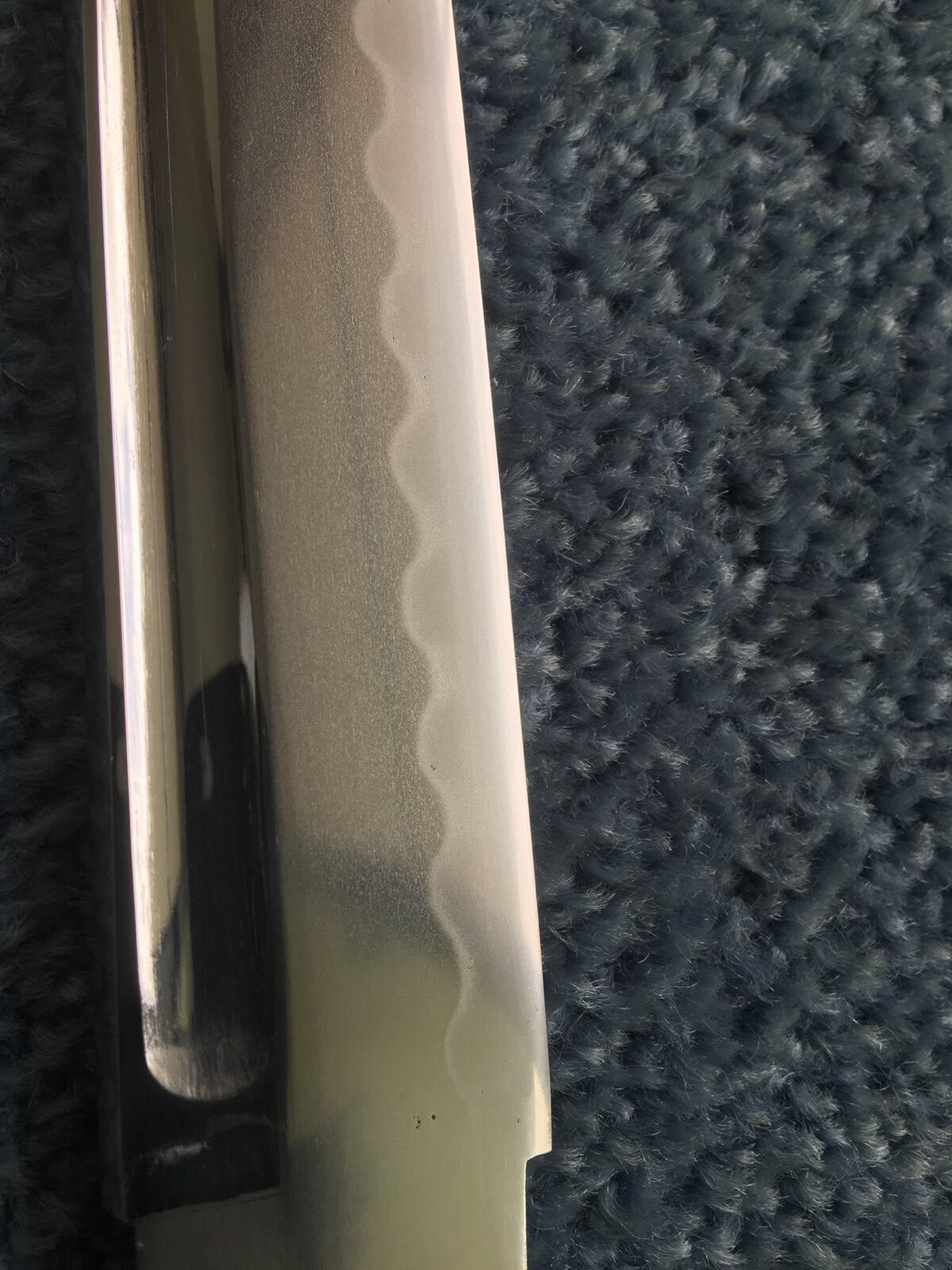
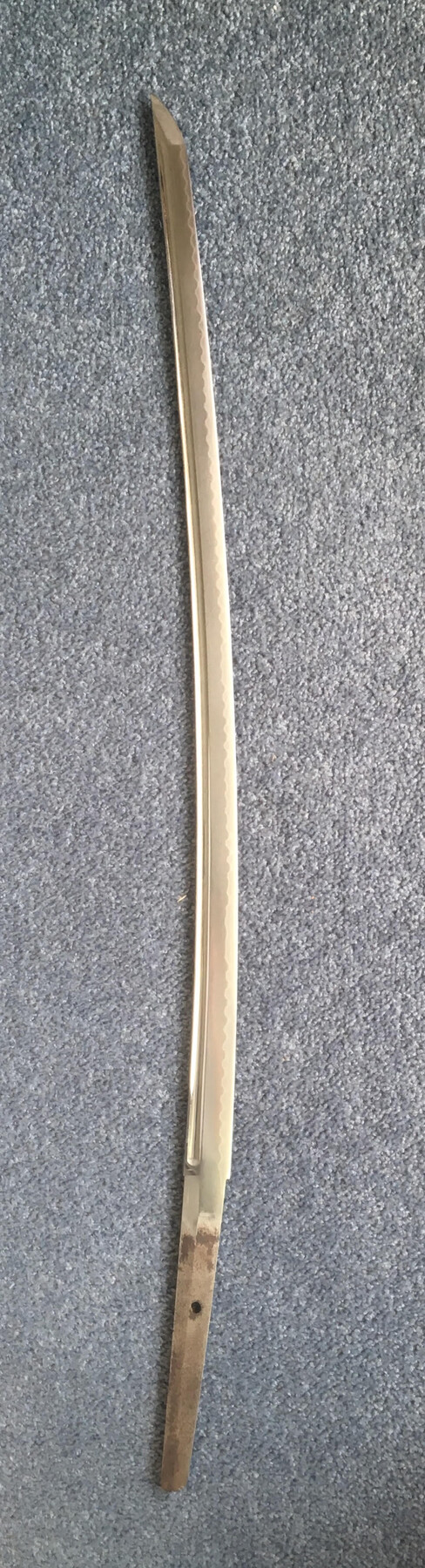
Here's my recent amateur polish with Japanese stones/fingerstones. FYI, it's a custom wakizashi by an American smith in W2 monosteel, NOT a nihonto. Here's what I learned: It's extremely easy to permanently disfigure a blade. We're talking tolerances of 1mm or less. The wrong angle, too little or too much pressure... once the damage is done, the only way to fix your mistake is invariably by removing more metal. There is a good reason why the classical apprenticeship for togishi is many years (now 10). Basically, I learned just how much I really don't know. And it reinforced in me the belief that no amateur should ever try restoring historical artifacts without the knowledge and training to do it correctly. "How do you get to Carnegie Hall?" "Practice." The problem is that a modern W2 tool monosteel and Japanese tamahagane are different animals entirely. Given that premise, it follows that, to get good at polishing nihonto, one can only really pratice on nihonto. Without a mentor/master to teach you, it's not something you can learn by reading books or online guides. And if you don't know what you're doing, you shouldn't practice on historical artifacts for your own selfish pleasure and arrogance and desire to "get better" at the cost of many irreversibly damaged blades in your wake. I don't mean to step on anyone's toes, but these are just my thoughts as a beginner collector.


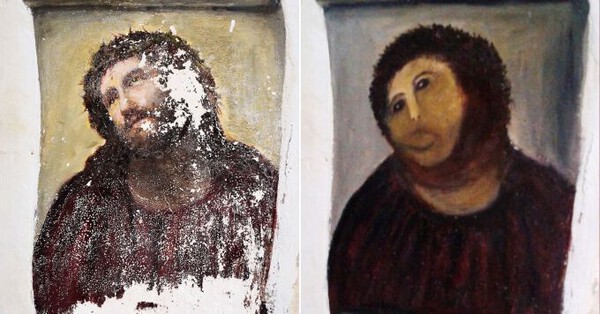 1 point
 -
Additional information: Plate 55 and 56 as pictured by Peter. Dave M.
_LI.thumb.jpg.a0096db9a245151f358e94e2c06cf75d.jpg) 1 point
1 point -
Military Swords of Japan 1868-1945

 1 point
 -
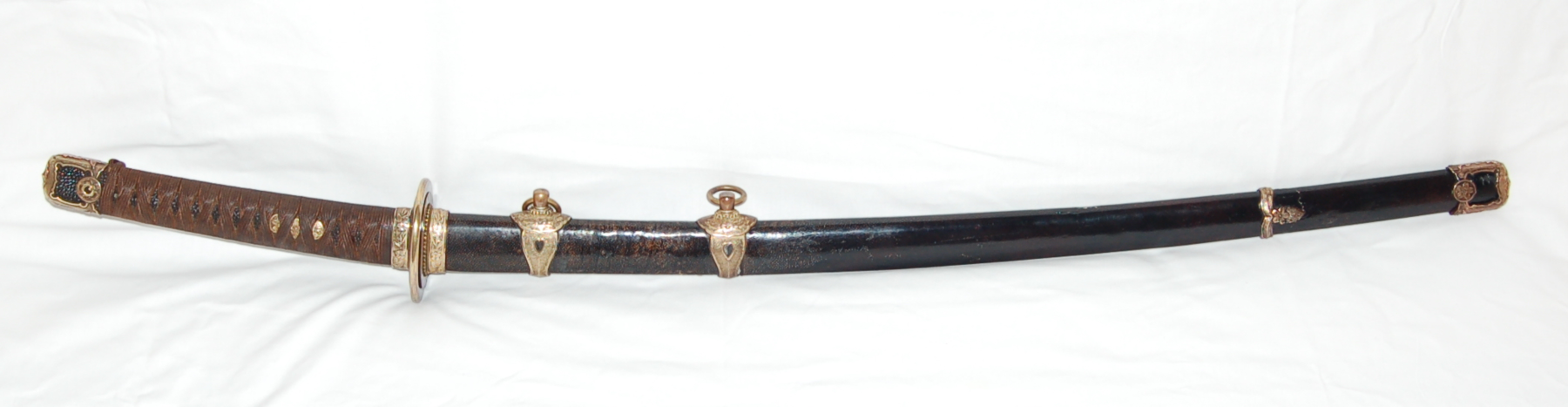
I have here in my collection a single Menuki and Kashira. If I see this correctly, then this type of Koshirae is also in the book of R. Fuller and R. Gregory on page 42/43 to find.
 1 point
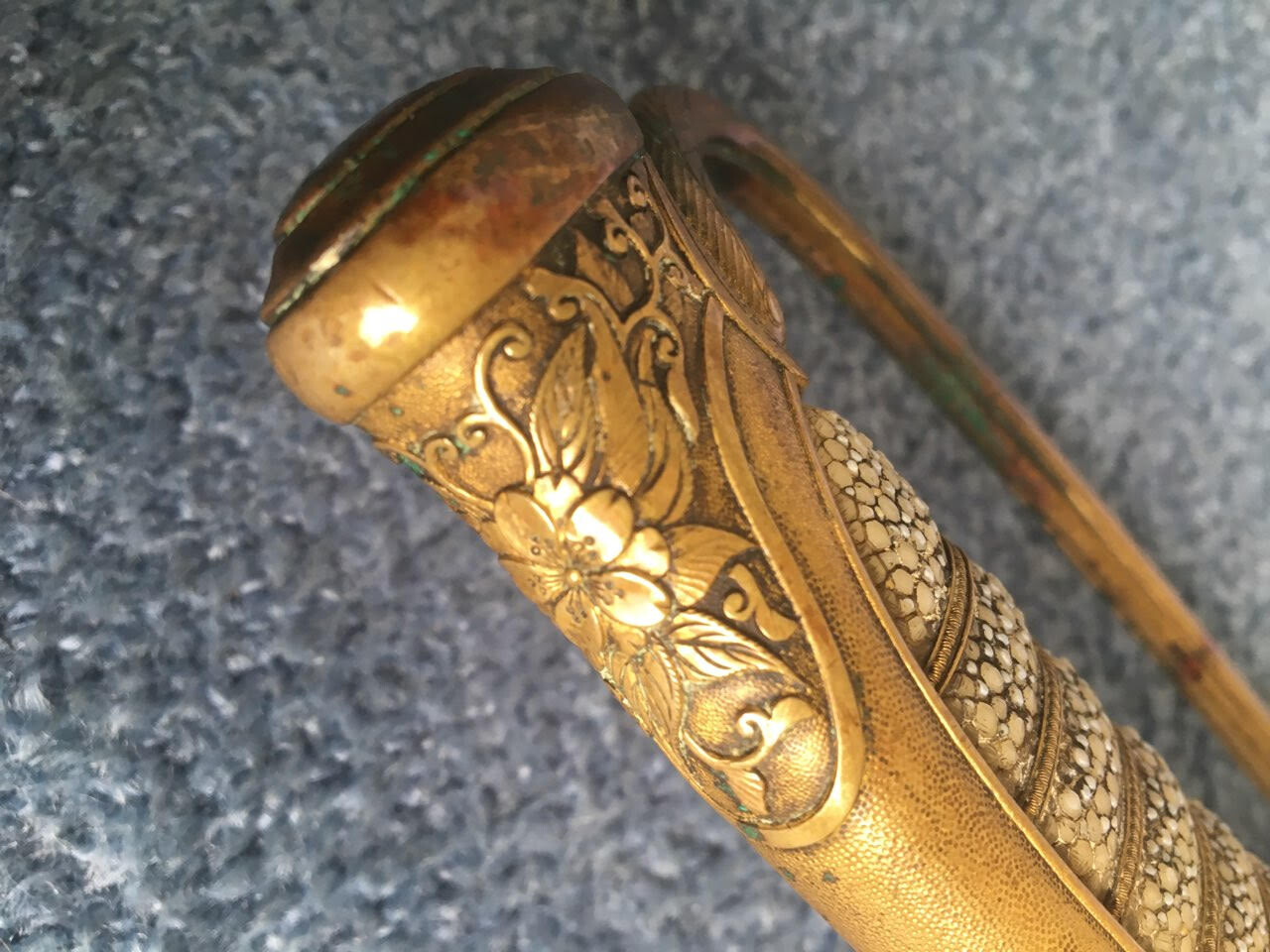

























_LI.jpg.8df79ca38da5e63b1f7f4803cd8bb95f.jpg)


This leaderboard is set to Johannesburg/GMT+02:00