
Leaderboard


Popular Content
Showing content with the highest reputation on 01/11/2022 in all areas
-
Collectors have different tastes and desires, so one cannot group everyone in the same category: be focused or be broad. Often collectors start broad and eclectic and after, say, 10-15 years they decide to specialise. But they decide to do that because that specialism gratifies them and they have finally realised, after trying out different aspects, what really pleases them and evokes the emotional response that keeps them collecting. There are others who prefer to accumulate and every new acquisition causes the adrenaline and dopamine spikes that make people euphoric. To them it is not so much about what they buy, as long as it is likeable in the broadest sense of the word, but the identification, negotiation, acquisition, restoration (“the journey rather than the destination”) count at least as much. It is all very well to draw parallels with fine art or coins or stamps but this hobby is different. It has its own peculiarities even though I admit understanding collecting and human psychology evinced in all fields of collecting helps rationalise certain general behaviours. How the OP proceeds is up to them. But being educated about the hobby, what is out there (and where it is), the price levels and dynamics of the resale market afterwards and most importantly - about the swords themselves - is paramount. How their taste evolves afterwards is up to them.5 points
-
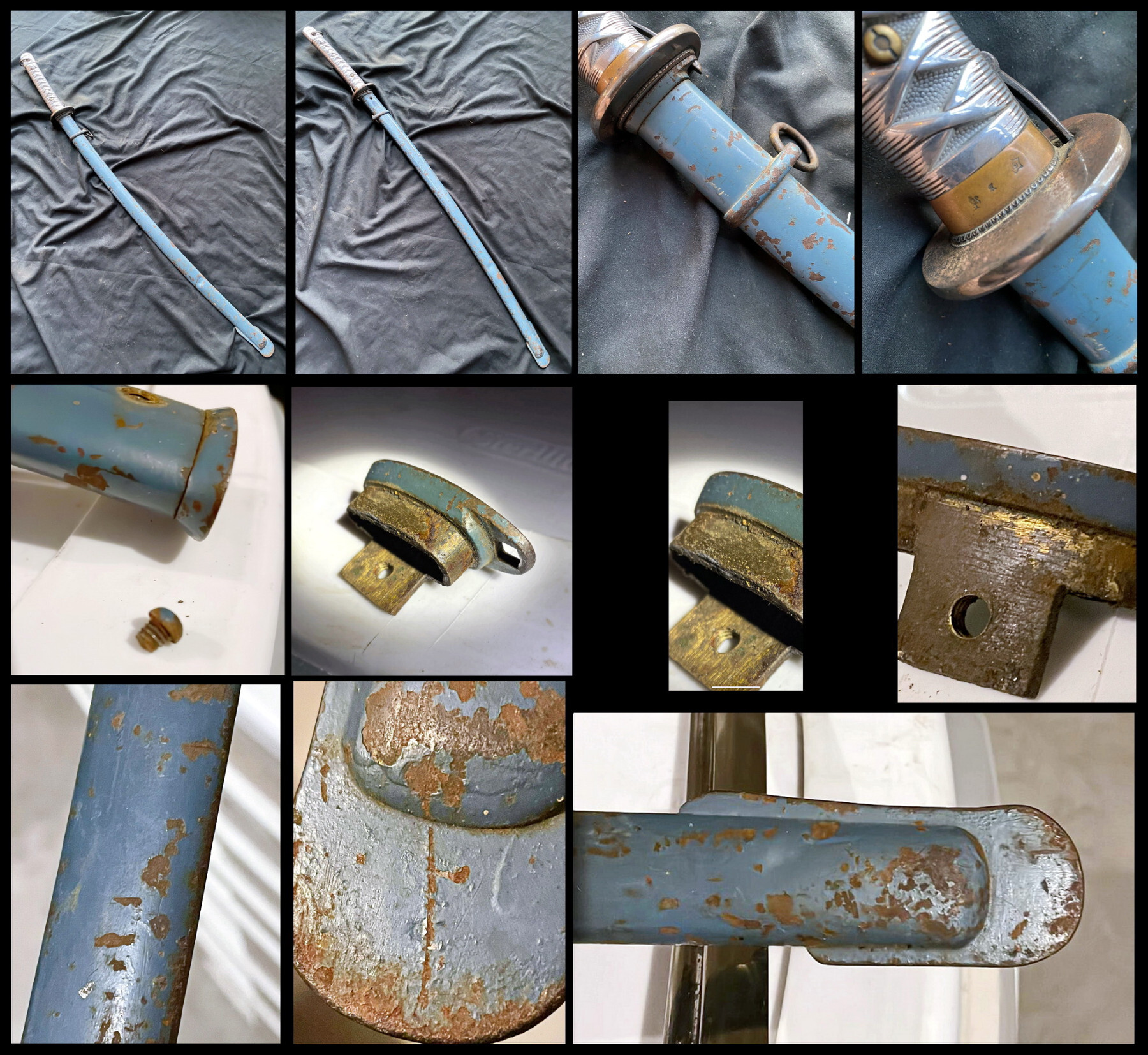
Hi Rob, I'm with you in that i thought for sure the sword i have was a post war 'bubba' job, now yours is the second one i have seen in all my collecting time. In Bruce's other thread i had mine also included in the photo, but merely wanted to show a range of scabbard colours i have seen and own. Having owned quite a few black scabbard nco's, i didn't see the big problem with them and had my doubts with all the negativity surrounding them. All references in English give just the basic Olive drab from factory description, nothing else, and yet clearly others do exist, even Nickel plated ones, but they are not mentioned either. When the IJA Camouflage Manual was discussed over at the WRF, it describes the 4 BASIC Colours used for camouflage purposes only. I looked into them from the Modellers veiwpoint ( they are meticulous on detail and historical accuracy) and made up the colour chart which i posted in Bruces thread. We all know that other colours were used, such as yellow, orange, red, the whites and blacks. The 'Red Bean' also gets a mention by Nick over at WRF, but all these are not the 4-Basic Camouflage colours, so make of that what you will. Anyway, to make a long story short, i began to look into the other colours and found a huge variety.... Early war, Late War, even the AIr Wing which was part of the IJA but the IJN had its own. There are LOTS of colours. When i made the comment i was referring to the colour itself, and i still stand by this comment. There were 4 different Naval arsenals that performed ship building and re-fitting of ships. Each of these had their own distinct colour version of greys, blues etc. There is a huge variation in the greys and what is a standard colour compared to a 'camouflage' colour is out of my scope for now as we would need IJN manuals to be able to go further. Here is a chart of the 4 colours used by the shipbuilding arsenals, although not shown, the first one has 4 variants, the second one 3, and the third one 2. Also a photo mix of my 'Grey' type 95. Before i forget, it's good that Thomas asked for your serial numbers, although your blade is Kobe (Ichi), the scabbard is from Iijima (by serial numbers) which is still a Tokyo Arsenal sub contractor. Mine is also an Iijima produced sword (matching numbers) and also Grey painted over the Olive Drab original paint. Just for interest i thought i'd share another recent find with you here. This time a Suya produced sword(again Tokyo Arsenal), but it has a Nickel plated Tsuba and 'Blue' scabbard. It appears to have been stripped prior to the blue being applied, however there are traces of brown under the scabbard throat. My understanding is that the IJN, didn't issue NCO's with swords, however, their Land Garrisons and NLF may have been different...they were essentially infantry under Naval Command. I have a Type 98 with black painted wooden scabbard and black suede combat cover in my collection, it came with a Sam Brown style belt aswell, all from a vet who acquired it in New Guinea from a NLF member. I remember reading that a lot of these were re-posted with IJA units towards the end of the war, but don't quote me just yet, as i need to find more references and could be wrong. Perhaps there could be a link here to explain some of these strange scabbard colours we have. Otherwise, it's all just Post War 'Bubba' activity at it's best.


 5 points
 -
Well, be careful. Not all is chikei. Some is merely laminations ie mokume or itame. The chikei would be accumulations of nie mostly and be dark but shiny5 points
-
鍋島公拝領薙刀銘肥前国住近江大掾忠廣 – A naginata signed Hizen no kuni ju Omi-daijo Tadahiro, which was received from the Load Nabeshima 秀嶋家 – Hideshima family 元白鞘書有 – The writing was on the previous shirasaya.4 points
-
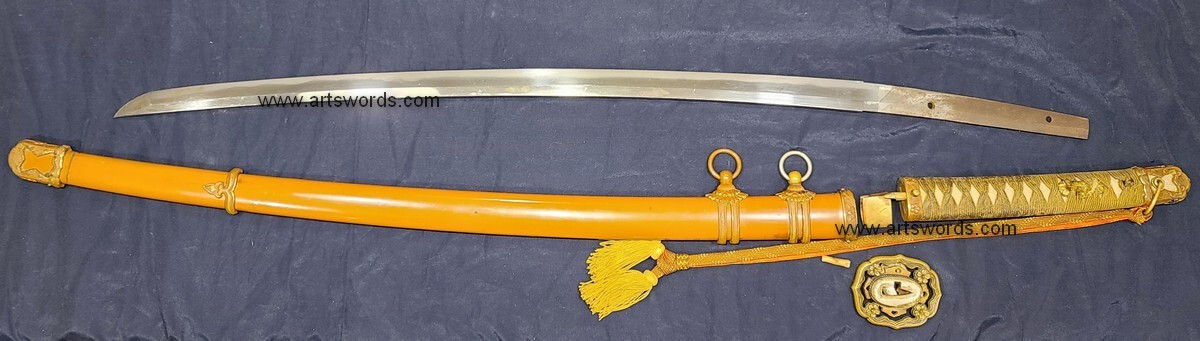
These type 94 gunto were only carried by higher ranking officers. They were not carried by lower rank officers. I once bought a very nice Sokan Tanto with horimono from a vet. He had befriended a family and gave them a sack of rice. The tanto was a gesture of their appreciation. No doubt it was their family treasure. Another story, several years ago I found an ubu tachi by Gojo Kuninaga that ended up going tokuju. The story with that one was the guy who brought it back as a souvenir was a member of MacArthur staff. I have no reason to doubt the story of the Vet or the story that the Gojo came from the estate of someone on Gen MacArthur's staff. Those guys all got great swords to take home because they had Japanese liaison's. Anyway here are a few more photos. Hard to read but might be Sukemitsu.


 4 points
 -
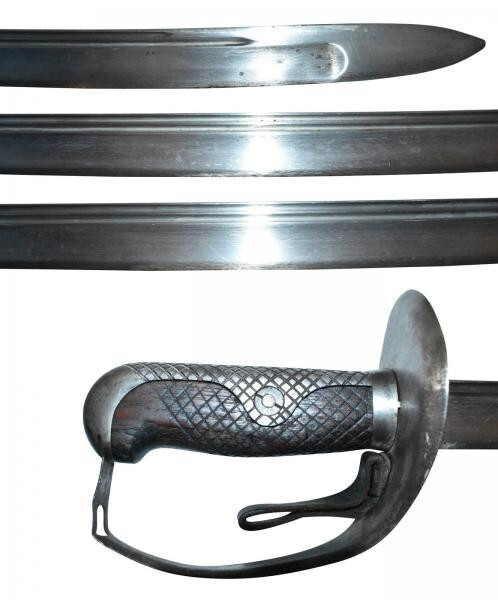
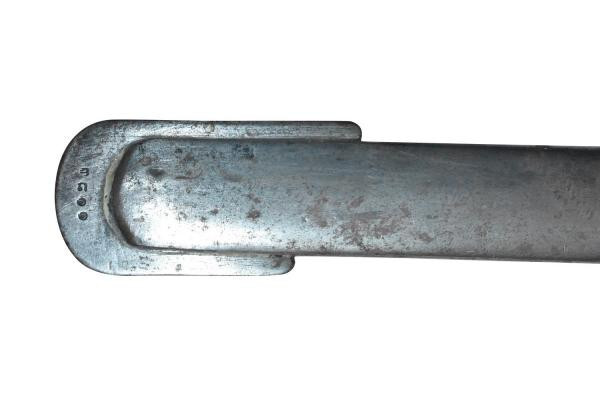
Thanks for sharing Thomas, It seems Japan and Thailand sourced items from Germany in the early days. I have what i believe is a Japanese made "Type 32" style sword, made specifically for the Thai military. Thought i'd share it here as it seems appropriate. Hope you all enjoy.

 4 points
 -
Hi guys, I haven't posted here for a while; thought I should stir the pot. I just listed a lovely signed and papered katana with itomaki no dachi koshirae: all of it in excellent condition. https://www.japaneseswordbooksandtsuba.com/store/swords/q642-signed-papered-katana-itomaki-no-dachi-koshirae I know there have been newer collectors here on NMB asking about possible purchases. They could do a whole lot worse than this one. And as long as I'm tooting my horn, I don't understand why I still own this Hojoji Kunimasa katana: https://www.japaneseswordbooksandtsuba.com/store/swords/q404-long-katana-hojoji-kunimasa Give it a look. Cheers, Grey3 points
-
Mid-January update. On Thursday I’ll probably let go of the latest handachi Koshiraé without creating a new tsunagi for it. Someone else can make that commitment. Bought on impulse. Straight back into the pot. The gold Kiri Mon on Nanako Shakudo Fuchi/Kashira are good quality, so I am sure it will find a new owner. The Kagami-Shi Tsuba is par for the course. The cheering news is that having recently bought a mumei Muromachi/Momoyama(?) Jumyō Tantō in Yamanouchi Mon, (see a few posts above), I’ve coincidentally found a Tosa Yamanouchi gun to go with it. Sitting in traffic today, I was thinking that now I have at least one object from the Hosokawa family of Kumamoto, the Daté families of Uwajima and Sendai, the Ikeda of Tottori and Okayama, Hachisuka of Awa/Tokushima, Toyotomi Hideyoshi, Tokugawa, and the Yamanouchi of Tosa, inter alia. Each is an express elevator back in time. Close your eyes and you’re there.3 points
-
Hi Bill, all officer ranks carried the Type 94 until the introduction of the Type 98. Though by 1945 it's likely the officers who survived since the 1930's and still carried a Type 94 would be a high rank by that point. There were also plenty of Generals that retired before & during WWII, leaving great condition Type 94 like yours intact.3 points
-
The writing on the right means a place name. 館林住 - Tatebayashi ju 正良 - Masayoshi3 points
-
This Kaneyasu (Hidari Mutsu). This smith is known for writing backwards, as yours is. Not confirming it is a real Hidari Mutsu, just that it is at minimum purporting to be so.3 points
-
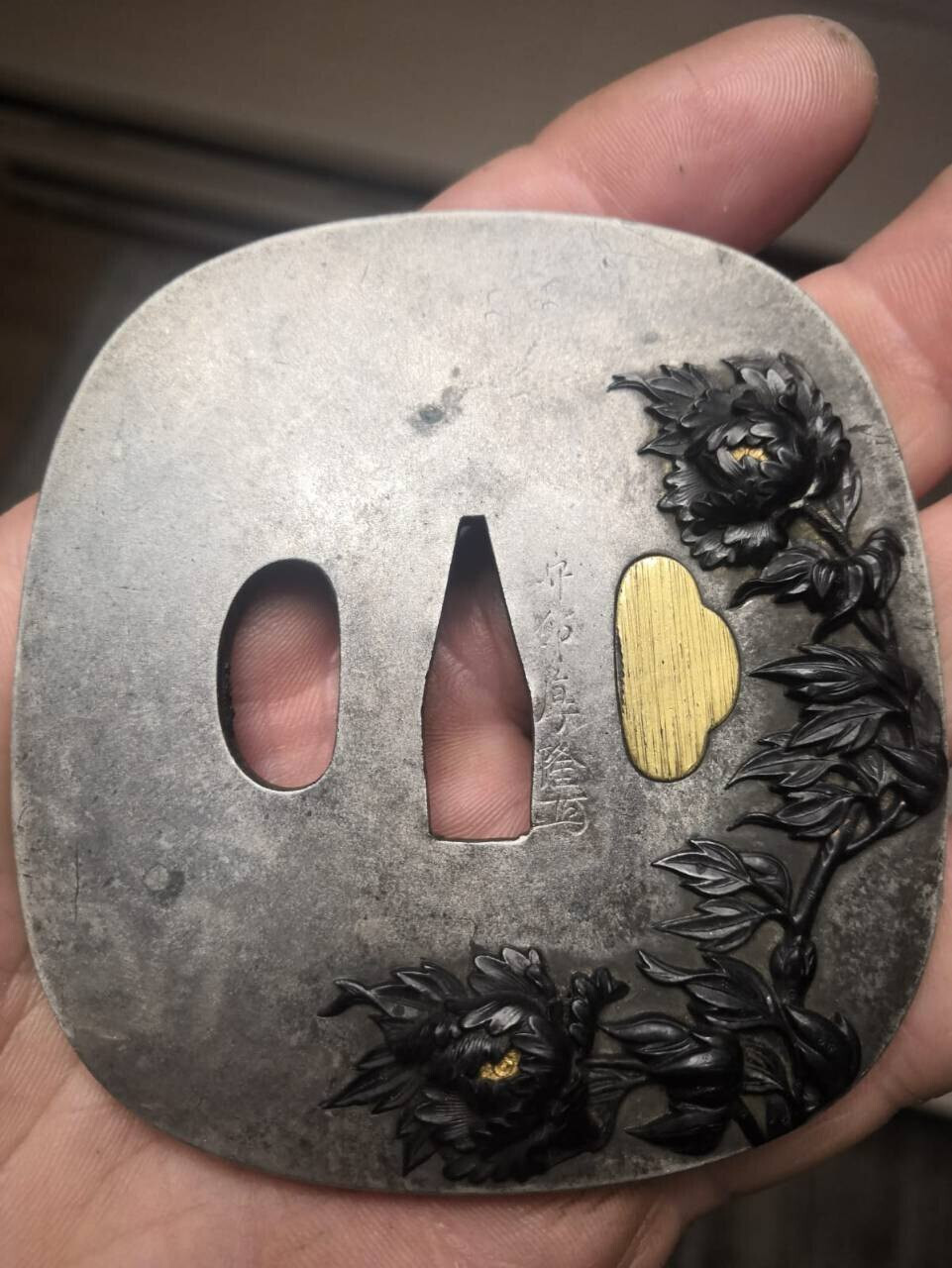
Asking for a friend. Tsuba was found with metal detector in WWI Russian positions near Bryansk. Non-magnetic, IMHO shibuich with shakudo peons. Size 82x77x4mm weight 195 grams


 2 points
 -
I recently came across Stegel's @Stegel pictures of the colour variations on Type 95 sayas (see first picture). As I recall, the one on the extreme right, was believed to be a IJN 'repaint' or origjnal grey paint? I have a similar Type 95 that I thought had been given a 'bubba' job (that word still cracks me up Bruce 😊) but after seeing Stegel's great post & pics I am hoping mine is a 'naval respray'. You can still see some remnants of original olive drab. The colour of mine is exactly the same grey/with just smidgen of green, as that shown in Stegel's, picture. Unfortunately, my pictures may not reproduce it's actual colour. So my questions are, how common are these 'naval' Type 95 grey coloured sayas? I just havent seen any. Is there a back story on them and did every IJN rating have one? Thanks Rob


 2 points
 -
Hi Matt, I think Hiromitsu for the signature and February in the 20th year of Showa for the date, so Feb 1945.2 points
-
Thanks all for the comments....much appreciated. If I have understood the replies: The star stamp only appears on RJT blades - this is as we RJT collectors knew. No example of a showa era Kaneyoshi blade is known. I am prepared to stick my neck out here (not having Matt's sword in hand) and say that this blade does not seem showa era to me. I FEEL this blade is an old shinto/shinshinto blade - possibly the 1780-1804 late Shinto - early Shinshinto Kaneyoshi smith listed by Stephen. I think it is the first non-WWII blade I have seen in RS mounts. I say this as: (1) the blade is virtually straight. (2) the tang is short and stubby, with 1 hole (3) the tang is undated (4) while the tang edges - yasuri, mei and mekugi ana are fairly 'crisp' I do not think WWII era crisp...more 1780s era crisp (IMHO). IMHO this is just not the sort of gendaito or showato blade usually seen in RS mounts...have a look at the pics...I'd like to hear members' opinions - maybe some more examples? and if I am wrong I would like to know. Regards to all...

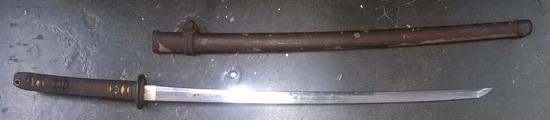
 2 points
 -
We cannot discount it entirely, but there is zero current evidence, so balance of probably. I work primarily with the intention of taking an evidence based approach and noting speculationwhen that is what it is. I enjoy speculation, but it should always be noted as such. At this stage (not discounting the possibility of future discoveries (which to go off on a tangent we find more about 95s every year despite pessimistic views there is 'nothing new to learn')) we can say there is no evidence at all of Type 95 saya being painted grey as any kind of army, navy or arsenal practice. I think I have made my general thoughts and observations clear earlier regarding the myriad of different saya colours we typically encounter and how much evidence (and what type) exists to corroborate our current speculation. It's absolutely an interesting topic I'd like to discuss further, but with a critical mind and an openness to accept that sometimes it really is just a 'Bubba' job or something done by a veteran/owner/merchant past or present, for reasons known only to them.2 points
-
Wow. Beautiful find! This is one I would be sending to @Ford Hallam, personally. It's really stunning. You can even imagine the harsh wind blowing.2 points
-
Great find Bill !! Personally i believe the story, as i remember my Mother telling me how BAD it was straight after the war, shortages were peaking in almost everything till after the clean up and economy rising again. The 10lbs of sugar would have been worth a small fortune at the time, it would get you other things in a barter deal and keep your family from starvation.... worth more than a sword which won't feed your famiy and would end up being confiscated eventually, leaving you with nothing! Just my opinion. I'm with Steve and Marco, please show us more of the blade and smith details. I have a Generals sword also, but it was surrendered in Malaya, and the British were a bit more exact in highlighting these things especially from surrender ceremonies. here's the plaque on mine. The blade is an old Shinto mumei, but i have the note the general left with it. Steve, i love reading your comments, great work!! sometimes they really make my day!
 2 points
 -
I never understood why a recommendation to be a topical collector, i.e. having a very limited collection dedicated to a very narrow and precise topic, is something commonly repeated in nihonto. There are very few such collectors in nihonto. People who give this advice... they are topical collectors? Hm... Was Compton a topical collector? Or probably the most important Western collector - Bigelow? No. Neither was Festing nor dozens of lesser known collectors. There are subjects like coins or military decorations, where most successful collectors are topical. They collect Roman Empire between this and that, or specific Greek colonies or else. Its natural for them to have narrow specialization because otherwise there is not much point in collecting these items. You simply can't collect just "coins" with any measure of success. In nihonto if one sees A+ sword for little money, one buys it and keeps it in the collection. Therefore - almost complete absence of topical guys. People have preferences but almost no one is hard limited to a specific topic and die hard motivated to extend his collection in this specific topic only. Exceptions are a few gentlemen at Very high level who basically allocate $ and buy consistently say all Ichimonji blades on sale above certain level, and do it for Y years. To give advice "be like them" to a beginner is a stretch at best.2 points
-
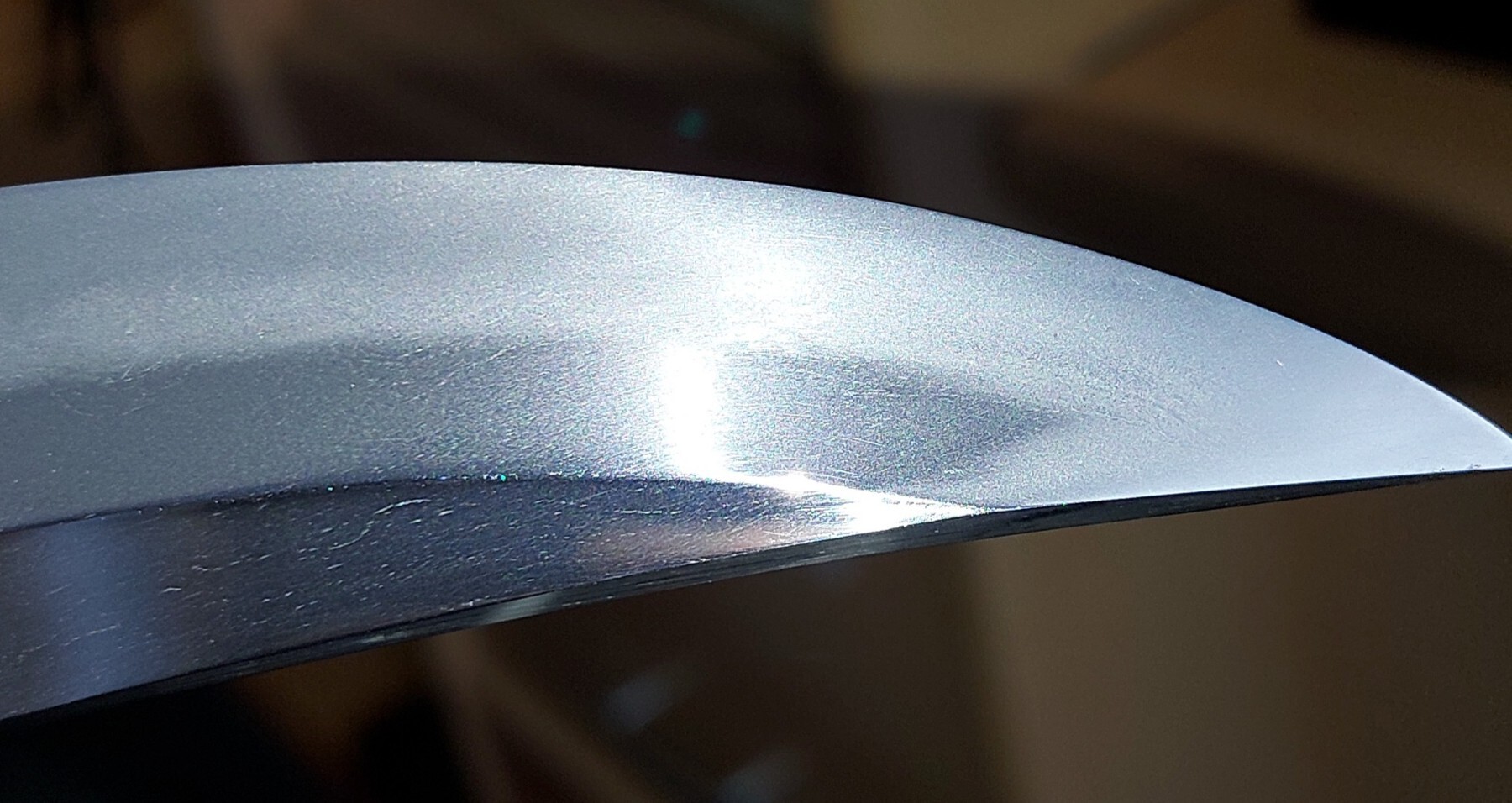
Further to this, I have been studying Torigoye hakogaki for the past couple of weeks, and I discovered that Torigoye for pieces he rated highly, he signed with one stroke to the right of his kao. For pieces he though were not of the highest caliber, he signed with two strokes to the right of his kao. This piece has a kao with one stroke, which means he must have though very highly of it. I also note for future reference, for some reason he writes zōgan as 象眼 (instead of the more orthodox 象嵌). If anyone has any boxes with Torigoye hakogaki on them, I'm keen to take a look if they haven't yet appeared here on NMB.2 points
-
For Hidari Mutsu Kaneyasu it was, yes. https://www.aoijapan.net/katana-mutsu-kami-kaneyasu-hidari-mutsu/2 points
-
I feel like we have some firm believers of "Its easier to ask for forgiveness than permission" here.2 points
-
HI Khalid, I have a few thoughts on this below and a great article from Guido Schiller.2 points
-
some real ruff nuggets in here seen at least two star stamps, a Mantetsu in Kaigunto mounts( shows mune #) other treasures? for you to dig thru, been taken for granted of late so up to you to search, https://kraftauctions.hibid.com/lots/?q=sword Cheers1 point
-
Should be 備州三次住祐秀 ← Note a very quick search of the internet shows that he usually signed with 備後, but your sword says 備州. I don't know if this is significant for this smith. 慶應三年 Keiō 3 (in calligraphic style of Keiō)1 point
-
Thank you for your help Mark1 point
-
I think for me the most important thing about collecting is passion. I don't really care about the "level" of the collection but it is easy to see passion of the collector. You don't really need big ticket items as long as you are happy for what you have. I've been watching some trading card collecting videos from Youtube lately and you can easily see how much passion some of the collectors have and can be hyped for example on 50$ card even if they are owning 5000$ cards etc. I know investing has creeped into many forms of collecting and I just feel pure collecting is a joy to see. I used to collect ice hockey cards when I was a kid, however I've understood that I can not enter trading card collecting anymore as I feel I do not have the needed passion for it nor the sports the cards are based on. Likewise in Japanese swords I know I will only seek to research, focus and even possibly occasionally collect those items that I have the passion for. As far as stories go, I would rather hear from the person collecting than the items he/she has collected. It is very fascinating to hear whya person has made the decisisions he has in collecting, while looking at the items alone you could perhaps not understand the reasoning behind them.1 point
-
Thank you Jussi,John and Michael. I can only agree, it's a beautiful naginata1 point
-
Congratulations! Looks splendid.1 point
-
I'd spend the money on the best restoration possible instead of papers. In my opinion (for whatever that is worth...), it doesn't need papers, he's not one of the top names and the good quality of the work speaks for itself.1 point
-
If i have saved at least one Gendaito or Mantetsu my work is done.1 point
-
Some more. By the way, the blade is 43.8cm long and the sori is about 2.5cm.
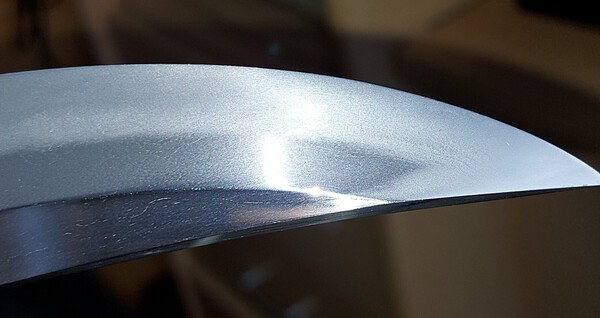

 1 point
 -
Thank you very much Moriyama-san! Of course John. I just took some quick shots. Will do some better ones, once I find the time. Hopefully there are some details to see. In hand it is much more magnificent. A beautiful nie deki suguha based blade with some ashi and typical konuka hada.


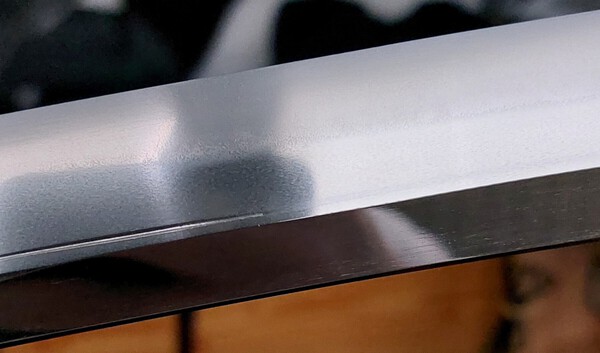
 1 point
 -
yeah they've all been treated like crap but if the price is low i'll most likely grab a couple and give them some love the fire damaged one hurts1 point
-
M.Neumann was a supplier and producer of all kind of military stuff. (Honor saber from the Kaiser for the Sultan. Design by Prof. Emil Doepler the younger) It says: "Königlicher Hoflieferant (King supplier) M. Neumann founded 1848, Berlin W(est) french street. 24. First class goods from own fabrication. Uniforms, Militaria and ridding equipment." (website: www.seitengewehr.de)1 point
-
Sorry i found nothing about M. Neumann Berlin "Hoflieferant". I found a lot of pictures of high quality prussia sabers with that mark. But no information about that company. Btw. the title "Hoflieferant" was not exclusive as it sounds. You could get that title on different ways. Mostley you pay for it.1 point
-
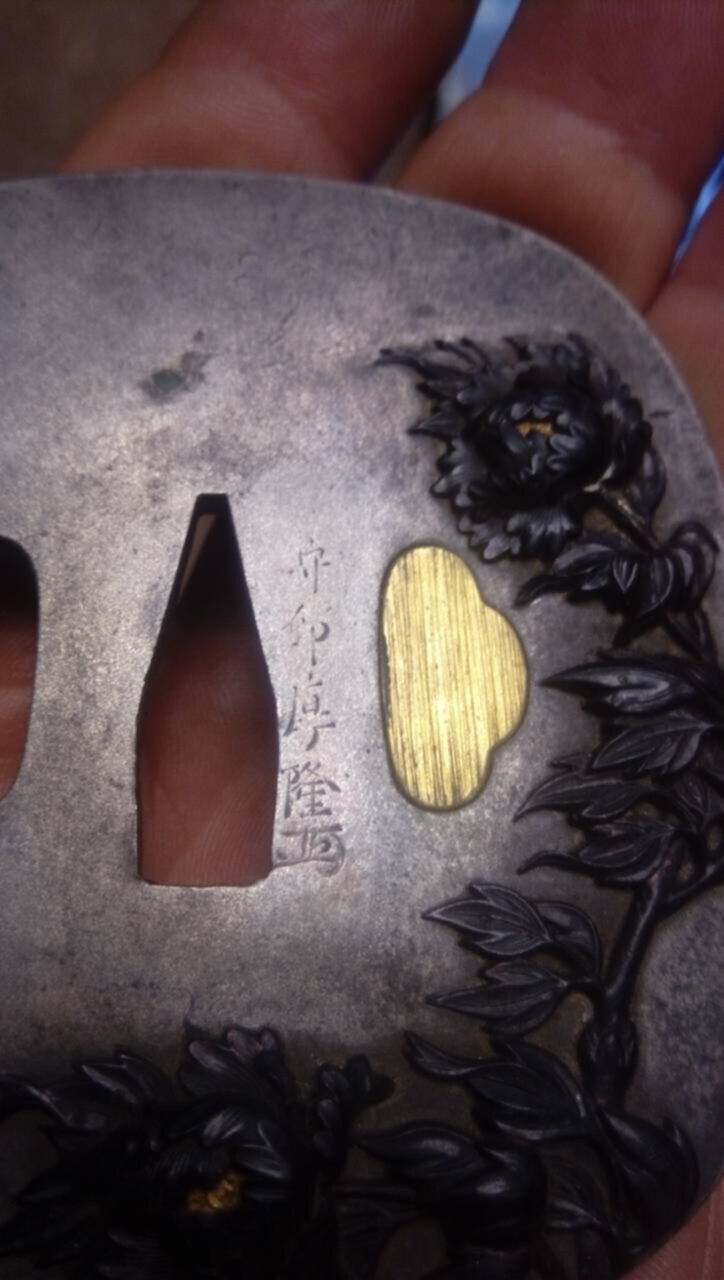
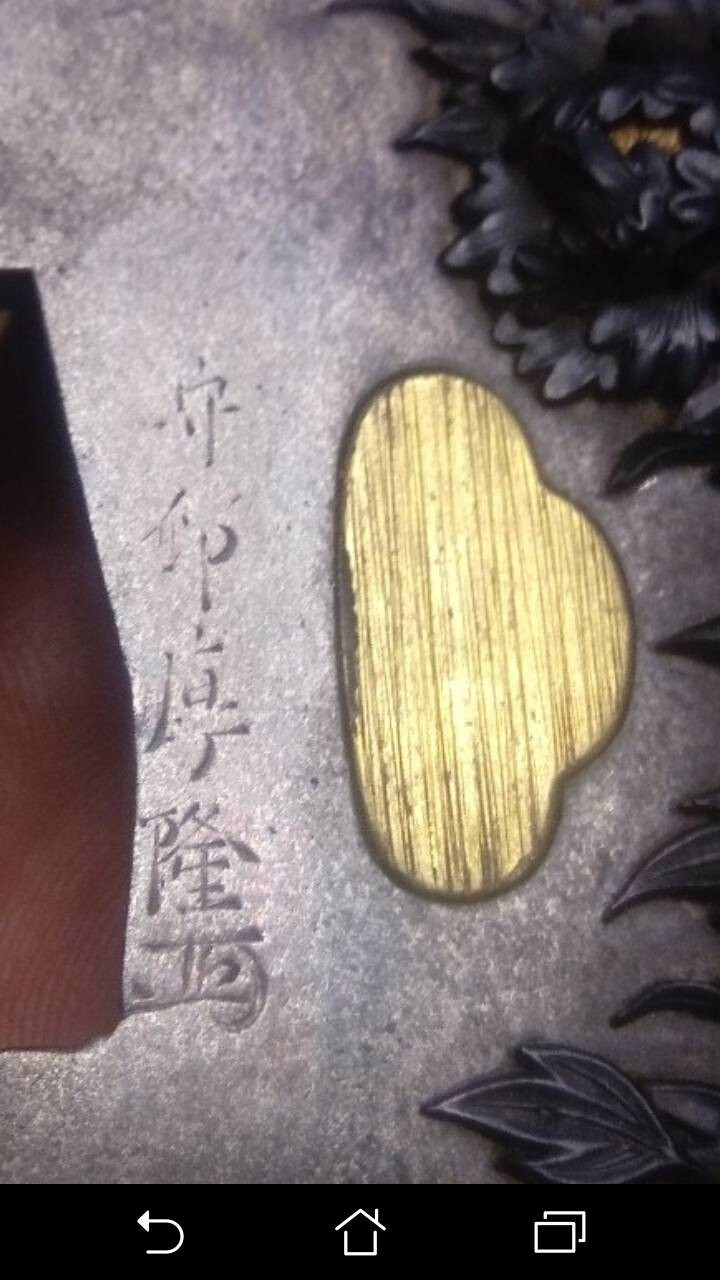
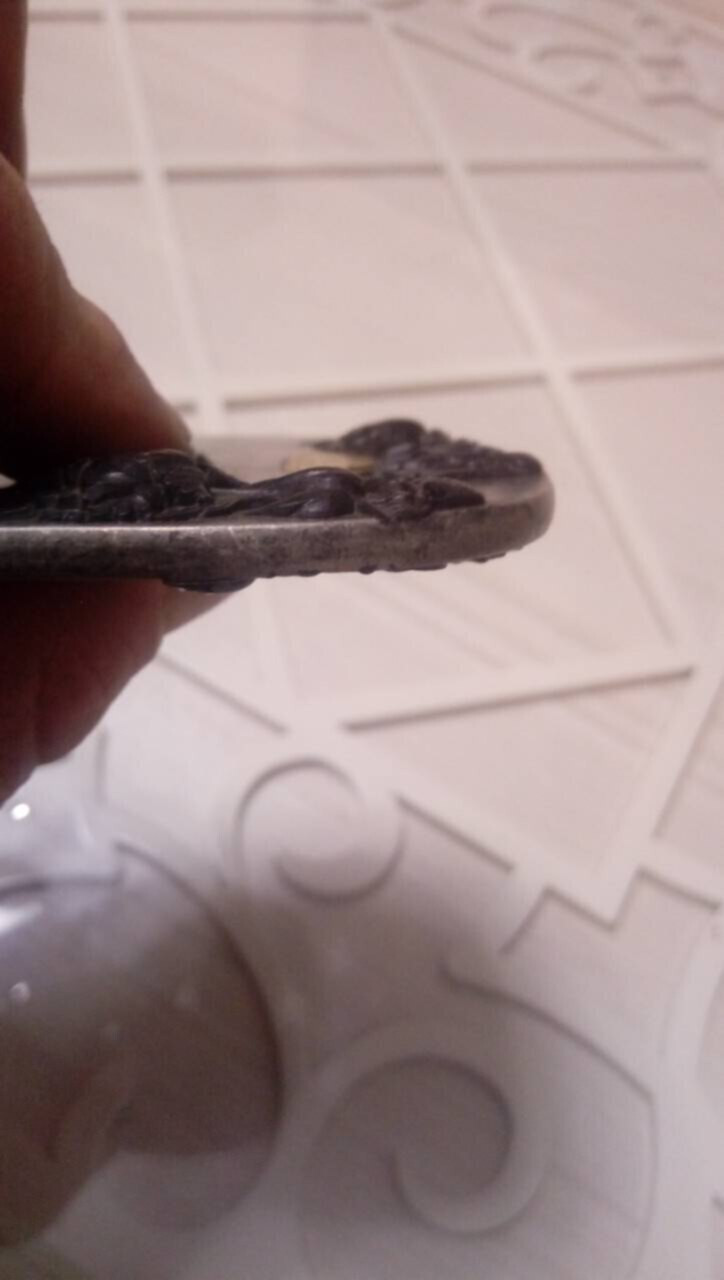
Here's a new addition to my collection. Notice the 2nd and 3rd Kanji order is reversed..... very strange
 1 point
 -
守邨厚隆 Morimura Atsutaka Late Edo1 point
-
I was going to ask if the image was flipped, as I hadn't seen the person radical on the left! Was this a thing then? Signing backwards 😲1 point
-
With the sums involved, I just hope everyone makes sure their wives don't think they're keeping a secret second family.1 point
-
@Kiipu Thomas What do think this Kanji on the scabbard?𩋡 /鞘 for Saya ?
 1 point
 -
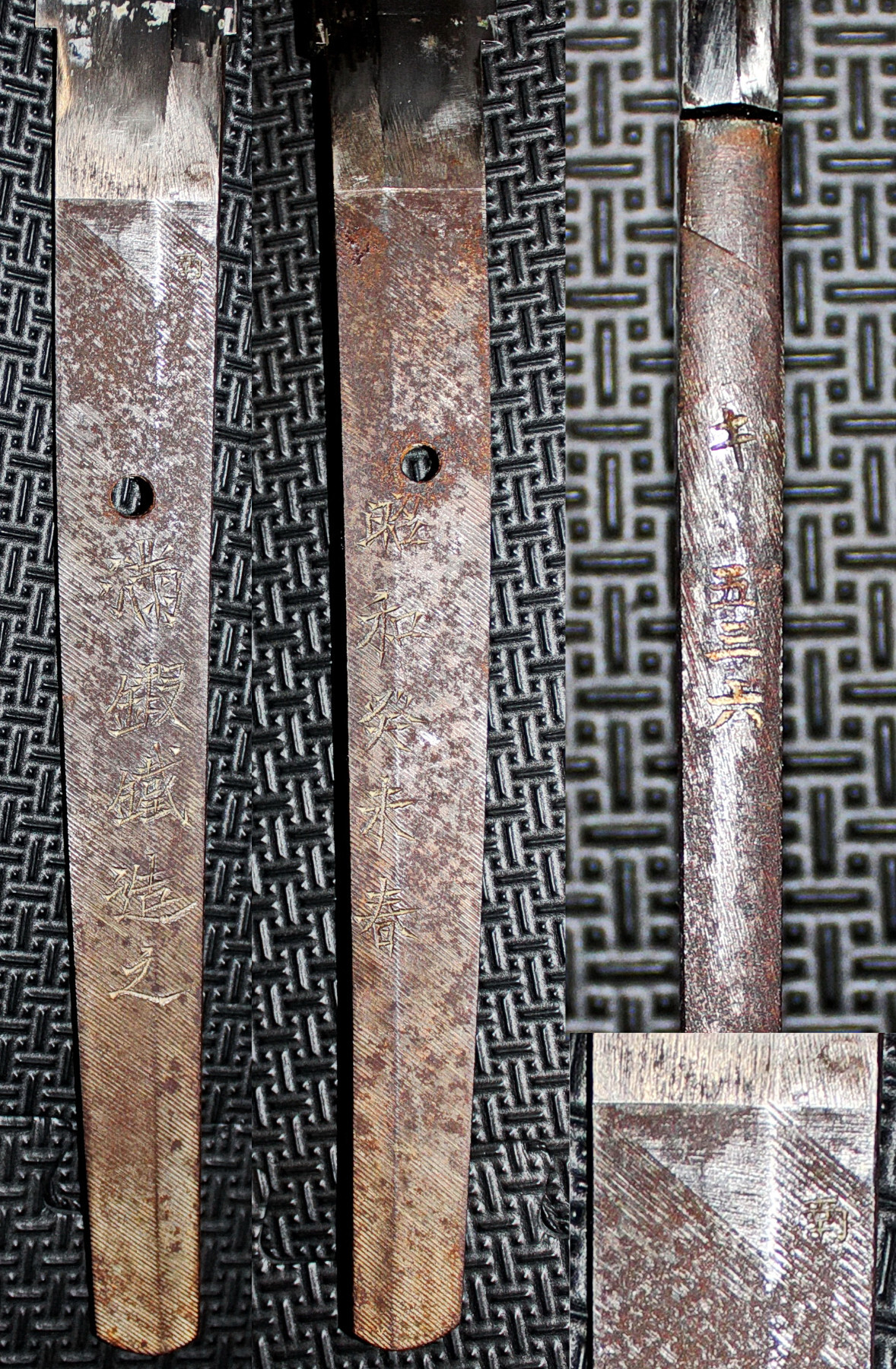
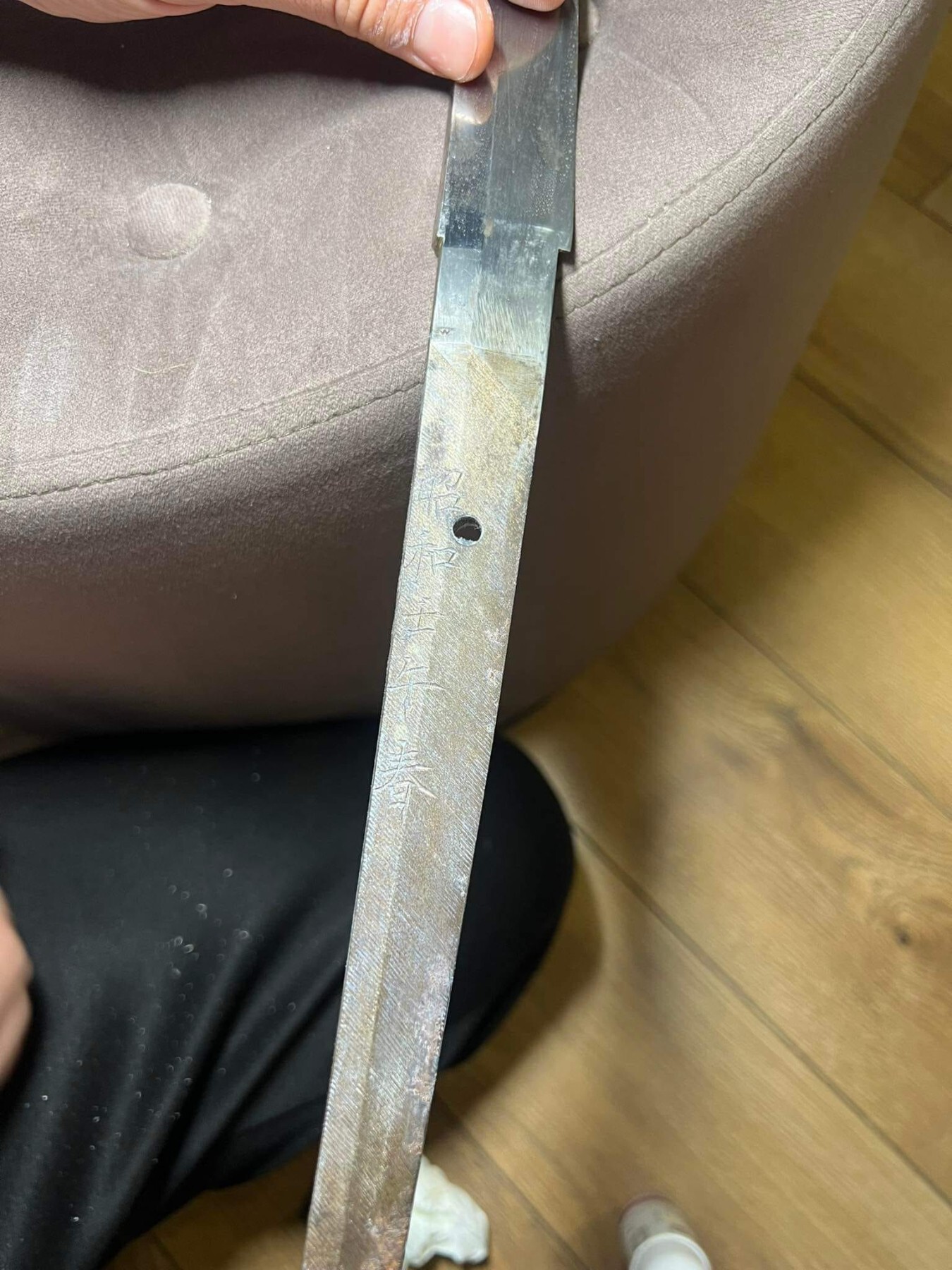
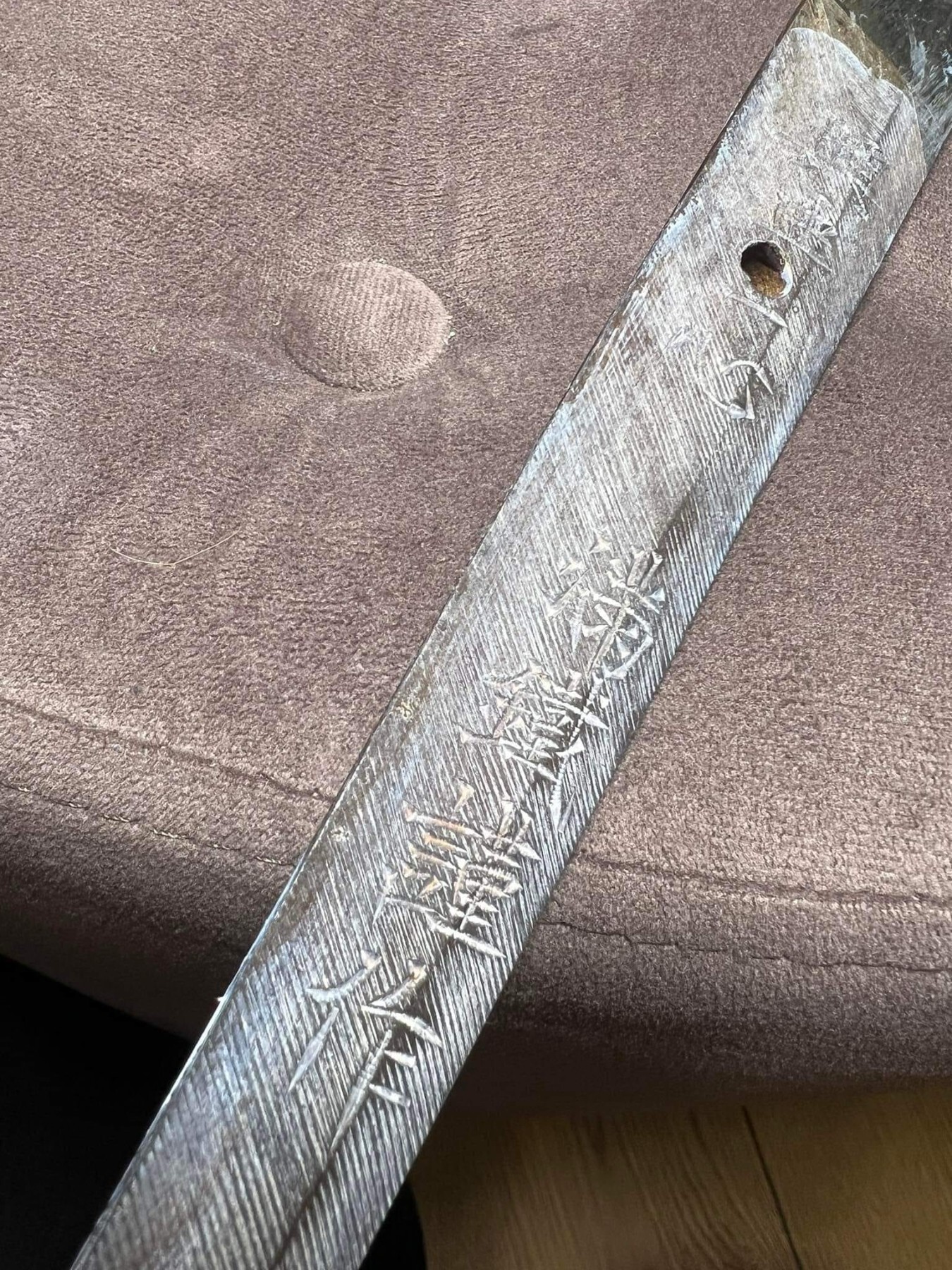
@Bruce Pennington Bruce One more 昭和壬午春(1942 Spring) 興亞一心 滿鐵謹作 ウ(U)四一四 414

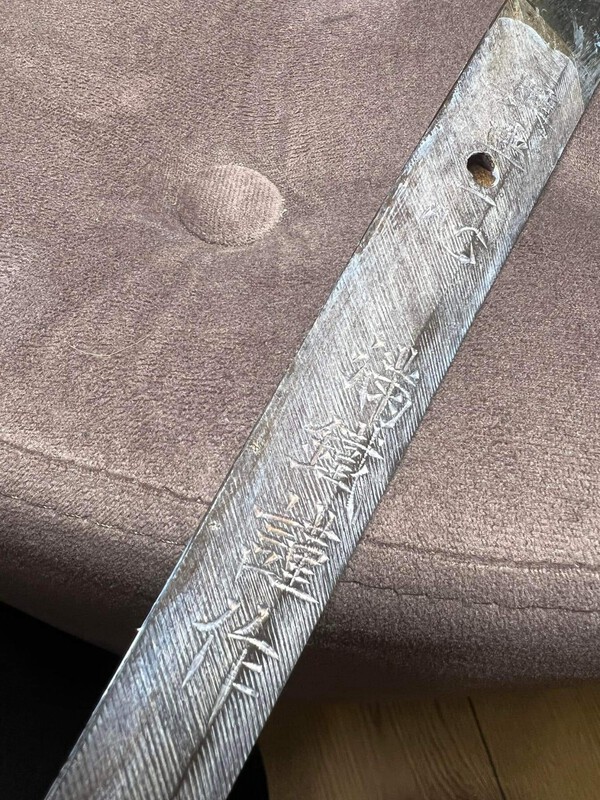
 1 point
 -
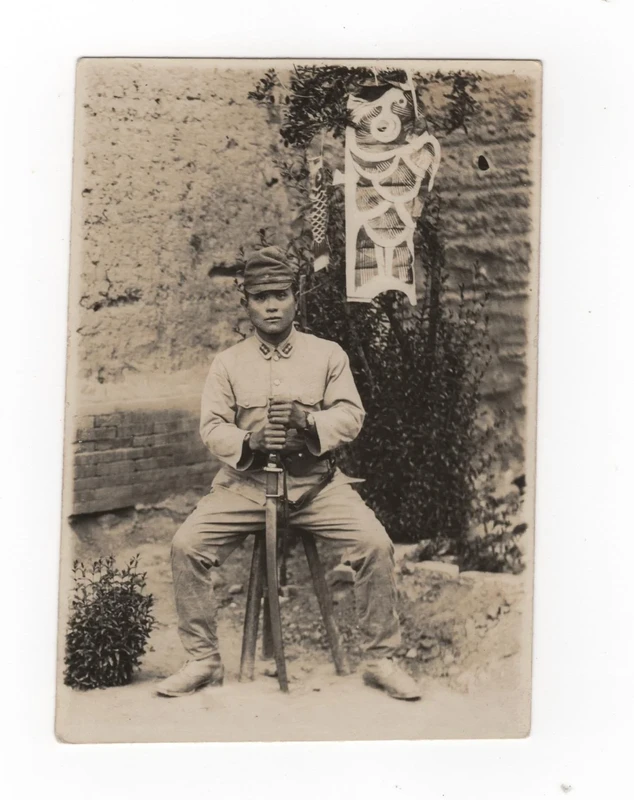
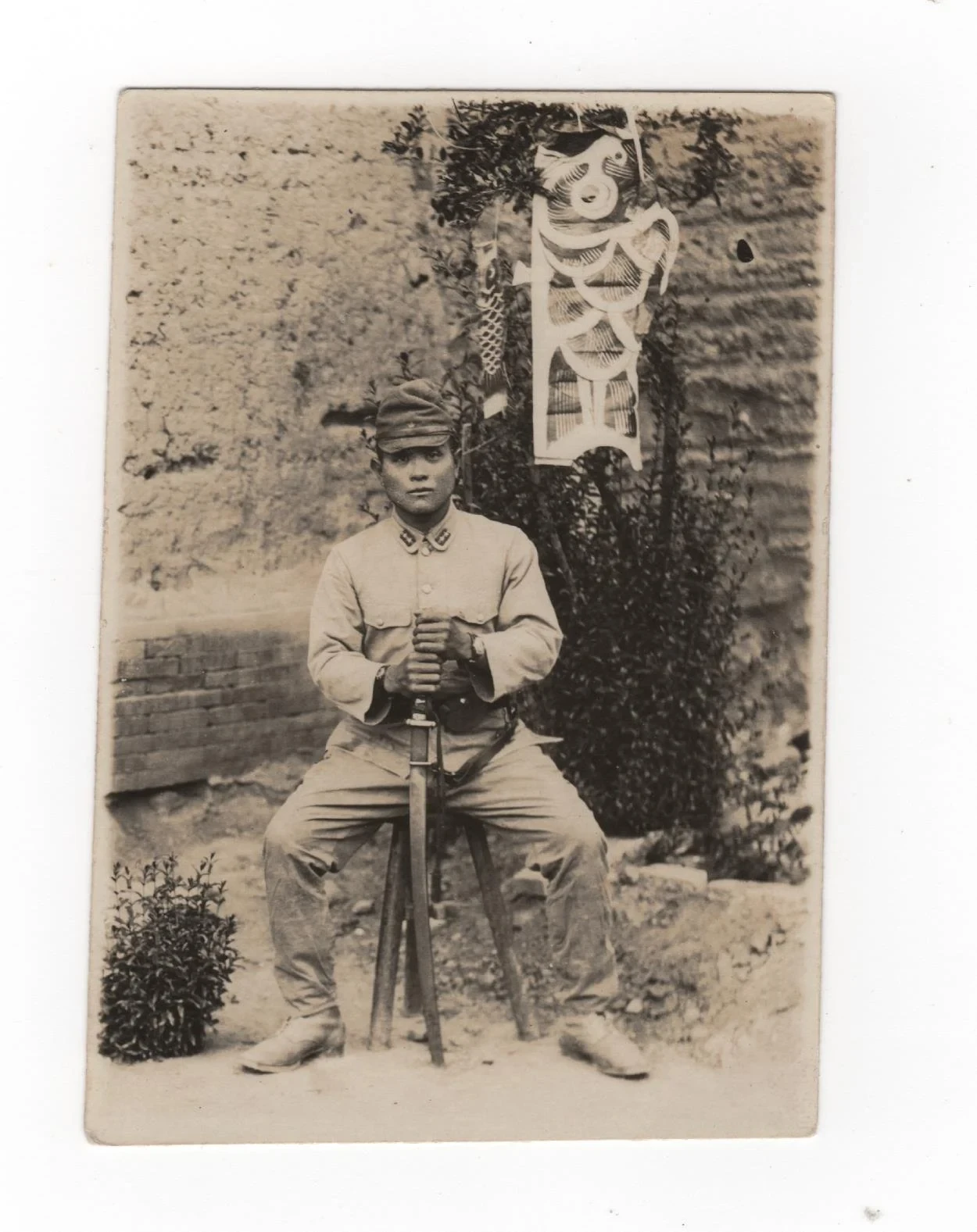
Looking for a good thread to post this picture. A sergeant with a copper handled Type 95, found on a Gunboards post - HERE
 1 point
 -
Thanks very much Kyle. Doh! I should have picked the Kinai just by the style! I do favour the Myochin though, fantastic mokume and the roosters are beautifully done. [Pity it is not mine!]1 point
-
I will take Ray one step further and provide a link to his blog post that the video is based upon. 5 Guidelines for the Beginning Collector of Japanese Swords And since I am looking at his website, I will provide the link to the articles written by the late Jim Kurrasch. Jim Kurrasch articles As a former editor and publisher once told me, it is better to beg for forgiveness than to ask for permission!1 point
-
What an awesome video. Not only due to the shoutout (thanks for that Ray) but because the advise is concise on the money. And if I may say Ray, you have such a calming and clear narrating voice that I could listen to it for days. A great service to the Nihonto community.1 point
-
In regards to the oval stamp on the Shigemitsu blade, I have found another blade that seems to have this as part of the inscription. Now I am wondering what this is all about. signature on broken sword Plus another oval stamp that is duplicated below via @george trotter. Naval sword translation Smith Mei1 point
-
Yep, that's him! I sure hope the Japanese designer is getting royalties. Yosemite Sam1 point
-
Hi guys, I have gotten involved with the cartel that is selling the Plimpton collection of Japanese civil & diplomatic swords; I just listed my 1st from the collection to my site. https://www.japaneseswordbooksandtsuba.com/store/swords/s142-type-19-civil-%26-diplomatic-official-dress-sword-plimpton-collection# Check it out if you're interested; this one is in exceptionally fine condition. Thanks, Grey1 point
-
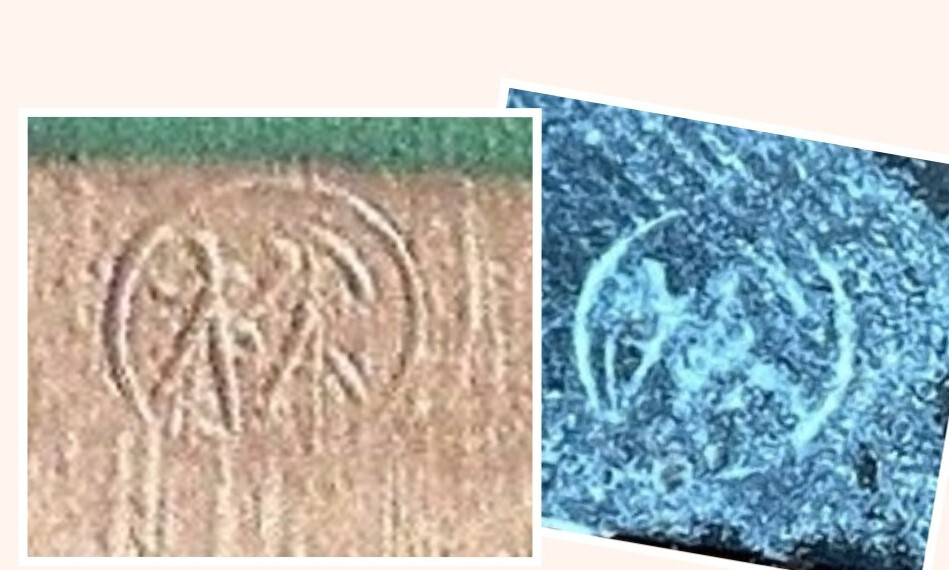
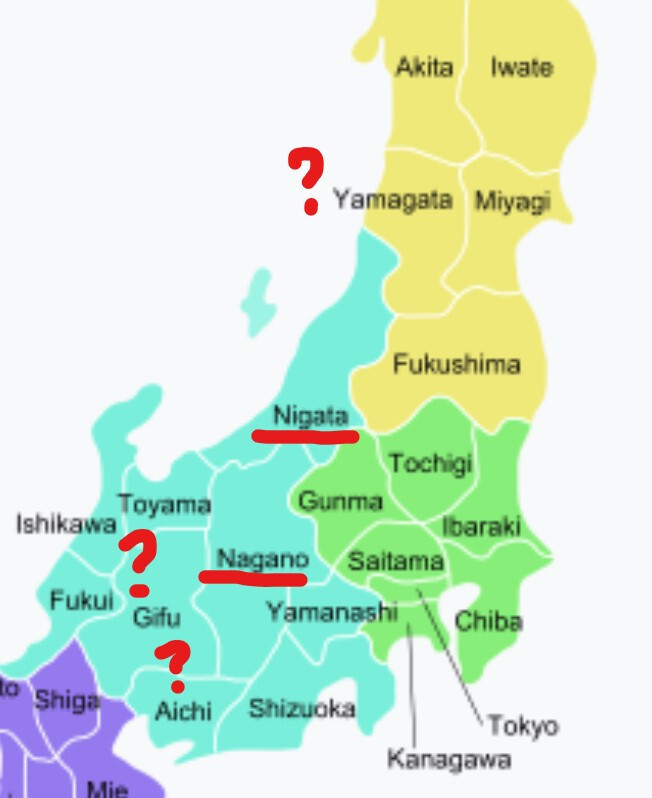
So. The plot thickens. I'm fairly certain that is a Matsu stamp: I don't see evidence of a number, although corrosion could have destroyed them. Making this more interesting, if it is a Matsu stamp, is that the majority of Matsu stamps have been found on blades made in the Niigata prefecture. We have 2 recorded from neighboring Nagano, and now this one from either: Aichi, Mino, Dewa province (which back then included Yamagata), Yamagata, or Gifu, which is where the known Kaneyoshi smiths operated from. As you can see, they all neighbor Niigata and Nagano, so I'm starting to think this stamp was an Army stamp used for certain areas, like the katakana stamps we see with numbers. @george trotter - thoughts?


 1 point






















This leaderboard is set to Johannesburg/GMT+02:00