
Leaderboard


Popular Content
Showing content with the highest reputation on 02/15/2026 in all areas
-
Couple more images I have on the same theme. The Kutani bowls is mine, picked up at auction. BaZZa.


 7 points
 -
I am excited to announce the release of a document I have been working on: Type 95 Military Sword Variations. It is now available in the download section for anyone who would like to access it. I am pinning this thread in place of the Type 95 Worksheet, of which can be found here: https://www.militaria.co.za/nmb/topic/29722-type-95-gunto-worksheet/#comments My hope is that this monograph helps dispel some of the long standing rumors surrounding these swords and assists collectors in identifying the examples in their own collections. This work is purely educational and is intended to consolidate information from several sources into one comprehensive reference. I would like to acknowledge the late Nick Komiya for the huge amount of documents he shared on the warrelics forum over the years; without his contributions to the study of Japanese Militaria, this document simply could not exist. I'd also like to extend a special thanks to the following Nihonto Message Board members, who either directly, or indirectly through discussions over the years, greatly aided my understanding of this type of Japanese sword. I am forever grateful. @Kiipu @Bruce Pennington @Conway S @John C @drb 1643 Tom Foster, @robinalexander @BANGBANGSAN @Shamsy @Stegel @PNSSHOGUN @rebcannonshooter @Grimmdarkspire @matthewbrice @vajo @Brian . Please see the aknowledgements section in the download, and I hope not to have forgotten anyone... This is Edition #1, and I intend to update the download annually as new revelations arise and as serial number range changes are observed. It is formatted imperfectly, but to the best of my ability with programs at hand (I am an enthusiast and collector, not an experienced writer). Please feel free to let me know if you notice any typos or inconsistencies, and I will address them promptly. Feel free to use this topic to post information or questions about Type 95 Gunto. I hope you find the monograph helpful. Happy Valentine’s Day! -Sam5 points
-
https://nbthk-ab2.org/join-now/5 points
-
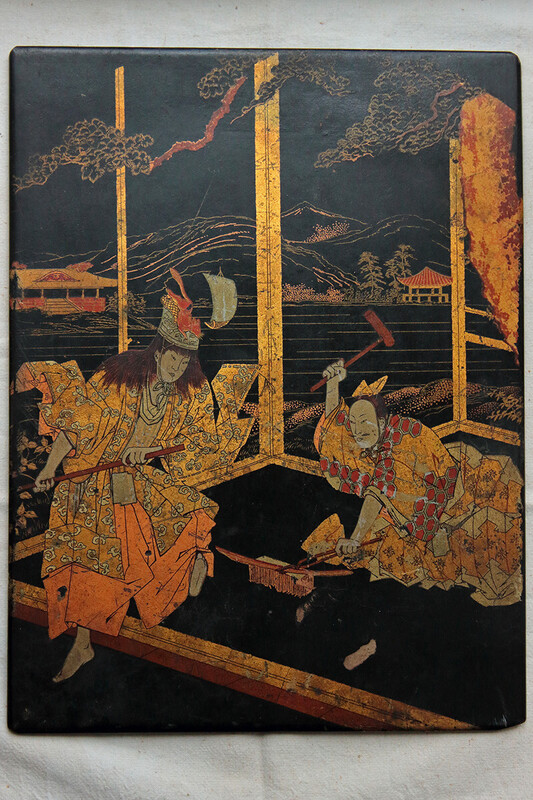
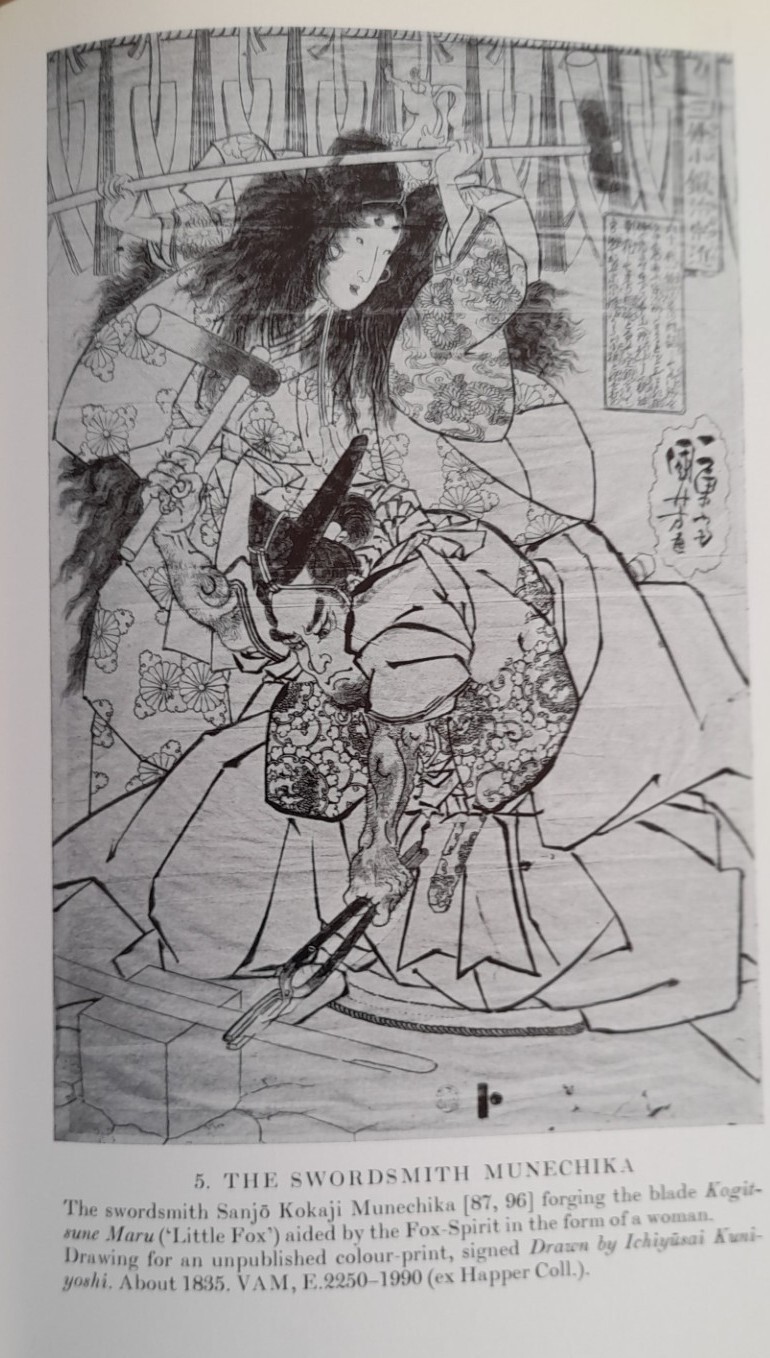
I think this is the swordsmith Munechika forging the blade Kogitsune Maru ( little fox ) aided by the Fox Spirit in the form of a youth . See plate 5 of Robinson's The Arts of the Japanese Sword4 points
-
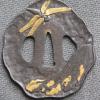
Not exactly multi-stacked but this tsuba of mine by Marukawa Hiroyoshi (Mito school) has sekigane resized so small that the centrepiece of a tsuba box will not fit... I had to make my own (kinda dodgy) box for it out of a ring box... I think it might have been re-used on a mamori-tanto gifted to a child. (Image below is in the original box, not my dodgy self-made one)
 3 points
 -
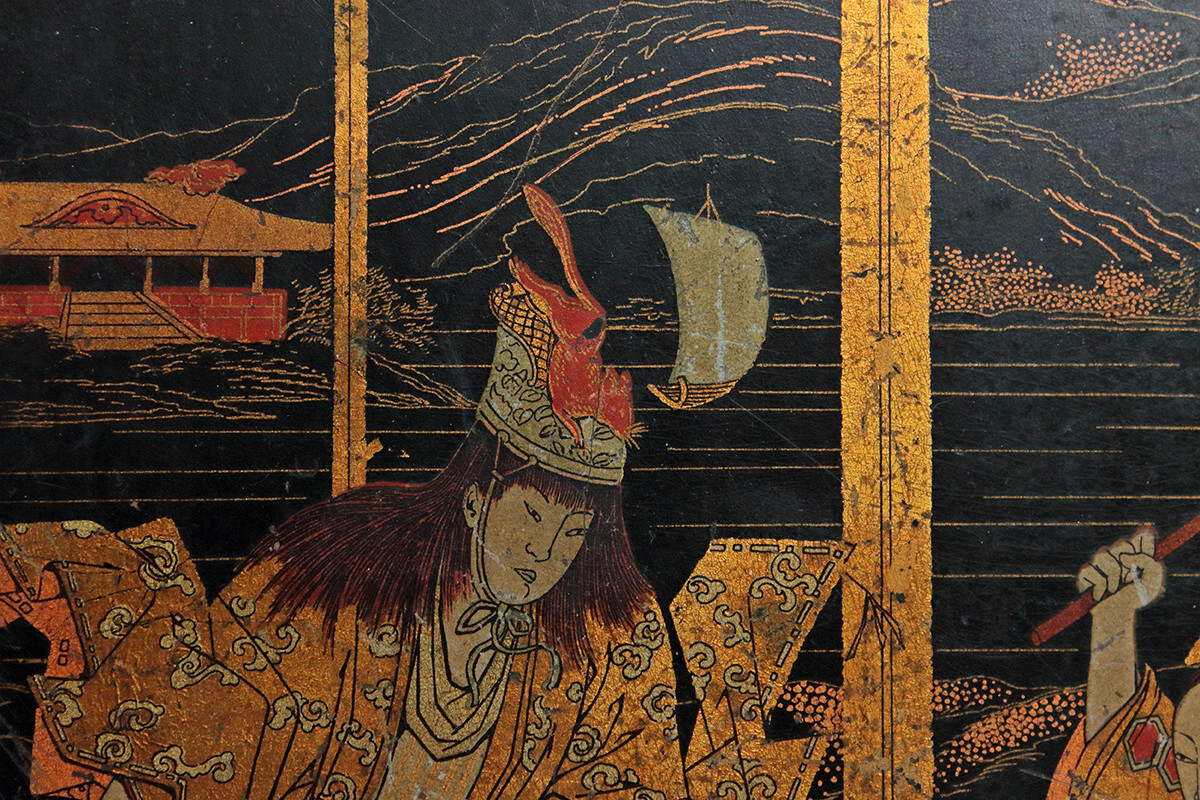
Was going through the listings of a local internet auction when I stumbled upon this lacquer panel. And since it featured two swordsmiths working on a sword, I bought it. It came cheap, less than 50 USD including delivery. It arrived today and I decided to share it here. Is this one of those panels that came in pairs and mainly were for selling them to Gaijin? Also I am very curious about the headgear of the swordsmith to the left. The dimensions of the picture are approximately 307x232mm. I also found a round version of this picture here: https://www.roseberys.co.uk/a0470-lot-494323?el=494323&lo=&pp=96


 3 points
 -
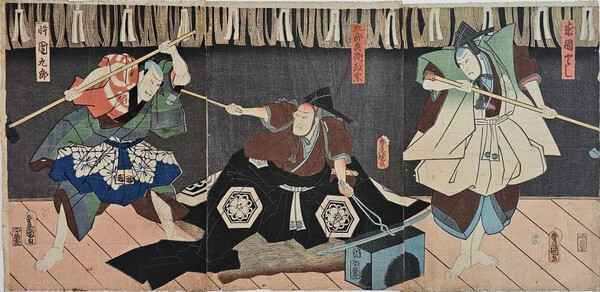
This one of my favourites - it shows actors Kataoka Nizaemon VIII as Rai Kunitoshi (Right), Ichikawa Danzô VI as Gorō Nyūdō Masamune (Centre) and Onoe Waichi II as his fictional son (Segare) Dankurô (Left). It is by Utagawa Kunisada (Toyokuni III) for the play Date Moyô Somete Kisaragi at the Nakamura Theatre in 1858.
 3 points
 -
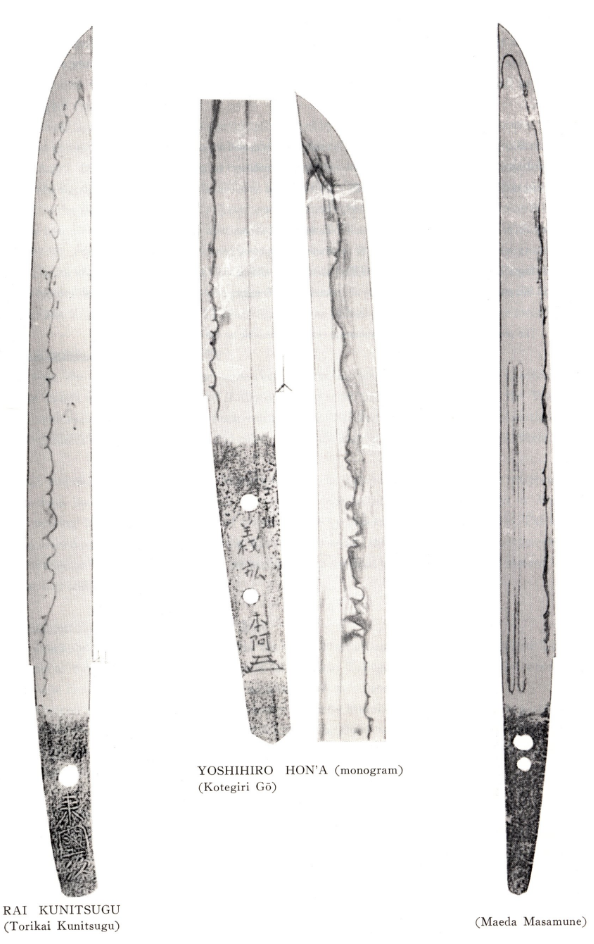
I stumbled across a great little read in the Token Bijutsu Volume 35 about the sale of the Iyo Saijō Clan's Matsudaira Masterpieces. The Iyo Saijō Clan was established with the fief of 30,000 koku as a branch family of Kishū Tokugawa by Matsudaira Sakyō-dayū Yorizumi, who was second son of Tokugawa Yorinobu ruling Kishū. When the new branch came into existence, some of the treasures in the Kishū family collection were transferred as heirlooms. Among the ten transferred swords, three of them were meibutsu, namely, Maeda Masamune, Tokuzen-in Sadamune, and Satō Yukimitsu. Others included two Juyo Bunkazai, a kodachi by Sanenaga and a ken by Mitsutadai. It is said that the magnificence of swords in the Matsudaira collection came next only to the Maeda, Shimazu, and Kishū Tokugawa collections. In the article it, it talks to the sale of a few of these great swords that we have discussed even recently here on this forum. It seems insane that some of these things have actually been sold but there you go. In 1918 or 50 years after the Meiji restoration, two of the Iyo Saijō Clan's Matsudaira meibutso were sold: 1. Torikai Rai Kunitsugu tanto - said by Dr Homma when he saw it in 1950 that he was surprised this was not elevated to a higher status (Juyo Bunkazai or higher) this sold in 1918 to a Mr Sugihara who paid 8,000 yen for it. To put in perspective. 1 yen was equivalent to roughly 51.5c USD back in 1918. So this means the sword roughly cost $4,120. To assess how much this was in the day, an unskilled labour earned you $1/day, whilst skill labour was $1.50/day. As such the salary of an unskilled labourer was $241/year or $361.50/year for a skilled labourer. At the time a larger, well-built, multi-bedroom home in New England cost between $2,500 and $3,500, today this home would cost over $3-4 million. Basically, if you look at the USD prices from back in the day, all you need to do is throw three zeros at the end for an roughly equivalent price today. 2. Kotegiri Gō wakizashi - Initially owned by Inaba Tanba-no-kami Masakatsu it was given official recognition as work of Gō by the origami issued by Hon'ami Koon in Kanbun 2 (1662). The origami also certified that it was worth 100 pieces of gold coins. Later when its ownership went to Hosokawa Etchū-no-kami the price was raised to 130 gold coins. It went back to the Inaba again with the origami certifying its new value was 200 gold coins. Finally it was put into the same auction in 1918 as the Torikai Rai Kunitsugu tanto and was sold for €3,338 or $1,719. In 1924, some 56 years after the Meiji Restoration, the remaining bulk of the Iyo Saijō Clan masterpieces were auctioned off, including their third Matsudaira meitbutso: 3. Tokuzen-in Sadamune tanto - named ofter the owner Maeda Gen-i who had the pseudonym Tokuzen-in. It came to the Kishū Tokugawa by way of the Shōgun Tokugawa, and it eventually went to the Matsudaira in lyo Saijō. It was at the time given the price of 300 gold pieces. It was placed in an auction in 1924 along with an aikuchi-koshirae with a set of mitokoro-mono made by Gotô Kojo. The three metal pieces are of the shishi (lion) design in gold. The tanto and the koshirae sold for 5,200 yen or $2,132 at 41c USD. Which seems a lot but this sword was made a Kokuhō or National Treasure on the 22nd November 1952 and is now held at the Mitsui Memorial Museum. The following is a list of some of the swords of major importance that sold at the 1924 auction: Bizen Kanenaga (unsigned) with shirasaya: 27,800 yen or $11,398 (even though it was not meibutso it became the highest priced sword at the time - we know it is not Kokuhō or Juyo Bunkazai as none of Kanenaga's blades are Kokuhō or Juyo Bunkazai. Would love to know what happened to it, is it one of the Juyo Bijutsu or Tokebetsu Juyo blades?) That would be almost $11.4 million in today's money! Norishige (unsigned) with shirasaya: 12,100 yen or $4,961 (People loving Norishige apparently is not a modern trend... Is this one of the Kokuhō or Juyo Bunkazai blades?) That would be almost $5 million in today's money! Tsuriganekiri Kuniyuki with shirasaya: 3,050 yen or $1250.50 or $1.25 million in today's money! Unreal! Enju Kunitoki tachi in shirasaya: 2,200 yen or $902 Yoshihiro tachi in koshirae: 1,650 yen or $676.50 Awataguchi Yoshimitsu tanto in koshirae: 1, 320 yen or $541 Rai Kunimitsu with shirasaya: 1,250 yen or $512.50 Awataguchi Kuniyoshi tachi in koshirae: 1,250 yen or $512.50 It is also known that more than half of the blades sold at this auction achieved prices above 1,000 yen or $410, that is over $410,000 in equivalent purchasing power today. If we consider the Dr Compton Auction at Christie's held March 30, 1992 as the highlight Japanese sword auction of our generation, then this 1924 auction would simply have been the greatest Japanese sword auction of all time!2 points
-
Type: Katana Ubu: Mei: Chikugo Kuroki Morimitsu Saku Kore - Dated August 1937 Papered: No Koshirae: Shingunto 94 pat. Nagasa/Blade Length : 25 3/4 inch or 65.3 cm Sori : 15mm Hamon Type : Nioi based Midare with sections almost looking like sudareba Jihada : Itame Other Hataraki Visible : abundant sunagashi Flaws : No chips, crack, bends although a small area of fine ware on Ji Sword Location : Australia Will ship to : Most countries excluding Russia, China, and North Korea Payment Methods Accepted : Bank Transfer and Pay Pal (Buyer to cover any Fees) Price and Currency : $3000AUD Other Info and Full Description : Mei: Chikugo Kuroki Morimitsu Saku Kore Nengo: Showa 12 Nen 8 Gatsu Kichi Nichi - A Lucky Day in August 1937 (Given name was Tatsumi Kinzo born 9th May 1898 and from Fukuoka) Sword measure 65.3 cm – 25 ¾” with a mm motokasane 6mm Motohaba 30mm…and Saki Kasane 6 mm Sakihaba 21mm Blade is in original polish and looking a little cloudy with some light scratches although it can still be appreciated in its current condition. A very good early dated gendaito and priced accordingly because of the ware.. Price $3000 AUD……..approx $2150US... Price is Firm and Payment in Australian Dollars plus any associated fees.
.thumb.jpg.9782202161442cdcec2e15d82553085d.jpg)
.thumb.jpg.5028c836ea16a74c65cd8c9e9786e289.jpg)
.thumb.jpg.d05fba1baf962eaca076deab1396491d.jpg)
.thumb.jpg.7dc719c818905f86d13bbb041c17294f.jpg)
.thumb.jpg.d15e32c7abd7ce02522e5f985dcb7285.jpg)
.thumb.jpg.f42854c3f837f55db506a613ac216c3e.jpg)
.thumb.jpg.193f1ac9d1512fe8cef2ad0b70716de2.jpg)
.thumb.jpg.0c309f3559d7392c42a48266bebc9870.jpg) 2 points
2 points -
I recently purchased this namban tsuba representing dragons within what I guess being juzu (boudhist rosary). Do you agree with me ? Thank you for your views.
 2 points
 -
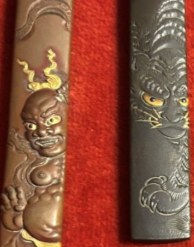
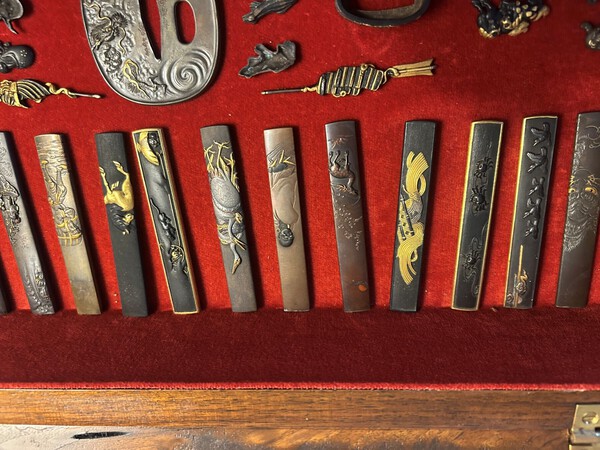
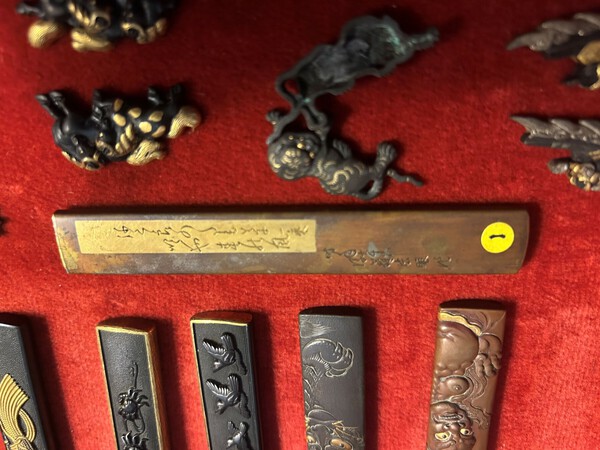
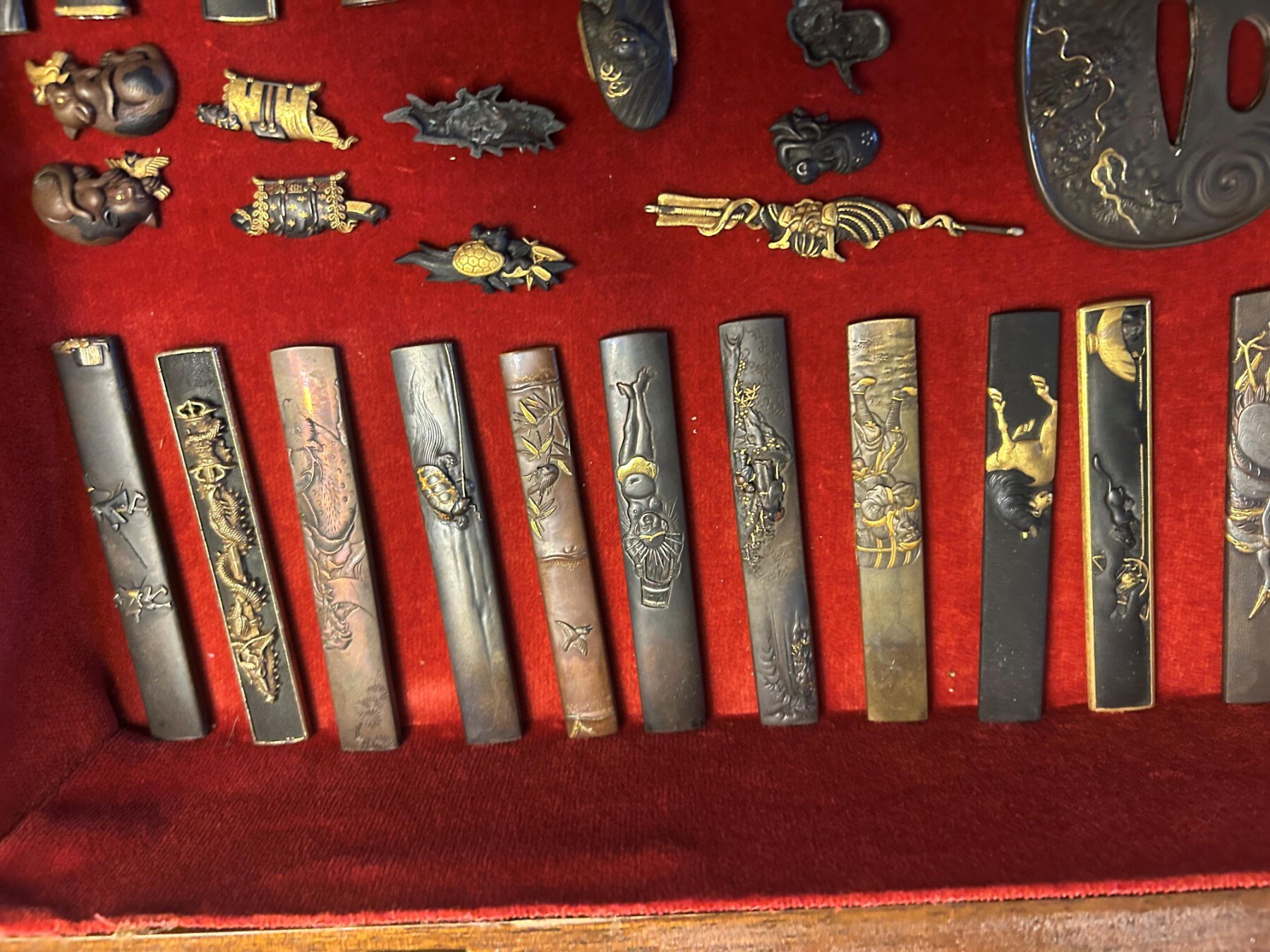
I see some beautiful stuff there including what (I think) are some pieces with Hamano school influences... (Tiger could also be sekibun as Curran said). The tiger kozuka and the Nioh kozuka next to it both have what look like Hamano style influences with the gold eyes and striking colour contrasts... Are either of them signed on the reverse? If so, please post images of the signatures. It wouldn't be hard to find a buyer for many of these pieces if you're looking to sell. (Hell, I'd probably make an offer on these two myself! Possibly for the tiger menuki too...) As others have said though, take your time evaluating each individual piece, even if it means extra work. Posting images of any signatures here would be a good start.
 2 points
 -
It is nothing but superb, and is going to be monumental to the study of these swords. Our thanks go out to Sam for this. I can see people wandering sword shows with this on their phones to compare features.2 points
-
Sam congratulation to this work. I will read it complete the next days and I'm sure it is an upcoming standard workbook about Type 95 Well done Sam.2 points
-
Incredible reference material! I’m extremely appreciative of your efforts! Tom2 points
-
Yes Mr. Murphy, it is a legitimate late war naval dirk with what we call an integral scabbard. All metal scabbard that usually has black paint to simulate the leather or Ray skin. They are not very common. Tom2 points
-
Sam "Scogg" has just finished a monograph on the major variations of the Type 95 Military Sword. I strongly recommend that everyone looking to purchase a Type 95 Military Sword read and study this monograph before buying. This monograph can be downloaded via the NMB thread below. Type 95 Military Sword Monograph - Download Section Scoggin, Sam. Japanese Type 95 Military Sword Variations, 1936–1945. February 2026. PDF file, 71 pages, letter sized.2 points
-
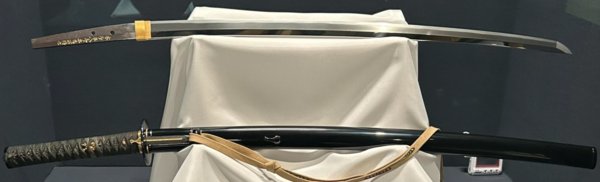
Unless there was more than one mumei Kanenaga in the Matsudaira collection I believe this could be the $11,4 mil sword mentioned above. Nagasa 71.8 and 1.7cm sori. From an exhibit at Touken World Nagoya The kinzogan inscription states it was owned by Honda Heihachiro Tadatame better known as Honda Tadaoki, grandson of famed Tokugawa general, Honda Tadakatsu. Perhaps it was this provenance that pushed the bidding so high, if its the same sword..... Edit: with further research this is a Tegai Kanenaga from the Matsudaira and not the Bizen Kanenaga that was sold in the auction.
 2 points
 -
The sword in oshigata and one that was described in the book is actually Mōri Gō 毛利江 it passed Jūyō in session 16. The sword in the picture is Jūyō Bunkasai Murakumo Gō 村雲江.2 points
-
Much clearer thanks. To me this appears to be gilded copper inlay and not pure gold as would have be traditionally applied. Could also be brass based on the shade of yellow2 points
-
This one is signed Gotō Hōgen (aka Gotō Ichijo), made at 78 years of age. This would place the date of manufacture around 1868-1869.
 2 points
 -
Hello, May I have your opinion on this kozuka ? For me it has a strong Goto Ichijo influence. So probably from his school. I was thinking about Ikkin. However, the trunk is not treated in the same way as usual. Could it still be Ikkin, or Isshin, Issho... ? Thanks
.thumb.jpg.37b4615678b1c30c9390e48433a3e111.jpg)
.thumb.jpg.38f3fe5be6607e5da2ab4a912db0cb27.jpg)
.thumb.jpg.c9ccb16f3e97d082845c55965af4a82c.jpg)
.thumb.jpg.0142bd88f13ceff5a3dd15d4752ef769.jpg)
.thumb.jpg.c7e50812d4ac6b577327791f68ea7545.jpg)
.thumb.jpg.b5e26edb77d4ee1dad8789496a24c7eb.jpg)
 1 point
 -
One more aspect to note is the sword and fittings all bear the assembly number “13.” The quality of Mantetsu blades remained high throughout production, but early examples do show more individual attention to detail. Ray1 point
-
Thank you all for the kind words. I hope the document is useful to collectors and prospective sword buyers. For those interested in further study, I encourage you to explore the bibliography section. It includes several invaluable sources, and the real credit belongs to the authors and contributors whose research and forum discussions made this possible. I put this together for everyone, but also so I could personally more easily digest material from such a large variety of sources. Some hands on study has helped a lot too. I look forward to continuing my study and collection, and updating the document as I learn more. I hope it meets the high standards of this forum and those collectors and scholars before me. Thanks again everyone! I'm excited to have it out there. All the best, -Sam1 point
-
Dated to Taisho period, 5th year?, 2nd month? so it might be (can't be sure of my reading) 1916, May 2nd. The rest is even harder to read, sorry. George.1 point
-
Hi Ian, I feel pretty confident in saying the piece is from the Edo Period but it does not appear to be particularly high quality work and I'm not sure I could ascribe a particular school... If I had to take a guess it feels like it might have some Nara region influences? Curious to see what others with more knowledge and experience think1 point
-
The Japan Times wrote an article on Thursday about the recent sword "boom" in Japan. You can read it here.1 point
-
The whole package is a fake. Why? Study basics! reinhard1 point
-
It is metal looks bronze or brass. You can see the black marks/paint with what looks like the same texture as the handle but its all worn off in the middle. All the inside is wood.1 point
-
Nicholas: There are a couple of Hon'ami kao listed in Markus Sesko's Compendium that look similar but not exact. You might start there. John C.1 point
-
Ian, Mick, thank you both for the great input! Ian, it's definitely is the plot depicted in the picture! Mick, thank you for the picture from the book! The piece is indeed a papier-mache as it is made of brown paper and it indeed seems to belong to "Japonaise and Chinoiserie (Orientalism) decorative style made popular by the Empress Eugeniea, wife of Louis-Napoloen, last Emperor of France." And in this case it is even more curious that the legend made its way from Japan to France in the XIX century.1 point
-
Linking Rob's post here:1 point
-
Apologies for poor picture but I can't use a camera at the moment. This is the picture that Ian refers to. The other is a panel, screen really, that was sold at auction last year, that definitely originated in Japan. I've come across countless panels similar to yours depicting Japanese life, always on paper mache. I've assumed that these were a form of chinoiserie and probably French in origin. However, my knowledge is very limited and I too would like to learn more and will defer to others.

 1 point
 -
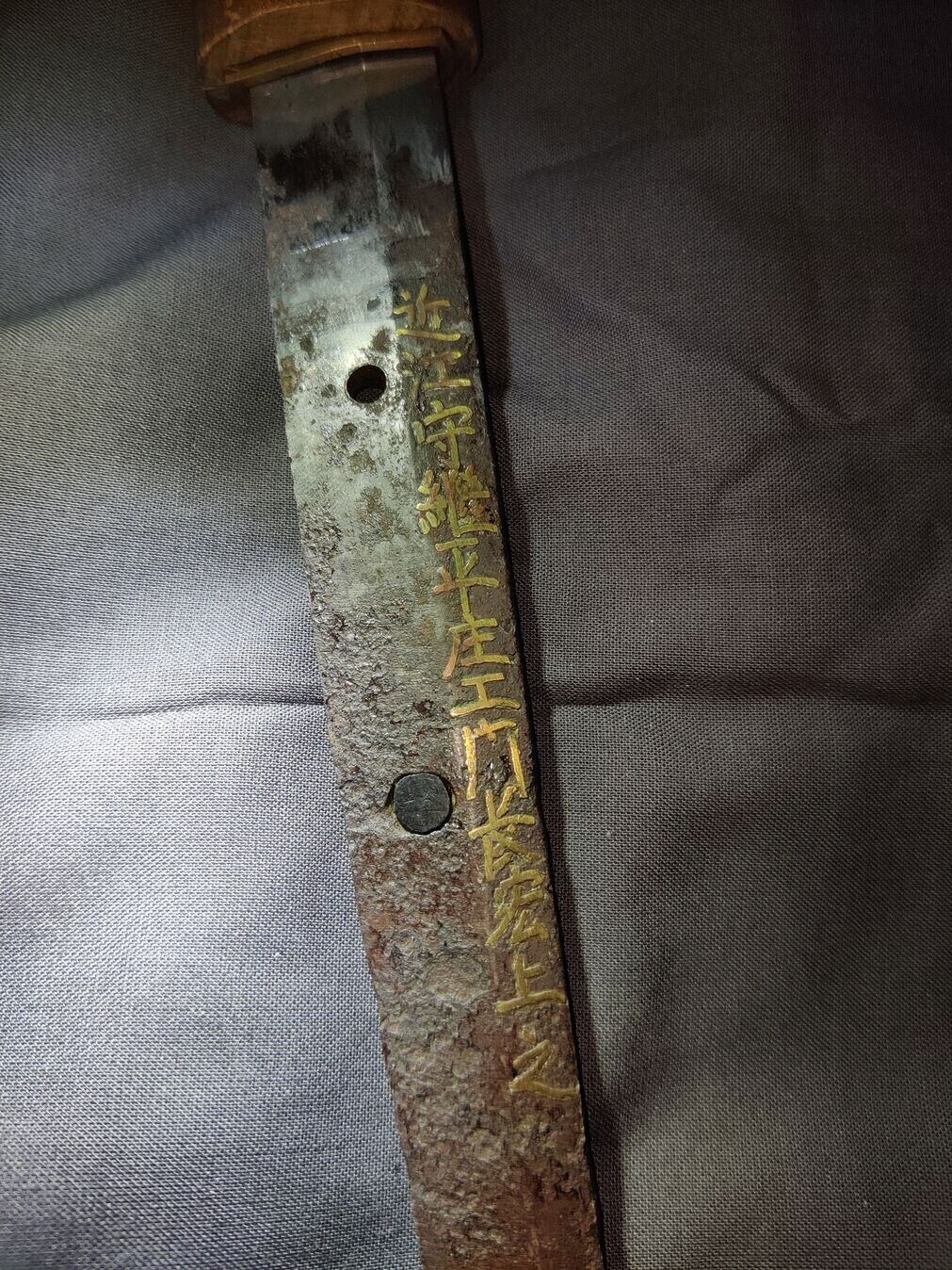
Here are a few more pictures of "kinzogan mei", hope they help. i'm not a very good photographer, sorry about that .
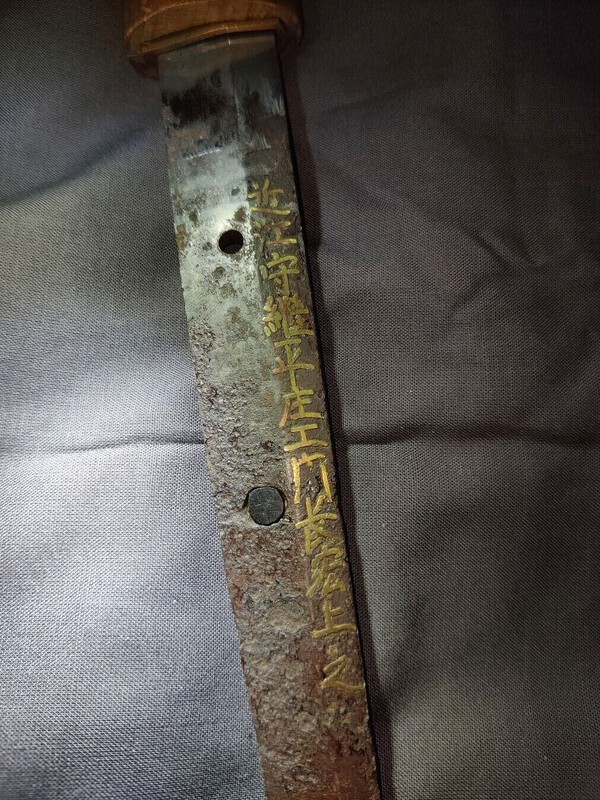

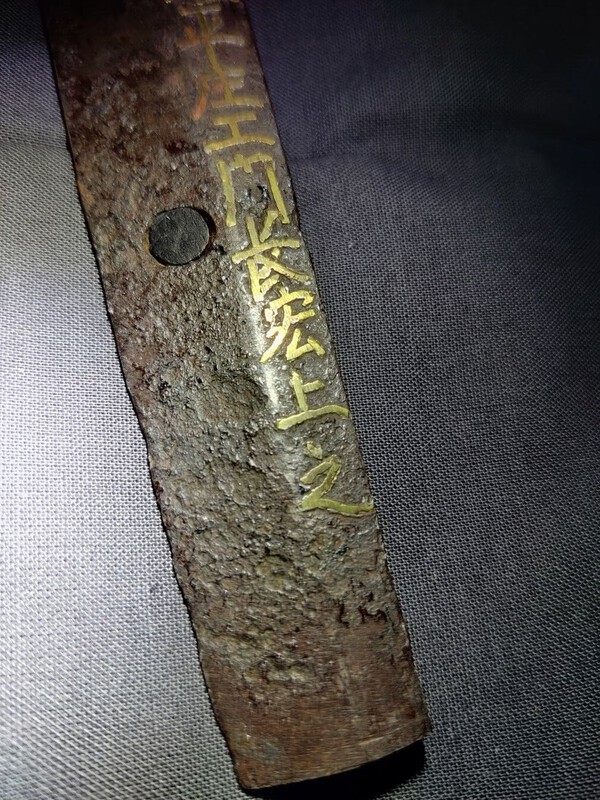
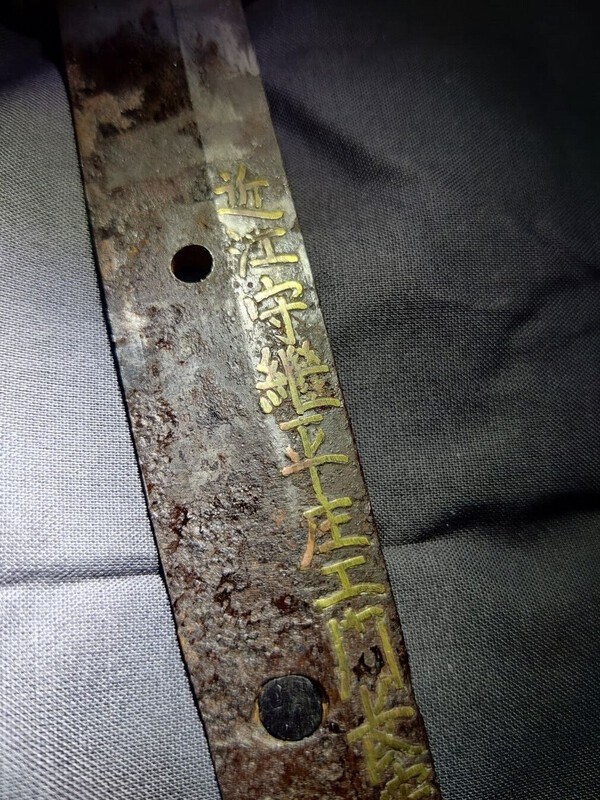 1 point
 -
I'll try go through them point by point over the weekend. But some of them are excellent ideas, and others are limited by what the software can do, and I can't do it all manually. Some of the stuff there can be done in the new software that I am waiting to update to, but we aren't making much progress towards the $500 that the major update requires, so a lot of it is pending along with a ton of other features people will like. As far as hi res image hosting etc, that would likely also add another $100 a month to the hosting bills so I would need to make sure we don't go backwards. We already have a crazy number of attachment files hosted, well in the high hundreds of thousands, and most hosting comments have been "what the hell....you have allowed HOW MANY files uploaded??" Yeah, 18+ years sure does increase the number of attachments, especially when they are fairly unrestricted. The rest, I'll go through later, thanks for the comments.1 point
-
The Kinzogan is very crudely executed, suspect this is fairly recent and done for nefarious purposes.1 point
-
As a Gen Z, I would be entertained with less visual effects as well I am usually more interested in whats in an exhibition than how it looks visually. After all, I am there to learn something new.1 point
-
https://www.metmuseum.org/art/collection/search/26913 All I could afford of Ishiguro Koreyoshi work was this tiny badge. [Ishiguro really liked his pheasants!] One selling now in fact https://auctions.yahoo.co.jp/jp/auction/g1194727171 or https://www.jauce.com/auction/g11947271711 point
-
Thank you for posting this Brett, you have made so many interesting threads and it is always fun to open them as I know it will be a good one. I got in bit of a rabbit hole when trying to dig up the blades and ended up finding some great info but mostly left dry. I found out that the Torikai Kunitsugu was donated to Kurokawa Research Institute in 2016. The Kotegiri Gō has been in the collection of Kurokawa Research Institute. Like Brett wrote the Tokuzenin Sadamune is in the collection of Mitsui Memorial Museum, this is absolutely amazing blade in my opinion. I've said few times I am not huge fan of the golden age Sōshū but this Sadamune and few other Sadamune I have seen have been spectacular. From the info that I can gather Maeda Masamune seems to reside in private collection, last mention I have seen about it was 1961 exhibition. As I was trying to dig info about the other swords of major importance mentioned, I found out that the named sword Satō Yukimitsu of Matsudaira family was also sold if I understood correctly in 1934 for 1,798 yen (however another source mentions same person won it for 10,000 yen). It passed Jūyō Bijutsuhin in 1935 and listed owner was the person winning the bid for it. To my understanding it resides in private collection. For the Tsuriganekiri Kuniyuki tachi I was only able to find the person who bought it from that auction and it seems he had some very nice swords. Unfortunately that 1924 mention of the item is the latest info I found about it. Unfortunately for the rest of the items I cannot find anything certain. If I understand correctly the Matsudaira sword list that I have is from 1670, and there most likely has been numerous swords added to the family collection after that time. The Yoshihiro tachi is listed with characters 義弘 so it would be either Gō or Senjuin, however I have not known a single signed tachi by Gō and even for Senjuin Yoshihiro I know of only 1 and that is in Tsurugaoka Hachimangū collection. Also that Kanenaga is really puzzling one to me, also the mumei Norishige compared to other items in the list the prices of these 2 mumei swords seem way out there, so they most likely had super serious provenance.1 point
-
The kozuka with the large tiger on it is in Sekibun's style. It is probably signed on the back with a sloppy looking signature. Ie. Not as neat as the signatures on the back of Hamano kozuka.1 point
-
Welcome to the Tosogu section. That is quite a mix of kozuka. There are several nice ones in there. Personally, I like the Edo Goto one of black [shakudo] crabs. There are also two or three Hamano, a Kaga kinko, and one or two others. Signatures on the back might help produce more information, though there were a lot of "added signatures" done in the late 1800s to make them sell better to the visiting foreigners. Still, we can judge. If you feel like going through them one at a time... Some of us welcome the challenge. Also, visiting Ed M. over in Louisiana should give you some quality answers. Curran1 point
-
I agree)
 1 point
 -
Some surprising datapoints there. One might argue that nihonto values, in monetary terms, have diminished considerably over time and will continue on that trajectory as we transition more towards a hobbyists interest. Im not sure there is a critical mass of younger collectors with the necessary disposable funds and curiosity to invest in these god-level pieces. Case in point, the Kotegiri Go, which was sold at another auction in 1931, receiving a bid of only 2,131 JPY basically two thirds what was paid in 1918. A very poor investment at the time. The Maeda Masamune didn`t meet reserve in 1924 and went unsold. Any more info on the `Yoshihiro`? Is this a blade by Go or Senjuin Yoshihiro or a later Yoshihiro eg Sa Yoshihiro? Oshigata for 3 of the blades
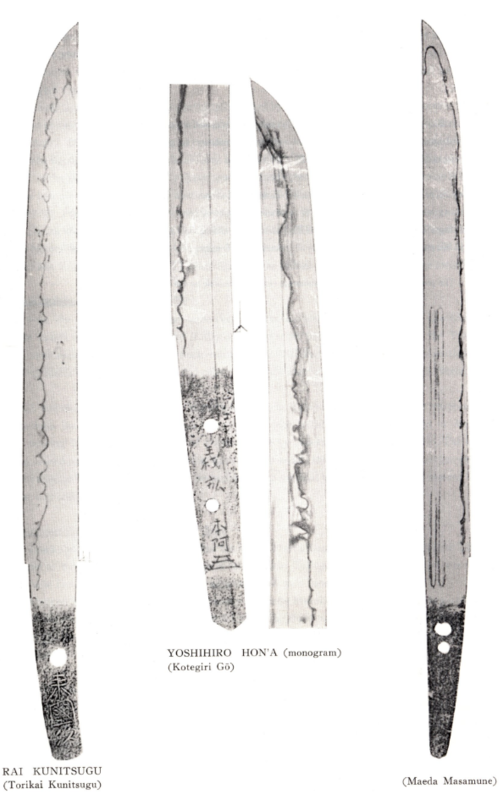 1 point
 -
I agree with @uwe. Ref. 日本刀販売専門店 銀座長州屋 鍔 鐔 販売品 阿弥陀鑢桜透鍔(鐔) 銘 戸田彦左衛門, 鍔, 尾張鐔工1 point
-
last one
 1 point
 -
More photos

 1 point
 -
I appreciate the responses. I am trying to attaching more photos. I only took one photo of the back of one, but can take more. thanks for your help. Jim Looks like I will need to send more photos because of size limitations.

 1 point
 -
I met Brian at the 2025 Chicago Show. He had an inquisitive interest, a keen eye, and took a good amount of time to talk to me and examine my blades. He was going to buy a blade from me but was distracted by his wife needing him for something. He felt guilty about it and reached out to me after the show to arrange the purchase. We were about to finish the transaction when he found out about some things that changed his priorities. Its sad that I just found out now why those priorities changed. He and I shared an interest in Bungo Den and I think my collection of ken intrigued him. Gone from this world too soon. Rest in peace, friend.1 point
-
All, I have had a good few arguments with dear old John Lissenden of fond memory about these intriguing items. I believe that they came to the notice of the Japanese during the invasions of Korea, being brought home as trophies of war. Those that were of that type have the 'seppa dai' of long narrow or of an ornate shape, decorated with waves etc for the simple reason that Chinese swords don't have an habaki and hence would be visible when the word was drawn. Some of these have had hitsu ana put in by the Japanese, sometimes lined with a strip of iron, but obvious since it involved cutting away part of the original design. Being popular, perhaps with people wanting to suggest they had fought in Korea, there is a second type with a more Japanese shaped seppa dai that were made specifically for the Japanese market - possibly in Japan, but just as likely in the Chinese enclave in Nagasaki (or ordered there and made in China). Some of these have hitsu ana some don't. Finally there are those that are blatantly Japanese with normal seppa dai and hitsu ana, retaining only the tendril idea as decoration. Ian Bottomley1 point
-
so here we are... let´s play a game so far.... Question:"whom did forge in the style and iron of the Umetada in late Edo"? Hmmmmh? (no mainschool work,could ben attr.to everything that times happening in fact...)(mine first call) (so to give an direction) those "Pickels" in Mimi do but give you an indicative idea so to where to put it! Ford,Curran....play! mine call is (.......) Iron here(7 letters) now it´s your´s call to tell me why i do point this,and why this does make more sense than to just observing it´s stylism. not far from Hizen iron is mine call! Christian1 point


.thumb.png.4c5df79fec171b2dc4a23af38e280a4d.png)





.jpg.5b6e71d408a7a244376210d0dbcdbdc3.jpg)
.jpg.34eeb447919e8b3d50fab34ab6317b9a.jpg)
.jpg.1f0f01f545ba10c7118e003de7764c82.jpg)
.jpg.18c491b7022a787769415a38f986af86.jpg)
.jpg.95c5e8ab9b746b70fdbf5f6147c4da26.jpg)
.jpg.739e41cef76578e5621cabb2a94eade0.jpg)
.jpg.32d6a4ff7934485d7662c3f89aa23c34.jpg)
.jpg.38c2ae0d2e8c20698203ace748f351df.jpg)





.jpg.c245d38f5f9c203c3fd92dcef47500bd.jpg)
.jpg.8d6373e841fbfcfc06ef630b0d751138.jpg)
.jpg.230b87e5b63554248c143c7c34a76f64.jpg)
.jpg.85edd323b6d014bb660cbd5851f6e2ff.jpg)
.jpg.b5f34783fee8c606ece9168471dd3974.jpg)
.jpg.a0a6e4ec820b4624c47c77c6f86f0715.jpg)















This leaderboard is set to Johannesburg/GMT+02:00