Scogg
-
Posts
2,074 -
Joined
-
Last visited
-
Days Won
23
3 Followers


About Scogg

- Birthday 08/25/1989
Recent Profile Visitors
27,562 profile views


Scogg's Achievements





-
 A very nice condition Type 95, Variation#5; sometimes called the “Nagoya side latch”. This configuration with the aluminum hilt and side latch appear in the early 130k range and again in the low 200k range; along with other variations. According to my interpretation of my serial number cataloging, fewer than around ~5,500 would have been made. A relatively rare variation. Nice find! Thanks for sharing, -Sam
 -
Hi @milo888 Im going to relocate this to the translation assistance section. I think you’ll get a faster reply there. Best of luck, -Sam
-
Hi @Jeff Simmons1012, I’m going to relocate this one to the military swords of Japan section. This does indeed appear to be a police sword. These swords are almost always machine made, and I’ve even heard that some are not properly hardened steel. All the best, -Sam
-
It’s a fake https://www.jssus.org/nkp/fake_japanese_swords.html All the best, -Sam
-
My first impression, and current feeling, is a monster of a shinshinto sword. I personally don't like speculating very hard on Nakago corrosion/condition when it's so dependent on storage and whether or not it's been unadulterated since original forging. Especially after koto. I'm inclined to agree with Ian. -Sam
-
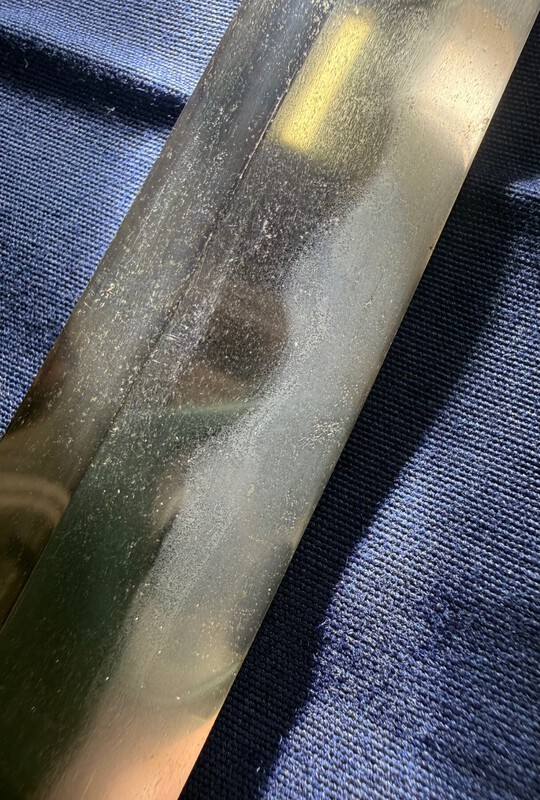
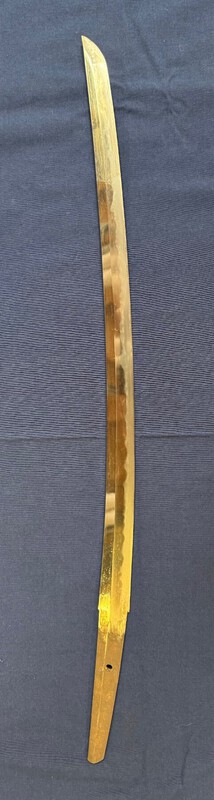
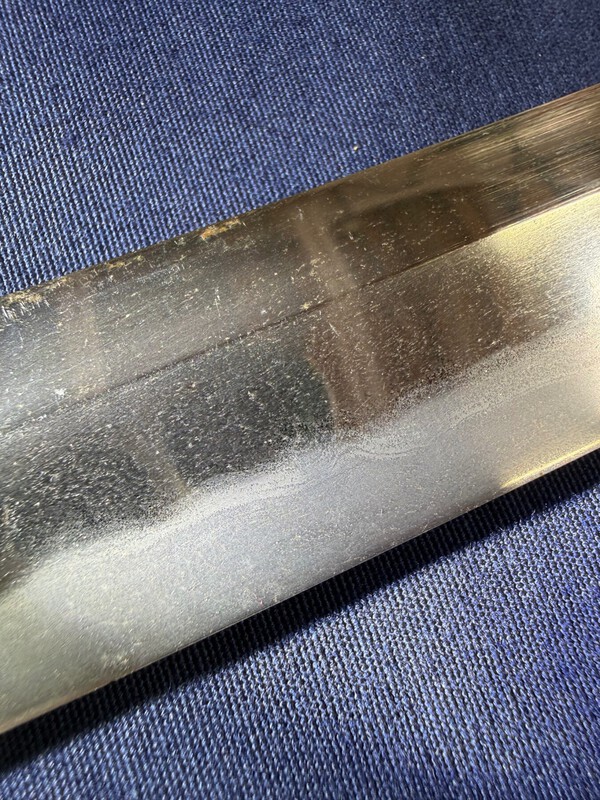
Thank you, and I agree. In my opinion it has a distinctly shinto sugata. For a sword that's been untouched since the war, it was in good condition, and the workmanship impressed me. Like mentioned above, I could not translate or offer input on the mei, so I was left with admiring the steel and workmanship by itself. To me, it looks like a very nice shinto wakizashi. More enjoyable than most Shinto wakizashi that I have I encountered “in the wild”. Also, thank you very much for ruling out that possibility, SteveM. I don't want to speculate in the wrong direction; and you've saved me from that. Thank you Bruce, yes I explained her swords wartime connection, and that it would have had the leather cover + button clip that looped around the fuchi and through the tsuba. Some speculation here: but the saya looks almost like the end of a shirasaya, with a wartime ashi put onto it. It has no kurigata, koiguchi, or kojiri; and it's thicker wood of what looks like the correct type. I hope to write Becca a small write-up of my observations and revelations shared here on the forum; including a link to this thread. It will be tailored with western vocabulary so her family can easily understand generally what the sword is, and its history. Thanks everyone! As always, the help here is invaluable and much appreciated. Ya'll are the best! -Sam Some more of my quickly taken photos + boshi observation:


-
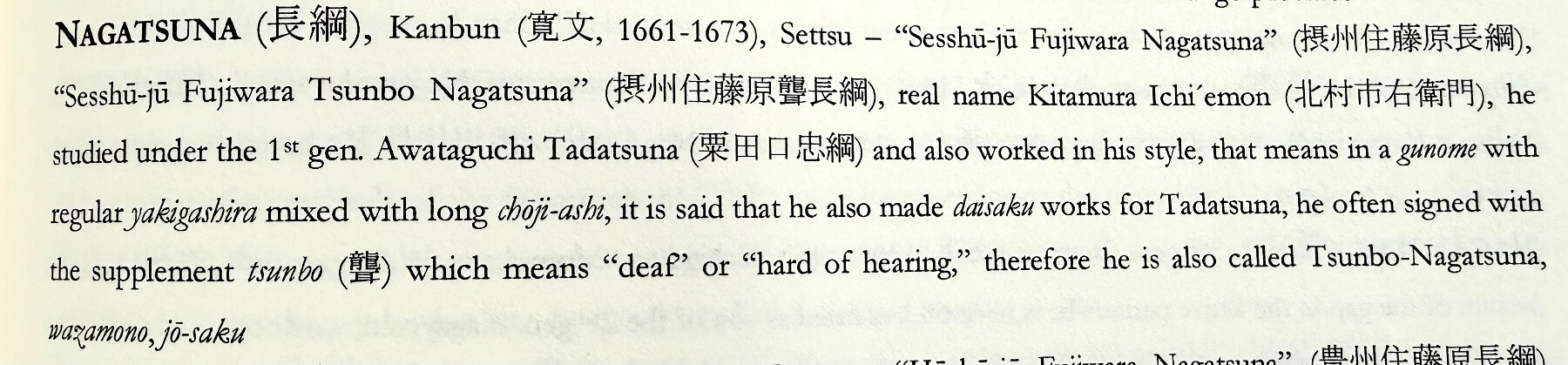
Thank you Steve; very much appreciated! I will now relocate this back to the Nihonto section. I am not qualified to determine gimei or not, but could this possibly be Tsunbo-Nagatsuna? From Markus Sesko’s index:

-
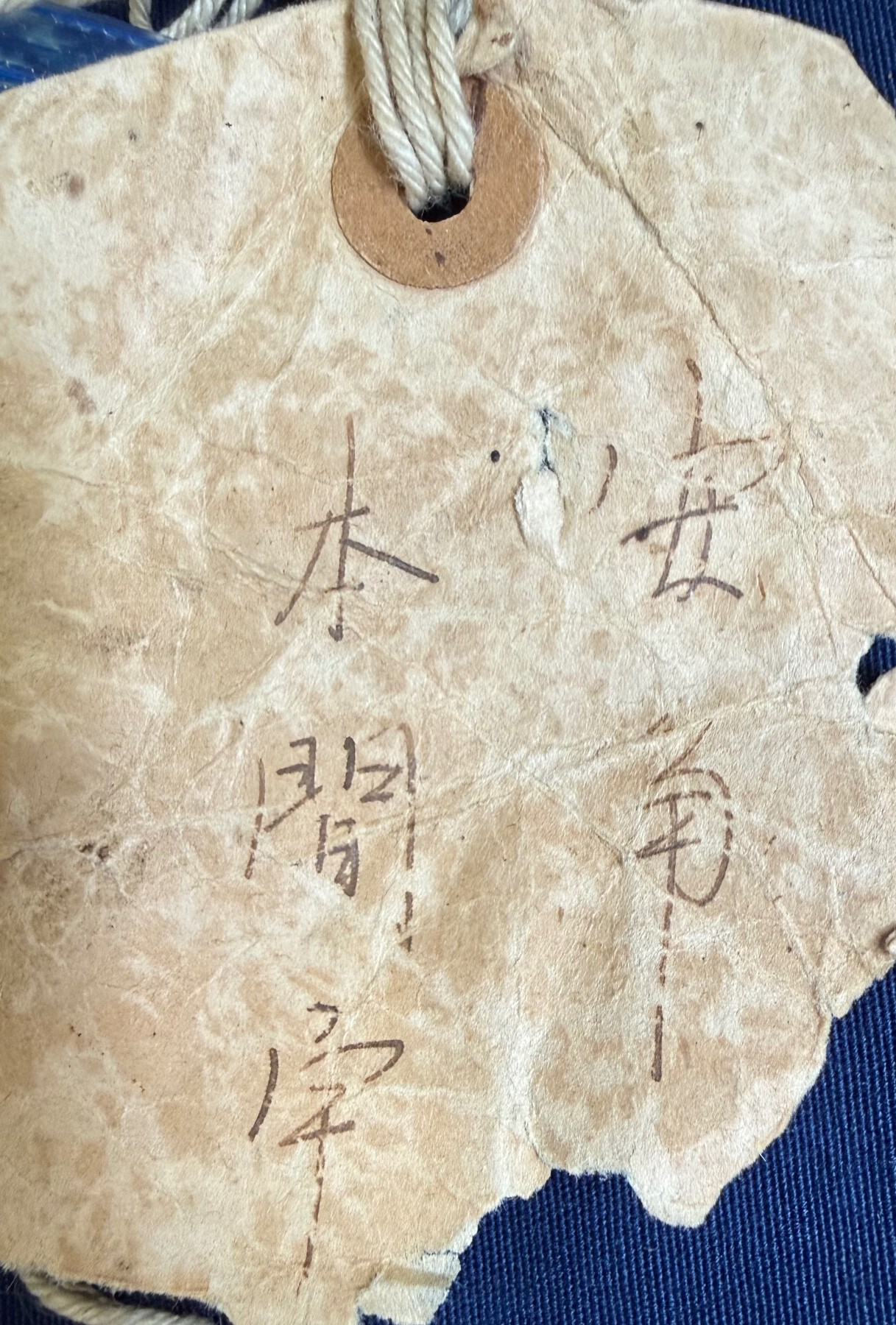
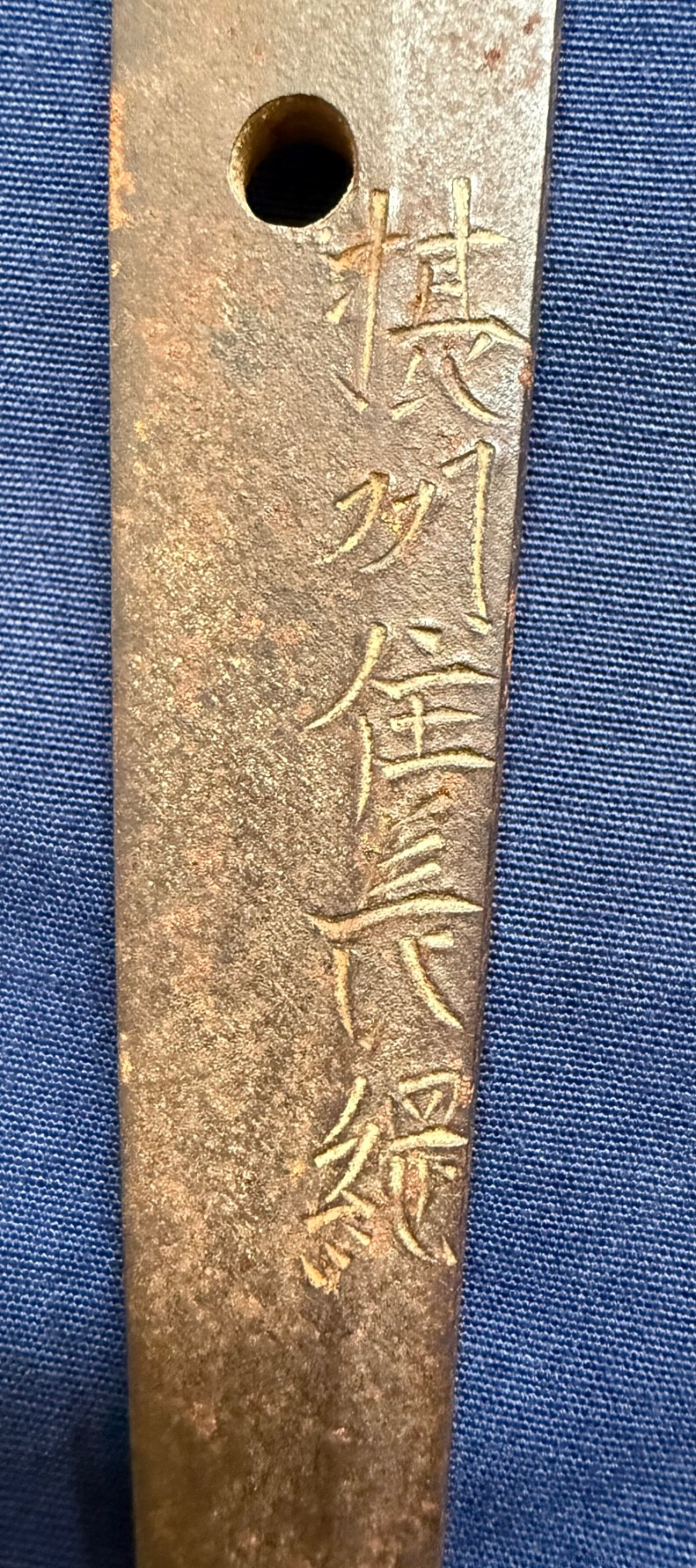
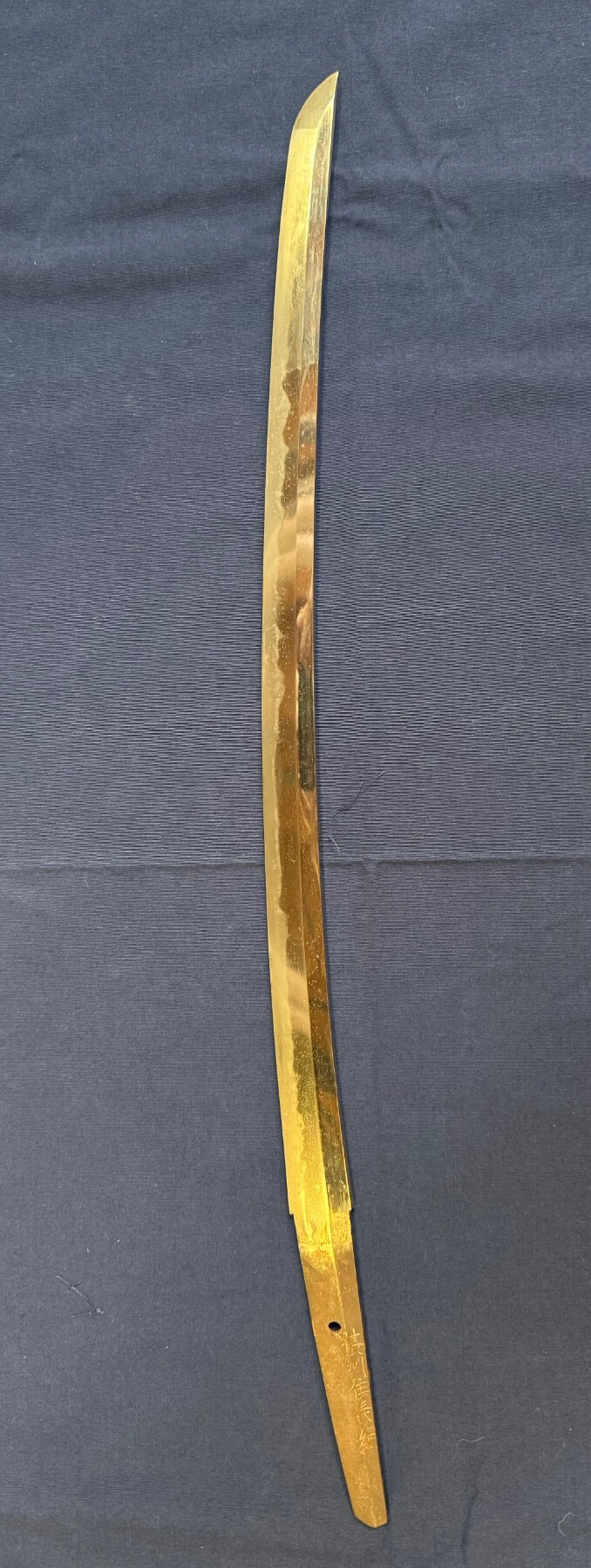
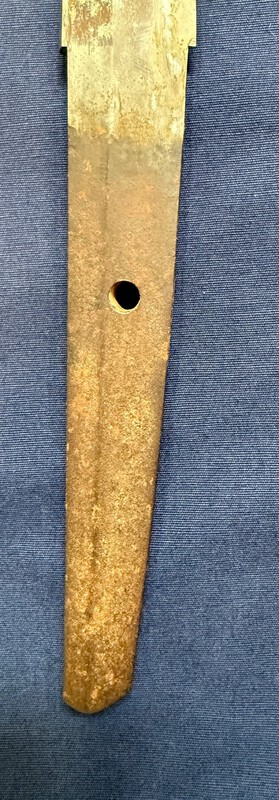
Howdy everyone. Becca was kind enough to let me disassemble and view the sword today. I found it pretty nice… lots of good and visible nie and activity. Kind of exciting, if I say so myself. I’m going to relocate this to the translation section so we can hopefully get a good translation on the nakago and the surrender tag. Once we get a good translation, I’ll move it back to the Nihonto section. Nagasa is 21 inches. Despite my efforts, I could not get a good photo of the boshi, although I can confirm that it is intact. I took these photographs at work, to the best of my ability/lighting. Looking forward to what ya'll think. All the best, -Sam






-
Fascinating, thank you for sharing those. A couple firsts for me! Never seen a number on the nakago-mune, or paint like that. Very interesting, -Sam
-
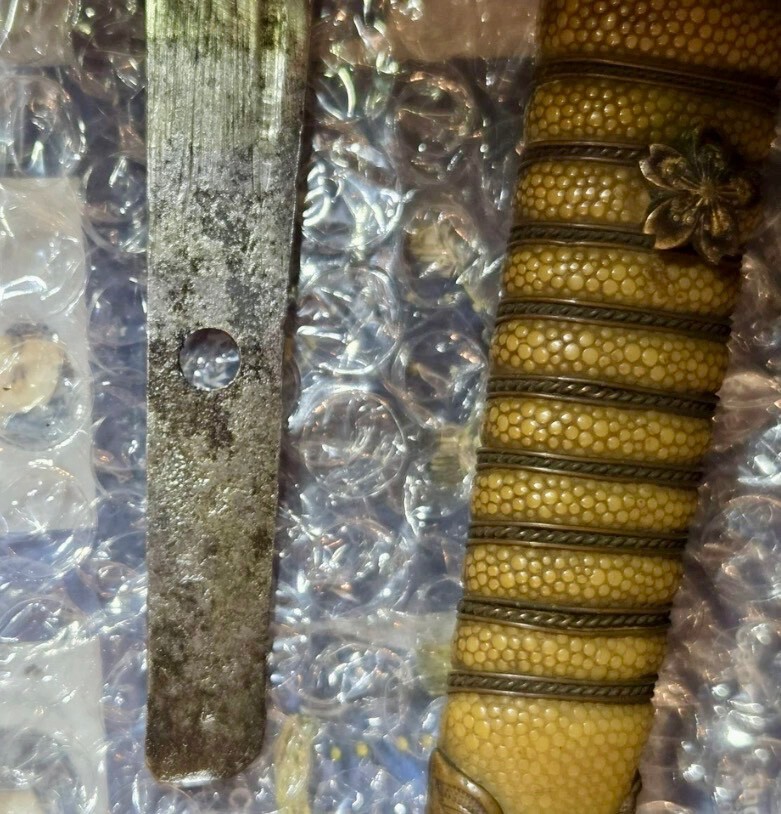
Indeed, would love to see the nakago for my notes. Many nakago I have seen on Variation#3 swords are not stamped; so do not worry if yours is unmarked. Although, every Variation#1 copper nakago that I have seen has the 東 stamp. Like Conway says, we don't see the nakago very often, so sample size of my observations is small. Best, -Sam
-
Hi Becca, welcome to the forum. I am a fellow Oregonian, and I work in Tualatin. I started a Nihonto club out here, with the goal of hosting an annual event every winter. Feel free to send me a private message, and I'd be happy to arrange a meeting sometime soon to help you with your sword. I'd be happy to meet you at my place of work, or anywhere else that you are comfortable bringing the sword. I can bring some tools to disassemble it and offer all the information that I am able. I can also help you take some proper photographs of the tang so we can share them here and get a good translation from other forum members. If that sounds good to you, feel free to message me. I have no interest in buying your sword or anything shady like that; my goal will be to help you understand what you have for your families history. All the best, Sincerely, -Sam Scoggin
-
Hi Nazar, nice sword, congrats! So I am encountering some outdated information within my monograph; that I hope to remedy here very soon with my second edition (or sooner with an updated edition). Some of this information is carryover from previous publications, that I have since discovered through cataloging are not entirely accurate. Part of the reason I began this project, is because I encounter similar inaccuracies across almost all sources. I need to do better on my own material, and make sure it is accurate. Thank you for bringing this to my attention. An April 23, 1941 document revises the brass tsuba design by removing the sword knot slot. Although, no confirmed production examples of this revised unslotted brass tsuba have ever been observed. So I need to make an edit to my document in the Variation#3 chapter. I make mention of this in the Variation#4 section; so this is an oversight on my part. My sincere apologies for letting that slip. I would date your sword to between April 1941 and March 1942. Let me explain the asymmetrical ito versus symmetrical ito. I suspect we're encountering a little language barrier here, (nothing wrong with that). I've attached a photo that better highlights this change (please click on the image to make it larger for viewing). I do not mean literally a mirror image of both sides of the tsuka, but rather that the ITO wrap pattern was made to be the same on both sides; in respect to the ito knots and open diamonds. You will see this difference most clearly where the ito meets ferrule (fuchi). If you continue to count the diamonds starting with my arrows, you will also notice the difference. Hope that helps, and apologies for my errors. Some of these differences are very challenging to articulate clearly, and I am still trying to find the best verbiage for describing them. I will work on these edits ASAP, and get it into the download section. Best, -Sam

-
Like to introduce my new dirk and looking for info
Scogg replied to chandlang's topic in Military Swords of Japan
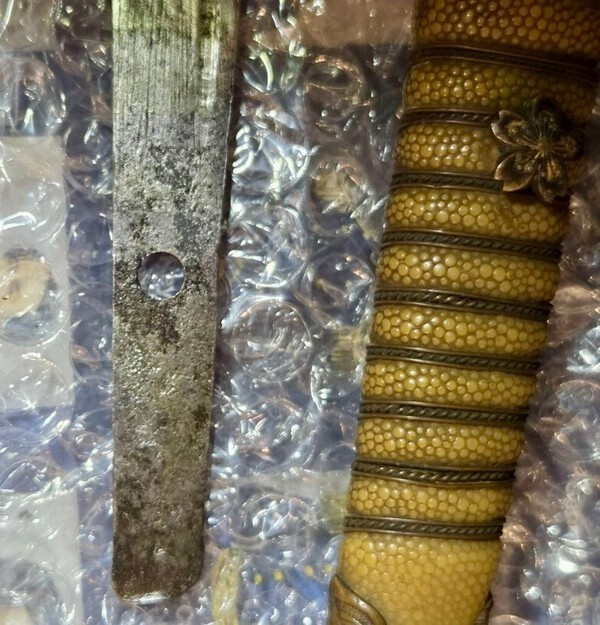
Hi Chris, welcome to the forum. Hope you don’t mind, but I’m gonna post your photos here after some cropping; so that more members can see your Dirk. Best of luck, -Sam


-
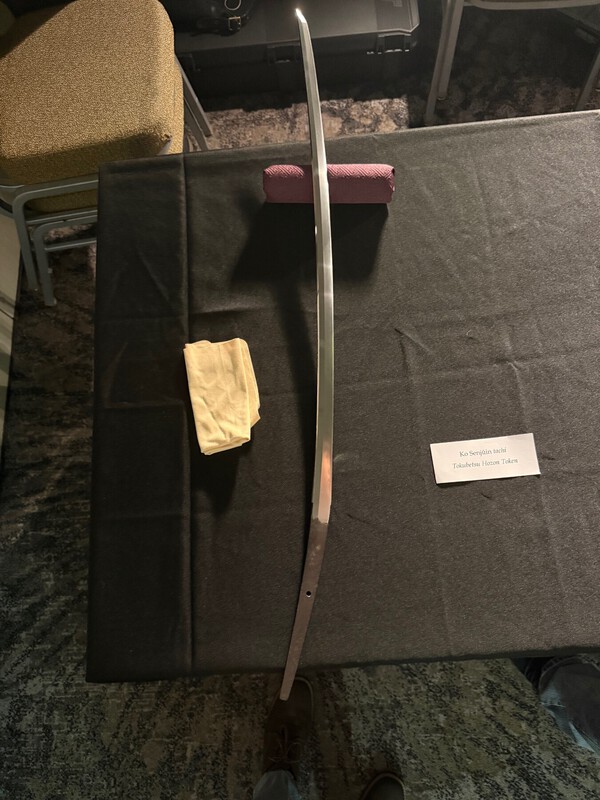
Yes, I believe that’s the one. They suggested that they may X-ray the sword in the future to try and read the Mei. Even in-person, I had to ask to see precisely where it was. Really wonderful sword, and a privilege to be able to see. -Sam
-
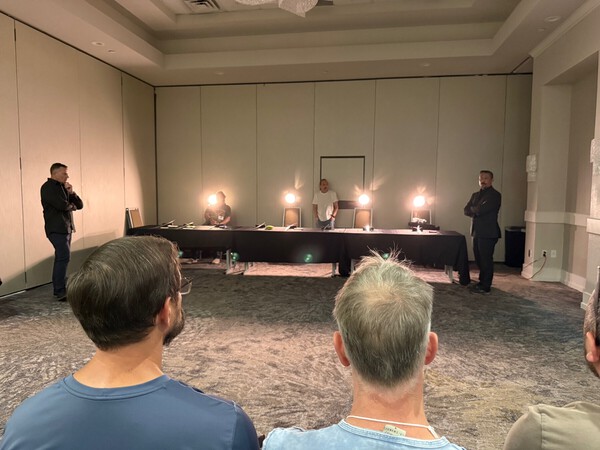
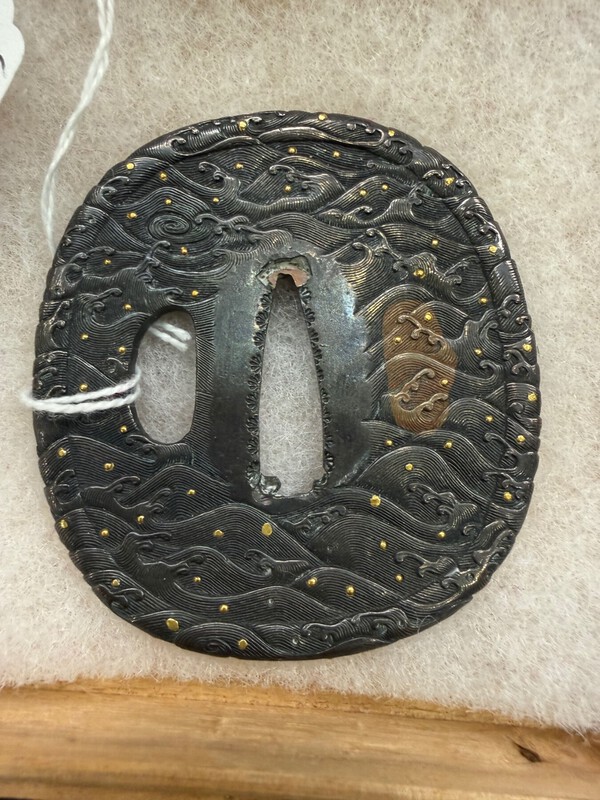
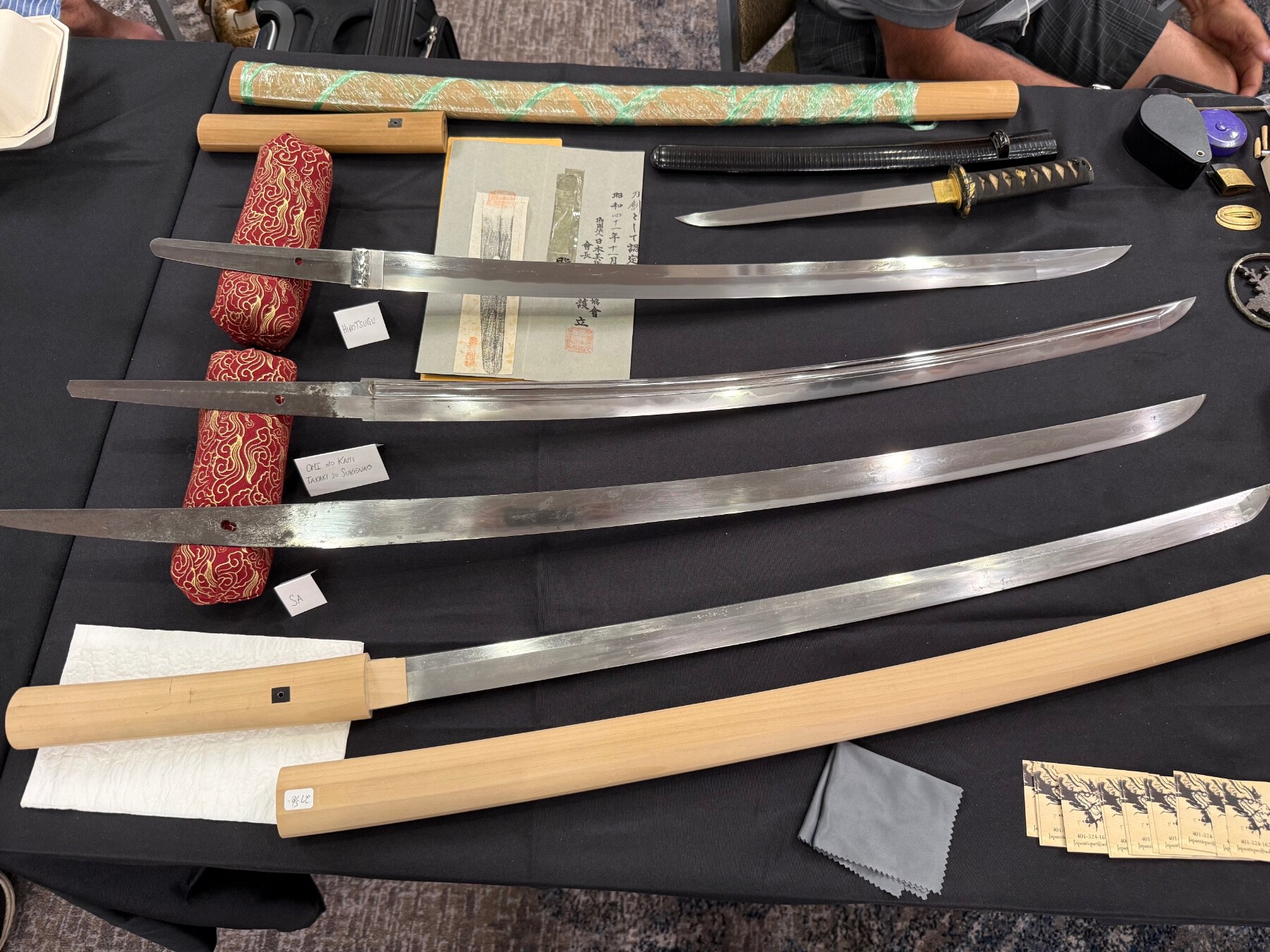
A few photos of today . I'll try to get some more before the end of the day, but it's pretty crowded!