Search the Community
Showing results for tags 'translation'.
-
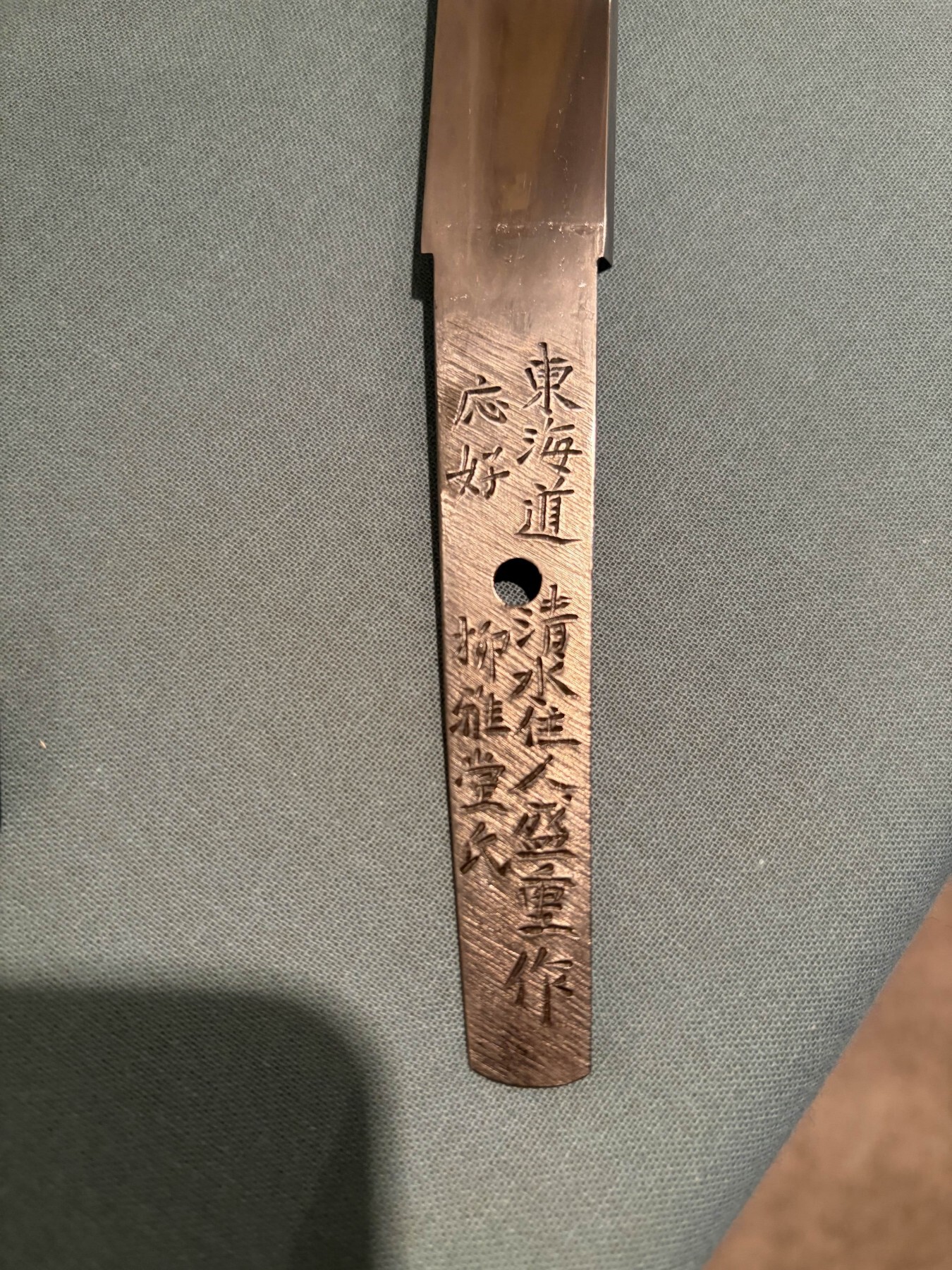
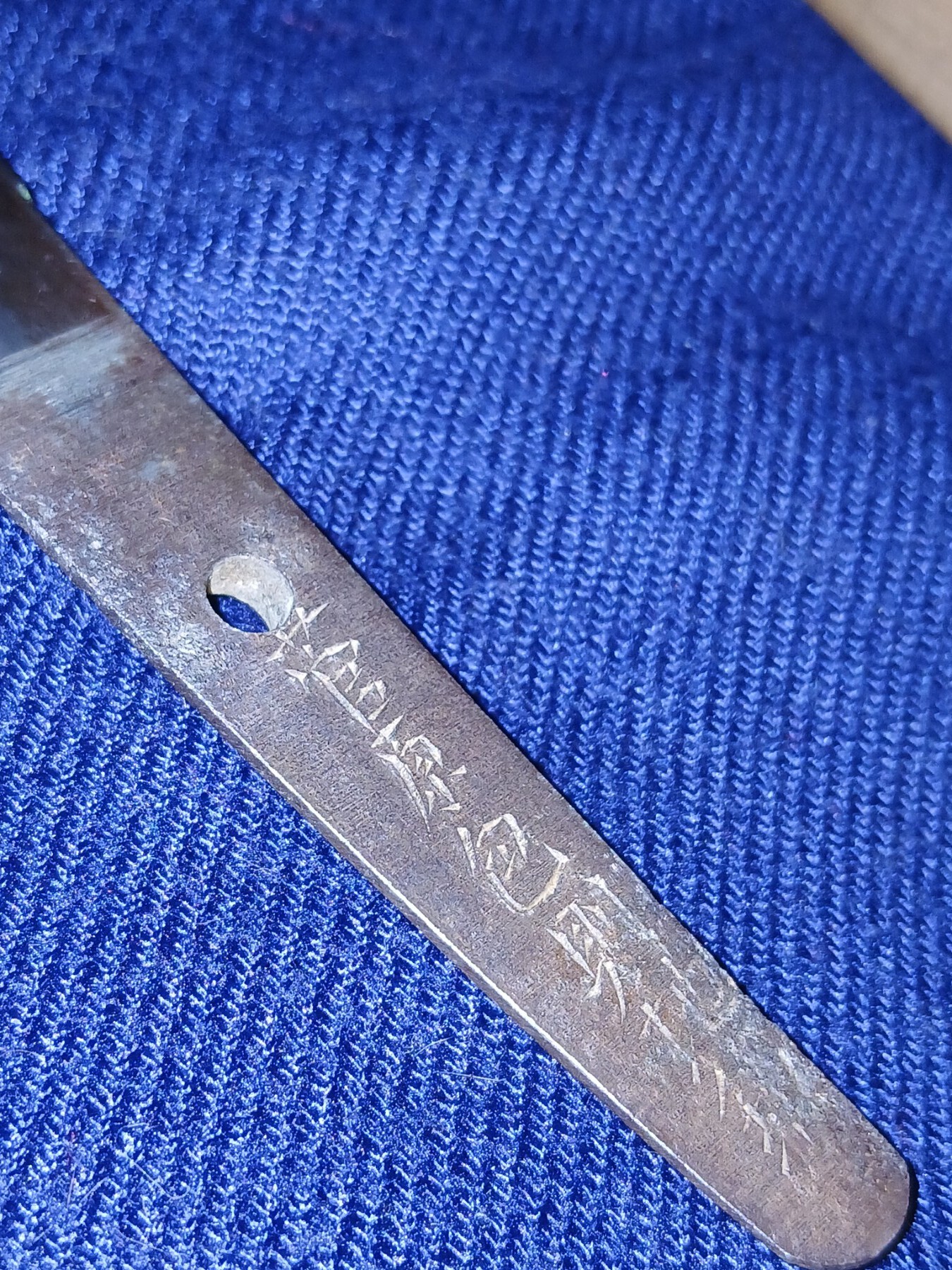
(please excuse the hjelp of AI to craft this message, as it helps me with the details I should provide in my post) Hello everyone, I’m hoping to get some help identifying a Japanese short sword that has been in my family for a long time. My father was gifted this piece over 50 years ago, but unfortunately, we have zero provenance or background info on it, and we aren't sure about its authenticity or era. I finally managed to carefully remove the handle to check the tang (nakago). From my amateur attempts at translating the signature (mei), it looks like it might read 兼永 (Kanenaga), but I would love an expert opinion to confirm if I'm reading it correctly, and if it appears to be a legitimate piece. A few details/observations: Blade length measures 31.5cm from the habaki to the tip. Features two peg holes (mekugi-ana) and a two-character signature. Though the handle only has one hole for the peg, indicating perhaps a modification. Any insights into the signature, the smith, the school, or the era of the blade and fittings - and perhaps even the value - would be greatly appreciated! Thank you for your time and help. Here is the album with high res images since I was limited to what I could upload as attachments. https://imgur.com/a/L9pbPSz


-
 let me know if anyone knows something about this looks like it has gold blade is definitely high carbon steel

-
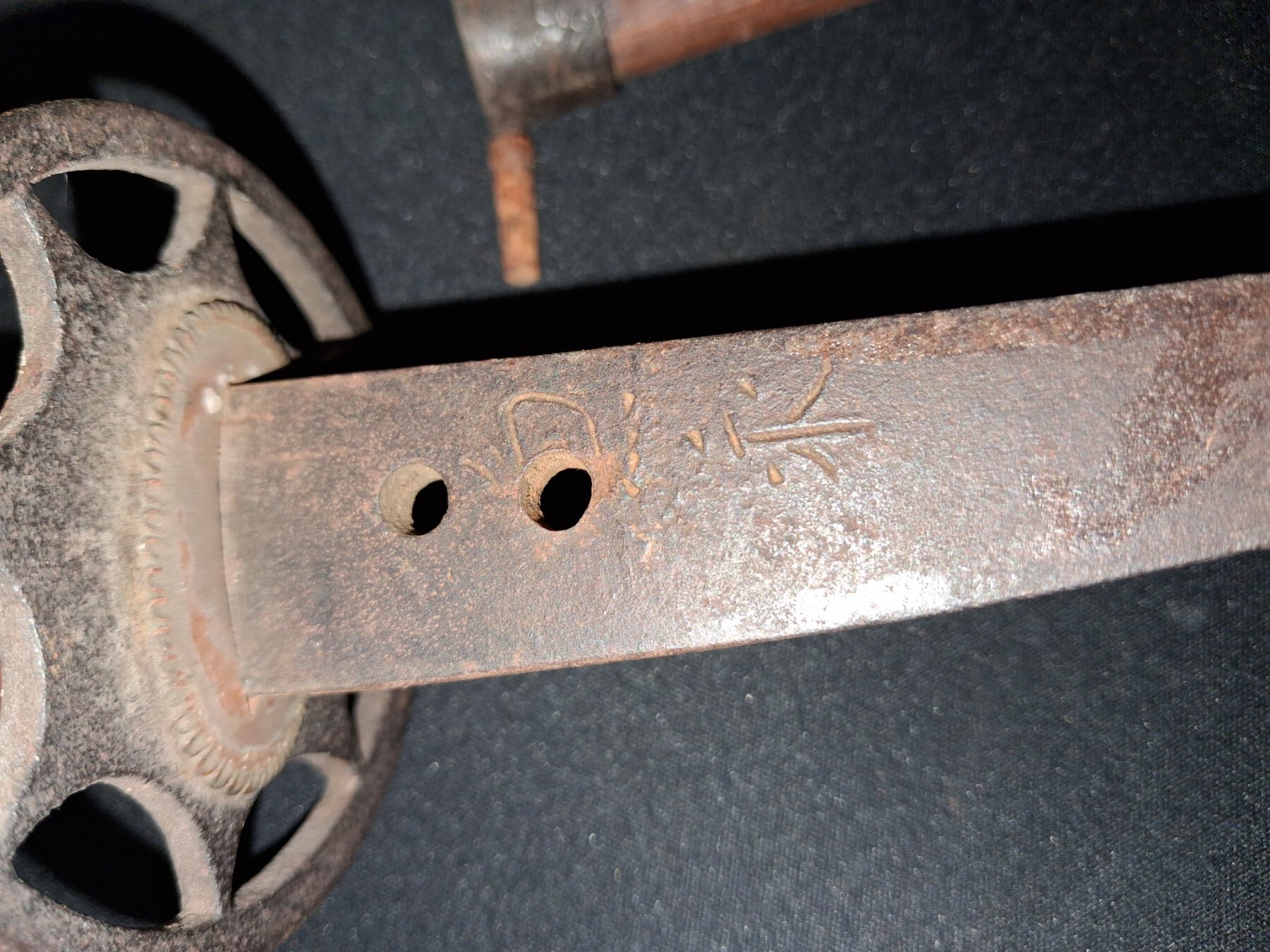
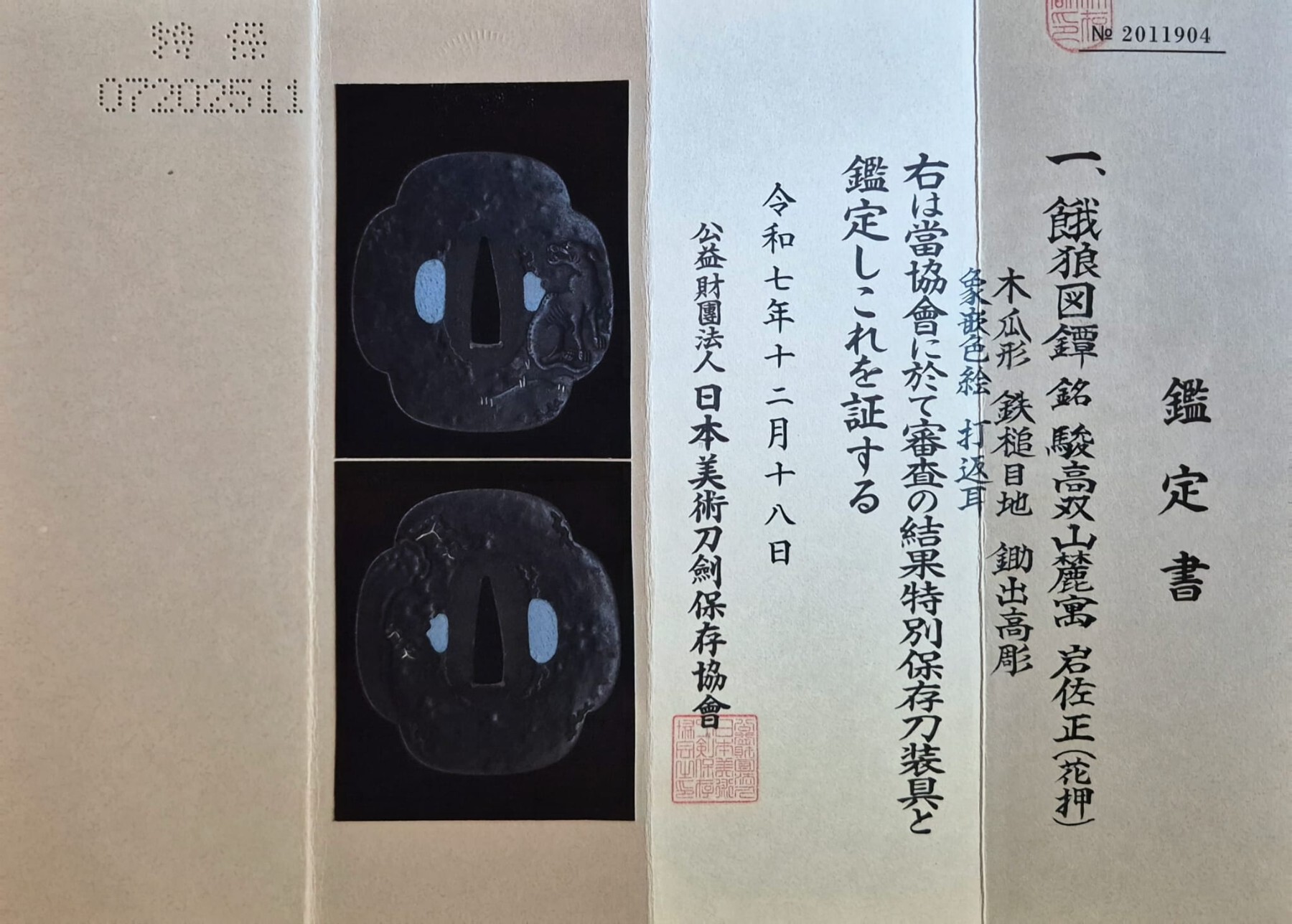
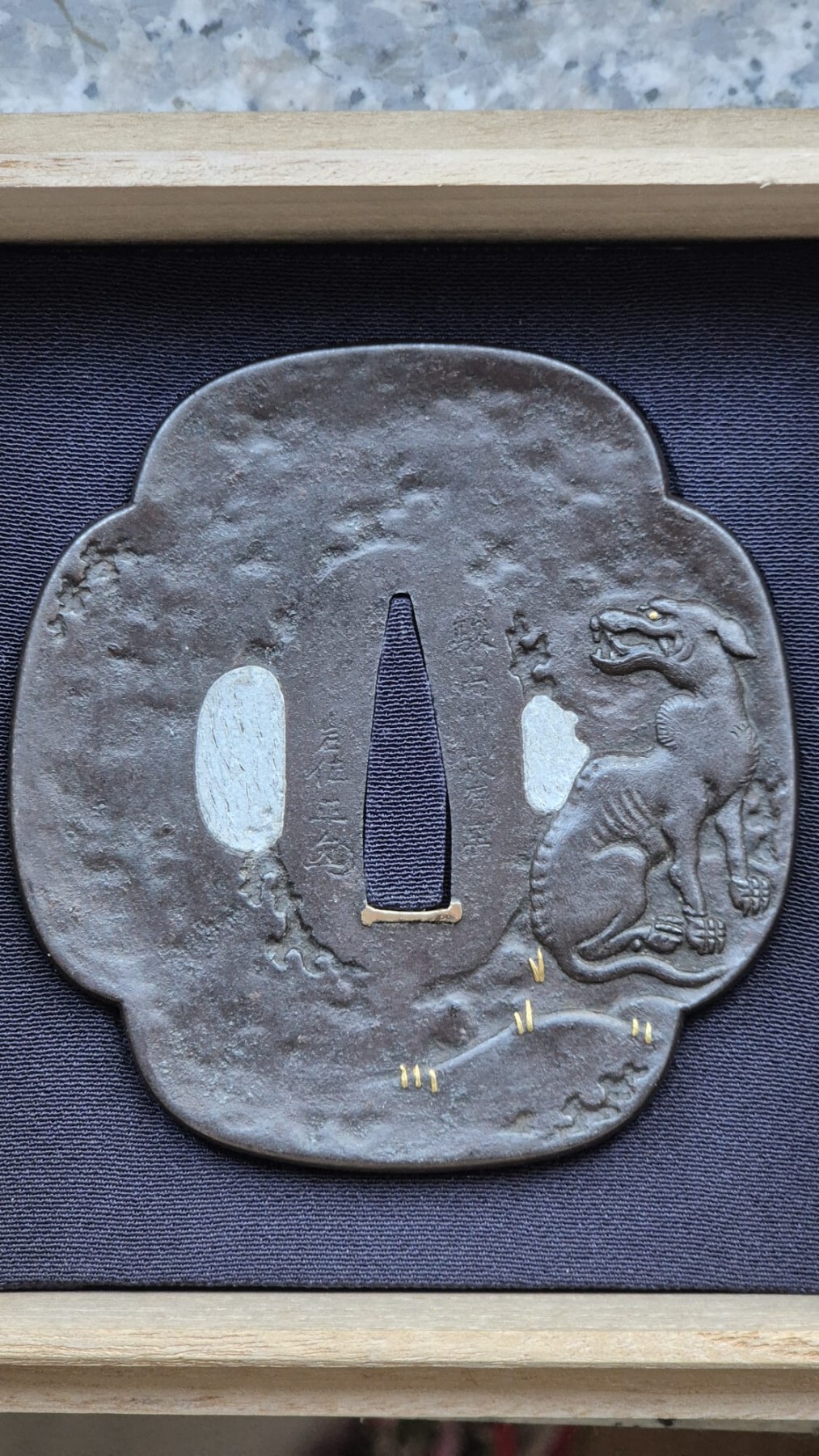
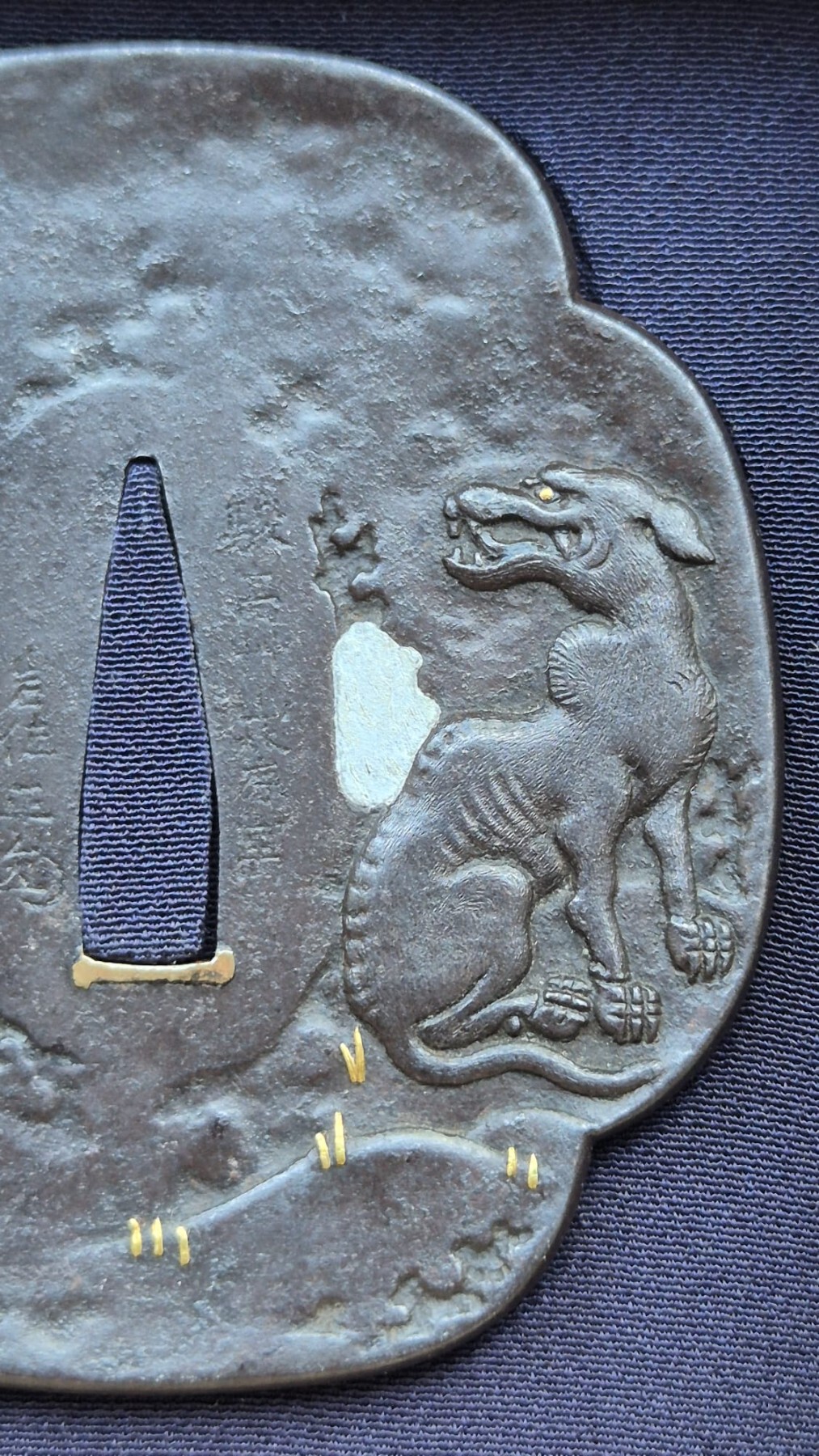
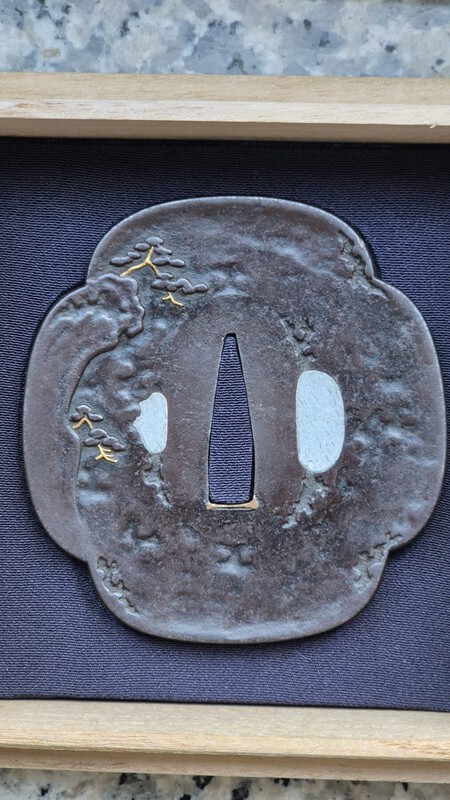
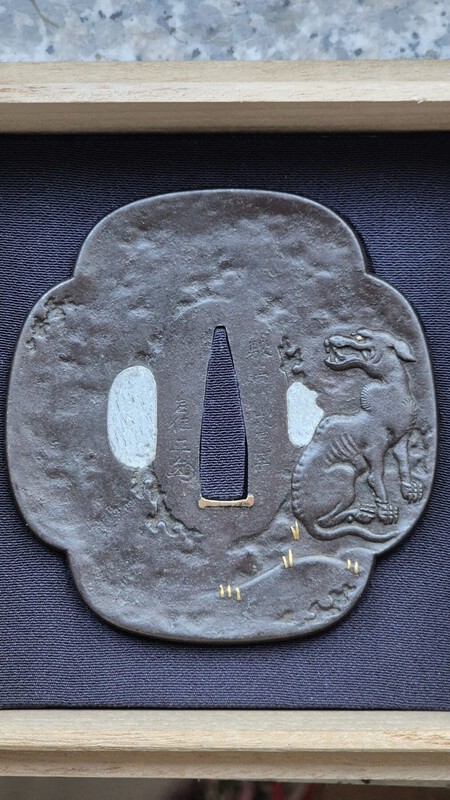
I recently received results from the NBTHK shinsa but it lef me puzzled. So I would like to ask the community for any information on the maker and school of one of the pieces, which came back Tokubetsu Hozon. The piece: Iron mokko-gata tsuba with a starving wolf (餓狼図, garō-zu) in sukidashi takabori. Kin-zōgan for the eye and claws, shirogane-zōgan and lead(?) Ategane. Tsuchime-ji ground, uchikaehi mimi. The composition reads as a two-sided landscape, the wolf inhabiting the terrain implied by the omote. Signature: Two columns beside the nakago-ana on the ura: Right column: 駿高双山麓寓 Left column: 岩佐正 (花押) I read this as: "Residing at the foot of the twin mountains in Suruga Iwasa Masa [kao]." Or is there another reading? The 駿 abbreviating 駿河国 (Suruga province, present-day Shizuoka). The 双山麓 as a geographic locator, can only be Fuji-san or do know other twin mountains? What I am trying to establish: The Iwasa school in metalwork does not appear in the principal English-language references I have access to, and I have not found 岩佐正 in auction records or published catalogues. I would be grateful for any of the following: Has anyone encountered signed work by 岩佐正, or other Iwasa-signed tosogu? Any Haynes Index entries for Iwasa metalworkers would be particularly useful. Thanks everyone. Cheers, Alex


-
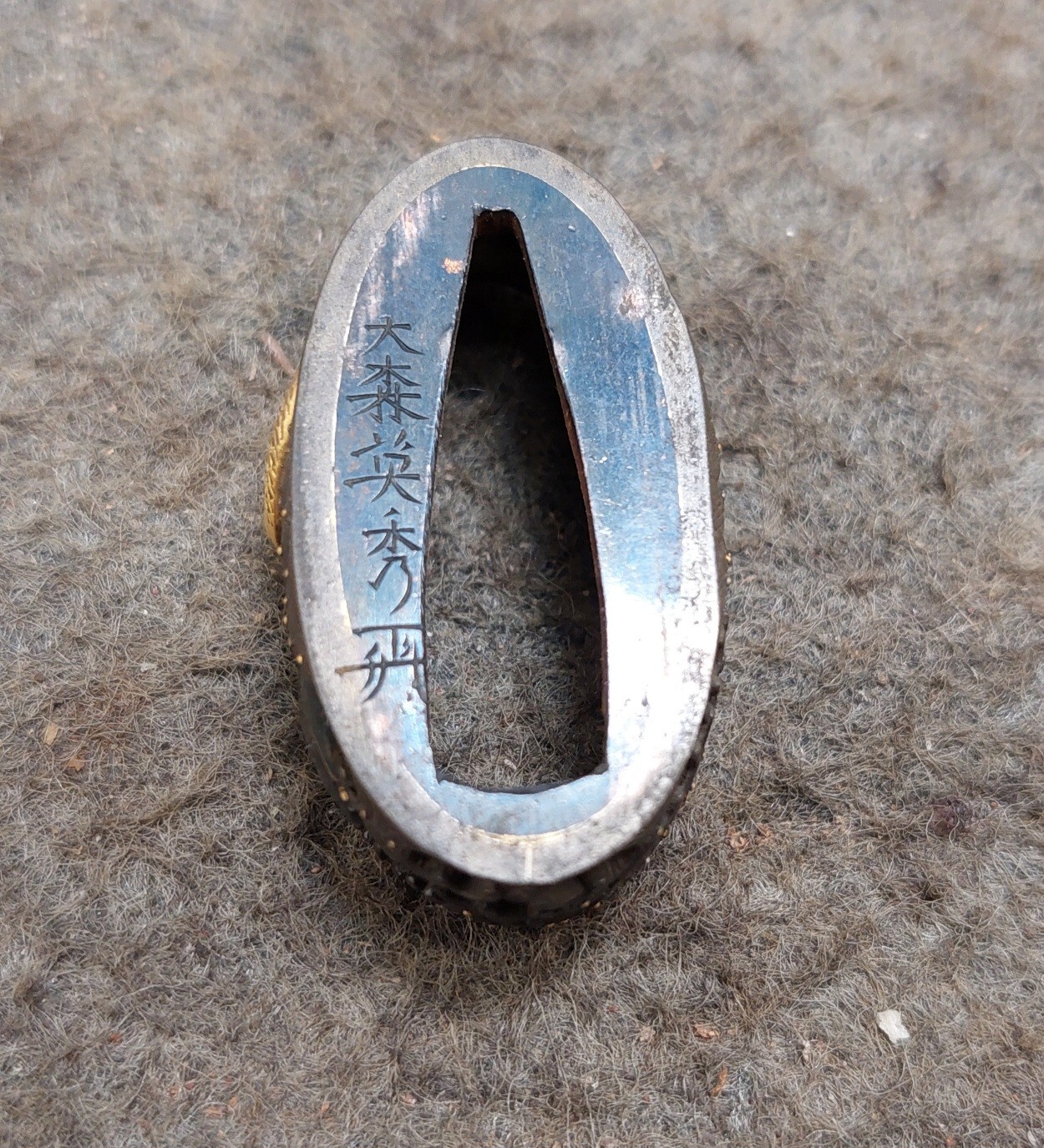
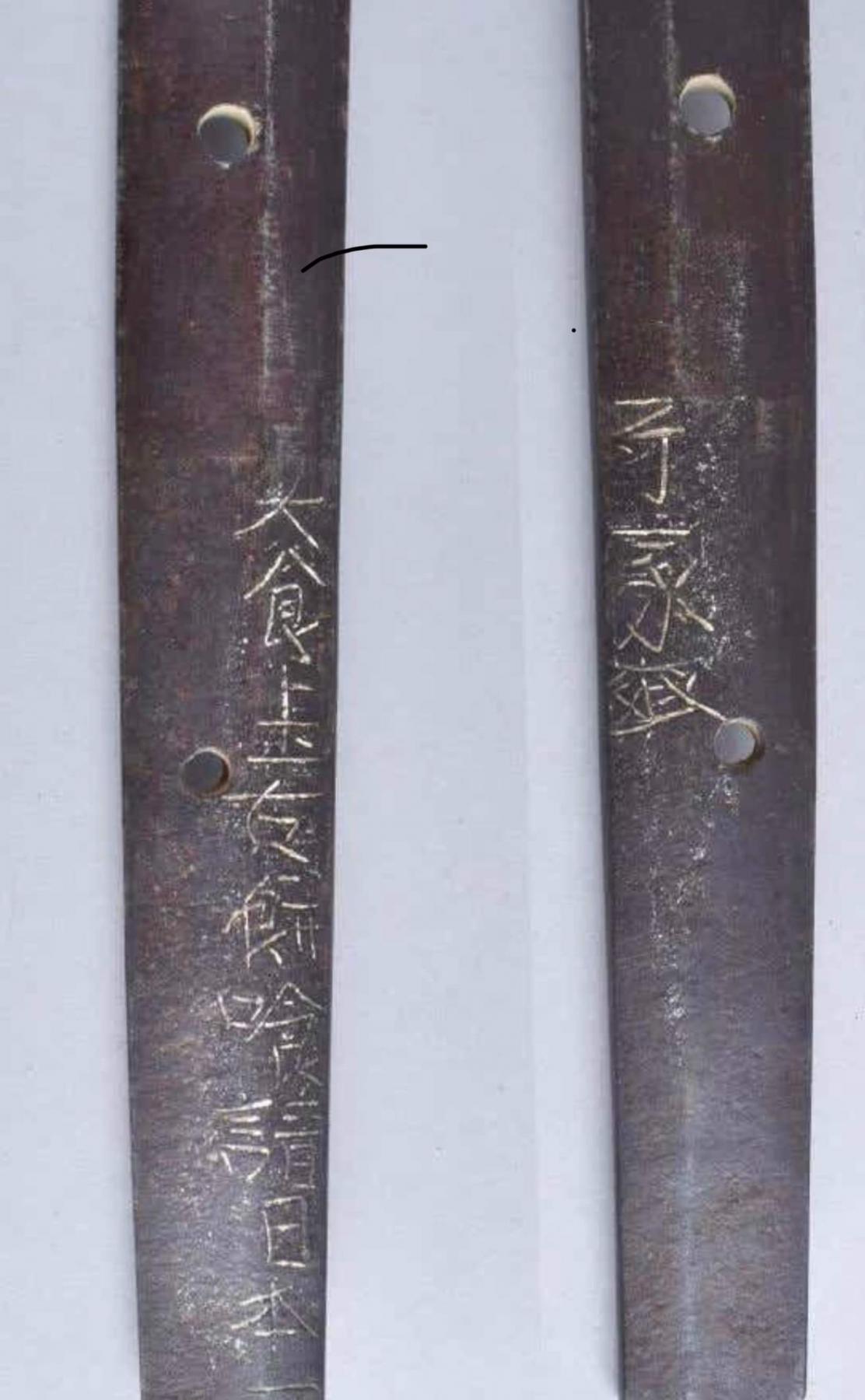
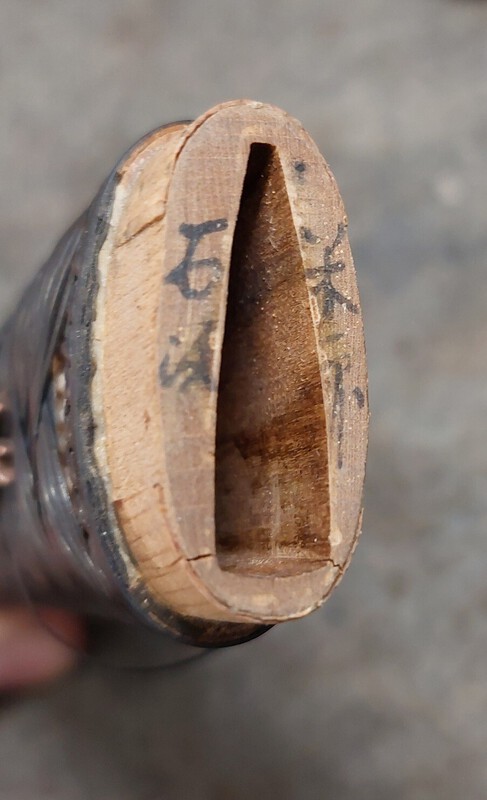
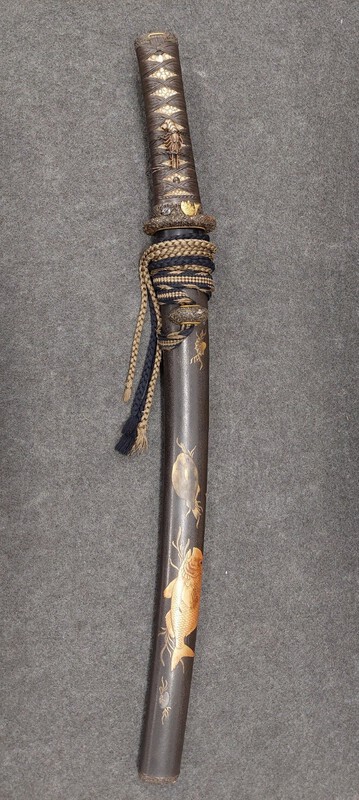
Hi, sorry to bother I have found signatures on some pieces of the koshirae I am taking care of and would love to know the translation of it. To my eye it looks like the signatures are similiar with some characters being different piece to piece. 4th picture is a kozuka back side. Overall it is truly a beautifull set with my favorite wave theme so I had to include the whole picture. And to be clear this one is not mine. It is a museum piece I am cleaning because for past 100 years or so it was not touched and had whole surface gunked up by old wax coatings or oils and such. Any help would be greately appreciated. Best regards, Martin Cheers



-
Hi, I would like to ask for translation assistance on 3 swords that landed on my table. If anyone would be of help it would mean a lot and be of great help. Didnt have time to take proper pictures of the blades, hopefully I will get to it later this week if anyone is interested after translation. Thank you for your time everyone, Best regards, Martin



-
-
-
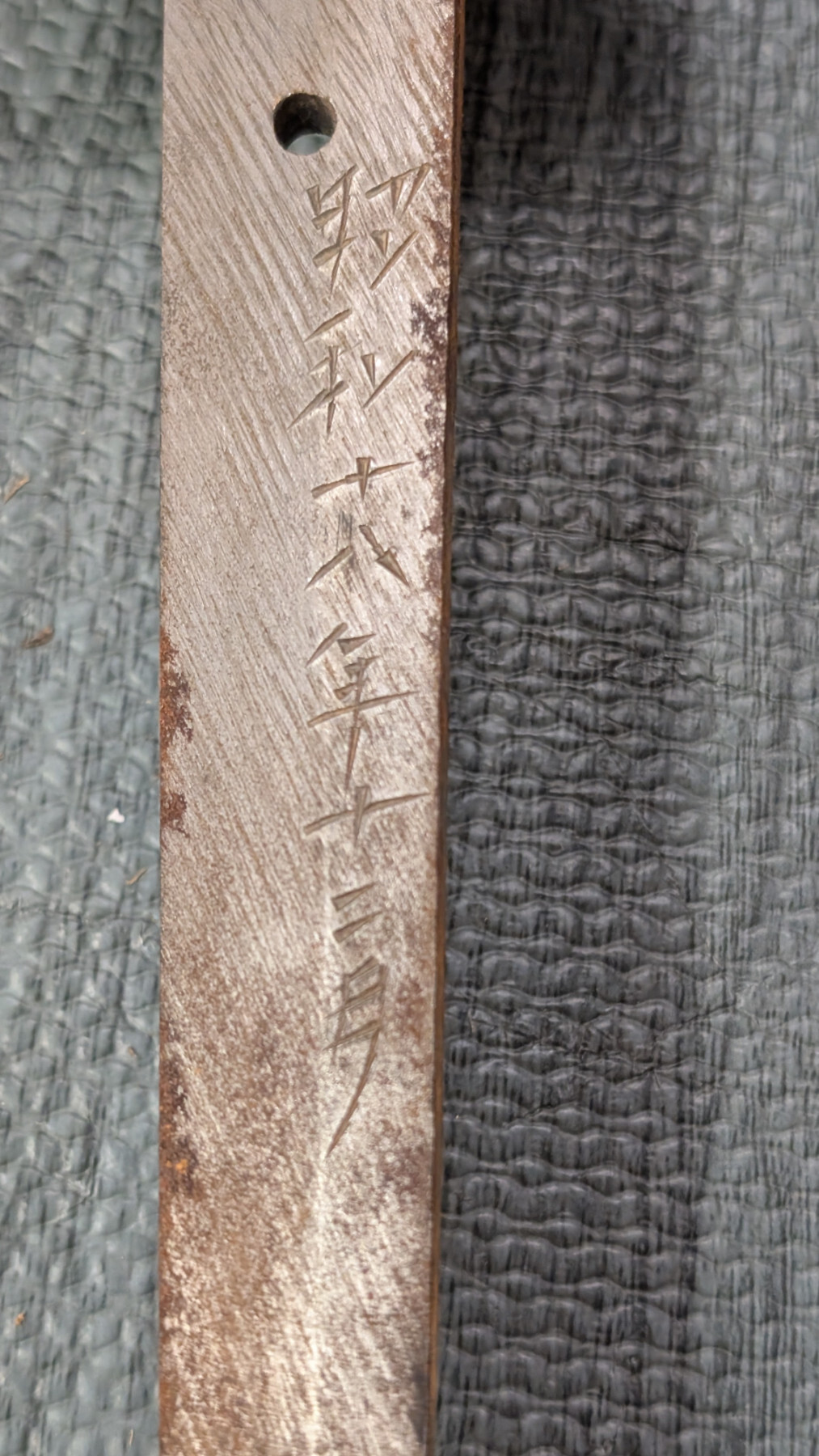
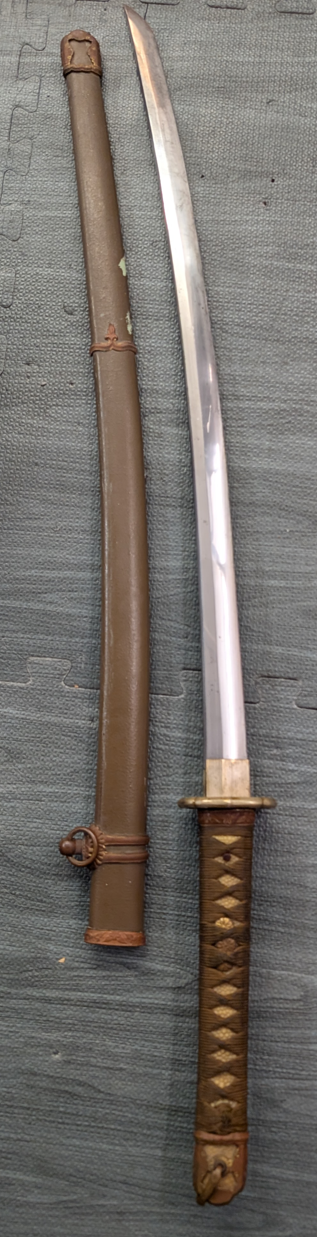
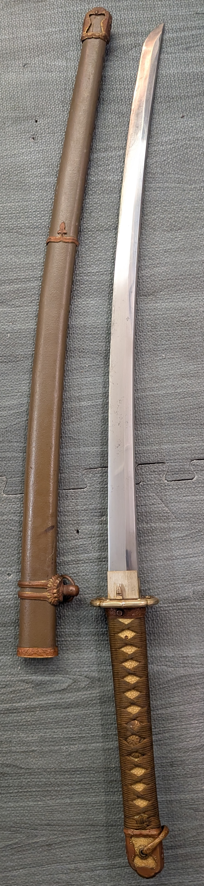
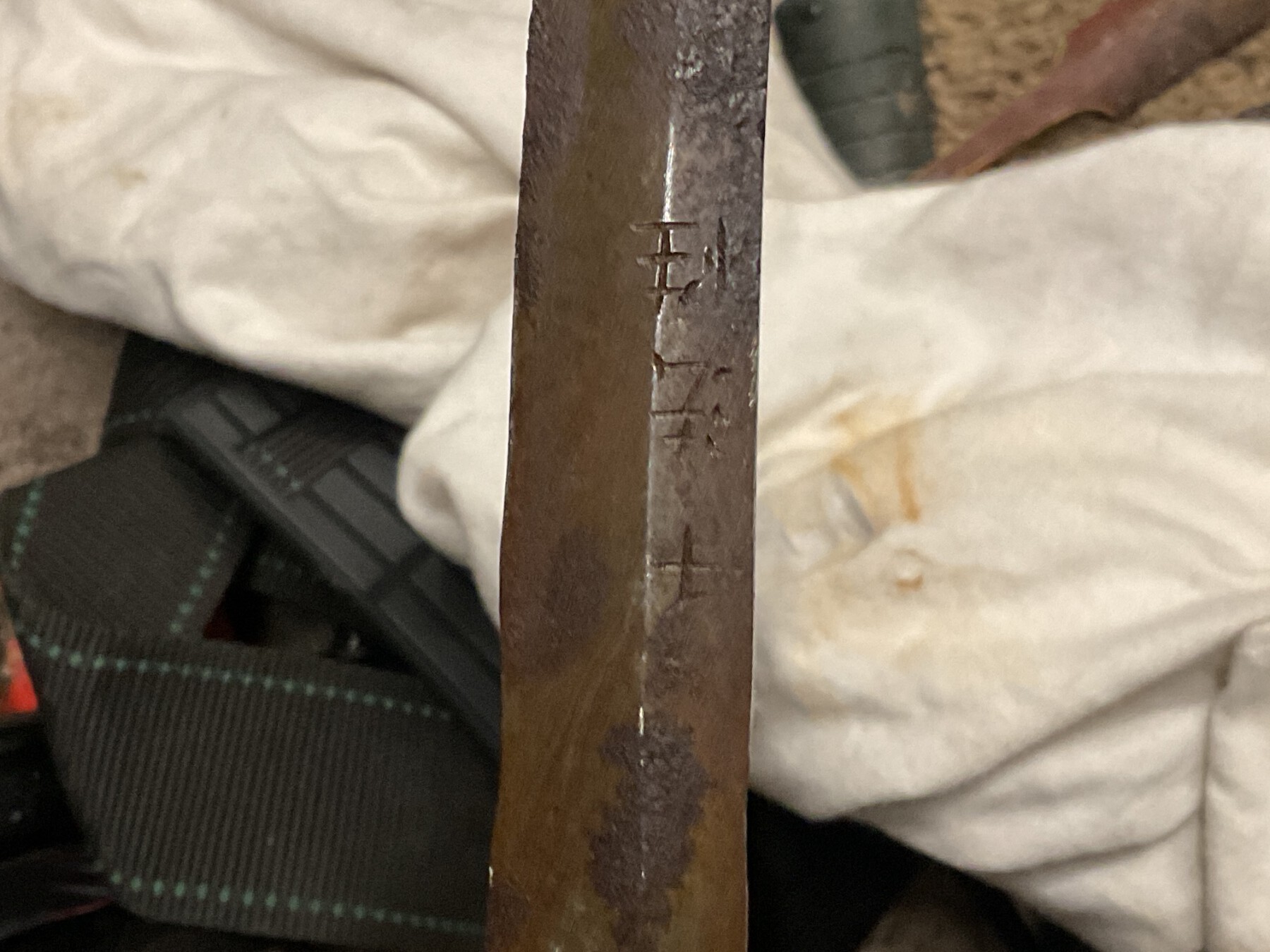
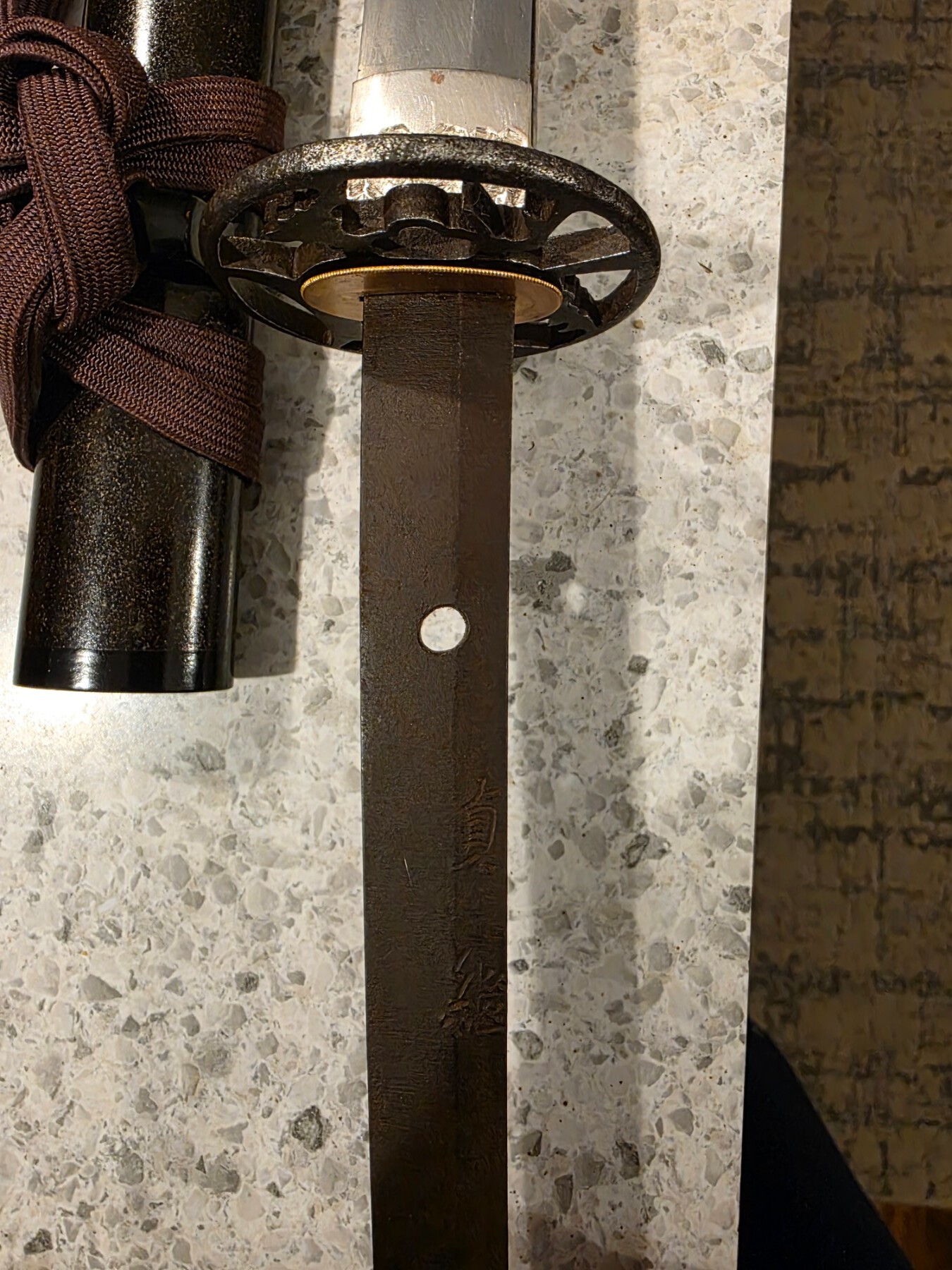
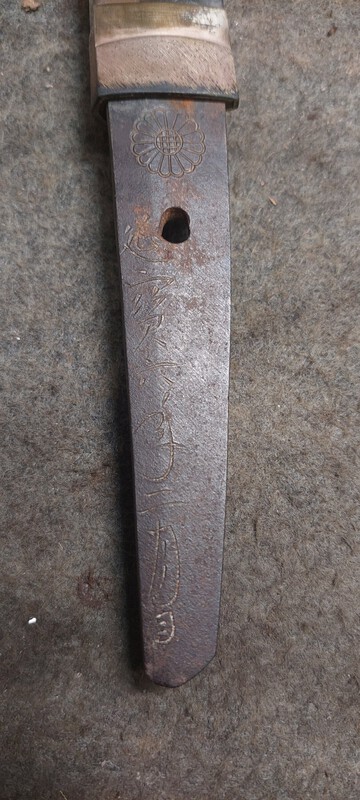
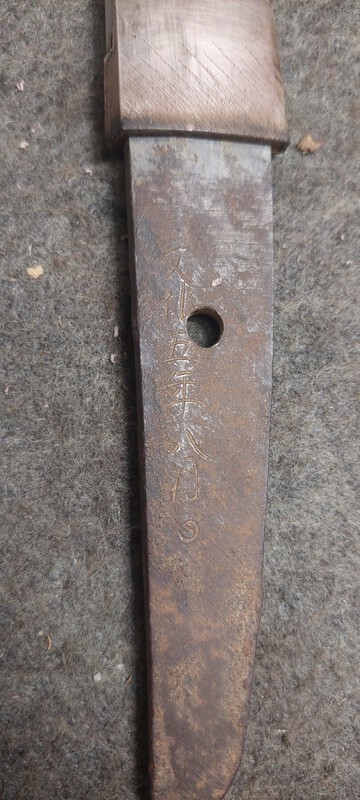
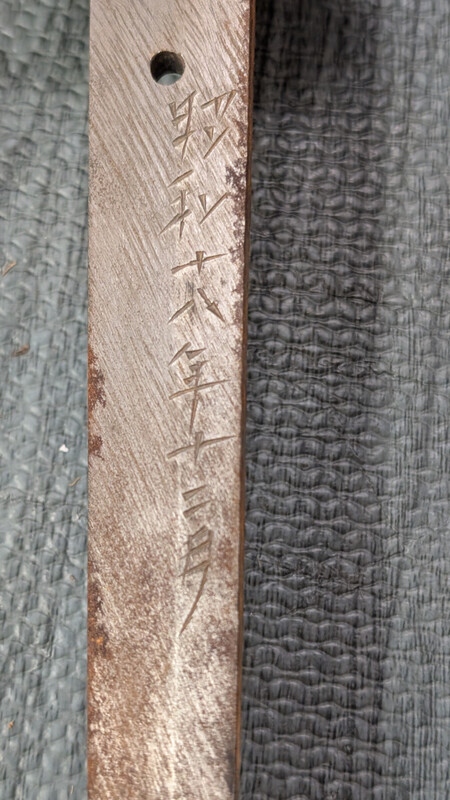
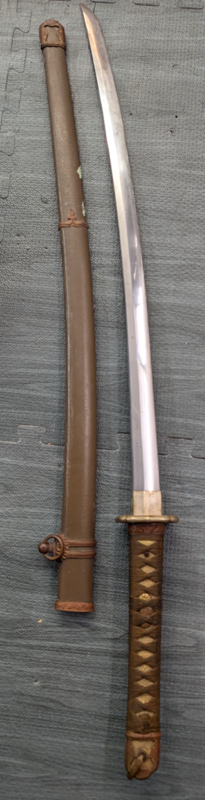
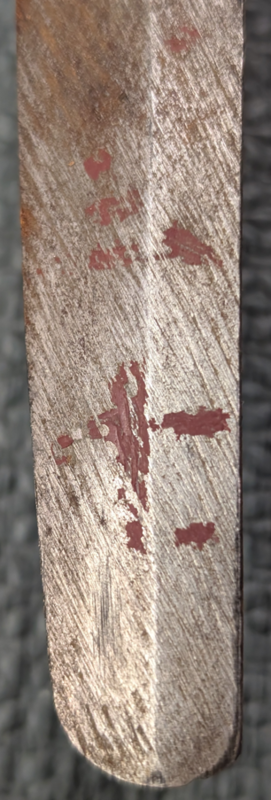
Hey guys, just curious what your thoughts are on this type 98 that I recently picked up from ebay. I thought it looked ok from the listing photos, but there are a couple points I would like to highlight and/or ask about: 1. For one, the listing didn't show the tang, so I included some detailed pics of it below. If anyone here is able to read Japanese and translate the mei I would certainly appreciate it! Chat gpt gave me names like "Noda Hideki" and "noda Akinobu" and "Noda, Shōwa 18th Year" I think it was struggling to accurately interpret the photo. I couldn't find a replica of it exactly. I may look more on my own tomorrow to see if I can find something similar. 2. What do the painted red symbols mean? 3. There was a bit of a gap between the seppa and the habaki with the mekugi installed. Although I can push the tsuka all the way tight with the mekugi uninstalled... it's pretty minor. Almost like the hole is just slightly off. I was able to re-attach the mekugi and get it a little tighter with a foot-ish long piece of floss, but there is still some play in the tsuba. The tsuba also looks slightly rough or damaged where the chuso hole is. The tuska hugs the nakago tightly regardless, the blade doesn't wobble if I move it around, just the tsuba and seppa (a little bit). I may be overthinking it, perhaps a little play is normal in something that's probably pushing close to 90 years old. 4. Hamon is very hard to see. I can see it all the way to the tip in person with a flashlight on the blade but didn't capture well on camera. 5. None of the seppa are numbered, but the tsuka and fuchi have matching numbers 37. 6. What does the small black symbol painted inside the tsuka mean? Nothing else stood out to me as too weird. The blade isn't perfect. There are scratches, some small corrosion spots, two fingerprints from someone not handling it properly, etc. I'm more into WW2 collecting and figured it was appropriate to post here in this sub forum. If you guys think the $1200 I paid is way too much feel free to tell me off lol, I'll go get my money back. Here's the full album but I will post some noteworthy photos below. https://imgur.com/a/8nS44c6


-
Hello! I acquired this sword, which I believe is a wakizashi, although I could be wrong. It has 20" blade and, 10.5" handle. If someone could translate the signature and give me an idea of when the sword was made, I would really appreciate it.


-
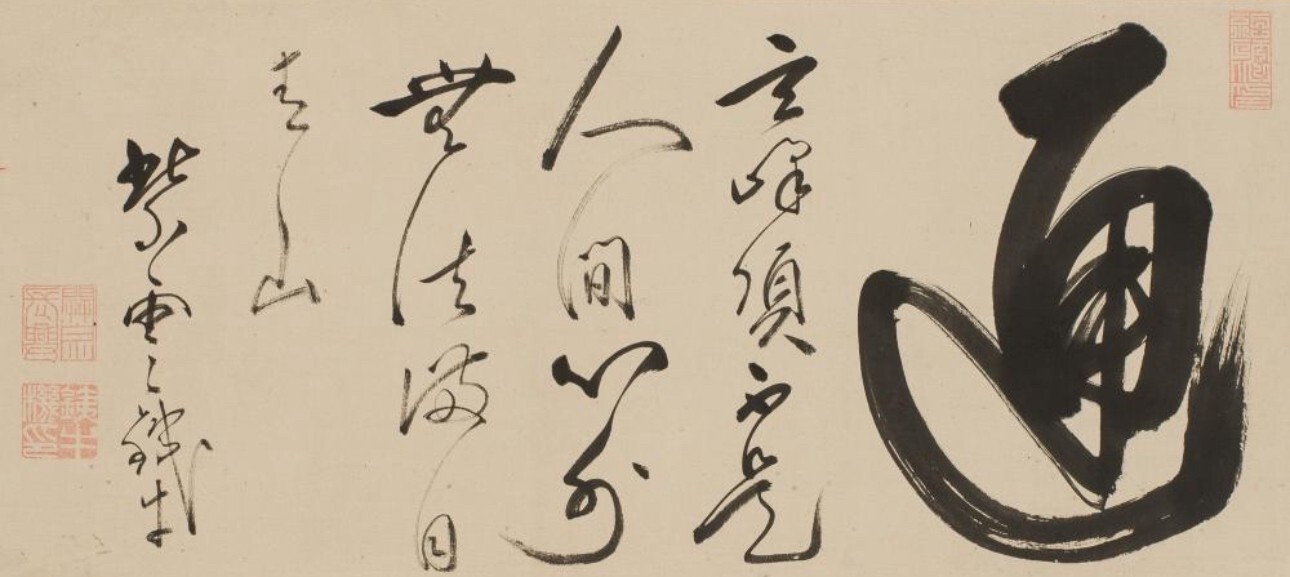
 This is a wonderful "One Character Barrier" calligraphy scroll by the Obaku Zen Master Tetsugyu, which starts with a pictorial representation of the character 通 followed by an inscription that I am having a bit of trouble translating. 通 can mean "all" or "through" or "to pass through (penetrate)." in koan Case 89 of The Blue-Cliff Record, it appears as “通身是眼” (My body is through-and-through hands and eyes). I think I can make out the phrase 人同心 (people of the same mind) and also 無 (no, none, nothing, not one thing) and 山 (mountain).
-
I do believe I have one of his swords as well, except no sanding and I do have a need/want to sell how much would something like this be worth and where around Seattle should I take it


- 10 replies
-
- 2
-

-
- gunto
- translation
- (and 1 more)
-
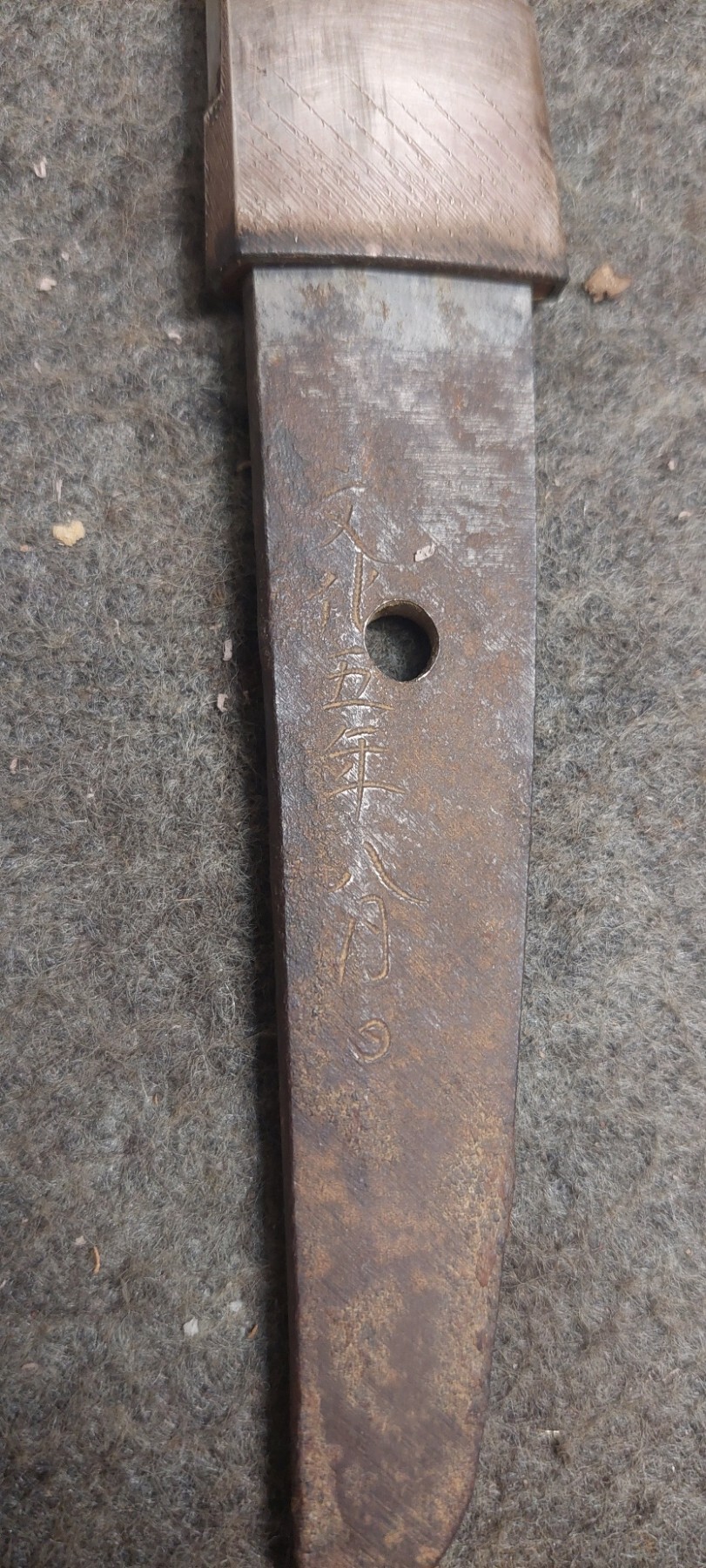
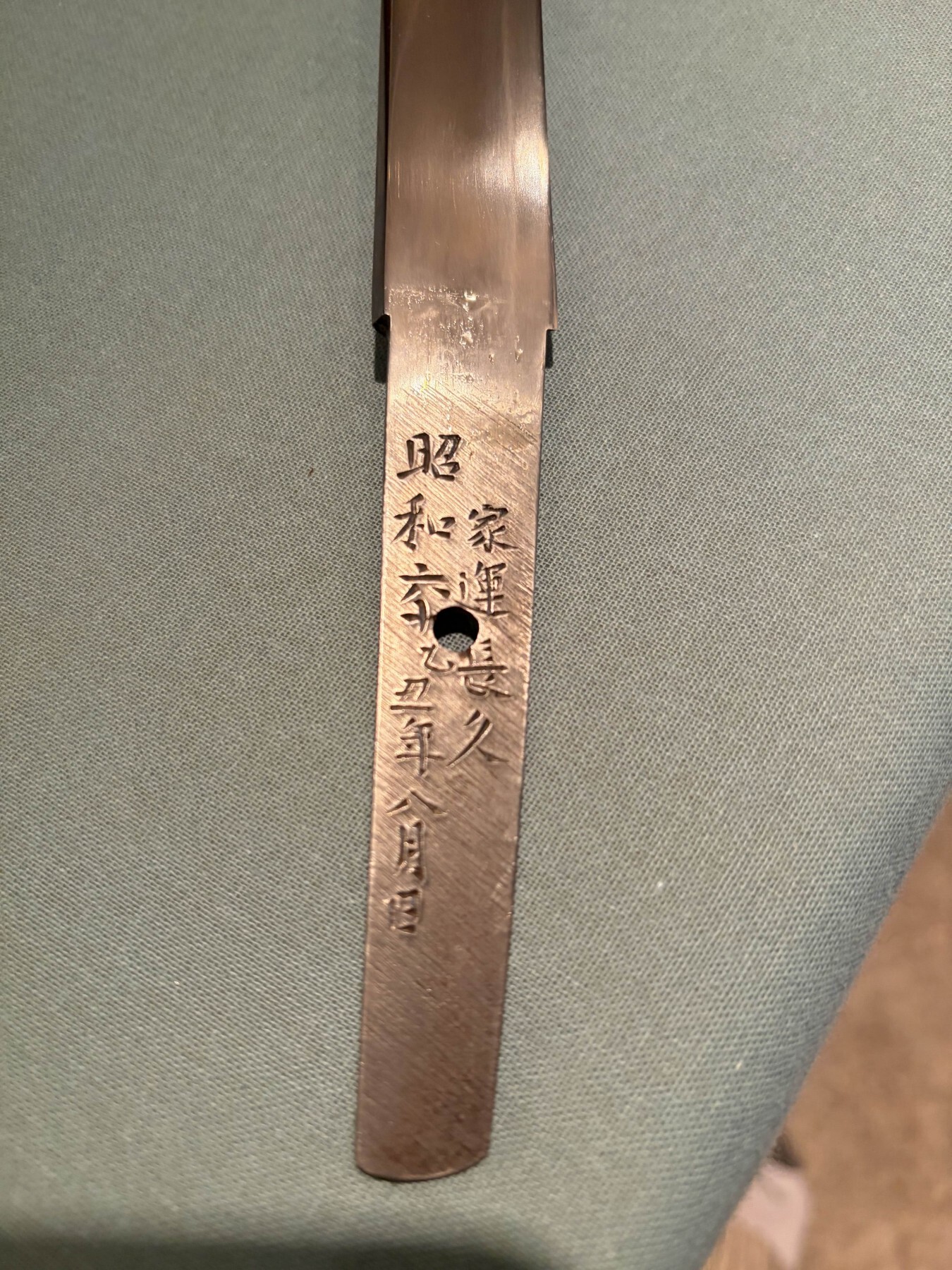
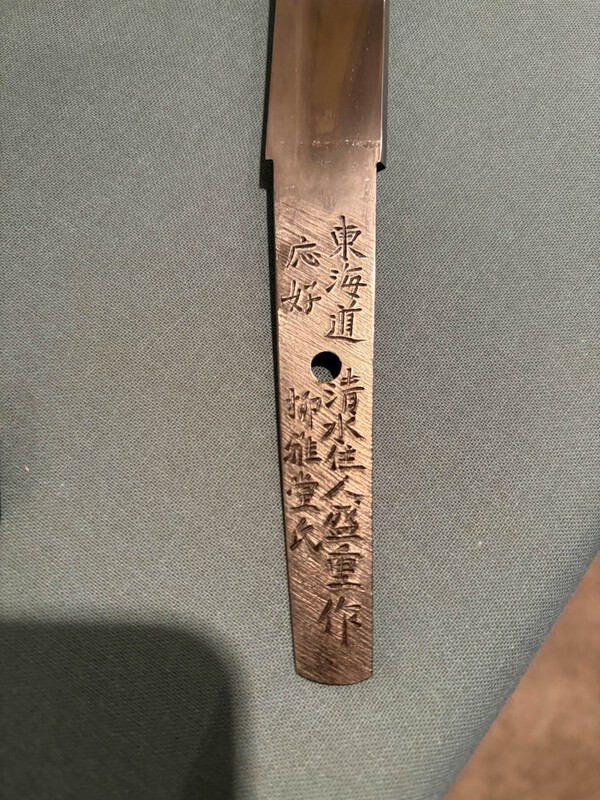
Hello, need help with this Mei I think it's Showa 3. I've had it in my collection for some years and need some help determining what the Mei is. Thanks

-
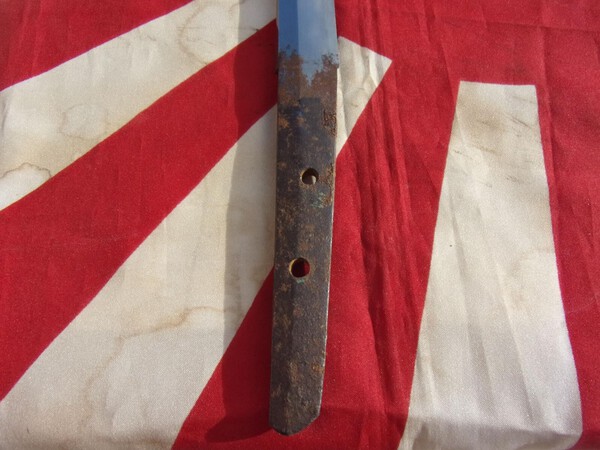
Hi everyone, few days ago I got an offer to buy a sword in shirasaya, it is aorund 350 euros. thing is they claim it is signed Kanemoto. Seller sent me a description they claim came with a sword from the previous owner from Japan along 12 other blades in 1991. This is rough copy paste of is there: KANEMOTO 兼元. NAGASA 54,3 CM, SORI 2,0 CM, MOTOHABA 2,6 CM, Lenght with TACHI MEI 67,5 CM KO HADA ITAME WITH MASAME HAMON IS SAMBONSUGI AND HAS ASHI, YO, AND SUNAGASHI ACTIVITY So my question with translation would be if it really is KANEMOTO, i have found this one by searching the kanji characters provided: https://nihontoclub.com/smiths/KAN1570 or https://nihontoclub.com/smiths/KAN1569 Tang photos are not great but hope they will be somewhat readable to someone. Blade it self is tired but overall not that bad. Therefore I am humbly asking for translation of the tang if it corresponds with what info (and "attribution") was provided. Thank you for your time. Best regards, Martin



-
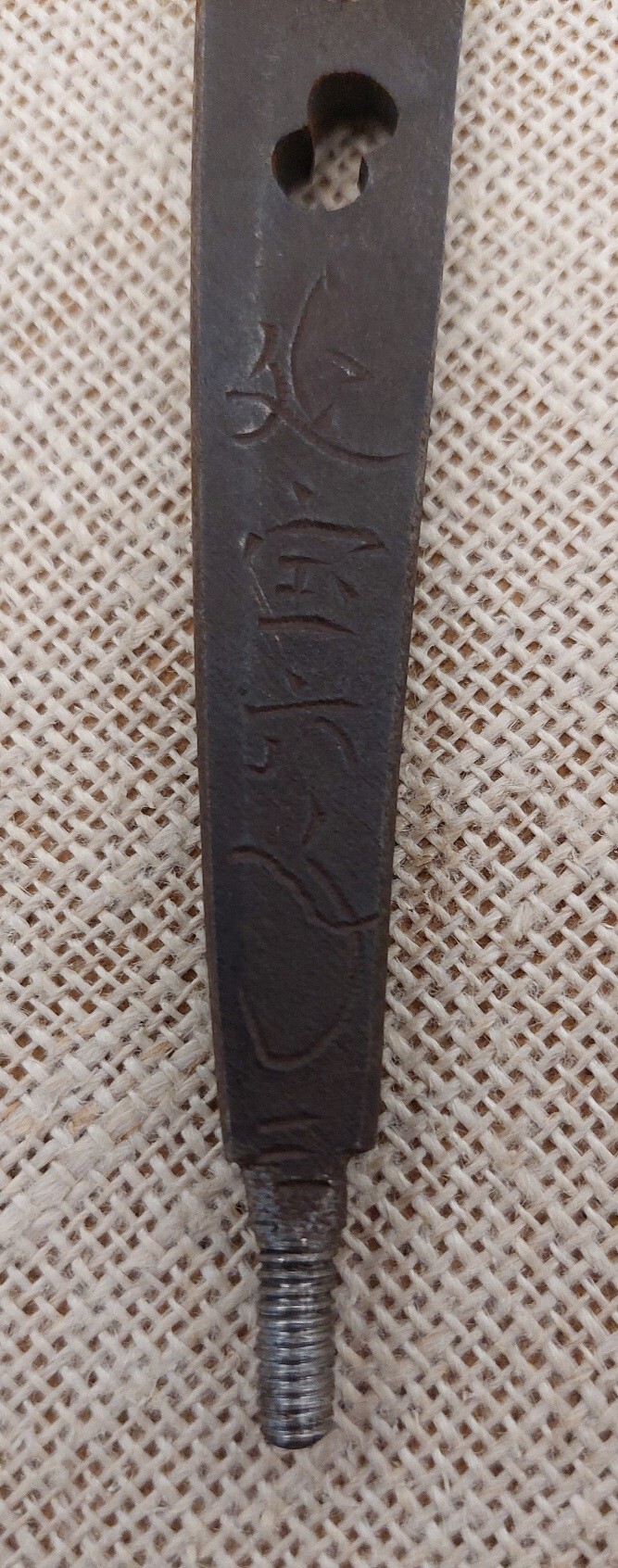
Hi everyone, finally after a long time I got to dissassemble an Austrohungarian saber "gunto" with Japanese blade. This is a continuation of my previous post from Link here Today I pulled it out of display and removed the blade, and well it was a day of surprises. I assumed that it would be held in place by a pin, in this case 2 part gold plated brass screw but to everyones surprise it was also held by a tang screw.... Yep you heard that right, this blade was fitted into the original fittings of the navy saber, which meant (unfortunately) grinding some material away from the tang and cutting a thread onto it, (yes, threads are cut directly on the tang, it is not welded on) So after removing the pommel screw, then I was able to access the tang screw and remove the blade. Sorry for the long text here I was carried away, I will post everything into a general discussion thread after this. Anyway back to the signature, it was amazing feeling when I found a signature there, at first we theorized that it was ordered to be made but after removing it, I think this is a older blade than late 19th century one, in my humbke amateur opinion. Also note: all of the mekugi ana are punched not drilled. Anyhow, I would love to ask knowledgable people of this forum if they would be able to translate the signature if possible. It is a very interesting piece, we hoped that signature would help us fins the history behind the piece but now I think looking at the state of the tang that it might be older piece and was aquired for this purpose and not custom made for this with dedication on it. But it is what it is. Sorry for the long post, will rewrite for general discussion with more details. Thank you for your time. Anyway, have a great day everyone, Best regards, M


-
Can anyone help me identify this? It came off a sword I currently have.


-
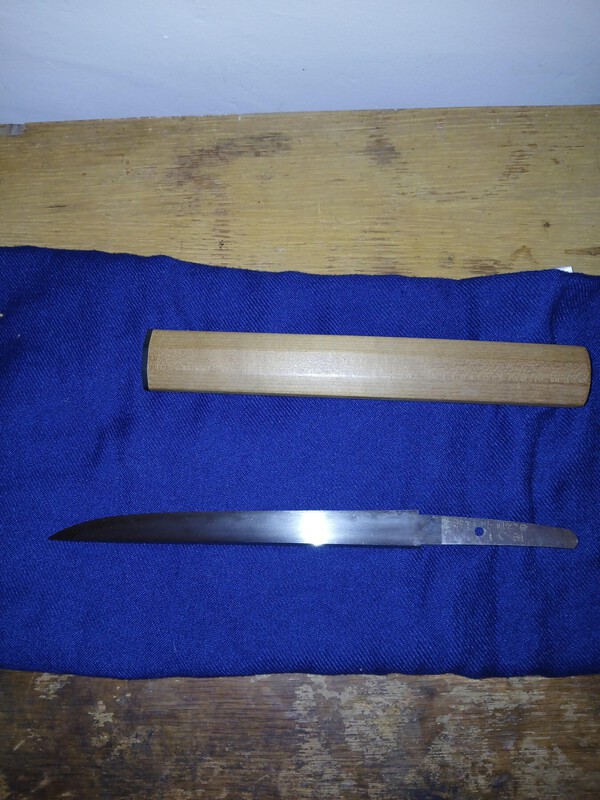
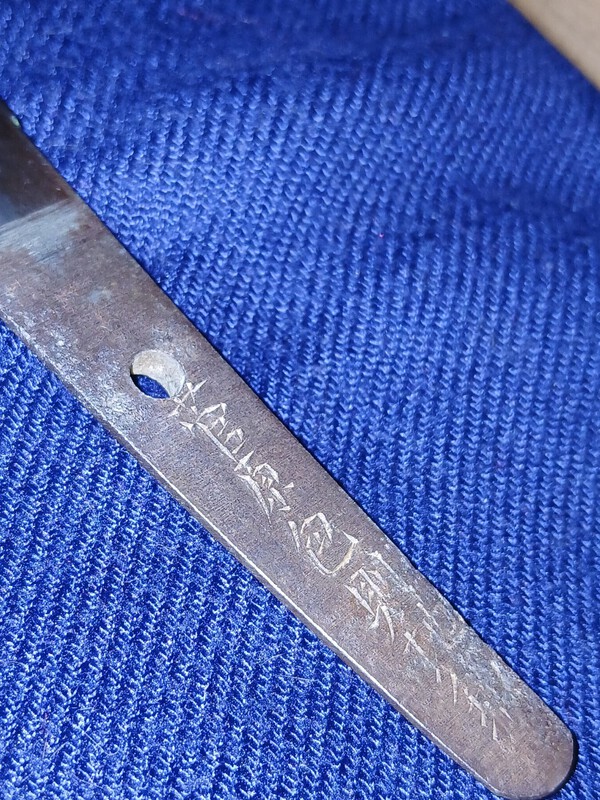
Hello all. I bought this tanto a few months ago. I did not note down what the seller provided as the mei translation. I recall it was translated to "Miyamoto Kanenori". I was doing some research on this smith some time ago after I bought this, I read through a number of threads on here. Kanenori had a very interesting life as a smith, and is considered to be one of the best. This is why I believe this tanto is likely gimei if signed as that particular smith. I apologize for the photos, I found it difficult to take photos of this blade. I would appreciate your thoughts on Miyamoto Kanenori and this blade.




-
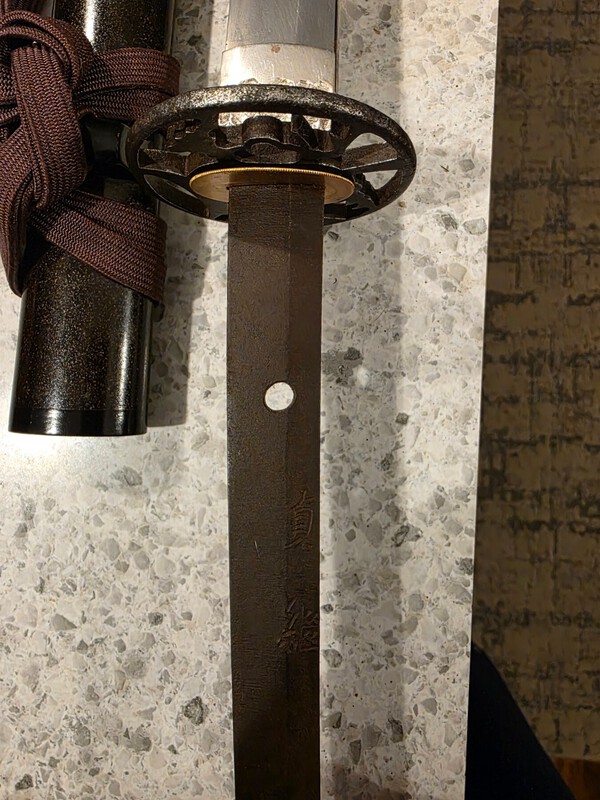
Came across this sword and I'm trying to find out some more info on it. Translation, era, etc... thanks in advance


-
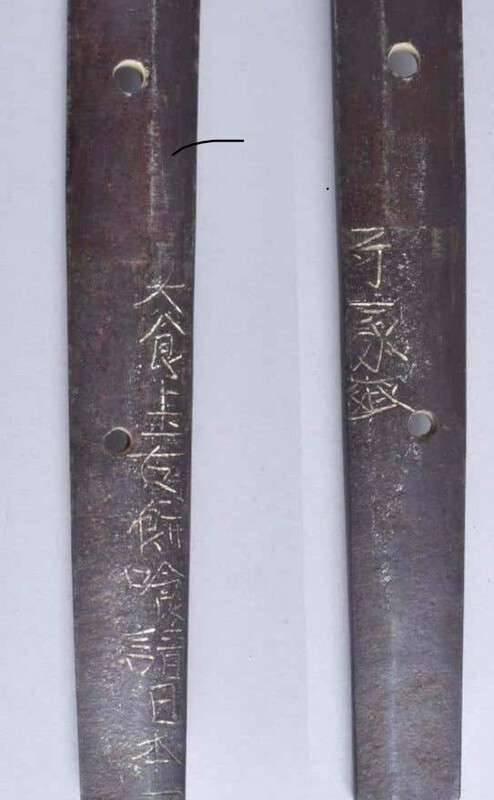
Hey guys, This sword has been laying around my house for a while and I have tried (unsuccessfully) to translate the mei. No idea whether the sword is authentic or not but any help would be greatly appreciated. Thanks!


-
Any information will be greatly appreciated. Thanks, Brandon
-
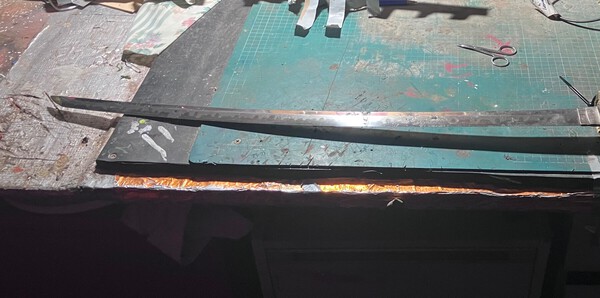
Hi everyone looking for any information on what this could possibly be. Found in a friends man cave, were told it is a samurai sword and despite all our efforts we still are none the wiser. So we thought we’d try asking you all for any help or advice you could give us on what it is or where to look? Please and thank you.

-
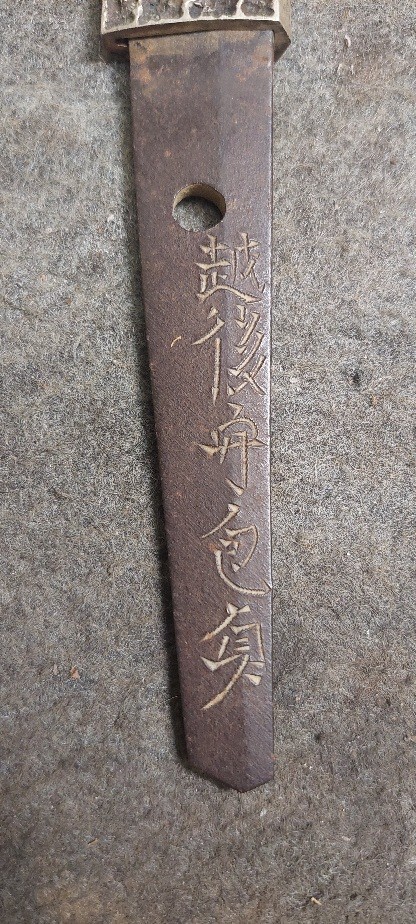
 Hello, I believe what I have here is a WW2 Japanese Samurai Sword. I am new to Japanese Swords and know there is a lot around them, especially these WW2 era swords. I have posted a picture of the signature and a picture of the tang/blade, handle, and sheath. I think it is in rough shape but still find it cool. I posted a picture on Reddit and the tang was translated to: “豊後住國茂作 = made by Kunishige, resident of Bungo”. There are no stamps on the other side but what remains is old green paint the faintly resembles 31. Could anyone shed some light onto what the type of sword is, who the maker is, and if the blade is traditionally made and how old. I really want to know if the sword was made specifically for WW2 or if it is an older blade that was brought to war. I would be greatly appreciative! thanks, Ben P.S. I can post more pictures if needed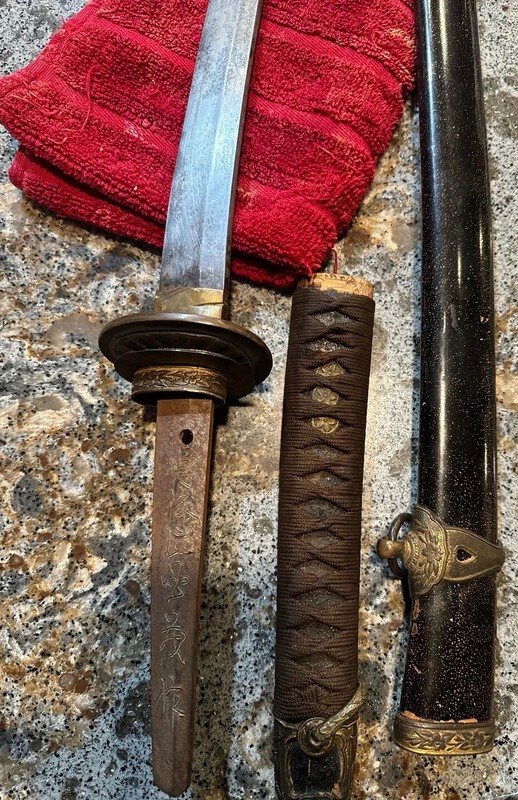

- 9 replies
-
- 1
-

-
- gunto
- translation
- (and 1 more)
-
Hi everyone, while browsing for swords, as one does, I stumbled across this piece that has in its description celebratory tanto from Muromachi period called "iwaizashi" I would like to ask studied people from this forum that would be able to explain if there is any truth to the statement ? The description states that presented tanto was made as a gift for celebratory occasions and is engraved with chiyotsuru inscription. I will add the full description with pictures below This tanto is a celebratory dagger made in the Muromachi period and called "iwaizashi," and is a rare piece that is rarely found on the market. It was made as a gift for celebratory occasions and was very auspicious, and this piece is engraved with a chiyotsuru inscription. Chiyotsuru is a school of swordsmiths that flourished from the Nanbokucho period to the Muromachi period (1336-1573), also known as the Echizen Rai school, because it was founded by Chiyotsuru Kuniyasu, a member of the Rai Kuniyasu school, who migrated to the Echizen region. Since the crane (tsuru) has been a symbol of good fortune in Japan since ancient times, it is believed that they asked Chiyotsuru, which means crane that lives a thousand years, to create a celebratory dagger. As in any other collecting field buy the thing not the story, and I really like tha blade itself but if the story proves somewhat true it would be a strong contender for my next purchase. So I share it with all of you good people here, the people more studied than my self. Have a great day everyone.


- 7 replies
-
- 1
-
-
- koto
- translation
- (and 1 more)
-
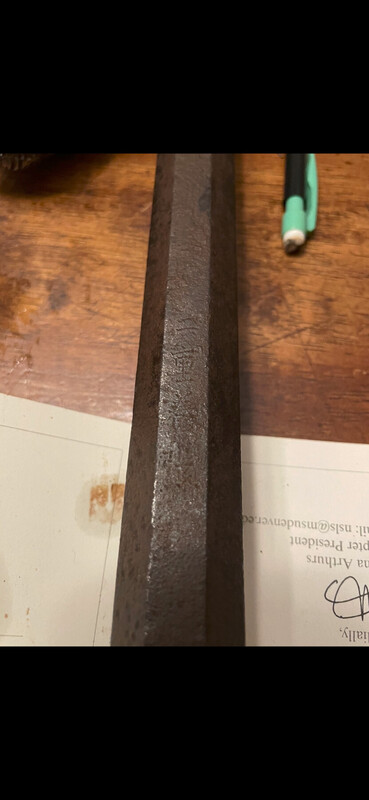
 Hello all, lurked though many of the posts here. I recently acquired a matchlock that was converted to a percussion lock rifle. There were no pins holding in the barrel, and to my displeasure the bottom of the barrel was covered in a bad rust. I removed the rust residue from the wood, washed the barrel off with soap and water, and lightly oiled it. I plan on hopefully getting it more operational, without destroying the history.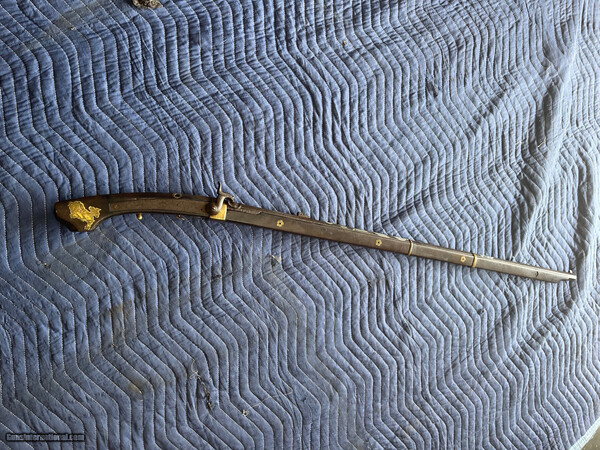
-
I posted this sword a few days ago, but now I received it and made more photos. What do you think about it? I got it for 550 USD including shipping to Europe. It got a few imperfections, but for this price point I expected it. I know its a very likely a gimei and not from the 3rd generation, but is it a tadayoshi school blade nevertheless? Are the shape of the blade, hamon and kissaki in the style of the tadayoshi school. Pictures are in the Google Drive link: https://drive.google...Yerx0?usp=drive_link How do you like the habaki and shirasaya? I think they pretty high quality for the price. I would be happy if you answer my post.