Search the Community
Showing results for tags 'tanto'.
-
 Hello everyone and thank you for checking. I'm selling my Nihonto collection. You can find more details for each sword in linked topics. I can provide any ownership proof you like but Zoom call with video is, I think, the best option. Asking prices are exactly the same money I paid for each sword. I'm open to offers/negotiation. I'm usually online every week day, but offline during weekends. If needed we can discuss further via Zoom call or Whatsapp. Shipment included in prices. All swords are in Poland/EU so ideal for purchase within EU border (no customs). Return policy! I give you 5 days after you receive the sword to change your mind. If you don't like what you bought, then just send the sword back. If sword is back safe, in same condition as it was sent, then I will give you a full refund minus my shipment costs. Wakizashi in Shirasaya - Echizen Fujiwara Kunitsugu - dated (1632) with NBTHK: 2950EURO https://www.militaria.co.za/nmb/topic/53181-echizen-fujiwara-kunitsugu-dated-1632-with-nbthk Wakizashi in Koshirae with Shirasaya - Hizen Kuni Mutsu Kami Tadayoshi (3rd gen): 3650EURO https://www.militaria.co.za/nmb/topic/45103-shinto-wakizashi-hizen-kuni-mutsu-kami-tadayoshi-please-comment Wakizashi in Shirasaya - Tosa Shigetsugu with NBTHK: 3450EURO https://www.militaria.co.za/nmb/topic/53182-tosa-shigetsugu-with-nbthk Wakizashi in Koshirae - Hojoji Sadahiro: 2950EURO https://www.militaria.co.za/nmb/topic/49265-shinto-wakizashi-in-koshirae-hojoji-sadahiro-kateteuchi-style Wakizashi in Koshirae with Shirasaya - Sue-Bizen: 2500EURO https://www.militaria.co.za/nmb/topic/52062-koto-wakizashi-bizen-osafune-koshirae-shirasaya Tanto in Koshirae with Shirasaya - Ashu Sukeyoshi with NBTHK: 2250EURO https://www.militaria.co.za/nmb/topic/55553-sukeyoshi-thickbulky-tanto-with-koshirae-shirasaya-and-nbthk-located-in-eu Katana in Koshirae - Minamoto Sadatsugu - dated (1941): 1950EURO https://www.militaria.co.za/nmb/topic/55890-reselling-katana


-
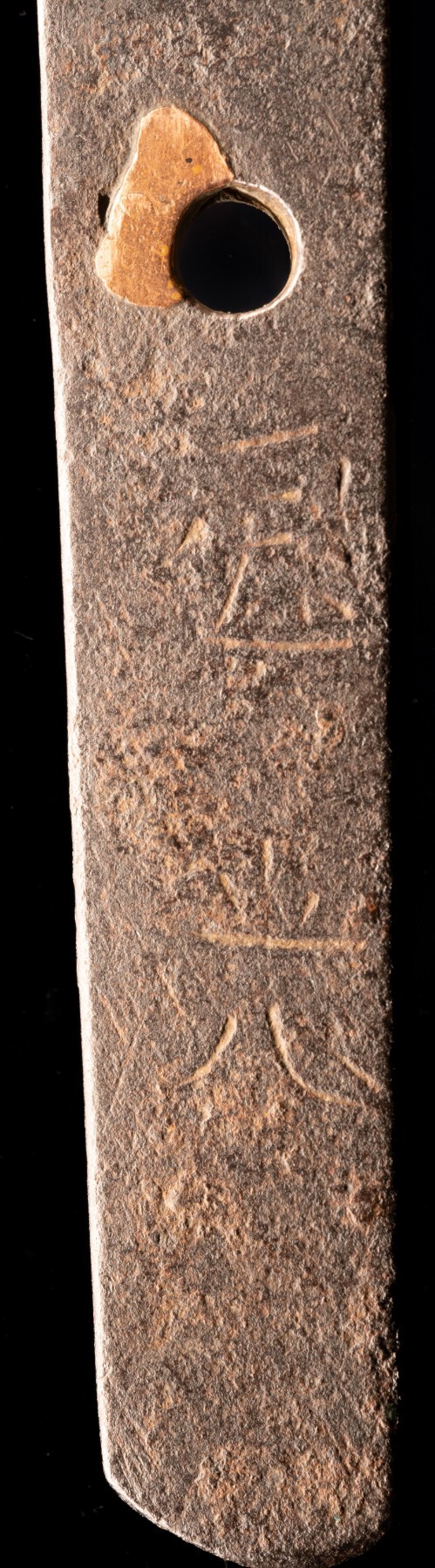
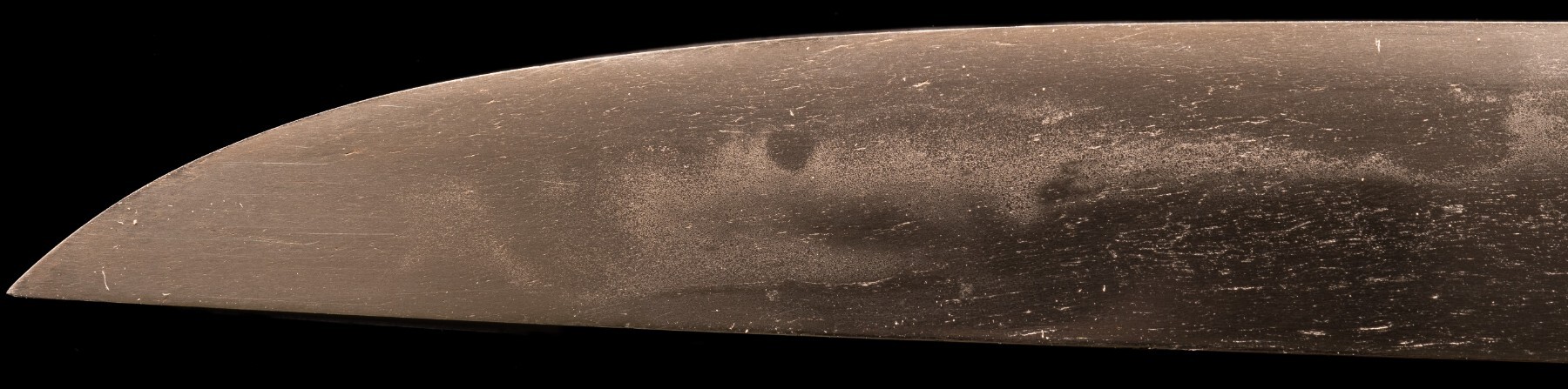
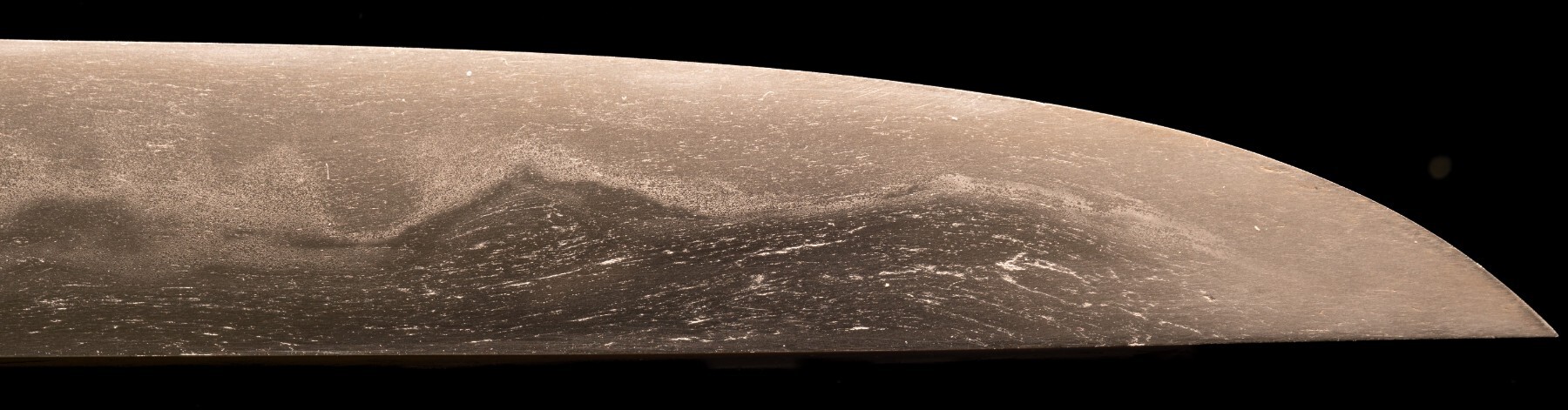
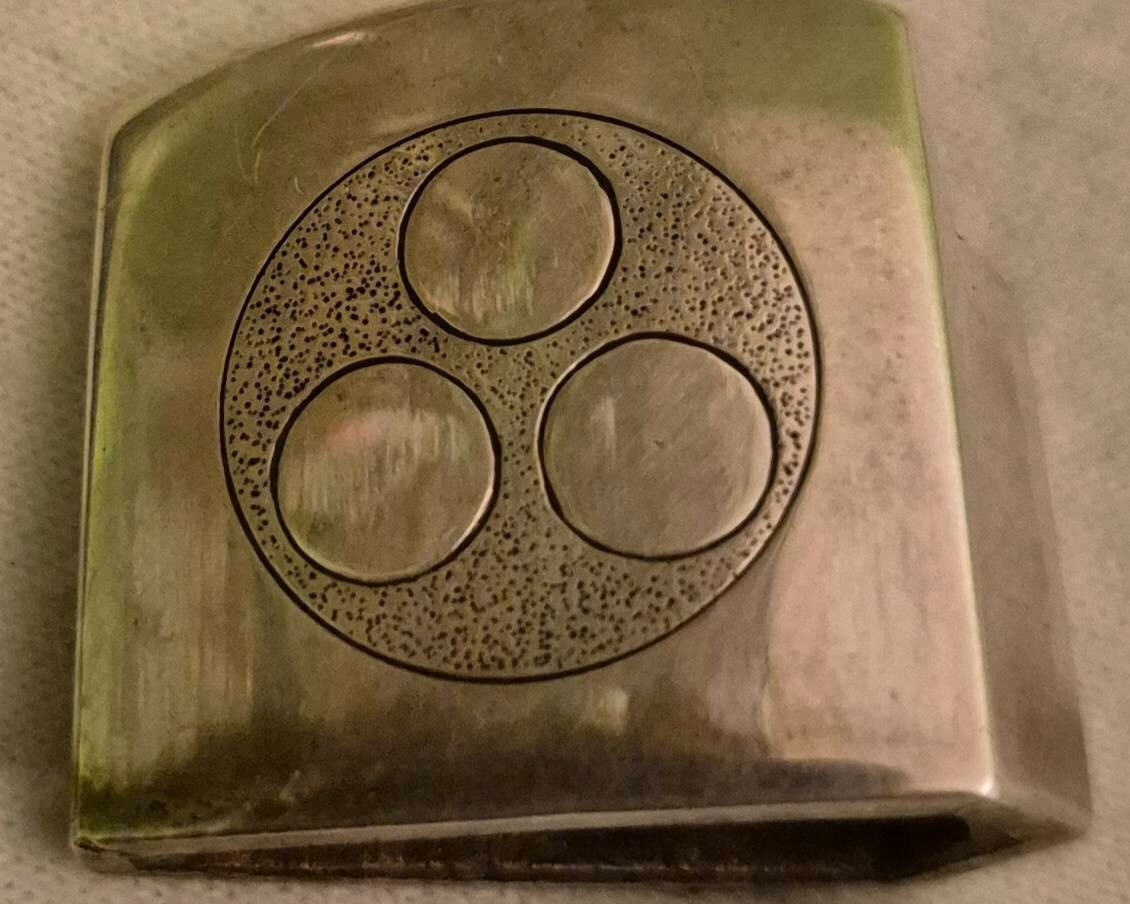
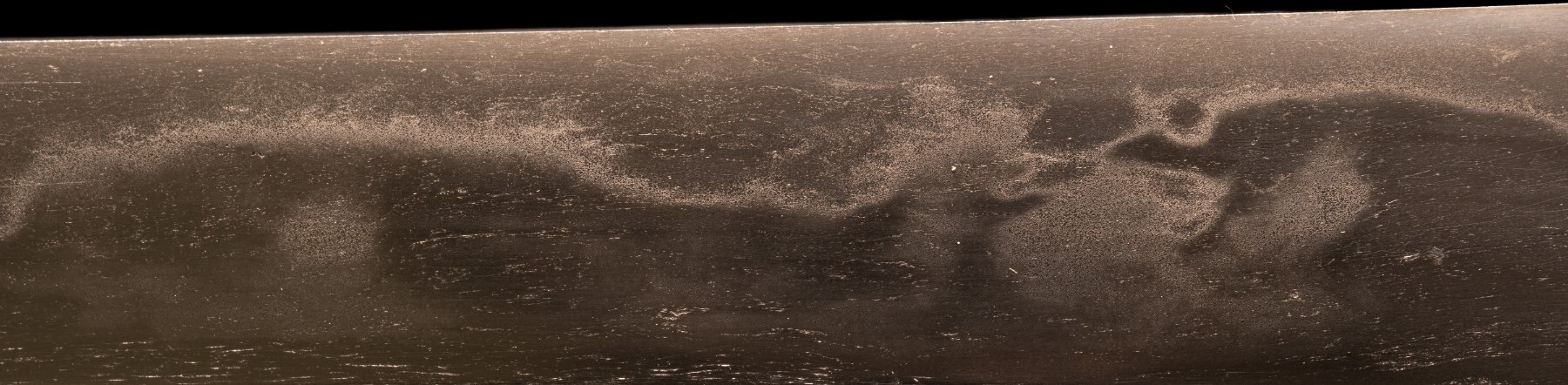
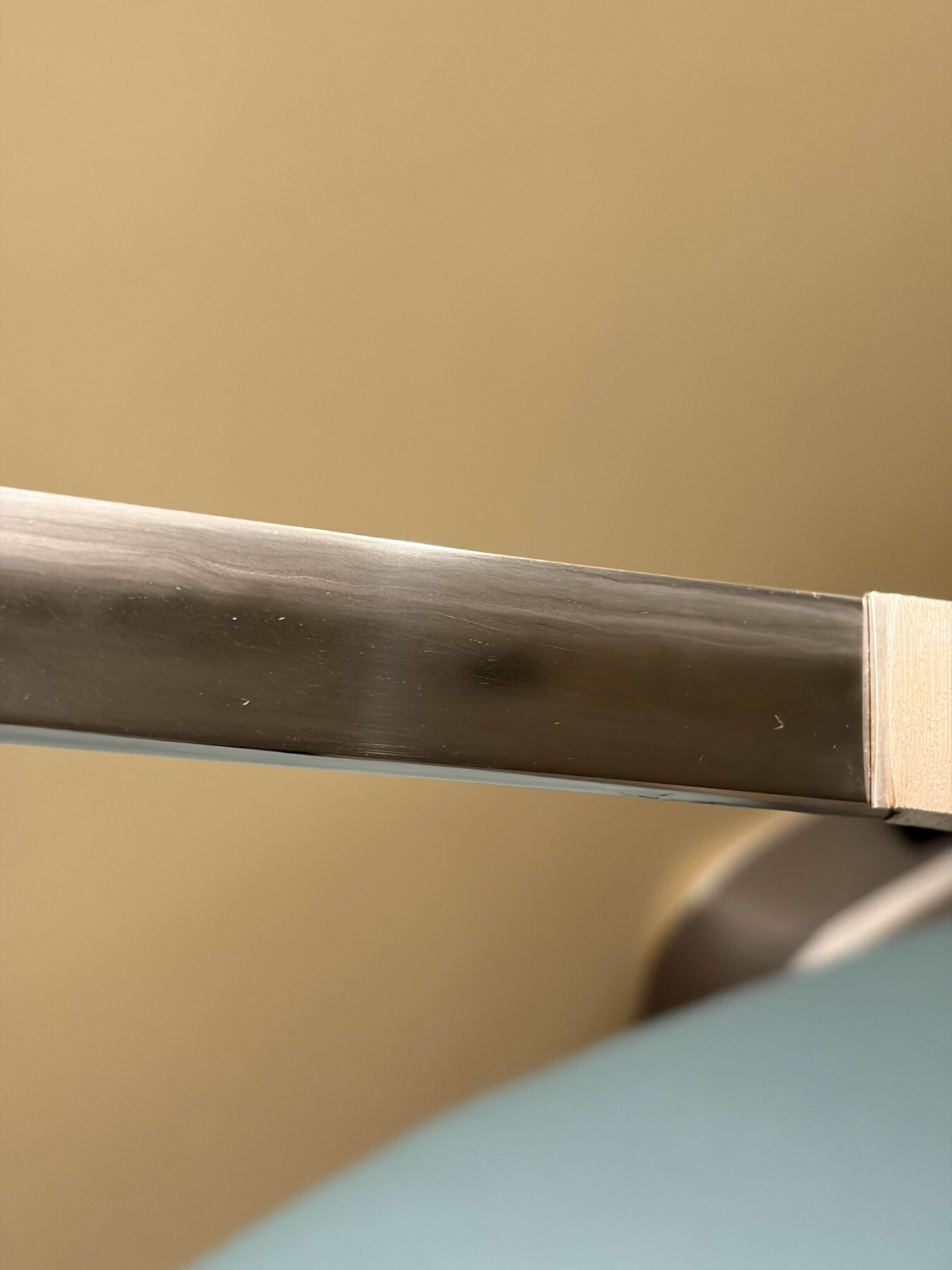
Hey all! After about 2 months of waiting, my Tanto finally arrived today. It is my second ever Nihonto and was a bit of an impulsive buy (not really proud of that fact). While browsing sellers for Kamakura/ Nambokucho pieces, this little guy caught my eye and I was immediatly fascinated by it. Skip a few days, and lots of pieces from my wishlist sold out one after another, so I decided to go for it and got it. It is a pretty thick Tanto for its size, not sure if it is quite Yoroi-Doshi territory yet. Some stats first: Nagasa: 21.2cm (7 Sun) Sori: 0 Mekugi-ana: 1 Motohaba: 20.8mm Motokasane: 8.4mm (Pretty thick!) Jitetsu: Itame with Masame Hamon: No clue what to call it, but some big Midare? It has little islands of Hamon that could be Tobiyaki? Boshi: Was described as Midare-komi Kaen Nakago is Ubu and Suguta is Hira-zukuri. The Mune is in the Iorimune shape To finally get to the reason for this post: The Mei. This piece is signed Kanemitsu, but 包光 with 包 as the Kane Kanji. Now, from the signature alone it reminds me of Tegai/Sue Tegai with the niji mei and the choice of the Kane 包, as many smiths in that school seemed to use that particular Kane. However, in my eyes and especially after reading Tanobe Michihiros Book on the Yamato tradition, which a friend borrowed me, the worksmanship does not fit at all. On a side not, I should probably pick up the other books from the Gokaden series. Now, I initially wanted to ignore the Mei completely and enjoy the piece for what it is, but it has Hozon papers. Please correct me if I am wrong on that, but that basically rules out gimei? The certificate states that the region is unkown, though that it is a late Muromachi era piece. My best guess currently is, that it is some unregistered Mino smith, where there was not enough references to nail it down with certainty. Nonetheless, I found some hints for this theory: 1. Left of the MITSU Kanji are faint Higaki file marks visible. 2.I have seen some wild Midare hamons on Mino during my last Japan trip. 3. While this is a little far fetched, but according to the Nihontoclub Mei search, there have been smiths in Mino during that time frame, that did use the 包 Kanji for Kane. There is also a Kanemitsu listed for Mino (KAN137) but there seems to be not much info on him. I did shoot some pictures of the blade with my Macro lens, there will be some added below. Another cool thing is that it was registered on March 16th 1951 in Aichi, which is very early. It has what seems to be matching Koshirae with a three star like Kamon on the habaki and on the Saya (On the side I forgot to take a picture off, of course). It might not help much, but it is still interesting. If someone has any clues on where the smith could have come from, I would be most thankful. But all feedback to this little sword is welcome. All the Best Erik


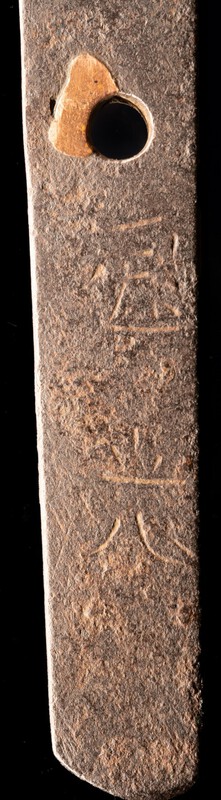
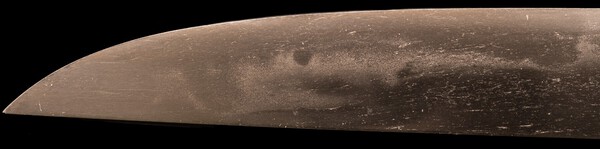



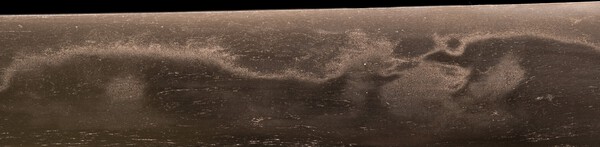
-
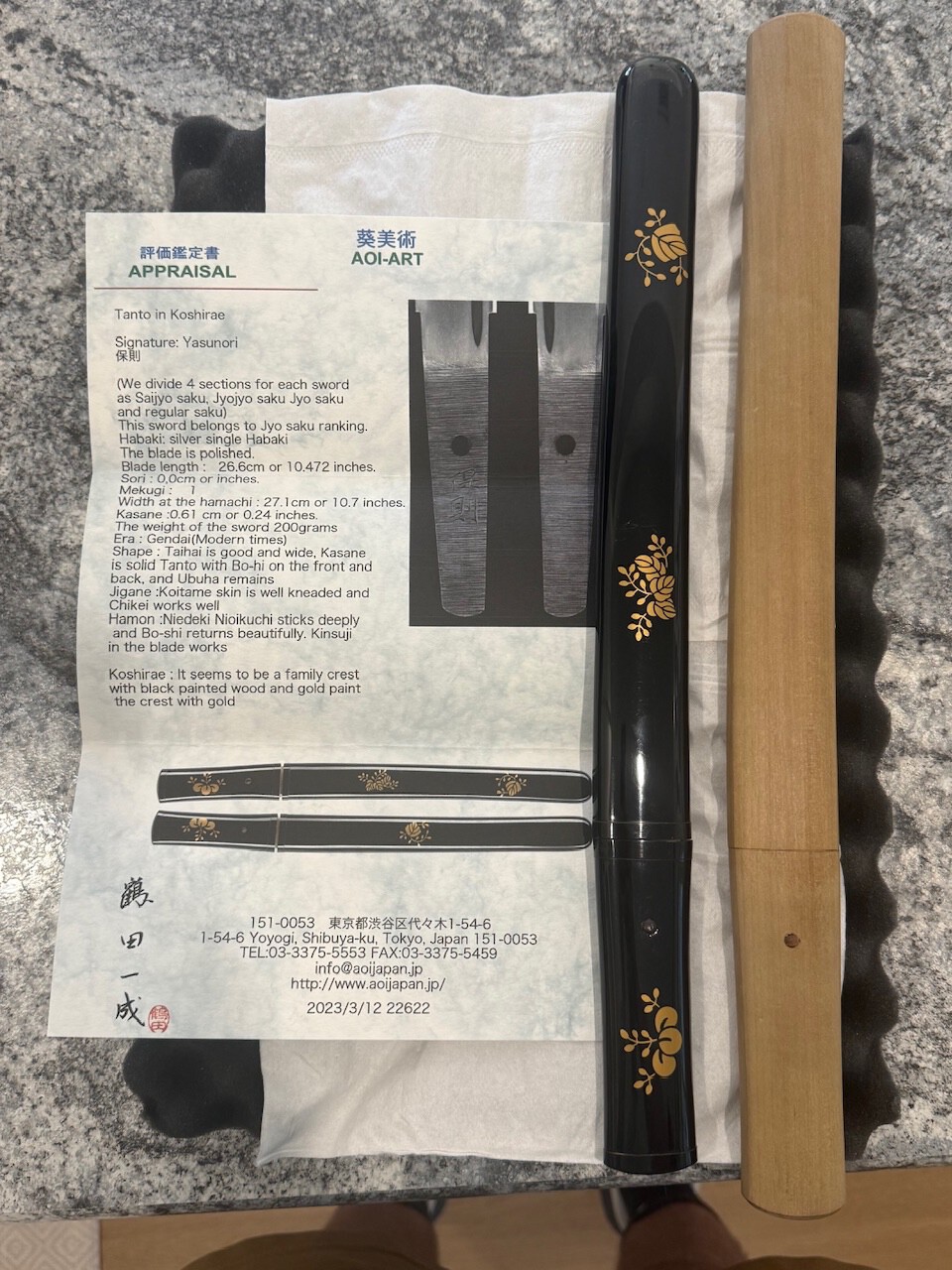
Type : Tantō Ubu, Suriage or O-Suriage : Ubu Mei : 保則 Yasunori - Motomura Yasuhiro Papered or not and by whom? : Not papered Era/Age : Gendai Shirasaya, Koshirae or Bare Blade? : Shirasaya with koshirae Nagasa/Blade Length : 26.6cm Sori : 0.0cm Hamon Type : Suguha Jihada : ko-itame Other Hataraki Visible : beautiful kinsuji, chikei swirls beautifully Flaws : small kitae-ware found throughout Sword Location : Florida, USA Will ship to : USA, other nations if legal/possible Payment Methods Accepted : Zelle, Paypal, Venmo Price and Currency : 1500USD Other Info and Full Description : For those who saw my previous posting and thought: “Nice price point, but I’m looking for Nihonto,” I am listing my tantō by gendai smith Yasunori, real name Motomura Yasuhiro. Yasunori was a resident of Hizen in Saga Prefecture and seemed to have worked primarily in the latter half of the 20th century, with most of his works I’ve seen dated in the ‘70s. I have learned that he’s passed away and the NBTHK has started papering his swords, though I do not expect a papered Yasunori to be much more valuable than an unpapered one. This tantō is relatively long and thick with a bohi on both sides and a silver clad copper habaki. The hamon is beautiful and pronounced (though I am quite a fan of suguha hamon) and I adore the filing work on the nakago. This Tantō resides in a shirasaya made on my request when I purchased it, and is accompanied by black lacquered aikuchi koshirae. Sword will be shipped with an Aoi Art Estimation sheet and an oshigata by Aoi Art. This is a nice entry point for one’s journey with nihonto, or a nice addition to one’s collection. I will post images below. Cheers.
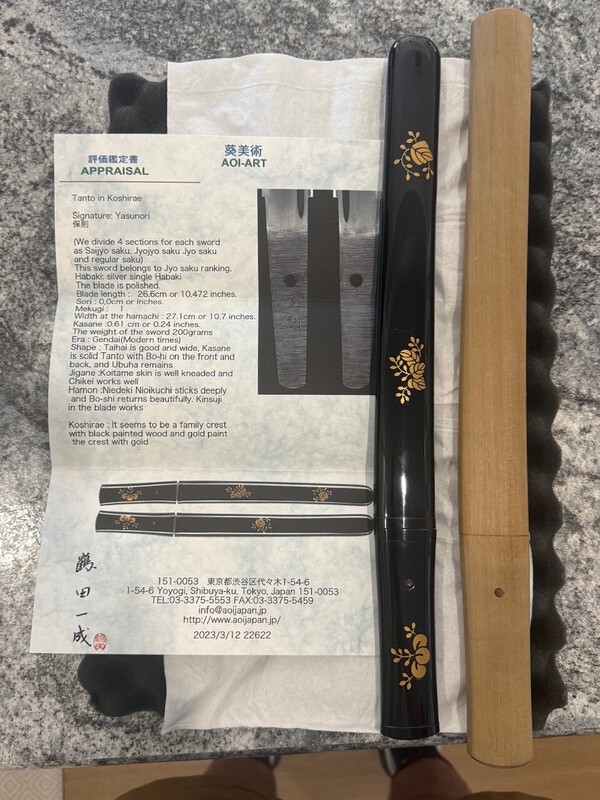
-
Hello everyone, I've been reading more into Shintogo Kunimitsu lately, and I keep hearing controversy on the blade "Midare Shintogo" from the smith, particularly on the topic of its legitimacy as a signature. If anyone has an oshigata or a photo of the dagger, I'd greatly appreciate the chance to see this piece finally. Thank you, everyone, for your time! Best Regards, Zoglet
-
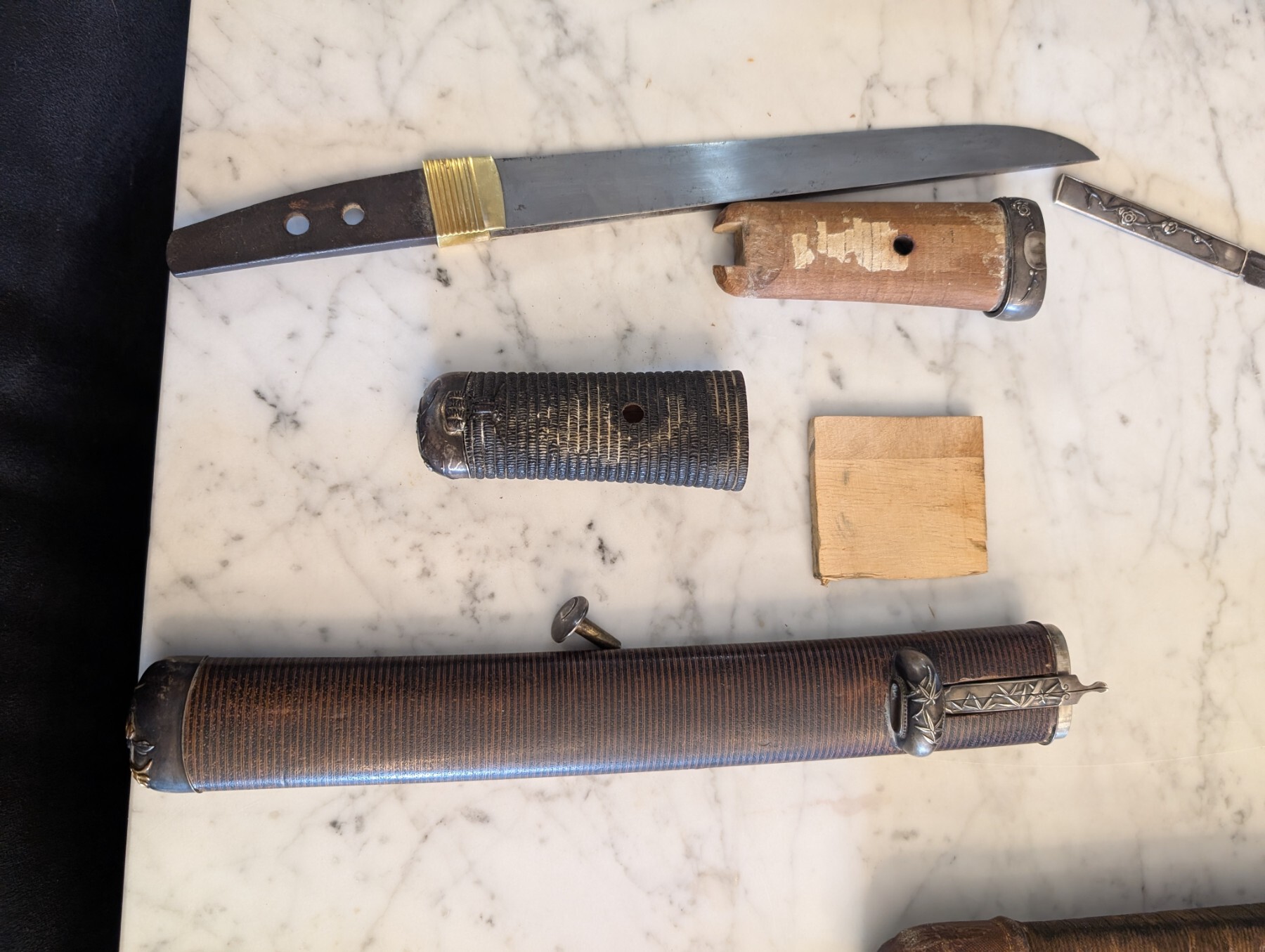
Hello everyone, A friend recently showed me this tanto for which I cannot quite make out the signature. I'm working very hard to convince myself that it is not Muramasa though, as the characters certainly look very similar. XD The blade comes with a very high end koshirae. Almost every single feature that can be silver is made of that metal, even down to the koiguchi, over which the fuchi slides to almost hermetically enclose the blade in the saya. The only exception is the habaki... which is wrapped in gold foil. Also, I am curious if there is a name for this type of tsukamaki. It appears to be a sheath of wood over which someone created a mock tsuka ito using urushi. Thanks in advance for anyone willing to help!

-
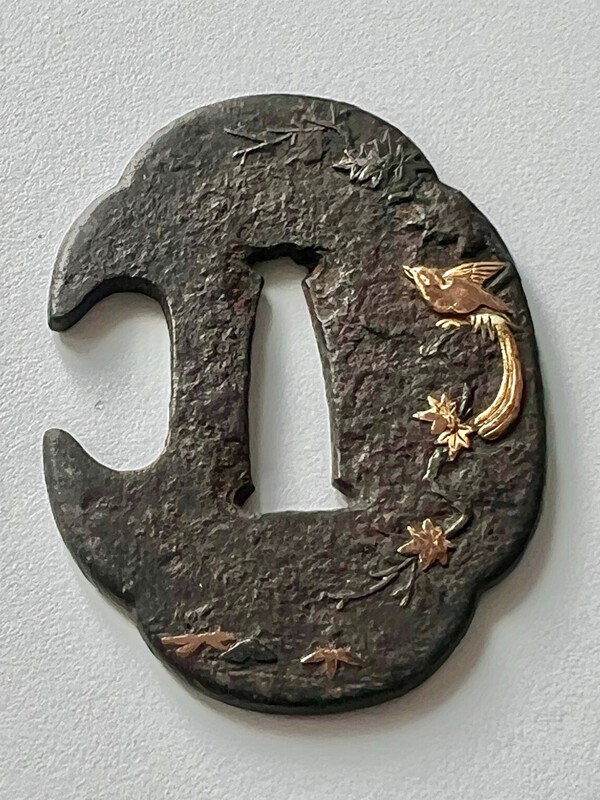
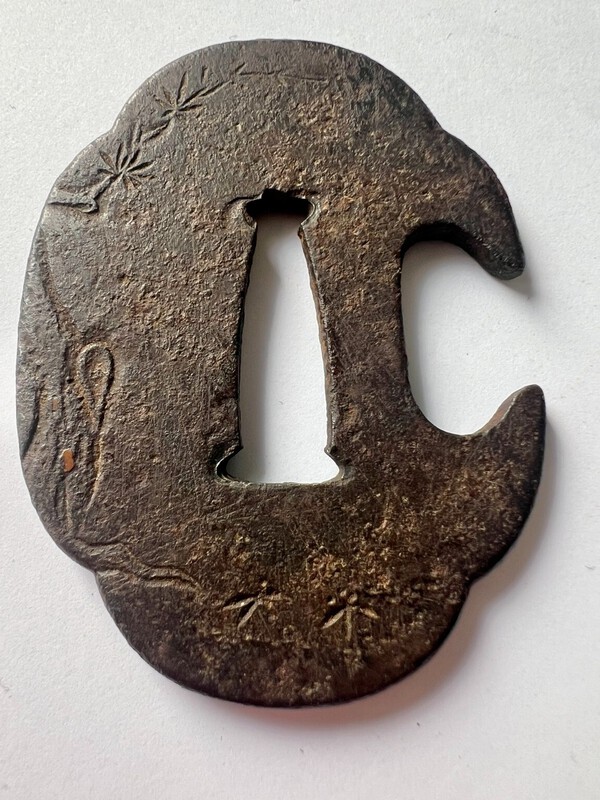
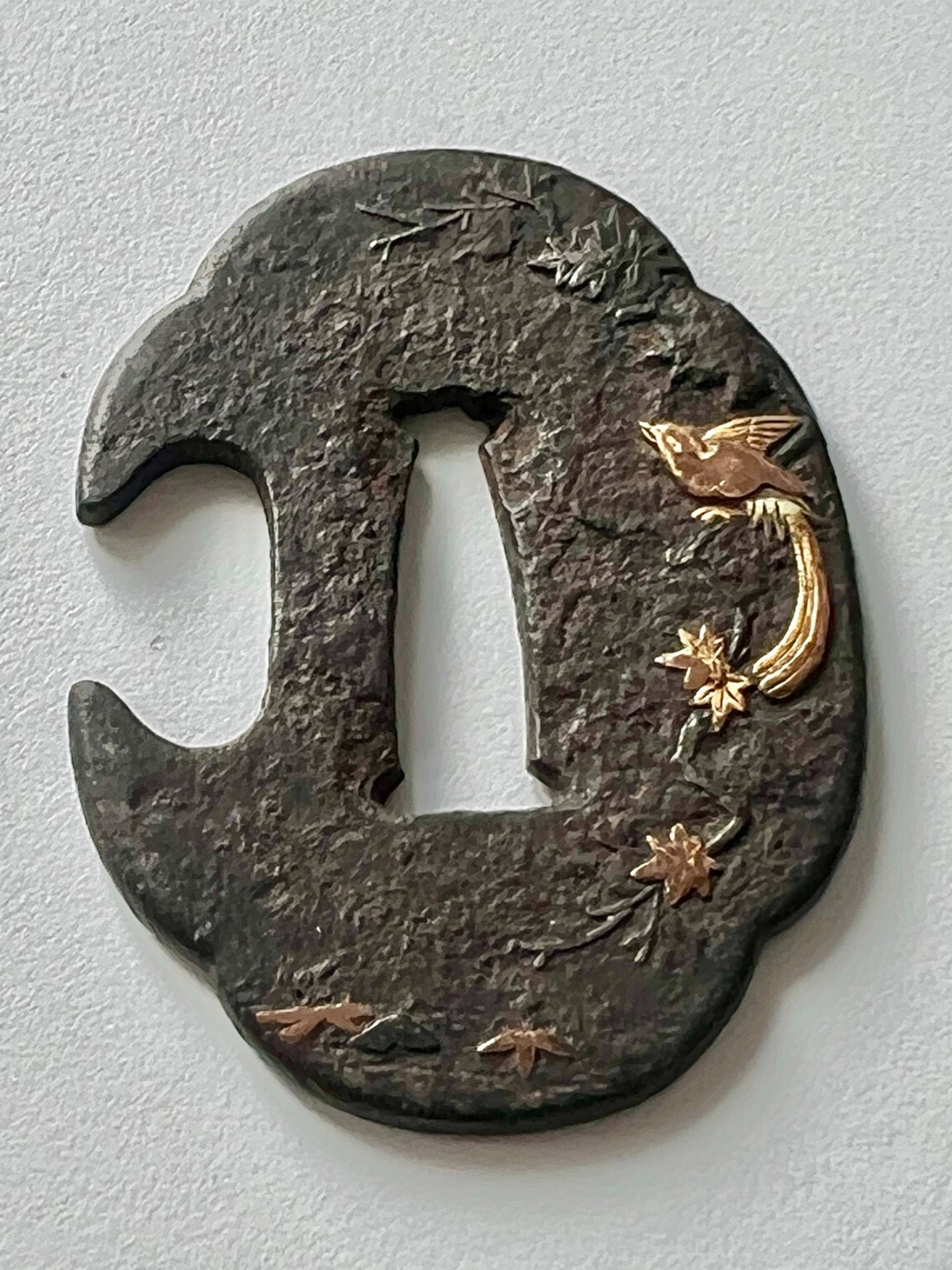
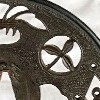
Hello everyone, I recently acquired a small iron mokkō-gata tsuba and noticed an unusual feature: the kozuka-hitsu-ana on the omote side is not the typical oval opening but appears unusually open and almost merges with the outline of the guard. Some details: iron mokkō-gata tsuba motif appears to show a bird with autumn vegetation (possibly maple leaves and berries) traces of gold inlay remain dimensions approx. 57 × 44 mm thickness approx. 2.5 mm weight approx. 41 g My main question concerns the large, open kozuka-hitsu-ana. It seems much more open than what I usually see and visually becomes part of the design rather than a clearly separated aperture. I would be very interested in your thoughts: Is this type of very open or integrated kozuka-hitsu-ana known on certain tsuba? Could this indicate a specific school or regional tradition (for example Mito, Nara, or a provincial Shoami workshop)? Is there any functional explanation, perhaps related to a particular mounting style (e.g. horizontal carrying of a tantō)? Are there documented examples in the literature (e.g. Haynes Index, Wakayama, or Token Bijutsu) showing similar pieces? Many thanks for any insight or comparable examples!
-
I am looking for a shinsakuto tanto in good condition My budget is set at around $1000 USD I am looking for a blade that fits my tastes, ideally gunome hamon, small to no sori, and itame hada I understand that this price range is optimistic, and I am open to any and all advice
-
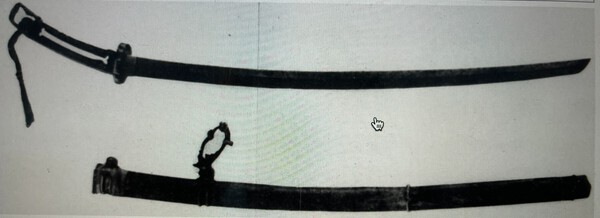
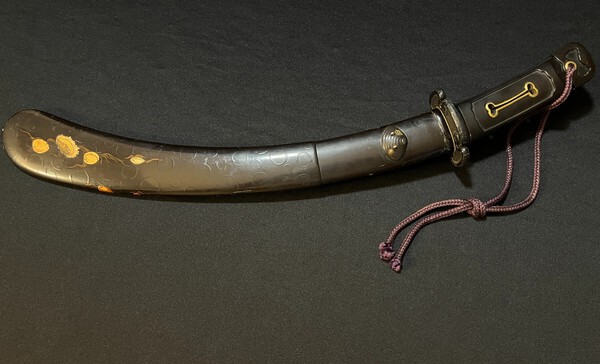
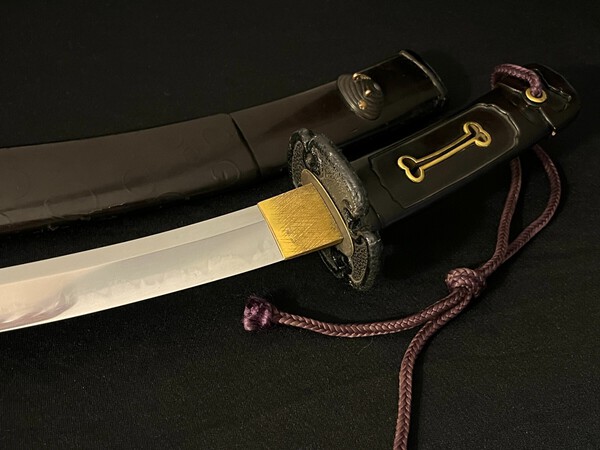
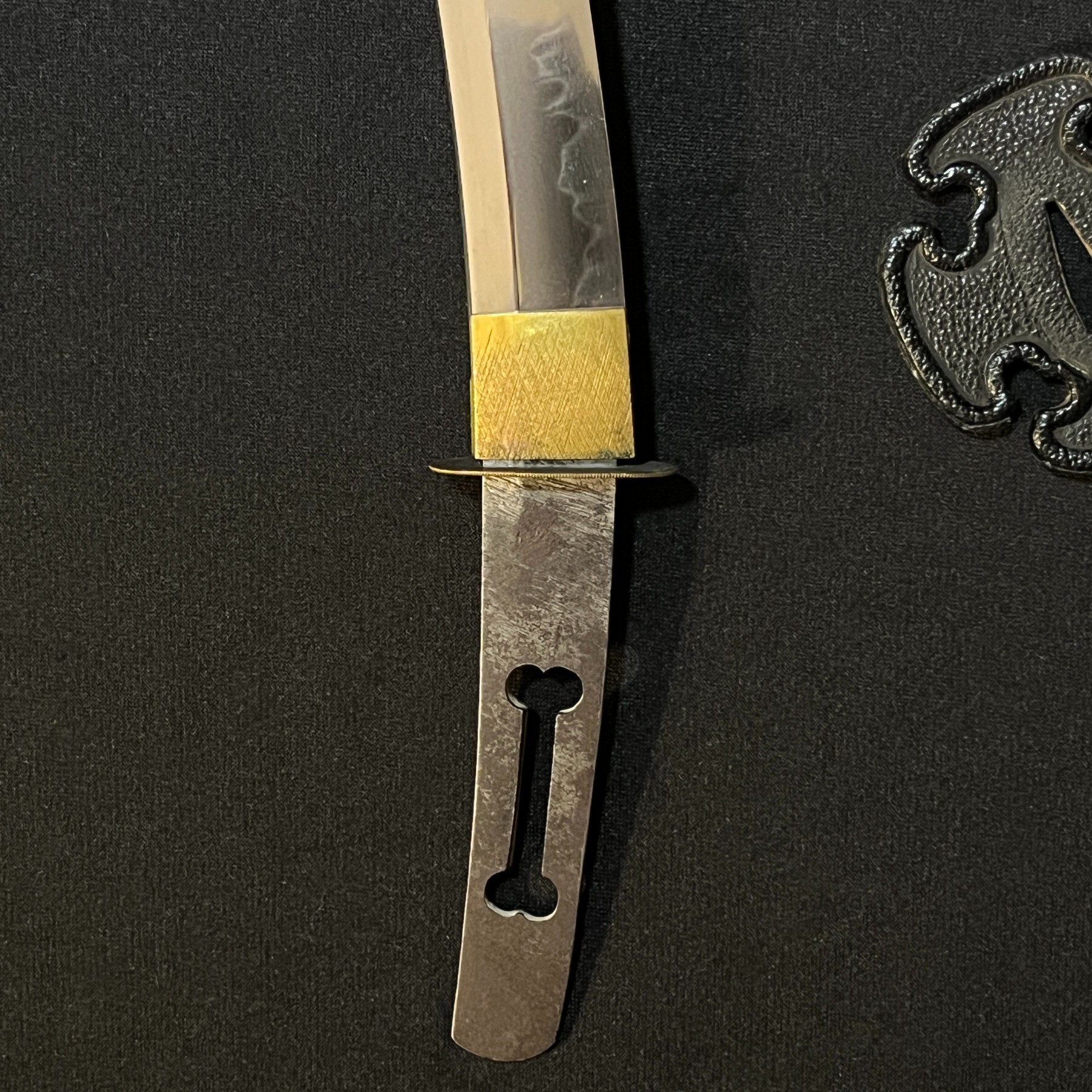
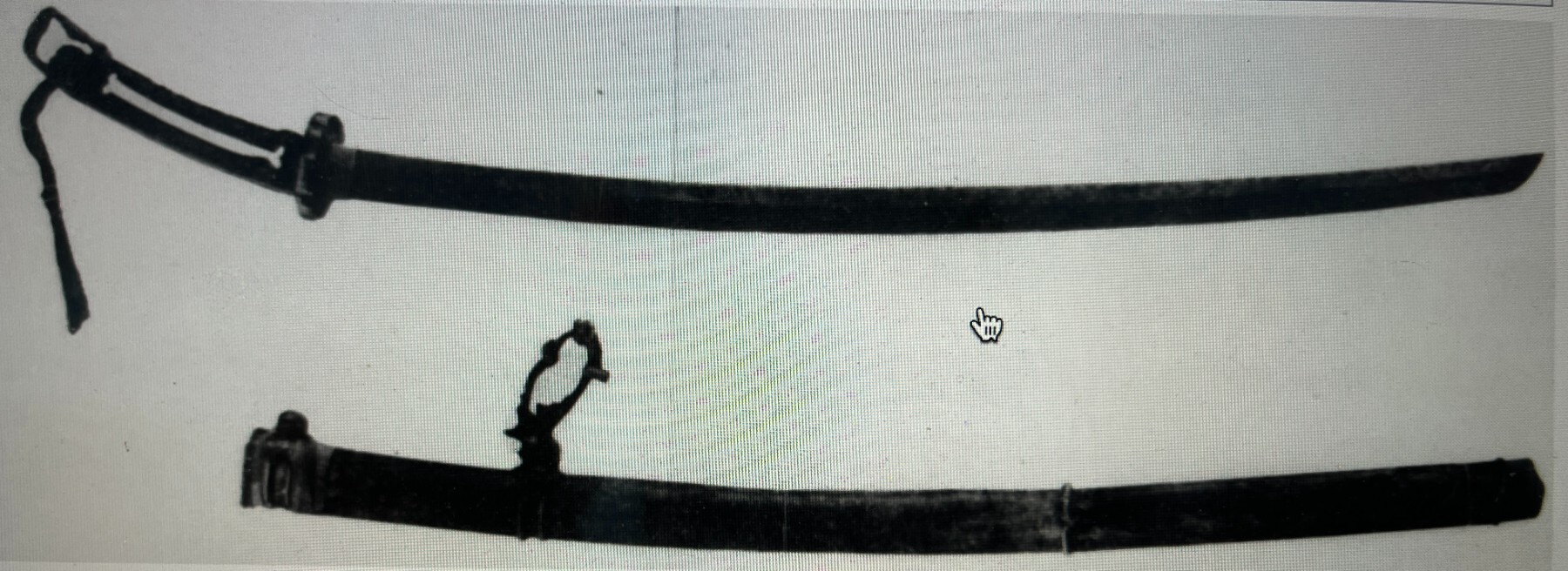
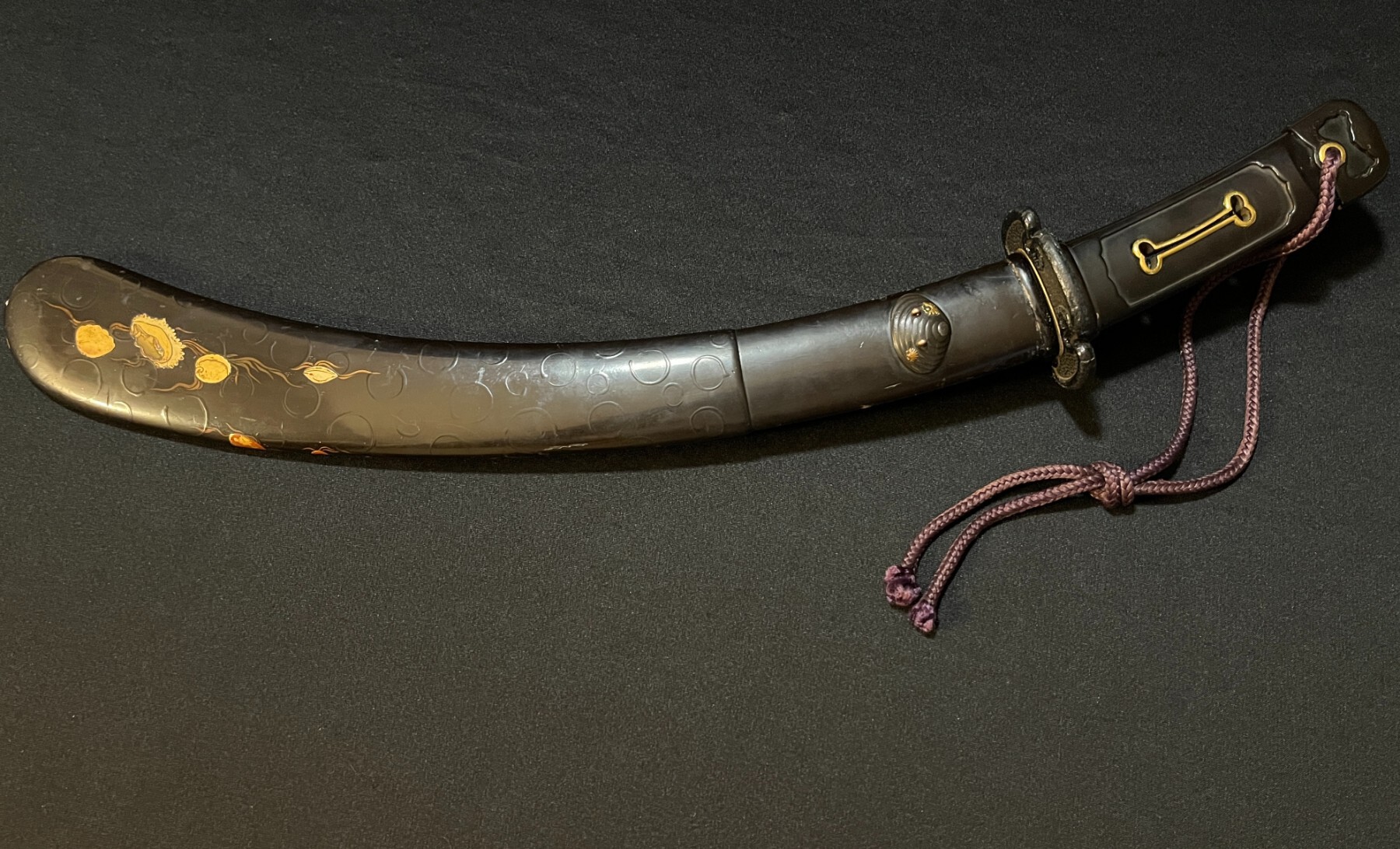
 An exceptionally rare kenukigata tachi–style Japanese sword available. This Edo period utsuchi (tribute sword) faithfully recreates a National Treasure kenukigata tachi from the Heian period in tanto size. A kenukigata tachi features a distinctive mekugi-ana shape in the nakago. Kenukigata translates to “tweezers shape” in Japanese (or dog bone shape). This tanto shares the graceful sori (curvature) of an early tachi and closely mirrors that elegant profile. The blade displays a fine hamon and remains in excellent polish. The mumei blade measures 12 1/4″ (31.1 cm) in nagasa. The kaigata (oar-shaped) saya further enhances the presentation. Notably, it features a kurikata carved in the form of seashells. The mounts include a leather tsuba. Two photos below are provided of early Heian swords for comparison. Historical Context: Kenukigata Tachi The kenukigata tachi represents a rare and early Japanese sword style from the Heian period (794–1185). Craftsmen forged these swords from a single piece of steel, piercing the tang (nakago) with an opening that resembles tweezers (kenuki). Consequently, they stand as a crucial transitional form in Japanese sword development and serve as ceremonial predecessors to the traditional tachi and later katana. Key Features and Significance History: Swordsmiths developed the kenukigata form during the mid-Heian period, evolving it from the earlier warabitetō swords of the Tohoku region. Therefore, historians regard it as a prototype of the curved Japanese tachi. Usage: High-ranking imperial guards (Efu) primarily carried these swords for ceremonial purposes. Elite warriors also wore them as symbols of rank and prestige. CONDITION This fine kenukigata tachi–style sword remains in beautiful polish. Importantly, the blade shows no openings (ware) whatsoever.. Additionally, the lacquer exhibits only occasional small dents consistent with age. Overall, this antique Edo period piece presents exceptionally well and retains outstanding collector appeal. $3400 plus shipping w/payment via check, Zelle, Venmo, bank wire (add 3% if paying via PP or credit card) Visit StCroixBlades.com for more photos


-
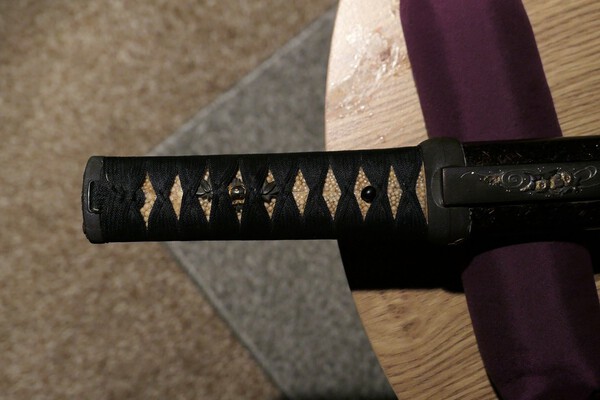
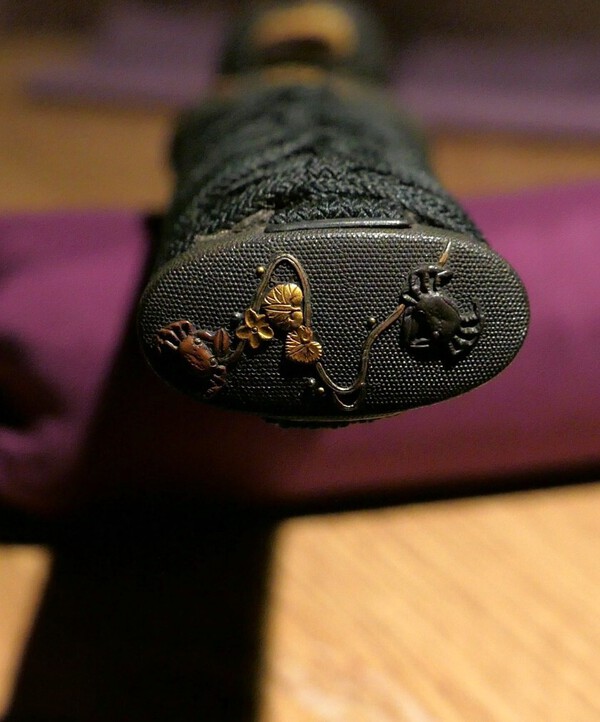
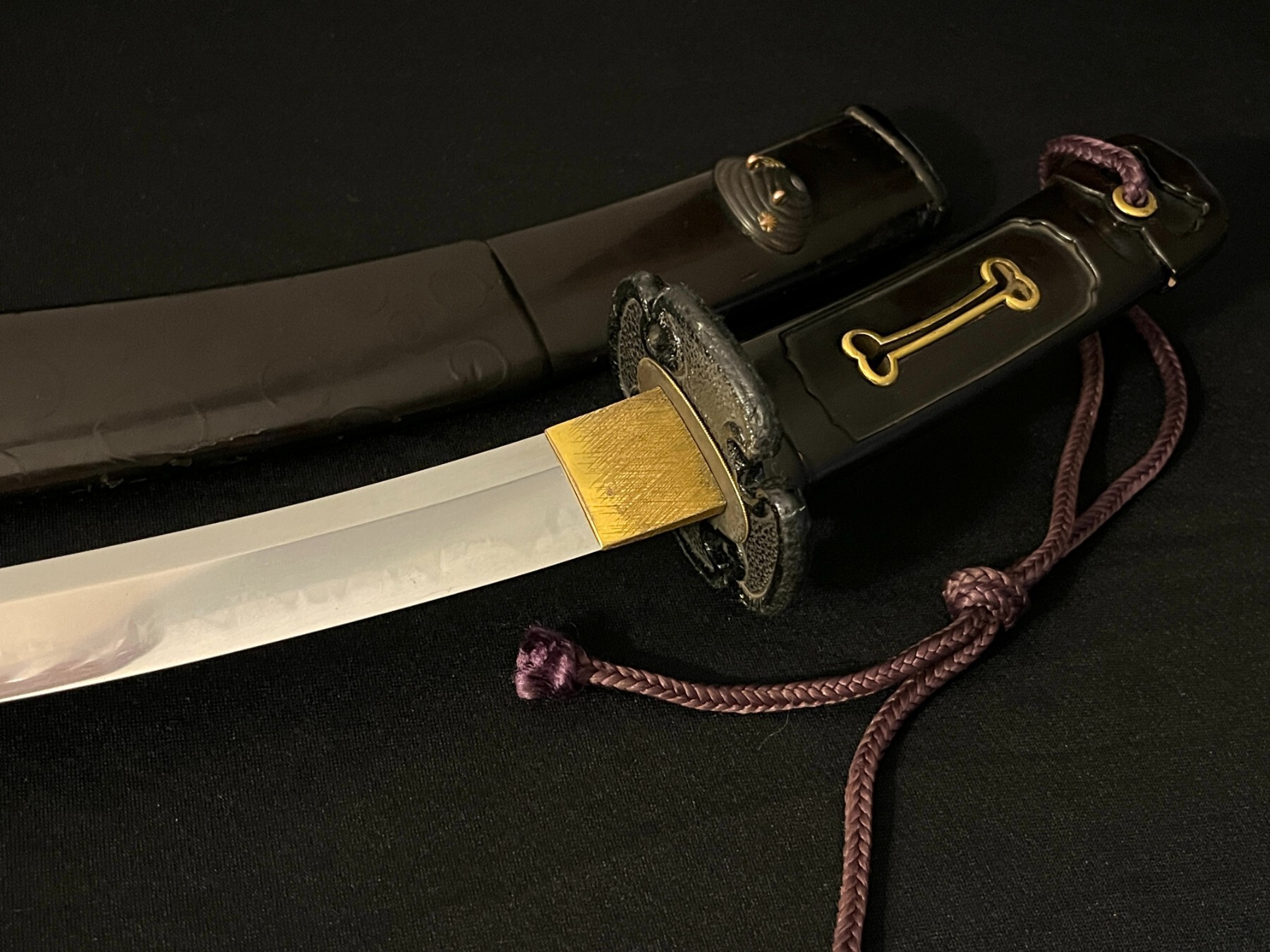
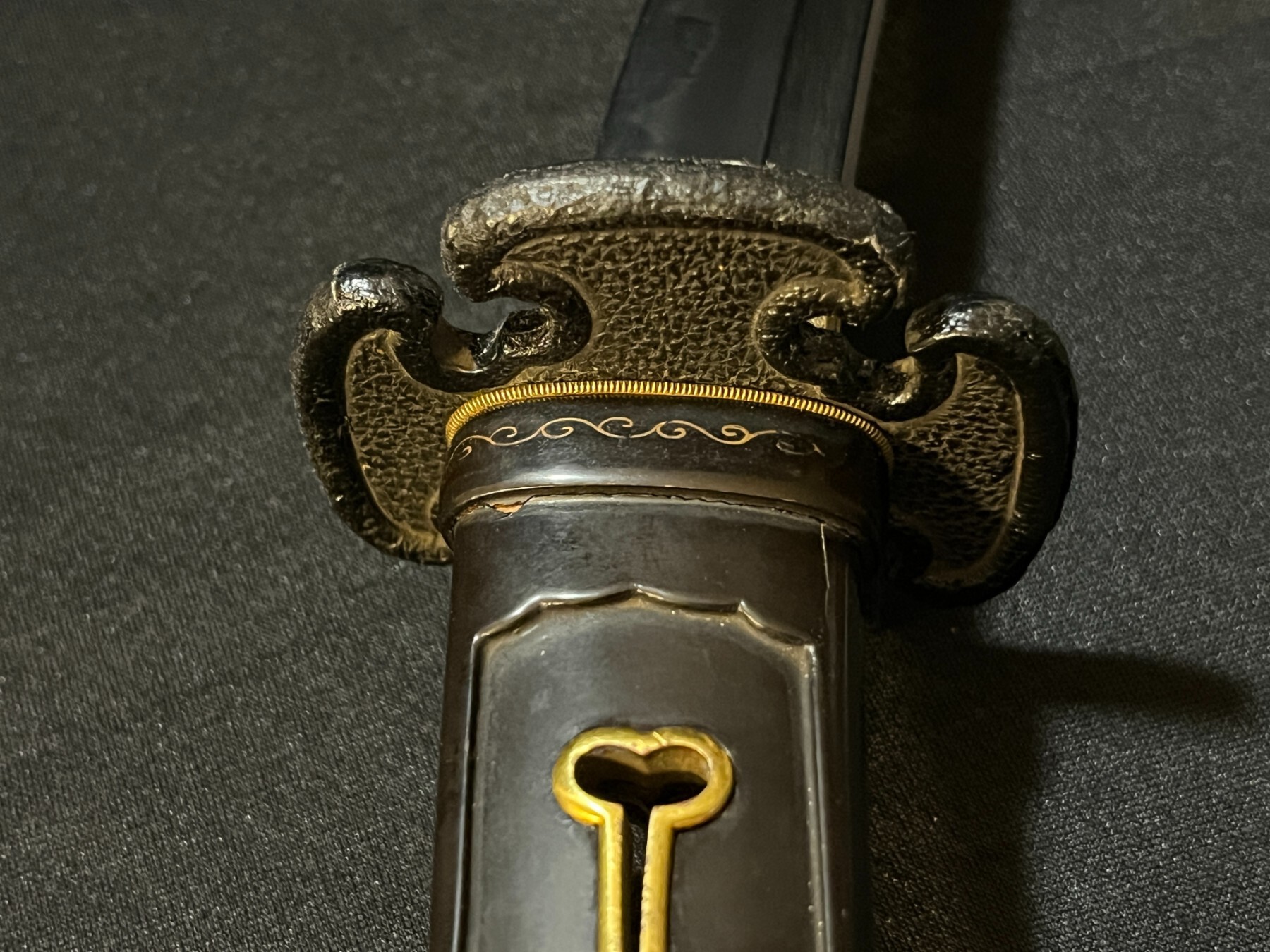
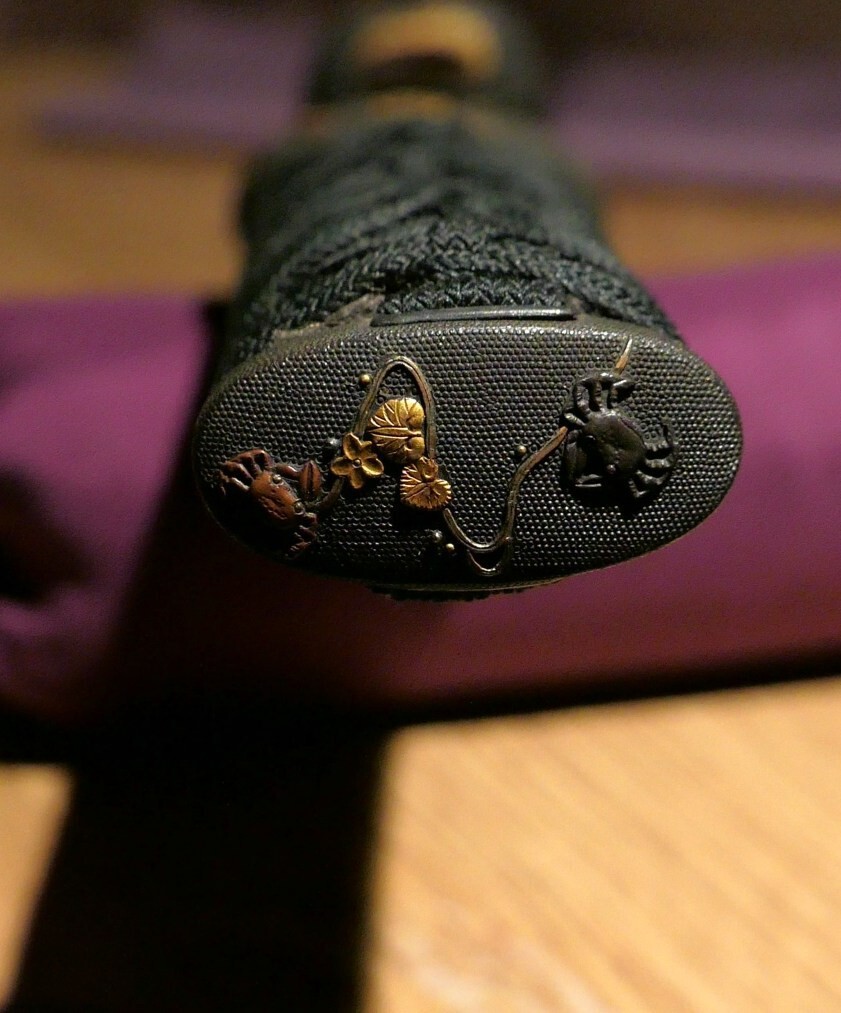
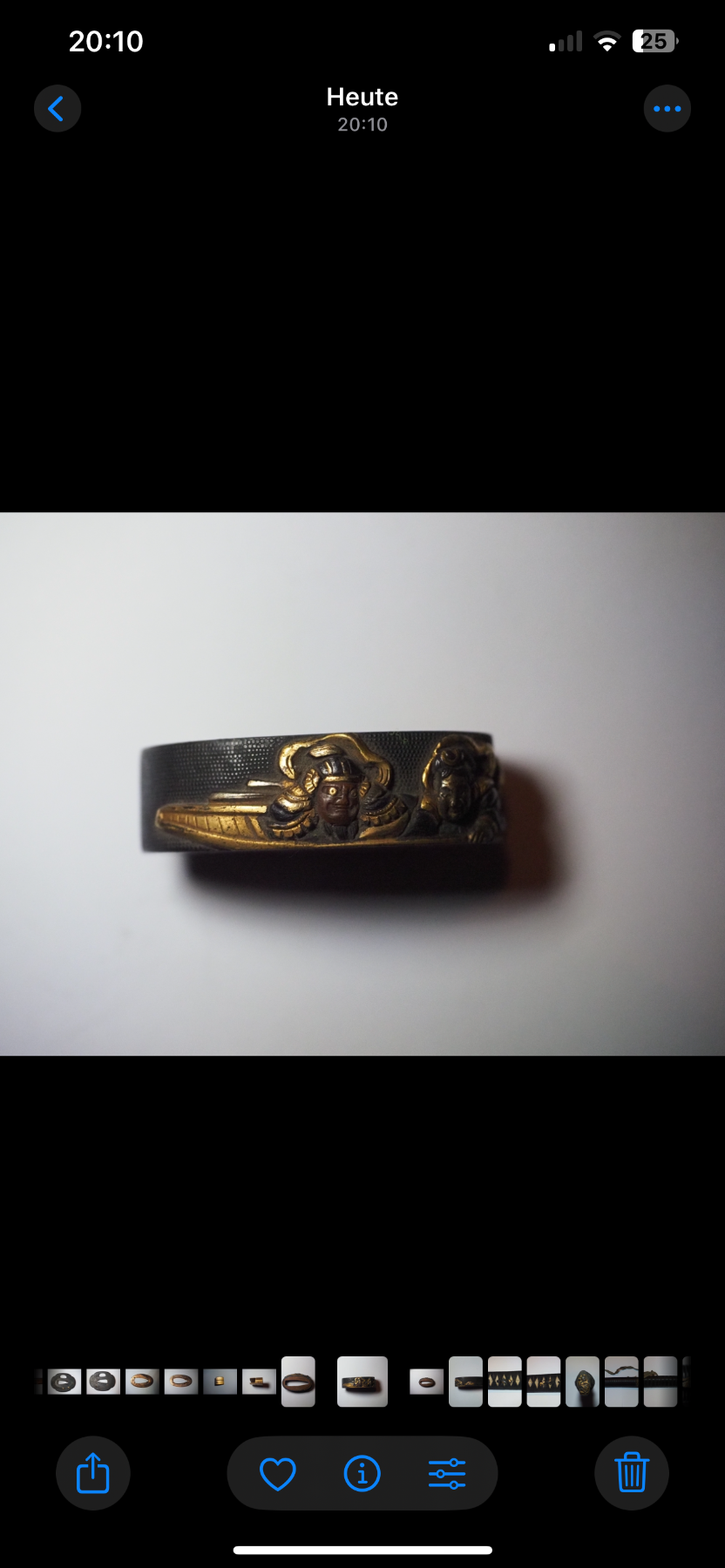
Wanted to share an Aikuchi koshirae, entrusted to me by a very good friend. I've held it in my collection a number of months now, so thought it was about time I put together a short post on the piece. The koshirae once housed a Sunobi-Tanto. It must have been a blade of spectacular quality, to be paired with such a koshirae. Visually, the fittings themselves these are quite interesting. Each piece of the set is colourfuly adorned with crabs and water plants, set against a soft background of Nanakoji. Upon closer inspection, I suspect these "waterplants" to be wild ginger, or hollyhock; as stylistically they are similar to the 'cloves' seen on certain Kamon. I thought that this may have been an intentional choice; perhaps to celebrate family ties/allegences of the original owner who commissioned the piece. I feel that these being in *gold* of all things is no coincidence. Now onto the saya... I'm especially fond of this style of urushi; I particularly enjoy the inclusions of aogai and flaxseed/rice husks within the lacquer- it gives the piece a very "three-dimensional" feel. It must take a great degree of skill to achieve such a finish. I do not believe the kozuka itself is original to the set, yet it's subject loosely follows the "aquatic theme" The kozuka shows good workmanship. We see "Omori-esque" beads of silver set into the base, which is a nice touch. The tsuka itself is neatly bound in Jabari maki, black silk over white samegawa. Several sizable 'emperor-nodes' are visible. The selection of samegawa is a telling sign of the overall quality. Again, we see the nautical/riverside theme continuing into the Menuki, with a singular crab peeking through the wrap.





-
Hey Guys, I’ve recently found this Tanto and a few people on Reddit said it’s probably real, but I still don’t have informations about it and I thought maybe someone on this forum could help a little bit. I’ve taken a few more better photos and added informations for the Tsuba and blade below. (Also more Pictures) Unfortunately the blade is in pretty rough shape, but I like the fittings. I’ve found some kind of signature on the Seppas and on the Habaki, which I’m pretty sure is gold plated, but the Tang is unsigned. I hope I didn’t miss a lot but I could add photos or information anytime. Maybe someone on here can identify a bit more about the Tanto Tsuba: Weight: 68.5 grams Thickness: 4mm Length: 6cm Width: 4.7cm Rim: Maru Mimi Shape: Mokko Gata Blade: Nakago length: 10.2cm Nagasa length: 28.3cm https://ibb.co/hvMJKBM https://ibb.co/gZQWm7hs https://ibb.co/x8g35Wjk https://ibb.co/KcSwG2ch https://ibb.co/97swXTK https://ibb.co/LzsBcXNq https://ibb.co/yF2DGMJq https://ibb.co/5WqxT3M3 https://ibb.co/PZR3cpy0 https://ibb.co/FbTSNyZn https://ibb.co/BVdf33VK https://ibb.co/VyCy3R6 https://ibb.co/kVYFvt0r https://ibb.co/0yr4rZXw https://ibb.co/ynmMW2Bd https://ibb.co/TDmCJb86 https://ibb.co/pjQdsV2r https://ibb.co/FkZ4fVZd https://ibb.co/7x6b17fS


-
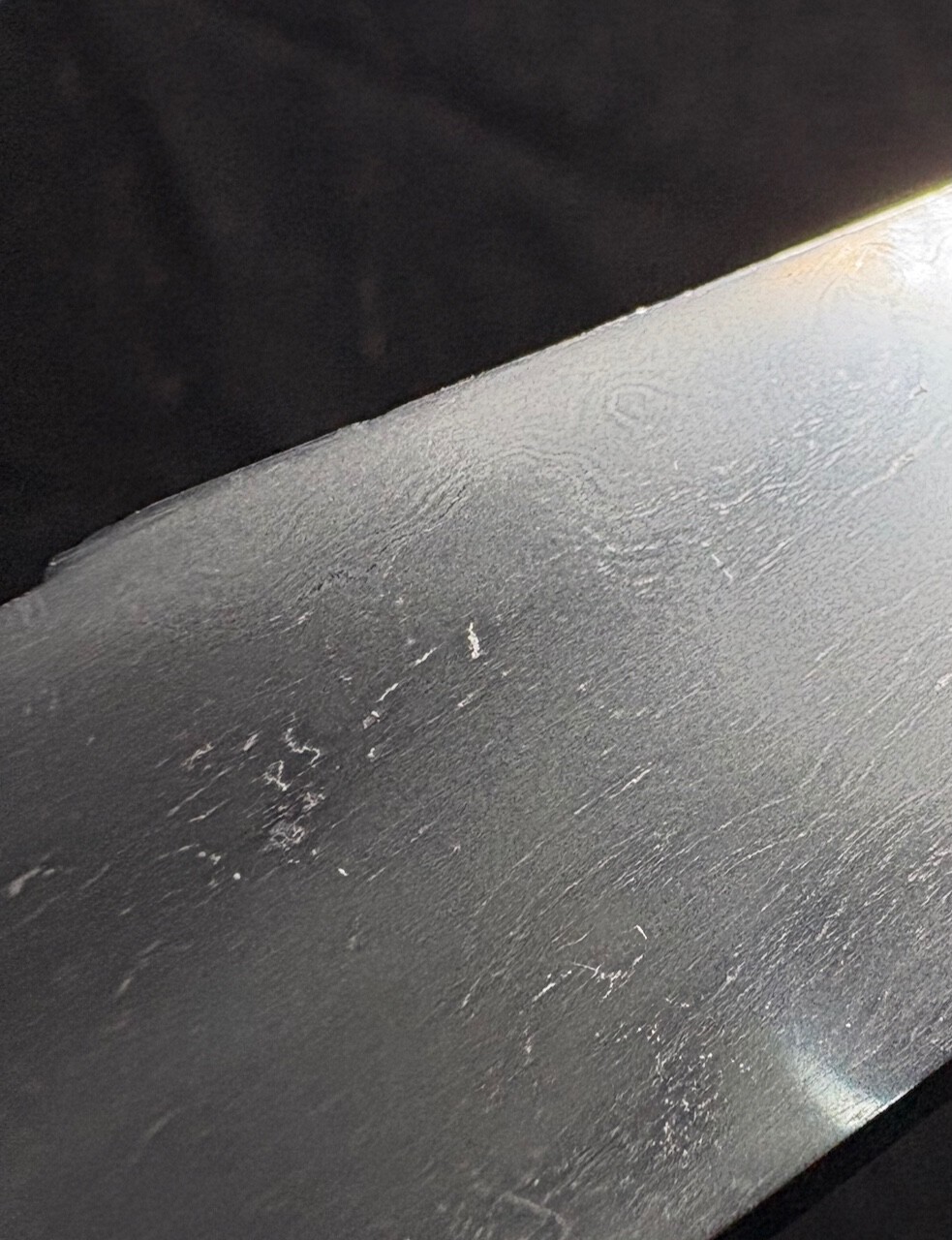
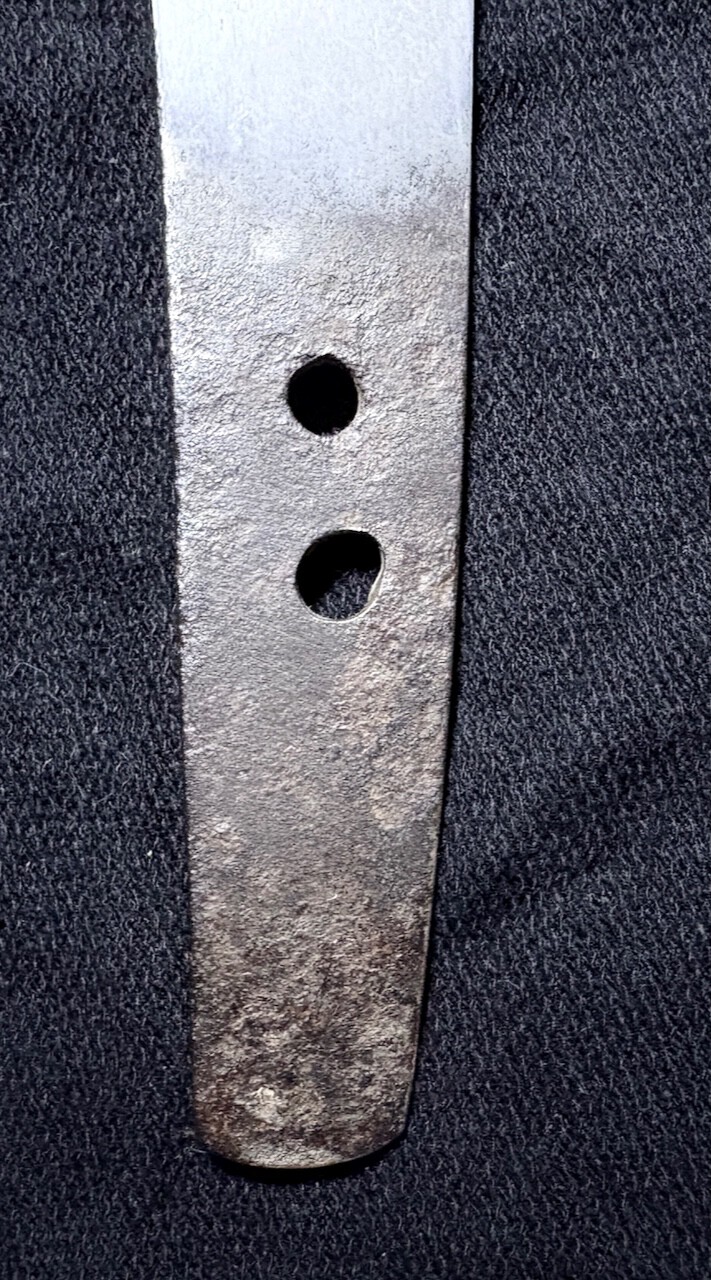
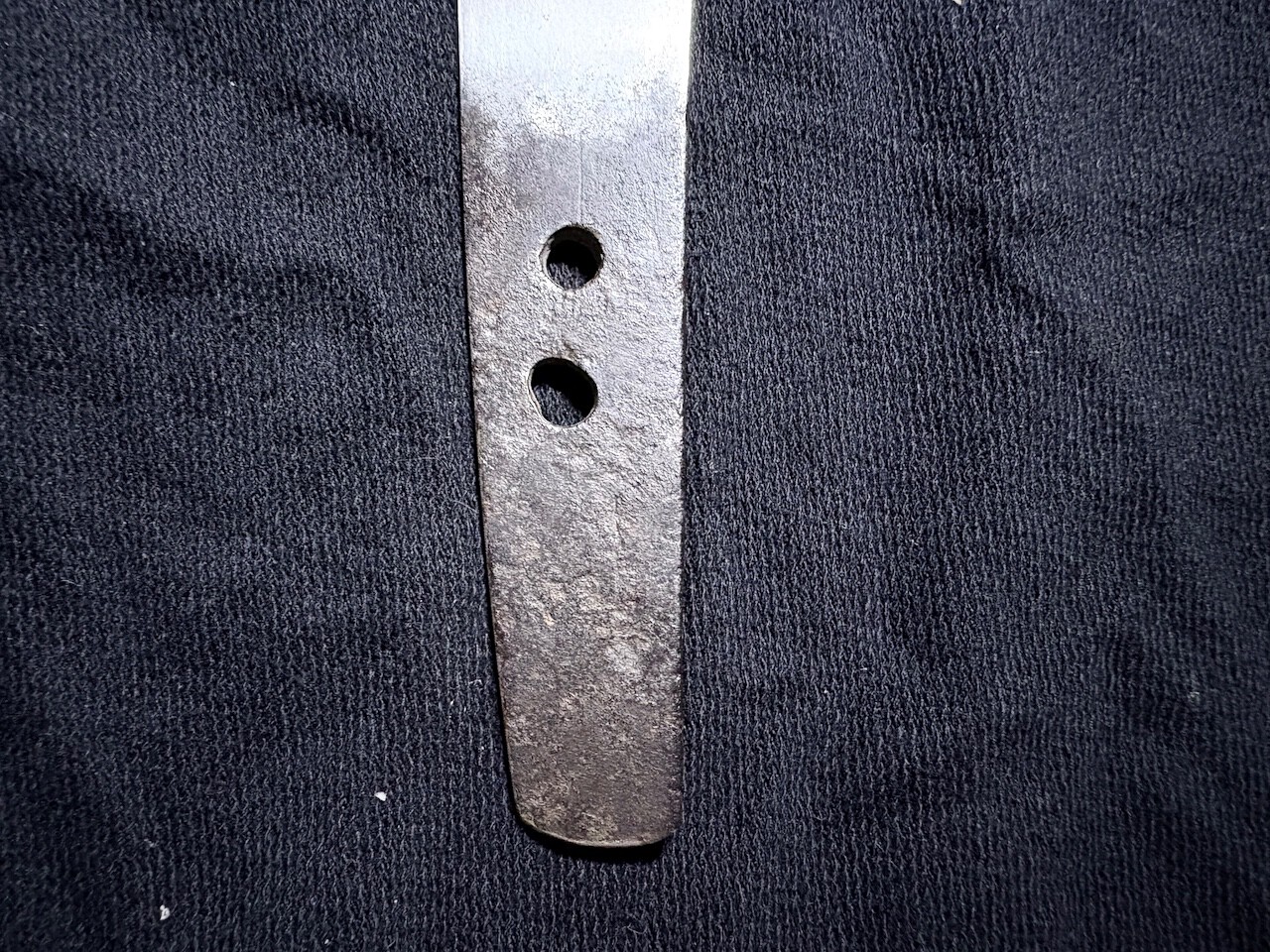
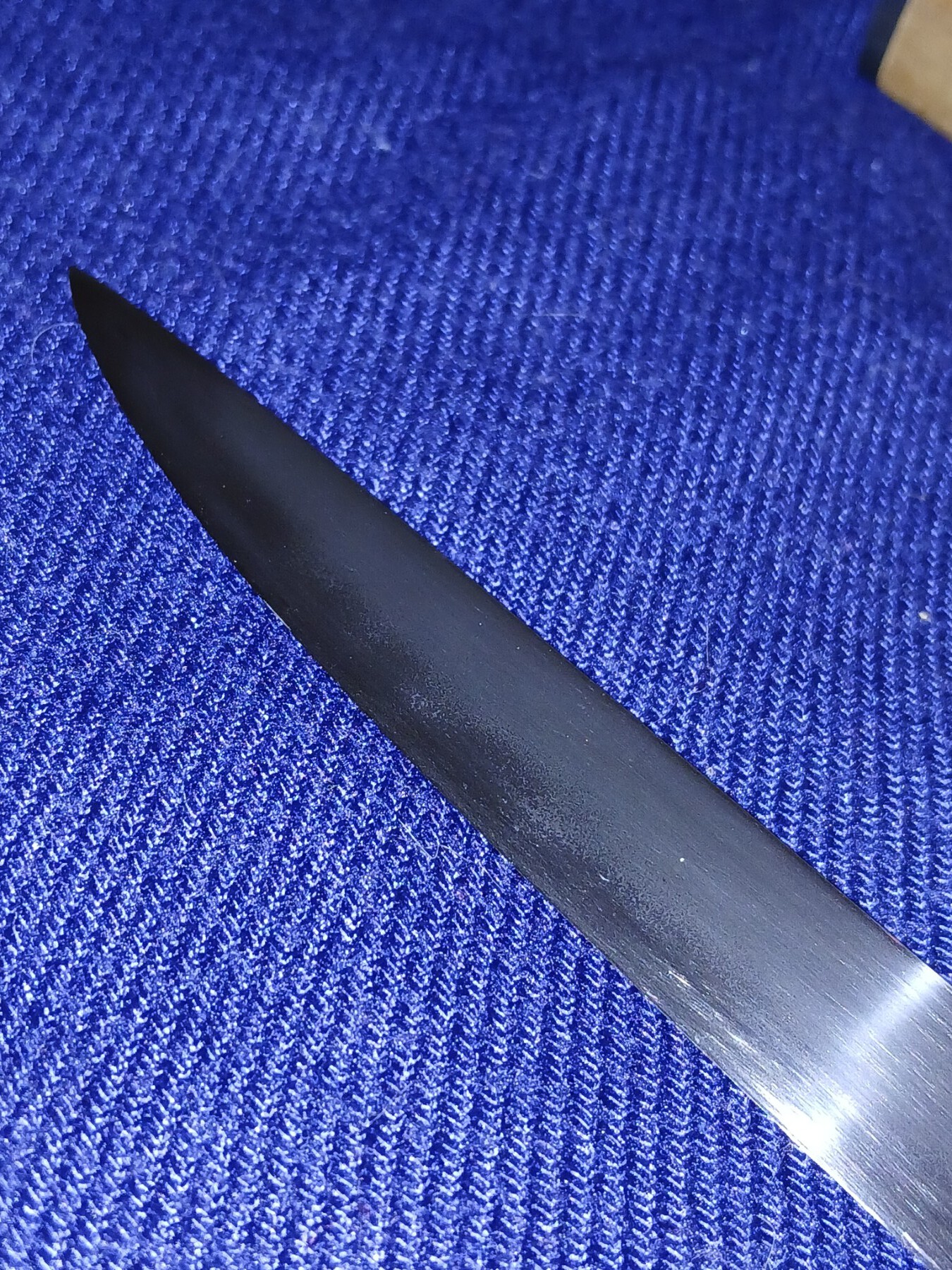
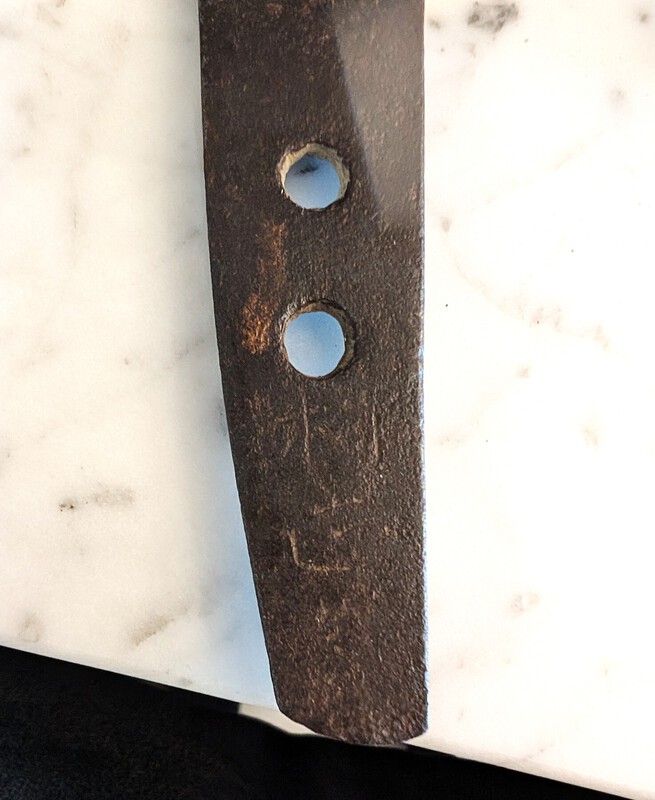
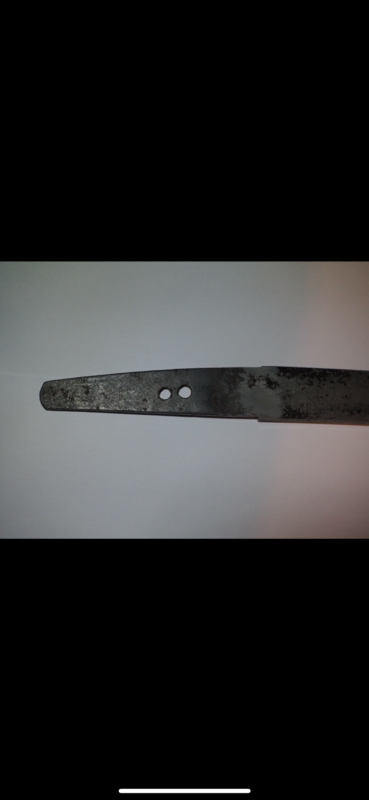
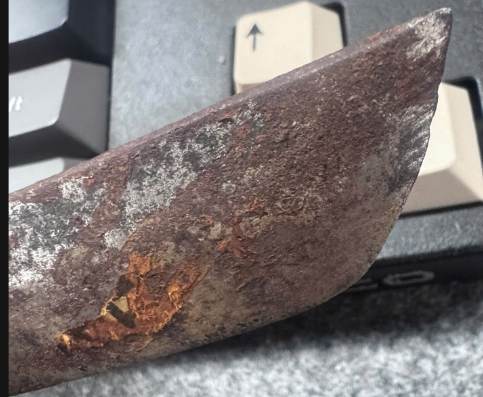
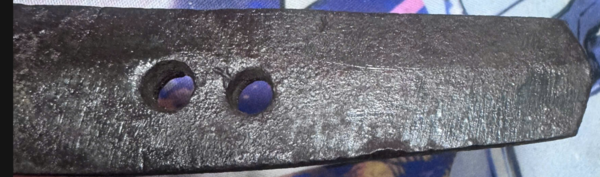
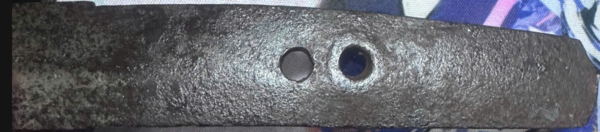
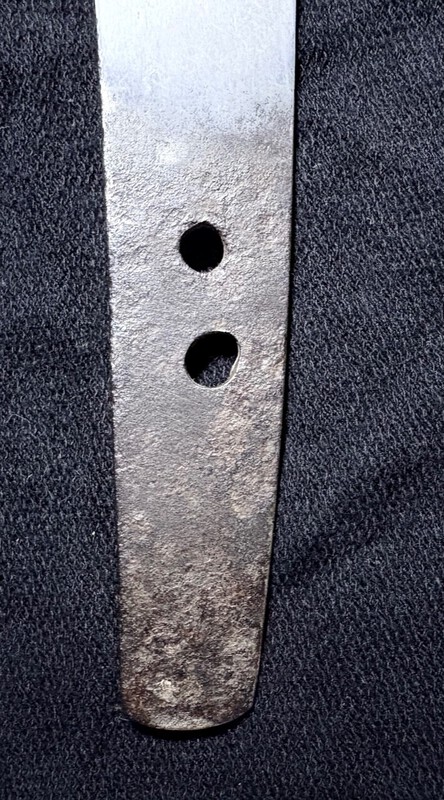
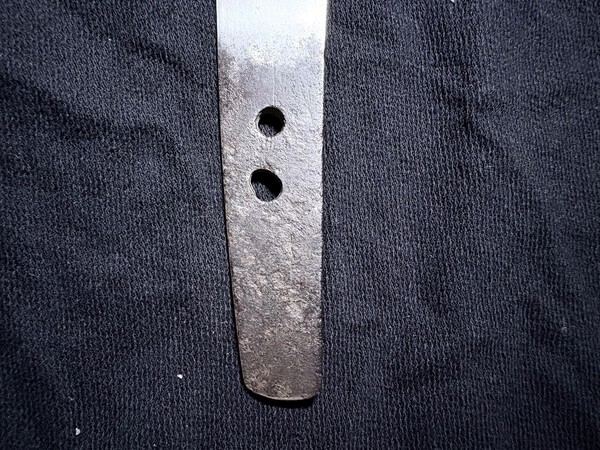
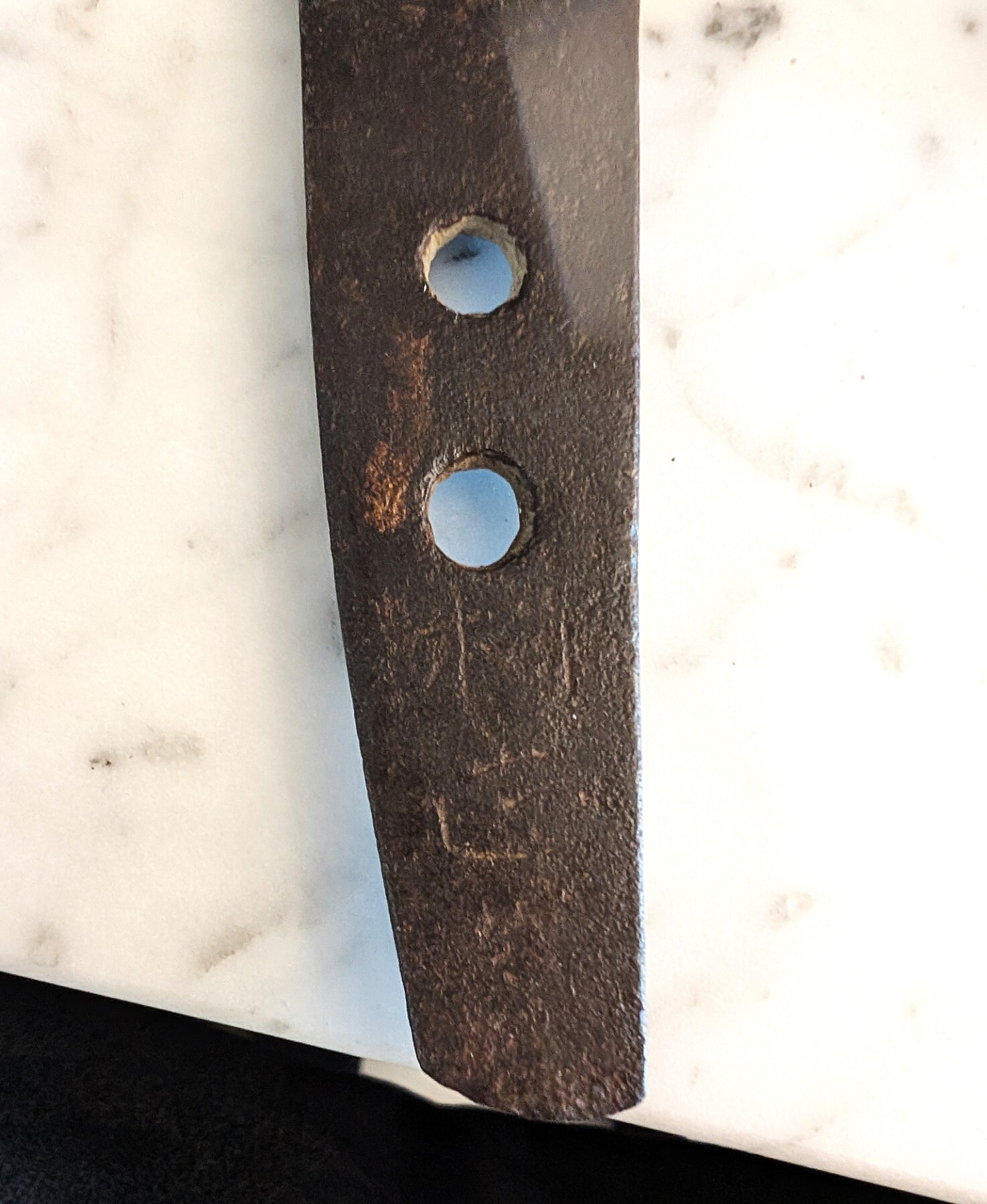
Hello everyone, I recently acquired an old tanto blade from a flea market in Japan, and I would be very grateful if the experts here could help me better understand its origin and purpose. Here are some measurements and details: Nagasa (blade length): 23 cm Nakago (tang length): 8.5 cm Mekugi-ana: two holes, the first located about 3.5 cm from the machi, and the second about 1 cm apart from the first. The tang shows natural dark brown patina, not artificial rust. The blade edge is not sharp, and the kissaki (tip) appears to have been either intentionally ground flat or perhaps never sharpened. The overall geometry still follows the traditional tanto shape with a visible shinogi ridge. According to the seller, the blade had been stored wrapped in newspaper for a very long time, and some paper fibers seem to have fused into the rust on the surface. I would really appreciate your opinions on a few questions: Does this appear to be a genuine old nihonto blade , or could it be an unfinished ? How should I safely clean or stabilize the surface, especially the rust mixed with old paper residue, without damaging the patina on the nakago? Thank you very much for your time, patience, and for sharing your knowledge with newcomers like me. I really appreciate any guidance and feedback you can offer. Any comments or suggestions will be greatly appreciated. Best regards,


-
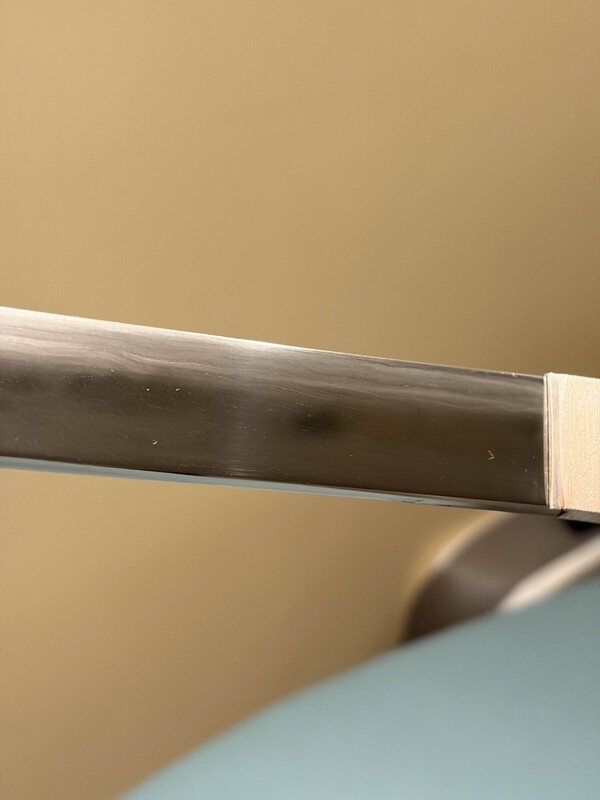
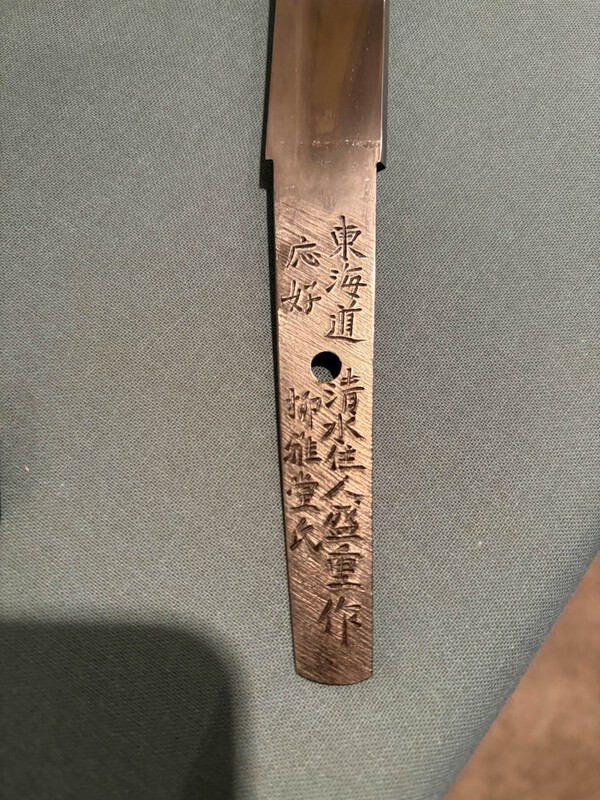
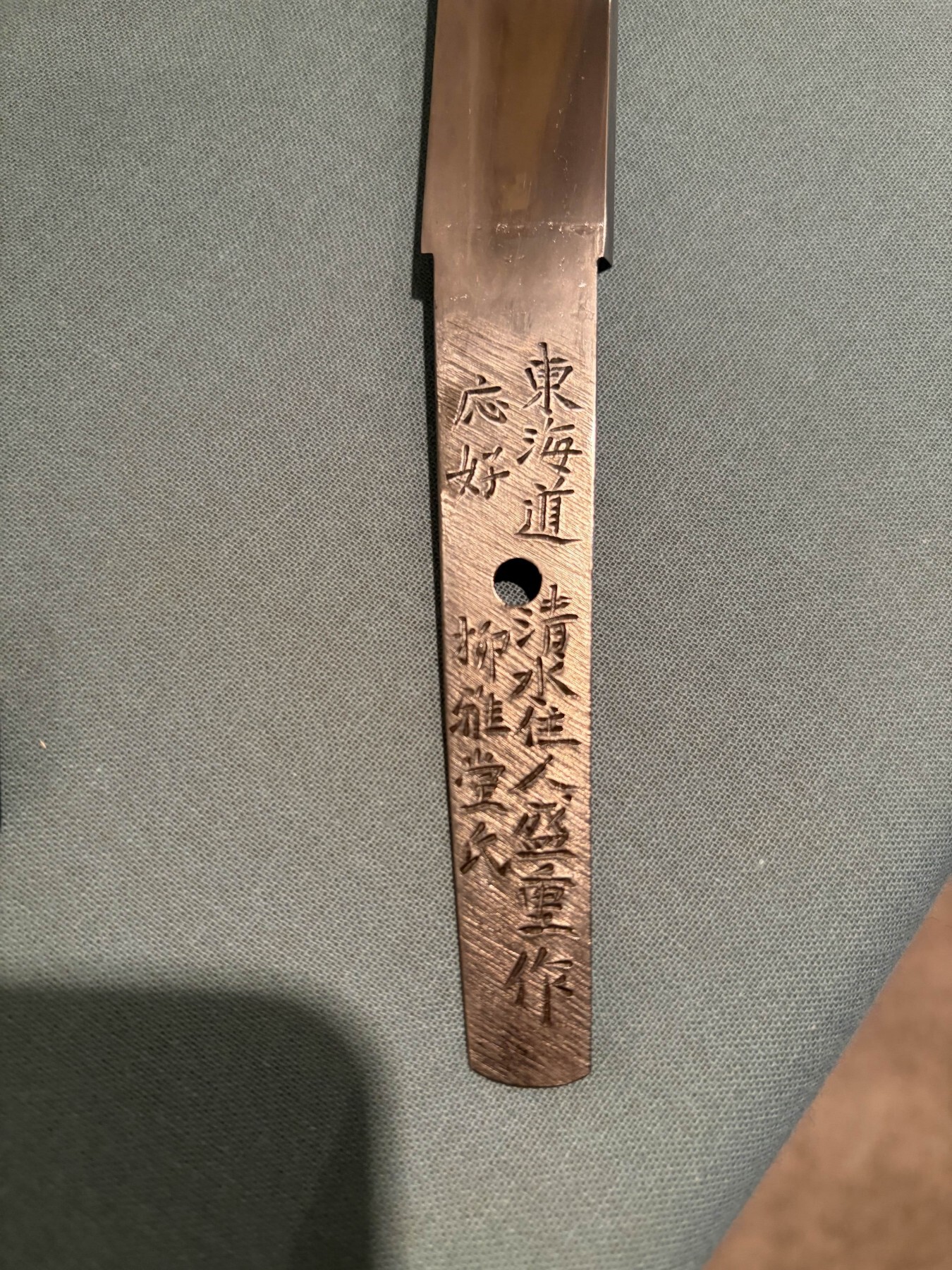
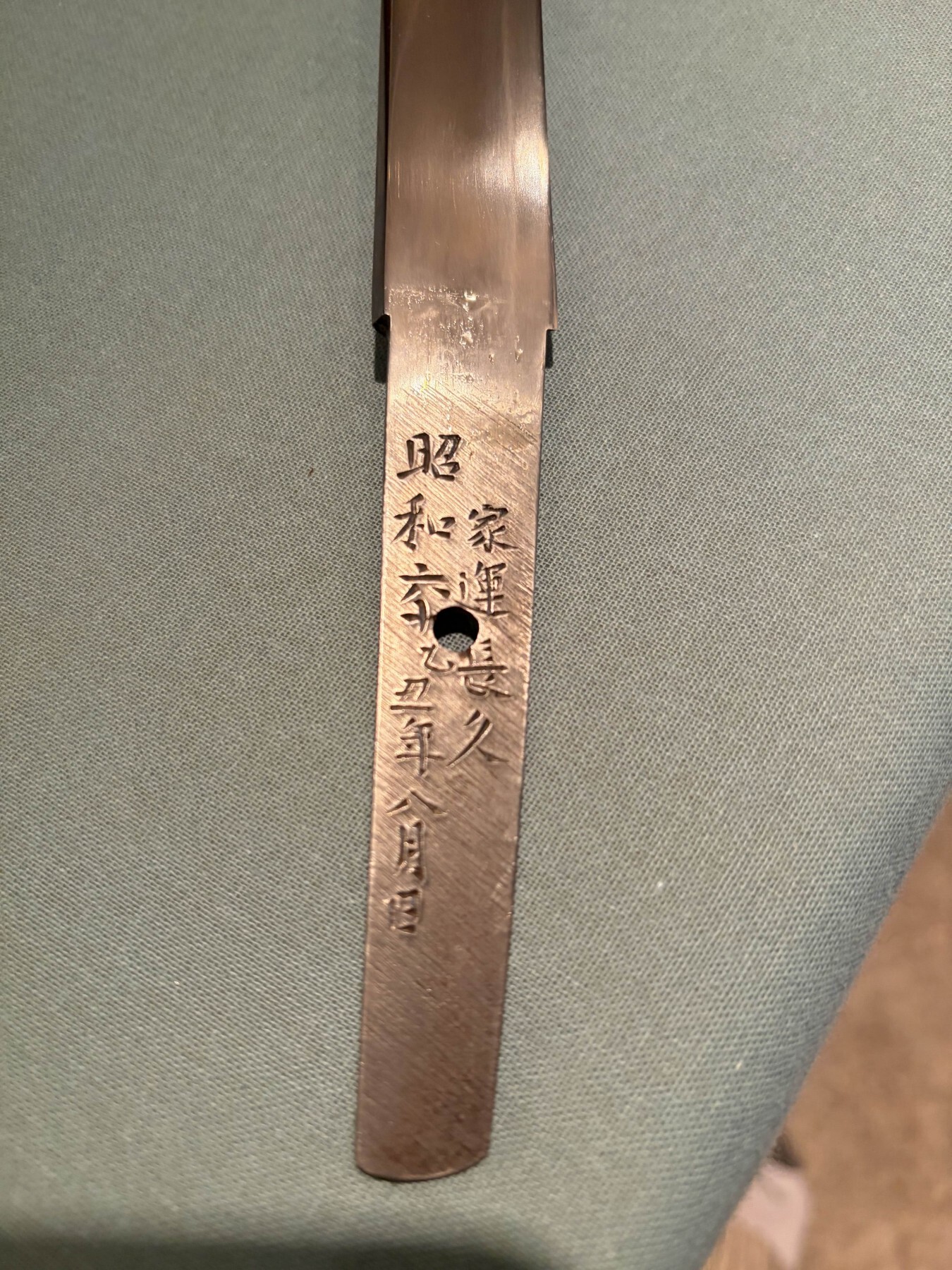
Type :Tanto Ubu : Mei :: Morishige Era/Age : Showa (1985) Shirasaya, Koshirae or Bare Blade? : Shirasaya Hamon Type : Suguha Flaws : Light kizu Sword Location : USA Will ship to : USA, International at buyers risk Payment Methods Accepted : PayPal, Zelle Price and Currency : $850 USD Other Info and Full Description : Offering a very interesting special order shinsakuto Tanto for sale. This Tanto was created by smith Morishige in August, 1985 responding to a request made by a Mr. Yanagi Gado. The blade features a Suguha hamon with a very misty nioi-guchi. Looking at the folds in the blade is almost like looking at waves rippling in the ocean. The habaki is solid silver as well, weighing a hefty 20.6 grams. The Mei is intricately carved and covers almost all of the Nakago in writing. I’ve attached a translation below. Please see the imgur album for more pictures https://imgur.com/a/LGxmuoV 東海道清水住人、盛重作 – A resident of Tokaido Shimizu, Morishige made. 応好 柳雅堂氏 – Responding to the order from Mr. Yanagi Gado 家運長久 – Good future for the family 昭和六十乙丑年八月日 – Showa 60 Kinoto-Ushi year (1985), 8th month Blade is in polish and overall excellent condition other than light kizu as depicted. Small ding on the shirasaya (also depicted). Asking $850 shipped
-
Hello, need help with this Mei I think it's Showa 3. I've had it in my collection for some years and need some help determining what the Mei is. Thanks

-
So, after buying a few books to learn about Naginata and Naginata-naoshi, the Knutsen book on Japanese polearms mentions that at one point, repurposing yari (especially hira-zukuri) into tanto was fairly common. Now, I've seen plenty of Naginata-naoshi and Naginata-naoshi-zukuri, but don't recall ever seeing a Tanto being described in a similar way (former yari with shortened nakago etc). Does such a thing exist, or are they just described as suriage etc. (with or without mention of previously being a yari)?
-
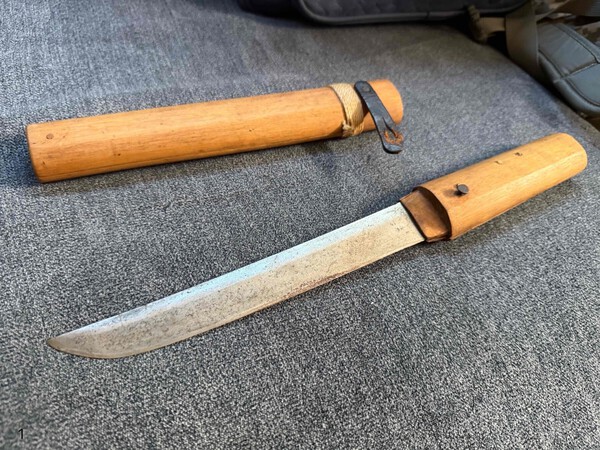
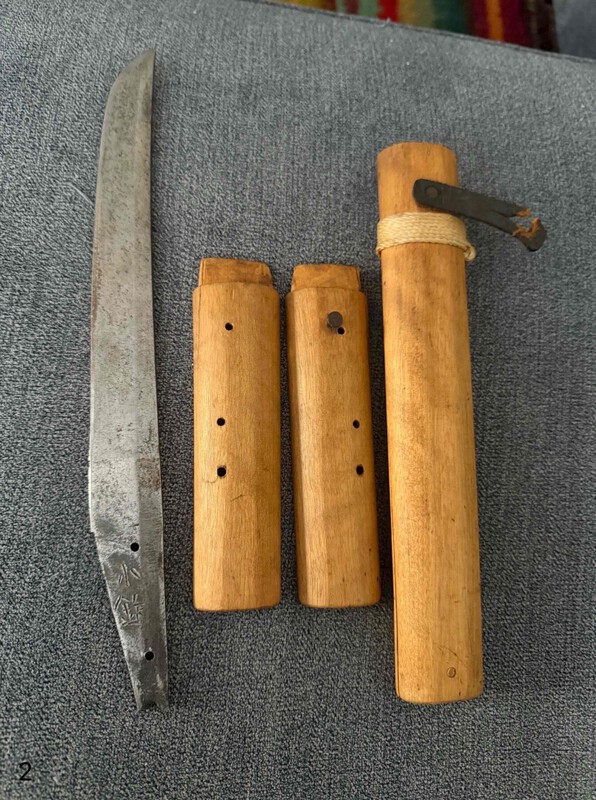
Hi everyone. I found this in my grandfather’s attic earlier in the year. He served in the US Navy during WWII. He was in the Pacific Theater, taking part in the campaigns of Guadalcanal and the Solomon Islands. I know it’s Japanese, but not much else. The blade has obviously been machined and cut from a longer blade, but I don’t know what the original could have been? The steel seems lightly pitted and corroded but relatively smooth. I see a niji-mei, “小鍛” kokaji? If anyone has any idea about this blade I’d greatly appreciate your input! I’m assuming it has little value and might try polishing or restoring it myself. Dom

-
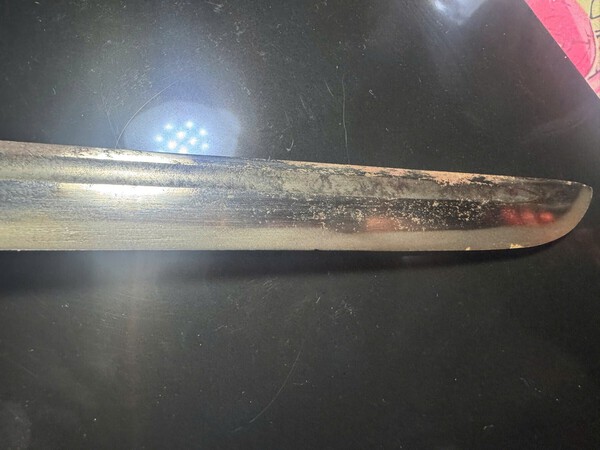
Hello everyone, I recently acquired this tanto and I would like to ask for your opinions about it. Here are some details and photos: Nagasa (blade length): approx. 16 cm (measured from munemachi to kissaki) Overall length: approx. 30 cm Width at base (motohaba): about 2 cm Thickness (kasane): about 0.5 cm Nakago: 1 mekugi-ana, patina is visible, some marks but no clear mei (or faint inscription) Hamon: visible but not very clear due to condition, seems irregular in places Kissaki: rounded, with visible yokote Sugata: resembles a hira-zukuri tanto Condition: some rust and scratches present, needs polish to show hada/hamon more clearly I am mainly hoping to learn whether this is an antique nihonto or a more recent blade, and if possible, which period or school it might belong to. Any comments or advice would be greatly appreciated. Thank you very much in advance for your help! JackDo




-
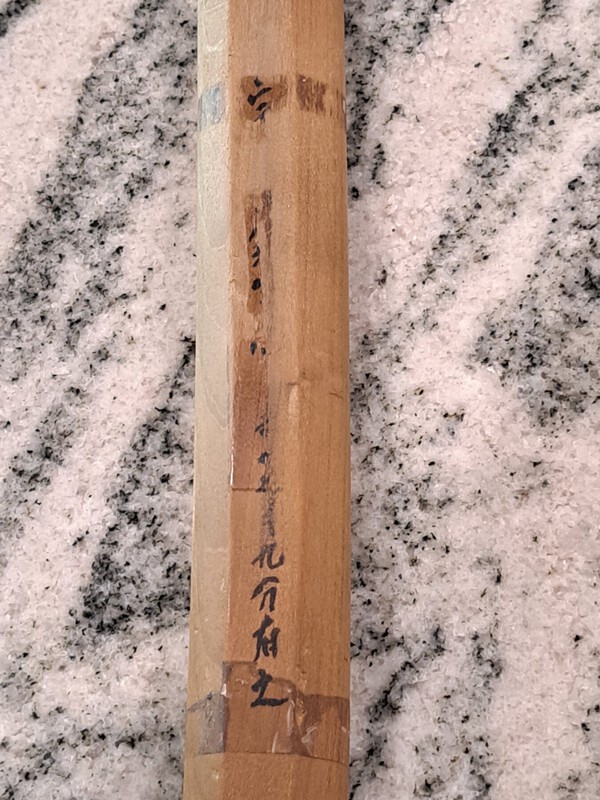
nakago is signed "Kunimune". I'm unsure if zaimei or gimei as it is a tired blade off ebay.
-
New swords just added. Click on the link to take a look: https://stcroixblades.com/product-category/Japanese-swords/ If you have any questions, need more photos, etc., just let me know. --Matthew Brice St. Croix Blades


-
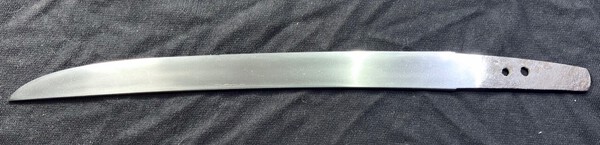
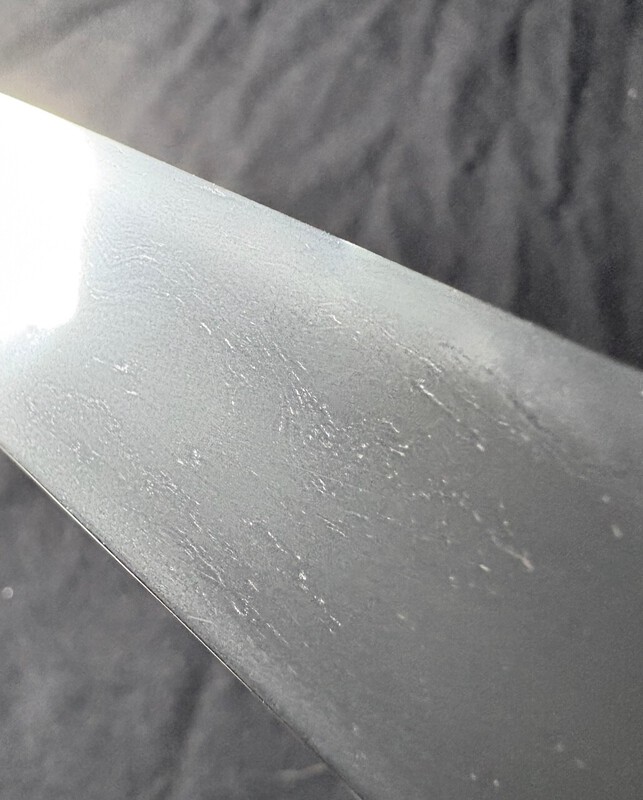
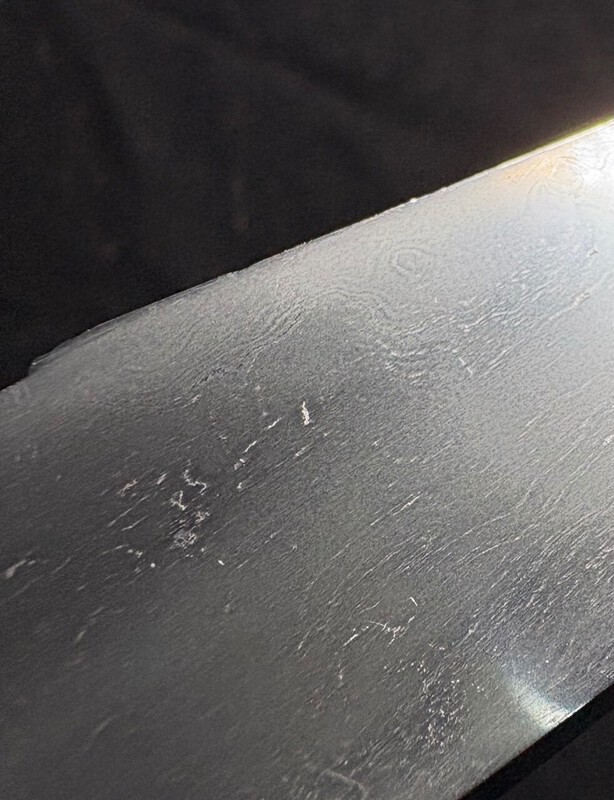
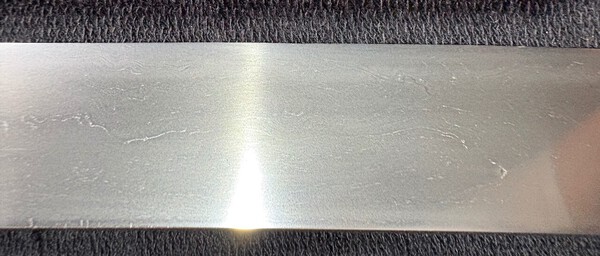
An ō-tanto or ko-wakizashi with NBTHK Hozon to Fuyuhiro. Measurements: Nagasa: 31 cm (12.2 inch) Motogasane: 6 mm (0.236 inch) Motohabaa: 2.7 cm (1.06 inch) Blade characteristics: Deki: Nioi deki, Hamon: ko-midare Activities: chikei, shirake utsuri, koshiba Hada: itame. About koshiba: Koshiba is a feature of the hamon that you can find only in ubu blades. It is a milder part of the hamon at the beginning of the it,and it lacks a clear nioi-guchi. It can be found only be found only on 12th-13th century blades (if a natural result of yaki-ire) or on blades from the 15th century if it's designed. I have not found any evidence that it was a feature of Fuyuhiro. You can read about koshiba here: http://www.ksky.ne.jp/~sumie99/yakiotoshi.html#koshiba Drawing of koshiba by Kojima Hiroshi (Kei'un Naohiro) Important remarks: 1. Boshi is not very distinct (see pics on Dropbox) 2. There is a delamination close to the mune. You can see it in my photos on Dropbox. 3. Chikei are clearly visible in the koshiba, and they are very beautiful. Chikei consist of streaks of nie and must not be confused with hada. 4. The sword comes in a shirasaya and with copper habaki. 5. The polish is sashikomi. 6. This sword is not a piece of art, but a real weapon. However, it is full of interesting activities, that are difficult to see in my pics. 7. Personally I think this might be a much older sword than Fuyuhiro. The school did not produce koshiba. Bu, to all intent and purpose, the NBTHK has "made" this sword a Fuyuhiro. The magic of papers... About Fuyuhiro: Fyuhuhiro were a lineage of smiths in the Wakasa province. The first Fuyuhiro is said to have been a pupil of Sōshū Hirotsugu. He florished in the Kōshō era (1455-1457). Earlier generations worked in hoso-suguha, sugu gunome midare and notare gunome. Later generations worked often in hitatsura. More pictures: This sword is hellishlu dificult to photograph, I heva tried my best, but the results are so-so... https://www.dropbox.com/scl/fo/xa3bm1jp1p12emsoc9ufp/AJdYi07qqcL6v23a3QRDqfI?rlkey=zywer9px6a1mb97hr5lcy87b0&dl=0 Price: EUR 1,050 incl. shipping to EU or US, others please ask Payment: Wire transer in EUR to a European bank account or in US$ to a US bank account (domestic transfer) Paypal possible, friends and family, otherwise buyer pays the PayPal fees on top of the price Shipping: Priority mail, registered, with tracking. Any courier service at extra charge (if they ship swords at all)


.thumb.jpeg.4714d3666faeb2a0f54ad2a3e24cc23f.jpeg)
.thumb.jpeg.b9c8f211ac045f9640f7376808c02a49.jpeg)

-
Hello all. I bought this tanto a few months ago. I did not note down what the seller provided as the mei translation. I recall it was translated to "Miyamoto Kanenori". I was doing some research on this smith some time ago after I bought this, I read through a number of threads on here. Kanenori had a very interesting life as a smith, and is considered to be one of the best. This is why I believe this tanto is likely gimei if signed as that particular smith. I apologize for the photos, I found it difficult to take photos of this blade. I would appreciate your thoughts on Miyamoto Kanenori and this blade.




-
 Dear fellow enthusiasts, My partner and I recently came into possession of a Japanese blade that we believe may be a wakizashi or long tanto, and we would greatly appreciate any insight you might be able to provide regarding its origin, school, or smith. Measurements: Overall length: ~16 inches Blade length: 9 inches (10 inches from habaki to kissaki) Tang length: approx. 8.25 inches Signature (mei) is present on the tang Traditional style mounts with ray skin tsuka and decorative menuki I've attached photos of the tang, mei, and fittings for reference (including closeups of the carvings and tsuka) via Google Drive link. We’re based in Columbus, Ohio and looking to connect with a reputable appraiser or society that can help us better understand the piece and possibly get an appraisal. If anyone has recommendations for JSSUS members, shinsa events, or reliable dealers/experts in the Midwest, we’d be grateful. Thank you all for your time and any assistance you can offer. Warm regards, Em Harris https://drive.google.com/drive/folders/1fcdegMINz8q3n6cwqNWAfaOR8AMWZETq?usp=sharing
 -
I recently purchased this tsuba on ebay, can anyone tell me anything about it? I'm new to this whole sword and fitting thing so any help is appreciated.
-
Hello. I need your help to translate the following signatures into a tan to that I believe is Gassan and into a wakisashi that I cannot understand. Thank you very much for your time. Regards



-
Hi everyone, while browsing for swords, as one does, I stumbled across this piece that has in its description celebratory tanto from Muromachi period called "iwaizashi" I would like to ask studied people from this forum that would be able to explain if there is any truth to the statement ? The description states that presented tanto was made as a gift for celebratory occasions and is engraved with chiyotsuru inscription. I will add the full description with pictures below This tanto is a celebratory dagger made in the Muromachi period and called "iwaizashi," and is a rare piece that is rarely found on the market. It was made as a gift for celebratory occasions and was very auspicious, and this piece is engraved with a chiyotsuru inscription. Chiyotsuru is a school of swordsmiths that flourished from the Nanbokucho period to the Muromachi period (1336-1573), also known as the Echizen Rai school, because it was founded by Chiyotsuru Kuniyasu, a member of the Rai Kuniyasu school, who migrated to the Echizen region. Since the crane (tsuru) has been a symbol of good fortune in Japan since ancient times, it is believed that they asked Chiyotsuru, which means crane that lives a thousand years, to create a celebratory dagger. As in any other collecting field buy the thing not the story, and I really like tha blade itself but if the story proves somewhat true it would be a strong contender for my next purchase. So I share it with all of you good people here, the people more studied than my self. Have a great day everyone.


- 7 replies
-
- 1
-

-
- koto
- translation
- (and 1 more)
-
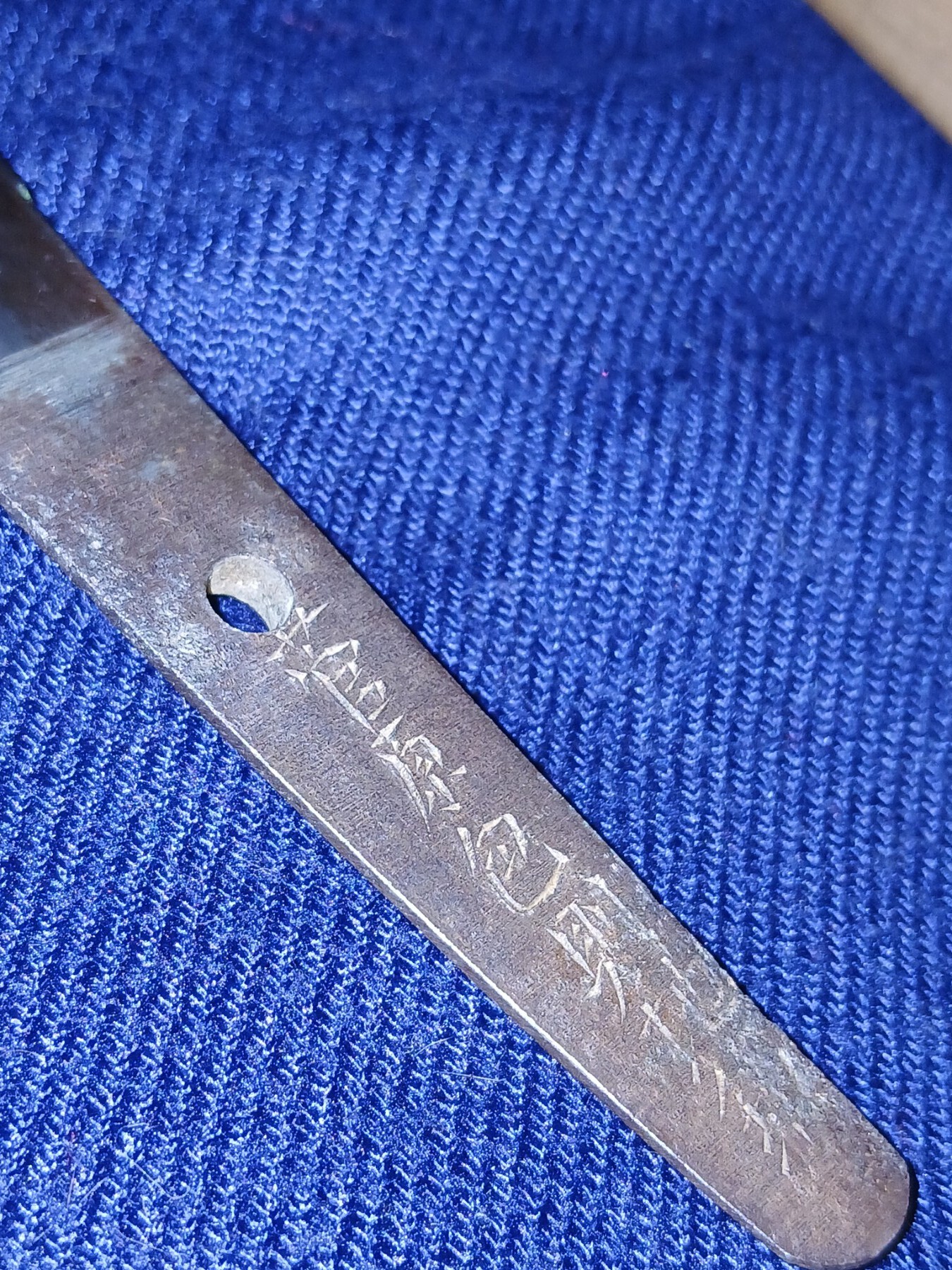
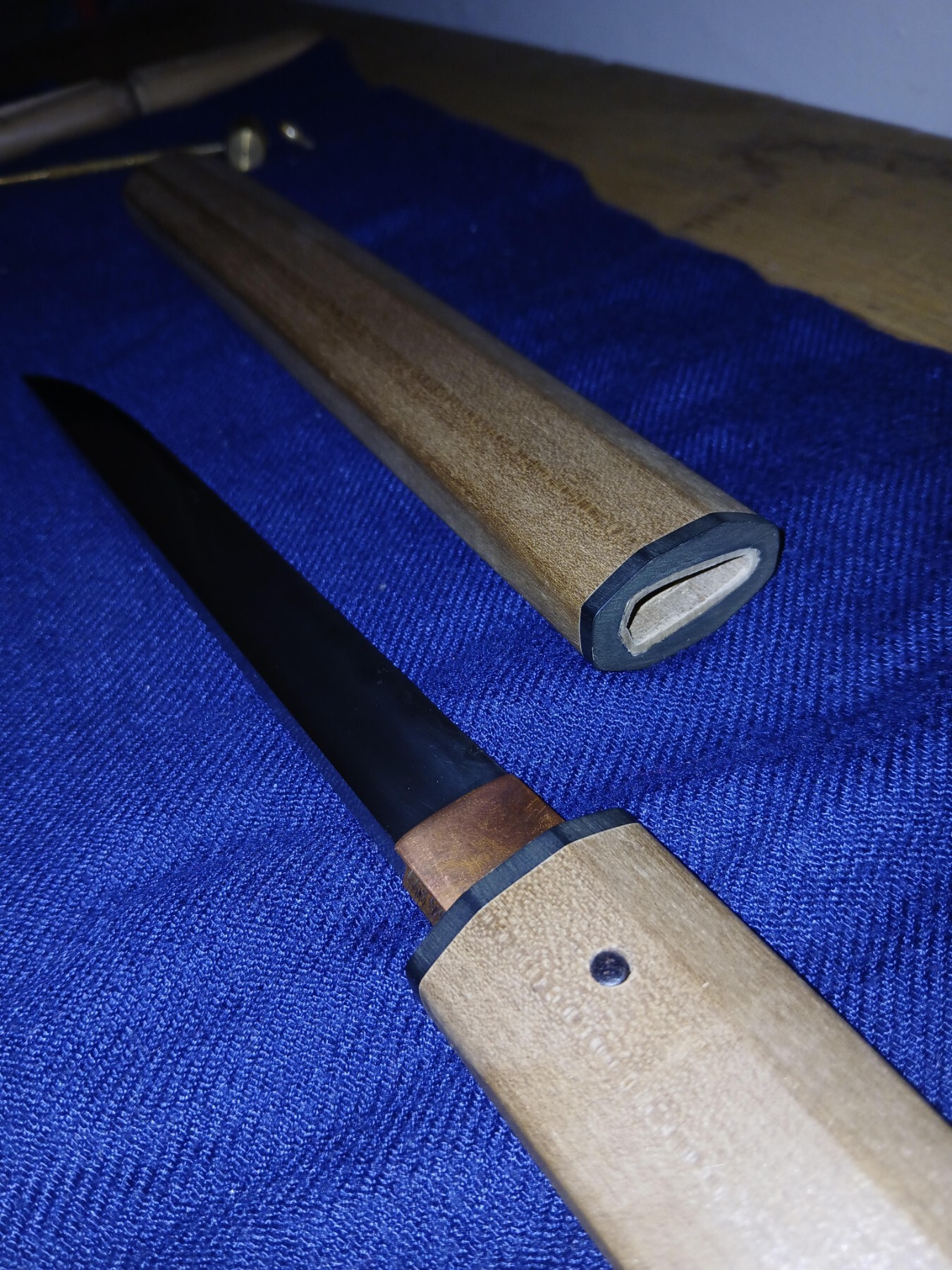
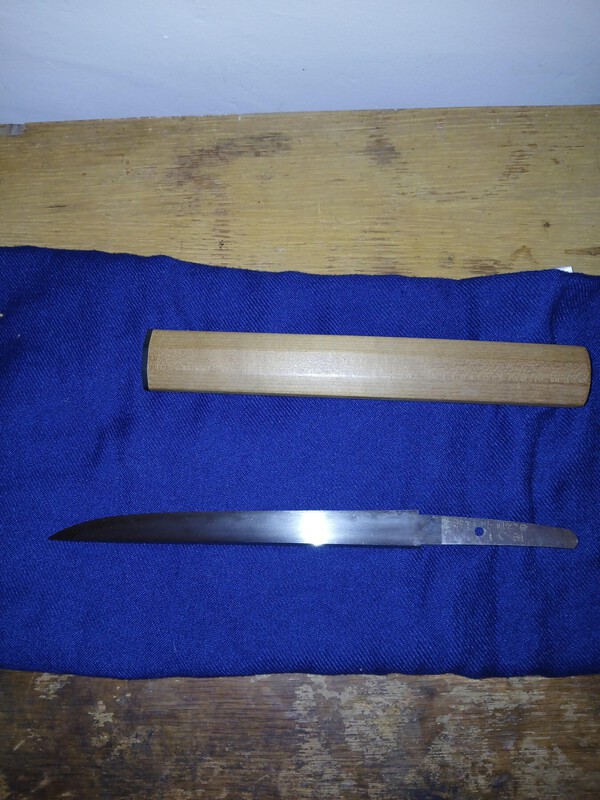
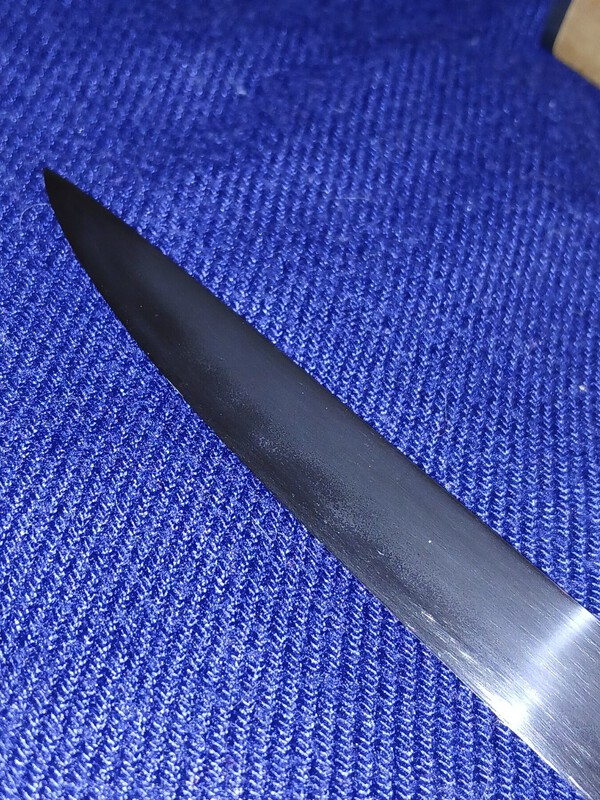
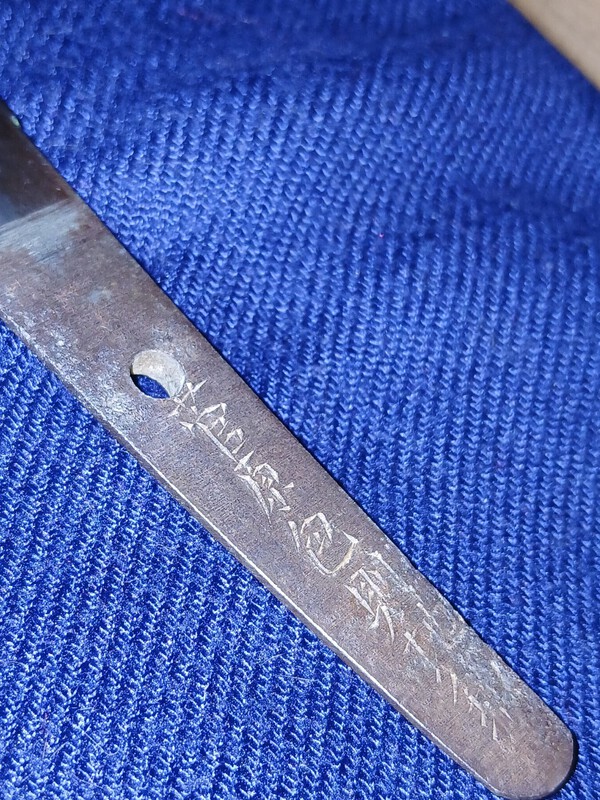
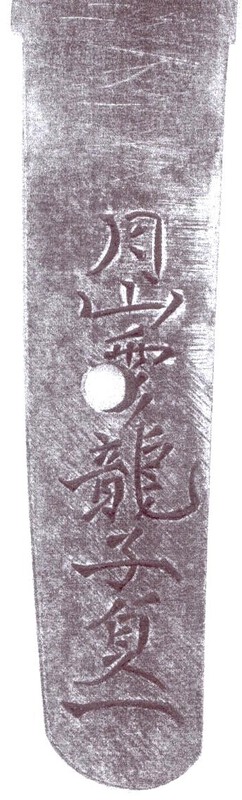
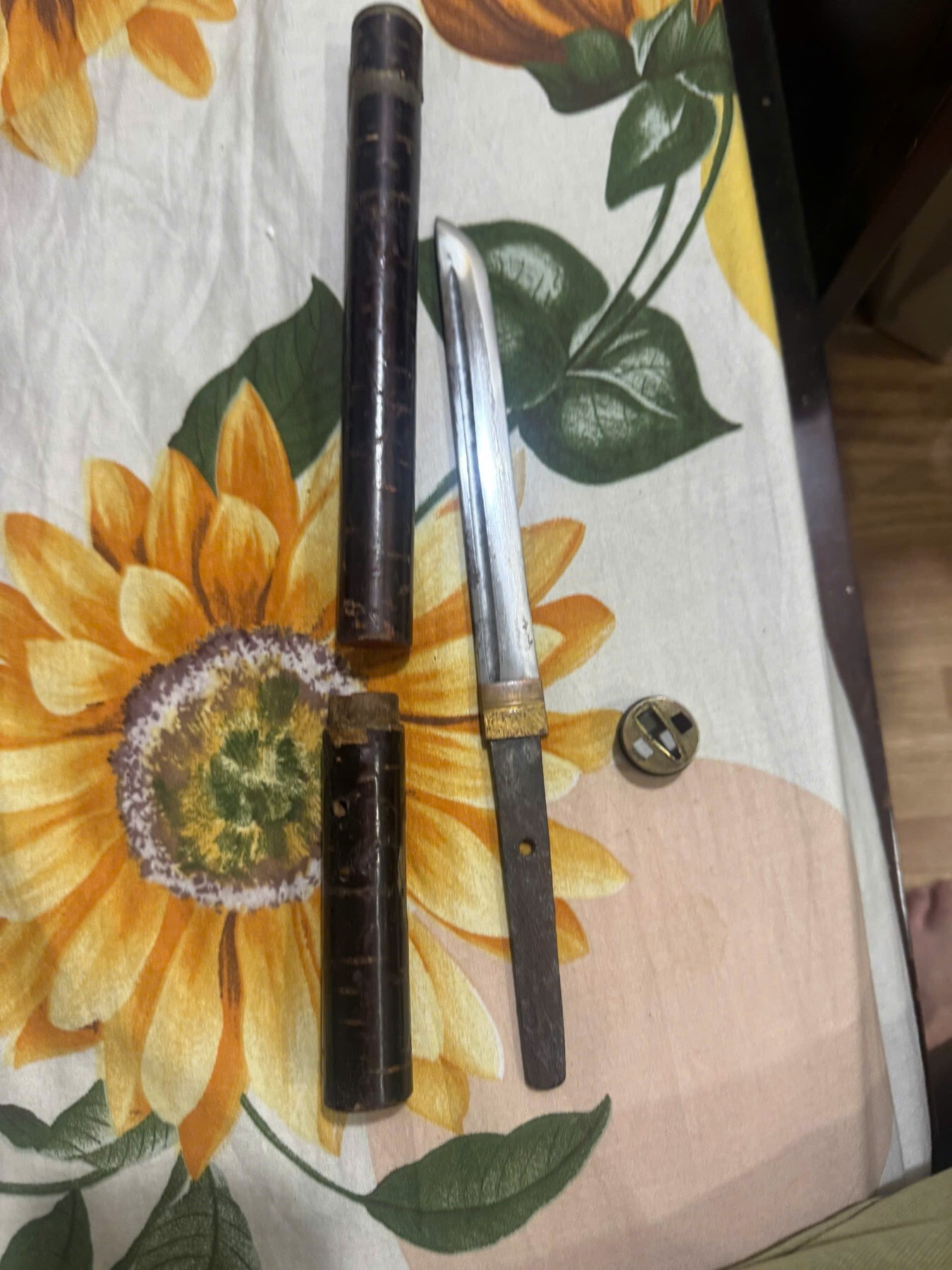
Need some help translating the signature in this tanto, it may be an Edo period piece, but the koshirae may be a more recent fitting. Any clue is appreciated, god bless!



























.jpeg.75913a5a6f105031e525ee883a6d4308.jpeg)
.jpeg.06967984a2eb7d893d9f9c44244d26b8.jpeg)