
Leaderboard

Popular Content
Showing content with the highest reputation on 11/06/2025 in all areas
-
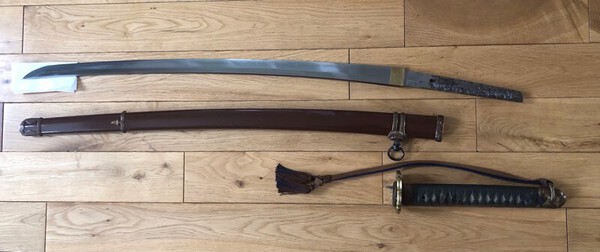
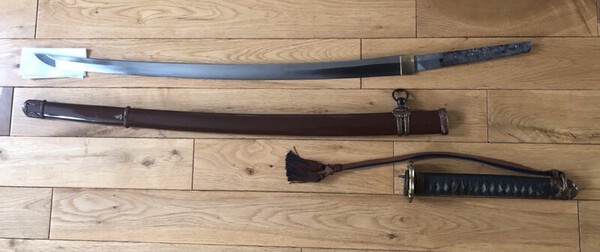
Every weekend this autumn we have been donning full armour and putting on displays with old smoothbore ‘Tanegashima’ guns. Busy, busy, busy. On Sunday we will be part of the Daimyō Gyōretsu at the old Honjin (inn) Sankin-kōtai stop at Yakage. The constant wear and tear of equipment means the ever-present need for running repairs. Most of these, you have to be ready to do yourself. The medieval battlefield would have been similar but more extreme. I have just finished applying glue to broken tsukamaki strings on the tachi koshirae. A cheaper fix than ordering an identical complete restring! It looks fine, except when it rains and the transparent glue sections turn milky white. Half a day I spent on reattaching loose iron plates and chain mail on the kote sleeves, and the main frontal cord of the haidate had snapped and needed replacing. Meanwhile, the matchlocks also need constant cleaning and prepping, before and after each display. (PS Yesterday with Igor I bumped into Les and Ray at the sword museum! Small world.)7 points
-
Johshuya(常州屋) is a part of an import-export company MOTOYA in Ibaraki. Ref. MOTOYA & CO . I suspect that Johshuya is not a professional sword shop but an export agent. A reliable dealer never reads 上野大掾 (Kozuke Daijo) as Ueno Daijo. The sword shop in the pictures you posted is Bizenya (備前屋) in Okayama. Ref. 備前屋 | 備前屋は岡山の刀剣専門店です。日本刀の通販、販売、買取を取り扱っております。6 points
-
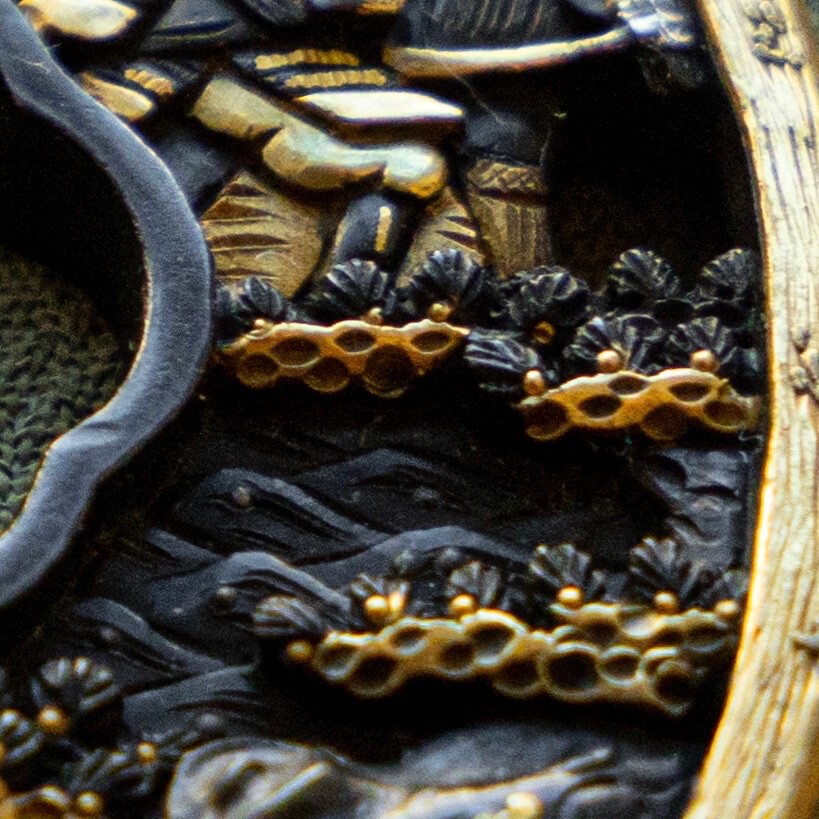
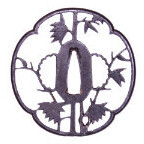
Hello! I've also done some research on my Soten tsuba set. I'm inclined to believe that your tsuba was made by a follower of Soten with their own unique style. There are noticeable differences in the way the pine tree is drawn, with its more elongated needles(with an Italian accent)) joke), which is not as common in the Soten school. Additionally, the tops of the waves have a concave point, whereas Soten often uses a round point, and the overall style of the waves is different. A similar plot, I suppose) The precise depictions of the clans are also not typical of Soten, and I really appreciate this detail on your tsuba! I also found a potential pair that is slightly smaller in size, both in appearance and in terms of the additional seki gane insert. Best regards Viktor


 3 points
 -
Finally got around to this. Nagasa- 63.2cm Motohaba- 2.87cm Motokasane - 0.61cm Sakihaba- 1.72cm Sakikasane - 0.31cm Nakago Length - 17.8cm Sori/curvature - 2.8cm - tori sori Kissaki Length - 3.4 cm2 points
-
Drying it in the dark makes sense to me. It allows a slower drying process itself and therewith the fabric absorbing the color better. The result is better resistance against bleaching our through the sun later on. Chemistry takes time. and hell yeah - it’s a mess! So outside is a must. Just know the effects from Kendo garments which are indigo dyed and subject of bleaching out quite quickly in the sun. So special cold water washing is required (or recommended) cheers, Tobi2 points
-
Hello Steve, Like Moriyama-san implies, this dealer is reselling another shops inventory. This is a typical Yahoo Auctions reseller. You can also easily spot a Yahoo reseller when they have vastly different photographing styles in their listings. Greetings, Lex van der Jagt2 points
-
I will list tsuba to fund my quests for things like a Juyo Hoan or a certain type of Nobuiye, but I don't want to be a dealer. This is to say.... don't expect a whole lot of listings. I want to build out the site as at least 60 to 70% educational or linking to smart people like Ito-san's blog. It seems the design organization might be challenging.2 points
-
https://www.dropbox.com/scl/fi/gkfcfqc6gs14invoeg6hn/KanzanHakogaki.pdf?rlkey=5i89f80fkbbf60x67f1lloa2k&st=zfh4ao27&dl=0 I'm not sure where it would be more appropriate to post this — in the Translation Assistance section or in Tosogu (please, Brian, place it wherever you find most suitable). I’ve compiled a short collection of transcriptions (kanji + romanization) of some tsuba hakogaki from Satō Kanzan. Although the examples I’m presenting are among the best-documented ones I could find online, I’m far from confident that the transcriptions provided are reliable. All the text shown in black should be reasonably accurate; the text in red is, at best, an educated guess; and I’ve marked with red stars the characters whose transcription I’ve no idea about. Some inconsistencies are evident and may perhaps be attributed to likely forgeries of the hakogaki. For each hakogaki, I’ve included the website link from which I took the images, which I believe should serve as proper credit to the original owners. Of course I’m ready to remove any material upon request from the rightful holders. In any case, this is entirely non-profit, and I am not a professional in this field. I would be very happy if forum members wished to contribute with comments, corrections, additions, or perhaps even further examples of hakogaki by sharing images from their own collections. I intend to release a final, corrected version here on the NMB forum within about a month or so. Thank you for reading.1 point
-
PREFACE This new series „Tsuba are beautiful - Kantei Series“ is dedicated to collectors, friends, and enthusiasts who appreciate genuine Japanese art as much as I do. I share my knowledge from today’s perspective, offering insights that may help when, perhaps in a hidden corner of your favorite antique shop—or even online—you come across a precious Tsuba that captivates you, though you may not yet know much about it. By following this series, you’ll learn to work methodically toward identifying unsigned Tsuba on your own. I hope it will be helpful for your future collecting journey and maybe even ignite the spark for new collectors to begin theirs. Please enjoy—and feel free to ask questions or share your opinions. Let’s discuss kindly and respectfully, whether you agree or disagree. Remember, collecting is a shared journey; respect for others’ views keeps our community strong. You will find the link here: Tsuba are beautiful - Kantei Series #01: “The Black Shakudo Tsuba - Ko-Kinko, Kyo Shoami or Soten?“ Enjoy reading! Best wishes, Tobi www.nihonto.art www.tsuba-no-kake.com
 1 point
 -
Dear members, please find attached link to an ebay auction of a beautiful iron Higo tsuba made by the late Ford Hallam. Ford was a keen and active member of this board and a good friend to many of us and in honour of this I will be donating 10% of the final selling price to the NMB. The auction starting price is way below what I paid 15 years ago but it gives more people a chance to own one of Ford’s beautiful works of Japanese art. https://www.ebay.co.uk/itm/257192052932 Happy to answer any questions. kindest regards Michael ps I also have two other antique Higo tsuba listed.

 1 point
 -
Recent acquisition, a shakudo piece with a tranquil design depicting what? I would guess something to do with textile dyeing/production….washing silk in the stream? but I cannot think of any specific “legend” or story that relates. Maybe for a posh silk merchant’s wakizashi? Very heavy for its size suggesting decent quality shakudo. Any other suggestions? Mei is “Shokodo Mitsuchika” and I’ve asked in translation section for help with the lid inscription.


 1 point
 -
The original shop is asking 3,600,000 yen for the Hosokawa Masayoshi At shop: https://bizenya-katana.com/?thoken=作陽幕下士細川正義造(刻印)-2 At Yahoo: https://buyee.jp/item/jdirectitems/auction/w1123570814 Just to be noted that some Japanese dealers do not deal internationally.1 point
-
I believe it is authentic and among the longest Yasutsuna tachi in existence today. It was featured as a reference item in 2019 Kasuga Taisha Yasutsuna & Ko-Hōki exhibition book. In the brief text for the book it is mentioned to have been shortened c. 10 cm making the original length of c. 90 cm. It was also in Japan in 2022 as part of The Heroes exhibition: https://shizubi.jp/exhibition/20220702_theheroes/220702_01_eng.php However I believe it was not among the swords that NBTHK authenticated for Boston Museum in 1976:1 point
-
Although, considering that this is a ko-kinko, you must be right! https://www.bonhams.com/auction/22248/lot/1207/a-ko-kinko-tsuba-edo-period-18th-century/ In any case, it was interesting to compare!

 1 point
 -
http://nihonto.us/CHOSHU TOMOKIYO TSUBA.htm Signature looks differnt to me.1 point
-
Thanks Curran for your reply1 point
-
... Gents - It came in. Might be exactly what you suggest @Peter Bleed ! Any ideas how we'd move forward with the possibility that it was indeed a Japanese Trade Gun? Lock - The lock works and is complete and operable; it just needed a tear-down, clean up, oil and lube. And get this, there serpentine and main spring dimensions (from the hooked notch to the pin hole that holds the spring on) match perfectly to my Tanegashima that needs a serpentine. It has a modern recreation of a mainspring on it - that's functional, albeit made of steel - but I'd like it to wear a brass one. Trigger Guard - Fake, looks like a door pull from some cabinet hardware place. Trigger - Fake, saem as above, less I don't know what hardware looks like a real 'Tang' trigger, LOL! Stock - Real, someone may have cut it down is my best guess. Barrel - At one time it might have been shootable, but someone welded the pan fully full or closed off so as to make it unfireable. The barrel profiling looks like it was expressly made to be a short light, octagonal tapered barrel of 19" in length. Most interestingly it has a 'Western' type wide V-notch rear sight like early BP carbines wore. There are no markings anywhere. Are there any close-ups one would want to see? Well, I bought it for parts and to that end I've succeeded! What I will do it fire up my forge (when built, as I am retiring soon) and I will then make sutable replacement parts for my other Tanegashimas, using these parts as models, so I can return this one to its former 'Trade Gun' (hopefully!) status.1 point
-
I would side with Pietro on this. Look a lot like a Soten piece or to be more precise (or more generic, you choose ) it looks like one of the Soten like pieces made by various artisans that took advantage of the Soten school popularity. From the reduced number and larger size of the human figures I would also say a later one. As always I could be wrong... Regards Luca1 point
-
Hi Charles, one can find these compartments from time to time on the forearm of some kote. Oda-gote /Fukube-gote for example. In these cases, mostly the hyôtan-gane are designed to be opened. Often used for storing medicines, but also other things are imaginable. Recently I saw a pair of kote in which writing materials were stored on the left sleeve (ink stone and pen)… However, it remains a rare feature and I’ve to admit that I never encountered one on a hijigane…very cool!1 point
-
I must say your Sukesada looks like a wonderful sword, I am personally liking it more that the Kiyomitsu. However the Gorōzaemon Kiyomitsu must be a wonderful sword in overall. I admit I do have a very soft spot for these late Muromachi "named" Sue-Bizen smiths. They made wonderful items, and I personally value them very high in appreciation. I think the quality in my eyes is often better than some of the cherished Kamakura smiths for example. Some items by Yosōzaemon Sukesada that I have seen in museums have been just stunning. I think Jūyō submission might always be a very complicated process, and to be honest I don't really have a clue what they are searching for. As was discussed in one other thread there are pretty much always "the usual suspects" that will pass regardless of the session. I was looking that Gorōzaemon Kiyomitsu has currently 16 Jūyō swords passed. The last one passed in session 65, unfortunately I haven't yet got that book. However the one before that one passed in session 45. So 20 year gap between passes, and I am sure some nice swords by the smiths must have been submitted within the 20 years. A rough guideline drawn from the last c. 15 years of results is that unless it is a "named" Sukesada (and among them most notably Yosōzaemon), your late Muromachi Bizen might have hard time passing through. Here are the total numbers of the 1500's Bizen smiths passed in last 16 sessions Jūyō 55 to 70. There are 5 Yosōzaemon Sukesada, 8 other named Sukesada, 7 non-Sukesada Bizen smiths from 1500's. So 20 1500's Sue-Bizen blades passed in total in 16 years. Now just for fun comparison in the same 16 years 39 unsigned Rai Kunimitsu blades have passed...1 point
-
Wow! I suppose at some level they are real (possibly in the form of real modern fakes), but on my personal aesthetic scale they all rank between hideous and scary bad1 point
-
Choshu tsuba. The "Tomo" kanji on your is not the most commonly used one, but it is used by some artisans of the school. Quickly checking Markus Sesko's translation of the book Tosogu Classroom Vol 2, I did not see Tomokiyo among the artists that were written up in greater detail. It was a large school. Perhaps someone with a copy of Nihonto Koza (Choshu section) or the Choshu tsuba book can tell you more.1 point
-
When you look closely at the “gold” on two of the above examples it becomes clear that the quality of workmanship is appalling. To me it looks like modern gold plating fluid has been used with no attention to detail…..much overflow from the intended areas. The “red” areas can easily be achieved by masking and then copper plating with subsequent patination and silver can be achieved by first copper plating and then silver plating onto that. Not difficult once you know how. So, either outright clever fakes or older but terribly “reconditioned”. Either way, not “right” imo.

 1 point
 -
https://blog.goo.ne.jp/tsuba_001/e/539b5021857b21549e591e169f6e6d57 I will have a look in some museum collections and see when they were donated to the museum - it won't tell me when they were made but give me a starting point to work back from.1 point
-
Some of these fakes are so good you need to handle them to determine if there is genuine mixed metal inlay or if they are very cleverly coloured and gilded. Some are very convincing including mei.1 point
-
When did these kind of TSUBA appear first? I don't remember seeing them 20 years ago, so I personally think that they are all recent copies, made with modern tools and techniques. From a craft point of view, they may appear well made as silicon molds and new casting technology yield good results. But there is no artistry behind it, in my view. They are way different from the opuilent TSUBA I used to see in the black COMPTON catalogue.1 point
-
Wordsworth said something about emotion recollected in tranquillity. On Saturday I laid out a table of objects, this and that, and with the help of the organizers, gave a talk to an audience of local citizens. Since then I have heard back through the grapevine that it was an acceptable afternoon and that people enjoyed it. I may have put a noose around my own neck though, as the city has now asked me to do a static display for their children's event later this month. Hmmm... Onko Chishin, 温故知新, learning from the past, to fashion the future? The past can teach you about the future?1 point
-
I saw that blade in person last week. Very nice, very tight. Kotetsu personally isn't for me, but they let offered to let us see it even though they knew I was mainly looking at earlier koto blades.1 point
-
Hi George, Find Care and Handling here: https://nbthk-ab2.org/sword-characteristics/ Grey1 point
-
A few impressions with The Usual Suspects...1 point
-
Yes, it's true! I am afraid to buy a sword tassel unless it shows considerable wear and has a bit of damage here or there indicating it is from WWll era. Especially when considering a higher priced field grade tassel let alone a general's tassel. What a racket, many of these reproduction tassels are getting so good it's terrifying to spend big money only to find it is a well-made reproduction. As collectors, I suspect most of us want the nicest looking item we can find, there it is, nicely folded pristine in a box, have to have it only to discover its a well-made reproduction. They get your money, then sellers claim...not know fake, not know fake, your fault you judge. John (psnshogun) has made much appreciated attempt to help with how to properly identify fake from real but I still find it difficult to confidently tell the difference in many cases. Particularly in photos as it is impossible to have the tassel in hand. John has mentioned he is preparing a guideline as how to identify real from reproduction. Hopefully, he will share it soon.., Dave1 point
-
Thank you for the vote of confidence, however the purposed tassel treatise has fallen way, way, way by the wayside. Will dust off the draft and see what can be salvaged.1 point
-
You could always talk to Bill Rannow! He knows his stuff about tassels and has a lot of them for sale, many new in box that he bought years and years ago.1 point
-
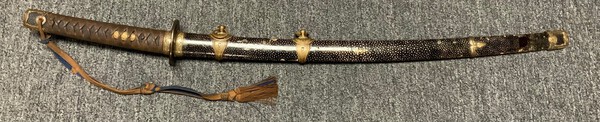
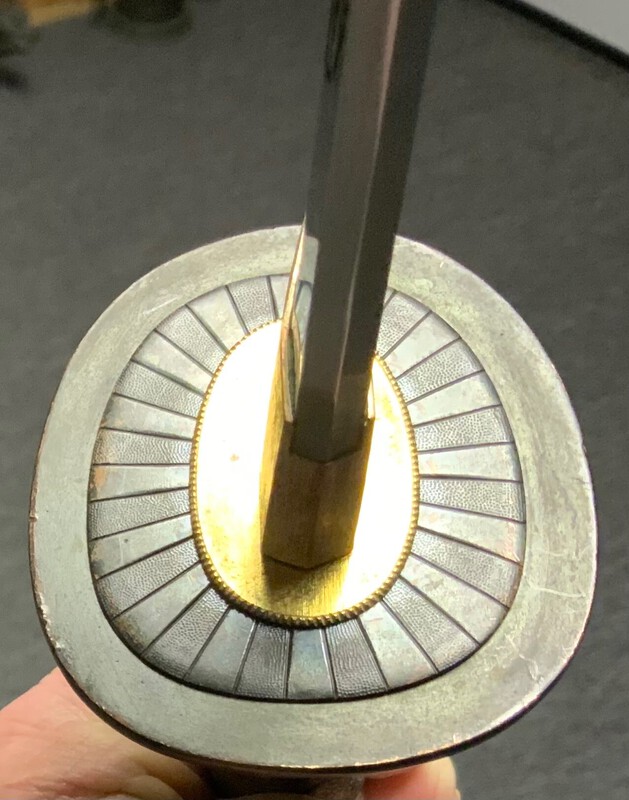
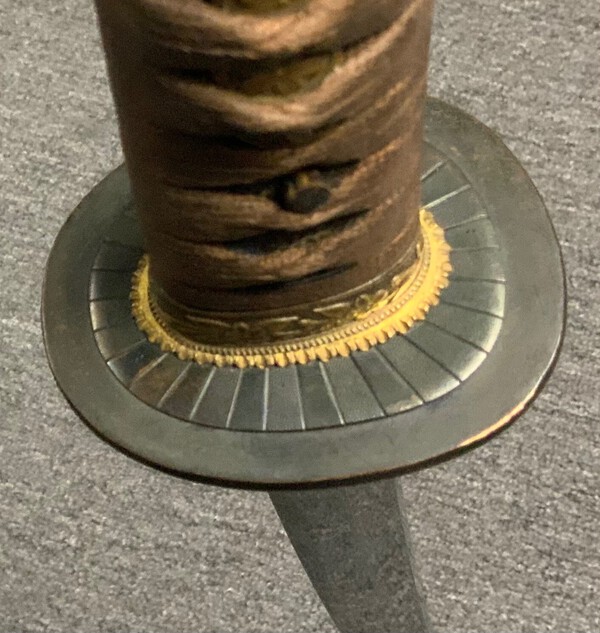
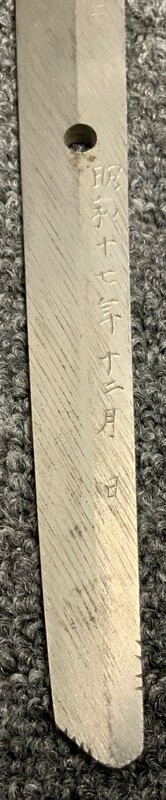
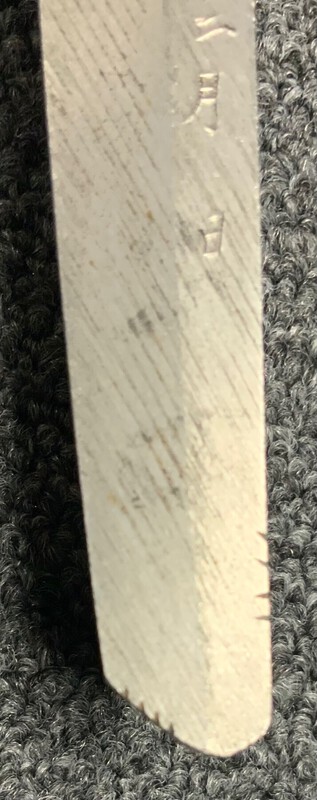
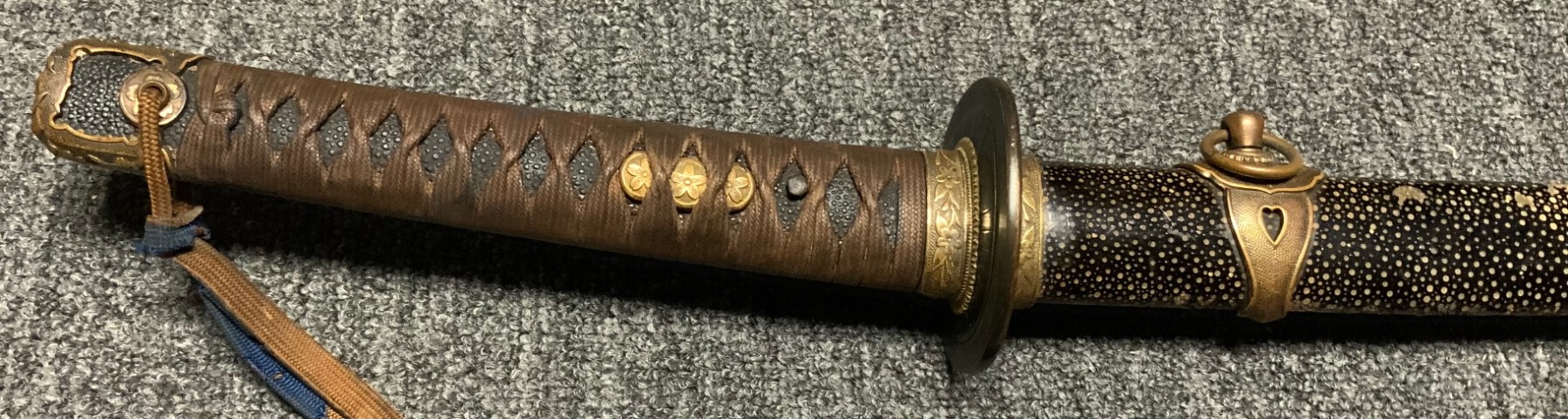
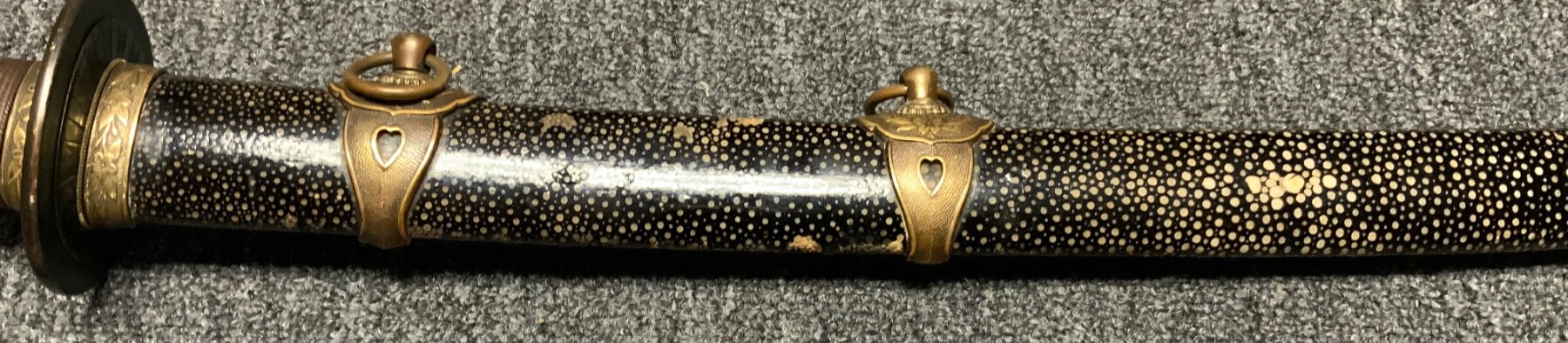
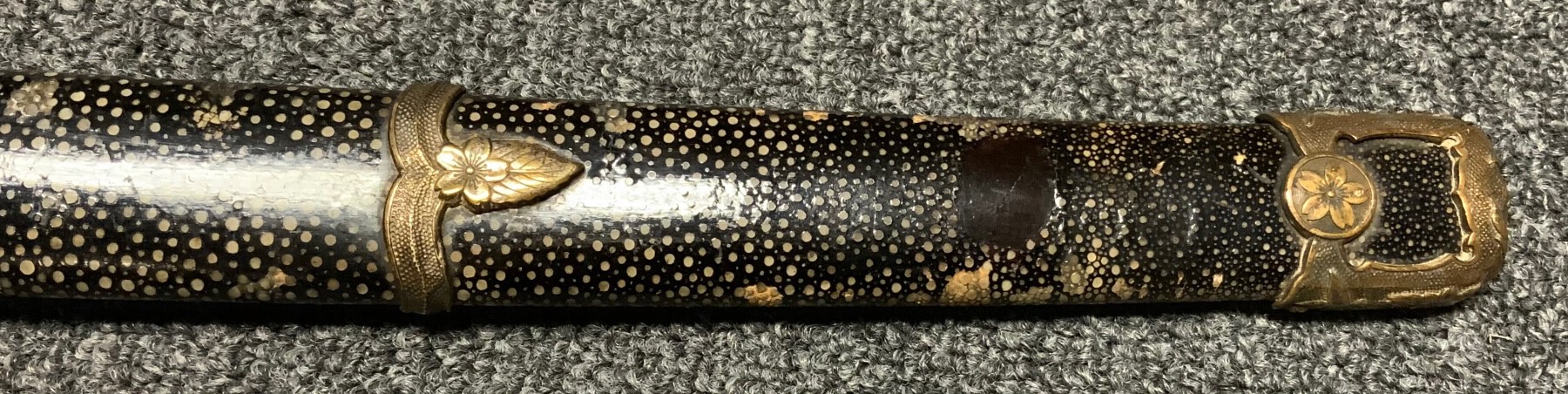
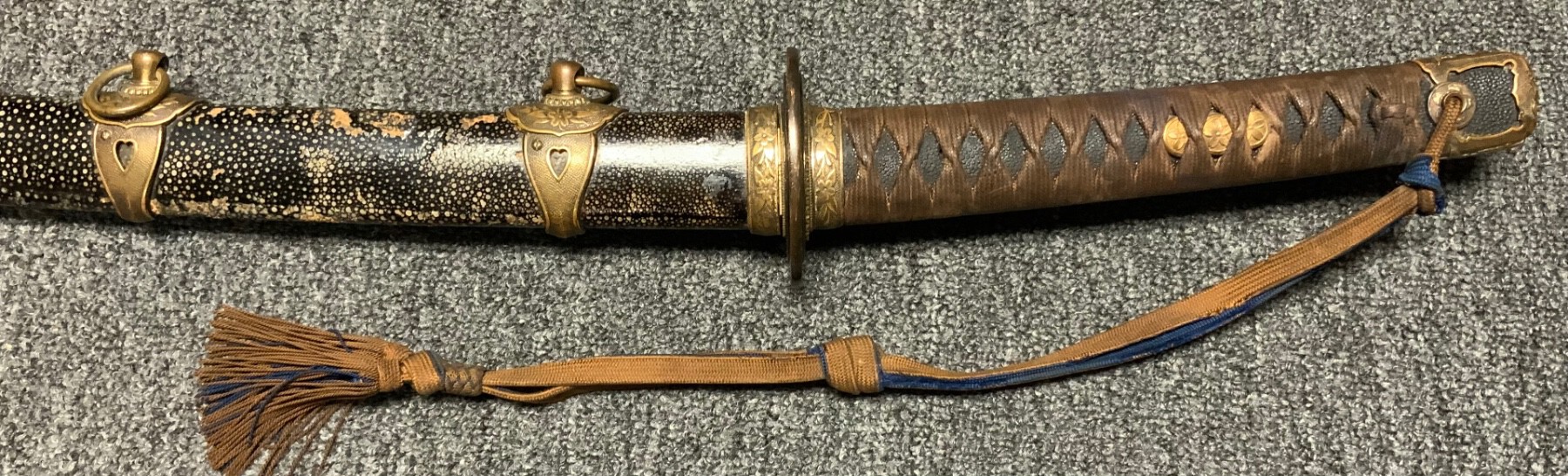
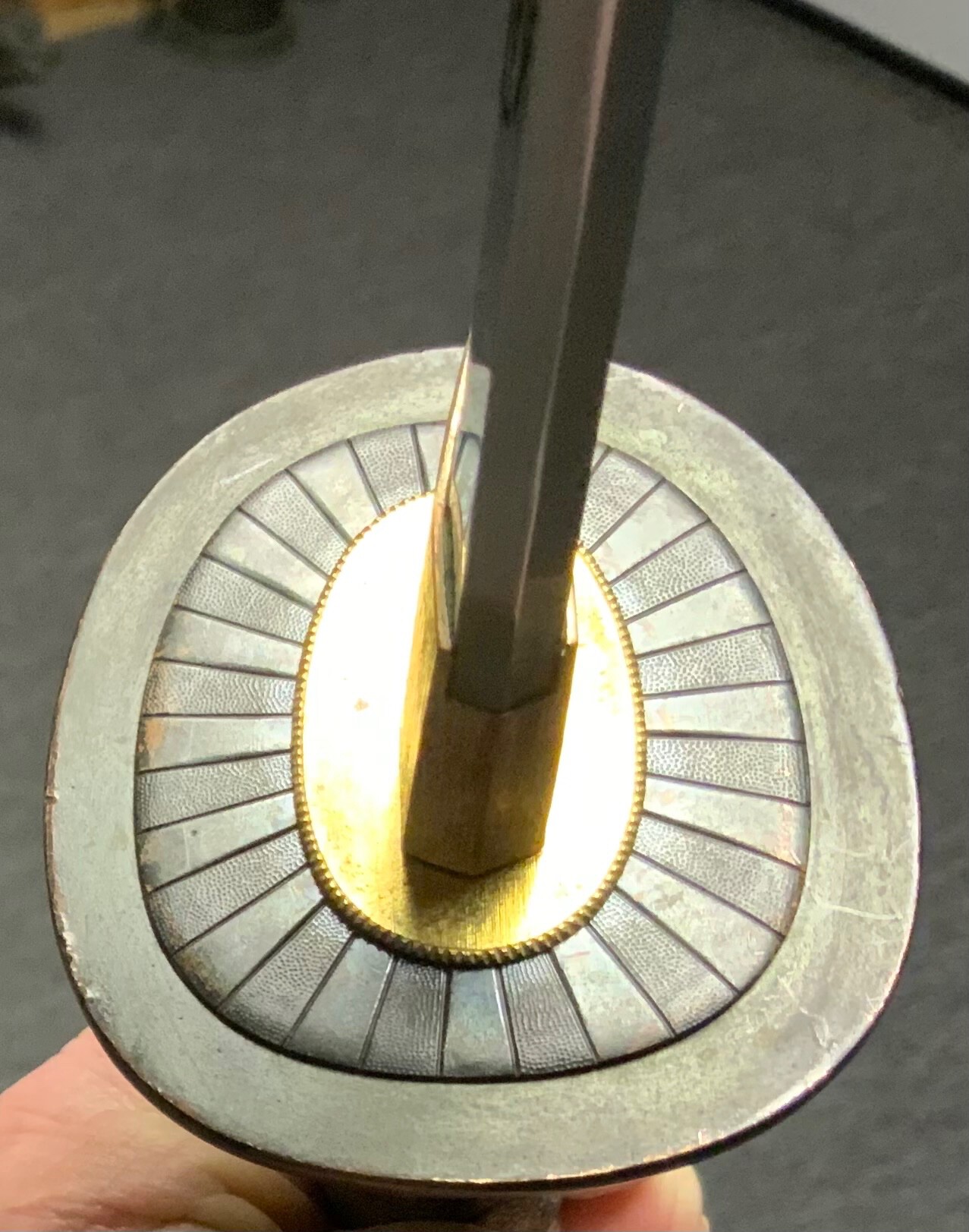
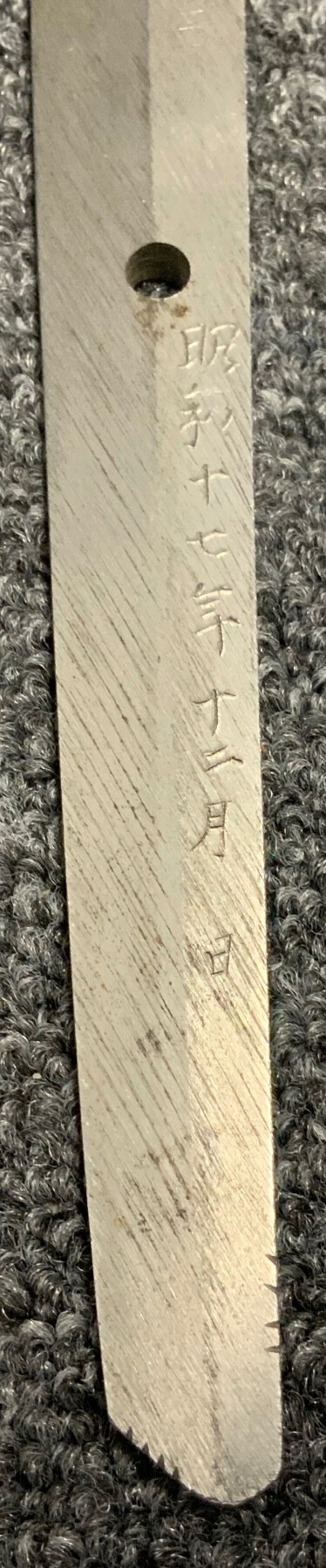
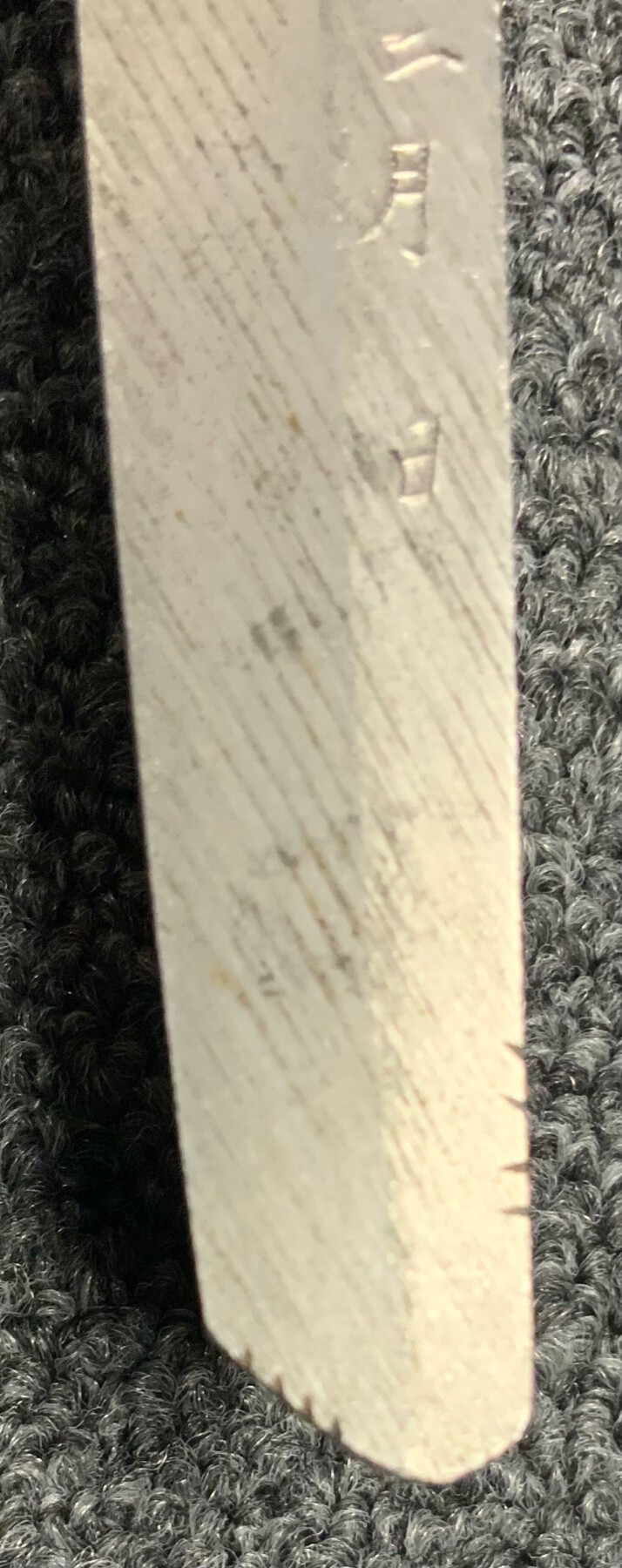
Hello everyone. I just wanted to share a recent purchase. I believe it is a Type 97 Kai Gunto, with a large anchor stamp without the circle which I believe is for the Kamakura arsenal. It also looks like it is dated December 1942. Please feel free to comment and I hope you enjoy. MikeR
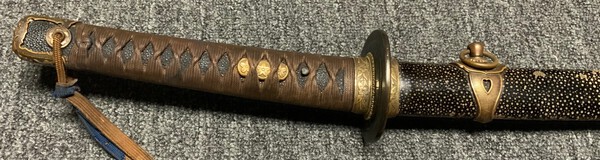
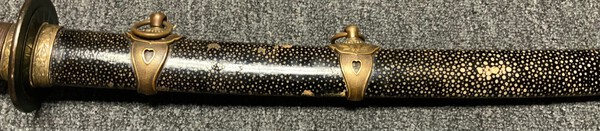
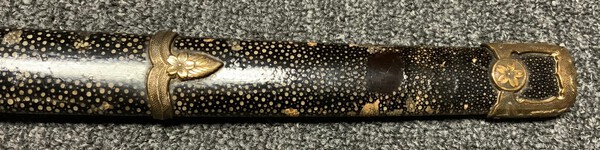
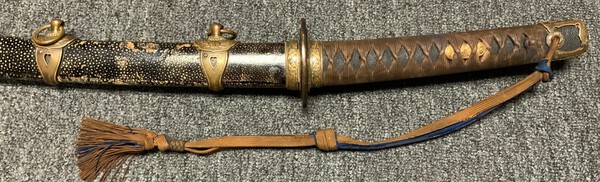



 1 point
 -
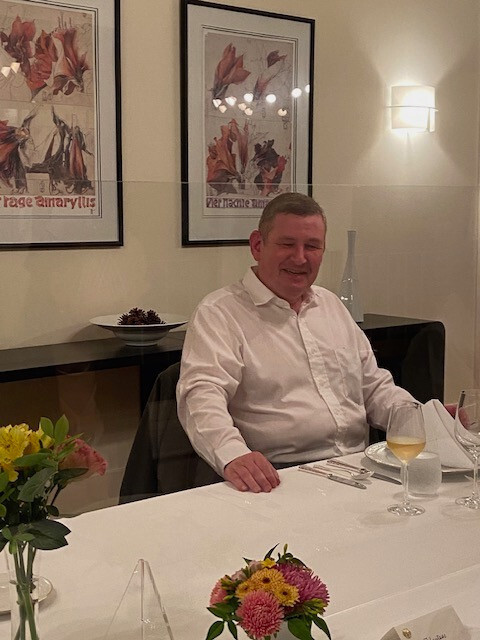
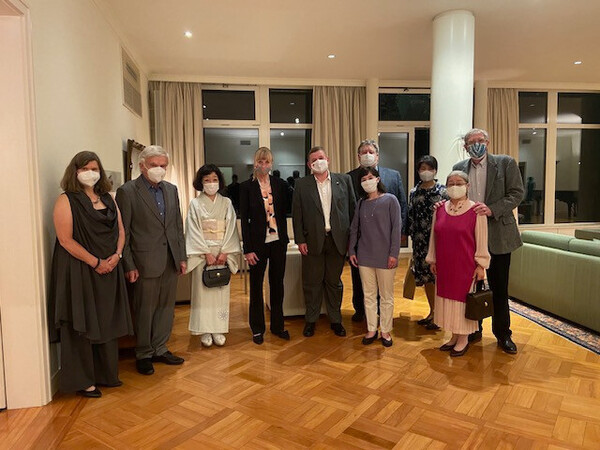
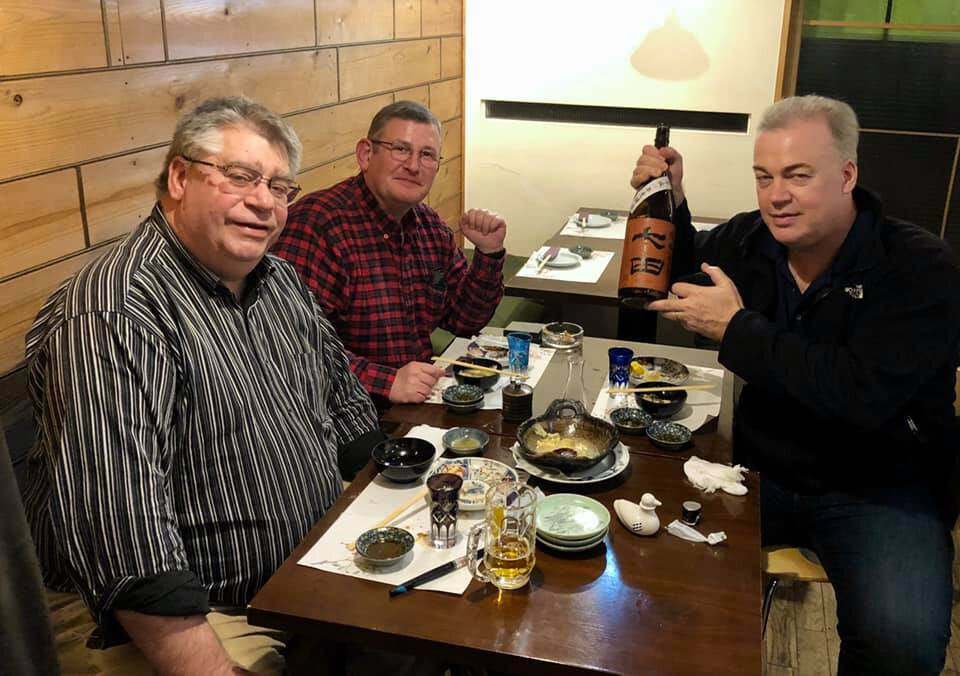
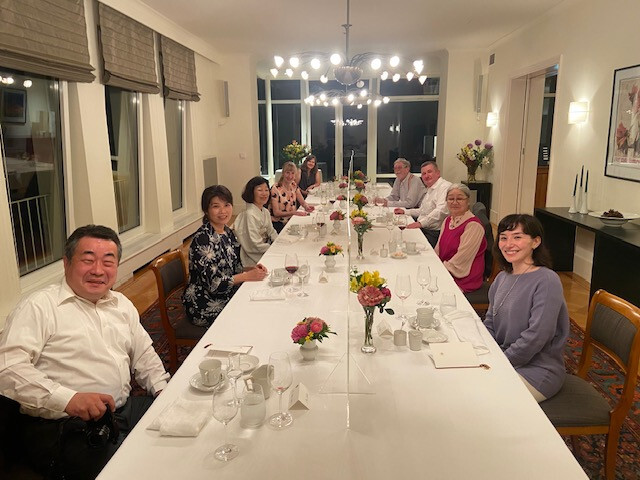
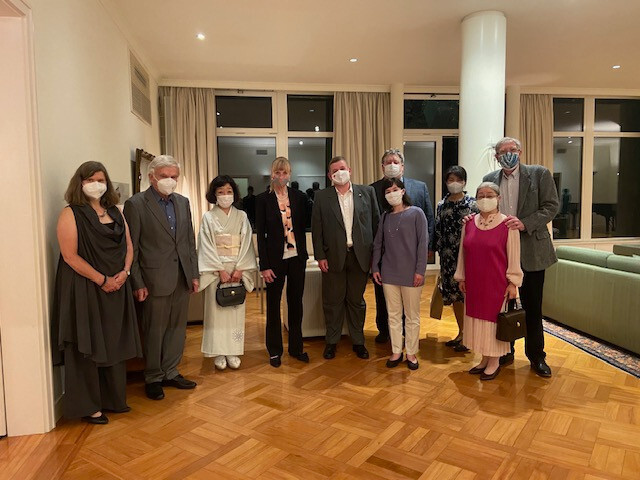
With a heavy heart from a recent phone call from Minako Schiller, I wish to report that Guido has taken his leave from this plane of existence! Guido was an early and a long time member of NMB! From his posts, you will recall he was not shy and well... he called a Panzer ... a Panzer! As a career diplomat, he served the German Embassy as an Attache in several Asian countries. He greatly enjoyed his two postings at the embassy in Tokyo. This was certainly his sweet spot because he was very much at home in Japan. In all our years of associating in Japan, I cannot recall a time when we didn't imbibe when meeting. any occasion was an opportunity or an excuse for a Kampai! We had no illusions of grandeur... it was either beer or nihonshu... or beer then nihonshu. We traveled a lot together domestically but only once internationally when we ventured over to Macao! Suspicious minds out there... I know what you are thinking! No, it was not to gamble! We had been invited to attend the gala events for the opening of the History of Steel in Asia Exhibition at the newly opened Macao Art Museum (MAM). Guido, Roger Robertshaw, and I were honored guests for we contributed the entire display of Japanese swords, tsuba, and armor for the three month exhibition. All our items from Japan were shipped through the Embassy diplomatic channel. Edged weapons from seven Asian countries were on display as the Chinese government made their pitch to demonstrate the historical importance of their homeland in the development of edged weapons. Guido was an avid collector! When he was stationed in New York at the United Nations, he collected some fine Civil War firearms including a nice Sharps rifle, a Henry rifle, and several cap and ball revolvers. While in Jakarta, he put together a collection of Kris blades, and in Japan he was in Nihonto heaven and he developed a netsuke collection as well. In mid 2021, during Covid, Guido was recalled to Germany to take his final posting for his remaining two years prior to retirement. To this end, the Ambassador of the Federal Republic of Germany, Her Excellency Ina Lepel sent out a limited number of invitations for the farewell dinner for Mr. and Mrs. Schiller held on May 17 at 7 p.m. at her residence. During this solemn period of emergency pandemic privation, on the day in question, my wife and I made our way to the German Embassy to determine if there really was cause for celebration and if the rumors were true. In fact, Her Excellency Ambassador Ina Lepel, had indeed made great arrangements to send Guido and Minako Schiller back to Germany. It had not been determined if this action resulted from an infraction or if it were a benevolent gesture. It was entirely possible that Attache Schiller had been doing good work and this reassignment was, in fact, a reward. Yet, was it a reward to send a man home to sausage and sauerkraut after years of eating Tokyo’s finest sashimi and raw oysters? Is it even possible to willingly give up the range of heavenly sake found in Japan? What hypnotic spell could shots of Apfelkorn or Rumpel Minze Schnapps have over the infinite variety of locally brewed sake? To this day, these questions remain unanswered… unsolved mysteries and unanswered questions to compete with Guido's speculation on the missing Masamune sword. Like a Teutonic knight, loyal to the order, Herr Schiller was indeed packaged up and moved to his ancestral home. Unfortunately, the final stage of Guido's employment was not completed. He suffered a massive stroke and fell into a coma from which he never recovered. He remained in this state until October 10th, 2025. He is now only with us in our memories of his deeds, a man who served his country well as he rose to officer level in the army and then entered diplomatic service. Of greater importance was his service to his family, to his wife Minako and his daughter Hana. Sadly, Guido never got the opportunity to play with his new granddaughter. Guido is greatly missed... by me... his drinking buddy... I mourn this loss!



 1 point
 -
This maybe a bit like asking what is your favourite colour. But very early on in my collection and study of shin-gunto, I made a list of what sword smiths I thought would be a good representative of the period, that were available, and wouldn't break the bank. I used John Slough's book and other research material, and set my sights on 10 swords that make up a reasonable and affordable representative sample, one that most people would know, and be a good basis for future growth to maybe better traditionally made blades. So here goes...... 1. Kanenori. 2. Teruhide. 3. Kanezane. 4. Emura. 5. Nagamitsu. 6. Masafusa (kobuse). 7. Kanemichi. 8. Koa Isshin Mantetsu. 9. Masayuki. 10. Masakiyo. So ok, these were in retrospect maybe not the greatest choices, but they were relatively easy to find good examples, and were not overly expensive. This formed the basis of an ever expanding collection, and a lot was learned. My question is, what do other collectors think of my choices, what would you add or subtract from the list (remembering affordability) for a beginner, and do others hunt down swords or pick up what comes along?1 point
-
I want to hint to the plants on the reverse: on the left is hagi (bush clover), on the right we see silver grass or obana, both connected with the end of summer and the beginning of fall. The motif on the rolled up fabric comprising a dragonfly and apparently nanakusa (seven herbs), also autumnal symbols. Maybe this time of year helps to indentify the strange tool?1 point
-
Bit more research……..I think it probably is silk dyeing in the moonlight. My kind of romantic subject! Just behind the hut can be seen what might be some sort of bamboo drying (?) frame…a bit dilapidated? Apart from admiring the actual craftmanship, there is much fun to be had in trying to figure the subjects, yes? Thanks to you all.
 1 point
 -
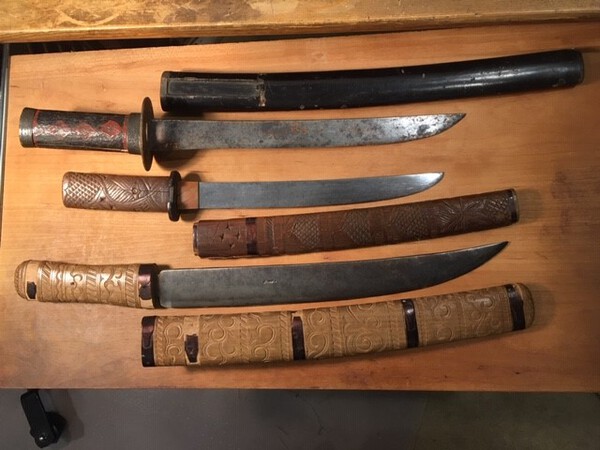
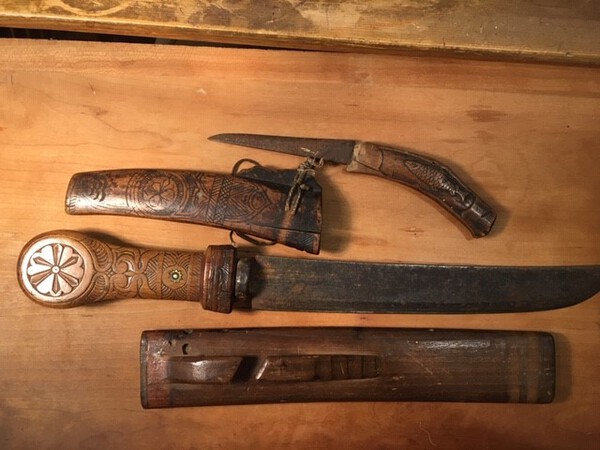
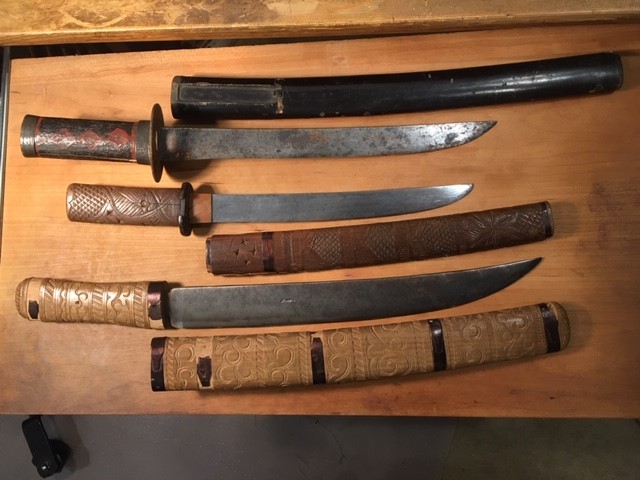
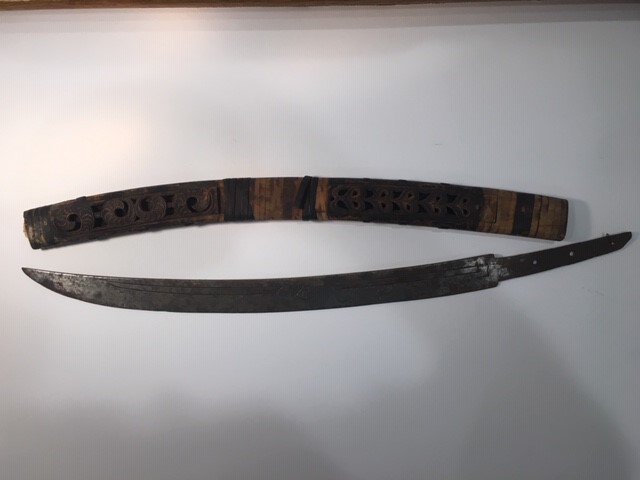
There was some interest in Ainu blades so I'll post a couple images. There are three typical Ainu blades, belt knives, bush knives, and then real swords. Most blades in all three categories were recycled Japanese blades. Some few were repurposed "nippon-to" but most look like utilitarian cutlery. What makes then "Ainu" is the fittings that got once they were in Ainu hands.There were also some few blades that are called "Yezo-to" that seem to have been forged either by Ainu smiths or at least up in Hokkaido to Ainu standards. These are not edge tempered or mounted like Nippon-to and they're pretty rare. I have one. It is shown as Ainublade3 . These swords always seem to have had very fragile fittings. I include a picture of a book that some might find or interest. Peter
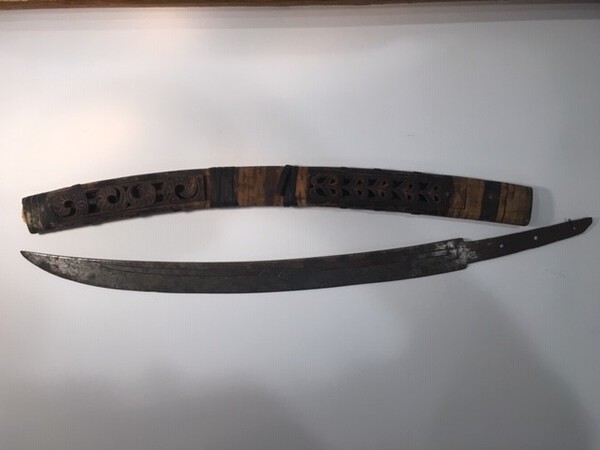
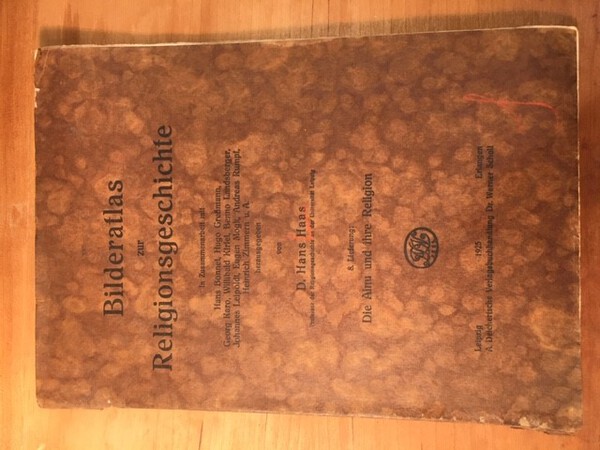 1 point
 -
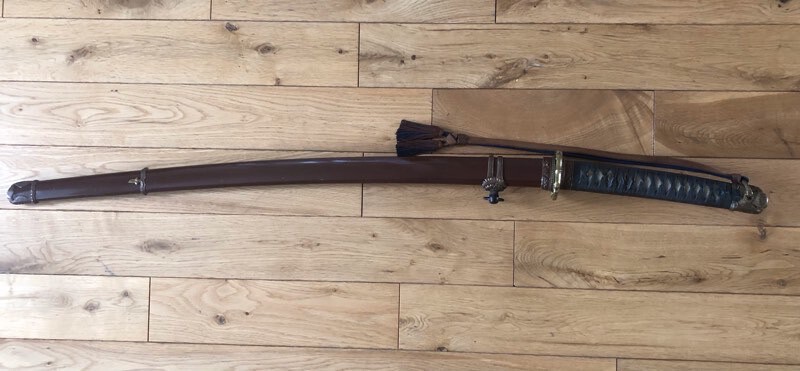
Hi Julian! You have quite an interesting sword, there. The all-brown tassel was used by the civilian branch of the military called Gunzuko. You can google that and learn about them, but they did support functions like maintenance, admin., officer training, and many more functions. See Nick Komiya's discussion on the brown tassel here: The All Brown Tassel. But the sword fittings are not war fittings, but for a presentation sword. The style is called "tachi" and was seen during WWII as presentations in various context. My final point is that the signature, or "mei" as it is called, includes a kakihan, or kao, at the end that I have not seen before. There are 6 WWII smiths listed in Sesko's book with the Masatsugu name, but not with this mei. But that is not unusual as Sesko's book does not show 100% of the swordsmiths working during the war. It is possible your sword was the Suishinshi Masatsugu of the 1800's but that would require evaluation of the Nihonto experts. Here is the bio on him: "MASATSUGU (正次), Tenpō (天保, 1830-1844), Musashi – “Kawabe Hokushi Suishinshi Fujiwara Masatsugu” (河部北司水心子藤原正次), “Ushū Yamagata-sh Masatsugu” (羽州山形士正次), “Suishinshi Masatsugu” (水心子正次), “Tatebayashi-shin Kawabe Suishinshi Fujiwara Masatsugu” (館林臣河部水心子藤原正次), “Masatsugu” (正次), “Masatsugu saku” (正次作), real name Kawabe Hokushi (河部北司), gō Suishinshi (水心子), he was the son of the 2nd gen. Suishinshi Masahide and succeeded as 3rd gen. of this lineage but without using the name Masahide, his father died early so he had to finish his apprenticeship under Taikei Naotane (大慶直胤), he also married Naotanes daughter and worked for the Akimoto family (秋元), the daimyō of the Tatebayashi fief (館林藩), but from Edo´s Shitaya-Kachimachi (下谷徒町), he died on the eleventh day of the third month Man´en one (万延, 1860), he was well versed in all traditions and hardened for example a narrow kō-chōji-midare in the Bizen tradition or a chū-suguha- – 573 – hotsure in the Yamashiro tradition, sometimes Honjō Yoshitane (義胤) carved horimono onto his blades, we find also works with a kijimomo-gata nakago, the yasurime are kiri and he mostly signed with a kaō, jō-saku"1 point
-
Looks like there was one more character there under the seppa

 1 point
 -
My fondest memories of him are also on the yakatabune after the DTI. That is when his real character came out. He really enjoyed a party. I also have clips of him singing and entertaining us all. Here he is with 2.5 South Africans (because Ford lived in Cape Town for a while, we claim him just a little) And on the yakatabune...I think that's Ted Tenold with him.
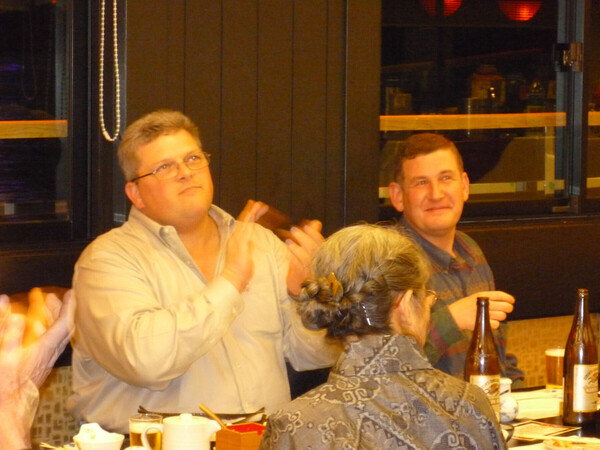
 1 point
 -
What a loss ! Rest in peace Guido.1 point
-
Thanks for letting us know Bob and sorry for your loss, and the nihonto community’s loss. These last few years I had often thought about Guido, hoping through some miracle he might wake from his coma… not to be. Guido was someone I respected very much, he was highly intelligent, full of knowledge and insight, and willing to share it, he also had a very sharp wit and more often than not our conversations would end in belly-laughing. Many years ago, when I first set out to become a nihonto craftsman, there were very few people willing to help me, most would just dismiss me as a foolish foreigner, but not Guido. He offered to meet up with me in Tokyo, a complete stranger from the other side of the world, to discuss all things nihonto and nihon. Over the years, we corresponded quite a bit, and we would sometimes meet up at nihonto related events, where we could continue our running in-jokes with each other. He was a gentleman and a scholar... with a strong sugata!! May he rest in peace.


 1 point
 -
I have moved this to Community News, because Guido was such an important part of the community. I'm really sorry to hear this Bob. No doubt all of us were expecting it for years now. He has been in a comatose state for so long, and I was told there was no chance of recovery, so for him I think it is probably best. But it's terrible news for all who knew him. Met him in Japan, and he was a real character. What a sense of humour! Guido was known to be blunt and to the point, which was an asset when teaching the finer aspects of collecting. But underneath that, he was a real knowledgeable guy who had a ton of info to share. And he knew how to party! A giant of a man, I'll miss him terribly. Condolences to all who knew him and his family. What a sad loss to us all. RIP Guido.1 point
-
Rest in peace Guido.1 point
-
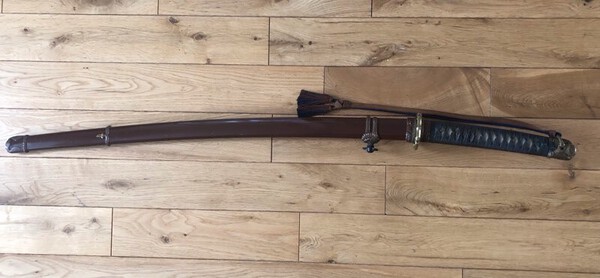
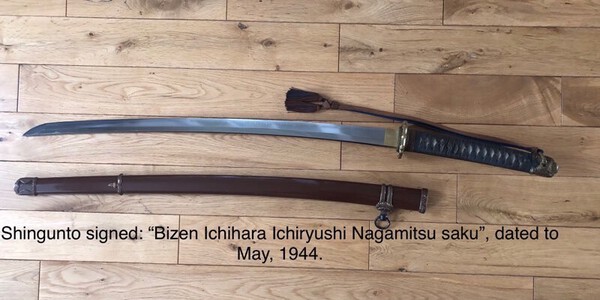
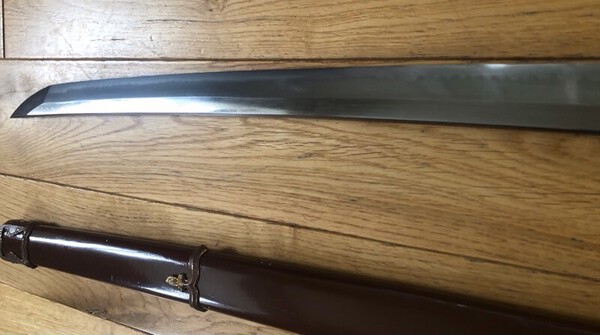
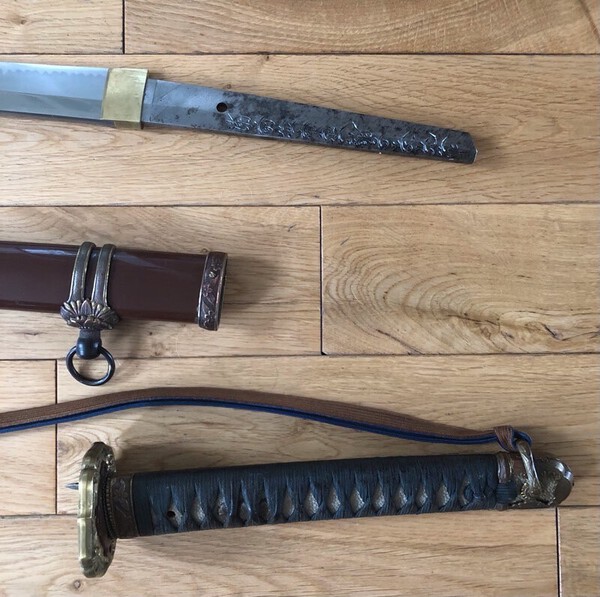
Thought I’d share my sword with the Military sword / gendaito enthusiasts. I’ve read many of the old threads on NMB regarding Ichiryushi Nagamitsu and the debates around the many mei used to sign his (or in many cases his students) swords. In my mind this rare example, having both his “full-Monty” mei and a date is, undoubtedly, the work of the man himself. “Bizen ju Ichihara Ichiryushi Nagamitsu saku” and dated to May, 1944. There are no stamps whatsoever to be found on the nakago. Original, wartime polish. Slough’s book shows a similar example and I have only found reference to two others similarly signed pieces. Mine has quite a late date. I suspect that the green-blue ito and use of Type 98 mounts, rather than the more common Type3 seen on other later Nagamitsu blades, points towards this being a special order / custom made sword. Any observations, comments or new information regarding this fascinating smith greatly received. Kevin.



 1 point
 -
I'd like to avoid making a generell assessment here. I haven't seen or heard of a Yasukunishrine sword in this type 3 mount yet. (after over 35 years of collecting) But that doesn't mean everything! a few in Kai Gunto over the years However, I've occasionally purchased from Aoi Art over the past few years and have been sttisfied with both, the service and the product.1 point
-
In the case of tassels, ironically, I've found fleabay to be honest. For some reason, the sellers of reproduction tassels on fleaby normally post them as reproductions, and you will almost always see that they are shipping from China. The place I tend to see weird tassels is when they come on the swords, themselves. The G.I.s seemed to have often put cords of any style and condition on their souvenirs. Of course some of that was done post-war by Bubba's too. But, the end of the long story is that I haven't seen much intentional deceipt among tassel sellers. The key, like spotting fake swords, is to study the real ones, like on Ohmura's site or in books, or in hand, to know the fake when you spot it.1 point
-
I like the list here. http://www.militaria.co.za/nmb/topic/13791-ebay-shibata-ka/?hl=%2Bakimoto+%2Bakitomo&do=findComment&comment=145445 Especially these 10: Tsukamoto Okimasa Kotani Yasunori Kajiyama Yasunori Ota Chikahide Gassan Sadakatsu Kasama Shigetsugu Takahashi Sadatsugu Miyairi Akihira Horii Toshihide Takahashi Yoshimune1 point








































This leaderboard is set to Johannesburg/GMT+02:00