
Leaderboard

Popular Content
Showing content with the highest reputation on 10/21/2025 in all areas
-
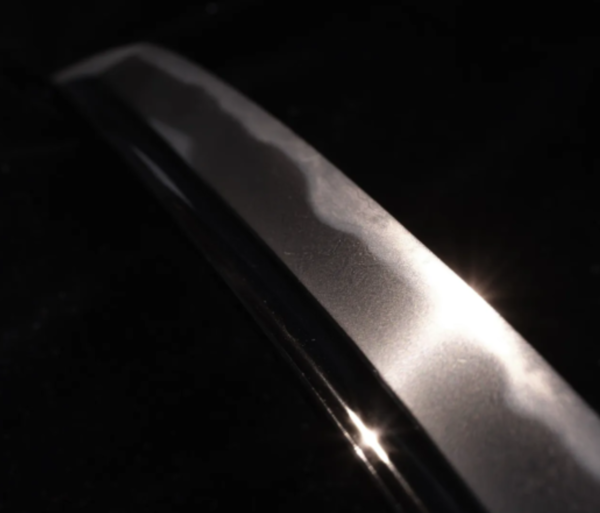
Hi, I can certainly chime in. Regarding your first question: There are a few chu-saku Muromachi and Edo smiths that have a tiny number of Juyo blade. for example, Kiyonori, Ujishige and so on. Less than ten of them. However, all these blades are in absolute mint condition, signed and ubu and critically, these swords pass during the lax years of the 70's, and today they would be mostly considered "Juyo in name only" (JINO, as Darcy used to say). The only chu-saku smith that passed later than than the troubled "phonebook" sessions is the Edo smith Kunimasa, and even then, no chance in today's extremely difficult and competitive sessions. These blades are difficult to sell in Japan. You see a lot of JINO online catering to the foreigner market. In this day and age, no chance. The question is too general to be answerable. In general: fixation on Fujishiro's ratings is a good starting point but inevitably incomplete, and it also requires the understanding that Saijo saku in Kamakura is not the same as Saijo saku in the Muromachi, as he normalizes his rating according to the median of the period. Also, there are many extremely rare and unrated smiths from the Koto period with masterpieces that have J and TJ blades to their names. Typically, from the Ko-Bizen, Ko-Ichimonji, or Ko-Aoe schools. As mentioned, there are also underrated ratings by Fujishiro (Some Sa students, Some Kamakura and Nambokucho Aoe, and especially glaring ones like Kencho, and most egregious of all, Ichimonji Yoshifusa). On passing Juyo and above. It's important to recognize just how correlated things are and, as a result, how easy it is to get confused: great smiths are more overwhelmingly more likely to produce top quality blades, top quality blades in great state of preservation are more likely to have been in important collections (Daimyo, Imperial...), more likely to come with an origami or Kinzogan by a Ko-Honami, more likely to be Meibutsu, more likely to be highly rated by Fujishiro and Dr. Tokuno, more likely to be featured in exhibitions in Japan, more likely to pass Tokubetsu Juyo, and so on. It's easy in this context to think "oh it's juyo because it has denrai to the Tokugawa" - but, at Juyo, this is mistaking correlation for causation. The seed of everything is the quality of the blade in the artful sense. Appraising quality is no trivial matter and requires ample exposure to masterworks until it clicks. There are many classical traits associated with artfulness that are highly appreciated, and were seldom reproduced after the Golden Age. To name a few, these features include a 'wet' looking jigane (uroi), utsuri in its various expressions, a bright and clear nioiguchi (Akaraku saeru), a deep nioiguchi, a sense of unaffectedness, the variety and quality of nie, control over the expression of the nioiguchi, and so on. How these traits are expressed by the three major traditions vary, but they all have a physical basis, they are not "in the eye of the beholder". And yes, there is a component of taste. However, It is not a mere social construct that swords that possess such attributes are considered the best swords. First, there is a biological basis to this in the human brain: it is these very swords that tend to elicit aesthetic emotions in the broadest set of viewers. When steel appears wet like a deeply frozen pond unveiling hidden layers that the mind cannot quite discern, when nie covers the edge like ethereal snow, and when it all appears inevitable and natural, as if the human hand had played no role into bringing this object into existence - It is such encounters that can have profoundly moving effect on the observer. There is a name for the trigger of this emotional response in classical Japanese aesthetics, it is called Yūgen (幽玄), and differs from the Sublime in that it unfolds progressively rather than all at once. When the sword looks flat, the steel grey, the hamon is empty, and the nioiguchi looks drawn with a crayon, it cannot produce such an emotional response in the viewer. And there is an entire continuum in between. Second, it is widely believed that quality in the artful sense correlates positively into the physical reality in the performance sense, and there are very valid metallurgic and historical reasons to believe in this relationship, but this veers into a different conversation. Now, it is important to understand that Juyo means important, it does not mean masterwork, or that it is one of the best blade by the smith. There can be other reasons why a blade is important - for instance, while it may have no boshi and ample hadatachi in the ji, if it is the only extant work by an obscure Ko-Aoe Smith, and on top of it, it was not featured in the Meikan, then it is important by virtue of its scholarly value. The same reasoning on rarity occurs for mei, a signed sword by Norishige is of superior scholarly value than a signed blade by an Edo period smith. The delta knowledge that the sword brings to scholarship affects its Juyo worthiness above and beyond its artful quality. At the highest level, when deciding between keeping a sword Jubun or making it Kokuho, exceptional provenance is also considered over and above its correlation with quality. All else considered, a masterpiece Sukezane owned by Nobunaga is more likely to be elected to Kokuho compared to one exhibiting the same artful qualities and condition but no provenance. Hope this helps, - Hoshi
 8 points
 -
In regards of the upcoming Dai Tōken Ichi (DTI), I was asked by a few readers if I can do another 50% off eBook sale, which I happily comply with ☺️ https://markussesko.com/2025/10/21/dti-ebook-super-sale-2/6 points
-
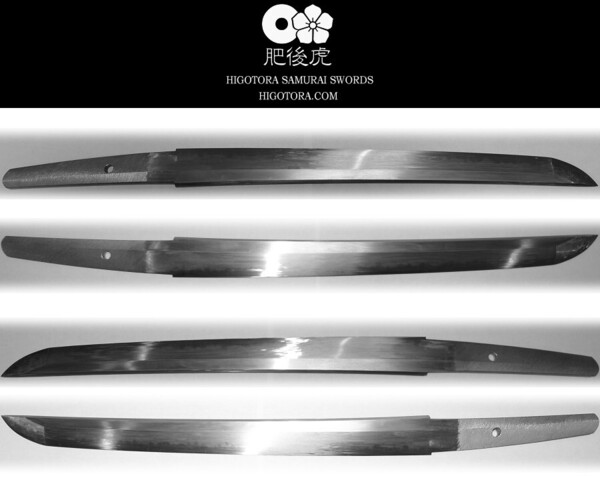
The sugata does not suggest tantō to me – it rather looks like the fragment of a longer blade (wakizashi or katana) where someone crudely attempted to shape a new "kissaki".5 points
-
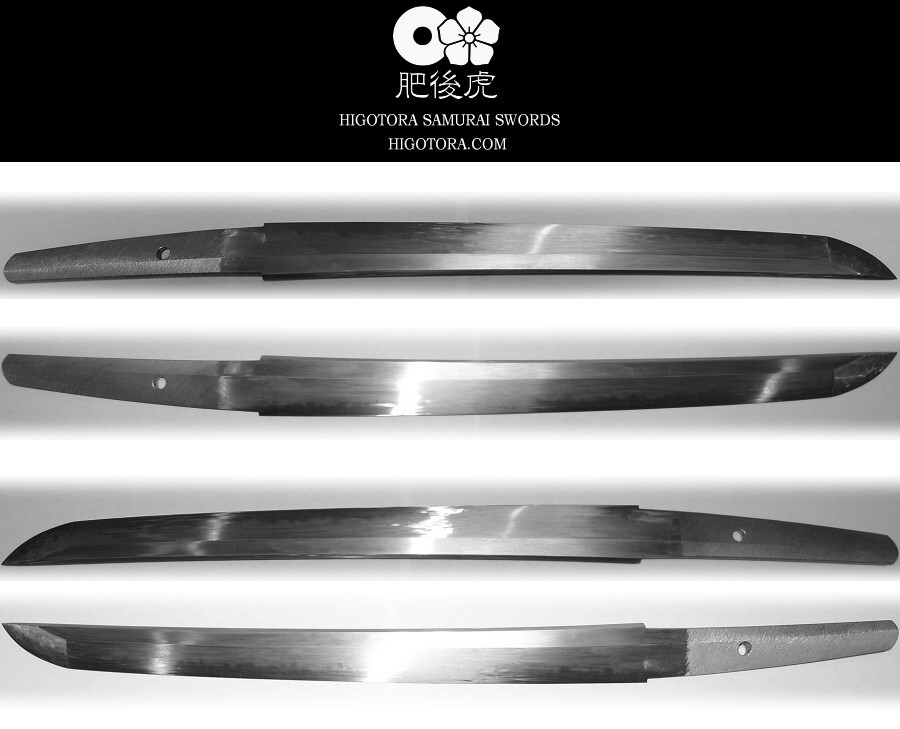
It is very rare to see a shinogizukuri tanto. When I see such a tanto, I usually think that it may be a reshaped blade from a broken katana. However, there is a swordsmith who makes genuine shinogizukuri tanto in Japan. Ref. 鎬造り短刀|製作事例|肥後虎-HIGOTORA
 4 points
 -
Byakudan-nuri can be found here and there but it is not exactly common, and yes, it suggests a wealthy patron or someone with status. There has always been a culture of swapping out bits of armo(u)r for any number of reasons, and may well start with damage on the battlefield (repairs needed immediately) and the passing of inherited armo(u)r down each generation with changes in fashion. You could say that katchū is in constant slow-moving flux.4 points
-
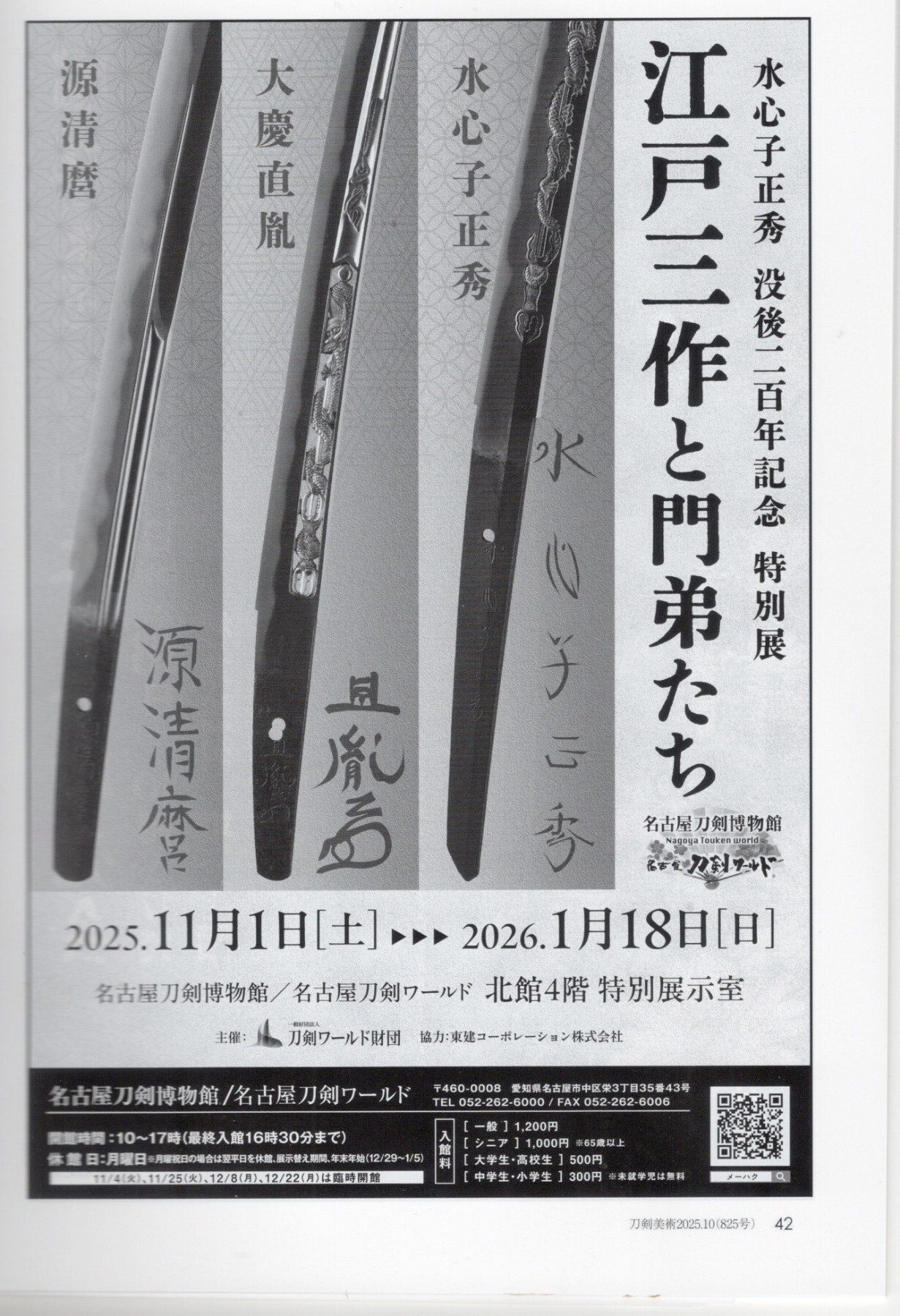
Visitors to Japan for the Dai Token Ichi who will be around the week following the DTI, should consider a trip to Nagoya to Token World to see the exhibition that opens on November 1st (running until next year January 18th) featuring Kiyomaro, Naotane, and Masahide! This museum is closed on Mondays. Hope to see you in Japan! Robert Hughes
 3 points
 -
https://www.dropbox.com/scl/fi/gkfcfqc6gs14invoeg6hn/KanzanHakogaki.pdf?rlkey=5i89f80fkbbf60x67f1lloa2k&st=zfh4ao27&dl=0 I'm not sure where it would be more appropriate to post this — in the Translation Assistance section or in Tosogu (please, Brian, place it wherever you find most suitable). I’ve compiled a short collection of transcriptions (kanji + romanization) of some tsuba hakogaki from Satō Kanzan. Although the examples I’m presenting are among the best-documented ones I could find online, I’m far from confident that the transcriptions provided are reliable. All the text shown in black should be reasonably accurate; the text in red is, at best, an educated guess; and I’ve marked with red stars the characters whose transcription I’ve no idea about. Some inconsistencies are evident and may perhaps be attributed to likely forgeries of the hakogaki. For each hakogaki, I’ve included the website link from which I took the images, which I believe should serve as proper credit to the original owners. Of course I’m ready to remove any material upon request from the rightful holders. In any case, this is entirely non-profit, and I am not a professional in this field. I would be very happy if forum members wished to contribute with comments, corrections, additions, or perhaps even further examples of hakogaki by sharing images from their own collections. I intend to release a final, corrected version here on the NMB forum within about a month or so. Thank you for reading.3 points
-
Remember that this thread is focussed on the evolutions in iron tsuba, if I have understood it correctly. Beautiful elaborate sukashi work in copper brass, gold, silver and gilt was evident in armor fittings from very early on. The artistic techniques were certainly there for soft metals. Returning to iron, holes were drilled in the iron of kabuto plates and shapes were applied to the edges of iron haraidate-dai, upright holders for maedate. There were fashions for Kabuto bowls such as for the famous bulbous Akoda shape, indeed I sense fashions in Kiku chrysanthemum tsuba could have followed these as the triangular iron bowl plates curved outwards, following numbers such as 12, 16, 24, 32 or 62 etc. Kuruma ‘wheel’ tsuba (not Guruma, except inside compound words) also favoured set numbers of spokes, as did kiku chrysanthemum tsuba. There may have been corresponding fashion changes in armor outfits that included kabuto and tsuba on swords. But in iron? Did they have the files for fine work? Am I alone in seeing numbered spoke consistencies between kabuto plates and tsuba spokes? Here is a tsuba for age consideration. What do we think? An evolution from older yamagane tsuba? The hitsu ana are contemporary with the tsuba.
 3 points
 -
Today I discovered the reason for this use of three blades for 州 Shū province. The kanji can be seen as three ‘standing’ 立刀 ‘rittō’ blades. See the right side of 割, for example. 3 of these blades, but then piled neatly in a heap, = 刕 Although it is not included in many dictionaries today, it was a conventional usage often found in 古文書 old manuscripts.3 points
-
Hi Julien, Here you will find a Care and Cleaning lesson. https://nbthk-ab2.org/sword-characteristics/ Unless you know all this already you should read it. I'm nearby in Duluth; if I can help let me know. I'm no authority but I have been studying for 40 years. Grey3 points
-
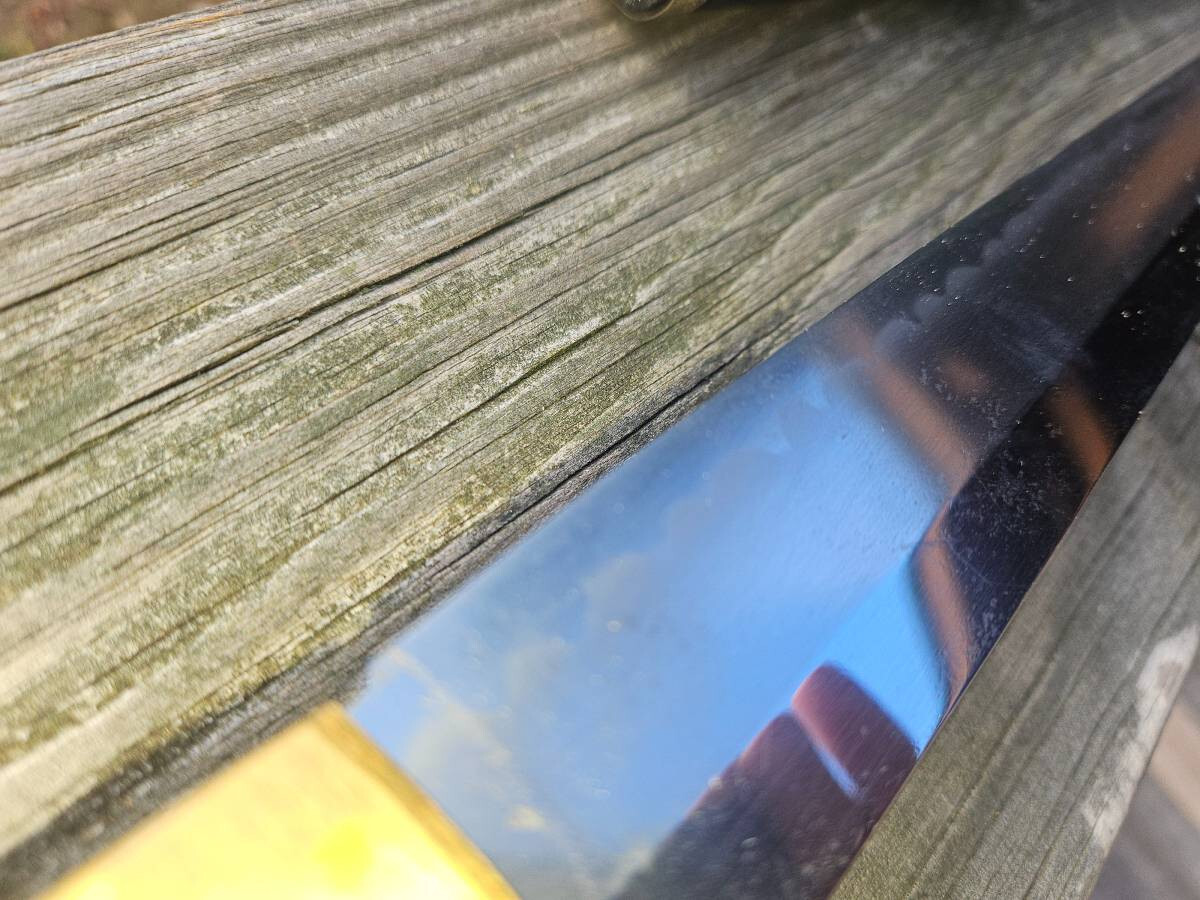
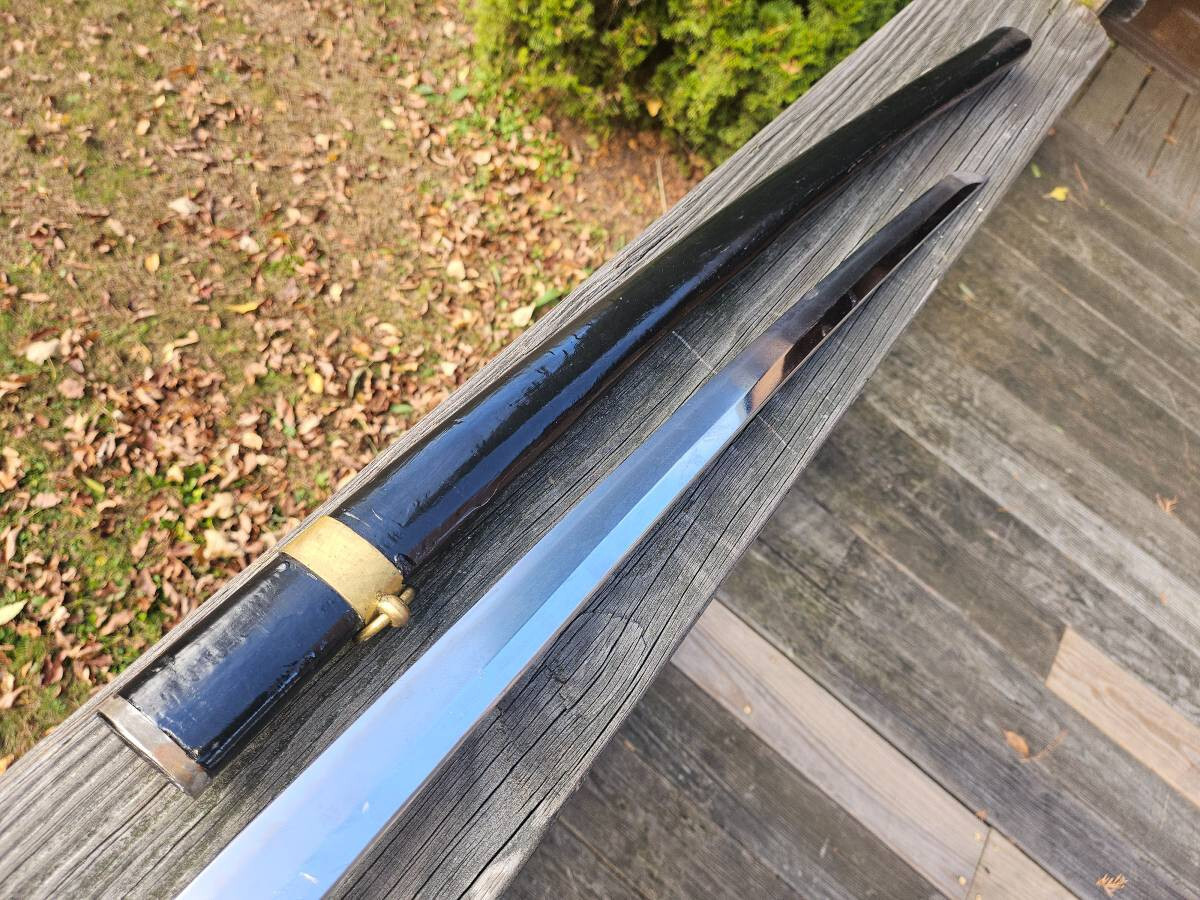
@Slaborde @Bruce Pennington Sara well done with pics. Yes blade has a hamon, its not fully straight (suguha) but is slightly wavy, but hard to see. Looking at all your pics, my guess would be: a WW2 made sword by a good smith, and is a "Showato" (not traditionally made and not with tamahagane special iron) so would be oil tempered, but a well made example. Looks to have been mounted as a "samurai" katana, and may well have had a reasonable tsuba (guard) and someone has swapped it for a wartime gunto tsuba and cheap seppa (washers). It could have been a custom order as a katana, and could have had a leather cover on the saya (scabbard) and used by a civilian working with the military. Probably your dad got it like this, so is worth looking after. (do NOT use abrasives on blade or nakago (tang) over mei (signature). Follow what Bruce says.3 points
-
Julian: Firstly, nice sword. As far as it belonging to a general, it's hard to say. The tassel that is on the sword, if original, is not the type that would be on a general's sword. Secondly, and more importantly, as to returning the sword to the family: this would be problematic for several reasons. As a military sword (assuming the blade was made during the Showa era), you most likely would not be allowed to bring the sword into the country. There are some extremely strict rules regarding swords and registration in Japan. Additionally, many Japanese families would rather not have a "war" reminder of their relatives. This is of course a generalization, however it is often true. My suggestion would be to continue having fun doing the research and the discovery but not worry about returning it. Regards, John C.3 points
-
Piers, these are intersting and valuable ideas! But we shoukld not forget that our ancestor craftsmen were inventive and even ingenious. Grinding with stones is a neolithic technique as well as drilling, and all iron-working cultures found ways to use similar tools. Coming back to early iron TSUBA, we see that piercing/SUKASHI techniques were dominantly executed with chisels, and only the finishing was done by grinding and filing. If I remenber correctly, in his videos, Ford Hallam showed the use of small grinding stones in his work - not his invention, but learned from his master. Just remenber AKASAKA TSUBA with heavy chisel traces (not removed or ground level!) on the inner side of the MIMI! Files were used much earlier than metal saws in Japan, so we should not look at iron SUKASHI TSUBA with the notion of our present technologies. And there is another point we often forget: Working time was no issue in former eras. The goal was the finished item, and people were not paid on working hours but on the quality of the single workpiece. So "working slowly" is just a picture in our brains as we live in times where speed is dictated by machines. When a beaver is gnawing down a tree, he rarely looks at his watch - he works until the tree falls.2 points
-
Yes Dale, roughly 9.5 x 9.5 x 0.5 cm. The Metropolitan example has a smooth rim, more like a wheel. Here are a couple more:
 2 points
 -
Piers, do you have the dimensions of that kiku tsuba? It looks very similar to one in the Metropolitan Art Museum - especially the hitsu. One of mine - only one hitsu
 2 points
 -
Jack, we are all learning! No sweat! The question is what you can learn from items like yours. After a while, I think you will want to "upgrade" a bit to be able to get more information out of your treasures. That is basically the fun in collection items like these: We want to know who made them and imagine/speculate who might have carried them.2 points
-
I would take Grey up on his offer. He's too modest. He knows more than most of us here, and will be able to guide you properly. I agree with the statements above about returning swords. The successful ones are by far in the minority, and most modern Japanese do not want reminders of this past, and regard these as weapons. Plus the logistics are considerable. Preserving and researching it would be a fitting tribute. Nice sword that does deserve some research, and appears in decent condition.2 points
-
Almost certainly a real Japanese blade, but clearly broken off at the front and reshaped into a shorter blade. What you have is the rear half or 2/3 of a longer blade.2 points
-
It's simply a case of the Ideal giving way to the real. Oaths and loyalty are beautiful and necessary, but humans are faulty and fallible. One of the most recognized examples is the marriage oath. Swearing before God and Man to be faithful, yet many fail. Swearing "...till death do us part," yet divorce is rampant. Some people, by nature, are idealists. Some simply pragmatic.2 points
-
Hi Krzysio, is that your name? We like to have at least a first name for members here so we can be personable. Just forum guidelines Congrats on your first Japanese sword! Very exciting. It is a very nice pattern2 example with low serial number and aluminum hilt. The copper fuchi has the Iijima factory stamp, TO ( 東) stamp, and the Kokura 4 cannonball stamp. Something particularly interesting about your sword is that it's amongst some of the lower serial numbers out of the Iijima Factory. Thank you for sharing, and welcome aboard! Best regards, -Sam2 points
-
Thanks Mauro! The compiled version is certainly going to be a valuable resource for everyone. It may also serve as a window into how certain types of mumei tsuba were being classified by Sato Kanzan (and by association, the NBTHK) during that time period. It could be a useful benchmark to see how similar tsuba are being papered today and note the shifts in attributions in recent times. Not to mention, seeing some great tsuba examples along the way2 points
-
Krzysio, need to see more of the blade and nakago (tang). Looks like saya has been repainted. But looks a nice sword to start. Here is the smith: 兼定 Kanesada (岡田 定男 Okada Sadao) Born: Meiji 38 (1905) Sept 9; Reg Showa 14 (1939) Oct 8. Died September 1, 1966, age 61. 1937: Bugi-gun, Seki-machi, Otsu 1921/2. 1939: Seki-machi, No-machi. Deshi in 1937: 0. History: trained as swordsmith from Showa 10 (1935) April under Okada Kaneyoshi . Summary: during the war was employed by Noshu Nipponto Tanrenjo. Brother of Okada Kaneyoshi. 1938: 3rd shinsakuto exhibition received Nyusen-sho. 1942: Tosho Banzuke 6th level of 7 (Chuge Saku) Example mei: Kanesada 兼定 Noshu Seki ju Okada Kanesada saku 濃州関住岡田兼定2 points
-
水心子正次 + KAO stamp : suishinshi masatsugu2 points
-
Okada Kanesada saku https://www.google.com/search?q=Okada+Kanesada+site%3Awww.militaria.co.za&oq=Okada+Kanesada+site%3Awww.militaria.co.za+&gs_lcrp=EgZjaHJvbWUyBggAEEUYOTIHCAEQIRiPAjIHCAIQIRiPAjIHCAMQIRiPAtIBCTEwMTI0ajBqN6gCFLACAfEFhppvZqzPTbLxBYaab2asz02y&client=ms-android-google&sourceid=chrome-mobile&ie=UTF-82 points
-
Let me just say afew words with out derailing your wishes. Its not a Gen grade shingunto, its a showa period ceremonial tachi mounts of lowish quality. The hole silly idea of returning swords to Japan is in 99% of all cases/stories is a fantasy. Most people in Japan have very little interest in nihonto or having there history reopened. If it was me just keep it, its worth more to your family, then the others, if if if you ever find them. Because there are literally 10 million stories of general swords.2 points
-
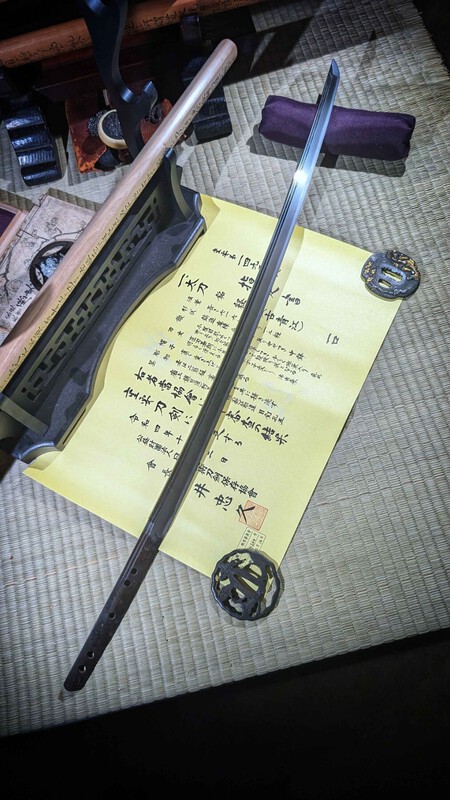
That Ko-Aoe Tsuneyoshi from session 68 is mine... Beautiful piece.
 2 points
 -
It is the sword that obtains the Juyo, not the smith. Some average blacksmiths have sometimes created high level swords2 points
-
I should start by being more specific about which "sukashi" I am referring to. I am talking about iron, ji-sukashi tsuba (majority of the plate cut out), like an Owari or Kanayama, or the more elaborate Katchushi and Tosho, or even Yamakichibei which tread a fine line between ji- and ko-sukashi. There is absolutely no evidence of their existence before the Azuchi-Momoyama period. There are varying dates for the Azuchi-Momoyama period depending on the source: 1573-1603 1568-1600 1573-1615 The major work of reference written by Sasano in Japanese and English theorized that there must have been elaborate sukashi tsuba during the "golden age" high art period of the Muromachi period (1336-1573), under the Ashikaga shogunate in the Kyoto (Heian) area. He asserted that the themes and aesthetics of sukashi tsuba showed some similarity with some of the imagery and styling in the paintings from that period. I would argue that these were perfectly reasonable theories, but they simply aren't backed up by any hard evidence. So without any corroboration, we simply cannot continue to rely on this theory as fact. Given that there were no period documents to confirm or deny the existence of ji-sukashi tsuba before the Azuchi-Momoyama period, I had the idea to go looking for legitimate, dated paintings from the Muromachi period. In all the examples, what was depicted was the following: 1- samurai posing for a portrait all had the fancy narrow tachi tsuba 2- samurai in battle on horseback had large solid round tsuba on their long swords 3- samurai on foot using shorter uchigatana typically had no tsuba at all, and if they did, they were solid and round. There were absolutely no sukashi tsuba of any kind in any of the period paintings that I could find. If anyone can find another example of a period painting with legit dating, that does show even a single sukashi tsuba, then we could potentially start pushing the date back to that time period. So what did exist during most of the Muromachi period? There were sophisticated tachi mounts with elaborate filigree work. There were also some soft metal aoi/mokko shaped guards with "four corners inome" ko-sukashi (boar's eye small cutouts), but that's about it for sukashi. There may have even been some solid leather guards that may have used a thin metal plate as a core. Now there was an excavation of a destroyed Ashikaga castle, where they found some simple brass "kiku" sukashi tsuba (chrysanthemum pattern openwork). But, it's important to remember that the Ashikaga were overthrown by Oda Nobunaga, who took control of Heiankyo (Kyoto) in 1568 and expelled the Ashikaga in 1573 (hence the two start dates for the Azuchi-Momoyama period mentioned above). Retrieval of these artifacts was then used (wrongly) to justify the existence of ji-sukashi tsuba throughout the entire reign of the Ashikaga during the Muromachi period. So when did the production of ji-sukashi really begin? There is a growing number of collectors who realize that the most likely time period of their first production was during the Azuchi-Momoyama period of the mid to late 1500s So what was the driving force of this significant shift? The arrival of the first European (Portuguese) ship in 1543... when foreigners landed wearing their rapiers with elaborately sculpted arabesque hilts. If you can find a high res image of this, there are samurai in the far right of the painting, some of their tsuba just aren't visible, but none of the visible ones are sukashi tsuba. Why is this an important event? The arrival and influence of the Europeans, along with pirate raiding along the mainland coast of of the Asian continent, both together are referred to as a period of "Nanbanism", and whose influences fed into this period of change where the samurai had risen to prominence and overthrown the shogunate government of the past. The Azuchi-Momoyama period was a time of accelerated change and personal expression. Paintings of samurai during this period show a tremendous diversity in the way samurai were wearing their swords, including the first foray of samurai wearing a daisho pair (katana and wakizashi). It's precisely this period of time when tachi were mostly swapped out for katana that were worn through the obi, which positioned the tsuba at the front and center of the samurai's body rather than slung low and at the side of the body (in tachi style). The now prominent positioning of the tsuba plus the general zeit-geist of change and personal expression is when ji-sukashi were most likely produced... and inspired by the elaborate hilts of the Europeans who had arrived in 1543 and were trading regularly with the Japanese through the port of Nagasaki from 1571-1639, until the country was put in near total lock-down and isolationism during the Edo period. So back to Ashikaga find... The Ashikaga had from 1543 till 1568... some 25 years of interaction and influence from the Europeans, that they likely began producing those simple geometric ji-sukashi tsuba like the kiku (chrysanthemum) forms, and mayyyybe some simple geometric kyo-sukashi type tsuba at most (but none were found in that dig). It probably wasn't unitl Nobunaga and Hideyoshi were in control that the classic ji-sukashi tsuba like Owari, Kanayama, Yamakichibei, Heianjo-sukashi/kyo-sukashi were born and explored... otherwise we should have expected to see some more elaborate sukashi tsuba in the Ashikaga ruins, which we did not. So at best there were simple ji-sukashi forms like the kiku sukashi in the last 25 years of the Muromachi period, but not earlier. I'd love to see any evidence that can push the date further back. Conjecture and doctrine simply won't due at this point.1 point
-
Maybe @Kiipu already has the answer. But I will add: If such carry over did occur, it would be a very interesting data point. And a key detail in that narrow transitional period between the Copper and Aluminum tsuka. I’m beginning to suspect one of two possibilities: - They simply don’t exist: the transition to 9mm tsuba may have been complete at the time of aluminum tsuka production began; and overstock was repurposed elsewhere. - Carry over occurred in very limited and factory-specific number, for example: perhaps only the earliest GIFU stamped swords, or maybe 11mm tsuba overstock was only given to select contractors like Iijima. This is a mystery I would really like to help unravel. If anyone has any photographic evidence, firsthand examples, or period documentation to show this carryover, I’d love to see it. I have been actively searching. I hope that we can figure this out, even eliminating possibilities helps us move closer to the truth. All the best, -Sam1 point
-
Piers, thank you for the response and information!1 point
-
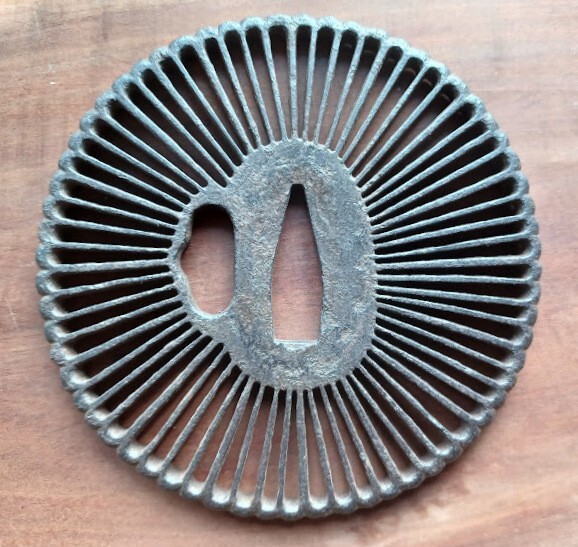
Difficult to say for me what was first - YAMAGANE or iron in this kind of TSUBA? But I don't remember the so-called SAOTOME TSUBA being made of copper. Referring to the HITSU, this TSUBA could have been made pre-EDO. I have seen these TSUBA made from small parts (= single spokes) that were fitted into the MIMI rather than cut out of a solid blank. Age of my below pictured TSUBA: No idea, I guess early to mid EDO. In any case, it must have been a lot of work! Compare this one with 64 petals (Diameter 94,5 mm)!
 1 point
 -
Thank you Piers for this explanation.1 point
-
Agree with Brian, total scam that adds non-existent tax and fees to items that don't require them. Also forget buying swords using the GSP, they aren't accepted and have heard stories of the item being seized, money refunded, and sword summarily 'destroyed'.1 point
-
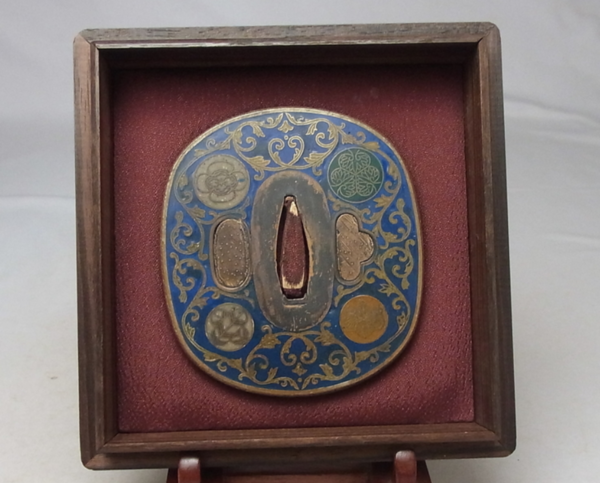
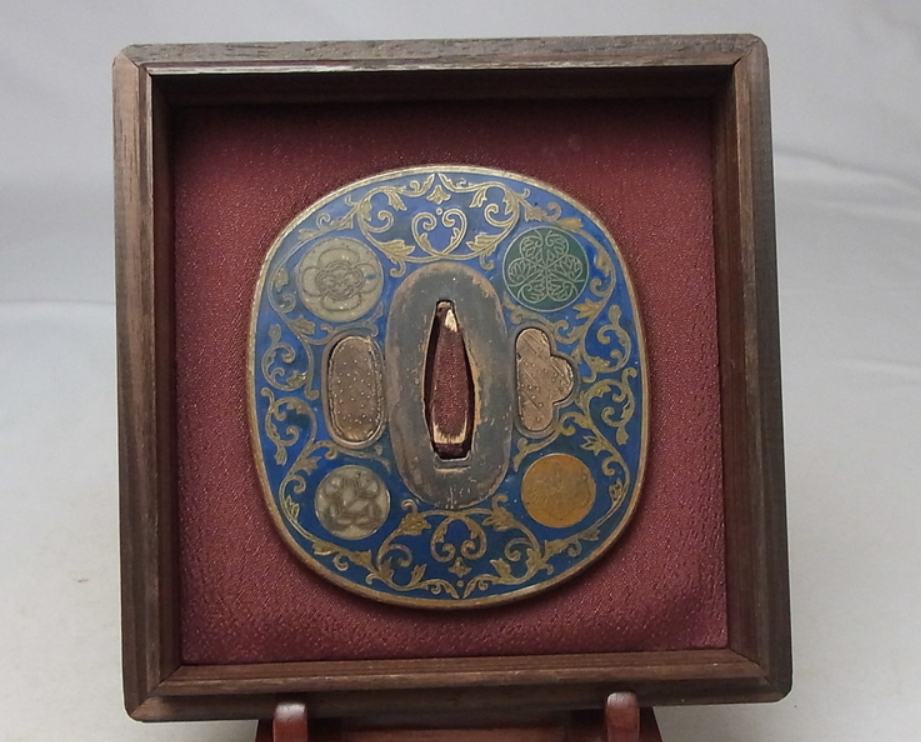
Hey Mauro, Thanks for compiling these. I recently purchased a tsuba that appears to also have a hakogaki by Kanzan. You may recall seeing my thread about it a couple months ago... Figure I would re-post it all here and you can assess whether it is a close enough match to add to your compilation! Translation: 鐔 - Tsuba 七宝紋所之図 – Shippo, mondokoro no zu (figure of family crests) 朧銀磨地 – Oborogin, migakiji 七宝紋散 – Shippo mon chirashi 金覆輪 珍品也 – Kin fukurin, rare item 無銘 平田彦四郎 – Mumei, Hirata Hikoshiro (attribution) 昭和壬子年秋吉日 – Showa Mizunoe-Ne year (1972), autumn, a lucky day 寒山誌 – Kanzan wrote.
 1 point
 -
Mal, thank you for joining the discussion. My slight modification would be, and strictly just opinion/theory, it was made and sold fully as a civilian sword. Then, a shop or an officer, bought it and had the army fittings swapped in, including leather cover (these quite often never make it to us in this day and age). But that's just my opinion and we all know what those compare to!!! Ha!1 point
-
Thank you Ray Is this sword considered to be good addition to modest collection? There is no arsenal stamp on this sword.


 1 point
 -
Sad news to learn that we lost a treasure. The comments above are well said. He will be remembered by those who crossed paths with him. Fond memories, shared, live on.1 point
-
Yes, I have three Type 98 mounted gendaito with mon. All have 8 seppa, one has a cut through guards, two have aluminium saya. One mon is picked off before surrender. One mon is cut off before surrender (silver mon 'stub' is still in hole). One still has its mon. So, in my case, 2 out of 3 mon were removed.1 point
-
I recently tried to purchase a book from Japan. I was told that I had to pay the tariff up front; that the shipper wouldn't proceed unless the fee was paid. On top of that, the shipper would charge a service fee somewhere between $5 and $30. The deal didn't happen. I recently sold a book to Europe and the buyer arranged with a 3rd party to have UPS do the shipping. I was required to forward an extra $20 to the 3rd party, to cover tariff in case the buyer didn't pay. The buyer wasn't charged the tariff so UPS probably paid it and I'm stuck with it. I can't tell you how happy I am with our current government. Grey1 point
-
Nooope. Yours is a modern reproduction im sorry to say1 point
-
Don't. Give up on papering. It is over. Seriously. No, -really-, don't second guess this. DOA. So many headwinds for USA collectors, unless the Supreme Court actually rules against the current Tariff regime. I sent stuff before the Tariff shenanigans began. At present, it looks like I actually have to go to Japan to retrieve them.1 point
-
Hmm. Pistols are considerably more sought after than long guns, and this one appears correct and not shortened. I think that's a great deal.1 point
-
Many knew Guido for his acerbic wit, potent intellectual bon mot and direct, trenchant delivery. He was a man of many talents as we can see from the photos above. I would like to share a different, lyrical side to the man, larger than life. He did say he would chase any of us using his special service contacts if any of this ever surfaced but I think this is an important tribute to the great Guido. Well, I have cut the two songs he performed to a short illustrative snippet as Brian will probably not like 300MB of the entire performance on his server. IMG_3212.mov1 point
-
Thanks for letting us know Bob and sorry for your loss, and the nihonto community’s loss. These last few years I had often thought about Guido, hoping through some miracle he might wake from his coma… not to be. Guido was someone I respected very much, he was highly intelligent, full of knowledge and insight, and willing to share it, he also had a very sharp wit and more often than not our conversations would end in belly-laughing. Many years ago, when I first set out to become a nihonto craftsman, there were very few people willing to help me, most would just dismiss me as a foolish foreigner, but not Guido. He offered to meet up with me in Tokyo, a complete stranger from the other side of the world, to discuss all things nihonto and nihon. Over the years, we corresponded quite a bit, and we would sometimes meet up at nihonto related events, where we could continue our running in-jokes with each other. He was a gentleman and a scholar... with a strong sugata!! May he rest in peace.


 1 point
 -
I have held off on responding to this thread while I have been gathering my thoughts. My focus is on Pre-edo soft metal fittings, I need to know where we draw the line with Sukashi, because some Tachi Tsuba have simple Sukashi, not including Inome.1 point
-
I think Momoyama period is plausible, but yeah definitely not Owari work. Here is an image of the Tsurugaoka Hachimangū Koshirae with the Tsuba visible, that Jussi was discussing above. It can be reliably be dated to late Muromachi.
9.jpg.5d050c741c1c00b548b534569324a95d.jpg) 1 point
1 point -
Hi Jussi, Thanks for these references and images. The tsuba described as "Owari sukashi" belonging to the koshirae supposedly used by one of the Akechi certainly does not appear to be Owari to me; it looks, rather, to be an Edo Period design. Even if it were Momoyama, however, I don't see it being an Owari Province work. As to the last photo you include here of the Odachi, it looks to be a kiku-sukashi work. This lends credence to the understanding that kiku-sukashi and kuruma-sukashi tsuba may have seen somewhat sustained use through the Muromachi Period. If so, it would seem, then, that the big innovation would have been ji-sukashi designs that departed from these two forms, an emergence that, again, would not have occurred before the latest years of the Muromachi Period, and probably more likely, the early Momoyama.1 point
-
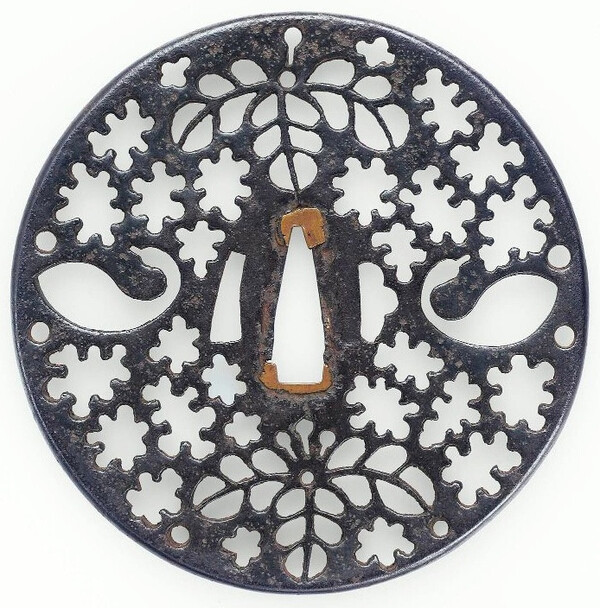
Concerning the timeline I waited for this Tsuba with controversial dating to pop up but now I yield it by myself: It is owned by the Museum of Fine Art in Boston and according to Okabe Kakuya who wrote the first museum catalog in 1908 it is a Momoyama piece. Okabe interpreted the combination of gourd and kiri as a hint to Toyotomi Hideyoshi and the background pattern of snowflakes is said to have been a popular fabric design at this time, too. I think even today the museum refers to this dating (see also „Lethal Elegance“ by Joe Earle). The very same Tsuba is depicted in Sasano’s TOSOGU NO KIGEN (1979). He focused on the peculiar form of the hitsu-ana. In the named book he sums up the development of Kogai and Kozuka pointing out that the early ones have a flat design while later with the Goto-lineage more and more relief-like decoration appeared. This makes it necessary to change the form of the hitsu-ana to larger, rounded ones. In correspondence with other examples showing similar primary hitsu-ana he dates it back to the Nambokucho period. About 200 years difference! There are others who dated it in between those periods and I don’t think there will be ever an ultimate answer. But why I mentioned this Tsuba is that the age estimation is based on one hand on the design, on the other hand on a technical background. Best, Florian
 1 point
 -
Common design/execution, appearing in numbers in Korea and Manchuria, associated with 16th century battlefields. They are more or less all alike, as shown in attachment. In local finds, they outnumber tosho/katchushi plates about three to one. This taking into account most plates are probably continental in origin.
 1 point
 -
The images in the picture are based on mere supposition. There is no image published and no one knows their exact images, even if some of them might still exist.1 point













.thumb.png.4c5df79fec171b2dc4a23af38e280a4d.png)








This leaderboard is set to Johannesburg/GMT+02:00