
Leaderboard


Popular Content
Showing content with the highest reputation on 09/09/2025 in all areas
-
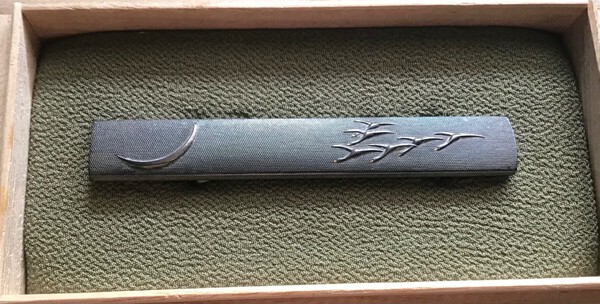
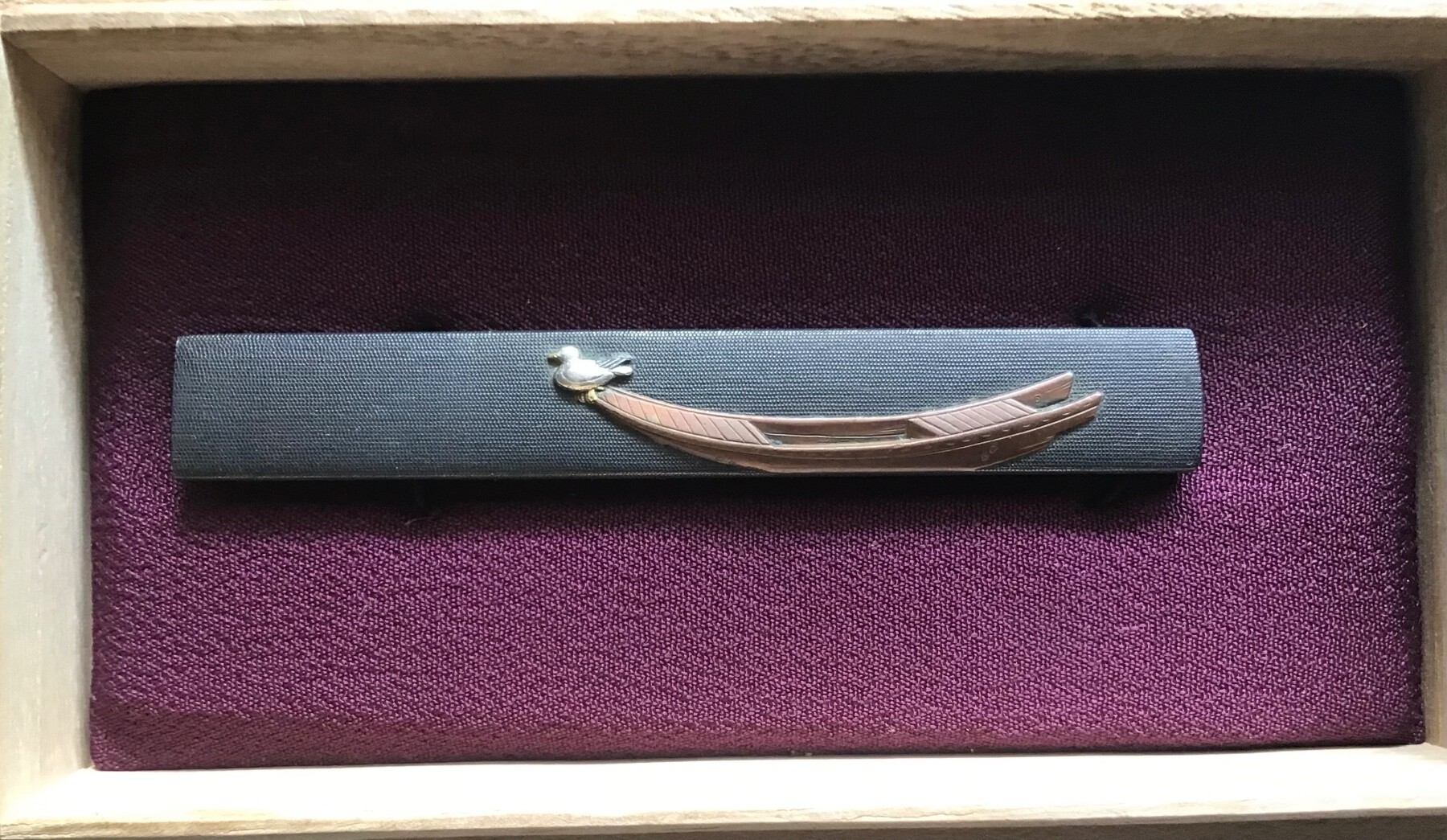
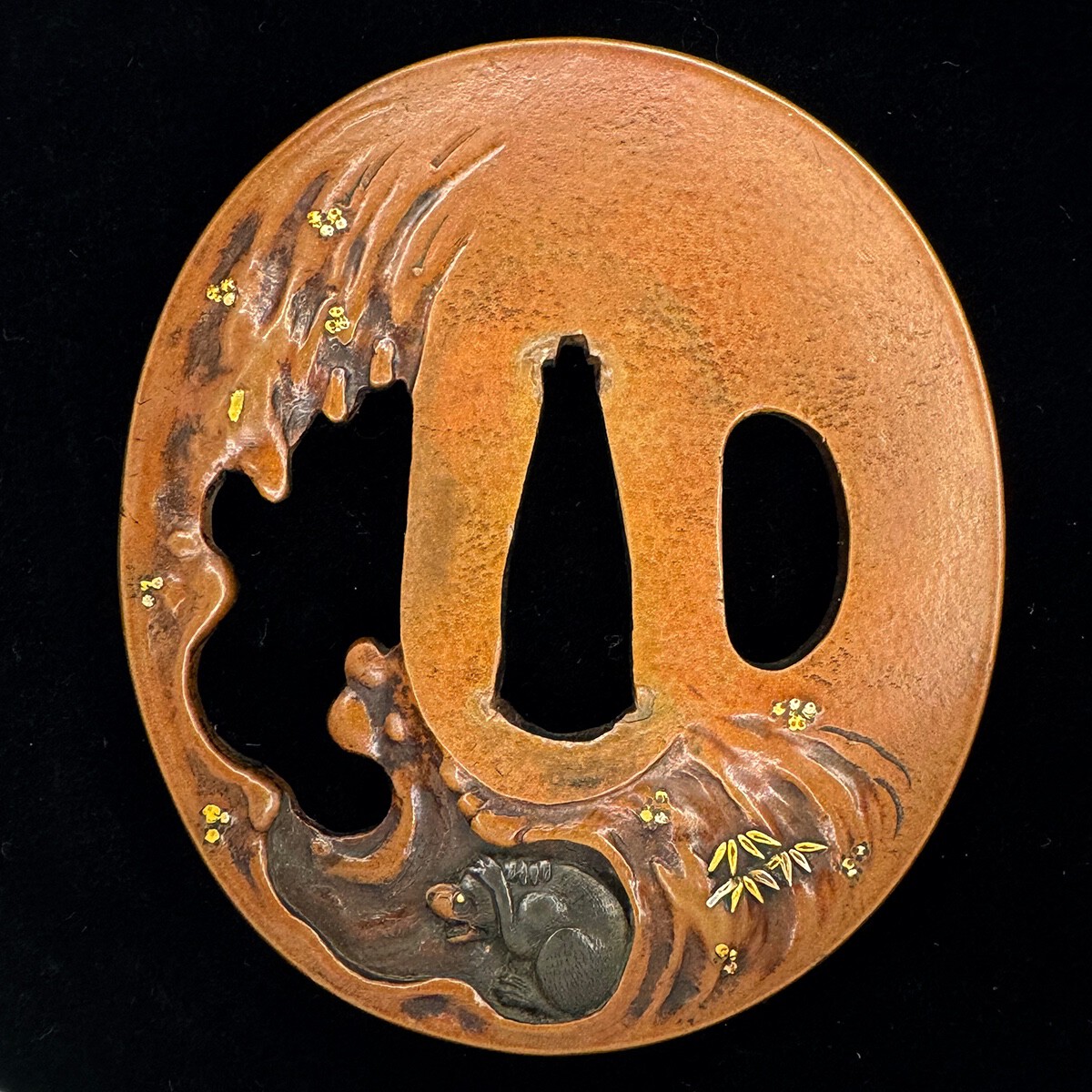
Couple of kinko kozuka. The duck on the boat is Goto.
 6 points
 -
There's nothing on the other side of that habaki? I can only take a guess at the meaning (employing a superficial word-for-word translation, which are usually wildly inaccurate). The ringing of the steadily-pounding hammers And before me Like autumn clouds The water (mist?) rising from the white-hot metal But...it doesn't seem very poetic, unless its a bit taken from some classic text that I don't know about.4 points
-
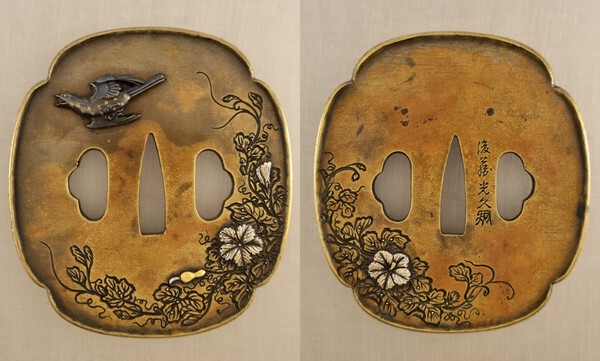
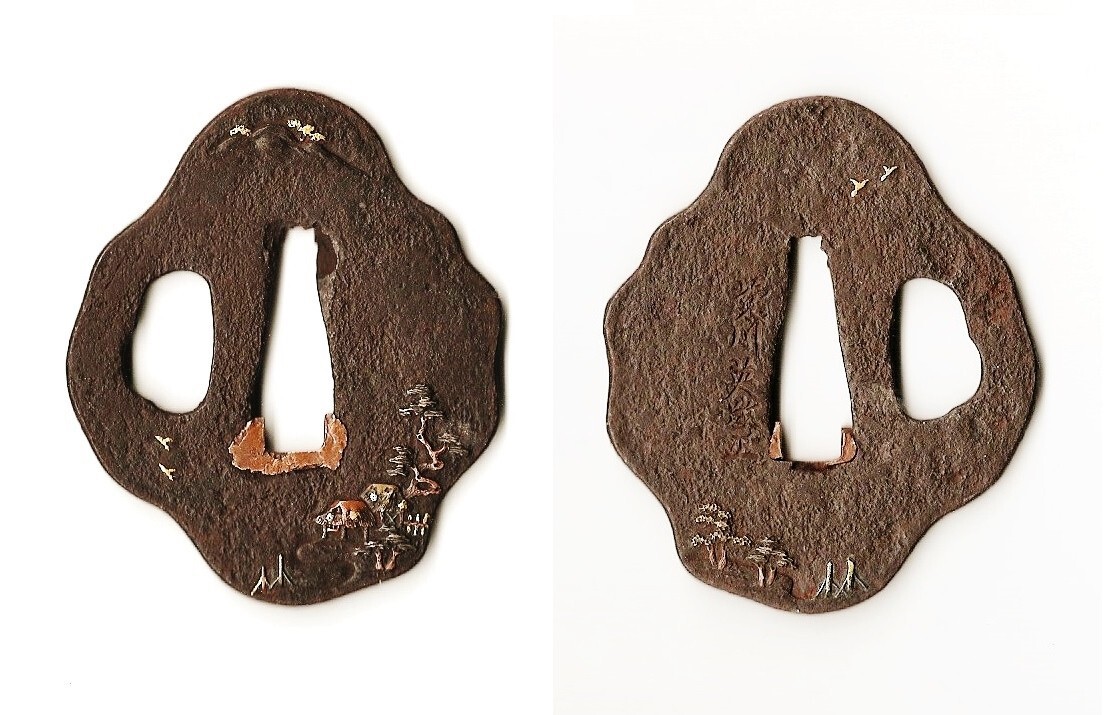
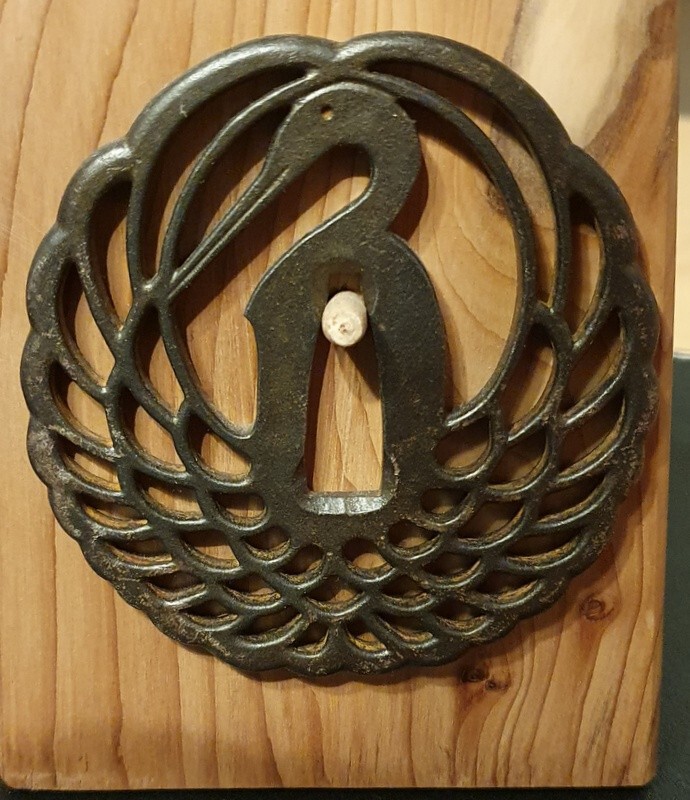
Here is my Cuckoo tsuba, I absolutely love the scenery and the bird with cresent moon on top is just a cherry on top.


 4 points
 -
These days, NMB isn’t the only place people turn to for Nihonto information. Free communities on Facebook and Reddit are active and often feel more approachable to newcomers. Many of us use those platforms too. The challenge is: why would a new collector choose to support NMB financially? Longtime members understand NMB's value, but for someone just starting out, that value can be hard to see. Especially if their first experience here feels more negative than positive. I sometimes see derogetory comments about NMB on other platforms, usually stemming from early interactions that left a bad impression. That’s concerning, and likely a barrier to growing membership. We can still be honest and maintain the highest of standards; but with a more encouraging tone for those who are still learning. My first ever boss once told me: "A person with a bad experience will tell dozens of people. A person with a good experience might never mention it." Creating a more inviting environment will go a long way toward helping NMB grow subscriptions in the long run. That’s how I see it, anyway. -Sam Edit: All good ideas above. Banner adds wouldn’t bother me either3 points
-
I don't want to add fuel to the fire, just a few considerations, always with a view to learning: I see a lot of confidence in the Shinshinto dating, but honestly, as others have expressed, I have some reservations... it's not rare but not common to find a Shinshinto osuriage blade. 0.65 Kasane for a Shinshinto blade is very thin... why all these polishes? Horimono atobori (I agree), but considering the kasane, this makes me think it was applied a long time later... early 1900s? I also agree with Alex that to spend the money on horimono, either the blade is worth it or the owner was particularly keen on it. The Nagasa seems to be around 66cm (Correct?), so we're in the uchigatana range... something doesn't add up here either... so the blade was made in Shinshinto and then shortened to uchigatana? Perhaps a personal choice by the owner... So, in my ignorance, I see three solutions: 1. The blade is older. 2. It's Shinshinto, and the blade has undergone an unconventional life/choice. 3. Shinshinto, and modifications have been made to make it appear older. Offtopic For what it's worth: There are tons of informative posts on the forum where people can understand how to approach a purchase, from various perspectives (Some even recent posts). Despite this, someone regularly posts about their newly purchased blade without having done any research. This should make us reflect on the pointlessness of setting up a roundtable of inquiries...there will always be people who do their research and those who don't, regardless of how many posts on the subject are made...for me, a purchase in itself is never a bad thing. I'm one of those who bought their first blade without knowing anything (the blade wasn't even for me). Without that purchase, I wouldn't be here today, I would never have bought books, and I wouldn't sleep with Nagayama on my nightstand. The purchase opened my eyes to this world, I realized there was so much more to know, and it gave me the motivation to delve deeper. This is to say that regardless of the advice, there will be those who want to delve deeper, those who don't, those who will have their own time to do so, and I think that from this perspective, the role of a forum like this is also to encourage people to continue along the path without making hasty judgments on hasty initial decisions. There's always time to redeem yourself All the best Giordy3 points
-
The Samurai Museum Berlin has a katana with a 74 cm nagasa, covered in horimono along its entire length. A very large naga-bonji has been added to the monouchi. The blade is by Hizen Iyo no Jo Munetsugu, has TokuHo and a sayagaki by Tanobe-Sensei from 2006. I am not a Hizen expert, but Munetsugu's horimono seem typical of Hizen to me. The horimono are centered on the shinogiji and thus affect the ji and the shinogiji in equal measure. I don't like this type of horimono, but they do exist. And that brings me back to my saying, “there is nothing that does not exist.” However, I find the composition of the horimono on the sword in this thread very strange. Even if it is pure speculation, the figurative horimono are probably much later than the bohi.3 points
-
Actually outside of online forums Guido is a great person, entertainer and intellectual. I like his sardonic wit and analytical mind. And as some of you know, his Japanese singing ability is also quite impressive. However, sometimes people on this and other forums could be friendly in person, but they just don’t behave “online”. Please focus on the positive sides of this hobby and do not expend energies bickering.3 points
-
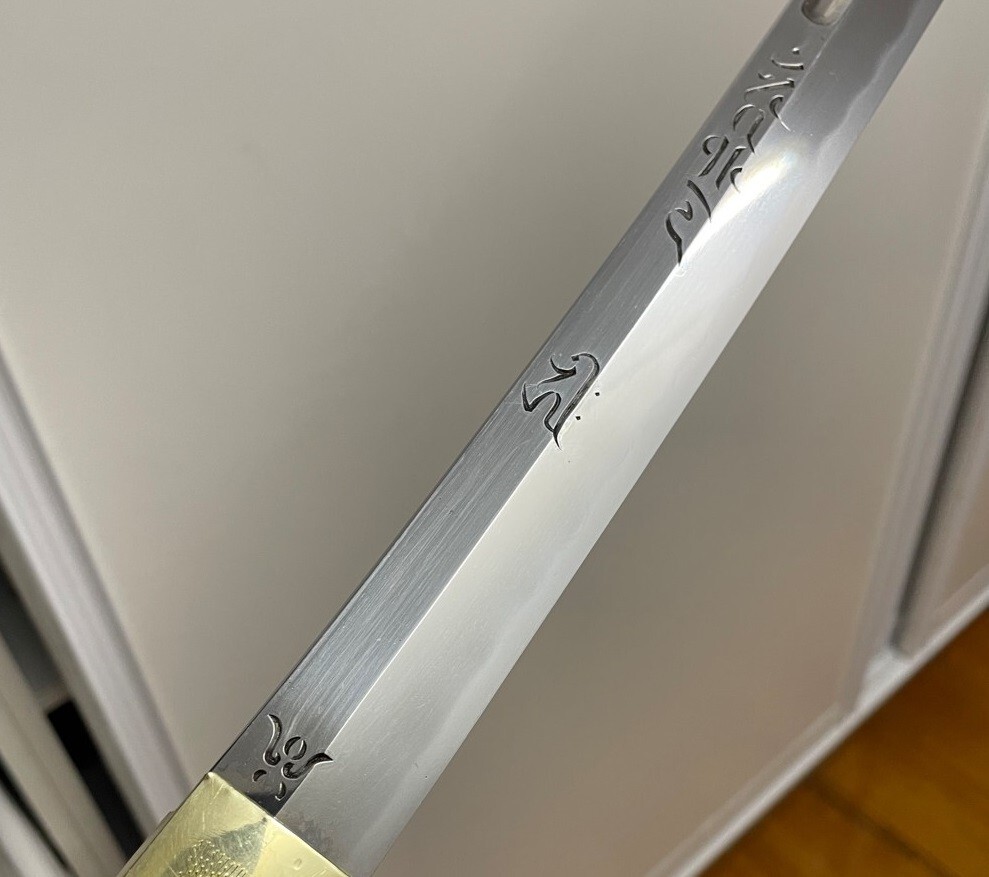
G'day Eric, The bonji on your blade represents the entity Fudo myo-o. I have a Gassan Sadakatsu blade with similar horimono. Your blade is not Gassan work though. Cheers, Bryce


 3 points
 -
These books are not related to my own online Gokaden series, they are translations of Tanobe Sensei's books on the same topic, as Brano pointed out. Bizen I (Osafune School) has been translated by me and submitted, and I think the publisher Me no Me has it scheduled for spring of 2026. I am meeting with them in Japan in two months and discuss the future volumes, based on the way Tanobe Sensei is comfortable with continuing writing them (and has made progress so far).3 points
-
I am So glad the article by Guido was brought up - Some highlights from Guido's article: But what is art, and what kind of nihontō qualify as bijutsu tōken? Beauty, of course, lies in the eye of the beholder, and even "the experts" are not always in agreement. However, borderline cases are few and far between since certain standards and "laws" have been established and are universally acknowledged. The artistic features of the Japanese art sword can be recognized and studied since they can be shown and explained. This knowledge has nothing to do with spiritual studies, Zen Buddhism, iaidō training or sentiment; it is a question of mere study. The same methods applied to recognize architecture, paintings, sculptures and music according to their style can be used for swords, which can be dated and allotted in a school, province etc. The ultimate preparation available to the collector who would like to find art swords is at once the most elementary and the most sophisticated preparation of all. It is to learn the subject. No one knows instinctively what a good nihontō looks like, nor does anyone know intuitively the elements that constitutes it. The collector must absorb the basics in a gradual accretion of understanding. Likewise, good taste in nihontō is not an instantaneous revelation. It's usually a gradual development. Most collectors readily concede the improvement of their tastes over previous years. Good taste requires careful nurturing and tending for a mature blossoming. A natural good eye means a head start, an enviable beginning, but it is not enough. Just as a good voice without musical training will not enable one to sing like Pavarotti, so also a good eye will not assure a fine collection without some application and study. In order to appreciate the different types of beauty one should be equipped with as much knowledge as possible and a seeing eye regarding a good blade. Therefore it is useful to memorize the characteristics of the different "roads", schools and masters, so that when looking at a nihontō one knows where, when and by whom it might have been made. This is the only basis on which to achieve judgement about the differences in quality. The collector who boasts "I don't know anything about nihontō; I just buy what I like" makes a statement that is not very profound. Of course he buys what he likes. If he doesn't buy what he likes, what does he buy? If he doesn't buy what he likes, he had better not collect. The collector who doesn't know anything about nihontō will benefit by learning. If he should be blessed with innate good taste, he may develop expertness by listening and looking, like gifted students who earn degrees without cracking a book. For most of us, however, reading, discussing, examining, and studying are an essential though happy regimen for graduation to connoisseurship. The emotional response to a superb nihontō may be as intense for the collector who never learned any "technical" information as for the expert, just as the emotional response to music may be as great for the listener who can't hum a tune as for the trained musician. But the intellectual pleasure, if not the emotional response, of the musician is profoundly enhanced by his understanding of theme, harmony, and counterpoint. So also is the intellectual pleasure greater for the collector who understands sugata, hada, hamon, hataraki, school, smith. It also needs to be mentioned that the features found in a good blade become only obvious and recognizable when brought to light by a skillful polisher. The togishi needs to know how the blade was originally designed in order to bring out the characteristics the smith intended, since each style requires a slightly different technique. A poor polisher can change the character of a blade in a way that a good old kotō blade looks like an unimportant shinshintō, or a very good polisher might make a mediocre blade look almost like a good one. It takes a lot of knowledge and experience to judge this correctly. An unpolished sword shows none of the criteria that make a sword a good sword except the form, and even that only to a certain point. On the other hand, there are lots of swords that are polished but without deserving this costly treatment; the reason is only that the owner thought that every Japanese blade should be polished. There are people that study for hours a sword that has been polished expensively and which has its origin in a forge of the Japanese Empire during WW II, and which shows absolutely no artistic features. The same can be said about many blades from the Sengoku period which are highly esteemed by many Western collectors just because they are kotō. Many of them are mass-produced, too, and don't reveal anything which could be called worth being collected. And another big part of Western collections are blades produced by unimportant smiths, showing lots of forging faults, nondescript in form, hada and hamon, or just boring, because "weapons of Japanese origin" were collected instead of "art swords". All the swords of this lowest level are of course not to be classified accordingly, since the marks of schools, times, provinces or even masters can only be suspected. Certainly many of these blades show a kind of "quality"; it is even possible when looking at and examining the blade intensively that certain few details can be called beautiful or perfect, but nevertheless one should be advised against being occupied with blades of such a low level since bad swords spoil the eyes. Some collectors seem to have a positive propensity for choosing those types of swords that are best classed as non-nihontō. Whatever they are, they're not true nihontō. They are utterly devoid of any artistic feature. Our misguided friend exhibits his non-nihontō "treasures" with such obvious pride and pleasure that one is placed in a quandary between insipid pretense and brutal honesty. Perhaps the better course is to avoid outright condemnation and to attempt a patient explanation of the basic requirements of a good nihontō, and a gentle comparison of his selections with those preferred by recognized experts. If the explanations and demonstrations fail to register after a few efforts, and irritation and frustration begin to mount, it may be best to desist and to accept the situation. The collector loves his monstrosities faithfully despite confrontation with genuine examples and rational explanations. In such cases further insistence would appear to be a deliberate effort to undermine his pleasure. He's entitled to the protection of the maxim of the ancient hedonists: "If the pleasure is equal, pushpenny is as good as philosophy". Our collector of non-nihontō has one advantage: his swords usually cost substantially less than sophisticated choices. To summarize, if nihontō are worth the money they cost, they should be worth the time and effort they require to understand them. Learning nihontō, like learning any art form, is a gradual accumulation, a slow development of visual and critical acuity, a crystallization of standards, and finally complete rapport with the subject. There is no magic formula, and no secret shortcut: the road is tortuous The benefits of study may be perceived on three levels. At the basic level the collector learns the distinguishing characteristics of a nihontō: sugata; hamon and hada, and how to recognize them; types and classifications; origin, development, and decline. He begins to distinguish old from new, genuine from copy, crude from fine, commercial from art and other minutiae. He may make some poor choices, but he will learn to rectify his errors. Often dealers, and some collectors, too, advise neophytes in maxim form: "buy your experience". It's a variant of "learn by your mistakes". They mean by this that the toll for mistakes exacted by the purse makes the most unforgettable lesson of all. This advice is tinged with cynicism. It is true, of course, that experience is a great teacher and we must all learn from her, but there is no wisdom in buying first and discovering the mistake second. As the Chinese sages reasoned, the experience by which one learns need not be one's own. One can learn from the experiences of others and save oneself costly errors. The capsule advice of the numismatists "buy the book before the coin" is much sounder advice. The coin book distinguishes the genuine from the counterfeit and gives dates, identification marks, and values. The coin collector avoids mistakes at the small cost of the book and the time to study its pages. In the same way the cost of a good library on nihontō is in most cases much less than that of the purchase of one nihontō that was priced for fine quality, but was actually inferior. ________________________________________________________________________________________________________________________________________________________ After reading the article again (Attached the PDF here also) I think he sums it up very nicely. Collecting[1].pdf3 points
-
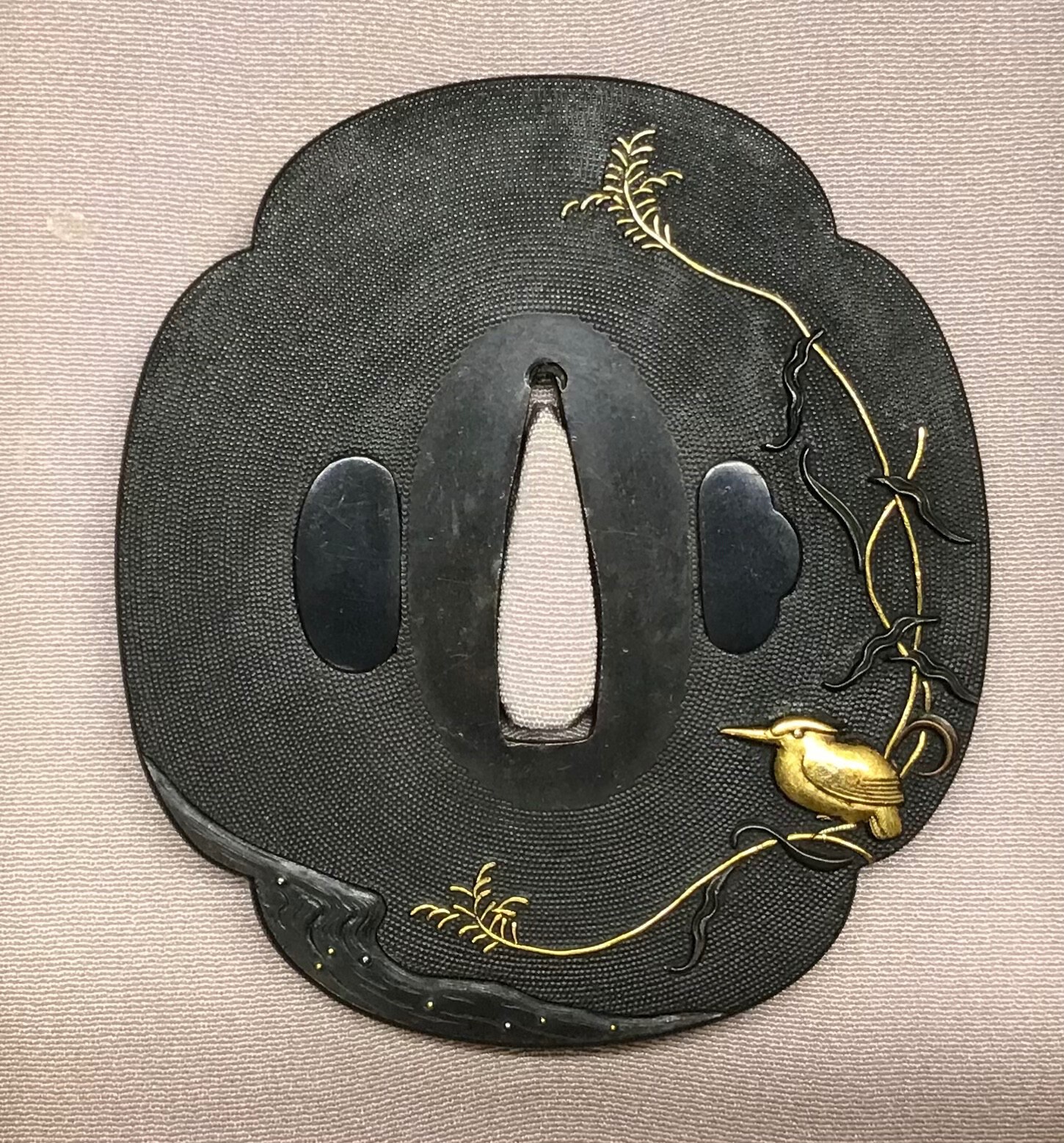
Hey fellow Tosogu fanatics! I've been away from the board for a little while due to work taking up much of my attention recently but that doesn't mean I've stopped collecting these past few months! I have a couple new acquisitions I have been waiting to share with the board so this post is well overdue! As the title suggests, two of my latest acquisitions include birds in the mise-en-scene! Hoping for any knowledge the board might have about the artists Toryusai Kiyohisa or Marukawa Hiroyoshi (Mito school). Also, post your favourite birds from your own collections!

 2 points
 -
Interesting Police sword with beautiful leather cover.
 2 points
 -
The dragon horimono style is called 珠追龍 - Tamaoi Ryū.2 points
-
Rayhan. I suggested that the sword gets shown to a polisher who will see it in hand and give his thoughts, before money is spent. Learned a long time ago as to shut up on what can and cant be sorted out, as im not a polisher and we are looking at pictures. Seen what appeared unsalvageable come up ok. Im not suggesting this swords gets shipped to Japan for a top notch polish. The nakago has been messed with, cleaned. Ok, so its not the perfect example of suriage and is not in amazing condition, that's something the owner needs to consider. If the bohi was added much later, i would not of assumed it would run the full length of the blade and down and off the nakago. I feel it would have been done not so long after it was made. The bo-hi in the nakago shows some age, wear and patina that has not been cleaned. Im not judging an out of polish sword on the quality of the bohi, from PICTURES. As mentioned, pictures are misleading. Also, seen many real good swords with Bo-hi and horimono that have not been done so well. Ian, we are not giving people false hope. He has been given advice to speak with someone with more knowledge that can assess it, in hand.2 points
-
Has anyone thought about the forging flaws in this blade , it is full of them. They seem to be kizu rather than rust pits. It is unsalvageable2 points
-
Debated as to whether to post this here or on the Fittings thread, but here it is. Posted by @Mrbacon HERE. I think I've seen this once before, but pretty rare - a leather haikan.2 points
-
若松 Wakamatsu (a place or personal name) 二号 = No.2 (The character after Wakamatsu is not clear to me.)2 points
-
"De gustibus non est disputandum" "I could have been a judge, but I didn't have the Latin"2 points
-
I had to get the microscope out to find these four birds - I don't have many with birds other than a Myochin "sparrow" which are kind of dull and boring to look at. [JMHO] https://www.militaria.co.za/nmb/topic/40135-flock-of-birds-in-june/
 2 points
 -
G'day Jake, I have a set with very similar theme to yours. Cheers, Bryce


 2 points
 -
Bird (cockerel or maybe a Ho-Ho bird) in full flight. Big and heavy Tsuba with a rather slim Nakago-ana. Beautiful in hand. / Soeren
 2 points
 -
My lady's TSUBA - second is a copy, not "THE" original.

 2 points
 -
It's not my, but it's a worthy example of "live" work.

 2 points
 -
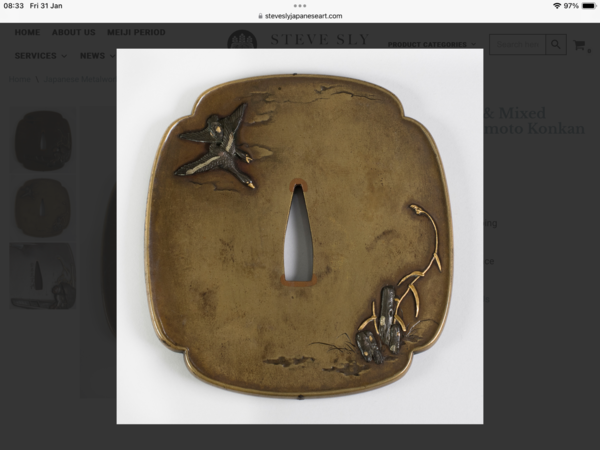
Couple more kinko pieces

 2 points
 -
Club update: First meeting is officially scheduled! Sunday December 7th 2025, 3pm-6pm, in Tualatin Oregon. Please message me for the address if you have not received the club email. A big thank you to the Multnomah Aikikai, who allowed me to visit their dojo with some of my collection, and talk Nihonto with their members. It was a great time, and fun to see others swords. Photo below. Looking forward to getting this ball rolling! -Sam
 1 point
 -
Common theme with uncommon execution Sold for 324000Y
 1 point
 -
Welcome Charles, I guess your helmet is signed “武州住秀重作” (Bushū jū Hideshige saku - made by Hideshige of Bushū province). Probably mid Edo!? Pics of the kabuto are welcome1 point
-
Hi Piers, Thank you. I have asked the owner of the Teppo to join so he can post more photos. The rounding of the site may be an issue under the MLAIC competition rules where I beleive the front site should be be triangular in profile.......1 point
-
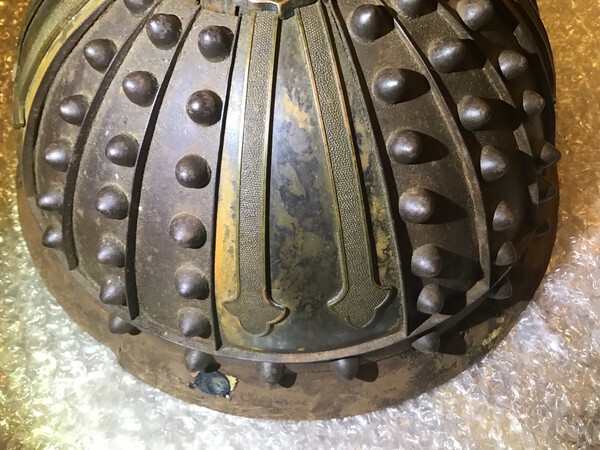
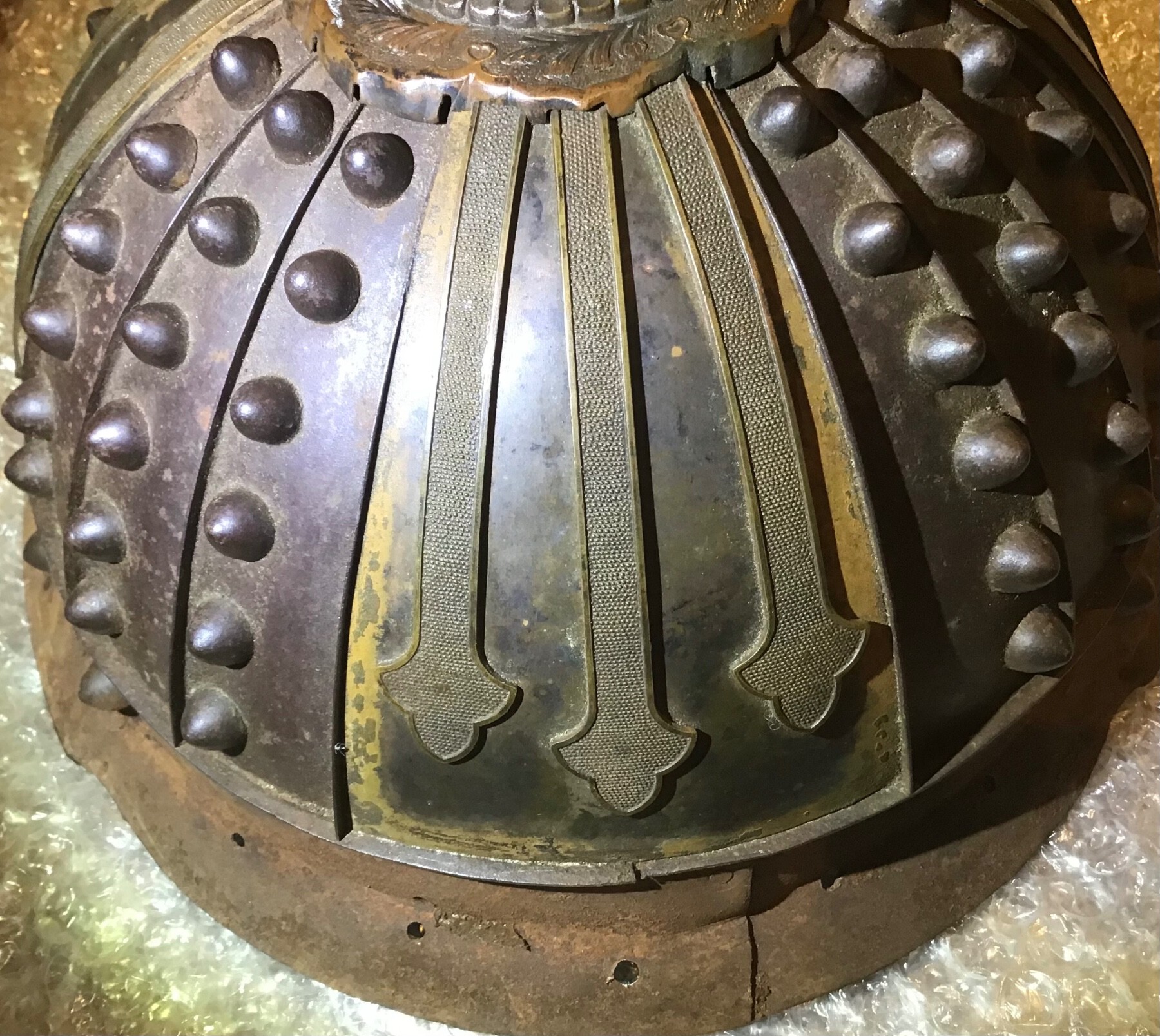
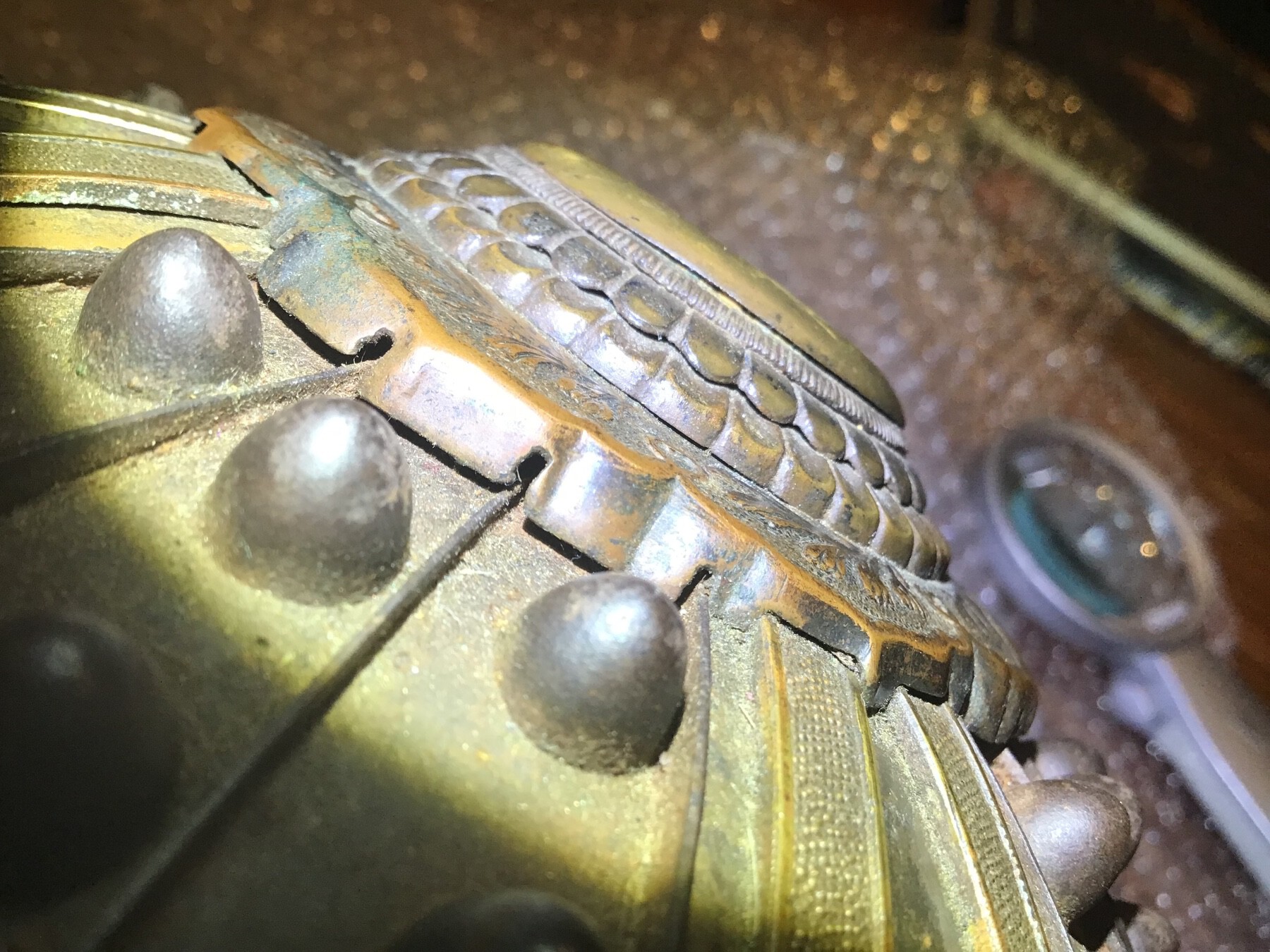
@uwe @Luc T @Bugyotsuji The hachi has now arrived via FEDEX (as usual an excellent service). Ignore all colours in the images. I have used an led torch. Whilst I am an absolute beginner when it comes to Kabuto I have handled a lot of Japanese metalwork including pieces in iron and the first thing that struck me when I unpacked it was that it is “substantial” by that I mean heavy and solid and apparently very well made.(of course this is just my uneducated opinion!) The “stuff” that was apparently oozing out between the edges of the plates is in fact layer upon layer of rust that has built up under the overlaps and in places is forcing the plates apart. The whole of the interior is covered in varying degrees of rust (ignore the colours in the attached images. The interior is a dark orange rusk colour all over) This contrasts with the exterior condition that looks very well cared for and preserved. The tehen Kanetomo appears to be made from several different layers but very firmly fixed together. Nothing spins around. I can see “gaps” between the layers I think. One layer has the remains of a black patination. The downward facing “arrows” on the exterior look well formed in copper and sit upon a plate that seems to be bronze that has acquired a pleasing mottled patina. That bronze plate sits on top of the iron plate beneath it. There are remnants of silk lacing where a shikoro was once attached. To me it looks like the exterior has been very well looked after whilst the interior was slowly deteriorating presumably hidden by the lining. The degree of layered rust inside does not suggest to me recent manufacture. Please see attached images. PLEASE! I really look forward to what you all have to say. I’m sure I’m wrong but I think it’s best to “have a go”…..I learn quickly from mistakes🙂 Many thanks. Colin


 1 point
 -
Yes, this is true and the most obvious also, I am waiting for @Eric187 to answer a few questions before getting into this evaluation further: why you didn't consult someone before purchasing this? Could you tell us the Kasane at the thickest point along the Nakago please? There is Bohi that also looks Atobori and if you run your fingers (use a Kleenex or Fukusa cloth DO NOT USE YOUR BARE HANDS please) along the Bohi you will meet dips and divots and general lack of uniformity, can you check? You mention your Kasane is 6.5 MM so then what is the thickness where the mystical ball is and how deep is the inside edge carved into that area? And how much did you pay for this sword? I suppose I should ask where it was purchased from because if someone advised and actively marketed this to you they should be named publicly for doing you a disservice. If you can get your money back please do. @Alex A I think I have seen some Keicho executed far better than this and the Nakago looks ill formed when looking at the sword as a whole. We can settle the kissaki issue but asking for the dimensions. As for the comment on expert, I suggest you own the mistake you made here, one that irks me every time I see the new guy being asked to send his sword to a polisher, for what, in this case just say you didn't see the mess it was already in and own it. The bohi Alex....Let us study Bohi if we want to buy a sword with Bohi, you look at Hatakeda school and how they cut Bohi that looks sublime as if it was the absolute intention to have it there naturally, we can look at Aoe, Rai, Soshu smiths even in Muromachi, look at Kiyomaro, and especially look at Gassan (all of them do incredible Bohi and Horimono), look at Honjo Yoshitane and of course look at Umetada and his school of smiths. Do not assume just because there is bohi that it is original and done well.... where did this rule come in? Please show us. This is not a knowledge competition but it is annoying to see that @Eric187 is being advised to send this to a polisher... for what exactly. I think we could help by dissecting the sword and then saying why...there are other threads where that is being done without jumping to conclusions. You all hate taking advice or intention from me, well then take it from someone you all respect: "On the other hand, there are lots of swords that are polished but without deserving this costly treatment; the reason is only that the owner thought that every Japanese blade should be polished." -- Guido1 point
-
I have a few, but this is probably one of the better ones
 1 point
 -
https://www.youtube.com/watch?v=f7z9pkQnz_0 Don't know if this has been shown before.1 point
-
Think maybe your looking too much into it Ray. No one thinks they are an expert. You calling everyone experts in a sarcastic way actually makes it appear like your up for title of "expert" My advice was see a polisher and see what he thinks. 6.5 mm doesn't seen a total no go, but would have speak to them. Will tell you that judging a swords sori from images can be veery misleading. The type of suriage is "keicho" suriage and yes, good swords have been chopped that way. Tenshō-suriage and Keichō-suriage | Markus Sesko To me the sword has a Momoyama feel with the width at the kissaki appearing quite hefty, longer kissaki. Im not interested in the horimono, apart from the bohi. Do i necessarily think its a diamond in the rough, no, hence why i suggested it go to someone in hand. It don't make sense to carve full length Bo-hi on crappy swords, it was expensive. Punched ana can appear drilled if done well. This isn't a knowledge competition, its folks trying to help folks the best they can. No one likes sticking their head out and being wrong, but ive learned to not give a **** as thats how i learn.1 point
-
My thoughts exactly. I was wondering when someone would notice... BaZZa.1 point
-
Thanks Dave! I like that shot.1 point
-
Such a moving life story, a life filled with pain and sorrow......yet she was still able to see beauty and create beautiful things. A truly inspirational character.... 大田垣蓮月 Otagaki Rengetsu (1791-1875) A female poet from the end of the Edo period to the beginning of the Meiji period. Born in Kyoto. She was adopted by 大田垣光古 Otagaki Teruhisa, samurai who served at Chion-in Temple, when she was only 10 days old. She later married 望古 Mochihisa, the adopted son of Teruhisa. She and Mochihisa had three children, all of whom died at an early age. She also lost her husband, Mochihisa soon. At the age of 33, she lost her second husband, 古肥 Hisatoshi. She and Hisatoshi had one daughter, but the daughter and Mochiko died in 1823. She shaved her head and took the name "Rengetsuni / Nun Rengetsu". After that, Rengetsu moved from place to place and was known as "Moving house Rengetsu" because of her love of moving. After her children died, she lost her father at the age of 42 and lived a life of poverty and solitude. After her father's death, she made her own pottery with waka poems carved with nails, which was called "Rengetsu-yaki". Rengetsu-yaki was so popular as a souvenir of Kyoto, but the sales were given to the poor. He loved 富岡鉄斎 Tomioka Tessai (1837-1924) as if he were his own child. He died at the age of 85, 1875 at 神光院 Jinkoin. She excelled in waka poetry, and was also skilled in calligraphy, painting, naginata, and Go. In waka poetry, she wrote many feminine and delicate epic poems, and was good at writing plain epic poems. Rengetsu was also known for his good looks. It is said that some men approached her because of her beauty which never waned even as she grew older. There is an anecdote that she deliberately pulled out her teeth to ruin her beauty and protected herself from temptation. And one of her students

 1 point
 -
I appreciate your write up and explanation, bluntness is never a bad thing especially when it’s informative.1 point
-
Noshu ju Fujiwara Masatsune. Appears to be a WWII showato arsenal blade. Best regards, Ray1 point
-
I agree with Brian. The quality of the carving suggests atobori. To the uninitiated, this means that it was done long after the sword was forged. And sometimes, but not always, atobori is done to conceal open flaws on the surface of the metal. However, all opinions are secondary to an opinion rendered in hand. Photos can only do so much. Speaking from personal experience, cell phone cameras just can't do a sword justice!1 point
-
As Uwe says above. The Mei is quite faint and that one character is very hard to make out.(正市?) A-Shū is Awa, Tokushima, on the east of the Island of Shikoku. One of the gunsmith families was the Fujikawa, and many of their individual smiths used the first character 正 Masa… They would have been making guns through the 1700s and 1800s. The decoration resembles guns from Osaka but in a couple of details they are quite different. Sadly the photos do not show everything. PS Why is the rounding of the front sight ‘an issue’?1 point
-
One of my favourites - an all time classic:
 1 point
 -
Truly recommend and very valid recommendation - thank you Thomas. Just received 2 sets of katana seppa in best quality (JPY 5800) from Japan ; one set in gold and one set in silver black. Perfect quality. Fast, safe and professional service and shipment. Soren1 point
-
One that I fell in love with early on: This one is a bit more whimsical:


 1 point
 -
I really like the simplicity of this kozuka Jason! Sometimes some high quality carving is all you actually need!1 point
-
John: If you are interested in reading a bit about the other side of Rabaul, The Eternal Zero by Hyakuta has some interesting stories about their time there. John C.1 point
-
Thanks Sam I've watched a lot of documentaries on WW2, particularly in the Pacific, and especially around New Britain. The Rabaul garrison was a core of their Australian invasion army. Dad said they had huge amounts of tanks, trucks, and artillery stored in caves to preserve them from Allied air strikes. However, the Allies did extensively bomb the Rabaul airfield, warehourses, barracks, port, and ships. After the Japanese navy became ineffective, it was too late for the garrison to be evacuated or even resupplied. So a scenario might have been an officer's barracks gets bombed whist he was hiding in a nearby cave or bomb shelter. Afterwards he finds his sword destroyed. There is no chance to get another "proper" suitable sword as a replacement, so he grabs the best he can find, puts on the correct tassles, and continues like everything is OK, even though the men are starving. It takes a lot to feed 100,000 men. He needed to keep up appearances for morale. Then 6 to 12 months later the war was over. Dad didn't take the sword. He said the Colonel happily gave it to him, happy that he'd survived the war. And that sword meant nothing to the Colonel as it was a "nothing" sword and he'd only had it for 6 to 12 months. It wasn't a family heirloom or valuable. That is a possible scenario but we will never know. But thanks again for giving me the information about the sword. It's a link to my long dead, very much loved father. John1 point
-
Thanks Sam. This is all about personal value, and has nothing to do with monetary value. The tassles were not round like a bag tassle. Nothing like them. They were flat, tightly woven with that silver fleck, brown and bright yellow. The only thing is I can't recall the red backing. But hey, it's 60 years ago when I was a 10 year old that I'm trying to remember. I'm very pleased that I now know what the sword is, and, where and approximately when it was made. That's a huge pleasure for me. It is a shame that a little kid in rural NSW, and really also my dad, didn't know the significance of those tassles. My dad had no interest In the war. He did his bit. It happened. Two of my uncles didn't come back. One on the Burma railway and the other died in a plane crash in the North Pacific and is buried on Vancouver Island, Canada. My dad was not interested in glorifying the war. That sword, the invasion money, and a Japanese pilot's watch (long lost) were just souvenirs that were in a box in the garage. They were never displayed. I just found them and played with them. Dad had zero interest. So thanks for the information. It is great. John1 point
-
Marukawa Hiroyoshi was a student of Uchikoshi Hirotoshi (fl. 1810), and he worked at Mito in Hitachi Province. There are dated examples of his work for the years 1841 and 1842. Something simple from my collection - Two Roosters on one side become only one rooster on the other.
 1 point
 -
Not at all David, but toss me some beers and I gonna give it a try. A friend of mine, engineering degree, worked for a company that had sold a number of IFVs on the M113 platform to Australia. The deal didn´t go too well, as they frequently broke down. So the company send him down under to investigate, what has been going wrong. Right then he had a difficult time with his wife. Poor chap thus went to a bar, got some beer... A young lady entered the bar late in the night, took him straight home and didn´t let him go eversince. He married her, settled down, got the australien passport and two children. Aussie slang has become familiar to me, but I fail with the proper pronouncation frequently... Sorry, didn´t want to derail the thread, but sometimes I´m carried away with it.1 point
-
Nope....more true than just about most places in the world. In fact almost impossible to find decent Nihonto even if you have the funds here. And with an exchange of about 18 Rands to $1, even harder to ever save for a decent sword since it would likely pay off a house mortgage or car. Which is exactly WHY I am very comfortable collecting at the lower level, without romancing about the history of the item or treasure hunting. Knowing what you have and being happy with it is what collecting is for me. If I want to see top stuff, I've made a plan to visit overseas numerous times and seen great quality. Looking at out of polish swords and being able to recognize possible good swords, knowing you won't be able to have them polished but preserving them so that someone else down the line a generation or 2 later might be able to investigate more, is enough for me. No...I don't subscribe to the "you can only collect top stuff" mantra. But I also don't build up kazuuchimono to great levels where I think I found the Honjo Masamune either. It's all about a middle ground. I also am able to separate the militaria enthusiast in me that loves having a plainish T95, kai Gunto, Shin Gunto etc as an example of wartime swords, from the Nihonto collector in me.1 point










.thumb.png.4c5df79fec171b2dc4a23af38e280a4d.png)


























This leaderboard is set to Johannesburg/GMT+02:00