
Leaderboard



Popular Content
Showing content with the highest reputation on 03/22/2021 in all areas
-
Some time since the last update ... today I got informed that the result notification of the NBTHK Shinsa came in, it achieved Tokubetsu Hozon.9 points
-
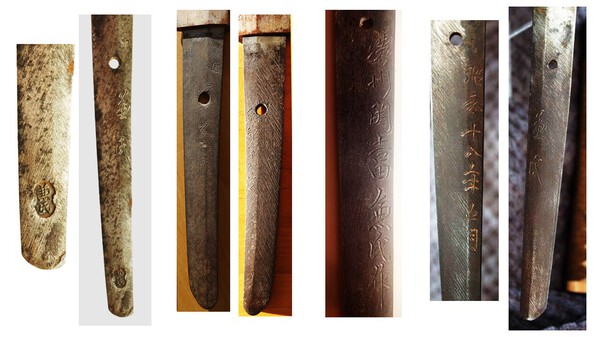
Drew, this is a very nice example of a preserved sword and its history. The swordsmith is Yoshida Kaneuji 吉田 兼氏 , his given name seems to be Suzuichi. He was from Seki and born 13 January 1925 (Taisho 14), and registered as a Seki tosho on 9 September 1938 (Showa 13) which was quite early. Look in NMB for other posts (30 Aug 2019 by David [m41700]) and also page 72 in Slough. His blades had both Sho/sakura and Seki stamps, and also some have a kokuin hot stamp. An early war blades notes he also used Yasuki steel for it. He used both long forms of mei and the short niji mei with some variations in cutting style. Attached some examples, others in Rick Steins Swordsmith Index. NOTE: His date of registration looked a bit odd (1938; S13.9.9) as he world be 13 years old. I re-checked and that is what is in the old Japanese record, is it an error? Also it is the only one in the whole list for Showa 13 (1938), so does not look correct. He could have started an apprenticeship at 13 but not be qualified.
 6 points
 -
Well done, Georg, what a journey. If Saito san polished it, it must be stunning like a jewel now. He is one of the very-top polishers currently. If you leave it there, yes it is another year (as it might get exhibited too) but probably worthwhile. In this hobby unfortunately sometimes years pass before we see our treasured possessions. Frankly, even with “only TH” people in the know could judge the quality and understand that it is Juyo level. And if you do not intend to sell it or brag around that it is Juyo, then you know it is the same sword whether it is TH or Tokubetsu Juyo. This is one of these rare stories of serendipity that make people here happy and hopeful. Please continue sharing with us. Thank you.5 points
-
Jacques Thanks for the corrections and reminding us of the name of the progenitor of the doubts about Masamune, That is useful. I do remember there was a subsequent resurgence in 20th century of that vein of thought/belief, after Imamura Choga but I would need to dig it out. Why do you, however, have to be argumentative? You are not achieving anything by this but alienating people. I respect and look for thoughtful discourse rather than dismissive insults. You have knowledge and experience to bring to the forum but sometimes pettifoggingly cling on to a particular word or sentence. Please take it positively and not as an attempt by me to antagonise. I do pay attention, especially when I talk to Tanobe sensei, the NBTHK lecturers or people with extensive knowledge and collections. It is easy to be a desktop warrior, waging verbal campaigns. It is also easy to refer to 2-3 books, accepting them as canon, but it takes a broader minded person to question, interrogate, juxtapose texts with differing opinions. Every authority has something to teach us: Fujishiro, Kanzan, Kunzan, Tanzan, Nakahara, Nagayama, Yamanaka, etc etc. Of course, it is easier to understand that basing (inferring) mumei work via signed precedents is the strongest foundation for analysis. But nowadays the shinsa and others also place reliance on old (Honami usually, but also other) documented examples of the the masters - be they Masamune, or one of the students, even if these are not signed currently (or were never signed), or non-Soshu works. In other words, reliance is placed on preceding authorities who might have seen such signed examples before they were suriage, or compare to blades which have been preserved over the centuries in the various daimyo families. That is why we still have and refer to the Tsuchiya oshigata, Kozan oshigata, Imamura oshigata, Koon oshigata, Kyoho Meibutsucho, etc or in more modern times - indeed Fujishiro volumes, but also Kunzan’s Kanto Hibisho or Tanzan’s Go-ka-den No Tabi, etc. I could append documents talking about the existence of Go. And with all due respect to Fujishiro, they will be by arguably ‘greater’ experts than Fujishiro, having seen more than him and not just photocopied pictures of the mei of Kokuho, JuBi and JuBu swords available at the time. At least this how I view Honma Junji, Kunzan sensei, who in Nihon-koto-shi posits:”I conclude that Gō Yoshihiro is the most skilful smith amongst the students of Masamune and is equal to Sadamune in skill.” Anyway, this is a pointless argument and unwelcome digression from the topic at hand. The sword is beautiful and has been judged indeed by experts as Tametsugu. Understanding why the judgement has been conferred, and what the alternatives could be, shows eagerness and interest to learn.5 points
-
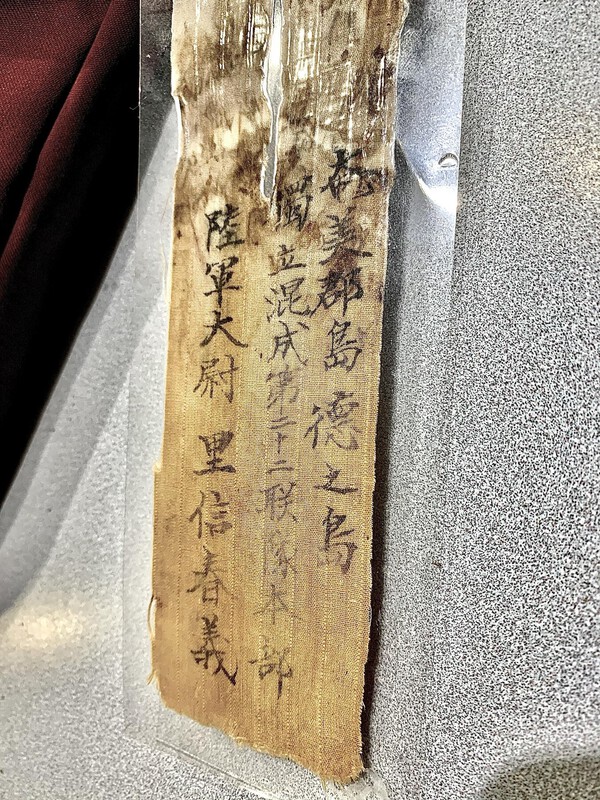
The tag is a surrender tag. It contains the name/details of the person to whom the sword belonged. 奄美郡島徳之島 獨立混成第二十二聯隊本部 陸軍大尉里信春義 Amamiguntō Tokunoshima (https://en.wikipedia.org/wiki/Tokunoshima) 22nd Independent Mixed Brigade Regiment Headquarters Army Captain Satonobu Haruyoshi Bruce's reading of the swordsmith looks good to me.4 points
-
Good find from Junk dealer, seems to be late Edo period tanto. Signature is - 近江国胤勝 - Ōmi no kuni Tanekatsu. This smith Tanekatsu was rather unknown but he studied under the famous Taikei Naotane. Age would be in the mid-later 1800's.4 points
-
Posted by Nick Komiya. Priceless stories, more valuable than the gunto we collect. https://www.warrelics.eu/forum/f216/1941-ija-weapons-prices-todays-values-786328-post2154949/#post21549493 points
-
John & Chris, thanks for the compliments! Christopher, don't worry - Oshigata and professional pictures were already "ordered". They finally are something to then share in here too. Michael, the blade is already polished. It was sent to Japan, Tanobe confirmed signature being authentic, then submitted to NBHTK Shinsa where it was also confirmed original, but papers will only be issued to blade in polish. Therefore it got a double gold habaki, shirasaya and was polished by Saito, submitted again for December shinsa where the result now was Tokubetsu Hozon paper achieved. So all done. Not sure if I should submit it to Juyo though, would mean another year in Japan.3 points
-
I will definitely try it. I am out of town until Tuesday so I will have to wait until then to make attempt. As far as it protruding when I hold the sword, to be honest I didn’t pay too much attention as this was my first Type 95 I was just pumped to be holding it. Elco68 handle comes from my 1968 El Camino I am restoring. Thanks for all the help everyone-this forum is awesome!3 points
-
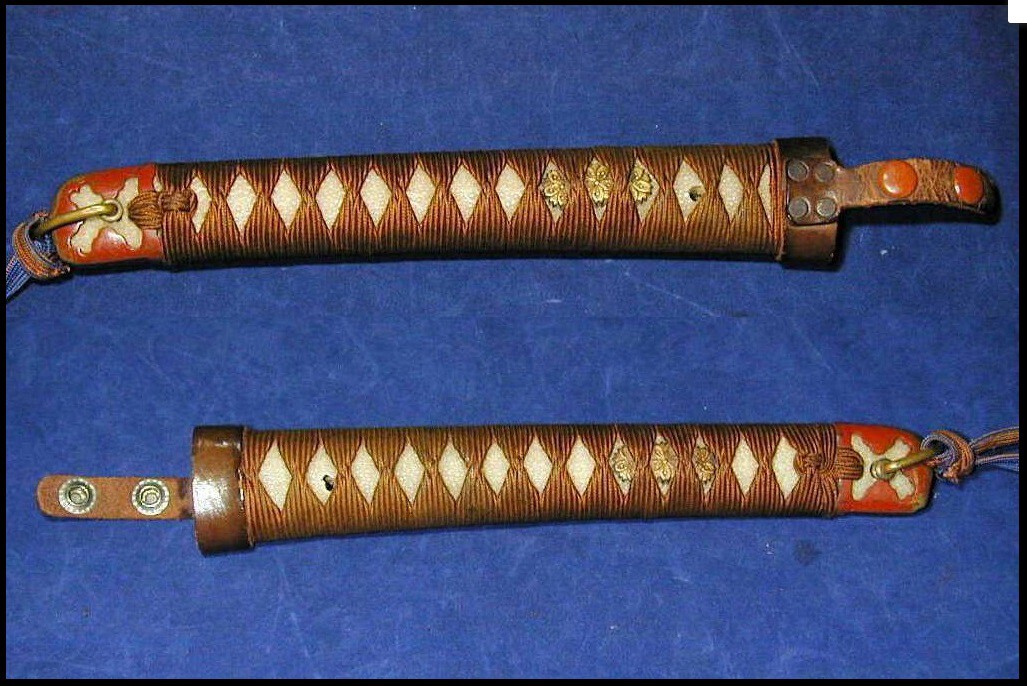
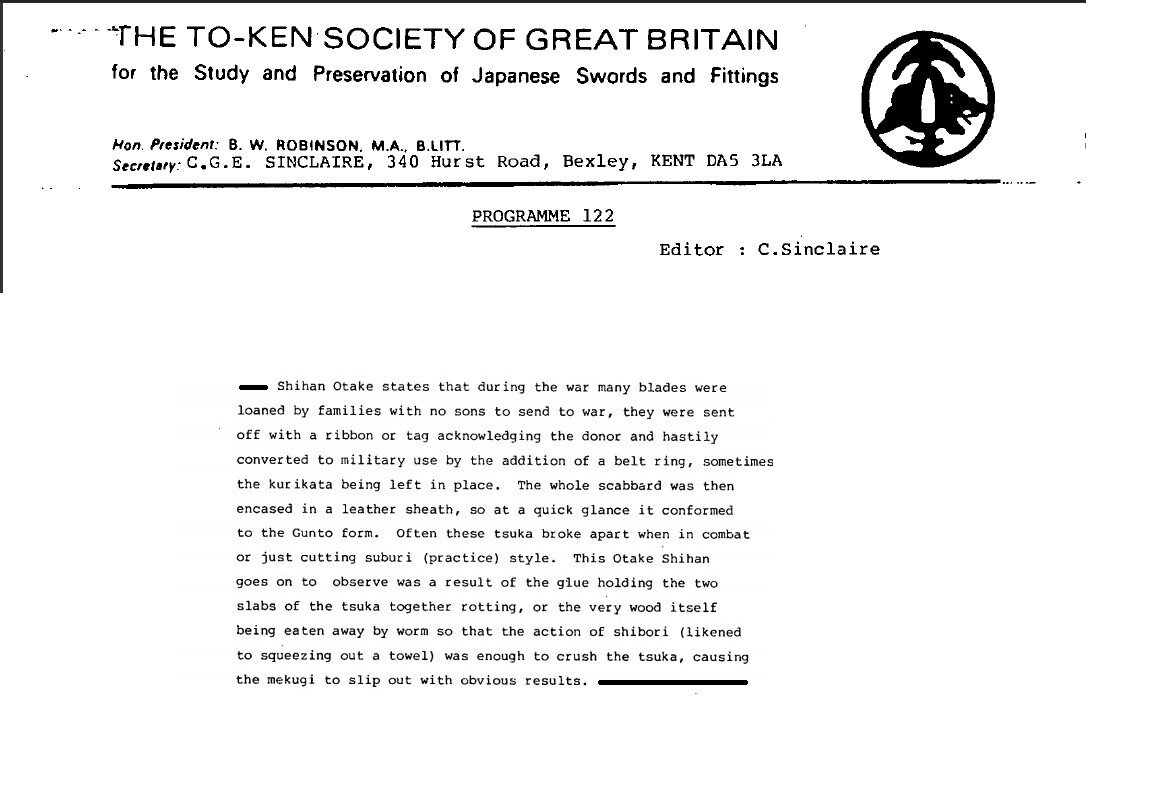
Late war fittings are a variable beast. They can be the usual metal but devoid of detail, or with all the detail but in a less strategic material. The above example is the former type, note it has Gunto menuki. Below are two that are in my collection, one of each type..... and a note from a knowledgeable commentator. The plain mounts are plated brass as was regulation. The detailed mounts are of plated steel, and the ito over sandpaper. The note describes minimal alterations for service use.

.thumb.jpg.a26bf464b818e1b0c7ce7de46d510402.jpg)
 2 points
 -
Hi Drew, You need to make a new mekugi ASAP. Without this pin the blade can slip down inside the scabbard and damage its point or, worse, fall free from the handle and shatter the point on the floor after passing through your foot. You can whittle a chopstick. Grey2 points
-
Hi Greg I have lately thought that "unique" is often optimistic. Of the more usual rain dragon type I have found at least 26 - examples and from correspondence with other members I have found numerous examples of their tsuba designs, duplicated. Utsushi seems to be the norm rather than the exception.2 points
-
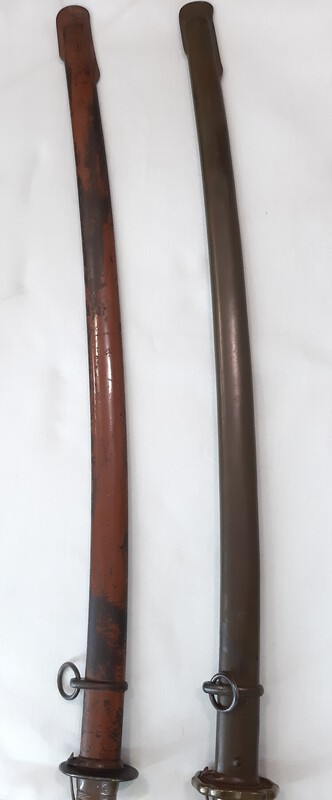
If anyone is wondering what Red Bean Colour may look like on a Type 95 saya...
 2 points
 -
https://studyingjapaneseswords.com/2018/03/17/20-nanboku-cho-tanto/ The photo in "Chapter 19 Nanboku-cho Period Tanto" was changed. Please click the link above to go to the chapter directly. I finished editing and correcting the draft and working to publish the book but I am having difficulty deciding which publisher suits me and how to go about. Vast information to go through. Creating a physical book is harder than writing. Yurie2 points
-
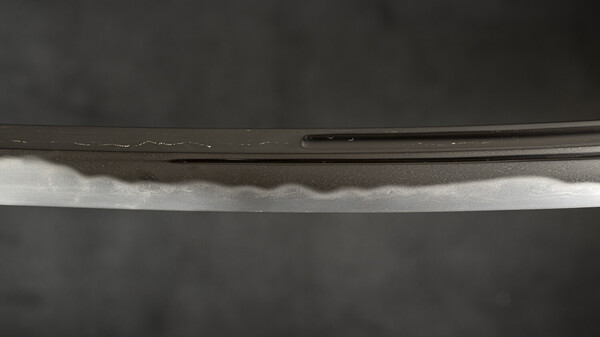
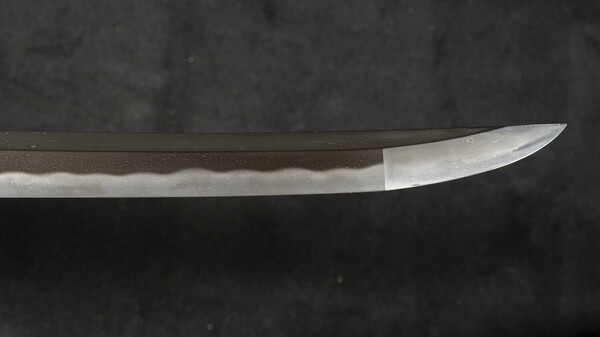
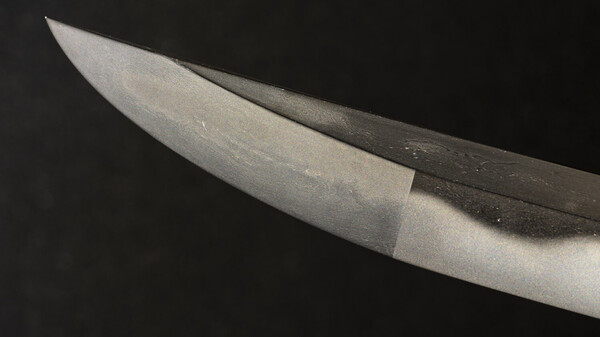
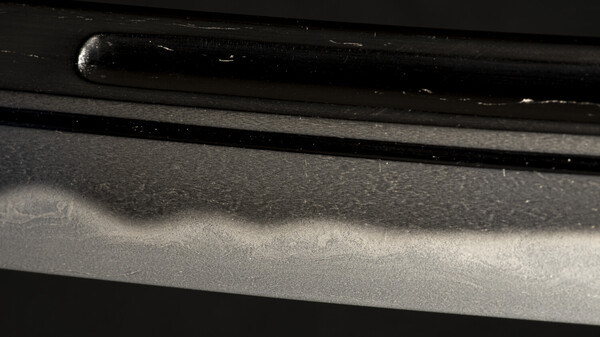
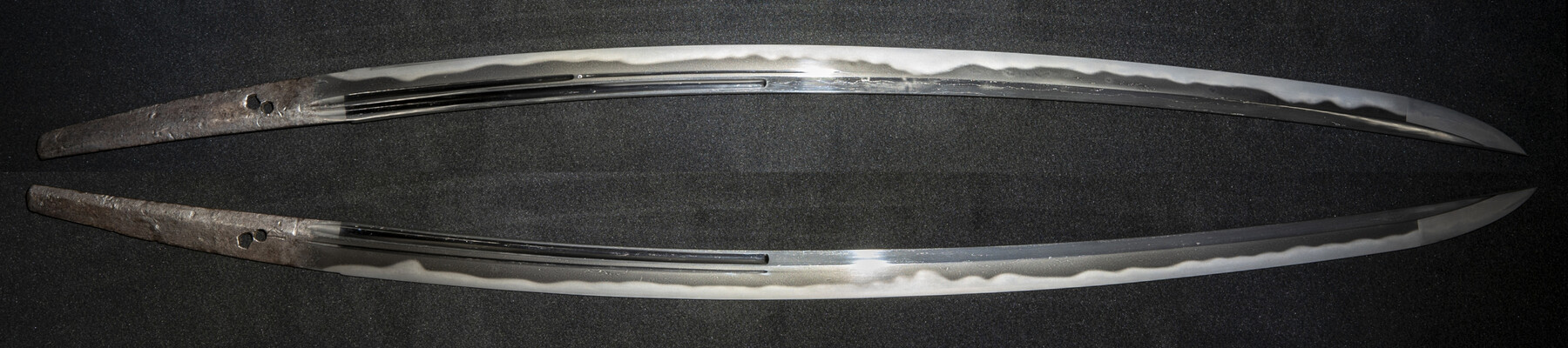
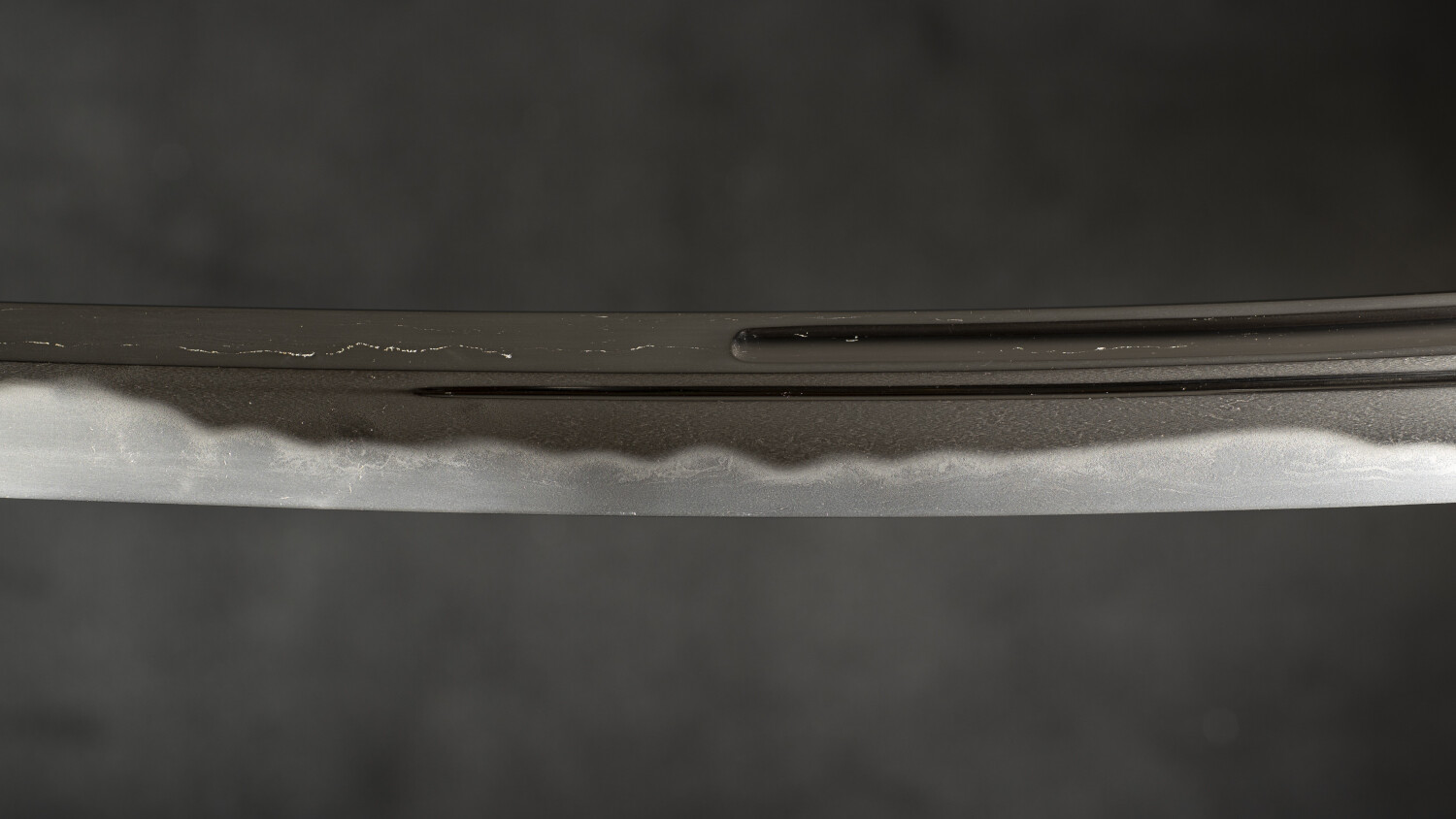
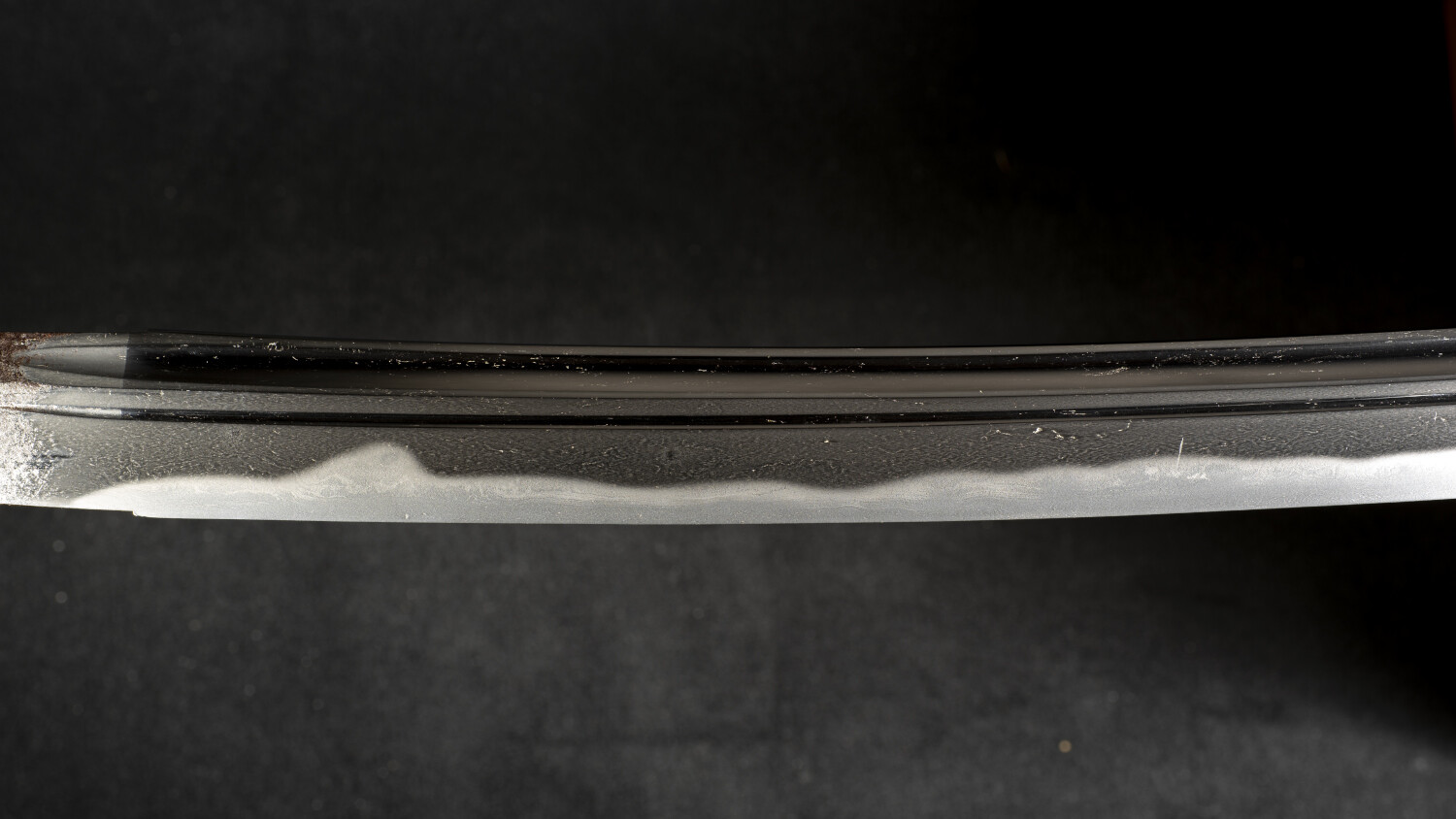
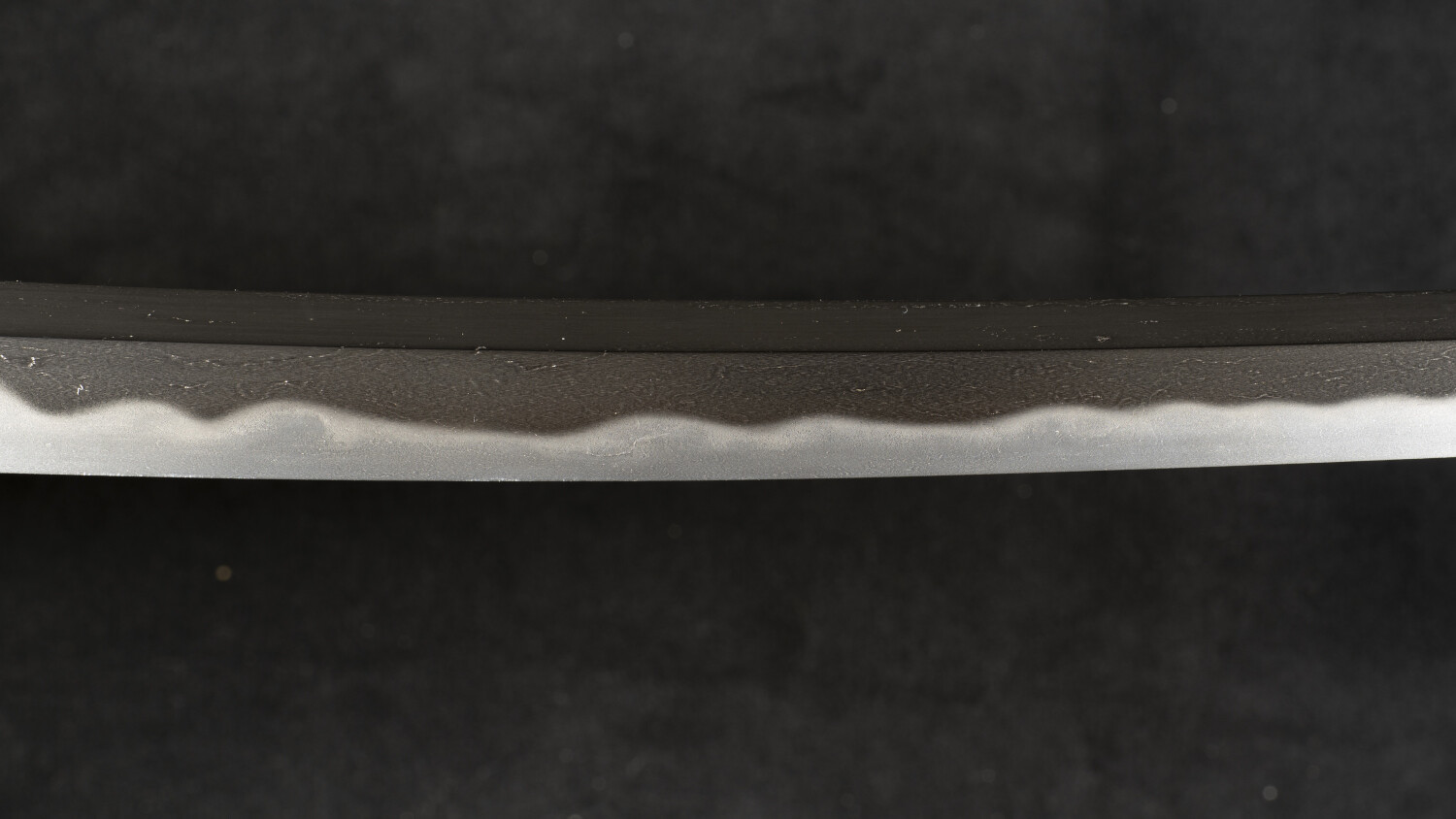
I recently received a new piece in my collection. The blade is a mumei with the attribute Den Tametsugu I know that the "Den" attribute is not unusual, it usually means that the blade also contains properties that are not usual for Swordsmith to whom the blade is assigned Therefore, I would like to hear your opinion If we didn't know Shinsa result who would you think of as a swordsmith ? For capacity reasons, there are only a few pictures If anyone wants to see the full gallery, they can find it here https://www.zonerama.com/Nihonto/Album/7069496






 1 point
 -
Definitely worth asking. My point was just that the cost of restoration may not increase the value more than that cost. But if you love the piece it doesn’t matter!1 point
-
Hi, I'm in the same boat my sword has been in customs for 5 weeks now sent countless e-mails which don't seem to work phoned them today hopefully I'll hear from them soon it's a rather strenuous thing importing swords has any body ever lost one? Mark1 point
-
I have recieved the tsuba now and in hands.
 1 point
 -
Can highly recommend Ikea chopsticks for this task.1 point
-
Please extend out thanks to Nick as always1 point
-
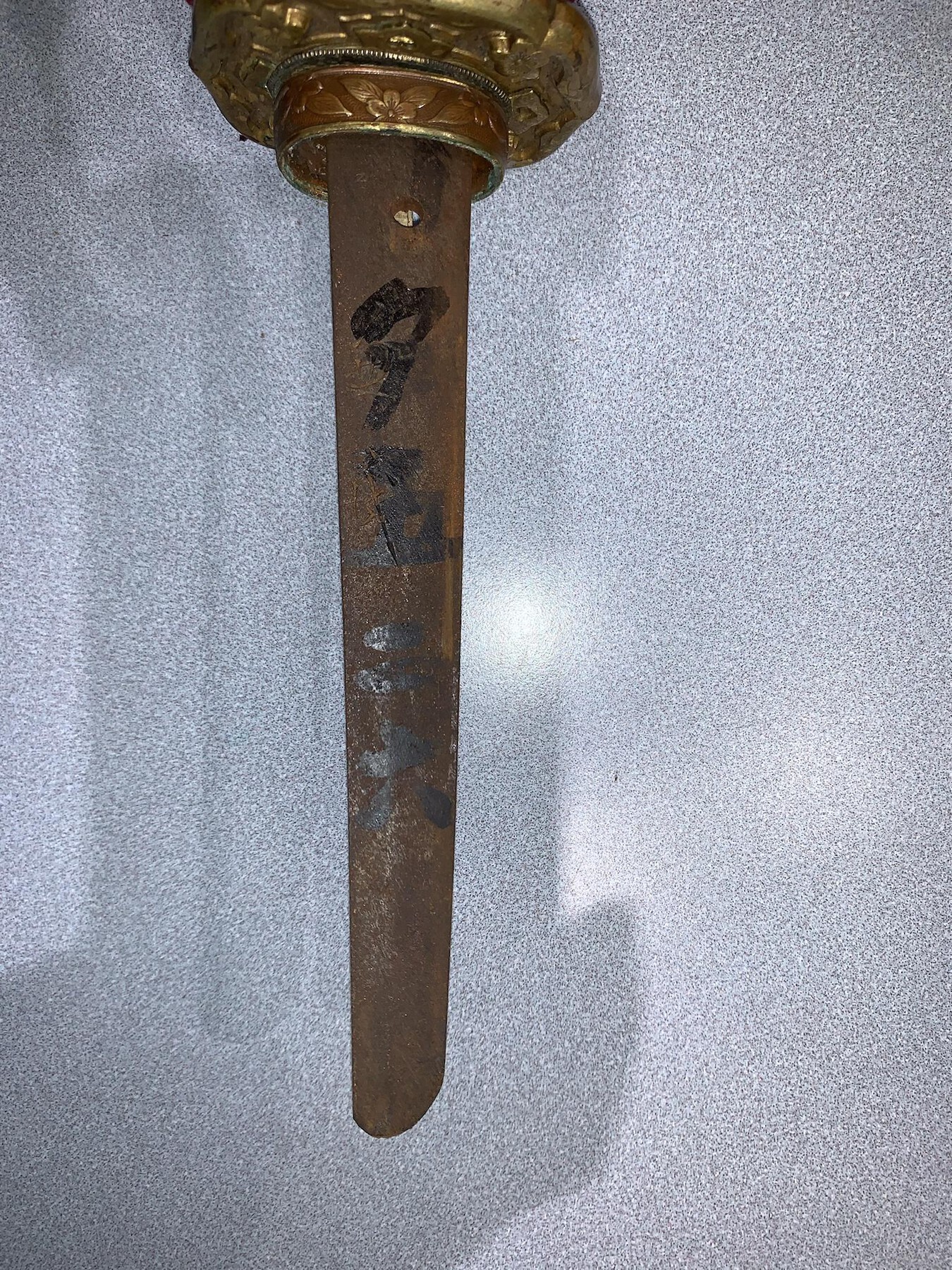
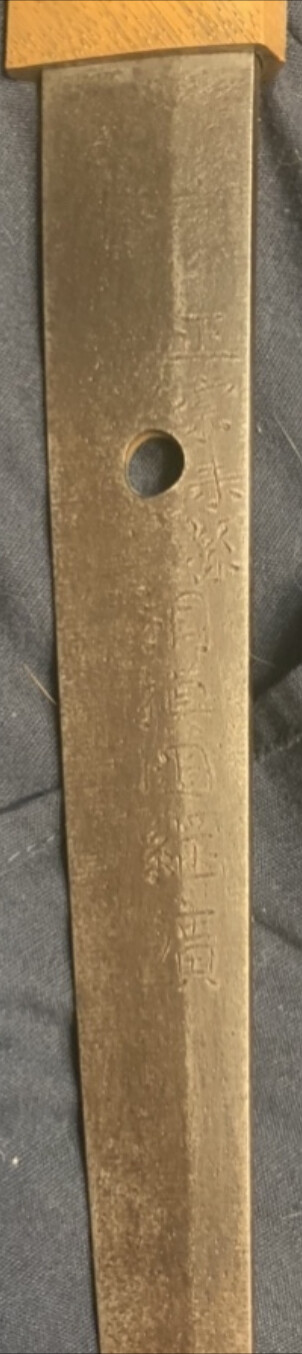
Drew, You have a WWII Type 98 Japanese Officer gunto, made in Aug 1943, by a smith named Kaneuji: Guys that really read these names may correct me on that! The small stamp near the top is the "Na" inspector stamp of the Nagoya Army Arsenal. Inspector stamps on officer swords indicated the blade was made in a non-traditional manner of one sort or another. Hopefully someone can translate your surrender tag for you. The cord wrapping is believed, by most, to be added by soldiers/sailors on ship as they headed home. The black paint is a number that matches the numbers stamped on the fittings - 526. The fittings are custom formed to each blade as each blade is different from the next. The numbers were used to keep the pieces together during the assembly process. Some of the seppa (spacers) around the tsuba (handguard) may have been lost over time. They can be replaces to tighten up the fit. I'm adding some of your pics to this for the future. Imgur photos often aren't there a few years down the road.

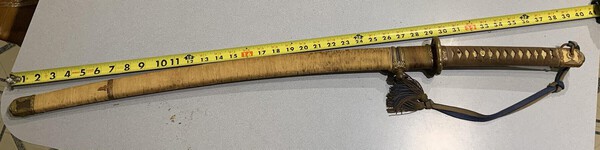
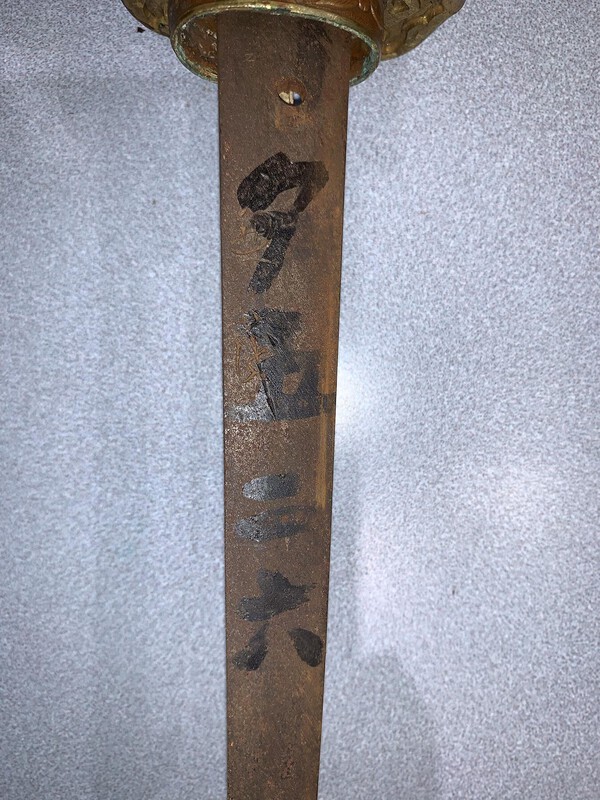
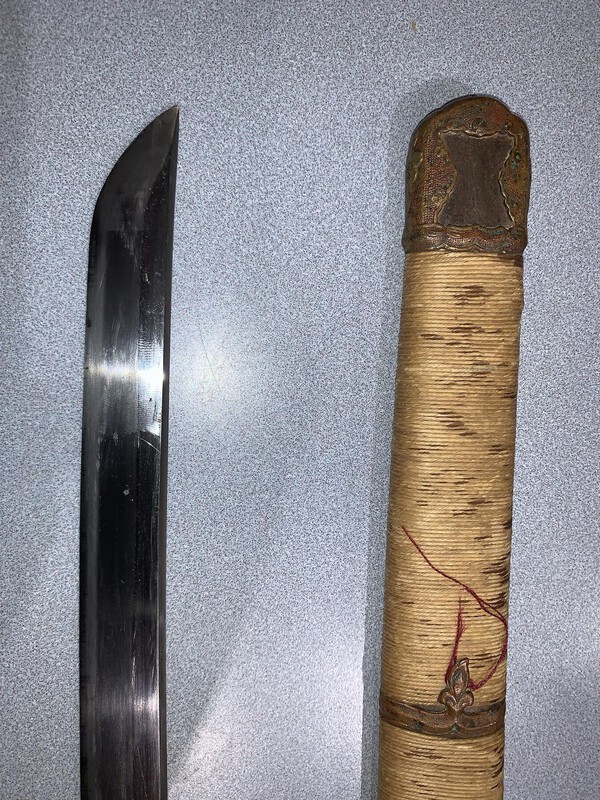
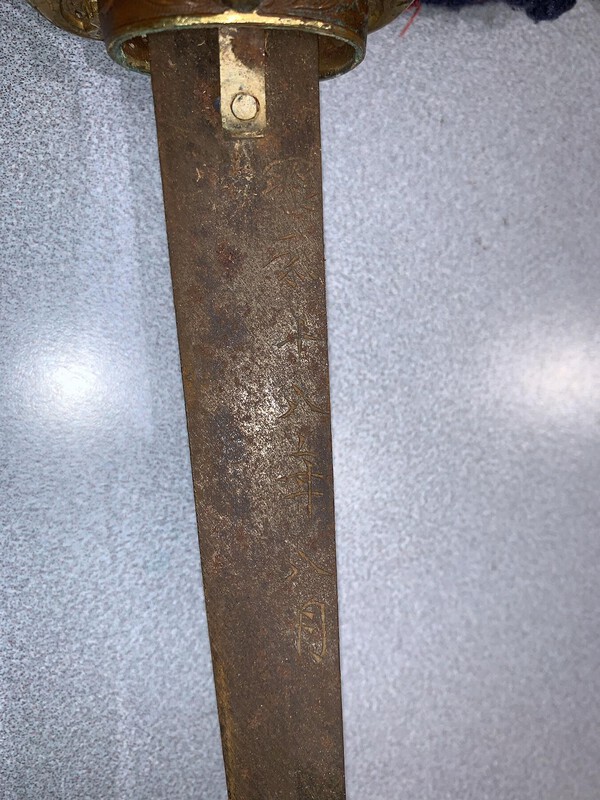 1 point
 -
With the big Russian bear1 point
-
Tks. I didn't catch that.1 point
-
Hi Bruce, I don't own any Type 3 swords, must be thinking of someone else.1 point
-
Jacques, Fujishiro does mention Go Yoshihiro (Koto volume page 129, page 199) but does not show any nakago as there are no signed Go, while his book is a book of nakago and mei. The reality is that shinsa judgment is broadly an assessment of school + period first and then after that, quality determines whether they assign it to a grandmaster (like Go or Norishige) or not (like Sanekage or Tametsugu) and which smith precisely (given some more prevalent features1 point
-
As a researcher who's opinion I greatly respect, I reached out to Nick Komyia regarding the three theories about black painted saya. Nick allowed me to copy his response to this forum since not all members are present and active on both. The Black Scabbard Controversy I was asked for my thoughts on the black scabbard controversy related to the Type 95 swords. Did they ever exist as an arsenal finish, were they field refinishes or were they all postwar mutilations, are the 3 major schools of thought, I hear. I find it a waste of time to indulge in speculation, so I’ll only comment based on facts from contemporary documentation. 1. As an Arsenal Finish One of the bigger themes for the Type 95 was a scabbard finish that would prevent rust development. This was because the previous chromed Type 32 scabbards were notorious for their rust problems. But despite earnest efforts since 1917, no solutions could be found during the model life of the Type 32 swords. They tried bluing, zinc-plating, various paints and the new Metallikon spray-plating process developed in 1909, but nothing worked. Thus the Type 95 development process inherited this problem and the 3rd prototype done in 1926 tried out laminated steel scabbards with a layer of brass on the outside, but this, too, was rejected in the field tests as being too heavy. Then around 1932, in the 7th round of prototyping, they introduced Parkerizing and Bondelite coating for the interior and exterior of the scabbard and the exterior was painted a reddish brown. This was well received in the field trial, because of better concealment offered by the paint color. However, paint-chipping and flaking remained a problem when the scabbard banged against something. It was at this stage that the project reduced speed to allow the development of the officer’s Type 94 Gunto to go into the overtake lane. By the time the Type 95 project resumed to modify the 7th generation prototype to be in harmony with the Type 94 officer’s model, Parkerizing seemed to have solved the rust problem, but the easy-to-chip paint finish was never overcome in time for the launch in April 1935. Thus launch specs called for a paraffin-impregnated cotton scabbard cover in the same color as the scabbard paint finish, which was now bluish khaki brown to match the color of the officer’s sword. In view of this painfully meandering course of development history of the scabbard finish above, black paint sounds quite brainless and out of the blue to me, if you can excuse the pun. Reddish brown was the field-proven choice until it became necessary to adopt the same coloring as the Type 94. So it would have sounded more realistic to imagine that the arsenal fell back on that previous choice. By the way, Reddish brown is called Red Bean Color 小豆色 in Japanese, so I will spill the beans below. 2. As a Field Refinish Painting the scabbard black as a field refinish sounds equally outlandish to me. The obvious paint to use in the field for repainting a scabbard would have been the ample supply of Khaki Brown paint used on helmets or canteens and water bottles. Adding a tinge of blue to this yielded the color used on sword scabbards, but I have not seen any shipping manifests listing supplies of that paint, only the Khaki Brown paint used on EM equipment. Both gloss and matte versions were in generous supply, but not black paint, for that matter. You really had to go out of your way to get black paint in the field. If there were tons of field repaints in helmet-color brown and a handful in black, that would lend some credibility, but black could never have been the first choice for a field refinish. So all in all, was a black scabbard impossible? Possible, yes, but very improbable, so long as the standard khaki brown paint was available as a more reasonable alternative. Theoretically, I can only imagine a black scabbard in a super early prototype or in a last ditch situation where you were lucky just to have any paint at all.

 1 point
 -
If I remember rightly the letter is usually sent within 48 hours of the parcel hitting the UK depot. Once you’ve paid up the parcel is usually sent out in the following day’s post. I’m talking about pre-Covid times though, so there may be more of a delay at the moment.1 point
-
Thanks for sharing the video. Just noticed that there is a second part here:1 point
-
Soshu Tsunahiro 13th gen. From the collection of Kunio Izuka founder of the new york token kai. Signed Masamune Masson sagami no kuni Tsunahiro. A day during the third month of bunka(1816) O Watanabe Kore Ju. (Special order and name?). All the strokes are very light and the yasurime as well. From what i can find this is characteristic of this smith. I tried and tried ti get it to show up sorry ill need to powder it and dont want get crap all over it. I also tried to get the hada to show, its visible to the eye but extremely tight and apparently impossible to get to show in a photo. From a very trustworthy dealer with a guarantee to paper if i send it out. He says there is a paper somewhere and when he finds it hell let me know. Im not super good at schools but it most definitely seems soshu to me. Ever see a blade and immediately have to have it?🤣 I usually stay away from anything younger than shinto but this one yelled at me rather than spoke. Id like to know which part of that is the name of the person who ordered it. Kore ju Im assuming. Any idea of who that was would be appreciated. Not for sale😑.

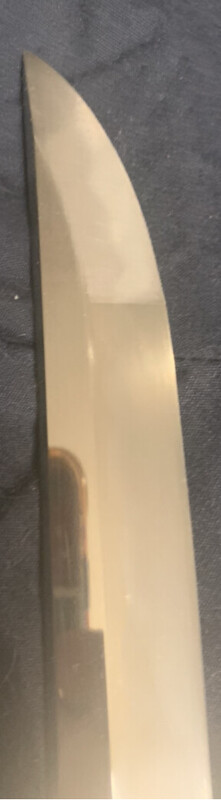
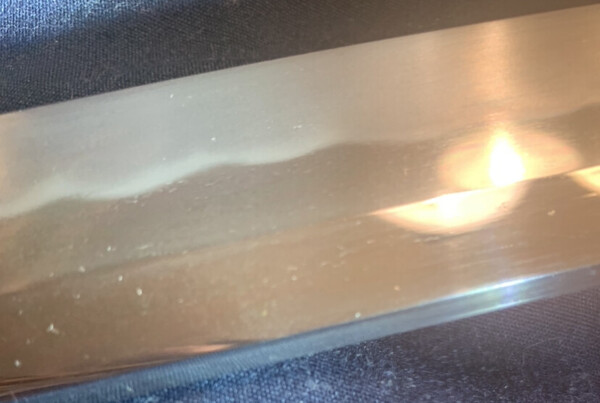
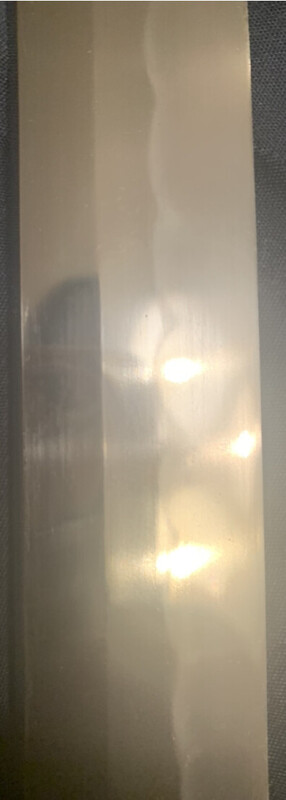
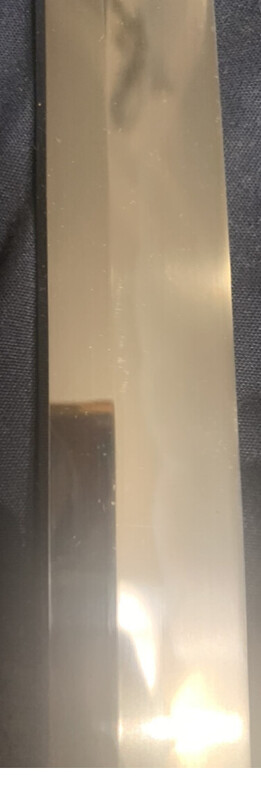



 1 point
 -
I'm loving the adoption of that translation technique where colours are used to show which part translates to which. Thank you Steve, and to Koicho for using it. It really helps with learning.1 point
-
The translation was almost perfect. There is no name who wrote the sayagaki in your posted image.1 point
-
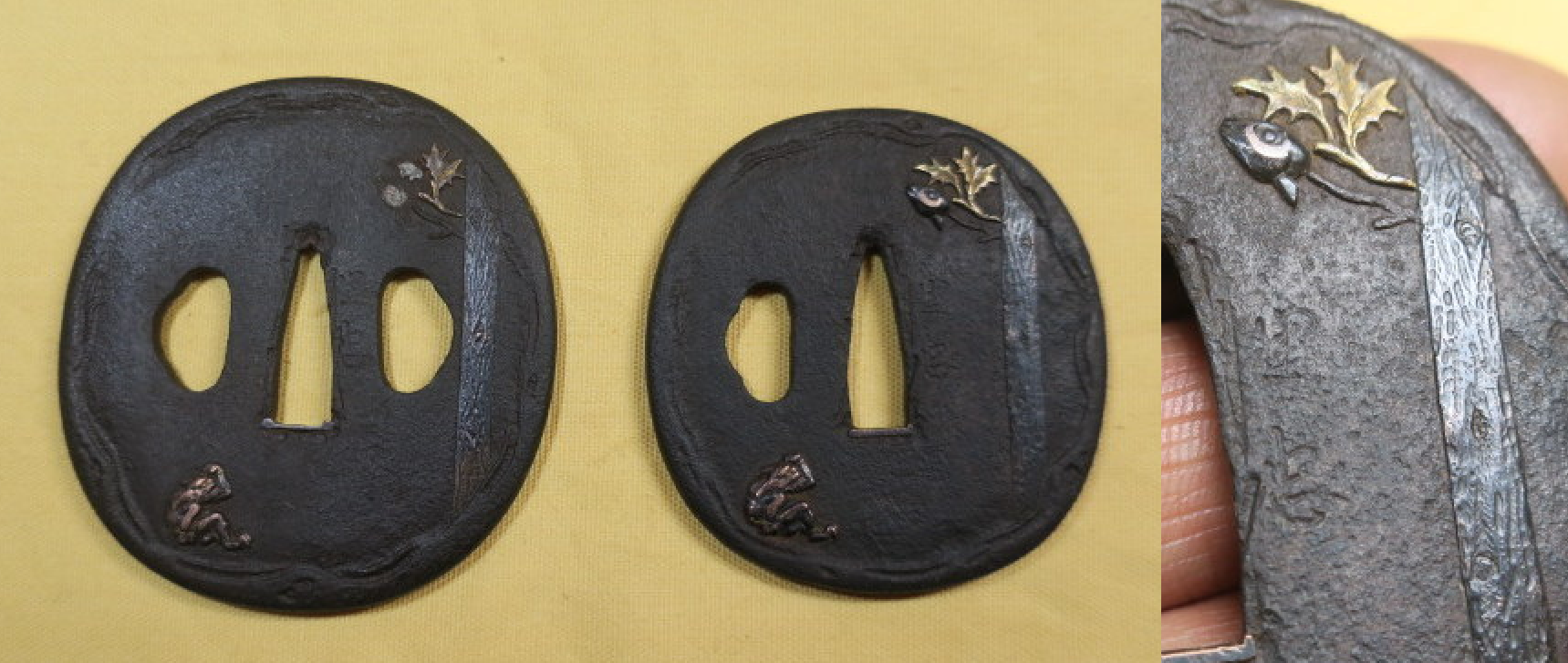
Sebastien I have found a daisho set selling on Jauce with the same Sardine and Holly theme as yours. https://www.jauce.com/auction/j716876105 I hope the images are of some use.
 1 point
 -
Hi Bob I think you would have had more comments if you spread out the time difference between each item Members like me can't wait to see the next one in your collection so are distracted to make many comments Just keep posting these fine examples Didn't you go off tsuba for awhile?1 point
-
They NEVER took off the point(kissaki) they always shortened from the nakago. It may have simply been filed down to change the balance and weight for a new owner A sword does need to be tailored to the owner. If the point is taken off they have to completely rework the blade and would probably just have melted it down if it broke there. Sort if outlandish idea yeah. 🤪 Im glad one of these guys says it could be the original hamon.1 point
-
Curran has it. It’s down as as “Hide or Teru” in Sesko’s Compendium. I didn’t check there as I thought I’d seen the common pronunciation in a mei recently. Just when you think you know something there’s a new way to be wrong. 😳1 point
-
So why make a downvote take my reputation away? I just started and all it would take is one guy to come and downvote everything i say and im back to 0 rep here. Seems kinda unbalanced and arbitrary to me. Brian i am sorry about my argument with barry. I felt it unfair and I’m not one to keep silent. In these other posts someone is downvoting i even quite plainly said that his stuff is low quality. That I wouldn’t recommend buying the item i linked. I lost a days worth of activity from my reputation cause someone disliked three different posts where all i said was buyer beware and dont pay full price from anyone. I even specifically said the item i linked wasn’t worth 500 in a pawnshop when it’s listed for 2400 bucks. I was just linking to give an example of a hirazukuri katana and i was quite clear about that. can you really blame me for being a little disappointed? Im just trying to build my rep up a little here, learn, and help answer people when im around and no one else is. If ive broken any rules im sorry. If ive stepped on any toes im sorry. Ive been a silent member of this forum for years. You guys taught me everything i know and are the reason i dont have anything like that cobra abomination in my collection. I have mad respect for you specifically and am sorry i keep drawing your ire. 😞1 point
-
It seems the listing ended. I genuinely hope someone didn’t buy that nightmare.
 1 point
 -
It’s very strange that he would damage something he paid so much money to get. I guess he’s akin to American collectors who “polish” rare coins with steel wool because they think it looks better with surface damage instead of tarnish.1 point
-
Very nice, I like the rounded edges. The overall result is really excellent1 point
-
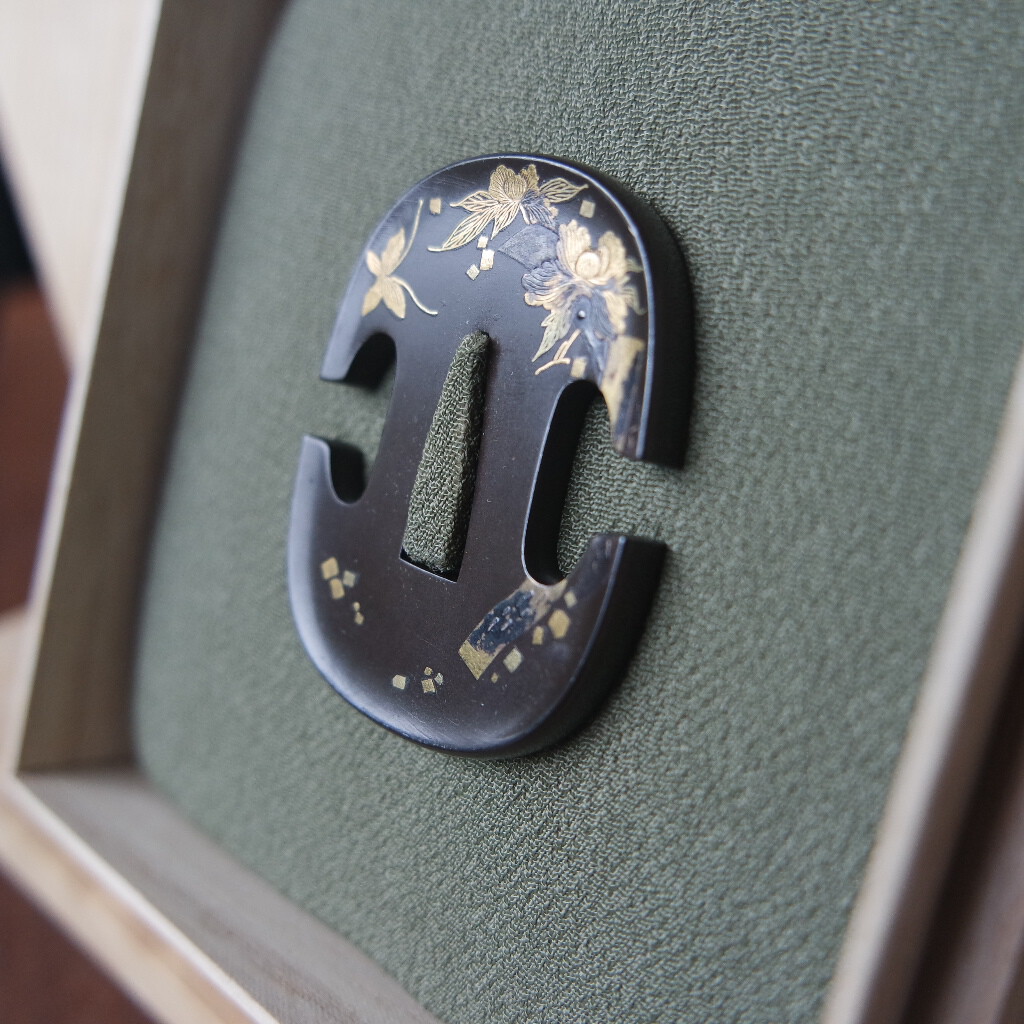
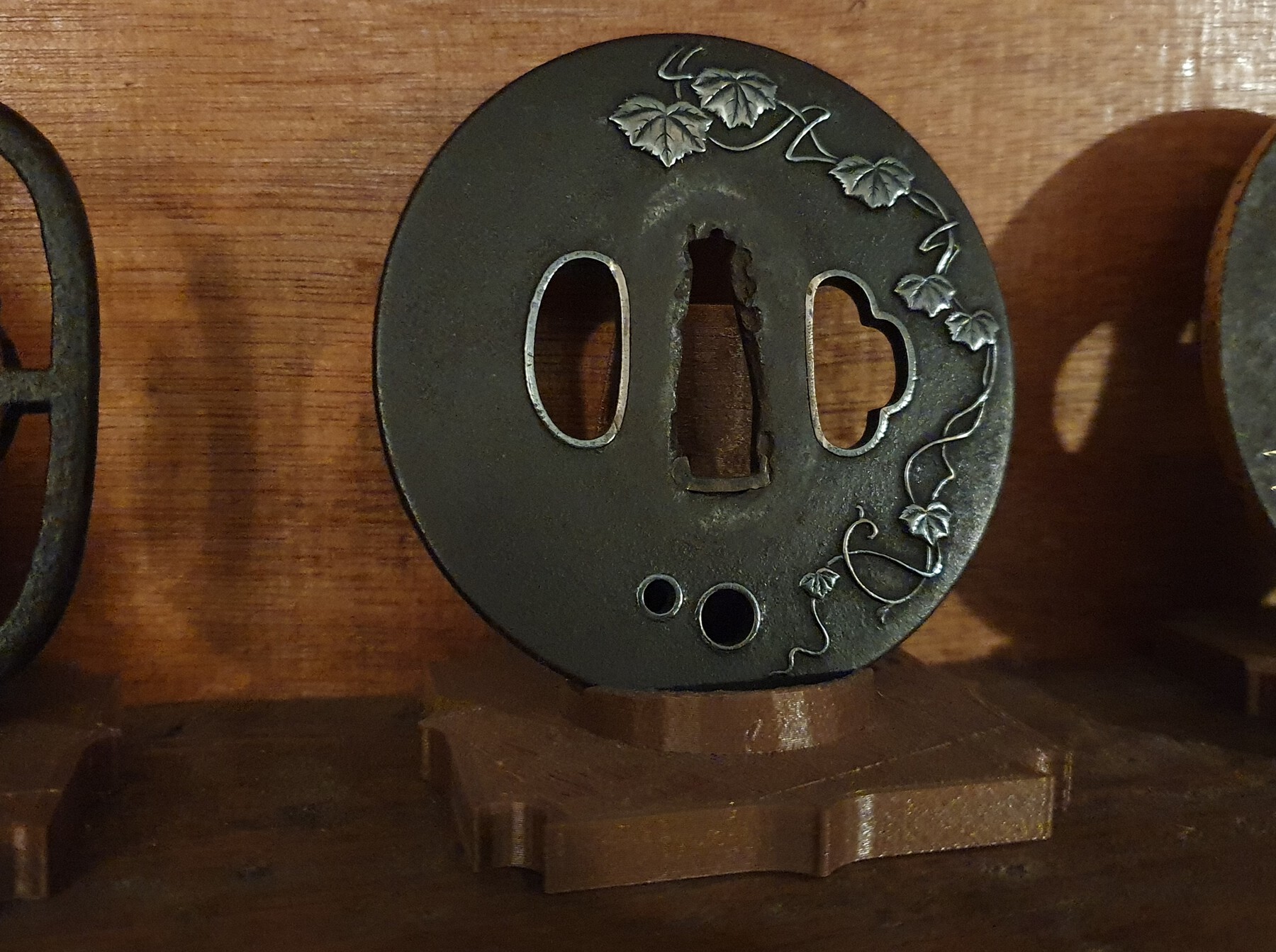
Afternoon Another one of my recent acquisitions. I bought this from a good friend I've met local to me and its my favourite piece out of my collection even out of all my soft metal tsubas.. I love the design and the lovely crisp carvings😎 thought I'd share it incase anyone was interested in sunagawa pieces😁 Would be interested to hear if anyone has any information on the Smith or tsuba. Cheers
 1 point
 -
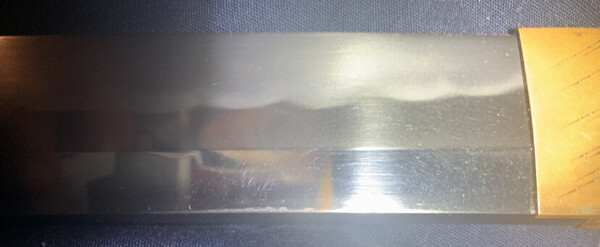
I’m sorry, I’m probably asking my questions without thinking and phrasing them well enough. To be totally honest, I had previously read that essay several months ago, and I’ve done so again and it lists several scenarios that could lead to receiving a den ranging from the judges not being entirely sold on an older attribution, to saying it was qualifier that was frequently attached to mumei blades they judged in the past (I don’t know if a 1950s judgment counts as that) I’m just wondering which of the scenarios could explain this judgment, and if this is one of the cases where I should still treat it as if it’s a presumed Kashu Kiyomitsu.1 point
-
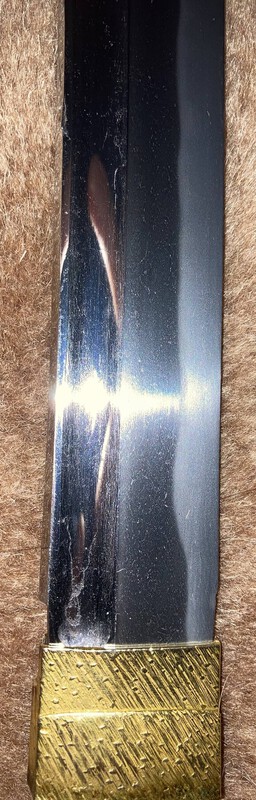
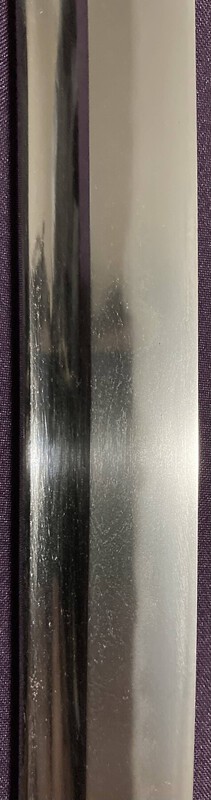
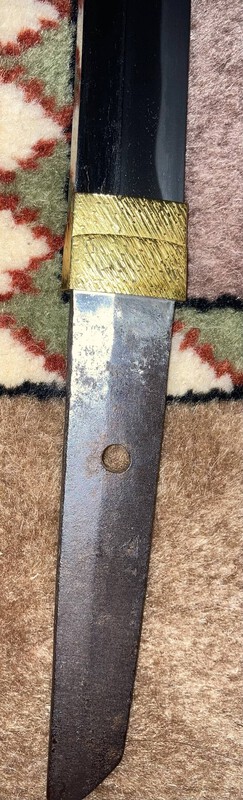
Also if it’s of any use, here is a photo of what was its torokusho, some nagako photos, and a couple more photos where I tried to catch the masame that shows up in the hada. Also the swords proportions are as follows: Nagasa is over 61cm, and the sori is about 1.5cm. Thanks again

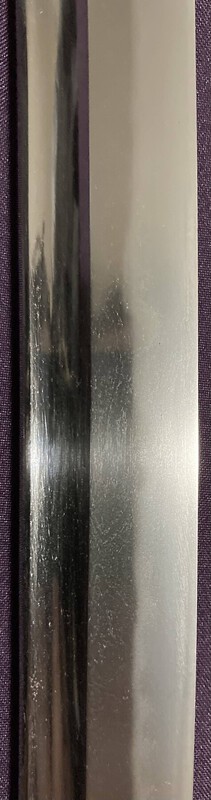
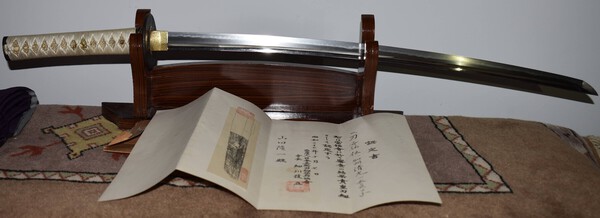

 1 point
 -
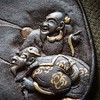
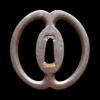
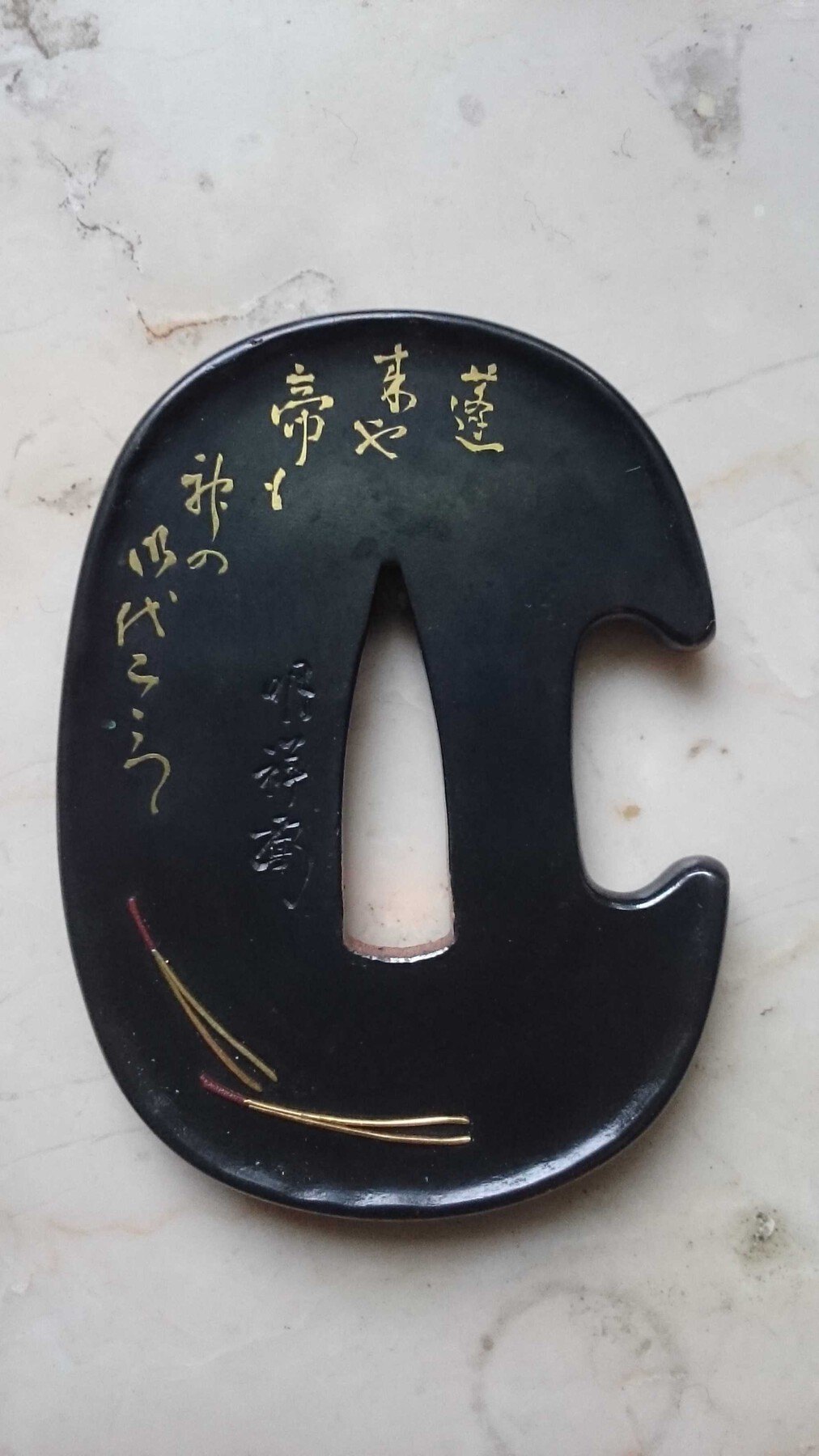
Two of mine... Mumei Kodai Umetada and a Tsuba made by Akiyoshi.

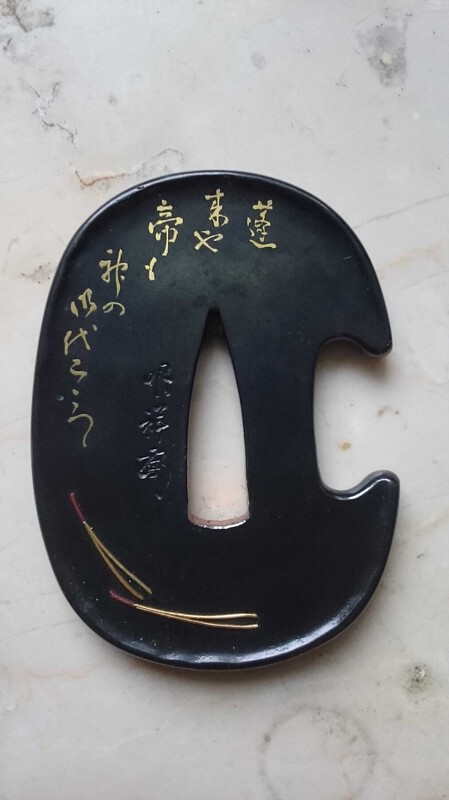 1 point
 -
There are several bad acid polish examples in NMB’s archives. The worst off ones make it hard to see the habuchi and turn the hada into some garish “Damascus hada” like pattern. I honestly still have trouble telling some Japanese made victims of FeCl3 from replicas. IDK why a vendor would do that to an antique. And I also wonder if part of the reason some of the replicas made in China and other parts of the world look as odd as they do is because an acid bath is included in their manufacture. Brian and other experienced collectors say that acid etching can be repairable sometimes https://www.militaria.co.za/nmb/topic/17957-my-new-nihonto-with-pics/1 point
-
@vajoYes that’s true although he’s placed his swords in the antique Japanese non replica category so it’s still misleading even if it’s in a grey area. I brought him up because it looks like Changtian are reaching eBay again. Honestly, It’s the case from post #2 which bothers me more since it was an American eBay vendor with a top reputation trying to convince new people that a mess with Damascus “Hada” and no nioiguchi was in fact a very highly rated gedaito and that people should send him thousands for that mess. I think someone else did buy it for thousands. I’m pretty sure this was blatant misrepresentation to push a bad sword onto a buyer. He said it was a “kihin no retsu” tier sword and basically said I’m an expert trust me. I guess I posted both because I want new people who might just be lurking at this point to see two common threats on eBay: well made fakes and well regarded sellers leveraging their reputation to unload problem merchandise on people. @0Takeda0 I never bought/interacted with Komonjo so it doesn’t feel right commenting. That said the sword and knife guy hawking that “rare and amazing” Gendaito from above sold legit cheaper gunto and avoided losses by pushing costly fakes onto “suckers” so that sounds spot on for what you said about vendors spiking mostly genuine, often cheaper stuff with horrifically expensive fakes. That sounds somewhat like the market for ancient coins.
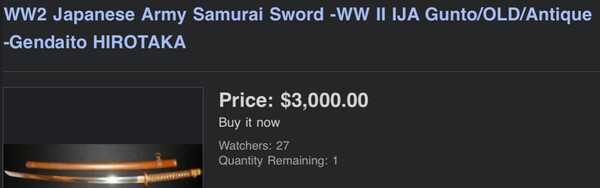 1 point
 -
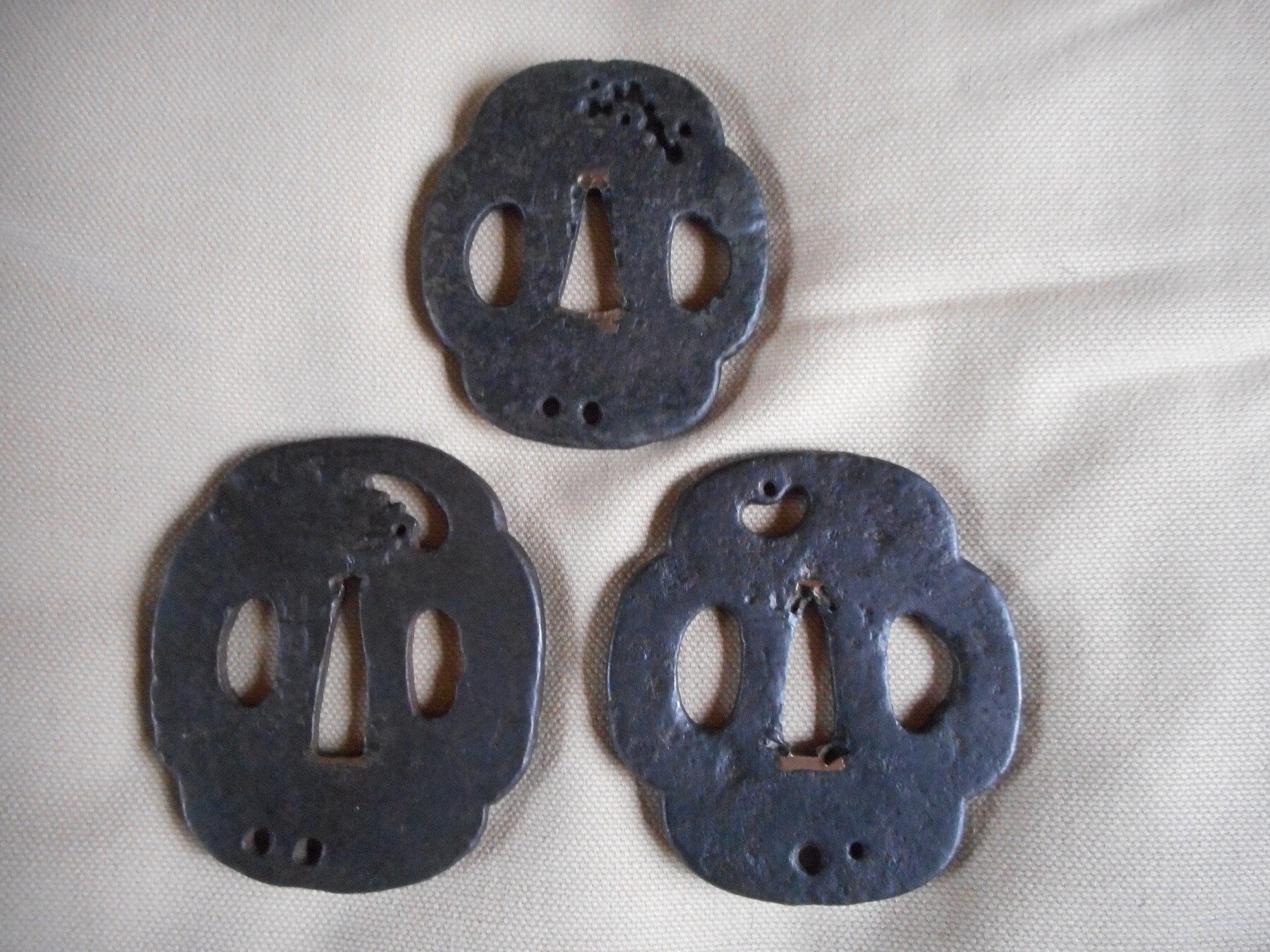
I have only one Tsuba with the feature, I'd like to add the picture to contribute. Great thread by the way, I'm surprised it initially ran out of replies so long ago, glad it's back!
 1 point
 -
Good Morning, Just started reading this thread and can add a few more Yamakichibei to the pot. David
 1 point
 -
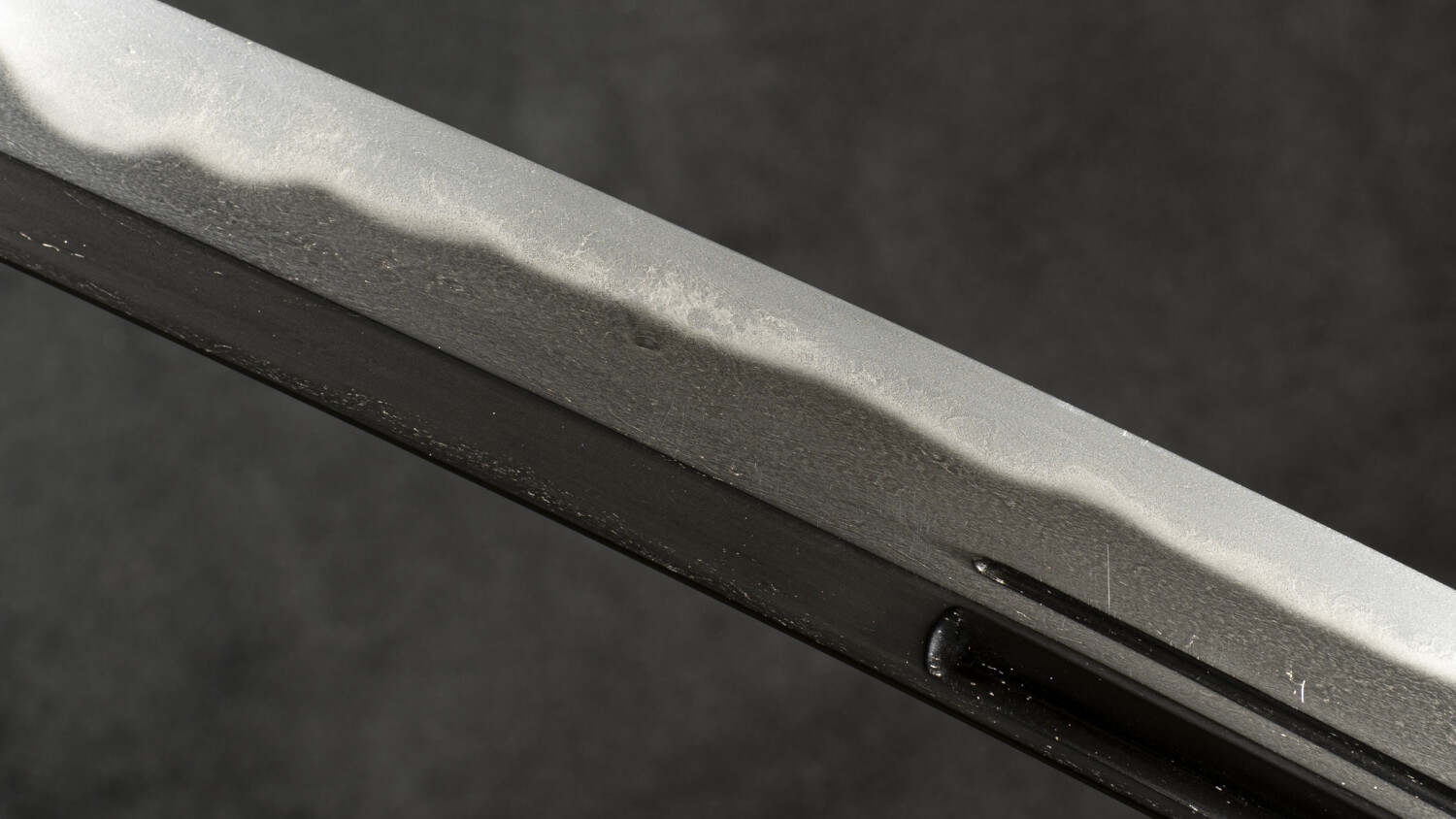
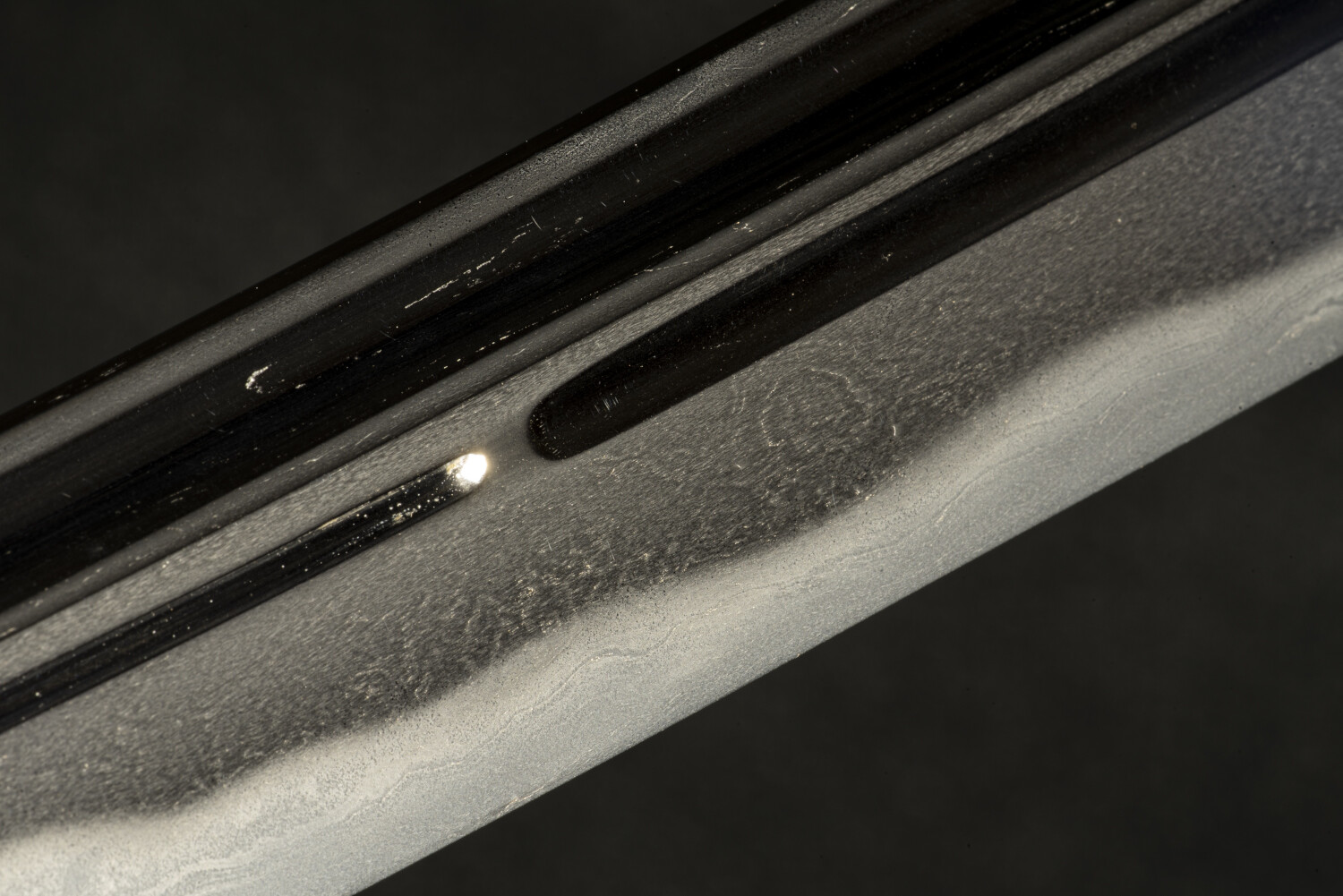
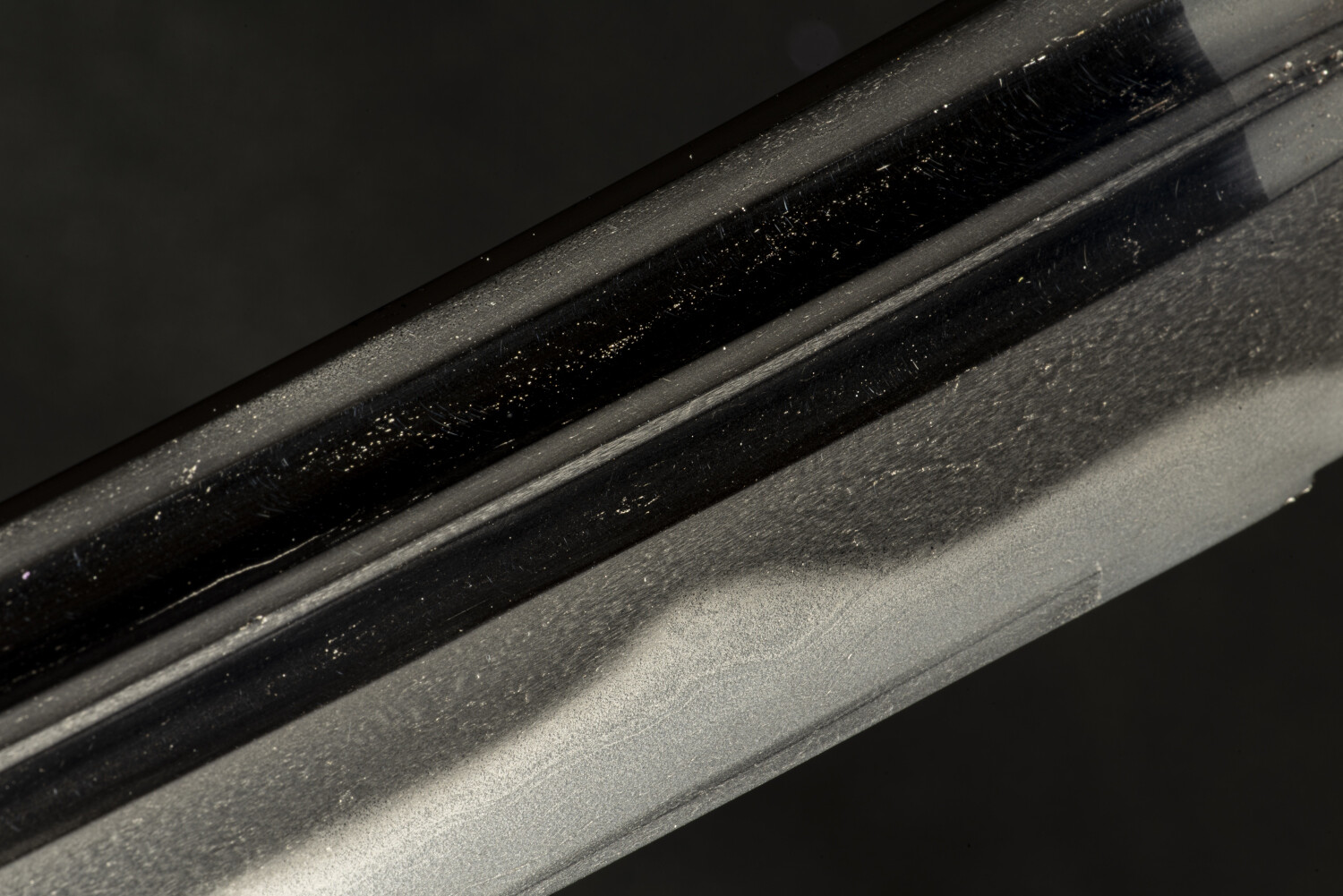
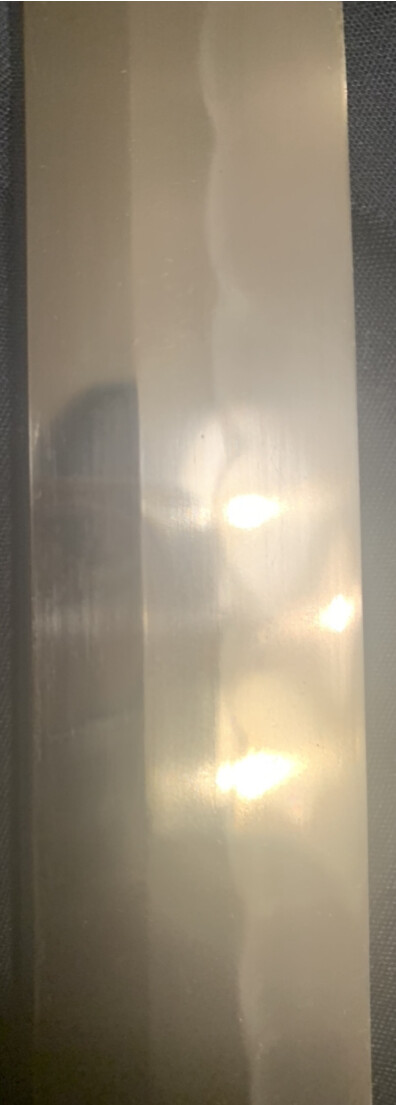
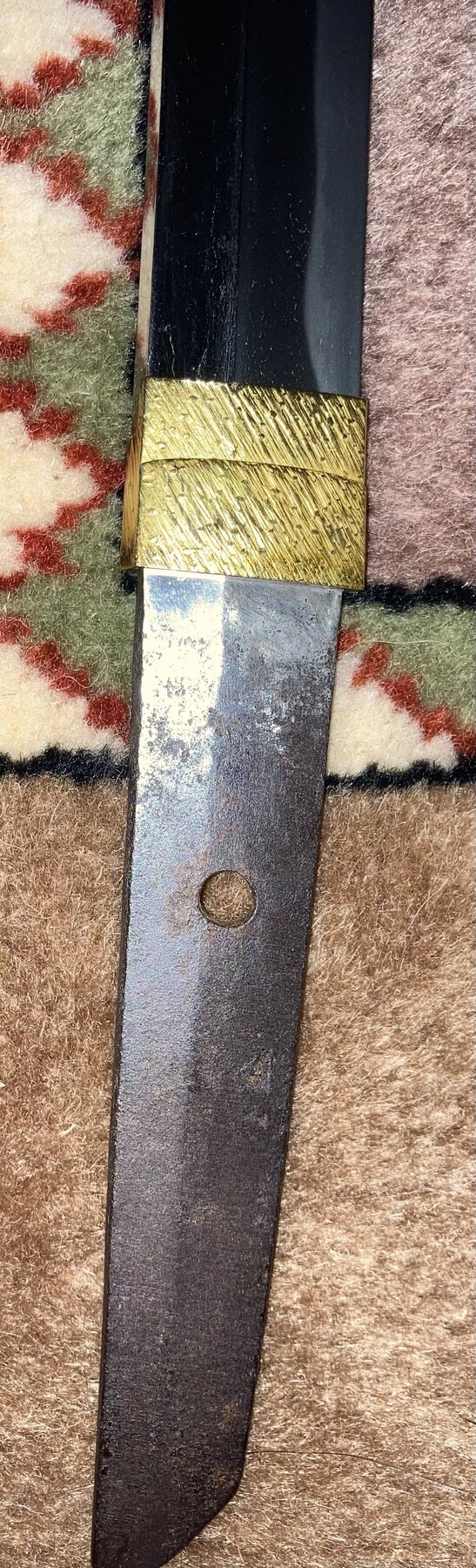
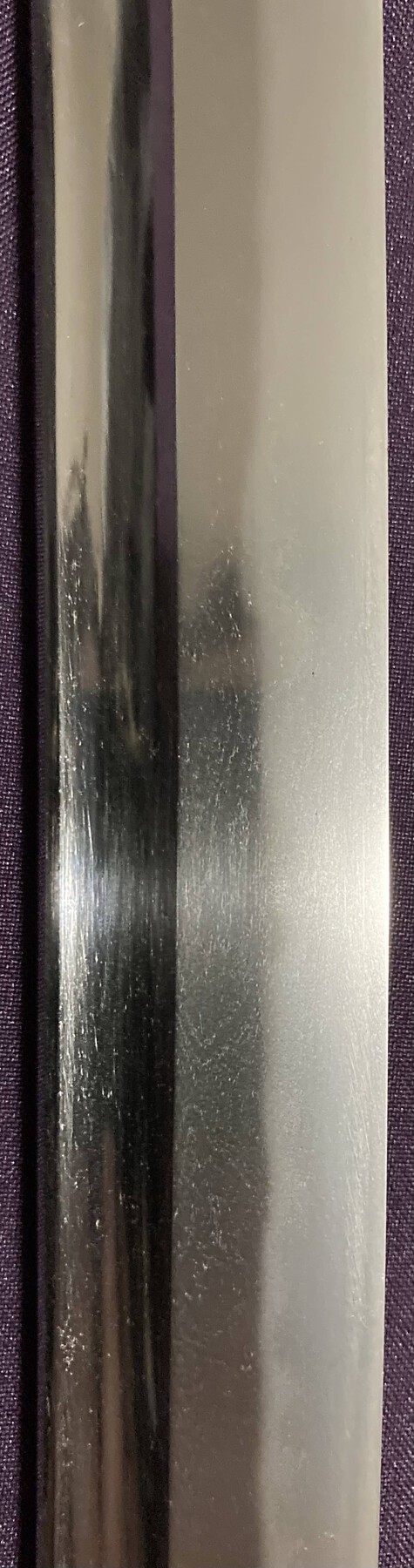
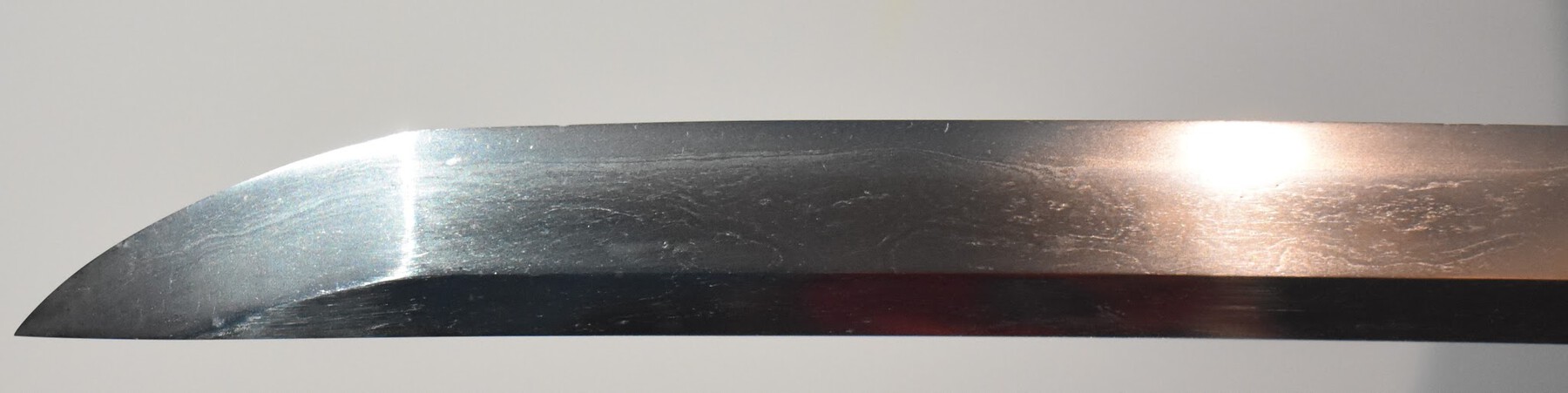
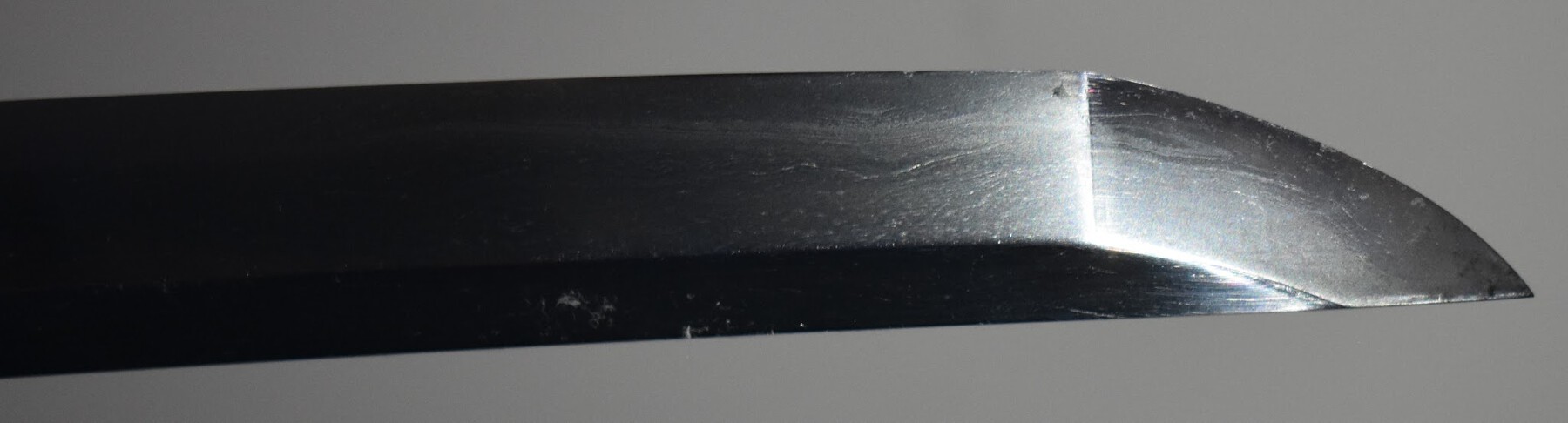
I should probably clarify my last comment about the kassane by saying I meant the definition that uses mune width. Also, I took a few more photos of both sides of the boshi, I'd left the other one out because it was somewhat out of polish but here goes... It does look like the dense boshi pattern extends past the kissaki, which does fit what people told me about it having been moved forward. Is that a typical way of shortening a kissaki? Especially in pre modern times? Also, would the boshi, especially the one on the lower image be an example of kaen? Thank you again everyone for all your help.


 1 point
 -
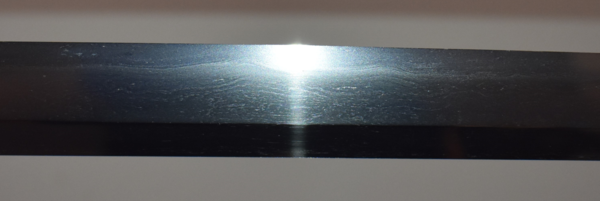
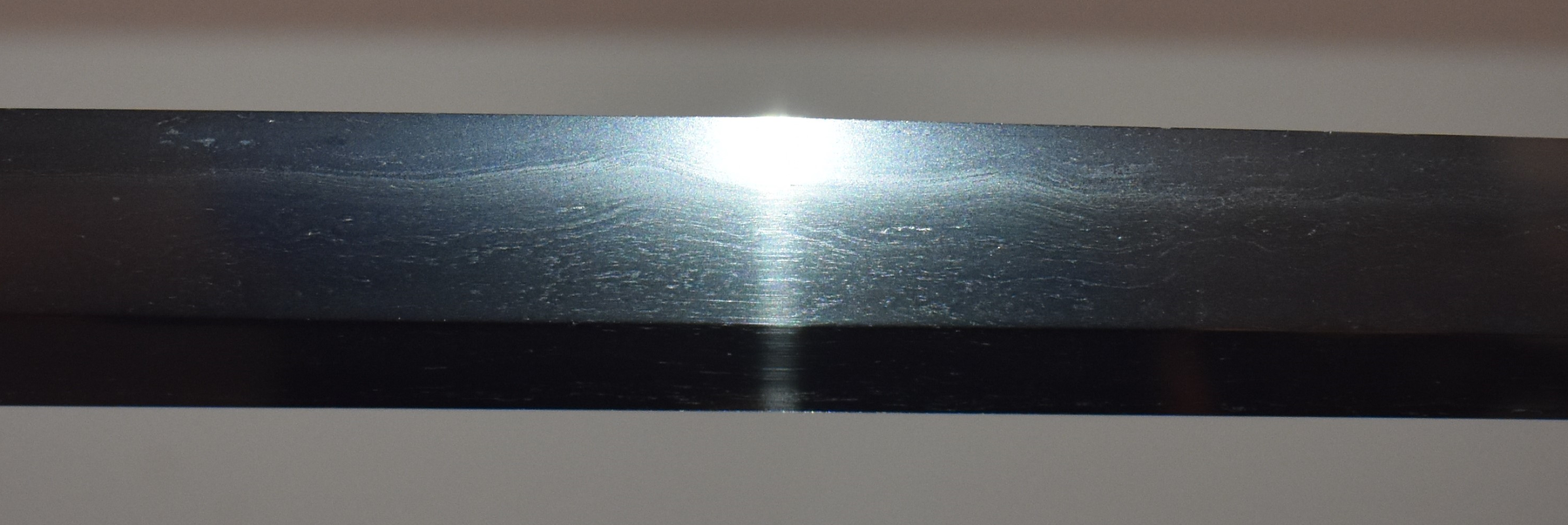
This is another photo of the large hada structures that start midway up the blade (picture 4 in my 1st post is another example). Is this what they refer to as "coarse"? Also as an addenum: the motohaba is 2.9cm and sakihaba is just under 2cm. The kasane seems fairly thick. Both of which I guess fit in with a Kanbun period blade.
 1 point
 -
Oh, and also this is the first time I’ve owned an old koshirae and the tsuka feels a bit rickety. I worry that if I handle it too much it will deteriorate, or the remaining bits of gold on the tsuba will fall off. I’m not sure what I can’ do to keep in in good condition apart from keeping it in a dry environment? Could Lohman or someone else do conservation work on the tsuka and saya without it losing its originality? Also if it helps at all with the sleuthing, I've attached photos of the torokusho and export paperwork. Thank you again everyone.
.thumb.JPG.2861e9491a4232beed258b15c8cbb9af.JPG)
.thumb.JPG.ce99d110a8e0ae11d22ea97959545825.JPG)
-min.thumb.jpg.152b1b39d5caf3b98f7010303720f655.jpg)

.thumb.JPG.2a9c93acf7ebd0868f8b0fb7a6341c1f.JPG) 1 point
1 point



.jpg.eadbbeb46d61337204462ffef3cc02b0.jpg)



























.thumb.jpg.c4c759f5c716a1fdcb7eb8b72ef0c400.jpg)

.JPG.fef65fa63f0a7188e5bf9c0bf35c9216.JPG)
.JPG.55ac86d762054b68b8aaf81f8bf15f9b.JPG)
-min.jpg.010da8905dcd9ac9c6bb04625d10755d.jpg)

.JPG.d36458184f6df4c7a90c30637f29366d.JPG)
This leaderboard is set to Johannesburg/GMT+02:00