
Leaderboard


Popular Content
Showing content with the highest reputation on 03/20/2026 in all areas
-
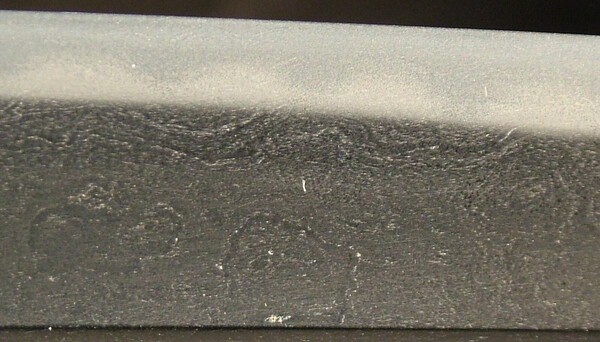
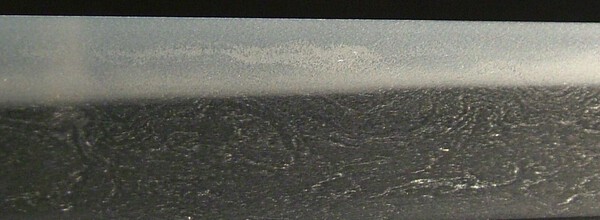
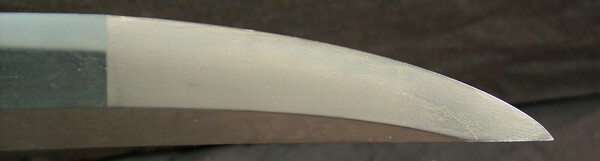
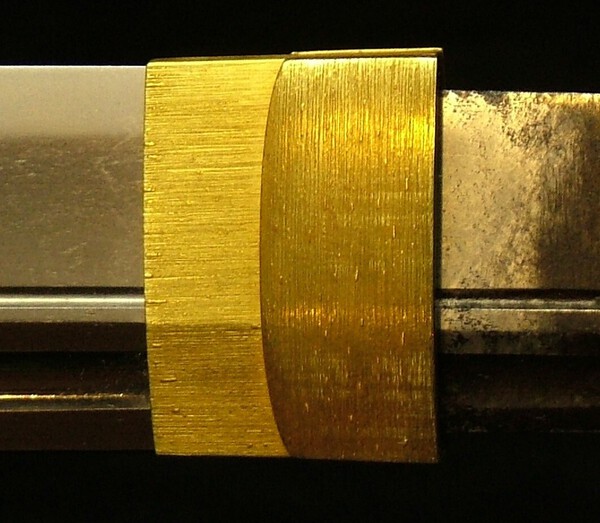
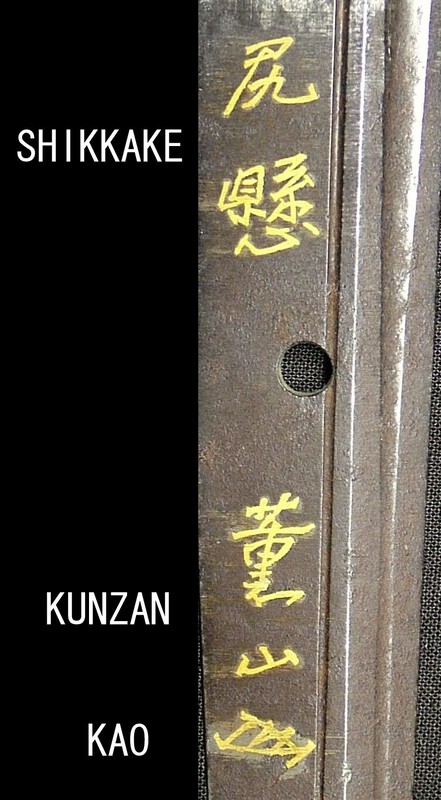
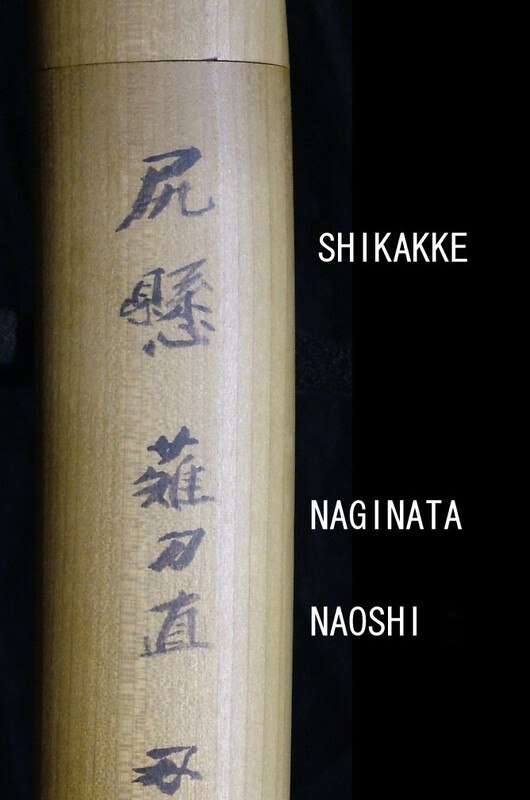
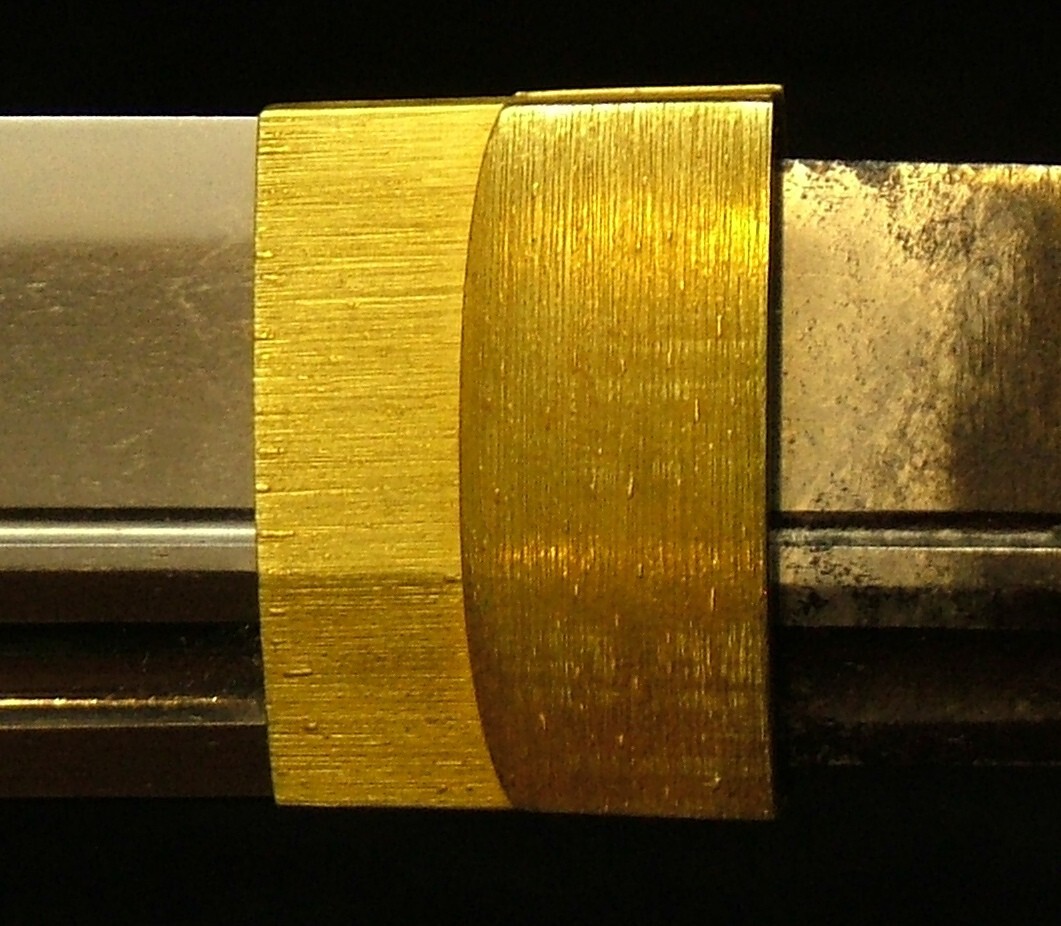
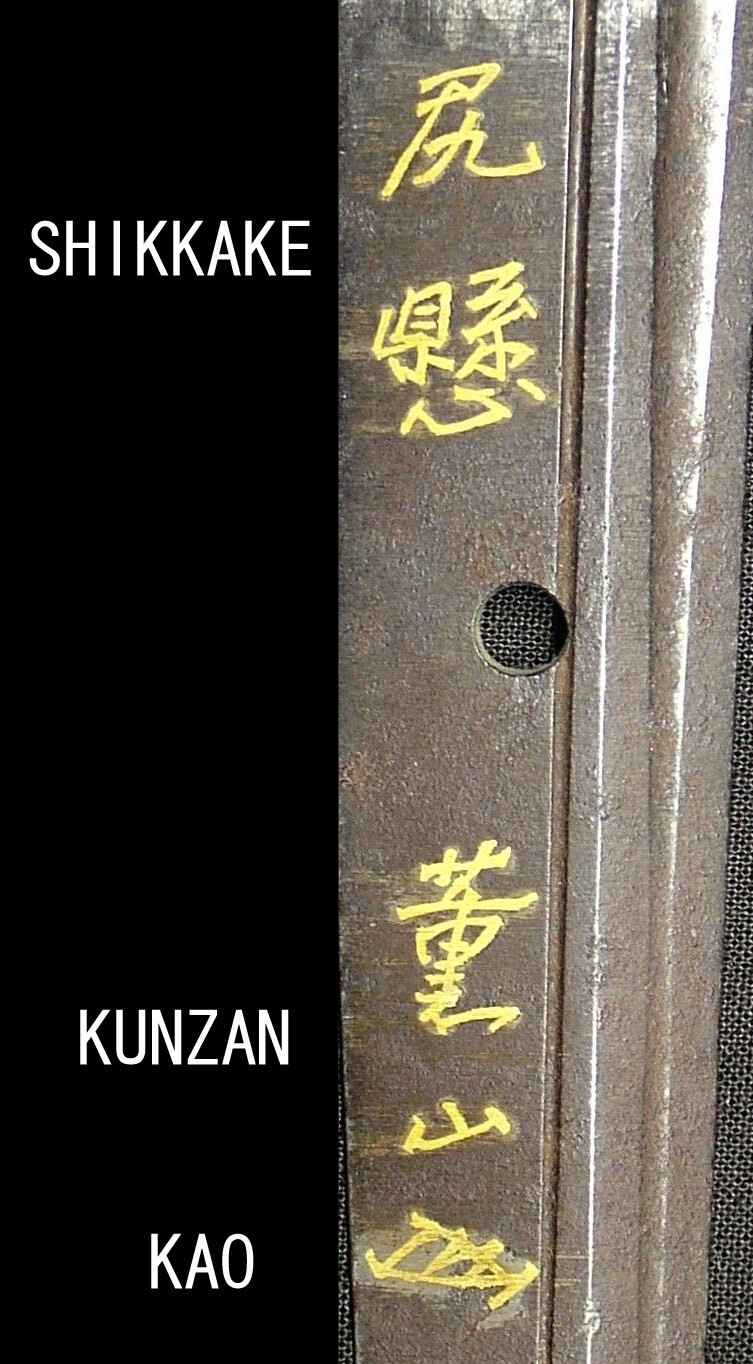
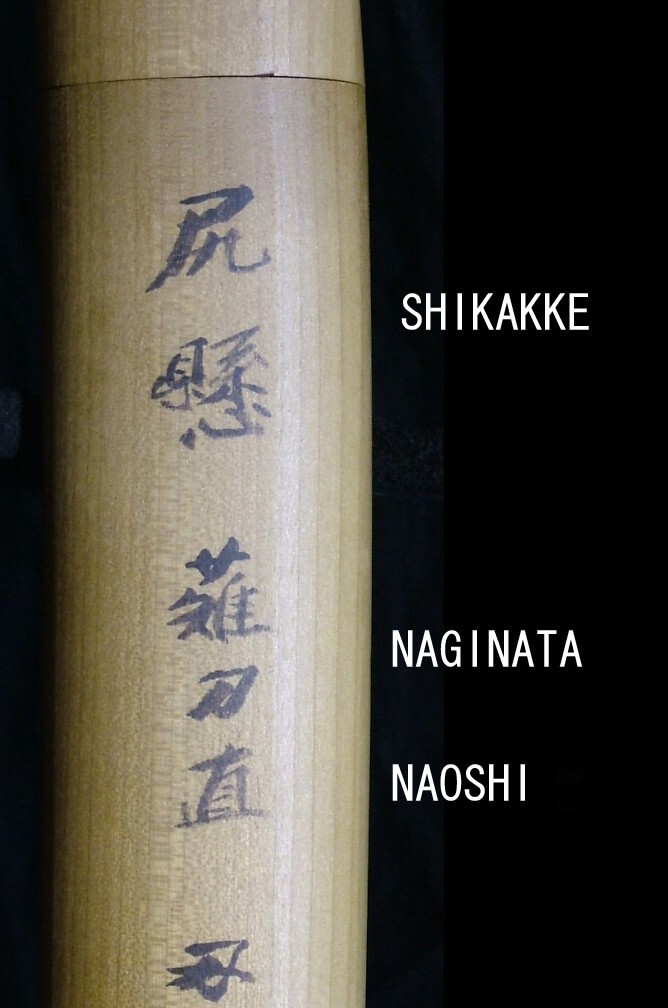
Not looking for cheap deals, let's move to the other end of the spectrum. Late Kamakura to early Nanbokucho period. Shikkake School of Yamato province prospered present Tenri City in Nara prefecture. The name Shikkake is from Shikkake-ishi, the flat stone to place the divine palanquin in Shinto. The Jitetsu of this sword is extremely fine that has something in common with Taima School. It satiates the collector’s interest. Five principal schools prospered in Yamato province: Tegai, Shikkake, Taema, Senjuin and Hosho. Norinaga is thought as the substantial founder of Shikakke school. Dated Tanto in 1319, the third year of Bunpo era in late Kamakura period still survive at the age of 69. Counting backward, Norinaga was born in 1270, the seventh year of Bunei era in Kamakura period. Later generations Norinaga forged sword to the Muromachi period. Smart Shinogi-suji, wide Shinogi-haba, stream like pattern of Itame-hada and Suguha-hamon are characteristics common to all Yamato province. The workmanship of Shikkake School shows traditional Yamato style. Typical ko-gunome hamon based on suguha. Kunzan Sayagaki which states this belonged to Dean Hartley. Provenance: Col. Dean Hartley Price: Ask, if you are prepared to purchase a sword of this level.





 7 points
 -
I thought it may be worthwhile put up the offical list of currently missing Jūyō Bunkazai swords being searched for by the Japanese Government (in English) so that the non-Japanese sword community can easily reference and keep track of this list for the future. The Agency for Cultural Affairs has included some information on each of the missing swords on their website (you can see this by click on the missing sword's name). Most even include photos of the sword but unfortunately the images are tiny and they do not expand when you click on them... Still it means that the Agency appears to have the images so if we see anything that looks similar we can always write to them to seek clarification. It is worth noting that unless the sword has been brought to the attention of the Agency for Cultural Affairs the sword will not appear on this list, I mention this specifically referencing the missing 55 former National Treasure (国宝, Kokuhō) and Jūyō Bijutsuhin (重要美術品) blades that went missing post-WWII during the Allied Force occupation of Japan. You will see the Honjo Masamune and the Norshige owned by Ian Brooks appear on the list, this is because the Agency has opened a case for both missing swords and therefore they are tracking them. In the case of Ian Brooks' Norishige, whilst we as a community may be pretty convinced that the blade has been found, until the Agency can examine it themselves in Japan and confirm it to be the same blade, it remains in their opinion missing. It is also worth noting that Japan has a statute of limitation when it comes to missing/stolen property, that is, within Japan it is 2 years and internationally it is 10 years. As such, even if the blade is found, if it is outside the statutes of limitation then officially the sword belongs to whom ever possesses the sword. These "new" owners can therefore choose to give the sword back or they can approach the original owner or the Japanese Government to find out if they wish to purchase the sword back. I know it seems a little out there in terms of traditional western legal logic but that is the lay of the legal landscape in Japan. It is worth noting that of the 146 currently missing Cultural Properties 74 or more than 50% of these are swords and that does not include the majority of the 55 post-WWII blades. THE CURRENT OFFICIAL LIST OF 74 MISSING JŪYŌ BUNKAZAI SWORDS 1 Jūyō Bunkazai 1952 Tanto Kunimtisu Found 2 Jūyō Bunkazai 1952 Tanto Kunimitsu 3 Jūyō Bunkazai 1953 Tachi Bishu Osafune Hidemitsu / October, Oan 22 4 Jūyō Bunkazai 1938 Katana Mumei den Norishige 5 Jūyō Bunkazai 1942 Katana Kuniyasu Found 6 Jūyō Bunkazai 1941 Tachi Tamekiyo 7 Jūyō Bunkazai 1931 Tachi Moritsugu 8 Jūyō Bunkazai 1935 Tachi Rai Kunimitsu Found 9 Jūyō Bunkazai 1941 Tachi Aki Iri Nishi / October, Einin 5 10 Jūyō Bunkazai 1935 Tachi Ichi 11 Jūyō Bunkazai 1940 Tachi Unji 12 Jūyō Bunkazai 1941 Katana Mumei Attributed to Mitsutada / Korean Crane and Gold Inlay with Signature 13 Jūyō Bunkazai 1940 Tachi Nagamitsu 14 Jūyō Bunkazai 1952 Tanto Moritsugu, resident of Bitchu / August, Enbun 2 Found 15 Jūyō Bunkazai 1933 Tachi Nagamitsu 16 Jūyō Bunkazai 1934 Tachi Hisakuni 17 Jūyō Bunkazai 1916 Tachi Nobufusa 18 Jūyō Bunkazai 1952 Tachi Nagamitsu, resident of Osafune, Bizen / Auspicious day in February, Shoan 2 19 Jūyō Bunkazai 1953 Katana Mumei den Hasebe Kunishige 20 Jūyō Bunkazai 1956 Tachi Unji, resident of Bizen 21 Jūyō Bunkazai 1941 Tachi Ietada 22 Jūyō Bunkazai 1936 Tachi Mitsutada 23 Jūyō Bunkazai 1941 Katana Mumei den Kunitoshi 24 Jūyō Bunkazai 1953 Tachi Sukehige - Theft reported (1972) 25 Jūyō Bunkazai 1933 Tachi Yoshiie 26 Jūyō Bunkazai 1941 Tachi Kunimune, resident of Bishu Osafune 27 Jūyō Bunkazai 1952 Tachi Yoshiie 28 Jūyō Bunkazai 1955 Katana Mumei den Masamune - Theft reported (1982) 29 Jūyō Bunkazai 1939 Katana Mumei den Masamune (Meibutsu Honjo Masamune) 30 Jūyō Bunkazai 1955 Katana Kinzogan-mei Sukemitsu polished by Mitsunori 31 Jūyō Bunkazai 1937 Tachi Kuniyuki 32 Jūyō Bunkazai 1955 Tachi Bitchu-no-kuni-ju Tsuguyoshi / October Teiwa 2 33 Jūyō Bunkazai 1955 Tanto Rai Kunimitsu / Gentoku 2 34 Jūyō Bunkazai 1949 Tachi Sadayoshi 35 Jūyō Bunkazai 1955 Tanto Kashu-ju Masakage / Joji 6 36 Jūyō Bunkazai 1952 Tachi Mumei Mitsutada 37 Jūyō Bunkazai 1974 Tachi Mumei den Mitsutada Found 38 Jūyō Bunkazai 1953 Tanto Yasuyoshi 39 Jūyō Bunkazai 1939 Tachi Kunisuke 40 Jūyō Bunkazai 1952 Tachi Bitchu and below Found 41 Jūyō Bunkazai 1911 Tachi Mumei - Theft reported (1960) 42 Jūyō Bunkazai 1911 Tachi Tadayoshi - Theft reported (1960) 43 Jūyō Bunkazai 1922 Tachi Tōchin 44 Jūyō Bunkazai 1940 Tanto Noshige 45 Jūyō Bunkazai 1952 Wakizashi Hiromitsu, resident of Sagami / August, Enbun 5 46 Jūyō Bunkazai 1911 Tanto Front: Mishima Daimyojin Back: Fujiwara Tomoyuki, Teiji 3 - Theft reported (1948) 47 Jūyō Bunkazai 1935 Tachi Junkei 48 Jūyō Bunkazai 1958 Tachi Mitsutada 49 Jūyō Bunkazai 1956 Tachi Sukezane 50 Jūyō Bunkazai 1935 Tachi Mitsutada 51 Jūyō Bunkazai 1954 Katana Kinzogan-mei Motoshige / Hon’Ami Found 52 Jūyō Bunkazai 1953 Tachi Kaneuji 53 Jūyō Bunkazai 1953 Tanto Kagemitsu 54 Jūyō Bunkazai 1958 Tanto Kunimtisu / March Gen’o 2 55 Jūyō Bunkazai 1970 Sanko-Duka-Ken Made by Shigeyoshi Nyudo / January 7th Genko 2 by Ajari Yorinobu 56 Jūyō Bunkazai 1961 Katana Mumei Ichimonji 57 Jūyō Bunkazai 1926 Tachi Yasuyoshi 58 Jūyō Bunkazai 1927 Tachi Made by Moriyoshi / Shirasaki Hachiman Shrine, Boshu Found 59 Jūyō Bunkazai 1936 Tachi Mumei den Sukezane 60 Jūyō Bunkazai 1927 Tachi & Mounted with gold and mother-of-pearl inlaid scabbard, Nodachi style Gyōshin 61 Jūyō Bunkazai 1928 Katana February 1616, Yoshihito, Shinano no Kami Kunihiro/ Commissioned by Igamo Lord Yasutsuna 62 Jūyō Bunkazai 1956 Katana Kuninaga Found 63 Jūyō Bunkazai 1954 Katana Mumei Sadamune (Meibutsu Ikeda Sadamune) 64 Jūyō Bunkazai 1941 Tanto Kagemitsu, Bizen no Kuni Osafune ju / February, Genko 4 65 Jūyō Bunkazai 1925 Tachi Rai Kunimtisu 66 Jūyō Bunkazai 1925 Tachi Kunihiro, Kamakura Resident / February, Bunpo 2 67 Jūyō Bunkazai 1955 Wakizashi Namihei Ieyasu Found 68 Jūyō Bunkazai 1917 Uwazu Tachi Mumei 69 Jūyō Bunkazai 1931 Renzudachi Rai Kunitoshi / March 1st, Einin 5 70 Jūyō Bunkazai 1906 Peony Wakizashi Mumei 71 Jūyō Bunkazai 1909 Tachi Nagamitsu 72 Jūyō Bunkazai 1956 Katana Mumei Gō Yoshihiro (Meibutsu Buzen-Gō) 73 Jūyō Bunkazai 1919 Katana Shuuma no Kubi Ichihei Yasuyori Kōhaku 74 Jūyō Bunkazai 1918 Katana Mumei Norishige Found – Owned by Ian Brooks If you have any images or stories associated with any of the blades in this list, please preface the comment below with the # and name of the blade as it appears in this list, it would be good to have a little repository of images and information specific to these blades to help with tracking them down. Hopefully this little list will help with the quest to find these blades.6 points
-
Just some information on the Fujiwara area of Nara. The place name still exists and it is located in front of Kasuga-taisha grand shrine. These smiths supplied arms for the warriors attached to the shrine. As Ray has provided, some of these smiths are from the Sue-Tegai School, some are Fujiwara School smiths and a few are pre-Kanabô smiths. The Kanabô School began in Fujiwara before moving to the Kanabô area of Nara.6 points
-
Update: Yamanaka Newsletters V4 NL 08 - now available. Albert Yamanaka's Nihonto Newsletters Volume 1 Yamanaka V1 NL01 Yamanaka V1 NL02 Yamanaka V1 NL03 Yamanaka V1 NL04 Yamanaka V1 NL05 Yamanaka V1 NL06 Yamanaka V1 NL07 Yamanaka V1 NL08 Yamanaka V1 NL09 Yamanaka V1 NL10 Yamanaka V1 NL11 Yamanaka V1 NL12 Yamanaka V1 NL12 Extras Volume 2 Yamanaka V2 NL01 Yamanaka V2 NL02 Yamanaka V2 NL03 Yamanaka V2 NL04 Yamanaka V2 NL05 Yamanaka V2 NL06 Yamanaka V2 NL07 Yamanaka V2 NL08 Yamanaka V2 NL09 Yamanaka V2 NL10 Yamanaka V2 NL11 Yamanaka V2 NL12 Volume 3 Yamanaka V3 NL01 Yamanaka V3 NL02 Yamanaka V3 NL03 Yamanaka V3 NL04 Yamanaka V3 NL05 Yamanaka V3 NL06 Yamanaka V3 NL07 Yamanaka V3 NL08 Yamanaka V3 NL09 Yamanaka V3 NL10 Yamanaka V3 NL11 & NL12 Volume 4 Yamanaka V4 NL01 Yamanaka V4 NL02 Yamanaka V4 NL03 Yamanaka V4 NL04 Yamanaka V4 NL05 Yamanaka V4 NL06 Yamanaka V4 NL07 Yamanaka V4 NL086 points
-
#72Buzen-Gō Sword, Unsigned, Gō Yoshihiro (Meibutsu: Buzen-Gō) Length: 2 shaku 2 sun 5 bu (68.2 cm) Curvature: 5 bu (1.5 cm) Mekugi: 1 Important Art Object, Designated May 27, 1937. Owner at the time of designation: Count Ogasawara Tadaharu, Tokyo. Important Cultural Property, Designated June 28, 1956. Buzen-Gō is said to be the work of Gō Yoshihiro, who resided in Matsukura-go, Etchu Province, and is the most flamboyant of Gō Yoshihiro's works. Ownership of the blade: The origin of the name "Buzen-Gō" is unclear, but the sword was handed down to the Ogasawara family of the Ogura Domain in Buzen Province (different from the Ogasawara family of the Echizen Katsuyama domain where Uguisumaru was kept). The Ogasawara family also owned the Hakata Toshiro, Fudou Yukimitsu, and Akita Toshiro but it is unclear if they owned them all at the same time. Designated as an Important Art Object on May 27, 1937. It was owned by Count Ogasawara Tadaharu at that time. Akita Toushirou, which was designated as an Important Art Object in the same year, was also in the same collection. In the 1949 publication "Commentary of National Important Art Objects of Yamaguchi Prefecture" is recorded that the sword is owned by Yamada Shinmatsu. Designated as an Important Cultural Property on June 28, 1956. Exhibited in the "Masamune and His Clan" exhibit held in 1961 and owned by Nakazawa Akira. Exhibited also at the "Famous Japanese Sword Exhibition" held in 1968, but the owner is not recorded. According to a 2018 survey conducted by the Agency for Cultural Affairs, its whereabouts are currently unknown. Description of the blade: Buzen-Gō differs somewhat in style from other Gō swords; while the blade width and cutting edge are of normal form, the forging shows a fine wood grain mixed with mokume, with ji-nie (small crystals in the surface), and the hamon (temper line) is a mix of gunome (irregular wave pattern), notare (undulating pattern), and choji (clove pattern), with deep indentations and extending into the shinogi (ridge line) in places. The boshi (tip) is broken down and sweeping. Although it exhibits an unusual style, it is generally consistent with other works by the same artist and is a superior example among them. It is a long tachi (long sword) that was shortened to a katana (short sword). Shape: Shinogi-zukuri, Iori-mune, slightly thin cross-section, medium-sized point. Forging: Fine wood grain pattern, mixed with mottled surface, fine ji-nie (small crystals). Hamon (temper line): Wavy with gunome (irregular wave pattern), frequent ashi (legs) and ha (leaves), with occasional kinsuji (golden lines), making the striking surface particularly brilliant on both sides. Overall, the nioi (misty effect) is very deep, with fine nie (small crystals). Boshi (tip): Irregular and sweeping pattern with kinsuji. Tang: Greatly shortened, chestnut-shaped tip, cut file marks, one mekugi-ana (peg hole). The name "Buzen-go" is written in red on the reverse side. Honma Talks: Regarding Gō Yoshihiro, Dr Junji Honma describes him in detail in his book, "Masamune and His School" (1961) The following in parentheses is an translated excerpt from the same book: "To understand the style of Yoshihiro, or Go, one should first examine Inaba-Gō (or Tomita-Gō), Murakumo-Gō, and Matsui-Gō. After fully understanding the Gō style, one should finally examine Buzen-Gō. All existing works by this artist are greatly shortened swords; no reliable short swords have been found. Swords can be broad-bladed with extended tips (e.g., Tomita-Gō), of normal width and tip (e.g., Kuwana Go), slightly extended tip (e.g., Samidare Go), or somewhat slender e.g., (Collection of the Tokyo National Museum), these are all Iori-mune. The forging is of the same type as: tightly grained ko-itame (e.g., Inaba-Gō), mostly straight grained (e.g., Murakumo-Gō), and a mixture of itame and straight grain. There is ji-kei (pattern in the steel), but it is not as prominent as in Masamune or Norishige. All have good ji-nie (small crystals in the steel), and the coarse nie is not as noticeable as in Masamune or Norishige. The hamon (temper line) is mostly shallow and irregular, mainly small notare (e.g., Inaba-Gō), in which case the nioi (cloudy effect) is particularly deep and there is ko-nie, and sunagashi (sand-like patterns) are relatively few. Also, straight, undulating, and small irregular patterns (e.g., Murakumo-Gō) have particularly prominent nie (crystals), and some have frequent sunagashi (sand-like patterns), fraying, and uchinoke (striking patterns). Some have tight straight patterns with small nie, and some have ashi (legs) and ha (leaves) (e.g., Matsui-Gō). However, ashi and ha are present in all of the above types of hamon. Moreover, all types of hamon are deeply tempered, especially from the monouchi (striking point) to the boshi (tip), and some have a single boshi. The boshi is generally less elaborate than the activity below, and sōme are shallowly irregular. Many have a rounded shape, some with a pointed shape (Matsui-Gō), some with a flame-like shape, and some with a slight sweeping effect. The hamon (temper pattern) of Buzen-Gō swords is unusual, with a deep in-and-out pattern of gunome, notare, and choji (clove-shaped) patterns, and in places extending onto the shinogi-ji (ridge line). There are no carvings other than grooves, and while Inaba-Gō sword has grooves that slope downwards and deep, skillfully crafted bo-hi (straight grooves), generally, most do not have grooves." (Reference: Reprinted, quoted, and excerpted from the Encyclopedia of Japanese Swords) #72Buzen-Gō
.thumb.jpg.64cc54378450e875de71fe0cda65fcd9.jpg)
Oshigata.thumb.jpg.543136d84100f88dec4033a2a5c83b50.jpg) 5 points
5 points -
FYI, another Fujiwara ju Yasumitsu Yahoo!オークション - 珍品 藤原住安光 指表に素剣彫り指裏に添樋の入...
 5 points
 -
I Propose for sale my Gassan Collection of swords ( 5). - 2 Gassan Sadakazu’horimono - 1 Gassan Sadatoshi’ horimono - 1 Gassan Sadaichi ‘ horimono - 1 Gassan Sadanobu’horimono They were collected thanks to the late Darcy Brockbank. Please ask if you are interested in. regards julien
 4 points
 -
Many of the factory workers were high school girls. In fact, they would have lessons (and a teacher) at the factory for a limited amount of instruction or would work in the factory after school. The balloon bombs sent over the Jet Stream to Canada and the US were all sewn by high school girls as well. John C.3 points
-
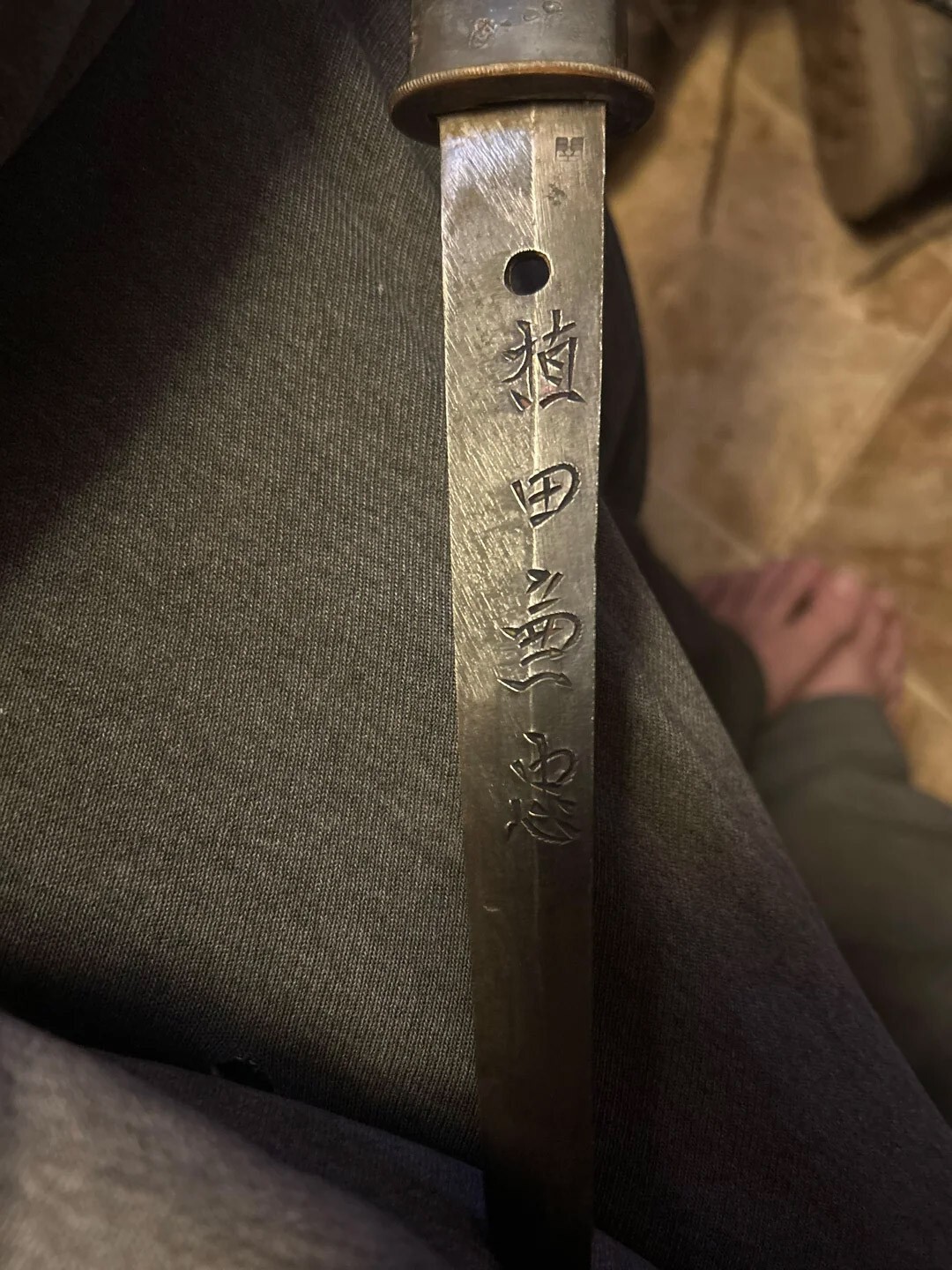
I couldn’t find anyone by the name of Ueda Kanetada(植田兼忠), but I did discover a swordsmith who signed his blades with the name ‘Kanetada’.(兼忠) Keiichi Ishihara(石原銈一)It seems he was active in 1939. I was able to confirm the signature ‘Ishihara Kanetada’, but I could not confirm the signature ‘Ueda Kanetada’.3 points
-
I have a Fujiwara jû Yasutomo oshigata and the signatures are very similar, although the nakago-jiri are different. This is certainly a Yamato Fujiwara smith that is unlisted in the Meikan.3 points
-
Type : Katana Ubu, Single mekugi ana Mei : Bizen Kuni Ju Osafune Kiyomitsu Saku Ura Mei : cant read fully but a partial Ten kanji and a clear Bun kanji can be seen ( Tenbun ) Papered: NBTHK Tokubetsu Hozon Shirasaya with Koshirae and sword bag and oshigata Nagasa/Blade Length : 70.0 cm Sori : 2.1 cm Hamon Type : suguha/ notare Jihada : itame/mokume Sword Location : USA Will ship to : USA preferable Payment Methods Accepted : PayPal/Venmo Price and Currency : $6000.00 USD including insurance and shipping for CON-USA I have reluctantly decided to part ways with my beloved Bizen Kiyomitsu katana as my interest has shifted towards Kyushu schools in recent years. Hard to do it justice via photos but the hamon and jigane is stunning with lots of activity. It is quite hard to find Tokubetsu Hozon Sue Bizen and this one is quite one of a kind as well with a massive 845 gram weight, wide 3.3 cm mihaba and thick kassane. The heaviest and thickest sue bizen blade I have yet to see listed personaly. Here are the high res photo in the link and please do not hesitate reach out for any additional photos if you are interested. It was purchased at 950,000 yen at the time so I will be just below breaking even after shipping and insurance. High Res link: https://www.kozmophotography.com/Bizen-Kuni-Ju-Osafune-Kiyomitsu-Saku/n-4Fg5nF This sword is also featured in the Eirakudo gallery of masterpieces https://eirakudo.shop/token/wakizashi/detail/319916 As noted above, the koshirae is included and is the same as the Eirakudo listing . And please note that this blade currently has a light hadori after shiage togi last summer. Thank you everyone - Kevin2 points
-
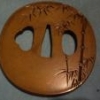
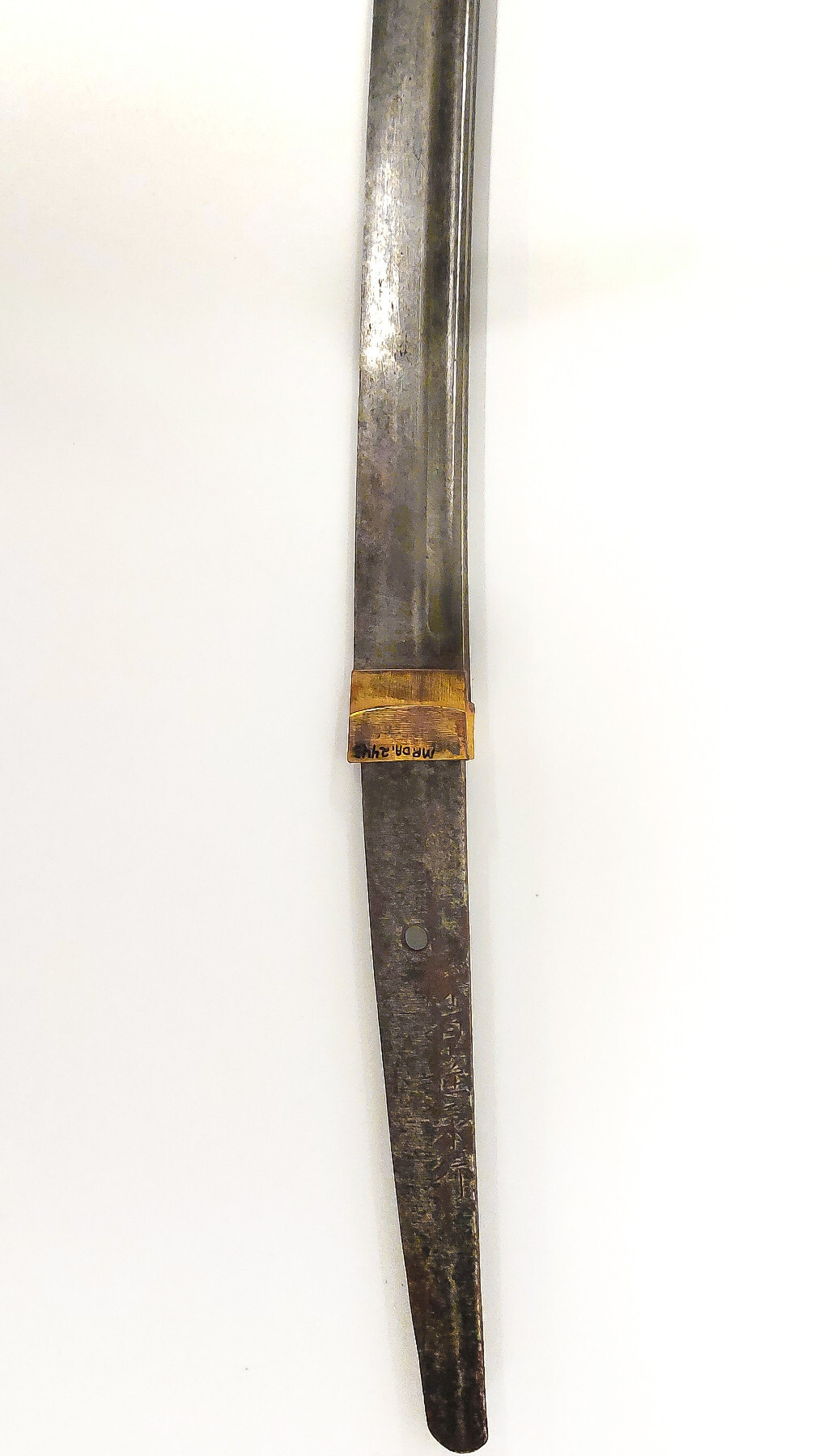
Pretty rough shape, but it has threaded sakura and a hole in the same for a mekugi. Someone thinks they can clean up the verdigris apparently.2 points
-
See here: Gai Sou Shi Studiensammlung japanischer Schwertzierrate - Tsuba.info Uwe2 points
-
Looks to be three wartime KANETADA in Gifu, and all seen to have used Seki stamp. Kanetada Ishihara Keiichi, born 1920 and in Seki registration list. 兼忠 石原 銈一. Kanetada Yamada Koichi, born 1926, not in registration list (but in Sesko). 兼忠 山田 耕市. Kanetada Ueda, the subject here, not is registration list, and no other info found, so looks undocumented. His mei is cut 植田 兼忠 .2 points
-
Going to need some prices Julian. Are you selling them as a set or individually? What ware the specs? What forms of payment to you accept? Will you ship worldwide, EU, Asia?2 points
-
Dreadful fake:2 points
-
The pictures of the blade are not the best, but I don’t see anything in the listing that makes me think this is a reproduction. Just look at the wear on the wire and the grip. It does look like the brass on the handle was cleaned. The patina looks a little off.2 points
-
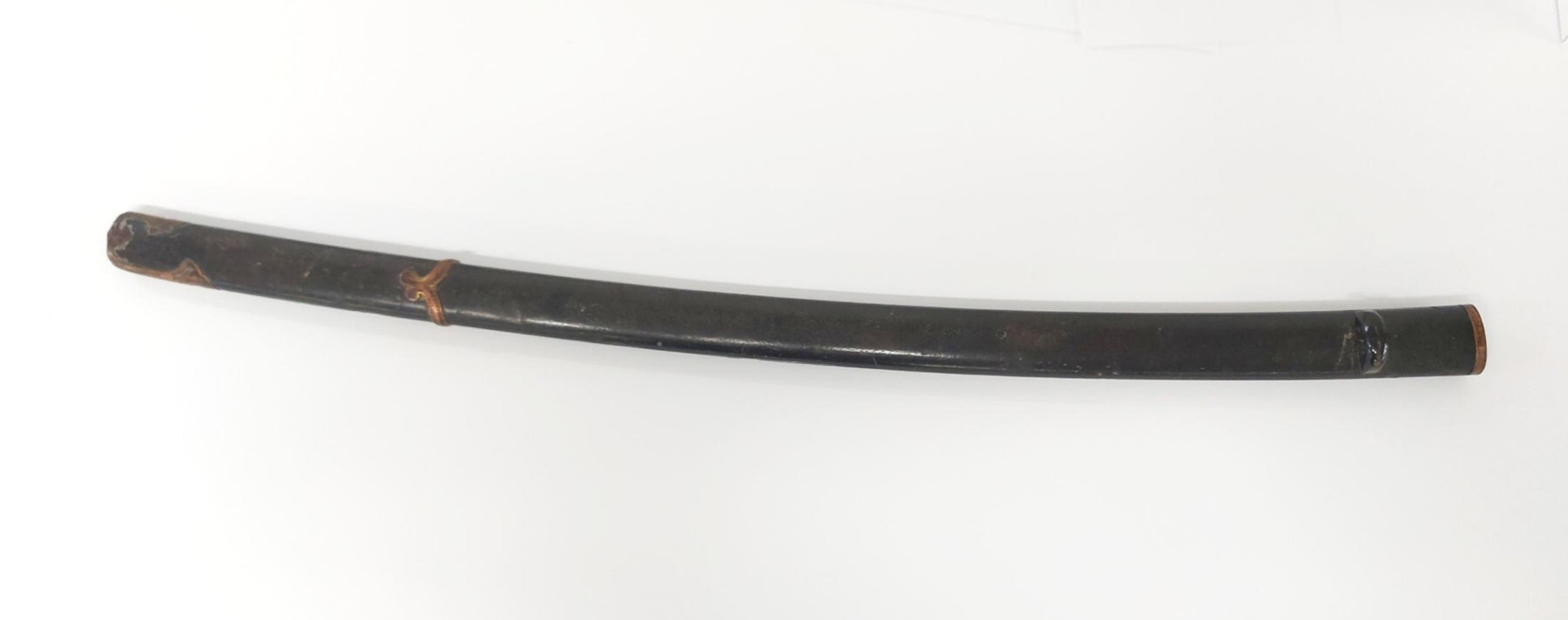
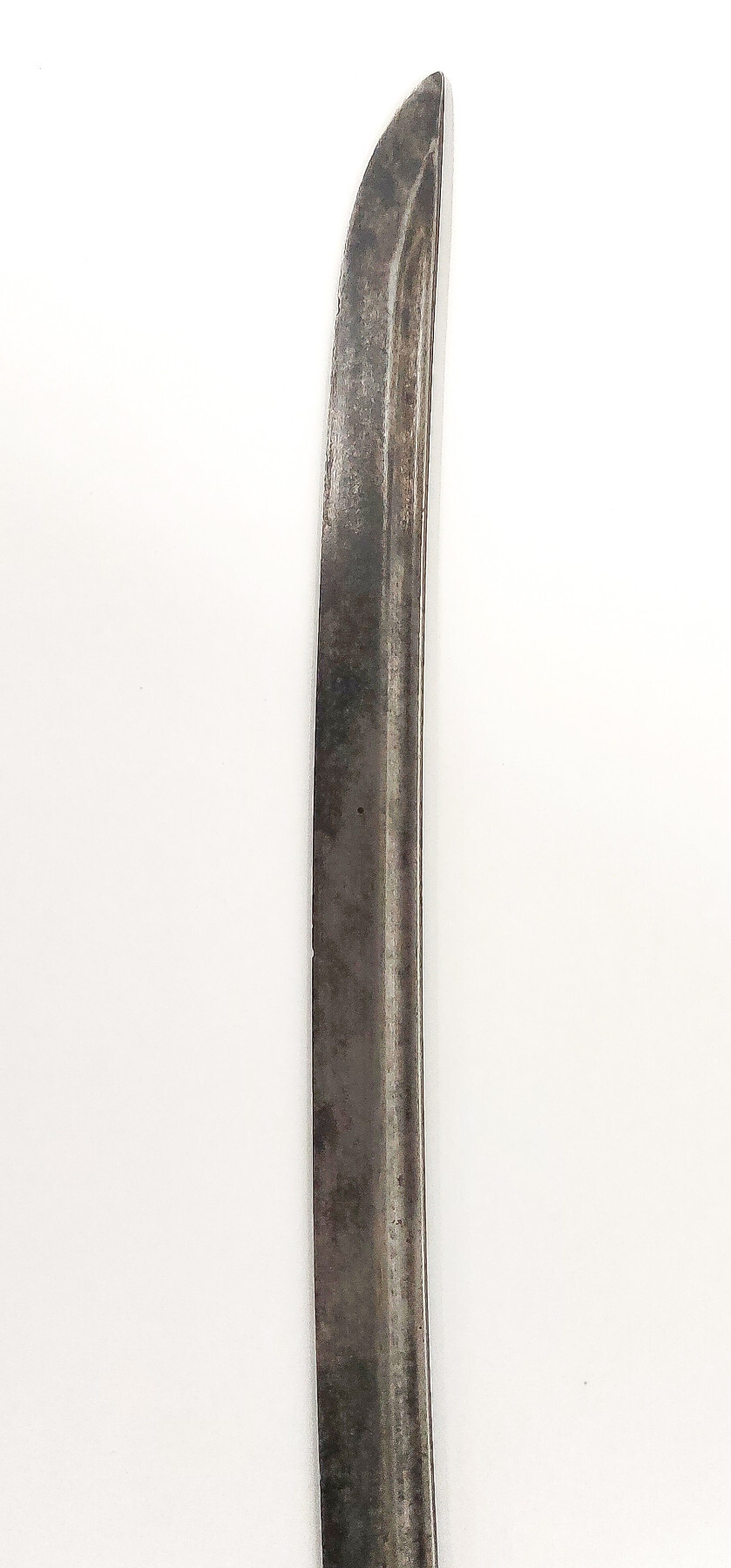
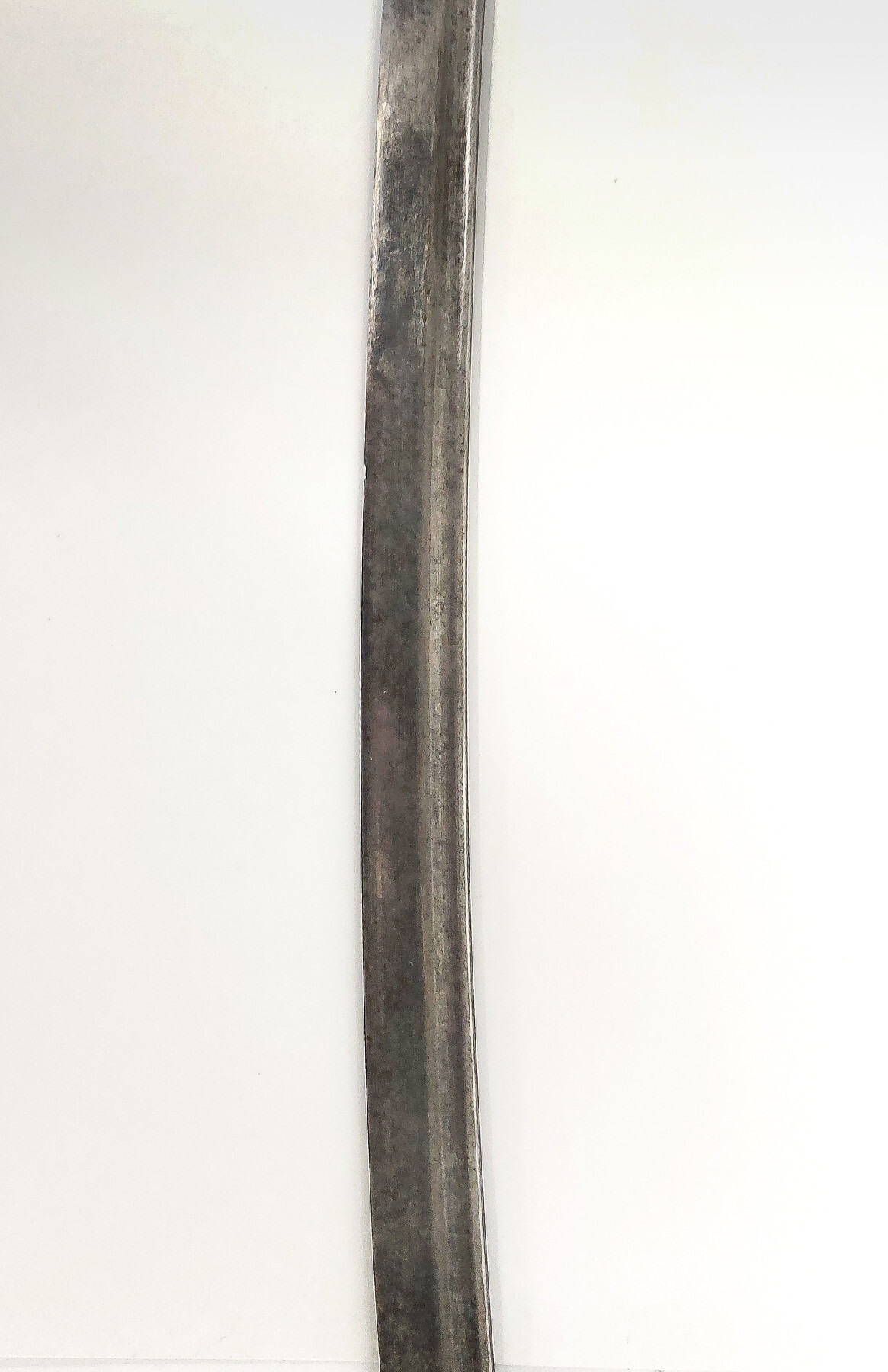
After the war, some Japanese veterans had wartime swords refitted with postwar made alloy blades. So this might not be a real or replica situation.2 points
-
Hi @Gerry no worries Also this is a Tokuno Kazuo appraisal certificate and not NTHK either. The papers somewhat look similar but I ve heard mixed opinion about Kazuo. I would think anytime a big name like Gassan coming up today without NBTHK would be quite the red flag2 points
-
2 points
-
One correction 竪丸形 Tatemarugata Nengō is correct. Edit 型→形 (had to correct my own correction)2 points
-
https://auctions.yahoo.co.jp/jp/auction/l6576344732 points
-
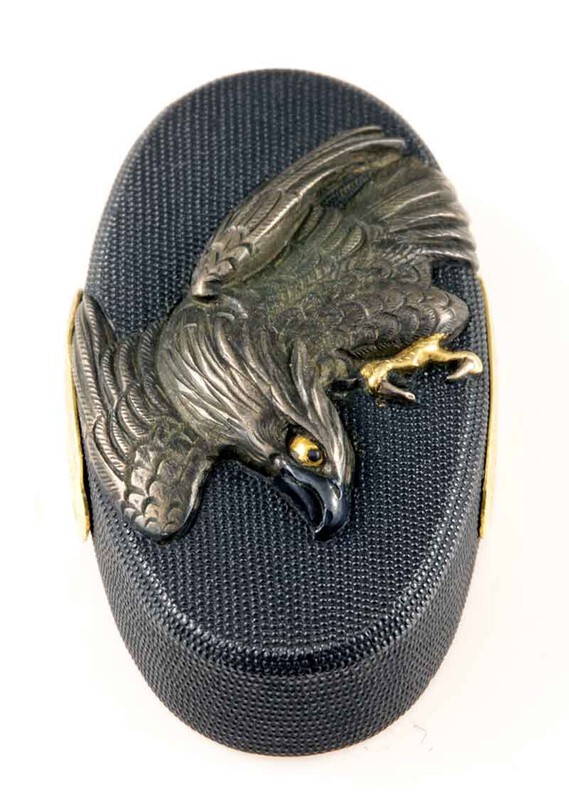
Beautiful work! One of my favorite works on this topic is by Omori Teruhide.


 2 points
 -
Might be a cheaper way to own a General Officer tsuka (and nakago).1 point
-
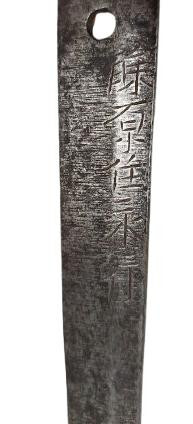
Looking at the mei I would think this would be from quite unknown group of makers who resided in Fujiwara area in Yamato. By extremely unlikely timing coincidence you should take a look on this thread that was started yesterday:1 point
-
Another good post Brett, I really enjoyed reading about Buzen-Gō I took a quick look and I think I should have pictures/oshigata and old information on 42 of the still missing swords. I do think Agency for Cultural Affairs know a lot more about the items than they wrote out on the page. I think they protect privacy of people & shrines.1 point
-
I may have some these with larger images on the DB some where. I'll go through and take a peek. I do wish the Bunka site had larger images. They have missing swords but then provide a 100x200px image of the item to identify it Based on some early looking, it looks like many of these have been photographed and are documented in the Nihonto Taikan.1 point
-
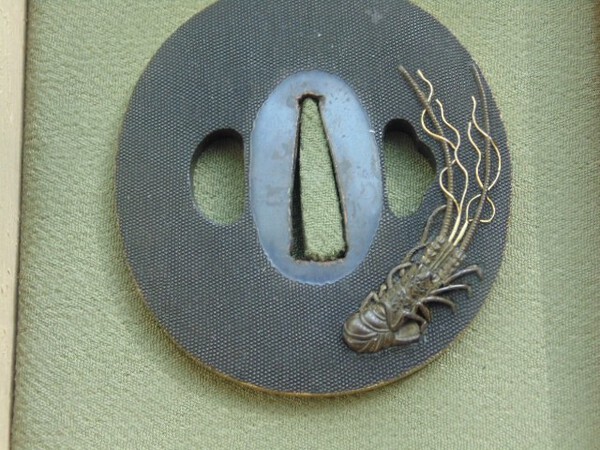
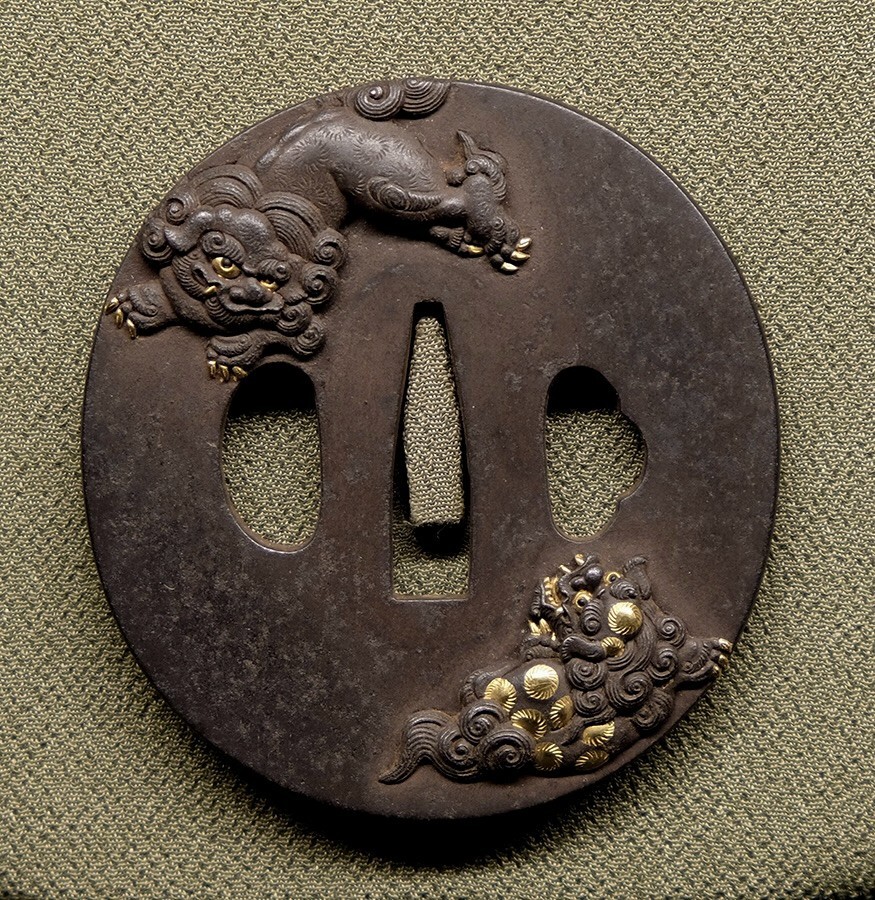
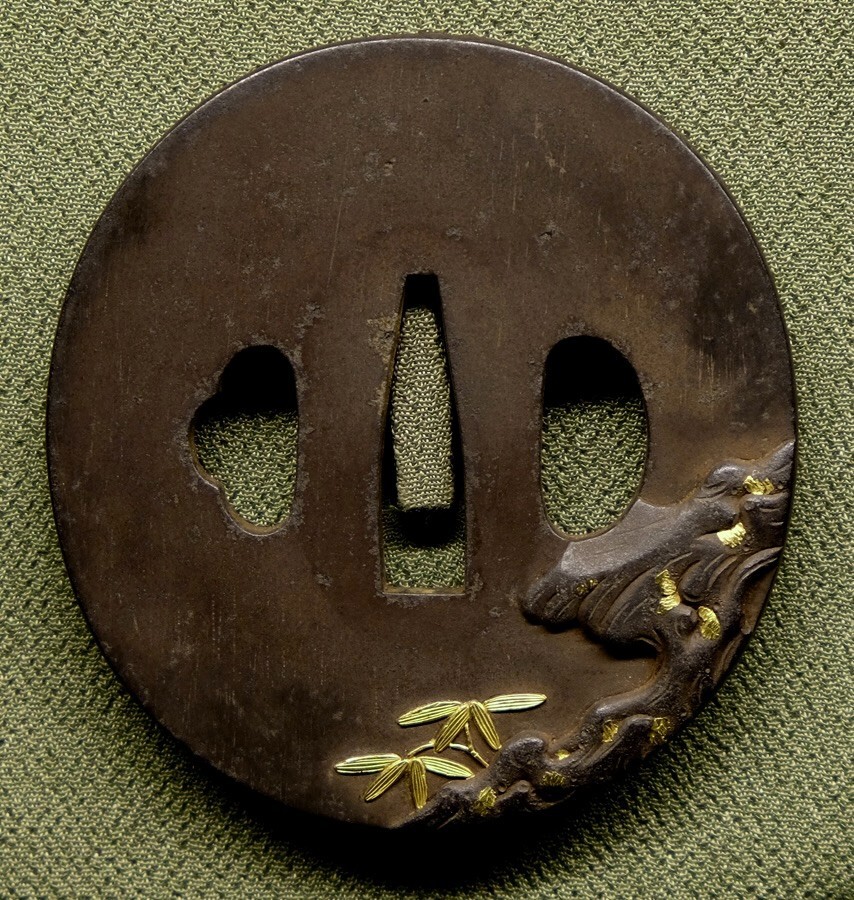
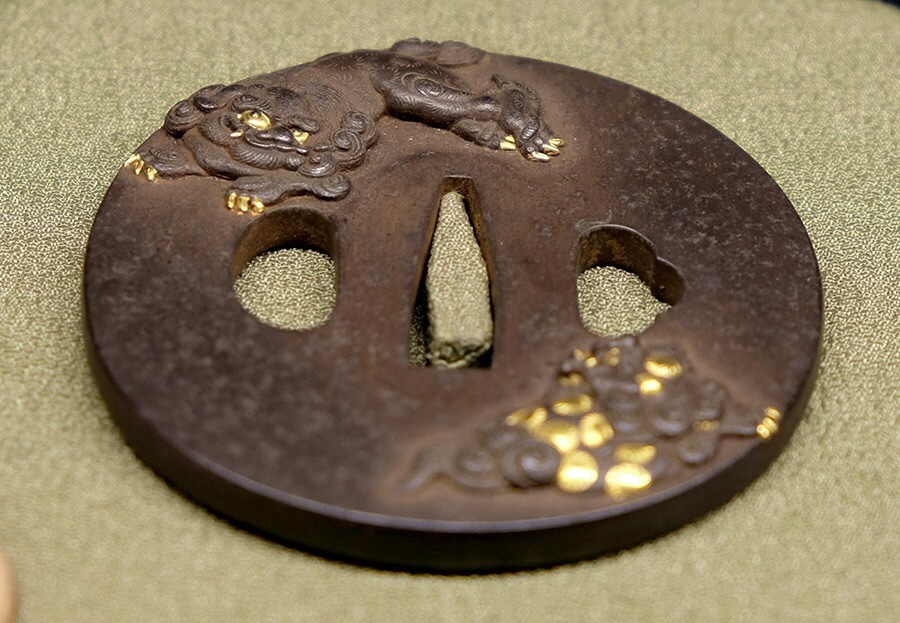
Shakudo tsuba, nice nanako with crayfish 68mm. £300
 1 point
 -
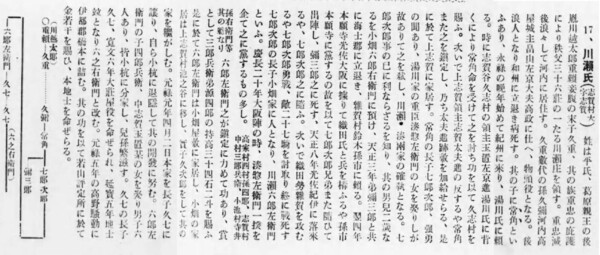
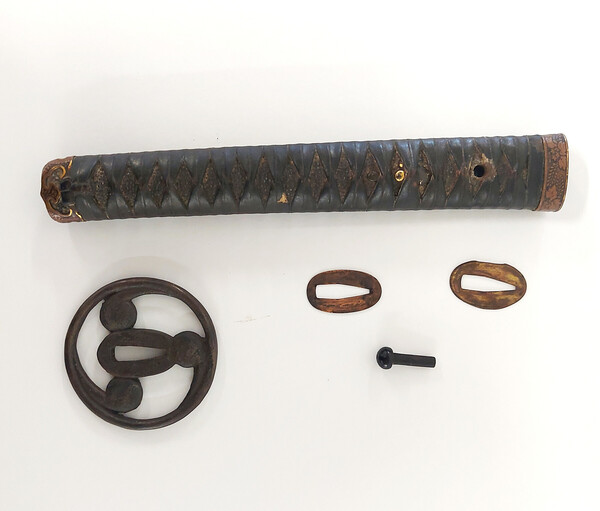
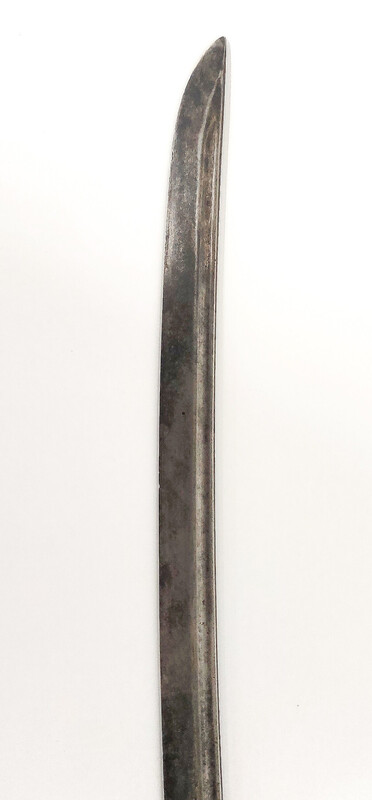
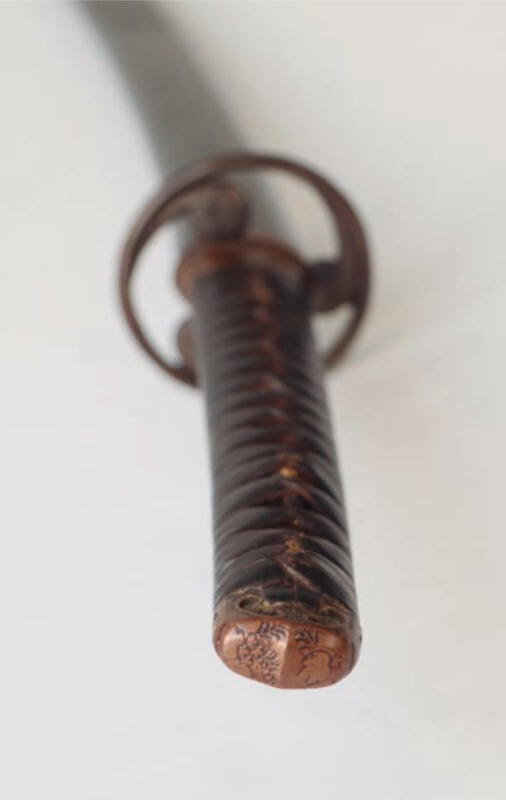
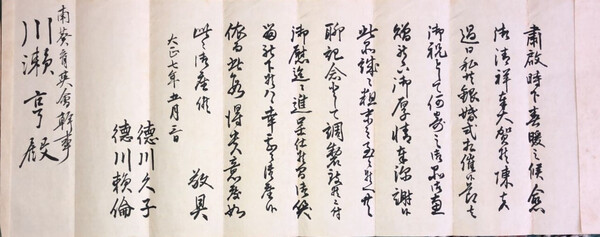
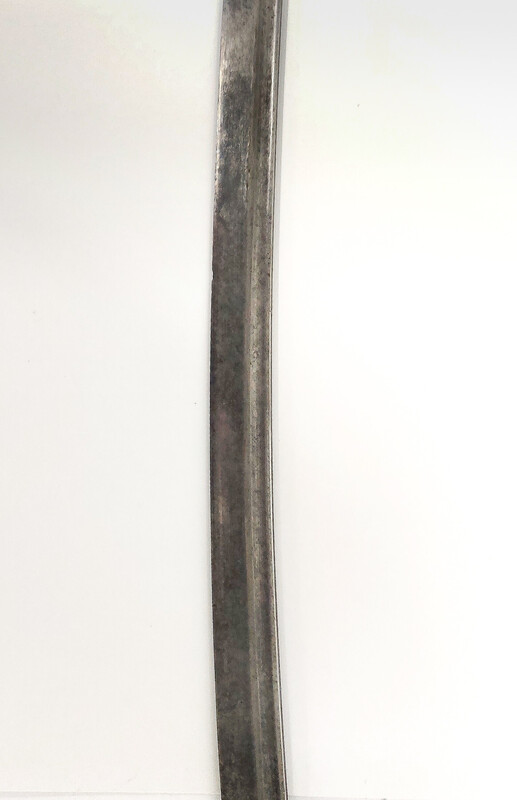
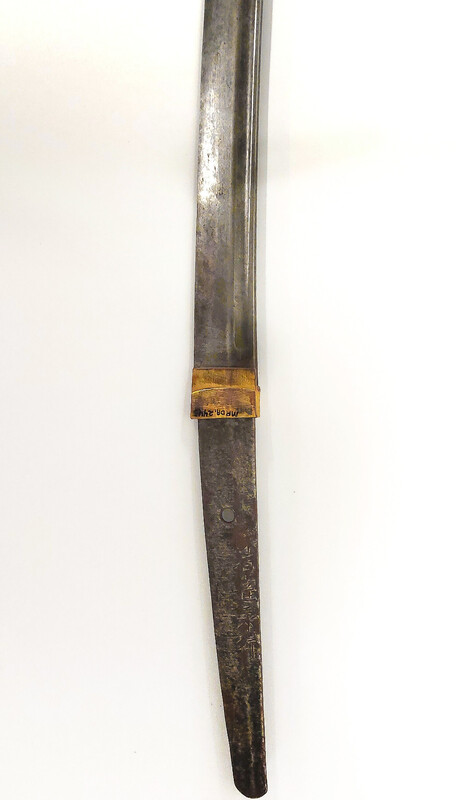
Dear Giorgy and pnsshogun, I am not certain if the signature is genuine, as the sword has not been analyzed by a specialist nor has been certified. What I know is a bit of its recent history and an hypothesis regarding its provenance. My great-grandfather, Hisashi Kawase, brought it to Brazil in 1927. It previously belonged to his father, Lieutenant General Toru Kawase, a shizoku from Wakayama, Kii. Toru's father, Narutada Kawase, was a retainer samurai of the Kishu Clan in Kii; he served the 14th shogun, Tokugawa Iemochi, in Edo and was the sword's former owner. The Kawase clan was close to the Tokugawa at least during the late Edo and Meiji eras (see the attached letter), though the Chronicles of Wakayama Prefecture list the Kawase as Tokugawa allies since the Tensho period. However, the historical presence of the Kawase clan in Kii dates back at least to the Muromachi period. After extensive research into the clan’s presence in Kii and surroundings, I discovered an interesting coincidence. While the Kawase clan is not listed in any Yamato genealogies or historical records I searched, the Chronicles of Hidaka, Kii, list a former retainer of the Hatakeyama clan — Kawase Hisatsugu — who became a ronin after the fall of the Hatakeyama and retired to Yamato. This occurred exactly during the same timeframe that Fujiwara-ju Nagayuki was active as a swordsmith in that province, according to Sesko's dating. His son later moved from Yamato to Kii, where he established himself as a Yukawa retainer, and where the Kawase clan remained until the Meiji Era. I know it is a leap to conclude that the original owner was Kawase Hisatsugu (assuming the signature is authentic and the dating is correct), but this information adds context to the sword's history. Regarding the more recent information, those details are more certain and contribute more to the analysis. As for fake signatures, do you know when they were most commonly made? Don't they usually replicate the signatures of famous swordsmiths? Fujiwara-ju Nagayuki is listed as a fairly obscure swordsmith (Hawley 15) in Hawley’s index, so why fake such a smith? Furthermore, I only know of one other sword with the same signature. It is listed in the magazine Swords and History, issue 531 (刀剣と歴史 [531]), but I cannot access it as I am not a resident of Japan. Source: https://dl.ndl.go.jp/pid/7901225 Regarding the physical characteristics of the blade, I cannot provide precise dimensions at this moment as the sword is currently held in a museum collection. However, I will soon be visiting the institution to personally conduct a formal measurement (nagasa, sori, and motohaba) alongside the conservation staff. I am attaching more pictures of the sword, the mountings, and some references in Japanese.



 1 point
 -
1 point
-
As per the rules, we require some details and at least guideline prices to be posted. The only exception is those who have taken a dealer subscription, where they have their own "store" and can list as they like.1 point
-
Thank you @Hokke for pointing this out. @Kobe, please use the template Brian has put together precisely to this purpose : https://www.militaria.co.za/nmb/topic/43260-sword-sale-template-sellers-please-note/ This is for the sake of transparency, and to avoid potential buyers taking steps to ask you the same obvious questions that could all be answered right from the beginning in your post.1 point
-
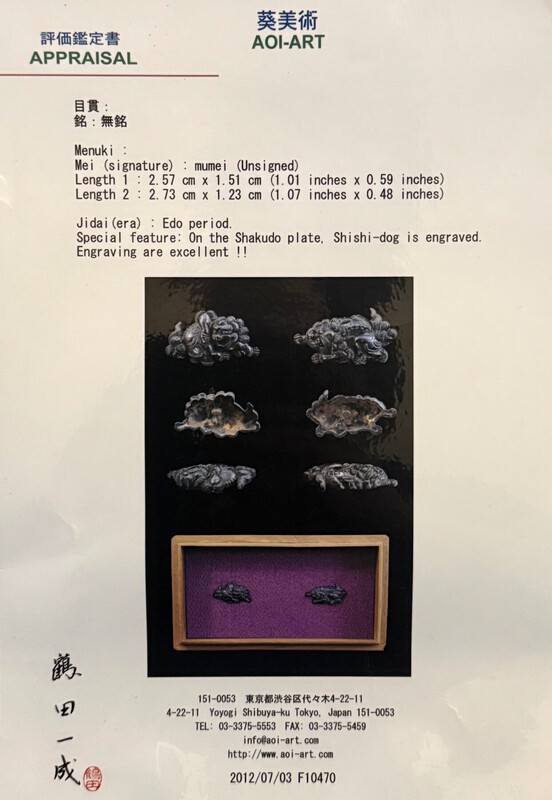
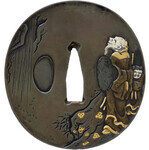
I have located the Aoi-Art appraisal sheet for these menuki, which provides some additional details. My opinion is that this pair was likely made by a Kaga-kinko school, whose works often feature this style of carving in shakudo and gold. Price reduced to $375 (shipped+insured CONUS).
 1 point
 -
This is an old acquaintance, it was already there in 2021 (see page 2).1 point
-
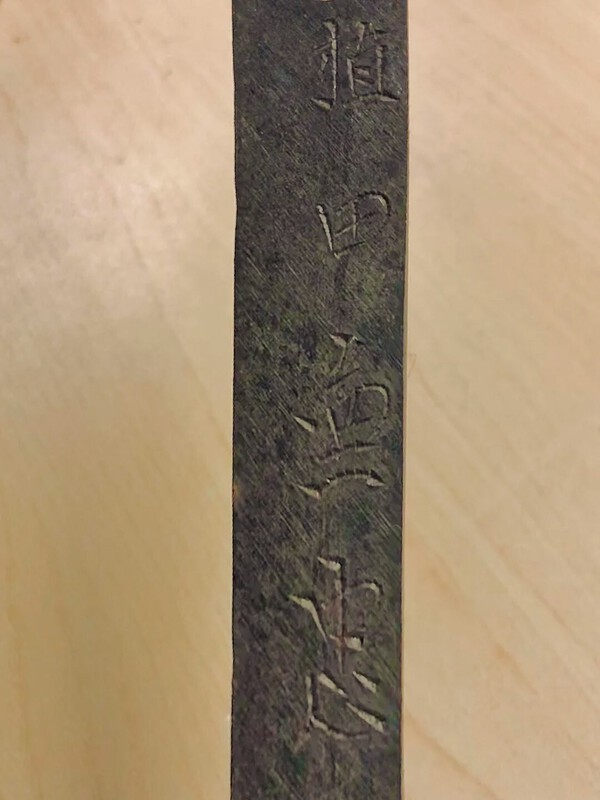
Dear nihonto student, Here is the enhanced picture of the Mei and Sesko's reference:

 1 point
 -
Perhaps 植田兼忠 - Ueda Kanetada. Best regards, Ray

 1 point
 -
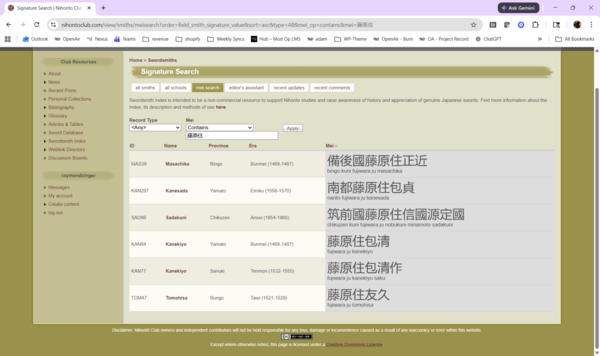
There is no Yasumitsu that I see documented with this mei, but FWIW there is a Fujiwara ju Yasutomo in late Muromachi, Yamato province. YASUTOMO (安友), Eiroku (永禄, 1558-1570), Yamato – “Fujiwara Yasutomo” (藤原安友), “Fujiwara-jū Yasutomo” (藤原住安友) - Credit Markus Sesko1 point
-
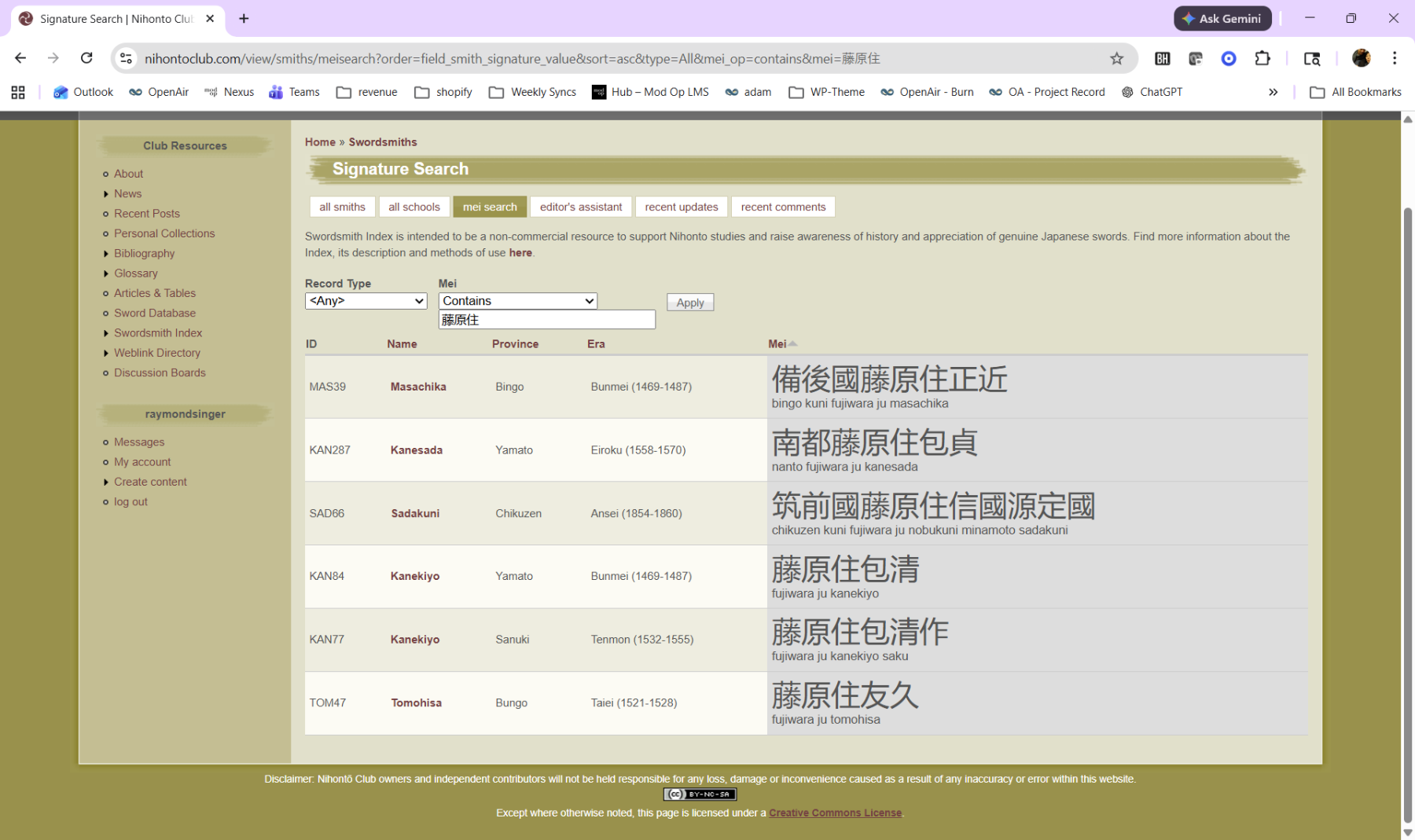
The Nihonto Club swordsmith database is now gated behind a login, so sharing a screenshot with some examples rather than a link.
 1 point
 -
1 point
-
Are you from the past? I disagree, as a person without deep pockets I find these quite interesting. Anyway, maybe this help. I will leave it as it is. If anyone is interested you know where to find me.
 1 point
 -
I don’t mean to get upset I had a member that wanted to buy my sword Anyway it should be a quick fix Nothing wrong with the sword Steve1 point
-
Owari kinko or any attribution? Not that it matters much, if mumei- enjoy them. Complicated and pretty f/k with little wear. Nice.1 point
-
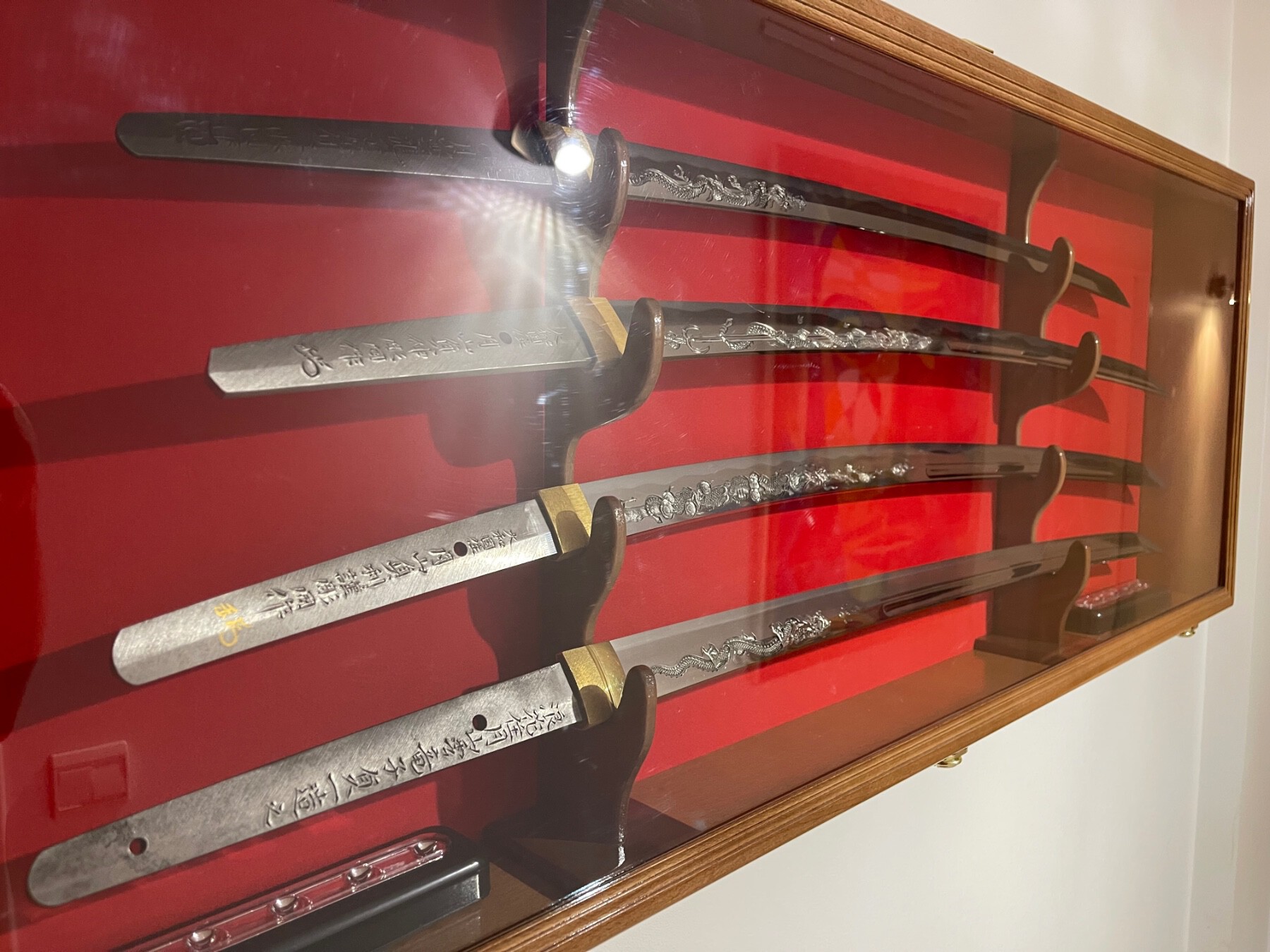
Other side is 潜龍 "Hidden Dragon" 源義制 佩劔 Owned/Worn by MINAMOTO Yoshinori. Hidden Dragon would be the name given to the sword. I think Minamoto Yoshinori was a hatamoto in the Tokugawa Bakufu Government.1 point
-
Here's one side: 備前長船秋水子祐直六十二歲作 = made by Bizen Osafune Shūsuishi Sukenao at the age of 62 文政十三年正月三日 = on the third day of the first month of Bunsei 13 (1830 CE) This is his entry in Markus Sesko's Swordsmiths of Japan:1 point
-
These Kyu Gunto dress swords are relatively inexpensive and fairly common, which is why they are rarely faked. The few replicas I’ve personally encountered have been very obvious; typically much more poorly made than this example. They were generally unsharpened and often feature an etched hamon. Of the couple dozen I’ve handled, the quality has varied quite a bit, with some clearly better made than others. My understanding is that these were produced by a wide range of workshops, which explains the significant variation in both design and overall quality. @lonely panet would be the guy I would ask for confirmation, if he's willing to offer his input. -Sam1 point
-
Hello, some news about this set, as I am in Japan, ans in same city as the seller, we met. The set is carved from thick shakudo, relief carving is not takazogan as I first thought, and its not thin material work like menuki, the gold is solid, some wire used for the leaves and two different gold color for the flowers, every relief is carved from solid shakudo base. The set is quite heavy, even not very thick. The ground finish is ishimeji1 point
-
1 point
-
Dear GKFalk, drawing conclusions with this little information is difficult, and the condition of the blade also prevents from reading the work. To try to answer a bit your questions: - The lack of yokote is certainly due to polishing. - From the picture blade appears not to be really bad condition, but needs to seen.. keeping in mind that any defects may be hidden under the patina. I can't tell if a naginata-hi is present or if what I see toward the base is a reflection. - I can't read the signature from the photo. Perhaps another member can confirm... the sugata with that nakago taper personally suggests something later than the Tenbun period. All the best Giordy1 point
-
I am not following your logic here. Ko-Hoki smiths were in Hoki province on Honshū, not on Kyūshū. And they were active in the Heian era, so well before Norishige was born. In any event, I like your Senjuin. It is a great example that Sōshū den was not the start of vigorous nie hataraki. Relatively, Sōshū den was a late bloomer, and it drew inspiration from some the best traits of many smiths who were active long before.1 point
-
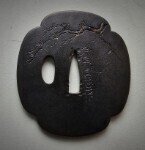
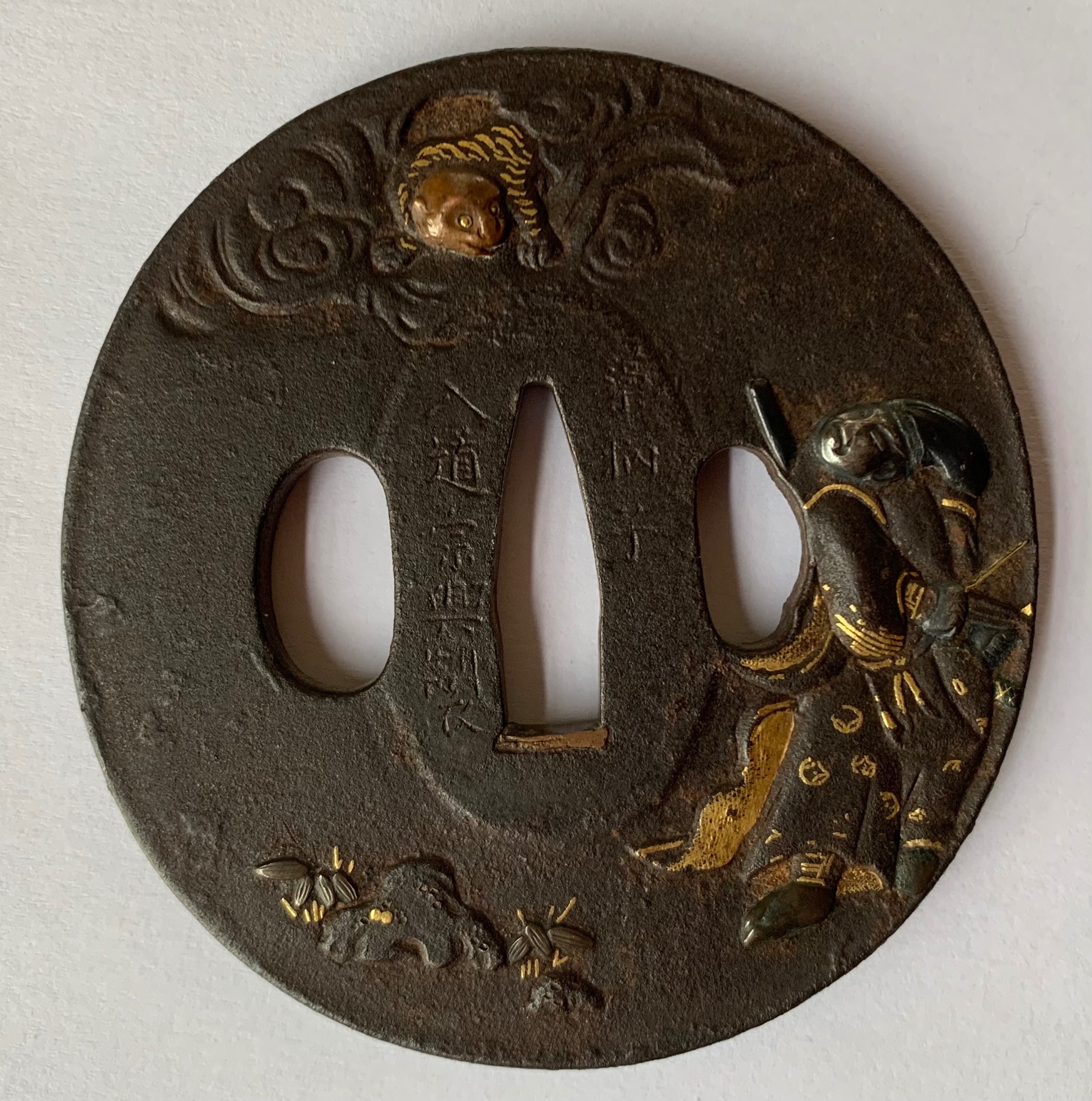
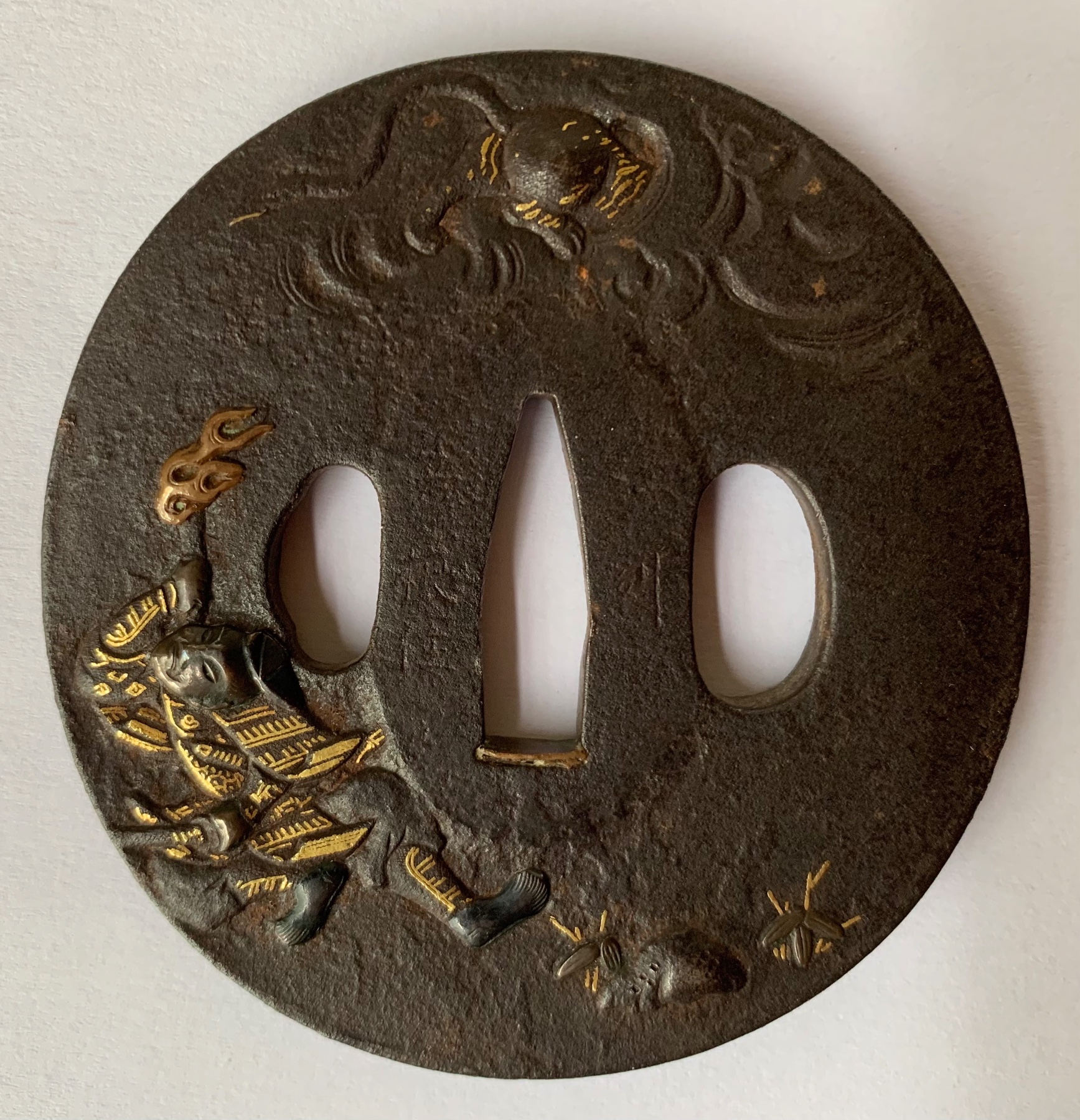
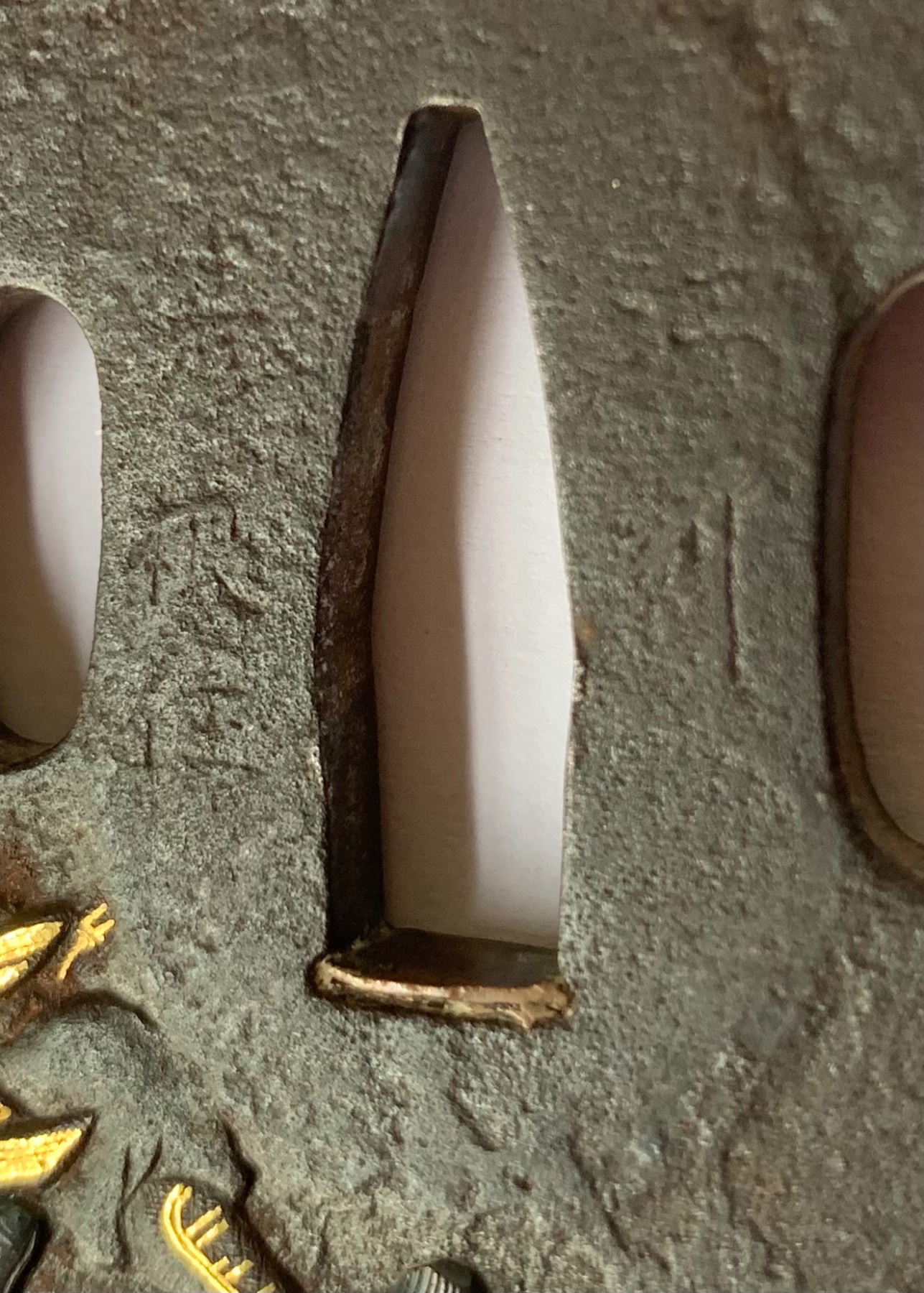
Hello from the UK I love any Japanese Art the dwells on legends, bakemono, yokai etc and this Tsuba depicts “The slaying of the Nue”. From the Heike Monogatari, the Nue was a monstrous Yokai with the body of a tiger, the head of a monkey and a snake for a tail. This scene depicts the Samurai Minamoto no Yorimasa and his servant Ino Hayata about to slay the beast at the request of the rather unwell and troubled Emperor Konoe. The beast was hit by Yorimasa’s arrow (you can just see him drawing his bow) as it emerged from its swirling black cloud, it fell from the sky and was finished off by the servant. As a reward, Yorimasa was presented with the sword “Shishio” as the health of the Emperor instantly improved. The patina is an even very dark brown/black Anything you can tell me about the tsuba or the double sided mei would be greatly appreciated…age, school?? Etc H7.6cm W7.3cm Thickness 5.1mm many thanks. Colin

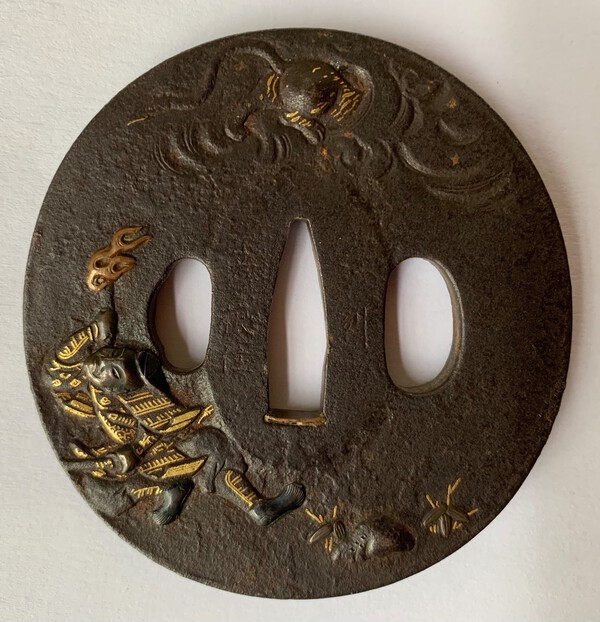

 1 point


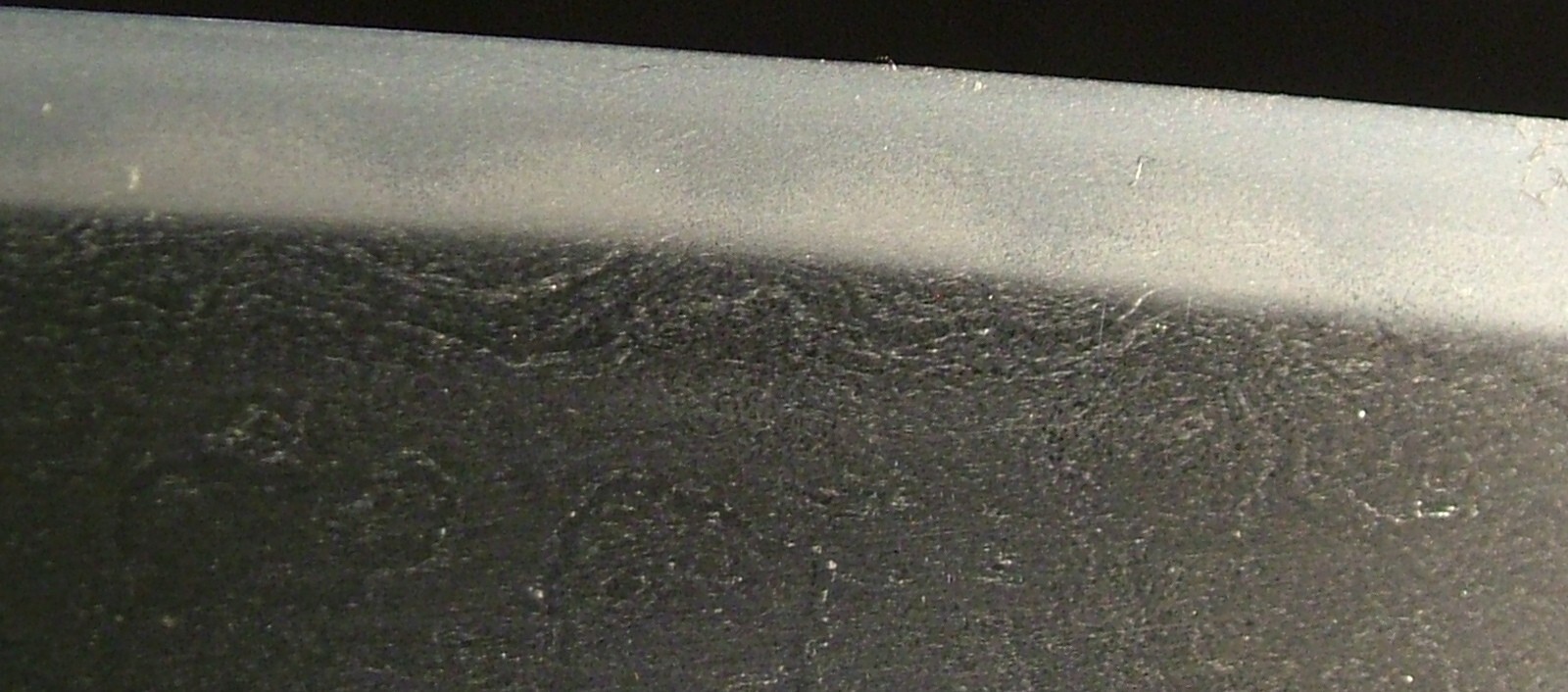
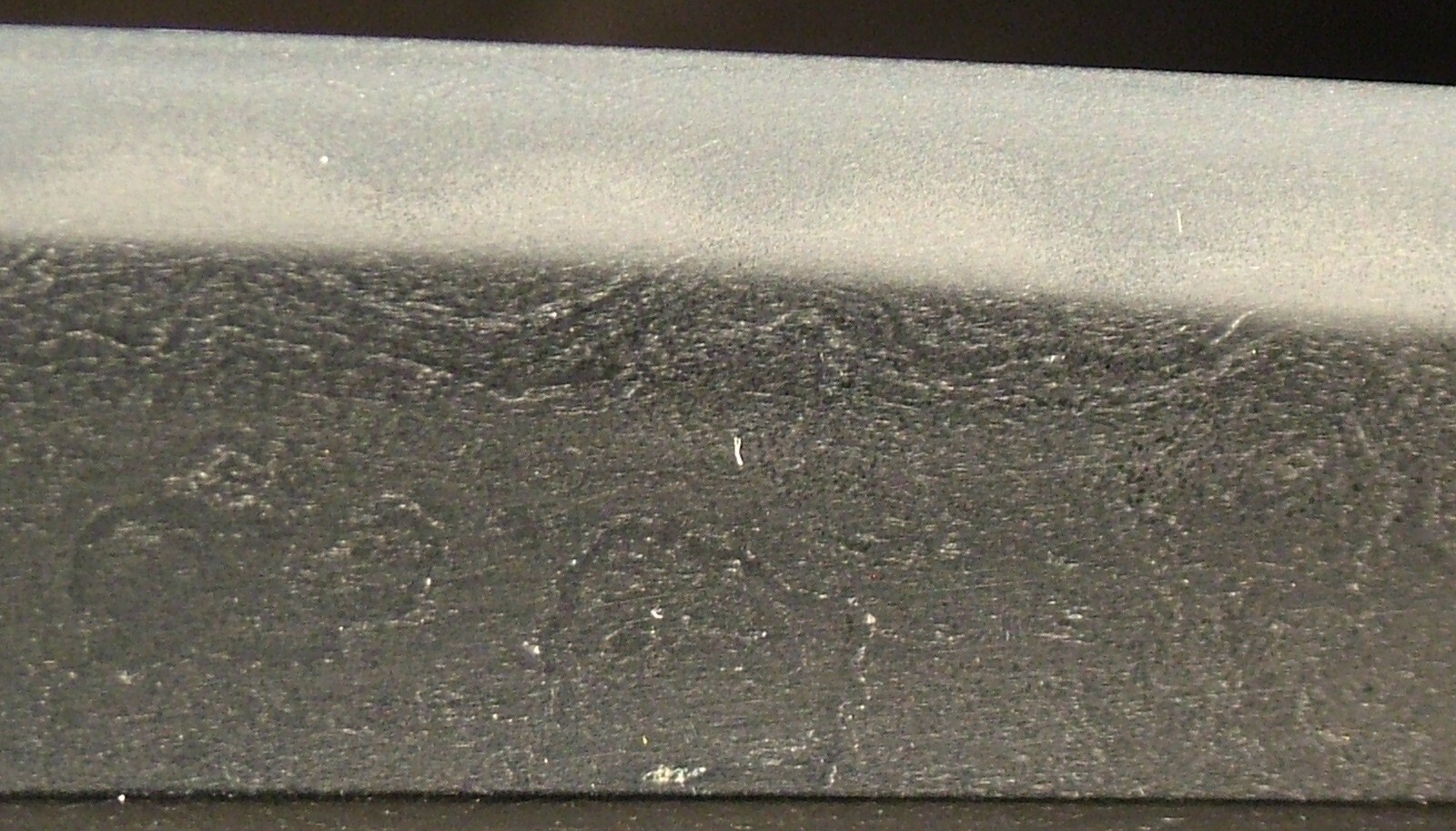
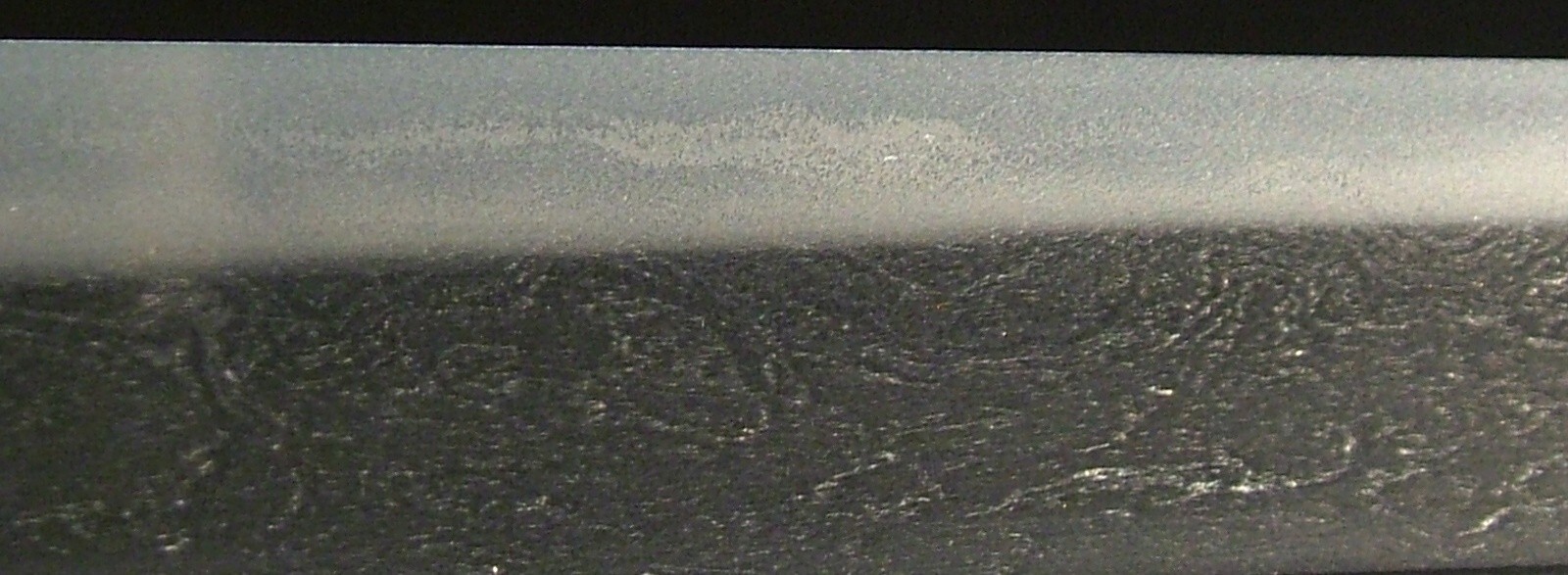



.jpg.2162bff1e2953ca96a823ab944d003dc.jpg)
Oshigata.jpg.87901ffb7887d323c49035357d84b19c.jpg)




























This leaderboard is set to Johannesburg/GMT+02:00