
Leaderboard



Popular Content
Showing content with the highest reputation on 03/19/2026 in all areas
-
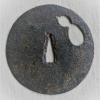
堅丸形 赤銅地 金平象嵌 無銘 加賀 年号に自信がないが昭和丁未年春 堅丸型=katamarugata 赤銅地=syakudouzi 金平象嵌=kinhirazougan 無銘=mumei 加賀=kaga Maybe 昭和=syouwa 丁未年=hinotohituzi 春=haru (1967) 私が知っているオカンさんなら、突然連絡が途絶えた時、心配しました5 points
-
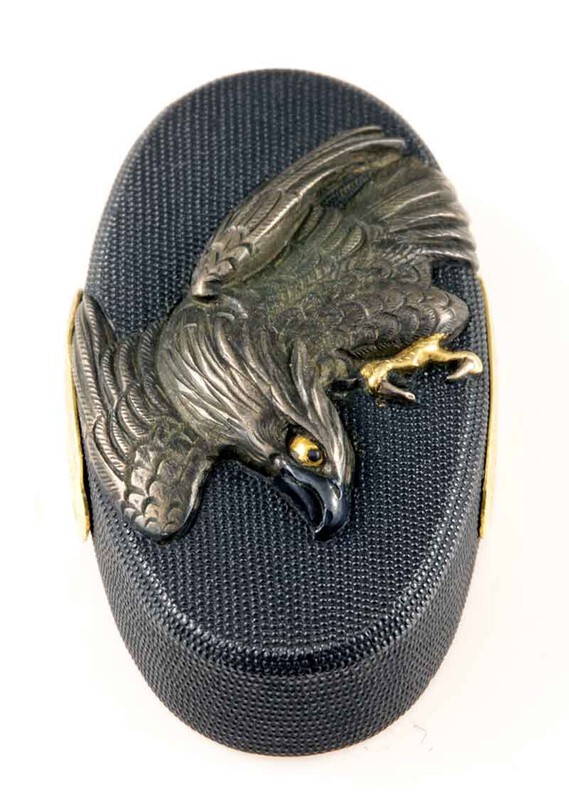
Beautiful work! One of my favorite works on this topic is by Omori Teruhide.


 4 points
 -
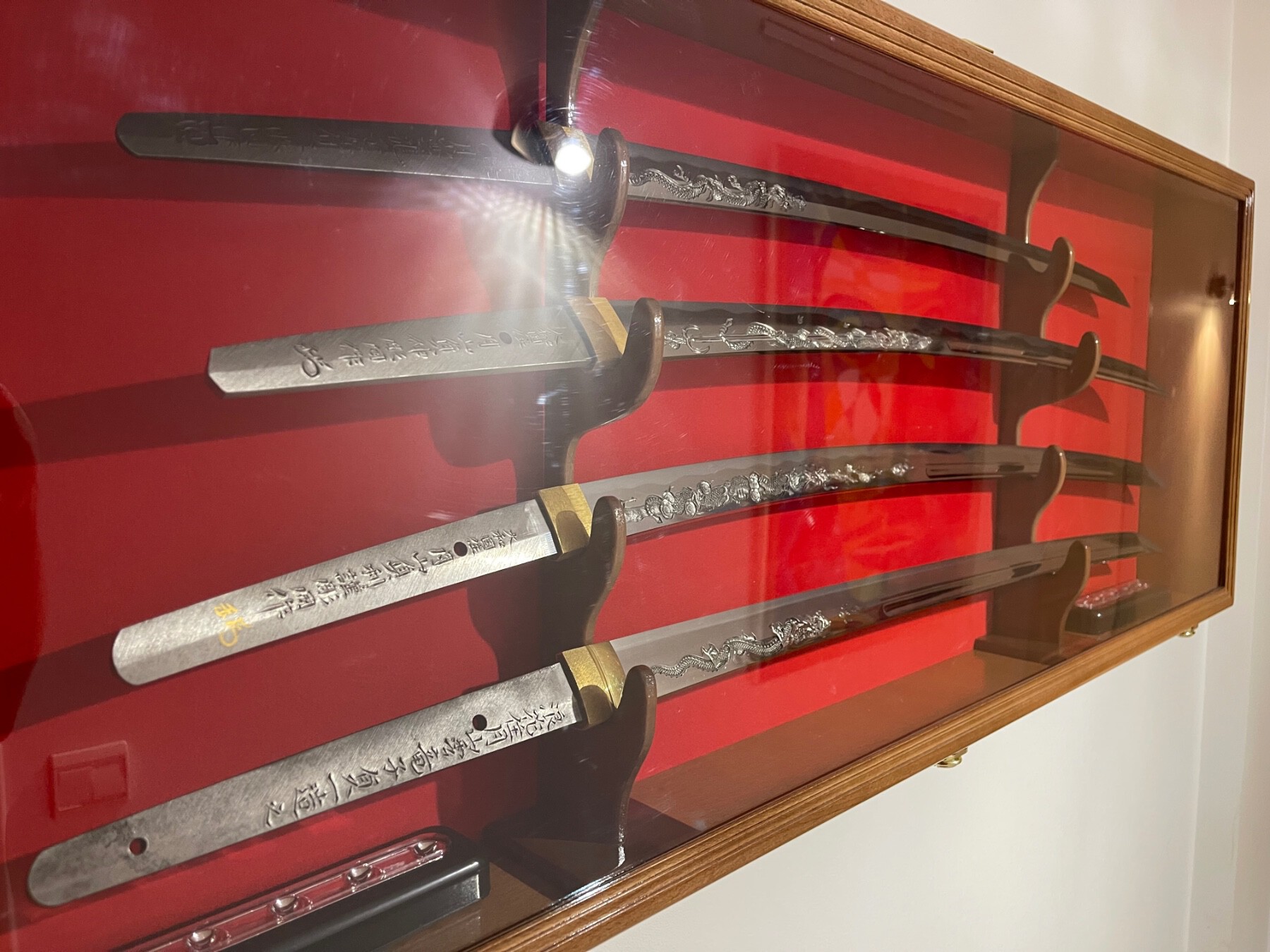
Here's one side: 備前長船秋水子祐直六十二歲作 = made by Bizen Osafune Shūsuishi Sukenao at the age of 62 文政十三年正月三日 = on the third day of the first month of Bunsei 13 (1830 CE) This is his entry in Markus Sesko's Swordsmiths of Japan:4 points
-
Other side is 潜龍 "Hidden Dragon" 源義制 佩劔 Owned/Worn by MINAMOTO Yoshinori. Hidden Dragon would be the name given to the sword. I think Minamoto Yoshinori was a hatamoto in the Tokugawa Bakufu Government.3 points
-
Center) Director of the Japanese Sword Forging Association, Naval Captain Kurata (left) Advisor, Dr. Kudo, Director of the Anki Steel Works.3 points
-
Two examples in my collection. There may be a relationship between Gosan no Kiri and officers in the Imperial Guard divisions.

 3 points
 -
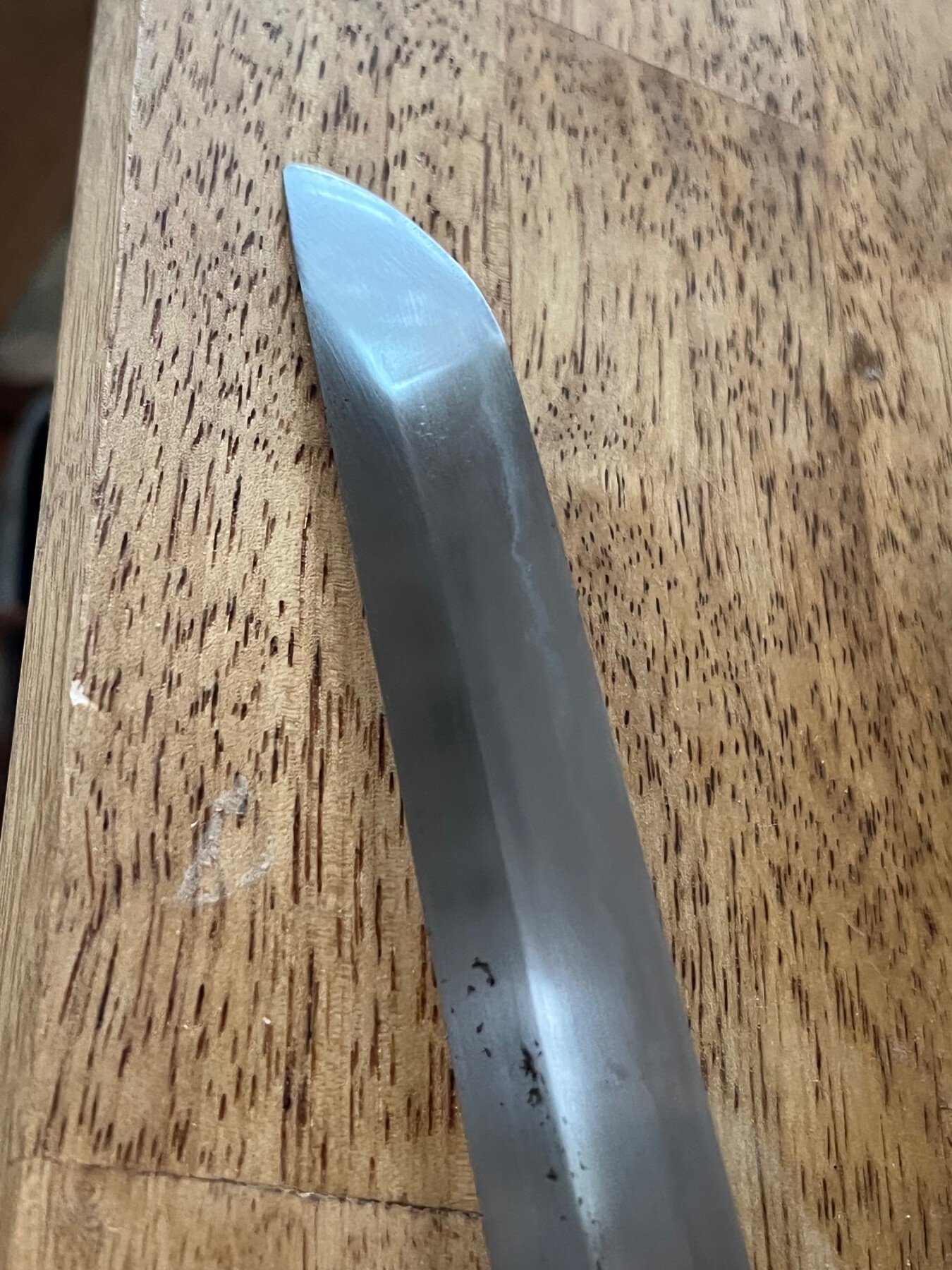
Hi Bob, as the length (= NAGASA) is 51,2 cm, it is a WAKIZASHI. The OVERALL length remains 66 cm. Although not 'really' old (= SHIN SHINTÔ), it looks like a nice piece which should be competently restored.3 points
-
Bob, this is not a KEN but a sword with (rare) KOGARASUMARU shape ( https://en.wikipedia.org/wiki/Kogarasu_Maru ). On the photos, I cannot see the KISSAKI ( = tip) very well. The blade length is not the overall length but it is measured from the notch above the NAKAGO ( = tang) to the tip. The SORI is probably more than just 7 mm, guessing just after the photo. ( https://japaneseswordindex.com/measure.htm ) Unfortunately, I cannot help with the text on the NAKAGO. It does not look like typical MEI. Is there something written/chiseled on the other side as well?3 points
-
Late, but as requested, here's that whole copper tsunagi. The "nagasa" is 13.5 inches, so o-tanto or ko-wakizashi.

 3 points
 -
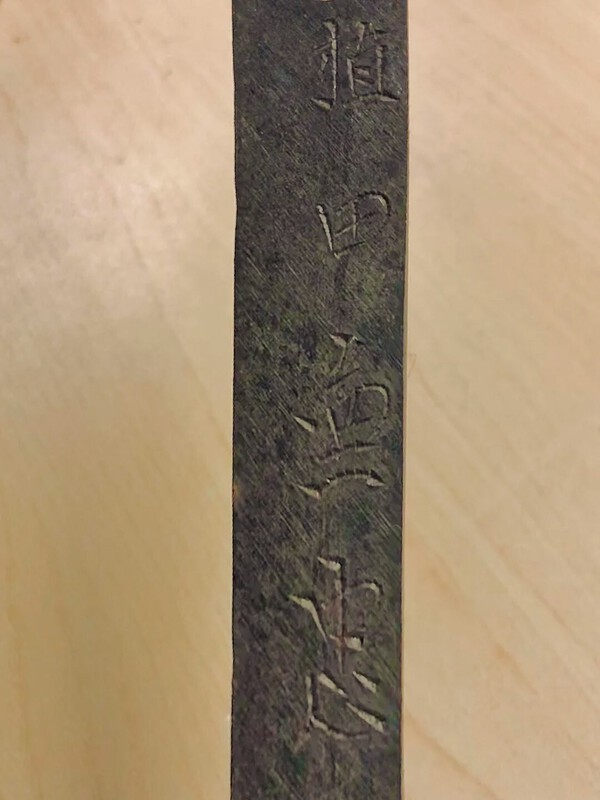
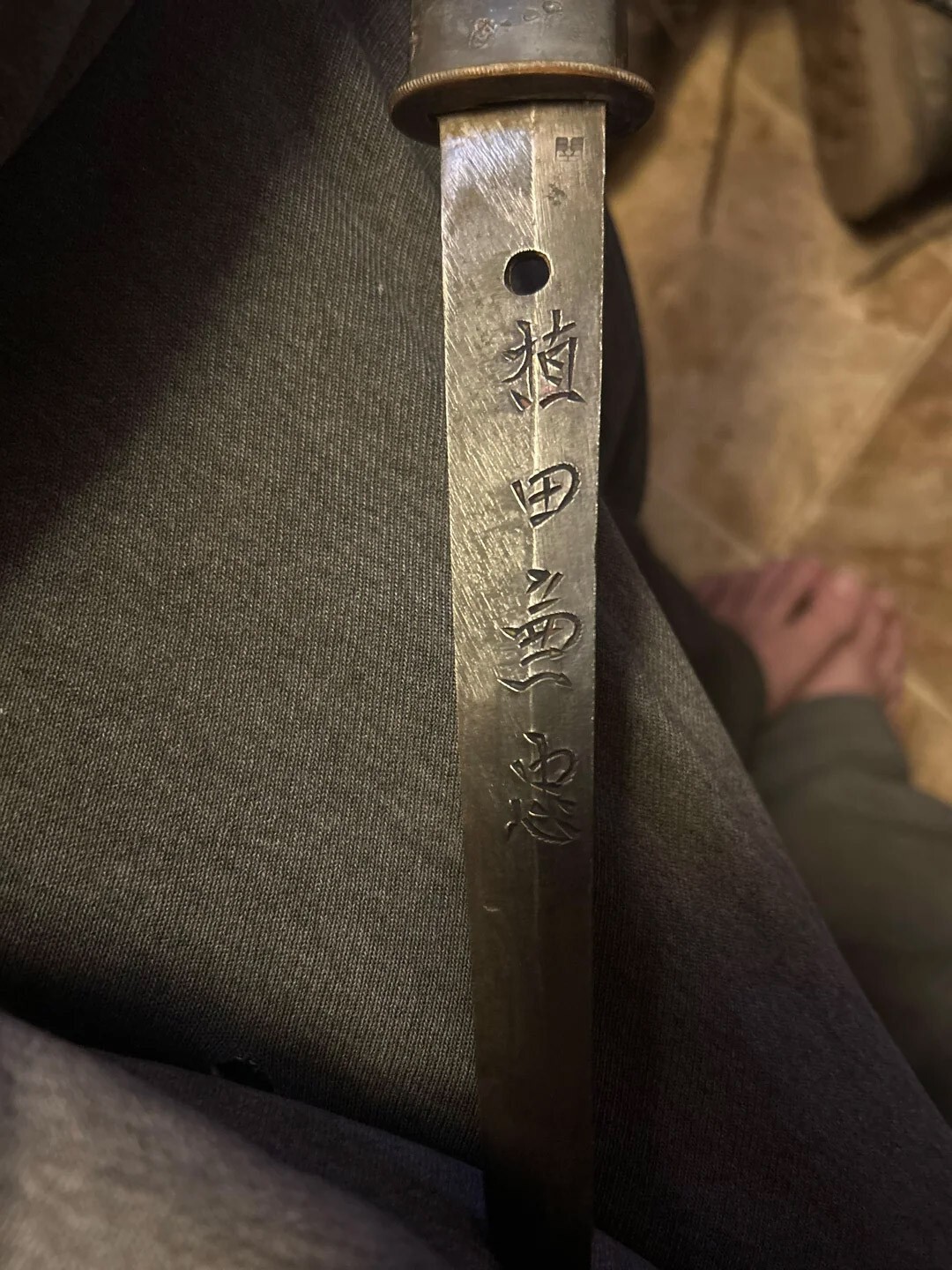
Perhaps 植田兼忠 - Ueda Kanetada. Best regards, Ray

 2 points
 -
Appears to be Fujiwara ju Yasumitsu. Fujiwara as a place rather than a clan is unusual to see, but you can see other examples searching in Sesko2 points
-
Looking forward to your ‘finished’ pics, John. Next month I hope to show the dealer the refreshed oil pot with its new lid, thanking him for his help and advice. Conscious of this scenario, I did make an extra effort to get it ‘right’. Might even buy something from his stand!2 points
-
One correction 竪丸形 Tatemarugata Nengō is correct. Edit 型→形 (had to correct my own correction)2 points
-
The text reads(中央)日本刀鍛錬會主事倉田海軍大佐(左)同顧問安來製鋼所長工藤工學博士。 I have rearranged the order of the text to make it easier to read. I hope you find this useful.2 points
-
The value of friendship cannot be measured in money. If this piece brings you beautiful memories, then it is worth it to you. However, I must also kindly remind you that the replicas from Chinese workshops are not worth your subsequent investment. This is something I found at a Chinese second-hand market at random, and it is exactly the same as your Kusari. The price is also very high (relative to Chinese consumers). I guess these are mass-produced for export, please make sure to identify them.
 2 points
 -
Chūhō Sōu (宙宝宗宇, 1759-1838) was the 418th chief priest of Daitokuji Temple in Kyoto. His Buddhist name was Chūhō, his given name was Sou, and he was known as Shogetsu (昇月), which means "Rising Moon." He trained under Sokudo Soki, the 406th bishop of Daitokuji Temple and was a highly revered Japanese Zen master, calligrapher, potter, and tea connoisseur. Chūhō admired and was influenced by his contemporary Jiun Onko. Selecting from unusual subject matter that seems quite typical of Chūhō, he brushes a line that comes from an early Ch'an story of an encounter between Ch'an Master Zhaozhou Congshen (趙州從諗, 778–897) and his disciple Wenyan (文偃) or possibly Wenyuan (文遠), as recorded in Jǐngdé Chuándēng Lù (景德傳燈錄), or "The Transmission of the Lamp" completed in 1004 CE (Volume 10, in the entry for Zhaozhou Congshen). This vast text is a foundational history of the Ch'an lineage and contains biographical entries for countless masters, including Zhaozhou. It is also found in "The Recorded Sayings of Zen Master Joshu" (translated by James Green). One day, the Master Zhaozhou saw his disciple Wenyan bowing to a statue of the Buddha. Zhaozhou walked over and struck him with his staff. Zhaozhou: "What are you doing?" Wenyan: "I am paying homage to the Buddha!" Zhaozhou: "Is the Buddha someone to be paid homage to?" Wenyan: "Paying homage to the Buddha is a good thing (好事) ." Zhaozhou: "好事不如無 (A good thing is not as good as no thing)." The last phrase originates from the 增廣賢文 (Augmented Collection of Wise Sayings), a popular Chinese didactic text from the Ming Dynasty that is based on a Taoist principle of "福禍相依" (fortune and misfortune depend on each other): 庭前生瑞草, 好事不如無 (Tíng qián shēng ruì cǎo, hǎo shì bù rú wú) When auspicious grass grows in front of the court, a good thing is not as good as nothing In Zhaozhou's hands, 好事不如無 becomes "A good thing is not as good as no thing." This is a powerful lesson on non-attachment, a core principle in Zen/Ch'an. The horizontal strokes in the 2nd and 5th characters anchor the contrasting halves that are separated by 不. Non-Attachment: Even the act of doing a "good thing" (like bowing to Buddha or giving charity) can become a spiritual obstacle if you cling to the identity of being a "good person" or if you do it to gain merit. The Master is teaching that the state of "nothing" (無) or "no thing" is higher than the state of doing "good things" with a grasping mind. The Trap of Intent: The teaching warns against performing good deeds with a "seeking" mind—doing them for the sake of reward, merit, or to bolster one's ego as a "good practitioner." Zhaozhou uses this sudden, shocking action (striking Wenyan) to jolt Wenyan out of this conceptual trap Beyond Duality: Where there is "good," there is "bad." The phrase encourages the practitioner to move beyond this dualistic thinking into the true nature of emptiness, where there is no need to cling to the label of "good" or "bad." "No Thing" (無) as True Peace: The phrase "好事不如無" points to a state of "no-thing-ness" or wu shi (無事). This doesn't mean doing nothing, but rather acting without attachment, without a self-conscious focus on the doer or the deed. It is the state of natural, effortless action that flows from an empty and peaceful mind. Signature: Daitokuji Chūhō Sōu Seals: Chūhō, Nichigatsu cho
 2 points
 -
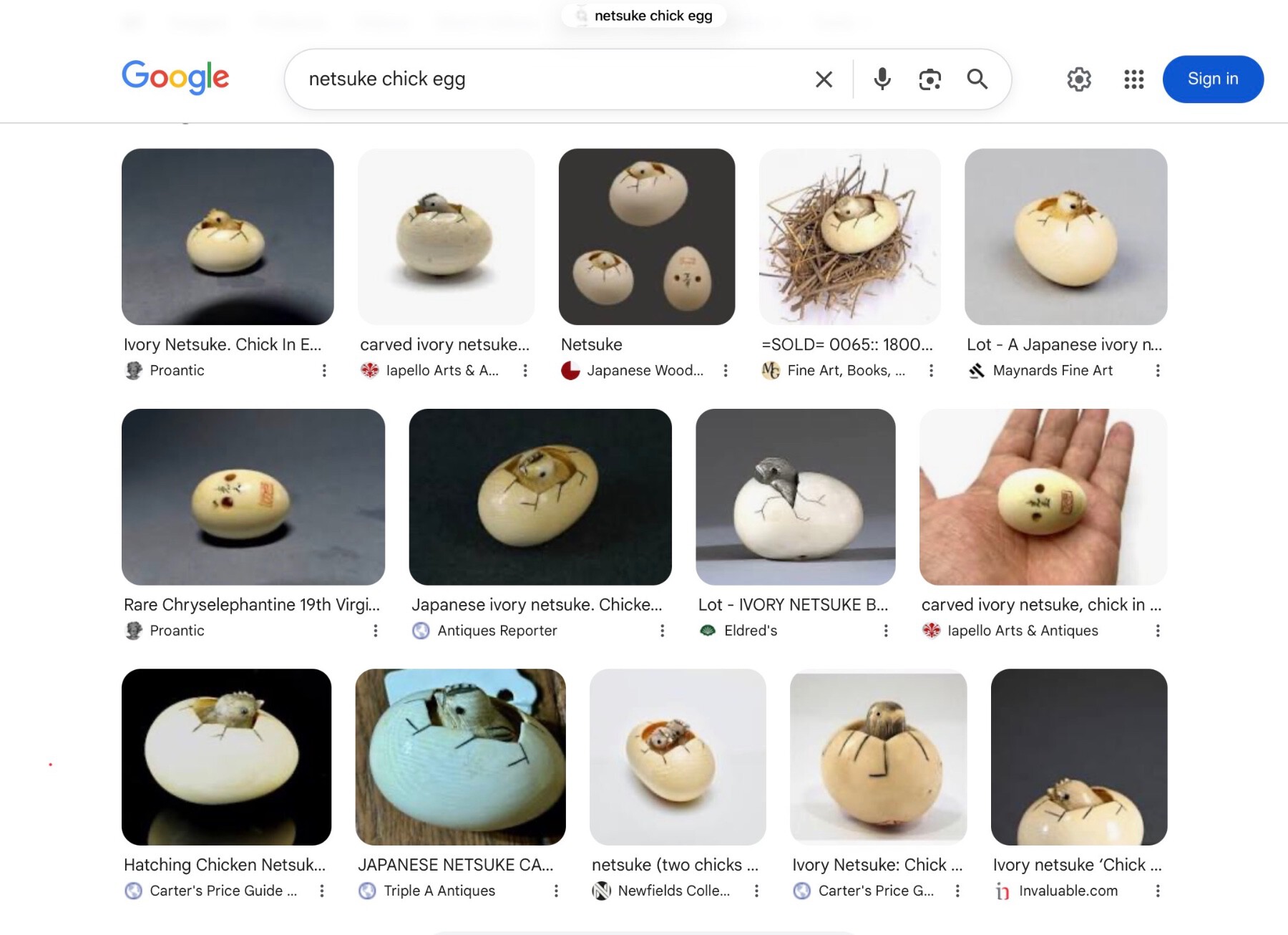
The "chick and egg" thing is indeed modern and mass-produced:
 2 points
 -
Steve: I think what Chris may be seeing is that the seppa might be out of order. Note in the pic below that the larger ones are closer to the tsuba. John C.
 2 points
 -
Calm down chum, you of all people are not entitled to demand anything of anyone. Vajo made an observation, period.2 points
-
Skip was an esteemed collector, mentor, and friend. I found him to be an old style gentleman of sharp perception and soft manner. His technical understanding and aesthetics were very high. He will be remembered and missed by many of us who were able to know him. I wish the best to his family.2 points
-
Google Drive should be fine. It’s like posting a URL for an Imgur images file. I have a huge issue with zip files on the other hand.2 points
-
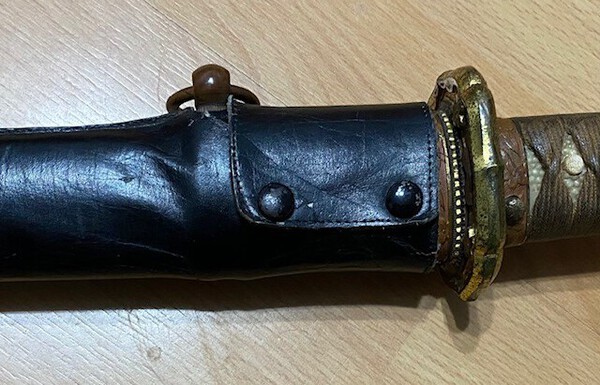
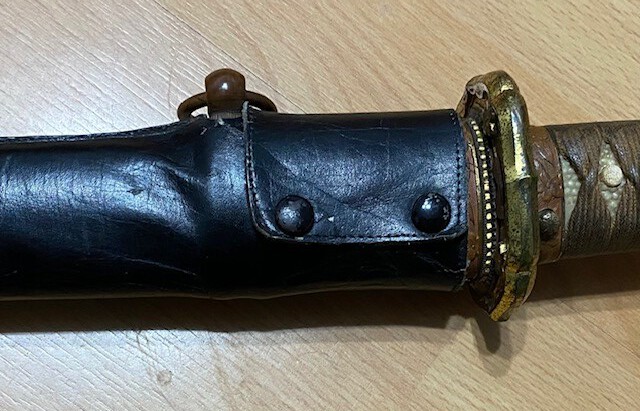
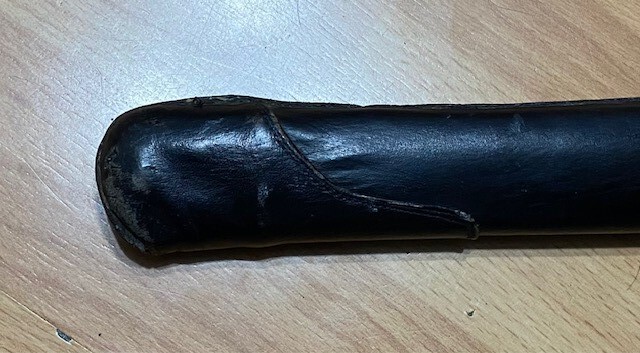
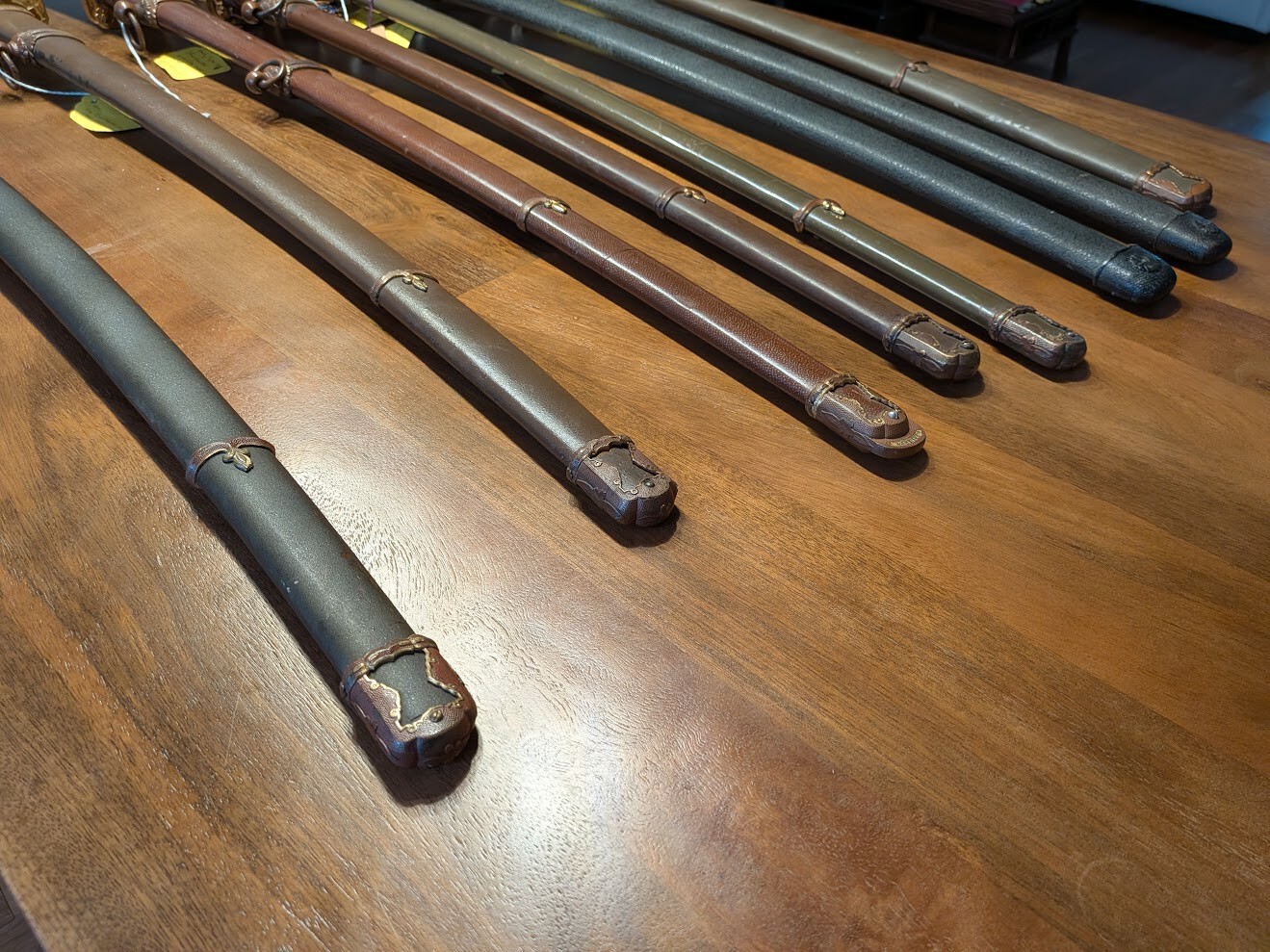
Hi All, Here is my only leather covered metal Gunto saya, Nothing out of the ordinary apart from the black leather on an Army gunto. It houses a WW2 blade with a Warrior stamp on the nakago (already posted in the Stamps thread) It did come with a brown leather tsuka cover but I doubt it's a matching pair due to the colour difference.

 2 points
 -
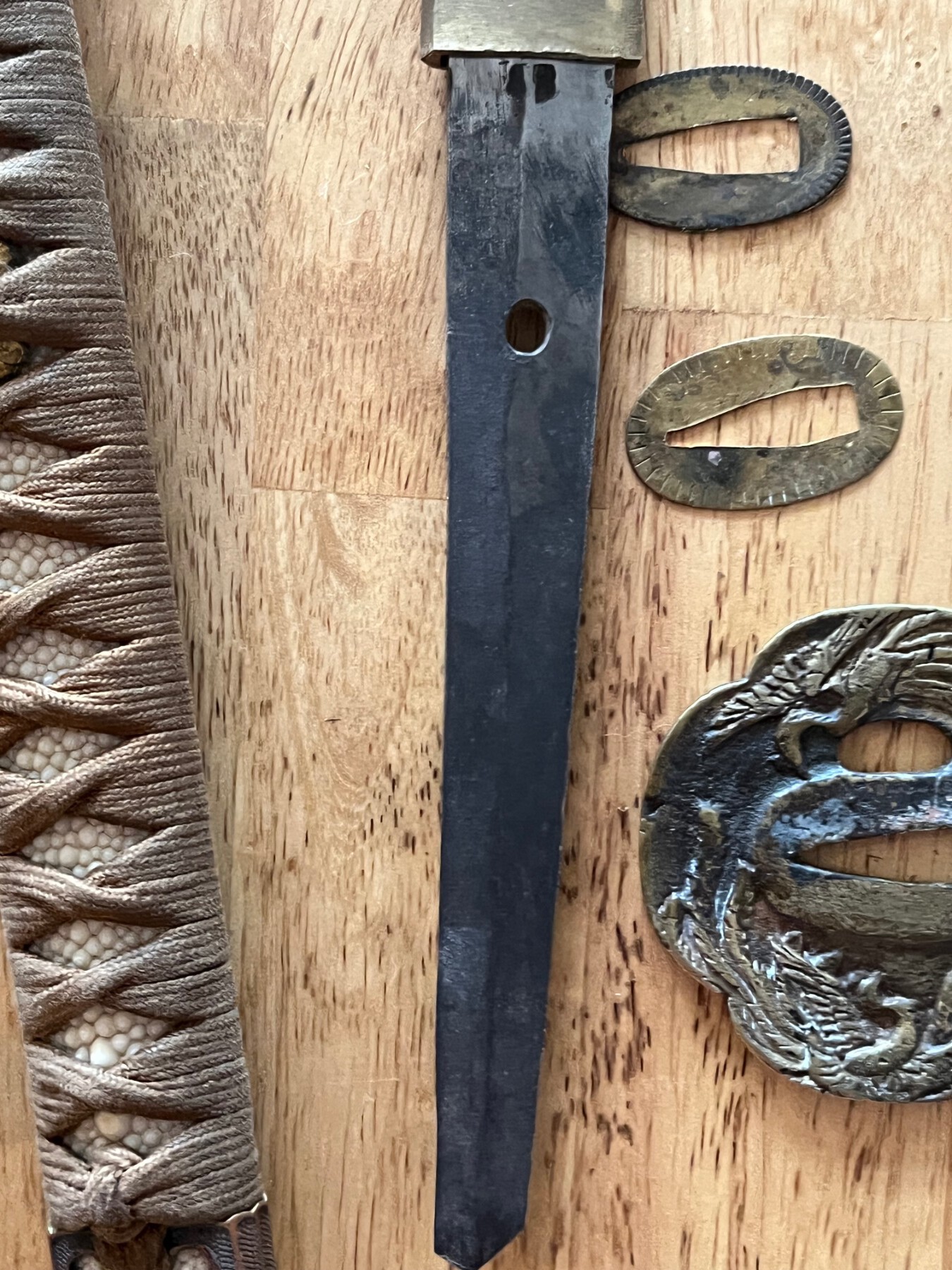
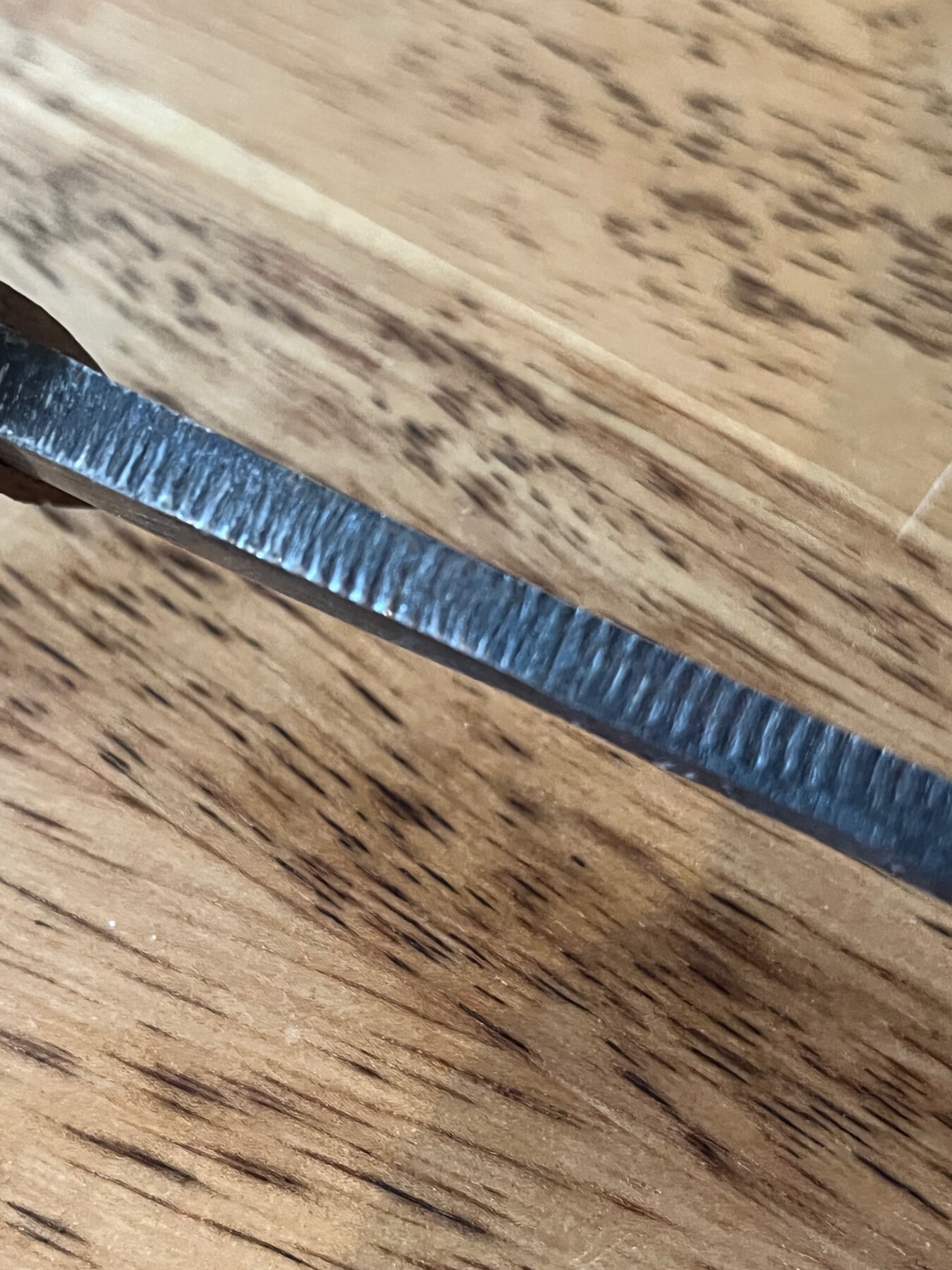
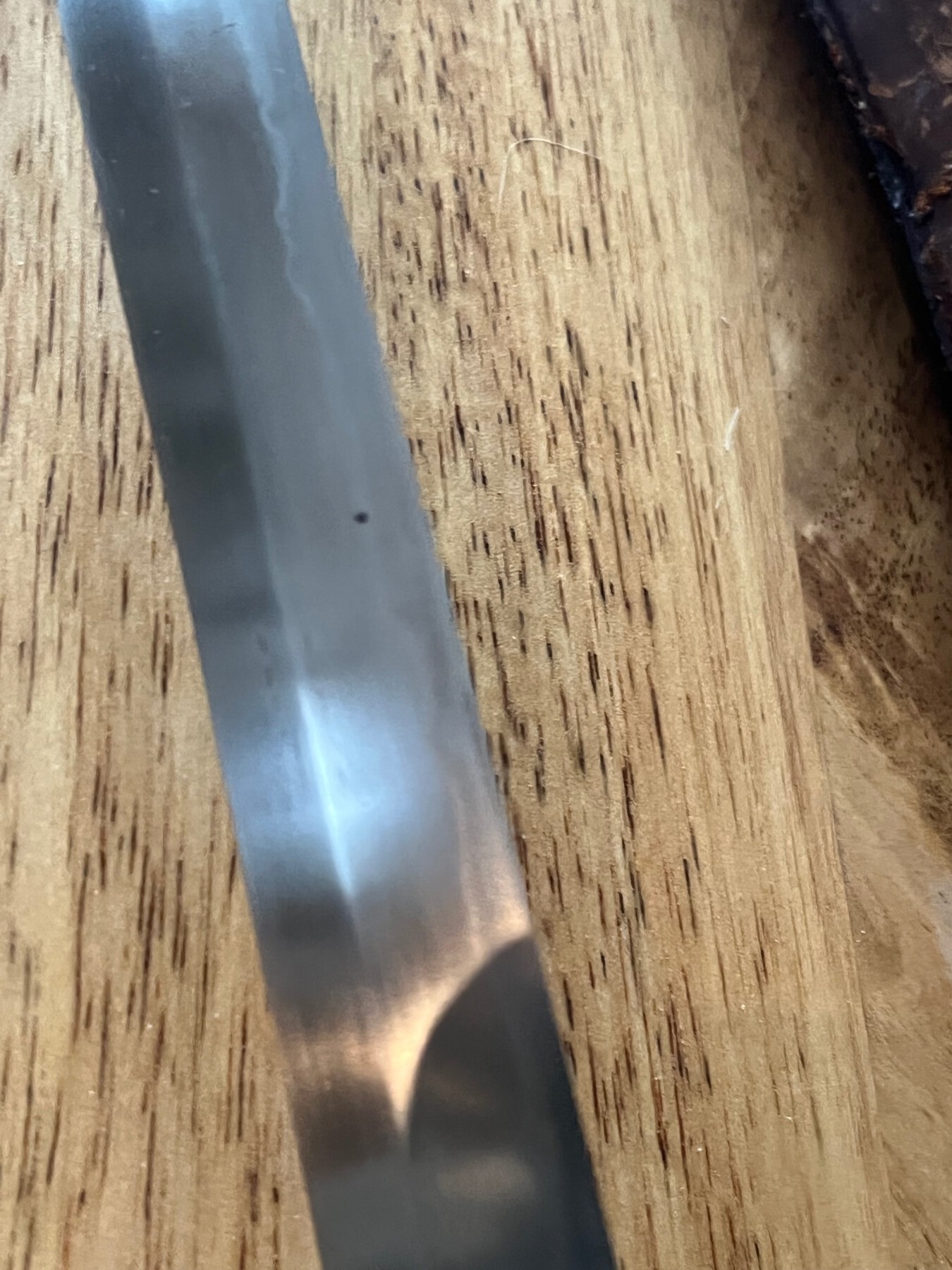
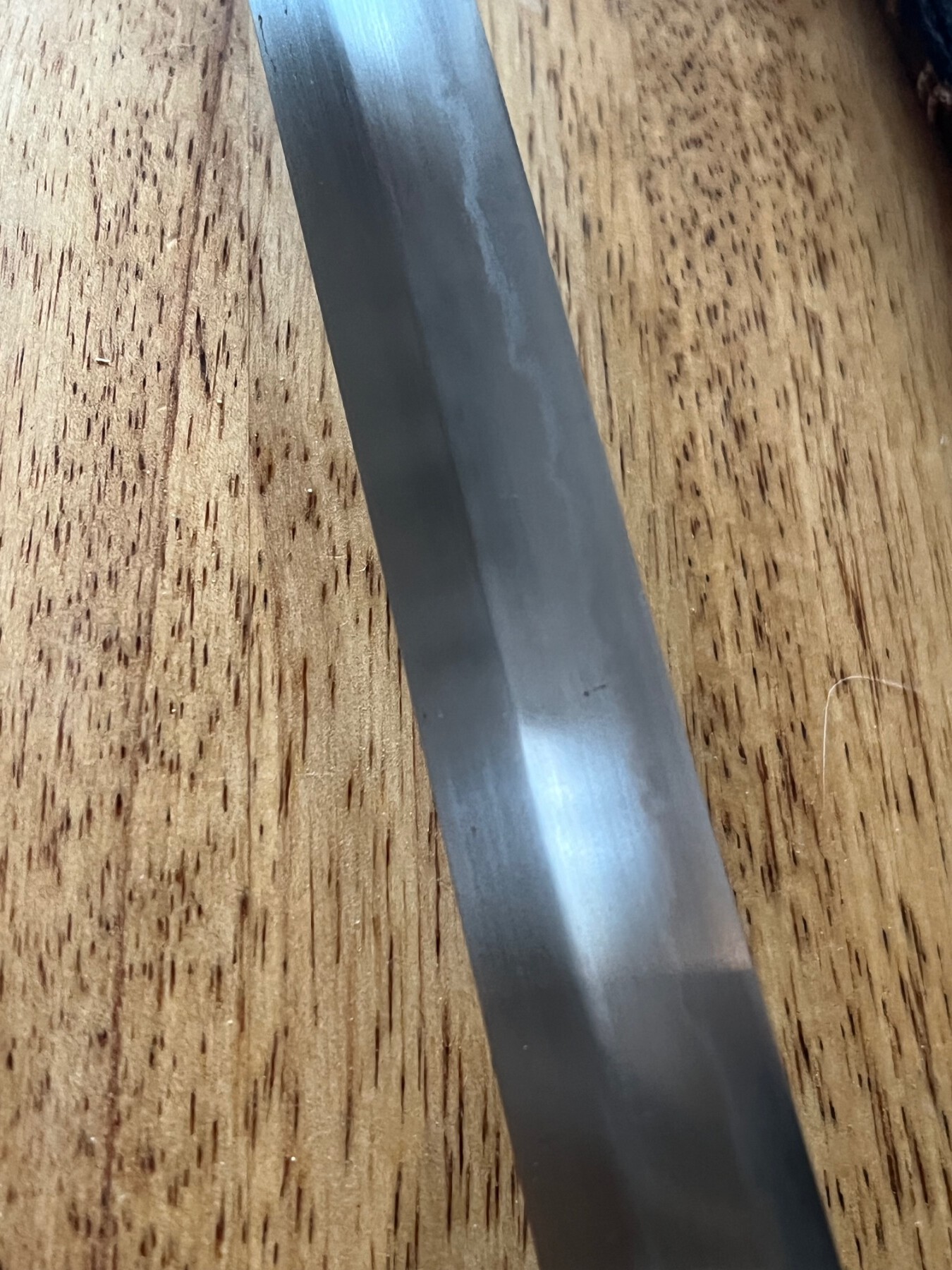
Hey guys! Thanks in advance for your help! I bought this from a guy who walked in with it at a gun show. He had it since the 80's and knew little about it. Any thoughts or opinions on this katana?
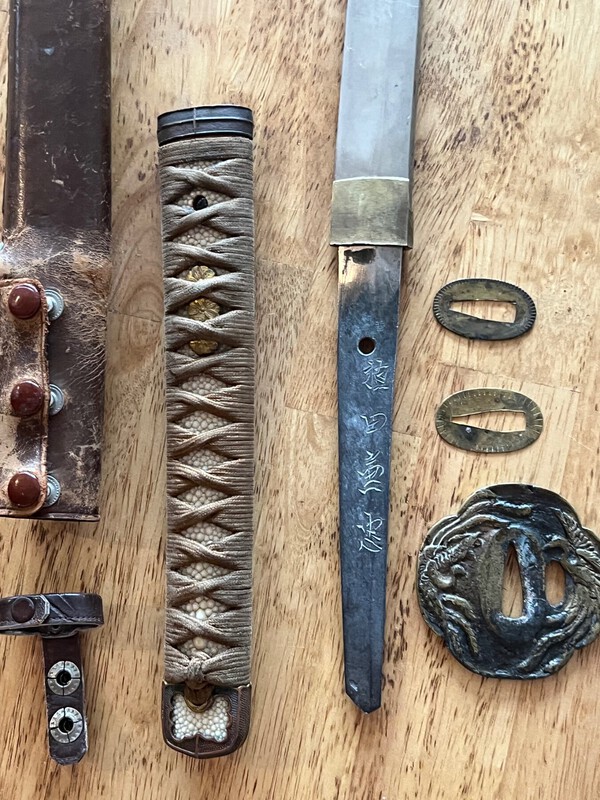
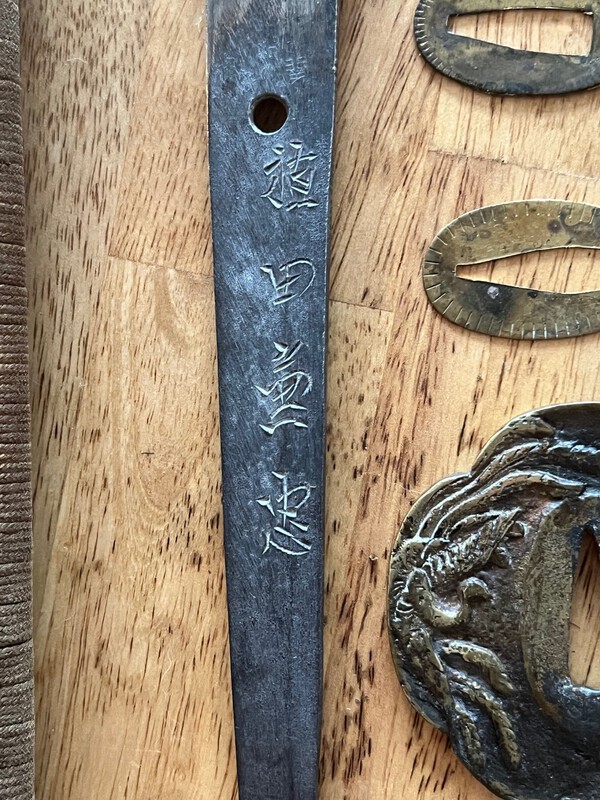

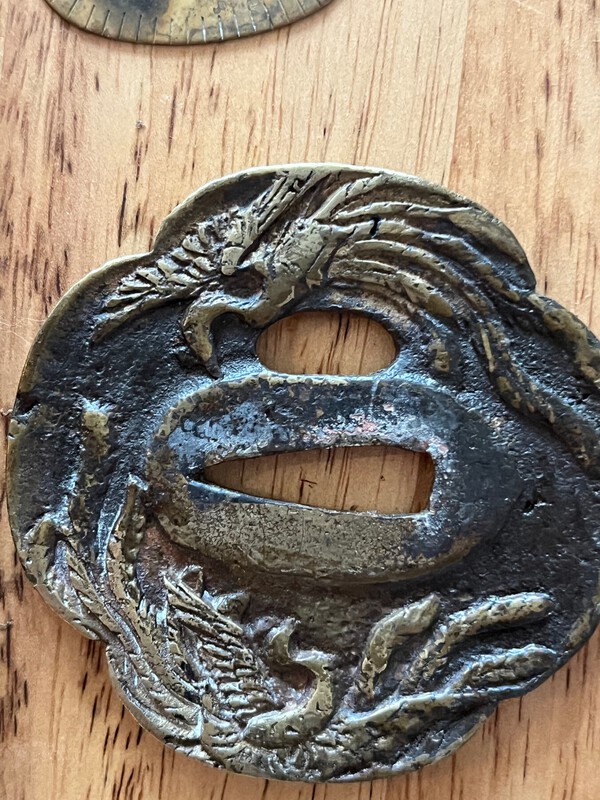


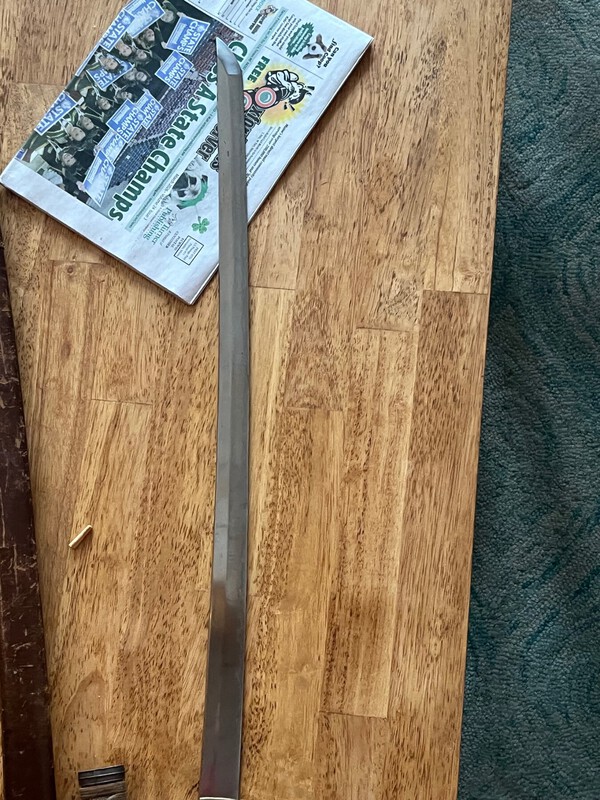
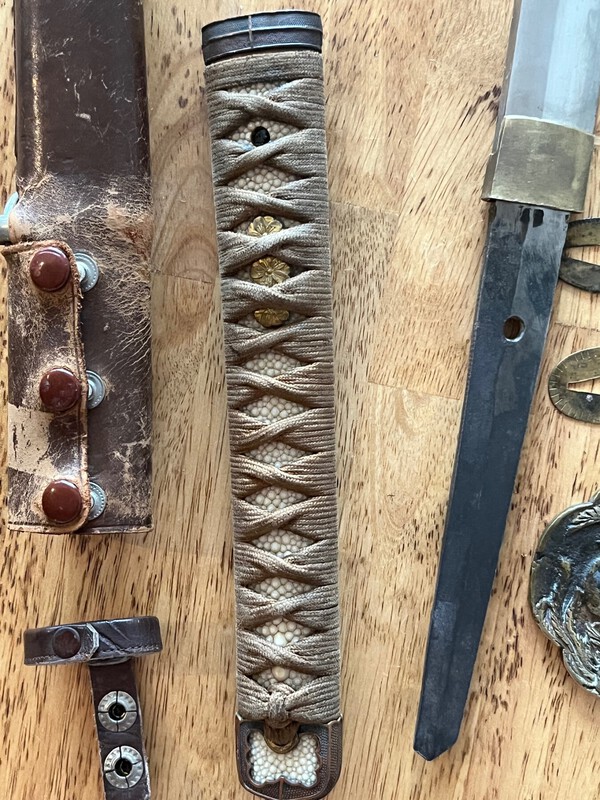
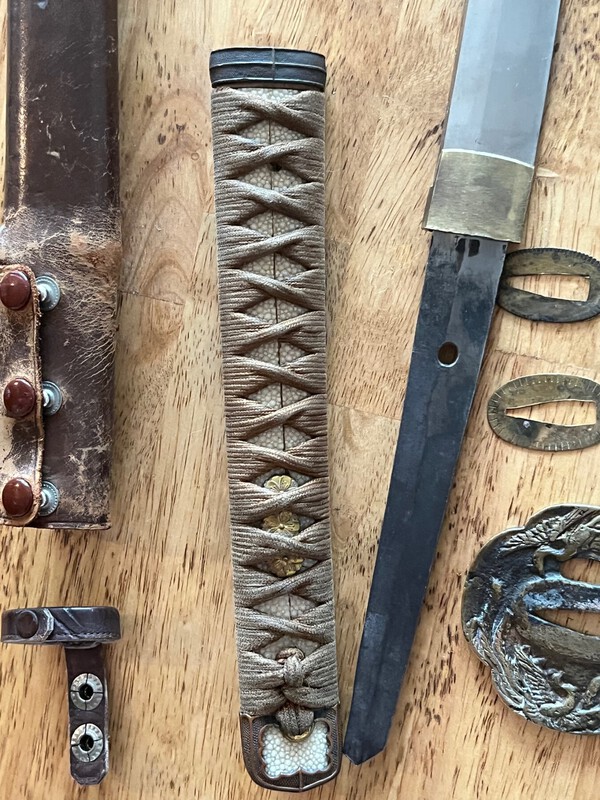
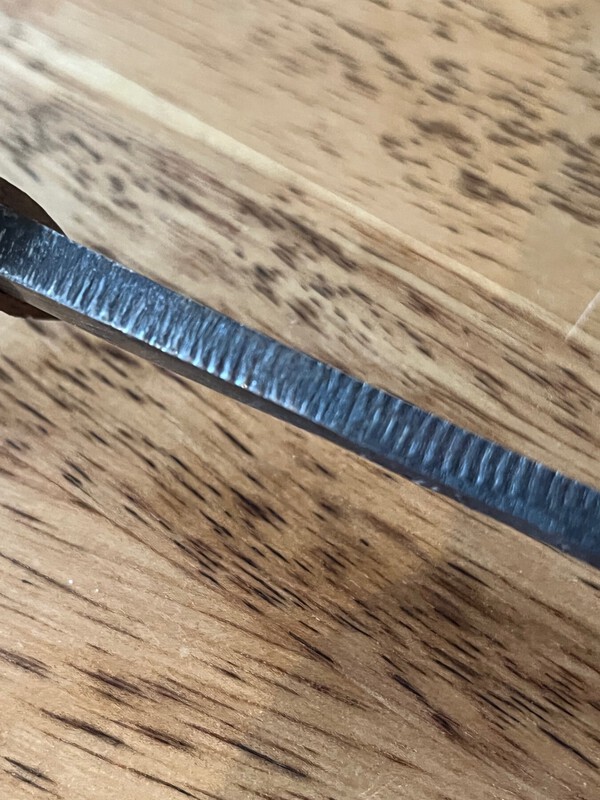
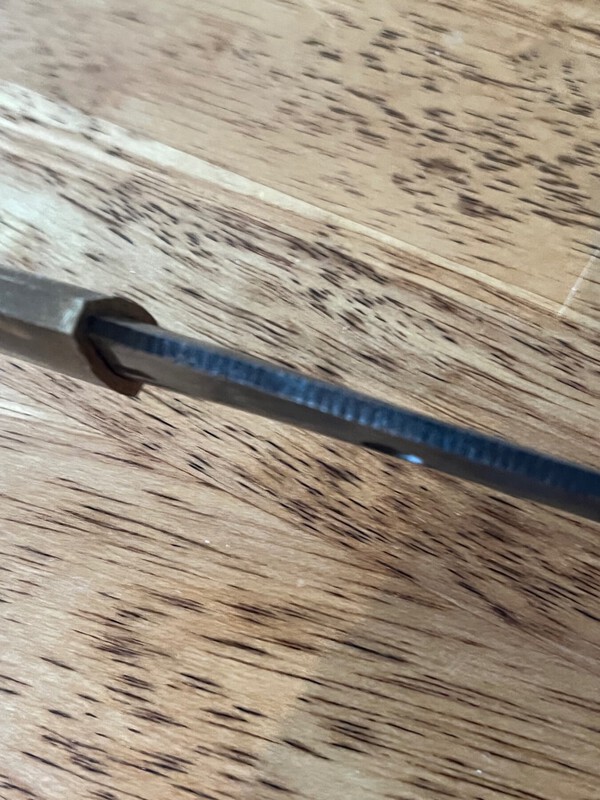

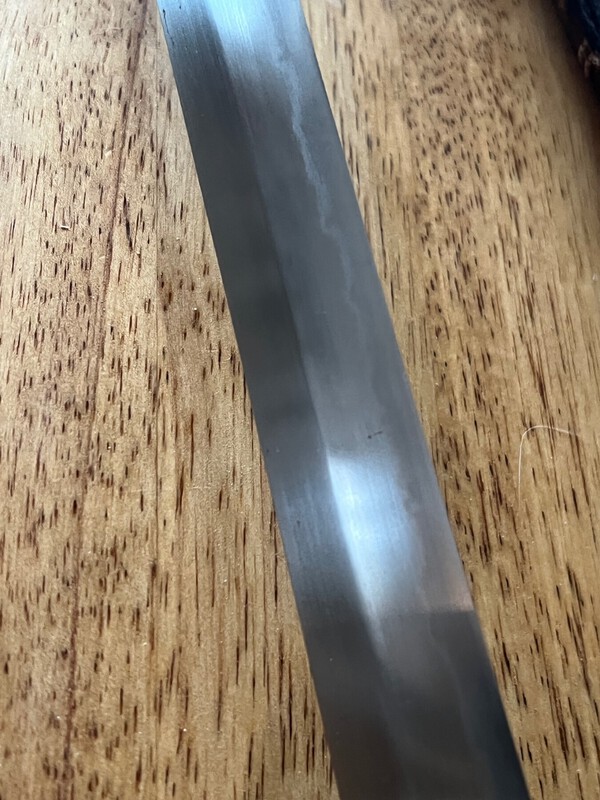

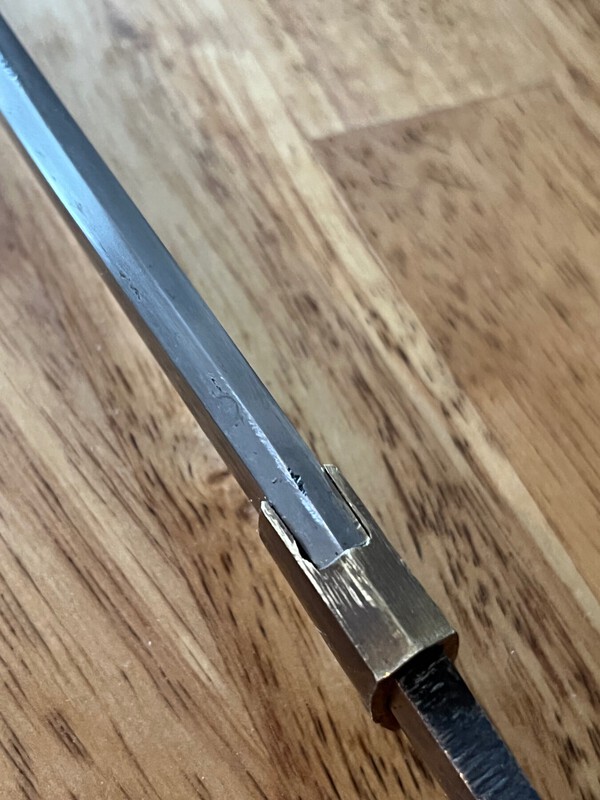 1 point
 -
I Propose for sale my Gassan Collection of swords ( 5). - 2 Gassan Sadakazu’horimono - 1 Gassan Sadatoshi’ horimono - 1 Gassan Sadaichi ‘ horimono - 1 Gassan Sadanobu’horimono They were collected thanks to the late Darcy Brockbank. Please ask if you are interested in. regards julien
 1 point
 -
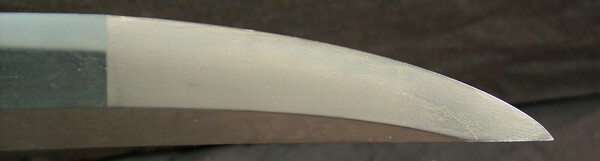
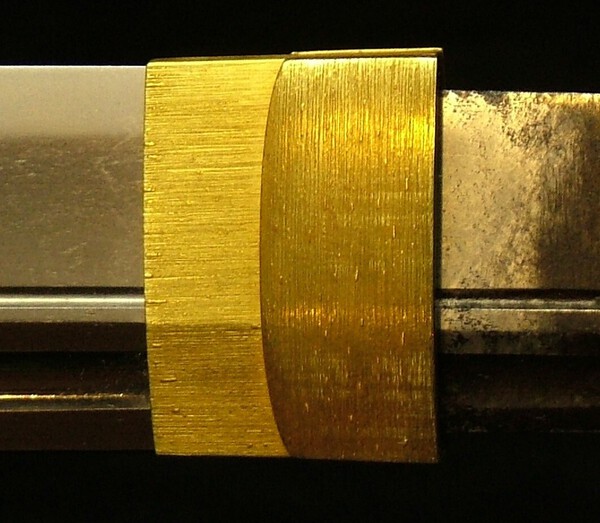
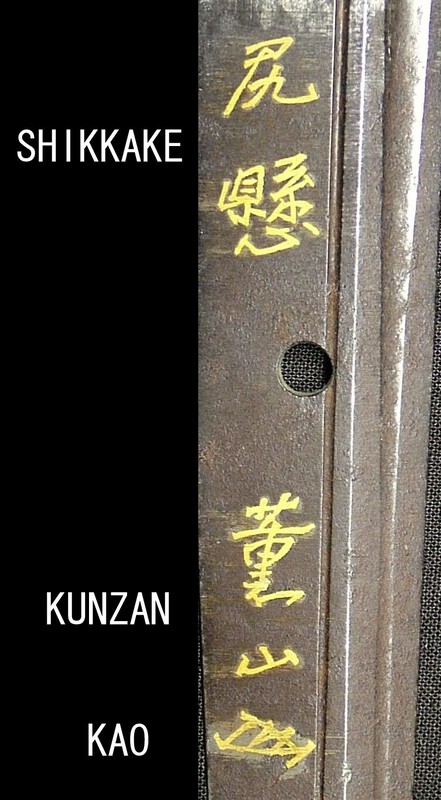
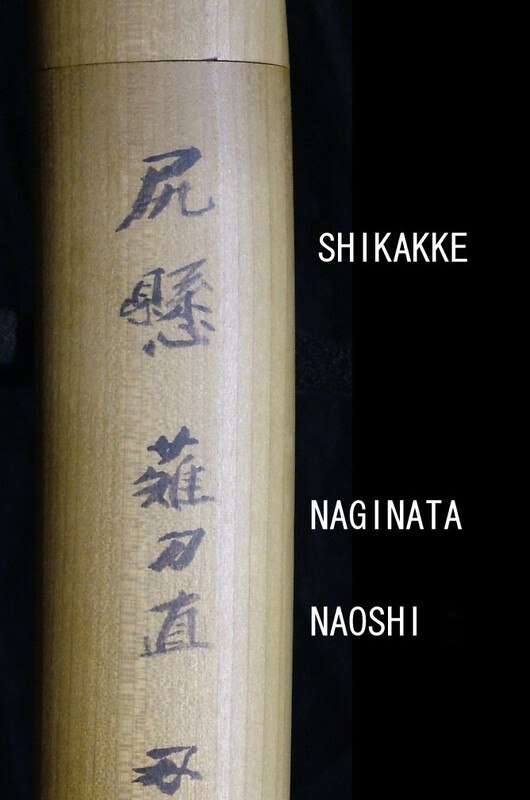
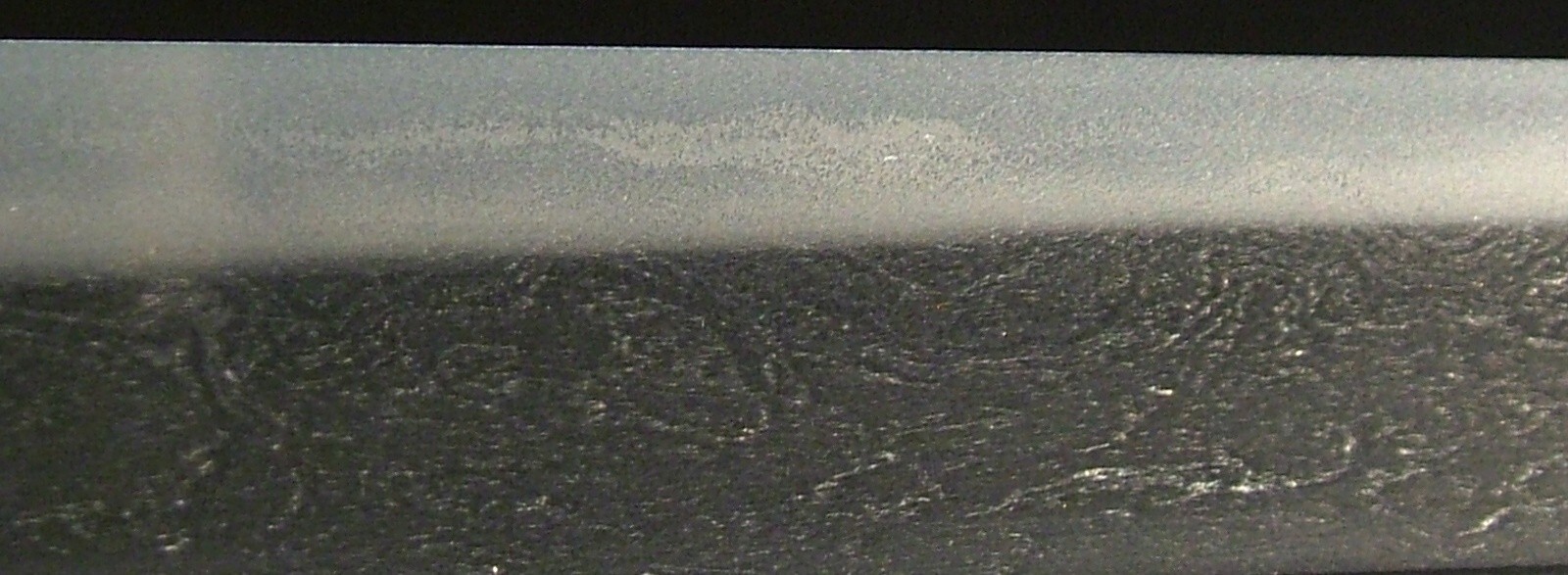
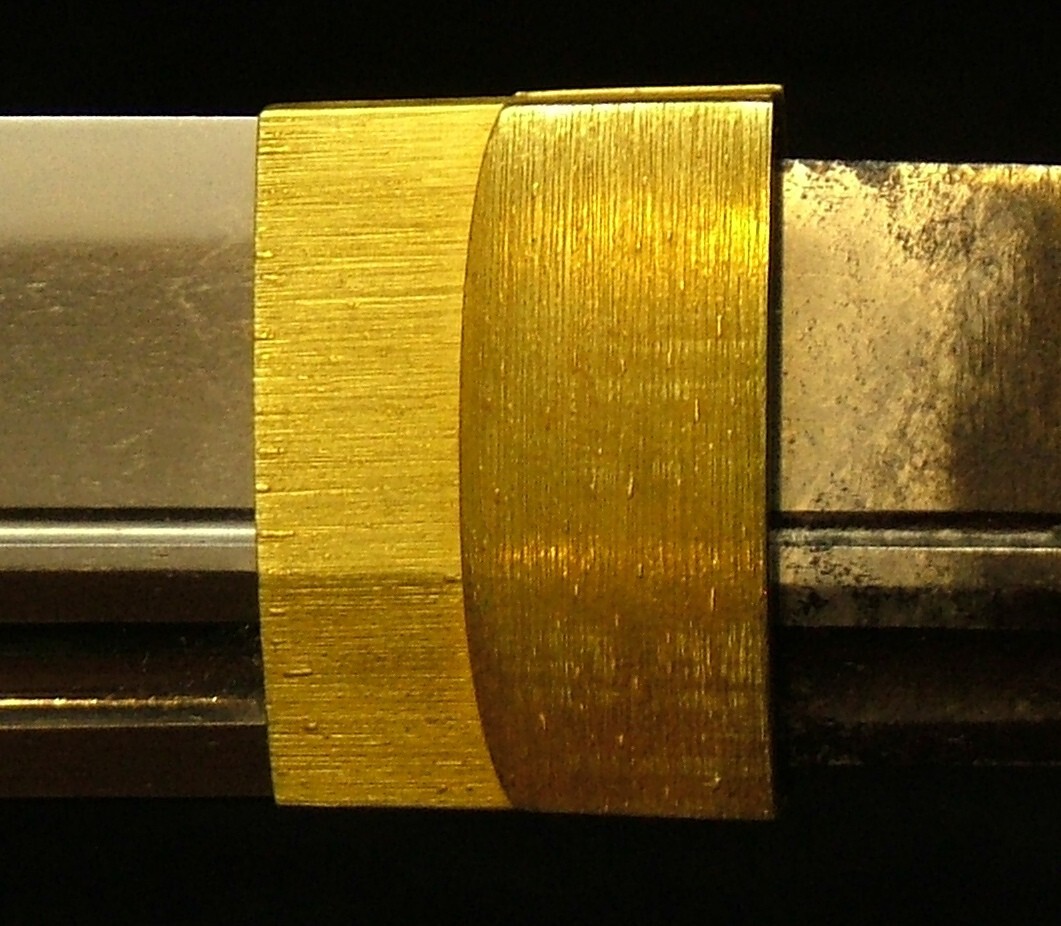
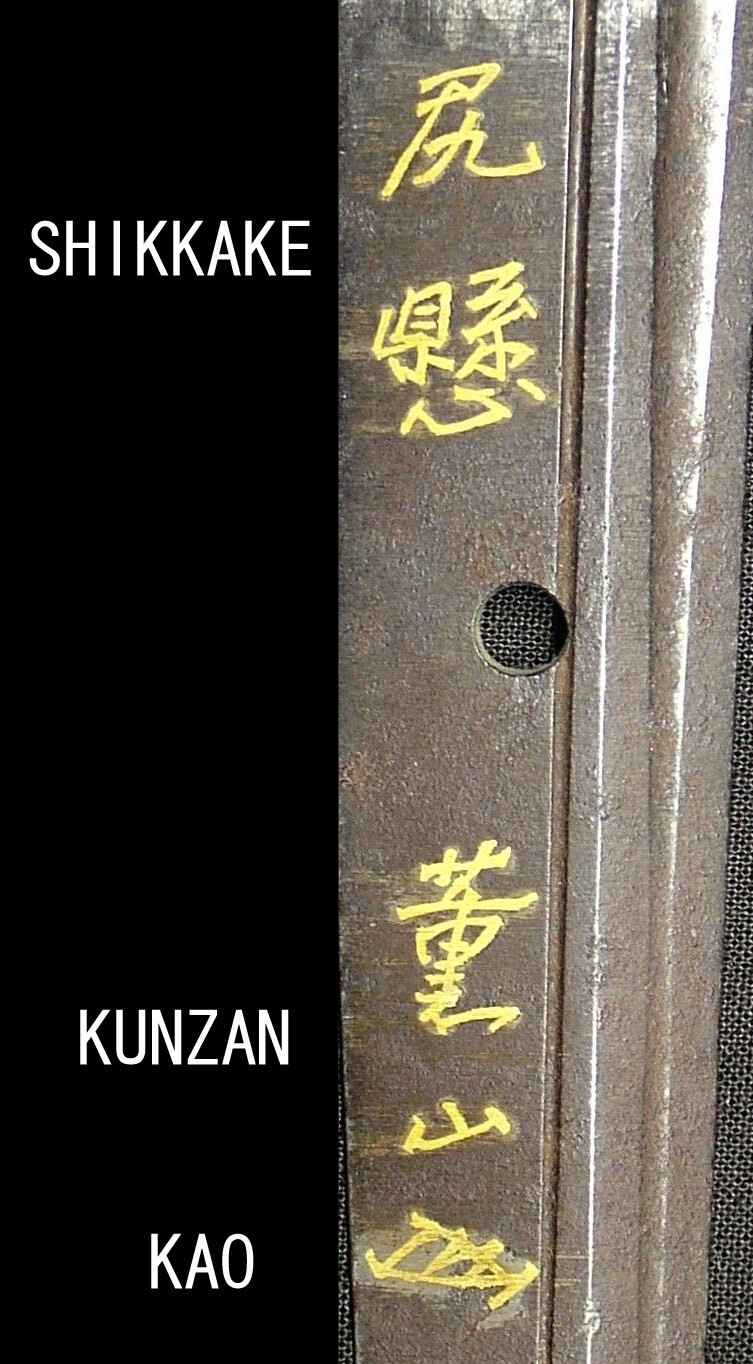
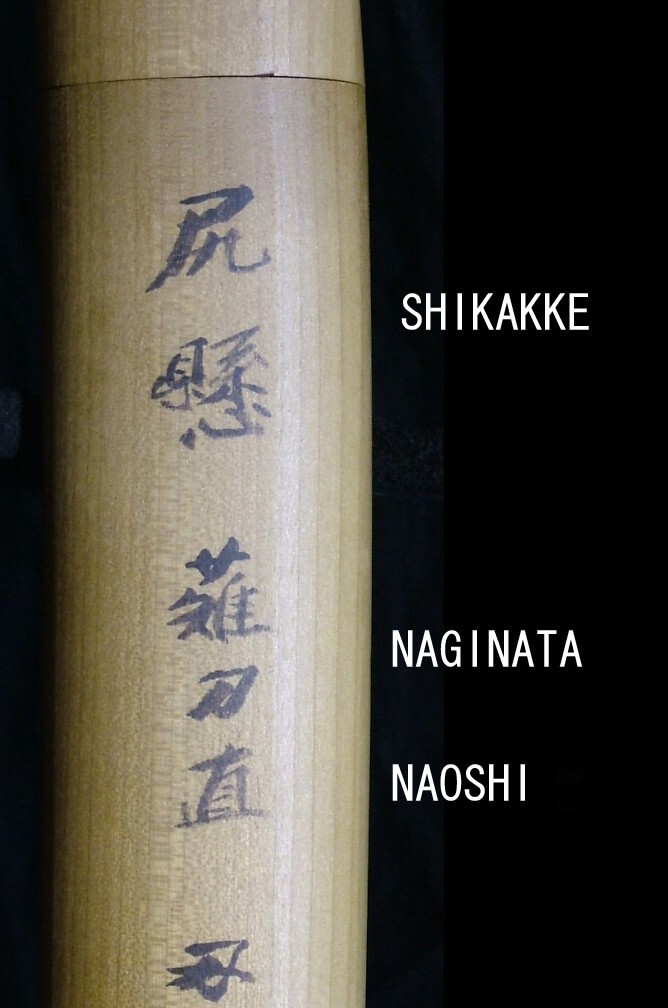
Not looking for cheap deals, let's move to the other end of the spectrum. Late Kamakura to early Nanbokucho period. Shikkake School of Yamato province prospered present Tenri City in Nara prefecture. The name Shikkake is from Shikkake-ishi, the flat stone to place the divine palanquin in Shinto. The Jitetsu of this sword is extremely fine that has something in common with Taima School. It satiates the collector’s interest. Five principal schools prospered in Yamato province: Tegai, Shikkake, Taema, Senjuin and Hosho. Norinaga is thought as the substantial founder of Shikakke school. Dated Tanto in 1319, the third year of Bunpo era in late Kamakura period still survive at the age of 69. Counting backward, Norinaga was born in 1270, the seventh year of Bunei era in Kamakura period. Later generations Norinaga forged sword to the Muromachi period. Smart Shinogi-suji, wide Shinogi-haba, stream like pattern of Itame-hada and Suguha-hamon are characteristics common to all Yamato province. The workmanship of Shikkake School shows traditional Yamato style. Typical ko-gunome hamon based on suguha. Kunzan Sayagaki which states this belonged to Dean Hartley. Provenance: Col. Dean Hartley Price: Ask, if you are prepared to purchase a sword of this level.




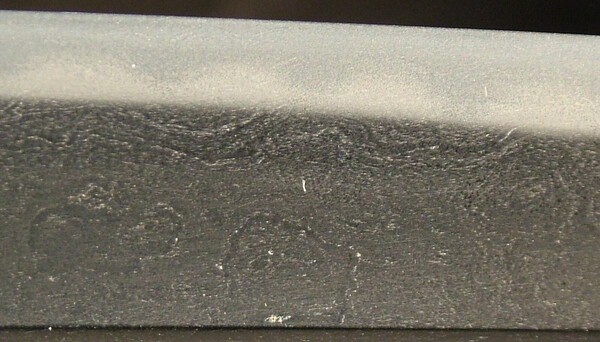
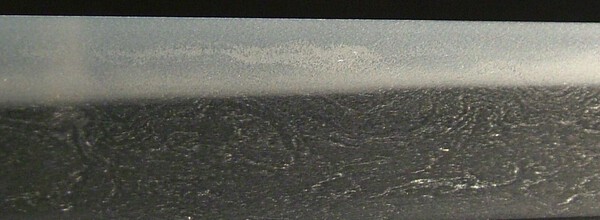

 1 point
 -
I came upon this auction by accident. Some tsuba, other kodogu, inro, etc. https://www.bonhams.com/auction/31871/fine-Japanese-and-korean-art/1 point
-
There is no Yasumitsu that I see documented with this mei, but FWIW there is a Fujiwara ju Yasutomo in late Muromachi, Yamato province. YASUTOMO (安友), Eiroku (永禄, 1558-1570), Yamato – “Fujiwara Yasutomo” (藤原安友), “Fujiwara-jū Yasutomo” (藤原住安友) - Credit Markus Sesko1 point
-
The Nihonto Club swordsmith database is now gated behind a login, so sharing a screenshot with some examples rather than a link.
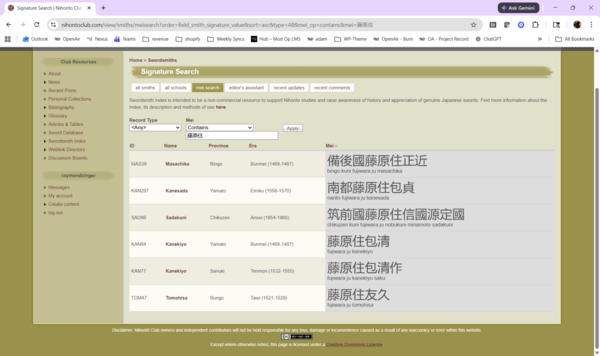 1 point
 -
Adam, i know and I understand. My remarks were meant to be helpful for a successful sale.1 point
-
I suggest you make a 5x5 grid collage, number each square in the grid, one tsuba per box, then post here. That way you can display all the tsuba for sale in three images. Not many folk are going to bother spending hours trawling through that very unfriendly google drive interface just for low level tsuba.1 point
-
Yours is similar to the one posted by Sam, and shows how the haikan fits just aft of the second snap. Thanks for posting!1 point
-
Hi folks, Mark Jones and I have, for years, sold tsuba and kodogu that we acquired from Skip Holbrook as he whittled down his large collection to something more manageable. After his recent passing, we were contacted by his family and we have purchased a large portion of the pieces he left behind. Today I have listed the first (Kyo Sukashi tsuba, see below) of what will eventually be near 100 tsuba and other kodogu; my plan is to keep at it till all are listed. Many of the pieces are quite fine and with papers but many are within reach for a beginning collector. You will find them at the top of my Tsuba and Kodogu section: https://japaneseswordbooksandtsuba.com/item-category/tsuba-kodogu/ All will have a number that starts with an H. Much, much more to come. If anything is of interest, please contact me by email through my site, not by personal message here; I need your emails to keep track of business. Thank you, Grey
.thumb.jpg.9c9d13ab86753cd98b3f89b772d7ab31.jpg) 1 point
1 point -
Resembles the style of Mogi-To that Meirin Sangyo sold in the 1980's. https://global.nipponto.co.jp/1 point
-
Yeah, I would also guess removed mei.1 point
-
It really is one the nicest examples I've seen of a kyu gunto of that grade.1 point
-
Could be the site of a crushed signature, whereby they then re-applied yasurime and artificial patina to match?1 point
-
Looks perfectly fine. I don't see anyone putting a kamon on a fake one. The fake ones are pretty obvious looking. These come in all forms of quality, and even very crude ones.1 point
-
I have seen on several occasions where a blade from that seller has sold only to be relisted a short time later. I have never done business with him, so I don’t know anything about his practices, however, it’s likely one of two reasons. Either the buyer backs out after auction end, or the bids are artificially run up.1 point
-
232 is back up for sale...again. No reserve so not sure what's going on with this one. https://www.ebay.com/itm/236695575484? John C.1 point
-
Cross-Reference Arsenal Stamps.1 point
-
These Kyu Gunto dress swords are relatively inexpensive and fairly common, which is why they are rarely faked. The few replicas I’ve personally encountered have been very obvious; typically much more poorly made than this example. They were generally unsharpened and often feature an etched hamon. Of the couple dozen I’ve handled, the quality has varied quite a bit, with some clearly better made than others. My understanding is that these were produced by a wide range of workshops, which explains the significant variation in both design and overall quality. @lonely panet would be the guy I would ask for confirmation, if he's willing to offer his input. -Sam1 point
-
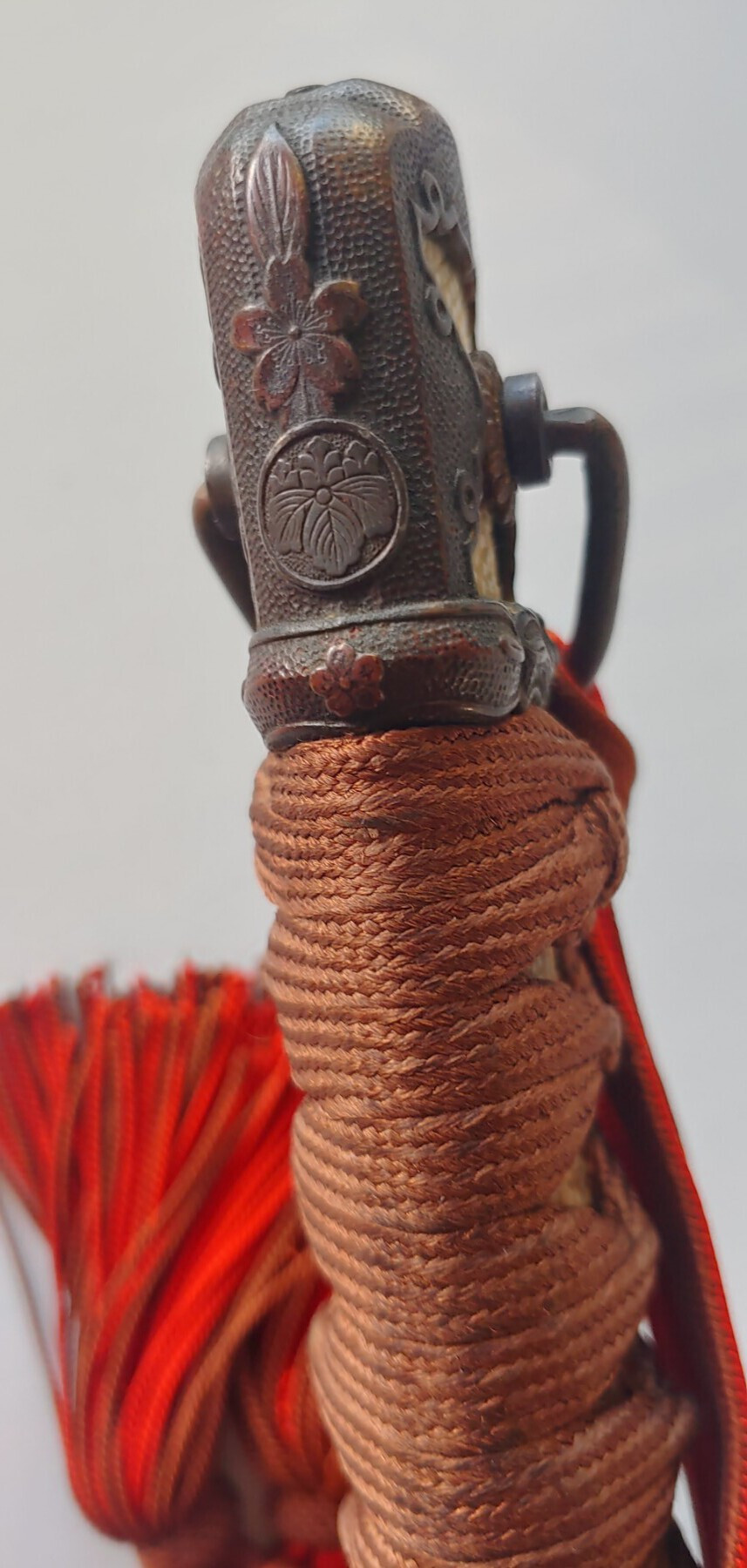
Dave, The kiri in this case is a kamon, or family crest. There have been a few posted at NMB over the years. Here is one for example: Concerning the knot, Dawson, page 432, calls it a "standard naval sword knot used from 1883 (possibly earlier) until 1945". Like the brown naval tassel, I believe he is saying that they were both for all ranks. Page 422 has a photo of an admiral with this standard knot on his sword. So, navy for sure, but rank not knowable.1 point
-
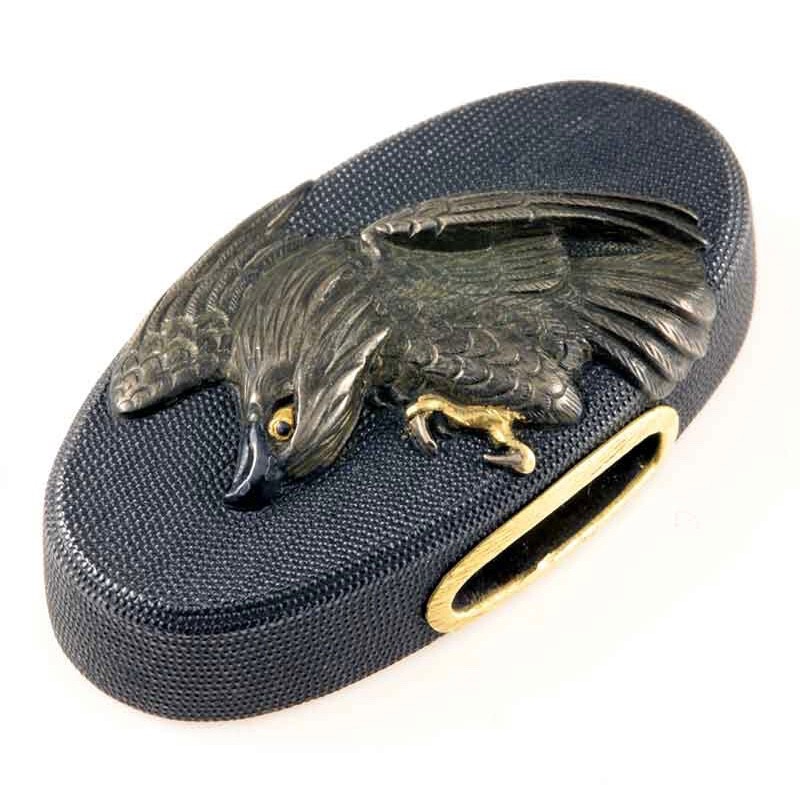
Hello, some news about this set, as I am in Japan, ans in same city as the seller, we met. The set is carved from thick shakudo, relief carving is not takazogan as I first thought, and its not thin material work like menuki, the gold is solid, some wire used for the leaves and two different gold color for the flowers, every relief is carved from solid shakudo base. The set is quite heavy, even not very thick. The ground finish is ishimeji1 point
-
Nice sword, Steve. If you decide to sell, I would leave the seppa in place to avoid unnecessary rattling during shipping. Just disclose the use of newly made leather seppa in the auction description. John C.1 point
-
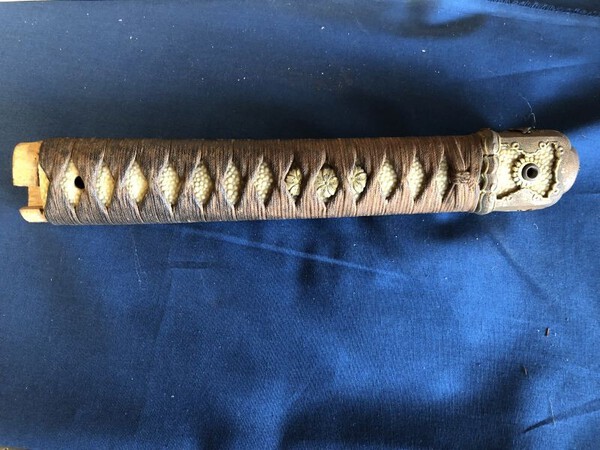
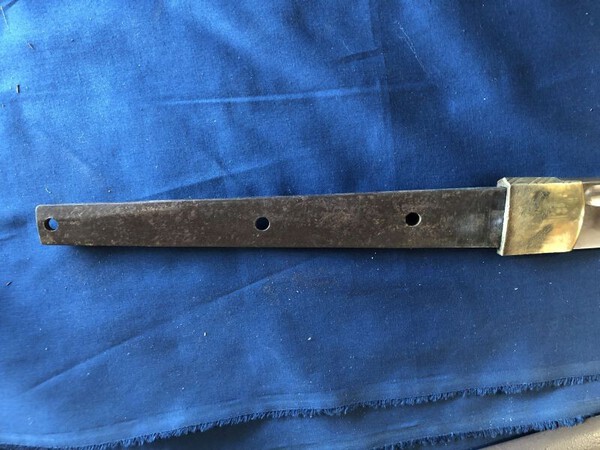
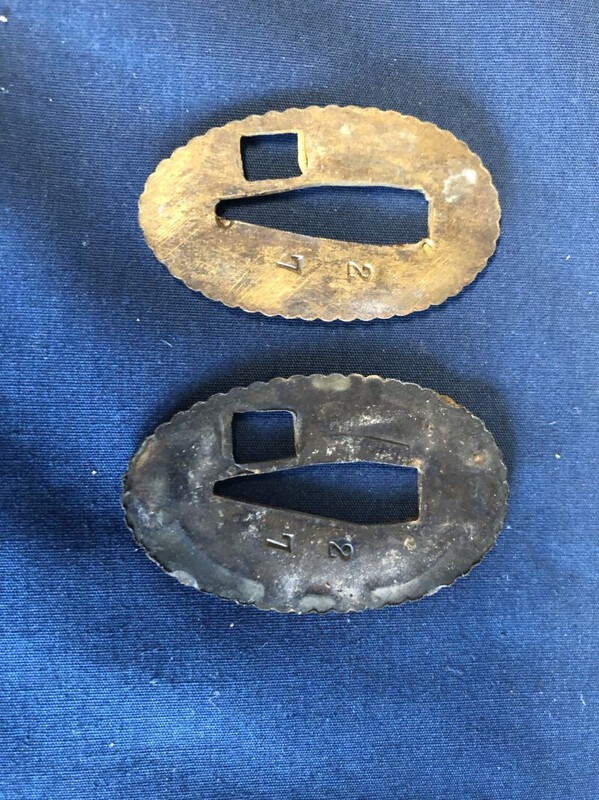
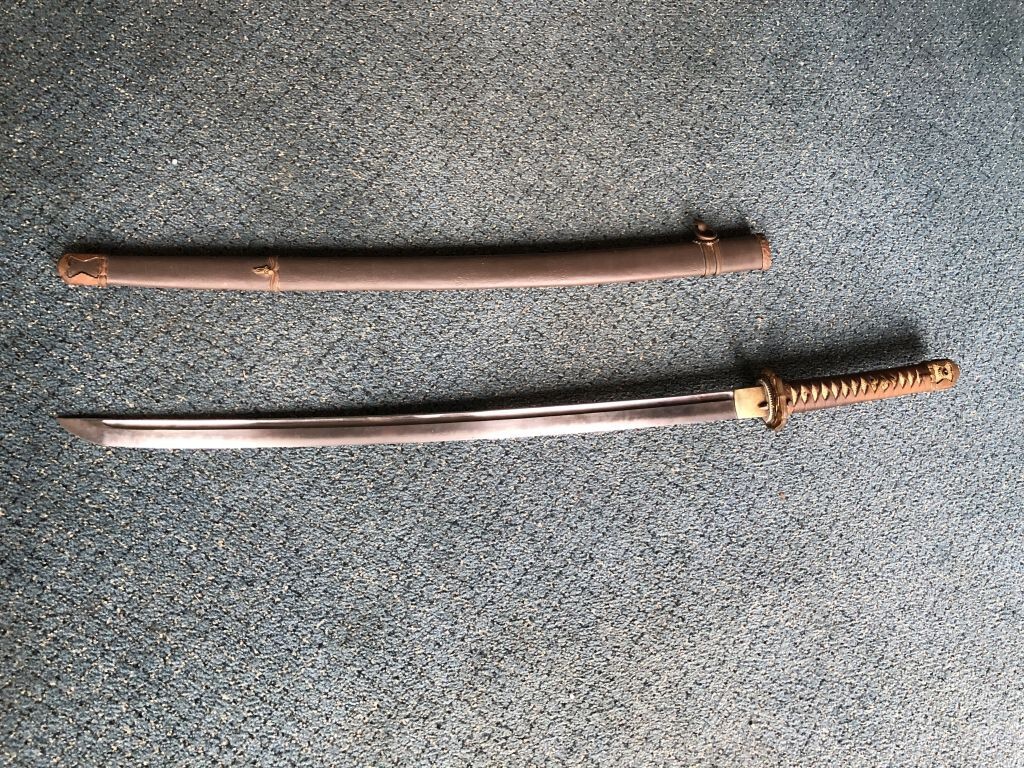
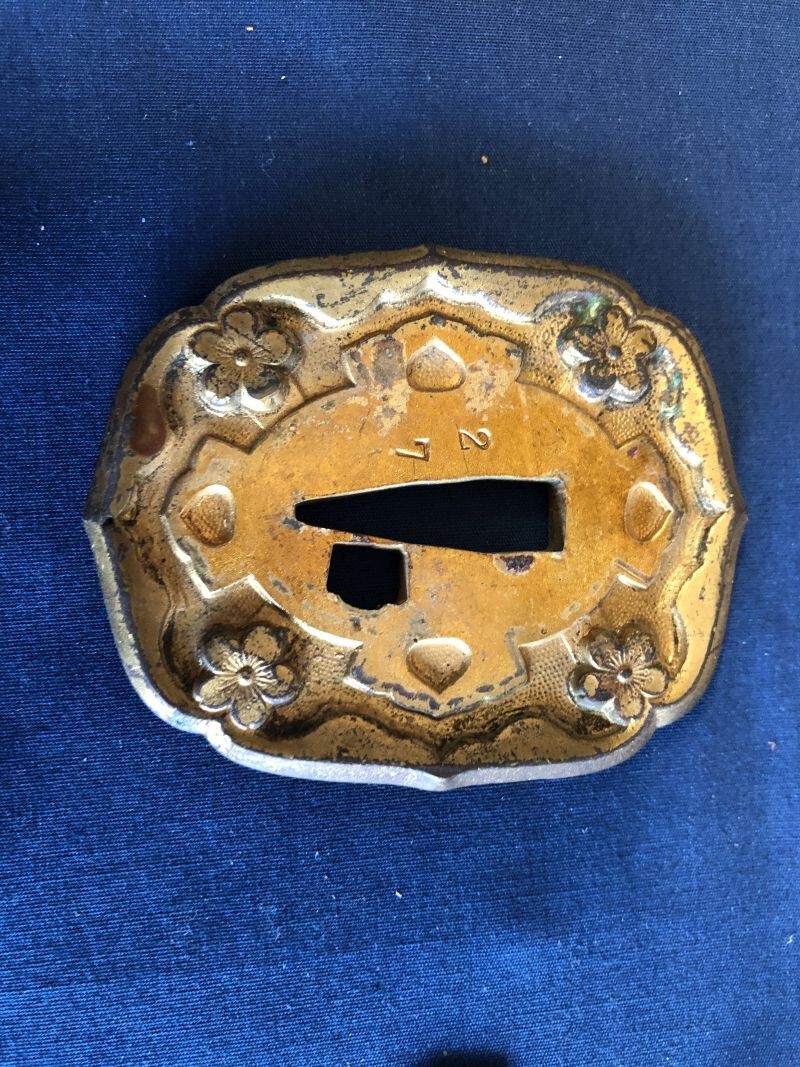
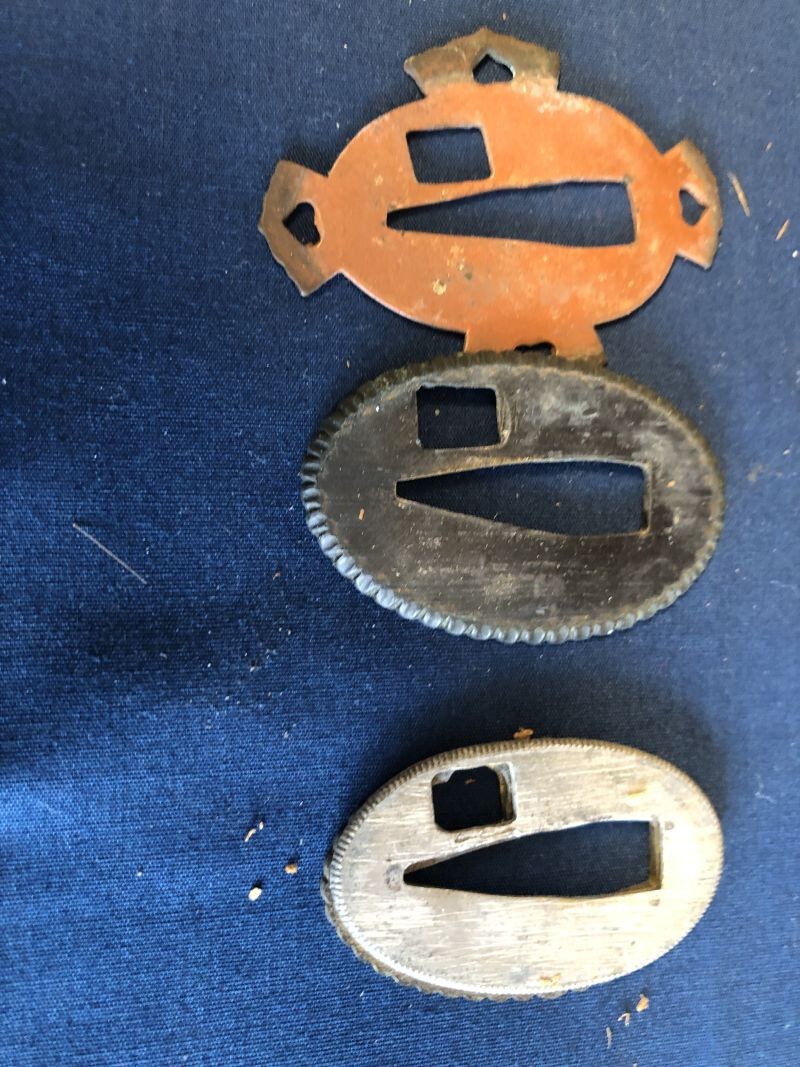
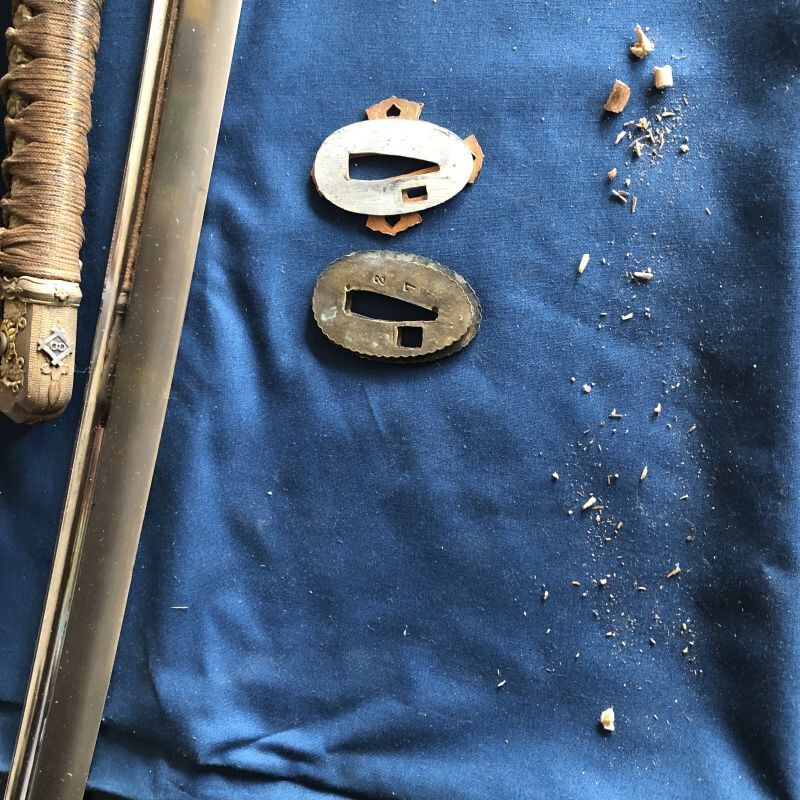
Scogg...... Thanks for the video. It enabled me to overcome my fear of 40+ years and remove the tsuka. The mekigi proved difficult to remove. It fragmented into small pieces and dust as noted on the attached photo. Notes on the Shin-Gunto The Shin-Gunto is believed to be a Type 98 with machine made blade The blade was observed to be free of any defects or corrosion and is believed to be in very good to excellent condition. The cutting edge is intact with no defects along the whole length. The overall length of the blade is 93.6 cm. The length of the blade from the tip to the notch is 64.6 cm. The length of the tang is 24 cm. The width of the blade at the notch is 33.5mm. The blade thickness is 7 mm. The blade includes a fuller or Bo-hi the full length The temper line is quite visible but could not be photographed nor identified as to type. Ditto for the tip temper The tang was examined under well lighted magnification. No marks, stamps nor logos were observed with certainty. No serial number stamp was observed A possible temper stamp was observed just above the Muni-machi. The presence of such a stamp cannot be confirmed. The tang exhibits three each 6 mm diameter holes. The peg hole is elongated along the tang long axis. The Tsuba is metal with what appears to be a gold tone finish.The finish is everywhere degraded. In addition to the Tsuba guard , there were 6 O-seppa spacers. The Tsuba and all of the O-seppa bear the stamped digits 2 and 7. The stamped 2 and 7 are the only marks by the sword maker that are observed. The guard and all the fittings exhibit sharply formed cherry blossoms and leaves. All the metal decorative work is very sharply defined and seems to be well made. Research has revealed that the silvery attachment with a logo resembling the infinity symbol is a Kamon or Mon that is not related to the sword maker. Specific identity was not determined “The silvery diamond-shaped metallic inlay (pressed or inlaid into the flat end-face of the kashira/pommel cap) with a symbol resembling the infinity mark (∞) is almost certainly the personal or clan family crest (kamon or mon) of the Japanese officer who owned or commissioned the shin-guntō” Further research may yield more detailed family identity with this rare mon





 1 point
 -
Beautiful tanto one great thing about the internet is I get to see blades well above my budget for free1 point
-
Yes, I saw that one, too, and was equally intrigued by it. What a coincidence to have two copper tsunagi show up in just a couple of weeks. I would think copper would be an unlikely choice for tsunagi material, because it's going to corrode and play havoc with the insides of the saya. Maybe its alloyed version doesn't corrode so easily. By the way, I liked and agreed with the translation that @xiayang gave. There is an additional aspect of it that may be relevant. The Japanized version of the saying on that sword, "一心定めて、万物服す" was a slogan of Former Prime Minister Nobusuke Kishi (1957-1960), meaning basically "If one acts with intention, one can conquer anything". No doubt he borrowed it from the Zhuangzi.1 point
-
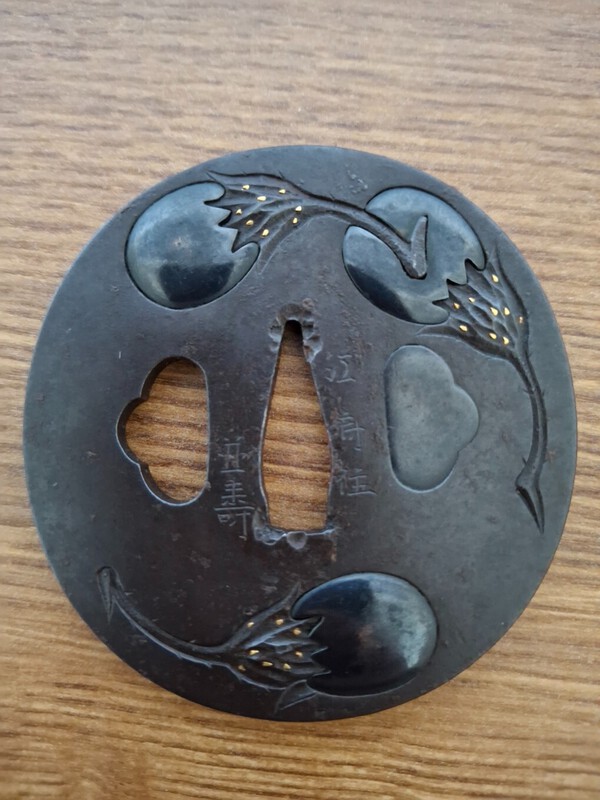
Prolific Namitoshi...... tsuba transformed latter with shakudo plugs
 1 point
 -
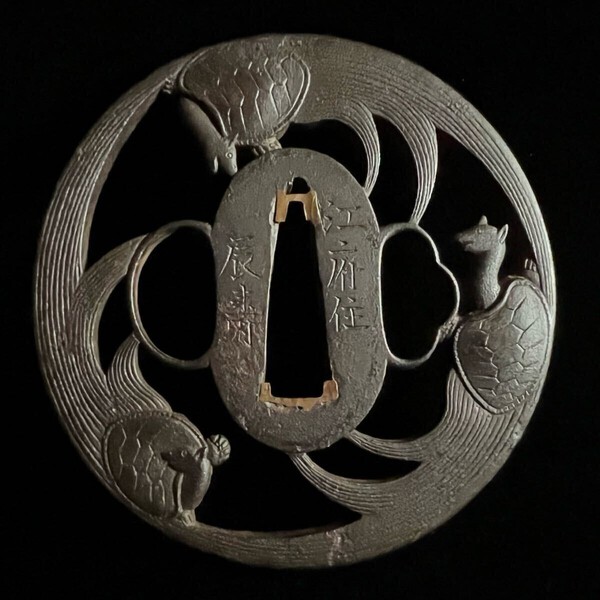
I recently picked up this lovely tsuba signed Tatsutoshi. Three Minogame are carved with beautiful detail, these are turtles from Japanese folklore that are said to live up to 10,000 years old and have long strands of algae growing from their shells, which resembles a straw raincoat—or mino—from which they get their name. Best, Tom
 1 point


















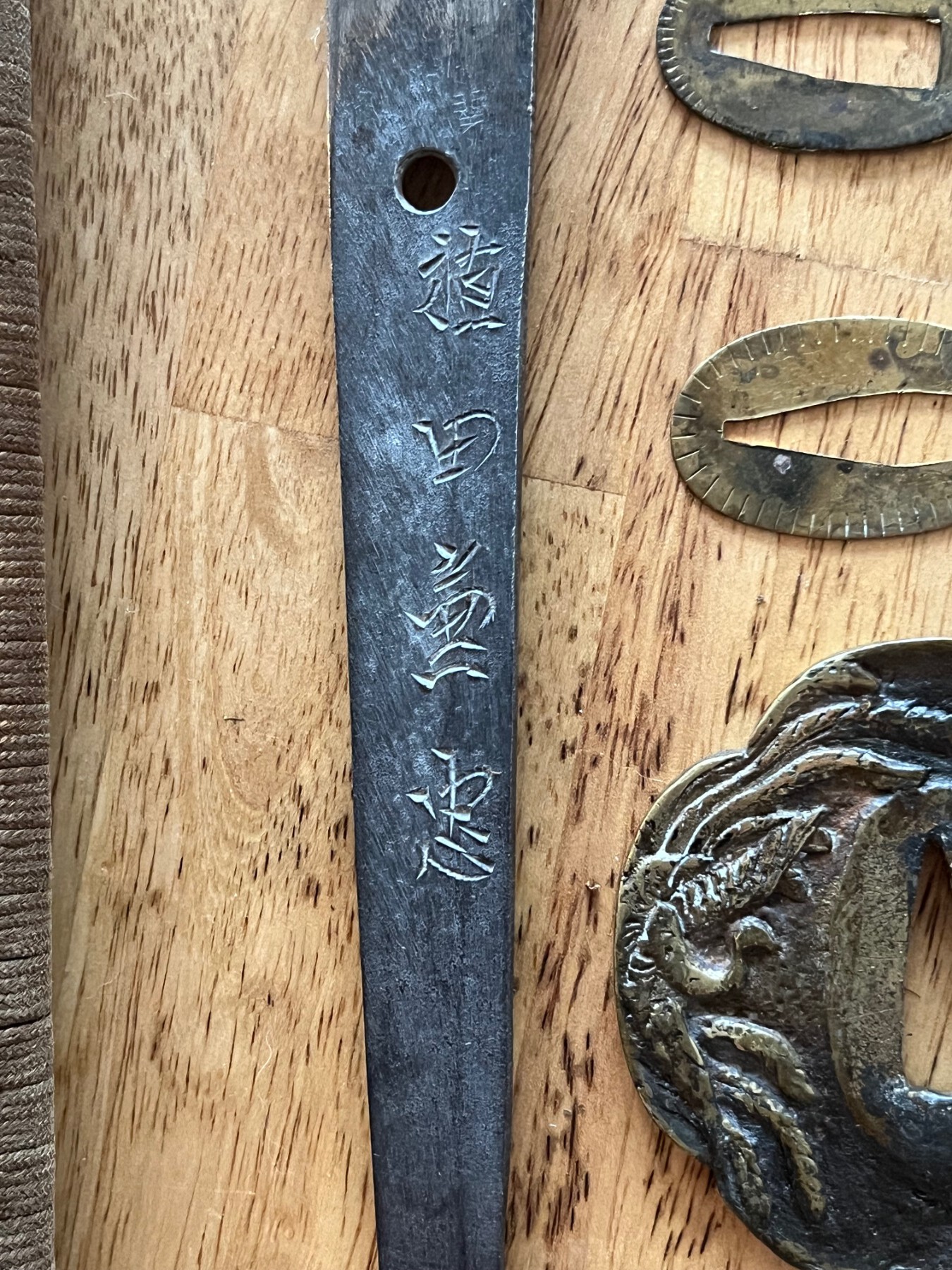
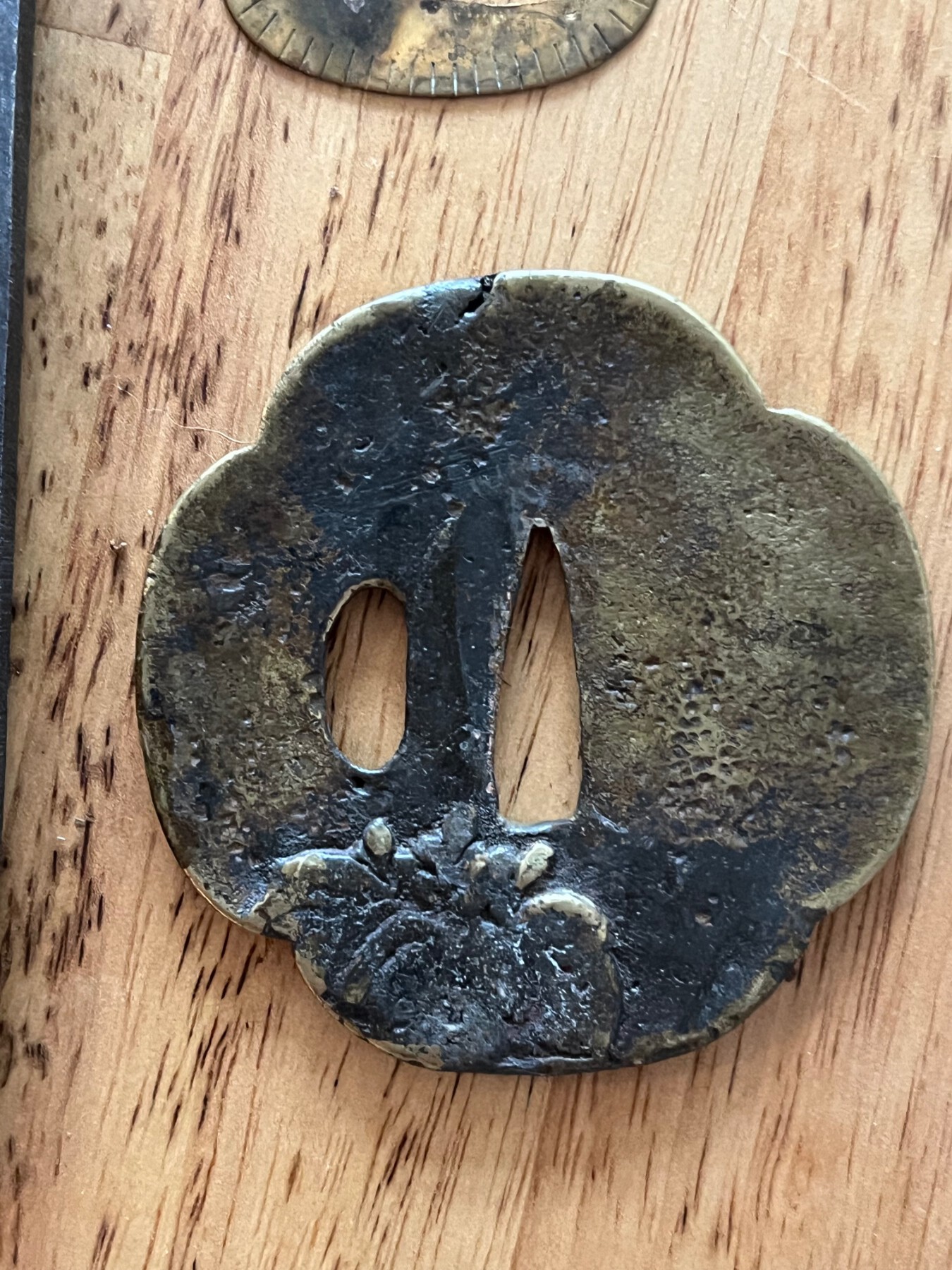
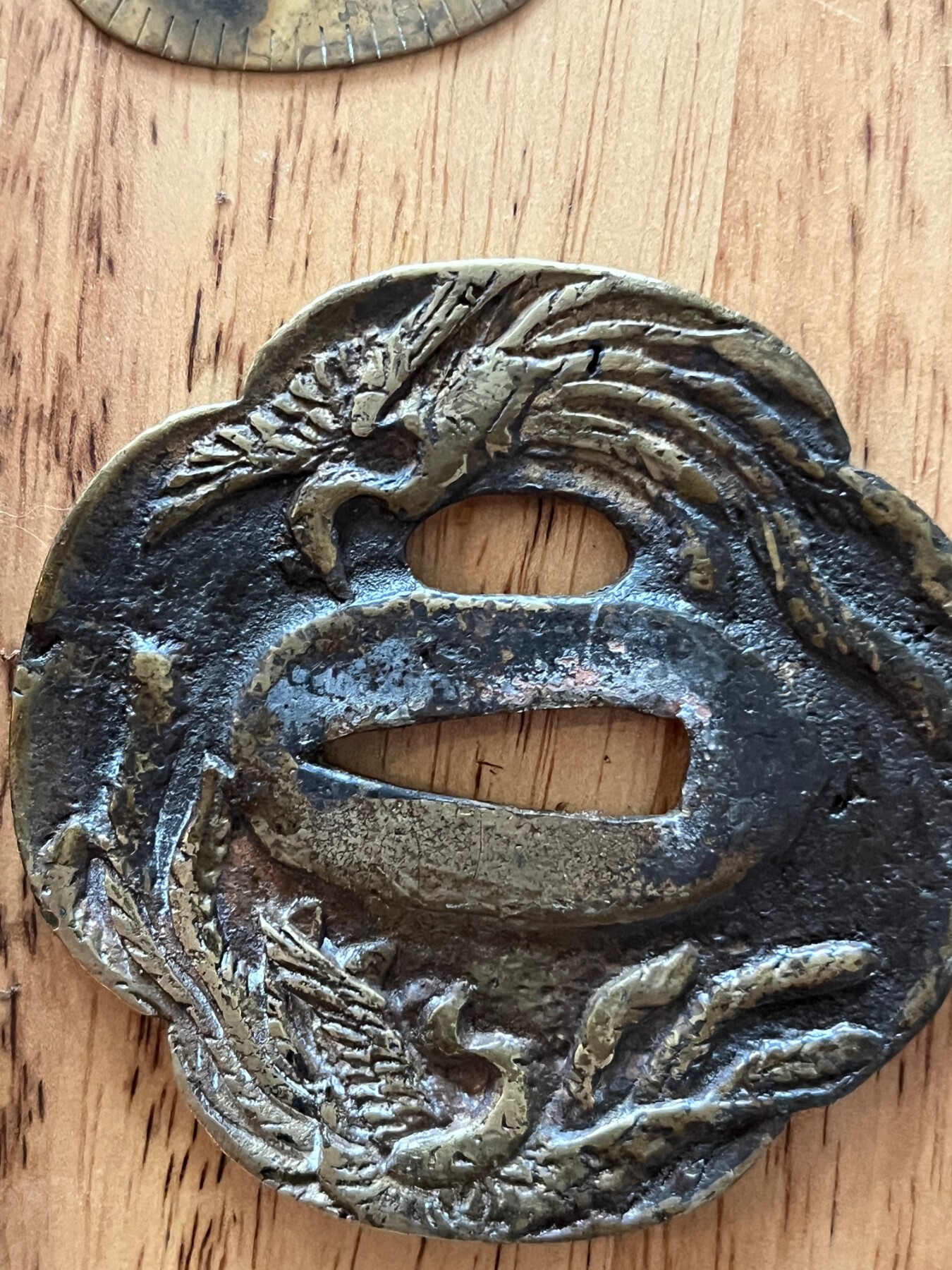
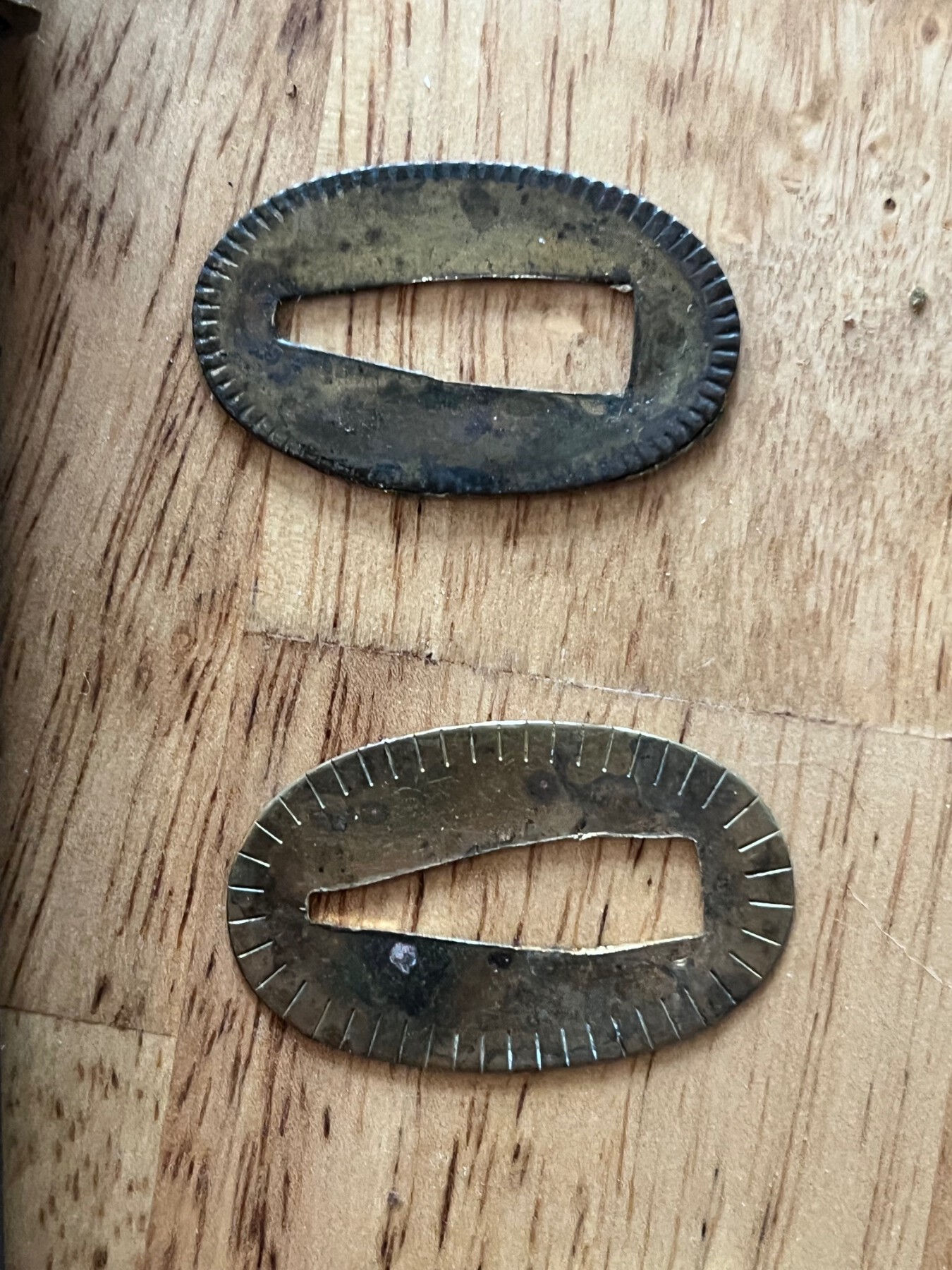













.jpg.0bd4504f4eb472a5a13000b9a4611944.jpg)














This leaderboard is set to Johannesburg/GMT+02:00