Tensho
-
Posts
396 -
Joined
-
Last visited
Tensho's Achievements






-
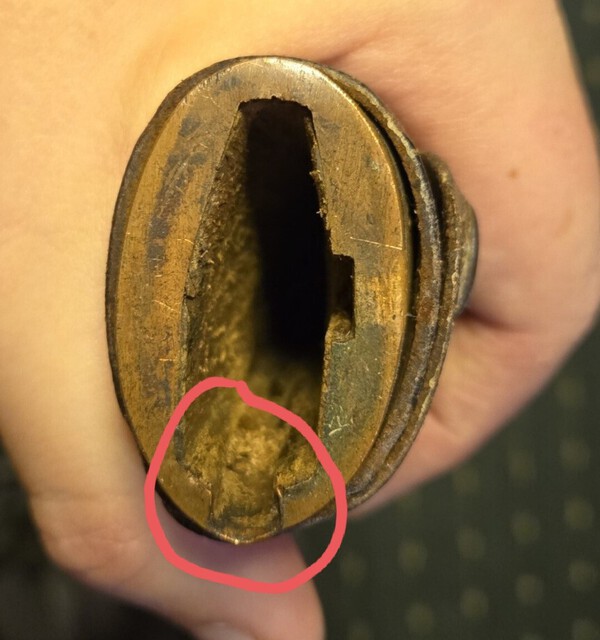
Do you have a close up of the tsuka too? Also, does it fit tight with it by itself on the blade with the mekugi ana lined up(no tsuba, seppa)? If not, then I stick to my next assessment. Thats way to many seppa on this style of mounting. I've seen a mismatch of them(chuso cutout) on bring backs, but 5 and a leather seppa is just someone stacking them up. This is what I'm talking about on the saya circled in red. Looks like someone filed the koiguchi so the habaki would fit. If thats the case the blade isn't for it.
-
Blade has a Navy inspection stamp and is stainless steel. It does appear to be a put together just judging by the number of seppa(keep adding until the hole lines up) it is a civilian style gunto tsuka though. May just be the photos, but it appears to also have a plugged mekugi ana in the tsuka? Is the scabbard mouth also filed out for the habaki to fully seat?
-
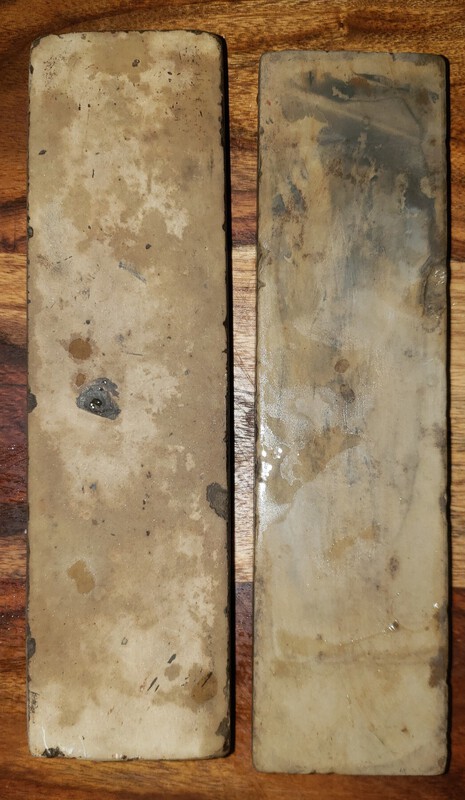
Here's some of my hindostans. The striations are a classic indicator of them and why I believe it is one. The 2 on the far right and the separate picture haven't been cleaned and still have old oil and grime. It looks like yours has been used with oil as well. What is the size? "Most" American stones fall within the 2x8×1/1.5 inch range.

-
Not sure about the green one, but the other is a Hindostan.
-
Is this a Japanese sword or some nock off?
Tensho replied to AKraven907's topic in General Nihonto Related Discussion
This is a Paul Chen/Hanwei sword -
Should be a pearl. And the bottom one is chasing a flaming pearl. In Japanese and East Asian art, the motif of a dragon chasing or clutching a flaming pearl (tama) symbolizes wisdom, spiritual energy, power, and the pursuit of truth.
-
Having a new Mekugi-ana made ? Tang repair? (yari)
Tensho replied to GreyVR's topic in General Nihonto Related Discussion
FWIW, the nakago should not be hardened. I have about 20ish yari in my collection and its not uncommon for these to have broken nakago(probably from forcing them out of koshirae when they're rusty) Personally if it were mine I would just leave it "as-is" I actually had 2 yari in shirasaya which didn't have mekugi-ana drilled out for the shirasaya even though the nakago had them. There is no habaki to "lock" the blade into the saya on a yari(the ebu/pole goes into the saya), and as such there should be no real worry of pulling the blade out of the handle. -
Spoils of War or War loot?
Tensho replied to MassiveMoonHeh's topic in General Nihonto Related Discussion
During WWII a lot of soldiers carried personnel sidearms and knives etc.. If you ever watched The Pacific or Band Of Brothers miniseries or read the books. Eugene Sledge(The pacific) carried a commercial 1911 his father sent him and David Webster(Band of brothers)carried a commercial 1911 he purchased. They were both privates. And we all know so many of them brought back pistols, Daggers, rifles, etc.. I'd think it'd be hard to tell someone they can't carry a personnel sidearm when they got a duffel full of lugers, walthers etc.. -
There are tens of thousands of kamon and variations of. Finding references of unique ones may prove difficult.
-
tachi Can someone tell me if this is fake. Thanks
Tensho replied to deldoe's topic in General Nihonto Related Discussion
Remnants a Horimono perhaps? -
You should have no problem getting your money back from eBay. Its up to the seller to file a claim with UPS. I wouldn't even feel bad for the seller. Showa22 is a scumbag. Sucks that it was lost, but If you were expecting a blade in "mint shape" like he says on all his listings you would probably be disappointed. I see multiple areas of rust in his pictures on that blade and what looks like a Ware'
-
The barrel screw for the kabutogane/sarute is also missing.
-
Looks legit to me. If you zoom in you can see fissures in the steel. Attached is a similar one posted by a member here:

-
Honoki, which is a Japanese magnolia. I've heard of people using basswood, alder and poplar in the U.S at least for saya and tsuka.
-
Restoration possible??
Tensho replied to Ronald Aguirre's topic in General Nihonto Related Discussion
Restorable for a couple thousand dollars yeah. This is assuming its nihonto(and worthwhile to polish) and not non-traditionally made. May possibly be a zoheito w/ that bo-hi