
Leaderboard




Popular Content
Showing content with the highest reputation on 01/13/2025 in all areas
-
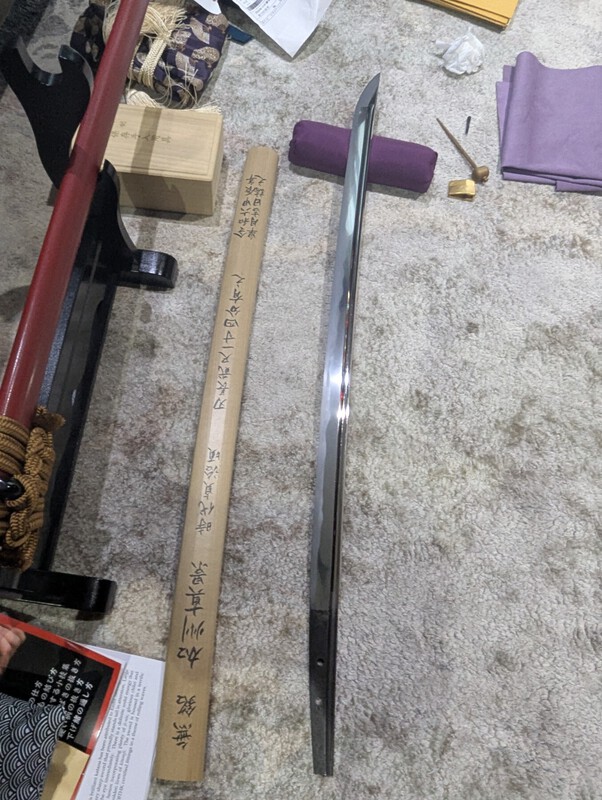
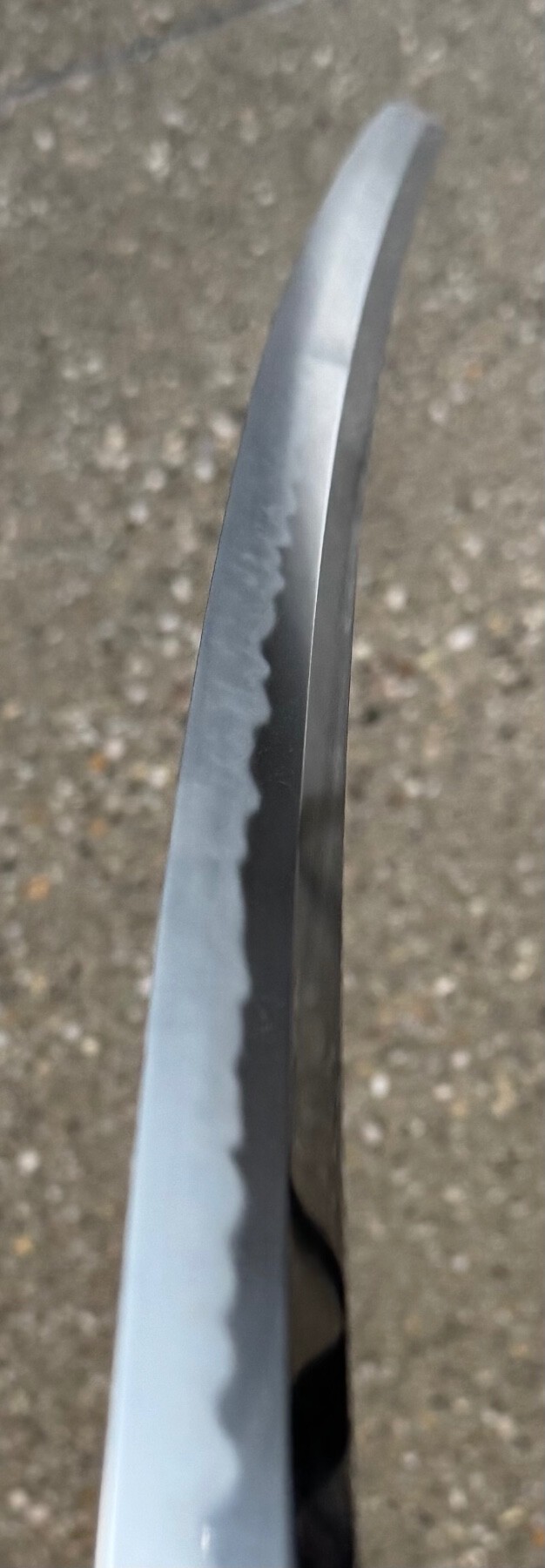
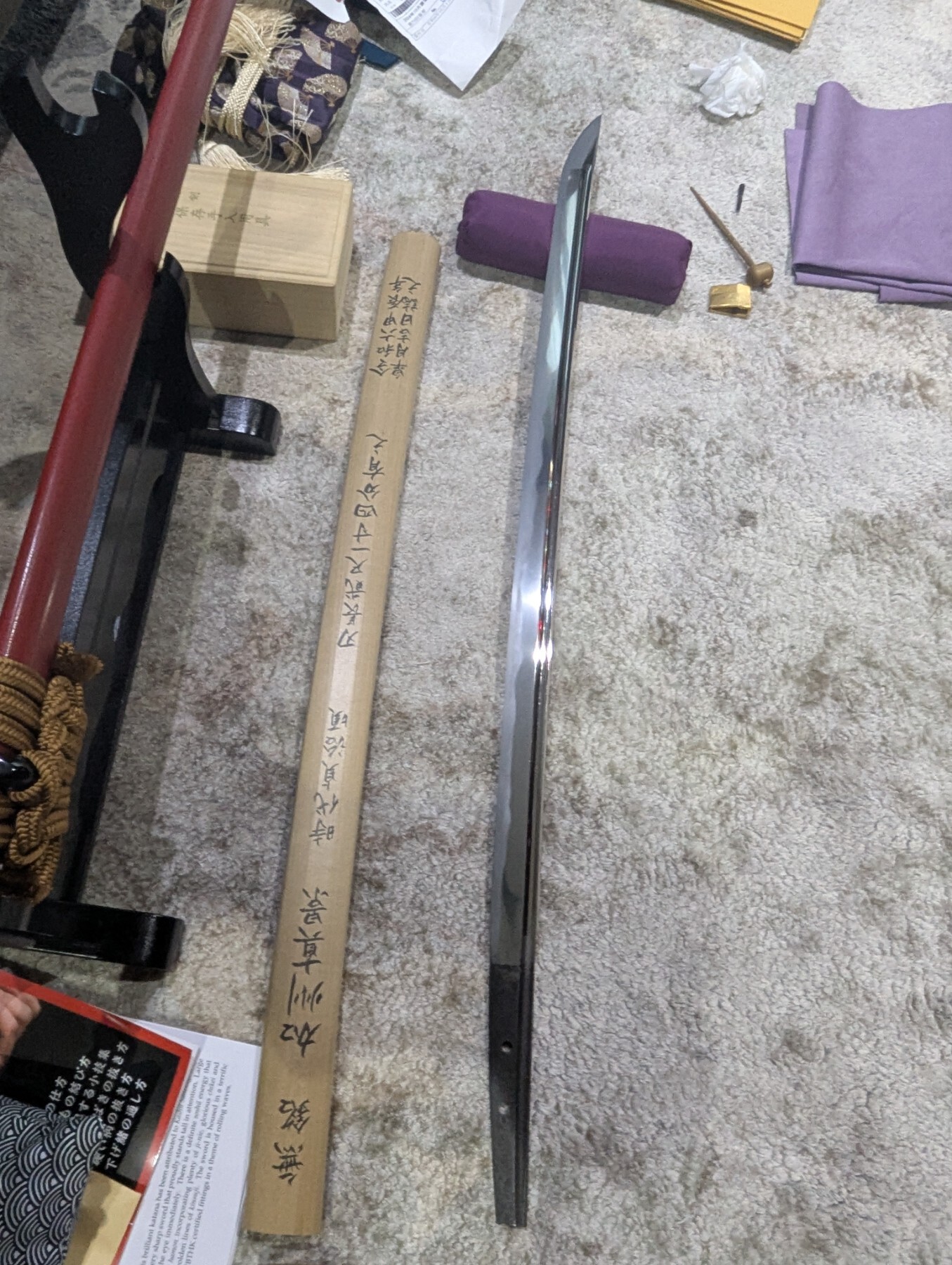
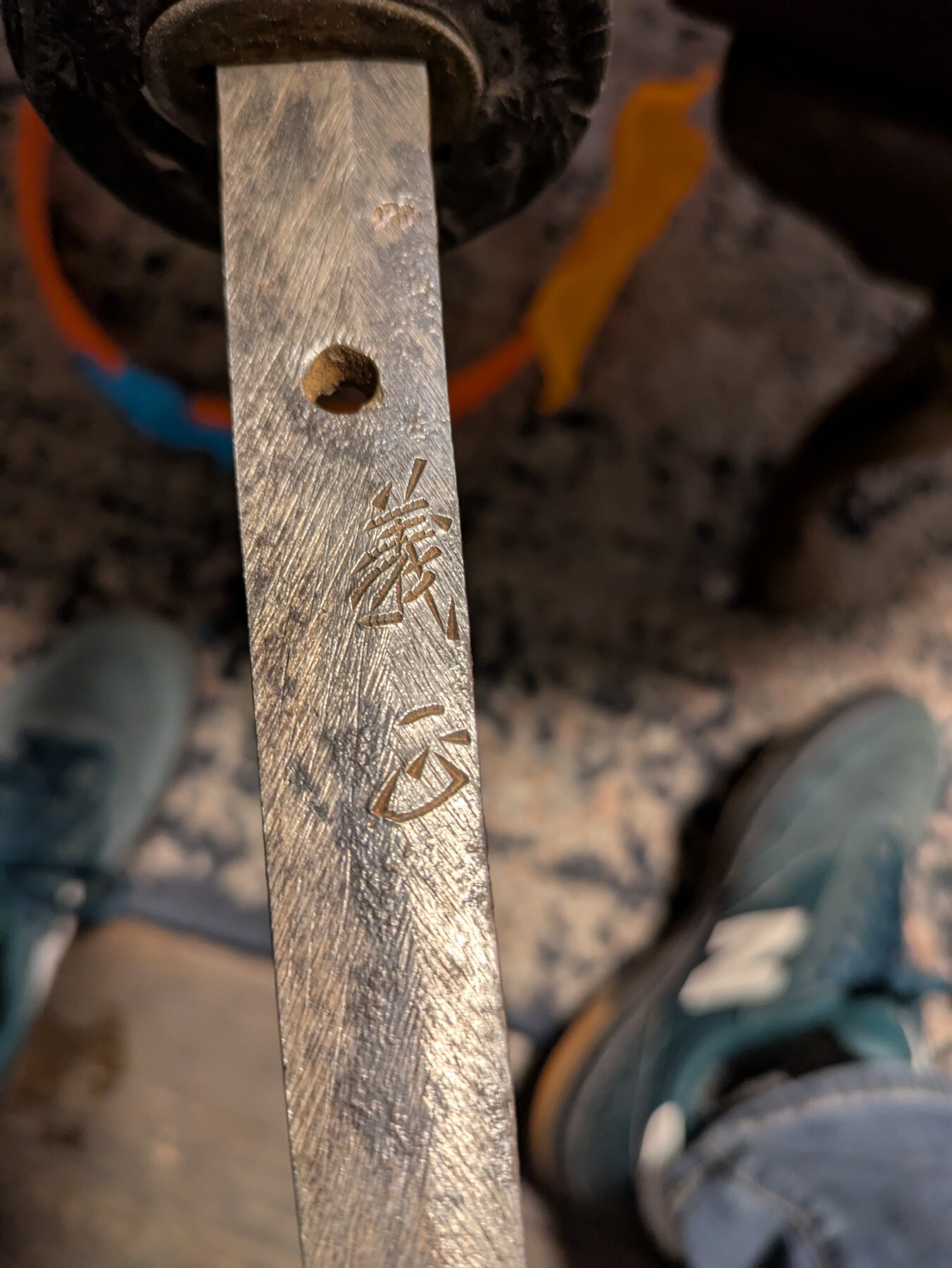
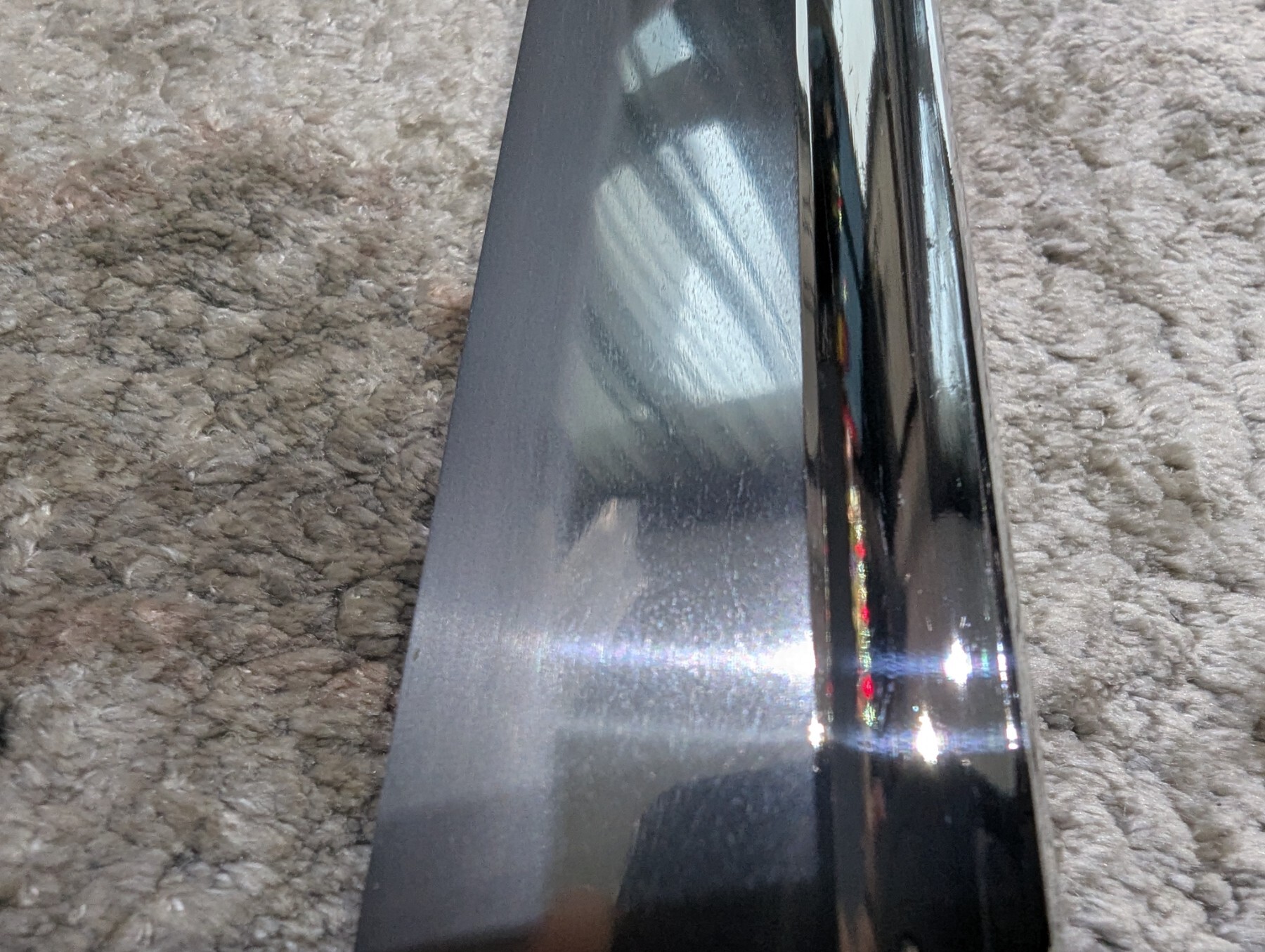
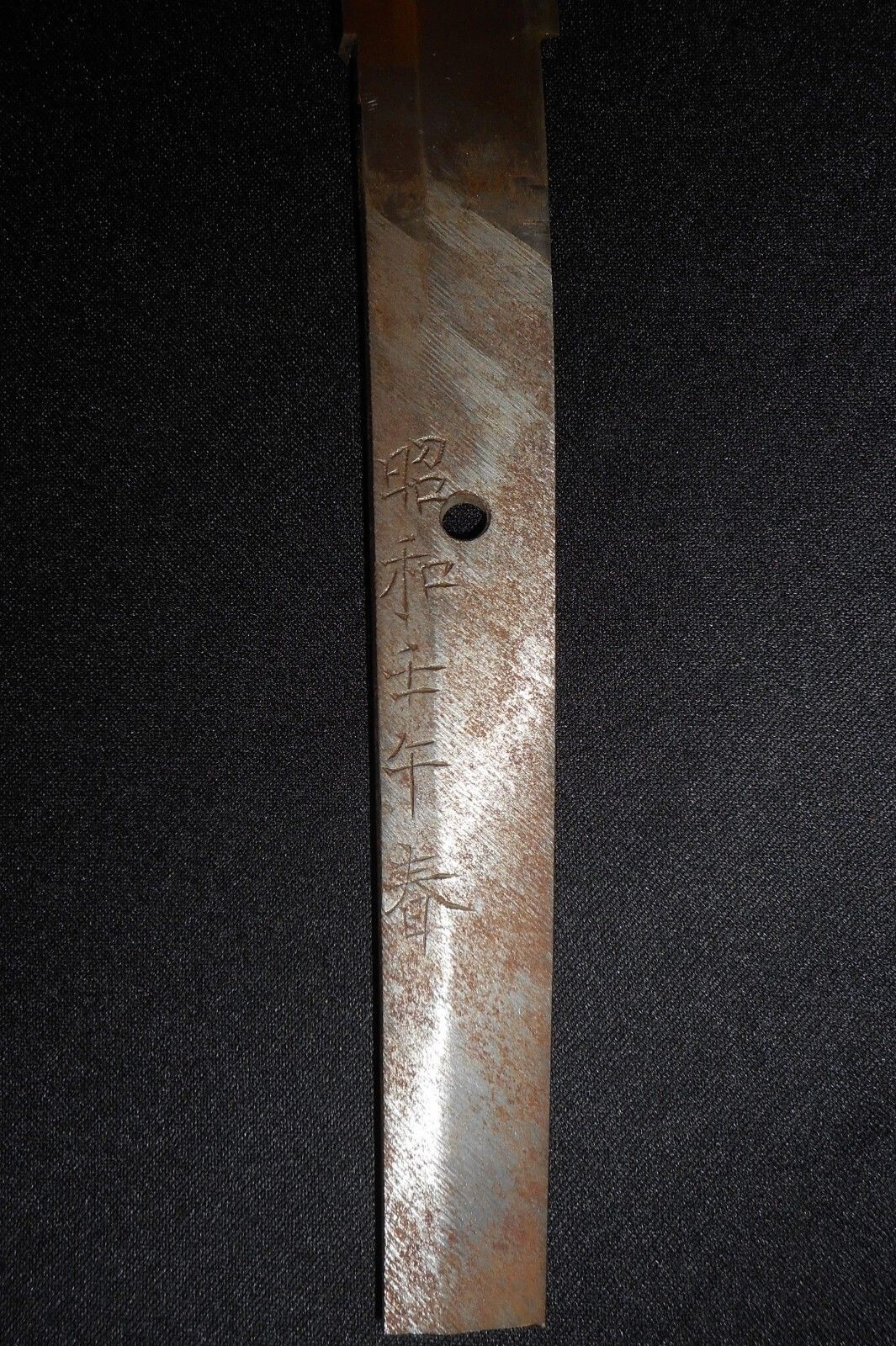
Per request from the Dai Token Ichi thread, here are photos of the blade I bought last November at the DTI from Tsuruginoya. It is a Fukuoka Ichimonji Chikafusa that has reached NBTHK Juyo Token. I apologize for my poor photo abilities. Capturing the intricacies of this blade is very difficult. To partially make up for that, here’s what Tanobe sensei said on the sayagaki (credit to @SteveM for the translation): Designated Important Sword (Jūyō) at the 67th Jūyō Session Bizen-no-kuni Fukuoka Ichimonji Chikafusa Shortened a bit (machi-okuri), with a two-character name purposefully inscribed with a thick chisel into the tang which has been slightly cut off. The sword has a dignified shape, with a standard width, a deep koshi-zori, and the tip of the sword ending in inokubi style. The forging pattern is koitame, with a clear midare utsuri present, and a lustrous chōji midare with “fukuro chōji” showing as double-chōji in the hamon. There are ashi and yo in abundance, giving great beauty and a rich variety. This sword displays the elements of this school at its peak in the mid-Kamakura era. There are several swordsmiths with this name appearing in the indexes, which dates this sword circa Kenchō (1249-1256). This excellent sword is both a classic example of this school, as well as an outstanding item. Length 2 shaku, 3 sun, 2 bu (70.30cm) An auspicious day in November, 2024 Recorded by Tanzan (monogram) Interestingly, the NBTHK Juyo setsumei says, in part: “According to the swordsmith indexes, Chikafusa was a Fukuoka Ichimonji swordsmith, circa Jōkyū (1219-1222).” So there is a slight difference of opinion on which Chikafusa made this blade. In any event, I am quite happy with it. It was registered March 13, 1951.


 27 points
 -
Can't remember if I paid $10 or $20 for that7 points
-
A recent acquisition from Pablo kuntz from unique Japan. Thought I share a high quality, soshu den katana by kashu sanekage. Though it fail 70th juyo shinsa, it was given great remarks by the judges
 6 points
 -
That is absolutely amazing sword. To give some idea about the rarity of Chikafusa (近房) tachi. In all my years of searching I have so far found only 3 signed tachi by this smith. Kyoto National Museum has Jūyō Bunkazai tachi of 74,9 cm There is 70,6 cm tachi that I do not yet know the provenance but it has been published by NBTHK And there is this 70,3 cm Jūyō tachi.6 points
-
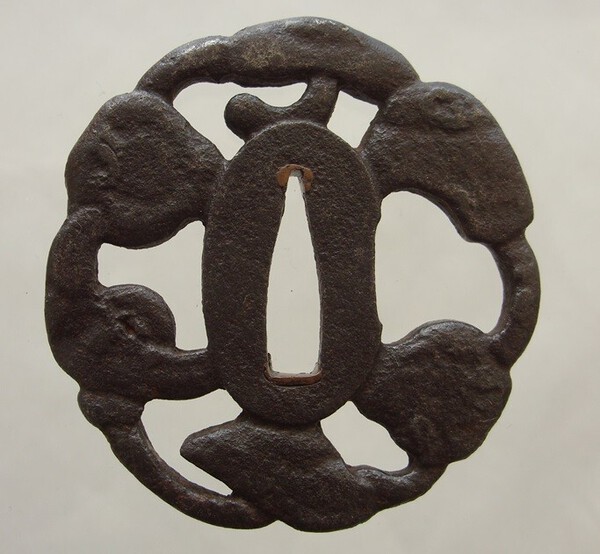
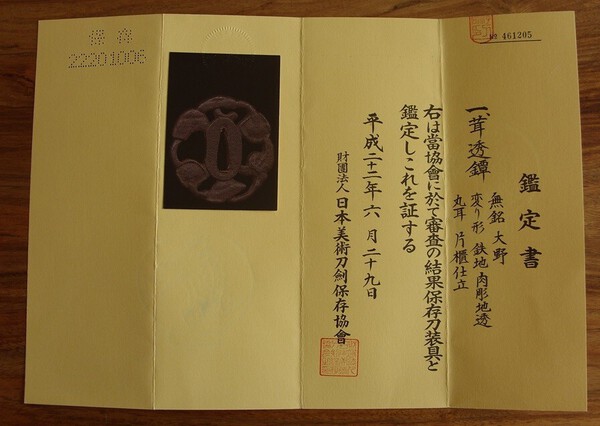
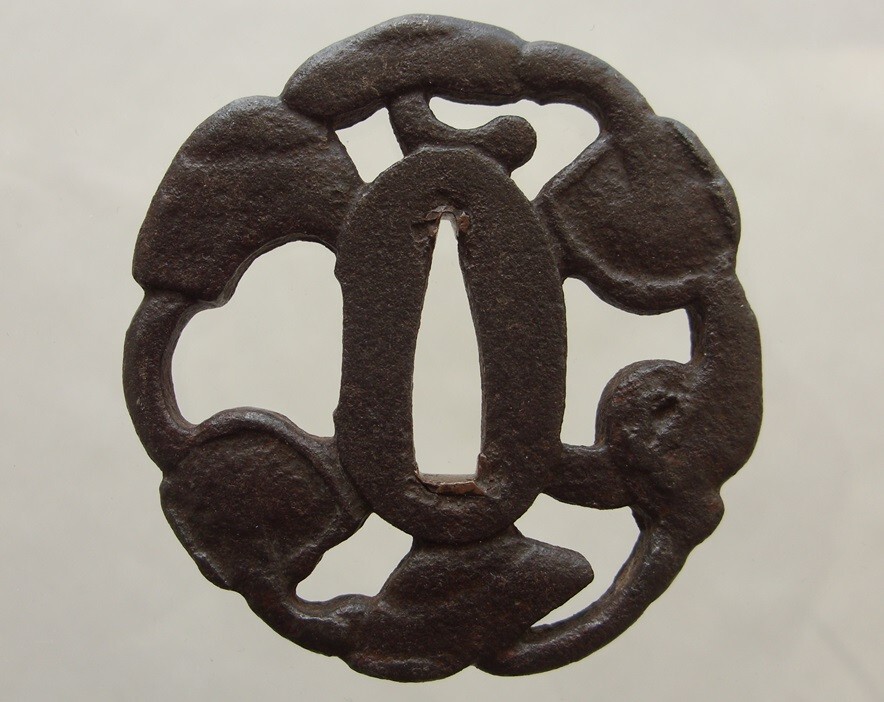
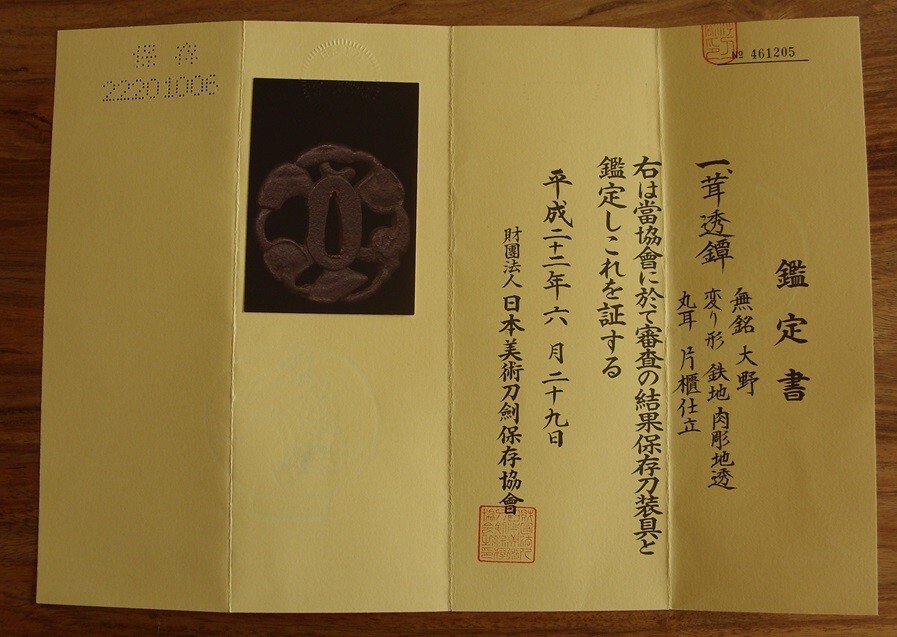
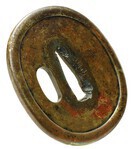
My only Tsuba that is papered as Ono (I hope so, I can't read the paper, but the seller told me...). Bold and heavy, 71mm x 68mm and 6mm thick.

 5 points
 -
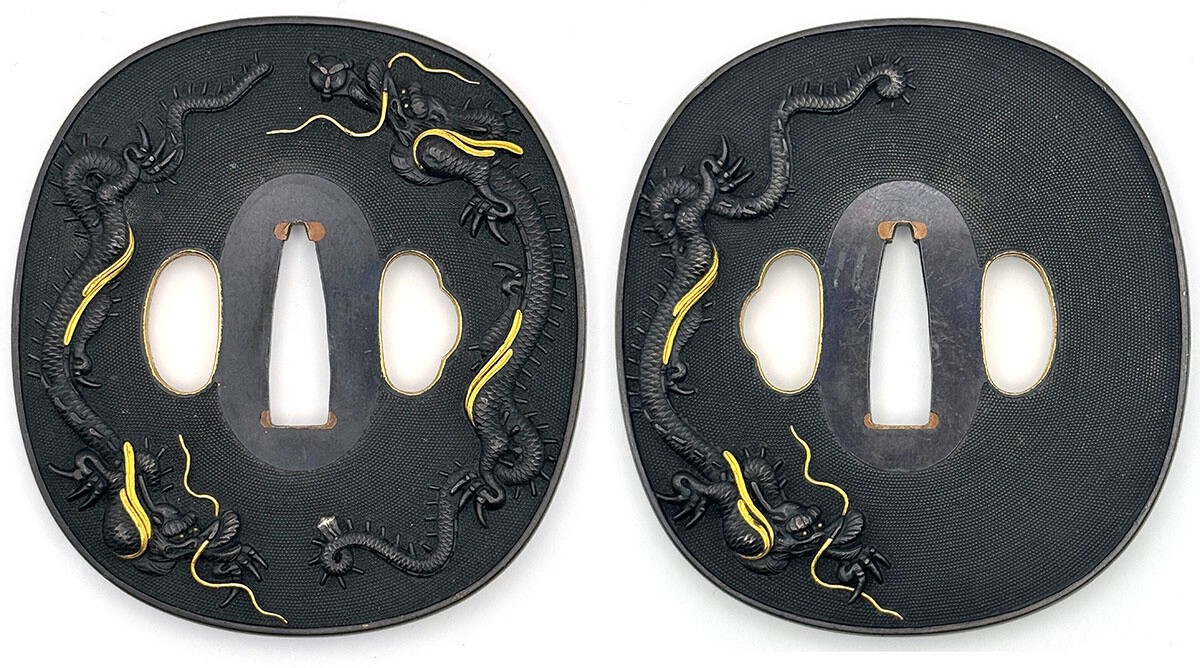
I picked this daisho set up recently. When doing some research on the board (and elsewhere) I noticed that there were some comments about how Goto dragons have certain characteristics. Could anyone point me to any resources on the Goto school and what characteristics their dragons might typically have? There seems to be a wide variety of ways to depict dragons, so any other types would also be welcome for comparison.

 3 points
 -
The last thing that I would want to do is discourage an incoming new enthusiast, so please don't take this in a discouraging way, however there is no final authority who can give an answer that conveys absolute truth. If a piece is not signed, then there is always some degree of uncertainty on an attribution. In the sword world, there are attributions which change from one level of paperwork to another. With fittings and swords both, there is some degree of bucketing where an item may receive a safe attribution if the answer is not entirely clear. Collecting Japanese swords and fittings needs to come with some acceptance of the fact that there may be no absolutes and that sometimes it's enough to own a masterfully made object even if you'll never know with certainty who made it.3 points
-
That said, saiha blades can pass shinsa if they are very important examples. Typically the blade has a notation of (saiha) on the kanteisho in these cases.3 points
-
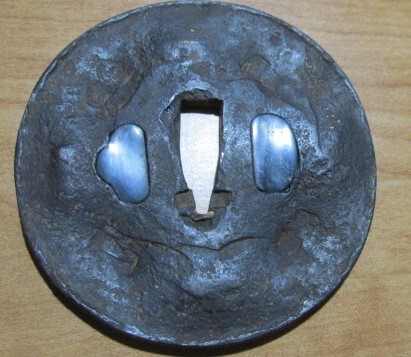
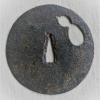
I got this tsuba from a friend. He said it was timpo or tempo. What does that mean. The tsuba looks rusted and layered.
 2 points
 -
yes Brian, it is a gorgeous blade. ATM was lucky I only came for the second DTI day and looked at it too late …. Well done on an excellent sword at excellent price. To me, that was the “steal” of the show in terms of quality per dollar basis.2 points
-
Happy New Year to all! I'd appreciate any further information on the attached tsuba which I recently acquired please. I tried to read the signature and using Self and Hirose Japanese Art Signatures came up with sei, shi or kiyo (647) for the first character and possibly tane (823) for the second. However, there seems to be no such artists named Seitane or Shitane and the single Kiyotane given in Haynes (H 03356) has a different character. On the other hand, the third character looks remarkably like the bottom kao given in Haynes for Bairyuken Kiyonaga (H 03291)! I asked Robert Haynes for his opinion and he said the signature read Seiin and was unrecorded. He knew nothing further about him, but he thought it appears he might have been a student of the Goto Seijo School. (I have just found this School was discussed on here in January 2012!) If anyone can provide further light on the signature, that would be very helpful. Thanks and regards David

 2 points
 -
Jacob, for background and comparison there is something on our own NMB Downloads:2 points
-
My bad about the tsuba pictures! I have roated them. Is this bettter?
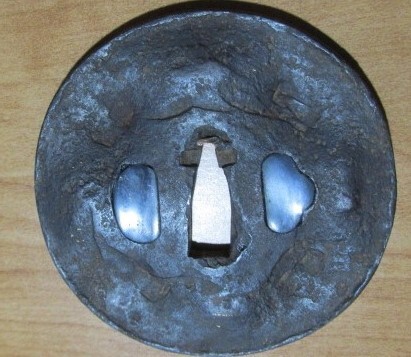
 2 points
 -
https://www.agsa.sa....ind-gold-huge/36461/2 points
-
Likely it was papered because the shinsa team did not know it was saiha. If the smith is very skillful, it's saiha is not always evident.2 points
-
Yoshimasa. This appears to be a WWII era Seki blade. A showato arsenal blade, not traditionally made.2 points
-
I suggest some reading exercises of hamon, there is nothing to gain except knowledge; to do this thank you leave the books aside it would be cheating What is the correct way to read a hamon (way of holding the sword)? 1 - vertical, edge to right 2 - vertical, edge to left 3 - horizontal, edge down 4 - horizontal, edge up1 point
-
CHIKAFUSA (近房), Jōkyū (承久, 1219-1222), Bizen – “Chikafusa” (近房), Fukuoka-Ichimonji school, Chikafusa belonged to the goban-kaji list of emperor Gotoba that consisted of 24 smiths, therein we was working with Bungo Yukihira (豊後行平) in the fourth month, ko-midare mixed with ko-chōji in ko-nie-deki ◎ CHIKAFUSA (近房), Kōan (弘安, 1278-1288), Bizen – “Chikafusa saku” (近房作), Fukuoka-Ichimonji school, there exists a date signature of the second year of Kōan (1279), the hamon is more flamboyant than that of the Jōkyū-era (承久, 1219-1222) Chikafusa It would seem there is a 3rd Chikafusa from the Koan era (1278-1288). A signed and dated example exists for 1279. Definitely much research is needed to tie down an attribution to one of the three smiths. Interestingly Markus doesn't reference the Tanobe attribution for a Chikafusa from the Kencho period.1 point
-
I actually like it when they retain the old B&W images from 100 years ago or so - it gives a sense of the curatorial/condition history of the piece... although it would be nice to also have a modern colour image for comparison. Hate to say it but some museums might be embarrassed by the evident deterioration if they did include both sets of images, though.1 point
-
I based my response on this article I read on Saturday. The description says the blades are displayed vertically to best appreciate the blades activity. "The sword "Spring Dawn (not for sale)", which won the Masamune Award in 2014, is also on display at the venue. Usually, when it comes to the exhibition of swords, it is placed horizontally, but this time it is placed vertically, and you can see its beautiful "figure 姿" and "refl 映り" up close."
 1 point
 -
Ok, I'll pass on that, the hamon is the hardened part of the blade it goes from the nioiguchi (separating line) to the cutting edge.1 point
-
Hi Steve, are you trying to determine how many swords MORINOBU and KANENOBU might have forged during their lifetimes? You could theoretically assume the amount of swords any particular smith could make during their career. But you could never determine how many of those swords were destroyed/lost during the conflict, and furthermore how many were destroyed after the war. Maybe someday we'll have some rough numbers; if Bruce keeps cataloging All the best, -Sam1 point
-
Looks like it has nice wide shape. Good quality Sanekage works are very nice.1 point
-
I can only congratulate you, if I had been there I would have bought it too. Tom1 point
-
Stunning Adam! I imagine you're very proud to own such an amazing work of art and history. I love the sugata, it screams 'old'. I imagine the sword offers endless enjoyment in-hand. Color me jealous Cheers, -Sam1 point
-
Bought this at a garage sale. What does it say? Is it an antique?
 1 point
 -
Yes please show condition and how long it is1 point
-
You should buy Mike Y at least a drink for that service He did pull one there…. Well, Jacques, back then at the DTI it did not have the sayagaki. But of course it had the Juyo paper, one could handle it in person and discuss with other people (if in doubt) and Miyoga Jr san. So, these are indeed pretty much ideal circumstances for someone who is perhaps not too confident. All in all well done again! Enjoy it and learn from it - it has a lot to offer at all levels of scholarship.1 point
-
1 point
-
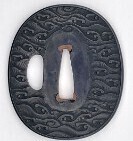
That's a stylized rain dragon, common in Kaga zogan pieces1 point
-
I think that's the most "heart" likes I've seen on a post. Guess that indicates exactly how gorgeous this blade is. Congrats!1 point
-
Oh me likey, good on you love.1 point
-
Outstanding Adam! The hamon changing from more subtle near the nakago, to flamboyant fukuro chogi in the middle section, and back to more reserved in the monouchi is lovely. It adds another level of personality of the Chikafusa that forged this that I find fascinating!1 point
-
In one version of the story, convinced of defeat Tomonori addresses the boy emperor who is too scared to leap into the ocean, see my lord it is but a simple act to leap to your destiny, he then grabs the anchor wraps himself in the chain and leaps into the sea...1 point
-
Jacob, TEMBO (or TEMPO) is a TSUBA makers' style. It usually shows heavy hammer marks and hot stamp impressions. If your TSUBA looks layered, it is probably made traditionally fron raw iron (= TAMAHAGANE). https://japaneseswor...om/tsuba/saotome.htm On your photos (showing the TSUBA upside-down), your TSUBA does not look rusted. Before you treat or clean it in any way, please get information here on NMB first on how to preserve it. All iron TSUBA have a patina that is important to keep intact.1 point
-
There is an interesting historical reference to Taira No Monomori, a chief commander of the Taira clan during the Gempei War, who suffered defeat at the naval battle of Dan-no-Ura in 1185 and committed suicide with many of his clansmen by tying himself to a four prong anchor. His story was the subject of kabuki drama and woodblock prints in succeeding centuries. Later this anchor would become the symbol of the modern Japanese navy. https://www.fujiarts...on-taira-no-tomomori
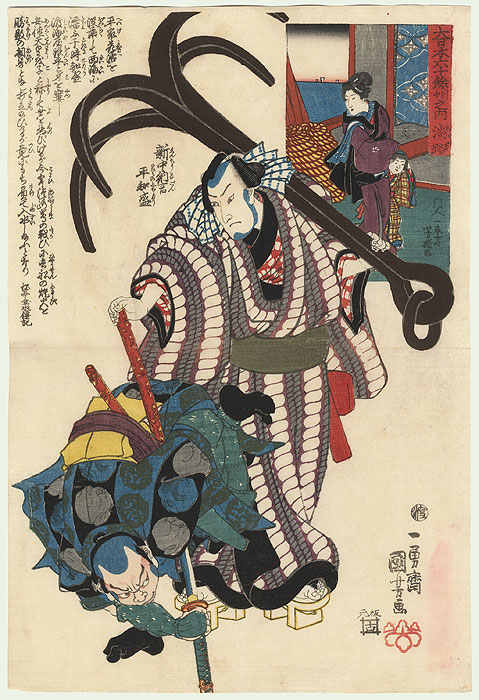 1 point
 -
This is not a tanto I'm planning to purchase. It was offered to me for 800,000 yen but I had my doubts from the getgo regarding the style and application. As you remarked John, the style is quite atypical. Of particular concern is the bottom kanji with the right curve element being made of two individual gold pieces. I would expect a single piece of gold with file marks. In my experience this is not a good sign. I initially saw the jiba and found it very fine and attractive with possibly influence of Norishige.1 point
-
Hi Lewis, It might be my eyes, but there seems to be something odd about this mei: all of the characters, including the kao are combinations of both kinpun and kinzogan methods. This seems strange to me as it's not something I've ever noticed elsewhere - I've only ever known them to be one thing or the other but, again, that might just be me. If one were to adopt a suspicious view of this, it looks like someone has chiselled some strokes and left them unfilled to suggest that its an old attribution and that the gold has been lost and then added in the other strokes with a brush. If this is a sword you're thinking of buying, I think I'd be treating this attribution with a good deal of circumspection - the "kao" seems to be a combination of half a kanji and half seal which again just seems odd to me - looking at the Hon'ami kao that Bruce has posted, they may be derived from kanji, but tend not to be direct reproductions of them and I'm sure that the top half of the kao is part of a kanji but I can't pin down which one. Again, this might be my ignorance leading me down a certain route but there are some warning signs there for me and I'm not convinced that the patina on the tang is genuine either, but that might just be the photos. @PNSSHOGUN Hi John, these really tidy gold attributions are kinpun rather than kinzogan mei and a bunch of them have cropped up on swords recently and I feel that they are someone getting creative by suggesting that a mumei blade is perhaps something it isn't - I suspect that they are relatively easily applied by painting over a template or are some kind of transfer and the gold attributions usually aren't supported by papers. Edit: the "fusa" doesn't look very much like the actual kanji either - 房 - it lacks the horizontal stroke at the top and has a vertical one instead, it might be a variation but it would be another thing that would point me towards disregarding this mei.1 point
-
Here is the 爾霊刀 that made in 1942 by Takeshima .
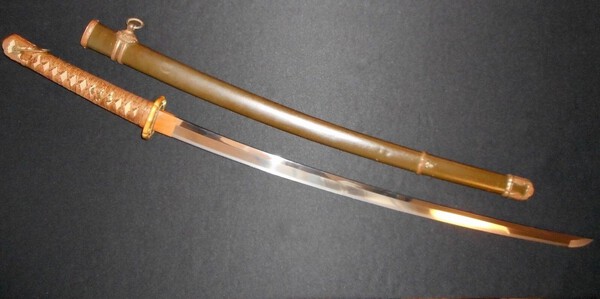

 1 point
 -
Dee, thanks for the post! I had Volker's on file but these 2 make a great set of 3 now. @Volker62 - thanks for the clarification of the Wish Jewel. I erroneously had it in the Stamps doc as a flaming jewel. Is anyone able to translate that odd date on the second tanto?1 point
-
The first is 淸 for sure. The second is very close to 胤 which is not unusual in Japanese artist names. So my guess is it is a variation of it, Japanese characters sometimes deviates from the original Chinese origin, some deviate further if it is a signature. I searched it in the following book (it has almost everyone recorded in the field) but found no match. It may not be someone well known. https://commons.m.wikimedia.org/wiki/File:NDL1188487_古今装剣金工一覧_part1.pdf1 point
-
I think it is a decent sword. It has an attribution to quite good smith who has very few signed tachi remaining. Honestly I cannot really tell Nanbokuchō Bizen smiths apart from work style. Personally I don't like the size of this as I would want something bigger if looking for a Nanbokuchō sword. For me that bo-hi would be a large negative in this case, just a personal preference. This sword has been around, and it has been listed at several places. Last time was late November 2024 at Yahoo Auctions: https://buyee.jp/ite.../auction/x1161730631 Still old sales are old sales and some time ago it was on eBay listed with asking price of c.15,000$. I feel the current asking price that Aoi has is perfectly reasonable, just that for that amount of money I would look something else. However Motomitsu attributed swords do not pop up online that often and they are often highly appreciated.1 point
-
Found this print, the hangers are obviously wooden rattles here. Florian1 point
-
Toledo needs some help! http://emuseum.toled...2776a302a4fa&idx=104 I have looked and looked but darn if I can find a "Fan" - unless they mean they are fans of an Oni !! Sword Guard (Tsuba): Fans Date:19th century, Edo Period (1600-1868) Dimensions: 3 1/4 × 3 1/16 in. (8.3 × 7.8 cm) Medium:iron with inlays of gold, copper, and shakudo Major confusion with these two entries: http://emuseum.toled...7-b50817544f73&idx=0 http://emuseum.toled...9-da8c2679e70b&idx=0 Images are mixed up. I think I have it straight - I am surprised at some of the images - they have not been up-dated from the 1920s !!
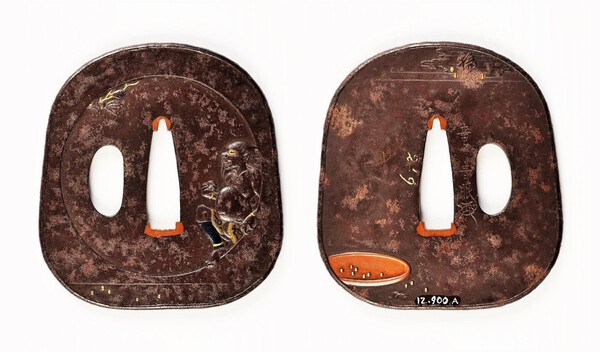
 1 point
 -
Can't help with the appraiser, but it does appear rather crude by comparison to other Kinzogan.
 1 point
 -
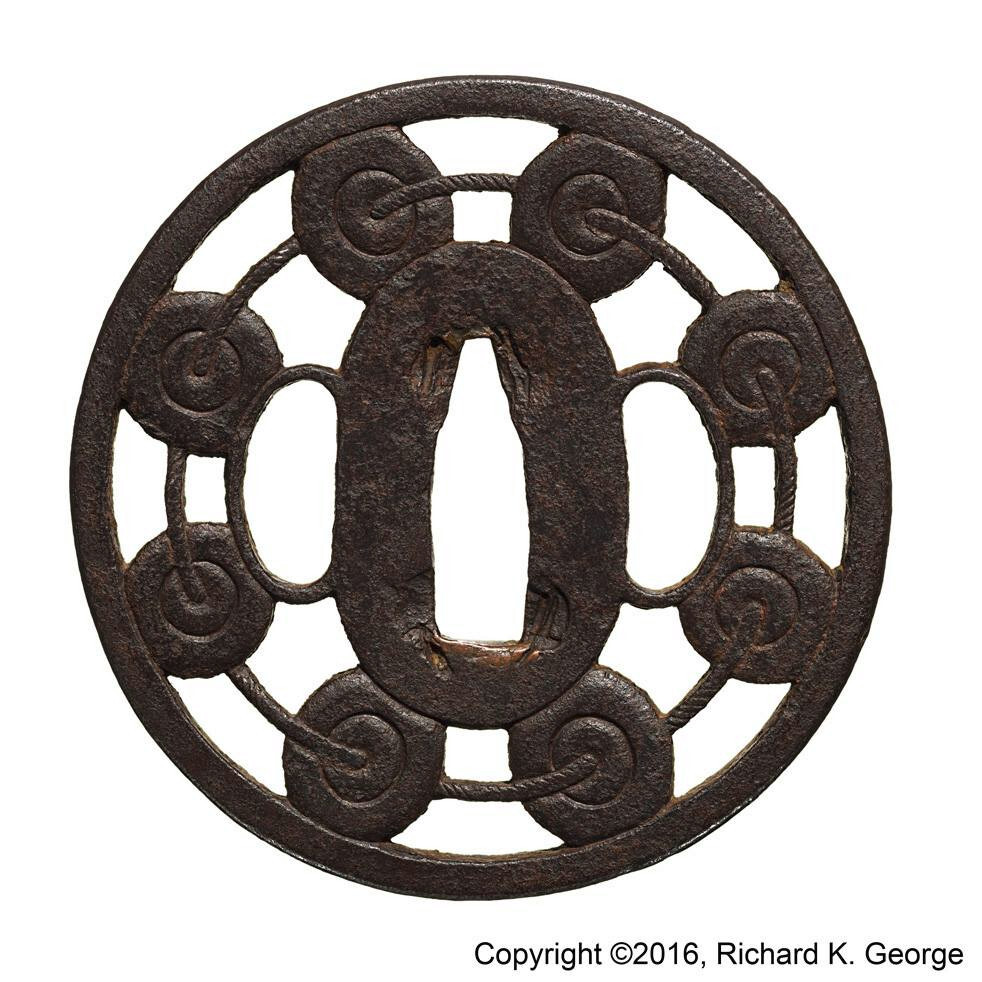
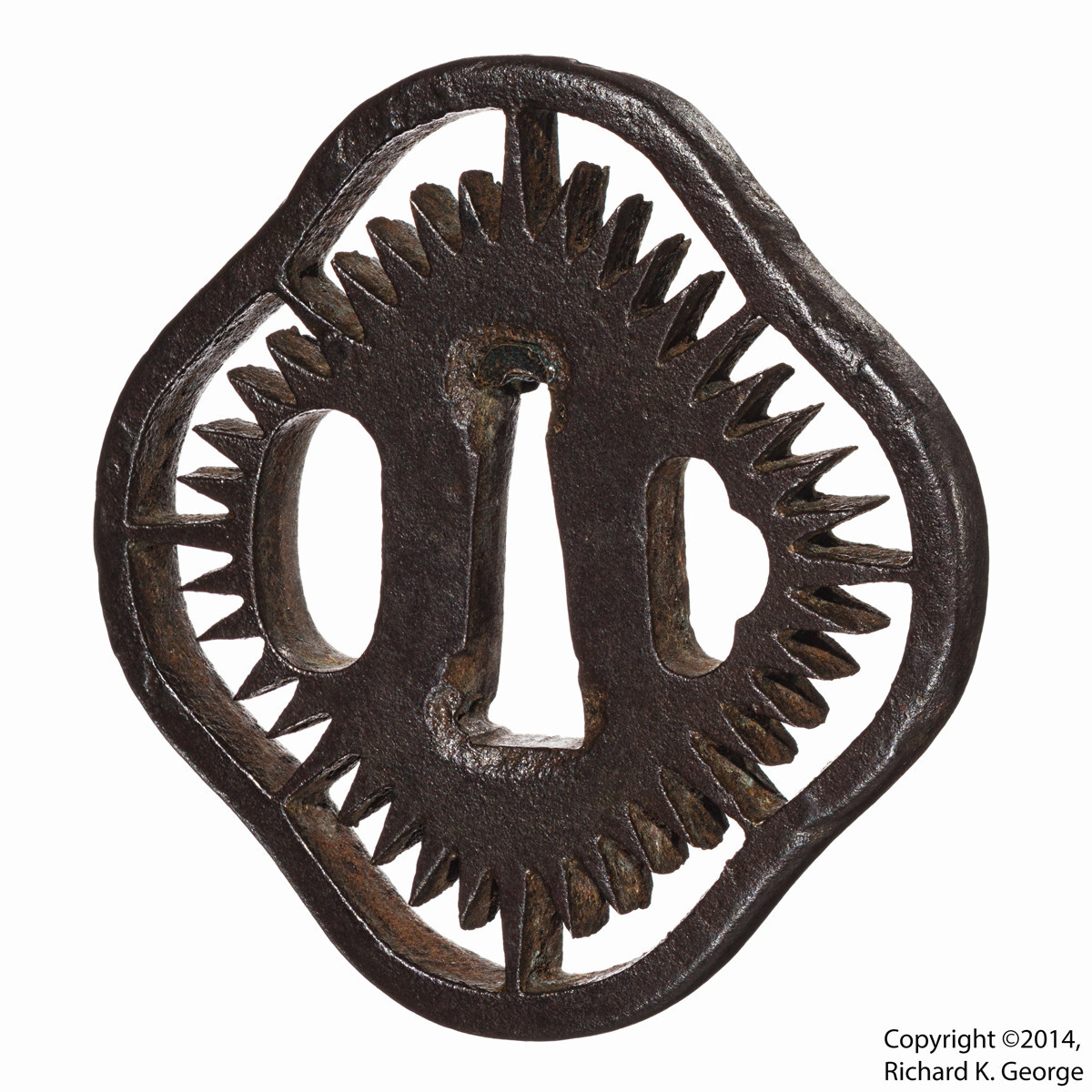
Curran, I've always liked that theme EDIT: Those are very nice pieces. thanks for sharing! Here's a few Ohno as per your request, plus a couple that have been called Kanayama, owari, etc as well as Ohno... gear (tokei) theme: sunrise (hi no de) theme: Bamboo (take) theme: Riceball, head bag (kubi tsunagi), etc. theme (I don't know if the board member that purchased this still has it, but if he wants to comment on whether the NB thought this was a Ohno, please do...) This one Is a head scratcher. I've seen extremely similar (in terms of both theme and workmanship) binned as Ohno, Owari, and Kanayama. Make of it what you will: And finally, this was labeled as being an Ohno by the seller, but the general consensus is that it should be binned as an owari tsuba, so... Best, rkg (Richard George)
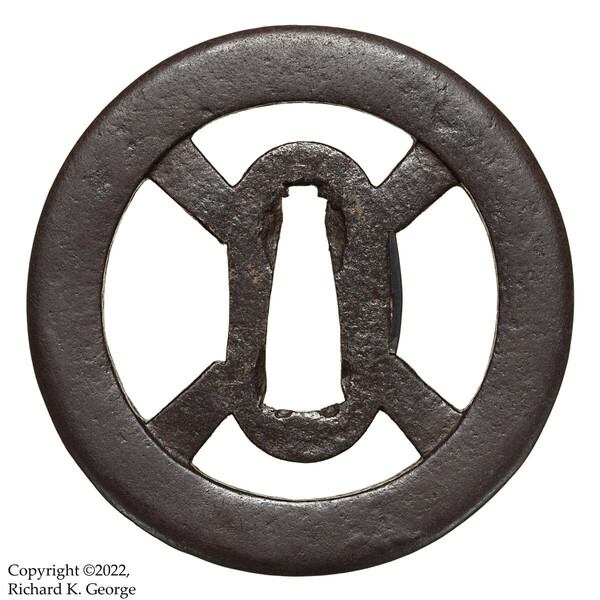
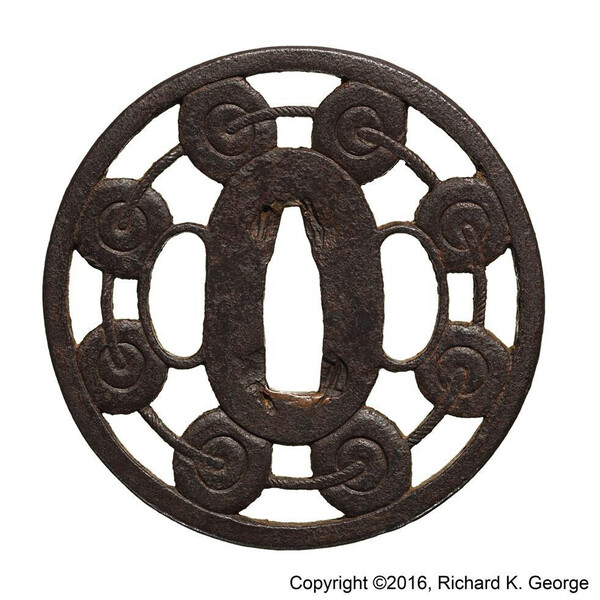
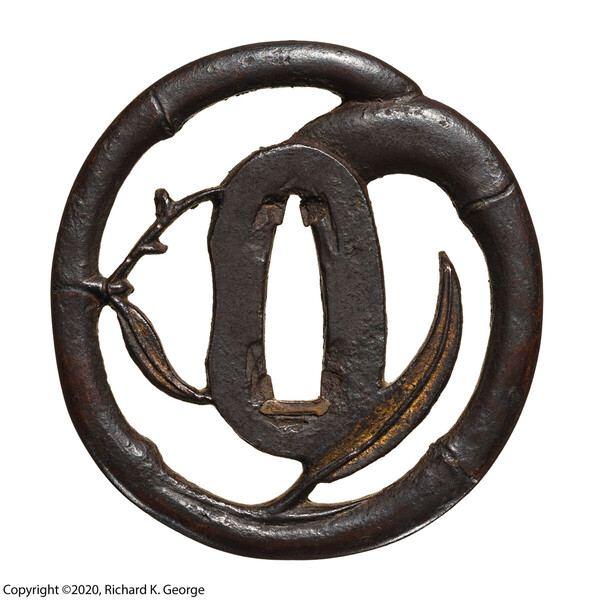

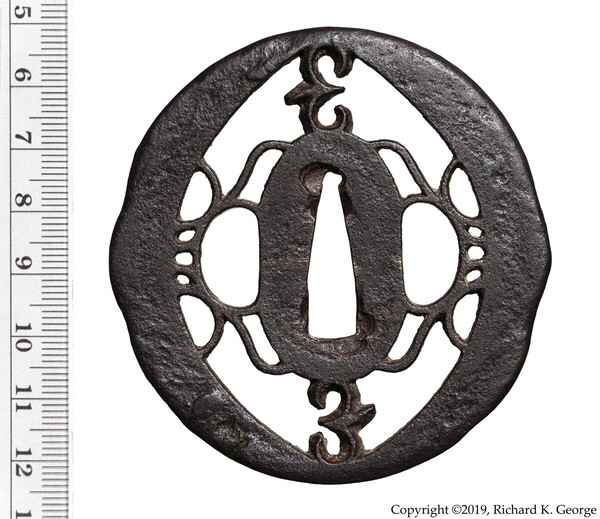
 1 point
 -
Dear Petro. Welcome to NMB! You have posted this in the military swords section which is primarily for those with an interest in swords carried by the Japanese armed forces after the Meiji restoration, your sword appears to be from before that period so posting it in the Nihonto section might get you better responses. We are not going to be able to tell you very much from these images, at first glance it appears to be a Shinto katana, a sword whose blade is longer than 60cms made after about 1600 but before 1860, which is unsigned or mumei. A clear photo of the whole blade without any fittings, one of the nakago and one of the kissaki or tip would be helpful, along with some measurements. Better pictures of the fittings would also help. All the best.1 point
-
Yoko Ono melons Could be banded hair ties? It is Happy hour somewhere in the world
 1 point
 -
Look, it's a valid complaint. Not saying it's shilling or not....and not making any ethical statements on this practice. But as someone said, if the seller is good to work with, and offers good stuff and has a decent reputation, then it's time to put it down as a hidden reserve that either gets met or doesn't. Frustrating for buyers, but our community is small and it's time to get to know the handful of known and decent sellers personally. eBay isn't the answer. There's a reason many sellers don't use it, and those that do probably use it more to get their name out there. I'll consider this one closed, with the usual caveat of buyer beware and know your seller.1 point
-
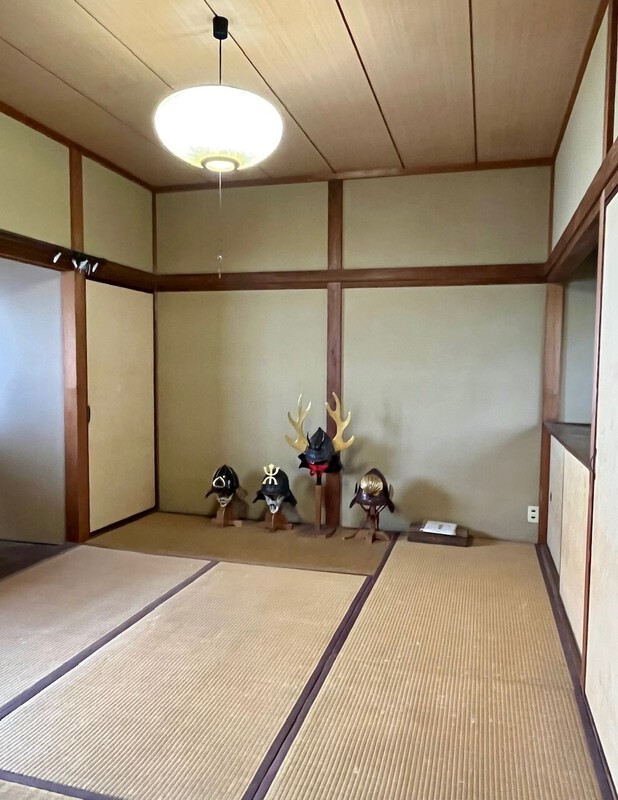
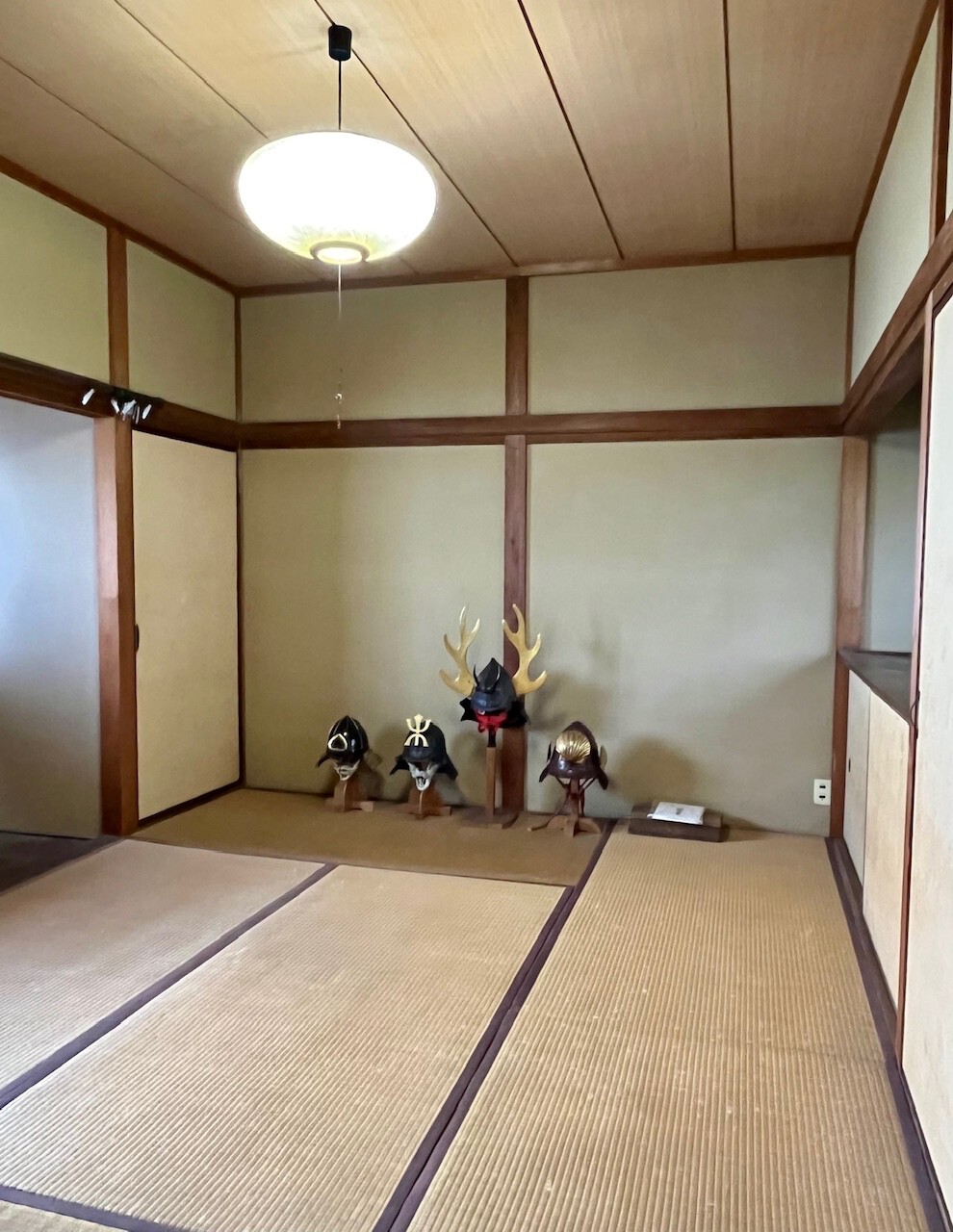
All good things must come to an end. Leaving this house after 30+ years. It’s been good for the family. Sigh. Now, have I left anything behind?
 1 point

























This leaderboard is set to Johannesburg/GMT+02:00