
Leaderboard

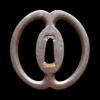


Popular Content
Showing content with the highest reputation on 07/30/2024 in all areas
-
Hi! This is an update to my previous post. This is a thank you to all the amazing people in the message board who contributed to helping me find more about my heritage. As a token of my appreciation I provided sword making in action photos (including his face) below. Thank you so much from the bottom of my heart. I’ll update you guys (on this post probably in 2 weeks) if I get more photos of him/more photos of swords created.

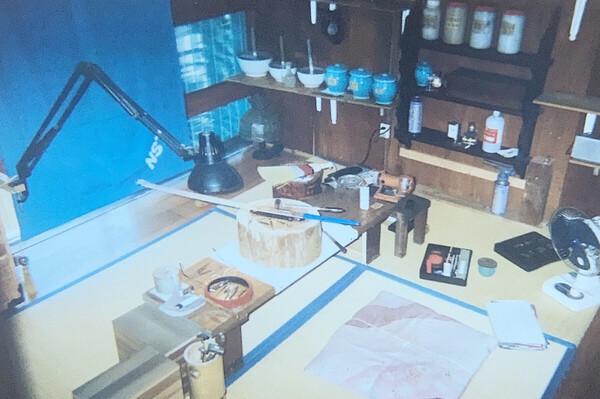
 16 points
 -
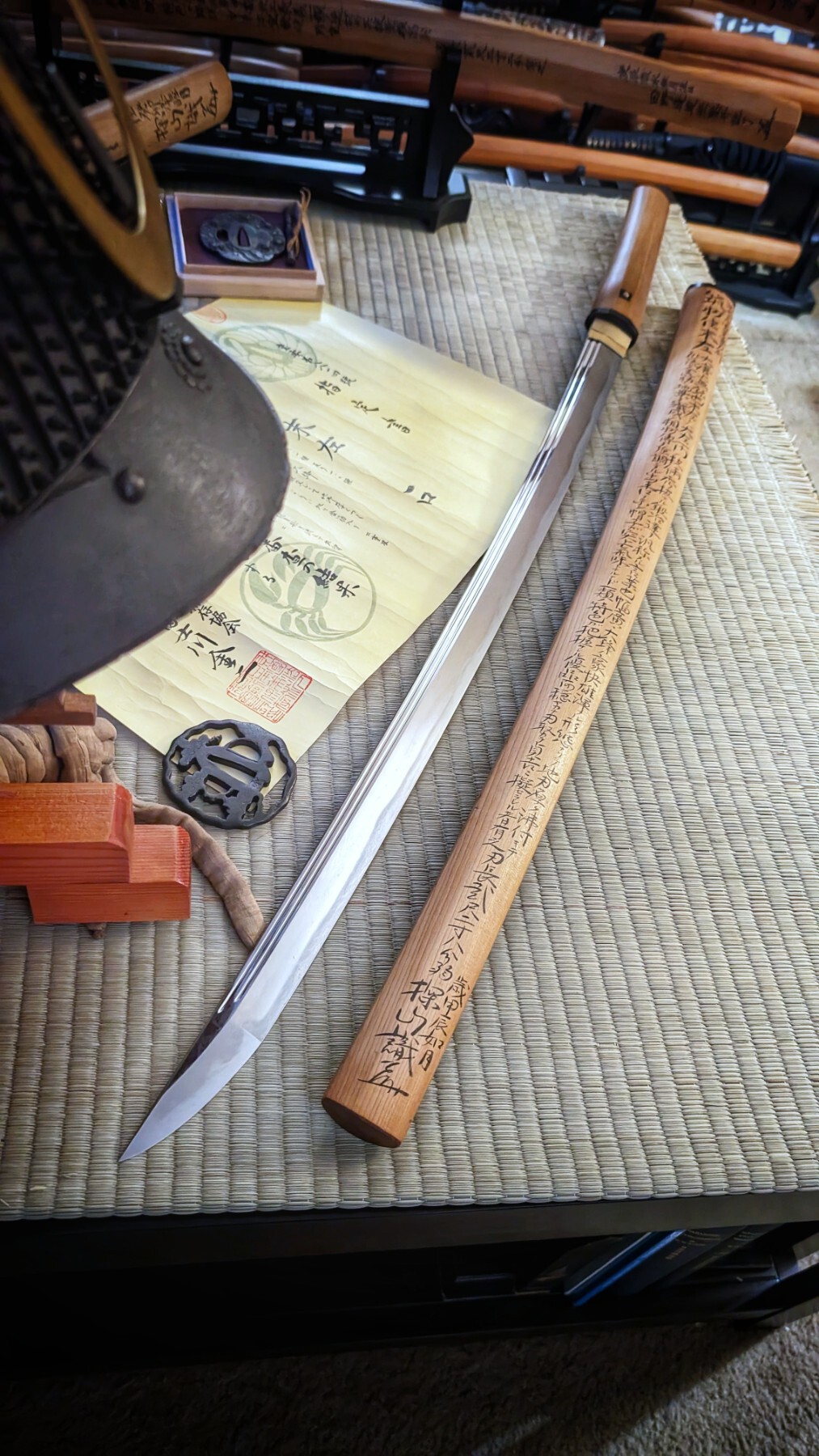
Top right corner (vertically) 祝入営 Congratulations on joining the army 祈武運長久 Pray for everlasting luck in battle Under that is the recipient's name. I can't get the first character of the name. Something 囗谷達夫君 (Maybe Hishitani?) Tatsuo is the given name. The rest are names, slogans, and a poem next to the drawing of the sword たゞ身にもてる真心を 君と親とに尽くすべし All I have is my sincerity, and I devote it all for His Majesty and for my parents Can't get the stamp. A closer picture of it might help.6 points
-
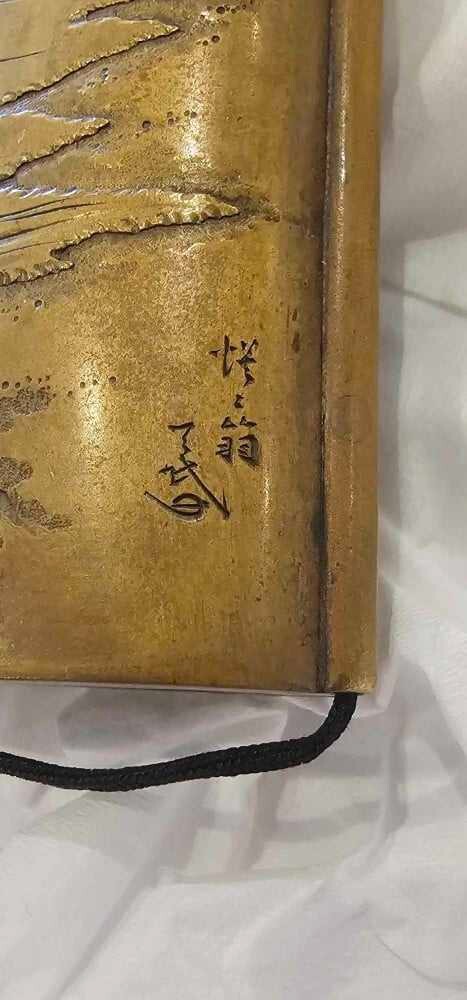
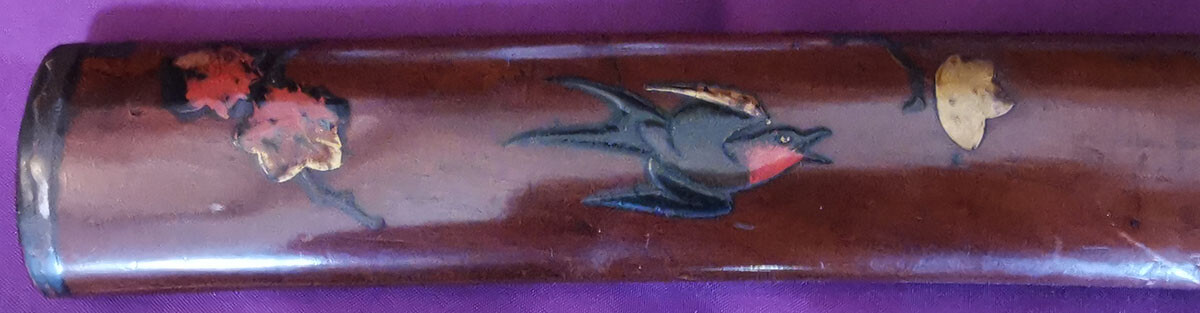
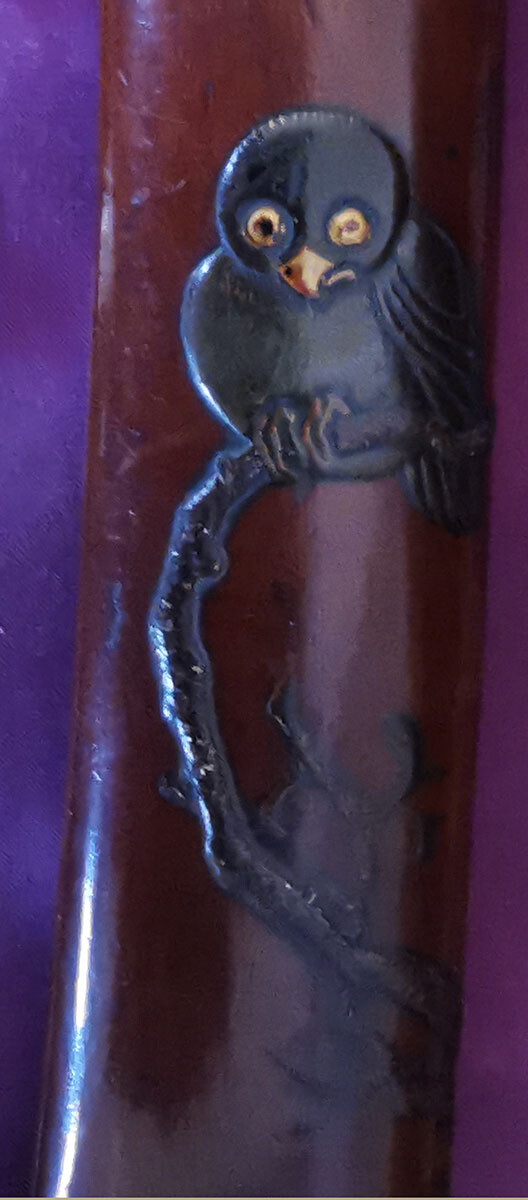
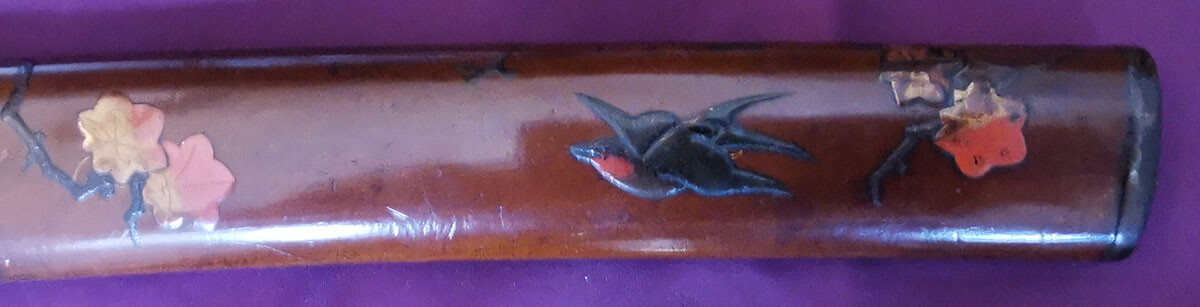
Hi. I have this tobacco case (tonkotsu) that I need help with. Thanks in advance. Mark
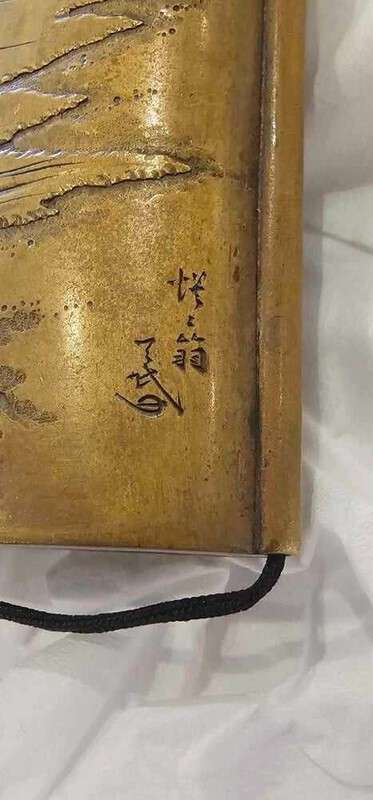
 5 points
 -
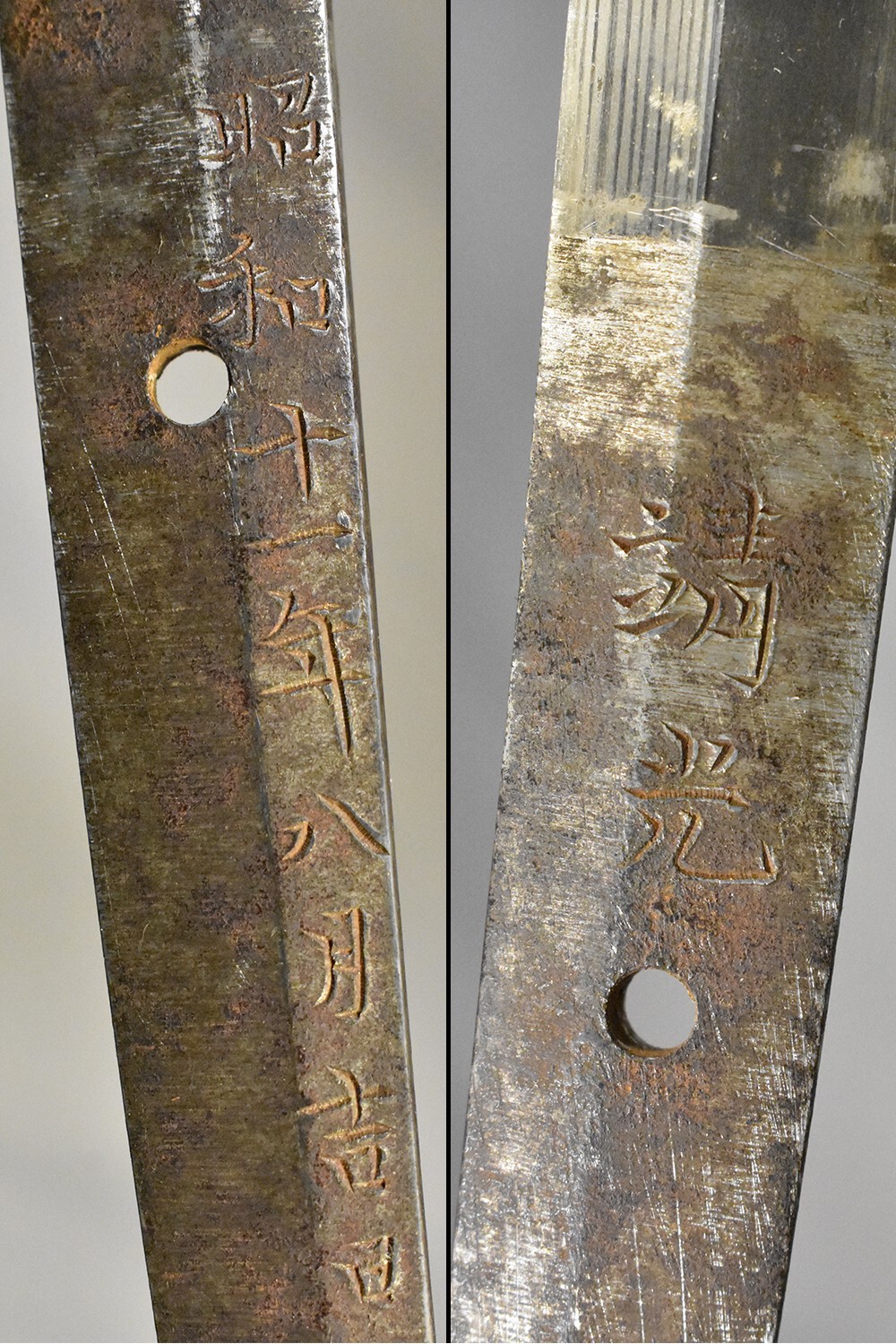
大東亜戰必勝祈願刀 – Sword to pray for victory of Greater East Asian War5 points
-
https://katanahanbai.com/en/4 points
-
Hello, I always thought a little about Japan because with the practice of martial arts. Fascinated by katanas for a long time, I finally decided to try to move forward, understand and learn. I also attach great importance to koshirae But also by the way trying to pratice tsukamaki and sayamaki And finally the iaido is also a good way to connect to the katanas.....(with iaitos ) looking forward to discussing, discovering and learning with you all.3 points
-
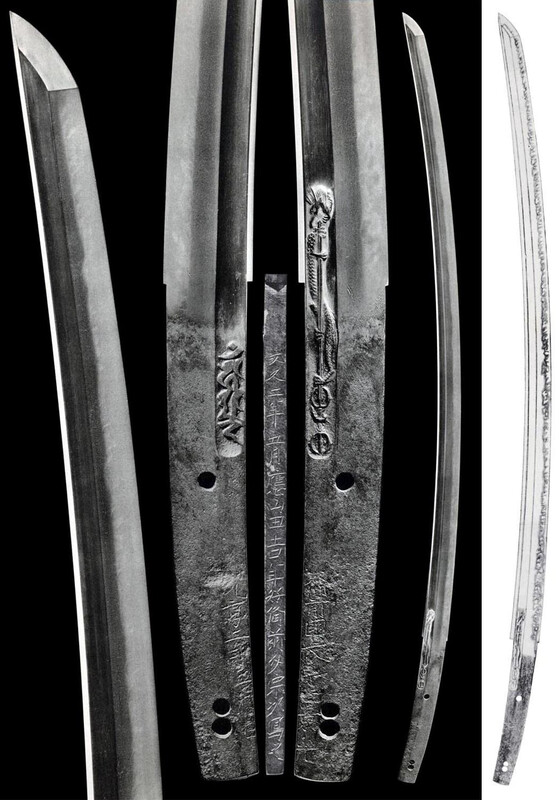
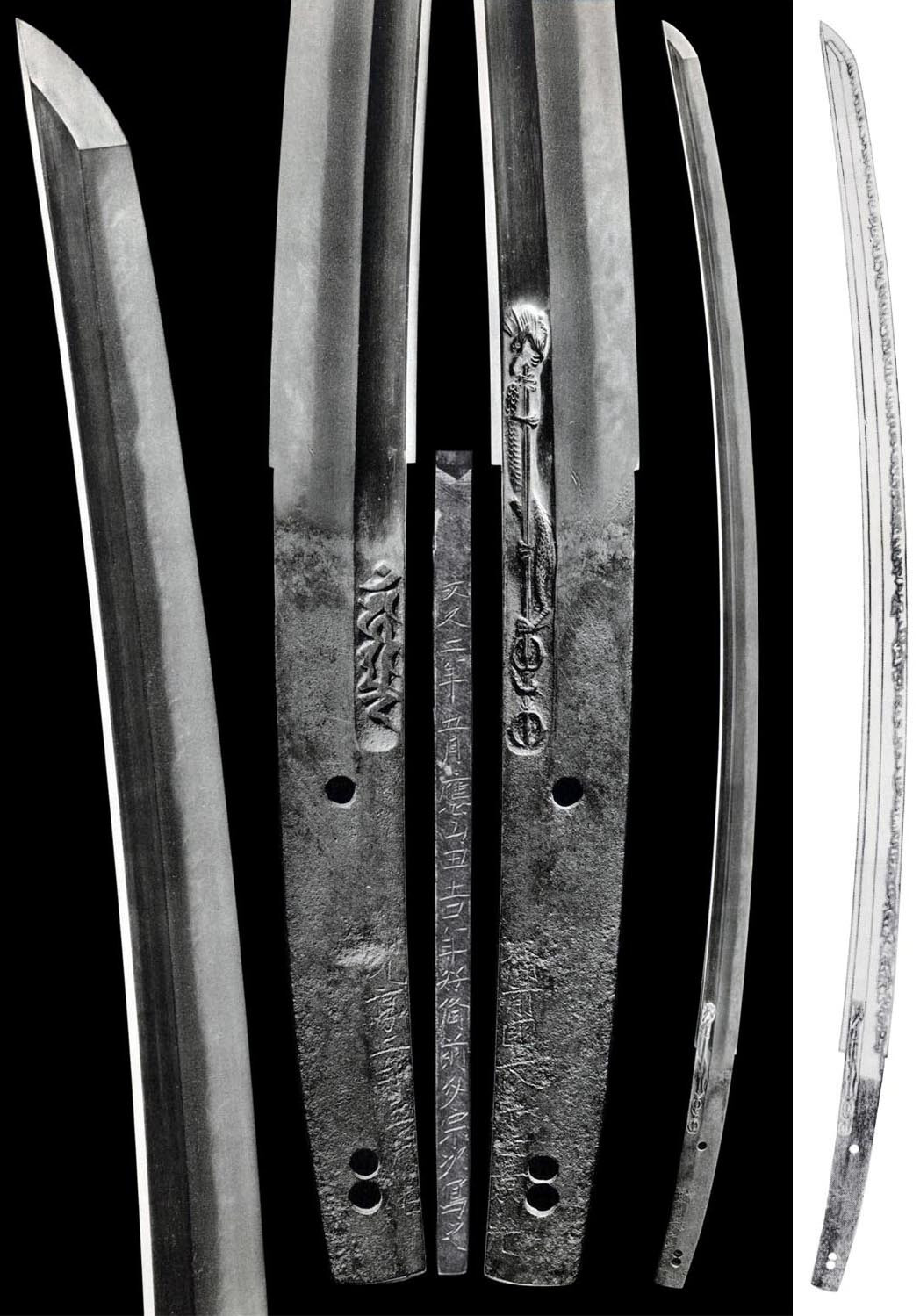
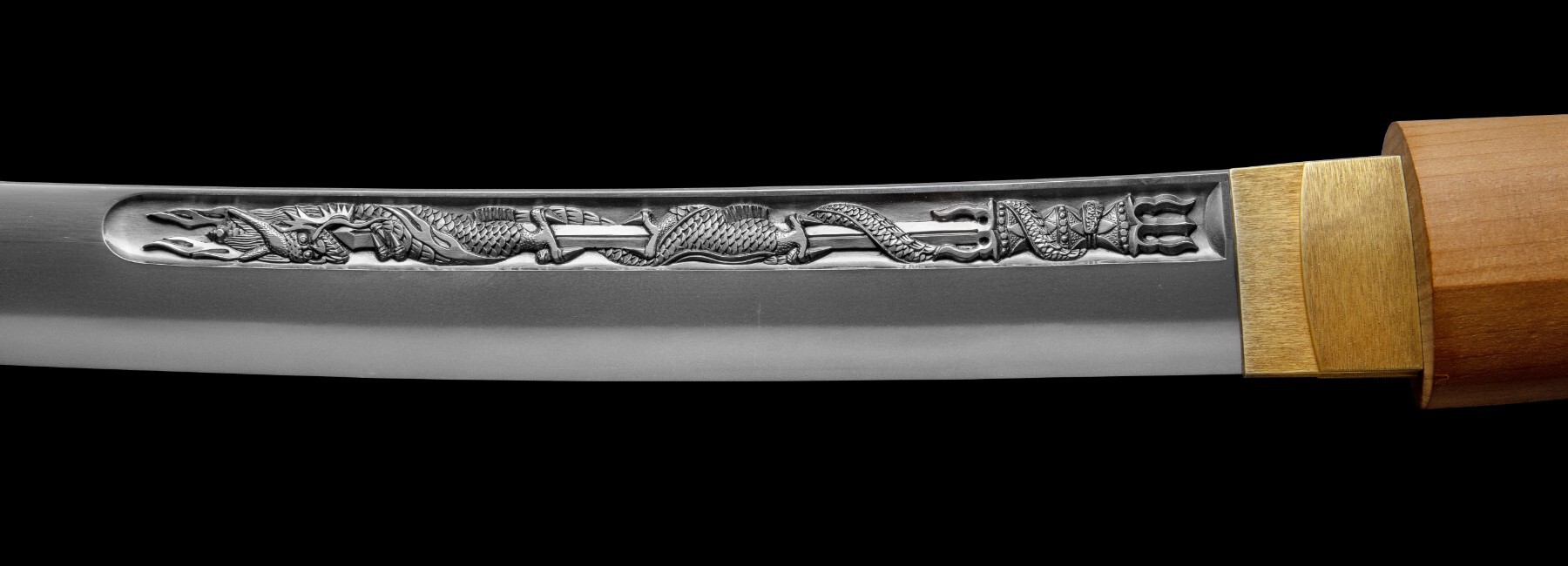
There is something a little magical about a fine Horimono that has been polished down, such as the Kokuhu Kagemitsu Ko-Ryu
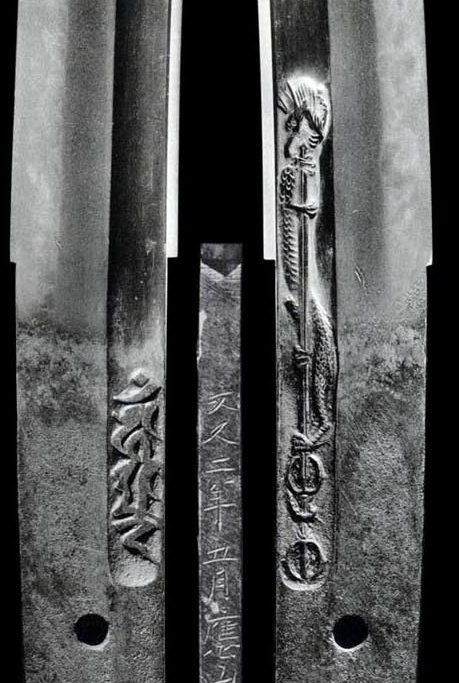
 3 points
 -
It doesn't look like it is even tempered . The hamon looks like the acid etched or scratched fake hamon that they put on parade sabres . If he won't let you take the handle off then he is probably hiding something . I would walk away from this piece. Ian Brooks3 points
-
Yoshitane dragons on a Naotane. Both signed. The shinsa papers address both Naotane and Yoshitane’s signatures .


 3 points
 -
Its late so I might be missing something, but it looks like its signed and dated, the work is ok, so TH is very likely. Whether it will gain a lot in valuation with TH versus just H is a difficult question to answer.2 points
-
I am being very very silly but this is what I think of when I read "Sprinkles on a Tsuba" [Feel free to delete this post ]
 2 points
 -
its a type 32 " ko" version, thats been re issued, the sword is dated taisho +1 so 1913. its had the leather seppa replaced with a brass one. condition is good, got matching numnbers and they are probably the most numerous of the machine made swords off ww2. 1899 to 1945, was this issue dates. numbers under 1000 are very rare. hey if you dont want it ill take it hahahha2 points
-
Well Kyle......I admit I am no expert on WW2 'Good Luck Flags' but hey....imo this is not one of them.2 points
-
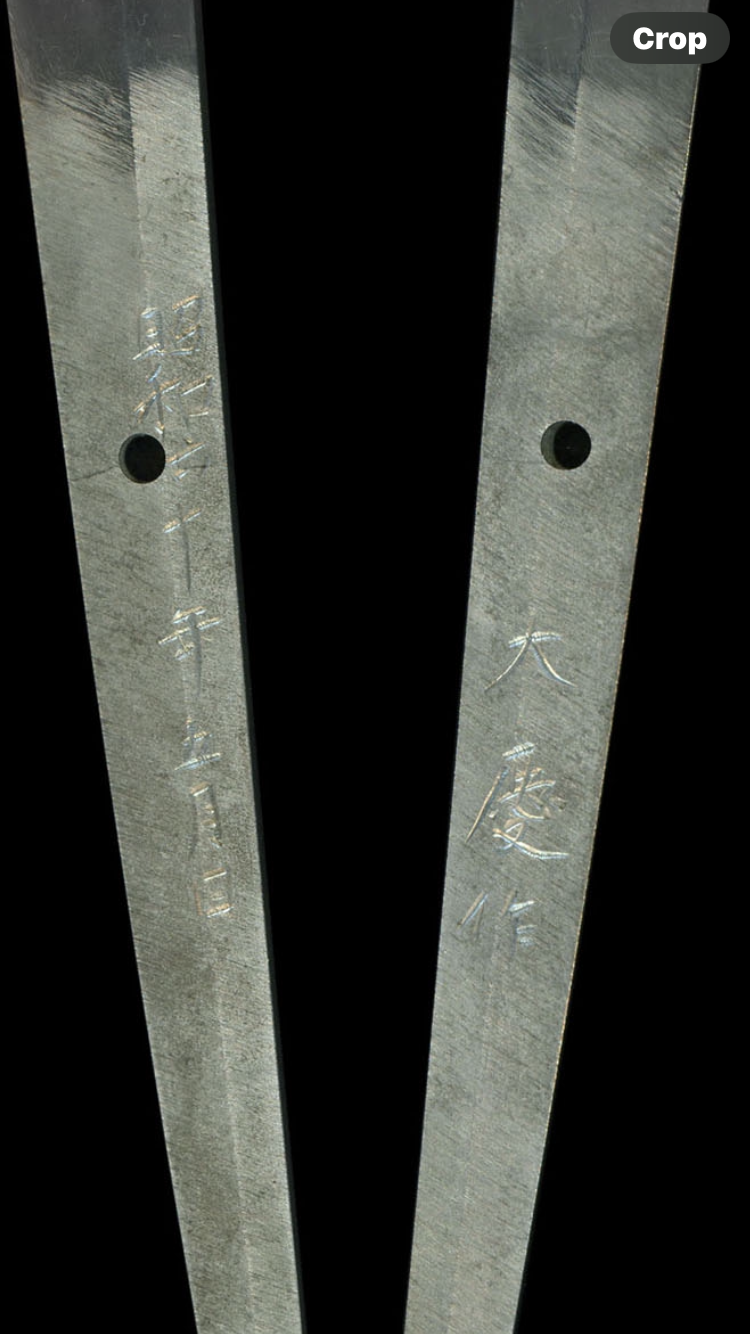
Hi thank you so much for helping me learn more about him. As you can tell by the tags he passed away in the 2000s sadly. Here’s everything compiled, any more info is appreciated! Could you tell me if he made decent quality swords? Just wondering, since he was a sword smith for only ~30years. Credit to Moriyama Koichi, Ray Singer, Bugyotsuji, and many more people! Do you guys want to see some vintage photos of him in action, I have a photo of his workshop and him making some swords if anyone is interested! Shimizu Seiya (清水精也) was born in 1947. He became a pupil of Sakai Ikkansai Shigemasa (酒井一貫斎繁政) in 1969. And he was officially approved to make swords in 1974. His smith name is Taikei (大慶), and the name also uses other kanji 泰慶. -Nobody/Moriyama Koichi (Credit to Markus Sesko for the bio below.) TAIKEI (大慶), Heisei (平成, 1989- ), Niigata – “Echigo no Kuni Taikei saku” (越後国大慶作), “Muramatsu Ikkansai Taikei” (邑松一貫斎大慶), “Echigo no Kuni Ikkansai Taikei saku” (越後国一貫斎大慶作), real name Shimizu Seiya (清水精也), gō Ikkansai (一貫斎), he also works as horimono artist -Ray Singer


 2 points
 -
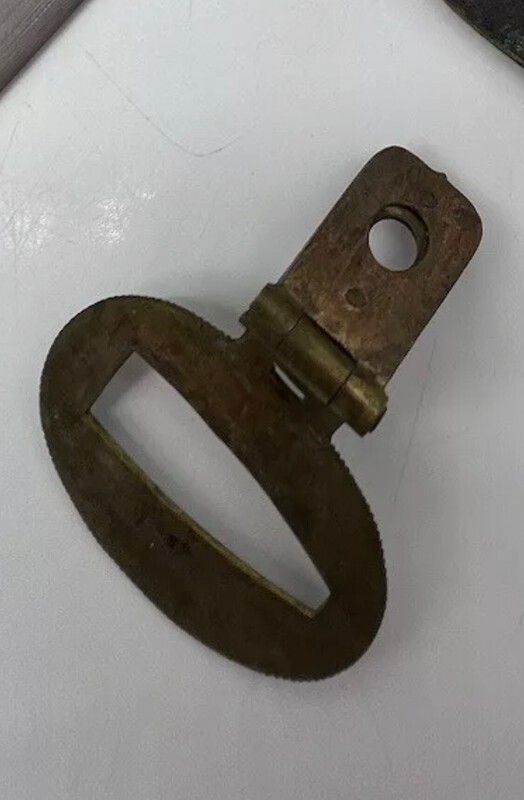
Here’s another unusual method that I saw on a late war setup on eBay a while back. It attached to a peg on the saya. Unfortunately I did not save more photos.
 2 points
 -
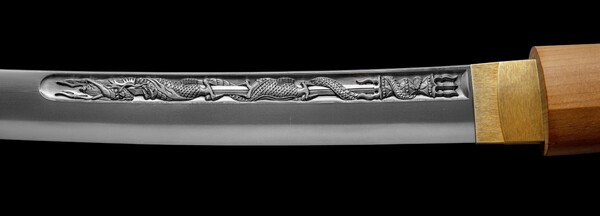
Here are a couple to add: 1. Sukehiro 2. Suishinshi Masahide (horimono by Yoshitane)

 2 points
 -
Hi Guys, I just ran across this conversation and found a late ear sword with no fuller and kind of a high serial number 213628 with a Nagoya inspectors stamp.


 2 points
 -
Shimizu Seiya (清水精也) was born in 1947. He became a pupil of Sakai Ikkansai Shigemasa (酒井一貫斎繁政) in 1969. And he was officially approved to make swords in 1974. His smith name is Taikei (大慶), and the name also uses other kanji 泰慶. The following link shows his another work made in 1977. Ref. 日本刀・刀剣の紹介サイト【平成名刀会】 − 清水 泰慶 (刀) 金梨子地塗鞘拵付 価格65万円 (heiseimeitokai.com)2 points
-
Credit to Markus Sesko for the bio below. TAIKEI (大慶), Heisei (平成, 1989- ), Niigata – “Echigo no Kuni Taikei saku” (越後国大慶作), “Muramatsu Ikkansai Taikei” (邑松一貫斎大慶), “Echigo no Kuni Ikkansai Taikei saku” (越後国一貫斎大慶作), real name Shimizu Seiya (清水精也), gō Ikkansai (一貫斎), he also works as horimono artist2 points
-
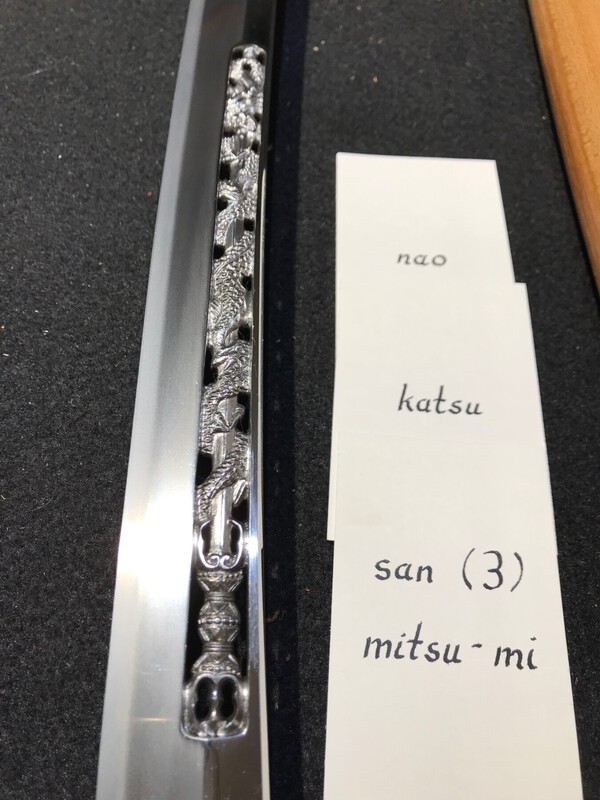
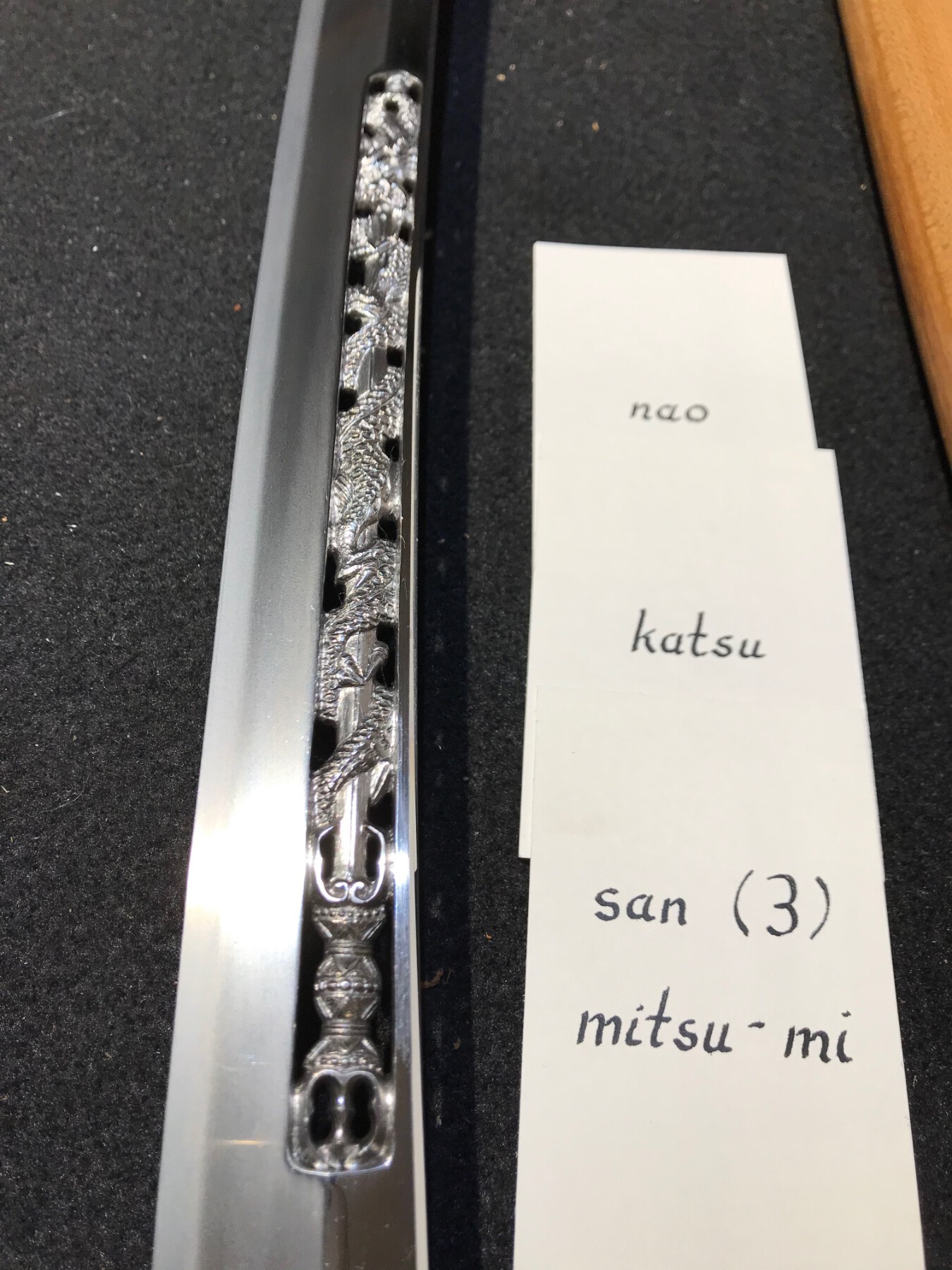
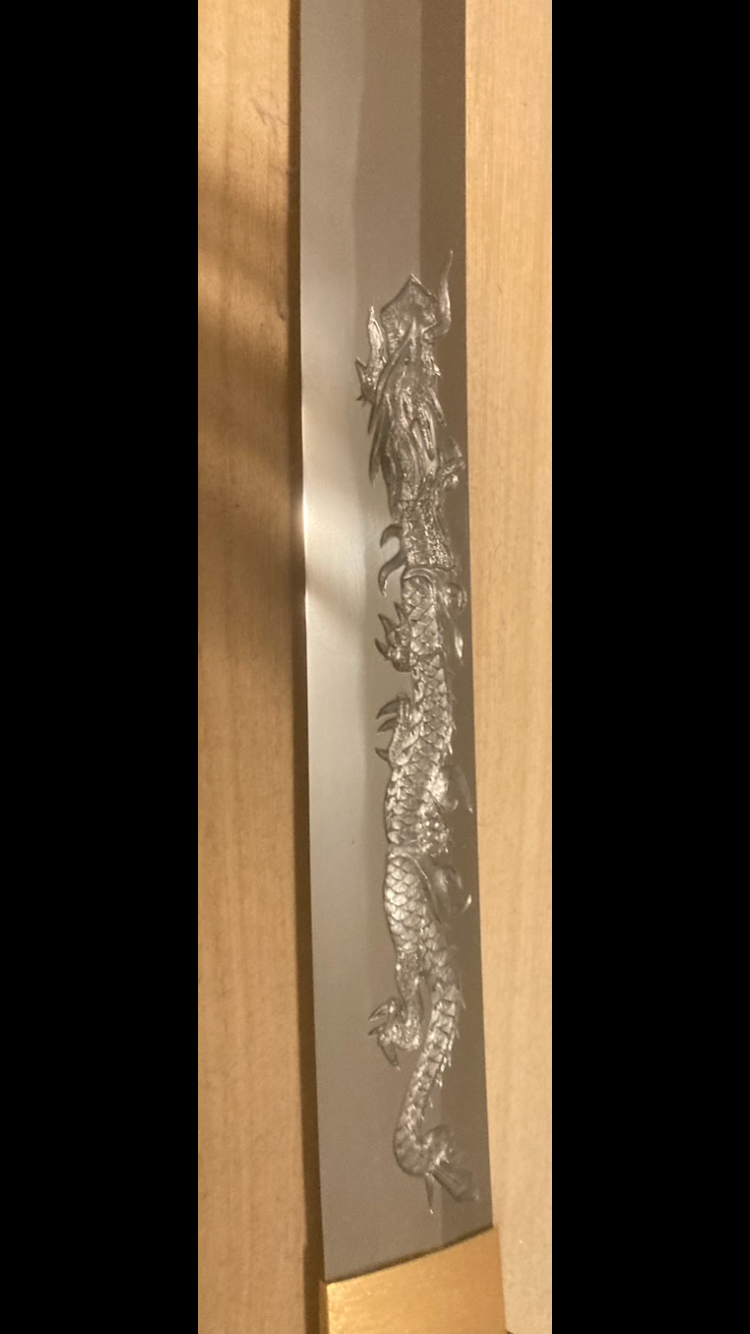
A few dragons. no. 1 Kunihide / Masahide joint work Wakizashi no. 2&3 Yoshitane horimono on Naotane blades No. 4 Sukashi horimono on a Naokatsu katana


 2 points
 -
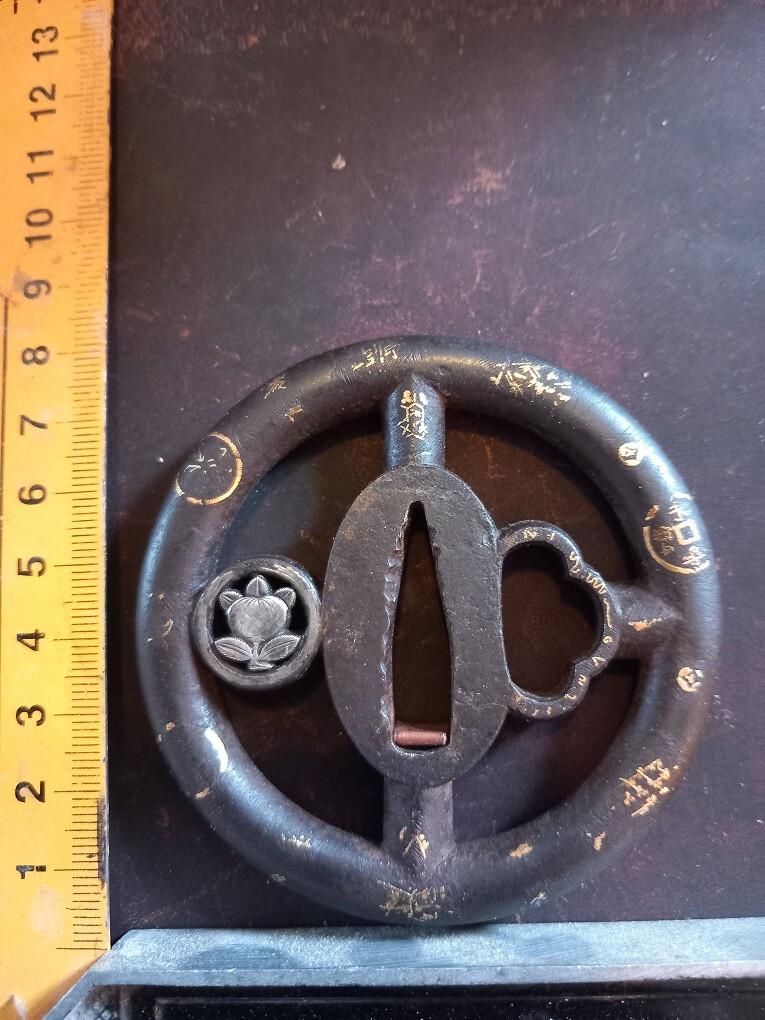
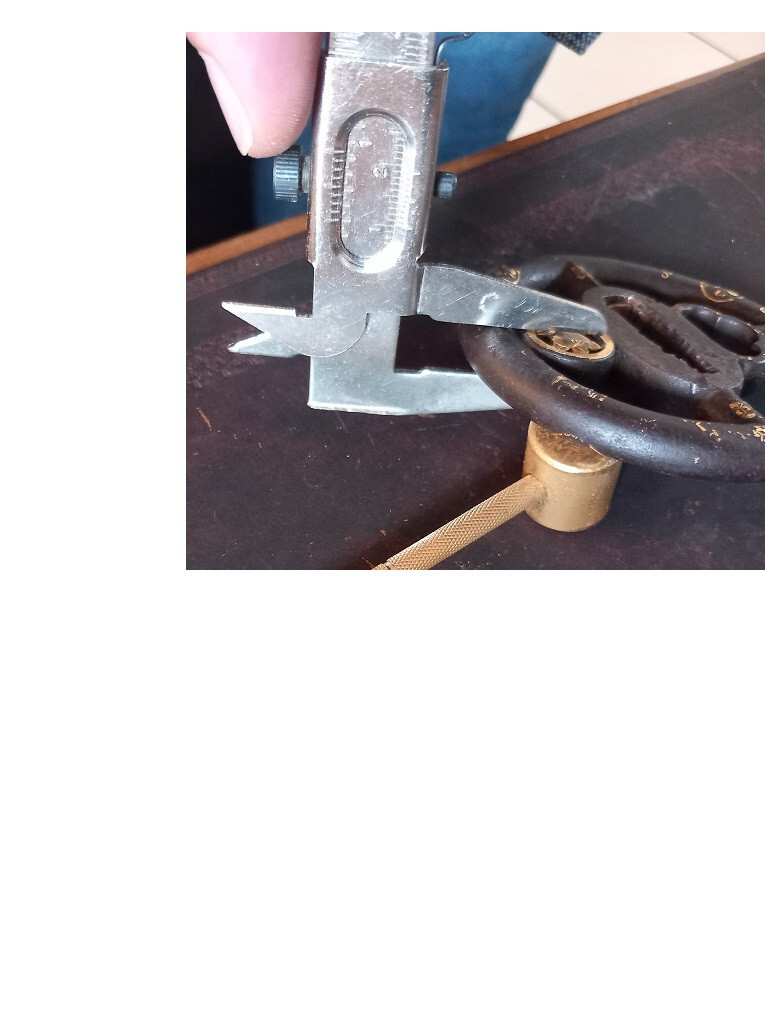
Hello, and thanks Bruce... Here is a topic about a very unusual Tsuba for me. First time I see such a massive heavy iron tsuba : The thickness of the mimi is almost 1 cm (exactly 9.4mm). The main Kamon is Tachibana (kuse), the copper is added recently... What do you think about it ? is it for nagamaki naoshi or other kind of blade? Did you saw this before?

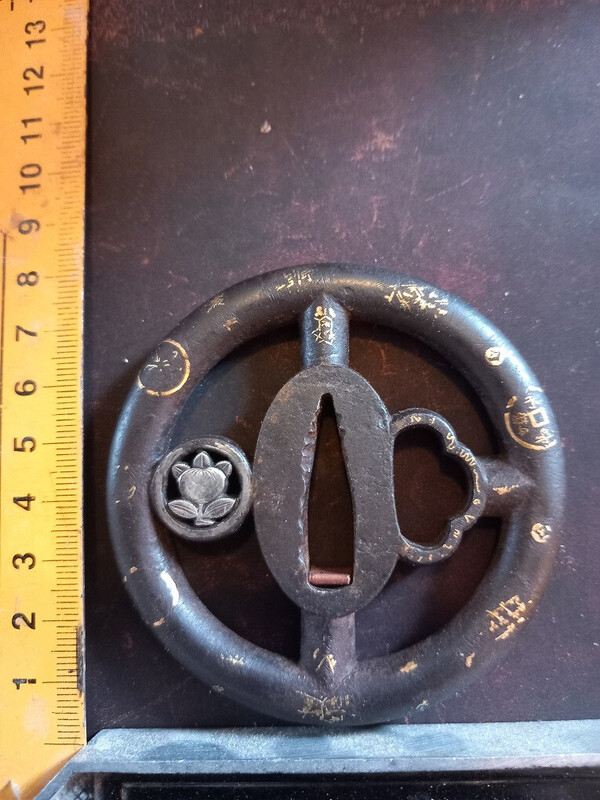
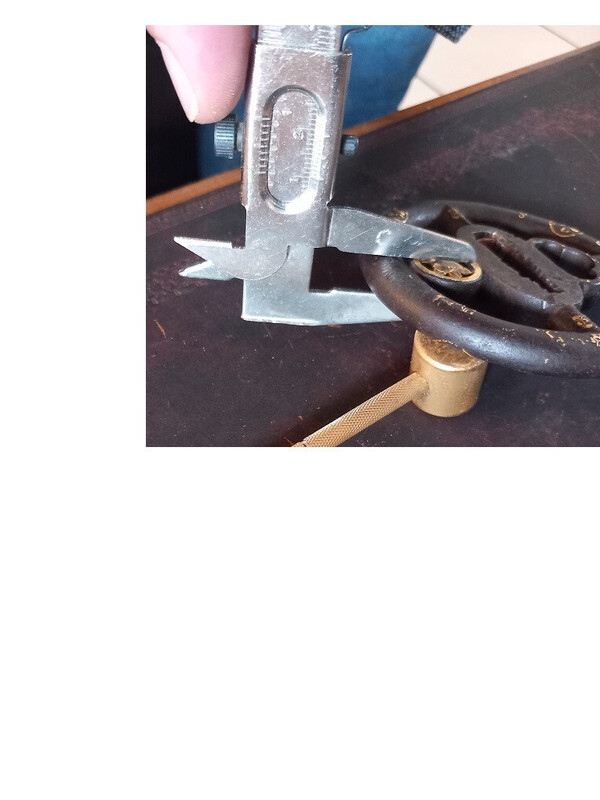 1 point
 -
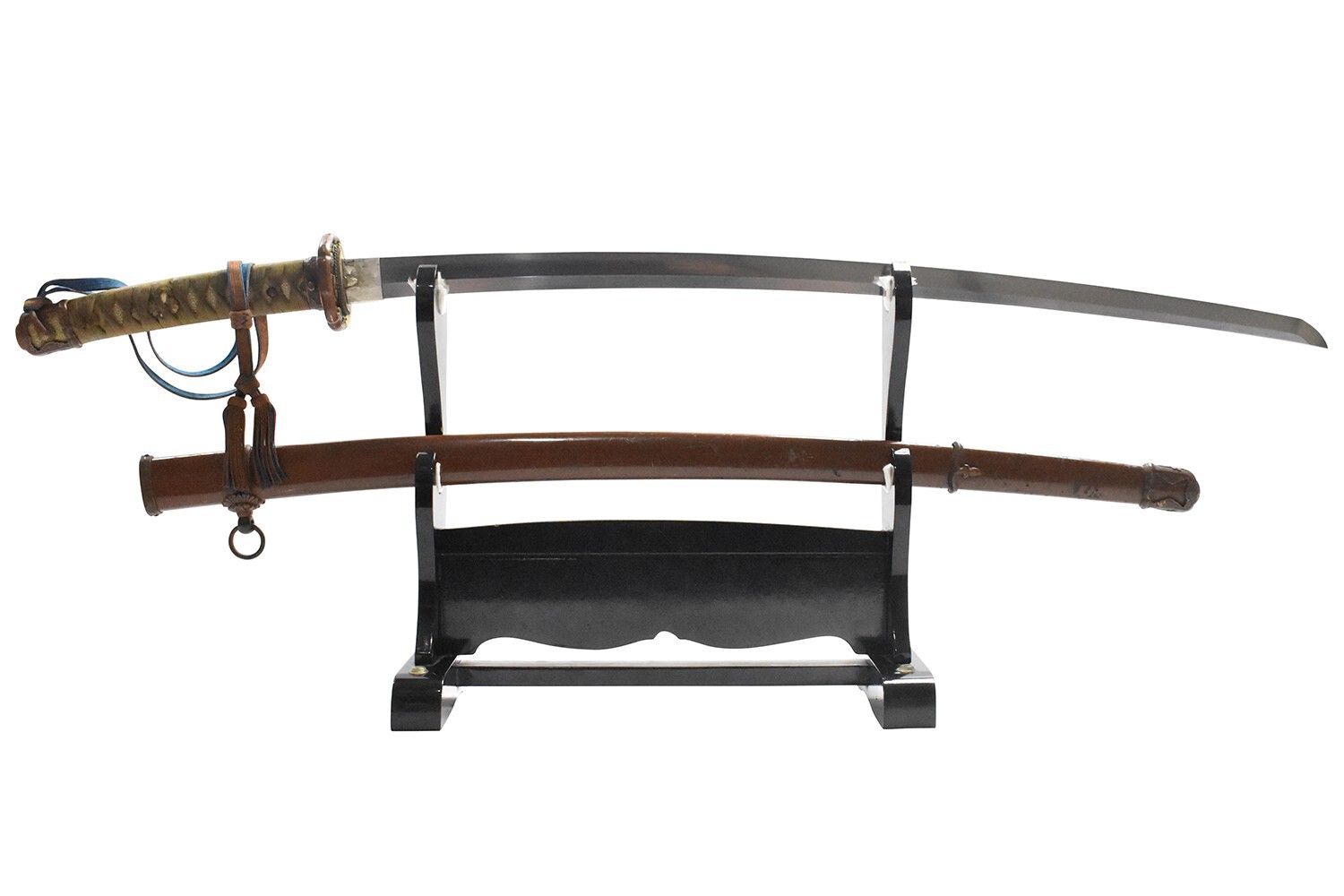
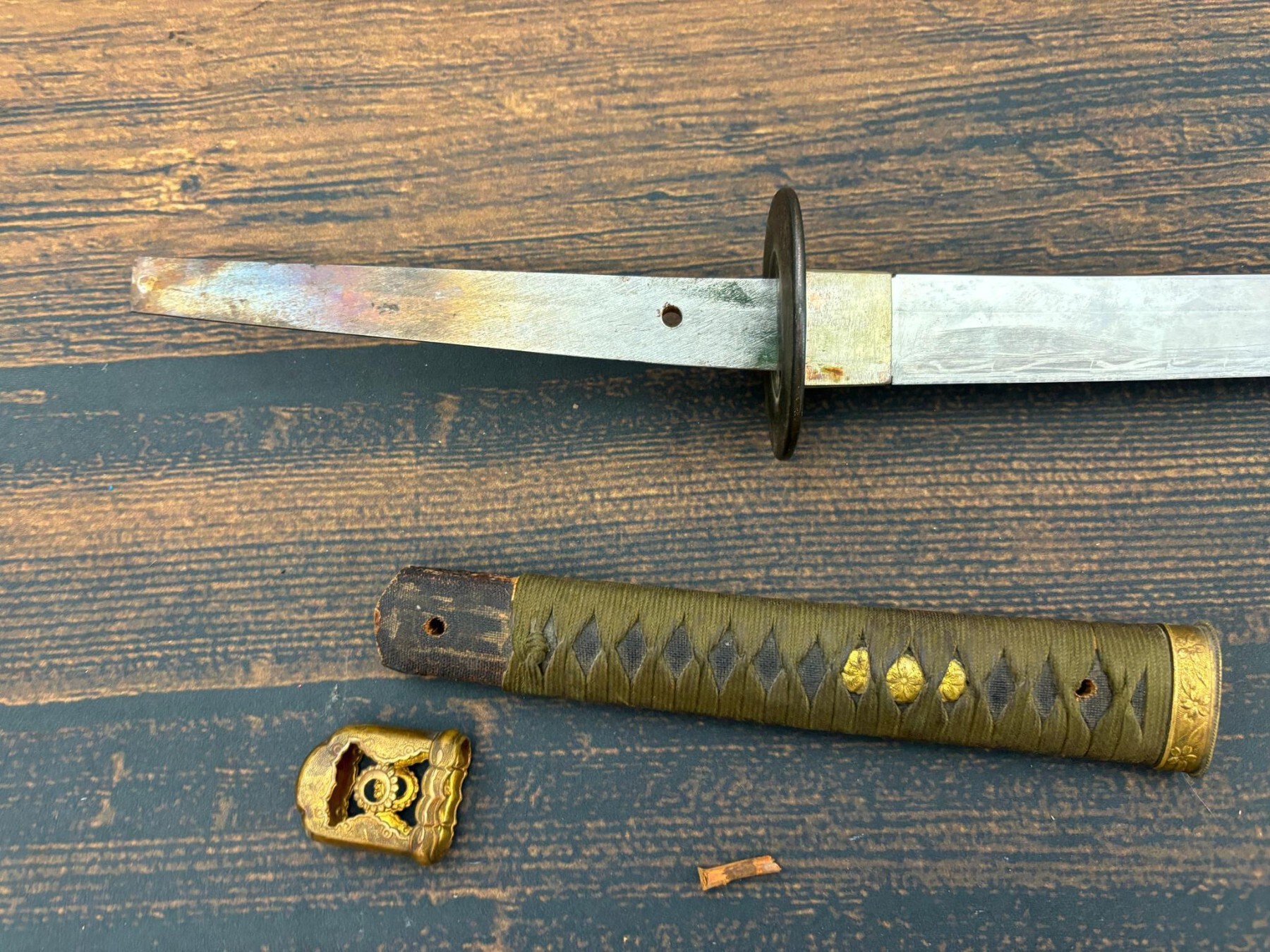
Hello everyone, this is my first time to post on this forum, since English is not my first language, please forgive me if I have some grammatical mistakes. Recently I purchased my first Japanese saber, which I think is an original.type 32 sword.But it also had some doubts that bothered me,Such as it was painted black and washers were made of brass.Can somebody help me identify it? I really appreciate that. Thank you.
 1 point
 -
More photos for you.1 point
-
Hi Bruce, The blade isn't in good shape, and thanks for the interesting link to more information about the RJTs.1 point
-
Hi Junxi and welcome to the forum. If the blade length is as below, then it is an Otsu 乙 version. Overall length with scabbard: 933mm or 36.75 inches. Blade length: 774mm or 30.5 inches. The year of original manufacture was 1912. Of the initial two inspection marks, the one on the left is 平. Which back then would be a character from the inspector's name. At some later date, it was arsenal overhauled by Kokura Arsenal and hence the additional 小 inspection mark. 大一 = 1912. FYI, my first Japanese sword was a Type 32 and I think they were a good design. However, having swung one around a few times, one quickly realizes the shortcomings of a single-handed sword. In my case, the weak link was my wrist. It is surprising the Japanese did not realize this sooner. Officer's abandoned the single-handed sword during World War I, except of course for the cavalry. Take good care of that sword, it is a nice addition to your collection. Time to start looking for a 甲 version to go along with it!1 point
-
That is certainly different. I've been around tosogu for a few decades, and don't remember a similar one. I don't know that I can shed much info on this one. My subconscious tells me Kyushu and possibly Satsuma, though I sure as heck cannot articulately explain why. Take that as a semi-educated opinion, but still kinda a shot in the dark.1 point
-
That's very exciting Thomas. Is there anything an attendee like me needs to do, to view the Nanboku-cho Bizen presentation? A sign-up perhaps? I've been reading up on the topic in preparation for the show, and stumbled across this. I hope you don't mind me sharing it here, its a fascinating read! https://nihonto.com/bizen-morisuke-備前守助/ All the best, -Sam1 point
-
Hi, my great uncle is a Japanese full fledged sword smith and I’ve been trying to learn more about him, any help, education, etc… is appreciated and needed. Here is the link to the eshop that supposedly has his sword: https://www.e-sword....0810_1138syousai.htm


 1 point
 -
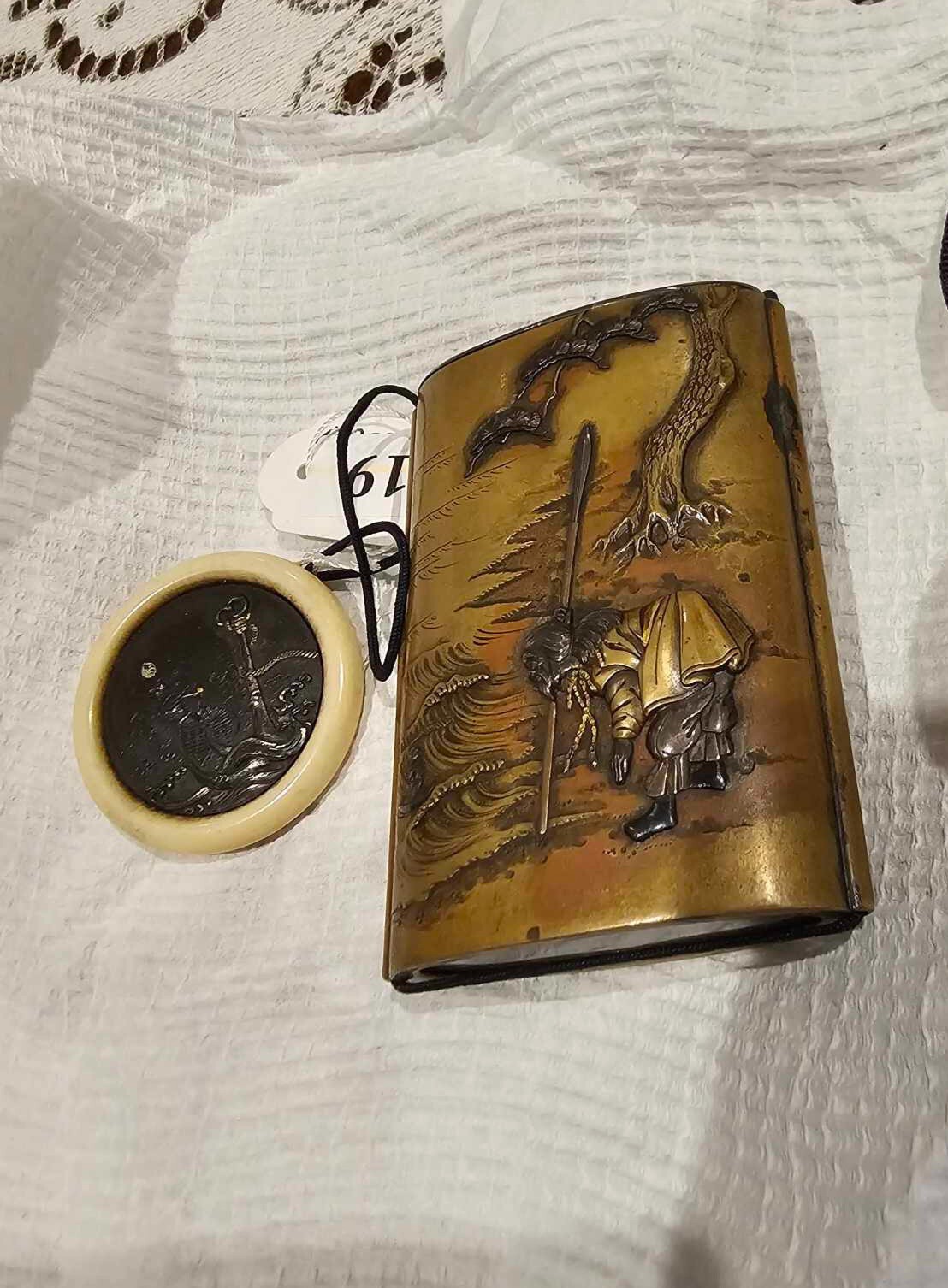
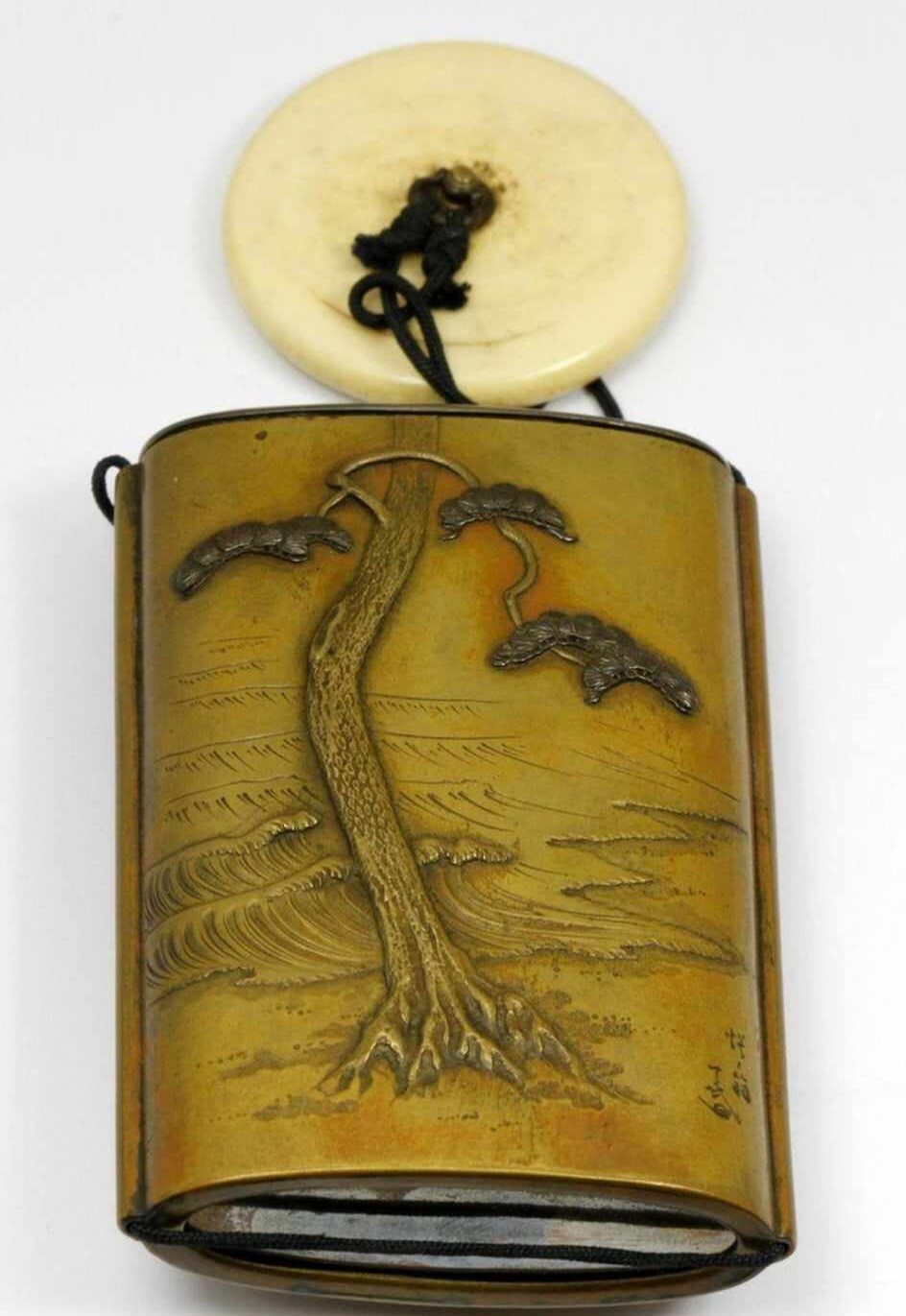
Hi folks. Piers it is all metal work, no lacquer, although at first glance it does appear so. It has shibuichi end caps and is one compartment inside that slides out. I'll get some better pics when I can. Thanks for your help so far.
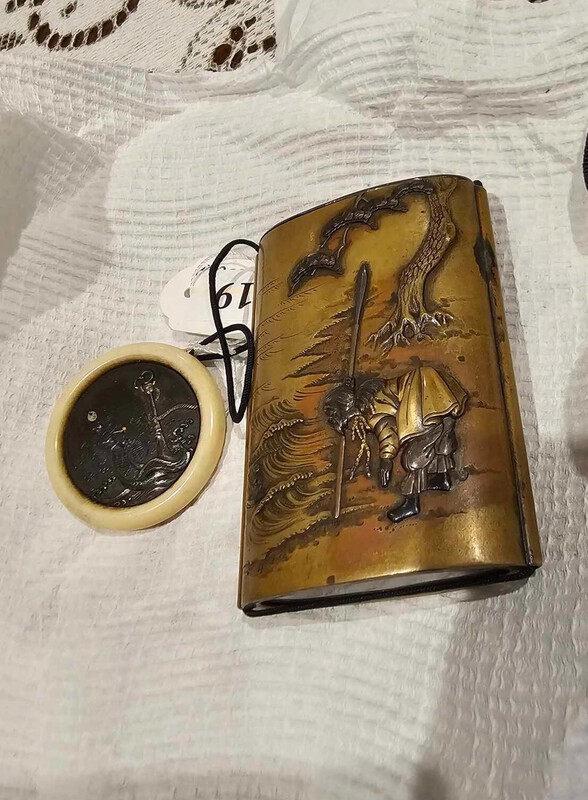
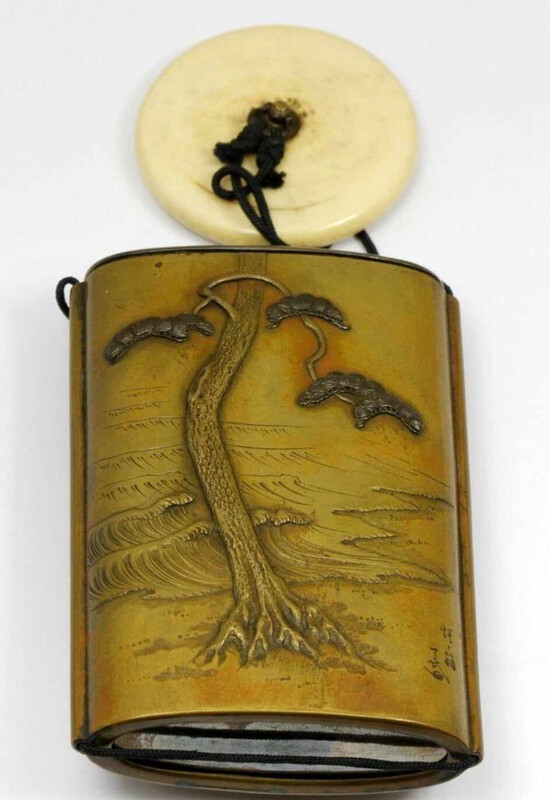 1 point
 -
Hi Jean, here are some shots of the complete piece, however I haven’t managed to get better close-ups because of the lack of professional photo equipment. But I try again. The above close-ups show the curves at the bottom. Best, Florian

 1 point
 -
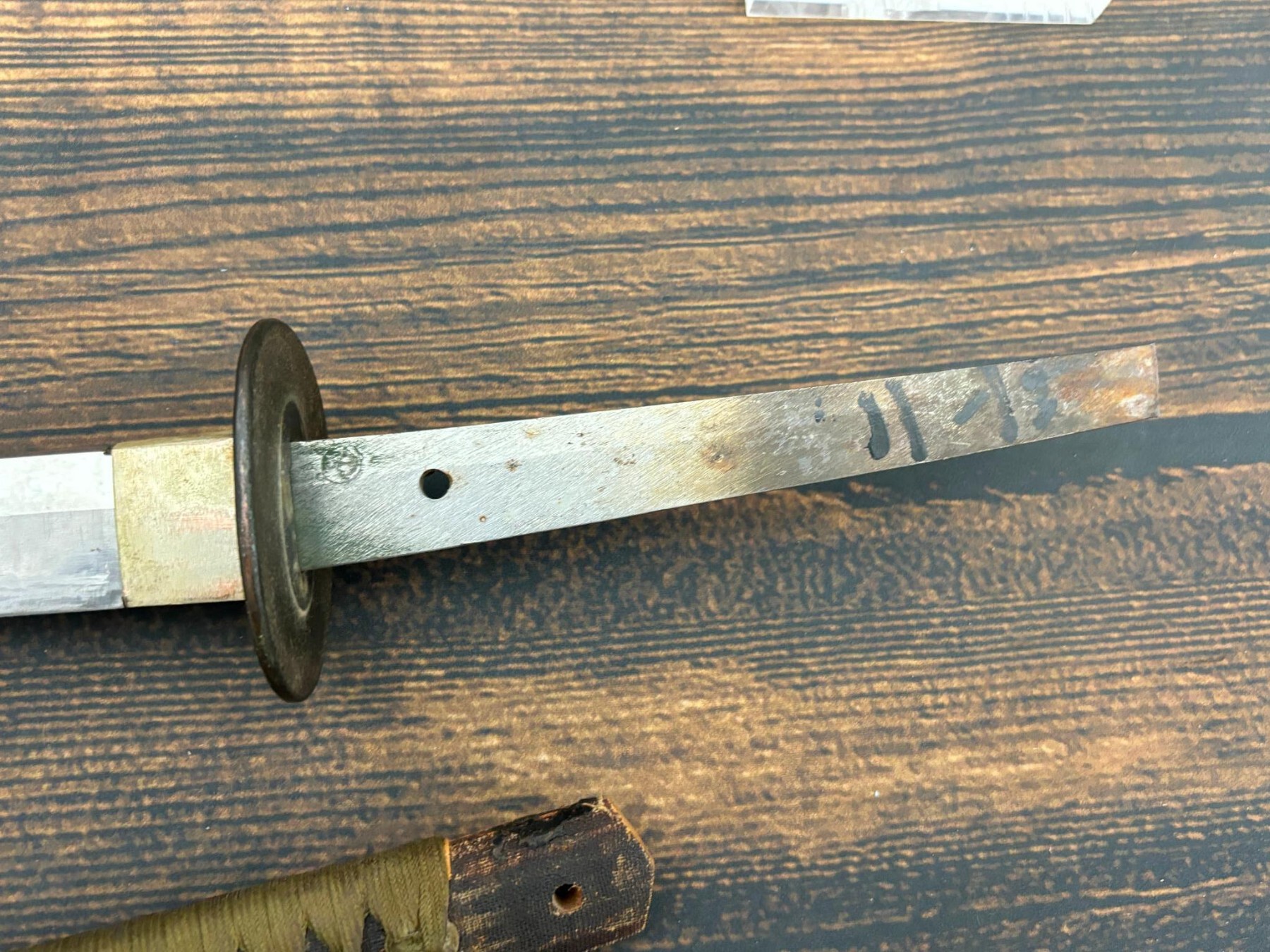
Nothing to worry about with the black paint. You can see several other gunto painted black on this thread: No one knows who was doing it or why, but the general consensus is that it was done during the war. The identifiable stamps are the stacked cannon balls of the Kokura Army Arsenal and the "KO" of their supervisory unit.1 point
-
I think it's had the heck buffed out of it, hence the look. But blades in those mounts (saya) are almost always Showato. Looks like it was rusted and pitted, and someone cleaned and buffed it. Pass.1 point
-
Stamps are "cannon balls" plus “ho” ホ inspection stamp of Kokura Factory No.11 point
-
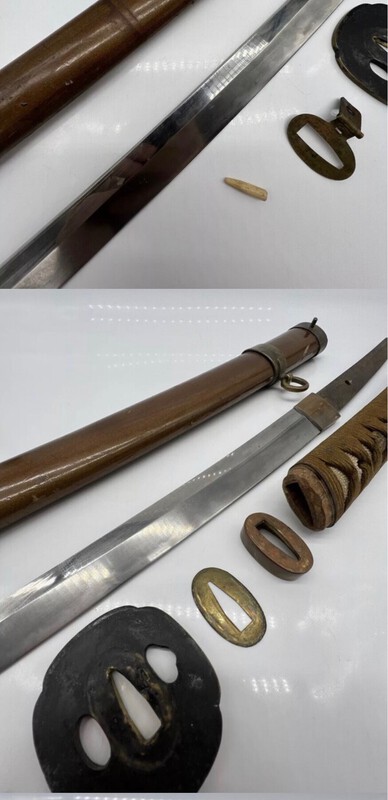
I did a little digging and found my post about it. Here it is! With some images for posterity: https://www.militaria.co.za/nmb/topic/48491-weird-showa-to-with-seppa-latchlock/#comment-504210



 1 point
 -
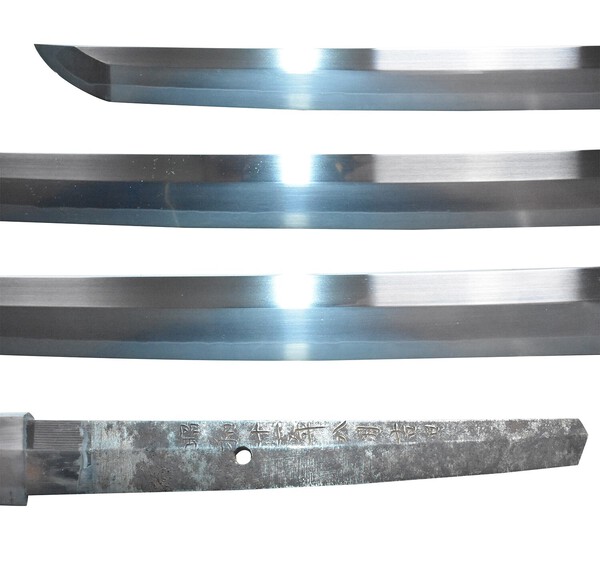
I can help. Here is a minty Ikeda Yasumitsu for your consideration. We also have Yasuhiro and Yasuyoshi.


 1 point
 -
First "26", found at this Burns Auction.


 1 point
 -
I only have experience of buying directly on site in 2022. Here, too, you should contact the store in advance and make an appointment and specify which items you would like to see. The lady (Kimura-san) was very friendly and the sale took place in a very pleasant atmosphere. Kimura-san thanked us and even said goodbye to us in German on our second visit. I won't make it back to Japan until next year at the earliest. But I will definitely visit Eirakudo again.1 point
-
It is a very attractive guard. Kebori is deep and even. Composition that incorporates the leaves organically into the rim and seppa-dai is aesthetically pleasing. Congratulations, David, and happy birthday.1 point
-
濃州住行宗鍛之 Nōshū -jū Yukimune kitae kore. Means: Yukimune of Nōshū Province made this WW2 smith.1 point
-
That Morisuke is an amazing sword Thomas I am happy it is in good hands. It will be amazing opportunity for people to see it in San Fran show.1 point
-
So, Franco it is perfectly natural for a student to charge a different fee to a mukansa smith. That entails different economics but also different skill levels. Saito san commands the highest prices in Japan because he can rectify polishing disasters or bring swords back to life. A mere deshi might not be able to do that. Polishing time, techniques, expertise and skill deservedly are rewarded with higher fees, which might not be in accordance with everyone's budget. Even Tsurura san, once upon a time, not so long ago, would differentiate between the different 'levels of polish' - see below (not on his website any more). I hope my 'sticking' of the image below is to your satisfaction? In reference to the question below: My conclusion from the sentence below was that by making the ashi 'more vivid' you had made the polish what you and Arnold perceived to be somehow 'better'. In other words, you have implied that the initial polish did not show the activities and detail sufficiently (ie, had obfuscated or concealed them to some extent) and your subsequent application of uchiko rectified that situation, so that the latter became more vivid and visible.
 1 point
 -
Thank you for allowing me into the Message Board. I started a long time ago when I was 8 my grandmother bought me a Wakizashi made for tourists when she was in Japan. Later I bought several wall hangers in the US but really wanted a real one from Japan. The price scared me so I started with brands like Hanwei but finally a nice dealer named Lance referred me to a dealer in Japan I could afford. I have purchased two swords a Kozuka and some antique armor pieces and very happy with them.I have so much to learn but enjoy the process. My yard is part Japanese garden and part archery range and training area with a hidden obstacle course I use daily.1 point
-
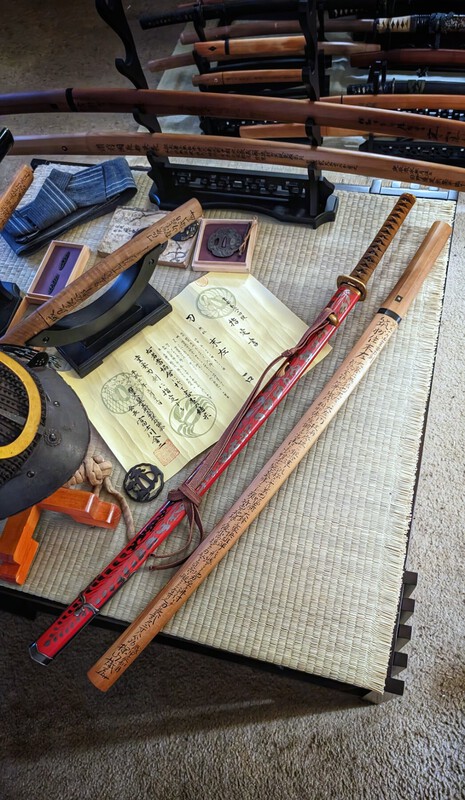
I've been collecting antique nihonto for a little over a year now. Currently have a living room full and waiting on 1 to export from Japan (I partially blame Ray Singer for fueling my addiction). My favorite piece is always the most recent acquisition - which right now is a Sa Sadayoshi katana. I'll be at the Orlando Sword show, with a couple items to go thru shinsa. This is a very addictive and expensive hobby, but I wouldn't give it up for anything. Some quick pics of the Sadayoshi...
 1 point
 -
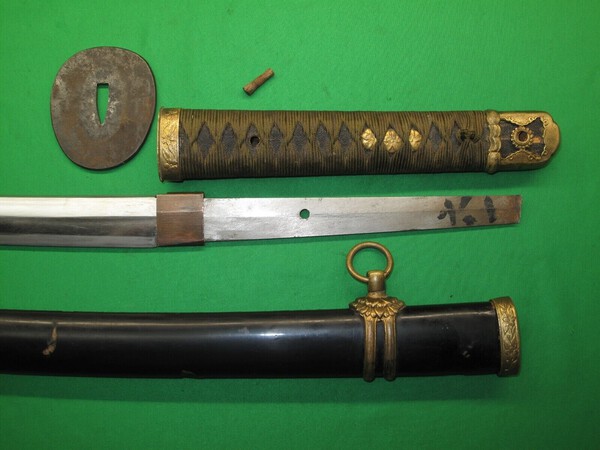
Welcome back John! Hope all is well. I want to post the photos of those last 2 swords before the links go dead 61 68
.thumb.jpg.323f5a1bd48d2a43f96b99e7112d2bff.jpg)
.thumb.jpg.627b710c4504e7efb5ce0f95a107bb33.jpg)
.thumb.jpg.758c2cb631ad2ce5f7cc15c986ff285f.jpg)
.thumb.jpg.2b86418e5824acb862e4e08817c0c0b2.jpg)
.thumb.jpg.31674e0163f27d2b443da4f50dd5e70f.jpg)
.thumb.jpg.6fbb152d6f91631bc1b4ee6db14a2e30.jpg)
.thumb.jpg.a0d635fc136e30eb14d467c0c7743bcf.jpg) 1 point
1 point -
@Bruce Pennington You're work received a shout out! Check out this video at about the 17 minute mark.1 point
-
I am on the side of extreme preservation, and I am leaning even more and more towards that as the years go by. I know money talks and people will do many things for swords with profit in mind. I would advice caution even with restoration and extreme caution with removal of certain things. I cannot really comment on NBTHK stance on things and why they issue the papers as they do. However as Moriyama-san pointed out earlier they have just put an upper number limitation to blades accepted to Hozon/TH shinsa. I am not sure of the number of their staff but I am under the assumption that they are not a huge organization staff wise. I remember we tried to estimate submission number with Darcy some years ago and how much time they could spend per blade, and the amount of time is not that big. I think it could be a good option to possibly authenticate gimei swords but not sure if NBTHK would currently have resources to start doing it as they seem to already be at their limit with current staff as they need to limit amount of blades sent in. However I feel that it could amount to even more shady dealing, as some sellers could push them as legitimate signed items. Yes I understand in the idea there would be clear mentions of gimei but there will be people who do not read Japanese and would trust sellers. To make a judgement that something is gimei can be problematic. As for some smiths (especially the old ones) there are not that many references. I know that many later time smiths are well documented but as I am fascinated by the old ones, there are many where examples are extremely rare. Now for mumei blades the attributions give a "range" being the educated guess, where are for signatures it is quite rough 50/50 genuine / fake. There is also maybe less known phrase to XX ga aru, that can apply to mei, kiritsuke-mei, kinzōgan etc. I know there are multiple ways of seeing this phrase but personally I see it just as, there is XX. It is bit of a neutral stance in my opinion, and more research could be made in the future on it. I find this very interesting but again it is problematic (and probably headache for dealers looking for profit). Sometimes with more research the to XX ga aru is switched to fully legitimate. I think the opposite is not really documented if that proves to be fake it would not been updated in NBTHK papers for example. As I mentioned being extra careful in removing things, here is a heartbreaking example (I have read about other mei removals too but don't have picture documentation of them) This tachi by Enju Kunimura has had the signature removed (luckily the piece was preserved). It first passed Jūyō shinsa 22. Then mei was inserted as gaku-mei and it was updated in Jūyō 49 session. Then after that it has passed Tokubetsu Jūyō session 18. Now here is the fact that makes it so bad in my eyes, as I am bit obsessed in finding old work, I have so far found only 8 authenticated signed tachi by Enju Kunimura... Instead of highly precious historical tachi it is now "just a katana" instead, fortunately this has been documented and signature preserved as gaku-mei but in my eyes it is not nearly the same as it would have been preserved as a tachi. As Mark asked about mei of original smith being added after shortening, there are examples but they are quite rare. Added mei in general is called kiritsuke-mei. There are also examples with to kiritsuke-mei ga aru, meaning the presence of kiritsuke-mei is noted but it's authencity is not yet 100%. For 100% authentic and where smith is noted this JūBi Kanemitsu is one that comes in my mind, it is famous sword Omachi Kanemitsu, it was shortened in 1442. It was owned by Uesugi Family and is now in private collection in Japan.
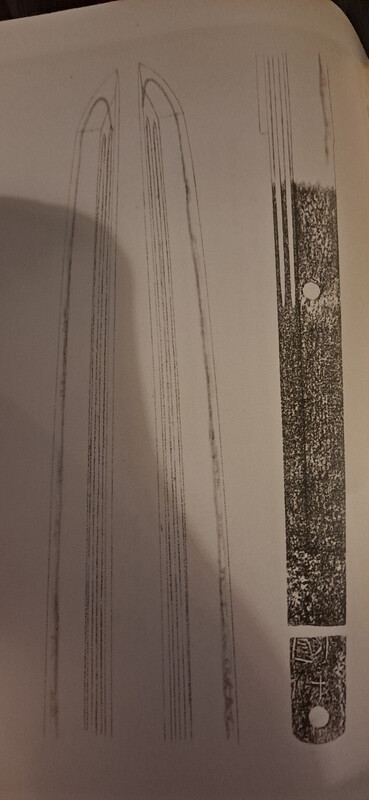
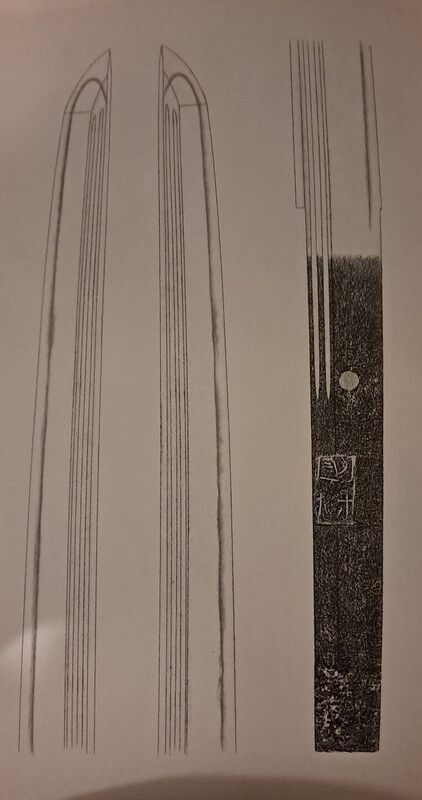
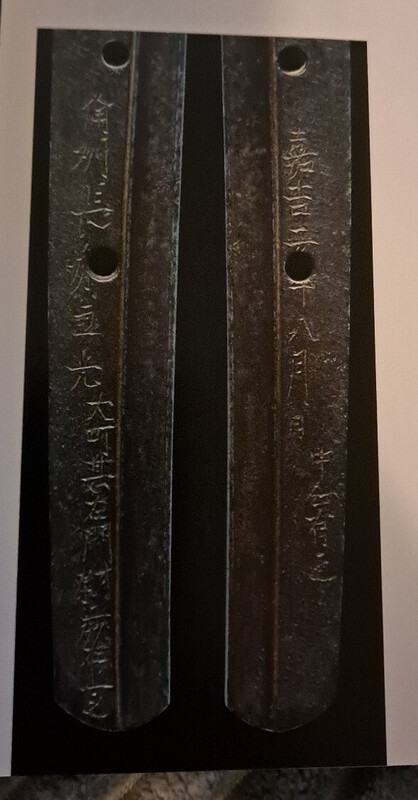 1 point
 -
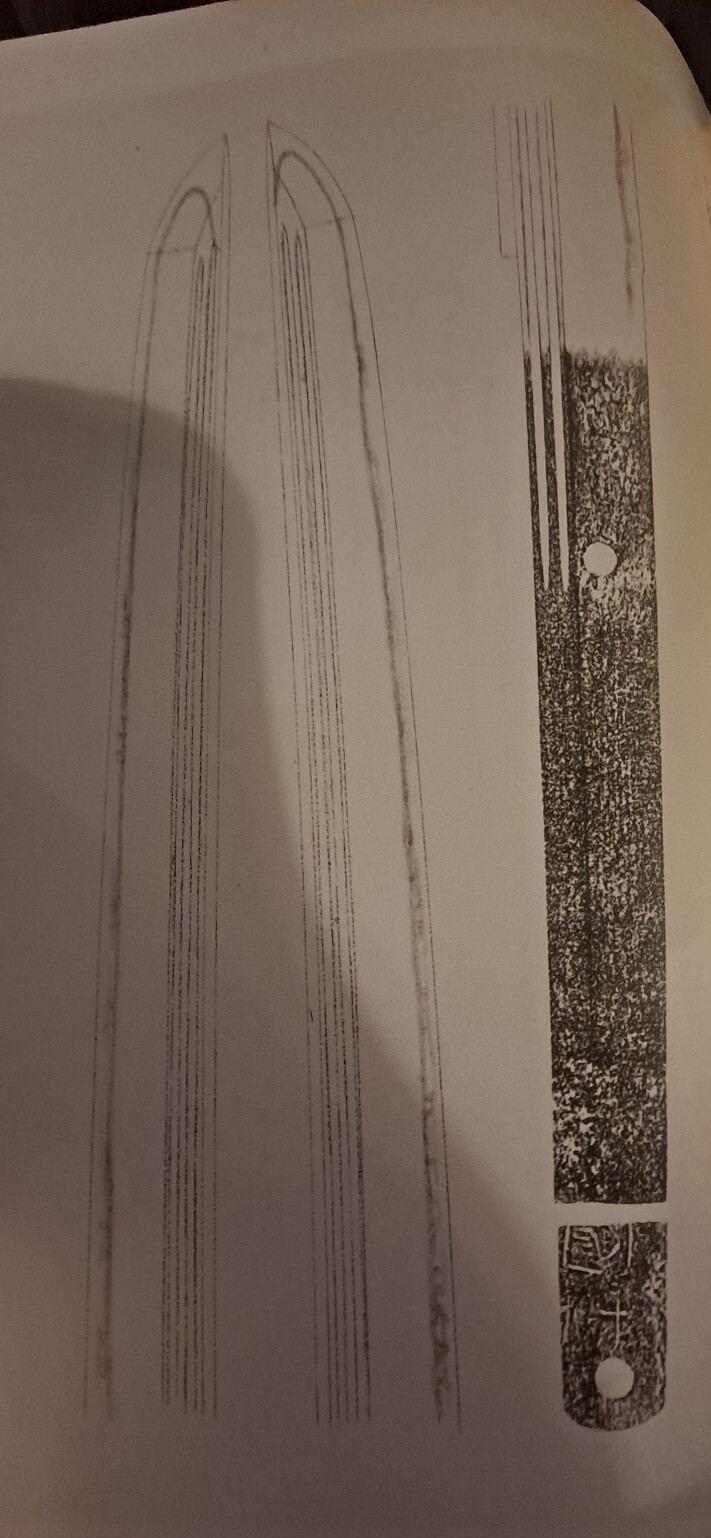
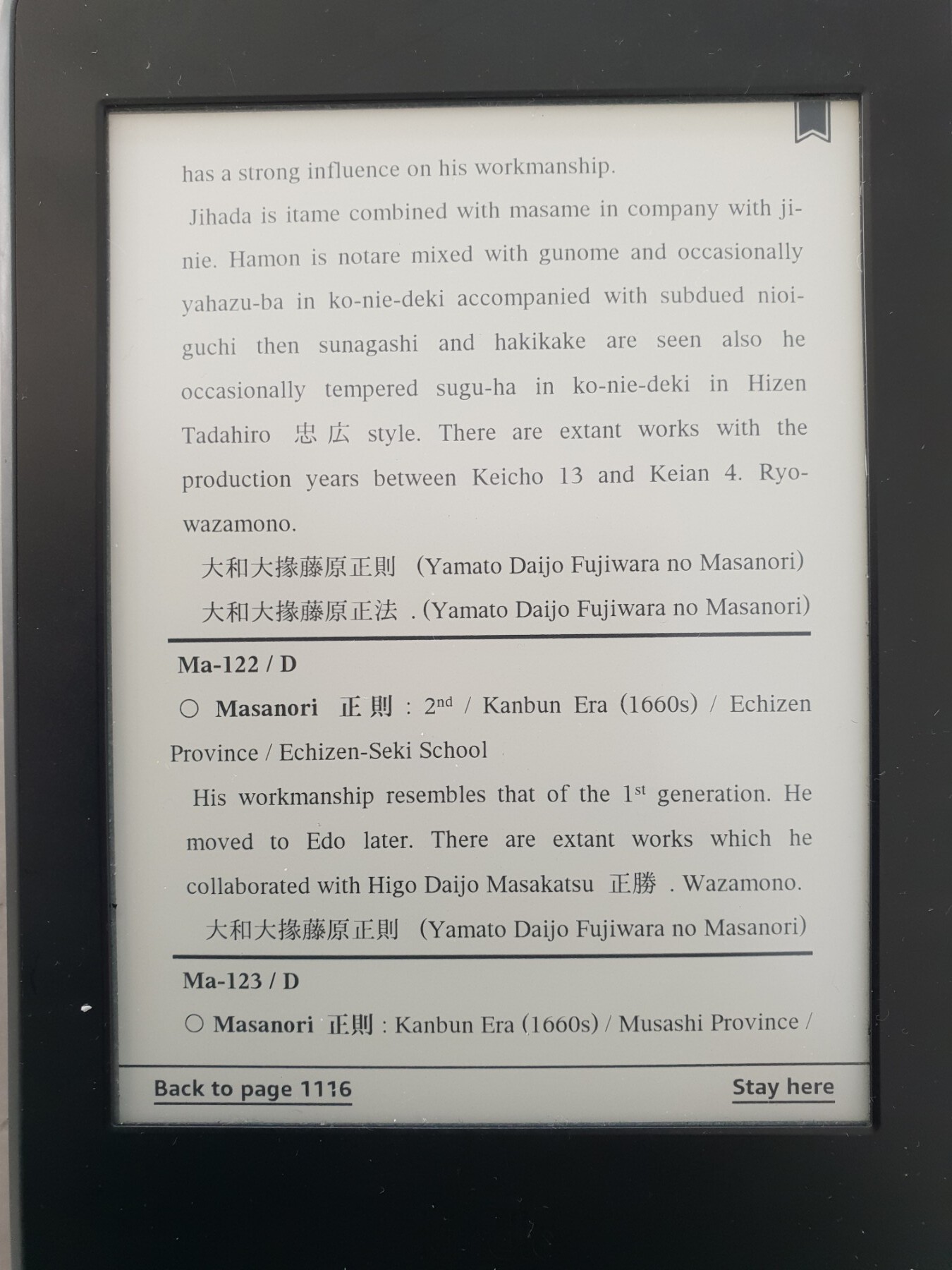
Hi, I'm surely one of the least experienced person on this forum in relation to Nihonto. The good news is, recently while travelling in Japan I became a first time custodian of two Nihonto, one of which was signed Yamato Daijo Fujiwara Masanori. Also appraised as Tokobetsu Hozon. I've spent the past few weeks researching Yamato Daijo Fujiwara Masanori. I can share my findings. There were two smiths who signed Yamato Daijo Fujiwara Masanori in Echizen province 1600's. The first generation Masanori. (referred to as shodai) And the second generation Masanori. (Second generation referred to Nidai) In the book named, Japanese Sword Smith directory, Japanese edition (which is in English) by Mishina Kenji, I've found the following information (photos attached. Reference: Ma - 121 rank C) You can also investigate the province Shodai Masanori worked in to find who was the Daimyo of Fukui domain during this period. This timeline is very close to the battle of Sekigahara which marks the beginning of the Tokugawa Shogunate. Daimyo of Fukui domain in Echizen province 1601/1607 - Yūki Hideyasu (Seond son of the first Tokugawa Shogun, Tokugawa Ieyasu) https://en.m.wikipedia.org/wiki/Yūki_Hideyasu Succeeding Yūki Hideyasu was his eldest son, Matsudaira Tadanao. Daimyo of Fukui domain in Echizen province 1607 - 1622 https://en.m.wikiped...i/Matsudaira_Tadanao As referenced, Tadanao was banished and replaced by his younger brother and second son of Yūki Hideyasu; Matsudaira Tadamasa Daimyo of Fukui domain in Echizen province 1623 - 1645 https://en.m.wikiped.../Matsudaira_Tadamasa If your katana is first generation Masanori, The probabilities are it was forged during the reign of one of the above Daimyo. What historical battles may have Shodai Masanori katana possibly seen? If it was forged early enough, The siege of Osaka 1614 to 1615. https://en.m.wikiped.../wiki/Siege_of_Osaka Samurai of Fukui, Echizen province were sent to Siege of Osaka under the Daimyo Matsudaira Tadanao. Some additional research can begin from other names referenced in the photos such as; Sanjo Yoshinori, which Masanori is referenced as being a descendant (I lack further information for now) The smith he apprenticed under; Kanenori. I'm guessing, of Fukui, Echizen Domain early 1600s And other references Ive read saying he was the son of a Norimitsu (again, lack further information) This is all I've found so far. When you come across further information, I would also love to hear. Cheers, Ben

 1 point
 -
I want to share my bokuto.



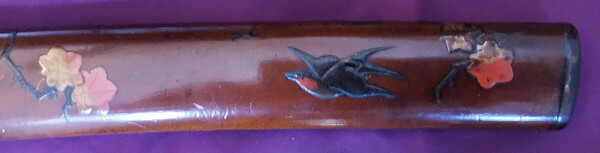 1 point
 -
Here is a picture of a few of mine. I find them very interesting, some very detailed, not usually inexpensive, and at least for me hard to find for sale. Hope you enjoy them and feel free to comment. If anyone would like a better picture of any individual piece please let me know. Thank you for looking. MikeR

 1 point
 -
Well it seems qtip and choji for a week with a gentle nudge using a tiny splint of bone is doing well so far.. red reflection on photos appear gone. And a bonus shot for those in colder climates who forgot what Japanese steel in sunlight looks like I'm Norwegian but have crawled south over the years..1 point








































.jpg.70d1341a95b18603f75e29c17cef6db3.jpg)
.jpg.d39eee5d34b12b69f1cc2af789f9b0eb.jpg)
.jpg.ec35d440280dbec9b455d1eb10d2e4b0.jpg)

.jpg.2979458d26ffdafc2a3fc0ab0147c551.jpg)
.jpg.8f238cb6ac47827d44eef0a0589d33ca.jpg)
.jpg.ba66e4e3e318cd70ffdcef8f7f0fc479.jpg)
.jpg.66f88de371916eaef9bb5dea93d09456.jpg)








This leaderboard is set to Johannesburg/GMT+02:00