
Leaderboard


Popular Content
Showing content with the highest reputation on 12/27/2023 in all areas
-
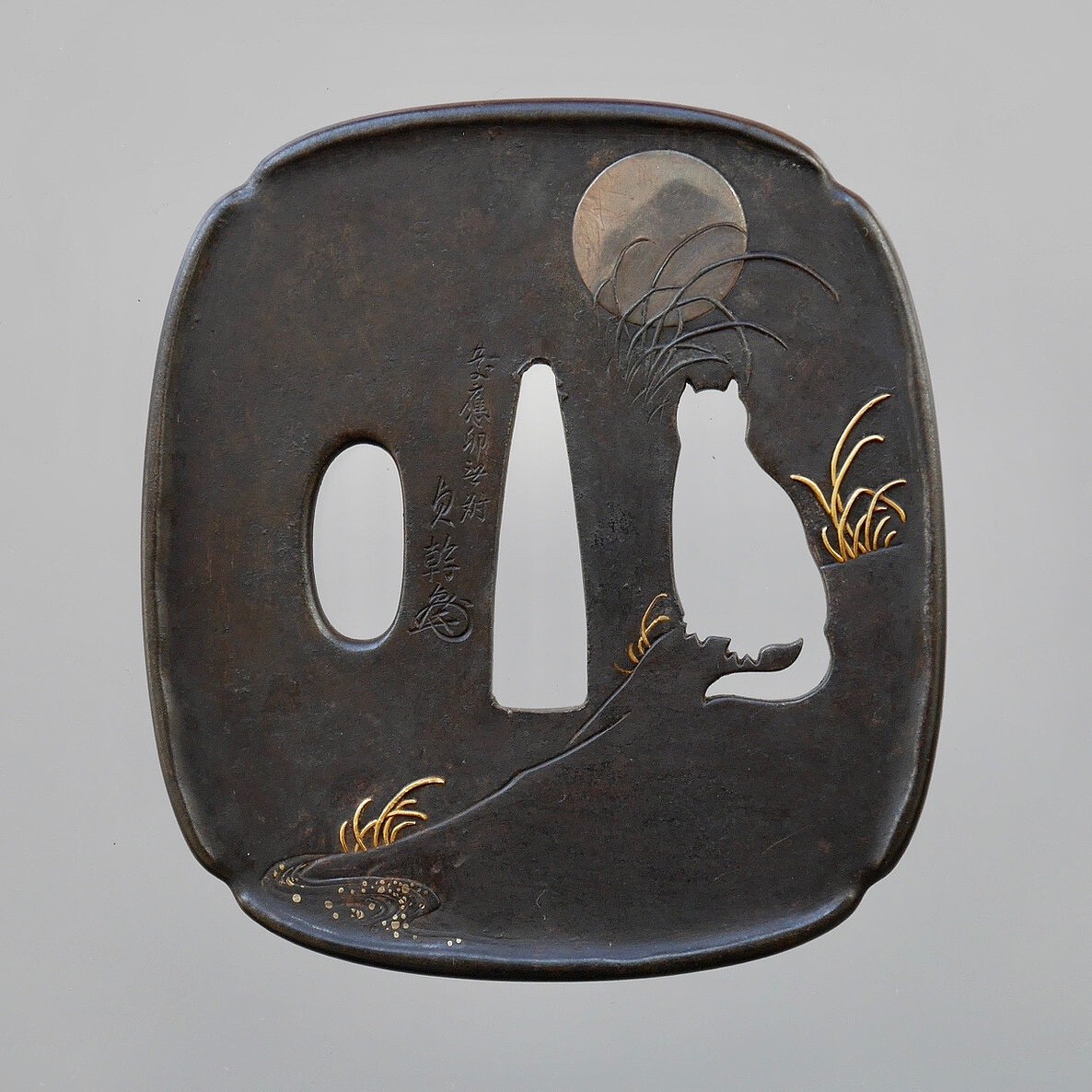
Okawa Teikan
 8 points
 -
The puzzle is: Tsuki Mitsuoki chōsen (月光興彫鐫) – "Engraved by Tsuki Mitsuoki" The artist had the habit of abbreviating his Ōtsuki School name to just Tsuki and signing the Oki character very similar to a kaō monogram.
 8 points
 -
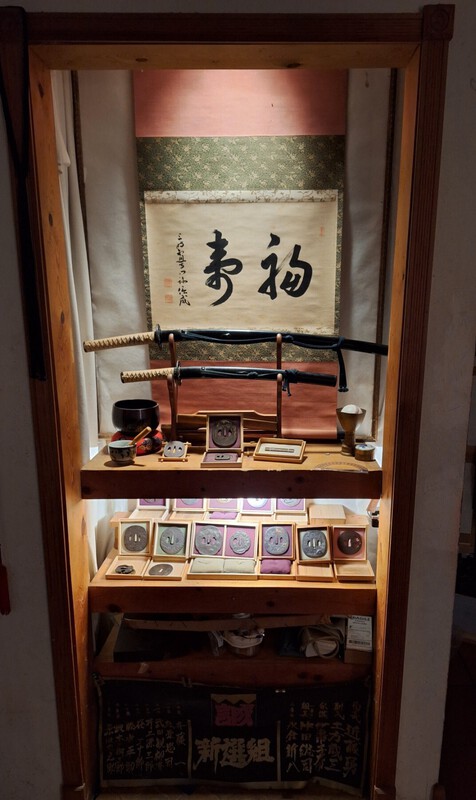
Naw mate my Tsuba don't travel anymore and just fine where they rest
 6 points
 -
I'd be very tempted to take a junker or fake katana, make a crude shirasaya. Split the tsuka and hollow out an area for an Apple Airtag. Glue back together. Ship it to and fro for a bit and see if someone takes the bait.6 points
-
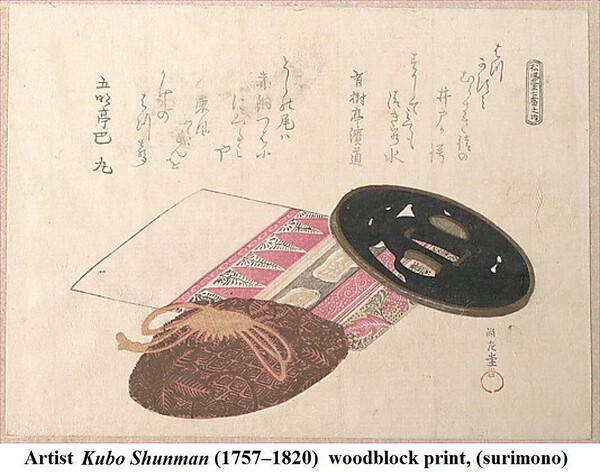
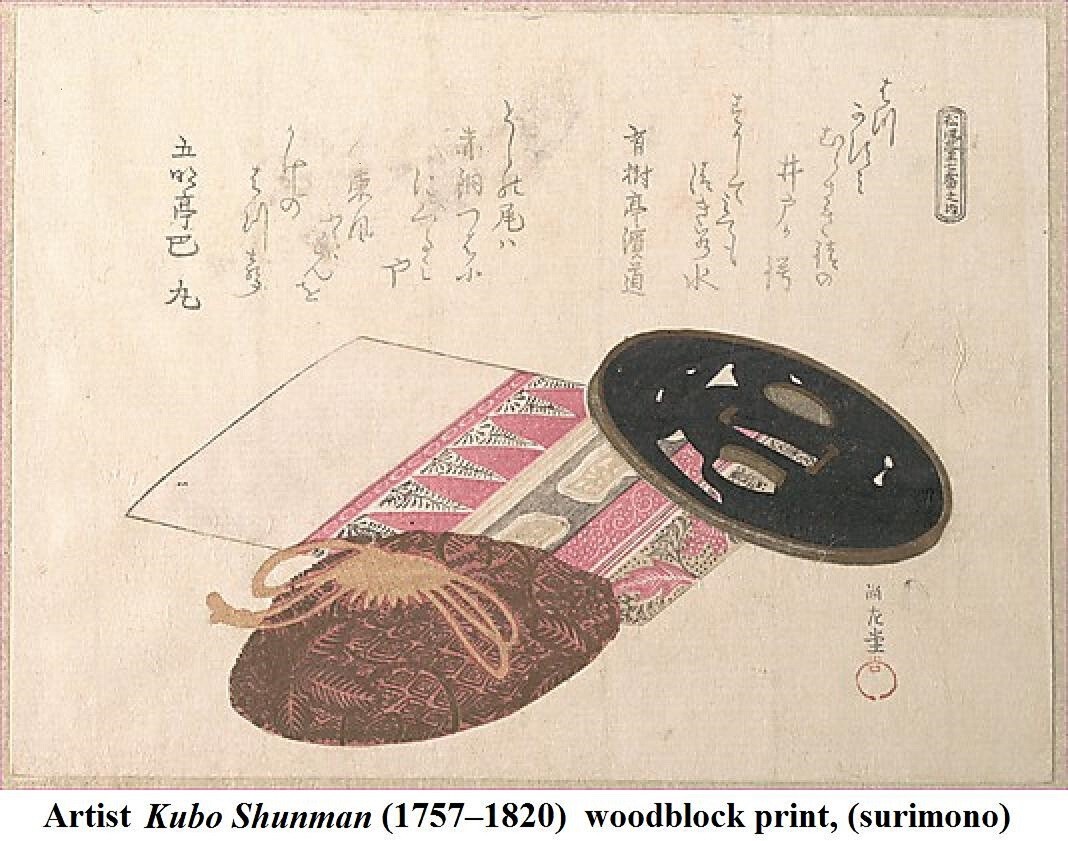
I was having a look around our local K-mart and came across these today. https://www.kmart.co...ALw_wcB&gclsrc=aw.ds A nicely made round "suede" look case with a draw string cover - They easily fit a tsuba up to 82mm in diameter and offer great protection. The two clips under the lid could also be used for menuki. At $9 AU They are far cheaper than a Kiri box, of course not as traditional. Though from the images of some old Surimono, Kiri boxes were not the only way tsuba were stored. [Just a little 'post Christmas' shopping I bought out the local stock ]
 3 points
 -
3 points
-
3 points
-
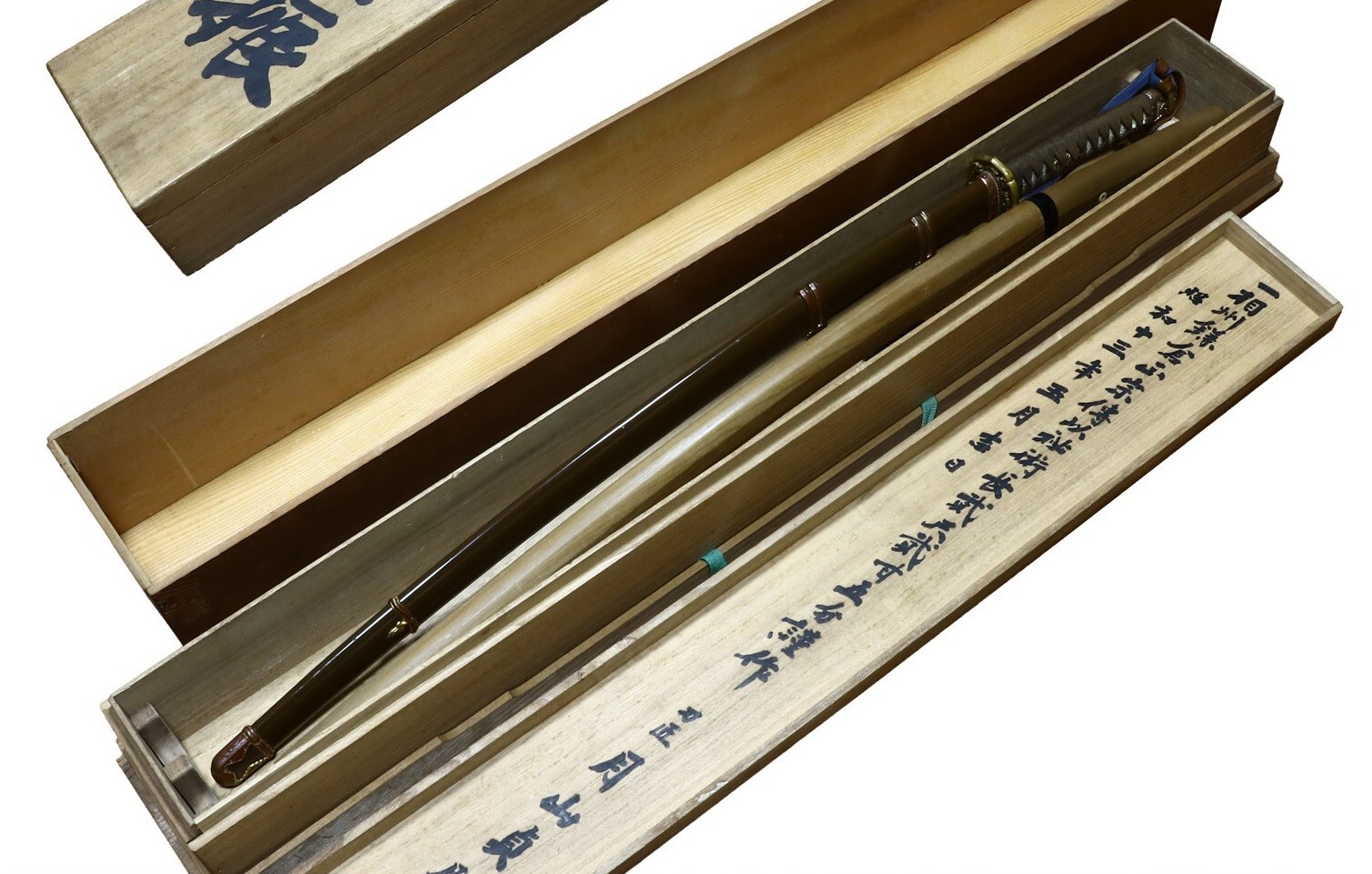
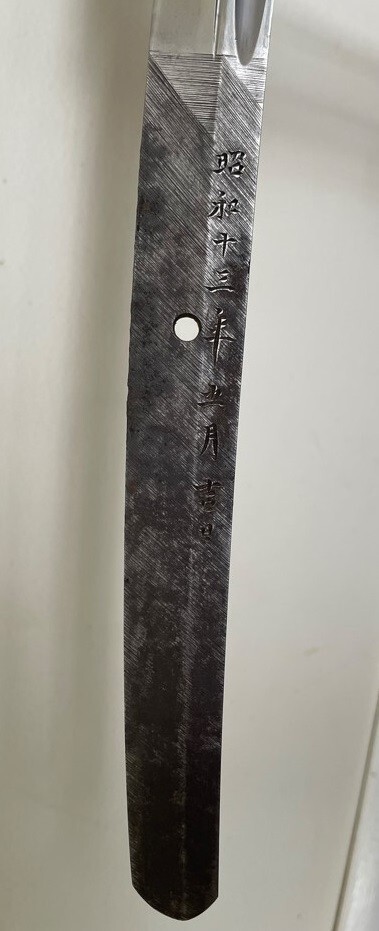
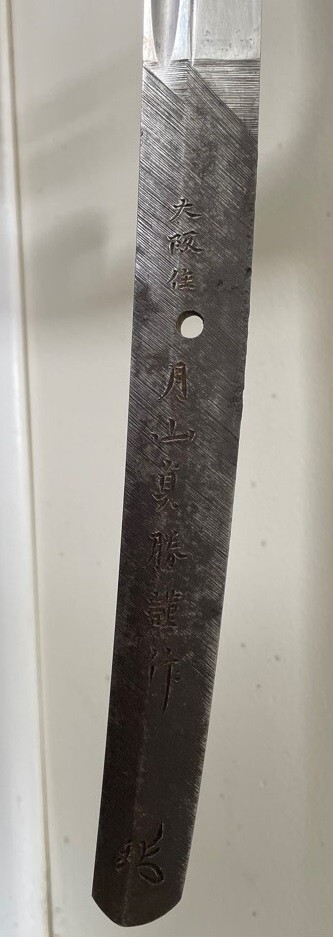
That was a year in which some of my blades left, others were added. Here, for example, is a Minamoto Yoshichika Tachi from 1928. It came in the original box.
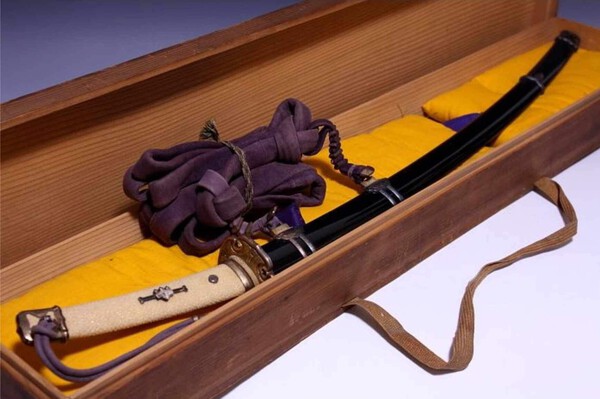
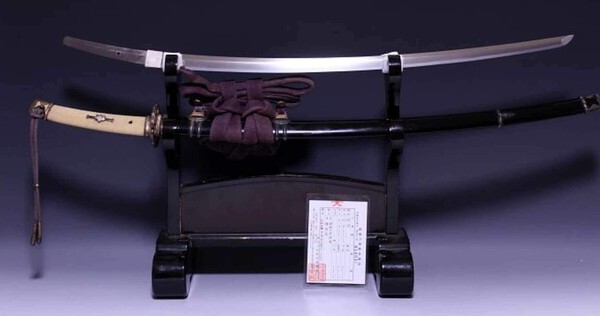


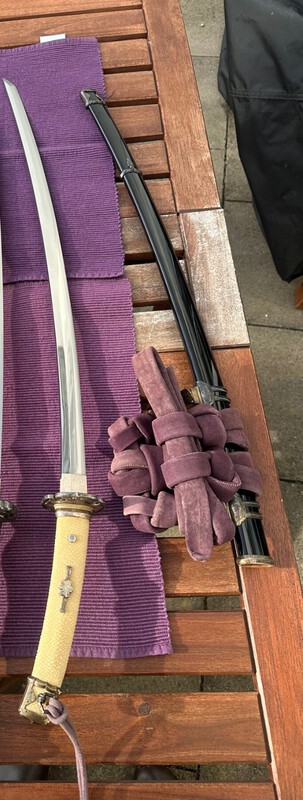

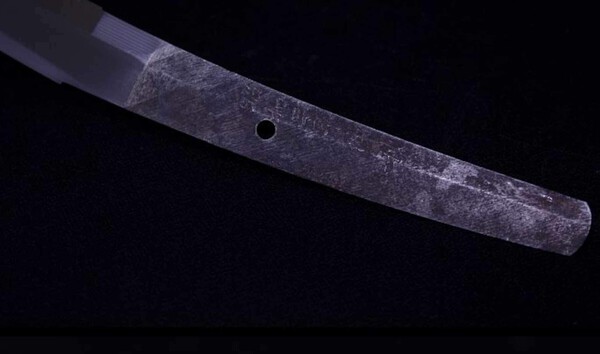
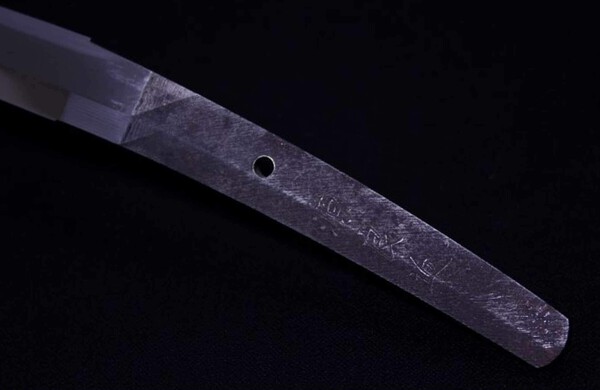
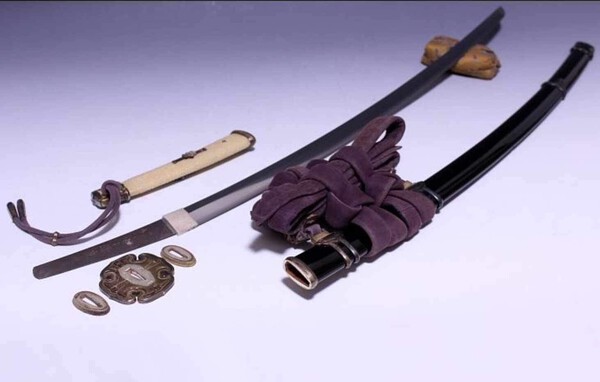
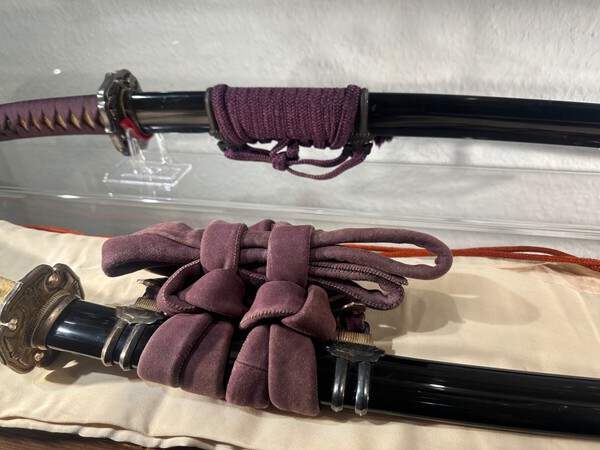
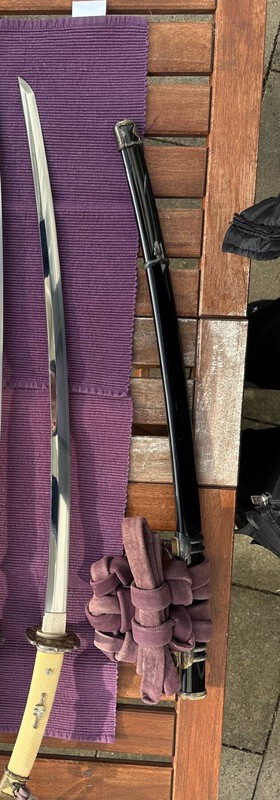 3 points
 -
What books to read? Well unfortunately we can't recommend the befitting title of "Japanese Swords for Dummies", so here are a few books that you will likely not read: https://new.uniquejapan.com/essential-books-on-Japanese-swords-and-culture/ http://www.nihontomessageboard.com/faq.html3 points
-
Looking for input/opinions on Minotogawa swords. Having spoken to a couple of members privately, I thought I would post this publicly and get as many opinions as people are willing to give. I understand that they are more rare than other war time gendaito such as Yasukuni-To, and they sell for premium prices of 8-10K or more these days. Yet, I can't help but wonder: 1. Are people actively seeking them at these prices? 2. Would you purchase one at these prices? For sake of this inquiry, I am referring to pristine pieces or as pristine as they can be in all original war time condition ie; excellent koshirae with proper tassel, kikusui habaki, ubu, signed along with kikusui mon, and dated. 3. What makes them so valuable or not in "your" opinion and why? 4. Which of these smith's do "you" consider to be the "best" and why? Thanks for your opinion. Ed2 points
-
Hi members Today I would like to introduce my Nobuyoshi, there is also a nice Nobuyoshi Wakizashi Ishi Echizen no kami Minamoto Rai Nobuyoshi was a 3rd son of first generation Shinano no Kami Nobuyoshi. A late blade of Him in Type 94.
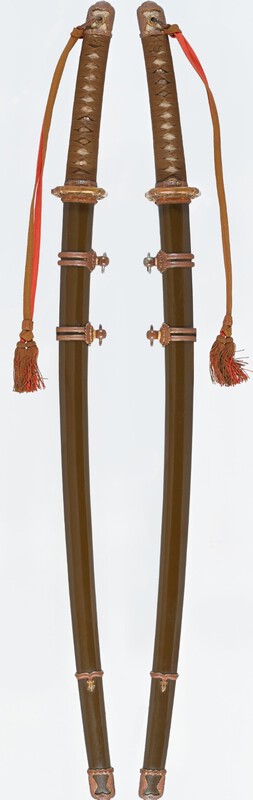
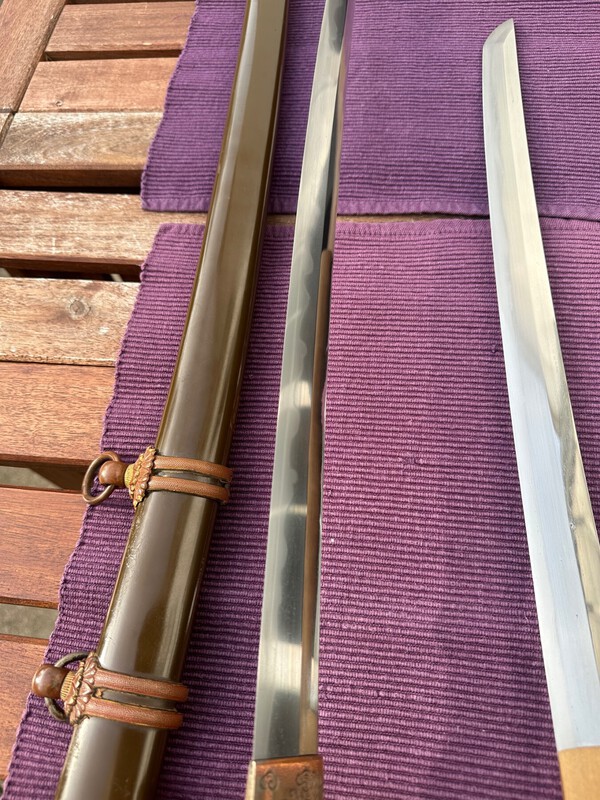
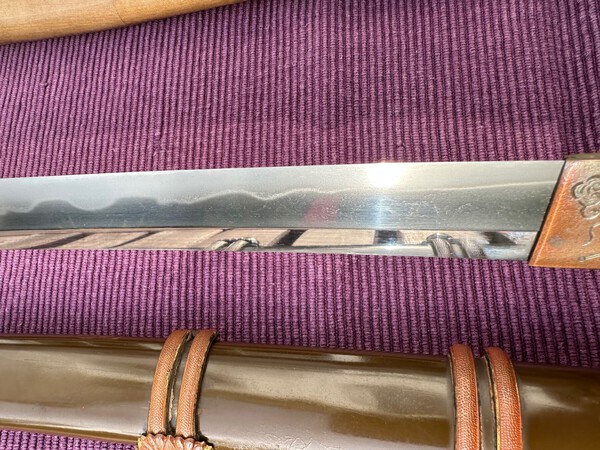
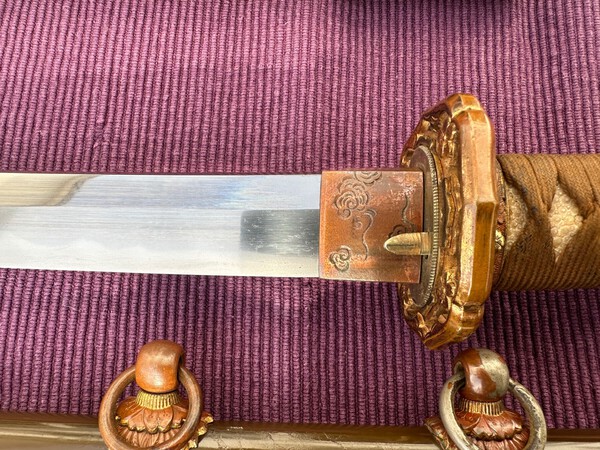 2 points
 -
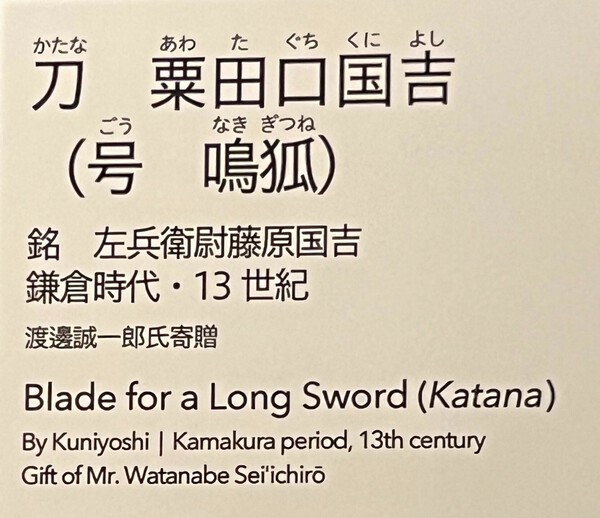
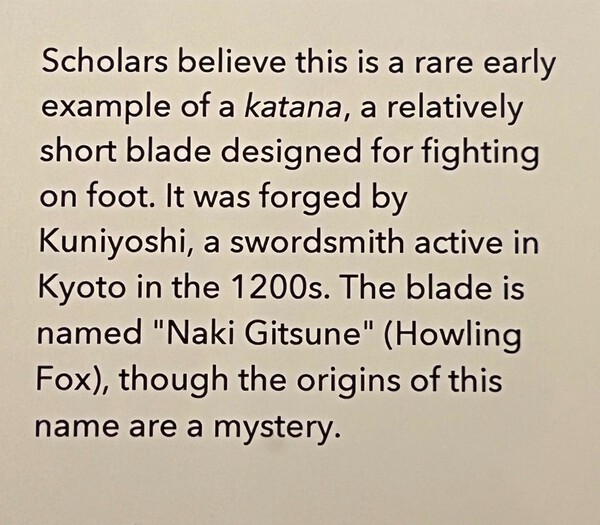
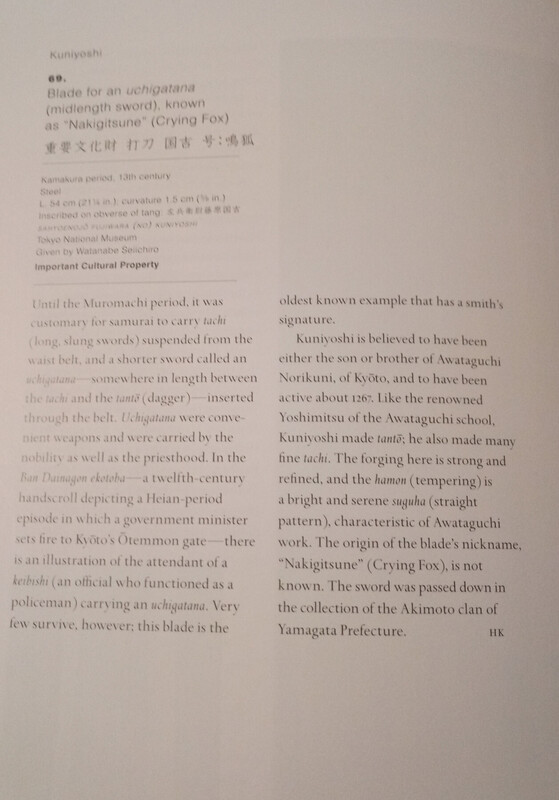
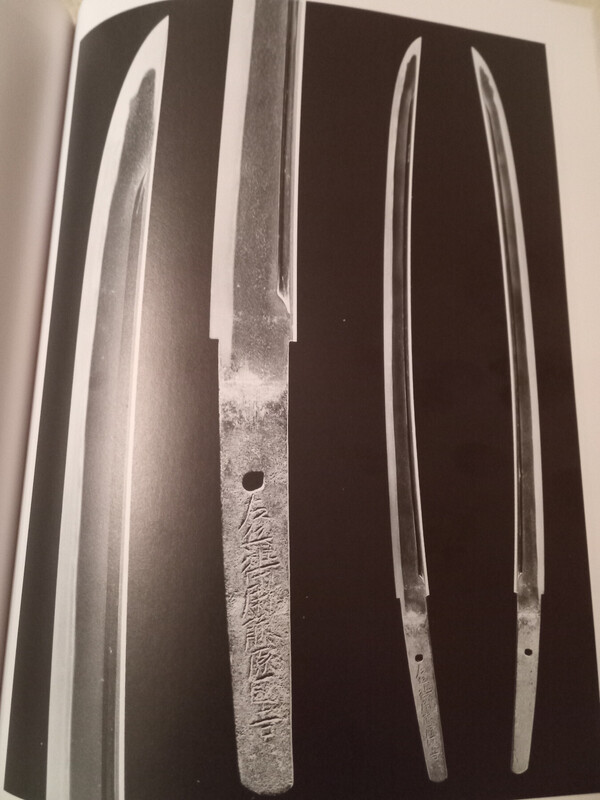
I recently saw the Kuniyoshi known as the "Nakigitsune" or Howling/crying fox. The BMFA shows a nagasa of 21.25", clearly wakizashi length. Yet, the card at the Tokyo National Museum calls it a katana, though here katana may be used generically for sword. Additionally the Boston catalog refers to it as "Crying" fox. TNM labels it as "Howling" Fox. It is this type of a lack of continuity which adds to confusion.

 2 points
 -
@Swords…..and if you use some initiative and look on Amazon in the books section for “Japanese sword” you will find numerous excellent books on the subject……that you probably also won’t read. Anyway that’s enough immature babble from an old person who tried to help you. Goodbye and good luck.2 points
-
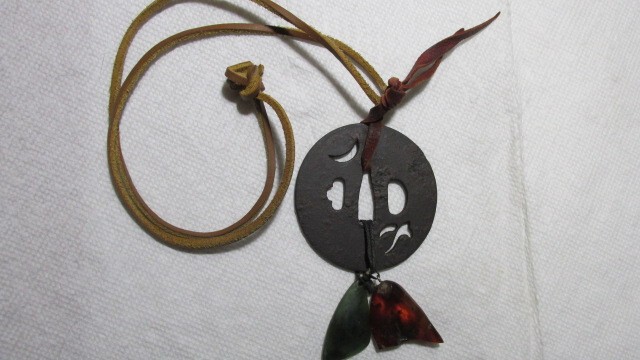
Hello all! Well, this may be slightly off topic, but this is a “Tsuba in my everyday (or almost every day) objects-the culture of Tsuba”! This is a pendant (necklace) I made from an antique tsuba and attached a piece of jade and amber to it. The amber has broken over the years (by about half of its original length), but it is still hanging in there! I chose a lightweight tsuba, so it doesn’t pull at my neck. I wear it often; it makes me feel closer to my collection! With respect, Dan


 2 points
 -
No date, as Steve pointed out. What "worries" me a bit is that the cert quotes the gold inlaid cutting test under "mei" and not in a separate "kinzōgan-mei section"...2 points
-
It's like being married. You have to come to the point where you realize you cannot change your spouse, she (or he) is what she is. Once you accept that, you can then just talk to her where she's at and not get frustrated about it (or at least not show it outwardly! Ha!).2 points
-
Why do you like the blade? How does it fit in your collection? Is the condition acceptable to you at this price? Do you know what the papers say? There were a ton of Kanesada’s… do you know which Kanesada this is? Have you compared this Kanesada’s blades against similar Kanesada blades (or blades from similar smiths of the same size, school, type, mei, period, condition, mountings, etc.) at other sites to see if this is a fair price? And finally, do you like the blade at this price no matter what we think? At the end of the day, that is really what matters.2 points
-
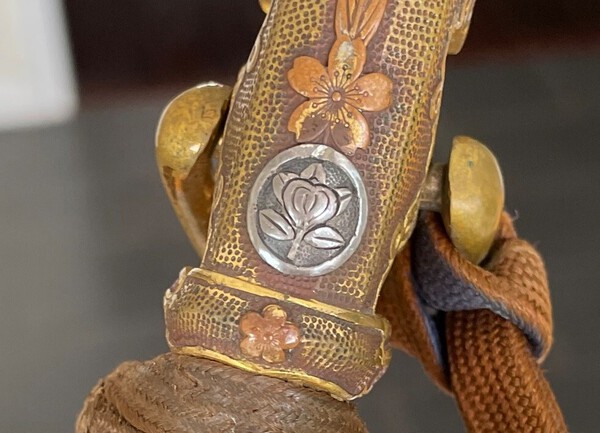
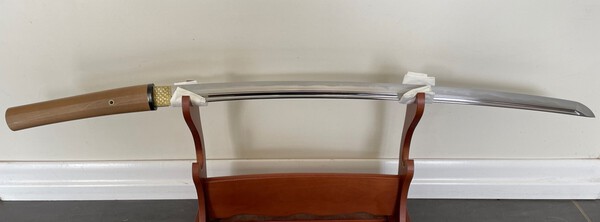
G'day Guys, No one has posted on this thread for a long time, so I thought I would add my boxed Gassan Sadakatsu, with nice type 94 koshirae. Cheers, Bryce


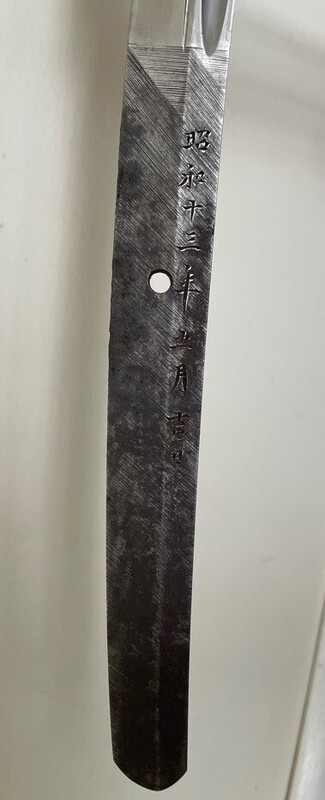
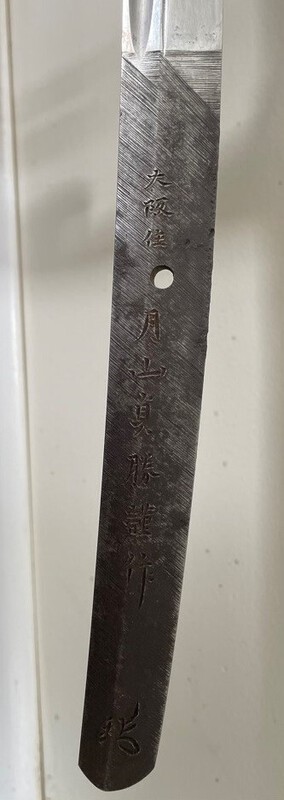
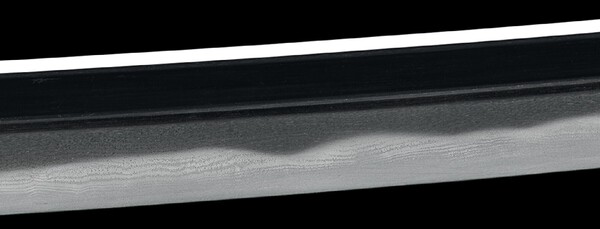
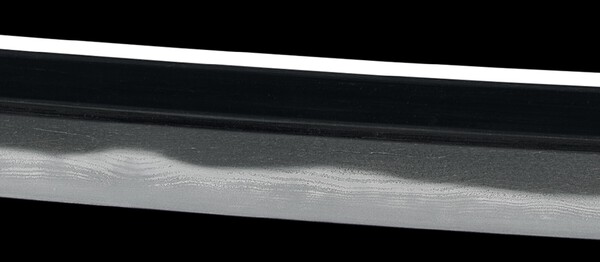 2 points
 -
Jon, when I ordered from AoiArt previously, the shipping was included in the auction price. I purchased this one for 350k yen. Last time I ordered one, it took just under a month from when I paid to when they were able to get it shipped. They were very pleasant to deal with and I definitely recommend them.1 point
-
The same Masaaki sword recently sold on Yahoo.jp for roughly 7000usd. https://page.auction...p/auction/11172188351 point
-
The situation has not improved, thefts are still occurring. https://www.militaria.co.za/nmb/topic/41857-current-spate-of-mail-thefts/#comment-4290791 point
-
Avoid the auction fees by buying direct from the seller here .1 point
-
From "Art of the samurai" Boston Museum exhibition.
 1 point
 -
If you don't have something useful or educational to say, then Nobody here likes or needs posts adding nothing but conflict. This isn't Facebook. We have an ignore feature. Use it.1 point
-
According to Guido's list, Yoshitoyo was active in Ansei (1855-1860).1 point
-
No date for the cutting test. The paper says the sword itself is circa Tenmei (1781-1789)1 point
-
There is a lot of good information here (maybe you've aready seen); https://markussesko.com/2015/08/11/the-wakizashi/#:~:text=The honzashi of the samurai,measurements were slightly adjusted later. With so many changes in the laws regarding sword length, one can assume that they weren't being followed or enforced very strictly. Also, the definition of "shaku" wasn't standardized throughout Japan until later in the Edo period. Basically there were different versions of "shaku" in use depending on the location (and profession...fabric makers have their own shaku). There are a couple of threads on this topic here on NMB, which I think you may have also seen. https://www.militaria.co.za/nmb/topic/6650-swords-and-length/page/2/ Here is another one https://www.militaria.co.za/nmb/topic/44442-evolution-of-the-shaku-unit-of-measurement/ 59 cms makes a pretty long and impractical companion sword. Yours could be a sword meant for someone not of the samurai class. Has it been shortened (at the machi) at all? As is usually the case, without the provenance, you will never be able to say with certainty who owned the sword or what their status was.1 point
-
A genuine one. Thats not my picture. Its from facebook to show the details, i watch out first if a nco is genuine or not. If you know where to look on you see the difference instant. It is often very hard to compare the blades on bad pictures to see the other details, like stamps, numbers and so on. If these 3 details are wrong you must not look further. The fuchi can be changed. So the stamps are not allways a clear sign if its fake or not. If someone change all parts on a replica he paid a lot of money
 1 point
 -
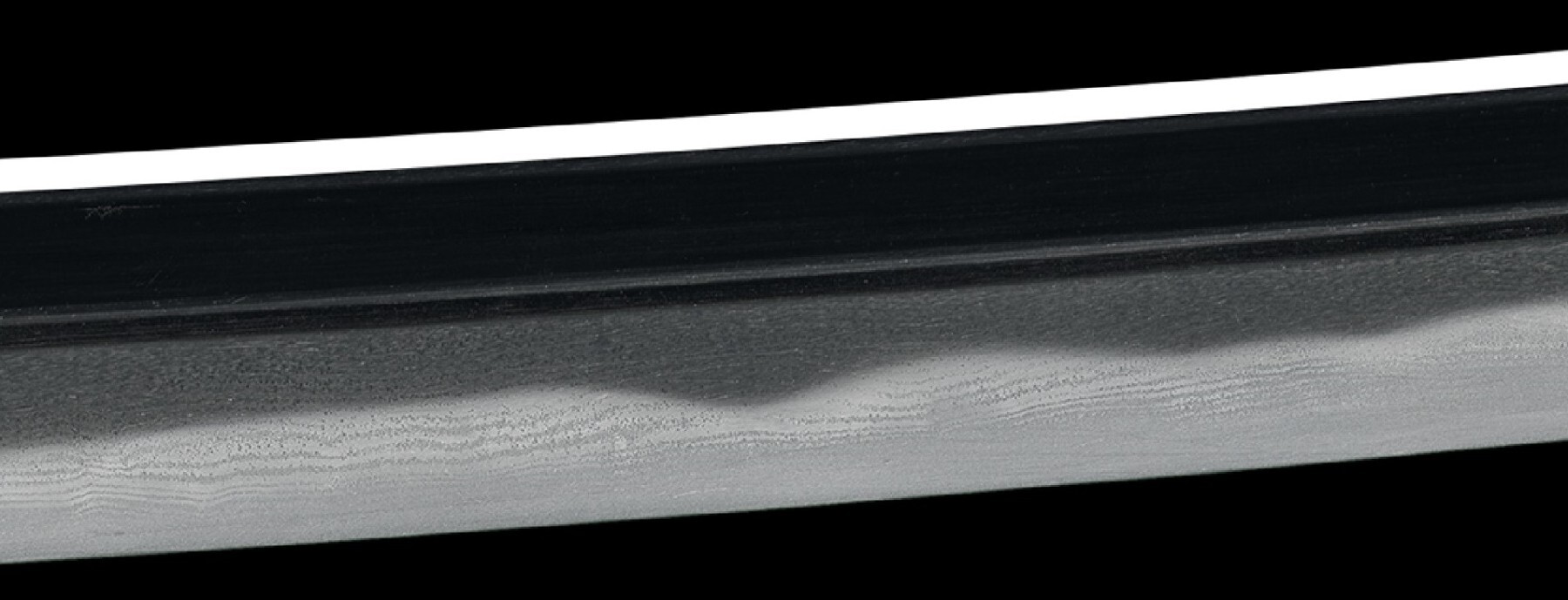
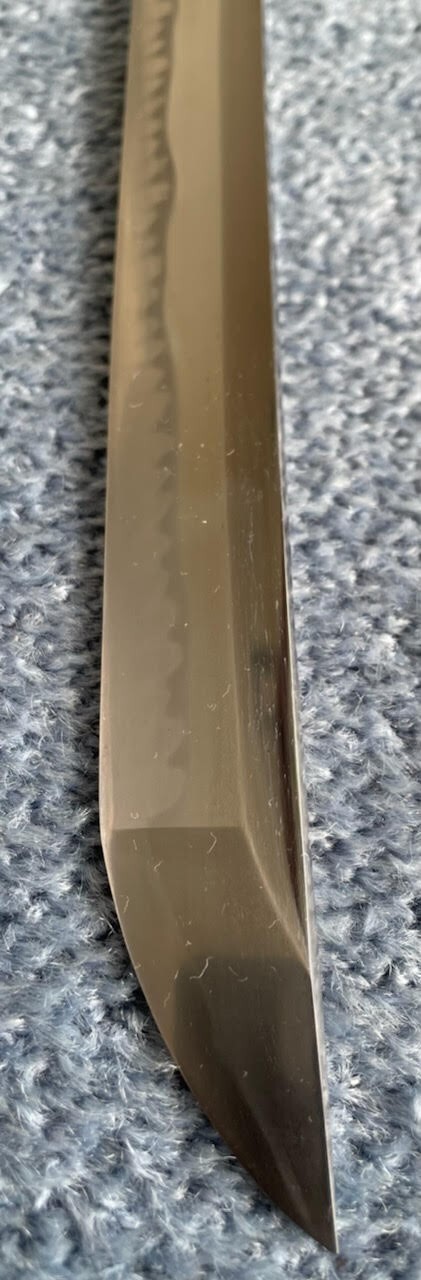
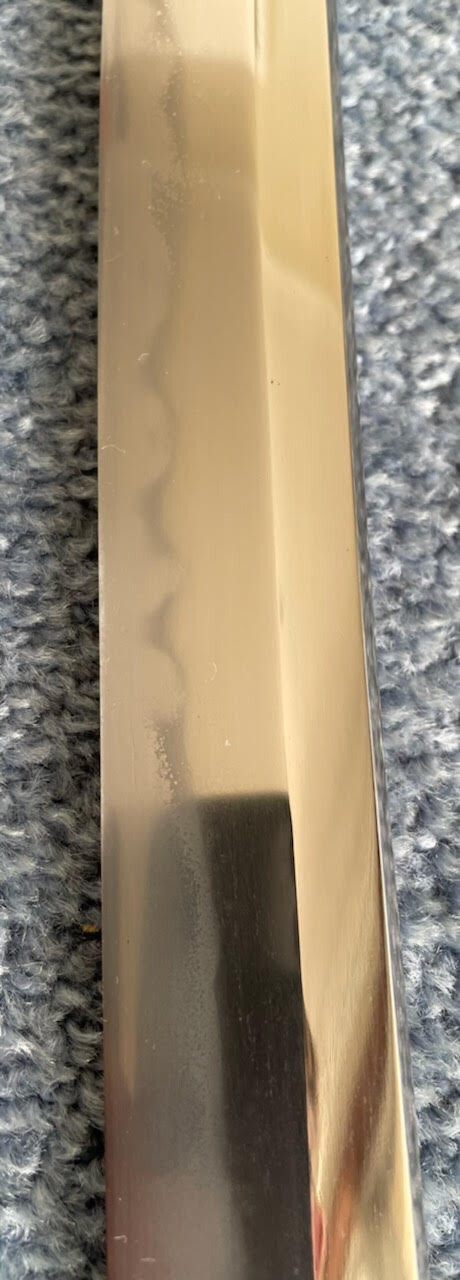
What you're looking at is probably tobiyaki: sections of hardened steel above the hamon, usually in small dots. They can be intentionally placed or isolated remnants of the hamon that has been polished away.1 point
-
Reduced prices on the following books: 1. Special exhibition - The Japanese sword: 130 EUR 100 EUR Iron Craftsmanship and the Warrior Spirit, TNM, 1997, Softbound A4, 356 pages 2. Gorgeous Japanese sword Bizen Ichimonji 70 EUR 50 EUR Sano Art Museum 2008, Hardbound A4, 164 pages 4. Kotetsu and Kiyomaro 80 EUR 60 EUR Sano Art Museum 2006, Hardbound A4, 160 pages 6. Supreme sword country – Bizen 70 EUR 50 EUR Sano Art Museum 2015, Hardbound A4, 186 pages 8. Bizan Aito Zufu, 1958, Hardbound B4, 256 pages 240 EUR 200 EUR 9. Meito Shubi, Junji Homma 1948, Hardbound B4 180 EUR 140 EUR 10. List of swords – Imperial family/ Shogun/Daimyo family 260 EUR 200 EUR Suiken Fukunaga 2020, Hardbound B5, 410 pages 12. Index of Juyo Nado zufu: Koto I-III, Shinto I 80 EUR 50 EUR NBTHK 1985, Softbound B5 14. Tokubetsu Juyo Nado Zufu vol.1 to vol.8 ( set of 8 books ) 650 EUR 500 EUR Plus shipping cost Price + PP fee1 point
-
As far as I can see, hada and hamon are typical of the Kongobei school. I should add that all smiths in this school have the Mori kanji (盛) in their name.1 point
-
Do modern netsuke count? https://fujiyasubook...fc15c19c455ce628a1351 point
-
I think this is the same tsuba as Okan showed in his original post - the image was taken by Baldwin Coolidge in 1904 for a series of tsuba cards for the Museum of Fine Arts Boston. https://www.pinteres.../512847476318414055/ or https://www.etsy.com...=nla_listing_details
 1 point
 -
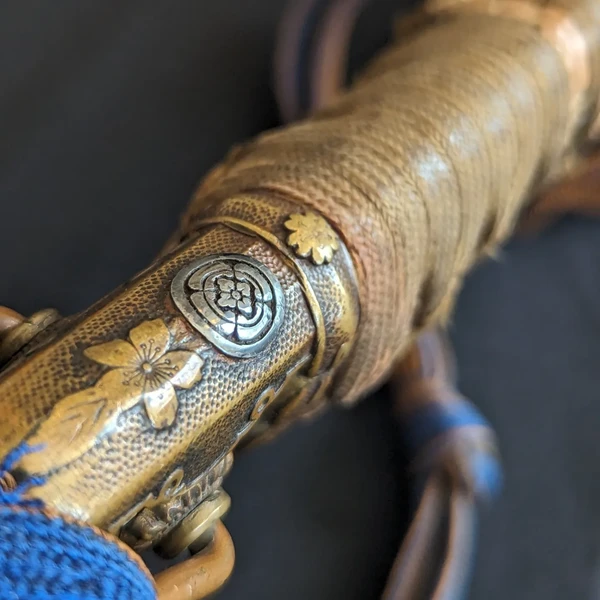
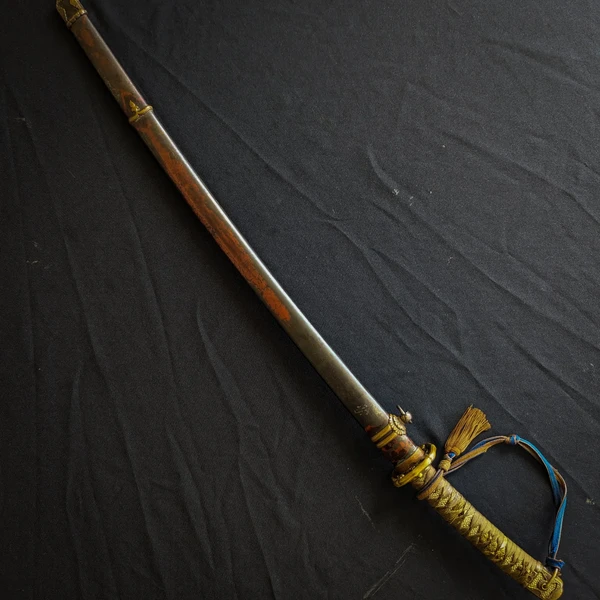
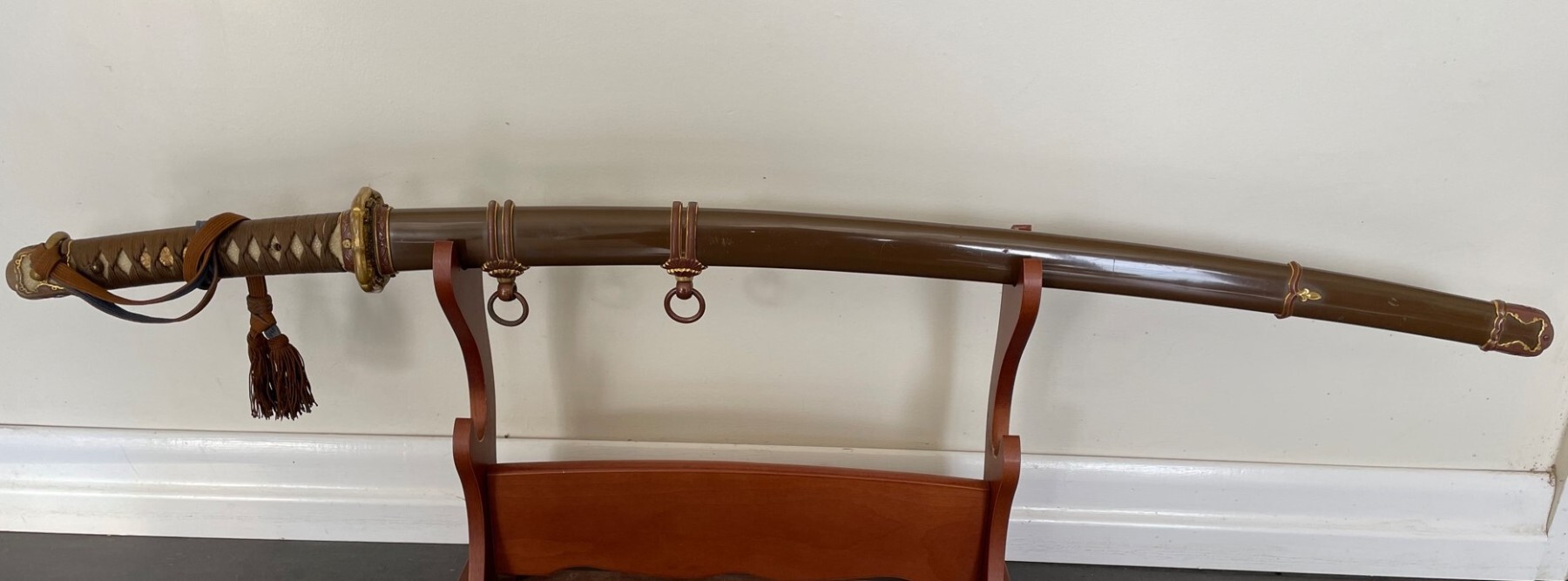
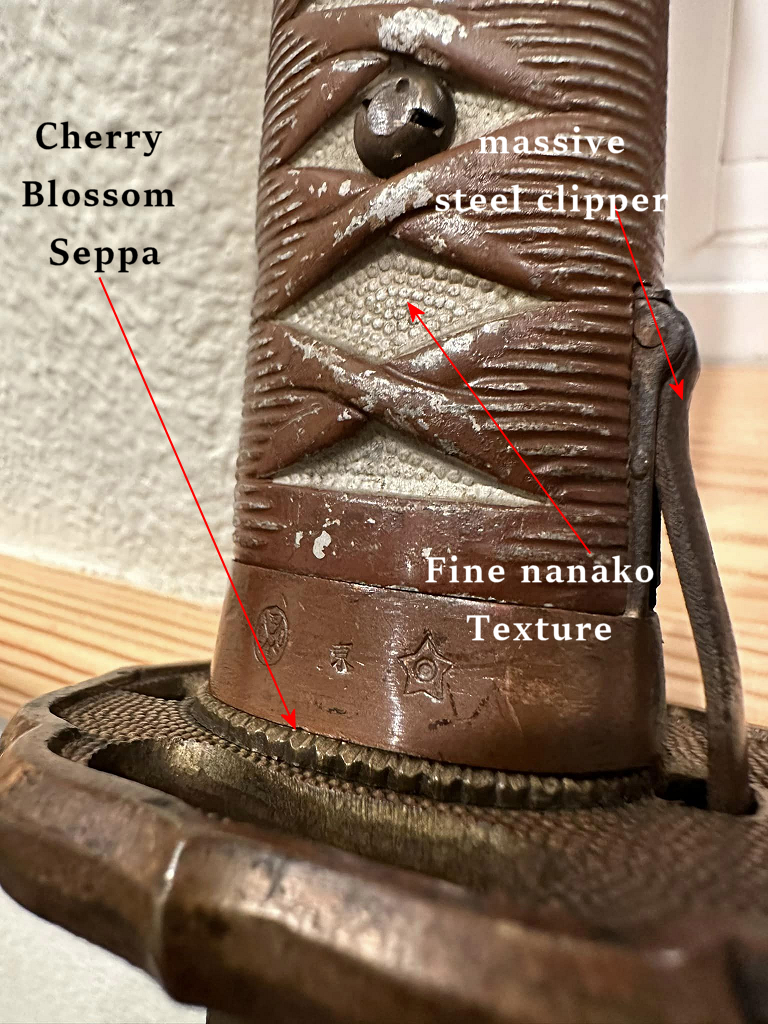
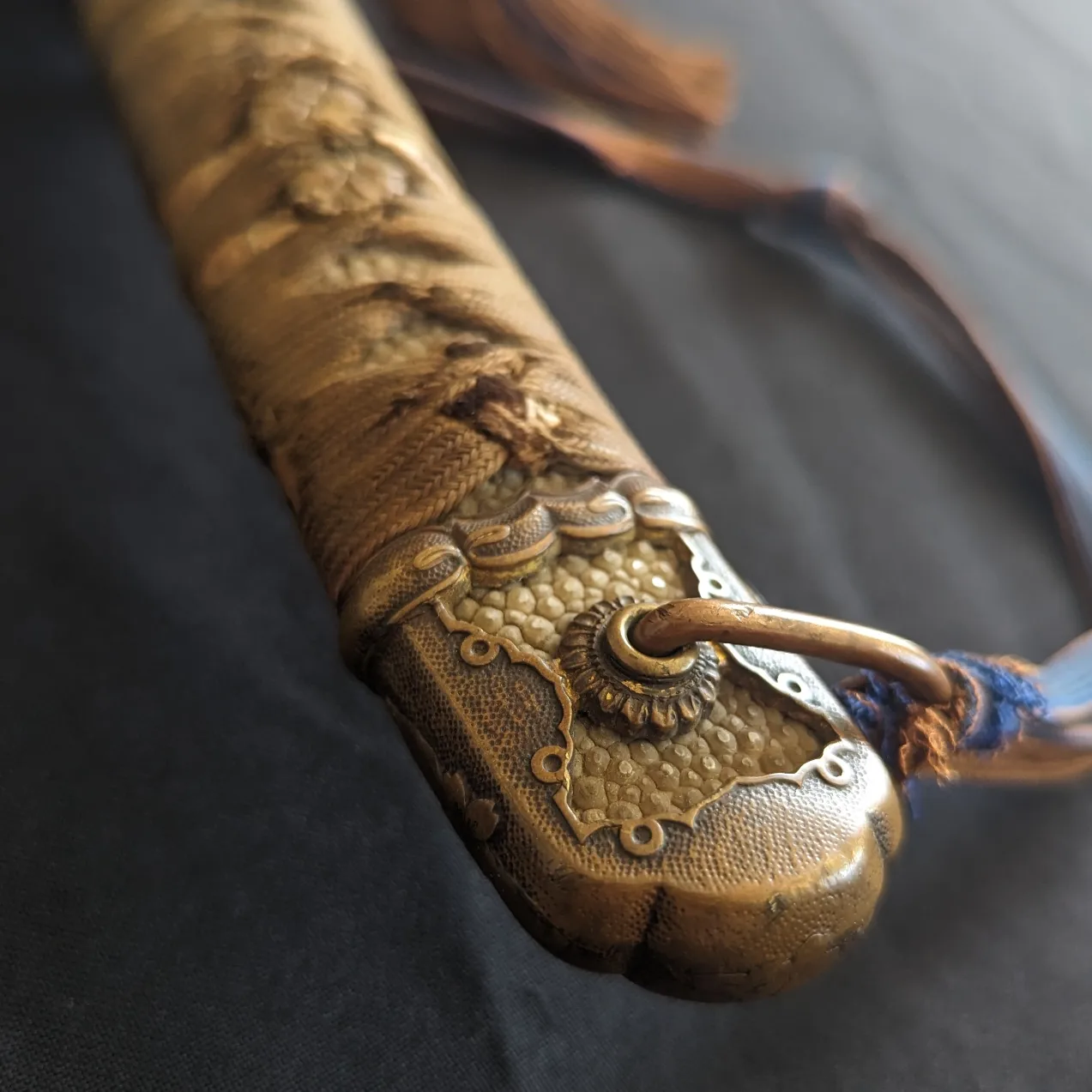
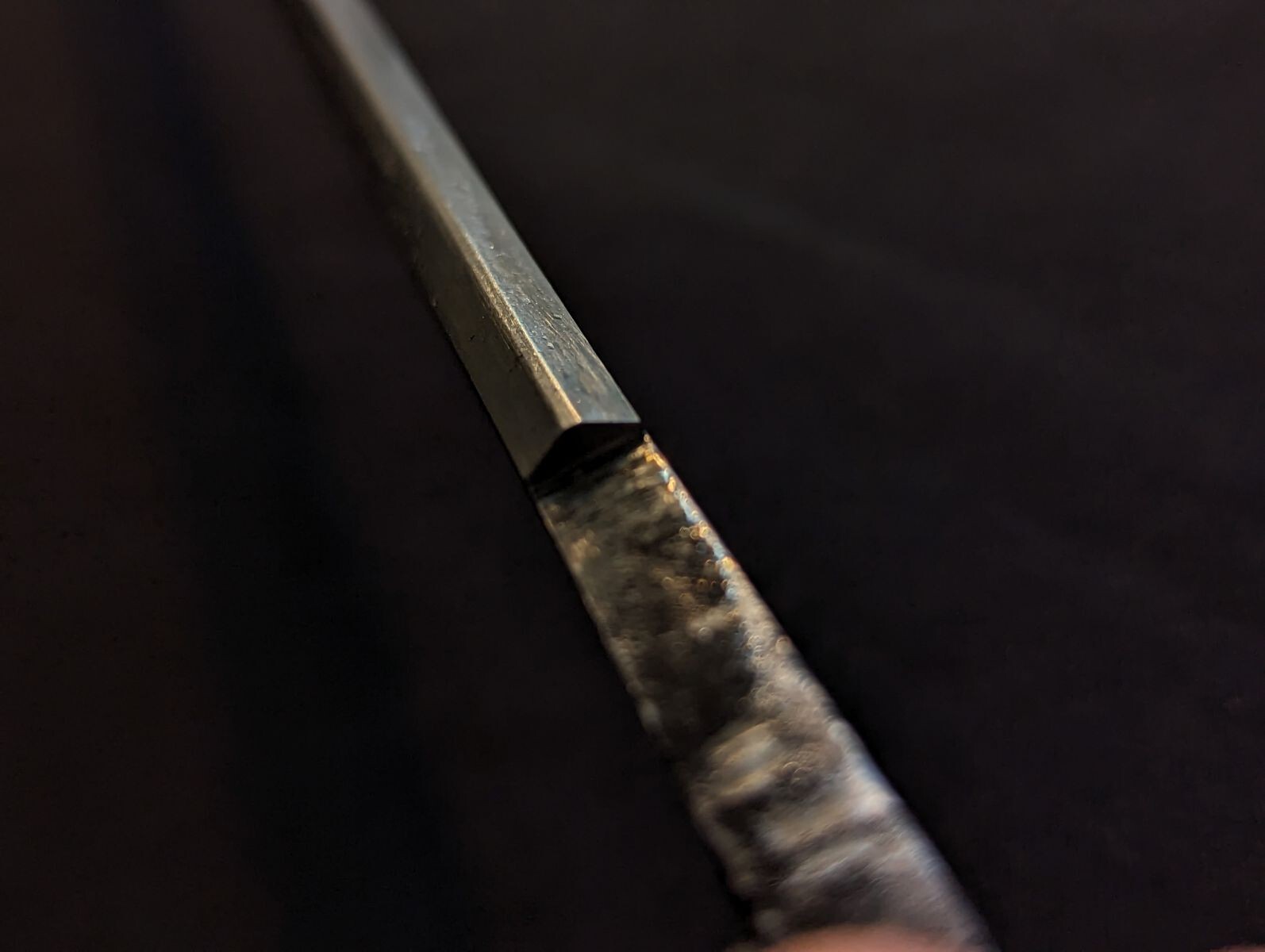
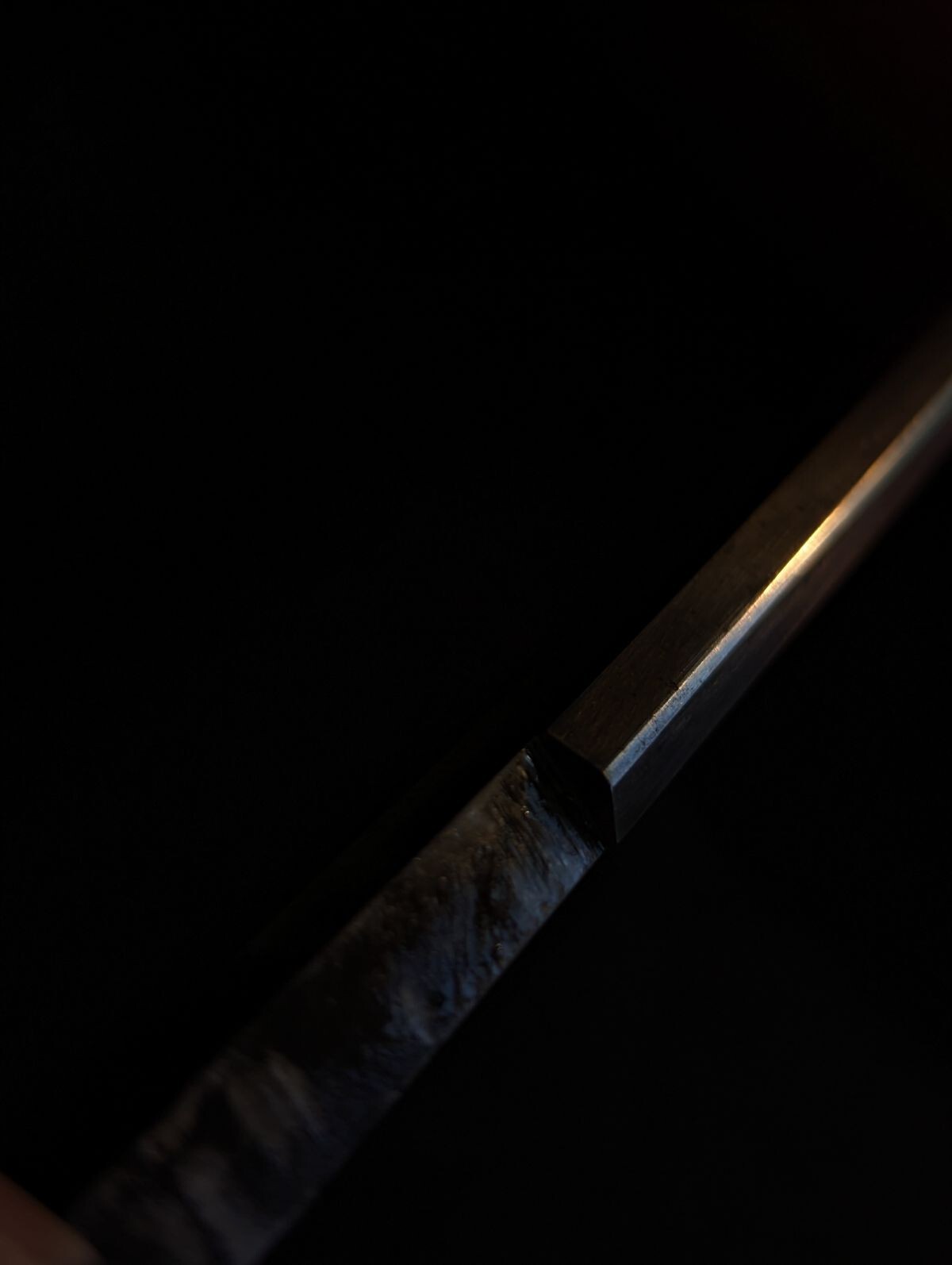
Likewise have not posted in this channel for a while but here is an interesting shingunto I had recently, with what appears to be a number of custom elements and which contained a koto blade with mitsumune and partial kijimono nakago.
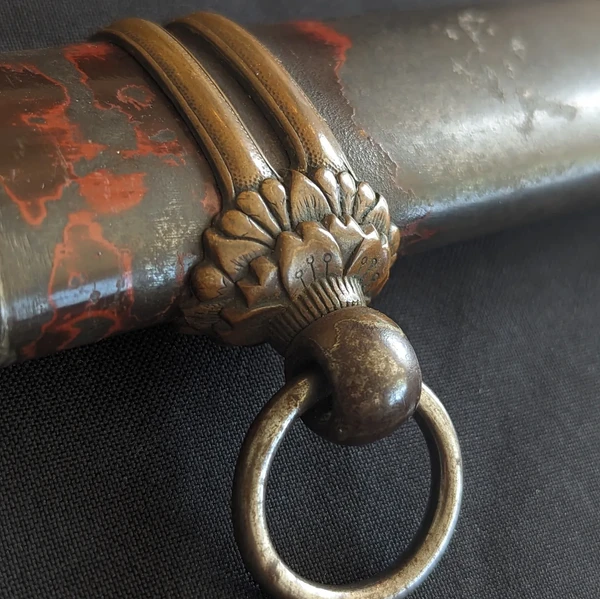
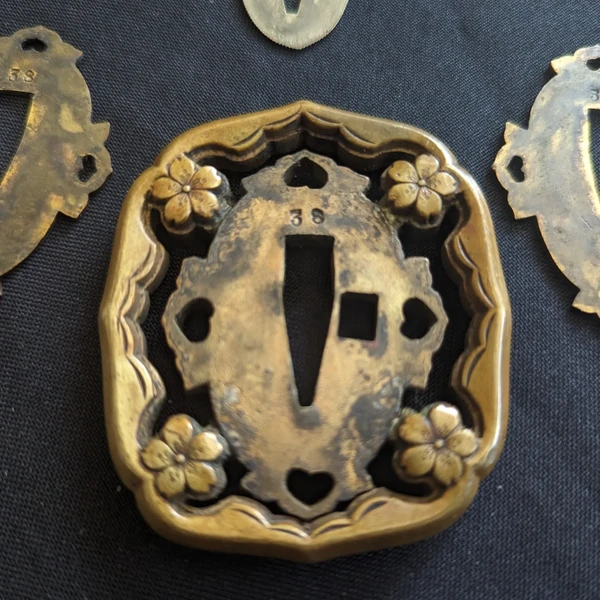
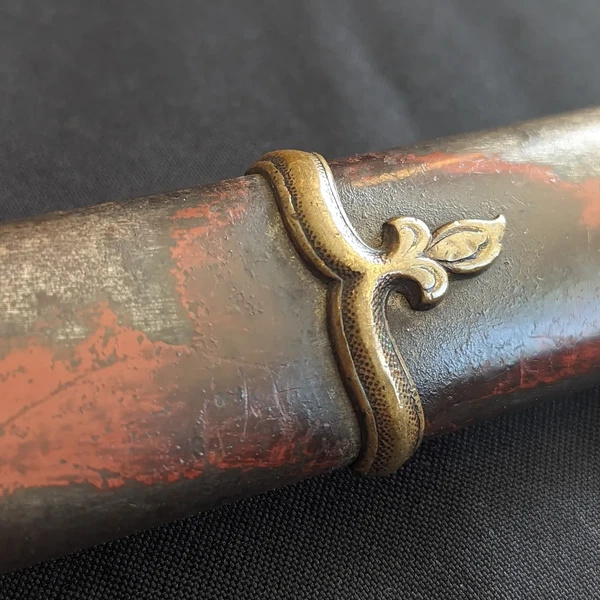
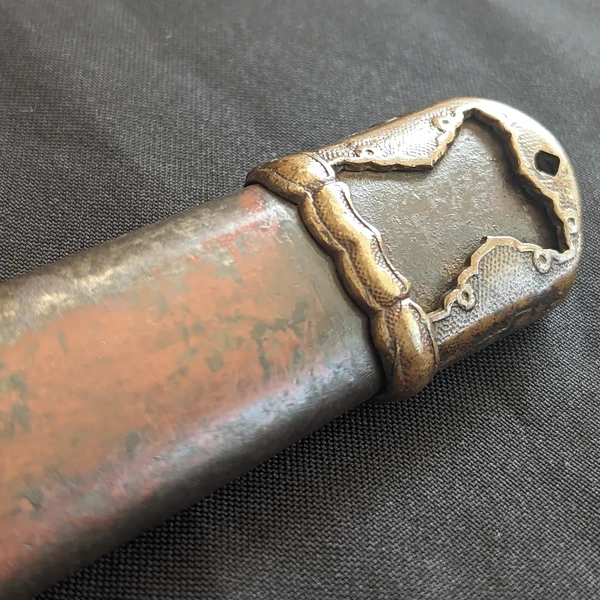
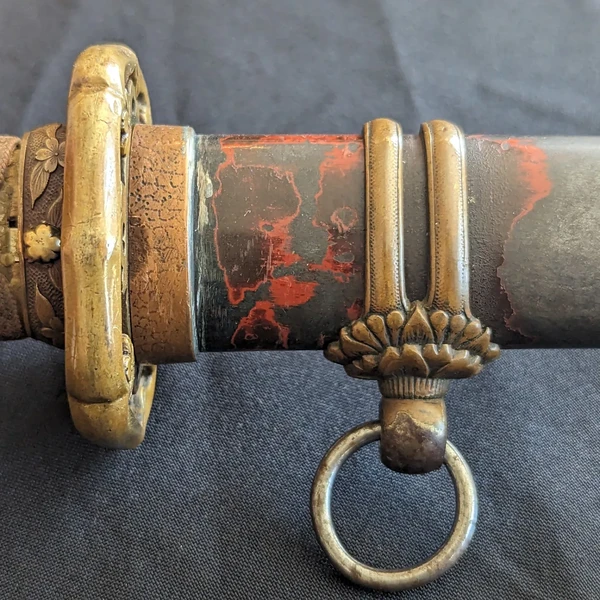
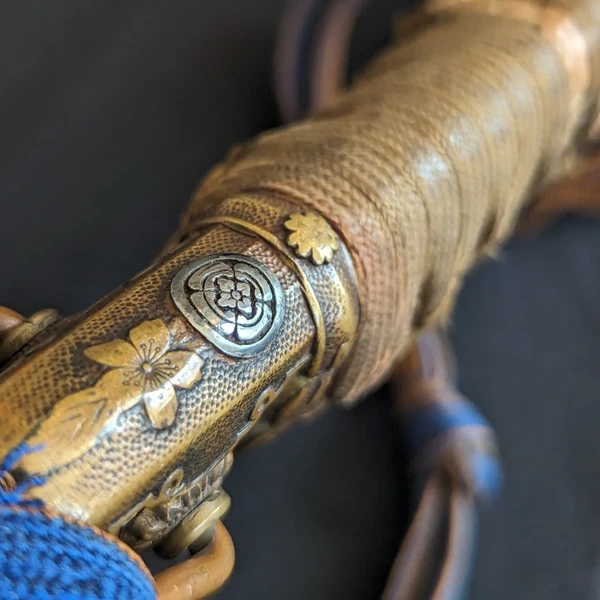
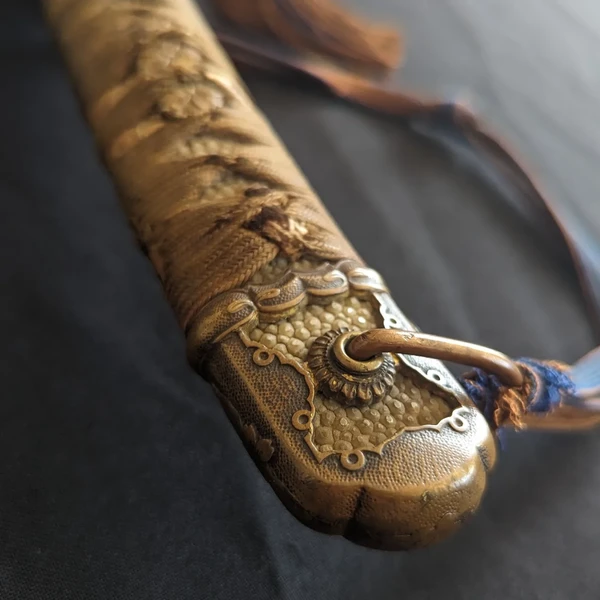
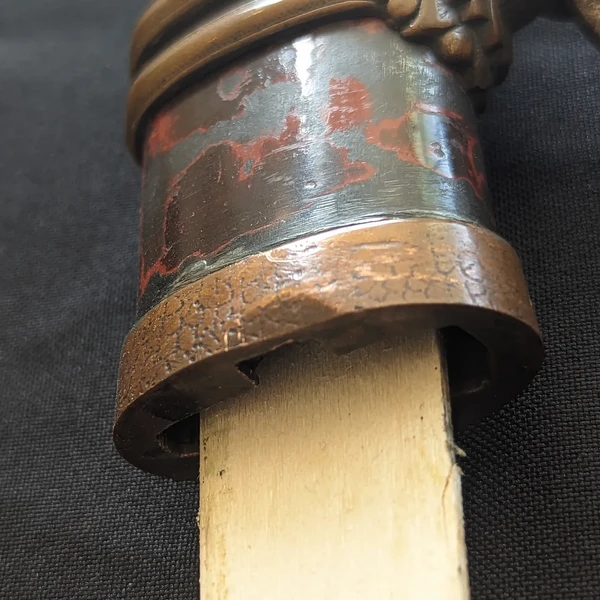
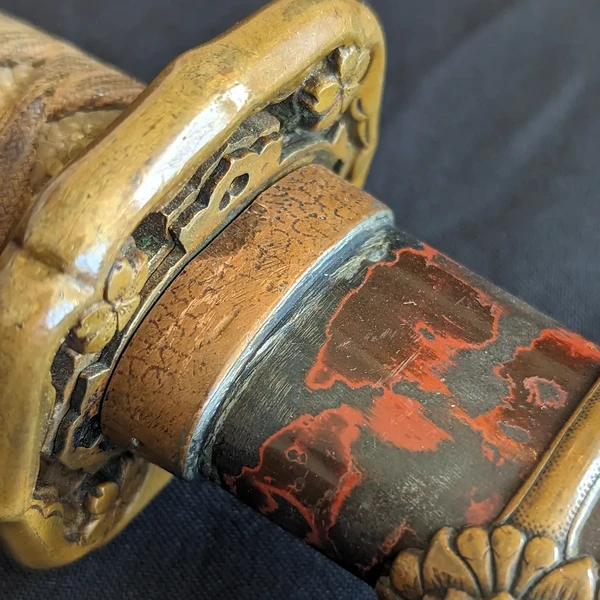
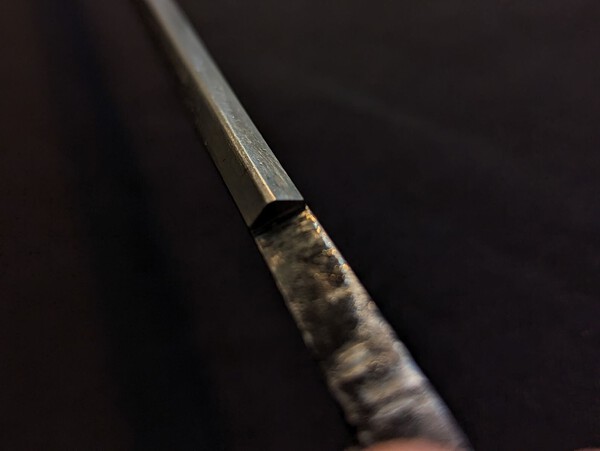
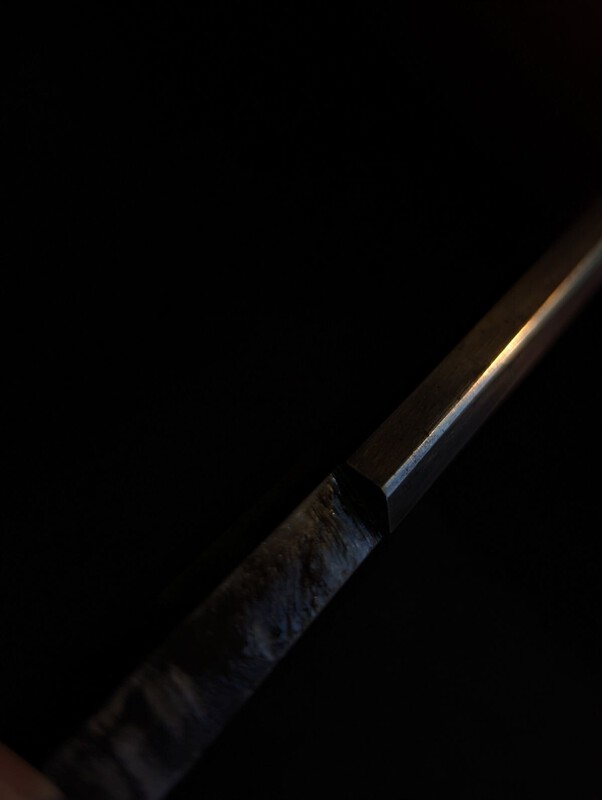
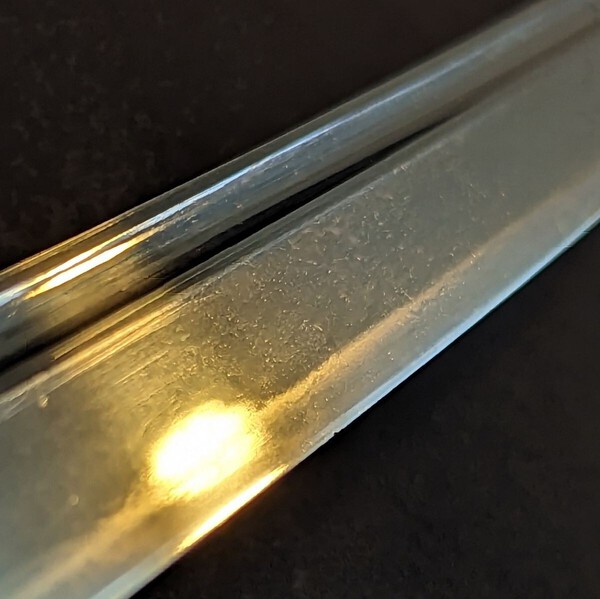
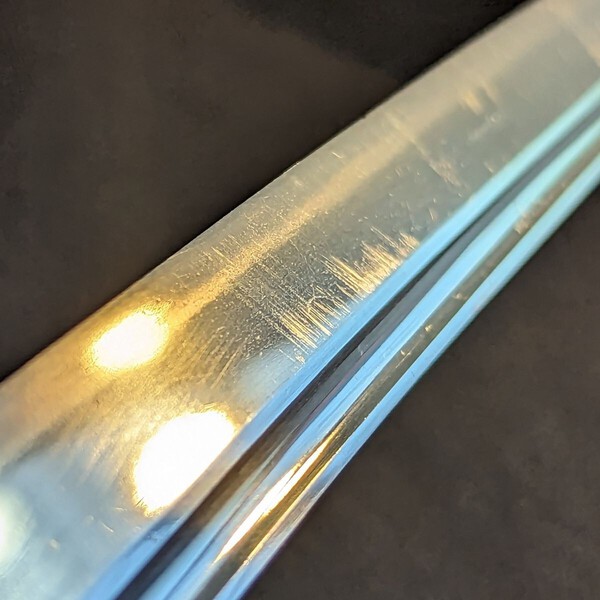 1 point
 -
I agree with @Rivkin As I have an extended international export experience I firmly believe that the only way this will get serious attention is if reputable representatives of the Nihonto community go in front of the media and raise awareness. Nothing else would work regarding USPS or the DHS. Almost impossible to sue them (better not go against them). The mandatory insurance should always be there and a portable tracking device is definitely a great suggestion. Cheers J&U1 point
-
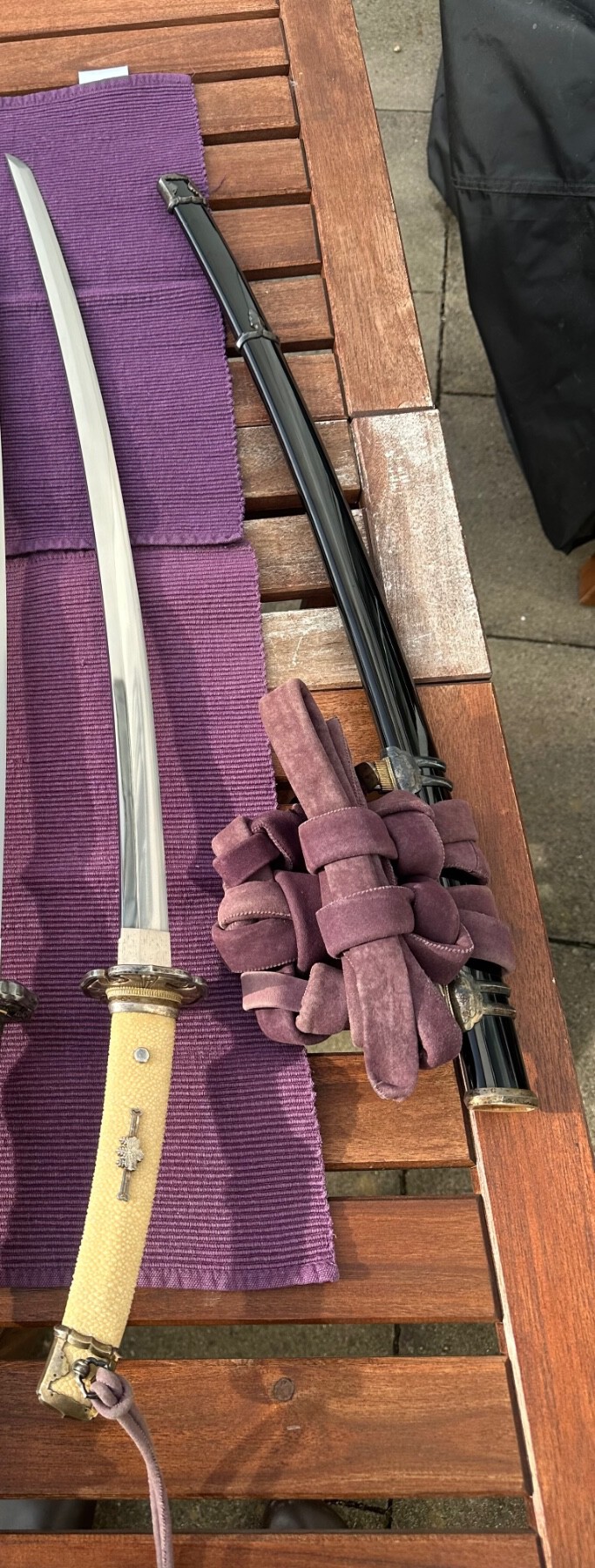
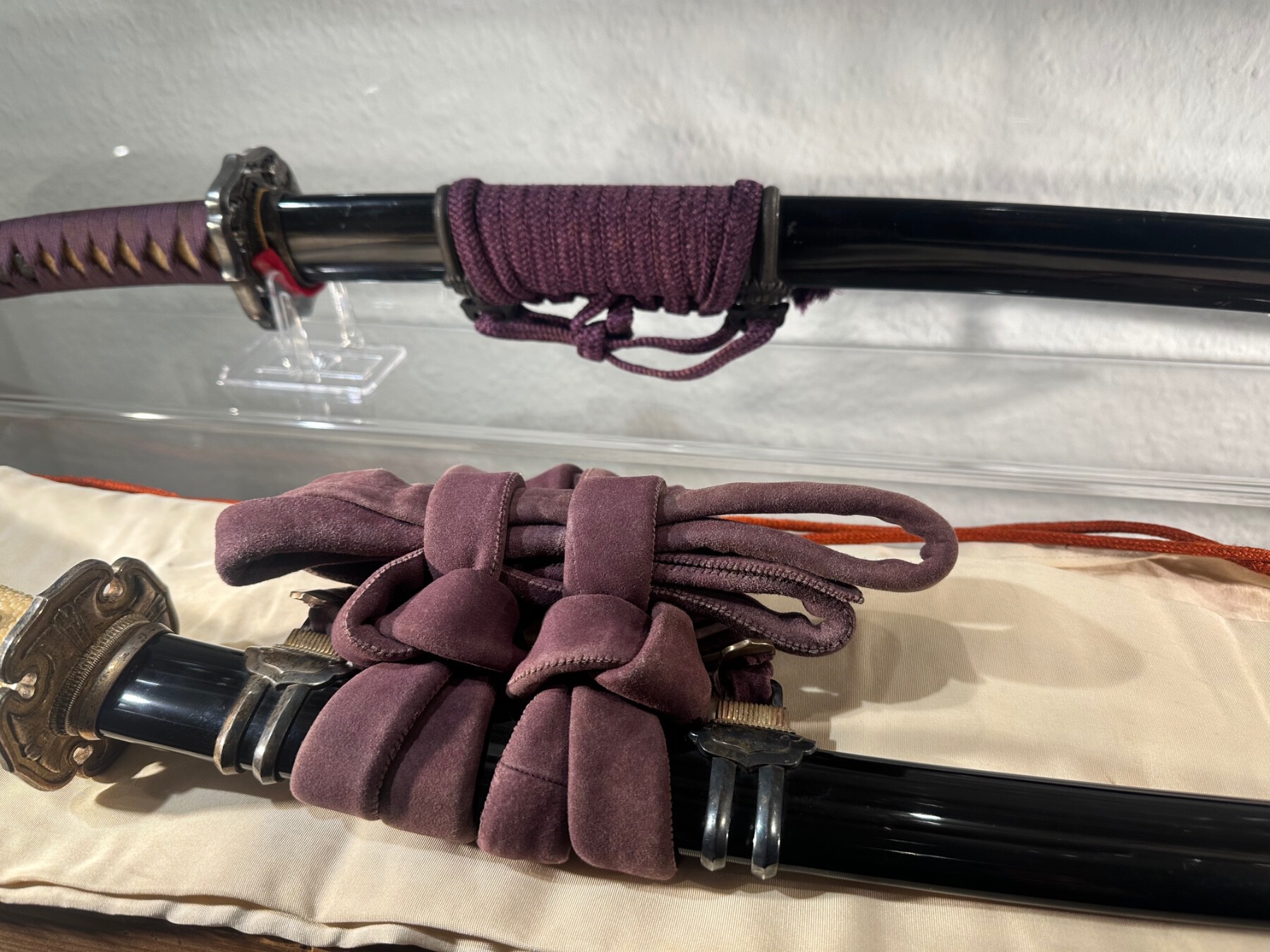
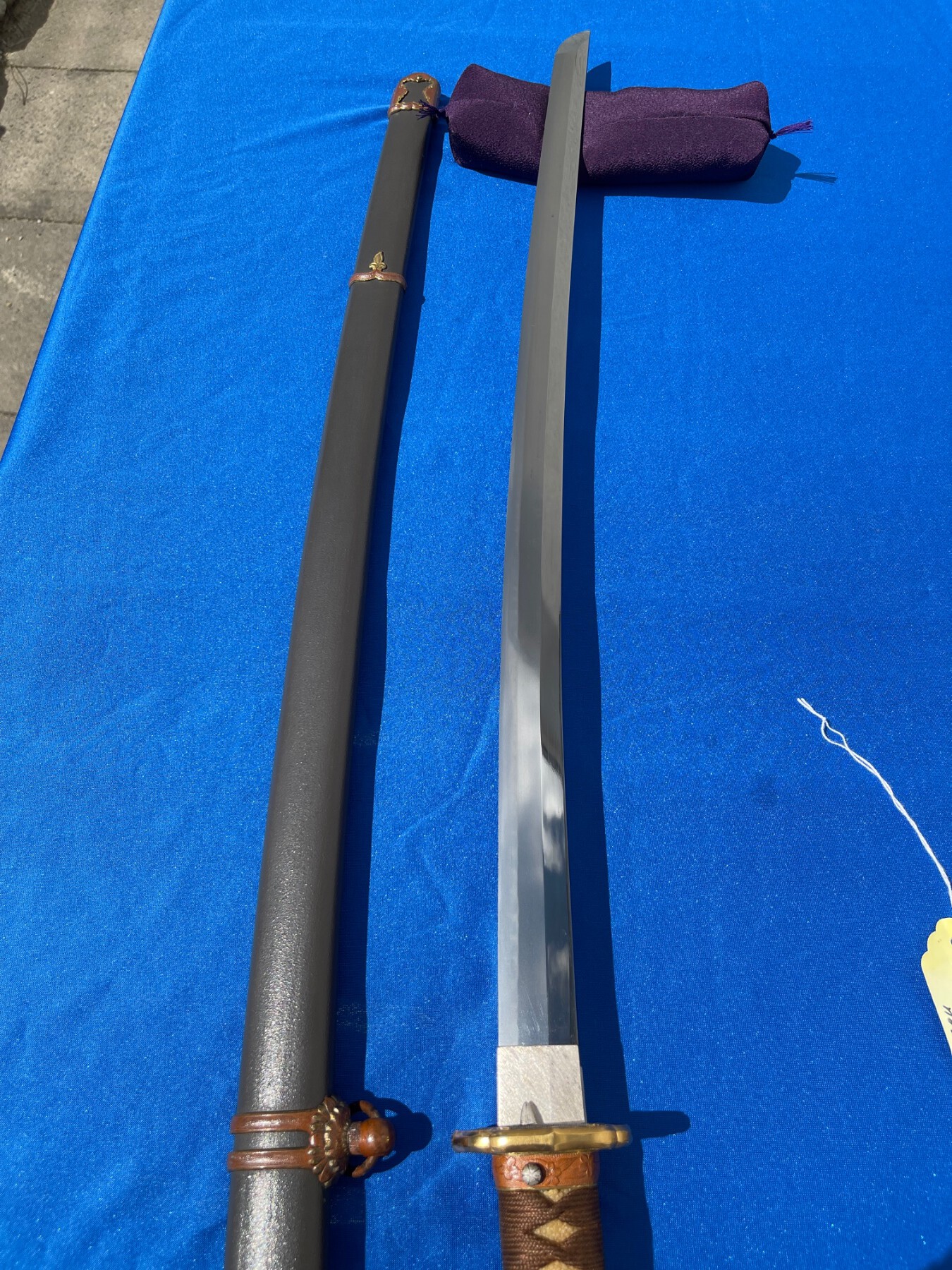
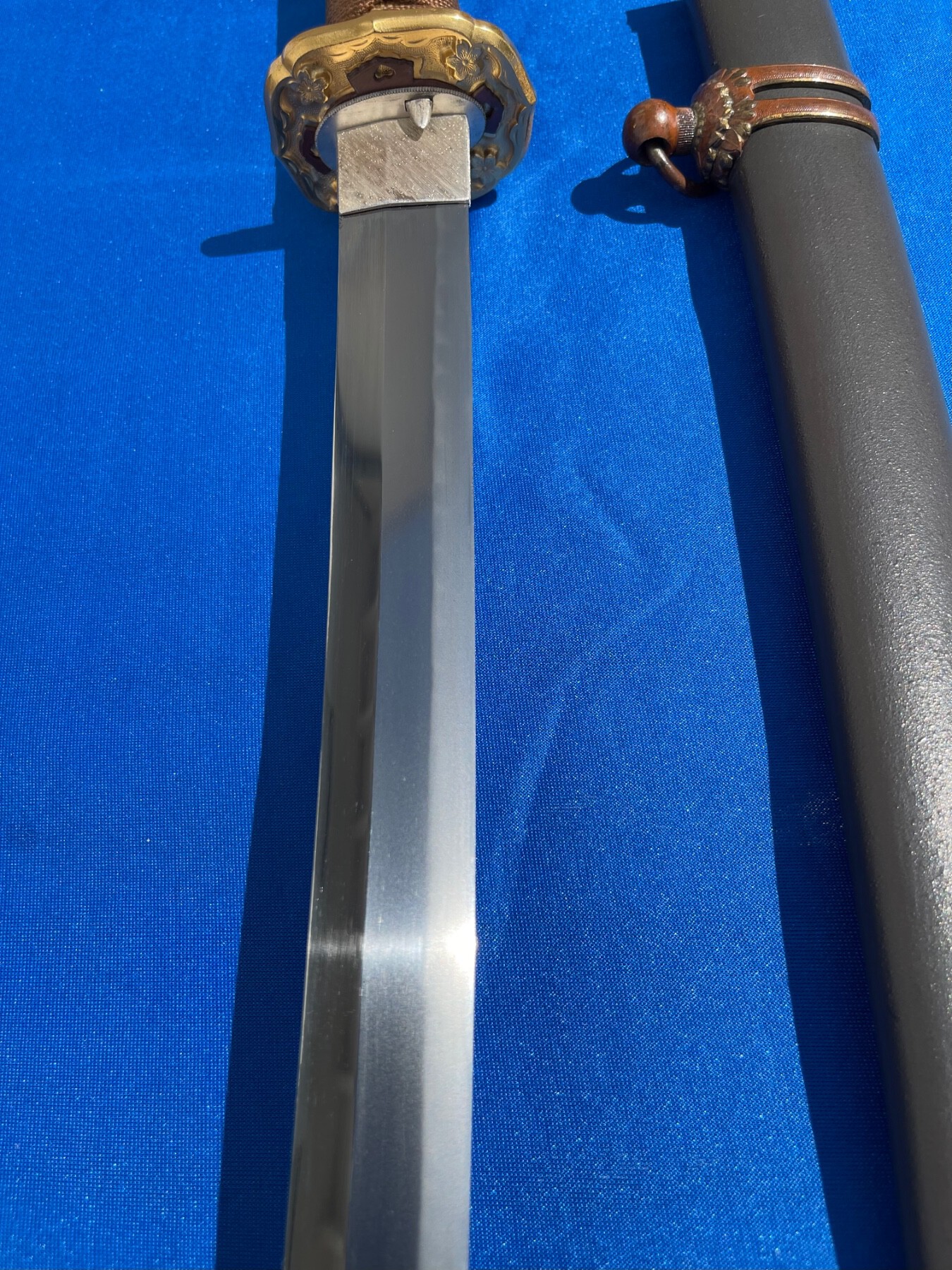
This sword could fit into high class Gendai or high class Gunto, and I may have even posted it before. But I am playing with my new phone camera, and thought I would share the photos. HOKKE SABURO NOBUFUSA, rated at 2.5 million, puts him in the very highest echelon of Gendai smiths. This sword appealed to me because of the because of the quality of the workmanship, and near mint 98 koshirae. With a Nagasa of 65cm, it is a powerful and elegant sword.
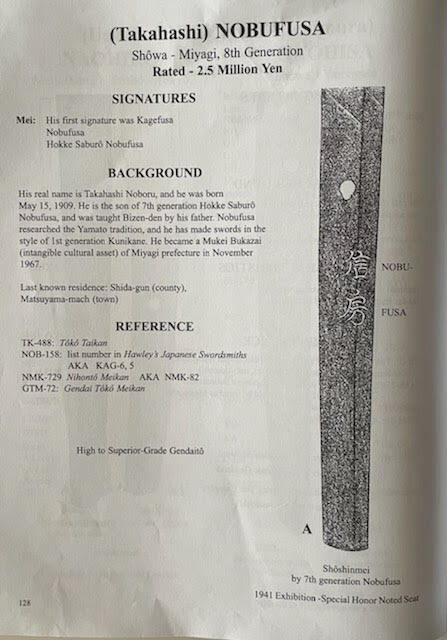

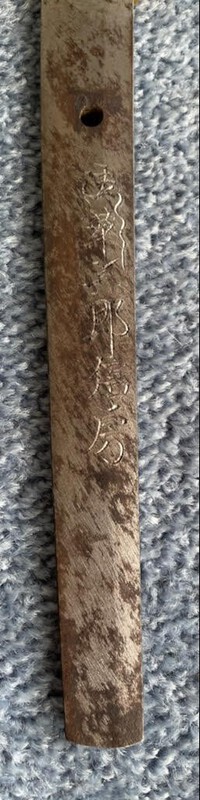
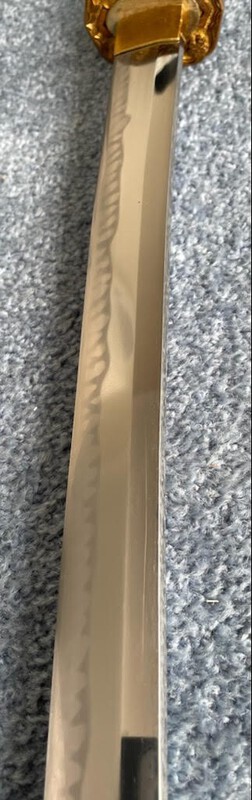
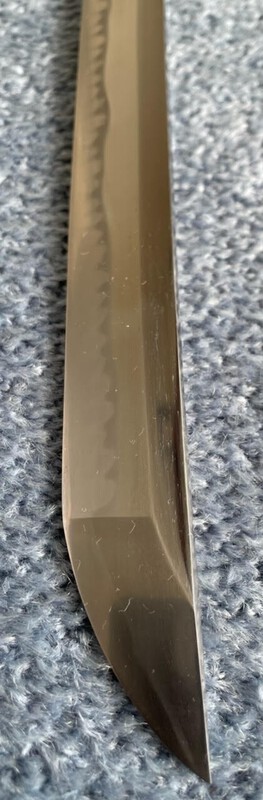
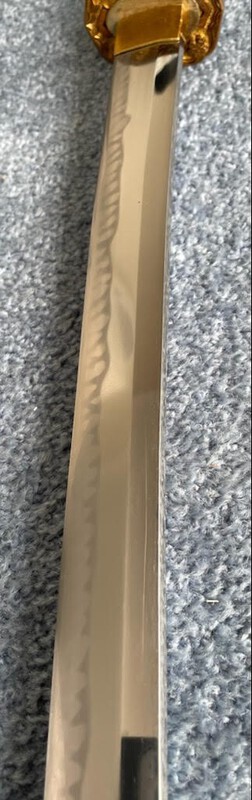

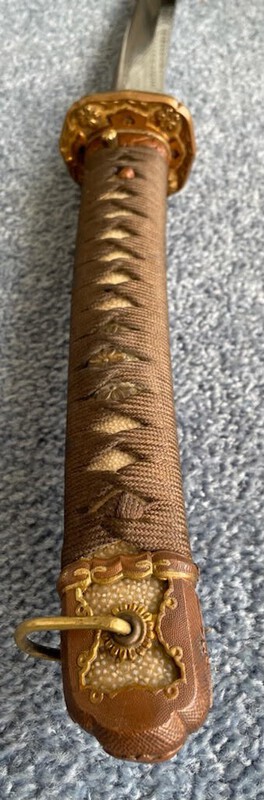 1 point
 -
Nice example! I too was looking for one at a time... Probably should be considered a gendaito because it was put through the oroshigane process (the hada in the blade means it was heated repeatedly and folded, then forged into a block, then drawn out.) and water quenched.1 point
-
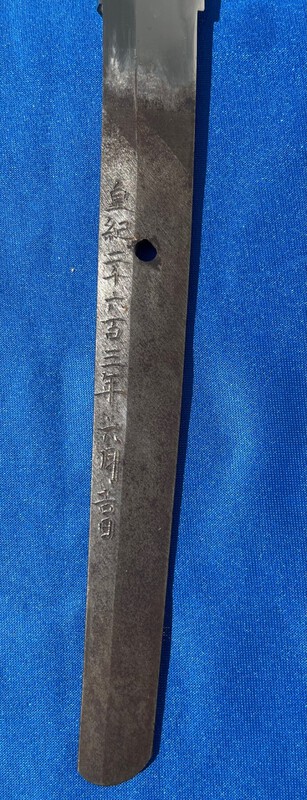
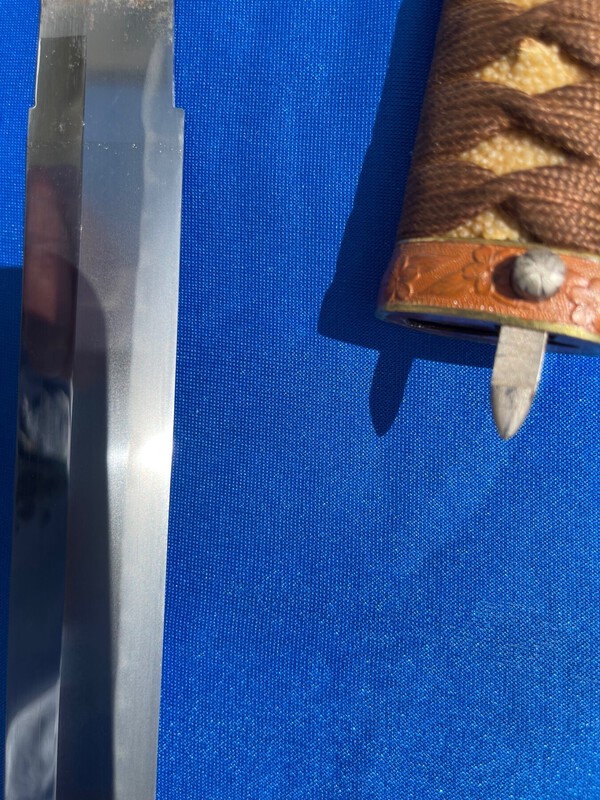
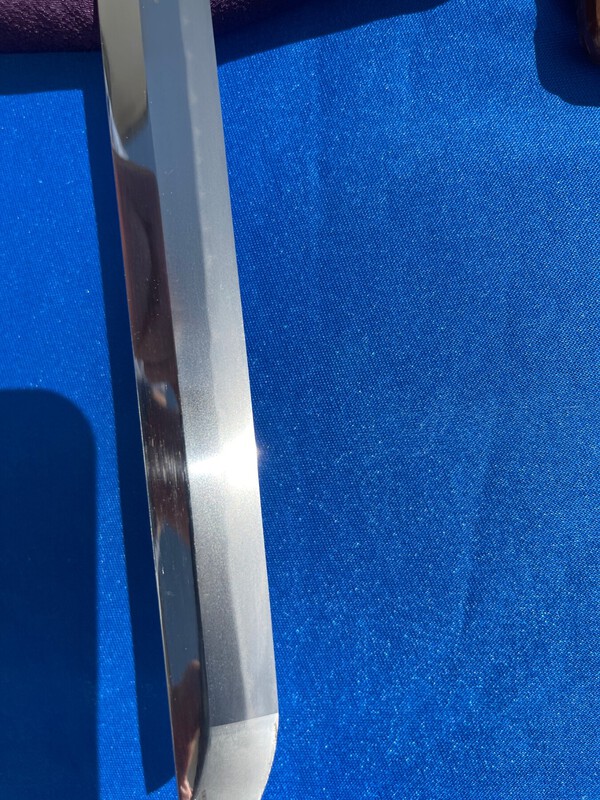
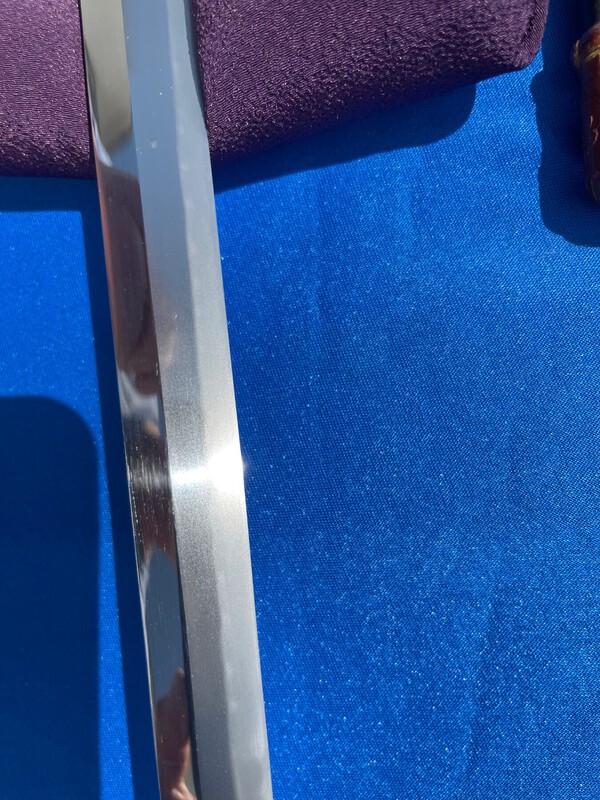
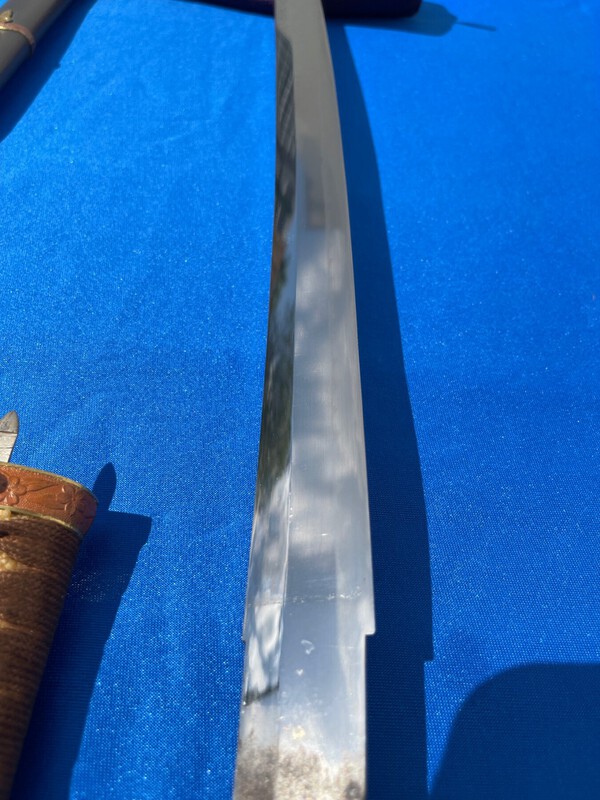
Akinobu Today I would like to show a new addition to my modest collection. Gunsui-hagane wo motte Akinobu kore wo tsukuru, 皇紀二千六百三年六月吉日 A lucky day in June, 1943. (Written using the Imperial Calendar system, so the year in the inscription is 2603.) ( SteveM you are the best, Thank for translation) Aluminum saya, full silver habaki, silver seppa, all parts number 1.
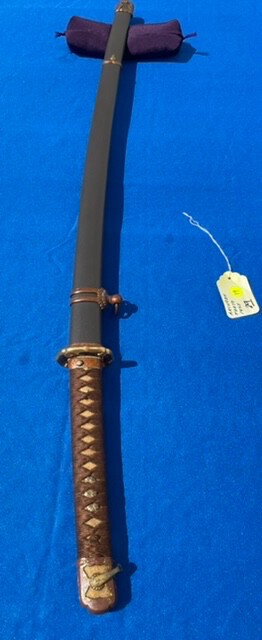

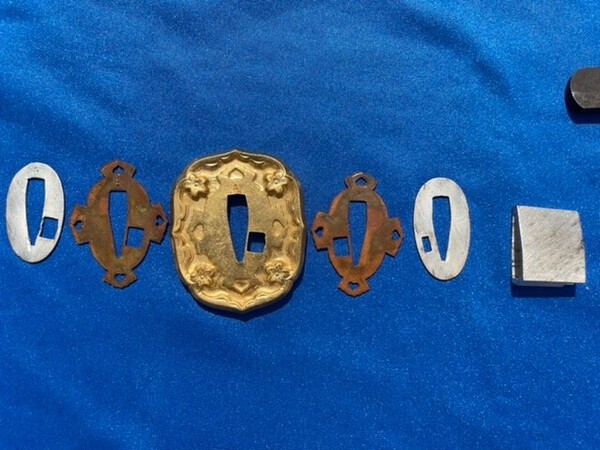
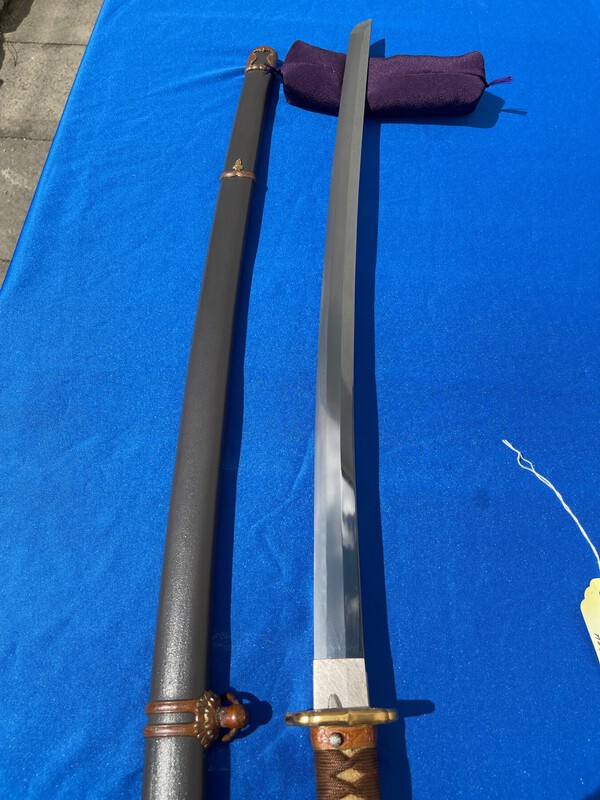
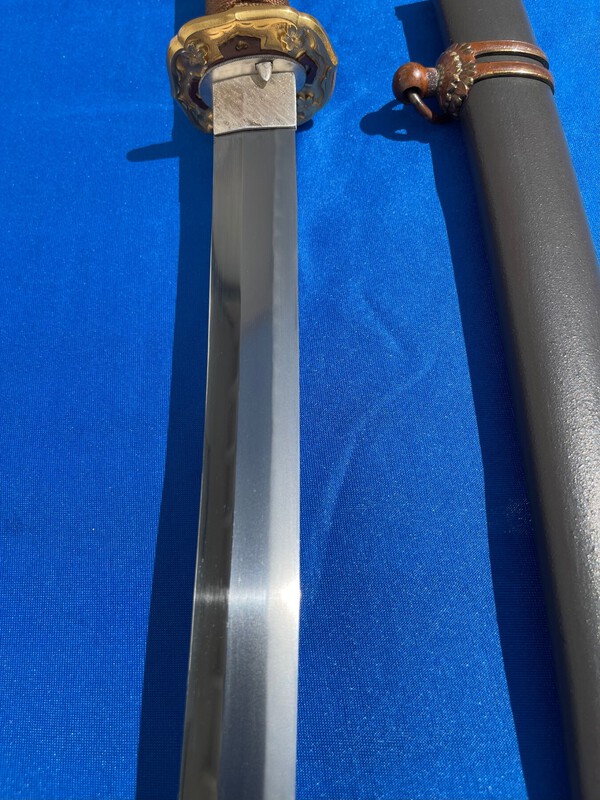
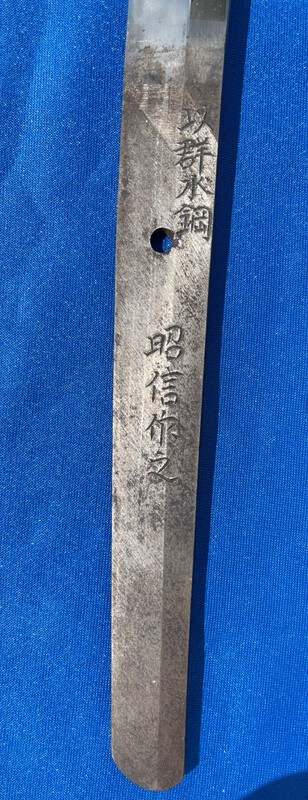
 1 point
 -
Thanks Peter, that adds so much more interest to my sword. I feel privileged to own a sword where the family tradition continues.1 point
-
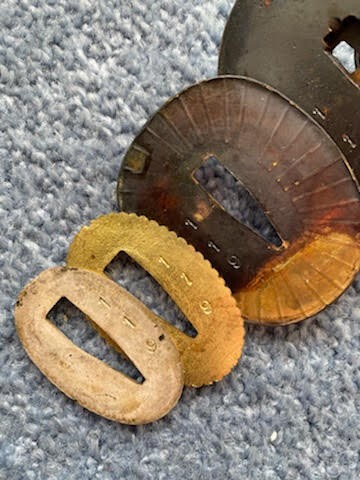
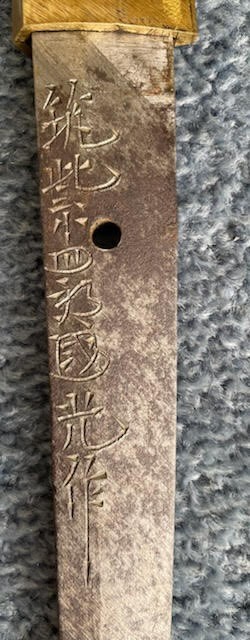
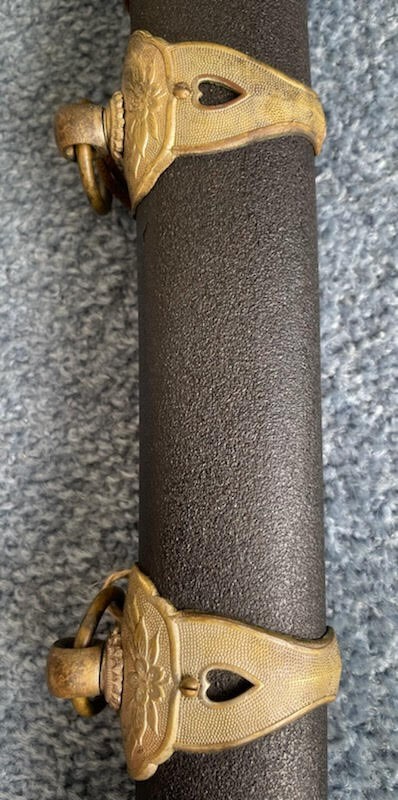
One of my favourite Kai Gunto (Navy Sword). A 65cm Komiya Shiro Kunimitsu, no date no stamps. This Gendai-to exhibits the features you would expect in a sword this highly rated smith, including abundant NIE. The SAYA is finished in the rare matt finish, the fittings all have matching numbers, and the VERY rare securing lanyard is still attached. It is my belief that his descendants are making knives today using the Shiro name.

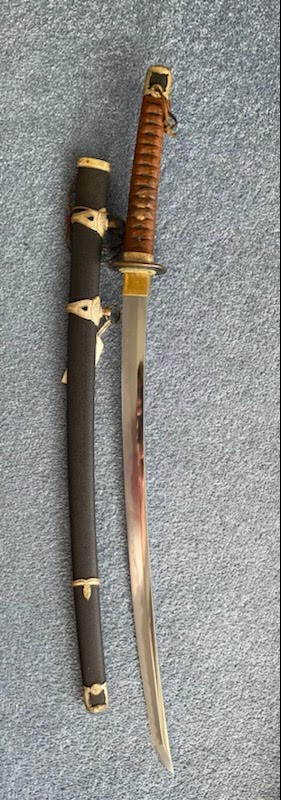
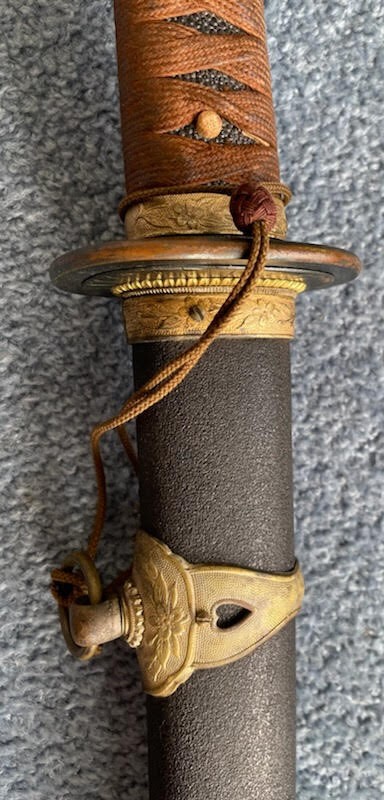 1 point
 -
You are right Neil....what's not to like about that! The blade is a standout and love the dark colour and finish of the Ito. The Same and fittings also have that 'older' (early?) darker colour to them which looks superb on the longer(?) tsuka. All in one package....not too many boxes left to tick.1 point
-
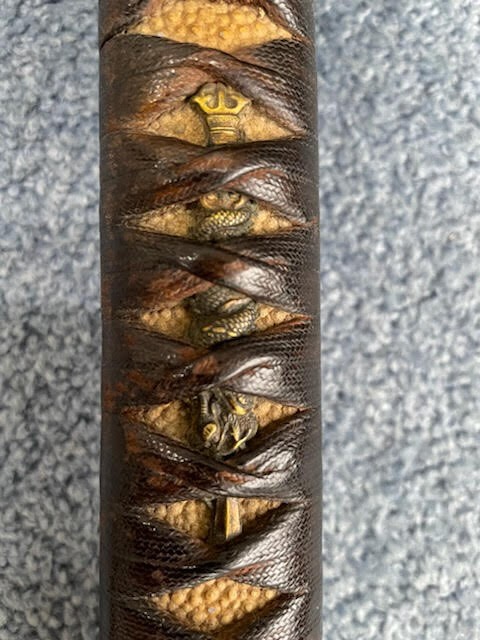
Thought I would put up a sword that ticked many of my boxes. Its a (Morita) KANESHIGE, a 1 million Yen award winning RJT Smith. See attached information thanks to Slough. Long 70cm, papered, Mon, nice complete leather combat cover, lacquered ITO, a very special dragon on Ken Menuki, silver foiled habarki, nice hamon, hada, and hataraki. No date.


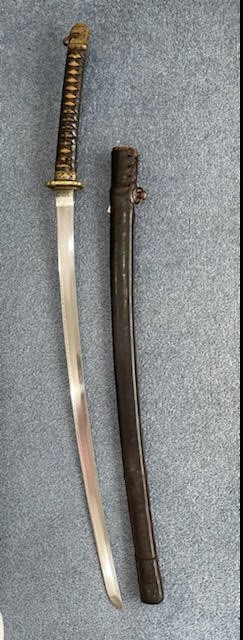

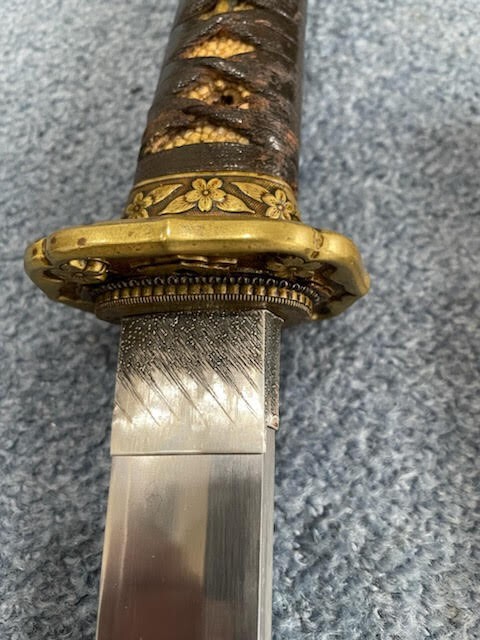


 1 point
 -
If Brian would give us a raise, we could hire editors to proofread our work! But this is such a low budget operation, I have to make my own coffee!!1 point
-
I agree with Joe, about the relative values. I believe Yasukuni blades should also be grouped here. The average Yasukunito, is about 60% more than a compareable quality non Yasukuni. What makes them more expensive? Desireability! As well as Nihonto/Gendaito collectors, these swords are highly prized, by militaria collectors. I believe, that it is the Latter, which have driven the prices to be what they are.1 point
-
I’ve seen a few of these blades at shows and more online. Just my opinion, but the price and reputation outpaces the quality - pretty handedly. Don’t get me wrong, on average, I’d say it’s better than your run of the mill gendaito, but not by a large margin. Pay $10k for a sword that has the quality of most $5k swords without a kikusui mon? Pass. They are rare. That is the one quality that I would acknowledge that rightfully drives the cost up. Again, just my opinion. Feel free to ridicule1 point
-
i had one that was poor quality, a lot of ware', and i had another that was decent but noting special, then i also had a very nice one with notare temper. So from my experience the quality can vary.1 point
-
Of the swords that were for sale in Tampa, the Masanao was far better than the others and was the one my good friend bought from the seller. The blade had a beautiful hamon with deep, wide ashi.1 point
-
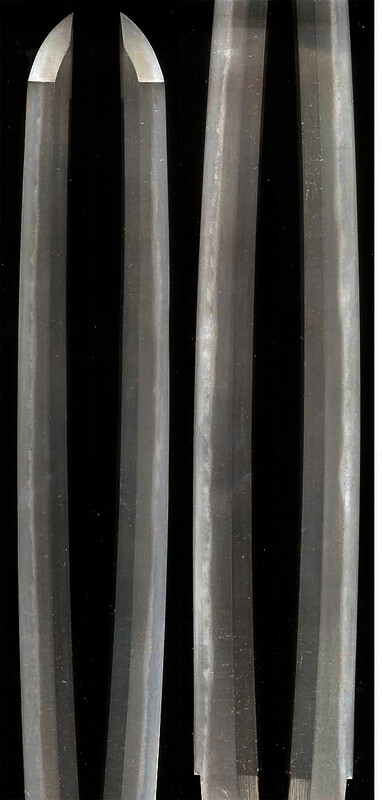
Michimasa was a shrine smith too. These swords are so rare and hard to find (for me). I didn't find much pictures to look at. Here are two on my HD for my personal information. I collect every little piece. The most swords i saw in the last times where fakes. The owners of a sword of these smiths that herman wallinga is describing in his book could be really proud to have such a sword. My copy of the book is hard used.
 1 point
 -
Gassan weren't Minatogawa smiths. The list of Smiths, are as follows: Masatada; Masataka; Masaaki; Masanao and Masakiyo. However, Gassan Sadakatsu was commissioned by the Minatogawa Shrine, in 1933, to make Six presentation swords. Each had the Kikusui mon engraved on the blade, as well as som Kanji (see p.26 Herman Wallinger, Gendaito made at the Minatogawa shrine). I am fortunate to own one of these Sadakatsu, which is in Japan at the moment, being polished.1 point
-
There was a dealer with five Minatogawa blades in koshirae for sale at the last Tampa show around 10k per. I believe that at least 2-3 sold at the asking price.1 point


































This leaderboard is set to Johannesburg/GMT+02:00