
Leaderboard



Popular Content
Showing content with the highest reputation on 09/21/2023 in all areas
-
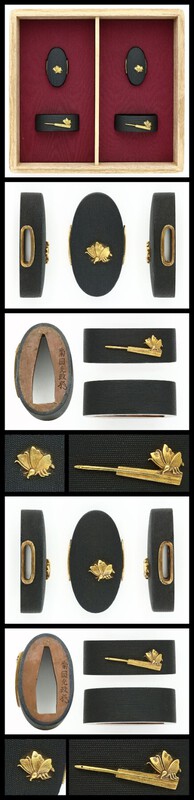
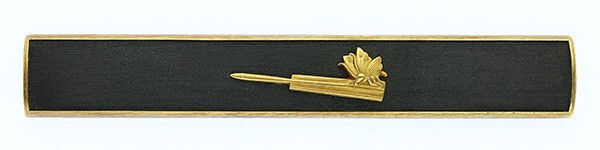
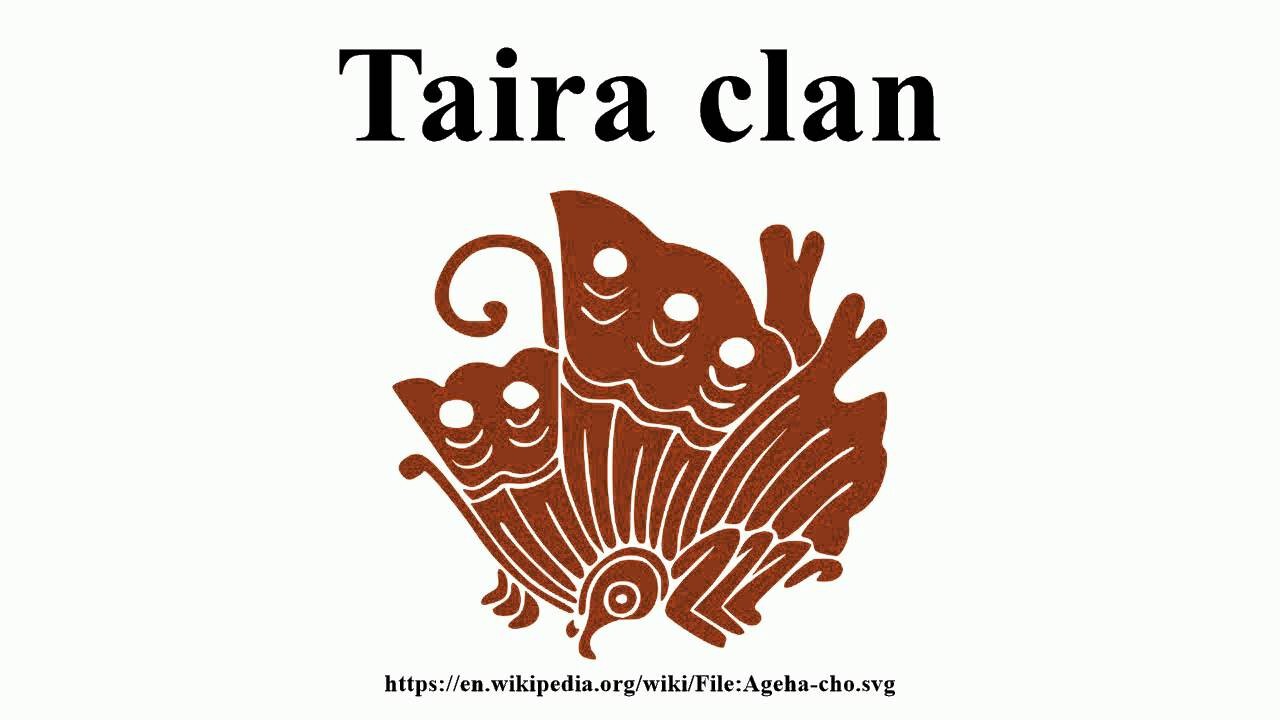
Yves, to me it looks like a (closed) folding fan with a butterfly sitting on it.5 points
-
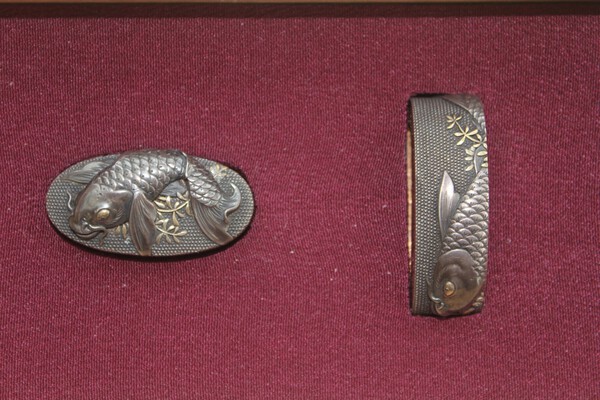
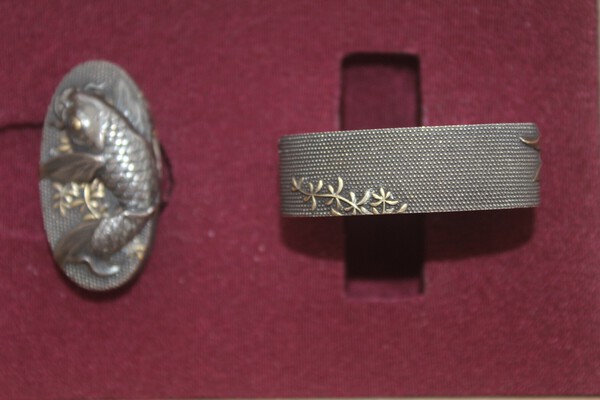
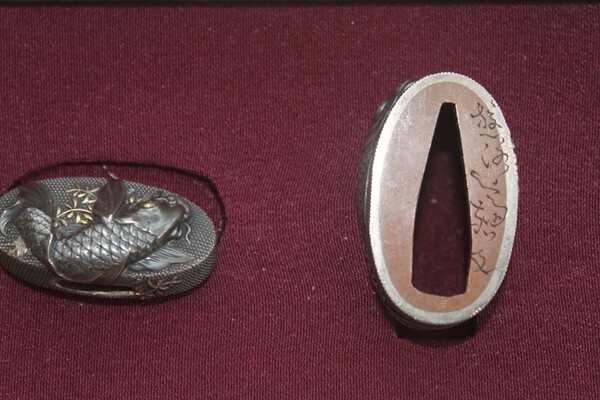
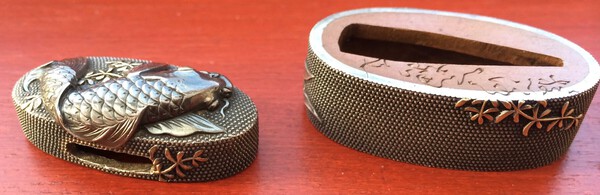
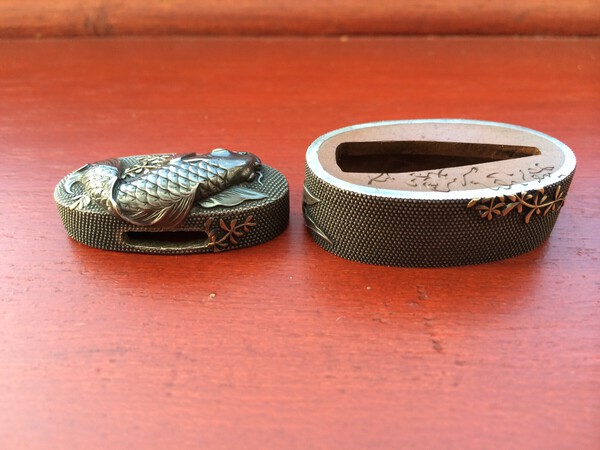
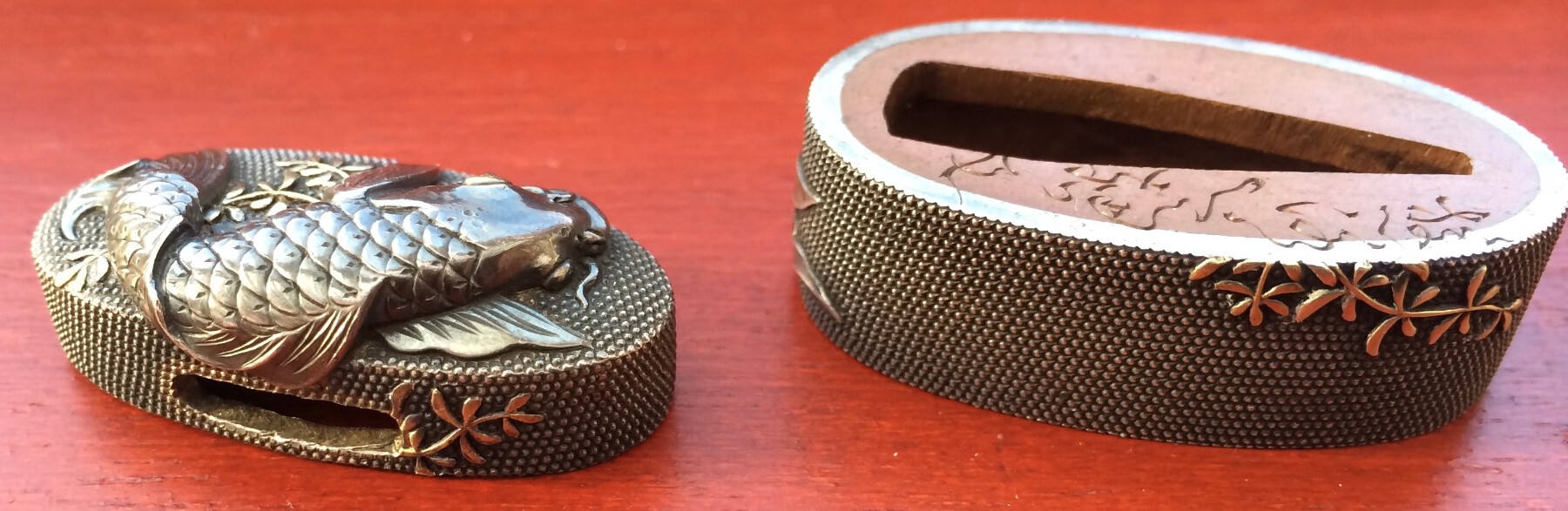
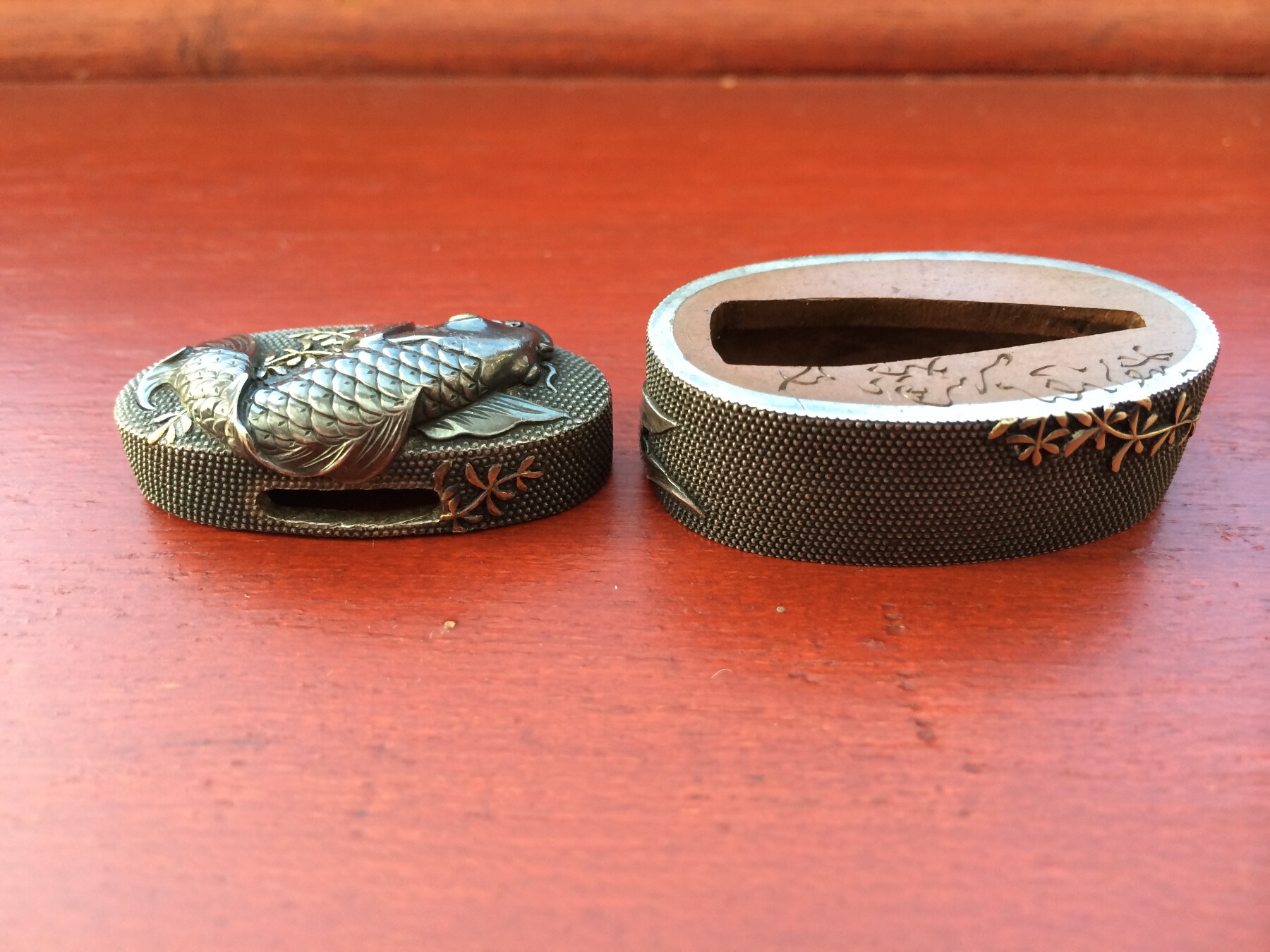
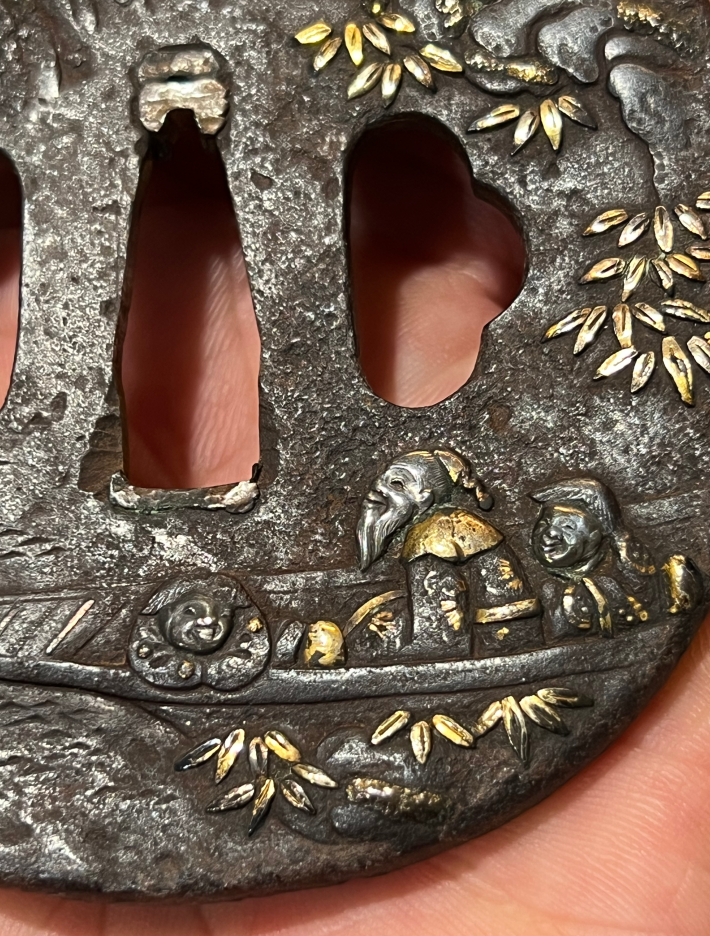
Dear Bob - That Carp Sekibun fuchigashira is really outstanding! As you may know, there were 4 generations of Sekibun (part of the Katsurano School), but only the 1st and 2nd signed with "Yurakusai". The 1st Sekibun (1790-1875) went to Edo early in life but left to refine his craft in Kyoto (studying with the Hamano School). By the way, “Yurakusai” basically means something like going to Kyoto to “study” but it can also mean “mess around” (sounds a little like when some of us went off to school…) Later he was hired by the Sakai family in Dewa Shonai. Haynes says that the quality of the first two generations are about the same, but they have small differences in their mei. Based on the quality alone, I’m sure yours is shoshin, and based on the mei, I’m thinking that yours is the 2nd Master (1838-1912). The 1st Sekibun studied with the famous calligrapher Kameda Bosai to learn how to do his very distinctive sosho mei (one of the most recognizable don’t you think?). In his later years, he often included his age on his work up to age 86 when he passed away! I hope I can still hold (much less use) a chisel when I am that age… The 3rd Sekibun studied under the 2nd Sekibun and then studied with the great Kano Natsuo. His work is often confused with Natsuo’s which shows just how good this school is. While the Sekibun school is most famous for its tigers, your Carp is certainly a masterpiece. I think that the artist intends to celebrate the Carp itself instead of using it as a symbol of perseverance like most carps we see on tosogu jumping the waterfalls to become dragons. In addition to perseverance, the Carp also symbolizes good fortune, longevity, success and prosperity. I love how this artist can convey so much meaning and energy on such a small “canvas” (and even though much of the two Carp are “out of frame”).4 points
-
You can find a scanned PDF here https://archive.org/...paneseswordmou00joly https://www.the-sale...db-a1be-b06f0120988c
 4 points
 -
The video is famous. I would think more than 750,000 views, because I remember seeing it on a flight to Japan. These last few tsuba and the Sekibun f/k stir a lot of old memories.3 points
-
Item No. 312 Fuchi Kashira in silver with gold and shakudo. Subject of carp swimming amongst water weeds signed Yurakusai Sekibun, Edo period, 19th cent. Carp, probably Koi, with water weeds on an almost perfect nanako ground. The fish are depicted as graceful movers and stand out from the fittings in a prominent 3D. Realism and interpretation superbly combined.
 3 points
 -
Attached the fuchi kashira with the same design.
 2 points
 -
A very nice 'Obidome' - tsuba/F/K theme [usually seen on some menuki] https://www.jauce.com/auction/v10649534302 points
-
I received an email from him a couple of days ago and already provided the translation and information below. Tōto ni oite Chōjusai Tsunatoshi Bunkyu gannen hachi gatsu hi (dated a day in August 1861 - a day in the 8th month of the first year of the Bunkyu era). TSUNATOSHI (綱俊), 1st gen., Tenpō (天保, 1830-1844), Musashi – “Katō Hachirō Tsunatoshi kore o tsukuru” (加藤八郎綱俊造之), “Katō Tsunatoshi tsukuru” (加藤綱俊造), “Tōto ni oite Katō Hachirō Tsunatoshi kore o tsukuru” (於東都加藤八郎綱俊造之, “made by Katō Hachirō Tsunatoshi in the eastern capital [= Edo]”), “Ushū Yonezawa-jū Katō Chōunsai Tsunatoshi” (羽州米沢住加藤長運斎綱俊), “Chōunsai Tsunatoshi” (長運斎綱俊), “Chōunsai Tsunatoshi tsukuru” (長運斎綱俊造), “Efu ni oite Katō Chōunsai Tsunatoshi” (於江府 加藤長運斎綱俊, “made by Katō Chōunsai Tsunatoshi in Edo”), real name Katō Hachirō (加藤八郎), he came originally from Dewa´s Yonezawa (米沢) and was like his father Katō Kunihide (国秀) a student of Suishinshi Masahide (水心子正秀), he moved to Edo during the Bunsei era (文政, 1818-1830) where he worked in the residence of the Uesugi family (上杉), the daimyō of Yonezawa, around the first year of Ansei (安政, 1854) he left his gō Chōunsai to his son Koretoshi (是俊) and changed his pseudonym to Chōjusai (長寿斎), he died on the fifth day of the twelfth month Bunkyū three (文久, 1863) in the Uesugi Edo residence at the age of 66, like his brother Tsunahide (綱英) he too hardened a tōran-midare but his best works are in the Bizen tradition, the jigane is a dense ko-itame with ji-nie which tends to muji, the hamon is a ko-chōji-midare or ko-midare in nioi-deki with tight nioiguchi, the bōshi is a smaller midare-komi, the jihada can also be a dense mokume which tends to muji but which also show mixed-in ō-hada, blades are generally rather long, have a deep sori, and a thick kasane, jō-saku Best regards, Ray2 points
-
This makes me smile with what some people try to get away with - https://www.ebay.com.au/itm/166341278956 "Sword Guard for Katana or Wakizashi Edo Iron Tsuba Original" It certainly could go in the "cut down" thread!2 points
-
Hi, Does anyone know where this emblem on fittings comes from? Looks like part of a mon or something, but unsure.
 1 point
 -
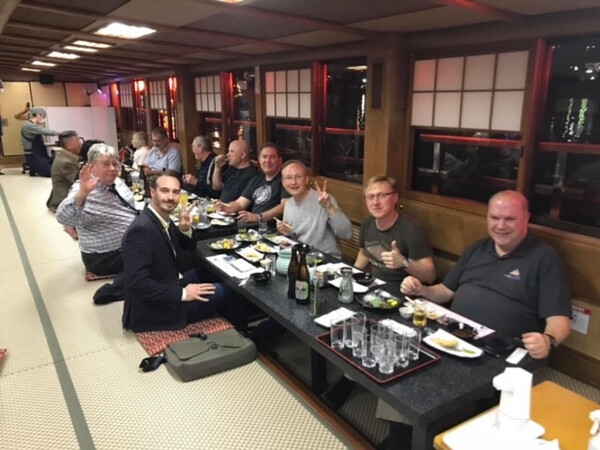
Greetings sword friends, As James Lawson previously pointed out, the Dai Token Ichi for 2023 will be held on two days only: Saturday, November 18th, and Sunday November 19th! There were several factors in this decision, but most significant were the decreasing number of visitors and the rising cost of the venue. Anyway, it is what it is.... two days should be sufficient to locate your treasure. The third day basically just added to sword fatigue, especially for the dealers. As in the past, I would like to invite overseas visitors to participate in two additional events that have become traditions for many overseas visitors! Tokyo DTI Additional Events On Thursday, Nov. 16th, there will be a sword study and dinner party again in Ginza at the Italian Restaurant Cinq (same venue as previous years). Location is quite convenient. Sword study is yen 5,000 (for the venue) and the dinner party will be sponsored by Mr. Hisashi Saito of Seikodo. Once again, the date will be Thursday Nov. 16th. Arrival time will be from 5:30 p.m. for the sword study. Discussion of swords at 6:30 and the dinner party will follow the sword study at around 7:00 ... Attendance by advance reservation only. Please notify Robert Hughes (keichodo@yahoo.com) as soon as possible if you would like attend! Saturday, Nov. 18th Yakatabune Tokyo Bay Cruise..... Arrangements: This event is tentatively scheduled for Saturday, November 18th, but final determination to proceed will depend on the number of interested participants. As in the past, participants would leave from in front of DTI (Tokyo Bijitsu Club) at 6:30 p.m. Cruise to start from 7:00 p.m. Participation by advance reservation only. Notification to attend is also a commitment to pay if event is held...Cost yen 11,000 per participant (tax included). Please notify Robert Hughes (keichodo@yahoo.com) as soon as possible! Organizer reserves the right to cancel the event if the number of willing participants does not reach 20.... Looking forward to seeing old acquaintances and meeting first time participants! Best Robert
 1 point
 -
Don’t know whether to laugh, cry or phone the fraud squad. Don’t trample one another in the rush.

 1 point
 -
👋 As per the title which clan mon this is (if any) and where could I find any extra information on it? Thank you in advance J

 1 point
 -
Actually there is a tail but pointing downward and not very well visible.1 point
-
One thing that I notice is the lack of the “swallowtail” shape on the rear wings of the koshirae parts. Might just be the butterfly’s positioning Very nice looking koshirae, and fun sounding project. I’m jealous, and wish you luck!
 1 point
 -
It looks extremely similar. I'd say definitely/probably swallowtail butterfly (ageha) It has very slight differences to the Taira clan Ageha mon. Most noticeably the antenna on the Taira Clan Mon makes a full swirl/loop above the wing Whereas your ageha antenna appears to loop behind the wing Lovely piece. I'd love to see more/closer photos
 1 point
 -
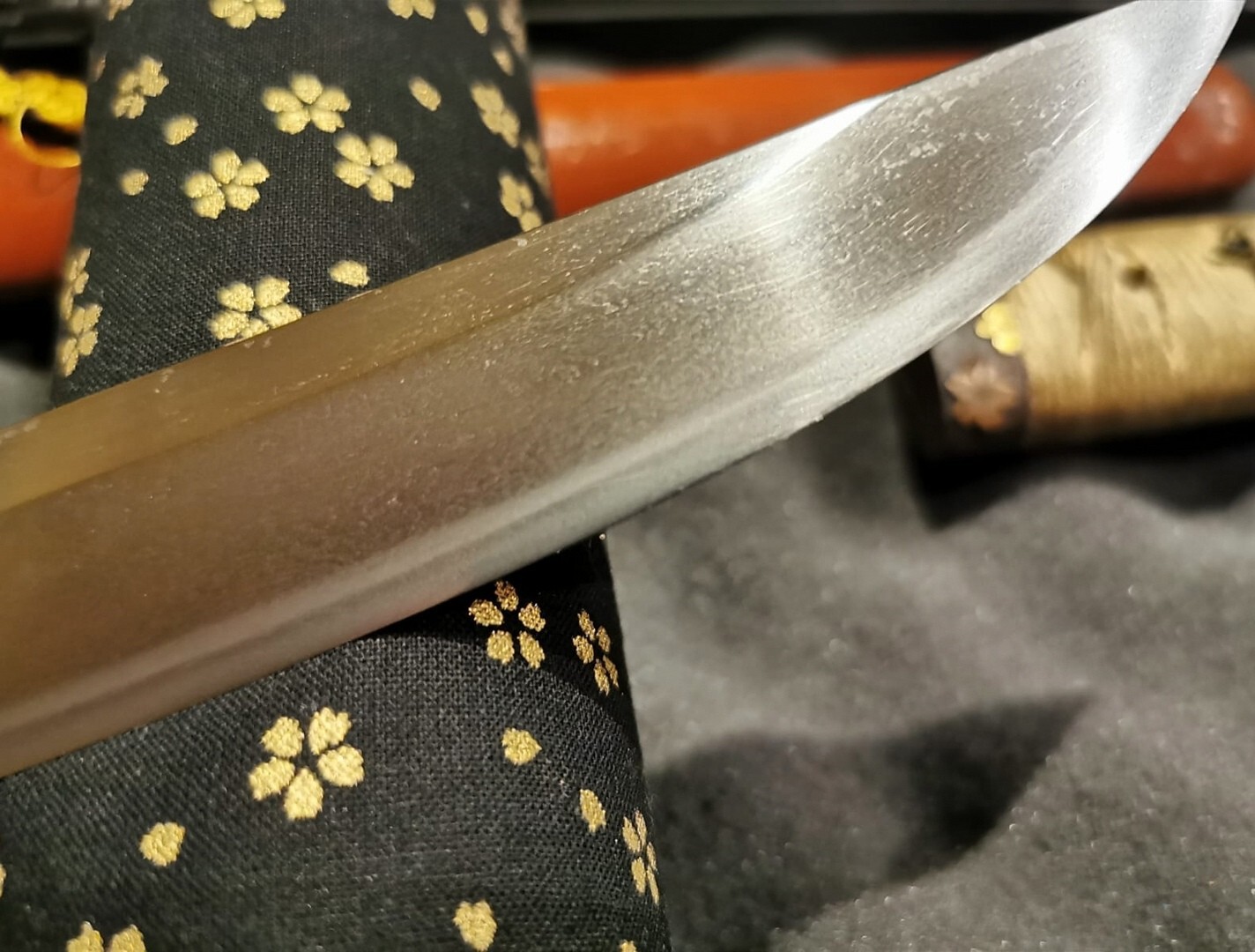
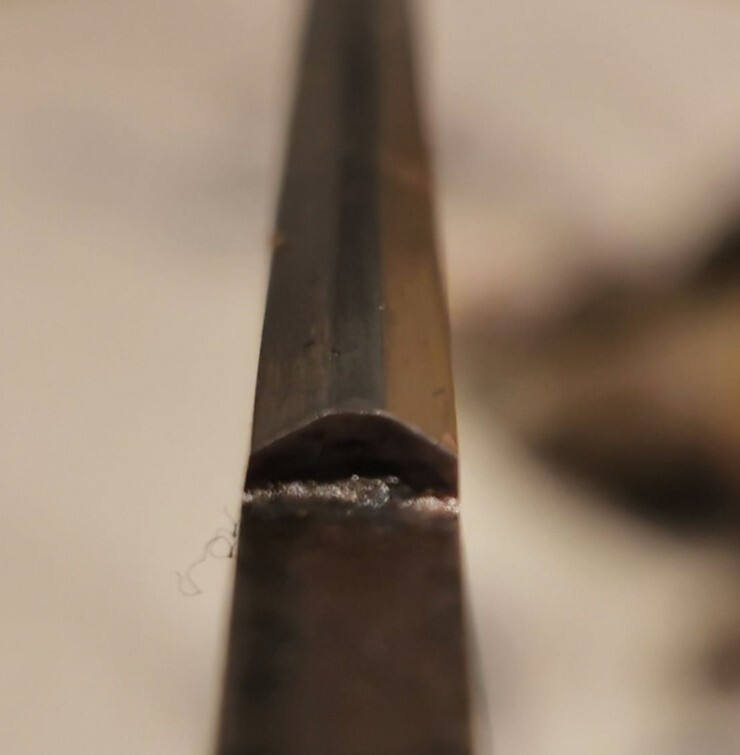
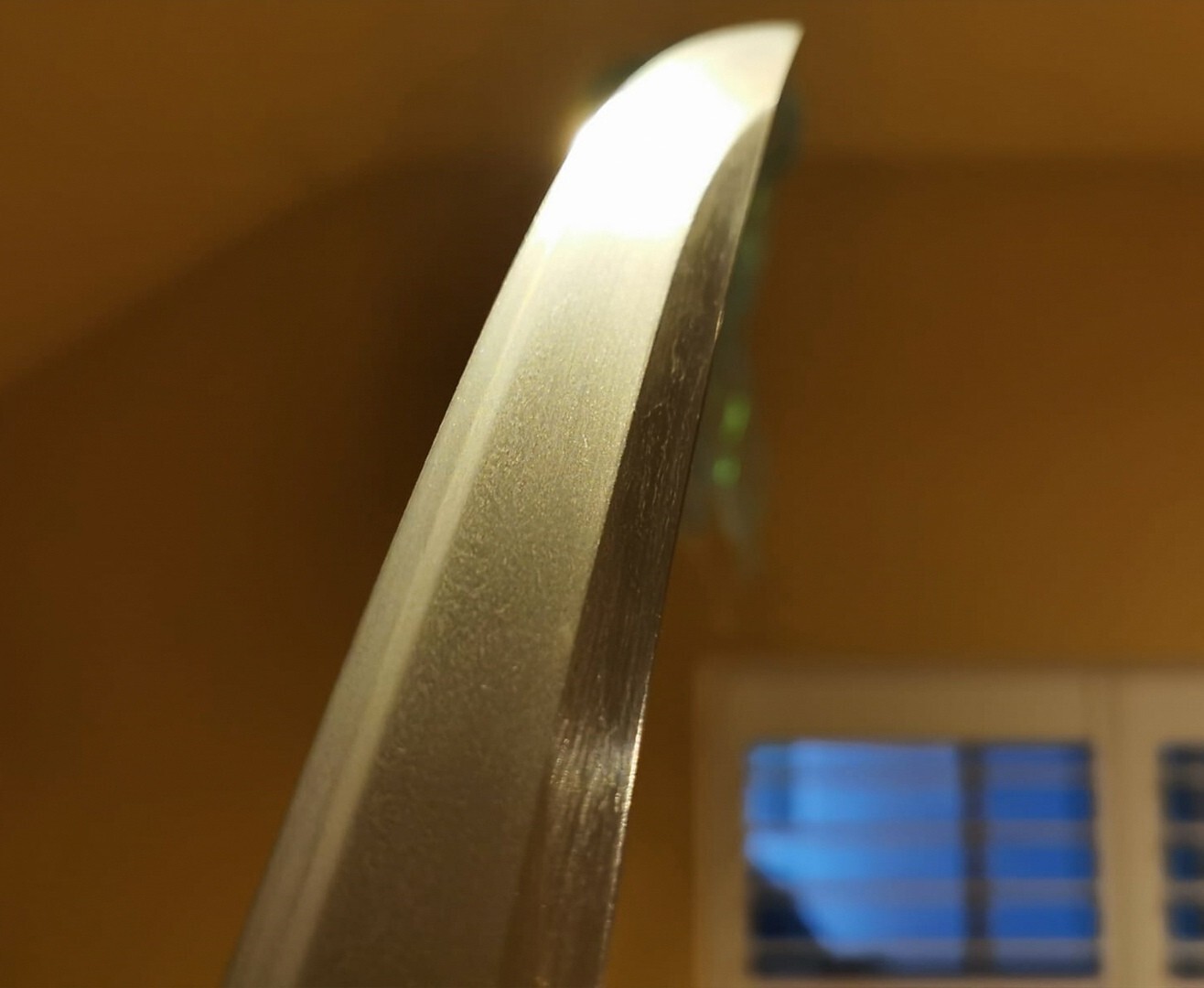
I'd say general soldier's tanto. Basically a knife to take to war. Some of the cruder ones are said to be shrine trinkets and curios bought at shrines. Ones like yours I'd suggest are Showato tanto, private purchase. If it is in fact oil quenched and not a Shinshinto.1 point
-
The butterfly appears to be an AGEHA-CHO mon of the TAIRA clan. I've seen several slight variations of this mon, but I don't know the significance of it landing on a fan. Tom1 point
-
Also true on Live Auctioneers and other online auctions. If you pay top dollar and then have to figure in the buyer's premium, taxes, and shipping, it becomes a slippery slope. Gone are the days when you could go the auction in person and try to get a good deal because there might be no one else bidding on the item. Conway1 point
-
Possibly “peace”…..butterfly lands on folded war-fan? Just a thought.1 point
-
I believe Jan is correct with the translation. Now as the last two are bit obscured I cannot say anything for sure but my gut feeling is it would be a false signature of Sagami no Kami Fujiwara Masatsune 相模守藤原政常 I would guess the second last character would be 政 and I will link 3 authenticated examples of signatures to show how 政 looks on them. https://sword-auction.com/ja/product/5698/as21061-薙刀相模守藤原政常/ https://www.touken-world.jp/search/78076/ https://sword-auction.com/ja/product/5766/as17261-脇差相模守政常初代/ To me it seems the sword itself would be possibly late Muromachi Bizen sword. As it has that style of nakago, wide and non-tapering nakago were not too common outside late Muromachi Bizen (and few others). Of course all that I wrote in this post is just speculative based on few not too clear pictures.1 point
-
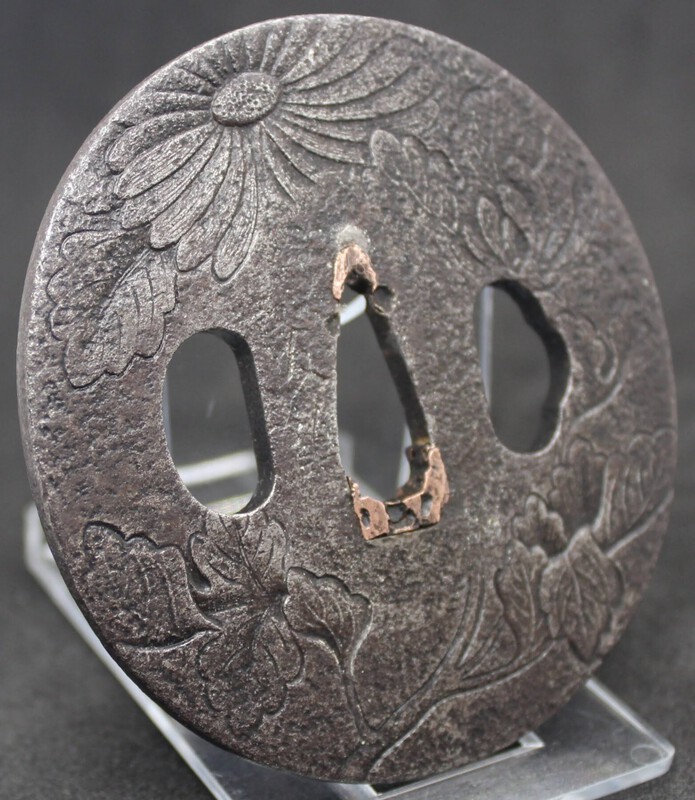
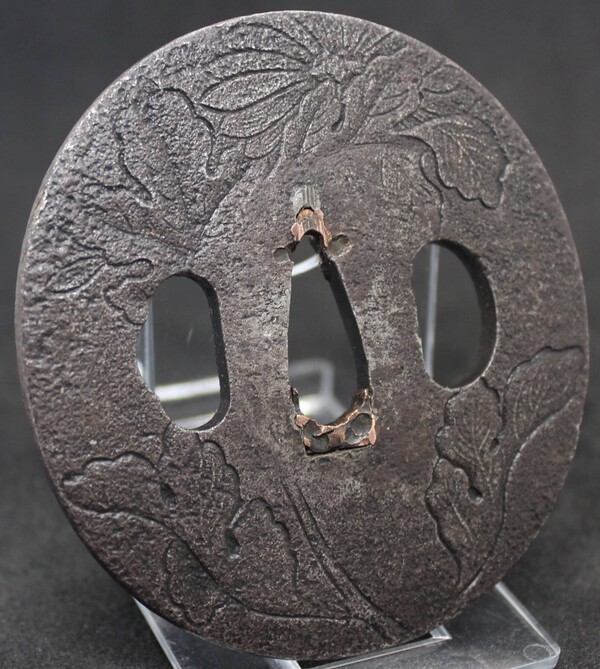
Hi Dale, That's useful, thanks. The reason I ask is because I picked up the tsuba below from a recent auction. The signature is faint and I wanted to compare, but not a well known documented artist.
 1 point
 -
As Yves said, the mon with the two bars is associated with Asikaga, but Hatakeyama also used this mon. There are something like 20,000 different mon, so someone with more knowledge than me would have to help identify the other one.1 point
-
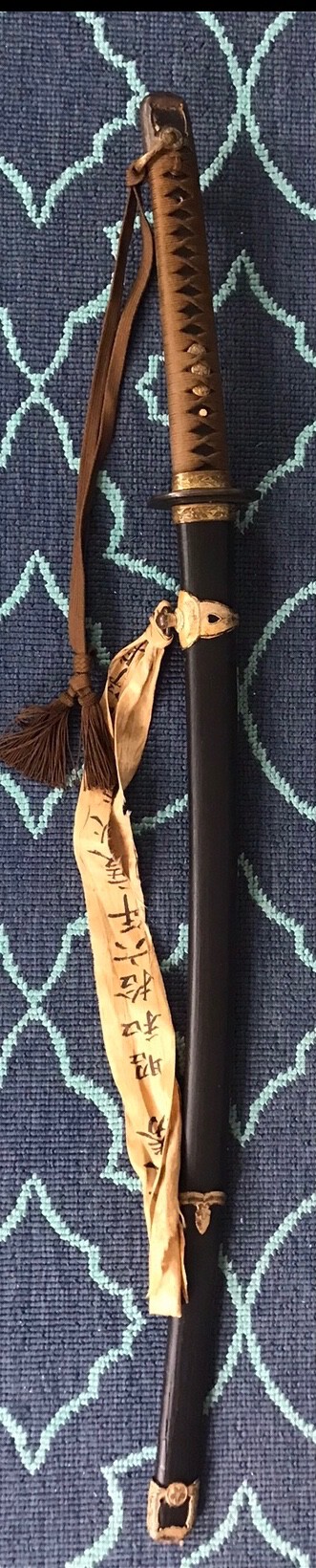
John I actually had it translated by a Japanese guy I know It was supposedly used for sports in the 30s The cloth pretty much fell apart due to my stupidity handling it too much I didn’t know 2-4 dozen that’s a lot of heads My sword can still cut paper easily Thanks for the feed back1 point
-
The first five characters of the mei are 相模守藤原 (Sagami no Kami Fujiwara). The remaining two are a lot harder to identify [氏?] [廣/房?] – I haven't been able to match them to any of the entries in Markus Sesko's "Swordsmiths of Japan", unfortunately. Perhaps someone else has a better idea?1 point
-
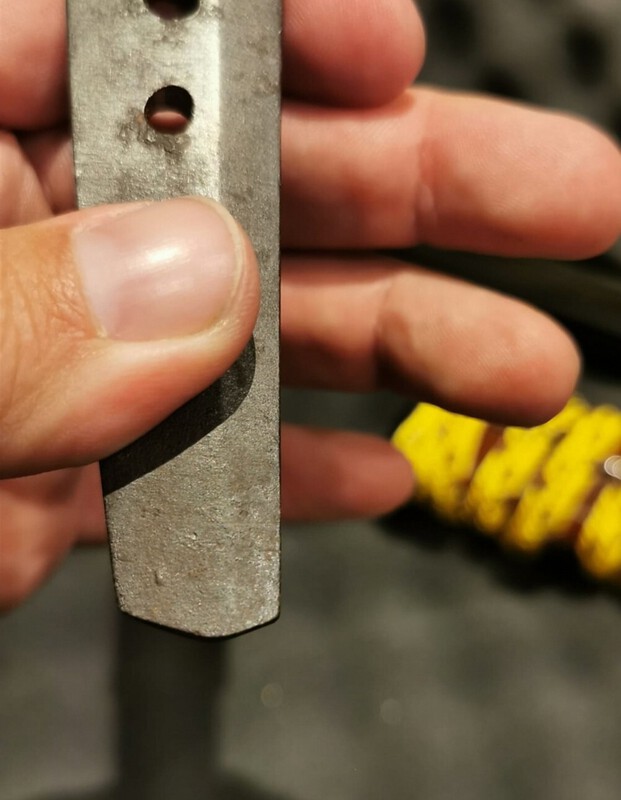
Good afternoon, So I did a stall at the Birmingham arms fair this weekend just gone and upon begrudgingly selling a lovely wakizashi I've had since I started collecting. I took a px on it with a quite nice looking tanto.. I have no idea what it is as of yet as I've just starting looking to kantei it however there's a few kantei points which are putting me in a couple of directions so thought it would be fun to put it on here and see what people's thoughts are. Mitsu-mune is one of the things which was noticed. The hada on this is fantastic in hand and very hard to capture on camera but I've tried and have uploaded a couple of pictures. It's very even and well distributed along the blade. Suguha hamon, with very nice clear and even Nioi. Nakago I think looks shinto, and has feint kiri (horizontal) yasurime marks. Unokubi zukuri shape Nagasa 28.2cm Shinogi-ji near munemachi 9mm Would be great to hear peoples opinions on this one. Thank you🙂 Kind regards, Chuck.




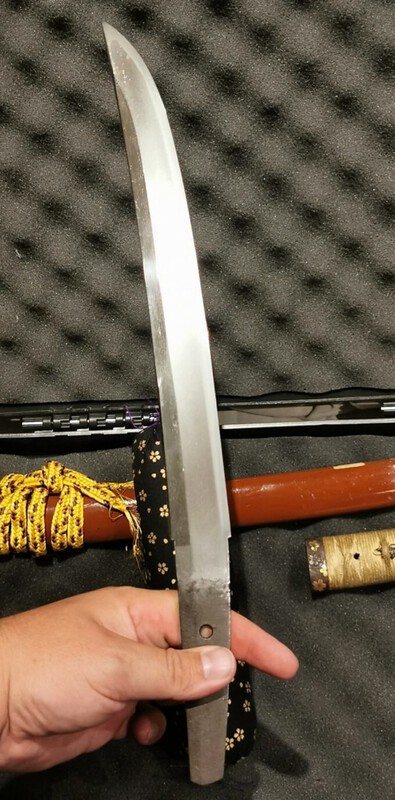 1 point
 -
G'day Thomas, I can see what you are getting at with the example you posted. I am not sure this applies to all of the examples listed. Perhaps the masame is so fine that you can only differentiate the layers when you look really closely? Here is a photo of two examples by Gassan Sadakatsu. From a distance they both appear to be koitame. When you zoom in you can see the masame. Cheers, Bryce
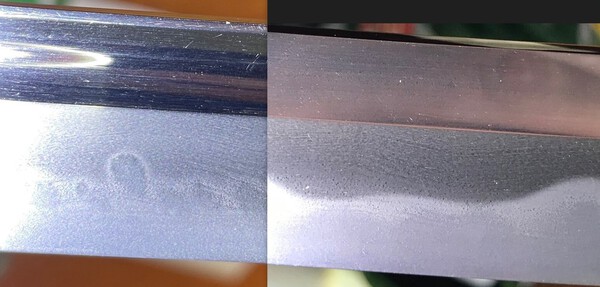 1 point
 -
Nice blade, late Muromachi, but otherwise it starts to get weird. Could be Bizen, but mitsumune and nakago are uncommon for the school. Looks very much like Mihara, but again mitsumune is not common. On the other hand, tensho period's Odawara did work in suguha a lot, can be a good match.1 point
-
Steve: Did you have the surrender tag translated? Part of it looks like a date to me but I would be interested to know who the owner may have been. John C.1 point
-
Hi All, I have already got the mei, mekugi ana, sori and nagasa but am struggling to get what is written in the classification box (circle in blue) which normally says if it is a tanto, wakizashi etc. Any help would be greatly appreciated Regards Mark C
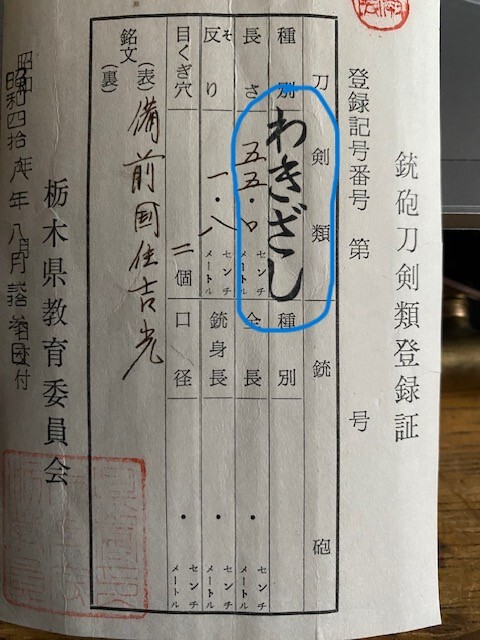 1 point
 -
Instead of kanji they used hiragana - it says Wa Ki Za Shi -t1 point
-
The gimei is part of the history of nihonto, and has been performed in all eras, although not all of them were intended to deceive. The most famous is that of Kagemitsu by Munetsugu. Signature length has nothing to do with gimei1 point
-
Moving on I wanted to show my takayama sword I bought from this seller for 1000 I believe these swords are rare since I never see another Its in mint condition except for a split on the scabbard but it’s sound and don’t really notice it I tried cutting a piece of paper and cut through it I was surprised it’s so sharp considering the age I removed The cloth since it pretty much fell apart liked paper machete steve
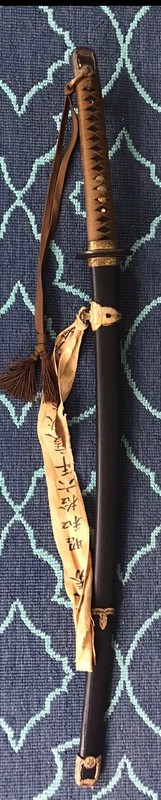
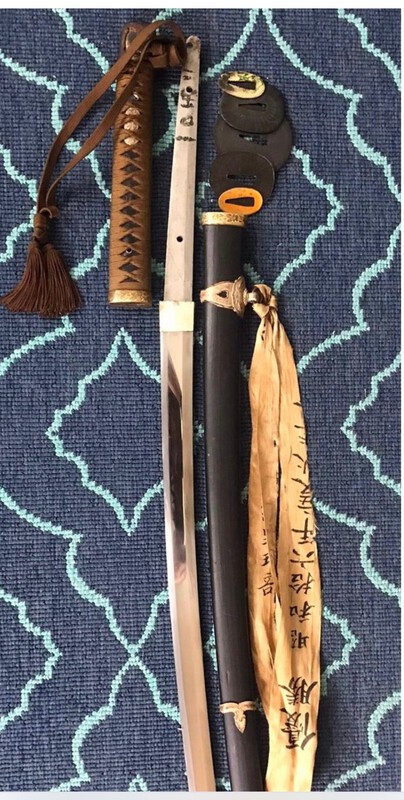
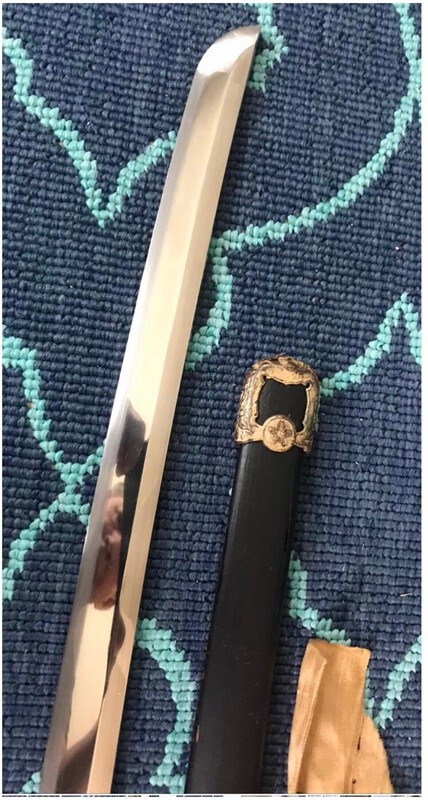
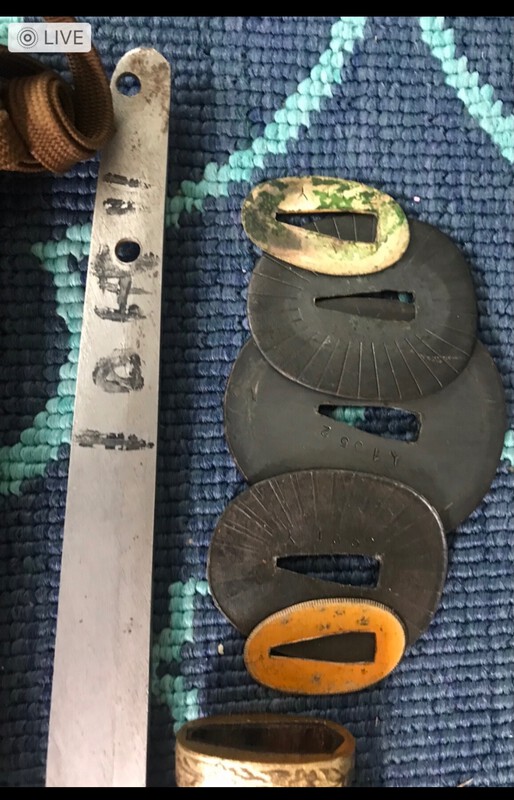
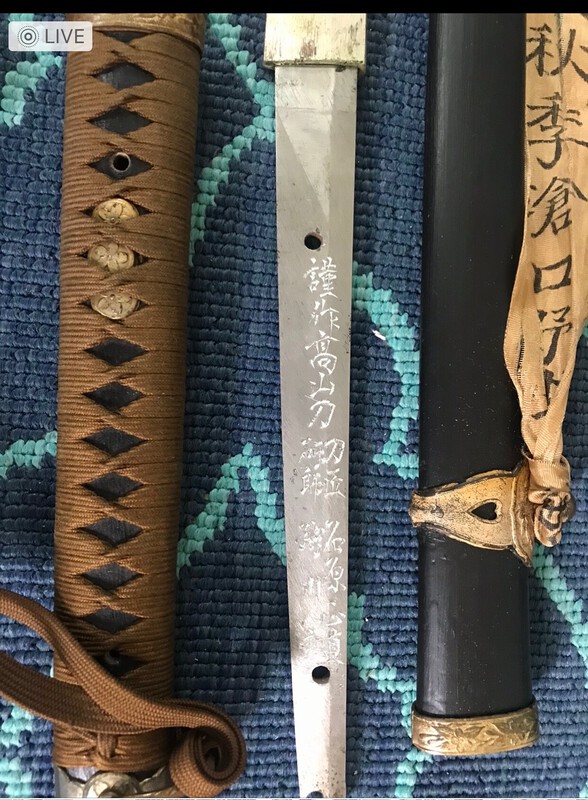 1 point
 -
So-called Sendai men (or Kanto men) are found on the famous armours of the Date clan and identifying them is a little bit tricky because they're not quite Haruta/Nara nor are they strictly Myochin in terms of design and construction. They can be ryubu or ressei and with or without yadome. The vast majority have bristled moustaches but there are a few without. They're also not terribly common, certainly not as common as typical Nara or Myochin mengu.1 point
-
As a person who is only 2 years into his Nihonto collecting my suggestion would be study the books and then buy a nice blade in Polish at a lower price point..using this as a study piece then moving along. You can get a very nice papered blade in Polish for 3-5000 …better to have a number of blades to learn from and rotate in and out your collection than one trophy piece that your knowledge is so far behind that you cannot really appreciate what your the custodian of. My first blade cost me £2000 and it’s loved and cherished…i have a total of 5 blades in polish with papers at present..2 I plan to keep the others will be moved on when I’ve fully studied them….on the other hand if I had spent the cost of a mustang or Jaguar on my first sword I’m not sure I would have the same attachment. One day I will buy that perfect sword as the centre of my collection …but not for a good number of years until I can fully appreciate it and know what my perfect sword is. as for investing…. From what I have seen you’re not going to be making money from that level of sword you have purchased from a higher end dealer…the market is not really an investment market. Once you know what to look for maybe getting lucking in an auction maybe…..but any antique or collectible is alway a gamble if your investing ( I’m a coin collector and dealer and even with years of knowledge, sometimes I have to a accept a loss of money on a piece…..I’f no one wants the piece you’ve got to hold onto it or loss money…and collectible/antiques/arts a funny market….)1 point
-
As John said above, it’s a decent menpō which seemingly dates back to the (later) Edo period. I admit that I can’t comment about the “Sendai characteristics”, since I actually don’t know “Sendai-masks” as such. The lacing, uhm….frankly spoken, the lacing is not well made, and not just in terms of color!1 point
-
At the end of the case studies for this section, it might be a good idea to open this thread up to some discussion and include those in it! There are also the Shii-nomi/Toppai often associated with the Chosokabe that would be worth discussing in that context I think. Shikoku seems to have a very old armoring tradition judging by the development of Iyo-zane, and I don't think nearly enough study or attention has been put into it all.1 point
-
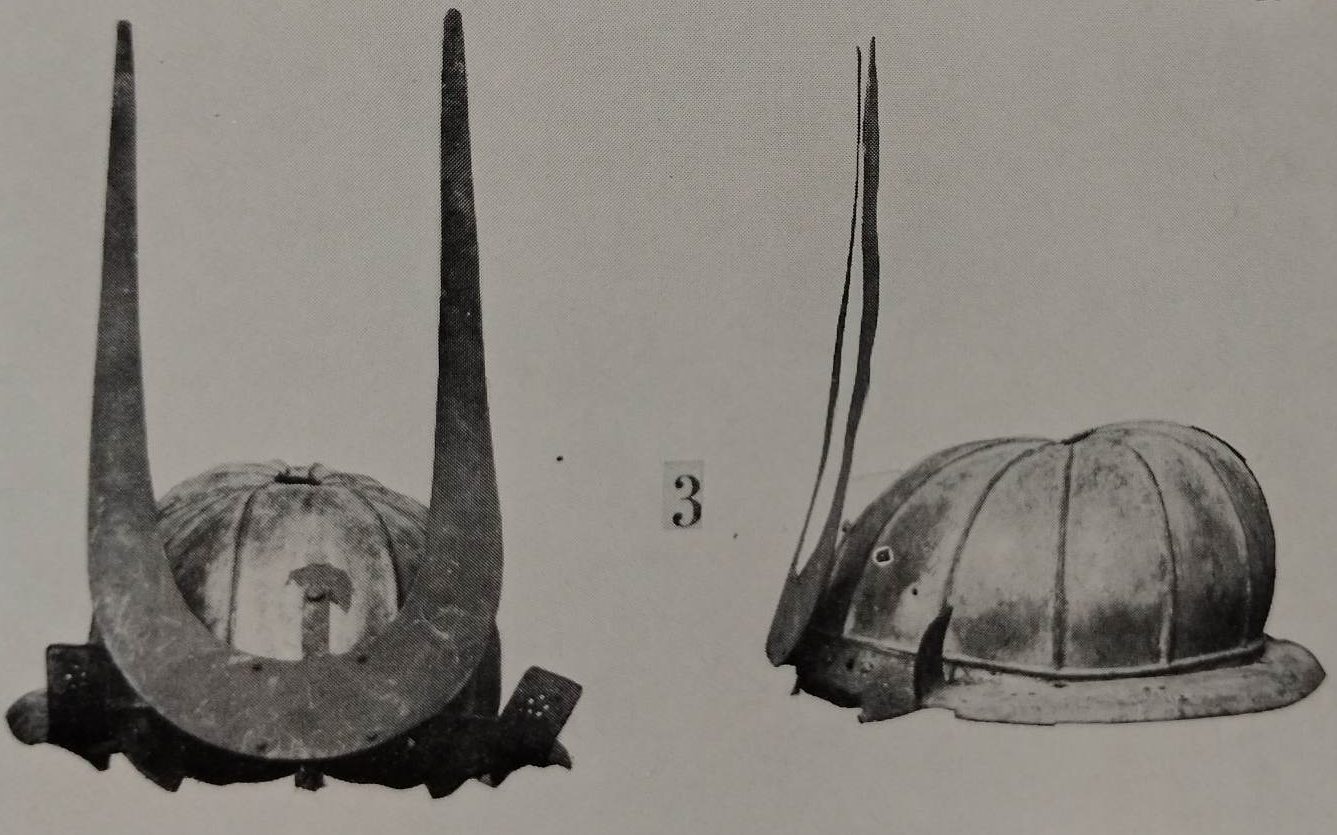
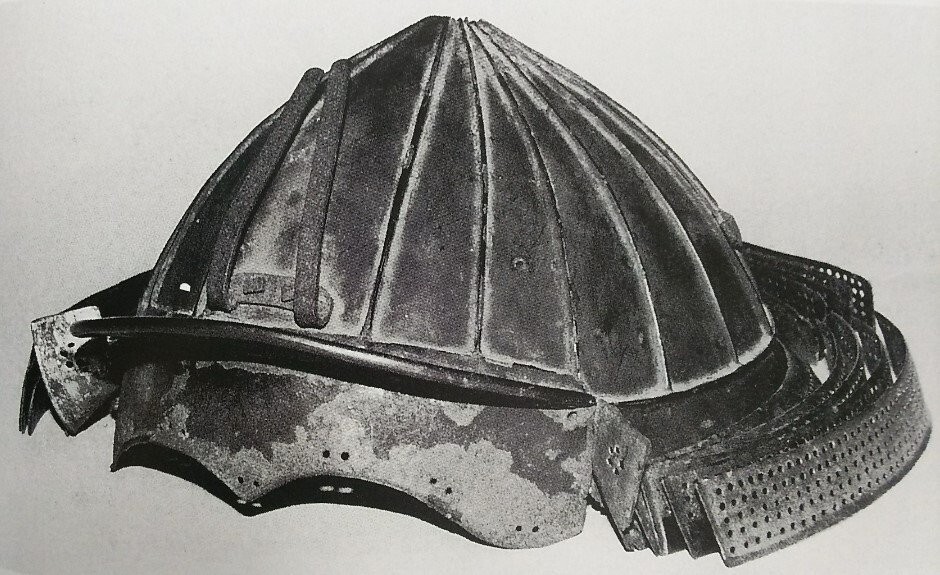
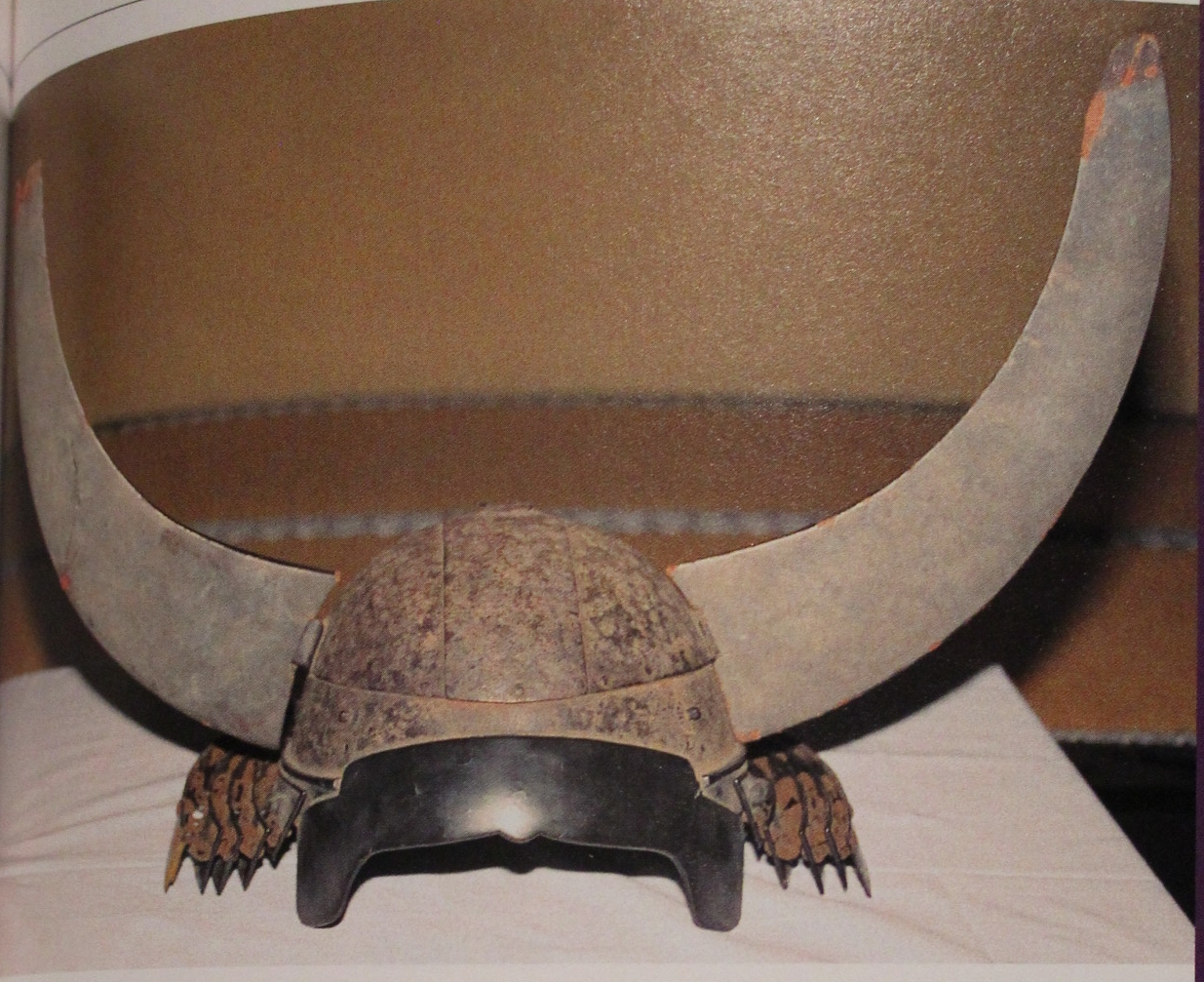
Cont. It's worth noting this is nearly identical to the construction of a particular "Akoda" at Horyu-ji. The mabisashi is an itneresting transitional shape, being in between the earliest Hitaigane-nari mabisashi and later integrated designs as noted earlier in the mabisashi section of this thread. There is also a notable and very well executed fukurin going around the entire edge of it. The overall shape is gentle and rounded, but still includes extended cheeks and a nasal. In essence it's a simplification of the hitaigane-nari's geometry while keeping the functionality. The maedate is mounted to this mabisashi as we see with nearly all of these. It appears to be attached using wari-byo rather than utilizing a tsu-no-moto. There are four hibiki-no-ana along with shiten-no-byo. The shiten-no-byo appear quite similar to examples like the Masashige Okitenugui, utilizing kiku-za, however the byo itself appears to be a much simpler spike. The front left though does not follow the design of the others, instead utilizing three sturdy byo carved identically to those seen on the Masashige Okitenugui, but using elaborate kirigane five petalled flowers with the petals drilled out. To my eye, they are quite evocative of the kirigane seen on earlier Kumano-uchi work. The finish of this bowl is quite similar also to what we see on the Kongo-ji Saika-bachi and the Masashige Okitenugui once again. I must give credit to my friend Furuta Kazutoyo for first pointing me in the right direction on replicating this. When looking at interpretations of these early bowls, I see authors writing either "Tetsu-sabiji" or "Kuro-urushi-nuri". Well, it's not quite really either... It's a precursor to the later oiled tetsu-sabiji are most familiar with. I have noted a couple of variants. There is a type that relies on a heavy rusting of the bowl which is converted with tannins. Following this, raw urushi is applied onto this, and mixes with loose black rust dust formed after the tannic acid has done its work. This creates a transparent black urushi that is bonded straight onto the plates. Another form seems to be a more conventionally patinated plate with some kind of transparent urushi applied on top. The former is the method that I believe was used on the Masashige Okitenugui; the latter is what I believe we are seeing here on this Tosa example. Another helmet that comes to mind with this same method is this example: When looking at the top view of this Tosa-bachi, we can see there is a tehen present, with what appears to be a simple kanamono made of tomogane. When looking closely at the shikoro, there is a very interesting detail. We can see traces of leather that have survived around the inner room. I speculate there are two possibilities here. Either this shikoro was originally kawazutsumi, or it had a hikimawashi (yak hair wig) going around the base of the bowl. A good argument could be made for either interpretation. Finally, the signature: 土州住北原宣保作 Doshuu-juu (Kitahara Nobuyasu?)-saku I am not quite sure of the pronunciation of the kanji in this case unfortunately, so I chose the reading that seemed the most likely, hence the parentheses. The source I have unfortunately lacks any furigana, but that implies they're not quite sure either. It is especially worth noting that there does not appear to be an upward sweep to the top section of the bowl as seen on the Saika-bachi; if it's there, it's too subtle to see from these photographs. One final interesting feature to note on this example is what appears to be a suji rib on at least the side seams. I think that covers all of the bases with this helmet. If anyone has some info on this particular smith that I have not come across, I would be very happy to see it! Please feel free to interject here. In the next case study, I'll be covering a quite famous example that is very close to this one, but with a few more odd and noteworthy features.
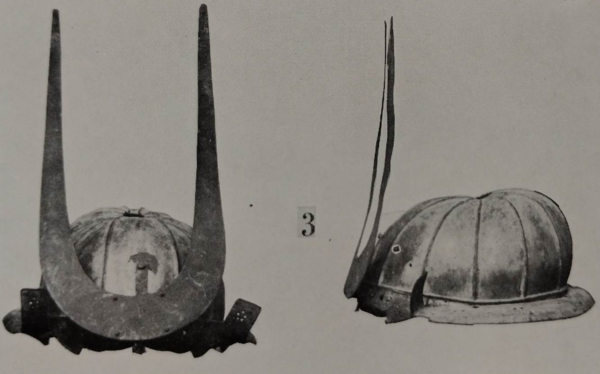


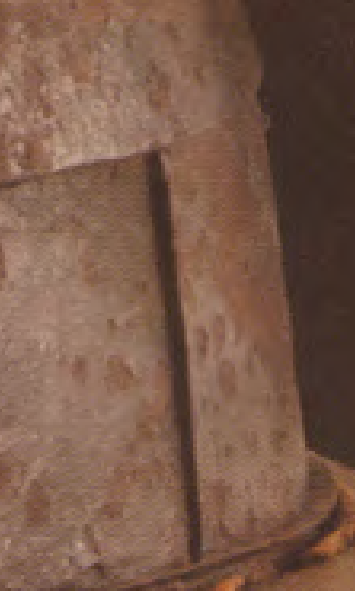 1 point
 -
I saw these in hand and the nanako work is amazing1 point
-
These are just simply more than exquisite! In hand....mind blowing.1 point
-
Tosa I apologize for the long hiatus, but I've been wracking my brain as to how best to approach the topic of the Ko-Tousei helmets that emerged from Tosa. I have found very little information on the smiths themselves, although we do finally have some signatures and even some dates now with these examples. They stand out quite starkly from most of the Ko-tousei and Early Tousei Kabuto that are extant from this period, save for the early Saika-bachi discussed earlier in this thread. I do not believe this to be a coincidence. Due to Tosa's geographic proximity, it's not a real stretch of the imagination to see them being amongst the first to adopt this design. This is a map of Saika's trade routes in Western Japan: We also know of direct involvement of the Saika-shu in Tosa in 1560, when both the Chosokabe and Motoyama clans made bids to hire a company of gunners that had crossed over there seeing a war brewing. We know this from Satake Yoshimasa's writings, wherein he states that he chose to go with the Motoyama as they had made the first solicitation. This was an unfortunate decision on his part, as the Motoyama clan was defeated, and the gunner company ended up retreating back to Saika. We have quite a clear case for Saika being the likely inspiration for Tosa designs in the form of geographic proximity, mercenary gunners, trade being a regular occurrence between the two and the fact that the dates seem to line up perfectly, but the designs of the helmets themselves are why we're here. Rather than try and pretend to know what I'm talking about in terms of the smiths themselves, the provenance of these helmets or the historical context behind their creation at the time in Tosa, I instead will discuss them solely from a craftsman's perspective: their features, construction, patination methods of the steel, etc. etc. I will try and order the case studies chronologically to the best of my abilities, going off of dates when present, and features when not. For the original writings of Satake Yoshimasa, here is a link. There is no better primary source on the Saika-shu and Negoro-shu out there, but it also gives context to a lot of other goings on in Japan at this time. My team and I are planning on producing a full translation of it in the future. https://www.pixiv.ne.../show.php?id=2490930 Our first case study will be this example, as I believe it to be the earliest of all the surviving Tosa-bachi. It also seems to be the most "original" in terms of condition, lacking later modifications.

 1 point
 -
1 point
-
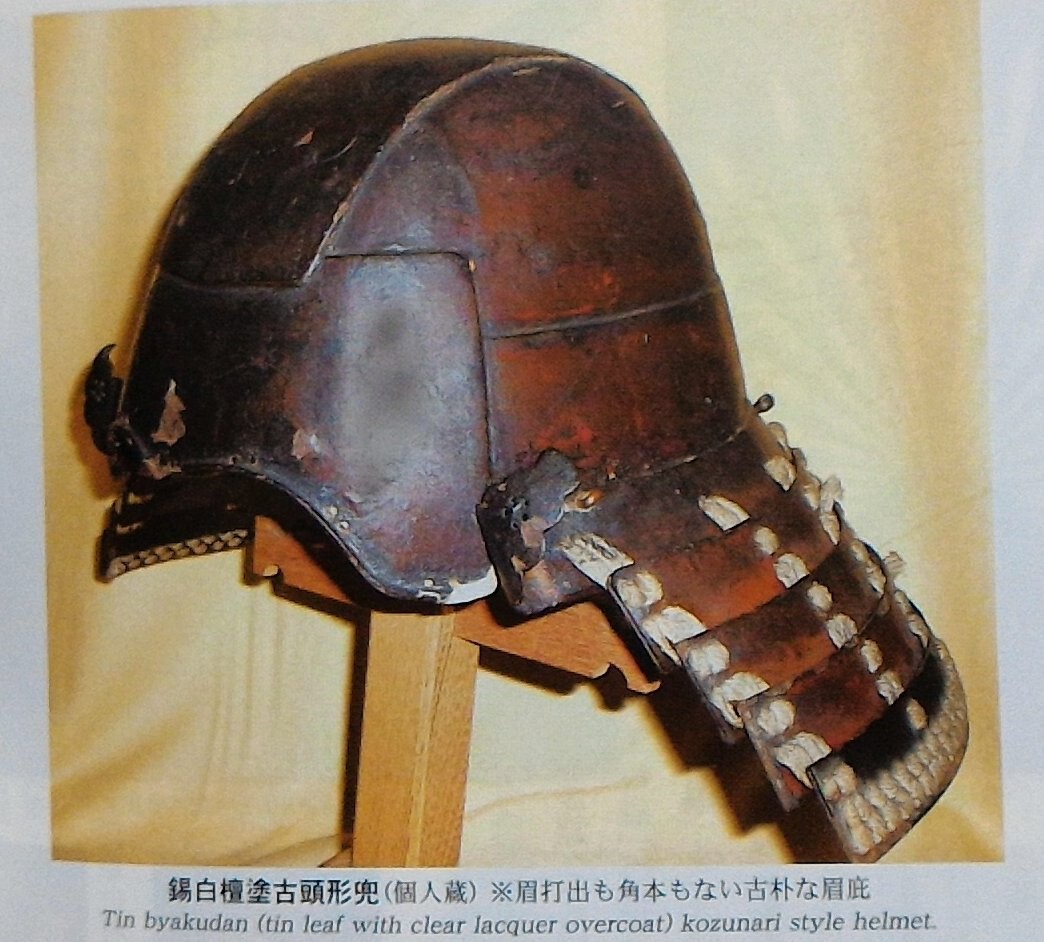
Cont. The next leap from this is further simplifying it all and rounding the whole thing out, following the trend of making the shape gentler. I believe the earliest example of this we see is the 18-ken Shii-nomi-nari at Tanzan-jinja, signed Haruta Mitsunobu. Note that it is also paired with a tsuki-mabizashi. I would comfortably place this helmet somewhere in the late 1560's personally, but that is open to debate. The circular oroshi-mabizashi evolves in two directions. We this same form made of a rectangular plate on things such as shii-nomi-nari kabuto, however almost always with uchidashi implemented in the later examples. The Go-Mai kabuto takes this in a very interesting direction however. Instead of having a front plate with a separate mabizashi plate rivetted on, it takes a cue from the okitenugui and combines them both into one, with the rounded shape that the Haruta likely are responsible for. The next stage is a combination of the oroshi-mabizashi and the tsuki-mabizashi. Whoever the smith was that innovated this was absolutely brilliant. This final form is seen implemented on a number of kabuto from the 1580's and 1590's, such as eboshi and momonari. It would finally end up on the go-mai kabuto as well, spawning what people would refer to in the modern era as the "Hineno Zunari". Usually these are lacquered over so heavily that it's impossible to tell what is going on underneath, but these two photos should help better understand the construction. This is Kadoya Kouji's work: Unfortunately, I do not have a solid set of terminology to apply to these developments. All of these are simply referred to as oroshi-mabizashi. I have seen some attempts at defining them loosely, such as the "semi-circular" type. Rather than contaminate the field with my own terms, I'll simply present these as they are above. There is a lot that can be told about a helmet from the mabizashi, and it is something that should not be overlooked, especially in regards to the Ko-tousei era. I will next attempt to analyze the Tosa examples, and provide some possibilities for their development and influences. The changes in mabizashi shape I think are crucial in understanding them, which is why I decided to briefly include this section first.
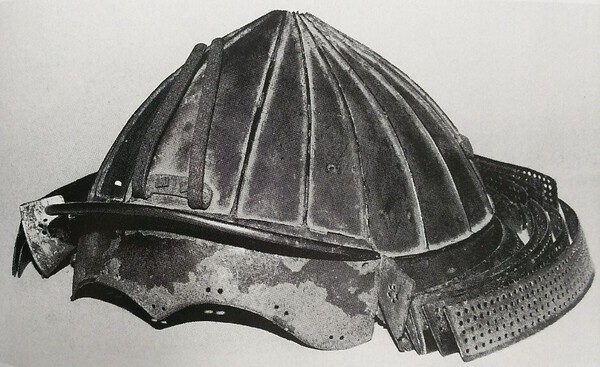
.thumb.jpg.039d47f94ae42d2d27428bfa53e6a72c.jpg)

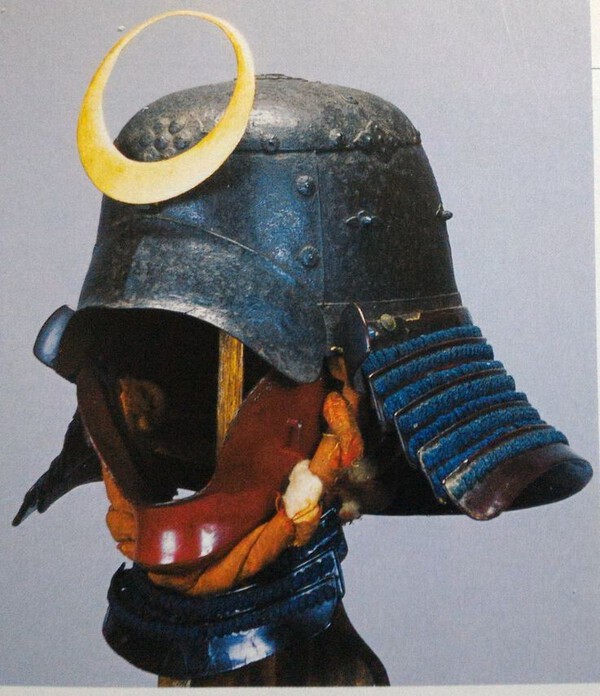 1 point
 -
On the Evolution of the Oroshi-Mabizashi I don't think it's necessary to reiterate what was said earlier on the Hitaigane-nari mabizashi, but briefly, I assert this is the starting point for the oroshi line of evolution. The shape becomes simplified next, with more gentle curves, such as seen on this Tosa example. The next stage is a bit complex to pinpoint. We see the shape over the eyes becoming simplified and in most cases more or less straight, and the cheek guards being extended greatly to provide more coverage to the face. The Masashige Okitenugui is a great example of this, and even retains the same nasal design from the hitaigane-nari mabizashi. However, it must be stated that there is peculiarity here. In this case, the mabizashi is no longer a separate component that has been rivetted on, but is an integral part of the front plate. Also of interest is this paricular Okitenugui. It's quite possible this is an earlier example. The mabizashi retains the curves that conform to the eyebrows of the wearer like the Hitaigane-nari. Unfortunately, the cheeks were cut off at some point, likely during the Edo period. The extended cheeks do however show up as a separate plate riveted to the bowl elsewhere. I'm of the opinion this example originally hailed from Tosa and was retrofitted at some point later in the Azuchi-Momoyama period. I am not positive however. Regardless, we can see it is closely related in form and function. A further Tosa example of this, but more elaborate in execution with the implementation of kirigane and uchidashi, is worth including here. In this vain of shape changes, we see something similar in Uesugi Kenshin's kindami "ko-zunari". We see something quite similar in proportion and shape to the okitenugui, with shorter cheek guards and simpler edge geometry, but wildly elaborate uchidashi work. Regardless, it follows the same overall trends in terms of shape changes.

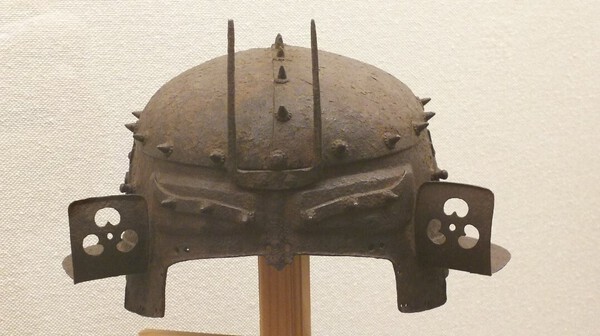
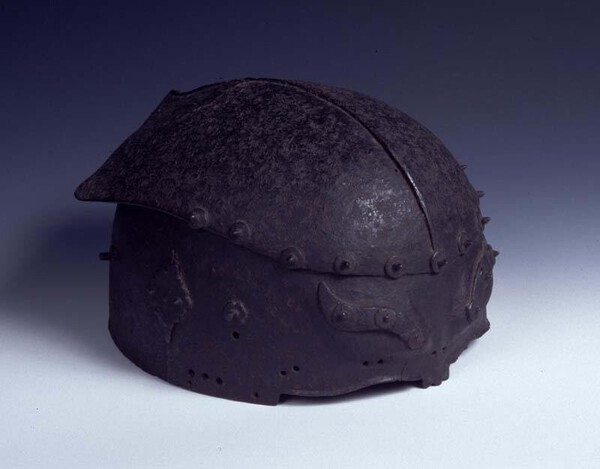
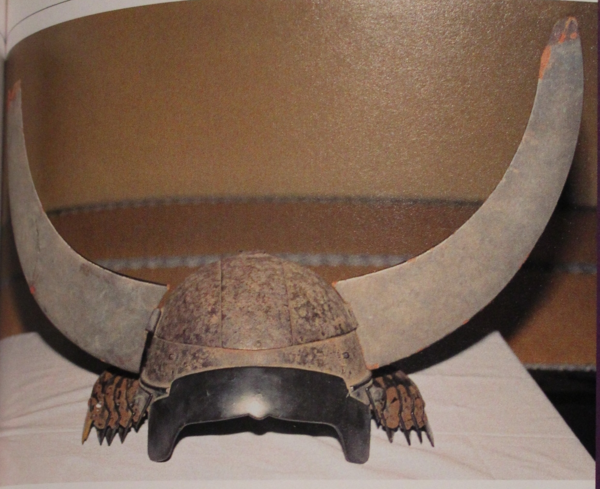

 1 point
 -
Ref. Items 306 & 307 Katsuhira Tigers Background continued - The question of authenticity of the original piece was raised . When I bought it from Darcy , he was most unhappy that the tsuba , having been submitted for papers with, I think, one of the travelling NPO or NTHK shinsa teams, had been knocked back as gimei. This was one of the main reasons why he abandoned fittings for many years, preferring the greater certainty of high end blades with NBTHK papers. See Darcy's original sales ' flyer ' below. As usual with this quality of workmanship, the tsuba looked even better in hand than in his excellent pictures. Once I was able to study the tiger , the more I looked at it, the more I convinced myself that the shinsa verdict was incorrect . It was as if confirming an attribution to Katsuhira was ' too big a call ' for the judge to make. When Ford first saw the work close up, he was able to reference the piece against other examples of Katsuhira's work shown in his extensive library and was also convinced that the tsuba is sho-shin. I decided to proceed with the making of the Utsushi of the missing piece, hoping that I was not taking too big a risk that we were not just making a replica of part of a gimei dai-sho set. Looking back on it now, the authenticity question seems almost irrelevant. We set out on a path which, in the end, has much more to do with the continuation of the Japanese Metal Working tradition ( even if more so in the West than in Japan itself ) and ultimately that is more important than an opinion on a signature. In a sort of sideways corroboration, a few years later, we were provided with documentation concerning the sale of the ' missing ' piece at a well known and reputable auction house. They do not seem to have had any real concerns about whether the tsuba was authentic - although, as all auction houses do, they covered themselves by describing the tiger as ' marked Hagiya Katsuhira '. The fact that it made the money it did, also seems to point to the purchaser being happy with the attribution. More to follow...
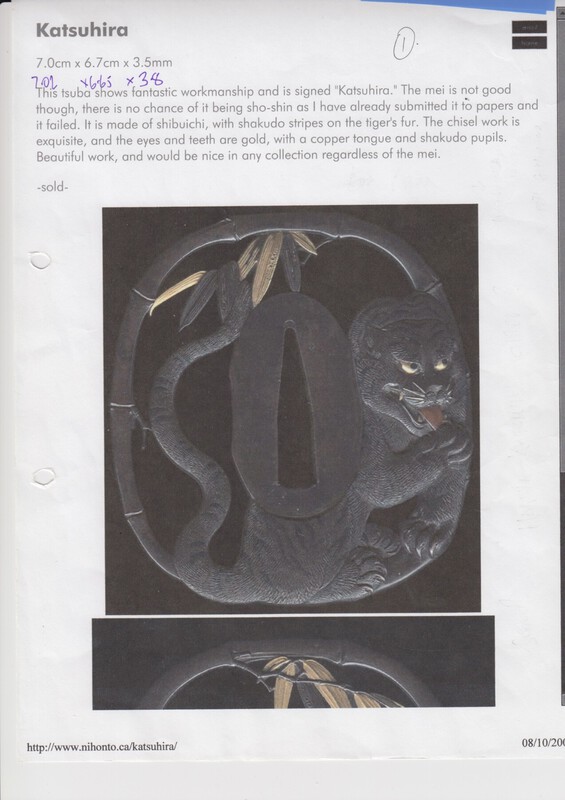 1 point
 -
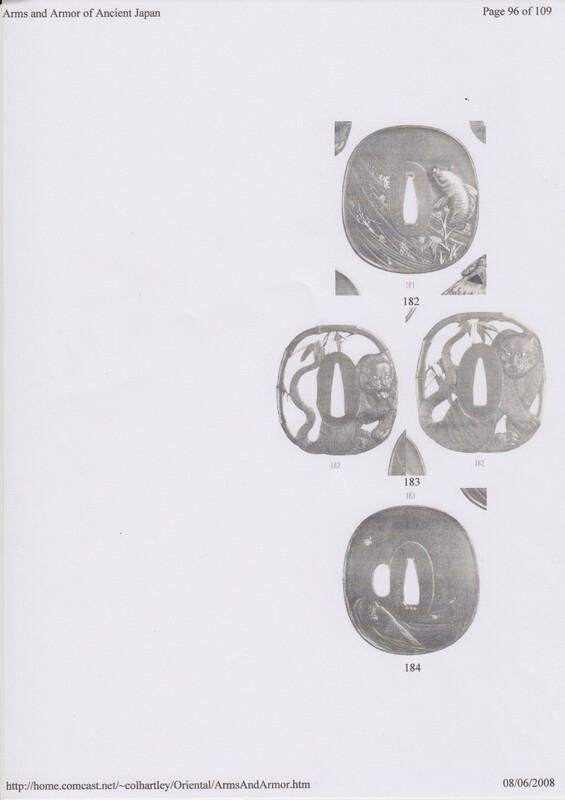
Ref. Items 306 & 307 - Katsuhira Tigers A bit of background - I bought a number of swords from Darcy Brockbank around 2005/6 . He had also been selling a few fittings , but decided that he was going to concentrate on blades. I bought the last three tsuba that he had, one of which was the tiger licking its paw . Having assumed that this was a 'stand alone' piece, I was very surprised to see an illustration of it with its larger brother in an old exhibition catalogue from 1964. This was the Arms and Armor Exhibition which ran from February 19th to March 22nd 1964 and was Chaired by Dean S. Hartley with Fred Martin and Bob Haynes as Co-Chairmen. After speaking to Darcy , it became obvious that the pair had been split up with no way of tracking the whereabouts of the larger piece. Having been impressed by and purchasing some of Ford Hallam's work , I broached the subject of making a replica of the missing piece using the very fuzzy black and white image from the catalogue and also the smaller tsuba as a guide. At that time, Ford was living and working in Cape Town, so I flew down to meet up with him and discuss the idea. Ford told me about his background and love of Japanese art and particularly sword fittings, against the situation of almost complete loss of the art metalworking tradition within Japan. The making of swords etc. although much diminished, is still widely practised but fittings making, on a professional basis, is practically extinct. We were keen therefore to document the making of the Utsushi so that some record should remain of the processes and skills involved. At first we thought about photographs taken at various stages together with a written explanation , but we soon realised something more was needed . We tried setting up a video camera to record ' live action ' but it was too awkward to change settings , positions etc. and impossible for one person ( Ford ) to both operate the camera and work at the same time. Through a friend of his , Ford got in contact with Brad Schaffer, a full time film maker. He agreed to meet and discuss the idea, then becoming enamoured with the project. Brad was able to get involved from day one of the making of the piece with the result being a unique video documentary now viewed in all its parts nearly 750,000 times. More to follow....
 1 point
 -
That video is legendary, and I think brought a lot of people into this hobby. It is an incredible work...the video and the item. And I think changed a lot within the tosogu world. Especially for people who hadn't considered modern work before. But I guess we are really getting ahead of ourselves here, let's wait for the item itself :-)1 point
-
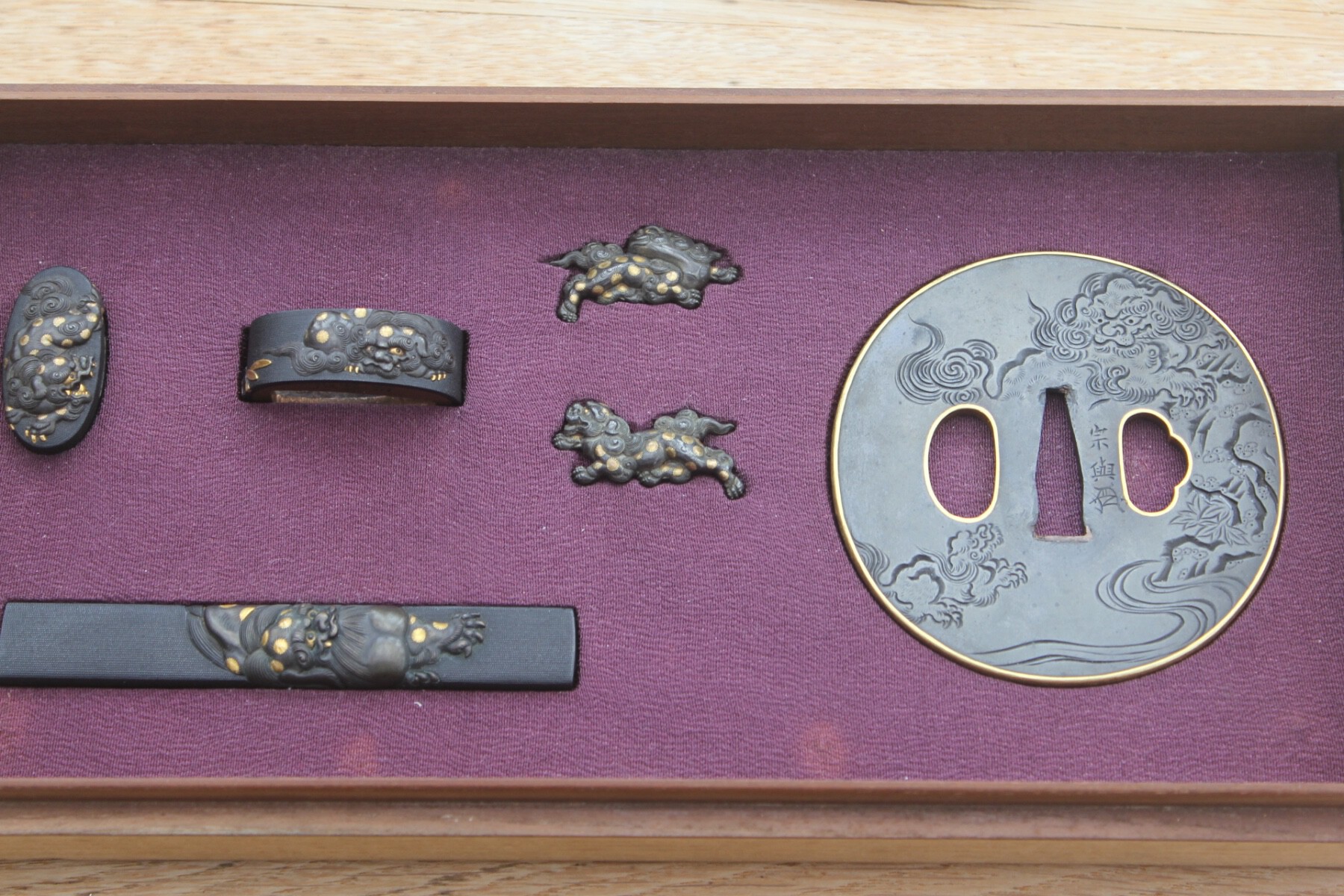
Re Item Nos. 294 - 297 The full set together in its box.
 1 point
 -
Thank you ,Thomas!1 point





















.jpg.d69d9a5bd0a3d302ec468014888f218f.jpg)




This leaderboard is set to Johannesburg/GMT+02:00