
Leaderboard

Popular Content
Showing content with the highest reputation on 09/19/2023 in all areas
-
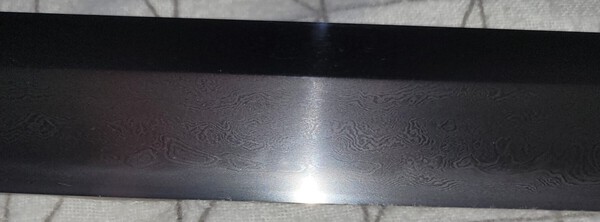
Gendai, Nishimura Kanetsune.
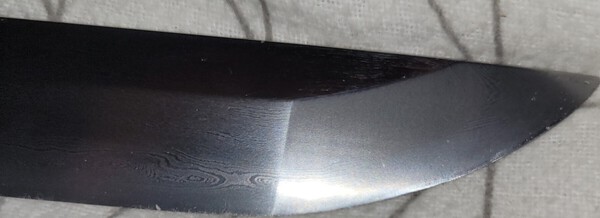
 4 points
 -
There are a few mistakes. 関 = Seki (city) 住 = Ju (living) 佐 = Sa 光 = ko 信 = Nobu 光 = Mitsu 作 = Saku (Make)4 points
-
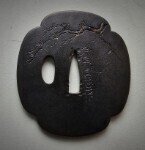
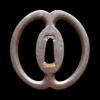
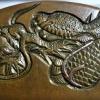
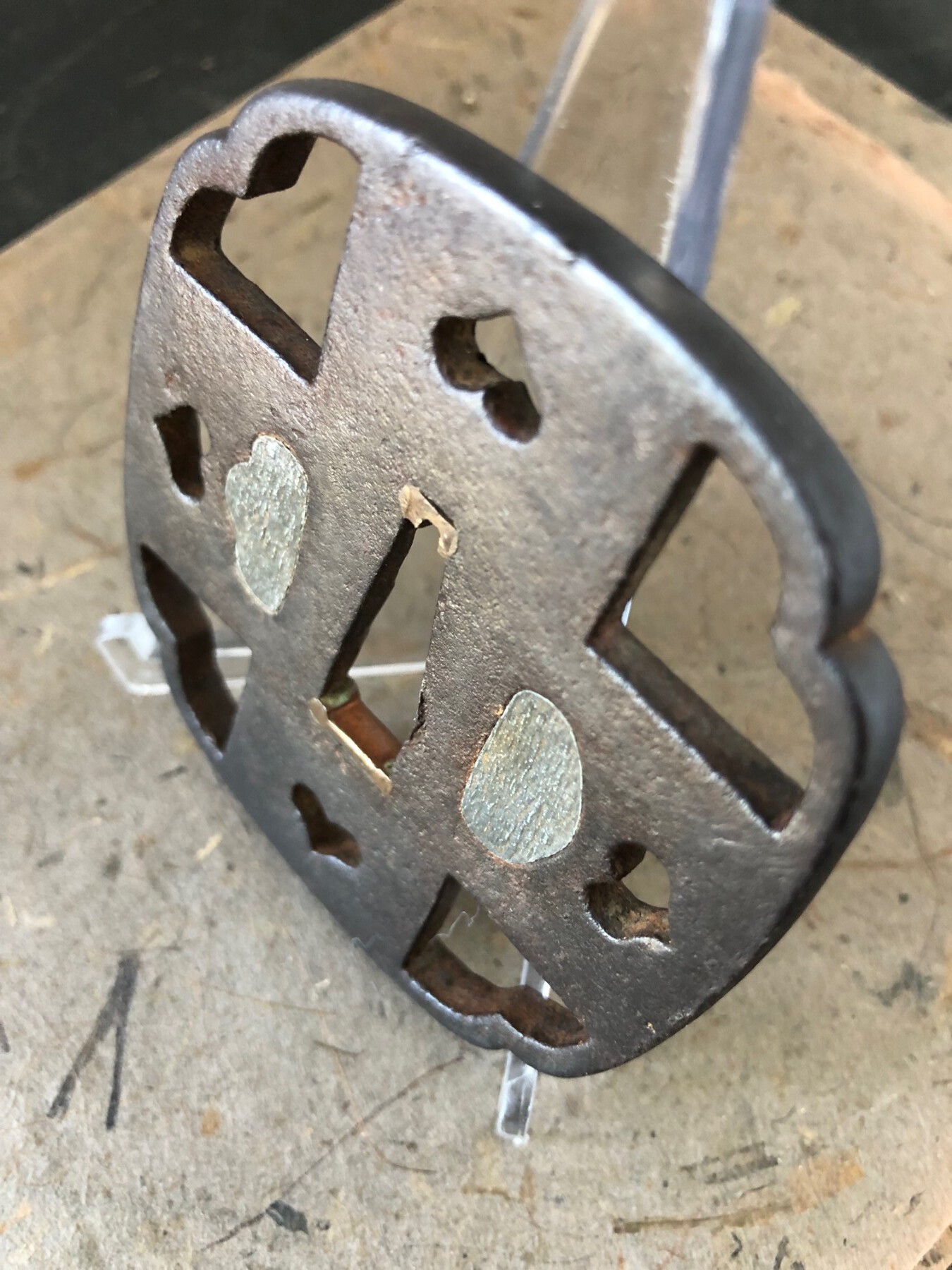
A pet hate of mine - whether coloured or plain - give anything like these, a wide berth. You won't find the original being up for sale and all you will end up with is a good quality reproduction - most of the time not even "good". Under that paint is an alloy casting, the "gold" ategane are superficial and were never cut all the way through. Unless like this first tampered with example, you will see cast in sekigane - true, often painted over very convincingly but still not added after manufacture. Once again two sizes were made. Some shockingly high prices have seen uninformed people being taken to the cleaners - often begging the question "did the seller know what they were selling?" Due diligence is often no defense, I know of one museum "expert" in Italy who judged one as an authentic Edo period piece even though it exhibited all the faults and the "gold" had partly rubbed off exposing the grey alloy underneath! By the way there are copies of this design still being made TODAY - nothing like getting a fresh one! https://www.ebay.com/itm/354830615338 nakago-ana recut to put on a "real" sword https://www.ebay.com/itm/155726746100 https://www.etsy.com...-antique-rare-bronze This one made me laugh "Rare find" https://www.ebay.com/itm/124628490300 A bargain at $39 - that is getting closer to the true value, just drop the 9! https://www.worthpoi...-priest-large-katana https://thumbs.worth...e9b3be1e9139292f.jpg https://thumbs.worth...e9b3be1e9139292f.jpg https://www.jauce.com/auction/s1098411890 Lets bury an iron one for a few years - it will make it look so much more "real" https://sbg-sword-st...rect-custom-options/ Wet paint!3 points
-
Ref. Takayama Masakichi, the Man Who Was Responsible for the "Takayama-Tō" (warrelics.eu)3 points
-
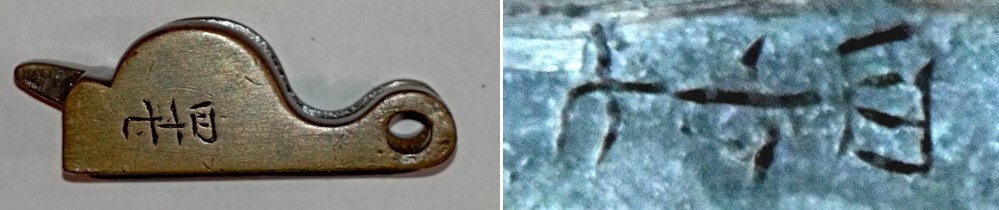
Just a quick update, but not yet complete as I am deep in another project. Q1. The stock/butt were usually covered in lacquer of some kind, most commonly a clear 'suki-urushi'. Always remember that guns sourced in the West may have had work done on them outside Japan, so without taking your gun in hand I cannot be sure of what surface covering that you are seeeing. (E.g. Shellac glistens more than suki-urushi, and may be thickly and unevenly applied.) Q2. Cracking in the Dai in the places that you mention is sadly quite common. It sounds as if you have arrested the movement successfully. Often you will find a small brass plate at the top of the dai-kabu butt to cover just such cracking. Repairs around the pan and panlid are also common especially if parts of the lock have been changed or replaced for some reason. Q3. Mekugi can be thought of as easily lost, remade, i.e. disposable. Susu-dake (smoked bamboo) is thought to be the best material. Loose dogane are also common. A shim sounds like a good fix. Q4. In an ideal world, the karuka should have one flat face for ramming the charge. The other end usually, but not always, has a hole in it for threading a cleaning cloth through it. (The word Sakujo or Shakujo is also sometimes used, but it seems to be a nickname taken from a type of Buddhist staff, the action of loading imitating the 'ramming' banging on the ground and ringing of the bells as you walk along. Early guns were used by armed monks as in Negoro-Ji temple. Perhas a religious connotation has a nice 'ring' to it!?!?. The word Karuka is more practical, and prosaic, said to be a natural word progression from the original Portuguese.) If there is any way of keeping (reshaping?) the original karuka, great, but like mekugi they were often broken, so replacements were carried. I have made about twenty or thirty in my lifetime of gunnery in Japan. Q5. The copper and silver (yes) zogan inlay has been over-polished and lost its patina. It would be nice to darken it down a little if possible. Gunners did not like a shiny barrel surface to aim along. I like the straight undecorated muzzle. The 'valley' sights are a nice feature. The holes are said to be for small upright pieces of stick incense to help align the sights in the dark. Q6. Notice 三十五 35 and 四十七 47 on the parts. Your pan lid may have been changed, but it is a nice shape and a good job. Even the hollow pin is correct. Q7. Interestingly it was registered in 'Kisarazu' Prefecture, which only lasted under that name from 1871 for a short while until it became absorbed under Chiba Prefecture in 1873. There is a good chance that your gun was made in the same area. 木更津県 - Wikipedia In a hurry. Apologies.3 points
-
Rolland, a thoroughly absorbing and excellent read, thank you. You wrote: > What puzzles me is the enigmatic "orphan" mekugi ana on the left side. It is empty > and has no counterpart on the right. I've seen something similar in other teppo's photos. > I found this mekugi ana very useful for removing the karakuri, but what was its real purpose? In my experience with the 6 teppou in my collection its real purpose is exactly what you used it for - gently removing the karakuri. Best regards, BaZZa.3 points
-
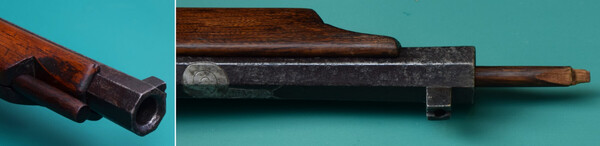
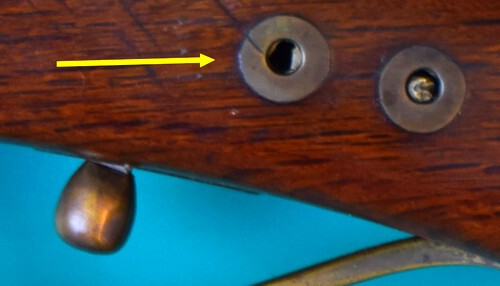
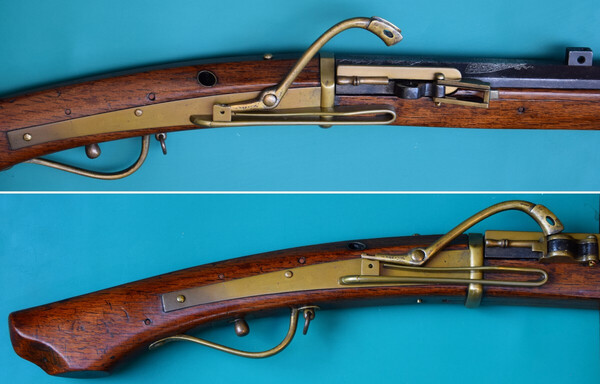
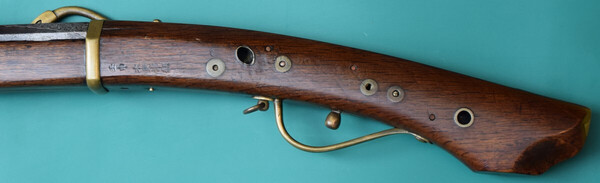
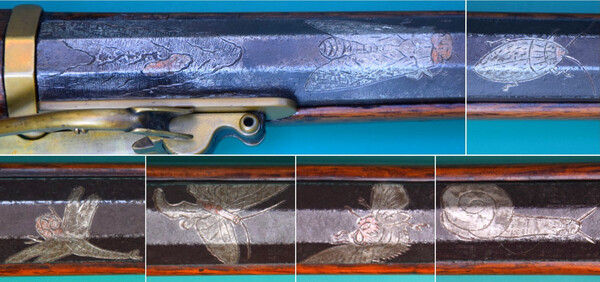
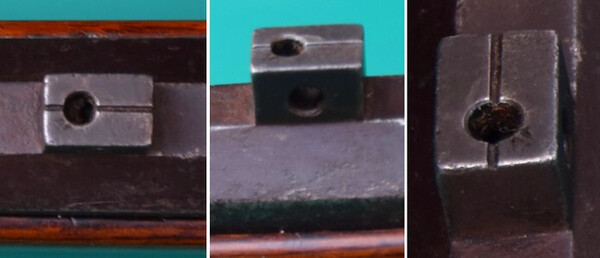
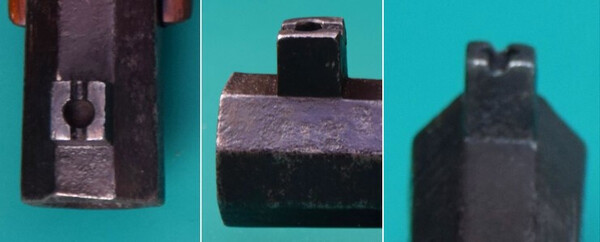
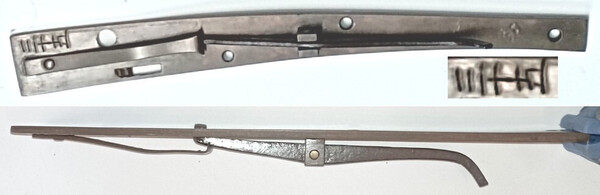
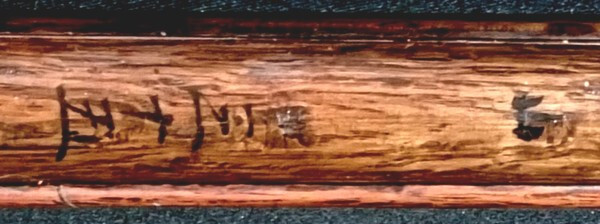
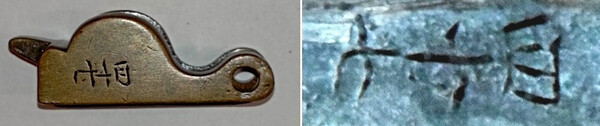
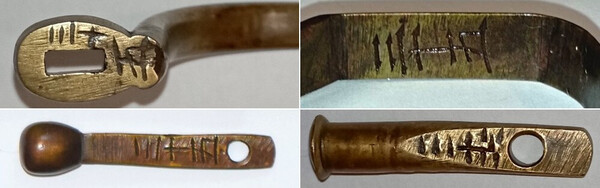
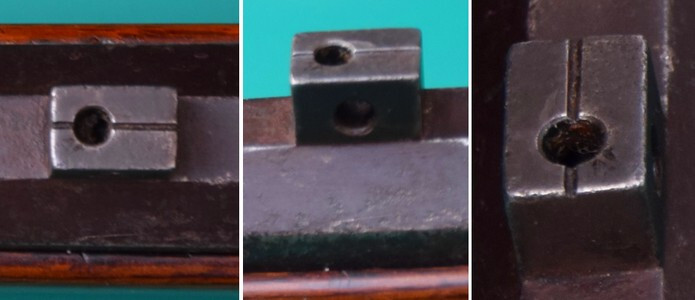
Hello everyone! I'm new here and I'm passionate about history and collecting antique firearms as well as shooting black powder weapons. Collecting antique firearms is not yet popular in my country, knowledge about Japanese guns - minimal and often misleading. I personally for a long time considered Japanese guns to be mere copies of Portuguese arquebuses. However, some time ago, a nice Japanese guy approached me for support regarding Minie rifles. Correspondence with him encouraged me to take a closer look at the Japanese matchlocks. I was very surprised by how different they turned out to be from their European counterparts. I mainly collect European and American breech-loaders and revolvers, but I also love technological curiosities and milestones from different eras (up to percussion). I felt now that without at least one representative teppo my collection would be handicapped. Looking around at various auctions I chose an item that looked modest, almost undecorated, minimalistic and probably that's why it was rather inexpensive (in case of a mishap, I preferred to limit the loss). However, it felt authentic to me, complete, and looked not like a parade weapon but a purely utility gun, which I prefer. My knowledge of Japanese gun is basic - mainly books of Lidin, Perrin, Pettersson, Turnbull, Sugawa excerpts from Internet and especially this extremely competent forum. However, I like to know everything I can about my guns. Therefore, I humbly turn to my esteemed colleagues for help in identifying and an honest, unforgiving assessment, even if the item turned out to be worthless scrap. To get more into the topic, I tried to use Japanese terminology. I prefer learning by doing, but I have no doubt that I have made a lot of mistakes, and I have probably drawn wrong conclusions from my observations. I apologize in advance for abusing the patience of the experts in this way and ask for your understanding for the novice. I'll start with general view and basic information: Total length: 116 cm (45.7") Weight: 3.15 kg (6.94 lb) Caliber: 13,51 mm (0.532") (4 monme?) Bore length: 81 cm (31.9") After receiving the gun, I did what I do with any antique gun. I took it apart, washed it and looked for rust on iron parts (there was some passive rust on the kanime). Here the set of elements and fittings: Wood: The dai was covered with transparent varnish on the entire internal surface and in the barrel channel. This coating roughly resembles shellac varnish, but I highly doubt that Japanese gunmakers used shellac. Does anyone know what varnish was used in Japan to cover the dai? Right-hand side: Left-hand side: The dai shows signs of small unprofessional repair. The split fragment (right side, in front of the hizara) was glued without attempt to fit it or press it properly during gluing. Moreover I detected two thin cracks going from the bisen cavity back to the inside of the dai. To prevent further cracking, I fixed them with a transparent, low-viscosity epoxy resin. Here the shiba-hikigane: All the original mekugi were quite worn and split. The original mekugi went into the bag and I replaced them with fitting pins made of bamboo sticks. The dougane was a bit loose as the dai wood had apparently shrunk. I blocked the dougane by inserting a thin bamboo wedge between dougane and dai. The karuka has a damaged tip, but its length seems to me to be adequate and would be sufficient for loading the weapon. Is karuka the correct term here? Maybe sakujo? What puzzles me is the enigmatic "orphan" mekugi ana on the left side. It is empty and has no counterpart on the right. I've seen something similar in other teppo's photos. I found this mekugi ana very useful for removing the karakuri, but what was its real purpose? Barrel At first glance, the bore of the tsutsu looked tragic, but it was only clogged with a dense, greasy substance. After cleaning, it turned out to be in surprisingly good condition - no active rust, only minor pitting, in any case shootable. In this situation, I considered removing the bisen unnecessary. OK, I tried gentle methods, but as he did not want to move, I gave up. Having experience with unscrewing massive barrel plugs in European muzzleloaders, I had a bad feeling with a supposedly long, thin bisen made of a material with properties unknown to me. So I wiped the bore with a rotating brass brush, treated it with EDTA solution for 3 hours just in case, brushed again, washed it and finally protected with Brunox Lub & Cor. The tsutsu is the only element of the weapon with any decorations. There are 7 engravings on the barrel - all depicting small animals. Shown below individually in order from chamber to muzzle: The engravings are rather rough and finished with (I believe) silver. The red and orange decorations visible in the photos are most likely copper (at least it looks like copper). The juko traces of minor impacts, but they do not distort the barrel crown. The photo below also shows the damaged end of the karuka pushed all the way in: Sights The moto meate looks quite conventional, at least like most similar weapons. Saki meate, on the other hand, is a version that I have rarely seen. Instead of a protruding front sight, it has a groove and an additional hole, as if for attaching an insert. I've seen similar saki meate in photos of other teppo, but very rarely. In his book, Shideo Sugawa in his book shows a similar saki meate with a groove but without a hole in the middle. Here, respectively, the moto meate: and the saki meate: I estimated the relative position of the barrel axis and the sight line. For my purposes, I assumed that the aiming line runs through the bottoms of the grooves in the moto meate and saki meate. It turned out that this aiming line was practically parallel to the bore axis. Gun mechanics: The hibasami was slightly deformed and missed the hizara, but I bend it carefully into the correct position. The hajiki seems a bit flimsy - probably my subjective impression. I am used to the powerful springs of flintlock and percussion firearms. The simple design of the karakuri is illustrated in the photo below: The karakuri works, but I am wondering about something noticed during tests with a simulated hinawa. The hinawa in hibasami reliably hits the centre of hizara, even if it is very short. He would undoubtedly ignite the priming powder. However, this is done only by the inertia of hibasami because it is in a static position the tip of the hibasami is approximately 18 mm (0.71") away from bottom of the hizara. Therefore after the ignition the hinawa is withdrawn from the hizara. This could eventually prevent the hinawa from being extinguished after firing. Is this correct behavior of the hibasami? The problem of match cord extinguishing is known from European weapons. Is himichi the proper term for the touch hole? I estimated touch hole diameter at ~2.0 mm (0.08"). For an obviously heavily used weapon this would be a suspiciously low value. But examining the hizara, on the outer curve, opposite the touch hole, I discovered a thin brass circle. Presumably someone drilled a hole there (maybe conical) and then closed it with a brazed iron plug. The purpose could be to repair the burned-out touch hole by inserting a bushing with a smaller hole there. Were such repairs practiced by gunsmiths in Japan? Signatures: There is an inscription embossed on the left side of the dai: There is (as I was told) registration information from 1872 on the stock: 'Jinshin' and 'Kisarazu Prefecture', where the 'Jinskin' means the 5th year of Meiji (= 1872). In the barrel channel on the dai there is an inscription written (I presume) in ink: On the bottom of the hibuta is (as I was told) the Chinese symbol for 47. At the bottom of the chamber there is - I believe - an identical symbol. Besides, I didn't detect any other mei on the barrel. I have already shown the signature on the inner jiita surface. I found quite similar symbols on the lower mounting surface of the yuojintetsu, on the inner surface of the dougane, on the hikigane and on the hibasami axle: I couldn't find any other mei on the gun. Judging by the caliber, crude ornaments, lack of zagane, simple workmanship, etc. I assume it was not the property of a proud samurai but rather a weapon of lowly ashigaru. Maybe it's a ban-zutsu, unless the 4 monme caliber is too small for a military weapon? Or is it a cheap hunting gun? Above I wrote basically everything I know and what I think (or I think I think). I will be very grateful not only for all specific information but also for every educated guess!
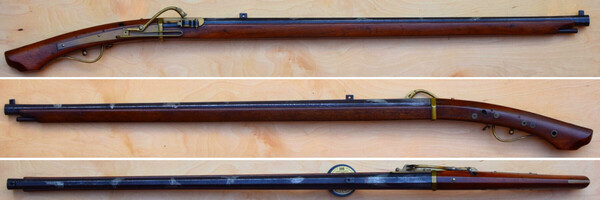
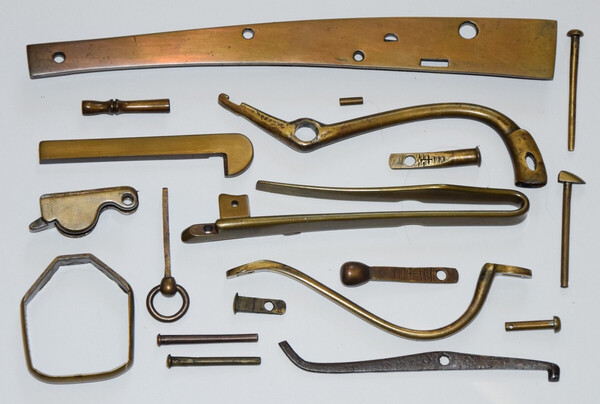
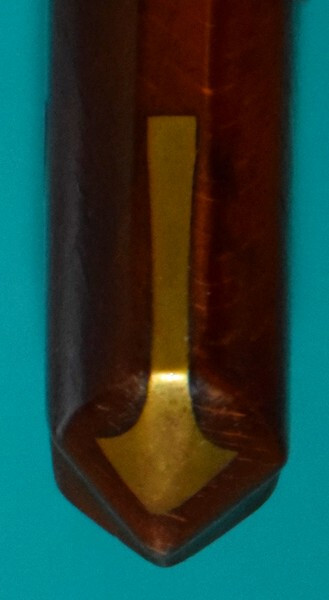

 2 points
 -
Well apart from the ugly carving technique the himotoshi bother me. This piece will evidently hang upside down on the obi I'd call that a netsuke fail.2 points
-
Hard to say, because 'best' is relative and subjective. Luckily I had the oportunites to hold blades of great smiths (e.g. Kiyomaro, Kotetsu & Kaneuji) my hands but unfortunately I don't have the experience to fully see and understand the high art of these pieces. So these are names I can prag with but nothing more...2 points
-
R: ”It is very important to me to confirm that weapons must have actually existed around 1872. Can you make any assumptions about its probable period of production?” Yes, there was a huge national roundup of weapons conducted, by prefecture, in 1872 ... which was the year of Jinshin 壬申 (as it says on your dai-kabu). This means that the gun is older than that. Your gun does not have many typical geographical or ryu-ha gun school characteristics, making it more of a generic weapon for light military use on a battlefiled anywhere, a typical Tanegashima-style gun produced throughout the Edo Period. I am guessing that the zogan barrel decorations were added at a later period to increase its sale value, probably Meiji or later when plenty of artisans were still alive and available to do the work. Use of matchlocks began to die out around the 1840s and 1850s as they were being gradually replaced by influxes of versions of Western guns. Without a Mei and without closer study I would hesitate to narrow that down any further than 'Edo Period, likely any time between 1600-1840'. (Three things do hint to me that it could be earlier within that period, i.e. the wide 'za' pin surrounds, the narrow-waisted pan, and the square shape of the sights.)2 points
-
Soshu ju Hiromitsu2 points
-
豊𣘺於神明宮社前斬鉄兜 – At the front yard of the Toyohashi Shinmeigu shrine, cut a steel helmet.2 points
-
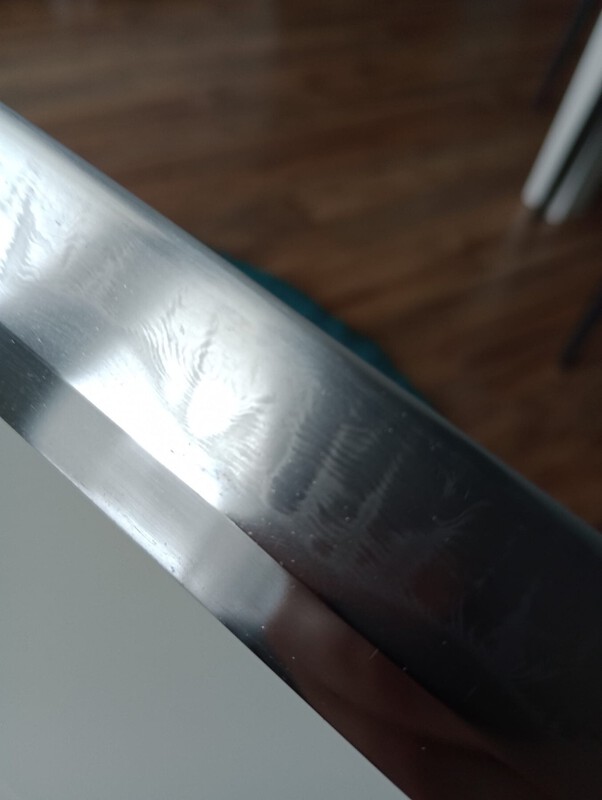
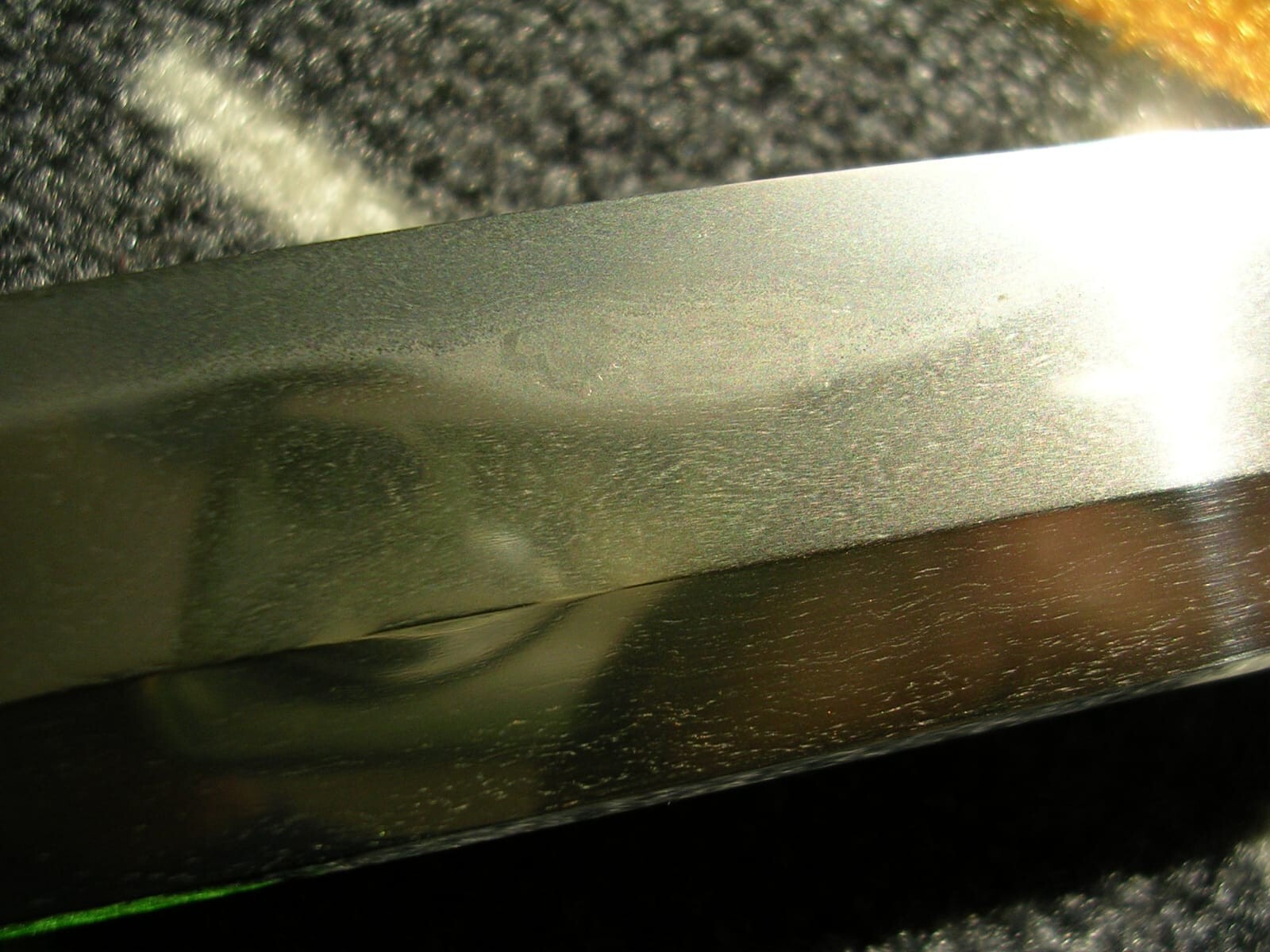
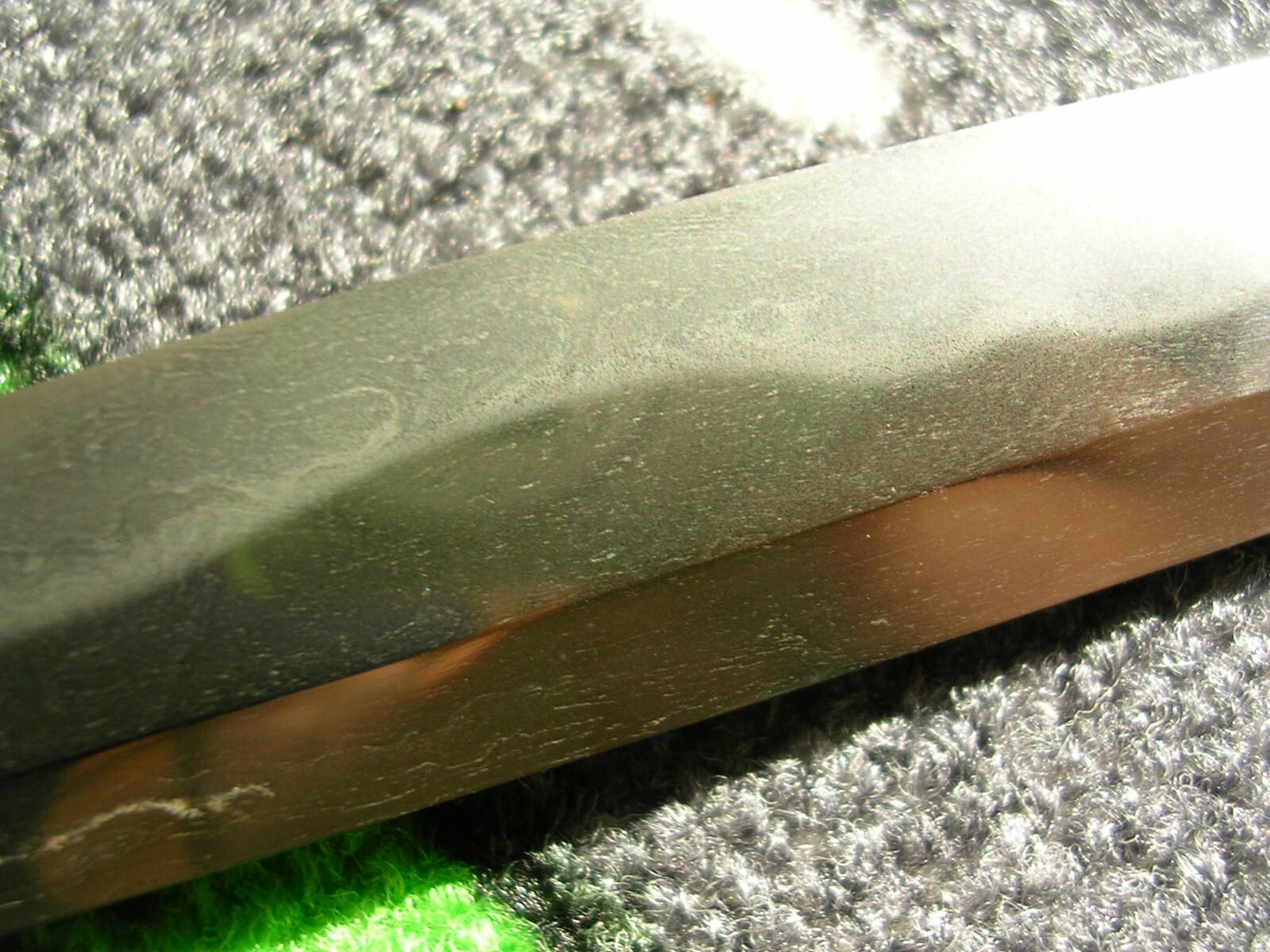
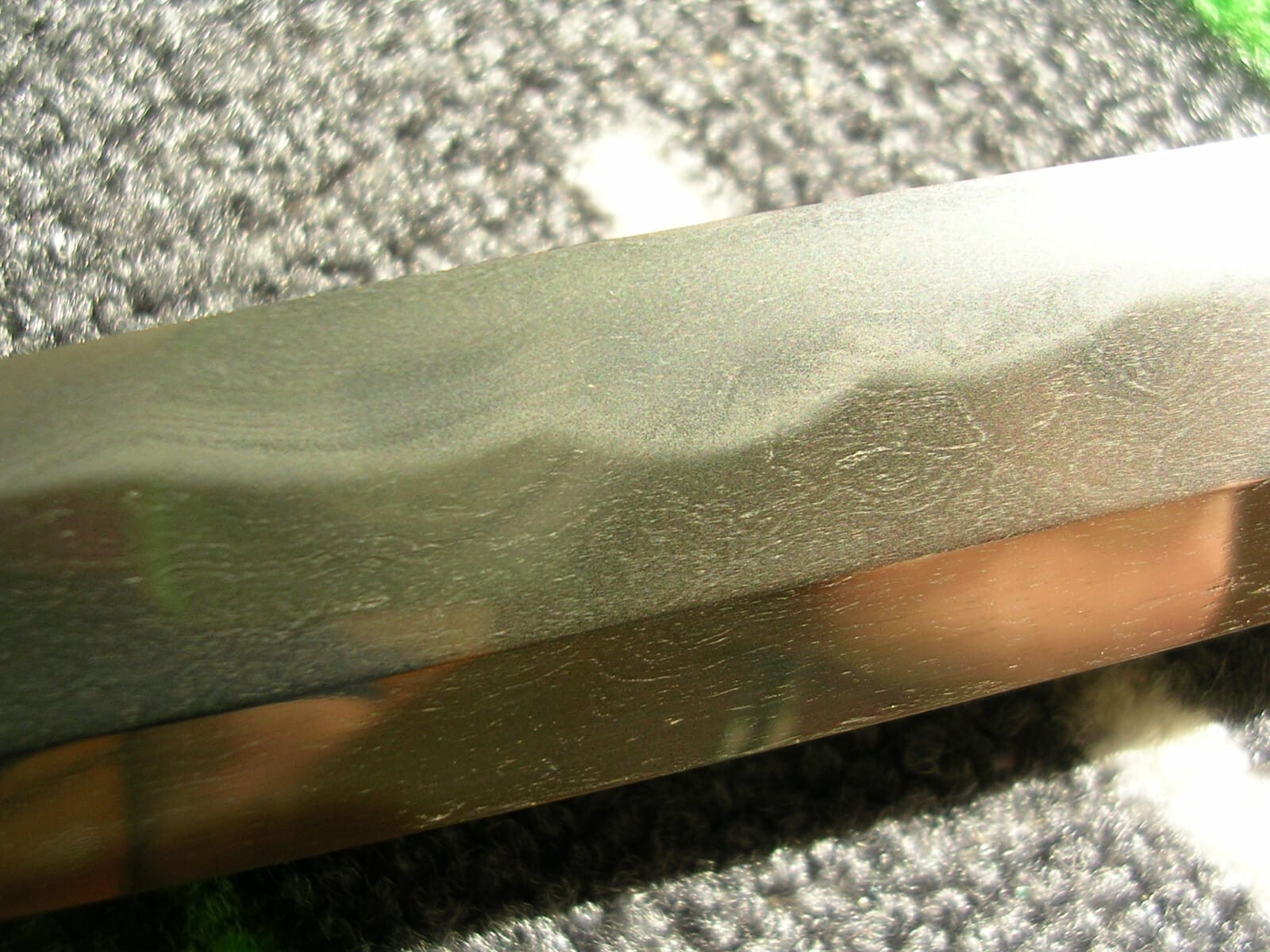
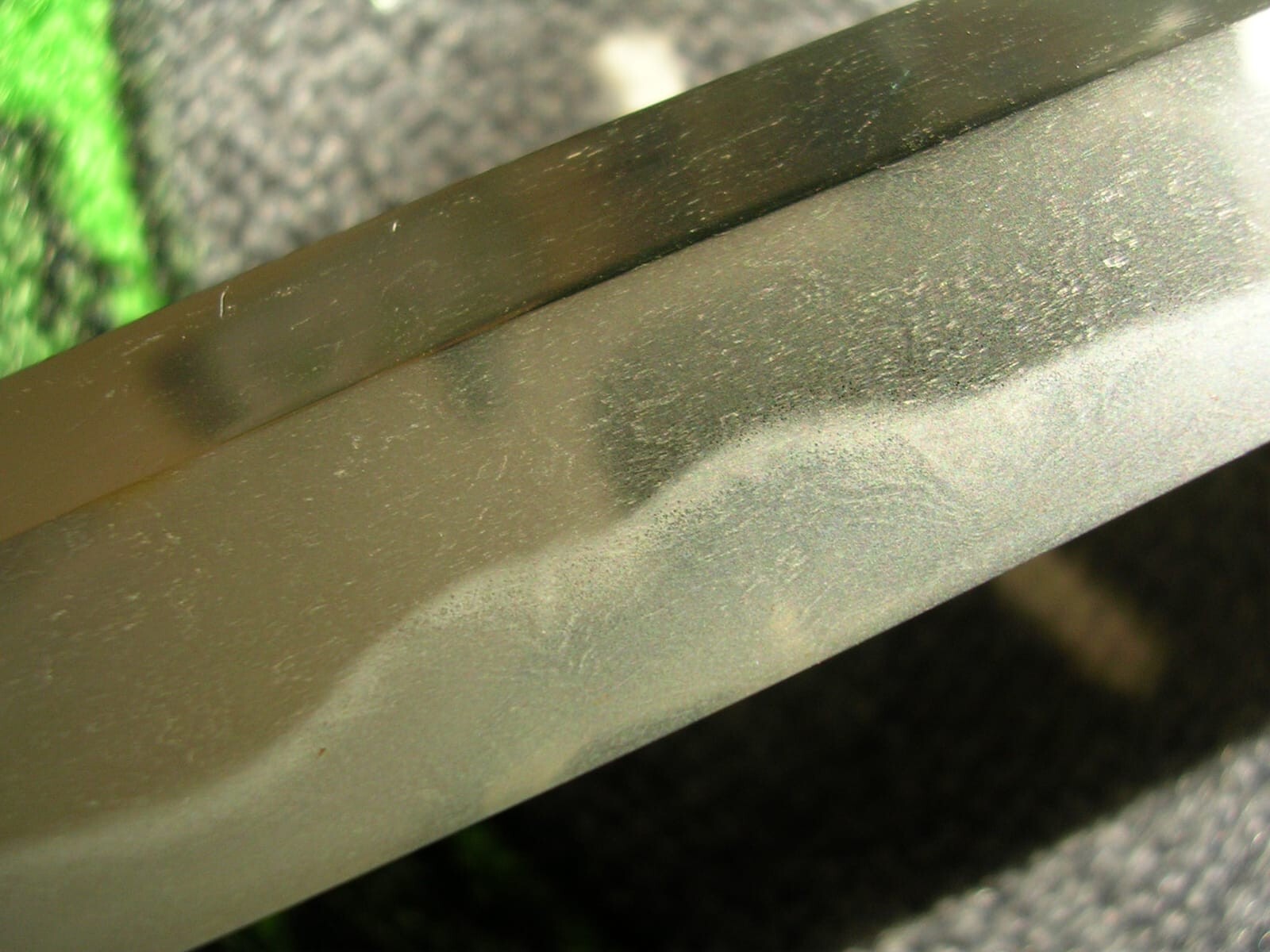
Shinsakuto mumei:
 2 points
 -
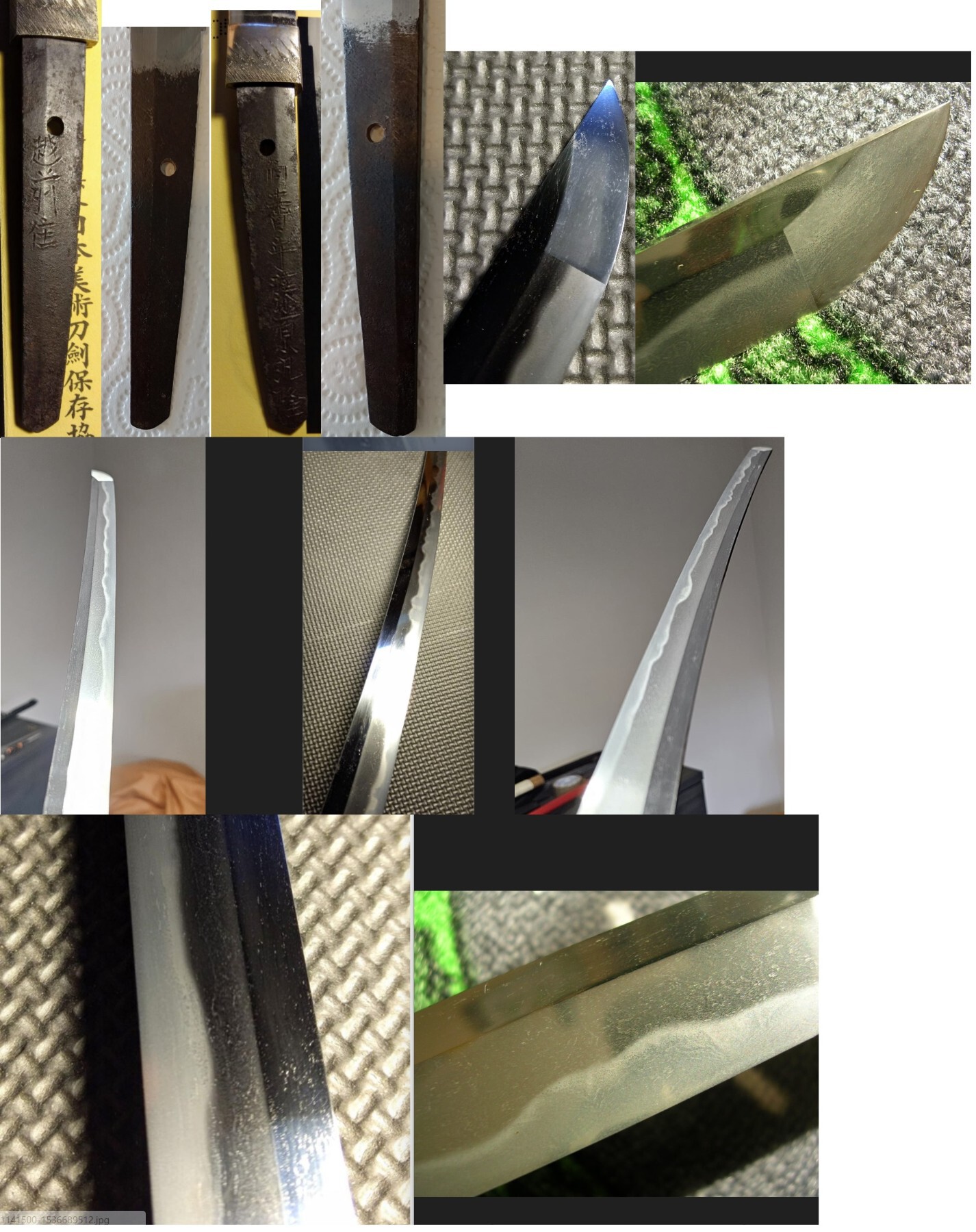
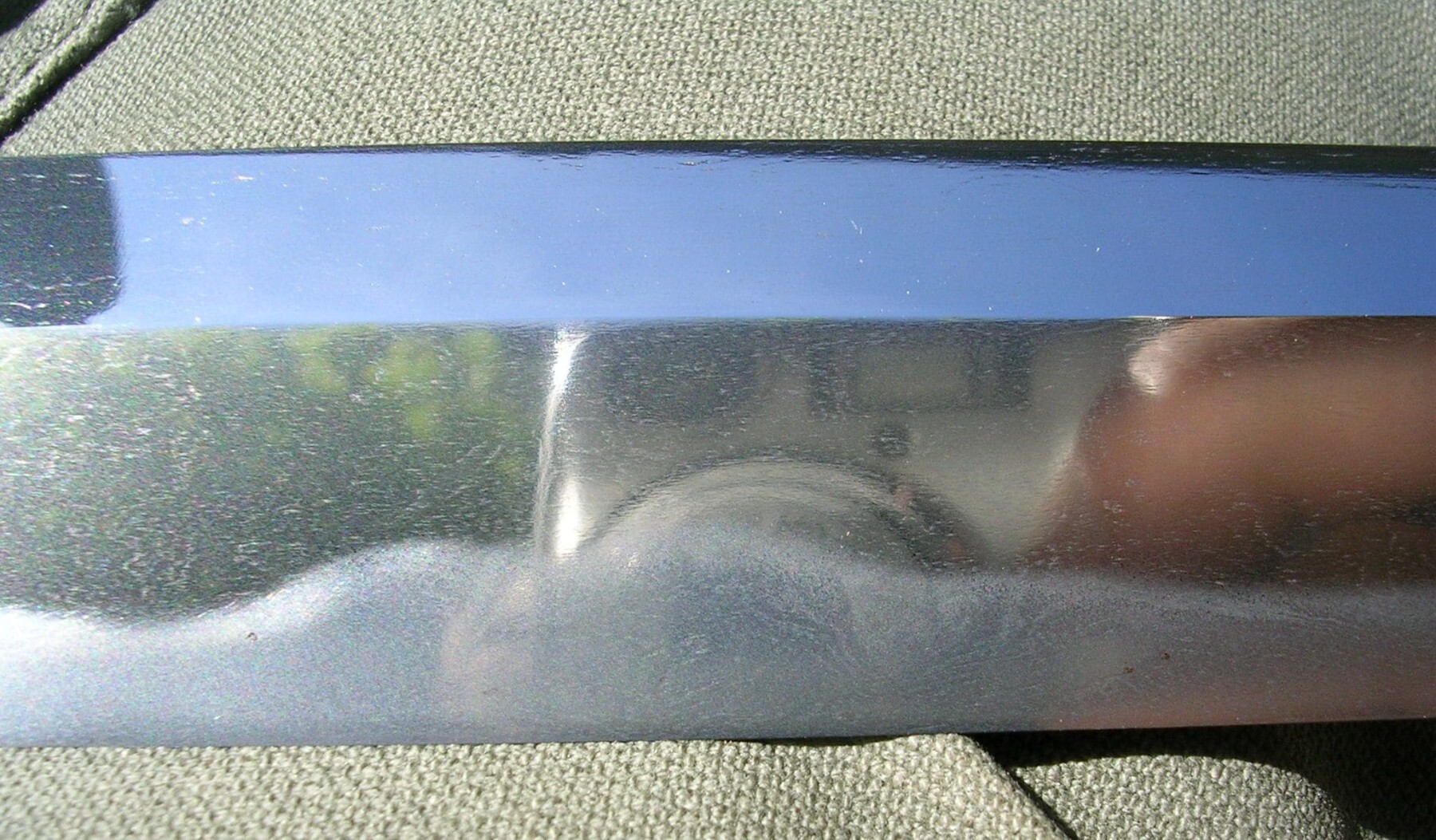
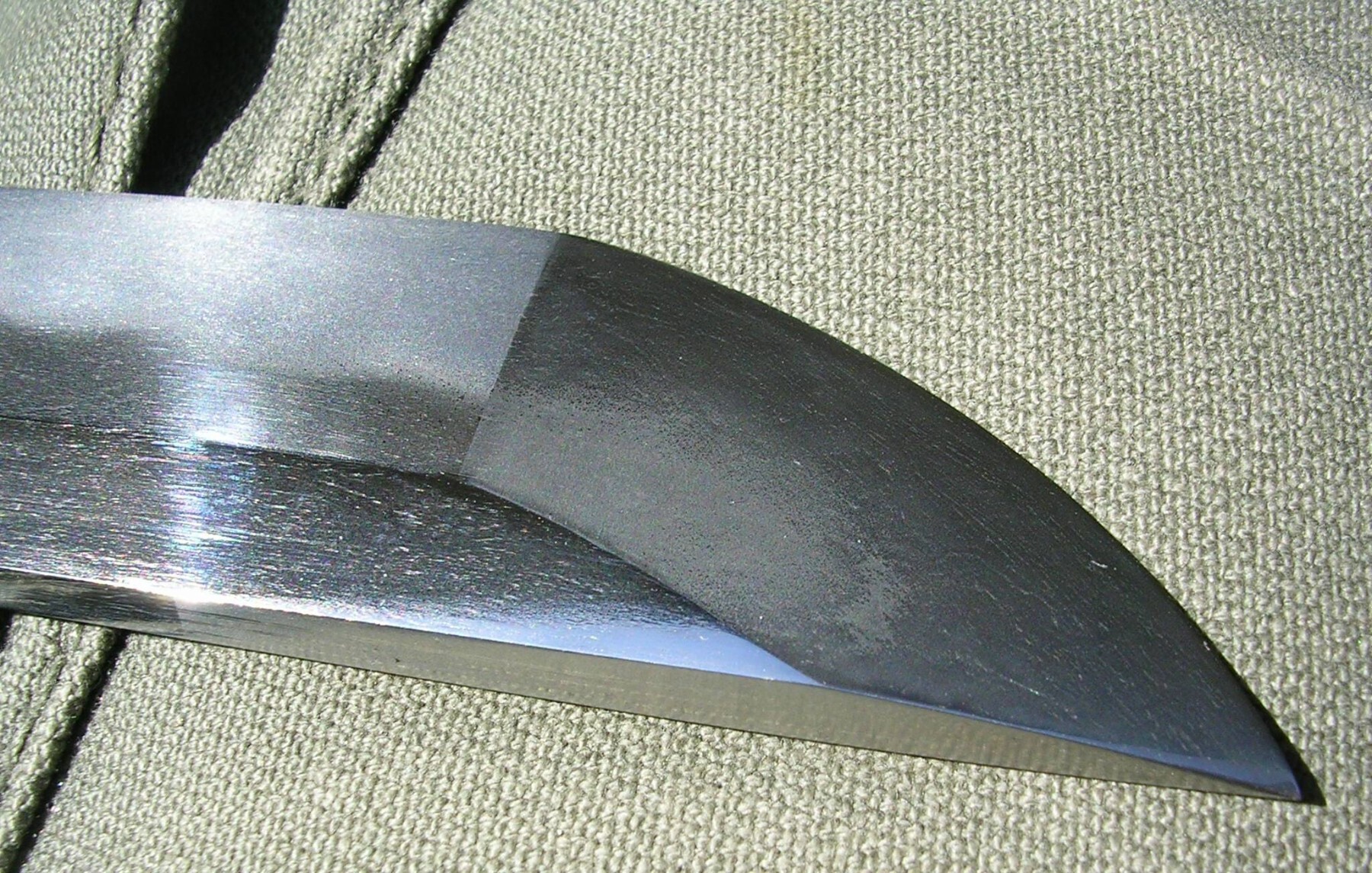
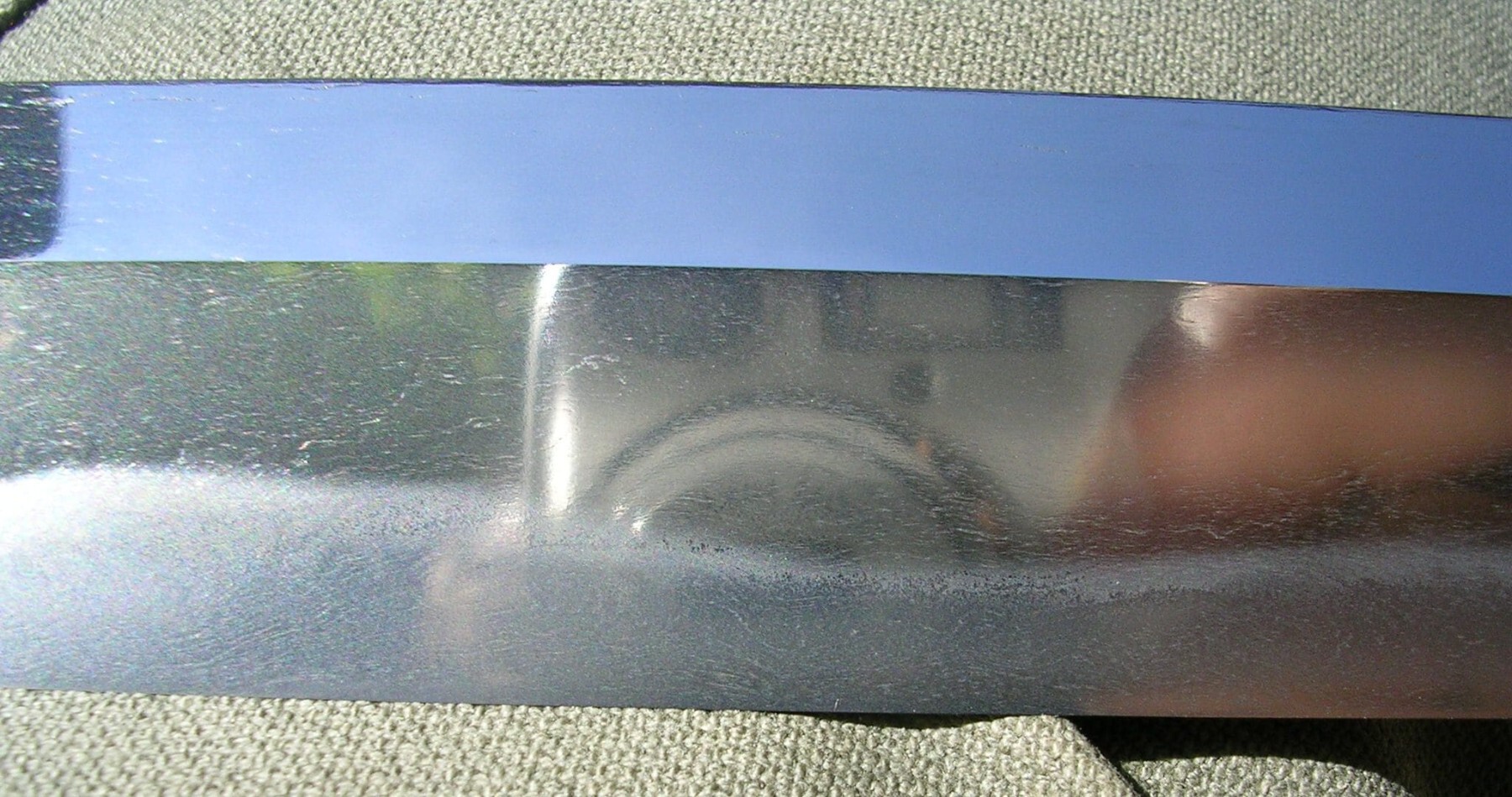
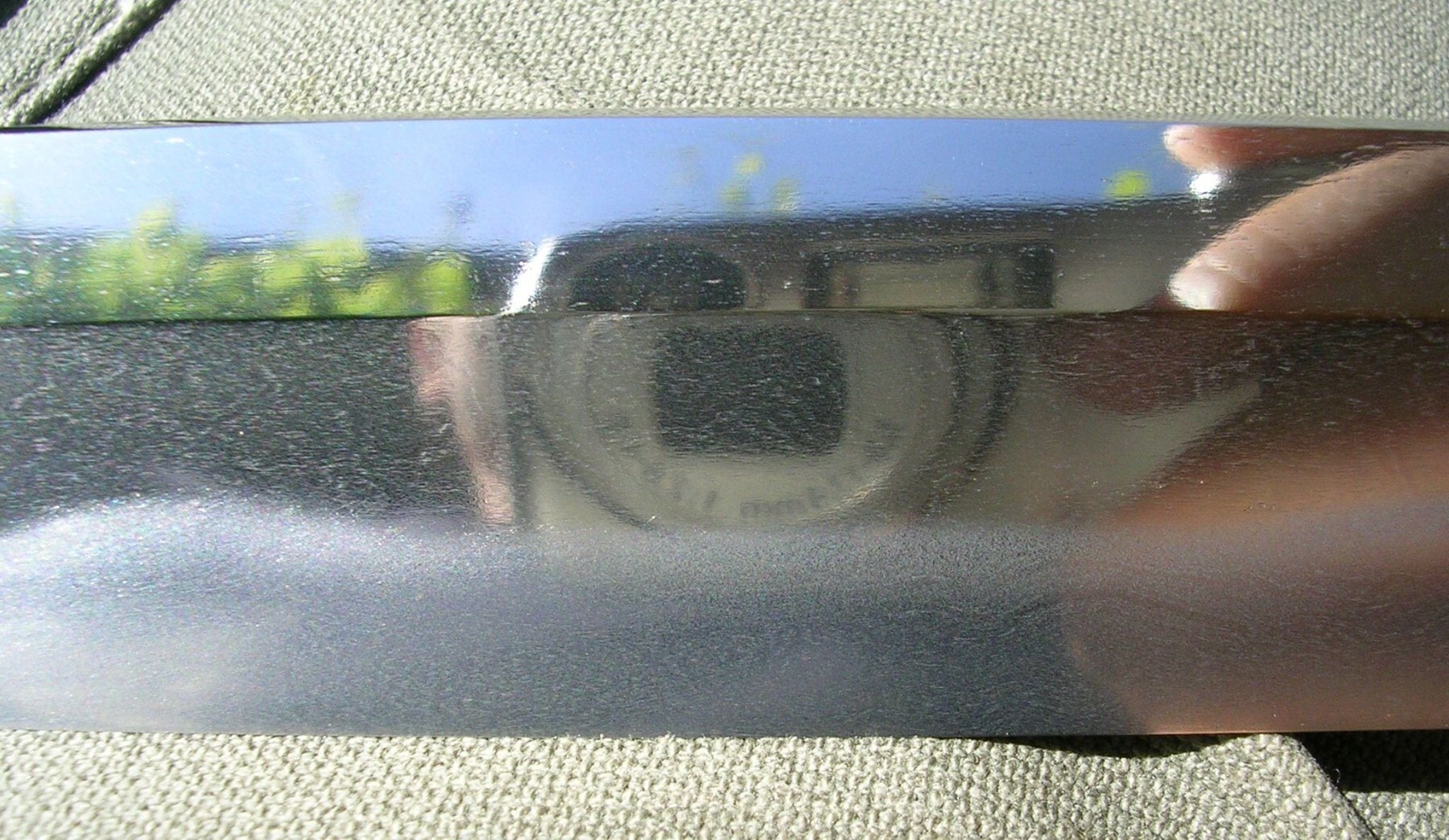
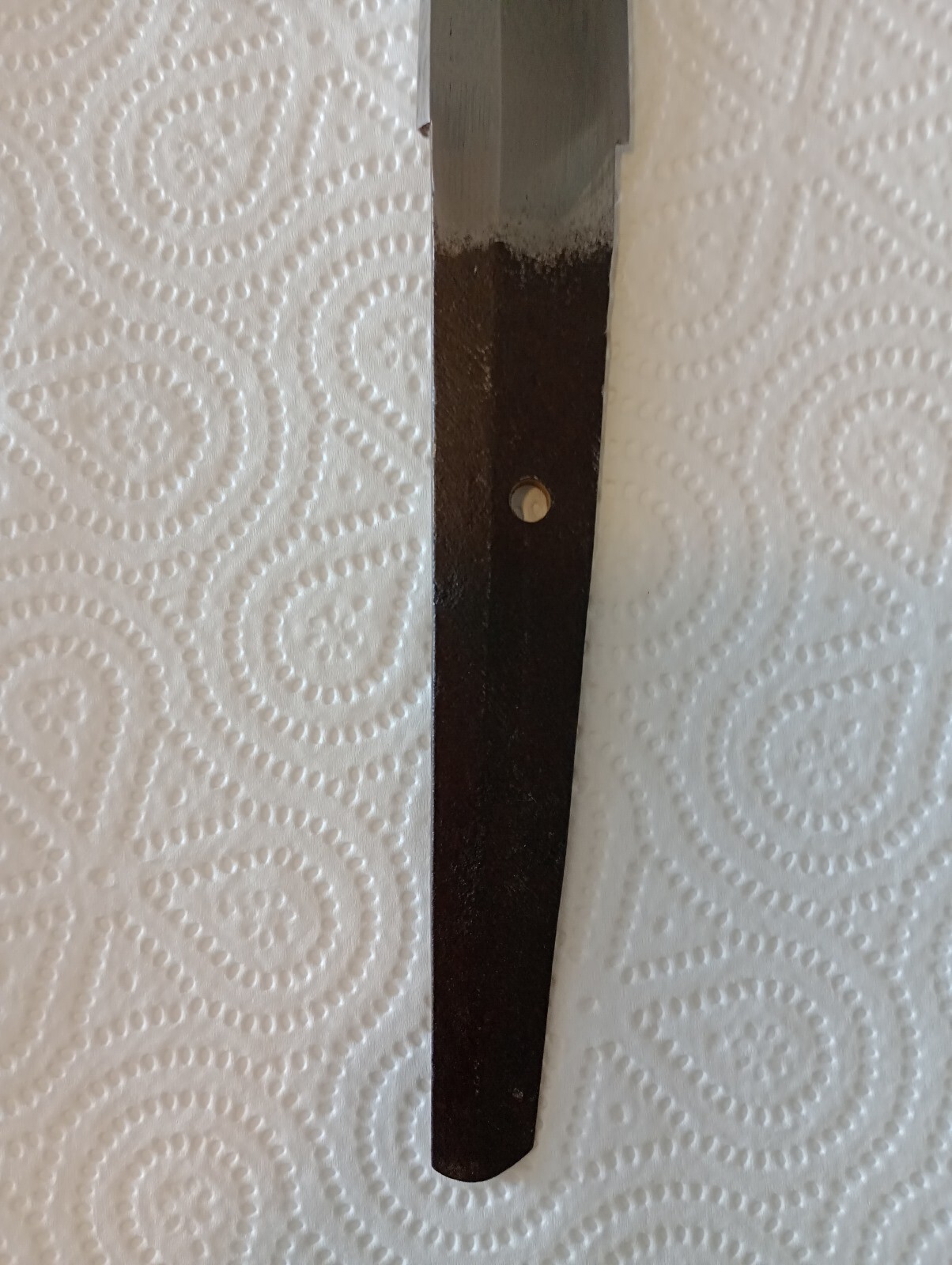
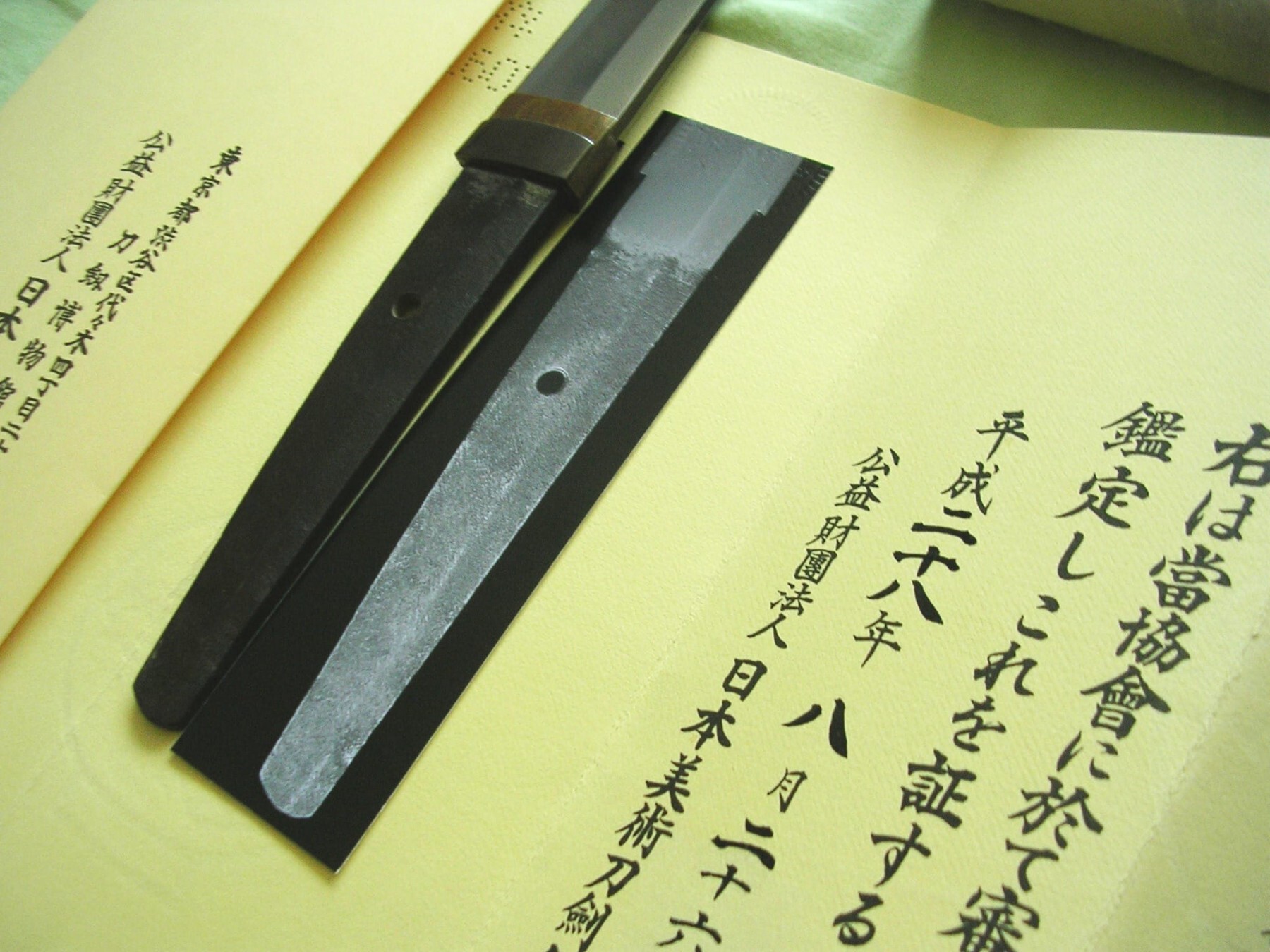
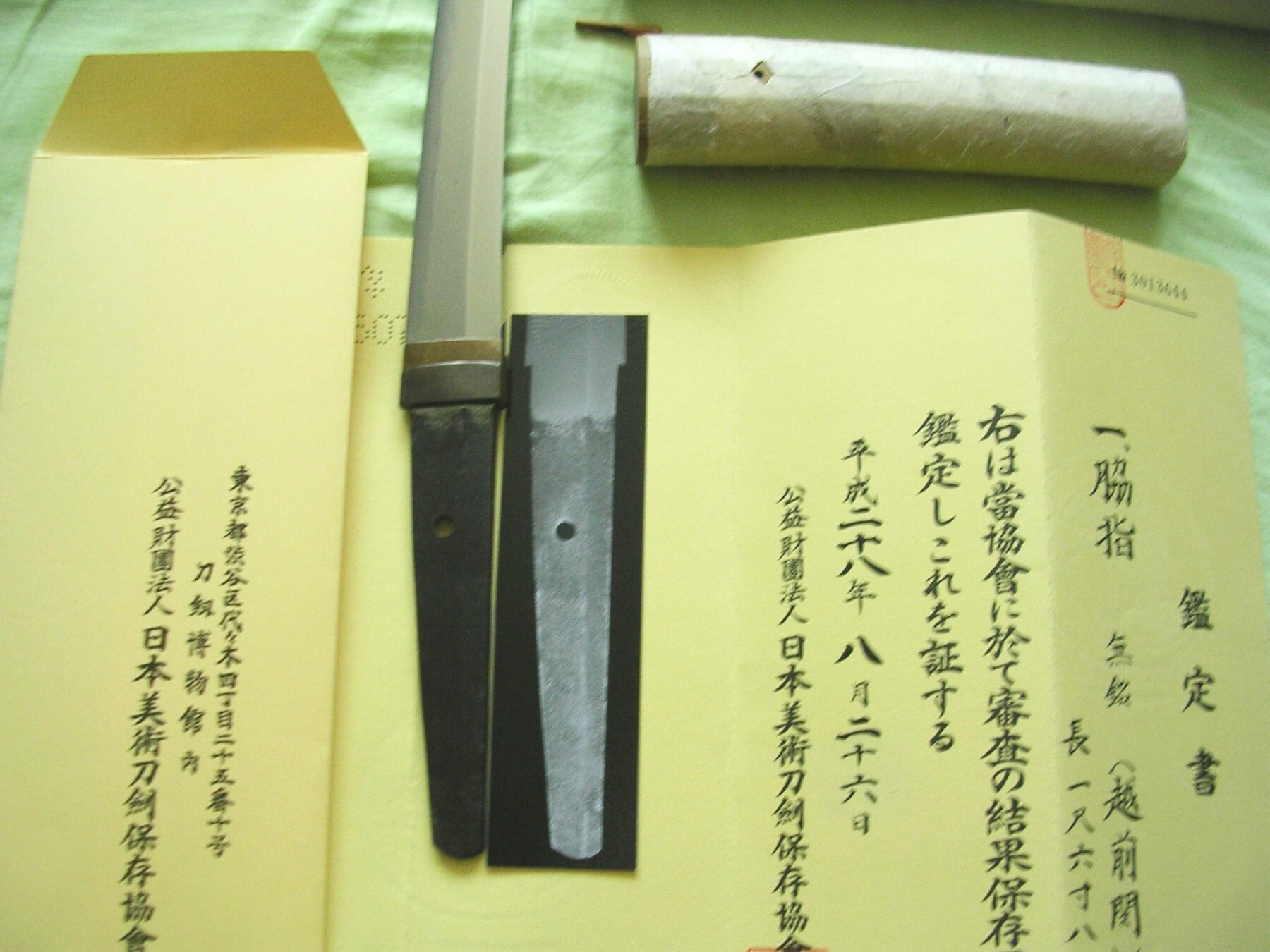
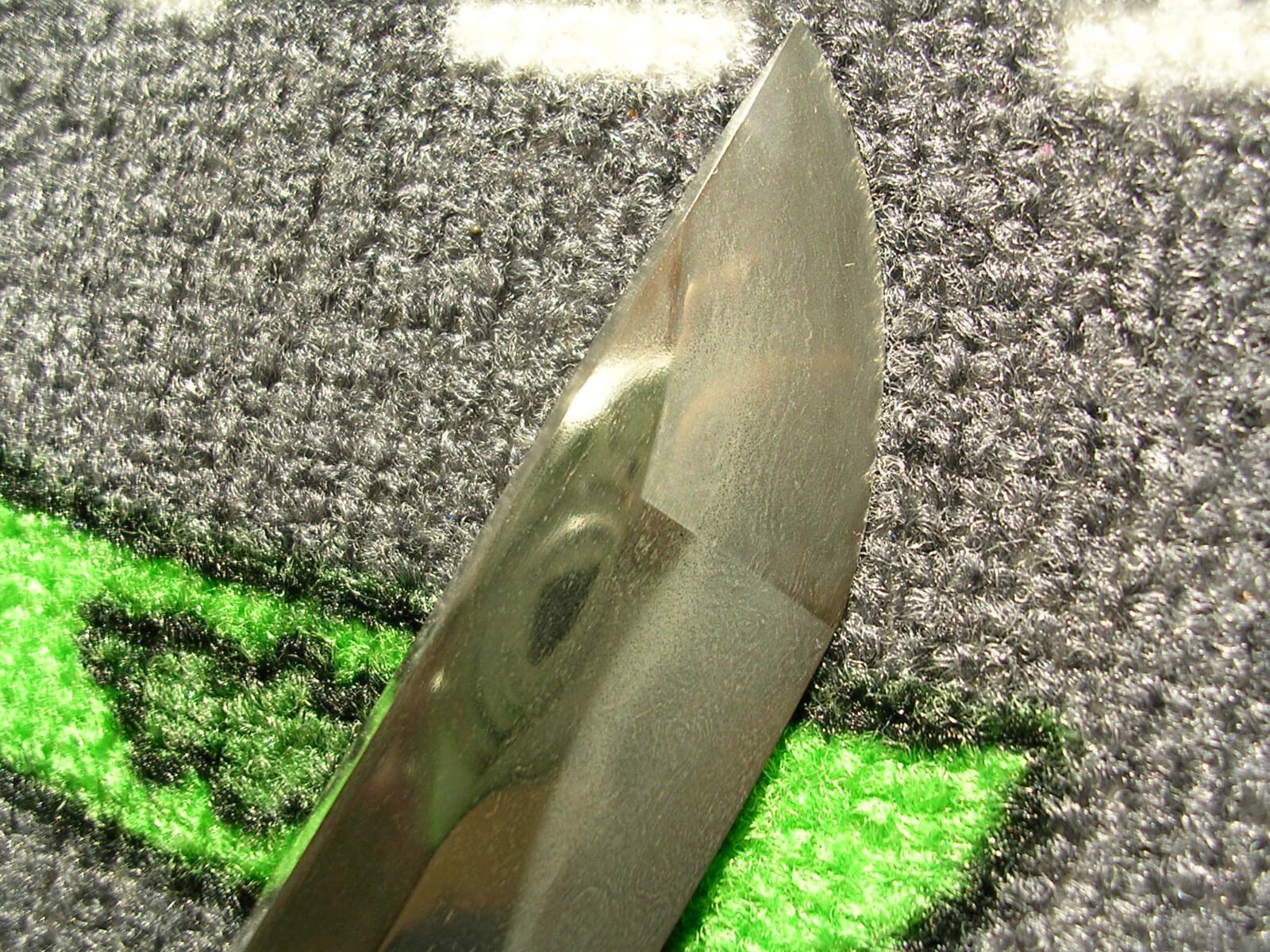
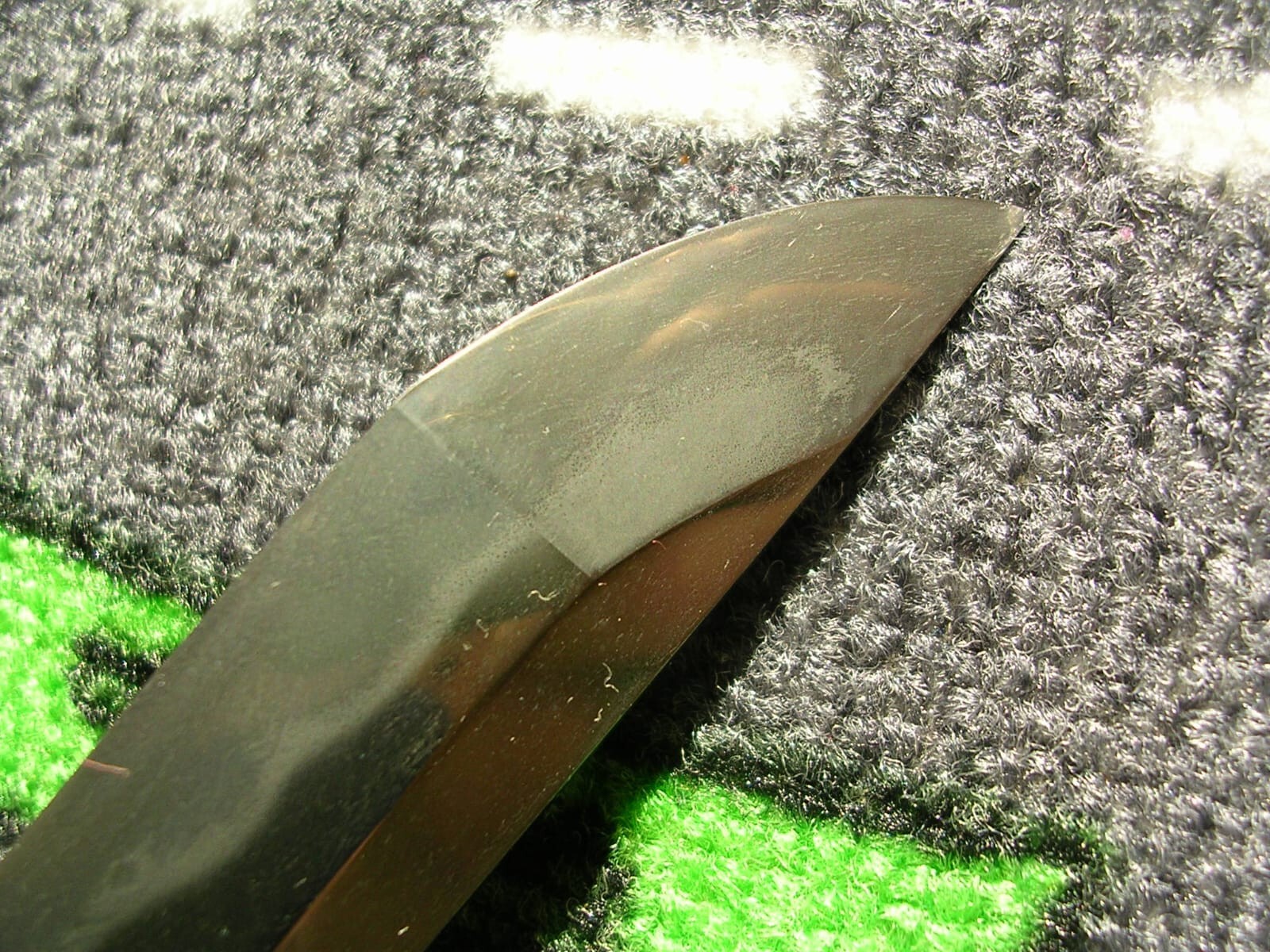
Hello, So here are my findings from the investigation so far. Please note that I'm aware that I can't be more precise then NBTHK, but it's just for fun. I think we can be pretty sure it is Shinto. Moreover, I do think I have potential candidate for the smith. I examined available on Internet pictures/documentation of swords from Echizen Seki school (several smiths have some pieces well documented) and in my humble opinion Hirotaka is the best pick. Blade geometry, Kissaki, Nakago, Hada and especially the way he experimented on Hamon (mixing multiple styles on single sword) makes me believe that he might be responsible (or one of his apprentices/students) for the blade. We also have 'papered' examples of his swords which are Mumei (like mine). What do you think? Again, it is just for fun. We can speculate but I understand that it is rather impossible to pinpoint smith (at least at this moment).
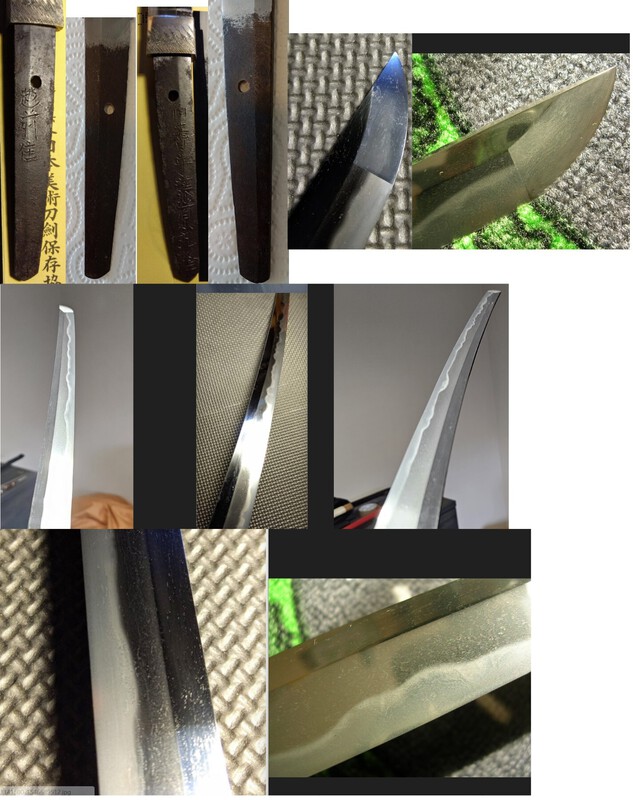 2 points
 -
Well would you believe I found two "Tiger in the Waves" - unfortunately both are identical and Shiiremono "ready-made article." They are published in one of our own member's book "The Birmingham Museum & Art Gallery Tsuba collection V2" by Greville Cooke. There is no image of the ura so you might contact Grev. and see if he has any images relating to 1885M510.11 and 1885M510.12 pages 155 and 156. Clearly they are not by Sekijoken Oyama Motozane but at least we know it is a relatively rare theme.
 2 points
 -
If I were in Japan, I wouldn't hesitate to paper it. The cost/effort to paper it from within Japan is well worth the added perceived value (in my opinion). In this case, its not so much a monetary value-add, but it is a kind of marketing tool for when you want to resell the item. The paper reduces the friction for a resale. Does it add anything to the monetary value of the blade? That is harder to answer, and I think honestly for a modern smith I don't think it will enhance the monetary value. Its just, as I say, something that greatly reduces the sales friction, and gives the buyer some extra confidence in the item. However, if you live in the States and have to contend with contracting an import agent in Japan, and then add all the touch costs of the agent and the shipping fees and the insurance, and then contemplate the not insignificant chance of damage to (or loss of) the blade in transit, I would be inclined to forego the NBTHK paper, because I don't feel the risk is worth the reward. Much better to wait until you can submit the blade to shinsa (NTHK) here in the States, where you can then get the item authenticated without the expense and the hassle of sending it to Japan. Your mileage may vary.2 points
-
Fujiwara Kuniyoshi tsukuru. Appears to be an Edo period blade.2 points
-
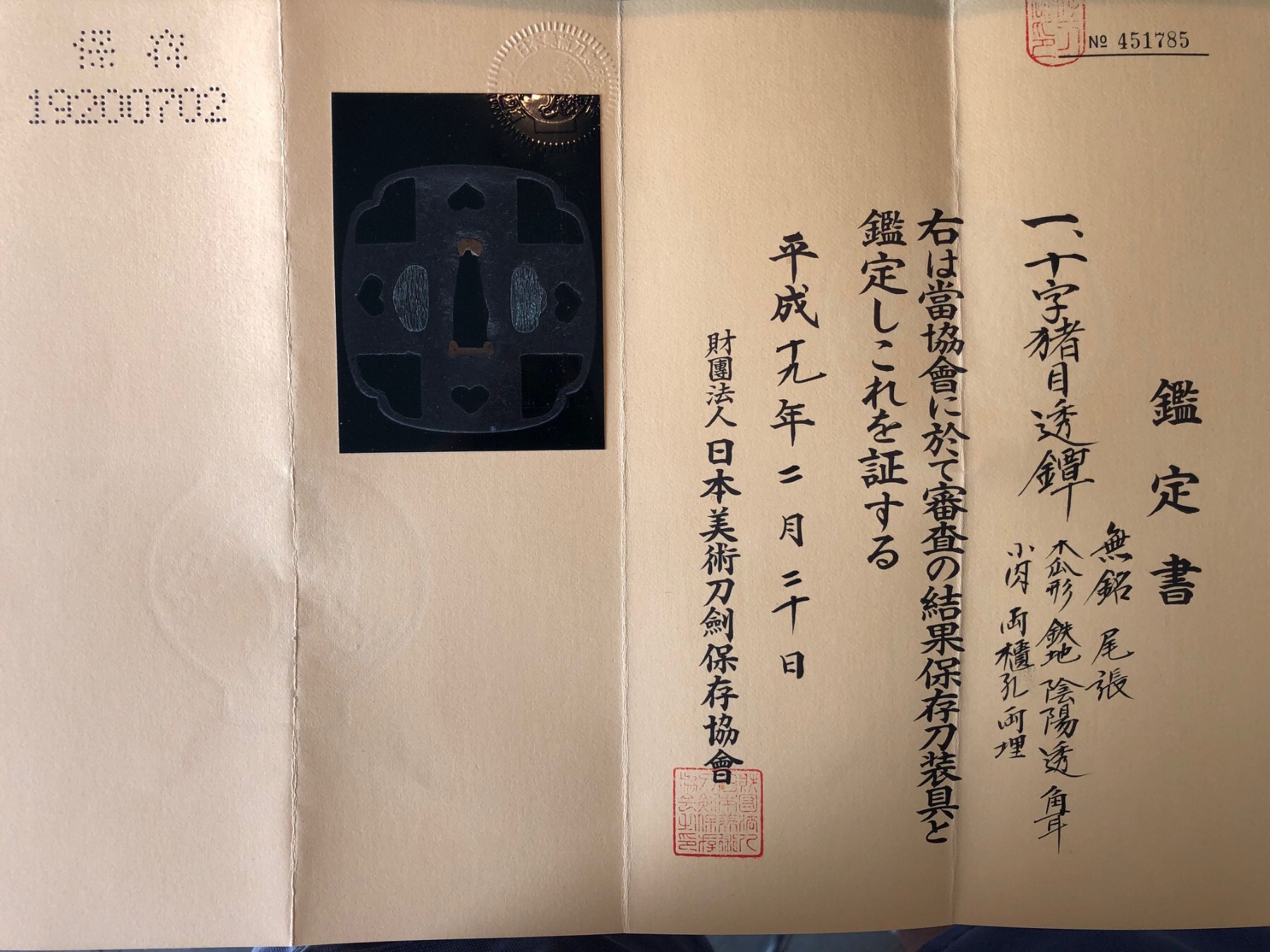
Well, buying a published tsuba that is papered to Owari and that has this strong Yagyu connection for $850? Gentleman, I am now focusing on very early tsuba, but this one makes me really jealous! Whoever buys it, will acquire a great tsuba made for a warrior, and not some fat samurai bureaucrat. Great iron, great presence, radiating power, this guard can be a cornerstone of any advanced collection. And it is a real bargain. Remember my motto about those tarts passing... This is one real masterpiece tart, and knowing Steve, he will rather keep it than cutting this attractive price further. This gentleman has a keen eye and great knowledge when it comes to this kind of tsuba. Just go for it, or I will, even if it outside my focus!2 points
-
Hello Oleg, Blades from mukansa smiths are indeed judged, and can be awarded Hozon and Tokubetsu Hozon. I don't believe there has been a Jūyō awarded to any mukansa smith yet. Below are some links showing mukansa blades with various papers, including Tokubetsu Hozon papers. The NBTHK doesn't judge blades from living smiths (but, strangely enough, they don't mention this on their site). There is a different paper for living smiths. https://www.seiyudo.com/sta-050220.htm https://www.aoijapan.jp/刀筑州住宗勉作之無鑑査刀匠/ https://www.seiyudo.com/ka-08041.htm https://www.kusanaginosya.com/SHOP/22.html2 points
-
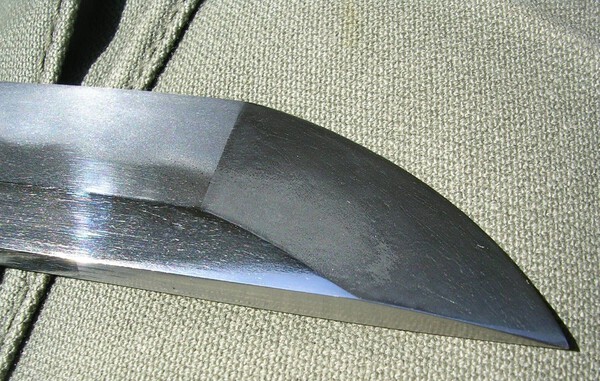
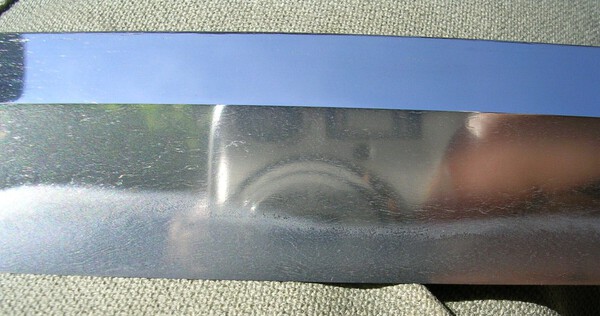
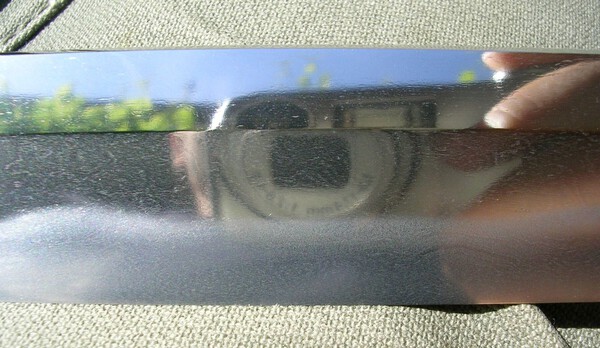
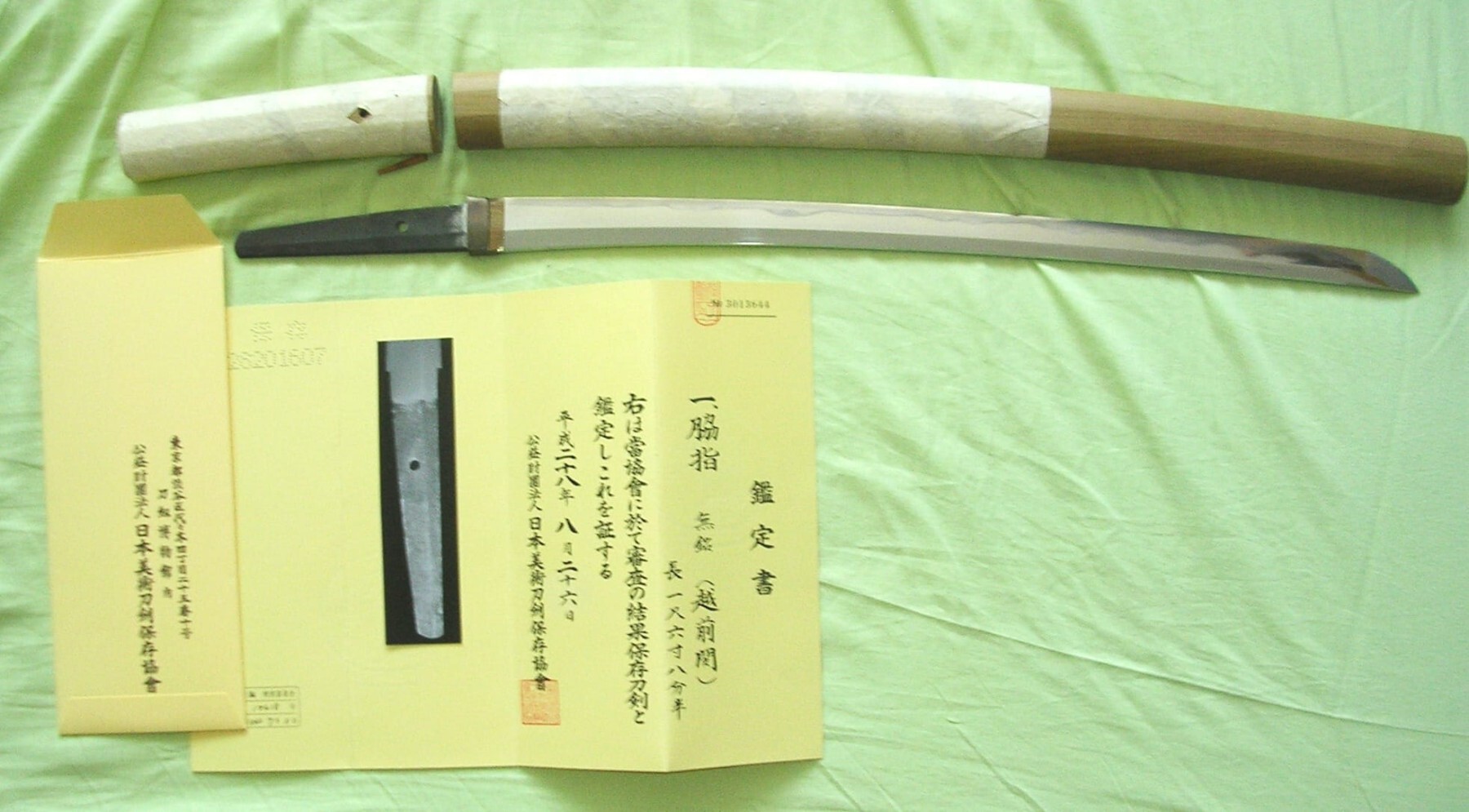
Hello, Please find below pictures of my new purchase. I'm looking for any comments. Especially any attribution comments (or paper translation) that will help to determine the time period and (if that is even possible) the smith. Thank you all for help!
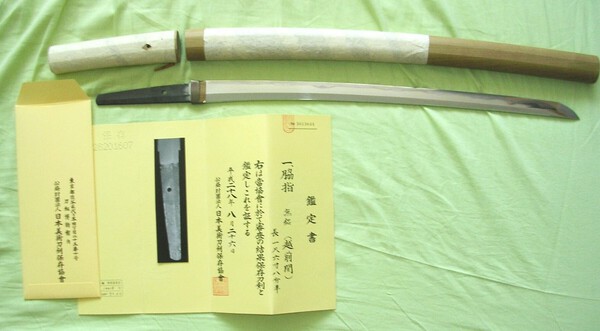
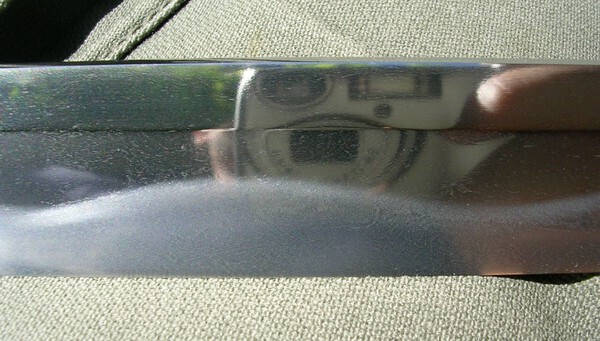
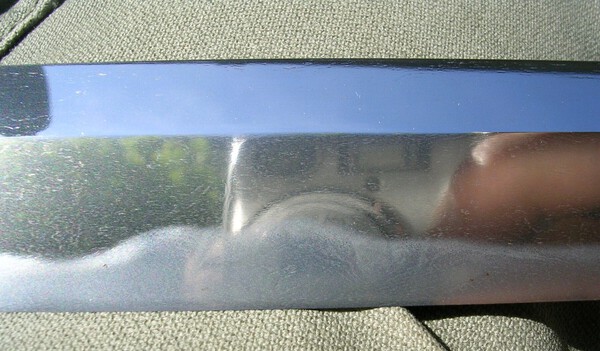
 1 point
 -
Jacque: That's interesting. It seems that it would be easier to copy a shorter signature than a longer one. Has there been any specific research on the characteristics of gimei signatures? For example, do they tend to favor well-known smiths, or tend to be a certain length? John C.1 point
-
It may be gimei of the famous Masamune student, but please note that there were later generation Soshu Hiromitsu. I would suggest shinsa to get a more firm answer. Regardless of the mei, this has a convincingly Soshu nakago. https://www.google.com/search?sca_esv=566650974&rlz=1C1GCEU_enUS954US954&sxsrf=AM9HkKngidoeDRr_Aes8OvMbwY3gZZ61aQ:1695143022368&q="相州住廣光"&tbm=isch&source=lnms&sa=X&ved=2ahUKEwiv8MPtk7eBAxU-I0QIHbFMCqkQ0pQJegQICRAB&biw=1230&bih=827&dpr=2.5#imgrc=eIkTR2YH-dP1GM1 point
-
2018-11-21 Nick Komiya Help needed : fake emergency issue kai gunto?1 point
-
You can post it on NMB's Swords/Edged Weapons for Sale Forum. That's ideal and will save you the hassles and fees associated with ebay. Ebay is the other option. You can search ebay for current market rates. WWII swords run anywhere from $900 to $1,400 depending upon several issues. There are other sites like Etsy and Craig's' List, but you'll deal with tons of scammers once you post there.1 point
-
Well done for getting stuck into the research.1 point
-
1 point
-
@Jcstroud would be interested in finding out the length of your nakago, @Suci.1 point
-
Hi Adam, If you find an exact match for the work then it could be the same smith, but then again you will find very similar work from other smiths. A "could be " is as near as you will get. This perfectly demonstrates the issue we have with mumei blades. As mentioned before, not just mumei. Signed works by generations where the work and mei are similar, can be a real headache. There has to be something that stands out and makes it distinguishable, to narrow the field. It was owning such swords that made me a little obsessed with anything that has provenance or inscriptions that add more information, hence more into Shinshinto and later of late.1 point
-
@SpartancrestThanks Dale, these have cropped up in UK auctions as well - with the inevitable sad result for someone. There is another famous big tsuba that has some very convincing “copies”. It’s large, I think of rounded square shape and depicts a ferocious Shoki chasing Oni. I’m remembering the design goes into the seppadai? Has that cropped up on the Forum? You memory far better than mine!1 point
-
@2devnul They nakago photos looks great in my opinion, nice and healthy without any flaw (kizu). This is important in my book. You have a nice Shinto Era blade in my opinion. @Alex A did an excellent job of summarizing the reasons it would be impossible to identify a specific swordsmith to your unsigned blade. In some other specific cases, it might be possible to attribute an unsigned sword to a specific swordsmith but in your case, it is not possible.1 point
-
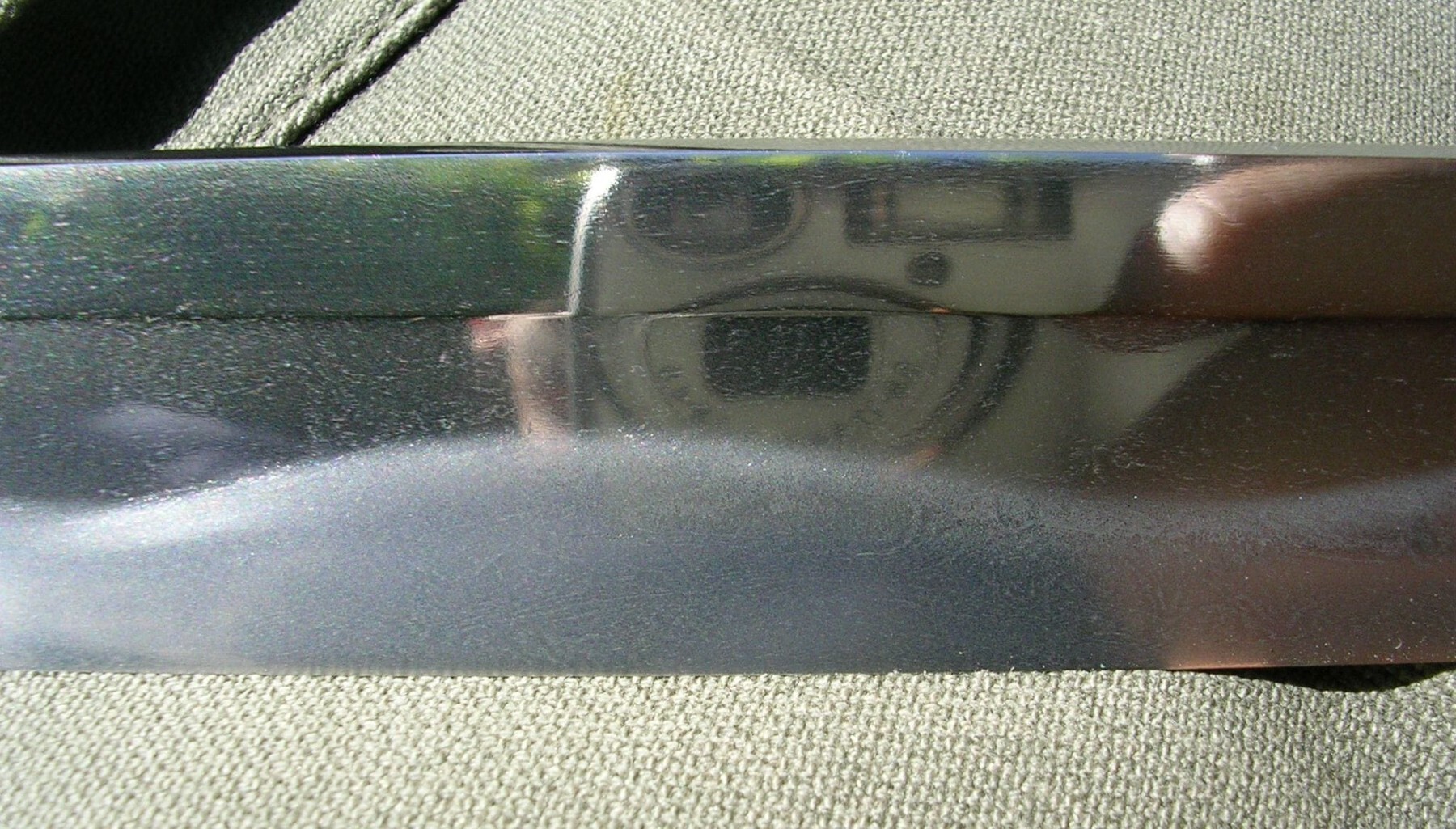
My answer would be "its extremely complicated". Even discarding the impact of polish, which however is quite large when it comes to nioiguchi, nioiguchi physically demonstrates the temperature gradient due to heat conduction between the portion of steel that is cooled directly by water and the portion which is cooled slowly through clay. So theoretically a very clean steel will give you a tight and bright nioiguchi while slag will create something hazy and uneven. But its not exactly true. First, the forging comes into play as heat conduction within lamination is always higher than between laminations - so if the blade is itame you can have tight and bright nioiguchi (Yamashiro), if it has mokume or masame going in and out hamon nioiguchi there is good chance is not going to be as well defined. Second, daito has quite a lot of material at habuchi level and thus will cool down slower compared to tanto. So tanto with all conditions even will have different (and often brighter) nioiguchi compared to daito, and daito with niku will have broader nioguchi compared to something thin, and if there is a core iron which has some other thermal resistance (usually it does), then two piece sword will have tighter and brighter nioguchi compared to a single piece work... By the same token controlling hardening is usually easier for tanto and for the same amount of nie on daito the margin for error is considerebly smaller.1 point
-
Kanefusa but I will check some more and come back if I find someone. I have researched this some time ago but I never make notes of anything.1 point
-
Generally a pretty good condition relatively small-bore military weapon, with some repairs. Part numbers do not all seem to coincide, so it may be an assembly of good parts. To answer all your questions would take me around an hour, but I do not have so much time right now. Anyone else feel free to address in the meantime! Ah, Brian answered in the meantime. Agreed, a very well researched and well-presented post. PS I'll be back.........1 point
-
Thank YOU John.1 point
-
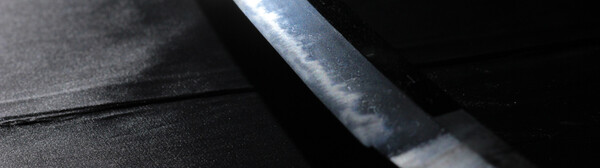
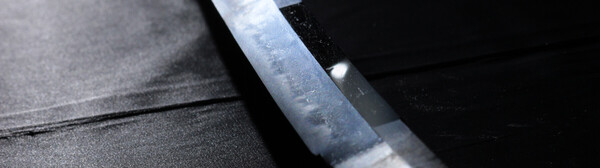
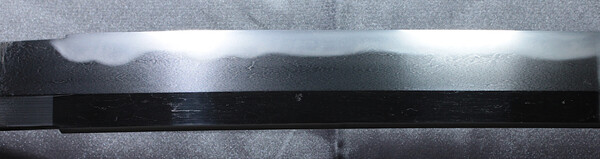
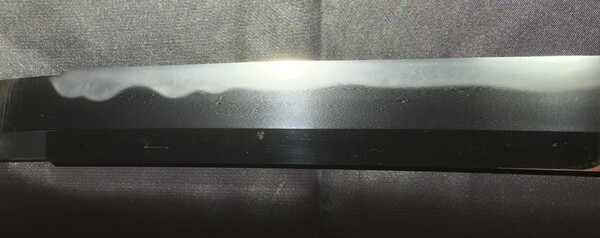
Some time has passed but Andrew Ickeringill opened a window on this sword. The thought was Oei Bizen Yasumitsu group.
 1 point
 -
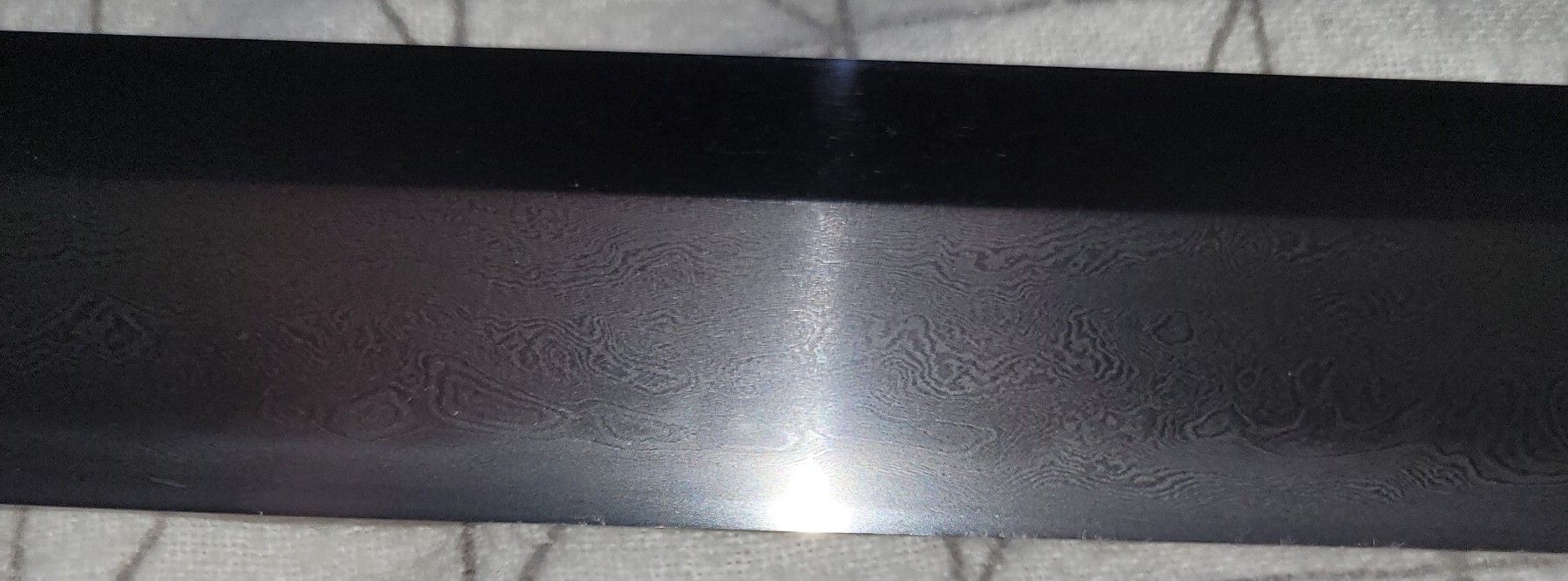
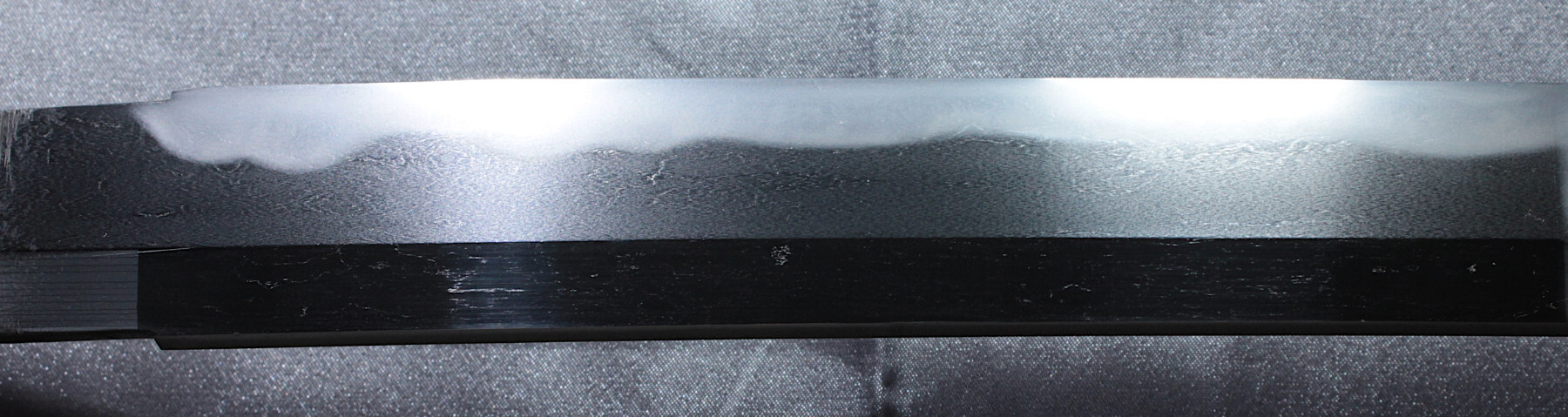
To come back to Masame-Hada. Basically, in none of the examples we have a pure Masame Hada, but rather a combination of a primary Hada (komokume/koitame) and the secondary Hada, in which the Ko Hada is then placed in parallel layers (Masame). The corresponding ratio of this combination and how cleanly these layers run (more even or wavy) would be an important aesthetic factor, at least for me. Utsushi in particular sometimes seem too deliberate and too stiff for me. But that's just my opinion.1 point
-
Eg https://www.artfund....ers-crossing-a-river or
 1 point
 -
I like that one very much, Colin! Putting the “kink” in kinko?1 point
-
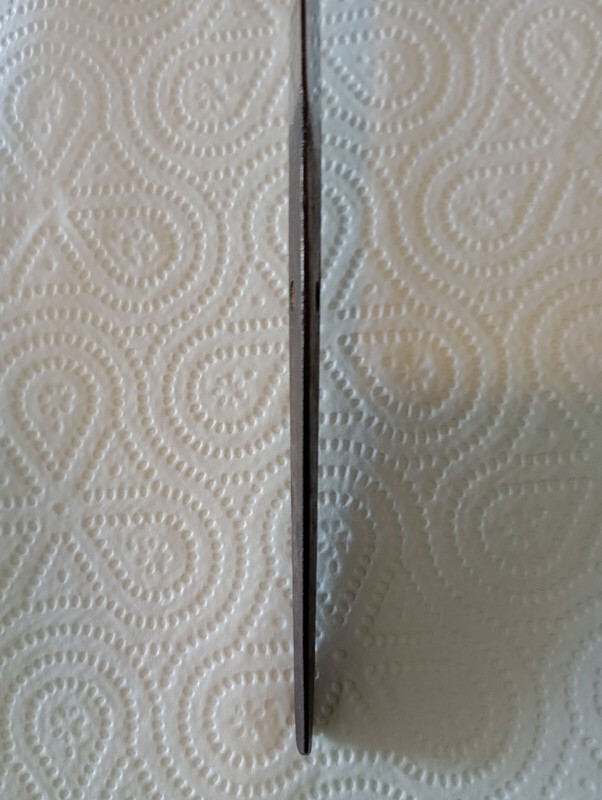
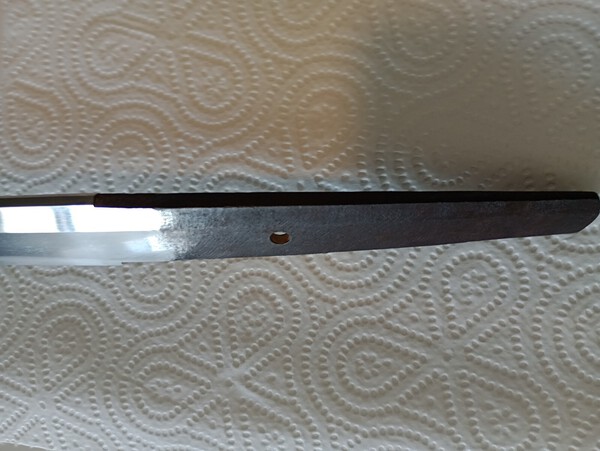
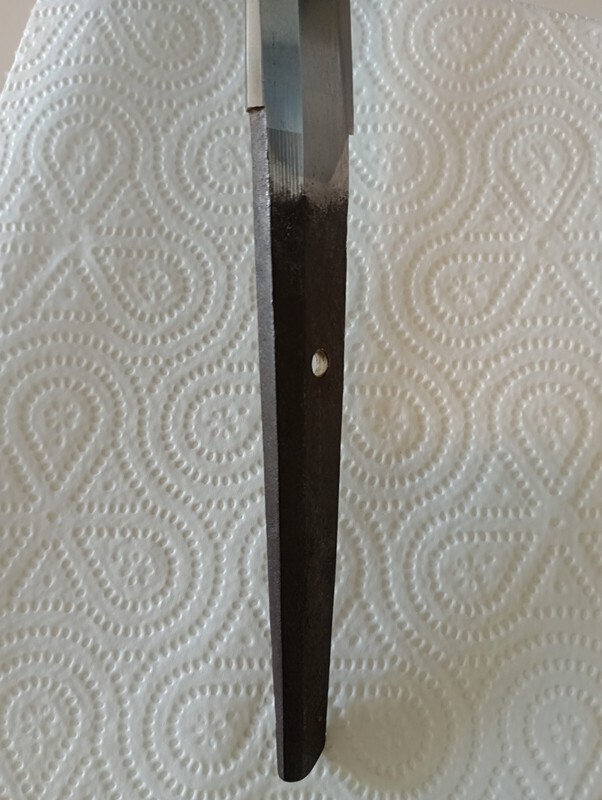
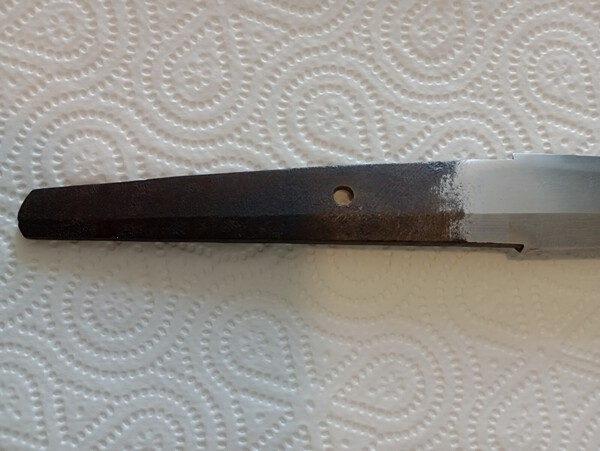
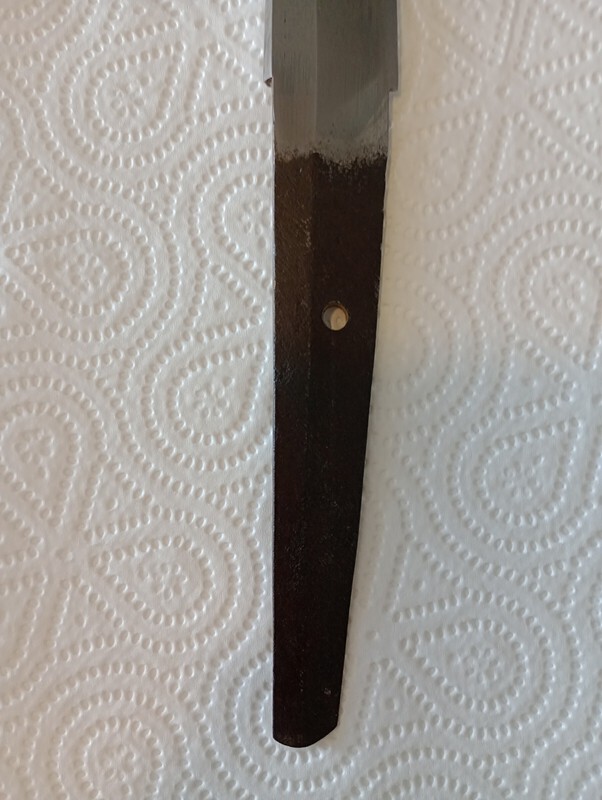
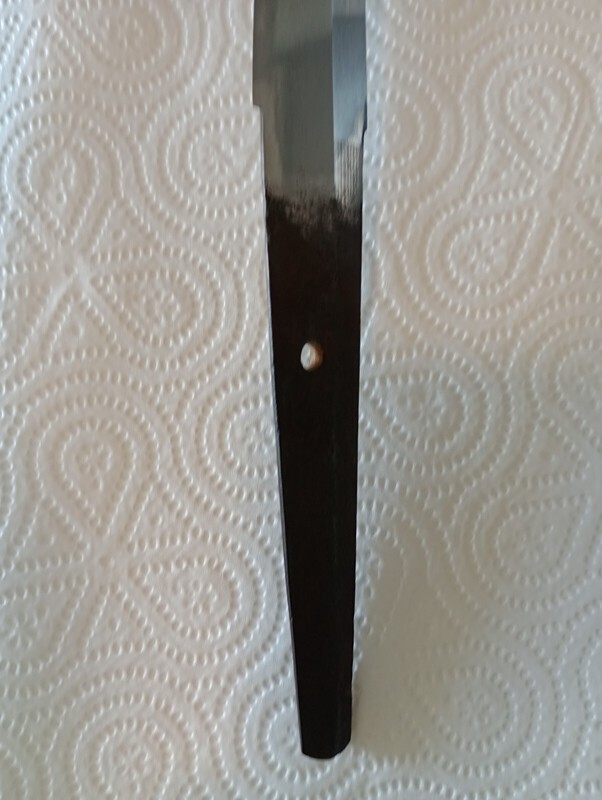
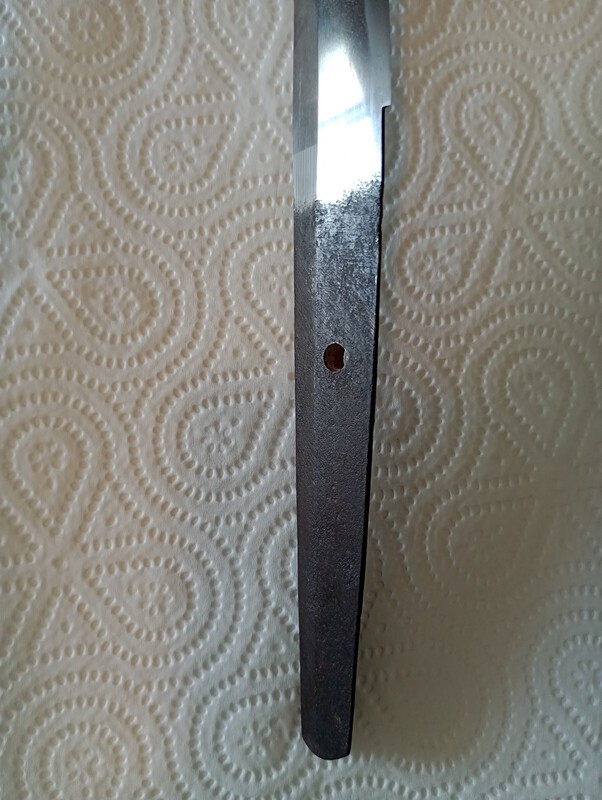
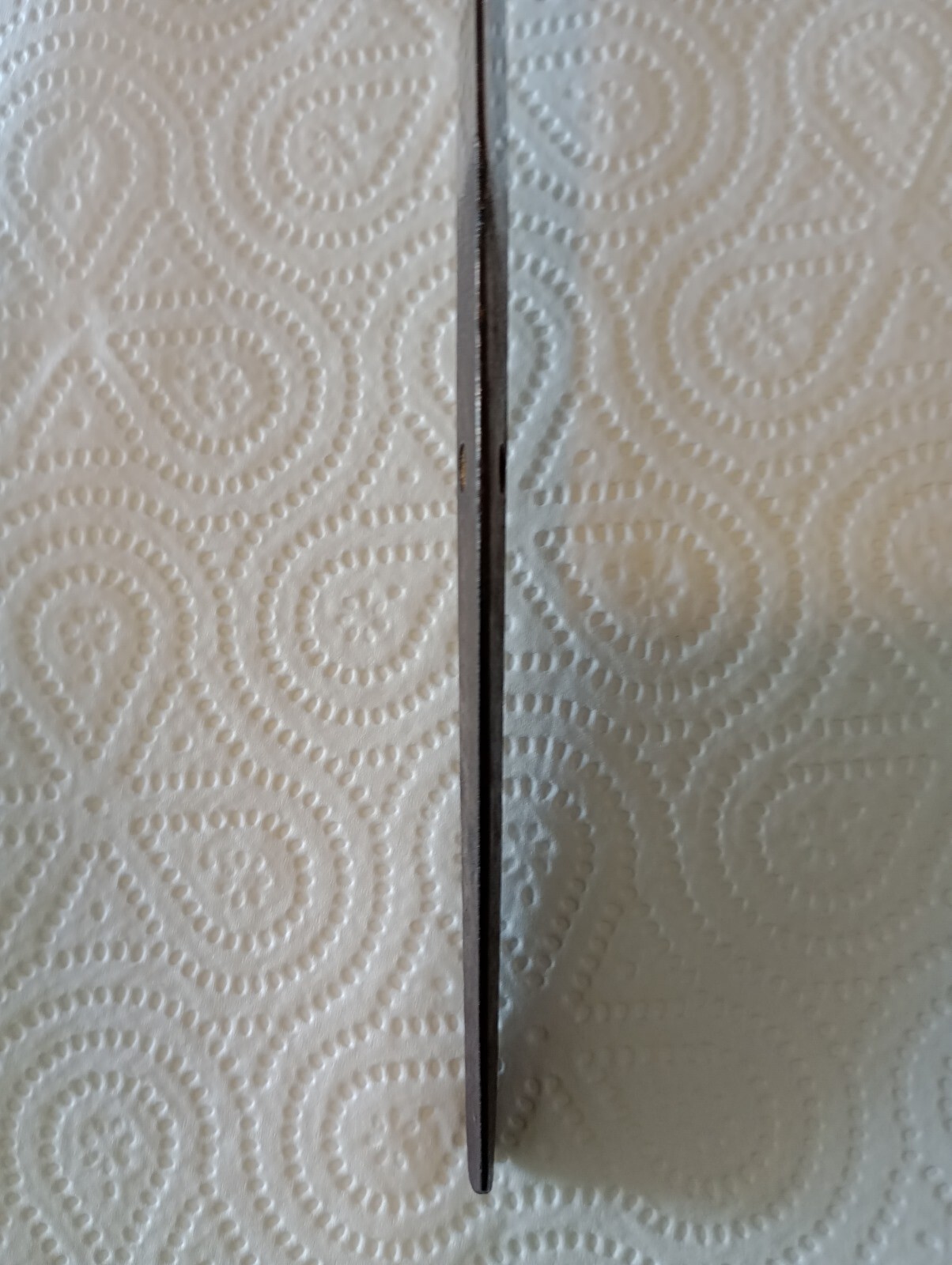
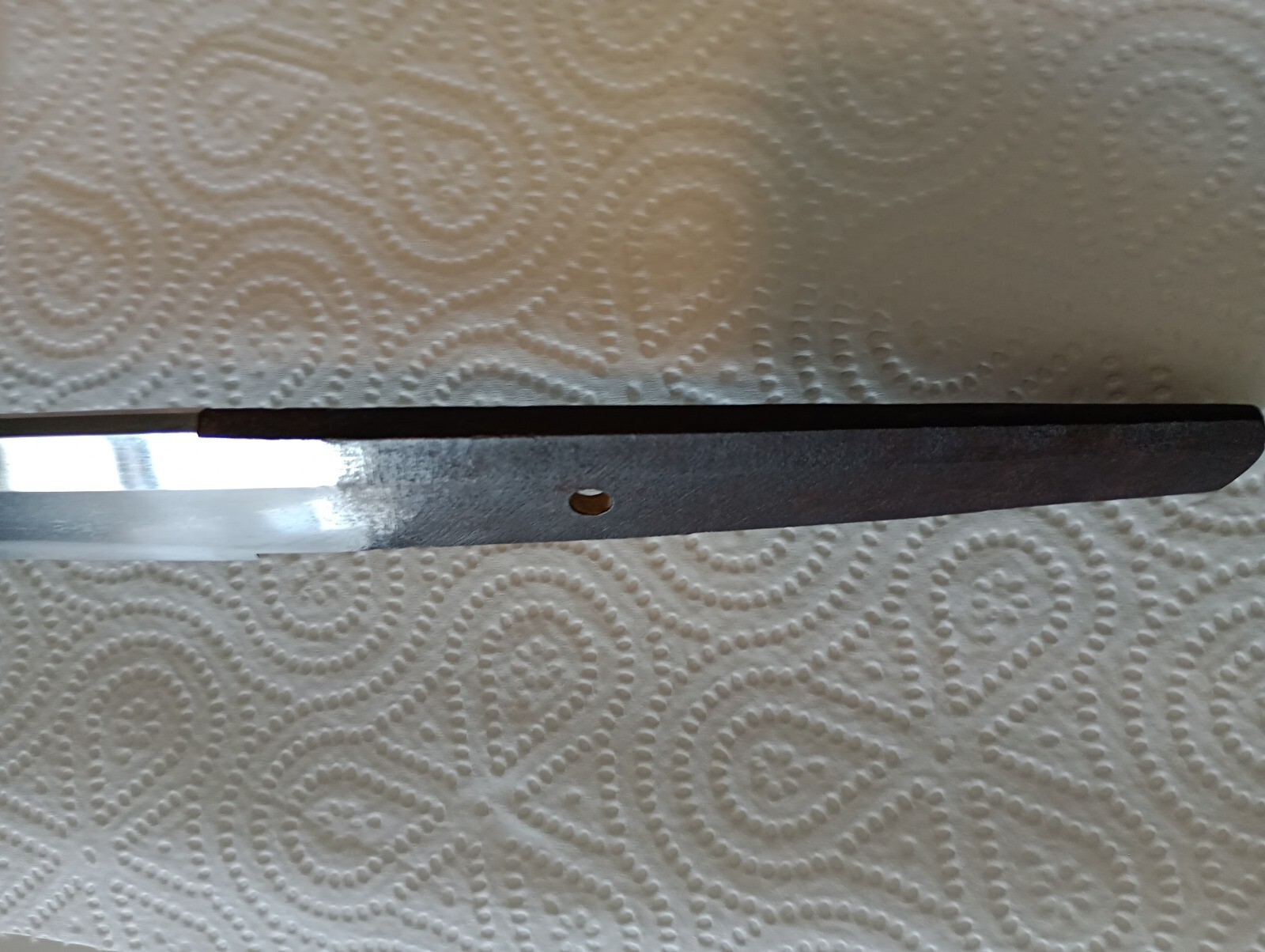
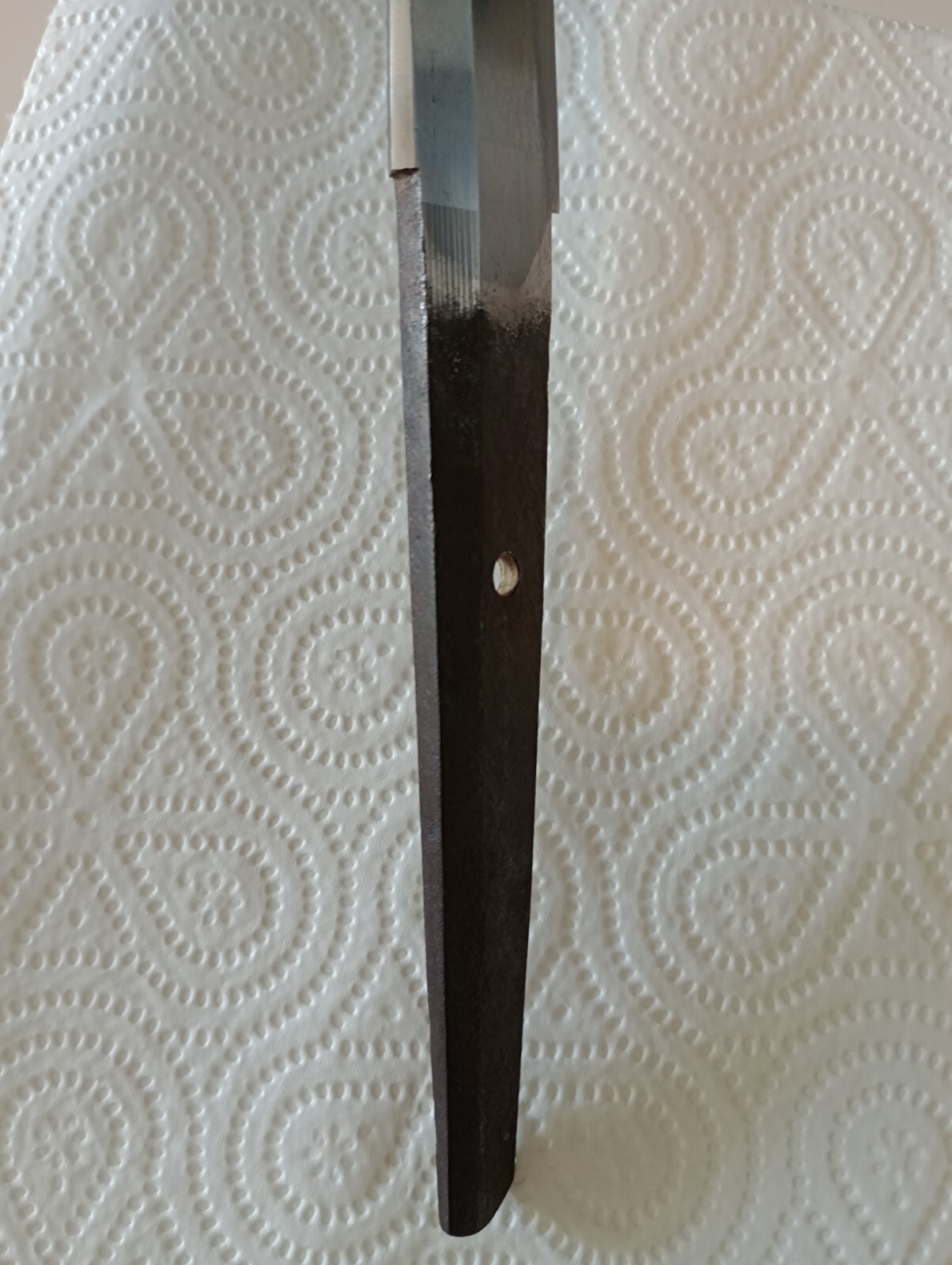
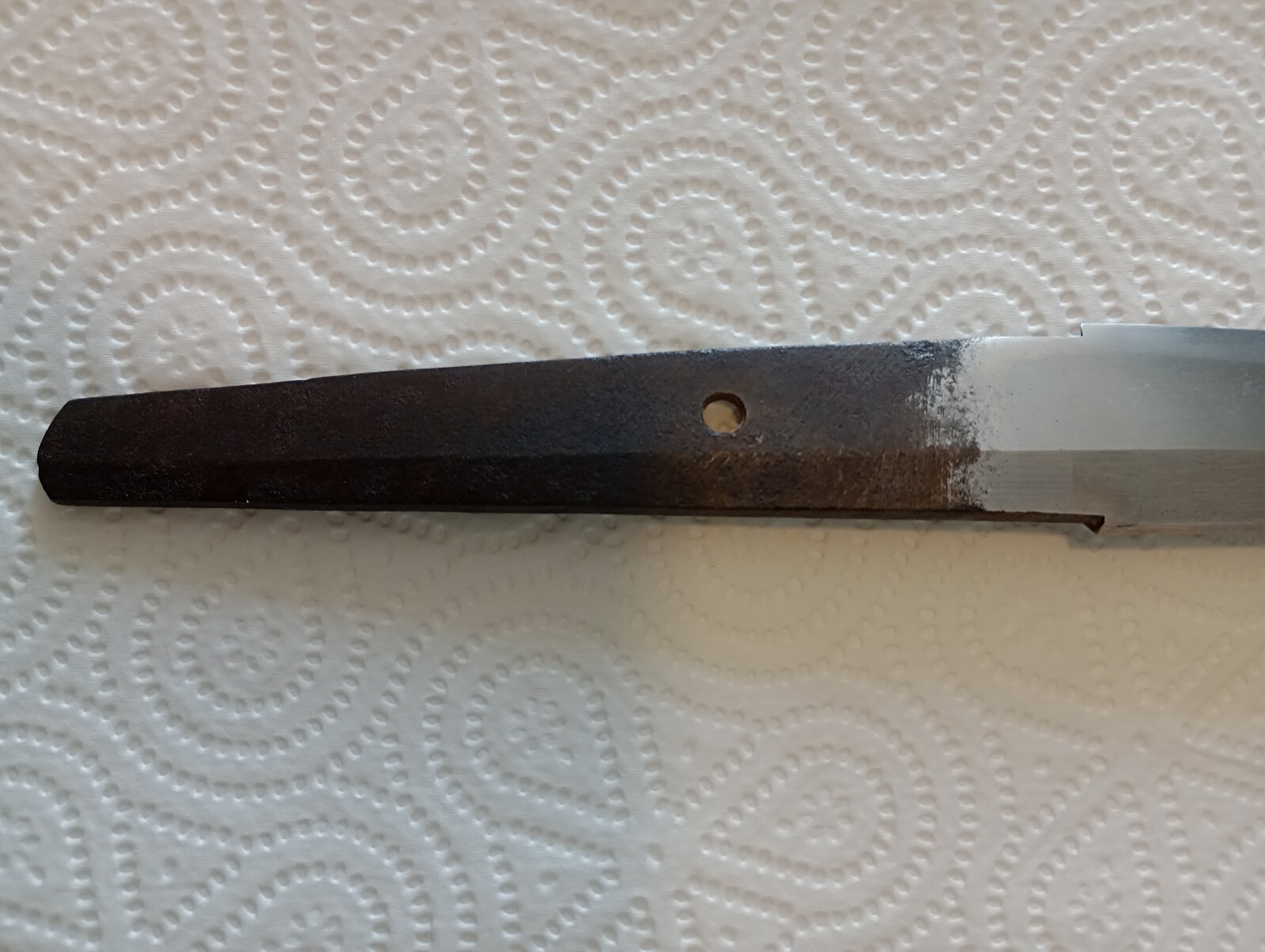
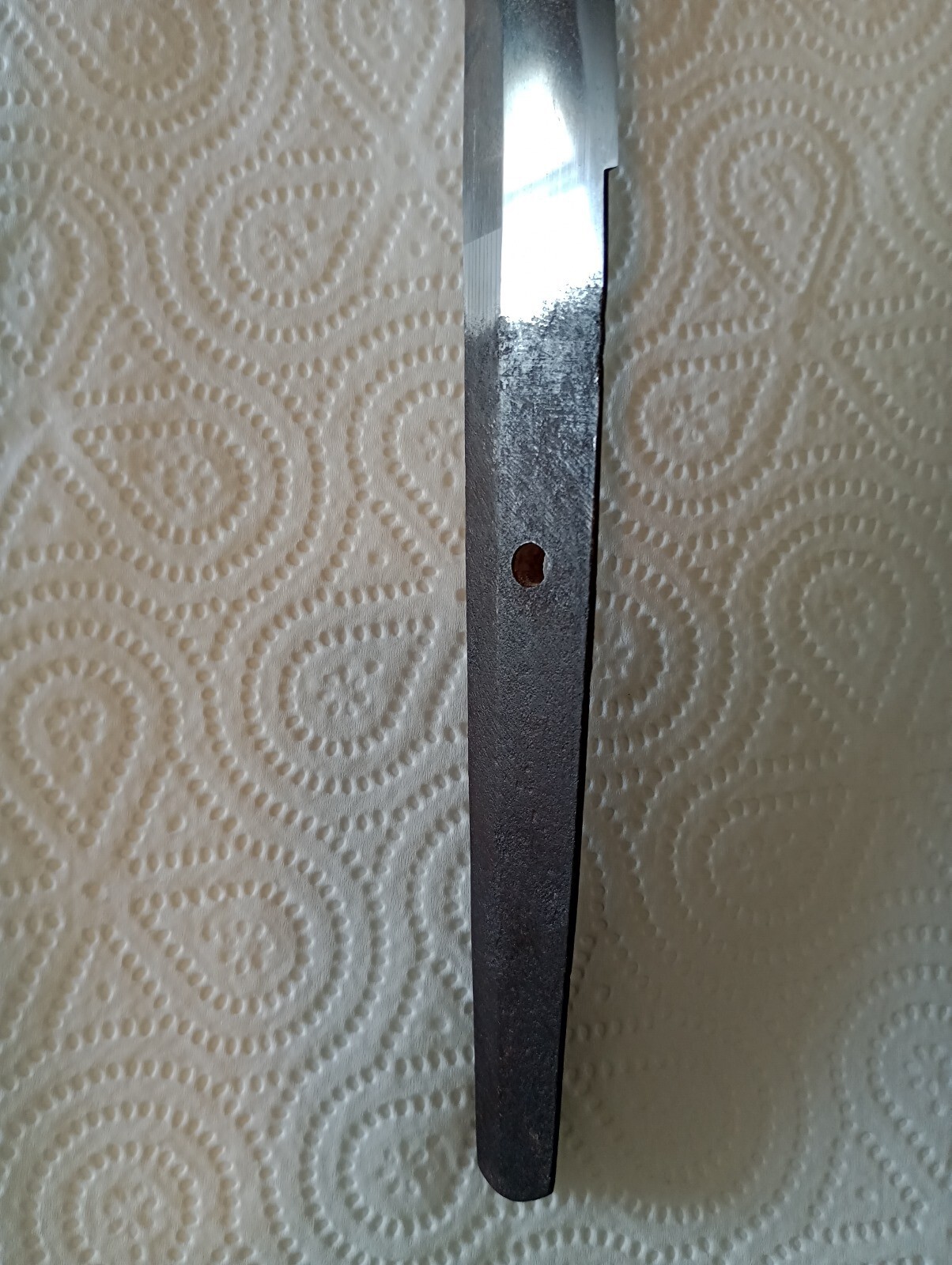
@Alex A Thank you very much! Great article, I will need to study Hamon further for patters but I got your point. From the first look indeed looks like a mix of Itame-Masame. I also noticed that beginning of Hamon (like first 5-6cm) is Suguha, then goes into Notare/Midate up till the end. Was that also common (to start with Suguha)? @Soshin I'm attaching Nakago pictures. Is this what you were looking for? Thank you again to everyone for the comments!
 1 point
 -
Hi Adam, As said, if Shinsa cant call it then i don't want to be throwing names up and leading you on a wild goose chase,, so to speak. The hada in your sword does remind me of the one i have but there were many that worked that way. Appears as Itame with Masame above. in your images This paragraph from Markus highlights the headache for Kantei. The transition from Sue-Seki to Shinto can be difficult, ive given up being too picky and like i said, just accept it. The most knowledgeable folks have papered it the best they can. "A good way to identify a shintô is to check if there is masame in the shinogi-ji (see bottom picture below). So if this is the case, it is safe to concentrate on shintô. But please bear in mind that itame along the hira-ji and masame in the shinogi-ji is also a typical feature of Sue-Seki blades so you might check first if something speaks for Sue-Seki (i.e. sugata with sakizori, togari or fushi elements, shirake) before taking the shintô road on the basis of the masame in the shinogi-ji. Incidentally, it is said that the shintô masame in the shinogi-ji actually goes back to Sue-Seki as the majority of early shintô smiths had Mino roots. That means at the end of the kotô era, Bizen was literally wiped off the map as largest sword production site by the devastating flood of the Yoshii river and this left Mino, and Seki in particular, as leading manufacturer of blades. In short, the early shintô smiths who were hired from there by the newly established domains just continued to work on the basis of their scholastic Mino background. Their successors adjusted to the trend to refinement but by keeping basic elements like masame in the shinogi-ji. And that is why this Sue-Seki element “survived” in shintô times." A good read https://markussesko....i-2-jigane-jihada-2/1 point
-
Money? Yes, you have the correct answer in my opinion. @2devnul Adam, looking forward to seeing the additional photos of that specific part of the nakago. In answer to your question. I don't think an attribution to a specific swordsmith within the Echizen Seki School is possible, but I am not a Japanese sword expert. The NBTHK has already formally examined the sword during its shinsa (the shinsa panel is full of Japanese sword experts) and issued a Hozon level paper with the attribution to the Echizen Seki School. It should be noted that school belongs to the very prolific Mino tradition.1 point
-
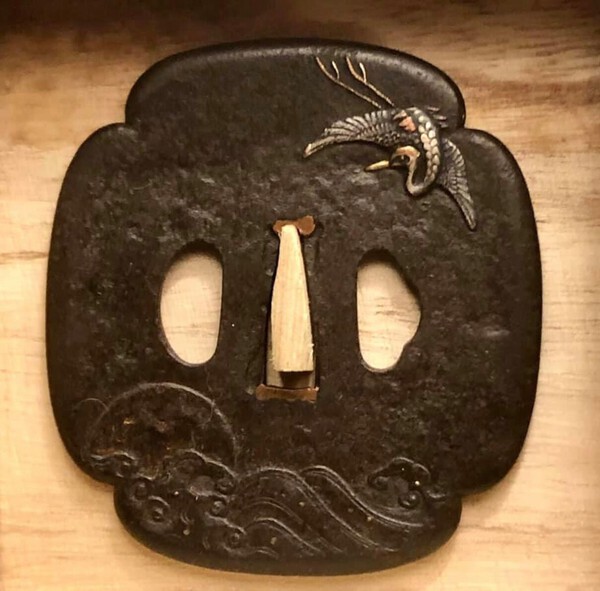
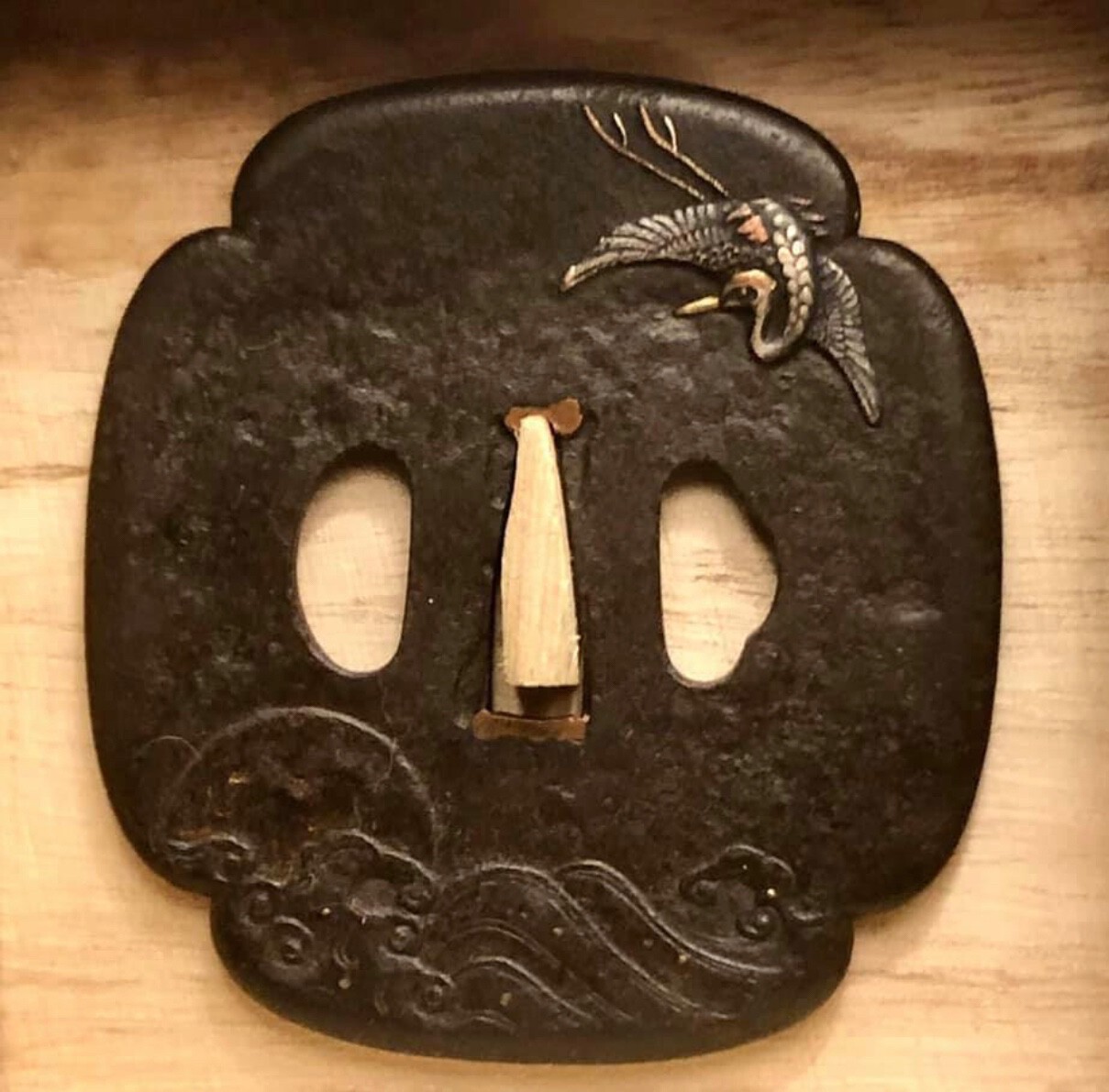
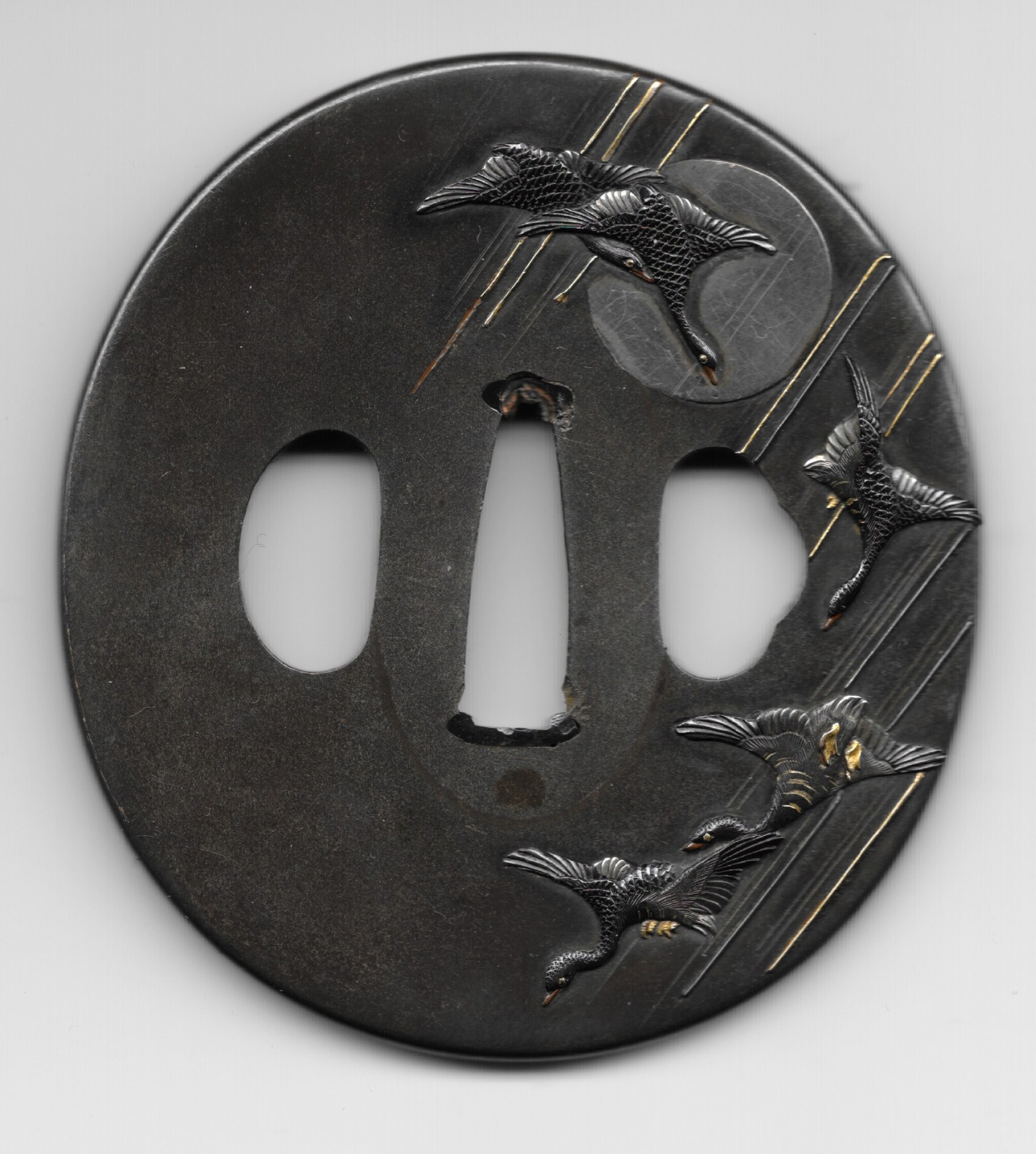
Another Mito piece, Moon and Crane above the waves, which I posted here a few years ago in a different discussion thread.
 1 point
 -
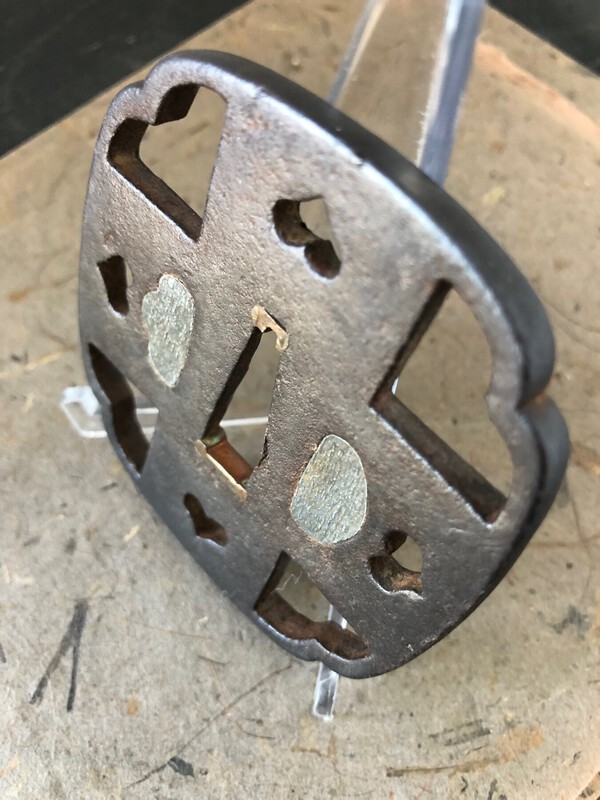
Images for Owari tsuba #2:



 1 point
 -
Hi Adam, The Shinto Era call sounds good to me. Echizen Seki School with very active in the Shinto Era with many different swordsmiths. Yes, assembling a koshirae is a very money losing process. It can be rewarding if in the end you get something that you like and plan to keep for an extraordinarily long time in your personal collection. You should be aware that all dealers from the USA to Japan and all place in-between (i.e. Poland) will generally break down all assembled koshirae for share parts or sell parts individually that are of decent quality. I learned that the hard way while trying to have a Japanese art business in the USA that had a fair number of Japanese swords. Thankfully, the business is closed, and my conscious is clear.1 point
-
A generic attribution to Echizen Seki would more likely be a Shinto I think as that was their most active period? On a side note, it's great you're planning to make a koshirae for this but be aware that it will not be financially worth it in the end (it never is, regardless of blade) but in this case may end up costing more than the blade itself it you're going for Edo period fittings and the proper craftsmen1 point
-
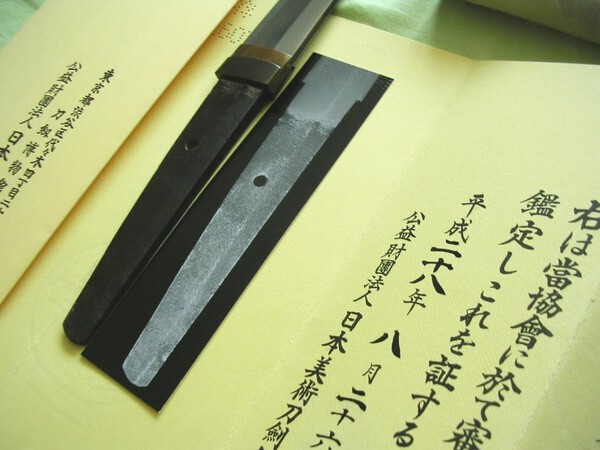
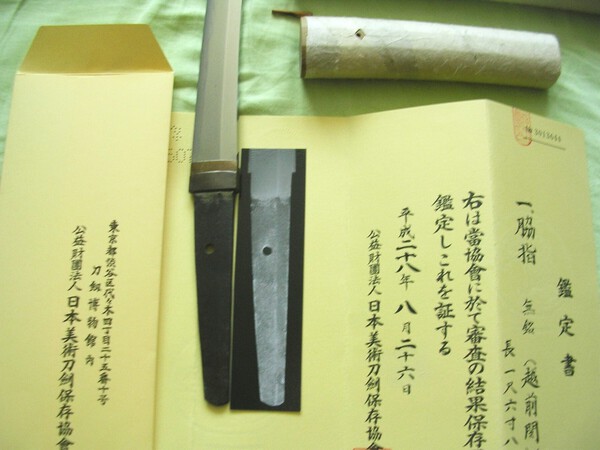
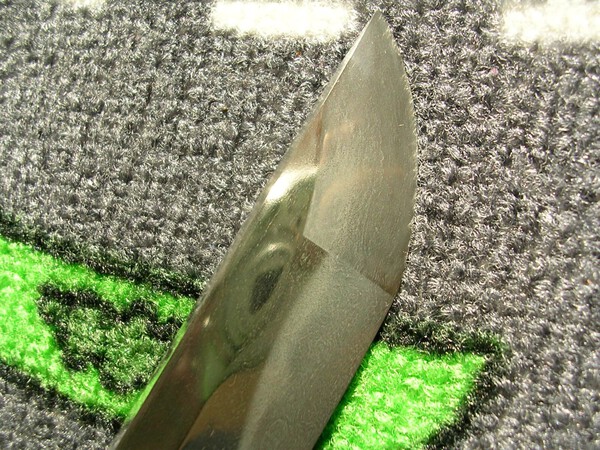
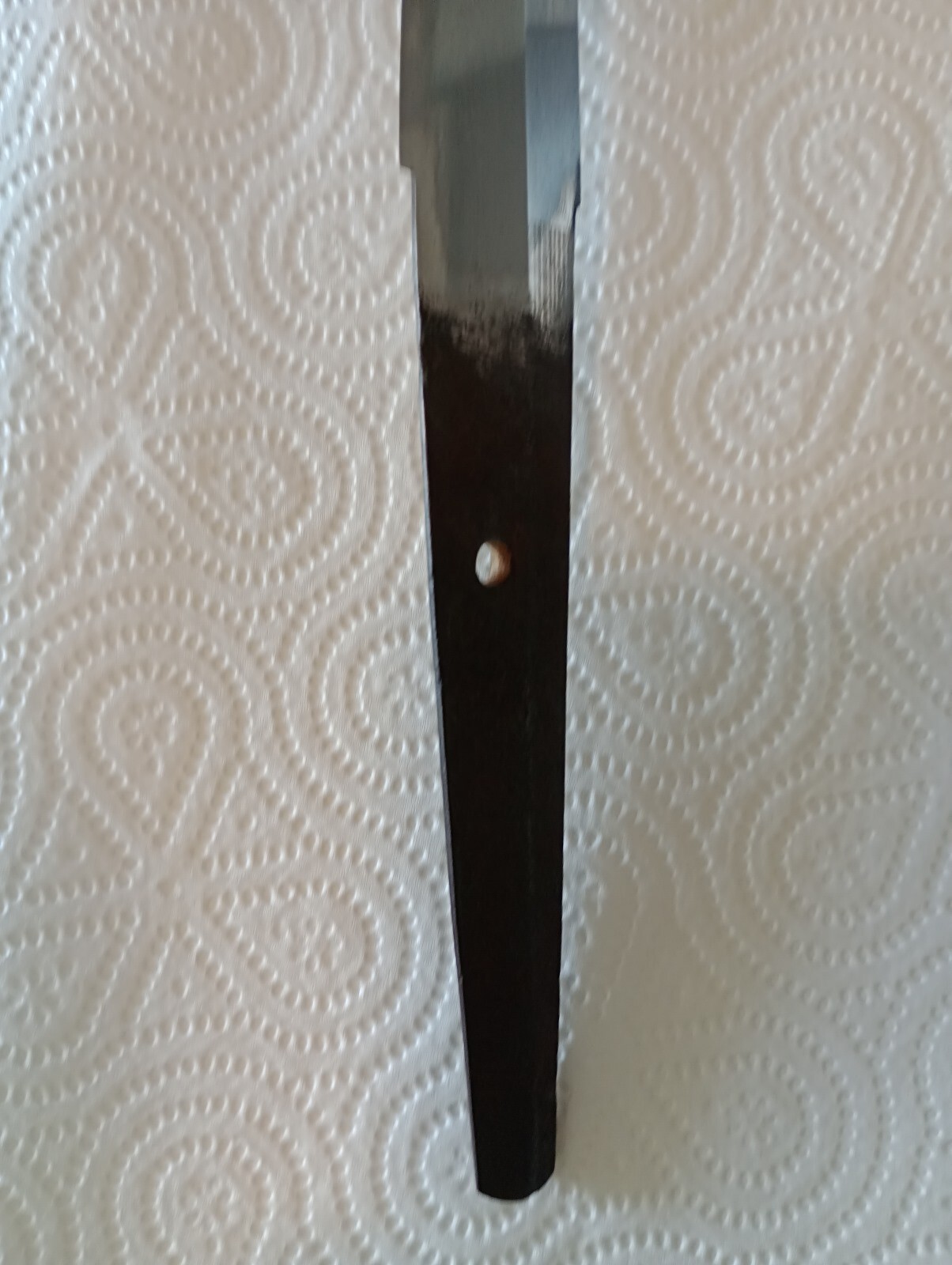
More pictures.
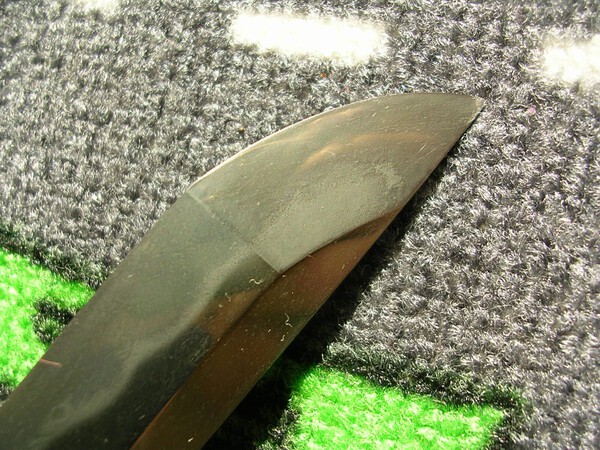
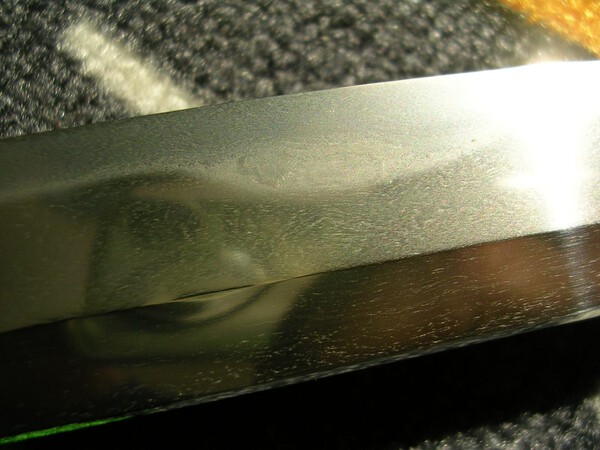
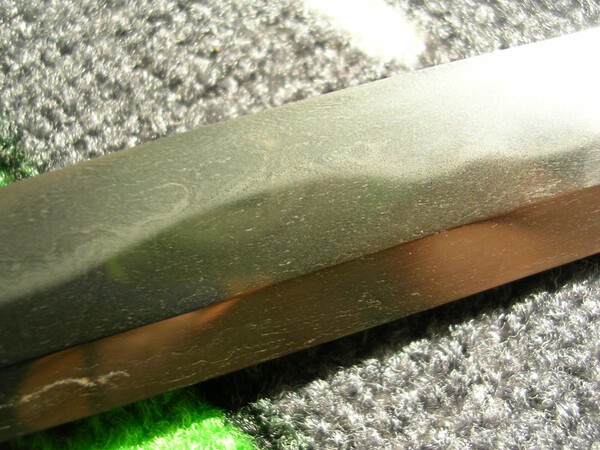
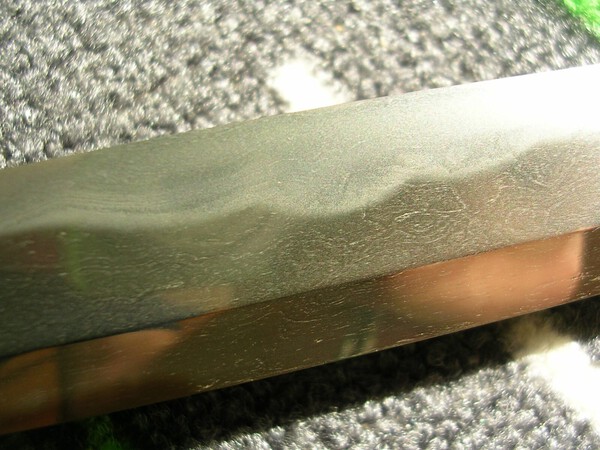
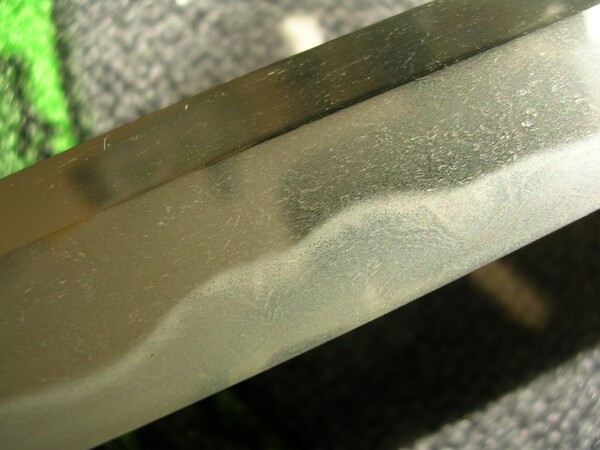 1 point
 -
Unable to load other pictures.
 1 point
 -
as this one.....
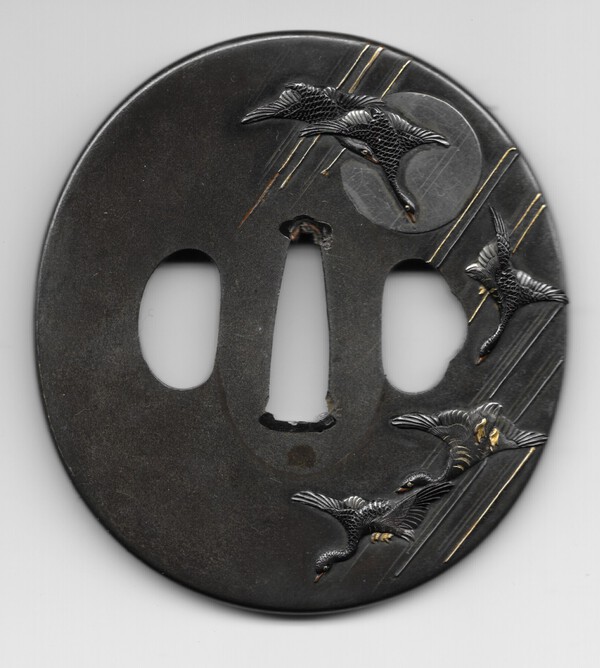
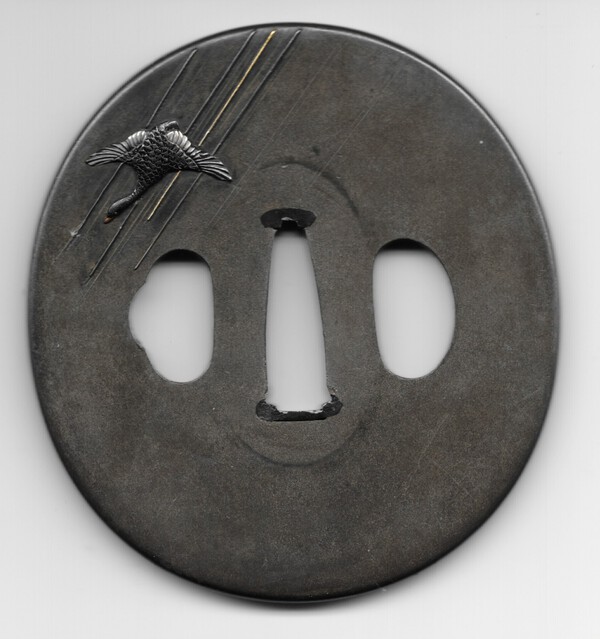 1 point
 -
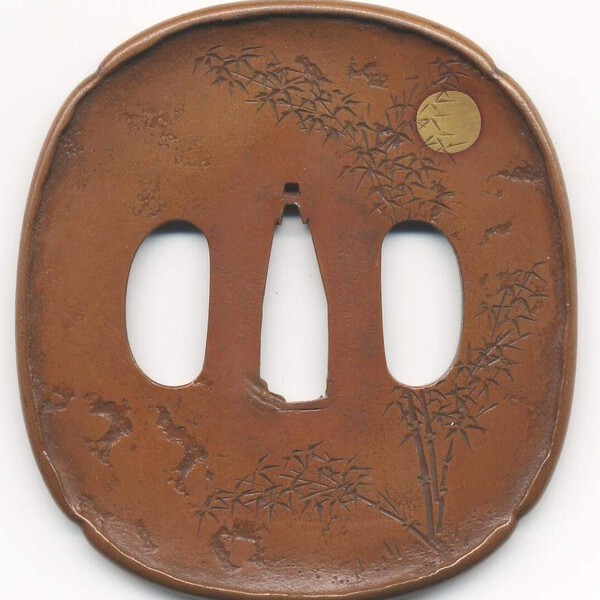
Another one I pined for
 1 point
 -
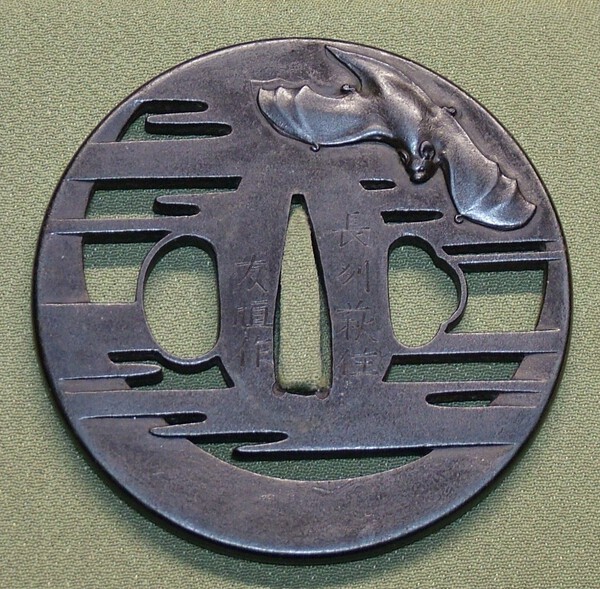
Choshu Tomotsune Tsuki ni Ko-Mori (moon and bat)
 1 point




































This leaderboard is set to Johannesburg/GMT+02:00