
Leaderboard


Popular Content
Showing content with the highest reputation on 05/27/2023 in all areas
-
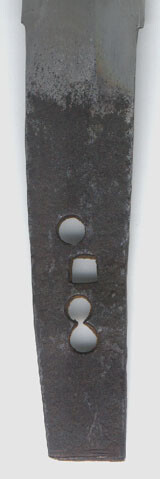
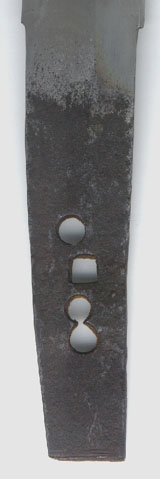
Consideration of square Mekugi-ana with JPN/ENG subtitles https://youtu.be/Goq_uAe_4oE6 points
-
Steve, Don't give up man. I love your way of debating. And it's not rude. There's a reason all the oooold collectors with experience are not joining this debate. Pointless, but at least you are trying. Can you imagine Jim Gilbert or Bob Hughes joining this debate?6 points
-
It's not contemporary, but it reminded me of this picture of Amakusa Shiro by Takato Yamamoto: https://tvtropes.org/pmwiki/pmwiki.php/UsefulNotes/AmakusaShiro5 points
-
Excellent video. Thank you. I have a wakizashi with square ana that I would love to have looked at oneday.
 4 points
 -
I have added some new informations and made a pdf from it. Unfortunately for our english speaking members it is in german language. My english is not the best to translate it. Maybe it is usefull for one or another. Some sites are in a direct link in the pdf sheet to the website. I have no clue how to add it. But it should not be a big problem - the most have internet Chris Gendaito_RJT_German_Chris.pdf4 points
-
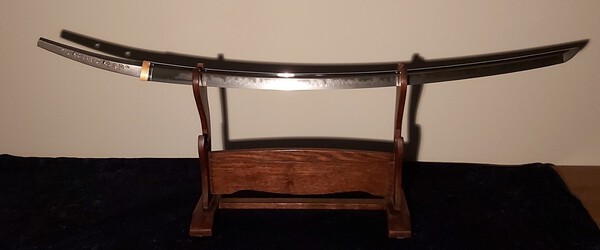
I also have a tachi by him but I have to apologize for the photo's. I only have a (very) old cell-phone. At that time Paul Martin arranged the deal for me. He did it in a splendid way. Paul V


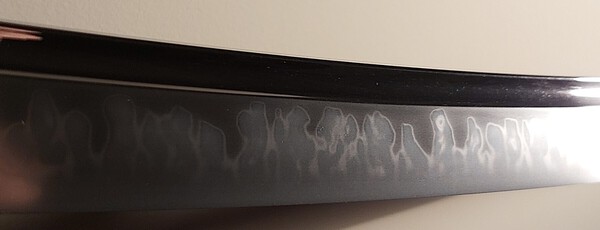
 4 points
 -
Hi First off, Id be asking myself why a Hizen Kuni Tadayoshi (top notch smith and always a target for gimei) with a cutting test is for sale on an auction site without mention of Shinsa papers ?3 points
-
Here is a rough translation of just the written part if anyone needs it. John C. Gendaito info.docx3 points
-
I like this guys vids because he really knows his antique blades (of all types) and explains how they were used. Good vid, especially for folk not too clued up on the use of such weapons.2 points
-
Noshu ju Kanehisa2 points
-
Hi George, I think a more likely explanation is that Oshima is the owners name rather than the hilt binders/ mounters name . I came across a Kai gunto where the name written on the wood under the Fuchi corresponded with the surname on the surrender tag that came with the sword. Ian Brooks2 points
-
So, off topic here. My personal opinion is that some recent posts to this thread, in response to other posts, are not very nice. I have learned from my past experiences on this forum a saying that goes something like this (which was found on the internet)- “Arguing on the internet is like playing chess with a pigeon. No matter how smooth or strategic your moves are, the pigeon is just going to knock down all the pieces, crap on the board, and strut around like it won”. So, my friends, let’s just ignore some of these "not so nice" recent posts and move on and forward! With respect, Dan2 points
-
Live and let live. Nobody is going to have a sudden revelation that they've been wasting their time when they read somebody's opinion on social media that they're wasting their time. If someone wants to research something that they're interested in, let them. Why do students repeat scientific experiments that have been done before? They want to do it for themselves to engage their thought process. The definition of a "waste of time" is highly subjective. From reading all these threads that pertain to cast tsuba, I believe the most valid reason for the push-back by members is to maintain history that is the most widely accepted and to keep a rein on misinformation from spreading. That's a valid stance. And, if new people take the time to read these threads, they will see both sides of the argument for themselves and probably be at least cautious if and when they decide to purchase a tsuba. And here's a thought. IMO, a certifiable Edo-period cast tsuba would not be valueless. It would be very valuable to a lot of collectors and historians just because of how rare it would be and the historical implications that it would carry. I'm not saying they exist. I don't know if they do or not. Neither side of the argument can definitively say one way or the other. But, saying something to the effect of "just stop it already..." isn't going to work. If these chains are proof of anything, it's that the back and forth will continue into infinity.2 points
-
Last summer at Leeds Royal Armouries they had this set in the study room.
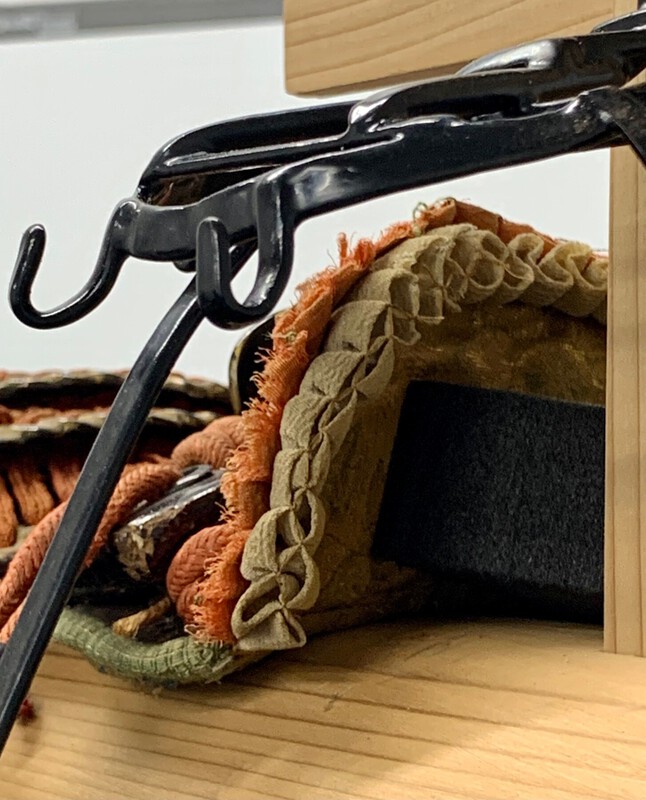
 2 points
 -
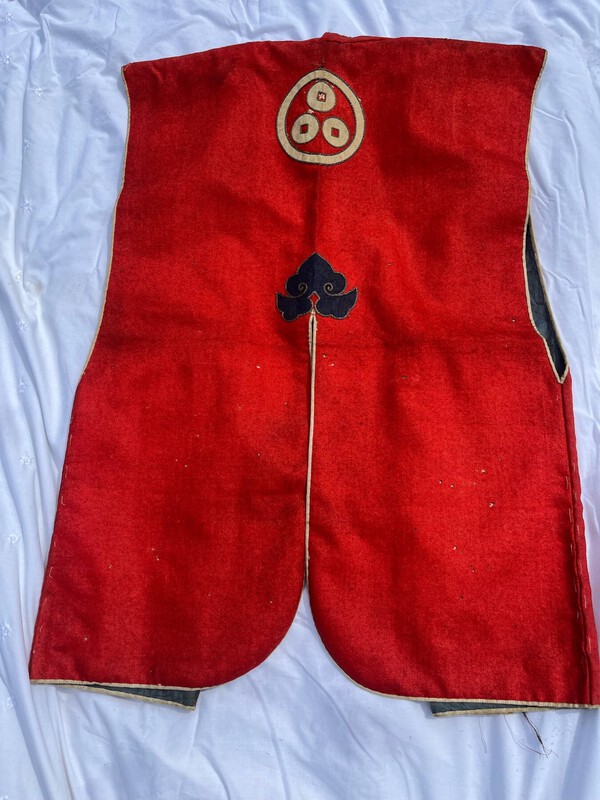
Late Edo period Jinbaori (battle coat worn over armor) — $500 Beautiful red wool with family kamon (I think Watanabe clan) on the back. Nice fasteners on the side lapels, but the center button is gone. Small fabric deterioration on the lower left lapel lining and some small holes in the wool here and there, but overall in nice condition
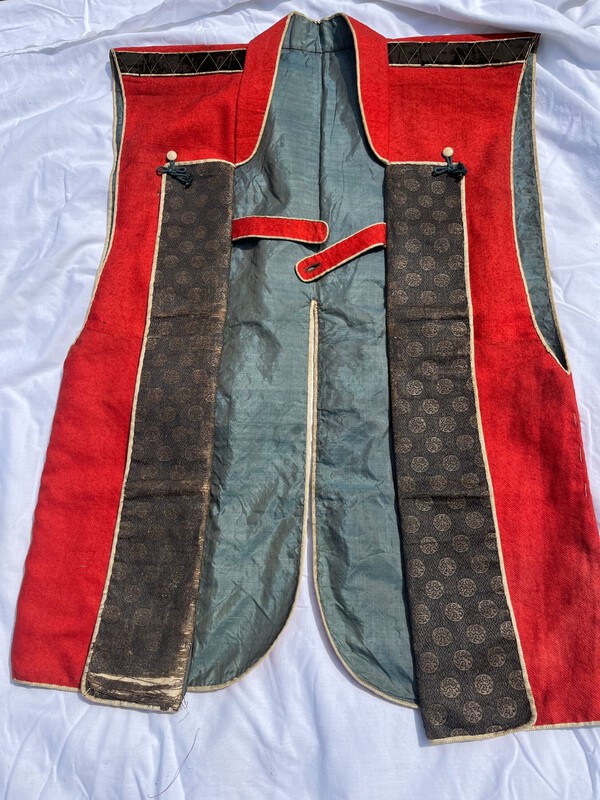
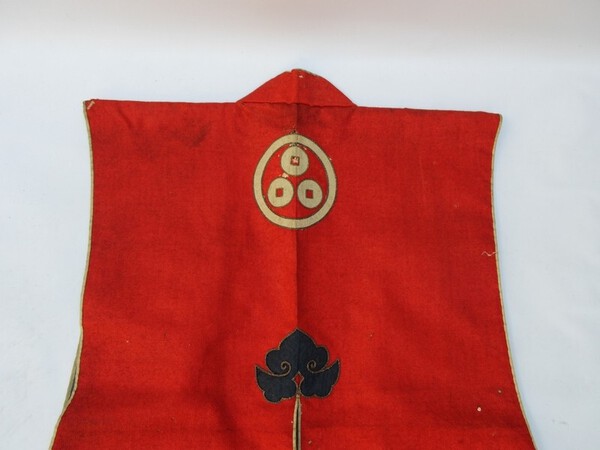
 1 point
 -
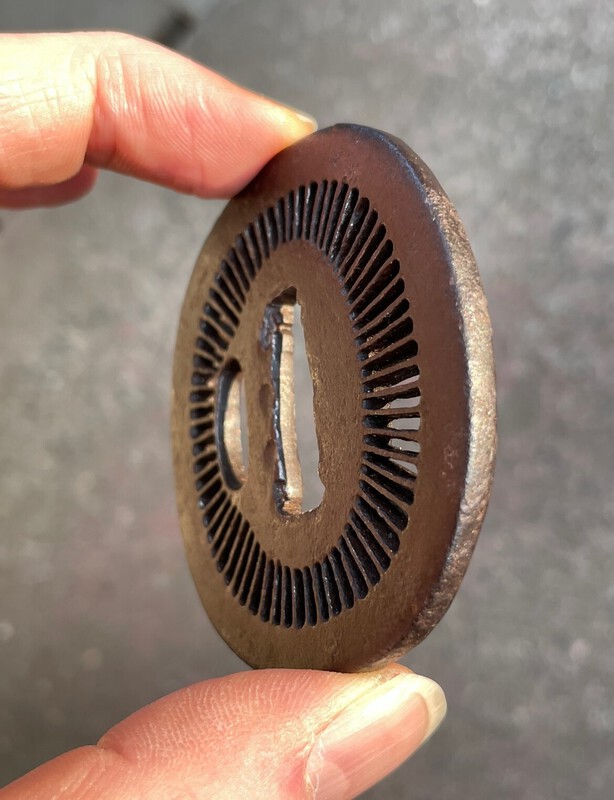
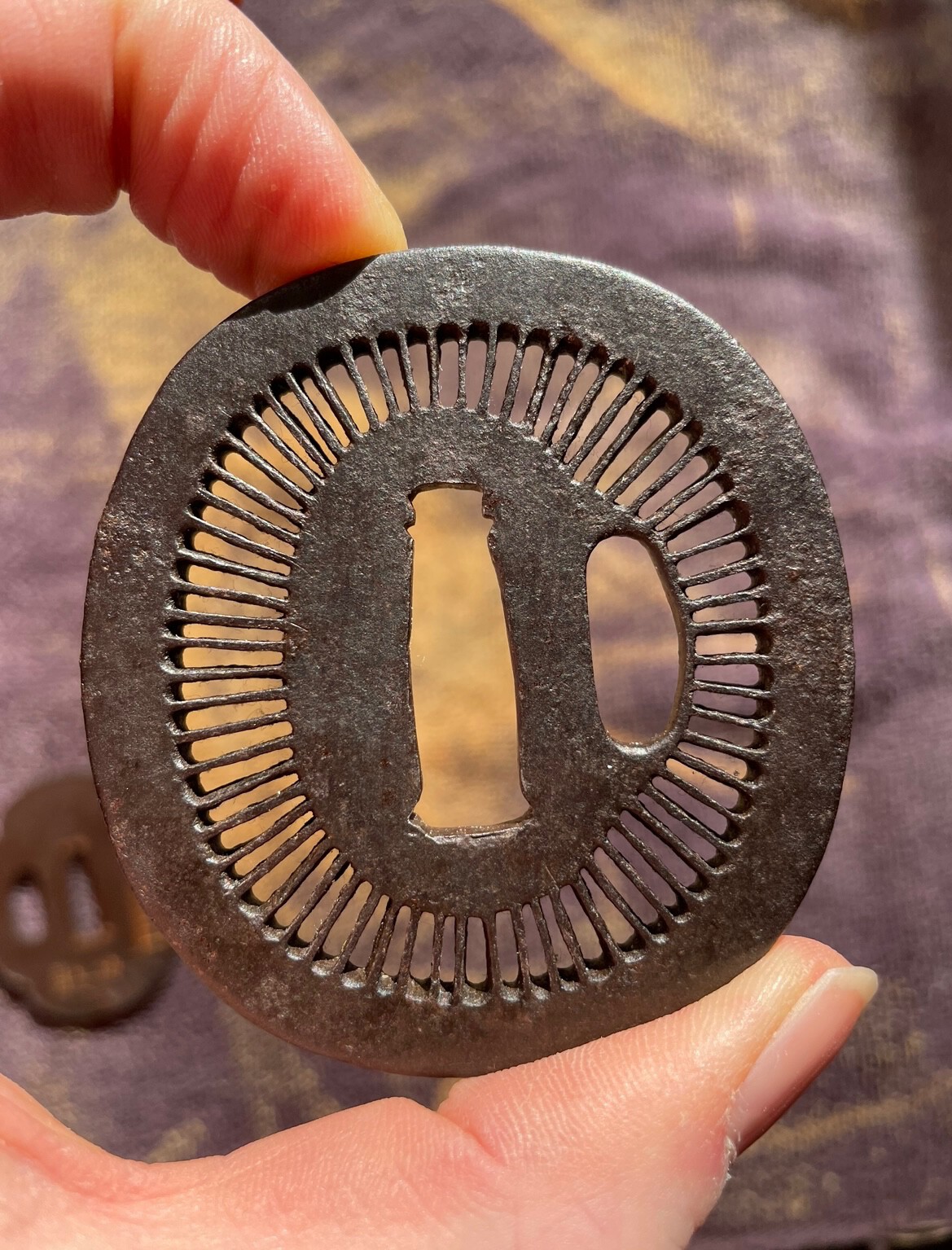
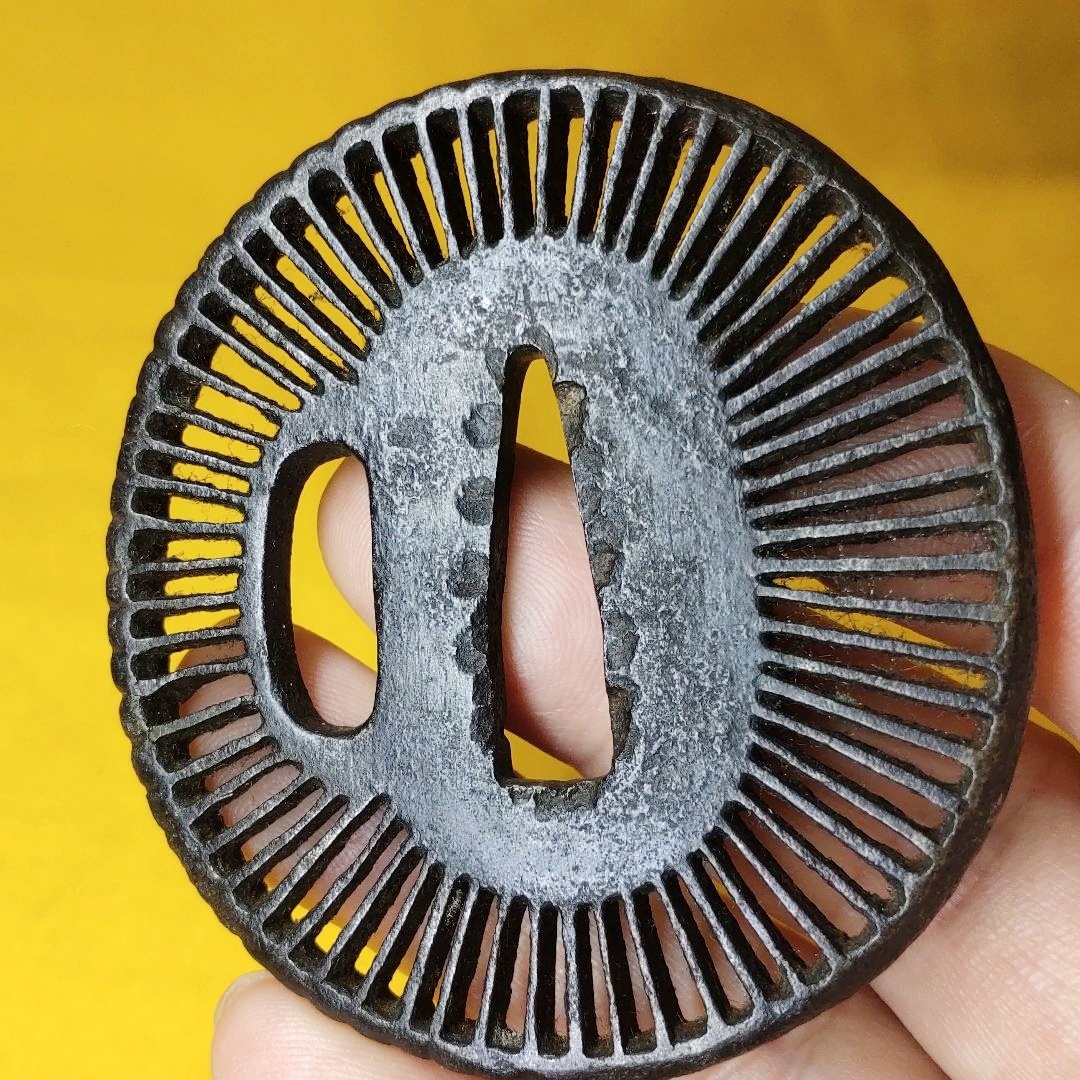
This was a long process and I ended up having to use a tiny file (very carefully) for the sukashi, which was a bit invasive and made me a little uncomfortable but there was just no other way to get at the rust in there. I’m happy with the result. Enjoy and feel free to ask questions. 6.7x6.2x0.4cm Before and after.


 1 point
 -
More pictures of the koshirae

 1 point
 -
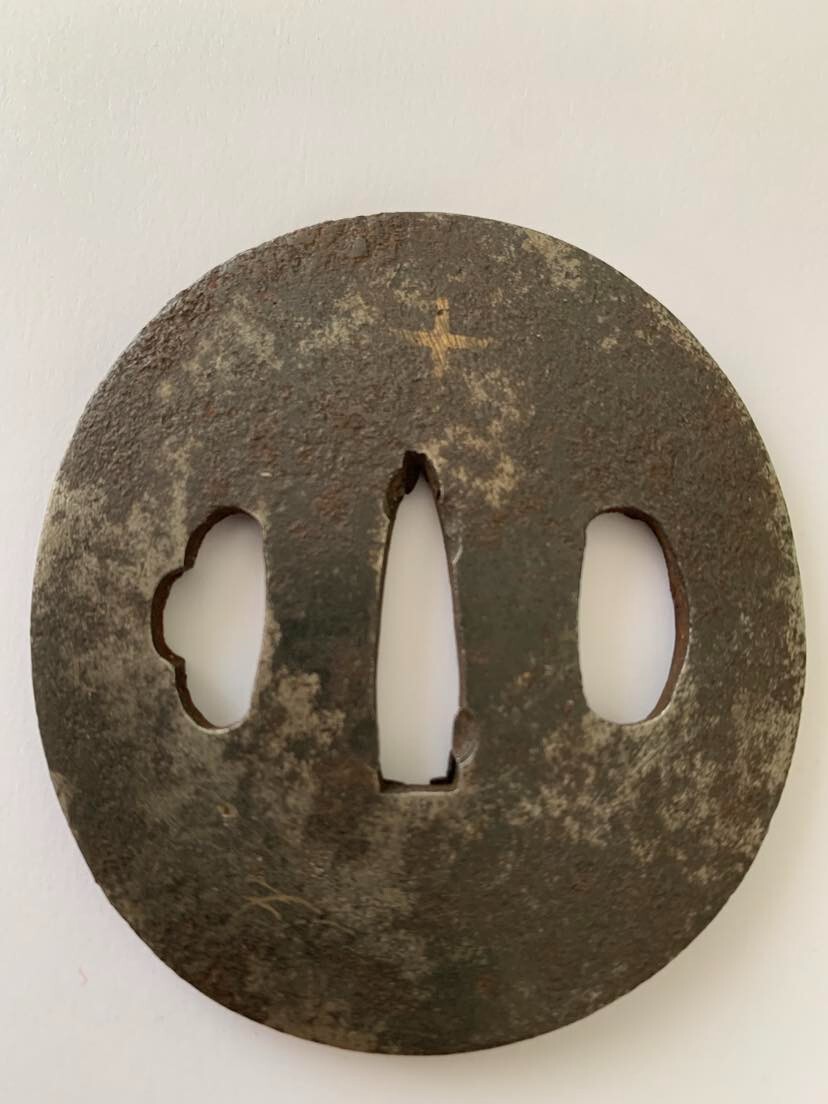
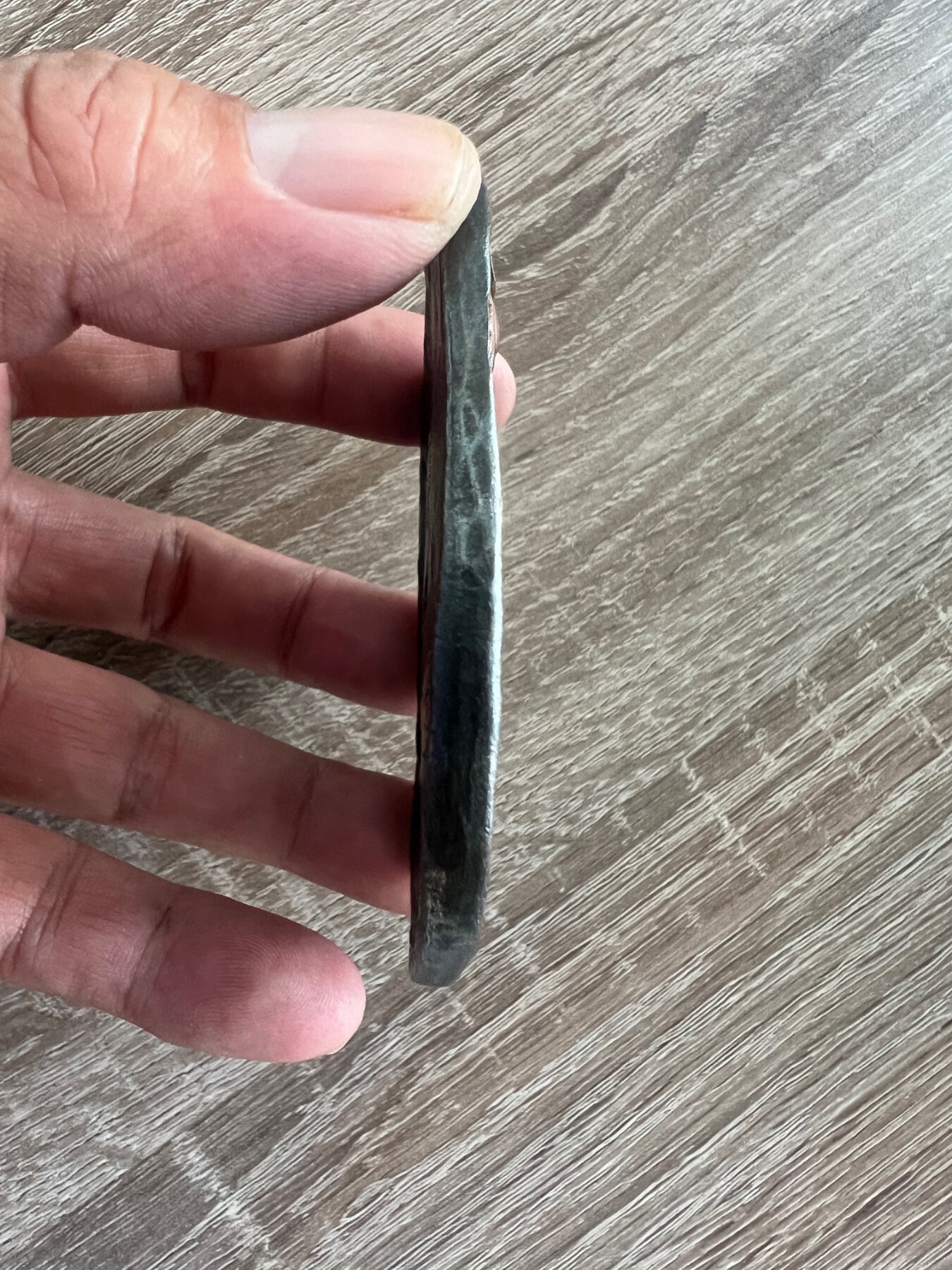
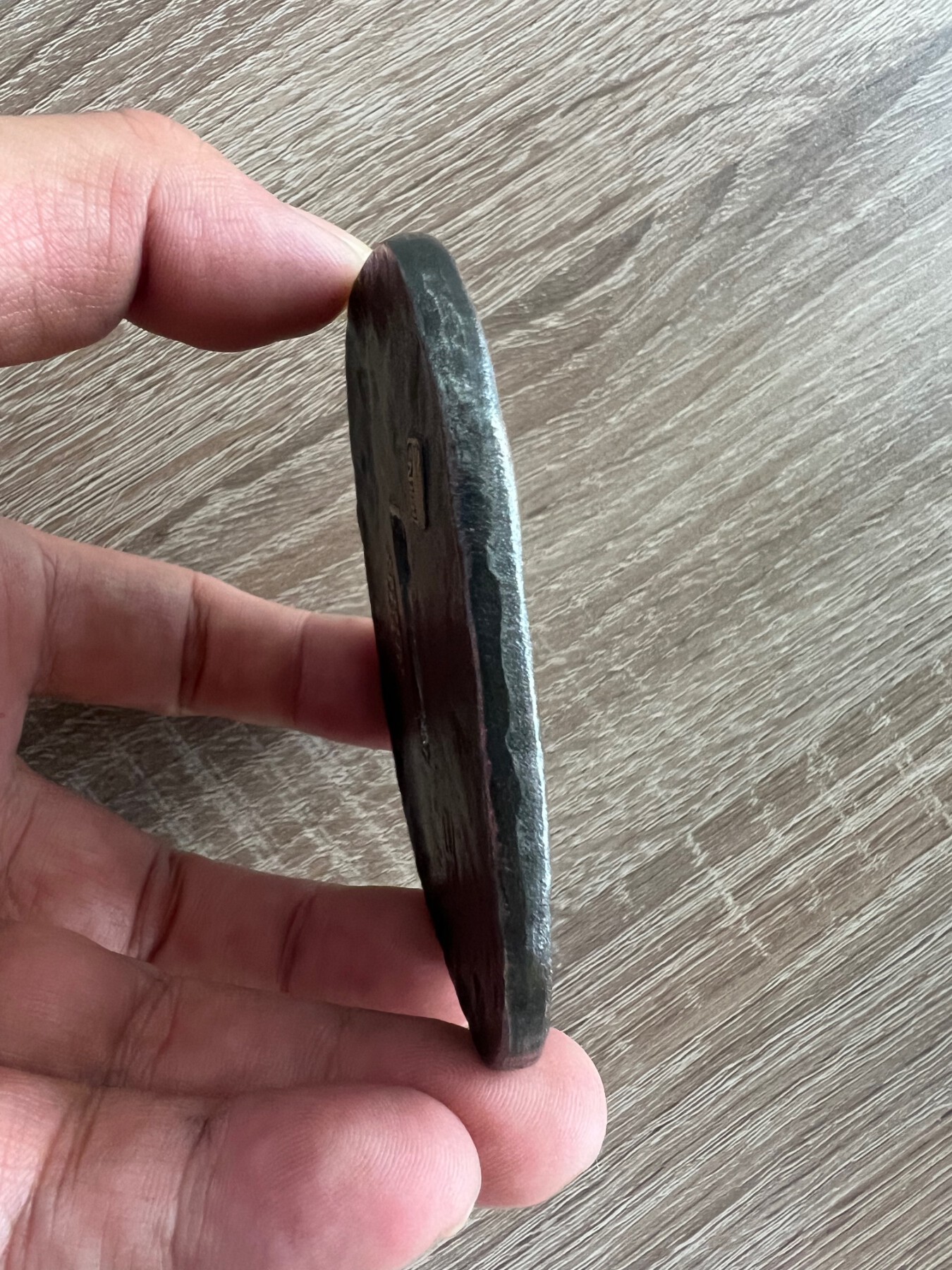
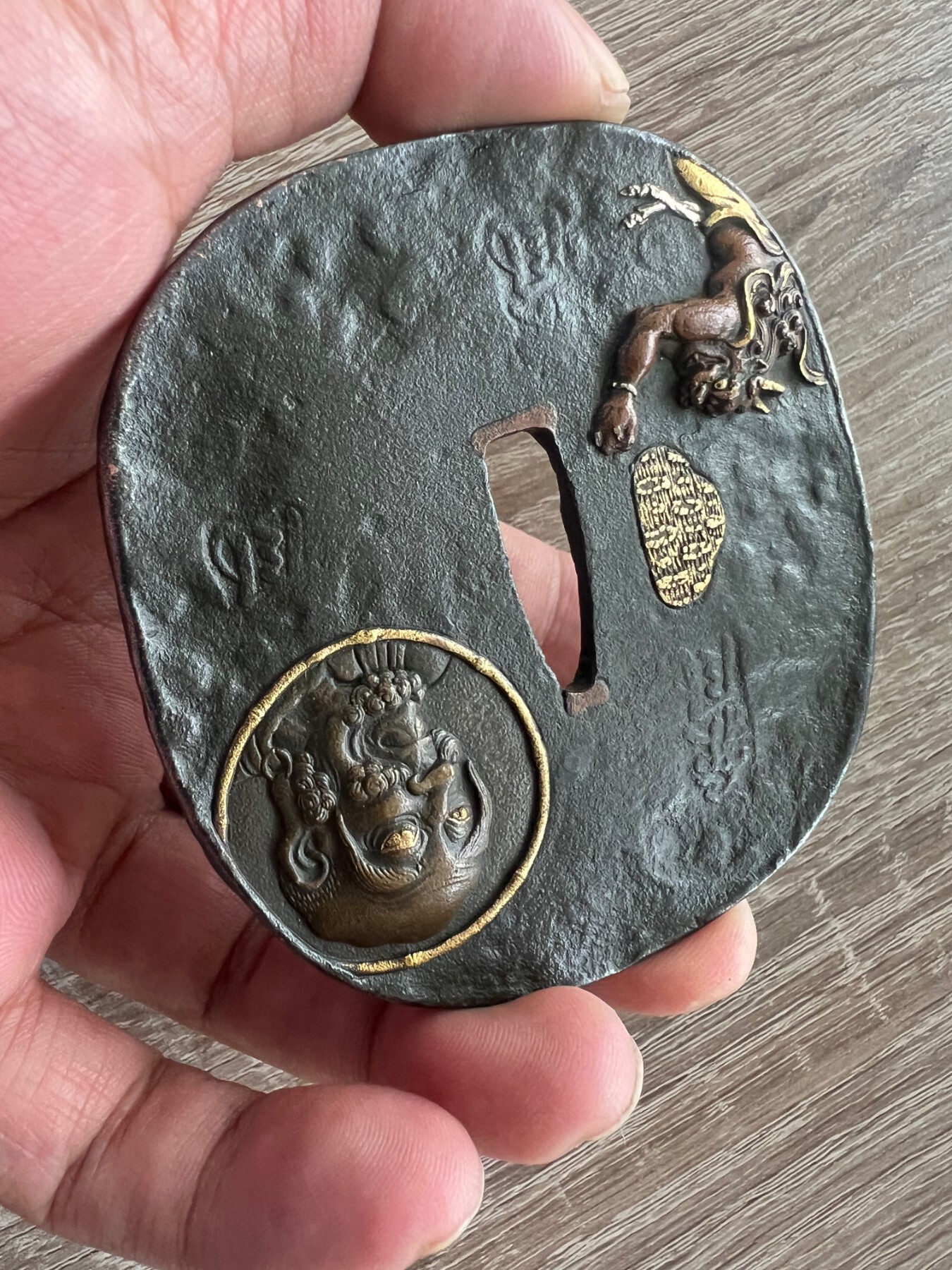
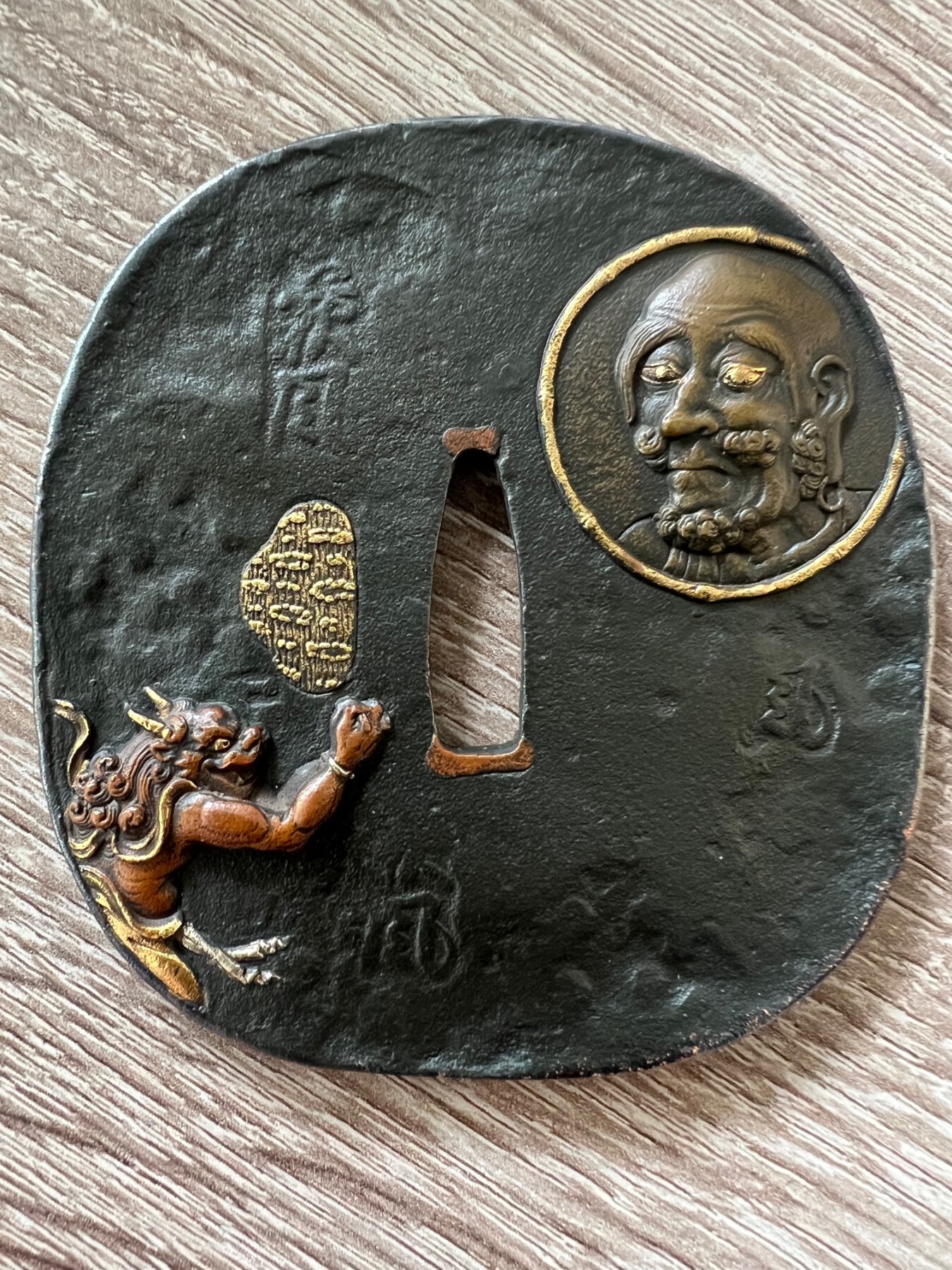
Good day Bugyutsuji. Yes, it has bronze inlays (cross, and what looks like a hill or a wave pattern, this one also on the other side). I have checked carefully the "cross" and the length is a bit larger for the vertical part (There is rust/oxidation covering it ), so to uncover or make this symbol clearer someone has roughly cleaned it (not professionally). Pictures where you can get a closer view. Dimensions (length, width, nakago): 6.8 x 5.8 x 2.5 cm. Best wishes Gerald

 1 point
 -
Ian and John, both interesting comments. Ian...in this case the hilt marked Oshima is on a sword marked to 2nd Lt KUME of the 32nd Div. IJA...surrendered Morotai Island....so the Oshima must? be a mounting shop name. John...the hilt has a little ink shop logo? under the fuchi (looks like a mon but is not a hanko, it is rubber stamped ). Regards,

 1 point
 -
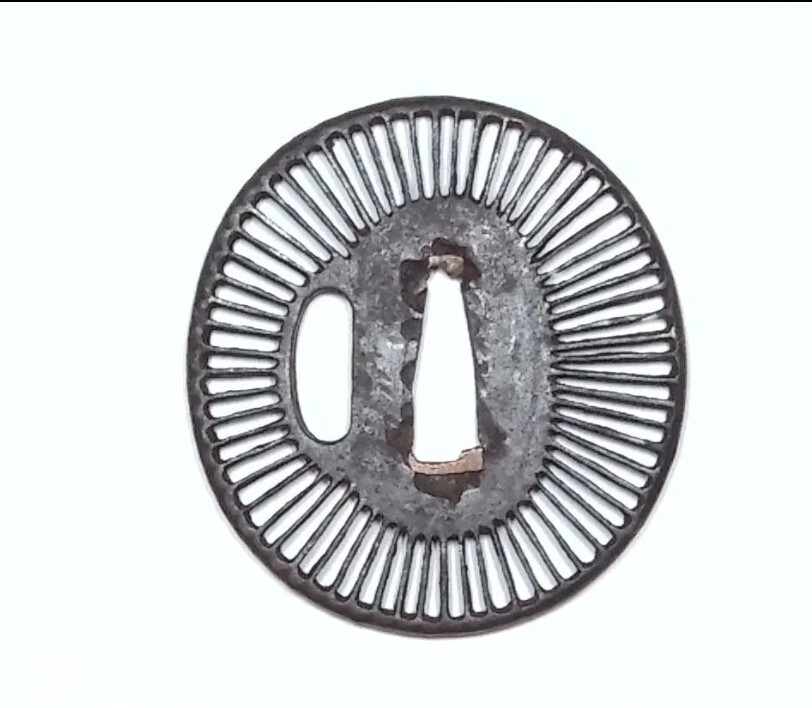
I was going to bid on that one (original post), seeing your bid already there put me off! Congratulations on getting it, it is a real winner. I'm not in the market right now, but I thought the forum might be interested in this guard below. The pictures are a little sub par, but it otherwise looks ok (just one dubious spoke). Hopefully a forum member can put it to a good home https://www.ebay.com.au/itm/235026837329?mkcid=16&mkevt=1&mkrid=705-154756-20017-0&ssspo=pNiwG9EHS5i&sssrc=2349624&ssuid=OjC70kueRUa&var=&widget_ver=artemis&media=COPY
 1 point
 -
Sometimes textured bowls can be tough on a chasen (bamboo whisk) and can be difficult to properly whisk the tea… but, your’s is frothy, small bubbles, no lumps… what’s not to like? Thank you for sharing.1 point
-
A thin rim one going at the moment same hitsu shape - but from memory yours was much less expensive. [Though for the work involved this one is still very cheap] https://www.jauce.com/auction/u391559753
 1 point
 -
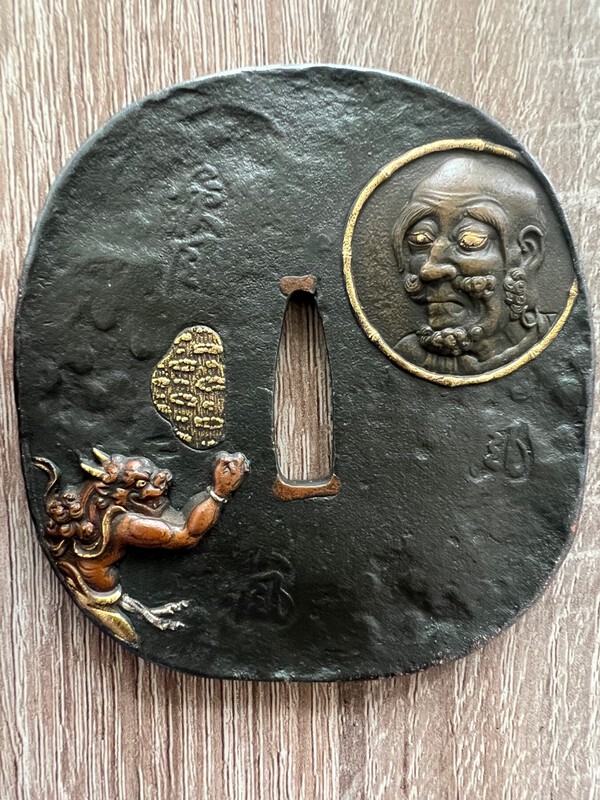
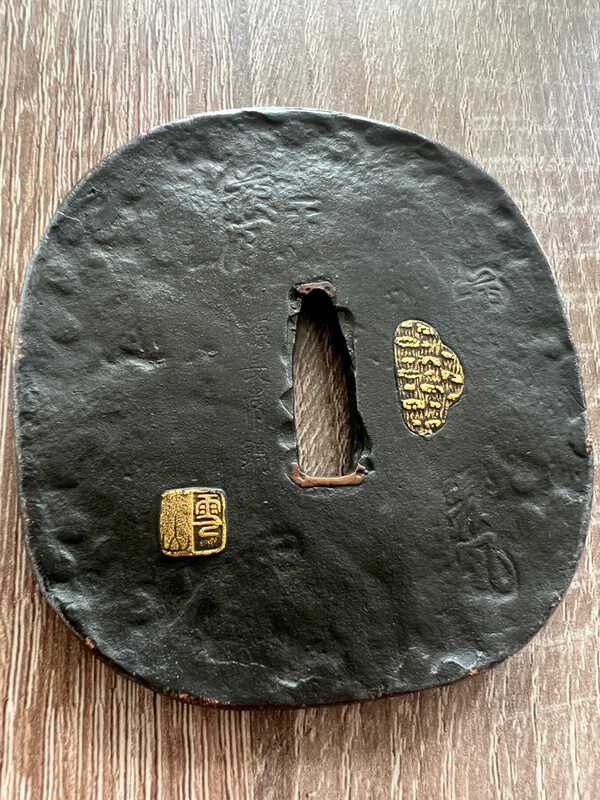
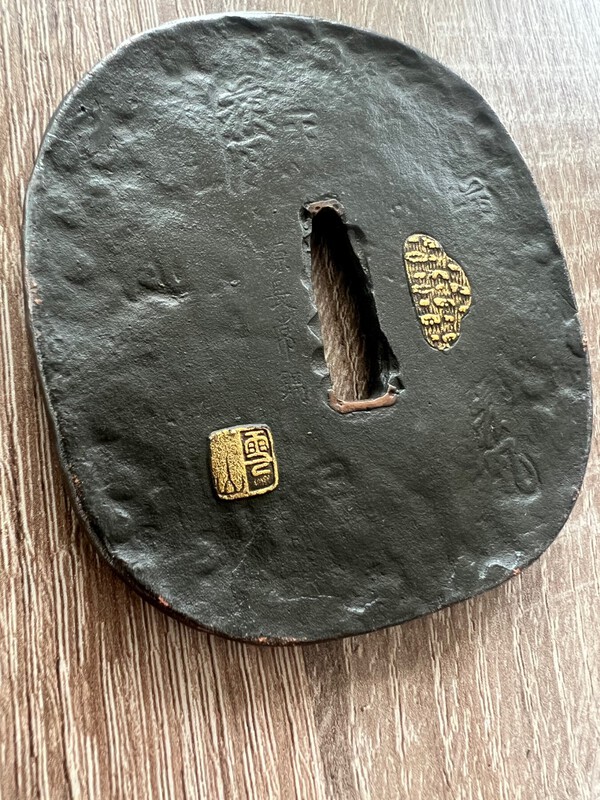
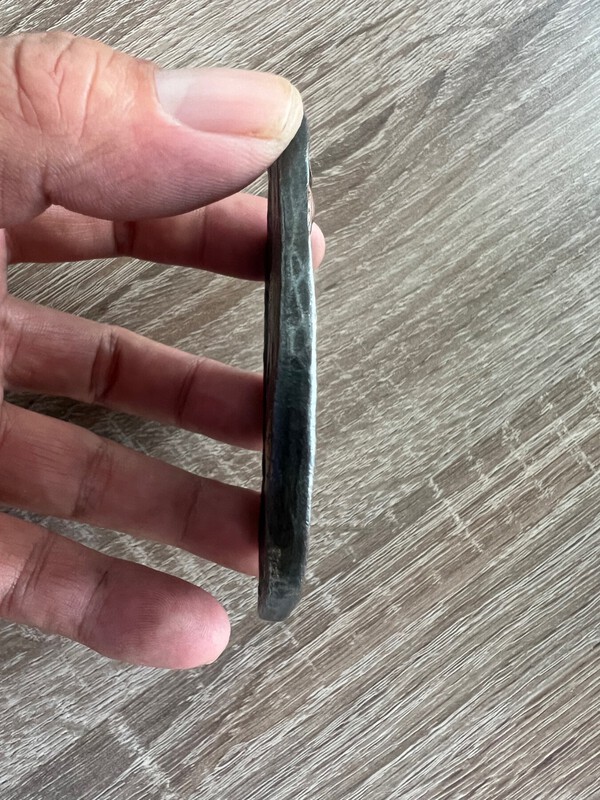
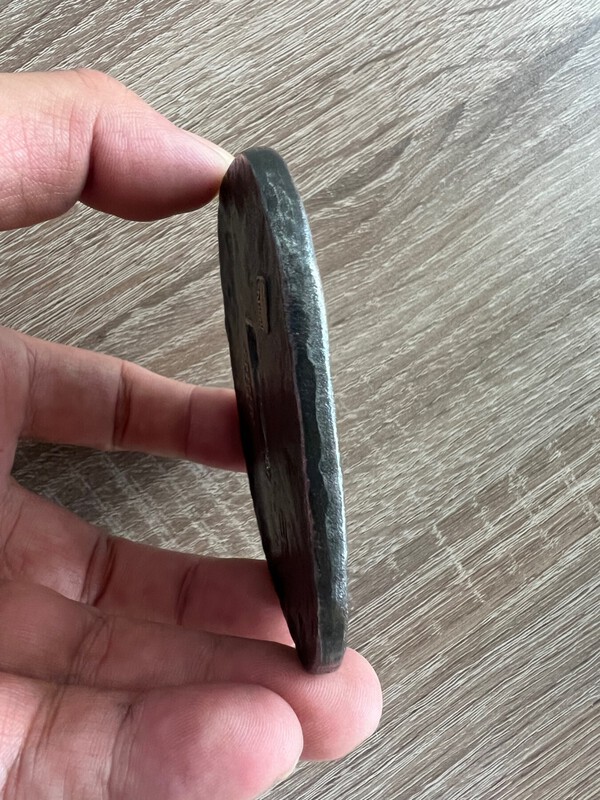
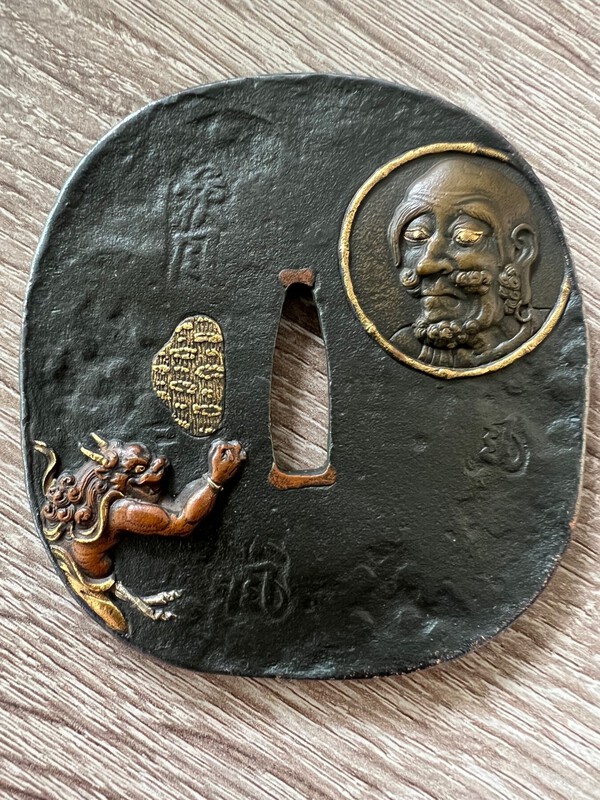
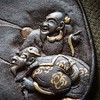
Hello! I am quite intrigued by this Soten tsuba, there is a character on the left which appears to be wearing a ruff collar. As per true Soten style, the reverse side of the guard depicts the back-end of the front scene, and the ruff collar is still seen. I have just assumed this may be some odd Dutch influence, but does anyone know if the adoption of a ruff was common in edo Japan? I don't know what the story is, although I thought that maybe the character on the right is Daikoku with a bag (which seems to be connected to the horseback Samurai?) I'd like to hear others opinions on this if possible?


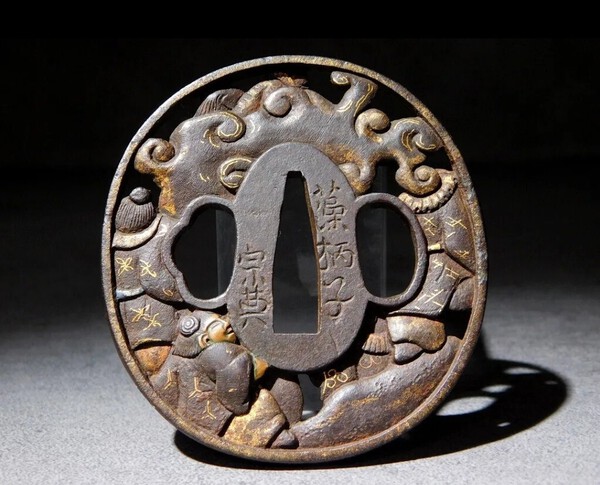 1 point
 -
Nice example there, I have not seen that artwork before, thank you for sharing!1 point
-
I think you are right that we just can't pin it down yet. It would be nice to know if those ladies were in a shop or in a factory. Long hallway like a factory but I don't know anything about what a shop may have looked like. Based on the numbering style and position, I still think the same person wrote them. But where, I have no clue. John C.1 point
-
Welcome Gerald! You will find that there is a lot to learn.1 point
-
This doesn't - what is Princess Leia doing on a Soten tsuba? This should be over on the similarities with StarWars thread!
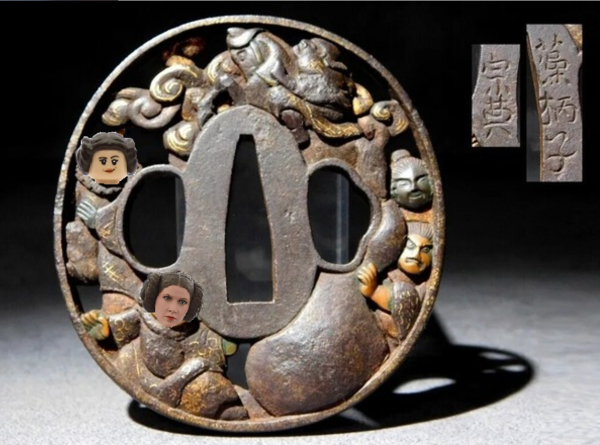 1 point
 -
Good day All It is a pleasure to learn more about Nihonto. Best wishes Geraldo Hostin1 point
-
I was hoping the photo would have some more clues, but you can see under the first woman’s right arm, under her elbow, it looks like a saya and tsuba. So, overall, the photo is inconclusive to me.1 point
-
You know, Dan, I agree with you. I know that, at times, my own tone can come across harsher and more aggressive than I intend. I think this is partly due to the nature of electronic communication, whereby, for some reason, tones can be seen as colder than they were meant (Isn't this why emojis were invented?). In some cases, though, if the content of a post (its actual ideas and academic arguments) incites a clearly dismissive response, especially if that response does not seem to have been borne out of careful reflection and consideration), I myself can react too aggressively. So, I apologize for that. However, I stand by my original post here, and the ideas/arguments it presents. Thanks for the post, Dan.1 point
-
I have a kogatana with a sayagaki by him: Paul V
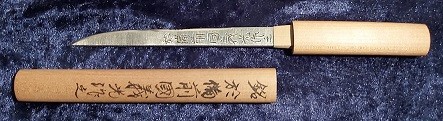
 1 point
 -
Just as a side observation... this topic definitely generates some interesting discussion and brings out a lot of different viewpoints1 point
-
@Brian, if the romantic "owned by samurai, used in battle" is the main driving force for people collecting tsuba, then they should avoid almost every Edo period tsuba, regardless of whether they were cast or not! A significant number of the "high end" tsuba made in the late Edo period wouldn't have been worn by "samurai" anyway, and were far more likely to have been purchased by some well-to-do merchant who just wanted to flaunt their elevated financial status. My understanding of the times, is that many merchants were more affluent than the majority of samurai in those years. This is why a great number of iron-tsuba collectors almost immediately dismiss anything that was produced during the more opulent, and peaceful Edo period, when there was no military combat at all. I think that cast-iron tsuba adds an extra layer of contempt for collectors who already hold that view. I would suggest this was strongly evident in Steve's posts where the made the argument that all our time "would be better spent pursuing other areas of research". Mid to late Edo samurai were really just "samurai in name only" (should we call them "SNO"? )... They were many generations, and almost 200 years removed from their ancestors who actually saw battle. I think it would be difficult to make the case that these mid to late Edo samurai were a "warrior-class" at all. If I recall correctly, Sesko wrote that most had taken on a more bureaucratic role or were invested in non-military pursuits like literature, poetry, and painting. I assume many (most?) would still have trained in martial arts, but there were no battles, no wars, and certainly none of the romanticized "samurai" that show up in movies.1 point
-
[John, sorry for interrupting your very good academic discussion, so I'll say my piece and bow out] Matt, I'm usually able to ignore you and your inflammatory language, but you're exceeding my current skills. First, let me correct your last post: you said that my "assessment of this sword" was: "The basic identification of the item was incorrect" Hmmmm, here's what I said about the sword " It's a civil sword". How exactly was that incorrect? In fact, your items 1-3 seem to be directed at my erroneous initial assessment about the tassel, right? So your poorly worded rant, left unchecked, to use your own words. I have no problems with being wrong about stuff. I'm quite good at being wrong! Ha! But I also have no problem acknowledging it when I am. And I love tossing stuff around until we get it right. But I only enjoy it when people are treating each other respectfully (whether we actually respect the other guy or not). Let me be blunt - you have a penchant for using insulting language. It ruins the debate. We, and you, are capable of having a debate about the facts without attacking the other person, without getting personal and offensive. When you do that, then we start detracting from the topic at hand and having tit-for-tat personal discussions. I don't know a single person on NMB that enjoys seeing that happen. You have a ton of experience with swords. We all know that. But if you want the respect that experience might garner, I recommend you start speaking respectfully in our (NMB) discussions. You're free to choose. Back to you, John!1 point
-
Dear George. Well, from these pictures we can tell that is is a tanto, given the nakago probably not Gendai. Sizes might help but there is not a lot to be said from out of focus and out of polish pictures other than that you probably did OK. At any rate for that money you can afford to get it polished and in shirasaya. All the best.1 point
-
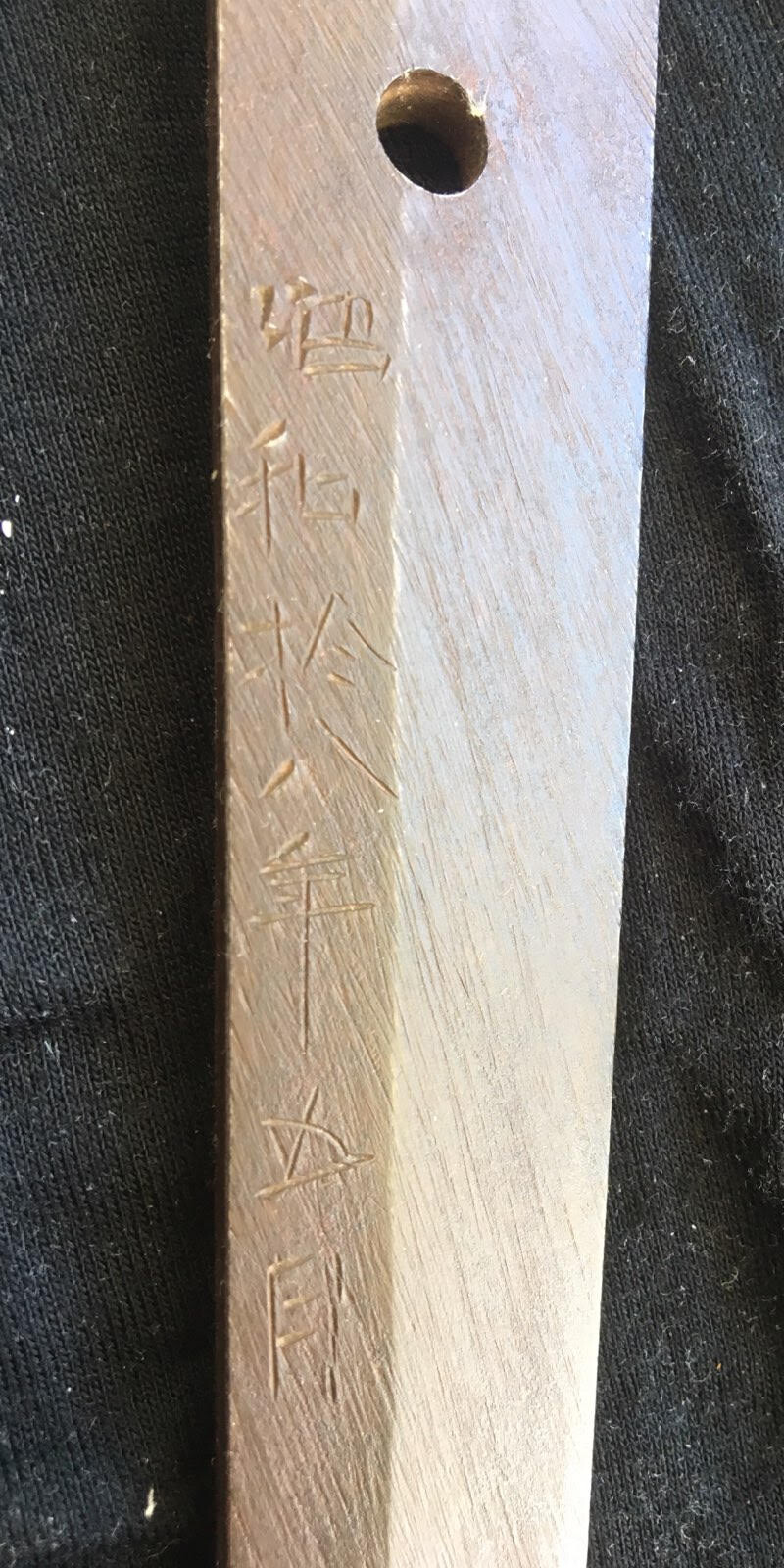
Uwe is right. We can clearly see row two 十三号 (No. 13) and three, 二十号 (No.20) and the top row could be a number too. The sticker design is typical of Meiji/Taisho/Showa~, as is the ink pen style of writing.1 point
-
I’m on the road at moment… Seems that each row starts with “号“ (model or number) followed by a number.1 point
-
Ruffs were wildly popular after the arrival of the Portuguese in the mid 1500s, especially with Daimyo or warlord leaders like Oda Nobunaga, and later under Dutch influence. They would have dressed up their Chinese boy servants in Dejima with ruffs too, and with those twin hair buns, it is a fairly common theme. Ruffs in Europe followed certain changes in fashion which may have been reflected back in Japan but perhaps more slowly. You can still see examples of ruff collars and sleeves on old sets of Japanese armo(u)r.1 point
-
Are you guys talking about this photo?
 1 point
 -
Definitely not Japanese. Probably retailed through a Hong Kong gift\tourist shop. Difficult to age precisely….. could be around 1930-1960 ish.1 point
-
Howard, that looks more Chinese than Japanese to me.1 point
-
It's in Wada Tsunashiro's book. Terutomo is better known as Hidetomo, but signed as Terutomo earlier in his career. He was a student of Teruhide who was the successor of Terumasa.1 point
-
Tsuba with the Mule/horse of the Taoist Immortal Chokaro Emerging from a Magic Gourd. This is an illustration of the idiom "like a horse coming out of a gourd," which is used to describe unexpected things. The saying may have developed from stories of the Chinese immortal Chokaro (Ch. Zhang Guo [Chang Kuo]) who carried his magical mule in a gourd. From the Walters museum.1 point
-
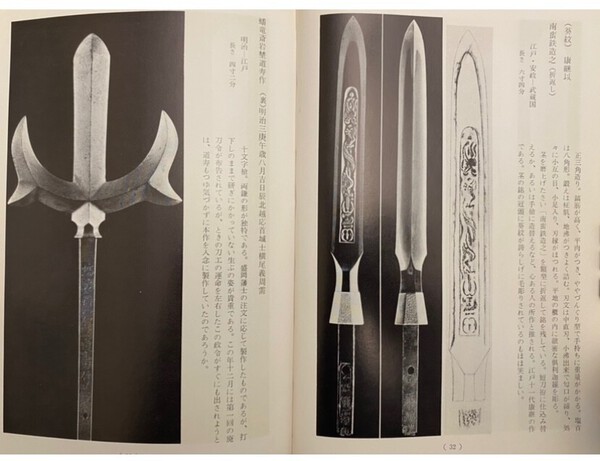
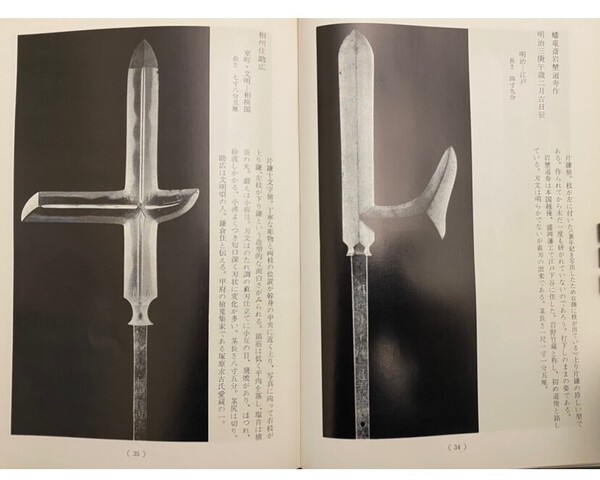
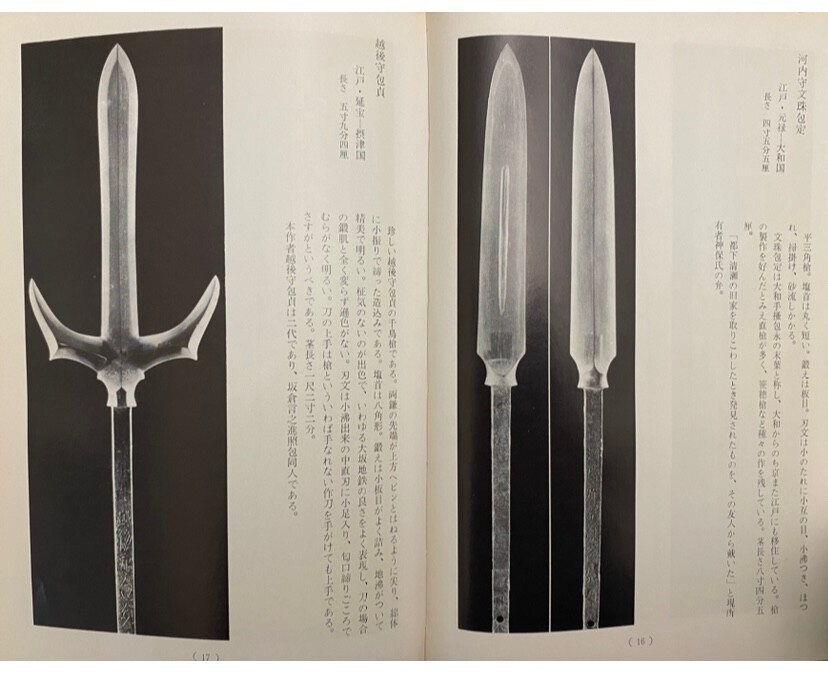
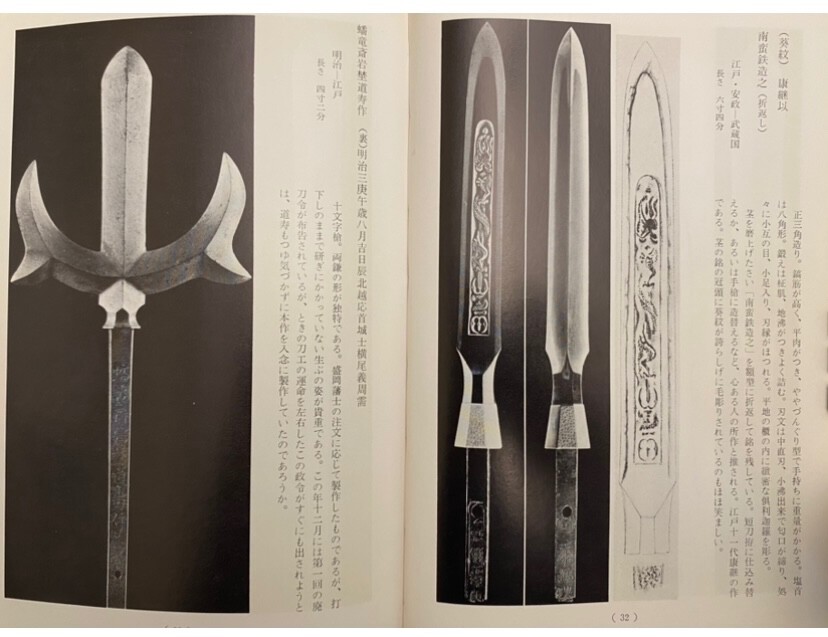
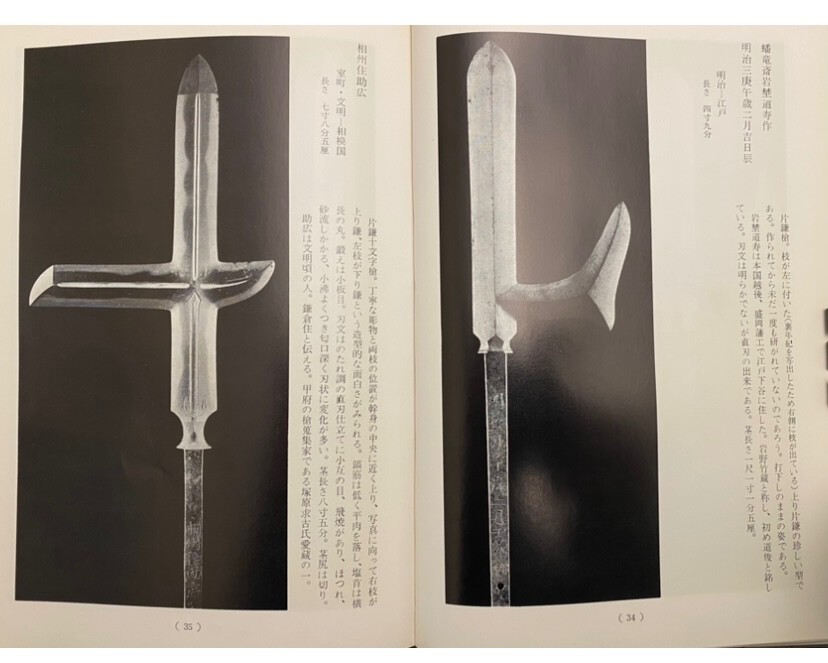
A few pics from the yari / naginata book as requested:
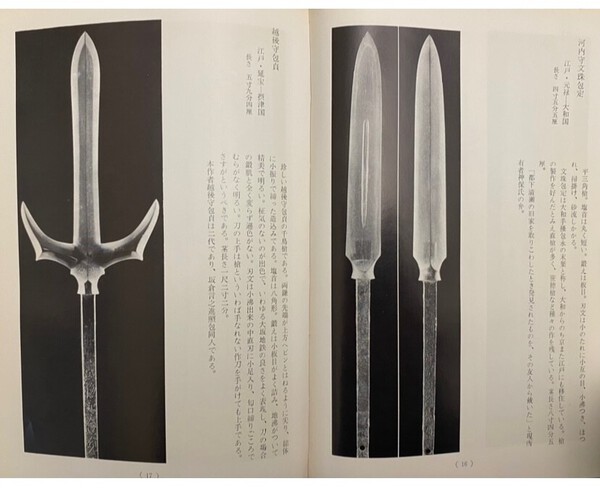
 1 point
 -
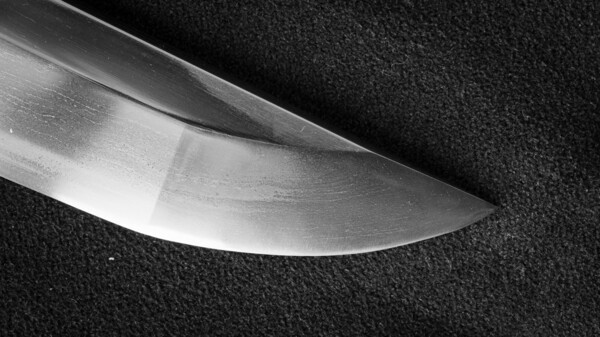
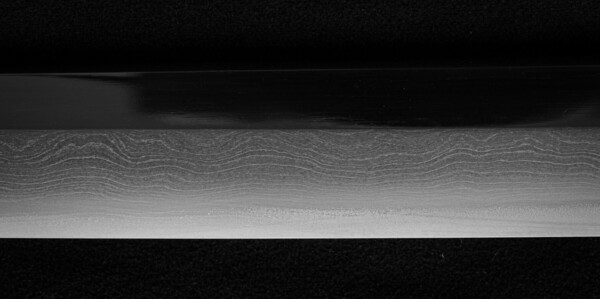
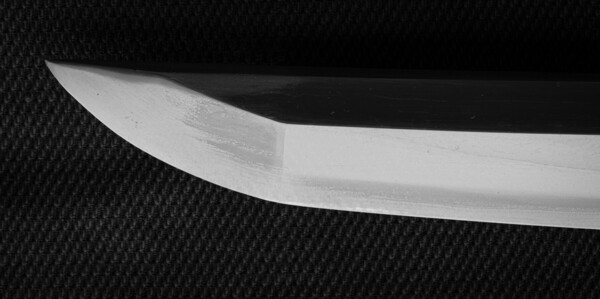
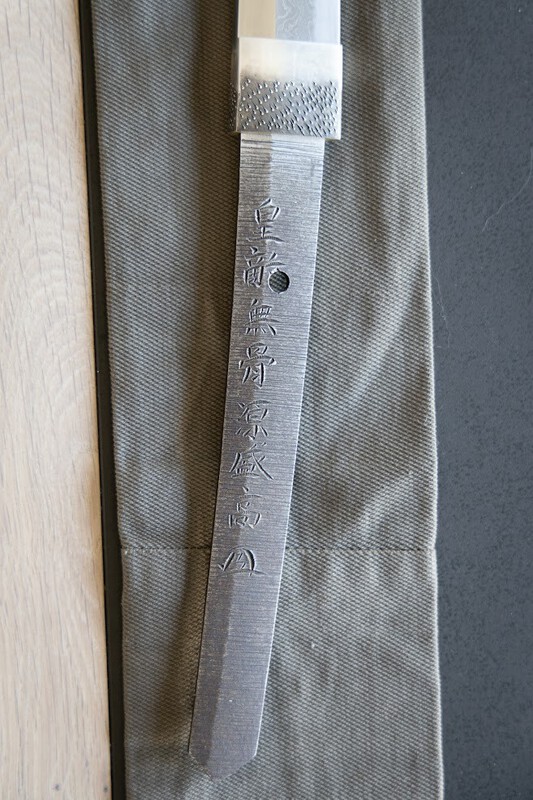
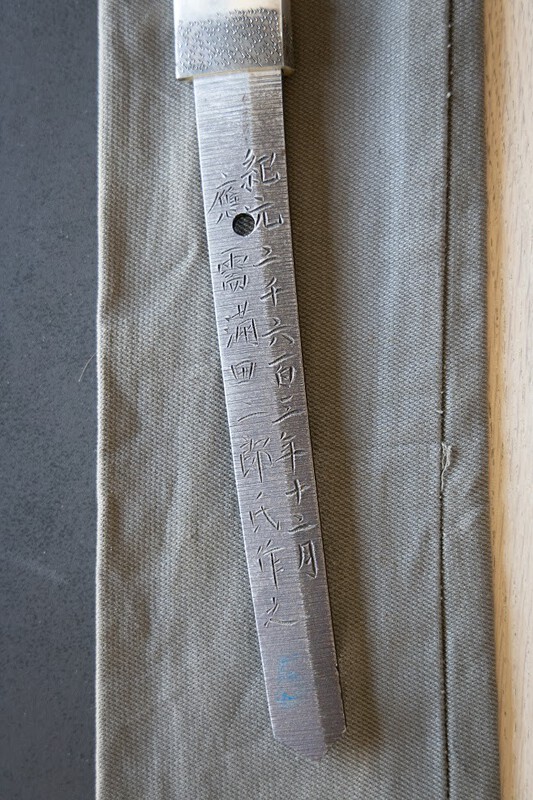
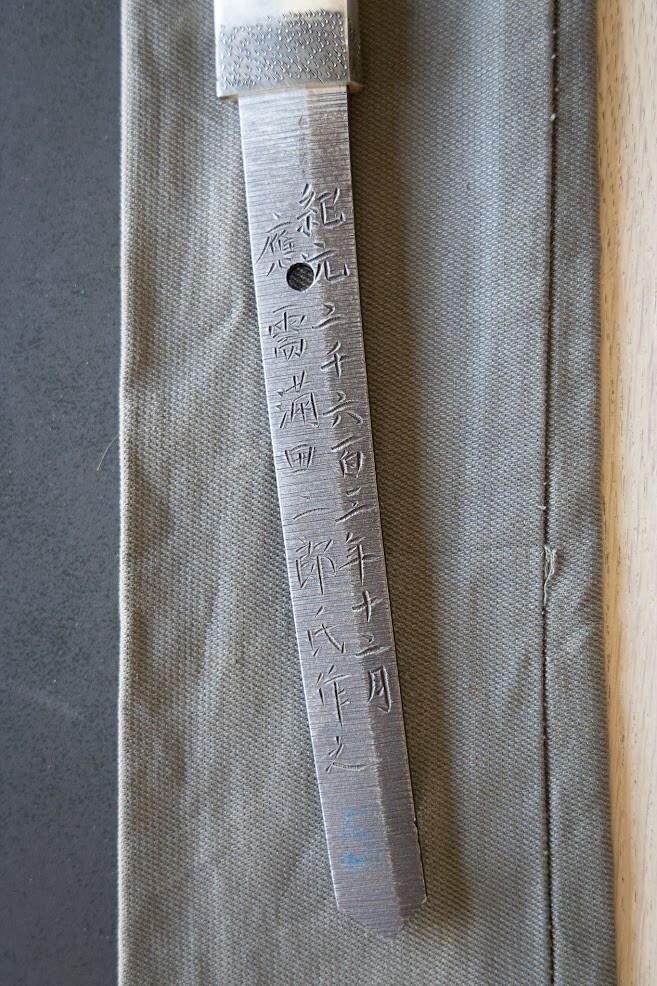
Here's a special order blade by Minamoto Moritaka (rated 2 million yen, high to superior gendaito according to Slough). Signed in tachi mei: "Koteki Mu Kotsu Minamoto Moritaka + Kao" / "Oujyu Mitsuda Jirou Shi Saku" / "Kigen Ni Sen Roppyaku Ni Nen Ju Ichi Gatsu" "Our enemy has no backbone" / "Made at the request of Mr. Mitsuda Jirou" / November 1942

 1 point
 -
Here u go. The 2nd generation
 1 point
 -
Kotani Kenzo san aka Kotani Yasunori/Takenori private photos the photo on the right shows him in the home for the aged....

 1 point
 -
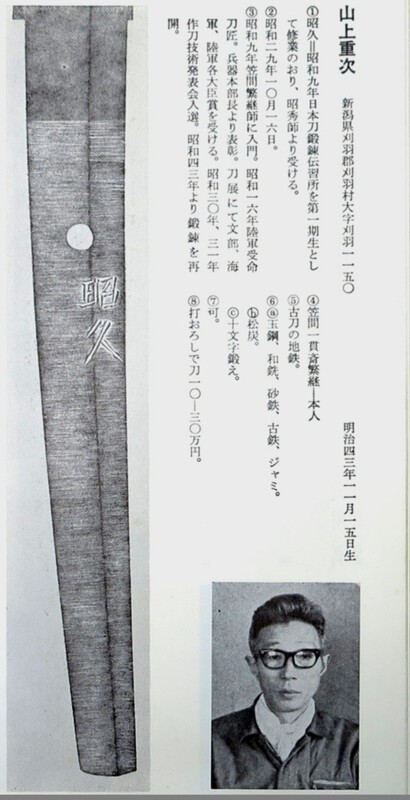
YAMAGAMI AKIHISA 山上昭久
 1 point
 -
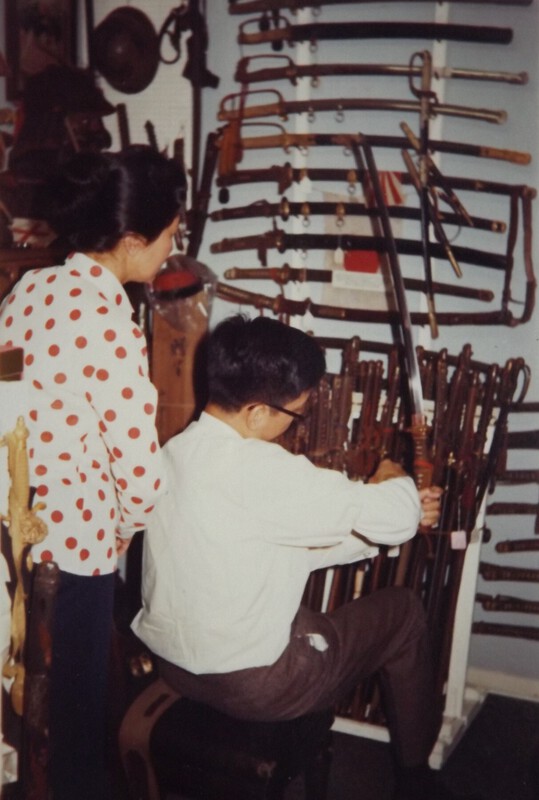
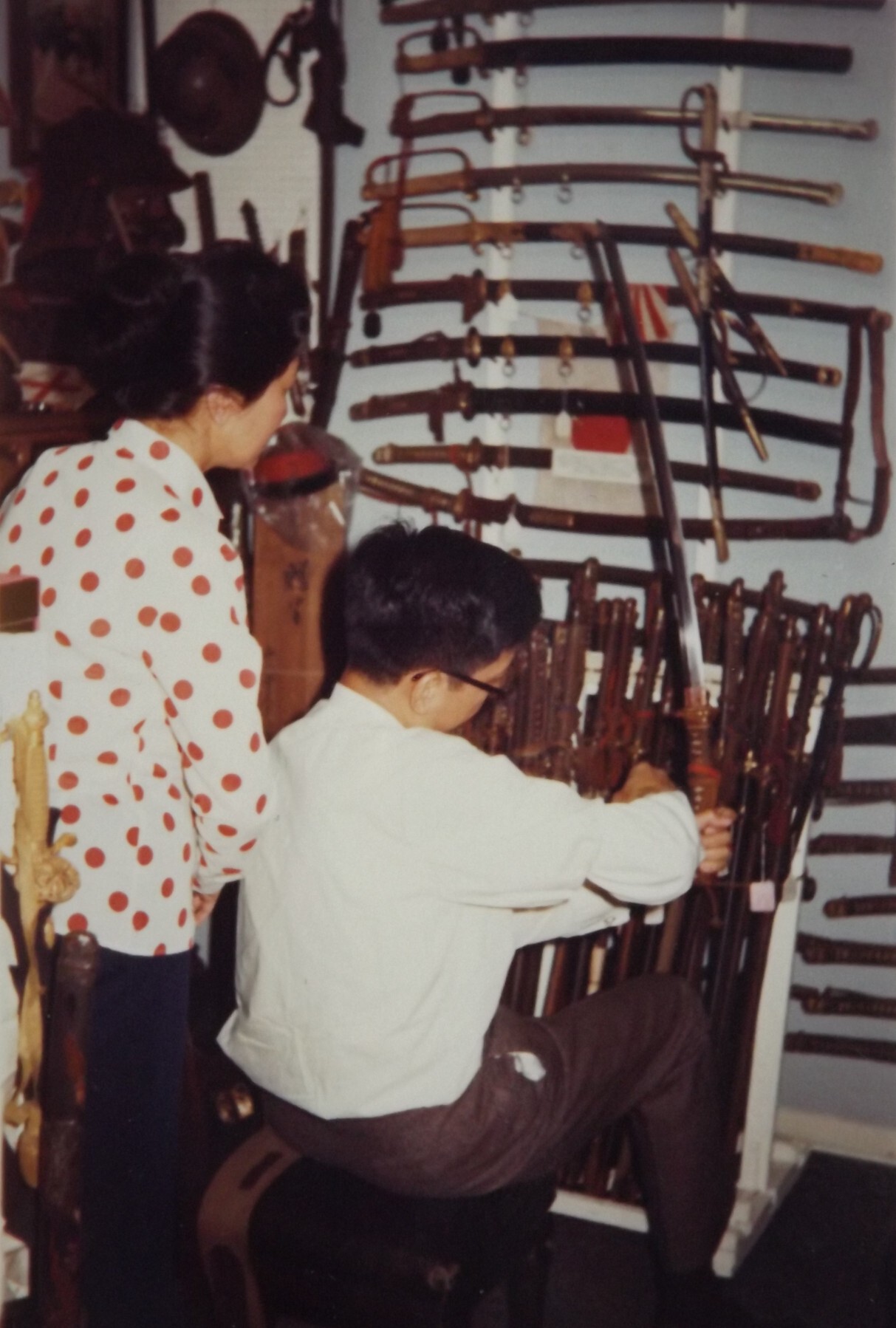
I was pleased to see Trystan had posted a photo of one of my sword collecting hero's Han Bing Siong . Here is another shot of him taken examining a sword in Ron Gregory's sword room in the 1970's. Ron was of course one of the authors of the books on Japanese Military Swords . Ian Brooks
 1 point
 -
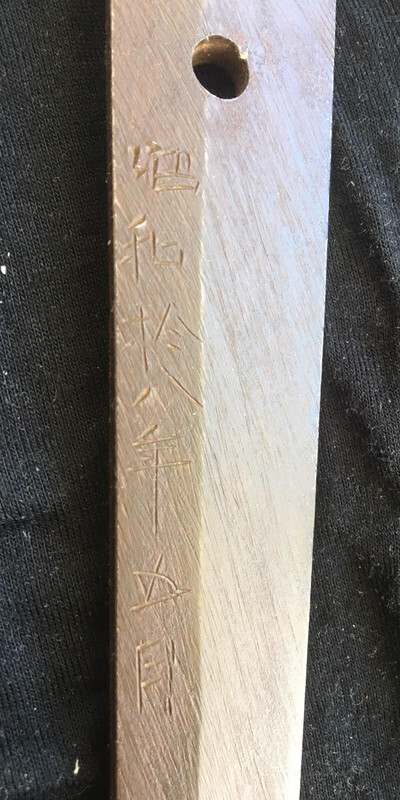
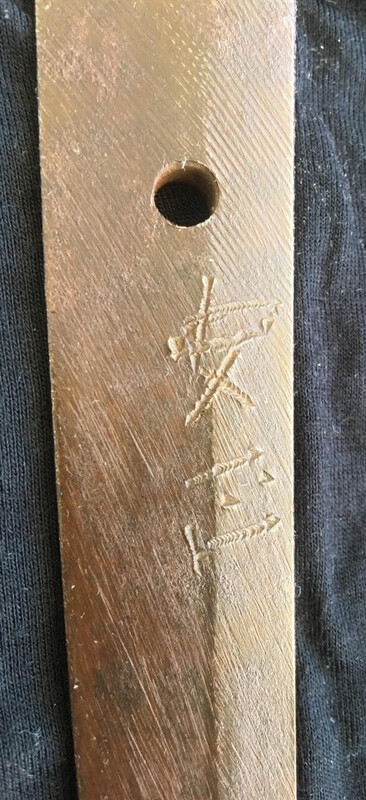
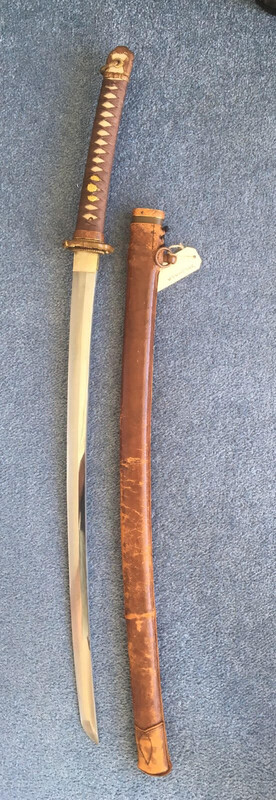
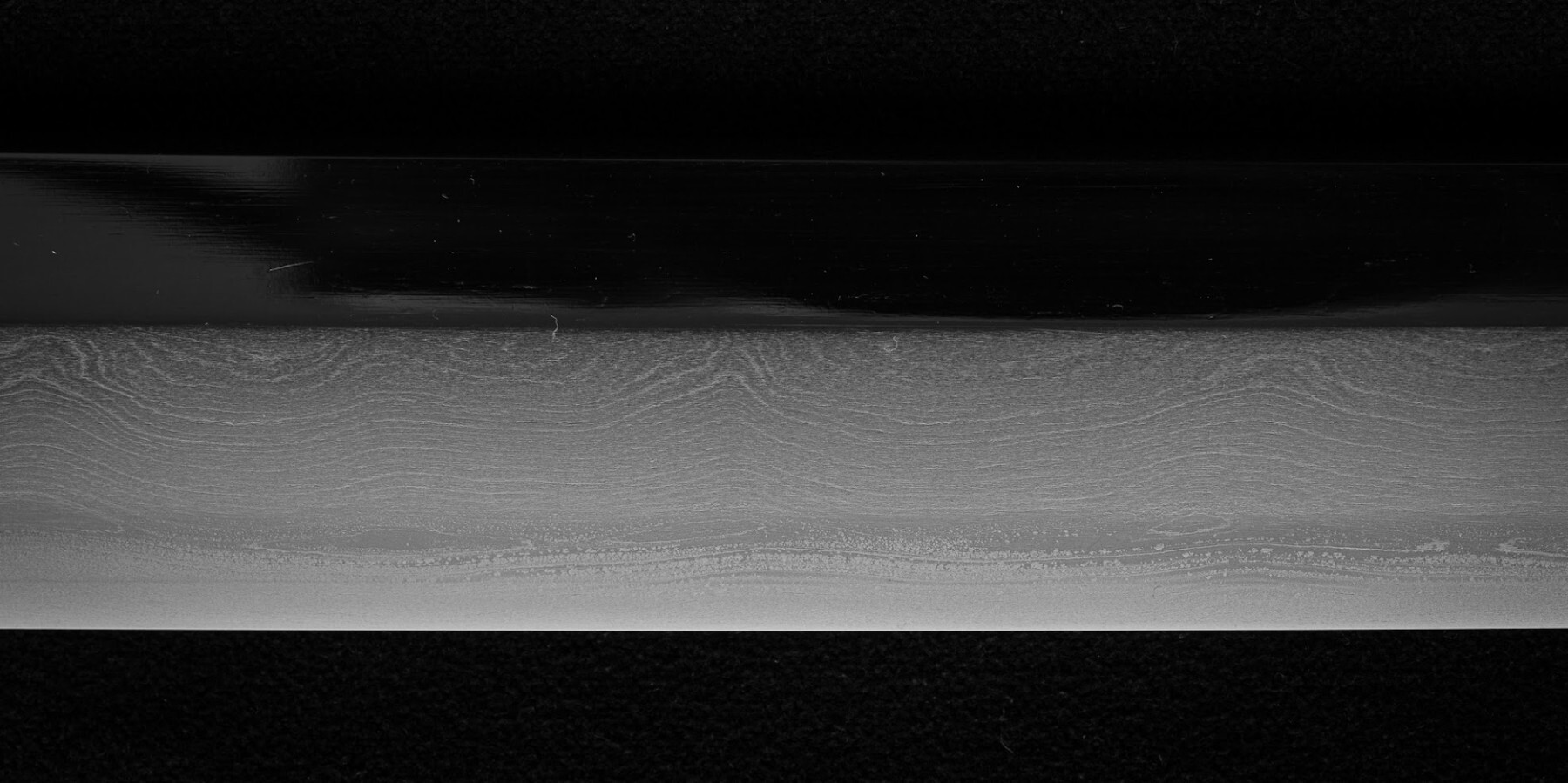
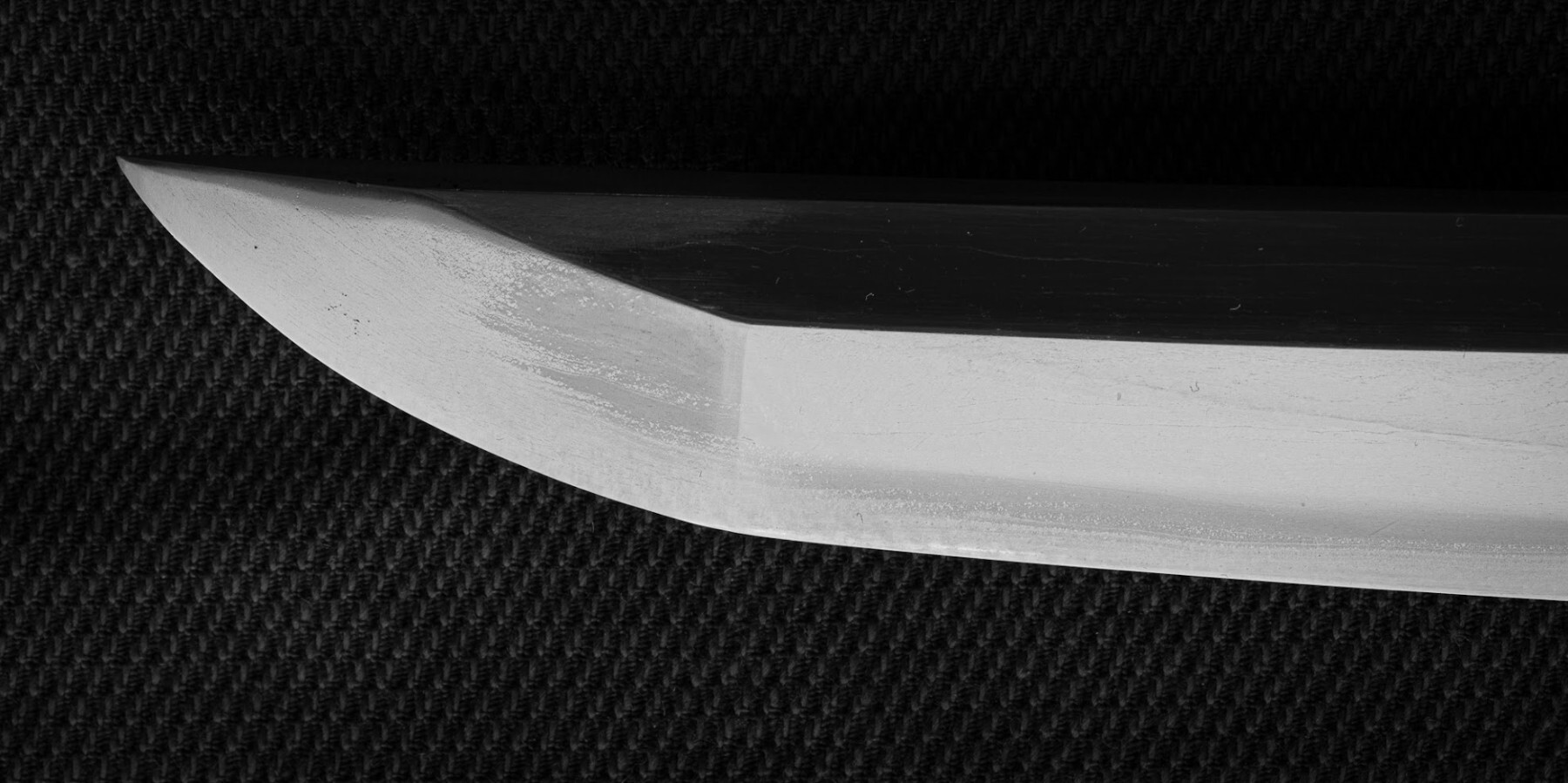
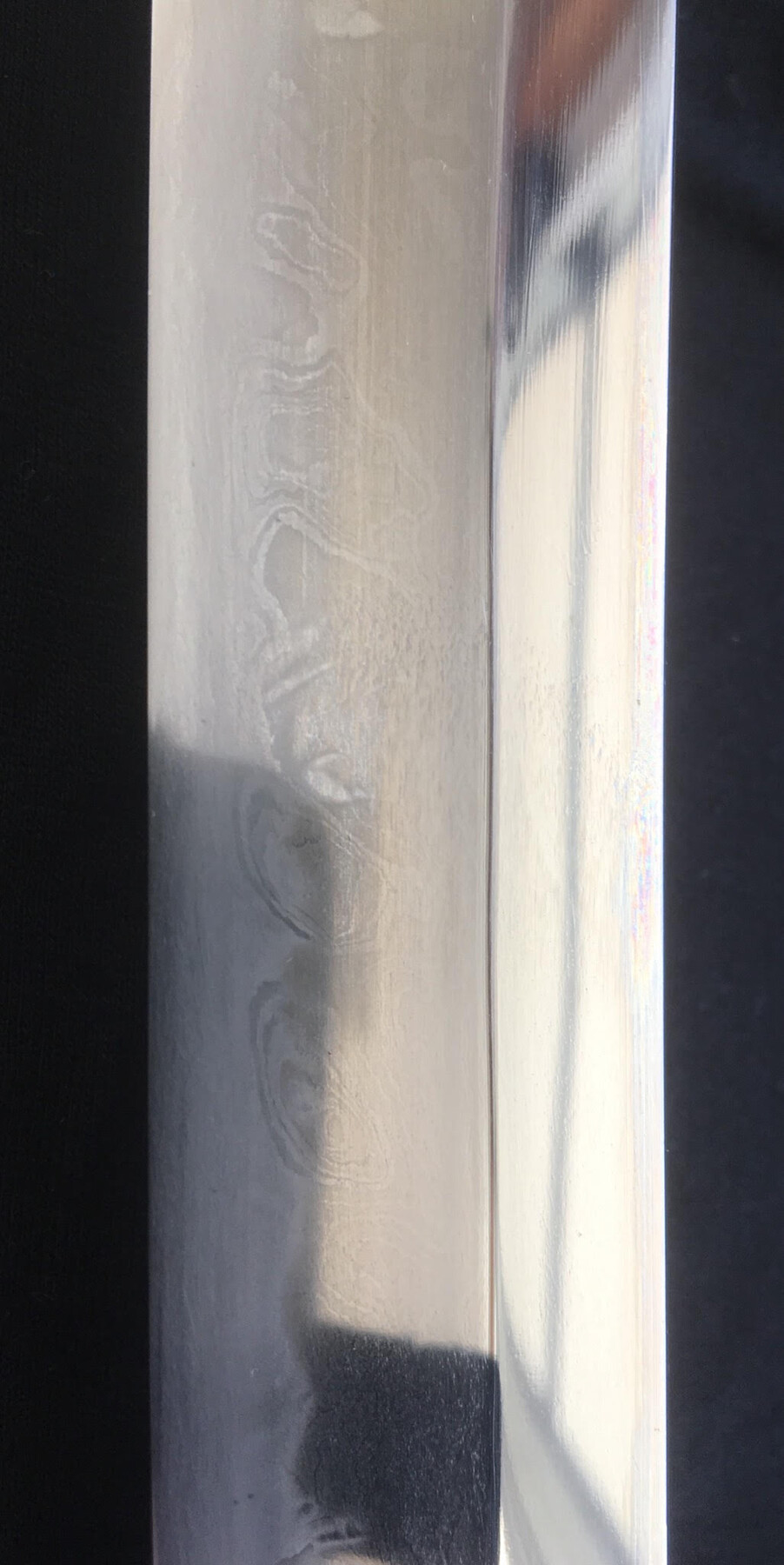
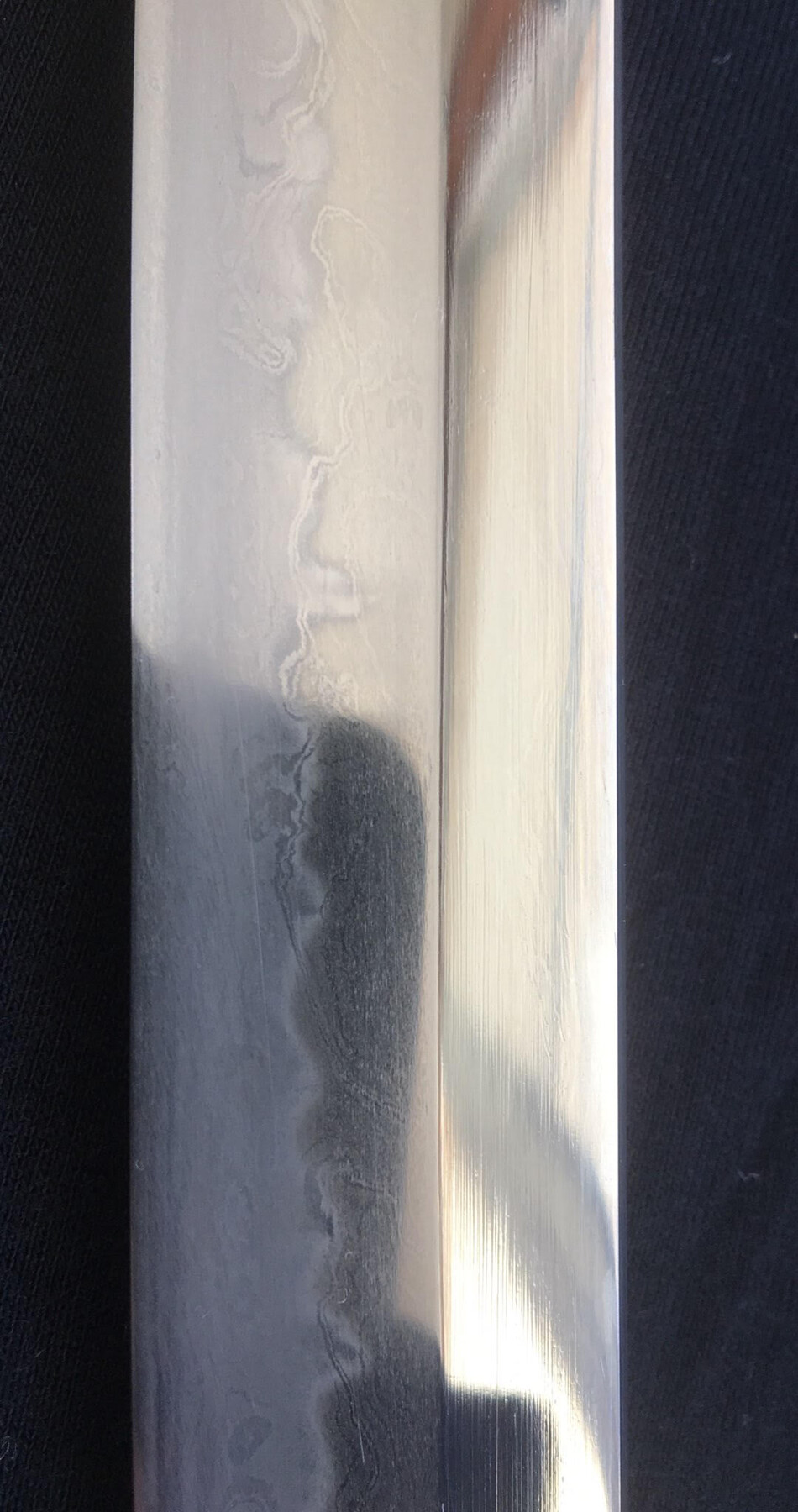
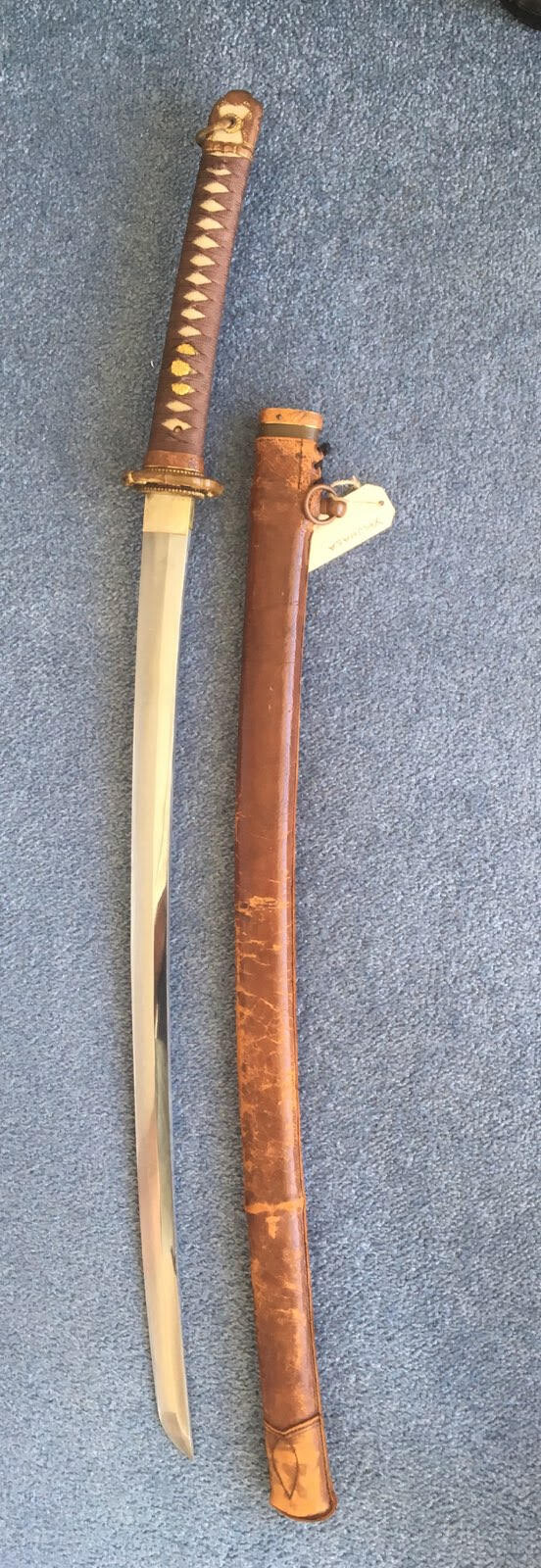
Occasionally a nice, but mystery Gunto comes along, and no end of searching throws up any information about the swordsmith. And the best advice that can be given, is that he is an "undocumented" swordsmith, not that uncommon, but annoying when you are doing research. So here is an example, combined with a cry for help for any information. This is a 1943 YASUMASA, in what looks like its made in the MINO tradition. The photos don't do justice to the hada, homon and hataraki. It is well made in every sense, but I can't find any info about the maker. So any help would be appreciated.


 1 point

































This leaderboard is set to Johannesburg/GMT+02:00