
Leaderboard

.thumb.png.54593db2789c8a1dcb235543b184ce39.png)

Popular Content
Showing content with the highest reputation on 05/13/2026 in all areas
-
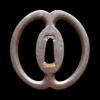
Sorry Dale but I have to strongly disagree; donating to a museum, local or otherwise, is a terrible idea. If donated the tsuba might be put on display for a short time but then will be relegated to the basement where they will rot away. If the collection is important and the museum has a serious interest in and knowledge of Nihont, that's another story but common stuff and a common museum is a recipe for ruin. Tsuba and all other Nihonto art are best kept by collectors who appreciate and know how to preserve them. Grey7 points
-
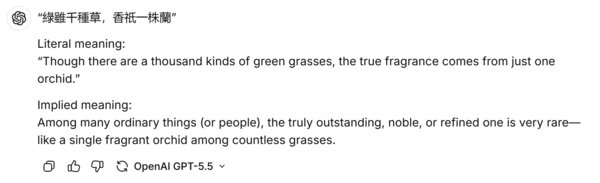
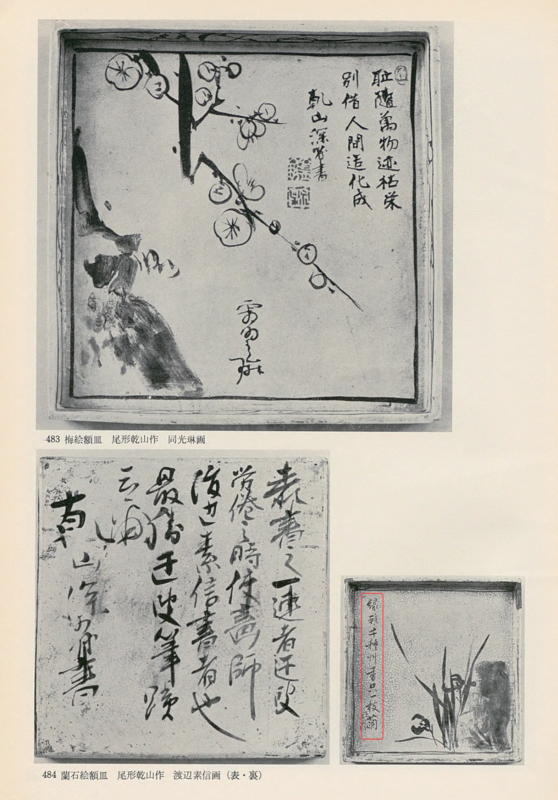
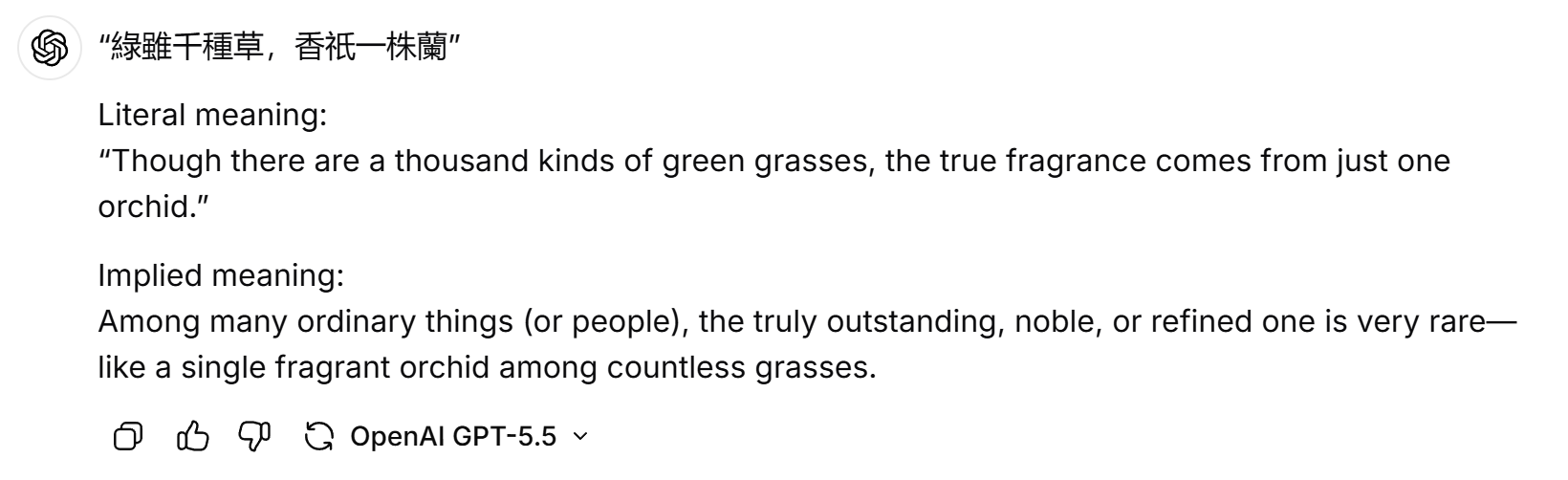
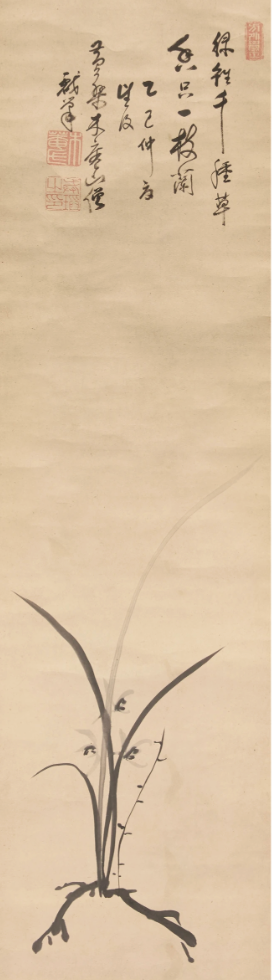
Hi! This is really hard, but I'm on it. This could take a little while though for I'm helping many others doing something else at the same time orz This reads "緑雖千種草 香只一枝蘭 乙巳仲夏" from top to bottom, right to left, ChatGPT's translation seems fine. (though used the wrong quantifier 株 instead of 枝 somehow) 乙巳(1665)仲夏(mid-summer) is just a date in the Chinese sexagenary cycle, incidentally last year 2025 is also the year of 乙巳, the next year of 乙巳 is going to be 2085. This is signed 黄檗木庵山僧戯筆. I might try to understand what the red seals/stamps said under, maybe later orz 黄檗(Ōbaku or Huangbo) is Mu'an's school of Zen(Ch'an), 木庵 is Mu'an, 山僧 means a monk living in the woods, a humble way to refer oneself usually by Zen monks, 戯筆 means "wrote/drawn playfully", one of many ways to sign one's work, and Mu'an used many other, like 題 ("inscripted"), 手題 ("hand inscripted", not that others are not by hand though), 自題 ("self inscripted"), 敬題 ("inscripted respectfully"), 並題("inscripted also", ususally in drawings), 戯墨並題 ("played with ink and also inscripted"), 書 ("wrote"), 敬書 ("wrote respectfully"), 謹書 (literally "wrote carefully", but really it's "wrote respectfully", too) and many, many other...... Not sure what this two words are orz The Chinese poem "緑雖千種草 香只一枝蘭" is perhaps Mu'an's creation because this has 0 hits on the Chinese internet, but Ogata Kenzan, a later-day artist and brother of Ogata Kōrin of Rinpa used it in one of his works. See the Chinese poem "緑雖千種草 香只一枝蘭" written in the red rectangle area on Ogata Kenzan's work. Hope this helps! Baby Joe


 5 points
 -
I know. Can you take me back to the 20th Century, when I still had belief and faith in institutions of learning and of government?4 points
-
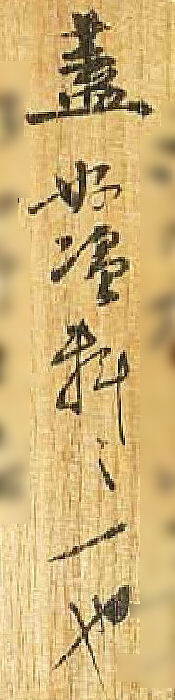
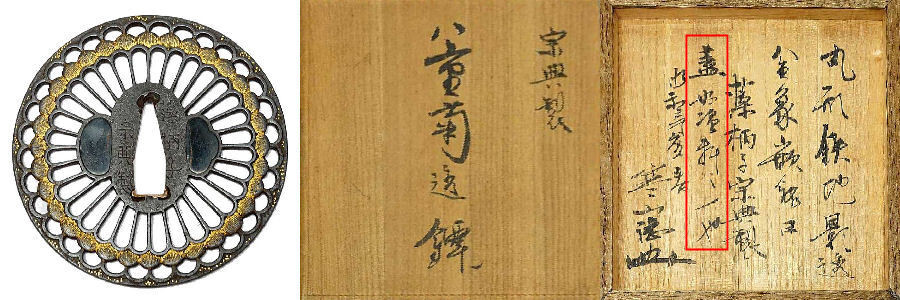
Just a guess, 蓋好資料之一也 (Kedashi ko-shiryo no hitotsu nari) – Probably, it is one of good examples. 金象嵌 銘曰 * kin-zogan mei iwaku4 points
-
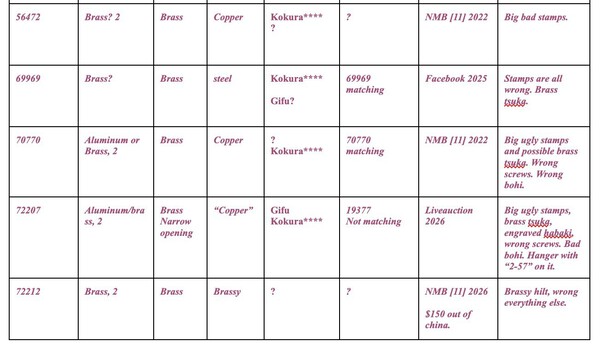
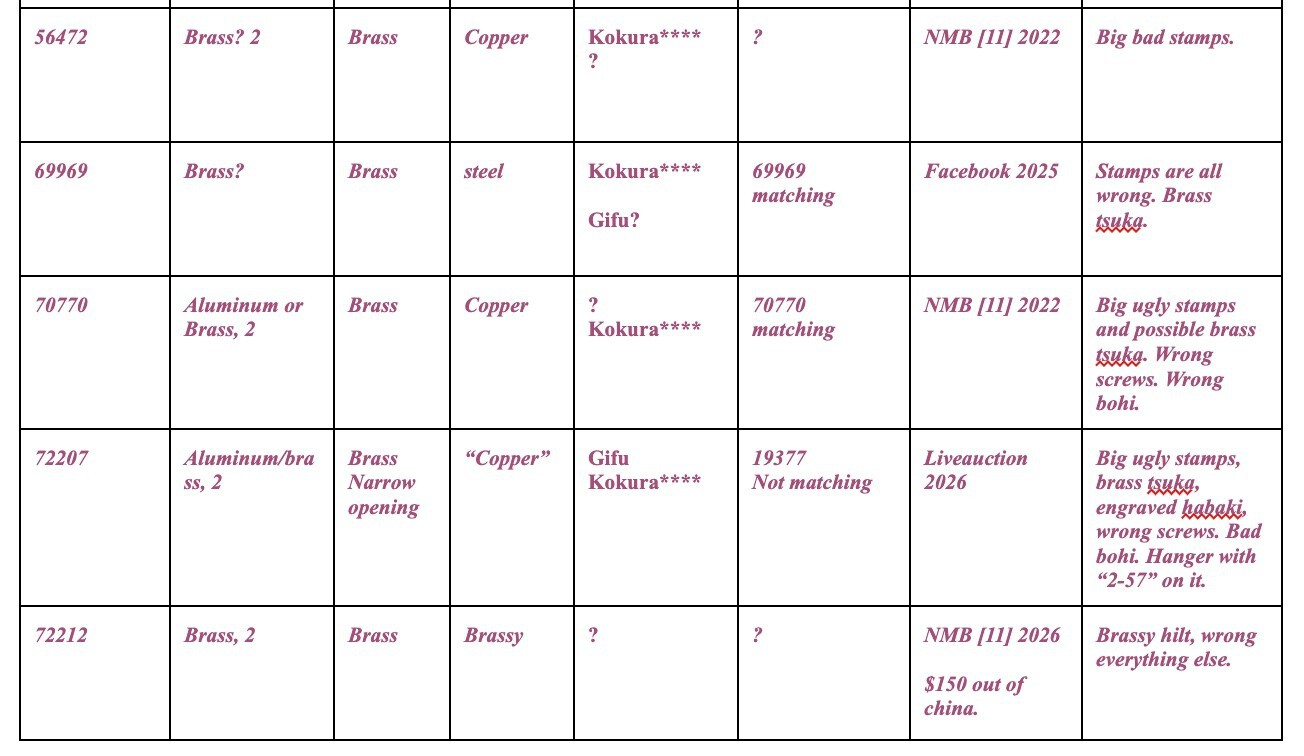
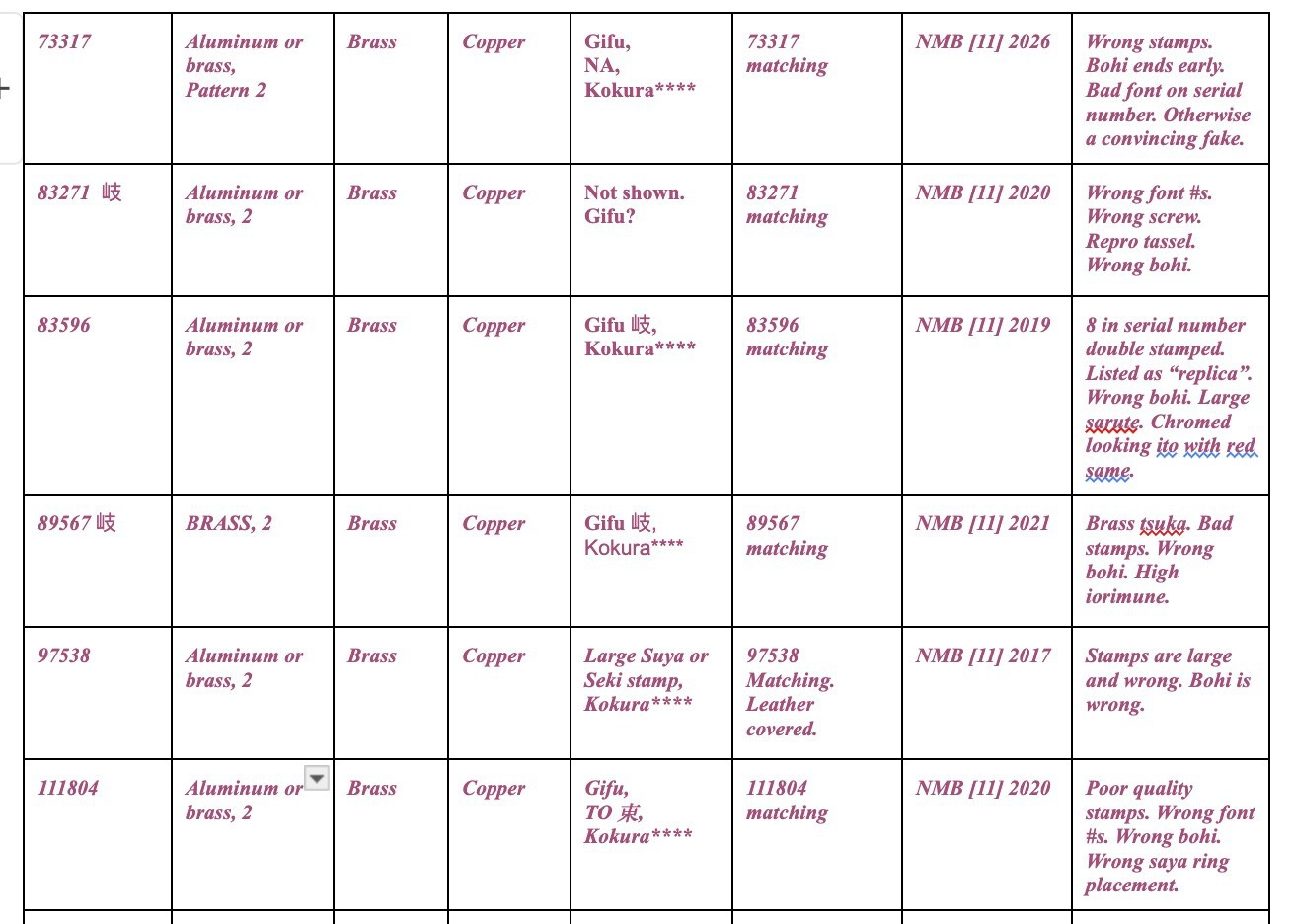
A little snapshot of my "Fake Archive" around this serial number range. Disclaimer: I record these with much less diligence than genuine examples. I primarily just like to get the serial number and what makes it fake. This faker seems to really like the serial numbers 7, 2, 1, and 0. -Sam (Columns in order left to right: Serial# - Tsuka and pattern - tsuba material - ferrule material - ferrule stamps - Scabbard # and notes - source - Notes.)
 3 points
 -
Wow...just wow. Doesn't get any better documented than this. Incredible history there.3 points
-
3 points
-
Taking / displaying heads is well documented.3 points
-
SHUZAN (秀山) is a name associated with Japanese bronze figures, OKIMONO, and NETSUKE often dating from the late MEIJI period (1868–1912) into the early 20th century3 points
-
https://nihonto.com/nakai-koshirae/3 points
-
Sometimes it helps that some very clever people wrote some books.
 2 points
 -
Thank you all for the additional comments and discussion. Jean, the point you bring up is very interesting and something to give a lot of thought to. Outside of this blade, if a Smith was good enough to copy another how could one tell? The owner of the blade, is and was fully aware that this blade is gimei. He just wants to know what he has. I think this is an interesting piece worthy of investigation. I'm hoping he will meet up with a forum member to get a better idea or at least good photos to share2 points
-
Hi All, Here is my very faded company grade tassel. Regards
 2 points
 -
Hi! This reads 但(closer to although/albeit than but/however)大磨上無銘(Osuriage Mumei)也(kind of like "this is"). 刃長(hacho)貳(formal "two")尺(shaku)参(formal "three")寸(sun)八(eight)分(bun)半(half, or in this context "and half")有之(formal "this has"). (Characters are overlapping a little so I made this↑) 昭和(Showa)癸丑("Mizunotoushi" in the sexagenary cycle, 1973 in this context)年(year)弥生(Yayoi/March). This was really hard! I'm not sure if this is genuine Kanzan Sensei's sayagaki, but whoever wrote this I guess made a tiny mistake when writing top half of 癸, and they just went with it. The bottom half of 癸 (天) and 丑年 below it are very recognizable, so it's X丑 in the sexagenary cycle, 癸丑 being the most likely option. The rest of the translation is very good. Hope this helps! Baby Joe

 2 points
 -
I would like to make a partial correction. I previously translated 「聡隊」 as “総隊,” but in the military organizational terminology of that period, they may have referred to different units.These were probably pronounced the same (sōtai). “Sōtai” (聡隊) is said to have been a colloquial designation or unit title referring to an internal formation within an infantry regiment, particularly a battalion-level unit. Rather than forcing an uncertain translation, I would prefer to leave the term untranslated and defer to those with greater expertise in historical military terminology.2 points
-
You are forgetting that GIMEI might be (and usually was) done back in the days. And that the target customer for the sword was not a collector, but a Samurai. I doubt that every Samurai was able to judge the sword based on attribution. Buying a Rai Kunimitsu blade even that time was something big.2 points
-
Truly living up to the lofty title of "Tokubetsu Juyo" (Especially Important) in every sense of the words.2 points
-
Coca, the Japanese daimyo drug Lords?2 points
-
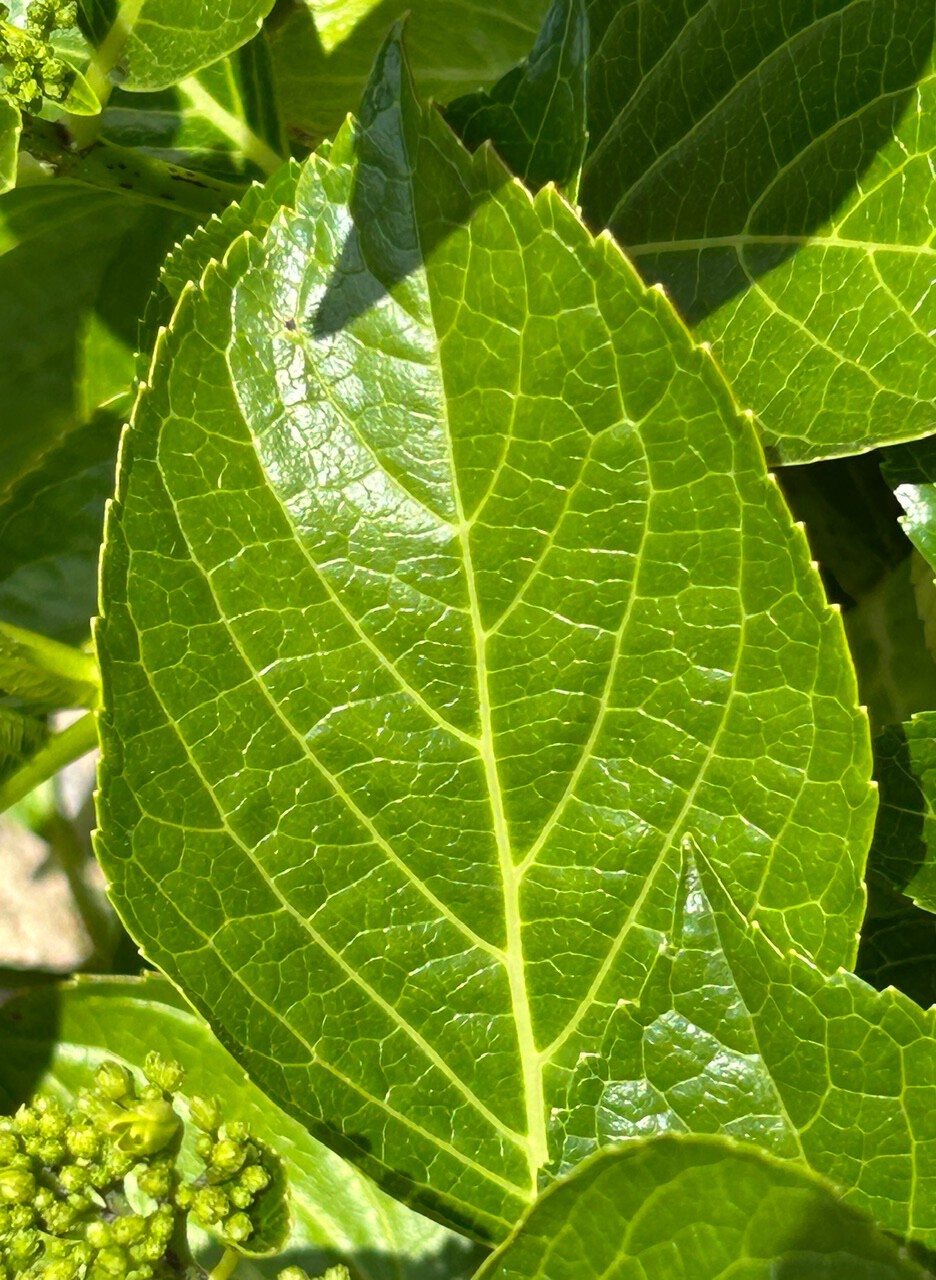
Hydrangea leaf today.
 2 points
 -
https://www.jauce.com/auction/t12297816192 points
-
A similar cloisonne guard selling at auction now : https://www.jauce.com/auction/x1229777805 starting at 150,000 yen. By the time fees are added in - this is approaching $1,000 USD2 points
-
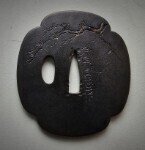
Hello again, Yes..., last weekend I bought a third tsuba... 🤷🏻♂️ And, as always, all comments are more than welcome 👍🏻 Some info: 70 gram 5,5 x 4,5 x 0,5 cm Shakudo (?)
 2 points
 -
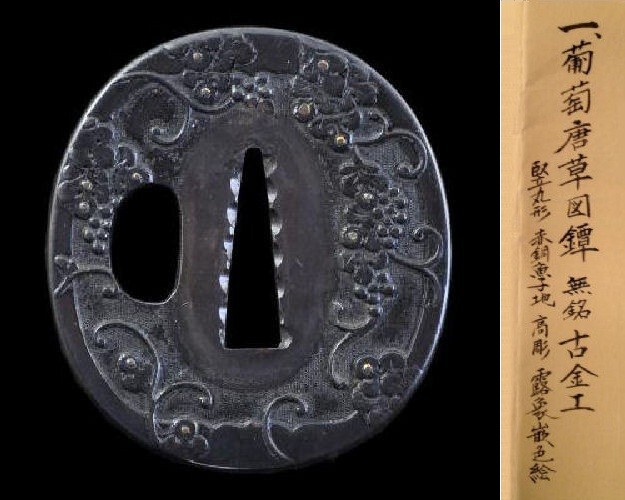
Nice ko-kinkō tsuba, possibly shakudō-nanako-ji, with tsuyu-zōgan iroe. Here a similar example:
 2 points
 -
Dear Thomas, Yes, Tozando is a verified seller. Here is the link to Tozando: https://nihontowatch.com/?tab=available&dealer=101&sort=recent Since there are now way too many dealers for a dropdown menu selection, I suggest you use the textbox under dealer in the side panel filter. There, you can select the specific dealer. All the best, Hoshi
 2 points
 -
If anything, Bruce might be guilty of understatement . The combination of the exquisite work in each of the pieces with the accompanying documentation, including artist's sketches, must be completely unique... and priceless. And the cherry on the cake is that the previous owner was Linus Pauling. I mean, talk about provenance!2 points
-
Well I got you all talking! Heck it was just a suggestion - I would like to buy a few of them myself! Not that that would be any guarantee they would survive forever. What is the consensus of splitting up collections? They never "go back together again" do they? + Curran - do you want me to name the prestigious Universities and Museums? There is a long list!2 points
-
↑ It’s photographed very beautifully! The text in the first image reads: “MAINICHIKEN” (毎日軒) (Address: )Osaka Sennichimae大阪千日前, just west of Nankai-dōri南海通西入. (This would be south of Osaka Castle, around the present-day Namba Station area.) when I hear the word ‘ken’ (軒) today, I tend to think of a restaurant, but at that time it may actually have been the name of a photography studio. The third image reads: 大正3年8月15日 August 15, Taishō 3 (1914) 歩兵 第8総隊 Infantry 8th Regiment Headquarters 陸軍中尉 服装 Imperial Japanese Army First Lieutenant’s Uniform (NAME)瀧澤繁信 Takizawa Shigenobu I think August 15 would have been a holiday period back then as well (the Obon season). I wonder whether the photography studio was open…?2 points
-
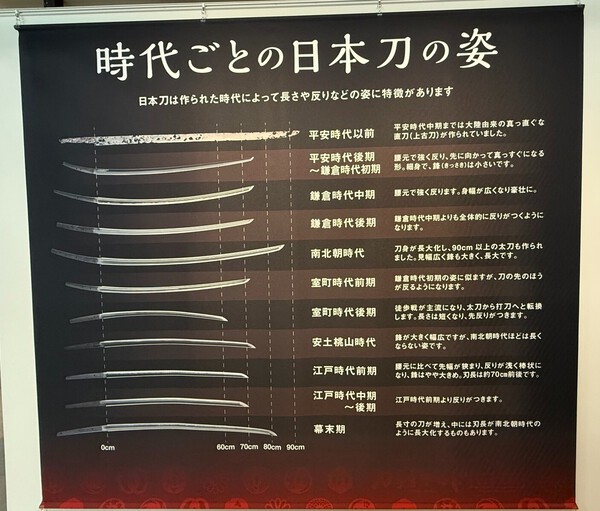
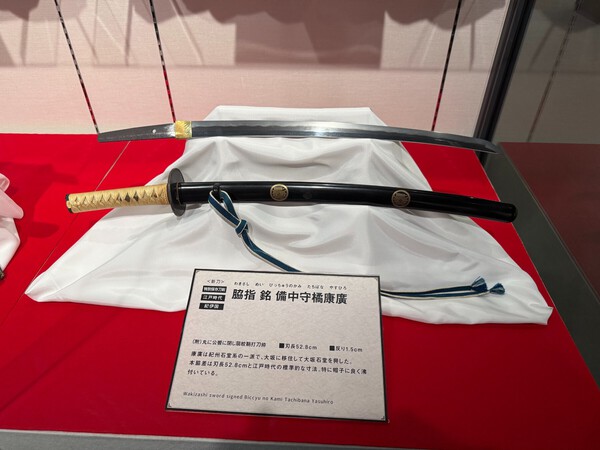
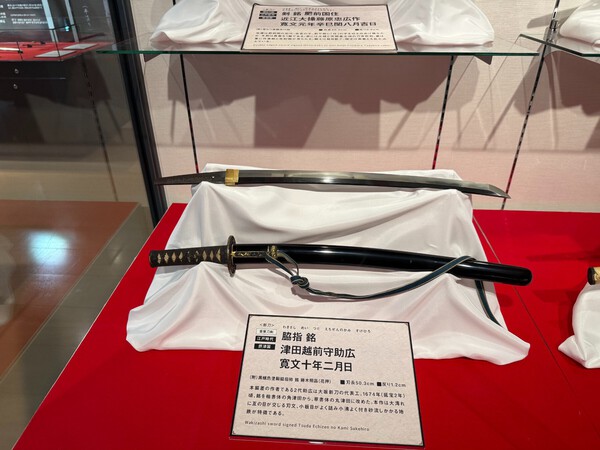
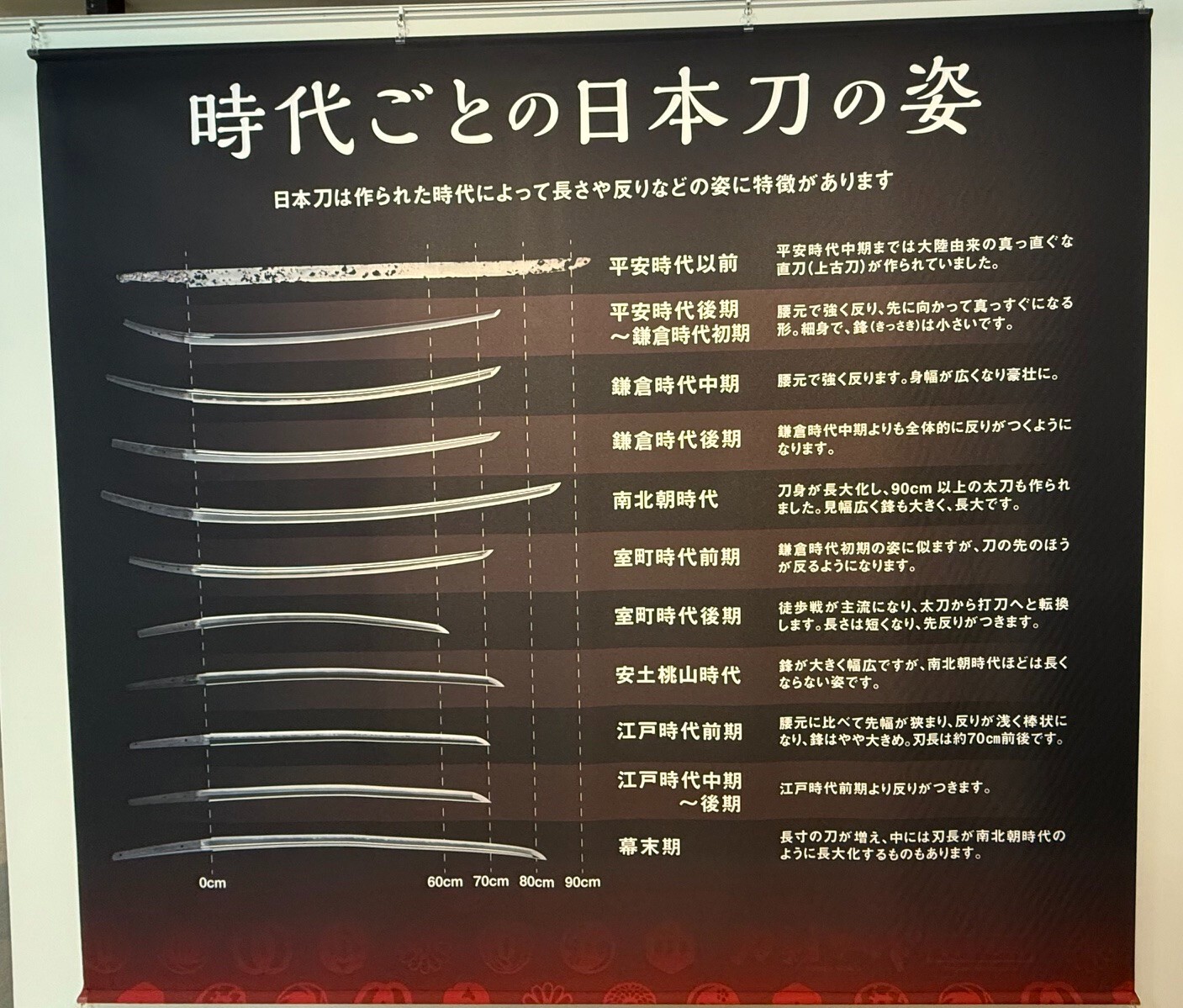
Ah thank you! That is awesome. And you're quite correct about preservation, but I've seen enough eccentric ones (from what we in the west consider 'default') to see that there's most certainly currents and styles and so on. I don't have tremendous time at this moment, but when I was in Nagoya a bit over a year ago and I saw all the styles of armor they have on display (One of the best displays I've ever seen, not well advertised) they also had a room full of sword styles which demonstrated more differences, even what is close to an Oakeshott typology of Japanese swords. This is mostly a devolopment over time of course, but still fascinating. We might see very small but very important differences between different areas, just as we would expect to see siginficant differences at income levels, with the richer Lords having golden Tsuba and the poor man having plain iron, and red copper in the middle. WE might find that colored saya were extremely trendy in this place, but that place they aren't. That red copper Tsuba (which stay copper) are usually matched to grip color ABC and that color XYZ is rarely used with an iron tsuba, except in dce province. Personally I suspect something like a plain handachi was the most popular of all time, since it gave good protection for least money, but it's still a subject I hope to dive into more deeply now that some of the books have arrived. You also have the weird stuff, like this fish one, or the 'shrimp' koshrae, or the ones that end in a 'BIG" scabbard end cap. Here's two (I really have to run in a sec,) that could be called 'default' in the minddle, but they also have distinct differecnes. Should we class them as seperate styles or branches of a single style? Lastly is one of those end caps I mentioned. Sorry this isn't an ideally formatted post, dentist!

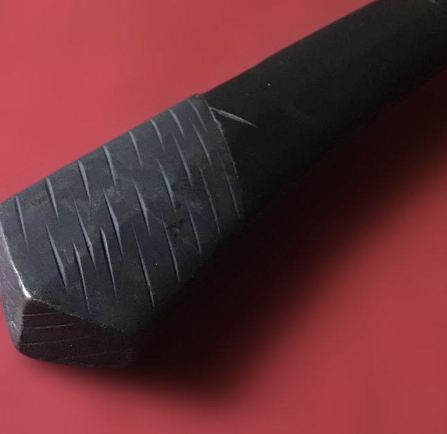 2 points
 -
And the other side:
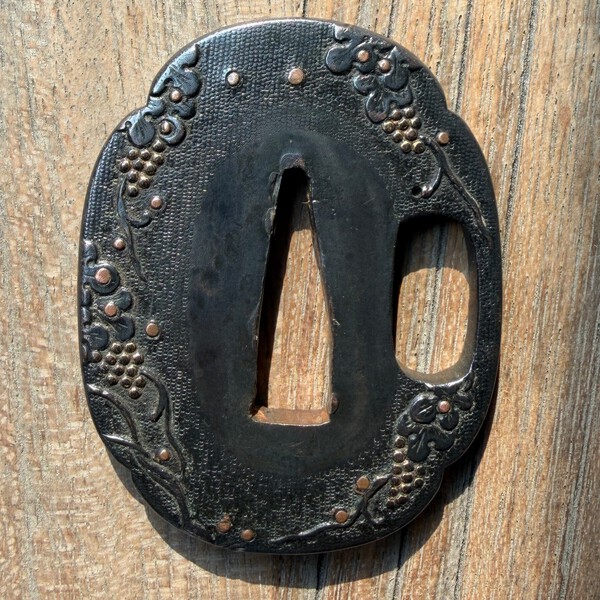 2 points
 -
I would emphasize that the book "Uchigatana no Koshirae" -- which is the beautiful hardback and quite large catalogue of the exhibition Jussi mentions above -- is a must-have for anyone with even a passing interest in old (pre-Edo and [mostly[ intact) koshirae. Jussi's point about the social status of the owners of these koshirae is a good one, but seeing so many preserved koshirae at 400+ years of age collected in one publication is special. PM me if you'd be interested in obtaining a copy; I have an extra.2 points
-
The problem with those adhesives is they are most effective bonding two flat surfaces. They hold well when pulling those surfaces apart but they are far less effective when it comes to shearing force.2 points
-
I just acquired this calligraphy and painting of orchids on auction from Roseberys (London) along with a group of other unmounted calligraphy/painting. This subject was the theme of other works by Mokuan. Translation assistance would be appreciated. The subject and style of the painting follows that of literati painters with whom the early Obaku monks associated closely with as they brought their Zen tradition along with Chinese art and culture to Japan, where it was highly influential. However, the calligraphy style is late Ming dynasty. The different shades of ink wash that Mokuan uses to paint the leaves gives the composition great balance and an ethereal impression of delicacy, purity, and dignity. Mu'an Xintao (木庵性瑫, 1611-1684), known in Japan as Mokuan Shōtō, underwent Zen training in China at Wanfusi with three of the greatest Ch'an masters of the early 17th century: Miyun Yanwu (1566-1642), Feiyin Tongrong (1593-1661), and finally Obaku (Huangbo) monk Yinyuan Longqi (Ingen Ryuki, 1592-1673), who bestowed on him dharma transmission in 1650. He followed Yinyuan and an entourage of a dozen other monks from southern China to Nagasaki to help with the founding of Manpukuji, which Mu'an took over as its second abbott when Yinyuan retired in 1664. Over a period of 17 years he oversaw the expansion of Manpukuji and the founding of numerous other Obaku temples throughout Japan, including Zuishoji, the principle Obaku temple in Edo. Below is a very refined work of the same theme by Obaku Xihe Zhiyin (西河知音), painted c. 1692 and in the collection of the National Museum of Asian Art (Smithsonian), done shortly after Mokuan's death it would seem. I haven't been able to place Xihe in the Obaku genealogy, but he likely came to Japan as a member of the entourage of Obaku monks that accompanied Ingen or Mokuan. The notes accompanying this piece on the web site: "The orchid's long and gracefully fluttering leaves often overshadow its inconspicuous flowers. The delicate flowers represent the purity of seclusion for scholars. Orchids grow untended-like the scholar who cultivates his own talents but is unrecognized by others. The blossoms exude a subtle fragrance that symbolizes the purity of men. This painting was likely executed by a Chinese Buddhist monk of the Obaku sect of Zen Buddhism. In the 1650s, a large number of monks migrated from China to Japan after the fall of the Ming dynasty and the rise of the foreign Manchurian government."


 1 point
 -
Was just about to post that ^1 point
-
I just wanted to share a data point about the tariff situation for importing swords from Japan. I just received a sword via Japan EMS/USPS, and besides paying what seems like a normal EMS charge for a sword, I haven't been asked to pay for any additional tariff fees, as I had to when I used UPS for the same purpose last year.1 point
-
Thanks very much, Baby Joe! This makes perfect sense, as Mu’an is referencing the quiet, unnoticed, cultivation of the Zen mind. Brilliant. I rarely acquire calligraphy without knowing the meaning, but Mu’an’s painting is enough reason, and he doesn’t f—k around when it comes to calligraphy inscriptions. This one goes on the wall when it arrives, next to my other work by Mu’an invoking the name of Kanzeon Bosatsu (Chinese Guanshiyin Pusa).1 point
-
John, Won't add to your survey, but I thought it interesting to maybe see a guy with a 25. Posted by @Nazar HERE.1 point
-
……….the proud new owner of these comes on here asking for opinions?☹️ https://www.the-saleroom.com/en-gb/auction-catalogues/lawrences-auctioneers-of-crewkerne/catalogue-id-srlawre10245/lot-a702559b-d2ea-481e-afb4-b43500bfb46e or https://www.the-saleroom.com/en-gb/auction-catalogues/lawrences-auctioneers-of-crewkerne/catalogue-id-srlawre10245/lot-a483c013-6d87-4afd-83ea-b43500bfb46e ….and others in the same sale all with misleading descriptions.1 point
-
Happier now to leave them like this. Genbu on Aoi plants

 1 point
 -
Baby Joe, Your considerable efforts are really appreciated by all of us. Thank you.1 point
-
Modern Chinese fake. Sorry.1 point
-
GASP!!! I see the cursed silver fish activity. The world is fortunate that the papers have survived for us. BaZZa.1 point
-
John, Marcin - @Rawa - found this one on this Auction


 1 point
 -
HGK4 宗典製 * Sōten sei 八重菊透鐔 * yaegiku sukashi tsuba 丸形 鉄地 影透 * maru-gata tetsu-ji kage-sukashi 金象嵌 銘曰 * kin-zogan mei iwa 藻柄子宗典製 * Sōheishi Sōten sei 蓋★★之一也 * ??? no ichi nari 昭和辛亥春 * Showa kanoto-i haru [1971, spring] 寒山誌 * Kanzan shirusu (kaō) Here, two kanji (or perhaps three) completely escape my understanding. They are part of an appreciative expression, so the meaning cannot easily be inferred from the tsuba itself. Thank you for reading.
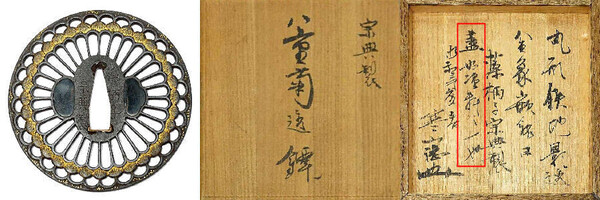
 1 point
 -
Now I can see the top of the S. John C.1 point
-
There is an “S" in the diamond stamp is for Kobe Steel and the 大 is for size large. More information here: The Evolution of the Japanese Army Steel Helmet (1918-1945) Revised and Expanded Version
 1 point
 -
Not Japanese and not older than 30 years in my opinion. Better photos on a plain dark background may prove me wrong.1 point
-
Will have to wait for @Brian for this one. I don’t have mod privileges of this section (or the izakaya). Best, -Sam1 point
-
In my illustration I showed a very simplified version of the process. In fact I recognized myself, that there are different structures and tiny holes which I ascribe to non-homogeneous iron the Tsuba is made of.1 point
-
My guess is that the readings of the individual kanji themselves won't change (jinchū sokumei), but I don't know why the order is rearranged from the order of the original Chinese phrase. Jinchū is a valid word (loyalty, fidelity, faithfulness), but "sokumei" isn't a word as far as I know. Maybe its an intentional pun, or play on words. Sokumei could be the kanji used for someone's name, so perhaps a retainer or disciple had a tsuba made using this phrase, but rearranged the kanji to mean "loyalty to Sokumei". ? Anyway, maybe that 3rd line in Kanzan's hakogaki gives a clue, but I still can't figure it out. I also note there is a phrase 無出其右 (mushukkiyu) meaning "unrivled", but I don't think it's used in Japanese, and while its temptingly close to what Kanzan has written on the box, those last two kanji just seem too far away.1 point
-
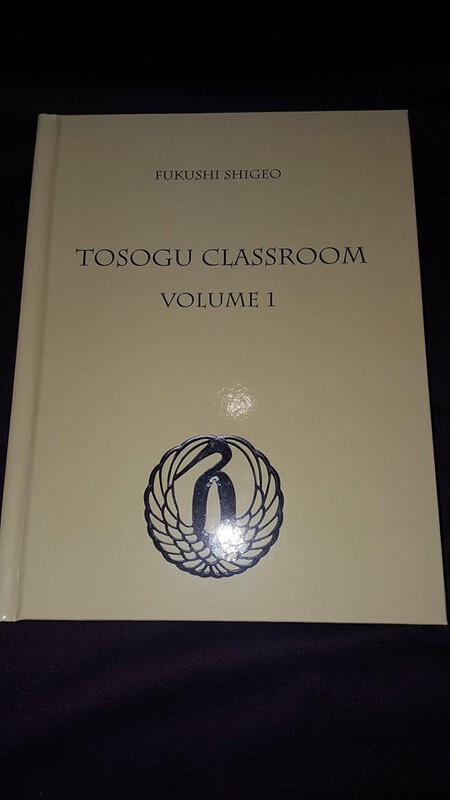
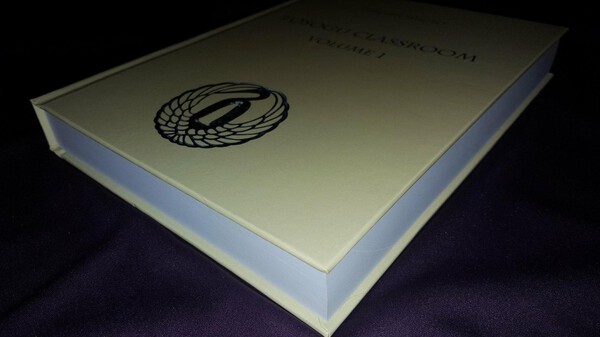
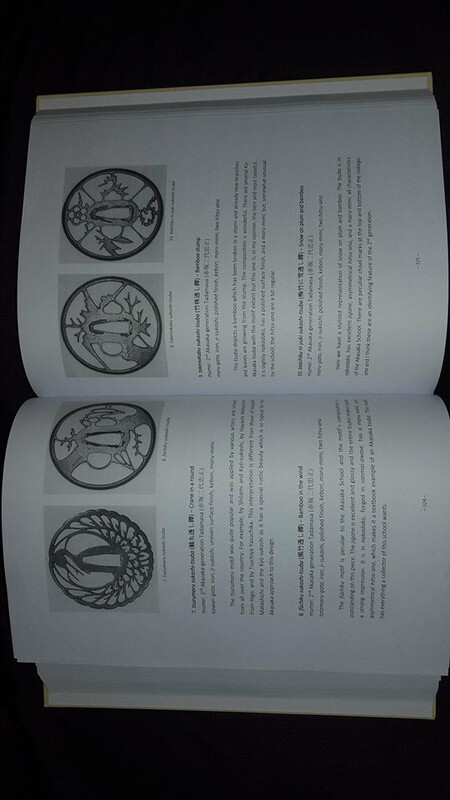
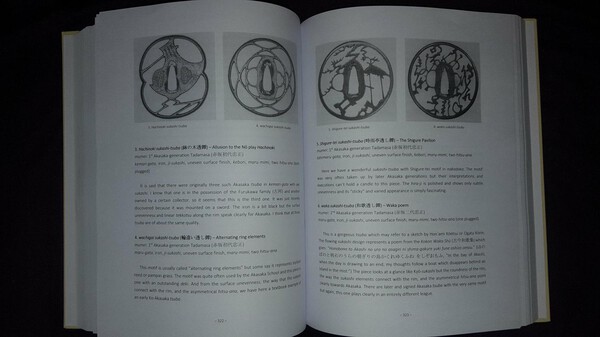
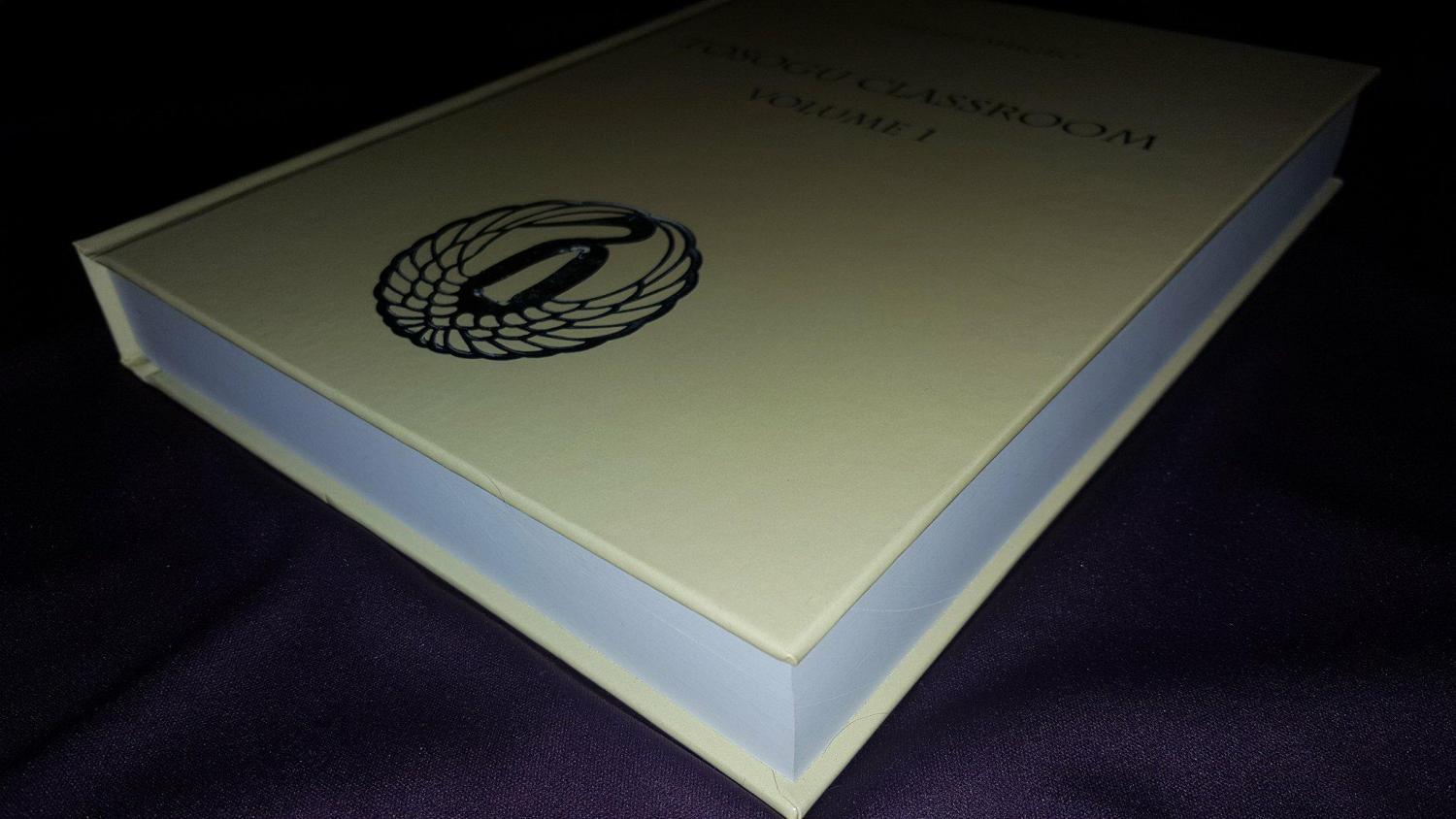
good news guys, it landed in the post today, and may i say im very happy. very detailed, and covers ko-tosho, ko-katchushi, ko-shoami, ko-kinko, owari, kanayama, yagyu, onin, kamakura, nobuie, kaneie, akasaka, bushu-ito and many more. approx. 500 pages, but the best part for me is the huge amount of information on the Akasaka school and the Generations. im going to order the second edition tonight. I suggest every tsuba student who is serious buy this book. Thankyou Mr Sesko, Curran, and Grey for your help
 1 point



























This leaderboard is set to Johannesburg/GMT+02:00