MauroP
-
Posts
923 -
Joined
-
Last visited
-
Days Won
5
Content Type
Profiles
Forums
Events
Store
Downloads
Gallery
Everything posted by MauroP
-
I don't agree on Mino style, but consent on the general approach.
-
Gents, there is a lot in between from Kiyosada school to Nagoyamono. The subject is very Japanese (shōgatsu-kazari straw rope and tachibana fruits). The material, from the images, looks fine shakudō. The nanako-ji, thought not outstanding, is far better than usually seen in Kyō-kanagushi. The gold gilding shows minor wears as expected from a piece 200 years old or so. So, why not an honest middle/late Edo Owari-kinkō or Kyō-kinkō?


-
Thank you, Jean. I had to tell that story to my wife—with due respect to the proportions, of course.
-
Here multiplate kagamishi tsuba are reported: https://tsubakansho.com/2020/01/02/hollow-kagamishi-tsuba/
-
NBTHK papers usually attribute sanmai construction to ko-kinkō tsuba (and, exceptionally, to Nagasaki and Umetada schools). The defining construction technique of a kagamishi tsuba, however, is casting (鋳造 - chūzō).
-
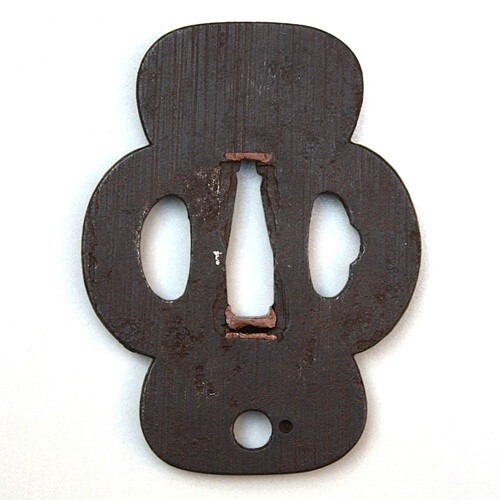
Hi Bernard, as Jean already said, the shape is not unusual. Here's one of my tsuba. About the signature 國廣 (Kunihiro), it was supposedly used by several unrelated tsuba makers.
-
I know for sure that tsuba belonged to professor Schrödinger (or to his cat)...
-
Sorry, the paper says yamagane...
-
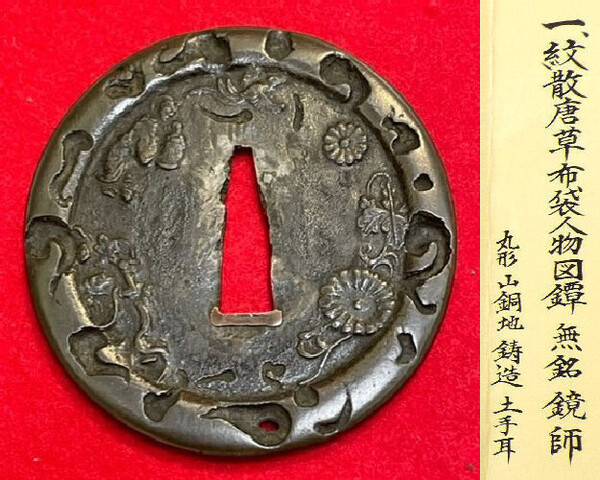
Another close example from https://shibuiswords.com/haynesTsu-924.html
-
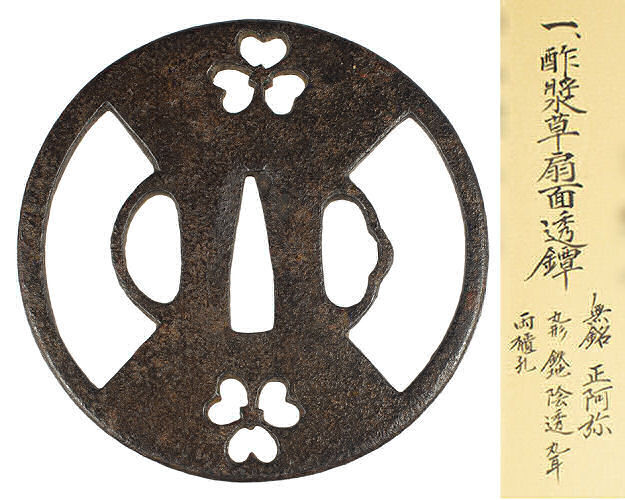
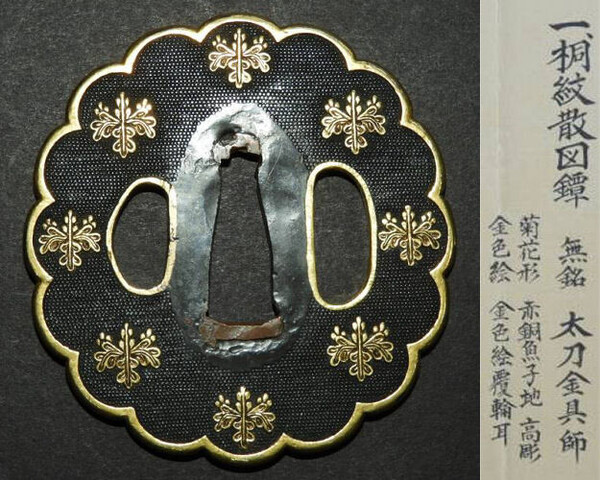
Actually most of tsuba appraised as tachi-kanagushi by NBTHK don't show a tachi style orientation. So, why not, tachi-kanagushi or simply ko-kinkō... Regarding the sukashi it's quite surely sorrel (酢漿 - katabami).

-
I'm inclined to agree with Dan's suspicions (hard to believe, but every now and then it actually happens...).
-
Perhaps a way to get an apprentice practicing nanako?
-
The WAMB member has committed seppuku...
-
WESTERN ART MESSAGE BOARD An unusual depiction of Voodoo practice in Reinassance Italy I wish to share my finding of a painting portraing a puppet stinged with pins in a well known black magic ritual: - Sorry, the subject is Saint Sebastian, quite a common subject in religious art of Renaissance. I know very well the saints, are always depicted with a halo behind their head... - The presence of arrows clearly point to a scene of martyr persecution. When I was a boy I used to shot with the bow, and the arrows were disposed differently on the target! - Voodoo religion was not practiced in XVI century Italy. I know what I see. Maybe the next time such a painting will be submitted to National Gallery appraisers it will be correctly denominated "Voodoo magic" instead of "Saint Sebastian"! - ...

-
Possibly the representarion of a bat (flying in the night sky)
-
Of course representations of stars and constellations are also present on tsuba, and are acknowledged as so by NBTHK. Here two examples, the second one described as 北斗七星 - Hokutoshichisei - Big Dipper.


-
I don't think this type of pattern has anything to do with stars, and it seems the NBTHK shinsa panel doesn't think so either.


-
Hi Lucian, I've found quite a few tsuba depicting General Guan Yu's Green Dragon Crescent Blade, all signed Bushū jū Masafusa (武州住正房). As you already pointed out, the differences in both the quality of the carving and the signatures make it likely that "Masafusa" was more of a workshop name than a single master. Since he wasn't Nobuie or Kaneie, however, it's quite possible that little attention has been paid to these discrepancies.

- 1 reply
-
- 1
-

-
The style of the first tsuba makes me think of Aizu-Shōami or the Nara school. The motif could represent three of the Rokkasen, the Six Poetry Immortals (a daishō set would presumably depict all six). The second tsuba, with its mokume-ji, doesn't fully convince me. The unusual shape of the hitsu-ana and the very simple sukashi design could suggest a modern production.
-
Thank you, everyone, for your input. I suppose I'll have to find a way to live with the uncertainties of "paleographic" interpretation by adding a note and choosing the least speculative reading of the text. BTW, I greatly appreciate the willingness to acknowledge uncertainty that even the great Satō Kanzan sometimes showed in his appraisals. If only today's shinsa panels would follow his example...
-
The asymmetry is possibly due to a parallax distortion effect in the photo, but my impression was also that it isn't Hayashi.
-
Let's bring a little order to this discussion: - nobody here (well, almost nobody...) believes that iron tsuba were ever cast during the Edo period; - Dale is simply suggesting that identifying a cast tsuba is a tricky business, and that finding one should be considered an unfortunate occurrence; - if it turns out to be cast (in the Meiji period or later), then a price of one-tenth of what you paid is more than fair...
-
Nice Kyō-kanagushi daisho, but not even close to Mino Gotō quality, IMHO.
-
Agree on early Edo, but an Akasaka attribution could eventually fit even better.