
Leaderboard




Popular Content
Showing content with the highest reputation on 02/27/2026 in all areas
-
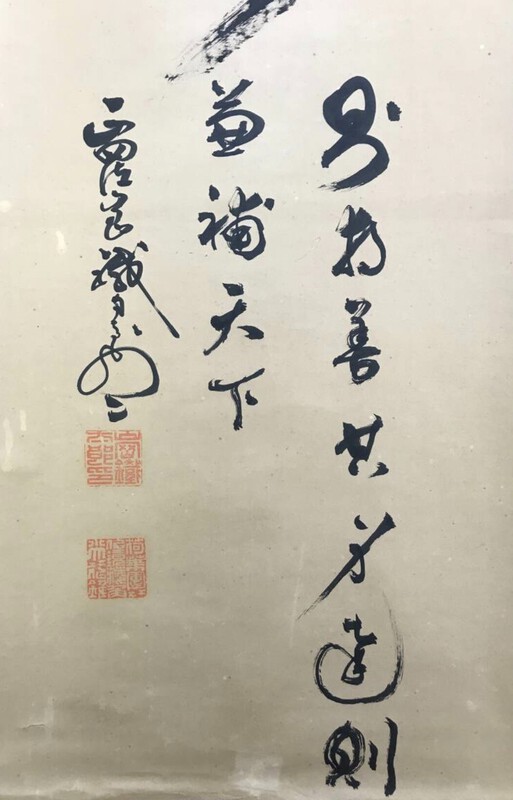
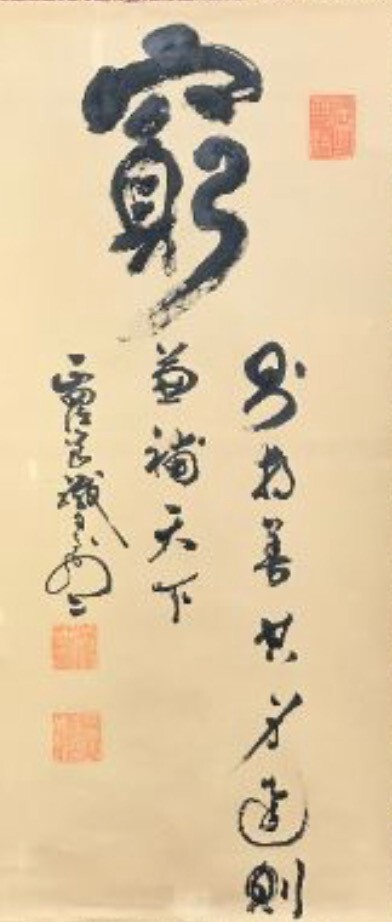
窮則独善其身達則兼濟天下 Something like: In times of plenty, the virtuous man strives to help others. In times of need, the virtuous man strives to help/improve himself.7 points
-
Here it is......

 6 points
 -
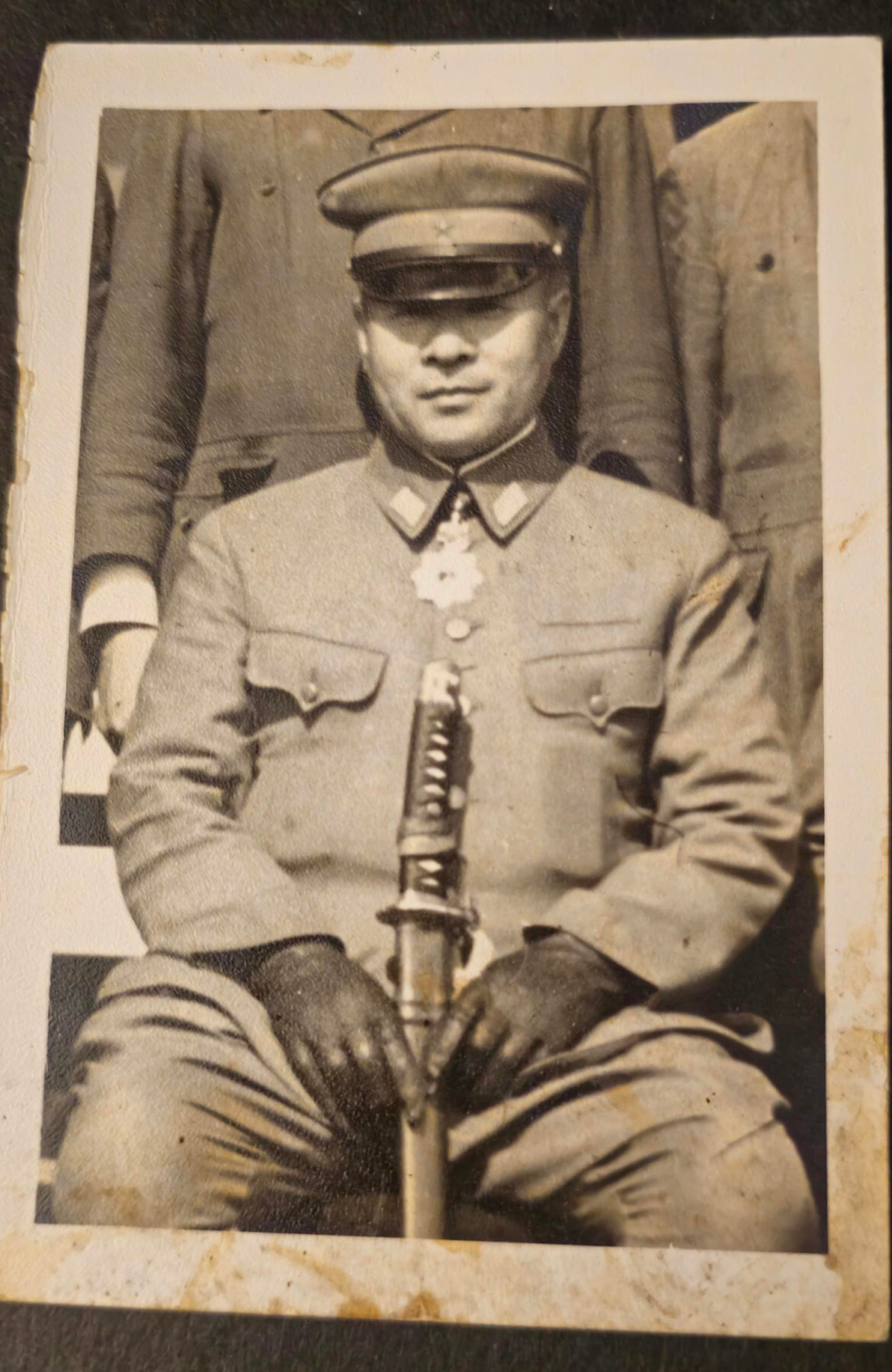
Original photos of unidentified General officers:
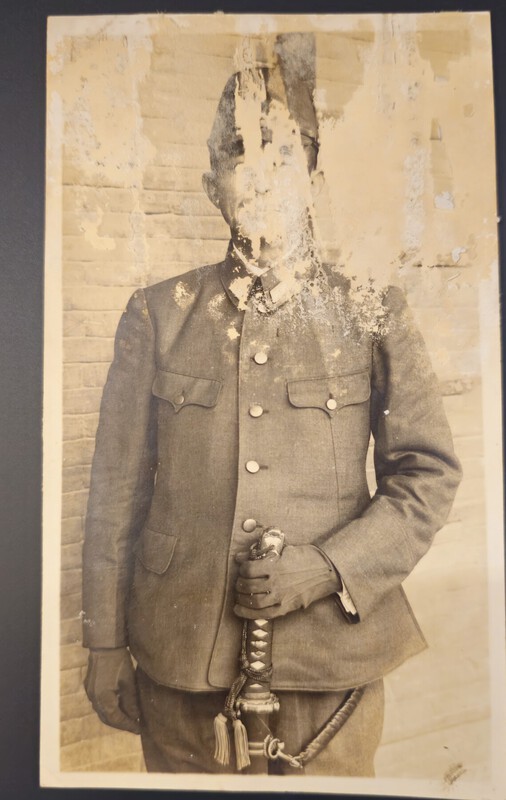

 5 points
 -
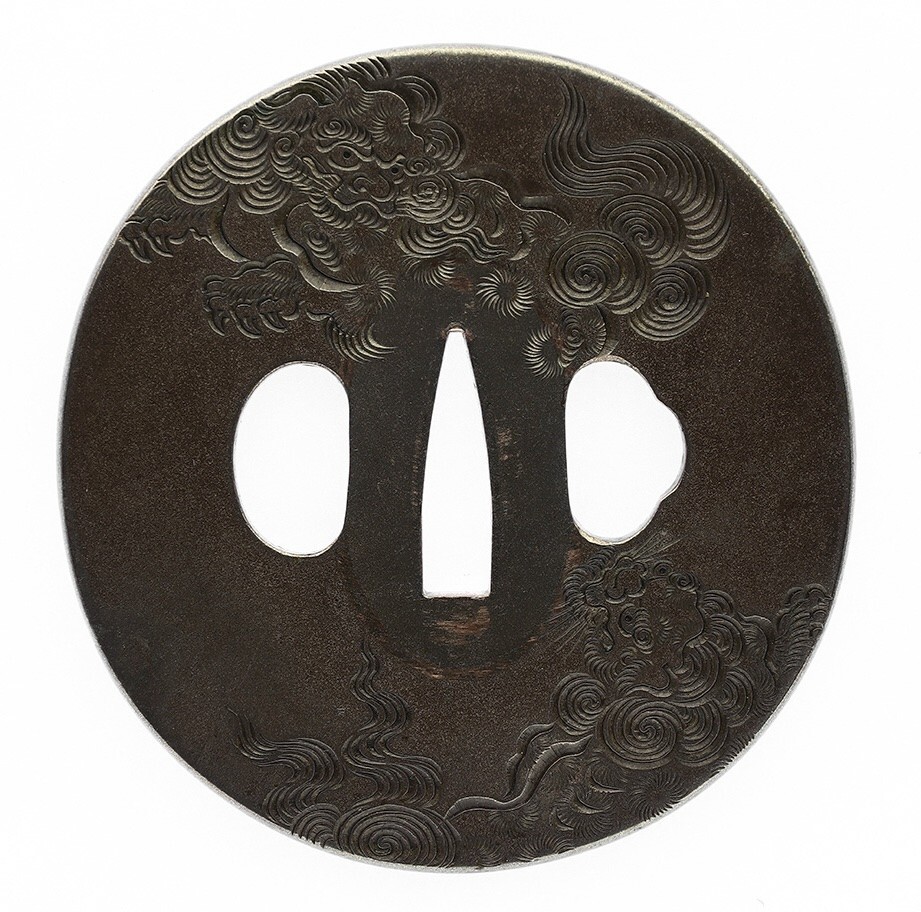
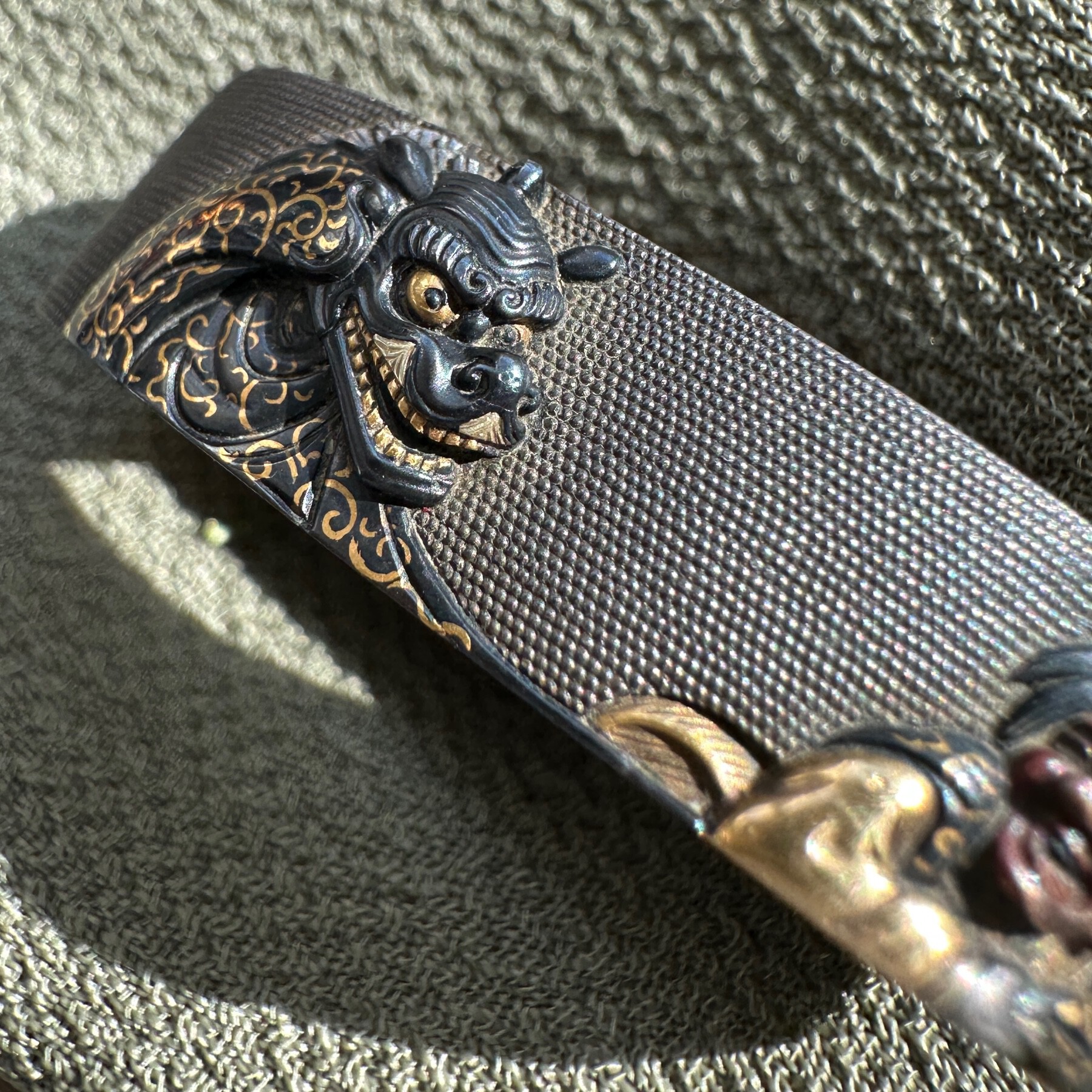
This thread unearthed a lot of interesting examples. There are no Goto ones so far. I only have one Shi-shi and it is by Goto Kenjo. My particular shi-shi seems to have the Zoomies.... Dog people will know what I mean.
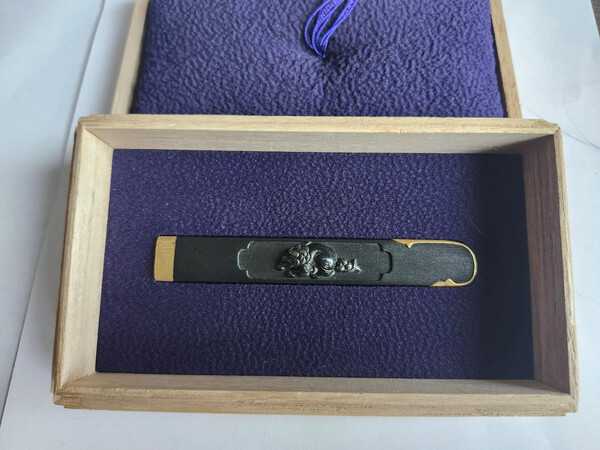
 5 points
 -
find the difference
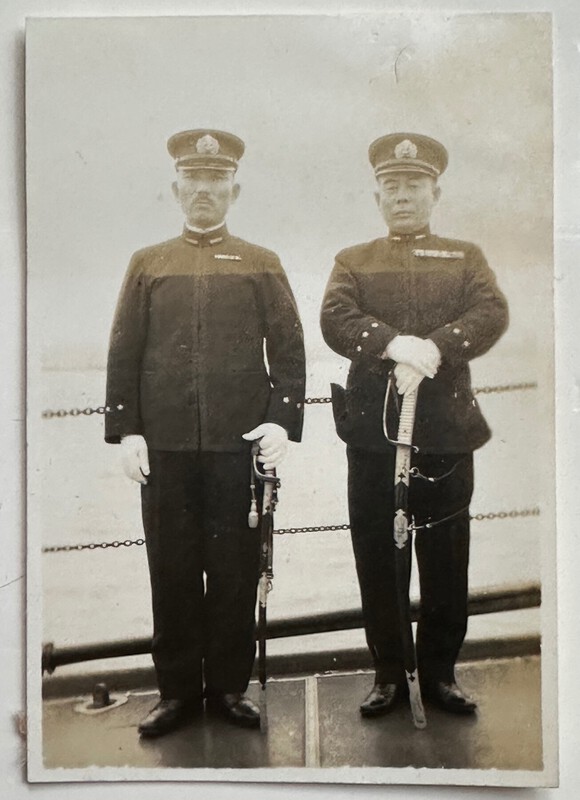 3 points
 -
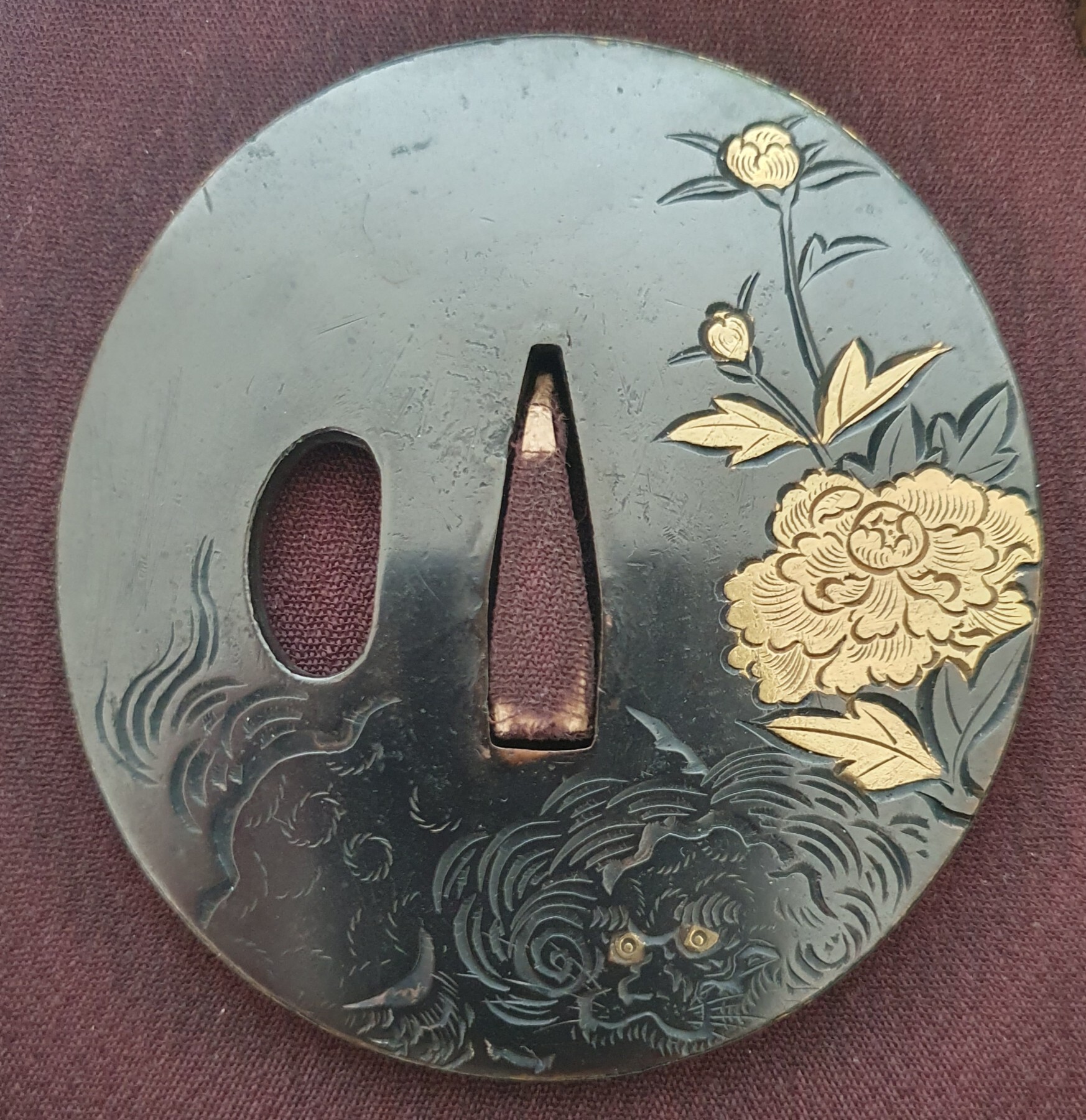
small update for those interested, I finally received my tsuba and I am absolutely in awe about the craftmanship. The pictures don't do it justice at all. It has easily become my favourite tsuba, so thank you all again for your help! Also, I just found this very similar example - apparently papered to be mito school? However I like mine a lot more... (and I did not need to pay 550.000 Yen )

 3 points
 -
Nosyudo, 濃州堂 One of the highest quality iaito manufacturers in Japan, they are based in Seki (Gifu Prefecture) and much-loved by Westerners. https://nosyudo.jp/ Their English catalog: https://nosyudo.jp/catalogs/EnglishCatalog2025.pdf3 points
-
Thanks everybody for the reply and the feedback. Especially for the eirakudo listing. I was sceptical on the information given, I´m not able to read or translate the nbthk paper nor the sayagaki myself, but i asked several AI to do so, and it seems to not match what they described in the listing. And @atm @Rivkin pointed out correctly, is very misleading and not strenghtening the trust in buying this. Aoi on the other hand offered sayagaki from Mr. Tanobe sensei at a little extra cost, and they seemed more honest with the information given. I thought this would make that blade a little more interesting. They said their attribution to fuyuhiro (1st gen) is from their experience and not from the nbthk paper when i asked, and they trust that Mr Tanobe sensei would agree with their estimate. As for budget, i was looking at blades between 0 and 1600000 yen. So there will be something left for import taxes, shipping and vat. which adds up quickly. Wish would be early edo period and below (muromachi, nanbokucho..). This probably already limits the amount of nihonto available, even more so if you look at my "wishlist" of specs. If it came with a nice shirasaya and a well made sayagaki i´d be very happy. I´m aware that there are modern smiths too which make very nice blades, sometimes with soshu influence. Those would be the nicest probably because of their overall condition and less polishing and scratches and such over the decades. Still i like having a piece with history in hand, just to imagine what it might have seen over the hundreds of years it was appreciated by other individuals. Anyway, in november last year i was in Japan for the first time, so i went to every place that had swords on display that i could find. Saw a lot of nice blades, held none made tons of pictures and videos, but quickly realized that the blades who i would desire most, are likely out of budget. I found out that my taste in anything quickly turns up with the more expensive items... I´ve been collecting knives for years and oh you can get very pricey with them as well depending on materials and craftsmenship and so on. Until now, i have a tanto without papers from aoi, and a yari (also no papers) from touken komachi which is in the process of getting a koshirae made. I´m trying to get familiar with all the terms of nihonto through reading: The connoisseur´s book of Japanese swords and so on. https://archive.org/details/connoisseursbook0000naga/page/n11/mode/1up Anyway, just by looking at blades i quickly realized that i like: Kissaki: chu-kissaki and better o-kissaki Jihada: mokume-hada or itame-hada Hamon: Hitatsura, Midare, choji and variations of those Lenght: 66cm plus (just a personal preference) I guess i´m looking at the usual suspects online. I´ve also checked in with unique japans mailing list, but missed 3 blades already, because the seem to sell within hours or even minutes after release, or are simply out of budget. Probably because of my limited budget and desired specs, nihonto like that don´t show up that often online, and if they do they sell quickly. Hence i started looking at other nihonto that tick some boxes and are as close to what i desire as they get. Thanks again for reading and your education.3 points
-
This sort of obfuscation is surprisingly common on Japanese dealer websites, more so than the English dealers who usually try to educate the buyer (eBay/auction sellers excepted, obviously). They'll put some verbiage about the most famous/sought after smith in the line that the blade belongs to, and leave it to the buyer to realize that the stated era the blade is from doesn't match said smith (or to read the attached papers and note the specified era or generation).3 points
-
Patrice, It's far too early to tell. In the Netherlands you have access to some real expertise. Go slowly, clean nothing apart from a light coating of sewing machine oil on the blade. About the peg/mekugi, support the sword horizontally such that the handle is particularly firmly supported. With a pin punch or similar round tool slightly smaller than the peg, use a hammer to gently hit the peg. Gently is the keyword and do this from each side in turn watching for movement. One side will be the correct, ever-so slightly smaller original side to tap from, but it may be difficult to tell. Keep working gently and the peg may slowly move. A good indicator is that the habaki (the 'collar' next to the guard /tsuba) is a blue/black colour indicating it is shakudo, or a shakudo foil cover. Others will pop in with more advice, I'm sure. Read the extensive Board articles on care before doing too much. Knowledge is your best ally here. Regards, BaZZa, aka Barry Thomas.3 points
-
Welcome to NMB, @Harlekin2xs. If you like Soshu blades, I'm not sure that I'd be focused on the two you've identified. The Kaneuji is not the same as Shizu Kaneuji of Soshu den (Eirakudo's description is a bit confusing on that point) and its hamon looks very one-dimensional to me. Good quality Soshu has a three-dimensional hamon with lots of activity inside the hamon. What is your budget? Knowing that might help us point you toward blades that better fit your collecting interest. If you are new to this hobby, many advise to take your time before purchasing a sword. That's because many (myself included) have regretted our first sword purchase as we gained knowledge. Taking time to study swords, especially in person, and increasing your knowledge of swords is invaluable to making smart collecting decisions and finding what truly appeals to you. There are lots of swords out there, so you have plenty of time to find the right first purchase.3 points
-
It is rare and interesting to me to see the menuki signed on the front like that. Cool exception to the rule.3 points
-
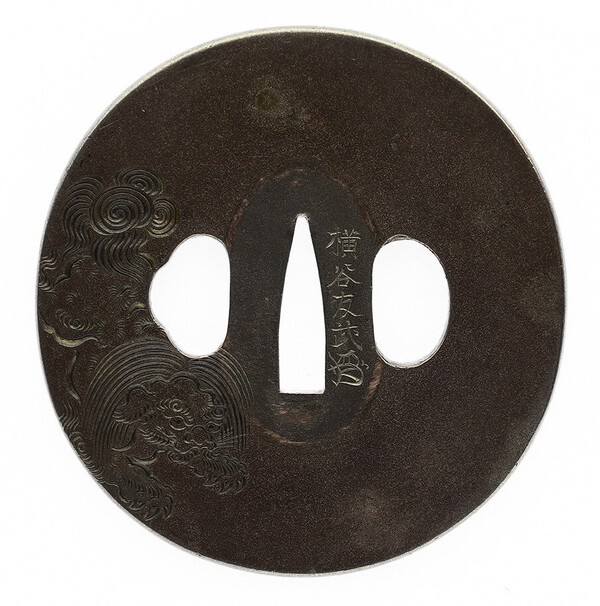
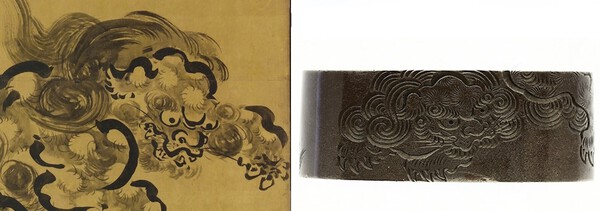
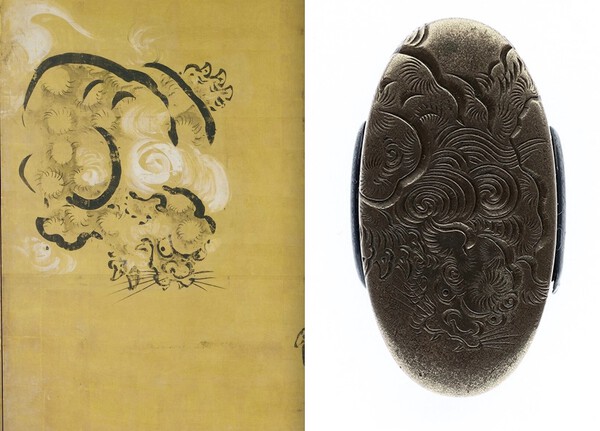
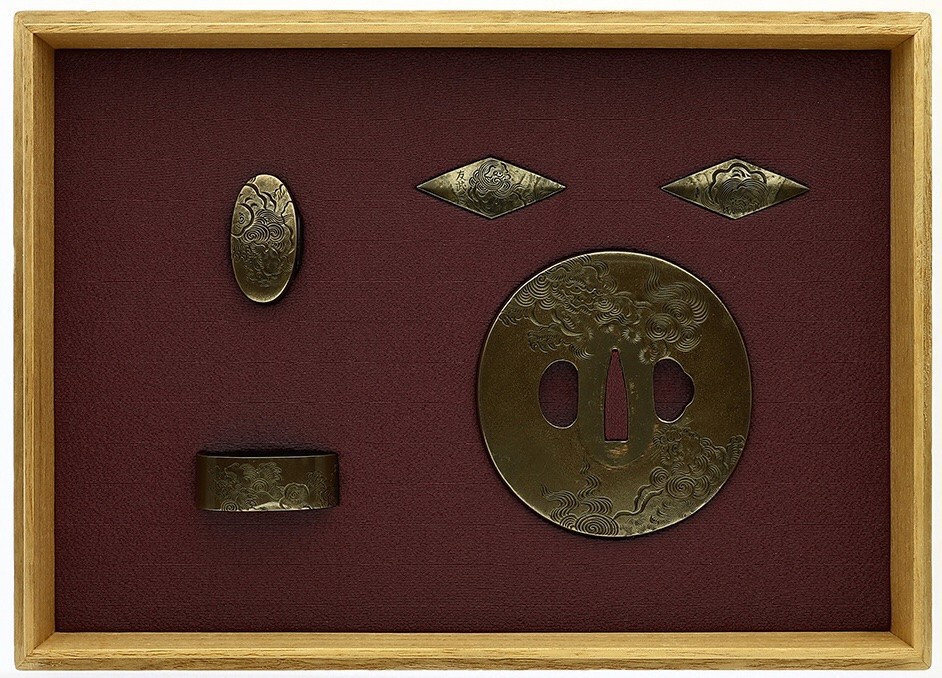
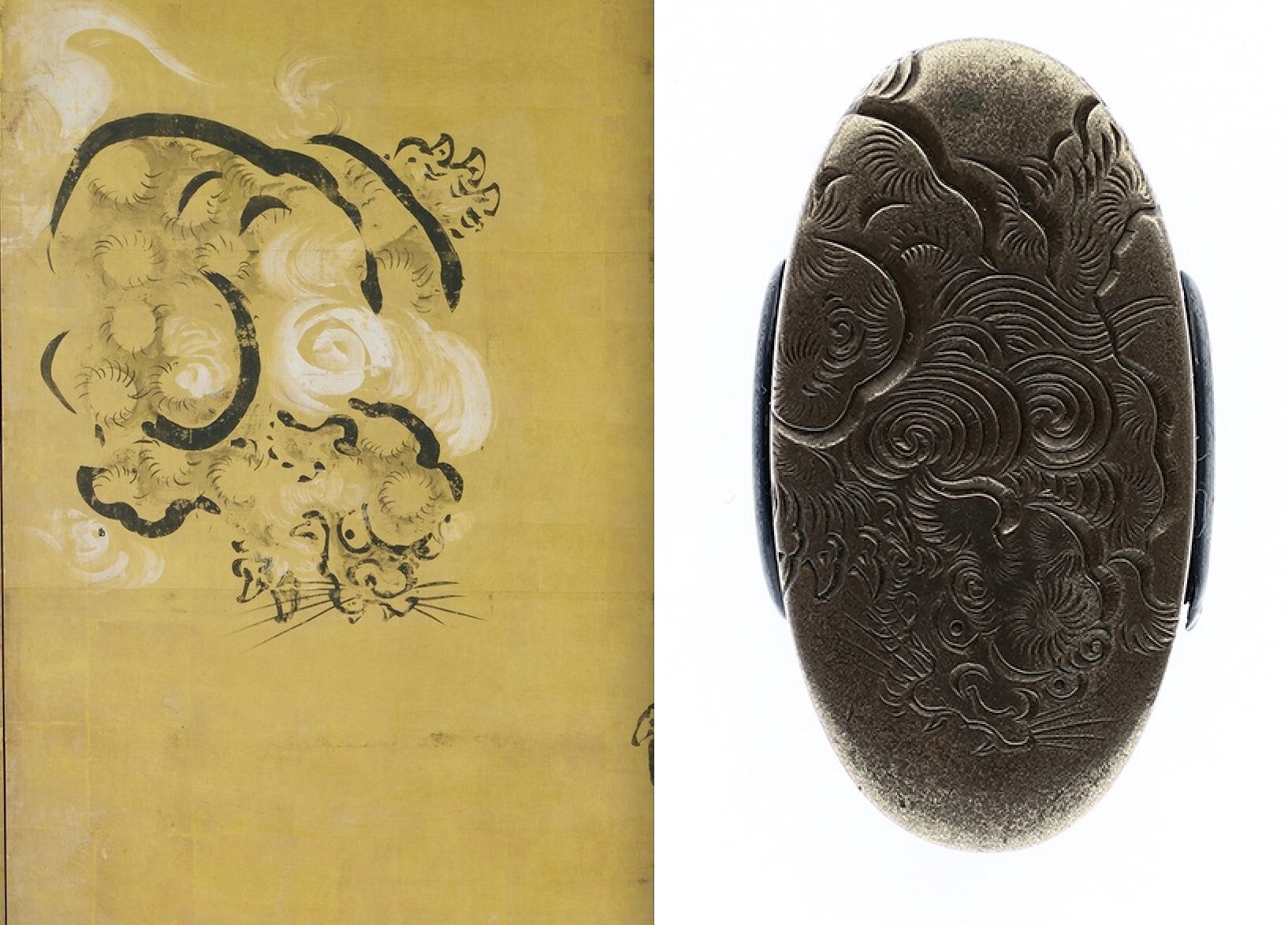
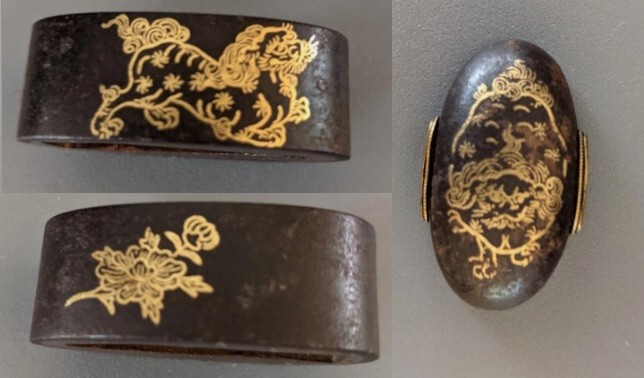
I would like to share a lovelyset of tosogu by Yokoya Tomotake featuring Shishi play fighting. It’s a great example of katakiribori workmanship, which is done to a high level. One intriguing thing I have noticed while studying the set is that the carvings of the Chinese Lions resemble the paintings from a pair of screens by Hanabusa Itcho, which is in The Met collection, I’ve attached some comparison photos. I have read that Hanabusa Itcho was a close friend of Somin Yokotani. I wonder if the screens were used by Yokoya Tomotake when composing this set of tosogu.

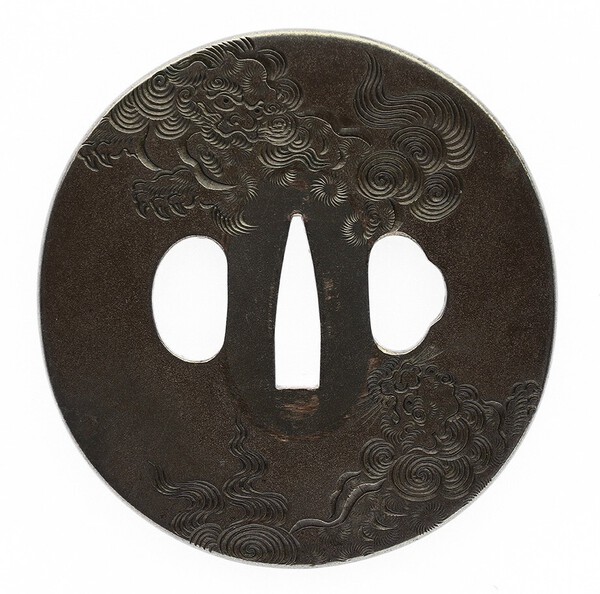




 3 points
 -
Not sure if this has been posted, but I just visited the Juyo Token exhibition in Tokyo today and there were some amazing blades. Here is the list they are showing: https://www.touken.or.jp/Portals/0/pdf/english/(英語))第71回重要刀剣等新指定展目録.pdf They had a Hizen blade done in a killer hitatsura temper that was over 94cm nagasa! Absolutely stunning....but my favorite was probably the Yasumitsu. There was also an Awataguchi Kuniyoshi that belongs to Nicholas Benson that is being submitted to TokuJu, even thought its listed under Robert Benson. Also Awatguchi Hisakuni. Amazing to see 36 Juyo from all different smiths for future reference.2 points
-
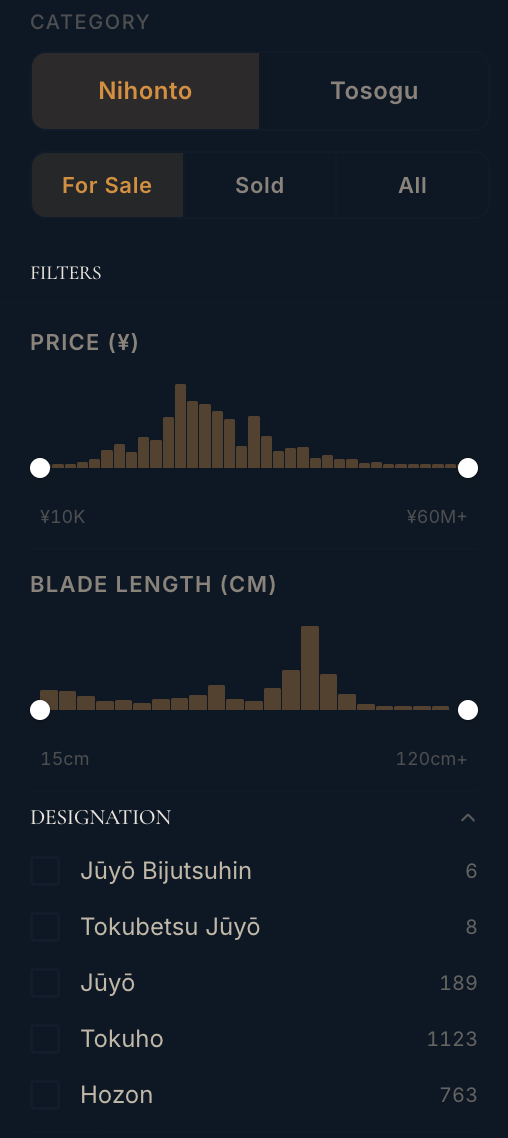
Hi Janne, Great feedback. I implemented the report feature, which also lets user ask for new features, report item data bugs, or artisan data bugs, or general bugs. Top navigation bar: Item card: Artist/School page: And good idea on the dimension filtering. I added it for Nagasa, this is the easiest. Weight, I'm afraid is not documented consistently, more than 90% missing data. Motohaba and sakihaba I would say are of marginal utility. Note that there are some data errors on some items, as is to be expected. Best, Hoshi



 2 points
 -
I visited two days ago and was surprised to see that some blades and fittings which would barely have qualified for Tokuho 5-6 years ago were able to pass Juyo. Of course, there were some great pieces as well.2 points
-
We don't have any rule against discussing prices I would guess this would sell for around $700 to $800 here, maybe a bit more on eBay, but you lose on fees. That's just a wild guess.2 points
-
Wow That was fast Thank you2 points
-
For 1.6M yen you'll have plenty of good options for a first sword matching that list, even if you just limit yourself to koto Soshu. Take as much time as you need to better understand the market and your own preferences, and don't be afraid to post in the WTB forum here as well; there are many members who have, or have access to, blades that might interest you within those parameters and budget.2 points
-
Hi, before you buy online, i would advise to visit the Japan Art Fair (https://www.japanartfair.com) . There are a lot of Dealers from around the world and you can have a look on the blades in real. Regards Oli2 points
-
I have been looking at this appealing work by Yamaoka Tesshu, whose calligraphy is consistent, but highly idiosyncratic. The large "One Word Barrier" is "窮 (poverty/poor)", rendered in an almost pictographic form that is rare for Yamaoka, but I cannot make out the rest of the inscription. There is some water damage, but I've never seen such an inscription done by this otherwise prolific artist who often produced many versions of the same theme. Thanks.
 2 points
 -
Thanks so much, Steve. You are absolutely spot on. Turns out that "When poor, one should cultivate one's own virtue; when successful, one should benefit all under heaven," comes from Mencius, Book 7, Part 1, Chapter 9, which reads: "Therefore, a scholar does not lose righteousness in poverty, nor does he stray from the Way in success. When poor, he does not lose righteousness; therefore, a scholar holds possession of himself. Those who achieve success do not stray from the Way, therefore the people are not disappointed. In ancient times, those who were successful brought benefits to the people; those who were unsuccessful cultivated themselves and made their virtues known to the world. When poor, one should cultivate one's own virtue; when successful, one should benefit all under heaven." Yamaoka would have studied Confucian thought, as did all well-educated samurai.2 points
-
My Japanese skills are meager, but both postings are great examples of obfuscation. Eirakudo sword is papered to Seki Kaneuji. Very indirect relation to Nambokucho Kaneuji, who dominates the description. Late Muromachi work, its ok but a bit bland and ambitious. Fuyuhiro - nowhere it says this is the first generation. Yes, its probably Tensho period work. Again its not real quality, but beginner friendly in terms of being easy to appreciate, showy.2 points
-
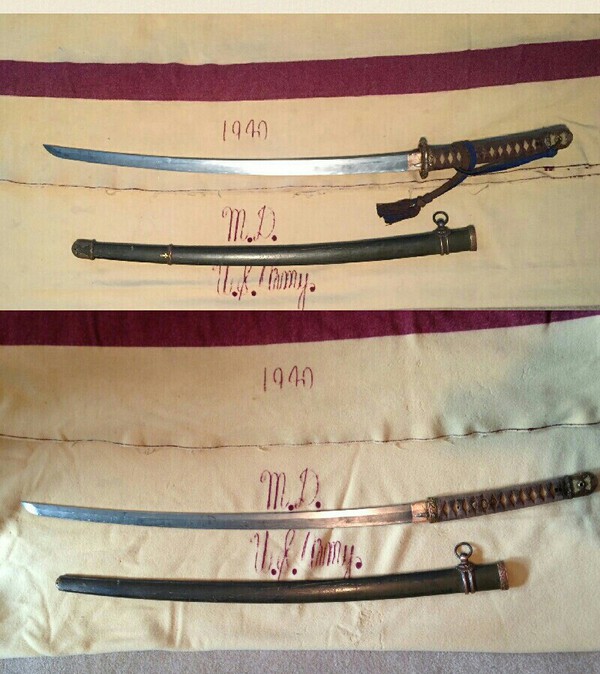
Hi Patrice, Your sword is a legit WWII Japanese officer's Type 98 sword. To those who study WWII and Japanese swords, they are all valuable and worth preservation. Monetary value can vary greatly depending upon condition of the sword, and sometimes due to the way it was made, and the smith that made it. That's one reason we are all interested in seeing the nakago (tang). As a family heirloom, and in honor of your grandfather, I think it's worth putting some time into restoring it to some degree, like having the handle (tsuka) rewrapped. Having the blade restored, via professional polish, depends on you. Many collectors like to keep a sword in the condition it came to them, calling it the "Life of the Sword." Others like to take the time and effort to return their swords to their intended beauty. I spent 2 years finding missing parts to restore my dad's sword, and even spent the $2,200 to have it polished. But that was a personal choice. Some before and after shots:
 2 points
 -
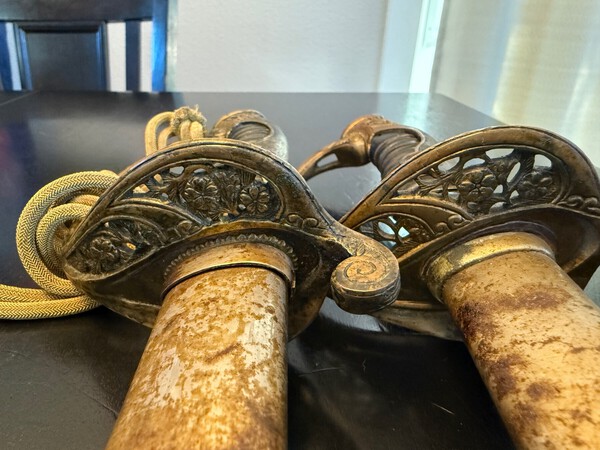
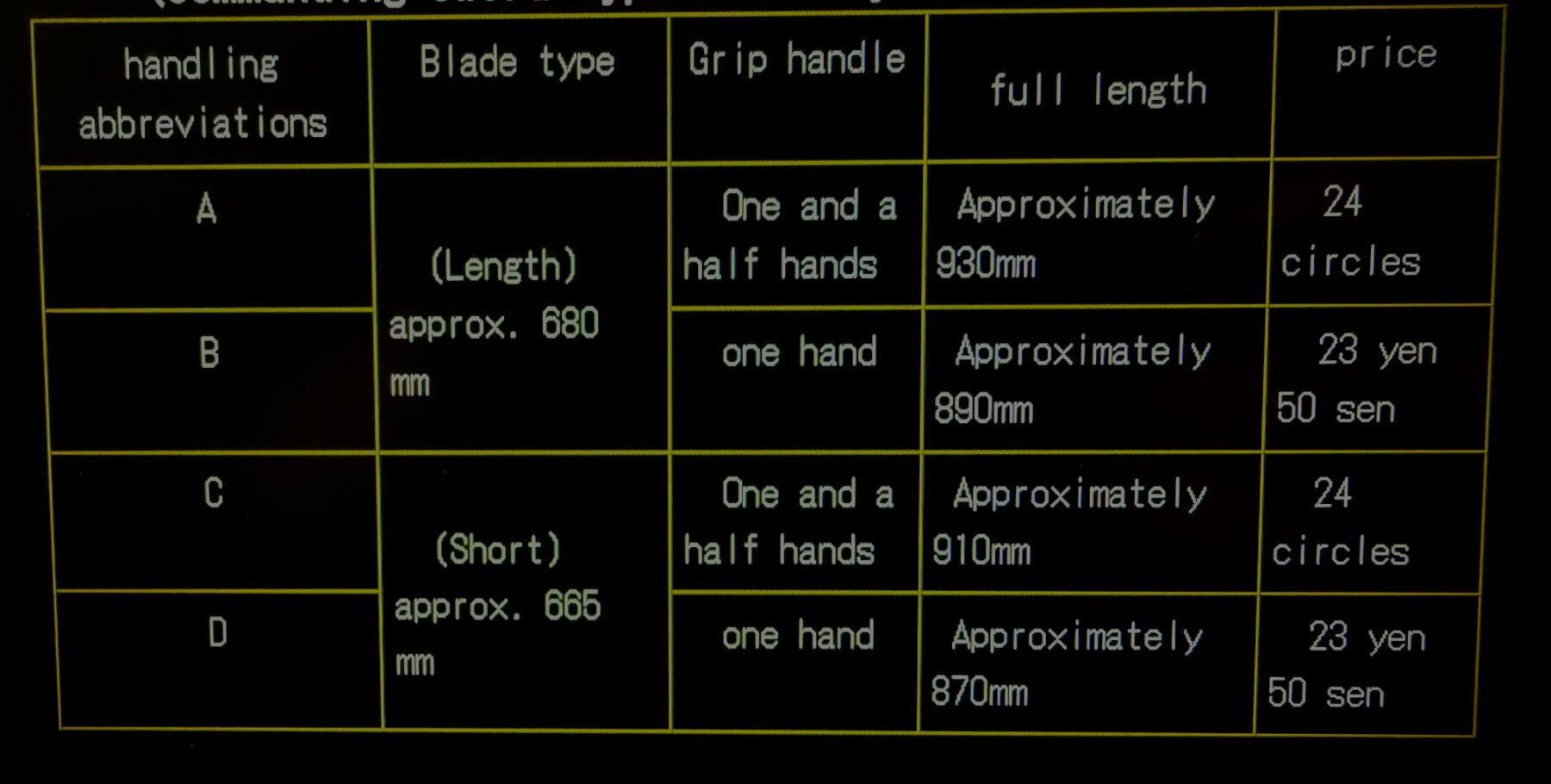
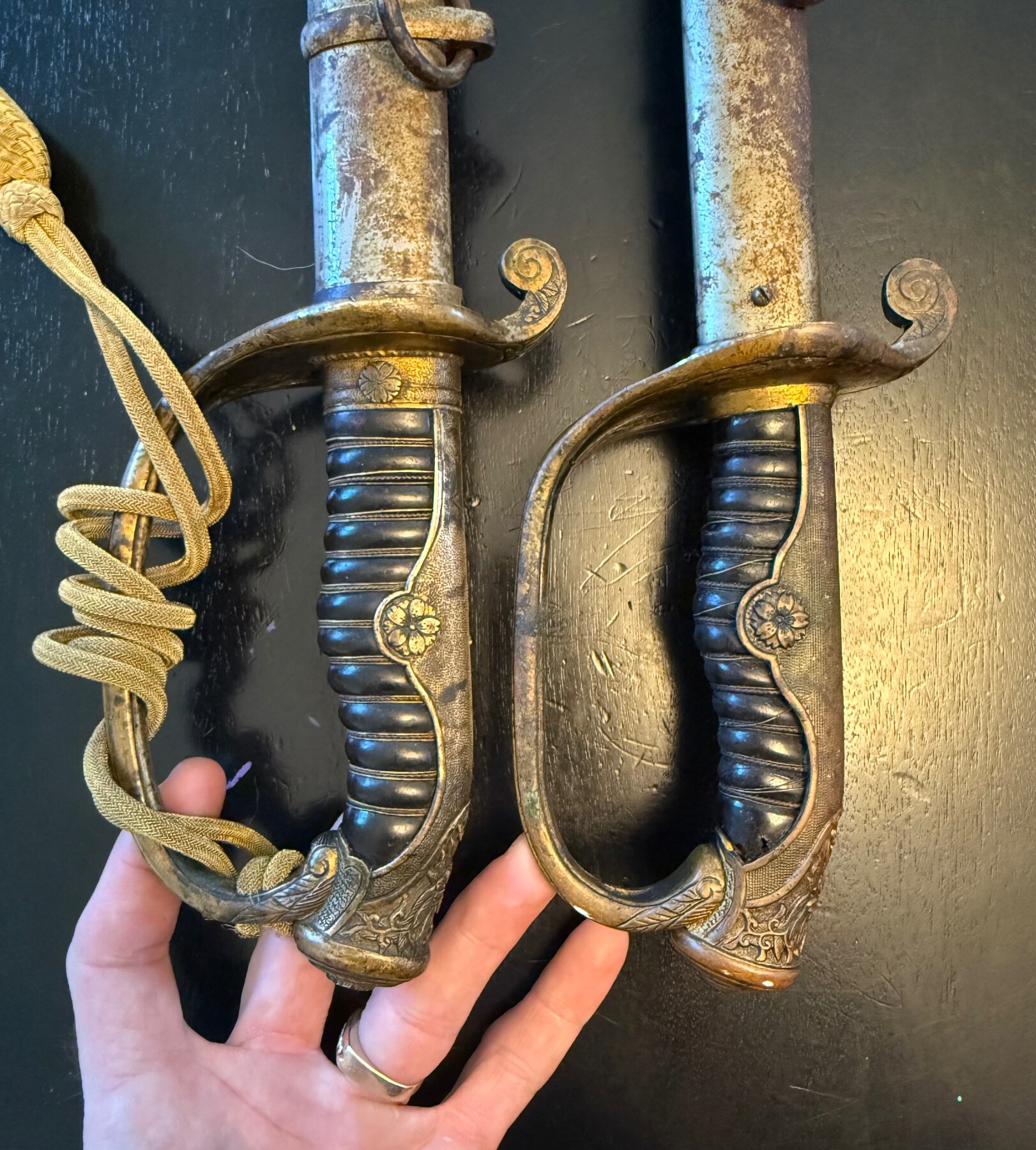
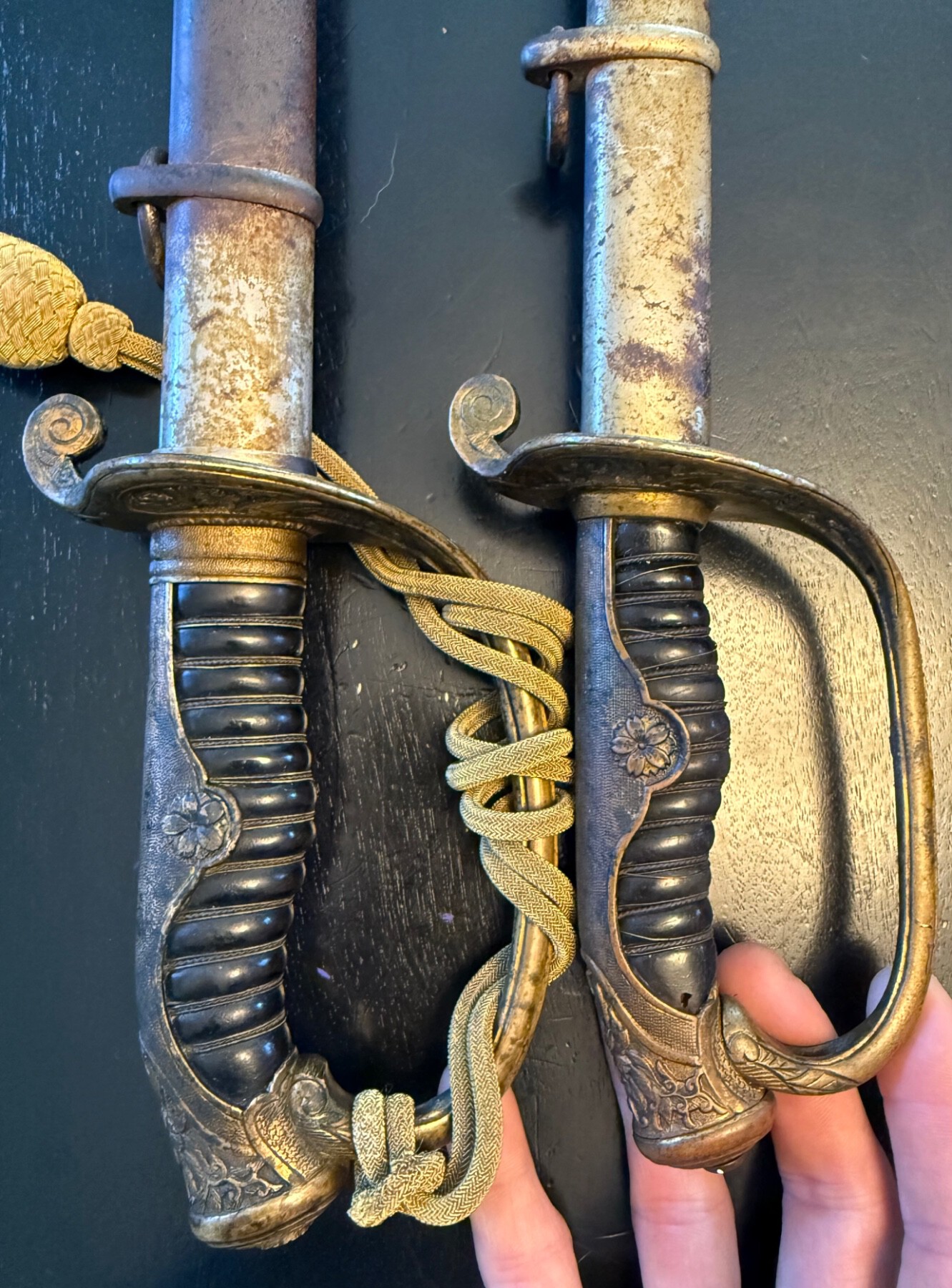
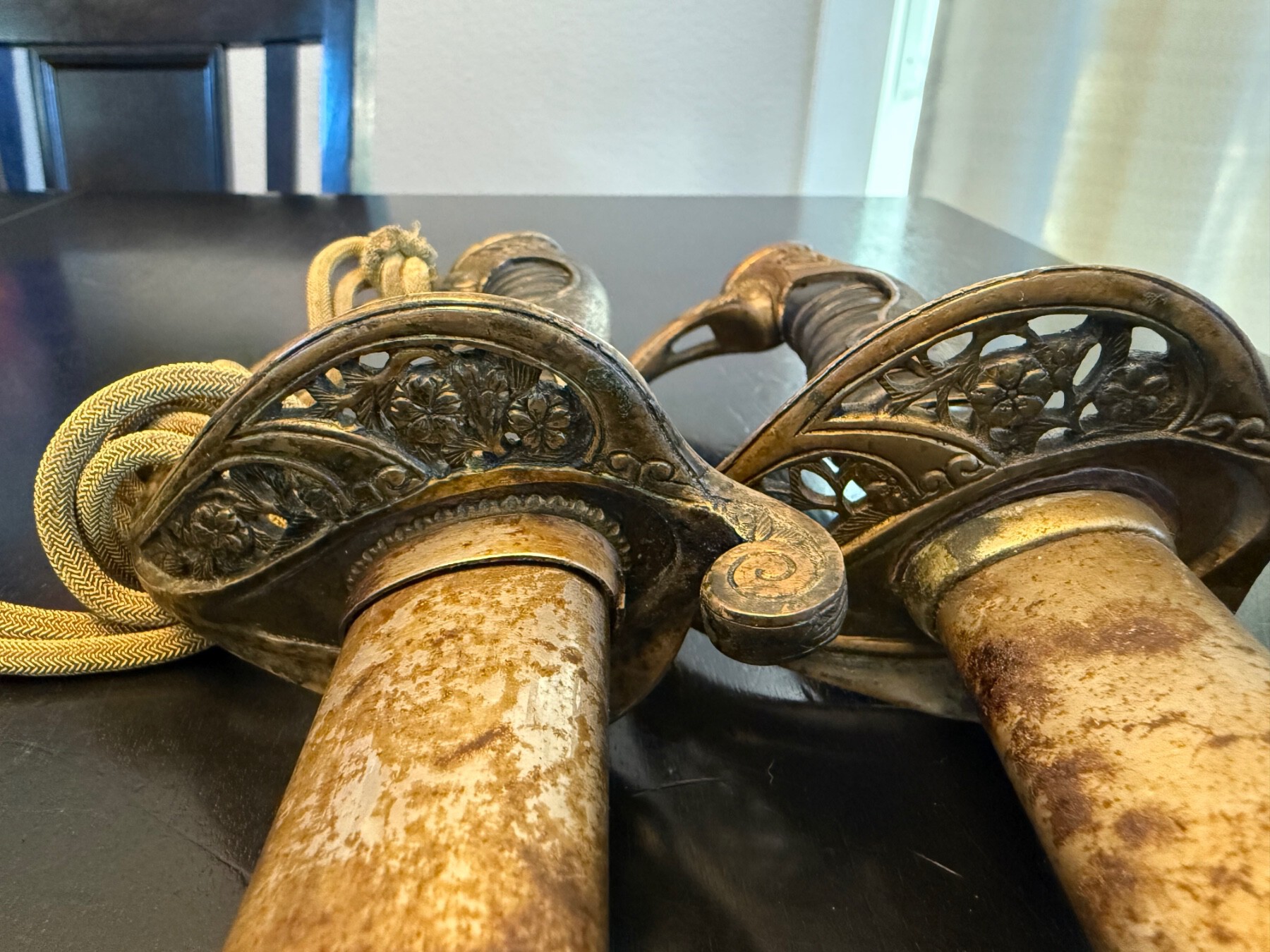
Just finished with my measurements. On Ohmura’s site, his specification table states that the measurements are approximate. Although, I feel my sword is far enough outside the specifications to say it’s probably not a combination sword? I’d be curious to hear others interpretations. I will attach the table below of the combination sword specifications. http://ohmura-study.net/210.html The measurements of my sword: Total without scabbard = 845mm Total with scabbard = 875mm Nagasa = 695mm Motokasane = 5.5mm Sakikasane = 3mm Motohaba = 22mm Sakihaba = 13.5mm Kissaki = 23mm Handle, from pommel to lip of guard = 139mm. Handle, from pommel to end of quillion?/finial? = 160mm. Side-by-side with the dress sword it was bundled with, it’s slightly shorter. The handle is slightly longer and larger. The engravings are slightly deeper and more detailed. The brass guard appears slightly more thick. I had told myself I wouldn’t get any more of these sabers after my field grade find. Funny how things change -Sam


 2 points
 -
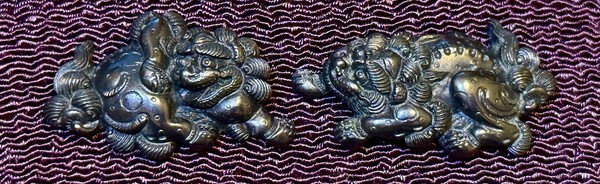
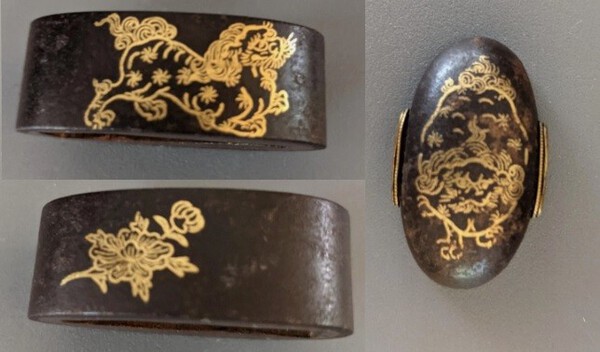
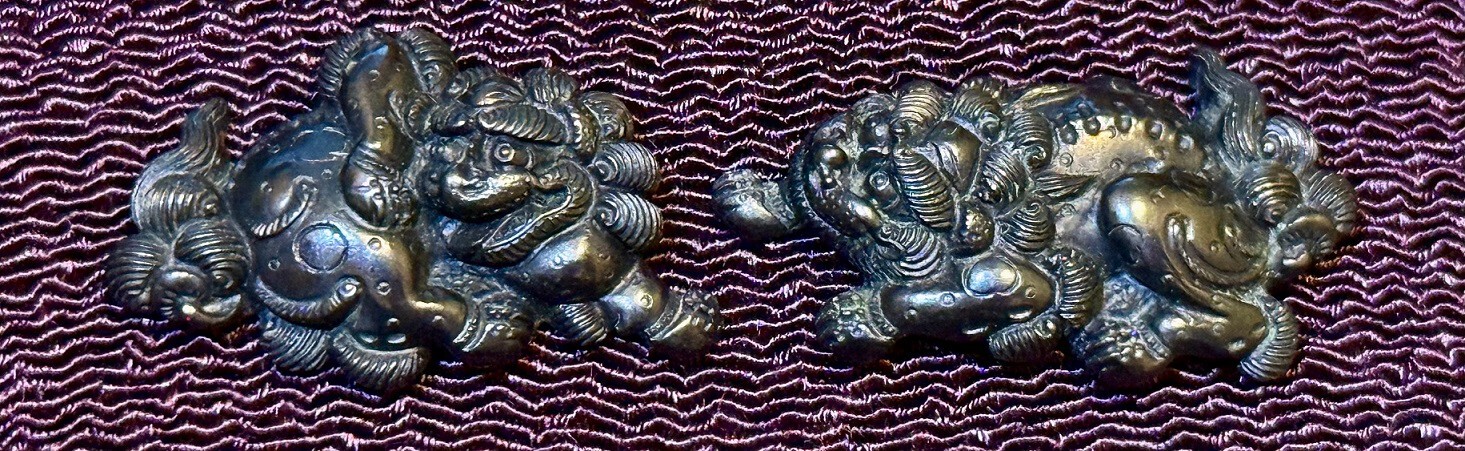
Shameless plug, I need to find a home for these beautiful beasties if anyone is interested, click to zoom...they are currently over in the 'for sale' section. Hi Bruno, great tsuba, did you see these on ebay - https://ebay.us/m/FwRBtN - looks like a nice match.
 2 points
 -
2 points
-
Another tsuba of mine.
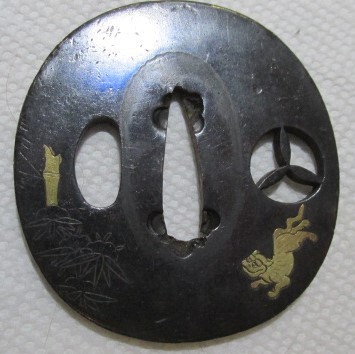

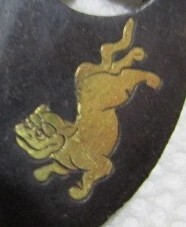
 2 points
 -
Hey Tosogu collectors, I recently obtained my second Yanagawa Naomitsu piece, a beautiful lion and peony themed fuchigashira (possible tokubetsu hozon candidate?) In celebration of this new acquisition I felt a mega lion thread would be fitting, hoping to get the rest of the forum involved! Post your best lions, all types of Tosogu welcome! I'll start:1 point
-
I am in taking a large collection of books focused on swords, fittings, kabuto and armour. I will follow up on this initial post with details on the books that I received, however if anyone sees a reference that they have been looking for here, please reach out to the email below and I will get back to you quickly with further information and pricing. Raymondsinger@gmail.com Best regards, Ray
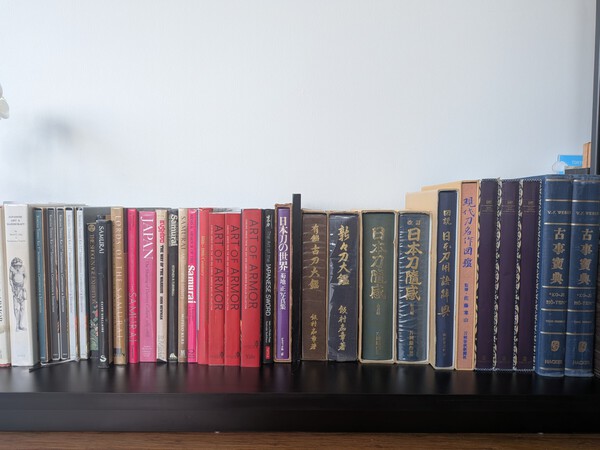
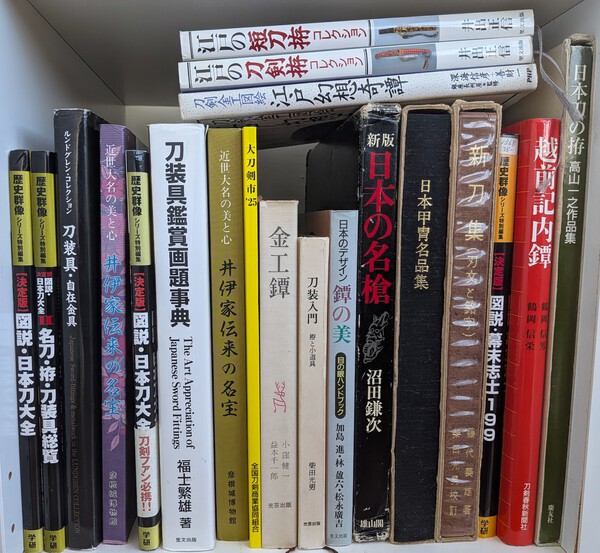


 1 point
 -
If you can, think about attending an NBTHK-EB meeting which are held a couple times a year in Manching, Germany. I think many Austrians attend this event and you'll get to see some top quality blades, sometimes if you're lucky grandmaster pieces.1 point
-
Fair enough.1 point
-
I'm VERY new to the hobby, and only recently made my first purchase, so take what I say with a grain of salt for sure... That said, when I look at those images of each blade, both appear to show little to no clearly defined utsuri (very fine pearlite and like an echo of the hamon in the ji). In the first link (Kaneuji) blade image, the ji appears relatively uniform without the characteristic pale, shadow-like reflection pattern running parallel to the hamon. There are activity lines and some surface texture, but I do not see a distinct midare-utsuri, bo-utsuri, or shirake-utsuri formation. If present, it is extremely faint. In the second link (Fuyuhiro) blade image, especially in the full-length composite views, the ji also looks clean and fairly homogeneous. The hamon is visible and active, but the area between the hamon and the shinogi does not display the soft, misty secondary pattern typically associated with strong utsuri. Again, if any utsuri exists, it would be very weak. My taste, especially appreciating in person, swings towards enjoying a very dense and active jihada and lots of utsuri. So I would pass on these, mostly due to the lack of utsuri. Speaking to Adam's comment about the hamon being very one-dimensional, I absolutely agree. The hataraki within the yakiba of the hamon is very restrained and nearly non-existent. Another huge knock in my book. Again, all personal taste. But me, I always would put these attributes over the shape of the hamon line, as they are far more fascinating to study in person and in different light. You always see something different. To me a fancy hamon line is like "eh", sure it's striking from a distance, but if the blade lacks depth in the other aspects I mentioned, I pass. Rohan is absolutely right, with your budget, you can find many really great blades. So continue to be patient and persistent in your search. I'll lastly say that there are other, more technical attributes to a blade that I personally look for to tick my boxes, that being an ubu nakago (un-cut tang, so none of the mei is missing), and a date. A date is usually, from what I've read, an indication that it was a commissioned blade of higher craftsmenship in the workshop. A blade that also includes a really good quality and period Koshirae can be a big plus if you are going to display it (for me anyway), but by all means, always buy based on the blade attributes.1 point
-
untilThe Japan Art Fair (JAF) celebrates the enduring legacy of Japanese culture, bringing together extraordinary artifacts that reflect over a millennium of artistry and tradition. From samurai weapons and armor to timeless antiques, JAF offers a captivating exploration of Japan’s rich and storied history. For more information click here.1 point
-
Wow amazing how your sword has been restored, the polishing isbdefinitely sonething to consider. Many many thanks for your help. I will find a local expert and keep you guys informed.1 point
-
Its a rare case where I would ask someone to show this blade to Tanobe sensei before doing anything else. The forging might be good quality also.1 point
-
In my opinion it’s closer to Kajihei than to Kotetsu. I also wouldn’t be mad if it was a Kajihei forgery I find his story fascinating.1 point
-
I suspect that the scabbard was swapped and painted after the war. The glossiness/finish of the handle also leads me to suspect post-war alterations. The serial number on the scabbard, if original, makes it hard to imagine how this came together. Perhaps a couple occupation men, or friends after the war swapping parts and “blinging” up their bring-backs. Without a time machine, it’s hard to know for certain and I’m merely speculating scenarios. All I can say is that it did not leave the manufacturer that way. Interesting piece, and thank you for sharing. A unique one for sure. -Sam1 point
-
I keep seeing this book show up on ebay but can't seem to find it anywhere else. Not sure if it is new or just new to me. I don't mind paying for books, but the price seems high and I am unsure if there is any new information compared to the Sano museum book on Akasaka tsuba. Anyone have the book shown below or know where to get it for a reasonable price? Thanks, Lou1 point
-
The mei on your sword is very close to Kajihei's, as far as I can tell, Nicholas. reinhard1 point
-
Nice riddle. It is about tiny details. From left to right: shoshin (genuine) Kotetsu, Kajihei and the mei in question. Can you see the "catch me if you can"-attitude? reinhard
 1 point
 -
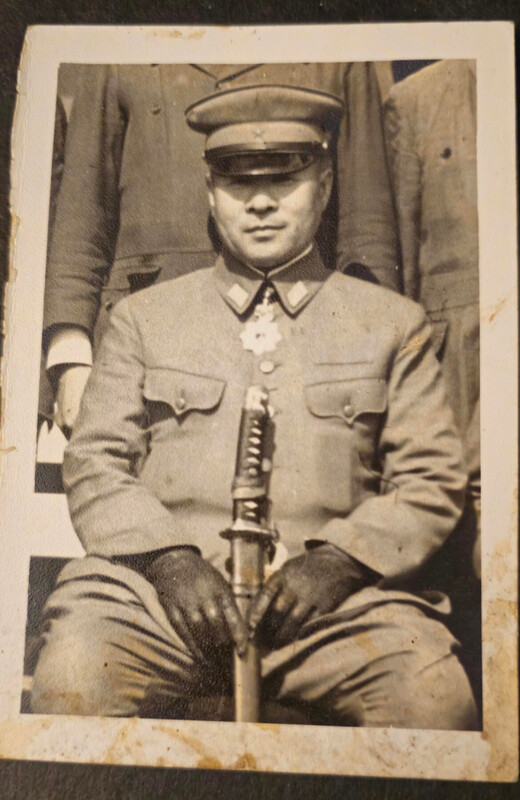
Original photo of Lt General Homma:
 1 point
 -
I feel these images are more than just men with swords. They are history, each with their own story. I don't read Japanese but know the caption on the reverse of the 1938 image of the boy refers to " Ishiki Officer Hirada Hajime"1 point
-
It may qualify as a 兼用刀 - combination sword : http://ohmura-study.net/210.html1 point
-
1 point
-
Has this appeared before? https://www.tessier-sarrou.com/lot/116199/15882152-koto-wakizashi-epoque-muromachi-1333-1573-signe-mei You need to search through the images.1 point
-
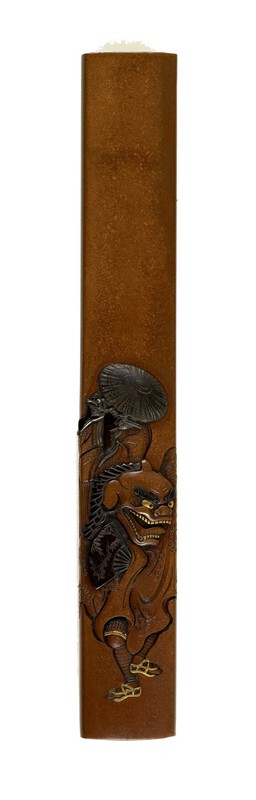
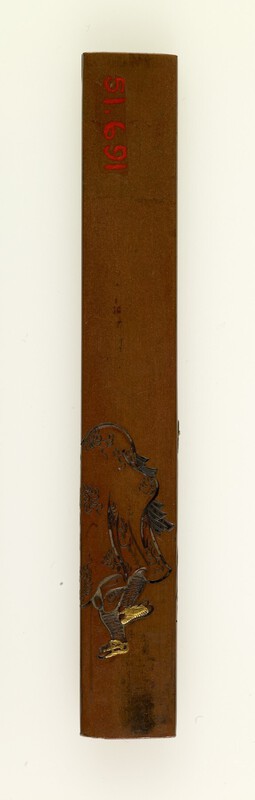
Very well! Since many have already seen my avatar anyway… I'll add a good work on the theme of "shishi dance") The lion dance is usually performed as part of the New Year's celebrations. The dancer in front is dressed as a lion. The man behind him plays music for the dance on a flute. In addition to the man dancing as the lion's head, there are others who form the body. The second dancer in the lion costume is shown on the reverse of the kozuka. The lion dance tradition developed in China from a belief that the dance would protect villages from evil spirits. Stylized lions such as this are known as Chinese lions ("shishi") in Japan. https://art.thewalters.org/object/51.691/ Best regards!

 1 point
 -
Here is a Yanagawa Naomasa Fuchi Kashira


 1 point
 -
Hi, yes. This is a data bug. A juyo item by a unicorn smith called "Iemura" from the Oei-period has been mistakingly assigned to the Showa smith Emura. Thank you for the report, the error is now fixed. Note on the BETA: There are many data bugs currently. For obscure smiths with 1 Juyo, best assume it's an assignment error. Best, Hoshi1 point
























.thumb.png.4c5df79fec171b2dc4a23af38e280a4d.png)








This leaderboard is set to Johannesburg/GMT+02:00