
Leaderboard


Popular Content
Showing content with the highest reputation on 11/18/2025 in all areas
-
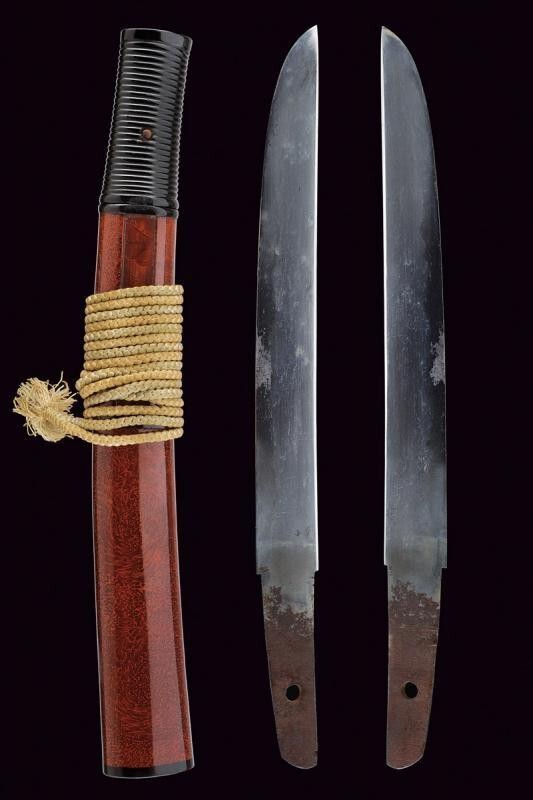
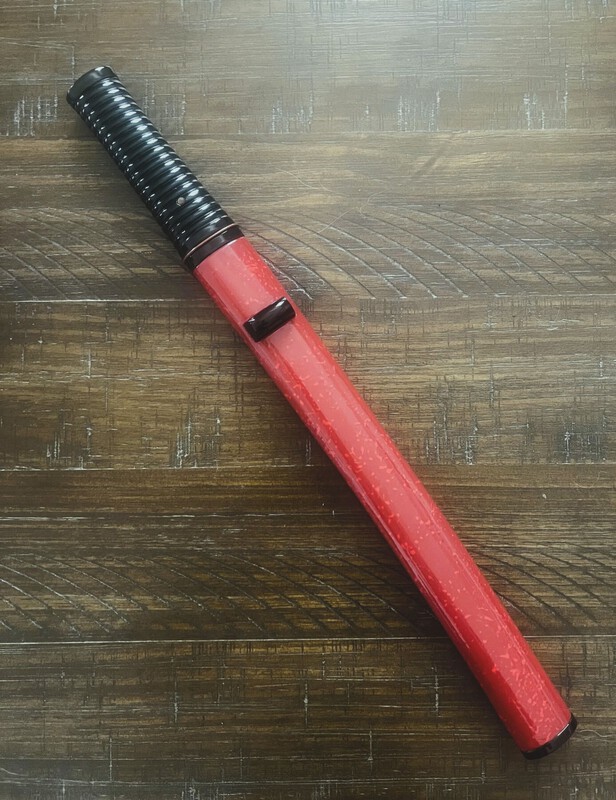
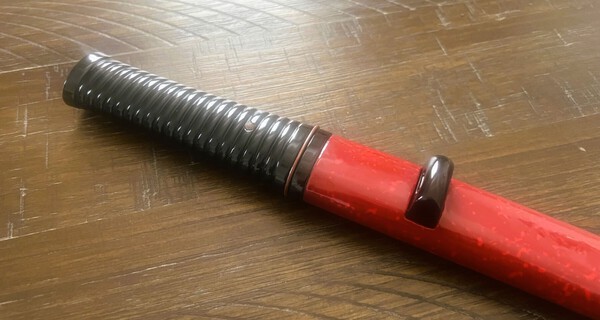
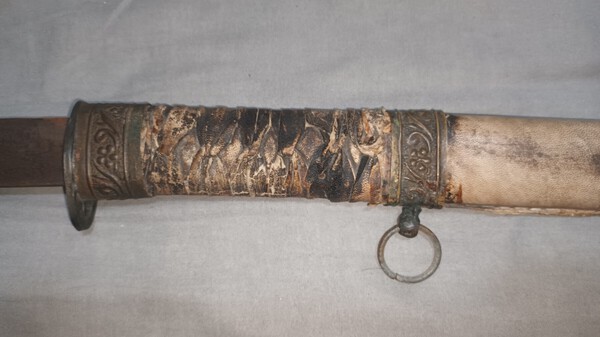
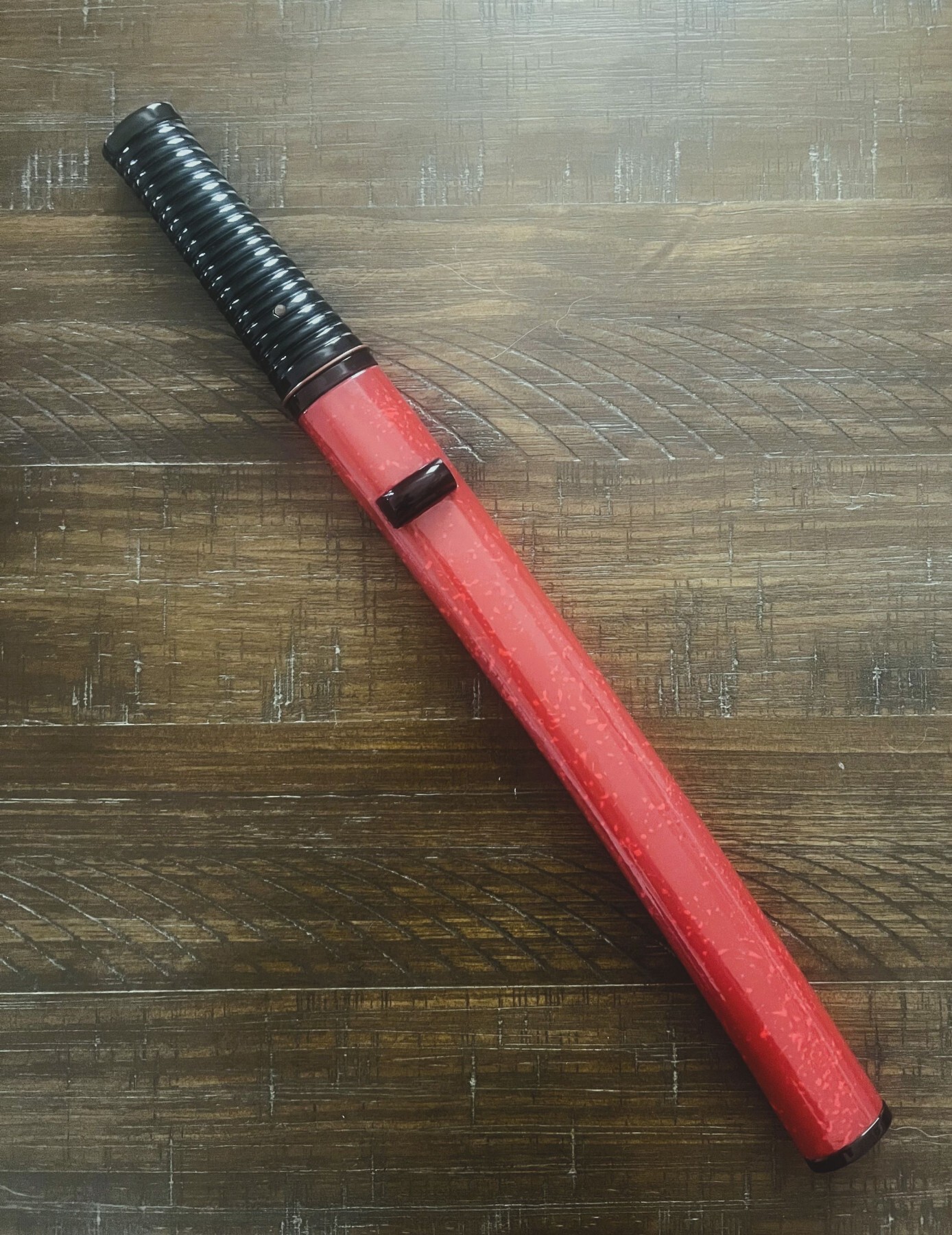
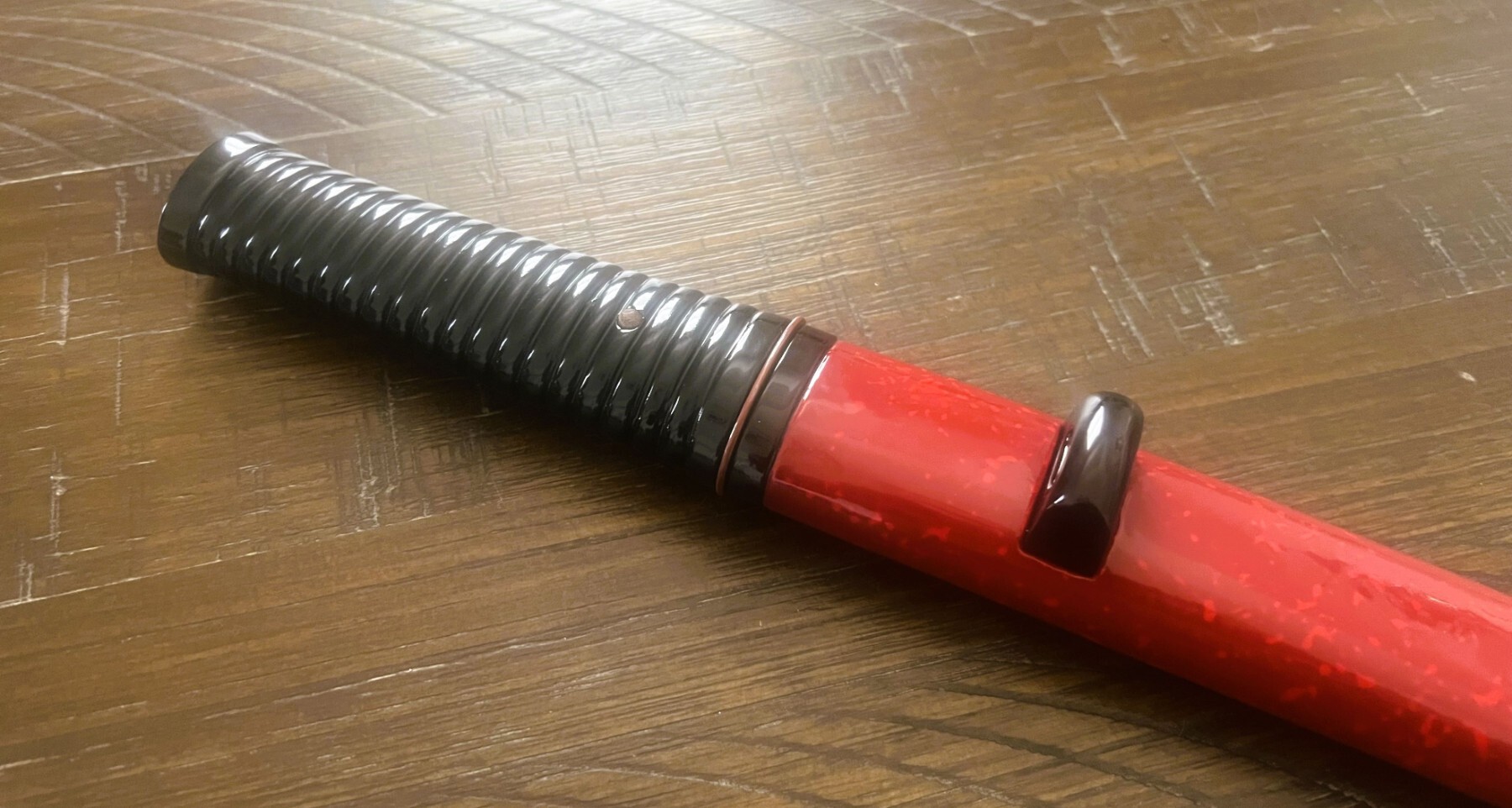
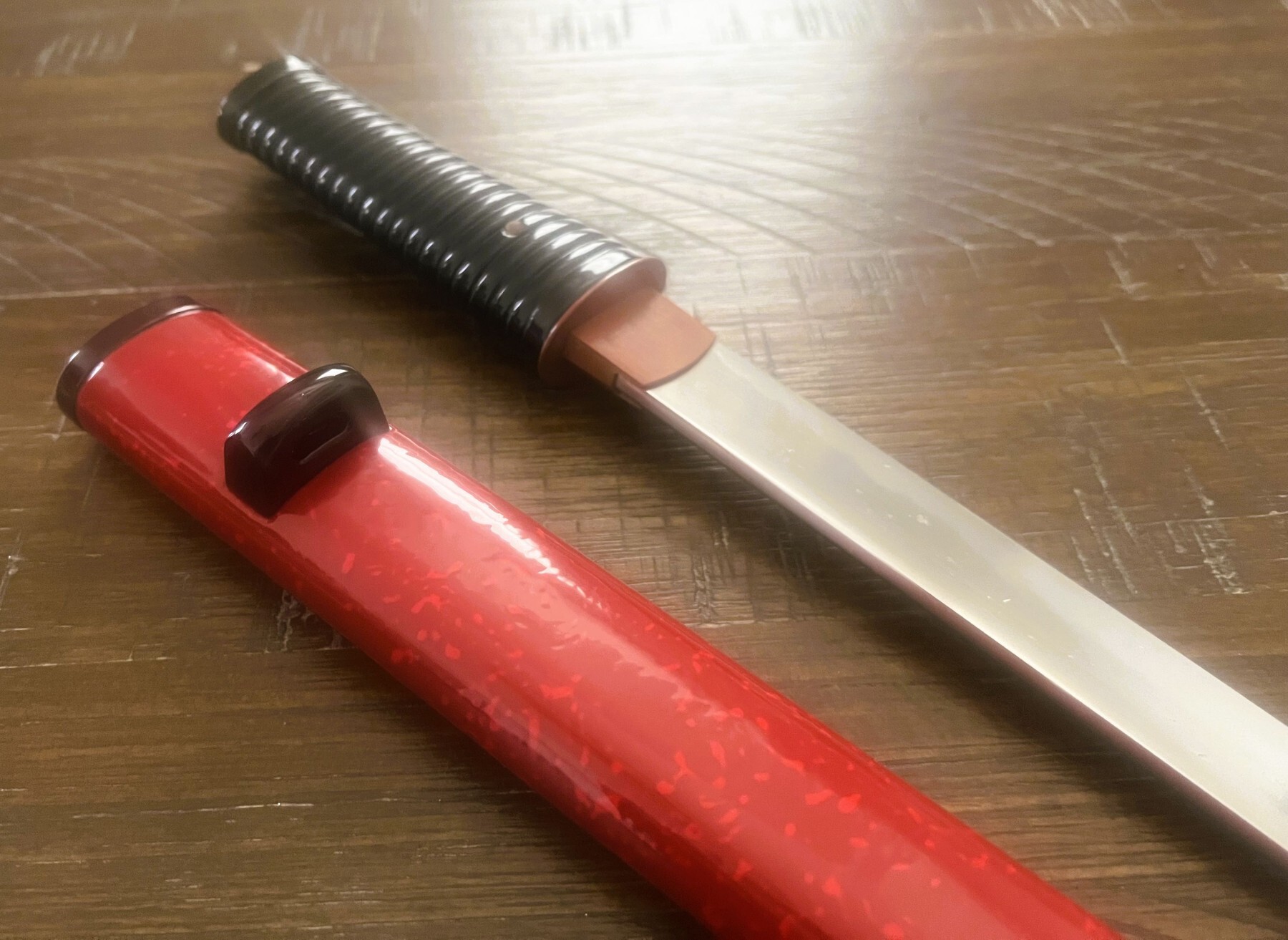
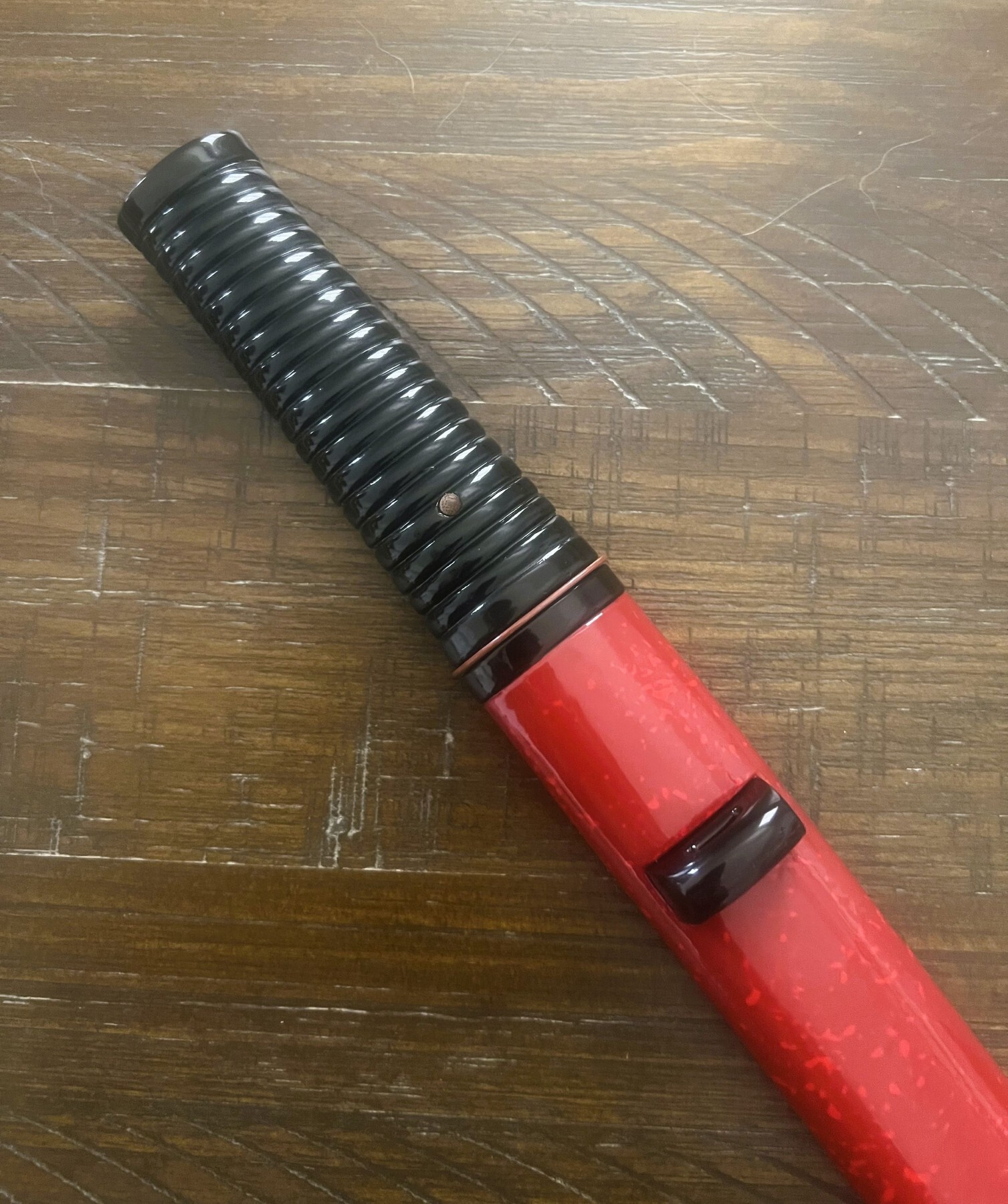
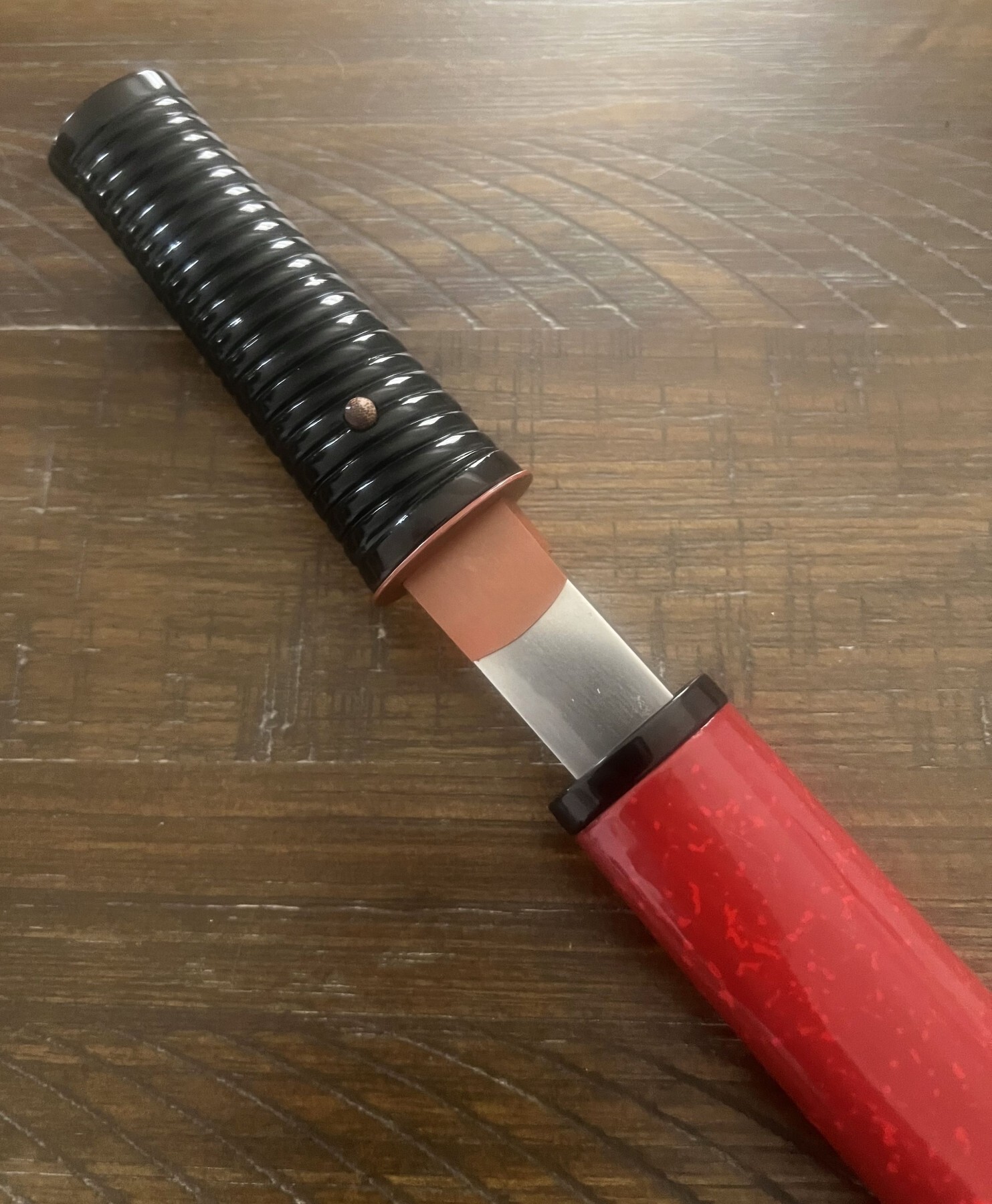
Just wanted to share some pictures of a custom mount that I finished up for an antique tanto The design is based off a photo that was supplied to me by the customer, I wanted it to match the overall design and feel, but also try not to rip off or copy the exact original design. I made all the koshirae including the habaki. Both habaki and "tsuba" were given a rokusho patina. No more words, just photos Let me know what you guys think! Ill include a picture of the original for reference Warmly, Sal' of Koala Forge, Formerly Jizamurai Customs.
 3 points
 -
Spider web in the rain habaki! Where is the spider?3 points
-
3 points
-
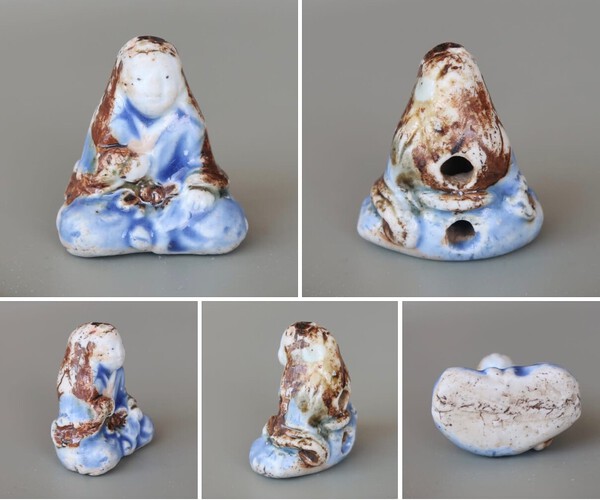
As they are hollow inside, I think they were molded in two halves that were then joined together before the firing. Sometimes (as in the possibly unfinished example below, also in my collection) you can still see the joint:
 3 points
 -
Hint, with a Gold Membership, one will know who they are.2 points
-
Hi Billy, yes, but not necessarily just because the holes are the same size. Where to start? Someone has quickly created a Netsuke-like object, hoping for a sale, but the all-round quality is completely missing for a ‘genuine’ old Netsuke.2 points
-
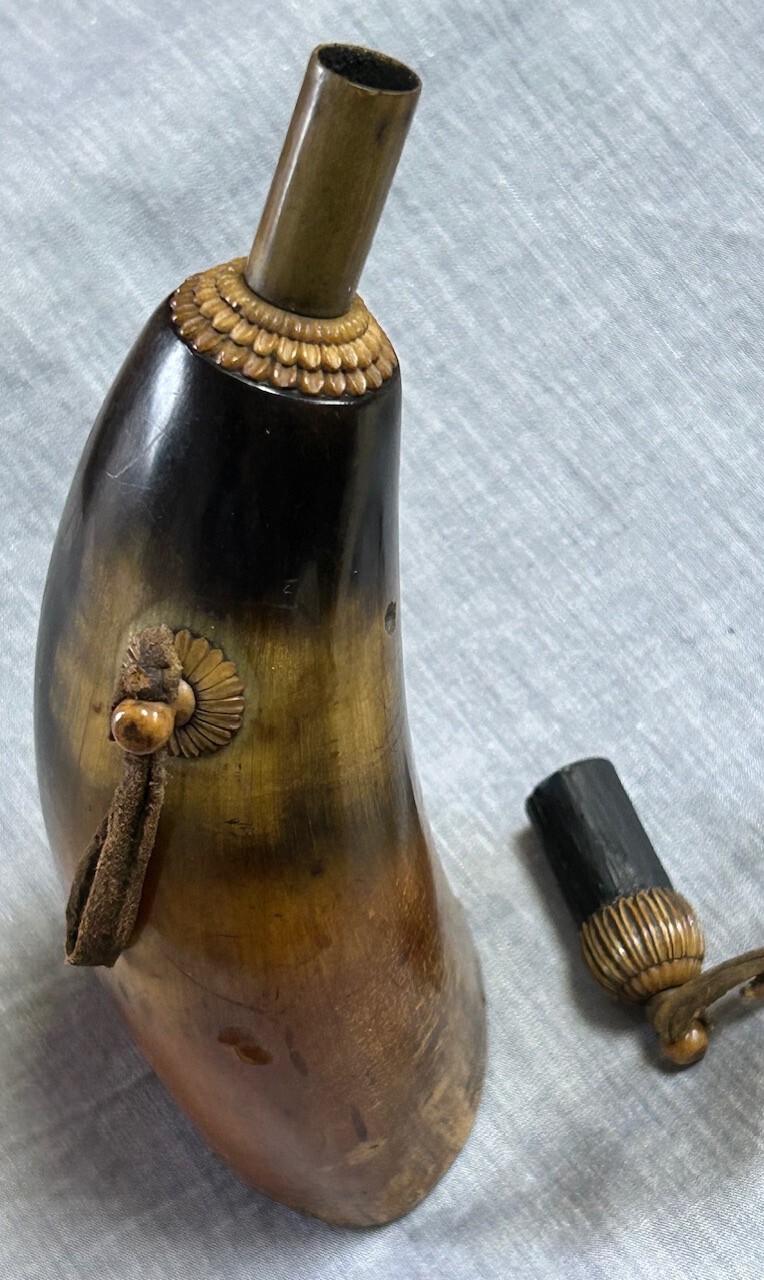
This topic is surely worth expanding. Looking to post a coarse powder flask I found over the weekend, I discovered this good old thread! These old black-powder flasks can show astonishingly fine work. If you can find one with matching bits (frills), then all the better! See below the collar of the spout, the top of the powder measuring cap, the heads of the pegs, and the flask side-attachment seat. Detail Pouring spout


 2 points
 -
its not leather Bruce its lacquered Paper. I have one. http://www.schmucker-info.net/letzte_stufe_gendaito.html1 point
-
For me it’s more Momoyama/Keichō than Edo period, but it’s just a feeling.1 point
-
IMO, the polishing quality (and the money it cost) gives a strong clue!1 point
-
Hello Jeff, Really appreciate your state of mind. If gentle soapy bubbles didn't work you could try "dry cleaning" using Essence F. Thid solvent will solve the fat and must of the stain. It is used in professionnal silk cleaning. As before, no soaking or rubbing, just stamping with a clean piece of cotton cloth... Best, Eric1 point
-
Thanks Pietro for the great feedback, and for showing us your examples. The various coloured glazes do make them more attractive. Surely elements of the finer detail were added by hand at some stage.(?) John, I am not sure if these would be more expensive than bone or metal. Metal Netsuke are rare enough in their own right.1 point
-
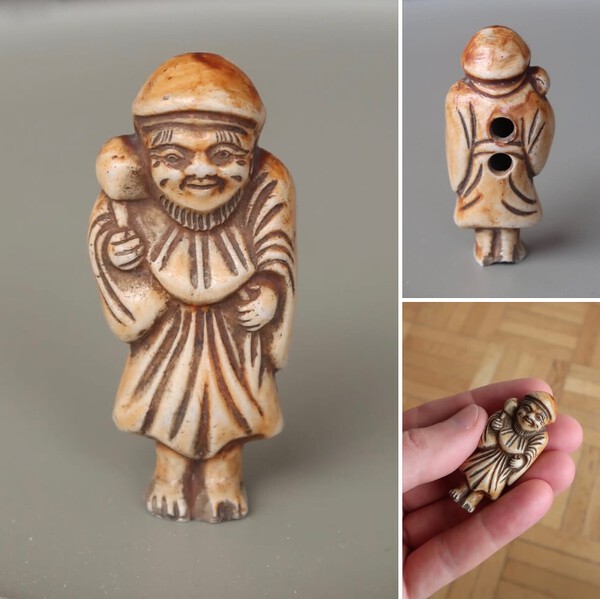
The seal is 正一 Masakazu, a common one on the crane sennin model. Here is my contribution in this category (but no seal):
 1 point
 -
Good afternoon! Not sure if this is the right place. I just received a lovely Mihara wakizashi from ChrisW. Blade was exactly as described, shipping was fast and Chris was great to do business with. Highly recommended! John1 point
-
Thank you for the compliment! I try to make sure that the listing, communication, and shipping is done the way I would want it to be done for me.1 point
-
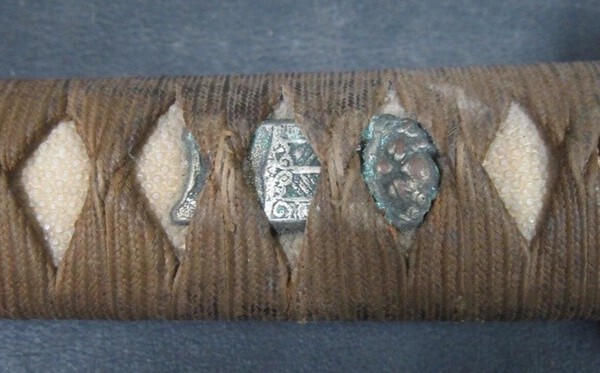
Looks like individual order? T98 with interesting tsuba and menuki. No locking mechanism and tsuba appears unadapted for leather fuchi addon. https://ebay.us/m/N6gS5Z


 1 point
 -
Brian, I think you can forget about worrying about us. We're here because we love doing this. It's a hobby, not a profession. The guys that like making money at this are already running their own businesses. Do whatever you need to do to Make NMB Great Again, and don't spend another second worrying about compensating us. Complimentary Gold memberships are an honor to receive and quite sufficient. Warrelics does the same thing. Don't know about other sites.1 point
-
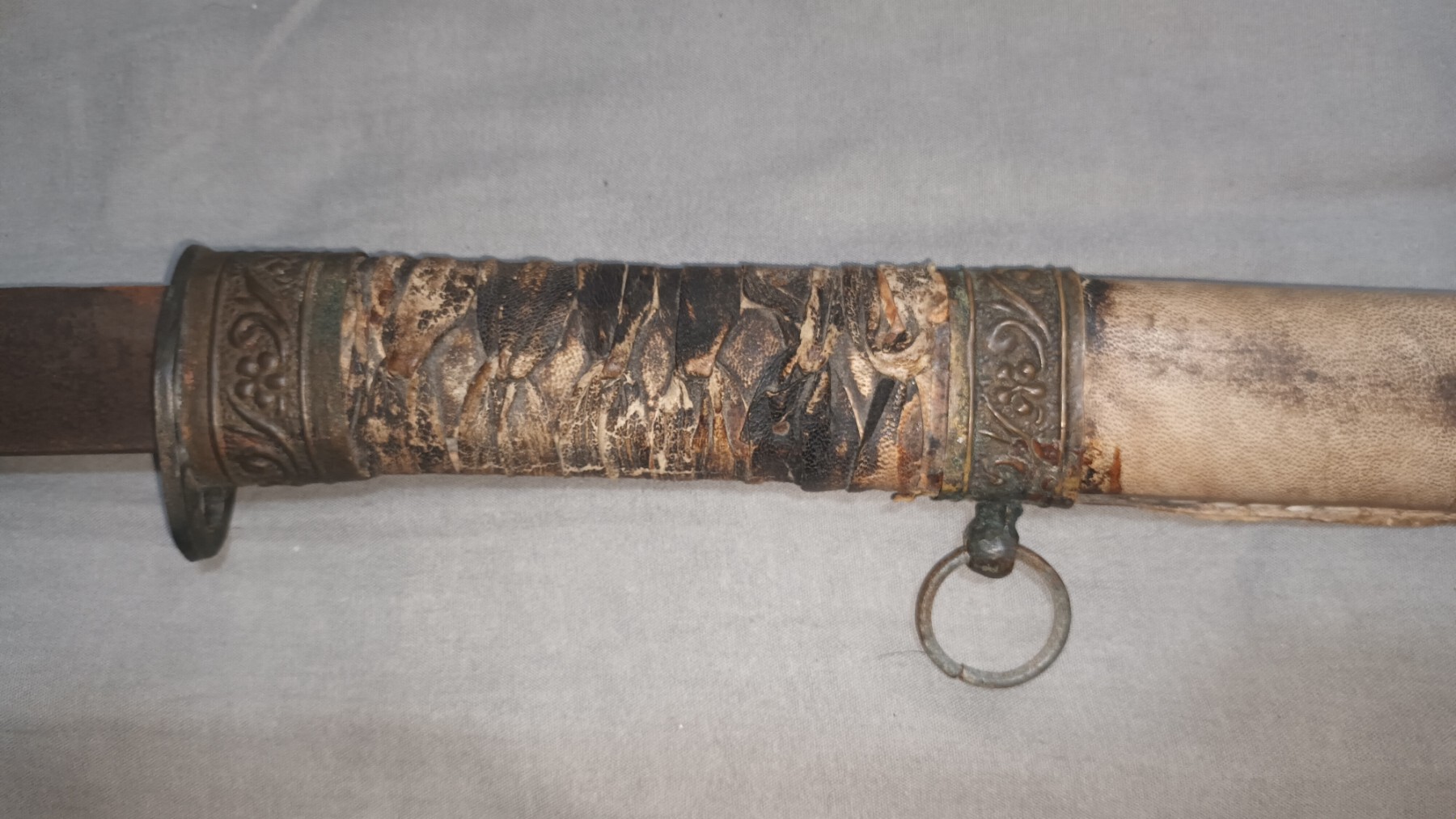
I think Andre is having a bit of fun with us. The handguard, latch and scabbard throat mechanism is trying to imitate a WWII NCO Type 95. The metal ring belt hangar loop is also imitating WWII swords. So, the 'sacred sword' is trying to say it was made in WWII, but it wasn't. Still looking for close-ups of the blade tip, a shot of the temper line and one of the bare tang, if we are still playing.1 point
-
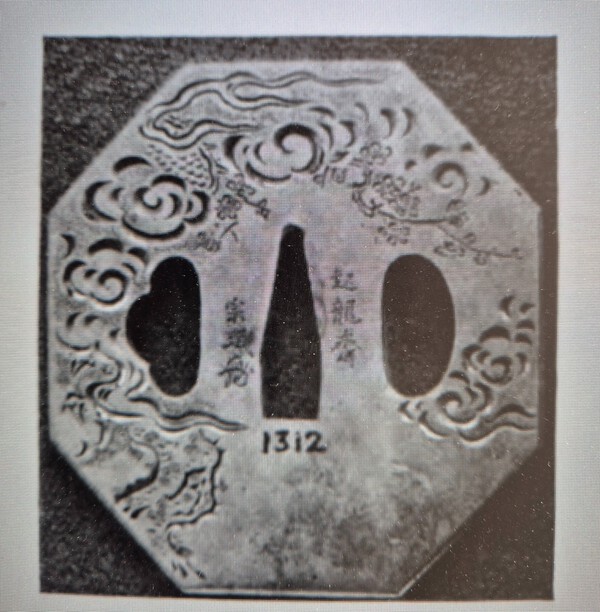
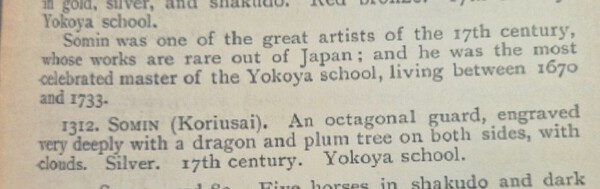
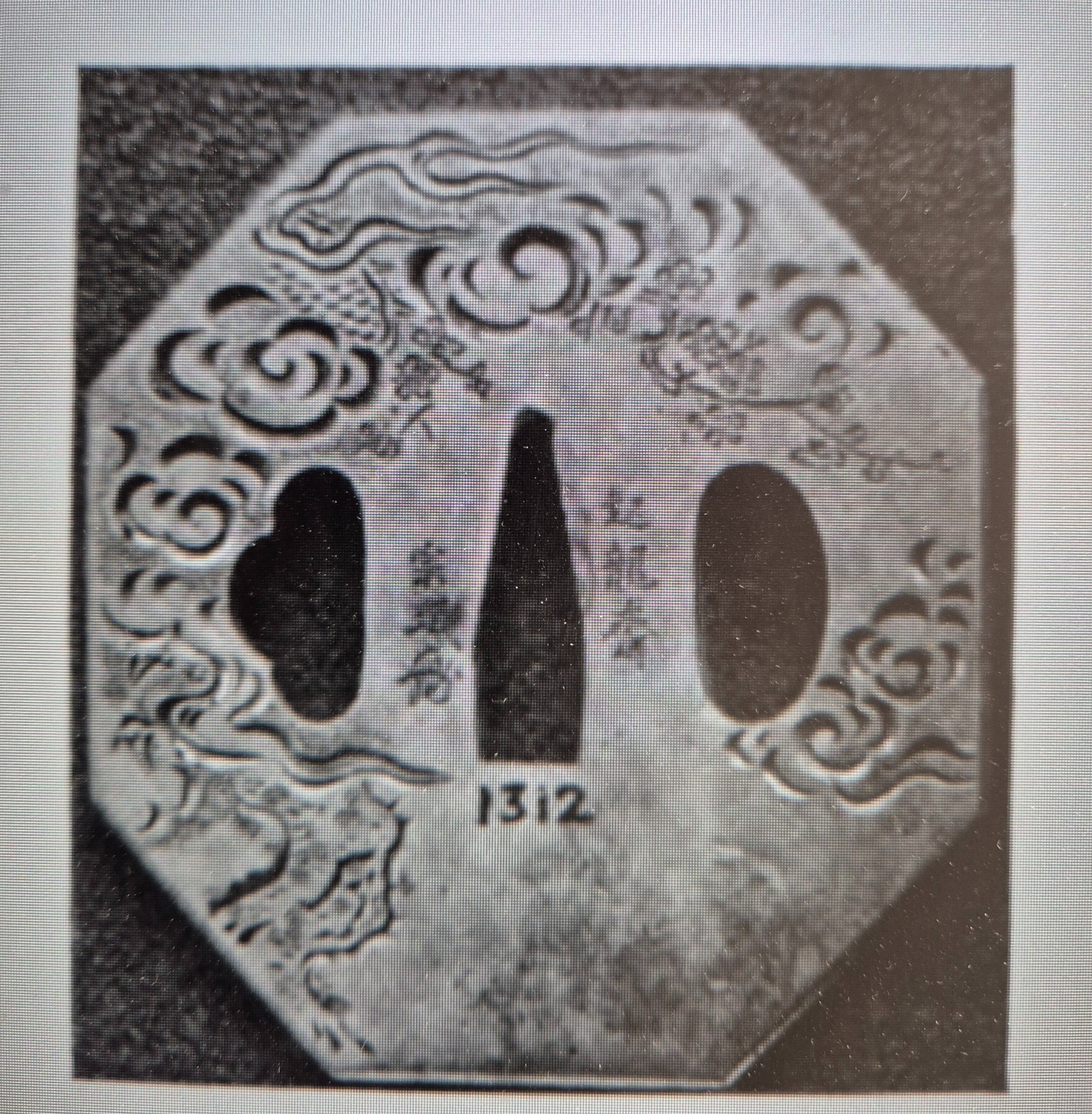
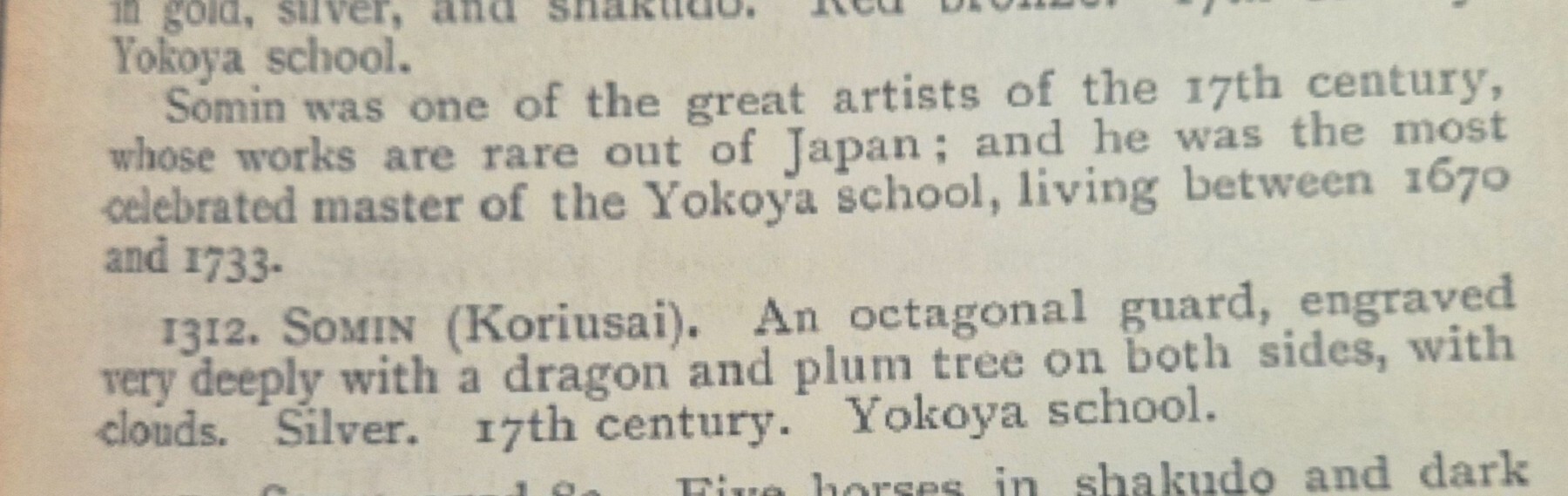
Whilst some of these numbers are no doubt museum numbers I suspect most of them are collectors numbers . For example Edward Gilbertson the pioneering English collector had a massive collection of Japanese art and numbered his pieces . He probably owned over a thousand tsuba. In 1889 he published three catalogues listing a selection of pieces from his " descriptive catalogue " The attached octagonal tsuba is from a paper he delivered to the Japan Society in 1894 and clearly shows the collection number as it is dark paint on a light surface. The tsuba description is from his 1889 publication listing a selection of tsuba from his descriptive catalogue and shows that the number on the tsuba is his catalogue number. C P Peak was another early English collector with a vast collection who numbered his pieces.
 1 point
 -
Not an authentic period Menpo sorry.1 point
-
I think any NMB member can buy, this way the (gold) seller will have a larger pool to sell there items1 point
-
武州江戸住永國作 – Bushu Edo ju Nagakuni saku (Made by Nagakuni in Edo of Musashi province) 寛文五年十二月廿三日 – Kanbun 5th year (1665), 12th month, 23rd day 貮ツ胴切落 – Cut off two bodies. 山野勘十郎久英 – Yamano Kanjuro Hisahide 相模守政常 – Sagami no kami Masatsune1 point
-
Very interesting sword, I believe the smith is Hojoji Tachibana Nagakuni. There is a known relationship between this smith and the sword tester Yamano Hisahide, see the below thread for more information:1 point
-
The real experts will fill in the rest, but this last photo is the cut test mei of Hisahide, December 1665. On a personal note, I never realized they did cut tests on waki. And as an FWIW, this is the earliest cut tested blade I have of his on file.1 point
-
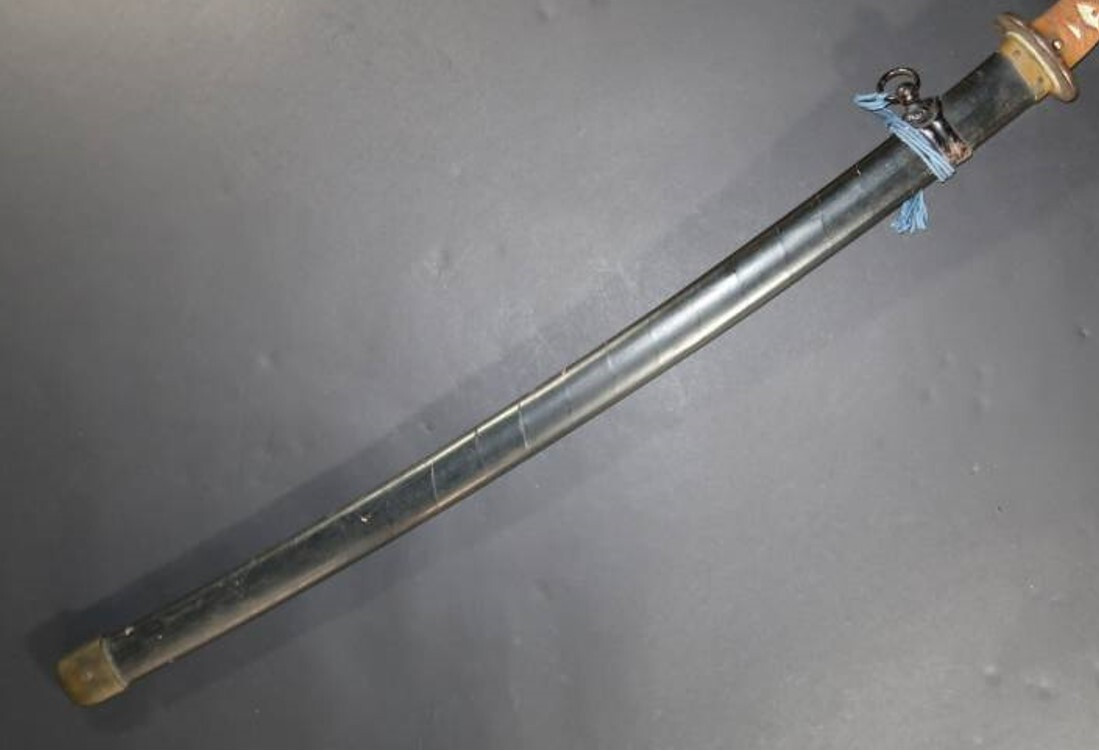
And a couple of black-wrapped (leather? Tape?) saya found on this thread:
 1 point
 -
I would agree with the previous comments. Several features would indicate staying away from this one.1 point
-
its s**t, no mempo1 point
-
Does a magnet stick to the Menpo? ie is it iron?1 point
-
Spoilers / answers:1 point
-
Hi Jon, menpō can be divided in several types with quality ranging from average to piece of art. Unfortunately not much is written on the subject, even though they represent an interesting collecting field in their own right. However, back to your piece. Hmm, how should I put it….well, it looks very odd! The mask pretends to be a ryūbu-men (mask with calm expression, usually without wrinkles). Actually, some features in the design and workmanship are raising doubts that we are dealing with a real menpō in this case. That is also true for the throat guard (called “tare”). Nodowa is a different piece of armor! We can go through step by step if you like, later on?!1 point
-
Here is a favorite in my collection - a Daiso tsuba set signed by Souju (Kao) 宗寿(花押)

 1 point
 -
Dear NMB members, first of all, thank you for your interest in this project. All the missing or unclear writings have been brilliantly resolved by Steve M, to whom I extend my warmest thanks for his kindness and expertise. I would also like to thank Jean (AKA Rokujuro), Manuel (AKA C0D) and Matt (AKA M Ubertini) for the interesting correspondence on the topic. I have just released the 2nd draft of "Tsuba hakogaki written by Satō Kanzan". The file is available for download from the same link (https://www.dropbox.com/scl/fi/gkfcfqc6gs14invoeg6hn/KanzanHakogaki.pdf?rlkey=5i89f80fkbbf60x67f1lloa2k&st=zfh4ao27&dl=0). Several new hakogaki have been added, so the file is now even larger. Since the focus is on the hakogaki rather than on the tsuba, I decided to include hakogaki that are highly suspicious forgeries, as well as others that clearly refer to tsuba different from those stored in their respective kiribako (sadly it seems quite common for tsuba to be randomly swapped from one box to another). Annotations have been added at the end of the document to point out inconsistencies and to provide rough translations of Japanese expressions beyond simple tsuba descriptions. The new additions, of course, contain missing kanji and transcriptions that still need to be confirmed (which is why this remains a draft rather than the final release). I look forward to receiving further feedback from all of you. Thank you.1 point
-
Hello, A good question and a chance at learning. Remember that there is a component of intra-smith competition at Juyo, this means that in addition to appreciating the overall quality, one must assess the relative quality. That said, it is possible to design such an exercise without traps (e.g., not taking a chu-saku JINO or mumei shinshinto in koto style). Moreover, ideally, we would have more picture than this: unfortunately our eyes are prone to errors in appraising the nioiguchi from these photos, due to hadori, poor polish, or other visual artifact. It's a game of statistics and it relies on picking archetypes and not outliers for this exercise to be meaningful. All of this to say that the heuristics I'm about to produce only work if there are no traps: Hope this helps, Hoshi1 point
-
1 point
-
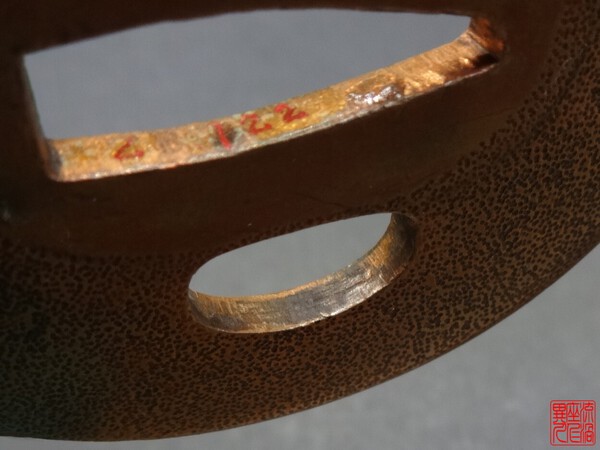
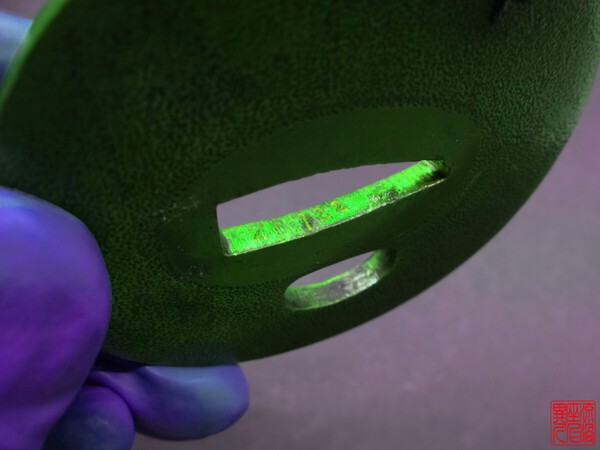
I have this Hamano ({浜野}) school tsuba signed Nobuyuki ({鋪隨}) in my collection that have a red lacquered number painted inside the nakago-ana. By enhancing some images the number seems to be composed by five digits and reads like ``28722'' or ``28.722''. I have tried to find the provenance from the number but without success. If any information about it is available or you can find out more I will appreciate it! Dimensions are 65.1 mm x 59.0 mm thickness 4.2 mm. Regards Luca

 1 point
 -
Just for information: Kin-pun mei (gold-lacquer attributions) were made no earlier than Meiji-period and are not very reliable, to say the least. Old Hon'ami attributions were always done in kin-zogan (gold-inlay). Unfortunately for fakers this is much more difficult to counterfeit than kin-pun. reinhard1 point
-
Something new..

 1 point
 -
Kashira not a habaki - but still rather cool!1 point
-
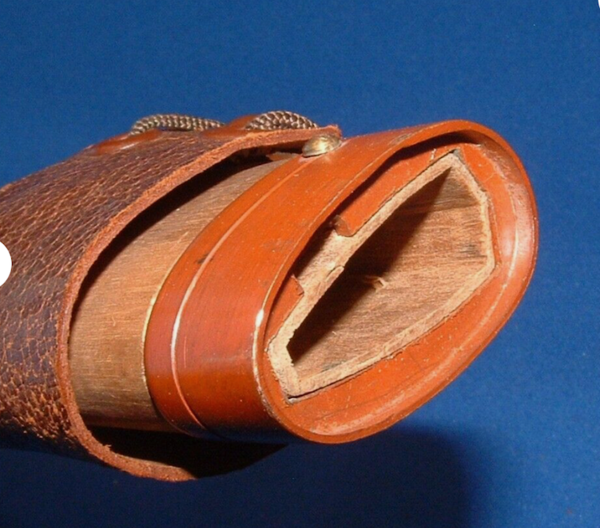
Has anyone seen this type of fitting before on a gunto? Looks like bare wood, leather cover, integrated dust cover? I think it might be on a type 94. https://www.ebay.com/itm/135530722493 John C.
 1 point
 -
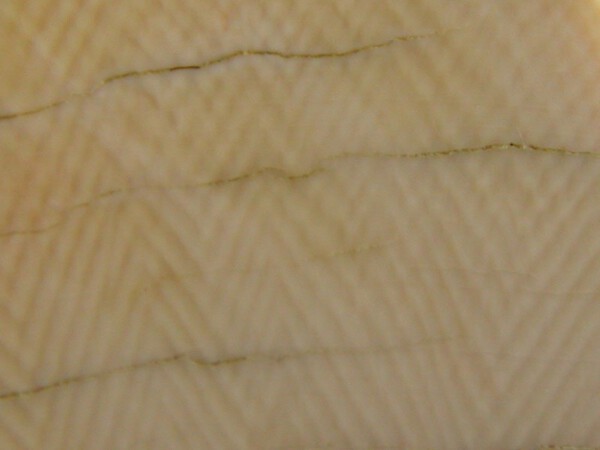
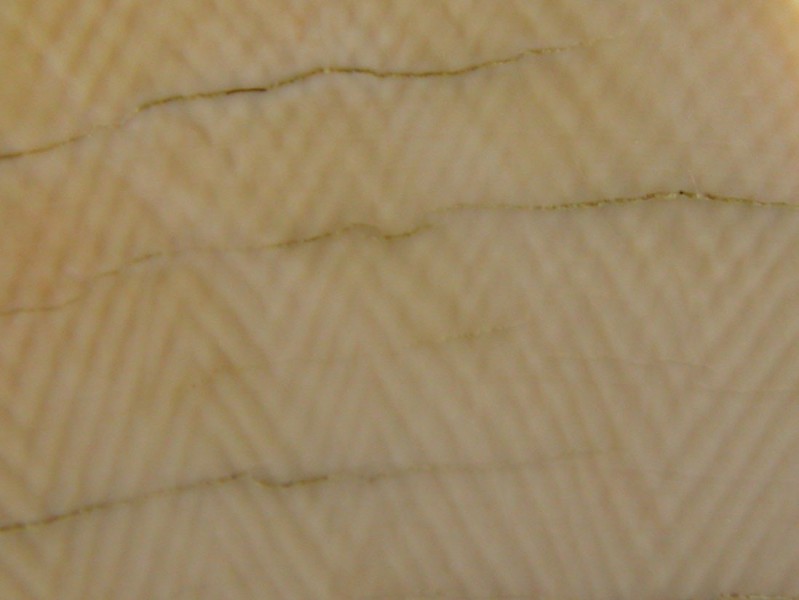
Dear Yamabiru-san, I agree with the other comments above and will add the following. With the current view towards modern ivory carvings (and to a large extent even antique ivory carvings), these kinds of modern netsuke have lost considerable value (even if they are "Grandfathered in" under the law by being older than the threshold date required). Good, antique, collectible netsuke are a lot like great nihonto and can go for thousands of dollars (and even hundreds of thousands for rare pieces). However, the type of netsuke that you have shown are modern tourist pieces that used to sell in tourist shops and jewelry stores for around $300 - $800, but they are now readily available for about $100 on the internet (and are a lot more like the modern "Samurai Swords" that are sold in some knife shops in some countries). Unlike collectible, antique netsuke, the signatures on these do not matter, so no need to try to track down the artist for each piece. There are some modern netsuke carvers who are very collectible (e.g., Ford Hallam's brother Clive Hallam), but your friend's netsuke aren't by any of the good netsuke artists. To identify elephant ivory, you should look for Schreger Lines which appears as intersecting arches or "cross-hatchng" in the ivory (see picture below). These lines may only show up in certain places on the piece. Other "ivory" (e.g., walrus tusks, mammoth ivory, antler, etc.) may appear like elephant ivory but generally will not have Schreger Lines. There are lots of fake netsuke made of resin (some are even very old), so some collectors use the "hot needle test". I don't recommend that test, but if the netsuke is low quality and probably fake, then there is little harm... Use a lighter to heat up a needle to red hot and touch it on an inconspicuous part of the netsuke (e.g., inside the himotoshi or rope hole) - if it melts, it's plastic. Sorry to say it, but I think that your friend would be lucky to get $100-200 for each piece today.
 1 point
 -
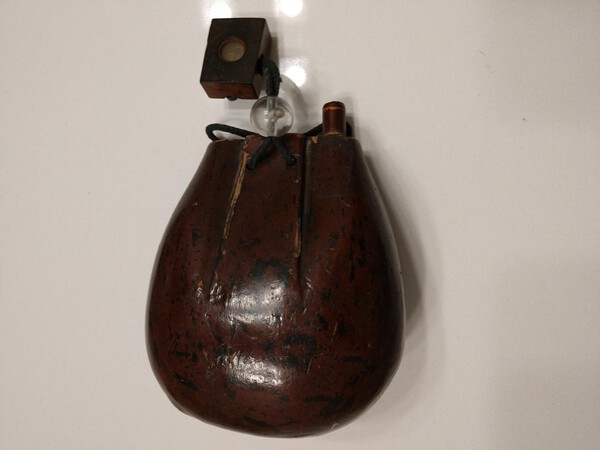
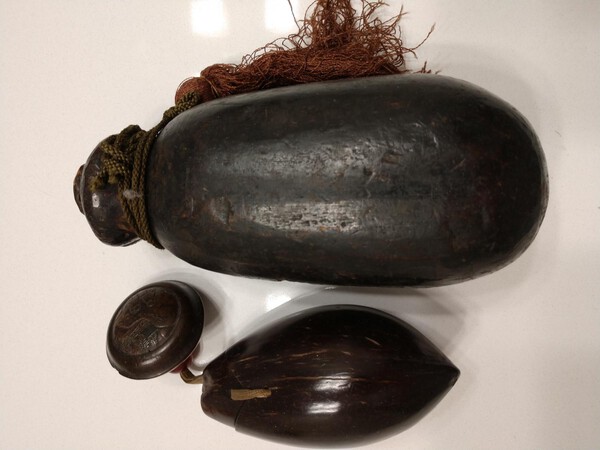
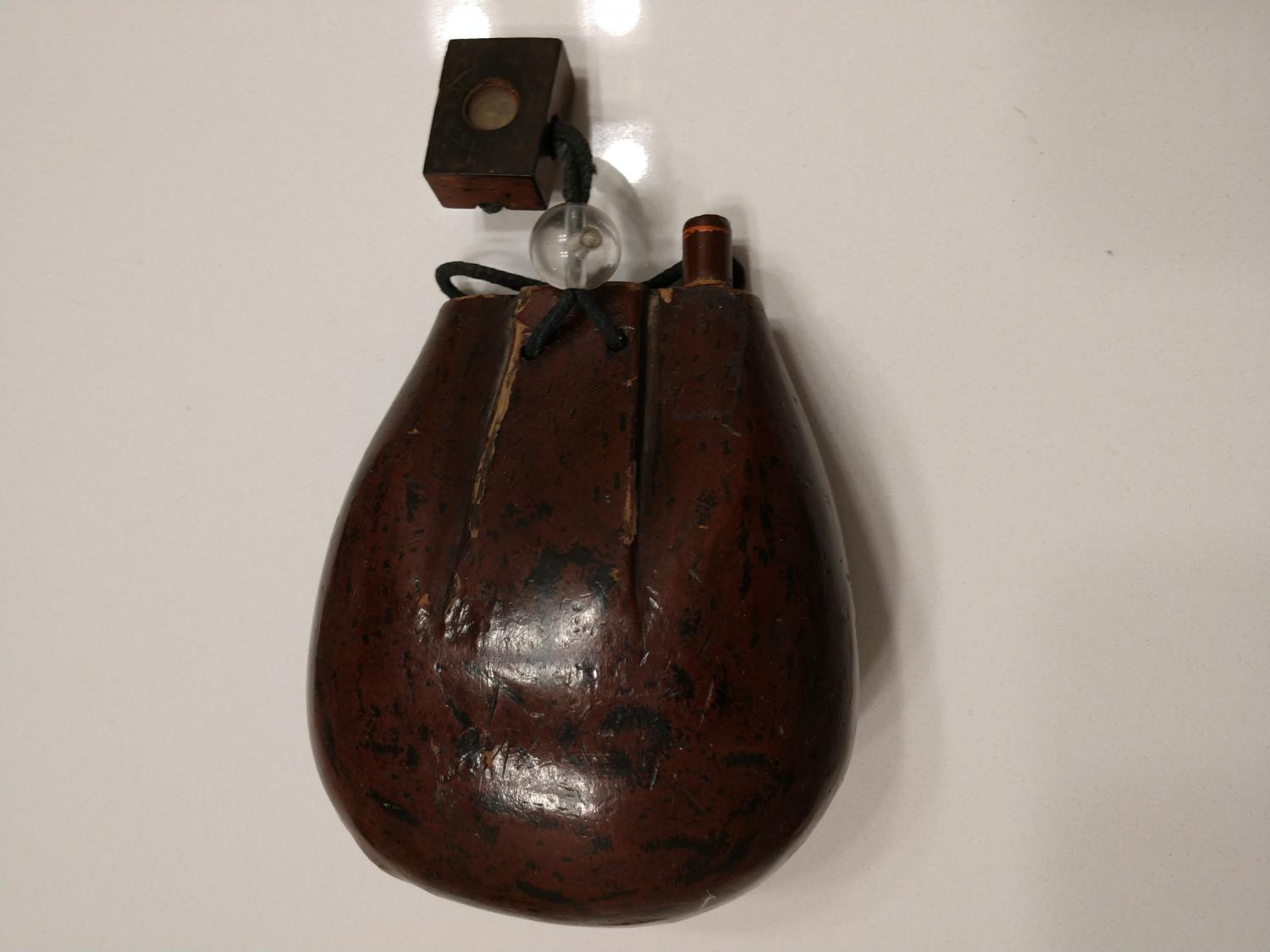
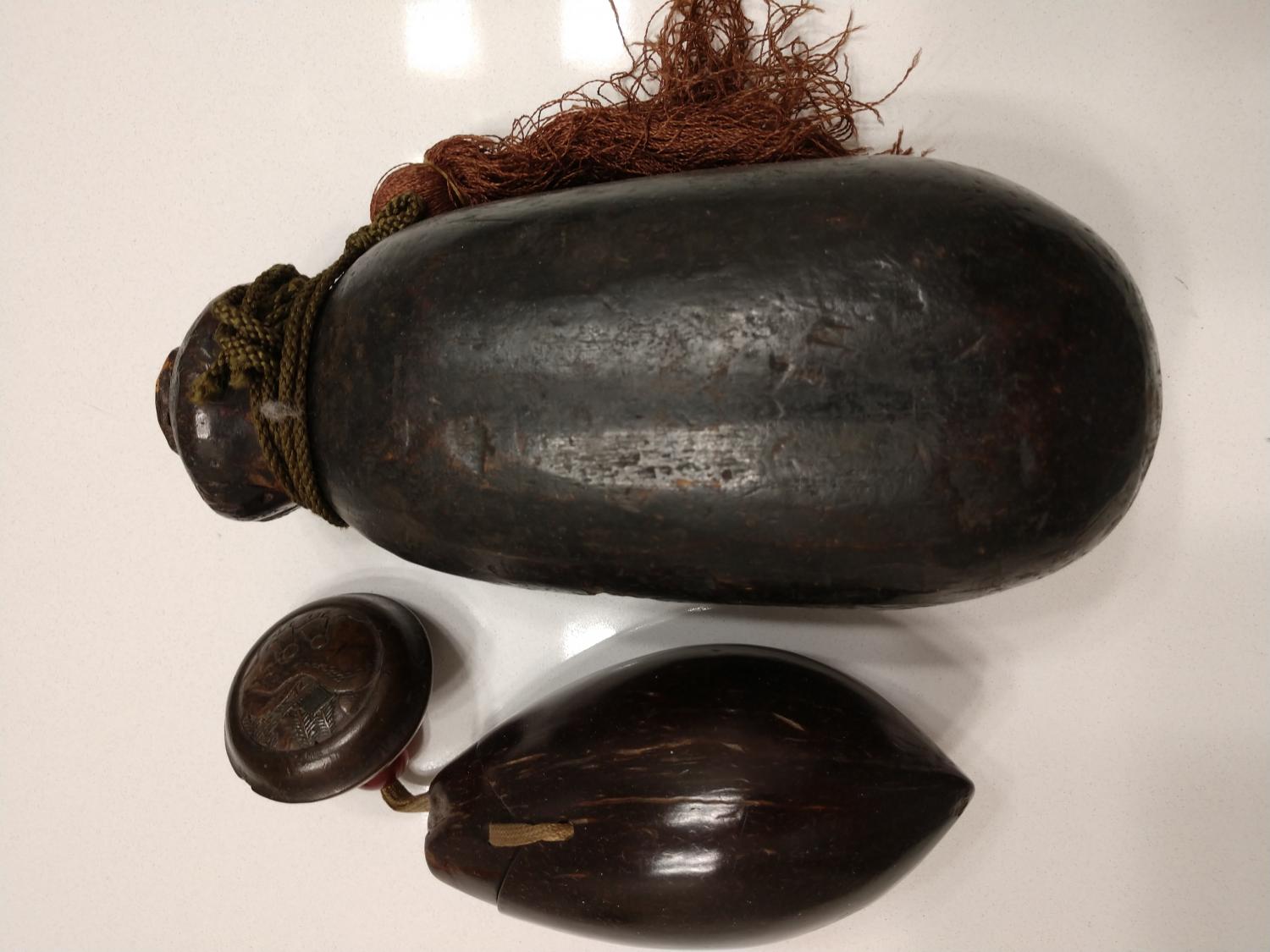
Powder flasks (3) one with attached compass with Japanese numbers/symbols
 1 point
 -
Very true - there are some real dumb folk searching eBay, with no idea what they're looking at.0 points
-
Add some photos haha.0 points
-
There is a lot of skill involved in the making of that one. Never encountered ceramic netsuke and maybe it isn’t quite 18thC Kyoto but it’s quite rare I suspect. As for a dealer putting the price up….very dishonourable! Golden rule…if you know more that the seller, keep quiet🙂0 points
-
Hello everyone! I am a Judo instructor and am seeking any information regarding this Japanese sword that was transmitted to me through a lineage of masters. This piece holds immeasurable cultural value for me and for my Dōjō. I would greatly appreciate any help in better identifying the blade's period and characteristics. What makes this sword truly unique to me is the incredible story of how it came into my possession. The Story of the Sword's Lineage According to the account I received, the history of the sword's transmission is as follows: The Ancestral Donor (Nakajima Clan): The first known guardian of this sword was a member of the ancient Nakajima Clan in Japan. The Connection to the Founder: This individual from the Nakajima Clan had the distinct honor of being a direct student of Jigoro Kano (1860-1938), the founder of Judo and the Kodokan in Japan. The First Transmission: Kano's student passed the sacred blade to one of his own disciples, a respected Judo Master. The Succession of Masters: This Master, in turn, transmitted the sword to another masterful Judoka who attained the rare red belt (a symbol of the highest level of knowledge). The Unbreakable Chain: From there, the blade was entrusted to the Shihan (Master of Masters) of my own Judo Shihan. The Legacy in My Hands: Finally, the symbol was transmitted to my Shihan, who entrusted the sword to me to continue his Judo teachings. My Request to the Forum Regardless of any monetary value, this sword is a physical reminder of the spirit of Judo and the philosophy of Budo. It has witnessed the transition of Japanese martial arts and is charged with the discipline, honor, and wisdom of masters dedicated to the way of Jigoro Kano. I deeply appreciate any information that can be provided about the blade

 0 points
 -
List it on EBay on auction you might make a few dollars Some one might believe that fantastic story-1 points


























This leaderboard is set to Johannesburg/GMT+02:00