
Leaderboard


Popular Content
Showing content with the highest reputation on 09/18/2025 in all areas
-
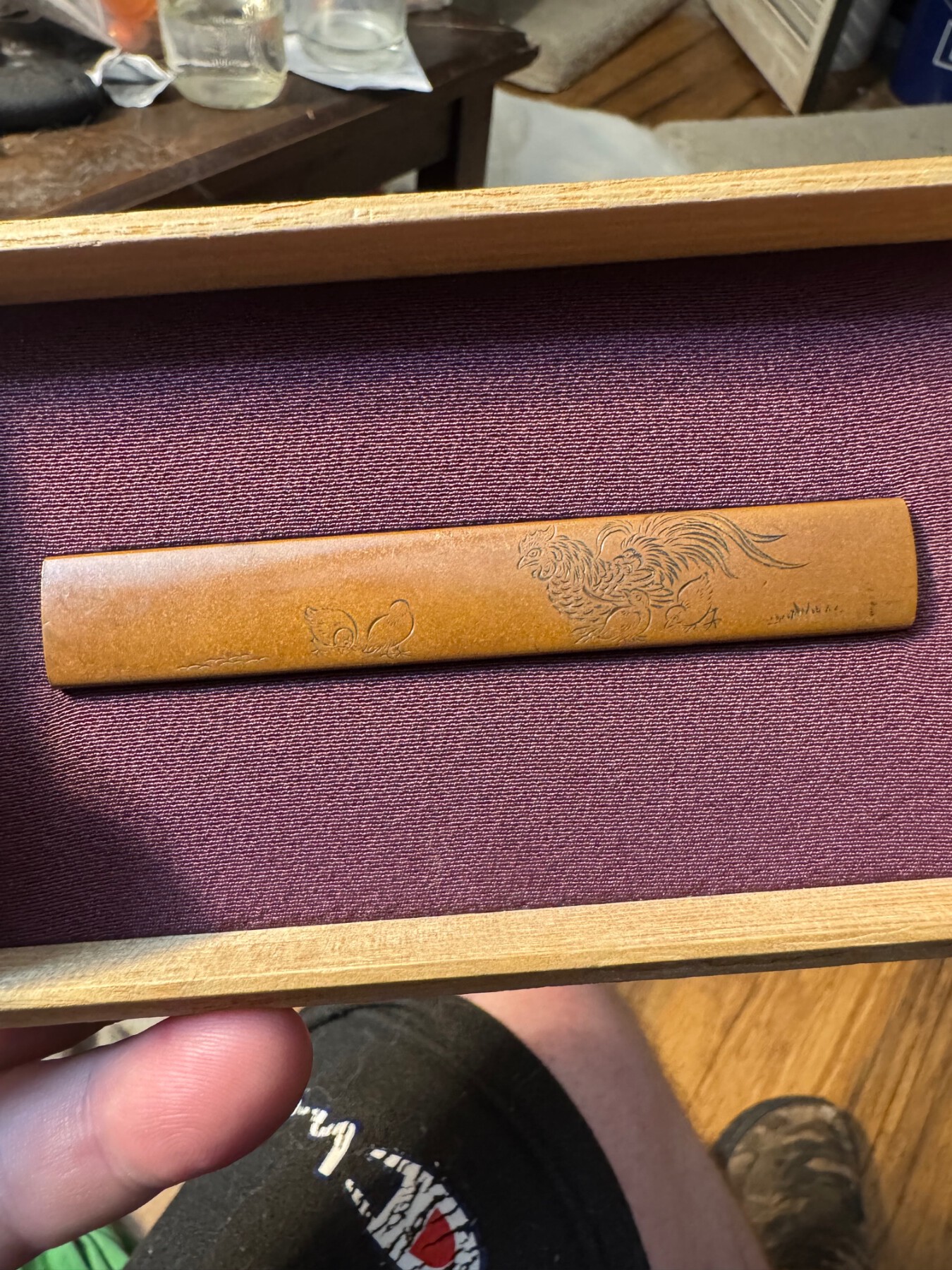
This one is in my family for almost 50 years:
 5 points
 -
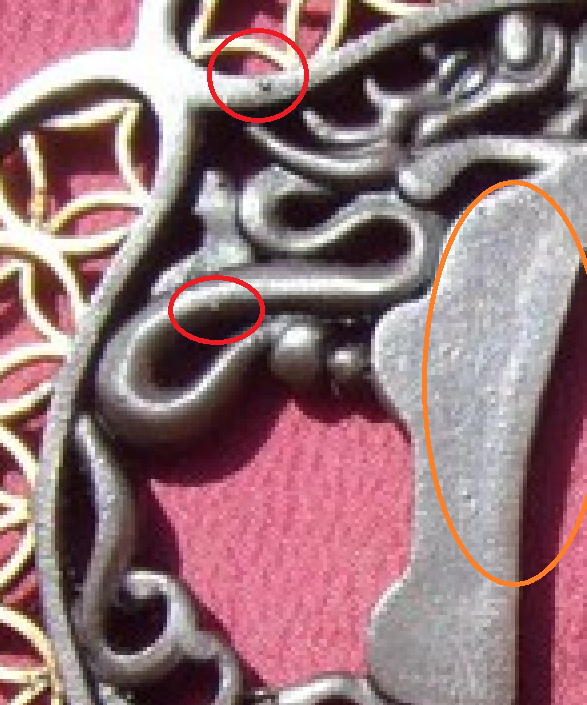
Machine made, there are a few spots [literally] where the laser has dropped spots of metal on the design. Nakago-ana is a little "off" and the seppa-dai is slightly depressed. Not Meiji in my opinion and fairly recent. Still, could you make it yourself for 40 euro?
 4 points
 -
"seller states in the description that it is 20th century" That is probably accurate. Personally, I doubt it is pre WWII.4 points
-
Yes, it is roughly inscribed Martin, but it does look like 兼元 Kanemoto. Short, two-character Mei. And the Hamon looks like Sanbonsugi, a Seki blade. (Which Kanemoto I cannot say.)3 points
-
I'm betting that is pretty modern.3 points
-
Perhaps the name itself at the bottom is a form of Sairen (西蓮)?2 points
-
@Spartancrest and @When Necessary Good eyes!2 points
-
Interesting input, thanks, @SteveM! I wasn’t aware of the variation between prefectures. I had read that it’s difficult to determine whether a sword is tamahagane or simply traditionally forged without scientific testing. So, while de lege and formally the rule concerns the base material, in practice it seems to mean that the sword must convincingly resemble tamahagane, and the stamp then serves as evidence against that. @mecox Thanks for the information! I was also surprised by the roughness of a meishiriki-mei. Even the 友 tomo of kanetomo looks a lot like a 女 jo. I doubt it’s gimei, since although Ujifusa is a recognized and experienced smith, he wasn’t among the top-level masters whose signatures were commonly faked. And the fact it carries two names makes me even more curious indeed. Edit : Btw I'm impressed by your research after reading the files. Both regarding you, mecox and Bruce's work.2 points
-
I am going to add a crane to the mix. Nice larger tsuba roughly 8.2cm in diameter. I believe Nick from Nihonto art sold a very similar piece earlier this year from what appears to be the same school.
 2 points
 -
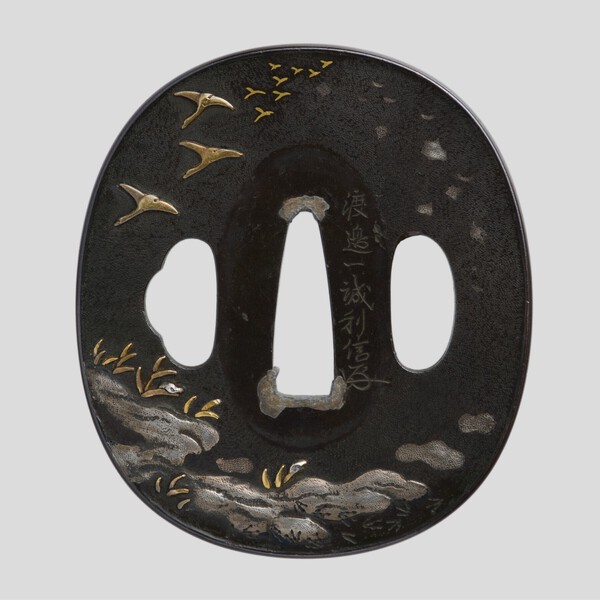
Here is the favourite bird-themed tosogu from my collection: a tsuba by Watanaba Issei. It depicts the southward migration of geese in the autumn months and their return to Japan in the eighth lunar month known as “Kanaraigetsu”. As the geese migrate south from their summer visit to Siberia they inspire thoughts of the coming winter, but also give a strong feeling towards the Japanese spirit. I fully appreciate how especially during times of change and uncertainly that this yearly event brings a sense of unity and national pride. The importance of geese in Japanese art was further secured by stories of several military heroes who had achieved victory in battle when a sudden breaking of ranks by flying geese signaled an ambush. This protective role of the birds led to their frequent use in decorating tosogu. I particularly like the detailed carving of the geese on the omote and the snow on the reeds; you can see them buckle under the weight. On the ura the imprints of the geese's feet in the snow are very charming, as well as the sekigane which is made to look like snowfall, a lovely touch.

 2 points
 -
G'day Jake, I have a set with very similar theme to yours. Cheers, Bryce


 2 points
 -
Hey fellow Tosogu fanatics! I've been away from the board for a little while due to work taking up much of my attention recently but that doesn't mean I've stopped collecting these past few months! I have a couple new acquisitions I have been waiting to share with the board so this post is well overdue! As the title suggests, two of my latest acquisitions include birds in the mise-en-scene! Hoping for any knowledge the board might have about the artists Toryusai Kiyohisa or Marukawa Hiroyoshi (Mito school). Also, post your favourite birds from your own collections!

 1 point
 -
I wondered why all his swords always look perfect nice hamon etc Probably not a good idea buying from him Thanks for the heads up1 point
-
Another Mt. Fuji habaki on a gunto.
 1 point
 -
Thank you for sharing the material. After reviewing all six pages, I find that two prevailing theories emerge. 1. The theory based on the 1937 "Letter from the Chief of Police & Security Bureau of the Ministry of the Interior to the Police Chiefs of Prefectures" This interpretation suggests that shōwatō and chō-nihontō (“super nihontō”) terms tied to stamped blades were promoted and advertised as being of excellent quality. I love the chō-nihontō term, it's such a kansai term and sounds so funny to me. Basically, that this stamping business was initially a business ploy. And so far, it appears the "Sho" stamp and "Seki" stamps were initially stamps issued by private manufacturers, before the "Seki" stamp later being tied to the army as well. That is unlike the star stamps and "Na" stamps tied to the army. As the stamps originated from private manufacturers, they could be applied to any blade, regardless of the actual materials or production methods. The police mentions that some of these swords were in fact made with inferior materials, resulting in products that were brittle and prone to breakage. Thus, a stamped sword might or might not qualify as nihontō, and each blade would require individual examination to determine its status and quality. That is, unless a law is found proving the contrary. That would also require establishing from primary sources that the stamps were / were not reserved to non-traditionally made swords. 2. The theory based on my previous interpretation, supported by Ryujin Swords’ article on tang stamps This theory basically follows my earlier interpretation of Ohmura's writing and is supported by Ryujin Swords’ article on tang stamps. It holds that it was required by law that blades forged from tamahagane were not subject to inspection and therefore did not receive tang stamps, while blades made from non-tamahagane steels did. So according to this theory the distinction between stamped and non-stamped sword would be the use of tamahagane. Ohmura’s wording hints at this distinction (by my reading), but Ryujin Swords explicitly supports the claim. If correct, it would align with their classification system: Tamahagane gendaitō: “true” nihontō Mill-steel gendaitō: forged traditionally but without tamahagane, occupying a borderline status and sometimes managing to pass shinsa by chance Abura-yaki-ire-tō and similar blades: mass-produced, lower-quality swords at the inferior end of the spectrum The main difficulty with this theory is the lack of primary sources establishing such a rule. Ryujin Swords refers to a 1933 law, but unless this law can be located, the claim remains unverified. I will continue searching Japanese sources to confirm whether such a law existed and will update this post accordingly. EDIT: I can conclusively assert that no such law exists. It seems like a myth solely existing in the English-speaking environment. So the stamping isn't based on legal provisions, and there is no law that asserts non-tamagahane blades should be stamped. Now the question pertains to industry practices. These stamps originated with craftsmen and the industry association as guarantees of quality. The army subsequently adopted them, and they were formally regulated by a Ministry of Home Affairs ordinance in 1942. While that ordinance is frequently cited as the origin of the “Sho” stamp, Bruce’s research and the memoirs cited by Ohmura prove the stamp existed earlier. Next, I will research primary sources to determine whether or not the Seki Cutlery Industry Association only used these stamps to non-traditional blades.1 point
-
I was quoted over 4 months to make a shirasaya for a tanto or 1-2 months if I was prepared to pay a 60% premium.1 point
-
In general, things like making habaki and making new shirasaya are time-consuming Each product is made by a specialist and they certainly have work they took on before yours, so yours is in the queue Be patient Making habaki and then shirasaya can take a year or more1 point
-
PS... Sorry to ask for so many very specific photos. It’s just the nature of the beast in this hobby Your photos are actually quite well done, but for the more knowledgeable members to give good information: very specific angles and details are necessary. Even then, photographs of nihonto are almost always limited in what they can reveal. Often, the best way to get truly accurate information is to have the sword examined in person by an expert. Best, -Sam1 point
-
Thank you for sharing your blades. Unfortunately, it's difficult to provide meaningful feedback based on the current photos. Because your swords are mumei (unsigned), we must rely entirely on their sugata (overall shape), hamon, hada, and other physical details to offer reliable feedback. I’ve attached a visual guide (see below) outlining how to photograph a nihonto for the most accurate feedback, please: - Photograph the entire blade (sugata) from a straight overhead angle, with the tip pointing north and tang pointing south. - Remove all fittings, including the habaki, to expose the full blade and tang (nakago). Also close-ups of: -The kissaki/boshi (tip) - The hada/hamon (grain/temper line) - The hamachi/munemachi (notches of the edge and spine @ the nakago) - The nakago/mei (tang/signature area, even if unsigned) Against a dark background is best. From what I can see so far, your blades appear to be suriage or osuriage mumei katana with extended kissaki, very likely pre-WW2. However, clearer and more complete images are needed for meaningful feedback. Can you discern a visible hamon in the kissaki area (Boshi)? Cool swords! All the best, -Sam
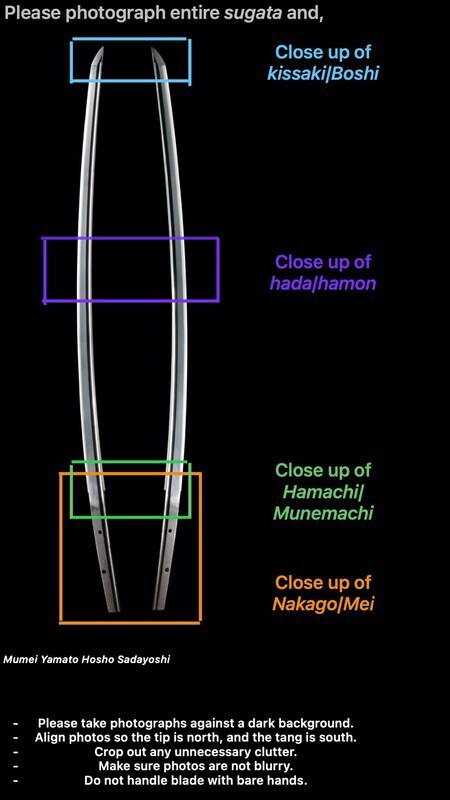 1 point
 -
The holes (from what we can see) do not follow normal Netsuke holes which are larger, more like tunnels. Yours look to have been drilled later on. The question is 'why?' I would still stick with a definition of 'Okimono', rather than 'Netsuke'. Admittedly they can be close in conception, especially in the Meiji period where Netsuke and Okimono can sometimes overlap. A Netsuke might have a flat bottom for example, taking on an increasing ability to stand alone as an ornament.1 point
-
Ludek: 100 percent fake. Looks like the same factory as the one I posted before. Study the following elements and compare to the real thing for training purposes: fuchi stamps are not correct - not even close tsuba is not correct - note the lack of a flattened middle section on the mimi wire tassel loop on the tsuka is not correct screws on the tsuka are not correct tsuka is poorly cast and lacks detail no stamps on the blade/incorrect serial numbers bohi is not the correct shape scabbard latch is wrong shape John C.1 point
-
No worries, I'm not coming to any definitive conclusions, but rather investigating and making theories.1 point
-
The registered and papered swords are rare exceptions to the norm and I wouldn't base any final conclusions from these. For every sho/seki stamped sword with papers in Japan there were likely many that were summarily destroyed.1 point
-
So getting both cataracts done was worth the money!1 point
-
And if anyone was wondering about the current market price for a nice mumei Yukimitsu tanto, 10mil JPY1 point
-
@l_Kendo_It Leonidas, interesting sword from early war Seki with Sho stamp. Both were experienced smiths, but rather rough mei, maybe an "experiment" between colleagues? Information and examples of both in NMB Downloads, see top of main page. Shinoda Ujifusa in Japanese Naval Swords Part 1. Kanetomo in Gifu Tosho List 1937 smith #291 point
-
FWIW, recent Juyo zufu no longer use the chu-Aoe/sue-Aoe terminology. Only ko-Aoe and Aoe.1 point
-
I don't want to get too deep into the weeds, but in order to submit a sword for authentication by NBTHK, the sword must first be registered. In order for a sword to be registered, it has to be accepted as an art sword, and, in the case of Tokyo, the Tokyo metropolitan government specifies that a sword must be made of tamahagane to be accepted as an "art sword". https://www.kyoiku.metro.tokyo.lg.jp/lifelong/cultural_property/registration/registration_02_01 Now the guys at the Tokyo metropolitan government aren't stupid, and they will certainly accept old/antique swords that are made of nambantetsu, etc... But when it comes to wartime swords they have been less forgiving. As I have come to learn, however, interpretation of the sword registration laws can vary depending on the prefecture. I do believe that most prefectures will follow the Tōkyō standards. But, as always, accommodations are made for exceptional pieces. Lately, this wiggle room seems to be expanding. If your sword can be registered, it can be submitted to shinsa. I think most prefectures will reject it, unless you can make an exceptionally strong case for your sword to be considered an art sword.1 point
-
Absolutely love this blade, huge fan of Yukimitsu. Quite the stellar looking blade.1 point
-
I recently picked up a sword, that similarly has what appears to be an intentionally/selectively removed menuki. I suspect Bruce is correct, especially if the missing menuki had the family mon on it (in my case, a possibility). Which would increase its perceived value. Just a theory about missing menuki. -Sam
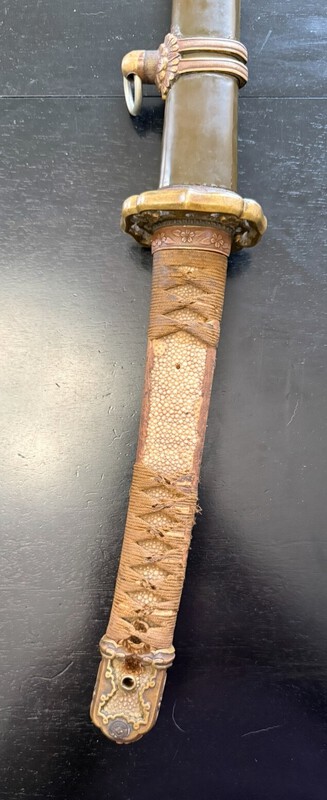 1 point
 -
造兵廠 zōheishō How much should I spend?1 point
-
Thanks, Bruce! I’d be glad to take a look at the documentation. From what I’ve gathered, the Shō stamp was in use between 1935 and 1942. Since this is a Type 98, that would place the sword’s manufacture between 1938 and 1942. So far, I haven’t found evidence that the “Shō” stamp itself corresponds to a specific manufacturing process. Is that understanding correct? As for Ohmura’s page, I read the same passage. I’m fluent in Japanese (though not at an academic level), and what stood out to me was the phrase 「鋼材から生産する新作日本刀」. The word 鋼材 (kōzai) means “steel material” in a general sense. If the intent were to include all swords, even those made from tamahagane, then specifying 鋼材 seems unnecessary, even superfluous. My impression is that this wording was used deliberately in contrast to tamahagane, which would align with Ōhmura’s point that gendaitō were not subject to inspection. From this, my sense is that stamped blades were not made of tamahagane, but could have been produced through fully traditional, semi-traditional, or entirely modern methods. That may explain why the NTHK and NBTHK sometimes recognize exceptionally well-made examples as nihontō, though of course, that remains controversial among collectors. * EDIT: The document Brian kind shared appears to concern swords made to very high standards for officers. It's not indicated in the translation but it dates to 1942 (Shōwa 17). The “about this file” section refers exclusively to Rikugun Jumei Tosho, though I haven’t found that designation explicitly mentioned within the document itself. So it's something to confirm. The swords in question were commissioned officers’ swords (Types 94 and 98). They were required to meet high production standards, mandatorily using tamahagane, hochō-tetsu, and charcoal. If it solely refers to Rikugun Jumei Tosho, Shinoda Ujifusa (篠田氏房) does not seem to have been among them. According to Ōhmura’s website, he is instead listed as Dai-san-seki (第三席, 優秀), “Great Third Seat”, an award of excellence granted at an exhibition. However that award doesn't mean anything about how he made his other swords. It just means that he was highly skilled. The source is easy to locate by searching his name: 戦時下の日本刀匠と序列. EDIT n°2 : Here I have found that Ujifusa worked in Saguchi Tōken Seisakusho (佐口刀剣製作所), as the sole smith of that workshop. 関の軍用日本刀 Syōwa-tō of Seki It indicates that 関刀剣株式会社 (Seki Sword Co., Ltd.) and 株式会社濃州日本刀鍛錬所 (Nōshū Japanese Sword Forge Co., Ltd) used traditional forging techniques. But the technique of Saguchi Tōken Seisakusho isn't described. I have found one of his gunto to be papered as NTHK-NPO Kanteisho (2nd highest rank). But the Nakago isn't shown : https://new.uniquejapan.com/wp-content/uploads/2015/02/18-5-Antique-Japanese-Swords-From-Unique-Japan.pdf This sword of his has also the "Sho/Sakura" stamp and was registered without issue in Japan, though it doesn't have NTHK-NPO or NBTHK papers. 【研ぎ上がり・大業物・関脇格】「氏房」68.2cm 、鑑賞に・居合・試斬刀として!!!1 point
-
No experience of your man, but generally silence in Japan means there is no update, nothing positive to report. When it is ready they will contact you, actions speaking louder than words, and excuses being nothing more than wasted words. In my experience a message will come from out of the blue… (Just generalizations, but from what others have said above, his organization is simply slow, not criminal.)1 point
-
The Shintogo DNA is very clear in this tanto attributed to Yukimitsu. Beautiful forging consistency throughout the jiba. Good example showing how the detail in the nioiguchi and hada are emphasized in these photos. https://eirakudo.shop/1728031 point
-
Charles, In general, guruwa and menpo with guruwa were mostly seen in the late Sengoku period, particularly the Momoyama, since protection was paramount. Guruwa on menpo were uncommon probably because they were naturally more difficult - and more expensive - to make.1 point
-
I will dump here links I find. Not only F/K but remember - caveat emptor For starters kogai/kozuka https://ebay.us/m/gMYb9s1 point
-
Late Edo kinko.
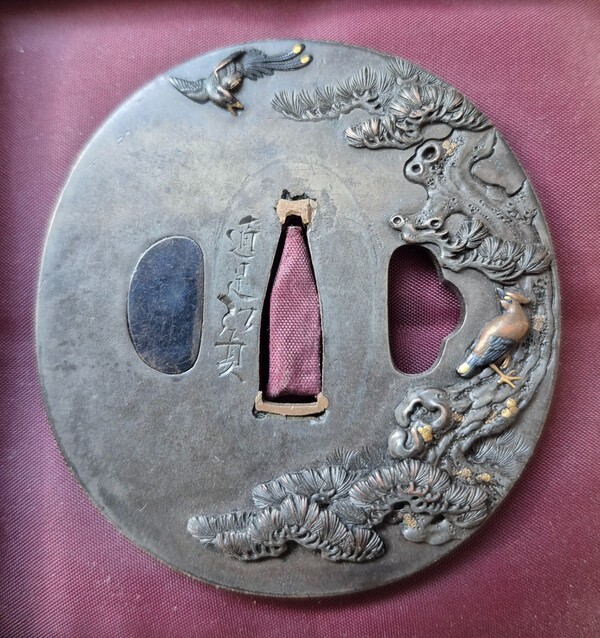 1 point
 -
Club update: First meeting is officially scheduled! Sunday December 7th 2025, 3pm-6pm, in Tualatin Oregon. Please message me for the address if you have not received the club email. A big thank you to the Multnomah Aikikai, who allowed me to visit their dojo with some of my collection, and talk Nihonto with their members. It was a great time, and fun to see others swords. Photo below. Looking forward to getting this ball rolling! -Sam
 1 point
 -
I have a few, but this is probably one of the better ones
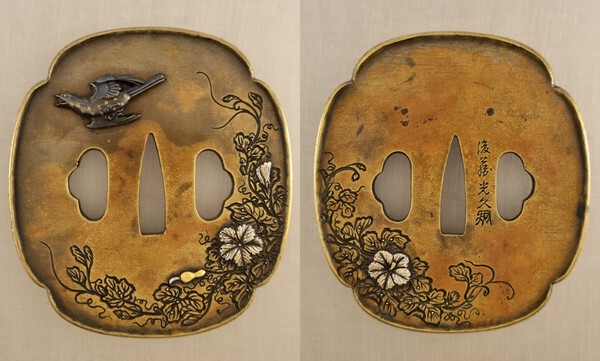 1 point
 -
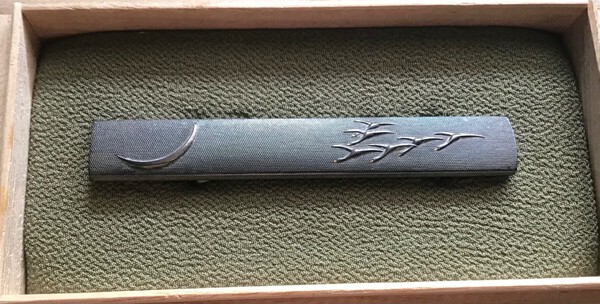
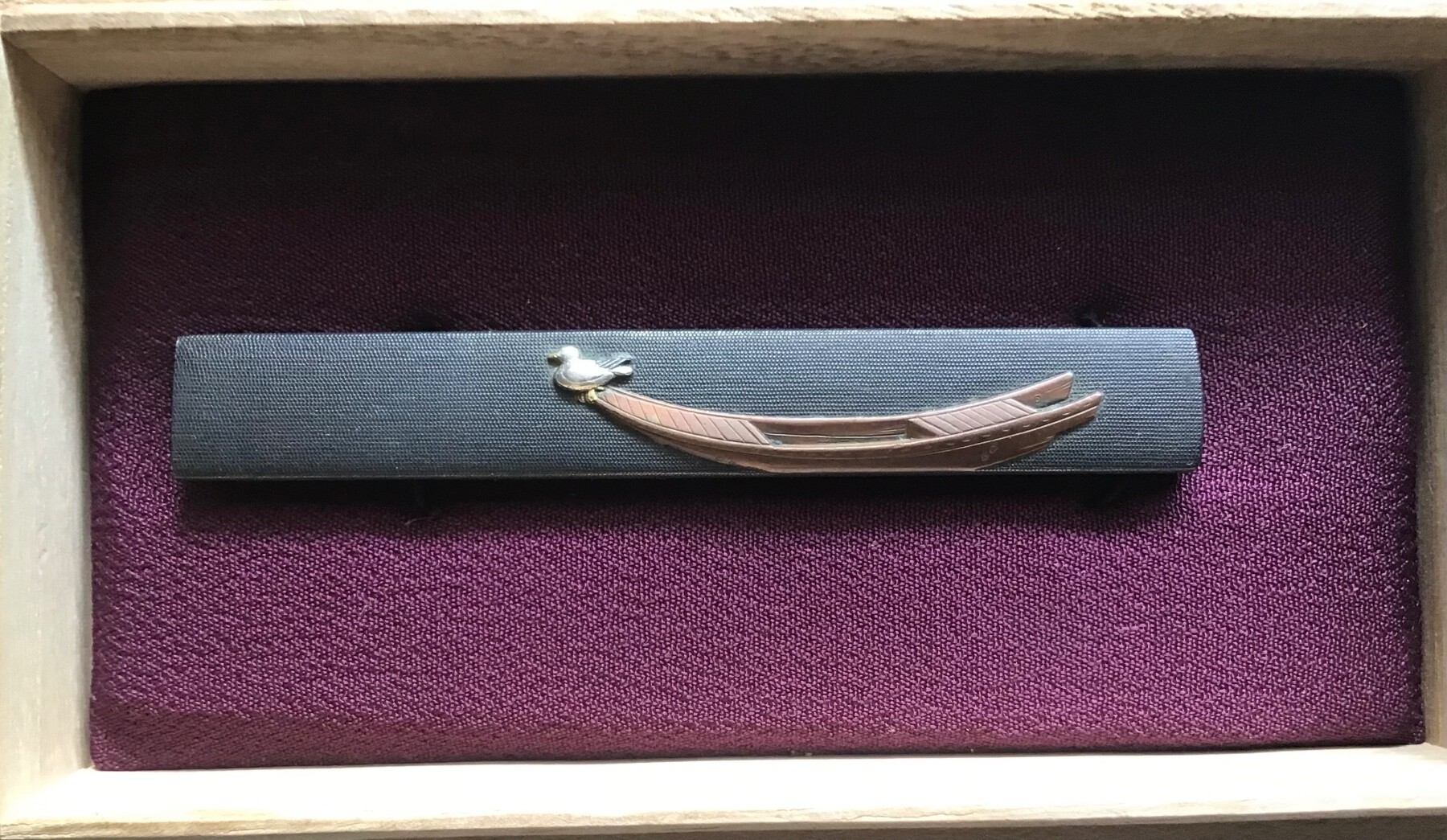
Couple of kinko kozuka. The duck on the boat is Goto.
 1 point
 -
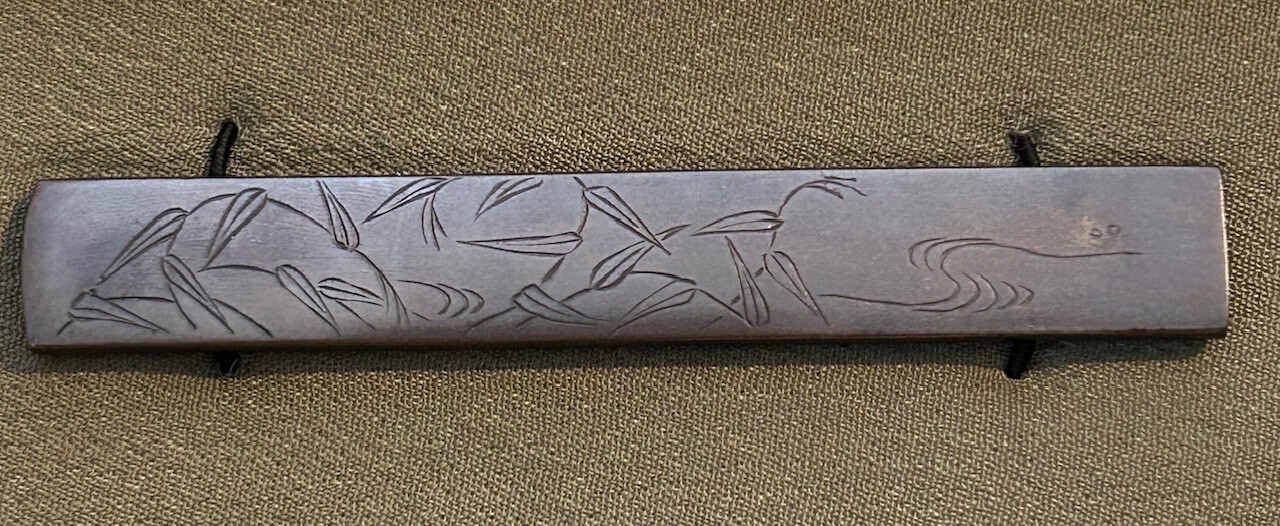
Ed Wolf, ‘sparrows and bamboo’ seem to be a recurring theme of the Date clan. Here is one of my personal favourites, with the watery marsh or river theme in shibuichi on the reverse, and five silver and gold egrets on a shakudo obverse. Kaga-zōgan inlay technique.

 1 point
 -
One of my favourites - an all time classic:
 1 point
 -
Hard to pick an absolute favorite, but this is on the short list -- a low-crossbar Yamakichibei work from late-Momoyama.
 1 point
 -
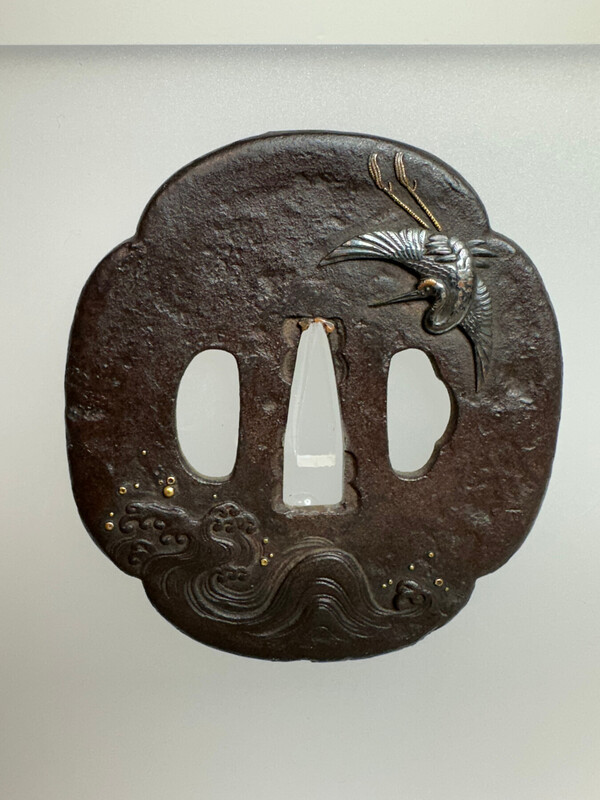
Crane over waves.
 1 point
 -
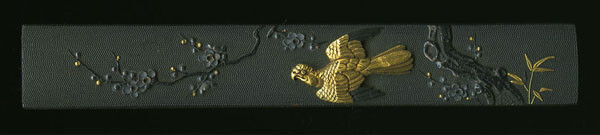
Kozuka in the Ishiguro style...
 1 point
 -
Only one item to share.

 1 point
 -
Let’s add a kozuka to the mix.
 1 point
 -
I believe this is a Nara piece, my favorite part of this one is the t moon in the clouds.
 1 point
 -
Gentlemen, So we all had a great time at Jean's workshop and tremendously enjoyed the experience of trying our hands on tsuba of our own. Here is a short synopsis of our exploits: TSUBA FORGING WORKSHOP TSUBA forging in Herrstein On July 26th/27th, 2025, we attended the TSUBA forging workshop offered by Jean Collin (ROKUJURO) for NMB members only. It was quite an adventure since none of us had any practical experience in forging or related crafts. The event took place in the small but remarkably well-preserved medieval German village Herrstein, located in the southern Rhineland-Palatinate region. The traditional forge is situated just in the middle of the historic center of Herrsterin. Walls and timber-work of he forge date from the 15th century. Learning the Way of the Tsuba (forge) The workshop aimed at creating a basic TSUBA blank out of historical iron in the style of ealy Japanese sword-guards. After a short introduction into the forge, its tools and the safety measures, we learned some facts about the special iron which is quite different from industrial iron produced today. After individually choosing a fitting hammer and tongs, the charcoal forge was lit and the workshop quickly got underway. We heated up our pieces of iron to bright red heat and shaped the outline to the individual form we had in mind while flattening it at the same time with the hammer on the anvil. Continuous guidance was provided by Jean who found a good balance between encouraging experimentation and solid support. The opportunity to use Japanese tools was a unique and enriching experience. Shaping the Tsuba This step was quite different from our expectations. While the shape was mainly created with the hammer and not cut out of sheet metal, other techniques like drilling, sawing, filing, and sanding by hand had to be executed. Some templates and a number of authentic TSUBA were at hand for comparison. We noticed the evolution of the metal and the subtle textures that emerged on the iron surface. Although we were all doing the “same” process, our final pieces each had their own distinctive pattern and shape. Shaping the initial metal piece into the TSUBA form took the entire first day. On the second day, we continued refining the TSUBA, using the techniques described above. We all recognized the challenge of sawing through several millimeters of iron while trying to keep the very fine saw blade intact. The Forging Experience Over the course of two days, we learned to forge simple iron TSUBA the traditional way. Basic design elements like UDENUKI-ANA or UCHIKAESHI-MIMI were tried, and we found out that with some proper training, the progress of he work could be much faster! While the first material – carbon-free bloomery iron from about 1880 – was described as „soft“, it provided some serious resistance after cooling down. The process of forging was accompanied by carefully watching and following the permanently changing shape of the iron, changing properties (= hardness and ductility) depending on the heat, and the traces of our hammer-work on the surface. Later, we tried our hands on 300 year old raw iron which still had some impurities in it. That material would have required forging at very high temperature, and we observed the effects of too little heat: The iron cracked and split under our hammer blows! Jean’s teaching style was methodical, patient, humorous, and encouraging — a style that suited us well. He also shared the Japanese approach to forging: slow, deliberate, and focused. He demonstrated different techniques with the hammer, pointing out the importance of closely watching the work develop. In the end, it was some hard work, but a very satisfying experience which led to a better understanduing of what iron TSUBA are made of, and how they are made. We created some quite pleasing TSUBA with slightly differing shapes. After finishing, they will be fully functional, and after some patination, they will look quite close to genuine Japanese ones made hundreds of years ago! Jean, Björn, Mark and Danny We had a blast - and I look forward to our next meeting at the forge As photos tell more than written text, allow me to present a few impressions1 point
-
I want to add a few things to this discussion. A lot of older sayagaki have been erased, and even more recent ones, are lost and/or erased. Some of this is due to a lack of care approach and some of this was done on purpose as some collectors do not like them. A case in point is a Norishige owned by a friend of mine came to him in blank shirasaya. Through accidental googling an old sayagaki by Dr. Sato was found that gave more information on the background of the sword. Why that shirasaya and sayagaki is gone, it's not clear. The sword was Tokubetsu Juyo at the time I believe that it lost the sayagaki. Sayagaki can be faked and I have encountered fake Kanzan before. Some of these that are on green papered swords that won't depart from their green papers, you may need to look twice or three times at the sayagaki. There is some good advice given by Kirill about a blade with sayagaki but no papers. Because, it's happening right now that some people are deliberately switching swords into flattering shirasaya in order to sell some junk. It's dangerous. So be skeptical. However: it is also true that Both Kanzan and Kunzan made sayagaki for blades that had no NBTHK papers and there was no desire to get them. I have seen these and I have owned them and currently own one. Kanzan and Kunzan early on were often surveying high level collections and trying to learn from them as much as assess blades in them. Some of these high level collections were comprised of many Juyo Bunkazai, Jubi and some Kokuho blades. This kind of collector sometimes never submitted a blade for NBTHK papers, or in other cases did, whatever the guiding metric was is lost with the collector's death. When a mint condition amazing blade appears in Japan and goes straight to Tokubetsu Juyo it's kind of a shock, like where could this thing have been and suddenly found... and the thing is that a lot of people knew the blade existed for 60 years in some collection but the guy never sent for papers and after his death the blade gets released into the market. These guys often have consulted with the experts of their time and sometimes got sayagaki. Those sometimes have old sayagaki from Kanzan and Kunzan. I had another one once that these two assessed together on viewing and the blade was not papered until decades after their death. And for Tanobe sensei, while he worked for the NBTHK he would not do a sayagaki unless the blade had already received papers. Now that he is retired he will do sayagaki on an unpapered blade. This is one I asked for myself: https://yuhindo.com/koyama-munetsugu/ Another reason that so few older sayagaki from the Edo period exist (I have had one by Honami Kojo, and one done by the Ikeda daimyo clan for their own blade), is simply because people make new shirasaya at some point because the old one is old. Sometimes the old one is discarded because it's hard to read the writing (the Kojo one I had, people couldn't read the script, so unless you elevate the efforts to research it people start treating it casually). Sometimes they do it with good intent to retire the old shirasaya and sayagaki. I made a new shirasaya once for a Niji Kunitoshi that had a Honami Ringa sayagaki on the existing one. The owner who bought it, died, and when the widow sold it the old shirasaya was not included with the sale. When I found out about it years later after the sword changed hands again and I encountered it again and asked about the old shirasaya... I was told there was none. Tracing it back, after the death of the owner it got misplaced and lost. Sometimes an opinion is conservative on an older sayagaki and when the attribution is changed the old shirasaya with sayagaki is discarded. I saw one from Kanzan that this happened to. Because of all of this losing and erasing and deliberate discarding, it's hard to make a lot of conclusions about older period sayagaki. From the little I've experienced that have really old shirasaya, daimyo did put sayagaki on as part of just knowing what is in the shirasaya (inventory management) and sometimes you got Honami sayagaki. In the case of the daimyo stuff, with no signature, if the blade becomes separated from its history people will begin to look poorly on the sayagaki for being a judgment with no signature on it and will deliberately discard or erase them. When really the daimyo probably had paperwork separate (sometimes on the sayagaki they will add that there is or was origami). Another thing to throw out there is that Kunzan was probably a better judge than Kanzan, so more of Kanzan's sayagaki get reversed. One Tokubetsu Juyo Awataguchi blade has Kunzan's sayagaki to Hisakuni on it (yes I mean Kunzan here, I'm saying his sayagaki may not even universally hold up, it's his opinion and others may disagree). The NBTHK though would not confirm so far as that. So this sayagaki predates the papers on the blade as well, and it is by no means alone. There are many more blades out there with Kunzan sayagaki and no papers, just that the ones that are good, you are not likely to get an easy chance to see. Or if the blade is on display and you see the blade you may not ever know what the deal is with the sayagaki because that's not on display. Behind closed doors if you get a chance to see the blade then you will see then. For that Kunzan Hisakuni sayagaki, at some point some collector will say it disagrees with the papers and will erase it. That will be a shame. Because the blade from the context needs to be understood as early Awataguchi work and while the NBTHK judges couldn't come to a conclusion, Dr. Honma did and that should be enough for the owner. But this is what will happen. I know a non-Japanese collector who once even threw out a box of papers because he couldn't read them, early in his career. People do these things. Maybe before they learn better, but once the stuff is in their hands you need to trust them to make the right decisions and often times they don't. Lastly for old sayagaki the NBTHK tends to photograph them now and put them on the back of Tokubetsu Juyo papers now. Anyway with this subject just keep your ears up and don't get carried away with sweeping conclusions.1 point






.thumb.png.4c5df79fec171b2dc4a23af38e280a4d.png)



















This leaderboard is set to Johannesburg/GMT+02:00