
Leaderboard


Popular Content
Showing content with the highest reputation on 08/15/2024 in all areas
-
Hello all, If this is in the wrong spot feel free move it Brian. I just thought I'd share this here and provide some insight into this remarkable man. Hate him or love him he was indeed a unique individual. This is my meager attempt to express my feelings toward my teacher and dear friend. Thank you all. Ford Hallam At this moment in time I feel it important to somehow try to express what a huge impact Ford Hallam had on me and my life. It is plainly obvious that many other people have been touched very deeply by his generosity compassion, drive, intellect, diligence, humour, insight and his amazing skill as an Artist and Craftsman. I feel incredibly and overwhelming fortunate to have been granted direct access to that well spring. I cannot speak for anyone but myself, but he taught me, not only the Craft I now make my living from ,but also how to elevate that work into something more than just carving, sawing and filing. In the early days of the Iron brush forum I was initiated into this way of "seeing". He would critique and offer truly honest assessments of the work offered up trying to guide and I believe coalesce his ideas around teaching his art. Paralleled with that was his approach to how he went about making, as well. The Do, or Way of how to make was something that fascinated him. We spent many hours discussing the philosophy of the work and what that meant to him. His development of a Way of working directly that shared his view of the world, and his artistic expressions of it, was something that he diligently forged and eventually succeeded at brilliantly. I recall him telling me once that he was surprised that anyone would be interested in how he worked? He had honed these ideas over many years of work at the bench. Many of those ideas surrounding the aesthetic that he so successfully synthesized. As he coined it "uncontrived contrivedness". An extremely difficult concept to grasp, but one he was very passionate about. Some of the ideas were about ergonomics and the physical side of craft and came from his early training as a Goldsmith ,but also later from the first bout with his illness and ways to overcome it. He had a way of describing it all that was alluring and almost metaphysical, almost Zen to use a very overused term. It was this idea of working by hand directly and intimately with the material, that he and I shared a deep connection and mutual interest in. The Art itself would seem obviously the most important, but in my mind these ideas to him were one and the same. The Art and the Art of the Art, as it were. I think this conception and his actions upon it defined him as an Artist more than any other. These "hand conversations" with his chosen material allowed him to create things that almost defied human endeavor. He had his heroes and saw first hand under magnification what they were capable of. I always felt that this drove him to follow that path, because he saw that it was not only possible, but also possible to bring it forward and to have real relevance in the modern world. He saw that and wanted to share that vision with the world. Despite some of his own misgivings about this, I believe he succeeded. In these last decades, he more than anyone in the world, has shone a bright spotlight on the art of Japanese metalwork and generated a mini Renaissance surrounding it. His ripples have also stretched much further outward from that into many different areas of metal work, and I believe will continue to do so for a long time. He had many isms or saying that will persist in my mind until it's my turn to follow him. One in particular referenced craft and the use of tools and ones eyes. He'd say "Marcus, it's all the same, it's all the same." It took me more than a few years to realize what he was saying, but I have thanks to him. Sawing, filing, carving, scraping, looking and depending on how philosophical you want to get, life itself is "all the same". Another one that comes up often for me is "just do the work!" I'd be stuck on something or floundering for inspiration and I'd bring it up to him and he'd tell me again" just sit down and do the work...it'll come. Even when you don't feel like it . In fact, mostly when you don't feel like it, sit down and do the work. And if you really feel you can't sit ,clean ,sharpen and take care of your tools and studio." I adhere to this advice the best I can everyday. It's always a struggle as any artist will tell you. In fact, he himself struggled with that very thing. when I'm working and if I question something I'll often ask myself (WWFD) what would Ford do? and I hear him in my head. I told him about it and joked with him about getting those wristbands made up like the ones for Jesus on a few occasions. Despite me taking the piss with him I was serious, (not about the wristbands) and still do it to this day. He had a gift for expressing himself in a way that made what he did infectious. He was a gifted teacher and deeply cared about his students and those around him. I think this was something that many people underestimated about him. He would freely give way more of himself than he should have for his own good. Even when his health would suffer, he would push himself, especially at classes and while teaching. Few knew how difficult it was for him just to do the day to day living. Such was his dedication to his Art and passion to pass that on to his students. He took that responsibility very seriously and I think that was the catalyst for a few of the folks who he rubbed the wrong way through the years.. I will truly miss the early morning Skype calls with a cuppa Yorkshire Gold in hand and a good bit of toast and cheese. In those precious months where he generously invited me into his home and studio to study and learn. I will cherish those late, late nights where we shared way to many bottles of New Zealand White Zinfandel from the Marlborough region. We talked of life, history, philosophy, science and of course our shared passion, classical Japanese metalwork. Looking over his shoulder while he worked and trying to soak up everything that I could. He was encyclopedically knowledgeable and had an almost photographic memory for names, dates, schools, styles and really almost anything dealing with Japanese arts. The amount of research he had done on his book alone would have easily gotten him a PhD twice over had he been in academia. I'd set myself challenges of finding information that he had not already found. In all those years that happened only a handful of times. I'd excitedly bring something to his attention and he would then list off the book and chapter where it was located. And when he didn't know he was extremely grateful to add it to his knowledge base. Or, if there was a particular tsuba or artist that I was interested in, he would instantly know where a reference photo was in his massive library. If he didn't have it there he would know where to look. Also, where, when and how they worked, and most if not all of the Masters for that school. It was truly astounding. There is just so much I'd like to say and I could go on and on. I'm really not sure where to stop with all of this... I have known him and been his student for a long time, through thick and thin. Our relationship was the most unique one I've shared with another human. He changed the course of my life dramatically and opened up a world I now inhabit. He's had more impact on my adult life than anyone I've ever known, save my wife and children. How do you say goodbye to someone like that. How do I move forward and carry on without that human safety net and wellspring of knowledge, understanding and kindness that he was to me. I can only think of one, and that's to ask myself, what would Ford do? I will miss you ole chap, my dear friend, my teacher. I do not have enough gratitude to repay you all that you have given me. 10,000 thanks will not suffice. All I can do is carry on with our work and do my best to make you and Hallam-ryu proud. All my love and respect, Marcus


 15 points
 -
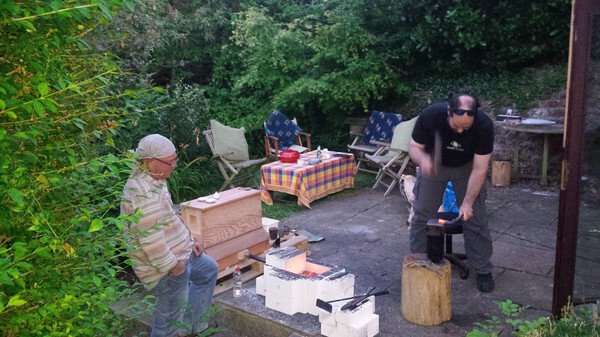
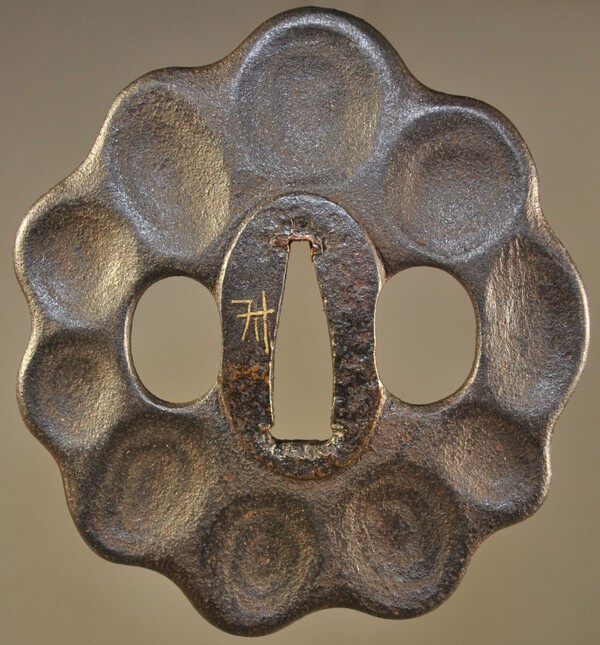
This one of the first times I saw Ford and his infamous meeting at his old house. He invited me down as a newbie collector and he liked some of things I’d said and posted on the NMB. Possibly along with his other 'victims' Justin and myself walked back to our digs absolutely hammered, what a night The following year I popped down to see Ford with over a hundred tsuba and he explained their good and bad points. What an experience! He repatinated around 8 of my tsuba and these are a couple of the reworks This was the most challenging. Reworked by Ford Hallam and Kevin Adams This tsuba posed a few interesting questions when it came to us, the first and foremost being the large patches of thick, black material on the front and back. It was almost certainly a fire scale, and it took quite some time to remove – Ford suggested that the piece may have been in house fire, accounting for the thickness and randomness of the coverage. After a test patina, the inlaid elements were found to be more sophisticated than first thought. The monkey's face is a mixture of shibuichi and copper, with shakudo eyes. The implements are shakudo, and after polishing a portion of the rim we discovered that the copper has a lovely grain structure. However, the fire damage that produced the oxide layer affected the surface of the tsuba and created a "gritty" surface texture. We decided that it might be worth our while to polish the surface of the tsuba and apply a tsurikomi finish to the plate. Patinating the piece went more or less as expected, although we had some challenges getting the grey colour to patinate properly – most likely happened is whatever caused that black oxide layer also affected the top layers of the shibuichi and leached out the silver. All in all, a piece with an interesting story behind it. These were a couple he particularly liked This one was his favourite and was the best example of mokume work he had seen and it was used as his screen saver for a few months. I felt so proud! Finally, two of his early tsuba from the Birmingham museum. Who knew that from these early tsuba he would produce such stunning works of art I’ll let this post speak for it’s self Grev
.thumb.JPG.ee65c3a8a2a82e5c8377b2d739f8b008.JPG)
.thumb.JPG.78ee8a20426119b9905b75aed42aeb39.JPG)
.thumb.JPG.1035daf66e419ad9b3d9d130198cc4bc.JPG)
.thumb.JPG.761921d4d20757126004b1c60fdccdc4.JPG)
.thumb.JPG.d2e6a817bdd5c870cae7da2895e68b42.JPG)
.jpg.8fd3c5790e161c994296a356d926c6e7.jpg)
.thumb.JPG.368a61d6bef8eab793c948eb1e3ae847.JPG)
.thumb.JPG.dae4c1ab598adc10766ab0a73a4bb3b2.JPG)
.thumb.JPG.c9aaf52aa683aa7d4bf6fcd5b44dd5d8.JPG)

.thumb.JPG.8c6fd5a1de84c3aac042ea9f69d7f600.JPG) 10 points
10 points -
I first came across Ford around 40 years ago when my wife and I started dealing in Meiji metalwork. Back then he was devoting much of his time to restoring such pieces for one of the Worlds top dealers. As such I was very surprised when he said to me….yep, send stuff and I’ll see what I can do. At that time I had no first hand experience of his skill and knowledge. Many parcels travelled between East Anglia and his home in Chippenham. Each one came back showing no signs whatsoever of the damages or of his unbelievable undetectable touch. Nothing ever look like it had ever had any problems, nothing ever looked restored. Missing inlay, dents and deformations, depatination etc etc…..all magically disappeared. He welcomed me to his home a few times, mostly to collect finished pieces that were best not left to the postal system. Once he told me not to send something as he was wheelchair bound. I was shocked, he had never mentioned his serious health issues to me. We lost touch when he moved to SA but upon his return we exchanged via a few emails. I was no longer dealing. It was sad that he was troubled by some of his experiences on this Forum, he asked me not to use it as a communication route. I count myself privileged that he helped me. A metalwork magician. RIP Ford, and thank you.6 points
-
Nothing to brag about, so facts and figures it is. At 56? when visiting a well-known sword shop in Japan. (Fin) *Additional notes. Daringly bought a cheap, mumei wakizashi in black lacquer koshirae as a starter piece. Carried it home guiltily and hid it from the wife, taking it out occasionally to stare at it, expecting some miracle to occur. When nothing happened, a week later I took it back to the shop, disappointed, also shocked at the realization that a sword is for life, not just for Christmas. Well, you don't just 'own' it, there is responsibility to maintain it in the same condition, and there are those future generations somehow involved, waiting their turn. So as they say in Japan, 泣き面に蜂 naki tsura ni hachi, (when the kid is bawling its eyes out, a wasp comes along and stings him on the face) the store paid me less to take it back. A customer in the shop assured me that the loss was just 'school fees' and the opportunity to upgrade. I knew I would need to know something about Nihonto first, so I joined the NBTHK. All of the above were sobering lessons I learnt from the brief process of buying and selling my first real, traditional Japanese blade.4 points
-
I was going to start a thread dedicated to his work, but this seems to be a wonderful thread to continue that in. So I welcome everyone to share any insights into the man, as well as share the work done by him. Let's make this a true tribute to someone who dedicated his life to the works we so love. I'll add the solitary piece I own a bit later when I take pics. Thank you Marcus for that wonderful tribute and heartfelt expression.4 points
-
関羽図鐔 - Kan'u no zu tsuba. Nikubori + suemon-zōgan + nunome-zōgan = Shōami (or better Aizu-Shōami), late Edo period. (for future reference)
 4 points
 -
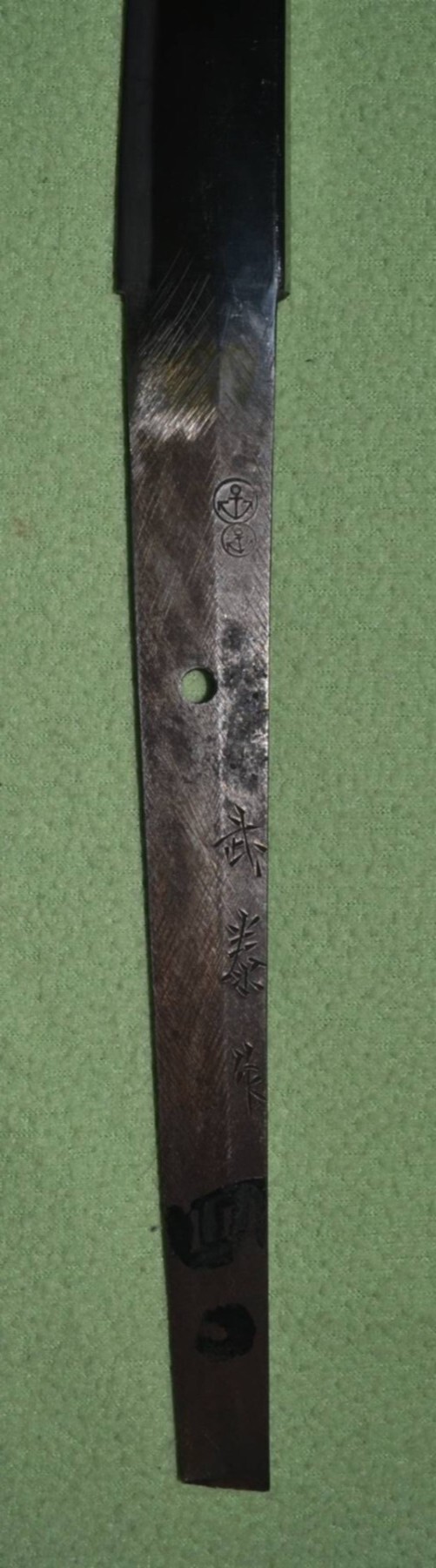
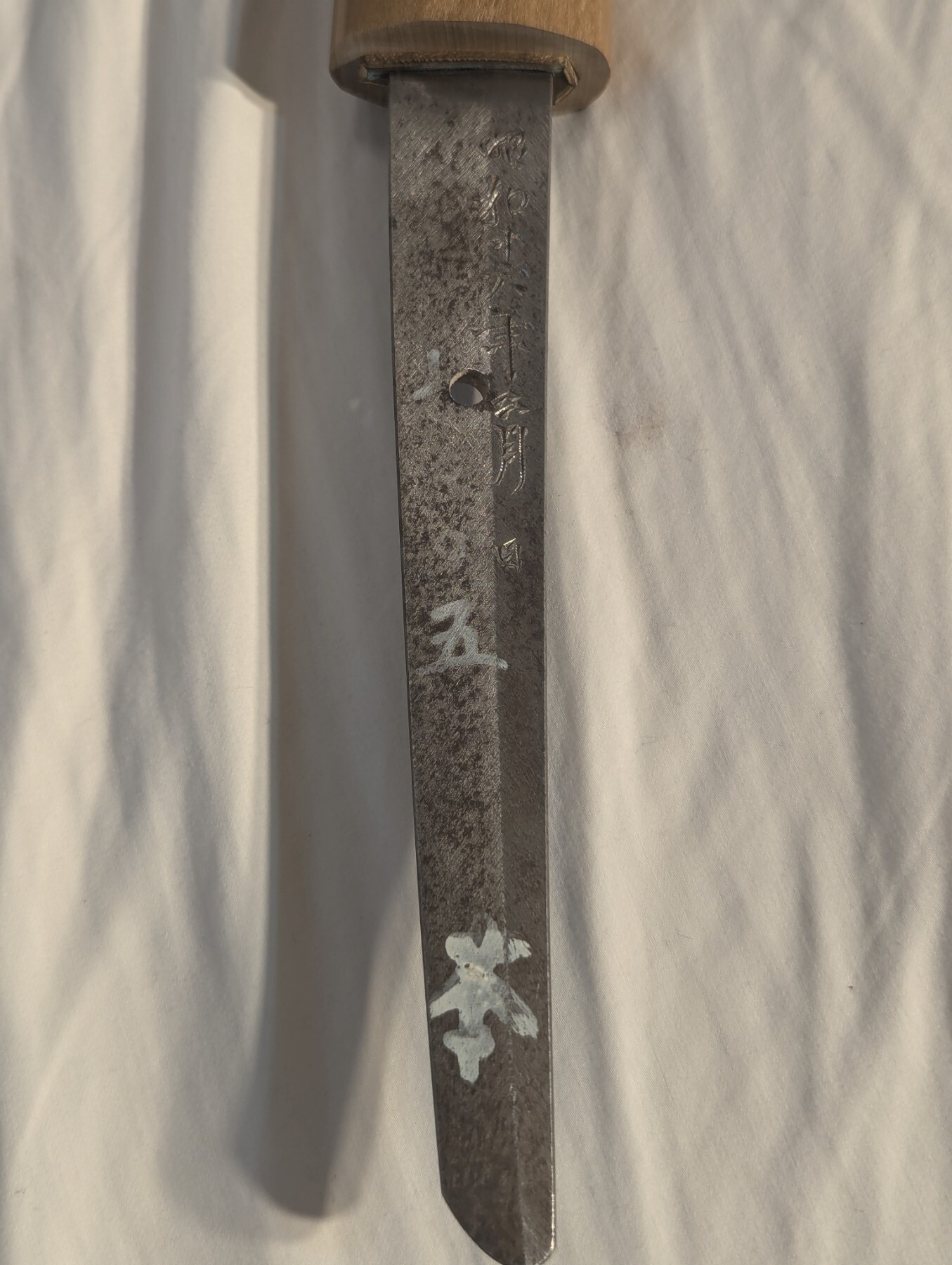
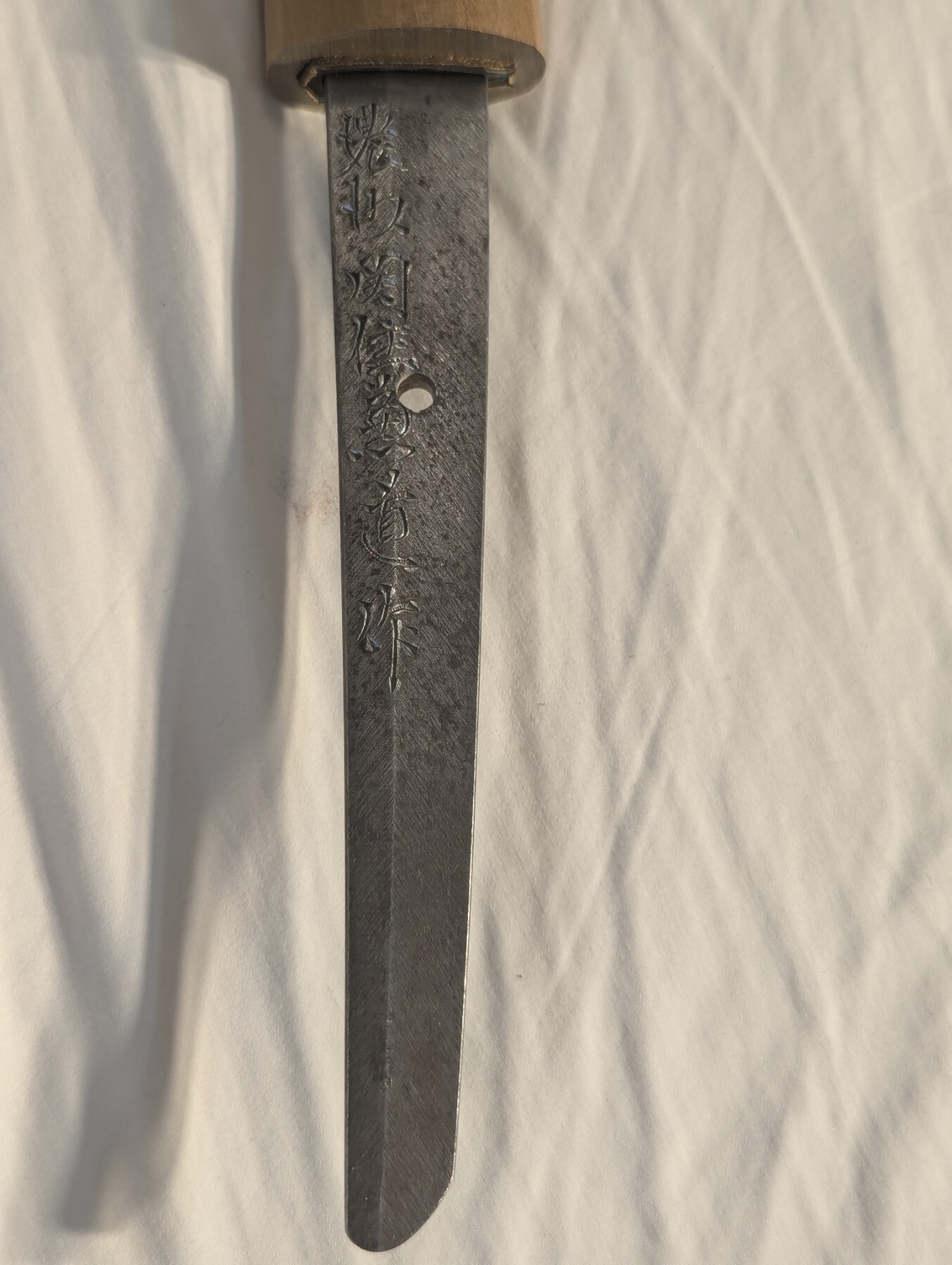
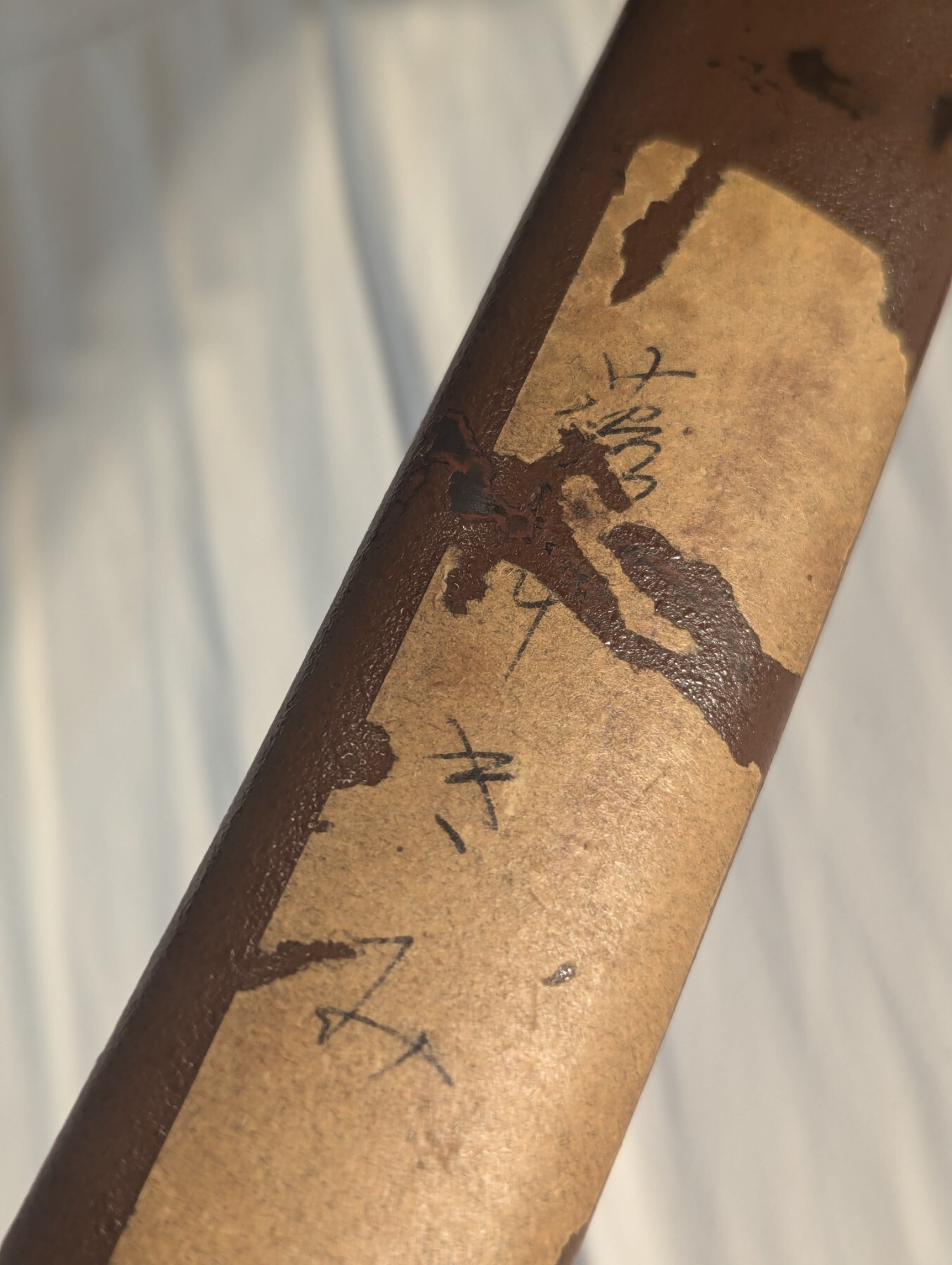
@Tonyatm During World War II, many swordsmiths work for the Toyokawa Naval Arsenal 豐川海軍工廠 were not documented. It is estimated that these were either substitute names for known swordsmiths or their apprentices. In addition to Takeyasu武泰, there were also Toyosuke豐佐, Toyomich豐道, Kiyomich清道, Heishun平俊, and others.


 3 points
 -
They don't Gerry . I was offered some of these pieces ie newly polished blades in shirasaya with an accompanying mount . I obviously couldn't put the newly polished blade in the old saya to see if it fitted but I could see if the tsuka fitted over the nakago . It was no surprise that none of the handles fitted the blades they supposedly went with . It was just a mount thrown together to put on display . The lack of respect for their own history staggers me . The NBTHK must bear some responsibility for this , I think , as they seem to provide no incentive not to part things out . Ian Brooks3 points
-
An incredible tribute Marcus, the kind of tribute that any teacher would be very proud to receive from a student. I only wish I had the words in me to express what you have, but I felt everything you wrote was very relatable, the long chats filled with laughter, the philosophies of being a craftsman, the encouragement and support, these are the things I think of when I think of my friend Ford. There are but a handful of people in this world, or less, who... well you understand. Thank you Marcus. R.I.P Ford.3 points
-
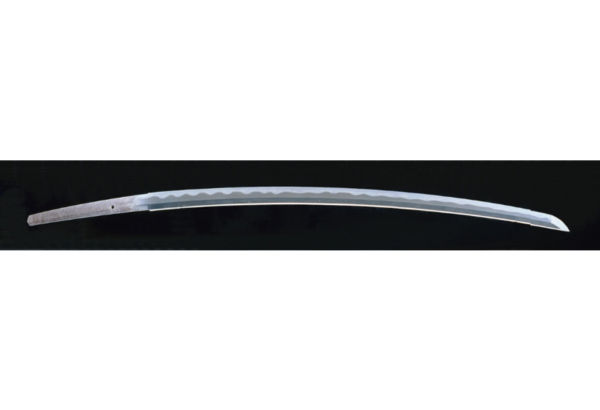
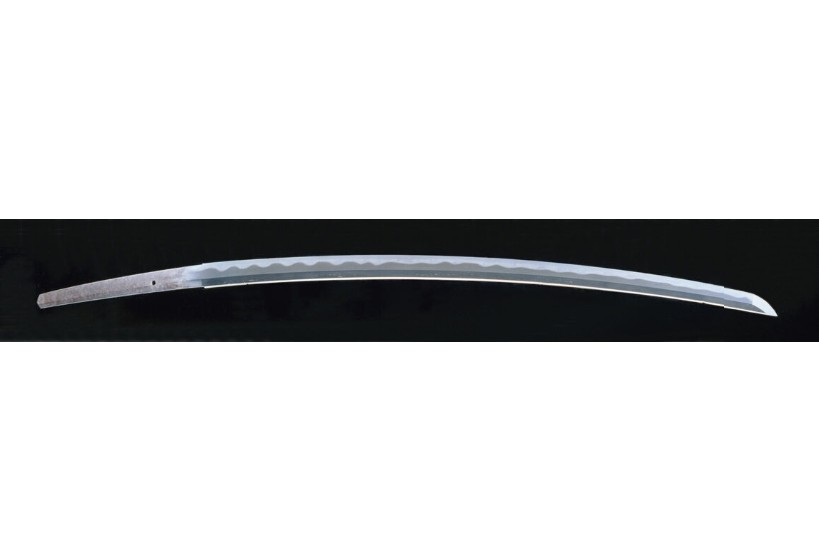
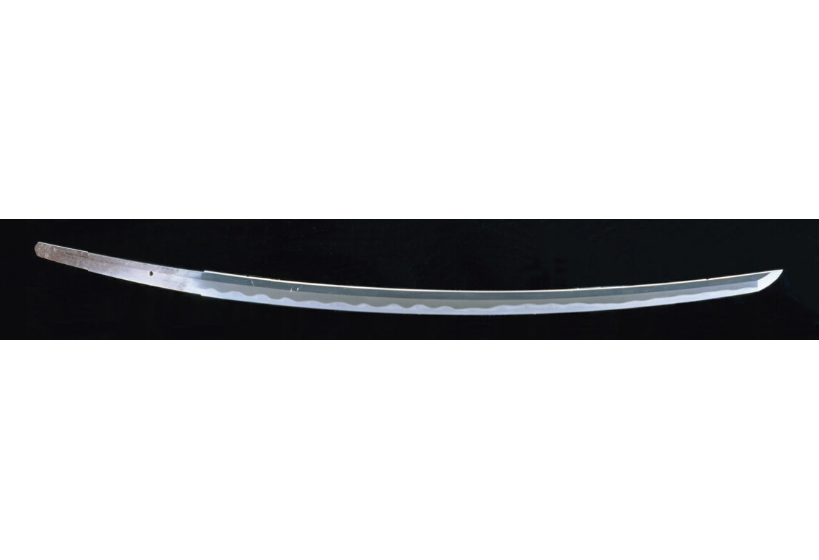
G'day Guys, A Japanese dealer made the comment that he thought one of these blades by Sadakatsu resembled the Ishida Masamune sword. After tracking down a description of this blade on the internet I have to agree. Sadakatsu's Showa era blades closely match this sword, both in sugata, hada and hamon. e-Museum - Sword with no sign, by Masamune (celebrated Ishida Masamune) (nich.go.jp) Cheers, Bryce

 3 points
 -
Thank you Marcus! Many of us supported Ford and encouraged his work. He still brings joy to me and to many others who have his work. When I go into my den, I always look at the tsuba Ford made and the one he restored. One of our sword club members studied with Ford and learned to make excellent tsuba and to restore tsuba. Rest in peace, Ford. Your students will carry on your methods and dedication.3 points
-
If this very good tsuba doesn't come clean (as I suspect it might not) using typical methods such as anhydrous isopropyl alcohol, soft wooden toothpicks (to loosen the heavier verdigris), alcohol dipped soft tipped Q-tips, or even mild gentle neutral dish soap (no lemon!) with a soft bristle toothbrush, then, you might have to end up having to send it to a professional restorer (like Brian Tschernega). Which is what I ended up doing several years ago with a shakudo nanako tsuba I bought. In hindsight. The problem is that over time a tsuba like this can become exposed to all sorts of grime, dirt, and chems. In addition to removing the build up of verdigris across the surface of the tsuba I had Brian restore, he ended up having to carefully remove 5 layers of soot that had built up (perhaps from a nearby fireplace where it was being displayed ???). The thing of it is, it is sometimes very difficult to tell just by looking at a tsuba (or other tosogu) what has happened to it. In the end Brian ended up having to strip and repatinate this tsuba once it had been completely cleaned. He even repunched a few of the nanako that had been slightly damaged. And now after more than a year (of aging), the final result couldn't be better. The tsuba looks fantastic and even better yet you cannot tell it has been restored. Regards3 points
-
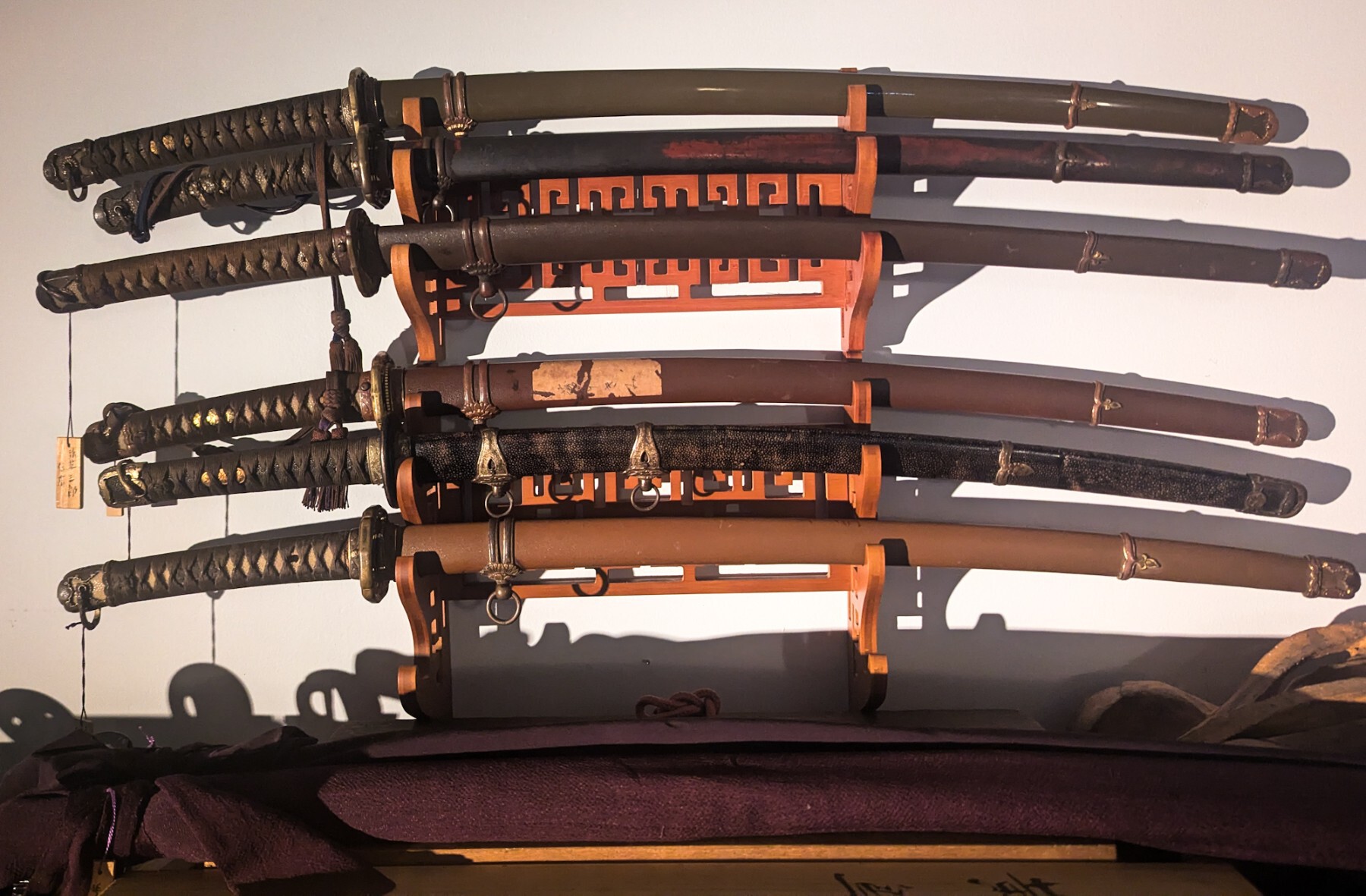
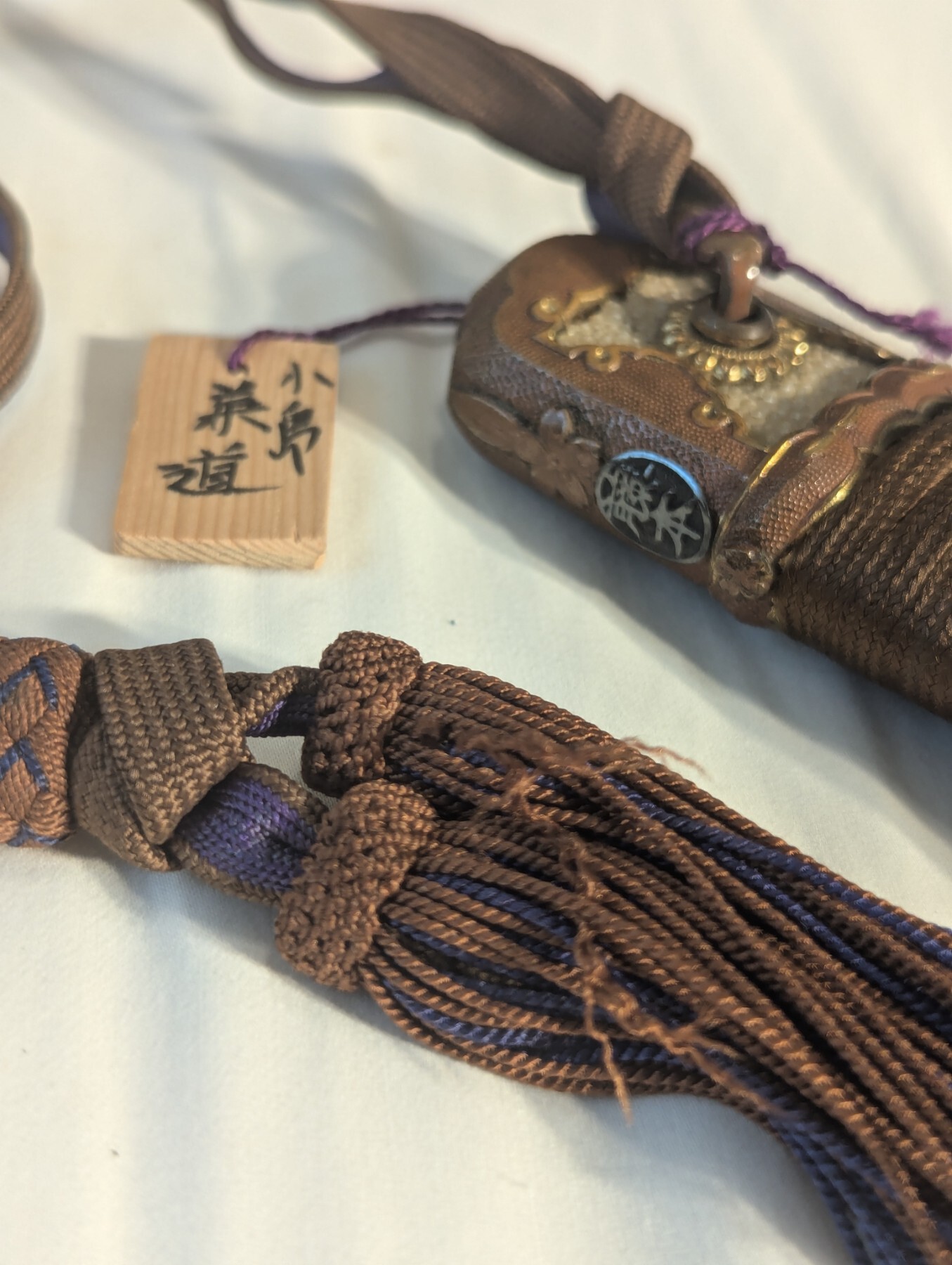
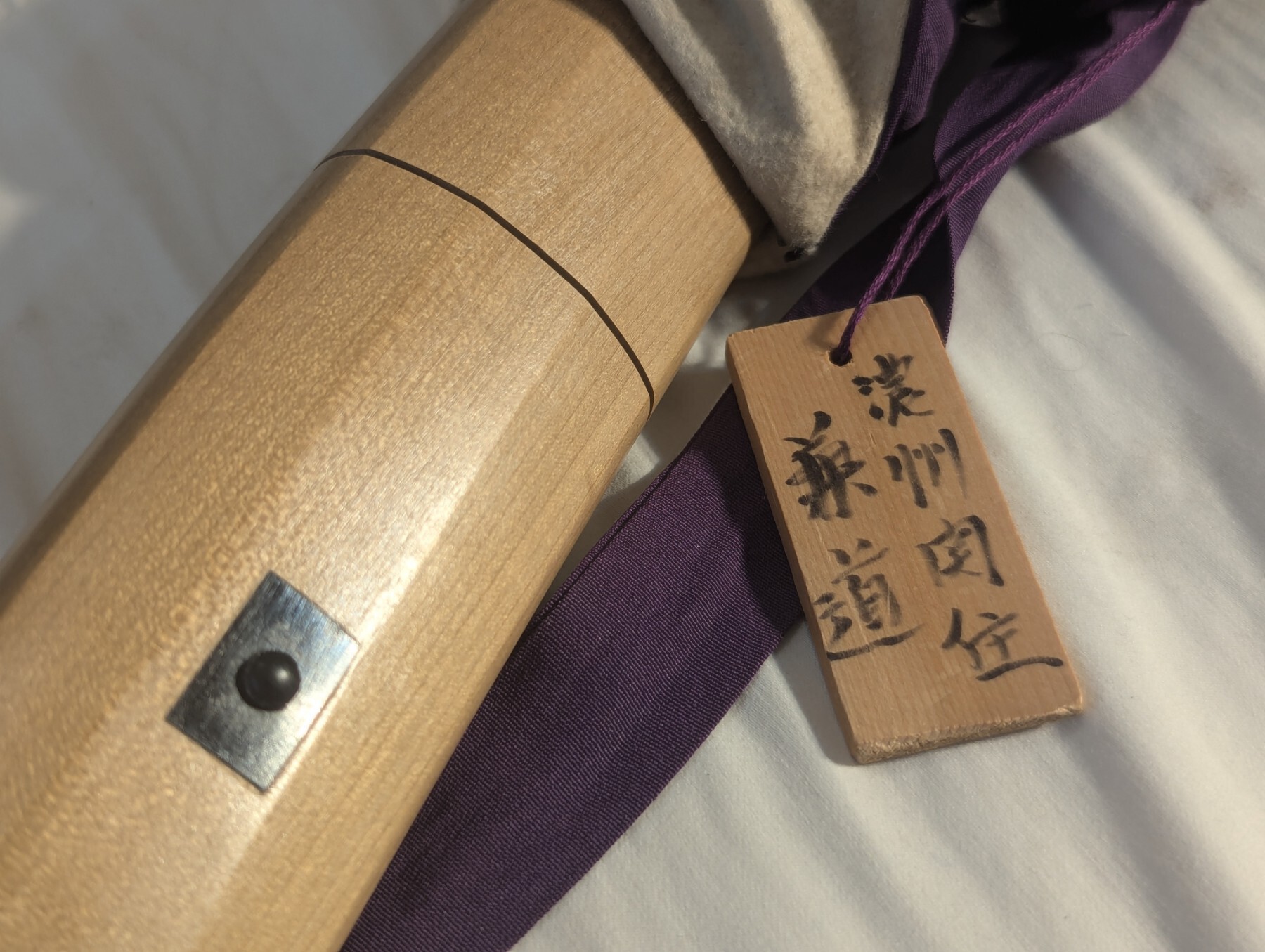
I will be listing four high quality gendaito with shingunto and kaigunto koshirae during the next day. All are in polish with new habaki and shirasaya with accompanying gunto koshirae. A preview below and more details to come soon. - Kotani Kaneyoshi - $4,500 + shipping and PayPal - Kazunori - $4,750 + shipping and PayPal - Hokke Saburo Nobufusa - $5,500 + shipping and PayPal - Kojima Kanemichi - $5,750 + shipping and PayPal Please message me with any questions


 2 points
 -
It looks to me more like a poor copy of an old Celtic, or possibly Roman, shield boss (Umbo). As Sam says, fibreglass in all likelyhood.
 2 points
 -
Old fiberglass perhaps? Could be a vintage miners helmet or hardhat. Just a guess, -Sam2 points
-
Sri Lankan hair pins https://www.metmuseu...lection/search/902072 points
-
I don't see these as Japanese. More likely something from Tibet or Bhutan or Nepal.2 points
-
I was like 35, and I'm 42 now. Started with wanting a parade sword from ww2 and then noticed a guy selling some actual gunto was located in a nearby city which lead to me buying my first gunto with a shinto period mumei blade that has some issues but was still nice enough to appreciate. A quote of mine st the tome that is held against me was "just owning one is enough for me." 12 or so nihonto later they are famous last words and ended up being a total lie. Here's that first blade that set me down the nihonto path.
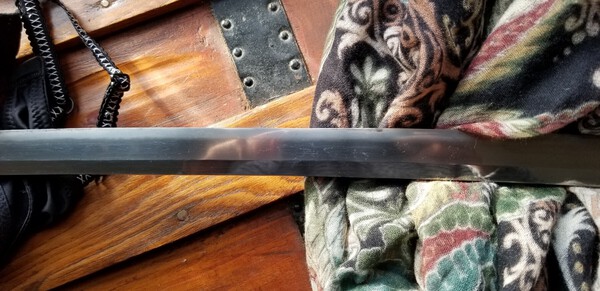
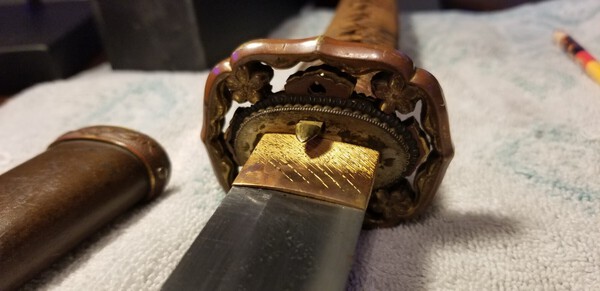 2 points
 -
thats because it is the same tsuba, and thats my f/b sales page. i prefur to keep buisness seperate from pleasure, i learn here2 points
-
- Hi, my name is Mauro and I've been a tsuba addict for 14 years. - Thank you Mauro for telling us your problem! - Problem? Which problem...? All right folks, anyway now I've been astinent for 3 months. This thread prompted me to rewiew my buying habit about tsuba, and data clearly demonstrate: 1. it's a kind of addiction; 2. I'm improoving in the passing of years; 3. I'm not yet a wise man, but still enjoyng collecting .
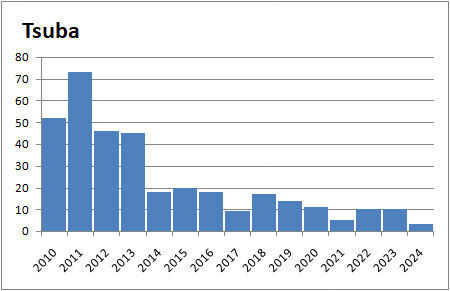 2 points
 -
Age 42 (2022) - I had been living in Japan for twelve years by that point and had been studying Japanese and collecting books on nihonto (as well as reading this forum!). I finally made the investment into my first katana - a significant purchase (at least for me). That, almost immediately, spurred an interest in tsuba. The ability to collect historical works of art and - maybe more importantly - learn the stories behind the artisans and the context under which they lived, is why I love this hobby!2 points
-
Stupid and ignorant in 1991 at the age of 21, but actually much more stupid 1 year earlier at the age of 20. I went to my first gun fair in Berlin in 1990, when I was 20 years old. I bought 2 Gunto from an English dealer who was quite well known at the time. Both had silver, inlaid Kamon and were among the more expensive Gunto from this dealer. I was absolutely delighted. Well, one room further on, a well-known Berlin dealer became aware of my package. I was persuaded to show him the swords. "That's all well and good, but they're gunto and not real samurai swords." I could buy them from him, of course they are much more expensive, but that's the way it is. I could sell the gunto and I would have the starting capital for my first real samurai sword. The implanted worm gnawed at me for a year and finally won. I sold the Gunto for less than half the purchase price in favor of an O-Suriage Mumei Koto blade in an old mount. More were to follow. BUT: Years later, while cleaning up, I found Homemade oshigata from the Nakagos of the signatures of the two Gunto blades. One was a Kane...someone with a Seki stamp. The name of the 2nd smith was Kato Tsunahide (the big brother of Tsunatoshi), dated Bunka 9. Looking back, the O-Suriage Koto was not my first historical blade. That was something of a turning point for me to really sit on my ass and learn, see and understand. I became "unfaithful" to my dealer and soon became a member of the NBTHK EB.2 points
-
I became fascinated with samurai and nihonto watching The Water Margin and Monkey as a kid growing up in the UK. Saw a few swords in museums but owning a blade was out of reach financially, so I stuck with stamp collecting. About 10 years ago I got into artisanal kitchen JKnives and eventually started to look at nihonto again, joining the NMB in 2020. With the funds now available I can afford what I like. Koto blades. My first blade, a Yamato Shikkake, found me in Utrecht 2 months ago at the age of 60 and I couldn't be happier. Some well respected, elder NBTHK-EB members have examined it and saw no reason not to send it for Juyo Shinsa, which I plan to do next year. And so the bug has been acquired. My plan is to find a representative blade from each of the main Kamakura and Nanbokucho era Gokuden. I also have plans to visit Japan next year to acquire a deeper understanding of this fascinating area of collecting and connoisseurship. There is so much to learn and I'm sure this will become one of the major areas of interest for me as I contemplate retirement in 4 years time. I also joined the NBTHK so I've fallen hard.2 points
-
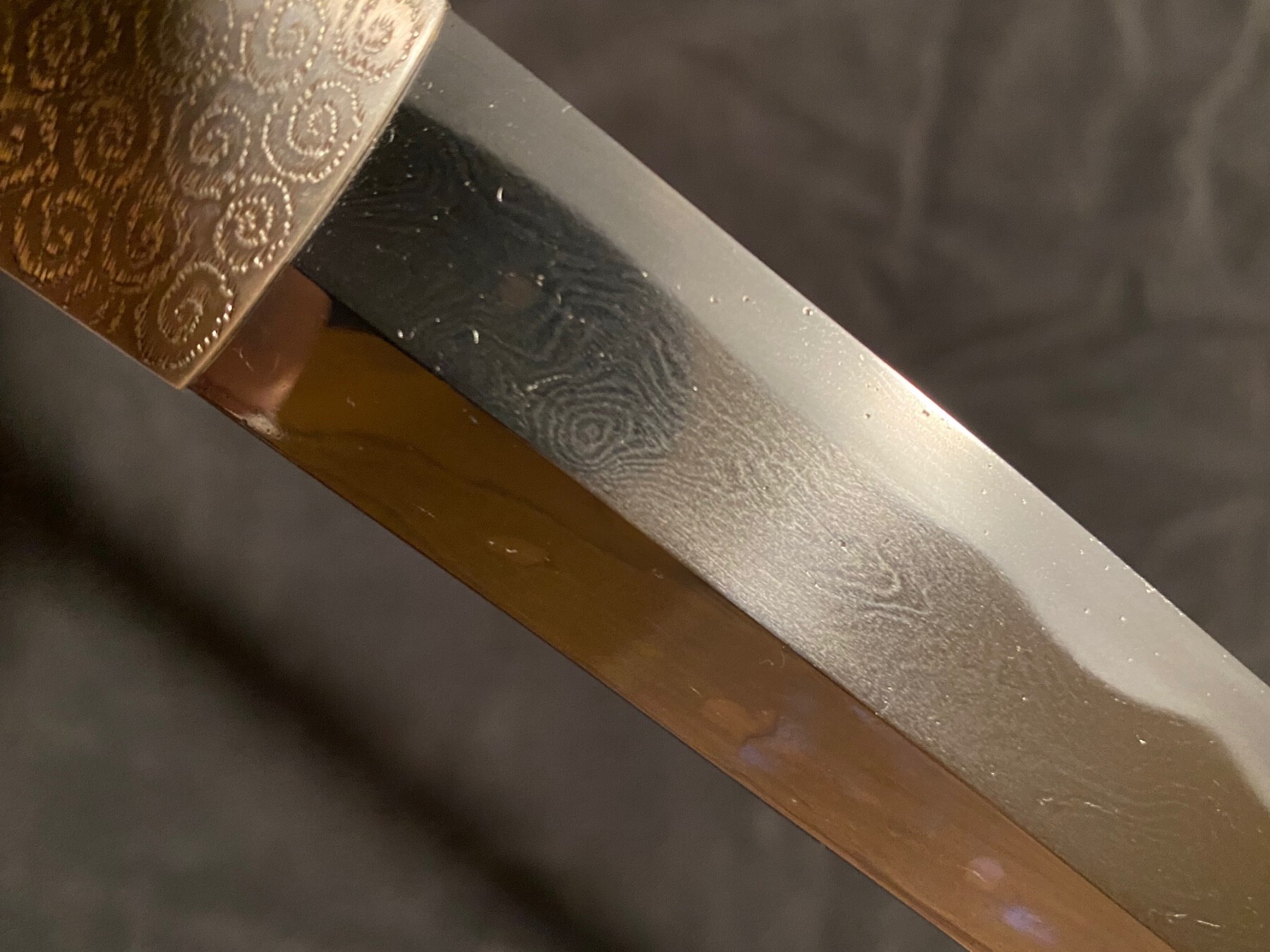
Tony, You have the characters correct. The smith is Takeyasu. I take it no translation is needed for 作. The blade is made from anti-rust steel which accounts for the bright appearance of the nakago. It is in late-war kai gunto fittings. It is 100% genuine. You may have noticed the numbers on the nakago match the numbers on the tsuba, seppa and probably the fuchi and tsuka as well. Conway2 points
-
I was 25. I had a quiet interest in Gunto because my uncle had brought one home from WWII (good sword - unsigned gendaito). It was probably due to my uncle's sword that I bought a very ordinary showato I happened to notice in an antique shop in Bournemouth in Dorset, UK (I was living nearby in Lymington, Hampshire). I brought it home when I returned to Australia in Sept. 1973 and as I gained more knowledge of Japanese swords I passed it on to concentrate on better swords...so that was 50 years ago and I am 76 this year...time flies when you are having fun.2 points
-
Crickey I just realised I was 27 when I bought my first sword, which I kept for about 14 years. Means I've been collecting for over 42 years now!2 points
-
Please excuse the poor photography.
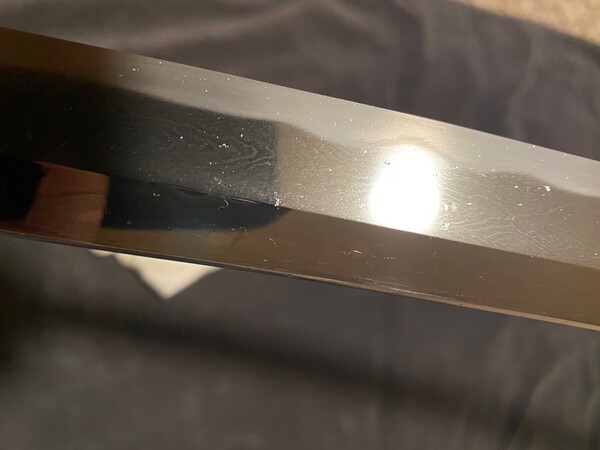


 2 points
 -
I am a newbie in Tsuba collecting and already have 7 Tsuba in 2 weeks so I was wondering how many members have who are collecting for years? (I do understand it is about the quality and not the quantity and I do not want to end as Jan. (see Bruce)) Collecting Tsuba seems more addictive than for example collecting swords or knives? Maybe because Tsuba are smaller and cheaper? Do you agree that collecting Tsuba is addictive? If so, do you have a system to counter this where you say for example "I try to keep 50 Tsuba max from a specific school and if want one more I sell one so I always keep my 50 best ? Or do you keep everything you buy and are interested in everything? I do understand you keep quiet if the wife reads along. Happy with ALL comment. Kind regards.1 point
-
Good afternoon, a friend of mine (I will not out him as he clearly does not know) displayed this sword and stated “this was taken off of a Japanese soldier in Iwo Jima. I almost believed it until I zoomed in. Why do people believe this crap?!? It’s clearly NOT a Japanese sword, however the story was believed and my friend still feels the piece “has so much history” that I just can’t say anything. I love this dudes show, but you guys have to see 😁
 1 point
 -
Traditional Black Forest JINGASA:
 1 point
 -
All shots upside down, but looks like Bizen Kuni Ju Osafuné Sukesada. IIRC Nice presentation!1 point
-
Kojima Kanemichi KANEMICHI (兼道), Shōwa (昭和, 1926-1989), Gifu – “Nōshū Seki-jū Kanemichi kore o saku” (濃州関住兼道作之), “Nōshū Seki-jū Kojima Kanemichi kore o saku” (濃州関住小島兼道作之), real name Kojima Tokijirō (小島時次郎), born July 1st 1902, he first studied under the Zenjō Kaneyoshi-student Kojima Katsumasa (小島勝正) and later also underWatanabe Kanenaga (渡辺兼永), later he trained many swordsmiths himself, he signed first with Kanetoki (兼時) and worked during World War II as a rikugun-jumei-tōshō, he died on Februar 15th 1983, kihin no retsu (Akihide), Special Honor Seat at the 6th Shinsaku Nihontō Denrankai (新作日本刀展覧会, 1941)


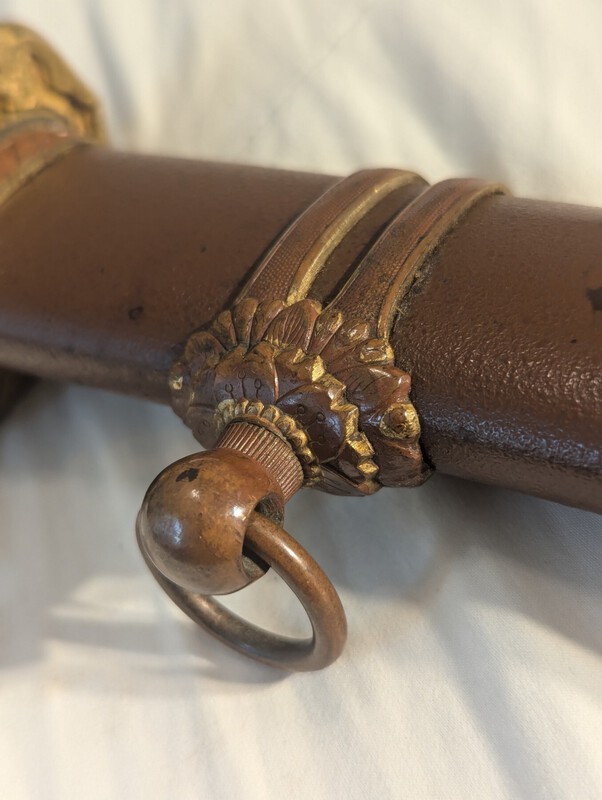


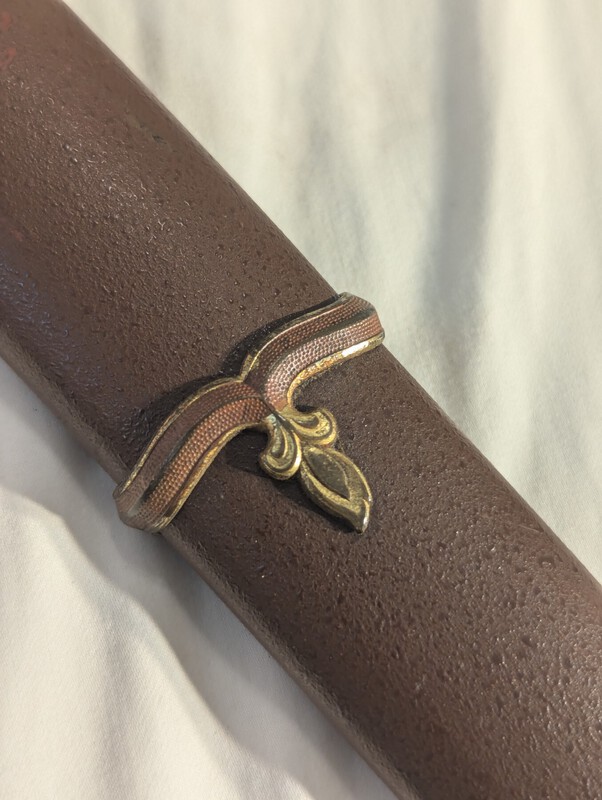


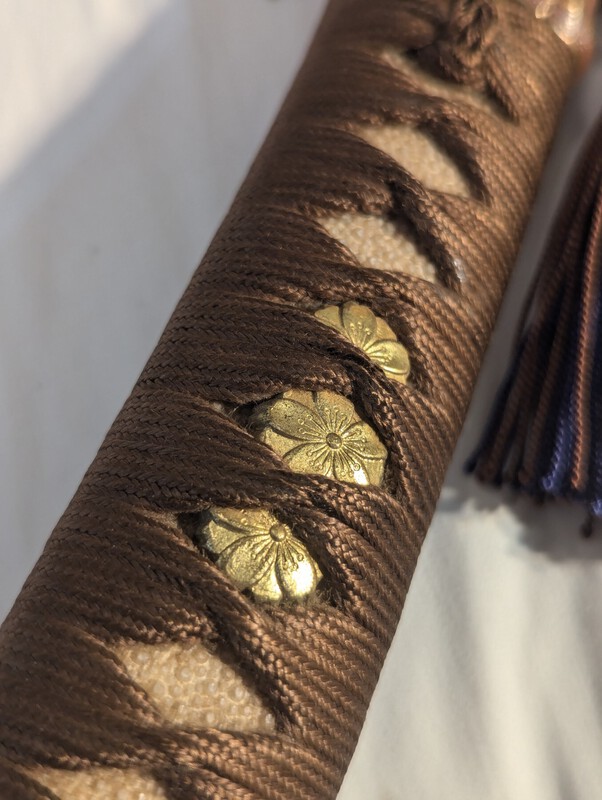 1 point
 -
not mine but on a sword I wrote about


 1 point
 -
1 point
-
G'day Guys, Here is another Gassan from the internet. This one was signed Sadakazu, but was probably done by Sadakatsu. Cheers, Bryce
 1 point
 -
Not that it adds much to the discussion but I also have a showato katana signed Hoshiya Yoshinaga that looks a lot like yours. https://i.ibb.co/9gXS1mM/IMG-1203.jpg https://i.ibb.co/t8QxkRY/IMG-1204.jpg1 point
-
I am not sure if this is perfectly in line with the topics, since it is a gendaito made for iai. I was about 28, had relatively recently gotten my 3rd Dan in ZNKR iai. My sensei told me to save some cash and later said he found a very nice, long (2 shaku 6 sun and more than 5 bu) and balanced sword from Akamitsu Taro from Kumamoto. It fits my body perfectly and funnily enough it was made the year I arrived in Japan (2008, but I got it more than 5 years later).1 point
-
Bruce I’ll look later today. Thanks for the intel on how to do Showa math. God Bless1 point
-
Looks like the very same one.1 point
-
I think collecting anything can be addictive...well in my experience at least. Availability and price certainly have an impact on the number of pieces I've collected to date. I personally prefer to focus on school(s) as a primary deciding factor...and on motif (within those schools) as a secondary factor when picking up (or passing on) pieces. That has kept me pretty motivated over the years. Regards Damon1 point
-
I was 64, so only a year and a half ago... it was a Hozon Taira Takada katana - big, buff and curvy in all the right places...1 point
-
A very interesting topic! @TumiM Unfortunately, I can't say anything about the Bizen Osafune Museum. I was last in Japan in October 2022 and was one of the first "normal tourists" to be able to visit Japan again after the Covid pandemic. Since I was also in Kyoto, I also wanted to visit Osafune. At that time, some museums were still in Covid mode and you had to book a time slot for a visit to the Osafune Museum. To register, you were then redirected to purely Japanese websites. Despite translation programs, I gave up. But maybe I'll manage to visit Osafune in the future. Nevertheless, it touches on a point that is not unimportant: the web presence. The Osafune Museum, the NBTHK Museum or the National Museum are quite good, or sufficiently set up, when it comes to information, for example in English. But I also wanted to visit other smaller museums and exhibitions where information for non-Japanese speaking visitors was already difficult. I always found the lighting of the blades in the Tokyo National Museum or the NBTHK Museum to be excellent. You can see quite a lot, despite the distance, the display case and the glass. In other exhibitions where blades only play a minor role, you can't expect much. The presentation of some important blades in the Nijo in Kyoto is horrifying. Well, it's not a sword museum, but there must be ways and means of displaying such swords in a more interesting and dignified way in a tourist hotspot like this. Randell talks about the Samurai Museum in Berlin. I have very good contacts with the staff and the museum management. And of course, as a "Nihonto lover" you would do a lot of things differently. But you shouldn't forget one thing: how many "experts" are there? More than 90% are interested laypeople, and in my opinion the museum is well equipped for that. A museum should always address a broad public so that it can pass on art, culture and history in this way. Compromises are always necessary, and as a knowledgeable person you should overlook some things. Well, and then of course there is the economic factor. Previous exhibitions had a more academic structure. Then the exhibitions became more modern, more interactive and more entertaining, like the Samurai Museum in Berlin. The costs of a museum, the running costs alone, are not insignificant. You have to weigh up what makes sense and what doesn't. I and a few other enthusiasts organize so-called "study evenings" four times a year in collaboration with the museum to go into more depth on certain topics for interested museum visitors. Here you can look at some objects very closely without any annoying glass in between. But here too you quickly notice that you have to adapt a lot to the interested layperson so that what you are explaining is interesting, entertaining and understandable. Tips and advice and criticism from experts are always important and helpful. There is always something to improve. But first and foremost, we need to reach laypeople, because that is where the next generation comes from.1 point
-
I was 24. A single father of 2 boys that was lucky to have 2 pennies to rub together on good days. (their mom left us and dissappeared for years...party girl) I saw a gunto saya on a shelf at an antique mall. I grabbed it and out fell a broken piece of a Showato katana. Signed Noshu Seki Jyu Fujiwara Kanefusa. The seller wanted $75 for both, but would sell me the broken katana for $30. I didn't have enough money for both, so I got the broken katana. To me, at that time, I felt like I hit the lottery! Over a period of 6 months, the same guy sold me a decent Showa period civilian tsuka for $25. It only needed minor filing on the inside to fit. I later found a matching civilian tsuba that matched the fittings on the tsuka for $35. Working as an apprentice machinist, I was able to carefully grind a new kissaki onto the broken blade. End product looked decent. I took the newly re-fitted katana, now a wakizashi, to the Show of Shows in Lousiville, Kentucky in February of 1995 and quicky found a cheap $25 saya for it. Altogether I had $115 into it. A guy offered me $400 for it and I thought I hit the lottery again! Good times!1 point
-
Love the question! I was 11 years old.. Thank god I didn’t do anything stupid with it at that age It belonged to my grandfather. The story of how he got it, is lost. Every time I would visit, I would ask to see it. He was pretty grumpy, and only occasionally agreed to show it to me. Anyway, he had a stroke, and I think he knew he was going to pass; because while visiting a couple weeks before my birthday, he decided to give it to me. He was only 73 and I was turning 11, and my parents shocked looks were priceless Anyway, after many lectures about the responsibility of owning a weapon. I took it home with me. He passed away a week later, RIP. Fast forward ~20 years, I take interest in it, post it here, and send it off to Ted for ID. He tells me its genuine, and early Shinto mino! I didn’t even know it was real for those 20 years. Nothing particularly valuable, but very special to me. Cheers, -Sam
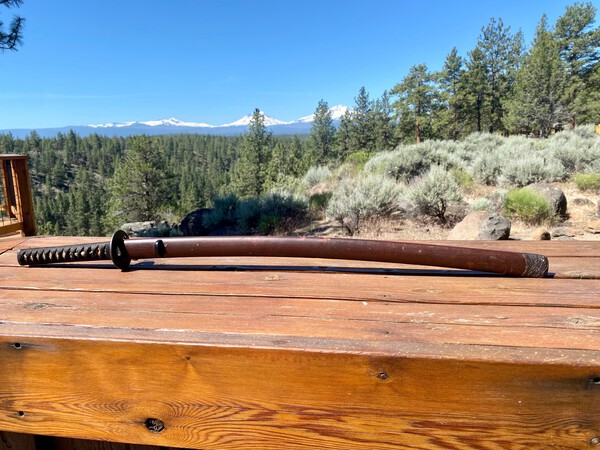 1 point
 -
I was 24, living in London for my first corporate job. There was a little store near Camden Lock close to where I lived that sold Japanese prints and art. There was an o-suriage wakizashi on the shelf above the cash register. I was shocked to learn it was a real samurai sword and had to have it. The owner joked that I must be very savvy to buy a blade without a signature because it could be a treasure! It's wasn't, but I was thrilled. He sold it to me along with a copy of John Yamato's book. The infection set in almost immediately and it wasn't long before I was at Sotheby's for every Japanese sword auction they had. I was poor back then but I ended up buying my first signed piece with koshirae soon after: a ko-wakizashi by Hida no kami Ujifusa. Now, 40 years later, I still have that blade and many tens of thousands of dollars less because of this hobby. Don't regret a single minute. Thanks for making me walk down memory lane.1 point
-
Thanks John, It has a maru ni tachibana mon. I guess that first kanji could be tachibana? Cheers, Bryce
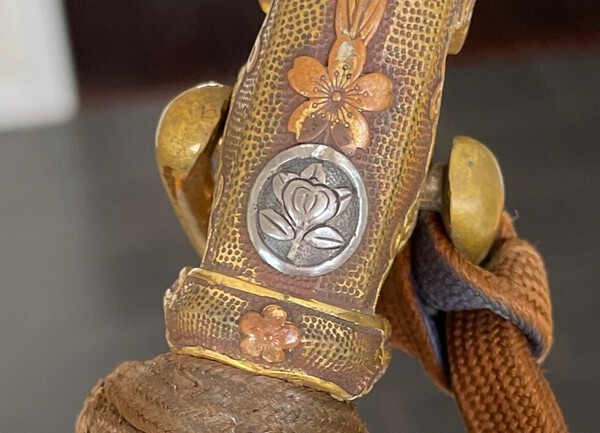 1 point
 -
Thanks very much Dale & Richard, much appreciated. Richard - I'm not sure that I should dive into yet another rabbit hole, but the subject fascinates me, so I'll probably get far too engrossed in yet another aspect of Nihonto and Japanese history! Cheers, Jon1 point
-
Here is a picture of a few of mine. I find them very interesting, some very detailed, not usually inexpensive, and at least for me hard to find for sale. Hope you enjoy them and feel free to comment. If anyone would like a better picture of any individual piece please let me know. Thank you for looking. MikeR

 1 point


.JPG.6f218e522a39c7dbf03b3712892959c1.JPG)
.JPG.9d572a7896372dbb03ffbe1650ee4b65.JPG)
.JPG.3ffb902adf43eda4affff1b8b10c5493.JPG)
.JPG.a1dc5bd7a6093b070ed0208060e8ff75.JPG)
.JPG.665afb8fdec6e6d4a21a783f1f625b38.JPG)
.JPG.edc83e16e7bf4255e66538d6999129db.JPG)
.JPG.80d2e904aa7c938ae7ccdcf4e4c51ec4.JPG)
.JPG.7a3019b3805d2769faef7194ac332b21.JPG)

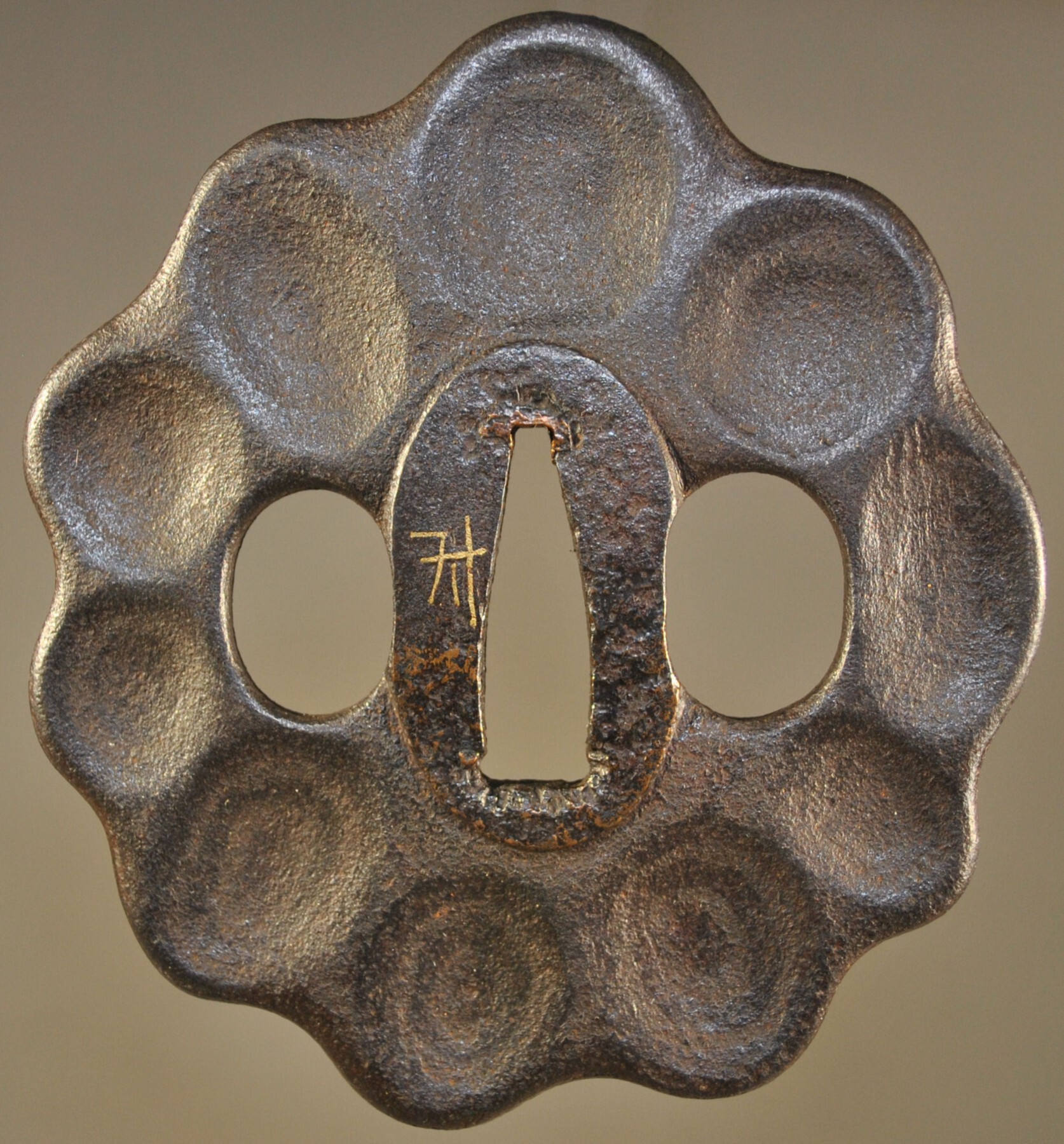
.JPG.45170d0ceb0e8a3d7d8656ceba3cb1ec.JPG)































.thumb.jpg.bc10b59027a00aa142dce0349f3ba9e0.jpg)



This leaderboard is set to Johannesburg/GMT+02:00