
Leaderboard


Popular Content
Showing content with the highest reputation on 03/26/2026 in all areas
-
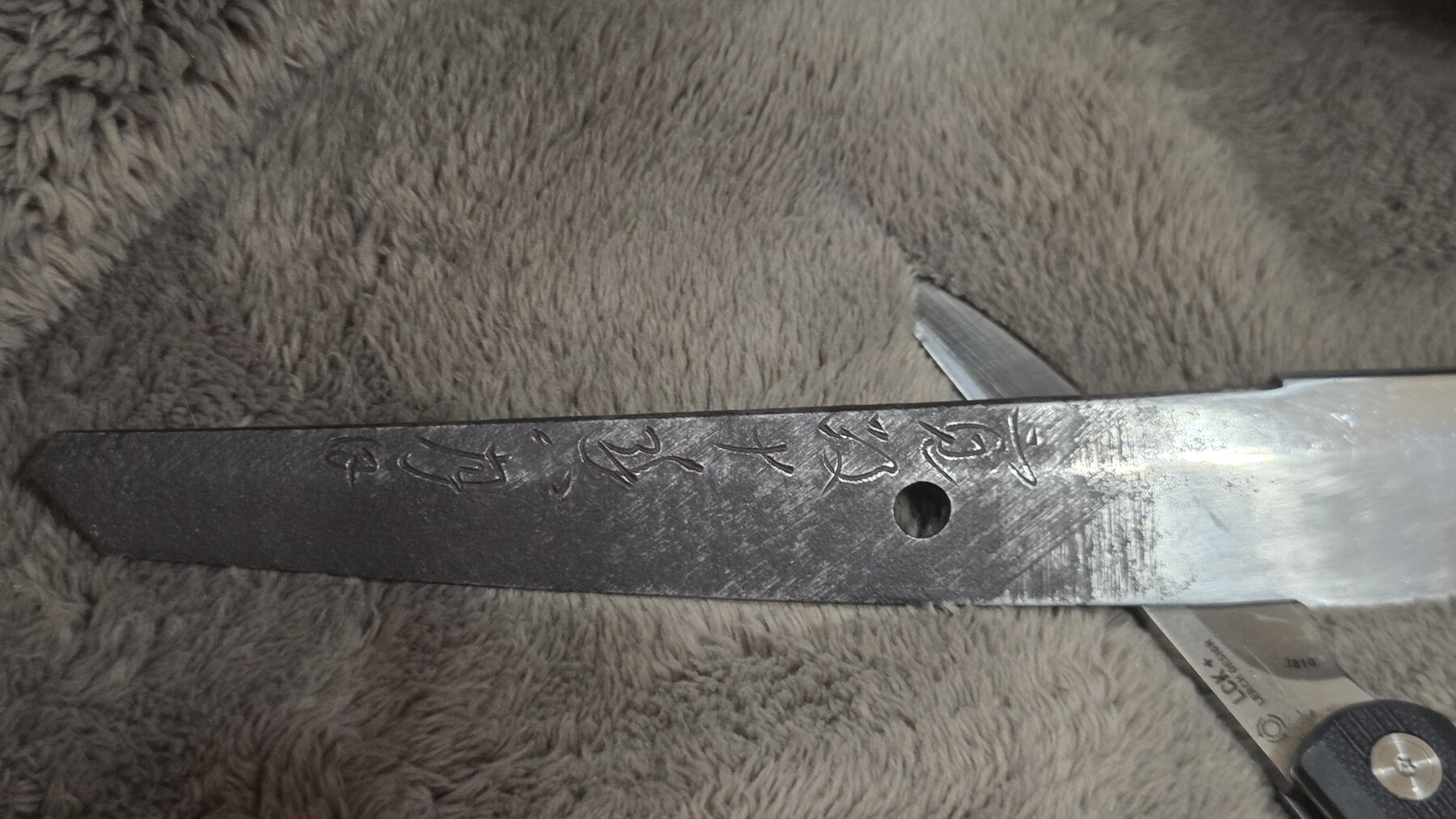
於駒橋元近作之 – At Komahashi, Motochika made this. 佐世保市浪瀬免三一番地代五班本郷盛馬 – Sasebo-shi Namise-men 31, the 5th group Hongo Morima10 points
-
Images designed to make it look dramatic without really showing anything (as Uwe says above). That alone makes me very suspicious. Also the black finish on the shikoro does not look like old lacquer. Also the “gold” plates on the shikoro are heavily worn but the lacing looks brand new. Also the missing rivets holding shikoro to hachi suggest it does not fit correctly…..possibly a marriage? I am also a novice collector of armour and my opinion is worth little but I try to look closely at images to spot things that make me nervous. To my uneducated eye this looks highly dubious. Parts may well be old but………3 points
-
I am not a fittings guy but my guess would be it had been fitted for wooden sword, bokutō/bokken.3 points
-
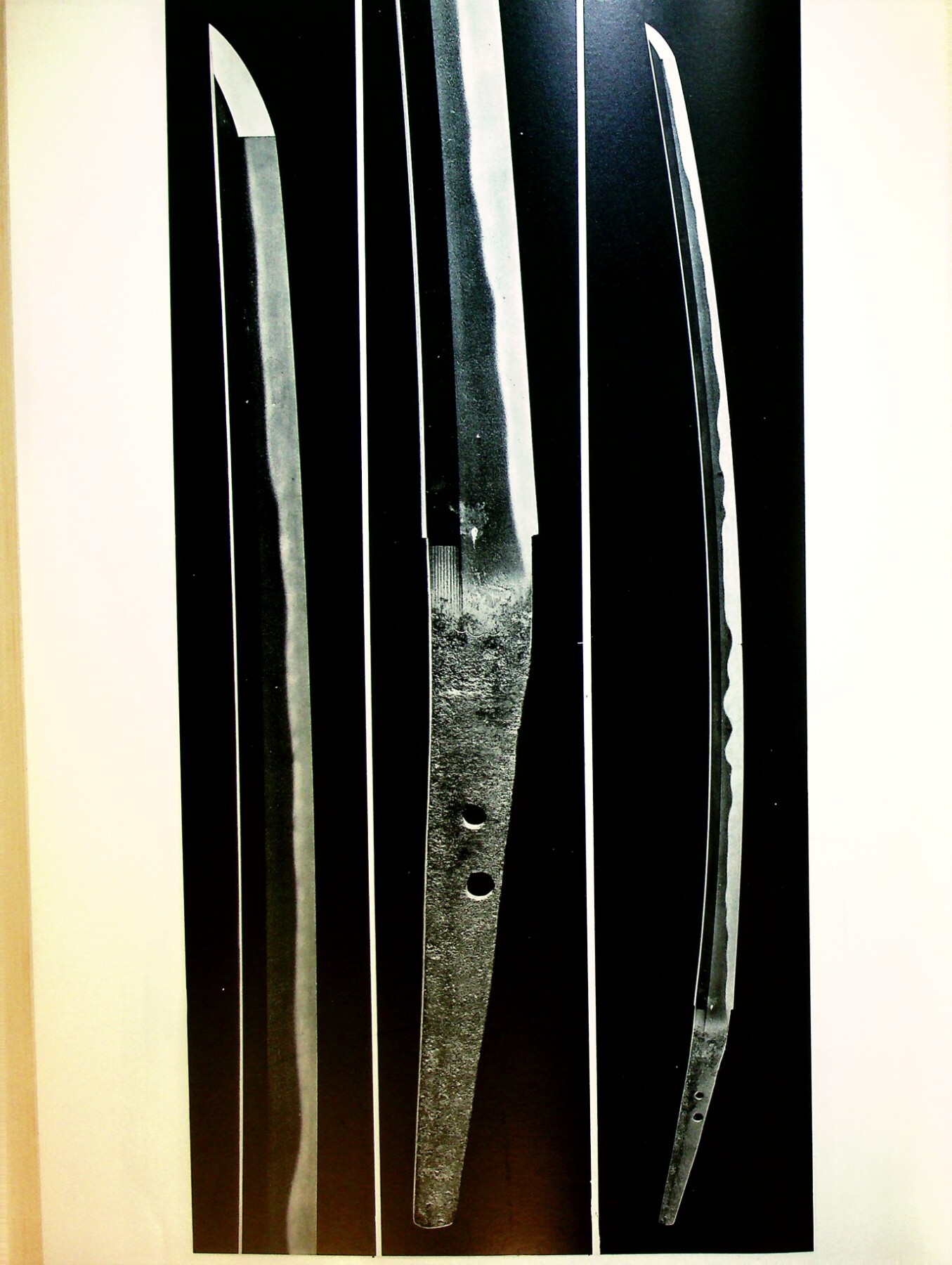
@Wah Thank you for this information Stephen, I have not heard about these magazines. They seem extremely interesting and it could be a fun project trying to get these magazines from Japan. This thread is wonderful, so much information that is not easily available. I believe this one would be the tachi you posted above. The 99,1 cm length listed in the Japanese site: https://www.bunka.go.jp/seisaku/bunkazai/torimodosou/kunishitei/106.html would actually be the total length of the item and not the blade length as I thought it would be.3 points
-
Papers should be a start of your research journey, not the end. They are a very educated opinion, but there is so much more to learn depending on what they say or don’t say.3 points
-
Here's the one I got, quite happy with it. I would have loved number 27 or 58, but the bidding went up too quickly. Here's mine, from the Tenhô school.
 3 points
 -
The same sword together with a translation from the Token Bijutsu 705. 705_NBTHK_October_2015.pdf

 3 points
 -
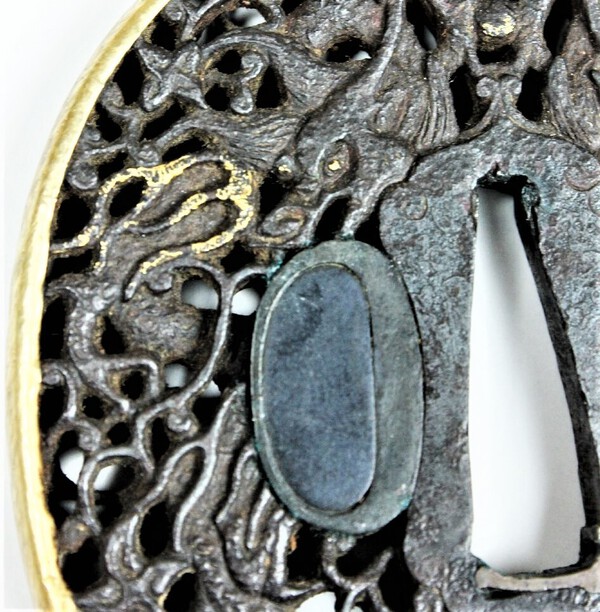
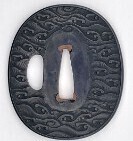
I like the history inherent in this piece, the hitsu was cut after it was made, then that hole was filled possibly with a smaller hole or as a solid and then re-cut even later. Only to be filled once again. The difference in metal colours certainly suggest there was a big time difference between each alteration. The fukurin? At what time was it added? Intriguing to me. PS. I am not sure the kanji in the thread title are correct - still can't trust google trans!
 2 points
 -
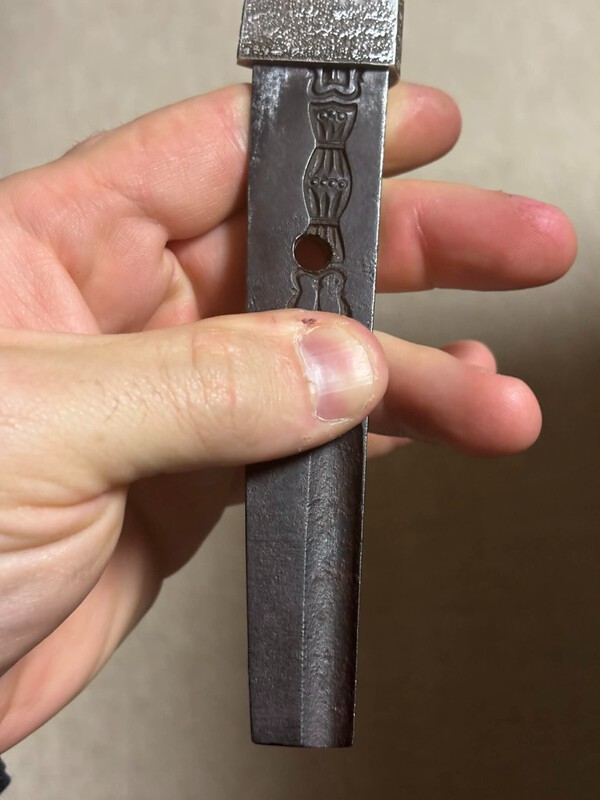
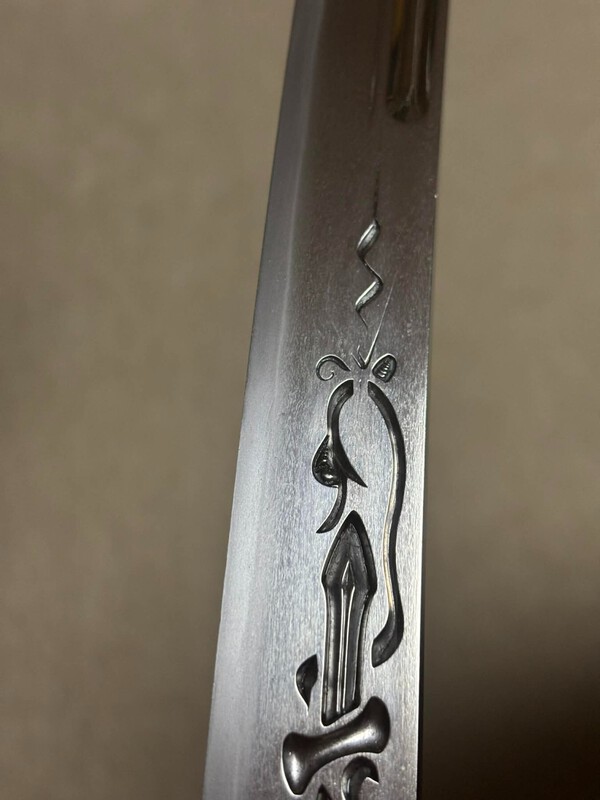
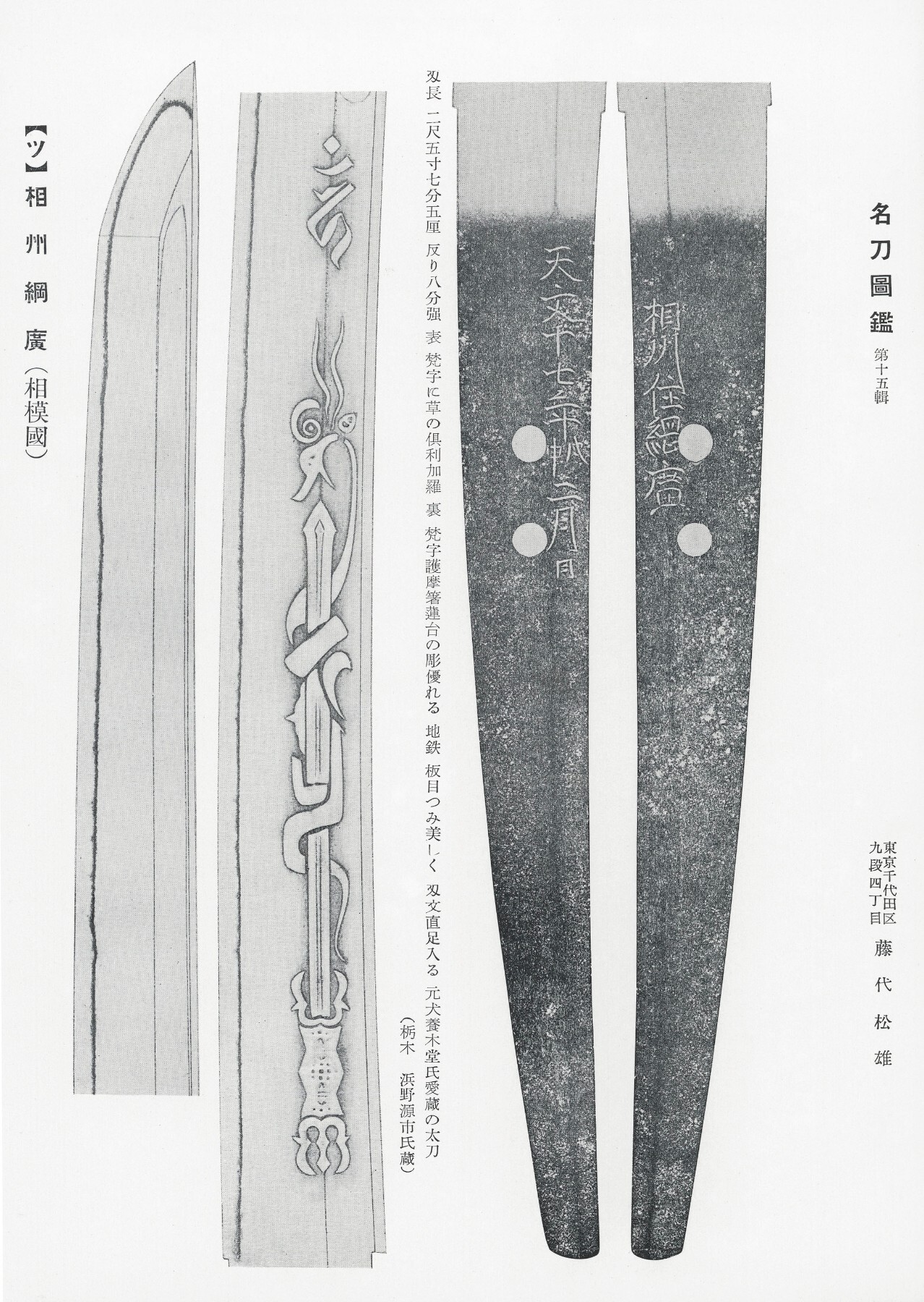
Dear all, I would appreciate your thoughts on a wakizashi that I plan to submit to shinsa soon. At first glance, I am inclined to date it to the late Muromachi period, possibly from the Sōshū school (Tsunahiro). However, the relatively long kaeri gives me some pause. I do not have a full-length photograph available at the moment, and I am currently in the train, but I will share some once I am back home. Thank you in advance for your insights.




 2 points
 -
It is nice looking item, and an interesting one. I am definately not a Sōshū fan, so I cannot identify the small details. However I am shape and size guy and to me the hi at the bottom is throwing me completely off. I do think in my references I should have hundreds of examples of this type of horimono and I cannot remember single one that would have another hi under the main carving, as usually the placement for this type of horimono is pretty standard. The presence of the lower hi would also indicate the sword would have been much longer than it is in it's current form. I am liking the item but I admit the carvings have me completely puzzled out.2 points
-
Grev, a) and b) are meaning the same. As far as I know, in written Japanese, there is no separation of terms, so you might write TACHIKANAGUSHI (style) or TACHI KANAGU SHI (style).2 points
-
Just picked this up. A 1934 paper weight commemorating the birthday of Crown Prince Akihito. John C.

 2 points
 -
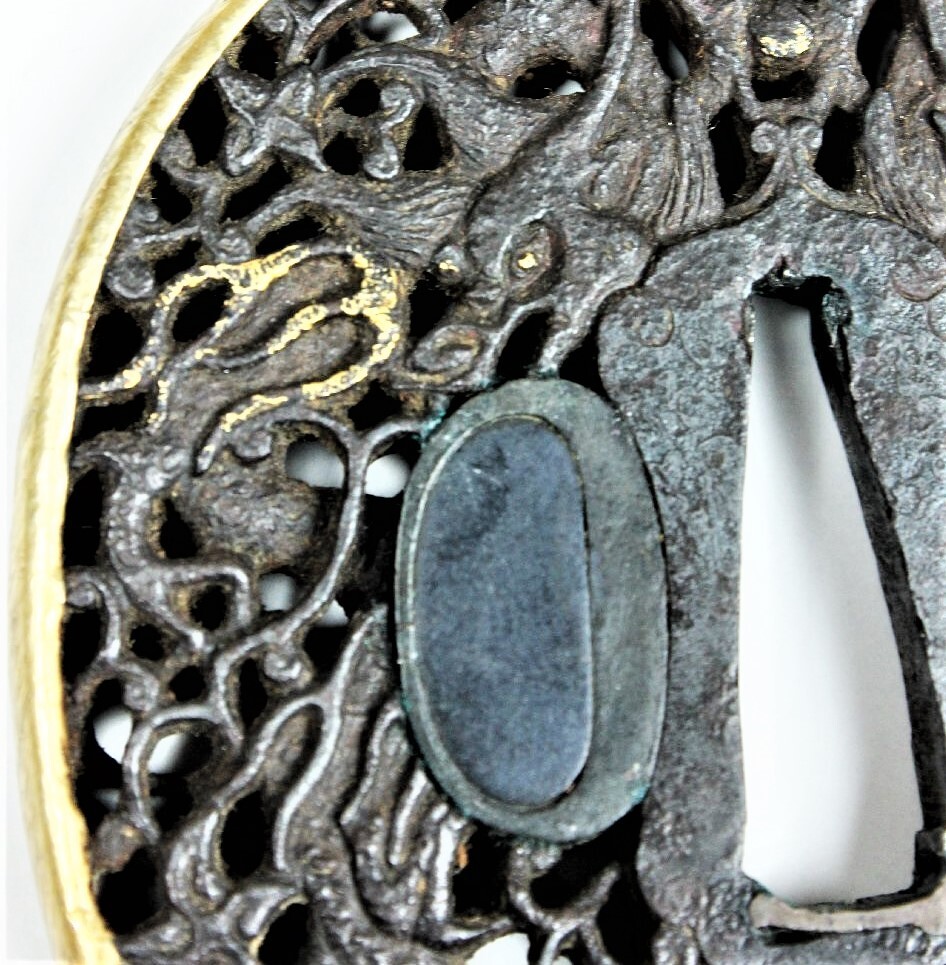
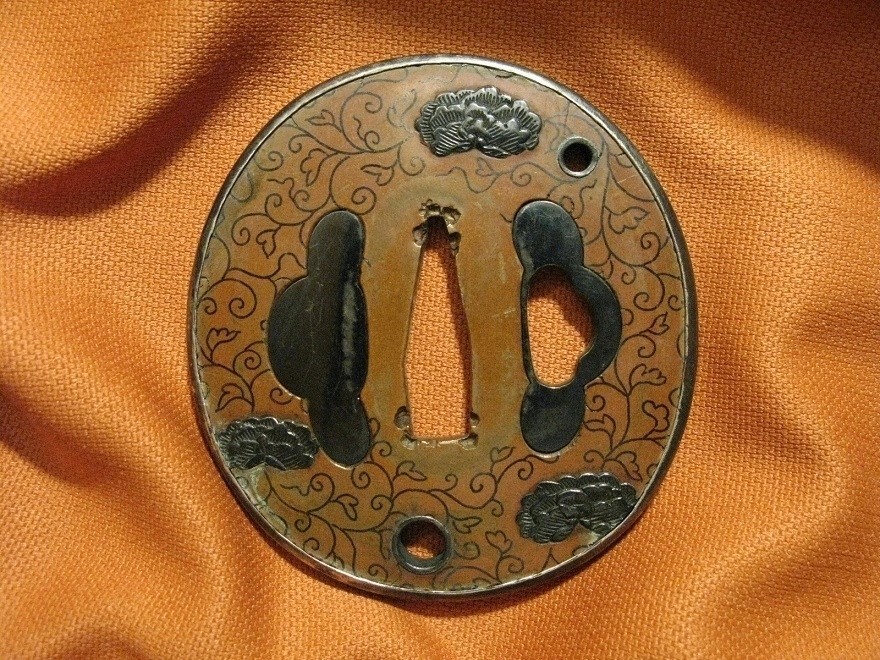
The apparent quality of the workmanship for the piece is very much at odds with the shoddy workmanship of the nakago-ana - it is not centred, and it has chips off in places. In addition to that, the way that the nakago-ana cuts through the raised items in the centre indicates a later alteration.2 points
-
Michael, funny—now that I’ve seen your title image in connection with Ko-Bizen, it immediately rang a bell. I remembered where I must have come across that information before. not a photographic memory, more that I had a few things tucked away that just happened to resurface. This forum is full of hidden gems, and there’s a great deal to learn here ;).
 2 points
 -
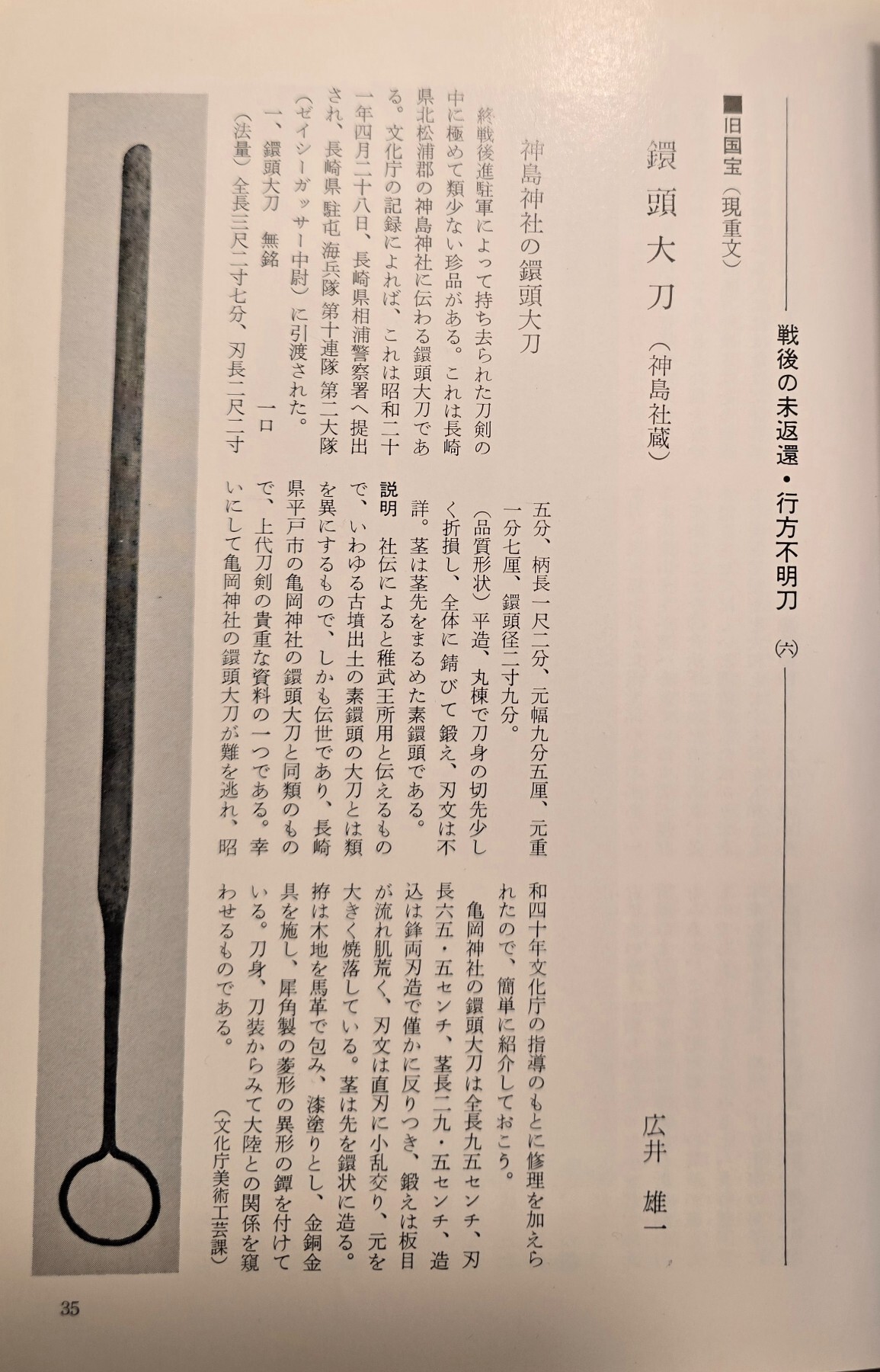
Has this Tachi been found? Am I overlooking it in the list above? This is from the Daisojin publication by Yuichi Hiroi, July 1979. I used AI for the translation which is imperfect but it's understandable.

 2 points
 -
Well, it is the other way around. Soshu was inspired by Ko-Bizen and Ko-Hoki…. So Soshu occasionally looks like KoBizen and KoHoki. When I phrased my pseudo haiku I had exactly that TB quote in mind… Well done to Rohan for following the clues! In fact, for those in Japan currently or passing through, if you visit the NBTHK JuBi exhibition, there is a Norishige which looks like a Ko-Bizen blade (except that the jamón shape in the upper third stabilises similarly to an Osafune hamon). Even the label in the glass window talks about how Norishige was inspired by KoBizen when making that blade.2 points
-
This smith's name is also read as Teruyoshi. From Sesko below: "he was then employed by the Matsudaira family (松平), the daimyō of Musashi´s Kawagoe fief (川越藩), he moved to the fief and was granted with the family name Fujieda, in the first year of Bunkyū (文久, 1861) he also got the permission to engrave the three-part tomoe crest of the Matsudaira clan"2 points
-
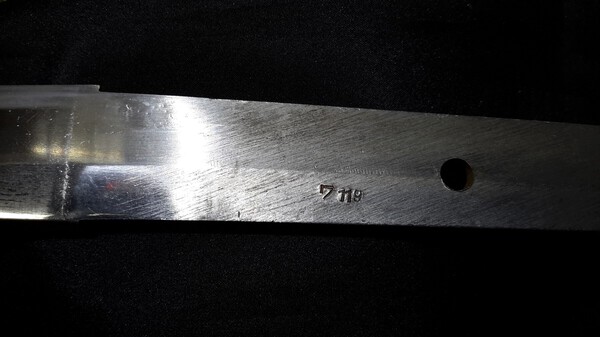
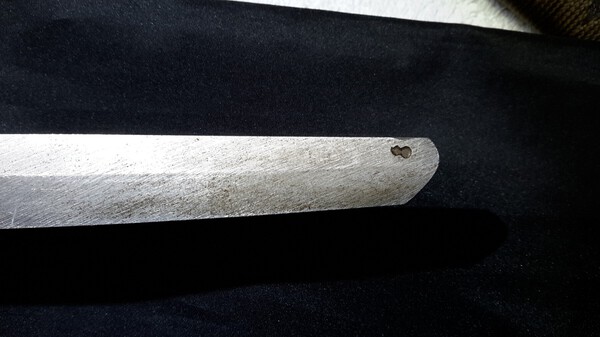
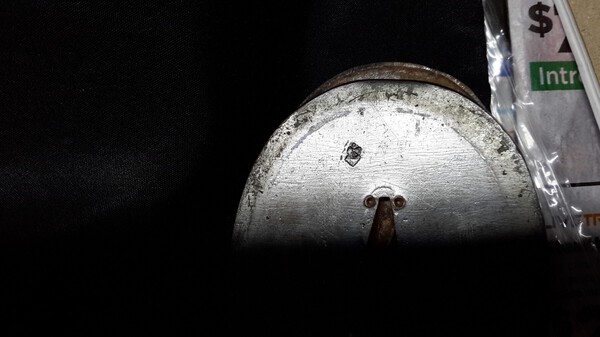
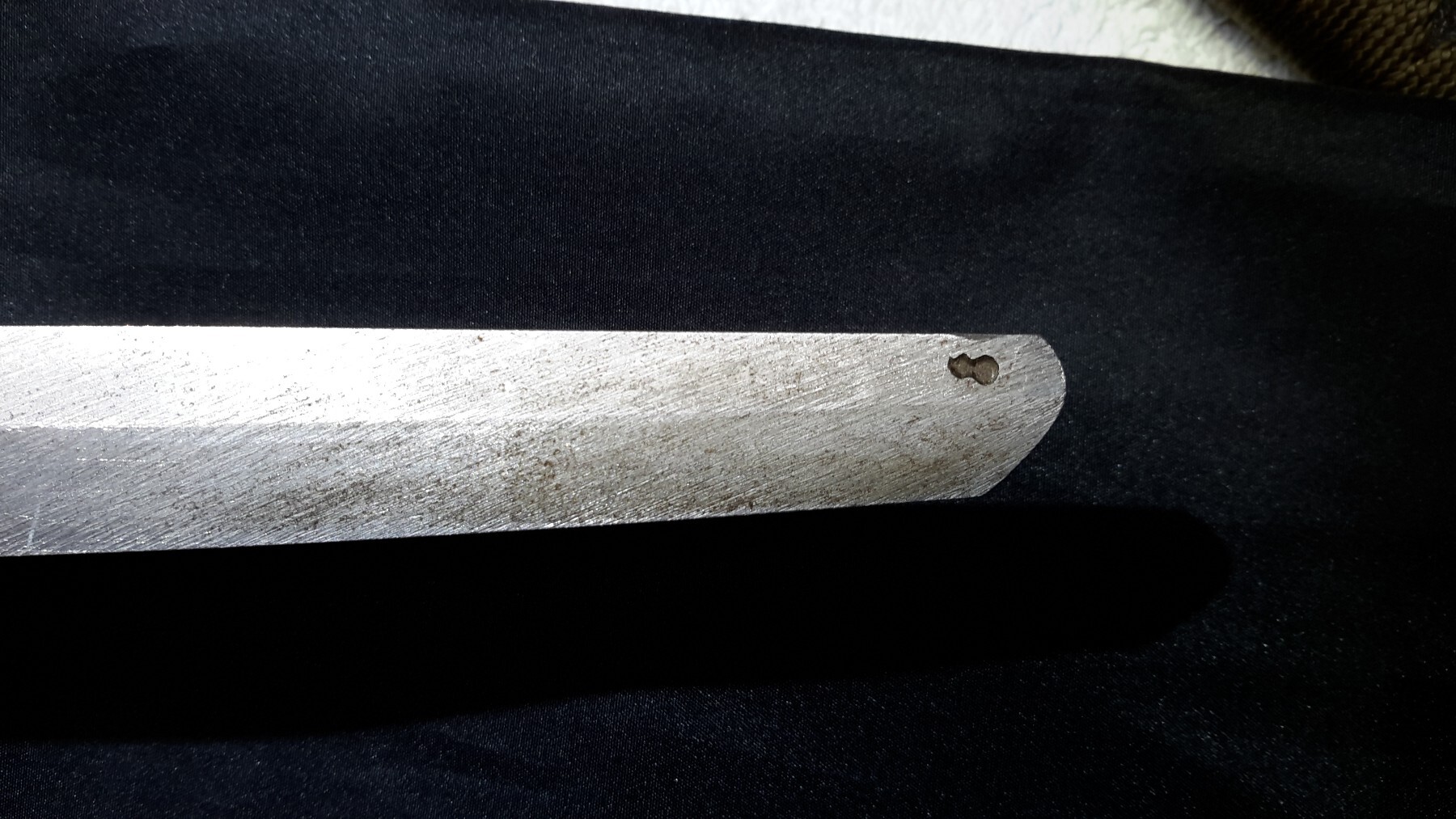
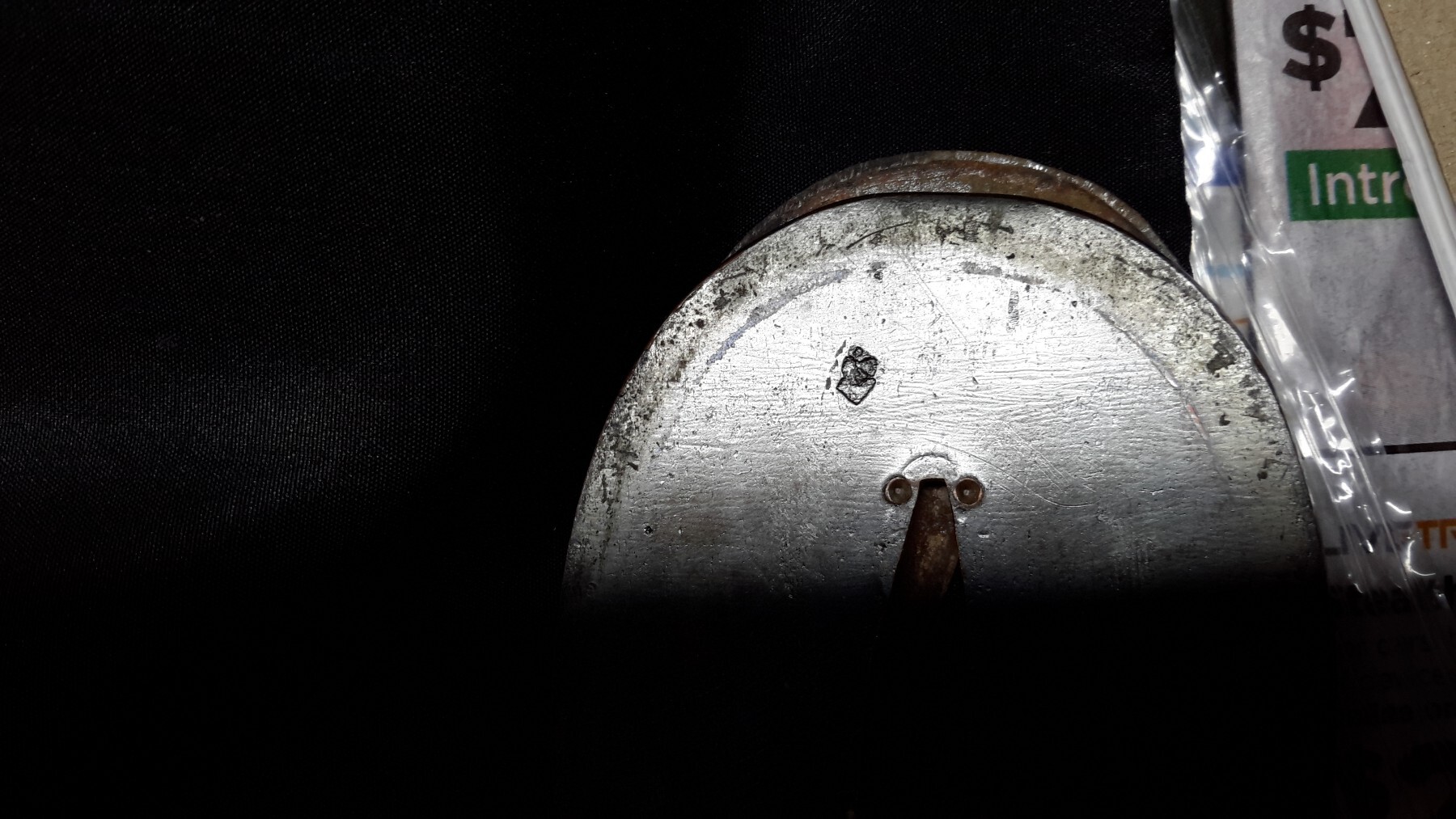
Greetings. This may well have been raised before but I will put it up anyway. Maybe a question for Bruce @Bruce Pennington Bruce, I have been through your VERY good reference tool 'Stamps of the Japanese Sword' but I admit, have not done any lengthy research through NMB generally. I have a rust resistant blade in standard Kai Gunto mounts (although everything, and I mean everything, is numbered 89). It's mumei with no 'arsenal' stamps. However, it does have stamps on each side of the nakago and I have no real idea what they are. 1. Picture 1.... A WA stamp that would indicate 1941 ? (page 27 of your publication above). This is followed by number '119'. 2. Picture 2.....On reverse side of nakago a small hollow 'figure 8' stamp (Picture 2) 3. And while I'm at it, picture 3 also shows a small stamp on the tsuba As I mentioned, every single piece of this package is numbered 89. Any views would be appreciated. Thanks Rob
 1 point
 -
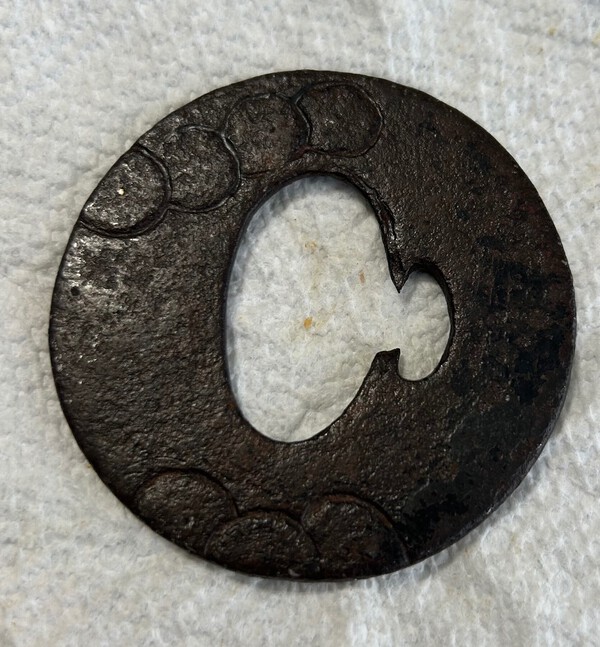
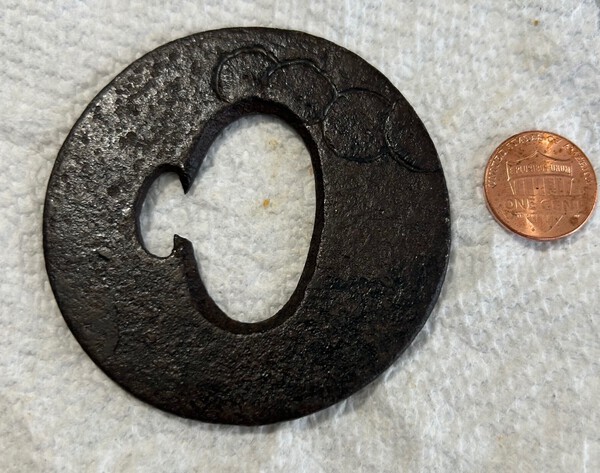
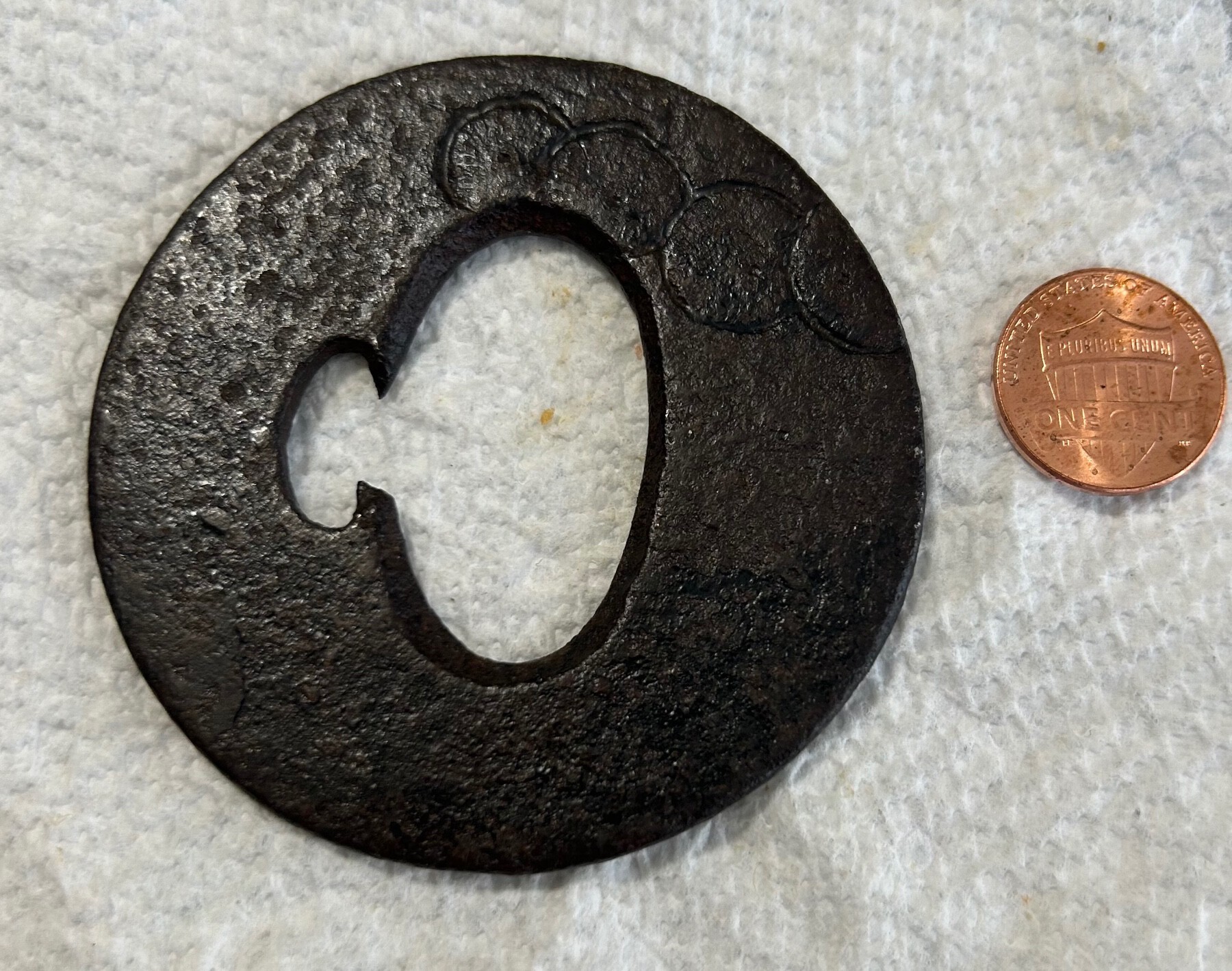
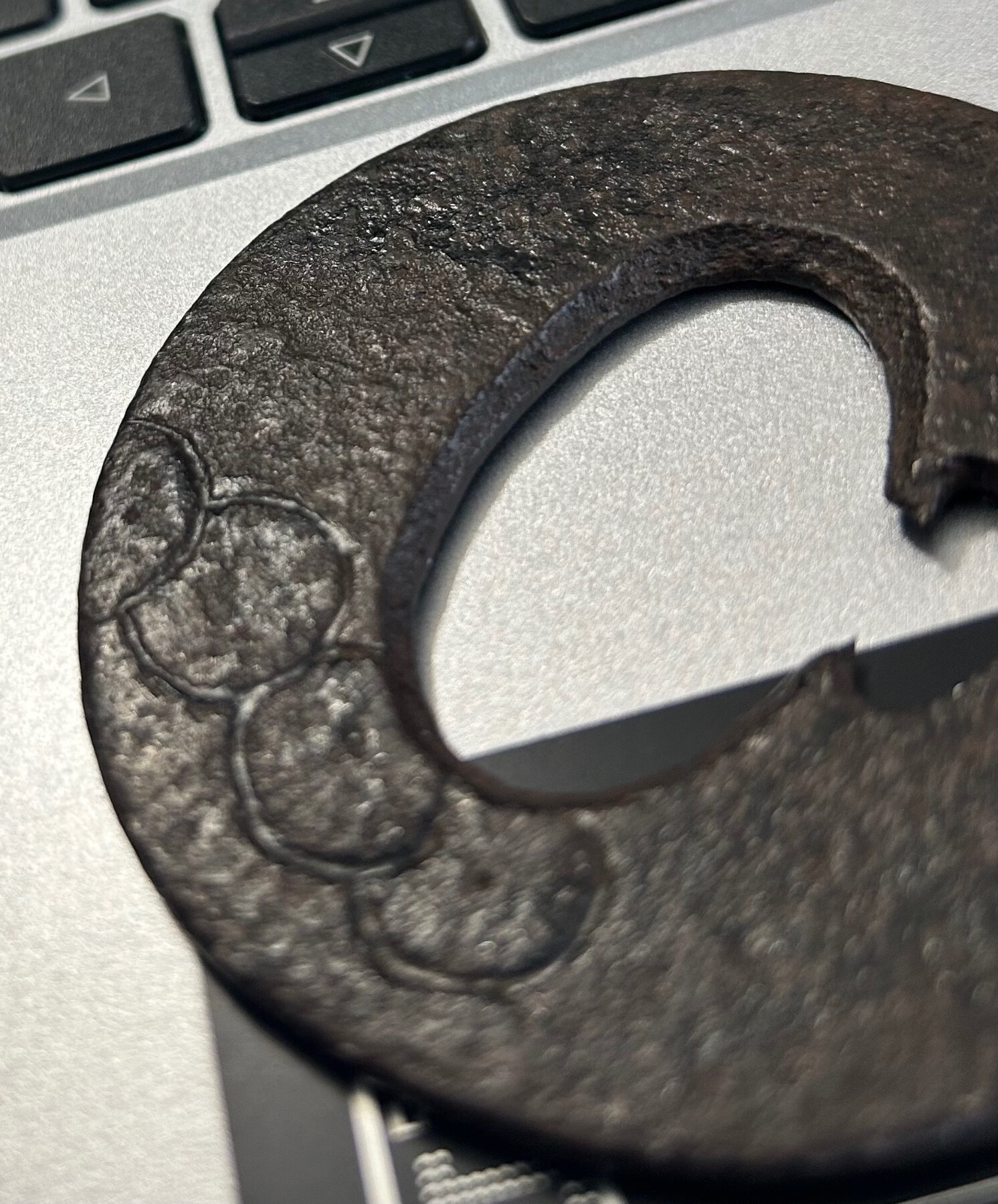
Please see the pictures. I am not sure the purpose of this item. My guess maybe a pole arm? I am hoping someone has seen one before. The center opening is flat on one side and beveled on the other. and not sure why there is a small opening on one side, doesn't seem you would need a kozuka or similar any thoughts appreciated mark
 1 point
 -
The green ( old ) nbthk paper doesnt really have any value today unfortunately. If resale was a concern then a new NBTHK shinsa submission would be wise but that would put this blade at well north of $4000 usd in investment which is equivalent to some very nice signed Hozon/Toku Hozon wakizashi in todays market so I personally dont think it s worth it. Plus you d be waiting about 4-6 months for the blade and paper I would just stick with the NTHK paper if you love the blade and plan on keeping it1 point
-
Well spotted Colin! There might be a fair chance that the pieces (except the maedate) are/ were Edo period. But it seems that somebody had his hands on it…at least on the lacquer… I won’t dare a reasonable assessment based on these pictures! Hint: Katchū is an exciting field of collecting, but, as with Nihon-tō, it sometimes can be a snake pit for beginners (and for the more educated as well 😉) when it comes to acquire something…1 point
-
The seller is right it is probably made in the 1940's . The second opinion giver knows nothing .1 point
-
If this blade was really shortened by so much as it seems by a first look, I would have expected a considerable material loss on the NAKAGO when it was shaped to the actual new dimensions. This would have resulted in a partial erasure in the HORIMONO and the broad BOHI. Although I like the HADA, some details of the blade are suspicious in my opinion.1 point
-
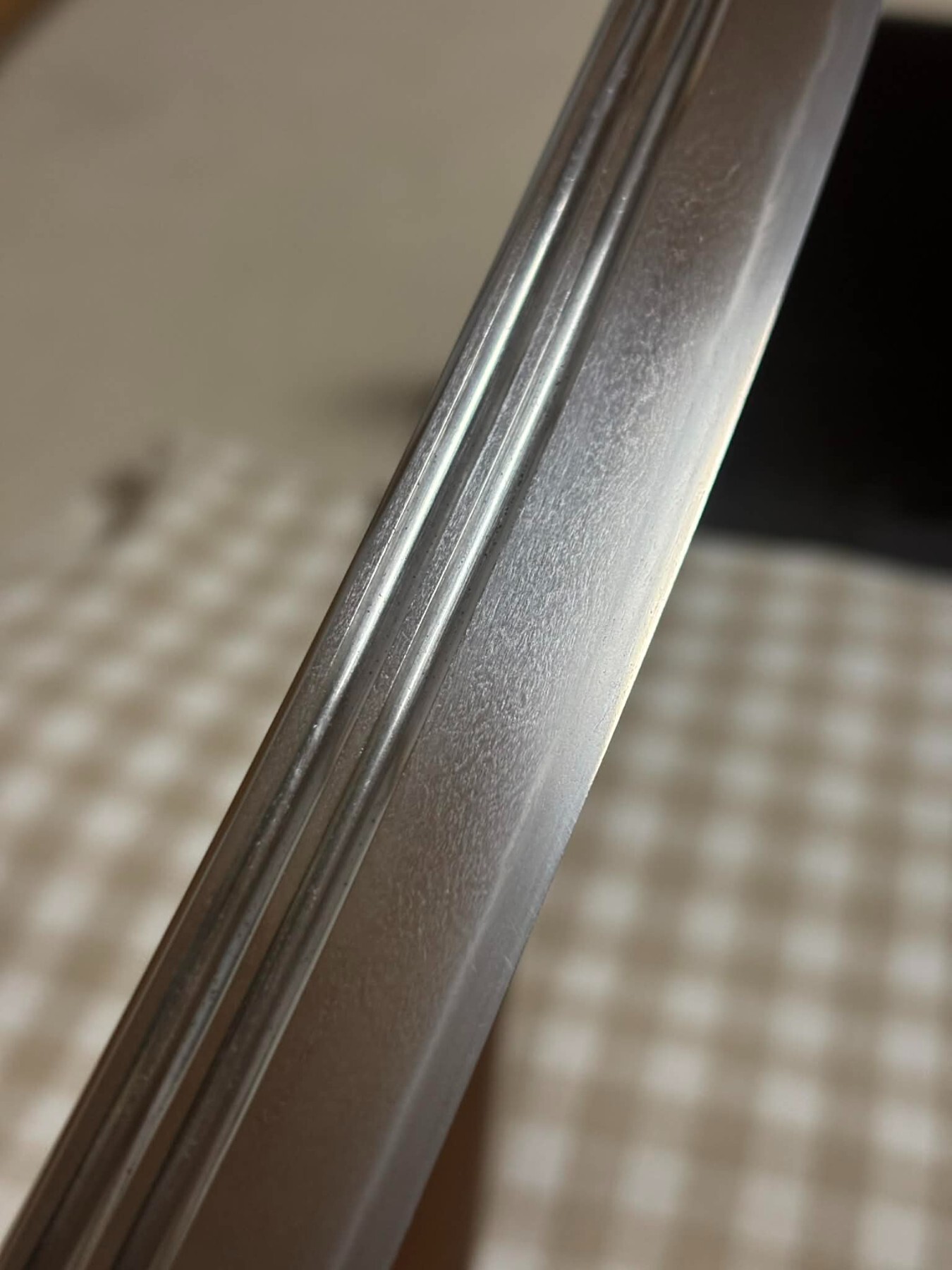
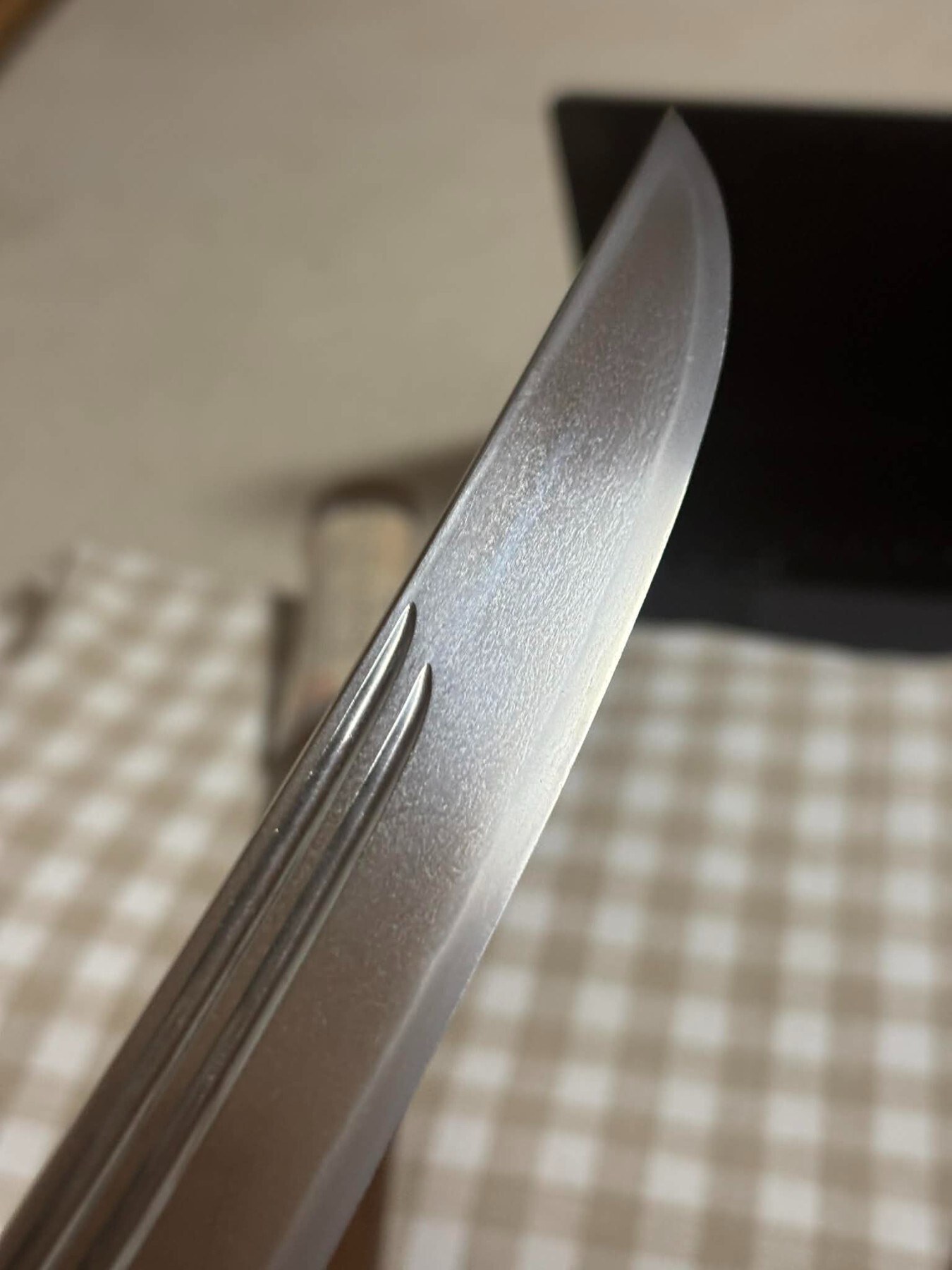
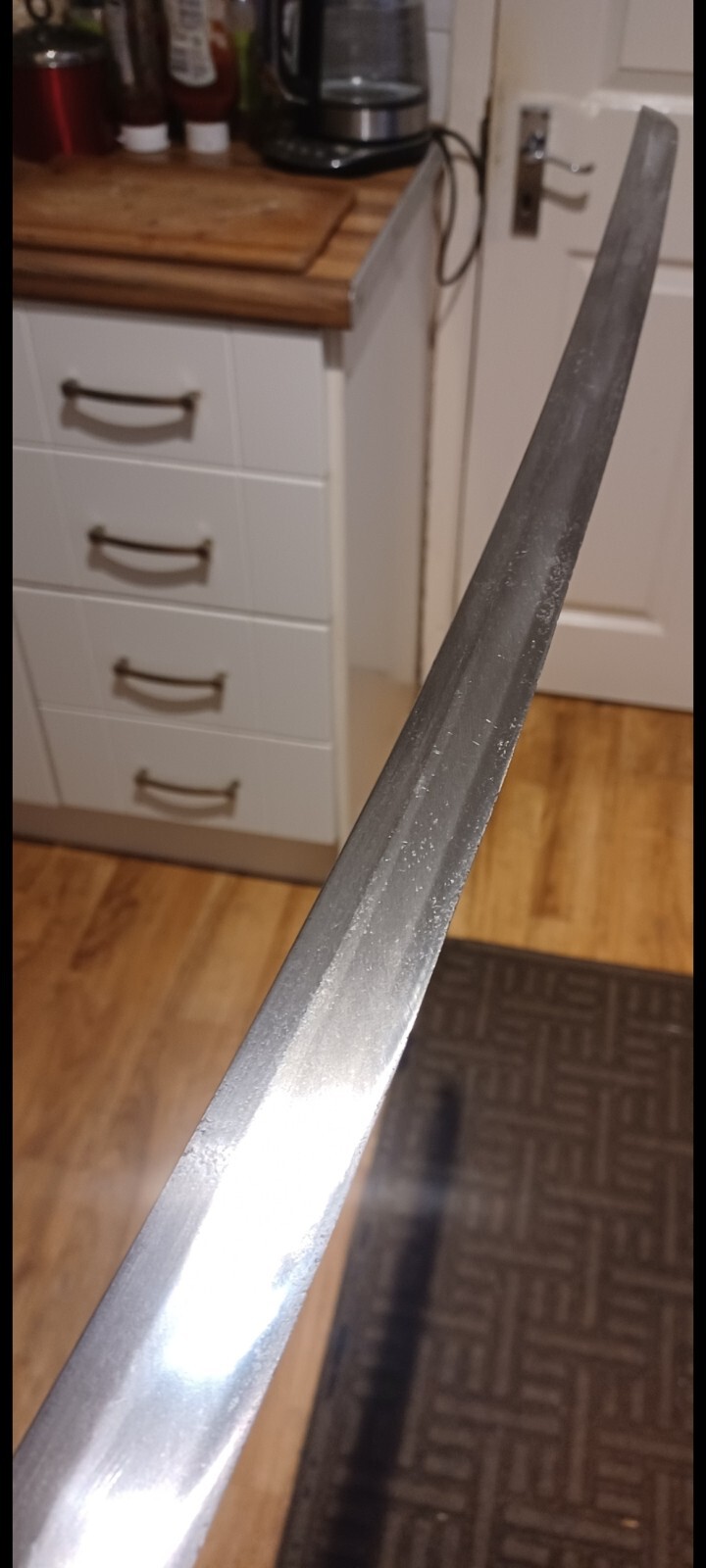
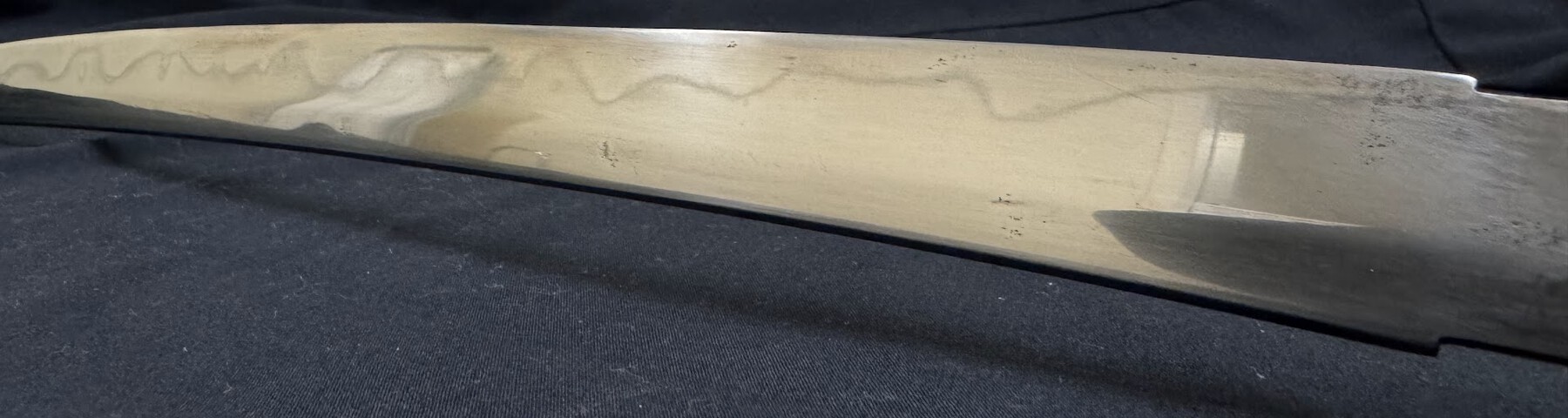
Why is my hamon black?

 1 point
 -
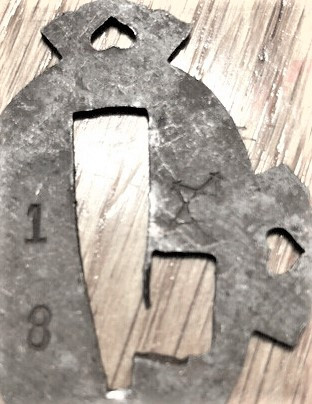
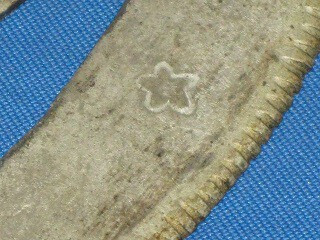
thank you sir. that seppa has number 17 and the tsuba also has same stroke star stamp and number 17 and katakana マ and ホ. i think katakana can be inspection stamps. i really excited to your picture whick has numbering 18. thank you for sharing your knowledge.
 1 point
 -
Kim, I have fittings, mostly tsuba & seppa, on file with three different star stamps. Yours is only the second example I've seen with the larger star with crossed points. Here is the other: Here is an example of a medium sized star: And I have several with these small stars: No one knows who used them, but I've always guessed them to be inspectors of the koshirae shops that made the fittings. Your idea about the Heijo factory is interesting, as they were known to make Type 95s late in the war. But this star is not one of the examples on the chart as it has cross strokes on each star tip. Doesn't rule it out, as even on that chart, they have a variant star indicated. All we can do, for now, is guess. But your guess is as good as mine at this point.
 1 point
 -
One of mines with a Kogai ana cut in a shakudo plug of an original ana.....
 1 point
 -
No. I got it for 10 dollars, which is why I decided to buy it. At first I thought the medallion had been altered into a netsuke so I wasn't going to pony up too much. But for 10 bucks I thought it was interesting enough to get. John C.1 point
-
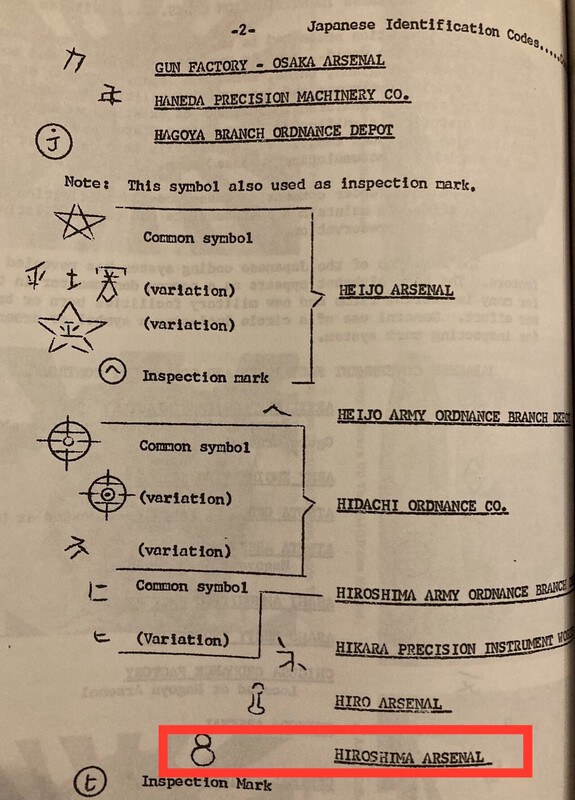
Yes. It's not common, however we have seen various arsenal inspector stamps on tsuba, seppa, kabutogane, and haikan. The Gourd - I have 5 blades on file with it, all navy stainless blades The "8" - I have 2 on file, both army; a Hidetoshi, and a Kanemichi Kanemichi Hidetoshi

 1 point
 -
Hello again, Just back from a very talented book binder: The two volume edition of Shinshinto Taikan, $375: https://japaneseswordbooksandtsuba.com/store/book/sword-books/b666-shinshinto-taikan-by-iimura-2/ The two volumes of Shinto Taikan, $375: https://japaneseswordbooksandtsuba.com/store/book/sword-books/b666-shinshinto-taikan-by-iimura-2/ And Yumei Koto Taikan, $325: https://japaneseswordbooksandtsuba.com/store/book/sword-books/b564-yumei-koto-taikan-by-iimura-2/ If interested please contact me by email through my site. Thank you, Grey1 point
-
Suketaka is considered one of the major smiths of the early Shinshinto period. However, it is difficult to classify Suketaka as a Shinshinto smith in the strict sense of the Shinshinto period. He copied the Osaka Shinto style, particularly that of Tsuda Sukehiro. Accordingly, he also copied the Shinto Sugata, though his Saki-Haba is always slightly wider, as in the works of Osaka Kanbun. He likewise copied the Osaka Kessho and the cursive style of Tsuda Sukehiro or Sukenao. Shinto-Osaka was extremely popular in the late 18th century. In addition to Suketaka, Suishinshi Masahide, Tegarayama Masashige, Kato Tsunahide, and the young (Kato) Chounsai Tsunatoshi were the primary artists working in this style. Since Suketaka died as early as 1805, he did not fully experience the actual Shinshinto Renaissance, which Sushinshi Masahide essentially initiated, marking a shift away from the rather hard-fired Osaka style—which had been popular until then—toward the Ko-Nie and Nioi-Deki styles of the Bizen-Kamakura masters. Shortly before his death, during his Nagato-Kami phase, he abandoned the cursive signature style. He produced mainly wakizashi. Katana are quite rare and relatively short.1 point
-
1 point
-
Conway: Was there anything above the first character? I've seen that kanji paired with field rank. John C.
 1 point
 -
1 point
-
1 point
-
I discovered that this text is available in the National Diet Library Digital Archive. 鍛錬會の刀匠宮口靖廣氏鍛錬の図 雄山閣編輯局 編『日本刀剣の研究』第1輯,雄山閣,昭和9. 国立国会図書館デジタルコレクション https://dl.ndl.go.jp/pid/1213283 (参照 2026-03-26) I therefore believe this was taken whilst master swordsmith Yasuhiro Miyaguchi was forging. My previous translation was of a different caption. My apologies.1 point
-
A glorious piece of workmanship - but the material itself is just not up to the task. The fukurin is the only element keeping this piece together. https://www.jauce.com/auction/1224137596 I have to wonder if it was altered to be used as a tsuba? The seppa-dai area does not look as you would expect.1 point
-
Thanks again, Steve. Found a few online now that I know what I'm looking for. John C.1 point
-
It's a paper weight - 文鎮 - the kind used when doing calligraphy.1 point
-
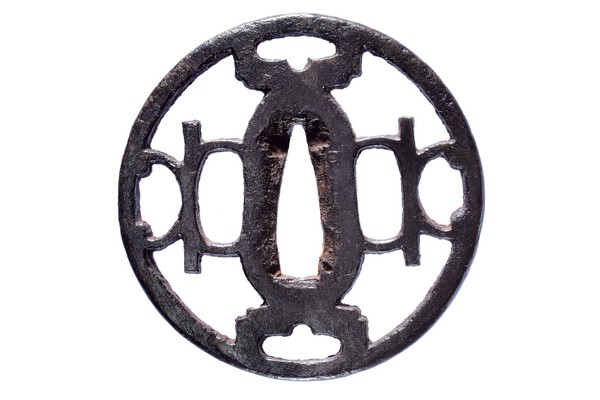
I would have liked to buy the Onin tsuba but too much for me I won this one. Nice to recent papers #218
 1 point
 -
Shachihoko with perforated mimi - NICE!1 point
-
73 Yasuyo This sword is by Shumenokami Ichi no hira Yasuyo not Yasuyori . It was owned by the Miyasaka Shrine in Kagoshima Prefecture who handed it over to the Ibusuki police in December 1945. The blade is dated 1723 and is 33 .5 inches long . There are photographs of the sword and the lengthy inscription on the nakago in the documents from the American Archives that Stephen Thorpe shared with us . Attached to this is a copy of one of those pictures showing the Shirasaya, box and lacquered box that accompanied the sword . Further photos are on page 82 of Satsuma no katana no Tsuba by Fukunaga
 1 point
 -
Agreed, and the material looks traditionally Chinese.1 point
-
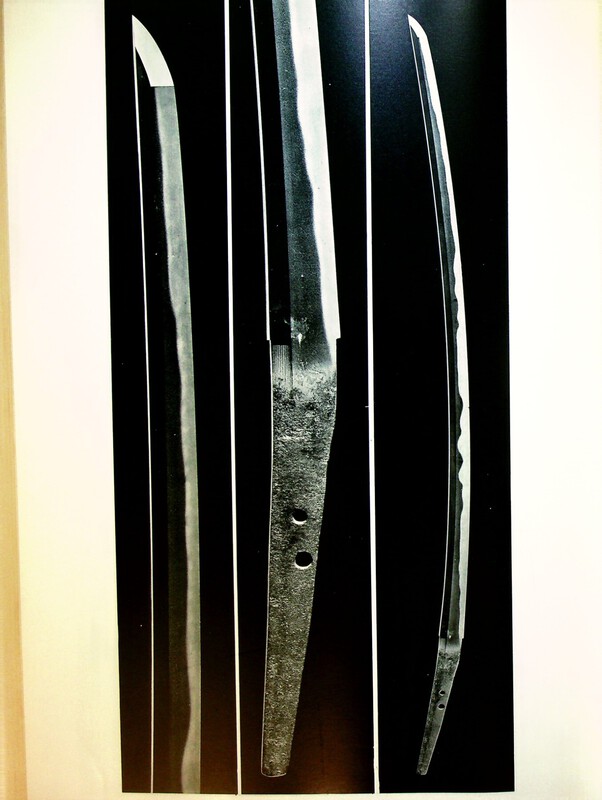
Here is a higher res photo of the Ichimonji Sukeshige that was stolen. The description in the Nihonto Taikan pre-dates the theft and since this book was published in 1966, this may have been one of the last times this sword was in the hands of sword specialists who were documenting it. The Explanation for the sword reads as follows: The
 1 point
 -
Justin, buy books first, and read them. Read a lot here on NMB and look at pictures of good swords. Learn the terminology (It is WAKIZASHI, not Wakazashi, and it is FUCHI-GASHIRA, not Fuchi-Koshira). Take your time and enjoy the journey! Coming back to your question: When you have more knowledge, you could decide whether to repair your KOSHIRAE or have one made. Quite expensive! But you won't probably find a fitting KOSHIRAE on the market. On the other hand, you could learn to repair the SAYA, and even TSUKA-MAKI can be learned (if you are motivated and have enough patience).1 point
-
What an amazing coincidence to be rediscovered exactly a century later.1 point
-
This is excellent book as was said above. It offers some "hidden" insight on things that really cannot be found anywhere. There is so much interesting information in the book and it creates an image of how things were in past, I admit I have been scratching my head a lot when trying to understand some of the information provided by the book.1 point
-
Can't wait!1 point
-
Note to newbies, feel the need. Beware of folks that don't step beyond books from the 1960s (boxed in) Its part protecting the value of the books and also a genuine misunderstanding of how new information has come to light regarding various smiths. Call it ignorance Sadly. the recluses of Nihonto. Seen way to many instances of "this is how it is" then it gets blown out of the water Too many BS rules broken. Folks calling gimei when in in fact legit (you know who you are, please shut up) Its nowhere near as exact science as people assume it may be, In fact, mostly the reason i have struggled with the hobby and come to this conclusion Absolute Bollox, but love the swords, Its like two. three, seven hundred or more years ago but muppets here think they have it covered. Its embarrassing reading their "accurate" BS Just learn about what you buy and learn to enjoy what you buy, try avoid the misfortune of Shinsa here, its nonsense. People moan about images then troll like comment, oh dear. F*** everyone else, especially online "experts" that know "f all " GNGB There are no experts, none. A fact i have accepted.1 point
-
The "8" mark maybe from Hiroshima Arsenal
 1 point

































This leaderboard is set to Johannesburg/GMT+02:00