
Leaderboard


Popular Content
Showing content with the highest reputation on 03/18/2026 in all areas
-
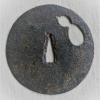
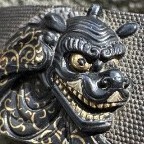
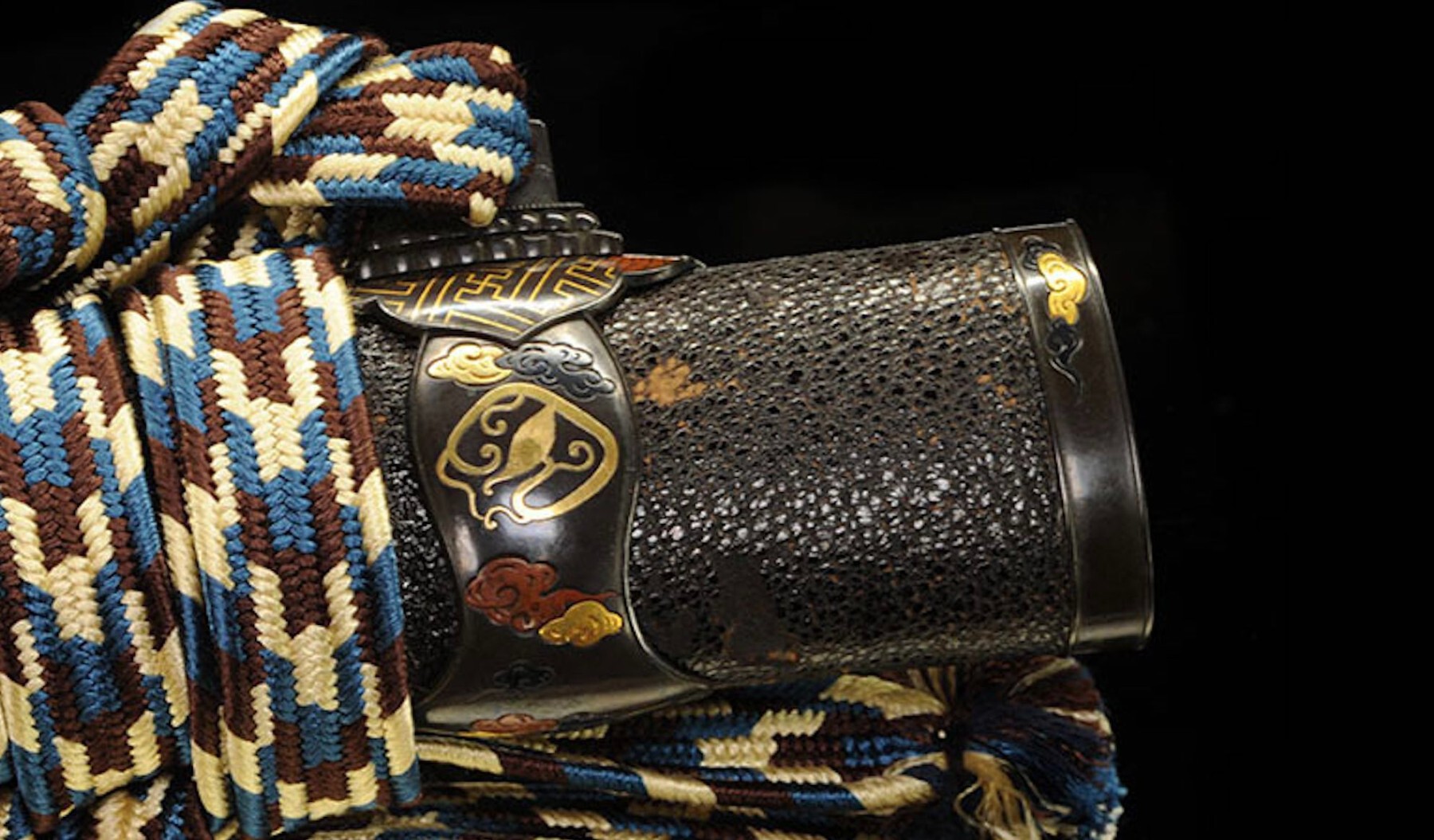
I was told that JOI was/is very famous for fine work on faces. I bought this KASHIRA as "JOI school/workshop" piece. It is not signed, but good work in my eyes. Although rather flat in design (not at all MARU BORI), placing the face on the edge of the KASHIRA gives it more 3D dimension. 34,4 mm long

 5 points
 -
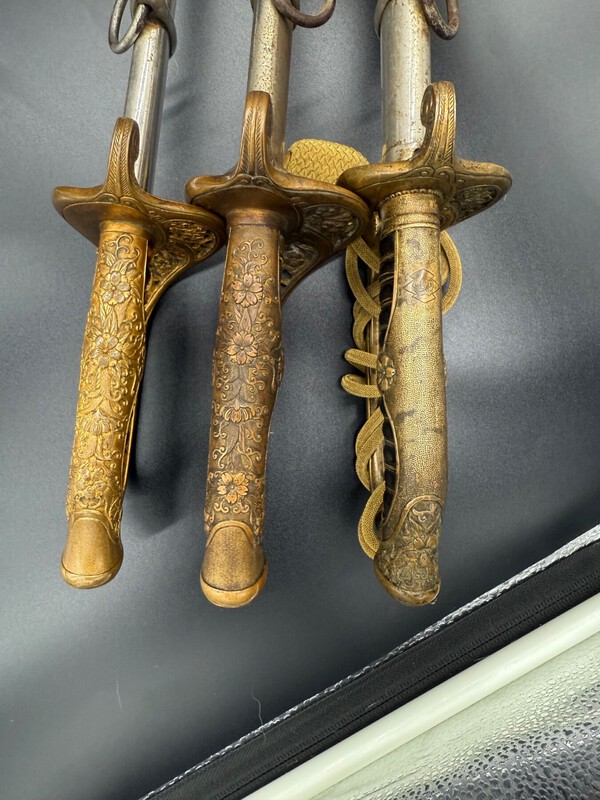
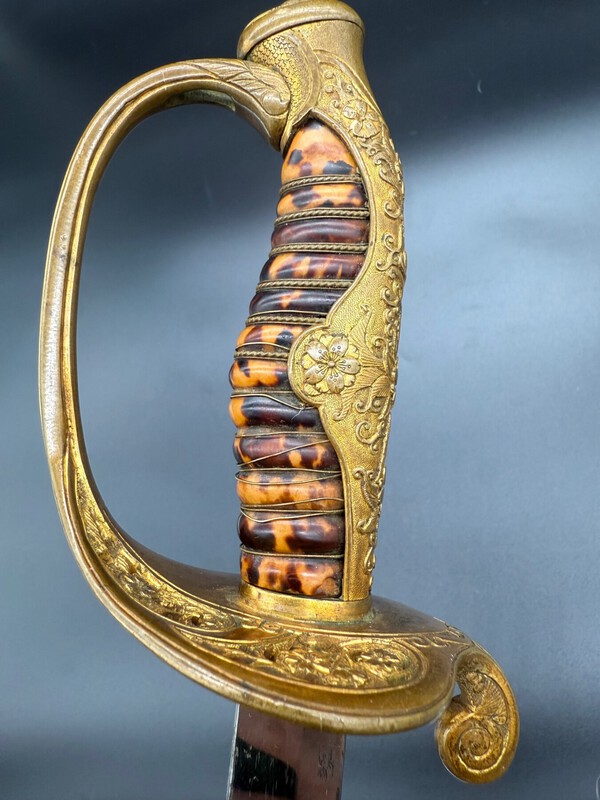
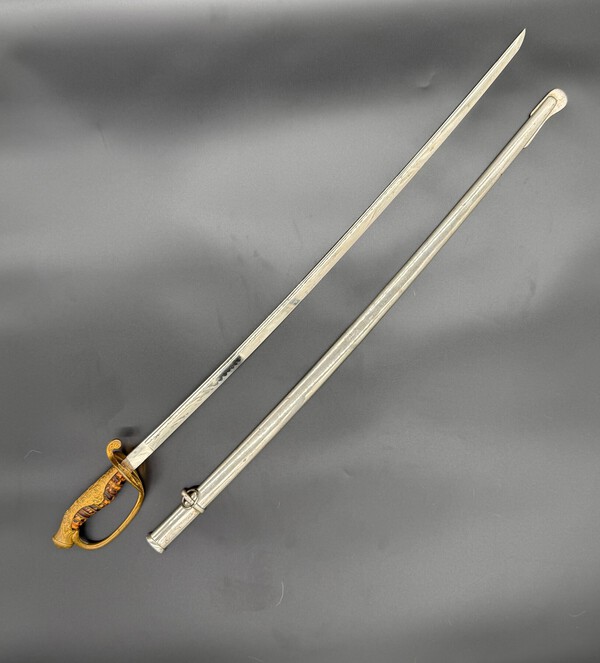
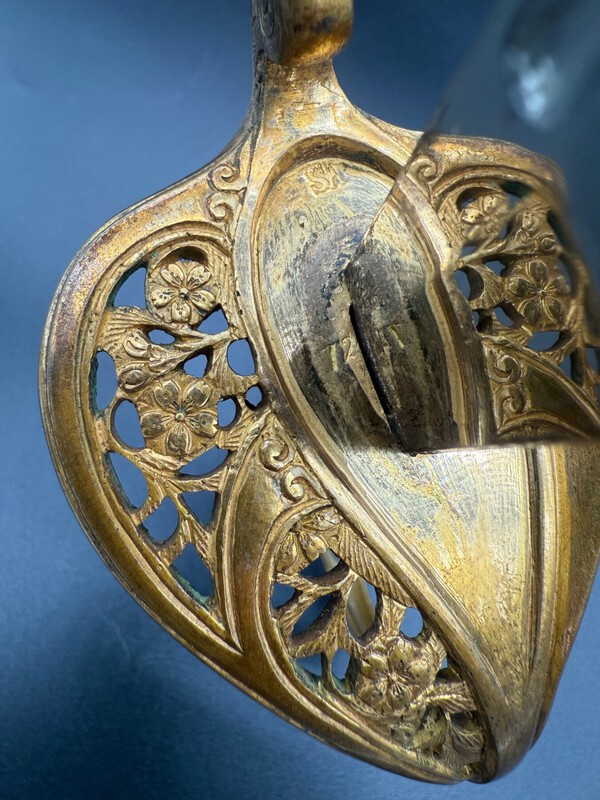
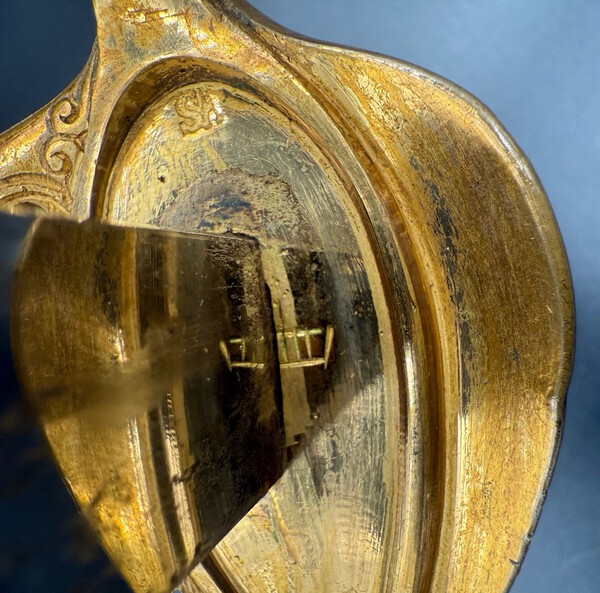
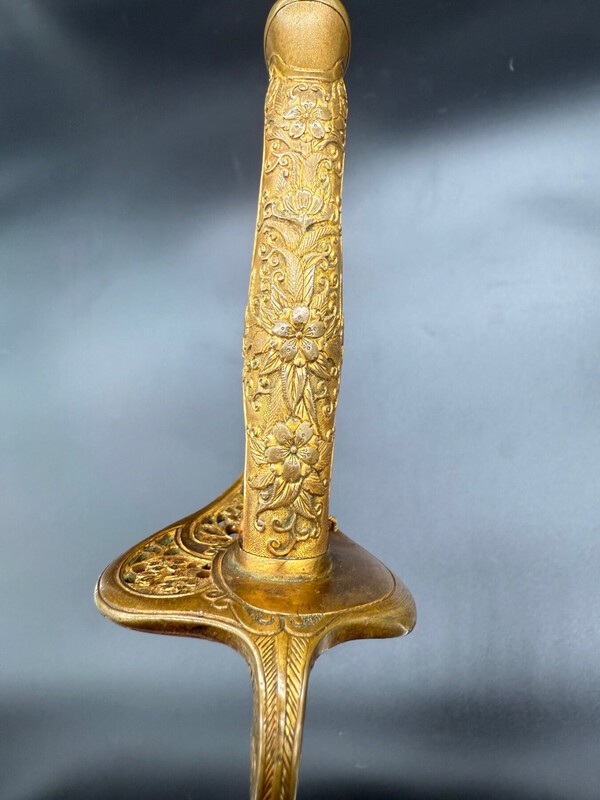
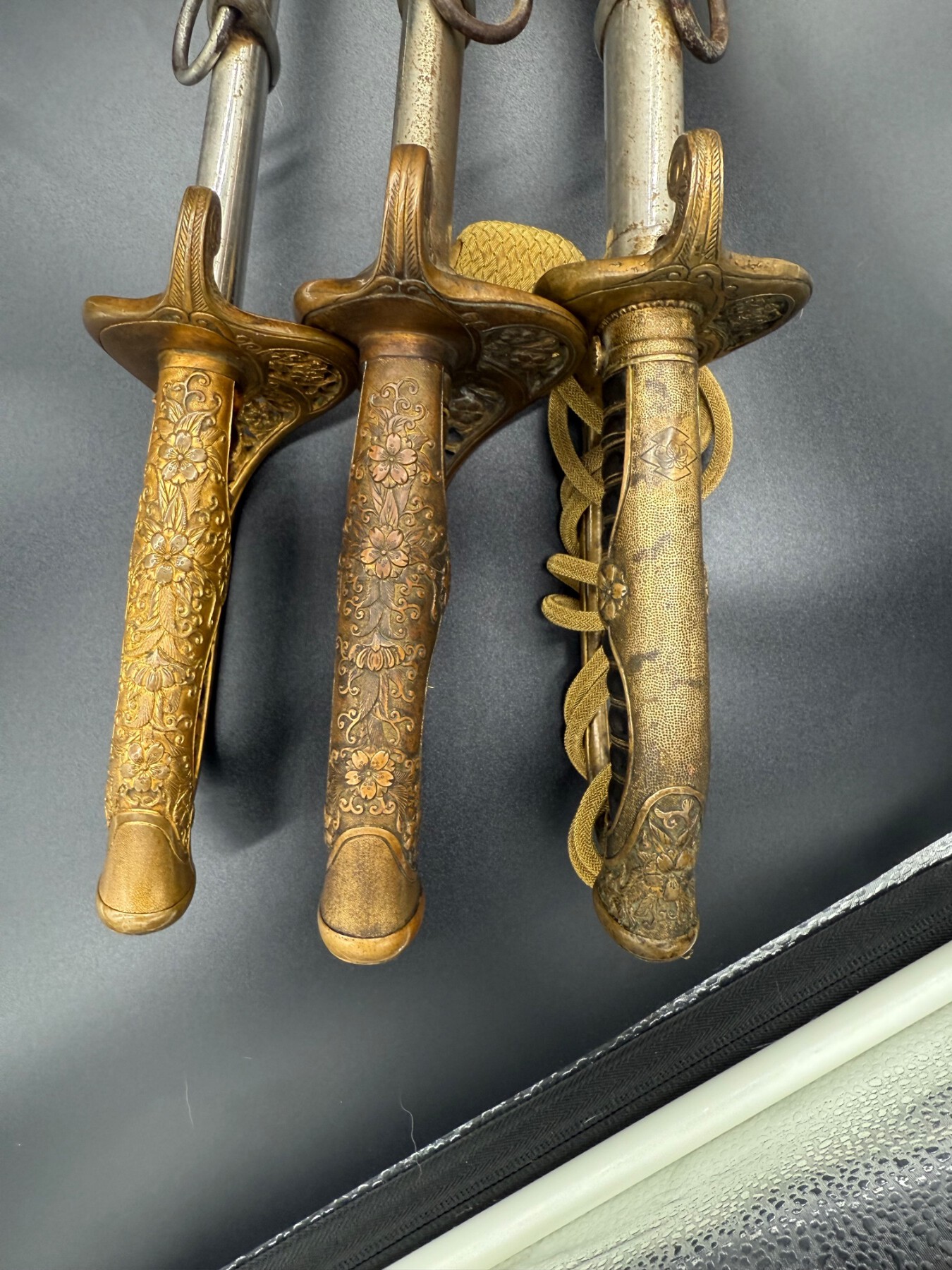
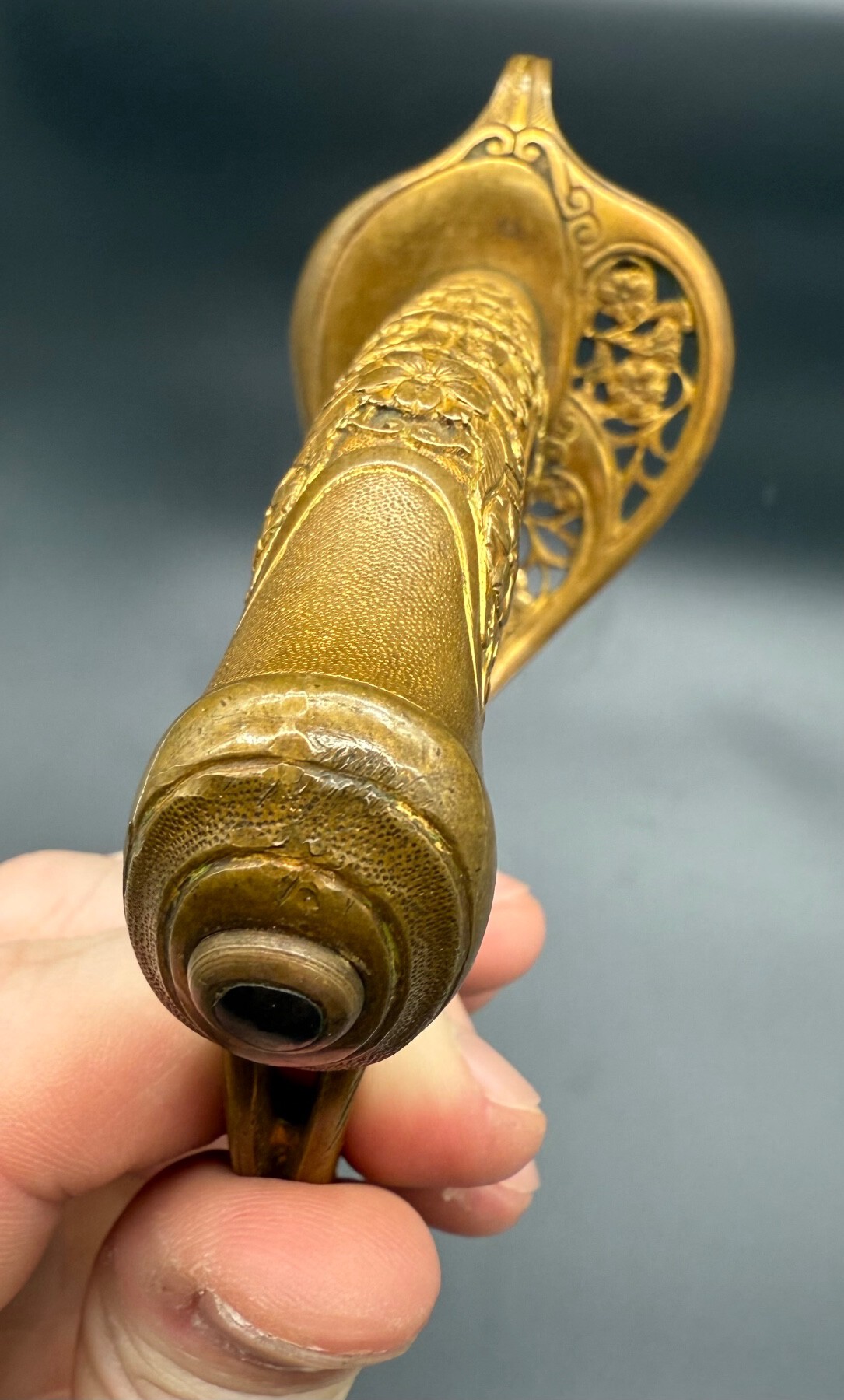
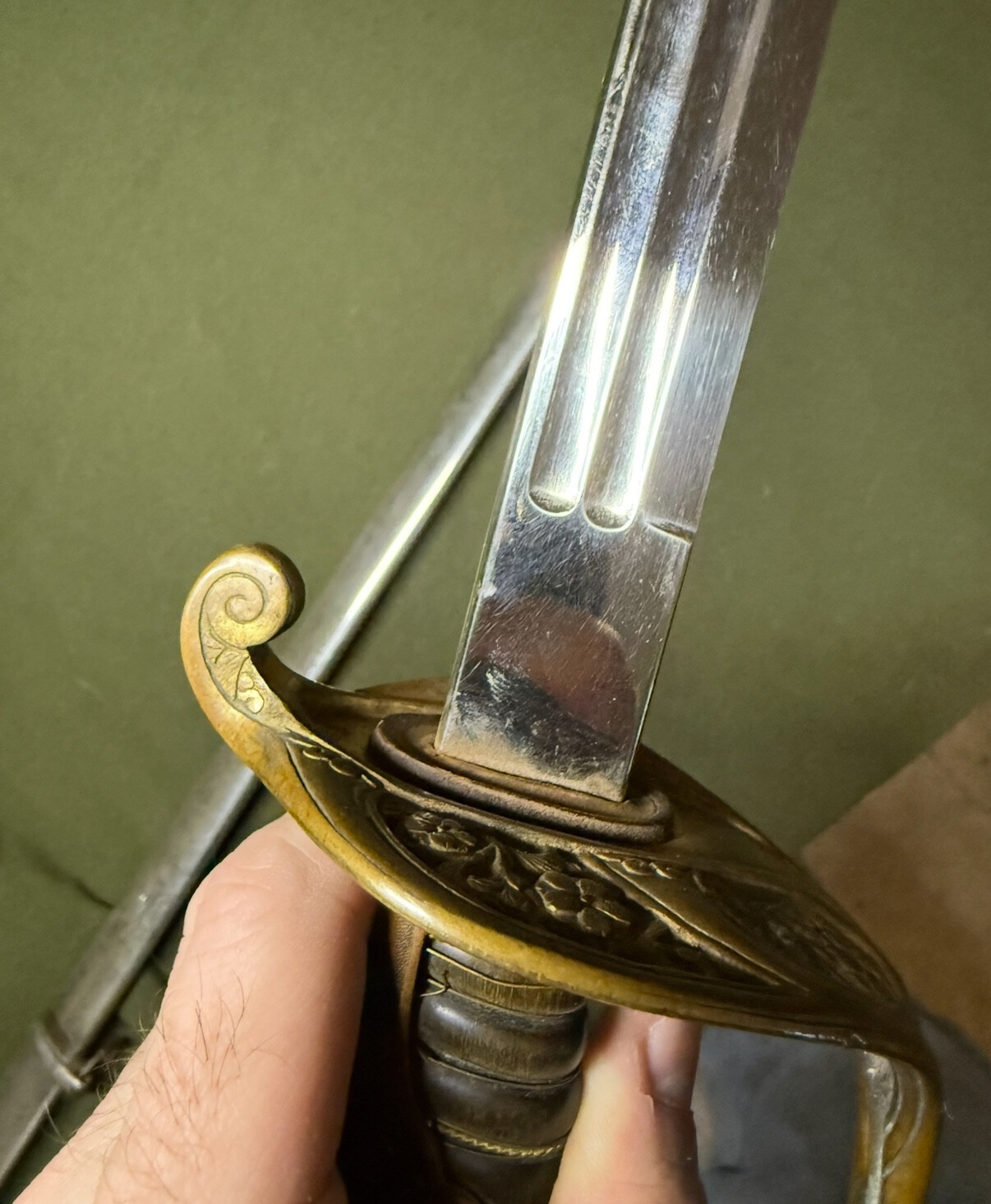
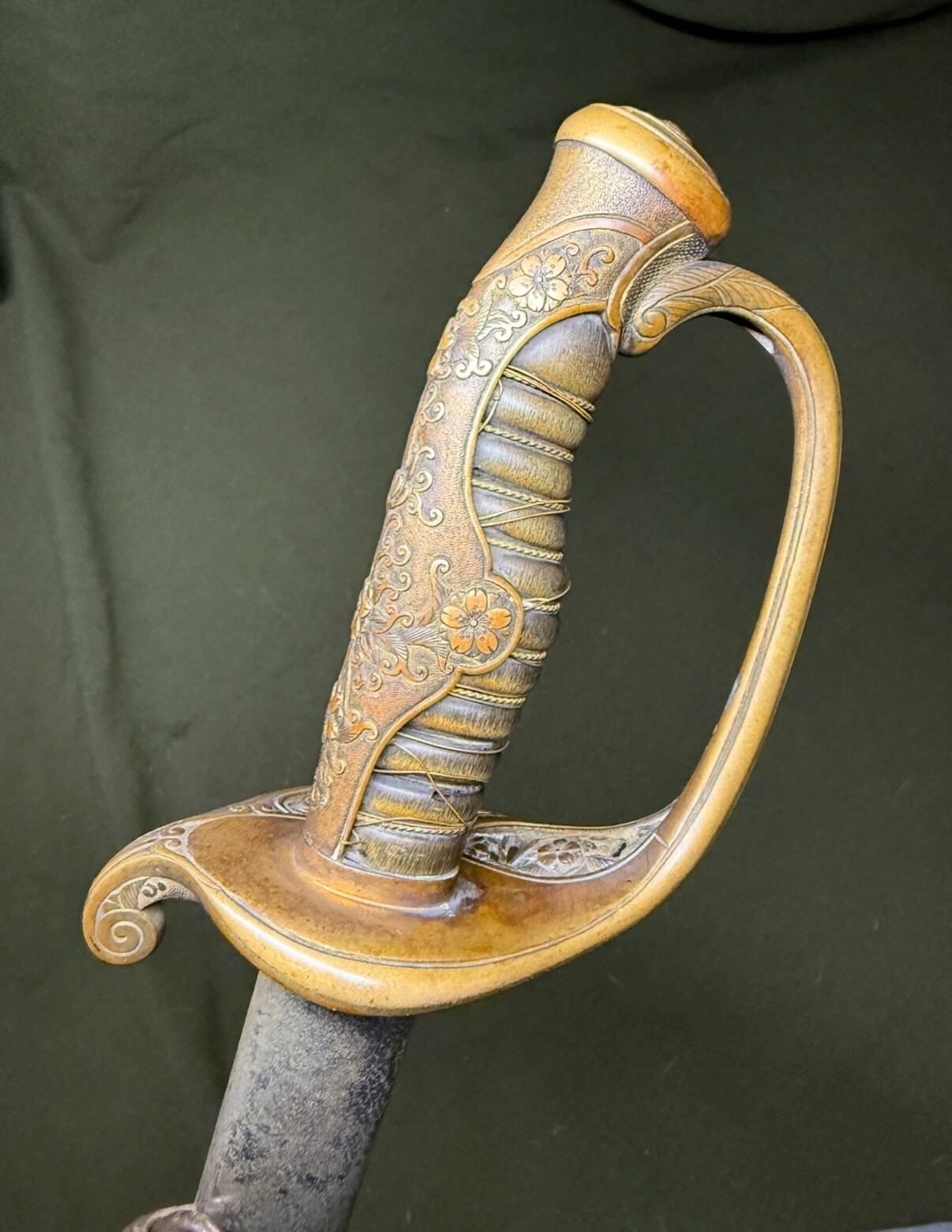
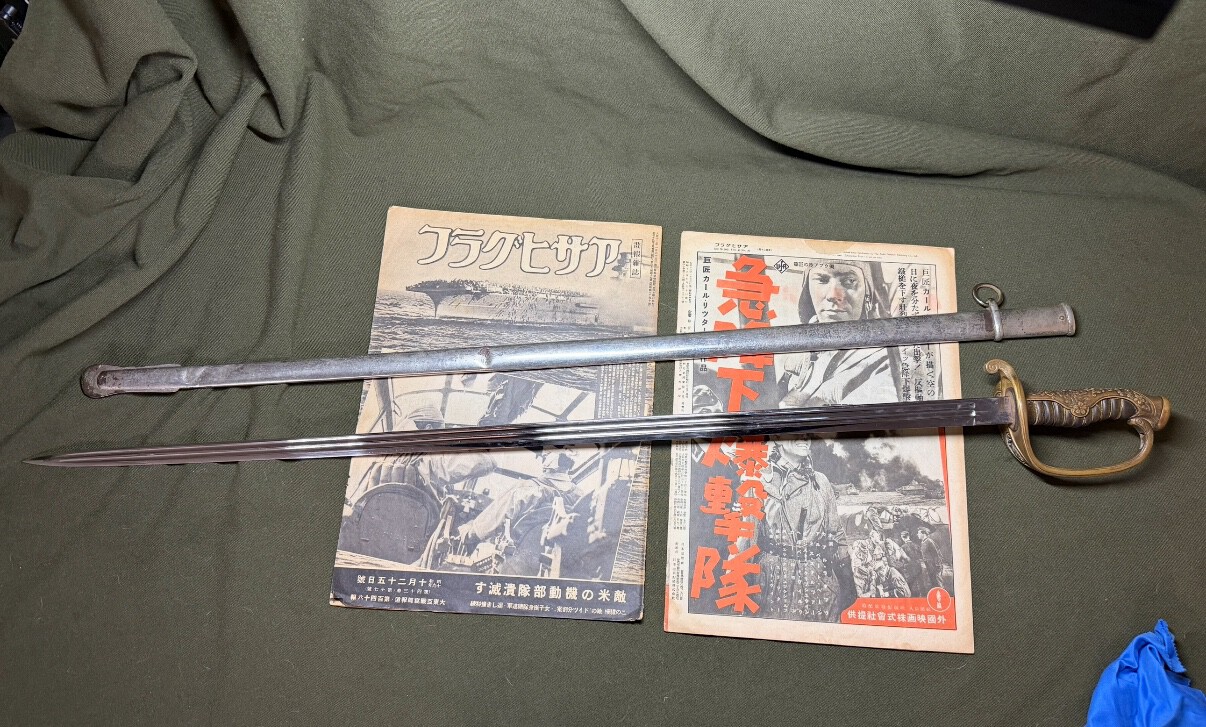
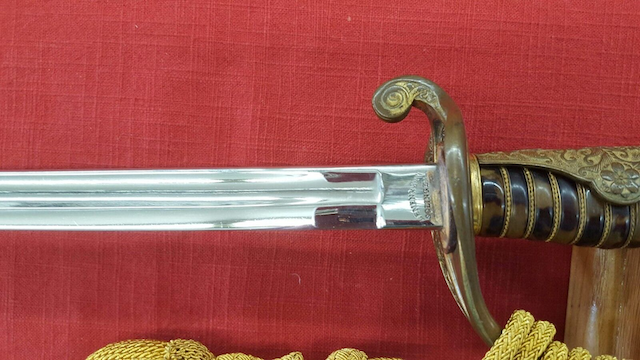
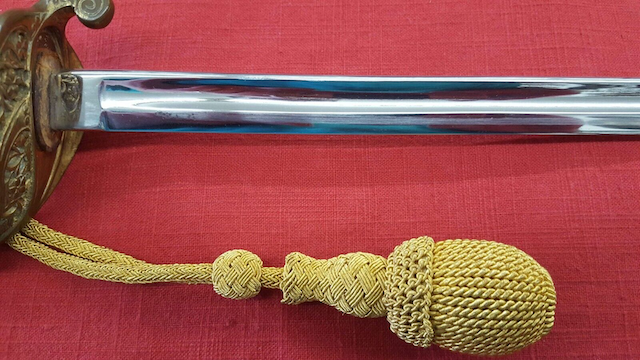
General grade saber arrived today. Excited to round out my collection of these. The general grade saber is very standard, not sharp, no mon, but it has that SA stamp, and some other unusual markings around where the blade enters the guard. From left to right: General Grade Dress Sword. Field Grade with straight imported blade. Company Grade with sharpened blade. Best, -Sam


 5 points
 -
Takeuchi (竹内) is a Japanese surname. Although the name literally means “inside bamboo,” here it is simply used as a family name. 軍刀報國第四一五號 竹內第二號 Military Sword for the Nation No. 415, Takeuchi No. 2 may indicate that this is the 415th case in the ‘Military Sword for the Nation’ movement and the second sword donated by the Takeuchi sword shop?4 points
-
Piers, that is exactly my opinion and experience.3 points
-
Beyond the netsuke angle, this makes me sad to hear. In my experience individuals tend to get along together well, but when politics become involved ... I will say no more.3 points
-
I haven't seen this variant posted yet in this thread so here goes. This is an old family blade signed Munemitsu kitted out for WW2. I bought it a few years ago because I had never seen this kind of tsuka cover. I unsnapped the cover on the saya and it appears that an old sparkly lacquered wood saya lurks underneath. I would have to undo the threads on the tsuka cover to see what lies beneath and I don't have the courage to do that. I figure some things are best left undisturbed. I also haven't applied any leather preservative to field covers. Que sera, sera.
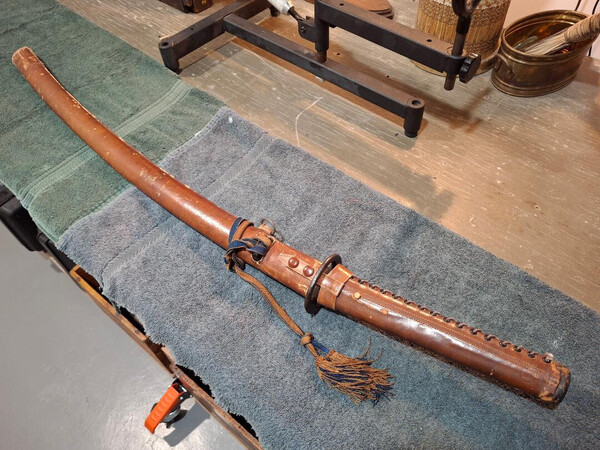
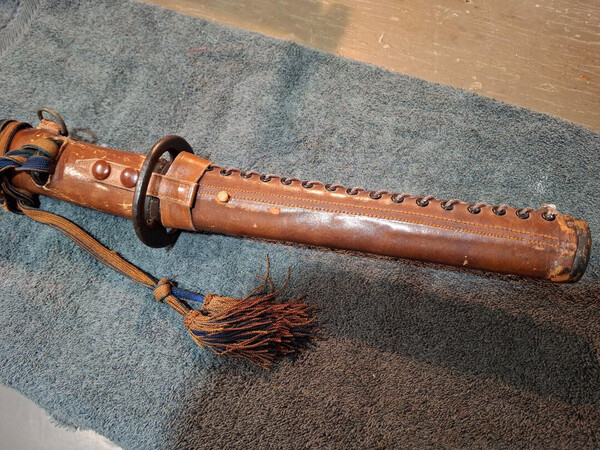 3 points
 -
Hi folks, Mark Jones and I have, for years, sold tsuba and kodogu that we acquired from Skip Holbrook as he whittled down his large collection to something more manageable. After his recent passing, we were contacted by his family and we have purchased a large portion of the pieces he left behind. Today I have listed the first (Kyo Sukashi tsuba, see below) of what will eventually be near 100 tsuba and other kodogu; my plan is to keep at it till all are listed. Many of the pieces are quite fine and with papers but many are within reach for a beginning collector. You will find them at the top of my Tsuba and Kodogu section: https://japaneseswordbooksandtsuba.com/item-category/tsuba-kodogu/ All will have a number that starts with an H. Much, much more to come. If anything is of interest, please contact me by email through my site, not by personal message here; I need your emails to keep track of business. Thank you, Grey
.thumb.jpg.9c9d13ab86753cd98b3f89b772d7ab31.jpg) 2 points
2 points -
I was looking to get a hold of Bill, must be several months ago. Stephen managed to get a hold of him, will pm the details i have. Was a pity at the time, he had a real nice Sukenaga wak on his site that i was after, but took so long i ended up with another. Anyways, see pm2 points
-
The sword listed is in Japan. The term “replica” is used to satisfy their laws. Oftentimes, even these dress blades have been cut by authorities.2 points
-
Dave, The kiri in this case is a kamon, or family crest. There have been a few posted at NMB over the years. Here is one for example: Concerning the knot, Dawson, page 432, calls it a "standard naval sword knot used from 1883 (possibly earlier) until 1945". Like the brown naval tassel, I believe he is saying that they were both for all ranks. Page 422 has a photo of an admiral with this standard knot on his sword. So, navy for sure, but rank not knowable.2 points
-
Jean, although I fully agree with you about the need to post the items here directly, it seems he is within the rules for this section. Rule reads: If you are selling something, please post a price indication. Do not ask people to contact you for the price. If you do not have an exact price, then please put a rough guide to what you are after, and mention that the price isn't firm or is negotiable. For sale posts without a price will be deleted. $300-$400 is a "rough guide" although he does need to state the prices he eventually gives are negotiable. For me, I dont click on google drive links, so im out.2 points
-
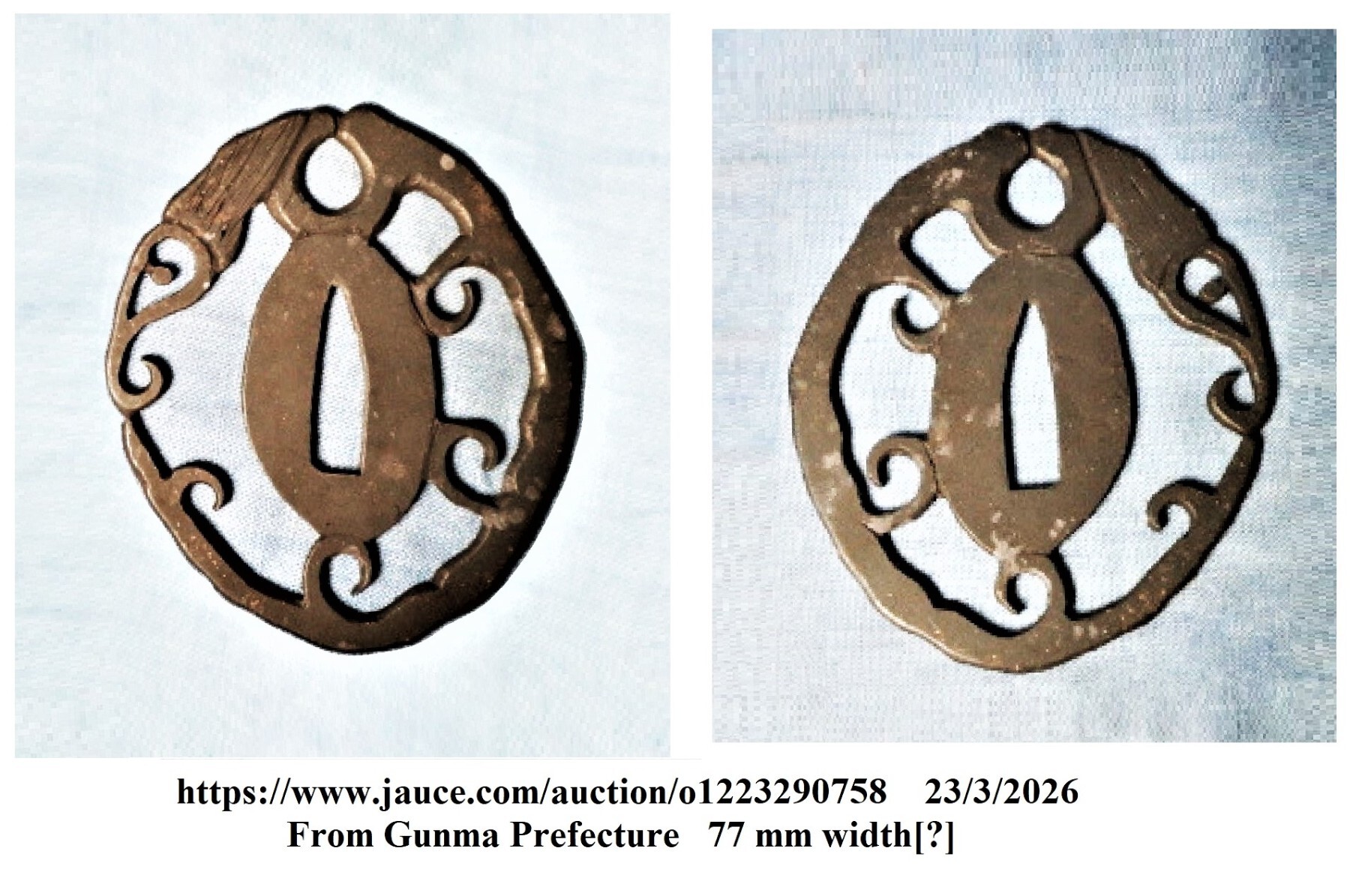
Running total going up - 164 from this mediocre group https://www.jauce.com/auction/o1223290758 an unusual "semi flat" design almost like a rounded example squished in a vice. Determined to find 200 examples of these "rare" - "unique" designs.
 2 points
 -
I can see this being an awesome resource. I will certainly share this with my fellow Toronto Token Kai members at our next meeting!2 points
-
I think it is meant to be the 4-character idiom 以守為攻 (守りを以て、攻めと為す), which in colloquial English would be "the best offense is a good defense". It means secure your victory by shoring up your defense. But it looks like they've spelled it as 以守以攻, with a slight variance in the third character.2 points
-
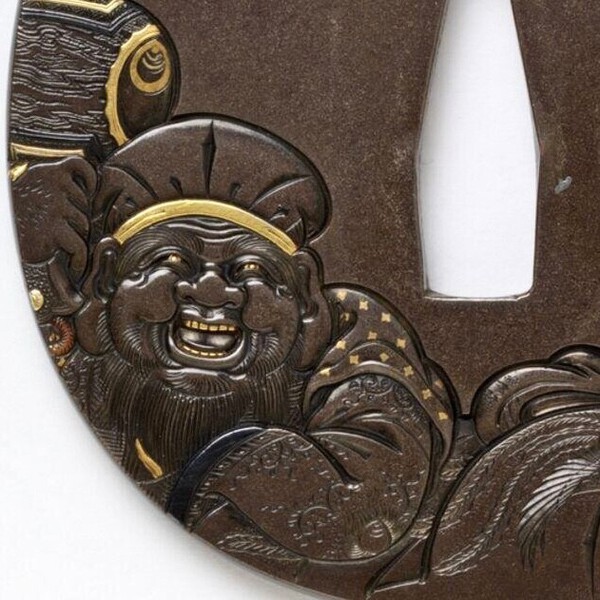
I think it doesn’t really matter where an item is located. Museums often contain works of very different levels anyway, since many of them were assembled from donations from all over the world. Over the past couple of years I’ve become something of a Tosogu maniac - having read through half of the Tosogu forum and studied thousands of different works wherever possible) I find it almost like an addiction or an illness. For me it has become not just a hobby but a form of stress relief in any free moment. And the most pleasant thing is that there is still so much more ahead. As Colin already told you, only visual familiarity will eventually give you understanding - you will start to see the differences yourself. I also insist on studying and understanding the technical processes involved - many thanks to Ford Hallam. As for this particular piece, it is a really good Nara work, and compositionally I find it very appealing. However, when we talk about a master of the level of Sigiura Joi, the standards for the work are somewhat higher. Please understand me correctly - I simply do see differences in the carving, the inlay, and the signature, and in my opinion they are significant. To be honest, I’m a bit surprised by the reaction of many people, so let’s examine it in a bit more detail. As I like to say, everything is understood through comparison, so let’s take two works as a basis - pieces whose authenticity, I hope, does not raise any questions. First of all, all the elements are perfectly inlaid, the boundaries are crisp and carefully finished. Next, look at the treatment and polishing of all the fine elements - Joi truly managed to give them life. Just consider the frozen expression of Benten: the eyelids are perfectly polished and emphasize the smooth contours of the eyes with their inlaid pupils. As for the katakiribori carving - it is almost perfect. All the lines are straight, of ideal thickness, the edges are not collapsed, they have the same depth and are cut at the correct angle, which allows us to see the play of light so clearly - for example, in the hair of Benten’s hairstyle. Pay attention to the elegantly raised shoulder guards of Bishamonten - they truly have volume and a cloud-like feeling. Look at his helmet: all the details are carefully inlaid, and the surrounding surface is perfectly even. Consider the face for at least a minute—through different strokes and careful polishing the author managed to convey such a realistic appearance. The play of light from such polishing is visible even in these photos. And here is our recent mysterious friend In my opinion, one of the best portraits in Tosogu. Look at the palm and the fingers. The reed is inlaid so delicately that it seems to float in the air, this effect is achieved through additional cuts underneath that create a shadow effect - it's fantastic. (It’s a pity the reed is broken at the end, but we can clearly see the taper toward the tip) The forehead deserves special attention. The depth of the hair has been worked out, the hair of different lengths is directed at its own specific angle. Look at the ears of these characters - they are also carefully worked and polished. Also pay attention to all the small katakiribori elements: they are confidently carved, even with the same carving rhythm (those very eyelashes), again to properly convey the play of light. The signatures on those works are also carved with a confident hand, whereas in this example that feeling is absent - especially in the seal. I once held an authentic Joi kozuka with papers in hand, it was a work of similar quality to the examples above. I hope this helps a little with understanding. However, the most amusing thing is that in the end we may never know the truth - we are left only to guess and discuss Best regards! Viktor
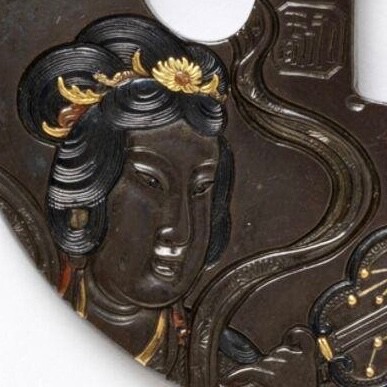

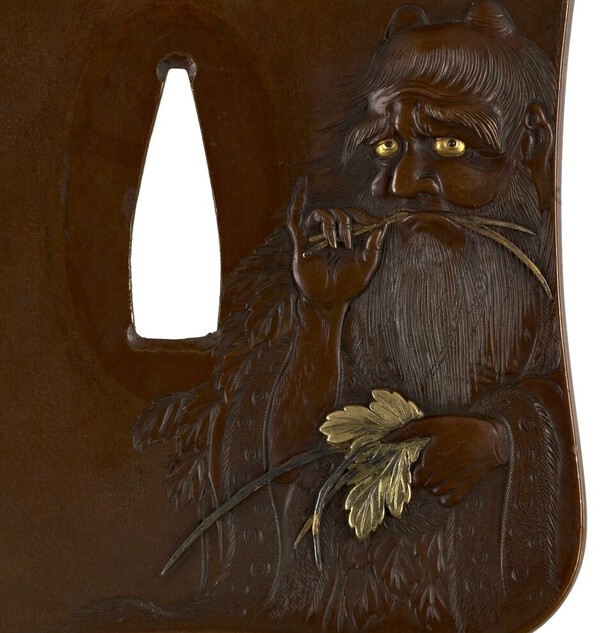


 2 points
 -
Cross-Reference Arsenal Stamps.1 point
-
That would be true today John, but not so much back in the Edo period when things were a little more clear-cut.1 point
-
Sounds like a good guess, thanks Trystan! @Rawa almost all haikan are under the leather. Don't know about the location in the snap area. Never say never nor always!1 point
-
Thanks for posting the SA shot! I have one other, and it's on a naval Type 19. So that shop made them for both services, clearly.1 point
-
This is often true of blades with the Showa stamp and large Seki stamp. There is a known case of a Showa-stamped blades getting papers at Shinsa. I should have said that those blades must have had something different, like the use of another steel other than tamahagane or an oil quench that set them outside the gendaito classification.1 point
-
Thanks David. I haven't done much with the website other than 'hang a shingle' out there. The website host is a bit antiquated. With time, I will work around some of their quirks. Probably after tax season is done. It looks like the Auction is winding down now. I'm watching final prices pop up.1 point
-
A general grade knot would be the cherry on top. It's always hard to justify when I can get a whole sword for similar prices I have two company grade sword knots (One seen on my saber, the other is near-mint condition in-box) and also a field grade knot that's near-mint condition and also in-box. All three knots in-box would be really cool to have alongside these sabers. Maybe someday! -Sam1 point
-
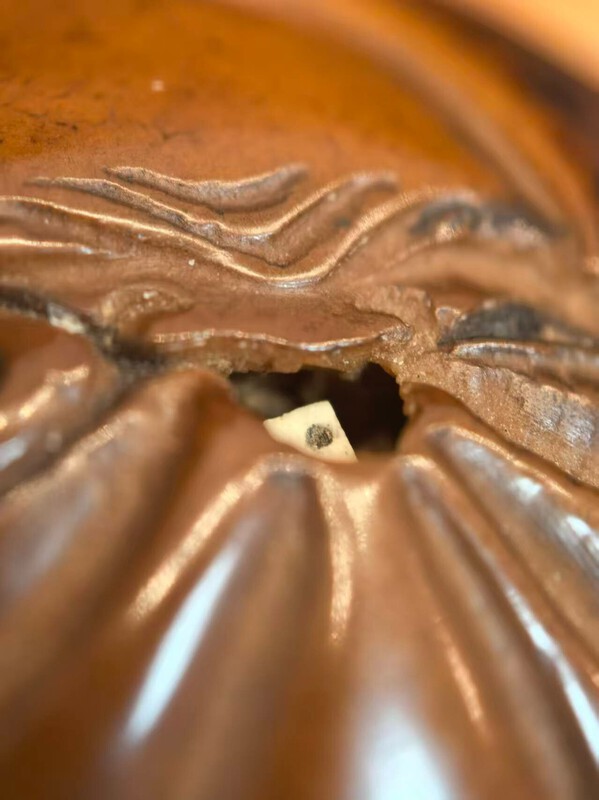
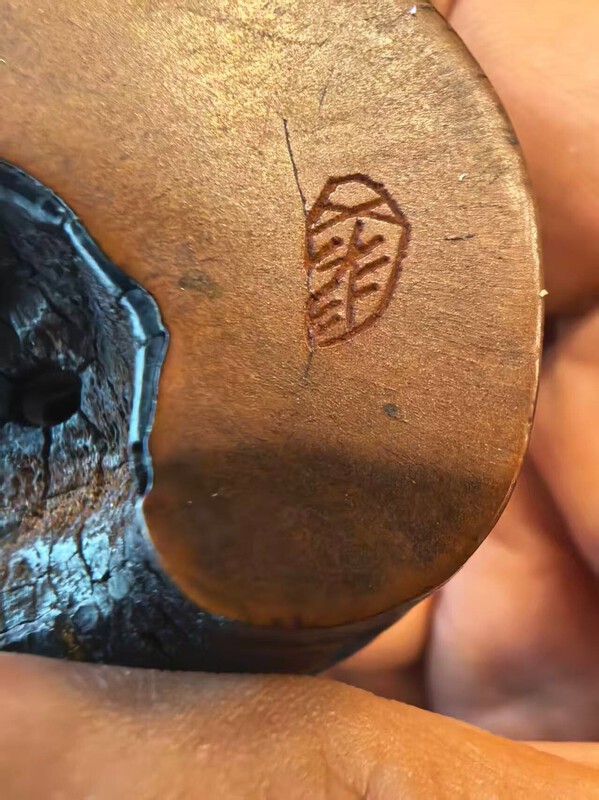
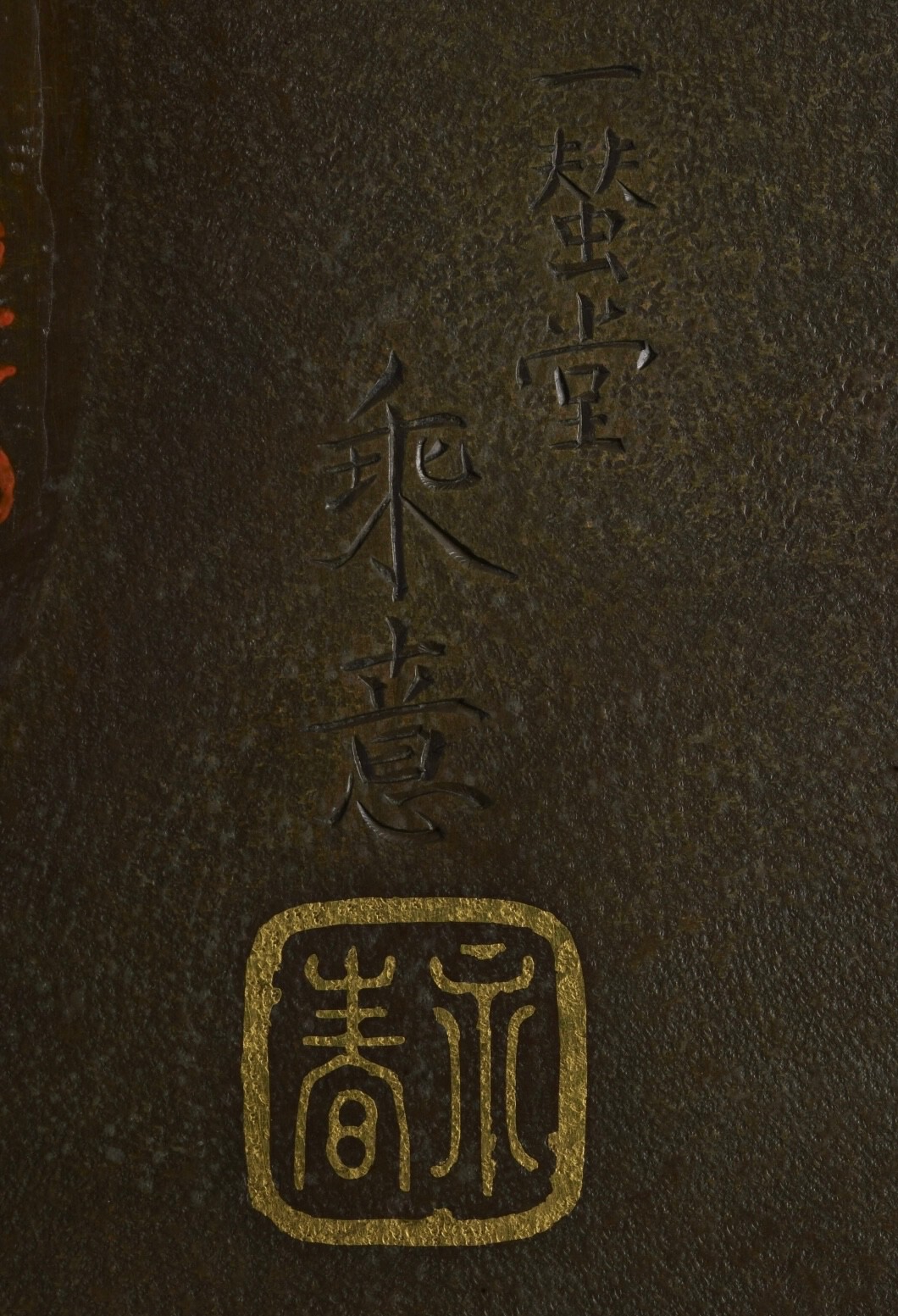
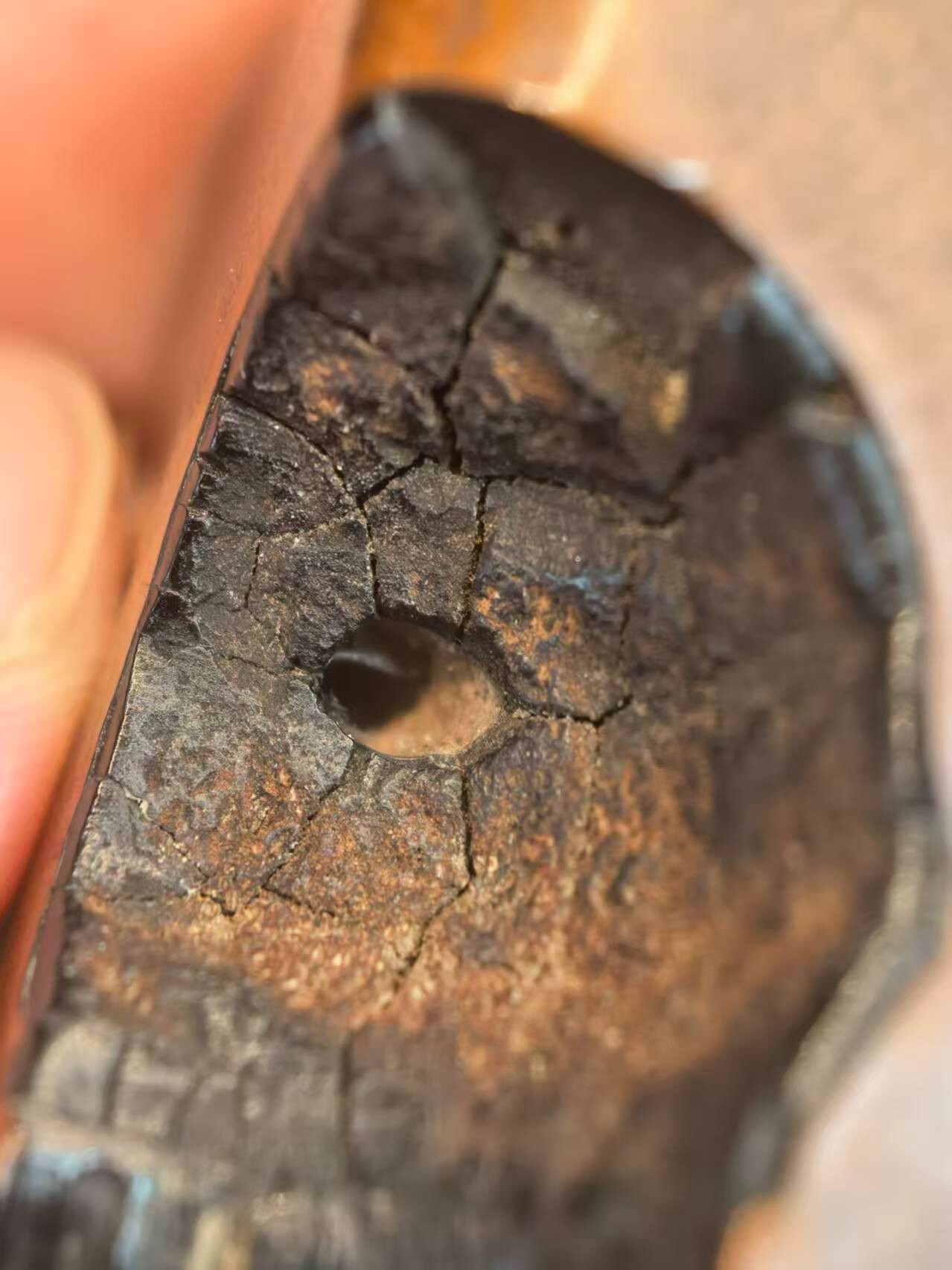
No problem, this is the supplementary photo, including the holes, signature, and details. The coloring of the dice is rather primitive, which to some extent excludes the possibility of being made in a modern workshop, but the red cinnabar in the signature is still quite obvious, which somewhat increases the likelihood that this is a modern work. But the most important aspect is the design. The mechanism of the root attachment, as pointed out in the following post, is not uncommon, but the root attachment with an embedded die is indeed rare. One theory is that this root attachment corresponds to the gambling habits of small Japanese merchants during the Edo period. If it were a work of a modern workshop, there should be many similar designs, at least not uncommon.


 1 point
 -
That was too easy, Jean! Yes, I was quite surprised that they could find such a baby, and then season it like an adult gourd. As to karakuri, I have two or three examples, lotus seeds in a pod, a worm in a chestnut, etc. You also see moving tongues, popping eyes and so on. Secret fun!1 point
-
Perhaps a dried "baby" HYÔTAN?1 point
-
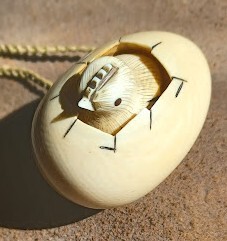
...but they exist: The chicken can be moved a bit in its egg. Signed MASASHIGE with KAO. It is elephant ivory, probably made in the 20th century.
 1 point
 -
Hello, some news about this set, as I am in Japan, ans in same city as the seller, we met. The set is carved from thick shakudo, relief carving is not takazogan as I first thought, and its not thin material work like menuki, the gold is solid, some wire used for the leaves and two different gold color for the flowers, every relief is carved from solid shakudo base. The set is quite heavy, even not very thick. The ground finish is ishimeji1 point
-
Nice collection, now the hard part is a general grade knot or tassel! You could use a generic black field knot too, there are plenty of photos showing General officers using those in the field.1 point
-
Nice find! I assume those numbers are for assembly purposes. I’ve seen katakana and Arabic numerals used too and on the ricasso sometimes.1 point
-
Hi Clark, great to hear back from you! Thank you for these additions. The first two are difficult to appraise, but I think your comments cover the area pretty well. They are either genuinely old, or they have been cleverly made to appear old. Since masks do not generally fetch high prices, though, the question could be why fake one, even more so a plain wood netsuke? As to the signature, however, I agree. There is no recorded 水山 Mizuyama or Suizan that I can find. The Mei is suspiciously close to Suisen 水仙, a name that is already rather rare, and he was not a mask carver anyway, so my instinct would tell me that it has been added later, as you suggest. The tagua (ivory) nut netsuke though is more interesting for me. The face is probably not Daruma but Hyottoko. It is quite clever how the die/dice functions, and somehow typically Japanese in concept. These karakuri netsuke tickle the mind as you try to work out how the artisan made such a thing. They were however making netsuke from vegetable ivory towards the end of Edo and into Meiji, so it could easily have some age to it. Can you get a clearer shot of the signature cartouche? It's just on the edge of being readable... but no guarantees! Personally speaking, I like it a lot!1 point
-
Hi Bruce you can call me Luna... thats my middle name. I believe the light brown is the one that has the markings on the sword in the pictures...I took the pictures a while back so im not sure. I have them wrapped and well covered so I would have to unwrap them to double check.1 point
-
99% of what you see in oshigata is arbitrary drawing. Blade's outline and nakago signature are supposed to be an honest imprint, but that's not what people who study oshigata are really interested in. At best you get a decent hamon outline. If you know school's work you can mentally reconstruct the jigane and the hamon, if you don't its probably confusing infinitely more than helping.1 point
-
Just to be clear An oshigata isn't just a drawing; it's a full-scale reproduction of a sword, and the nakago is “imprinted”1 point
-
Sadamasa (WWII showato arsenal blade). Best regards, Ray1 point
-
Some info! Excerpt from M. Sesko's book: IEHIRA (家平), 1st gen., Kanbun (寛文, 1661-1673), Kaga – “Gashū-jū Fujiwara Shirōbei no Jō Iehira kore o saku” (賀州住藤原四郎兵衛尉家平作之), “Gashū-jū Iehira” (賀州住家平), “Gashū Kanazawa-jū Shirōbei no Jō Fujiwara Iehira” (賀州金沢住四郎兵衛尉藤原家平), second son of the 1st gen. Ietada (家忠), he lived in Kanazawa (金沢) and died in the third year of Tenna (天和, 1683), itame mixed with masame, gunome, hako-midare, sanbonsugi, notare, suguha, chūjō-saku IEHIRA (家平), 2nd gen., Genroku (元禄, 1688-1704), Kaga – “Gashū-jū Fujiwara Iehira” (賀州住藤原家平), “Gashū-jū Fujiwara Iehira saku” (賀州住藤原家平作), he changed his name during the Genroku era to Kunihira (国平), see also entry “KUNIHIRA (国平), 1st gen.”, during his time as 2nd gen. Iehira he signed with a thicker chisel than the 1st gen. and also his hamon is more flamboyant than that of his predecessor, chū-saku1 point
-
Thank's a lot Thomas exciting museum in Berlin, always worth to visit1 point
-
I would like to share another rare piece from my collection: a mechanical netsuke. In fact, I have never seen anything like it before. This netsuke is shaped like a Daruma, made from ivory nut, and features a movable die inside its mouth, which still functions perfectly—allowing you to shake it and see the number. The die itself appears to be made of bone. There is a signature or mark on it, but I am unsure of its origin. It’s possible that this is a modern workshop piece, but I have never encountered any similar design. I’m not very familiar with ivory nut netsuke, and I suspect it may not be very old, though I could be mistaken.

 1 point
 -
Awesome! It simplifies many routines I used to have and complete them too with prime information. What an achievement... Great thanks. Yvan1 point
-
... and that Tsuka ... I'm sorry, it is just my personal opinion, but Tsuka is 'wrong'. It is way to long for this Nakago, also for the blade (proportions) itself. If you would like to use/swing/cut (yes, I know, just hypothetically) with this Tsuka, it would probably snap, as Nakago goes not even to half of Tsuka. I know, there are Kenjutsu schools that have different approach to left hand and not always put it at the end of Tsuka. Still, my personal opinion, Tsuka should be more like that: Apart from that, great sword!
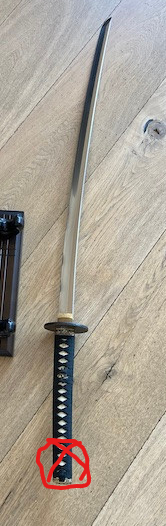 1 point
 -
Jacques, everyone is at a different stage of learning, everyone learns differently, and everyone has their own expectations for their goals. After all, you weren't born an expert. Personally, I can only express my opinion from my own perspective. And even that opinion was different 15 years ago and might be different in 15 years – if I'm still alive then. Personally, I currently only buy literature that mentions Oshigata, if at all. The NBTHK publications accompanying museum exhibitions often contain both: excellent photographs and Oshigata. And that's a good thing. The NBTHK's Shijo Kantei, for example, is also interesting. In recent years, blades with different Oshigata designations have appeared there, even with slight differences in the description and sometimes even minimal variations in dimensions. The differences in the description and Oshigata of the same blade are due to the author's perspective. Or, to put it more clearly: Someone who has studied a particular smith or their school over a long period will depict the oshigata of a specific blade differently than someone who has had little to no contact with that smith. The former will emphasize the swordsmith's character more strongly, while the latter will approach the oshigata more technically. I would argue that the situation of a professional oshigata artist is not unlike that of a first-class polisher. They must decide how best to express the essence of a particular swordsmith's work. Some elements can be highlighted and emphasized, while others are better kept subtle. A good oshigata offers the student significant advantages, as it allows them to focus more easily on specific details than when studying an actual blade, where many factors come into play—such as polishing, lighting, and even their own ability to concentrate, which is not always consistent. With an oshigata , a large portion of the information is naturally filtered out—information that, when studying a real blade, more or less consciously floods the viewer. This can quickly overwhelm beginners. Over time, one learns to temporarily block out certain things and retrieve them when needed. This requires a lot of practice and good eye training. Finally, I can't help but chuckle when I read Jussi's comment about viewing blades in a museum. You can immediately tell who's a "regular" and who's a sword-fighting student. And it's not unusual to be surprised to see someone performing the "sword viewing dance" in front of the display case—someone you wouldn't have expected at all.1 point
-
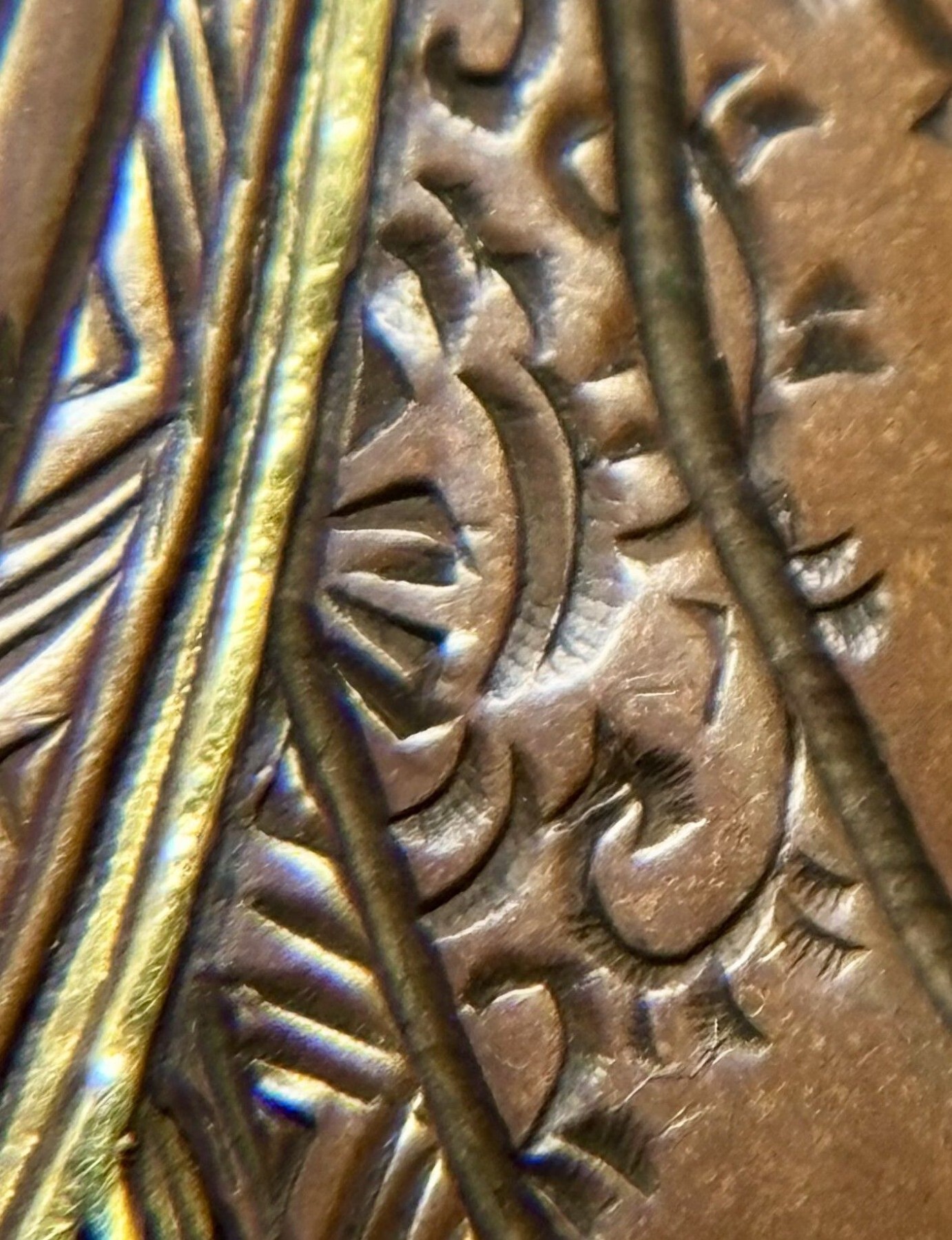
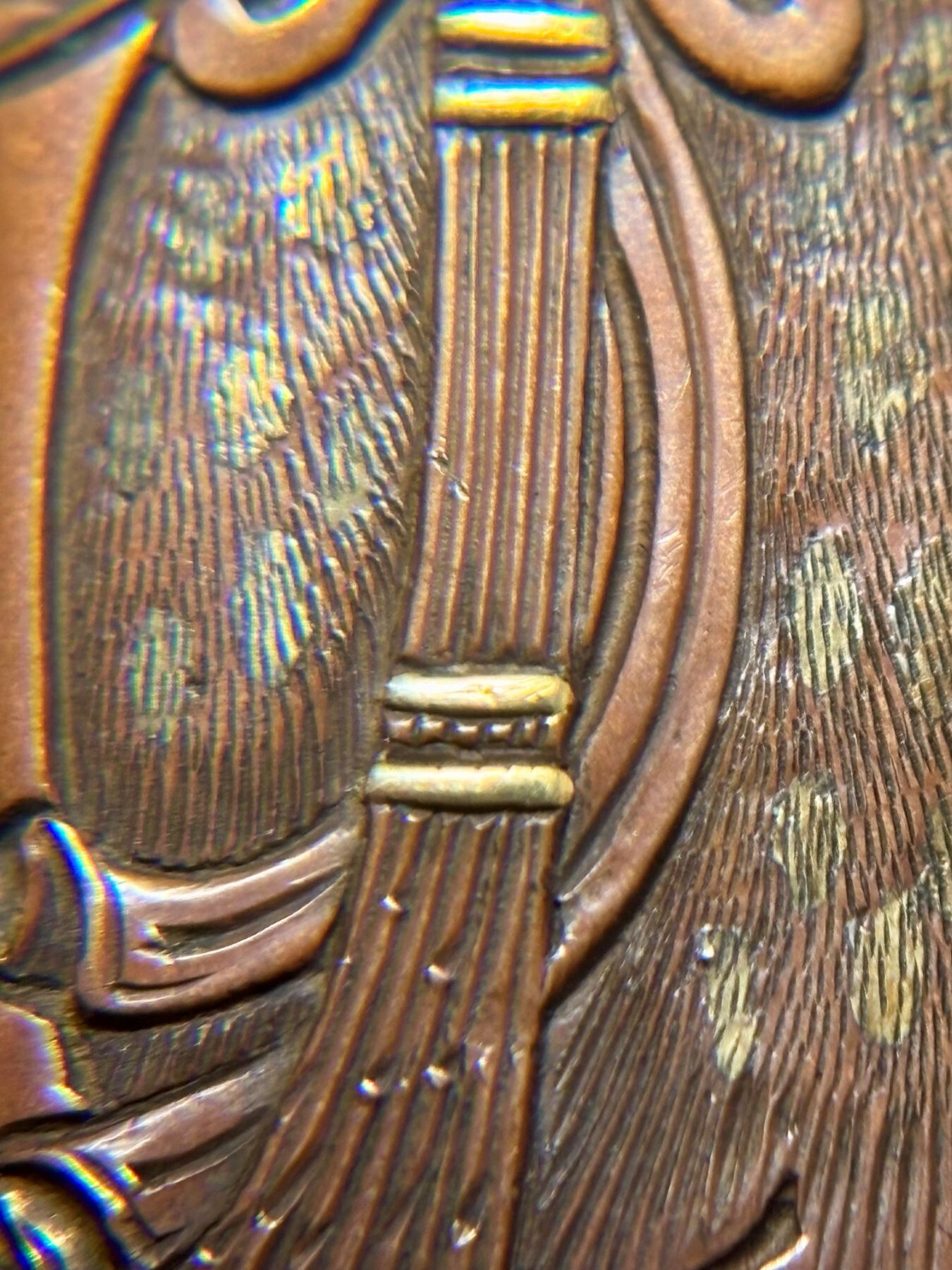
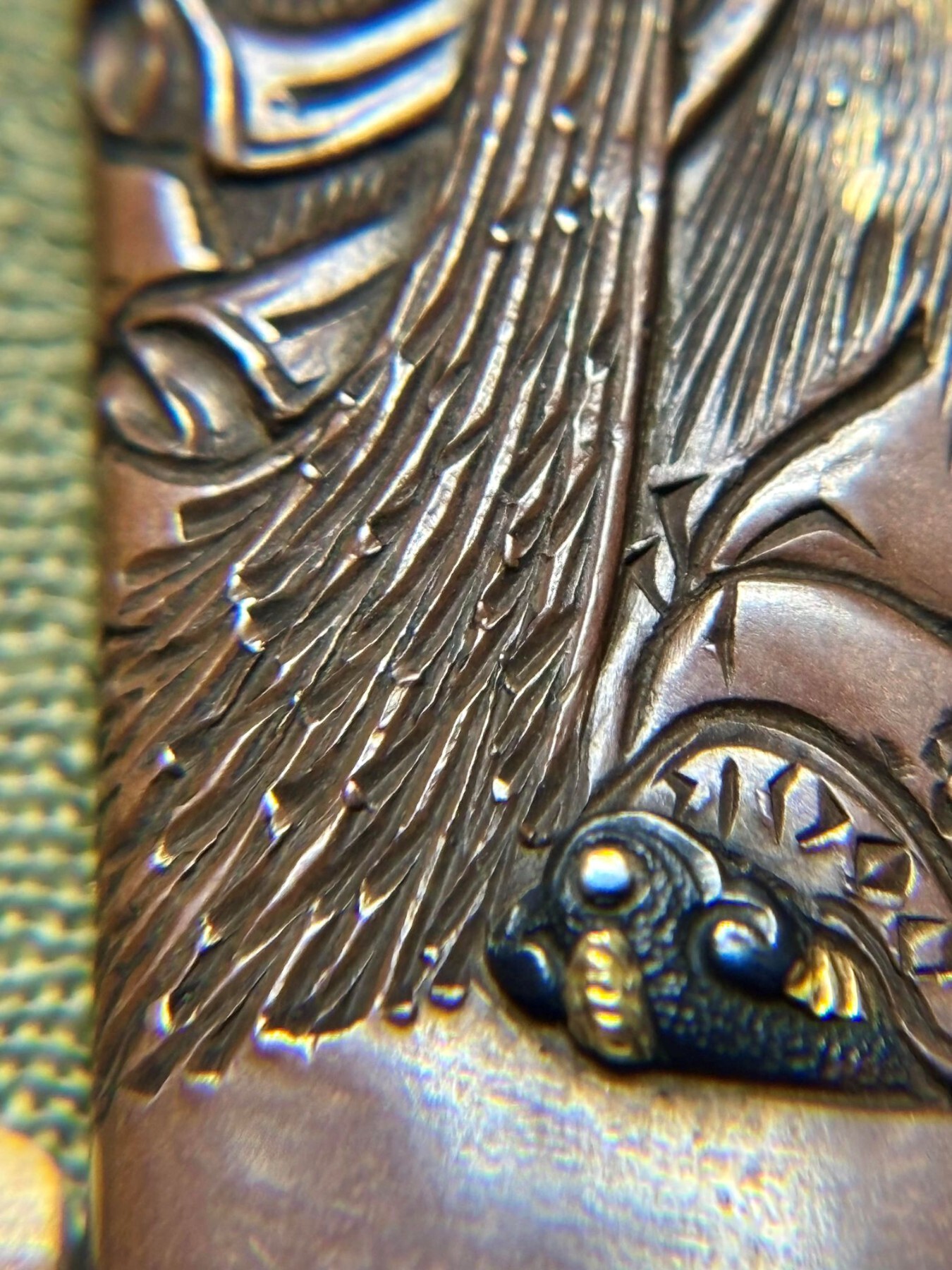
A small addition: just after posting my previous reply, I noticed another detail on the robe. Along each main chisel cut forming the texture, there appears to be a row of extremely fine secondary lines, almost like tiny eyelash-like strokes. These details are very difficult to see with the naked eye, and even with a 30× magnifying glass they are barely visible. It may perhaps be an attempt to imitate the texture of embroidery. Liang
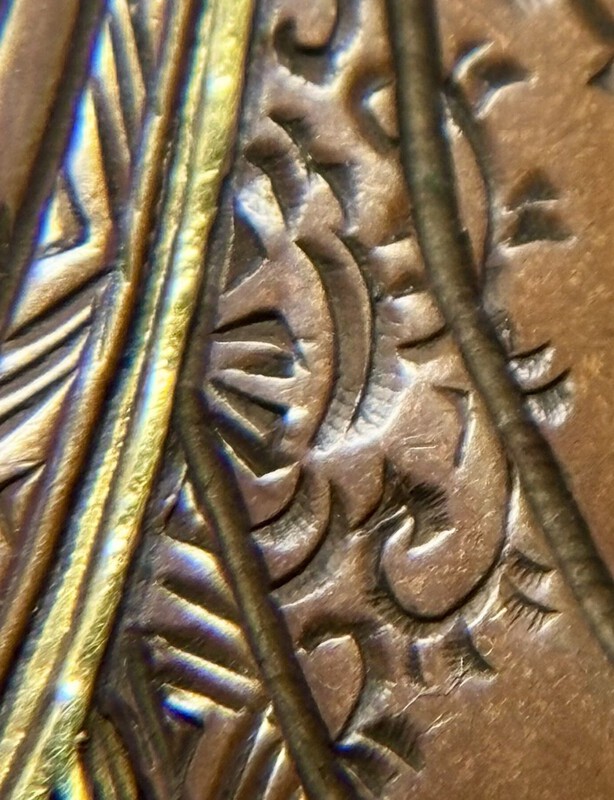 1 point
 -
Thank you, Colin, for pointing that out and correcting my mistake once again. Due to limited equipment, I can only take simple magnified photos using my phone together with a magnifying glass. From these images it appears that the lower edge of the robe is indeed not nunome inlay. The inlay there does not seem to be gold, but rather brass or a copper alloy. One can clearly see an oxidation layer on the surface, and the color is noticeably different from the gold inlays nearby. Looking more closely at the magnified images, a number of small details also become visible: the patterns on the robe and the way the garment is modeled, the carved lines of the broom and the way it is bound together, details of the sandals, and the facial features. The eyes appear to be inlaid (likely dark shakudo), with gold inlay used for the teeth. One can also see the wavy hairstyle I mentioned before, as well as the folds of the eyelids. I also noticed for the first time some subtle details of the lips, and even what seem to be small dimples on the face. I am very happy that through this discussion I can discover more details of the piece — thoughtful discussions like this always lead to new observations.


 1 point
 -
It may qualify as a 兼用刀 - combination sword : http://ohmura-study.net/210.html1 point
-
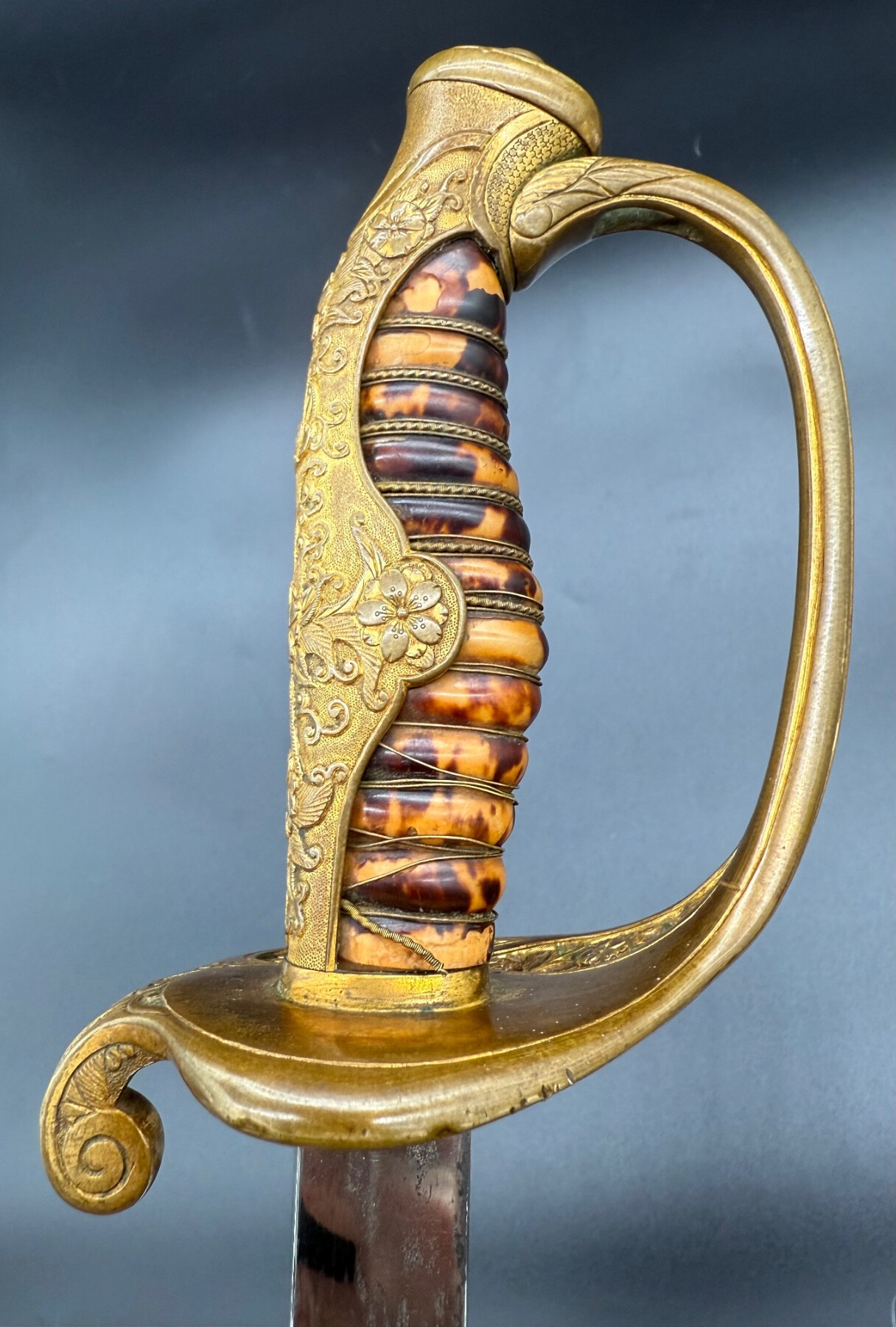
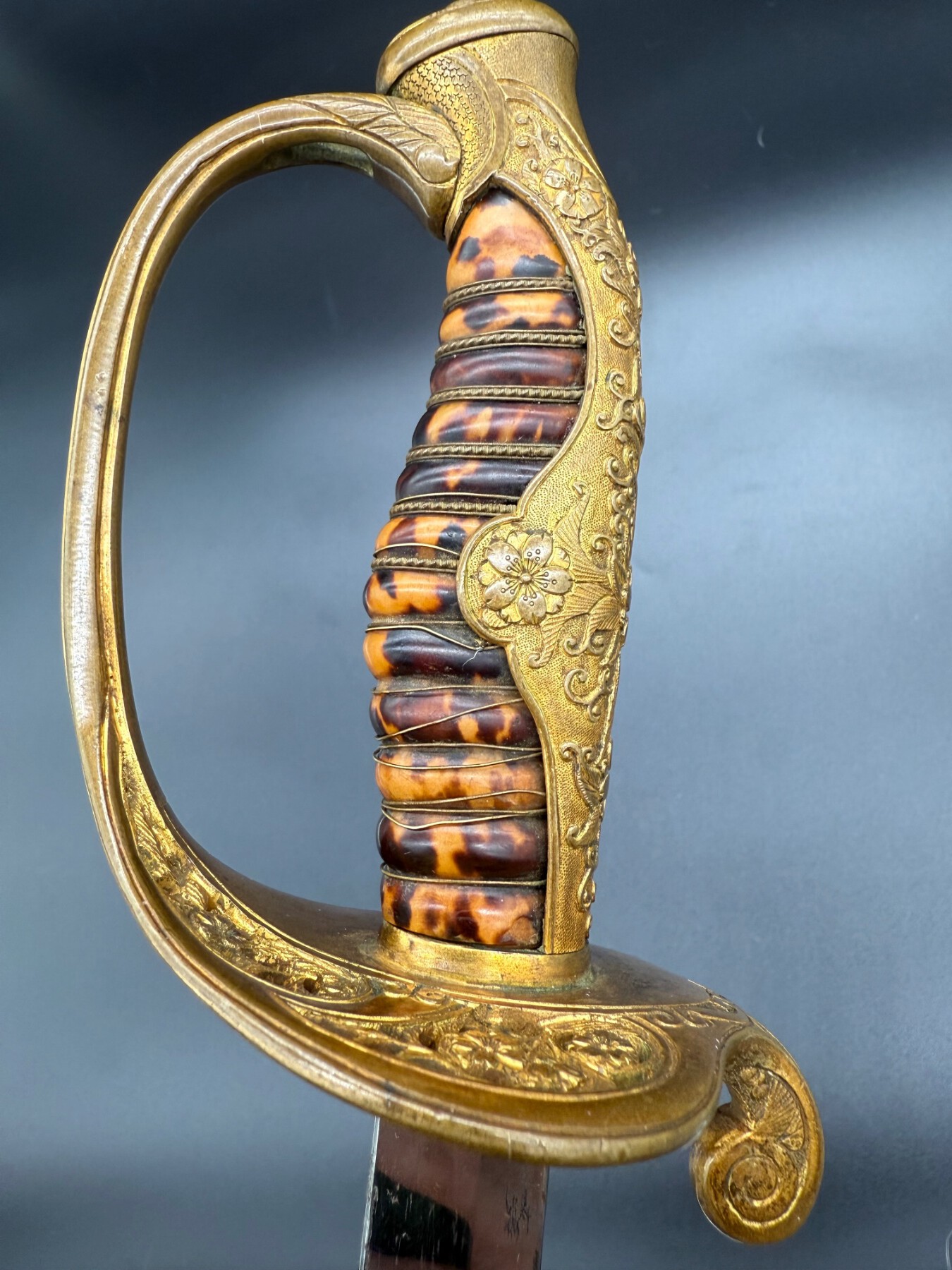
I am glad you were able to get it, Sam! The field grade and general officer back straps are identical. The only difference is the grip material. I think Dawson just simplified the back strap in his diagram. It's possible your sword never had any markings on the ricasso or they may have rubbed off. Sometimes they were very faintly applied. For example, the marking on the E & F Hörster below is lightly engraved and almost gone compared to this Clemen & Jung. Conway

 1 point
 -
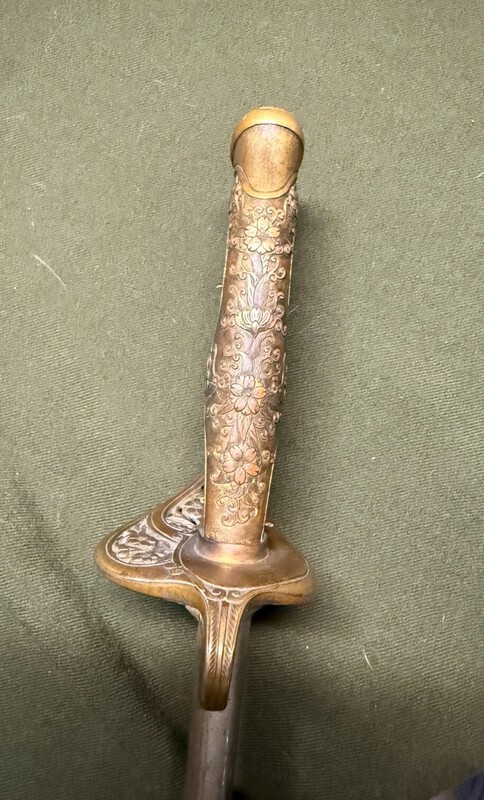
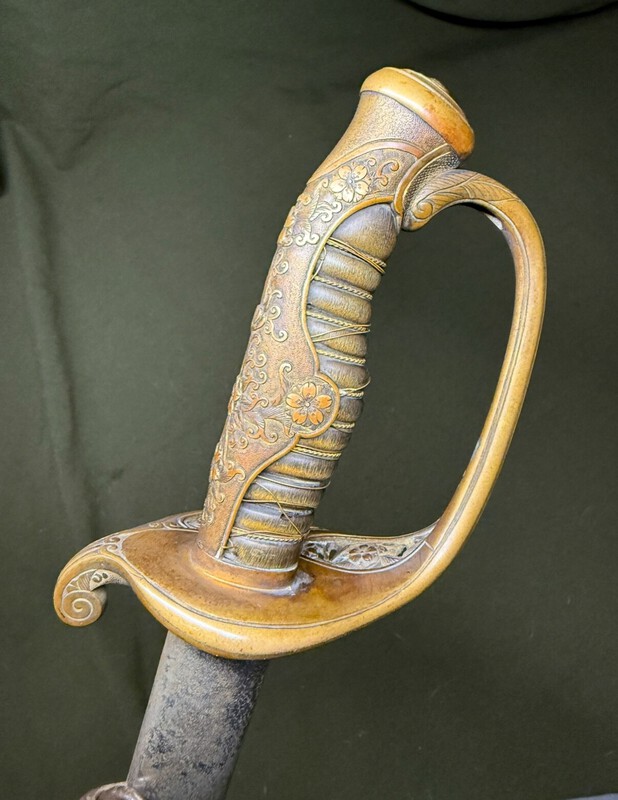
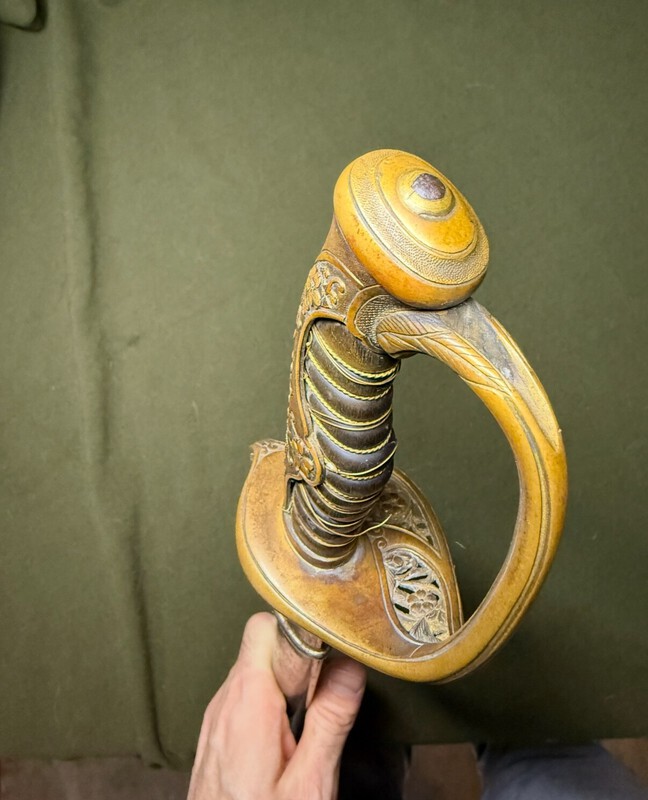
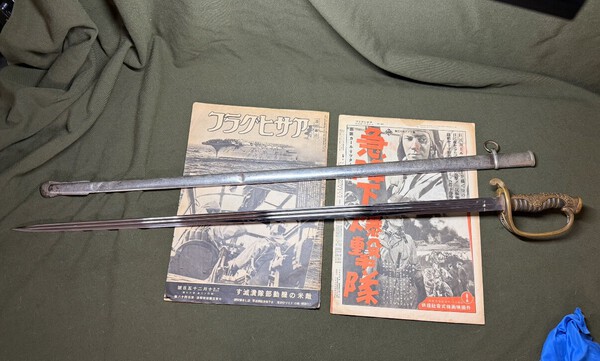
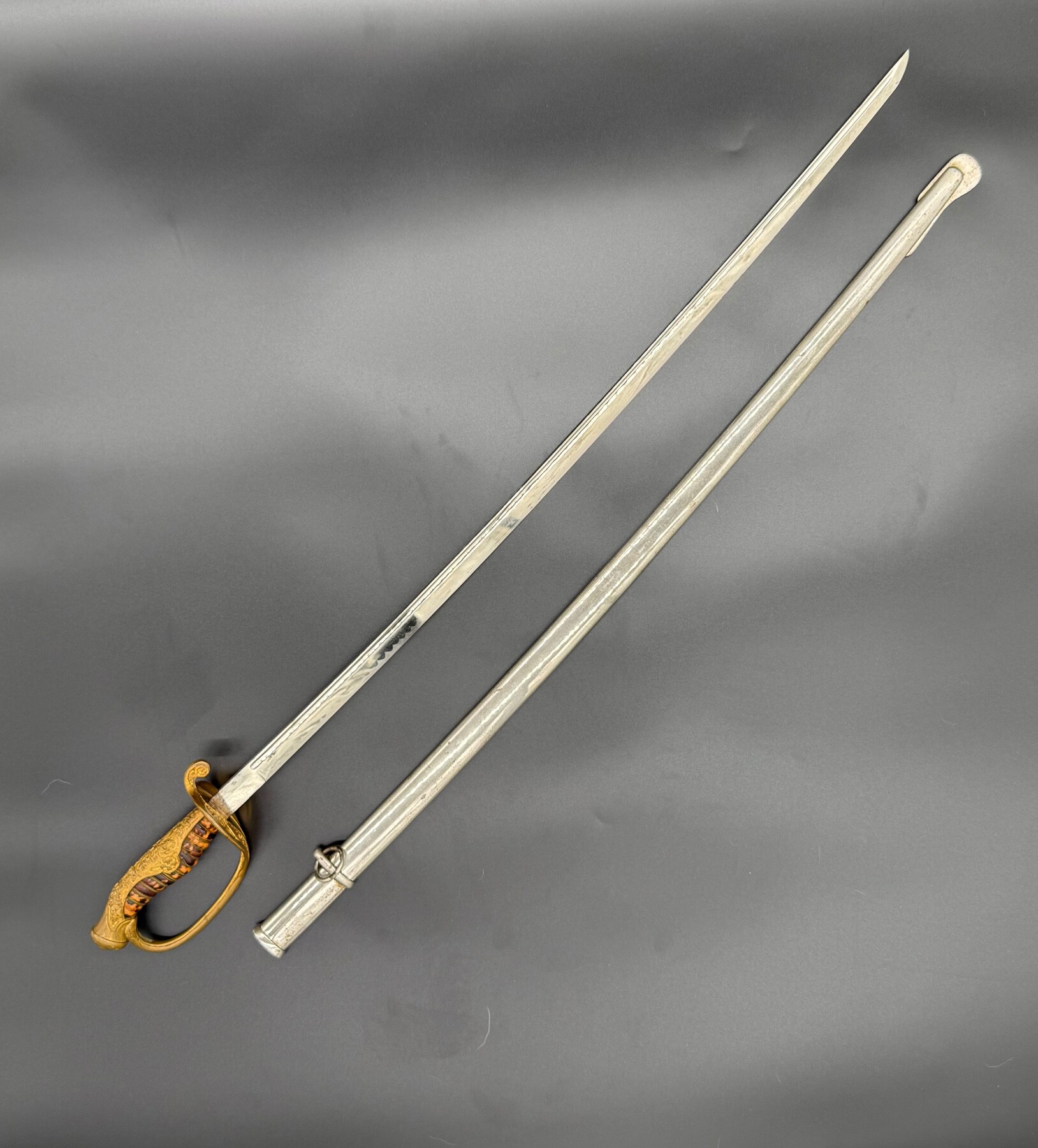
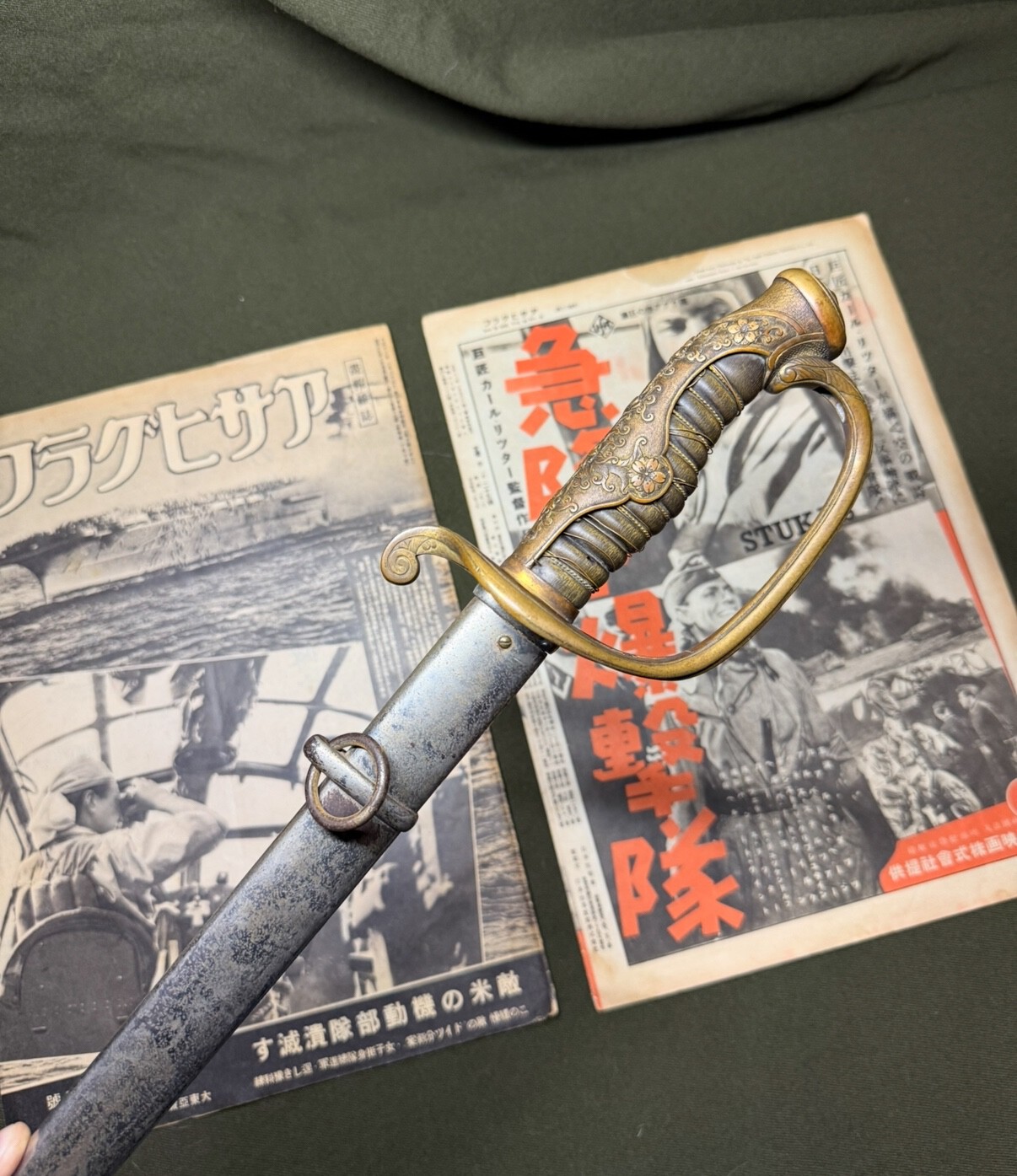
As promised, here is the straight blade parade saber I had my eyes on. I purchased it today for $200 USD. Unfortunately there are no German markings on it that I can find. Although, the double suya stamp is cool! @Conway S @Bruce Pennington Some observations: Straight blade, plated. No edge. Double fuller. ”Wood” grip material? Ornate back of handle. Double suya stamp. Single scabbard hanger. Approximately 33 inches long from where the handle starts 32.2 inches long from where “edge” starts. I like it! I think it’s neat. I plan to hold onto it as an example in my collection of a cool and unusual parade saber. The magazines in the photo I also got today. -Sam
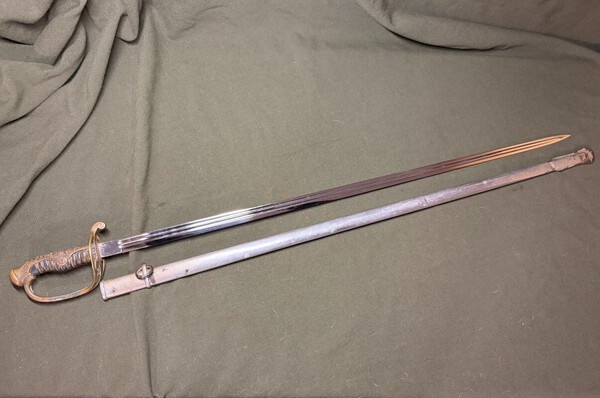
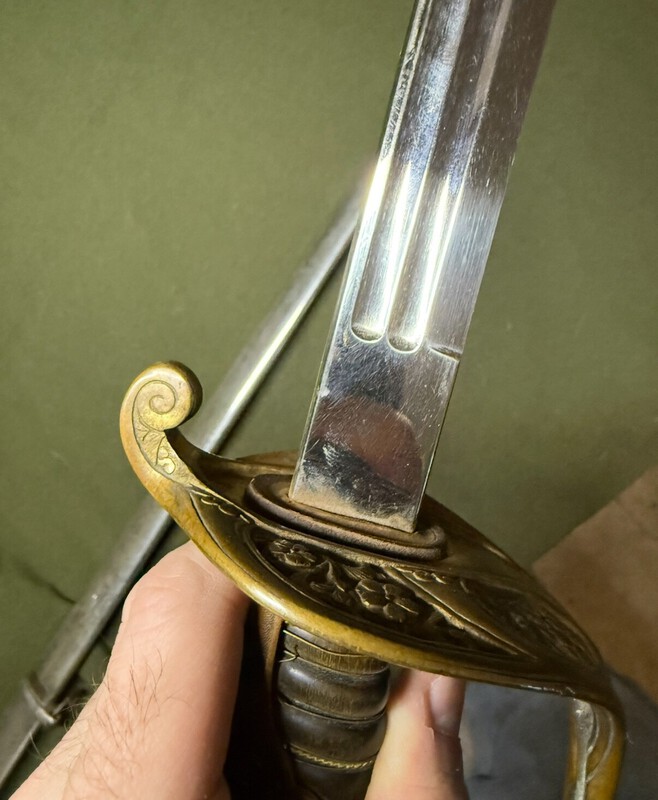


 1 point
 -
Has anyone ever encountered one of these “E & F. Hörster Type 19 Army Field Grade Kyu-gunto”? I think I found one locally, and considered buying it, but it looked so unfamiliar with that straight blade and double bohi. It appeared chrome plated. Been regretting not picking it up. I might try to find it again, if it’s still available. Cheers, Sam Page 32 from: Swords of imperial Japan 1868-1945 Cyclopedia Edition by Jim Dawson
 1 point
 -
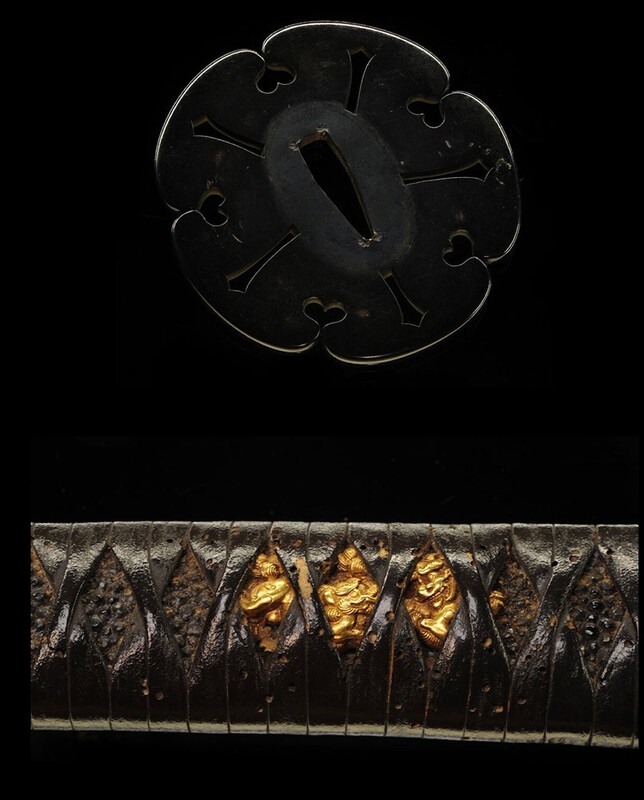
I do but a plain one. Koshirae has toku so replacing anything wouldn't be right.

 1 point
 -
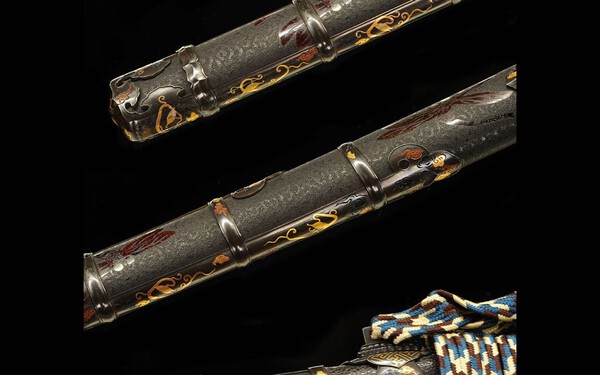
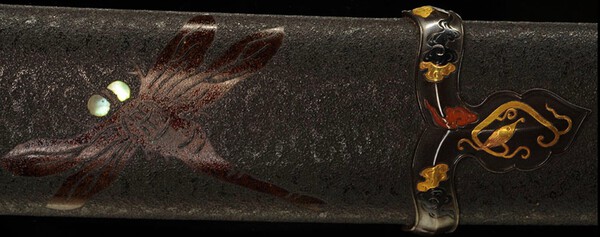
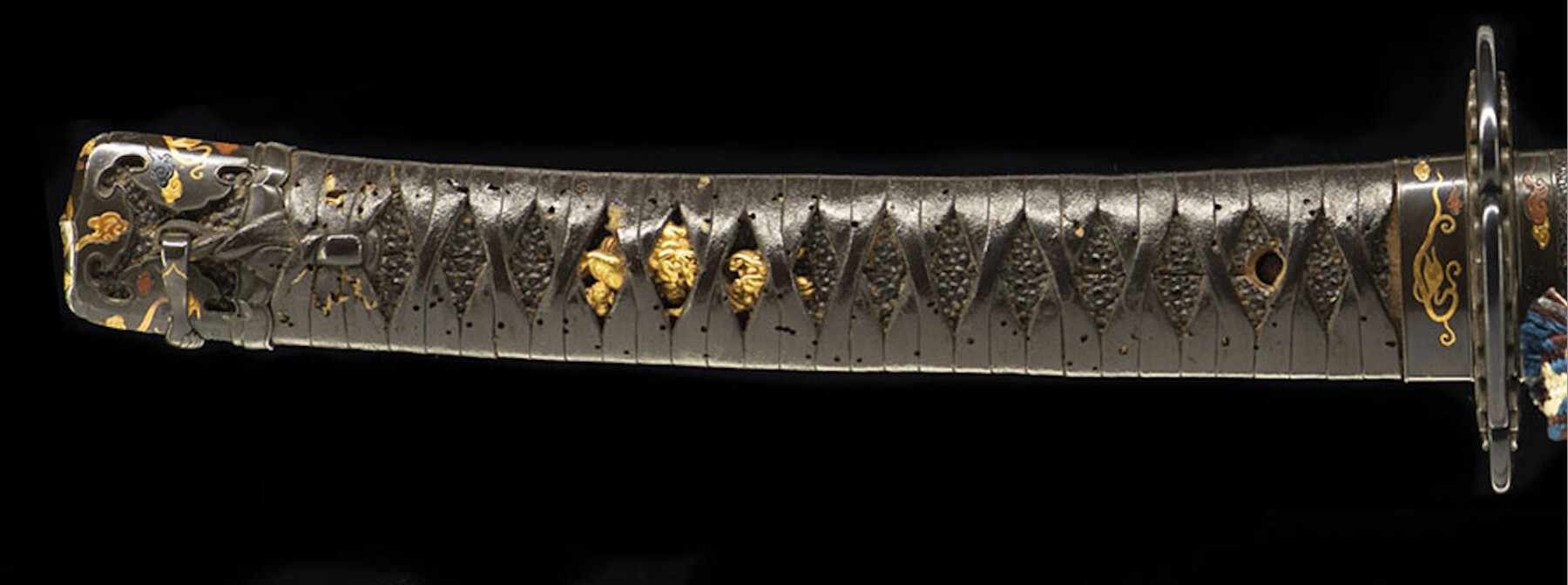
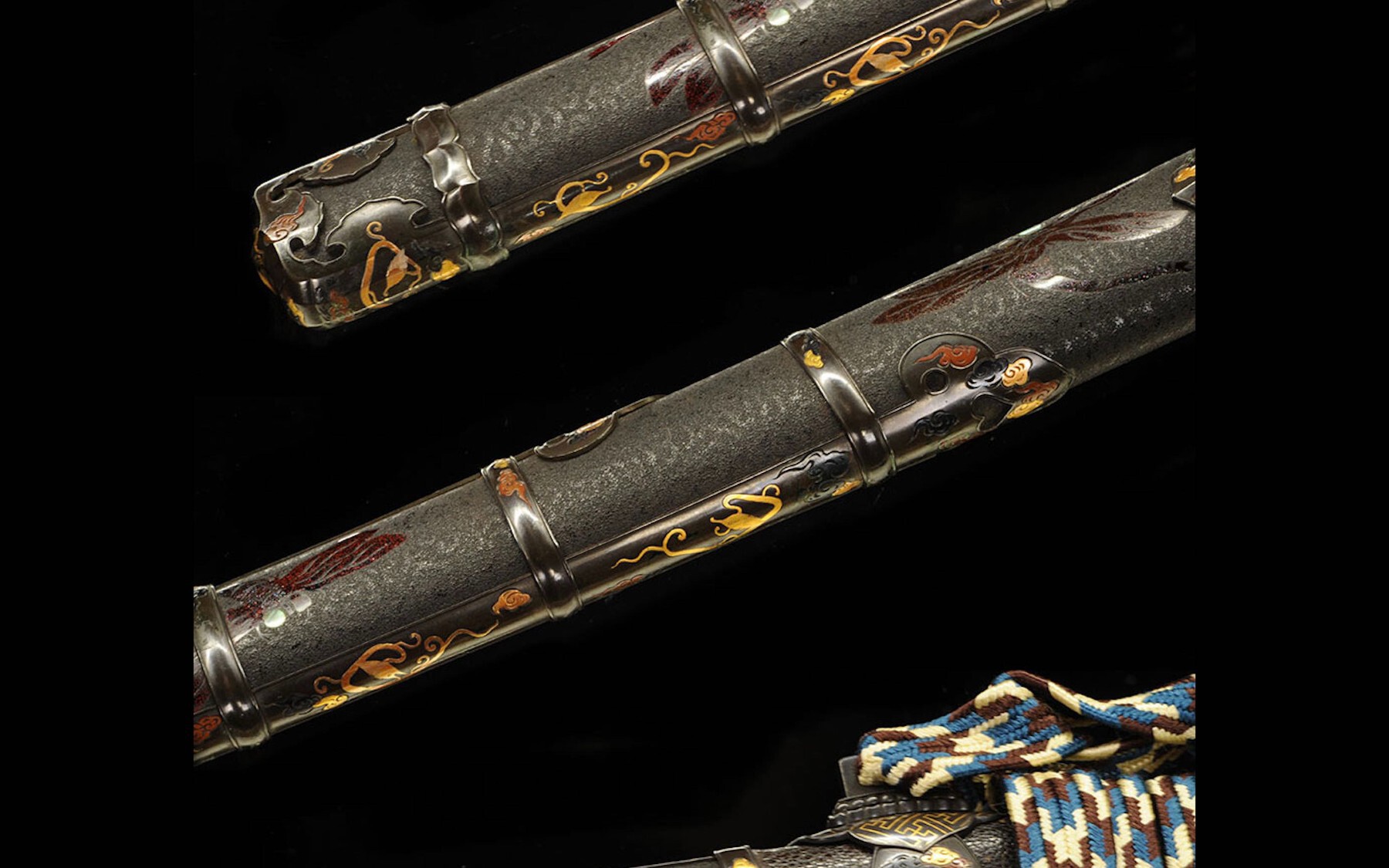
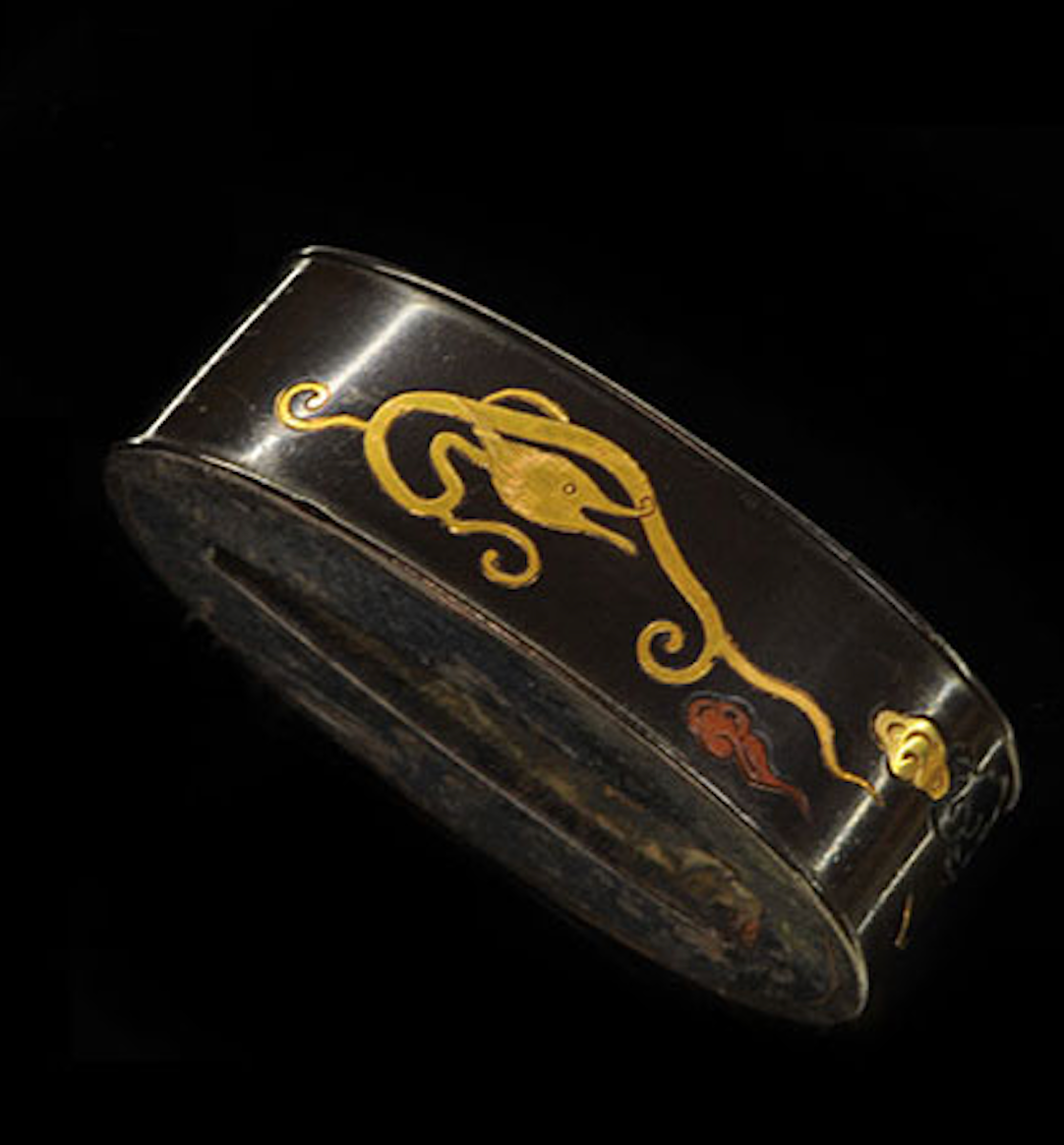
I recently bought a new sword with some rain dragons on the koshirae, thought would be interesting to share under this discussion.


 1 point
 -
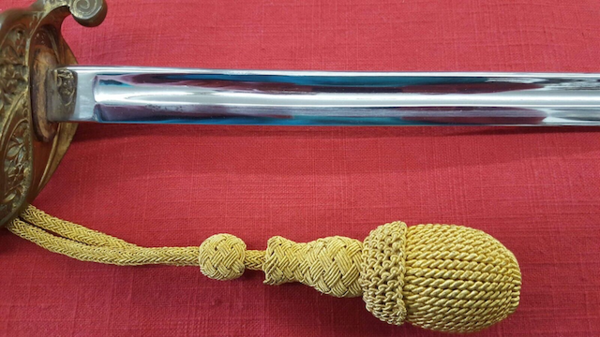
This beauty was on eBay for a while, but recently sold. I would have loved to have this one in my collection. I thought I'd post it here for reference since a German made blade is always a nice feature. There's a smilier General's grade with a Clemen & Jung Solingen blade in Dawson's book from the Plimpton collection. https://www.ebay.com/itm/256453466500 Conway


 1 point
 -
As the subject states, what would you say your favorite online places to purchase Tsuba are? I know there are tons of links but would be interested in what your favorites are. Thanks!1 point







.jpg.0bd4504f4eb472a5a13000b9a4611944.jpg)

































This leaderboard is set to Johannesburg/GMT+02:00