
Leaderboard




Popular Content
Showing content with the highest reputation on 03/17/2026 in all areas
-
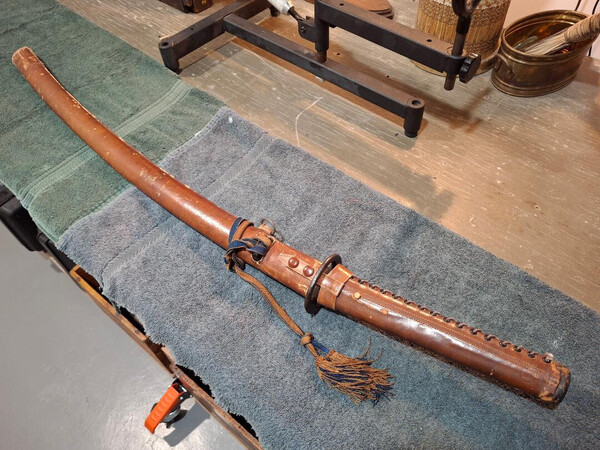
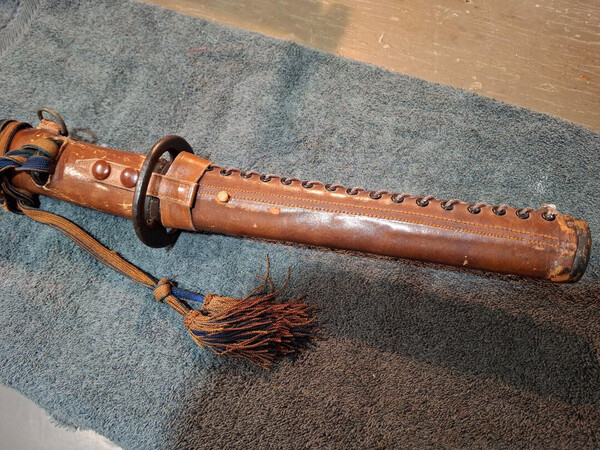
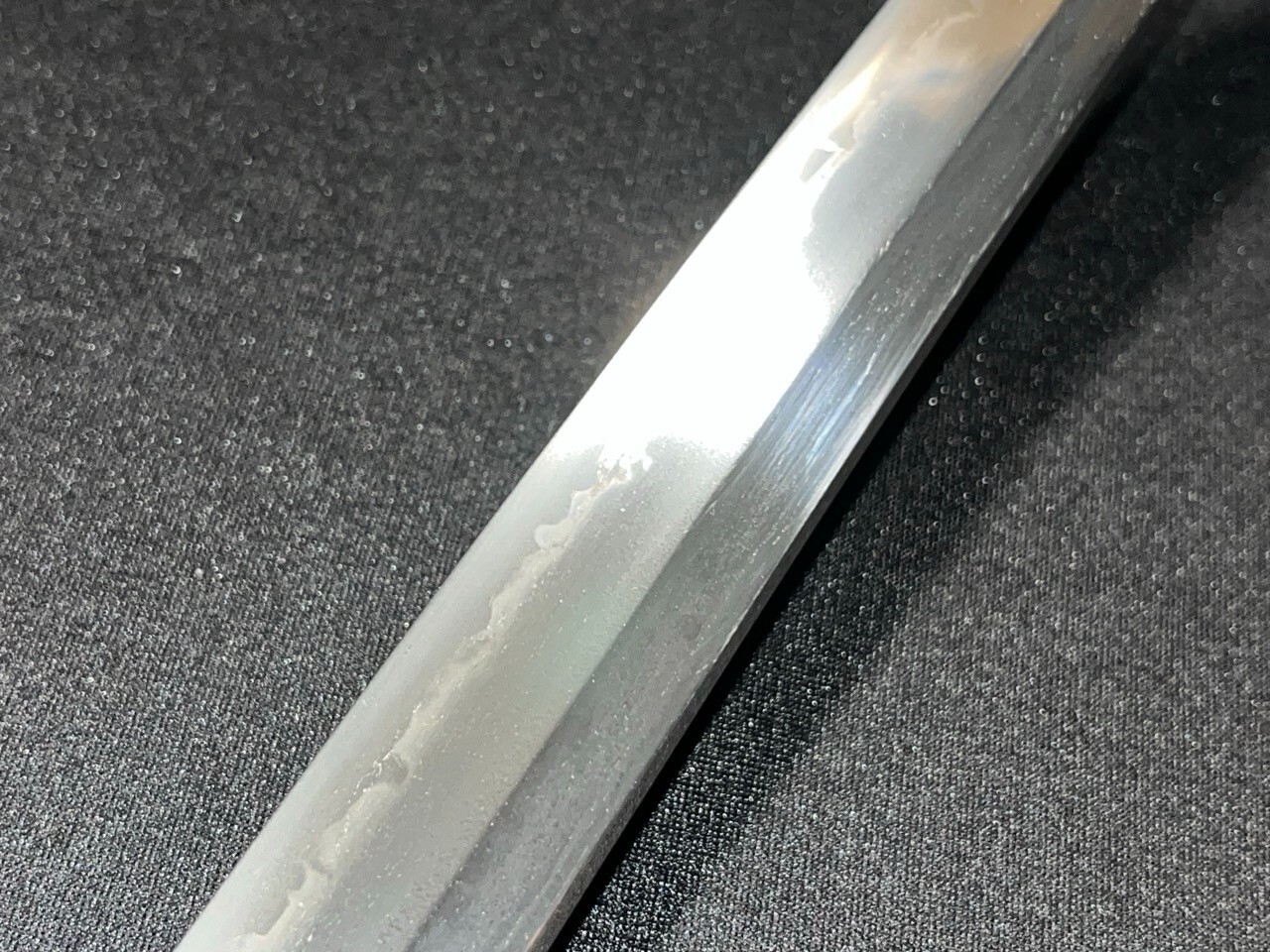
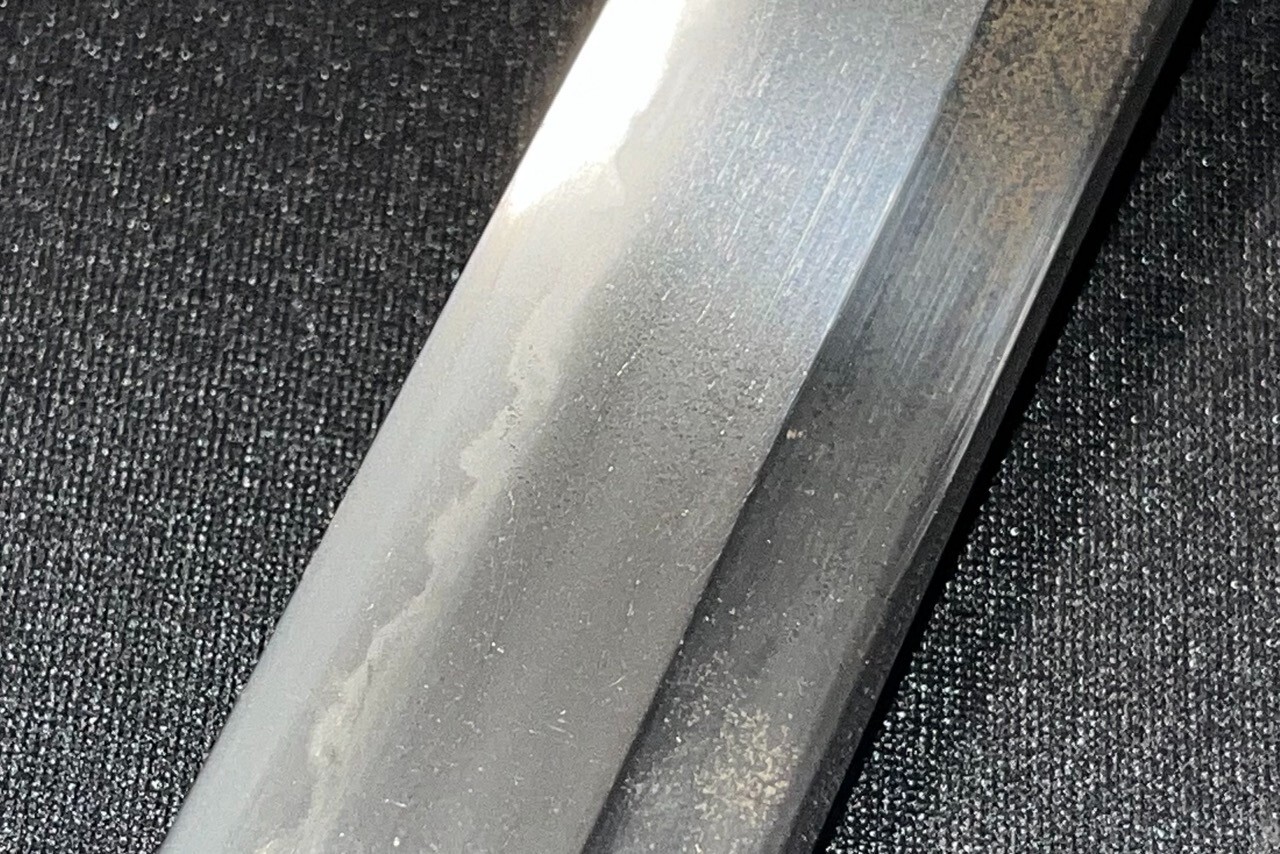
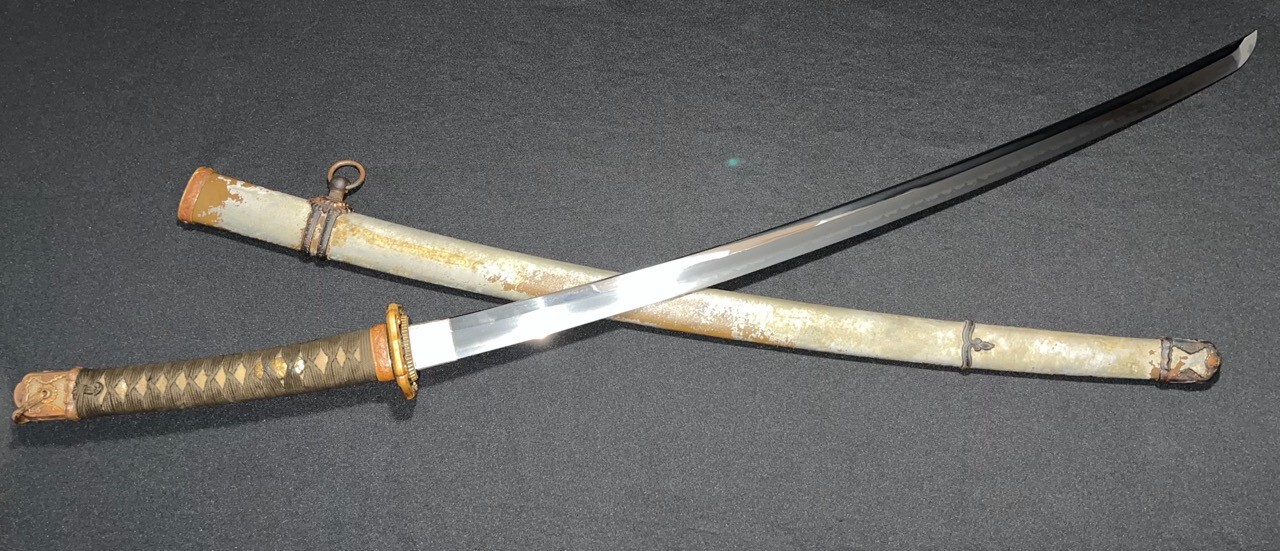
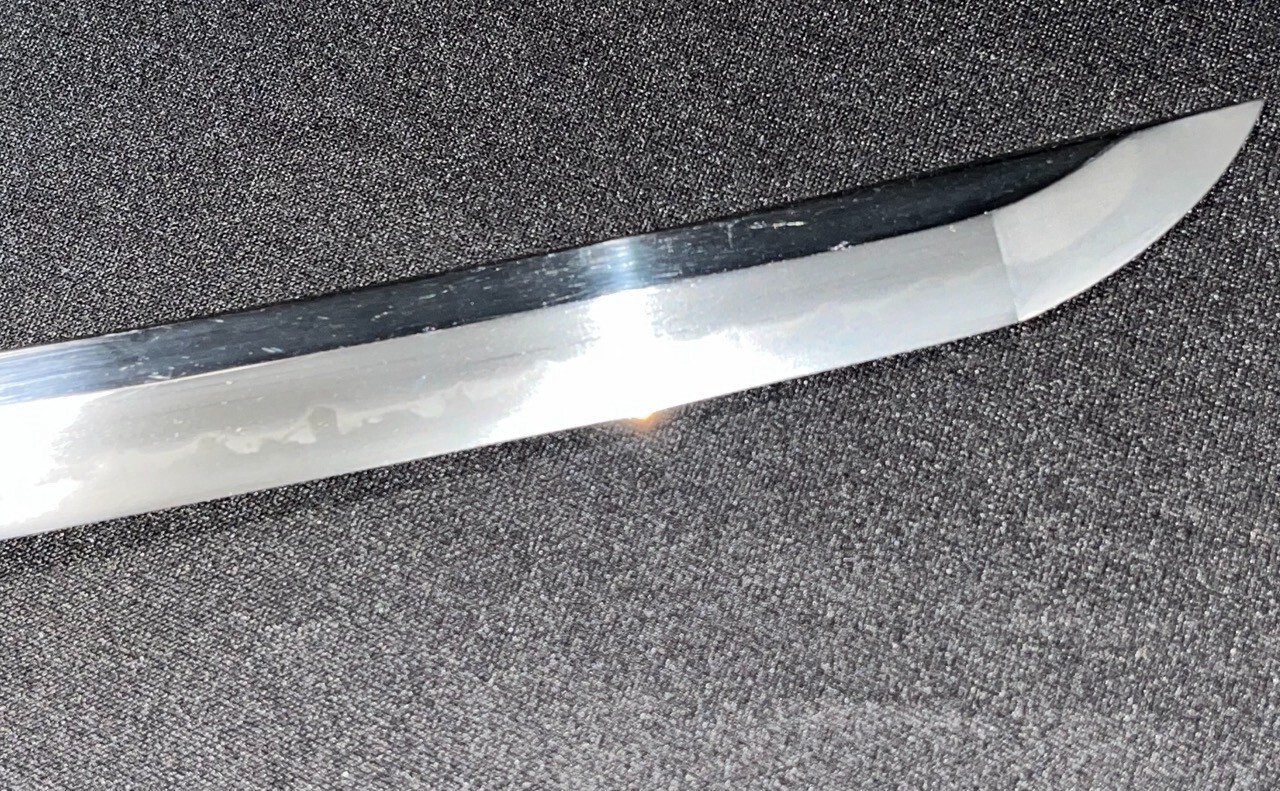
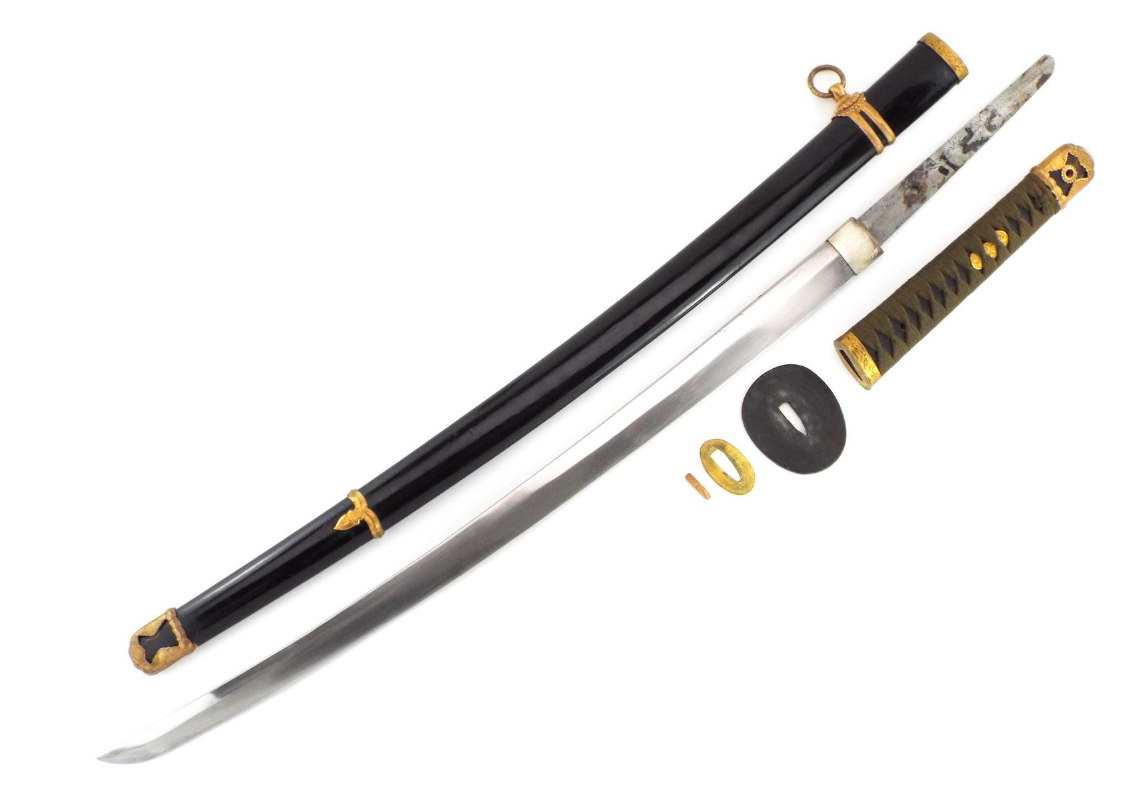
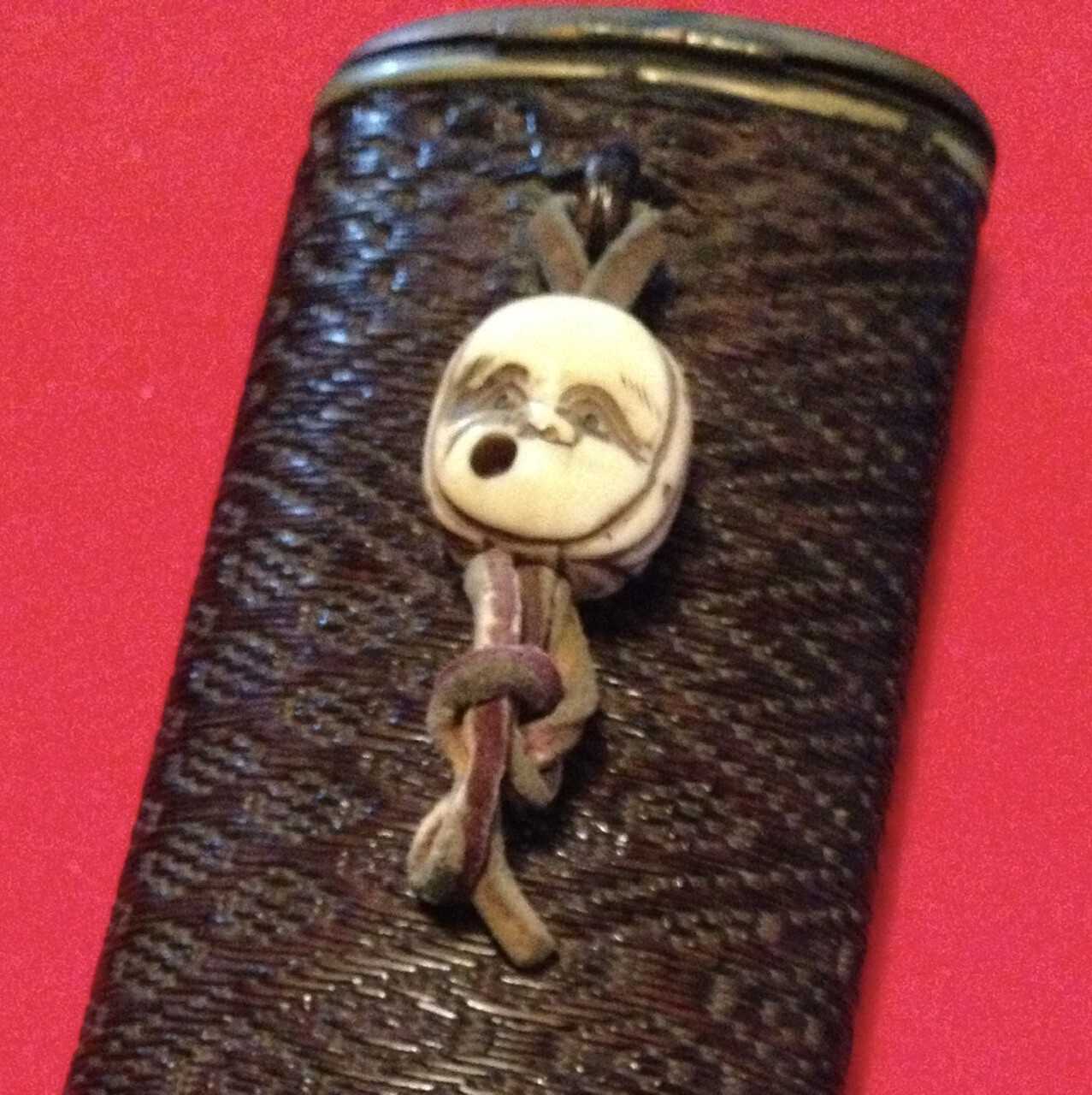
I haven't seen this variant posted yet in this thread so here goes. This is an old family blade signed Munemitsu kitted out for WW2. I bought it a few years ago because I had never seen this kind of tsuka cover. I unsnapped the cover on the saya and it appears that an old sparkly lacquered wood saya lurks underneath. I would have to undo the threads on the tsuka cover to see what lies beneath and I don't have the courage to do that. I figure some things are best left undisturbed. I also haven't applied any leather preservative to field covers. Que sera, sera.
 5 points
 -
The “Military Sword for the Nation” Movement (Japanese: 軍刀報国 / Guntō Hōkoku) was a wartime mobilization campaign in Japan during the late 1930s and early 1940s. It encouraged civilians, organizations, and local communities to donate money or materials to produce military swords or sale the blade to army for officers use.
 5 points
 -
A BILLHOOK!!! How very fitting your 'traditional tool' should appear on NMB. As I'm sure many of you know, the billhook has a long career as a weapon. BaZZa.4 points
-
Here's a teaser. I wanted to mimic the "feeling" of the design without copying it. The corner braces in their raw form. I will patinate them black to match the old iron. The flowers were stamped in with one of my leather leaf tools (the wife's idea. She thought they looked plain otherwise). John C.
 4 points
 -
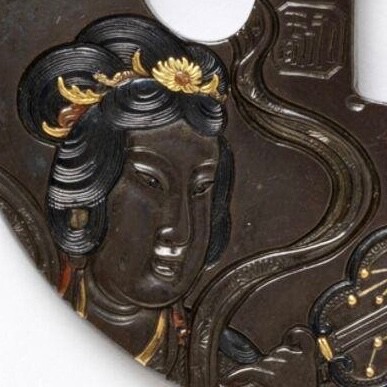
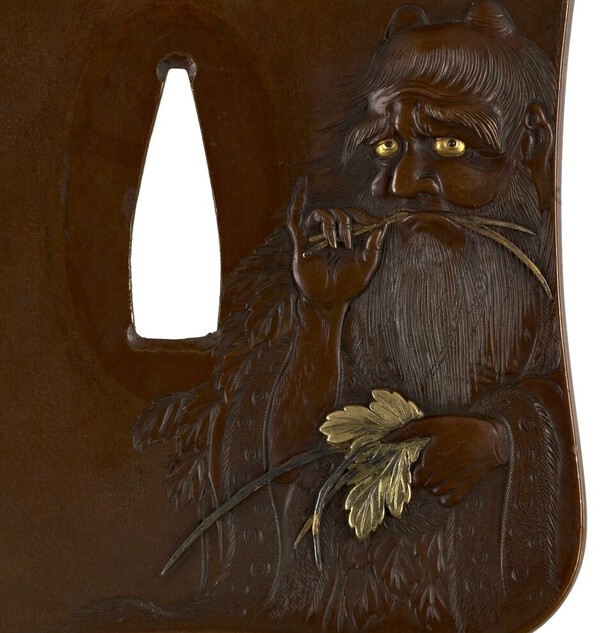
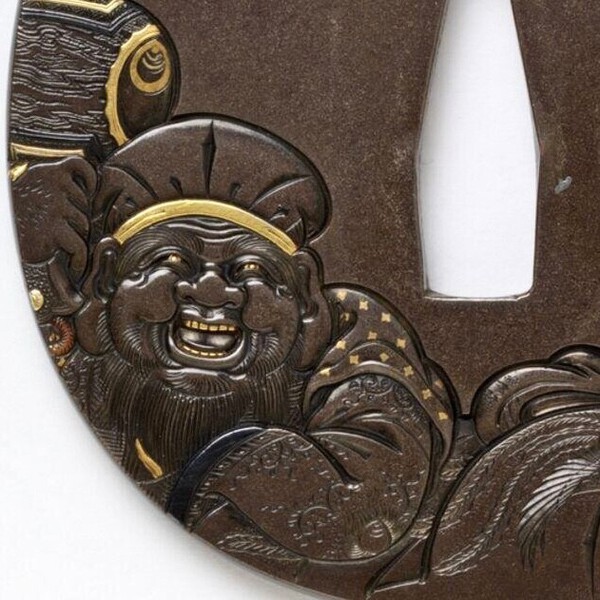
I think it doesn’t really matter where an item is located. Museums often contain works of very different levels anyway, since many of them were assembled from donations from all over the world. Over the past couple of years I’ve become something of a Tosogu maniac - having read through half of the Tosogu forum and studied thousands of different works wherever possible) I find it almost like an addiction or an illness. For me it has become not just a hobby but a form of stress relief in any free moment. And the most pleasant thing is that there is still so much more ahead. As Colin already told you, only visual familiarity will eventually give you understanding - you will start to see the differences yourself. I also insist on studying and understanding the technical processes involved - many thanks to Ford Hallam. As for this particular piece, it is a really good Nara work, and compositionally I find it very appealing. However, when we talk about a master of the level of Sigiura Joi, the standards for the work are somewhat higher. Please understand me correctly - I simply do see differences in the carving, the inlay, and the signature, and in my opinion they are significant. To be honest, I’m a bit surprised by the reaction of many people, so let’s examine it in a bit more detail. As I like to say, everything is understood through comparison, so let’s take two works as a basis - pieces whose authenticity, I hope, does not raise any questions. First of all, all the elements are perfectly inlaid, the boundaries are crisp and carefully finished. Next, look at the treatment and polishing of all the fine elements - Joi truly managed to give them life. Just consider the frozen expression of Benten: the eyelids are perfectly polished and emphasize the smooth contours of the eyes with their inlaid pupils. As for the katakiribori carving - it is almost perfect. All the lines are straight, of ideal thickness, the edges are not collapsed, they have the same depth and are cut at the correct angle, which allows us to see the play of light so clearly - for example, in the hair of Benten’s hairstyle. Pay attention to the elegantly raised shoulder guards of Bishamonten - they truly have volume and a cloud-like feeling. Look at his helmet: all the details are carefully inlaid, and the surrounding surface is perfectly even. Consider the face for at least a minute—through different strokes and careful polishing the author managed to convey such a realistic appearance. The play of light from such polishing is visible even in these photos. And here is our recent mysterious friend In my opinion, one of the best portraits in Tosogu. Look at the palm and the fingers. The reed is inlaid so delicately that it seems to float in the air, this effect is achieved through additional cuts underneath that create a shadow effect - it's fantastic. (It’s a pity the reed is broken at the end, but we can clearly see the taper toward the tip) The forehead deserves special attention. The depth of the hair has been worked out, the hair of different lengths is directed at its own specific angle. Look at the ears of these characters - they are also carefully worked and polished. Also pay attention to all the small katakiribori elements: they are confidently carved, even with the same carving rhythm (those very eyelashes), again to properly convey the play of light. The signatures on those works are also carved with a confident hand, whereas in this example that feeling is absent - especially in the seal. I once held an authentic Joi kozuka with papers in hand, it was a work of similar quality to the examples above. I hope this helps a little with understanding. However, the most amusing thing is that in the end we may never know the truth - we are left only to guess and discuss Best regards! Viktor



 4 points
 -
Well, you asked for it: On Sunday on a local flee-market, I bought a traditional tool that I will restore (very lightly as it is in good shape and as museum piece, I don't want it to look like new) in the next few days. It has a very solid hand-forged blade of 210 mm length and a max. spine thickness of 8 mm. Similar tools have been used in many cultures world-wide, called "billhook" in the English-speaking parts of the world. In my region, it was traditionally used for forest and agricultural work.
 3 points
 -
It would be helpful to see better photos, however I do not see an association here with So-den Bizen Kanemitsu or his school and as far as the appearance of the mei and nakago that also does not evoke a feeling of Bizen.3 points
-
3 points
-
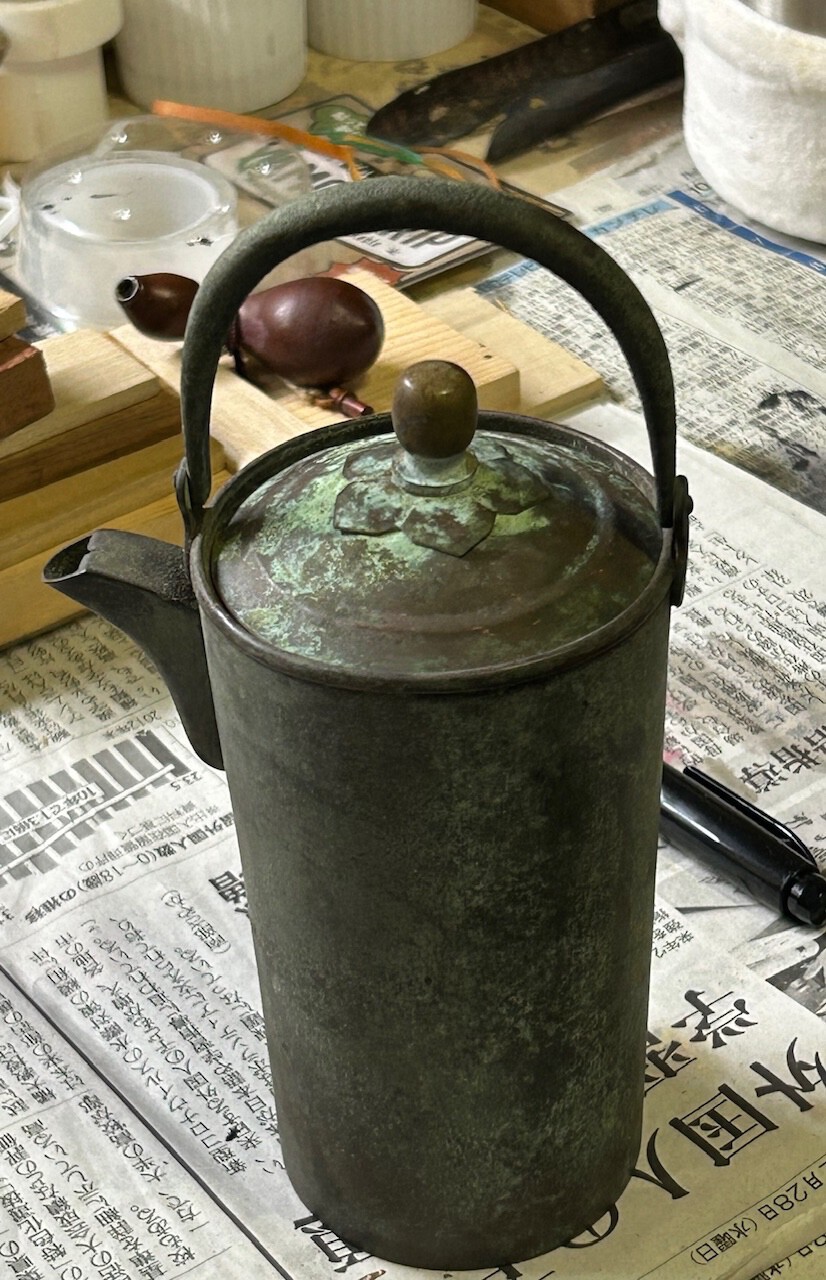
About a year ago I bought a bronze oil pot for an Edo period Japanese andon lamp. A fine-looking thing, but as is often the case, it had lost its lid. Rather slim in silhouette, it needed a small lid. Round and round the antiques fairs I went, rejecting most but buying occasionally, only to be disappointed once more by the lack of a proper material or age match. Months passed. One dealer who has several weathered antique lids on a string handed me a nice one yesterday that he had been saving for me. “Cut this down to the correct size, using an angle grinder.” “Tin snips?” I ventured. “Definitely not. Grind it down to size!” Gulp. Never really been happy working metals. A delicate thing with definite age. What if I ruin the old lid? Still, lonely hearts club, etc., so a potential new life for the pot I reckoned, and got to work shrinking the thing. Hand files and sanding papers though. Getting close to the right size? About 6.7 cm across… Hmmm… .

 2 points
 -
I believe the mei is Yamashiro (no) Suke Moritake (山城介盛武), and the date is 慶應三年八月日 (a day in the 8th month of 1857 - Keiō 3). Best regards, Ray2 points
-
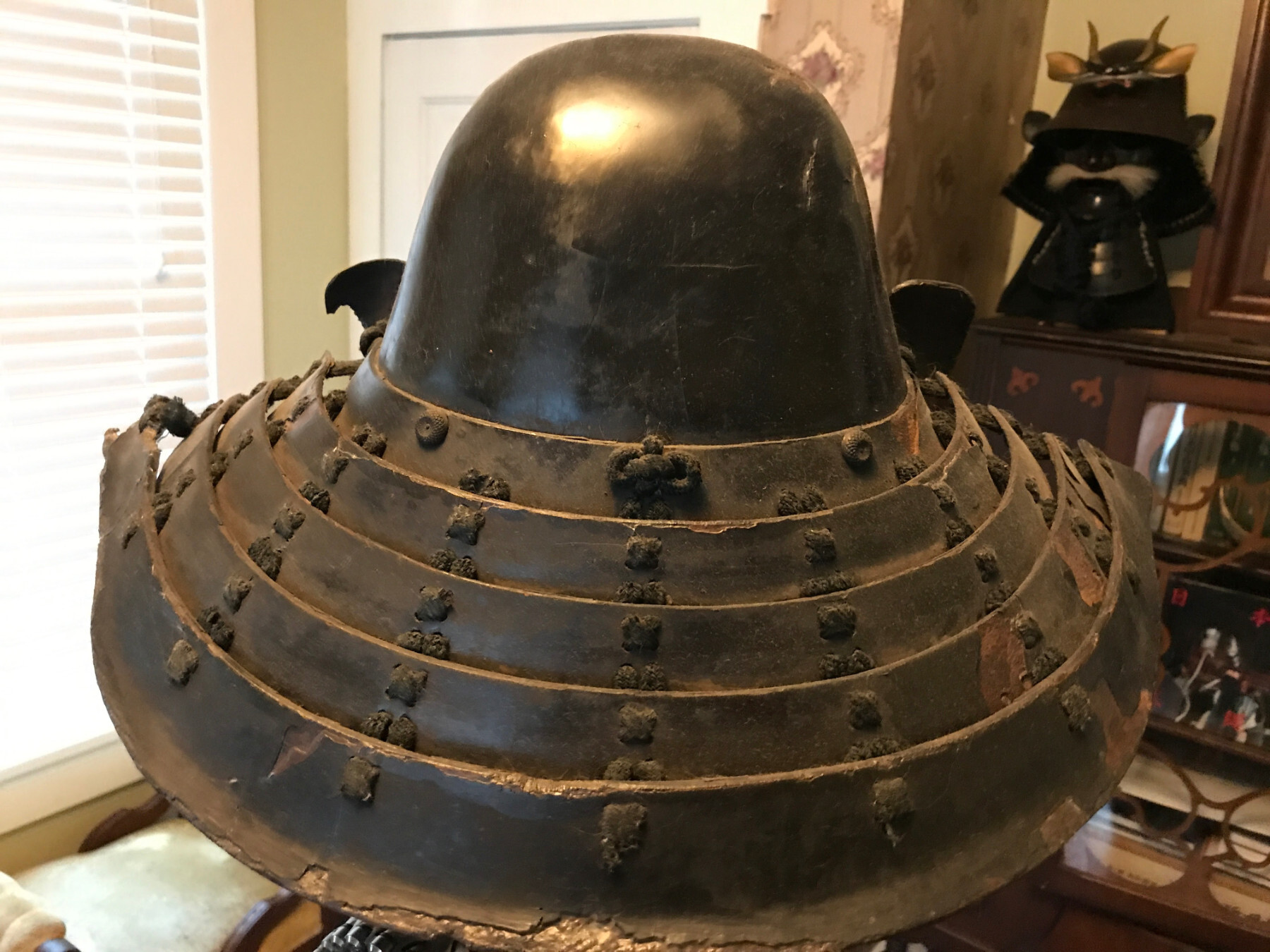
Here is a bullet hole, in a narigawa kabuto

 2 points
 -
Getting there. I'm about a week or two from finishing a suzuribako tansu. Started with just the door with all the ornate metal work, locking mechanism, hinges, etc. Long process due to making all of the supporting hardware from scratch (sheet copper), unfortunately without a full workshop, and trying to mimic the grain and color of the wood. I'll post pics when finished. John C.
 2 points
 -
Another good edition for those interested in technical katchu ..2 points
-
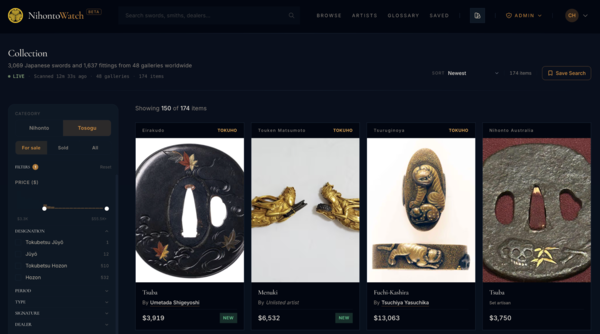
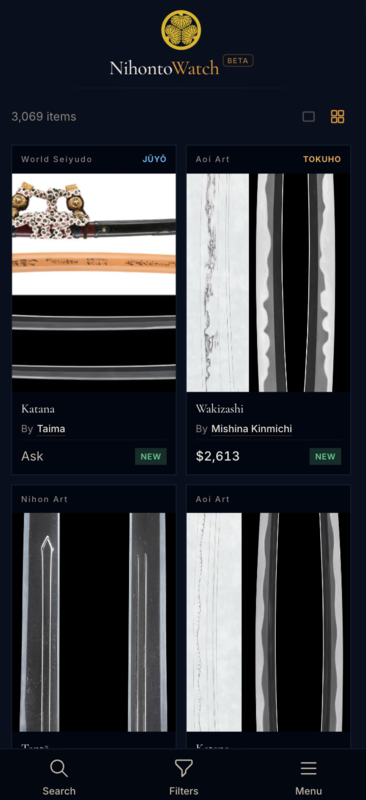
Hello everyone, TLDR: Interested in Japanese swords and fittings? I made this to help the field. Open nihontowatch.com on your phone browser, and add to home screen (Share → Add to Home Screen). Thank me later. --------------------------------------------------------------------------------------------- I have been thinking for quite some time about the future of our field. I have been blessed with incredible mentors and opportunities, most notably the late Darcy Brockbank, who was so generous in sharing his knowledge. Since his tragic passing, I have felt a responsibility to carry that work forward. What I am about to present, I built as an homage to his memory. Our field has problems. We operate in a field of extraordinary depth without being equipped with the knowledge and tools to understand what we're looking at when we browse the market. Refreshing dozens of dealer websites every week, most in Japanese, copy-pasting listings into translation apps, pinching to zoom on sites built twenty years ago — market awareness is just painful and you miss things constantly. You spend an hour and walk away unsure you have seen everything. And this is just the market experience. The deeper problem is access to knowledge. There are no catalogues raisonnés for artists. Yuhindo would have grown into it — it was planned. But alas, Yuhindo is no more. No way to know, with any confidence, whether a price is reasonable without decades of experience or tens of thousands of dollars invested in published references. No way to know why something costs what it does. Communication with Japanese dealers remains daunting for most. No easy way to know who is a reputable dealer. The barrier to entry is simply too high, and this friction keeps our field artificially small. Fine art has Artnet. Watches have Chrono24. Antiquarian books have AbeBooks — markets with comparable depth and comparable opacity, served by platforms that bring transparency and accessibility. These fields have benefited immensely: they have enabled new entrants in droves to collect in confidence. Our field needs more knowledge and transparency to build interest and trust.Japanese swords and fittings. Eight hundred years of collecting history at the highest levels. The category that contains the most national treasures in Japan. The indefatigable search for perfection of an entire civilization. And yet, we have nothing. This had to change. As I write this, there are 3,021 Nihonto and 1,607 Tosogu items for sale across 44 dealers, Japanese and international, in a single searchable interface. Every listing is structured with attribution, certification, measurements, and artist intelligence data. NihontoWatch is on track to follow 100% of the online market for genuine items with NBTHK papers. Refreshed 12 times a day. Everything is translated and structured, as it trickles in live. But what is this worth, if it's so hard to know what you're looking at? Especially for newcomers, it is so hard to tell what you're looking at. This is where the magic is. I am nostalgic of reading through Yuhindo's artist descriptions. It made me deeply appreciate the field. It got me in. NihontoWatch scales this experience and creates something approaching a living catalogue raisonné for every Tosogu and Nihonto artist. It matches every listing against a database combining the complete Juyo, Tokubetsu Juyo, Juyo bunkazai, Kokuho, and Gyobutsu designation data — over 23,000 items at the highest level, with rich text in classical Japanese. This data is then processed, synthesized, and presented into NihontoWatch's artist directory in a way that is respectful of the NBTHK's copyright. With this, you'll be able to discover a maker's historical reputation through quantitative analysis of exhaustive provenance records, in ways never seen before. Over time, all of these artist pages will come alive, forming an ever-expanding knowledge base. - How rare is it? - How many Tokuju? - How many designated works ranked Juyo and above? - Why is this important? - Where does it rank relative to other works? - What is for sale right now? - What was for sale recently? All the answers are in. These are questions that come up constantly in our community, and until now, answering them required years of collecting published references worth tens of thousands of dollars, and patiently indexing them with post-its or one-by-one in a spreadsheet. Only professional dealers or major collectors could afford to do this. This is a BETA, so there are errors. The more obscure the artist, the higher the error rate, and there are still basic errors I need to fix with some famous artists. A lot of algorithmic tinkering and curation ahead. It will keep getting better with your feedback. See the results for yourselves: - Soshu Masamune: https://nihontowatch.com/artists/masamune-MAS590 - Ichimonji school: https://nihontowatch.com/artists/NS-Ichimonji - Yasuchika (tosogu): https://nihontowatch.com/artists/yasuchika-TSU001 - Goto school: https://nihontowatch.com/artists/NS-Goto Click one and explore the designations, the provenance abalysis, the measurement distributions. This is just a first shot — over time this data will grow. Here is one where I have published an item I studied for my Substack article on Mitsutada: - Osafune Mitsutada: https://nihontowatch.com/artists/mitsutada-MIT281 Imagine Yuhindo, but with a page for every artist and every piece ever captured on camera. Saw a national treasure at an exhibition in Japan? Share your photos on NihontoWatch's artist catalogue. In the future, owners of particular works will be able to publish them to the artist's catalogue. Think of it as a growing, community-curated knowledge base for every artist in the field. And so much more Browse and filter: Designation, dealer, item type, school, province — all filterable, all instant. Prices display in JPY, USD, or EUR. Every filter combination is a shareable URL. The sold archive tracks thousands of items for pricing research. And it works for every budget, for collectors at every level. - All Tokubetsu Juyo Nihonto on the market - All Tsuba with Hozon or Tokubetsu Hozon, maximum price $2,000 Setsumei translations: On some items, you can press the floating book icon on any Juyo item to toggle between photos and the Juyo setsumei translated text. For most Juyo and above items, the NBTHK evaluation text from the dealer's page is identified by computer vision and translated into English. It will fail if the dealer has not posted the Juyo Zufu extract, but in the majority of cases they do, and the result is remarkably accurate. Do use responsibly — the quality is great, but not perfect. Always purchase professional translation from Markus Sesko when contemplating the purchase of a Juyo-designated piece. Search alerts: Never miss an item again. Define keywords and filters and save them. NihontoWatch will run your search every 15 minutes, and when something new appears, immediately send you an alert email. In practice, missing a listing that fits your interests becomes almost impossible. Tip: I recommend avoiding overly specific queries. "Juyo tsuba" or "Kamakura signed tachi" are safer than specific artists such as "Yozozaemon Sukesada," which would be more fickle. Broad queries give you the best market coverage. Inquiry emails: Press "Inquire" on any listing to draft a professional inquiry in Japanese. Handles etiquette and formality, and can help you request the 10% consumption tax exemption available to overseas buyers. Did you even know you could get 10% off? How many new entrants lost 10% on this, at least at the beginning? I for one did. I've seen countless high spenders neglect to request it while shopping across Japanese galleries. Glossary: The technical language of Nihonto and Tosogu is deep and specialized — needlessly so for non-Japanese speakers. Anytime a technical term comes up, you can click and see what it means. Over 1,200 terms, searchable, automatically linked from the setsumei translations. Who remembers always keeping an index open to keep track of terms when studying Juyo items? https://nihontowatch.com/glossary How best to use NihontoWatch While it works wonders on desktop, NihontoWatch works most beautifully on your phone. I use it every day — it feels like I have the market in my pocket. Open nihontowatch.com on your phone, hit Share → Add to Home Screen. And voila, you have an app. It becomes something you check with your morning coffee, the way one might check the news. A word of caution The data has errors — always verify independently. This is a tool to explore the market, not a substitute for critical thinking. If it looks too good to be true, it likely is, and this system can't easily correct online misrepresentations. Old listings where dealers have not marked items as "SOLD" will still appear as available. Listing errors will slip through, but data quality improves continuously as the system learns over time. Get involved - Missing a listing or dealer you like? PM me or post here. - Bug? PM me or post here with steps to reproduce. - Dream feature request? Reply in this thread. I will keep this thread active and share major updates when time permits. Everything is free right now, and will remain so until ready for official release. This is no trivial task, and it is expensive to operate — it will need to be covered in some way down the line. It will be tempting to keep it for yourself. But if we want our field to grow, we must share knowledge and expand market access and transparency. The single most impactful thing you can do right now is help others discover and use the tool. Share it with your study group. Share it with your collecting circle. Share it with a friend who has been curious about Nihonto and Tosogu but found the barrier to entry too high. That barrier just got a lot lower. Farewell, Darcy. This is for the teacher in you. Hoshi

 1 point
 -
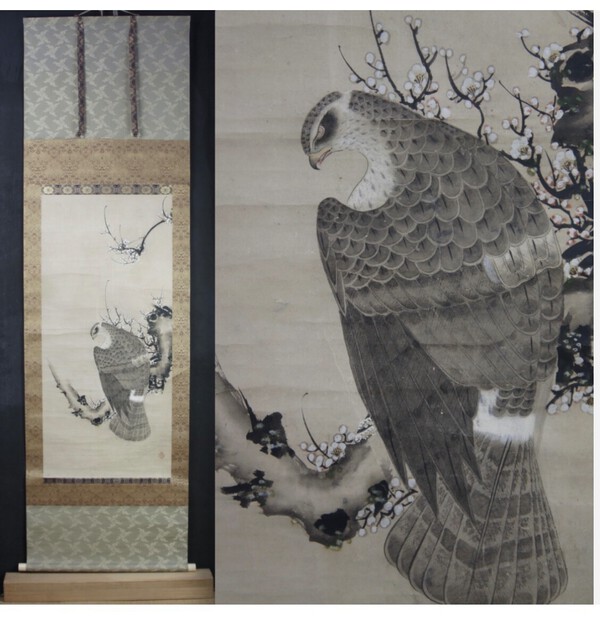
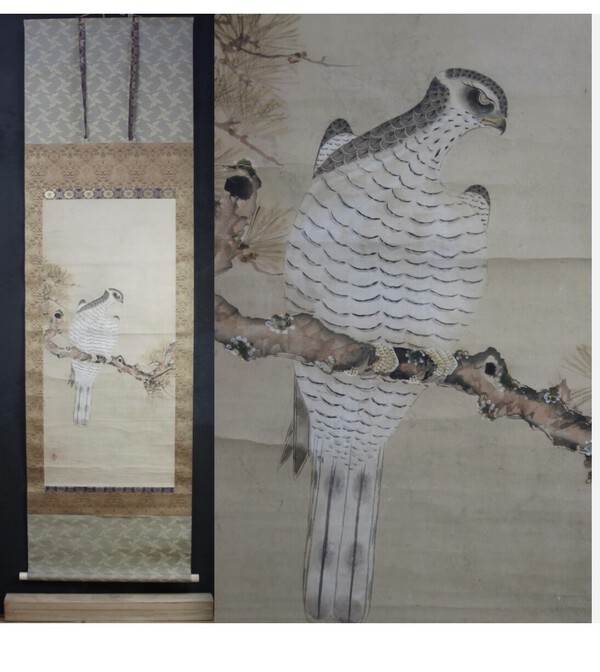
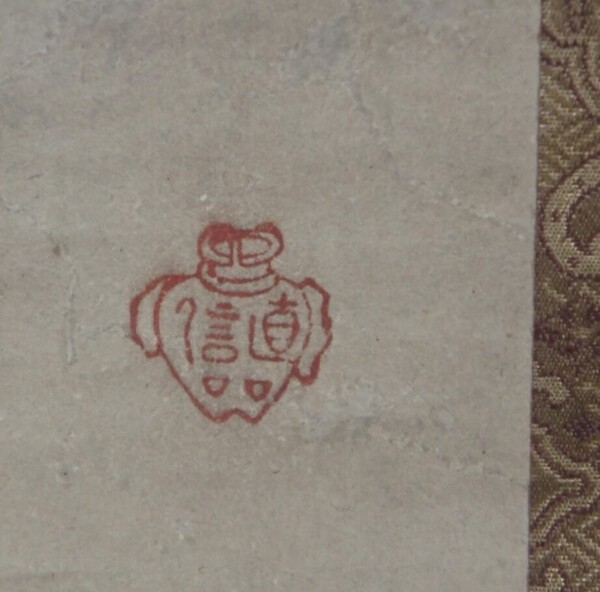
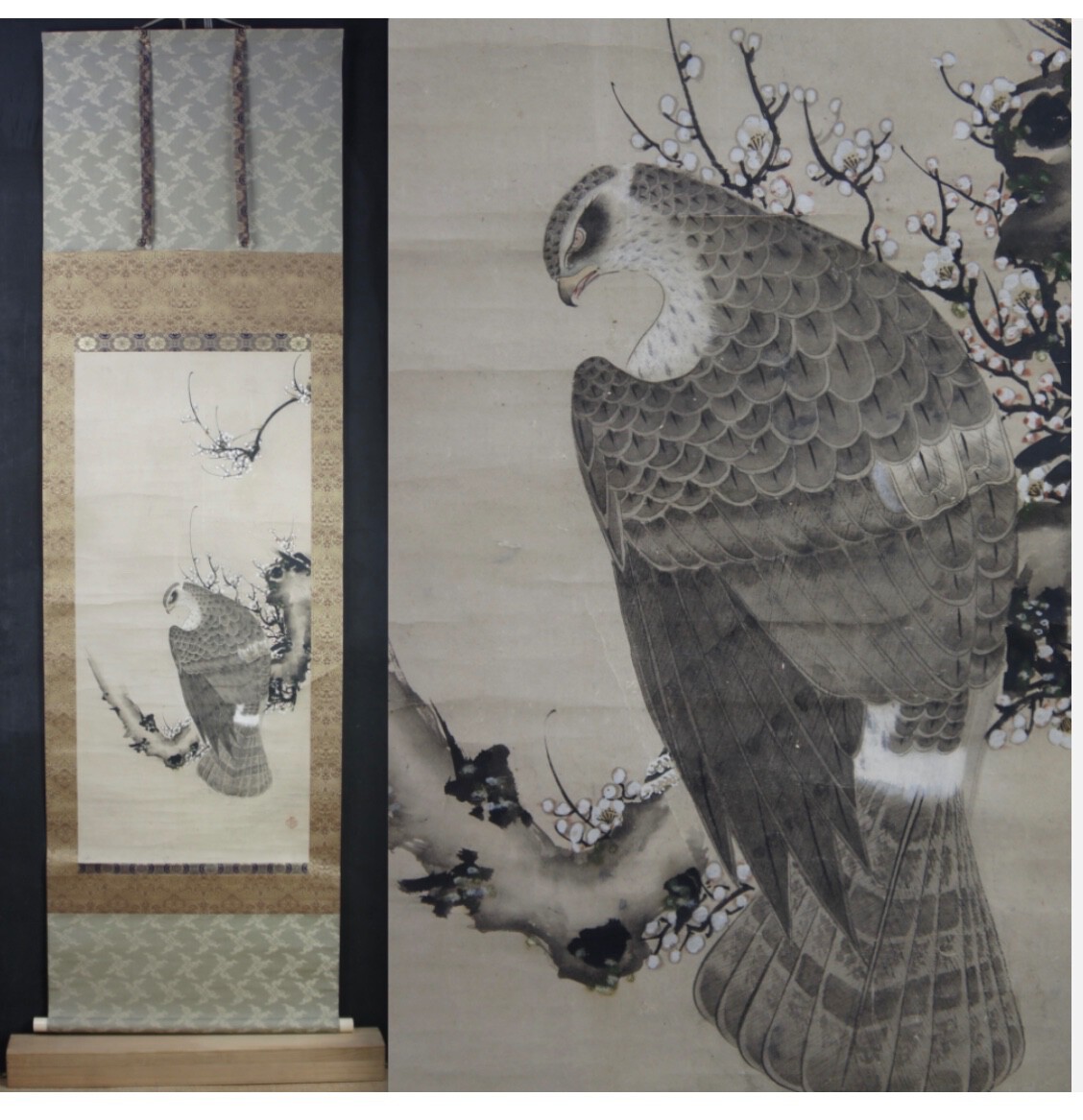
One of my favourite subjects in Japanese Art is the depiction of hawks, falcons and other birds of prey. I recently acquired this pair of large scrolls (from Japan). They appear to carry the seal of Kano Naonobu (1519-1592ish). They are said to be two paintings from a now lost Kano hawk byobu screen that were remounted as scrolls in 1914. Do we have any Kano knowledge on our Forum? Does that provenance seem possible? Certainly the paintings are older than the scroll mountings and they look “right” to me but really, I bought them because I absolutely love them. Any opinions anyone? Many thanks.
 1 point
 -
This interesting Gassan Sadakazu katana came up on Yahoo Japan, with recent NBTHK origami. It's a pity that Jauce won't ship to the US at the moment, and the sword went for a song. https://www.jauce.com/auction/w1222339892?allow=1 https://auctions.yahoo.co.jp/jp/auction/w1222339892?1 point
-
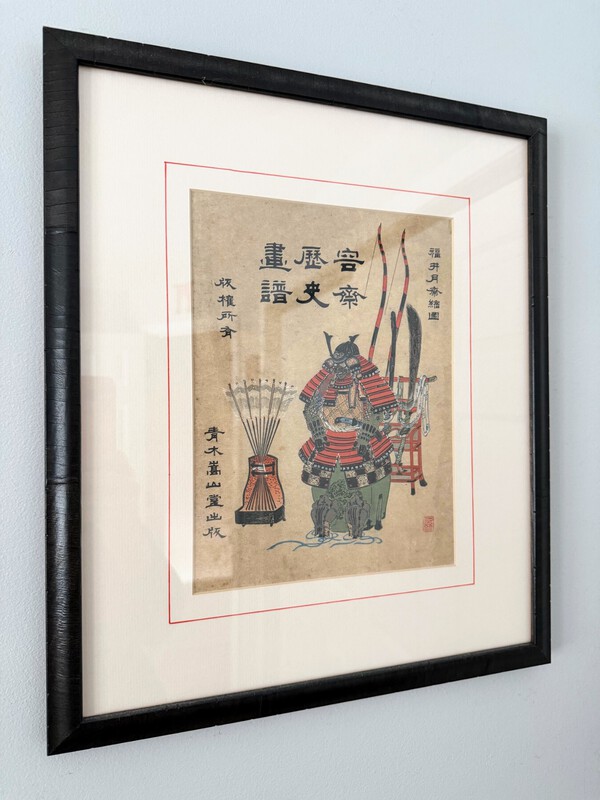
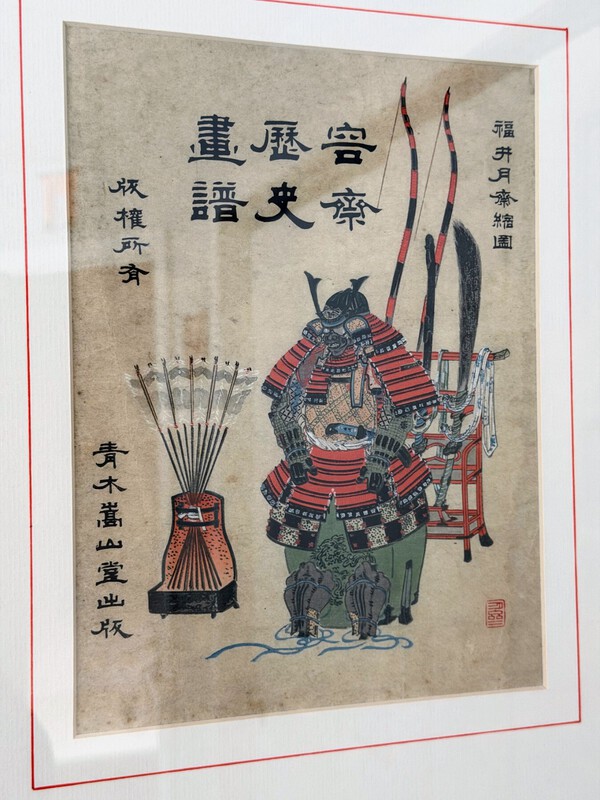
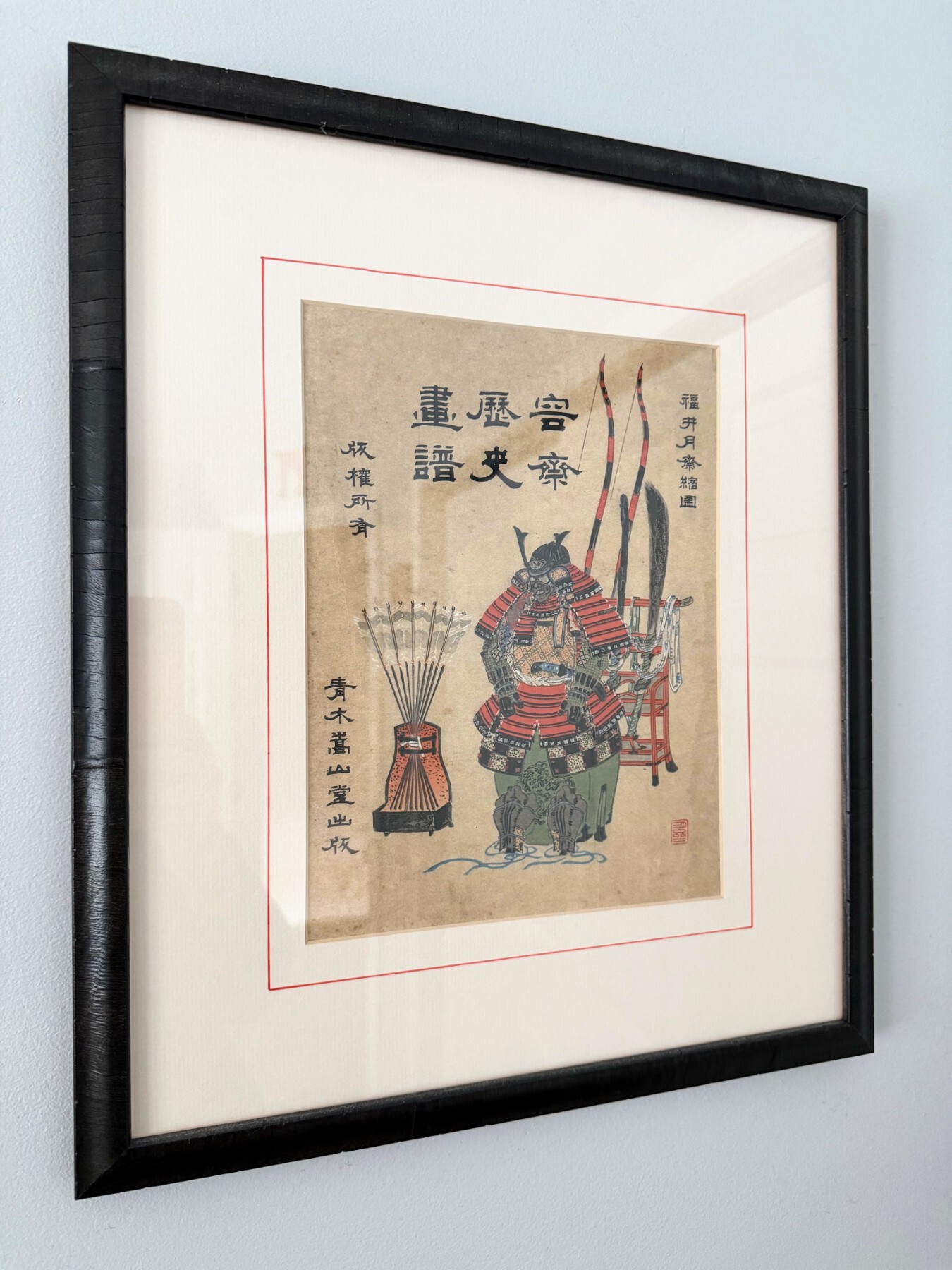
Good afternoon NMB, On offer today is beautiful woodblock print that harkens back to the glory days of the bushi. This particular piece is the cover to a collection of prints by the artist Kikuchi Yosai, a prominent late Edo/Meiji painter and printmaker and was published in 1894 by Aoki Suzando. The Image is classic - an early period armor set belonging to Minamoto no Tametomo (1139-1170), complete with longbows, arrows and a tachi complete with the instantly recognizable bear fur saya. The print itself is in phenomenal condition and presents with a fabulous patina. The paper has mellowed beautifully, yet the images retain sharp color and are blemish free. A heartfelt tribute to the warrior class, printed shortly after its downfall. This was professionally framed by my local shop, who does immaculate work and gets all of my pieces. The frame is very high quality, dark brown solid wood with a subtle texture to compliment the strength and age of the print. I believe the material is walnut but not 100% sure. Finished off with a French mat style accent line that I chose to accentuate the iconic Japanese red orange featured in the artwork. The size of the frame is 15 by 18 inches. Asking $350 shipped within the USA, which is about what it cost to frame. International buyers please contact me for a quote. Payment via PayPal friends and family is strong preferred but will accept Venmo if necessary. Thanks for looking!
 1 point
 -
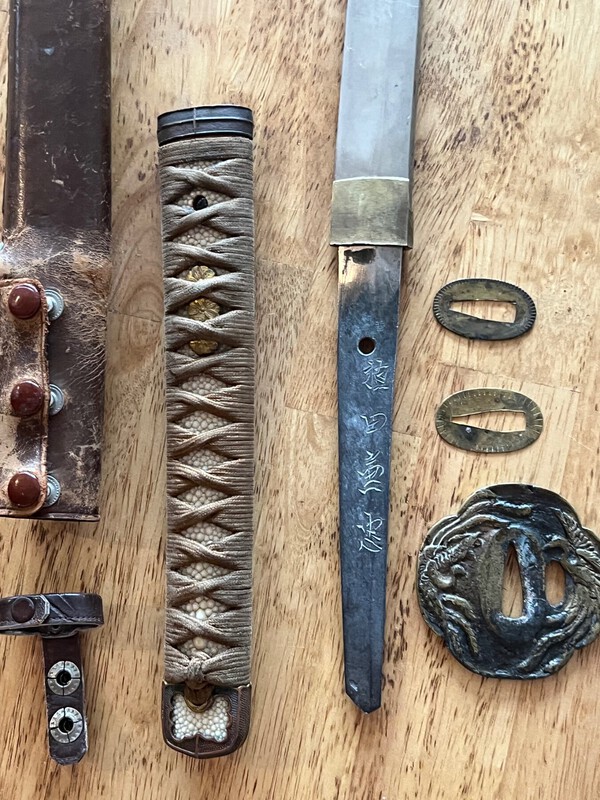
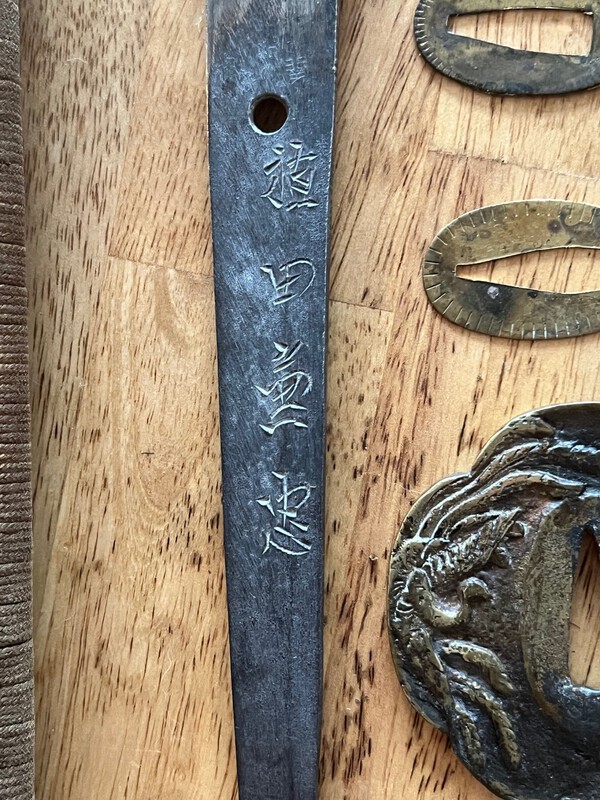
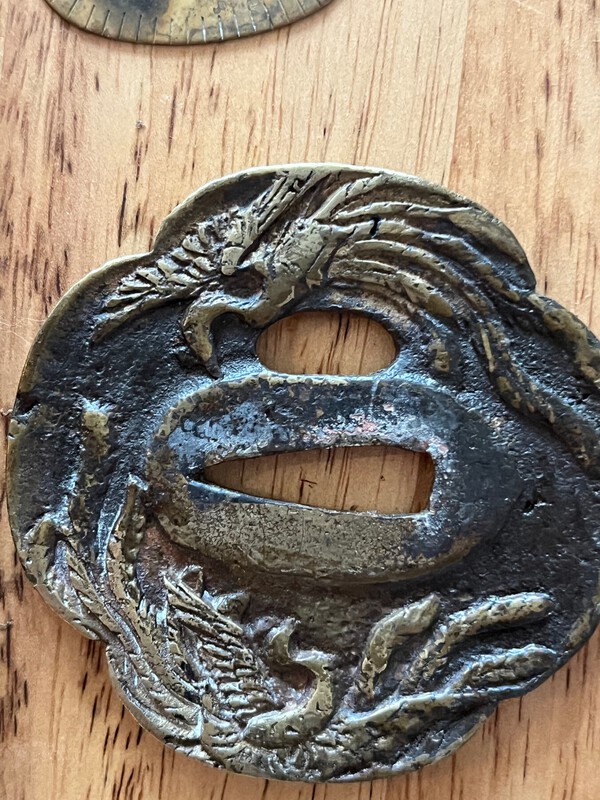
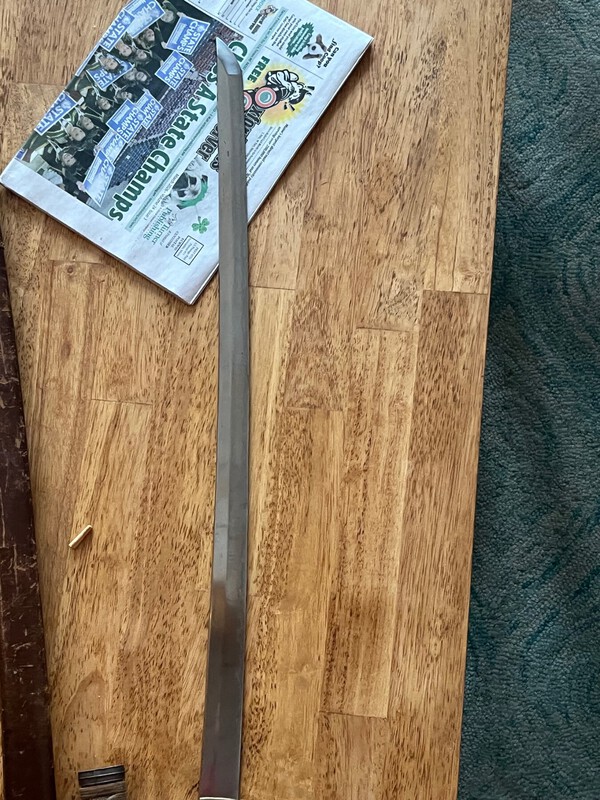
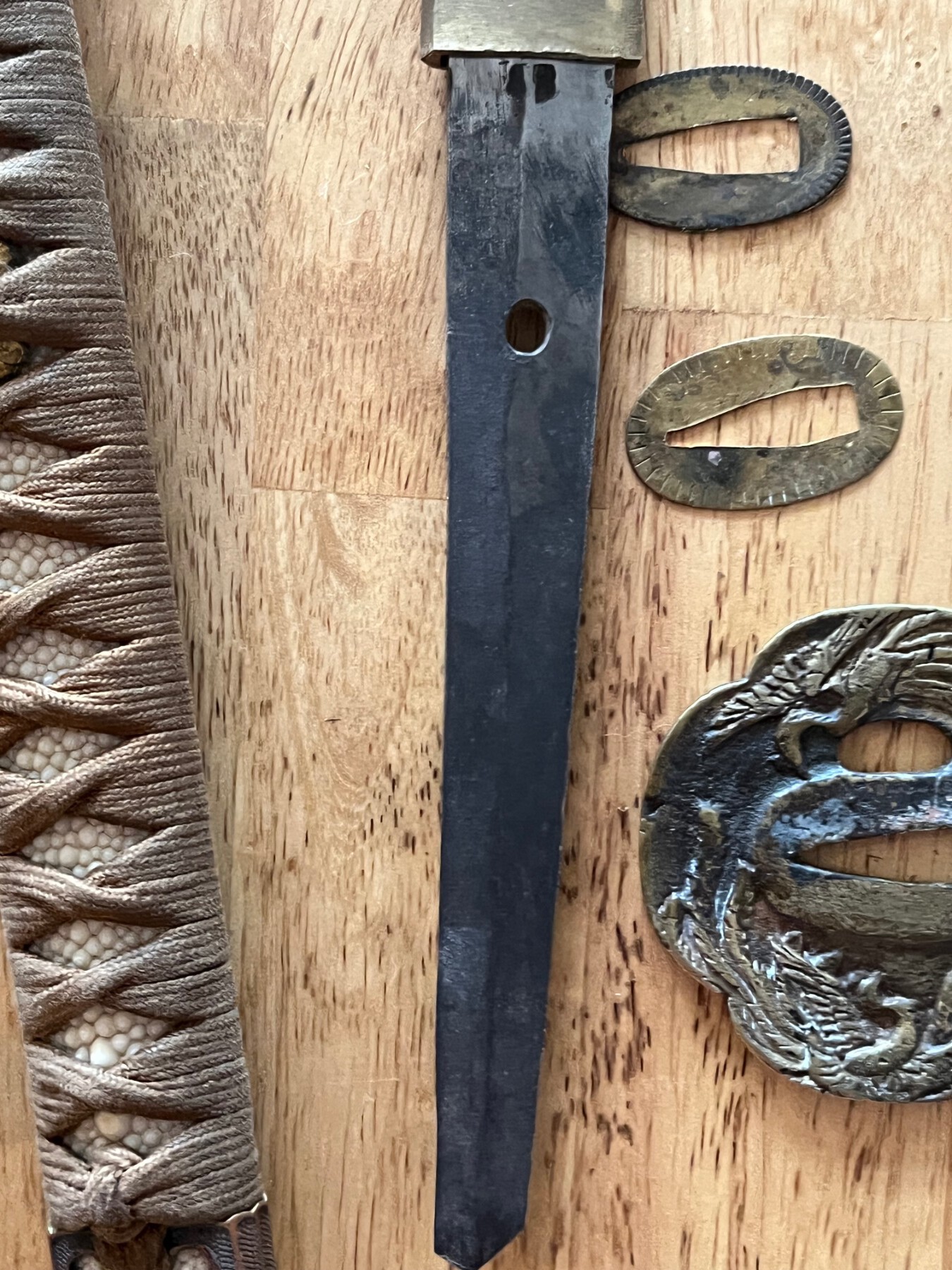
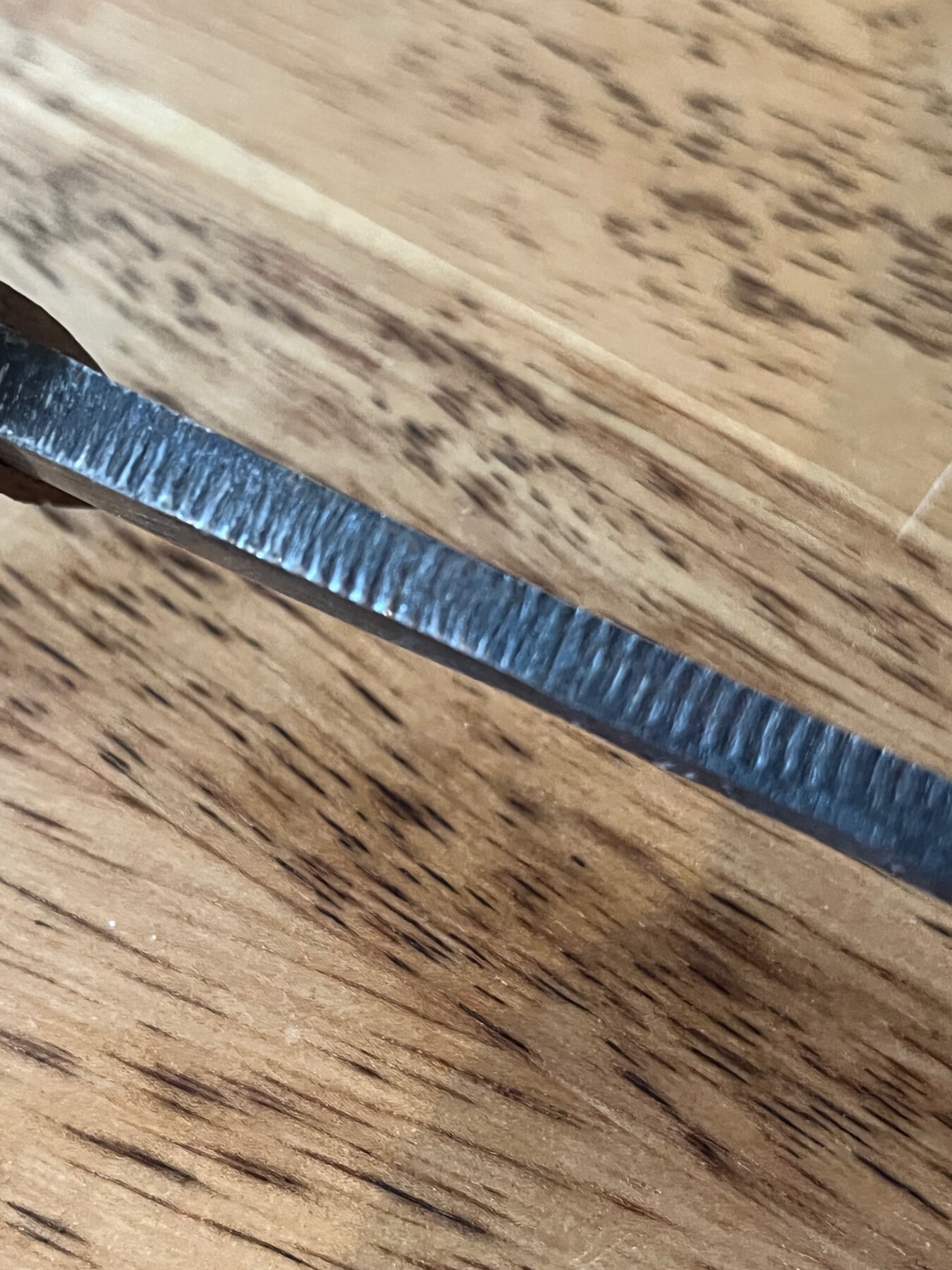
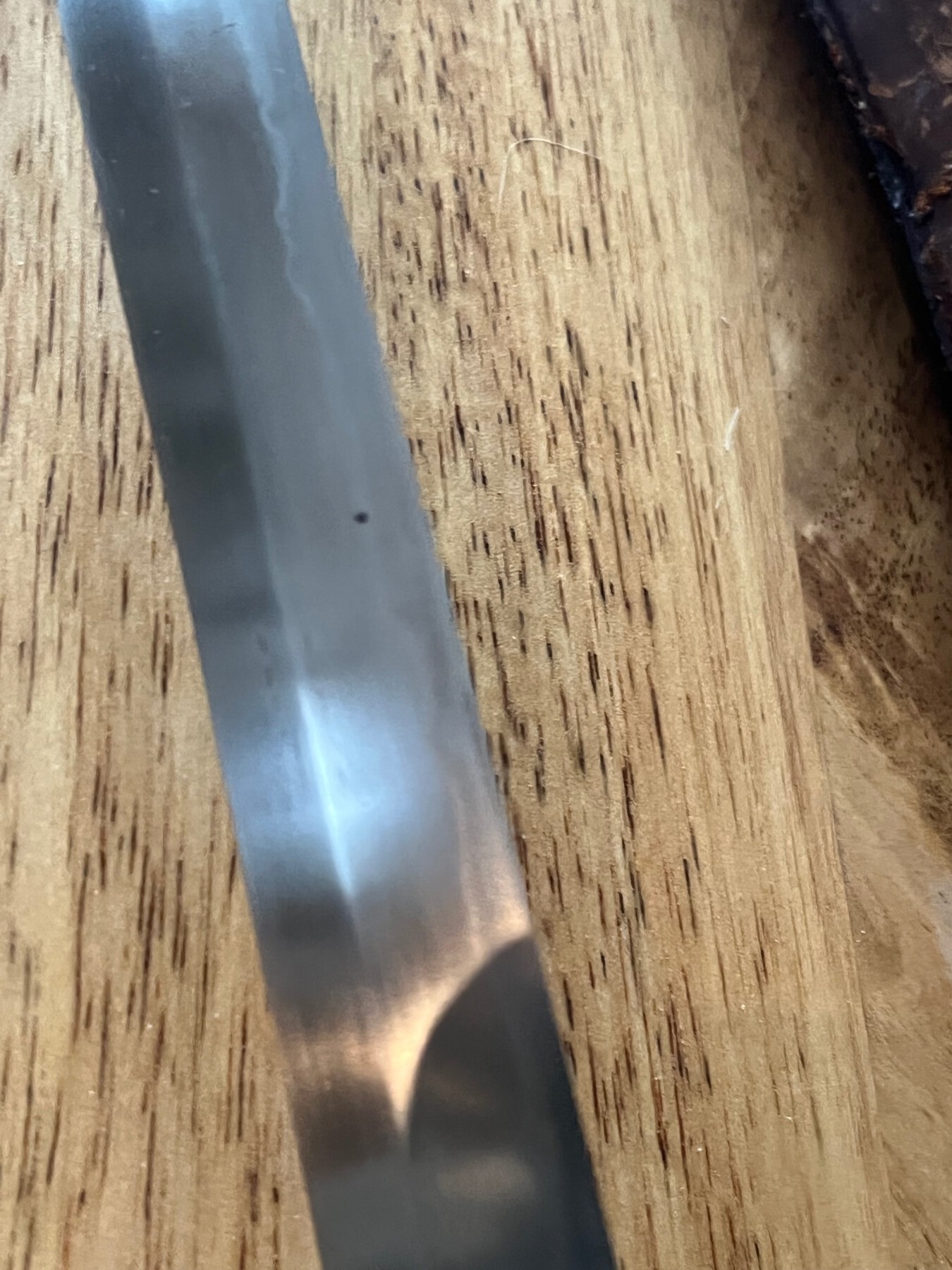
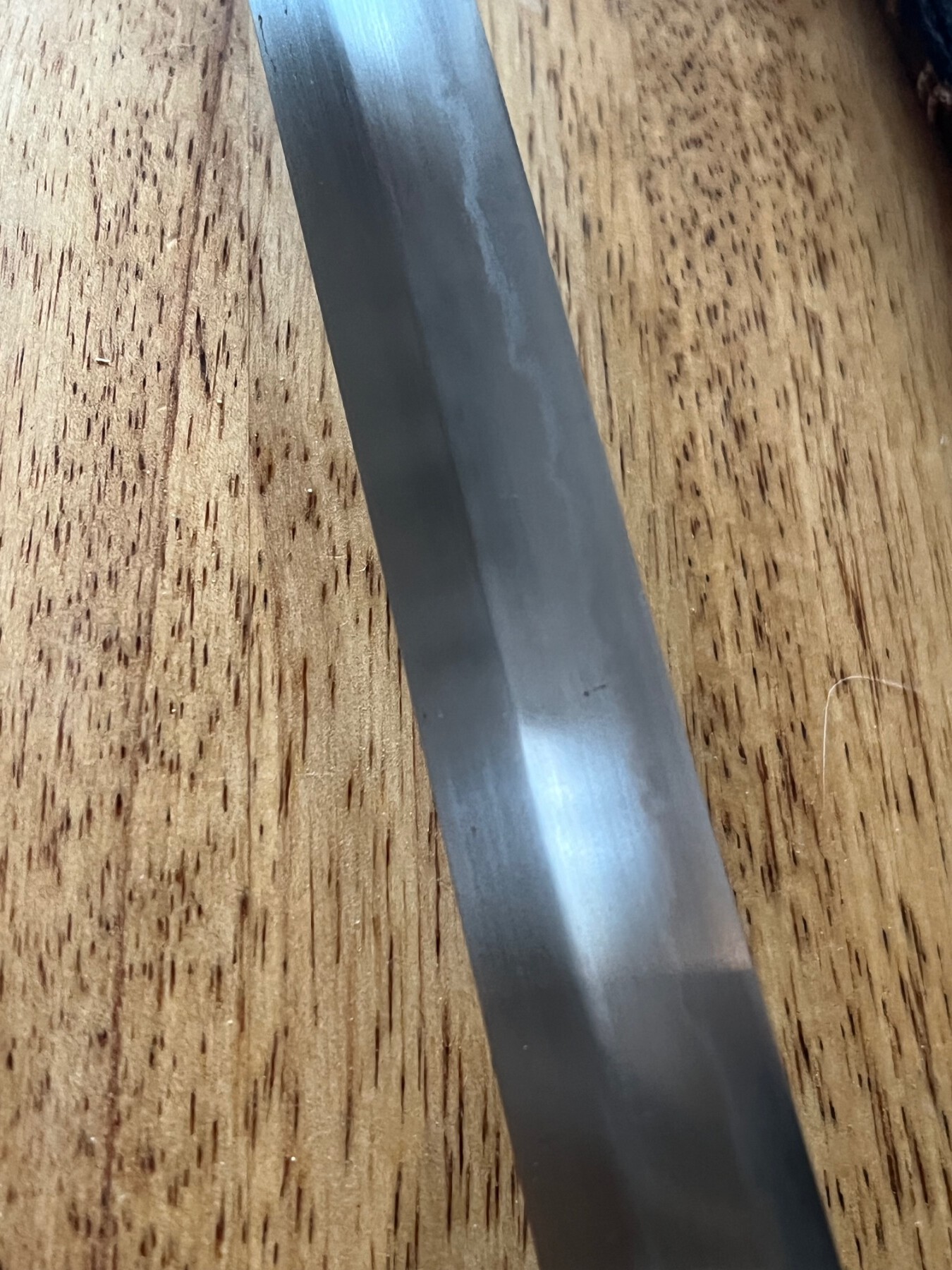
Hey guys! Thanks in advance for your help! I bought this from a guy who walked in with it at a gun show. He had it since the 80's and knew little about it. Any thoughts or opinions on this katana?



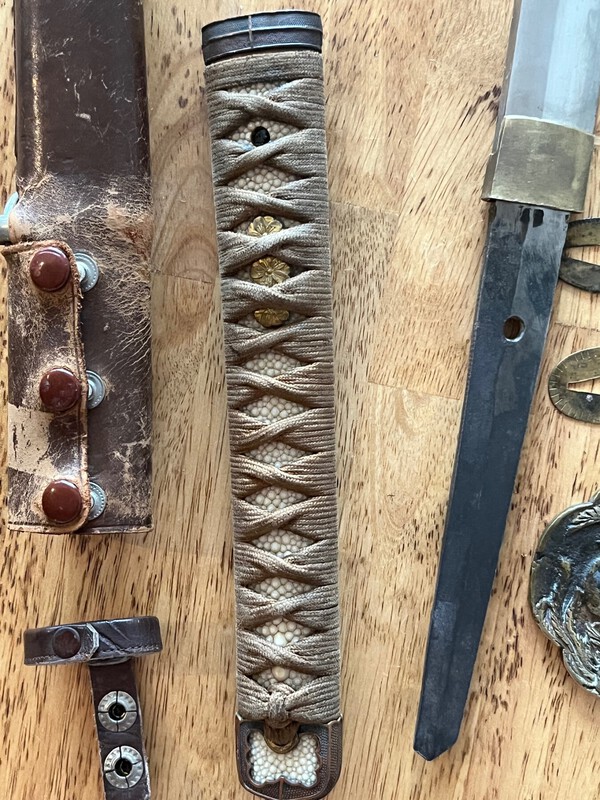
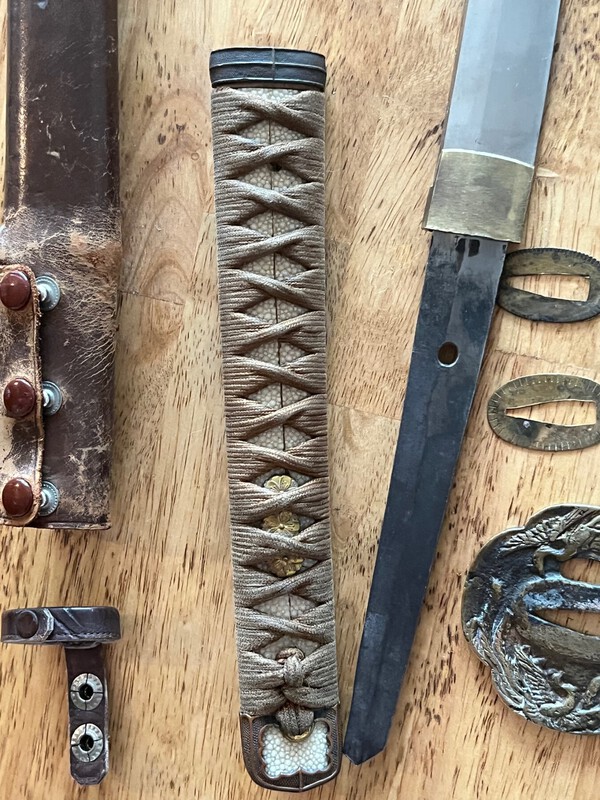
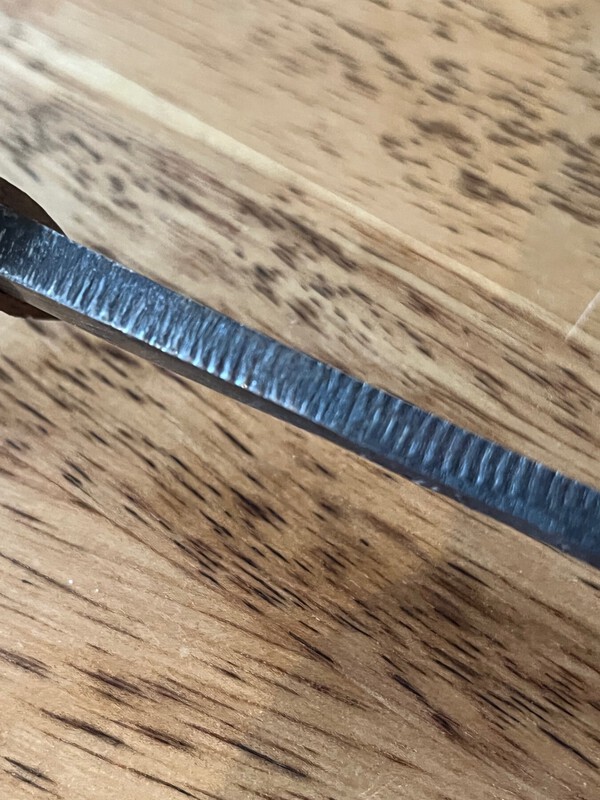
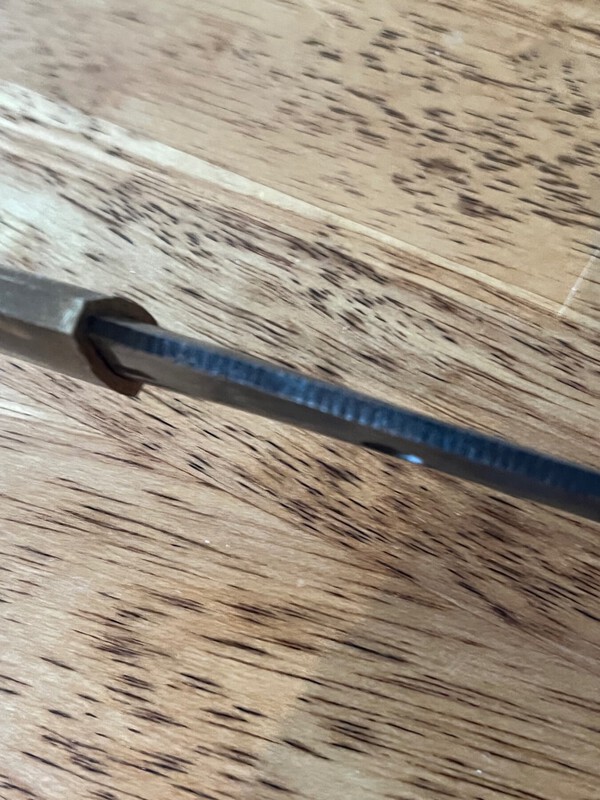

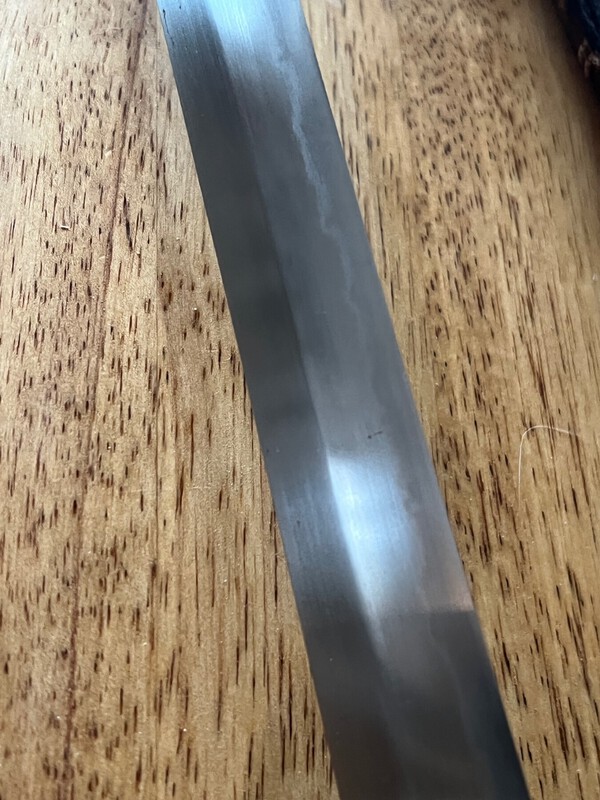

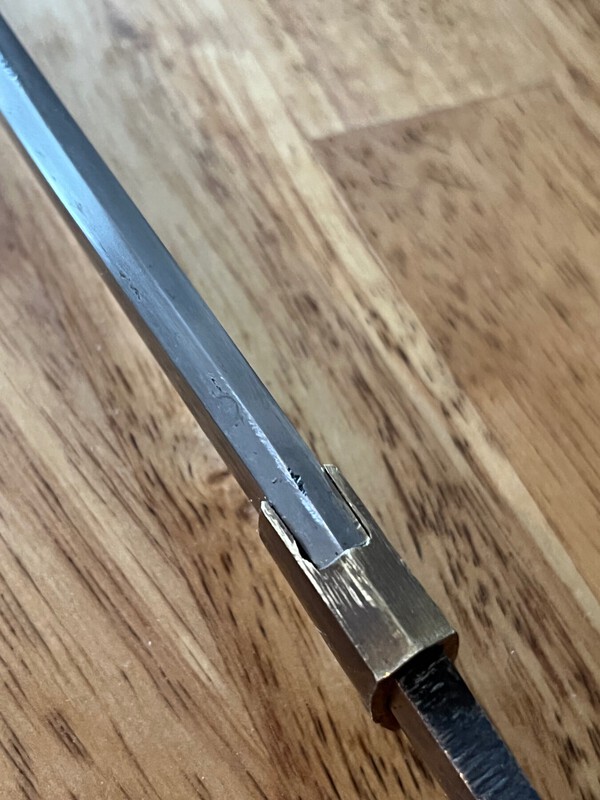 1 point
 -
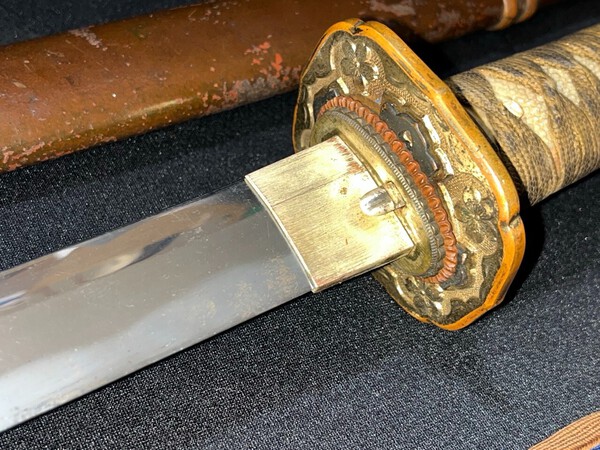
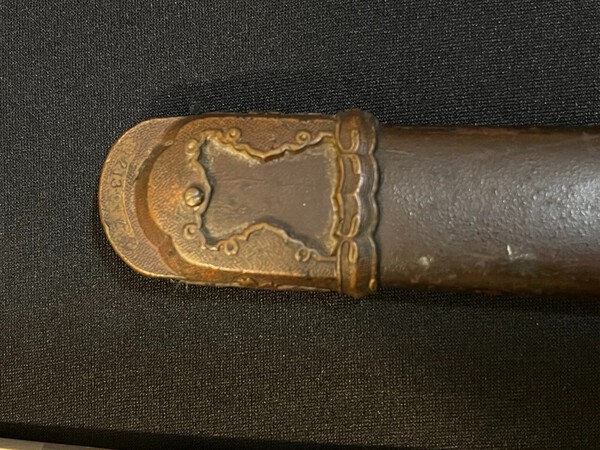
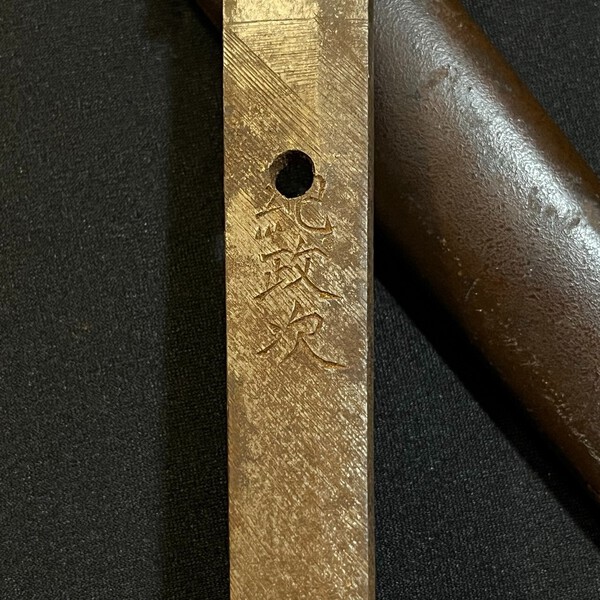
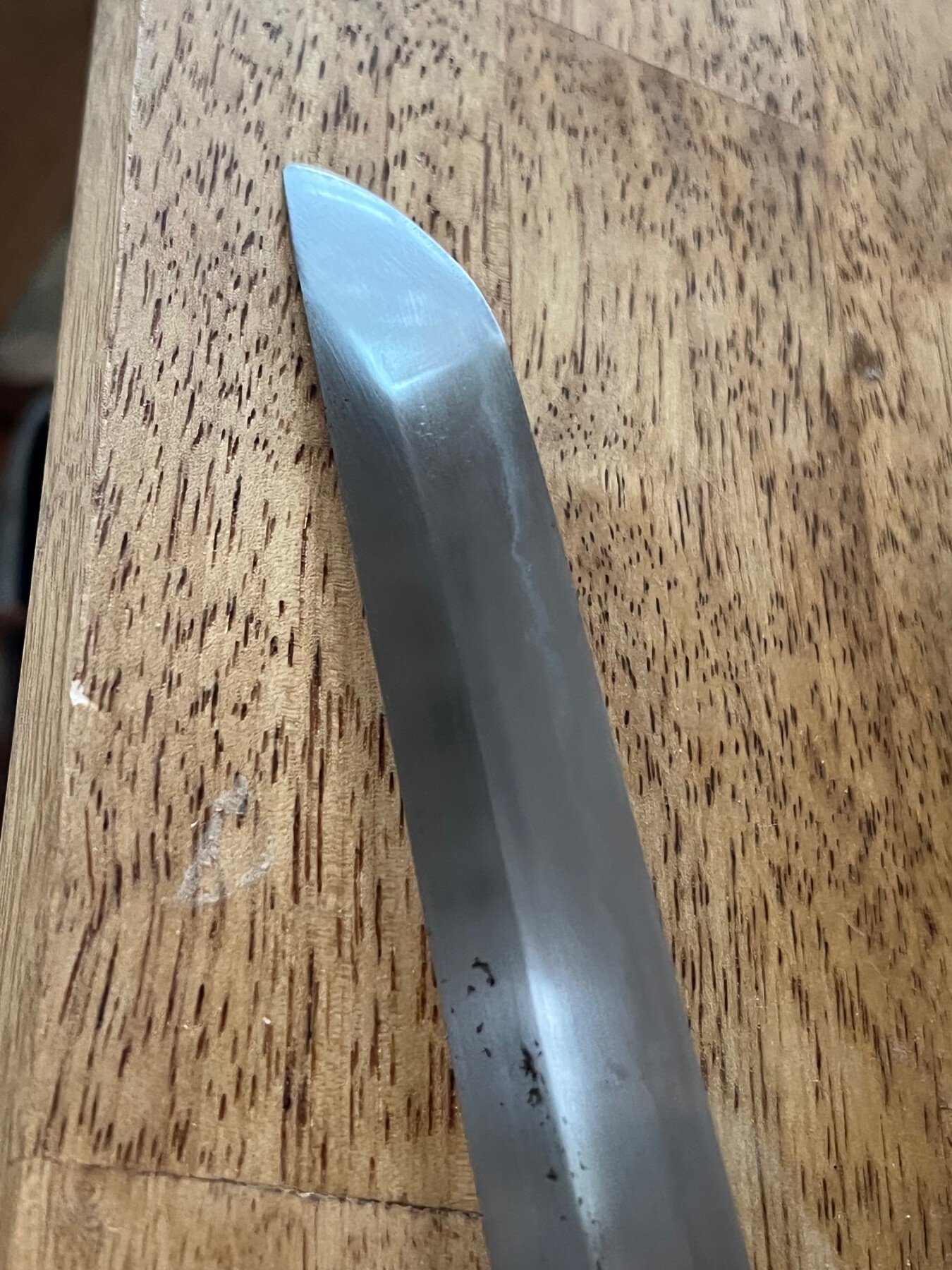
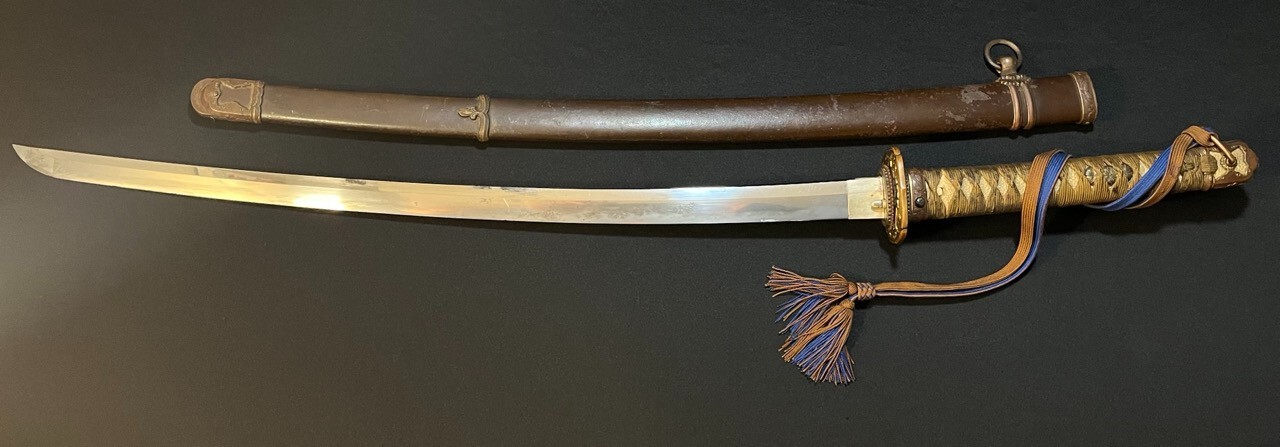
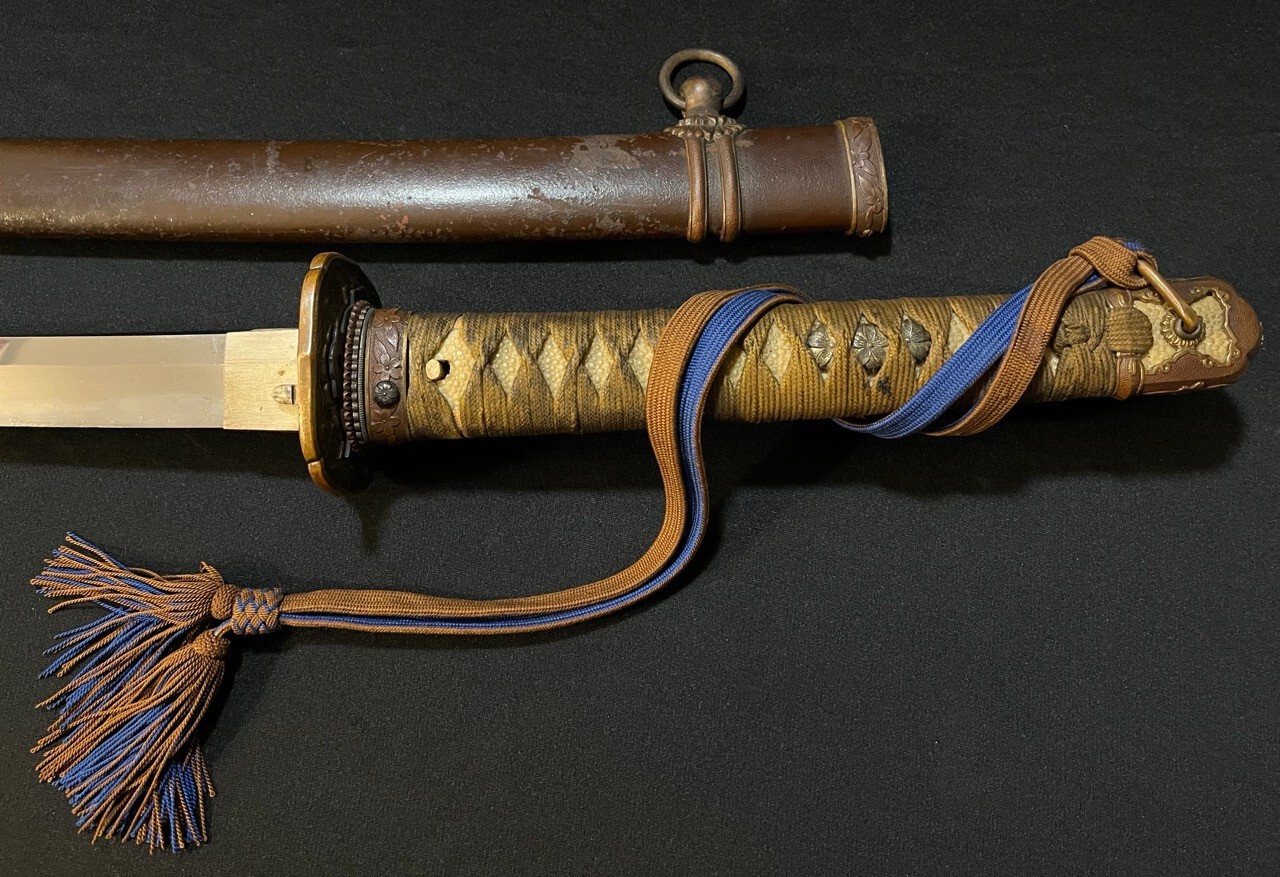
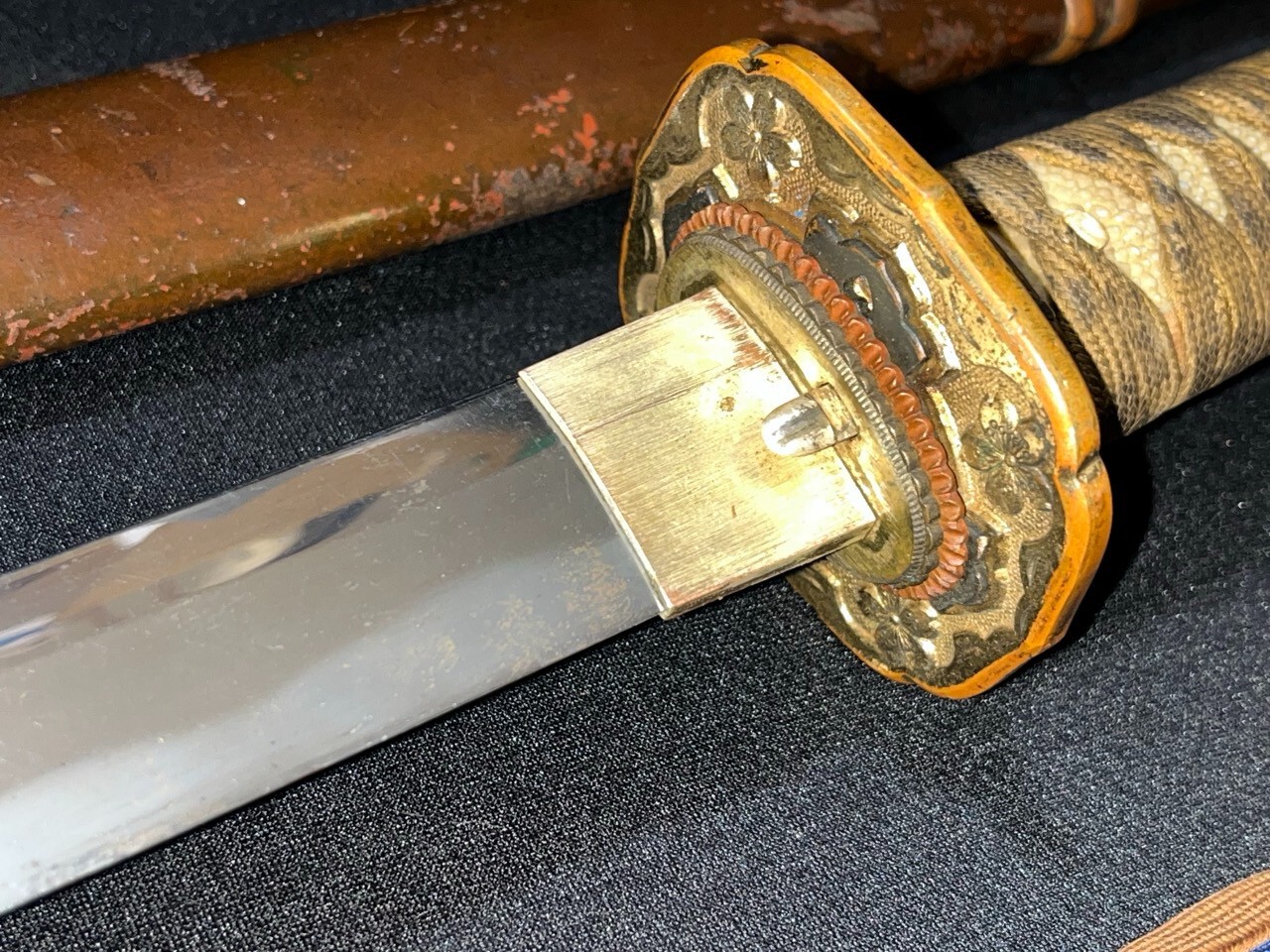
A Japanese WWII gendaito sword by Ki Masatsugu is available. Notably, Ki Masatsugu was given the special rank of Jyungenro, second only to Genro, in the 1943 list, the Gendai Tosho Ninki Banzuke. Published by the Nihon Token Tanrenjo (NTT) and the Nihon Token Shinbunshi (NTS), the Gendai Tosho Ninki Banzuke served to rank what were then modern or gendai swordsmiths. He is also given the rank of Jo-jo saku, superior-superior made, on the Fujishiro Ranking System, a rank that is only secondary to Sai-jo Saku. The late Fujishiro Matsuo san was a Living National Treasure polisher and author of the Nihon Toko Jiten. Therefore, this World War II Japanese sword represents an important acquisition for any serious collection. The tang bears the signature “Ki Masatsugu”. Additionally, Masatsugu crafted this blade as a traditionally made, water-tempered gendai sword. As expected for a traditionally forged blade, it carries no Showa or arsenal stamp. The blade measures 24 5/32″ (61.3 cm) from the tip to the bottom of the notch in the habaki. The Army mounts are exceptional. The saya has the hard to find extended prototype drag fitting with kanji. In addition, the tsuba is the only infrequently found special thin variation. The original Company grade (Lieutenant) blue/brown Officer tassel is still attached to the sarute. CONDITION The rare mounts on this Japanese WWII Gendaito sword are in exceptional condition. The blade has staining from past oxidation. This blade would polish beautifully if desired. There are a couple of minor nail nicks in the blade edge, and the blade remains perfectly straight. The hamon (temper line) and boshi are healthy and well defined. Additional photos available by using the link below. $2900 plus postage --Matthew Brice https://stcroixblades.com/product/Japanese-wwii-gendaito-sword-ww2-army-samurai-gunto/
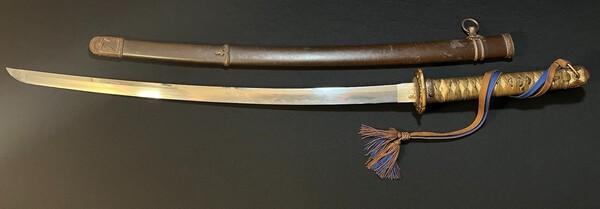
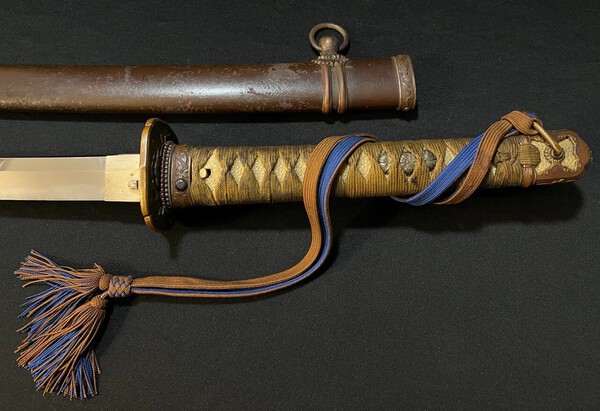


 1 point
 -
Thank's a lot Thomas exciting museum in Berlin, always worth to visit1 point
-
Blimey, that image brought back long buried memories. We had these on the farm where I was born. As a kid I used them to cut hazel spears and arrows in the wood. I think their intended function was to trim sugar beet and mangolds when harvesting was largely by hand. Gentler days.1 point
-
Hello all, two weeks ago I posted two pics of the nakago of a sword I was buying. Moriyama-san was able to translate the very interesting inscription for me. The sword arrived today! There are four horimono on the blade. I initially thought that they might be Bonji, but now I believe they are Kanji. One of them appears to be "Shu", "to protect" not sure what the others are. Any help would be appreciated, Thanks in advance, Tom

 1 point
 -
Thanks, John and Steve; I knew there were some carvings on the blade when I bought it but didn't realize that they were kanji until the blade arrived, and I got a clear look at them. Since this was a gift from an elder statesman to a young 2nd lieutenant at the start of his military career, an apothegm like that would make perfect sense. Thanks again, Tom1 point
-
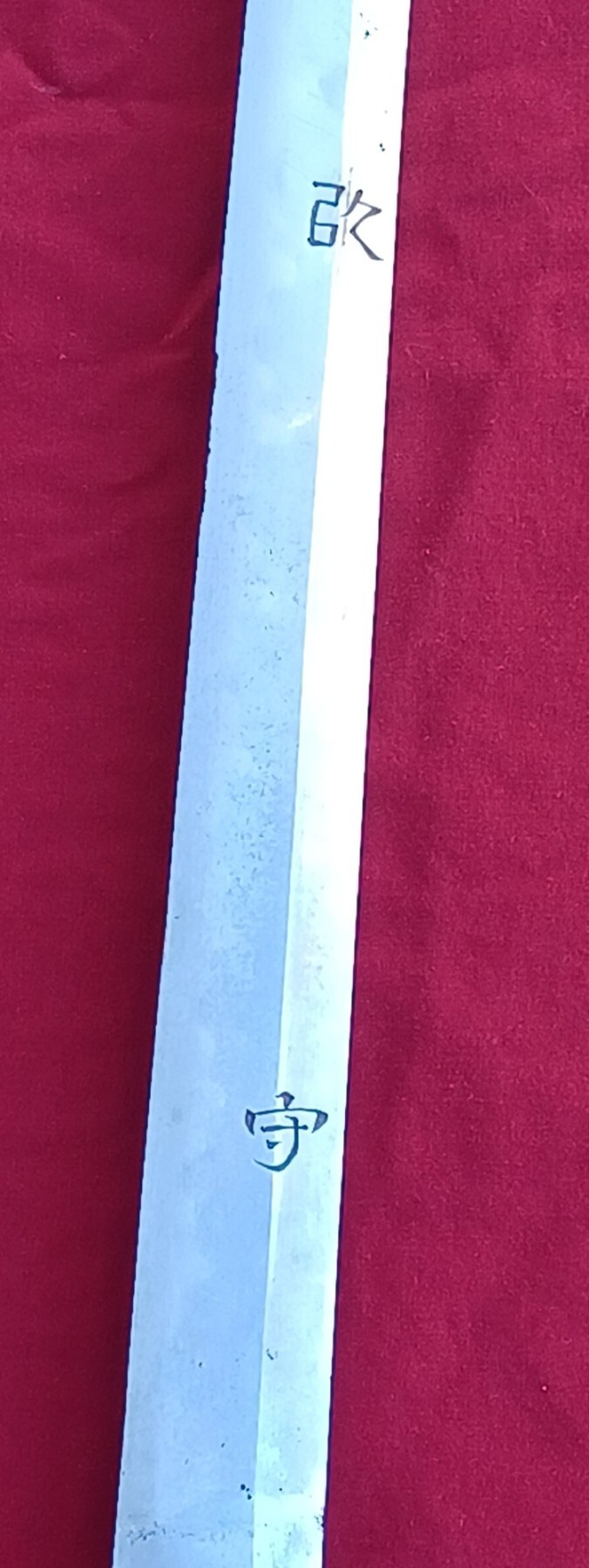
I think it is meant to be the 4-character idiom 以守為攻 (守りを以て、攻めと為す), which in colloquial English would be "the best offense is a good defense". It means secure your victory by shoring up your defense. But it looks like they've spelled it as 以守以攻, with a slight variance in the third character.1 point
-
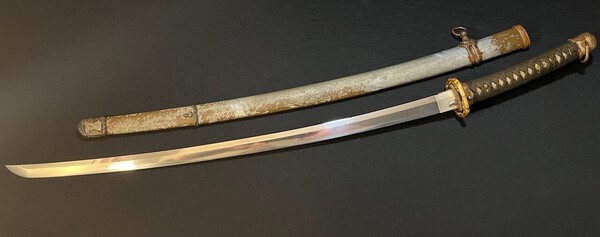
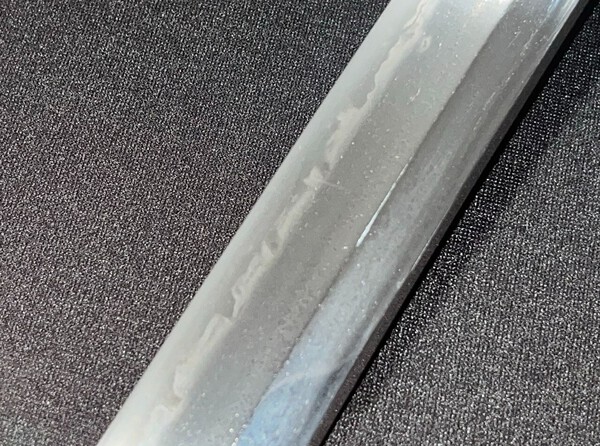
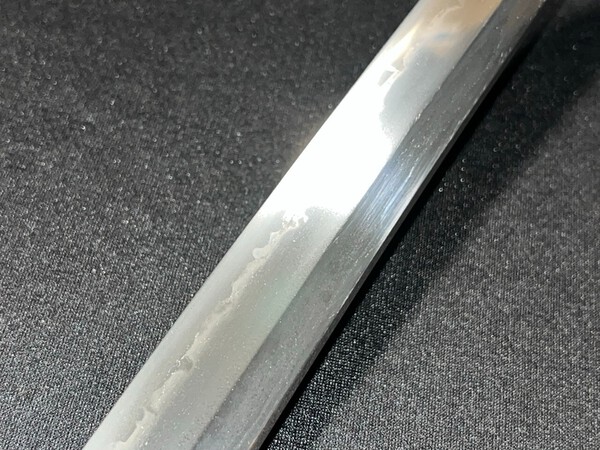
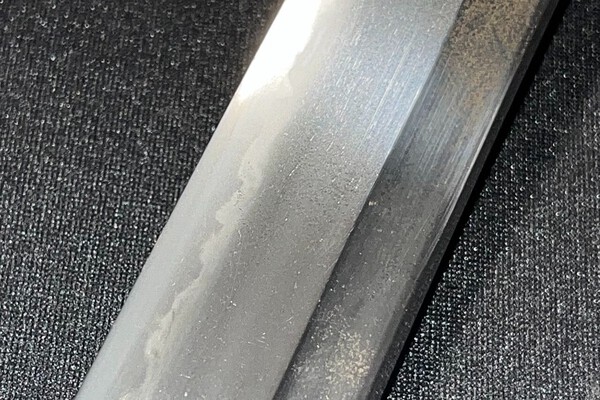
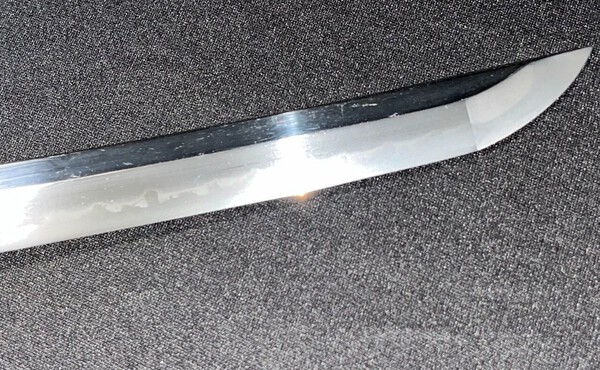
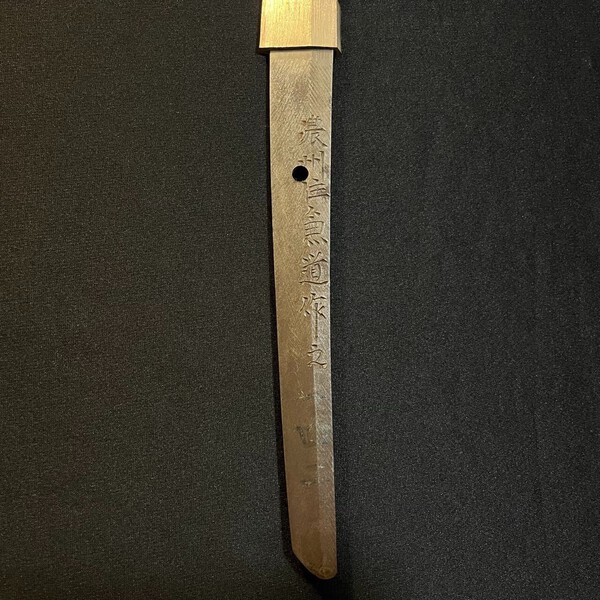
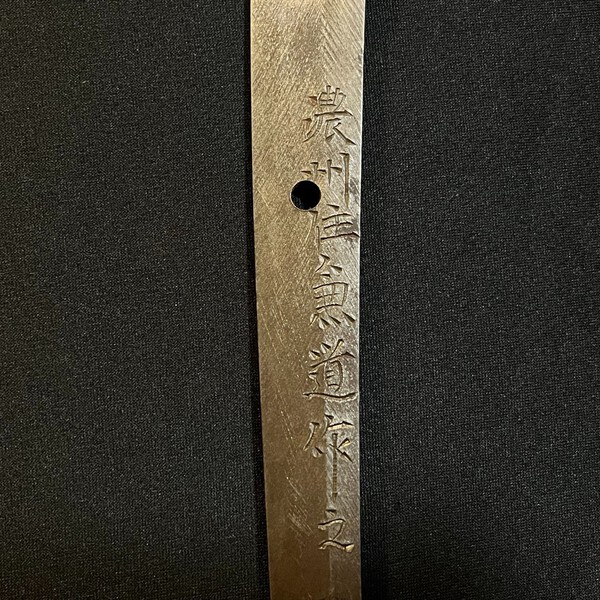
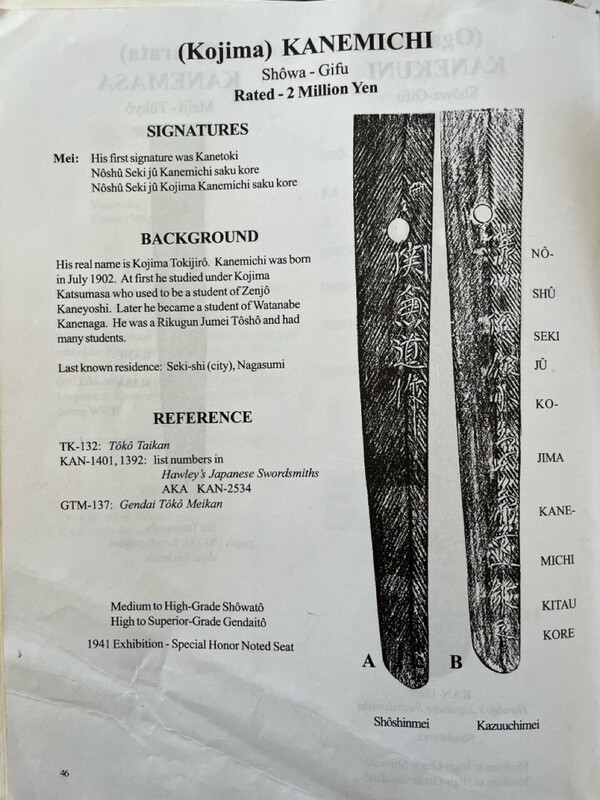
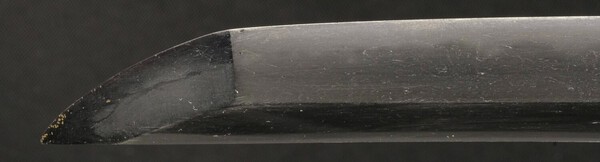
A Japanese WWII gendaito sword by Kojima Kanemichi is available. Notably, Kanemichi earned the title of Sword Forging Teacher, the highest rating, at the 1941 Sword Forging Exhibition. Therefore, this World War II Japanese sword represents an important acquisition for any serious collection. Importantly, this blade represents early work by Kanemichi. He forged the sword in May 1940, recorded as the 2600th year of the founding of the Japanese Empire. The tang bears the signature “Noshu ju Kanemichi saku kore.” Additionally, Kanemichi crafted this blade as a traditionally made, water-tempered gendai sword. As expected for a traditionally forged blade, it carries no Showa or arsenal stamp. Collectors and dealers will likely agree--about 85% of swords by Kanemichi encountered are showato, so to locate a gendaito is significant. The blade measures 26 3/4″ (68.0 cm) from the tip to the bottom of the notch in the habaki. Furthermore, the sword retains its Army shin-gunto mounts, which complement the blade well. At the 1941 Sword Exhibition, Kanemichi received the rank of Special Honor Noted Seat – Sword Forging Teacher. In addition, experts rank him as a 2 Million Yen smith. John Slough notes in his book: “His real name is Kojima Tokijiro. Kanemichi was born in July 1902. At first he studied under Kojima Katsumasa, who had previously studied with Zenjo Kaneyoshi. Later, he trained under Watanabe Kanenaga. He was a Rikugun Jumei Tosho and had many students.” CONDITION Overall, the blade remains in fine polish. It shows only a couple of fingerprints, which uchiko will likely remove. Moreover, the edge shows no nicks, and the blade remains perfectly straight. The hamon (temper line) and boshi are healthy and well defined. Finally, the sword saw service during the war for more than five years. As a result, the saya lacquer shows wear and is missing in several areas. Additional photos at the link below. $2900 plus postage --Matthew Brice https://stcroixblades.com/product/kanemichi-Japanese-wwii-sword-ww2-army-2-million-yen/




 1 point
 -
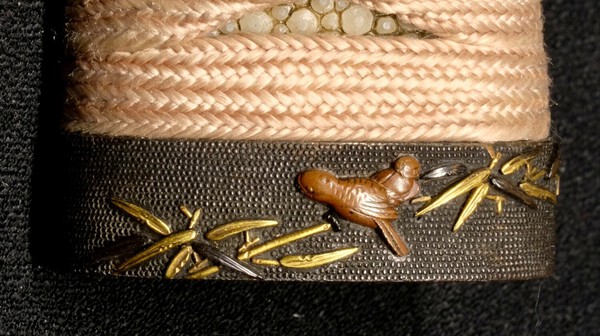
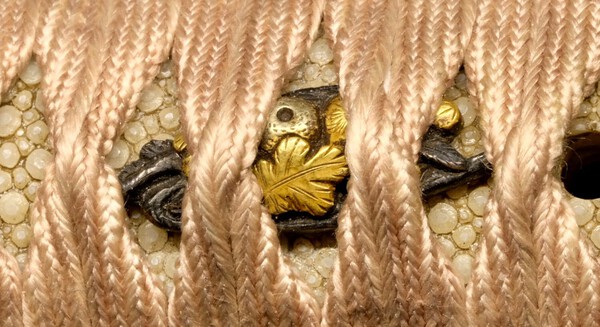
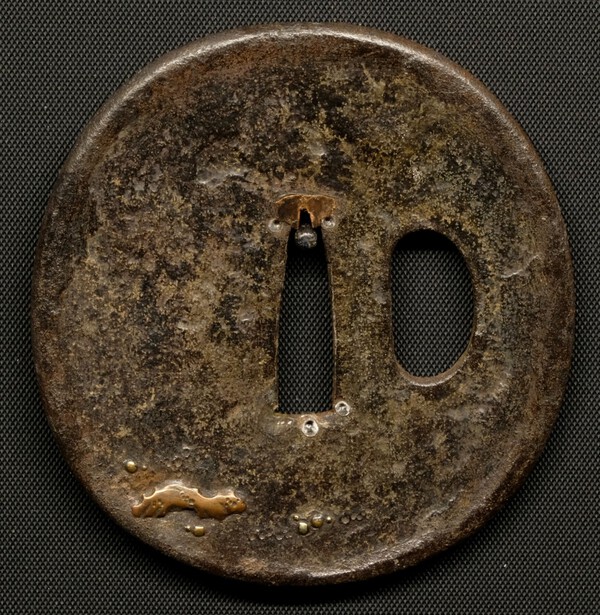
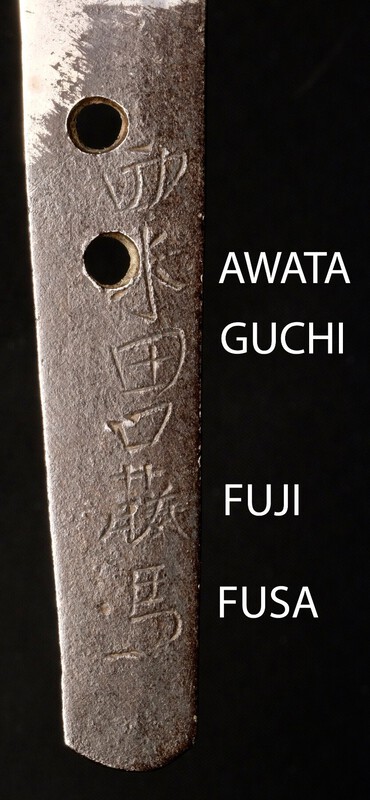
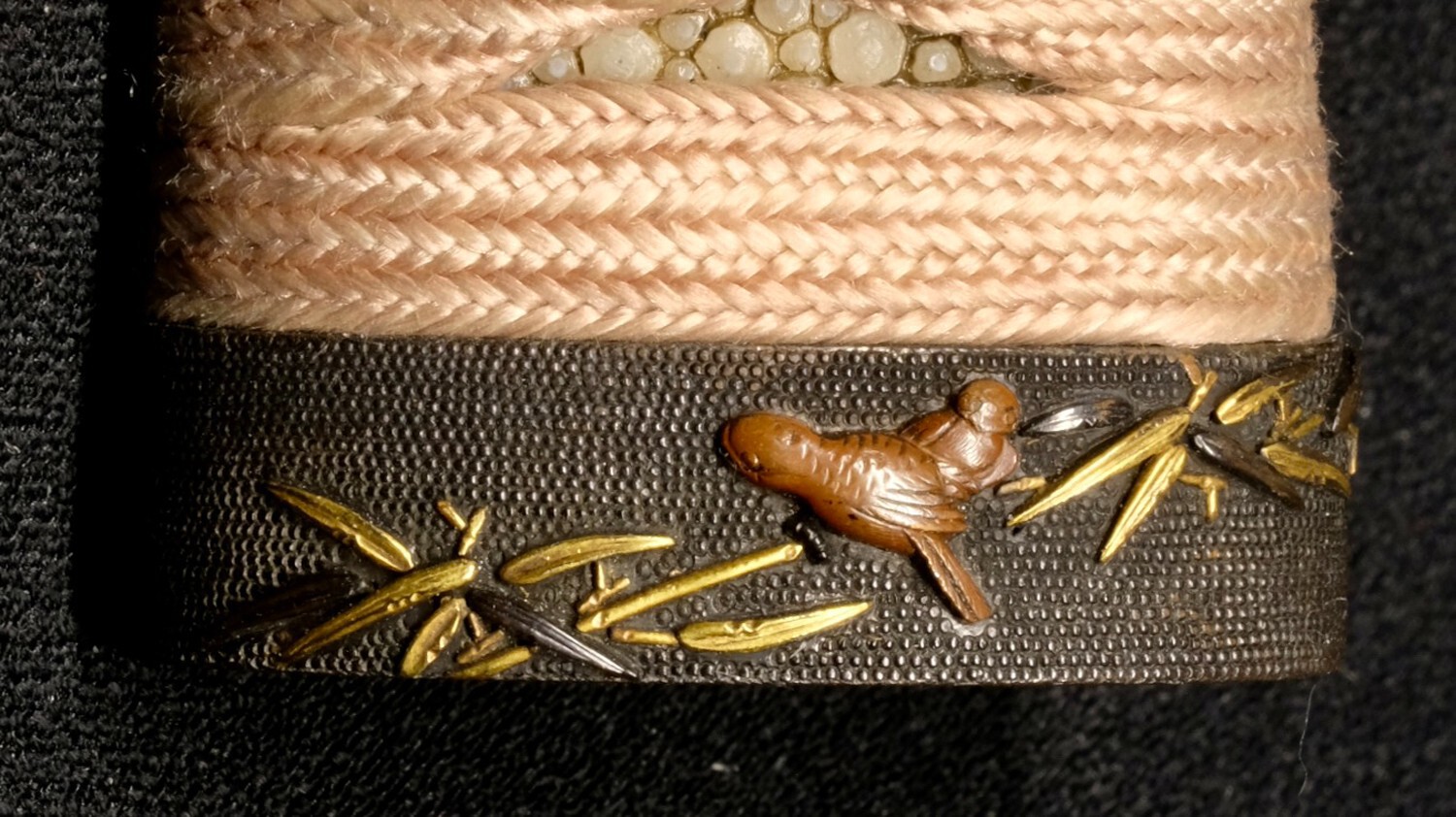
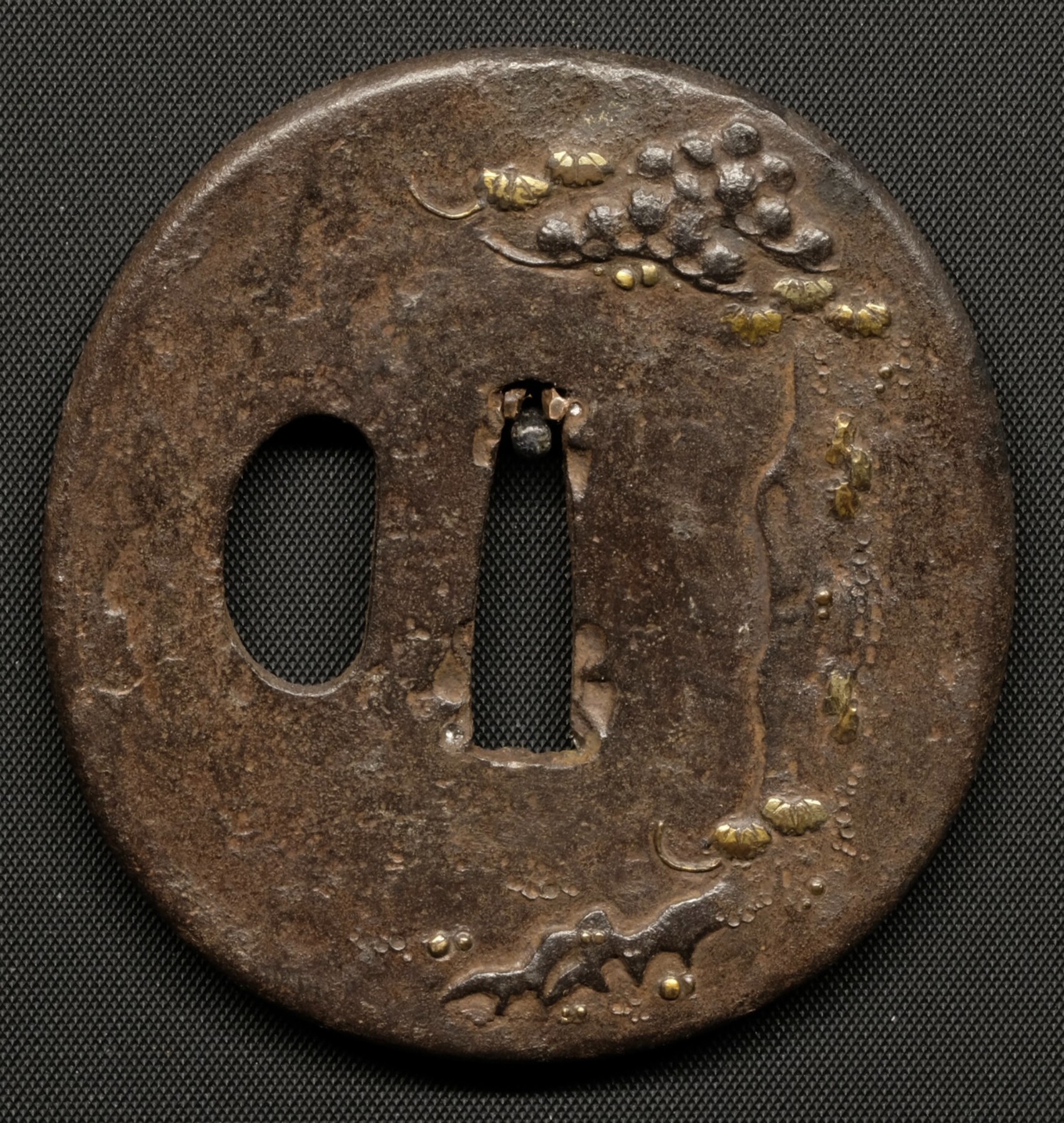
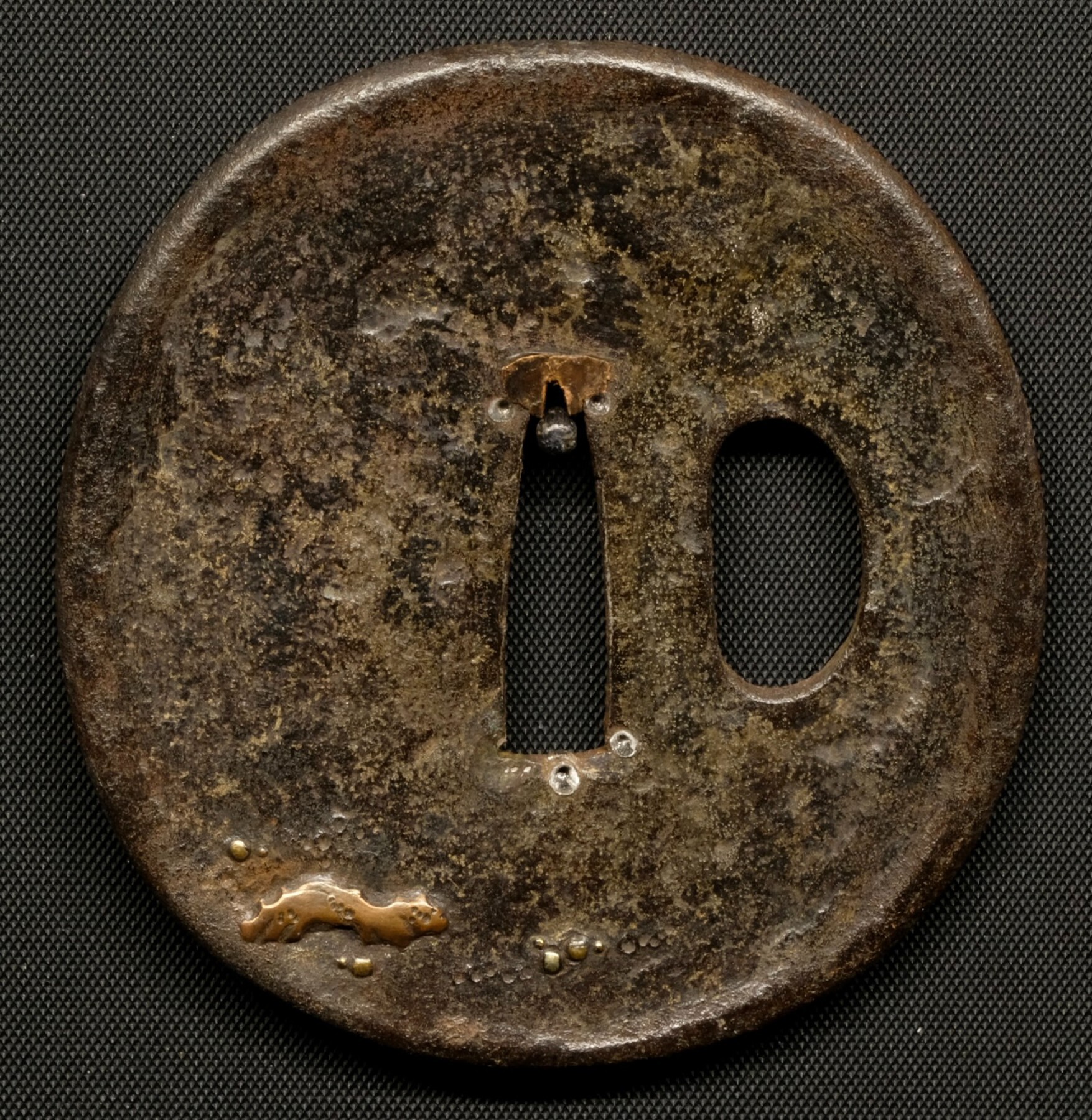
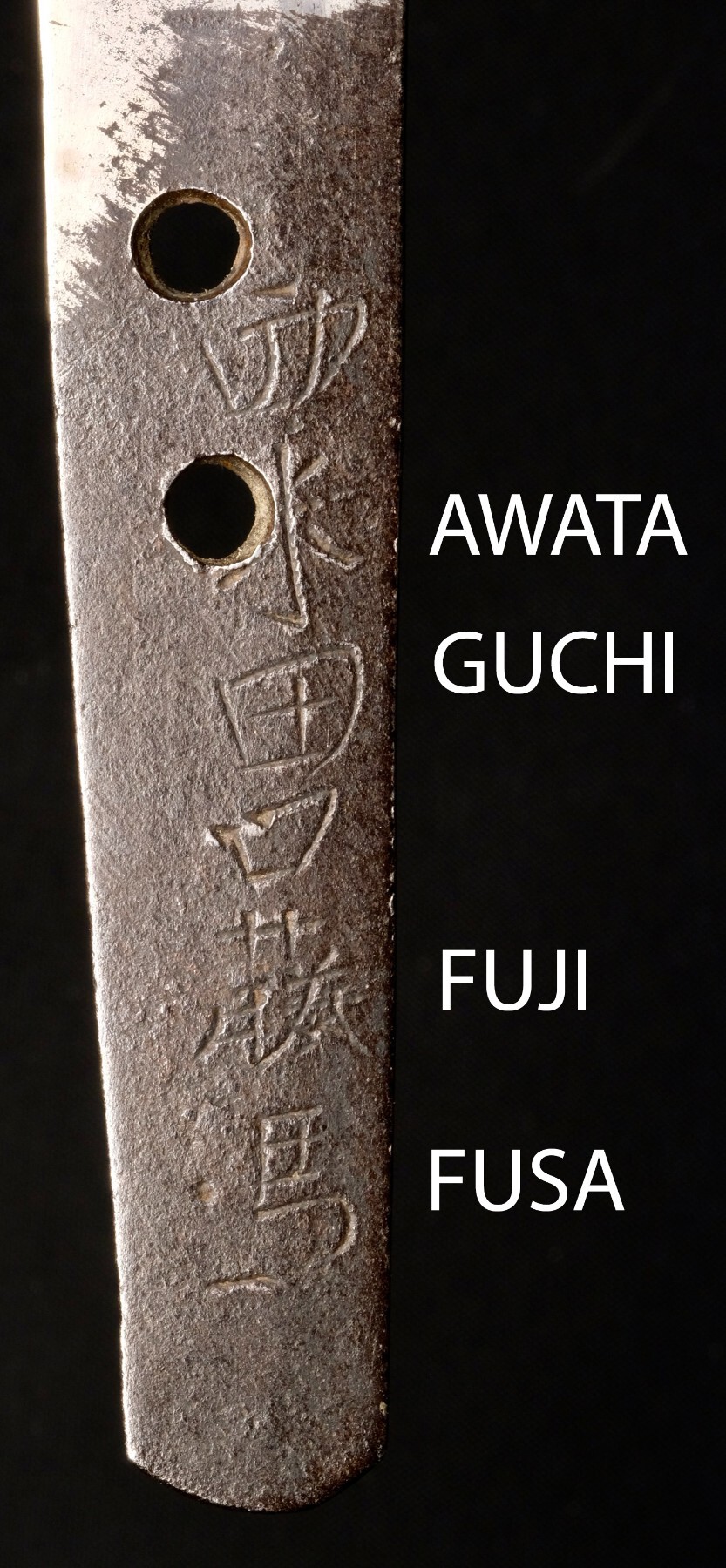
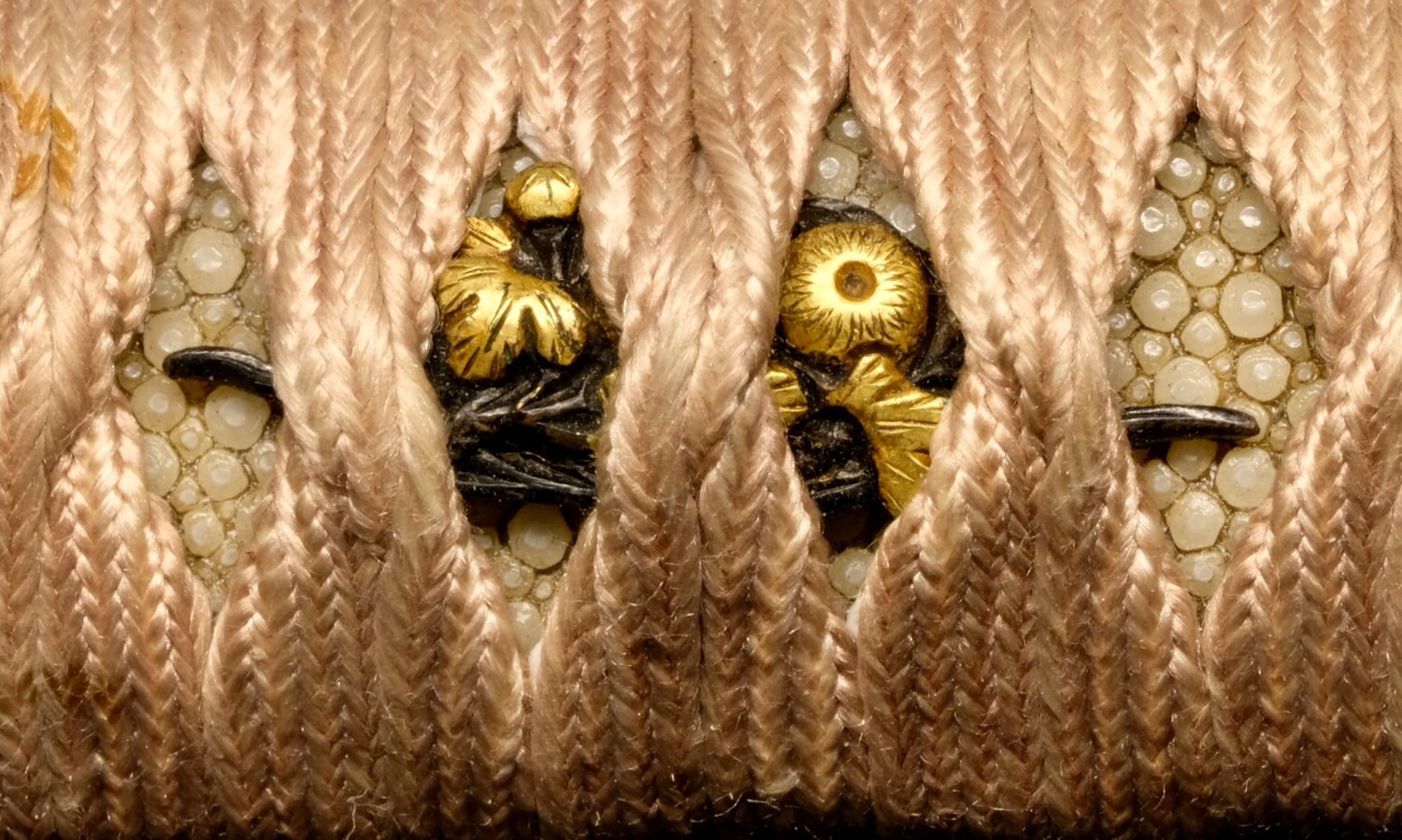
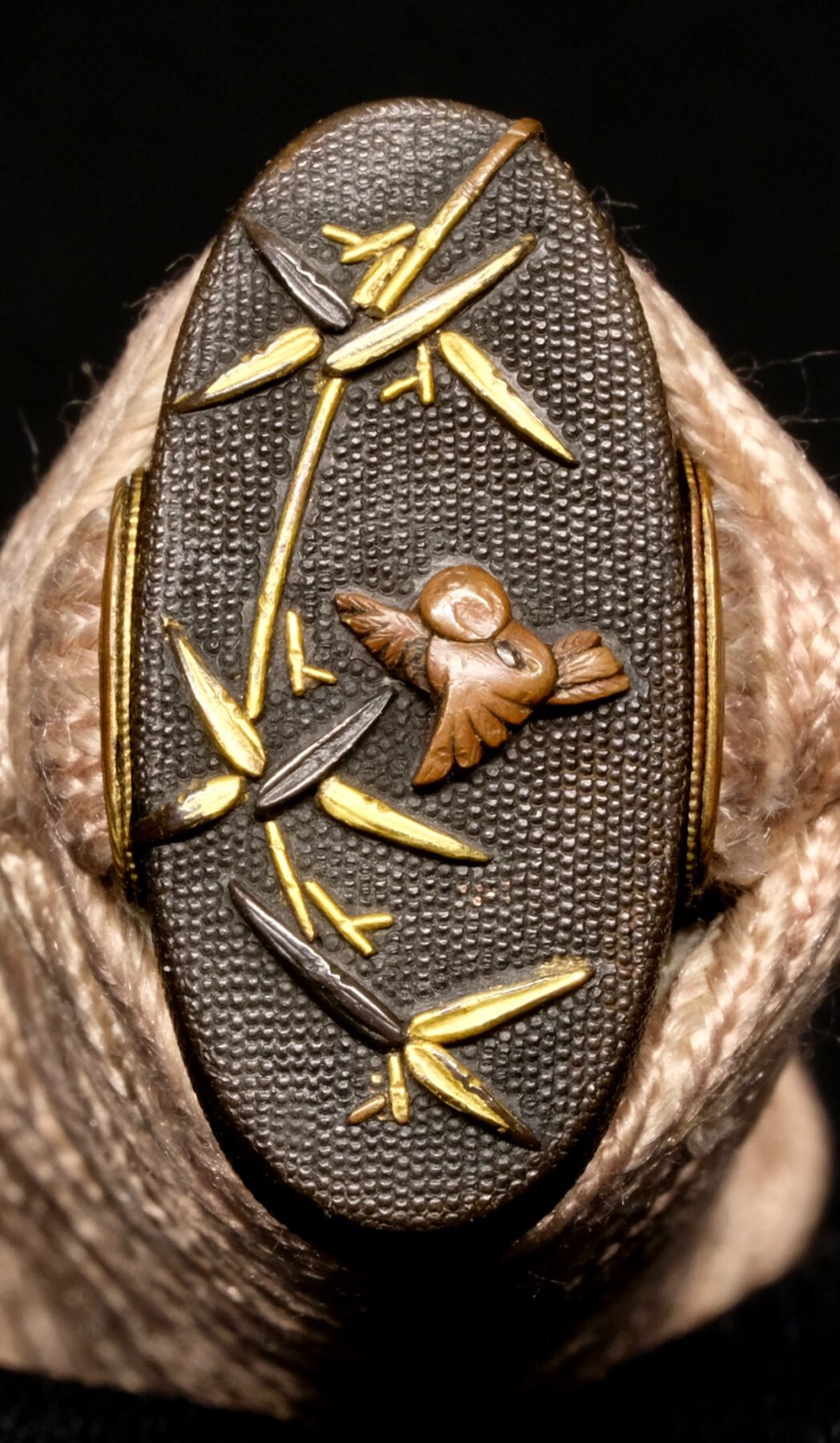
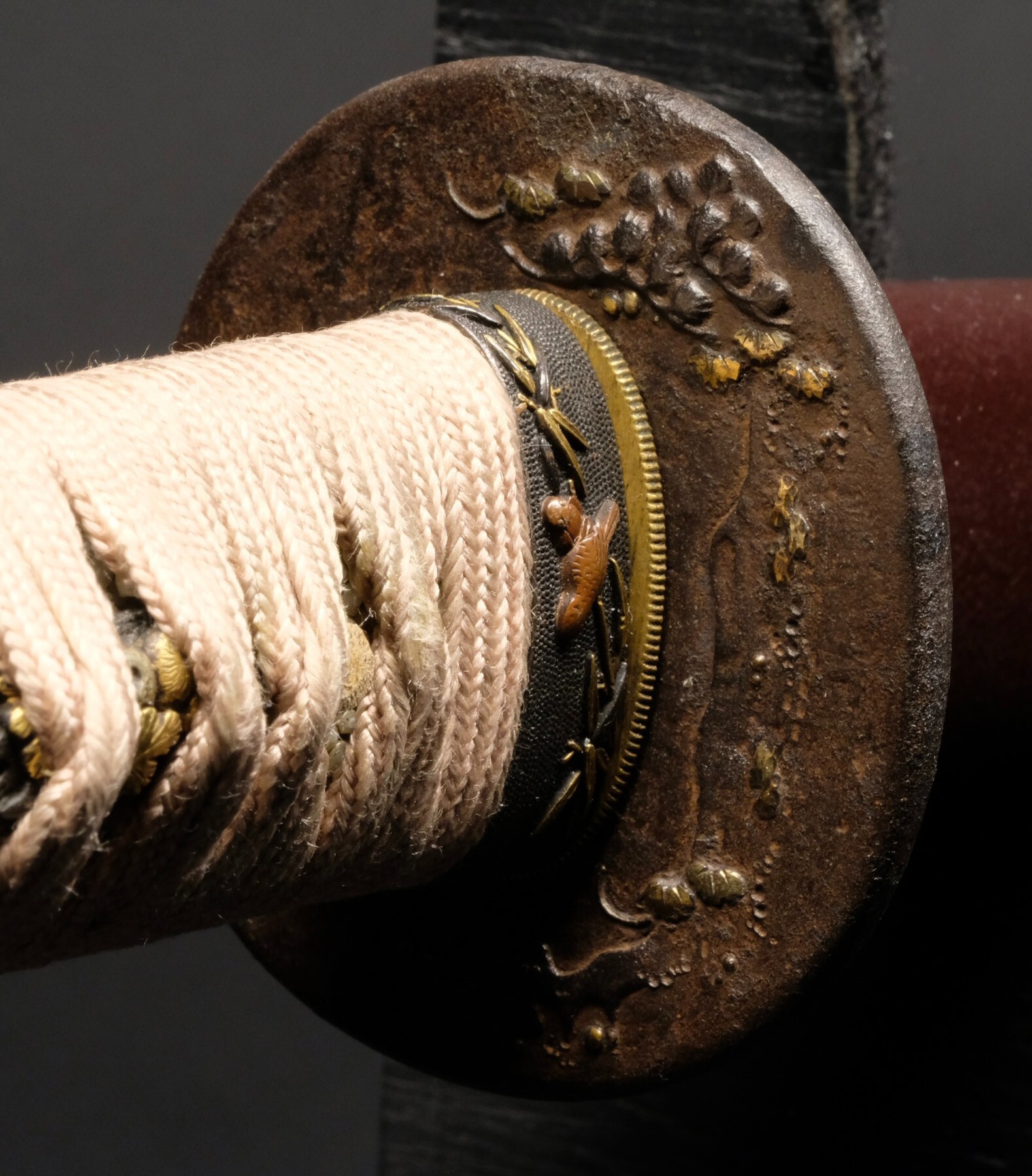
WAKIZASHI AWATAGUCHI FUJIFUSA / KOSHIRAE MEI: AWATAGUCHI FUJIFUSA DATE: 0 c. 1532 MUROMACHI NAGASA: 17.3125" OVERALL: 21.625" MIHABA: 1.01" KASANE: 0.25" SORI: 0.40" NAKAGO: UBU MEKUGI ANA: ONE YASURIME: SUJIKAI MUNE: IORI HADA: KO-ITAME HAMON: GUNOME CHOJI BOSHI: KOMARU HORIMONO OMOTE: NONE HORIMONO URA: NONE HABAKI: 1 PC. COPPER KOSHIRAE Wakizashi in koshirae signed Awataguchi Fujifusa. I could only find one reference for what may be this smith. Hawley’s lists one Fujifusa, a Muromachi smith c. 1532. It could be this smith, the other two options are gimei or an unlisted smith, (see reference and disclaimer below). Nakago is ubu with two mekugi ana. The hada is ko-itame and the hamon is gunome choji. Boshi is ko-maru. The sword is in fair condition but does have numerous small, non-fatal issues such as, surface pitting, kitte-ware, light rust, tarnish and hike-kizu or surface scratches. Comes with a one piece copper habaki. See photos for more detail. Koshirae has some nice fittings. The F/K are shakudo nanako with sparrows and bamboo in gold and copper. The menuki are a floral design of flowers and leaves in shakudo and gold. Saya is a rusty brown with horn koigughi and kurkata. Tsuba is iron with a carved pine with gold highlights. REFERENCES: Hawley’s (FUJ 6), pg. 31 15pt. c.1532 Condition: See Photos. The information I have provided is all I have on this item. Returns: Not accepted unless item is not as described. Ships USPS Priority Mail Insured. Your address and contact information is required to get an accurate shipping quote. Buyer is responsible for knowing your countries import laws and regulations. LIMITED TIME SALE: As with all “sales” sale is final. WAS: $975 plus any additional fees (S/H, PayPal, Wire, Insurance, etc) NOW: $800 plus any additional fees (S/H, PayPal, Wire, Insurance, etc) *Contact me via email only: Yakiba.com@gmail.com *Disclaimer: Information provided on items offered without kanteisho (papers) or with old shinteisho (papers) is nothing more than an opinion or translation of what is inscribed on the item as is along with any pertinent information of the smith referred to! This opinion/translation and information is provided as a courtesy only and is not an indication, opinion, or guarantee that the item is shoshin. Old shinteisho (white, green, blue, etc.) are no longer recognized by the NBTHK and if re-submitted to shinsa may or may not receive the same attribution. Items which are not accompanied by kanteisho (papers) have a higher probability of being gimei, but that is not always the case. Please do your own research, ask questions prior to committing to purchase and commit only when you are ready to purchase. Please, do not commit to purchase, then attempt to negotiate a lower price.











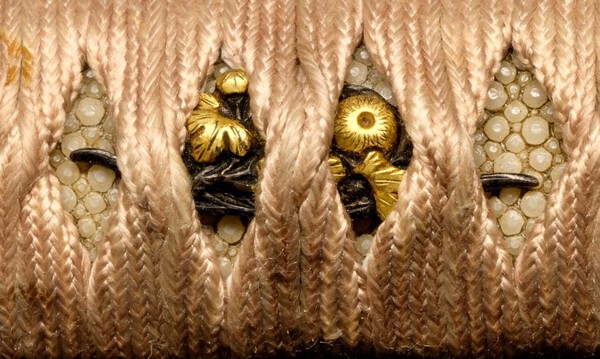
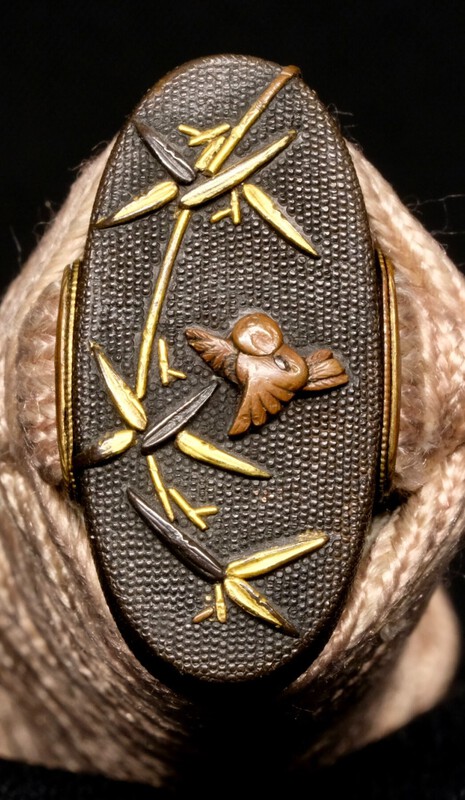

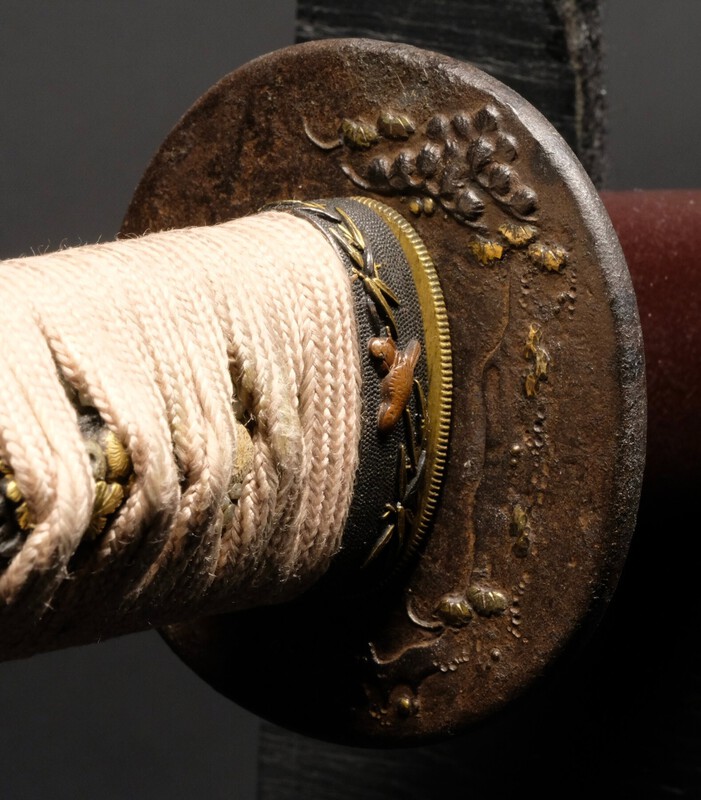 1 point
 -
I have the same problem with this site as well as the NMB. As we are here conversing about art works, it should be categorized in Fine Arts.1 point
-
The Samurai Museum Berlin owns a katana attributed to Kinju, on whose tang the katakana “Kusarinawa” is inscribed in silver. This is likely a synonym indicating that the blade cuts with ease, as if through a rotting straw rope.1 point
-
... and that Tsuka ... I'm sorry, it is just my personal opinion, but Tsuka is 'wrong'. It is way to long for this Nakago, also for the blade (proportions) itself. If you would like to use/swing/cut (yes, I know, just hypothetically) with this Tsuka, it would probably snap, as Nakago goes not even to half of Tsuka. I know, there are Kenjutsu schools that have different approach to left hand and not always put it at the end of Tsuka. Still, my personal opinion, Tsuka should be more like that: Apart from that, great sword!
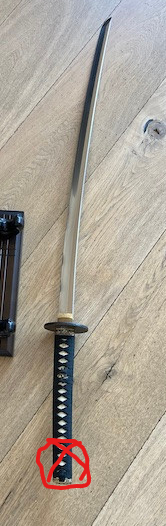 1 point
 -
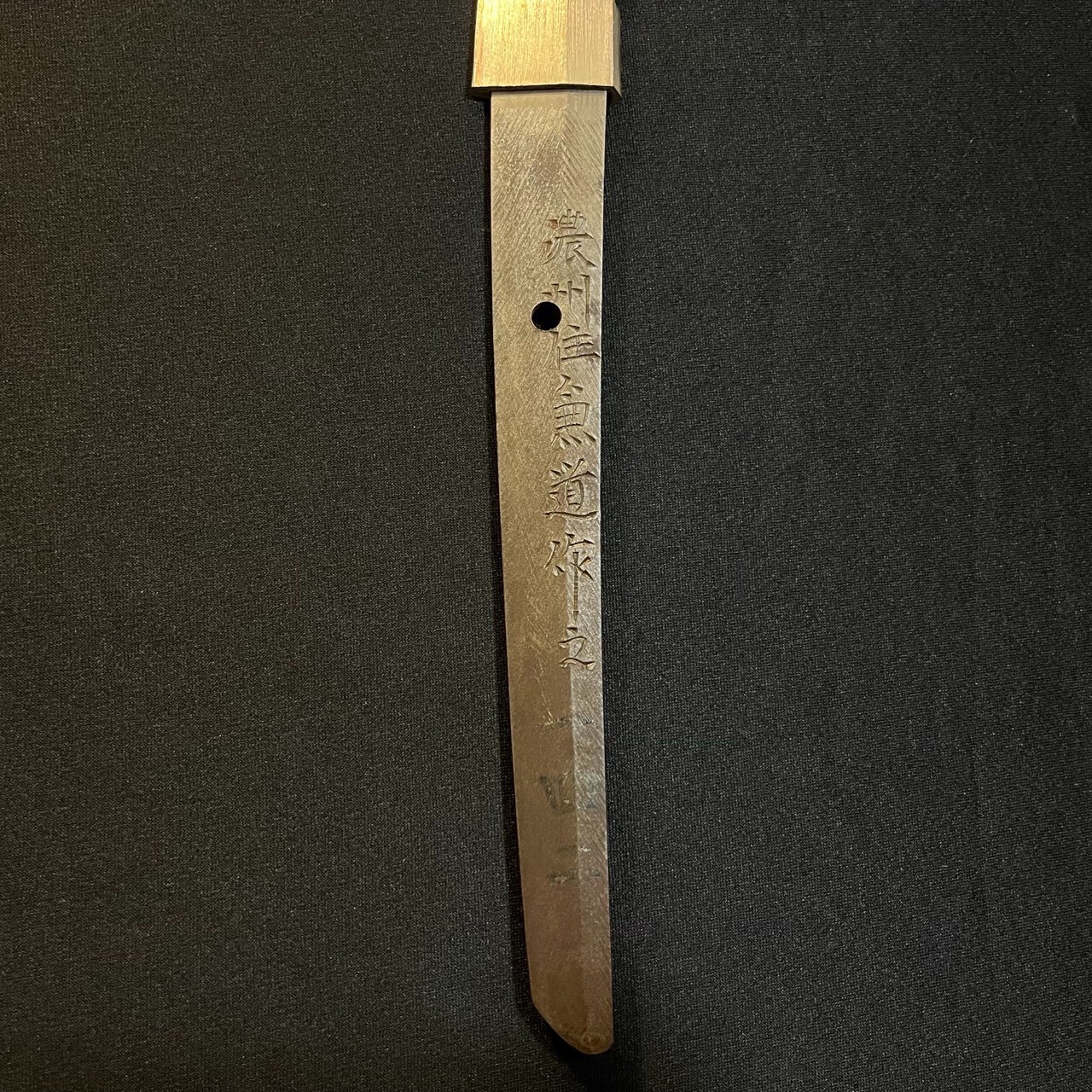
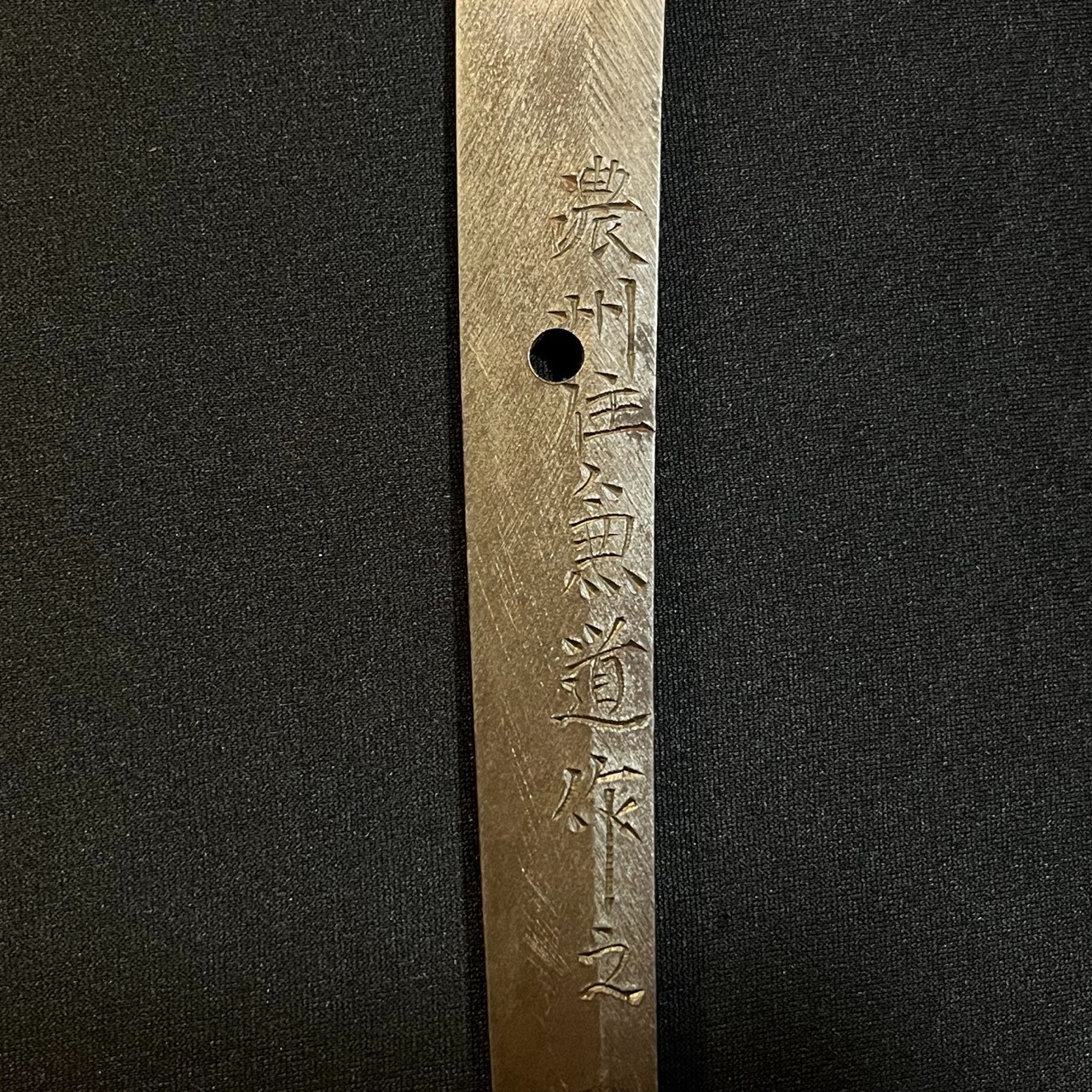
I think it’s “賀州住藤原家平” (Gashū jū Fujiwara Iehira)1 point
-
John see Posted February 6 a MEKUGI-NUKI or mekugi peg remover for a tsuka. Yes I think a very serious "user" could wear it as a pendant for "that special occasion" when you need to remove your sword handle.1 point
-
The cross hatch filing pattern on the Nakago are textbook Mino Den.1 point
-
Why not present it to the TOKEN Society of Great-Britain? (https://to-ken.uk/) ? They have regular meetings and will be happy to look at your sword, I am sure.1 point
-
I see that this same sword was posted here in 2018 (and the same photos of the nakago, rotated).1 point
-
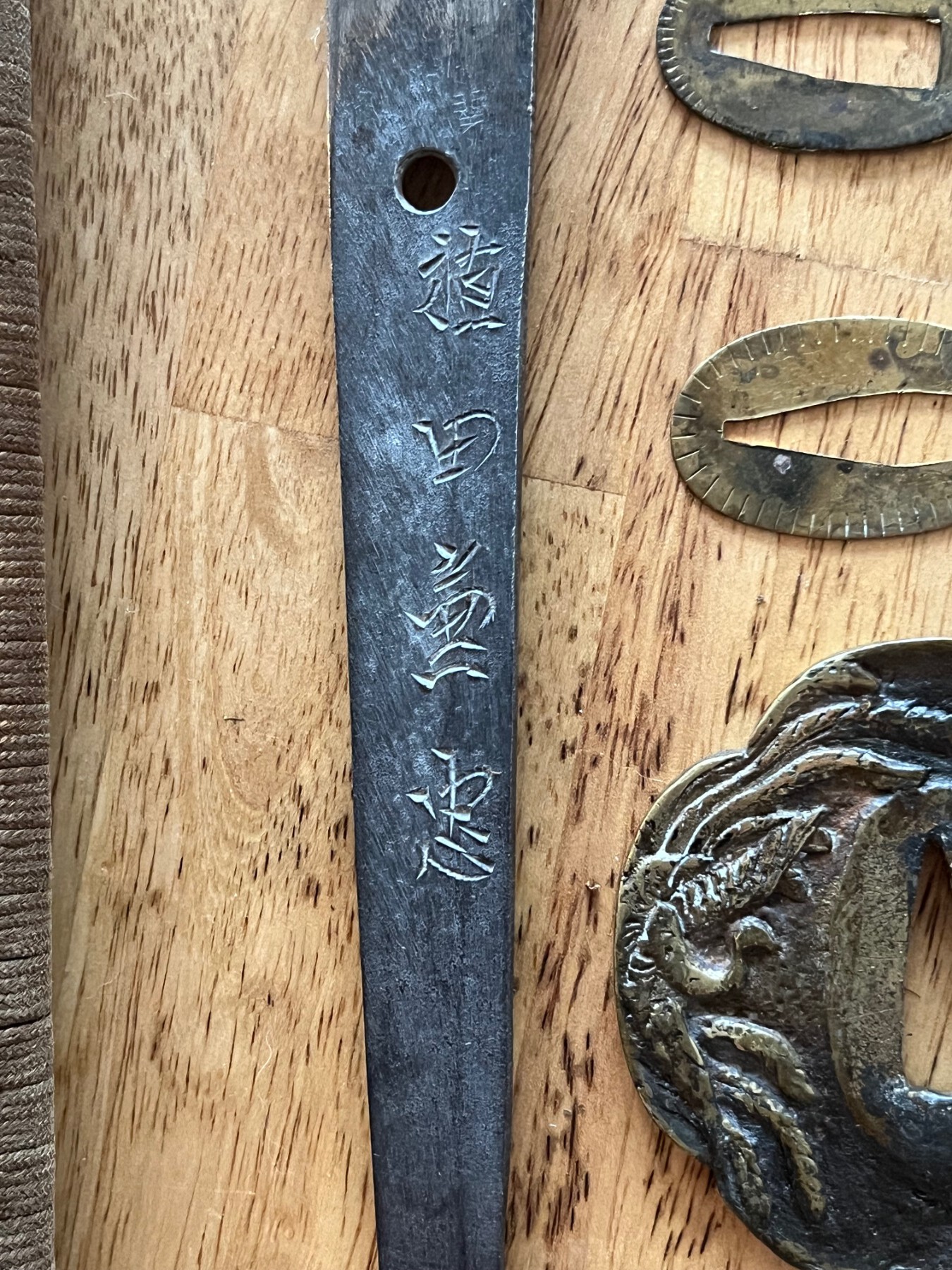
Tsuba = Echizen ju Kinai saku1 point
-
平安城住下坂 Heian Jo Jū Shimosaka “Made by a Shimosaka smith living in the Kyoto area” The Shimosaka were well-known makers of Yari.1 point
-
Jacques, everyone is at a different stage of learning, everyone learns differently, and everyone has their own expectations for their goals. After all, you weren't born an expert. Personally, I can only express my opinion from my own perspective. And even that opinion was different 15 years ago and might be different in 15 years – if I'm still alive then. Personally, I currently only buy literature that mentions Oshigata, if at all. The NBTHK publications accompanying museum exhibitions often contain both: excellent photographs and Oshigata. And that's a good thing. The NBTHK's Shijo Kantei, for example, is also interesting. In recent years, blades with different Oshigata designations have appeared there, even with slight differences in the description and sometimes even minimal variations in dimensions. The differences in the description and Oshigata of the same blade are due to the author's perspective. Or, to put it more clearly: Someone who has studied a particular smith or their school over a long period will depict the oshigata of a specific blade differently than someone who has had little to no contact with that smith. The former will emphasize the swordsmith's character more strongly, while the latter will approach the oshigata more technically. I would argue that the situation of a professional oshigata artist is not unlike that of a first-class polisher. They must decide how best to express the essence of a particular swordsmith's work. Some elements can be highlighted and emphasized, while others are better kept subtle. A good oshigata offers the student significant advantages, as it allows them to focus more easily on specific details than when studying an actual blade, where many factors come into play—such as polishing, lighting, and even their own ability to concentrate, which is not always consistent. With an oshigata , a large portion of the information is naturally filtered out—information that, when studying a real blade, more or less consciously floods the viewer. This can quickly overwhelm beginners. Over time, one learns to temporarily block out certain things and retrieve them when needed. This requires a lot of practice and good eye training. Finally, I can't help but chuckle when I read Jussi's comment about viewing blades in a museum. You can immediately tell who's a "regular" and who's a sword-fighting student. And it's not unusual to be surprised to see someone performing the "sword viewing dance" in front of the display case—someone you wouldn't have expected at all.1 point
-
@Scogg Sam: I have a couple more projects that should be finished in two weeks or so - another shirasaya for a fukuro yari and a suzuribako tansu. I was wondering if we could have a dedicated forum (or pinned combined thread somewhere) for member-made sword related items. I know there must be at least a dozen or so separate threads for shirasaya, armor, tsuba, etc. If you think it worth the effort, maybe you could run the idea up the chain-of-command for me? John C.1 point
-
I agree totally with Curran…..some superb works have “questionable mei” but I often wonder…..are they really gimei? How can we be certain? Which ones are genuine and which not? Mei would doubtless vary as artists grew older, maybe even they even changed them deliberately …..we don’t really know. Records are a bit sparse. We do know many of these artists had teachers and pupils, perhaps even akin to many swordsmiths workshops. Iwamoto Konkan is a prime example where many wonderful works are catalogued as “after Konkan” or “school of Konkan” yet someone with immense talent made them. Who?….and why gimei something superb in its own right. Was it done with the blessing of the “master”, was it made by the master and signed by the student (as per some swords). We jump to the conclusion that it was done to deceive ie for £ but I remain hesitant to judge. Of course many pieces fall well short on technical quality or artistry and certainly we can be confident that they are indeed “wrong uns” but sometimes I wonder…… Just some wandering rambling musings🙂1 point
-
Wow, nice to see we are finally making some progress in the collecting world! ZevAntiques has a souvenir at auction HERE with a title of "US 8th Army Japan Occupation Souvenir Sword" and a full accurate description! Hurray!!! It's the first souvenir on file with an Inaba blade, third with "29"


 1 point
 -
John, No flack from me, brother. I think you're the guy that started to study the painted numbers, right? If so, you are currently the resident expert! I do think you are right about the colors and number schemes being specific to shops, forges, and arsenals. We have that one photo of several blades lined up with white, or the pale blue, numbers. With that in mind, the 2-digit black numbering on these souvenirs is specific to Tenshozan, which actually backs up your point.
 1 point
 -
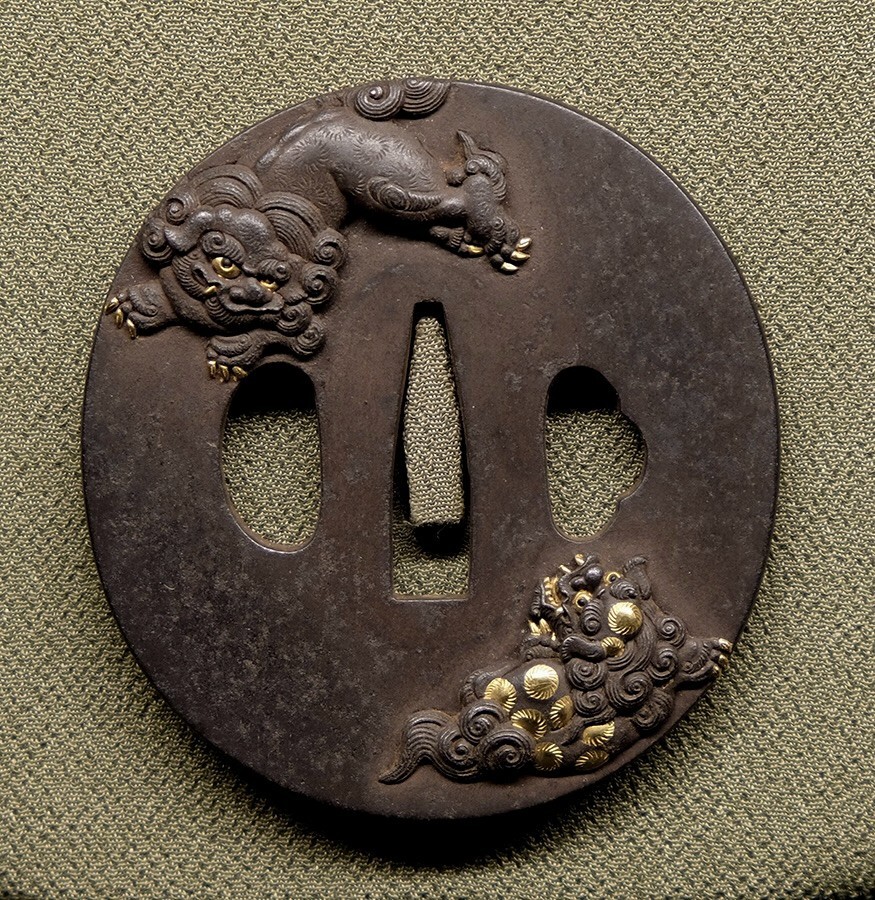
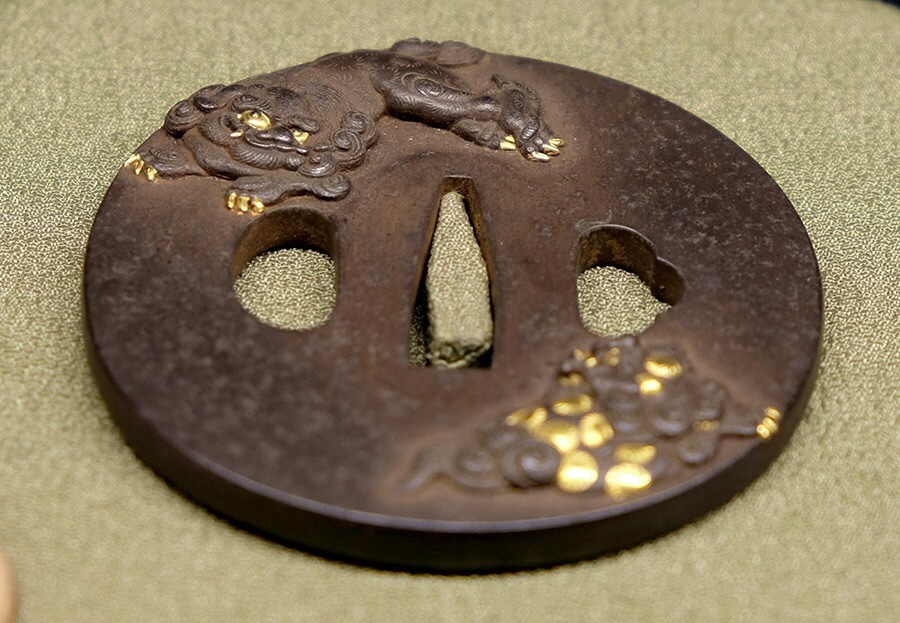
I always admired these guys, with their well positioned gold dewdrops at the temple and cheeks. The facial expression is rich. I would struggle to draw the faces that well, yet alone pull that off in metal.1 point
-
Here’s the measurements of my sword: Total without scabbard = 838.2mm Kissaki with scabbard = 863.6mm Nagasa = 680mm Motokasane = 5.5mm Sakikasane = 3.3mm Motohaba = 23.2mm Sakihaba = 16.5mm Kissaki = 26.8mm No stamps and mumei:

 1 point
 -
That is a terrible replica...... Fortunately I have a service where I will take this off your hands and properly dispose of it........and I won't even charge you. You can trust me, I go to church. Seriously though, wow......what a beautiful piece1 point
-
Thank you from me too. The tool is fantastic. It would be nice if: a) I could send a feature request via the interface. :D b) I could filter search results by length, weight, etc parameters. Some of the items don't have this, but some do and for myself this is quite crucial information. For example, I would love to see items that are Koto, longer than 2.5 shaku and under 800 grams (blade). Even if this would not be quite fool proof thanks to missing info, it would help to limit the many options and there could always be a toggle like "Show items without corresponding information: Y/N".1 point
-
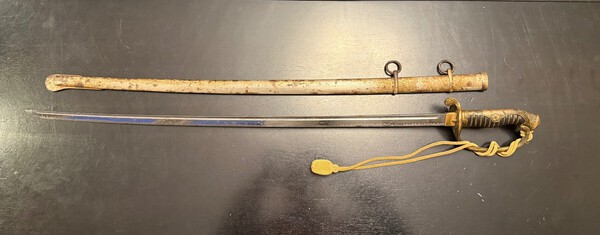
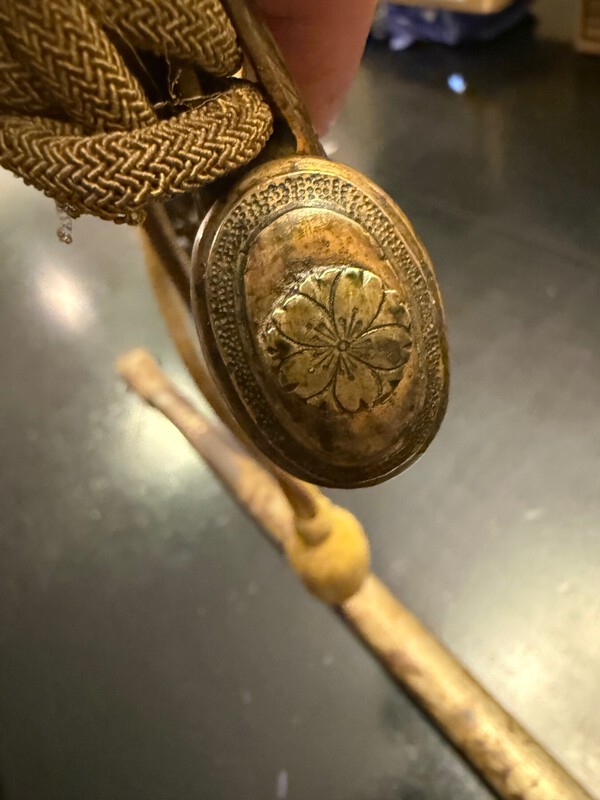
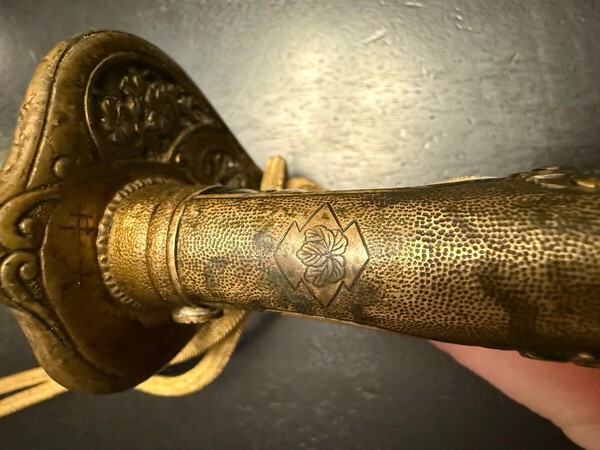
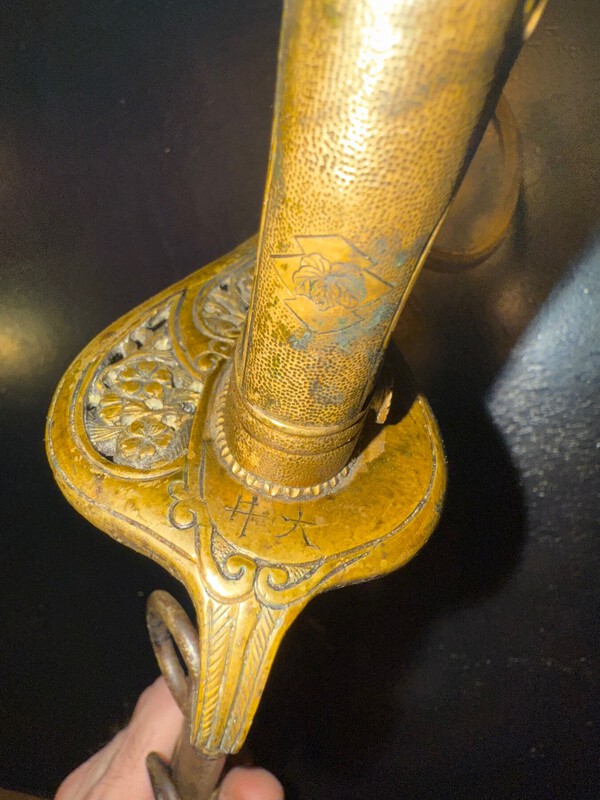
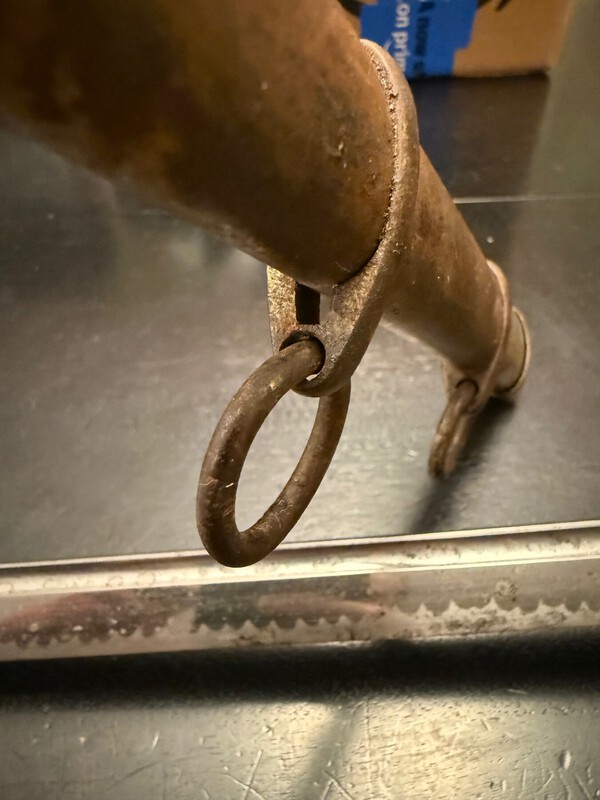
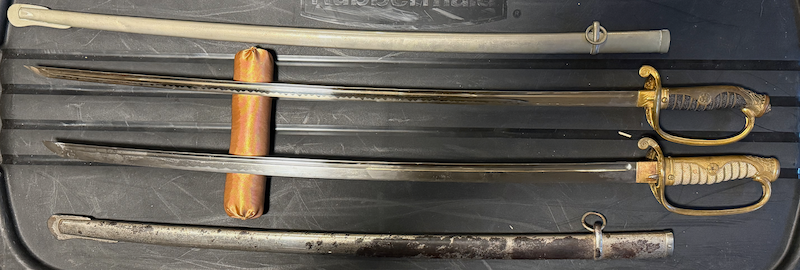
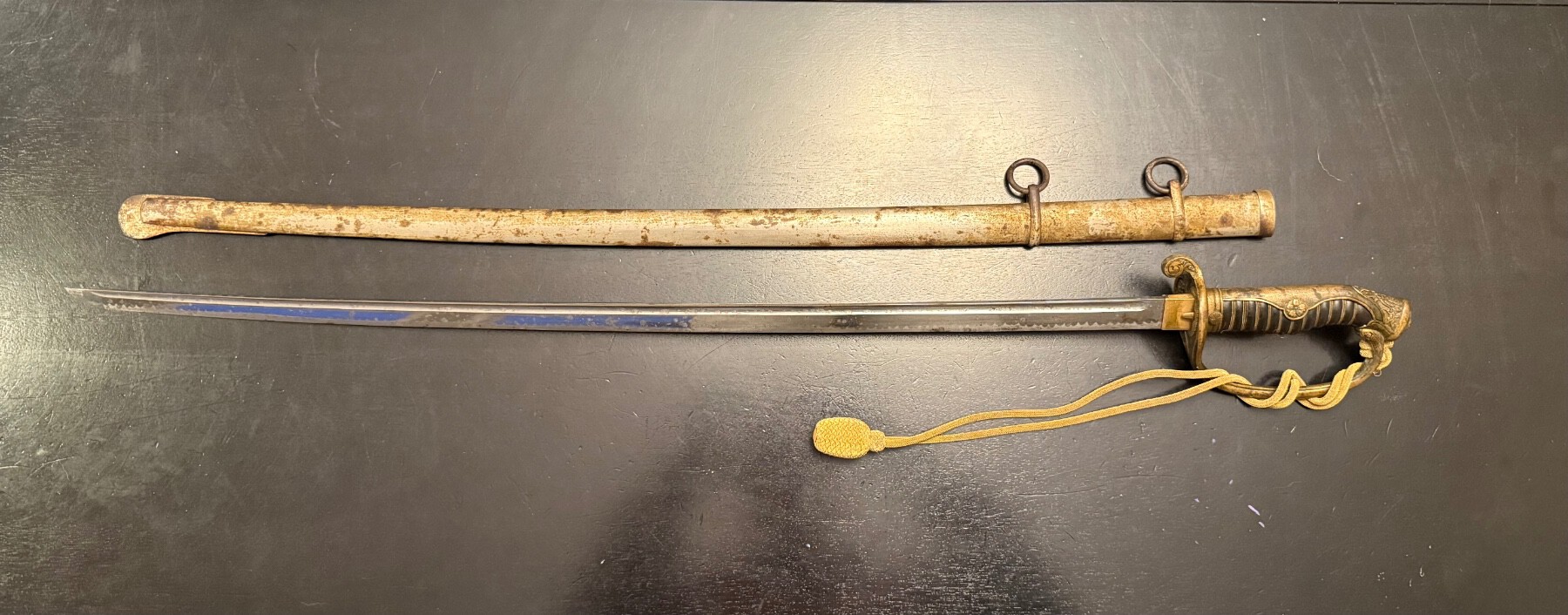
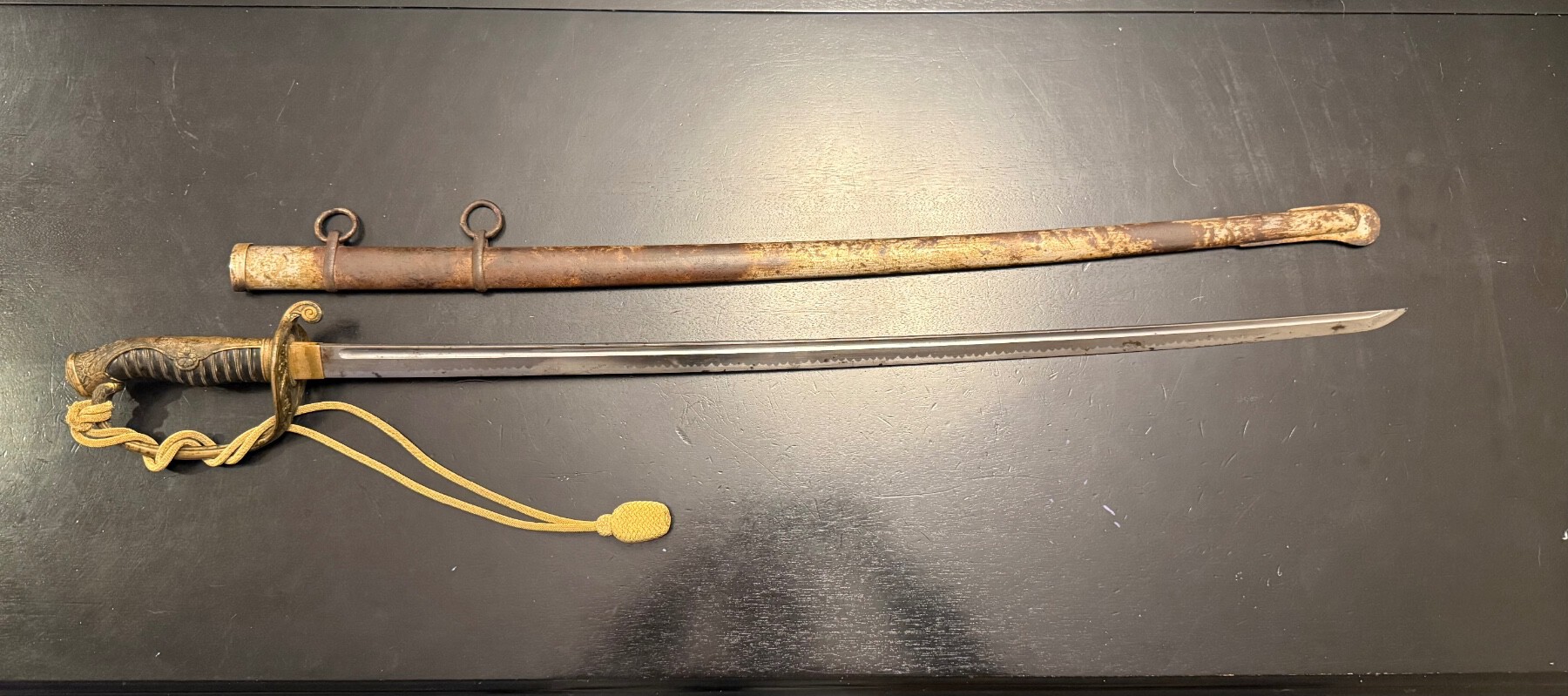
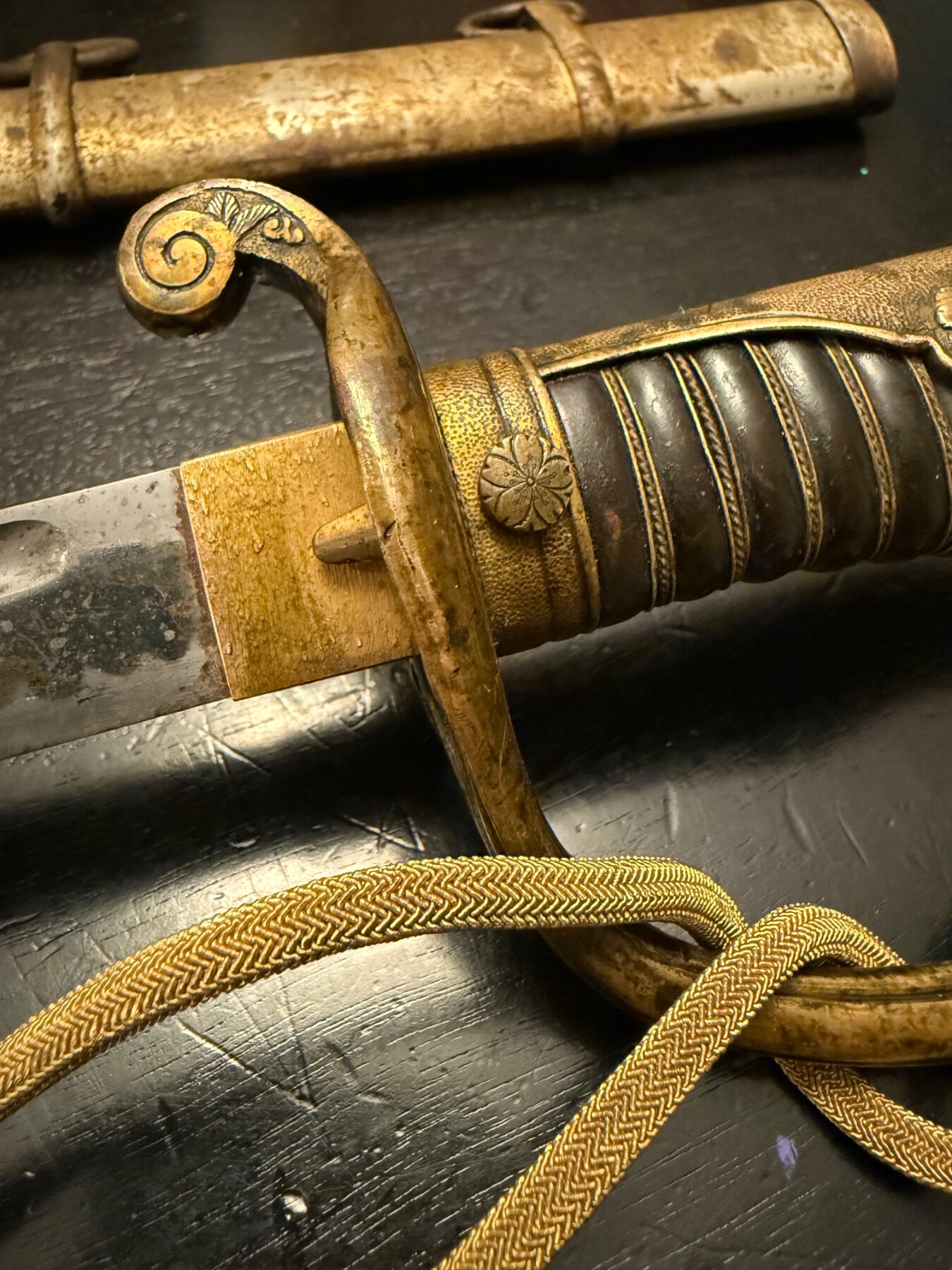
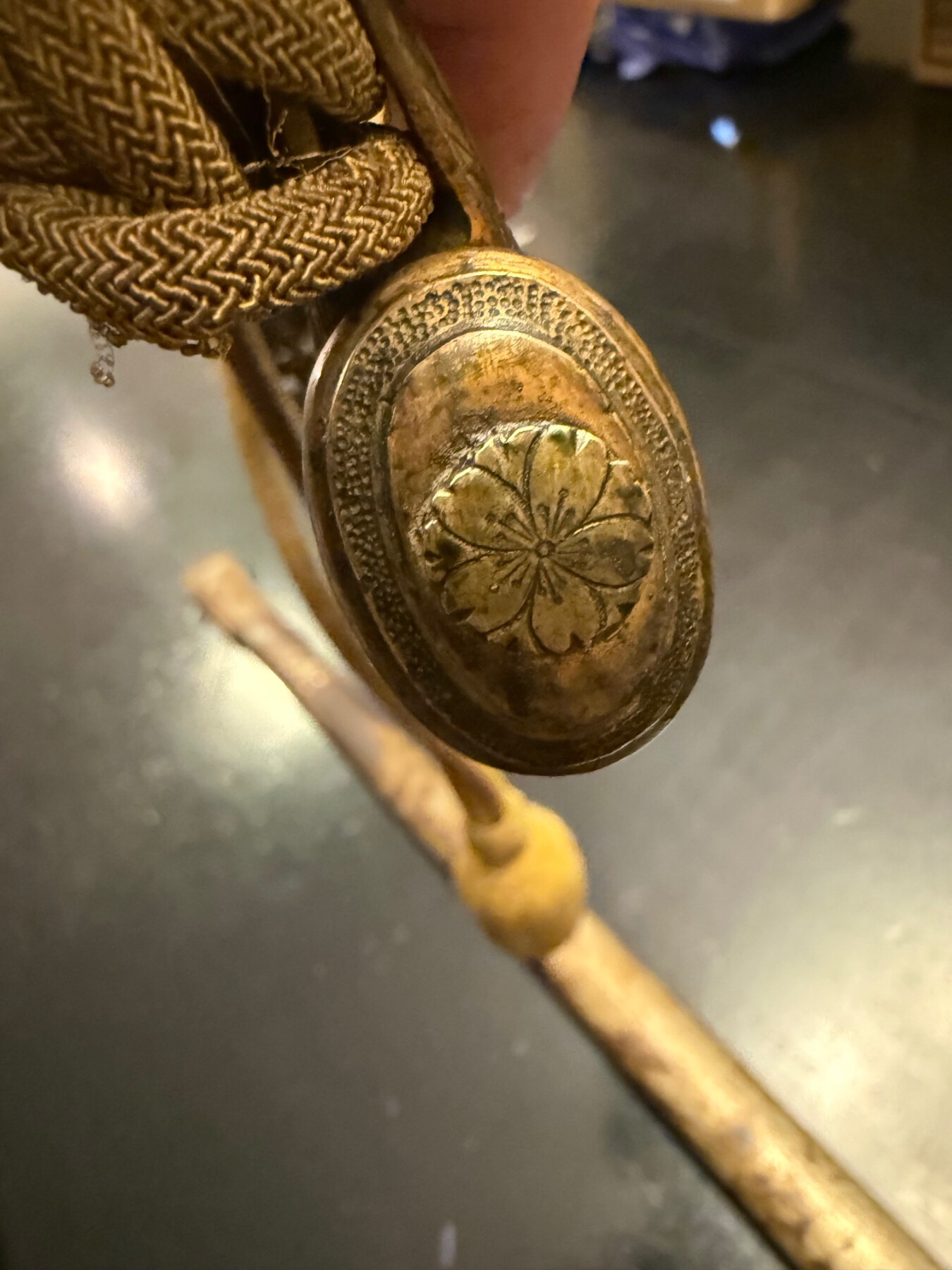
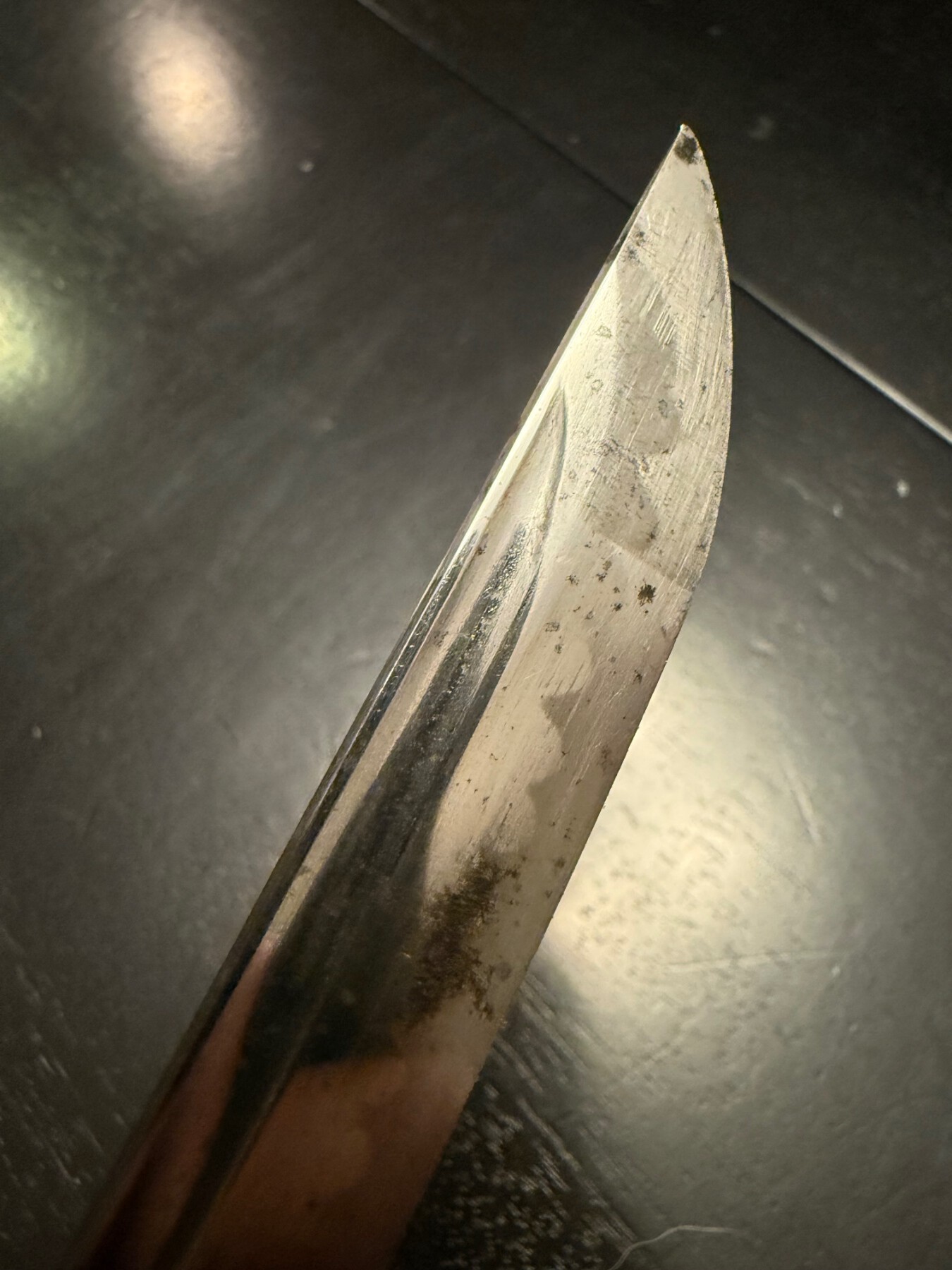
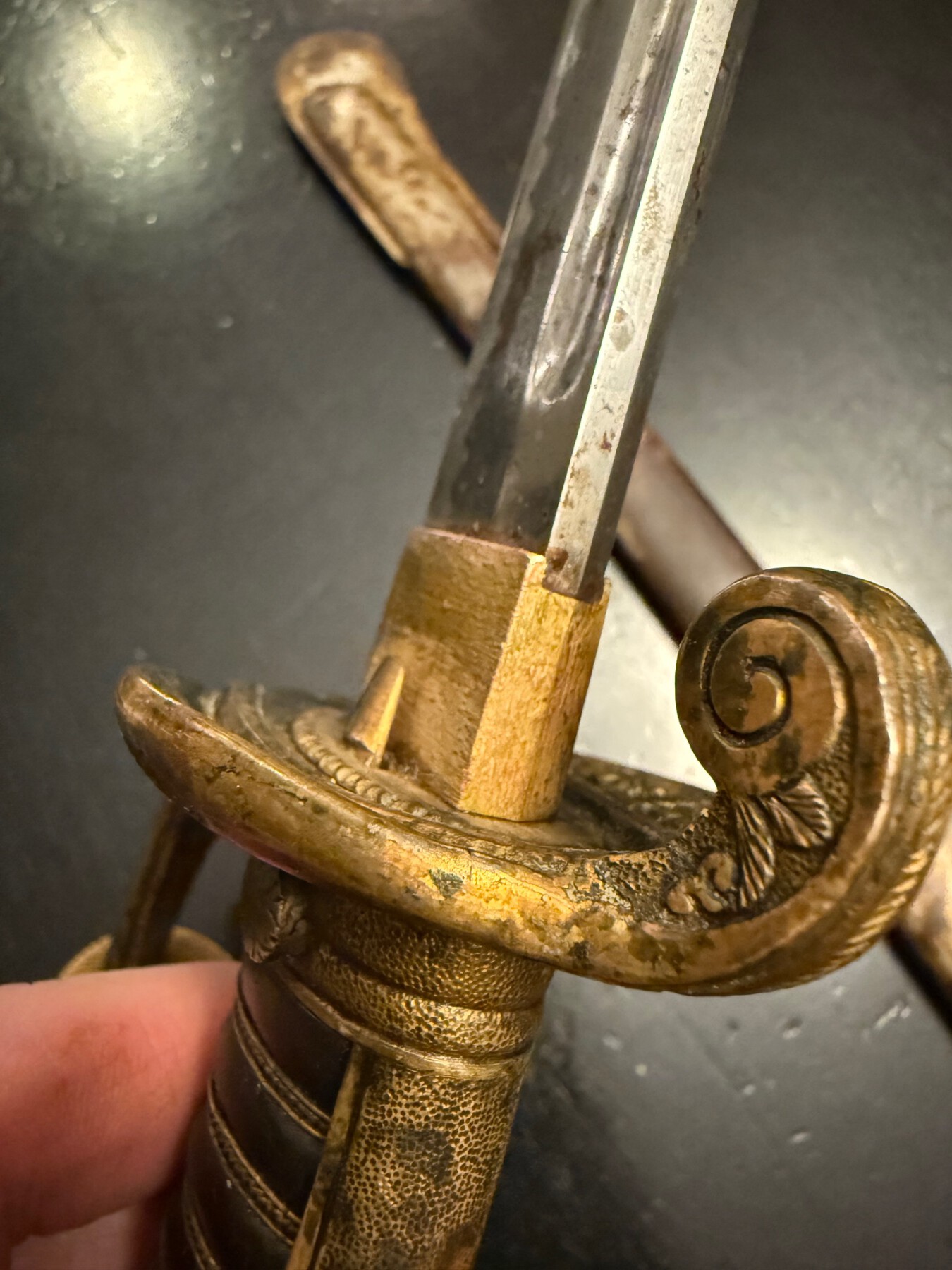
I recently picked up this interesting one. @Kantaro, does this fit the description you’re looking for? With the button and double hanger? I bought this one in a lot with another saber. Priced generally as two parade sabers, but this one caught my eye with the habaki, engraving, and sharpened blade. The engraved kamon(?) on the backstrap was a nice surprise. (Note: I put the tassel there, it was found without one.)



 1 point
 -
My new favourite app.
 1 point
 -
As a noob to nihonto collecting and study I feel I've entered in what could be described as a golden era. There are so many English language resources (thanks in no small part to Markus Sesko @Markus) and individuals like @Hoshi, @nulldevice and @Jussi Ekholm, just to name four. Special mention to @Brano for his incredible photography of some spectacular grandmaster swords. One might argure that doing the hard yards is part of the initiation into Nihonto, but having access to this reference material at our fingertips will certainly enourage others to dip their toe in the pool. Once that spark ignites a lifelong passion will follow. We can count ourselves as the lucky ones.1 point
-
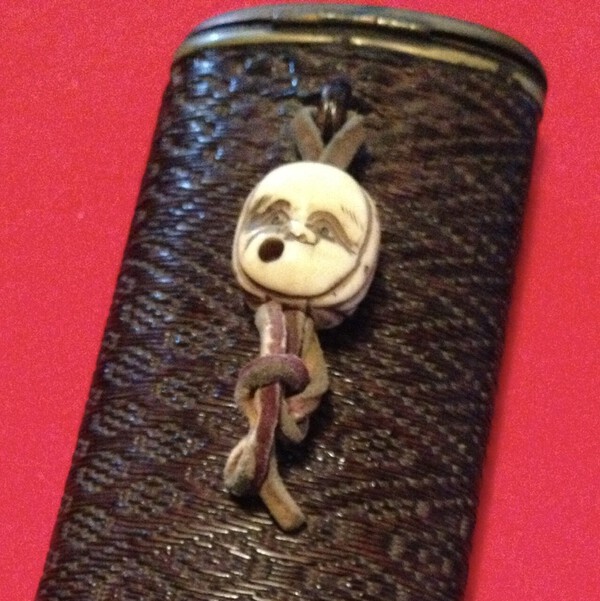
Hi Clark, welcome to our corner here! First of all, thank you for your honesty and objectivity, which are rare qualities today, and refreshingly appreciated! It is good to know that what we suspected is not far from the truth. Also it is very interesting to learn about where these NLO are manufactured. Your masks have a pleasingly rustic appearance. Mingei 民芸. They could easily be older than your estimate, I feel. The Okame looks almost Korean. The closest signature I have found so far is a Suisen 水仙, but not yet a Suizan unfortunately. Can we see the backs of your two? Anyway, we are all learning here. Sadly I let some of my good Noh mask Netsuke go, but I still have a couple somewhere, oh, and a hyottoko ojime! Thank you for posting and introducing yourself!
 1 point
 -
The NBTHK paper is Hozon.1 point

























































This leaderboard is set to Johannesburg/GMT+02:00