
Leaderboard



Popular Content
Showing content with the highest reputation on 02/26/2026 in all areas
-
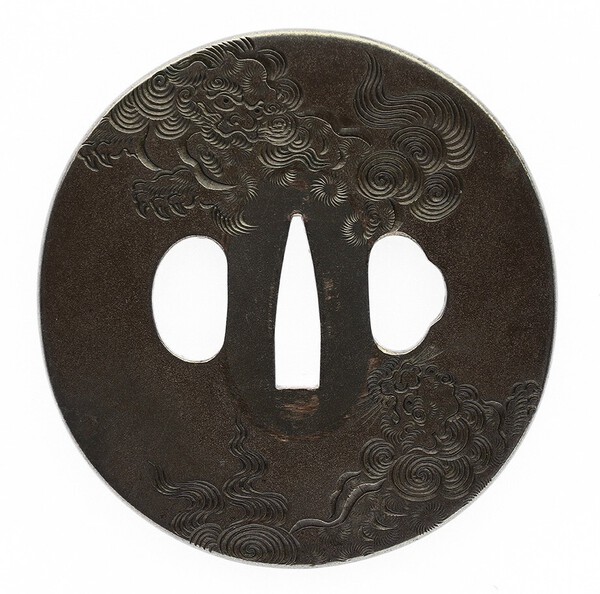
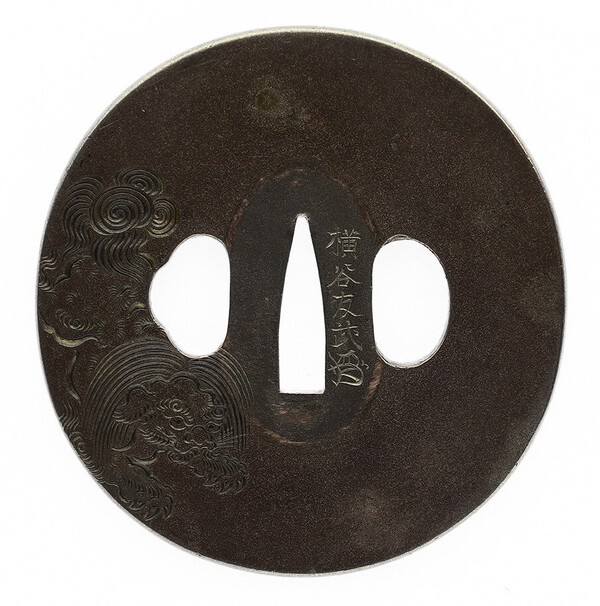
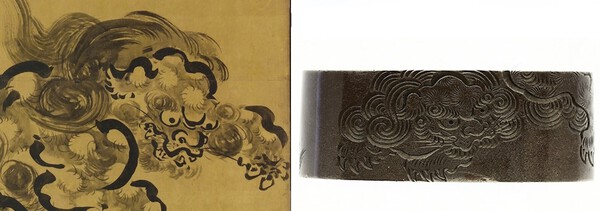
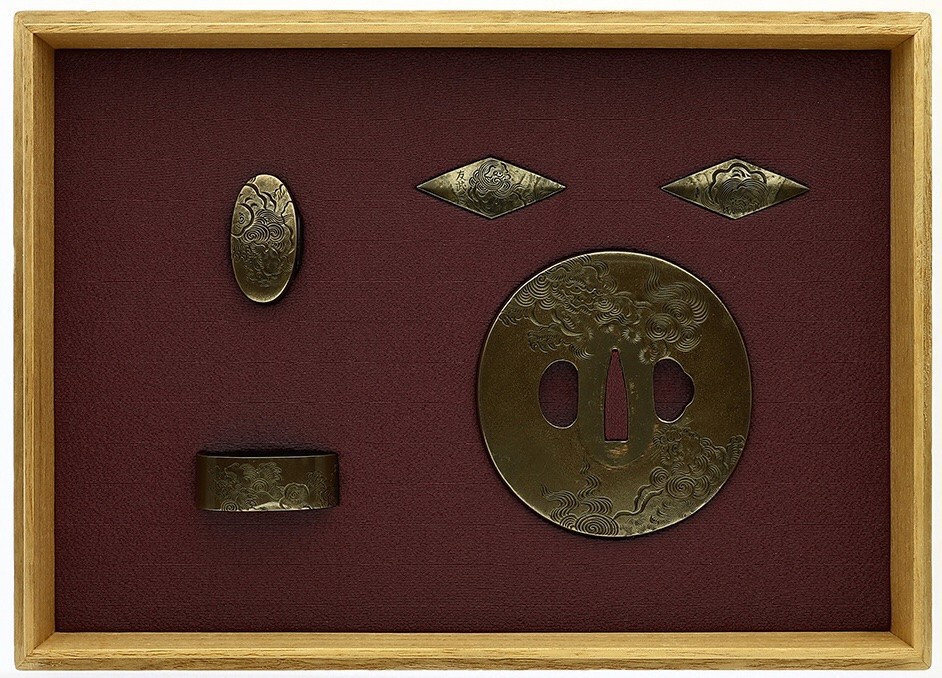
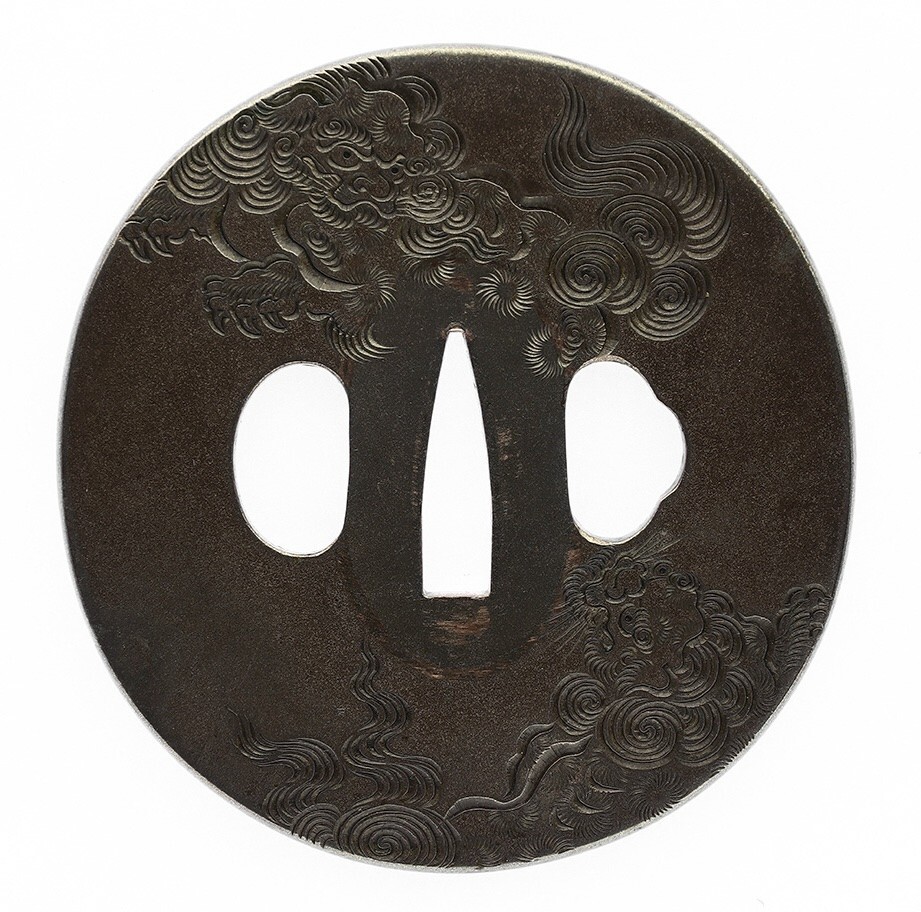
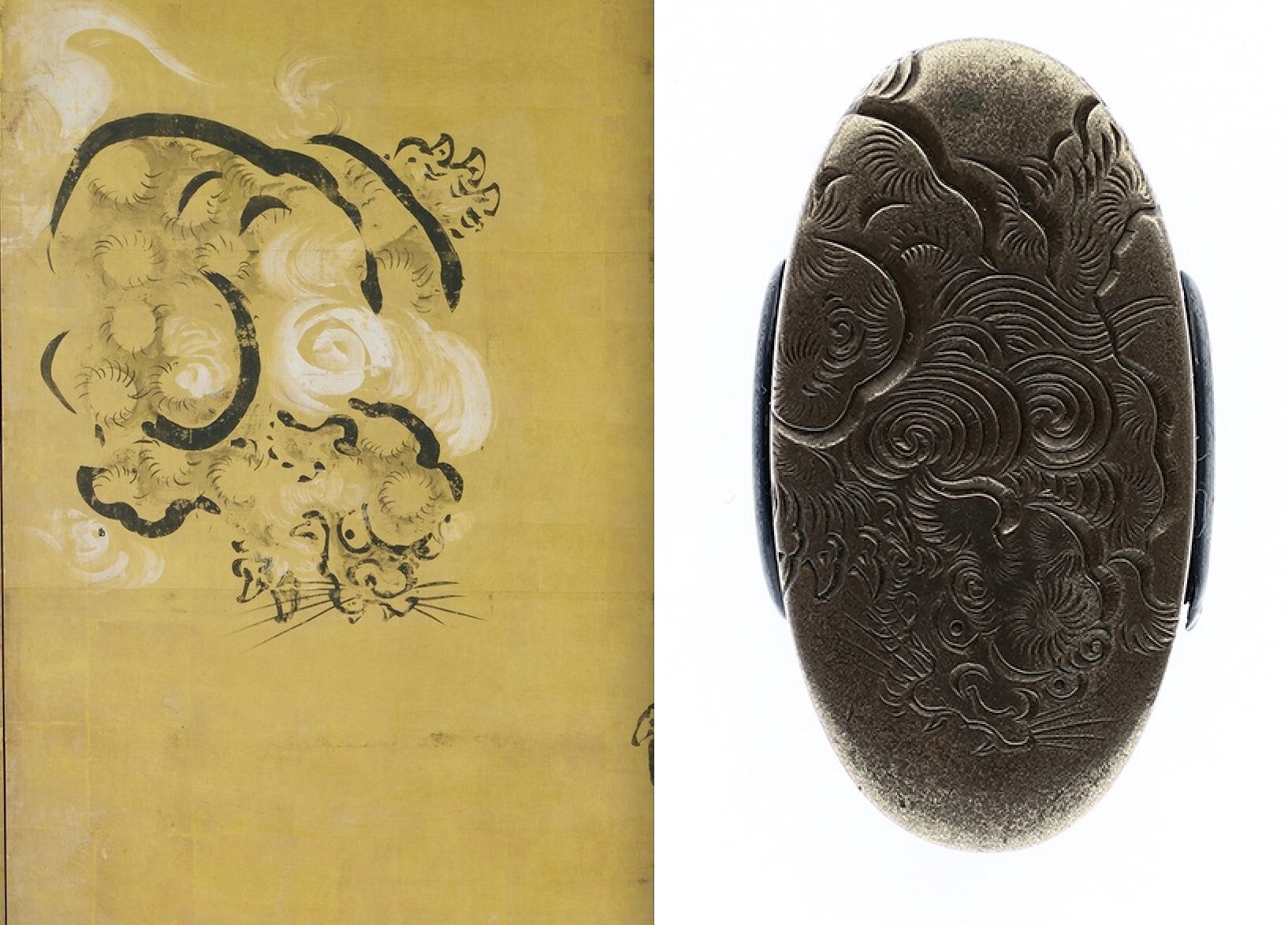
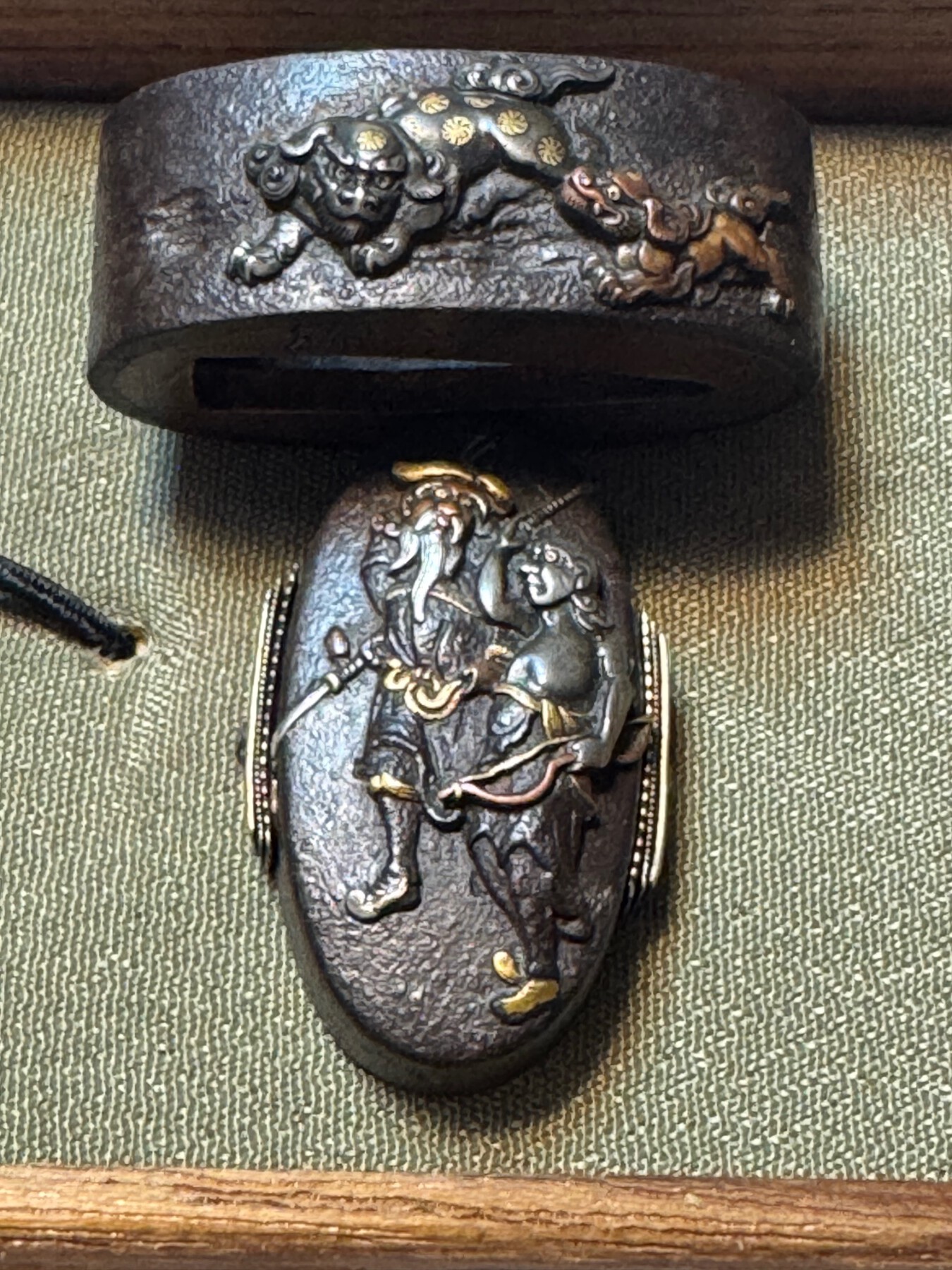
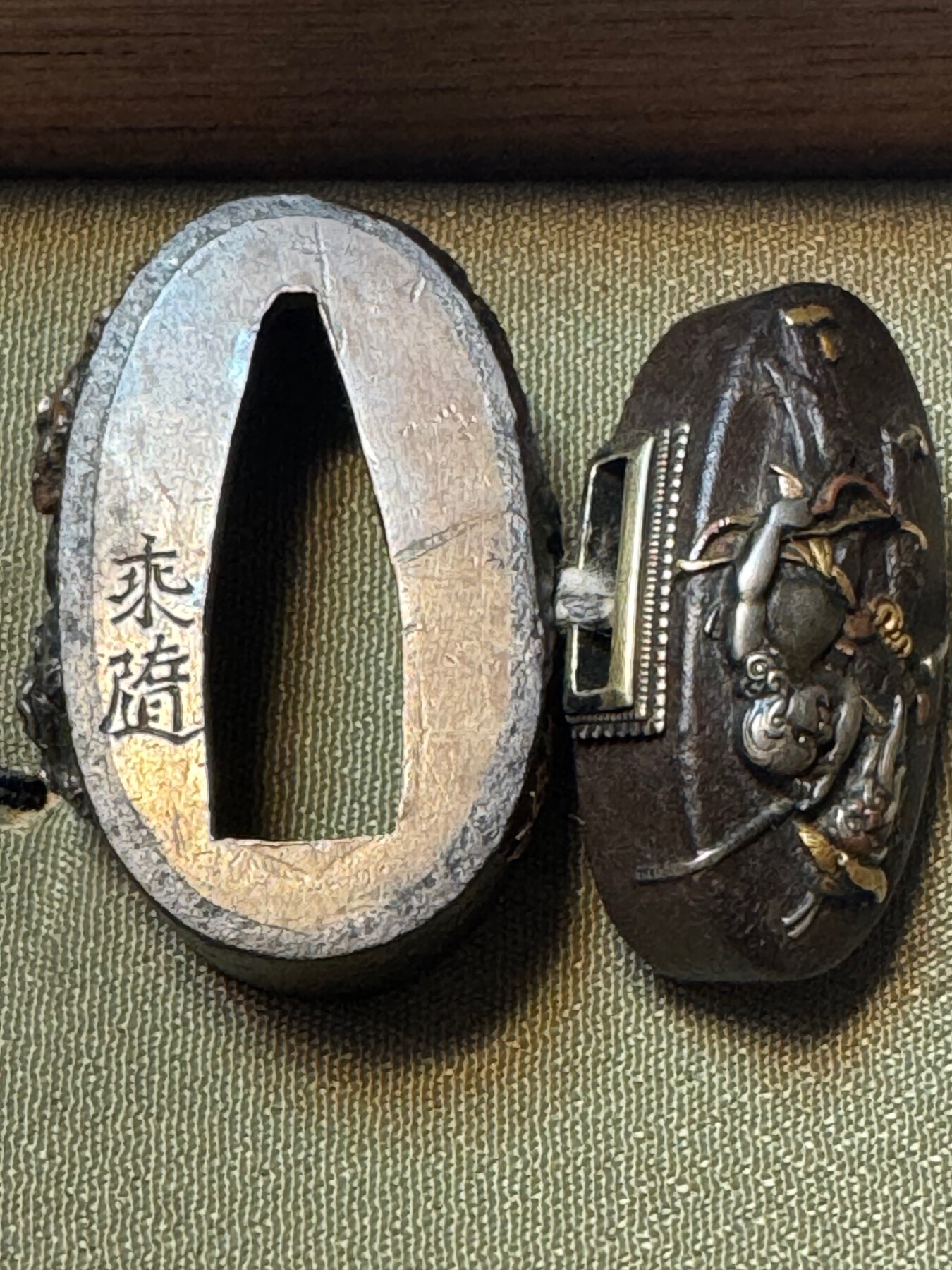
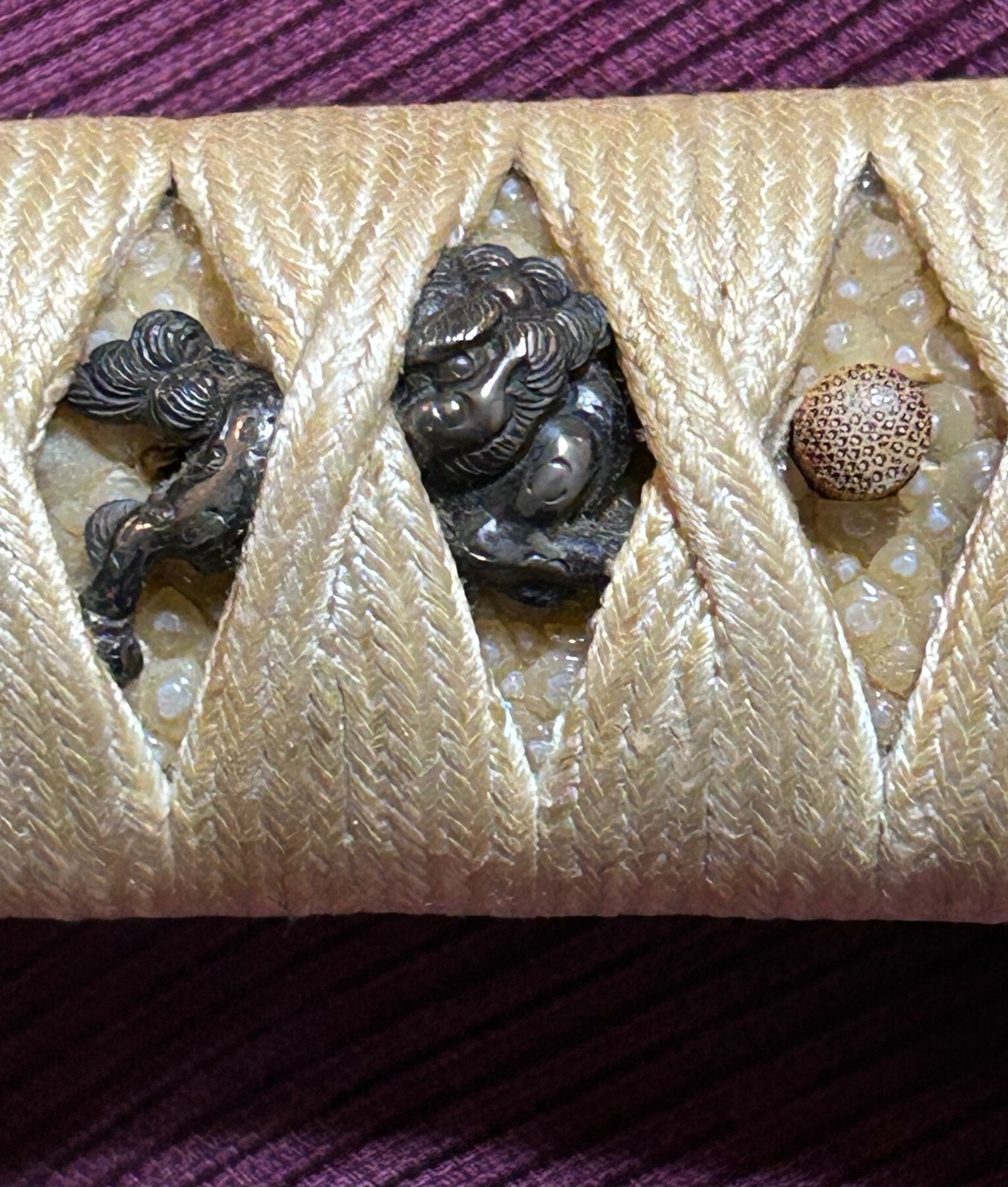
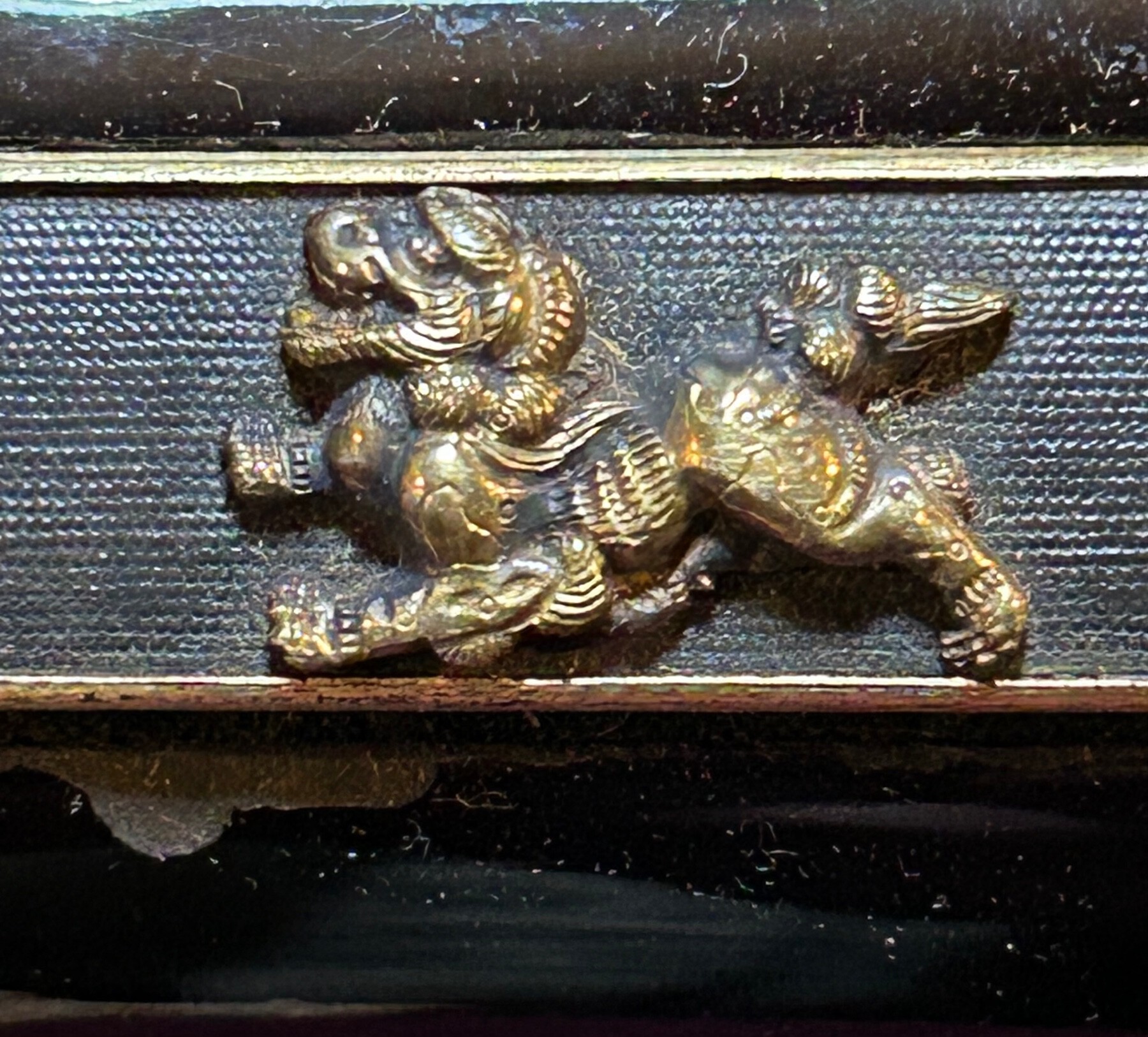
I would like to share a lovelyset of tosogu by Yokoya Tomotake featuring Shishi play fighting. It’s a great example of katakiribori workmanship, which is done to a high level. One intriguing thing I have noticed while studying the set is that the carvings of the Chinese Lions resemble the paintings from a pair of screens by Hanabusa Itcho, which is in The Met collection, I’ve attached some comparison photos. I have read that Hanabusa Itcho was a close friend of Somin Yokotani. I wonder if the screens were used by Yokoya Tomotake when composing this set of tosogu.



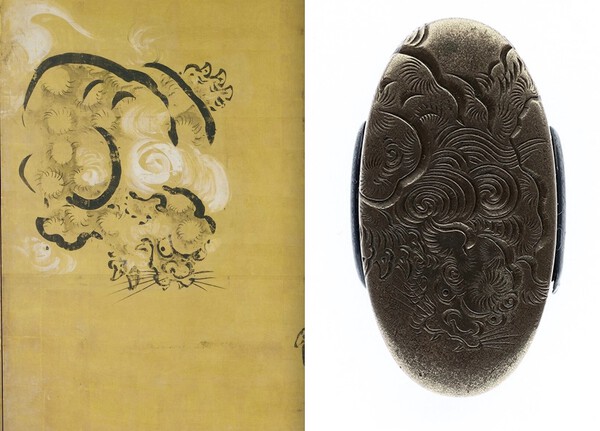


 8 points
 -
Similar ones to this piece in Japanese publications are labelled Satsuma or Oda school

 8 points
 -
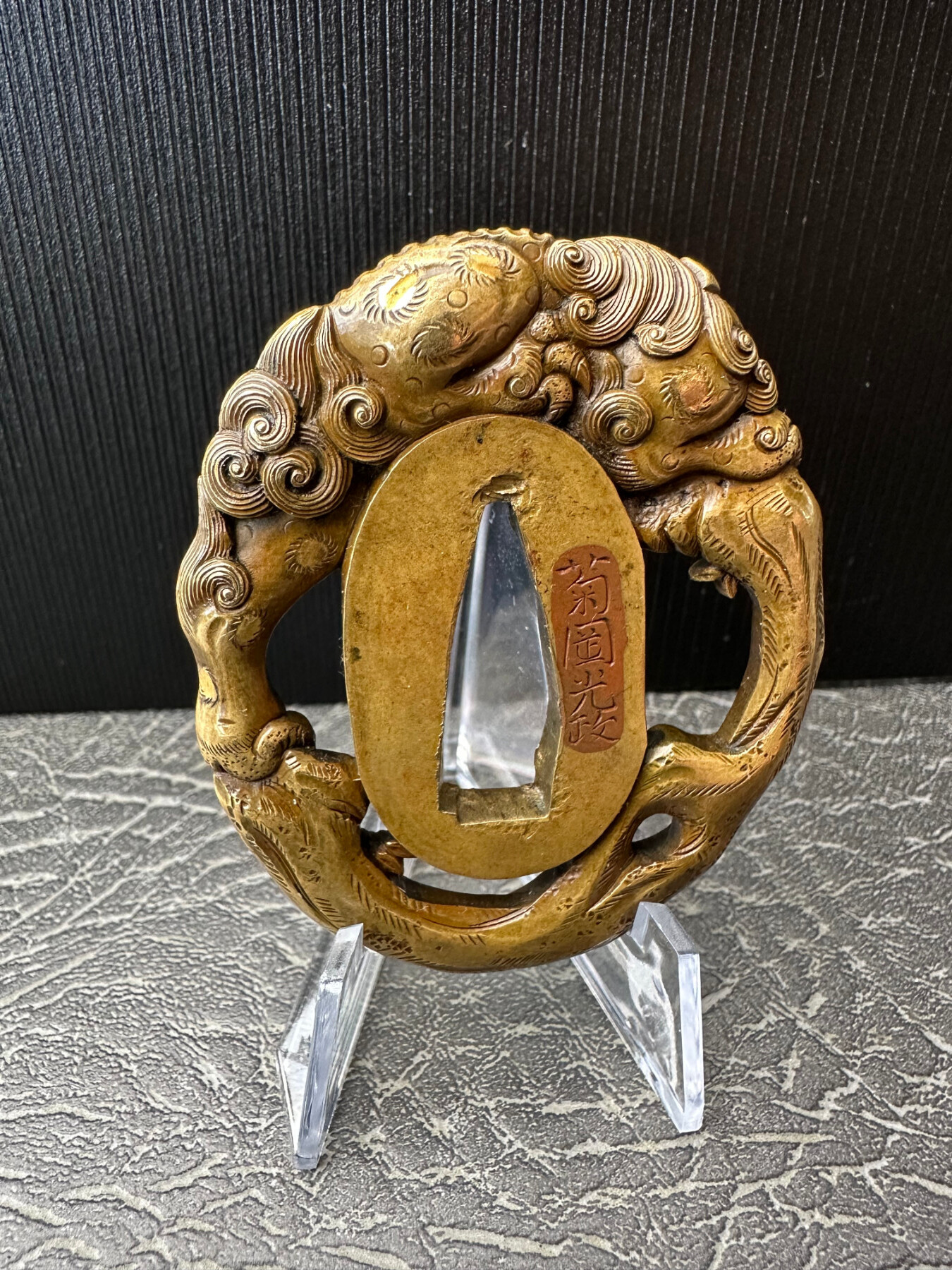
Recently acquired this Kikuoka Mitsumasa.
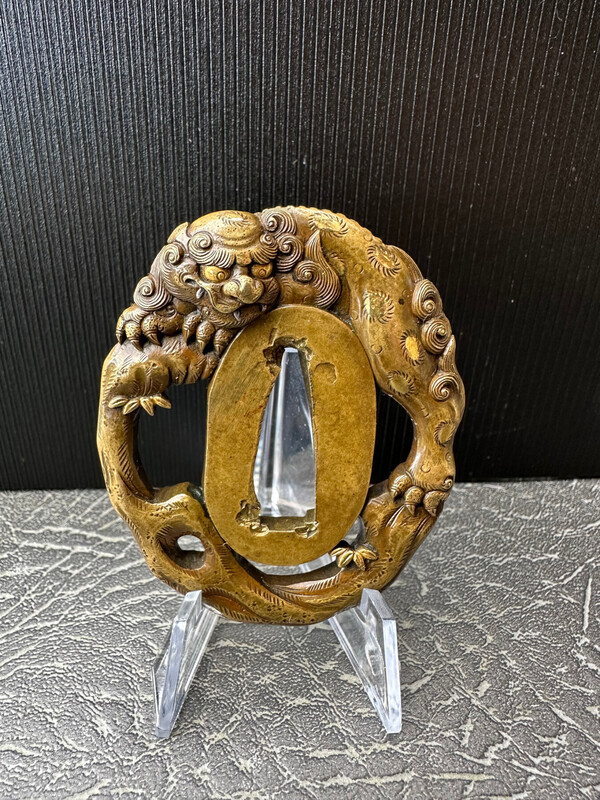 8 points
 -
Very well! Since many have already seen my avatar anyway… I'll add a good work on the theme of "shishi dance") The lion dance is usually performed as part of the New Year's celebrations. The dancer in front is dressed as a lion. The man behind him plays music for the dance on a flute. In addition to the man dancing as the lion's head, there are others who form the body. The second dancer in the lion costume is shown on the reverse of the kozuka. The lion dance tradition developed in China from a belief that the dance would protect villages from evil spirits. Stylized lions such as this are known as Chinese lions ("shishi") in Japan. https://art.thewalters.org/object/51.691/ Best regards!

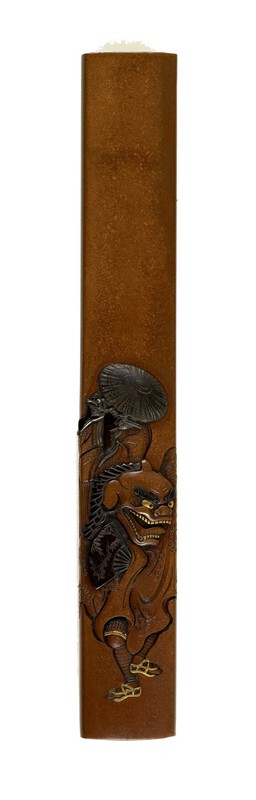
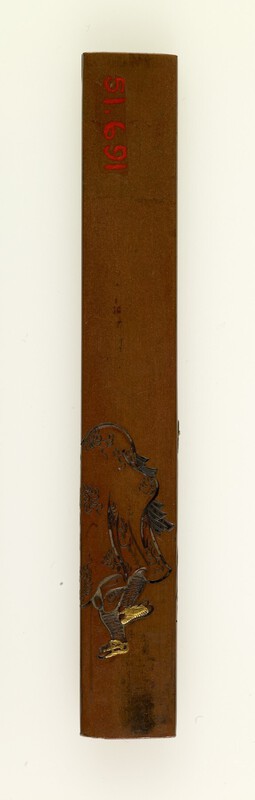 7 points
 -
Here is a Yanagawa Naomasa Fuchi Kashira


 7 points
 -
Yes, Rohan, that is quite the fascinating blade…. A unicorn, as you can imagine, and I am glad it has now been papered up to Juyo and properly documented.
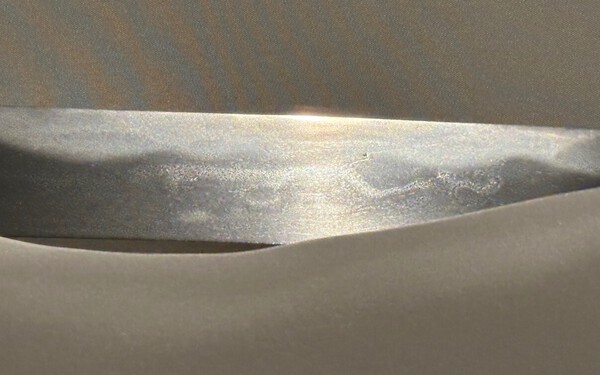
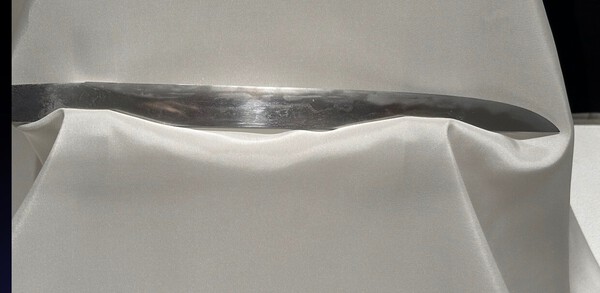

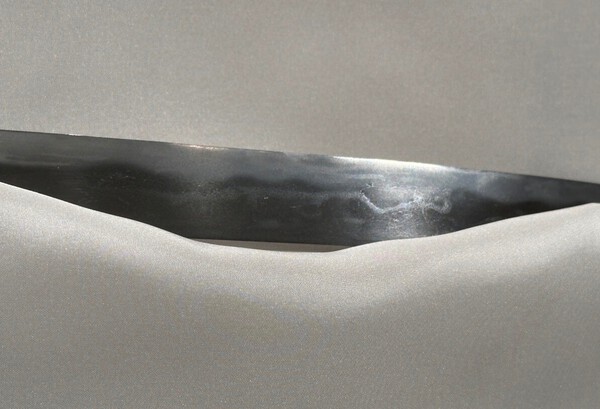 5 points
 -
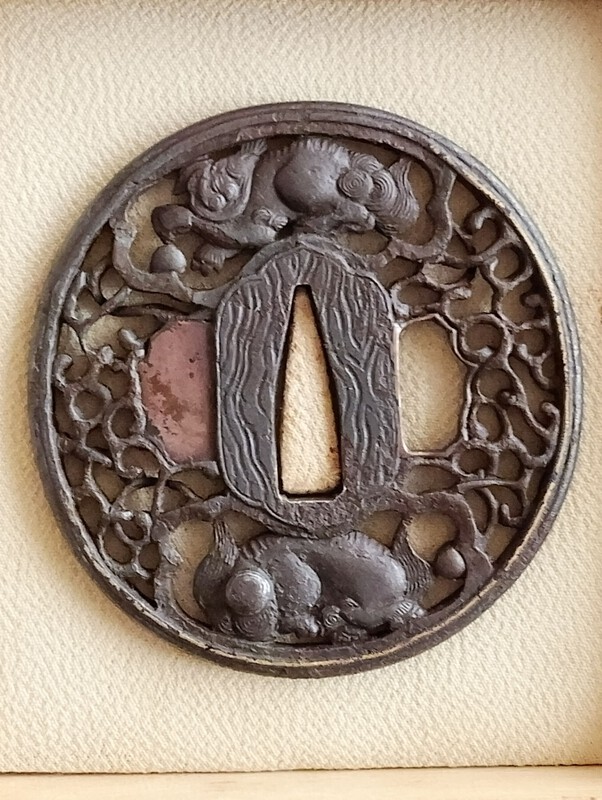
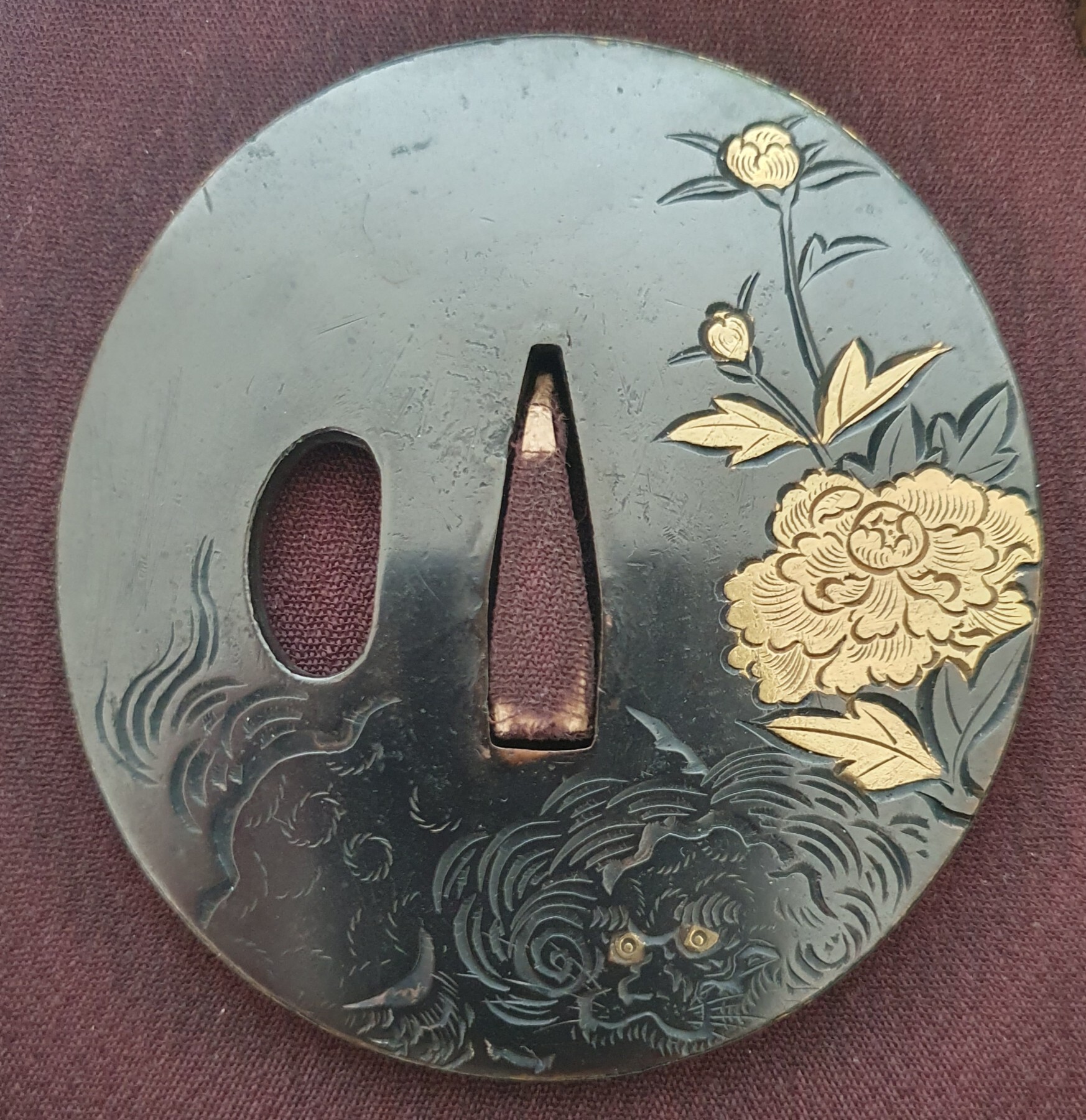
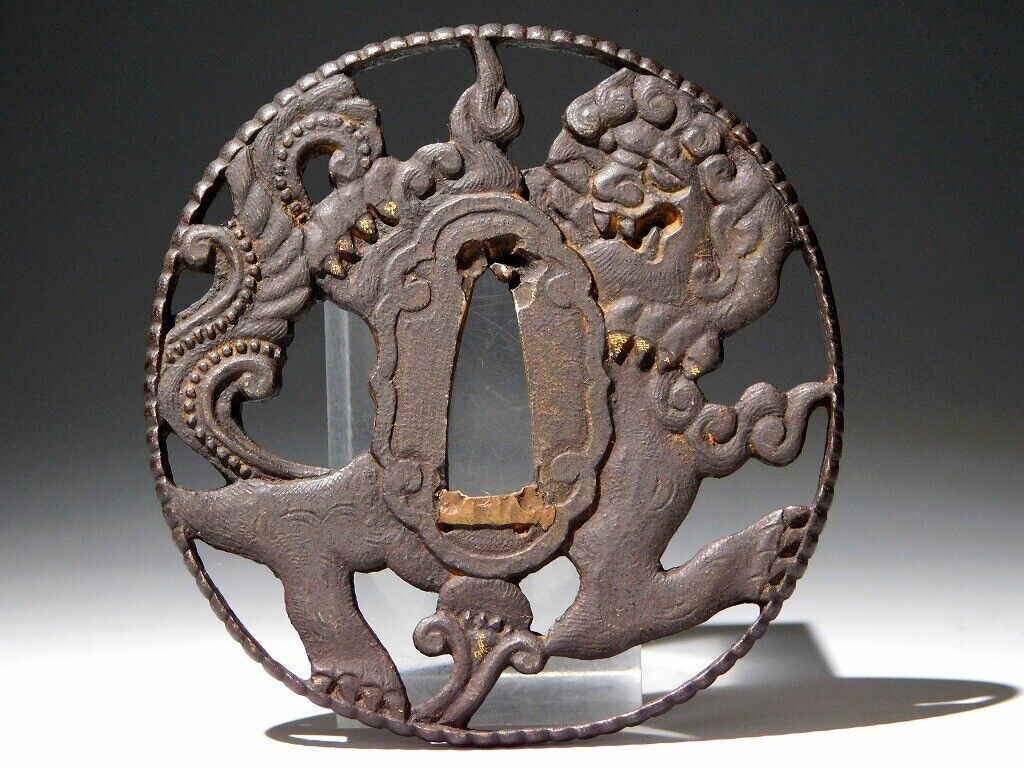
My small contribution, old nanban tsuba in ok state. Yet I love the two shishi and the little gold dot for the eyes.
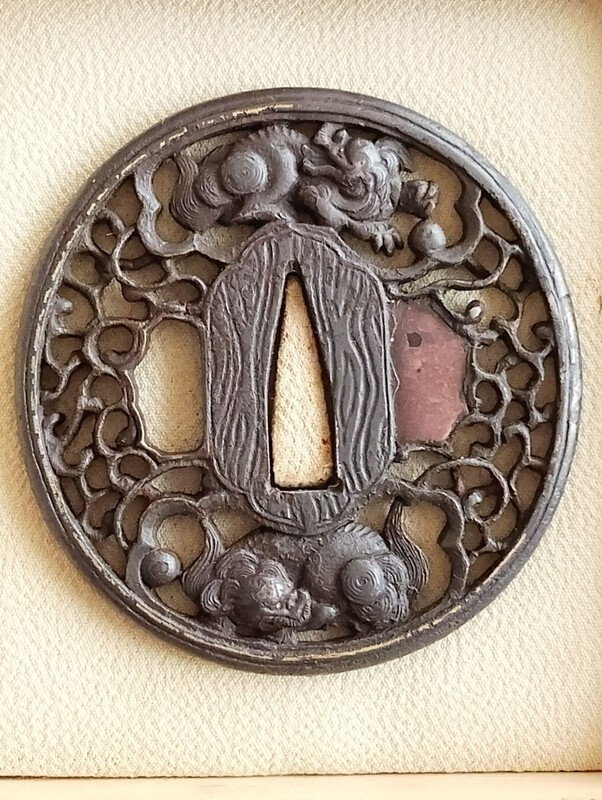
 5 points
 -
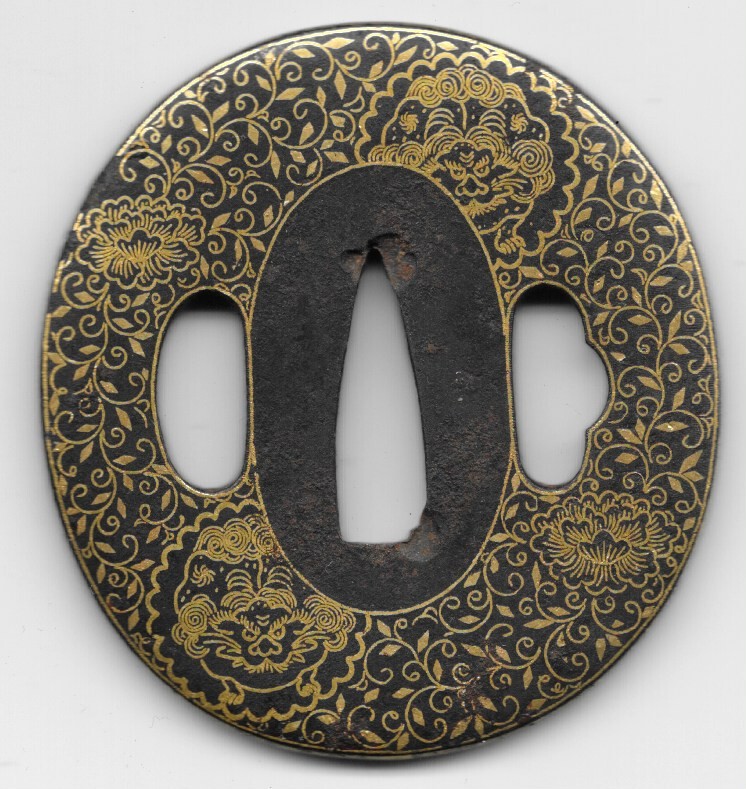
Hey Tosogu collectors, I recently obtained my second Yanagawa Naomitsu piece, a beautiful lion and peony themed fuchigashira (possible tokubetsu hozon candidate?) In celebration of this new acquisition I felt a mega lion thread would be fitting, hoping to get the rest of the forum involved! Post your best lions, all types of Tosogu welcome! I'll start:4 points
-
Mentioned here, along with links to an English writeup of the exhibits, if you didn't manage to find it yet: Aside from the Awataguchi blades, of personal interest to me is the Yukimitsu which is the only signed work of his that is also done in hitatsura and is thus a valuable data point for Soshu. That single blade allows the NBTHK to issue non-den attributions to Yukimitsu for works that match that hitatsura style, since there's a shoshin zaimei example as a reference.4 points
-
4 points
-
Yeahm, a Komonjo listing is considered origami to gimei at any price under market value4 points
-
Has this appeared before? https://www.tessier-sarrou.com/lot/116199/15882152-koto-wakizashi-epoque-muromachi-1333-1573-signe-mei You need to search through the images.4 points
-
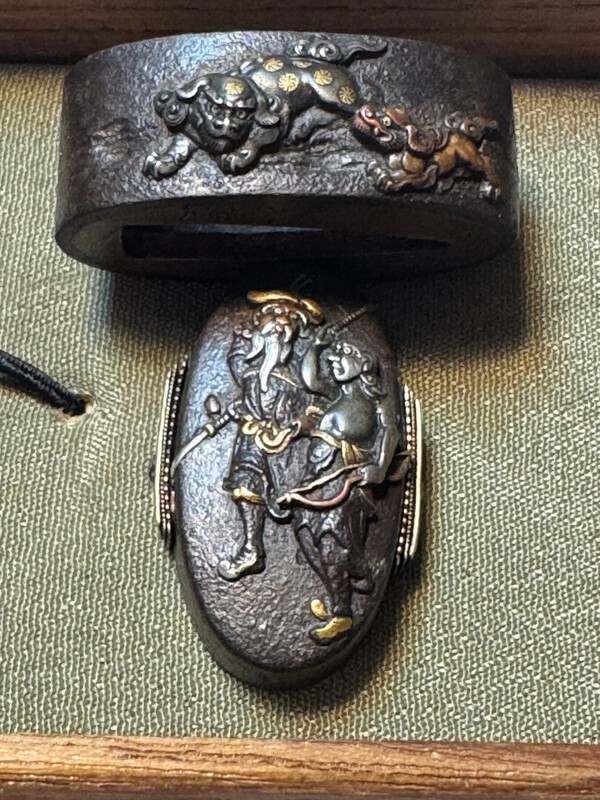
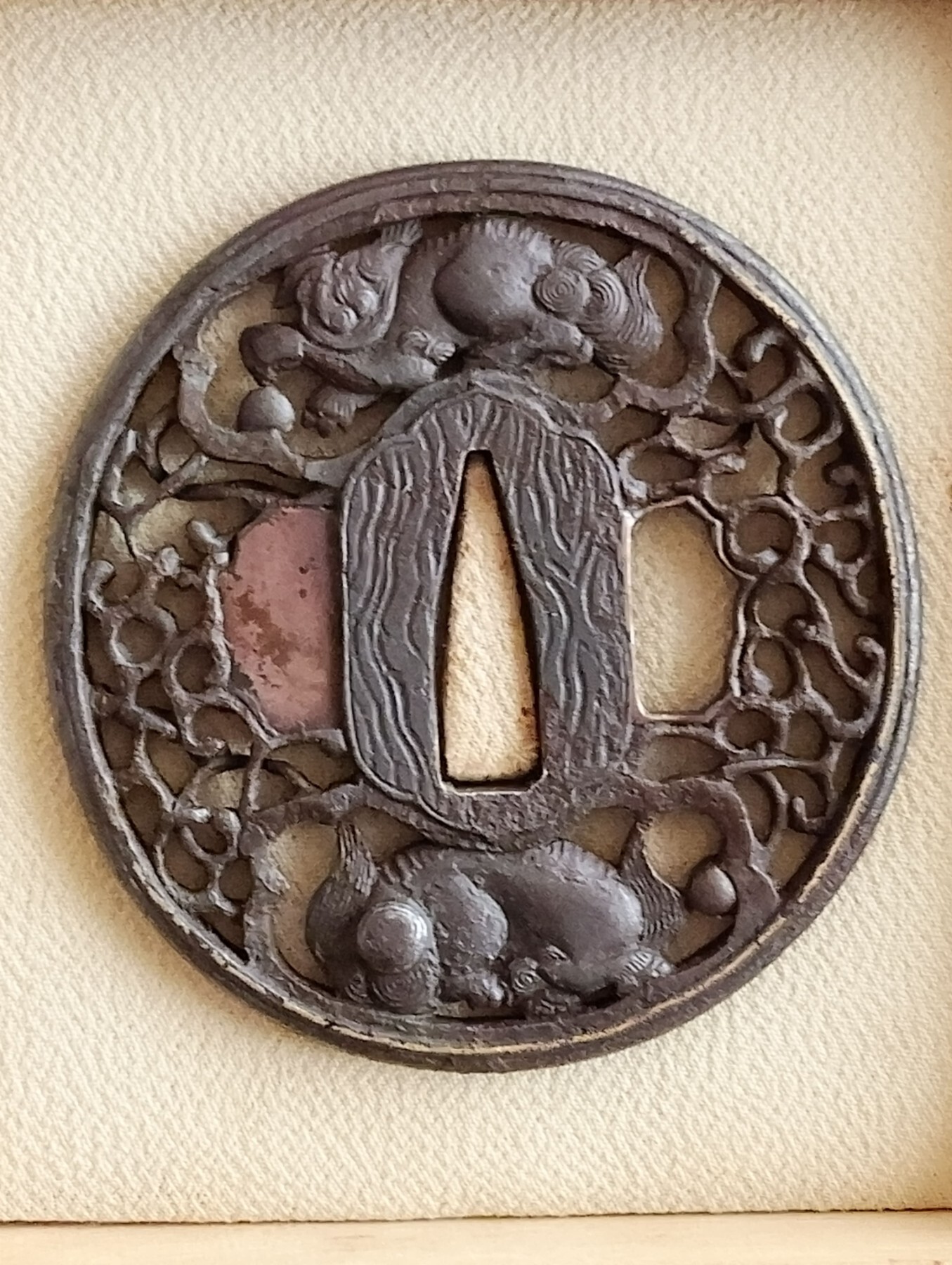
Here is an iron set of fuchi/kashira with what I was told is a pair of lion hunters/lions. I have not researched the mei.
 4 points
 -
4 points
-
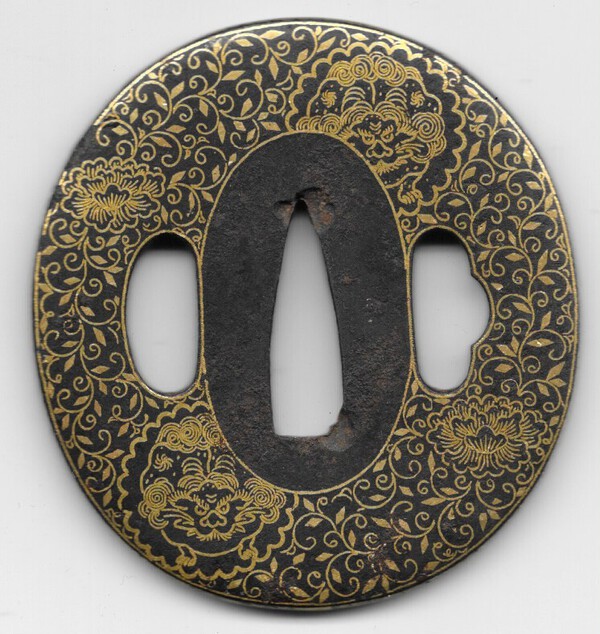
Mine....
 4 points
 -
Not sure if this has been posted, but I just visited the Juyo Token exhibition in Tokyo today and there were some amazing blades. Here is the list they are showing: https://www.touken.or.jp/Portals/0/pdf/english/(英語))第71回重要刀剣等新指定展目録.pdf They had a Hizen blade done in a killer hitatsura temper that was over 94cm nagasa! Absolutely stunning....but my favorite was probably the Yasumitsu. There was also an Awataguchi Kuniyoshi that belongs to Nicholas Benson that is being submitted to TokuJu, even thought its listed under Robert Benson. Also Awatguchi Hisakuni. Amazing to see 36 Juyo from all different smiths for future reference.3 points
-
Hi Patti, You will need to remove the wood retaining pin from the handle. The pin will only come out one way because it will be wider on one end than the other. Here is a useful video. Removing The Handle / Tsuka of a Japanese Sword - NihontoAntiques.com #13 points
-
The blade is signed Kanenori and appears to be Sue-Seki (late Muromachi period Mino school). Best regards, Ray3 points
-
You are almost certainly correct - the general rule of thumb for Komonjo blades is, if they aren't papered, assume they won't paper, at least in their current state.3 points
-
3 points
-
Here is one of mine.
 3 points
 -
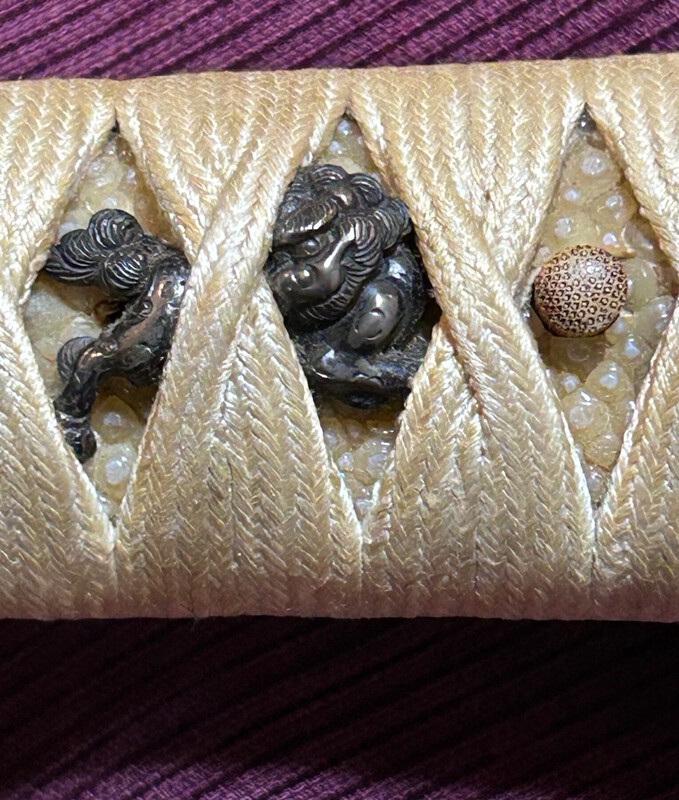
Closer views! and
 3 points
 -
Hello everyone, TLDR: Interested in Japanese swords and fittings? I made this to help the field. Open nihontowatch.com on your phone browser, and add to home screen (Share → Add to Home Screen). Thank me later. --------------------------------------------------------------------------------------------- I have been thinking for quite some time about the future of our field. I have been blessed with incredible mentors and opportunities, most notably the late Darcy Brockbank, who was so generous in sharing his knowledge. Since his tragic passing, I have felt a responsibility to carry that work forward. What I am about to present, I built as an homage to his memory. Our field has problems. We operate in a field of extraordinary depth without being equipped with the knowledge and tools to understand what we're looking at when we browse the market. Refreshing dozens of dealer websites every week, most in Japanese, copy-pasting listings into translation apps, pinching to zoom on sites built twenty years ago — market awareness is just painful and you miss things constantly. You spend an hour and walk away unsure you have seen everything. And this is just the market experience. The deeper problem is access to knowledge. There are no catalogues raisonnés for artists. Yuhindo would have grown into it — it was planned. But alas, Yuhindo is no more. No way to know, with any confidence, whether a price is reasonable without decades of experience or tens of thousands of dollars invested in published references. No way to know why something costs what it does. Communication with Japanese dealers remains daunting for most. No easy way to know who is a reputable dealer. The barrier to entry is simply too high, and this friction keeps our field artificially small. Fine art has Artnet. Watches have Chrono24. Antiquarian books have AbeBooks — markets with comparable depth and comparable opacity, served by platforms that bring transparency and accessibility. These fields have benefited immensely: they have enabled new entrants in droves to collect in confidence. Our field needs more knowledge and transparency to build interest and trust.Japanese swords and fittings. Eight hundred years of collecting history at the highest levels. The category that contains the most national treasures in Japan. The indefatigable search for perfection of an entire civilization. And yet, we have nothing. This had to change. As I write this, there are 3,021 Nihonto and 1,607 Tosogu items for sale across 44 dealers, Japanese and international, in a single searchable interface. Every listing is structured with attribution, certification, measurements, and artist intelligence data. NihontoWatch is on track to follow 100% of the online market for genuine items with NBTHK papers. Refreshed 12 times a day. Everything is translated and structured, as it trickles in live. But what is this worth, if it's so hard to know what you're looking at? Especially for newcomers, it is so hard to tell what you're looking at. This is where the magic is. I am nostalgic of reading through Yuhindo's artist descriptions. It made me deeply appreciate the field. It got me in. NihontoWatch scales this experience and creates something approaching a living catalogue raisonné for every Tosogu and Nihonto artist. It matches every listing against a database combining the complete Juyo, Tokubetsu Juyo, Juyo bunkazai, Kokuho, and Gyobutsu designation data — over 23,000 items at the highest level, with rich text in classical Japanese. This data is then processed, synthesized, and presented into NihontoWatch's artist directory in a way that is respectful of the NBTHK's copyright. With this, you'll be able to discover a maker's historical reputation through quantitative analysis of exhaustive provenance records, in ways never seen before. Over time, all of these artist pages will come alive, forming an ever-expanding knowledge base. - How rare is it? - How many Tokuju? - How many designated works ranked Juyo and above? - Why is this important? - Where does it rank relative to other works? - What is for sale right now? - What was for sale recently? All the answers are in. These are questions that come up constantly in our community, and until now, answering them required years of collecting published references worth tens of thousands of dollars, and patiently indexing them with post-its or one-by-one in a spreadsheet. Only professional dealers or major collectors could afford to do this. This is a BETA, so there are errors. The more obscure the artist, the higher the error rate, and there are still basic errors I need to fix with some famous artists. A lot of algorithmic tinkering and curation ahead. It will keep getting better with your feedback. See the results for yourselves: - Soshu Masamune: https://nihontowatch.com/artists/masamune-MAS590 - Ichimonji school: https://nihontowatch.com/artists/NS-Ichimonji - Yasuchika (tosogu): https://nihontowatch.com/artists/yasuchika-TSU001 - Goto school: https://nihontowatch.com/artists/NS-Goto Click one and explore the designations, the provenance abalysis, the measurement distributions. This is just a first shot — over time this data will grow. Here is one where I have published an item I studied for my Substack article on Mitsutada: - Osafune Mitsutada: https://nihontowatch.com/artists/mitsutada-MIT281 Imagine Yuhindo, but with a page for every artist and every piece ever captured on camera. Saw a national treasure at an exhibition in Japan? Share your photos on NihontoWatch's artist catalogue. In the future, owners of particular works will be able to publish them to the artist's catalogue. Think of it as a growing, community-curated knowledge base for every artist in the field. And so much more Browse and filter: Designation, dealer, item type, school, province — all filterable, all instant. Prices display in JPY, USD, or EUR. Every filter combination is a shareable URL. The sold archive tracks thousands of items for pricing research. And it works for every budget, for collectors at every level. - All Tokubetsu Juyo Nihonto on the market - All Tsuba with Hozon or Tokubetsu Hozon, maximum price $2,000 Setsumei translations: On some items, you can press the floating book icon on any Juyo item to toggle between photos and the Juyo setsumei translated text. For most Juyo and above items, the NBTHK evaluation text from the dealer's page is identified by computer vision and translated into English. It will fail if the dealer has not posted the Juyo Zufu extract, but in the majority of cases they do, and the result is remarkably accurate. Do use responsibly — the quality is great, but not perfect. Always purchase professional translation from Markus Sesko when contemplating the purchase of a Juyo-designated piece. Search alerts: Never miss an item again. Define keywords and filters and save them. NihontoWatch will run your search every 15 minutes, and when something new appears, immediately send you an alert email. In practice, missing a listing that fits your interests becomes almost impossible. Tip: I recommend avoiding overly specific queries. "Juyo tsuba" or "Kamakura signed tachi" are safer than specific artists such as "Yozozaemon Sukesada," which would be more fickle. Broad queries give you the best market coverage. Inquiry emails: Press "Inquire" on any listing to draft a professional inquiry in Japanese. Handles etiquette and formality, and can help you request the 10% consumption tax exemption available to overseas buyers. Did you even know you could get 10% off? How many new entrants lost 10% on this, at least at the beginning? I for one did. I've seen countless high spenders neglect to request it while shopping across Japanese galleries. Glossary: The technical language of Nihonto and Tosogu is deep and specialized — needlessly so for non-Japanese speakers. Anytime a technical term comes up, you can click and see what it means. Over 1,200 terms, searchable, automatically linked from the setsumei translations. Who remembers always keeping an index open to keep track of terms when studying Juyo items? https://nihontowatch.com/glossary How best to use NihontoWatch While it works wonders on desktop, NihontoWatch works most beautifully on your phone. I use it every day — it feels like I have the market in my pocket. Open nihontowatch.com on your phone, hit Share → Add to Home Screen. And voila, you have an app. It becomes something you check with your morning coffee, the way one might check the news. A word of caution The data has errors — always verify independently. This is a tool to explore the market, not a substitute for critical thinking. If it looks too good to be true, it likely is, and this system can't easily correct online misrepresentations. Old listings where dealers have not marked items as "SOLD" will still appear as available. Listing errors will slip through, but data quality improves continuously as the system learns over time. Get involved - Missing a listing or dealer you like? PM me or post here. - Bug? PM me or post here with steps to reproduce. - Dream feature request? Reply in this thread. I will keep this thread active and share major updates when time permits. Everything is free right now, and will remain so until ready for official release. This is no trivial task, and it is expensive to operate — it will need to be covered in some way down the line. It will be tempting to keep it for yourself. But if we want our field to grow, we must share knowledge and expand market access and transparency. The single most impactful thing you can do right now is help others discover and use the tool. Share it with your study group. Share it with your collecting circle. Share it with a friend who has been curious about Nihonto and Tosogu but found the barrier to entry too high. That barrier just got a lot lower. Farewell, Darcy. This is for the teacher in you. Hoshi
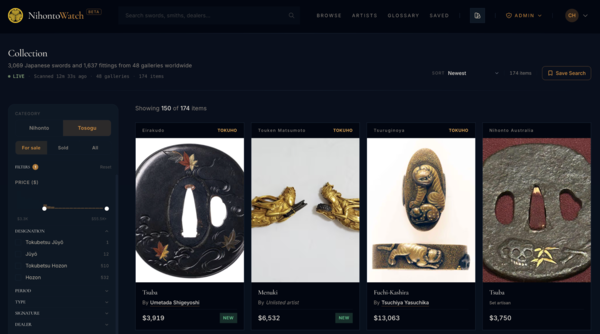

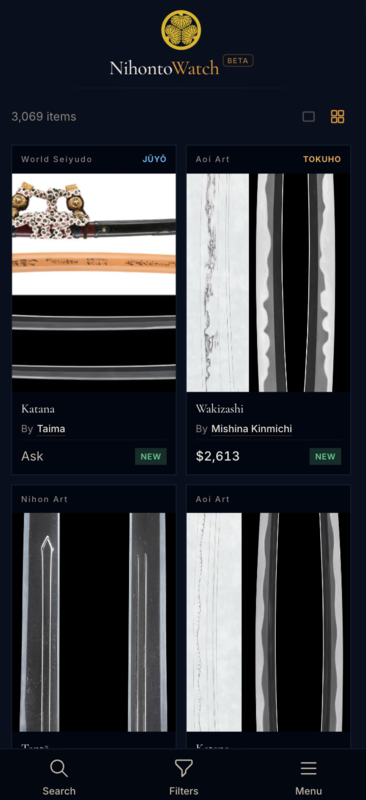
 2 points
 -
No, that is a first! Symbols and even clouds on Mount Fuji.2 points
-
Wonderful photos Michael! @Lewis B Just a bit earlier in that same article he also mentions: "However, there are also somewhat wider pieces with hiro-suguha that are difficult to distinguish from Shintōgo Kunihiro, slender uchizori pieces with monotonous hitatsura that at first glance might be confused with late kotō but whose jigane is unmistakably that of a superior Sōshū smith and whose nakago is clearly old. This corresponds to Muromachi-period texts that record this smith's broad working range, tempering not just suguha but also notare, ko-midare, ō-midare, and even hitatsura." I'll be excited to see what the shinsa judges had to say about the sword in the zufu.2 points
-
This thread unearthed a lot of interesting examples. There are no Goto ones so far. I only have one Shi-shi and it is by Goto Kenjo. My particular shi-shi seems to have the Zoomies.... Dog people will know what I mean.
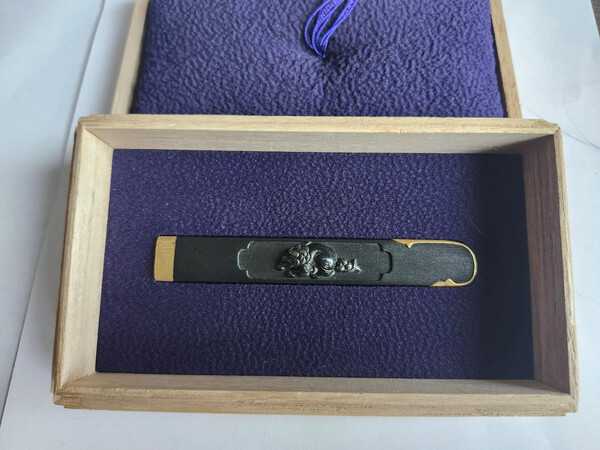
 2 points
 -
Thank you John, I find this very interesting and exciting. Likewise, Bruce; It's not every day that I encounter a Japanese Military Sword that i've never heard of! I will go home, and take some very careful measurements. If enough aspects match one of the 4 specifications of this type of sword, maybe I'll create a new thread about "Combination Swords"... If specifications do not match, I'll share those measurements here. Thanks again! These are the kinds of exciting revelations that makes collecting military swords enjoyable to me -Sam2 points
-
Thanks for the pictures. Its fascinating to see how newly discovered examples are changing the zeitgeist. Take the Yukimitsu for instance. Honma Junji stated not so long ago that he felt all zaimei tanto inscriptions he had examined were suspect requiring further research. With Juyo pass the Shinsa must have felt the mei was genuine, being an even more courageous decision, given the uniqueness of the hitatsura tempuring for this smith. From the Kanzan's Nihonto Taikan (Source Touken West - Nihontō Database) "Among Yukimitsu signatures I have examined, those I believe to be authentic are all two-character mei in a gyōsho (semi-cursive) style that is austere yet dignified. As noted above, long signatures requiring further research include "Sagami-no-kuni Kamakura jūnin Yukimitsu" (Kagen 2) and "Kamakura jūnin Yukimitsu" (Genkyō 2). " Whats the full signature here? Kamakura Jūnin Yukimitsu (鎌倉住人行光)2 points
-
The line that causes the Ichi to look like a "T" is simply a dent among the many dents and scratches.2 points
-
Thanks for the pictures! They're going straight into my archive. Nice clean shot of the mei, too.2 points
-
Hi Michael, welcome to the forum! It looks like you have a very nice example of the Type 95 Guntō, and in great condition. It's absolutely genuine, you're correct that it has Tokyo 1st Army Arsenal inspection stamps. The Sakura flower with line inside is a mysterious stamp, that may or may not be associated with Kōbe Shōten, you can see the similarity in stamps below. For a deep dive into these interesting swords, I recently wrote a document that can be found in the Download section here on the forum. Also heres some great resources: http://ohmura-study.net/794.html http://ohmura-study.net/957.html 1. Legit . 2. The ring is typically on the other side; but it's pretty common to see them flipped. 3. Looks like 東 68119. (東 = TŌ = 東京第一陸軍造兵廠監督課, Tōkyō 1st Army Arsenal Supervisory Section.) 4. See above and below: Hope this helps, All the best, -Sam Sakura Ichi Sakura flower stamp with kanji for ICHI inside. May be associated with Kōbe/Kanbe Shōten. (see next). Sakura K (Kōbe) 合名会社·神戸商店, Gōmei-gaisha Kōbe/Kanbe Shōten = Kōbe/Kanbe Shop Unlimited Partnership [神戸 (Pronounced as either Kōbe or Kanbe).

 2 points
 -
For those who have an NDL account, it is accessible online here: https://dl.ndl.go.jp/pid/13238909/1/13 There is also this one about Akasaka tsuba, in open access. It has sketches, and it seems to be about the process and artisans: 赤坂鐔工録 https://dl.ndl.go.jp/pid/927286/1/12 points
-
I don't offhand see a record for this smith: Ashu Masamune saku, and dated a day in the 8th month of Ansei 2.2 points
-
Hi Patrice, welcome to the forum. Can you show us the tang too? If you remove the mekugi(the small stick plugged in the handle) you will be able to easily remove the tsuka. Many other experienced members here would be able to give you more detailed information.2 points
-
It may qualify as a 兼用刀 - combination sword : http://ohmura-study.net/210.html2 points
-
A word of continued caution. A prominent Japanese dealer warned me that even with the proper tariff code, Japanese export documents, and antique attestation it is still up to the judgment of the customs officer reviewing the package. I have had one tsuba arrive without tariffs applied and one that did. Both arrived in the US in the past two months and shipped out well after the August change. Fingers crossed for the next one that is on the way.2 points
-
You win!
 2 points
 -
I was struggling with the Japanese description of a mounting . Mr Moriyama , who is a huge asset to the Board , assisted by giving me the translation ,being Yosegane ,together with a link to the Mokumekin Museum . The museum describes Yosegane as"like marquetry Yosegane combines metals of different colors to create patterns ". Members might be interested to see an example of what I now know to be Yosegane. This sword , regretably not mine , is one of the finest that I have ever handled. I hope you enjoy looking at it . Ian Brooks
.thumb.jpeg.fc5e542807b8c57224ba7d03e43a6d76.jpeg)
.thumb.jpeg.ff07293e7f2dc9c2699cf4180c2baf53.jpeg)
.thumb.jpeg.cb343a7676ef5e3a655b2e95d43039b7.jpeg)
.thumb.jpeg.18f7f5d3af0cc23dc0b64a9f429a9c05.jpeg)
.thumb.jpeg.024d72891165960bf447b78a64d346a0.jpeg)
.thumb.jpeg.d75ba5b8e446e48d3f5b73bf505c54c3.jpeg)
.thumb.jpeg.735f2788969c9ccc581bbcc09f1454f8.jpeg) 1 point
1 point -
Jeremy, MUKADE SHINAE are only a special form of massive SHINAE. In this case above, we don't see cracks but ripples.1 point
-
Rummaging through a drawer and found this themed koshiraé for a Yosozaemon. Shishi menuki Botan peony tsuba Shishi kozuka
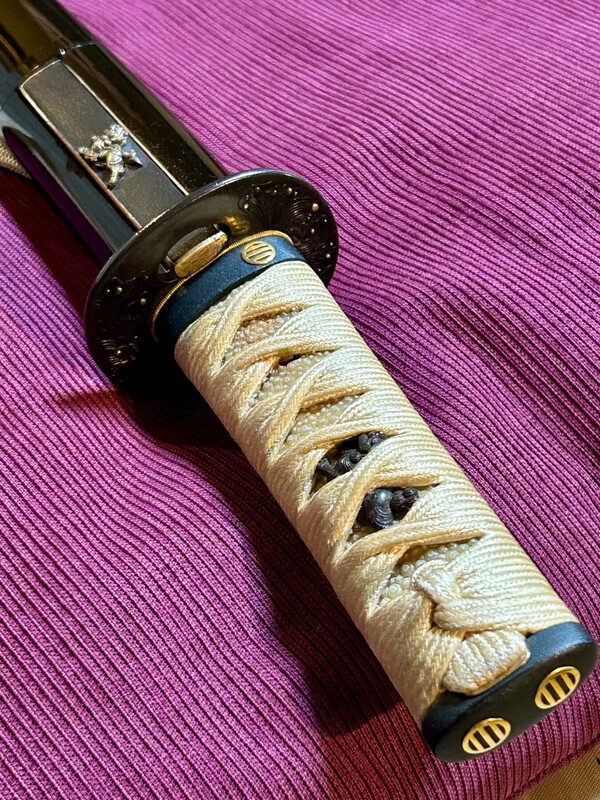 1 point
 -
Hi, yes. This is a data bug. A juyo item by a unicorn smith called "Iemura" from the Oei-period has been mistakingly assigned to the Showa smith Emura. Thank you for the report, the error is now fixed. Note on the BETA: There are many data bugs currently. For obscure smiths with 1 Juyo, best assume it's an assignment error. Best, Hoshi1 point
-
I concur that there are likely to have been unorthodox targets cut with this sword. Don’t ask me why I might know this Jeff, regarding tsuka - no they do not crack up and fall to pieces after a few cutting sessions. They can take a surprising amount of abuse and come out relatively unscathed. The blade typically breaks/bends before a healthy tsuka gives up. The caveat here is healthy, and fitted correctly for the nakago. Since the scratches run through the rust on the edge of the blade, they must have occurred after the rust accumulated. This leads me to believe that the scratches are later than WWII.1 point
-
I edited the title to include shishi as many will know them more this way than as actual lions1 point
-
From the scratch marks on the blade, I think it is quite obvious that they were not caused by "professional" TAMESHIGIRI (which is not executed on TATAMI but on TATAMI OMOTE which is a very different thing). These marks look - at least to me - as if they were inflicted to the blade by chopping or hacking green wood, possibly even green bamboo. I have only limited experience with classic TAMESHIGIRI, but I have seen comparable marks on machetes, KOSHI-NATA, Swiss "Gertel", and similar agricultural cutting tools after their use in the above described way.1 point
-
Hi All, No offense at all taken regarding disagreements. After about 5 years of consistent use, with a tameshigiri session every month or so, cutting 20-30 mats each time, with say roughly 4-5 cuts per mat, let's say for argument's sake roughly 5,500 cuts or so, my sword looks very much like this, albeit with the scratches more concentrated in the monouchi area. Yes Jeff, tip cuts are a thing and are practiced specifically in certain styles and by certain practitioners. 'Notice how the scratches stop right at the shinogi — someone did this by hand with a goal in mind.' Tameshigiri scratches do this also though. The pressure from the force/action of cutting is all focused onto both sides of the ji through the path of the cut, hence why the scratches are most prevelent there. The shinogi ji barely touches the target in the cut, because by the time it gets there, ji has forced all the material away from the blade...also worth noting is that the shinogi ji is burnished so is much harder to scratch deeply than the ji, hence the shinogi ji typically does not get as many scratches from tameshigiri. In this case, there doesnt need to be any sandpaper involved - used tatami has in it ingrained many many little sharp bits of dust, dirt and SAND from peoples feet and daily use as a floor mat. This grit of all sorts stays inside the makiwara and scratches blades when they cut it. The scratches are identical. Just my casual opinion looking at the blade, as a tameshigiri practitioner. I have no hesitation to say thats what caused it, but there certainly could have been some non-standard targets used.1 point
-
Hi Hoshi, I've had only a quick look but that was quite interesting. One suggestion: your choices for background and text colors make some of your text nearly invisible to my old eyes. Thanks, Grey1 point
-
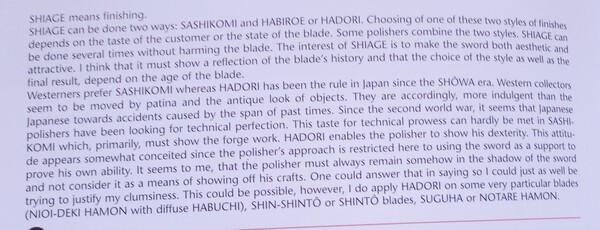
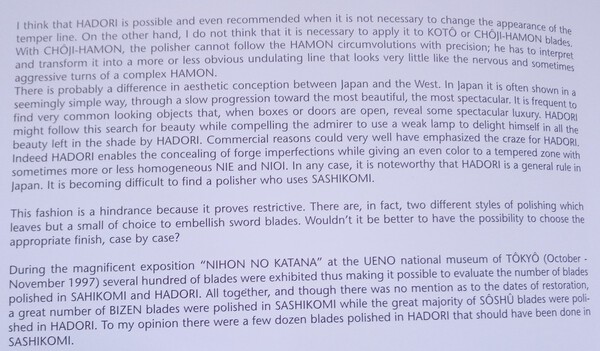
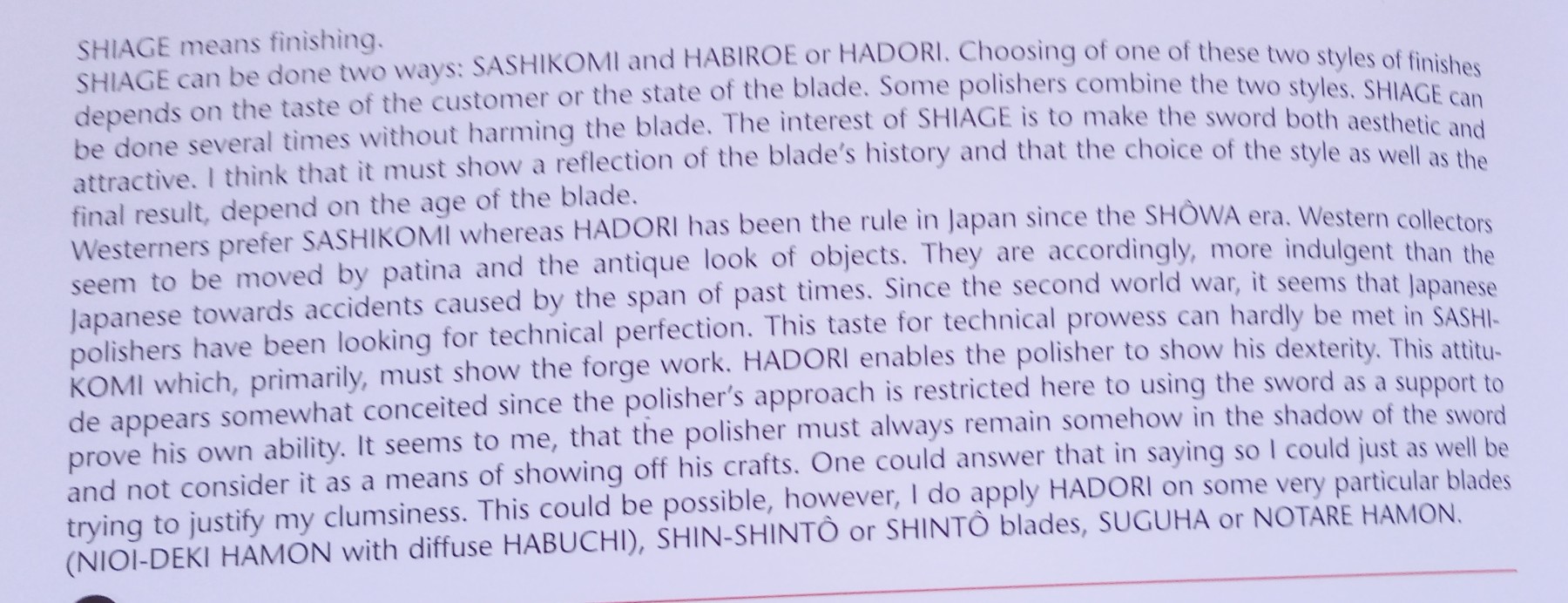
Ok, Colin, let me share what I have discussed in person with Tanobe sensei. It was not an in-depth discussion but a brief one as we covered other topics. However, it contradicts the pure 'preference-based' thesis and illustrates how one is perhaps slightly better than the other in certain circumstances. Sashikomi is particularly appropriate for nioi-based (or perhaps this could be extended also to very, very fine/tight ko-nie which is close to nioi) hamon with clearly defined choji or gunome-choji. Think Mitsutada, Moriie, etc. In fact, he recommended a specific polisher, adept at a particular type of polish and specialising in a particular Gokaden school, for a specific sword of mine. That particular sword (I am not going to disclose further details as that is not relevant) is a mid-Kamakura Bizen blade that fits the aforementioned modus operandi. Furthermore, the jigane has some hadatatsu, which is a signature trait of the school/smith. The new sashikomi polish replaced a previous highly skilful hadori polish and not only accentuated the choji beautifully but of course clearly delineated them. Some of the smaller choji and some of the togari gunome previously were not clear until viewed sideways. Furthermore, it subdued some of the o-hada / hadatachi and toned it down, making the jigane appear better, smoother, etc (outcome of the nugui used in there). Hadori, as others have said, eg in the other polish thread that dates to 2013 (where George Trotter and Chris Bowen exchanged lots of useful views, insights and information) could presumably also be good on choji and Bizen-like hamon. In fact, most swords nowadays indeed have hadori. But that polishing style seems to be particularly apposite for Soshu-like nie and jihada, where it spectacularly brings out the jihada, jinie, and overall nie in the entire structure. The jigane becomes more visible and clearer. Presumably in swords where you have notare midare or a simple wavy or suguha hamon (eg Yamashiro), you do not need the sashikomi to bring forward particularly visually striking formations such as flamboyant choji/o-choju/fukuro choji etc). Moreover, also when you have jinie and chikei, etc, you want the maximum luminance and translucence of the jigane (which hadori highlights). Hence the result is the wet, oily look in some of the Kamakura masterpieces. To elaborate on my earlier point above about each of the two styles potentially being done ineptly. Tanobe sensei has also commented on sometimes certain polish not being appropriate for a certain sword. In fact, I have seen numerous examples where the hadori has been too bright or too aggressive for a venerable old sword. One of mine is polished in a very respectful and delicate manner, as it behoves the dignity of an old Ko-Bizen beauty that it is. Eventually, yes, we as collectors and temporary custodians might express a predilection for one or another polishing method. However, that does not mean that it is right for the sword or that it has been done right. That is why we need to respect and listen to experts.1 point
-
In addition to what Reinhardt said, the thoughts of a traditionally trained polisher (now deceased). i add that wanting to judge a polish on photo is the same as wanting to kantei a sword the same way (i'll never repeat it enough.).
 1 point
 -
Another derailed topic. For those interested in the difference of "sashikomi" and "hadori"-polish I recommend "The Craft of the Japanese sword". Read pages 119-121 and READ THEM CAREFULLY! The hadori-step of polishing was invented by polishers of the Hon'ami family in later 19th century and became widely popular. It is still now. Wether one likes it or not, it is still the choice of the owner how his blade is going to be polished. "Sashikomi"-polish is just using a different kind of nugui, turning the ji into darker patterns, but not the ha. No big deal and no "lost craft" involved. Just a matter of fashion and individual preferences. This brings me to another point: Both kinds of polishing-methods are revealing all important features of a blade. If you can't see them, it's your fault. Lighting, experience, your eyes.... basically depending on your individual background. reinhard PS.: Andrew Ickeringill's view on this topic would be of relevance here.1 point
-
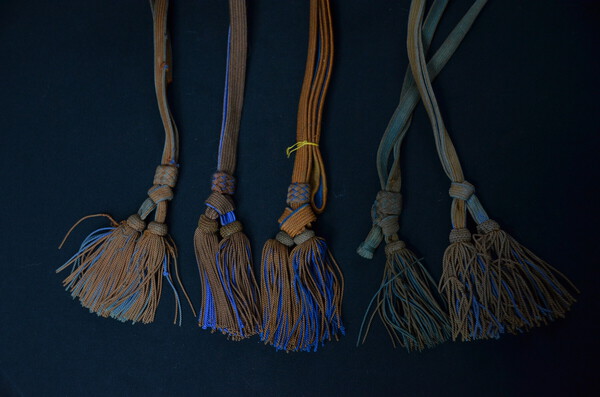
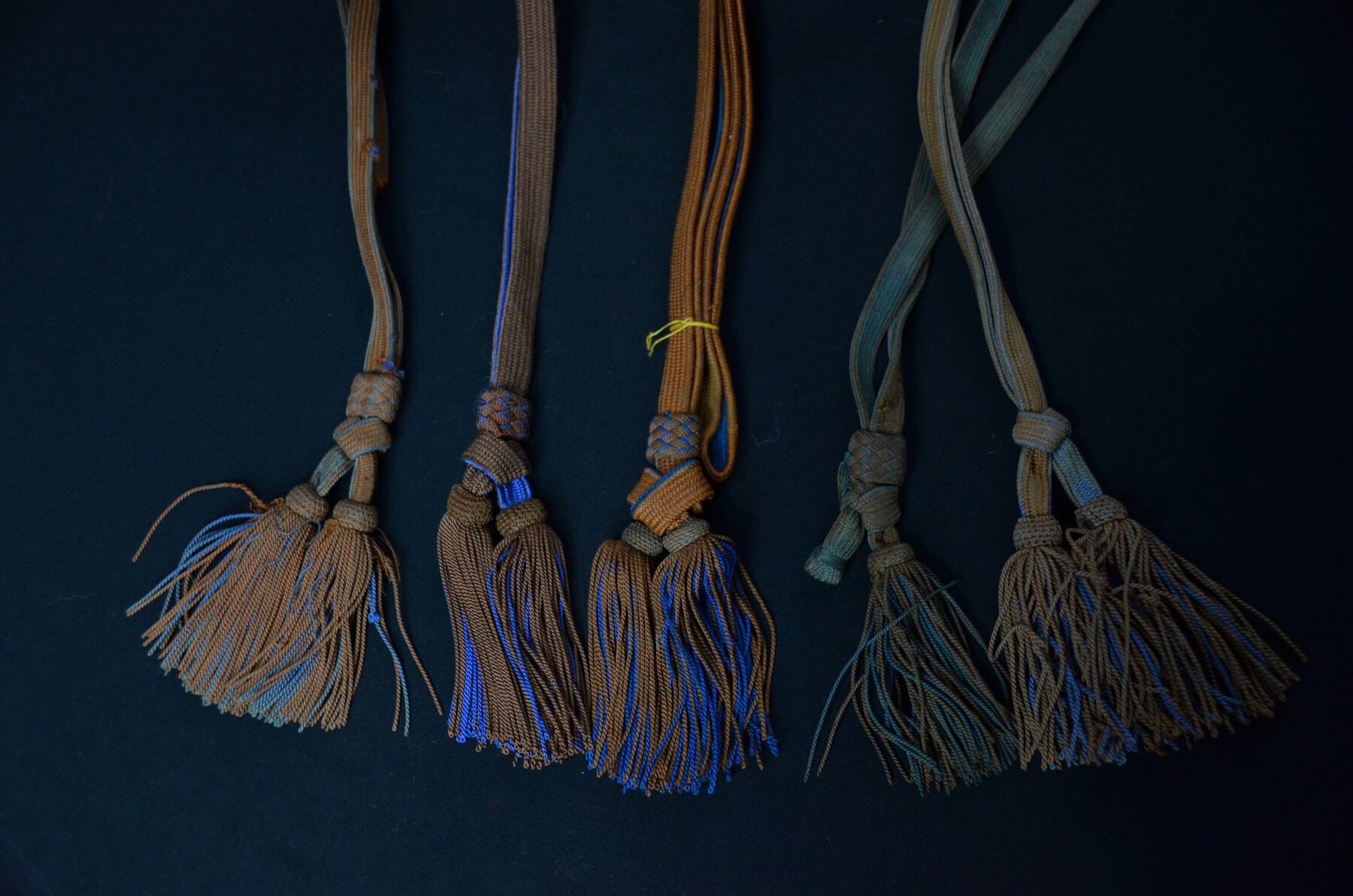
To go along the lines of my post in the General Tassels thread, I have done the same for the other tassels, hopefully this will help when determine real vs fake.

 1 point




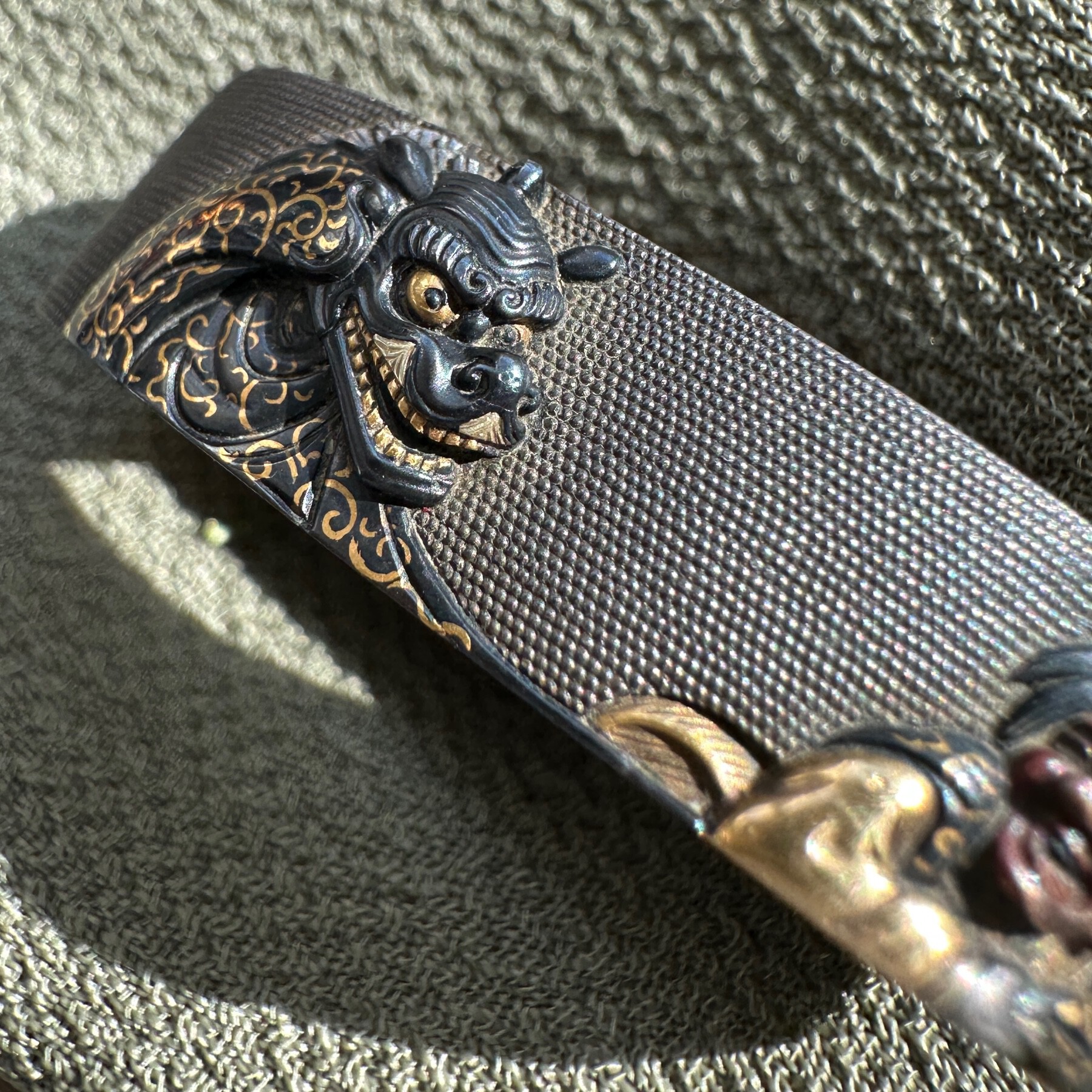



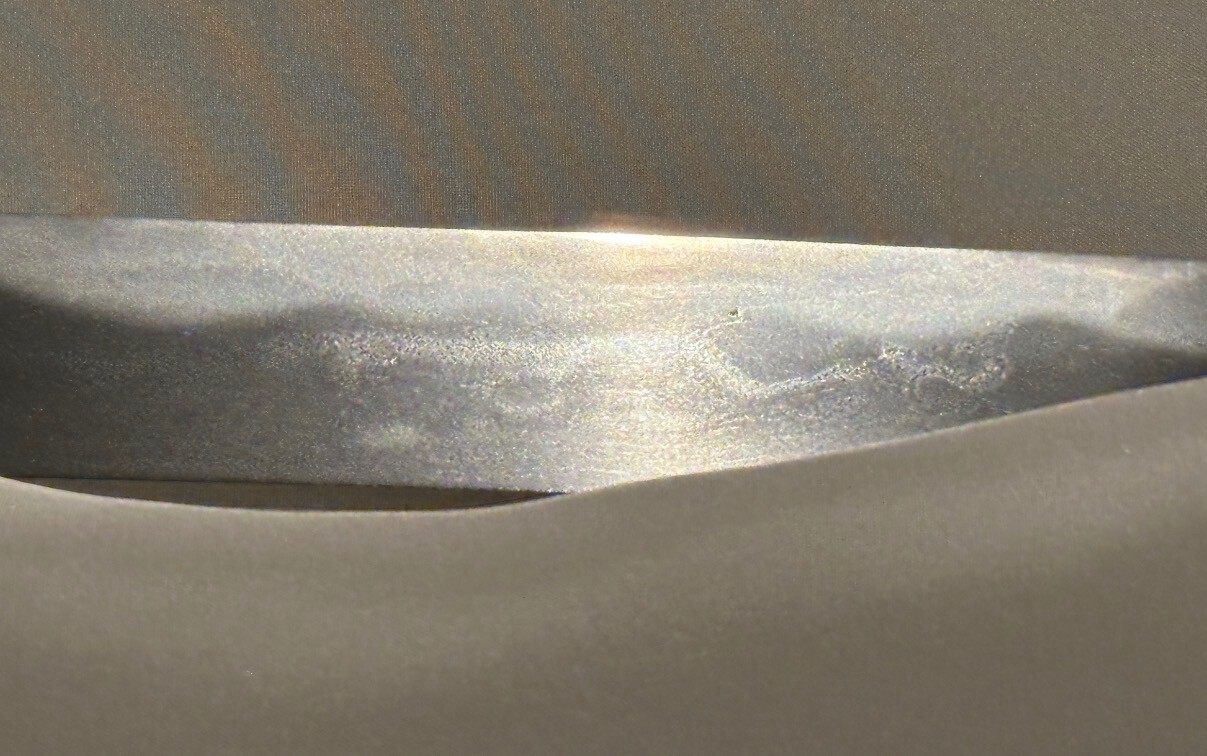
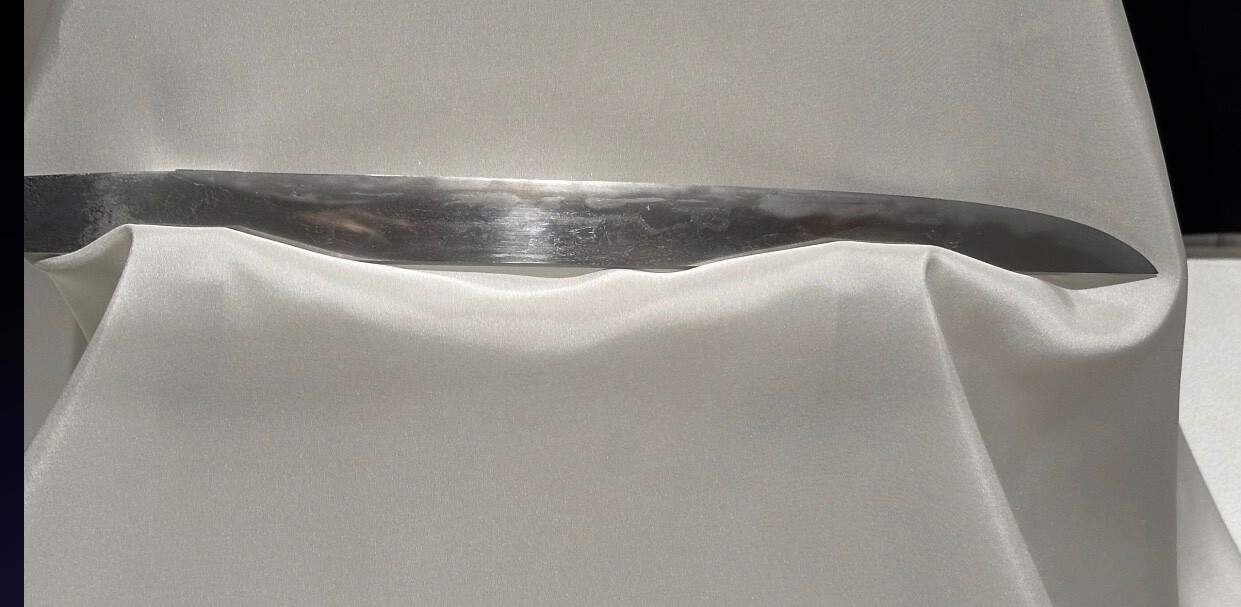
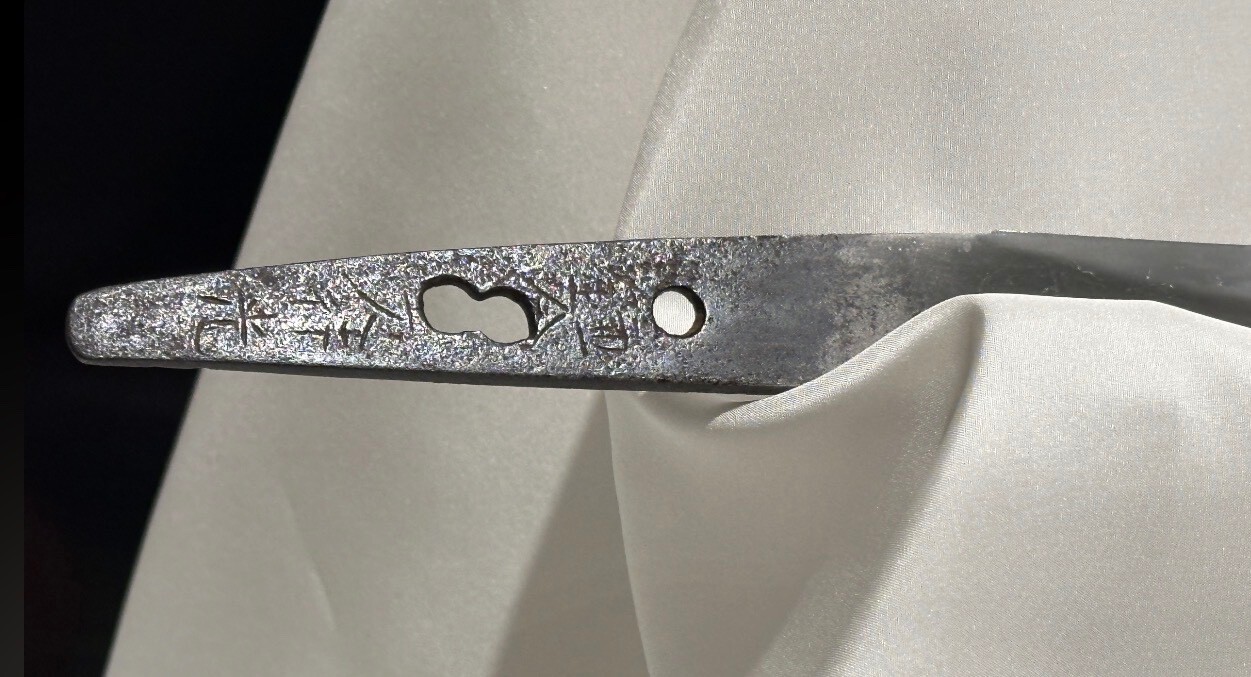


.thumb.png.4c5df79fec171b2dc4a23af38e280a4d.png)











.jpeg.dcc02bc43c6d3cf944ebda9c0565ab87.jpeg)
.jpeg.547e0d31c275398aefed3dccc5814f5b.jpeg)
.jpeg.4d9c54ef43427fefadb279ed31f60156.jpeg)
.jpeg.96bfe51e7aa82a10342497fad29b9404.jpeg)
.jpeg.4773d892d208a86794c6a837d0a941d4.jpeg)
.jpeg.890d6d984176190b7ad2969a972a0e6d.jpeg)
.jpeg.c6f0b8dd8b44ba988064fa8aafd5315f.jpeg)







This leaderboard is set to Johannesburg/GMT+02:00