
Leaderboard


Popular Content
Showing content with the highest reputation on 02/01/2026 in all areas
-
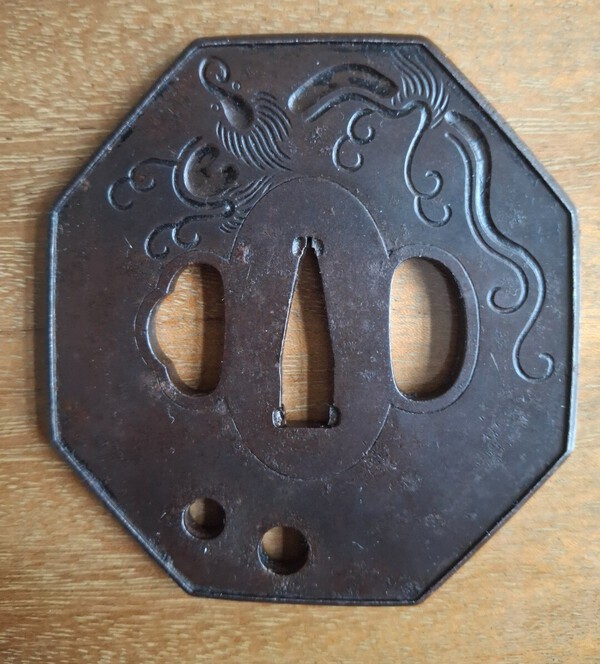
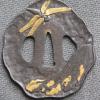
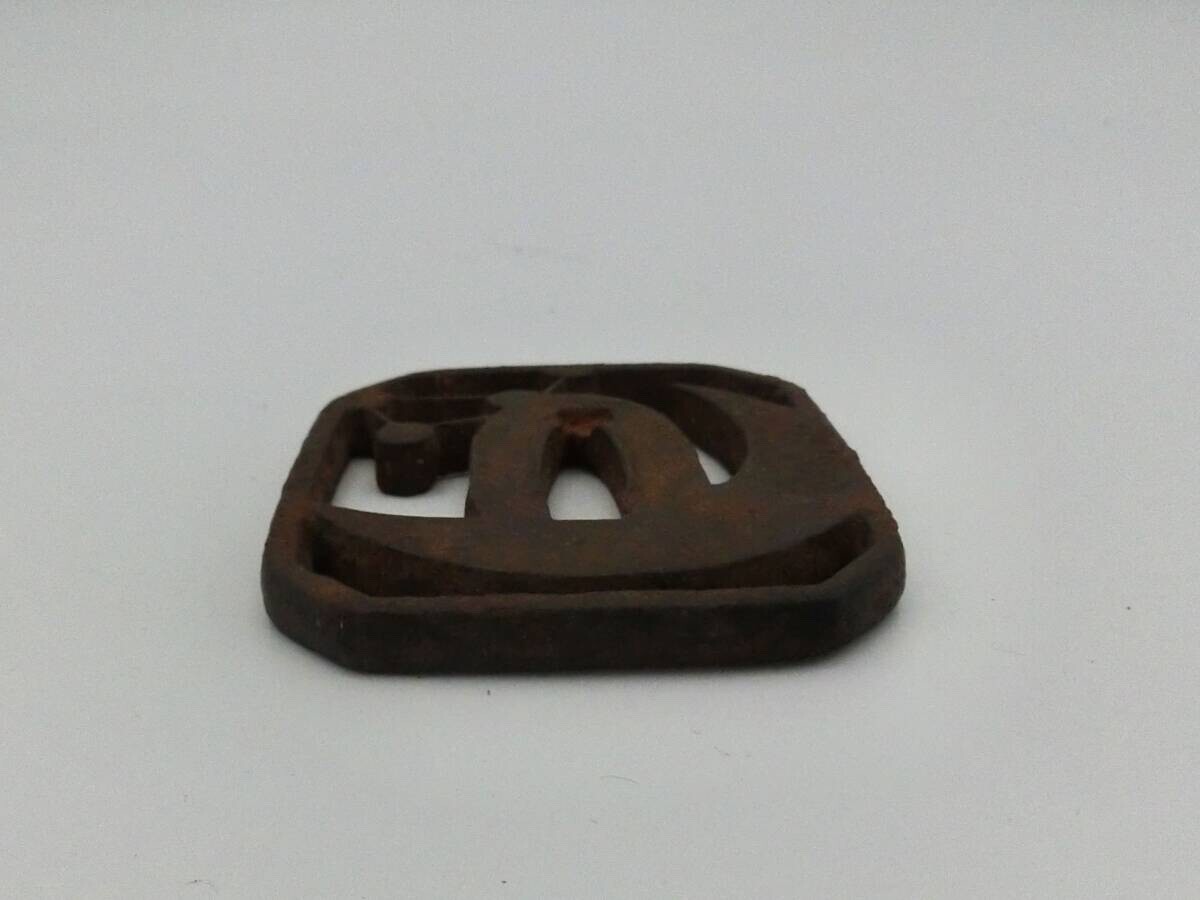
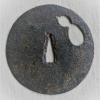
To lighten the mood a bit, I'll tell you a story. In 1990, Dr. Sempé passed away, and his widow, fearing theft, hid his Andean archaeology collection, along with 70 tsuba and kozuka, behind a platform in their country house. Thirty-five years later, their daughter-in-law undertook renovations and rediscovered these completely forgotten collections. Naturally, all the tsuba and kozuka were corroded with numerous spots of red rust. Last Friday, I bought three of these tsuba at an auction. Here are photos of one of them before and after the cleaning I performed (washing with soapy water, scraping off the rust with bone, then lightly oiling). No corrosive products were used, of course
 5 points
 -
The statement of using gun bore cleaner and mineral spirits to clean Tsuba seems completely at odds with the below advice: https://japaneseswordindex.com/tsuba/tsubacln.htm5 points
-
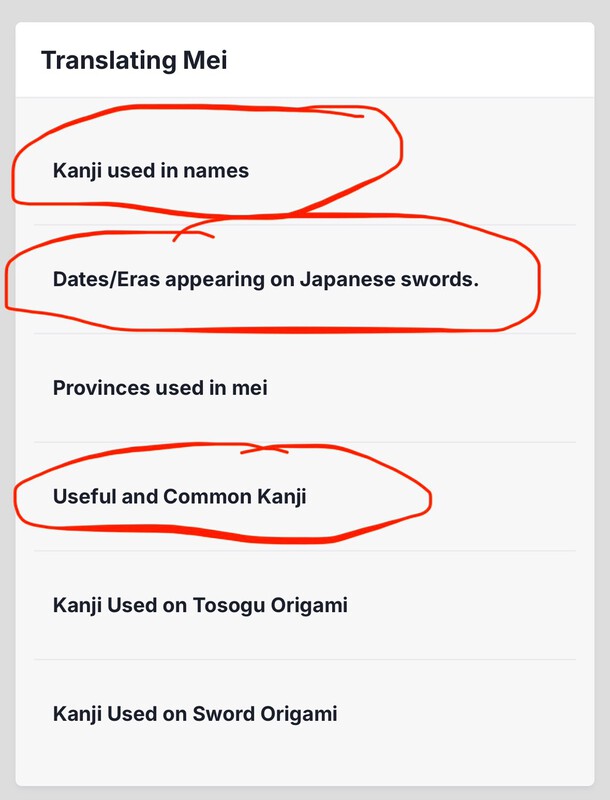
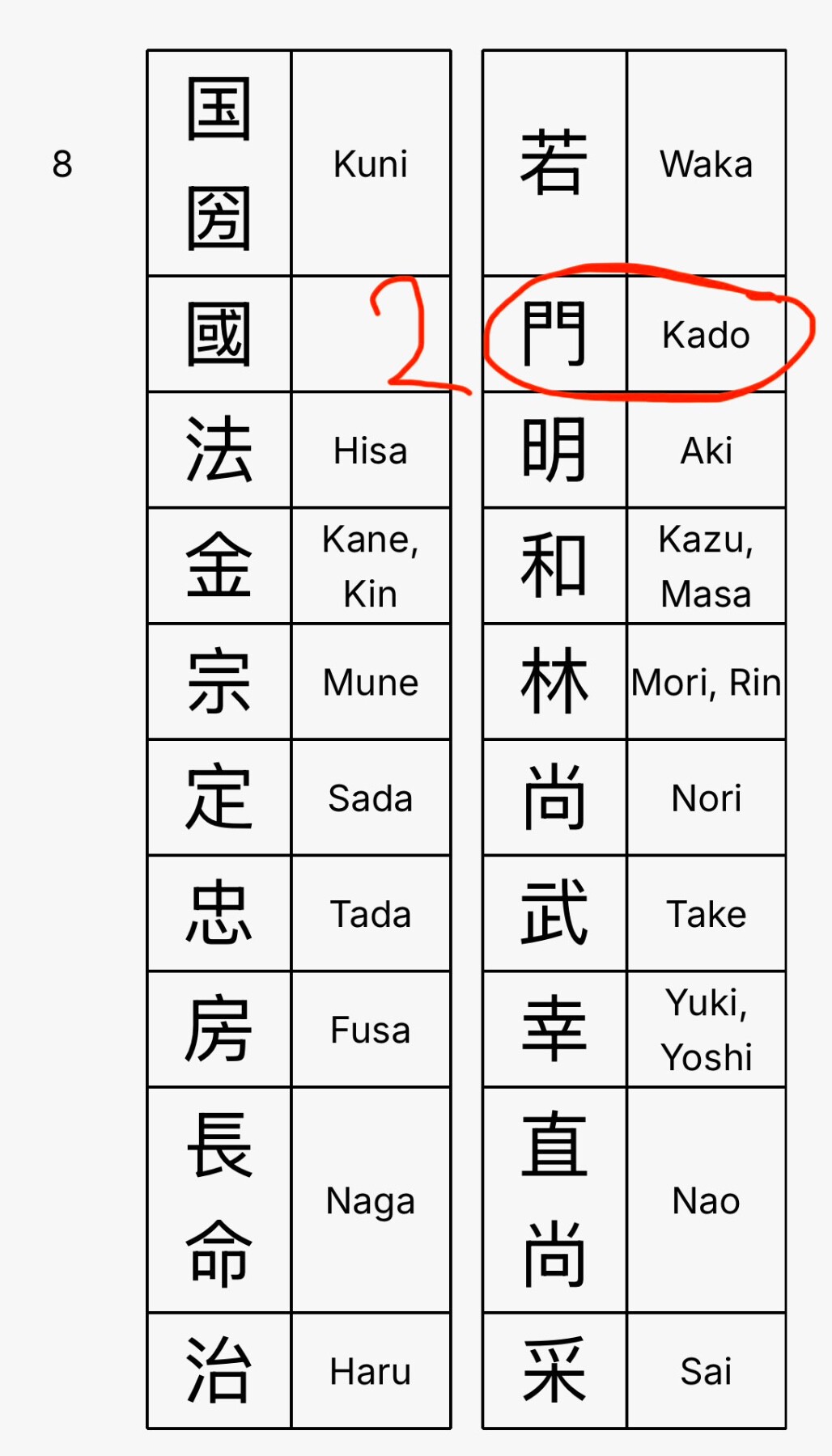
Steve, I know it seems like I'm always busting your balls but you really should try to use the resources on this forum before asking for help. If you go to the bottom of the index page there is a section called "Translating Mei" with all the Chinese characters you needed to decipher this name and date. I've taken screenshots and ringed everything for you to show you how it works. I know the dates can be very confusing but that two character name was really easy if you'd bothered to look. Best, Hector (No idea why this lettering all appears so big!)
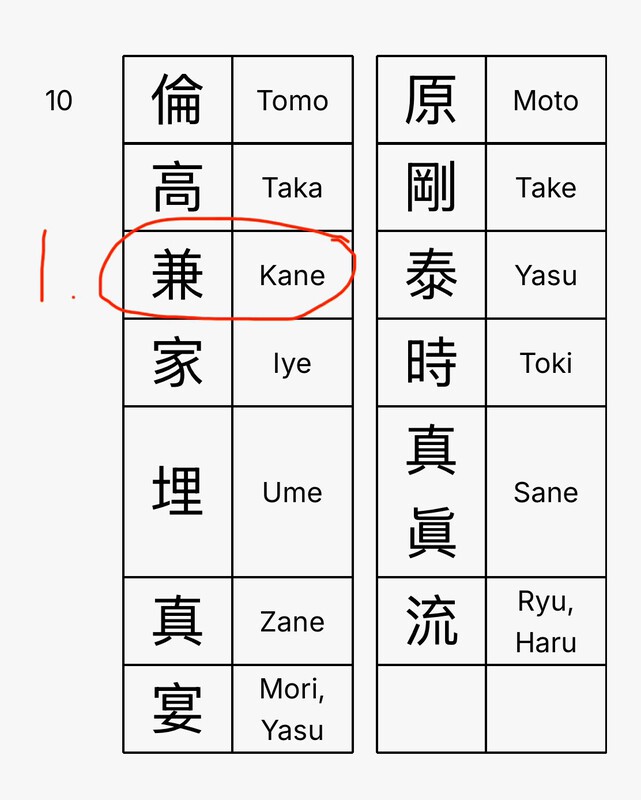
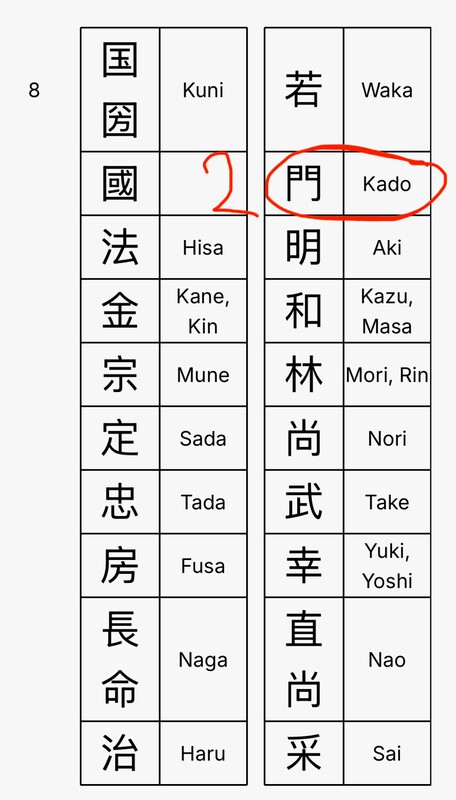
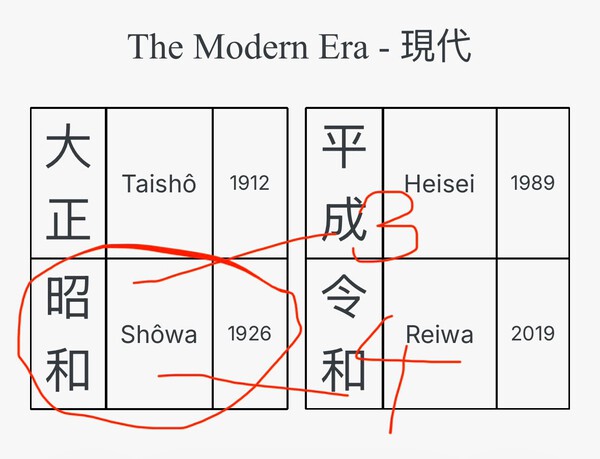
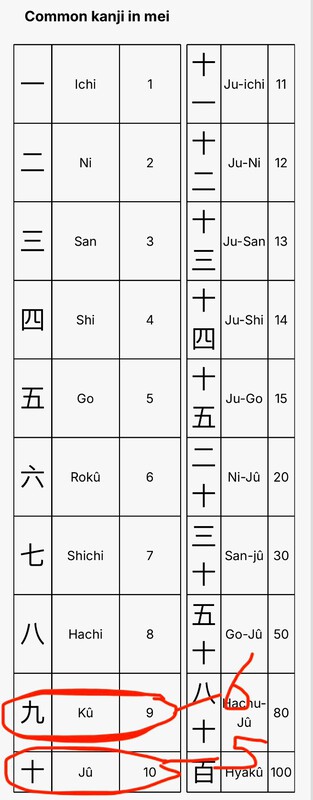
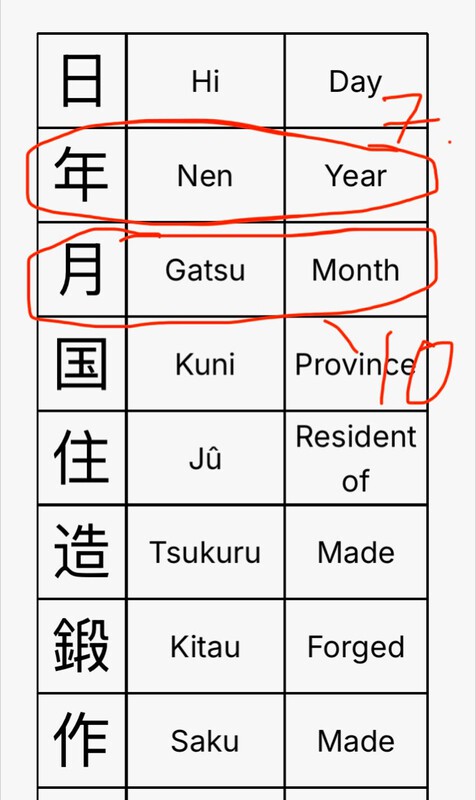
 5 points
 -
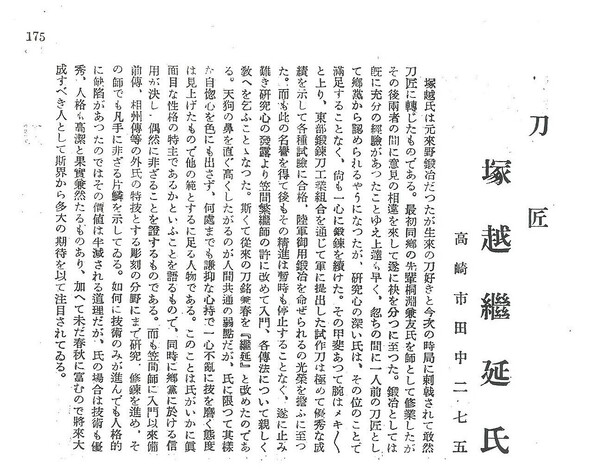
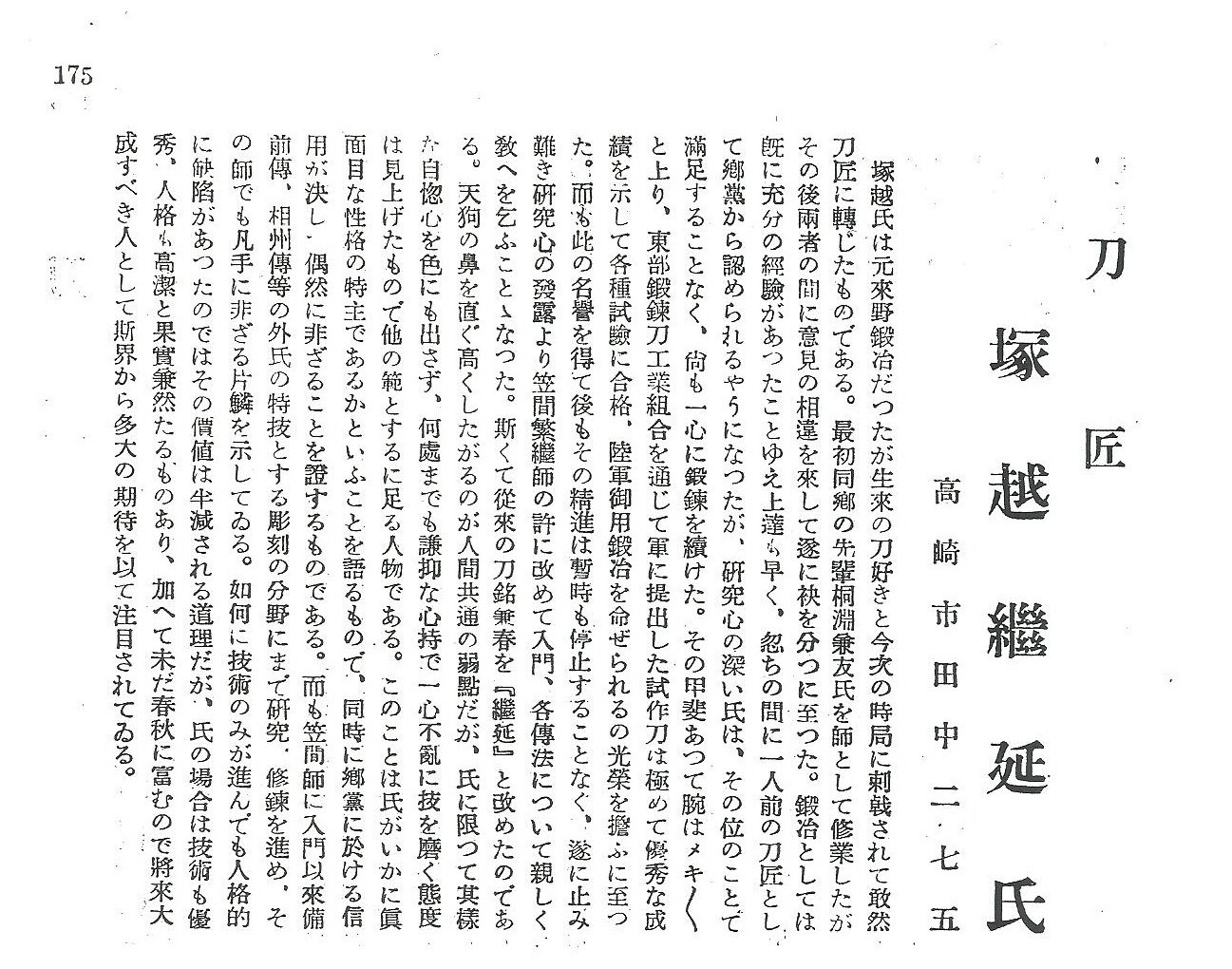
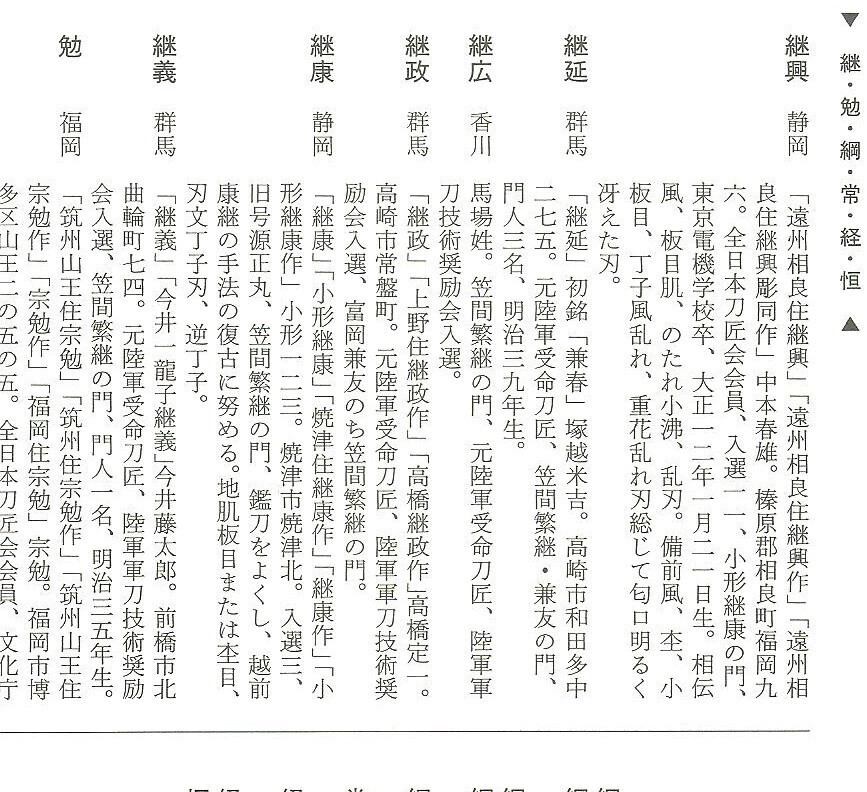
Hello Steve, there is scant information on Tsugunobu available and you have most of it already. He originally signed Kaneharu and studied under Ryunsai Kanetomo, along with Tsugumasa and other Gunma province smiths. After that he became the 16th student of Kasama Ikkansai Shigetsugu and changed his Mei to Tsugunobu. He was ranked East Block Komusubi in the 1943 Gendai Tosho Banzuke list. His work (published online) isn't seen very often, if you have photos of a sword and Mei I would be interested to see them. The below is from Malcolm Cox: The following article has a good deal of information, although the lineage incorrectly placed Tsugamasa under Kaneharu: https://www.nihontocraft.com/Kanetomo.html George Trotter and Mal Cox provided the following entries from Japanese sources, included is a nice example in my collection that has a special order Mei:



 4 points
 -
Bruno, for some reason that anecdote ended up being rendered as very large text in a very small scrollable area, so here's a transcript that's hopefully easier for people to read: To lighten the mood a bit, I'll tell you a story. In 1990, Dr. Sempé passed away, and his widow, fearing theft, hid his Andean archaeology collection, along with 70 tsuba and kozuka, behind a platform in their country house. Thirty-five years later, their daughter-in-law undertook renovations and rediscovered these completely forgotten collections. Naturally, all the tsuba and kozuka were corroded with numerous spots of red rust. Last Friday, I bought three of these tsuba at an auction. Here are photos of one of them before and after the cleaning I performed (washing with soapy water, scraping off the rust with bone, then lightly oiling). No corrosive products were used, of course.3 points
-
To a significant degree, I agree - it begins with excess humidity. The kiribako can provide some protection (that's the goal of the kiri wood), but once the humidity is inside, the fabric can be a moisture trap. Ideally those boxes should be designed to have a small lip on the central post which would suspend the tsuba 5 mm or so above the bottom of the box, to provide air flow. It brings out the design nerd in me :-)3 points
-
Hi Dan, It’s already implied that uncited conversational comments are your opinions. Calling someone a “snob” is name-calling, and accusing others of being part of a conspiracy to benefit restoration businesses, something you’ve entirely fabricated, can be viewed as slander. In the opinion of others, you are sharing bad advice and therefore receiving pushback for it. If that makes you feel intimidated, ridiculed, berated, or belittled, that is your perception, but it does not justify personal attacks or spreading false claims. This forum is explicitly for the study and preservation of genuine Japanese swords and fittings. I sincerely hope that means we’re all “snobs” when it comes to this stuff. -Sam3 points
-
Hello, May I have your opinion on this kozuka ? It has a cloisonné enamel butterfly which leads me to believe that it is from the Hirata school. Could it be another school ? if so, which one ? Thanks
 2 points
 -
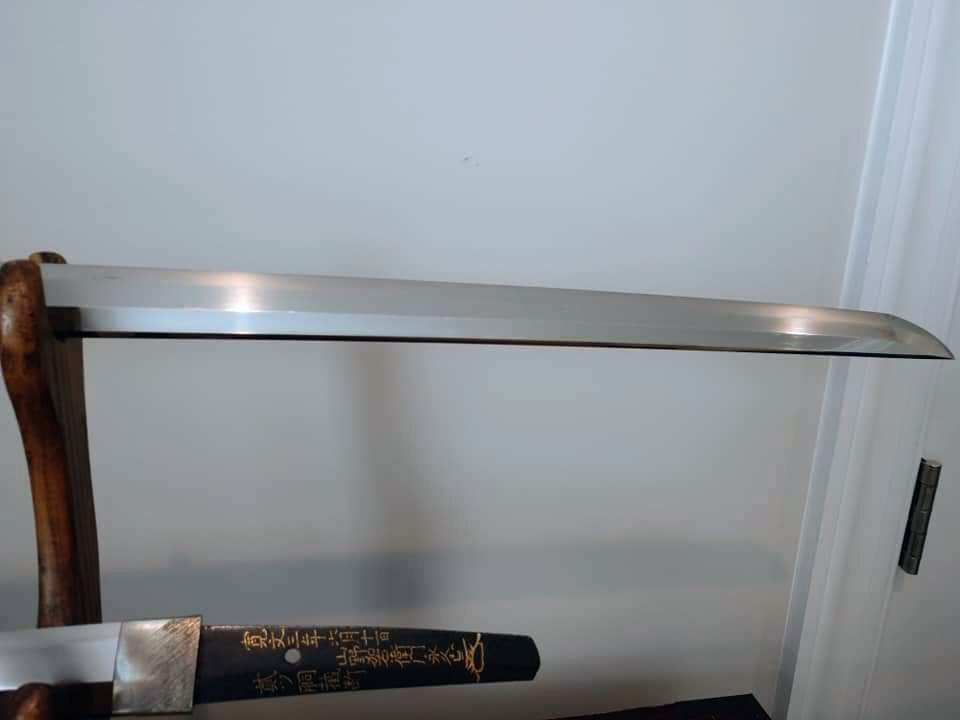
Dai - signed Harima Daijo Tadakuni - ubu 75 cm with koshirae Test cut - yamano Nagahisa cut 2 bodies in half dated Sho - signed Harima Daijo Tadakuni - ubu with Koshirae 43.2 cm Test cut - Yamano Nagahisa cut 2 bodies in half same date as the Katana Nagahisa was the most famous test cutter of the Edo period . Rare to find daisho with test cut on the same day


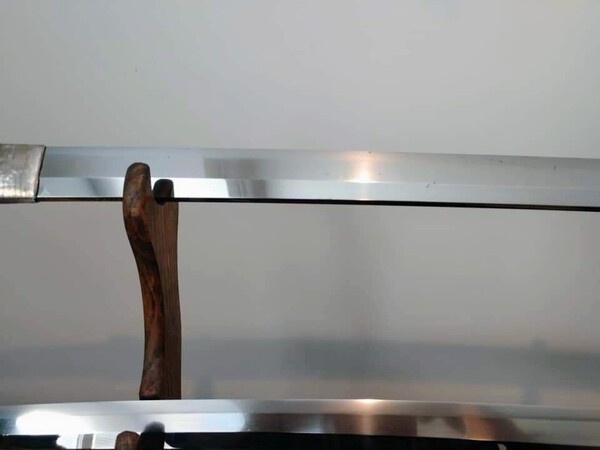

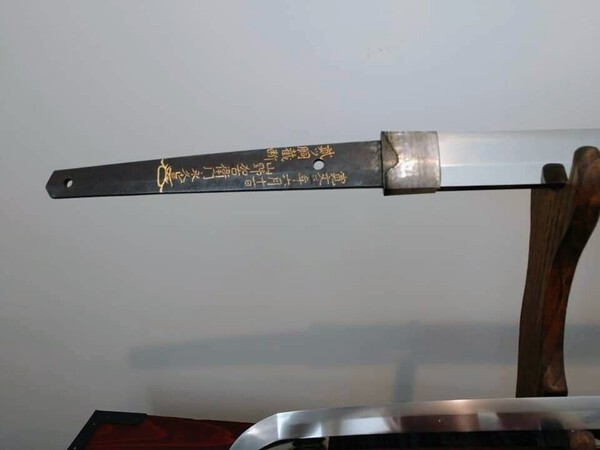 2 points
 -
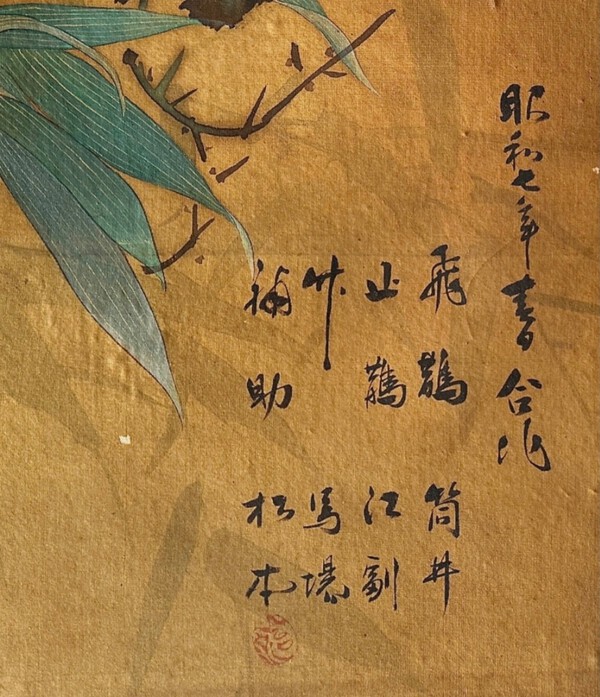
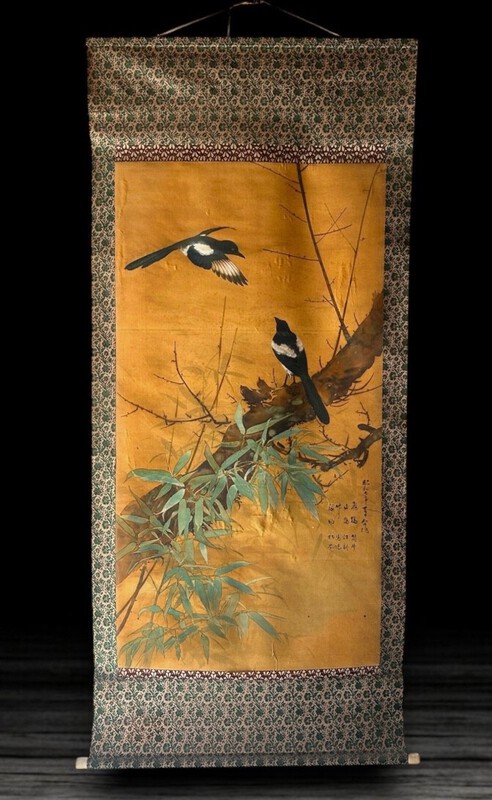
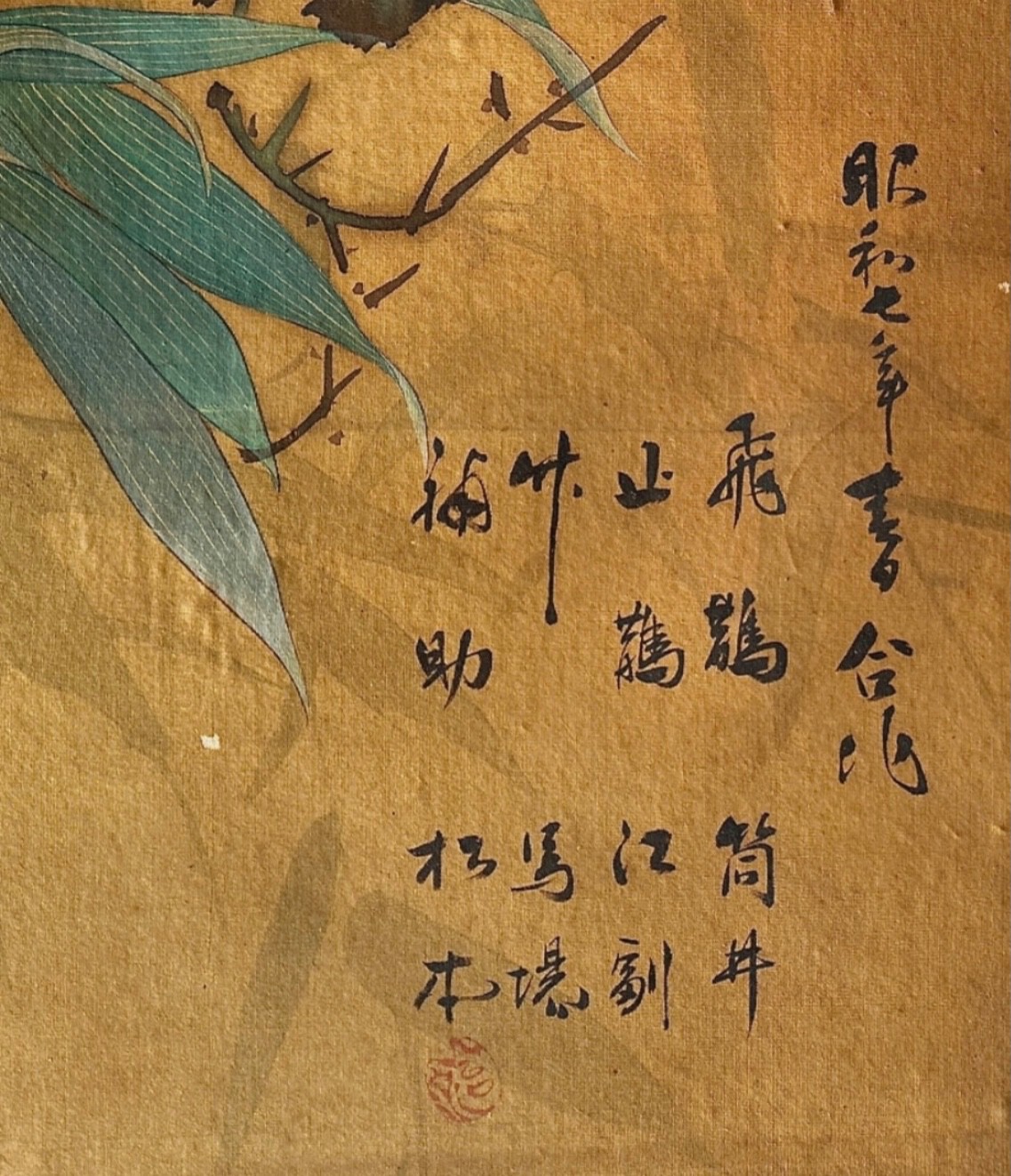
Please can anyone tell me what this says (from a large hanging scroll that I just couldn’t resist, plus it is the perfect size to cover a crack in a wall). Many many thanks. All the best.
 2 points
 -
My wife and I just successfully exported a Edo-era Katana and a Muromachi-era Wakizashi - both bought in Japan - via a checked suitcase on a United Airlines flight from Sapporo to the United States (via Tokyo). We were extremely nervous, did a lot of research in advance, and wanted to share our experience. Sharing in case this helps others. First off, we purchased a padded gun case with heavy duty TSA pad locks to transport the two swords. This ¥24,000 that we spent on the hard case was a wonderful investment. I highly recommend Lykus brand suitcases for this purpose. Secondly, we live in Japan and processed the entire Export Certification process ourselves. If you don’t speak Japanese, or don’t live in Japan, I would highly recommend using a private service in Japan for obtaining the export certificate (most Japanese sellers seem to include this in the price of the sword). Other private companies offer export certification services (even if you don’t buy the blades from them). Doing it ourselves took six weeks from submission to receiving the certification. Written Japanese language proficiency was necessary. Other lessons learned: (1) Departing from a city other than Tokyo or Osaka made things a bit more difficult. The Sapporo check-in agents were unfamiliar with nihonto export procedures and required that we have our suitcase reexamined in Tokyo. (2) The export process in Tokyo involved two customs agents and a police officer inspecting the blades and export certification. My personal details, including residence card and passport, were copied. They applied a magnet to the blades to confirm that they were made of iron. The whole process took about 45 minutes. Bottom line: Budget extra time if traveling with nihonto. (3) Customs in Tokyo kept the original export certificate. Make a copy. (4) I was also traveling with some expensive tsuba and spare antique sword parts. We did not obtain export certificates for the tsuba. Customs did not think twice about tsuba or any of the other sword parts we traveled with. It remains unclear to me if tsuba require export certification procedures. (5) Fearing theft, I packed both wrapped blades with discreetly hidden Apple AirTags. These gave me peace of mind, but may have not been necessary. Good luck to those traveling from Japan with Nihonto!2 points
-
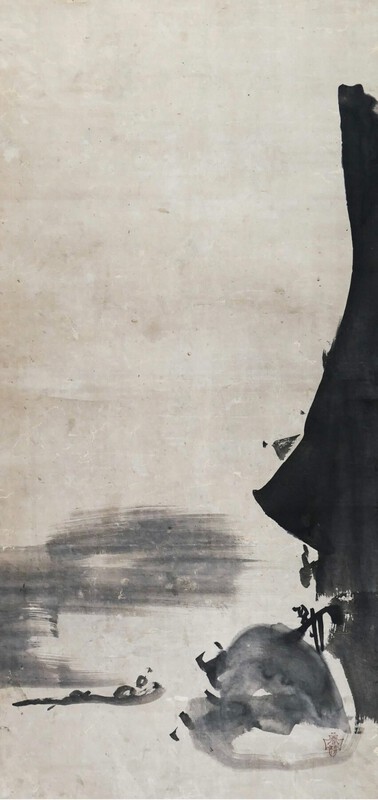
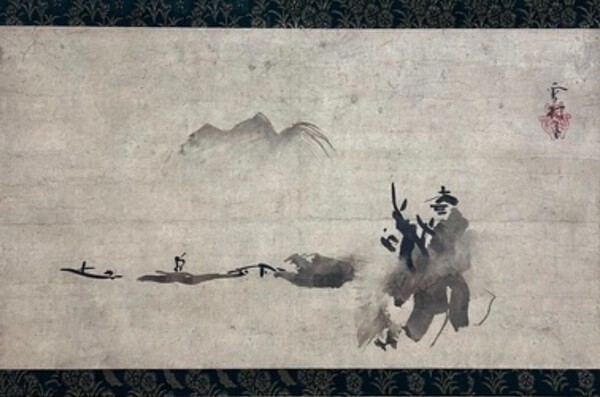
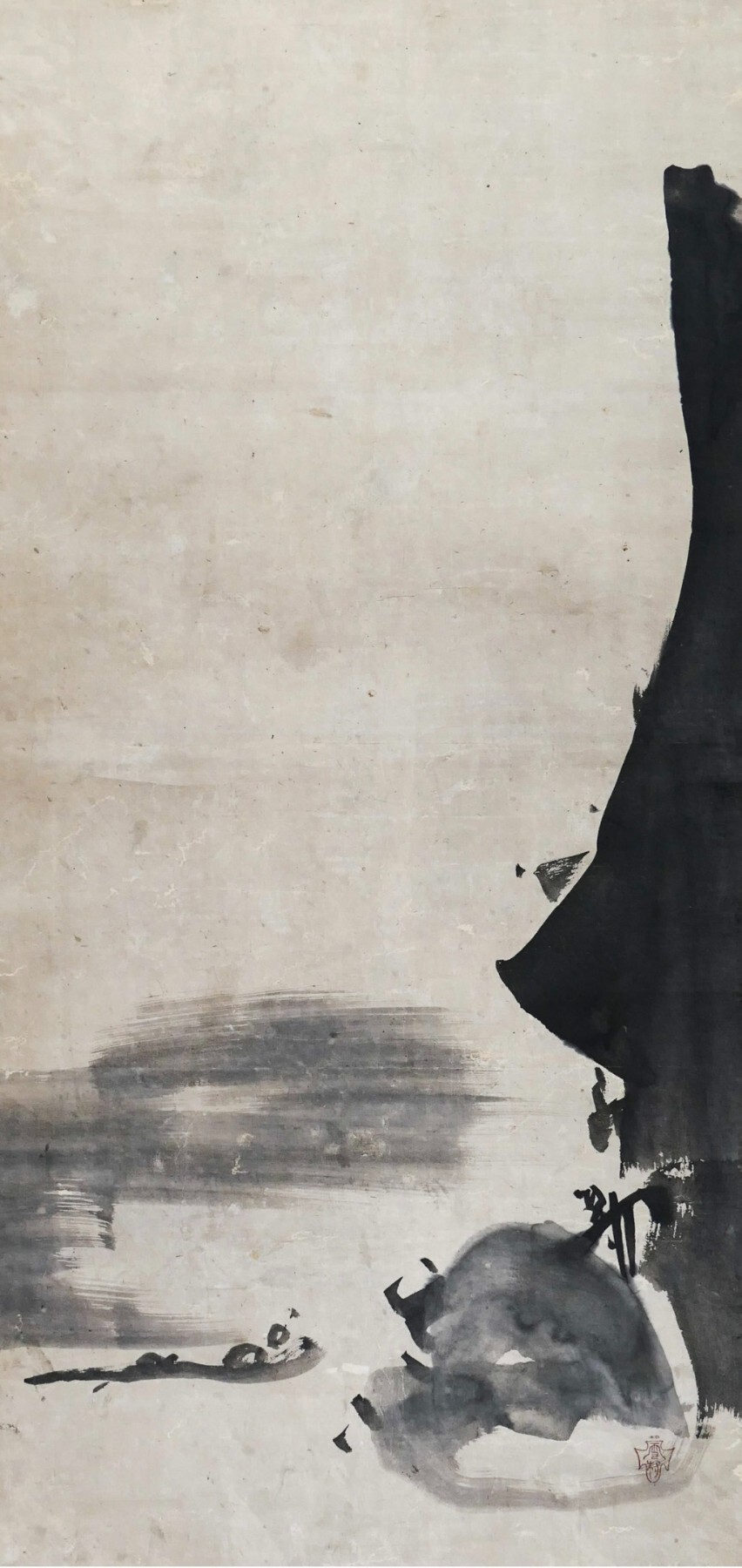
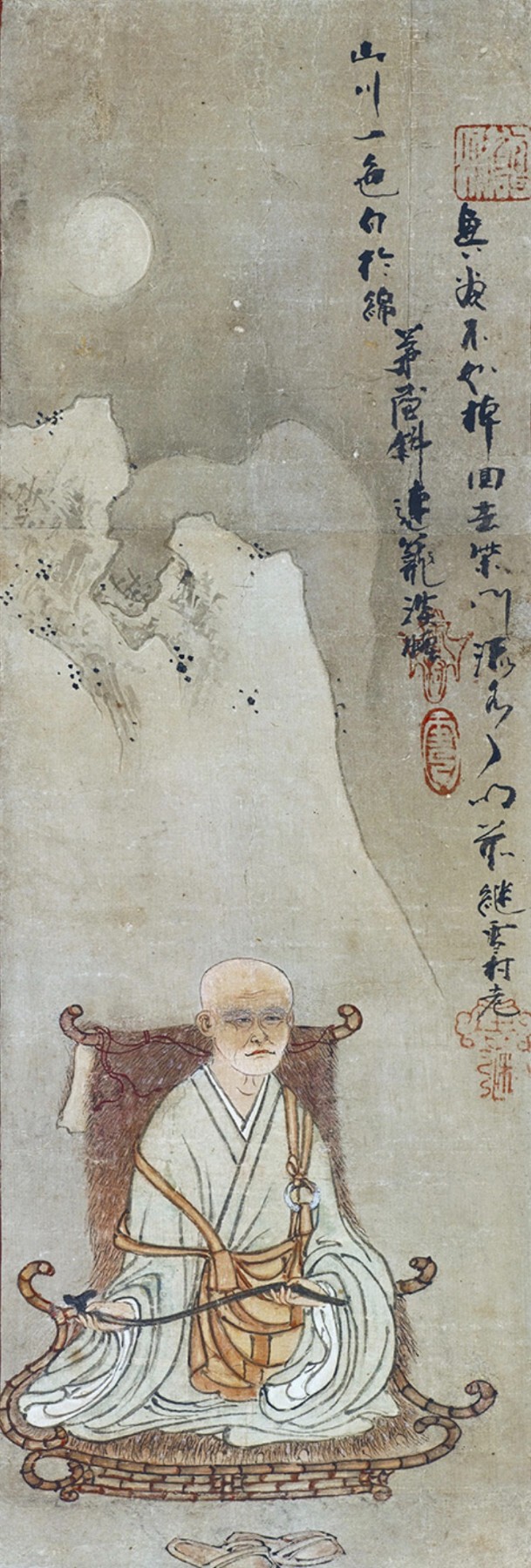
Sesson Shūkei (雪村周継 1504-1589) was a Muromachi Period Soto Zen monk and self-taught artist who is considered the most distinguished and individualistic talent among the numerous painters who worked in the style of Sesshū, the 15th-century artist considered the greatest of the Japanese suiboku-ga (“water-ink”) painters. The two are referred to as "Sesshū of the west, Sesson of the east". He studied the paintings of Shūbun (a suiboku-ga artist active in the first half of the 15th century) and later, from 1533, those of Sesshū and called himself Sesson Shūkei in tribute to the two masters. He worked in a dramatic style that generally accentuated idiosyncrasy, humor, and exaggeration in his approach to subjects, whether figural or landscape. This sansuiga (ink landscape painting) work is an excellent example of his almost calligraphic brushwork style. The boatmen are depicted in a sunset scene, but the foreground is indistinct, abstract, a bit ominous, and filled with yugen (mystery). He juxtaposes heavy black ink and different shades of grey wash. Although unsigned, the seal in this work is similar to one that appears in his self-portrait, which is a Japanese national treasure. Similar example Seal comparison
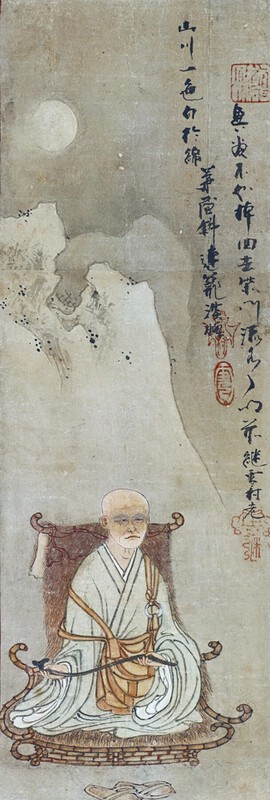 2 points
 -
I think it says it’s a joint work between the four people named, dated an auspicious day of Showa 7. (Rich colours. Interesting thing! ) PS I am sure there are no cracks in your walls!2 points
-
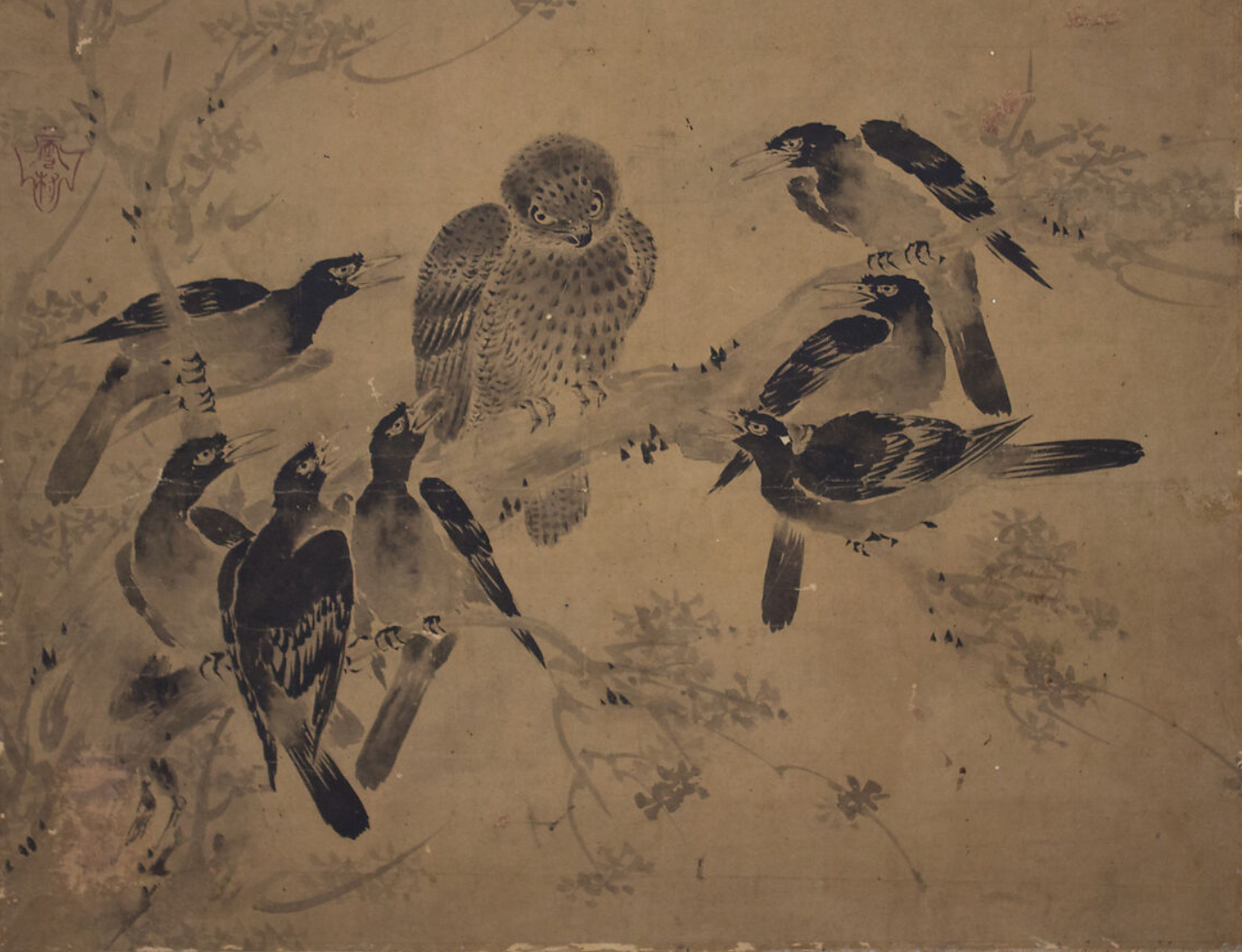
This one of "Mynah Birds Attacking an Owl" (The Metropolitan Museum) bears the same seal and is also mumei.
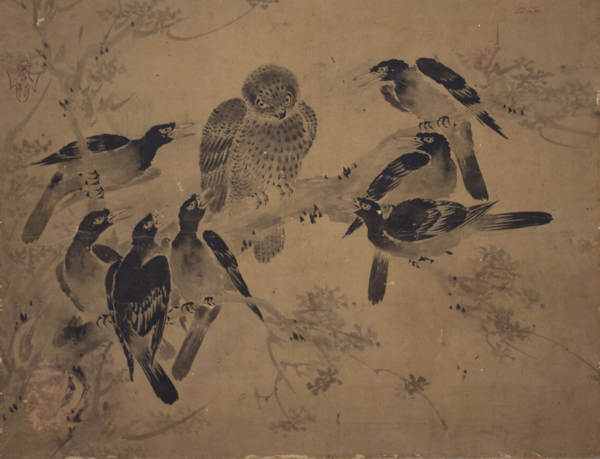 2 points
 -
To avoid problems with humidity I keep inside the box a small bag of silica gel that is changed periodically. Also in some cases I add the lip you mention but mainly to avoid loose inlay to snag into the fabric. But put in the perspective of providing ventilation it make sense, I have always thought them to be there to avoid friction between the tsuba and the fabric... I will add them routinely now. It is relatively easy to make them and since I am already removing the central support that goes in the nakago-ana to replace the usually present nails with wood pegs it will not be a great inconvenience. Regards Luca2 points
-
WHOA! I just signed back in and this thread has gone in a completely different direction to what I originally envisioned. As it's obviously created some unintentional conflict then I'm happy for the admins to lock it any time. Best, Hector2 points
-
I think this is just a case of using an older character instead of a misstamp. @SteveM1 point
-
There's a small chance I may be going to assist someone to sell some high end armor. Hmmmmm1 point
-
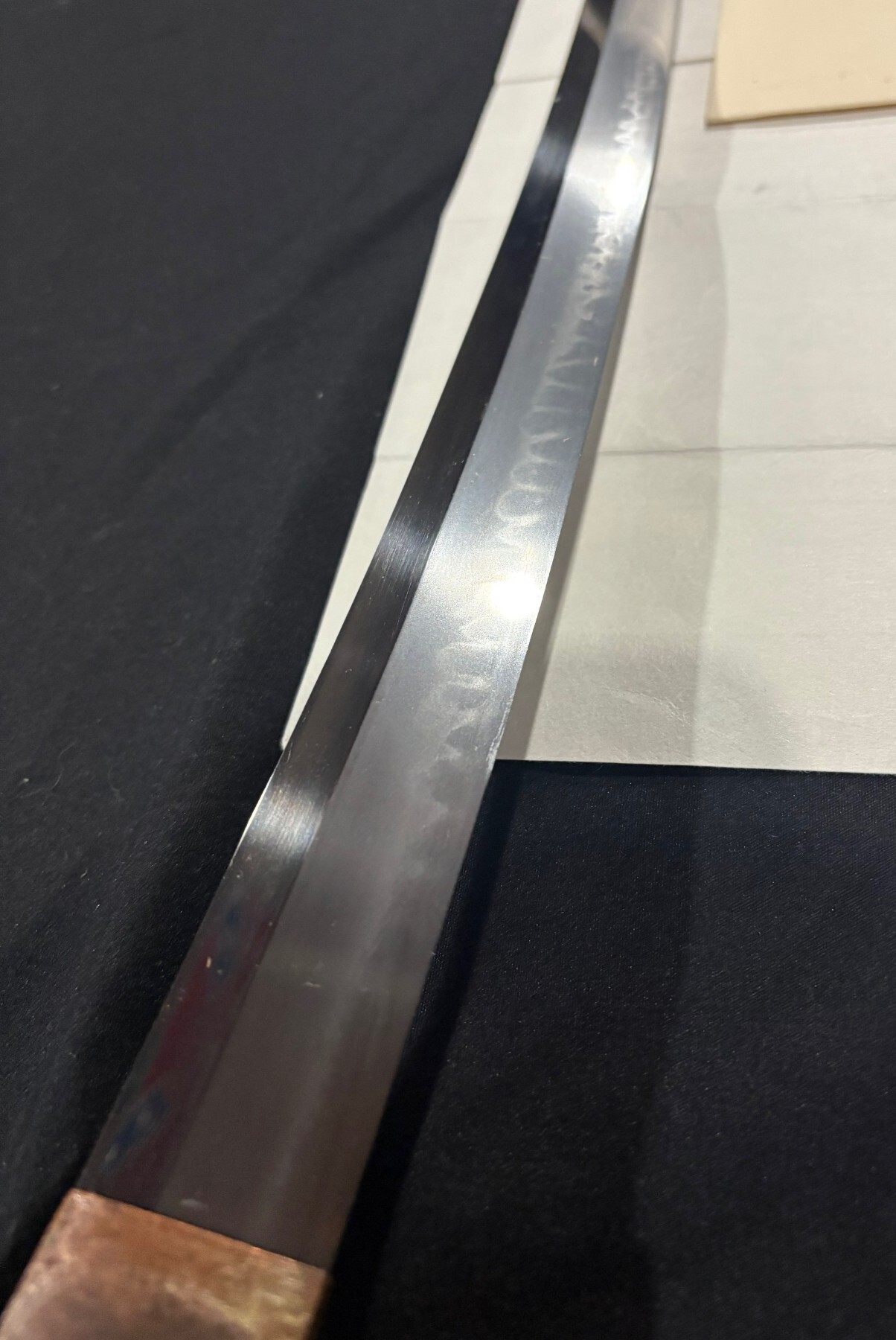
John, Thank you very much for this information. It is excellent and I appreciate your help. My sword is the one with the Mei pictured in the book (according to the seller). I will attach some photos of the Mei and blade. The blade is housed in standard wartime T98 fittings and metal scabbard. It has NTHK Kanteisho papers. Thank you again and best regards, Steve


 1 point
 -
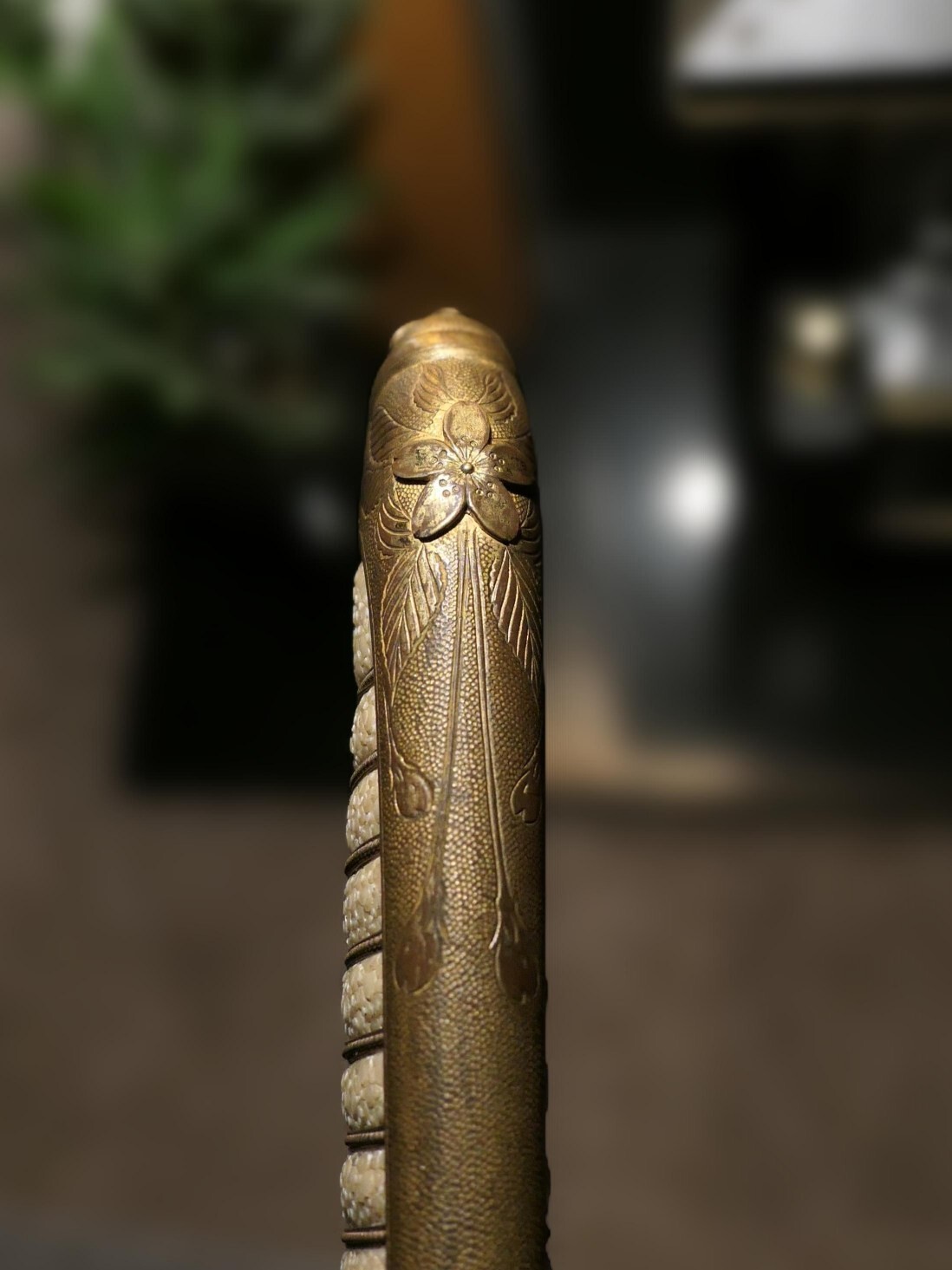
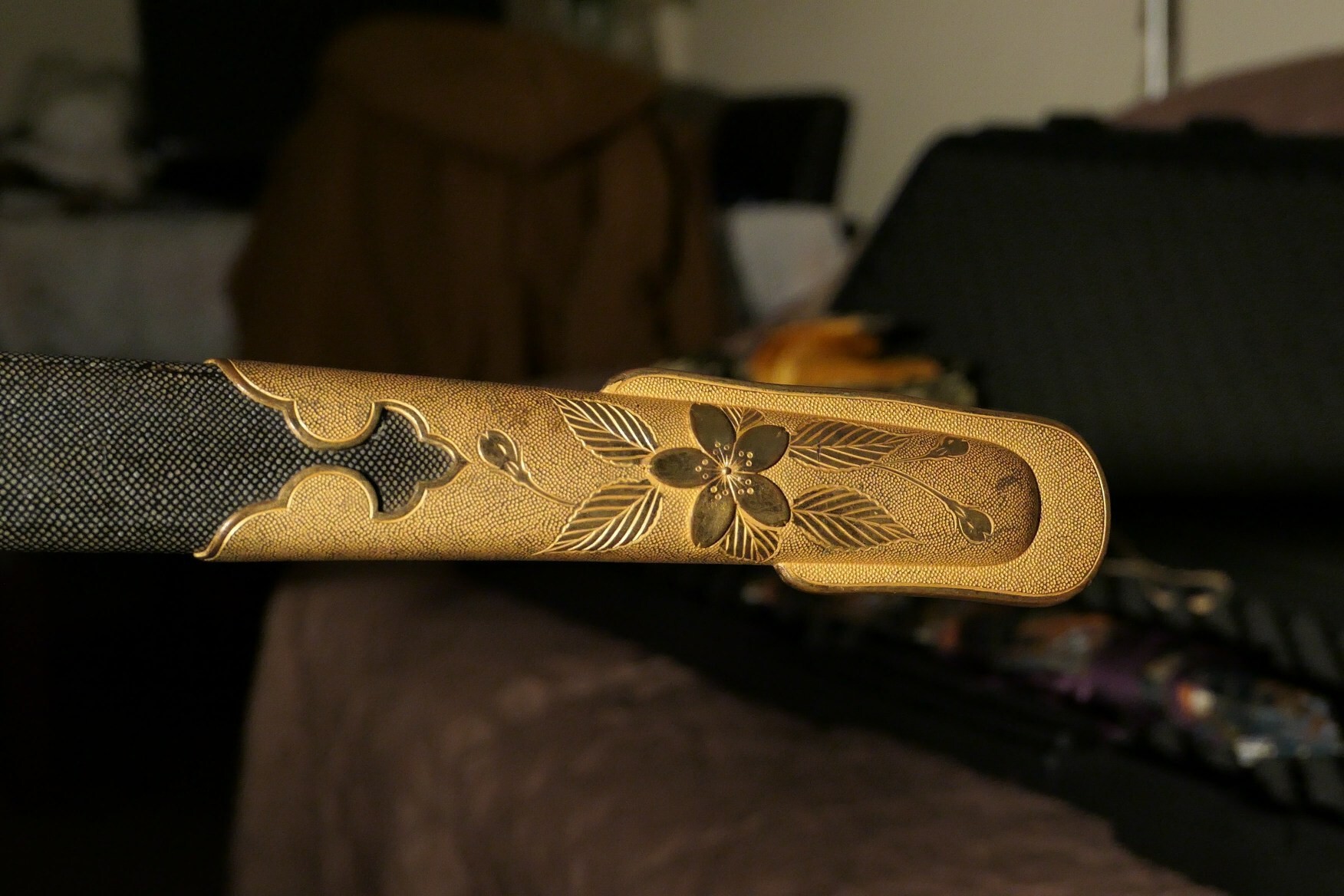
Tried to include a few more few close-ups, showing the detailing of the mounts. Each of the components are adorned with cherry-blossoms, with finer-detailing to the backstrap. I suspect the Saya has been done in Dogfish/Eel skin, instead of conventional Rayfish Same- the texture appears very uniform and lacks any variation; being without any obvious "Nodes". One interesting feature to the sword is the folding "retention flap", which secures the blade within the scabbard


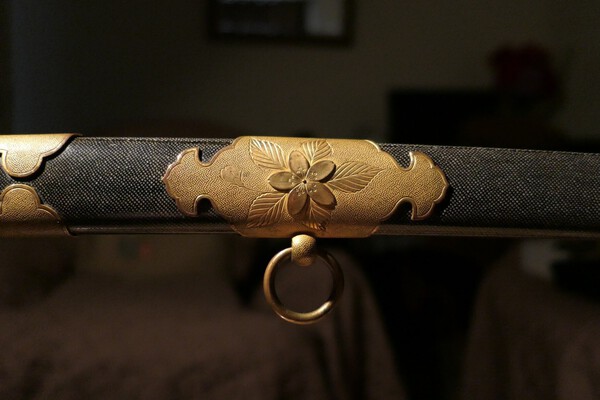
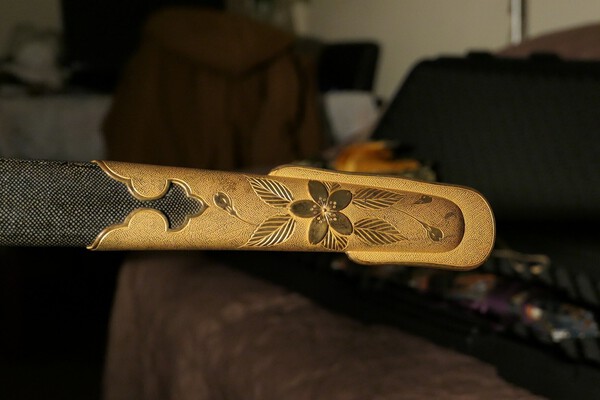

 1 point
 -
Thanks Piers…I thought it was more modern so that’s a nice surprise. As for the crack, it is now “out of sight out of mind”🙂1 point
-
Last night I was bidding on this tsuba but lost my nerve in the end. It was going steadily up in price and, even if it did prove to be the genuine article (which was almost impossible to tell from the bad photos), it was in such a rusty condition I didn't have faith in myself that I could restore it - no matter how much bone or Ivory I used.


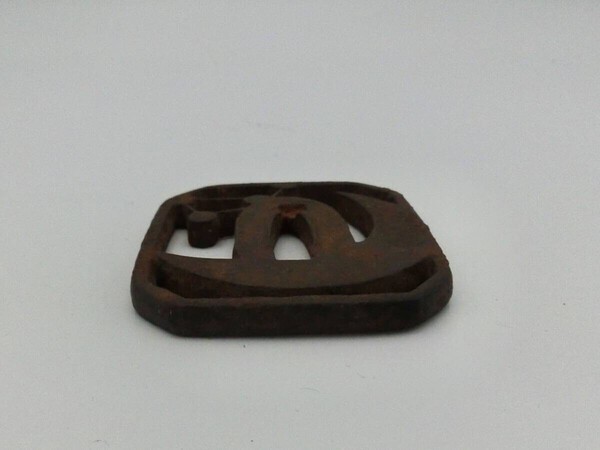 1 point
 -
Thanks Geraint I am all excited now, and rarely get excited about anything I have or can have! I bought it for £500 without a clue; it was a punt. Cheers1 point
-
Steady Boy, steady! Whatever happens this is a very nice sword in attractive koshirae, you did well. It will still be that even if you conclude that it is gimei. Remember that big names are often gimei though it is distantly possible that this came to the UK soon after it was made. Lots of possibilities. Now come the hard yards. You need to start comparing papered examples and soaking up the detail, nakago jiri, yasurime, placement of the mei, style of kanji and so forth. Take it to a Token Society meeting and see what others think. ( Don't be tempted to take a low ball offer.) This is why this hobby is so exciting so enjoy! Just got back home so will do a bit of digging. All the best.1 point
-
That's what it says, then oite Osaka (於大坂). "At Osaka". If it helps your research the date is to a day in June in the first year of Keio (1865) 慶應元年六月日 - Keio gan'en roku gatsu hi.1 point
-
Thanks Geraint Found him! https://www.samuraimuseum.jp/shop/product/antique-Japanese-sword-katana-signed-by-chikuzen-no-kami-nobuhide-nbthk-tokubetsu-hozon-certificate/?srsltid=AfmBOooPkvTa18Hzr76TiPjxXT3xV1PcmcTzay3yTicmrpdtY8KOW5pz1 point
-
Nihontoclub index can still be accessed but you need to register as a member.1 point
-
Dear Mark. I will have a look through my sources later on today but for now have a look here, page 31 I think, https://new.uniquejapan.com/wp-content/uploads/2015/06/21-Antique-Shinshinto-Japanese-Swords-For-Sale-From-Unique-Japan.pdf You know the mantra, big name smith likely gimei until proven otherwise, the fact that you do not see a match in a web search of papered examples suggests this to be true for your sword. Forgive me if I state the obvious but a Shinshinto sword, unless badly neglected, ought to have a nakago which shows clear detail and so the shape and the yasurime as well as the position of the mei should all be easy to see. Another factor is that some smiths have very distinctive 'handwriting' and that should be an easy thing to spot. If you have an image of the whole nakago that might be useful. I'll see what I can find for you later on. All the best.1 point
-
It’s 撿, but it should be 檢 — stamped the wrong character, like this one

 1 point
 -
Steve, Type 3? No stamps?1 point
-
If so, it is a form of mental illness worth cultivating! :-)1 point
-
Robert, I think that I have said this before in another thread (but can’t remember which thread!). I have experienced a few of my tsuba actually communicating with me. That is all I will say for now. I know, weird but true!1 point
-
Robert, if we do not live this life in a way that fits us, in which life could we do it? I understand what you are saying, but it is probably not for everyone. You need to have a certain sense or sensibility for that. To me, it happens from time to time that I see a place in the forest or a hand-made item with age and use. It is as if there was something like a connection, but nothing you could really grasp. Perhaps it is only a form of mental condition?1 point
-
I agree Robert. Better quality KIRIBAKO are designed that way.1 point
-
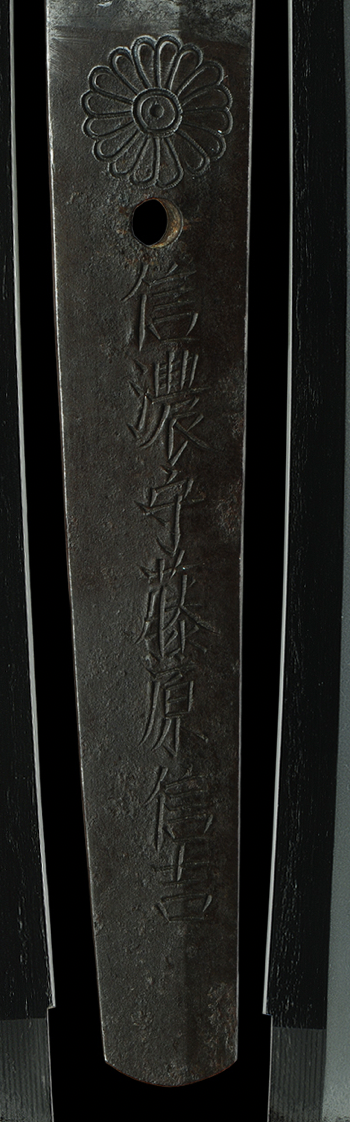
Here's a 1st gen Mishina Nobuyoshi with kiku. John C.
 1 point
 -
Kanekado December, 19441 point
-
And more photos please.1 point
-
Hi Guys We will be holding a small private exhibition next Saturday the 7th in Adelaide if anyone would like to attend please contact me for details. I've just returned from Japan and have acquired several excellent cutting test swords of your in the market for one please get in touch with me. Regards John 0417642921
 1 point
 -
I have several examples of tsuba with stacked sekigane in my collection and I always consider this a good thing as these tsuba are of a good enough quality where they have been taken care of and fitted for a blade more than once.
 1 point
 -
.....That is my kind of tsuba, old and rusted!.... Maybe you really don't understand? Rust is the enemy of iron. It is not a decorative feature on TSUBA, it even does not necessarily have to do with age. It is not a layer on top of the surface, it is the material itself, turned into oxide. Rust is eating up a TSUBA and should be removed or at least reduced/inactivated. If one can understand this process and has a minimal feeling of respect and responsibility towards an antique, handmade object of art/craft, they would want to preserve it in an appropriate way. This is not done fast with chemicals, it is a labour of love and care - and time. It also requires a basic knowledge of how an iron TSUBA is made, and how they are traditionally preserved and stored. Being a caretaker of an antique object has nothing to do with personal taste, it is first and foremost an obligation to learn, the more if the object is belonging to another culture with possibly different value perception and appreciation. In case you care to read about the WABI-SABI concept, you will find that Japanese appreciate objects (often of simple character like traditional household items) that show respectful, long-term use. Not neglected, not just "old". There is a form of love behind that, of deep understanding and respect. And also - perhaps - a feeling of thankfulness towards the ancestors who preserved the item so carefully. Did you know that in SHINTOISM, it is believed that handmade objects ( as well as old solitary trees, rocks, waterfalls a.s.o.) used by many hands (e.g. a good DEBA knife for the kitchen) over many years, can carry a KAMI, a good spririt who is nourished by the good intentions, respect and care of the people. When, after generations, the knife-blade is used up so that it cannot be sharpened any more, they carry the knife to a priest in the SHINTO shrine and have him release the KAMI from the knife in a ceremony. Only then the remains of the knife can be recycled. I am sorry for going off the path, but I wanted to underline that we have to accept that in another culture things may be seen differently in comparison with what we are used to. We are requested to learn and respect that. We do not need to become Japanese citizens to be good TSUBA collectors, just showing a minimal respect and awareness for what we hold in our hands.1 point
-
“…the shingane appearing is a distinctive feature throughout all of middle Aoe as the sumi hada of Aoe.” From Fujishiro Koto hen A couple of pictures from my mu-mei blade attributed to Chu Aoe Yoshitsugu by NTHK-NPO

 1 point
 -
Tsuba are art objects and old artifact that deserve to be treated accordingly. Restoration shall be done properly with proper techniques and tools. Dealing with hundreds of years old artifacts put us in the position not of owner but of keeper. We have the responsibility of taking care of objects that will outlive us to pass them down to future generation. This sentence of yours, Dan, shows that you have completely misunderstood the heart of this hobby! I suggest you to read this thread: What it is said in this post for swords also applies to tosogu. You can call me a snob now, frankly speaking I do not care! Luca1 point
-
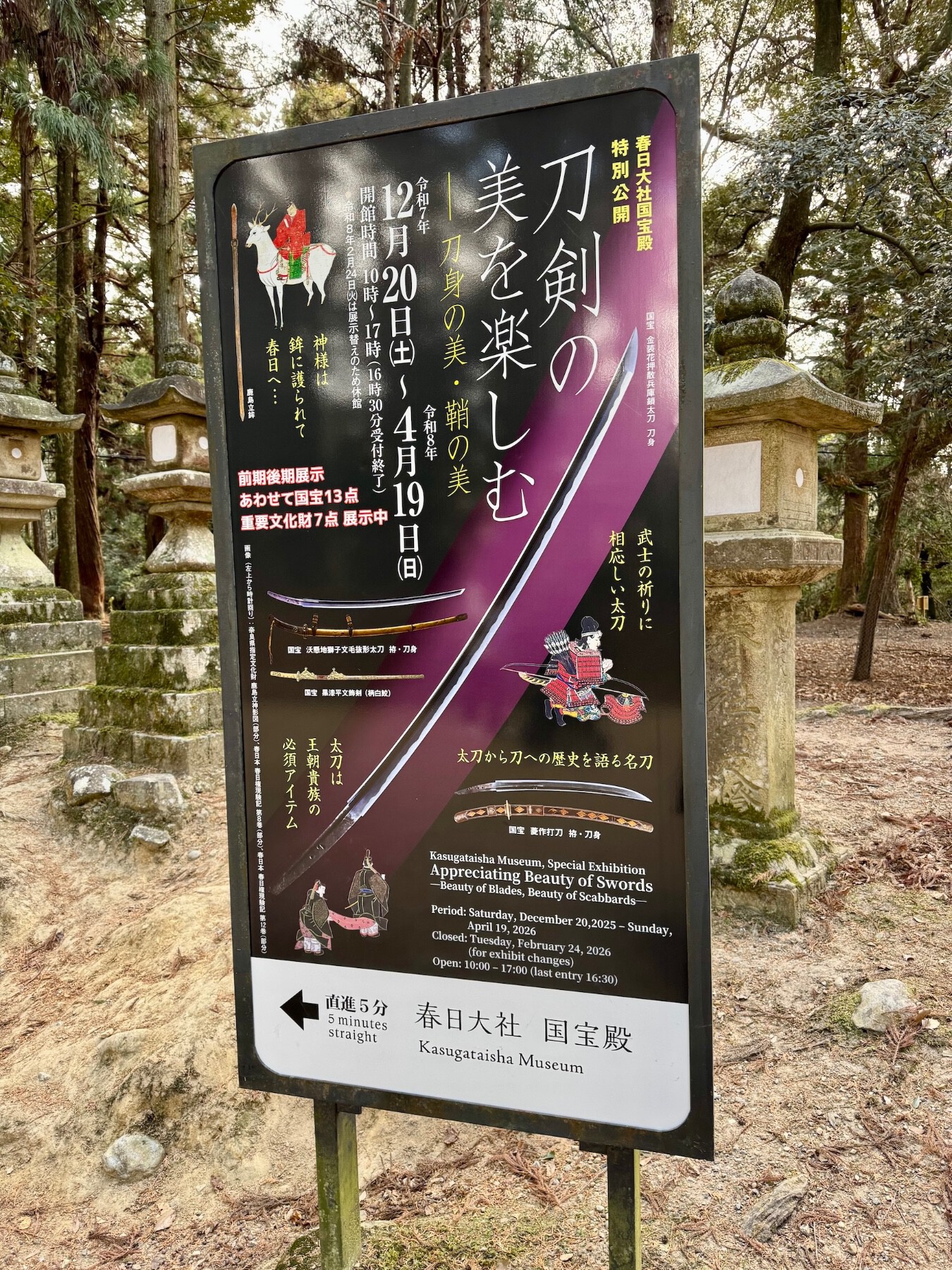
I thought this might be of interest: The Kasuga Taisha Museum in Nara currently has a special exhibition titled "Appreciating Beauty of Swords", where they've got all six of their National Treasure sword fittings (along with a number of other impressive items, including several Heian-era blades and a massive ōdachi) on display. The exhibition will run until the 19th of April, and is well worth a visit if you happen to be in the area. Unfortunately photography was not allowed, but they do have pictures and descriptions of at least some of the items on their website, so here's a little preview: https://kokuhouden.kasugataisha.or.jp/en/e9/ https://kokuhouden.kasugataisha.or.jp/en/e19/ https://kokuhouden.kasugataisha.or.jp/en/e16/ https://kokuhouden.kasugataisha.or.jp/en/e14/
 1 point
 -
Over the last week I have been attempting to recatalog my small assortment of kozuka, menuki, and tsuba on this side of the planet. It's confusing because I have a different set of numbers at either end, and when I carry some backwards or forwards the numbers can clash, needing renumbering. There were a couple of tsuba I do not remember buying, and for some reason left no record of how much I paid. Aaarrrgghhh... While doing so though, I rediscovered several that I had forgotten, or was thinking that I had swapped out or sold. It was a joy to see them again, and to consider that years ago I had appreciated them enough to have chosen them back then. Some of them I would never sell, I realized, as they speak to me personally and it is not a question of market value. It was a delight to hold them in hand and to find new aspects or details to appreciate. Why collect these things, people ask? Well, one answer could be that as my Alzheimer symptoms progress, I will soon be able to experience the joys of rediscovery as often as there are weeks in the year or days in the week! "A thing of beauty is a joy forever." Endymion, John Keats.1 point
-
That is a very fine Daisho, can't recall seeing one with with matching cutting tests before.1 point
-
伊賀守源包道 = Iga no Kami Minamoto Kanemichi1 point
-
Ishido Teruhide1 point
-
Both points are of course very valid Michael. Still I think some of the old swords in Japan have been preserved extremely well even though they are very old. So in those cases I assume they are as close to original as is possible for example for the 700 year history of the sword. I am mostly referring to ubu or nearly ubu swords here, that are in prestigeous Japanese collections. Even though not my personal preference I cannot deny that for example Tsuda Sukehiro and Taikei Naotane make very fine swords. In quality I would say these swords would be much better than some old less refined things I personally like the most. I feel Shintō smiths seem to be belittled too often. It is of course bit offtopic but as I read the OP I felt I knew what was meant that Shintō is not appreciated that much. One important factor also is that swordsmiths could produce swords of varying size and shape. While most Japanese swords are very similarily sized throughout the history, you can still find variance even within the works of a single smith.1 point
-
Would not surprise me at all, especially since so many dealers will quite happily write whatever value and description you want on the shipping manifest for the purposes of taxation/import duties.0 points





































This leaderboard is set to Johannesburg/GMT+02:00