
Leaderboard

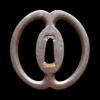


Popular Content
Showing content with the highest reputation on 12/14/2025 in all areas
-
In appreciation of John P. Lissenden. Dr. Lissenden (who received his PhD before submitting his master’s thesis on another subject and area of study) was a member of this great forum. Unfortunately for the tsuba world, he passed on several years ago. Dr. Lissenden wrote a master’s thesis on namban type tsuba. In some of my posts on other threads, I have referred members of this forum to his excellent paper. If anyone wishes to gain further knowledge on namban type tsuba, I highly recommend his thesis. It was written in 2002 and (in my opinion) is a masterpiece! Dr. Lissenden’s paper can be found on this website- https://etheses.dur.ac.uk/4129/1/4129_1648.pdf Just something I wanted to pass on to newer members of this forum.6 points
-
He was a lovely gentleman, who, unfortunately, I never had a chance to meet in person. However, he used to write these polite and erudite letters to me in terms of his membership of the Token Society and how he enjoyed our newsletters and reports. Sometimes one can glean an impression, or perspective, of someone just on the basis of a few sentences. While I have fully embraced modern technology and its advantages, occasionally I miss the old times when people used to come to meetings eager to learn (as opposed to forming views on the basis of Internet browsing or some opinions exchanged in a chat) or send each other hand-written letters. Call it nostalgia or what not, but the interpersonal relationships and discussions were different.6 points
-
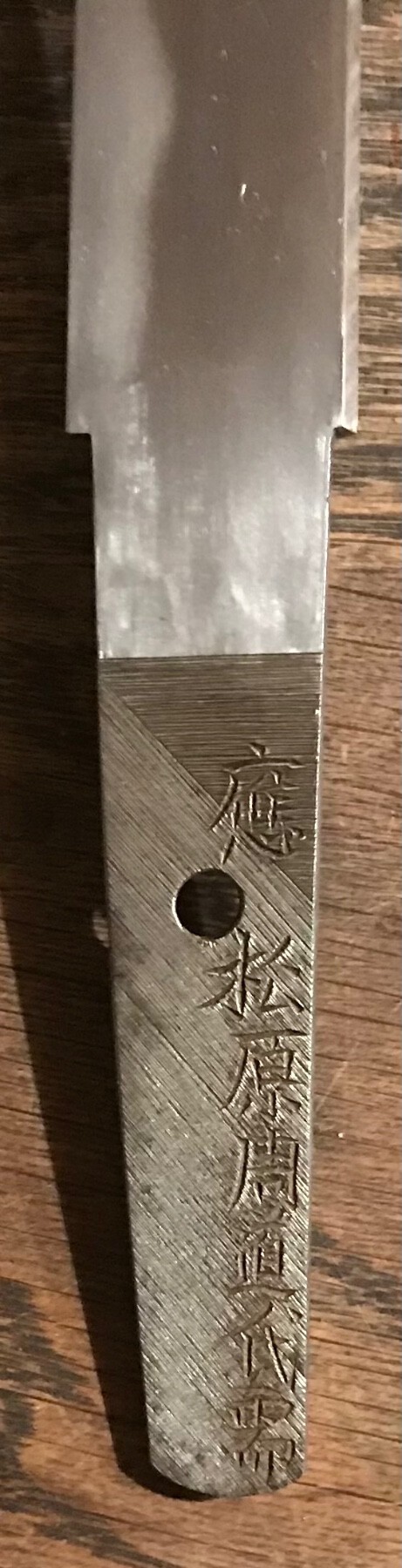
関住前川兼継作之 (Seki ju Maekawa Kanetsugu saku kore) – Maekawa Kanetsugu in Seki made this.6 points
-
?Modern fake? There's just 'something' about it.. BaZZa.4 points
-
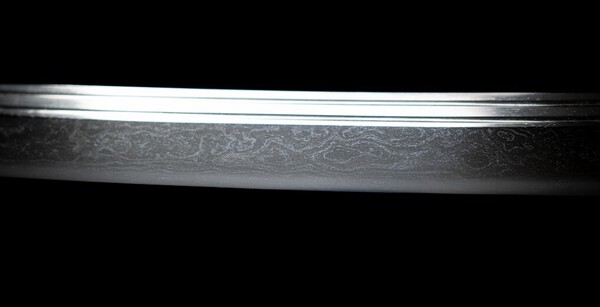
Kongobei - Studio light
 3 points
 -
Tyler: I believe both of these questions were answered in your other post. Moriyama-san translated the smith as Kanetsugu and Bruce-san mentioned the large seki stamp indicates it is NOT traditionally made. This means the sword is definitely WW2 and that it is probably made using "puddled steel" with power equipment, and oil quenched, though it may be partially hand forged. John C.3 points
-
If you want a real Silver tsuba it will have hallmarks on it https://www.jauce.com/auction/o12118993263 points
-
Nope, not me. Compare to a similar subject (unsigned Hamano I think)…..big difference in quality although mine is by no means the finest work….but I like it🙂

 2 points
 -
Section 9.3 of Dr Lissenden's paper, on the use of casting in Namban tsuba, matches my recent observations of some Namban work. Many of the tsuba are pretty obviously sand cast, with varying degrees of post casting chasing and detail refinement undertaken. Thus it appears that Namban is not only a style but a technological package.2 points
-
Just like when photographing people, it s very hard to beat a good natural light on and overcast day


 2 points
 -
https://www.militaria.co.za/nmb/files/file/29-the-namban-group-of-japanese-sword-guards-a-reappraisal/ But a good reminder for collectors2 points
-
Most of all it seems to be true. These are not the lowest quality items, but the carving is quite simple, there is no inlay, just painted. https://www.bonhams.com/auction/15678/lot/291/a-large-shibuichi-tsuba-after-unno-shomin-meiji-period/

 2 points
 -
Thanks Dan. I have checked some of Lissenden's images and managed to track some down - unfortunately either the Museums he used as references have changed their item identification numbers or Mr Lissenden transcribed them incorrectly. most of the images from the V&A have the wrong code - there is a full stop mark needed after the M which Lissenden has missed in most cases. Plate 6. page 159 says M194-1931 but should in fact be M.194-1916 The example plate 7 page 160, I could not access in the museum mentioned but an almost identical one can be seen in the V&A M.1147-1926 Plate 8 page 161 also has the wrong accession number 684.'30 [It can be found in Greville Cooke's book page 68] 1930M684 Plate 16 page 169 has the wrong accession number [TWCMS J10370] it should be TWCMS J10320 For anyone interested, I have most of the images used in the treatise [enhanced] including the ura views [or the side not illustrated therein] https://collectionssearch.northeastmuseums.org.uk/#view=list&id=7d1f&modules=ecatalogue&keywords=tsuba&ColObjectStatus=Current has access to the tsuba illustrated from the Laing Art Gallery. Unfortunately a great many tsuba in this collection have no images.2 points
-
Agree, as I said, with a grain of salt. My main goal is evaluating the mei/kaō + date consistency and whether the cutting/patina looks period. I’ll post raking-light closeups of the mei/kaō and the dated inscription as soon as I can.2 points
-
Nothing for sure, so take it with a grain of salt. But my research so far: The mon is from the Watanabe clan. They were retainers of the Mori. To note specifically is that the helmet is dated, 8th month of Daiei 3, if the inscriptions can be considered as correct. Correctly calculated it seems that the 8th month in accordance with the Japanese way of calculating, would actually mean Oct. 1523. Anyway, 1523 was the year that Mori Motonari became Daimyo. More in particular, he became daimyo after a succession crisis when the jong daimyo Mōri Kōmatsumaru died in 1523 and because he was nominated/asked by 2 of his vazals, among whom a certain Watanabe (found different first names) in July of that year. The official nomination of Motonari was signed by 15 of his vazals. Motonari seems to have entered Koriyama-Jo somewhere at the end of September/beginning of October. After that there was a period of trouble, where some of his vazals seem to have rebelled against him (among which the former Watanabe, who was executed in 1523 as a consequence of a cleansing operation undertaken by Mori Motonari because of the rebellion -https://mouri.gozaru.jp/monogatari3.html - these are recounted stories which were written down at some point so the actually amount of truth is under debate) His son Toru was allowed to leave but was later pardonned and returned to the Mori Clan. He saved his lord during a battle somewhere in 1543 by posing as him and returning in the battle to allow Motonari to escape. Subsequently most Watanabe's received important posts in the Mori Clan and were remembered during the Mori Clan's New Year's Kachu Kaiki. However, Nobuie was in Eastern Japan while the Mori and Watanabe's were in Western Japan. The mon could be a later addition, who knows for sure. Don't know if new helmets would travel all over the country. So anything is conjecture at best at this point, but the coincidence in the dates is remarkable if you ask me. Theoretically it would have taken a helmet ca. 30-35 days to get from Nobuie to the Mori domain. So it is possible. Anyway I haven't overpaid it, so in the worst case I own a nice helmet with a fake signature but at a price which is acceptable even when it is not what it is supposed to be. I have asked the Mori museum if any records would exist about an exchange of important helmets which could have been given to the Watanabe's in relation to their initial support of Mori Motonari.2 points
-
I know I’m very late to this thread, but I was looking through “The Beauty of Tsuba” (just bought it) and saw the same design listed as Higo. The one in the book looks very similar to one Dale posted, but there are some differences.
 2 points
 -
As a novice who nearly got stung recently because of lack of experience, a member here advised that I visit some mid-level dealers as I live in Yokohama. I did just that and have just started to get a feel for what is available, who is most helpful etc. In one shop, I made the acquaintance of an elderly Japanese gentleman who has been collecting for 55 years and who very kindly took me for a cup of coffee to continue our chat. We eventually moved on to who are the best dealers and Aoi Art came up. My new friend said that they are good if you know exactly what you are looking for and can easily spot flaws or swapped-out koshirae. Interestingly, he also added that no collector with extremely high end pieces would commission Aoi to sell them on their behalf. Instead, they would use a network of very serious collectors - predominantly Japanese, occasionally foreign - who always get first pick of 'the best'. Therefore, from this comment, I would be suspicious of how Aoi suddenly have a Masamune-den piece in which they have not themselves invested a new polish and Juyo submission.2 points
-
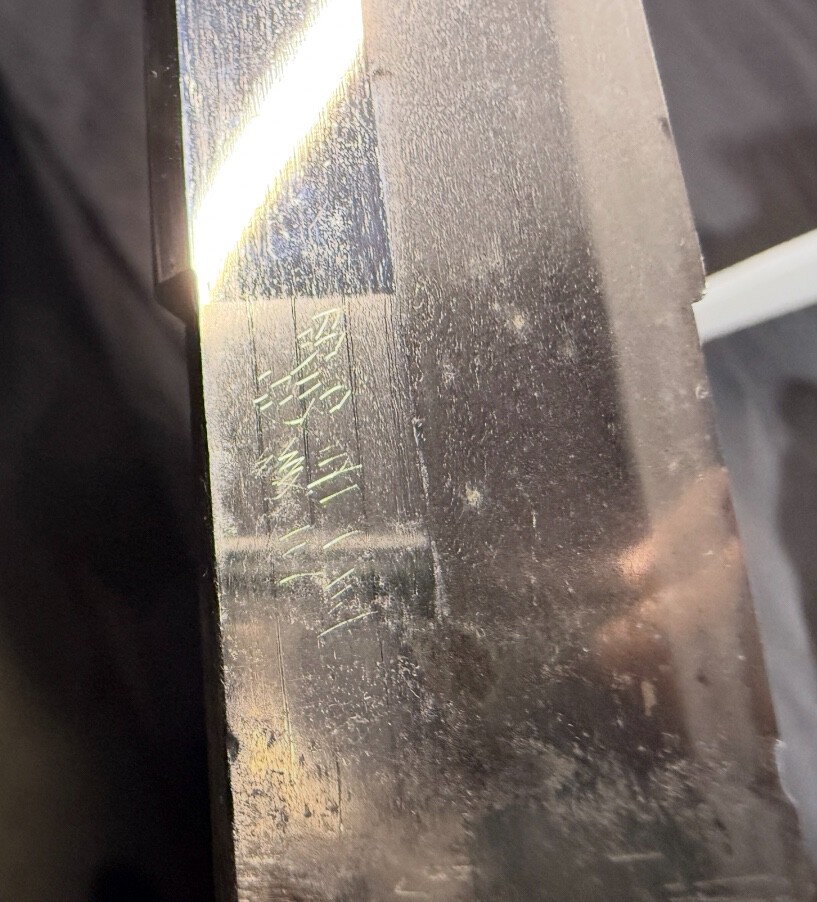
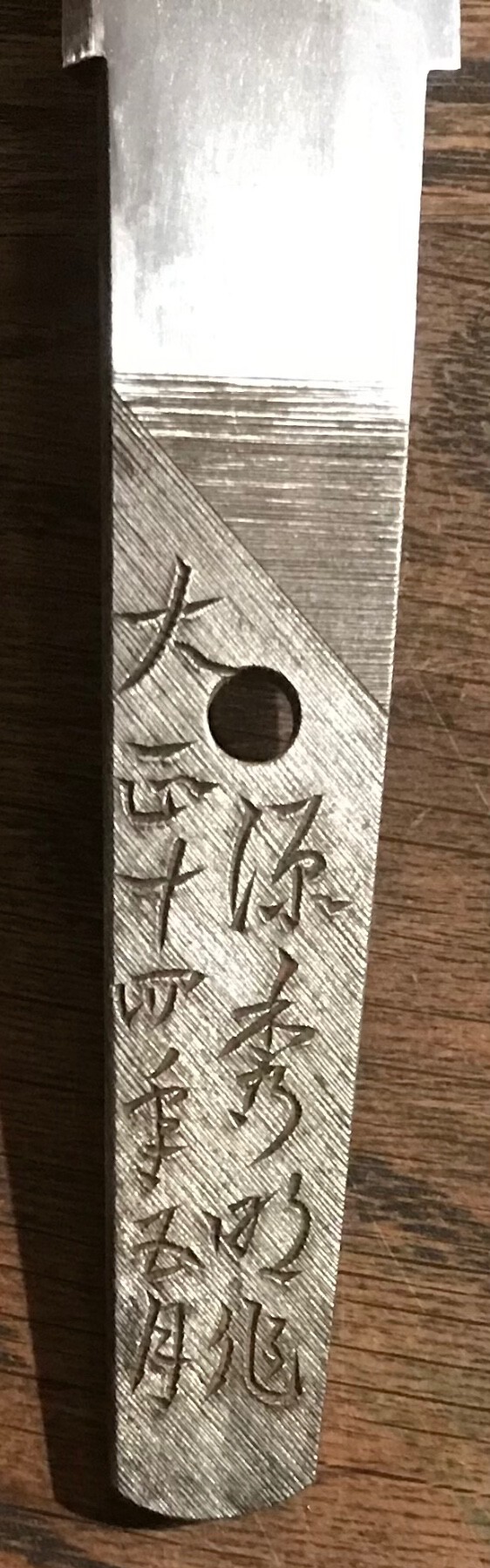
I was visiting with a friend and fellow collector this weekend, and while discussing one of my swords we discovered very subtle kanji amongst the nagashi. An exciting revelation! I then contacted @Ray Singer who helped me identify it as a togi-mei. He then helped me translate both sides. It was exceptionally hard to photograph, so kudos to Ray for not only his ability, but his patience with my many photo attempts. One column: 君山研廣 = Kimiyama Kenhiro Two columns: 越後住 = Echigo ju = made in Echigo province 昭和三十一年 = Showa 31 = 1956 Link with old similar discussion and with other examples: https://www.militaria.co.za/nmb/topic/9744-polishers-marks/ I thought this was something worth sharing, and to me, is a really interesting window into this swords more recent past. Thanks for looking, -Sam


 1 point
 -
As a sue bizen lover , never seen anything like it come up anywhere https://www.aoijapan.com/katana:bizen-kuni-ju-osafune-yosazaemon-no-jo-sukesada-dated-august-1522-daiei-2-juyo-token-63rd-designation/1 point
-
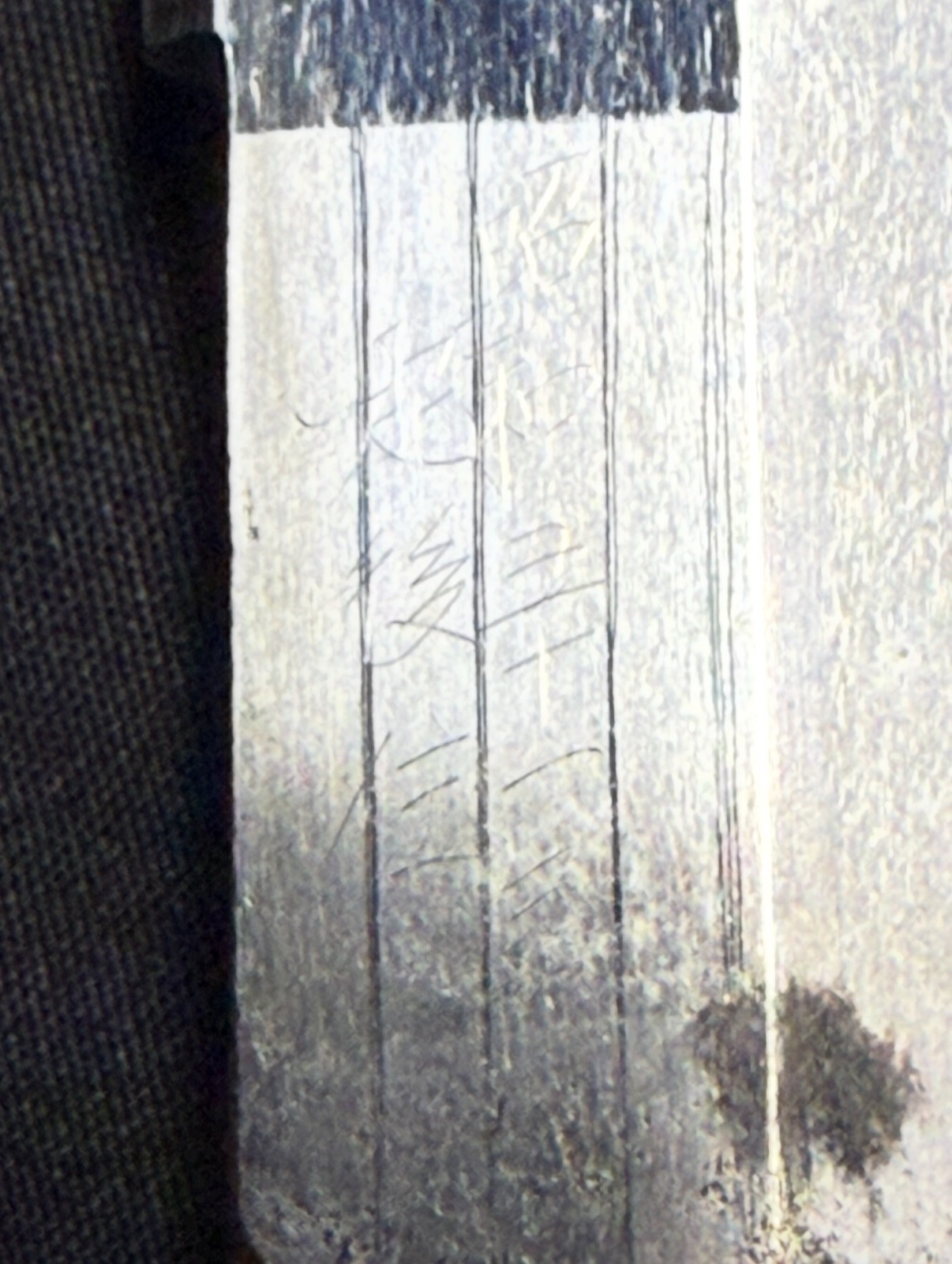
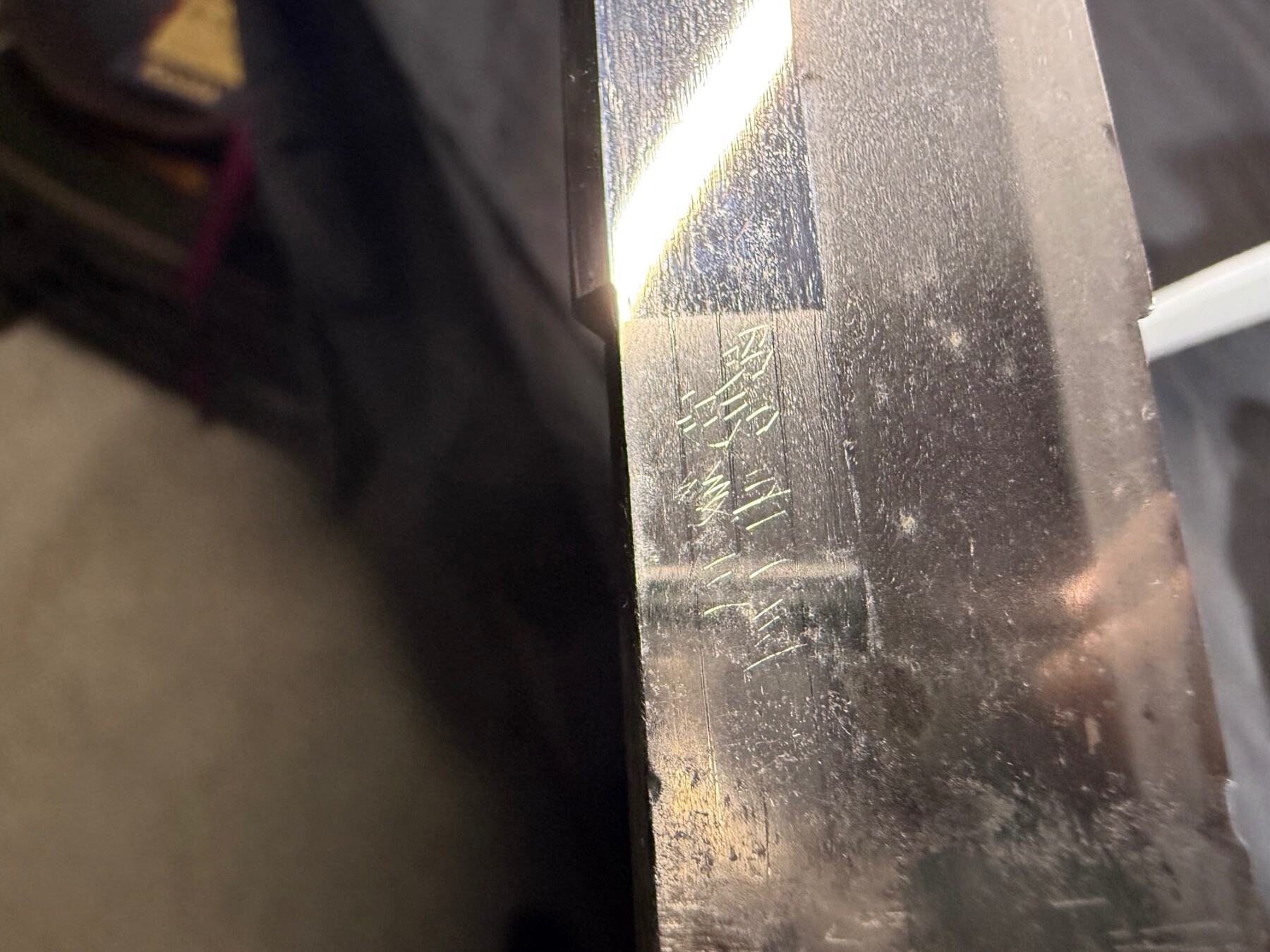
Hello all my mentor just gifted me a Japanese Katana that needs restoration, but I am curious on the name of the maker. I have had little success with online translation tools so I was seeking help here. Attached are a few angles of the tang. Any help would be appreciated!


 1 point
 -
Ouch. Through the fingers, tsuka, then into the nakago. Unless that is some sort of test cut for a different blade. John C.1 point
-
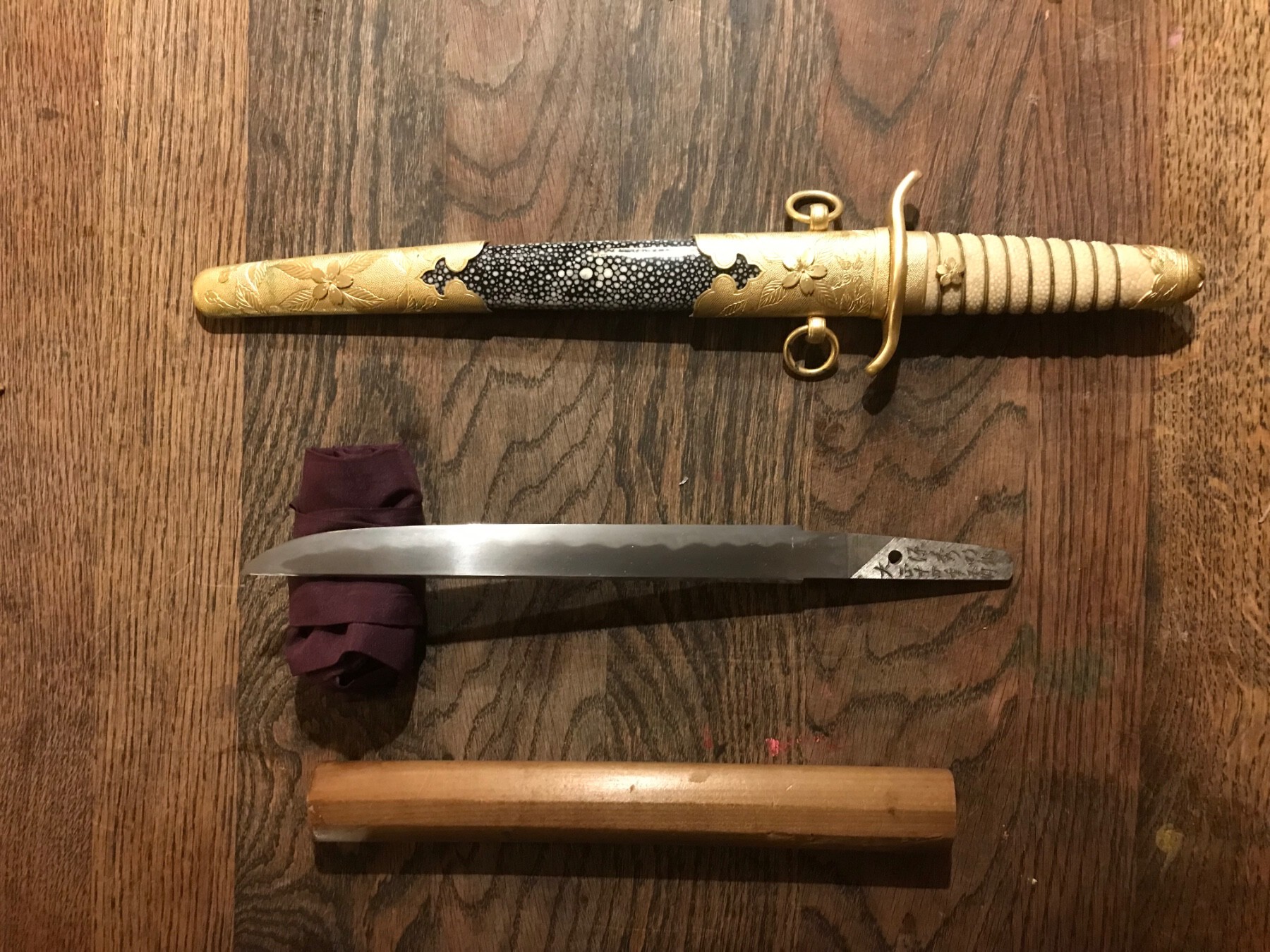
Salvatore, as you can see on the TOROKUSHO, it is a WAKIZASHI (TANTO have a max. length of 303 mm). The KOSHIRAE looks new, and the photos of the blade are not telling much. Perhaps try with a dark, non-reflecting background in a dark room, using s spotlight. All NAKAGO photos vertically tip-upwards.1 point
-
Colin, I absolutely share your opinion, and in addition, I will say that they are not carved but press molded, and not made in Japan. In fact, they are not in any category of TSUBA. Did anyeone see these kind of "TSUBA" 10 years ago?1 point
-
Love it, but no! National Button Society (USA)1 point
-
Had a photo session this morning and was able to get some better photos


 1 point
 -
Maybe modern, I agree, Colin. Your example is even better than the previous ones, but there is still something missing...sophistication... I think this is the fate of many modern artists, few people will be able to find the meaning to spend their whole lives on this craft in order to achieve perfection.1 point
-
The large Seki stamp at top gives you a bit of an idea of when your blade was made. It was used by the civilian Seki Cutlery Manufacturers Association from 1940 to 1944, but most blades we see that have dates were made in 1942. So, a general idea.1 point
-
Thank you all. I flipped the photos so here are the photos the correct way.1 point
-
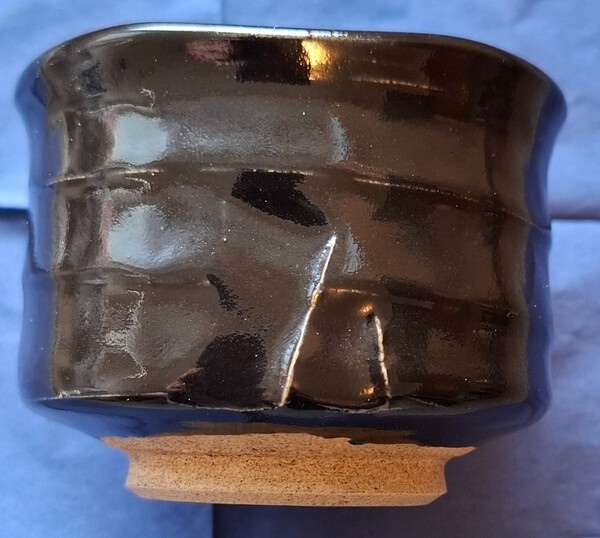
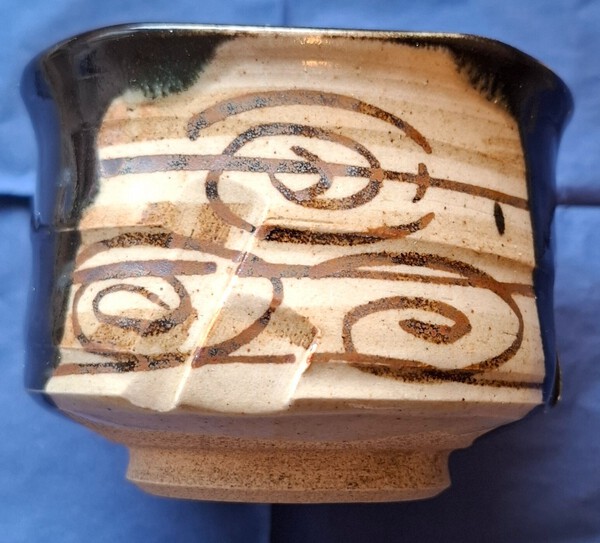
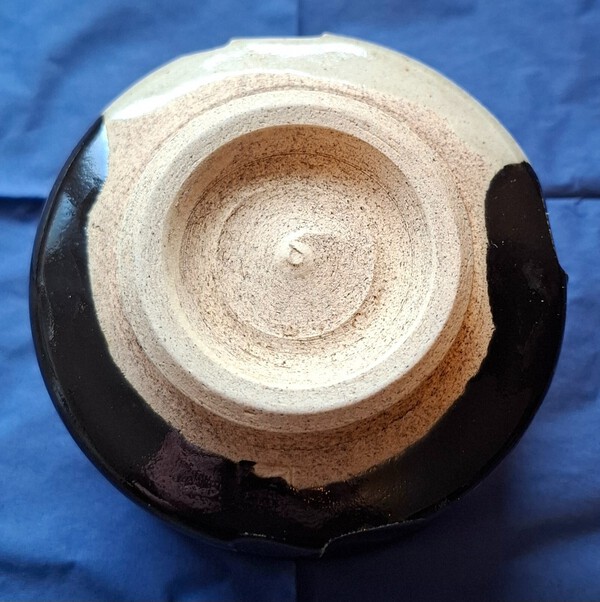
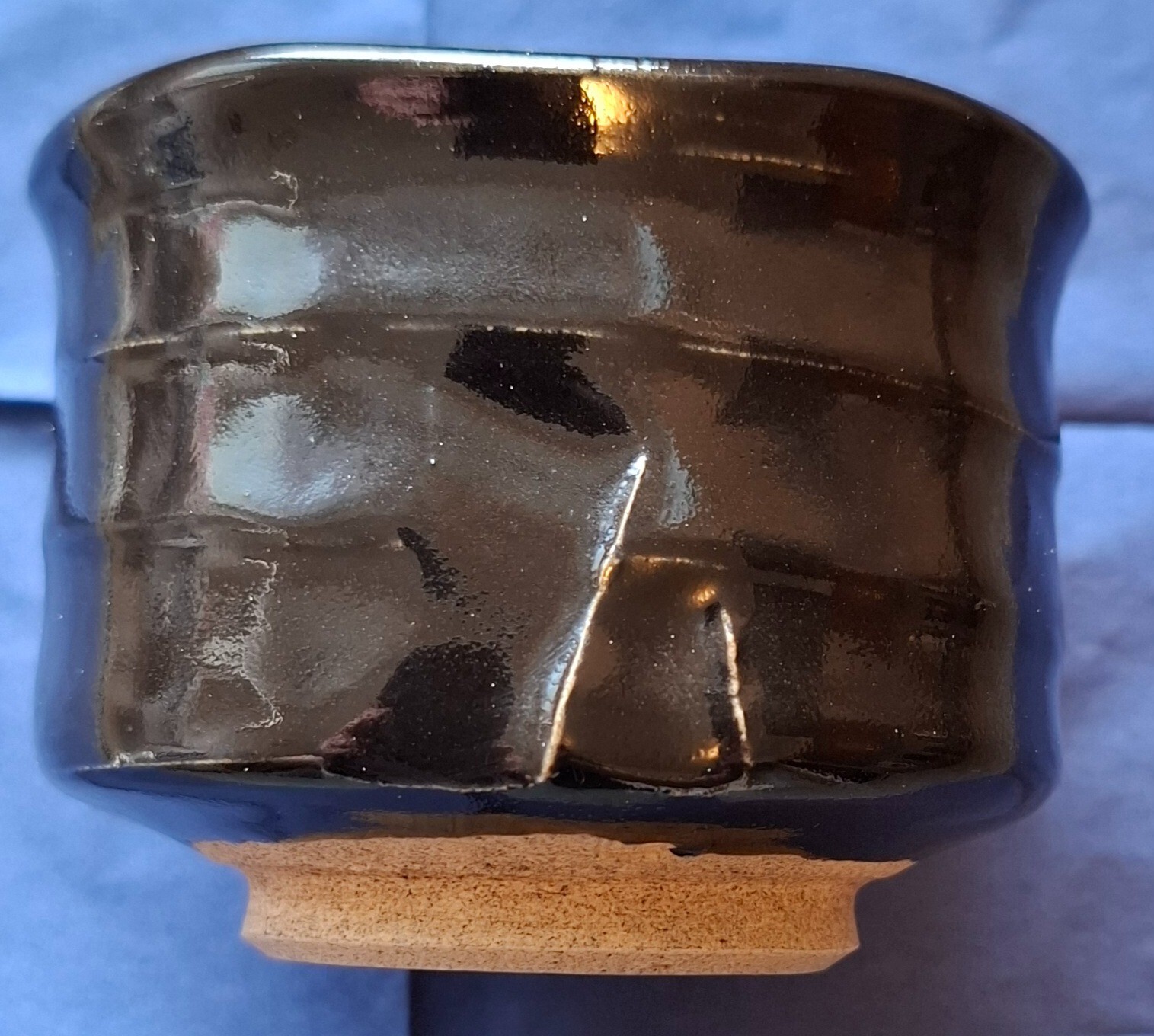
Hi, I have no idea about the school or age of this tea cup. Nor do I know its value. I would like to offer it here for €20 + shipping to support the NMB, as I am currently offering many tsuba from my collection for sale here. If anyone would like to pay more for the tea cup, they are very welcome to do so. :-))))


 1 point
 -
Hi Tyler, welcome to the forum. The photos do need to be the other way round but I can see a fairly typical WWII style of Mei that more or less reads "Noshu Ju Seki Kane___Saku". This basically means "Made in Seki by *smiths name*". The small stamp indicates this was a non-traditional officers sword made during the war. In terms of restoration your options are limited, at the very least don't attempt anything yourself beyond keeping the blade thinly coated in a light gun oil. https://japaneseswordindex.com/showato.htm1 point
-
Not really menuki, and possibly not Japanese. May be useful to someone as decoration for something but this is why the backs are so important.1 point
-
They may be (originally) a series of mini mirrors to carry in a purse or wallet.1 point
-
Or made solely for foreigners to buy in a souvenir shop.1 point
-
Unfortunately it looks like the auction link has been removed too. Interesting... Anyway, check your inbox, I've sent you a message with the contents of the listing.1 point
-
Thanks for the messages. Going through my history (as I closed the tab a while back), and assuming this is the correct link: ページが見つかりませんでした - Japanese Sword Shop Aoi-Art The wayback machine doesn't appear to have the page archived (which iirc is often the case for Aoi (plus their archive site is so outdated, its a shame its not kept up to date till recent time)). Now that I think about it, perhaps most people go to the actual auction page to look at things, I don't have that link available but if someone shares it I'll give it another look. Thank you.1 point
-
Thanks for the great info. I appreciate it very much. D1 point
-
Check the link on wayback, it should be saved.1 point
-
As a request; did anyone save the photo's and auction text as it appeared on Aoi? I had the tab open but left it for too long and its removed. If someone has the files and information I'd be grateful to get a copy. Thanks in advance.1 point
-
Thanks Mark; I appreciate your time. Barrie.1 point
-
Hi all, Could someone please confirm the reading and phrasing of the inscriptions inside this suji-bachi? Mae-shōchū-mei (front interior): I read this as 明珍信家(花押) (Myōchin Nobuie + kaō). Ushiro-shōchū-mei (rear interior): I read this as 大永三年 癸未 八月 吉日 (Daiei 3, mizunoto-hitsuji, 8th month, kichijitsu). Is the kanji reading correct (incl. the 癸未) and is the phrasing typical for kabuto inscriptions? Any red flags in the way the date is written?
 1 point
 -
I have to admit this one is a bit of a head scratcher. Jigane seems great, but the hamon ... is it mostly nioi and ko nie with strong nie only in couple of places? nioi-guchi which is bright and wide in some places and nearly gone in others? The price... because of Date association? All top Soshu have gained considerably compared to 20 years ago, and the spread between collector to collector and high end retail also increased. But... Anyways, I seriously considered this gentleman: https://www.aoijapan.com/katana-mumei-attributed-to-sa-sadayoshinbthk-tokubetsu-hozon-token/ Personal preference, I would probably like it more than "Go".1 point
-
I think this is one case where the quality of the blade (very obviously top-level Soshu if Kanzan, Tanzan, the NBTHK *and* whichever appraisers the Date family had on the case all agreed with Go/den Go) trumps any concerns about attribution and level of certificate. If it gets reattributed to Hasebe Kunishige or Shizu then it's a Hasebe Kunishige or Shizu that's good enough to stand with Go and Masamune, and was treasured by the Date clan, and with TH you've got the NBTHK's double stamp of approval for school, quality and condition. Going to Juyo (or TokuJu) would just be adding a third stamp of approval to something that already has the thumbs up from some of the headiest authorities on what makes a blade good. And really, what can any given Juyo panel tell you that you won't find on an extensive sayagaki by Kanzan and Tanzan? One other possible reason for not sending it to shinsa is to keep alive the hope - for prospective buyers - that the "Den" attribution means it might go Juyo to Masamune instead, as he is also (obviously) in the same tier of mastery as Go and does have some work with tobiyaki and togari. But this is a long shot and realistically, the best-case outcome of a Juyo shinsa will be just telling you what you already know - lovely sword, probably Go, somewhat atypical. There's much more potential downside, and you can save yourself a few hundred thousand extra yen in shinsa and handling fees (and another two years of waiting, including when - not if - it passes next year's session) by just selling it as-is.1 point
-
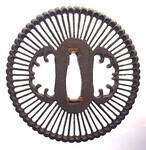
This one looks like a "negative" version to Dan's, the raised areas have been cut away in this one. I can't help thinking of a horse shoe when I look at it.1 point
-
Definitely 則次 (Noritsugu), as we discussed previously. Best regards, Ray1 point
-
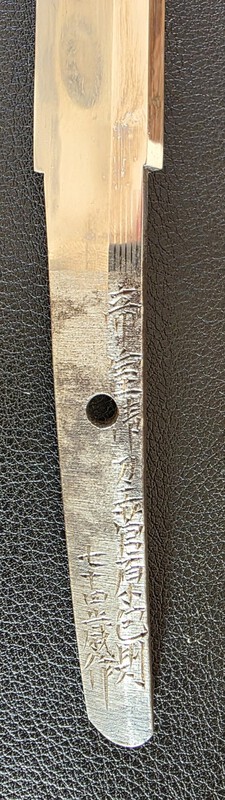
It has been a while I thought I'd share this remarkable tanto with you guys,
.thumb.jpg.d78d8b313bb8cb2a4c38fb8b967a23ef.jpg)

 1 point
 -
I think it is totally understandable that there are several different forums and closed groups floating around various places. In my ideal world there would be just 1 huge meeting place where everyone would get together and share info freely. Of course real life doesn't work like that... People are people and not everyone will get along, and there are probably studies on why certain groups will form etc. Just checked that my membership here at NMB is closing in 18 years, and to be honest this is one of my favorite places online and has been for a long time. I hope to be a member in here as long as the forum is up. I have met so many amazing people through this forum online and some I have even met in person in various places. I admit that I am too grown into the forum that I feel quite puzzled how people are not joining in for gold membership at such cheap overall price. For me it is about the community in here, maybe the difficult thing is getting the new folks feeling welcome in the community.1 point
-
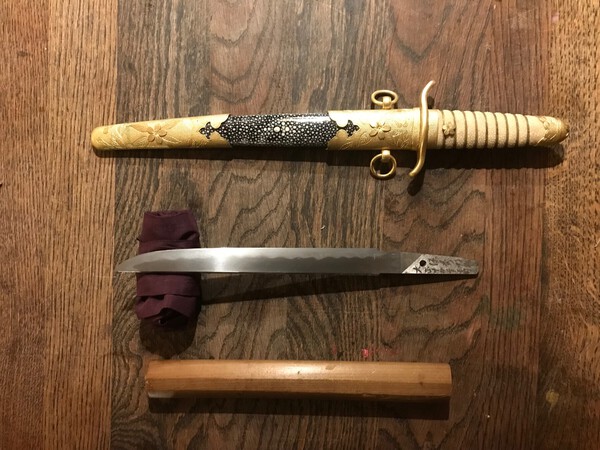
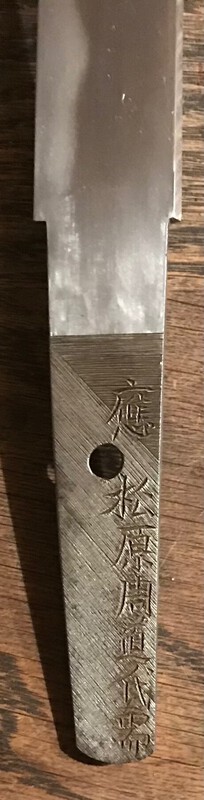
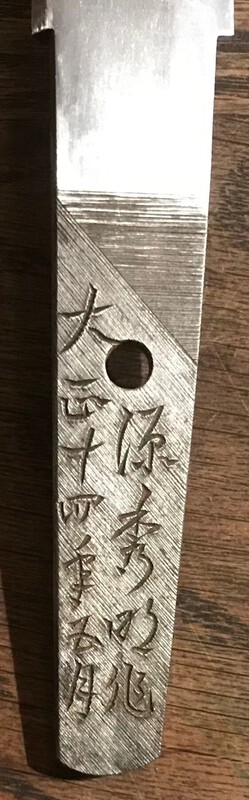
I thought I’d show my recent acquisition. A special order tanto by Horii Hideaki
 1 point
 -
Recently I spotted a wakizashi in Shirasaya at a local auction and decided to take a gamble. No-one showed much interest, perhaps because there were no Shinsa papers and no koshirae. I made a mental price limit and bidded towards the top end of that. Surprisingly the bidding stopped with me. Gulp! Osaka, Tamba no Kami Yoshimichi? Several people have since looked at it, with no especially negative comments so far. Plenty of Sudareba. Opinions differ as to which generation, but on Sunday my sword Sensei commented that he could see traces of early work in it, possibly shodai. The Mei does seem to correspond too, but I know there are many gimei out there. He advised submitting it for NBTHK Tokubetsu Hozon. If it passes shinsa, I have a very nice koshirae that is looking for a blade, and I just wonder if they can be married. It's a wide mihaba, and those last 5 centimeters... hmmmm... and the problem of the mekugi position arises. Long-term winter project ahead to keep me warm? 😅1 point
-
All I can add is playing a bit around more in Photoshop with the pictures, to make yours look picture look like the one in the book and put them side to side. If this is of any help, see attachment.
 1 point
 -
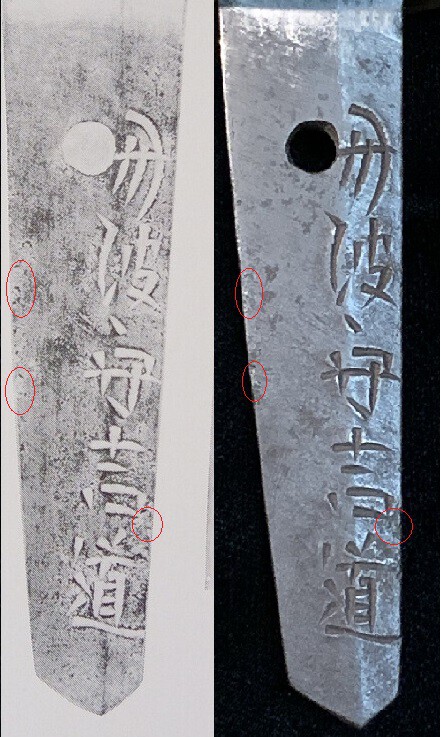
Congratulations Piers. It's certainly the same compared to the tang that Jacques showed us. Picking up a sword in a book is a rare luck.
 1 point




















.jpg.57335bf9c5ef7b10e0a6581194ae51fb.jpg)






This leaderboard is set to Johannesburg/GMT+02:00