
Leaderboard


Popular Content
Showing content with the highest reputation on 12/05/2025 in all areas
-
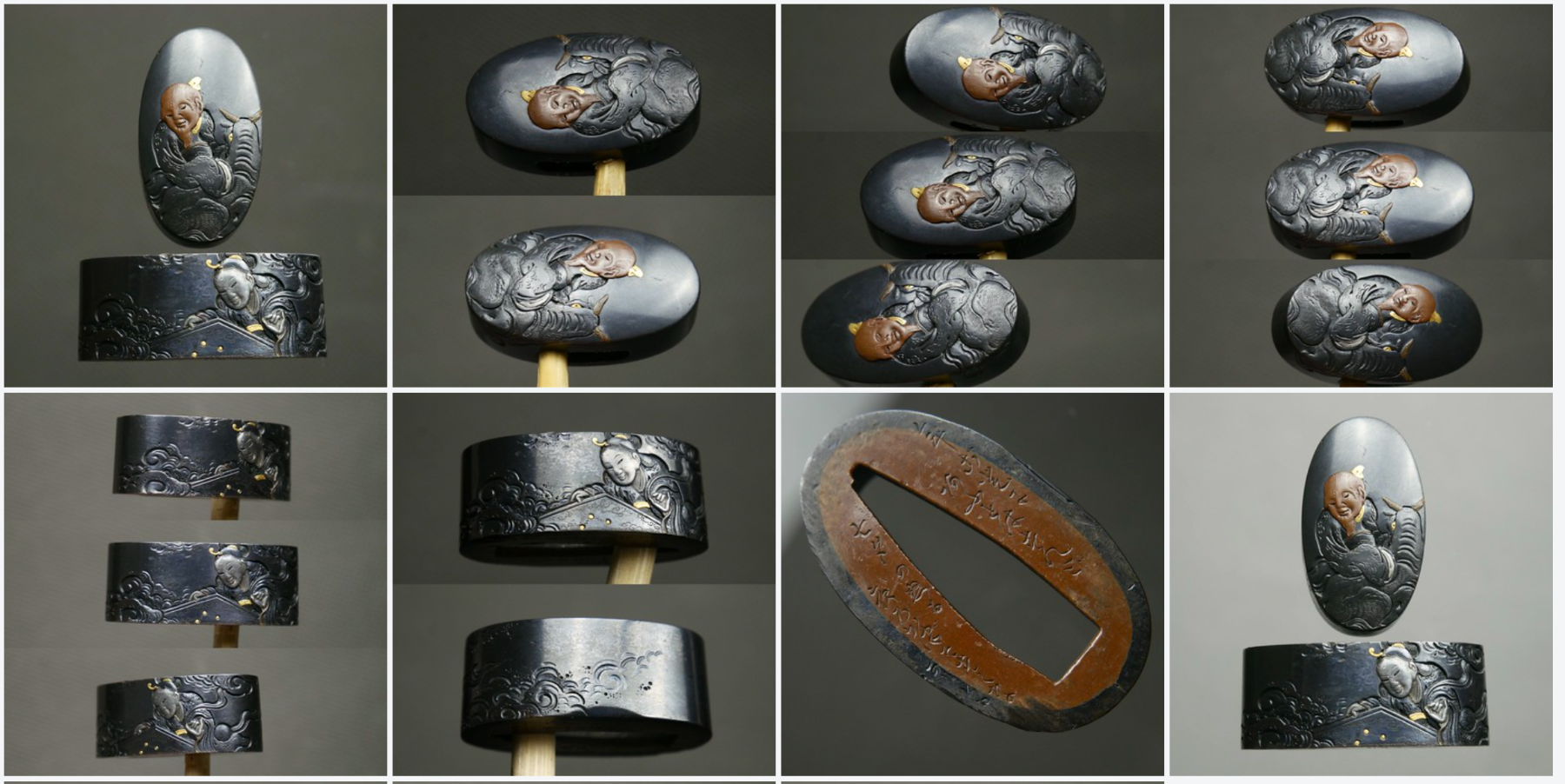
崎陽山人 - Kiyo sanjin 享斎 - Kyosai6 points
-
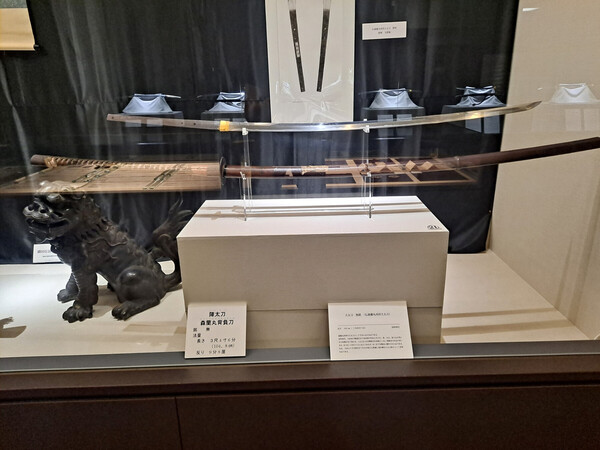
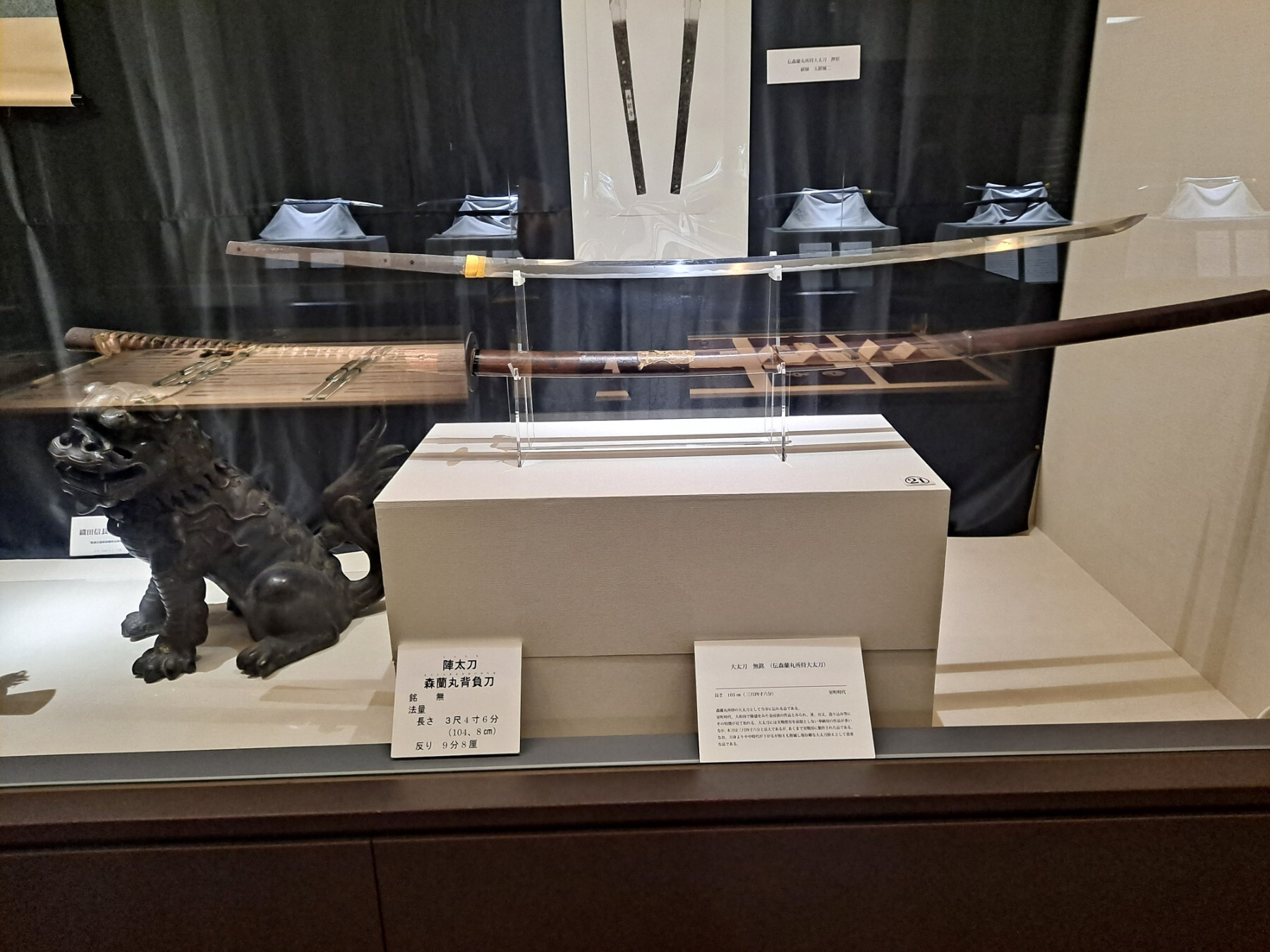
About the back carry of tachi and ōdachi, I would think it would be very rare for the person carrying the sword in back actually draw them from back, as in case of ōdachi the sword would have been very large. I talked about this with Daihōden museum staff this summer, as she was happy how interested I was about their ōdachi she came to talk to me. We talked lot about ōdachi in general and then about their museum ōdachi. I was under the impression that Mori Ranmaru whose name is in the description of the particular sword was the one using it. However she explained to me that Mori Ranmaru was actually sword carrier of Oda Nobunaga, and he would have this large ōdachi strapped in his back and if the situation came where Nobunaga would call, he would take a bow and allow Nobunaga to draw this ōdachi from his back and go into the fight. Here is a picture of that sword. Usually I don't take any pictures of swords but this time she insisted I took pictures of it, and was standing next to me looking if I will take them. It was great to see how she was proud about items in their museum and knew so much about them. There are some other ōdachi that have historical ties to famous warrior or warlord so I would think similarily they would have had someone carrying the large sword for them.
 5 points
 -
Just a quick public notice. I will be giving a PowerPoint presentation at this coming club meeting of the New York Token Kai on Sunday, December 7, 2025, from 12:00 PM to 3:00 PM, titled: "Reflections on 25 Years of Collecting Japanese Art". Check out more information about the club here on their website: https://www.ny-tokenkai.org/. After the presentation I will try to covert my presentation into a noneditable file format that will allow me to share it on my website here: Tsuba Otaku | Reflections of a Not So Empty Mind. Thank you.4 points
-
First of all, thank you for providing very good pictures. Scoring the sword for that amount is a good deal in my books. I think it is completely plausible that the machi would have been tweaked a little bit, few cm like you wrote would be very reasonable. Unfortunately I couldn't find sword that would be close to 1:1 to your sword in size and shape but I think these 3 give a reasonable idea on what I would see the sword as, and measurements are bit similarish. I think possibly c.1500 like Kirill wrote above too. (the examples are all Bizen just because it is very easy to find Bizen swords from this period fast). There are swords of even 70+cm with very short original nakago, so there are lots of maybe bit uncommon things that were still done historically. https://www.aoijapan.com/katana-bishu-osafune-sukesada-nbthk-hozon-token/ https://www.nipponto.co.jp/swords11/NT335371.htm https://www.nipponto.co.jp/swords11/KT341483.htm3 points
-
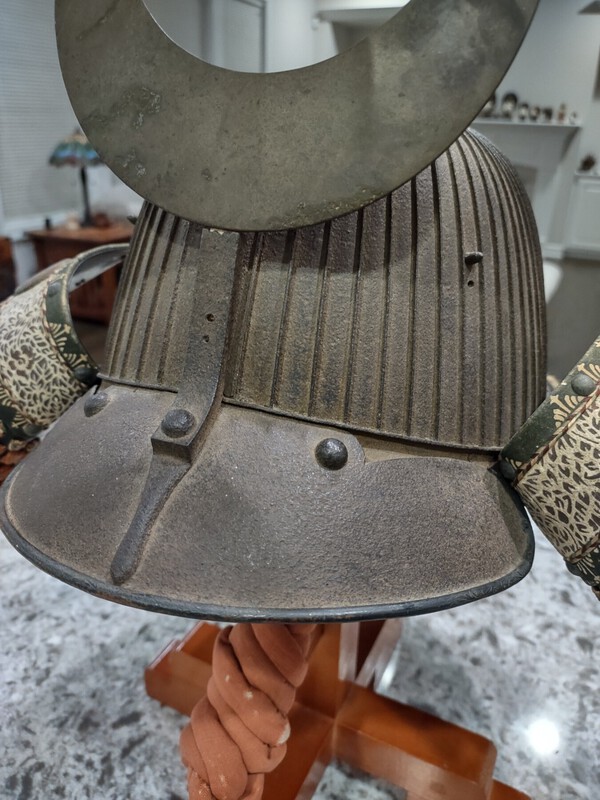
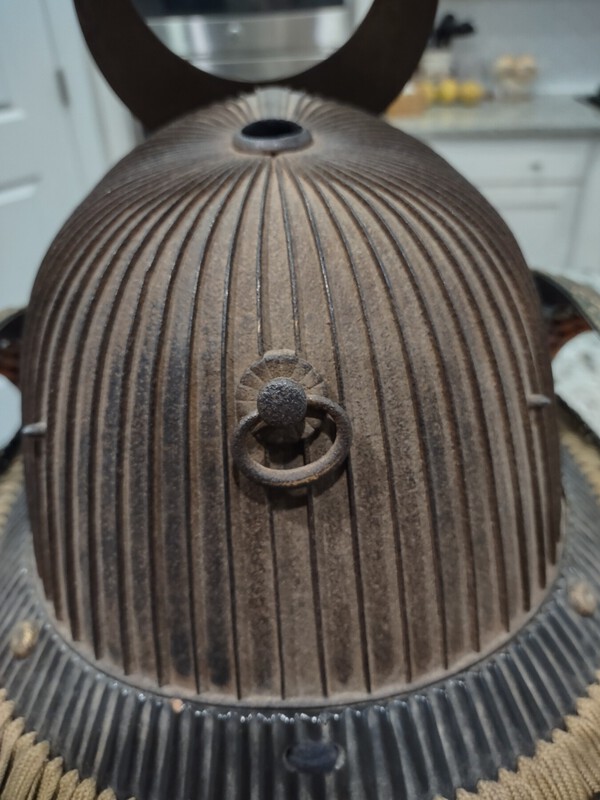
Kabuto - 62 plate heavy . Iron Tehen and Agemaki ring. Edo period signed Saotome Ienari. This is a very well made helmet. Many thanks to Nick Ricupero for selling this to me.


 2 points
 -
It is good that you are doing the research Eric, Aoi does so many sales ads, as they tend to add few swords daily 6 days per week, sometimes they do have incorrect information in their listings. In my personal opinion there is a huge variance in quality in works of Hasebe Kuninobu. Of course my understanding of quality is bit limited but I will try to explain it with items that I have seen in person. I was lucky to see the amazing Tokubetsu Jūyō tachi in NMB sword meet in Japan (arranged by Yurie & Adrian). That sword was spectacular sword. I would think that could be the pinnacle of Hasebe tachi that can be owned (Of course totally out of league for most people). I remember the owner explaining and discussing things and if I remember correctly he mentioned that the named tachi Karakashiwa would of course be the ultimate Hasebe sword. Unfortunately I have never had the privilege to see that sword in person but I do trust his word as I believe that would be a splendid sword. I have seen the Wakizashi owned by NBTHK and to be honest I am not too fond of that sword... I just can't explain it well but for me it just doesn't click. Yes it is Jūyō sword and featured in many NBTHK publications but I don't like it too much. Then I have viewed the small tantō of Atsuta Jingū and in my memory it was splendid small sword with good craftsmanship. I like Hasebe works even though I don't understand the specifics of their craftsmanship all that well. I understand budget limitations very well but if I would be looking for Hasebe short sword I would perhaps want a signed one. That will of course affect the price and you can find better quality in mumei work for same price. About the 3 signed tachi mentioned I would think they would be the Jūyō Bijutsuhin and 2 Jūyō tachi. For the Tokubetsu Hozon tachi NBTHK had added (後代) late generation in brackets. I tried to do searching and Nihontō Meikan is the only reference where I could find 2nd generation Hasebe Kuninobu and he is listed for Ōei period. So I made a slight fix in data and put is as late Nanbokuchō - Early Muromachi. I am not sure how the Art sword crowd treats these magnificient swords at shrines that I personally love. In the Tōken Bijutsu number 67 there is a 4 page article on the Shizutani Jinja sword and history of it by Kanzan Satō. He raises point that Kanzan, Kunzan and member of Honami all 3 of who saw the sword had doubts and raised specific points which cast doubt. However it was also touted as incredible unknown find, that was not in any major historical oshigata books but was featured in some historical book that had the sword and history for it. It is mentioned that sword will be polished in future, and in the end part of article with inspection report that describes the sword it is said it is going through polishing. Now bear in mind that I read these old Japanese magazines with Google Lens as my Japanese is not up to par in reading full articles. However as that article was 60+ years ago and I have not seen that sword featured in any publication anywhere, I think maybe NBTHK does not think it as legit item.2 points
-
I might guess the sword is ubu or almost ubu, I don't immidiately see suriage effects when I look at pictures. Sakihaba is very small but Lewis mentioned before I think similarily that it has been reshaped and was wider originally. I would guess it to be from Muromachi period. Maybe you could take a photo from mune side of the nakago so it could show how is the thickness in the area of nakago and base of the blade.2 points
-
Recently acquired this one.


 2 points
 -
Looks very similar to Dale’s door handle… https://www.militaria.co.za/nmb/topic/53845-oh-goody-another-door-handle/2 points
-
If you are bringing in 30 blades, I wonder if there might not be some special governmental cultural dispensation, seeing that you are also providing work for traditional Togishi.2 points
-
Beware that shipping is not without its own headaches. A couple of months ago I tried to ship a blade to Japan via U.S. Post Office Express Mail International. I carefully followed the instructions of Robert Hughes, who was going to coordinate submission to shinsa. My package cleared outbound U.S. Customs. But despite my blade being over 700 years old, someone at the U.S. post office rejected the parcel before it was loaded on a plane and sent it back to me because the "destination country rejected shipment"--in other words, they erroneously thought that all Japanese swords are illegal to export to Japan. I later learned that a very experienced U.S. dealer had the exact same experience with his shipment of blades to Japan within a week of my shipment. That dealer was able to successfully reship with a new description of "Traditional Japanese Art." I, on the other hand, decided right now is not a good time to try shipping to Japan, so I'll wait for shinsa some other year.2 points
-
It seems to be signed “増田明珍主水宗介”, “享保” (Masuda Myōchin Mondo Munesuke + kao), (Kyōhō)2 points
-
As a proportion of their work, there are a good number of signed Hasebe tanto. There is, of course, a price premium when buying a zaimei Koto blade. But I think there is a distinct downside to buying a mumei blade when zaimei is more common among a particular smith or school (unless that mumei blade is an extraordinary work). That may partially explain the pricing of this wakizashi.1 point
-
Hi Sam, Will do. I will keep you and everyone else posted on NMB about the availability of the PowerPoint slides for my upcoming in person presentation.1 point
-
You can probably imagine how difficult it would be to draw a sword straight off your back over your head/shoulder. Try the motion now: reach behind your head as if grasping a tsuka, then raise your arm as though you’re pulling a blade free. You’ll notice your arm doesn’t travel very far. With anything longer than a short blade, a significant portion of the sword would still be stuck in the saya on your back. The longer the sword, the longer your arms would need to be to clear the entire blade from the scabbard. Here's an example. You can see that even video game animators struggle with the physics of how this might work: (Note: this is just a silly video game, and is simply demonstrating how this would look and how challenging/awkward the action would be. Sorry about the song, I recommend muting it... not my video .)1 point
-
Sounds awesome, David! If you are able to upload it to your website, I would love to share it with the PNW Token Kai members. Best of luck, -Sam1 point
-
Hi Galo, Great find, there. Yes, the blade is older than WWII. I cannot tell you how old, but maybe some of the other guys can give you an idea. Those frustrating black stains do not come out without a professional polish. There are a few guys that do it, but it will cost over $2,000. If your friend wants to spend that much we can point him to someone. In the meantime, here is a good page on care and cleaning: Japanese Sword Care1 point
-
Its 100% hand finished. Good quality too. The koshirae is a full set of waves and dragons finished in silver and the tsuba matches well. Even the soft metal to protect the blade on the tsuba is silver. Signature is kiyo sanjin Kyosai1 point
-
The first generation Kunishige is a bit of arcane art, as for a time Hasebe was thought to have began working much earlier than 1350s that we usually see. Whether its true or not is debatable. If its not, there is not much difference between Kunishige and Kuninobu, which is how I would approach it personally. Its a good blade, the nie is a bit harsh rather than cloudy and the hada is a little bit indistinctive, but then the fact that mumei was attributed to specific name is good. Its not "really" ubu... It does not feel like a strong Juyo candidate but as it is, its probably a decent blade. There are very many katana attributed to Hasebe, but signed ones must be exceptionally rare (not with my books). Also katana tend to be all around the place in terms of work itself, more so than ko waki.1 point
-
Its got that rare land navy tassel too1 point
-
The seller doesn't show the end clearly, however the cap does have cutouts for two spouts. John C.
 1 point
 -
If there is a second, smaller hole alongside the spout, then it would have carried water. Water canisters are often sold by dealers as ‘gunpowder’ flasks. A doctor’s sword variation, possibly, also looking the part as chatō for tea ceremony.1 point
-
To me, this is clearly not a BOKUTO or BOKKEN, but nice!1 point
-
Yes sorry it is a cast "replica" - they do make good handles as long as you don't jag your clothes on them! Still a freebie bonus can't be a bad thing - do you do any deep sea fishing? Would make a great heavy sinker!1 point
-
Antler (also ivory, and to a lesser extent bone) was often fashioned to look like bamboo.
 1 point
 -
Piers D. , I certainly agree with you. Speculative and situationally dependant obviously. Though for art purposes from the front I think I could get away with it. Obviously only the handle portion of the back mounted sword would be showing above the body and the ending of the saya would be showing below. Best regards, Barrett Hiebert1 point
-
Or perhaps end of SHOWA?1 point
-
@kiipu yes it does have a SHO stamp. He has others also, from early war period: YOSHINAO 義尚: real name Takeyama Tsutomu (武山勲). Born Meiji 39 (1906) August 17, older brother of Yoshitomi (義臣). Registered as Seki smith Showa 14 (1939) October 27 (age 33). Became Rikugun-jumei-tōshō. Died Showa 57 (1982) July 11. Akihide ranked in 1942: Jōkō no retsu (5/7). Second Seat at 6th Shinsakuto Exhibition 1941). Example mei: (“Seki Fujiwara Yoshinao”) (“Noshu Seki Takeyama Yoshinao saku” SHO), (“Seki Fujiwara Yoshinao saku” SHO), (“Seki Fujiwara Yoshinao saku kore”) (“Noshu ju Takeyama Yoshinao kin saku”) (“Noshu Seki ju nin Takeyama Yoshinao kin saku” SEKI).1 point
-
Robert S. , Yes, I agee. I also do think a tanto on the right side in metezashi or ebirazashi wouldn't be over tooling but just right. Just as long as no saya from each blade interfered with one another when moving. Best regards, Barrett1 point
-
I think that's what you'd call seriously tooled up :-).1 point
-
That book is the Japanese (Original) version of "The Connoisseur's Book of Japanese Swords (刀剣鑑定読本) by Kokan Nagayama. Its English translation is one of the most common books for sword collecting and comes highly recommended here.1 point
-
You are correct the TH papers state den Hasebe Kuninobu and not Kunishige. I think that blunder with Aoi should be corrected but you did your due diligence and found the misattribution. There are 3 Mumei Hasebe Kuninobu in that database, 2 with den attributions and 1 TH with a direct attribution to Kuninobu. The 2 den Kuninobu are both Juyo daito, and the first makes mention of Kunishige and says: "Kuninobu is said to have been either the younger or older brother of Kunishige, and many works show the style of Hasebe Kuninobu. Among his works, suguha pieces can also be seen, and three signed tachi are extant." I believe this comment about 3 tachi being extant is now outdated as this came from Juyo 20 and there is another zaimei tachi from Juyo 21, and 1 other Tokubetsu Hozon zaimei tachi listed as well. I suppose the 3 that were being discussed in this explanation are the JuBi Tachi, the one in Shizutani Jinja, and another Juyo/TJ blade from Juyo 16. (Thanks to Jussi again for the data here!) The Juyo 43 den Kuninobu says the following: "This is an ō-suriage mumei katana attributed to Hasebe Kuninobu. The Kyoto Hasebe school is considered a hitatsura group contemporary with Sōshū Kunishige and Akihiro, and Kuninobu is the representative figure. Kuninobu is known for his characteristic hamon composed of notare and gunome with yahazu (arrow-notch) tendencies. Suguha works are also seen among his pieces. In most cases, the Hasebe school shows a foundation of notare mixed with gunome and yahazu elements, displaying a gorgeous Sōshū style. This katana prominently displays these characteristics. The form is also typical of the Northern Court period, around the Enbun (延文, 1356-1361) and Jōji (貞治, 1362-1368) eras, making the attribution to Hasebe Kuninobu most appropriate." There is 1 other TH Mumei Hasebe Kuninobu listed in the database, but being TH, there is no more context on it.1 point
-
Well- 1500s iron, signed. If that doesn't happen, there is a very short list of other candidates. If any of them pop up, then one of them. They are rarer than 1500s signed iron. Got to hit them whenever those unicorns appear. Anyway you slice it, a tsuba probably in the low to mid 5 figures. I'd probably balk at anything costing more than the car I currently drive. On the flipside, most every tsuba I own was worth more than the car I drove up until April 2025...1 point
-
Could be. It feels a bit machi okuri to me, which would make the original nakago smaller in proportion to the blade... 25 inch sugata is somewhat on larger size for katana, but below typical period's tachi.1 point
-
That really depends on the boshi. The kissaki can certainly be repaired, but it’s unclear whether it can be repaired without compromising the boshi. If the boshi is absent, it's considered a fatal flaw. Can we maybe see some close-ups of the nakago? -Sam1 point
-
Its completely unpolished so hard to be sure. Sugata-wise this is uchigatana, katate-uchi etc.. from 1500-1520 probably. In suguha. Statistically speaking with kiri yasurime and such nakago I would be tempted to say something like "Bizen", but suguha is a bit too narrow for Bizen. Might be just the condition or something else related.1 point
-
There is an interesting book called "Economy of taste", but it is not very applicable to Asian items. Extending its gist, with Art and antiques price increase tend to come in waves, associated with "disposable cash" accumulation by the top 0.1%. Plus periodic re-evaluation of specific subjects which might not have been popular before. It shows how a lot of current allure of Russian museum collections comes from it being the XVIIIth century market for what back then was considered second tier collectibles like Van Hals, which were dumped there in quantities, but now these artists are considered first tier. In nihonto I think the recent valuation of Norishige, Yukimitsu, Akihiro, Oei Bizen compared to what it relatively was 100 years ago is because the last 20 years helped items whose quality can be recognized even on average photos. You can read a lot about how great Rai Kunitoshi in suguha is, but on photographs Norishige is definitely going to look more impressive. Which quite frankly is a real thing. Expanding on this, it is possible that many blades which are great on papers and attributions, but creepy looking will slowly devalue compared to more visually impressive schools and examples. But otherwise, nihonto is probably never going to make money as a whole.1 point
-
Just back from Japan a few weeks back , my friend had two swords with him , we contacted the customs at Narita " we were maybe a bit lucky " within 15 minutes 4 police arrived and went through the customs checks and registering the two blades the whole process took about 45minuites , but as Piers says above it can take a lot longer ! But please note and to be confirmed you can only bring in 3 swords at a time into Japan , this is what we were told , i believe you can leave with as many as you like as long as you have all the proper paper works .1 point
-
Having purchased an item that was badly misrepresented from this seller, I wouldn't belive a word of any of it without having a ton of provenance. Besides having the very faded(which is strange considering the ito and sarute seem unaffected) company grade tassel I would expect an admirals kai gunto to be a little more higher end and have a full samegawa saya.1 point
-
Hi, I am bothered by this blade and I am not too keen comment, but I will do it to honor Darcy's memory. A newcomer to this hobby will inevitably have his perception shaped by Aoi's offerings, which as one comes to learn, are arbitrage opportunities for blades that do not make it in Japan, with few exceptions. One must learn from great blades first and foremost, and such a sword is an experience that teaches the wrong things. Some context: I find it irresponsible of Shinsa to make a call to "Den Masamune" on such a sword. One could argue that they've hedged it with "Den" - and unfortunately this is a misrepresentation. All Masamune without Kinzogan or Kiwame by the best Hon'ami judges or featured as Meibutsu are "Den" with only very few calls diverging from this pattern historically. Some of the Masamune blades without "Den" are shakier than the ones with Den, and so forth. It is not a simple attribution, and calls for deep contextualization. Then inevitably comes the unorthodox positions that Masamune doesn't exist, that he's unneeded, that this is evidence that his work is not that great, and so on, and so forth. I don't want to go there, I find it silly. Then there is the absurd claim by Aoi that "Choshiki was one of the most respected judges..." - Darcy used to say that an attribution by Choshiki means anything but. Since Tanobe sensei's departure from the Shinsa panel, the NBHTK is more swayed by Choshiki judgements than in the past. If you are really deep into this field, you know that since 2022, it is a good time to target blades with Choshiki attributions for Shinsa. There is only one "Den Masamune" in the Juyo record with a Choshiki attribution, and the setsumei states that this is the work of Shizu. Now, when faced with such a TH blade, there is no context on the attribution, and this absence of context is damaging. This absence of context is why Den Yukimitsu, Den Norishige, or Den Shizu are much safer harbors at TH and have been traditionally preferred before going so far as to calling it Masamune. Back to the blade in question. It is tired and has been extensively repaired. This sword has suffered a tragic accident in the past: it was twisted. Someone repaired it, and by untwisting it created a plethora of shinae, or bend marks. These shinae appear as ware/fukure along the ji. Some of these ugly openings have been filled with umegane. Choshiki calls attention to this fact in his Sayagaki, which has conveniently been left untranslated. While it is true that the extensive jinie of the blade, and the angular chickei and inazuma are characteristics of Masamune, this is all there is to it. And before people bring up "Ogiba" and other arcane Hon'ami things, just don't bother, no, this is not relevant anymore since the mid-20th century and the great cleanup of inflated Edo attribution. The sword is missing Masamune's defining trait: the highest class of nie executed in a nie kuzure that leaves no visible nioiguchi demarcation line. Masamune's nie unfolds in layer to the light, with different nie sizes reflecting light at different angles, leading to a kaleidoscopic effect which can only truly be experienced in hand. Unaffected Yubashiri emerge from the interplay at the hamon, fading in and out of existence when swiveling the blade. The deposits of nie form clouds of diamond dust. The contrast between ji and the ha is the brightest amongst all the Soshu Joko. The hamon is formed out of overlapping clouds of nie. It's unlike anything else. What "Masamune" means We don't have a time machine. At the end of the day, "who made it" remains an open question. While we know that Masamune existed historically (it is proven by pre-edo sources), we can never be sure that a particular hand made a particular swords, especially when the corpus of blades contains such a paucity of signed examples. Are the best works of Yukimitsu, Norishige, and others, likely to be absorbed in the Masamune attribution? Certainly, but this is true elsewhere as well. Within the Masamune attribution group, there is indeed great variety. Some have a distinct Ko-Bizen flair, others are veritable storms of inazuma crossing in and out of the ji with violent angular formations, and the last group are masterworks of such virtuosity that they truly defy understanding and fit absolutely nowhere else in the Soshu corpus due to the quality of their nie. All these blades have in common nie kuzure, unaffected yubashiri, and the feeling that the nie diffuses out into the ji as china ink spreading on paper. Masamune is a snowstorm over the ocean painted in sumi-e ink. Blades that leave you wondering if a human could have made it. Swords that stand in pure defiance to the laws of metallurgy. Masamune means perfection of nie-deki. Best, Hoshi1 point
-
From memory, that tanto was Norishige at Juyo but on passing TJ they upgraded it to Masamune. If you read the setsumei, they expend a whole three sentences (proportionately for a setsumei that is a very substantial fraction of the text) explaining why they have changed their minds away from Norishige. I have only seen it behind glass but it is an amazing blade. Simply beautiful. The Aoi blade…. Well I think it is more likely a Tametsugu or a very very rough Norishige, but as Rohan explains above, there must have been some politics involved to upgrade it historically to a Masamune. It just does not look right for a Masamune in either nioguchi or jigane or hataraki. However, I shall leave it to others to explain why the workmanship is not fully aligned to the Masamune paradigm, hence the “den”. It has been a long day at work for me… In my view it is problematic that the NBTHK do not issue papers with attributions “Soshu ju no Saku (Kamakura)” or “Soshu ju no Saku (mid Nambokucho)” etc at H/TH level. So as they don’t do that, hence the den Masamune, which is a bold call on this one.1 point
-
Though we meet each year, the number of nights we spend together on Tanabata is so few, by Fujiwara - no Teika https://www.flickr.com/photos/artur_drogamiecza/albums/72177720330625675
 1 point
 -
Ninja Rule Number One Leave no proof you ever existed.1 point
-
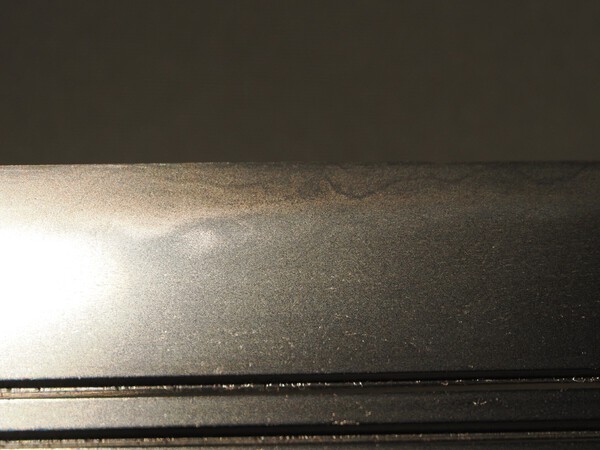
It's blades like this that keep my fascination for Nihonto. This guy takes some amazing images of these superlative blades and all from behind glass. Kudos to the museum for getting the lighting just right. https://www.facebook.com/photo/?fbid=1996901080882456&set=pcb.1996902534215644


 1 point
 -
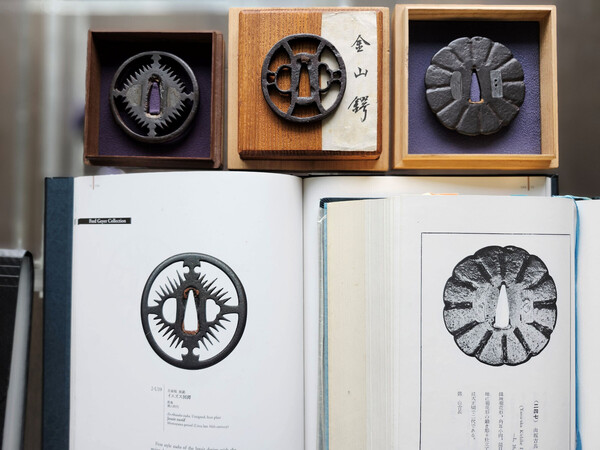
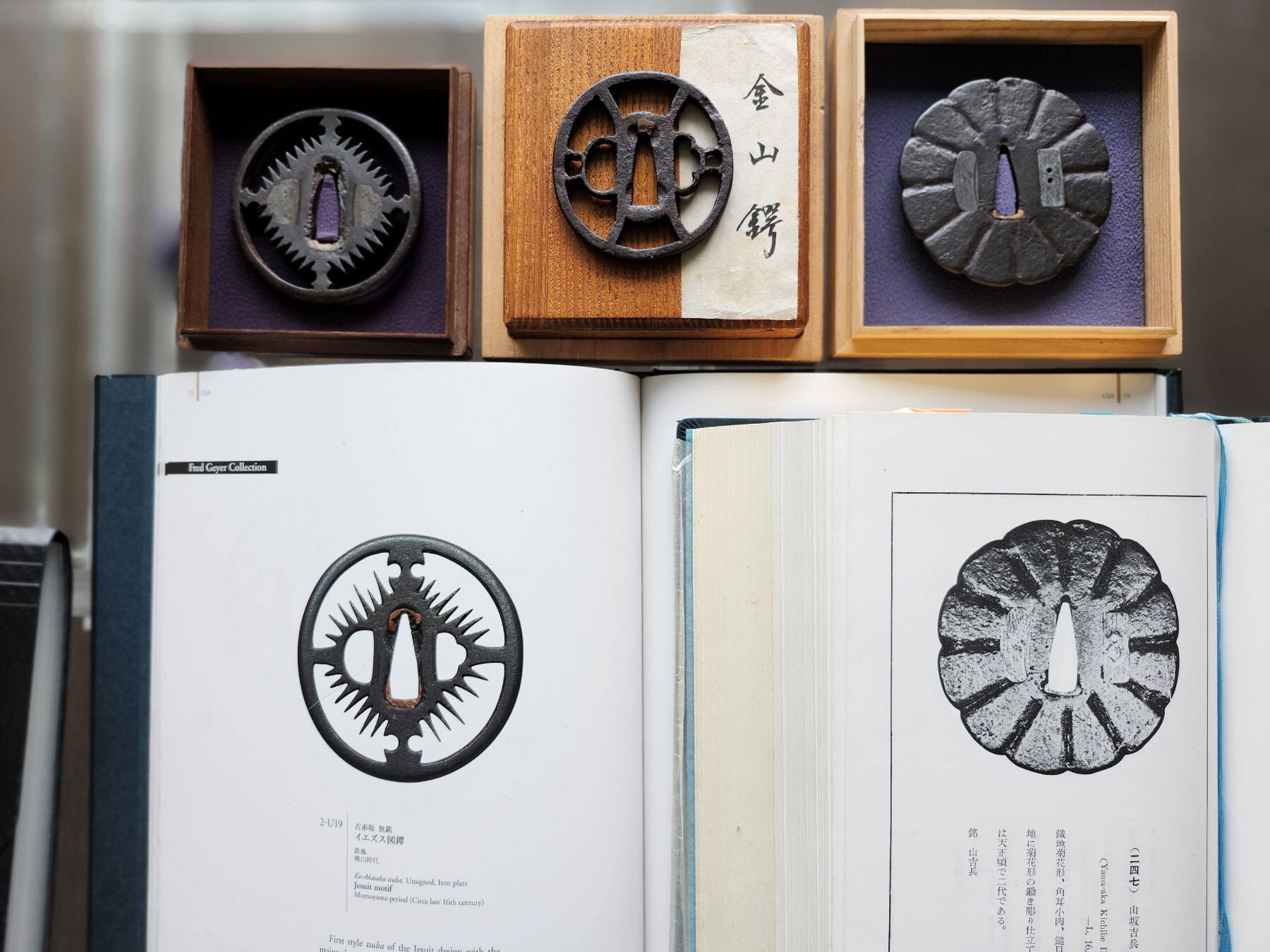
It took me a long time to fully appreciate these Kirishitan tsuba, though I am not Christian. With enough time and understanding, I too appreciate them. I gauge mine to be around 3rd gen.
 1 point
 -
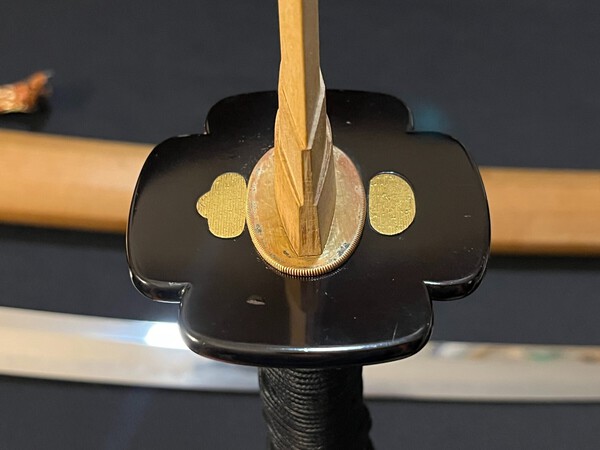
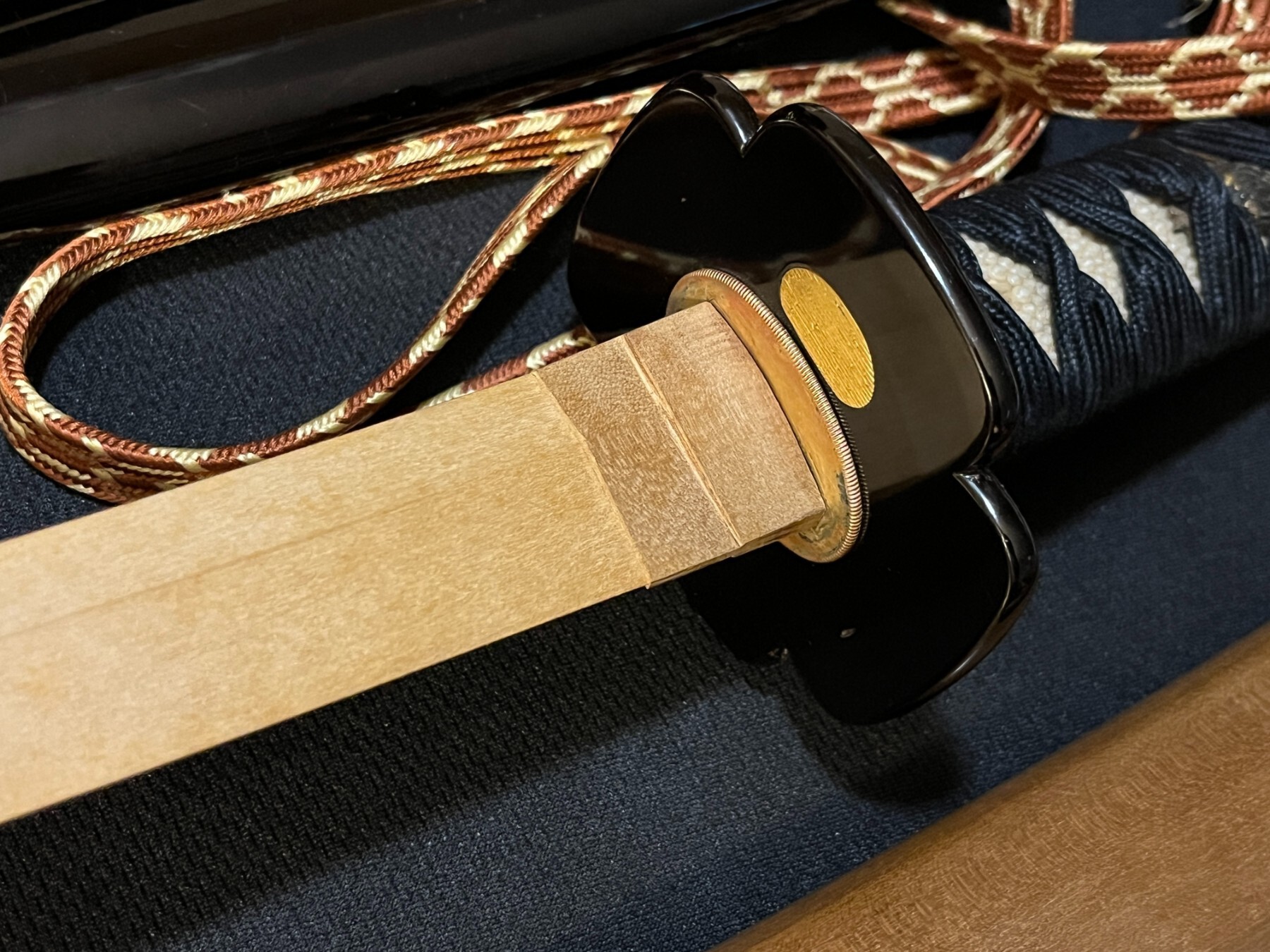
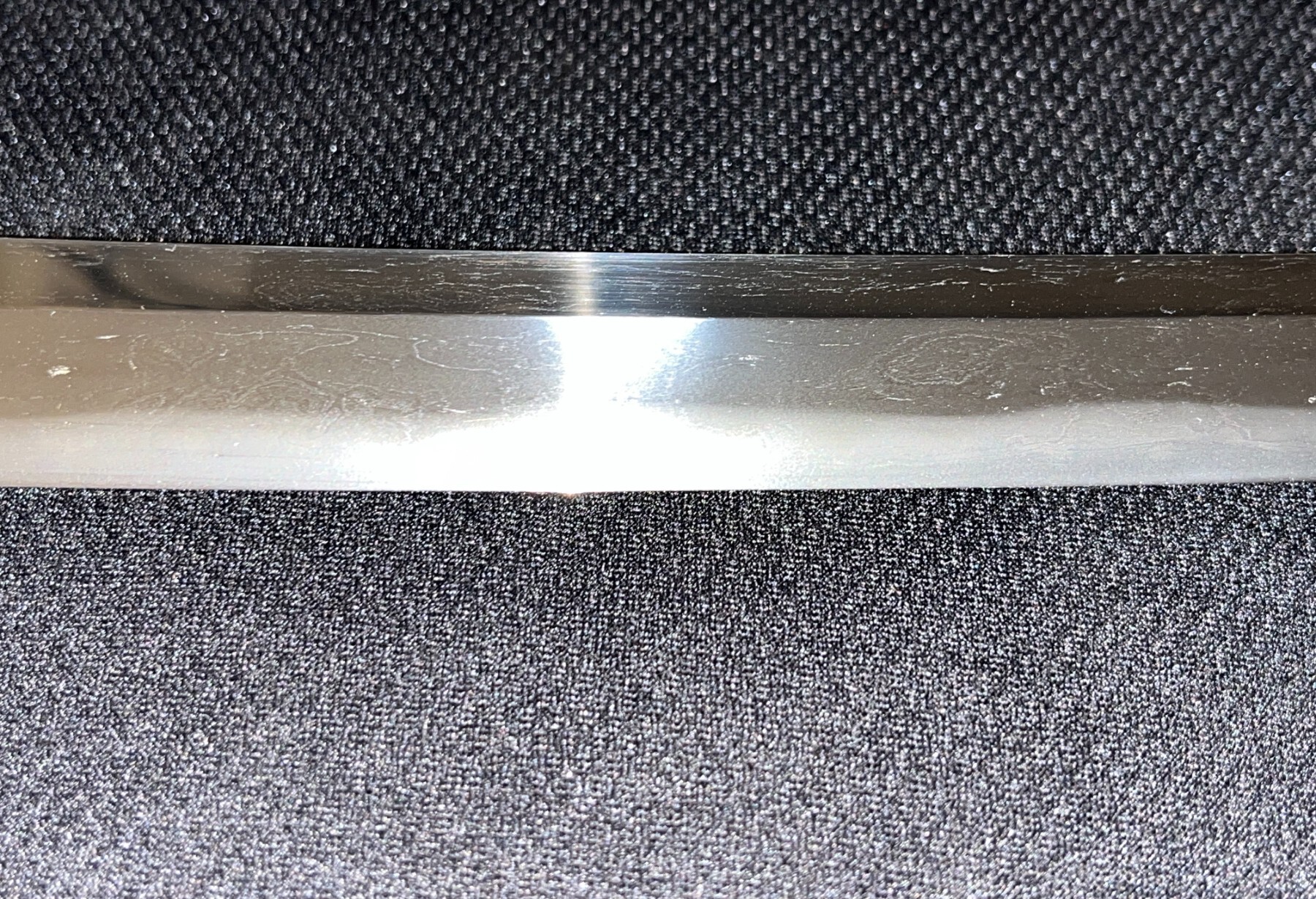
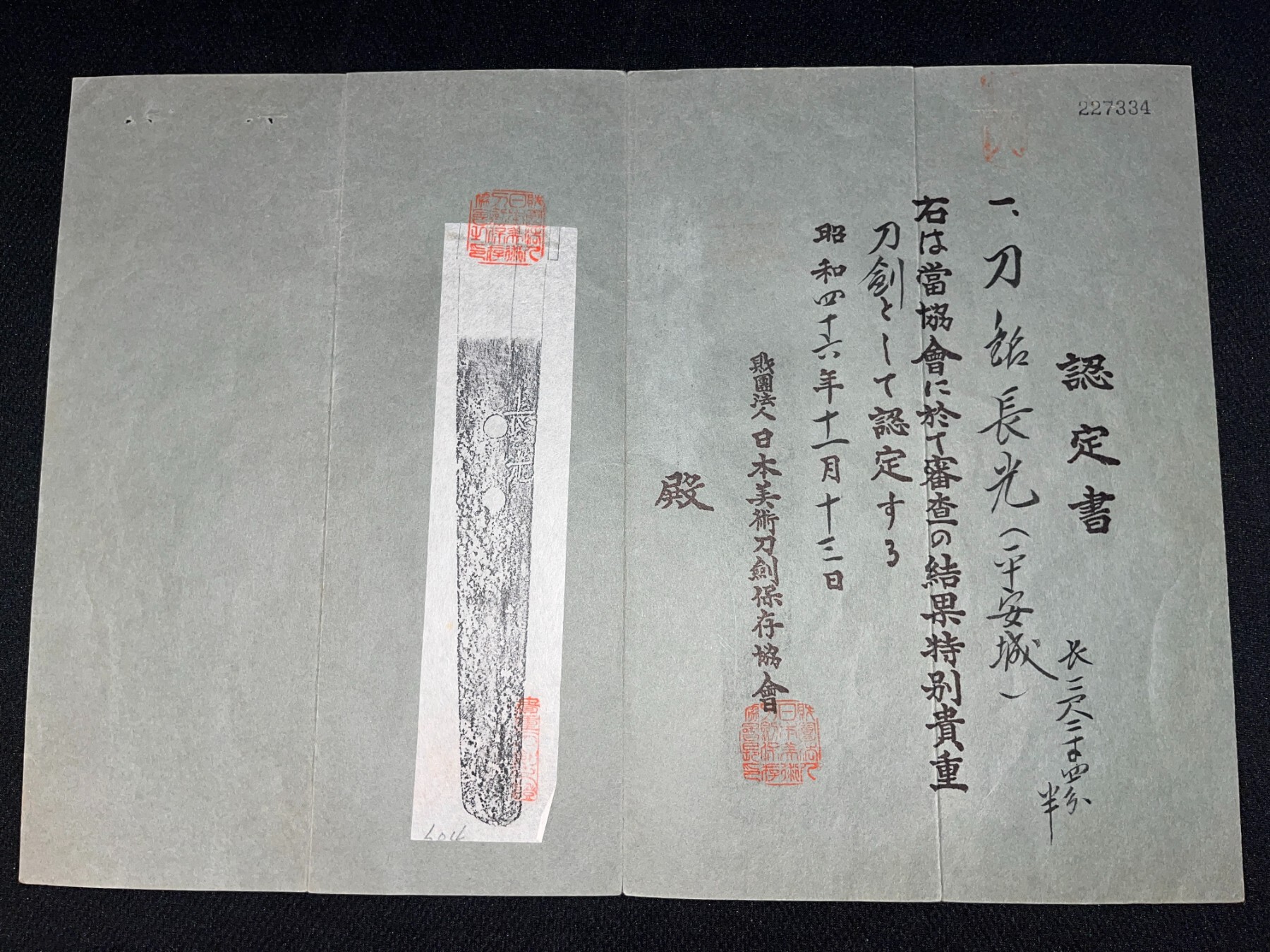
A fine papered 16th Century Katana by (Heianjo) Nagamitsu. This Koto period sword would make an important addition to any collection. This katana is in excellent polish. It is accompanied by beautiful mounts. The fuchi and kurikata have a matching gold floral motif. The kashira is polished horn. The tsuba is very interesting–it is made of lacquered wood. The plugs in the hitsu-ana are fine textured gold. A complementing silk sageo is threaded through the kurikata. A wood tsunagi (with habaki) was made for the mounts. The blade is in a handsome shirasaya. The shirasaya is wrapped with bamboo accents. The blade measures 68 cm (26.8 in). The 2-piece habaki is wrapped in gold foil. This Koto period sword is accompanied by NBTHK Tokubetsu Kicho papers. CONDITION: The blade is in excellent polish. The hamon and boshi are healthy. The koshirae is in exceptional condition. $6650 View additional photos by visiting http://StCroixBlades.com --Matthew Brice



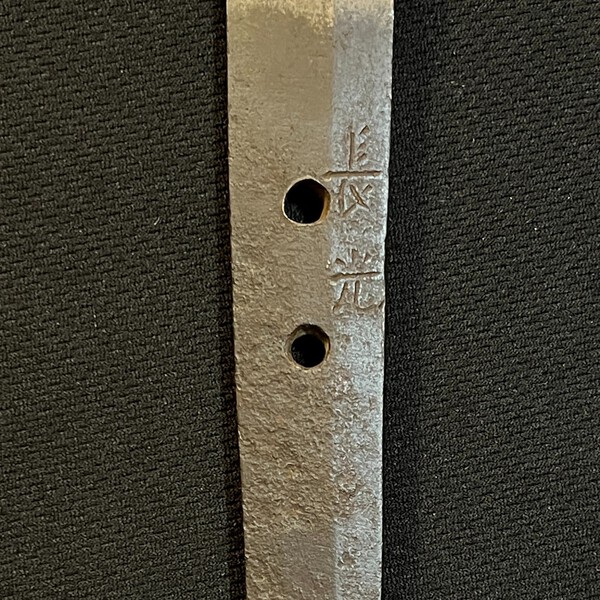
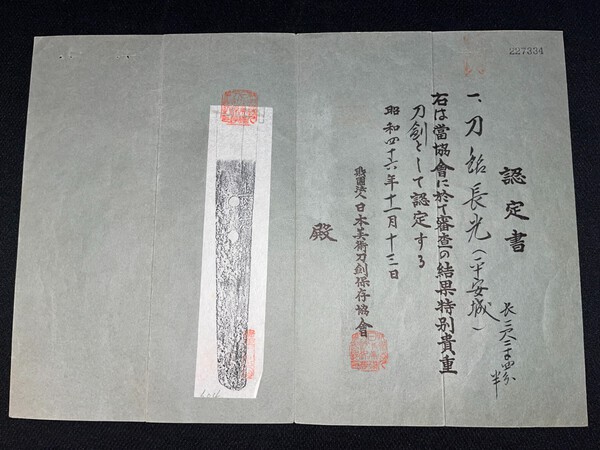
 1 point
 -
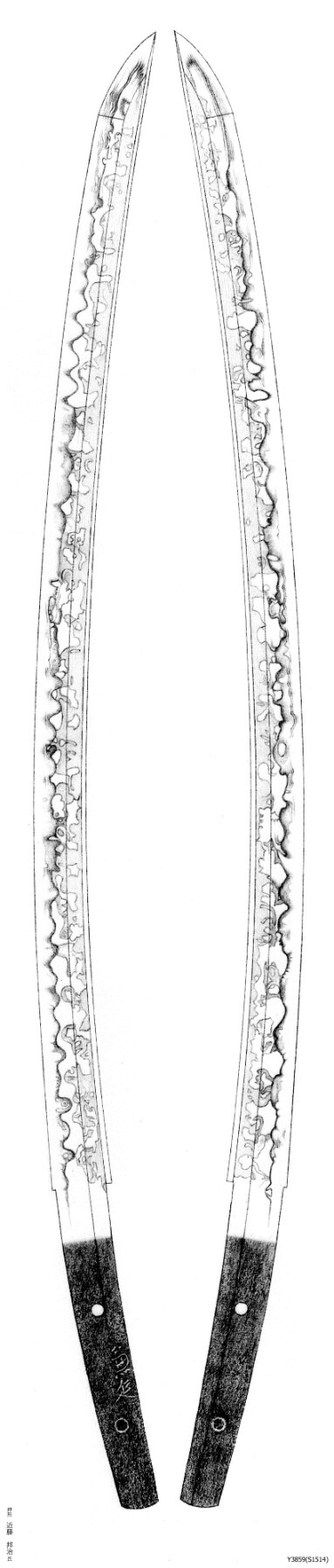
I have a nice signed piece from Kanenobu at a mukansa polisher in Japan, doing a sashikomi to bring out the full hitatsura. Right now only the primary temper on the cutting edge is brought out. It should be completed in February and I am going to take a look at the finished work in person while I am over there. The plan is to submit to Juyo, as right now it is TokuHo. This is my first time submitting a blade to Shinsa...any tips or gotchas I should be aware of? It is machi okuri by about 4.5cm, but I think that is alright for koto blades? Included is an oshigata of the blade done by Kondo Kuniharu (Kondô Hôji (近藤邦治), the president of the Gifu branch of the NBTHK) - reminds me of Yosozaemon's hitatsura Juyo (but this one was a few years earlier around 1490)
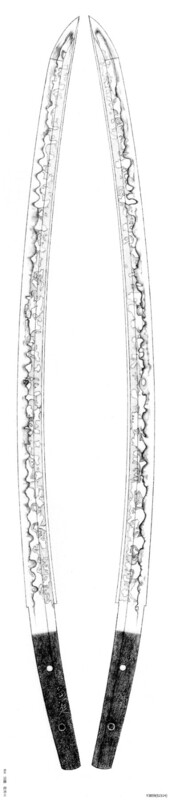 1 point
 -
I have my first opportunity to attend a sword club meeting, this one in Sacramento. It will be Tuesday, 18 Nov, at 7pm. Meeting is at the Sacramento Asian Community Center; 7334 Park City Dr., Sacramento CA 95831. Hope to see somebody there from NMB, but I don't know if we have anyone else here.1 point
-
Bruce, Can't say about any other NMB members. I can tell you that Douglas Louie and Wayne Shijo the two main guys, are as nice as you will ever meet. Tell them I said hello. Ed1 point
-
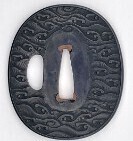
Good or not, there are still details for a standard tsuba especially since there are several variants, there is still research. good after if I do not sell it I will keep it for the example of purchase not to reproduce.1 point



















This leaderboard is set to Johannesburg/GMT+02:00