
Leaderboard
.thumb.png.4c5df79fec171b2dc4a23af38e280a4d.png)


Popular Content
Showing content with the highest reputation on 10/07/2025 in all areas
-
Ok folks....calm down. Enough said. Let's get back to doing what we do best, helping people who need it. Steve, one thing I wanted to ask. That Yasukuni sword that you posted about a while ago. Did you buy it? If so...do you know exactly what you have there? Yasukuni is sort of the peak of many Gandaito, and if you did get it...then that would be a time I would stop for a bit buying other swords and focus on that one, and getting it into good condition and researching that one. Not sure if you realize that is like striking gold when collecting WW2 swords. As far as supporting the forum goes. If you do want to, there are multiple ways. Either a Gold membership from https://www.militaria.co.za/nmb/subscriptions/ Or look at the top of the forum for the donate link. You can use Paypal, credit card or even Wise bank transfer. In case you are so inclined. Brian4 points
-
Derek and D: Please do not belittle another member. As a former educator, I can say that people learn in different ways and at their own pace. If someone isn't learning at the rate you think is acceptable, then Steve is right - just use the ignore button. That's why it's there. And as for posting swords one is interested in, I cannot count the number of times someone has said after a bad purchase "they should have posted here first." Just my two cents as someone who has seen this type of denigration far too many times. 'Nuff said. John C.4 points
-
Go check your own forum activity. You’ve 44 pages of topics titled “WWII Japanese sword,” all just asking for comments on specific swords or translations of ones you found on eBay.. In every topic, when someone suggests something about a blade, you agree...like this particular example: "I agree with it being Muromachi Bizen era"... Why do you agree? Why does your topic say " WWII era Katana" then? Do you even know the difference? You said, “The purpose of the forum is a learning tool for everyone.” I agree — then why don’t you comment on other topics and share your knowledge so others can learn from you? You are a member in this forum for nearly 5 years..I’m sure you’ve learned something by now...or did you? I’m sorry, but one thing I can’t stand is people buying and selling something with zero knowledge and no intention to learn, while expecting others to do their dirty work for them. I find it very disrespectful. Do your own research, share your findings, and ask if you’re on the right track — that way, maybe you’ll actually learn something. And yes — either buy a membership or donate a dollar for every question you’ve asked so far...it would be the decent thing to do.4 points
-
4 points
-
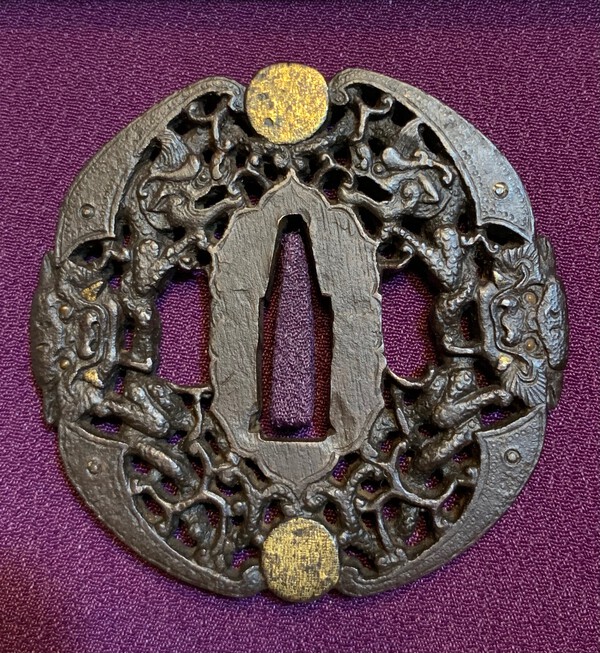
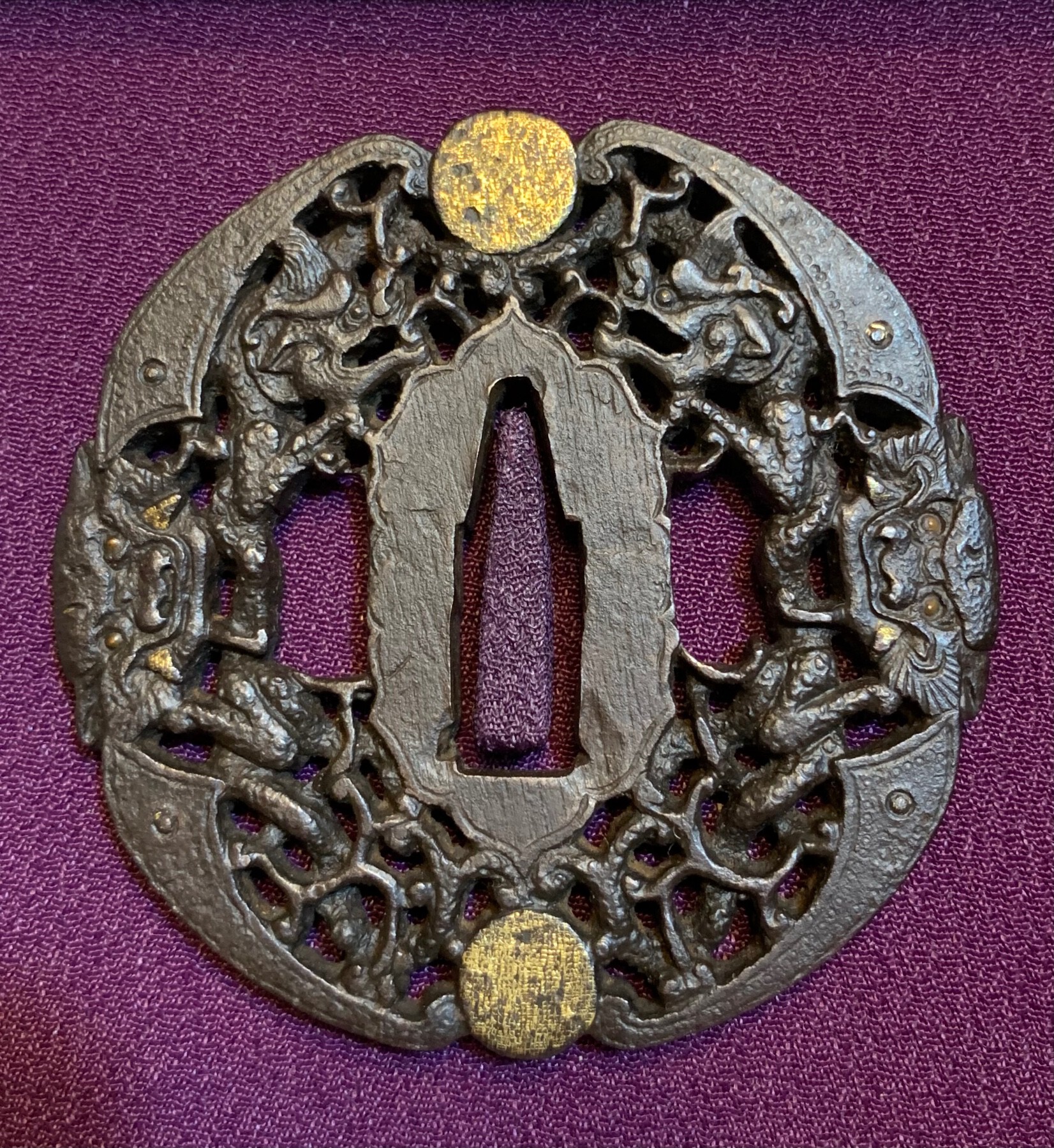
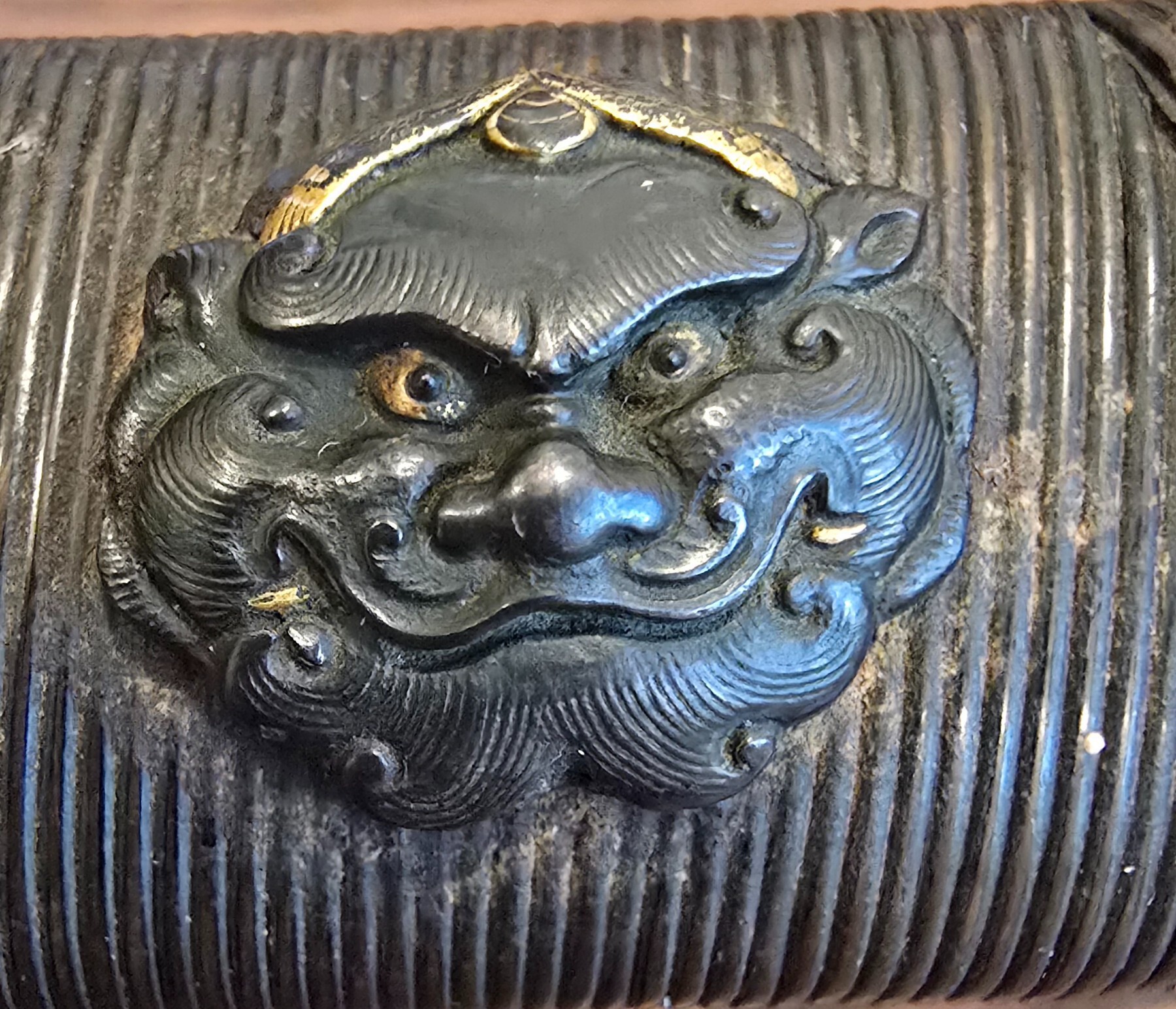
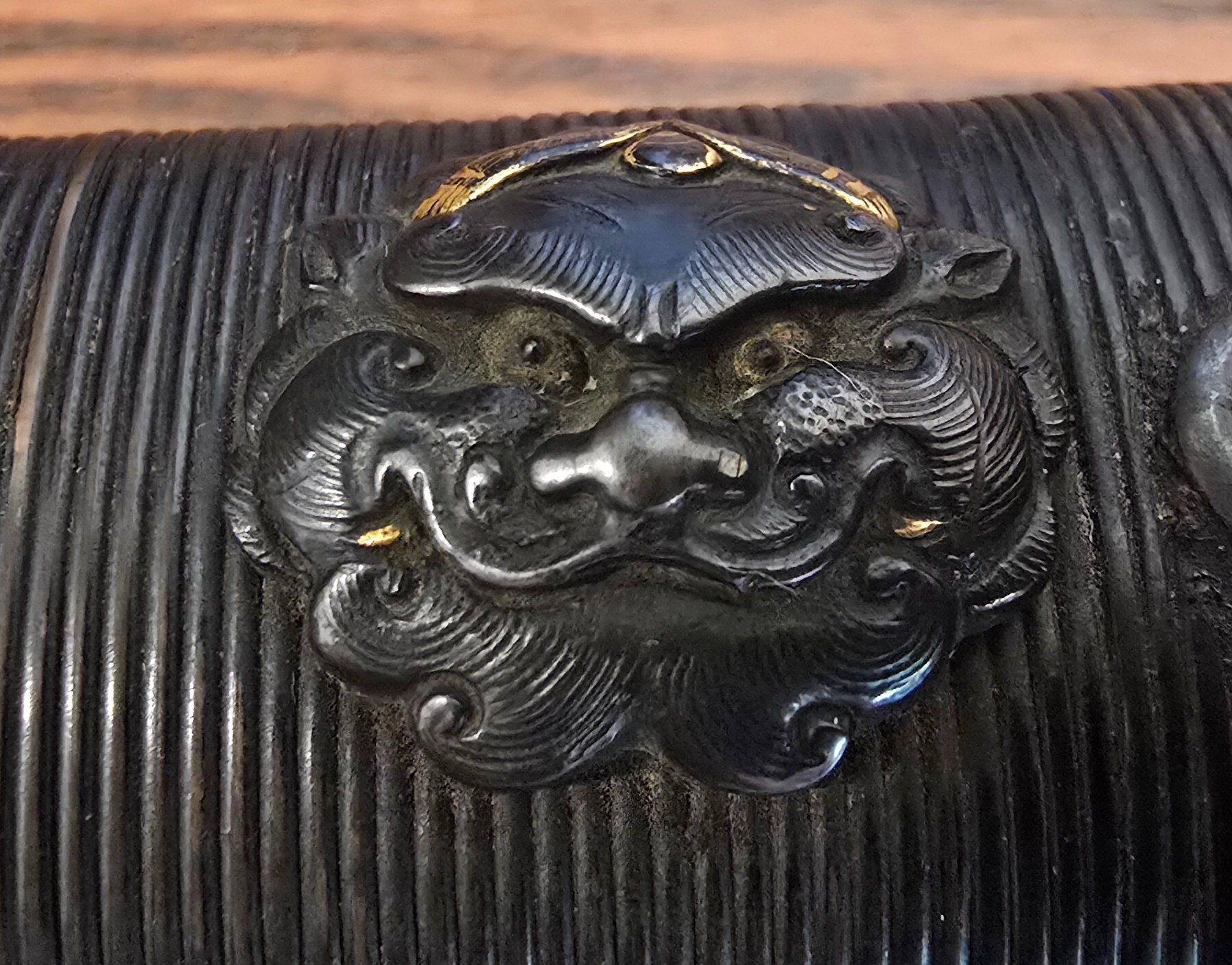
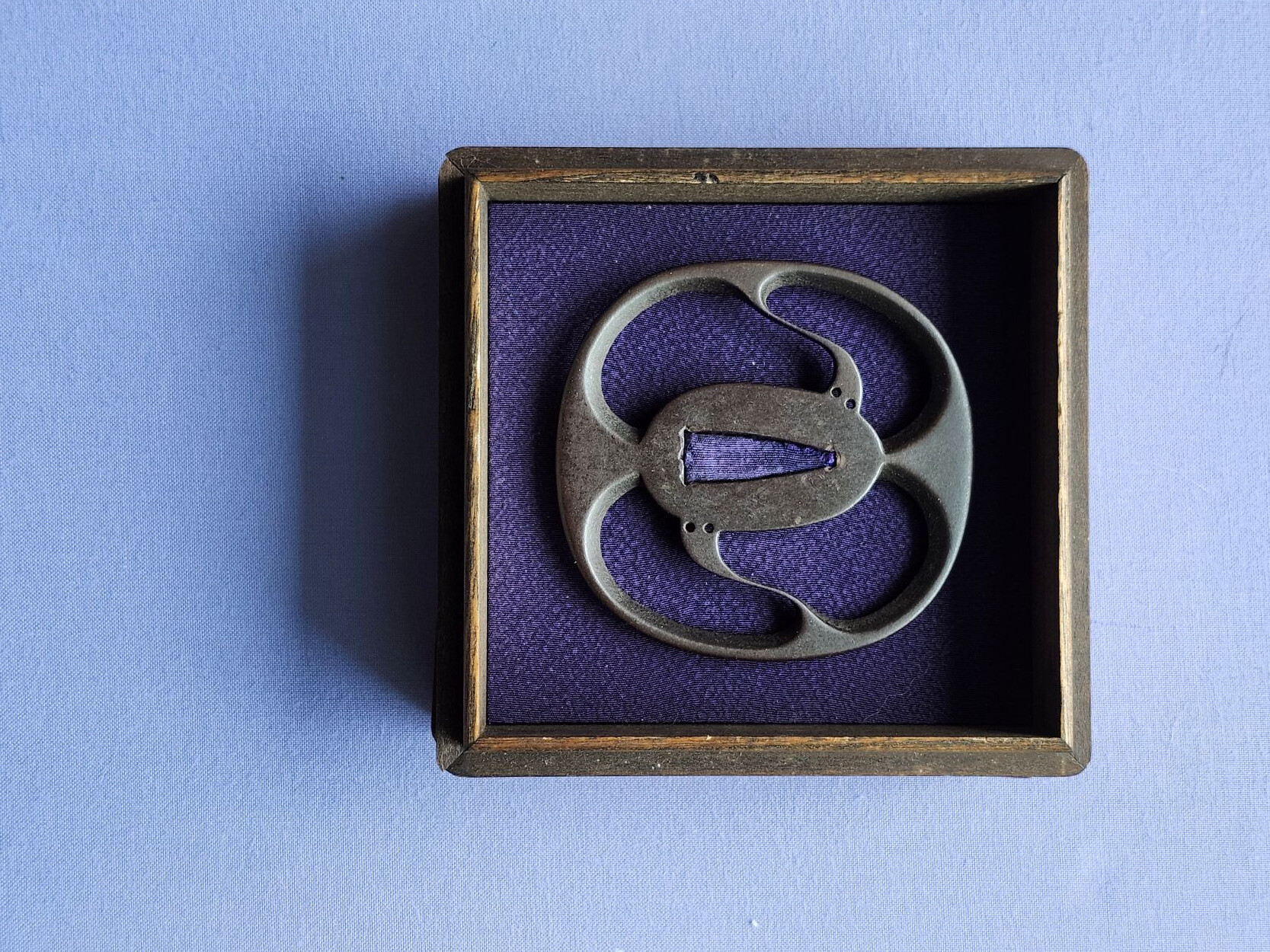
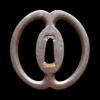
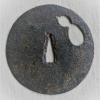
Menuki pairs did not need to be exactly the same and many had deliberately differences. A foo dog is a Chinese-English expression, but these do seem to be a kind of Shishi-Shikami cross. (Some similarities with this tsuba?)
 3 points
 -
The matter is much more complex than a blacksmith might think: everything is stupid, from now on we'll make swords like we used to. The Shinshinto marks the beginning of a noticeable social change in the transition from the 18th to the 19th century. Here, too, various factors come into play that cannot be described in a few sentences. But it is remarkable in any case that an emperor, in this case Kokaku, begins to interfere, albeit “gently,” in the politics of the shogunate. Events such as the great Tenmei famine, but also diplomatic incidents with Russian expeditions, reveal the shogunate's inability and inflexibility to respond to such crises in a timely and appropriate manner. However, the prudent and cautious appearance of an emperor in circumstances of public interest at that time inevitably brought with it the idea of placing the emperor at the head of the country as the actual political and social guiding institution. Some philosophers refer back to the time before the introduction of Buddhism in Japan, seeking there the strengths of an original Japanese identity with the emperor as the leading and guiding institution of ALL Japanese people (a role that the Tokugawa shogunate had long since ceased to fulfill) in order to address the problems of the present day. There have been and still are some attempts at reform by the shogunate, but the circumstances mentioned above are forcing an unstoppable spiritual renewal, especially among the simple and middle-class samurai, most of whom are young. The longing for a strong country with strong leadership is leading to a renaissance of the samurai spirit. And in this context, one can also understand the renaissance within the sword-making traditions, which are inevitably affected by this general mood. It may sound crude, but the quest for a strong country, strong leadership, and a strong identity goes hand in hand with the desire for strong blades. In my opinion, this is the essence of Shinshinto. The Meiji Restoration is logically the result of what emerged as a foundation from the Tenmei era onwards. Events such as Perry's arrival only accelerated this development and were milestones in a “more active phase,” even among sword smiths. Shinshinto may have been a short phase, but it was enough to reveal the character of the different generations of swordsmiths. Suishinshi Masahide and Kato Tsunahide were just as much children of their time as Kiyomaro and Munetsugu were later on. But for me, Shinshinto ends with the Haito Edict and the abolition of the samurai caste. In my opinion, this marks the end of a social foundation on which all previous sword traditions existed in the first place. The continuation of craft traditions, or the creation of blades after this point in time, is based on completely different foundations, needs, and goals.3 points
-
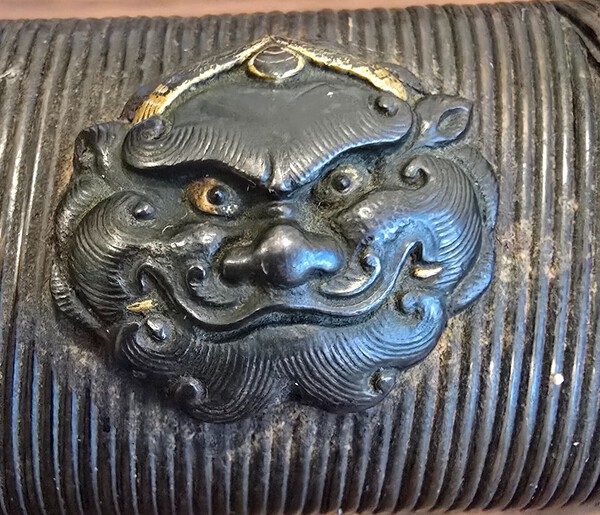
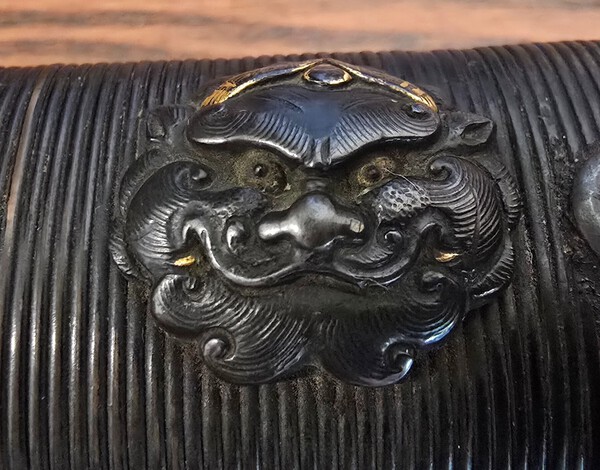
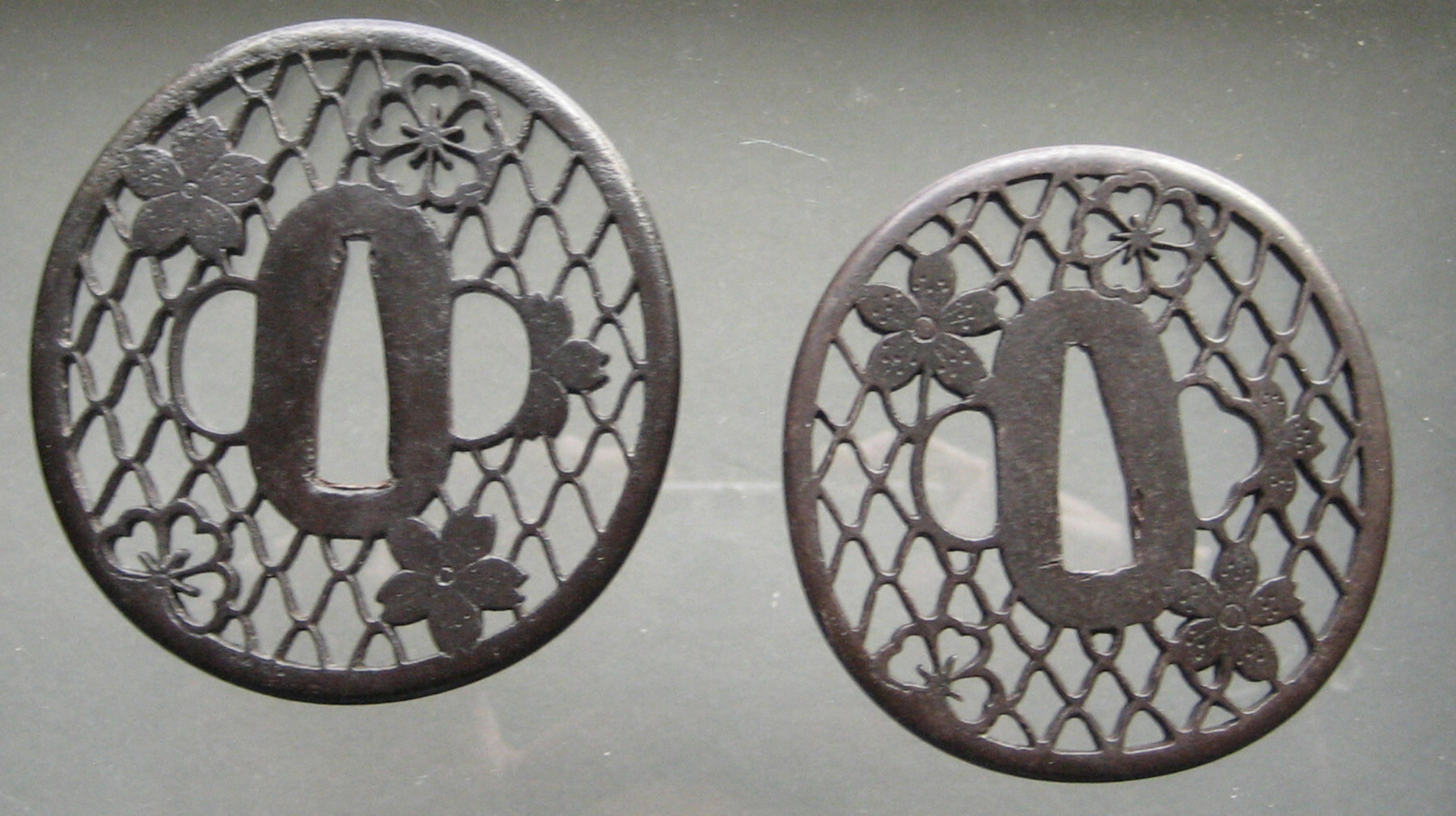
To me these look like tobacco pouch ornaments like Grey said. Both the size and round shape would suggest this is likely. They may have been repurposed as menuki at a later date. This would suggest to me that these might be Meiji Period works. They are quite well made and there are some fine details there. Condition could be better however... Some examples from the net: Many artisans who made tosogu also dabbled in other ornamental metalwork such as these.3 points
-
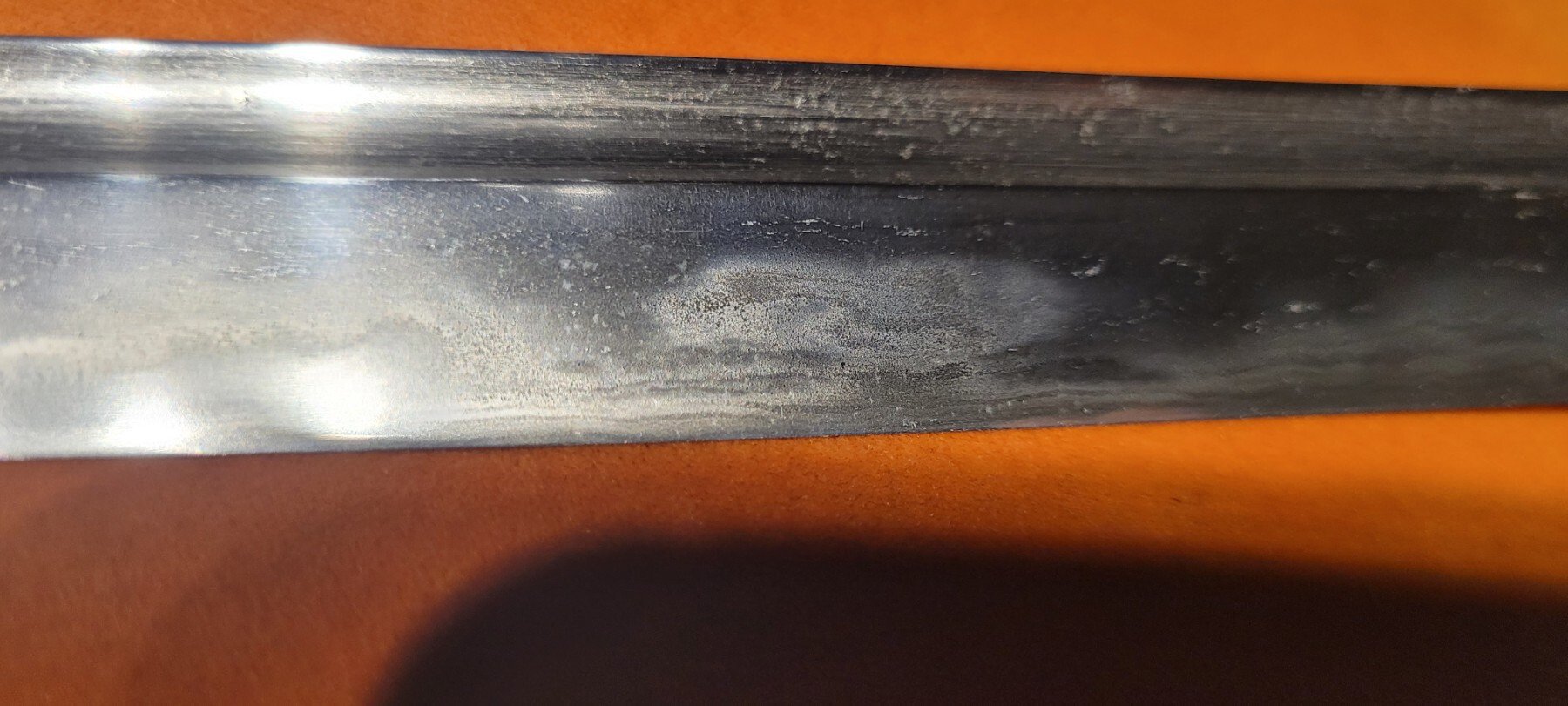
This is unlikely to be Japanese and is either a fake or a tribal made sword. But I lean towards outright fake.3 points
-
There was a great deal of variance with Amahide Mei, with some examples having various stamps on the Nakago. By comparison the recent fake swords with Gendai Mei have been pretty obvious and unsophisticated. Not defending the seller at all but this looks about right for Amahide in Mei and Deki.3 points
-
Tokyo National Museum Important cultural property. 2Videos. Train your eye. There are some very good swords here. Tom3 points
-
You are right, yours have " ncr crest" too please add more [tassel!] Check this thread https://www.militaria.co.za/nmb/topic/28631-railway-swords-stamps/2 points
-
Swords are held in place entirely by the wooden (bamboo) mekugi peg. The hole is usually slightly angled and the alignment slightly off so that it pulls everything together tightly when inserted. The menuki are purely decorative.2 points
-
Many of the questions were asked a long time ago. And sometimes you got a very good answer. I only have a small book by Paul R. Allman "Das Bild im Bilde - Die Natur der Schönheit und das japanische Schwert als eine der feinen Künste". Translated into german in 1981. So, somewhere must be the english original. The best explanation about why a japanases sword is High Art.2 points
-
Fittings/koshirae were like clothes. They were routinely changed. When worn out, or when fashions or tastes changed. It is not deemed critical when the fittings have been replaced, as long as they antique and the quality is judged on their own merits. It's safe to say few very old swords have their original fittings.2 points
-
Finding a Japanese sword with original fittings is quite rare. Most swords (especially any worn and not just kept as treasures) would have their fittings replaced with regularity. Wear and tear, fashion etc. Many of the swords you'll see for sale with koshirae will either be new or late Edo. Older fittings will often have their own certificates.2 points
-
https://www.jauce.com/auction/t1203014046 https://www.jauce.com/auction/u1196815603 https://www.jauce.com/auction/p12007260412 points
-
@John C @TomP1 "Malcolm Cox has a little info in his Aichi Prefecture document, page 13 (if it is the same person)." Thanks for reference, but this is a different smith Yagi YOSHIKANE 八木 義金2 points
-
Here is one that was shared here recently. Separately, I recently accepted ubu signed Kongobyoe wakizashi and tanto on consignment. Best regards, Ray2 points
-
SHOT is one of the largest industry firearm shows....anyone in that industry tries to go to meet with suppliers and plan agencies and orders etc. Many, many km of every major firearms, ammo and accessory distributor. No retail there, only for industry people. Have been quite a few times. It's also where people go to steal agencies away from others It's lucky because it ends around the same day the Antique Arms show starts in Vegas, so going to SHOT allows one to take a few extra days and do that show and the sword show.2 points
-
Hello Everyone, Has anyone encountered any menuki similar to these? Or know a possible school, or time period? I believe these are depicting Foo dog faces and are made out of shakudo. Not sure if the picture do them justice but they are extremely detailed. Thanks, Eric
 1 point
 -
Interesting thought. I think there's a subtlety here. My 50 years of experience with craftsmanship suggests to me that when you get really good at something, as the great swordsmiths were, you've gotten there because you have always danced on the edge of loss of control... and you want to cross that edge constantly, and lose control just a little bit. If you're not doing that, you're probably not learning anymore, and it gets to be rote. The better you get, often the harder it is for others to see where you've let the process and the object take over, outside of your control, but you know. One of my professors many moons ago used to say "no threat no thrill", and I think that's pretty universal. I'd add "no threat no learning". Clearly swordsmithing is not raku... but neither is a pure industrial process, where absolute repeatability is the goal.1 point
-
I’ve had a tanto with koshirae where the mekugi was made of metal in two parts with a head on each side forming the menuki. My understanding also was that the menuki had a function in terms of padding out the tsuka in longer swords to aid with grip and they are normally offset for that reason. Also that what was purely functional became more decorative over time.1 point
-
Are you sure? In hand it feels like the menuki bulges give one a little more purchase on the tsuka and offer more control when the sword is wielded. Plus they give the hands reference points when held 2 handed. But the menuki bulges do look a lot more pleasing to the eye.1 point
-
From Sesko's list: "KANEMARU (金丸), Shōwa (昭和, 1926-1989), Nagasaki – “Kanemaru” (金丸), family name Ogawa (小川), ryōkō no jōi (Akihide), Fifth Seat at the 6th Shinsaku Nihontō Denrankai (新作日本刀展覧会, 1941)"1 point
-
Mr Steve in my opinion posting different blades is good to forum overall. It keeps it with fresh source of dopamine. I encourage you to continue. We can see a lot of different blades and learn thanks to all goodminded members here.1 point
-
Note the difference between mekugi, the wooden pin/dowel (usually smoked bamboo) that holds the blade in place, and menuki, the metal ornaments on the tsuka (brass in this case but often copper, shakudo or even gold). The mekugi is always what holds the sword and tsuka together; the menuki are typically for adornment only, except in rare cases.1 point
-
thanks to all of you. Your comments are re assuring. I was planning to query the alignment of the mekugi hole in the tsuka, with the hole in the tang. Its a little confusing, because the description relates to brass menuki, partially coverted by the wrapping, but, the tsuka appears to be held on by a wooden peg nearer to the hilt. One hole in the tang su8ggests the wooden peg does the work.. In summary, v nice kashirae and saya, but with recent hole in the tsuka to match it to the tang hole. A bit Heath Robinson ? The question I was planning to ask aligns with the suggestion from Matsunoki, so I will combine both points in my next email to Japan.1 point
-
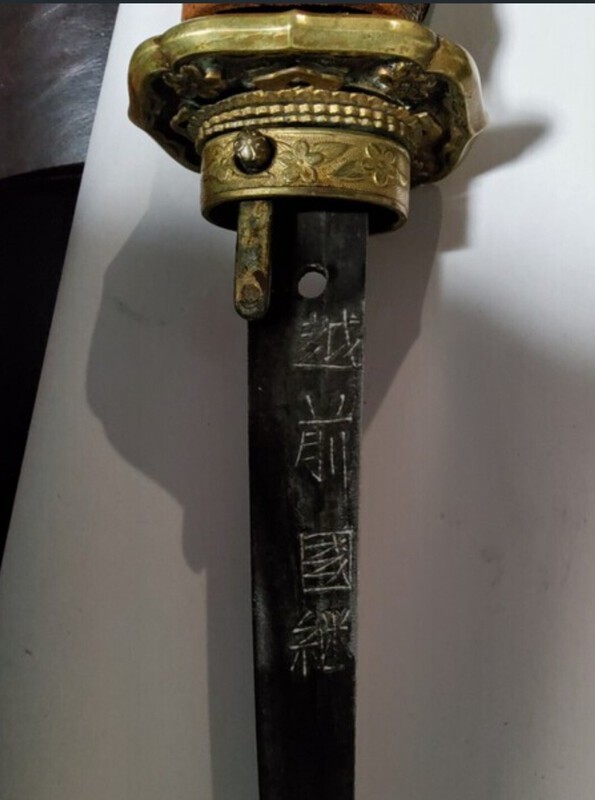
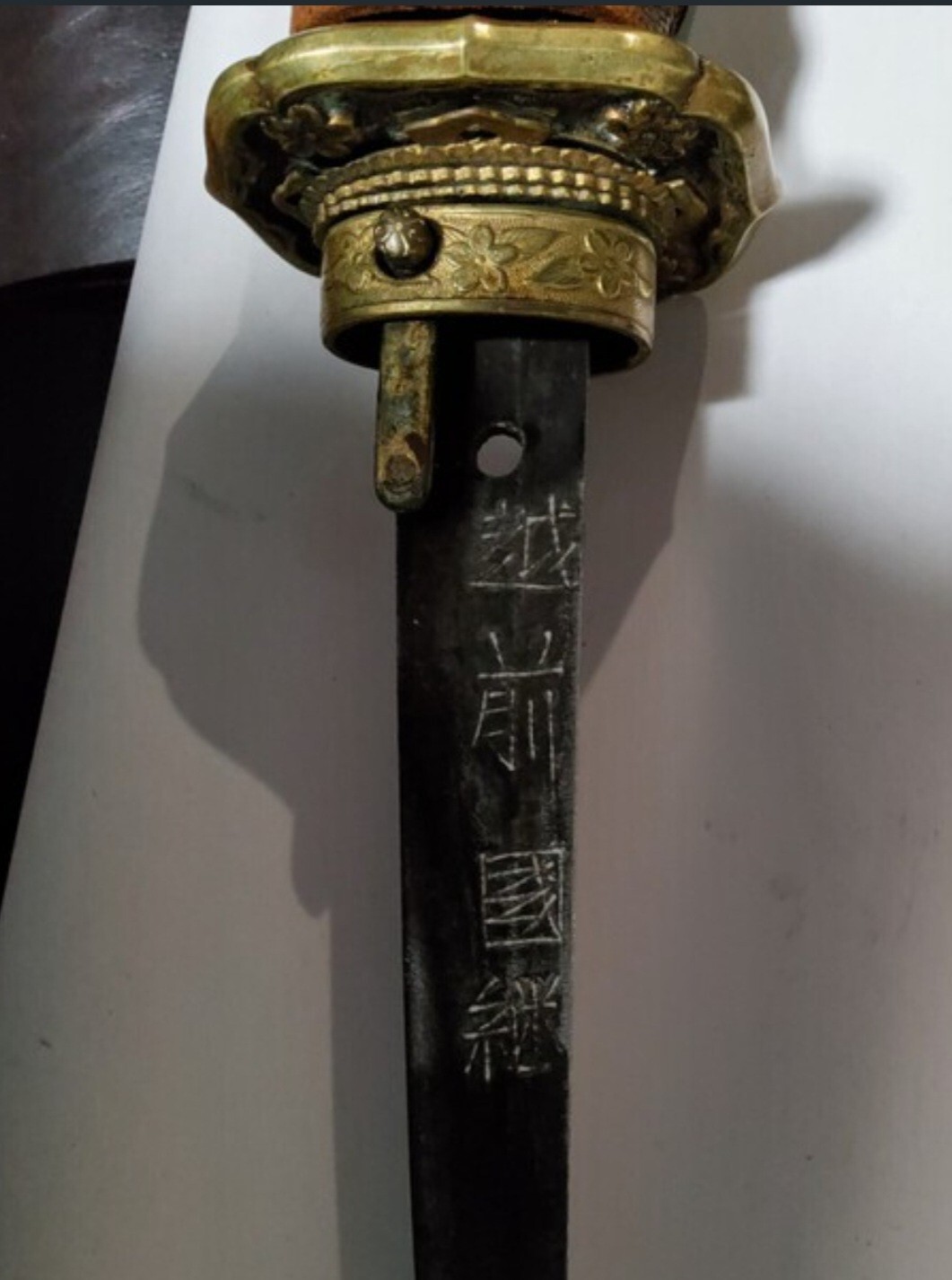
Lol ...yes Chris I took it. Could be optical illusion ? For interest, it's 越前國継 - Echizen Kunitsugu
 1 point
 -
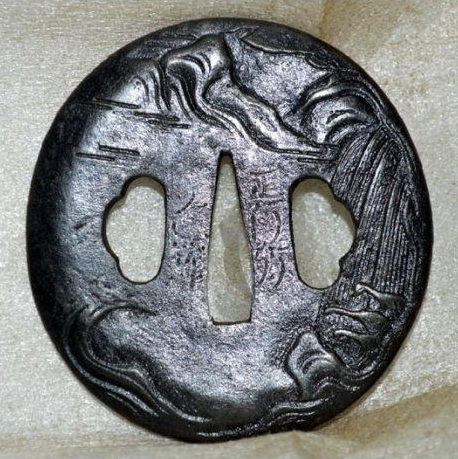
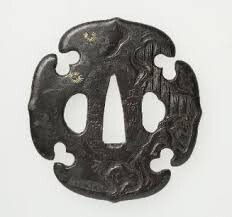
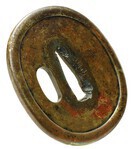
https://searchcollection.asianart.org/objects/530/sword-guard-tsuba-with-design-of-a-waterfall-and-rocks https://www.worthpoint.com/worthopedia/tsuba-amurai-sig-kanenori-waterfall-1860203375
 1 point
 -
Agree with John C, ignore and move on. The last thing we want here is to discourage any members from sharing swords for opinion. Besides, at the rate he's going with returns and hijinks there won't be any dealers left for him to purchase from and the quandry will solve itself.1 point
-
Hi Eric, As these are a bit tall for menuki and exactly the same (not what you expect for menuki), they may be tobacco pouch ornaments. Grey1 point
-
By the way a very good example: https://www.facebook.com/permalink.php?story_fbid=pfbid0DuWnGr4pt2ChaYLf78neA1GxvTSRSijfmk8X9AxF8ZvWstPJS5DRM6k3U4em7Cipl&id=100064812335888 Classic late groupings, but top mainline Sukesada work predictably shows much stronger nie. Midare utsuri though very seldom encountered past 1500. It still feels in regards to the mumei blade shown the very well defined, uniform groupings might be suggestive of later than Oei attribution. I don't think its as late as Sukesada or Kiyomitsu, but it might be post Oei generation.1 point
-
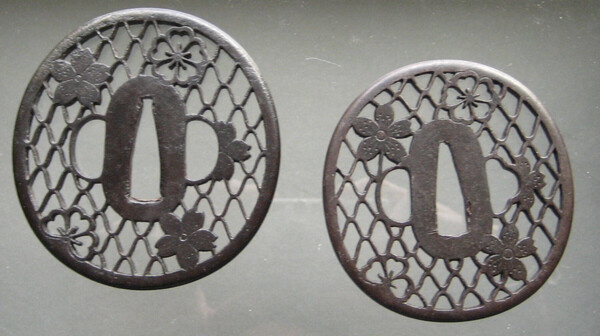
For starter's you can get Ito-san's books and the translations available. At times, groups have hired translators to do various Japanese texts. I have some of those translations, but not the rights to publicly share them. And I am in no rush to give up competitive advantage to AI. A simple example that many people know is the koban shape of the Hayashi tsuba seppa dai, especially nidai and sandai. Some like the Nishigaki and Hayashi had no problem intruding the design onto the seppa dai (hidden by seppa or tsuka). Pics attached. These are some of the largest seppa dai you will see in Higo, and the Kamiyoshi followed their Hayashi forebearers with some large seppa dai in late edo. Saya had gotten thicker n thicker by then. A Kamiyoshi pic attached, though it seems to have been spun 90 degrees. Kamiyoshi mostly lost the koban shape of the Hayashi, though sometimes did a darn good utsushi. Others like shodai Akasaka Tadamasa had rather pointy egg shaped seppa dai. I don't own or have an example of that.
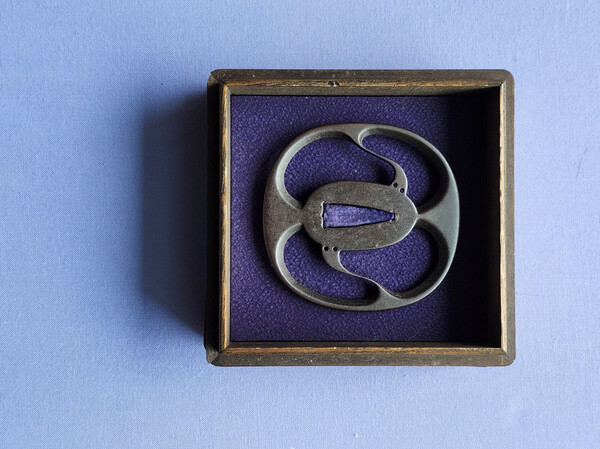 1 point
 -
I am aware of a 78.4 cm hotondo-ubu and machi-okuri hira-zukuri tachi by the Ko-Uda School. It's very likely this sword was originally an odachi when it was forged. (sword is in a private collection) Best Regards, Nich
.thumb.jpg.ae406874bbe06d54295f0e9913d833c3.jpg)
.thumb.jpg.47aecf522deff6df9d24cad5cf472e6d.jpg) 1 point
1 point -
Ken, You Tenshozan blade has navy tsuba/seppa (hand guard and spacer) but an army saya (scabbard). Don't know who matched them up that way, but it wouldn't have been that way originally. The second is in army fittings. The wooden saya originally would have had a leather cover. Check the brown tassel for any signs of faded blue or red. If none, then this sword was carried by someone in the Gunzoku, the civilian branch of the army.1 point
-
Hi Steven @Swords you certainly bring a lot of swords 'to the table' and that is always interesting thanks. However seeing were a little off topic anyway ... have you ever considered becoming a GOLD member? ... that would help the Forum in a tangible way.1 point
-
相州住正家 - Soshu ju Masaie, or 正宗 (Masamune)?1 point
-
"I often wonder, how much control the smiths had - and, how much is happy accident." When it comes to swords, mastery is defined by control. It is different with tea-cups, for example. Accidental results beyond control during the burning process can enhance the value of a tea-cup. This is not the case with swords. reinhard1 point
-
One thing I struggle to appraise, is the more irregular end of the midare-hamon spectrum. To me, one aspect of a masterpiece is the realisation of the creator's vision. Whether it's Michaelangelo's David, or the Mona Lisa - the the desired end result is more obvious. I often wonder, how much control the smiths had - and, how much is happy accident.1 point
-
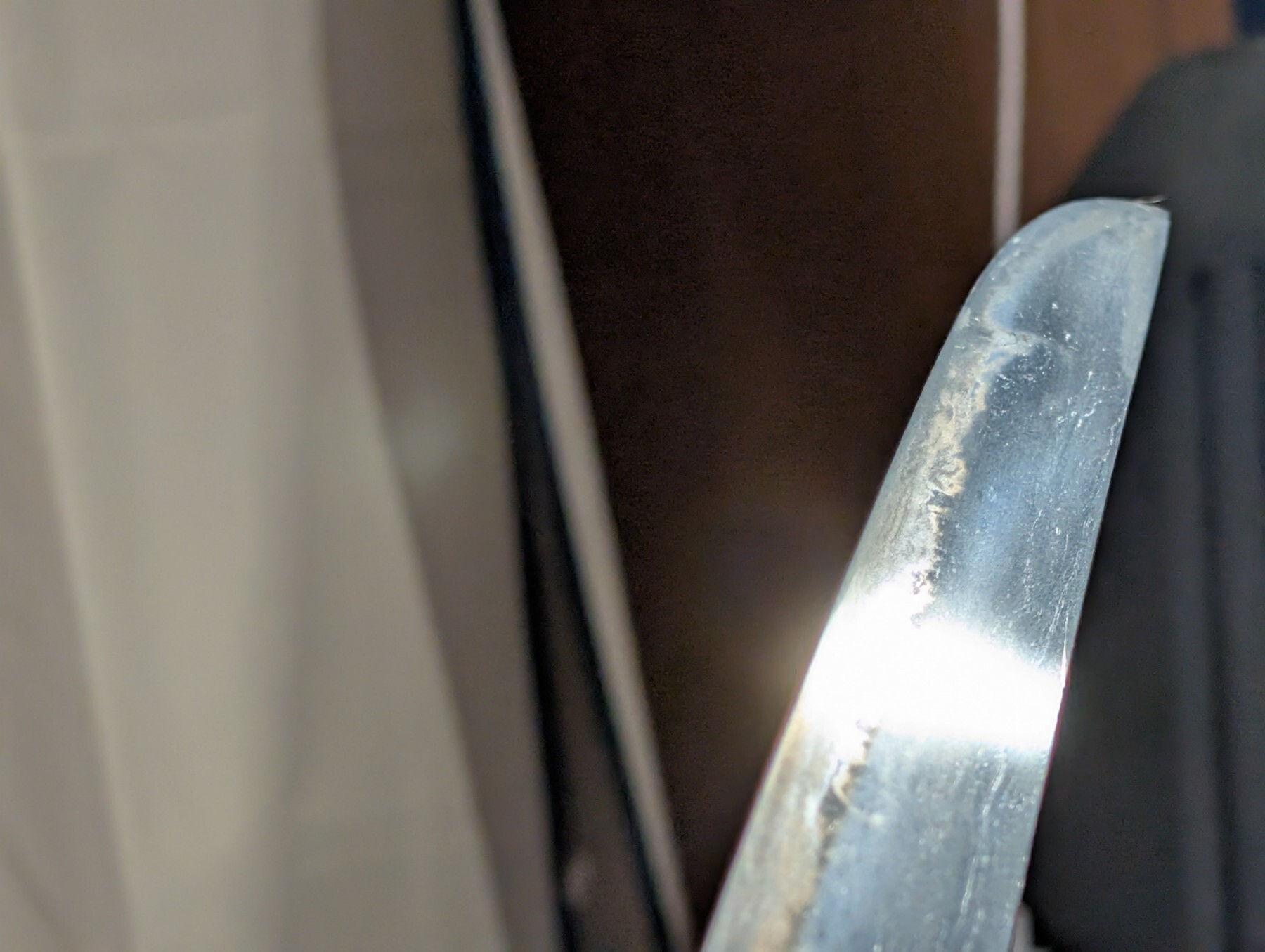
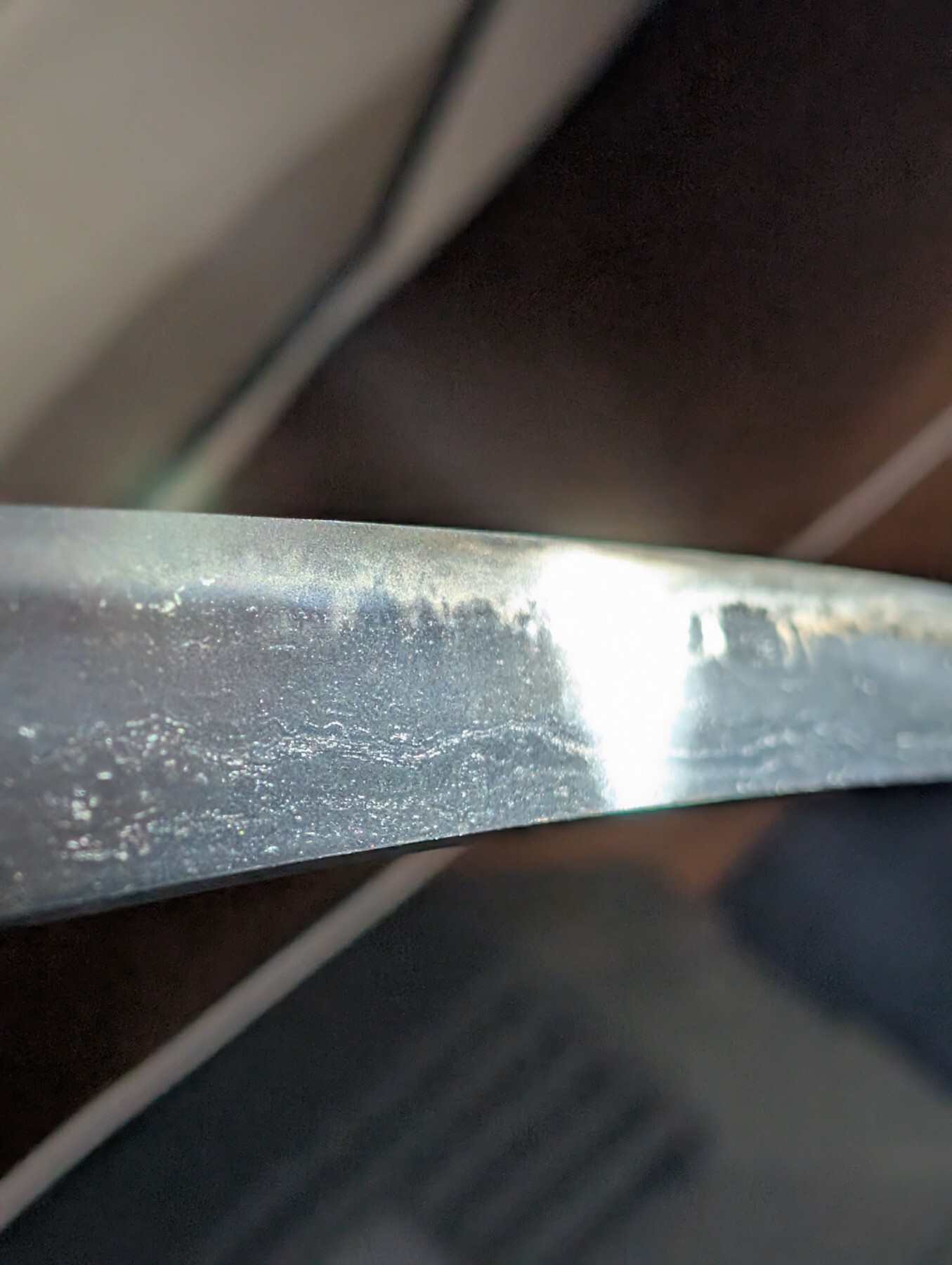
In order to give you a visual idea what separates a masterpiece from the better-than-average work, I'd like to show you a comparison. One blade is a masterpiece by Osafune Mitsutada made around middle of Kamakura-period. It airs a supreme yet relaxed mastery of forging and tempering in all aspects; dignity as well, if you want. The other blade is a work of Edo Ishido Tsunemitsu from Kambun-era. It is a very well made blade with brightly shining nioi-guchi, utsuri and all traits of a good choji-midare hamon. (The images were made by master-polisher Fujishiro Okisato and show the real nioi-guchi without hadori-finish) One blade I call a masterpiece; the other a very well made blade. Hope this is is helpful. reinhard
 1 point
 -
If it’s a special order sword for one’s overlord, the smith will strive for perfection. If it’s almost perfect but not acceptable for some reason, maybe he might have considered dedicating it to a shrine.1 point
-
Tom: Here is the reference from Markus Sesko for the information you have: YOSHIKANE (吉包), Shōwa (昭和, 1926-1989), Yamagata – “Ugo Sakata-jū Ikeda Yoshikane saku” (羽後酒田住 池田吉包作), real name Ikeda Kaneyoshi (池田金吉) The sword is dated October 1943. Malcolm Cox has a little info in his Aichi Prefecture document, page 13 (if it is the same person). John C.1 point
-
I believe the term masterpiece can only applied by the smith as a personal designation, as in, this is MY masterpiece. However, because of humility and the wish not to be prideful, it's not a term you will likely find in recorded history. Calling something a masterpiece is very close to calling something perfect. It's a term that is too relative and has no official scale. People other the smith may apply these labels, but it's generally for two reasons. Personal admiration, or to aid in a sale.1 point
-
"Japanese aesthetics though are more tricky to understand and are not just "in the eye of the beholder", which is a silly Western concept" I'm curious about this. Could you elaborate? (Jeff) A question to write a book about, but I will try: Japanese swords were not made in a vacuum. The sense for their appreciation and beauty is embedded in a culture long gone and hard to understand even for (modern) Japanese people. Even more so for us Westerners. Usually we tend to enjoy and acclaim features we can easily recognize and understand within the perimeters of our cultural background. An example for this attitude on a very high level: Etchu NORISHIGE is considered a top-swordsmith within Soshu-style of sword-making for good reasons. Western collectors are crazy about his works, for their contrast in jihada and their obvious hataraki are so spectacular. But old Japanese connaisseurs considered his work clearly inferior to MASAMUNE's and SADAMUNE's. Why? Because of its lack of dignity! "What does that suppose to mean: dignity? In 2025 we are living in a world stripped of pride and dignity! Let's make ourselves shine by all means possible." Well, samurai's aesthetics didn't work that way. My advice: Learn the difference between "aki ni sae" and just brightly shining nioi on a hamon. Furthermore study Japan's history and craftsmanship, especially paintings, sculpture, calligraphy and even everyday objects. It is a long way to go, but it is very helpful to understand appreciation of Nihon-To. reinhard1 point
-
Deanna, as far as I know, the smith only makes one MEKUGI-ANA in a location that is most likely correct in his experience. In many cases, the TSUKA can be adapted to this. If it does not fit, there are two ways: Either the blade is brought back to the TOSHO to make a second MEKUGI-ANA, or the TSUKA maker does this himself, keeping the dimensions as close as possible. In early times, MEKUGI-ANA were always punched. So if the blade was already finished, but a second MEKUGI-ANA was needed, it was wrapped in some fabric or rags. This was then soaked in water to make sure only the NAKAGO was heated up, preventing the blade from loosing its hardness.1 point
-
1 point
-
"To my mind, it's a sword that exemplifies the best aesthetics, forging and metal for its place and period. Sometimes its also a sword that was part of breaking new ground in practice or aesthetics." (Robert S.) Well spoken and fully agreed with. But just for consideration: The criteria for excellence in metal quality and forging can be easily learned on an objective scale. Japanese aesthetics though are more tricky to understand and are not just "in the eye of the beholder", which is a silly Western concept. reinhard1 point
-
The era designations are just tools for kantei, in general swords looked like A in the Koto period and looked like B in the Shinto period. When you do Kantei there is only Koto and Shinto - if you bid on a Shinto smith for a Shinshinto maker they do not say "Wrong period". Of course we like to (need to) break it down further, most of the eras cited are political ones EG Nanbokucho and Muromachi while there are given dates for these periods swordsmiths did not change styles based on a specific date, rather they worked in the style of their teachers and perhaps followed trends seen in the capitals, only changing slowly and if you were out in the country you got the news much later. The time periods are generalizations to help you break down all the tremendous data on makers into digestible bites and think in terms of trends. A smith who was born prior to the Haitorei and who worked primarily in the Shinshinto period is a Shinto smith. Born before the Haitorei but working primarily in the modern era = Gendaito smith. There will always be smiths that overlap these dates, some who are trendsetters and some who only follow the trend later...1 point
-
Hi folks, A consignor to my site has asked for temporary discounts on 2 great books: Kanzan Oshigata https://japaneseswordbooksandtsuba.com/store/book/sword-books/b978-kanzan-oshigata/ and Token Oshigata Taikan https://japaneseswordbooksandtsuba.com/store/book/sword-books/b866-token-oshigata-taikan/ These are serious bargains; they shouldn't last long. If interested, please contact me by email through my site. Thanks for looking, Grey1 point
-
Very simple. All we ask is the following: Please keep it Nihonto related. Japanese art related is usually acceptable but if in doubt, pm and ask. Please specify your budget. That doesn't mean you need an exact figure, but people need to know if you are looking to spend $50 or $5000. If you are looking for fittings for example, say something like "budget is under $1000" or something like "willing to spend between $100 and $500" If you don't give a price, then try and be specific about the quality level you are after. Saying "I am looking for a katana" is useless. Do you want a rusted relic or something Juyo? Just be a bit specific. If you find what you are after, reply to your post and say "found" so that we can delete the thread. Have fun. - Admin -1 point















.jpg.950d683a5669912ca326386a39d1ebb8.jpg)
.jpg.ddba71f24d0727028cbf72c6976e0f9b.jpg)




This leaderboard is set to Johannesburg/GMT+02:00