
Leaderboard



Popular Content
Showing content with the highest reputation on 05/16/2025 in all areas
-
Dear All I hope this finds everyone doing well? 48 hours ago I was greeted with the wondaful news that the NBTHK Japan has given us permission to share the English Versions of the NBTHK magazines from series #1 to #58 (ONLY) here on the NMB for educational purposes. Conditions are: - The Magazines cannot be sold to the public or board members. They must remain as free educational material. No profiting under any circumstances. - There must be a stable record of how many members are downloading the magazines (we already track the download numbers) - These are for the English magazines from the late 1970's and only numbers 1 - 58. - The NBTHK Japan must be acknowledged as the original publishers. This has been weeks in the making with 2 close contacts in Japan lobbying on our behalf and they really have come through for us so I have a lot of making up to do for them when I am next in Japan. I shall send everything to @Brian and allow him to upload them when he has time. Thank you for your patience everyone and I hope that the materials will help your education and collecting journey as much as it has helped so many in the past.27 points
-
Yip...awesome work by Rayhan, and a huge thanks to the NBTHK for allowing this. I will be uploading them into a special section in the Downloads section over the weekend, and it will likely take some time to get through all of them. Really excited about this. There will be a disclaimer to agree to when you download, to prevent commercial use etc. The downloads section is for members only, so hopefully this will also encourage some of the lurkers to sign up. Only requires a free membership, no subscription needed. Info like this is invaluable to collecting, and I am grateful to be able to facilitate this. Thanks again to the NBTHK, Rayhan and those that worked to make it happen.10 points
-
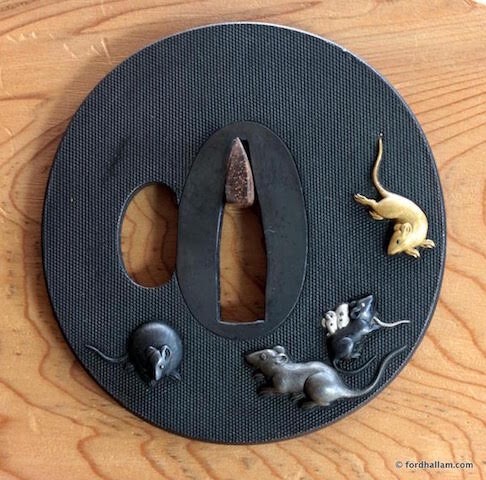
Oh rats! (From an old thread)
 5 points
 -
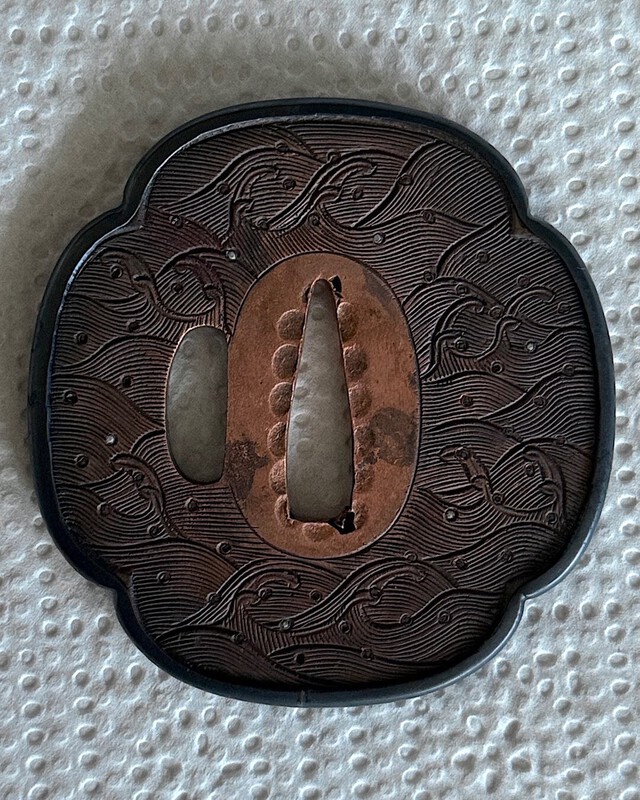
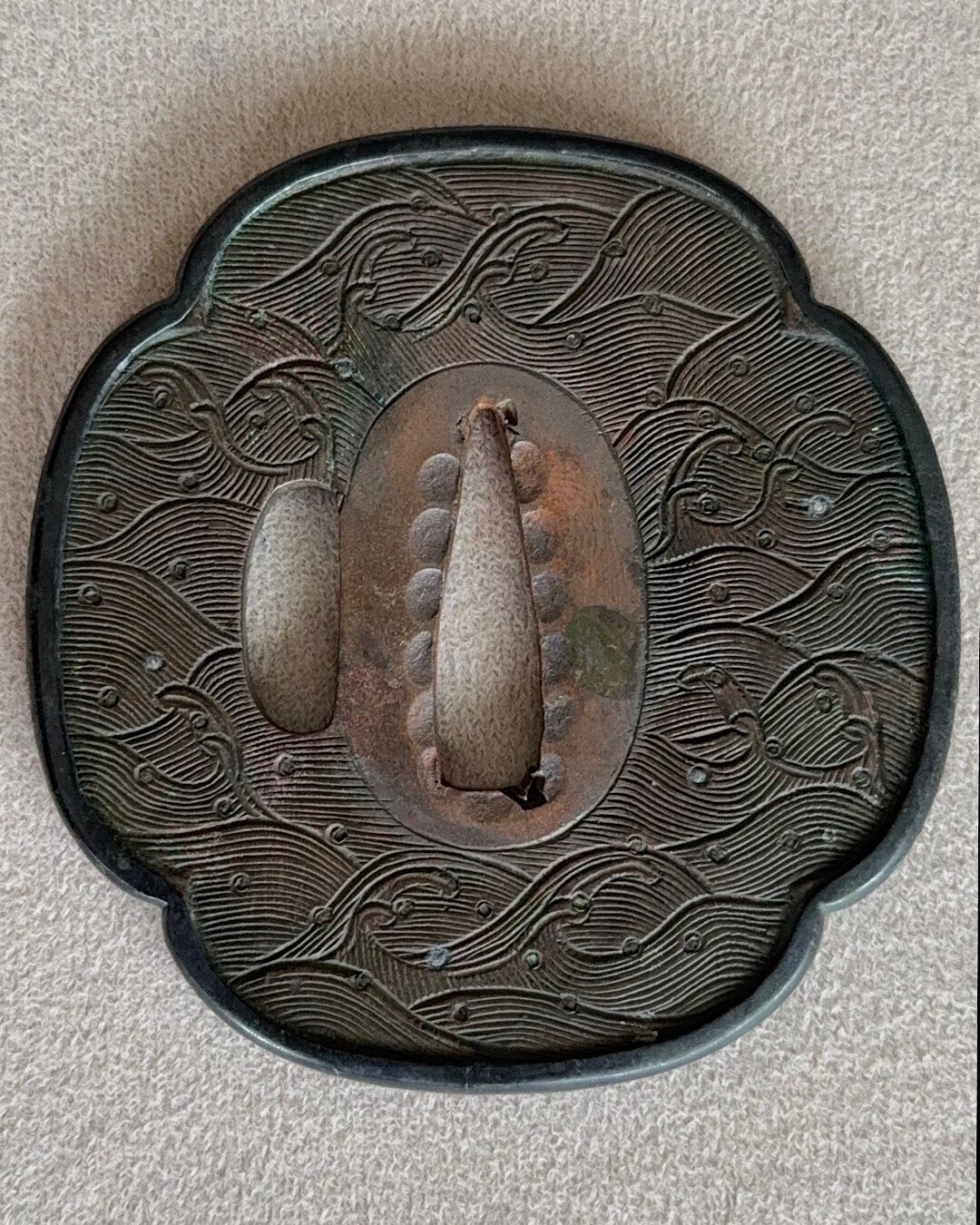
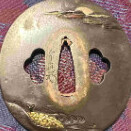
Hi guys, here’s the final update. As you can see in the before pictures of the tsuba, there’s a hazy greyish layer on the surface. This got worse within hours after removing most of the wax/oil and the following exposure to oxygen. This is especially visible around the abraded spots of the seppa-dai area. Whatever had been in contact with the tsuba altered the surface structure and made it more prone to oxidation/ corrosion. I wanted to make sure this isn’t accelerated by polymerized wax /oil layers left on the surface, but a couple of hours in acetone and even in xylene didn’t do anything noticeable. Especially xylene strips any waxes/resins and oils, even if polymerised, from metal without harming the patina. (Please be aware: that stuff has lower vapor pressure than water, so only use it outside. The smell will otherwise remain for days. Learned that the hard way). Finally I decided to gently remove the layer under the microscope with very mild polishing pastes . This also fully removed the lead corrosion from the remaining inlays, which are now nicely visible and won’t corrode any further under controlled storage. I also noticed that in most of the small inlay holes, only crumbled, grey, powdery residue from the former lead inlays was left. In germany this is called „Bleifraß“, translates to something like „lead rot“ (a big problem with old organ pipes and unfortunately irreversible). Depending on its surface thickness and chemical composition, the verdigris had turned the underlying yamagane greyish, blackish, or reddish. The areas with thin and crumbly verdigris were almost unaffected. After hours of work over a couple weeks, the brownish aubergine patina is now visible again and I’m really happy with how it turned out. The whole appearance is much clearer and sharper now. I also homogenized the rougher and more pitted areas to better match the soft sheen and reflective properties of the areas in better condition. I’m hesitant to go any further on the seppa-dai area— for now, I’ll leave it as is. The shakudo of the fukurin is of solid quality. There are some old scratches and dings that show natural repatination, the “self-healing” effect. The surface is stable now and the hazy layer didn’t come back. The latest photos show the piece unoiled/unwaxed and completely dry.


 4 points
 -
Buy both. Worry about how you'll afford them later. You'll always find a way. Never regret buying something you want, otherwise what are you working your whole life for?4 points
-
Rob, I would start a new thread and post pictures. Type 98 refers to the style of the fittings and these are not typically encountered with blades that are serialized. You may have a "Type 95." Conway3 points
-
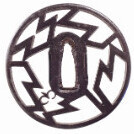
Thread card plate might be a more accurate translation. (?) (A spindle or spool gives the image of something that spins, whereas these itomaki versions are simple flat storage boards for sorting out and storing thread or string.)3 points
-
That is Great news indeed Rayhan, thank you for your involved efforts and to the two individuals that lobbied. Looking forward to it!3 points
-
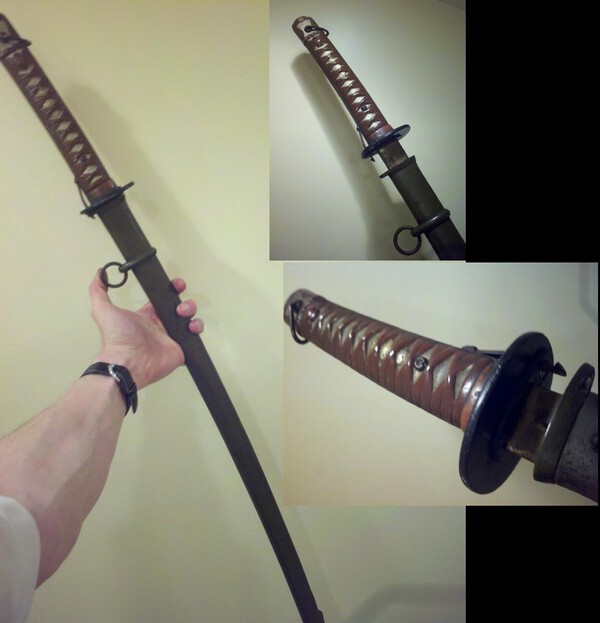
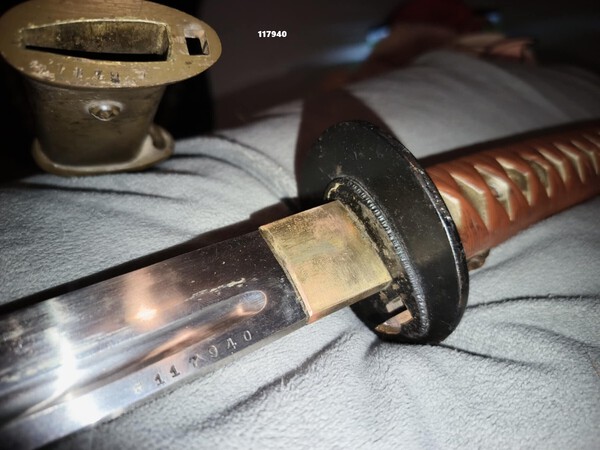
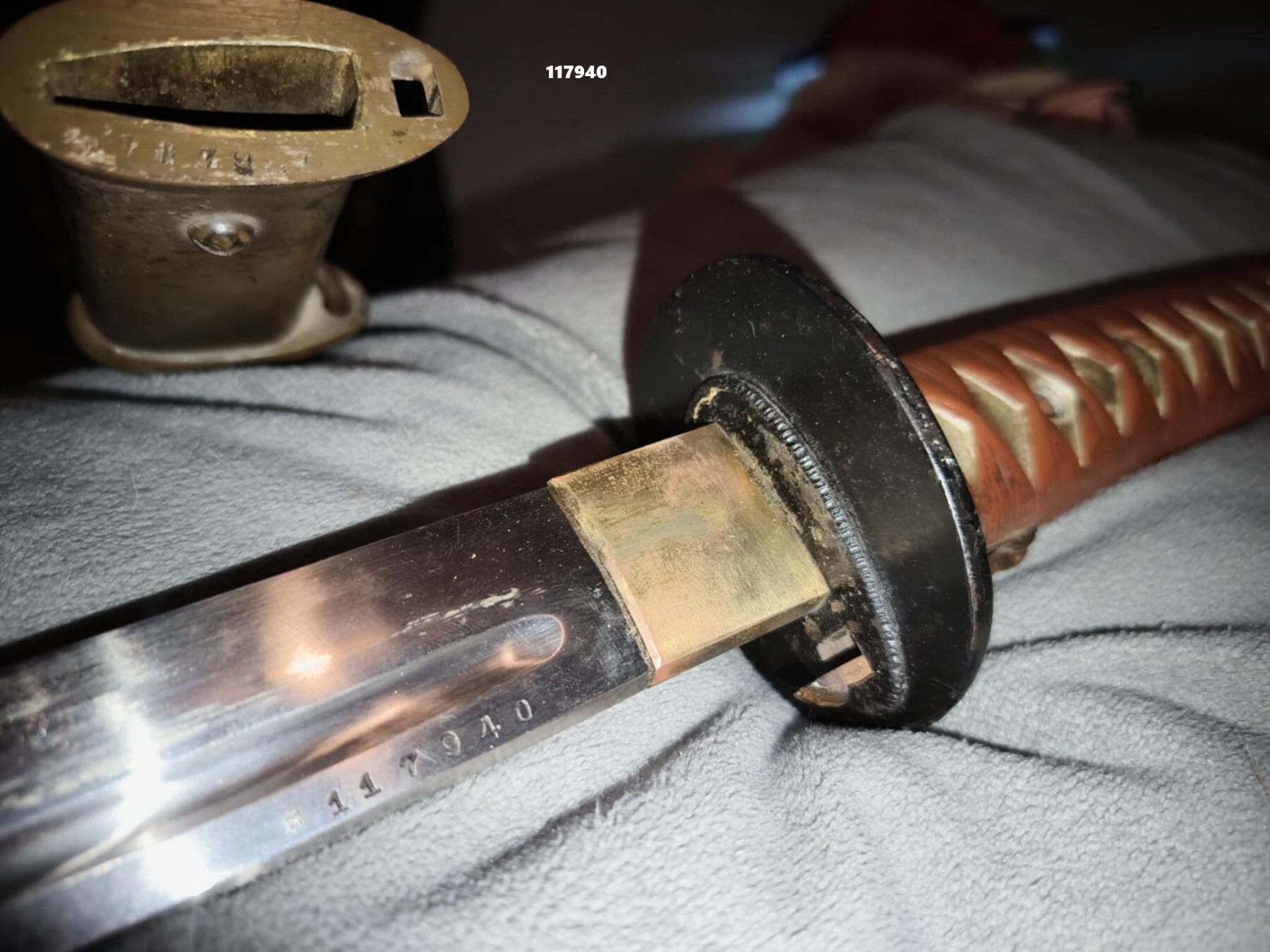
Hello this is my Type 98? Shin Gunto Army Sword that I acquired from my grandpa after he passed away. The blade and sheath 6 digit english numbers match. I'd like some information about this sword, thank you.
 2 points
 -
Hi Rob, welcome to the forum. As already stated, your sword is a Type 95 Military Sword. Below is a link to some basic information about them. IJA Type 95 NCO Sword Info2 points
-
Hi all. Without overthinking it seems to be a meiji era kaiken. Quality is quite good for the era, not a cheap tourist item but also not a treasure per se. The lacquerwork is done well, with nice abalone inlays. Fittings are good but not outstanding. The blade has 'Hachiman Okami' carved into one side with a late-style looking horimono. On the other we have grass script horimono and birds. Decent horimono both sides. My guess is that its a legit meiji era 'wedding sword' kaiken worn by the bride.2 points
-
Hi Rob, welcome to the forum! Very cool sword. What you have is not a Type 98 - but rather a Type 95 NCO Shin Gunto These swords were machine made between 1937 and 1945, yours is the "Pattern 3" version, with Aluminum handle and Steel Tsuba. If you can show me the serial number, and the stamps on the copper fuchi, I can likely share some more information about it's manufacture and maybe give you a rough date estimate. All the best, -Sam2 points
-
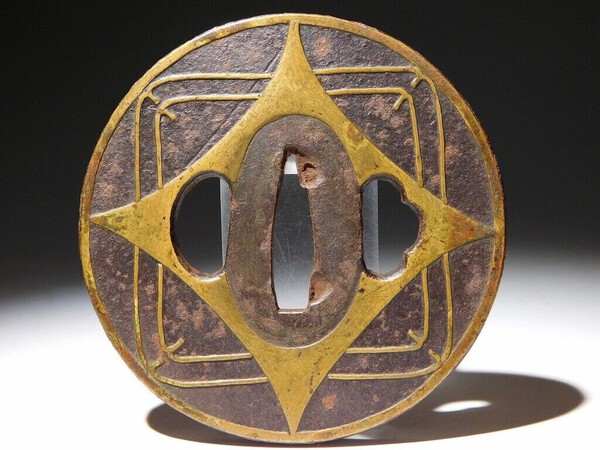
The Soryu one pretty clearly never had a kogai hitsu-ana because the walls of the diamond are solid when they attach to the seppa-dai. So, there are some variations.2 points
-
That's amazing! Thank you for the good news. Just when I thought I would finally send all the magazines to destructive book scanning services. I am happy to preserve them now.2 points
-
Same design in a maru gata tsuba......
 2 points
 -
If you know the prices are ok, and you would at least get your money back if you sell, then the risk is minimal. But both, and if you find things a bit tight, you know you can sell one or both and recover your funds. That's how I work with my knife collecting, and so far I've managed to keep everything I wanted to keep, safe in the knowledge that I am just storing funds that I can recover if I need to.2 points
-
@Rayhan Thanks so much for lobbying for this as well as your close contacts! This is wonderful news and I’m glad the NBTHK is allowing for the dissemination of more translated sword knowledge for free. I look forward to reading these magazines.2 points
-
Ditto with what's already been said. No right or wrong answer, up to you. Just if you sell it on, be sure to mention the tassel has been added. (Some of the better repros are difficult to tell from nice condition originals.) Personally, I like having tassels on all my guntos, and almost always add one on if it's missing. To me, they display better that way.2 points
-
@Robert&Piers once in a time opportunity... If you let it go, be sure you will have no regrets. Best regards, Eric2 points
-
Hi Steve, just to clarify this seems to be a different one from the example published. The same design, albeit with a thicker heaver execution. I would be inclined to leave as it is. Just my personal take, but I don't see it as being a detractor, and it am not sure that it would be easy to find someone to properly replicate the outer frame of the kozuka-ana as seen in the published example.2 points
-
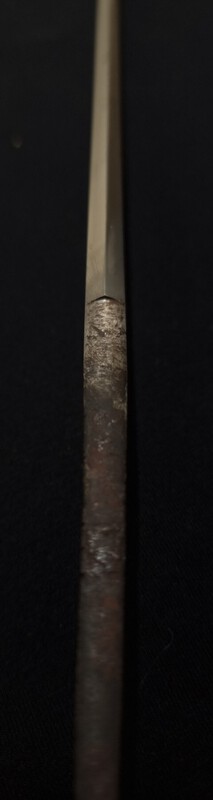
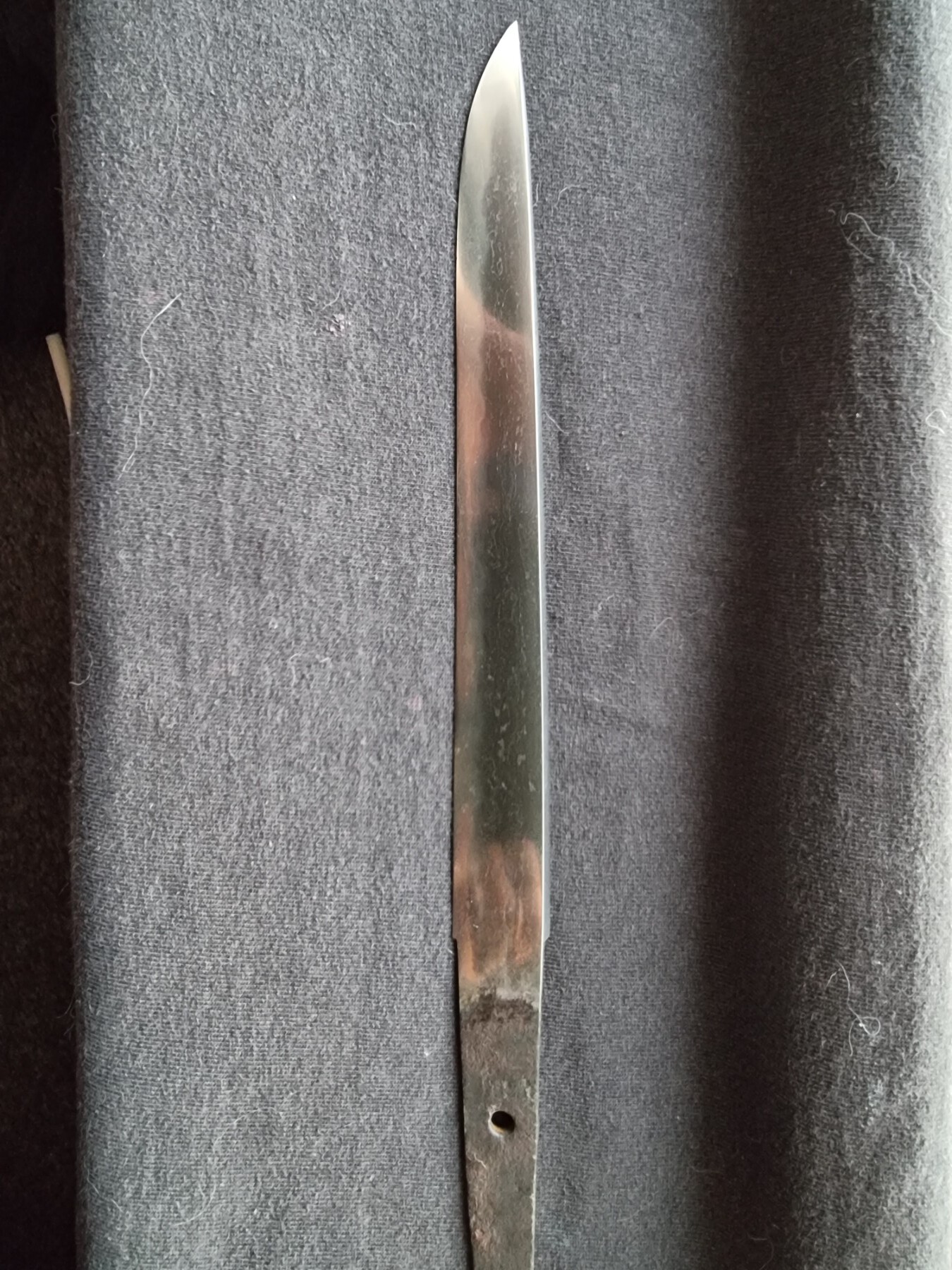
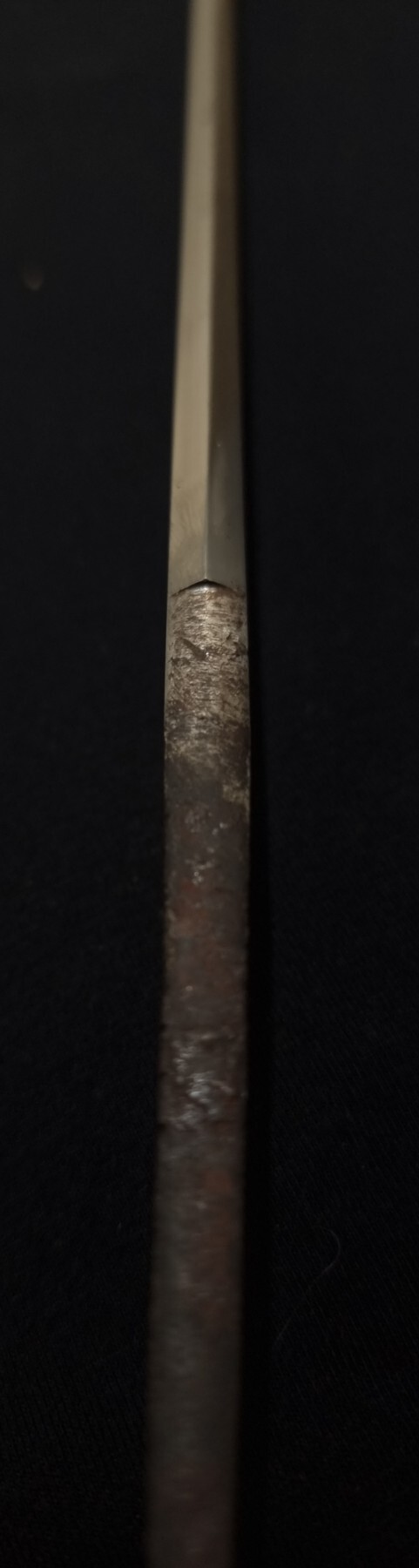
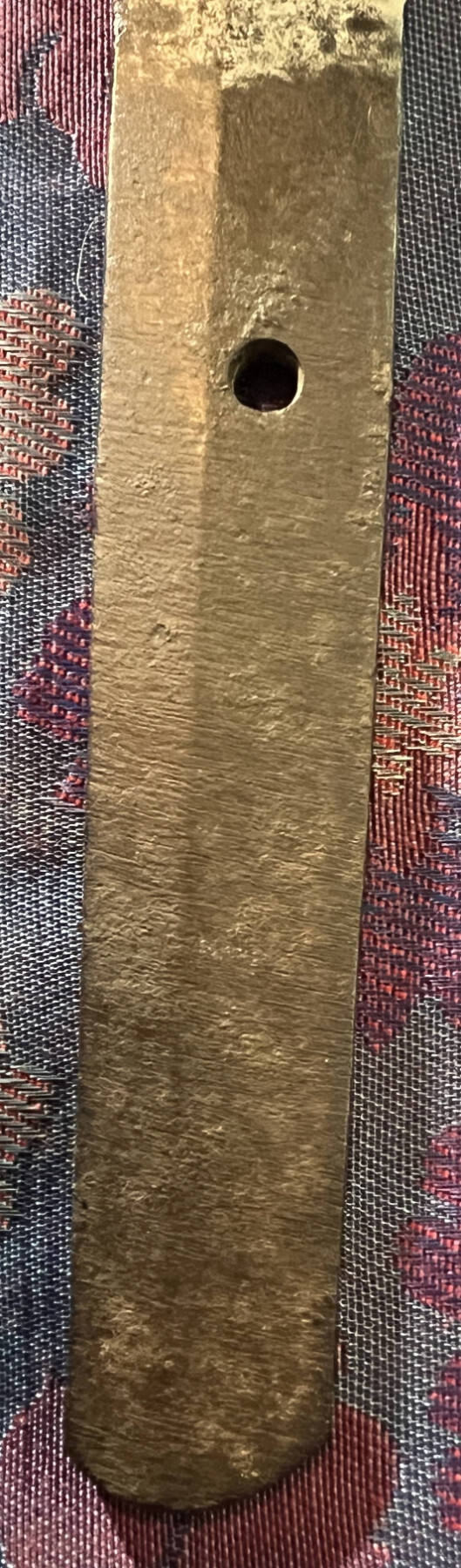
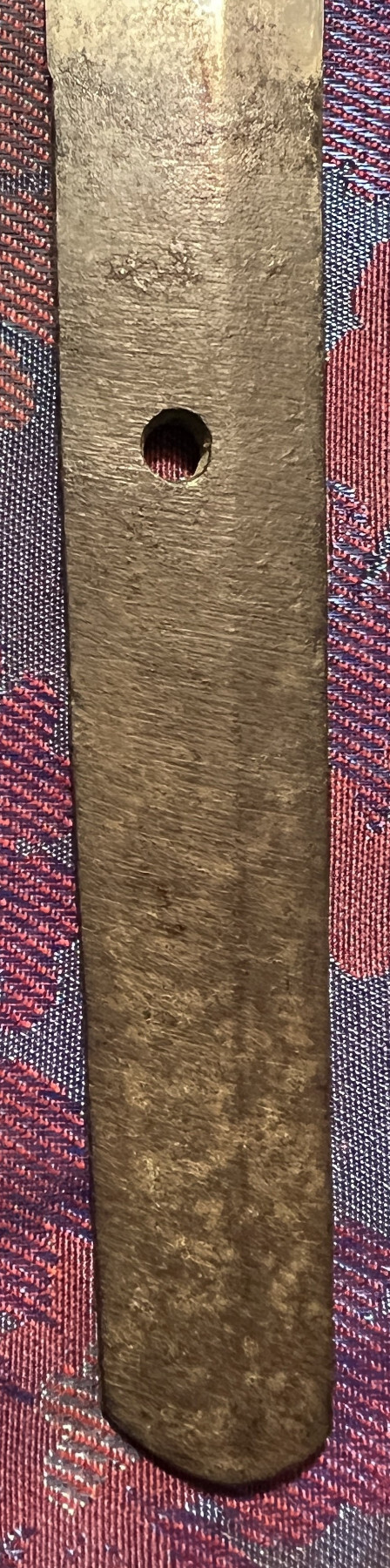
Hello all, I received this Mumei Tanto today! It was listed as "old koto era" I want to believe it to be authentic BUT I don't know a lot about much, so ANY help identifying anything about the blade will be greatly appreciated! Taking photos were ALOT harder than i imagined they would be, so, my apologies for the lack of detail in the images. Thanks, Justin.



 1 point
 -
Thank you, thank you, thank you! Your work and generosity are both excellent.1 point
-
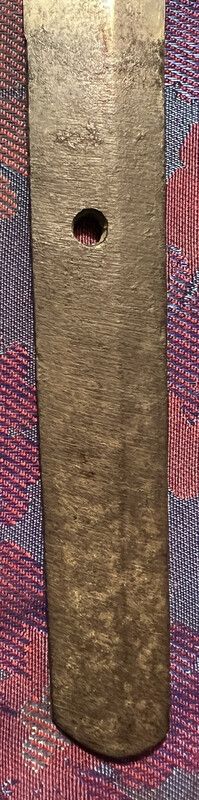
Sam finally got some blade pics-thanks



 1 point
 -
@Rayhan Wow... Heck of a resource. That is truly incredible. Thank you 1000x1 point
-
Well done, Ray! The community must be very grateful for your efforts and the help of your associates. That is an incredible achievement. They are each between 40-60MB, so people need to provision the requisite space on their devices.1 point
-
Excellent news! Thanks!1 point
-
Great news! Thanks for your efforts Rayhan!1 point
-
Nice, this will save me from having to rummage through the jumble of magazines I have in stock.1 point
-
Thanks to everyone, I learn something every day.1 point
-
Truly great news Rayhan, thanks for all the hard work, really appreciated. Look forwards to reading them cheers Rich1 point
-
Not only itomaki but many other jagged shapes would be clothes shredders. Most would be because their rims were deliberately removed. [I have images of uncut versions of all of these]
 1 point
 -
Leave it like it is. And what Manuel write is absolutely correct. I have several tsuba with fine damage like a crack or some impacts at the rim...........it is part of the history.1 point
-
It would be possible to have it done, but there's the serious risk that the patina of the new piece won't really match perfectly the original one, i'd personally leave it as it is. Especially considering that the papers won't match the tsuba anymore, making them useless.1 point
-
my Shin Gunto 98 has a six digit serial # stamped on the blade and sheath that match.. how can i get more info about it?1 point
-
https://soryu.pl/products/iron-sukashi-kanayama-school-tsuba-with-nbthk-hozon-tosogu-takeda-clan-kamon no kozuka hitsu-ana either. tiny image but with both hitsu-ana Christies had one for GBP 562 https://www.christies.com/lot/lot-5679423 https://auctions.yahoo.co.jp/jp/auction/c1183203600 the image from Sasano is not the same guard. Sasano's dimensions are 70.5 mm diam. x 4.8 mm > 4.5 mm [rim to seppa-dai] The auction piece is 75 mm x 74 mm x 5.2 mm so a little larger - possibly a daisho to Sasano's? Page 139 of the gold book. No relevance but they are still making copies - https://www.etsy.com/ca/listing/1664523308/samurai-sword-iron-tsuba-and-fuchi I think the guard can stand on its own merits - the cut hitsu is part of its history, don't try to make it a copy of a guard just because someone in an advert is try to sell it as something it is not. JMHO1 point
-
I have a couple swords in similar WW2-era mounts. Looks like Gunzoko koshirae. The Japanese military had two parallel sets of command, those considered actual "Soldiers of the IJA/IJN", and those in support roles, "Civilian Employees of the IJA/IJN", the Gunzoko. (I've heard them referred to by different names) So, an Officer in the Infantry, Calvary, Artillery, etc, would be considered an actual Imperial Solider. While an Officer in Administration, Medical, Judicial, Quartermasters, etc, would be a Gunzoko. Both wore military uniforms and were authorized to carry swords. Both would be expected to deploy and go into the battlefield, but they had two different ranking systems. Based on the surviving swords, Gunzoko were given a little more leeway in their sword fittings. You tend to find more traditional/civilian tsubas, fuchis, etc. on their blades.1 point
-
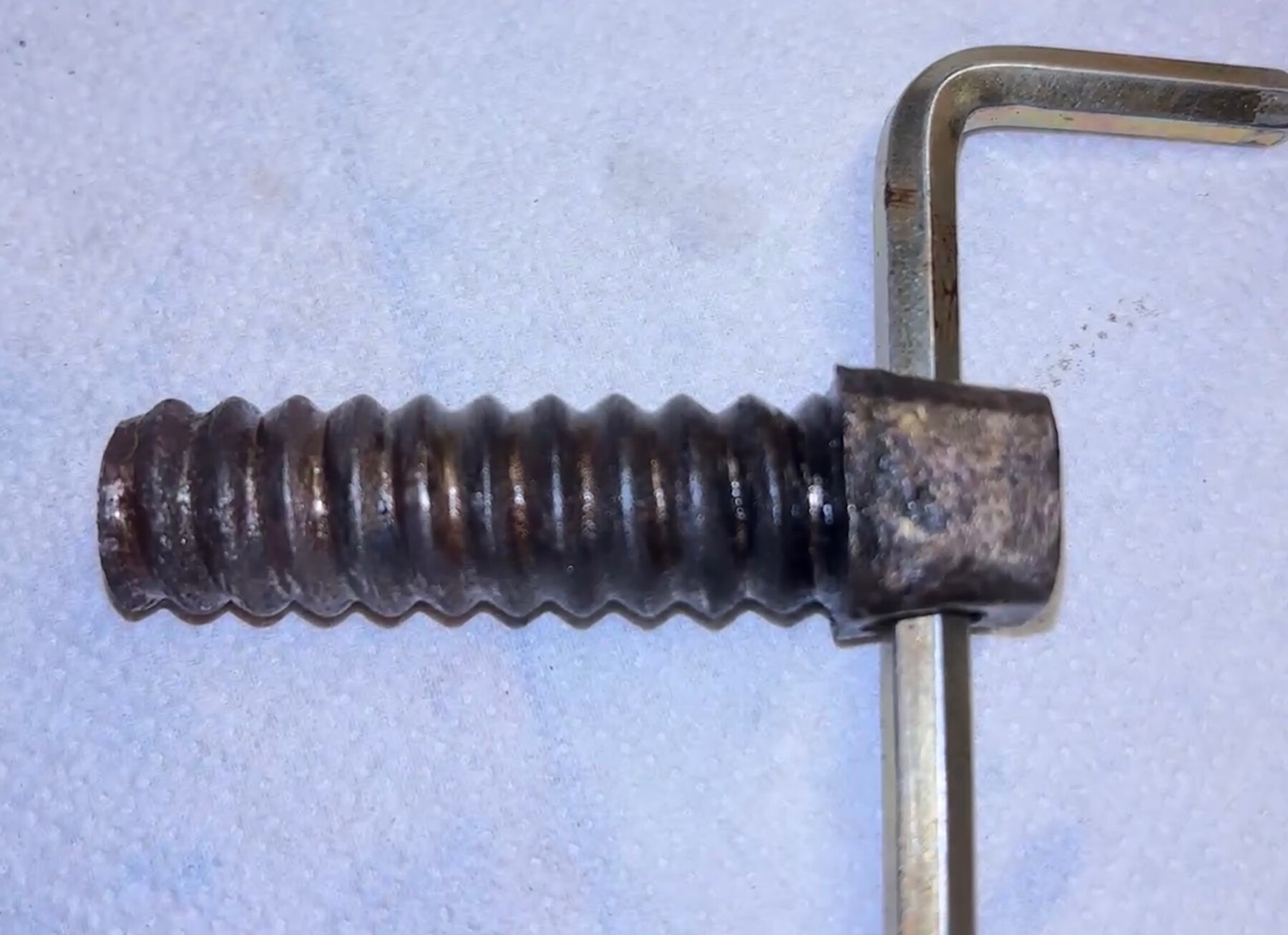
Cleaning and honing the barrel was been slow going so I decided to dare to attempt pulling the breech plug. With the barrel firmly clamped I gently heated the breech area with a blowtorch and pretty quickly some stinky black ooze started bubbling up around the edges of the plug. No idea what it was but it smelled like burning tyres and it didn’t catch fire in the flame of the torch, it just dried up. Using an adjustable spanner on the square while keeping the heat on the barrel I was quite quickly able to tease the plug out. It’s in remarkably good condition. The face is a bit pitted but that is easily cleaned up.
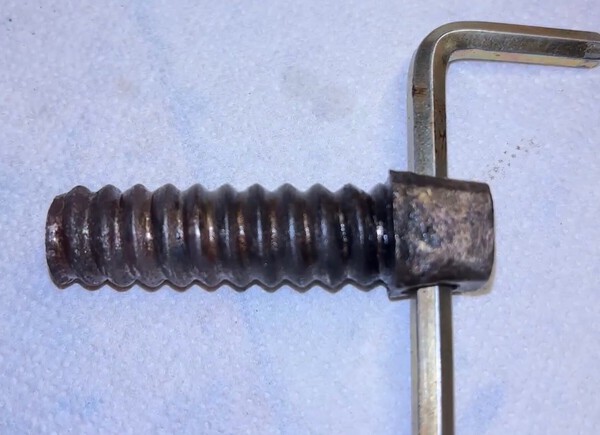 1 point
 -
I described a few posts above how I made the pin 😉1 point
-
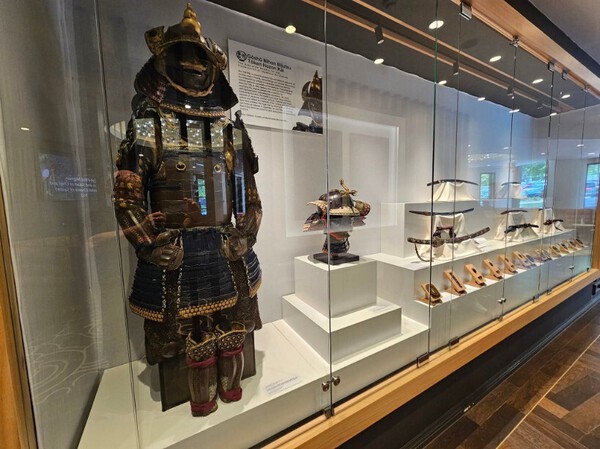
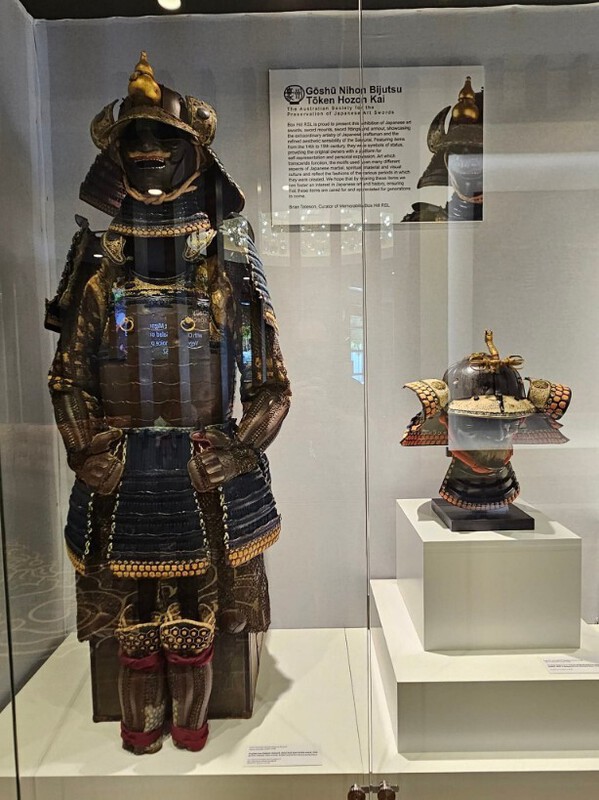
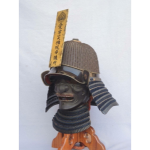
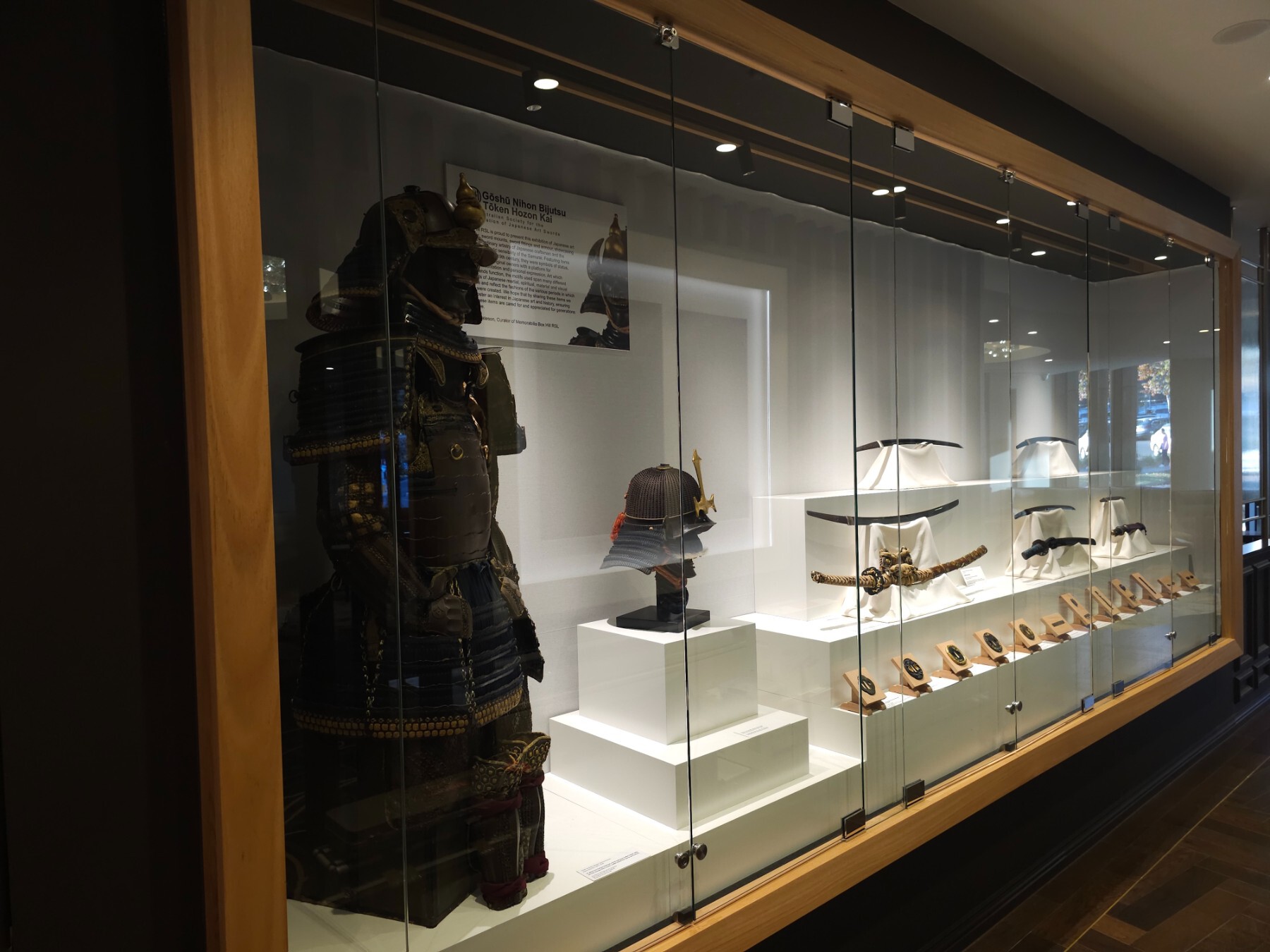
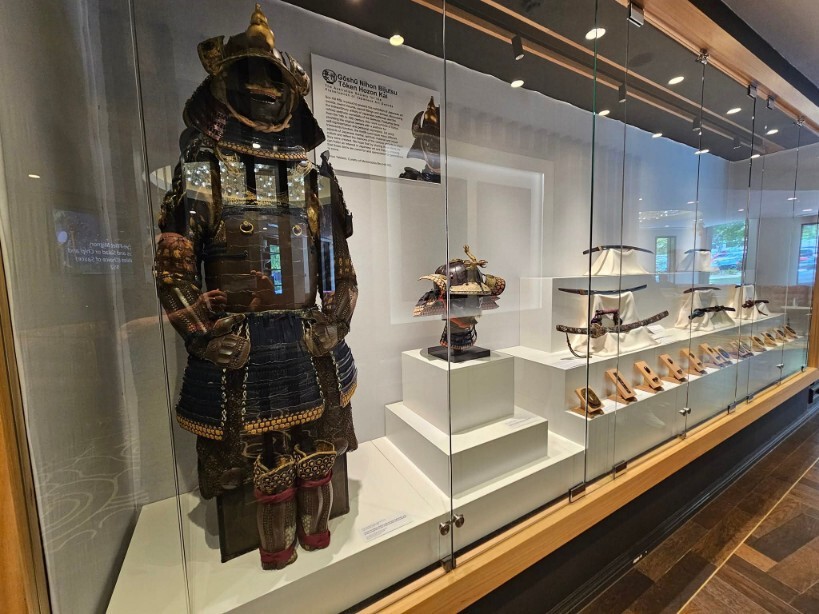
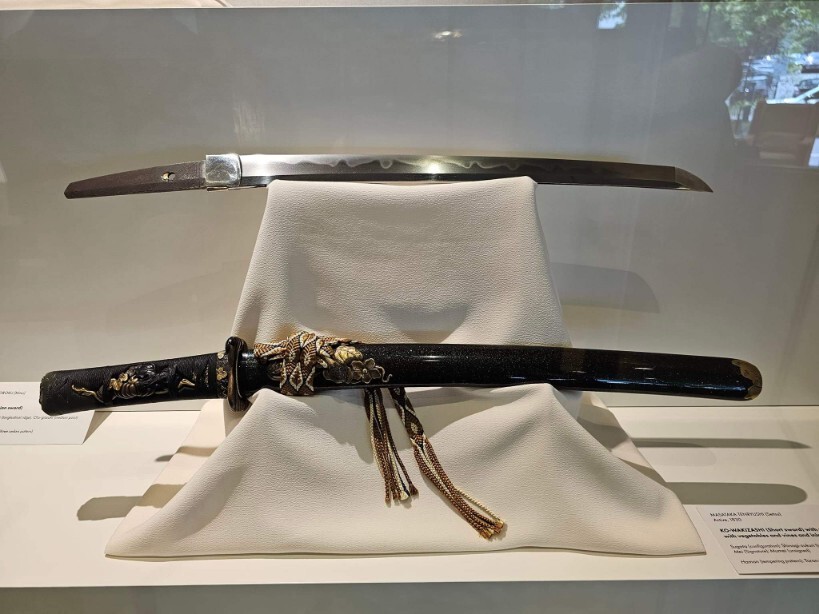
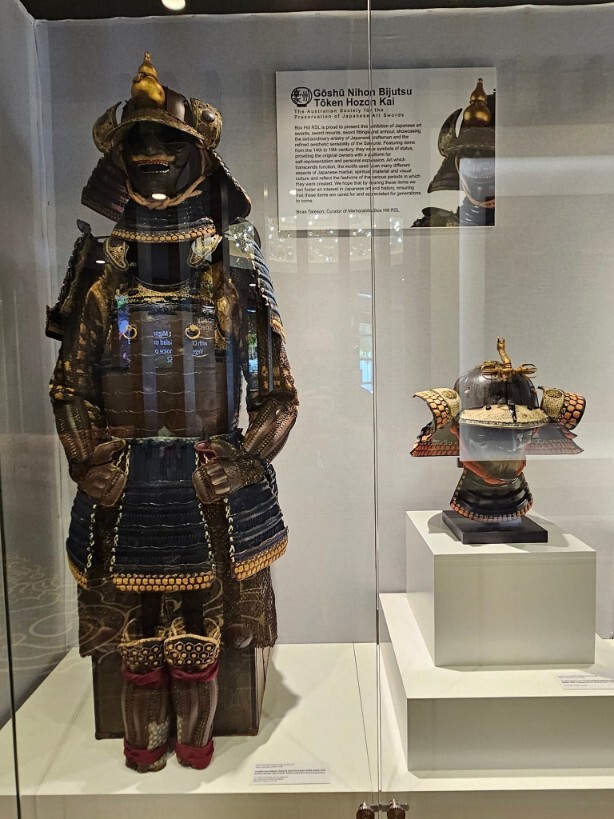
Hi Folks. Today we changed over the items on display with the exception of the suit of armour. Everything else, swords, fittings and kabuto are replaced. Regards Mark
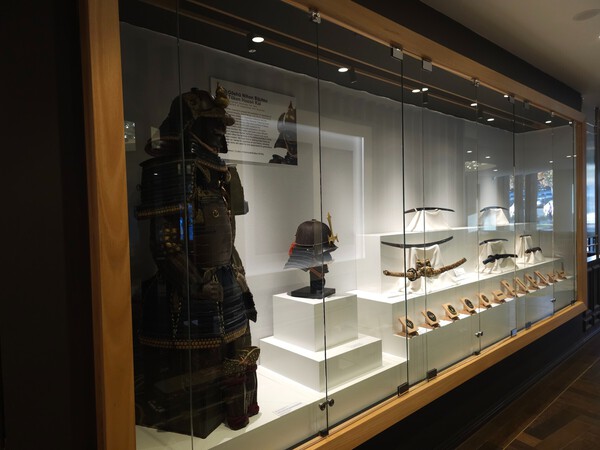 1 point
 -
What are the metal mounts made from? Silver or shibuichi? No doubt its Meiji in my mind but by no means a piece of junk “for people who don’t know any better” Many people collect these Meiji works and I’m guessing this would fetch a couple of thousand £ in just about any auction. Considerable work has gone into the lacquer work and if the mounts are silver or shibuichi then it would have been expensive when first made. To cast those mounts, hand finish them, fit to a custom made saya etc exhibit considerable skills, possibly made by some of those who lost their lively hoods when the sword ban came in and the Samurai faded from history. OK not one for the purist collector of Nihonto but then horses for courses.1 point
-
Seki ju nin Takeyama Yoshinao saku. Sho stamp. YOSHINAO 義尚: real name Takeyama Tsutomu (武山勲). Born Meiji 39 (1906) August 17, older brother of Yoshitomi (義臣). Reg. Showa 14 (1939) October 27 (age 33). Rikugun-jumei-tōshō. Died Showa 57 (1982) July 11. Akihide 1942: Jōkō no retsu (5/7). Second Seat at 6th Shinsakuto 1941). Example mei: (“Seki Fujiwara Yoshinao”) (“Noshu Seki Takeyama Yoshinao saku” SHO), (“Seki Fujiwara Yoshinao saku” SHO), (“Seki Fujiwara Yoshinao saku kore”) (“Noshu ju Takeyama Yoshinao kin saku”) (“Noshu Seki ju nin Takeyama Yoshinao kin saku” SEKI).1 point
-
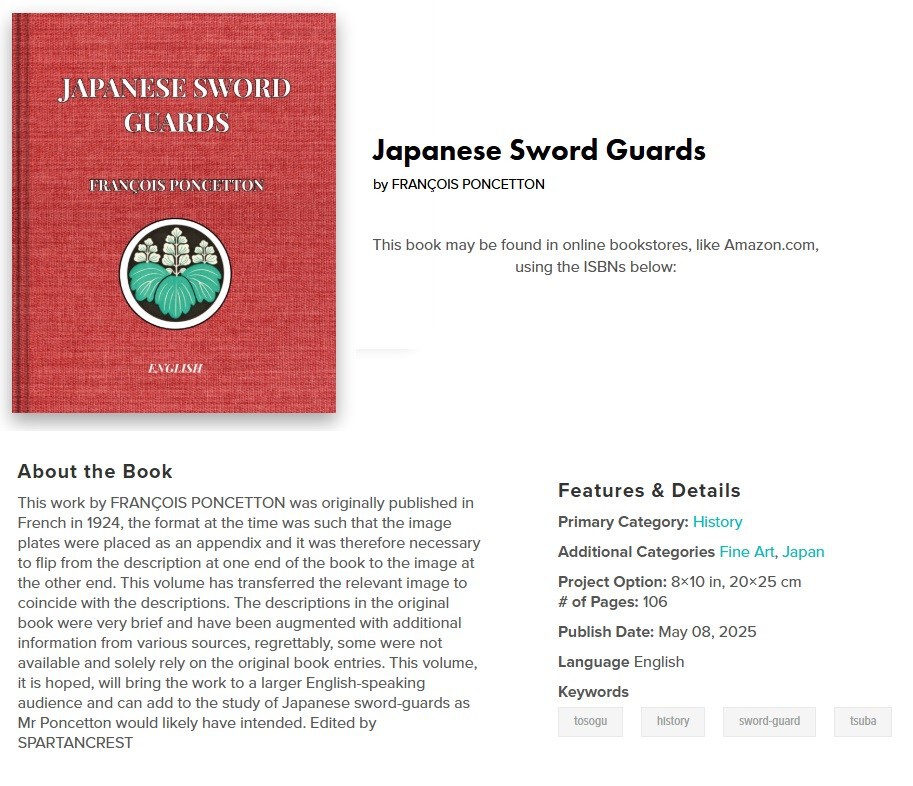
Listed the Poncetton book in two formats - Soft and Hardcover, I am yet to find the ISBN codes but the title will show up in a search in a few days. 106 pages. Please be aware the books are sold through the distributors at a much inflated price and ebay is not the cheapest by any means! PM if you want a cheaper option.
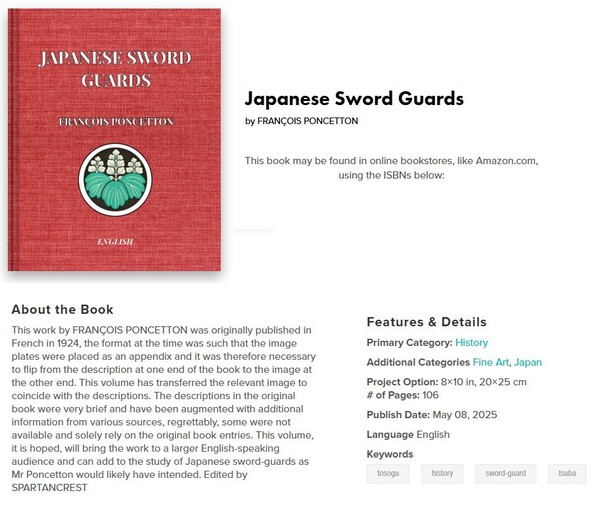 1 point
 -
Pictures please1 point
-
Remember the Collective Chant "We feel no pain!!" Time and the drip-feed system covers most expenditure caused by giving in to Desire. Some of us even embrace it without telling our wives!! And don't forget, the quality is remembered long after the price is forgotten... BaZZa.1 point
-
Jose, I think this is a personal choice. Some of my swords came with tassels attached, but who is to say who put them on. I have added tassels to other swords that I have that didn’t have them on when I purchased them. I like mine with the appropriate tassel attached. I know other fellow collectors that will remove the tassel and sell it as they don’t like them. While others that I know remove them and keep them separate from the sword as they don’t like the way they look. So I feel you should do what ever You think make the sword yours. No right answer here as long as it is a ORIGINAL Tassel and an appropriate one. MikeR1 point
-
Nothing wrong with it at all if it's for your own satisfaction, or replacing a missing one confirmed through provenance. It only becomes an issue if you're selling it and claim the tassel is original to the sword.1 point
-
Tempted to agree with you Geraint, but I do see a lot of semi decent work there, more than would be required just as an export piece. I suppose this could be a Meiji period special order piece for some occasion. Shape looks inspired by a Bashin, and the whole thing does seem diminutive. Maybe made for a lady, who wanted something flashy. Either way, it is a genuine Japanese piece, and definitely has some interest. I guess we'll know more once we get a translation.1 point
-
all European dealers have this pricing. They buy in Japan and USA and sell with double of the price.1 point
-
@Chishiki you guys are doing such amazing work. Can’t praise you and your team enough.1 point
-
Hi. Today, we completed the installation of a display here in Melbourne. It's a nice display, worth visiting. The venue, Box Hill RSL, is quite large with restaurant, cafe, bar, and is very busy. We have displayed a good cross section of samurai art. The backbone of thr display is Colin McDonald and kudos to him. It will run for about 1 year, with most items being changed every four months. I'll post more details over time. If you'd like to know more please message me. Mark
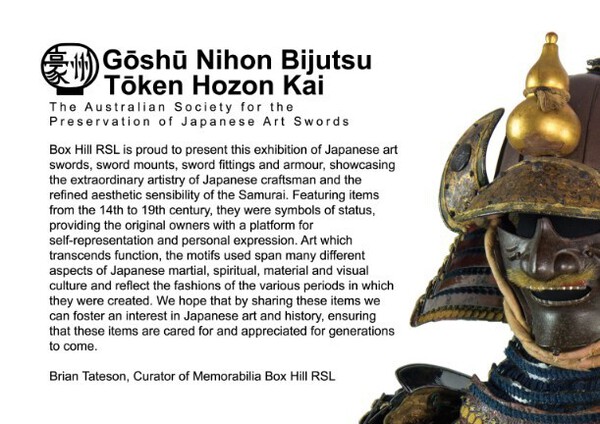


 1 point



































This leaderboard is set to Johannesburg/GMT+02:00