
Leaderboard


Popular Content
Showing content with the highest reputation on 10/20/2024 in all areas
-
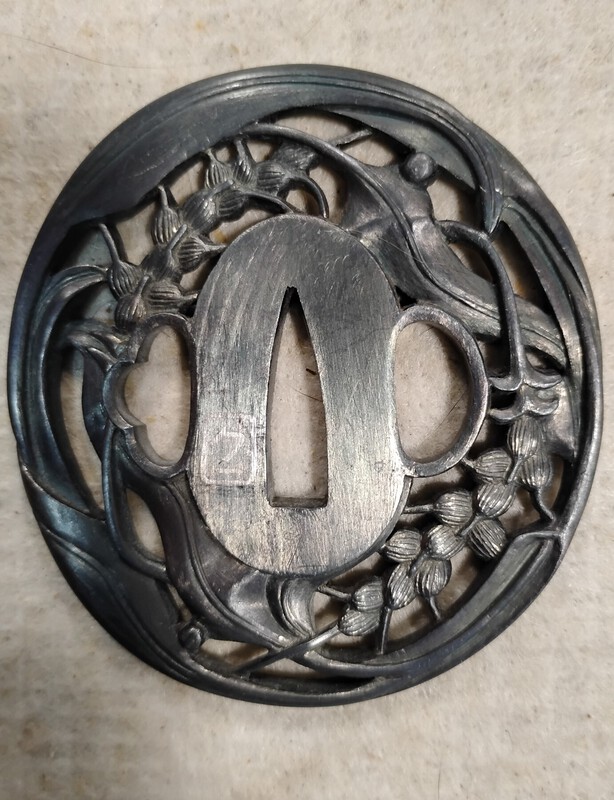
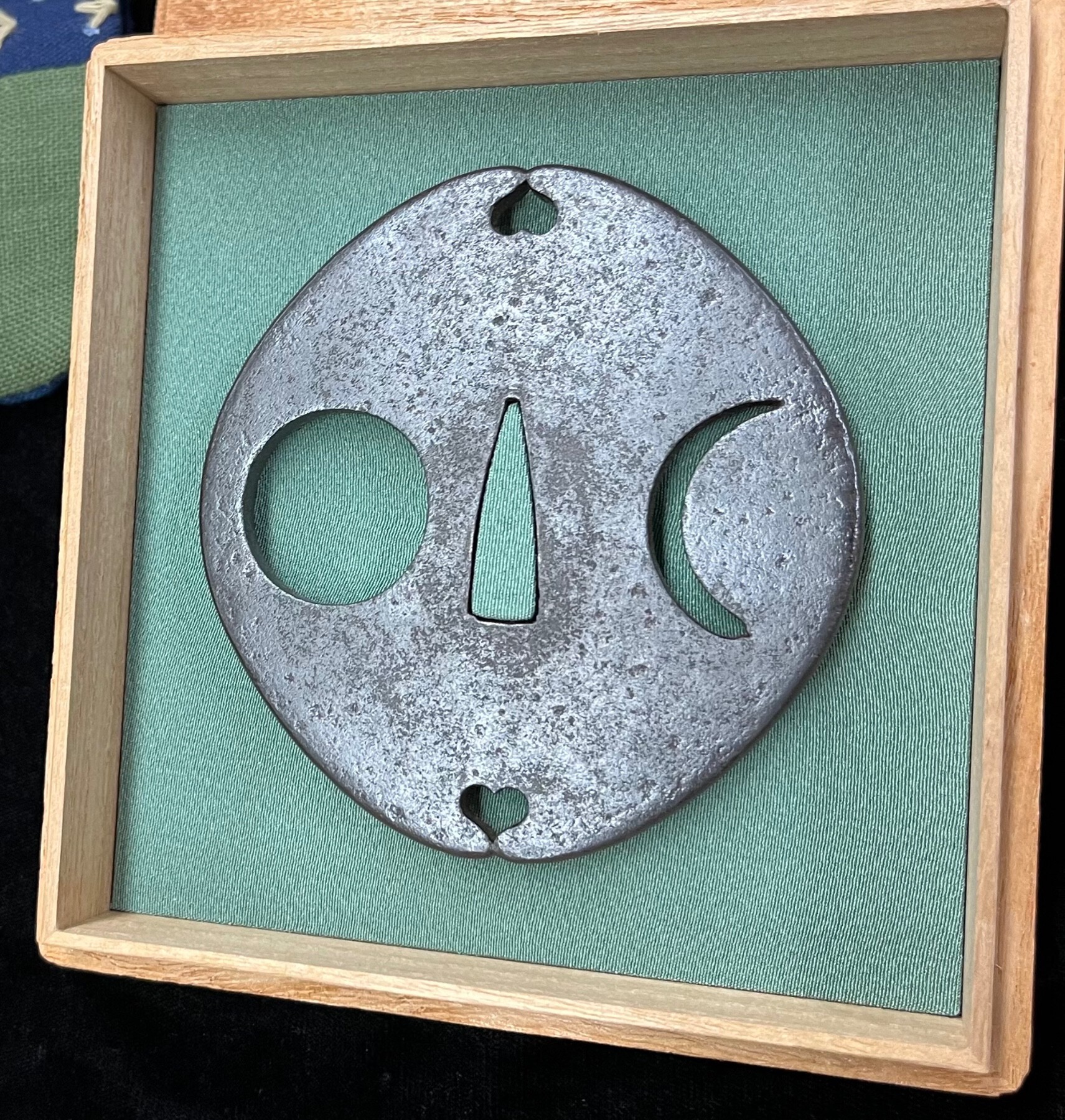
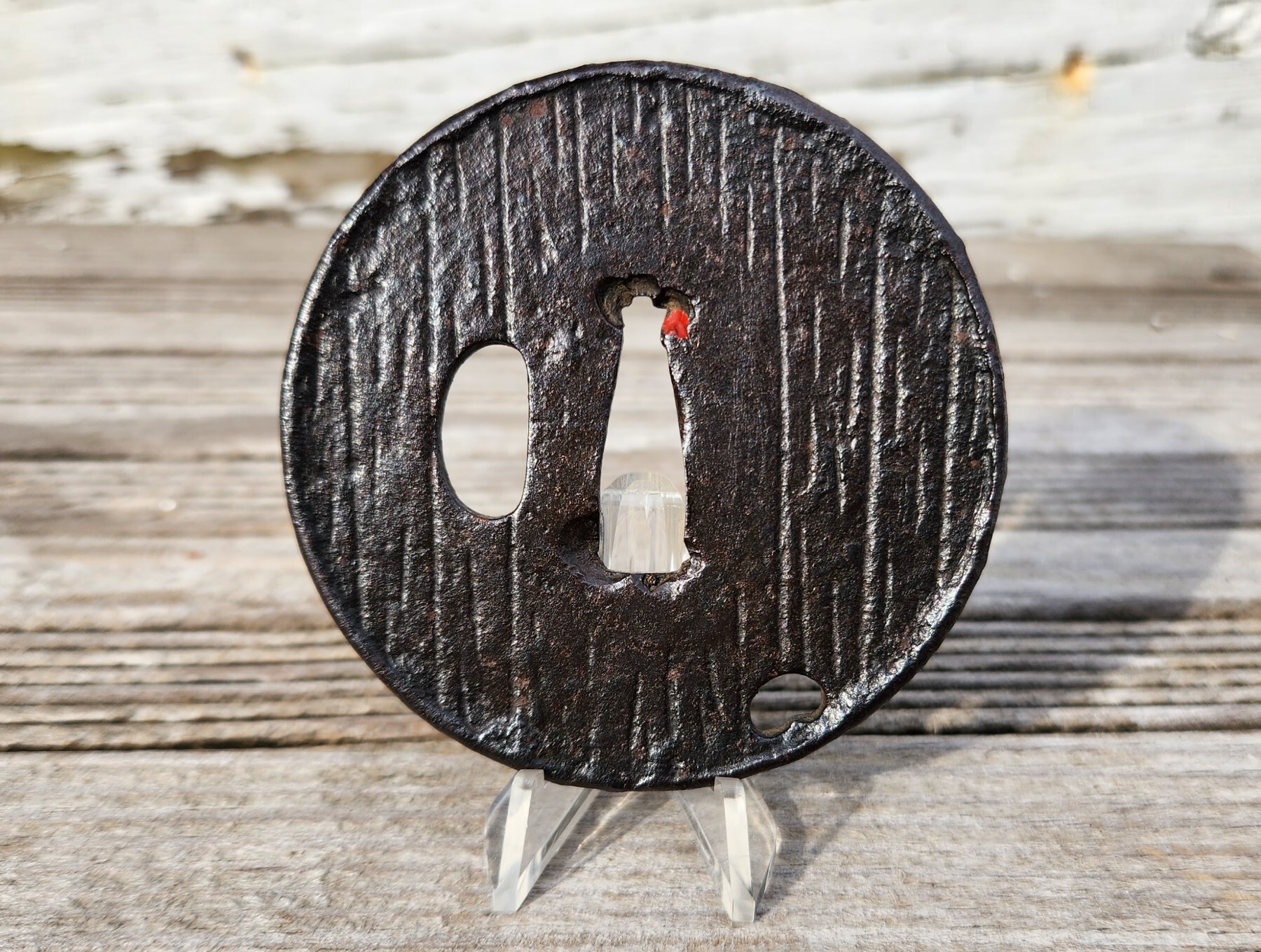
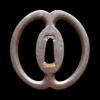
Here are some phone pics of my latest work, this is my 4th attempt at making tsuba. The bronze original is in the V&A London online collection. The details are as follows. The project took 7 months to complete including choosing the design to inlay of the mei. The material is iron(not mild steel) I sent some 100 year old relic parker brothers and other Damascus shotgun barrels to a blacksmith who returned them as 1/4" iron plate. I made a pen and ink drawing adding the kogai hitsu ana. The design was xerox copied and transferred to the plate. I then pieced with a jewelry saw and sculpted with hammer and chisel gravers. Polished with files and finishing stones. The color is heat blue patina.
 8 points
 -
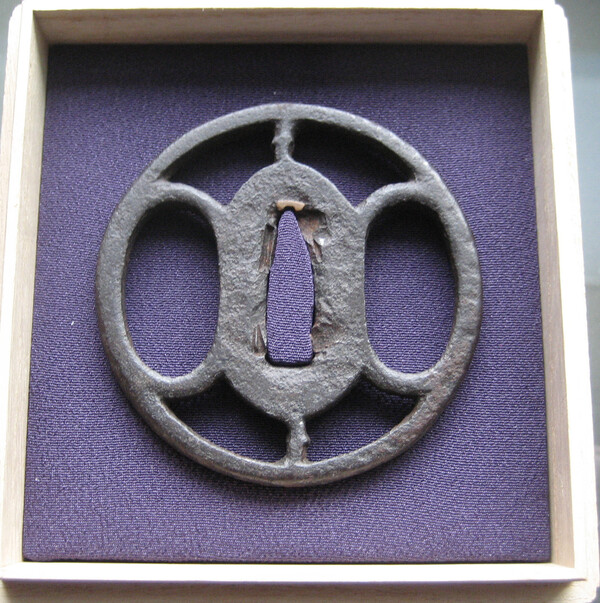
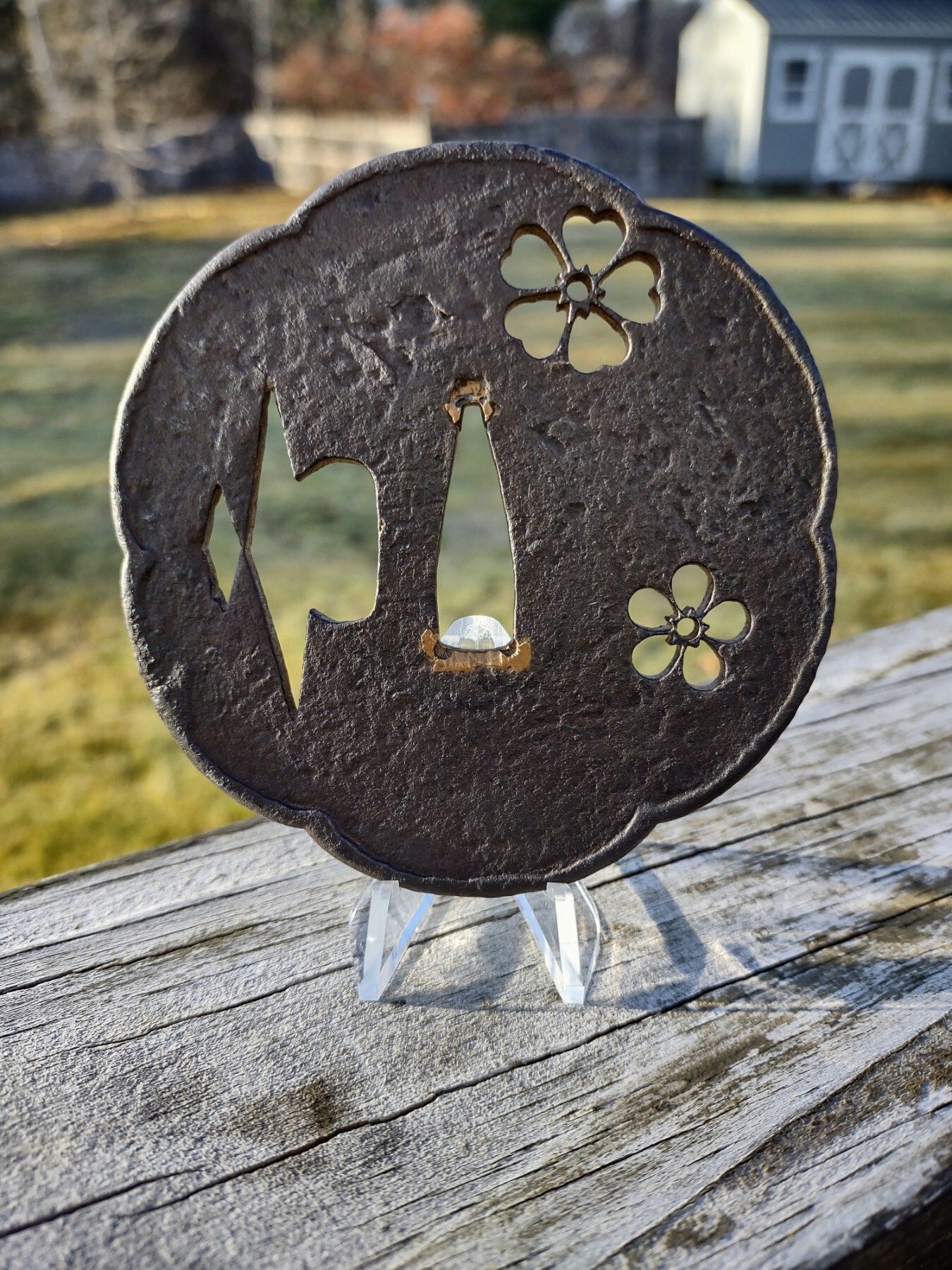
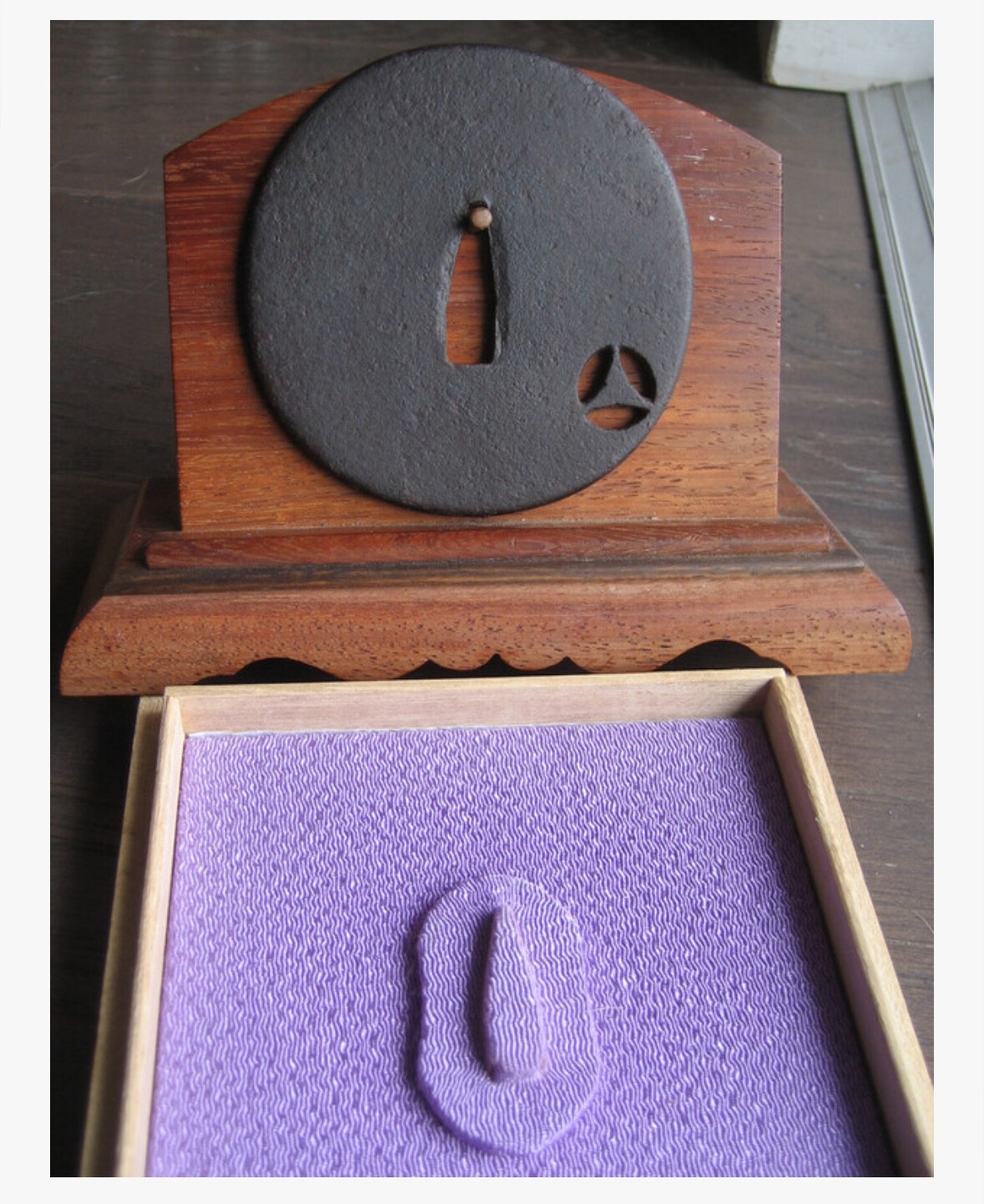
Great thread. I tend to focus on Higo and Owari, so will offer up an old Kanayama as my contribution. Interesting in that it is somewhat concave on one side. You can see it in the second photo, thought it would be more evident if photo was in winter light. That would seem to be a kantei point for some of the 1500s Kanayama.
 8 points
 -
Large plain iron papered as Muromachi Tosho
 7 points
 -
How early i dont know. Its Muromachi, Utilitarian, 2mm thickness. Like the design and also attracted to nakago ana that show changes in use. Just adds a bit more appeal, for me.
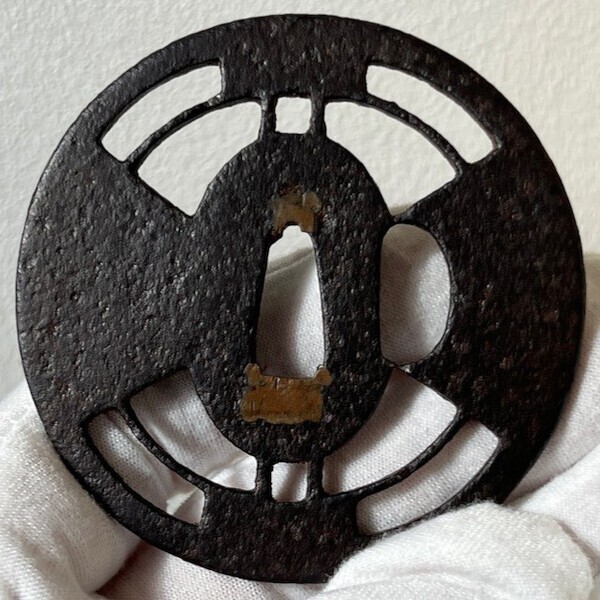 6 points
 -
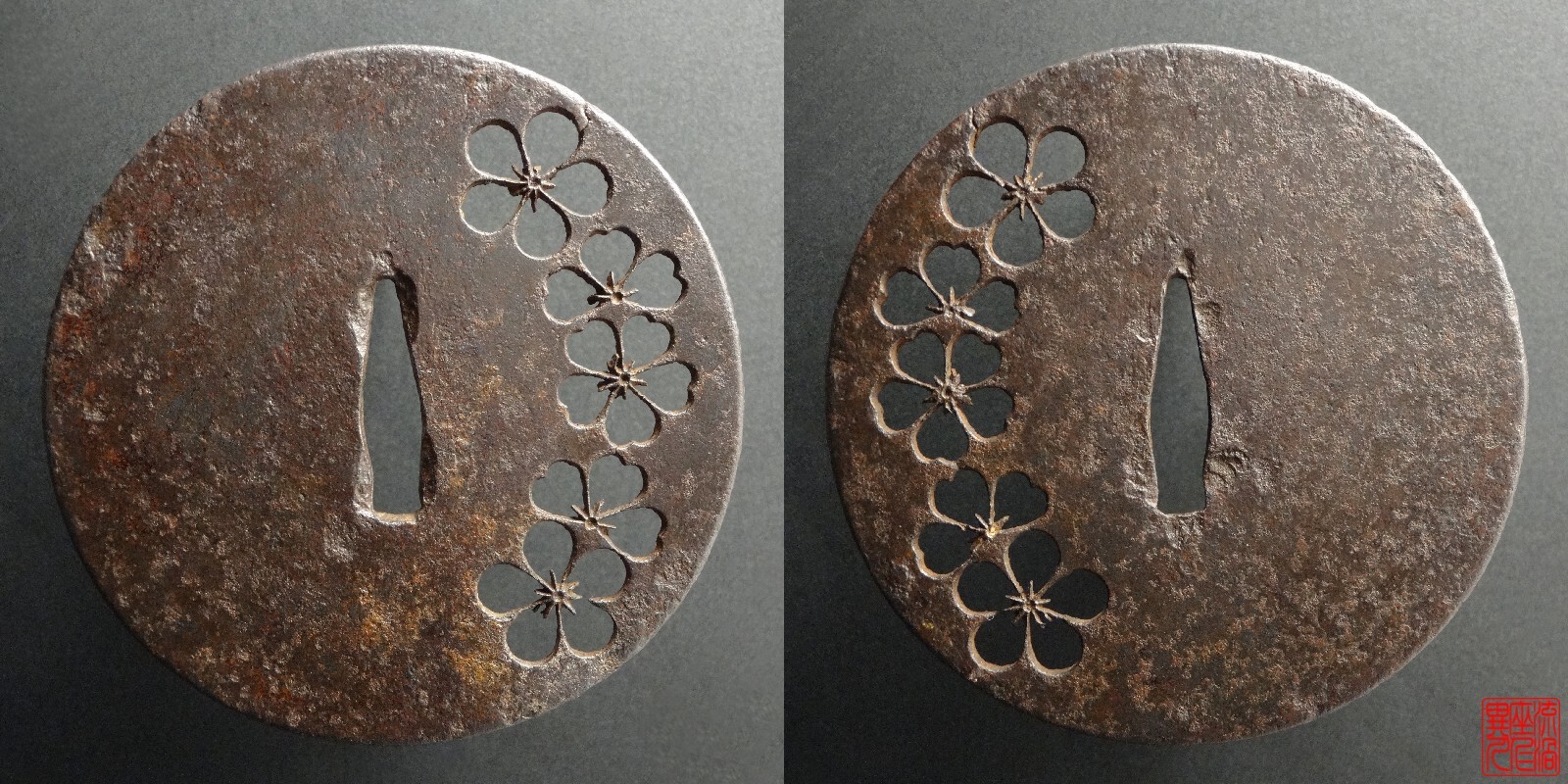
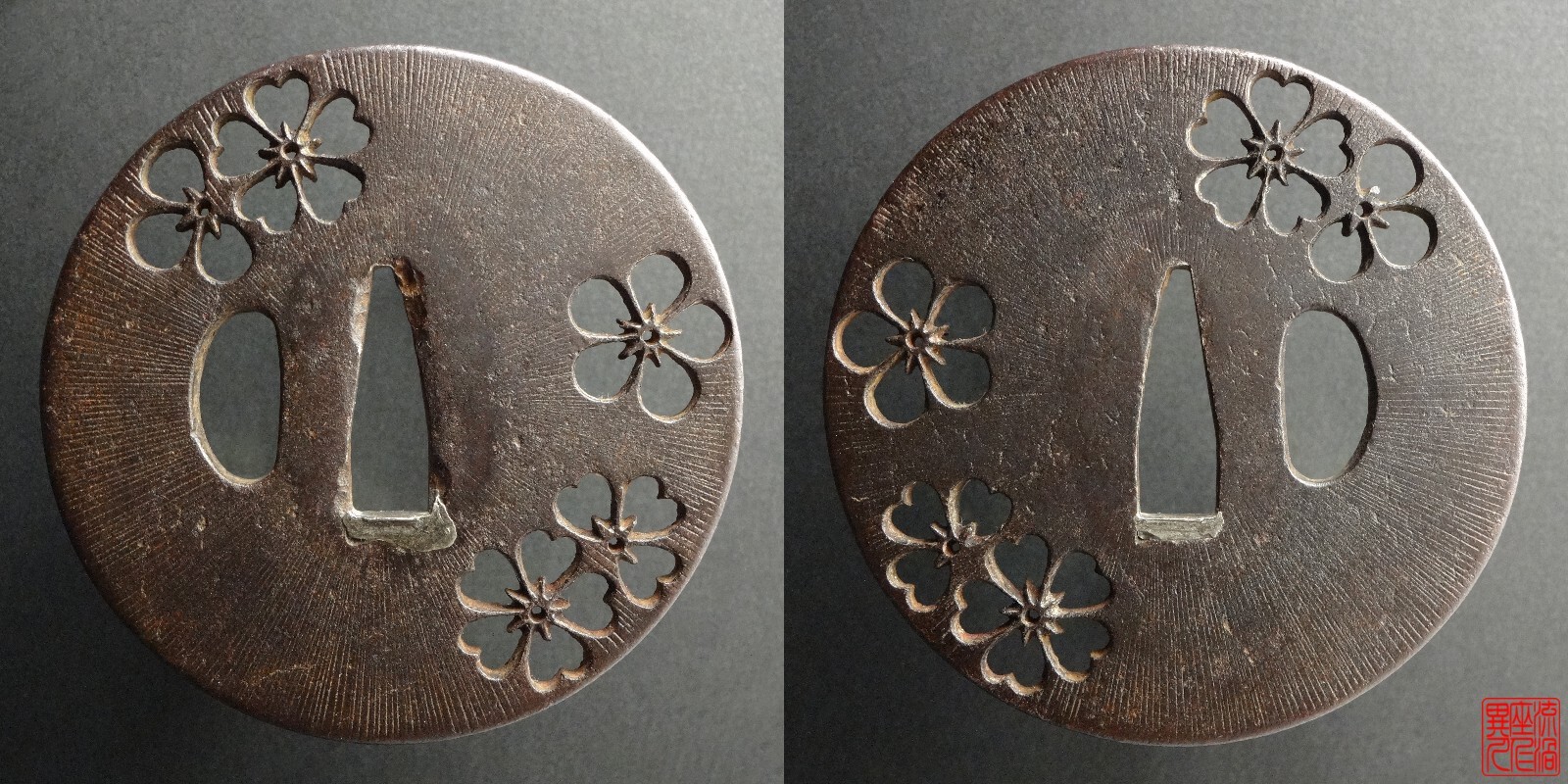
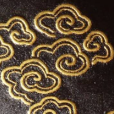
Hera are some of mine Tosho, cherry and plum blossoms Umetada, plum blossoms. Katchushi , kukurizaru under the rain Nobuie, Tortoise shell pattern with sakura. Nobuie, gourds, arabesque, clumps of bamboo leaves, and tortoise shell pattern on themimi I hope you enjoy them. Regards Luca
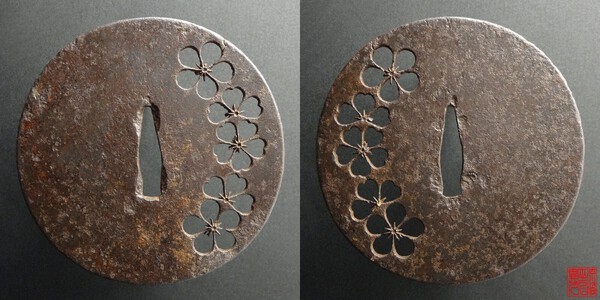

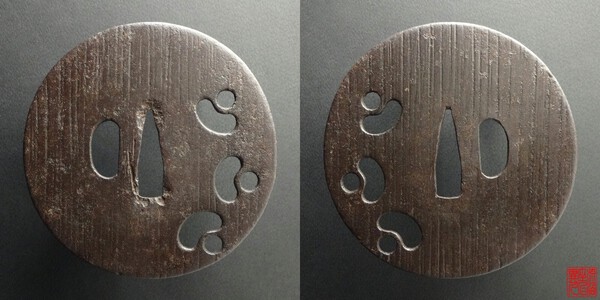

 5 points
 -
Two more, getting slightly earlier now into late Muromachi/Momoyama. A large and imposing Ko-Katchushi with a snowstorm design of equal ferocity. Beautifully composed despite its busy plate, the sign of a true master lost to time. Note the pronounced counterclockwise tilt of the form, an often seen feature of pre-Edo guards. Lastly we arrive back in early spring when the warabi, or bracken ferns emerge from the recently thawed earth (we call them fiddleheads where I'm from). A favorite motif of mine that instantly transports me this time of year, walks in the woods and foraging for these fleeting delicacies.

 5 points
 -
Here is a tsuba I recently picked up... (possibly Azuchi-Momoyama tsuba from Kaga?)4 points
-
I'm told this thin and simple tsuba may be early tosho. Don't know enough to say one way or another, but it has grown on me.


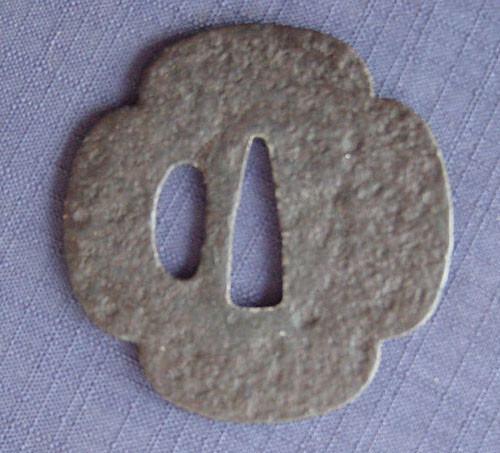 4 points
 -
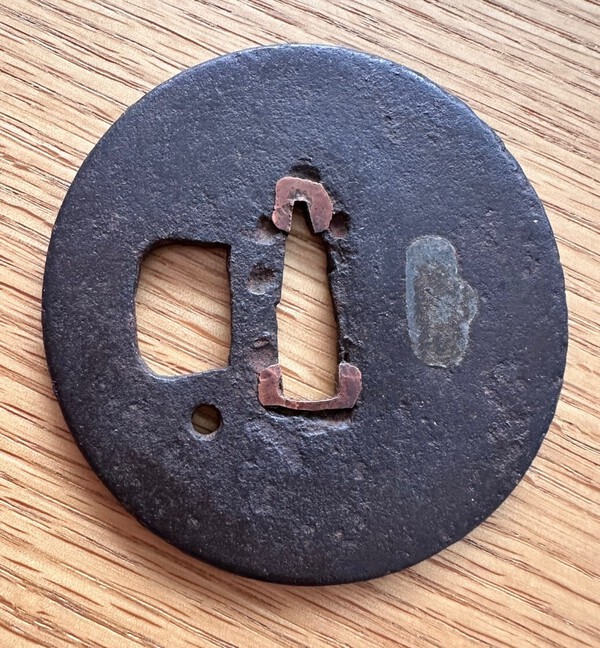
I believe this to be the earliest tsuba in my collection; reported by the seller to be late Muromachi or early Momoyama. With that said, it’s mumei and not papered, so I’m really not sure.
 4 points
 -
Pretty much all I own, this should get the momentum going. Two Nidai Yamakichibei, both in his fully developed, individual style. First a spring theme Sakura and Ume accented by the matsukawabishi, a popular pattern on period textiles and commonly paired with floral desings. To me this piece radiates flower viewing vibes. The second shifts to a later season with a strong Autumnal feel. The drizzle motif (Shigure) and boars eye (Inome) are characteristic of this time of year. A masterpiece which leaves the viewer with a chill, you can feel and hear the rain, smell the crisp air and fallen leaves.

 4 points
 -
Please share some photos or commentary on early iron tosogu; be it wabi sabi aesthetics; yamakichibei; armor, early menuki, et cetera. One of mine to get started:
 3 points
 -
Paris, just an opinion but I would describe these as being of very modest quality and definitely not Goto. I do not think they depict a specific legend or story3 points
-
The painted numbers are a type of control number. Looks like A (in Katakana) 15563. John C.3 points
-
3 points
-
Hello. An interesting video worth watching. For those who missed it, I'd like to share it with you. Max.2 points
-
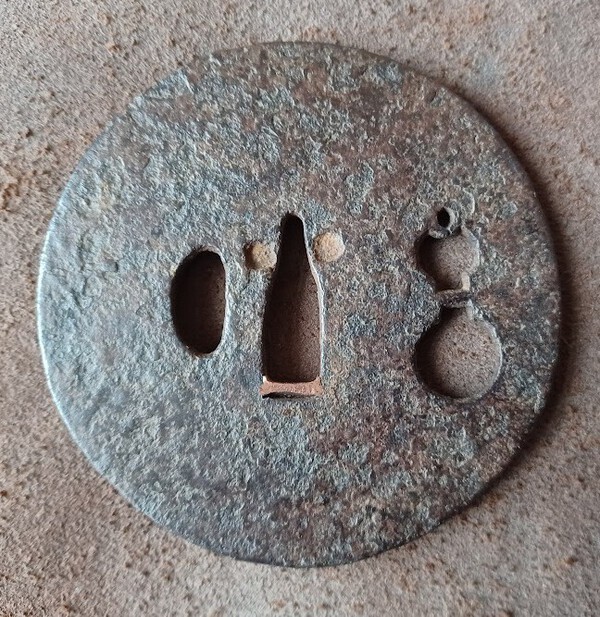
I think this is my oldest, a KO-TOSHO (pre EDO JIDAI):
 2 points
 -
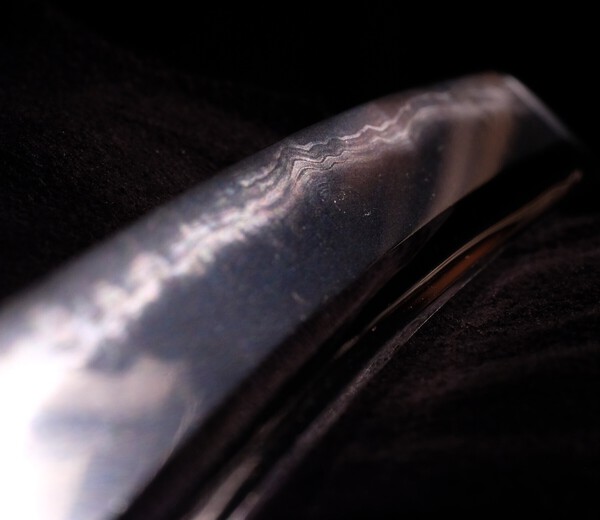
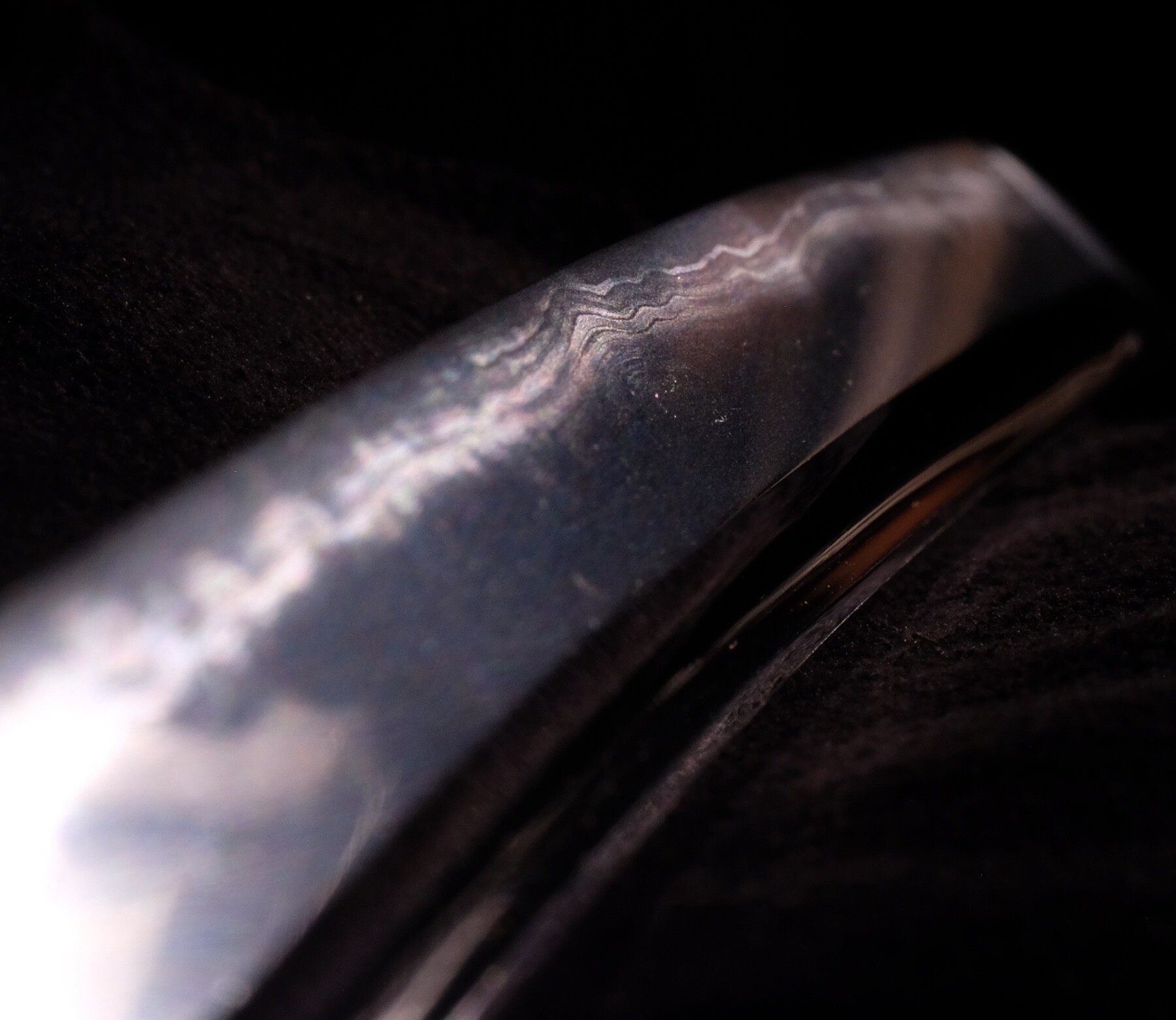
Experimenting with different light sources I think I hit the sweet spot. High intensity halogen bulb really brings out the hamon and hataraki. High Rez images https://drive.google...BsZ2JdRviaaxy5A6Pma3
 2 points
 -
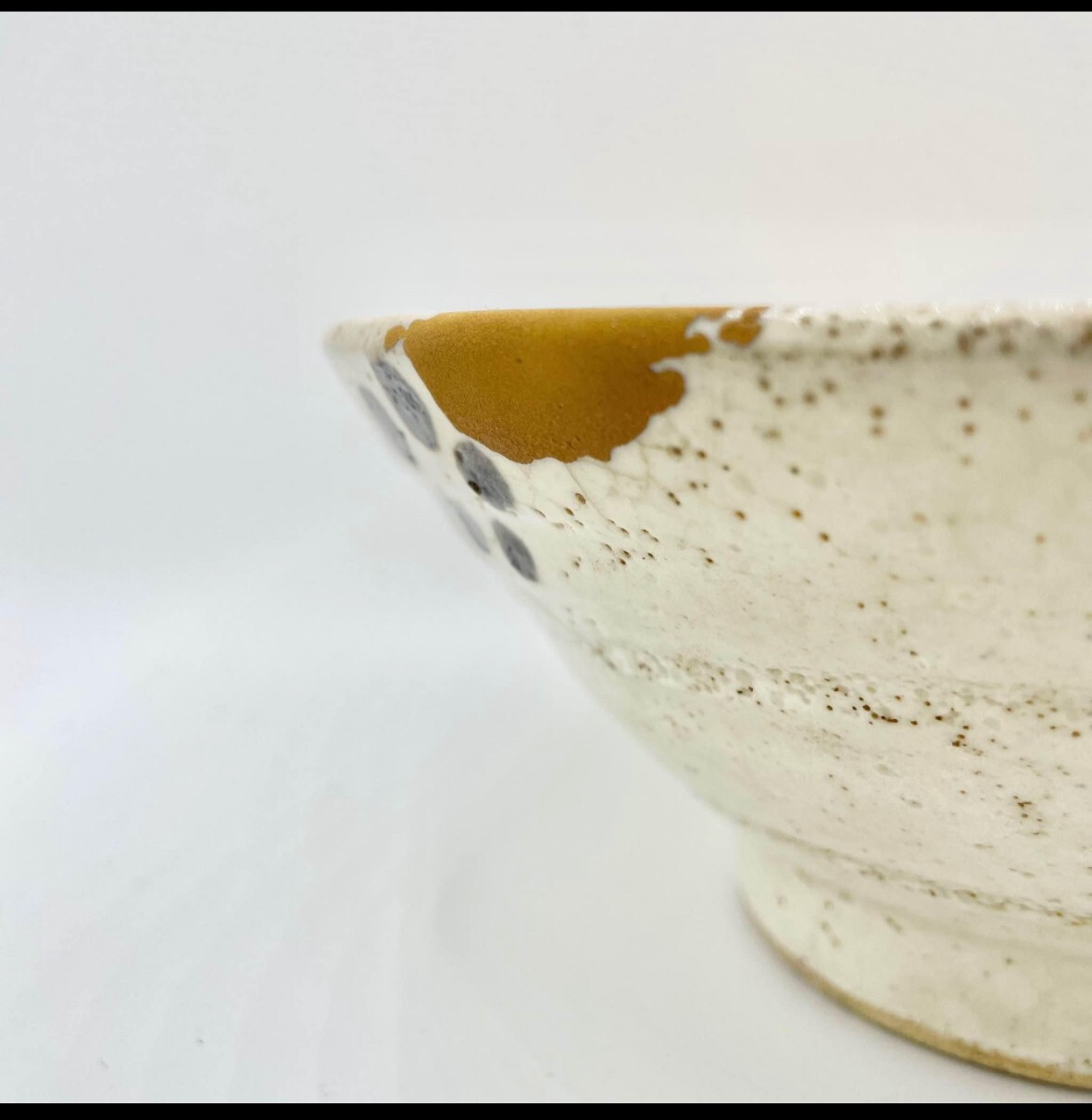
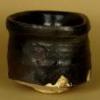
Traditional Kintsugi bowl, mended with shimmering gold, offering a powerful reminder of the beauty found in healing and imperfection. Rooted in the wabi sabi philosophy, this bowl embodies the idea that brokenness is not a flaw but a source of strength and renewal. Sharing for enjoyment and peace. ETA: I believe the piece is around 100 years old, but not really sure. Kintsugi work is recent.


 2 points
 -
Looks like a Westerner's idea of a Kanji.2 points
-
Bruce, that Yoshishige 良重 looks pretty good. Sesko has this one: YOSHISHIGE (良重), Shōwa (昭和, 1926-1989), Gifu – “Yoshishige” (良重), real name Komiyama Ryōzō (小宮山良造). He was born Meiji 35 (1902) January 19. and registered as Seki tosho Showa 17 (1942) November 1, living at Seki-machi, Tokiwa-cho. There is detail in my Naval swords #2, pages 26-29. The date on this sword looks to be Showa 18 (1943). His blades are typically signed ni-ji katana-mei. Of note, he is a Seki smith but one of his swords (1943) in good kaigunto koshirae has seppa stamped with TEC and Toyokawa anchor-in-sakura. https://www.militaria.co.za/nmb/files/file/63-Japanese-naval-swords-swordsmiths-workshops-part-2/?do=getNewComment2 points
-
Tom, here are the results.. https://www.christie...x?saleid=19342&lid=1 Best Peter2 points
-
Good looking tsuba. Nice lines and shape, well done.2 points
-
A personal “early” tsuba for me.. https://sword-auction.com/en/product/3692/af20513-鍔:無銘/2 points
-
Interesting reference to Chinese culture which of course was directly linked to early Japanese culture. Here is some more information about the link between the story of Amaterasu and the Taiko drum: Konagaya, Hideyo. University of Pennsylvania ProQuest Dissertations & Theses, 2007. 3260933. https://www.proquest...e=gscholar&cbl=18750 Finding articles with pertinent info has sure gotten harder without access to Jstor! Maybe I should pay for a subscription. Anyways, given your post and the knowledge imparted I now think that there might be two separate themes in this thread! Mason's example tsuba (and probably also his own tsuba given the resemblance in the two designs) seems to be about the story of Amaterasu in the Nihon Shoki whilst the other tsuba in the thread seem to be references to Chinese culture. I think the defining differences seem to be A) whether or not the Taiko is being played by a person? B) If the chicken is atop the drum it is a clear indication of the latter rather than the former?
 2 points
 -
Maybe email the Christies salesroom listed on your catalogue and ask them to send a copy? You never know...they might reply... Regards.2 points
-
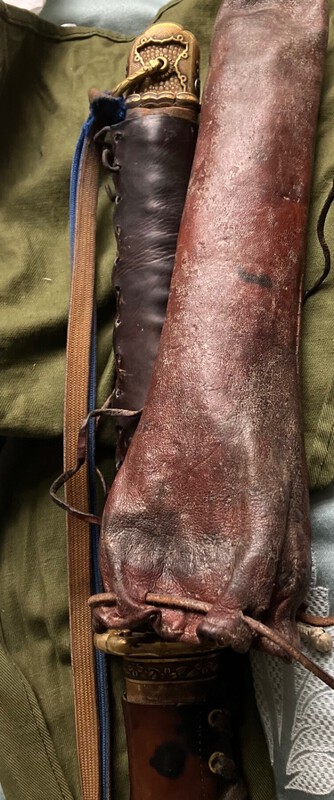
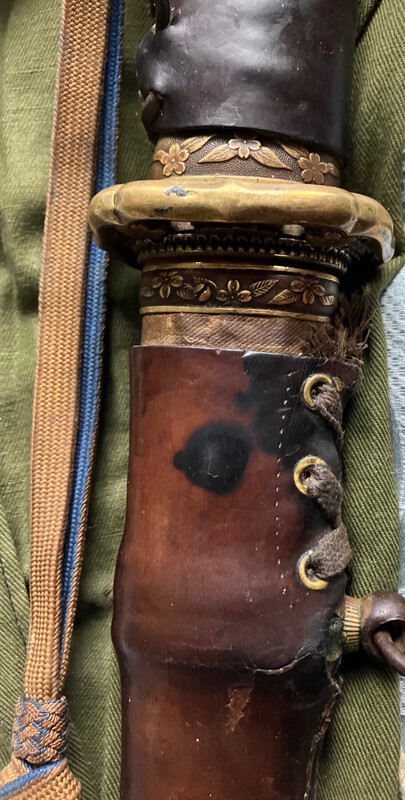
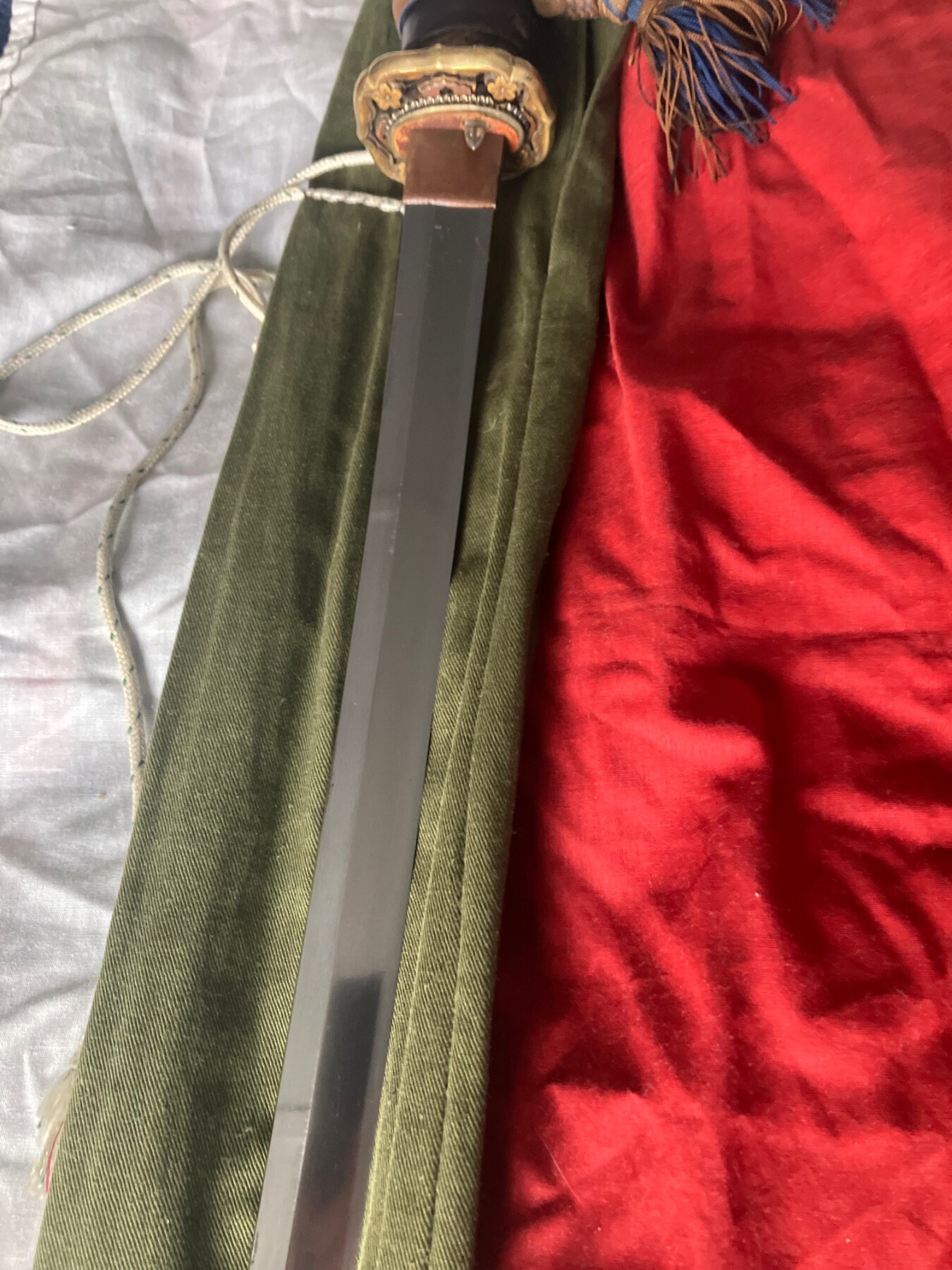
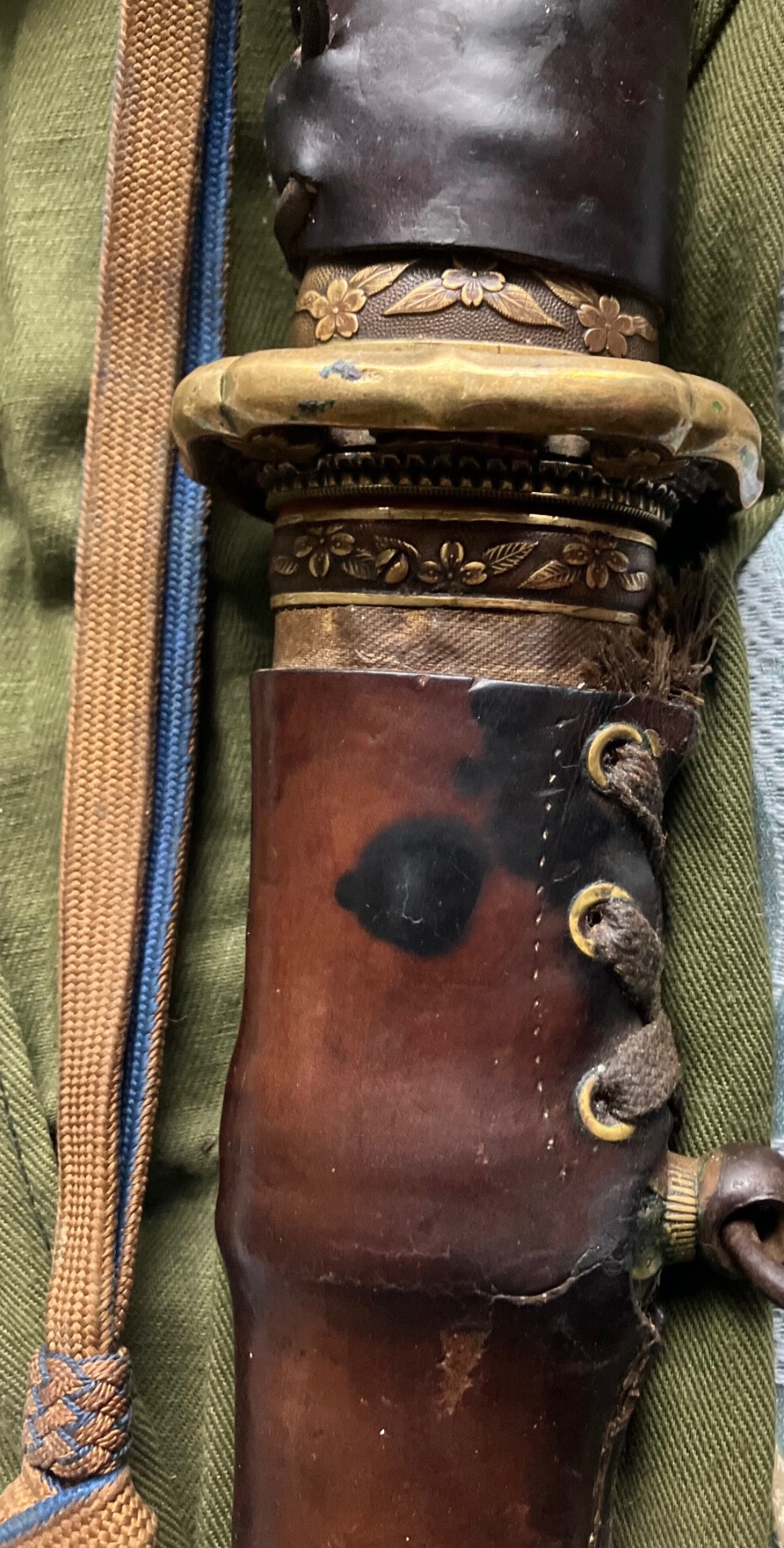
Recently had a call from a dealer who informed me he had purchased from the family of the soldier who had fetched this sword back from Burma .. It as never been on the market and came complete with its original leather field covers for the saya and Tsuka plus the original sword knot and leather sword hanger plus its original leather foul weather cover .. Waiting for the soldiers personnel papers to come which also includes his pay book plus some badges … the Tsuka cover was gently removed to remove it to read the tang .. which does reveal a long inscription which dates the sword to a day in August 1863 the blade as hardly any bend to it and is in good original polish plus the sword also came with a Mon attached which I believe is to the Matsukawa clan … I have been informed by a good friend the the smith is Kunimasa.. Any more information regarding this sword would be greatly appreciated . Many thanks Gareth


 1 point
 -
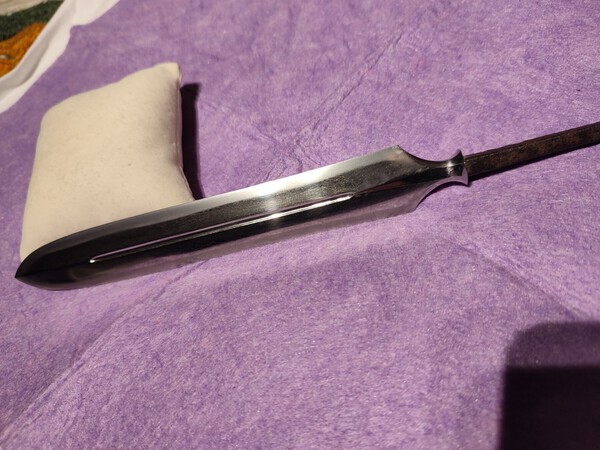
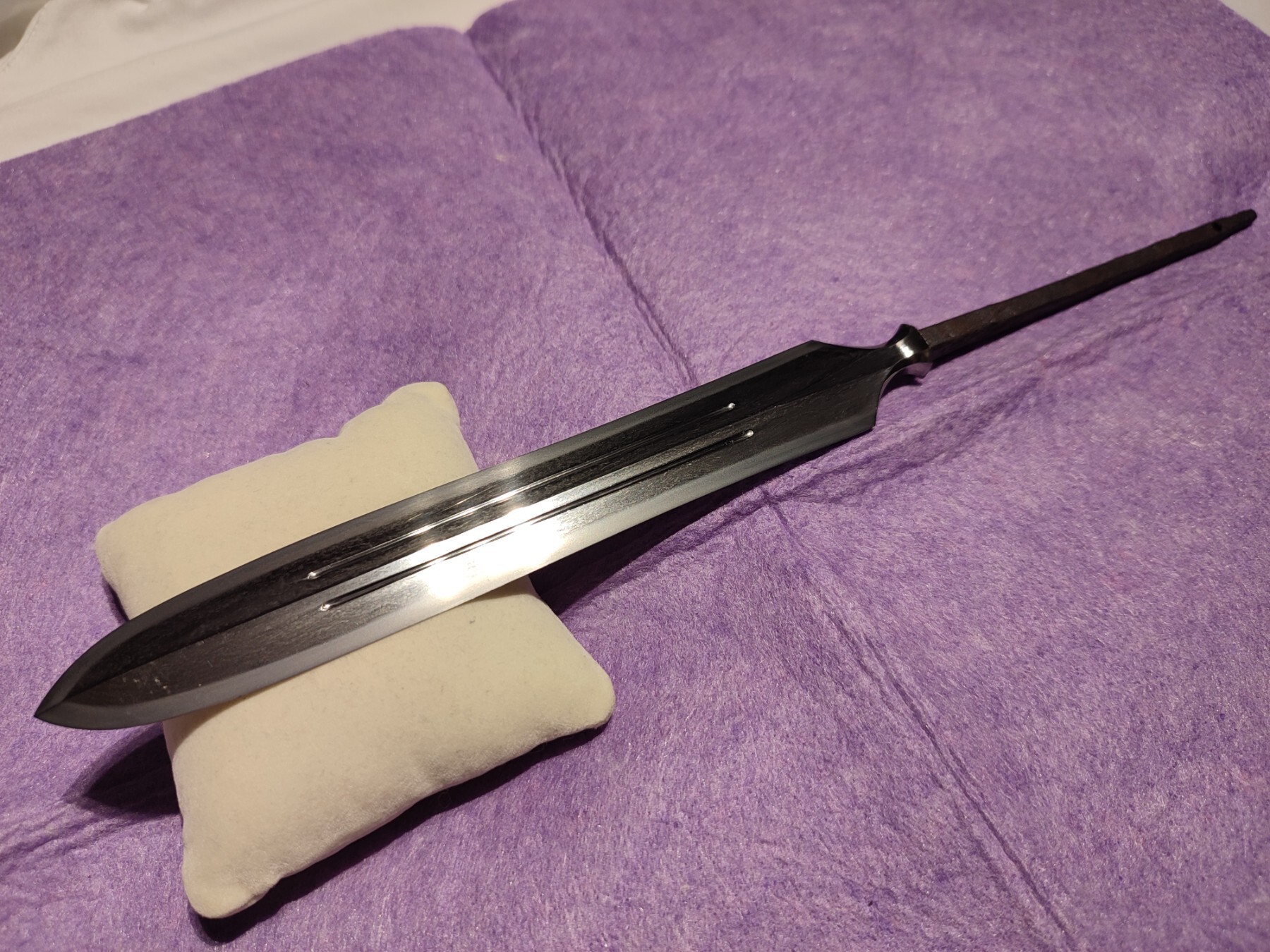
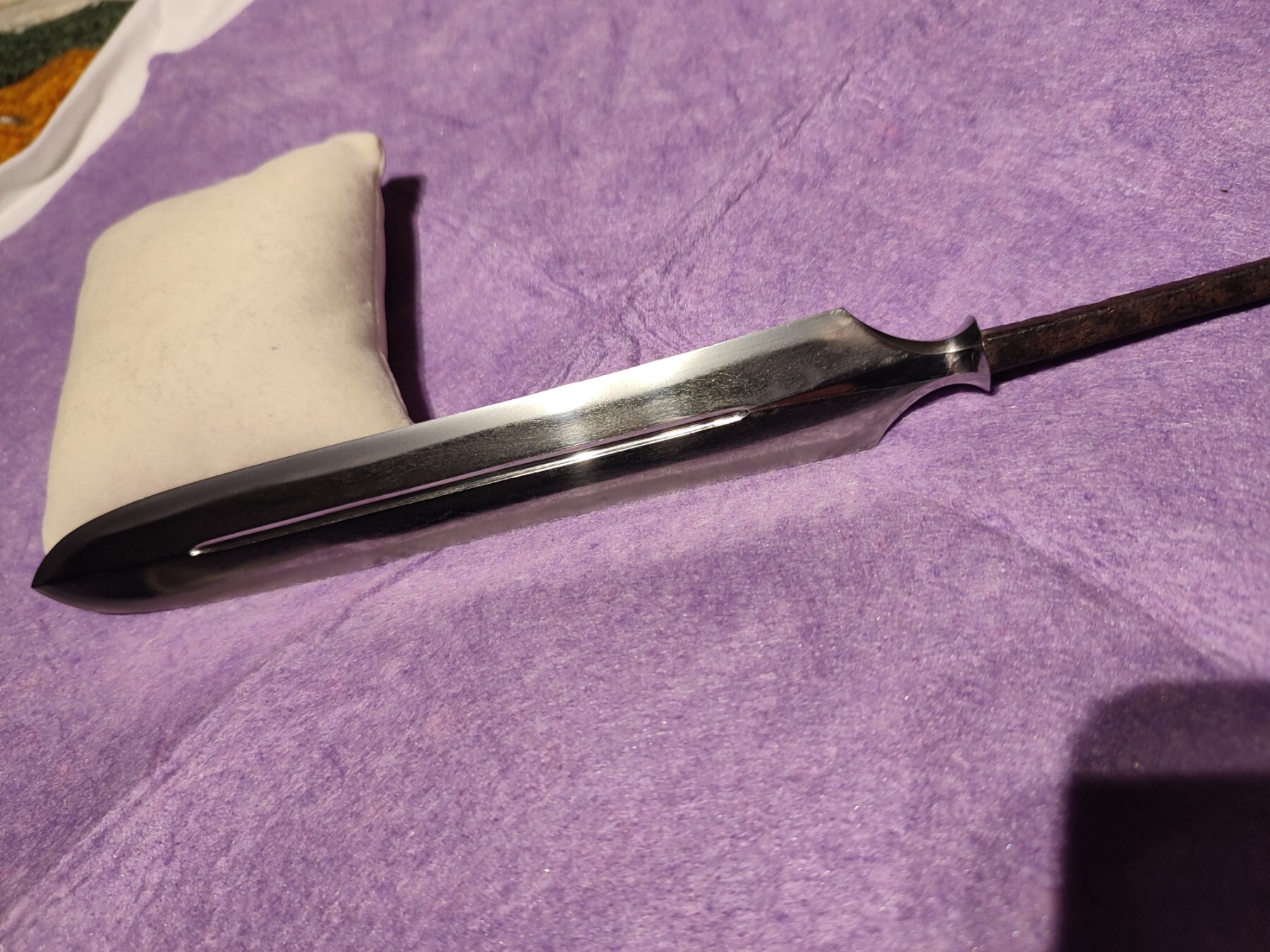
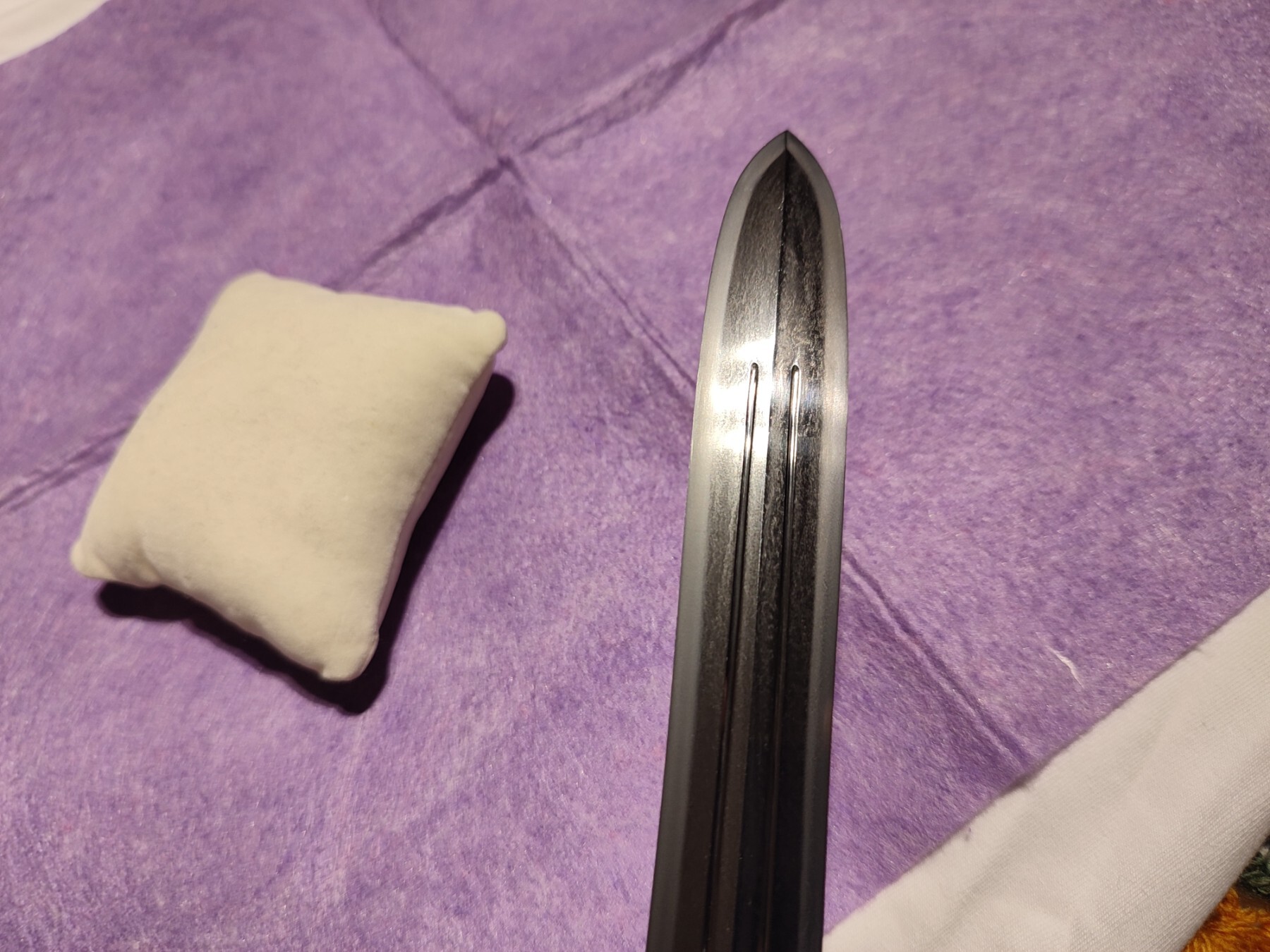
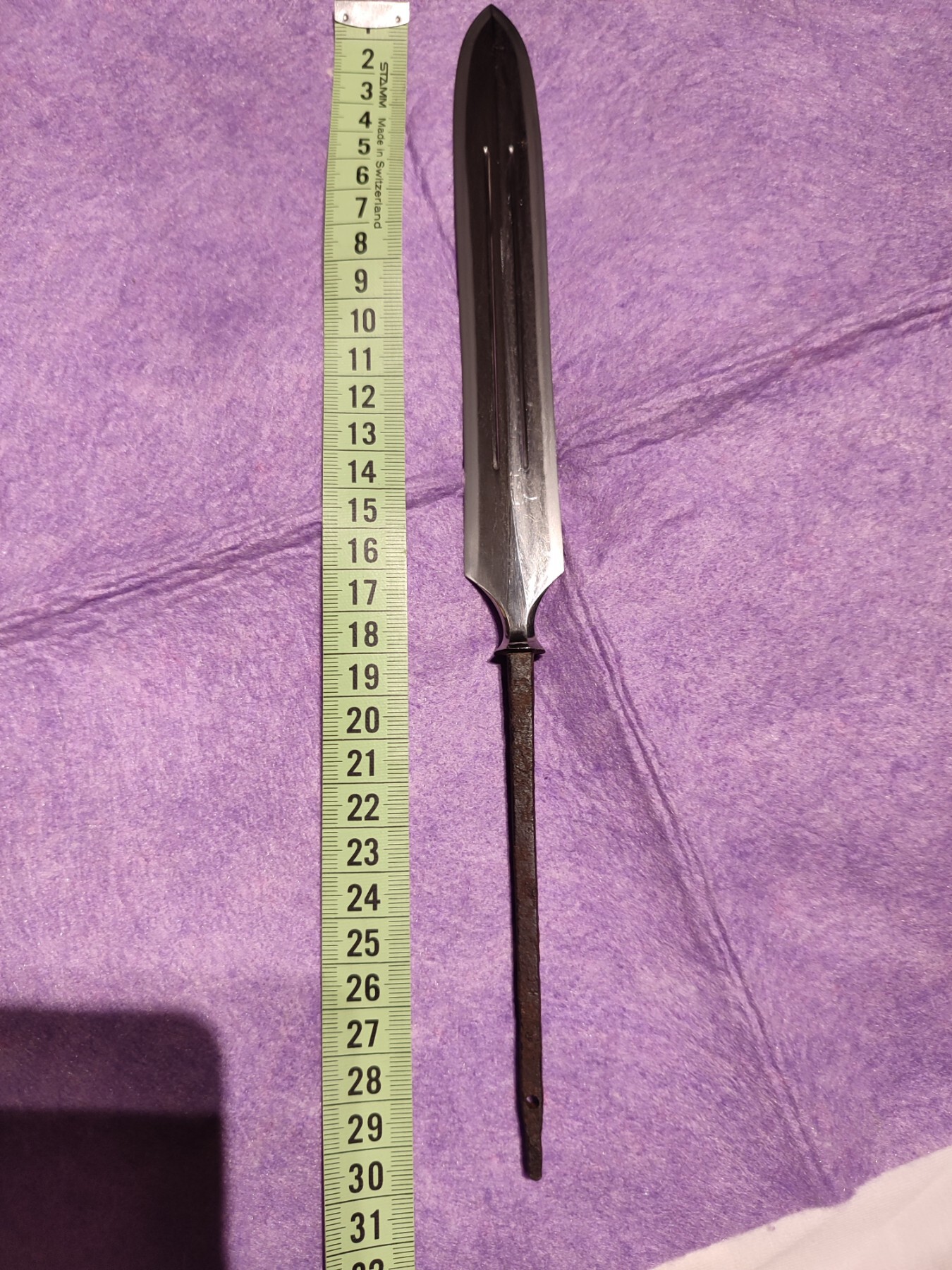
Hello Any thoughts about this piece being a Yanone or Yari please. At first sight and considering the Nagasa measuring 18 cm, one should call it a spearhead. But the kerakubi is rather small (1,2 cm diameter), the blade is very flat and the nakago has a square cross section. Unsigned, shortened nakago and one mekugi-ana near the end. Thanks in advance.



 1 point
 -
Greetings to all the big brains swords get sold and bought and resold so I am wondering if anyone has come across this tachi before or had it in hand. I bought it a week ago and don’t have it yet ( should next week ). It came from an American collection , the owner passed away. It is signed tachimei Kuniyoshi, unknown school. Needs a polish. Nagasa 27 inches. That’s about all I know so far. cheers francis


 1 point
 -
Hi Eric, Kunitoki Horikawa was a student of Kunihiro Horikawa, who is considered the founder of the Shintō period, having trained such outstanding apprentices as Kuniyasu Horikawa, Kunisyu Echigo-Mamoru, Kuniji Dewa-Osumi and Masahiro Osumi. Kunitoki is thought to have been a swordsmith who was a stand-in for Kunihiro, as few of his works have survived. Few pieces of Kunitoki inscriptions remain, making it a valuable source of information. So if you find a Blade from him, thats rare. Tom1 point
-
A nice varitation of the clasped hands sarute, found on this Gunboards Thread.1 point
-
Samurai Homer in the bath by Darth19 on DeviantArt1 point
-
Probably not what you were thinking. Surprised me. https://www.christie...?ldp_breadcrumb=back1 point
-
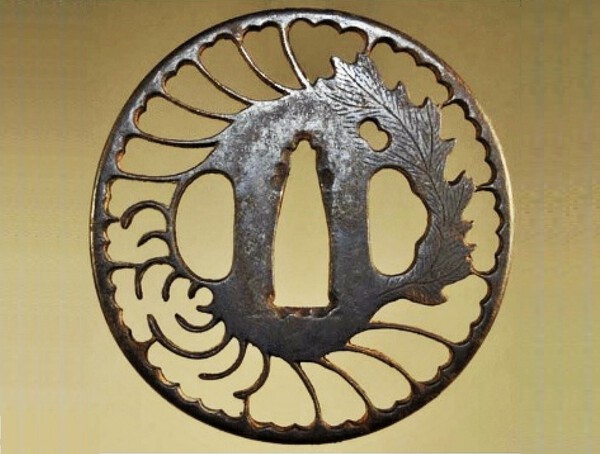
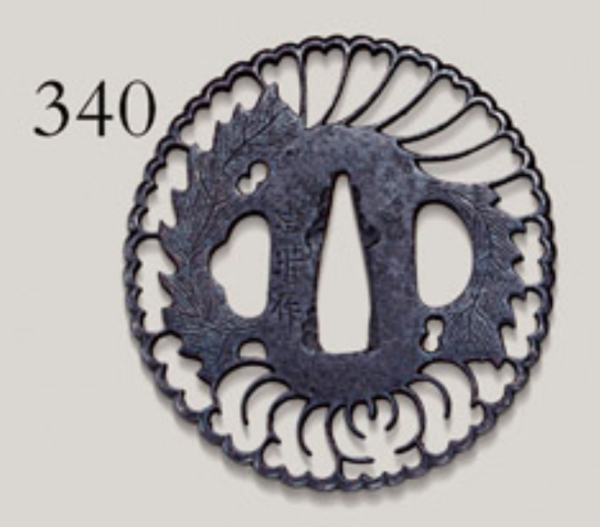
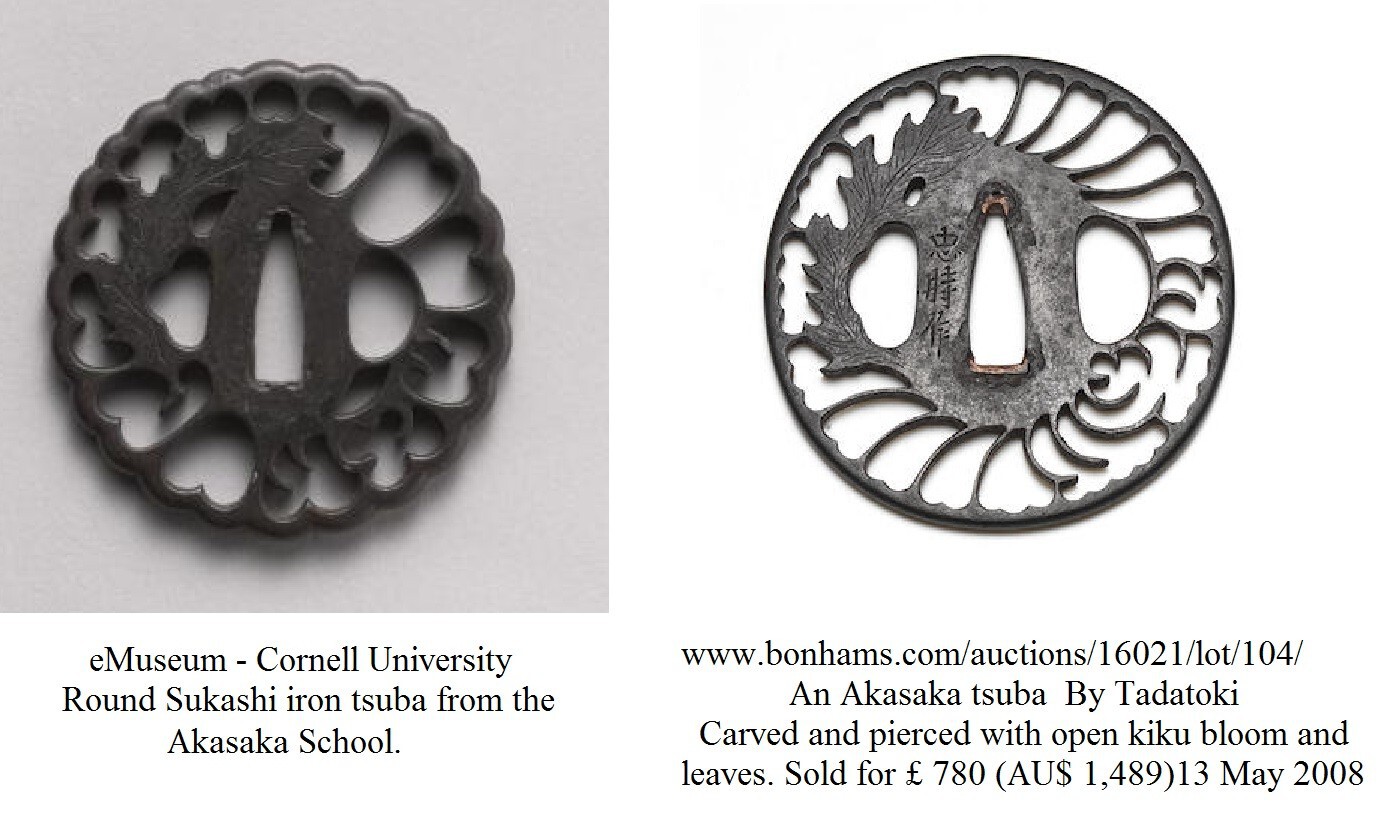
A couple of other examples: 1. a Facebook site for a Japanese dealer https://www.facebook...sumoto/?locale=es_LA This one was sold back in January [price unknown] 2. An example from Greville Cooke's book on the Birmingham Museum & Art Gallery number 1930M731 75 mm x 72 mm x 5 mm. 3. From the Cleveland Museum of Art number 1919.302 70 mm in Diam. 4. Ashmolean Museum , Oxford number EAX.10673 https://jameelcentre...ction/8/object/21277 http://jameelcentre....0/EA_X_10673-a-L.jpg 5. & 6. From Cornell University and a Bonhams auction back in 2008 where one sold for £780 7. Christies auction https://www.christie...m/en/lot/lot-4962432 An Akasaka Tadatoki Tsuba Edo period (19th century), signed Tadatoki saku. With a delicate lobed rim and pierced with chrysanthemum petals and leaves around the edges and carved on the web with leaves in ke-bori 2 5/8in. (6.8cm.) [18 Sep 2007] - are they cheaper by the dozen?


 1 point
 -
Thanks for the detailed image of the mei. It does look close to a TokuJu Kuniyoshi mei (attached here for reference) plus the workmanship is consistent and so is the jigane quality. I think it has a good chance of papering just by the little we have seen here.
 1 point
 -
Yes, i suppose so, likely once sat on a single handed Uchigatana. Cheers1 point
-
Thank you for sharing, Paris and Luca. Really nice tusba!1 point
-
A better pic of the hamon
 1 point
 -
I hope this is what you and Bruce were after, is this the number? its all I could see on the nakago mune.1 point
-
Thanks John just posted it on the translation section .. Can only guess what these stains are if this sword could only talk !!!! not sure on the sword bag that came with it being a type of heavy duty cotton … Gareth
 1 point
 -
Under the cover which has not been seen since the cover was fitted all those years ago
 1 point
 -
All fittings are stamped 24 plus the tsuba as a small makers stamp1 point
-
1 point
-
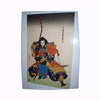
He is breaking the door and carrying his shield with his left arm. Ref. Lyon Collection : Print : Fan Kuai (樊噲) breaking down a door in the Emperor's palace from the series <i>Kan-So gundan</i> (<i>Military Tales of the Han and Chu</i> - 漢楚軍談). [1827c Kunisada Fan Kuai] (woodblockprints.org)
 1 point
 -
You end up with a statue of the Lawgiver. John C.
 1 point
 -
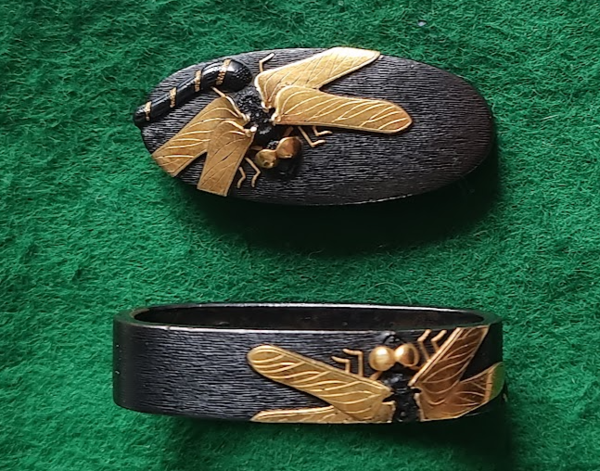
For reference here's my Murakami F/K set:
 1 point
 -
Shikkake School never produced utsuri it's a mistake in the description (usual for this site) here a list of schools which produced utsuri NIE UTSURI Awataguchi Rai Taima Hôjôji SHIRAKE UTSURI Kanabo Sengo (faible) Shiga (Yamada Seki) Akasaka Senjuin Zenjo Seki Kanemoto Seki Kanesada Hachiya Kanefusa Kanetsune Gassan Fujishima Uda Motoshige Omiya (faible) Kongobei Miike Yukihira Takada Naminohira JIFU UTSURI Ohara Ukai MIDARE et CHOJI UTSURI Ko Bizen Ichimonji Osafune Yoshii Hatakeda Wake no Sho, Nitta no Shô BO UTSURI Osafune Aoe, en Nanbokuchô avec quelques éléments midare Yasuyoshi (Sa) Mihara DAN UTSURI Niô1 point
-
Looks like a good blade from the photos Re: Juyo, good length and if the pics are representative of the rest of the blade, worthwhile submitting at least but as stated above the bar seems quite high of late. Usually only one or two Shikkake pass each year (more likely if attributed to a smith like Norinaga)1 point
-
Its hard to argue against such assessment but generally the current shinsa atmosphere is hard and shikkake is both not a famous school, i.e. the attribution does not advance Juyo chances, but its also highly competitive. They did good work and very seldom one encounters mass items like with Tegai. In 1970s this would be easily a Juyo.1 point
-
Hi again Mark, If framed keep out of any direct light and florescence behind UV glass and with rag matting pref glazed. They will fade and loose their vibrance. I have several. Also u may find they were printed after 1875 but before 1900. I believe the emperor banned kabuki after the refomation for a period of time. His history should be readily avail on internet. EdF1 point
-
saiha is a redone edge, yakinaoshi is the process that produces the saiha. They mean the same thing, basically.1 point





.thumb.png.4c5df79fec171b2dc4a23af38e280a4d.png)





























This leaderboard is set to Johannesburg/GMT+02:00