
Leaderboard


Popular Content
Showing content with the highest reputation on 08/16/2024 in all areas
-
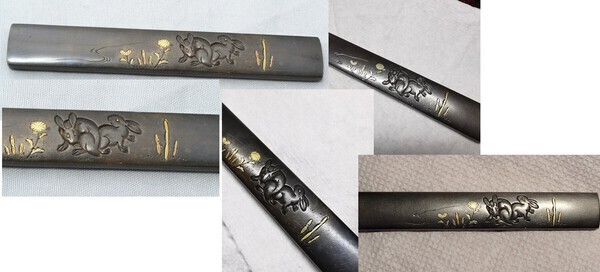
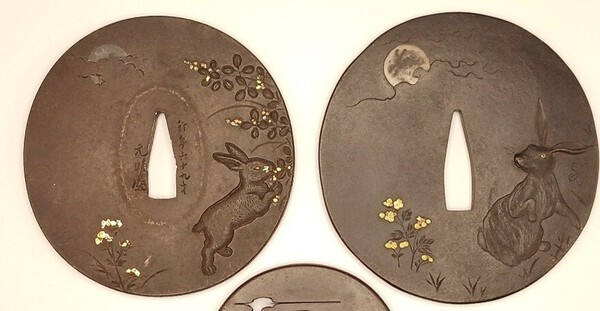
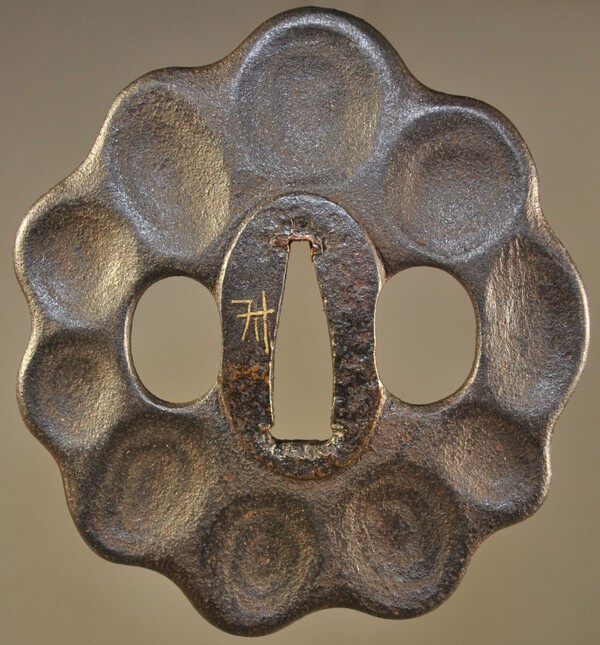
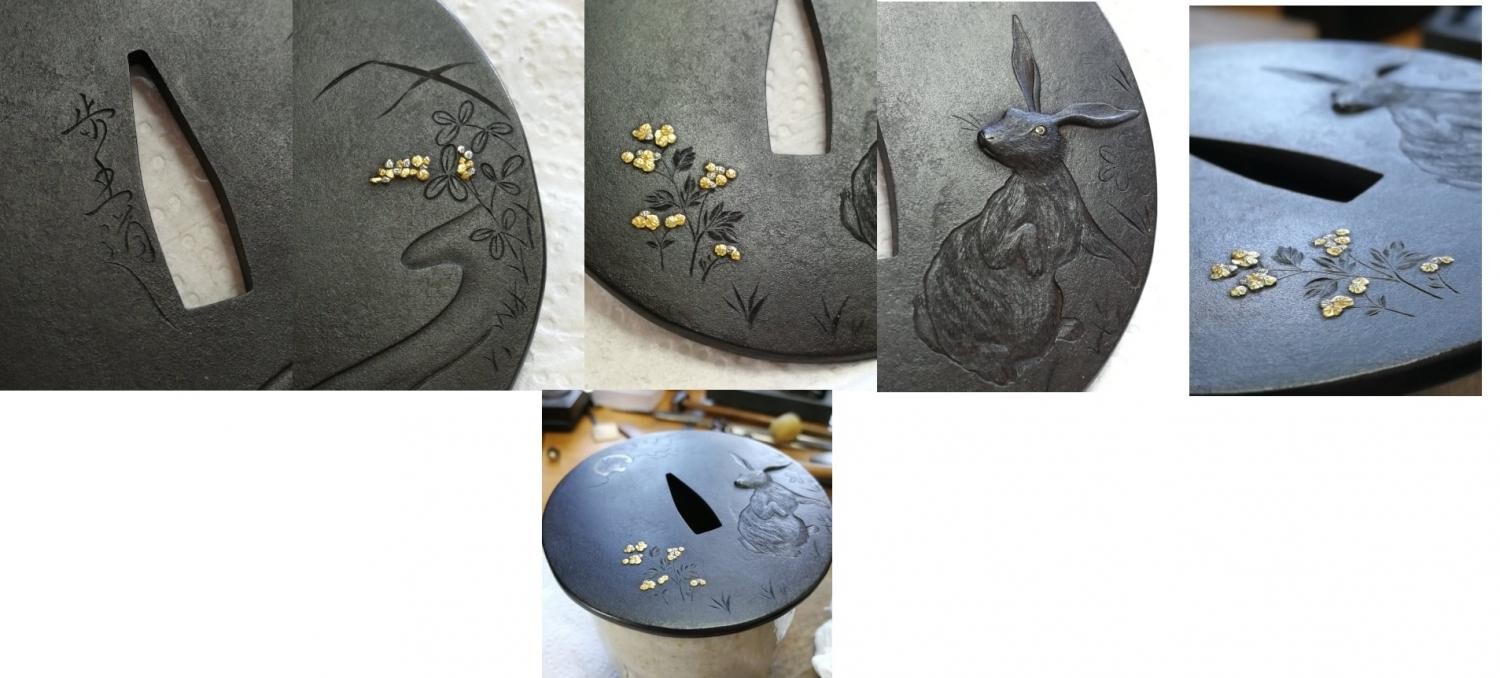
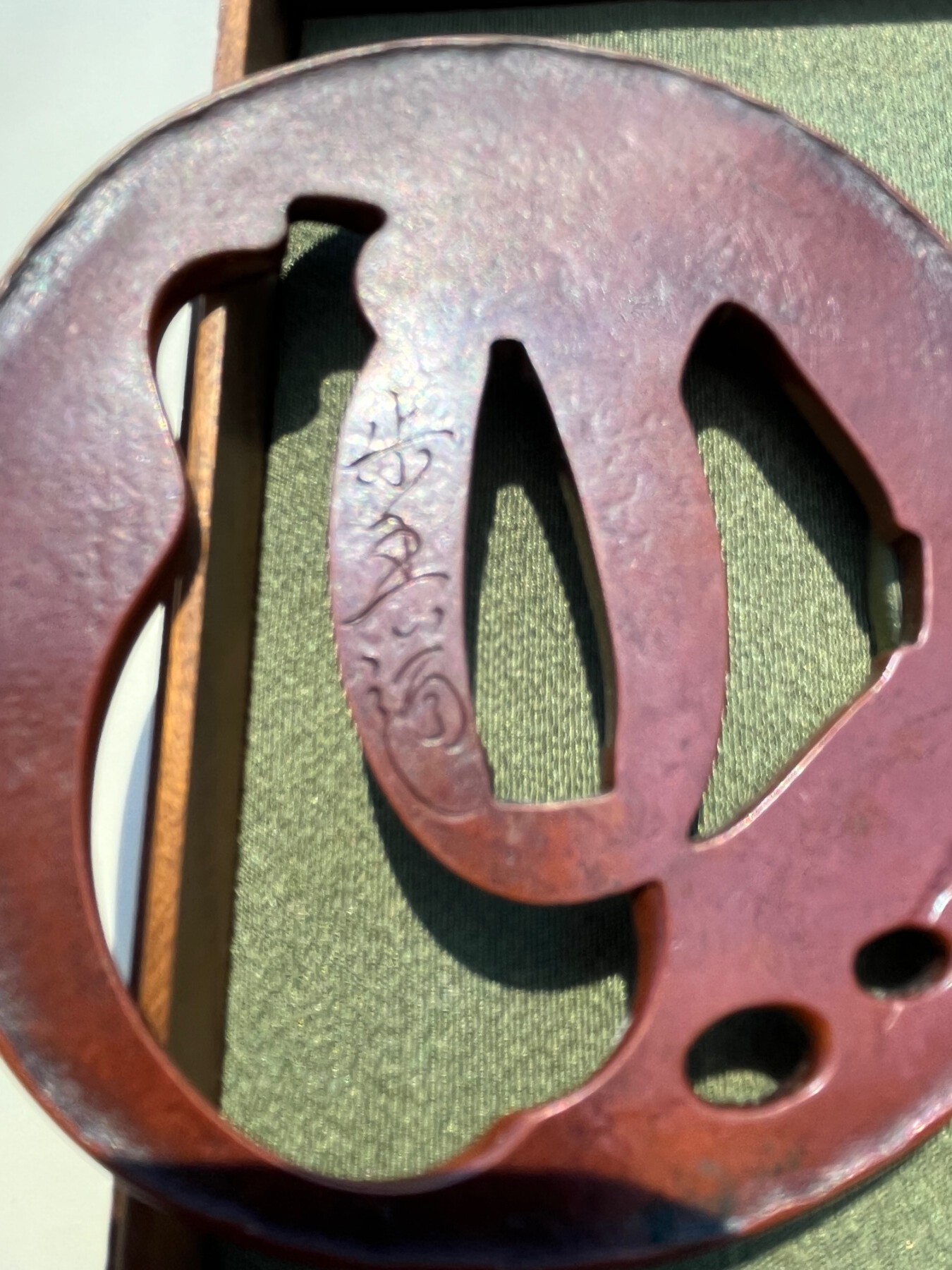
Ford restored my favorite tsuba (Tomohide minogame) from serious verdigris. He brought back to life a great rabbits kozuka that seemed beat. He worked with me on a custom rabbit tsuba to pair with one I had already that still is my avatar Pic. What can be said? He will be missed.



 10 points
 -
This one of the first times I saw Ford and his infamous meeting at his old house. He invited me down as a newbie collector and he liked some of things I’d said and posted on the NMB. Possibly along with his other 'victims' Justin and myself walked back to our digs absolutely hammered, what a night The following year I popped down to see Ford with over a hundred tsuba and he explained their good and bad points. What an experience! He repatinated around 8 of my tsuba and these are a couple of the reworks This was the most challenging. Reworked by Ford Hallam and Kevin Adams This tsuba posed a few interesting questions when it came to us, the first and foremost being the large patches of thick, black material on the front and back. It was almost certainly a fire scale, and it took quite some time to remove – Ford suggested that the piece may have been in house fire, accounting for the thickness and randomness of the coverage. After a test patina, the inlaid elements were found to be more sophisticated than first thought. The monkey's face is a mixture of shibuichi and copper, with shakudo eyes. The implements are shakudo, and after polishing a portion of the rim we discovered that the copper has a lovely grain structure. However, the fire damage that produced the oxide layer affected the surface of the tsuba and created a "gritty" surface texture. We decided that it might be worth our while to polish the surface of the tsuba and apply a tsurikomi finish to the plate. Patinating the piece went more or less as expected, although we had some challenges getting the grey colour to patinate properly – most likely happened is whatever caused that black oxide layer also affected the top layers of the shibuichi and leached out the silver. All in all, a piece with an interesting story behind it. These were a couple he particularly liked This one was his favourite and was the best example of mokume work he had seen and it was used as his screen saver for a few months. I felt so proud! Finally, two of his early tsuba from the Birmingham museum. Who knew that from these early tsuba he would produce such stunning works of art I’ll let this post speak for it’s self Grev
.thumb.JPG.ee65c3a8a2a82e5c8377b2d739f8b008.JPG)
.thumb.JPG.78ee8a20426119b9905b75aed42aeb39.JPG)
.thumb.JPG.1035daf66e419ad9b3d9d130198cc4bc.JPG)
.thumb.JPG.761921d4d20757126004b1c60fdccdc4.JPG)
.thumb.JPG.d2e6a817bdd5c870cae7da2895e68b42.JPG)
.jpg.8fd3c5790e161c994296a356d926c6e7.jpg)
.thumb.JPG.368a61d6bef8eab793c948eb1e3ae847.JPG)
.thumb.JPG.dae4c1ab598adc10766ab0a73a4bb3b2.JPG)
.thumb.JPG.c9aaf52aa683aa7d4bf6fcd5b44dd5d8.JPG)

.thumb.JPG.8c6fd5a1de84c3aac042ea9f69d7f600.JPG) 6 points
6 points -
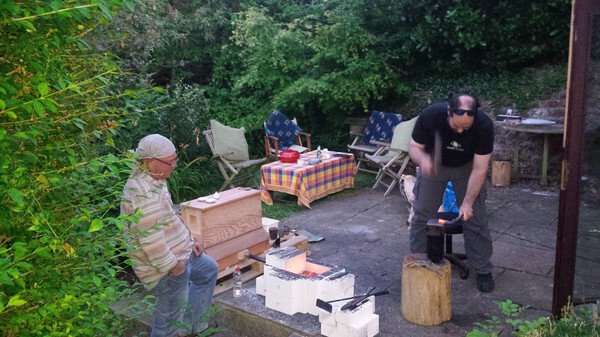
Hello all, If this is in the wrong spot feel free move it Brian. I just thought I'd share this here and provide some insight into this remarkable man. Hate him or love him he was indeed a unique individual. This is my meager attempt to express my feelings toward my teacher and dear friend. Thank you all. Ford Hallam At this moment in time I feel it important to somehow try to express what a huge impact Ford Hallam had on me and my life. It is plainly obvious that many other people have been touched very deeply by his generosity compassion, drive, intellect, diligence, humour, insight and his amazing skill as an Artist and Craftsman. I feel incredibly and overwhelming fortunate to have been granted direct access to that well spring. I cannot speak for anyone but myself, but he taught me, not only the Craft I now make my living from ,but also how to elevate that work into something more than just carving, sawing and filing. In the early days of the Iron brush forum I was initiated into this way of "seeing". He would critique and offer truly honest assessments of the work offered up trying to guide and I believe coalesce his ideas around teaching his art. Paralleled with that was his approach to how he went about making, as well. The Do, or Way of how to make was something that fascinated him. We spent many hours discussing the philosophy of the work and what that meant to him. His development of a Way of working directly that shared his view of the world, and his artistic expressions of it, was something that he diligently forged and eventually succeeded at brilliantly. I recall him telling me once that he was surprised that anyone would be interested in how he worked? He had honed these ideas over many years of work at the bench. Many of those ideas surrounding the aesthetic that he so successfully synthesized. As he coined it "uncontrived contrivedness". An extremely difficult concept to grasp, but one he was very passionate about. Some of the ideas were about ergonomics and the physical side of craft and came from his early training as a Goldsmith ,but also later from the first bout with his illness and ways to overcome it. He had a way of describing it all that was alluring and almost metaphysical, almost Zen to use a very overused term. It was this idea of working by hand directly and intimately with the material, that he and I shared a deep connection and mutual interest in. The Art itself would seem obviously the most important, but in my mind these ideas to him were one and the same. The Art and the Art of the Art, as it were. I think this conception and his actions upon it defined him as an Artist more than any other. These "hand conversations" with his chosen material allowed him to create things that almost defied human endeavor. He had his heroes and saw first hand under magnification what they were capable of. I always felt that this drove him to follow that path, because he saw that it was not only possible, but also possible to bring it forward and to have real relevance in the modern world. He saw that and wanted to share that vision with the world. Despite some of his own misgivings about this, I believe he succeeded. In these last decades, he more than anyone in the world, has shone a bright spotlight on the art of Japanese metalwork and generated a mini Renaissance surrounding it. His ripples have also stretched much further outward from that into many different areas of metal work, and I believe will continue to do so for a long time. He had many isms or saying that will persist in my mind until it's my turn to follow him. One in particular referenced craft and the use of tools and ones eyes. He'd say "Marcus, it's all the same, it's all the same." It took me more than a few years to realize what he was saying, but I have thanks to him. Sawing, filing, carving, scraping, looking and depending on how philosophical you want to get, life itself is "all the same". Another one that comes up often for me is "just do the work!" I'd be stuck on something or floundering for inspiration and I'd bring it up to him and he'd tell me again" just sit down and do the work...it'll come. Even when you don't feel like it . In fact, mostly when you don't feel like it, sit down and do the work. And if you really feel you can't sit ,clean ,sharpen and take care of your tools and studio." I adhere to this advice the best I can everyday. It's always a struggle as any artist will tell you. In fact, he himself struggled with that very thing. when I'm working and if I question something I'll often ask myself (WWFD) what would Ford do? and I hear him in my head. I told him about it and joked with him about getting those wristbands made up like the ones for Jesus on a few occasions. Despite me taking the piss with him I was serious, (not about the wristbands) and still do it to this day. He had a gift for expressing himself in a way that made what he did infectious. He was a gifted teacher and deeply cared about his students and those around him. I think this was something that many people underestimated about him. He would freely give way more of himself than he should have for his own good. Even when his health would suffer, he would push himself, especially at classes and while teaching. Few knew how difficult it was for him just to do the day to day living. Such was his dedication to his Art and passion to pass that on to his students. He took that responsibility very seriously and I think that was the catalyst for a few of the folks who he rubbed the wrong way through the years.. I will truly miss the early morning Skype calls with a cuppa Yorkshire Gold in hand and a good bit of toast and cheese. In those precious months where he generously invited me into his home and studio to study and learn. I will cherish those late, late nights where we shared way to many bottles of New Zealand White Zinfandel from the Marlborough region. We talked of life, history, philosophy, science and of course our shared passion, classical Japanese metalwork. Looking over his shoulder while he worked and trying to soak up everything that I could. He was encyclopedically knowledgeable and had an almost photographic memory for names, dates, schools, styles and really almost anything dealing with Japanese arts. The amount of research he had done on his book alone would have easily gotten him a PhD twice over had he been in academia. I'd set myself challenges of finding information that he had not already found. In all those years that happened only a handful of times. I'd excitedly bring something to his attention and he would then list off the book and chapter where it was located. And when he didn't know he was extremely grateful to add it to his knowledge base. Or, if there was a particular tsuba or artist that I was interested in, he would instantly know where a reference photo was in his massive library. If he didn't have it there he would know where to look. Also, where, when and how they worked, and most if not all of the Masters for that school. It was truly astounding. There is just so much I'd like to say and I could go on and on. I'm really not sure where to stop with all of this... I have known him and been his student for a long time, through thick and thin. Our relationship was the most unique one I've shared with another human. He changed the course of my life dramatically and opened up a world I now inhabit. He's had more impact on my adult life than anyone I've ever known, save my wife and children. How do you say goodbye to someone like that. How do I move forward and carry on without that human safety net and wellspring of knowledge, understanding and kindness that he was to me. I can only think of one, and that's to ask myself, what would Ford do? I will miss you ole chap, my dear friend, my teacher. I do not have enough gratitude to repay you all that you have given me. 10,000 thanks will not suffice. All I can do is carry on with our work and do my best to make you and Hallam-ryu proud. All my love and respect, Marcus


 4 points
 -
Don’t mess with the template and avoid inlays that are higher then the ground on the seppadai and you are fine I think. If some of your work is later cut out or hidden by the seppa doesn’t matter I think. Just my 2 cents. Edit: look at what the Nishigaki school did

 4 points
 -
Very sad news, we are losing far too many good people. Condolences to all who knew him3 points
-
I remember some years ago a group of us went for a bite to eat at Yoshinoya after the local sword NBTHK meeting. He mentioned he had started a paper round from 3:00 am each morning, to supplement his income. Some of his work
 3 points
 -
3 points
-
There might be a good reason to find out the market value of art objects in case a collection is going to be insured.3 points
-
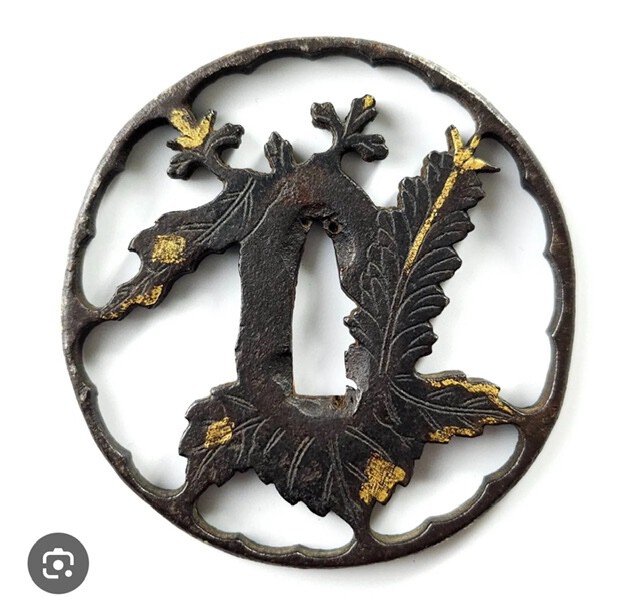
Hello all, I'm curious about why it seems that some tsuba I've run across on the internet seem to have art that would almost certainly be covered by seppa. Were these intended for display only, and not use? If this has been asked before, I apologize, as I'm unsure how to search for the question.
 2 points
 -
Oh and I found these of his from five years ago in the camera memory. (Repeated spaced clicks will make these shots grow bigger and bigger.)
 2 points
 -
Somewhat striking. I didn't know him, but impression is that he was too young to pass from illness. Sad to lose another artisan. RIP.2 points
-
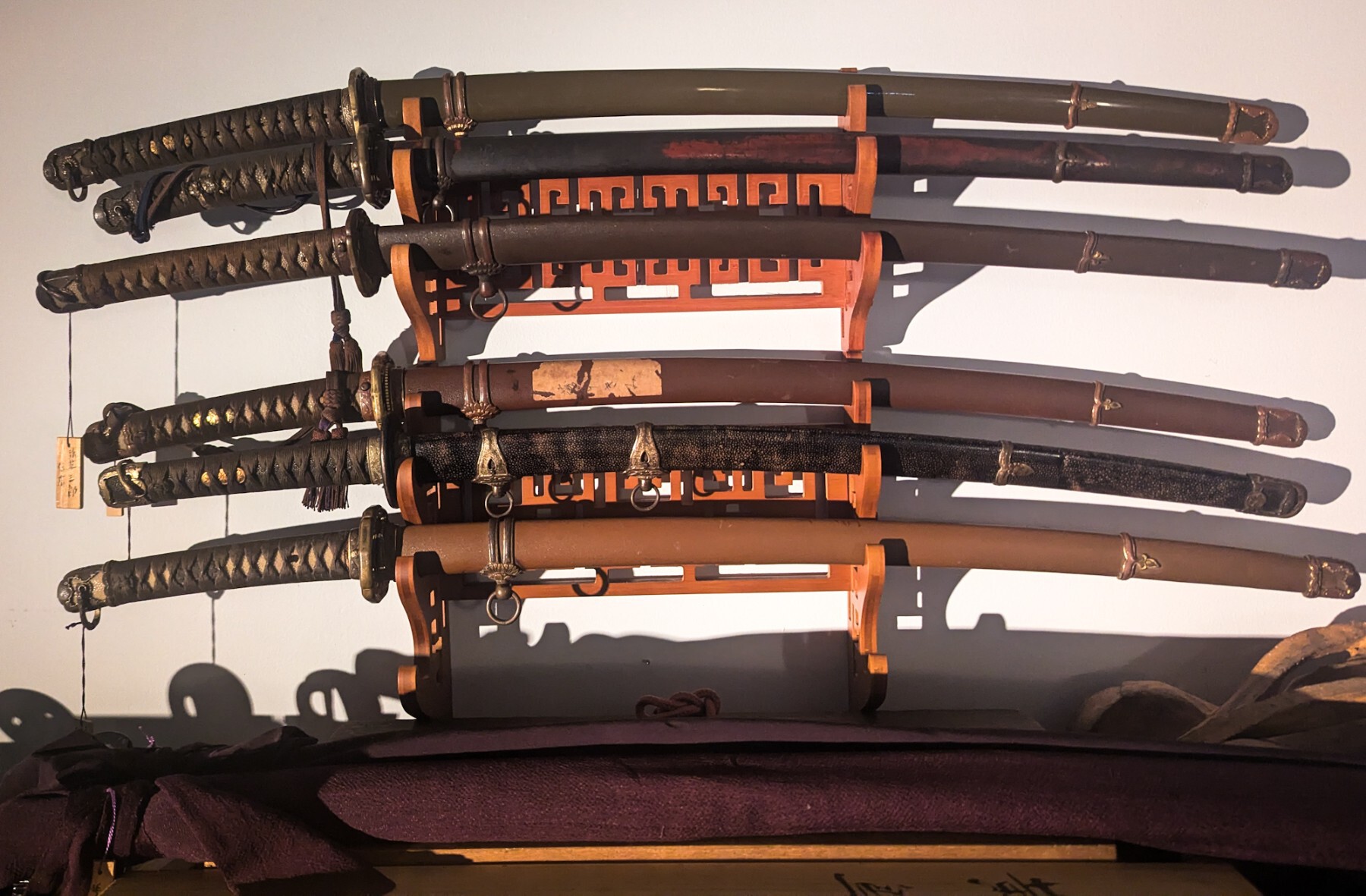
Comparison of size and condition with a "mint" Kai Gunto. Open to trades for good early mounted Shin Gunto with Mon.


 2 points
 -
Current average age at first purchase is 36yo, with median age at 27 yo, youngest was 10 or 11 yo, oldest was 65 yo, amoung 35 collectors.2 points
-
Militaria friend of mine just shipped a bunch of bayonets to the UK. He wasn't happy at all when I told him they will likely get stopped and shipped back once they arrive there. I won't comment further on the UK and their current actions. I'm scared they extradite and jail me for having an opinion on social media.2 points
-
So lovely to see our Antipodean Comrade Justin on an arm-in-arm jaunt with Ford and Friends. "hammered" I understand in its manifold guises, having just come from a liberal lunch... BaZZa.2 points
-
The second TSUBA will be perfectly fine with SEPPA.2 points
-
The overlap is usually sunk below the level of the seppadai, so it can be mounted later ones with raised motiffs were not mean for mounting, but I suspect most of these were still made to be mounted, but the later they got, the more they were more art than function.2 points
-
Just recently he went to Tokyo with other artisans for the NBTHK awards ceremony and fell ill during the celebrations afterwards. He never made it home. Tsukamaki-Shi Hashimoto Kun from the workshops at Osafuné was the humblest, kindest person you could imagine. He didn’t say much, but his eyes shone with respect and honesty. I simply wish to record his short life and eternal passing here. He leaves his young wife Ai San. (Last summer he restrung the hilt of a wakizashi for me, and it was even better than I had expected. Everyone had high hopes for him. Such a sad affair for all.) Awarded 14 prizes. This he did for me.

 1 point
 -
Two more

 1 point
 -
My favorite. A modern subject presented with age old Japanese aesthetic in a Higo style. Tokkuri. Ochoko and two drops of spilled sake, just sublime.

 1 point
 -
Yes, Jauce is a good proxy service to use for Yahoo Auction listings in Japan. Just tack on an additional 20% on top of the winning bid price. I've bought a total of 7 swords using their services. Always prompt on responses. One note though, they only ship to addresses outside Japan. You can't ship a sword to a local sword dealer in Japan for shinsa or koshirae services, nor can you pick up the swords in person. I guess they want to make $$$ on the shipping services.1 point
-
Whether we knew him or not, and obviously I did not, the loss of such an artisan as described by Piers is very sad and also very sobering. RIP.1 point
-
The average age on 57 collectors is 50 years old.1 point
-
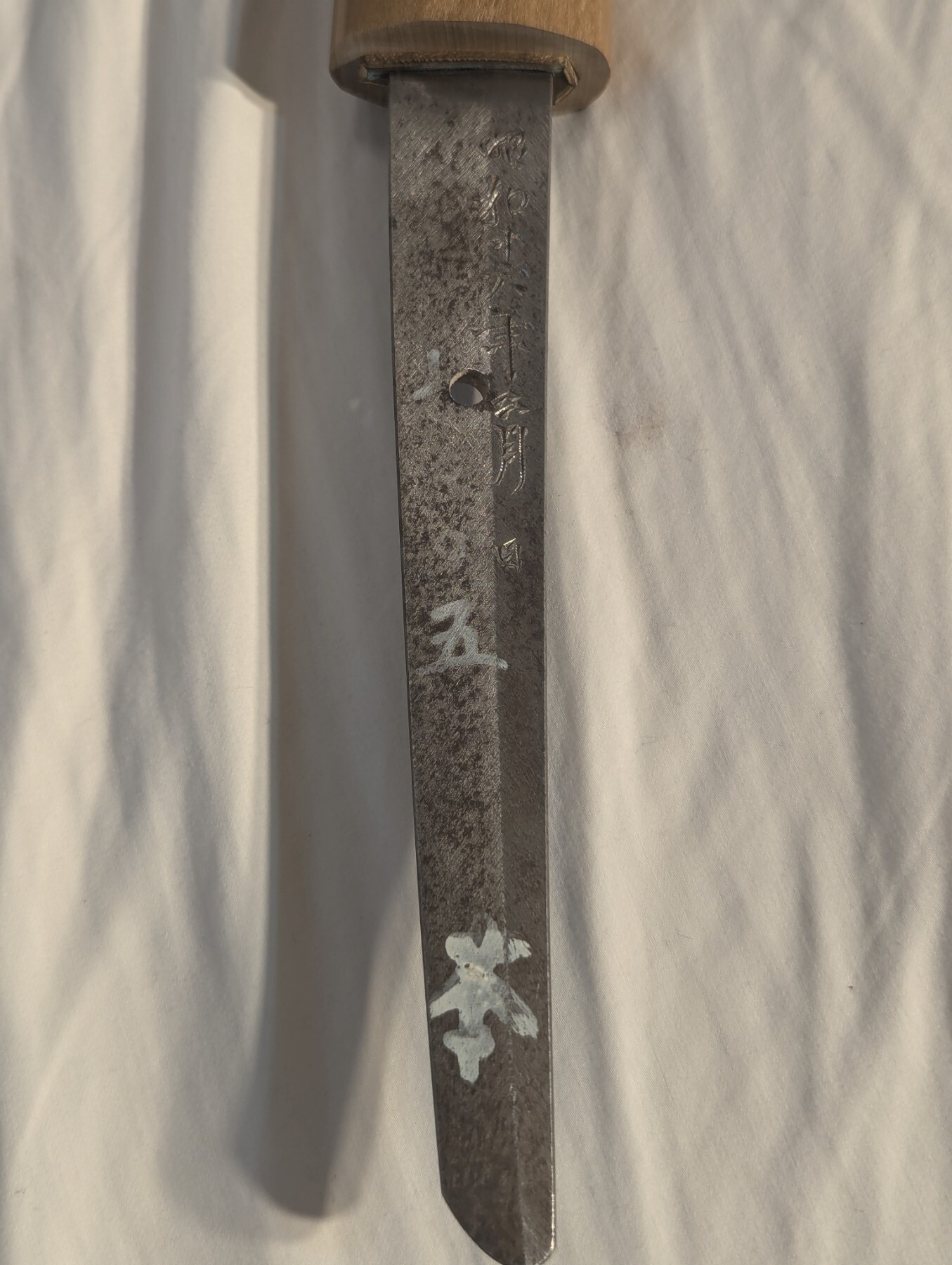
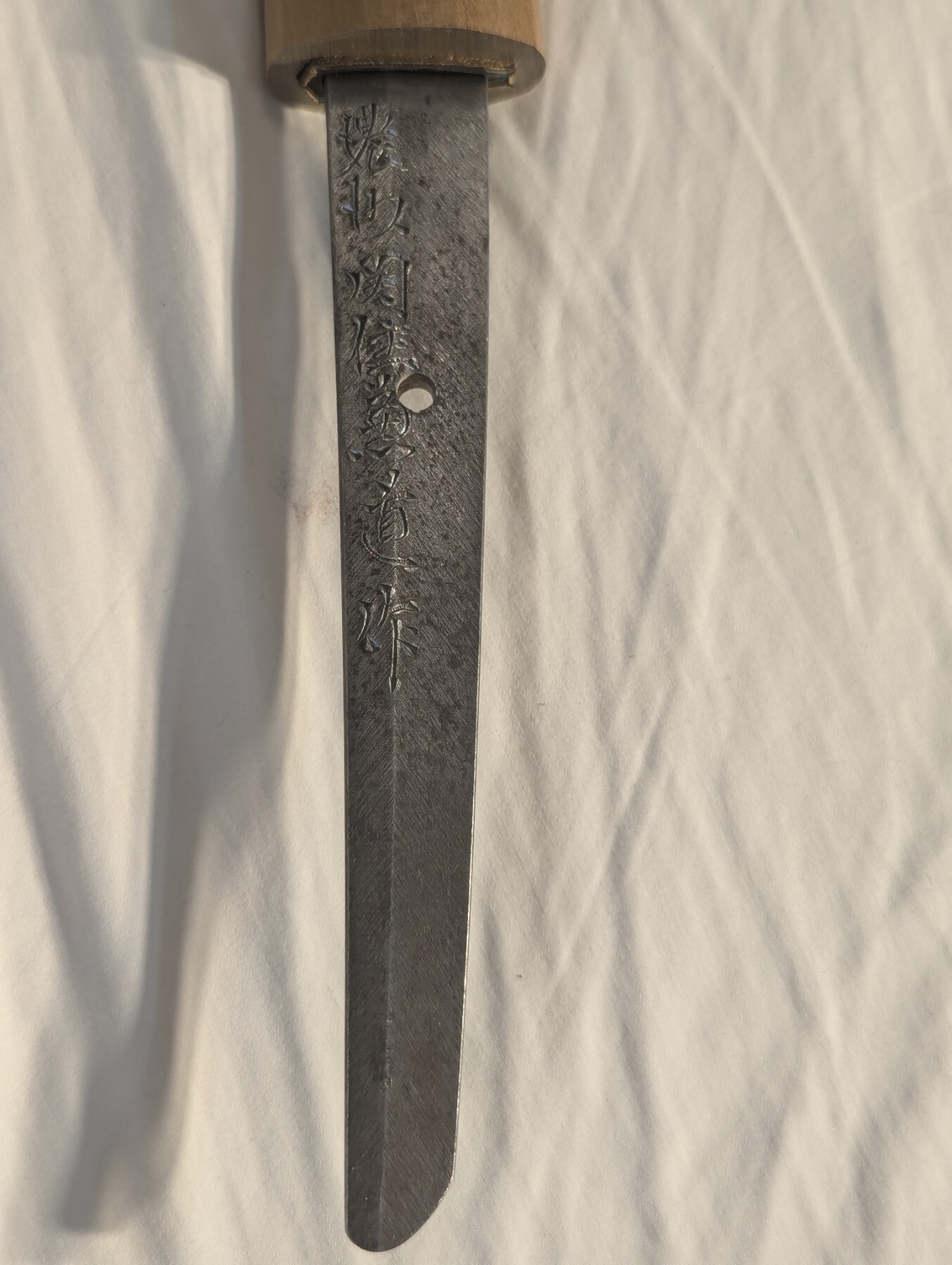
I will be listing four high quality gendaito with shingunto and kaigunto koshirae during the next day. All are in polish with new habaki and shirasaya with accompanying gunto koshirae. A preview below and more details to come soon. - Kotani Kaneyoshi - $4,500 + shipping and PayPal - Kazunori - $4,750 + shipping and PayPal - Hokke Saburo Nobufusa - $5,500 + shipping and PayPal - Kojima Kanemichi - $5,750 + shipping and PayPal Please message me with any questions


 1 point
 -
No room in our prisons so you’re safe Brian.1 point
-
A ducky little dish: https://www.jauce.com/auction/k11488859391 point
-
Once they’ve contacted each other to check, it’s easier and safer for them all to fall into line, eliminate any doubt, and say “No” more clearly than before.1 point
-
I was hoping it to be something more than a weird hat. Anyway, the real treasure is having you people comment on it (and of course on a whole lot of things) expertly and swiftly🙂. Much appreciated. Many thanks! Vince1 point
-
I swear this is EXACTLY what I thought of when I read this thread and checked the link but didn't wanna be rude lol1 point
-
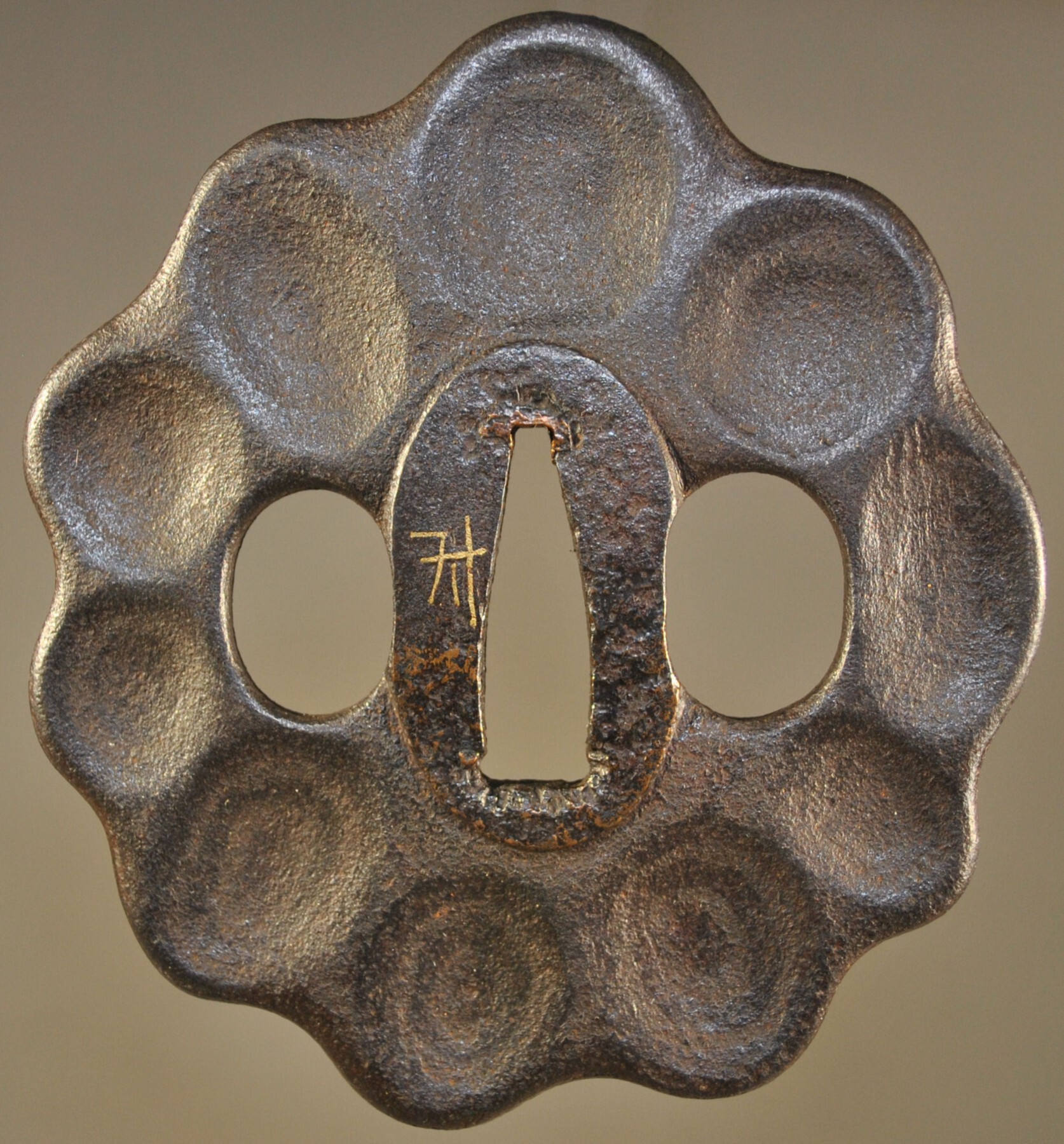
It’s not a pretty piece by any means, not delicate… I also struggle to understand why it has a loop on top and bottom (in one orientation). It might have been a tachi tsuba (or just possibly on a naginata) originally, so the wider guard would need to be rotated if it was fitted to a katana worn in the belt. But… it’s not so pretty that someone would feel that it was worth the time and effort. And… after you had rotated it the design would be marred by the ends of the spare nakago ana poking out asymmetrically. Not something I would want, but there is no accounting for taste.1 point
-
Added postwar, since kabuto-gane has no wear. The saurte is a replica, cast from one with wear. Some was for sale years ago1 point
-
Another great point I didn't think about!1 point
-
That guard appeared in a thread: see date June 25th 20221 point
-
Sri Lankan hair pins https://www.metmuseu...lection/search/902071 point
-
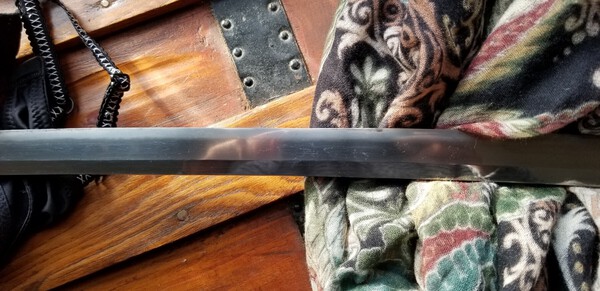
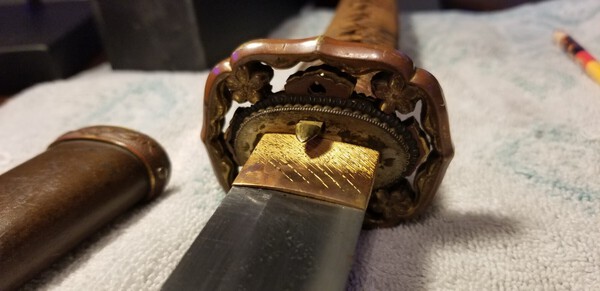
I was like 35, and I'm 42 now. Started with wanting a parade sword from ww2 and then noticed a guy selling some actual gunto was located in a nearby city which lead to me buying my first gunto with a shinto period mumei blade that has some issues but was still nice enough to appreciate. A quote of mine st the tome that is held against me was "just owning one is enough for me." 12 or so nihonto later they are famous last words and ended up being a total lie. Here's that first blade that set me down the nihonto path.
 1 point
 -
Collecting for 15+ years - I've always followed the advice of a far more senior collector - 'collect at the top of your budget' - and I've never had more than 15 pieces, I try to upgrade my collection when I have the opportunity so they will suit my ever changing taste.1 point
-
I am not sure if this is perfectly in line with the topics, since it is a gendaito made for iai. I was about 28, had relatively recently gotten my 3rd Dan in ZNKR iai. My sensei told me to save some cash and later said he found a very nice, long (2 shaku 6 sun and more than 5 bu) and balanced sword from Akamitsu Taro from Kumamoto. It fits my body perfectly and funnily enough it was made the year I arrived in Japan (2008, but I got it more than 5 years later).1 point
-
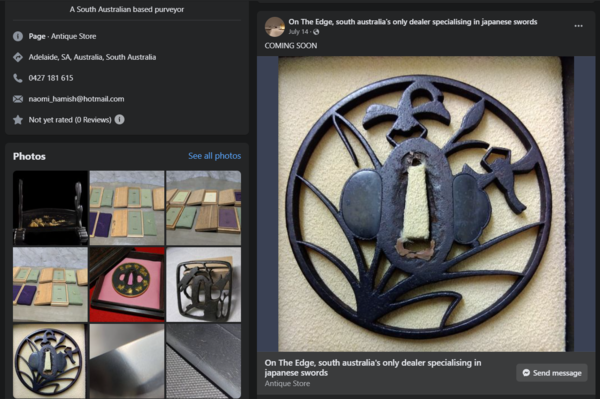
Disconcertingly familiar:
 1 point
 -
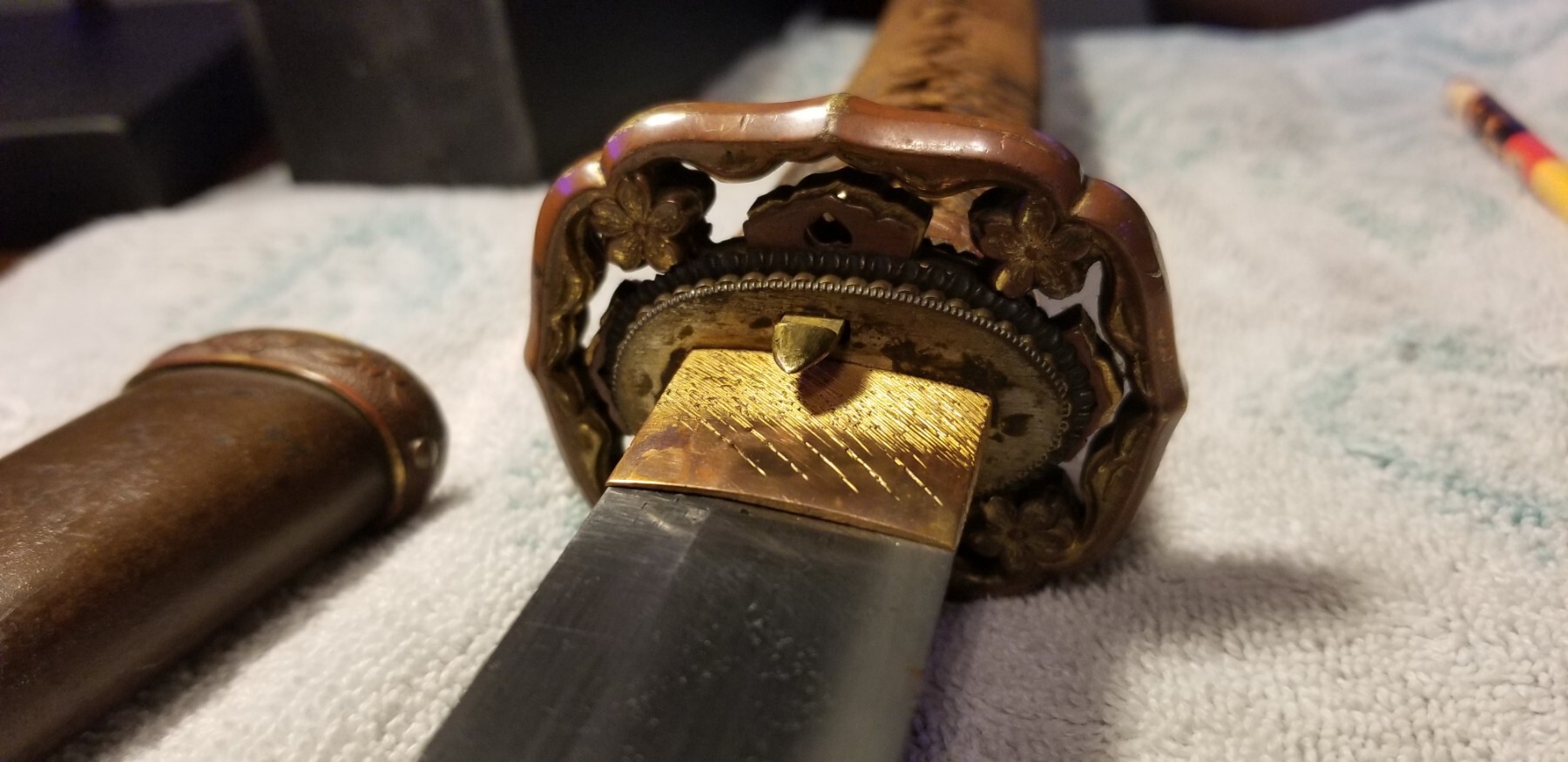
It suggests a simpler way of fitting a sword blade to a Tsuka that matched the mekugi ana on the nakago, but was too long to the habaki moto.1 point
-
Age 42 (2022) - I had been living in Japan for twelve years by that point and had been studying Japanese and collecting books on nihonto (as well as reading this forum!). I finally made the investment into my first katana - a significant purchase (at least for me). That, almost immediately, spurred an interest in tsuba. The ability to collect historical works of art and - maybe more importantly - learn the stories behind the artisans and the context under which they lived, is why I love this hobby!1 point
-
Stupid and ignorant in 1991 at the age of 21, but actually much more stupid 1 year earlier at the age of 20. I went to my first gun fair in Berlin in 1990, when I was 20 years old. I bought 2 Gunto from an English dealer who was quite well known at the time. Both had silver, inlaid Kamon and were among the more expensive Gunto from this dealer. I was absolutely delighted. Well, one room further on, a well-known Berlin dealer became aware of my package. I was persuaded to show him the swords. "That's all well and good, but they're gunto and not real samurai swords." I could buy them from him, of course they are much more expensive, but that's the way it is. I could sell the gunto and I would have the starting capital for my first real samurai sword. The implanted worm gnawed at me for a year and finally won. I sold the Gunto for less than half the purchase price in favor of an O-Suriage Mumei Koto blade in an old mount. More were to follow. BUT: Years later, while cleaning up, I found Homemade oshigata from the Nakagos of the signatures of the two Gunto blades. One was a Kane...someone with a Seki stamp. The name of the 2nd smith was Kato Tsunahide (the big brother of Tsunatoshi), dated Bunka 9. Looking back, the O-Suriage Koto was not my first historical blade. That was something of a turning point for me to really sit on my ass and learn, see and understand. I became "unfaithful" to my dealer and soon became a member of the NBTHK EB.1 point
-
Age 27, while working at Sotheby’s in London in the late 2000s, after they had ceased holding Japanese works of art sales unfortunately. I was only able to handle a couple of old blades which were then stored in the Chinese works of art department… They did however have some fantastic middle eastern swords which I got to inspect up-close. The sword was a beautiful mumei shinshinto aikuchi tanto with Hozon papers attributed to Aizu Kanetomo, which I still treasure to this day.1 point
-
Following the earlier post on shape and Brian's suggestion I have posted some wakizashi images below. The variation and range of shapes in wakizashi is far greater than that seen in longer blades. I hope I have captured a range below. One glaring omission is a hira-zkuri example but unfortunately I did not have one amongst my stock images. As in the previous post see which shape appeals to you most.



 1 point
 -
23, bought a Bungo-do for my B-day present1 point
-
The NTHK Novice Course was recently re-edited and is available now. FREE with any new membership to the NCJSC... Publications (ncjsc.org) -tch1 point
-
Nice! Much nicer than in Aoi images. Usually they are good, but their light is more to a side which exaggerates "roughness". It has much more classic Yamato feeling... Can be earlier.1 point
-
I think its circa 1520. It does have some koshi zori which tends to be earlier, but this sugata has been used well into 1500s. The forging is coarse and rough. Few laminations, which very much stand out. By contrast early Muromachi Uda smiths were very careful with jigane, one line opting for tight itame and overall rather refined appearance, another having more Soshu-Yamato feeling but still being very careful about their forging. Even Sanekage-like work from Oei period tends to have more "smooth" appearance. This in no way a precise statement, but the tendency is observable. Good thing is that it looks like the work is relatively clean compared to other period examples, its a bright work which is easy to appreciate. Photographs taken from above greatly exaggerate the roughness of masame laminations making them all look like ware.1 point
-
Bear in mind that Nagayama's book is very general and that there are always variations, sometimes even within a single school. A flaw is and remains a flaw, and the argument that it's common in koto is just a sales pitch.1 point
-
One needs to be very careful with Aoi and its listings. Usually there are some inadvertent mistakes but also there is the usual dealer spin to reality. Firstly, as Kirill is saying, Ko-Bizen spans from Heian / roughly 1100 to approximately 1240. Plus or minus a decade or two. So, you have occasionally Ko-Bizen which are well into Kamakura and have different dimensions (increasing sori in monouchi) and hamon (more flamboyant) to the ‘usual’, old Ko-Bizen, which on the whole tended to be more uncontrived than here. So, this type of nioiguchi and hamon speak of later Ko-Bizen as a rule. Next, onto the smith. Well, this smith is believed to be a descendant of Masatsune, who did have a more flamboyant hamon. Interestingly, the setsumei here references flamboyance similar to Hatakeda Moriie and Saburo Kunimune, who would have overlapped with Tochika, at least partially, in creative period. Fujishiro in his book starts by saying that he is usually associated with 1190 as starting period, then quotes several eras but concludes the smith most likely worked during the Ichimonji school period. There are not many swords left by him and some are in suguha but some are very flamboyant and exciting. He has blades which were kokuho pre-war and now JuBu, so clearly highly rated. As to the blade, yes it is TokuJu and published by Fujishiro. The Honami Kojo origami is highly valuable and it has a historic provenance. The hamon is very nice, it is zaimei , so these are the positive attributes. One will need to evaluate whether one is happy with the condition (it has some rather deep ware). But it surely is a special sword, valued very highly. It shows that the overall merits far outweigh the condition issues.1 point



.JPG.6f218e522a39c7dbf03b3712892959c1.JPG)
.JPG.9d572a7896372dbb03ffbe1650ee4b65.JPG)
.JPG.3ffb902adf43eda4affff1b8b10c5493.JPG)
.JPG.a1dc5bd7a6093b070ed0208060e8ff75.JPG)
.JPG.665afb8fdec6e6d4a21a783f1f625b38.JPG)
.JPG.edc83e16e7bf4255e66538d6999129db.JPG)
.JPG.80d2e904aa7c938ae7ccdcf4e4c51ec4.JPG)
.JPG.7a3019b3805d2769faef7194ac332b21.JPG)

.JPG.45170d0ceb0e8a3d7d8656ceba3cb1ec.JPG)















.thumb.png.4c5df79fec171b2dc4a23af38e280a4d.png)














This leaderboard is set to Johannesburg/GMT+02:00