
Leaderboard


Popular Content
Showing content with the highest reputation on 12/06/2025 in all areas
-
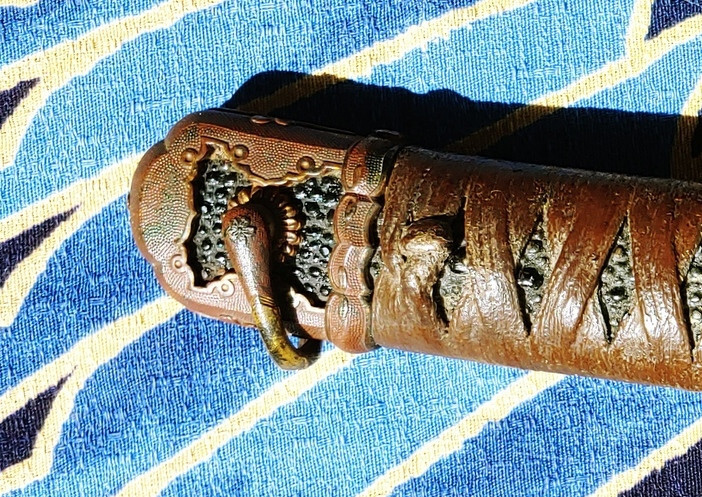
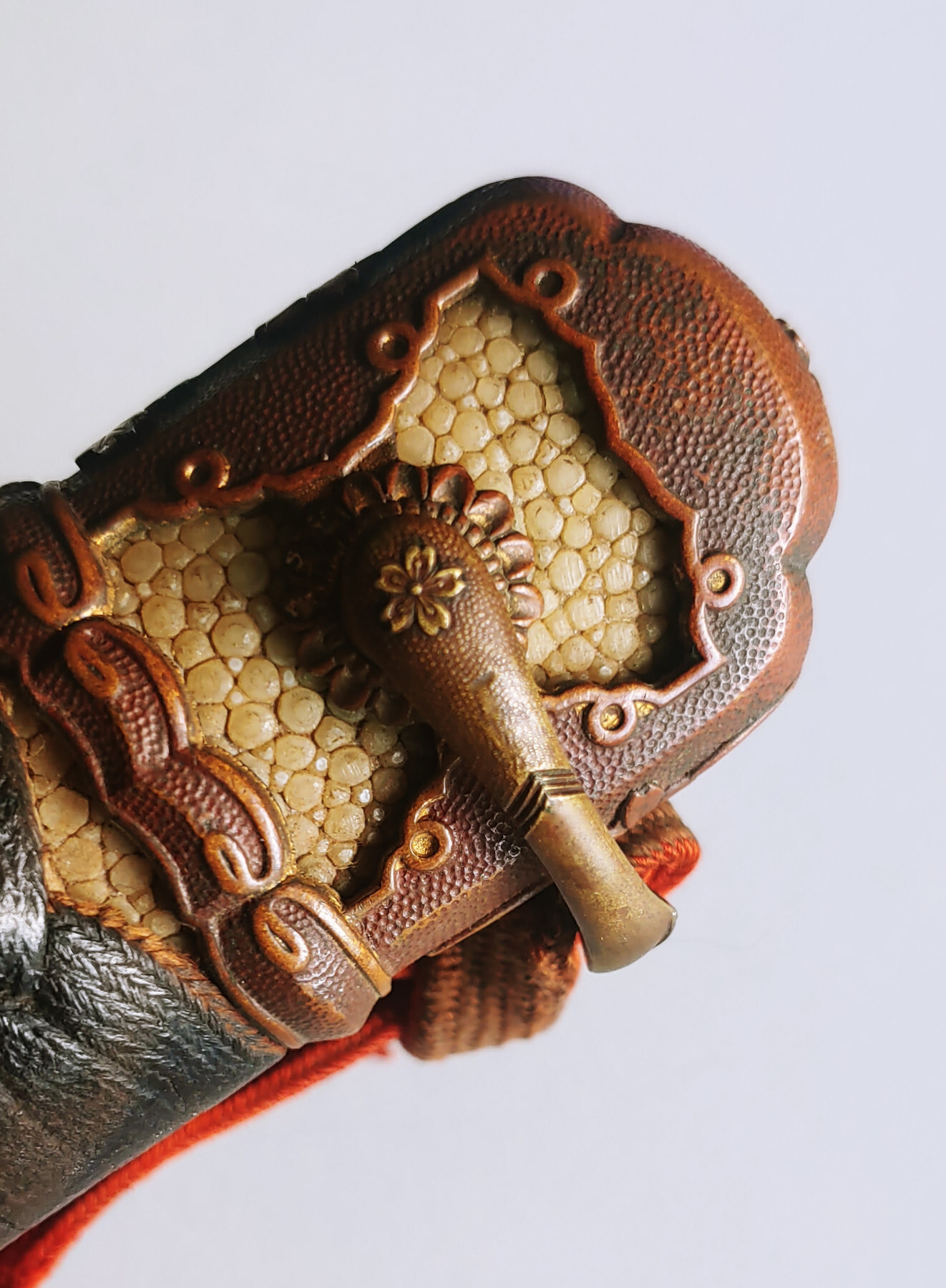
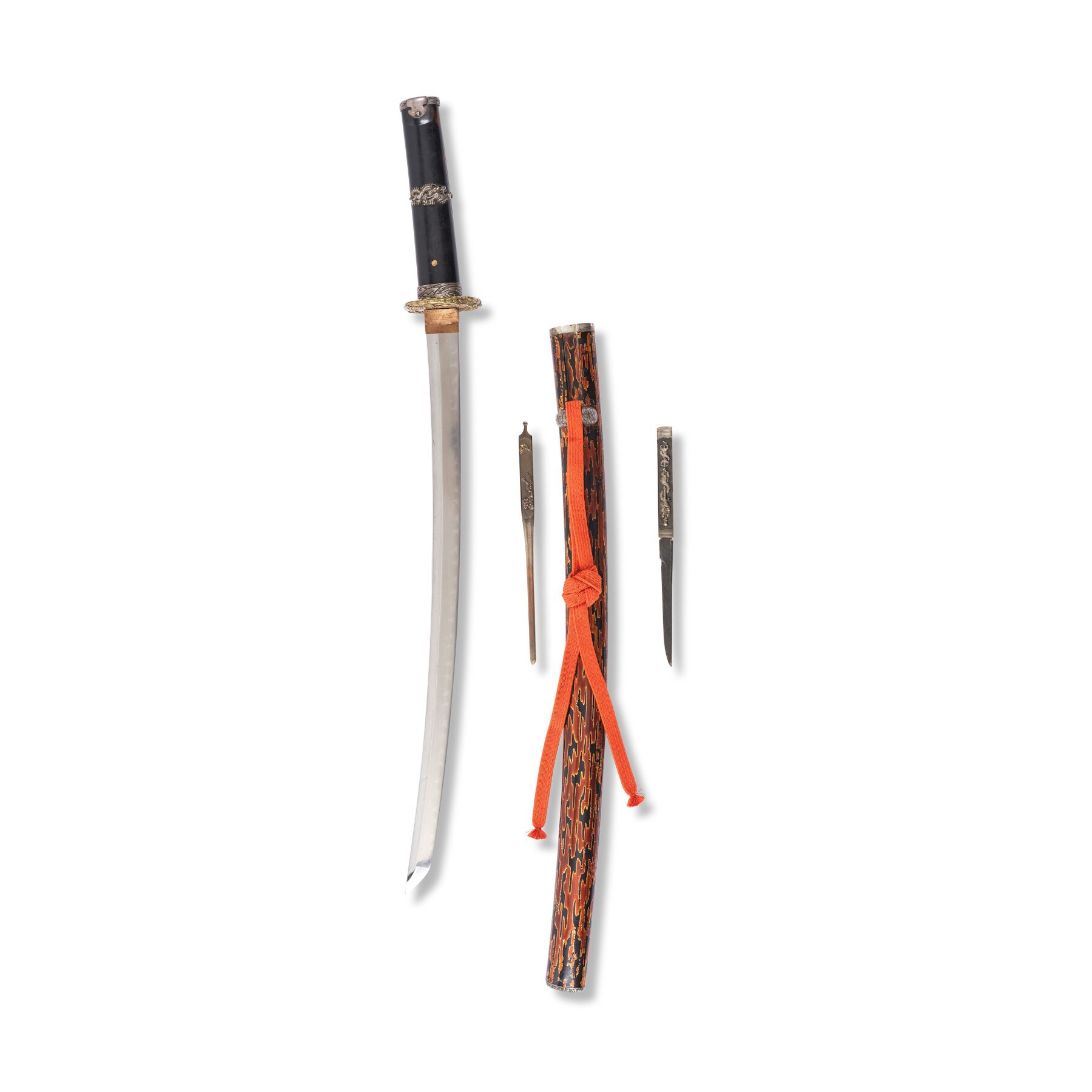
This late Edo period Kyoto koshirae comprises a coherent suite of Komai-school gold hon-zōgan fittings executed in the classic Unryū cloud-dragon motif. During the late Edo and Meiji periods the Komai school developed the highly refined iron-ground gold inlay technique that would later become internationally recognized in their production of inlaid boxes, cigarette cases, and decorative objects. The fuchi is signed Yoshitaka saku, identifying the maker as Komai Yoshitaka. The accompanying tsuba bears a kinzōgan signature Tadanobu saku, and employs a closely aligned decorative style and gold coloration, suggesting manufacture potentially within the Komai milieu or by an affiliated craftsman. Gold menuki depicting two pairs of mandarin ducks are mounted on the tsuka under black silk ito. The saya is finished in bengara-nuri (iron-oxide red lacquer) applied over a tōmaki rattan spiral wrap. This results in the characteristic helical relief beneath a high-gloss finish associated with Kyoto workmanship of the late Edo–Bakumatsu period. Playing with the phone camera and sharing these attractive mounts just for fun. I have seen a sister Fuchi/Kashira set mounted on a well-known Kiyomaro sword, so take them to be high class examples of the style. Questions / comments welcome.


 10 points
 -
New video:9 points
-
Two of my favourite Nihonto texts are the MEIHIN KATANAEZU SHUSEI and the SOSHU DEN MEISAKU SHU - both extra-large books with large, glossy photographs of masterwork blades and filled with expert commentary. It always bothered me that there's easily found English indexes available for the former, but not the latter, so I spent a bit of my free time skimming all the notes I've been collecting over the years of using the Soshu Den Meisaku Shu as a reference and put one together. It's probably not as vital now as it would have been when I first bought the book all those years ago (thanks to the rise of things like Google Lens) but I hope someone finds it useful. If anyone notices any errors or omissions, please let me know either in here or via private message. Also, at some point I may revisit it and add more information such as blade length, smith rating and/or historical provenance. Soshu Den Meisaku-Shu - English Index.pdf4 points
-
The last time we spoke, he was undergoing fairly complex invasive stem cell therapy. This had been the sci-fiction goal back in my university research days, and fast forwarding to Richard's situation- I was surprised by the high mortality rate. A long time ago RKG and I were good friends. We would have a bit of a falling out in 2008. Yet I mourn his passing. His photography became his passion, and he advanced tosogu photography significantly. He shouldered a lot of responsibility for his family. I hope his soul finally gets some rest.4 points
-
The date is : Eiroku hachi nen ju gatsu kichi jitsu A lucky day the 10th month of 1567 The mei is correctly translated as Mihara Masamori saku. I think it is a safe guess that this is an authentic, late Muromachi Kai Mihara blade and not gimei.4 points
-
Mark, is this the same sword listed in another AUS site at far higher? Given the confusion, can you provide a few more details on the ownership and also maybe a decent verification pic of the sword with a note with your name and date? Just to set anyone's mind at ease. Thanks.3 points
-
The 503 error (SERVICE UNAVAILABLE) indicates that the server where the website is hosted is malfunctioning as if the box had to be rebooted. If the website had disappeared, you would get a HTTP 404 (NOT FOUND) error. The website will probably come back online once the maintainer realizes it's unreachable3 points
-
Yes, absolutely, Peeti and thank you for that clarification. You are right. It kind of reminds me of the other such case, where a tanto moved between Yukimitsu and Masamune back and forth and now it is Masamune at TJ. The reality is both these tanto are outstanding but also demonstrate that when a blade is a top-level Soshu, sometimes attribution is difficult even for the topmost experts. I don’t think anyone will dispute that both are exceptionally great blades.2 points
-
Spotted on eBay https://ebay.us/m/HpCkpX


 2 points
 -
@Gakusee Regard the TJ Masamune tanto, when you used the word “upgrade it to Masamune” is not entirely correct because at Tokuho, the blade has the paper and the sayagaki by Dr. Honma that attributed it to Masamune. So at Juyo, the current Shinsa team was bold enough to reattributed it to Norishige. The last owner then ask Tanobe Sensei to wrote a sayagaki, in which he attributed to Masamune despite the Juyo paper. So at Tokuju , the Shinsa panel yielded and reverted the attribution back to Masamune. This also resulted in very unique Tokuju paper, where they spent a lot of time saying why its not the other smith rather than just saying why it is that particular smith. So my point is that its not really an upgrade if it was already a Masamune.2 points
-
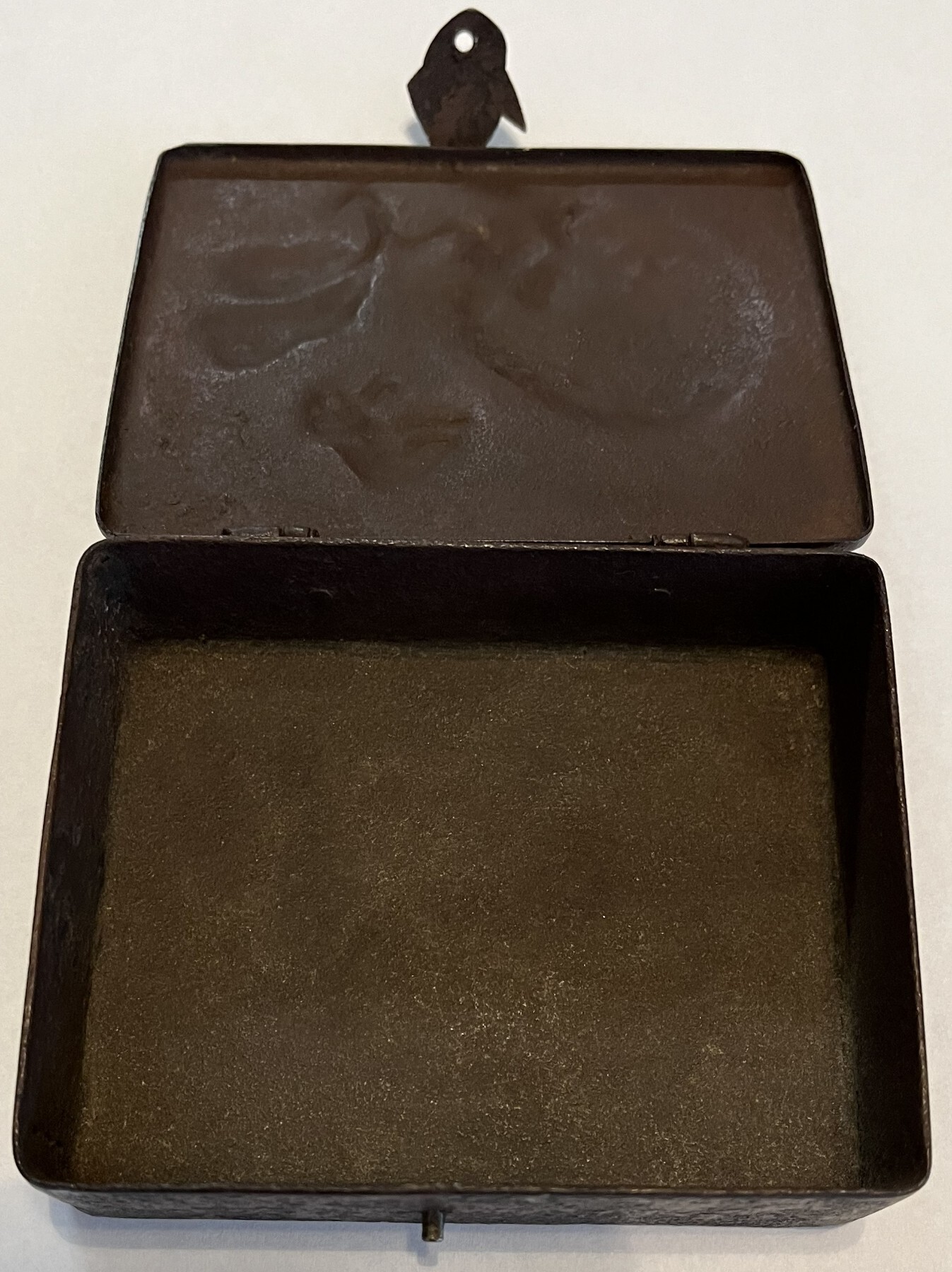
It might be a SHODO box, a container for writing equipment, MEIJI era. From the looks of it, it could be made of lacquered leather or papier mâché, but you can guess that by its weight. You will certainly have tested with a magnet if it is thin iron? Right after the end of EDO era, many sword artisans were forced to look for other kinds of work, so an armourer might have been able to make this as well.2 points
-
Just got a look at this, and it definitely looks like an older blade in a newer scabbard, unless it's Gimei. I have however been having trouble with the nengo, as the second character doesn't match any era name I can find records of. The mei looks like it reads 三 原 正 守 作 - MIHARA MASAMORI SAKU The characters I can get from the nengo are 永 ? 八 年 十 月 吉 日. There are several eras beginning with 永, but the second character doesn't match, though I am aware that there are alternate kanji sometimes used. Is it a simplified version of 禄, which would make this from the Ei-Roku period? Any help would be greatly appreciated!

 2 points
 -
https://www.samuraishokai.jp/sword/25157.html Just in case you're still looking.2 points
-
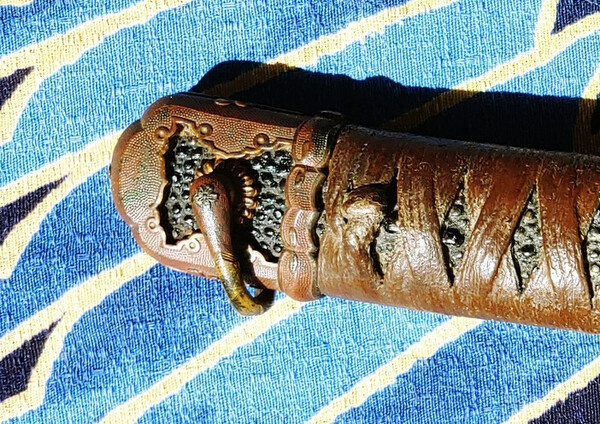
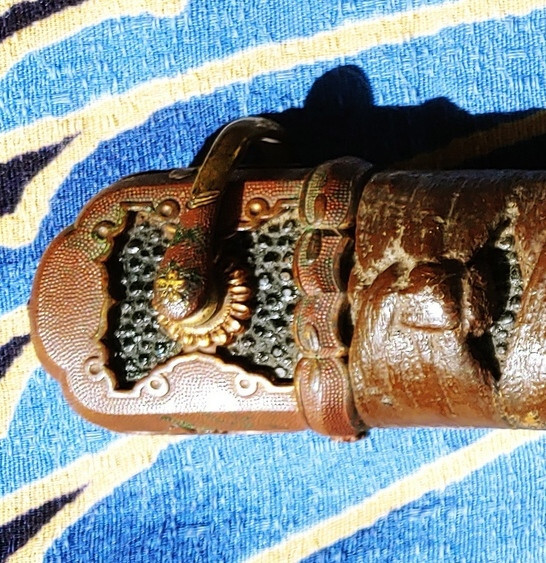
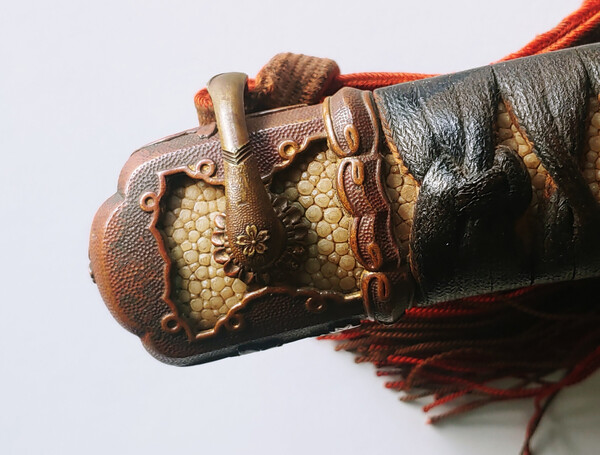
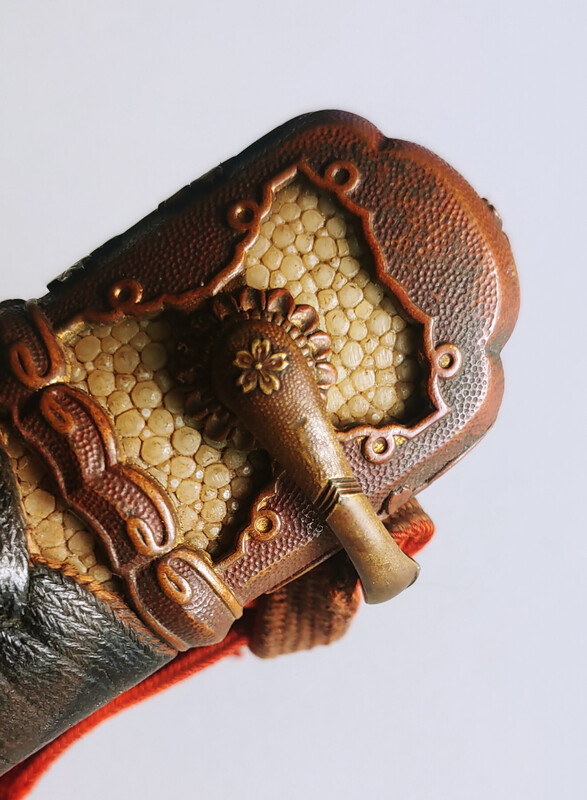
Have seen this somewhat unique variant of the clasped hands Sarute over the years and always wondered what (if any) significance they held. My observations have noted the following: tend to be present on good quality Koshirae a few have been on Suya Shoten marked Koshirae If you own (or have pictures) of swords with this type of Sarute could you please share them? Ideally noting if they had original rank tassels, bear any maker stamps or have any other features of interest.
 1 point
 -
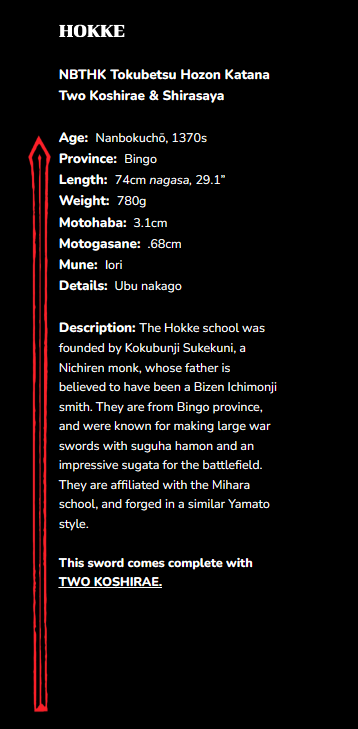
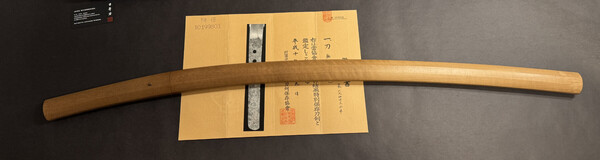
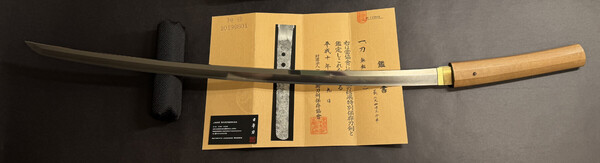
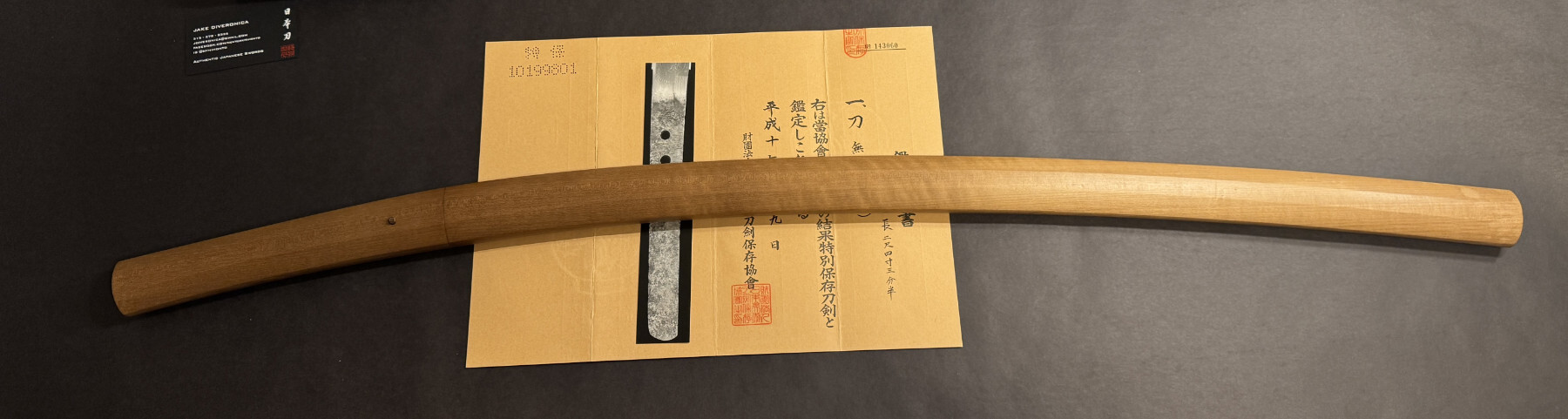
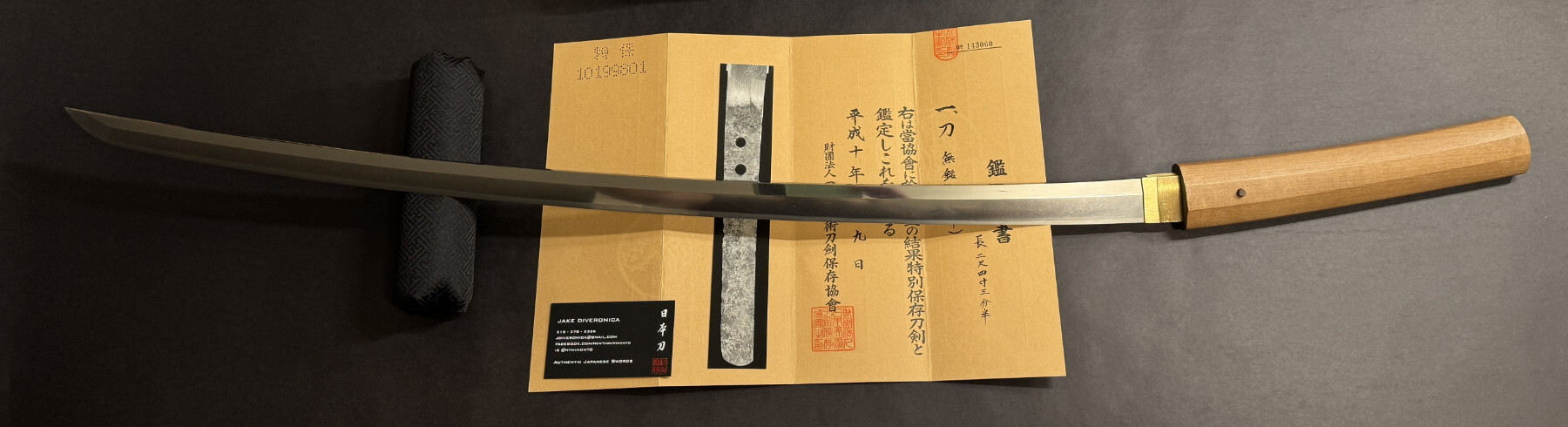
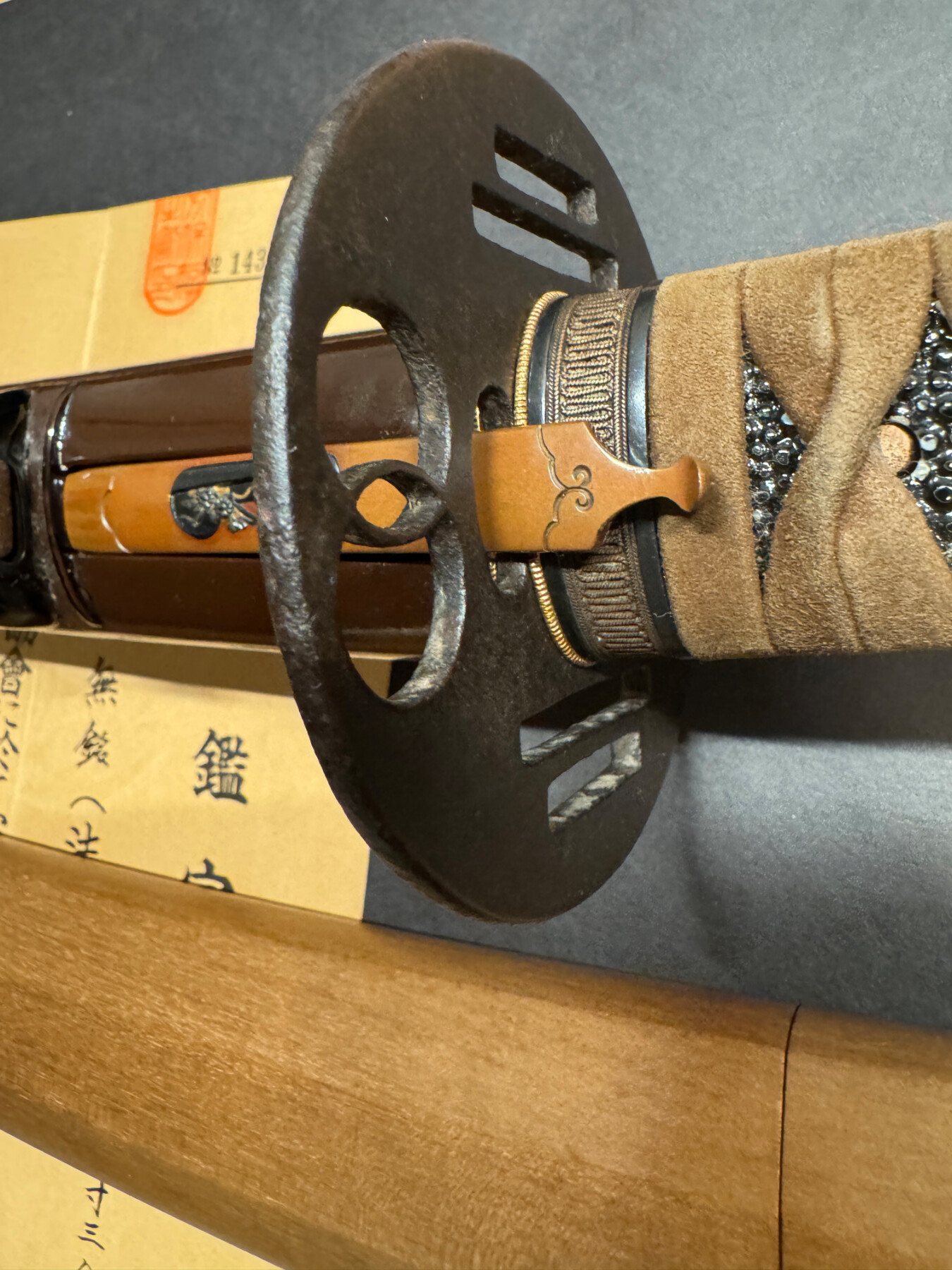
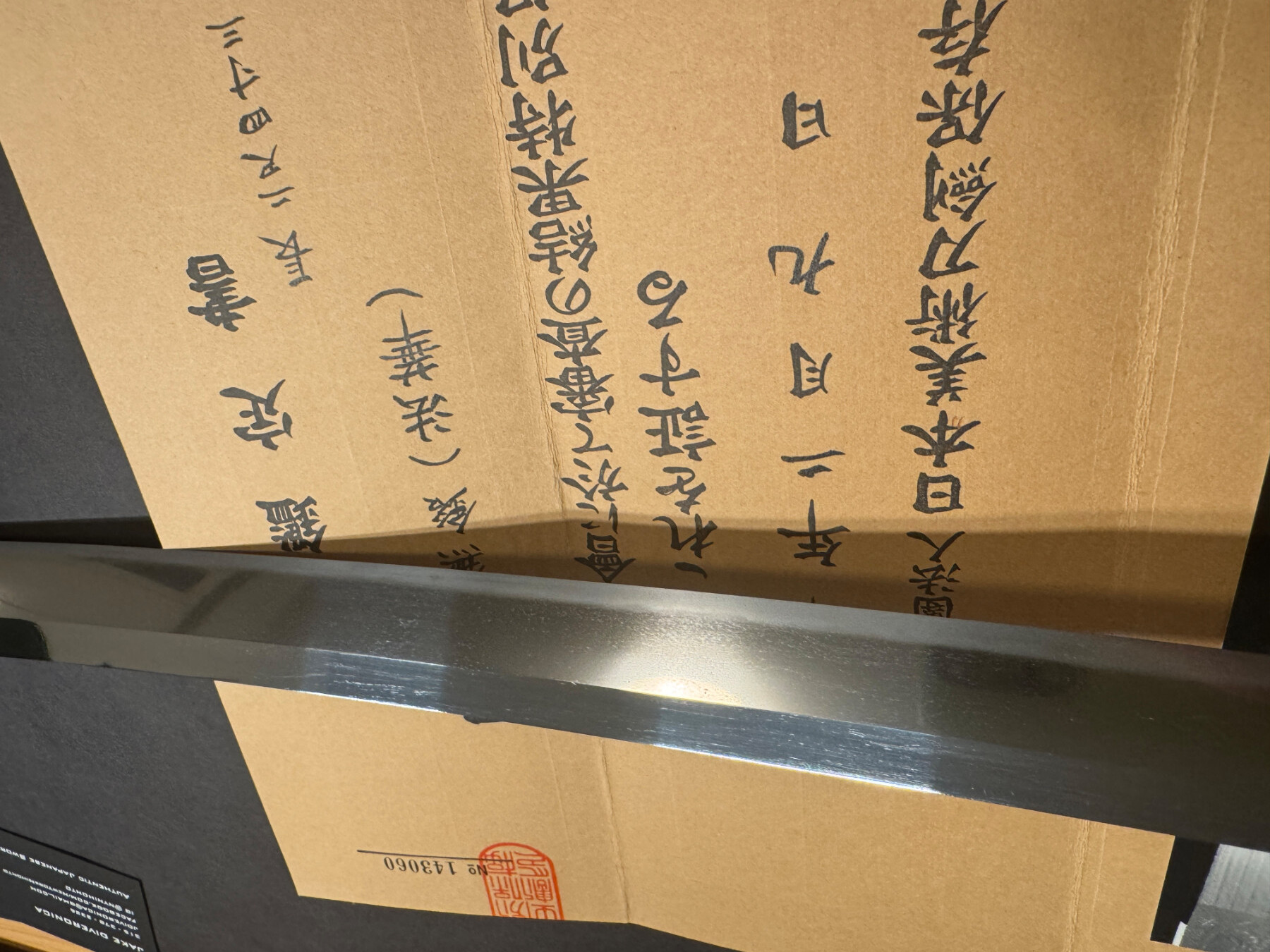
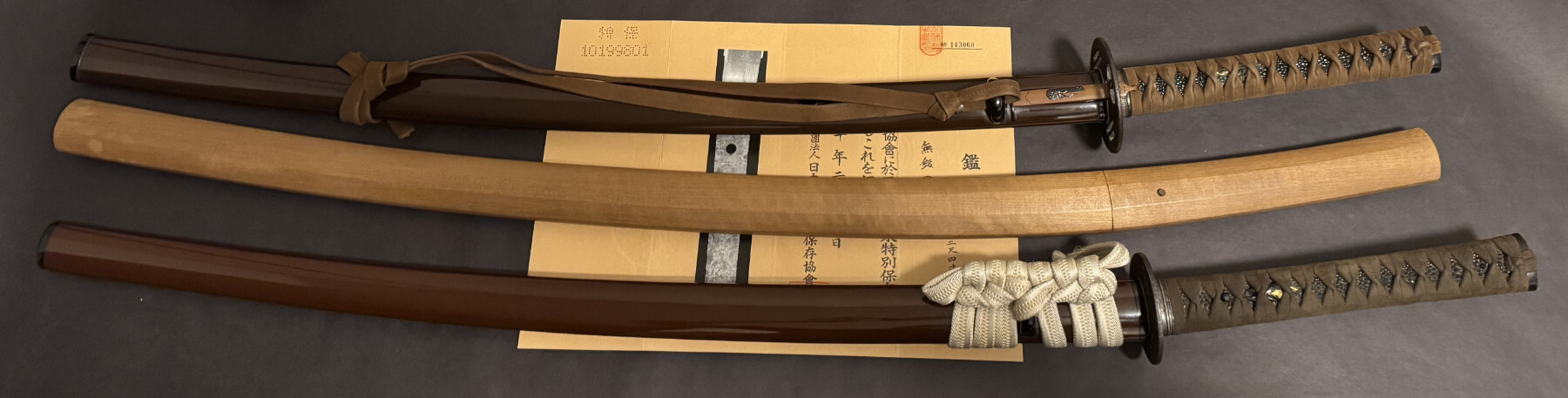
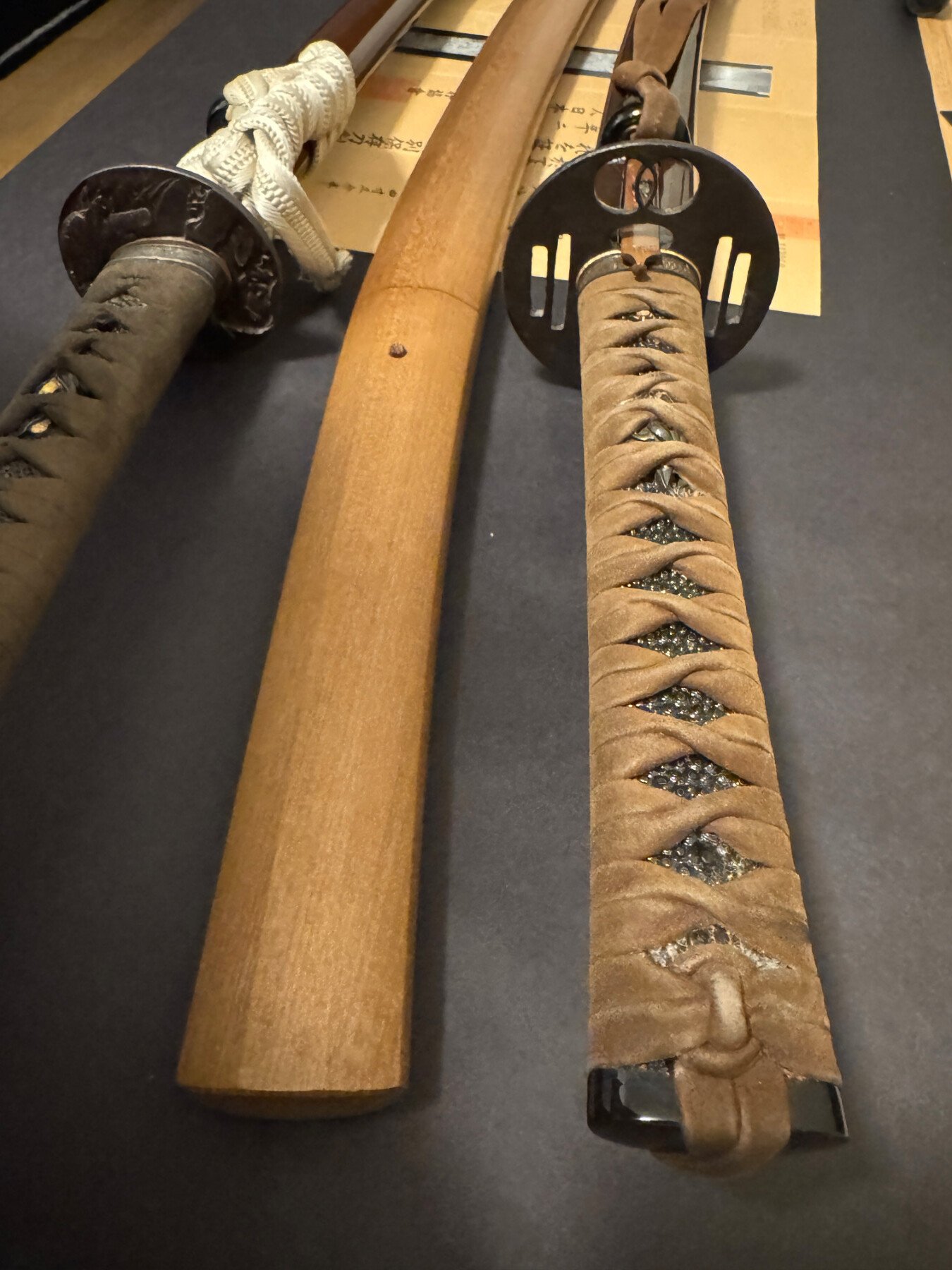
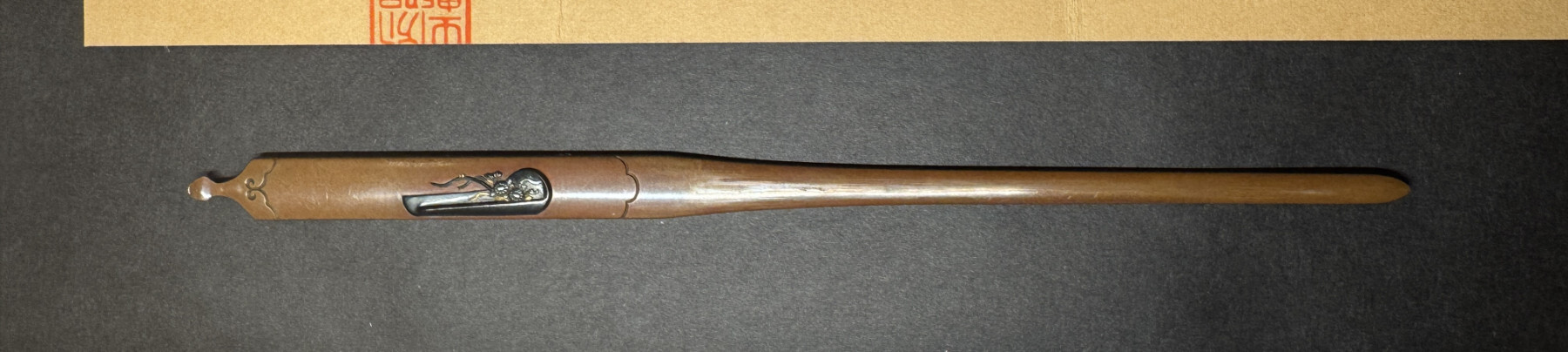
HOKKE KATANA SURIAGE NBTHK TOKUBETSU HOZON NANBOKUCHO PERIOD (1370s) SHIRASAYA and TWO KOSHIRAE 74CM NAGASA / 29.1" Weight: 780g Motohaba: 3.1cm Motogasane: .68cm Sword Location : NYC Will ship to : ANYWHERE Payment Methods Accepted : zelle, venmo, check, cash Price and Currency : $6750 The Hokke school was founded by Kokubunji Sukekuni, a Nichiren monk, whose father is believed to have been a Bizen Ichimonji smith. They are from Bingo province, and were known for making large war swords with suguha hamon and an impressive sugata for the battlefield. They are affiliated with the Mihara school, and forged in a similar Yamato style. This sword comes with TWO KOSHIRAE. Happy to answer questions if you have any. Please click on photos to see in full resolution. -Jake

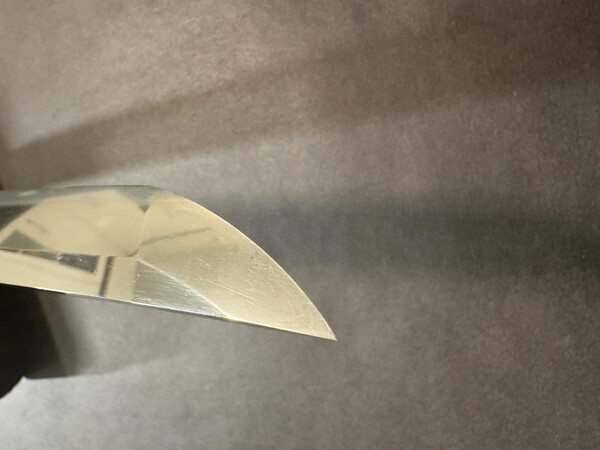

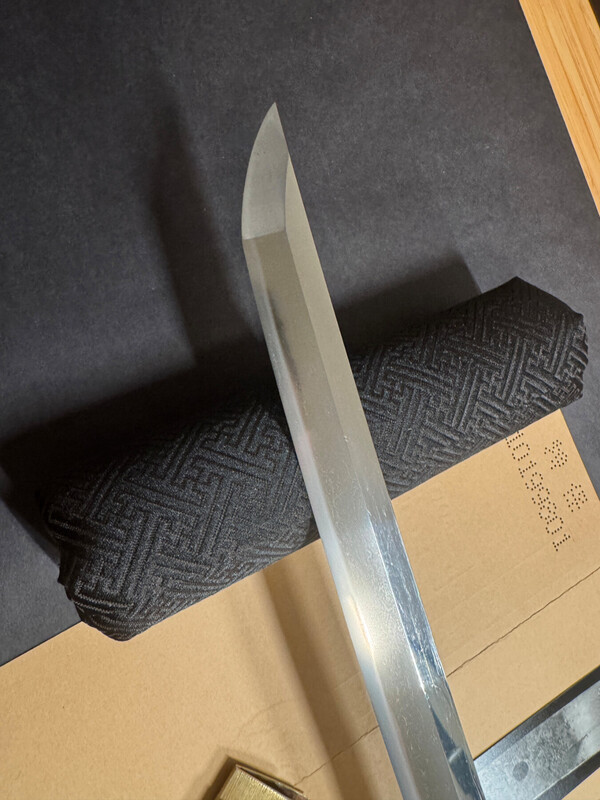 1 point
 -
Hi All. I moved to another state and a smaller home last year and have decided to sell about half of my collection, which has been overflowing from my safe. I will be attending the shows in Las Vegas, Chicago and San Francisco this coming year, so please look me up if you attend any of those shows. If you plan to attend, or if you are not but are still interested in seeing the list of swords that I will be selling, please drop me a line and I will be happy to send you the list. In the meantime, I have listed a few nice swords on eBay. I am posting one of the links below. If you click on "sellers other items", you will find the rest. Sorry for my poor photography - I am working on improving it! Cheers, Bob PS, I'm a long time supporter of NMB and will make an extra donation if this posting yields sale results. PPS, I have been having trouble logging on to NMB (working on it with Brian), but the message function appears to work. https://www.ebay.com/itm/1679648008301 point
-
This one is posted over on this Warrelics thread. Don't know about a smith, yet, might be an older blade based upon the mekugi location. Will update if he posts it.
.jpg.f9fab9bf32d561a280ed53d0f07e9c4a.jpg)
.jpg.4b16cff8442bffa2baaec9e04e8fc150.jpg)
.jpg.81bec58c9ed61580f468c42bf23192dc.jpg) 1 point
1 point -
Both sides were definitely ground down, for reasons I fail to imagine. Bruce's theory makes as much sense as any, but then, why stop half-way through the conversion? Have you seen any others with this "machi-okuri situation" @John C?1 point
-
Thank you so much! I love this book too.1 point
-
Thanks @Brian. I spoke to Roger many years ago about the signature on the sword. He was under the impression that it was a possible dai-mei by the 5th gen for the 4th gen Tadayoshi.1 point
-
Thank you so much for sharing this index, Rohan! I got the book just last month, so this is super helpful for enjoying it.1 point
-
Well done and thanks Rohan! May I add it to the downloads section?1 point
-
Excellent, thank you Rohan May I suggest uploading your file to the download section ? This should ensure users can easily find it in the future.1 point
-
Thanks, Sam. That's a new one for the list. Up to 42 examples. Interesting that the seller lists it as "WW1." I assume he means Japan-Russo war (~1905) and even then it wasn't widely used with the introduction of the type 32. John C.1 point
-
It is indeed a lovely set! Congratulation! Regards Luca1 point
-
May he rest in peace1 point
-
That is very sad. He was a legend when it came to fittings photography and the KTK, and really knew how to capture the soul of tsuba in images. I knew he was battling with his health. This is a sad loss. RIP and condolences to his friends and family.1 point
-
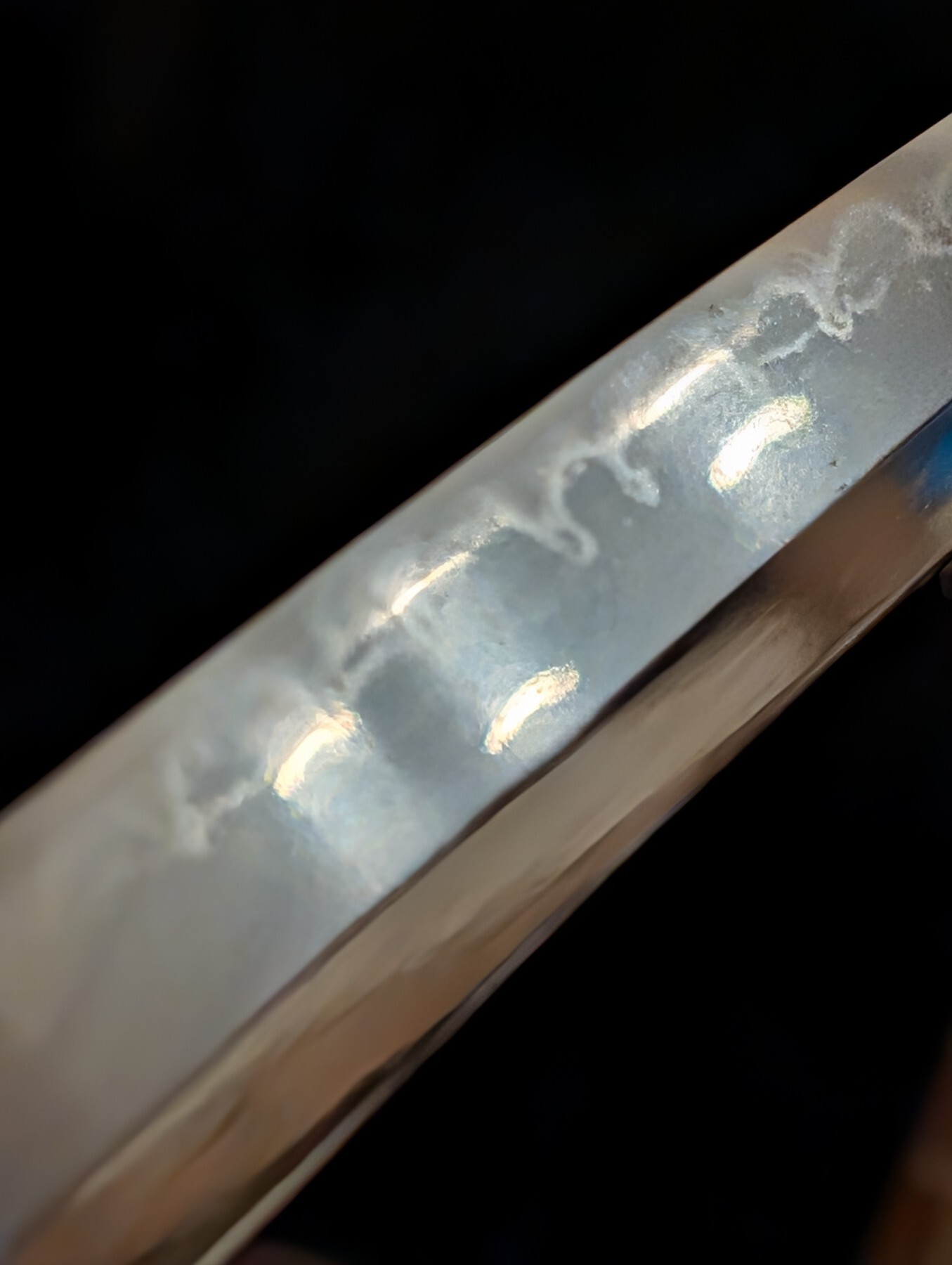
It's very hard to learn things only from pictures, without real traditionally forged blades at hand. One starts to doubt and double check everything. It was very important to me to get confirmation that what I see is what I think it is. Therefore, I reached Jean ROKUJURO here with a question and he kindly responded. Thanks to him once more for his answer! He confirmed that these are indeed sunagashi. I was very glad to receive that answer. For one thing, it makes me happy that I not only learned something but also was able to apply this small knowledge in practice. For another, it does mean that this sword is likely gendaito. And because it's my first gendaito and I found this out on my own it makes this sword kind of a treasure for me, even as for many of you guys it's just another war time blade made by a not very renowned smith. Also, as Jean noticed in his message, the general condition of the blade is an issue. Still I am very glad that this sword is in my hands now. Buffing caused a lot of damage. Yet, I suspect that long before the buffing blade was polished and the polisher didn't do his best. The main indications of this are as follows: the line of Koshinogi is more straight on the mei side of the blade while it's more curvy on another. There is also a spot on the blade close to ha-machi (on the mei side ) that looks strange. In my inexperienced opinion it looks like the polisher didn't get the real line of hamon and tried to create a false hamon line. These occurrences couldn't be explained by buffing only. Later on I'll shoot some photos of these areas. At the moment I am away from my swords and will be away for some weeks. Alas in cases of even gendai blades made by not very renown smiths like Nagamura Kiyonobu the polishing might be unwise. Also finding a polisher here in Ukraine might be an issue. So for the time being I will go only as far as Uchiko could get me. And even with it I'll be very cautious.1 point
-
Wife has never liked this box but it has fascinated me ever since I first laid eyes on it. An elderly Japanese lady left it and a few other Japanese antiques to us. It looks like it may have a bit of age and it definitely took a great deal of skill to create. I love the butterfly hinges and the fish eye latch. It appears to have no visible seams. It measures 3x4x1.5 inches. What say you fellows? Howard Dennis


 1 point
 -
Yes, it's made from thin iron so I too thought possibly an armourer made it. Also the wasp wings appear to be made of brass. Howard Dennis1 point
-
Looks like a few techniques went into the construction, repousse, chasing, and applique. Interesting detail where the maker used only one rivet to attach the butterfly wing hinges to keep the Japanese asthetic. John C.1 point
-
Galo, looks like could be this smith (from Sesko): KUNIYOSHI (国吉), Keian (慶安, 1648-1652), Bingo – “Bingo Fukuyama-jū Kuniyoshi saku” (備後福山住 国吉作), real name Kodama Tōshirō (児玉藤四郎)1 point
-
Looks like an AINU knife to me.1 point
-
This is terrible news… I had recently gotten to know Richard via email correspondence, talked about photography, and hoped to put face to name someday as we live really close by. He had said he was recovering from a procedure. His photos of tosogu are really stunning. Condolences to his friends and family. https://www.rkgphotos.com/articles/ktk_photo_document_2019.pdf https://m.youtube.com/@rkgatteleport/videos1 point
-
Very sorry to hear that. My condolences.1 point
-
You can probably imagine how difficult it would be to draw a sword straight off your back over your head/shoulder. Try the motion now: reach behind your head as if grasping a tsuka, then raise your arm as though you’re pulling a blade free. You’ll notice your arm doesn’t travel very far. With anything longer than a short blade, a significant portion of the sword would still be stuck in the saya on your back. The longer the sword, the longer your arms would need to be to clear the entire blade from the scabbard. Here's an example. You can see that even video game animators struggle with the physics of how this might work: (Note: this is just a silly video game, and is simply demonstrating how this would look and how challenging/awkward the action would be. Sorry about the song, I recommend muting it... not my video .)1 point
-
Nice one. Congratulations. As Bruce said above, DONT TRY ANY TYPE OF CLEANING OR REFINISHING, until you have read and reread the link above and had some more knowledgeable people chime in. Thank you for sharing. MikeR1 point
-
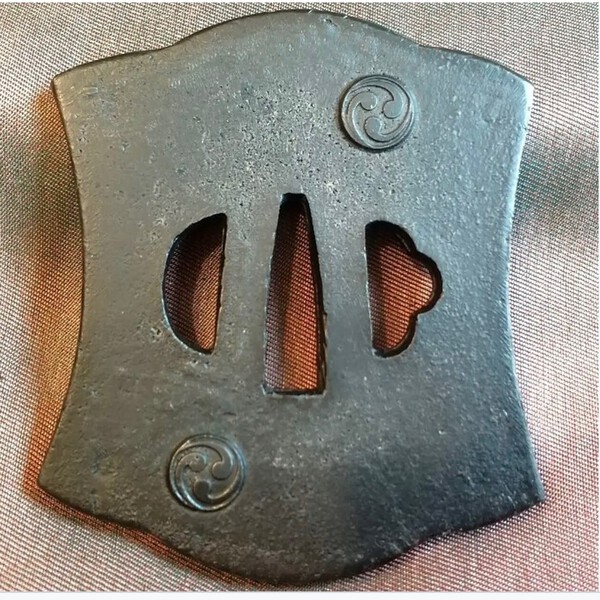
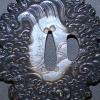
Hello! I came across such a tsuba as a bonus, I would like to know more. What are your thoughts?
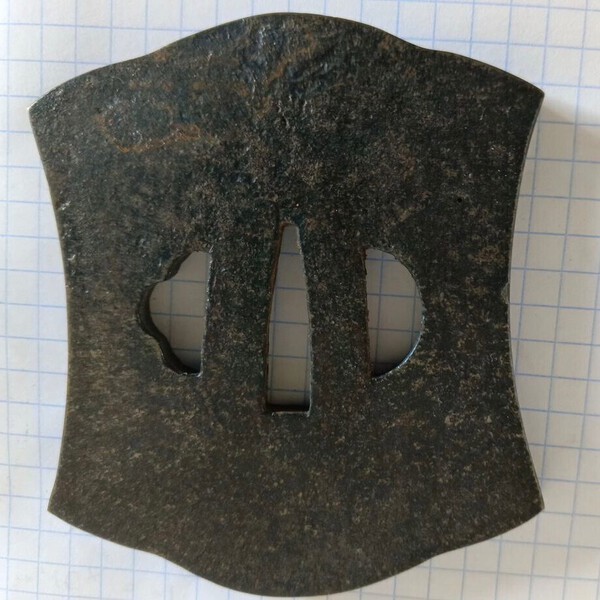
 1 point
 -
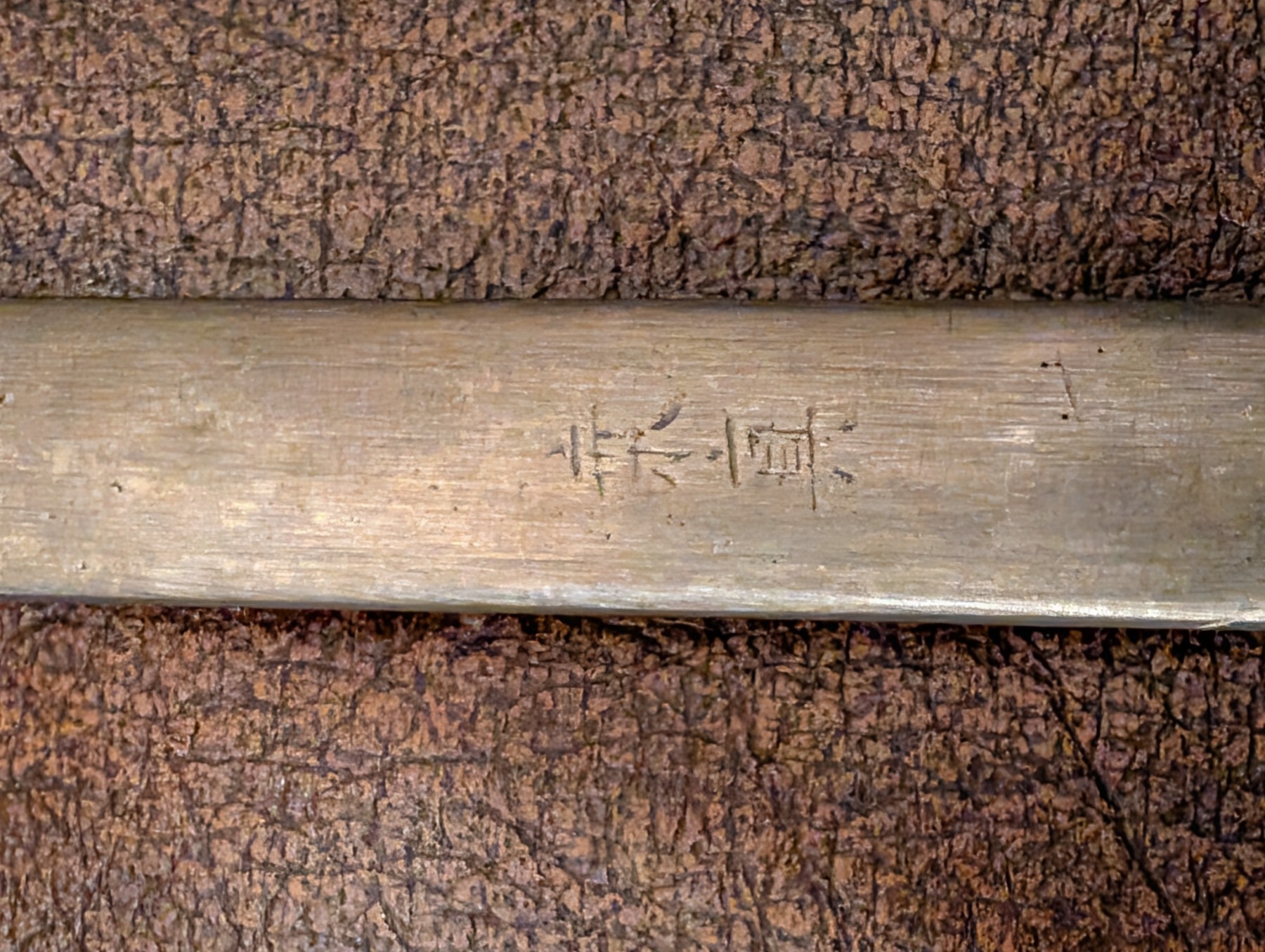
Hi all, I picked up a beautiful wakizashi not long ago and have just turned my eyes to it's koshirae and fittings. They seem to be edo fittings. The tsuba is very intricately made. I thought it was cast at first but on closer inspection it doesn't seem to be. I can't read the shosho signature very easily though. Tsuba aren't my field at all so any info would be appreciated


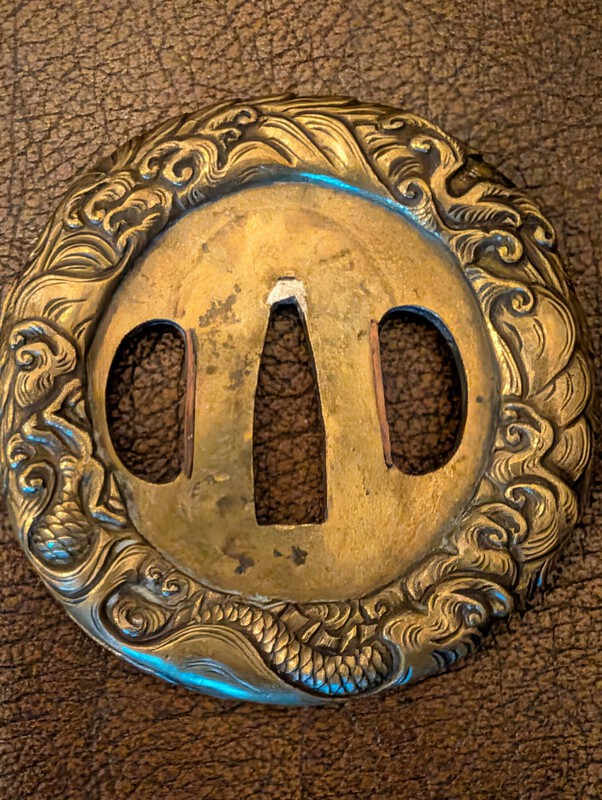

 1 point
 -
https://www.adams.ie/7068-lot-372-A-MUMEI-SAMURAI-SWORD-OF-WAKIZASHI-TYPE-Japan-the-blade-dating-to Auction estimate is in a pay grade beyond me! This guard is almost identical but not the same piece = Two the same, possible daisho? Or a popular pattern. Three makes me suspicious but they still look hand finished. They do make a modern fake version - of course! https://jp.mercari.com/item/m33685510648 $28 US. is a stupid price !!!
 1 point
 -
So far, I've only found one such instance.…
 1 point
 -
Well- 1500s iron, signed. If that doesn't happen, there is a very short list of other candidates. If any of them pop up, then one of them. They are rarer than 1500s signed iron. Got to hit them whenever those unicorns appear. Anyway you slice it, a tsuba probably in the low to mid 5 figures. I'd probably balk at anything costing more than the car I currently drive. On the flipside, most every tsuba I own was worth more than the car I drove up until April 2025...1 point
-
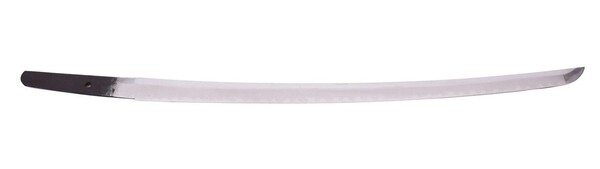
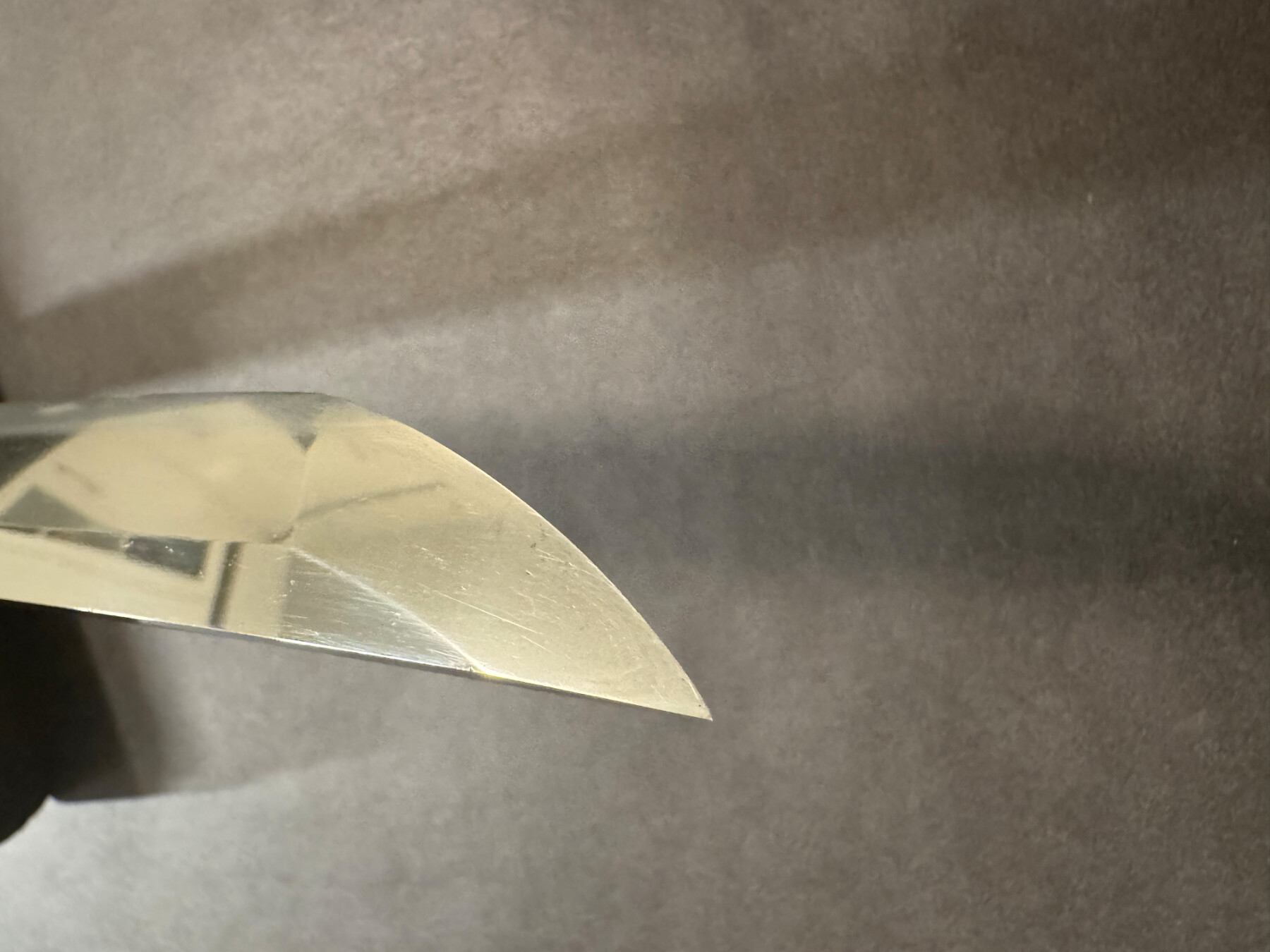
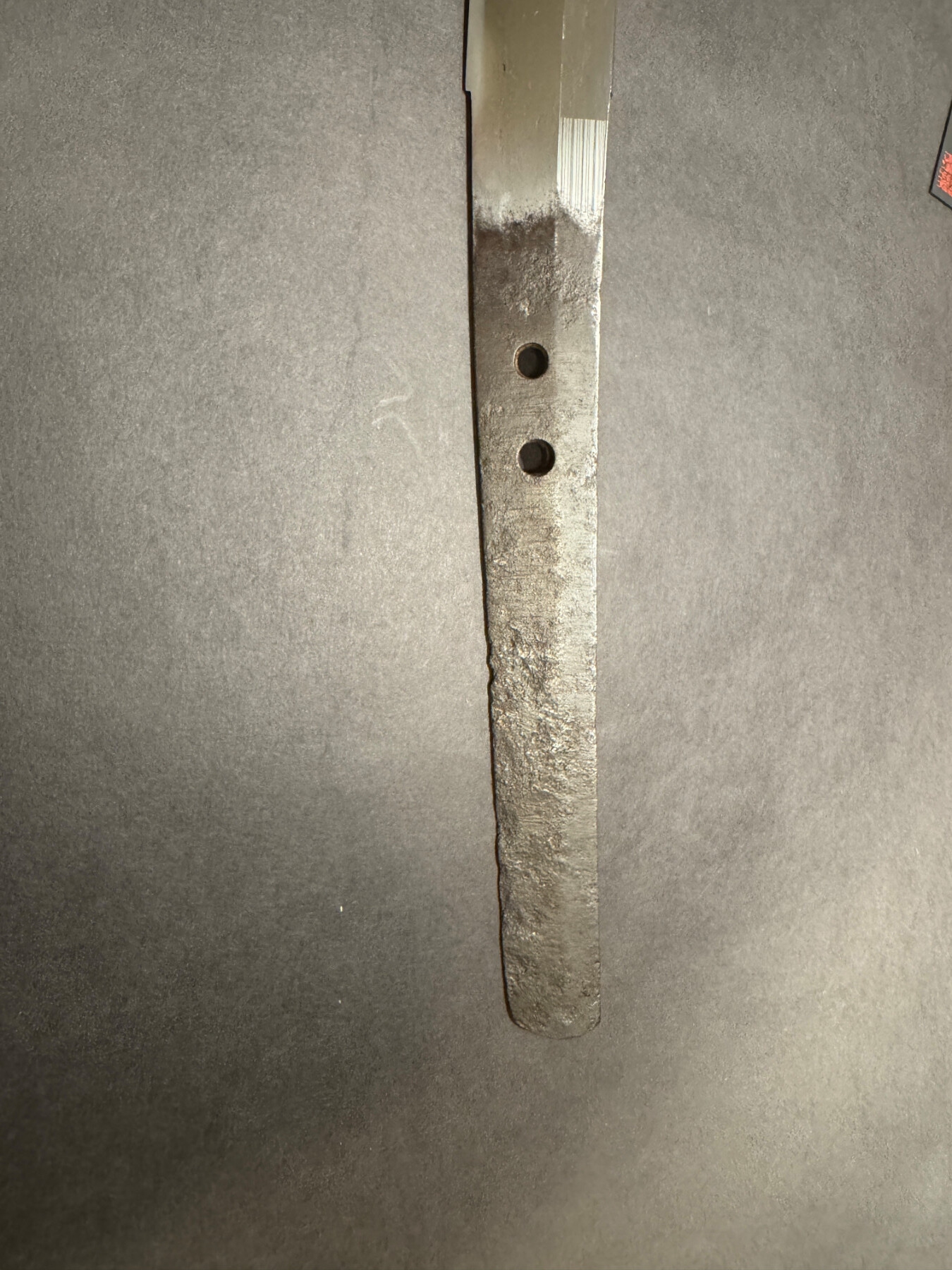
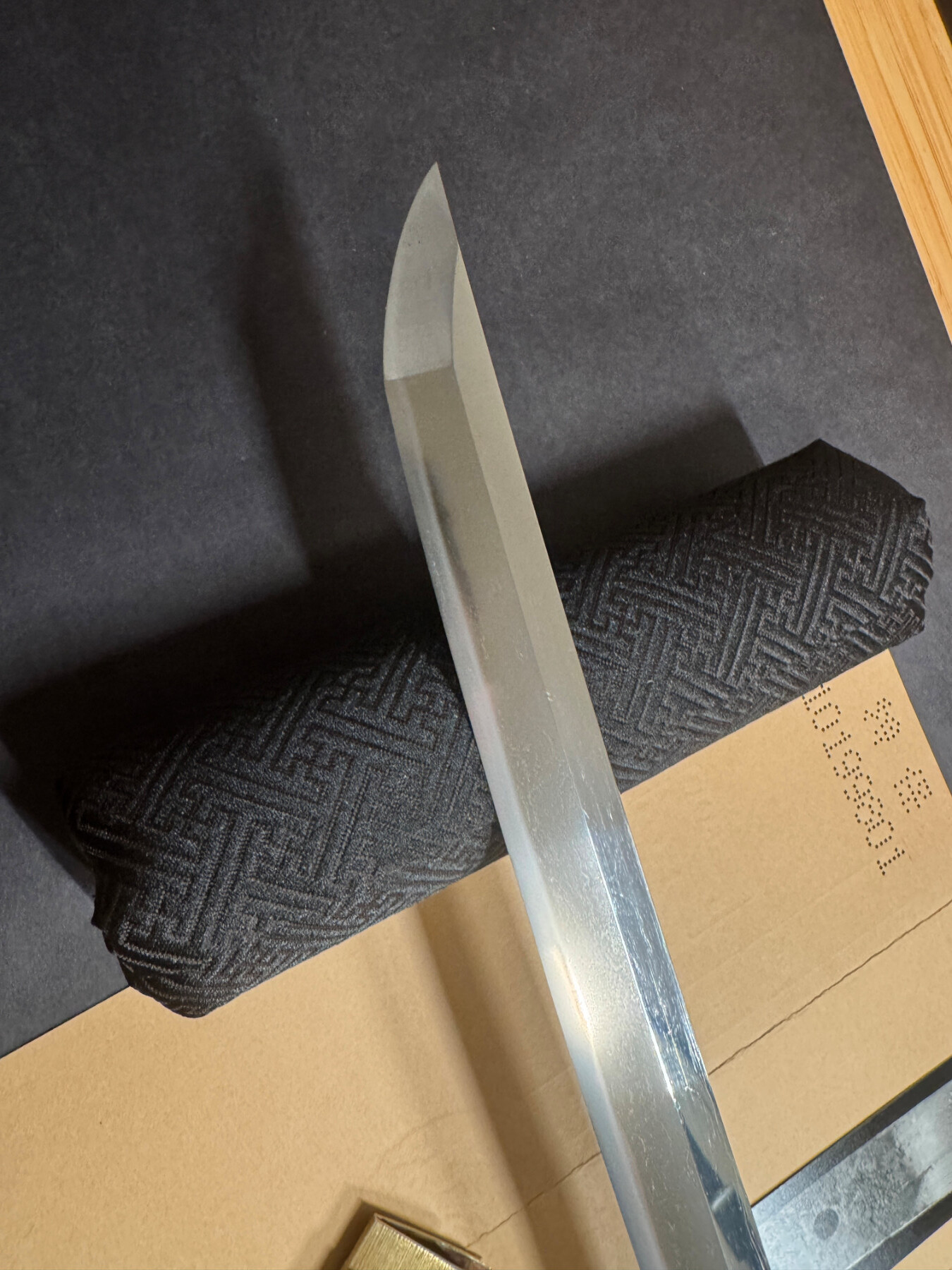
here are some poor pictures of the blade i took quickly today. Don't have it in hand so will get more later. Has a nice Mokume hada that isn't picked up well here, a few spots of tobiyaki, gassan.


 1 point
 -
1 point
-
Well, I hope to show it in April 2026. Consolidating up to Juyo level iron takes sacrifice.1 point
-
1 point
-
Check out: https://www.nihontocraft.com/Ko_Naminohira_Katana.html1 point
































This leaderboard is set to Johannesburg/GMT+02:00