
Leaderboard


Popular Content
Showing content with the highest reputation on 11/07/2025 in all areas
-
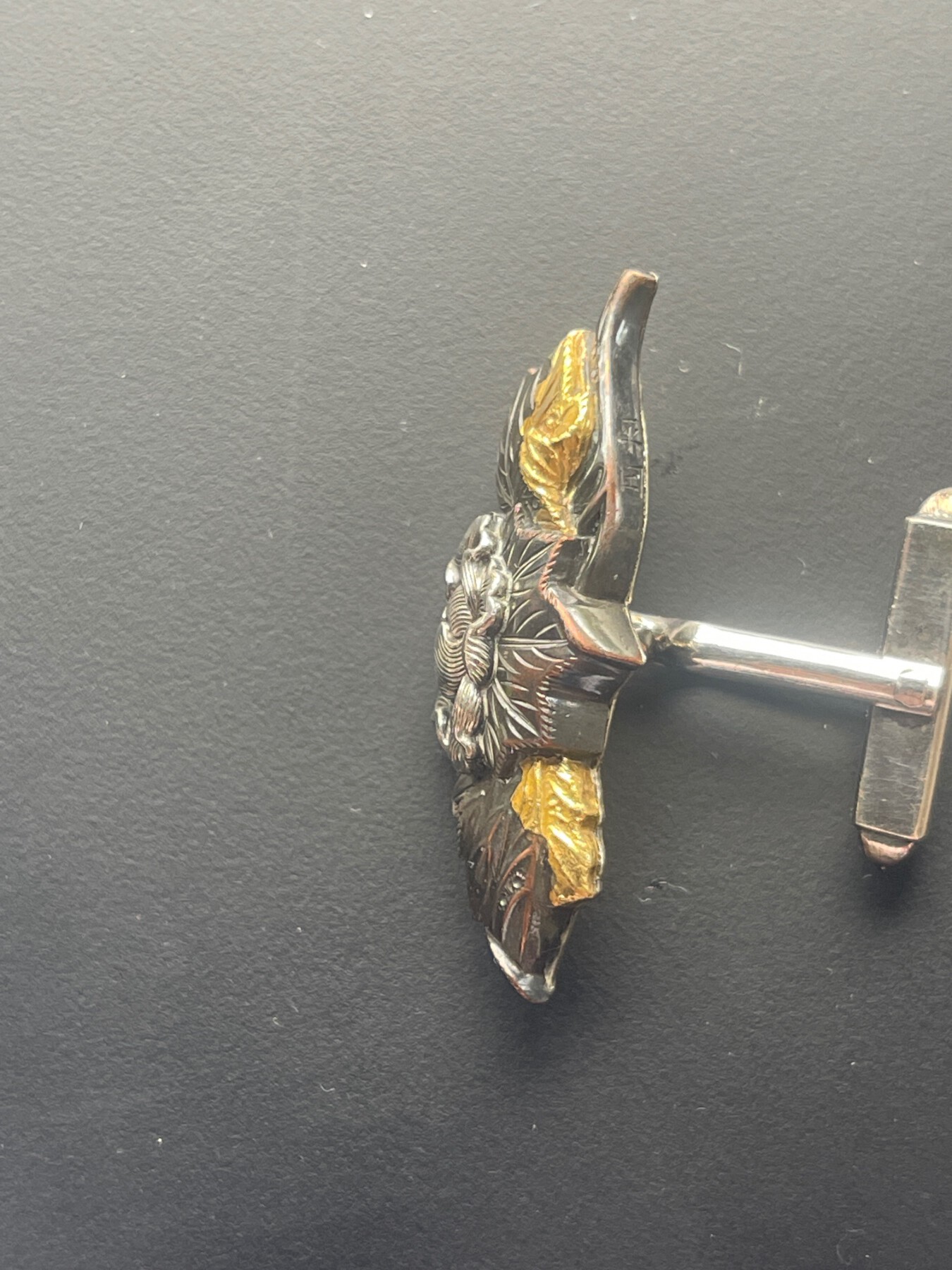
In this case, gilding is used. A gold emulsion is created, which is then heated until it turns red and hardens. This is a common method of gilding, as it uses less precious metal. Smaller elements are often inlaid. Large gold inserts are usually inlaid in exceptional-quality works. Sometimes, a thin gold plate is inlaid, and then the carving is applied to it. Often, you can distinguish the gilding from the pure insert by its color, as the patina on such parts, especially those that have been worn, is different and gives it away. I also recommend watching more Ford Hallam videos to gain a better understanding of the manufacturing processes for various Tosogu parts.4 points
-
There are so many I'm not sure if this one has been posted yet. Seller is calling it a "second type." Posting two pics - one of the seller's sword and one genuine so new folks can compare the differences. https://www.ebay.com/itm/157427026200? Regards, John C.

 3 points
 -
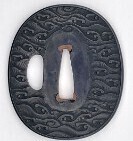
PREFACE This new series „Tsuba are beautiful - Kantei Series“ is dedicated to collectors, friends, and enthusiasts who appreciate genuine Japanese art as much as I do. I share my knowledge from today’s perspective, offering insights that may help when, perhaps in a hidden corner of your favorite antique shop—or even online—you come across a precious Tsuba that captivates you, though you may not yet know much about it. By following this series, you’ll learn to work methodically toward identifying unsigned Tsuba on your own. I hope it will be helpful for your future collecting journey and maybe even ignite the spark for new collectors to begin theirs. Please enjoy—and feel free to ask questions or share your opinions. Let’s discuss kindly and respectfully, whether you agree or disagree. Remember, collecting is a shared journey; respect for others’ views keeps our community strong. You will find the link here: Tsuba are beautiful - Kantei Series #01: “The Black Shakudo Tsuba - Ko-Kinko, Kyo Shoami or Soten?“ Enjoy reading! Best wishes, Tobi www.nihonto.art www.tsuba-no-kake.com
 2 points
 -
Same opinion. Most look real, but 1 image is not great. Rough look to some of them.2 points
-
2 points
-
An authentic antique Japanese sword, with a fake inscription for Inoue Shinkai. If the sword came from an online auction from a dealer in Japan with no papers, unfortunately this is a scenario that often results in purchasing a sword with some prohibitive reason that it is not received kanteisho (authentication papers).2 points
-
Most look real to me, but just based on 1 bad picture and not seeing the 2 sides in detail...and I am not an expert but some are here.2 points
-
This fitting was made by 尚兵館軍裝株式會社 Shōheikan Military Uniform Co., Ltd. The company specialized in cloth-wrapped and lacquered wooden scabbard fittings for military swords, and applied for (and obtained) a patent number for this design. P.S.: Swords forged by 23rd generation Kanefusa Fujiwara 二十三代藤原兼房, were sold exclusively through this company.
 2 points
 -
Hi Chris, 奈良正長作 – Nara Masanaga saku. Made by Nara Masanaga.2 points
-
Yup. I do a lot of silk dyeing with natural dyes, many sourced from the woods around me, and all of those guidelines are indeed useful to preserve color. Even so, some colors just fade. I'm sure the Japanese Dyers back in the day were fully aware of all these issues.2 points
-
Not easy to date, but my gut feeling says mid to, more likely, late Edo period… A nice add on are also the kirigane (ornamental cut iron plates) bordering the upper edges of the hand guards (tekkō). The construction of the upper part of the sleeves is, however, rather unusual. They are made without the common horizontal top plate (kanmuri no ita).2 points
-
I believe it is authentic and among the longest Yasutsuna tachi in existence today. It was featured as a reference item in 2019 Kasuga Taisha Yasutsuna & Ko-Hōki exhibition book. In the brief text for the book it is mentioned to have been shortened c. 10 cm making the original length of c. 90 cm. It was also in Japan in 2022 as part of The Heroes exhibition: https://shizubi.jp/exhibition/20220702_theheroes/220702_01_eng.php However I believe it was not among the swords that NBTHK authenticated for Boston Museum in 1976:2 points
-
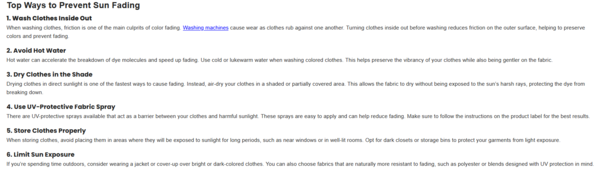
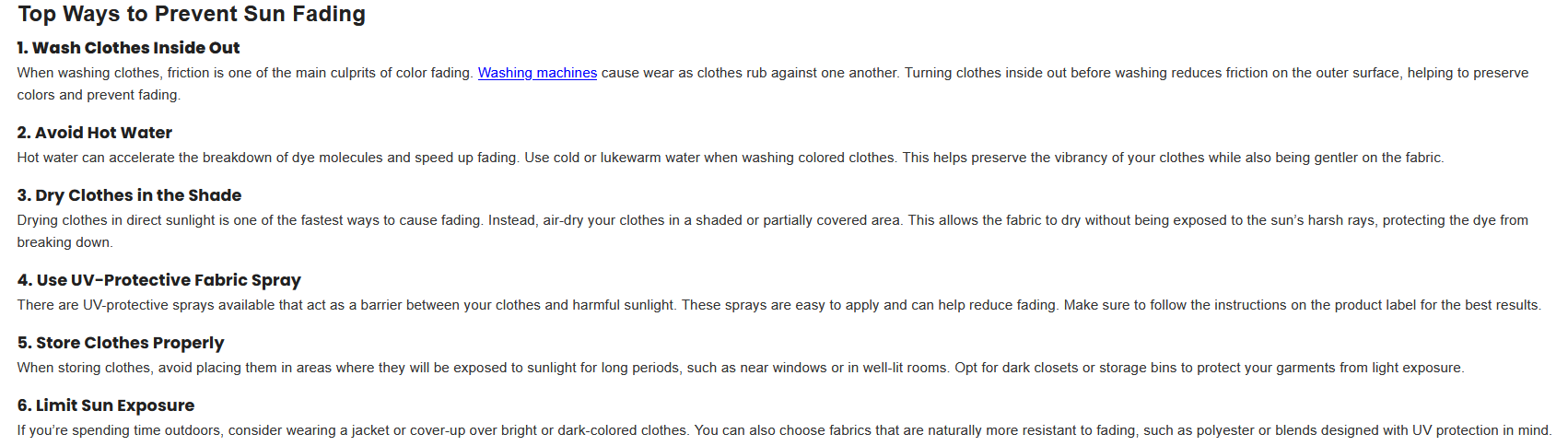
yep. for material science guys it is indeed logical. OFC since we use colorant stabilizers today the effect is much less than it was 100 years ago. https://fabrico.in/blog/best-ways-to-protect-clothes-from-sun-fading
 2 points
 -
Drying it in the dark makes sense to me. It allows a slower drying process itself and therewith the fabric absorbing the color better. The result is better resistance against bleaching our through the sun later on. Chemistry takes time. and hell yeah - it’s a mess! So outside is a must. Just know the effects from Kendo garments which are indigo dyed and subject of bleaching out quite quickly in the sun. So special cold water washing is required (or recommended) cheers, Tobi2 points
-
Hi all, This pair of kote have hijigane that have an internal storage space inside. They have a simple latch and hinge construction, and are gilt on the interior. I have not been able to find any mention of hijigane opening or having compartments within. Is this a common feature? What would have been stored inside the hijigane? Is this construction indicative of a special use, manufacturing timeframe, or other unique feature? I have attached photos of the kote below, as well as close ups of the hijigane (sadly, one is missing but the interior container is still there). Please let me know if you have any information regarding the hijigane or the kote as a whole (anything unique or indicative to a particular time or place) . Thank you for your help!


 1 point
 -
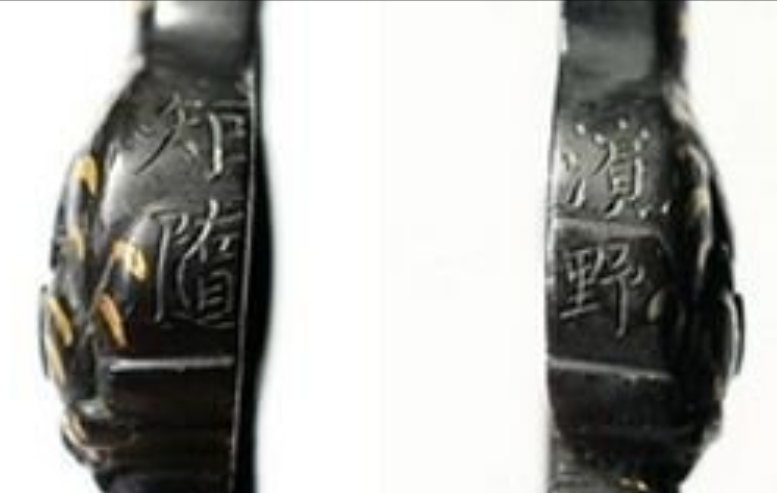
Hello I would be grateful if anyone could shed some light on a Japanese knife which belonged to my late father. I have attached a couple of photos, one of the signature on the back of the kozuka and one of the kozuka plus blade inscription. I can supply further images if required. Any info would be appreciated, such as date, maker, translation of blade inscription, etc. Many thanks in advance.

 1 point
 -
Thank you! I had noted the lack of the kanmuri no ita when comparing it to other kote examples. I am enjoying the multitude of decorative features on these kote. Along with the kirigane, the silk fabric is also very decorative, but it has worn or faded on the exposed parts under the chainmail. The fabric under the plates still has this decoration, and the motif includes small birds. The haidate of this armor has the same fabric decoration. I attached a picture if you are interested.

 1 point
 -
It is a Shinto wakizashi, from the early part of the Edo period.1 point
-
Its a wartime (WW2) blade and has a "seki stamp" which is a stamp on the tang of blades that identify they aren't traditionally made. Non-traditionally made typically means they aren't made from tamahagane and they aren't quenched in water (usually oil quenched hamon). There are more nuances beyond this but these are the 2 biggest factors. So if you want a war-time sword, this will fit your objectives. If you wanted a handmade, traditionally made blade made from tamahagane and with a water-quenched hamon, you'll have to look elsewhere. Since you're asking about 2 very different blades in your 2 photos, it might be best to first ask, what are you looking for?1 point
-
1 point
-
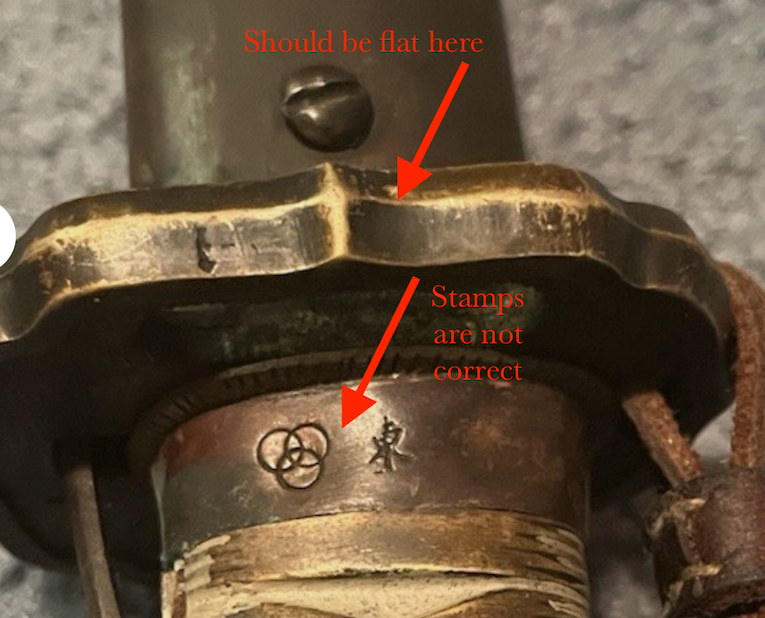
Here is a tricky one spotted on Facebook. The serial number is the biggest tell, although other details are pretty well done. It’s trying to be a pattern1 copper handle, but it does not stand up to scrutiny. Mekugi is wrong for pattern1, but I didn’t highlight that because sometimes you see that on repaired swords. -Sam


 1 point
 -
The quality of the nanako is quite good at first glance on your kozuka. If possible, take better photos from different angles and in larger sizes.1 point
-
Hello! I found a similar signature(mei) https://asahitoken.jp/contents/02_tosogu/details/tosogu-KZ/KZ084.html The author of Nao Kinao is Shoji Nara. According to the gold engineering book, Masatsugu is apparently a doujin with Masashiki, a disciple of Nara Masanaga, and is a metalworker in the mid-Edo period.
 1 point
 -
My bad … POOR info on my part, mea culpa! I think someone STOLE or lost the original trigger and trigger guard, so someone else (maybe?) just added parts to make it look real and complete. The barrel is breeched like a typical Tanegashima is, with the long breech plug. … pictures later …1 point
-
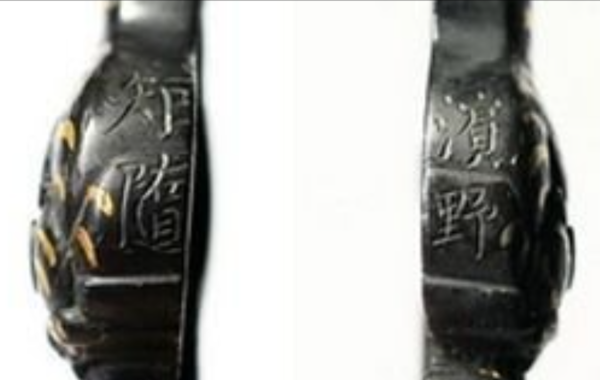
Hey Tosogu fans, I'm doing my usual thing and creating this thread to share my latest acquisition with the forum. I recently picked up this pair of tiger menuki on Jauce signed Hamano Noriyuki! The menuki are uncertified however they seem to match the Hamano school stylistically. A fine detail that caught my attention and convinced me to bid for these was the different purities of gold used in the stripes of the tigers distinguishing them from each other. Here is an enlarged photo of the signature from the original auction listing, followed by a photo of my own taken from my phone camera. Apologies for the less than stellar quality!
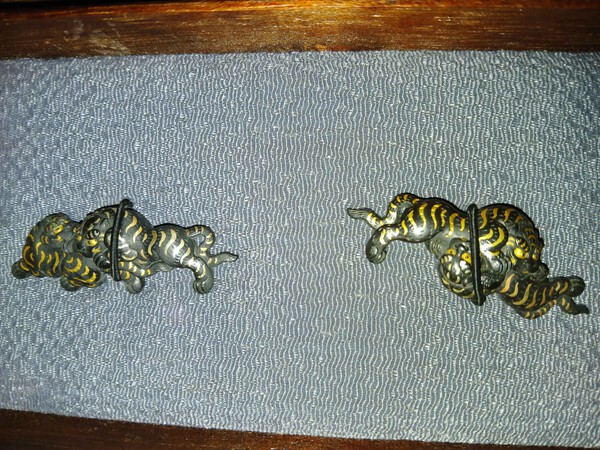 1 point
 -
Here are 4 Jūyō swords by Gorōzaemon Kiyomitsu that are currently for sale or have been in the past. Jūyō 15 - item 148: https://buyee.jp/item/jdirectitems/auction/r1205155585 Jūyō 15 - item 149: https://asahitoken.jp/contents/01_token/details/token-A/A_sd406.html Jūyō 45 - item 91: https://www.touken-sato.com/event/katana/2015/10/K-kiyomitsu_gorozaemon-01.html Jūyō 13 - item 121: https://www.token-net.com/juyotoken/juyo-20230501.html1 point
-
Thank you all for the informative replies. I learned a lot. I am sharing another of my high quality piece, signed Hirata. I wonder what technique was used for the gold on shakudo. Is it inlay? the contour is very sharply defined but I do not see chisel marks.
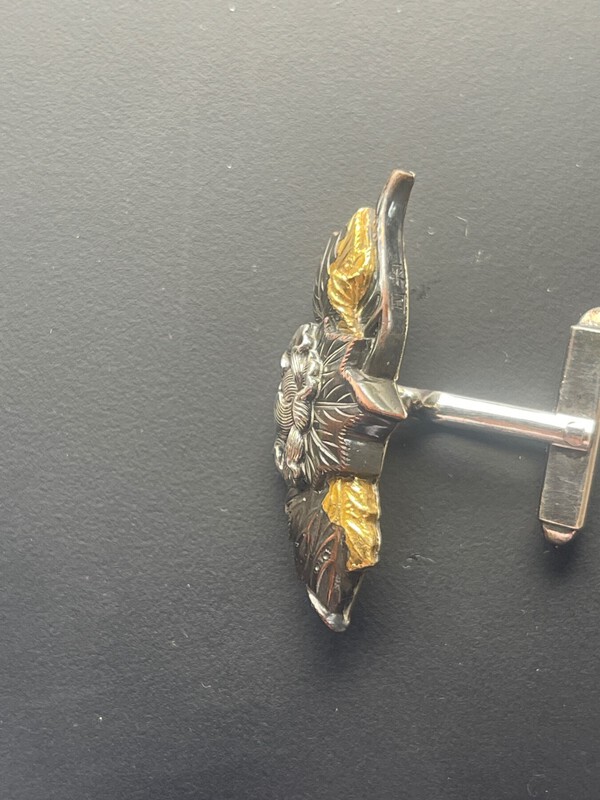 1 point
 -
The original shop is asking 3,600,000 yen for the Hosokawa Masayoshi At shop: https://bizenya-katana.com/?thoken=作陽幕下士細川正義造(刻印)-2 At Yahoo: https://buyee.jp/item/jdirectitems/auction/w1123570814 Just to be noted that some Japanese dealers do not deal internationally.1 point
-
Hello Steve, Like Moriyama-san implies, this dealer is reselling another shops inventory. This is a typical Yahoo Auctions reseller. You can also easily spot a Yahoo reseller when they have vastly different photographing styles in their listings. Greetings, Lex van der Jagt1 point
-
Johshuya(常州屋) is a part of an import-export company MOTOYA in Ibaraki. Ref. MOTOYA & CO . I suspect that Johshuya is not a professional sword shop but an export agent. A reliable dealer never reads 上野大掾 (Kozuke Daijo) as Ueno Daijo. The sword shop in the pictures you posted is Bizenya (備前屋) in Okayama. Ref. 備前屋 | 備前屋は岡山の刀剣専門店です。日本刀の通販、販売、買取を取り扱っております。1 point
-
The one shown here seems to be of higher quality than the two other versions. I wonder if it was the original that got copied…1 point
-
Hi Charles, one can find these compartments from time to time on the forearm of some kote. Oda-gote /Fukube-gote for example. In these cases, mostly the hyôtan-gane are designed to be opened. Often used for storing medicines, but also other things are imaginable. Recently I saw a pair of kote in which writing materials were stored on the left sleeve (ink stone and pen)… However, it remains a rare feature and I’ve to admit that I never encountered one on a hijigane…very cool!1 point
-
@Bruce Pennington Bruce: Not sure if you have this already or can use it, but thought I would post it anyway for others as well. This pic is from Modern Swordsmiths (Kapp). My understanding is that the lower grade tamahagane was for core steel and the higher grade was for the edge (outer skin). But I'm sure I'll get corrected on that! John C.
 1 point
 -
Yes, that's right. It becomes perfectly clear when you see it in person. You can tell by the sharp, straight contour lines. Sometimes you can even see the incisor mark (about 50-100 microns thick) When a coating is applied, the contour becomes slightly blurred, and under magnification, you can see the difference in thickness.

 1 point
 -
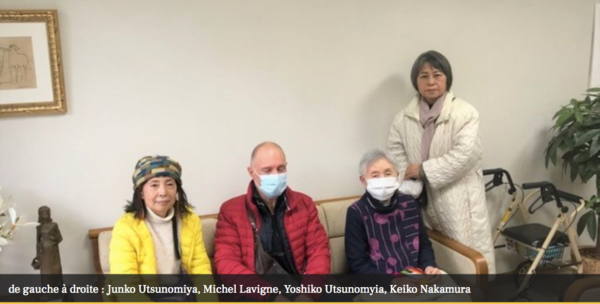
In 2023, a french guy, Mr LAVIGNE, was able to return a Gifu or Showa stamped Type 3 showato (not even a nihonto) to the owner family. He bought the sword at an auction in Tours (France) without knowing what it was. Then he decided to return the sword to Japan. It was even on a local Japanese TV news. So never say never... https://quinzaine.japonoccitanie.fr/evenements/temoignage-echange-la-belle-histoire-du-retour-dun-sabre-au-japon-par-michel-lavigne-et-madame-marie-fiton-presidente-de-lassociation-les-amis-de-nishinomiya/


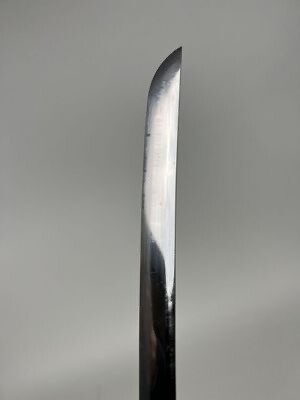


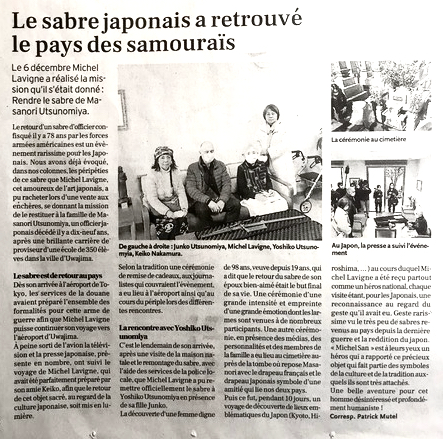
 1 point
 -
That kabuto looks awful1 point
-
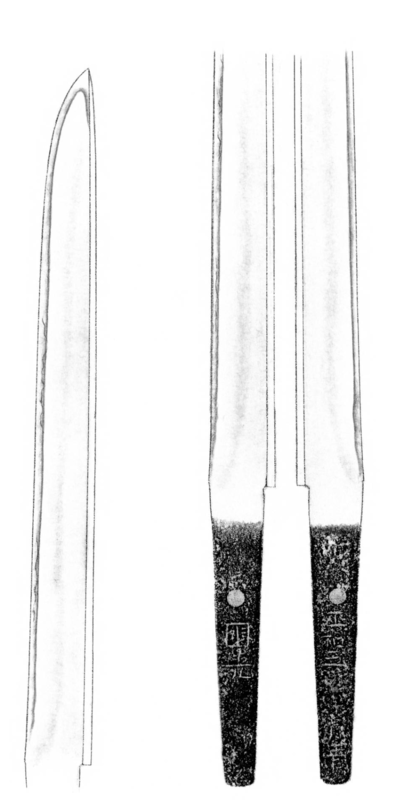
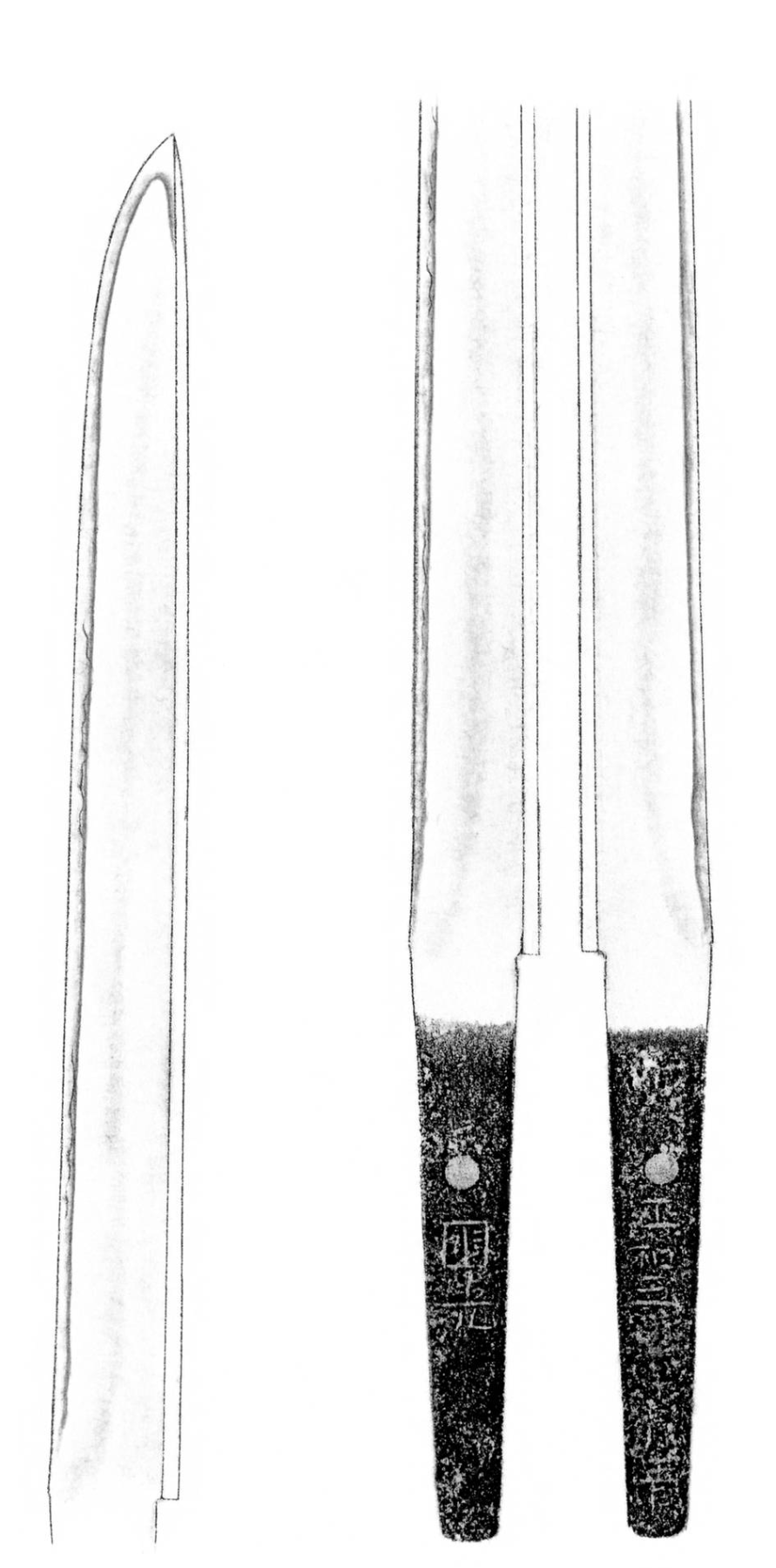
The oshigata of this blade, Jūyō Shinsa 49, just as a reference.
 1 point
 -
I finished examining the Saka and Star stamped files On the two questions: 1. Was there a pattern of hamon changes over time - Not that I could see. Yes, toward the end of the war, the hamon was harder to see, but I believe it was still there. Why the late war blades tended to be in worse condition making it harder to see, I can not say. 2. The "standard" steel, light tan saya - They don't seem to have shown up until 1943. The RJT seem to adopted their own version - a medium tan, steel saya with 2 buttons in Feb 1943, and then really took off in 1944-1945. RS in general, are seen as early as May 1942 with RJT blades, custom fittings, 2 buttons. So the quality RS fittings are actually seen a year earlier that the cheaper, no frills RS called for in the original design concept! Black RS saya started showing up in 1943. I documented a couple that even were in late war quality fittings, but there were more than I noted (exhaustion has set in, sorry), two with only one button. Saka Stamped Blades [Note: Not charting when saya not shown] 1944 No Date Nagamitsu Not Shown Custom, 2 button Medium Brown N.D. Nagamitsu Wavy Custom, 2 button Medium Brown N.D. Nagamitsu Wavy Custom, 2 button Dark Brown N.D. Nagamitsu Wavy Custom, 2 button Black N.D. Nagamitsu Wavy Custom, 2 button Dark Brown N.D. Nagamitsu Suguha Custom, 2 button Black N.D. Nagamitsu Wavy Custom, 2 button Black Star Stamped Blades [Note: Not charting when saya not shown] [“Standard” denotes steel saya and Tan color] 1941 NONE 1942 May Akiyoshi Wavy Custom, 2 button Medium Brown Oct Akiyoshi Wavy Custom, 2 button Medium Brown Dec Nobutake Not Shown Custom, N.S. Dark Brown 1943 Jan Akihisa Suguha Custom, 2 button Medium Brown Jan Kaneyoshi Wavy Custom, 2 button Black Feb Chikafusa Suguha Custom, ? button Medium Brown Feb Tsugukiyo Wavy Custom, 2 button Black Feb Tsugunobu Not shown Standard, 2 button Medium Tan Mar Kiyokatsu Wavy Custom, 2 button Lt Brown Mar Nagamitsu Suguha? Custom, 2 button Black Mar Tsuguhiro Wavy Custom, 2 button Medium Brown Spring Sukenobu Suguha Custom, 2 button Dark Brown Apr Kanehisa Suguha Custom, 2 button Medium Brown Apr Mitsuhiro Suguha Custom, 2 button Medium Brown May Nobutake Suguha Custom, 2 button Medium Brown May Sadakiyo Wavy Custom, 2 button Black Jun Chikafusa Wavy Custom, 2 button Medium Brown Jun Hirotoshi Wavy Custom, ? Medium Brown Jun Nagatoshi Not Shown Custom, 2 button Black Jun Nobutake Wavy Custom, 2 button Dark Brown Jun Sadakatsu Not shown Custom, ? Black Jul Munetoshi Wavy Custom, 2 button Black Aug Akimitsu Wavy Custom, ? Medium Brown Aug Akinori Wavy Custom, 2 button Medium Brown Aug Kanehide Wavy Custom, 2 button Medium Brown Aug Zuiho Wavy Custom, 2 button Dark Brown Aug Zuiho Wavy Custom, 2 button Black Autumn Katsukiyo Wavy Custom, 2 button Dark Brown Sep Masanaga Suguha Custom, 2 button Dark Brown 1943 Zuiho Suguha Custom, 2 button Black 1944 Jan Akiyuki Wavy Custom, ? Dark Brown Feb Kaneoto Suguha Custom, 2 button Black Feb Sadaroku Wavy Custom, 1 button Black Feb Sukenobu Wavy Custom?, 2 button Black, late war Feb Zuiho Suguha Custom, ? Black Mar Kaneoto Suguha Custom, 2 button Black Mar Kazunori Wavy Standard, 2 button Medium Tan Mar Masanaga Wavy Custom, 2 button Black Mar Masashige Suguha Custom, 2 button Dark Brown May Kiyokane Suguha Standard, 2 button Medium Tan May Masatomo Wavy Custom, 2 button Black May Masatsugu Wavy Custom, 1 button Black Late war May Masayoshi Wavy Custom, 2 button Black Jun Kanehide Wavy Custom, 2 button Black Jun Kanetoshi Wavy Custom, 2 button Black Jun Masakuni Wavy Custom, 2 button Black Jul Kaneshige Wavy Standard, 2 button Medium Tan Jul Kanetoshi Wavy Standard, 2 button Medium Tan Jul Tomonari Suguha Custom, 2 button Medium Brown Aug Hidemine Suguha Custom, 2 button Dark Brown Aug Kanehide Suguha Standard, ? Black Aug Kanemitsu Wavy Standard, 2 button Medium Tan Aug Kanemoto Suguha Custom, 2 button Black Aug Kanemoto Suguha Custom, ? Black Aug Masamichi Suguha Standard, 2 button Dark Tan Aug Sadashige Not shown Custom, 2 button Black Sep Mitsunobu Wavy Standard, 2 button Medium Tan Sep Sukenobu Wavy Standard, 2 button Medium Tan Oct Kanefuji Suguha Standard, 2 button Medium Tan Oct Masaharu Not shown Custom, 2 button Light Brown Oct Masayoshi Wavy Custom, 2 button Dark Brown Oct Sadashige Suguha Custom, ? Black Dec Mitsunobu Suguha Standard, 2 button Medium Tan 1944 Kanemitsu Wavy Standard, 2 button Medium Tan 1944 Masashige Suguha Custom, ? Black 1945 Jan Akitomi Wavy Custom, 2 button Black Jan Kanetomo Suguha Standard, 2 button Medium Tan Feb Kanehisa Wavy Standard, 2 button Medium Tan Feb Kanetomo Suguha Standard, 2 button Medium Tan Feb Kanetoshi Suguha Standard, 2 button Medium Tan Feb Mitsunobu Wavy Custiom 1 button Black Mid Spring Kanetomo Suguha Standard, 2 button Medium Tan1 point
-
For what it's worth you sometimes see a similar overall composition of a Kitsune admiring its reflection under moonlight.1 point
-
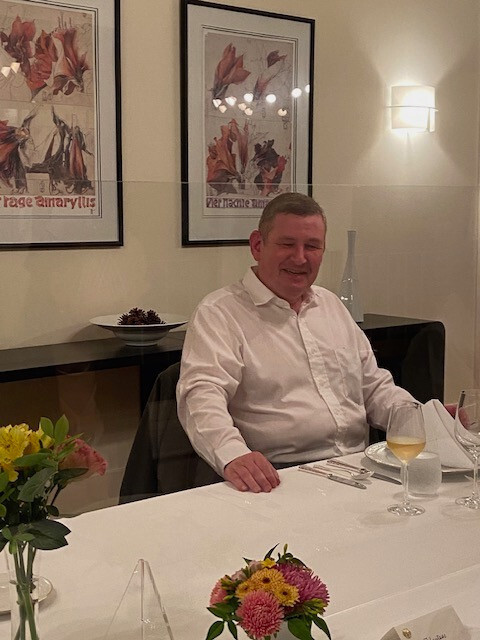
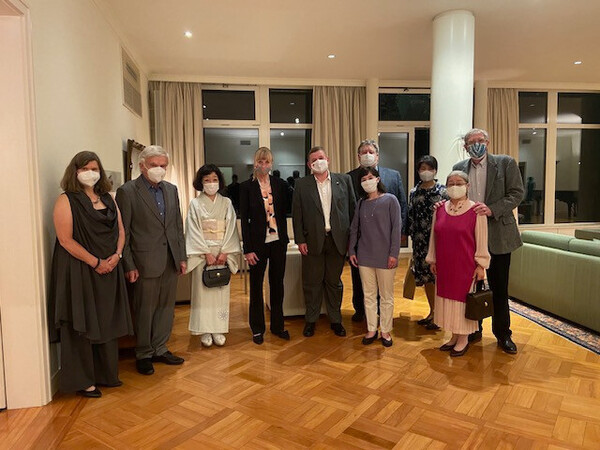
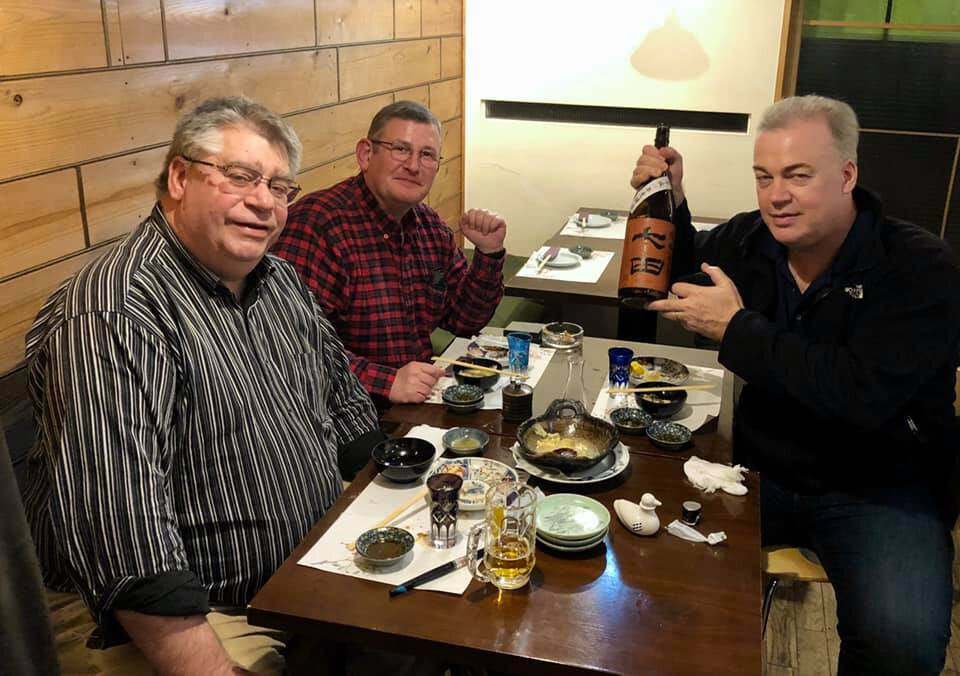
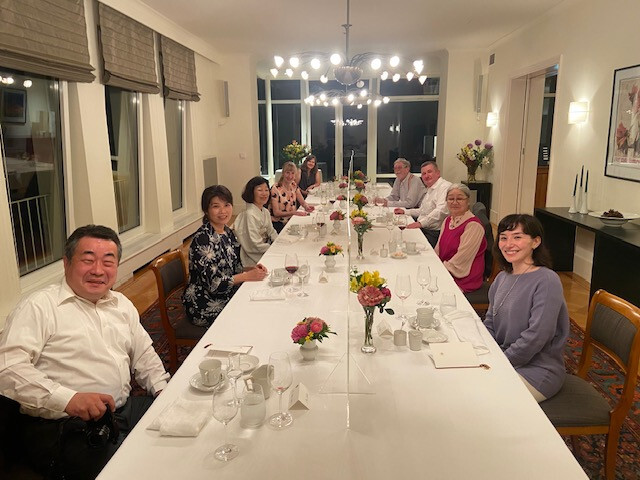
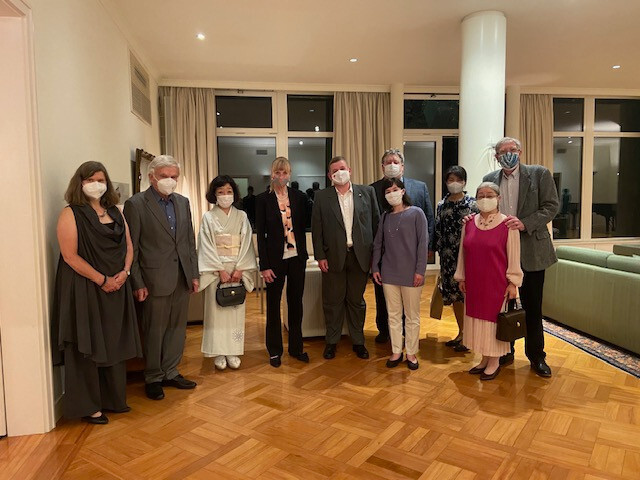
With a heavy heart from a recent phone call from Minako Schiller, I wish to report that Guido has taken his leave from this plane of existence! Guido was an early and a long time member of NMB! From his posts, you will recall he was not shy and well... he called a Panzer ... a Panzer! As a career diplomat, he served the German Embassy as an Attache in several Asian countries. He greatly enjoyed his two postings at the embassy in Tokyo. This was certainly his sweet spot because he was very much at home in Japan. In all our years of associating in Japan, I cannot recall a time when we didn't imbibe when meeting. any occasion was an opportunity or an excuse for a Kampai! We had no illusions of grandeur... it was either beer or nihonshu... or beer then nihonshu. We traveled a lot together domestically but only once internationally when we ventured over to Macao! Suspicious minds out there... I know what you are thinking! No, it was not to gamble! We had been invited to attend the gala events for the opening of the History of Steel in Asia Exhibition at the newly opened Macao Art Museum (MAM). Guido, Roger Robertshaw, and I were honored guests for we contributed the entire display of Japanese swords, tsuba, and armor for the three month exhibition. All our items from Japan were shipped through the Embassy diplomatic channel. Edged weapons from seven Asian countries were on display as the Chinese government made their pitch to demonstrate the historical importance of their homeland in the development of edged weapons. Guido was an avid collector! When he was stationed in New York at the United Nations, he collected some fine Civil War firearms including a nice Sharps rifle, a Henry rifle, and several cap and ball revolvers. While in Jakarta, he put together a collection of Kris blades, and in Japan he was in Nihonto heaven and he developed a netsuke collection as well. In mid 2021, during Covid, Guido was recalled to Germany to take his final posting for his remaining two years prior to retirement. To this end, the Ambassador of the Federal Republic of Germany, Her Excellency Ina Lepel sent out a limited number of invitations for the farewell dinner for Mr. and Mrs. Schiller held on May 17 at 7 p.m. at her residence. During this solemn period of emergency pandemic privation, on the day in question, my wife and I made our way to the German Embassy to determine if there really was cause for celebration and if the rumors were true. In fact, Her Excellency Ambassador Ina Lepel, had indeed made great arrangements to send Guido and Minako Schiller back to Germany. It had not been determined if this action resulted from an infraction or if it were a benevolent gesture. It was entirely possible that Attache Schiller had been doing good work and this reassignment was, in fact, a reward. Yet, was it a reward to send a man home to sausage and sauerkraut after years of eating Tokyo’s finest sashimi and raw oysters? Is it even possible to willingly give up the range of heavenly sake found in Japan? What hypnotic spell could shots of Apfelkorn or Rumpel Minze Schnapps have over the infinite variety of locally brewed sake? To this day, these questions remain unanswered… unsolved mysteries and unanswered questions to compete with Guido's speculation on the missing Masamune sword. Like a Teutonic knight, loyal to the order, Herr Schiller was indeed packaged up and moved to his ancestral home. Unfortunately, the final stage of Guido's employment was not completed. He suffered a massive stroke and fell into a coma from which he never recovered. He remained in this state until October 10th, 2025. He is now only with us in our memories of his deeds, a man who served his country well as he rose to officer level in the army and then entered diplomatic service. Of greater importance was his service to his family, to his wife Minako and his daughter Hana. Sadly, Guido never got the opportunity to play with his new granddaughter. Guido is greatly missed... by me... his drinking buddy... I mourn this loss!



 1 point
 -
I want to hint to the plants on the reverse: on the left is hagi (bush clover), on the right we see silver grass or obana, both connected with the end of summer and the beginning of fall. The motif on the rolled up fabric comprising a dragonfly and apparently nanakusa (seven herbs), also autumnal symbols. Maybe this time of year helps to indentify the strange tool?1 point
-
Bit more research……..I think it probably is silk dyeing in the moonlight. My kind of romantic subject! Just behind the hut can be seen what might be some sort of bamboo drying (?) frame…a bit dilapidated? Apart from admiring the actual craftmanship, there is much fun to be had in trying to figure the subjects, yes? Thanks to you all.
 1 point
 -
Julian, to myself the sword is part of your family history now and you are the owner of it, this is a fascinating part of your grandfathers past and I would suggest not returning it to Japan, I have heard many times the Japanese do not wish to have the swords back and there is usually an exodus of swords from Japan rather than into it. the sword may not have been unwanted, but after the war, swords were taken from Japan, especially to the USA en masse. keep it as a legacy, learn more about it and your grandfathers service history. I think for many of us, things like this are what started our hobby in collecting and preserving these swords.1 point
-
I would take Grey up on his offer. He's too modest. He knows more than most of us here, and will be able to guide you properly. I agree with the statements above about returning swords. The successful ones are by far in the minority, and most modern Japanese do not want reminders of this past, and regard these as weapons. Plus the logistics are considerable. Preserving and researching it would be a fitting tribute. Nice sword that does deserve some research, and appears in decent condition.1 point
-
Hi Julien, Here you will find a Care and Cleaning lesson. https://nbthk-ab2.org/sword-characteristics/ Unless you know all this already you should read it. I'm nearby in Duluth; if I can help let me know. I'm no authority but I have been studying for 40 years. Grey1 point
-
Hi Julian! You have quite an interesting sword, there. The all-brown tassel was used by the civilian branch of the military called Gunzuko. You can google that and learn about them, but they did support functions like maintenance, admin., officer training, and many more functions. See Nick Komiya's discussion on the brown tassel here: The All Brown Tassel. But the sword fittings are not war fittings, but for a presentation sword. The style is called "tachi" and was seen during WWII as presentations in various context. My final point is that the signature, or "mei" as it is called, includes a kakihan, or kao, at the end that I have not seen before. There are 6 WWII smiths listed in Sesko's book with the Masatsugu name, but not with this mei. But that is not unusual as Sesko's book does not show 100% of the swordsmiths working during the war. It is possible your sword was the Suishinshi Masatsugu of the 1800's but that would require evaluation of the Nihonto experts. Here is the bio on him: "MASATSUGU (正次), Tenpō (天保, 1830-1844), Musashi – “Kawabe Hokushi Suishinshi Fujiwara Masatsugu” (河部北司水心子藤原正次), “Ushū Yamagata-sh Masatsugu” (羽州山形士正次), “Suishinshi Masatsugu” (水心子正次), “Tatebayashi-shin Kawabe Suishinshi Fujiwara Masatsugu” (館林臣河部水心子藤原正次), “Masatsugu” (正次), “Masatsugu saku” (正次作), real name Kawabe Hokushi (河部北司), gō Suishinshi (水心子), he was the son of the 2nd gen. Suishinshi Masahide and succeeded as 3rd gen. of this lineage but without using the name Masahide, his father died early so he had to finish his apprenticeship under Taikei Naotane (大慶直胤), he also married Naotanes daughter and worked for the Akimoto family (秋元), the daimyō of the Tatebayashi fief (館林藩), but from Edo´s Shitaya-Kachimachi (下谷徒町), he died on the eleventh day of the third month Man´en one (万延, 1860), he was well versed in all traditions and hardened for example a narrow kō-chōji-midare in the Bizen tradition or a chū-suguha- – 573 – hotsure in the Yamashiro tradition, sometimes Honjō Yoshitane (義胤) carved horimono onto his blades, we find also works with a kijimomo-gata nakago, the yasurime are kiri and he mostly signed with a kaō, jō-saku"1 point
-
Let me just say afew words with out derailing your wishes. Its not a Gen grade shingunto, its a showa period ceremonial tachi mounts of lowish quality. The hole silly idea of returning swords to Japan is in 99% of all cases/stories is a fantasy. Most people in Japan have very little interest in nihonto or having there history reopened. If it was me just keep it, its worth more to your family, then the others, if if if you ever find them. Because there are literally 10 million stories of general swords.1 point
-
Thanks so much for your replies and advice! Those are very good points to consider. I suppose my first step is finding the family and reaching out to them. I'm not tied to the idea of returning the sword, especially if it were unwanted (or perhaps even rude to return such a gift), the shrapnel may be a more significant item to bring in that regard anyway. On this forum I came across a very similar story to mine that was made into a documentary (A Doctor's Sword, https://tubitv.com/movies/596823/a-doctor-s-sword). Here are some more pictures, let me know if you notice anything, and if you'd like to see anything in particular. Is it possible to know the rank from the tassels?


 1 point
 -
You can't be serious. You have any idea what Mishina sensei charges for a polish? Then add the papers. Did you miss the mukansa level koshirae? Hiroshi Miyajima is literally mukansa for habaki since 1998 and his work is usually on National Treasures. I'm not going to guess a price, but I bet you wouldn't come much under the reserve if you had this all done.1 point
-
Well, I see nothing special based on the pictures... nothing that could justify the price. "Ikkansai Masazane of Morioka" also doesn't ring a bell.0 points








.thumb.png.4c5df79fec171b2dc4a23af38e280a4d.png)















This leaderboard is set to Johannesburg/GMT+02:00