
Leaderboard




Popular Content
Showing content with the highest reputation on 09/15/2025 in all areas
-
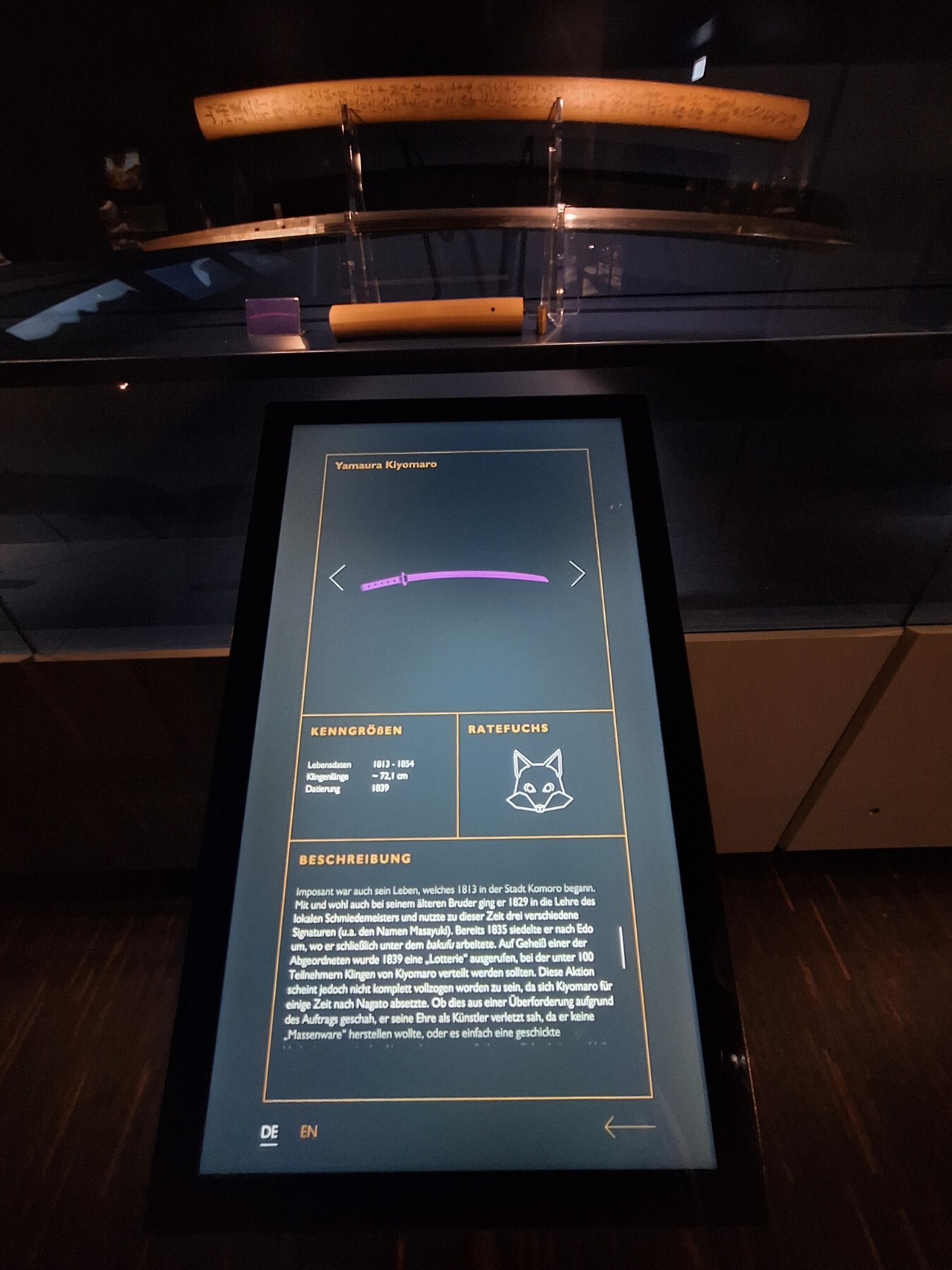
With Georg's (Promo) permission, here is a little reminder of Masayuki (Kiyomaro) exhibited at the Berlin Samurai Museum. The sword will be on display in the museum's blade room until next spring and is probably the only work by Masayuki (Kiyomaro) on public display in Europe. (I'm not sure, but currently Kiyomaro is probably only on display at Touken World in Nagoya. However, I'm happy to be corrected). Next to Masayuki, his great rival Koyama Munetsugu stands peacefully side by side, along with other works from the Shin Shinto period, which “round off” the picture of this last phase of the Edo period in terms of sword smithing. So if you happen to be anywhere near Berlin, Germany, you should take the opportunity to visit Masayuki here.


 8 points
 -
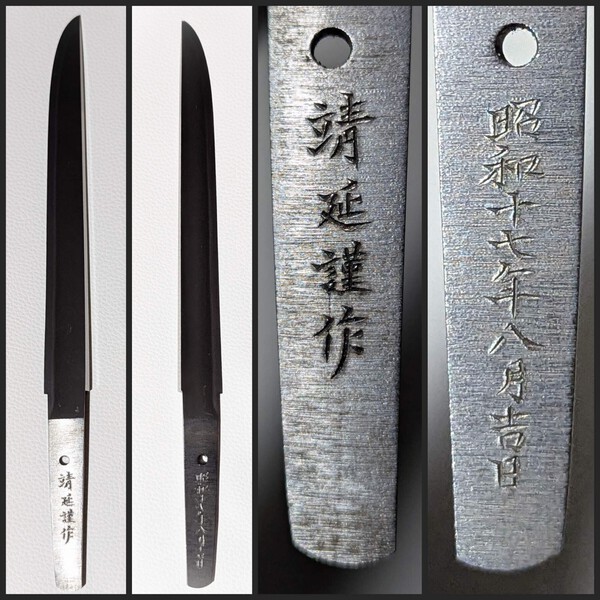
Yasunobu kinsaku tanto dated a lucky day in August, 1943. A lovely Yamashiro-den utushi-mono with ko-itame jihada and suguha-based hamon in ko-nie. Bio below courtesy of Markus Sesko. Price: $4,500 + shipping YASUNOBU (靖延), Shōwa (昭和, 1926-1989), Yamagata – “Murakami Yasunobu kinsaku” (村上靖延謹作), “Yasunobu” (靖延), real name Murakami Ensaku (村上円策), student of Ikeda Yasumitsu (池田靖光), he made about1,000 blades for the Yasukuni forge. Murakami YASUNOBU 村上靖延, given name Ensaku 円策 was born in April 24th, Meiji 40th (1907) in Yamagata prefecture. He joined The Nihonto Tanren Kai foundation (NTK) 日本刀鍛練会 in December 15th, Showa 8 (1933) with his chief master smith Ikeda YASUMITSU 池田靖光. After 5 years' practicee, he was given the official smith name YASUNOBU 靖延 by the War Minister, Itagaki Seishiro 板垣征四郎 in January 11th, Showa14 (1939) and played the chief role till the dissolution of NTK Showa 20th (1945) in the end of the War. Chairman awarded in the 2nd official military sword exhibition in December 21th, Showa19 (1944). Article below from to-ken.uk: "It was customary that swords were sometimes given as gifts by the emperor to graduates who attained distinguished grades at the Imperial Army Staff College and the Imperial Naval College. Known as “Onkashi-to”, katana were given to the Army whilst the Navy had tanto or daggers. These were swords of superior quality and the weight and dimensions, including the curvature, were very specific. After the inspection agreed that they were worthy of being Onkashi-to the smith was allowed to sign the sword and added the characters KINSAKU after his name, meaning “Respectfully made this”. Unlike normal work, the name inscription seems to have been made below the mekugi-ana or tang hole, on these swords. Of course as an Army organisation, it was unusual that even tanto blades would be made for the Navy, but this was because the official smith of the Imperial Naval College, Horii Toshihide, had become very ill and was unable to forge blades. Of course, it was a great honour for a swordsmith to have his work recognised as Onkashi-to. " https://to-ken.uk/onewebmedia/YASUKUNI.pdf


 5 points
 -
Not sure why this tsuba is 'Tosho' instead of 'Ko-Tosho'. (a) Maybe the NBTHK sees something I don't. (b) Papers are from 2017. It might be a paradigm shift where 'Ko-Tosho' is now considered pre 1500? (c) Maybe the current NBTHK is just being gutless. Since about 2014, I've been less confident in NBTHK papers. To me, earlier papers mean (a). Since then, I seem to find a fair number of NBTHK papers are more (b) or (c). I finally got around to doing another shinsa after a few years pause. About 50% of the items [without previous papers] came back 'Horyu'... One of the mumei ones is a well known tsuba posted in a NBTHK publication.... Do I have to remind them what they wrote 20 years ago? so I think (c) is on the rise. What is the value of non-opinions? I really miss the (a) years. -Curran3 points
-
The conversion can be done very easily using a calculator that every mobile phone has today Let's say blade 2 shaku 4 sun 7 bun use 30.3 x 247 and in the result you will move the decimal point by two places3 points
-
Zoheito, non traditional, mass produced blade (like the type 95) in good quality type 98 (suya shoten) mountings. Also mentioned on ohmura study net3 points
-
Outside Japan the Berlin Samurai Museum is the best permanent venue in the world (IMO) to see nihonto, tosogu and katchu. Beautifully organized and presented top level pieces such as this Kiyomaro. Puts other venues like London's V&A to shame. I will be sure to revisit over the winter.3 points
-
What a beautiful Tanto !! ❤️3 points
-
Yasuoki, a lucky day in February 1942 Yasuoki was one of the famous Yasukuni Shrine smiths who worked during the war era. https://www.google.com/search?q=Yasukuni+yasuoki+site%3Awww.militaria.co.za&client=ms-android-google&sca_esv=6b419d715691fe69&sxsrf=AE3TifNOdIuXVStnsrNxL8ac8AzXgKUeSQ%3A1757947355680&ei=2yXIaNueKfLJwt0Ph6eD4AU&oq=Yasukuni+yasuoki+site%3Awww.militaria.co.za&gs_lp=EhNtb2JpbGUtZ3dzLXdpei1zZXJwIilZYXN1a3VuaSB5YXN1b2tpIHNpdGU6d3d3Lm1pbGl0YXJpYS5jby56YUjcLVCFB1jWLXADeAGQAQCYAfsBoAHBD6oBBTAuNi40uAEDyAEA-AEBmAIKoALJDMICChAAGLADGNYEGEfCAgcQIRigARgKwgIFECEYqwLCAggQABiABBiiBJgDAIgGAZAGCJIHBTIuNS4zoAfqLLIHBTAuNS4zuAe3DMIHBzAuMi42LjLIBzM&sclient=mobile-gws-wiz-serp#ip=12 points
-
I use the same maths as it is effectively 3 and 0 repeating indefinitely: 3.0303 etc or 0.3030 or 30.303030 etc. Very easy to put in a calculator I personally put this in the calculator for this above: 2.47 x 30.303030 for result in cm2 points
-
Very useful Dee. Thank you. I think I have run across that site many moons ago, but nice to rediscover it. I have a useful old tape measure showing inches, centimeters and shaku measurements on it. As a rule of thumb, one shaku is ten sun, and at roughly the same mark is one foot, i.e. twelve inches, which also coincides with 30 centimeters. A convenient convergence of three measuring systems within about half a centimeter.2 points
-
To my eyes, this looks like: Moritsugu. Look into Kongobyoe school.2 points
-
Dear Jacques, Just to be clear: I didn't downvoted you. On the other hand there was no useful information from your side over the past few weeks. Only mocking people. Quit pro quo.2 points
-
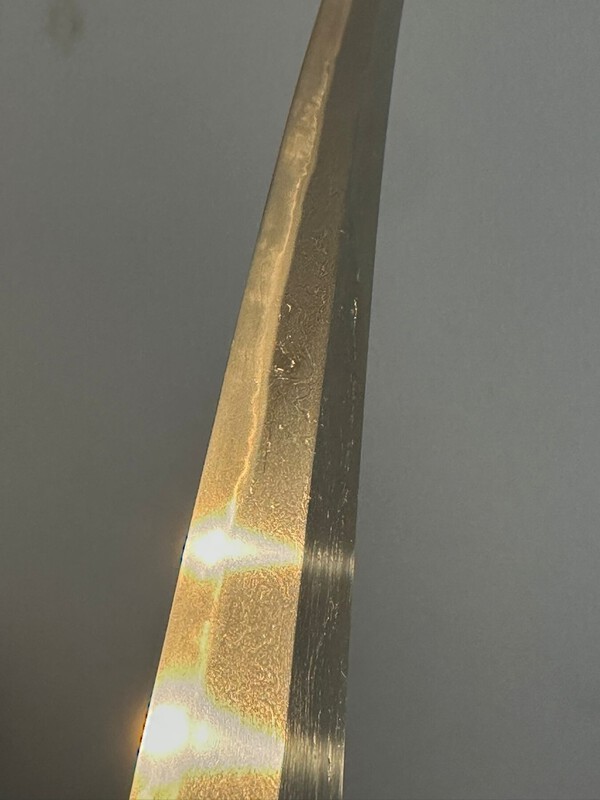
NBTHK Hozon Katana attributed to Chiyozuru (Mumei) – Koto, Nanbokuchō– Early Muromachi Period Specifications: Blade Length: 69.3 cm (approx. 2 shaku 2 sun 9 bu) Curvature: 1.4 cm Width at Base: 2.91 cm Width at Tip: 2.25 cm Thickness at Base: 0.62 cm Thickness at Tip: 0.49 cm Number of Mekugi-Ana: 3 Type: Shinogi-zukuri with ō-kissaki Blade Description: A well-preserved mumei katana attributed to the Chiyozuru school of Echizen, presented in shirasaya with an NBTHK Hozon Certificate. The jigane features itame mixed with flowing grain (nagare-hada), with areas of large pattern visible (which are very stunning), thick ji-nie, and attractive chikei activity throughout the surface. The hamon is a wide, straight-based suguha-chō with nioi-deki, ko-nie, and active features including ashi, ko-gunome ashi, kinsuji, and sunagashi. The bōshi is straight with hakikake return. The nakago is ō-suriage, with 3 peg holes and ō-sujikai file marks. The blade is fitted with a copper habaki. This blade has some small deficiencies visible in the images, most notably some black spots near the habaki. The overall quality of the blade is still stunning, apart from the imperfections near the habaki. There is some ware, but this is to be expected from a sword dating to the 15th century. This sword has been attributed to the Chiyozuru group of Echizen, a school believed to descend from Chiyozuru Kuniyasu, possibly a student of Rai Kuniyasu. While it exhibits Nanbokuchō characteristics, the temper and overall style likely led to the attribution as Chiyozuru rather than Echizen Rai. This is my first time trying some new photography styles (all images are made by me), made to give a better feel of the entire blade and hamon activity. If you have any tips, please let me know. I am still on a journey to improve my overall image quality. Price: SOLD A portion of the sale will be donated to NMB if it is sold on NMB. Free shipping within the EU International shipping available (extra charge: €20–40) UPS Express insured shipping is possible to every country. Located in the Netherlands – Pickup available Payment Methods: Various payment methods are accepted, with bank transfer preferred. Please contact via PM to discuss payment options.

.thumb.jpeg.9d2a0d248fc76ca91cee9ef8e200334b.jpeg)
.thumb.jpeg.6fd7379c4585147fa7af84f7f8122f36.jpeg)
.thumb.jpeg.9fb76505ce513d26ec4c2334ed883508.jpeg)
 1 point
 -
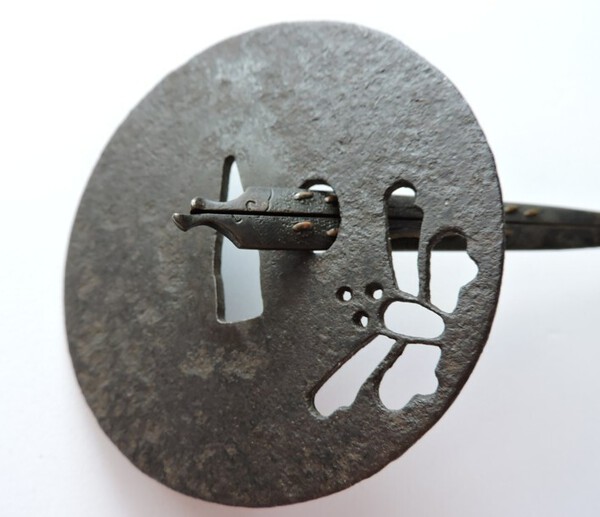
I have a few questions regarding a tsuba that I recently purchased. The tsuba is an iron tosho tsuba (8.88 x 8.8 cm, 3mm at the seppa dai, 2mm at the mimi) with a sukashi butterfly and was accompanied by a NBTHK Hozon certificate. The nakago ana is slightly concave at the sides where the shinogi of the sword would have rested and has no tagane marks, which would indicate that the tsuba was made for a specific blade, probably at the time of forging, which had bo-hi chiselled through the nakago. There are no sekigane, again indicating that this was a tailor made tsuba that has not been remounted. There is a single small kozuka style ana and the overall condition is good, with no active rust areas, but having a mixture of smooth and slightly rough (tsuchime, hammered?) finish. The surface also looks as if the iron is not homogeneous, but a mixture of different irons and speckled with tiny bright spots (tekottsu) on both the ji and mimi. A fairly straightforward tosho tsuba I guess, but I do have some questions. The NBTHK Hozon attributes the tsuba as tosho, rather than ko-tosho. In view of the simple butterfly sukashi and tapered omote surface, I would have dated the tsuba pre-Edo to about 1550. I can’t seem to find a transition date for attributing tsuba to ko-tosho or tosho other than a brief statement by Sasano which places the transition at ca.1543, with the arrival of the Portuguese. Can anyone clarify? The tsuba has a small kozuka style hitsu (1.2 cm) but is too small for a standard kozuka (1.3-1.4cm) or even most kogai. However, I do have a wari-kogai (chopsticks) that fits well (see photo). I don’t think the hole is small enough to be a udenuki ana for passing through a cord in order to secure the blade in the saya. It would seem to me that if a samurai was on a campaign, then a wari-kogai would have been more use for eating his meals than a normal kogai used to fix his hair. Besides if it had a spoon end, like the wari-kogai shown, it would still retain the ear cleaning functionality! The last question that I have is how did the surface get to be like it is? Both sides seem to be a mixture of patches of smooth and rough areas. The smooth areas do not appear to show any traces of residual lacquer. Although the rough areas are below the surface they do not really appear to be as a result of rust. The patina is uniform and there are no rust scabs. I have three possibilities for this effect. Firstly, the tsuba is a fake and has been made to look old. This is probably not the case as it has a NBTHK Hozon and these guys should know the difference. Secondly, the roughness was caused by rust which was cleaned off and the tsuba repatinated (in antiquity?). Thirdly, the tsuba originally had a tsuchime finish, but the high spots were smoothed off using sword polishing stones (hence no file marks) before a final yakite and patination. I like this explanation as I can imagine an apprentice swordsmith making this tsuba and refining his forging and foundation polishing skills. Thanks for your help and comments. Best regards, John (just a guy making observations, asking questions, trying to learn)


 1 point
 -
Never seen anything like it. Unusual construction?
 1 point
 -
Thanks for that. I built a quick excel calculator using that math. Nerd, I know1 point
-
This for the record is my own Komachi, bought from a German auction without seeing it first in hand. It was described as “bearing a shiny patina”, but I suspect that it was in fact coated with some kind of varnish by a misguided collector or "cowboy restorer"...
 1 point
 -
Uwe, thank you for the photo of the mei. Is that kabuto in a private collection? Do the additional pictures reveal anything else about the helmet/hanbo regarding date range or any other unique information? Thank you for all of your help, I will keep updating on my project if people are interested.1 point
-
Thank you so much! Would love to eventually see the official version1 point
-
For those who are unable to visit the museum in person this might be a worthwhile watch. 2.5 hours split over 2 videos1 point
-
That is coming from Bruce's Mantetsu study and does not apply to your sword.1 point
-
Interesting… However, sueAoe does not have rough jigane, utsuri is not really shirake and it is not nie rendered. I do get that sometimes the boundary is blurred between konie and nioi but we do not really see Aoe in nie and also there should be clear, distinct and nice (saka) ashi. Even in Eirakudo’s photo, they do not look like typical Aoe ashi. How does it feel in hand (lighter or chunkier) and is sugata more graceful (Enju) or heavier set with wider mihaba (probably more sue Aoe)?1 point
-
I wanted to answer with more pictures, so I got lazy. Yes, these are more or less identical portions. Sugata is not distinctive to period. Middle one is very much how the blade looks under most lights - and NTHK attributed it to late Muromachi Kaga, which is understandable. Enju attribution was late Kamakura, and Aoe guess would be also late Kamakura. I feel sue-Aoe and sue-Enju both look frankly Yamato or Yamato-Mino, with coarser jigane, strong nie activity, togari-gunomi, sunagashi etc. What botheres me in Enju is that the last photo on the rightmost side has couple of strings of ko nie and that's about all I could find which would point me towards Mihara or Enju. I don't think there is nijuba, to me it looked more like ko choji hamon in nioi which gets weaker in one area, which is almost impossible to see with a naked eye. Very complex blade, very complex photography.1 point
-
This is not Aoi (which has its own distinct photo graphic style). This is Eirakudo and it is pretty unique in maximising the contrast in its photos and working with shadows etc1 point
-
The mark on the tsuba is the trademark of the company Suya Shoten (listed in figure posted above by Bruce). The second stamp on the tang looks like it could be a “to” stamp 東 for Tokyo First Arsenal. Does this sword by chance have a fullered blade also? A better picture would help in correctly identifying the stamp.1 point
-
I think it's a particularly compact Ono no Komachi (look at hat, stick, hair and definitely non-youthful appearance). Check this link for a model with several features in common: https://www.zacke.at/auction/lot/lot-389---a-fine-nagoya-school-wood-netsuke-of-ono-no-komachi/?lot=47957 Piers' identification of the first character seems correct to me, but there are no recorded signatures that include 籍. P.S. how big is it? And is there really a hole going from top to bottom, as suggested by some of the pictures?1 point
-
The angled blade tip, almost squarish is a sure sign of Chinese work.1 point
-
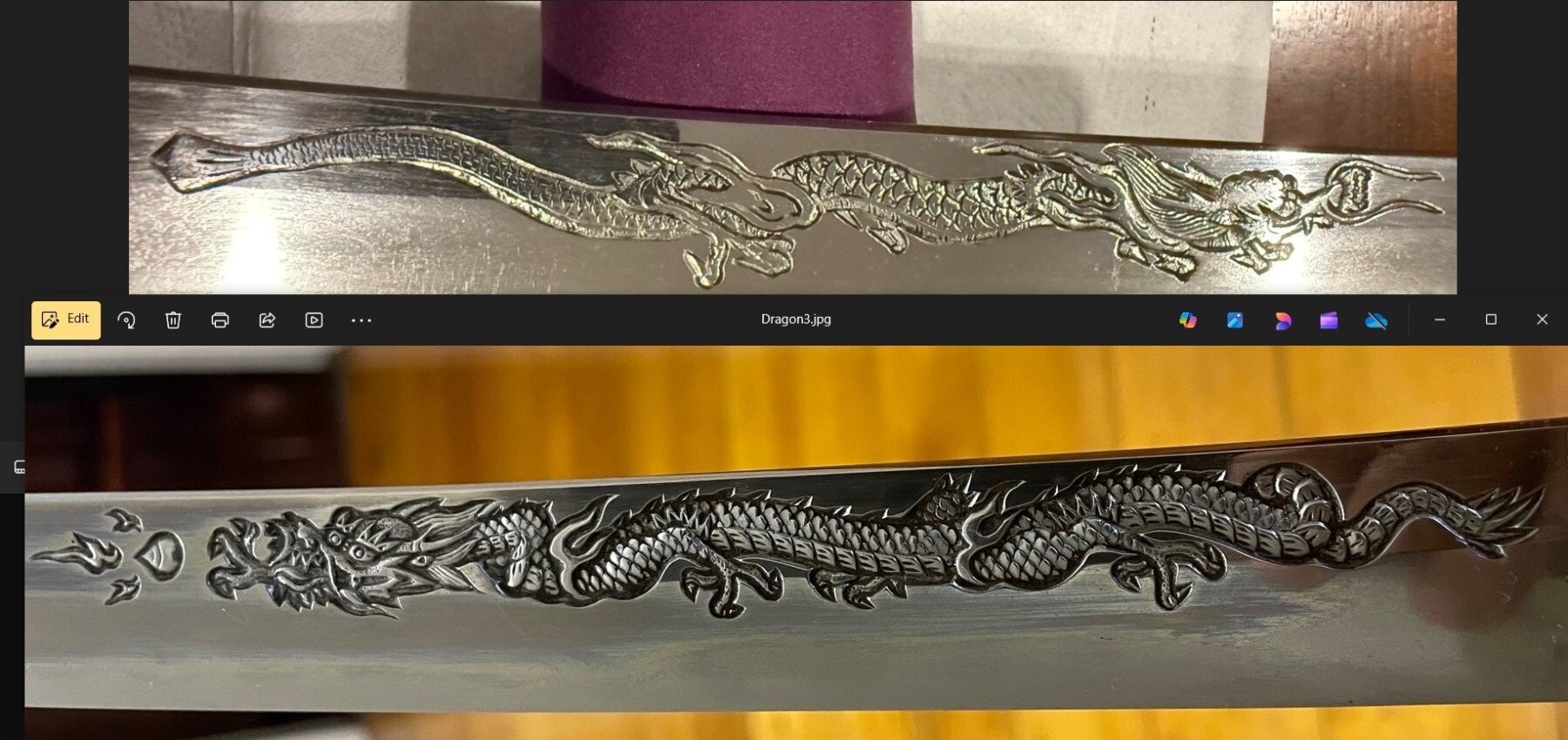
G'day Mark, Thanks for posting. To help you here is a comparison shot of your dragon with a more detailed example by Gassan Sadakatsu dated 1920. Cheers, Bryce
 1 point
 -
Looks like a partially struck Showa stamp on the upper edge.1 point
-
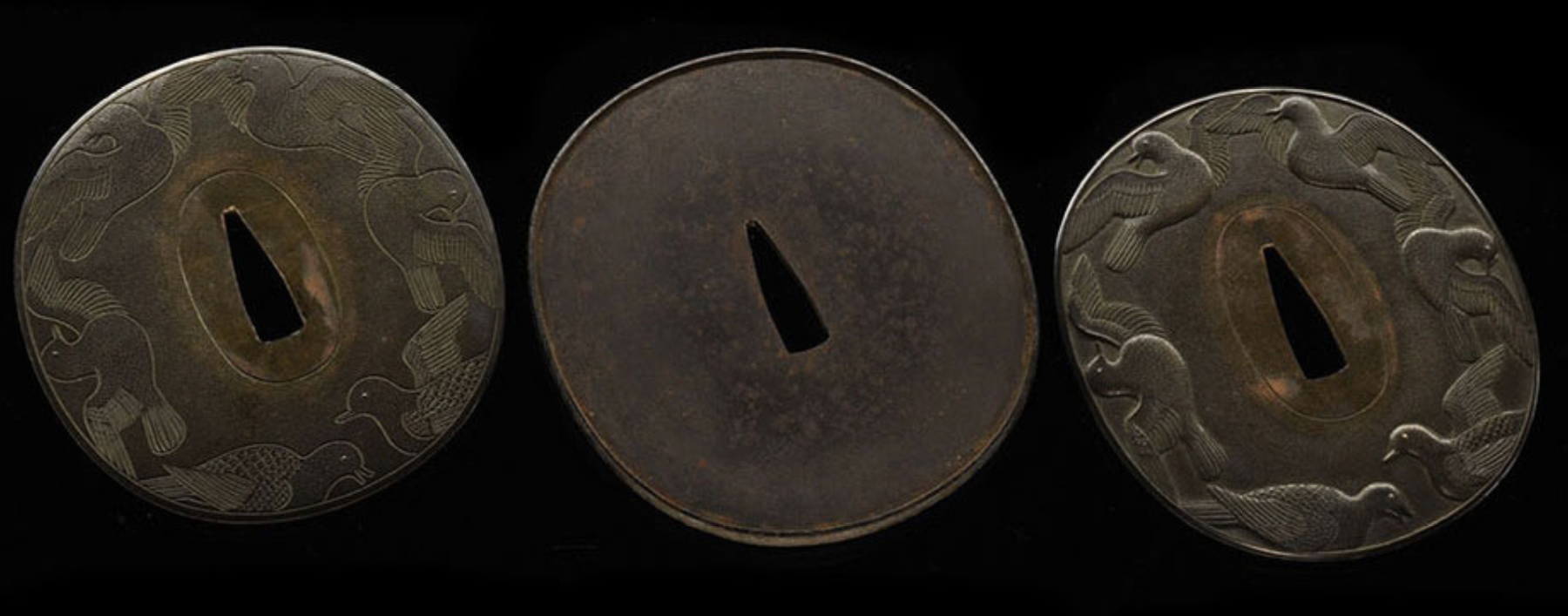
Florian could be on to something here. There is a similar tsuba in the Metropolitan Museum https://www.metmuseum.org/art/collection/search/32182 With fat heart shaped "fans"? This from another tsuba found on-line - not sure if it is a fan or some sort of commemoration plaque? Then there is this where the whole tsuba is that shape. https://www.mokumeganeya.com/e/mokumeganetour/2019/08/28/find-mokume-gane-chapter-20/

 1 point
 -
There is not much to say about it. It is a Japanese sword with a signature. The signature doesn't match the others and the work is different to the sword I posted. The second Yasuhiro looks like the first one. That's it.1 point
-
Thanks Kirill for sharing the photos I admit that I am not able to see any ko-nie in your third photo either. However, there are obvious clusters that form nezumi-ashi and saka-ashi The local nijuba and as if shirake utsuri in the Eirakudo photo are consistent with the Enju call. However, not with the Enju from the late Muromachi period that NTHK defines. I would not expect Enju for this period to have such activity inside the hamon Also, the AOE call ( Sue-Aoe) would be fine for a nioi oriented hamon with nezumi-ashi/saka-ashi and shirake utsuri (I assume the utsuri is very subdued in the hand) but it also contradicts the Late Muromachi Does the Sugata blade support the NTHK estimate?1 point
-
And a 3rd member coming up1 point
-
Away from all my books, thus shooting from a hip: well known Yasuhiro from Ishido school did not use takanoha. Also one of the ana hints koto. Unlisted smith Yasuhiro, end of Muromachi, Mino.1 point
-
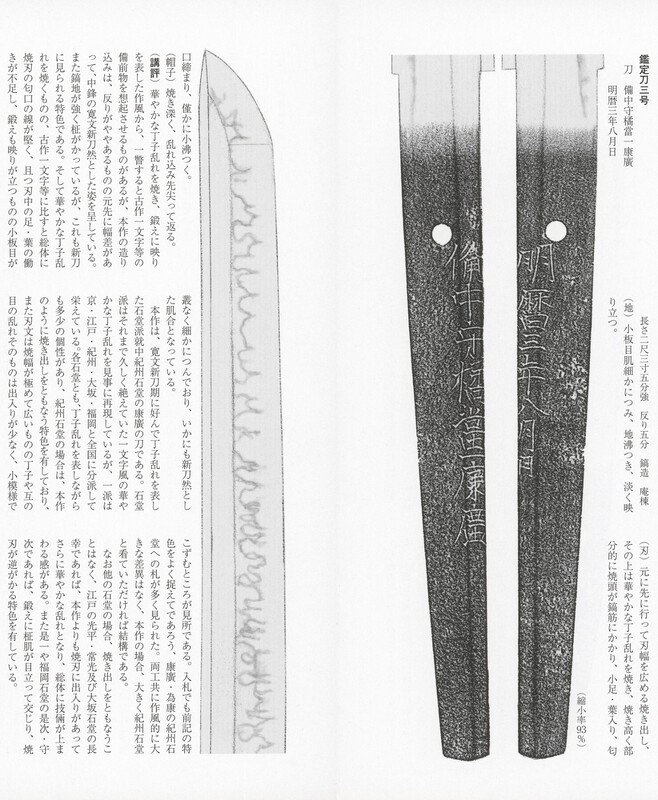
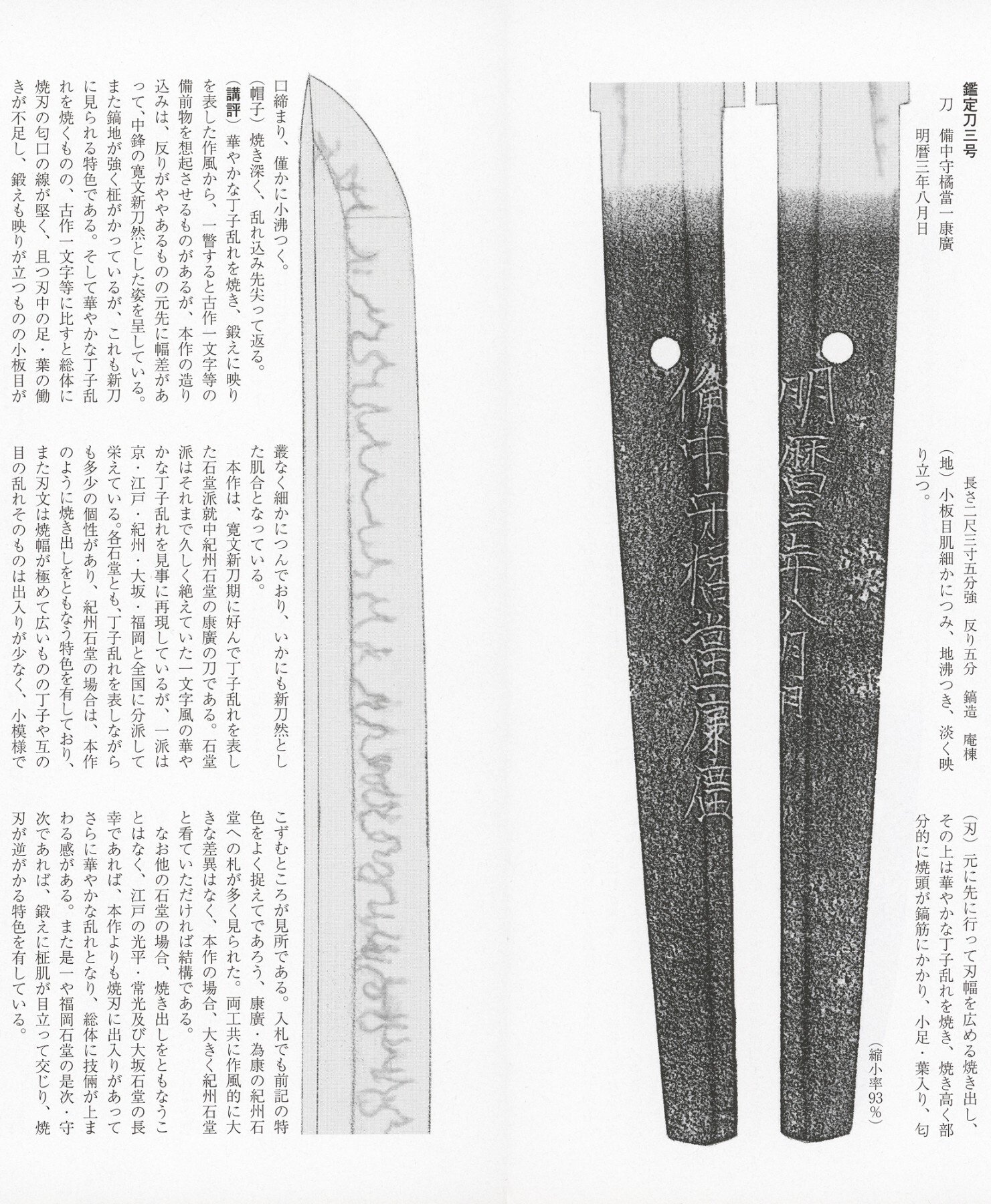
Token Bijutsu 715 = Bitchu no Kami Tachibana Tomiichi Yasuhiro Meireki 3 (1657)
 1 point
 -
“Extensive lacquered wear on Koshiraé.” This is deliberate, a red lacquer surface, allowing black lacquer to show through, creating the famous Negoro-ji nuri effect.1 point
-
Alex, you're out of line. Brano has this figured out more than you do. And whoever suggested there is a financial interest here, you couldn't be more wrong. Not a cent. I watch silly people speculating who someone is, when all they have to do is ask around their own collector community, as he is a well known collector in the UK. Just ask the Token Society. What exactly do you think is being hidden? People simply can't accept that collecting means striving for the best, even if you can't achieve it. Pretty disgusted with the actions of most in this thread, including both sides. Some of you like to collect in a little bubble where everyone agrees with you. This will NOT happen here again. I'll rather lose members than allow stuff like this to bring the forum down and cause me stress. Final warning to everyone here. Both sides of this.1 point
-
Something a little different. An article about teppo disguised as yatate from Daruma magazine. John C.
 1 point
 -
You are resorting to personal attacks again and at the same time calling for decency What do you mean - if it's you, is it okay? I have nothing personal against you, but don't do what you criticize to others And I also have to say that I completely disagree with your statement, why did most of the educated people leave this forum and those who stayed here watch in silence where it's all going This topic is a typical example of that1 point
-
Please don't go Rayhan, the board needs more people who are prepared to tell it how it is . Bon Dale was the leading light of the Token Society of GB in the early days, he tried to educate the masses and was pretty scathing when it came to bad swords . He would be rolling in his grave if he read this discussion . Ian Brooks1 point
-
I've reached out to Eric and at some point, he and I will be meeting. I'll give it a good long hard look when I see it in person. Photographs just don't typically do nihonto justice. I think people just need to calm down a bit. Passions have run a bit hot and it has come to personal attacks, which is unbecoming of such a distinguished collection of people. Let's all agree to drop the attitudes and just stick to well-educated opinions predicated on observable facts, yeah? We're here for the swords, let's keep it that way!1 point
-
Regarding the blade and polish if the topic isnt too far gone. Personally, I never consider resale or financial equation when it comes to sending a blade for polish. It is true that you ll almost never recover the cost of the polish in added value to the blade. The polish is for my own enjoyment of the blade and satisfaction of seeing it restored to it s maximum potential. And also, you would be astounded at what a good polisher can do to blade that may seem too far gone. So if you love the blade and would like to have it restored, by all means send it in and have it evaluated and polished. All that matters in collecting is how much YOU like the blade and want to invest. I believe the creation of nihonto is a sacred process and in a perfect world, every blade should find an owner willing to restore/preserve it. Every single blade I ve sent in for polish would be considered a waste of money by the standards of many ( most ) on here but it s honestly some of the best money I ve ever spent.1 point
-
Why are we going round and round in circles? I get the feeling some are just here for the arguments. Simple fact...I said it needs closer examination. Based on a quick glance. Rayhan pointed out many things that i has not seen, and I have to agree with that. It is pretty far gone. No point trying to make out it isn't. I do NOT agree with Rayhan's "only collect the top stuff" way of collecting, but I do understand it. Top art collectors push for everyone to collect the best. Simple fact is that many of us will never have the money to collect anything TH or higher. No matter how much we save. But we are still entitled to collect at a level we enjoy. That doesn't mean top collectors have to lower their standards. I get it. I appreciate that for many, only the best is worth collectong. I don't agree with telling everyone that they must do the same. So yes...he is allowed his opinion and I understand it and respect it. But can't follow it myself. That's ok, I know the limits of my own items, and don't expect treasures. Why some get so upset at blunt honestly when it comes to evaluating poor stuff, I do not know. Just ignore it if you don't agree. By the same token, leave people to collect what they like. Advise them what they have, and the negatives...then let them do what they like. No point telling them they have trash and should throw it away. Both sides have a point. I draw the line at people getting personal though. But am distracted enough that I haven't done nearly enough moderation. Far too many collectors end up with heaps of project blade, rusted and poor quality that will never be restored. It's a bad habit and almost every time some amateur gets the job and wrecks it. Anyways, I'm trying to avoid the stress here. Guys...just chill a bit!! This is a place to relax, not jump on someone for their opinions. You gain nothing except stress. Advise people if you like. Then let them do what they want. Both sides equally at fault here, both with valid points. Can we just calm down a bit?1 point
-
Italy seems like your best option. Not far if you go by Ferry to Ancona. I would suggest Massimo Rossi in Rome to have a look. And his prices are very reasonable.1 point
-
We can discuss the method of communication used to describe the blade It does not change the fact that this blade was made as a weapon and served for defensive and offensive purposes However, from an artistic point of view, the skill of the swordsmith is clear that we have here a blade of low quality If someone's goal is to collect blades of this level, it is perfectly fine if this collector is aware of what he is collecting However, if we have a newbie here, it would be fair to speak honestly. The blade has many technical shortcomings and I believe that everyone who asks questions is asking in order to learn And not to be praised and given unjustified optimism1 point
-
From what I remember a group of NBTKHK (Japan Armor Society) members created this before having it printed out. The names outlined in red indicated they were older than 1600, and the black ones (like yours) post 1600. For the print copy of this hand-written version I put wavy red lines around the ‘old’ names. (I’ll see the official version in due course, but I don’t have it here.)1 point
-
The hanbo seems to have once had a guruwa (additional plates which protect the back of the neck), judging by the remnants of the hinges at the rear of the jaw. This is a rare feature for a hanbo.1 point
-
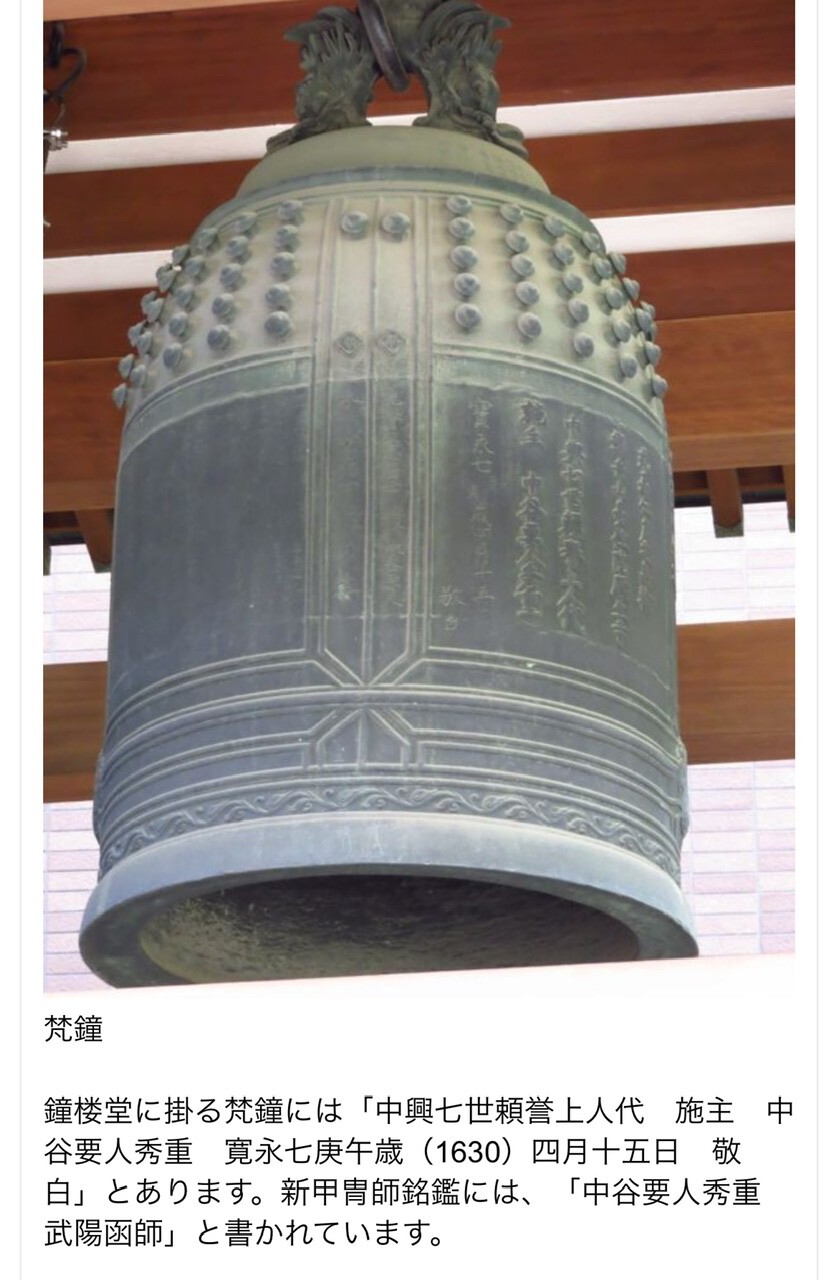
Thanks for the menpo ‘Hideshige’ Mei example, Uwe. Here is the map. I have a final printed version of this, but not here at the moment. See 1. the whole of Japan, then 2. the Kanto section and finally 3. the block of names attached to Tokyo/Musashi/ Bushū. Your smith is between the points of the caliper. PS 函人 ‘Kanjin’ is an old word for an armourer. Notice this unusual Kanji is used in the description 武陽函師 Buyo Kanshi master armourer, under the bell photo above. 1630 seems reasonable to me. 1. 2. 3.


 1 point
 -
中谷要人(秀重) *Nakatani Yōjin (Hideshige) On a hand-drawn map of armourers of Japan, I have just found the name above listed for the Edo/Bushū area. *Alternative but less common reading ‘Nakaya’. http://blog.livedoor.jp/kayoko1227/archives/31862120.html On this page is a reference to a Buddhist bell with an inscription of this name and date of 1630, saying in the Shin Kacchushi Meikan that this refers to the ‘armourer of Buyō’ (Bushū) Nakatani Yojin Hideshige.
 1 point
 -
My TH Senjuin was shipped from the dealer to me in Germany a year ago. I was levied 19% importatation fees. I tried to justify the lower 5 or 7% duty but they wouldn't budge even with documentation and statements supporting the over 250 year old artifact. I was told to get the lower rate the sword must have 'special' and specific significance or historical importance eg blade made by the founder of a school, daimyo owned big beast etc. Seems like there is some room for interpretation. In the end I was given a 100 euro refund, based on a discrepancy in the calculation. In reality since the dealer removed the 10% Japanese consumption tax from the sale price I effectively paid 9% extra to get into Germany. Not too bad.0 points










.jpeg.184a0501b64797ab2cee490f75508785.jpeg)
.jpeg.1de6d8cd520384479f30633429d76aba.jpeg)
.jpeg.2eeb1d18ca306ed45dd5bd7f699c5ec6.jpeg)










This leaderboard is set to Johannesburg/GMT+02:00