
Leaderboard


Popular Content
Showing content with the highest reputation on 03/17/2024 in all areas
-
to be continiued..............
 5 points
 -
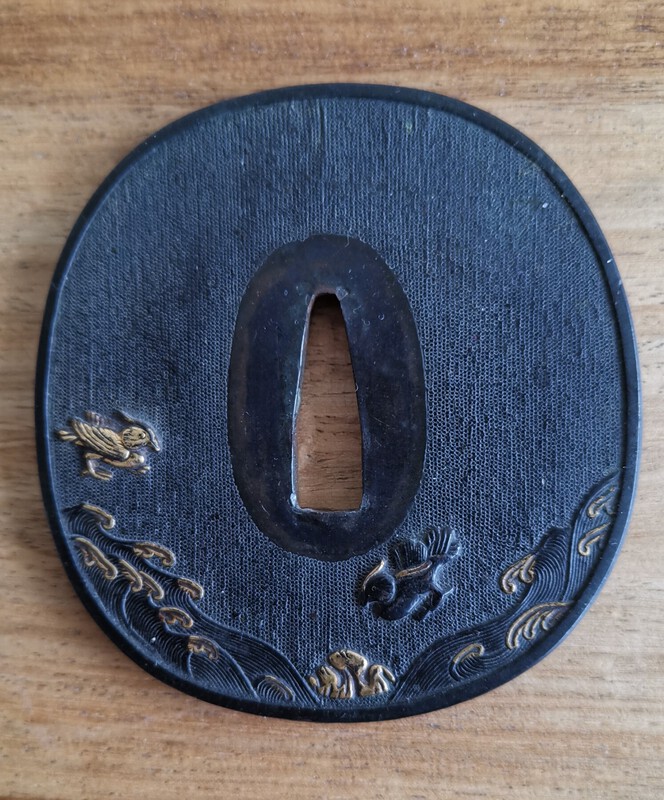
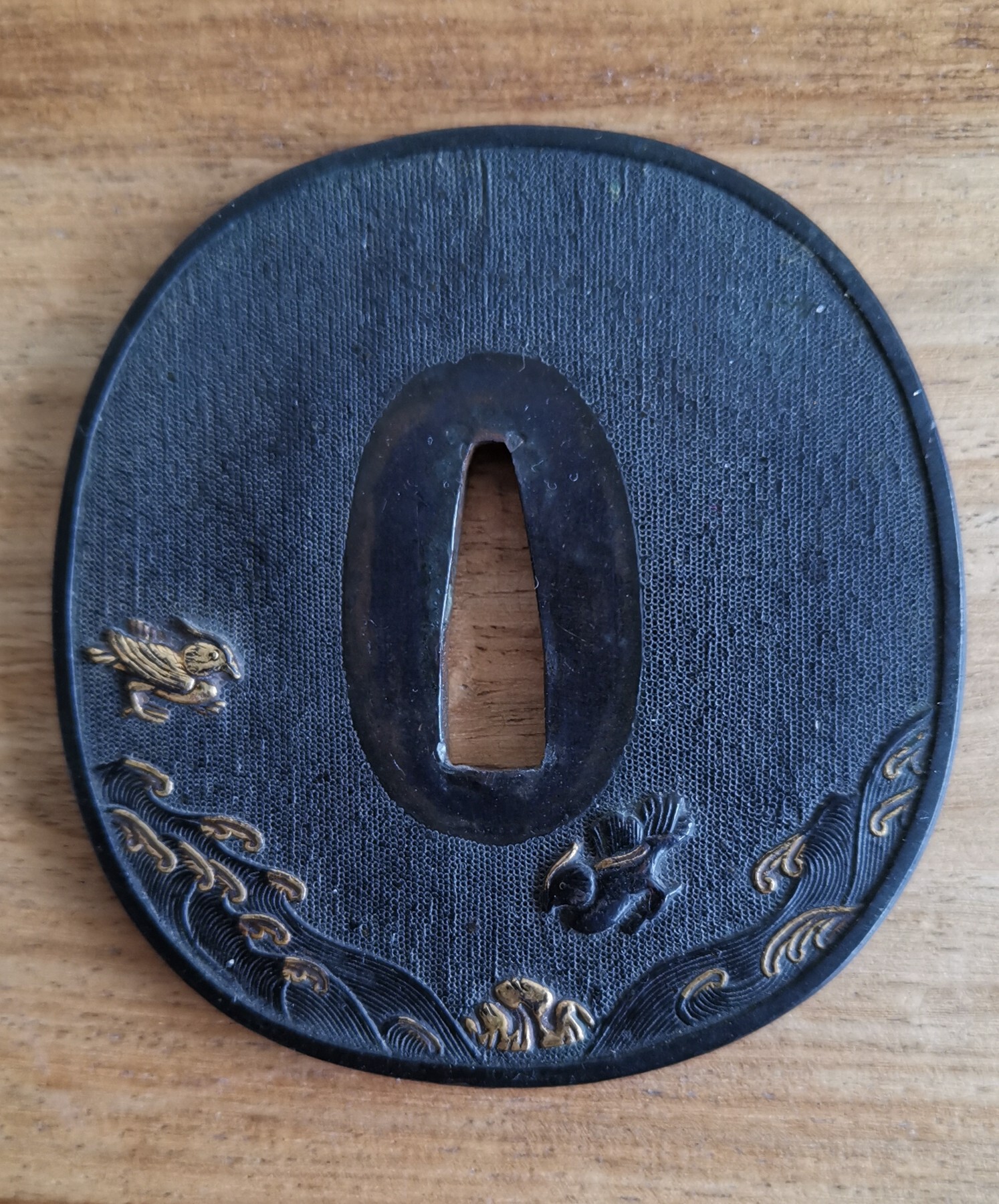
Here is my very similar San Mai Tsuba with a pair of ducks on one side. On the other side there is only a single duck shown. Also note the rather worn gilding at this one.
 4 points
 -
3 points
-
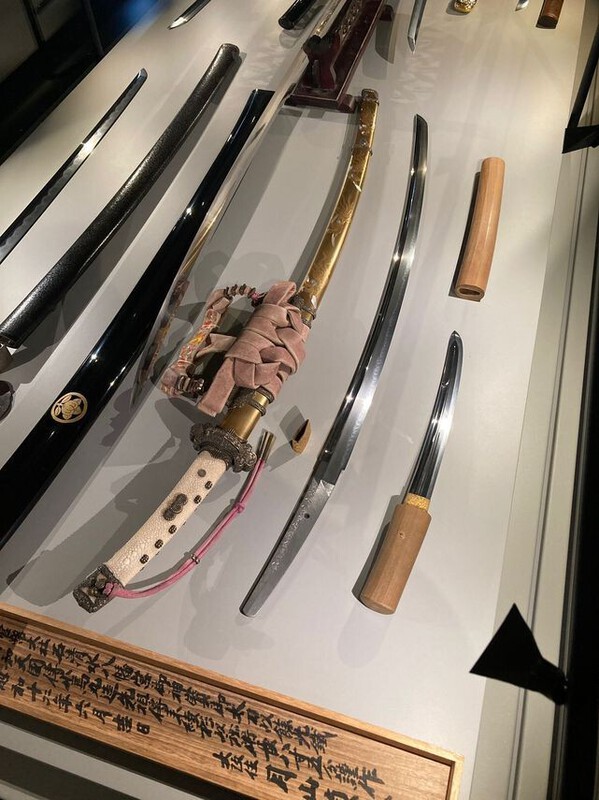
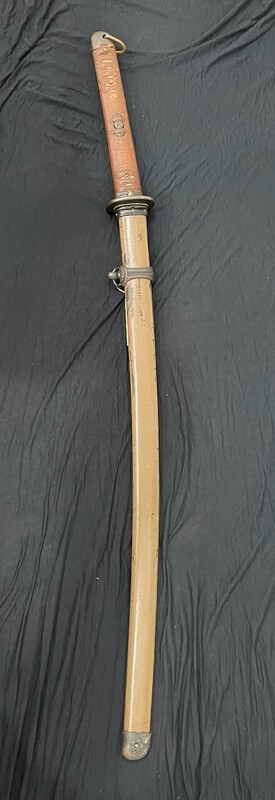
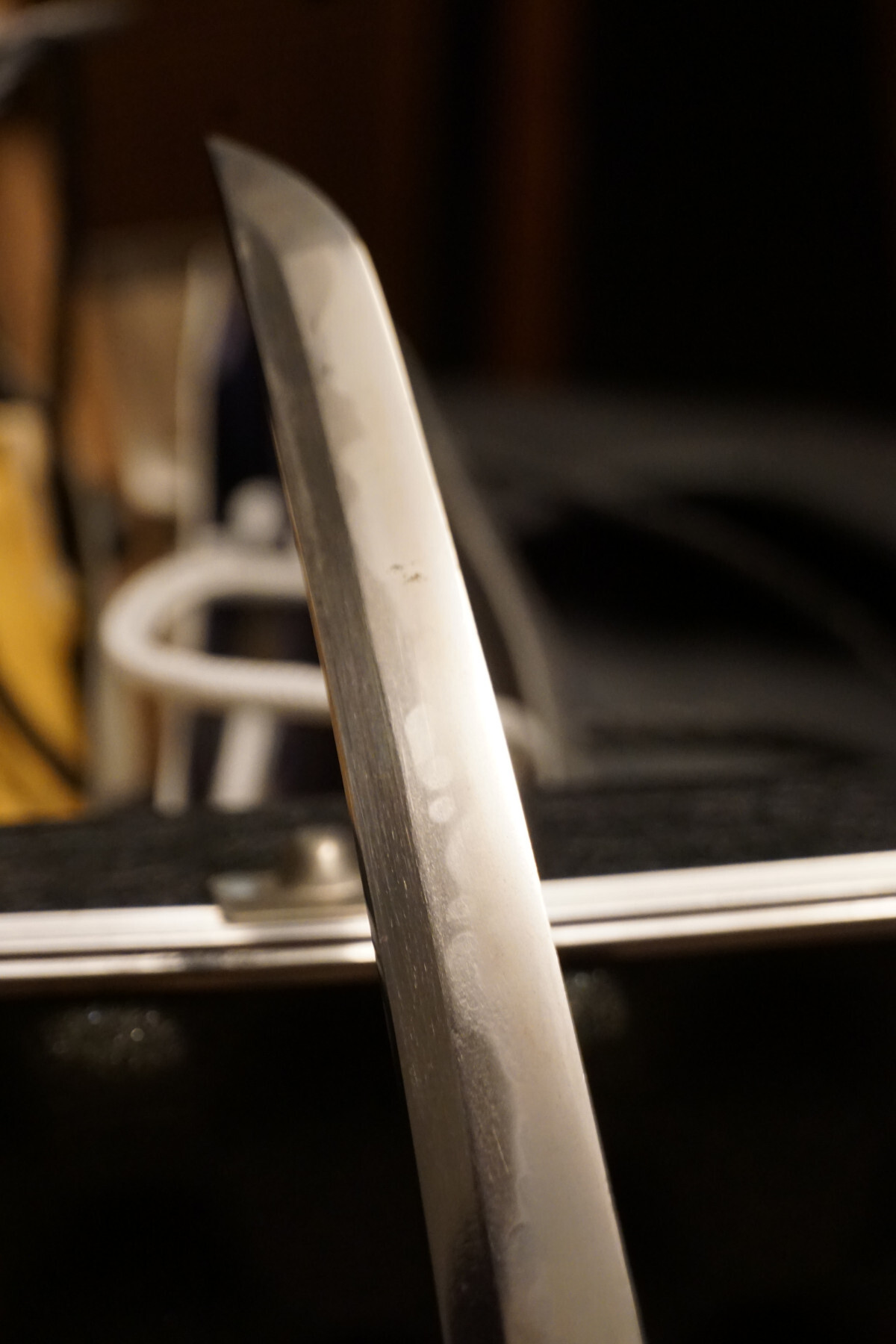
I pulled a few swords from the cupboard tonight to inspect and enjoy. This KANETOSHI (Murayama) Star Stamp, July 1944 in late war RS mounts always demands attention. In WW2 polish, the hada and hamon in Ichimonji style JUKA CHOJI, is like viewing a nice piece of art, something new always catches your eye. For Bruce's benefit, I tried to do my best on the MUNE stamps. I have probably posted photos before, but my new phone camera and LED lights show much more detail. If I had the time and money, this sword would be a prime candidate for a touch up polish.

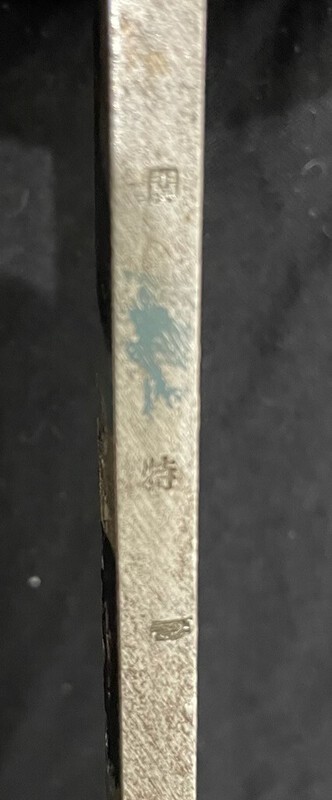
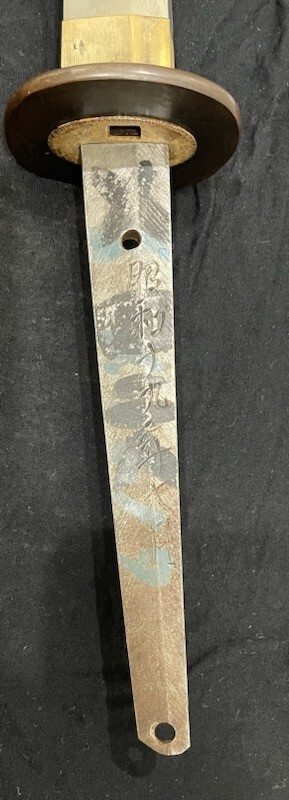
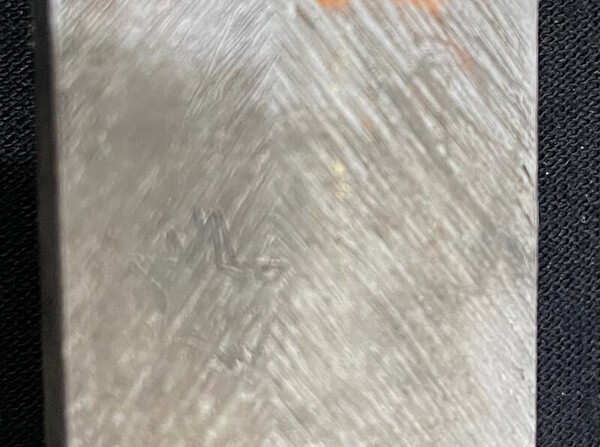


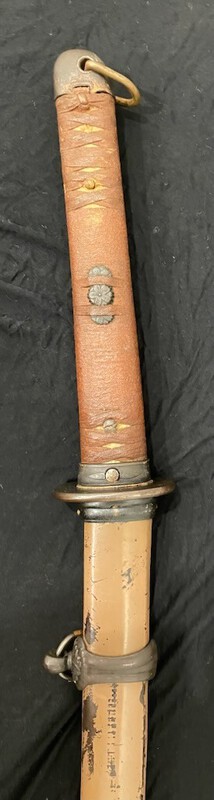
 3 points
 -
My first Nihonto. It’s nothing special but I’m proud to be its custodian. I purchased it from Aoi Art in Japan. Im just a baby in the world of Nihonto and thought I’d jump in and buy early in my journey to learn from a blade in hand. Open to comments and opinions.2 points
-
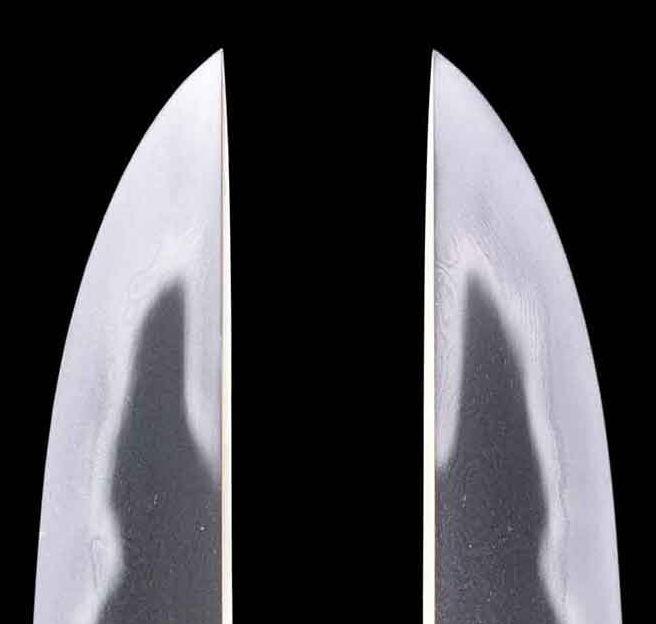
Stumbled across this blade, think its cool. Vaguely remember seeing circles within the choji before but never so intentional, 2 near the kissaki and 2 further down on opposite sides of the blade. Sometimes you just come across something different, interesting, nice blade. For those interested. Japanese sword Touken Komachi, Tanto, Shirasaya Hakushu ju Yoshinaga2 points
-
To me its nothing, If it were mine you not be getting that kind of price drop Surprising what you can find if you look hard enough, even when you think a sword is perfect, one of your own. Handmade after all.2 points
-
2 points
-
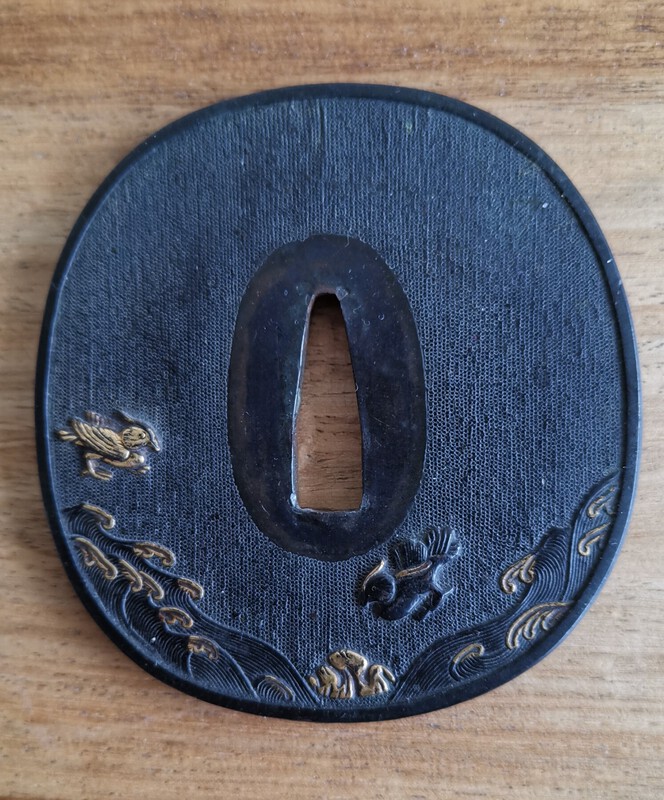
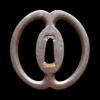
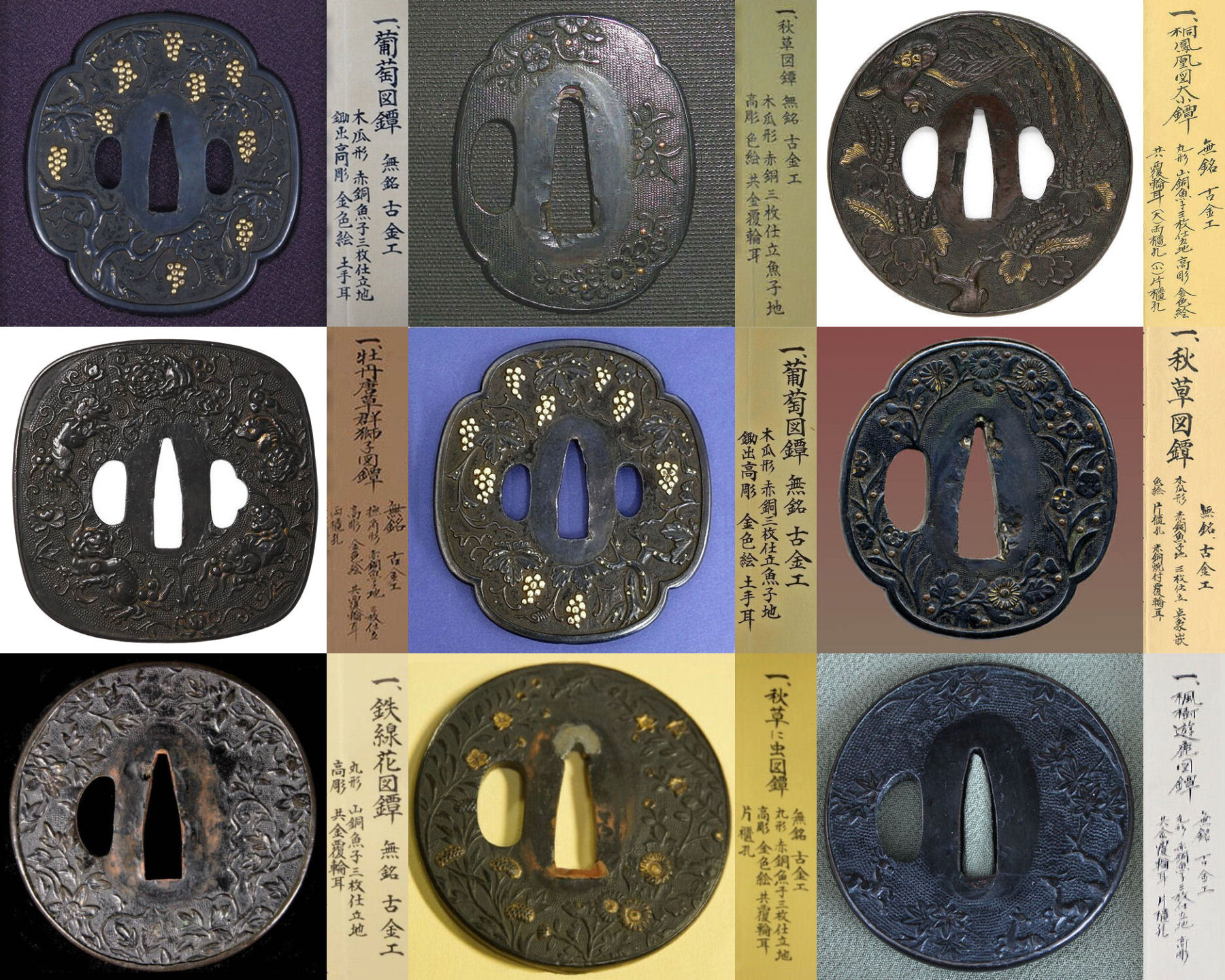
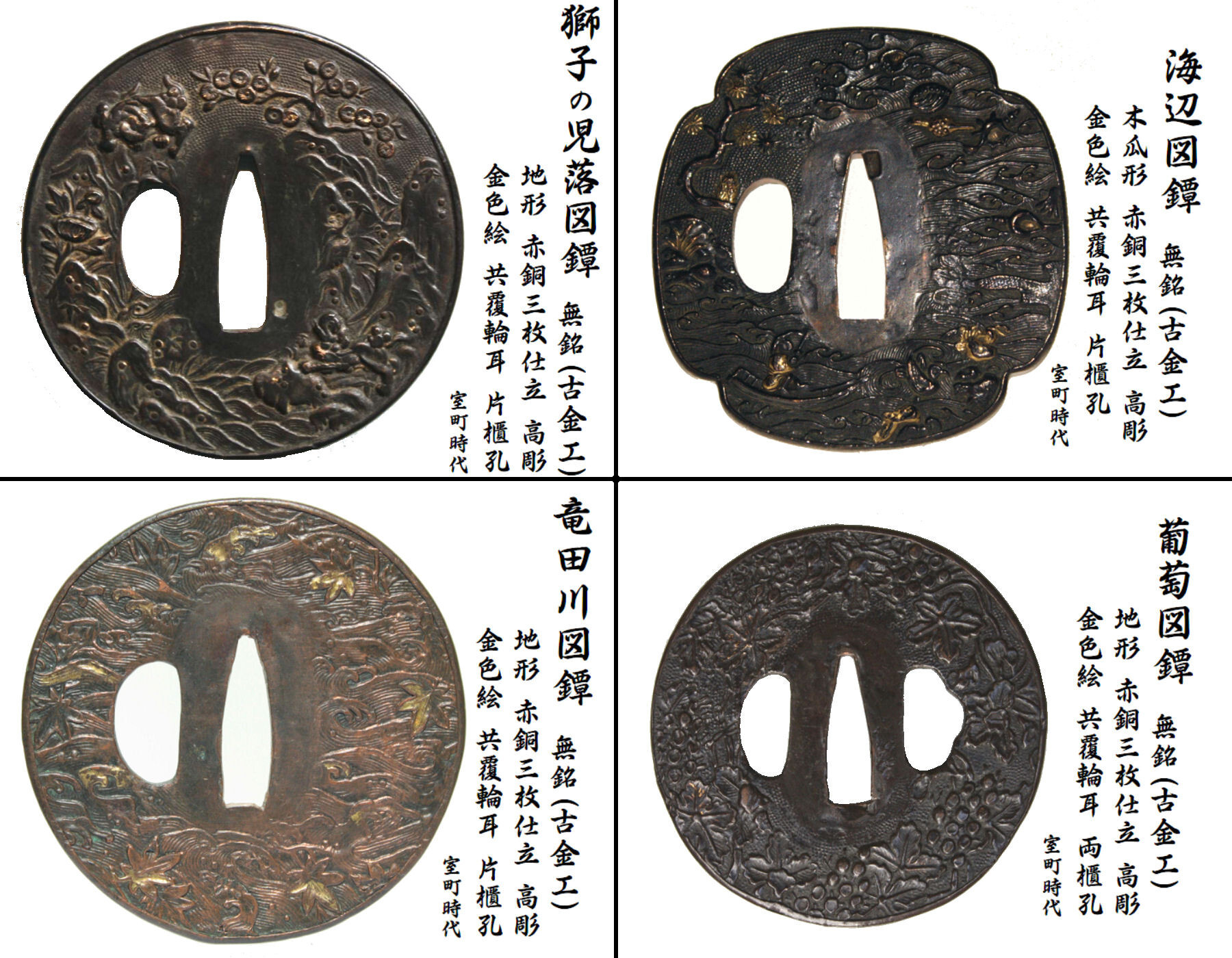
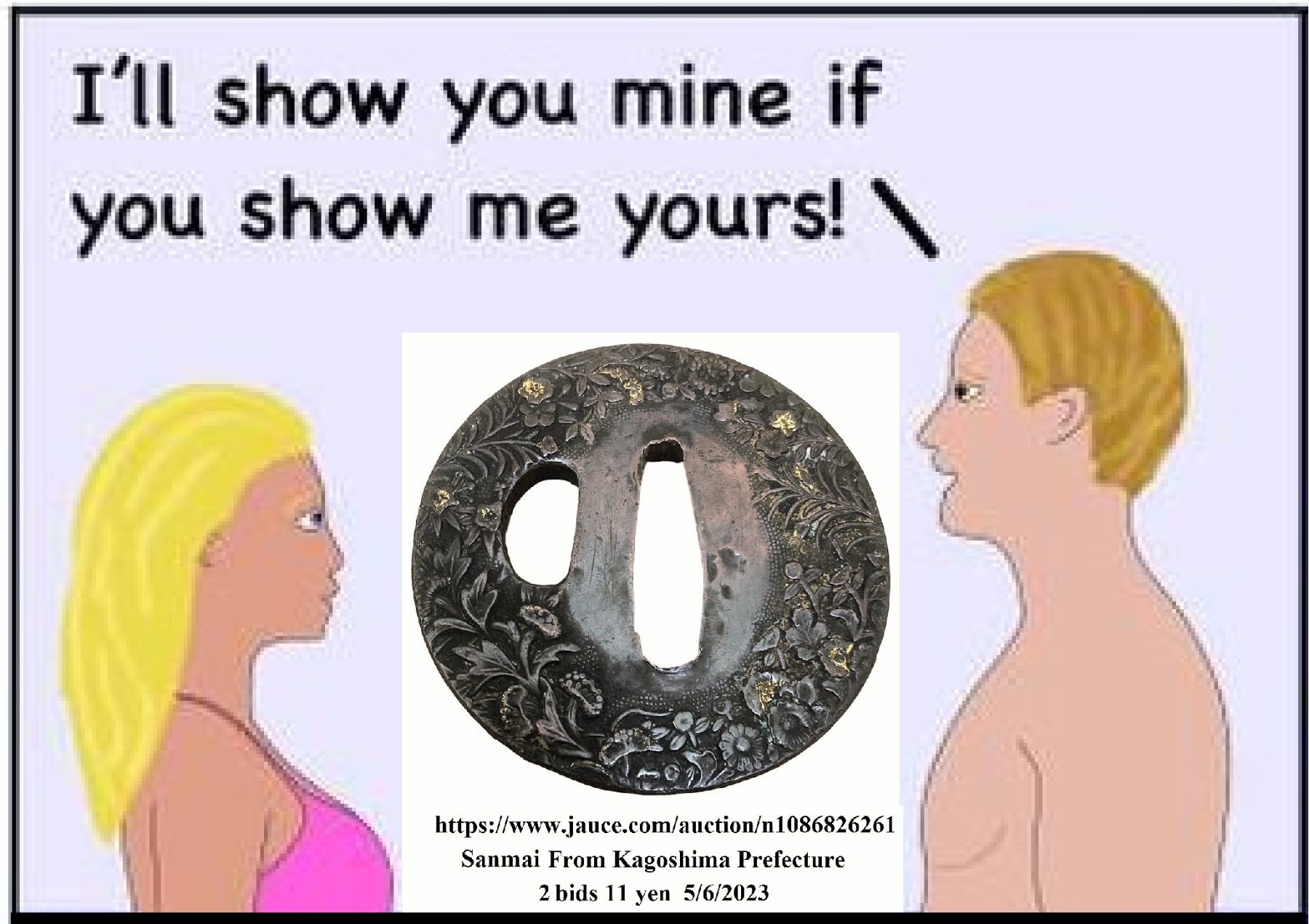
An unaltered Muromachi or Momoyama period San Mai Tsuba.
 2 points
 -
The iron of Adam's tsuba above looks ok in that shot to me too. If a Mei has been under a slightly moving/rubbing seppa for many long years, it would certainly lose some of its sharpness like that.2 points
-
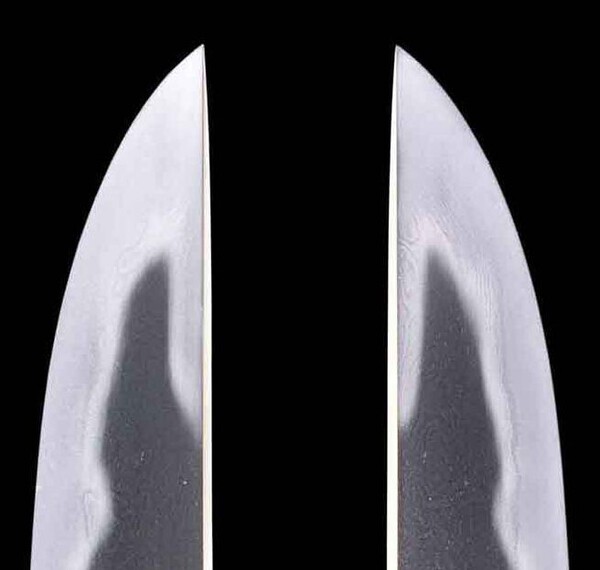
Tanto made by Sadakazu 1st Meiji 40th year (1907)
 2 points
 -
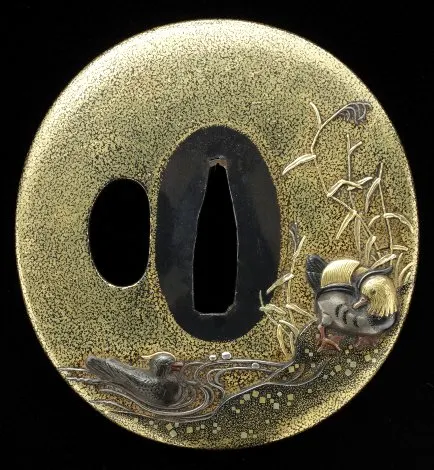
鴛鴦図鐔 - oshidori no zu tsuba from https://blog.goo.ne....1d33ed38de37dc7ff5ed
 2 points
 -
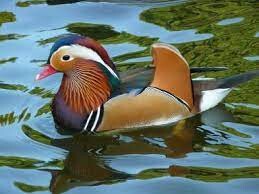
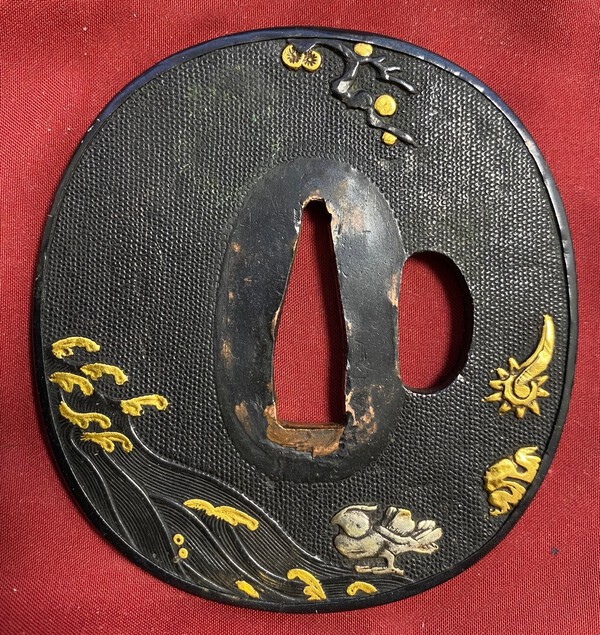
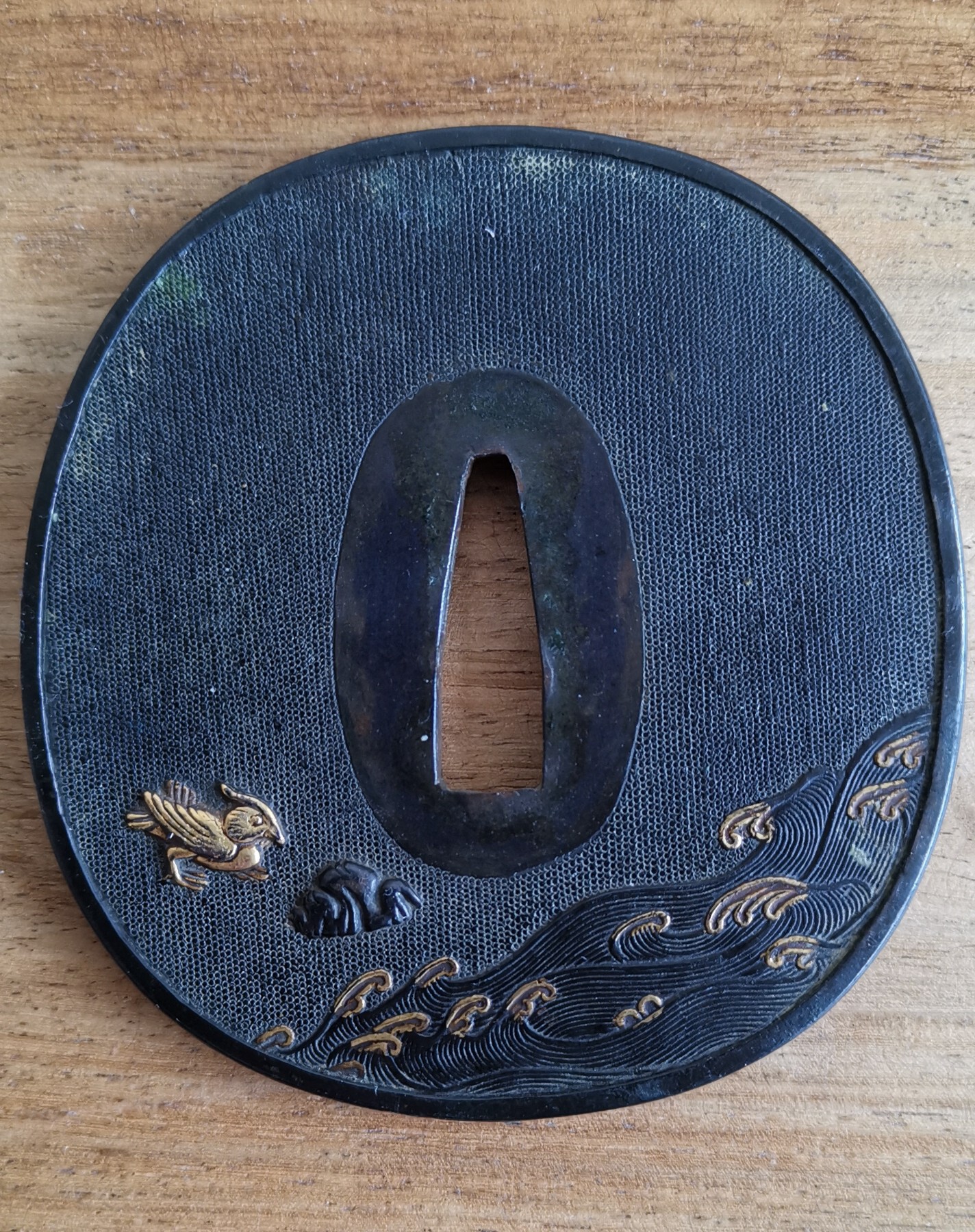
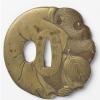
The bird reminds me more of a Mandarin duck. But what would a duck be doing at sea? I am not sure what this bird is, duck body, seagull head? Mark does your guard have a fukurin or is it all the same material with carved integral rim? Also is the opposite side the same design? Could it be Sanmai?
 2 points
 -
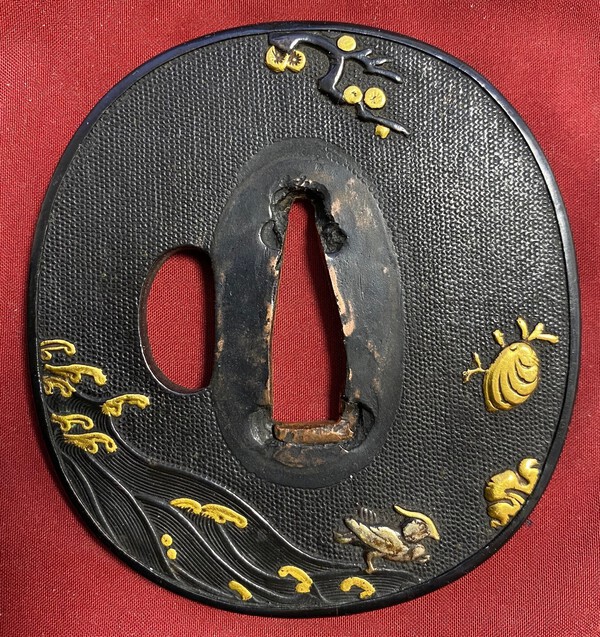
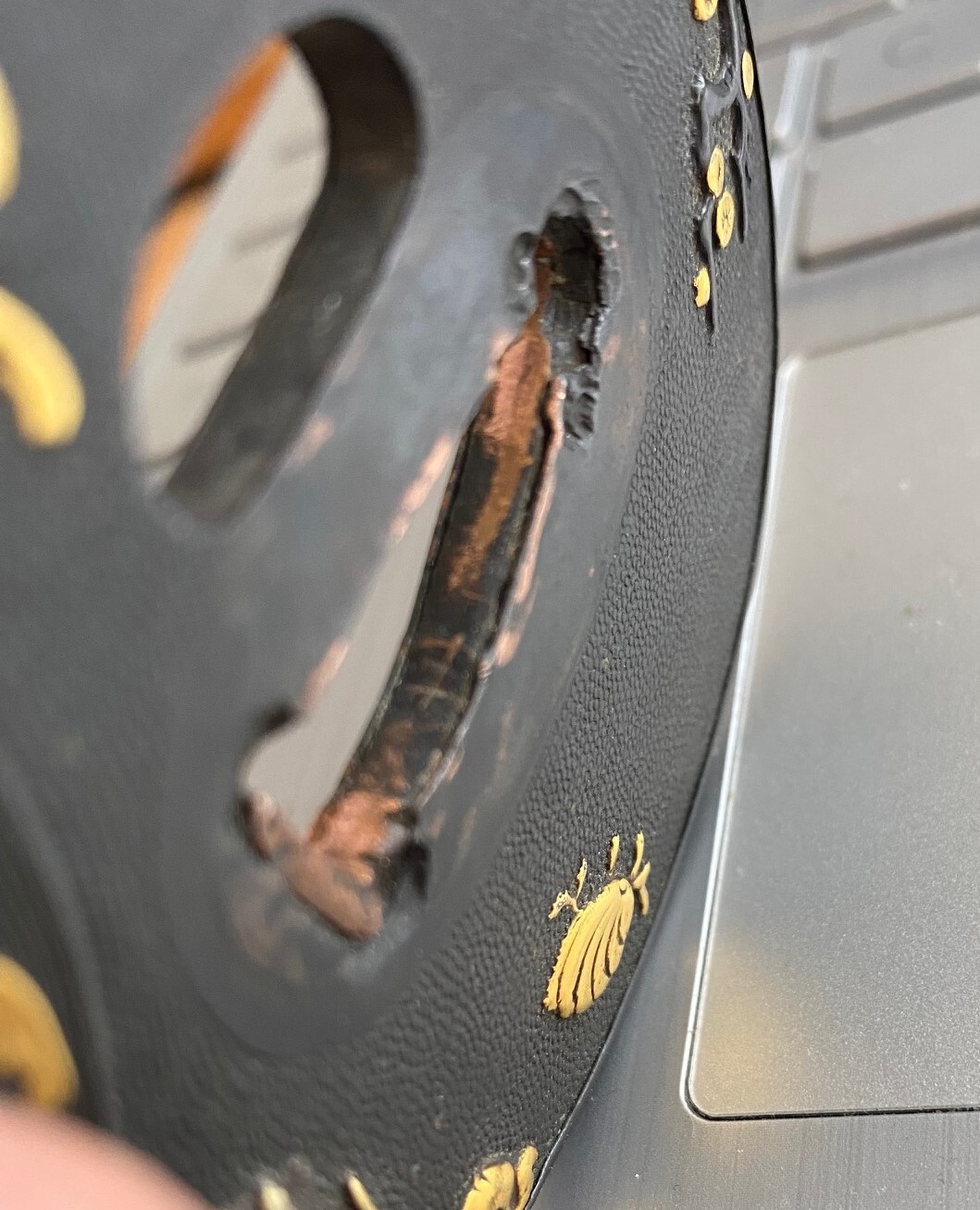
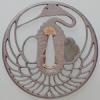
Hi All, This tsuba is from my latest sword buy, Would be nice to try and identify it. As I know very little regarding tsuba, Could I please ask for a little help? Material - soft (Copper?) Width - 2.5" Height - 2 7/8" Subject - I believe it is a heron over waves with sea shells. The nanako isn't the best I've seen. Thanks in advance.
 1 point
 -
Hi Henry, I once had a Yoroi-doshi tanto that had a nagasa of 6.47 inches or 16.4 cm. The moto kasane was 0.340 inches or 8.6 cm. It was signed Omi (no) Kami TsuguHira Tsukuru. The mei did not appear to be that of the first two members of this family, but the workmanship of the nakago certainly matched that of this family of smiths. I was never able to find a match for the mei and assumed the blade was signed by a later generation. So, yes, shorter yoroi-doshi tanto do exist.1 point
-
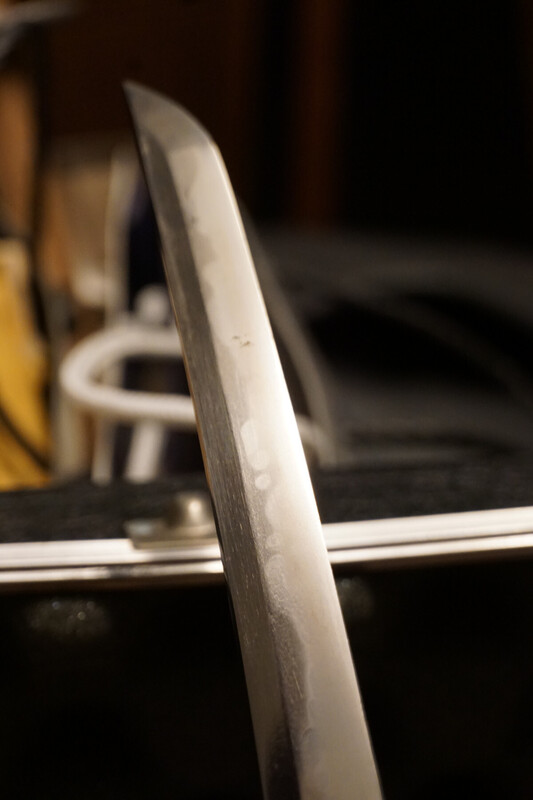
ian if you're still around - I have a boy's sword Tango no kami Naomichi (Mishina, ~5th generation?) with the same hamon: (repeats several times on each side) It's in Japan for polish right now; I've asked to have the polisher tell me the name for the hamon

 1 point
 -
The sword should be pointing with the tip up. (Otherwise the signature is upside-down). 越前住日向守藤原貞次 The translation is mostly correct: Echizen-jū Hyuga-no-kami Fujiwara Sadatsugu 日向 can also be pronounced "hinata" in some cases, but in this case it is a certain location, pronounced Hyuga. There are no less than three smiths who signed using this name and title. I don't know which one signed this. Could also be a forgery, as forgeries are very common in the world of Japanese swords. More pictures of the sword might help. The fittings are a hodgepodge of antique, samurai-style fittings, and a wartime leather scabbard: interesting, but not nearly as interesting as the sword itself will be.1 point
-
Glad you like it Adam1 point
-
On Wednesday a friend was saying that he was stopped trying to board a Japanese domestic flight from Tokyo because the metal objects in his carry-on bag were questioned. When he explained, the staff asked "Tsuba? What is a tsuba?" He began to explain... At that point they threw up their hands, saying "No, sorry, nothing weapons-related is allowed on our flights." My imagination had fun with that one! Shuriken for a Ninja???1 point
-
by the way: the sword's story that it was presented to Kaiser Wilhelm is fictitious it was found by a Dealer named Manfred Winter from Bremen, who unfortunately has already passed away now He asked me about the headind of the kanji and offered it to me for a lot of thousend euro's unfortunately I wasn't able to pay his price to be continiued...............1 point
-
Not unusual. Those in the arms industry (like myself) have found that flights within Europe are being very heavily controlled. Even those not going over Russia are being restricted in the event that flights are diverted or something (no-one seems to know what) will happen. Once the powers that be mention weapons, it is up to the courier companies to decide for themselves what that constitutes and they tend to overcompensate. It is much easier for them to say no, than say yes and risk some unforseen event. So yet, it is completely plausible me that courier companies or postal services will refuse anything that is even remotely a weapon if it is within any proximity to a conflict zone.1 point
-
Not a lightweight, just a regular oil tempered sword with etched Hamon similar to those found in combat Kyu Gunto.1 point
-
Now that I look at it more closely, I think it might be a light weight gunto with the acid etched hamon as opposed to a zohei-to. Conway1 point
-
Genuine cutting tests should be carefully and beautifully inlaid with gold, not drawn on with a gold marker!1 point
-
Yes1 point
-
With the additional pictures i would also say it is old and shortned. Really nice find.1 point
-
Rare tsuba, signed Bushu-ju Kunihiro saku Kunihiro was one of the masters of the Bushū school. This is a extremely nice and rarely seen example in near pristine condition! Asking price: $1795 or best offer More pictures and video: https://tsubashi.com...hu-ju-kunihiro-saku/ Remember to set video RES to Full HD1 point
-
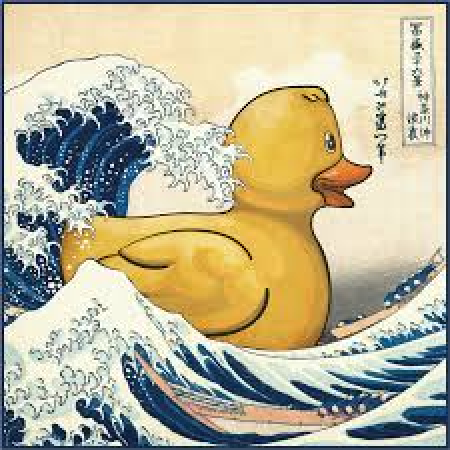
Thanks Mark, the ura view gives me even more confidence the bird is a duck - short legs, upturned tail and wing tips. I wonder if other examples with this pattern will turn up? Maybe not this particular one [Hokusai might not be impressed!]
 1 point
 -
長曽祢興里虎徹入道 = Nagasone Okisato Kotetsu Nyūdō1 point
-
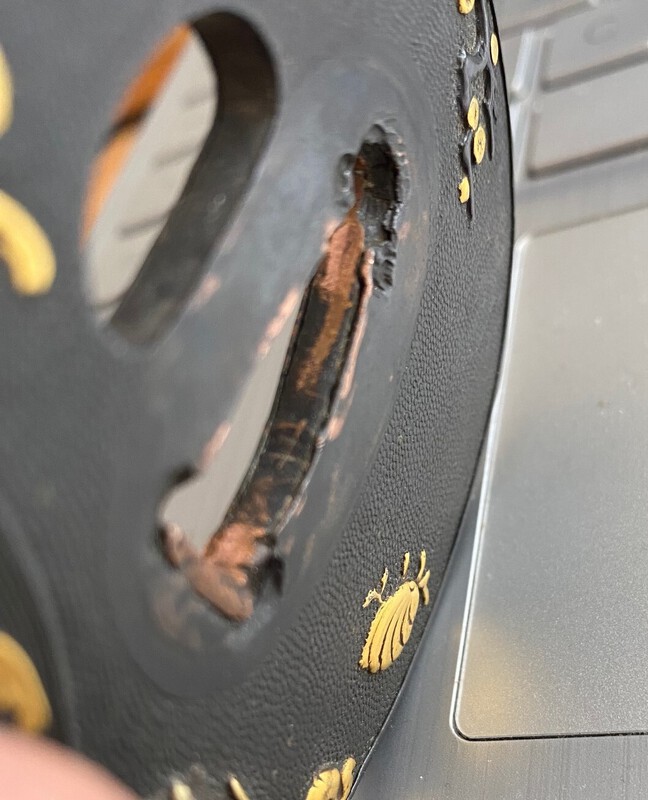
Thanks Dale and Mauro, Tsuba does have a fukurin and is non magnetic. I have looked at the inside of the Nakago ana and can see evidence of three layers so i would say construction is sanmai. Opposite side below:
 1 point
 -
I think once you have that guard in hand you will be very happy with the patina, photos can sometimes give a deceptive pale look - add my vote for original patina, well cared for and very old. If you want to compare artificial patina you can check out this auction site https://www.jauce.com/user/dj2hmyuc this guy's stock is made yesterday and has that oily black finish you will get using that "colour-enhancing rust preventive agent" found here. https://www.jauce.com/auction/l1126749580 Both the modern backyard tsuba and the artificial patina can be found on ebay as well. https://www.ebay.com/itm/386829157016 https://www.ebay.co.uk/itm/386845822320 https://www.ebay.com/itm/254728433191 I would not recommend any of this stuff used on antique tsuba. By the way that same guard you are looking at for $133 USD is also selling over on Jauce https://www.jauce.com/auction/c1128842948 or Buyee https://buyee.jp/ite.../auction/c1128842948 at a starting price of $6.71 USD - it pays to shop around! Signed "Tetsujin" For comparison of the mei you might find something here? https://www.militaria.co.za/nmb/topic/12900-tsuba-mei/1 point
-
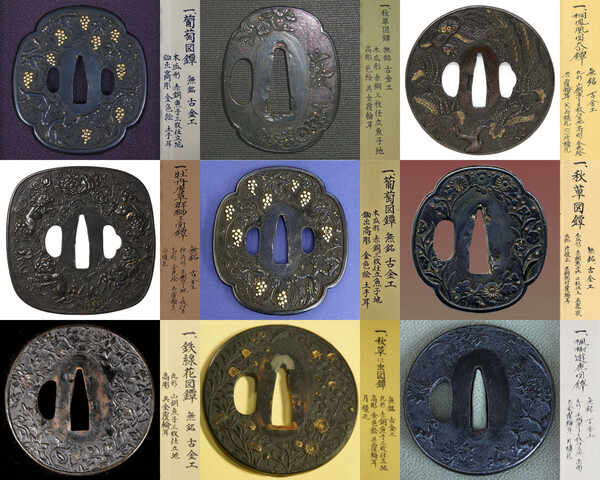
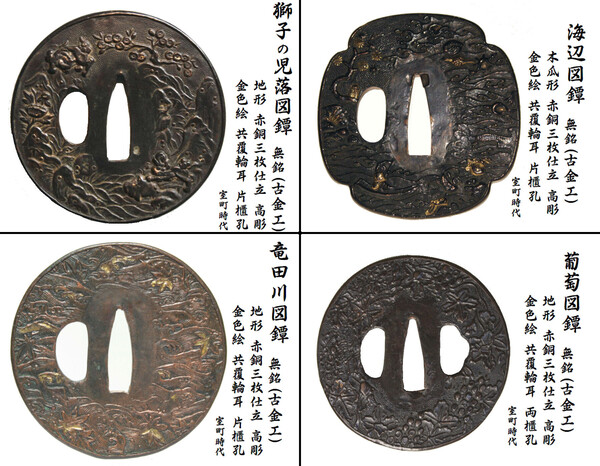
I like sanmai tsuba, and I've just realized I got more than I remember. Here below some more examples papered as ko-kinkō:
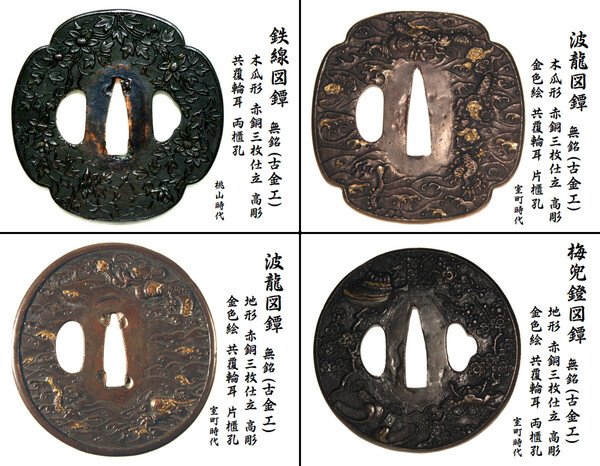 1 point
 -
From those photos, that doesn't appear to be a faked patina. It may not be the original patina (tagane patina is very consistent), but who knows? In my experience with fake patina, the guards will have more of a black, or quite dark finish with a somewhat "dry" appearance. The biggest tell however, is by submerging the guard in static hot water, if the finish starts to leach, it is a fake patina. There are a few high volume sellers who's guards consistently leech when submerged, and at this stage I have about an 80% strike rate of calling a guard out, as having a fake patina (once in hand), but this doesn't always translate with photographs.1 point
-
What problems do you see and where? Usually, a TSUBA will look different in hand, compared with a photo. The guard looks like a basic GO ISHI GATA TSUBA, even signed. A faint MEI is nothing to worry about, it's a question of individual chiselling style and age. Nothing wrong with it in my eyes (but they are no longer very good).1 point
-
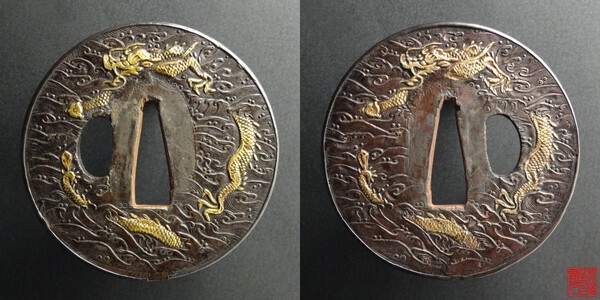
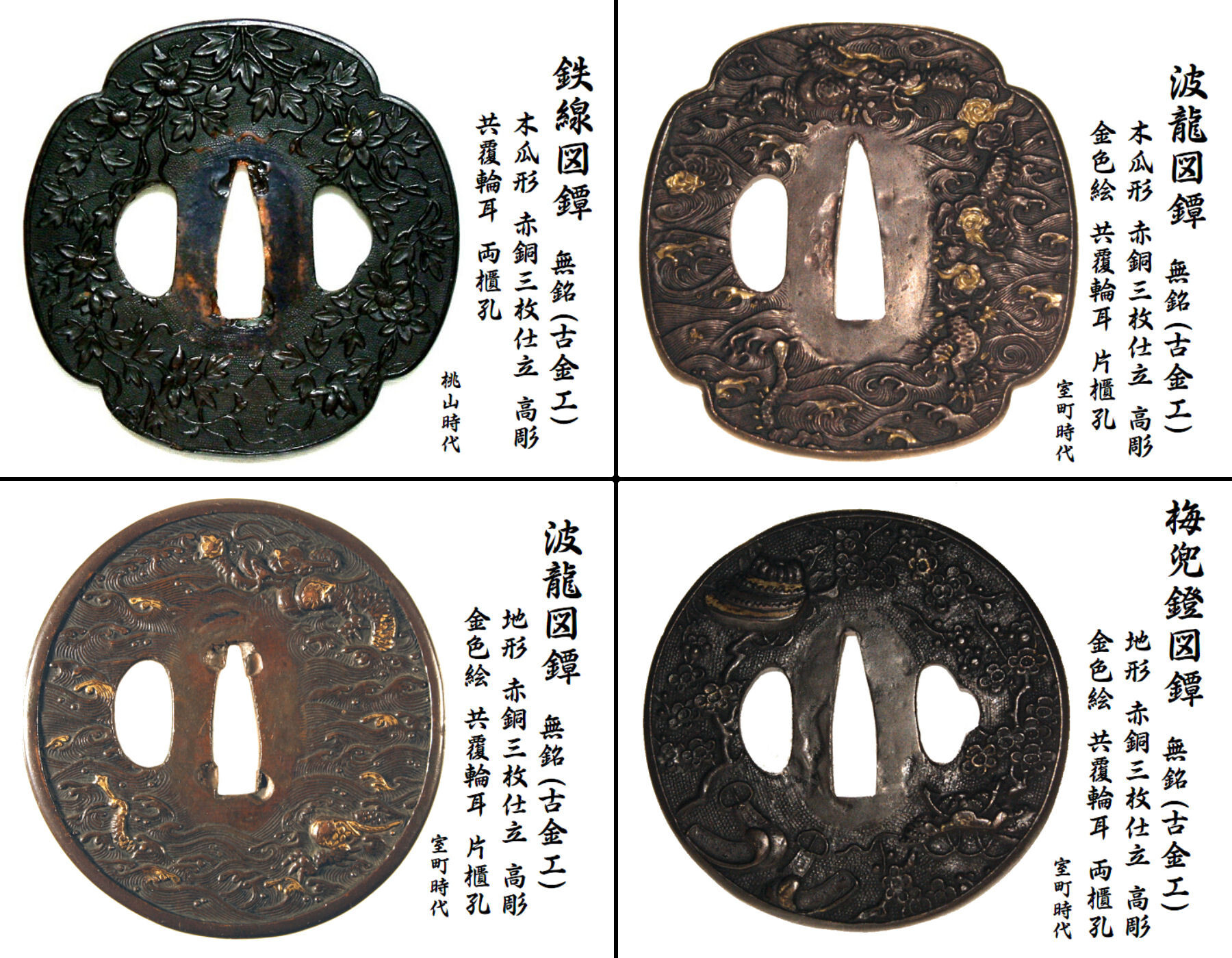
Dragon in the waves
 1 point
 -
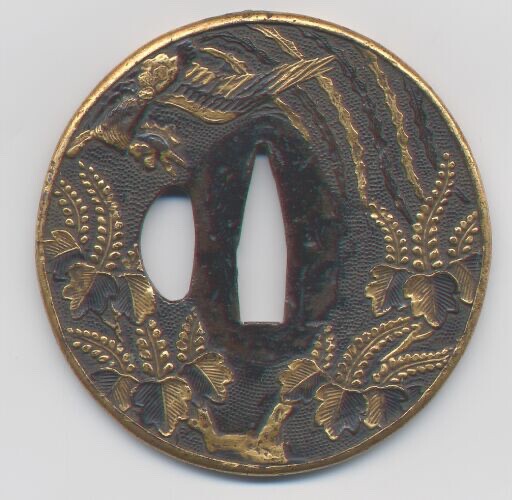
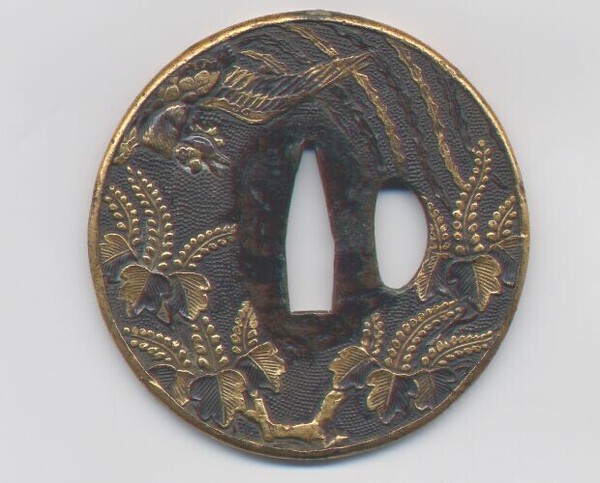
HO H0 Birds....
 1 point
 -
1 point
-
G'day Dan, You missed an "S". It is called utsushimono. Cheers, Bryce1 point
-
Hi Les, the article is titled: "Han Bing Siong. Probably the One and Only Gensuito Outside Japan and Other Interesting Japanese Swords in Windsor Castle // Special issue / Japanese Sword Society of the U. S. Newsletter. Vol. 30. No. 1-A. March 1998. 35 p." There is a rather interesting study on a Manchukoan Gensui-To by a Russian author. While not exactly the same as a Marshall sword, there are many similarities and it is unique to see the complexity of the fittings. https://memo-randum.net/katalog/interesnye-stati/manchukuoan-gensui-sword-new-findings-and-research-pronin-a-o-novosibirsk/1 point
-
No such thing as a 'spot polish'. If a sword is to remain in good health with crisp geometry, then a full polish is done.1 point
-
Jason, you've gotten some excellent advice here, but it is still a very-complex subject. Our illustrious member, Markus Sesko, has done a great job of walking members through a university-level course on Nihonto https://markussesko.com/kantei/ & I think reading through that, to understand the basics, will help you more than initially trying to understand the often-inconsistent Gokaden concept. Welcome aboard, & I hope you enjoy studying.1 point
-
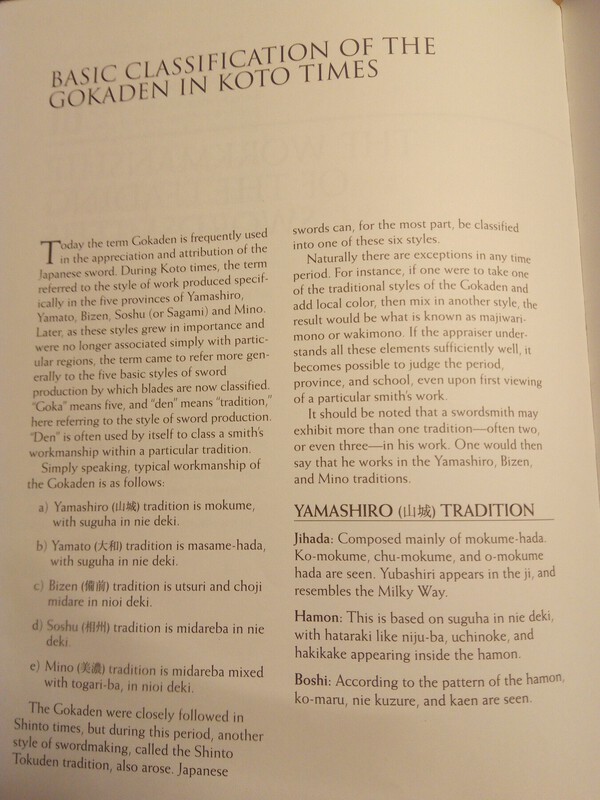
I would say gokaden is nearly as helpful as it is confusing. First and foremost, roughly half of the blades currently on the market are shinto. Which is, except for Ishido Bizen and a few other subschools, is a tradition of its own. The sixth tradition. So you have a classification which is from the get go fails with half the blades. But it does not get any easier as you go into details of what should be describable by gokaden. Pre-mid-Kamakura blades, no matter which school they are, ko Bizen, Yamashiro or Yamato can look quite similar. Many will belong to subschools which are not clearly gokaden - like Aoe and ko Hoki. Even though ko Hoki often looks more like "mainstream" Yamato compared to, say Hosho. And Hosho school never had mainstream-like Yamato signatures, its not clear if it was in Yamato region, it has a well defined style of its own - but its in the old tables as part of five mainstream Yamato schools, so it is there. Rai Kuniyuki forged most of his blades in wide, nie filled hamon, which can be mistaken for Bizen Tomonari , but is completely incomparable to almost anything ever done in later Rai and Awataguchi, i.e. the works which sort of define Yamashiro style as it is. Soshu tends to include Awataguchi smith Shintogo Kunimitsu, whose works were never mistaken for any single blade produced by anyone else within Soshu school, but can exclude Shizu Kaneuji, on account of him going Mino. Hasebe, who is very central to Soshu, is often instead delegated to Yamashiro, on account of him having Yamashiro-lineage name. Gokaden is blood/province oriented classification. It fails utterly in shinto, when style dominated over blood. It fails with ancient swords, which were all forged in rather utilitarian style, which has rough itame-nagare hada and rough nioi with elements of nie hamon. It mostly fails at the time when everybody was trying to be Soshu. It constantly includes things that are not really that similar - Yoshii, Unju and Osafune under the umbrella of one "Bizen school", while sending works of exceptionally similar smiths to different schools because their blood is unrelated. In reality if you want to understand Koto you need to get accustomed that there were about 25 more or less prominent schools/lineages, each of which cannot be completely defined by gokaden. Even if it resided in Bizen or Yamashiro. Ayanokoji usually does not look like Rai Kunitoshi. If you want simplification, there were only 4 styles which were constantly imitated throughout Japanese history. Ichimonji, Soshu, Rai Kunitoshi/Awataguchi and Yamato Tegai Kanenaga. If you understand 4-10 masterpieces from these traditions, you can understand 50% of nihonto aesthetic.1 point
-
Worth reading (Nagayama's book) :
 1 point
 -
Han Bing Siong was an amazing scholar, I would have liked very much to meet him. His article might be the first time I ever see mentions of Shintō and Shinshintō Hoshō. I tend to think Kunikane and Norikatsu individual smiths rather than part of the Hoshō lineage. Of course workmanship for both shares characteristics commonly associated with Hoshō school work. There are different ways to "group" up smiths and schools under larger categories. Gokaden is one of them. I will add a quote about gokaden from Nihon Kotō-shi by Honma Junji Personally I like to go with regional groupings. To me it just seems most logical approach going by geography, although when for example smith changes residence it can make things difficult. For Kotō swords there is kinda logical approach in going through the provinces in a certain way, you can see this for example in NBTHK Jūyō results (similar approach applies to later items as well). Now if you take Yamato from Gokaden as an example. Generally there are the five main lines of Yamato that worked within the province, Senju'in, Taima, Tegai, Shikkake and Hoshō. However there are many schools that are heavily influenced by this tradition. For example in his Gokaden no Tabi Yamato book Tanobe-sensei includes Uda (宇多) [Etchū province], Naminohira (波平) [Satsuma province], Fujishima (藤島) & Asago-Taima (浅古当麻) [Echizen and Kaga provinces], Mihara (三原) [Bingo province] and Niō (二王) [Suō province]. Now for example as I go with regions I would approach these by the province and would group them by those but someone going with traditions/work style might group them together like this. I just listed the provinces in [] brackets as these schools worked in various parts of Japan. I think it is quite interesting subject as people will have different types of approach into things. So it is fun to see various views on things.1 point
-
Wow, Peter. I would bow if we were in person. I will have to take some time to really think about your post, but I believe I begin to understand what you are saying. I believe I have been thinking of schools in too literal and linear of a sense when it comes to schools.1 point
-
Dear Jason, You are being laudably responsible in becoming a Japanese sword collector. Good on you!. Please let me try to help you by asking you to think about plywood, - that is 1) a material made of a bunch of thin layers of wood. It can vary 2) based on the kinds of wood that were used, and 3) the ways they were attached. And 4) you have to remember that plywood always has two sides – the stripes and the flat. ( it is tempting to call those masame and itame, but it is a bit different) Beyond all that, you also have to realize that 5) plywood has been used in lots of different ways, by craftsman 6) in many different areas and styles. So what do you do when you find a great Eames chair that a used furniture dealer is selling as a “Plywood Seat”? Do you argue with her? Do you question your understandings and tastes? Or do you say, “I like it, but can you do any better?” The gokaden was a way of classifiying Japanese sword making procedures before 1250 or so. To begin with those procedures were routine and supported by rather narrow tool kits and local resources. Basically, they were like slightly different ways of making plywood. Then, by about 1400 or so, mixing and reorganization and increased demand had begun. And so, smiths in different AREAS developed differences. They used established techniques, but developed distinctive ways of making effective weapons – call them regional styles. Soldiers in those regions got used to those weapons, And so you get things like “Hokuriku style” That usage is like talking about a “Kentucky Rifle.” Then you have to understand that in Japan, you learn a skill by entering into a close relationship with a social superior. These situations can be called SCHOOLS because the boss teaches you how to operate and he exposes you to a narrow and specific set of 1) skills and 2) tools. This means what you learn is narrow and specific. It is about how to behave NOT how to innovate. After the late 1500s there was great persistence in several of these schools. They were all making plywood, but by that time the medium and the techniques had changed a great deal… Let me also speak to Kunikane. He claimed to be a descendent of Yamato smiths, but I can’t understand how that could have been. And furthermore I do NOT think there is a gene for blacksmithing. I think he was a GOOD smith who figured out how to do masame. He also seems to have been a good local citizen. He earned the support of rich guys in his hometown. And he started an enduring “school” that lasted like 14 generations in Sendai. The second Iyesada was a student of Kunikane, but the swords he made, and those by his son and grandson don’t look TO ME like the swords that Kunikane produced. Peter1 point
-
I have listed him as follows in my index: Masataka (正隆), Tenpō (天保, 1830-1844), Settsu – „Tenryūshi Masataka“ (天龍子正隆), „Ozaki Gengo Masataka“ (尾崎源吾正隆), „Tōto ni oite Tenryūshi Masataka“ (於東都天龍子正隆), „Ozaki Nagato no Suke Fujiwara Masataka“ (尾崎長門介藤原正隆), civilian name „Ozaki Gengo“ (尾崎源吾), grandson of Ozaki Suketaka (助隆) and son of Takashige (隆繁), he worked in his early years in Ōsaka but went later to Kyōto where he supported the court noble Chigusa Arikoto (千種有功, 1796-1854) in forging swords, his gō was „Tenryūshi“ (天龍子), he mostly made blades with an elegant sugata and a dense ko-itame which tends to muji, the hamon is a tōran-midare, suguha, kobushigata-chōji or pictoresque interpretations like Fujimi-Saigyō with always a compact noiguchi, works in midareba have a sugu-yakidashi, the bōshi is sugu with a ko-maru-kaeri1 point
-
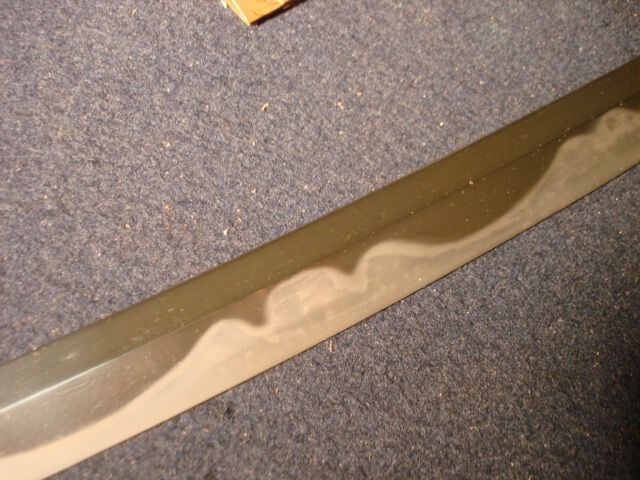
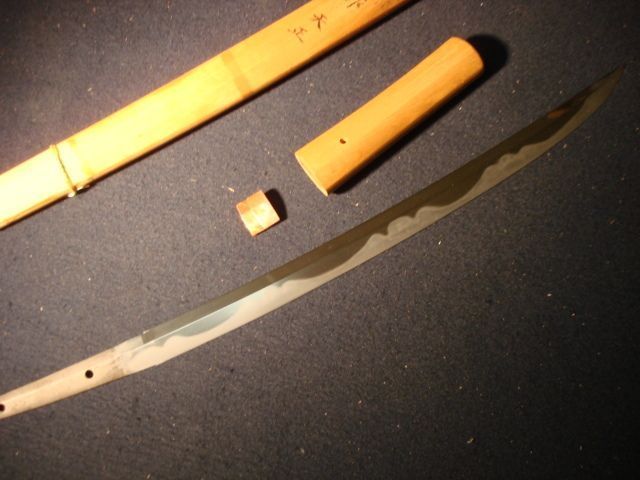
There is a photo of an edo period sword in another thread with the same Hamon i think, but i could be wrong. viewtopic.php?f=1&t=9937 Yoshino (cherry blossoms on the Yoshino river) Chris
 1 point
 -
after a second look, it's not exactly the same hamon !
 1 point
 -
yes on one of my mumei sword!! :D but not much clues after a second look, it's not exactly the same hamon !

 1 point



























This leaderboard is set to Johannesburg/GMT+02:00