
Leaderboard

Popular Content
Showing content with the highest reputation on 03/31/2023 in Posts
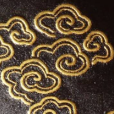
-
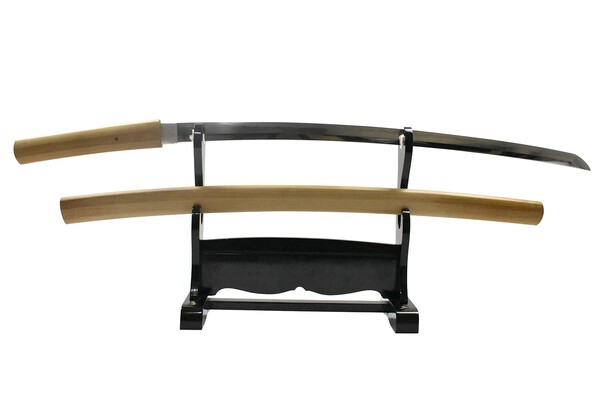
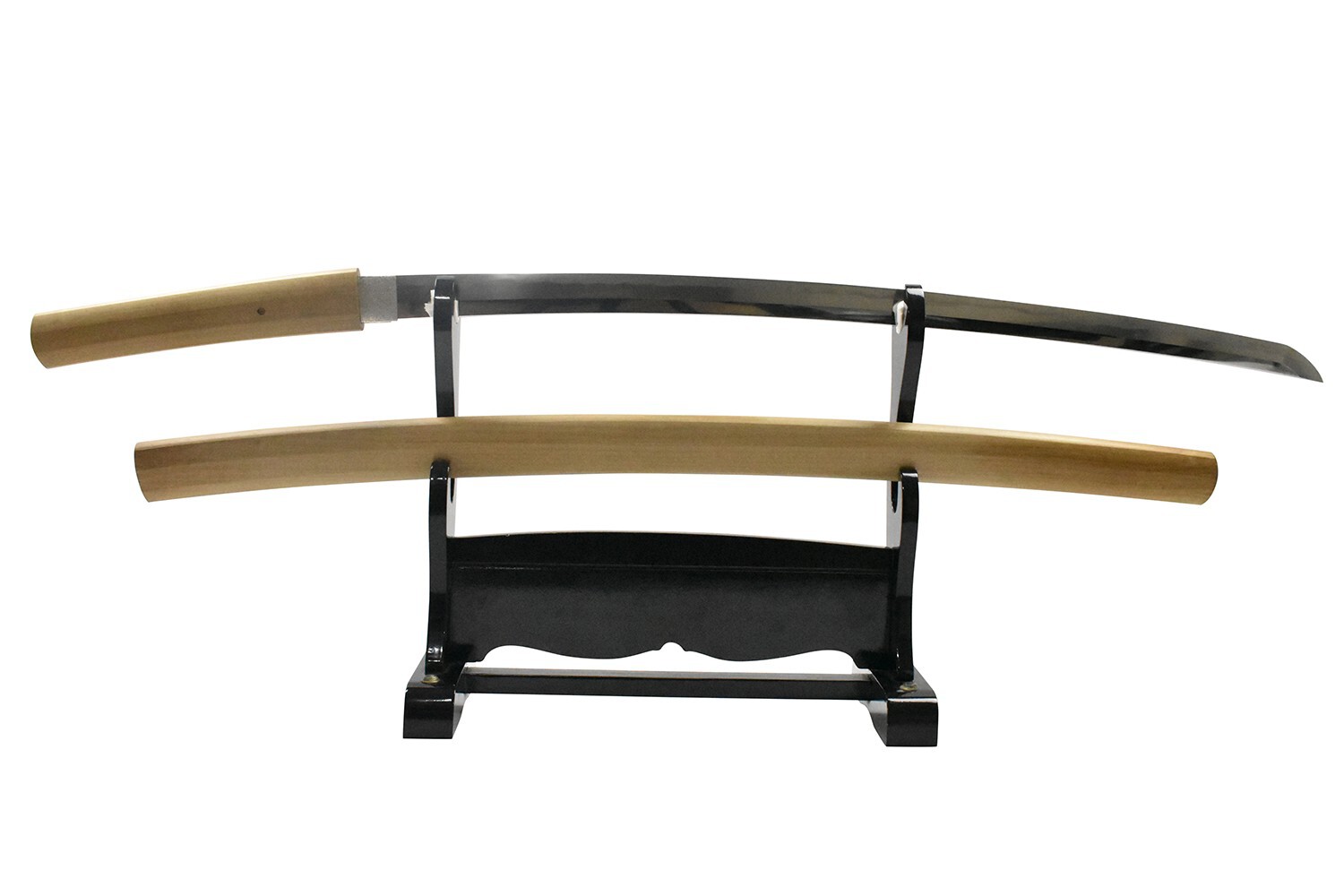
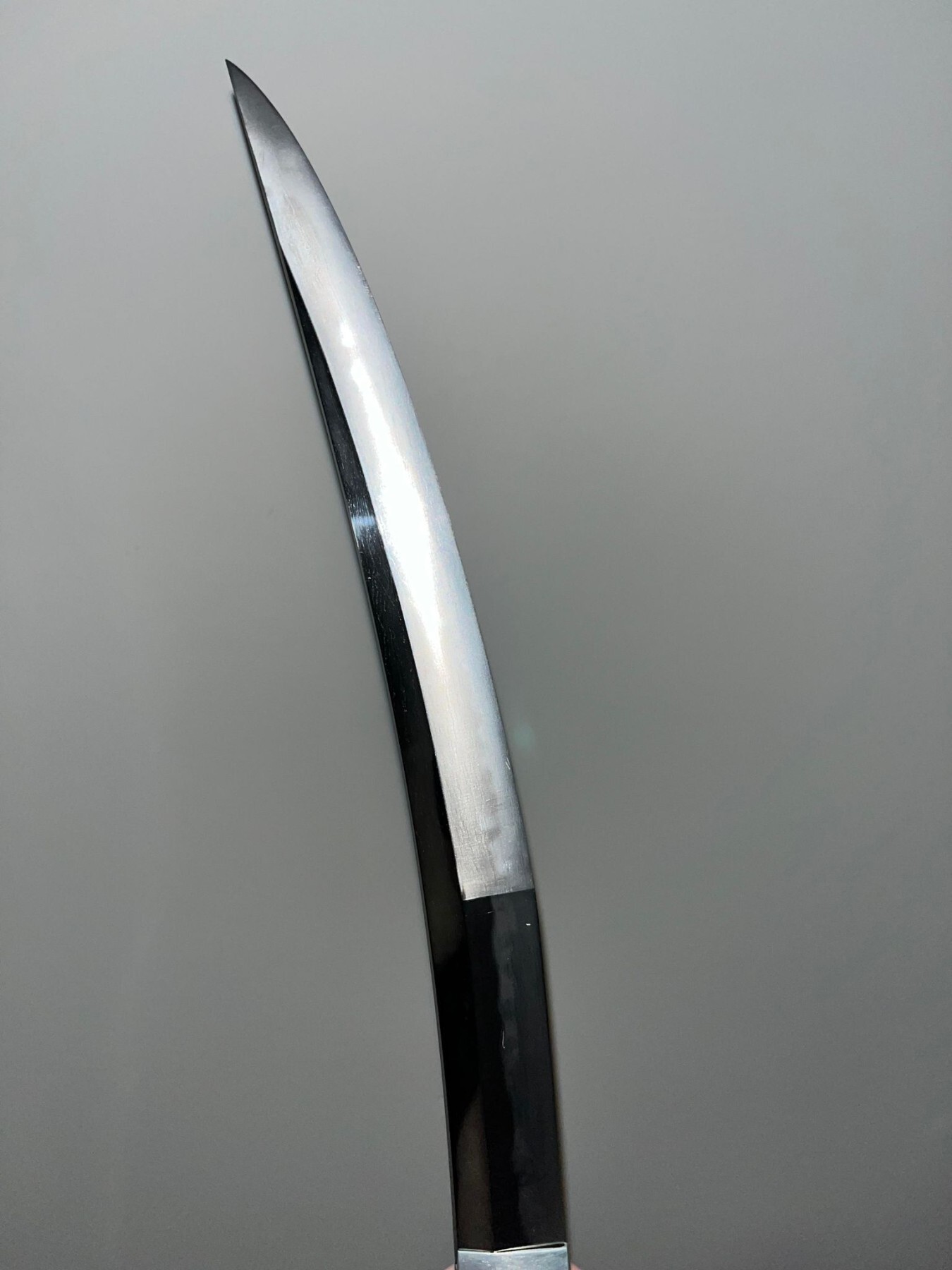
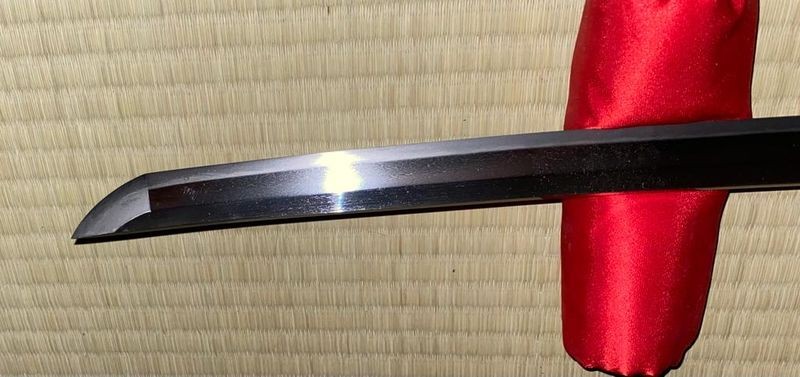
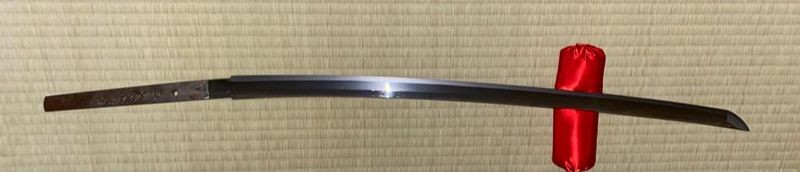
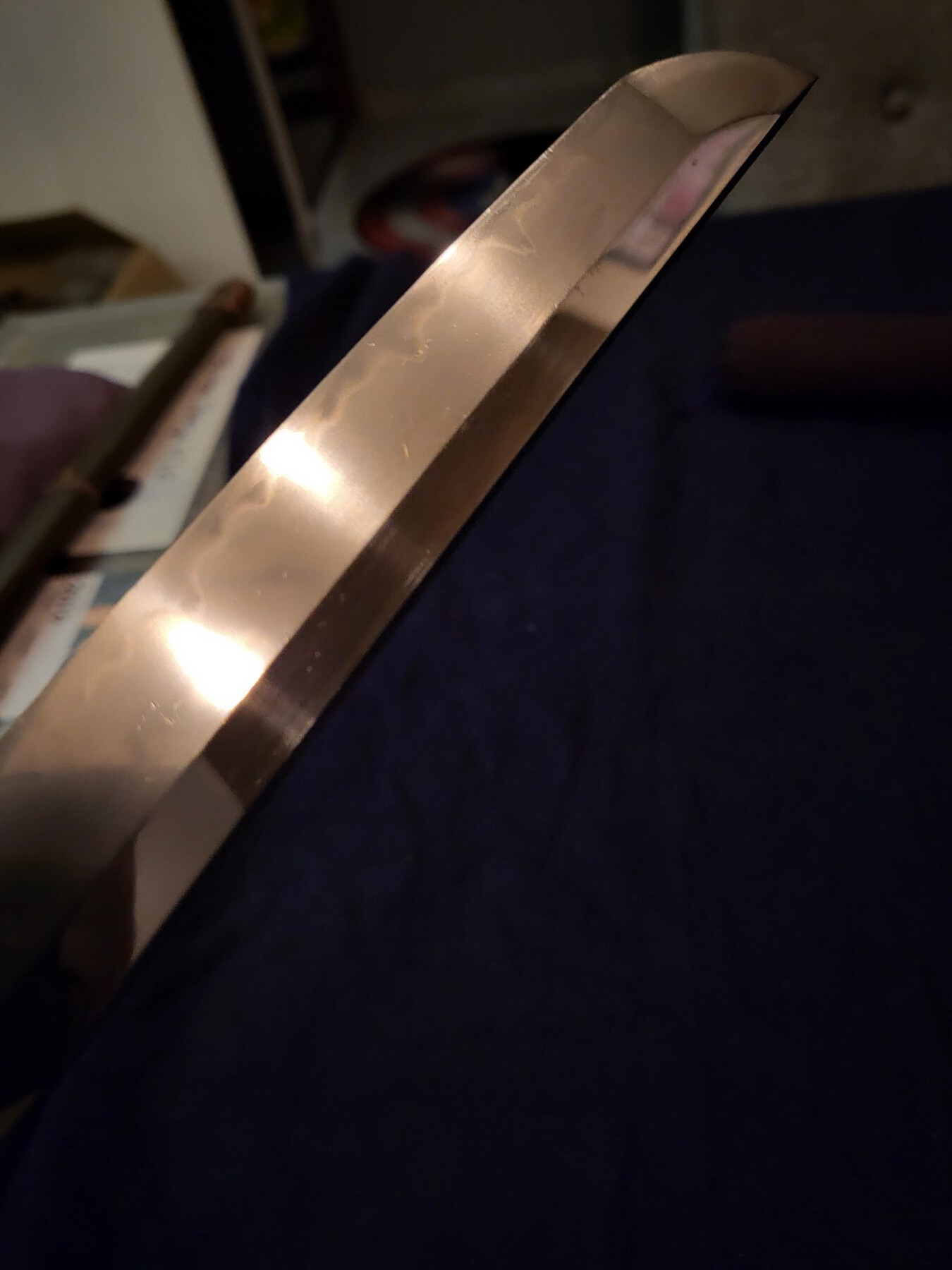
I have one to add. It is for sale but still worth a share I think. Lots of blades by Gassan Sadakatsu have already been presented and I'll add one more, this one in Soshu-den style. The workmanship is reminiscent of a Go Yoshihiro I had the opportunity to study in hand.
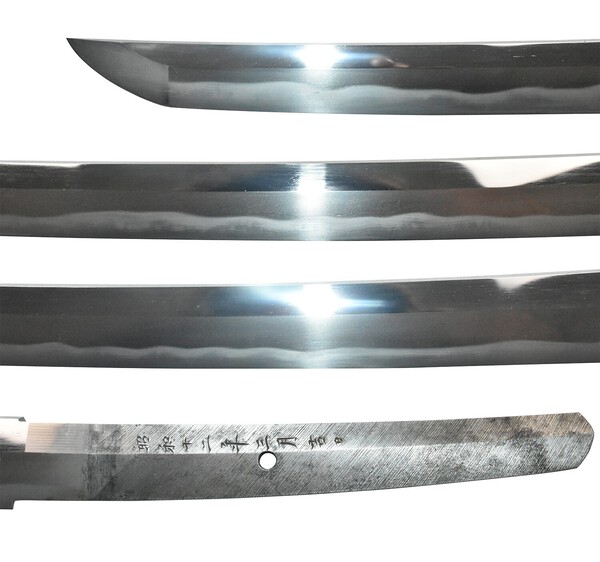
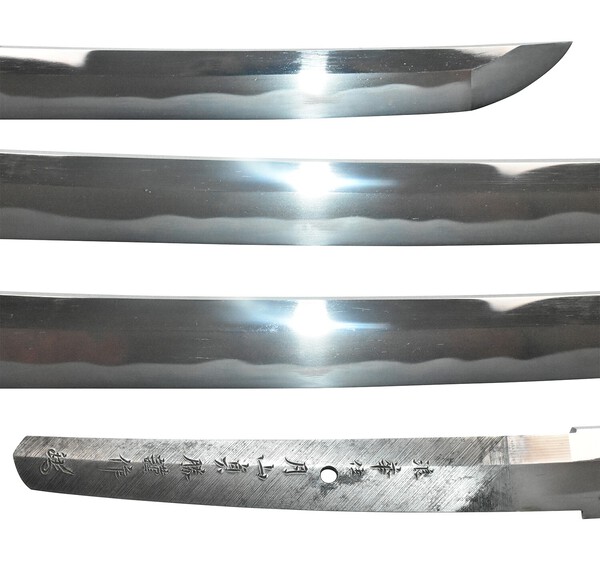
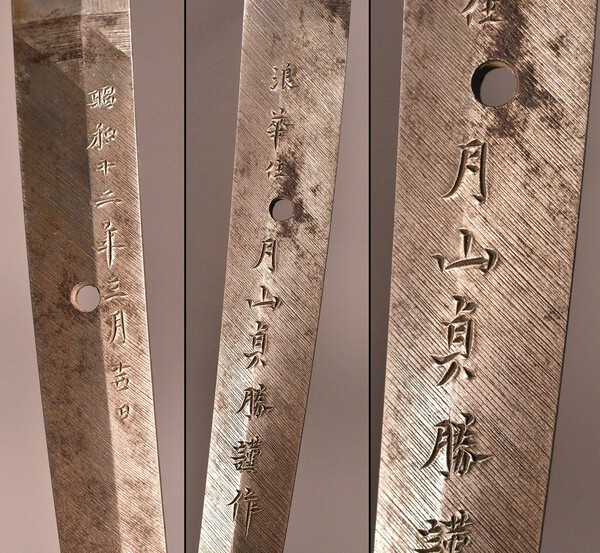
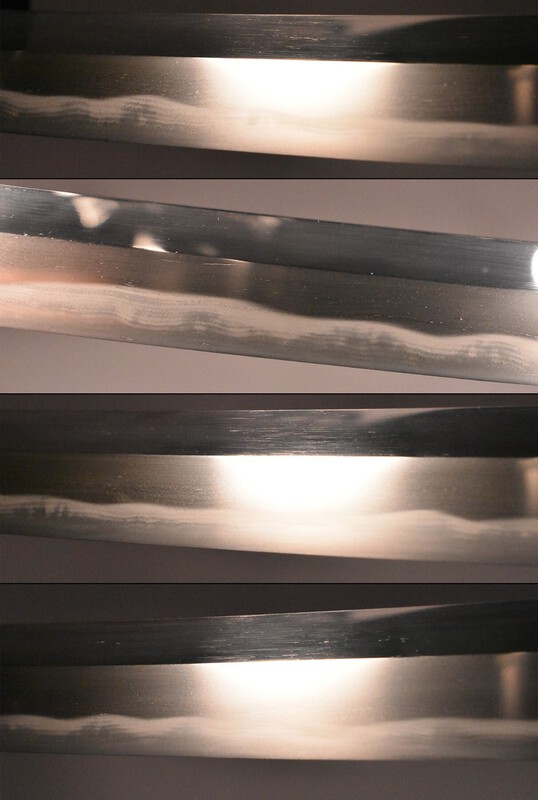
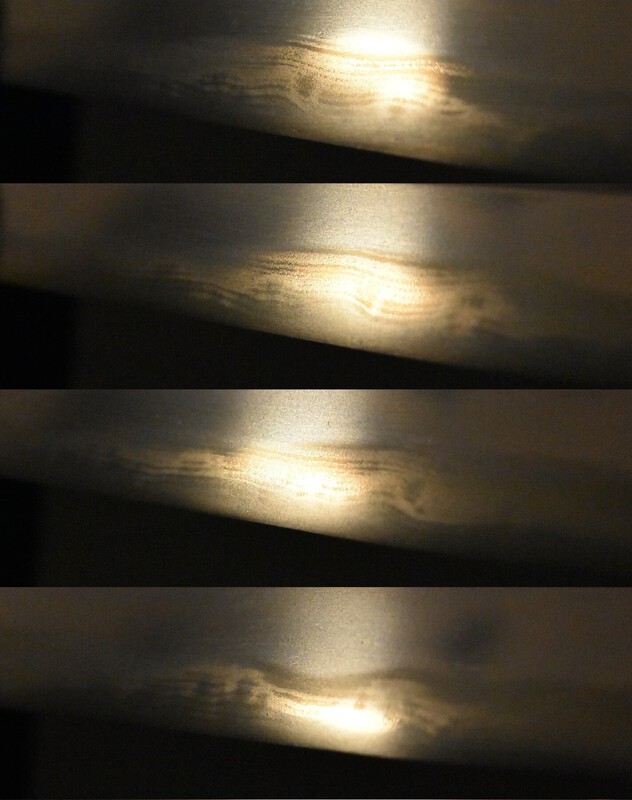
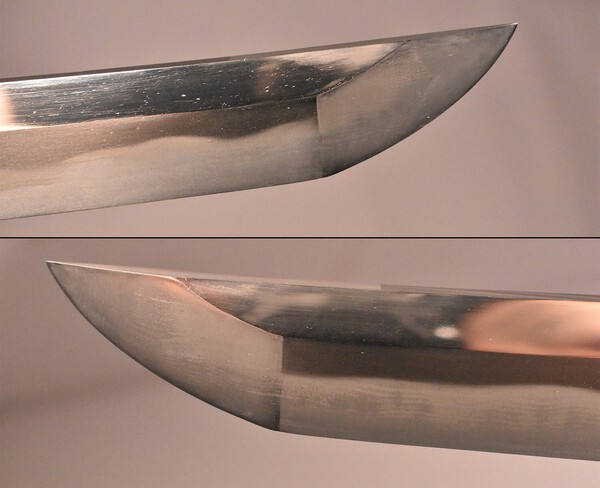 9 points
 -
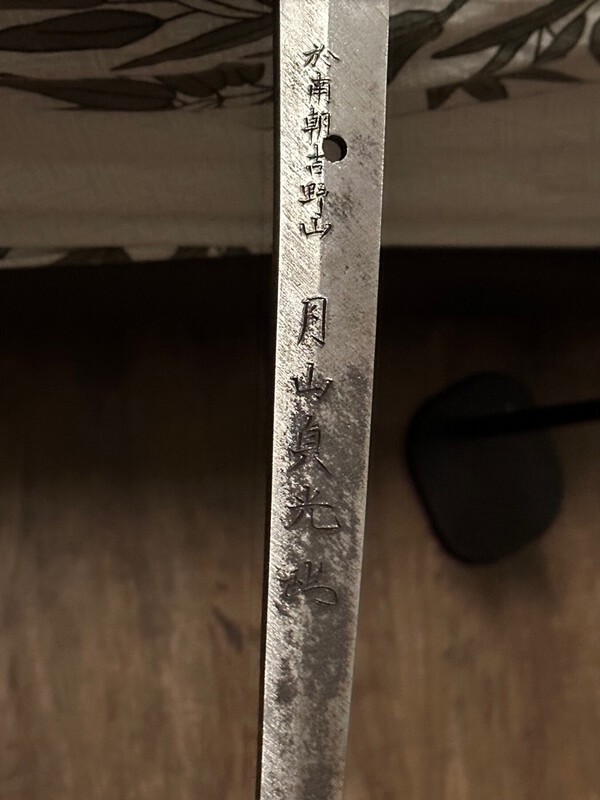
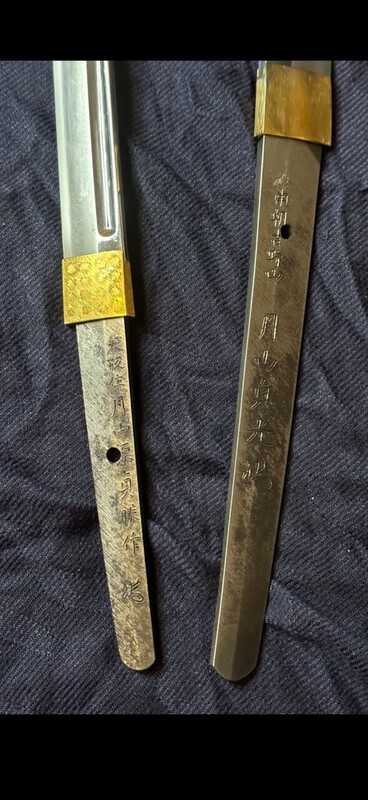
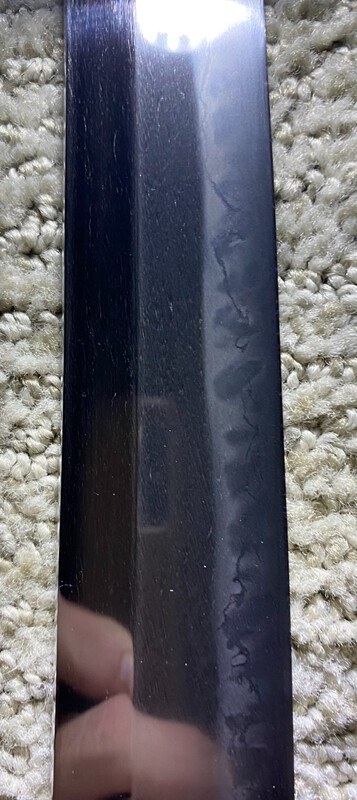
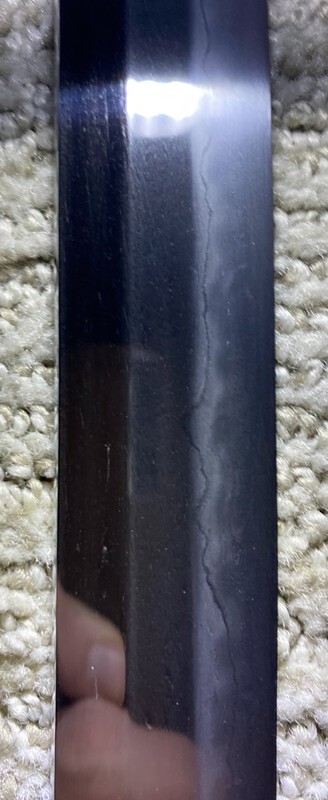
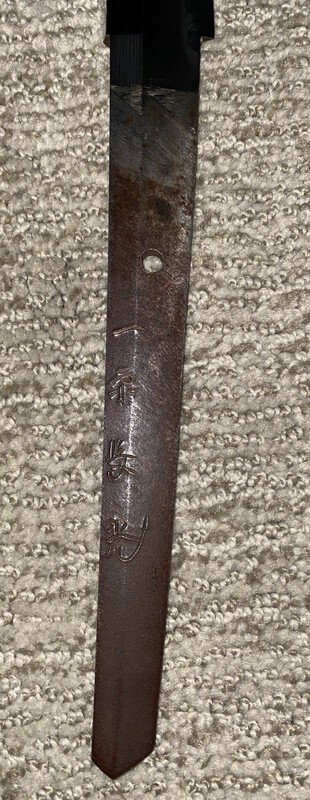
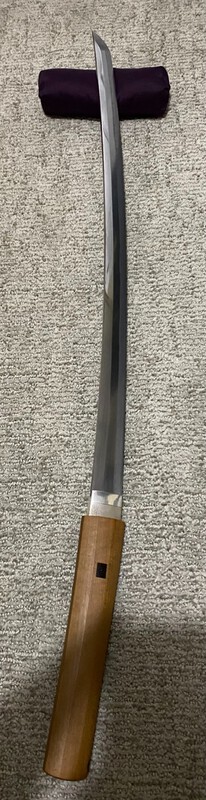
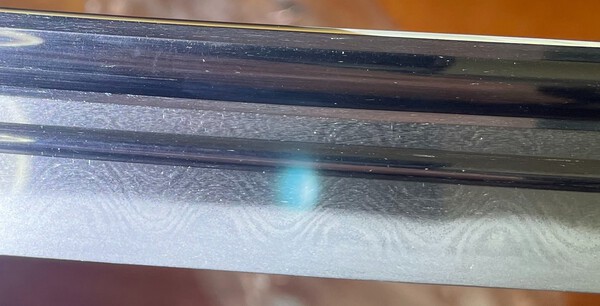
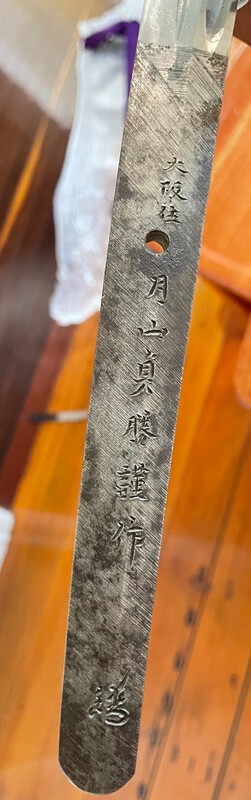
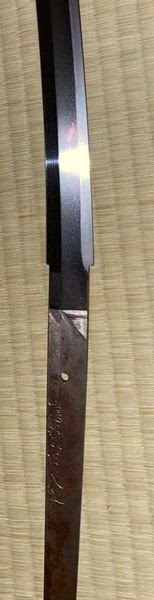
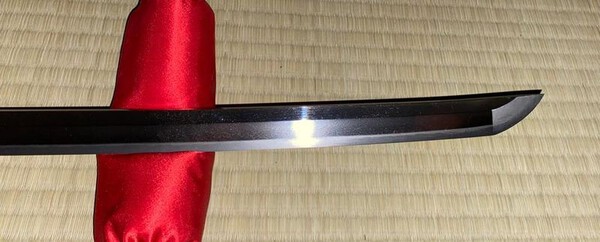
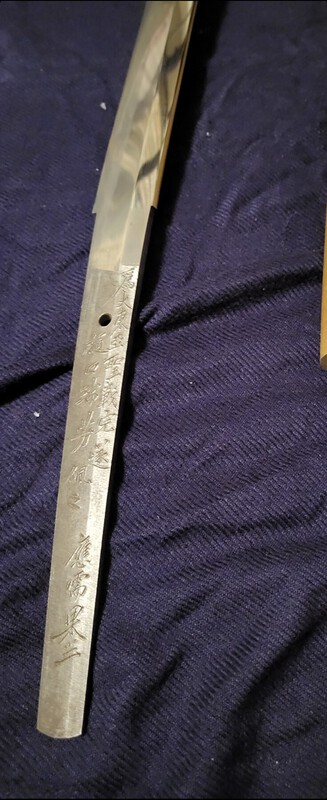
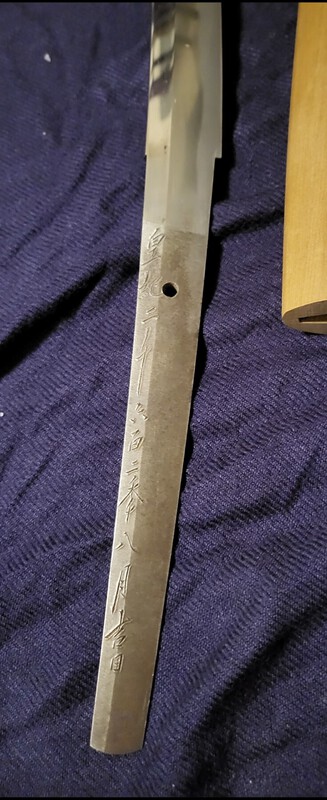
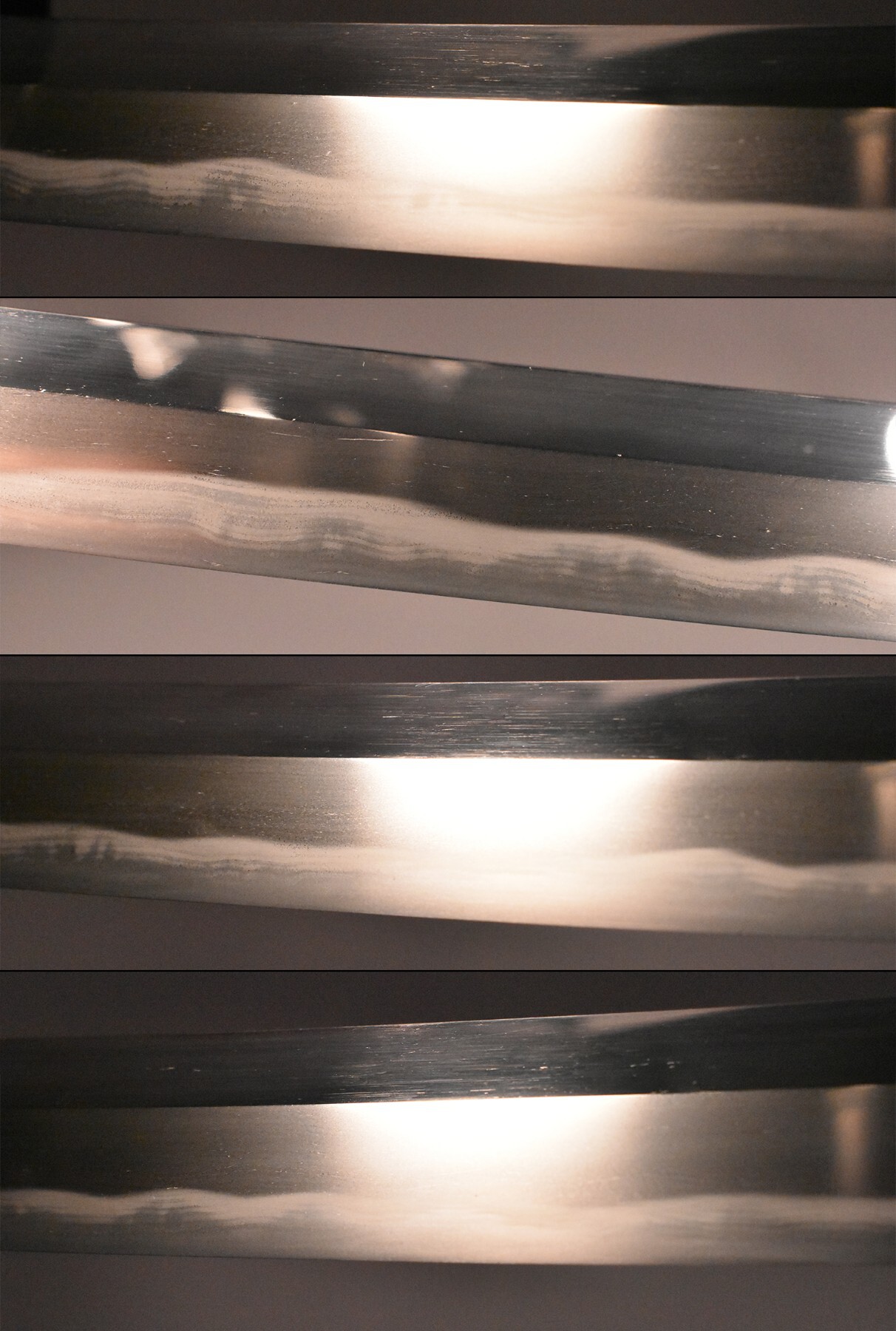
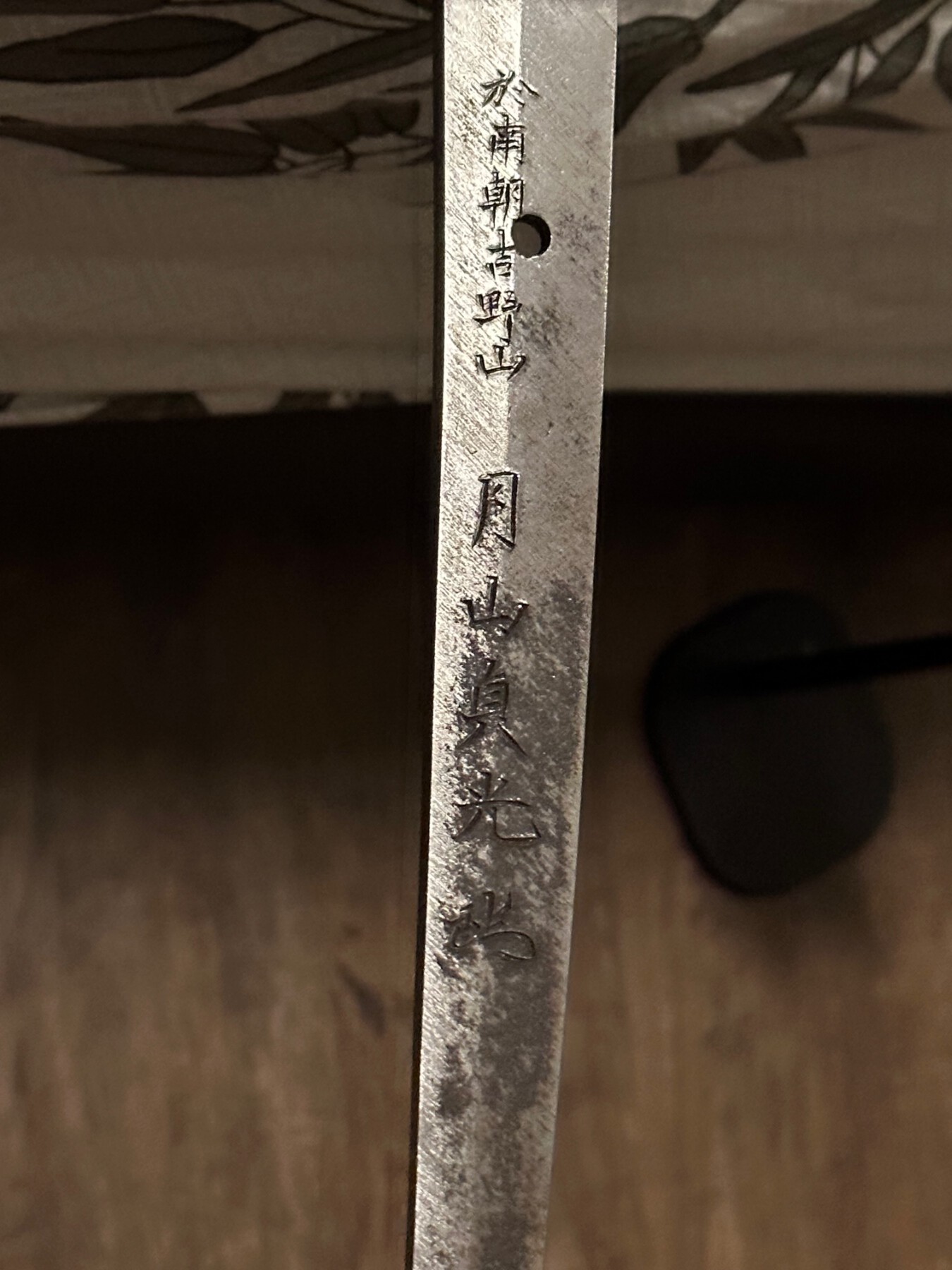
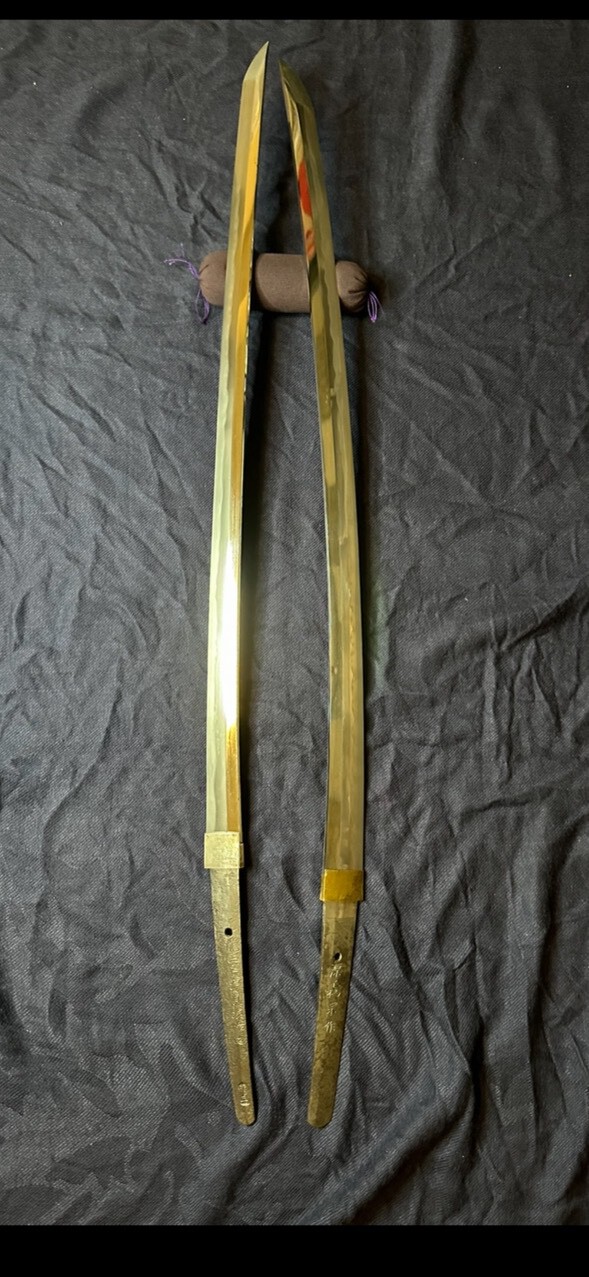
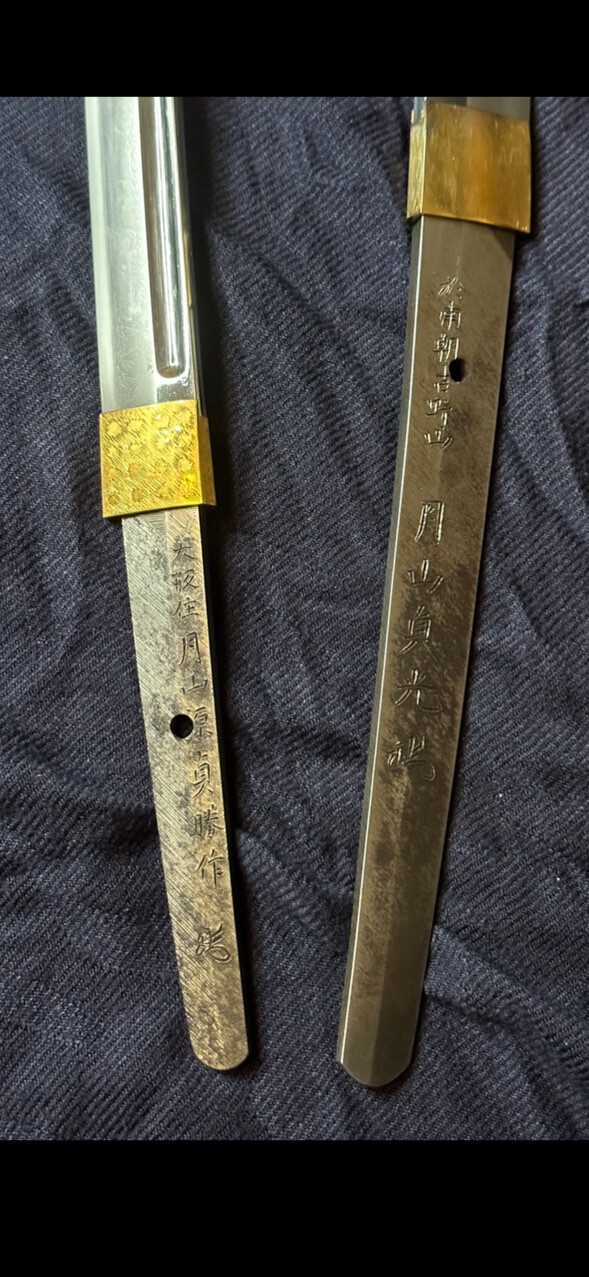
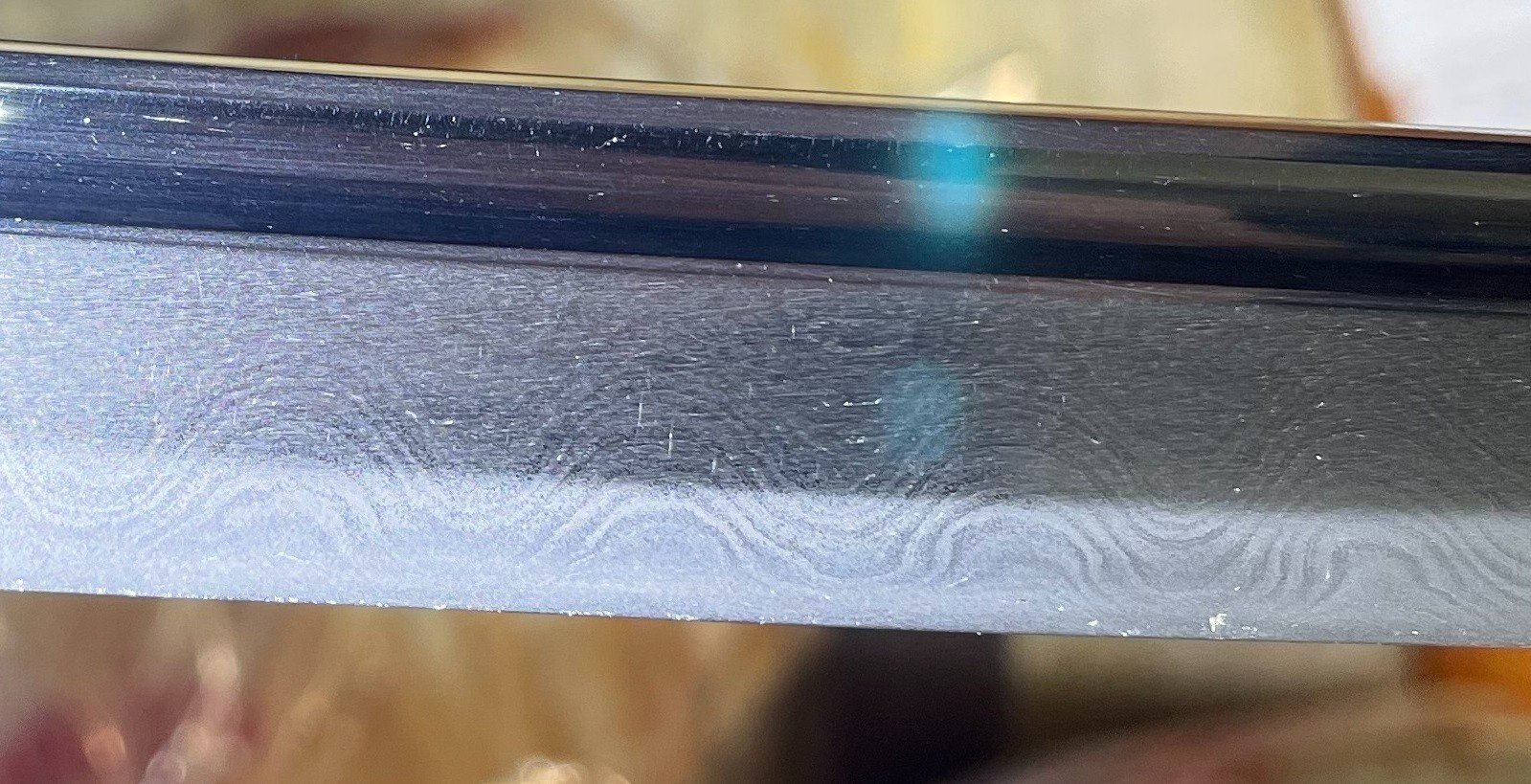
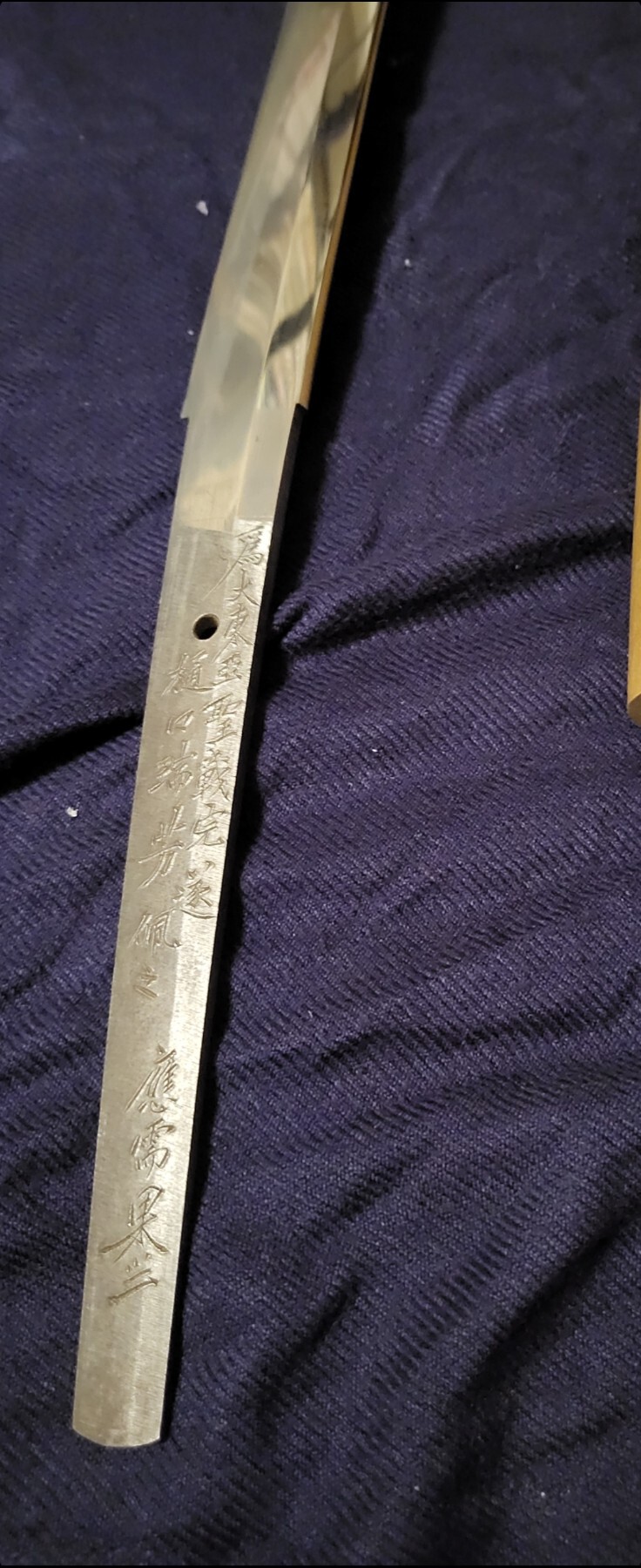
Hi Bruce, Thanks for the interest. The hot stamp is from the Sadatsugu sword instead of sadamitsu. I was posting 4 swords with back to back pictures. Sorry for the confusion. Btw, here’s the close up pictures for the sadamitsu piece for your reference Ronnie
 3 points
 -
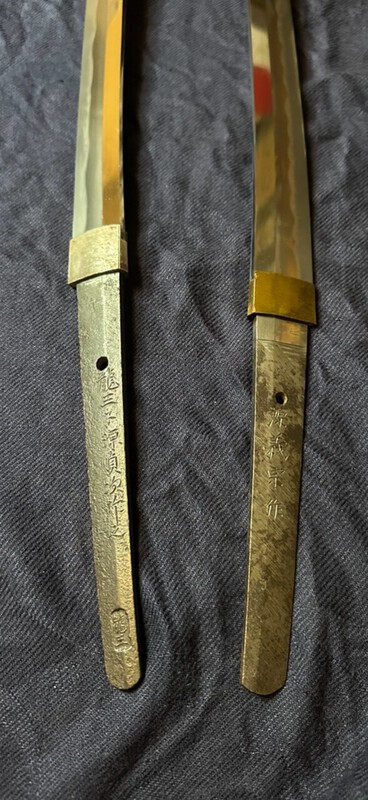
Takahashi brothers. Takahashi Sadatsugu and Takahashi Yoshimune
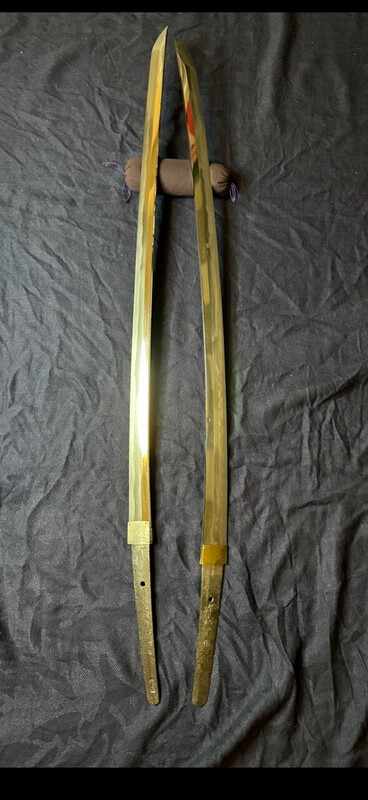 3 points
 -
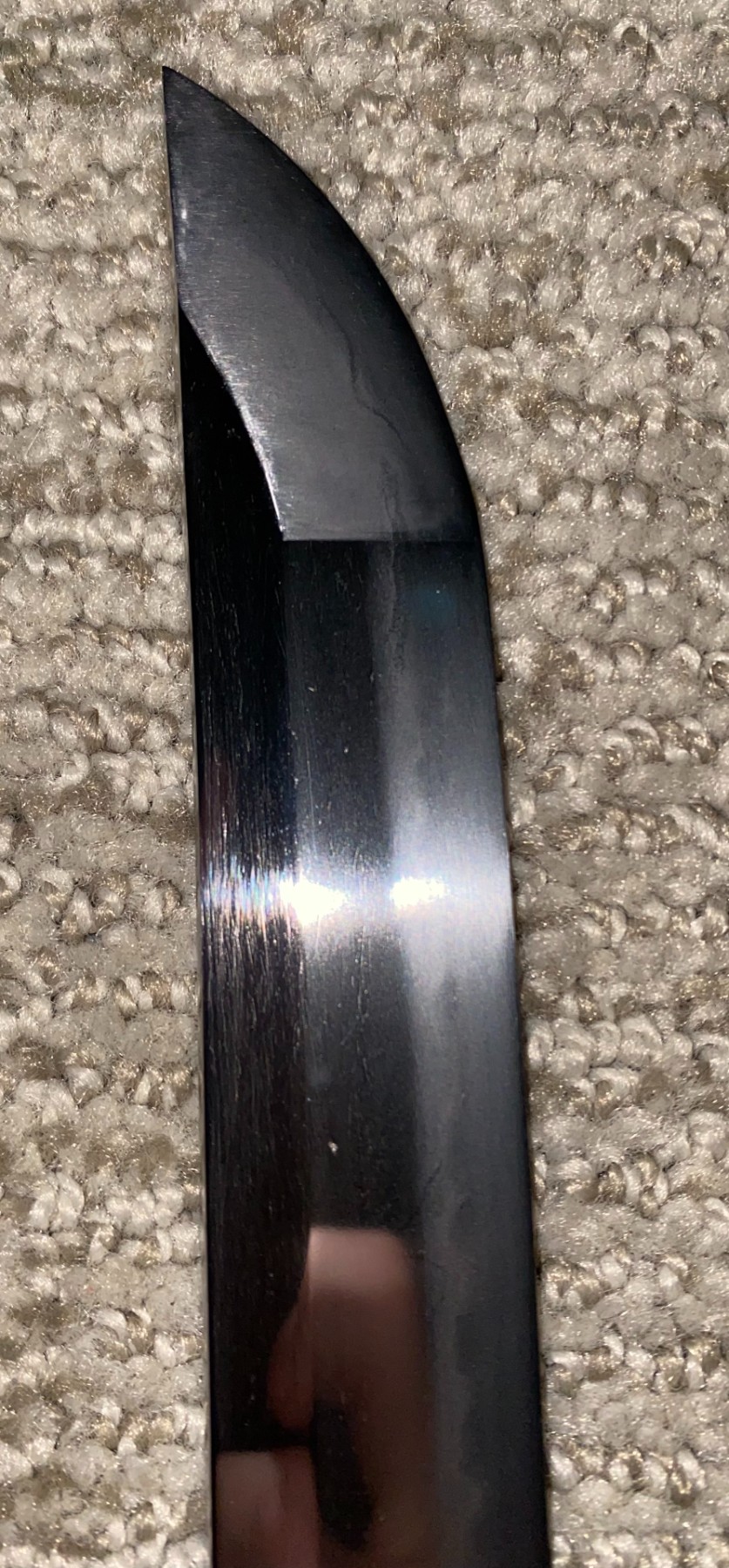
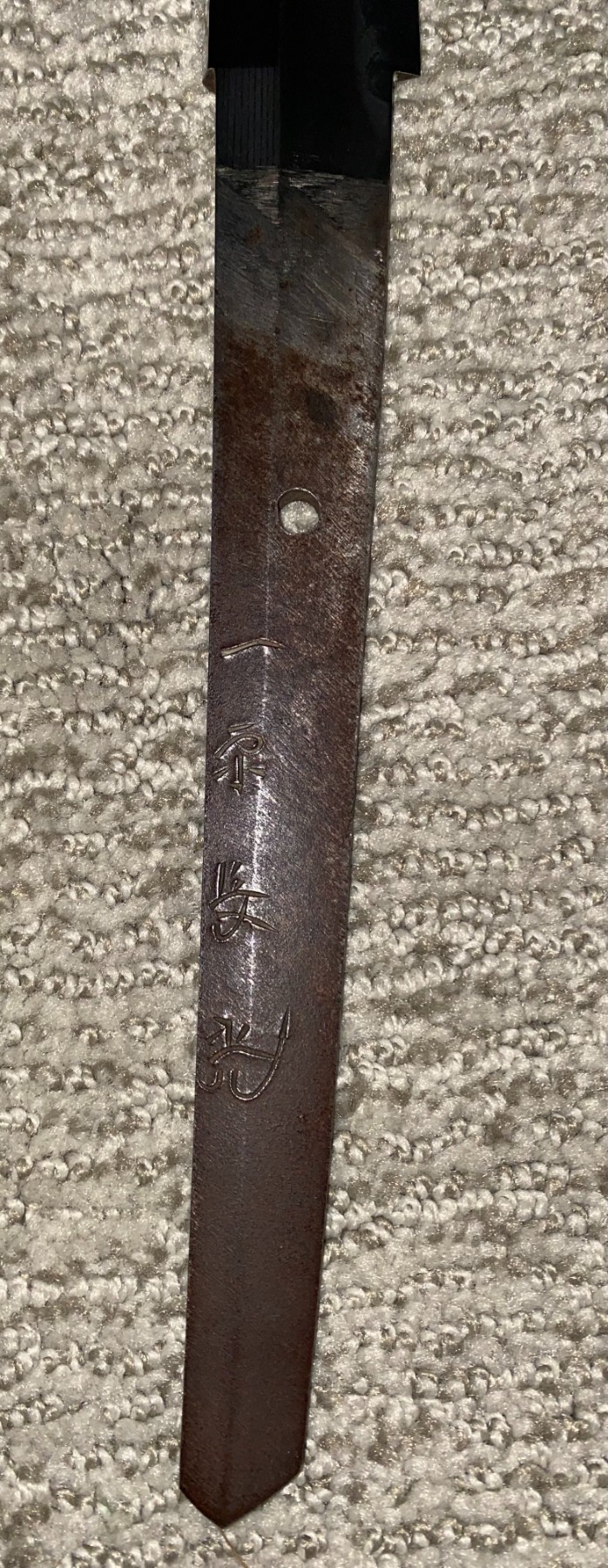
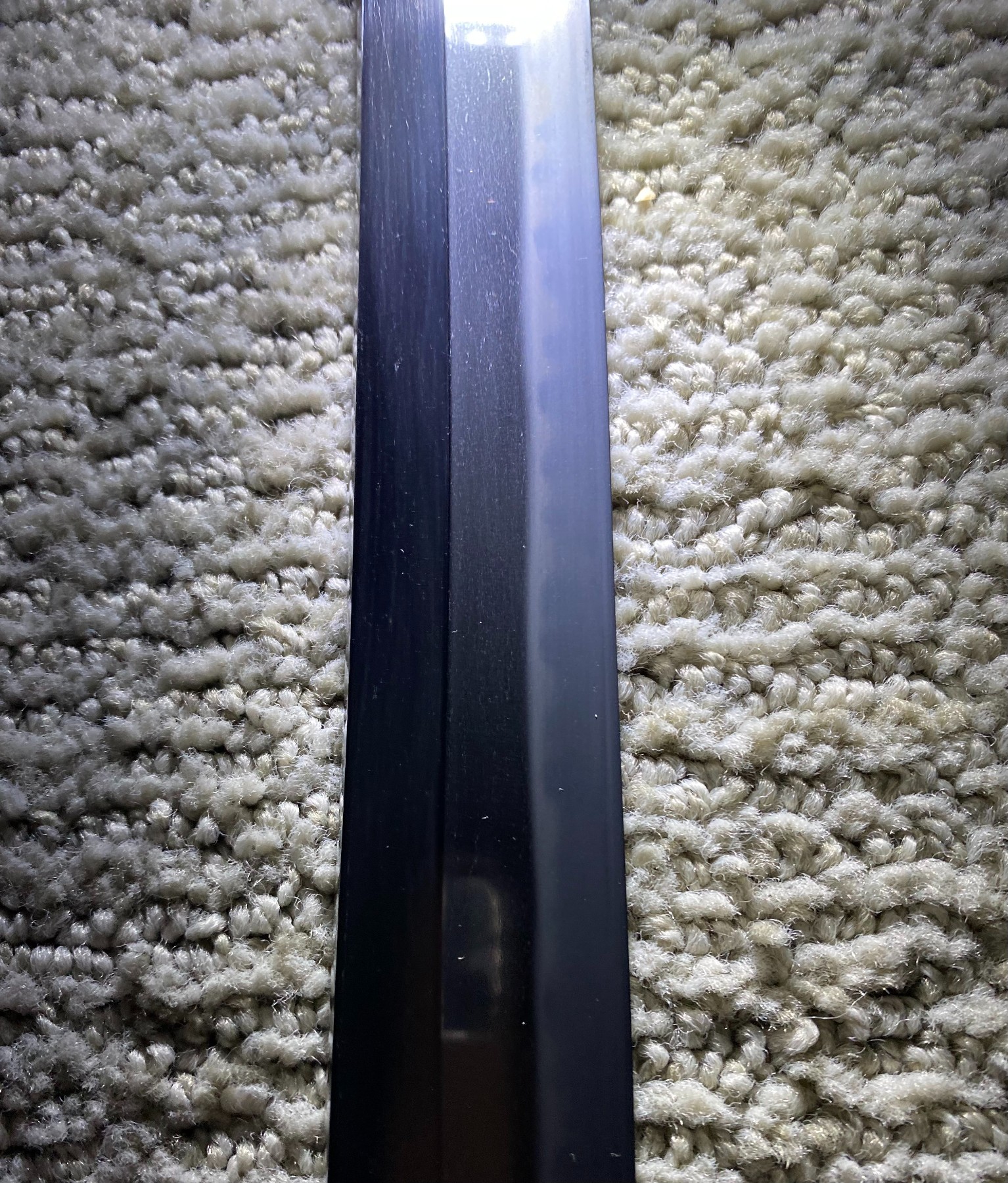
Continuing with Gassan tradition . Father and son. Sadakatsu and Sadamitsu.
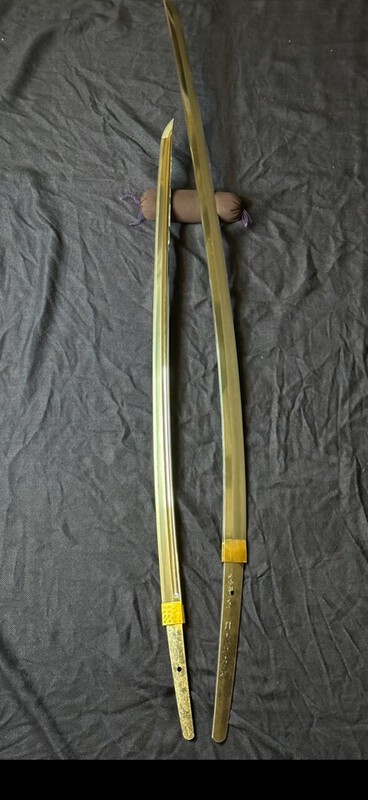 3 points
 -
In my eyes a spectacular blade - MUMEI or not. Have one made at that price!3 points
-
What is Sayagaki ? with JPN/ENG subtitles 【鞘書とは(日英字幕あり)】刀剣鑑賞が100倍楽しくなる動画! I have tried to explain the basic structure of the sheath book, analyze what was written, and much more. You may not have the opportunity to see the sheath book very often, but we hope you will find it useful. We have also included Japanese and English subtitles for information that we were unable to convey during the filming, so please take a look at them as well! Channel Introduction Sword Appreciation Video "Touken-an" makes sword appreciation 100 times more fun! The channel explains the language in a way that is easy to understand for beginners. If you are interested in swords, please subscribe to our channel. 鞘書の基本構成や書かれた内容を分析してみたりと、色々と解説してみました。 鞘書をあまり見る機会はないかもしれませんが、ぜひご参考にしてください。 また、撮影中にお伝えしきれなかった情報などを日本語字幕と英語字幕でお伝えしておりますので、併せてご覧くださいね! 【チャンネル紹介】 刀剣鑑賞が100倍楽しくなる刀剣鑑賞動画「刀剣庵」 初心者にも分かりやすく言葉の説明をしています。 刀剣に興味のある方はチャンネル登録お願いします。 https://youtu.be/_CpGDnzzFdI2 points
-
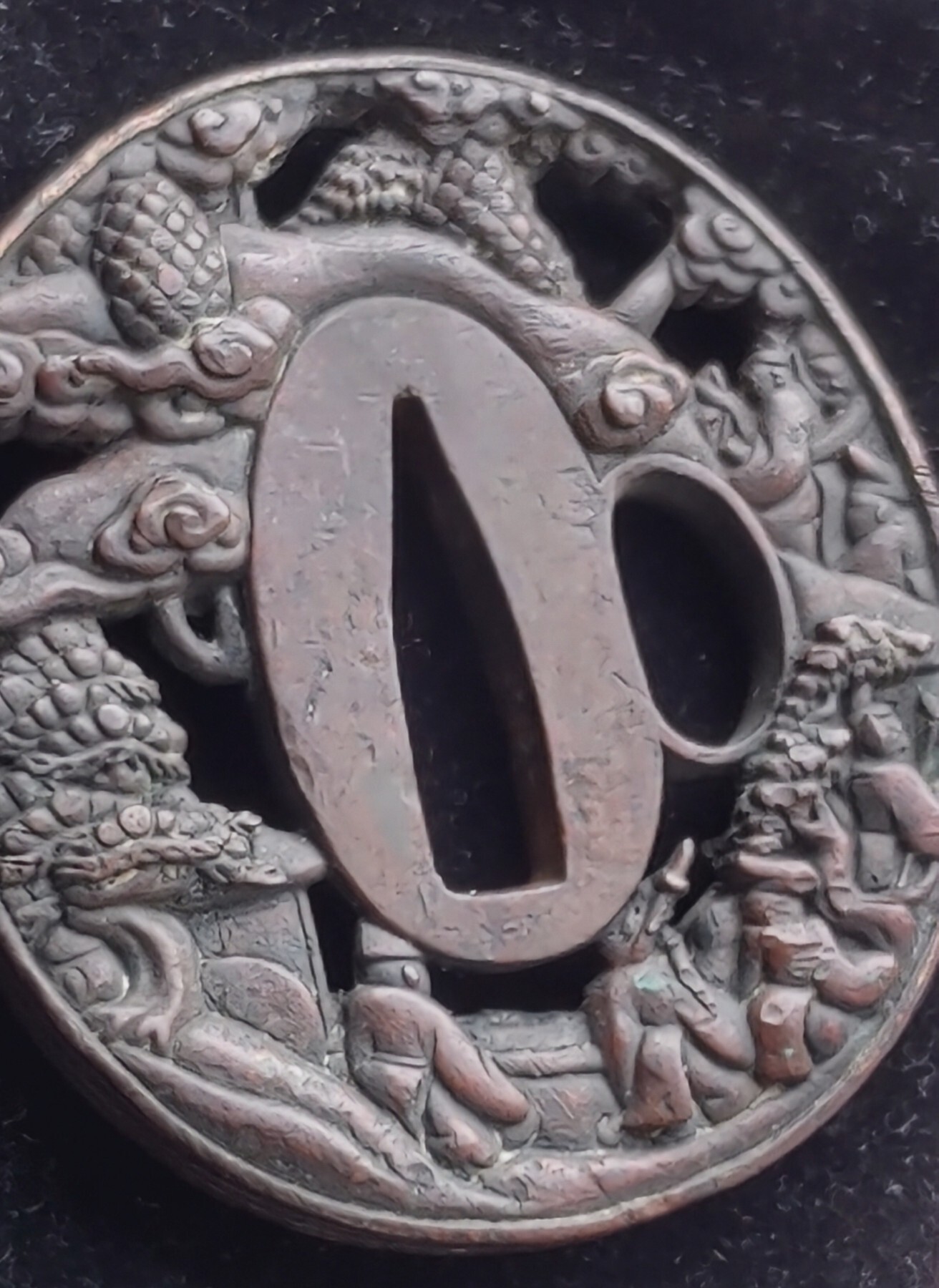
Vitaly, TSUBA 1 (one piece construction) and 2 (photo 1) seem to be made in TSUCHI-ME technique (= hammered surface). Both TSUBA are not at all bad as far as I can see, but new/recent in my opinion. TSUBA no. 3 with KATABAMI flower in the triangle looks also well made, but probably not old. The KO-SUKASHI is perhaps showing a 5 planet/star constellation similar to HOSOKAWA MON (9 stars). TSUBA no. 4 (INOME and AMIDA YASURI ME) has a decoration of thin gold and a grey metal NUNOME which is not SAHARI (KAMEYAMA/HAZAMA school) but something else. These decorations could have been applied later on an otherwise authentic older SAOTOME or MYOCHIN TSUBA. My observations are what I can offer after looking at (good) photos, but a safer assessment can only be made with the item in hand.2 points
-
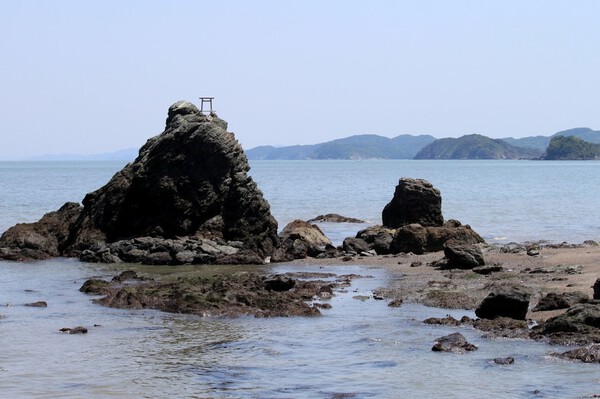
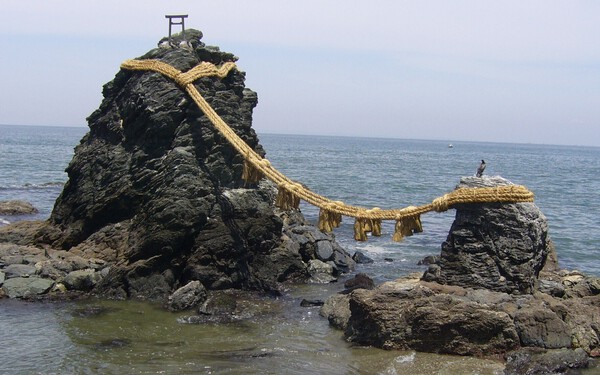
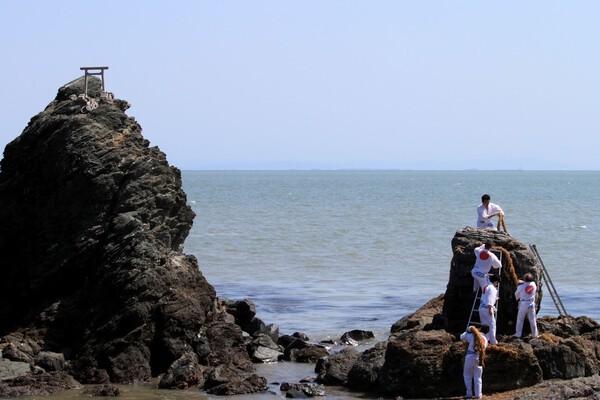
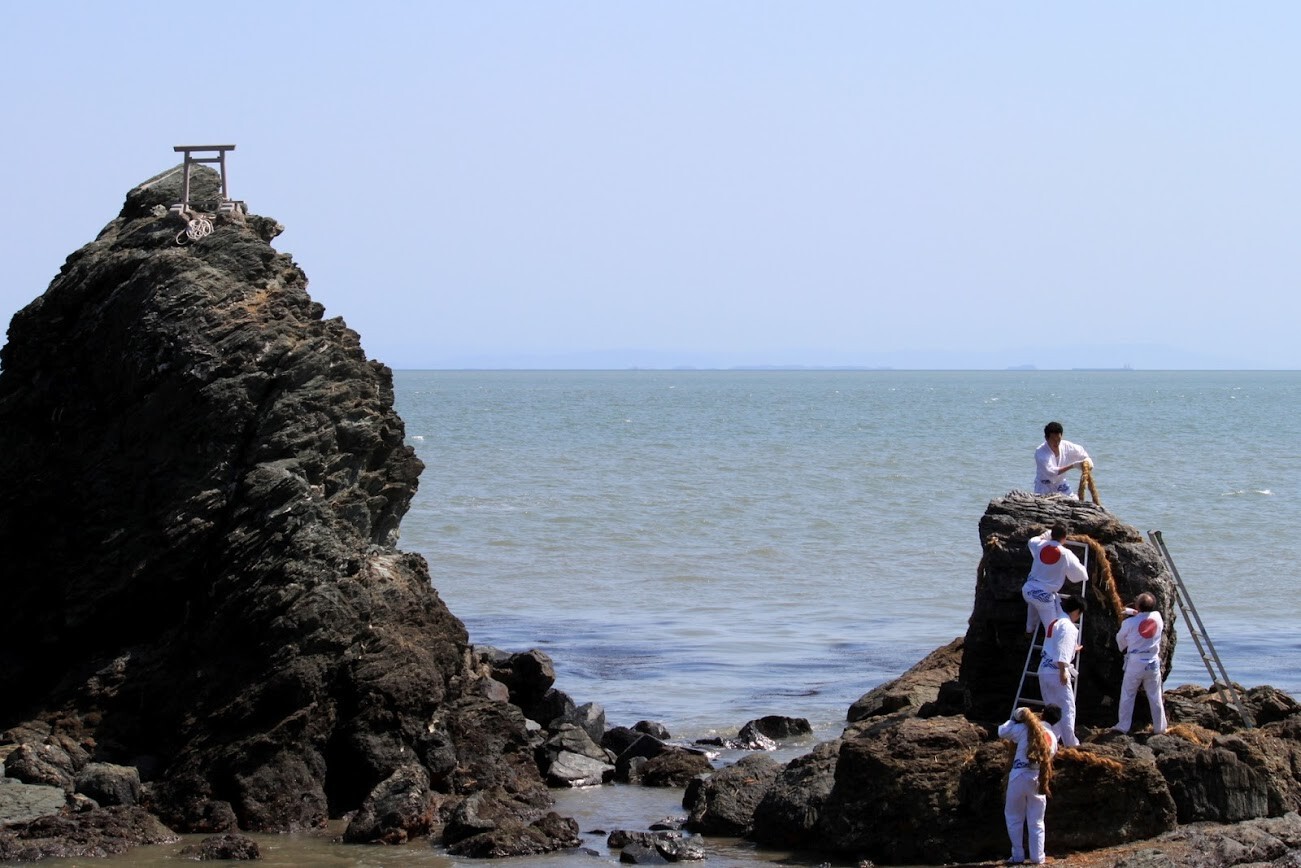
I actually was playing with the idea to have a Meoto Iwa tsuba commissioned some years back, but in the end decided on focussing more on Sarutahiko. Rope changing pics:

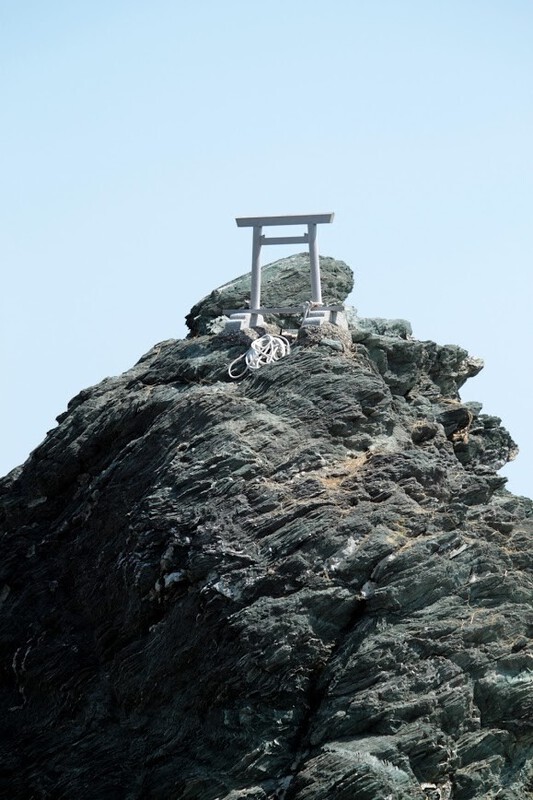


 2 points
 -
If I were to own this koshirae holding a beautiful Ayasugi Gassan Sadakaktsu sword with a General's tassel...I wouldn't want "no more." Dave M.2 points
-
I think that your assessment is correct Steve . I would give it a miss . Ian Brooks2 points
-
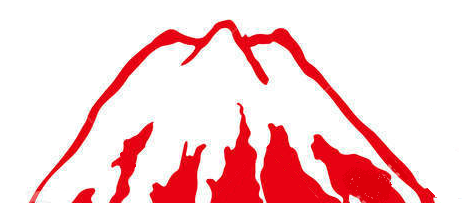
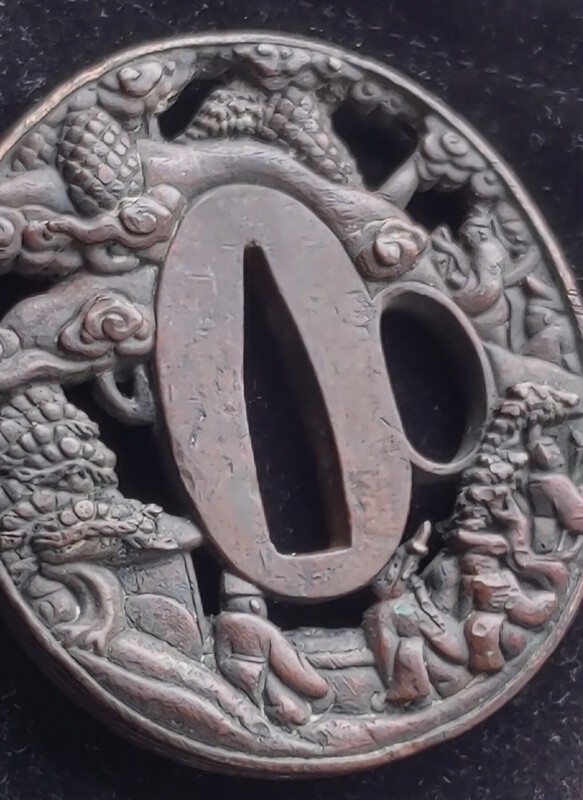
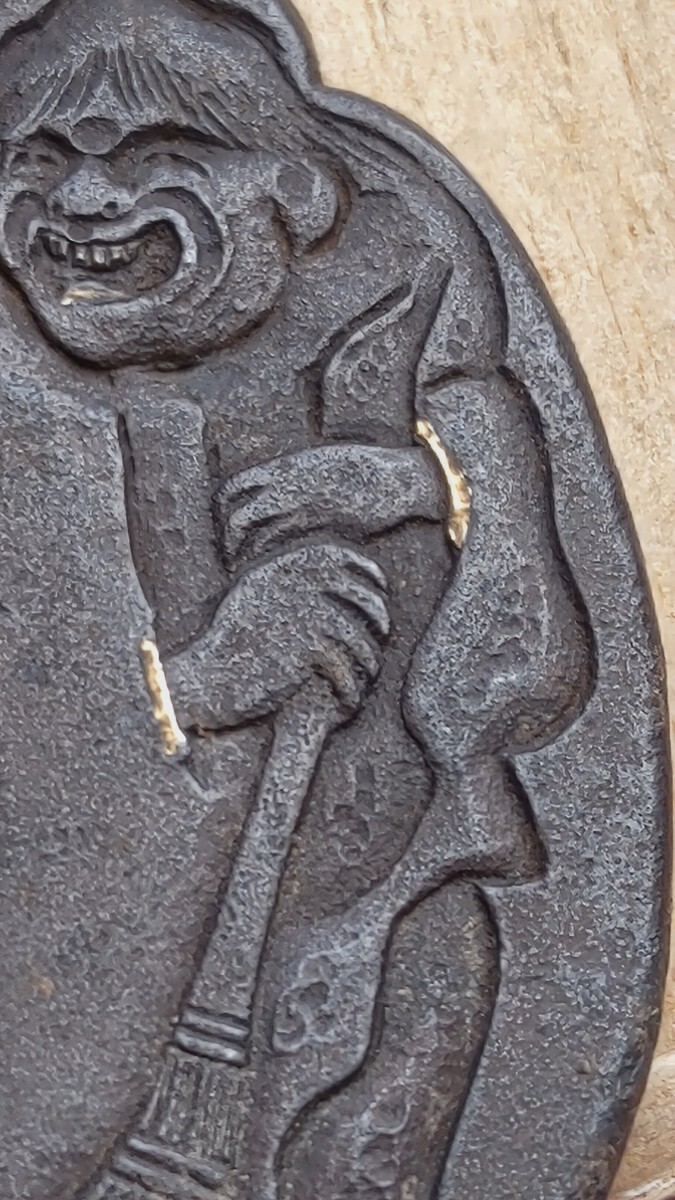
I think the Jittoku is fairly late Edo, it doesn't appear to have been mounted [I could be wrong] Have you noticed the 'Fuji-san" likeness to Jittoku's head? I wonder if this is deliberate or just a coincidence? I have blurred his features to show the shape better.

 2 points
 -
This is what I sold it as. Valuable members thought the nakago could have been through treatment to look older but I can't say yay or nay to that. I've seen numerous blades from the shinshinto period displaying oddly looking rust but that is up to you. There's zero doubt in my mind it is traditionally made, authentic Japanese blade. I got it from Japan! It's a nice, healthy - in recent polish blade IMHO Hope that helps J


 2 points
 -
皇國優等別製御請合剃刀 壹 皇國 – the Empire 優等 - excellent 別製 – specially made 御請合 - guaranteed 剃刀 - razor 壹 - one2 points
-
Re-configure the interior, and choose a suitable Sanada-himo.

 2 points
 -
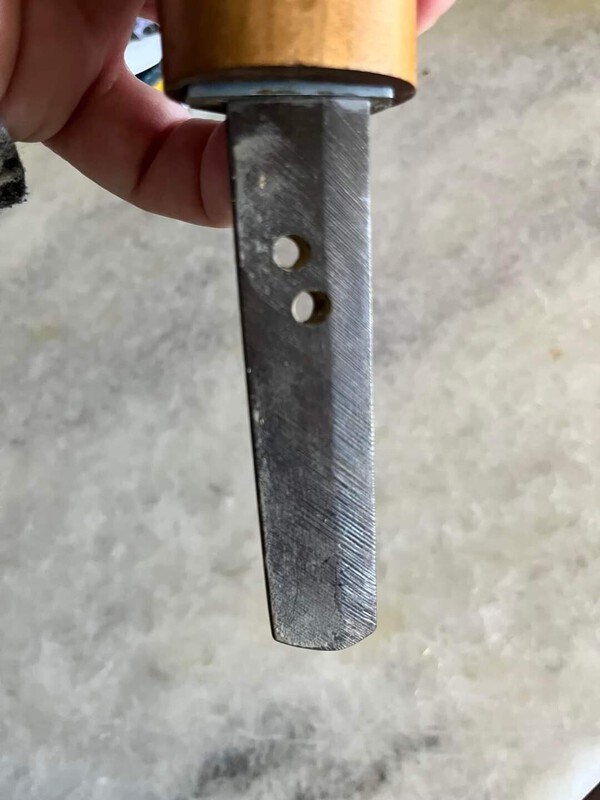
Hello, A friend of mine is trying to sell me his osoraku tanto for $1400, and I want to know if this is a fair offer. I've read a bit about this type of blade on this forum, but I'm not sure about the attribution or age of this one. It sure looks nice, but I would like opinions and insight on this blade based on the photos and video. Thank you in advance.


 1 point
 -
How to tie a Katana bag 【刀袋の結び方】刀剣鑑賞が100倍楽しくなる動画! Bags for storing and protecting swords are collectively called "sword bags. In this video, we explain how to tie the strings at the entrance of the "white scabbard bag" for the white scabbard and the "fake bag" for the fake sword. Some parts of the process are rather complicated, so please watch the video repeatedly to learn how to tie the strings! 刀を保管・保護しておく袋を総称して「刀袋」と呼びます。 本動画では、白鞘用の「白鞘袋」、拵用の「拵袋」の入口にある紐の結び方を解説しております。 工程がやや複雑となる部分もありますので、繰り返し動画を見て「紐の結び方」を習得してくださいね! https://youtu.be/lgikKYoN3S01 point
-
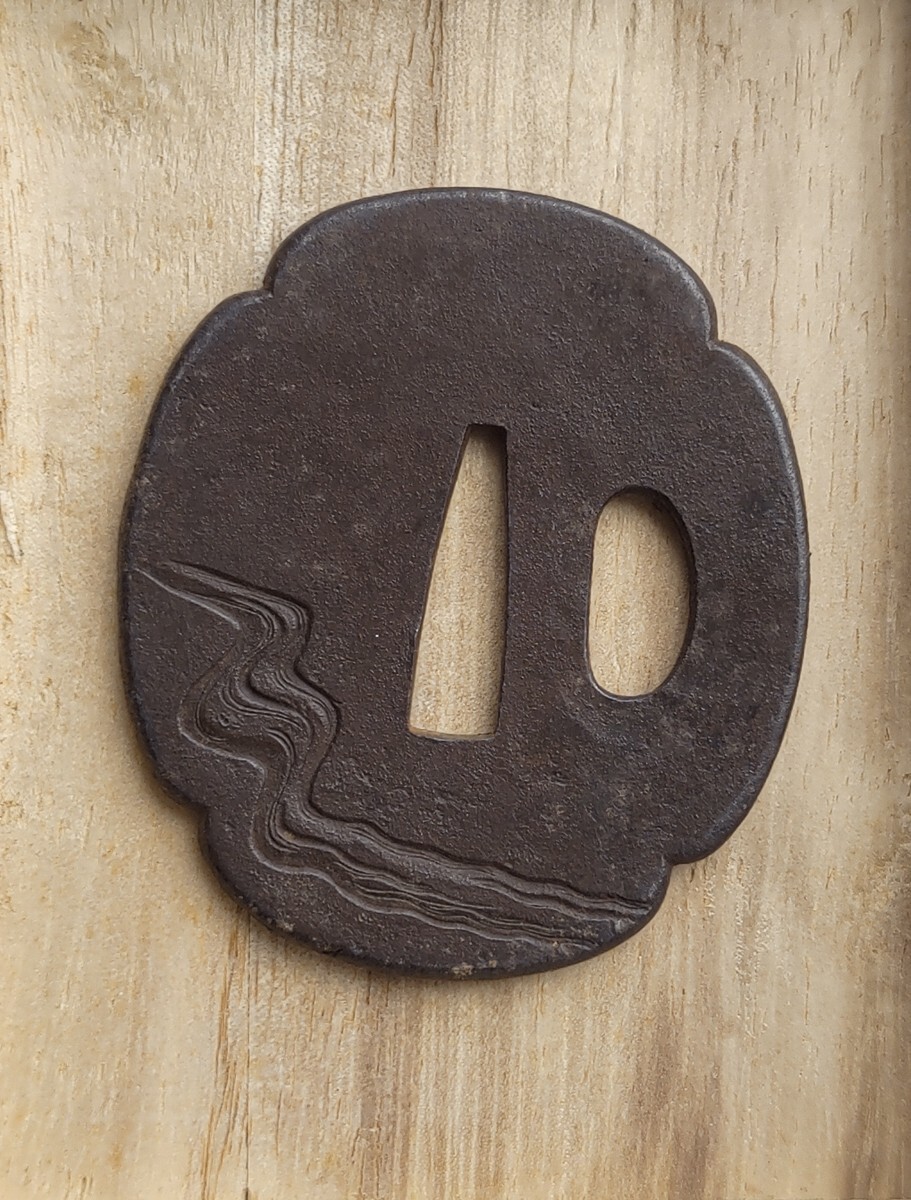
Hello everyone! So, I finally have received my first 2 tsuba, purchased some time ago and also discussed here, but with images from the auction description. Now I had a chance to make a better pictures, which I am sharing with you now. I have to tell, that I am quite happy with the look and feel. Most importantly, excitement has exceeded my expectations. Only one question that I have here: Can we say what period or perhaps school is the tsuba with Jittoku? Thank you in advance!


 1 point
 -
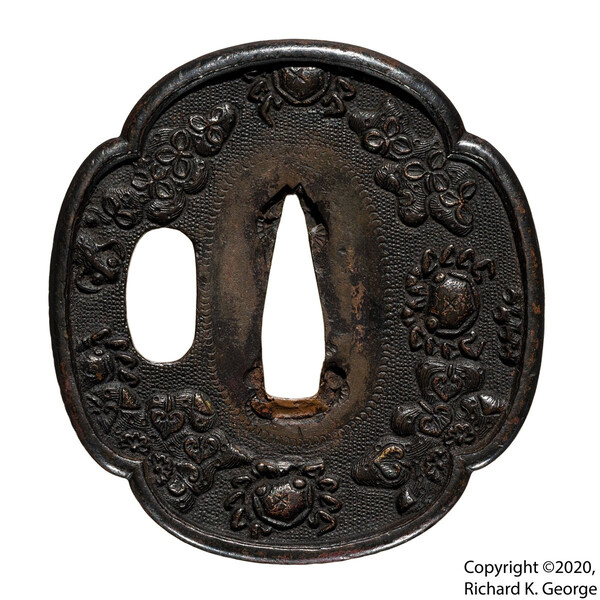
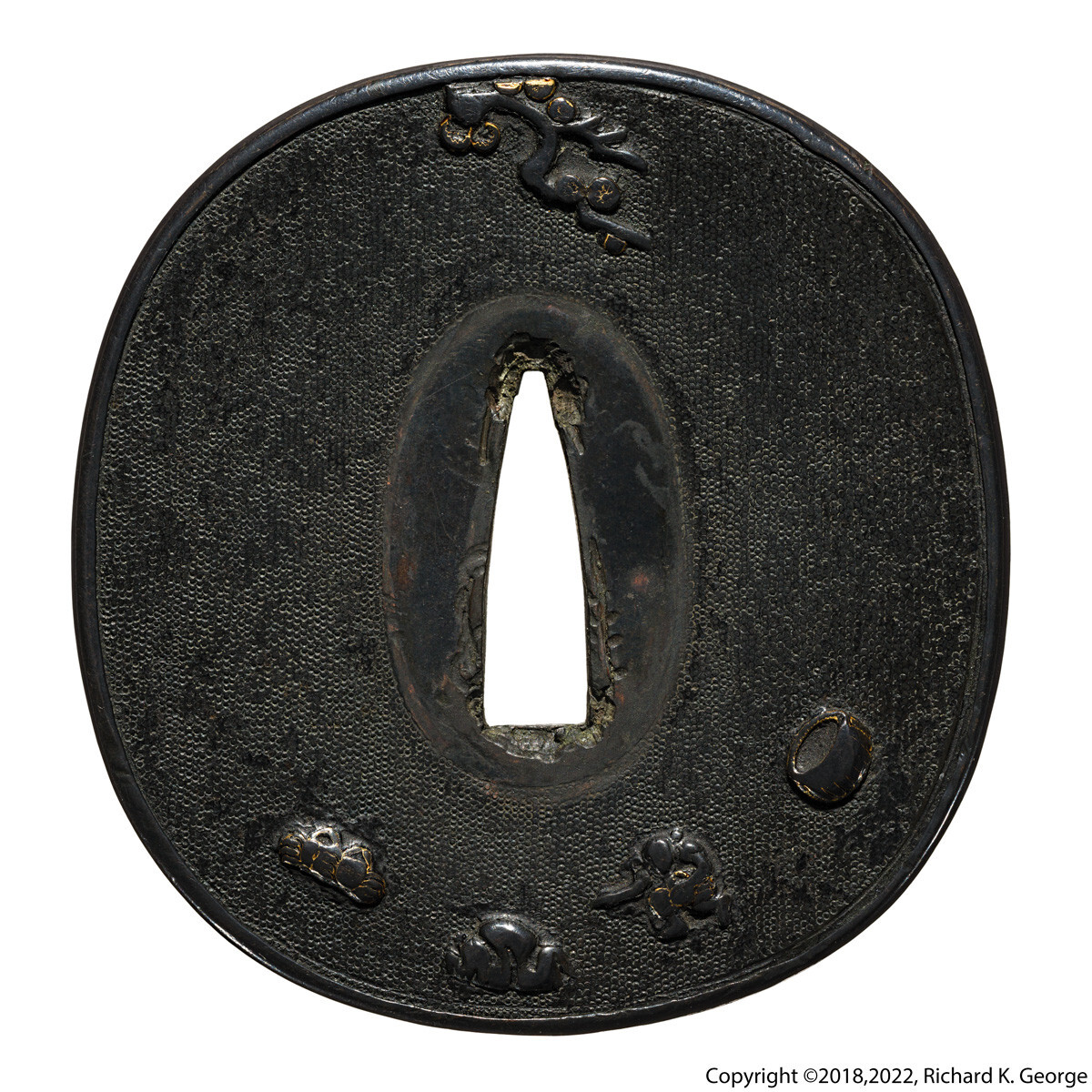
I know you were asking for kani sukashi, but since some other people have put up others... here's a ko kinko one:\ best, rkg (Richard George)
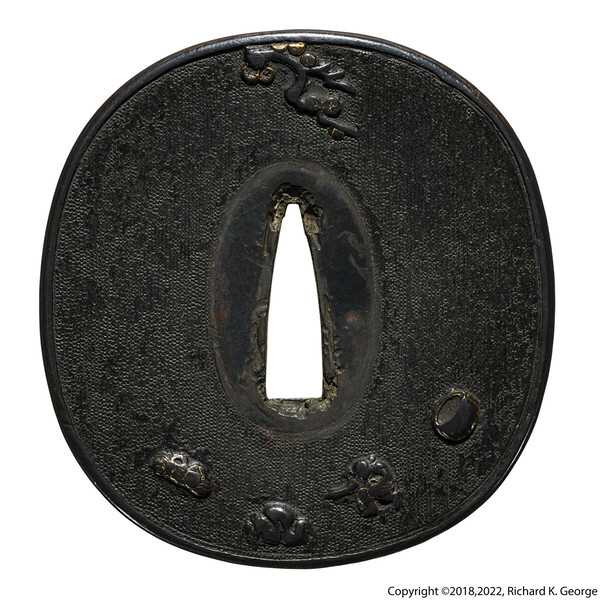 1 point
 -
Hello again Vitaly, Wow! Some more nice tsuba there! I don’t know much. But the first tsuba looks like it may be layered? If you look close at your picture of the nakago ana, it appears like two layers? The third tsuba you showed is really nice. And yes, those designs are kamon (family crests). Now the forth tsuba you showed has a design of “Inome” or wild boars eye. You can find info about it on this link- https://www.mandarinmansion.com/glossary/inome I am certain other members with much more knowledge than I have will tell you more! With respect, Dan1 point
-
This is my preferred one, maybe a little bit nerdy... https://www.jabref.org/ You can manage file in .bib format for LaTeX and other formats as well. Runs on Java and thus there is no mobile version. Regards Luca1 point
-
Nothing wrong with it. I like it. The ito lacquer fits to the color of the saya. Its a very eyecandy koshirae.1 point
-
Is there anyone else out there who thinks , like me, that this has been rebound to sell to gullible gaijin ? Ian Brooks1 point
-
And one more Type 98 for the record. Something different..., Post #13441 point
-
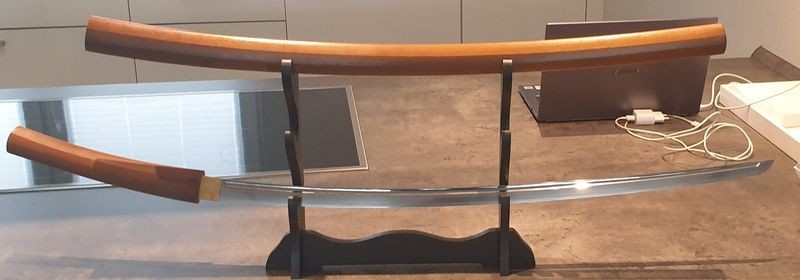
Wow, love this stand! I've always loved innovative ideas to present antiques in general.1 point
-
Can you provide some meaningful pics of the whole convolute, Garrett?1 point
-
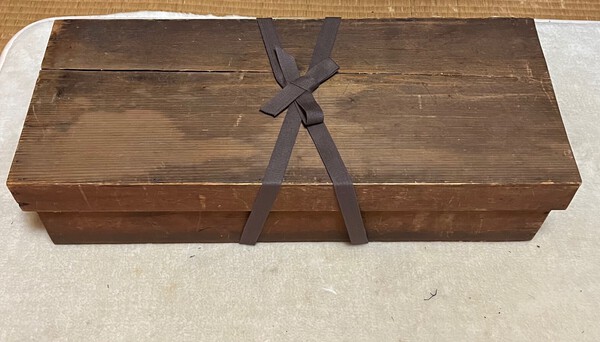
Nice example of a razor Kamisori. I have something similar. Possibly not as good but I didn’t pay too much. The larger one was in the box. The smaller one could have been carried by a soldier during WW2…(?)
 1 point
 -
Again John, You provide excellent and concise information. Thank You1 point
-
No general's tassel but this Yasunori/Yasukunito is on Aoi now and a more affordable price than stateside prices typically: https://www.aoijapan.com/katanashowa-11-nen-10-gatsu-kichijitsu-yasunori/1 point
-
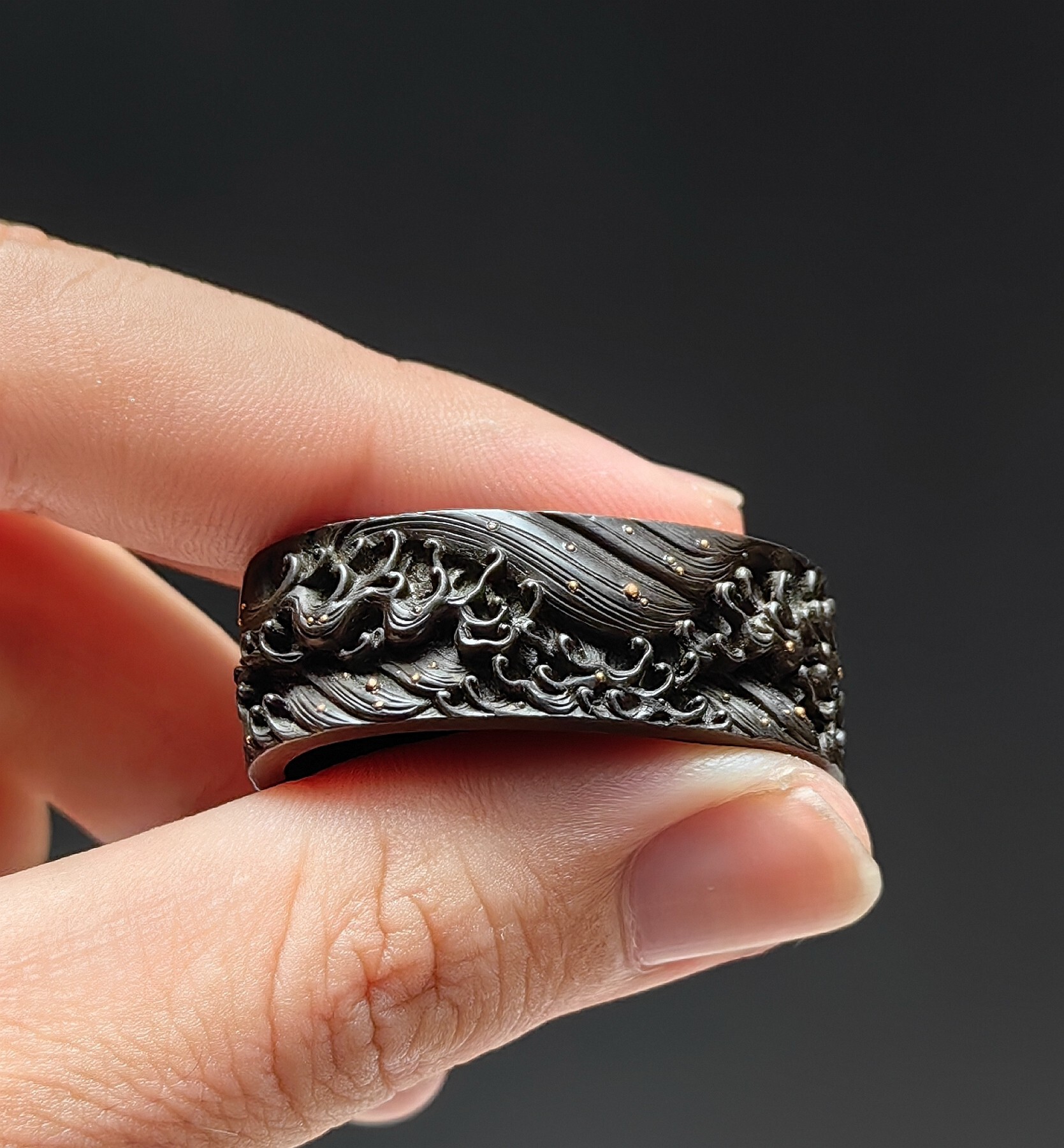
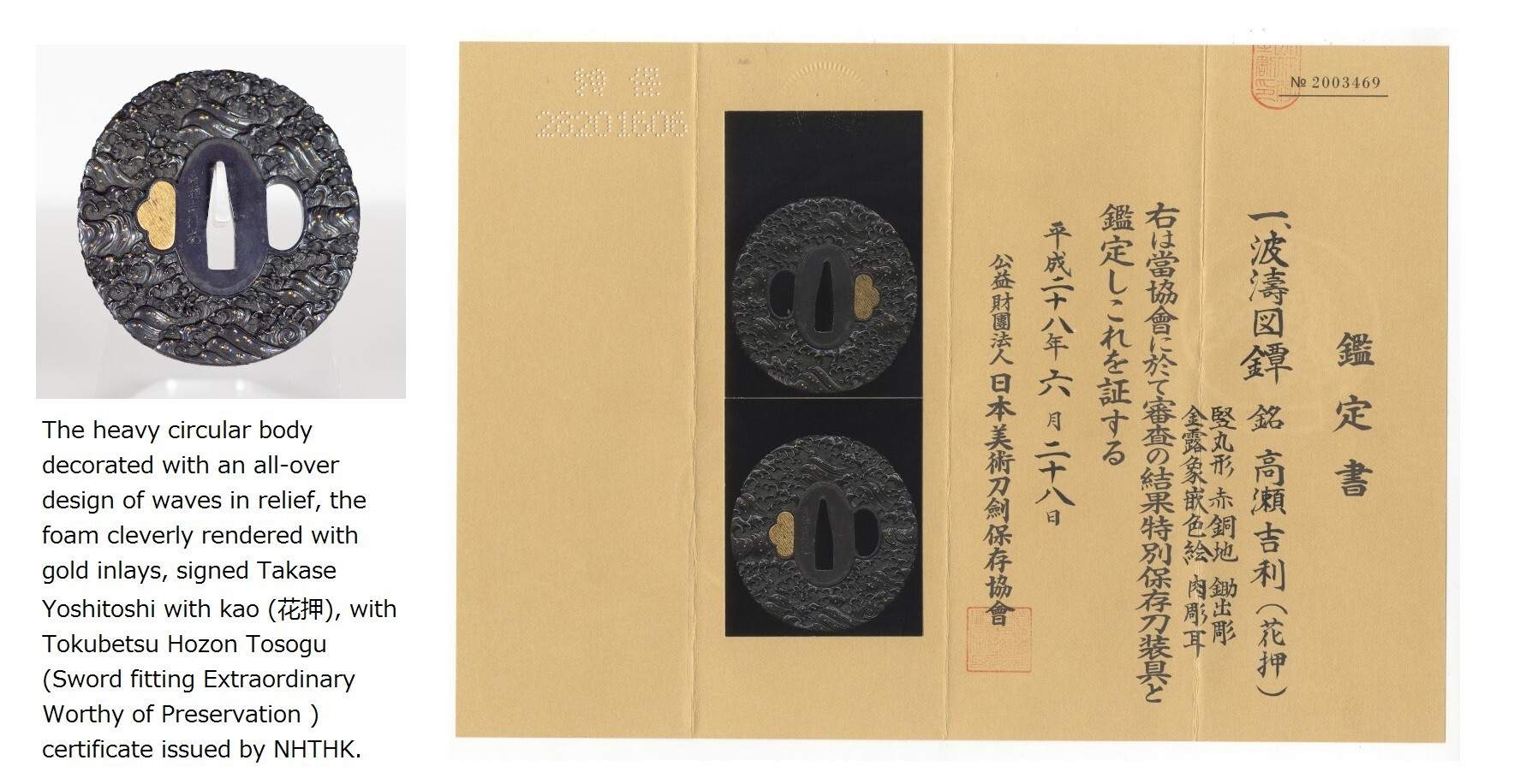
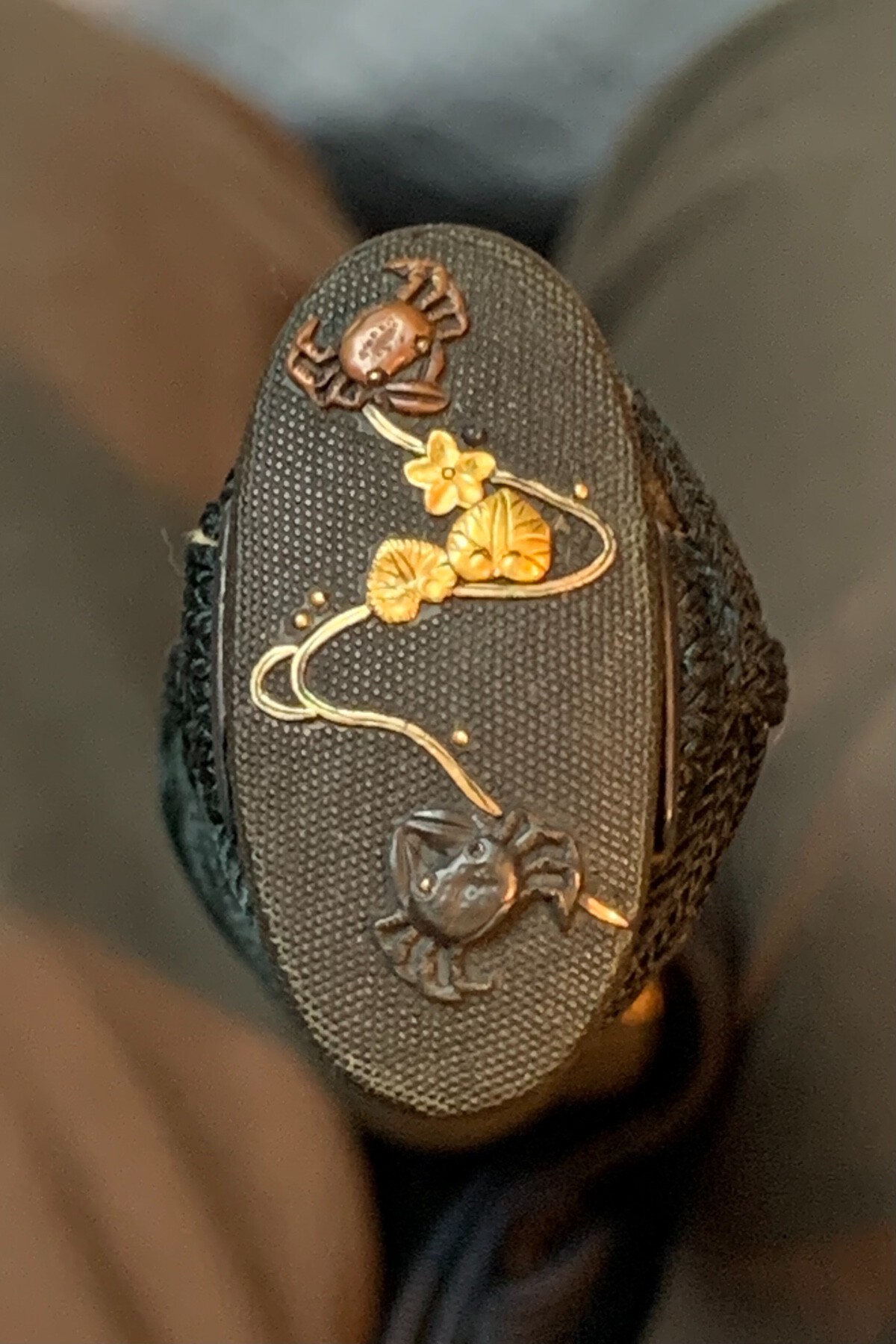
Hello everyone, may i have your opinion on this fuchi? Though that quality of the wave sculpture is quite nice to me. But i'm not sure how it compares to top quality Omori wave sculpture? There are lots of dust stuck inside the holes between waves, so it looks like grainy background there. Thank you!

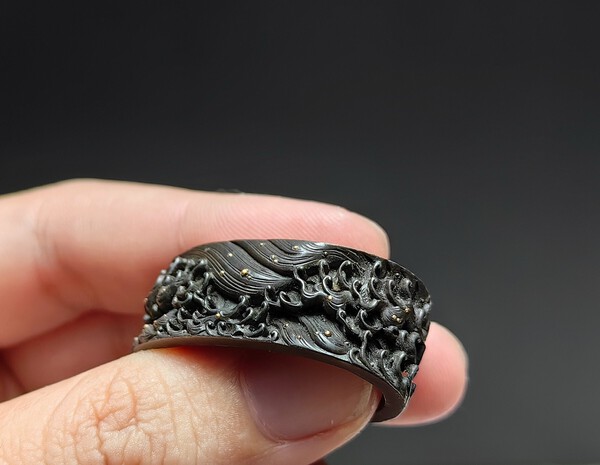 1 point
 -
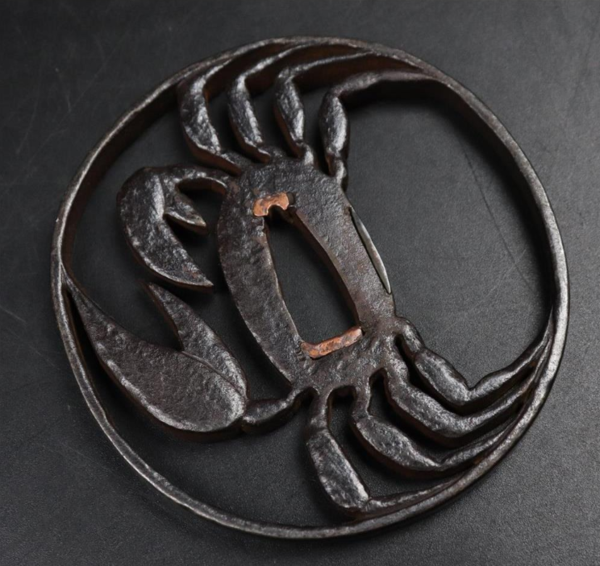
This one just ended recently, and sold for some big numbers, but I'm not surprised. Looks even better than the Owari one from the Tokyo museum that Steve posted.
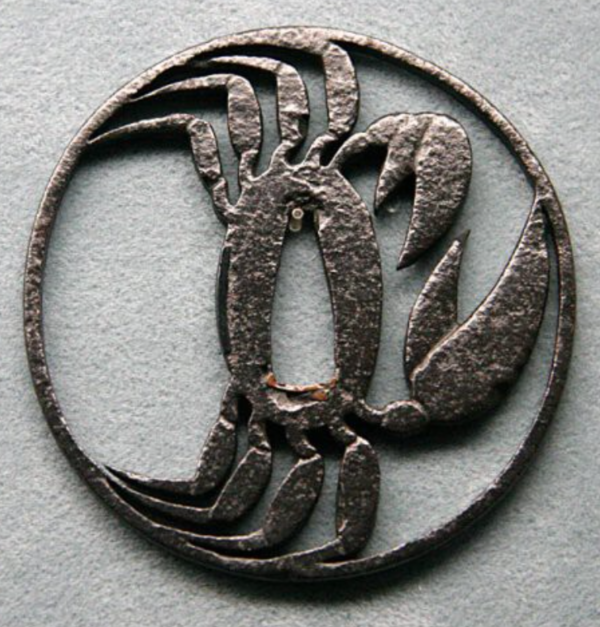
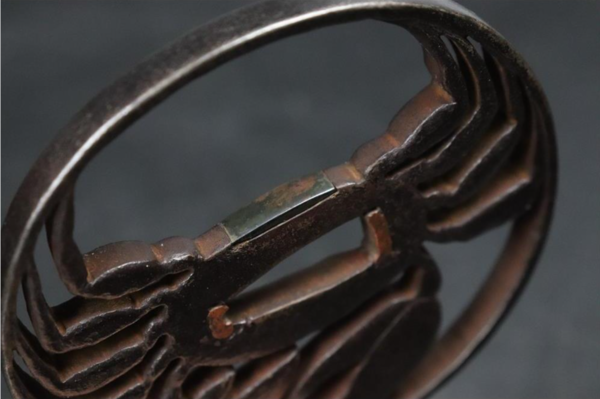
 1 point
 -
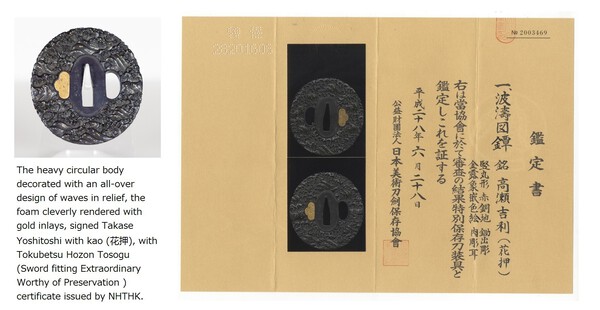
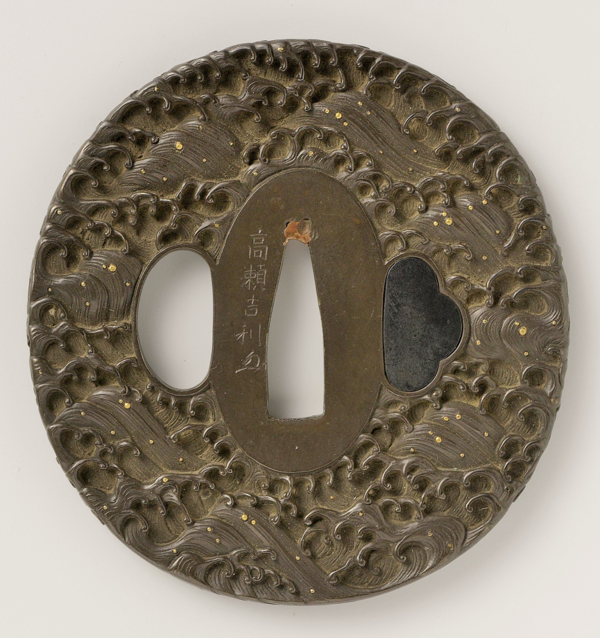
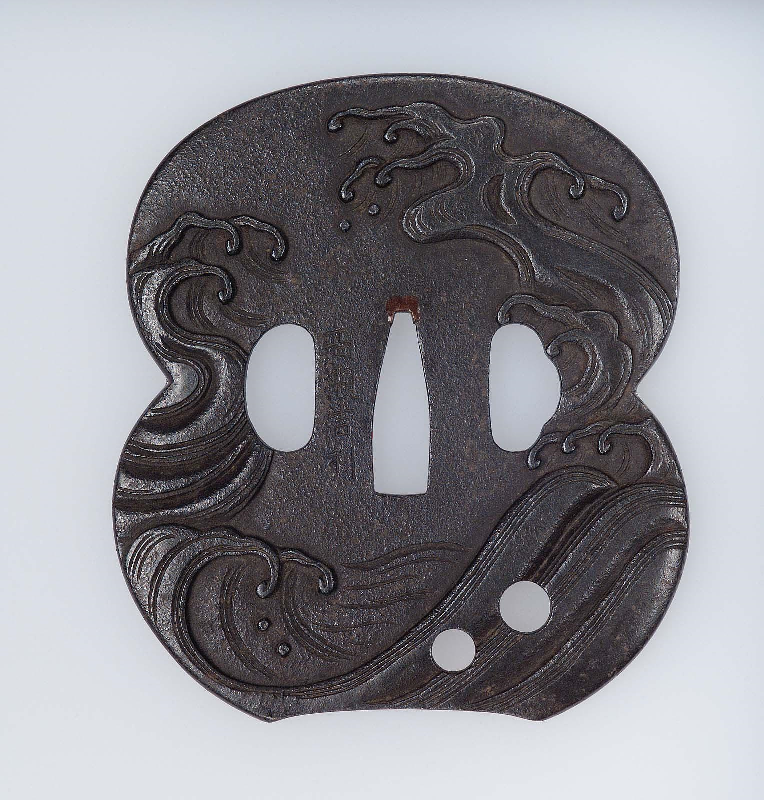
" Takase Yoshitoshi was a talented tsuba maker from the Hitachi Province working as part of the Mito School circa 1800. His pieces can be found in museum collections around the world. See the Rijksmuseum, Amsterdam, access. no. AK-MAK-1140 for another tsuba signed Takase Yoshitoshi of similar design on loan from the Royal Asian Art Society of the Netherlands. Also, see the Boston Museum of Fine Arts, access. no. 13.2696 for another tsuba by Takase Yoshitoshi featuring crashing waves purchased from Chikami Kiyoomi (1856-1916), former governor of Kagoshima. Cf. R E Haynes, The Index of Japanese Sword Fittings and Associated Artists, no.H12191; also see B W Robinson, The Art of the Japanese Sword, p.81, pl.88." He seems to have had a predilection for doing waves as these examples and the fuchi would show. https://collections.mfa.org/objects/13779/tsuba-with-design-of-waves;jsessionid=6BA31578AAD07C41893E94B21D9CADDE Rijksmuseum, Amsterdam, access. no. AK-MAK-1140 Also a previous auction with almost the same design as that in the Rijksmuseum. https://www.lotsearch.net/lot/an-impressive-Japanese-shakudo-takase-yoshitoshi-tsuba-54045298

 1 point
 -
Picture of Gassan Sadakatsu:
.thumb.png.dc4efb4a874000e7080320d09633189c.png) 1 point
1 point -
https://www.jauce.com/auction/m1083576420

 1 point
 -
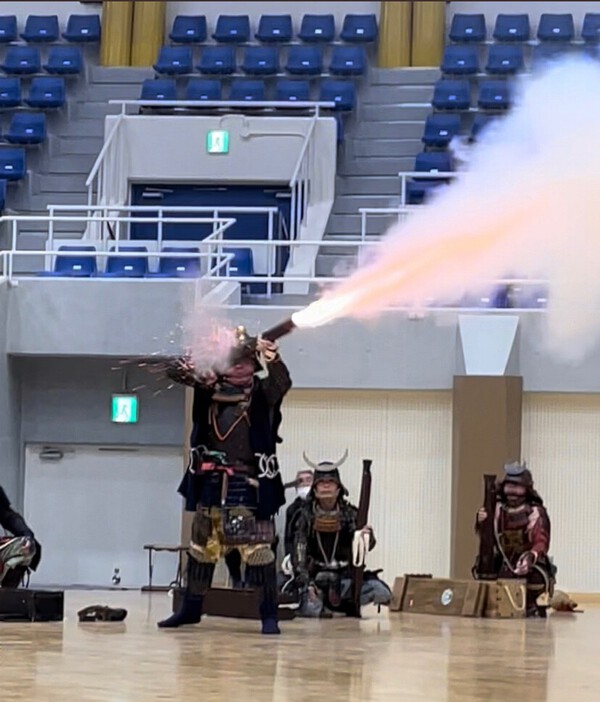
Looking for some coverage I found this tweet feed. 岡山武道館さんはTwitterを使っています: 「お知らせいたします☆彡 令和5年1月23日(月) ☆「岡山武道館主道場改修工事竣工式」 ☆「岡山武道館開館五十年記念 武道団体演武会」を開催いたします どなたでもご覧になれますので どうぞお越しください。 別途、詳細をご確認下さい。 #岡山武道館 https://t.co/wprddRLgEq」 / Twitter Yours truly…
 1 point
 -
Another Nagamitsu tachi. I was able to pull a little more detail out on this as the kesho polish isn't as heavy. No stamps or dates on either.
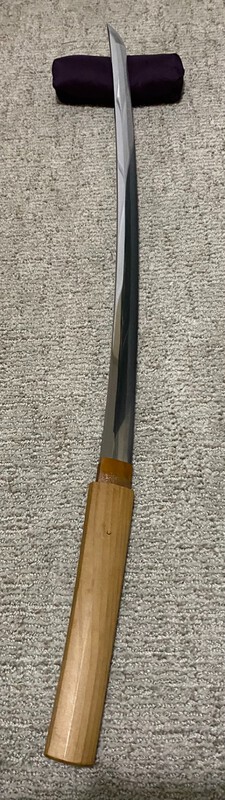
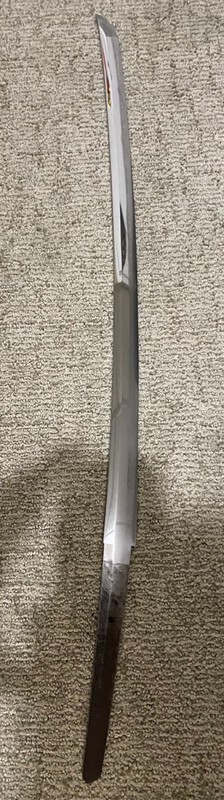
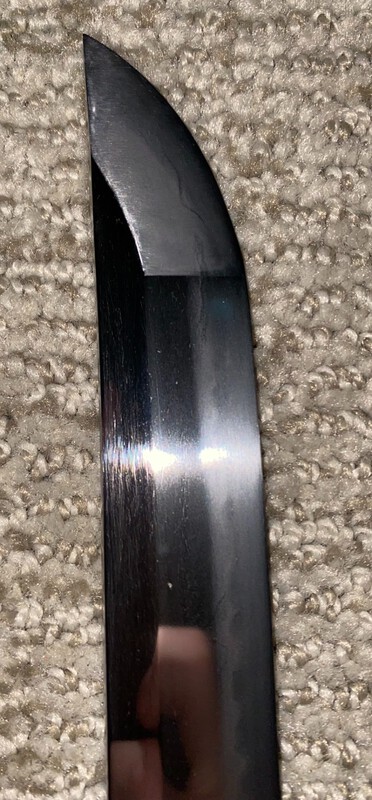
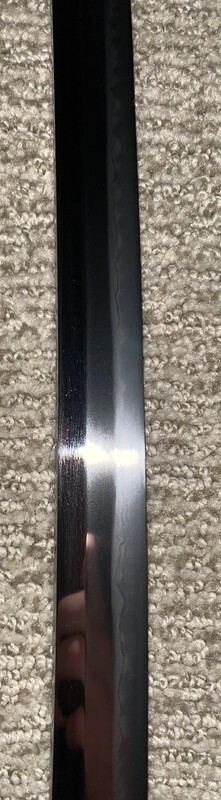
 1 point
 -
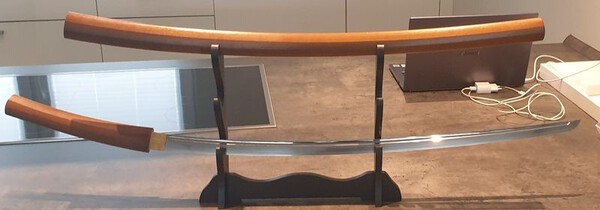
Wanted to contribute to this thread that I have been through 10 times. I tried to capture details but my photography is sub-par at best! Ichihara Nagamitsu Tachi
 1 point
 -
明治三十年 Meiji 301 point
-
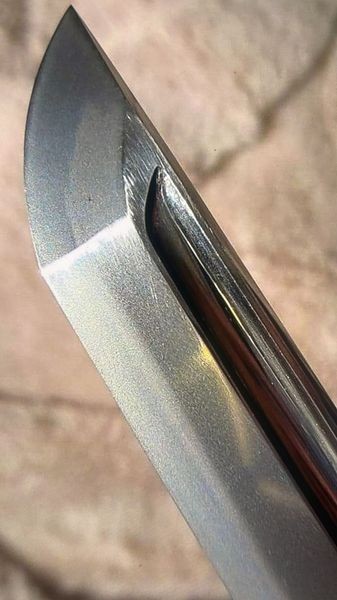
Yanagawa's measurements Nagasa.75,34 cm beautiful shaped (Kaamakura style) tachi Motohaba 3,24 cm Motogasane 0,8cm sori 3,1 cm tapered with chu -kissaki Bohi thats ends in kaku dome at the Habaki Moto ko.Itame with Ji-Nie Nio-Guchi has Ko-Nie Sugha with some ko choji with ko- ashi very softly Yo and some kinsuji Kaeri ko-Maru Boshi
 1 point
 -
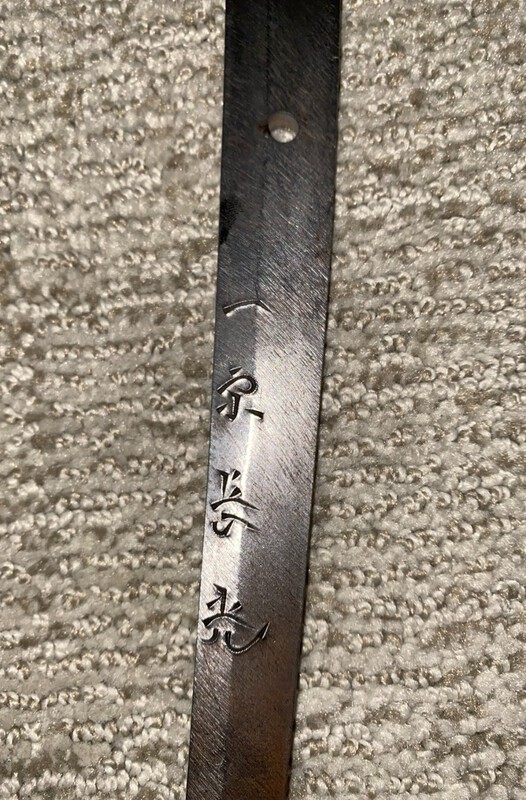
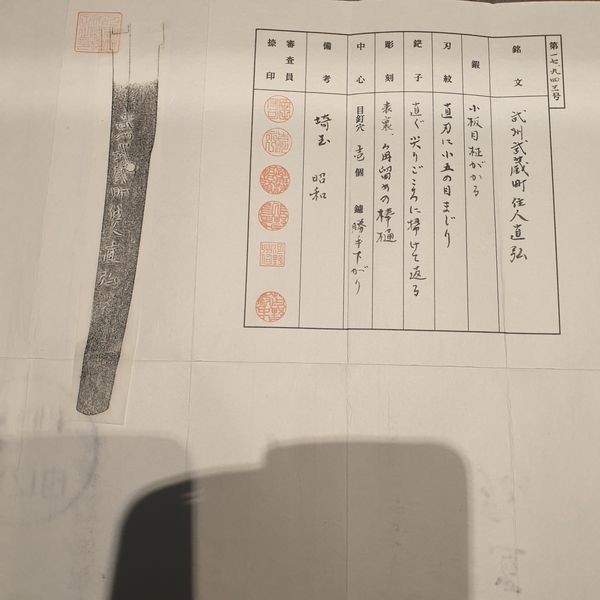
A beautyful utsushi of Rai Kunimitsu Kokuho by 3rd Generation Naohiro , descendant from Taikai Naotane. signed "Bushu Musashimachi junin Naohiro


.jpg.495a0a7846a90b48237aa35fe8cfaad2.jpg)
.jpg.5c6b237f333321fc9c57c1e4245beae0.jpg) 1 point
1 point -
G'day Guys, Another Gassan Sadakatsu. This one made in 1943. Cheers, Bryce
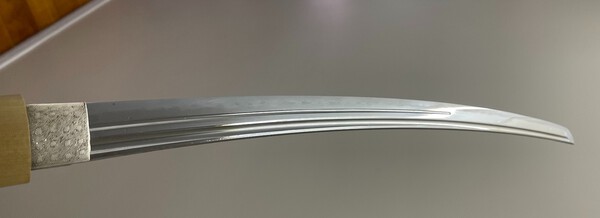
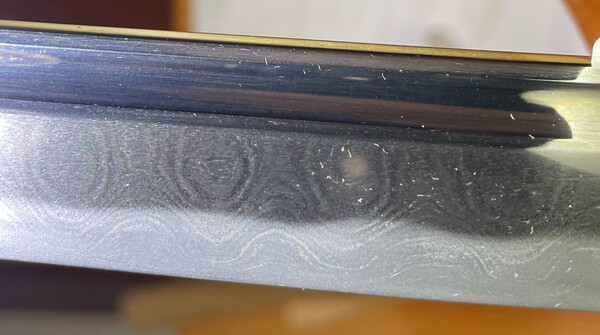
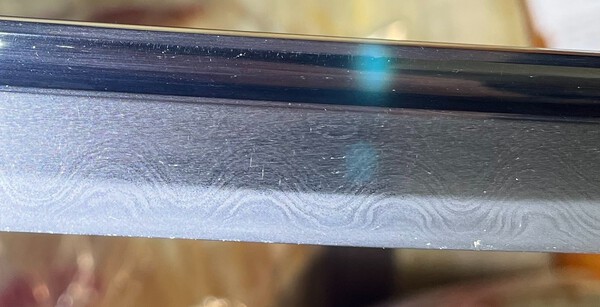
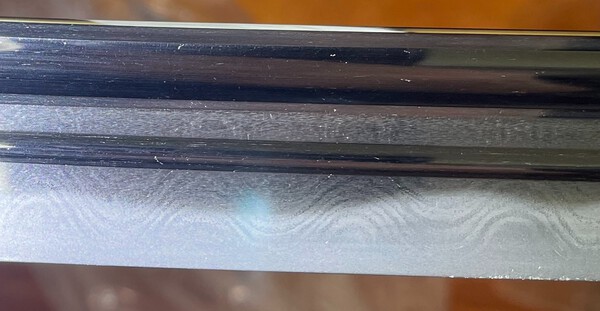
 1 point
 -
Barry the blades nagasa is 68,5 cm and it is signed "Tame Maeda shi kore" made for a Mr. Maeda the feel of this blade, (with its high shinogi) is fantastic, like a koto blade...........
 1 point
 -
An important Gendai "order made"by Hokke Saburo Nobufusa In rare Yamato Tegai Tradition for a Gendai-to Polish by Kenji Mishina NBTHK
.thumb.jpg.561a1316eaee78a010f0b87e700f115d.jpg)


.jpg.bfe3c5fa6791ba4282614713a15bdd34.jpg) 1 point
1 point -
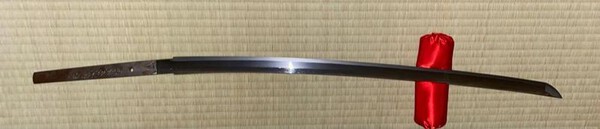
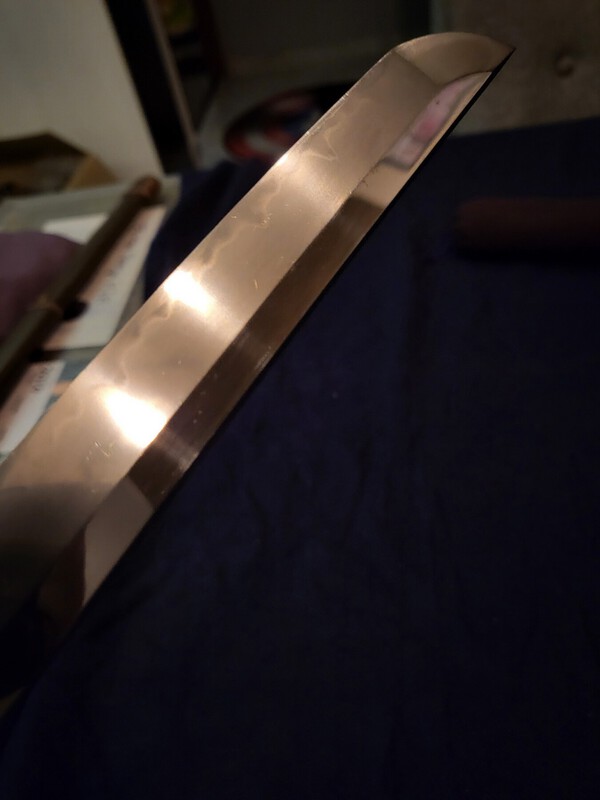
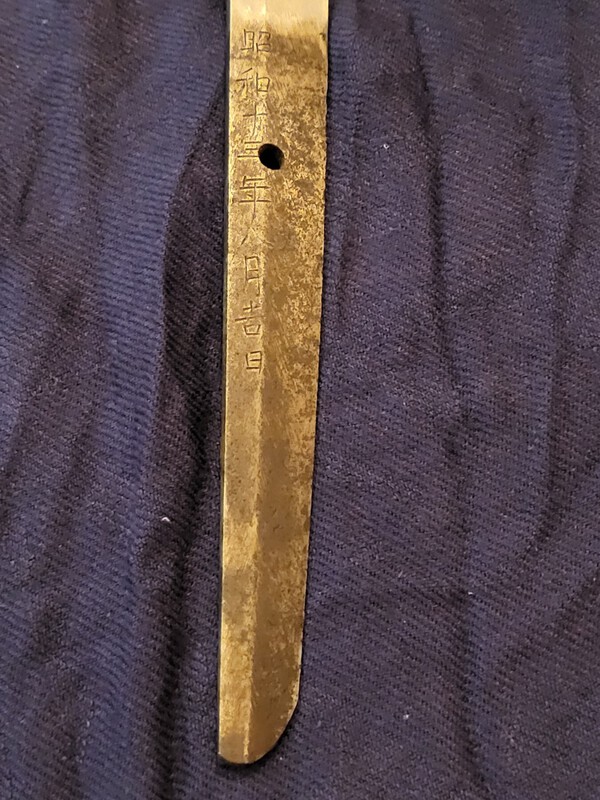
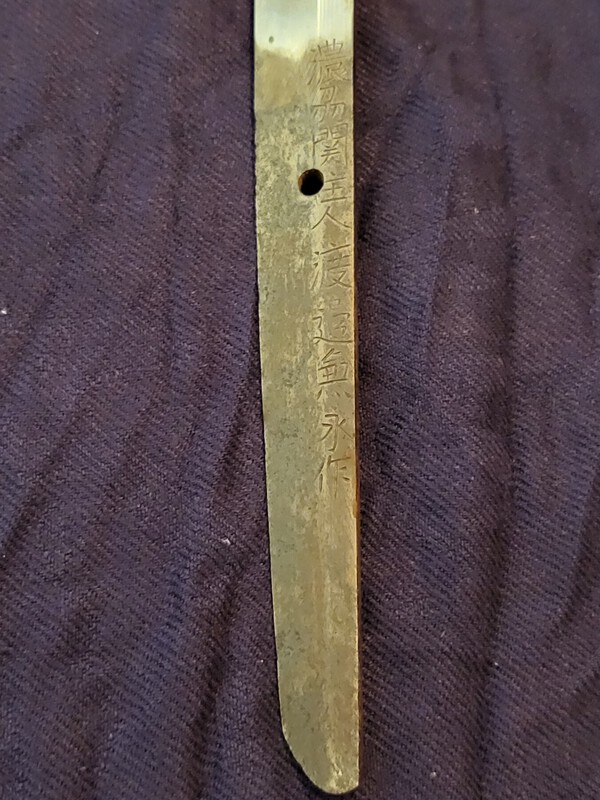
Gendaito is sanbon sugi hamon. Wannabe kanenaga (August, Showa 13)
 1 point
 -
Another gendaito in ayasugi hada: Gassan Sadakatsu . Made in Taisho 10, June

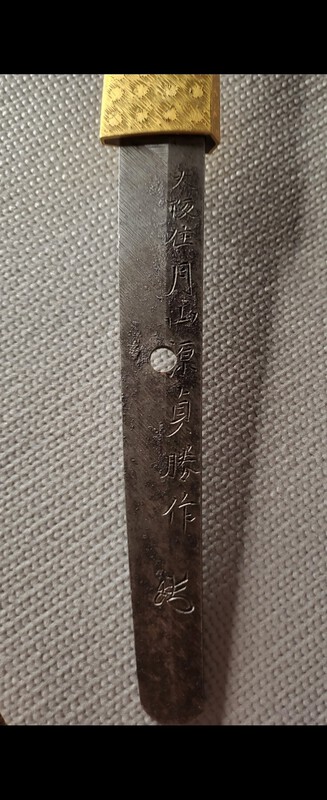
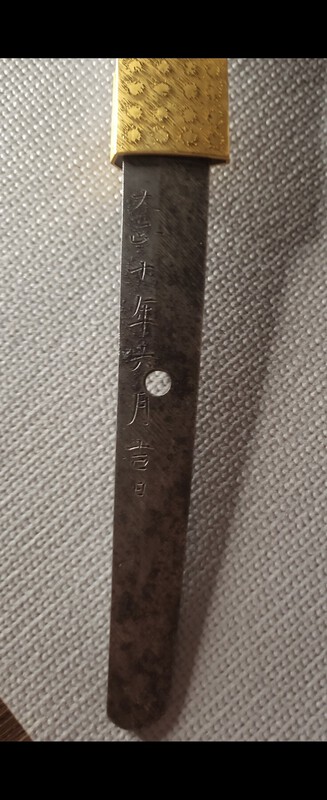 1 point
 -
Dont think I've ever showed my Enomoto Sadayoshi / Yorimasa (later mukansa) before. One of the swords I enjoy the most in my collection. Pretty beefy blade with nice sori and sugata in my opinion Images dont do the sword justice, very difficult to take a proper photograph as you know! Enjoy anyway!
.thumb.jpg.b35bdcfe064696bf9d11da8492aab3f9.jpg)
.thumb.jpg.e2ae457efe1c93dcdf80bf2431484d8e.jpg)

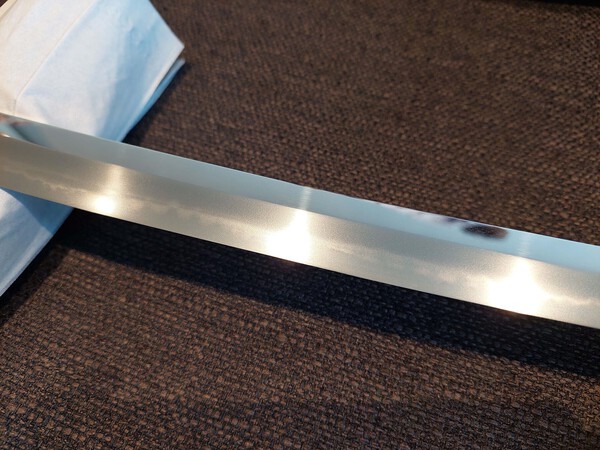 1 point
 -
Gendaito : Shibata Ka - Made in 1942 August
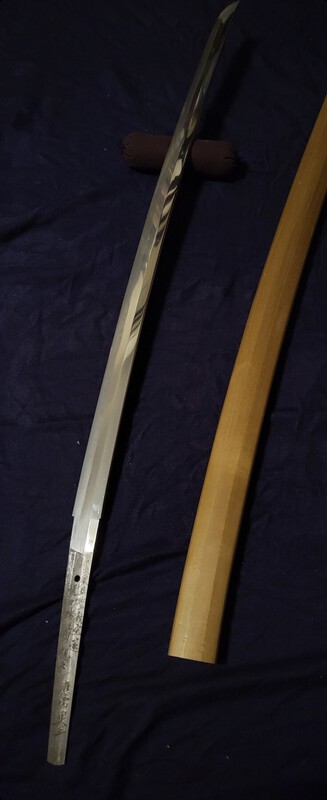
 1 point
 -
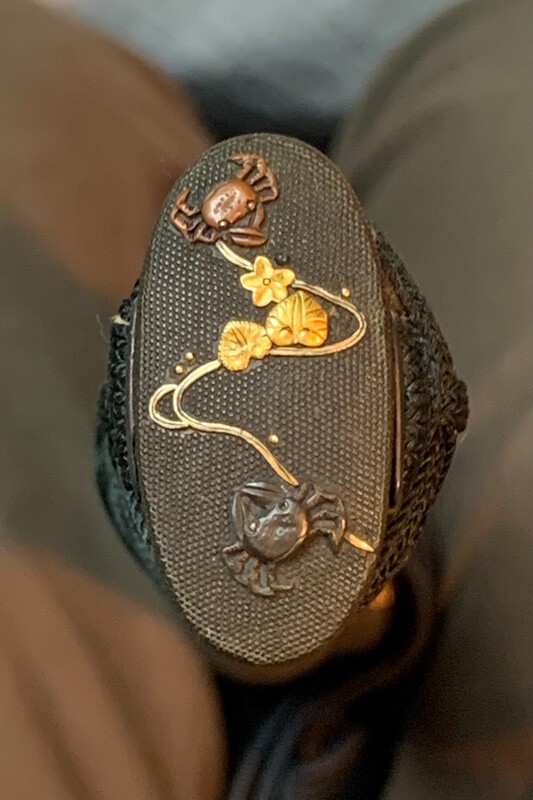
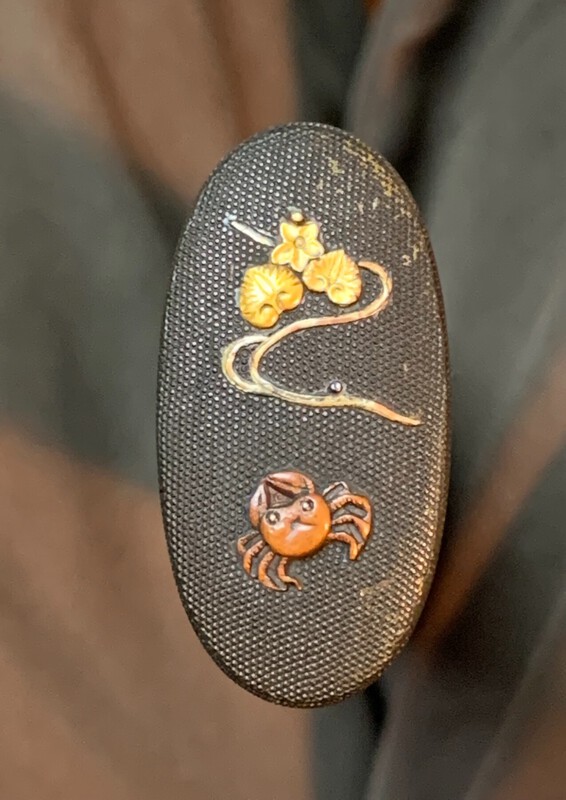
Not a Tsuba, and not exactly sukashi either, but some silver Menuki just to add flavour to the pot…
 1 point
 -
Kashira, Menuki, Kojiri.

 1 point
 -
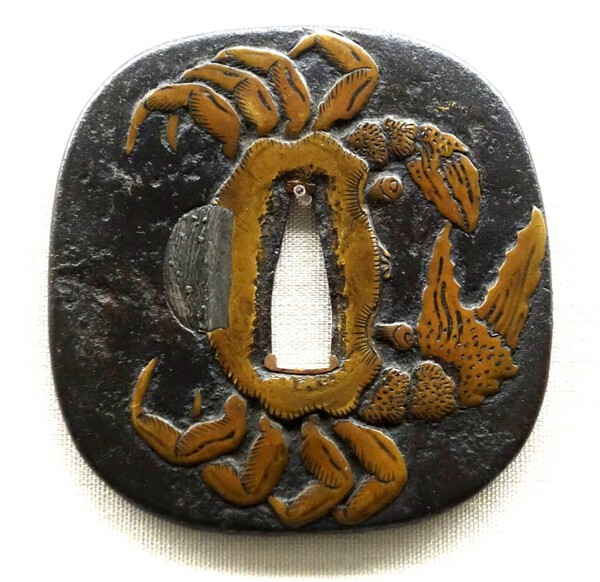
Another nice Jingo tsuba, 17th C. -S-
 1 point
 -
You may find some of the nanori associated with the Myochin family in this list. Miyochin. Family of armourers and workers in metal. The genealogy of the family extends back to the second century of the Christian era, 43 CHISELLERS but as armourers their history may be said to commence with the six- teenth representative, Munemichi. The names are as follows, in chrono- logical order : Miyochin. Munemichi. 640 A.D. Miyochin. Munetsugu. 670. Said to have forged armour for the Emperor Tenji. Miyochin. Munetoshi. 690. Miyochin. Munematsu. 720. Miyochin. MunemorL 760. Miyochin. Munemaro. 800. Armourer to the Emperor Kwamma and Seiwa. Miyochin. Muneshima. 820. Miyochin. Munekuni. 840. Miyochin. Munetora, 860. Miyochin. Muneyori. 880. Miyochin. Muneshimo. 890. Miyochin. Munemori. 910. Miyochin. Munetoshi. 930. Miyochin Munezane. 980. Said to have forged a shield of gold for Mi- namoto no Mitsunaka. Miyochin. Munekazu. 1010. Miyochin. Munekuni. 1030. Miyochin. Munenaka. 1060. Miyochin. Munetsune. noo. Known in the artistic world as Go-Munet- sugu, or the " second Munetsugu," having changed his name to Munet- sugu in his late years. Said to have forged iron armour decorated with eight varieties of dragons (hachi- riyo). Miyochin. Muneyoshi. 1140. Miyochin. Munesuke (i). 1154 to 1185. Called also Masuda. Had the rank of Idzumo no Kami. Worked first in Idzumo for Yori- tomo ; then in Kyoto, and finally for the Minamoto in Kamakura. He is said to have forged the suit of armour worn by Yoshitsume, and now preserved at the Kasuga Temple. Commonly he is spoken of as the first representative of the family, but the fact is that the art of decorative forging first became admirable in his hands. Miyochin. Munekiyo(2). 1200. Worked at Kamakura. Had the rank of Gi- yobu Taiyu. Miydchin. Muneyuki(3). 1215. Worked at Kyoto. Had rank of Giyobu Taiyu. Miy5chin. Munemasu (4). 1225. Worked at Katsuyama in the province of Kii. One of the greatest of the Miyochin artists. Had the rank of Hyoye-no-Suke. Miyochin. Muneyoshi. 1200. Second son of Munesuke. Miyochin. Munehide. 1200. Third son of Munesuke. Miyochin. Muneyasu. 1200. Fourth son of Munesuke. Miyochin. Yoshikiyo. 1220. Son of Muneyoshi. Miyochin. Yoshitsugu. 1220. Son of Muneyoshi. MiySchin. Munenao. 1230. Second son of Munekiyo. Miyochin. Muneshige (5). 1240. Lived at Odawara. Had the rank of Sak- yo no Tayu. Miyochin. Munekane. 1240. Second son of Muneyuki. Miyochin. Munesumi. 1250. Third son of Muneyuki. Miyochin. Muneto. 1240. Second son of Munemasu. Miyochin. Munetada(6). 1270. Worked at Sano in Mino. Had the rank of Shin-dayu. Miy5chin. Shigeiye. 1270. Second son of Muneshige. Miyochin. Yoshishige. 1270. Third son of Muneshige. Miyochin. Munetsuna (7). 1300. Worked in Kyoto. Had rank of Sakon no Tayu. Miyochin. Muneyoshi. 1310. Second son of Munetada. Miyochin. Munemitsu (. 1320. Worked in Kyoto. Had rank of Hyobu Taiyu. Miyochin. Munenori. 1330. Second son of Munetsuna. Miyochin. Munemasa (9). 1330. Worked in Kyoto. Had rank of Sakon no Tayu. Miyochin. Muneyasu (10). 1380. Worked in Kyoto. Had rank of Hyoye-no-Suke. Made a gold helmet for the Shogun Yoshimitsu. He re- ceived large estates in recognition of his skill. The first ten generations of the family, from Munesuke in the twelfth century to Muneyasu in the four- teenth, are known as " Miyochin no Judai," or the " Ten generations of MiySchin." They occupy in the his- tory of armour-forging a place some- what analogous to that occupied by 44 CHISELLERS the fourteen generations of Goto masters in the history of sword- mount decoration. Muneyasu, the tenth representative, is specially cele- brated. Miyochin. Munetoki. 1380. Second son of Munemasa. Miyochin. Yoshihiro (n). 1400. Worked in Kyoto. Had rank of Sakyo no Tayu. Miyochin. Yoshitada (12). 1420. Worked in Kyoto. Rank, Sahiyoye no Jo. Miyochin. Yoshinori (13). 1440. Worked in Kyoto. Called also Goro- dayu. Miyochin. Yoshinaga (14). 1450. Worked in Kyoto. Rank, Shikibu Tayu. One of the greatest of the family. Miyochin. Yoshiari(i5). 1480. Worked at Kamakura. Called also Shinjiro. Miyochin. Yoshiyasu (16). 1520. Worked at Fuchiu in Hitachi and at Odawara. Called also Samuro-dayu. The six representatives from (u) to (16) are known as the Rokudai, or the " Six Generations." They are also called Giyoshi, or the " Honour- able Masters." The names are : Yoshihiro, Yoshitada, Yoshinori, Yoshinaga, Yoshiari, and Yoshiyasu. Miyochin. * Takayoshi. 1450. Sec- ond son of Yoshinori, and not a rep- resentative of the main line, but one of the most celebrated of the Miyo- chin artists. Worked at Kamakura. Miyochin. Yoshihisa. 1460. Second son of Yoshinaga. Miyochin. *Yoshimichi. 1500. Second son of Yoshiari. Worked in Kyoto. Not a representative of the main line, but a renowned master. MiySchin. Katsuyoshi. 1510. Third son of Yoshiari. Miyochin. *Nobuiye (17). 1520. Orig- inally called Yasuiye. Worked at Shirai in Joshiu. One of the most celebrated of the Miyochin Mas- ters. The three names marked with an asterisk, Takayoshi, Yoshimichi, and Nobuiye are those of the " Nochi no Sansaku," or " Three Later Masters." Miyochin. Narikuni. 1470. Worked at Yawata in Joshiu. Son of Yoshihisa. Miyochin. Kunichika. 1420. Son of Yoshihisa. Miyochin. Narichika. 1420. Son of Yoshihisa. Worked in Joshiu. One of the great Miyochin Masters. Miyochin. Narishige. 1500. Son of Narichika. Worked at Yawata in Kozuke. One of the great Miyo- chin Masters. Miyochin. Kunihisa. 1530. Son of Narishige. Miyochin. Hisaiye. 1550. Son of Kunihisa. Worked at Kamakura. One of the Miyochin celebrities. Miyochin. Fusanobu. 1530. Son of Yoshiyasu. Miyochin. Munehisa. 1580. Grandson of Yoshiyasu. Miyochin. Katsumasa. 1580. Grand- son of Yoshiyasu. Worked in Joshiu. One of the great Miyochin Masters. Miyochin. Yoshihisa. 1630. Son of Munehisa. Worked at Kamakura. One of the great Miyochin Mas- ters. Miyochin. Yoshishige. 1620. Son of Yoshihisa. Miyochin. Sadaiye (18). 1550. Worked in Odawara and Iga. Called also Hachiro and Heiroku. Miyochin. Fusaiye. 1540. Second son of Nobuiye. Worked in Joshiu. A great master. Miyochin. Fusamune. 1550. Third son of Nobuiye. Worked at Oda- wara. A celebrity. Miyochin. Muneiye (19). 1580. Worked in Omi. Manufactured a celebrated helmet for Tokugawa lyeyasu. Called also Kindaro. Miyochin. Munenobu (20). 1600. Son of Mnneiye. Worked in Yedo and Osaka. One of the great Miyochin Masters. Miydchin. Munekiyo. 1620. Second son of Muneiye. Miyochin. Munenaga. 1620. Third son of Muneiye. Myochin. Kunimori (21). 1620. Worked in Yedo. Son of Munenobu. Had rank of Nagato no Kami. Called also Kunimichi. Miyochin. Harunobu. 1620. Second son of Munenobu. Miyochin. Muneshige (22). 1640. Worked in Yedo. Had rank of Nagato no Kami. 45 CHISELLERS Miyftchin. Munetoshi or Kunimichi. (23), 1650. Worked in Yedo. MiySchin. Munenushi. 1650. Second son of Muneshige. MiySchin. Munemasa. 1650. Third son of Muneshige. Miyochin. Munesuke (24). 1710. Worked in Yedo. Had rank of Osumi no Kami. Miyochin. Munemasa (25). 1730. Second son of Munesuke. Worked in Yedo, and had rank of Osumi no Kami. Miyochin. Munemasa (26). 1740. Worked in Yedo. Had rank of Nagato no Kami. Called also Seijiro. Miyochin. Munetaye (27). 1760. Had rank of Osumi no Kami. Miyochin. Pupils of Yoshimichi. 1500. Kyoto. 1. Yoshikatsu. 2. Yoshimichi. 3. Yoshiiye. Miyochin. Pupils of Nobuiye. 1520. Joshiu. 1 . lyefusa. 2. Nobutada. 3. Nobuyuki. 4. Nobumasa, 5. Nobutsuna, 6. Nobumitsu. Miyochin. Pupils of Narishige. 1500. Kozuke. 1. NariyoshL 2. Naritada, 3. Naritsugu. 4. Munehisa. 5. Munetoki.1 point





























.png.db523a84e845655cdc51b17142947197.png)














.jpg.657a2c7088ae9cd7a1a751a9d4afe86f.jpg)



.jpg.31277952732a2003ba5d95552dfaf9c7.jpg)
.jpg.df3f51ec218f58aee77aac58964b7fa8.jpg)






This leaderboard is set to Johannesburg/GMT+02:00