
Leaderboard


Popular Content
Showing content with the highest reputation on 05/15/2021 in all areas
-
大髭禁止令 (Oohige kinshirei) was promulgated in 1670.4 points
-
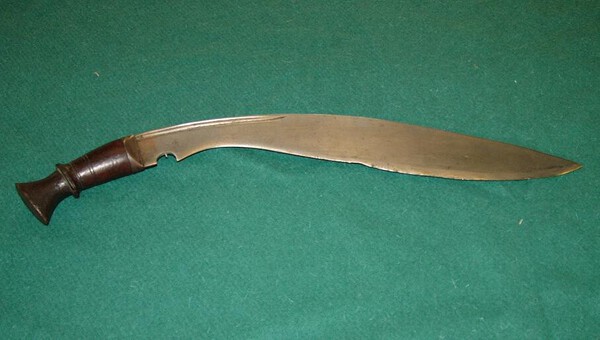
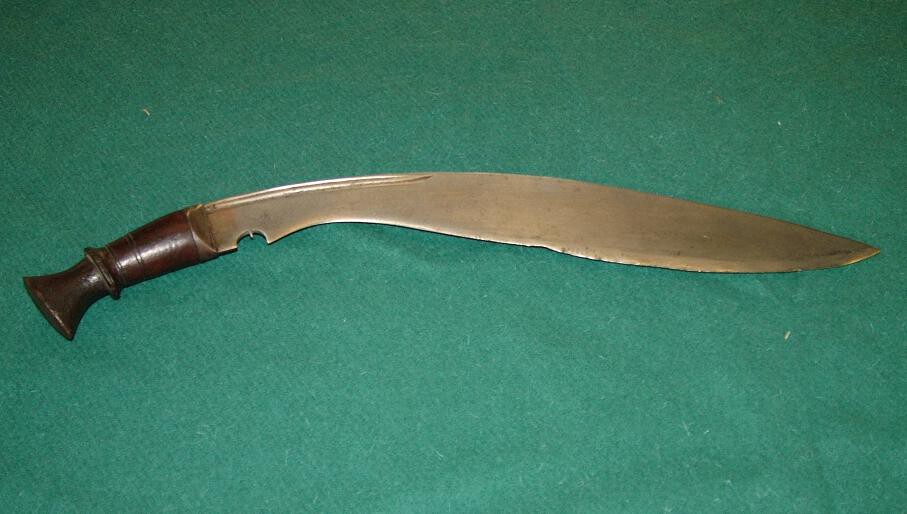
"Ethnic" weapons were a bit of an odd collecting area back in the early 70's, and Japanese stuff was considered "Ethnic".... There was in fact a bit of a prejudice against them, and so prices were low. I do remember prices going up tenfold in just one year, and a katana that was priced at £18 would be £180 in just about twelve months. Percussion guns were cheap and despised, flintlocks were collectable, British military swords were stuck in the umbrella stand, foreign swords went into a bucket. I paid £10 for a gold koftgari decorated Indian dagger with Ivory grips. I still have the first Kukri I bought for £1.10 shillings from a small junk-antiques shop called "the exchange and mart"...... Hmm, coming over all nostalgic!
 3 points
 -
Arrrhhhh yes.... that’s exactly what I’m missing. Thanks Bryce 👍 Great to hear another North Queenslander on here and no, that’s not me though I have met him a few times. I work with a returned veteran group called Kapani. We go into remote aboriginal communities and recruit for army and mining jobs. Gives an outcome to our veterans and an outcome to the young lads sitting around in communities so a win win 👍 you can check us out on Facebook. Kapani Warrior 👍 thanks Bryce3 points
-
Here is what they look like normally: https://buyee.jp/item/yahoo/auction/543903216

 2 points
 -
Some more gentlemen,

.thumb.jpg.3af70dafd48bbe3d40caa3846dc0c5bc.jpg)
.thumb.jpg.af52c6d54e98c0121ff04024d0a43dc0.jpg)
 2 points
 -
Hi John Not a silly question at all mate. I had no idea that they were here. I remember a beautiful Japanese store that used to be on Lake st that sold a lot of incredible stuff but they disappeared. This is probably where they went. thank you very much. I will contact them Monday thanks John 👍2 points
-
First, thank you for all those kind words. This post is prompted by yet another thread started by a new collector who is wondering if he should buy some gawd awful & ugly unsigned wakizashi with bad kizu on ebay. Beginners, I know you want to be the one to find a diamond in the rough and your natural inclination is to be wary of anyone who knows more than you do (us dealers) but you are doing yourselves no favors. If you are just getting started you need guidance and you won't find that on ebay. I am not the only dealer who claims to be honest here on the message board or with a website; there are more than a few of us you could safely approach. If, however, you do come to me about a sword you're considering, I will tell you about any defect or shortcoming it may have and what it means to the value and answer any questions you may have and gently steer you in a sensible direction and I won't lie to you just to sell a sword. And, as mentioned, there are others you can trust; it doesn't have to be me. But please, leave ebay alone. Take your business to someone who has nothing but his reputation.2 points
-
Hi guys, A trivial subject, but I don’t like it when I can’t find an answer about something. Recently, I’ve been reading an excellent book about everyday life during the Edo bakufu. One of the topic is fashion and as many of you probably know, the bakufu promulgated a law forbidding samurai to wear a beard or a moustache. If we look at the early Edo portrait, we still see some samurai sporting a beard, a moustache and a chonmage that looks more like a pigtail (to secure the kabuto I guess). Beards and staches seem to reappear near the Bakumatsu era. So à question for the historian or Japan living members among us: Do you have any idea when that law (no beard, no stache, folded topknot over shaven pate) was promulgated? I can’t seem to find any information about that. Thanks for your help, JP1 point
-
It looks like 俊 John1 point
-
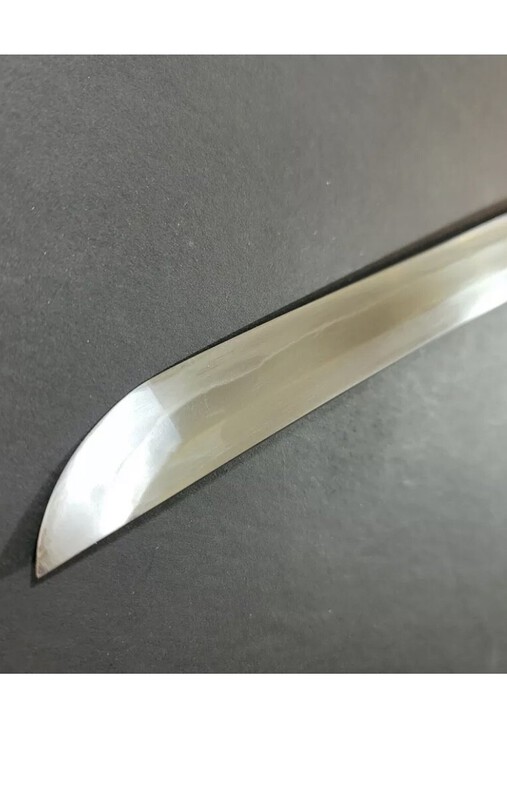
Nice sword the hamon looks similar to mine mine is original polish what I like about it there is nothing wrong with the blade and mounts are in excellent condition not a dent in the scabbard the hamon isn’t as nice




 1 point
 -
Steve 2 vs 3 stroke Naga doesn't really matter IMHO. If you will look at the various mei on my site you will see significant differences in the mei - obviously cut by different hands, but all legit Nagamitsu. Rich1 point
-
Hello, Just FYI , there's a 'Wanted to Buy' section which is very convenient and frequently followed by the sellers and dealers. Your post would get much more attention there ! Just a friendly reminder. Cheers, John1 point
-
Well, him and a bunch of other smiths took the the 5th Seat, so I don't think it is a powerful selling point. He seems like a reasonably obscure WW2 smith. Even in excellent condition you have to wonder how much the sword would be worth when you can already buy papered antique swords for a couple of thousand dollars. I mean, if the sword was recently bought/sold for around $2300, would a polish turn it into a $4000 or $5000 sword? I don't think there would be a market for this sword at that price, so I'd say sell it as is.1 point
-
when i started, maybe mid late 80's i was at a big gun show. guy i know had a dead mint Mantetsu with General's tassel (bring back) and a signed Shinto katana. $1000 each. I bought the Shinto Katana as i was interested in antique blades and Gunto's were not expensive (the mantetsu and tassel retail value was 1k). It is long gone but the Shinto katana is probably worth 1500 now but the Mantetsu maybe 3500-45001 point
-
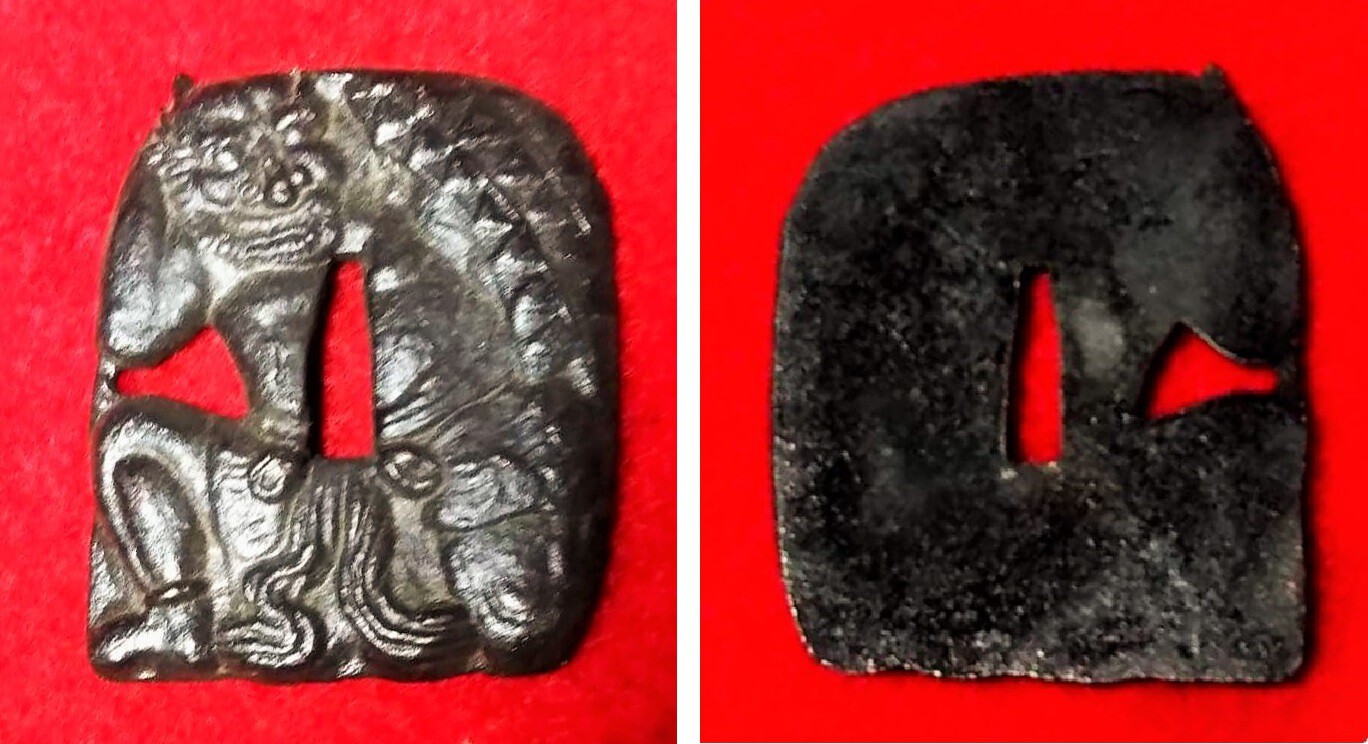
That demon is the worst I've ever seen. It is low end to the extreme. I saved it to my image library. Meotoiwa's scenic spot, which I found, is a cast reproduction of which Japan is very proud, and is relatively elaborate. Diagonal composition images seem to be all the rage. https://www.jauce.com/auction/l675674702
 1 point
 -
濃洲住谷口義包鍛之 Nōshū-jū Taniguchi Yoshikane kitau kore It means Taniguchi Yoshikane of Noshu province made this. Noshu is a location that corresponds roughly to Gifu Prefecture in Japan today.1 point
-
here is a better picture. Hope it helps
 1 point
 -
G'day Dave, I think you are missing the koiguchi from the mouth of the scabbard rather than the kojiri. Here is a shot of one of mine. Are you the radio guy from 4TO? Good to have another North Queenslander on board. Cheers, Bryce
 1 point
 -
This one is like an old friend [not] https://www.jauce.com/auction/e516816626 Whomever made it has figured you only need one side of the design. Rather than struggle to compare the images at a slope I have straightened them up. From a cheap display board perhaps? Would not fool a monkey!
 1 point
 -
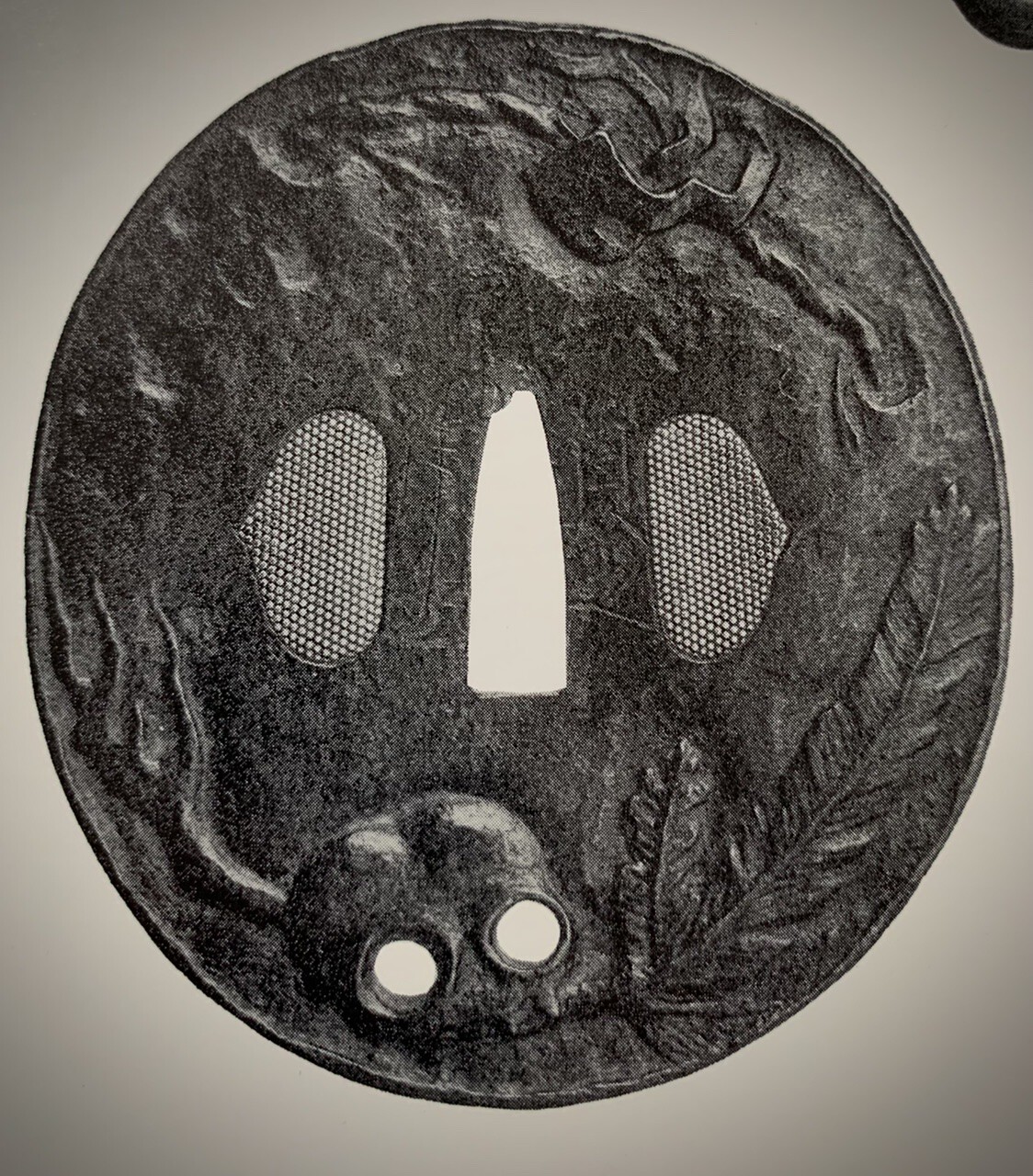
Dear Aliaksandr. This is an out and out fake. If you look at the mei you should be bale to see that it is not cut or chiselled in any way. Other indicators are the surface finish, the muddy feel of the faces and the piece of Shoki's hat that crosses the seppa dai. All the best.1 point
-
Being made by Yoshitsugu does not necessarily mean its showato, however the Seki stamp most certainly does mean it is showato. Gendaito either have a star stamp or lack any sort of stamp; however that is not indicative 100% of being gendaito either. Wartime swords are fairly tricky in telling what they are, but trust in that it being a Seki stamp makes it non-traditional. There are at least two smiths that signed that name during that period; which I am not sure though. Both were lower-ranked so likely only made showato.1 point
-
Thanks, David. I hope the show was a good one for you. I always like that one. See you in Orlando!1 point
-
From someone who is a dealer and an important member of the french side of the hobby, I would have hoped for a more articulate counterpoint. We can agree that goal here is education. This isn't the dealer page, it's fair game to debate these blades when big words such as "Masterwork" get tossed into the fray. This is the type of words one needs to be ready to defend. Masterworks of Nihonto are (likely to be) Tokuju-level and beyond. Either they are extremely rare or the word is meaningless. There is no middle-ground. We are fortunate to be in a hobby with 800 years of collecting history and numerous treaties and evaluations published, and while these aren't perfect - far from it - they do set a high-bar for argumentation and this is the level of engagement we should strive for. This is a fair work of the Shinto period which had its signature erased to pass as something it isn't. And there is nothing "wrong" with this. It stands on its own as what it is. What it isn't is a masterwork, just as this isn't a soshin Muramasa: http://nihontofrance.com/nihonto/sunobi-tanto-signe-muramasa/. Nor is its Koshirae made by Toshinaga. I would come to think that in the internet era, we should label these things for what they are (or likely to be) and not fish for true believers by being vague. That's all really. We should all strive to be better and to own up to our mistakes (as I have about the date I mangled).1 point
-
congrats and what a find! we could all use a find like that once in a blue moon. to echo what Brian said that sword deserves the highest quality attention asap. cheers1 point
-
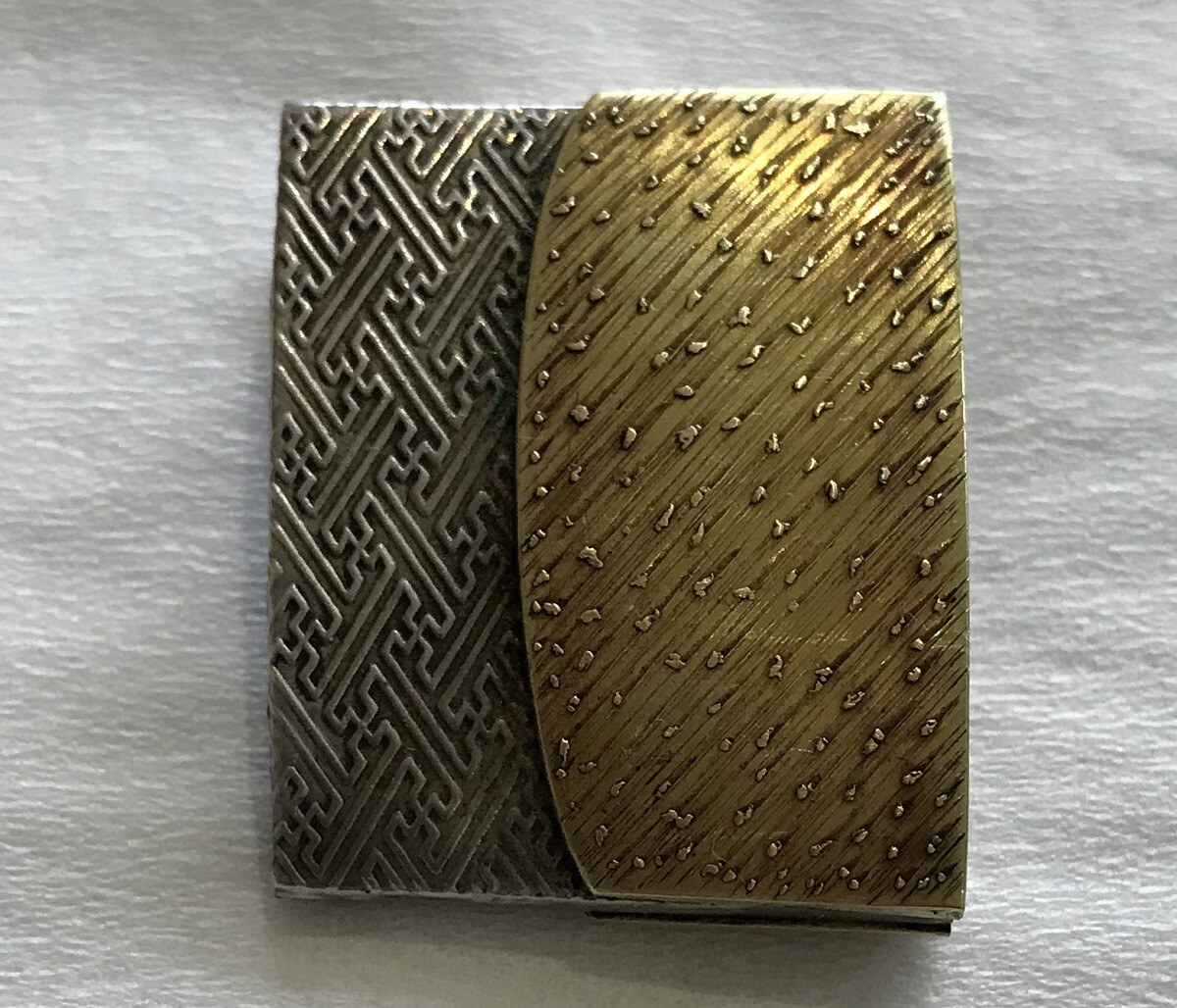
Bruce, I am sure that you have to finish the HABAKI first before you can decorate it. The "red" might be copper seen from the inside.1 point
-
I can only speak to my personal experience: I've papered >100 blades, probably closer to 200 swords (did not count in any formal way). Of those re-papered (with different or same organization) something between 40 and 60. It has to be admitted that in all repapering cases I had doubts about the original attribution. These were with very few exceptions mumei blades, so I'll talk about those, with fully readable signature its just a whole different game. NONE papered to the same name. Exactly zero out of 50 or so. Including blades with half intact signatures. Most papered to the same school (i.e. Bizen, Soshu, Yamato etc.) if one accepts a more inclusive definition (i.e. Nio is Yamato, Unju is either Bizen or Yamato etc. etc.). There was no clear preference in terms of any particular shinsa team giving more favorable judgements. I had two decent Juyo repapered by NTHK-NPO to lesser names and with respective scores of 75 and 76, i.e. just "average-good" in their opinion. There was a significant spread in terms of name recognition. O-Kanemitsu and a much lesser name, almost Kozori-class - but in all honesty not that different in terms of either time or work style. The worst game is Soshu. Basically every high class tanto with late Muromachi/also late Nambokucho sugata had 50% chance to draw Shimada Yoshisuke or other Shimada name or actually something quite recognizable from Nambokucho times. i.e. if you buy really good mumei Shimada tanto and resubmit you have reasonable chance to get TH Masahiro. Uda tanto is another all-too-often notoriously weak attribution. Pre-Nambokucho blades were often messed up. Had one papered to Aoe, Bizen, Rai and Ryumon Nobuyoshi. And if I remember correctly both Rai and Bizen attributions also had smith names. True, the papers were from different time periods, but I'll just repeat myself - green papers are by far more often Kanzan Sato rather than Yakuza papers. I think all the four judgements were neither crazy nor done in bad faith - but one was definitely weak. So I am a sceptic who thinks the ability to pinpoint an exact smith name, unless one deals with an ultra-stereotypical blade by someone famous, is basically Japanese appraisers showing off. They have to do it, since their competition does it and collectors expect the name and not just (less valued) generic school attribution. If you want to stay in business you have to follow suit, even when there is honestly very little justification to be that specific. Its a small community which lives by its own rules. The problem comes when generations of appraisers change and suddenly the name you secured can be "legitemally" contested.1 point
-
G'day Bruce, I just discovered this thread. Here is mine from the Nobuyoshi gunto. Cheers, Bryce
 1 point
 -
Taken from Sir Arthur H. Church’s book.
 1 point
 -
It's a very tricky kantei, to evaluate shinto work with a soshu inspiration. These kantei shouldn't be taken too seriously. It's a best guess. I'll preface by saying again that it's a nice sword and it has a strong Shinto Soshu-inspired character, with the pronounced ara-nie, sunagashi etc. For all the anons reading this forum regularly, I would like to explain a bit more why this is typically the type of sword which will be found without papers in Japan. The reason is that it is more profitable to attract a gambler and sell it for what it isn't (late Nambokucho Soshu) than to have it papered and sell it as a mumei shinto piece. So even if it had papers in the past, the way to make money on this is to dump the papers in the fire and put it up on Yahoo JP with a fresh Sayagaki and cobble up some story. These are the economic incentives at play. Before the nitpicking occurs I will just say that unpapered swords in Japan which would kantei to grandmasters do obviously exist. However, they get trawled by the dealer filter and they will paper those worth papering and dump the gambles in YJP! or to some other dealer at their auction until the system sorts itself and that everyone can make a bit of money. Shrines, old collectors, etc, have unpapered swords. There are also discoveries being made where a "sword stash" is found hidden in traditional houses. Generally the person who finds them will go the dealer and when she or he hears the costs and time involved in the restoration and all the social stress associated with owning weapons in Japan, they go for money now. The encounter with police can be terrifying and after the stress associated with the torokusho process, these objects are more likely to be seen as problems to solve than objects to keep and restore. The social stigma helps the business model. What needs to be understood is that mumei pieces from the shinto period are radioactive in Japan. It's a big value drop. I bought a sword to Naotane once for about 5K, had the signature been preserved it would be worth 30-40K on the Japanese retail market, that's just the way it is. Which means it's also a great occasion to get top quality work from a famous school if one is ready to accept this flaw (which I accept readily given budget constrains). The most likely reason for a shinto sword to be mumei is that it's been used as a deceptive device to extract money from an unsuspected buyer via fraud. It's not just signature...even a little machi okuri can be what can be seen by new collectors as an unreasonable debasement of value. Shinto strives for perfection in condition.1 point
-
The certificate is from 2009. You took a long time to show us! Someone removed the mei, reshaped the nakako and added a mekugi-ana. I suppose, to make it pass as Nanbokucho Soshu work. In this context, it's important to recognise that the attribution is more of a shinto shrug than a slam-dunk. This is quite typically the type of sword you'll find in Japan without certificate. It's important to buy it knowingly, and for what it is. It's nice work.1 point
-
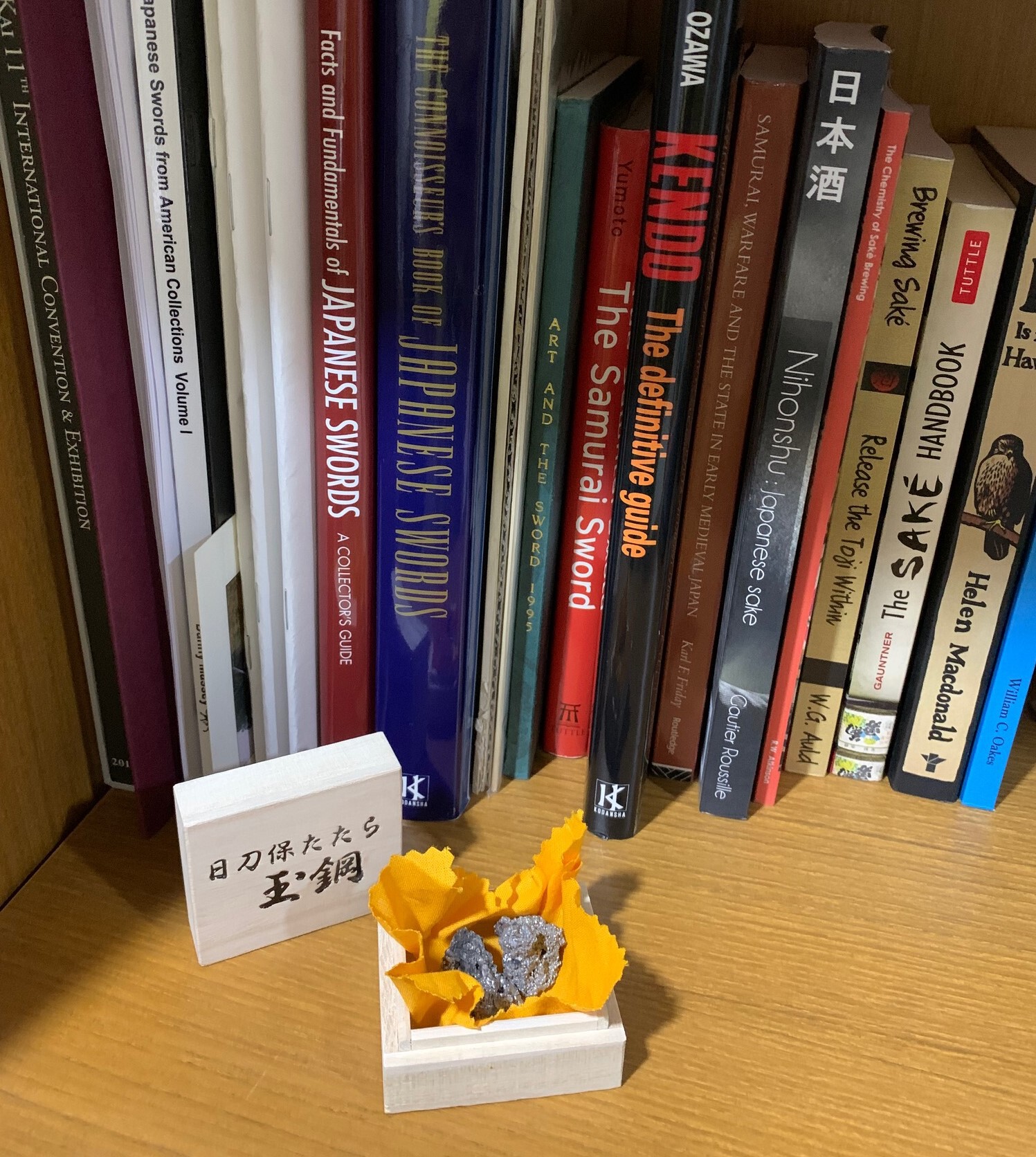
Despite a circuitous route from Japan to the US east coast then back to Japan and ultimately Thailand my "Christmas stocking stuffer" Tamahage finally arrived. I opted for the smaller box. Put it with on a bookshelf for some size context. Pretty neat addition to the collection! Displays really nice and one of the pieces has some interesting purple and green hues to it.
 1 point
 -
Oh, and here is a gimei Nobuie (likely later myochin) I have that fits the bill.
 1 point
 -
I've had several of those in the past, but I think this is the only piece I currently have with udenuki ana Best rkg (Richard George)

 1 point
 -
My memory has gotten so bad that I have fun finds all the time.0 points



.jpg.a897ba0ef79dbb32bdfb7cd0dcda1863.jpg)
.jpg.452930b75c344339df1494a490c9dd96.jpg)














This leaderboard is set to Johannesburg/GMT+02:00