MauroP
-
Posts
896 -
Joined
-
Last visited
-
Days Won
5
Content Type
Profiles
Forums
Events
Store
Downloads
Gallery
Everything posted by MauroP
-
Ben, Masakata Bushū-Itō school, not Chōshū. The other tsuba could be Edo Higo or Kumagai school. Bye, Mauro
-
Maybe a rudder (舵透図 - kaji sukashi no zu)? Mauro
-
There are some errors scattered in the text (at least I think so): p. 14 - tsuba Shingen, but nothing to do with the design known as the “centipede”; p. 20 - the image is mirrored left-right (difficult to read properly the signature); p. 21 - worth to say the complete mei should be Shōami Shigenobu; p. 25 - the complete mei should be Joi Nagaharu (with Nagaharu - 永春 in form of seal); p. 29 - 柳川直春 reads Yanagawa Naoharu, not Naohara; p. 41 - the maker is Kaji´emon, not Kakiemon; p. 42 - the mei in omote should be 干英子野村包教 - Kan'eishi Nomura Kanenori, not Kan-ishi Nomura Kanemobu; p. 43 - Natsuo, as pointed out by Ford; p. 45 - the mei should be Masachika (正親), not Malachi. It would be fine if some advanced fellows here in the forum could confirm and send a note to the Bilbao Fine Arts Museum. Mauro
-
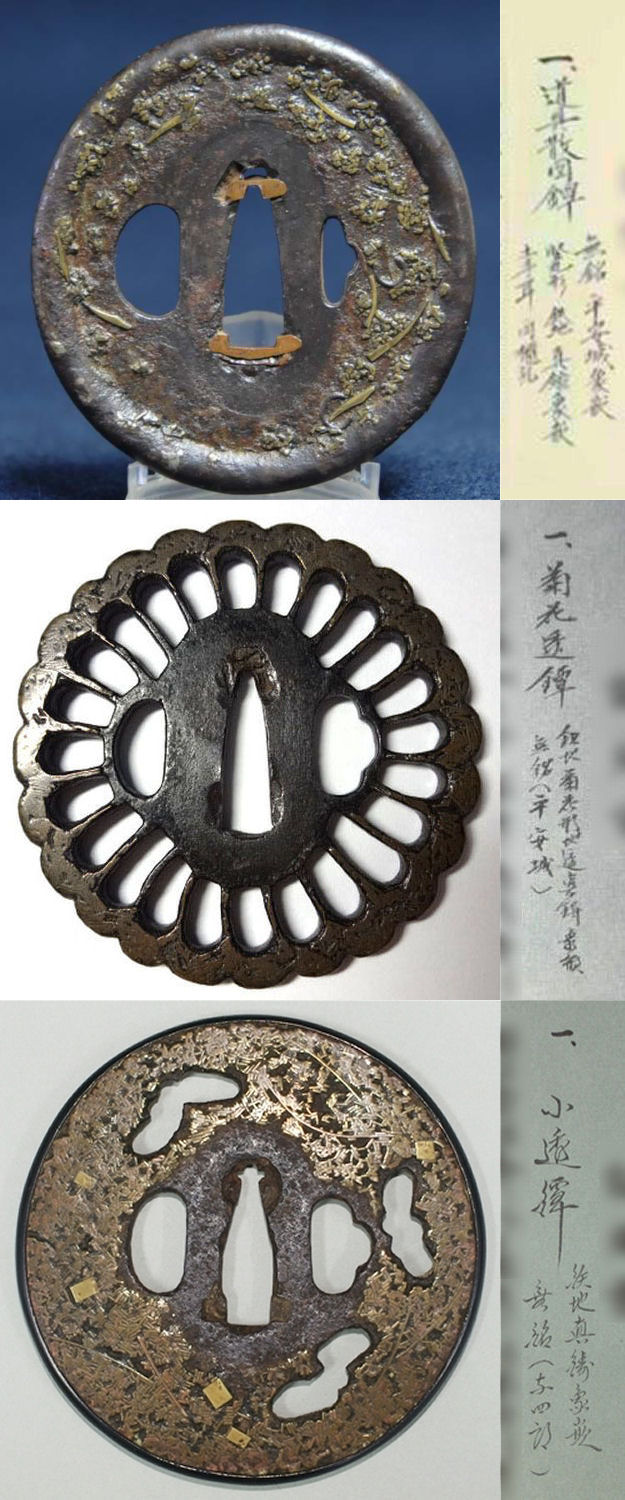
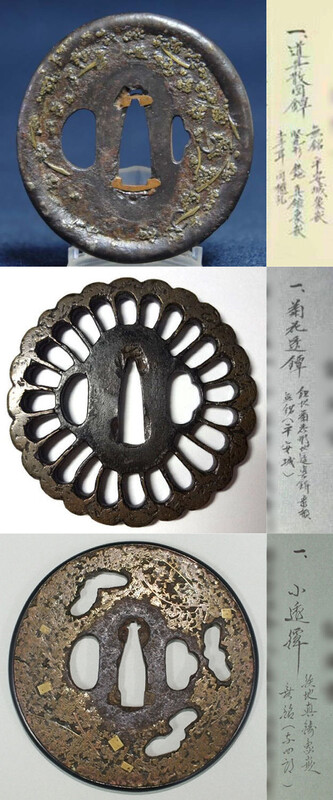
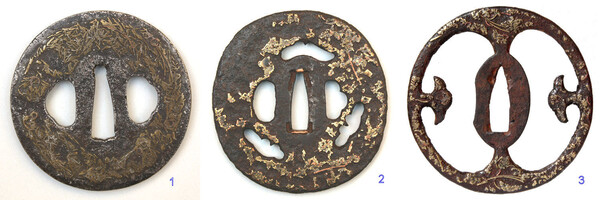
The expressions gomoku-zōgan (五目象嵌), fukiyose-zōgan (吹寄象嵌) or hokori-yoshirō (埃与四郎) can be interchangeably used to define this style of inlay. I've found only 3 tsuba with NBTHK paper, two attributed to Heianjō and one to Yoshirō. Anyway all the papers report just shinchū-zōgan. Here below 3 tsuba in my collection: The no. 1 is a plan maru-gata kaku-mimi tsuba with a shiny ground plate (silver plated?) and symmetrical hitsu-ana. The no. 2 has quite classical ko-sukashi of Shōami school. The no. 3 is a big nikubori ji-sukashi tsuba. The tsuba above have nothing in commom but the same kind of inlay, and in my opinion this support the hypotesis that gomoku-zōgan was just a way to "pimp" old tsuba. Bye, Mauro
-
The theme is usually referred as ōka ryūsui - 桜花流水 Bye, Mauro
-
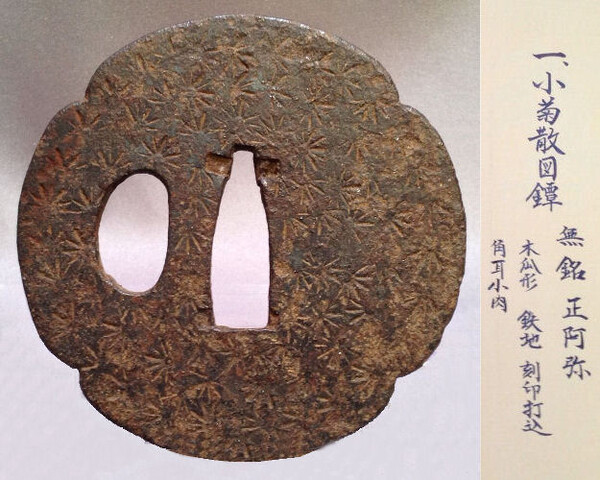
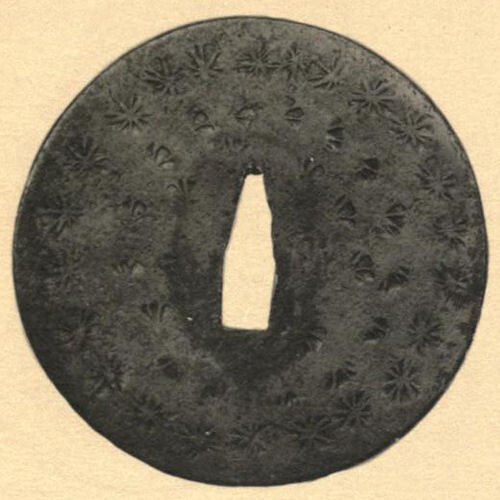
Hi Aldwin, here below a tsuba with similar decoration papered Shōami (when you don't know, say elephant or Shōami...): Helen Gunsalus in her "Japanese Sword-Mounts in the Collections of Field Museum" (1923) take this kind of decoration as an early type (see https://archive.org/stream/japaneseswordmou16guns#page/28/mode/2up) I don't like the Shōami-take-them-all theory but I what I know? Bye, Mauro
-
Beginner's luck, I suppose
-
My try, from left to right: Akasaka second generation Tadamasa Akasaka fourth generation Tadamune Hayashi third generation Tohachi (or Tosa Myōchin?) Hayashi second generation Shigemitsu Bye, Mauro
-
Satsuma school is really a good suggestion. See here a similar tsuba papered den Satsuma: http://world.seiyudo.com/product/tu-010416/ BTW, the kind of peapods are the so called sword bean (natamame - 鉈豆). Bye, Mauro
-
A phenix in plain kin-nunome-zōgan. Possibly Kyō-kenjō, late Edo. Just my not-so-educated opinion. Bye, Mauro
-
Most probably Aizu-Shōami, mid-late Edo. Nice tsuba. bye, Mauro
-
Hi Grev, I've collected images (not real tsuba, unfortunately) of 925 NBTHK papered tsuba. Among them I can see: 9 ko-tōshō, 7 ko-katchūshi, 23 ko-kinkō, 12 ko-Shōami. 4 ko-Akasaka. Never seen papers reporting ko-Goto, ko-Mino, ko-Myōchin, ko-Umetada and ko-Nara. My records can be biased in some way, but can give a rough estimate of the relative frequencies (at least of what deserve certification according to the NBTHK panels). BTW, ko-sukashi has a complete different meaning (and is written 小透, not 古透). Bye, Mauro
-
Actually the paper say "mei (kin"in)", so the piece is signed, but the paper does not tell who is the maker. Bye, Mauro
-
I've just learned the sad news. I've never met Thierry in person but I bought some tsuba from him, and I could appreciate his extreme kindness. My condolences to family and close friends. He will be missed for a long time. Mauro
-
 Green Dragon, here a togishi I wish to recommend you...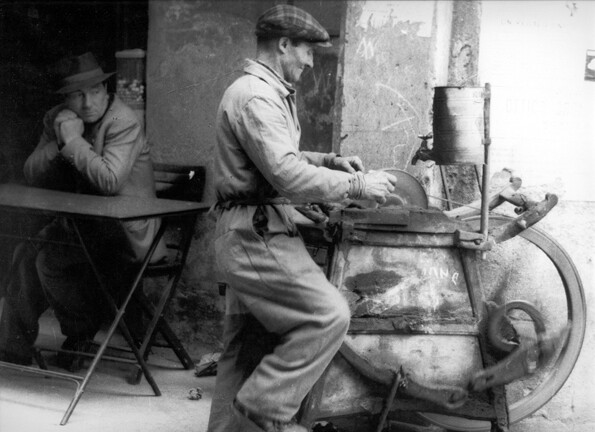
-
Johnny, I'm quite doubtful about your measures of tsuba thickness. If diameter is reported correctly the thickness (estimated from pics) should be just 5 mm or so. Mauro
-
The very same tsuba is also reported as Kanayama in "Early Japanese Sword Guards: Sukashi Tsuba" by Sasano al p.118. I think we need better photos of your tsuba to give an educated opinion on true Kanayama vs. cast copy. bye, Mauro
-
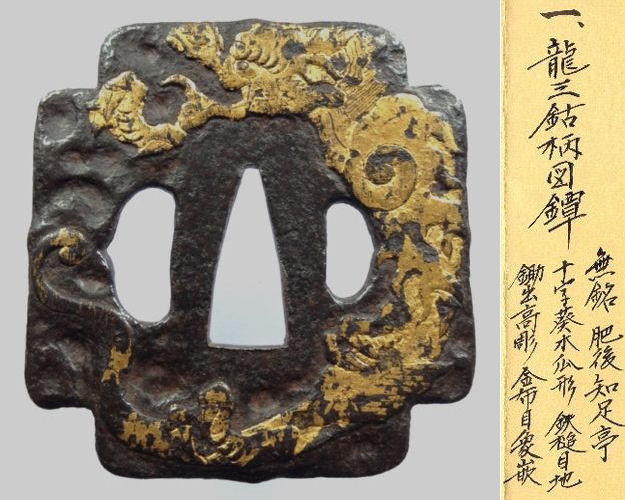
Hi Bojan, my best guess about your tsuba: #1 Kinai (記内), daikon no zu tsuba - 大根図鐔 #2 Owari (尾張) or Kyō-sukashi (京透), itomaki sukashi tsuba - 糸巻透鐔 #3 if not cast it could have been an Akasaka tsuba #4 Nanban (南蛮), unryū no zu tsuba - 雲龍図鐔 #5 Heianjō (平安城) #6 more Hizen (肥前) than simply Namban, ryū ni shachihoko karakusa sukashi tsuba - 龍に鯱唐草透鐔 Bye, Mauro
-
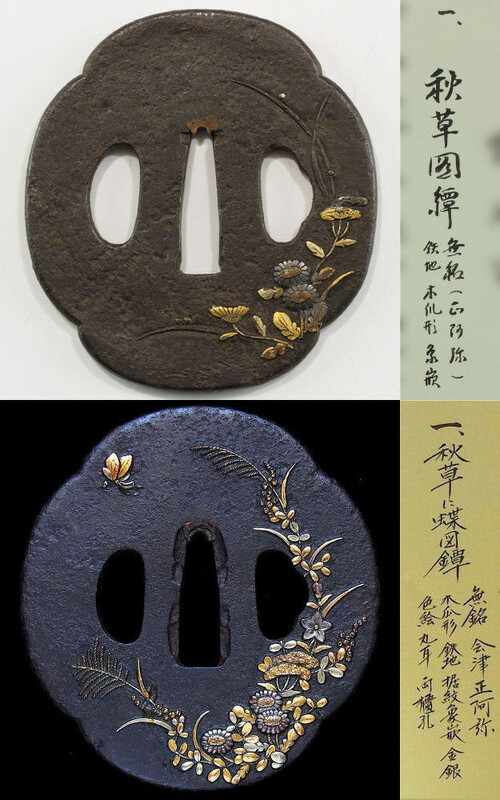
Hi Matt, your tsuba #1 is not so bad, after all. It possibly "fits the box" Aizu-Shōami (会津正阿弥) or just Shōami. Good luck for the next buy! Mauro
-
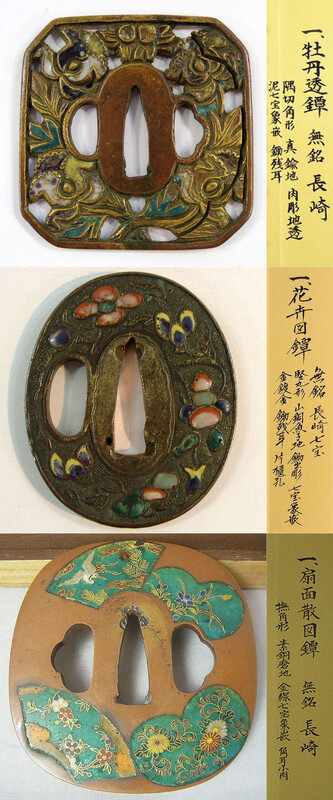
Hi Grev, try researching Nagasaki or Nagasaki shippō (長崎七宝). Mauro
-
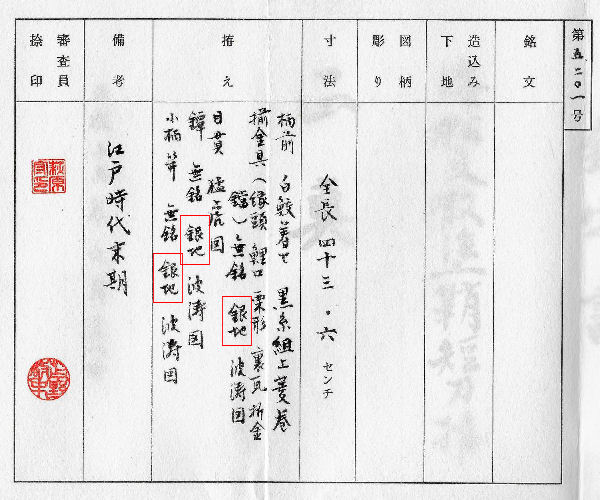
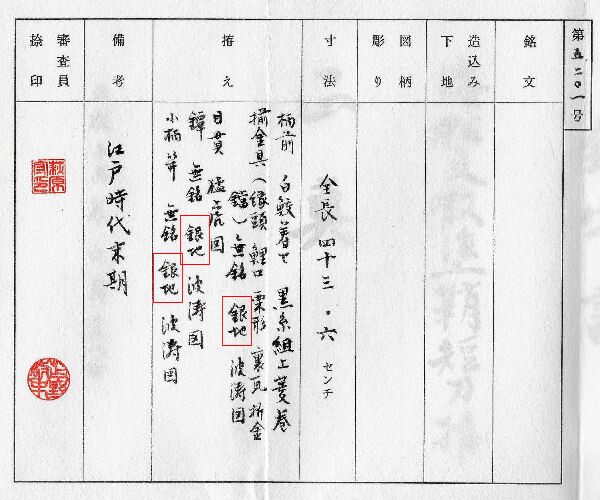
Hi Ron, the boxed kanji say 銀地 - gin-ji - silver material Mauro
-
May I suggest a different transcription of mei from Ludolf tsuba? Possibly 山城住家貞 - Yamashiro jū Iesada. The tsuba posted by Christian could be produced in another province: 勢州住正家 - Seishū jū Masaie. Bye, Mauro
-
In Italian the right definition is "margini del traforo", so margin, edge or border may be the right word? Mauro
-
The tsuba could be a Tenpō school. The filling of sukashi spaces is usually referred as gan-kin (嵌金). Bye, Mauro
-
The style of Chris tsuba seems more akin to the Higo style.