
Leaderboard



Popular Content
Showing content with the highest reputation on 08/13/2026 in all areas
-
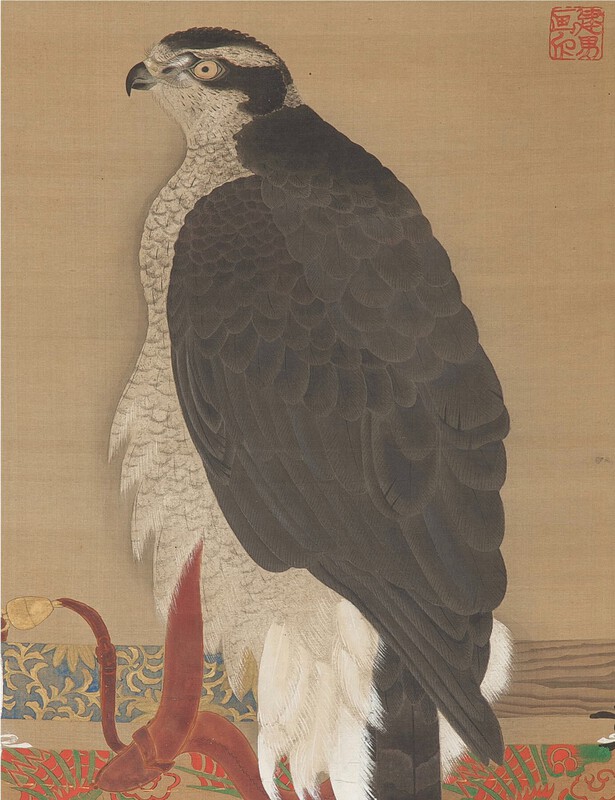
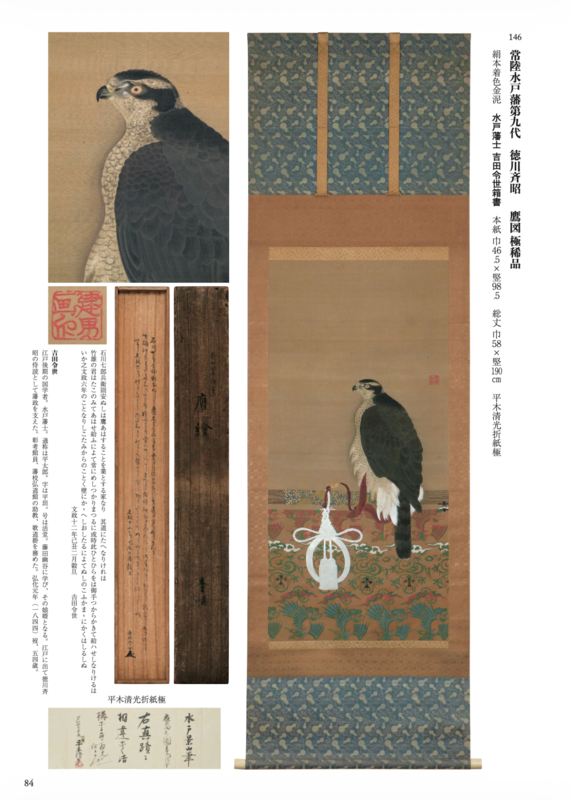
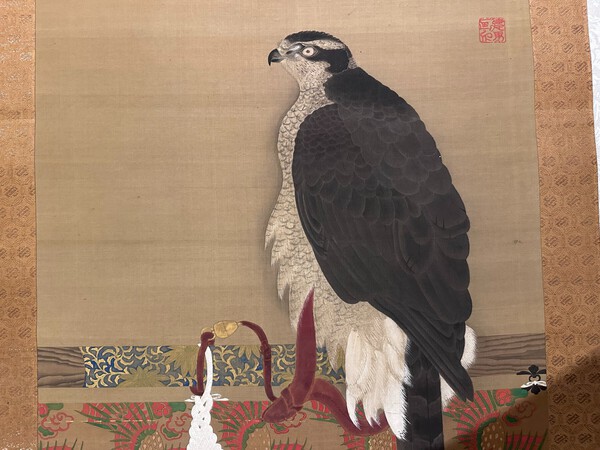
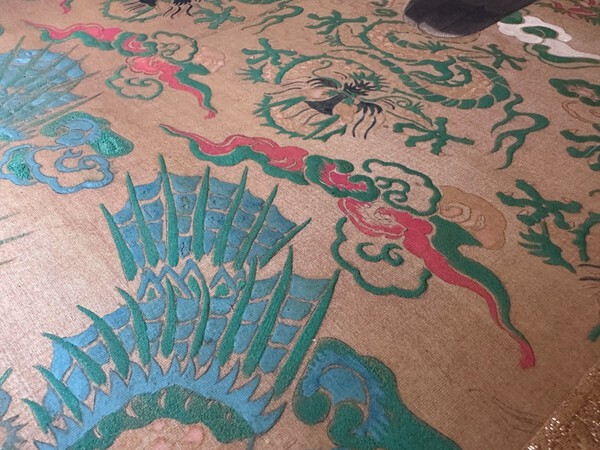
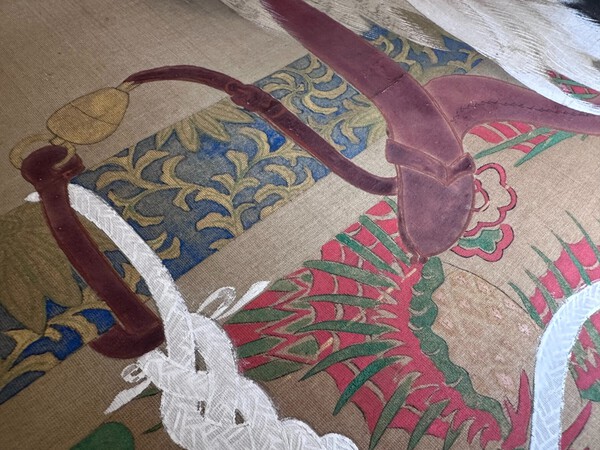
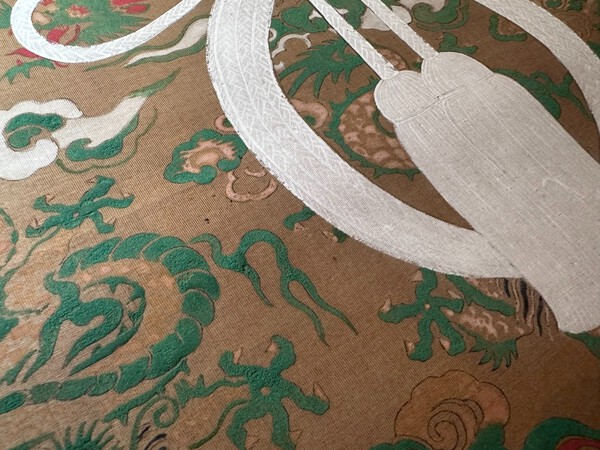
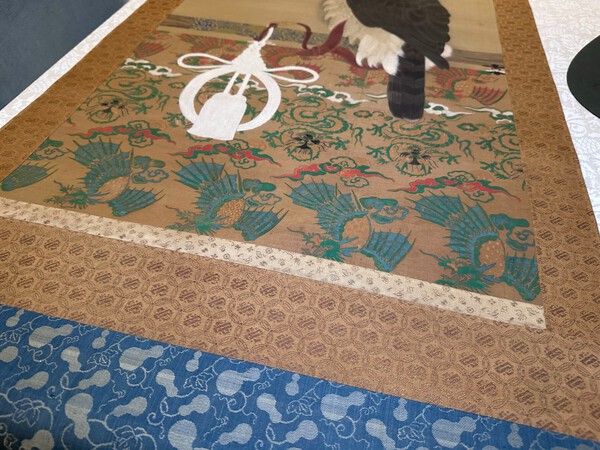
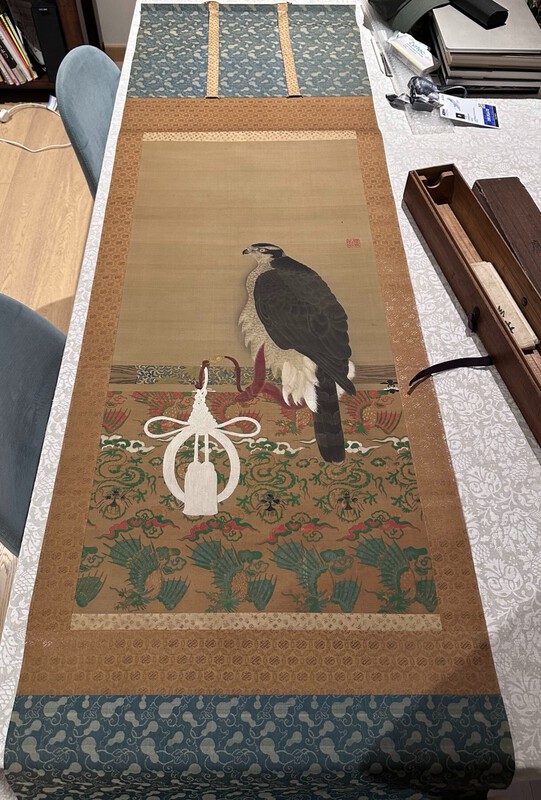
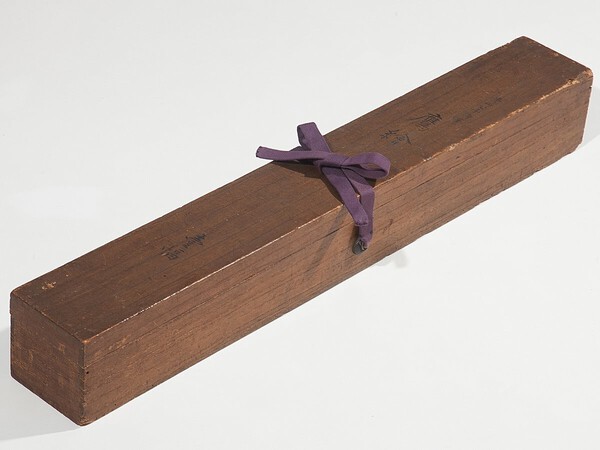
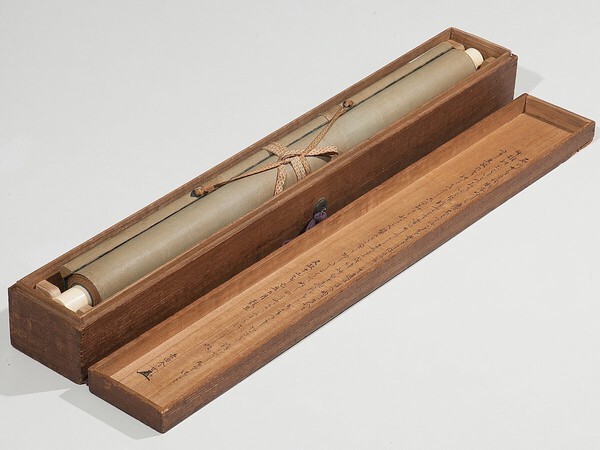
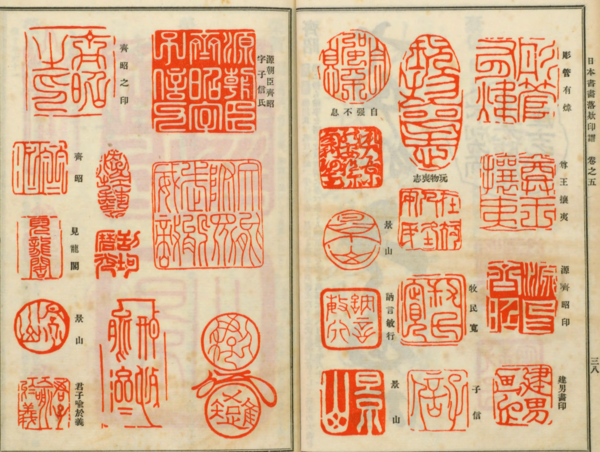
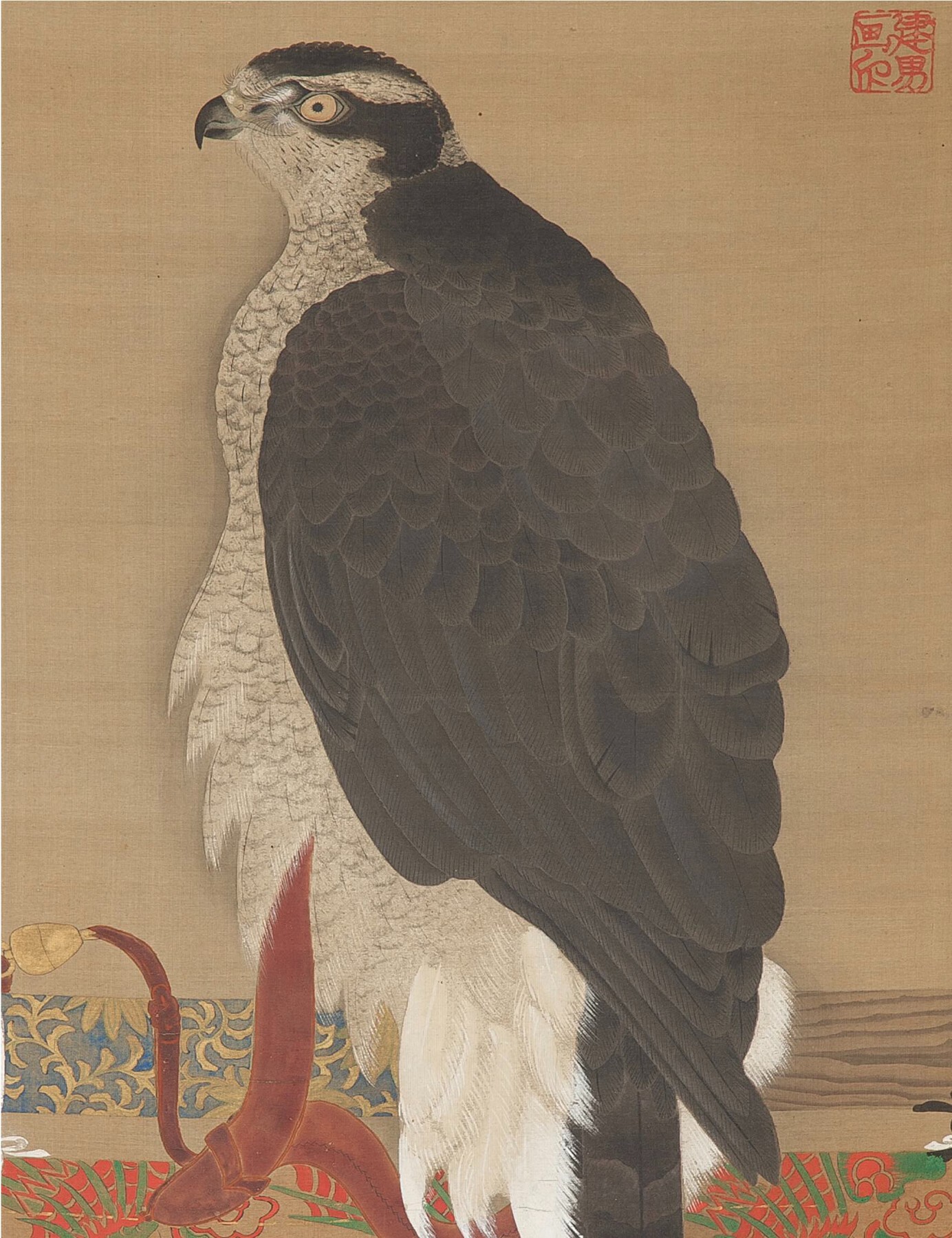
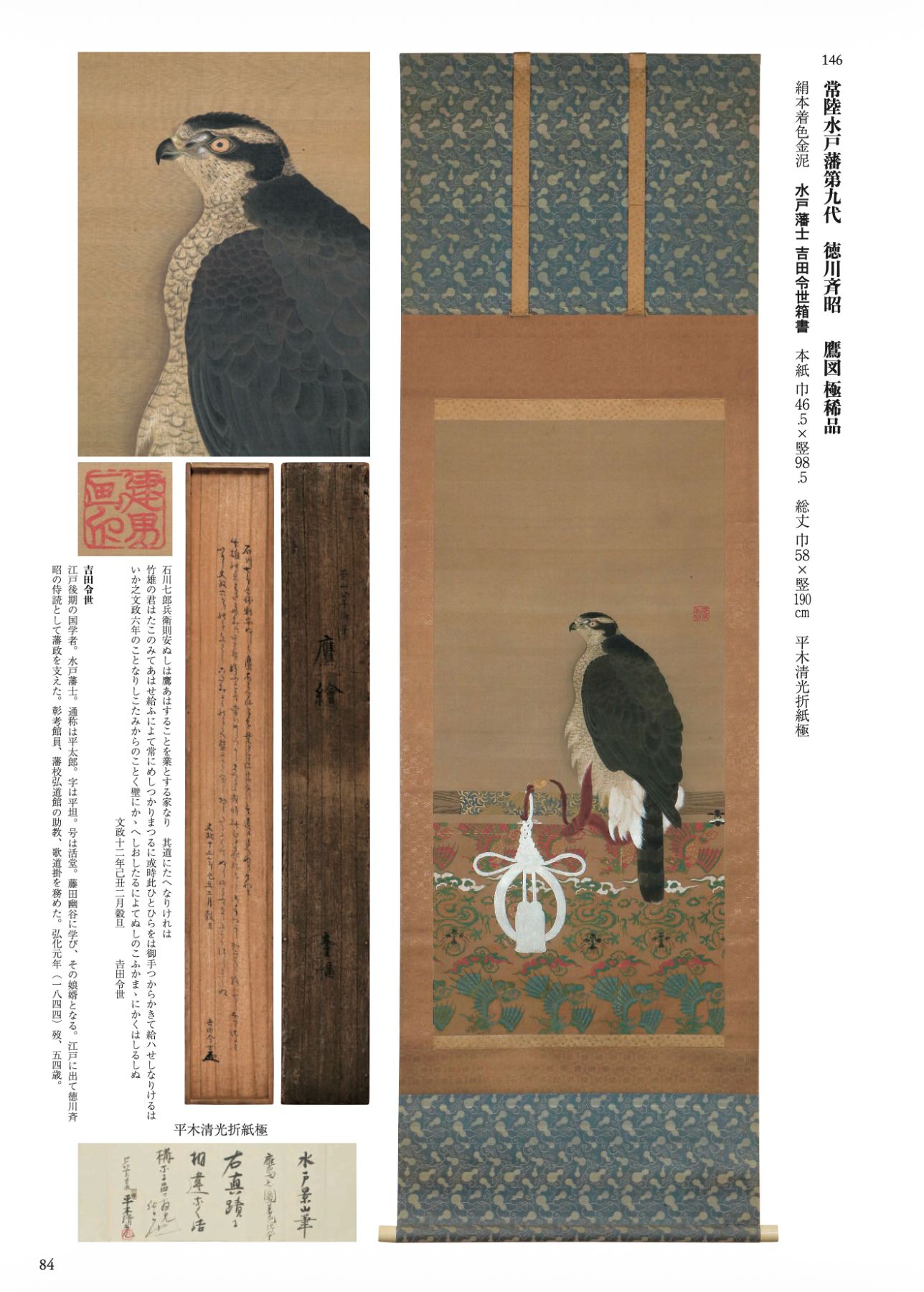
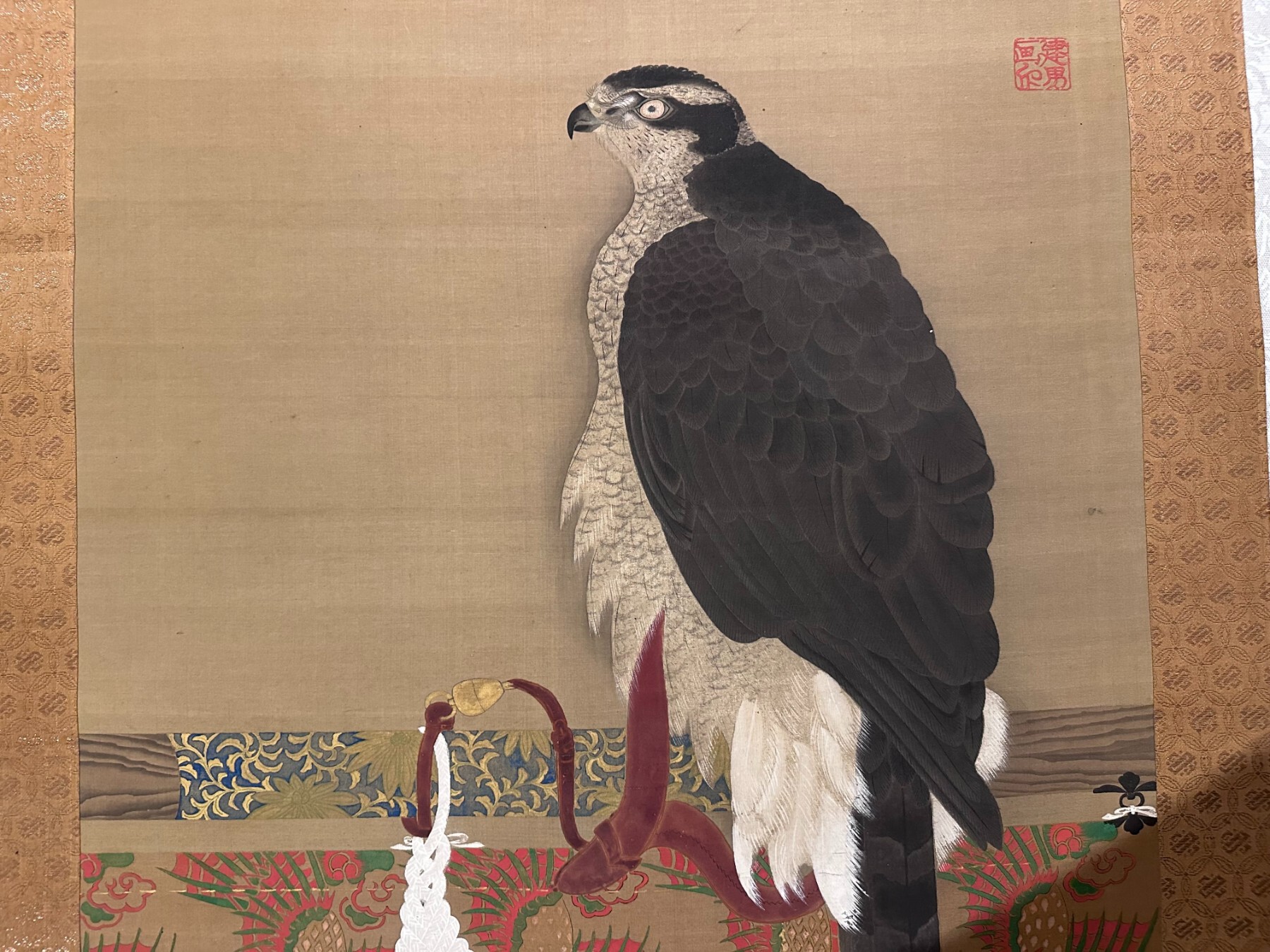
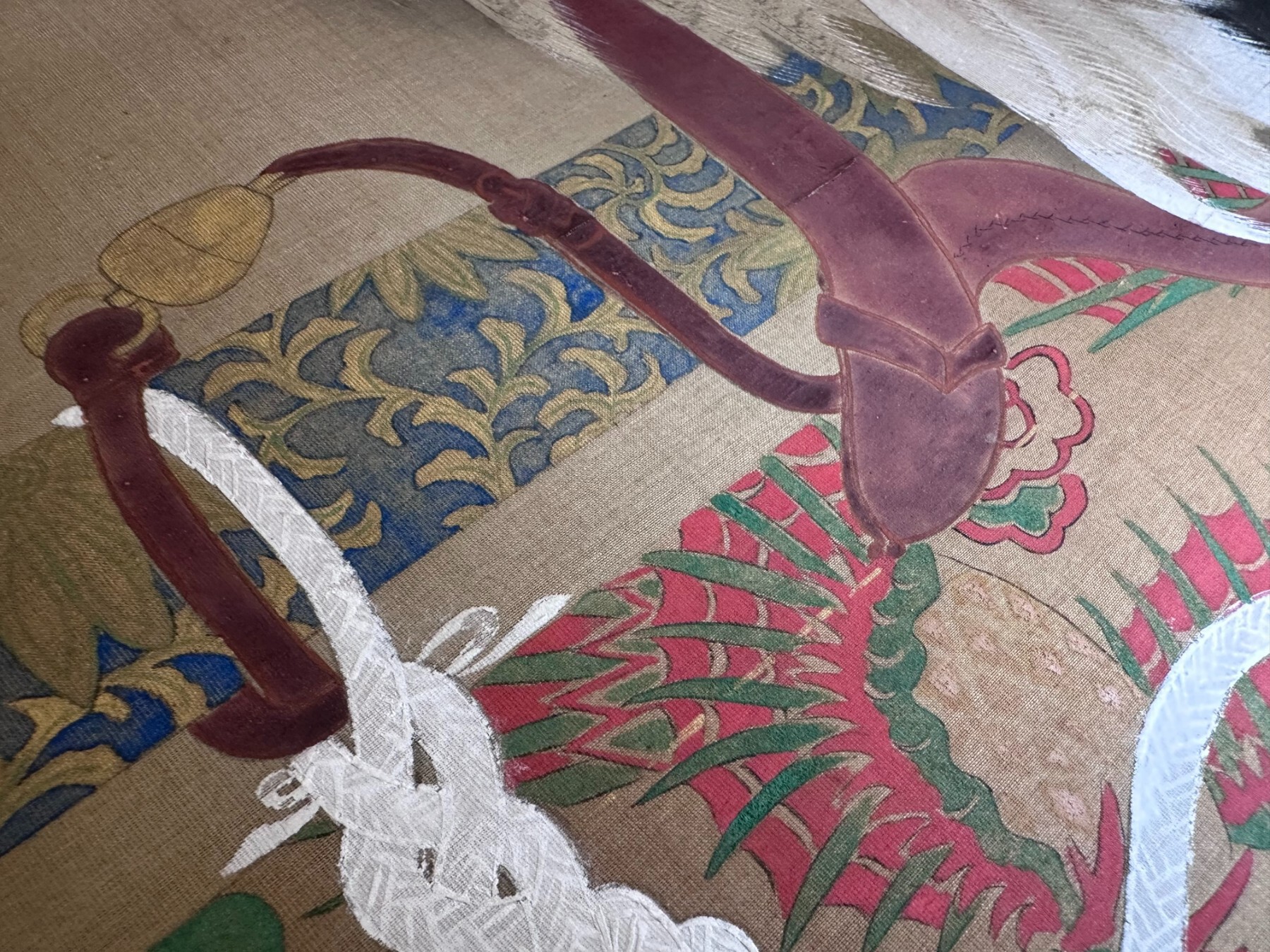
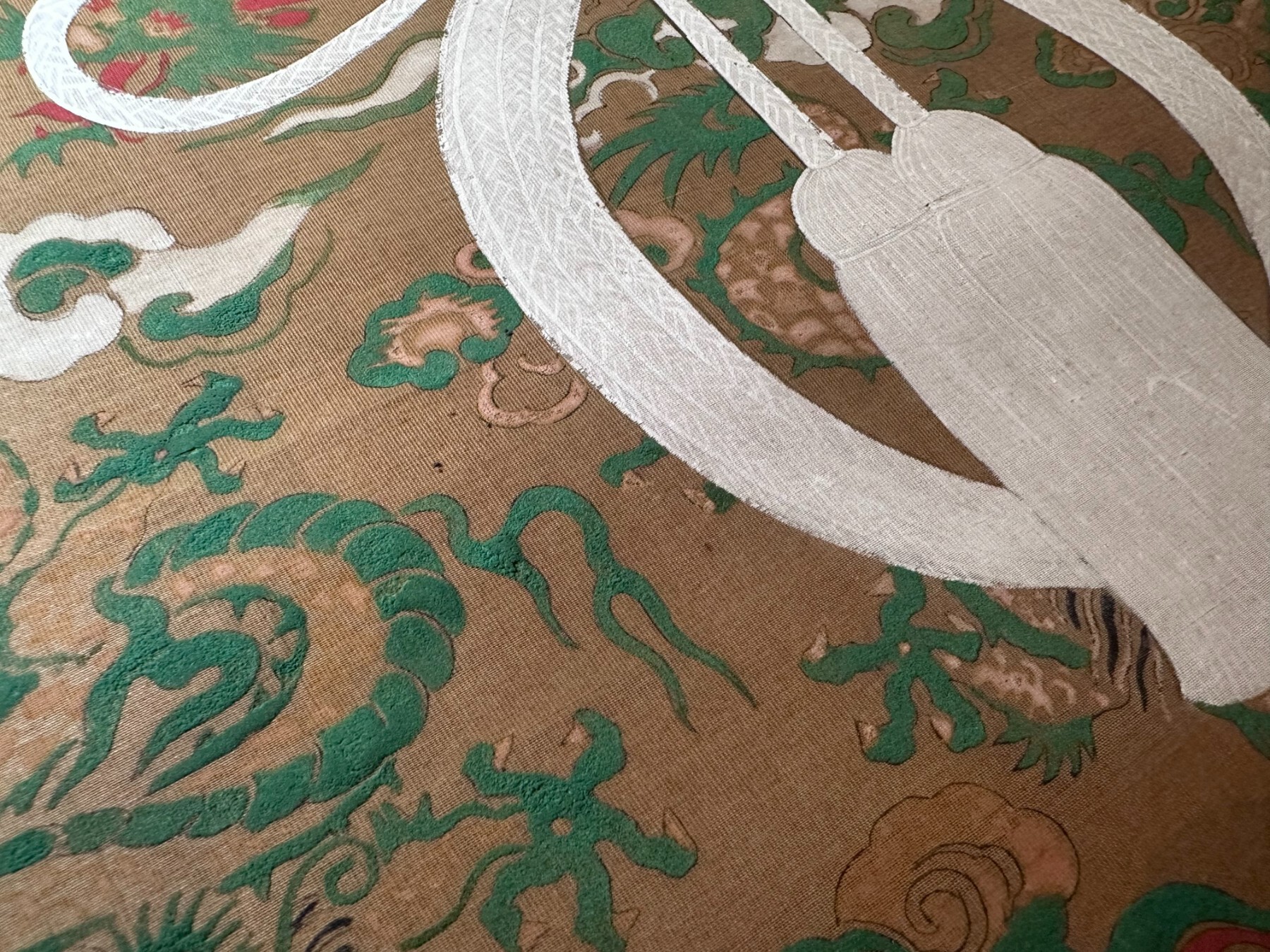
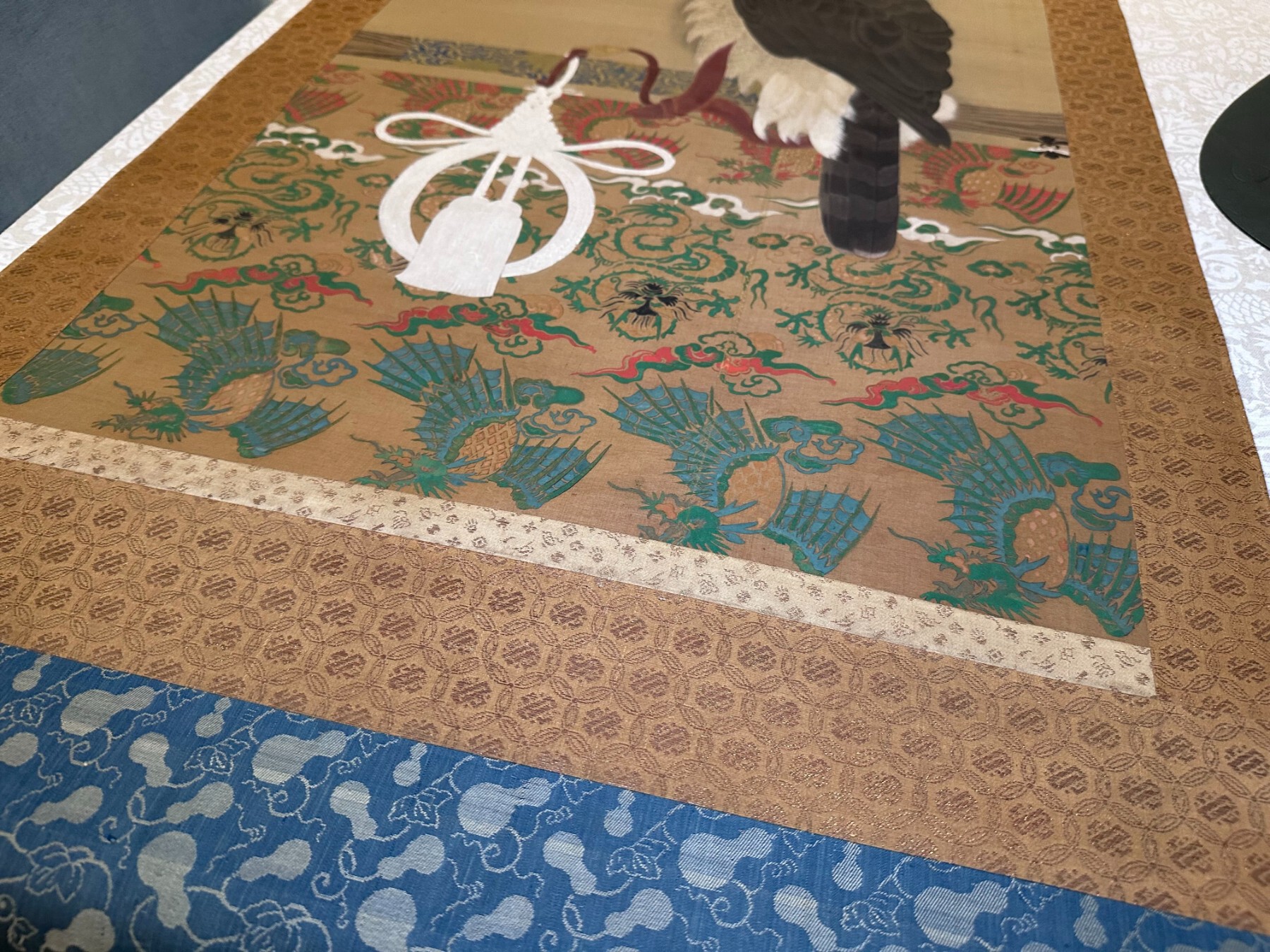
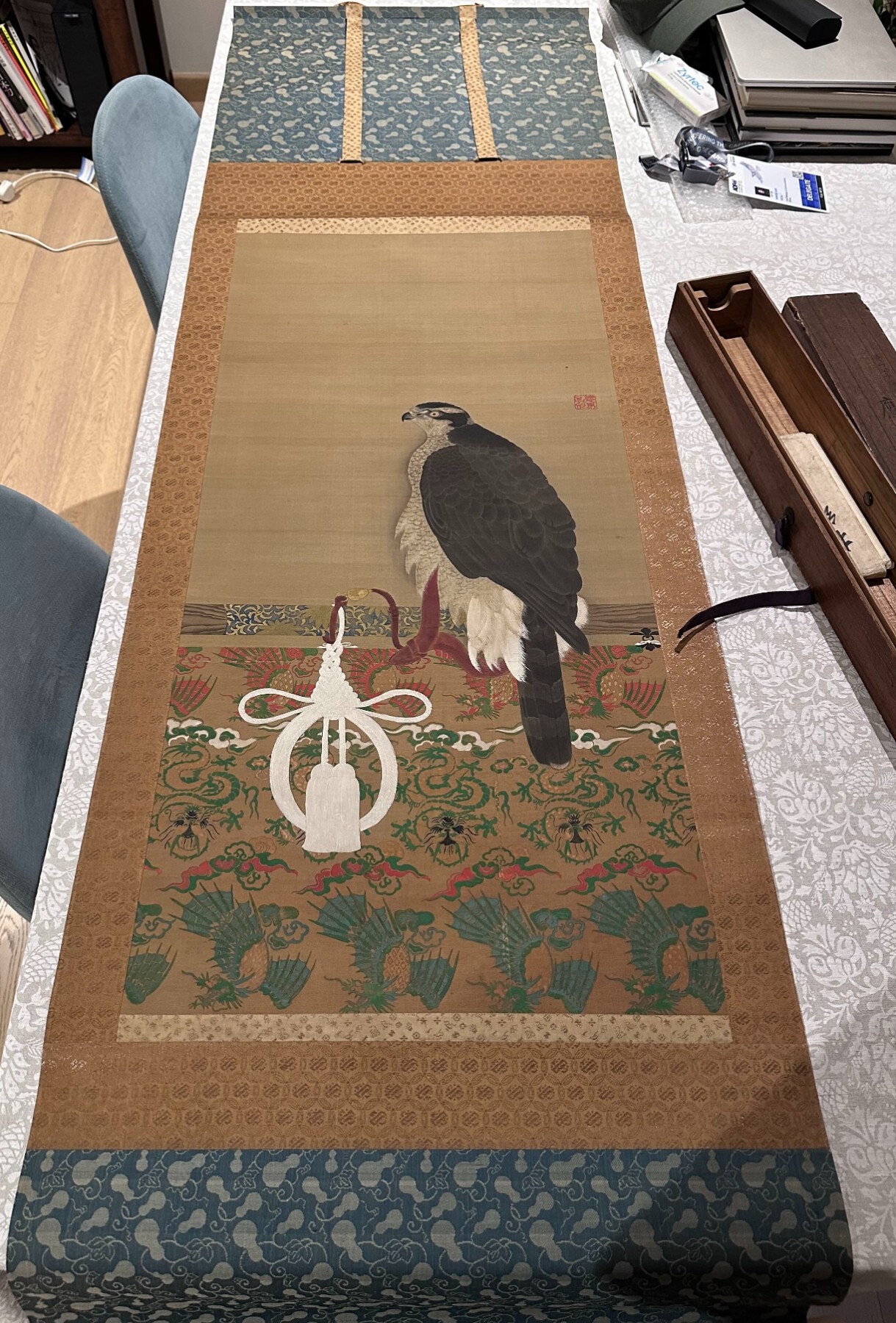
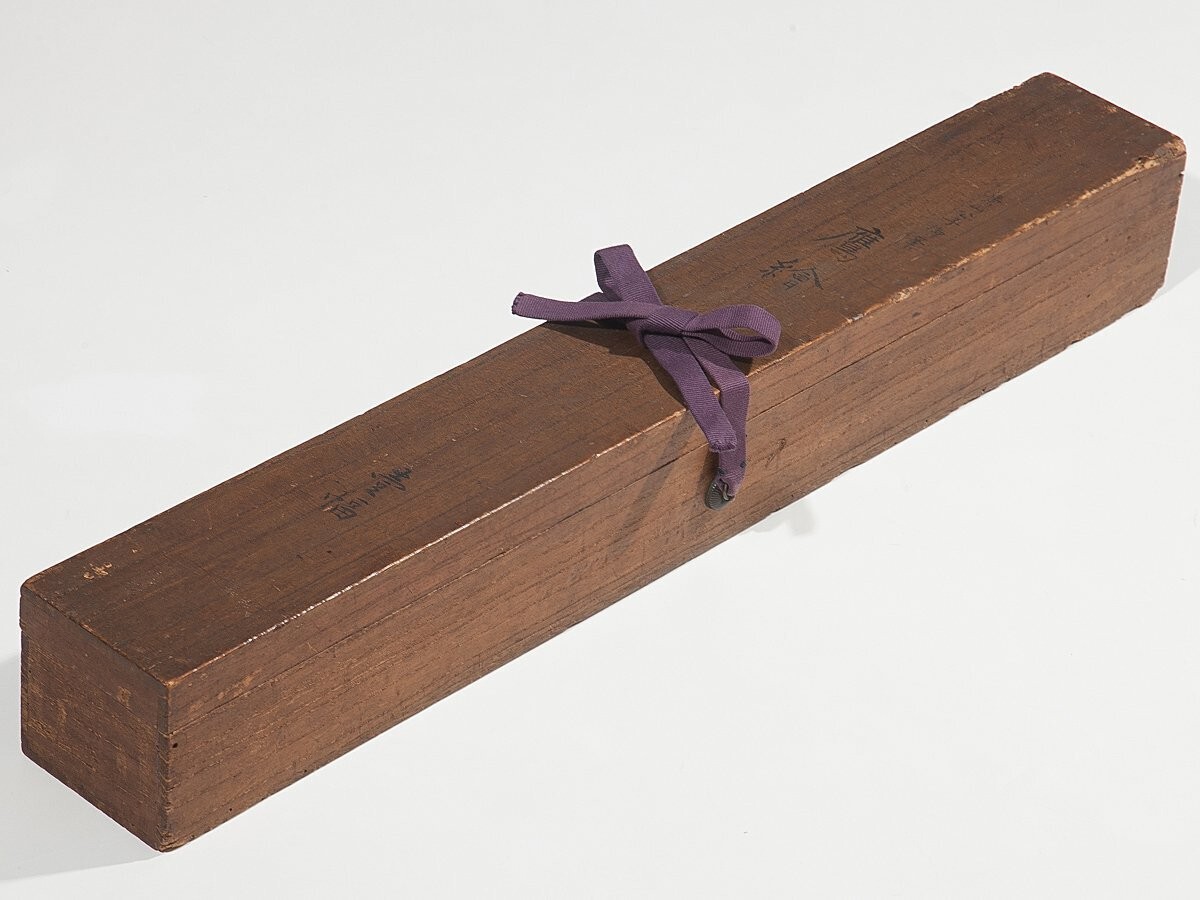
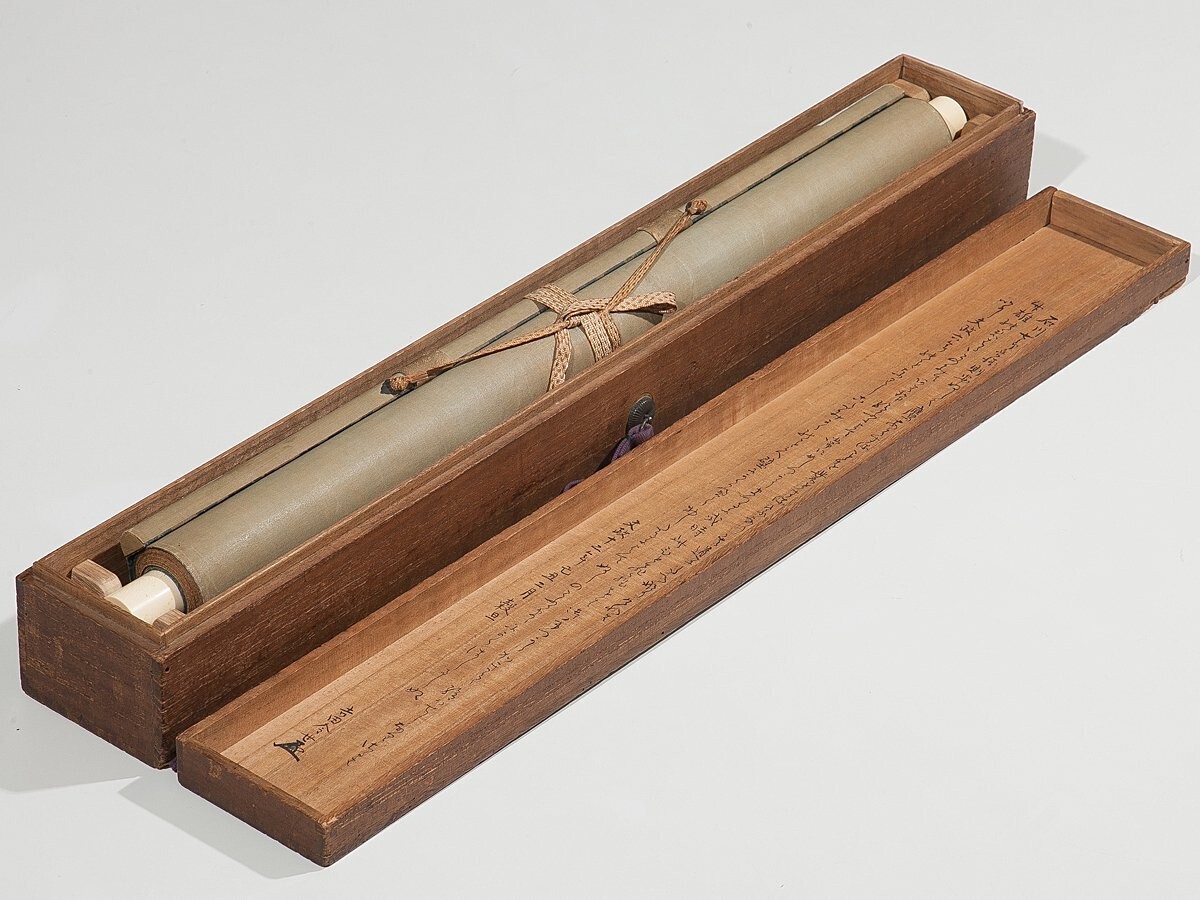
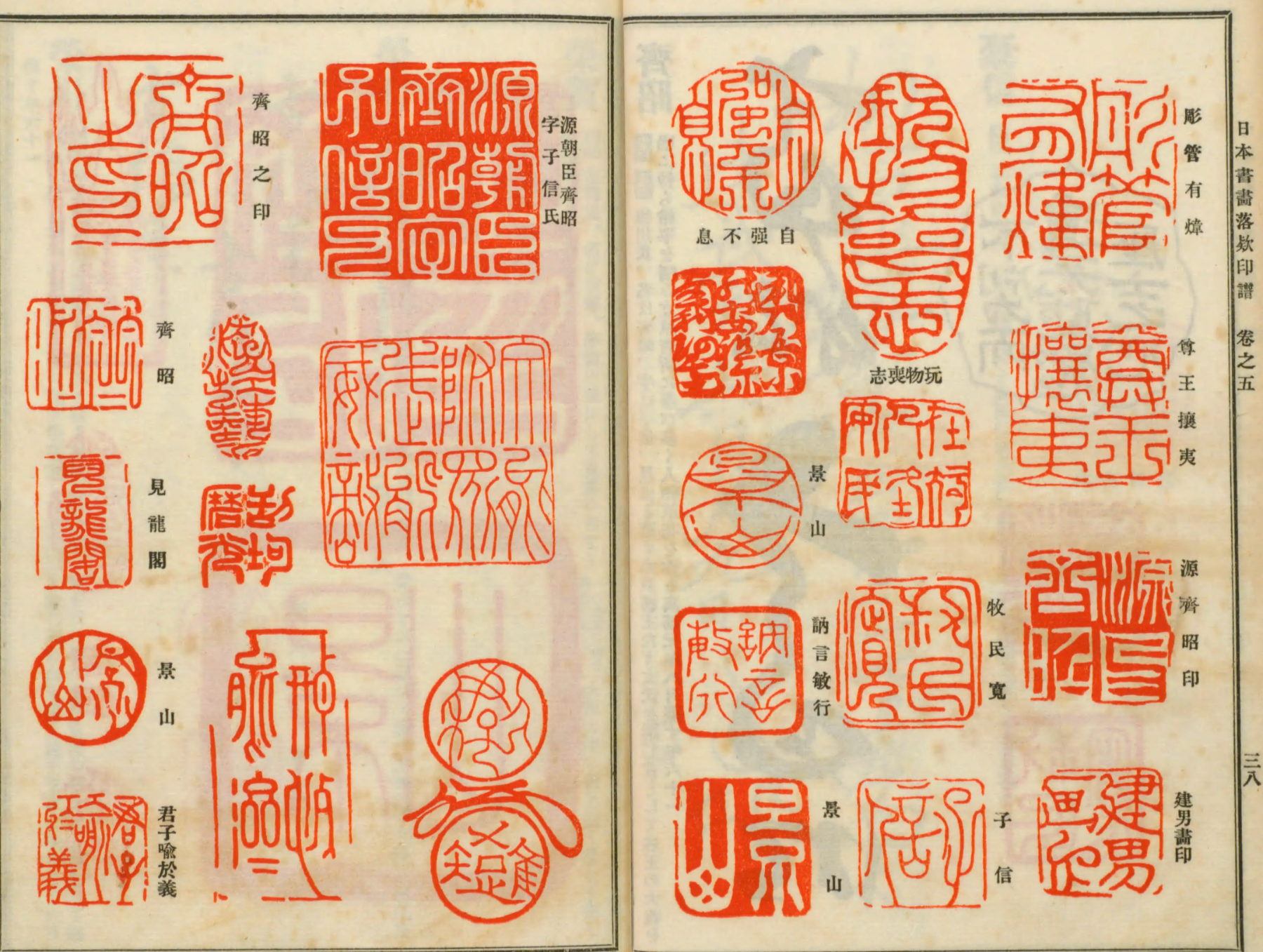
Hi all, I would like to share something interesting and rather unique: a scroll painting attributed to Tokugawa Nariaki, daimyō of the Mito Domain and father of the last shōgun. Hakogaki: Master Ishikawa Shichirōbei Noriyasu comes from a family whose hereditary profession is falconry, and he is extraordinarily accomplished in this art. Because Lord Takeo [Tokugawa Nariaki] favored hawks and held hawk-matching displays, he routinely summoned Noriyasu to serve him. On one such occasion, His Lordship personally painted this single sheet [of silk] with his own hand and bestowed it upon him. This took place back in the 6th year of Bunsei [1823]. Recently, because the master [Noriyasu] wished to mount it as a hanging scroll to display upon the wall as a family treasure, I have recorded these circumstances here as he requested. Date: An auspicious morning in the 2nd month, 12th year of Bunsei, Year of the Ox [1829] Written by: Yoshida Noriyo Origami: From the brush of Mito Keizan [Tokugawa Nariaki] Painting of a Hawk; color on silk. The above work is an authentic original Without the slightest doubt; full of vivid life/vitality The overall composition (kamae) is seen to be of high elegance/superior quality. Written by Hiraki Kiyomitsu in a Spring month (Year of the Snake) Enjoy! From the catalogue: All the seals and different names of Nariaki:
.thumb.jpg.36056a7b8eac20638ac3bea429f9c941.jpg)
 6 points
 -
泉州住正清作 = Senshū-jū Masakiyo saku5 points
-
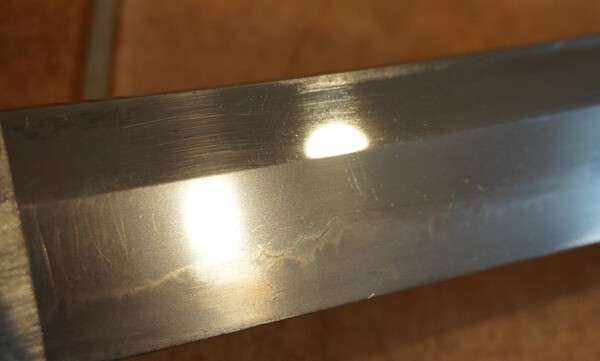
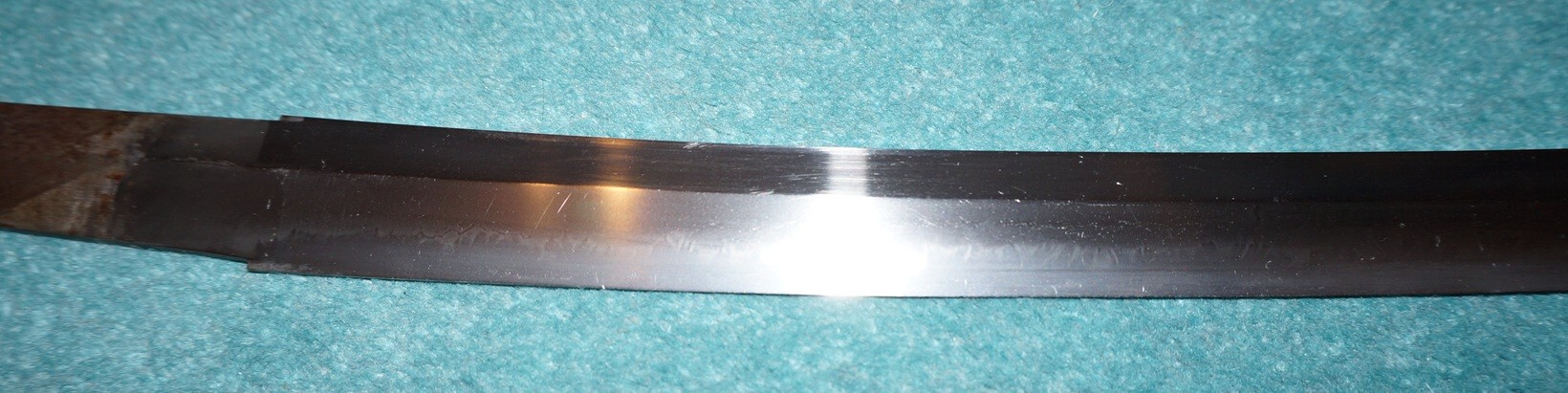
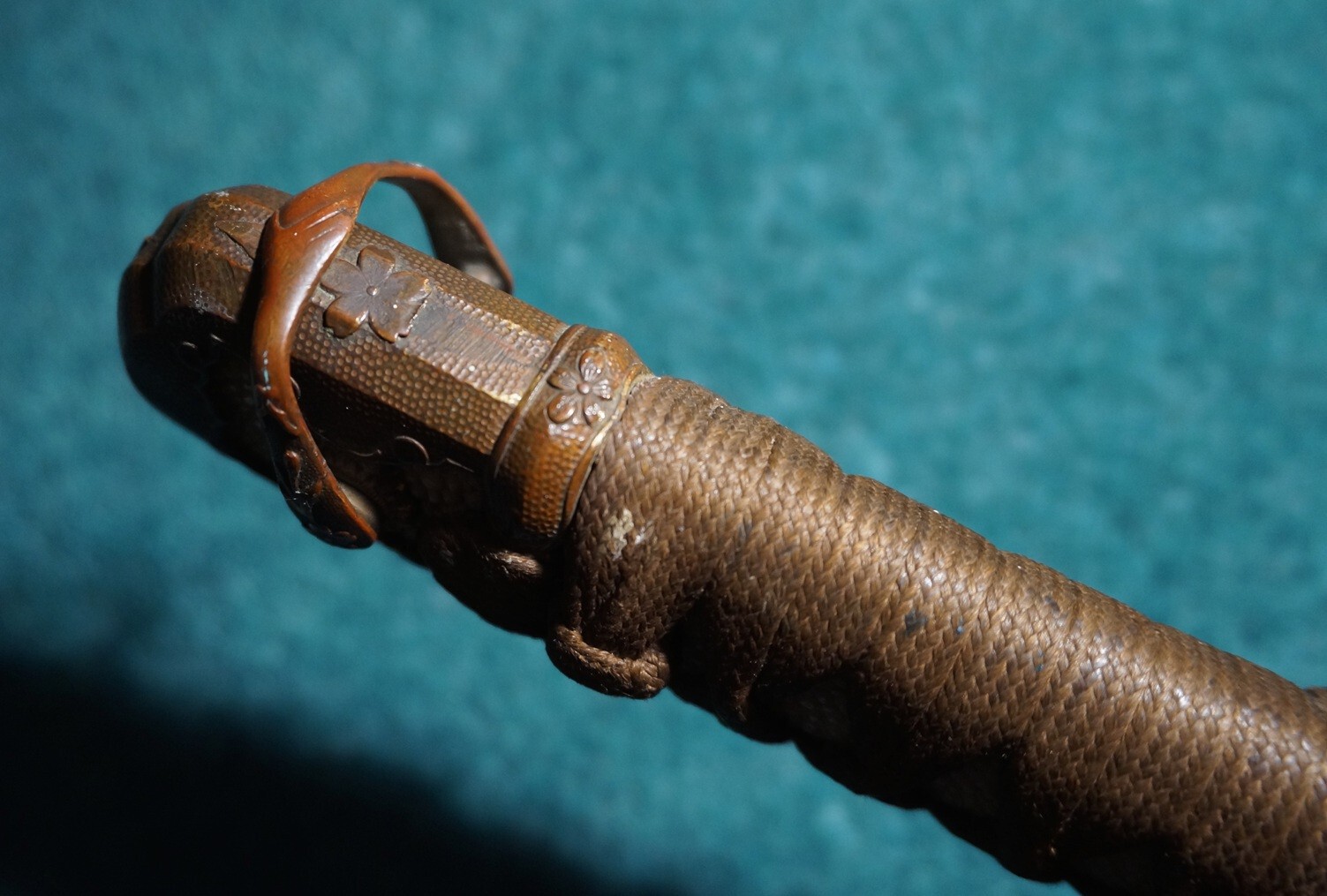
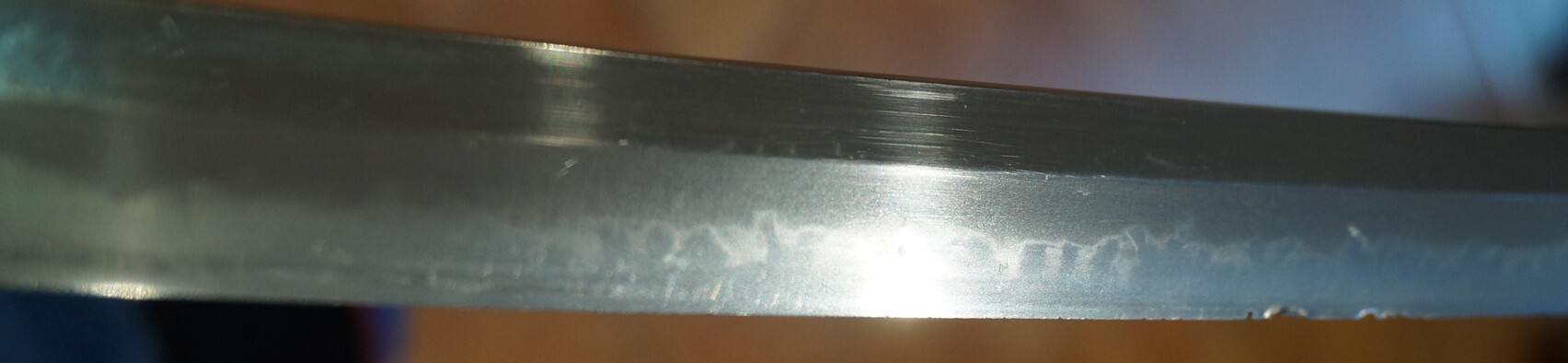
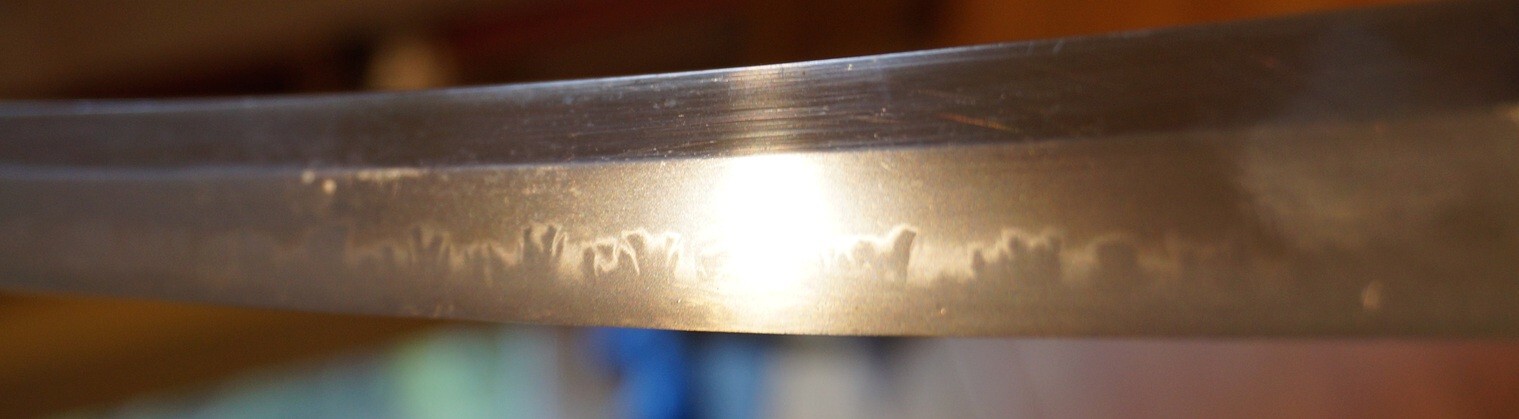
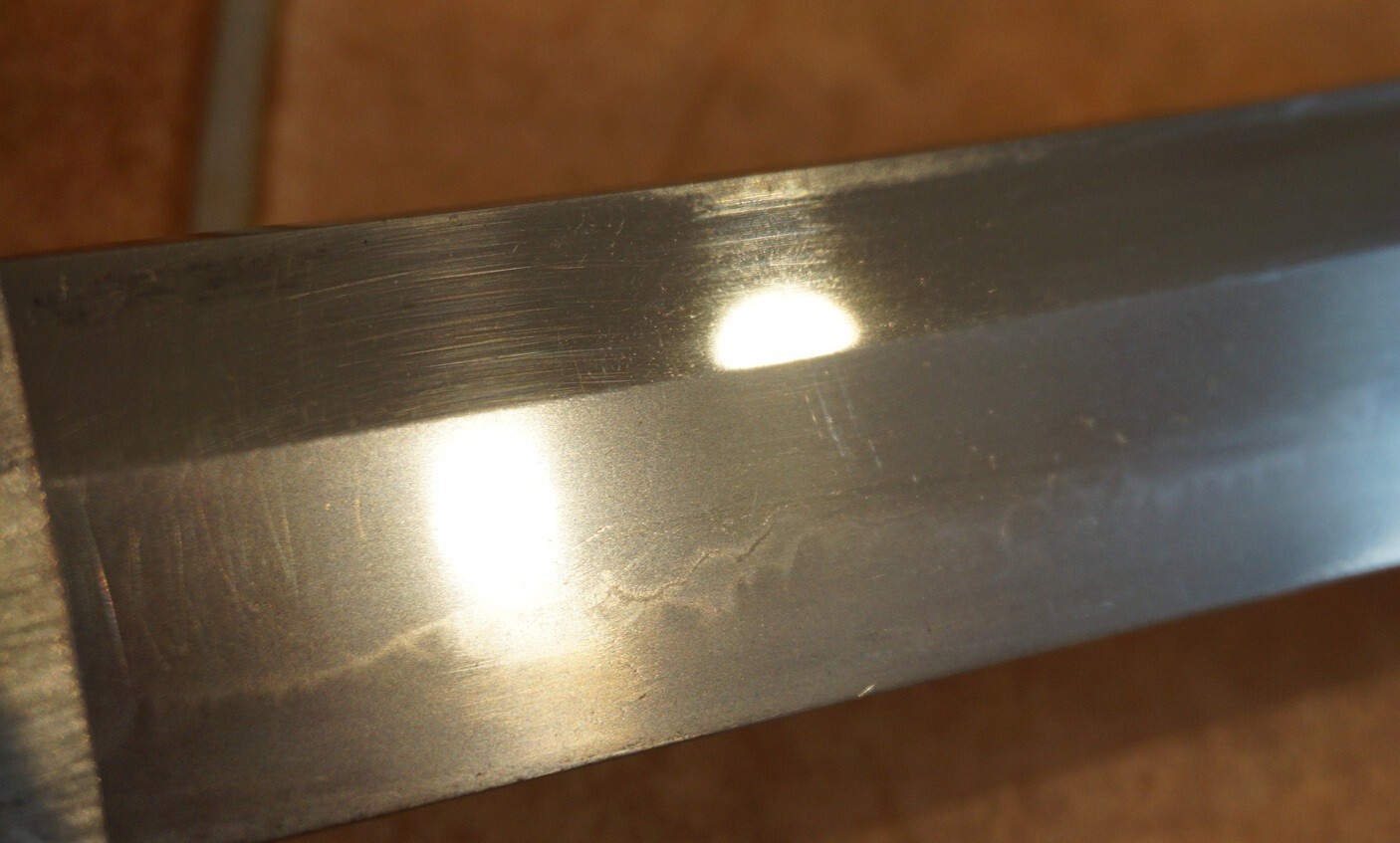
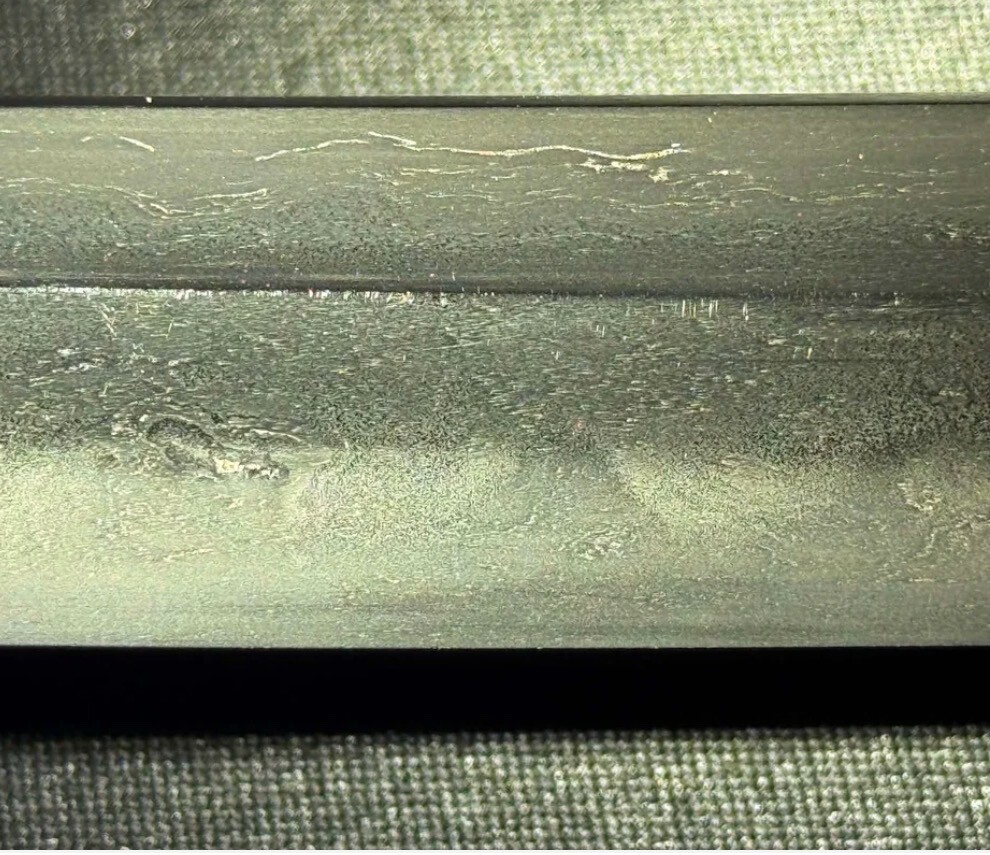
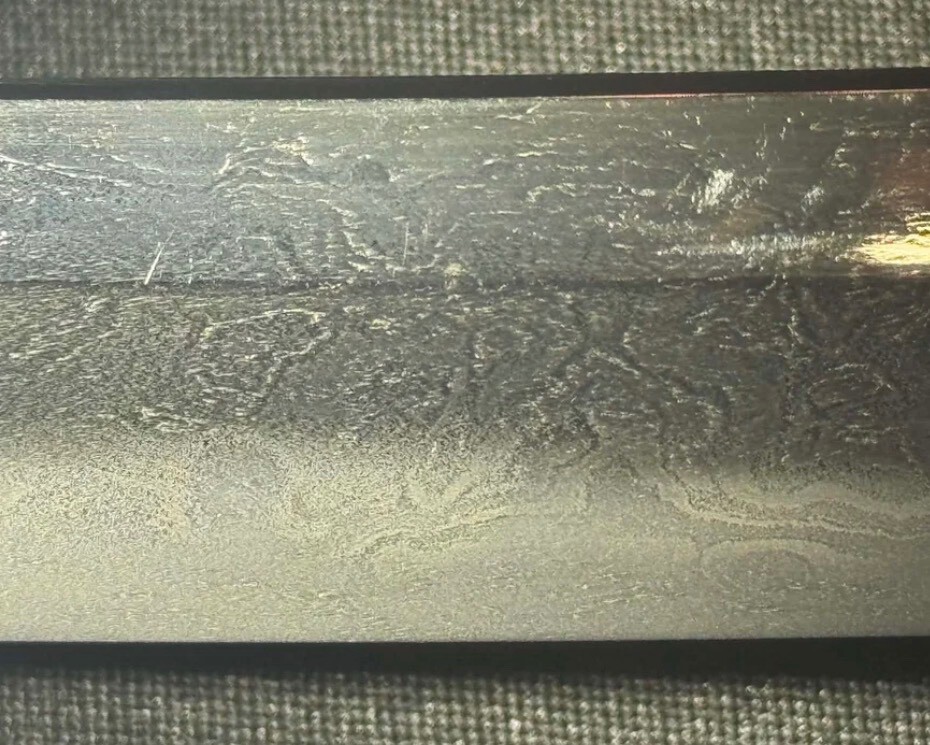
Gendaito signed Kanenaga and dated 3rd Month 1943 a lucky day. In good quality gunto koshirae with a removed mon badge visible on the kabuto gane. "Kanenaga (包永), Shōwa (昭和, 1926-1989), Gifu – „Nōshū Seki no jū Kanenaga kore o saku“ (濃州関之住包永作之), „Kanenaga“ (包永), civilian name „Amachi Ginjirō“ (天地銀次郎), older brother of Amachi Suzuichi (天地鈴市), he was born on the fourth day of the ninth month Meiji 17 (1884) and died March 8th 1958, he worked as guntō smith, posthumous Buddhist name „Enkaku Chikyō“ (円覚智鏡)" Lovely Bizen style choji hamon with a lot of hataraki, Kanenaga did make showato as well but this appears to be a true gendaito. It has some damage to the ha which probably happened during its use in WW2. The saya has a carved name which seems to be A HYND. Alexander Hynd was a Scottish Corporal who fought in the battles of Kohima and Imphal. He was also at Dunkirk during the evacuation. The sword was found during a house clearance in the lake district, I can't prove its the correct A. Hynd but it seems likely. I've seen quite a few of Amachi Kanenaga's swords and so far nothing comes close to this one. £900, unfortunately it's buyer collect only from the UK. With the recent changes in the law it's just not worth trying to ship, I'm not far from Manchester.
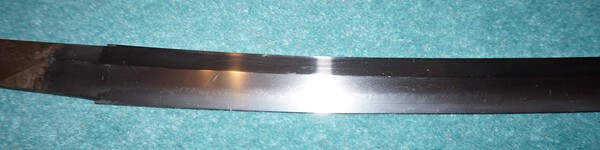





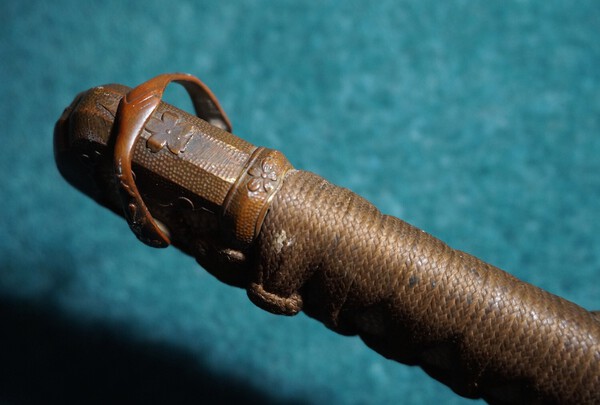
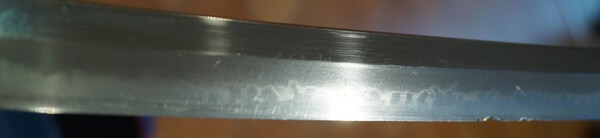
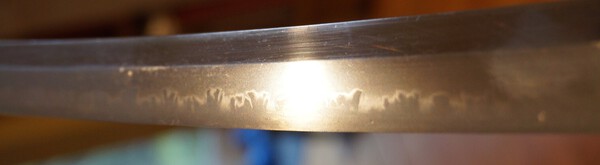
 4 points
 -
Dealers are free to advertise as they like in their own dealer section. Some use it to drive website traffic, some prefer to give prices on demand or link to to the listing where the prices are. They have more freedom here, and also the ability to moderate replies etc, it's their own space. The advantage of having a dealer section here.4 points
-
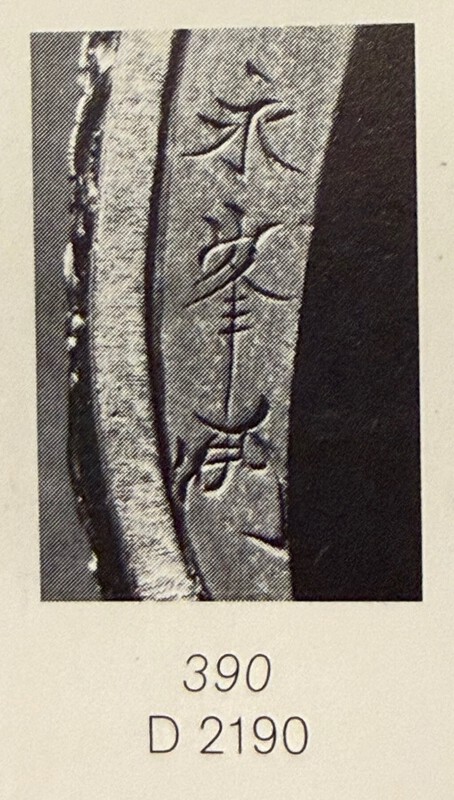
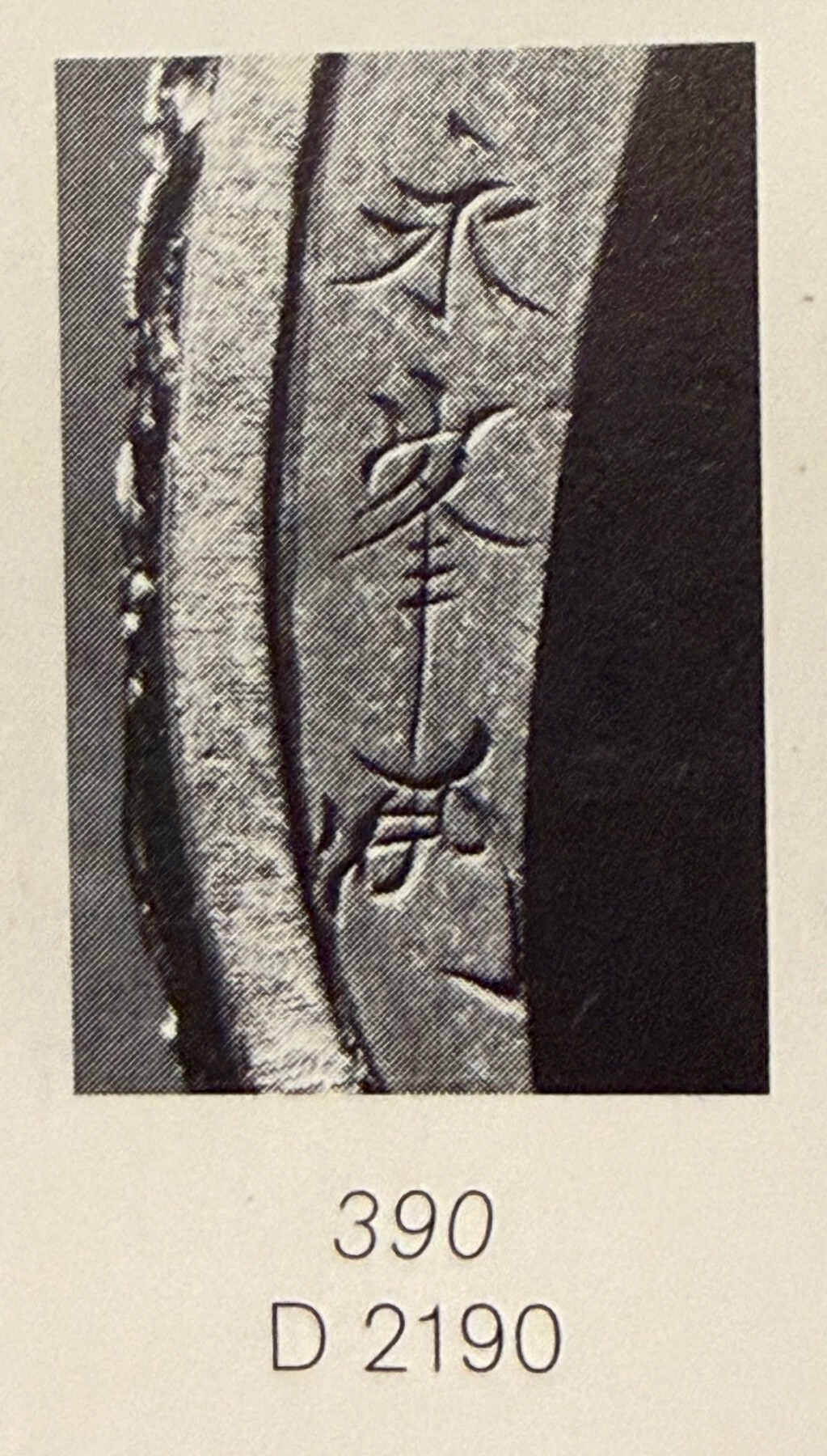
Mei example from Baur Collection.
 4 points
 -
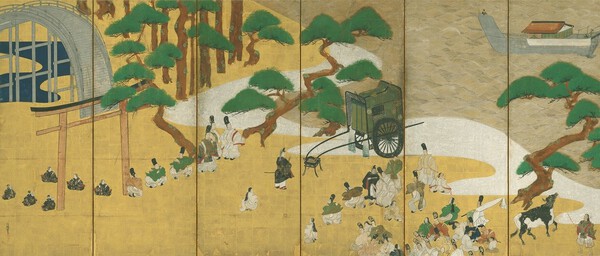
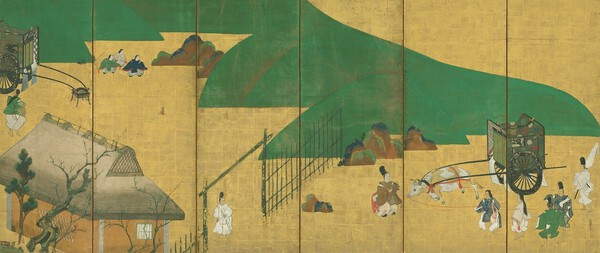
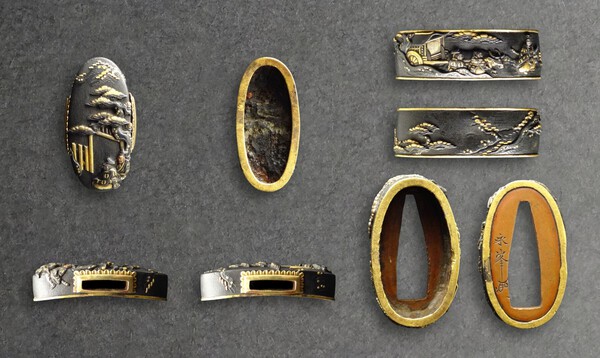
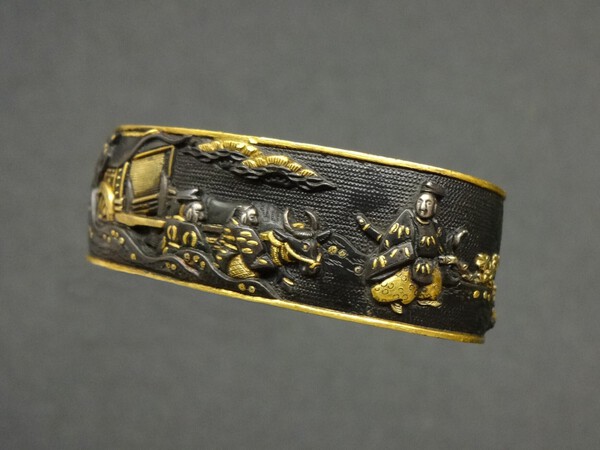
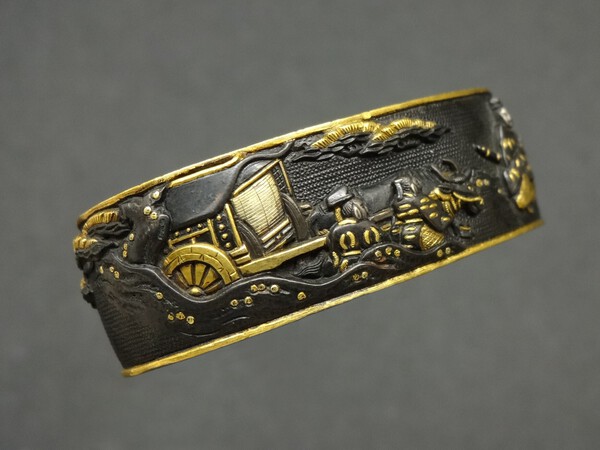
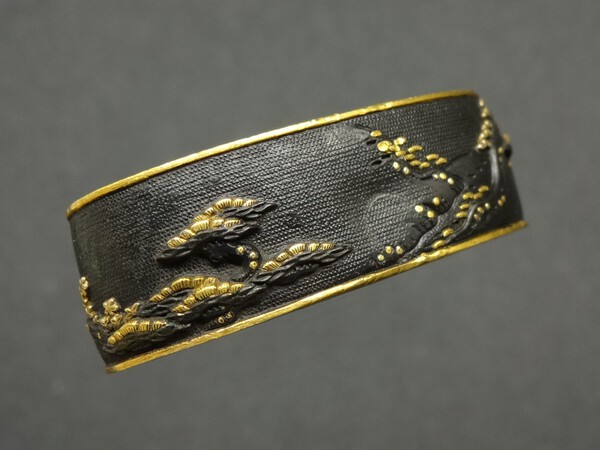
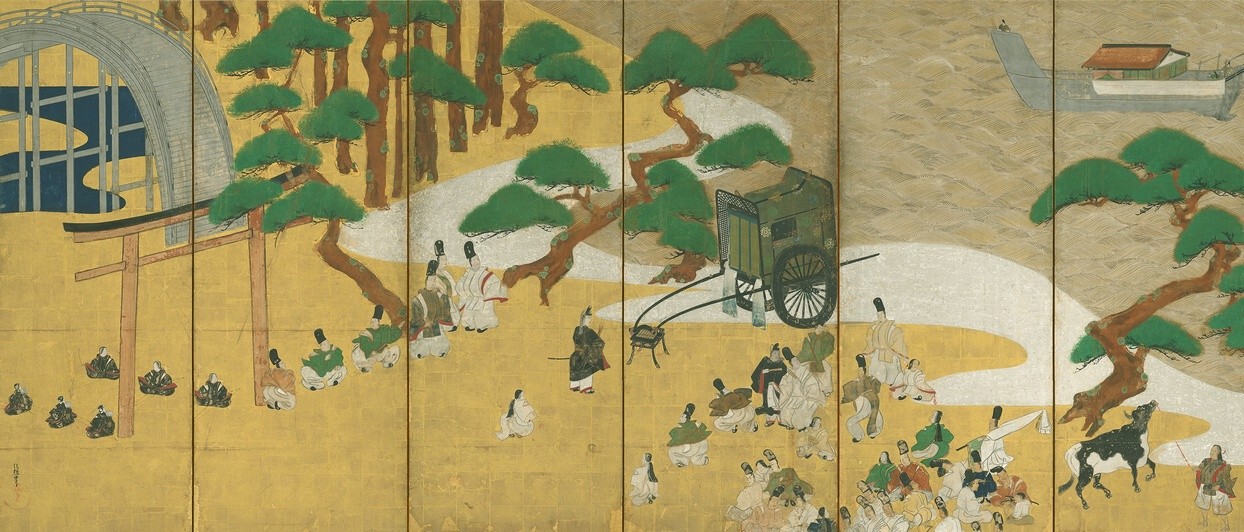
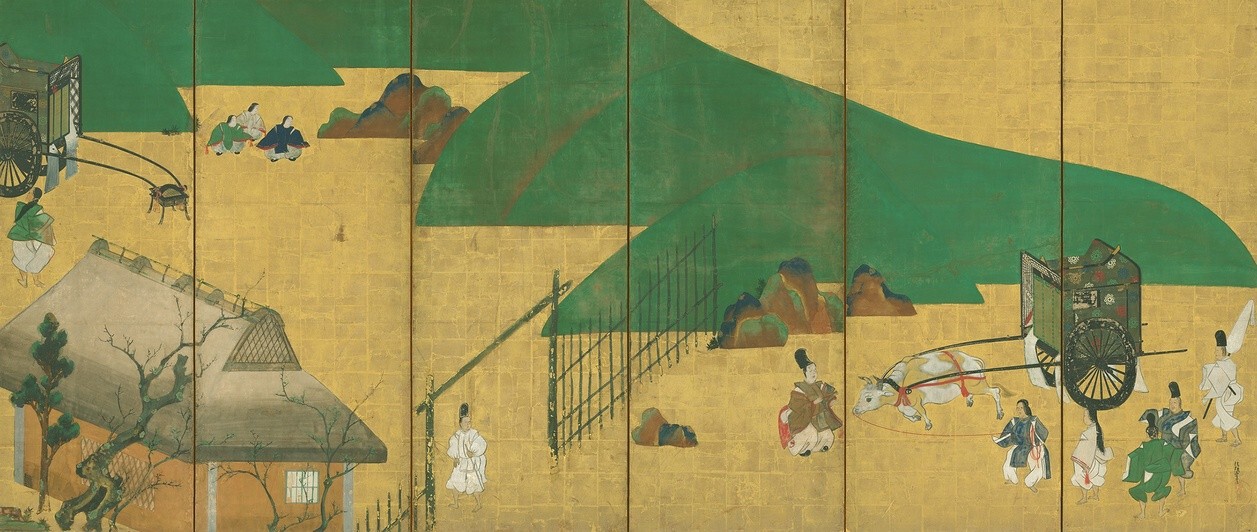
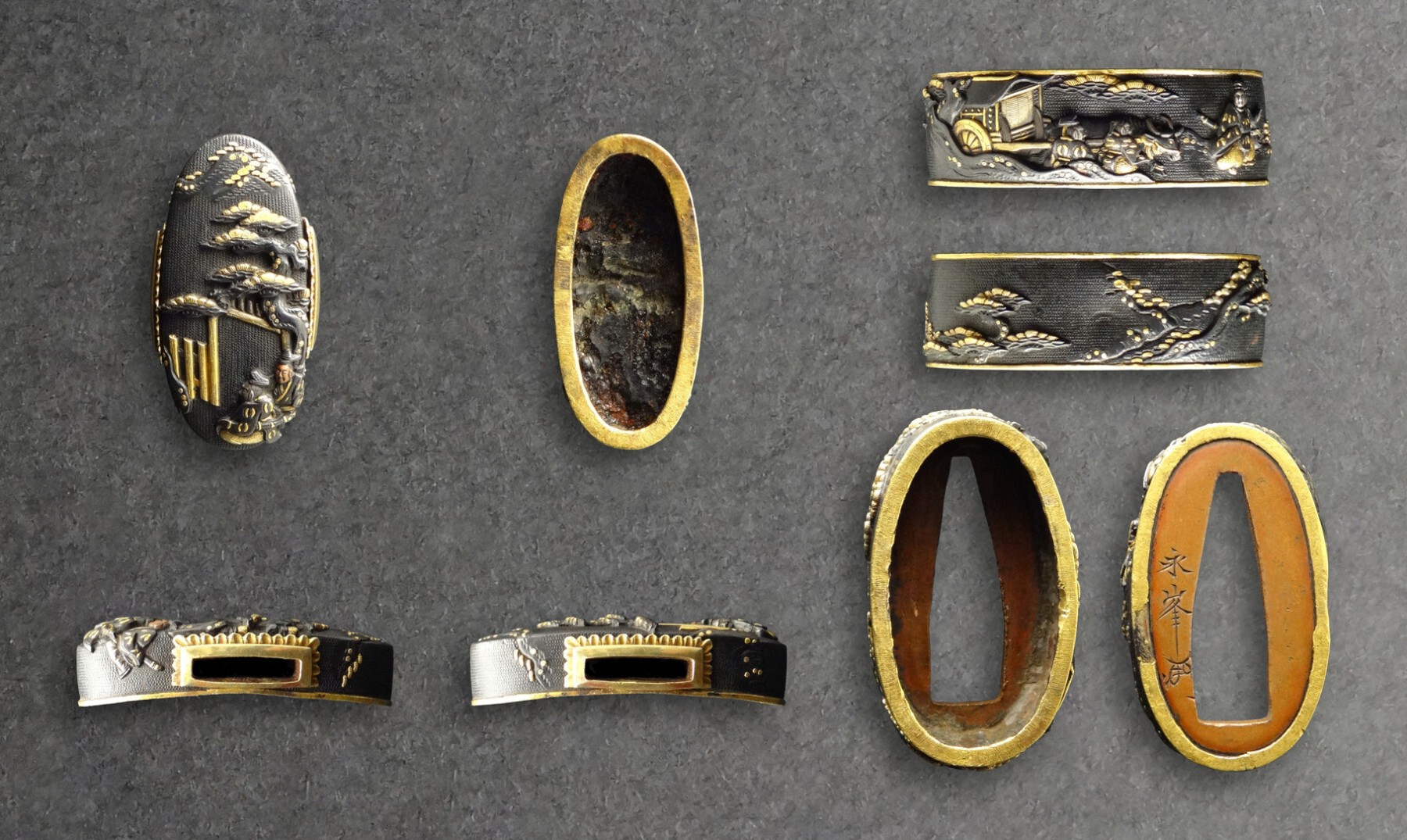
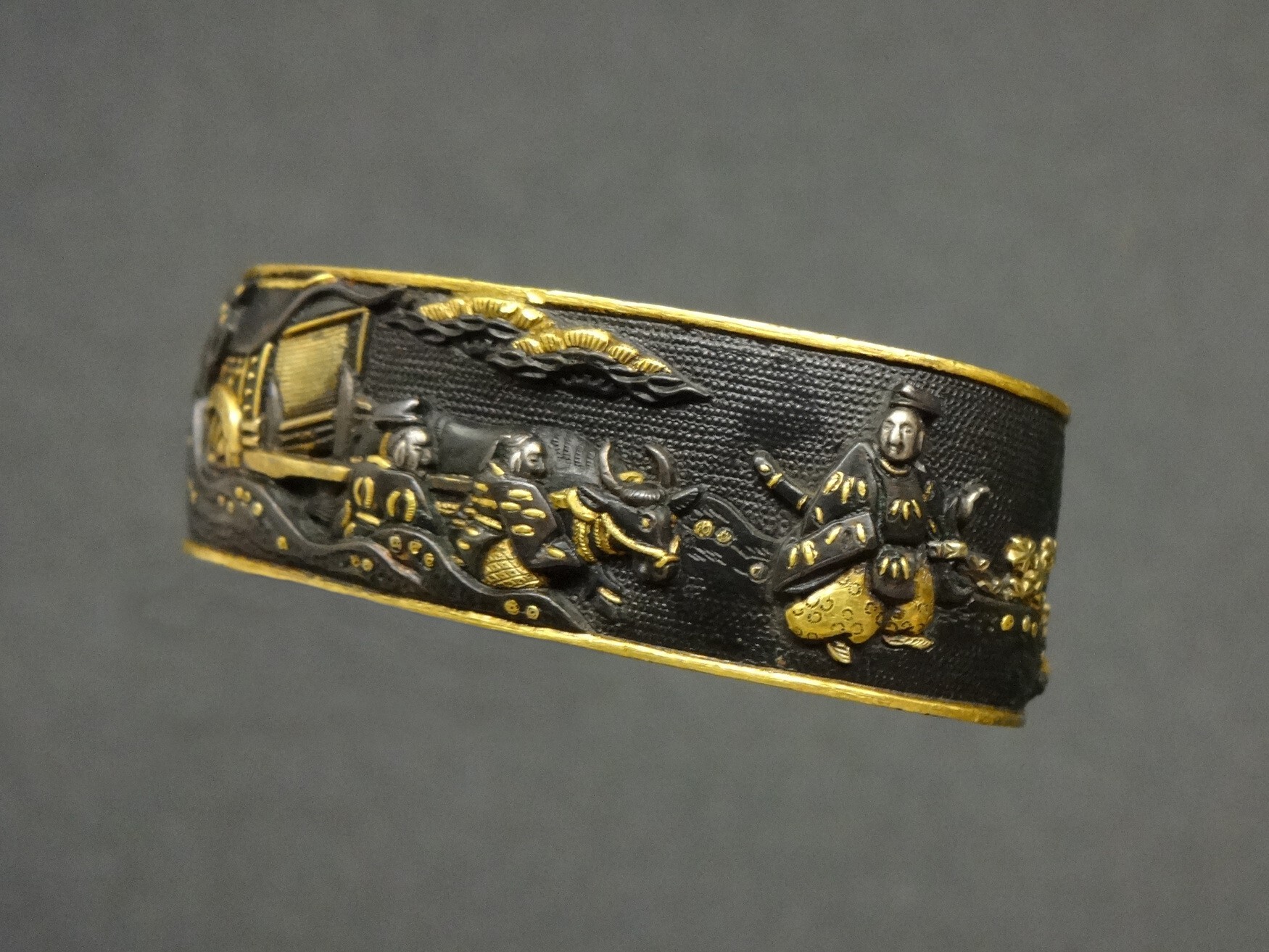
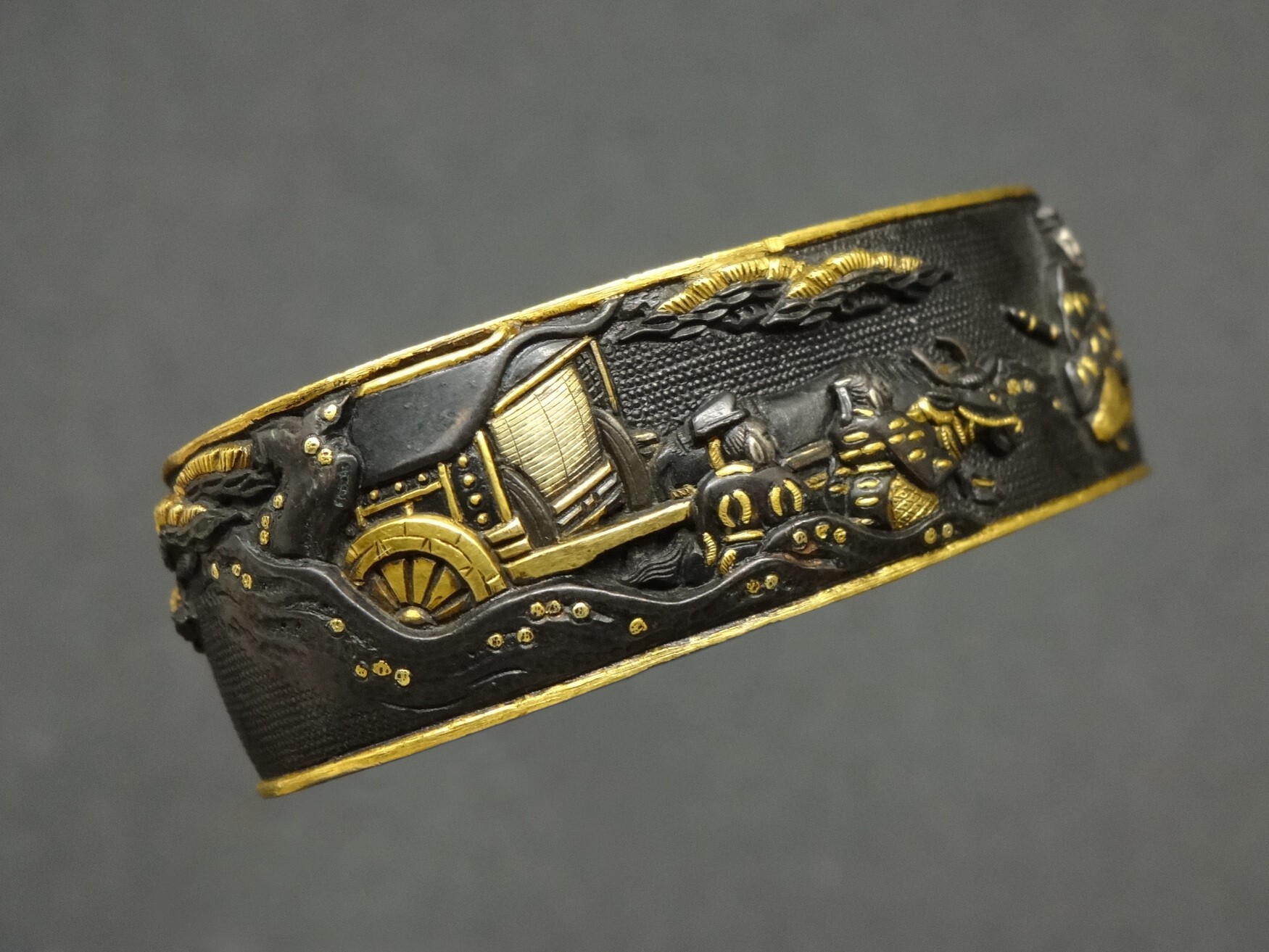
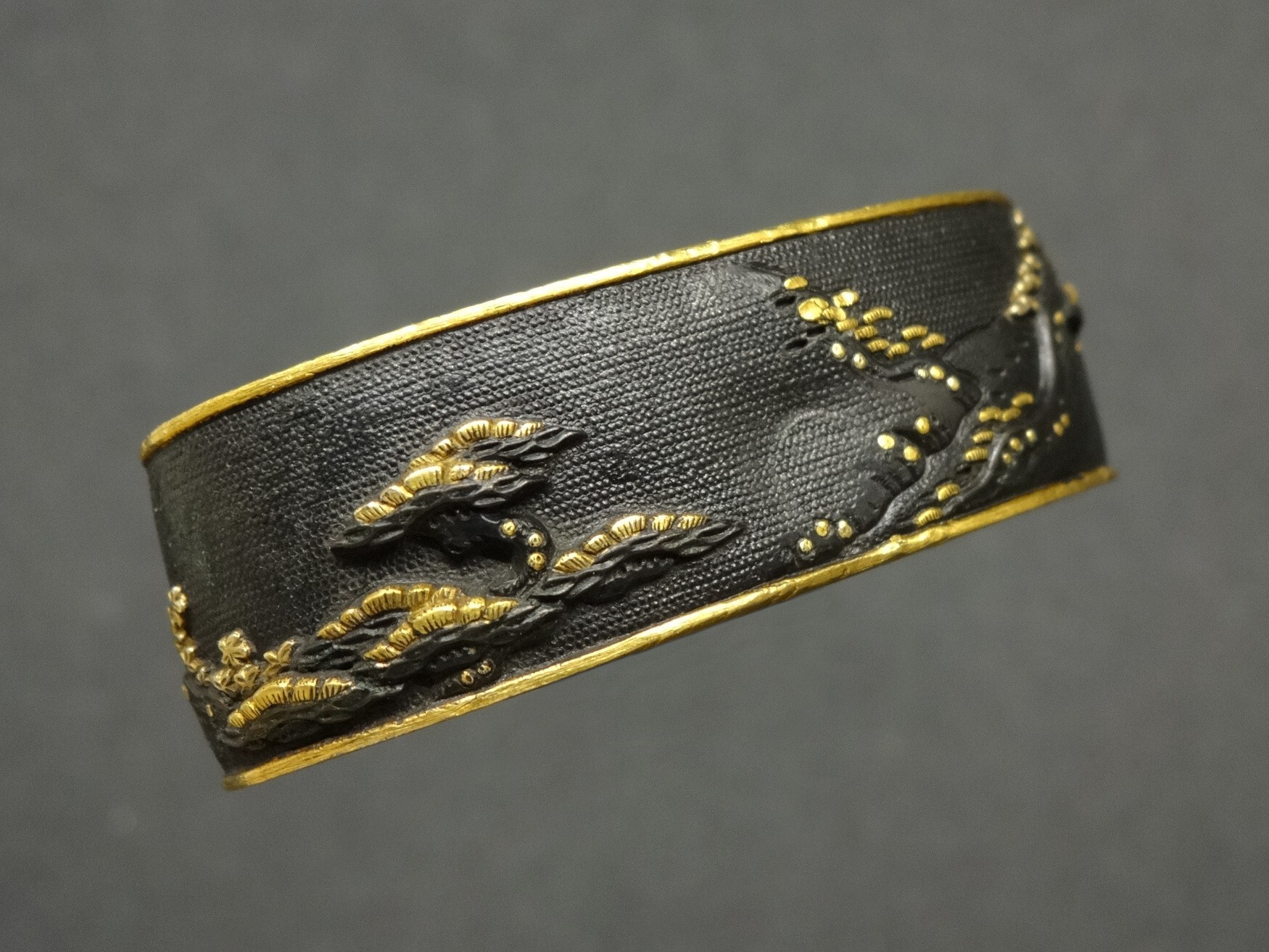
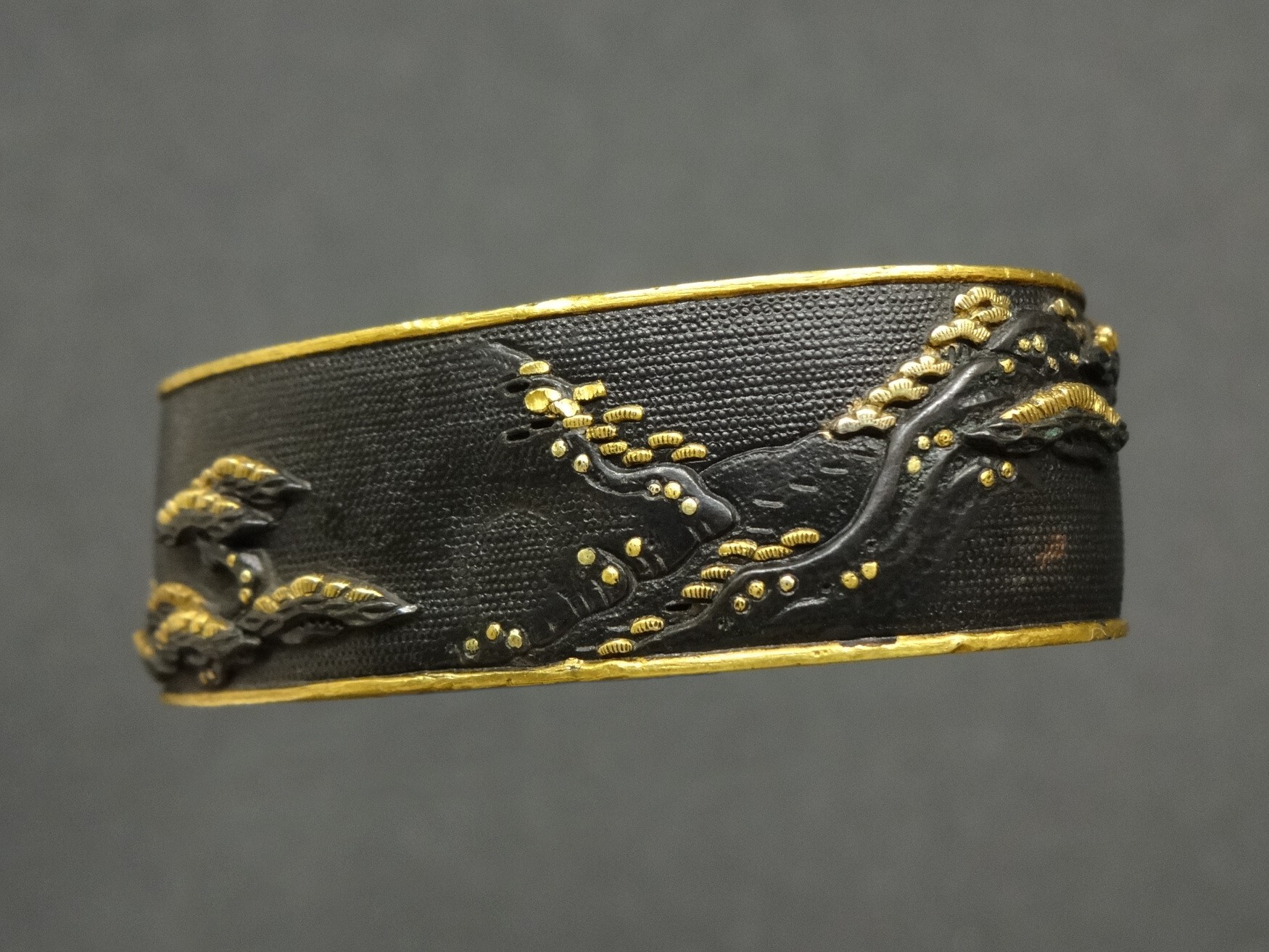
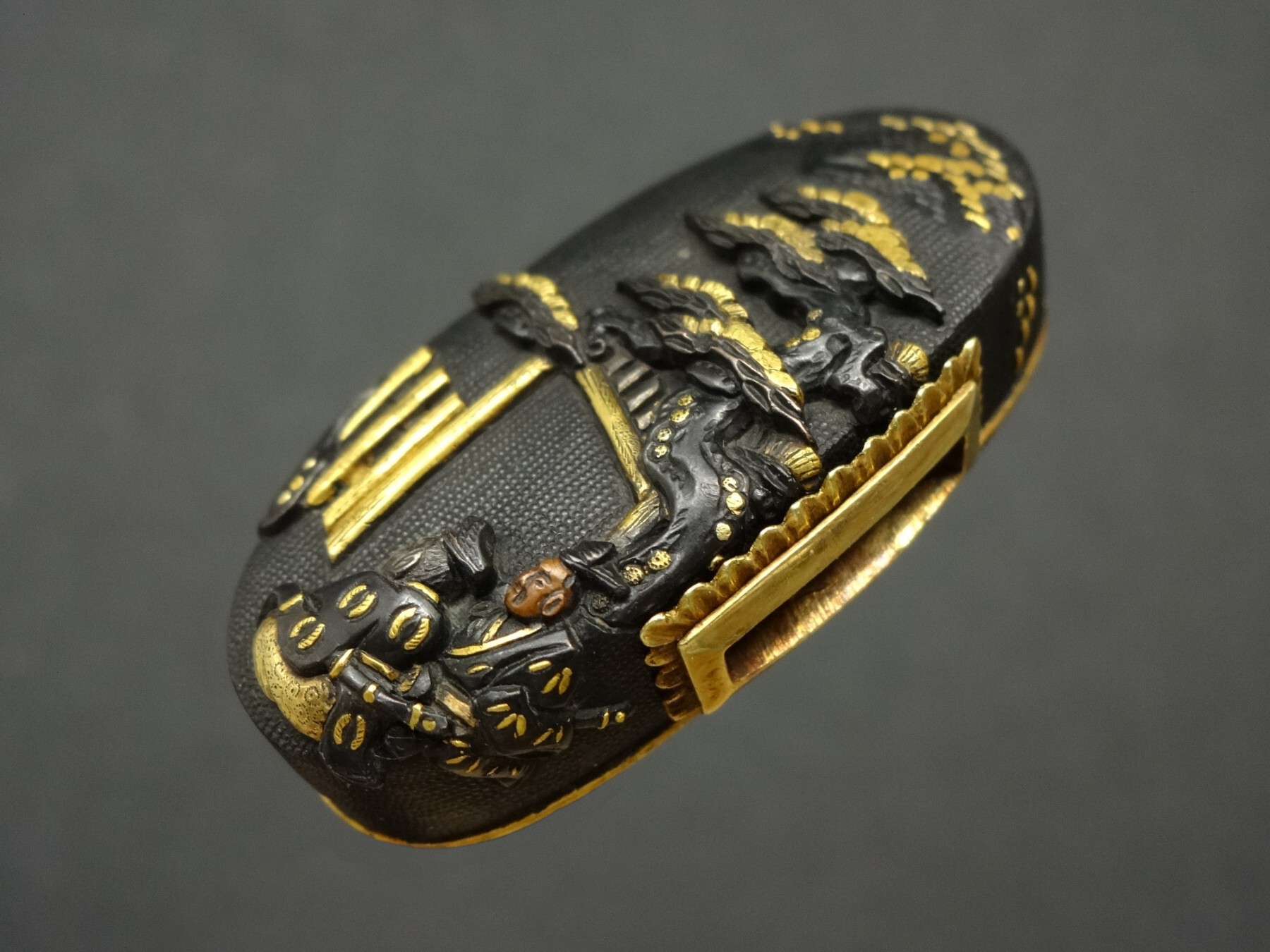
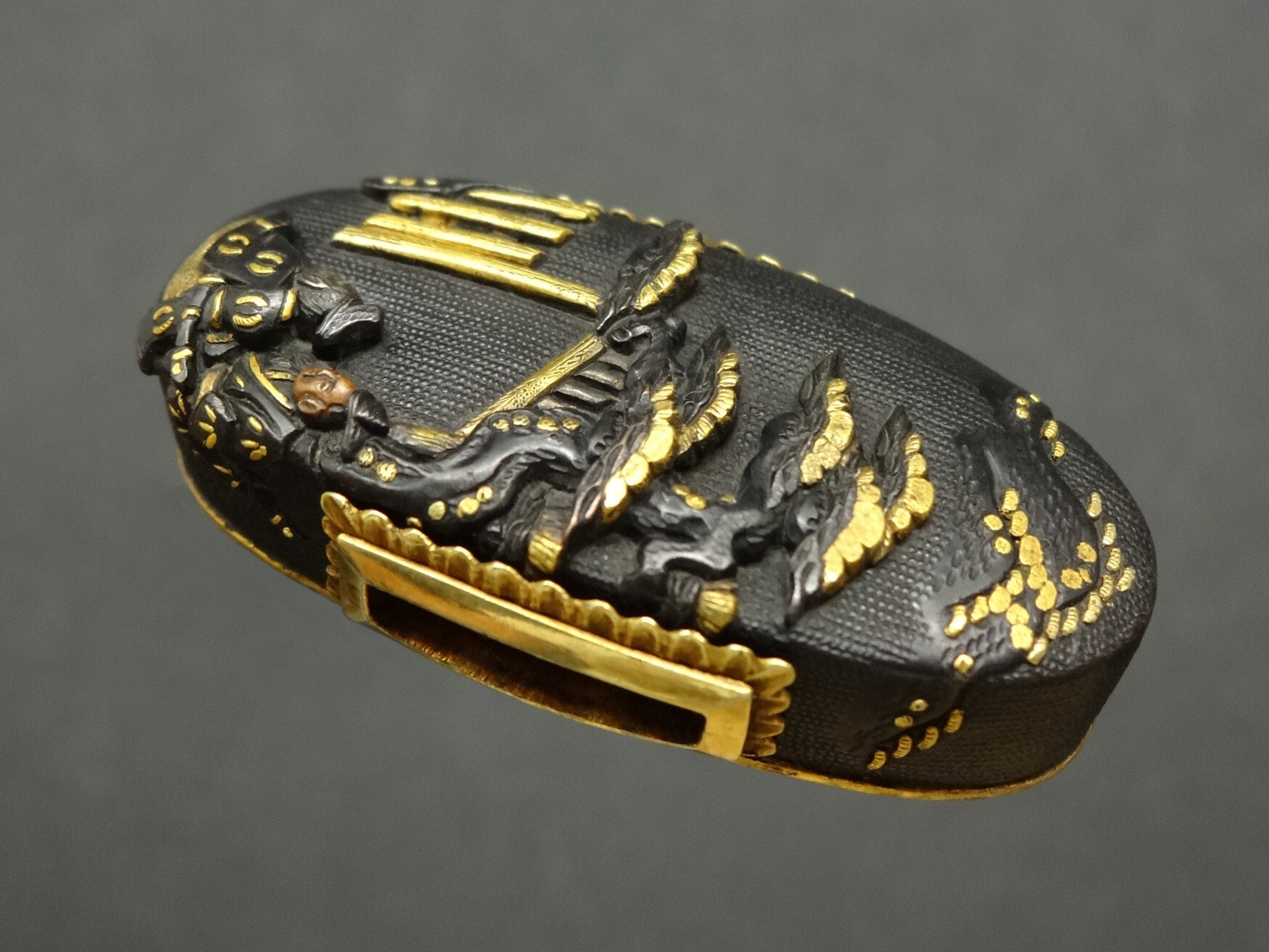
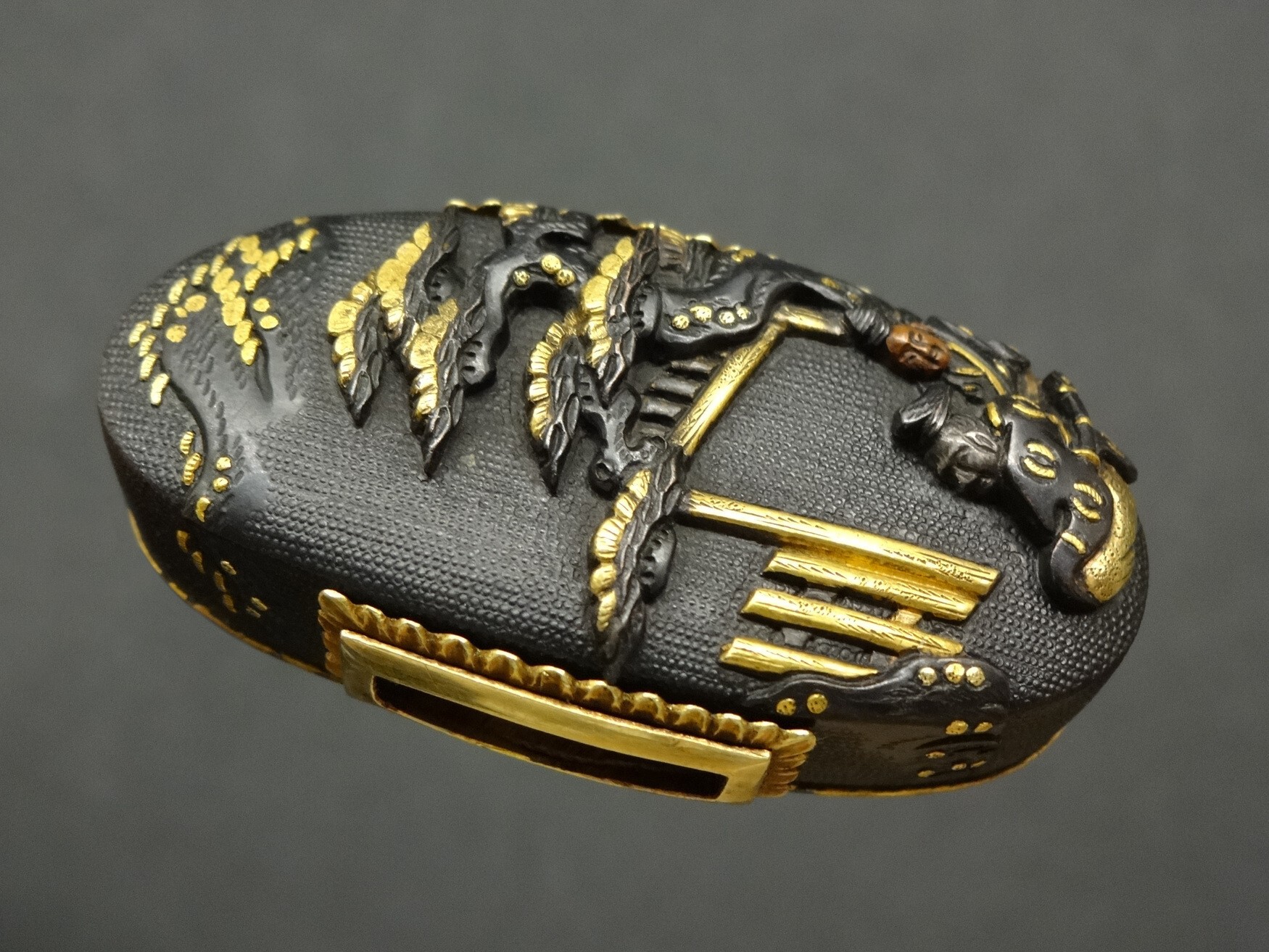
Dear all I just wanted to share one of my latest acquisitions. Dimensions: Fuchi 38.3 mm x 21.9 mm. thickness 12.5 mm. Kashira: 34.7 mm x 16.6 mm. thickness 9.8mm. It is a fuchi-kashira signed "Nagamine [Kao]" (永峯 [花押]) it is not papered but the signature, the quality of the execution and the composition of the subject fully fit into the caractersitics of the school as outlined in my summary of the Ayanokōji Nagamine school (https://www.militaria.co.za/nmb/files/file/122-the-school-of-ayanok%C5%8Dji-nagamine/). The fuchi shows some wear of the patina and the nanako ground but the conditions are farely good. On the omote (表) side of the fuchi (縁), an ox-drawn gosho-guruma (御所車) is shown against a landscape of pine trees and hills. The carriage is accompanied by attendants dressed in what looks like Heian clothing. The figure at the front is wearing a tachi (太刀). In ancient and medieval Kyoto, members of the imperial family and the aristocracy commonly travelled in ox-drawn carriages known as gosho-guruma (御所車). The presence of a gosho-guruma, particularly with its bamboo blinds lowered, conventionally suggests that a person of high rank - often an elegant lady, nobleman, or member of the imperial family - is inside the carriage. On the kashira (頭), a group of similarly dressed figures is shown standing in front of a fence or palisade with a gate. This architectural detail is particularly important for identifying the subject of the composition. There are two chapters of The Tale of Genji (源氏物語, Genji Monogatari) whose narratives could potentially correspond to the scenes depicted on this fuchi-kashira set. The first is Chapter 14, Miotsukushi (澪標, "Channel Buoys"), and the second is Chapter 16, Sekiya (関屋, "The Gatehouse"). In Miotsukushi, Genji encounters the Lady of Akashi at the entrance to Sumiyoshi Taisha (住吉大社). In Sekiya, Genji encounters Utsusemi (空蝉) at the Ōsaka Barrier (逢坂関). There is a particularly relevant pair of folding screens (byōbu, 屏風) by Tawaraya Sōtatsu (俵屋宗達), Tokyo National Museum, dating from the seventeenth century, which depicts precisely these two episodes. Miotsukushi Chapter 16 Sekiya Chapter 14 The screen representing the Sekiya episode clearly shows a gate whose form is remarkably similar to that depicted on the kashira of this fuchi-kashira set. This architectural detail provides an important clue. Although the general subject of the fuchi-kashira could initially be interpreted as either Miotsukushi or Sekiya, the presence of the distinctive gate strongly favors Sekiya as the intended theme. I hope you enjoy this fuchi-kashira set as I do. Regards Luca
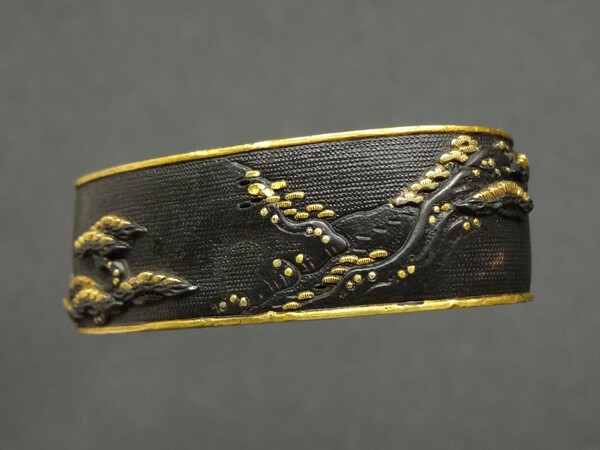
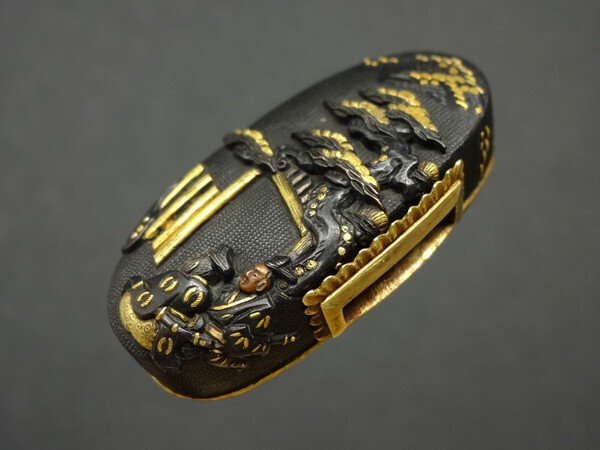
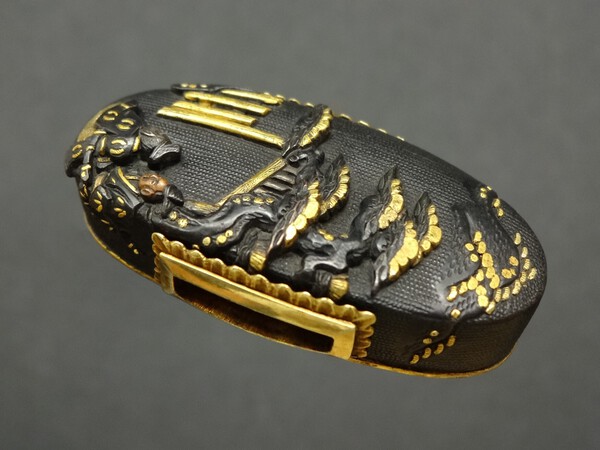
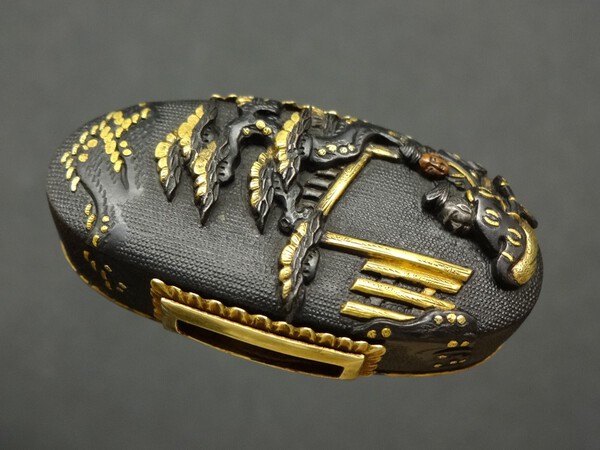 3 points
 -
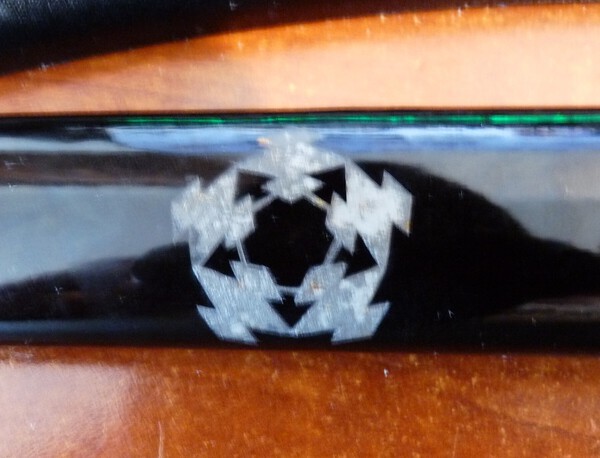
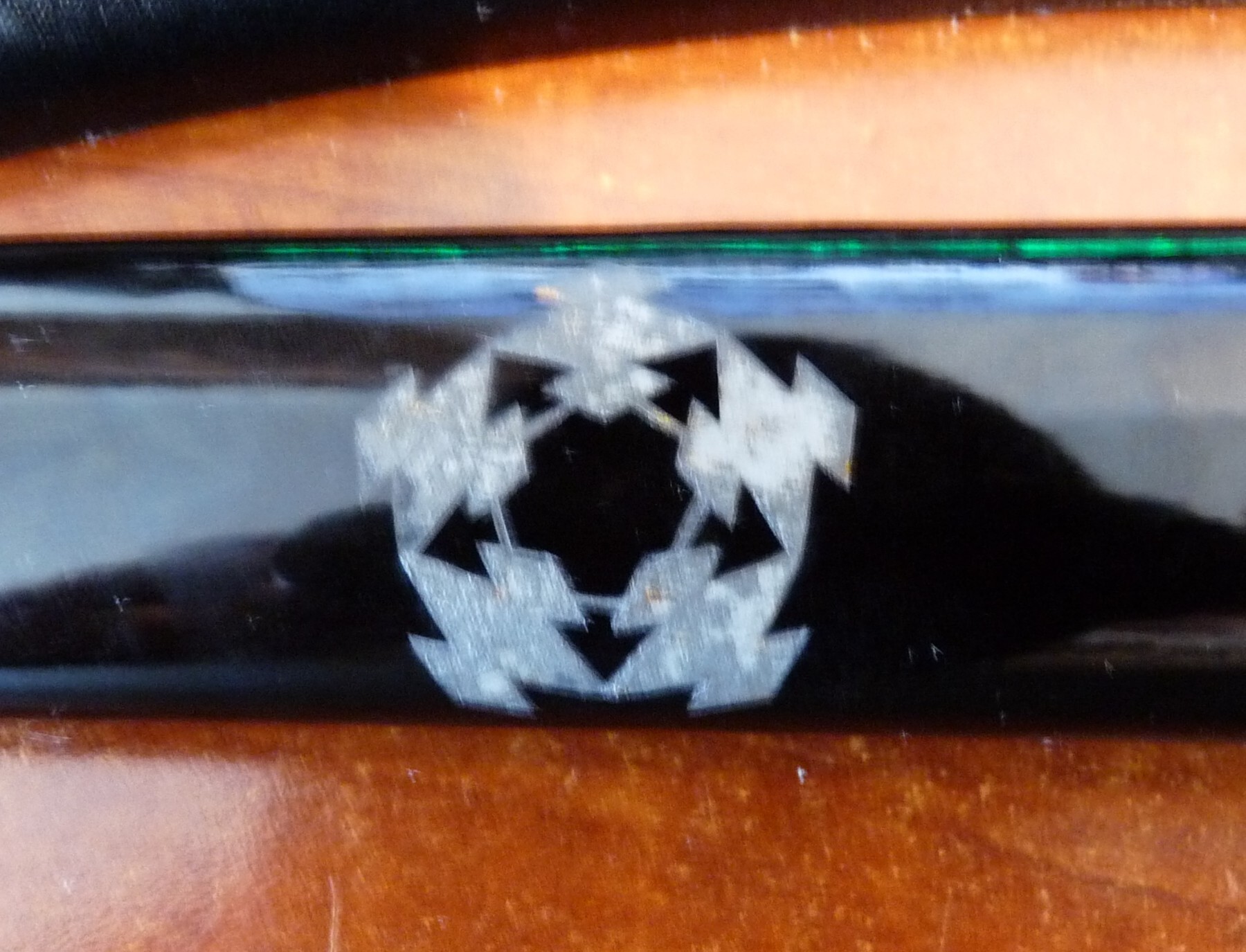
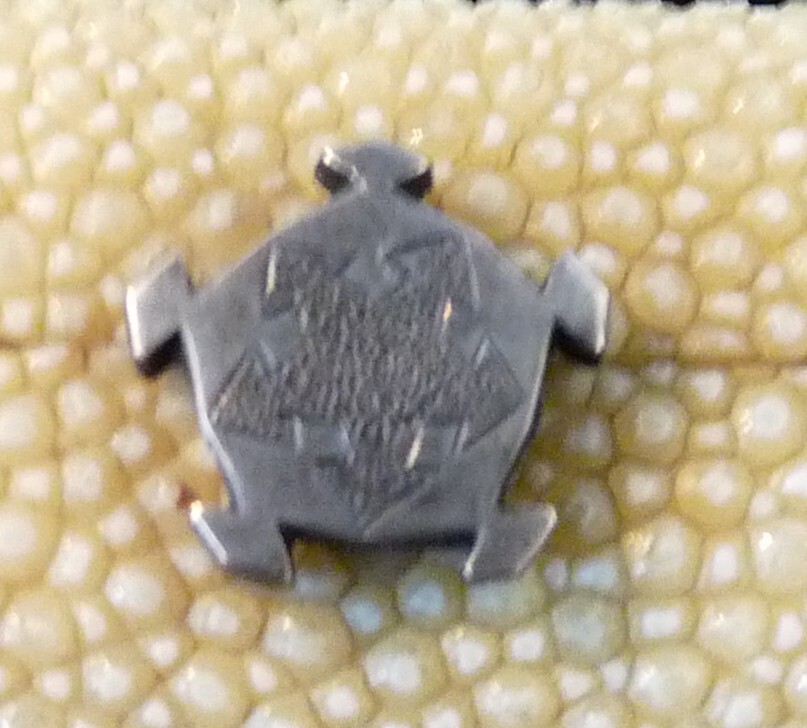
Hello all and thanks in advance for any thoughts on this Symbol. I believe it to be a Kamon because it is on two sides of the Saya and one of the Menuki on the Tsuka. I went through the 5000 Kamon book twice and did not find anything that resembled it. I tried Google Lens and also thought it might be a Shinto symbol but no luck there either. Maybe I need a 10000 Kamon book or better reading glasses.
 3 points
 -
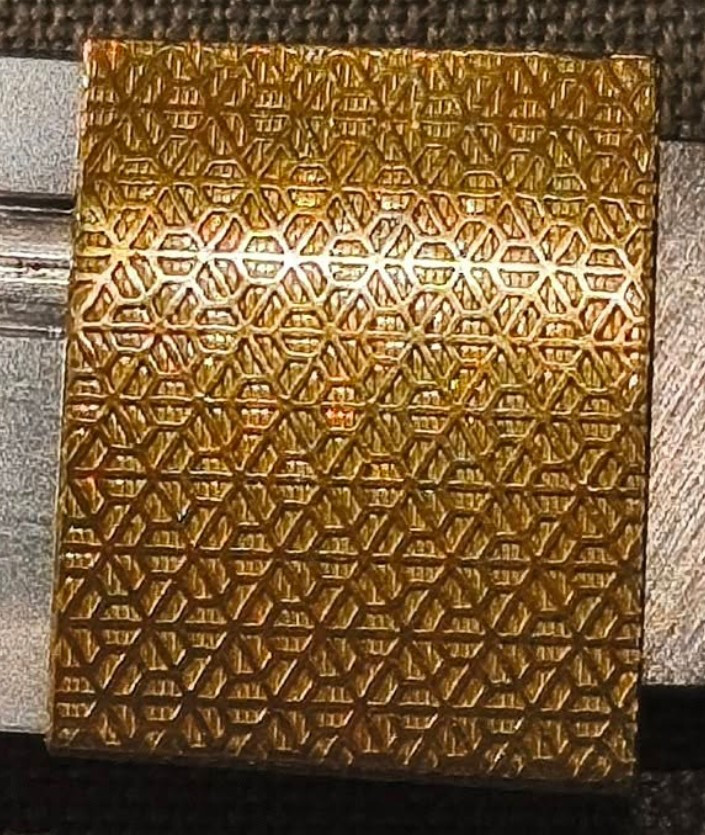
Can't imagine the time that went into making this one:
 3 points
 -
Hi! This is signed 豊後住藤原行長 Bungo Ju Fujiwara Yukinaga. I'm not sure if the signature is genuine.3 points
-
Hi Luca, A really nice set of fuchi-kashira. Well done! The general workmanship is great, especially the nanako. I also really like the design of the shitodome. There were two generations of Nagamine 永峯. The first was born around 1690 and the second around 1715. Ayanokoji is the area of Kyoto where these two artists lived. They mostly made F-K in the Soten style. You might be able to determine which generation made them by looking the kao in published examples. From what I can see in Hawley's, published examples appear in the Red Cross book (pg. 190, #1257) and the Baur Collection (pg. 434, #380). I'll have a look a both books tomorrow and see if we can determine which generation made your F-K (likely the first generation in my opinion).3 points
-
松皮菱 x 5 As Rohan says, it’s the Matsukawa-bishi or Pinebark diamond in a linked circle of five. It must be a relative of perhaps the famous Ogasawara family.(?) Try key words in Japanese (like Kamon, itsutsu Matsukawa bishi) 家紋 五つ 松皮菱 Linked, in a circle, etc. Probably a later creation to show distant ancestry, and a 10,000 Mon book sounds about right!3 points
-
Probably this guy: YOSHITADA (吉忠), Shōwa (昭和, 1926-1989), Saga – “Hizen no Kuni Yoshitada kinsaku” (肥前国吉忠謹作), “Yoshitada” (吉忠), real name Kinoshita Kōichi (木下幸一), born 1893, he worked as rikugun-jumei-tōshō, jōko no jōi (Akihide), First Seat at the 6th Shinsaku Nihontō Denrankai (新作日本刀展覧会, 1941) Yes, it is “kigen”…in spring (春) 1940. About omote and ura. It might be the thing with Hizen blades and Tachi-Mei?!3 points
-
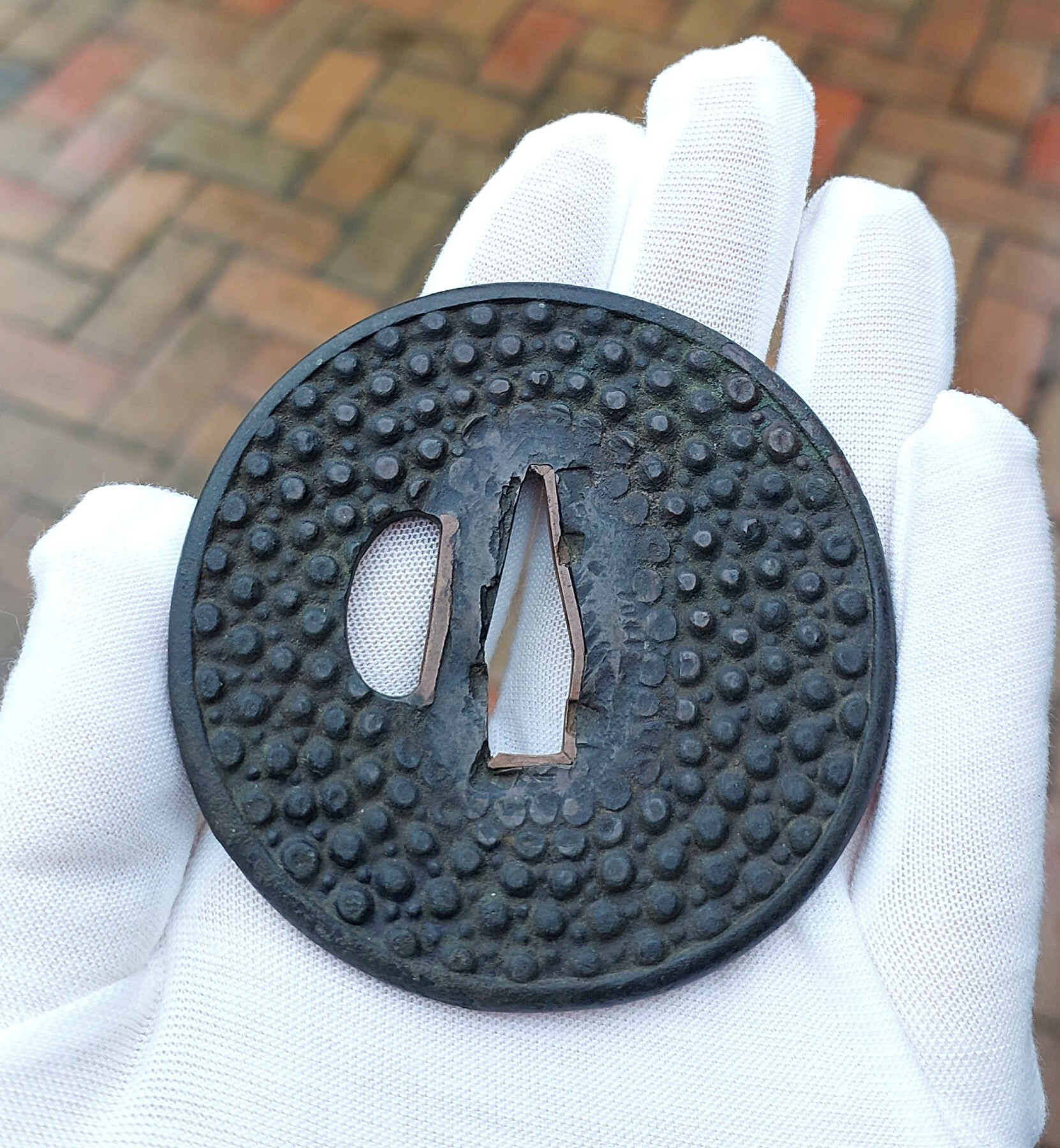
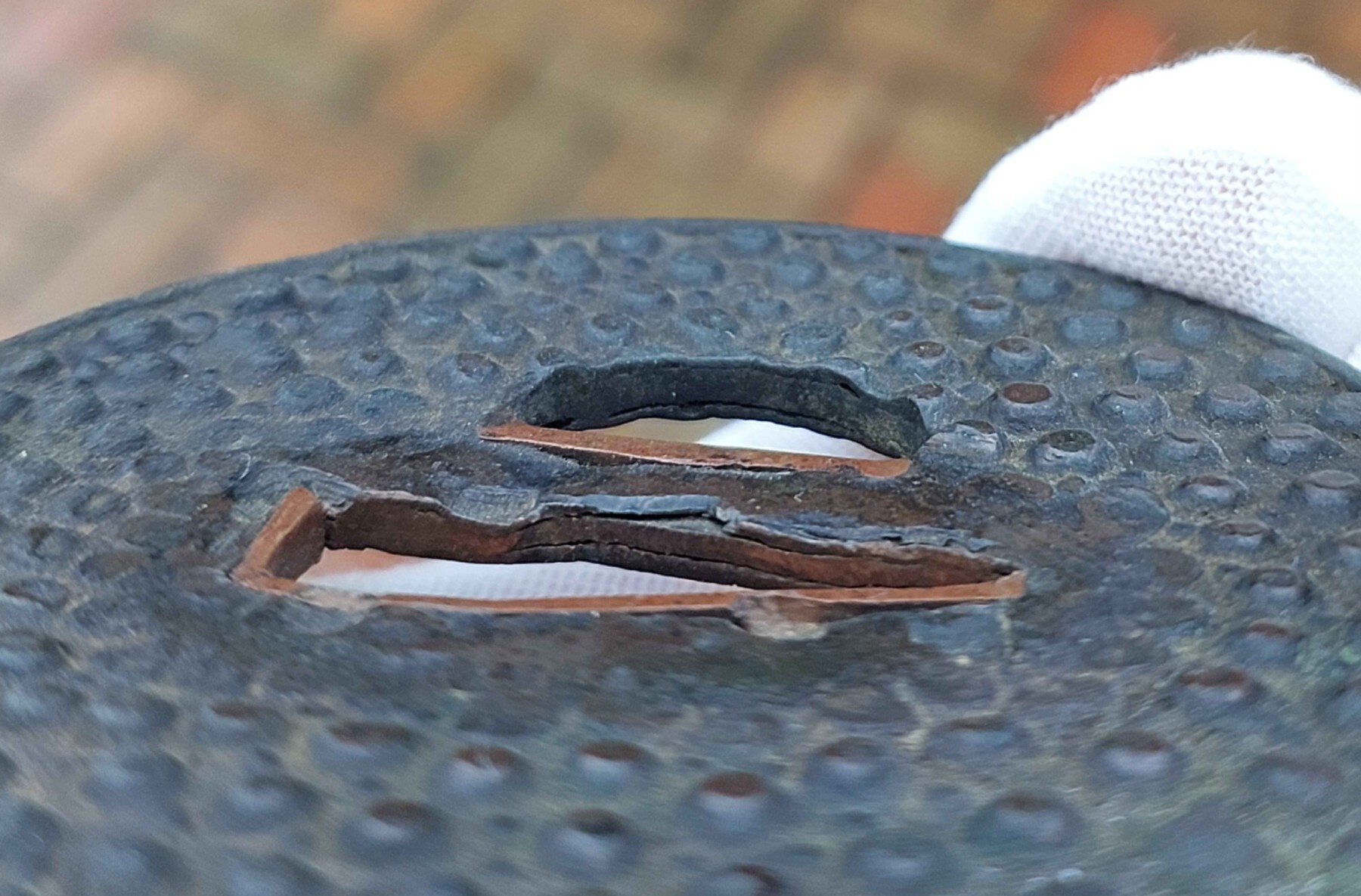
There are some examples of nerikawa tsuba discussed here. https://www.google.com/search?q="nerikawa+tsuba"+site%3A.militaria.co.za&rlz=1C1ONGR_enUS1136US1136&oq="nerikawa+tsuba"+site%3A.militaria.co.za&gs_lcrp=EgZjaHJvbWUyBggAEEUYOTIHCAEQIRiPAjIHCAIQIRiPAjIHCAMQIRiPAtIBCDE4NjZqMGo3qAIAsAIA&sourceid=chrome&source=chrome.ob&ie=UTF-82 points
-
@jono1uk heck of a decent deal here on what looks to be a very nice Gendaito, not a mess produced Showato2 points
-
They put the leather cover and belt hanger loop on civilian swords, like yours, when used in WWII.2 points
-
You'd be amazed what a qualified and experienced togishi can do. Whether its worth the expense is debatable. This is a good example when the cost is absolutely justified.2 points
-
Here are the links to the listings: https://stcroixblades.com/product/naval-yasukuni-shrine-sword-rare-wwii-Japanese-yasushige/ https://stcroixblades.com/product/Japanese-yasukuni-shrine-sword-rare-wwii-by-yasutoku-yasunori/ Any questions, let me know. --Matthew Brice St. Croix Blades 715-557-16882 points
-
That’s actually what I thought when I first saw it, but no, it’s just a few layers of paint… I guess he tried to create the effect of embroidery.2 points
-
Hi! This looks like 福地宗近 Fukuchi Munechika, literally Munechika in a place of good luck, not really a known smith. This is no earlier than Shinshinto, and likely a low-end one. Edited: Sorry! I was wrong, this is the known Gunto smith 福地鋭雄 Fukuchi Toshio.2 points
-
Beautifully observed.2 points
-
Hi Jon, Not a fake 100% legit. Here you will find a care & handling brochure you should read: https://nbthk-ab2.org/sword-characteristics/ Grey2 points
-
Okan is the “silk” brocade stand hanging actually embroidered or stitched in some way. Parts look 3D and I have never seen that on a scroll2 points
-
Hi Khalid, In the case of iron tsuba and fittings, see the below method, taken from Jim Gilbert's Cleaning Iron Tsuba - 1/26/01 'The simplest and safest first step is to wash your tsuba in mild soap and water. Use hand soap, not detergent or cleanser. Over years of careless handling a tsuba can pick up quite a bit of plain old dirt. After you’ve washed the piece, be sure to dry it thoroughly. Once it’s relatively clean, take a careful look at the piece in good light - sunlight if possible. You’ll probably see plenty of red rust. You may also see various surface coatings of modern to antique origin – wax, shoe polish, paint, old lacquer, etc. If you are not sure what you’re looking at, show the tsuba to someone familiar with old guards. My preference is to leave old lacquer in place, unless it is associated with serious corrosion. Dealing with crud that won’t come off with soap and water can require a couple of different approaches. The most straightforward method for an iron guard is to boil it in distilled water for 20 minutes or so. This will remove most films without altering the metal or removing any lacquer that may be present. I don’t recommend adding any chemical agents to the water. The more aggressive the cleaning solution the greater the risk of permanently damaging the guard. Boiling water is good enough. When the tsuba comes out of the water, the good news is that all of the oils and waxes that were hiding rust will be gone. The bad news is that you are likely to be looking at a very ugly, dry, rusty plate at this point. You may wish that you had just left things as they were, and frankly, if you’re not willing to go through with the very time consuming and finger-tiring next step of rust removal, you should have left well enough alone. Rust removal is a mechanical process of dealing with two slightly different iron oxides. The idea is to rub off the active red corrosion (anhydrous ferric oxide) while leaving behind the slightly harder protective black magnetite patina. I have tried bone, antler, ivory, bamboo, etc., and all are good for certain aspects of the job. I find that ivory (old piano keys are a good source) works best. If it isn’t available, get a section of dense bone. The typical beef “soup bone” is good. Get one that has all of the grease cooked out and use a hammer and chisel (wear your safety glasses) to break the bone up into a number of variously shaped and sized chunks. You’ll find that one of the assortment of sharp and dull surfaces and angles should do the job. Whatever the tool, you're looking for something harder than the red rust and softer than the patina. Never use steel, iron, glass, sandpaper, or anything else harder than the patina. DO NOT try chemical rust removers - they will remove the patina and damage the iron. In fact don't try chemical treatments of any type - including boiling in tea or anything of the sort. Also, don't put your tsuba in a fire despite what Robinson's “Arts of the Japanese Sword” says! Some people will use chogi oil at the start of the process to loosen the red rust. I haven’t found this method to be much help. It certainly won’t harm the iron, but it is fairly tricky to keep the oil from soaking into the rust inside any sukashi openings and darkening it to an unnatural color. The surest method is to just take your bone, antler or ivory and gently scrape away at the red rust. Periodically wipe off the red dust to see how you're doing (a damp cloth removes the dust better than a dry one). It’s usually best to work slowly in a small area. Quickly rubbing over a large area is ineffective. Avoid the temptation to find a faster way, because if you do, you will also have found a way to take the patina off. I can't stress this enough. In your inevitable attempt to get the job done faster, you will be tempted to use brass or copper, but it's much too easy to wind up damaging the patina this way. Even if you're successful (this time), you'll have to find a way to get the ugly brass residue off. Lots of patience and tired fingers is the only way. Depending on how severe your rust is, in hours to weeks you will eventually remove the red and just leave the nice black. Go gently and slowly and check your work constantly. Too much scrubbing even with a soft tool will eventually remove the patina. If you think you've got the rust under control, take your tsuba out in the sunlight and have another look. Most artificial lighting hides red rust somewhat, but sunlight will reveal all. You will probably find that there is still more rust there, but don’t get carried away with trying to remove every trace. Don't over do your cleaning. The idea is not to make a 500-year-old tsuba look new. Older tsuba can have quite a lot of oxide build up that is best left alone. The idea is to remove any active corrosion and restore the beauty of the surface, not to alter fundamentally alter it. An over cleaned tsuba is always worse than an under cleaned one. If you overdo it and damage the patina, you're in trouble. You won't get it back any time soon. There are people who repatinate iron tsuba, but the only one in the US that does good work is no longer taking orders. Many people who claim to do restoration will destroy your guard. Unfortunately, even the best repatination cannot recreate the original aged surface. Also, NEVER clean the inside of the sukashi. Cleaning the inner walls of the sukashi is like polishing the nakago of a sword – a bad idea. However, do remember to clean the rim as well as the web of the plate. Once you have the rust down to the point that you're satisfied, get out a piece of cotton cloth and just rub the tsuba. As you keep this up you'll find that the color will darken and the surface will take on a soft luster. The cloth won't do much to remove red rust, so if you find that you missed some rust, go back to more boning. Just go slowly. Once the tsuba is clean, you may want to carry it in your pocket for a few weeks in addition to rubbing it with the cloth. The idea is not to polish the guard to the point that it shines. Also, avoid rubbing the guard on carpeting or synthetics that can leave a greasy finish. I prefer to stay away from oil on a finished guard. The oily sheen is not as attractive as the natural finish and it will tend to attract dust and lint over time. It will eventually dry out, and can then actually promote a new layer of rust under the dry oil film. By the way, a coat of oil is often used as a “quick fix” to make red rust look dark. This may seem like an improvement in the short term, but really just winds up making the tsuba look like oily dirt. Also, a coating of black shoe polish is a frequently encountered “magic patina.” Watch out for these dirty tricks when buying tsuba. There's no substitute for spending a lot of time with bone and cloth to get a rusty tsuba into shape. Once you've conquered rust, store your guard in one of the wood boxes made for tsuba. Compared to the cost of all of the work you've just done, the box is cheap. After a fresh sword polish, who would leave that blade out on the shelf, or wrapped up in paper, rather than pay for a shirasaya? Be aware that most of the tsuba boxes you will come across have the center post attached by two very sharp nails coming up from the bottom of the box. Transporting tsuba in this type of box will eventually cause the center post to come loose from the weight of the tsuba moving around on it. Once that happens, the tsuba will rattle around on top of those little nails and scratch up the seppa dai. Always transport tsuba in cloth bags. Periodically take your tsuba out and give it some light rubbing with the cloth. Try to keep your fingers off, since you risk starting more rust this way. When I was discussing the initial cleaning, I mentioned that there are a couple of alternatives to consider. In the case of a guard already in good condition, free of rust, etc., but simply covered in wax, it is usually possible to safely remove the wax by rubbing with some isopropyl alcohol. Additionally, you will occasionally come across a guard that has been coated in polyurethane or some other tough, modern finish. For these, there is a commercial stripper called Strypeeze that will not harm the iron or patina. It could harm you, though, so wear gloves and work with plenty of ventilation and/or a solvent respirator. Other problems that you can encounter include fire scale, a depatinated plate, cracks and breaks or other serious damage. Unfortunately, these will require professional care. Experimenting with home treatments will generally result in further damage to the plate.'2 points
-
It intrigues me to think how the Symbol was made on the Saya. It appears to be something that was done over the lacquer finish. It has a raised abrasive feel when you touch it and I can see spots of what looks like copper underneath the silver or tarnish finish. So did they have a process of taking a thin copper foil and doing a silver plating to a intricate design and setting that in the lacquer? The Habaki has a silver finish over copper and the Menuki looks like a solid piece of silver or nicely plated metal.2 points
-
Tensho to Kanei, provincial work.2 points
-
Look up Mike Hickman Smith elsewhere in this forum.2 points
-
That is good, thanks. Don’t see the real point of copying the entire description from the website but omitting the price. Here we are transparent.2 points
-
New Arrival a Super long katana by Yasusada with Futatsudo / 2 Body Gold Cutting Test https://nihonto.com.au/product/yasusada-with-gold-test-by-nagahisa/2 points
-
Ian, Have you read Nick Komiya's articles on the Rinji seishiki (RS) (Type 3)? They are : Rebutting the Name "Type 3" and Unveiling the Rinji Seishiki - 1940 To your question, though, I don't think there has been a direct answer given. In Nick's article he states: "On 22nd August 1940, Army Regular Memo 5830 officially announced the completion of this Rinjiseishiki Sword project. It said that Kaikosha and Gunjin-kaikan will release for sale to officers swords priced at 115 Yen in annual quantities of 3,000 swords (however, for 1940 it would be limited to about 1,000 swords). Though the price went up from 80 Yen now to 115, the annual production target of 3,000 a year is just as the 1938 mandate had demanded. The printed memo further explained that the sword “was made to be robust and practical in both blade as well as exterior fittings, based on lessons from the Incident” However, in the earlier handwritten draft, this same sentence read slightly differently as it said “was made to be robust and practical in both blade as well as exterior fittings based on lessons from the Incident. It is in conformity to army uniform regulations” The last part was dropped from the final announcement. Furthermore, the cover letter of this earlier draft from 16th August gives away further hints about how the army perceived this new sword. The Japanese title had originally read 軍装用軍刀, “Gunto for Field Dress”, but the 4 kanjis in front were crossed out, leaving only the word “sword”. This indicates that the sword was to be limited to field wear and you needed to wear the Type 98 for dress occasions, etc. That implied that when hostilities were over, officers were expected to go back to the Type 98 swords as required by army uniform regulations. The deletion also stressed that the sword was NOT a Gunto, but simply a sword. This minor distinction is important as only the Type 98 could be called a Gunto at that time." The RS was designed to be "robust and practical" for field use. In reading about the field repairs teams, they reported that a large percentage of their work was in repairing tsuka. I suspect the lacquered ito was to keep it from fraying. I haven't looked for this characteristic in my surveys, but what I have always considered the custom fittings - lacquered saya and ito - actually show up a year ealier (1942 is the earliest example I have on file) than the light tan (1943 is the earliest I have on file), plain fittings, with no lacquer. My gut feeling is that they tried to put out nice looking fittings at first to draw the customer base. Yet the custom fittings went against the primary order to make a cheaper sword, so young officers could better afford to buy them. Again, I haven't checked to confirm this, but I bet we will find that the light tan, what I call "standard" fittings will not have lacquered ito as a general rule.2 points
-
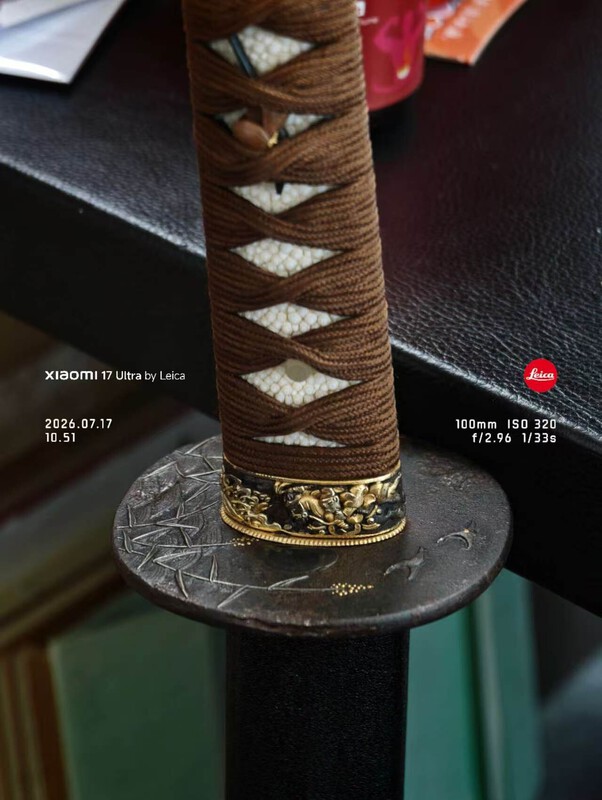
btw I picked up the sword from the workshop.

 2 points
 -
your grasp in prices with in australia is wrong, prices in austalia arnt cheaper! they are reflected to a world wide price range, postage isnt that complicated. your price range for a excellent type 3 with a showato start at 2k aud and go up from there. thats the market facts.2 points
-
I was wondering if anyone has direct experience with the NBTHK shinsa team when it comes to judging authenticity/attribution for unsigned tsuba. I am interested in their methods. For example, do they just study a piece and use their knowledge and experience to assign an attribution or is there more science to it? They obviously discuss it amongst each other and come up with a collective attribution, however do they refer to references or is it just based on seeing many examples and understanding differences, e.g. size, Mimi, seppa-dai shape, design motifs, file marks, hammer marks, etc. If anyone has first-hand experience watching a shinsa team in action, then I would be most interested in your observations.1 point
-
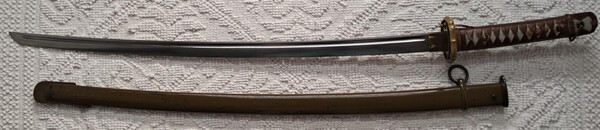
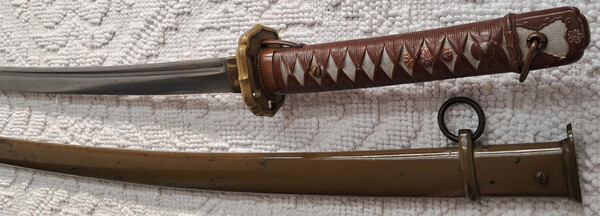
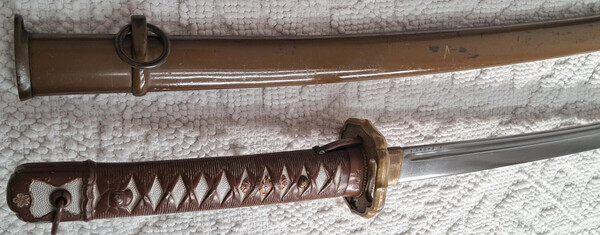
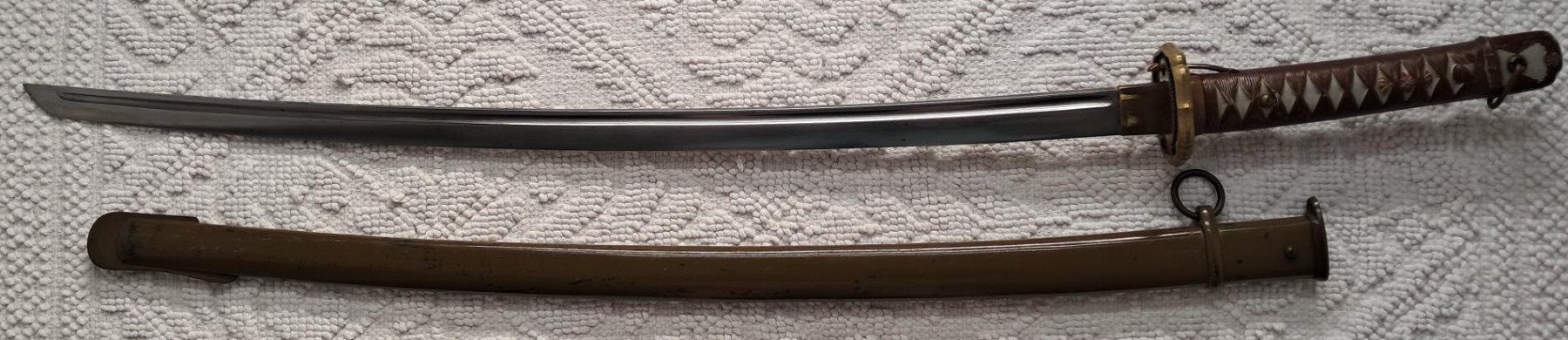
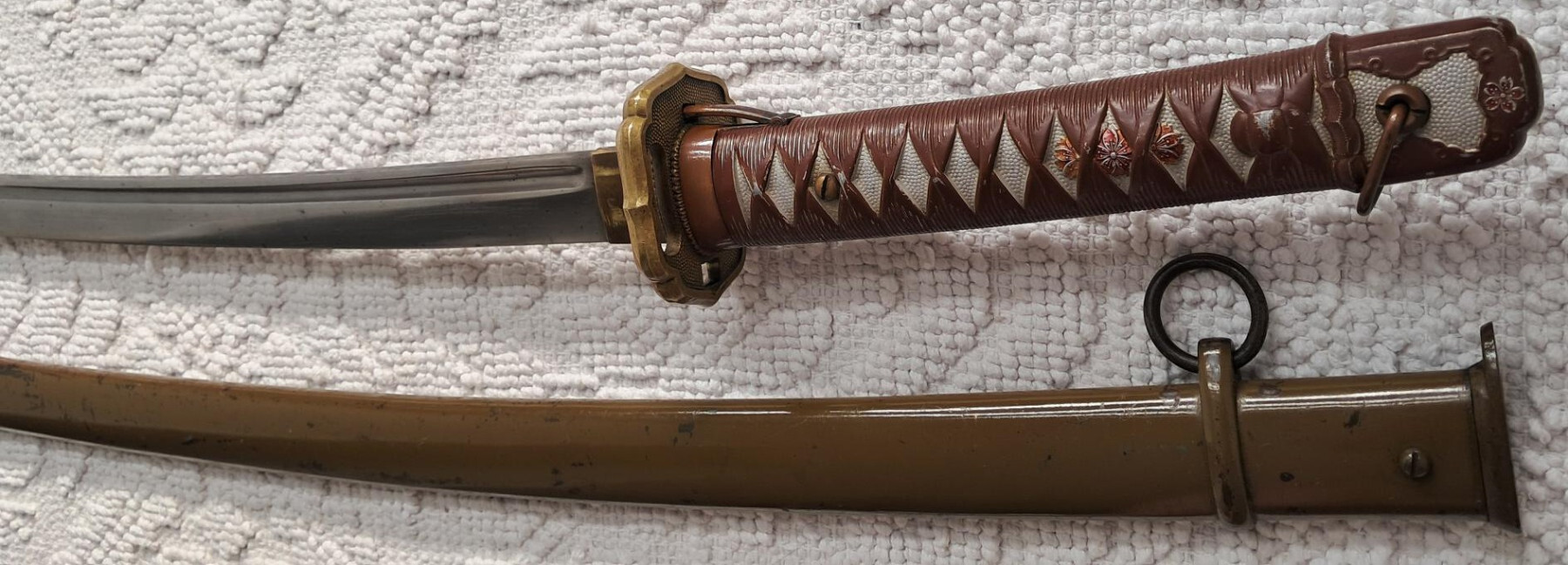
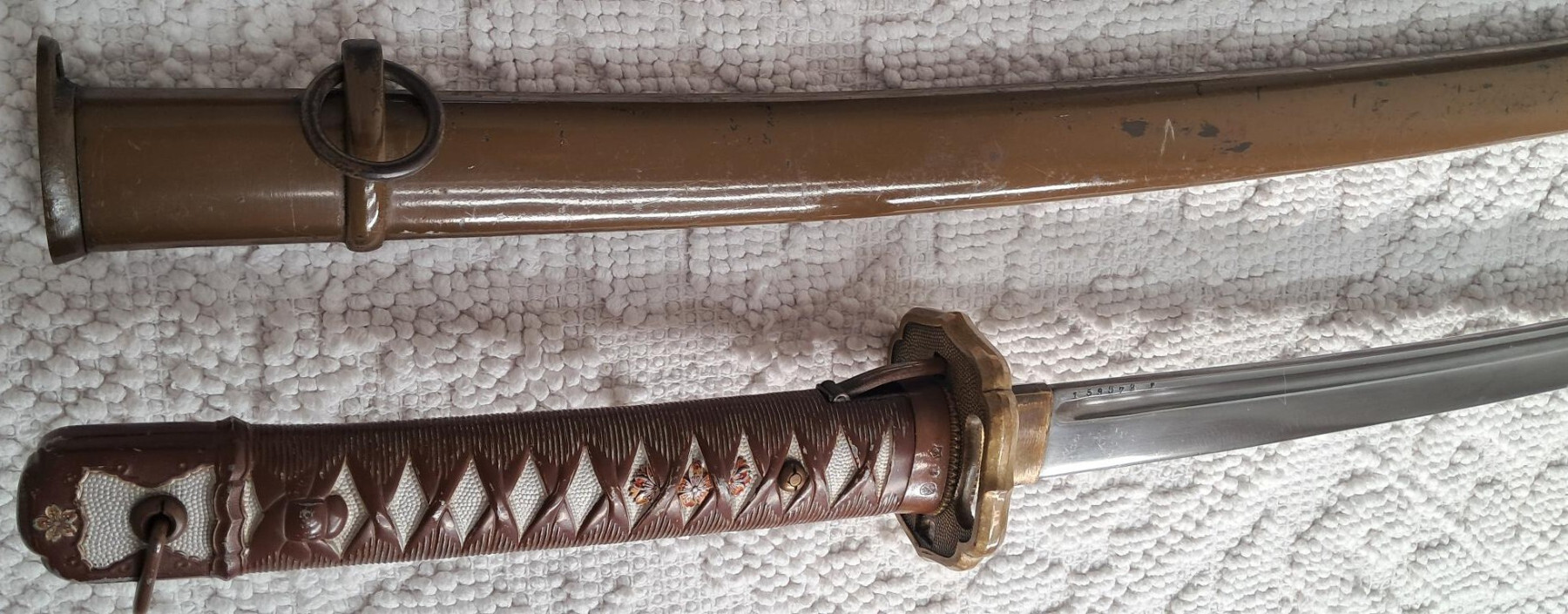
NCO Type 95 Gunto in Very Good Condition. Matching Numbers 159372 Would be hard to upgrade... Price $2400 AUD (Australian) plus all fees

 1 point
 -
I guess he… MUNECHIKA (宗近), Shōwa (昭和, 1926-1989), Gifu – “Munechika” (宗近), real name Fukuchi Toshio (福地鋭雄), born May 17th 1898, he worked as guntō smith and died April 29th 19741 point
-
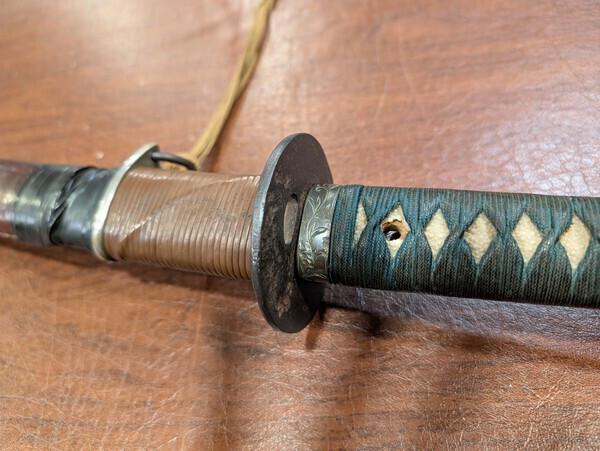
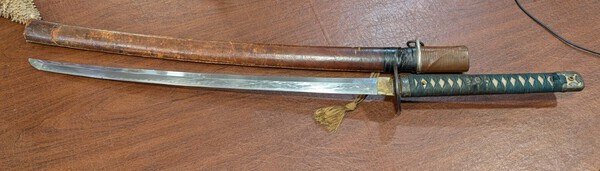
We see many swords with colored cords, yellow seemed popular, from the war. We don't know the exact reason for them. Possibly something for good luck, or warding off evil spirits. Sometimes they are clearly cords from sword bags, but yours is not. You can see several other examples here:1 point
-
A yellow cord on a civilian sword, fitted for the war, posted by @Jon D HERE
 1 point
 -
It certainly can; often what will be done is a wooden replica of the blade (tsunagi) is made which is then used for fitting and templating of the mountings without any risk to the polish of the real blade. A benefit of this approach is that the tsunagi can then be used to hold the mountings together when the blade is being stored in its shirasaya.1 point
-
Thank you Bruce. Great information. I can see now that there was a lot more going on with time and variants of the sword now. The Type 3 is a bit of a plain model, not for parade, but very robust, as mentioned. Thanks again.1 point
-
Greetings everyone, Can a sword be mounted after it is polished? I thought it was recommended to do it before it is polished. This packaged beautifully. Best, Khalid1 point
-
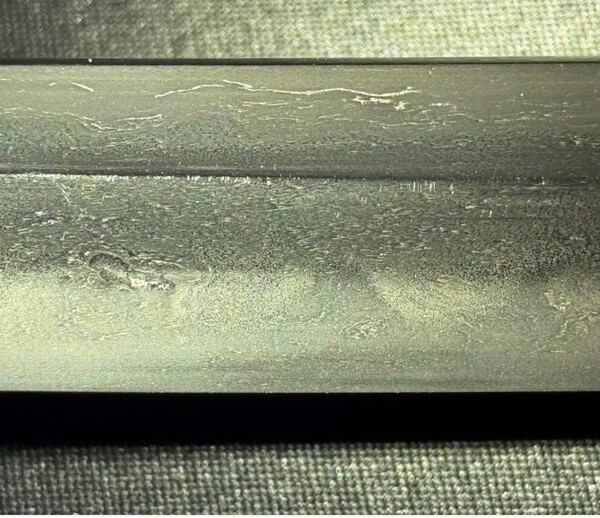
Here are a few more. Thank you for your help.
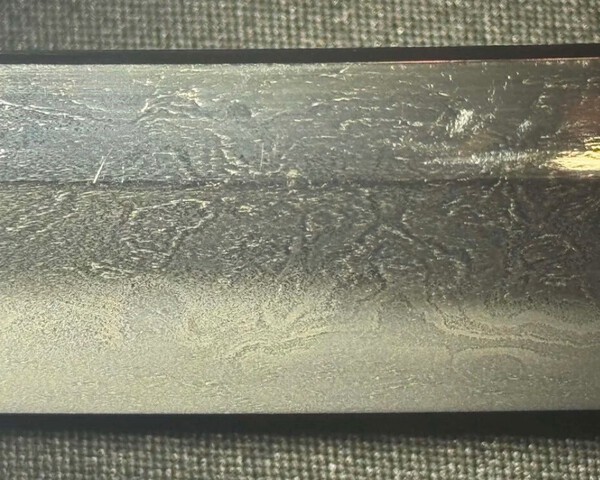
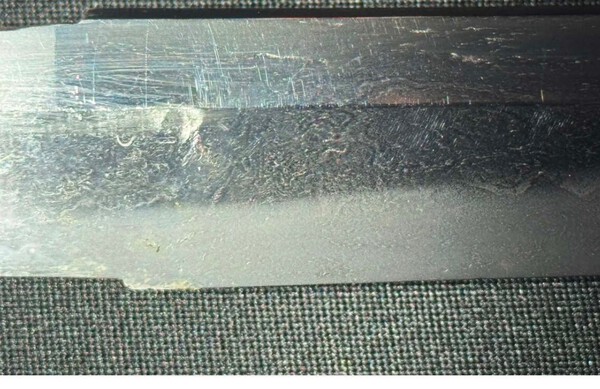
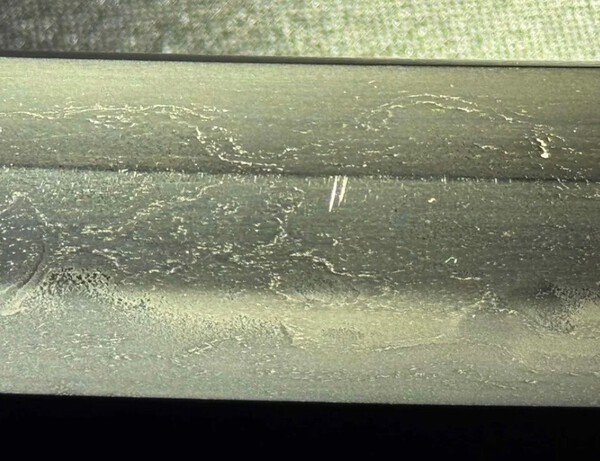 1 point
 -
More pictures of the work itself would be very helpful. Otherwise sugata suggests Tensho.1 point
-
These help!.. They also confuse me a bit more... Hahah, at this point, I'm so curious to know who might have made this in the late edo period, deciding not to sign it (if it's shinshinto)... lol Jigane in the later edo periods usually doesn't look so... Alive? Anyway, this has been fun, and I definitely learned some things! Best of luck to you!1 point
-
Thanks. I have a bunch of pictures from yesterday but I was unable to put them up. I'll try again when I get home from work. I do have that particular measurement and several pictures of the temper line and the tip1 point
-
Looks like one hour or two for mending that! At least the HITAI ATE is in good shape!1 point
-
Hi @JMRICH53, I'm going to relocate this to the "Military Swords of Japan" section. There is a lot wrong with your diagram; and it looks a lot like something put together with Ai. The proper designation for this sword should be Type 95 Guntō, (without the "shin"). The kojiri is pointing at the kissaki, the latch mechanism and internal is completely fabricated, tang is pointing at the habaki, there's no grommet screw or sarute, and the wrap around the menuki has a weird center part and the menuki has big silver circle on it. The hanger is on the wrong side of the scabbard. The fuchi should be called a ferrule in this case, and has a chūkan of which houses the “spring” and holds the clip. It’s not a coiled spring, it’s more a little angled piece of metal that holds tension against the clip. Also, these swords do not have hamon. Also theres just some incorrect terminology like John C has said above. In addition to the Ohmura study guide which is one of my primary source materials for all things Type 95 Guntō; I also wrote a document here for the forum that has a glossary of correct terminology around page 73. This type of sword evolved throughout the war, and the peices parts and locations of them can be different depending on the variation, arsenal, and subcontractor. My paper can be found here: https://www.militaria.co.za/nmb/files/file/207-Japanese-type-95-military-sword-variations-1936–1945/ I'm actually working on a similar diagram for my document, but I still have a few months of work to do until another update. Regards, -Sam1 point
-
Well done, not something you would see every day.1 point
-
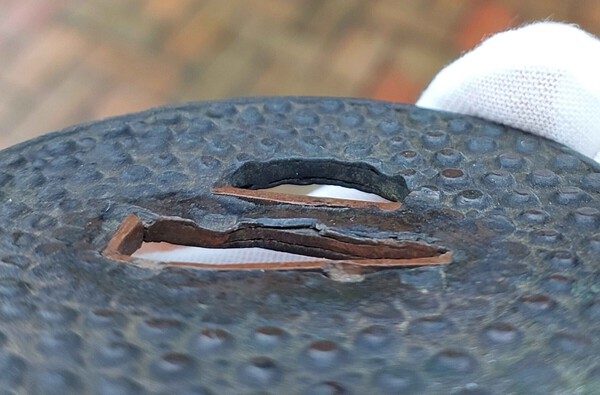
Here is the cast San-mai. The top and bottom plates have been cast and are held in place by the Fukurin.
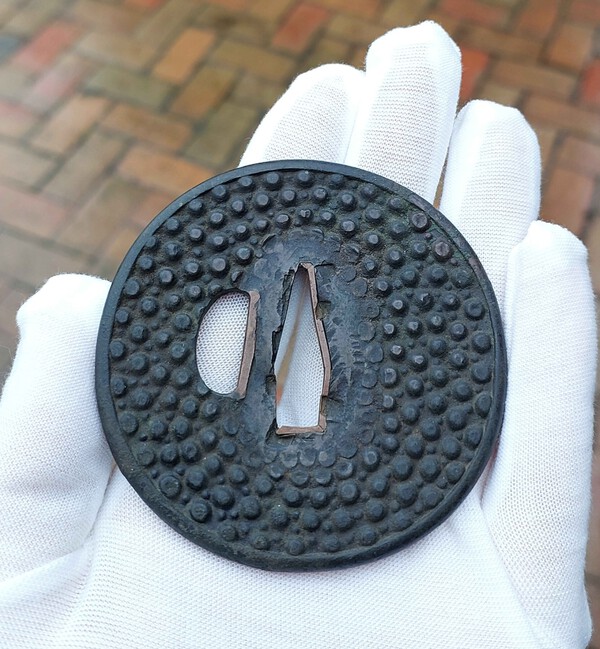
 1 point
 -
I'm really loving the great anecdotes and dialogue in this thread - so I'm also going to try and turn it into a proper, personal learning opportunity. I want to be able to understand what the experts see when they look at a tsuba so I can learn to see it too. For example, the Japanese dealer said of my tsuba "Sukashi is deformed - not sharp. Thats not Rakujū's style." Below is my tsuba on the left and the long-acknowledged Rakujjū (courtesy of Nicolas @Kiko) on the right. I can see some definite differences in outline but it would be really useful if someone could point out the deformity to me. I want to learn! (I suspect it could be the poorly balanced seppa-dai already commented on by Michael, along with some irregularity in the two tomoe 'comma' shapes. I can also see a possible design flaw in the upper left sukashi.) Best, Hector
 1 point
 -
I'm agreeing too much with Glen and Steve. I am not sure how much else to say. It is easy and lazy to trust the NBTHK opinions, but they haven't been very good for at least 10 -12 years now. Difficult to get modern collectors to self educate and trust their own opinions.1 point

.jpg.9e102c530f9a5a411d5553992cd1f9d1.jpg)








.thumb.png.54593db2789c8a1dcb235543b184ce39.png)



















This leaderboard is set to Johannesburg/GMT+02:00