
Leaderboard


Popular Content
Showing content with the highest reputation on 05/25/2026 in all areas
-
There is a simple solution to this. Buyer is not happy, send sword back. Seller refund buyer when sword arrives. If seller wont refund buyer than that wont help with future sales.7 points
-
As others have said, JAS is not about the level of the blades on offer but having an immersive experience in a very well appointed venue. As a noob to the field its a unique opportunity in Europe to handle many swords up to Juyo level. Yes, the quality as a whole is average but several dealers including Touken Takarado, Ginza Seiyudo and Daisuke Hataya will have upper tier TH (with Juyo potential) and Juyo papered Koto swords. And if Katchu is something that interests you, there are specialist European dealers in attendance too. It really is a one stop shop to ignite a passion and make connections. The potential networking benefits should not be overlooked, especially if you are fishing in the Juyo and Juyo+ pool. Where else in Europe are you going to have such an opportunity? In the US, with the annual Chicago, SF and Orlando Shows you are spoilt for choice. We Europeans are not so lucky.5 points
-
What I find surprising is that a collector/dealer did not notice a chip to the kissaki mune…..the kissaki is one of the first things you look at very closely. Also the mune ware are clearly visible…ok, not massive but they are there. That rust looks to have pitting, ok again not a massive area but does not look a few weeks old imo, especially as the sword was shipped oiled. And afaik an Iai koshirae is not an assembly of Frankenstein adapted parts but one that can be safely used for Iai As said above….lessons to be learned by both parties. A dealers reputation is hard won and easily lost. Buyers have to ignore all the sales BS and focus on asking the questions that are not answered in descriptions. Bottom line…..if you are going to buy from images you’d better know and be able to trust the seller. ……and the best way to deal with a rightfully aggrieved customer is to apologise and refund his money….as Alex says above. But then I’m very “old school” with an exaggerated sense of transparency and fair play.4 points
-
Utrecht is a no brainer for people in the DACH and BeNeLux regions. Even if you don’t buy, the social element and window shopping justify the expense. And it is also a great experience for the beginning collector in terms of viewing, handling and establishing useful contacts in the community. One does not need to stay at the expensive Karl hotel arranged by the organisers as there are a few budget-friendly and sensible hotels within 10-15 min walk. For a true top-level experience, the DTI is unparallelled worldwide. And given the FX, I think it is a very sensible buying proposition if one is brave enough to carry their blades across borders and sort out taxes and tariffs. It is all about having the appropriate documentation and being eloquent, clear and detailed in one’s written and verbal explanations to officials. It is surmountable, at least for Europe, while the US recent executive orders and legislation have made it trickier. Brano is right: without the correct introductions and relationship building, one might see some great blades at a dealer, among the ordinary, but not a full line-up. That takes years of relationship investment. Furthermore, dealers like “testing” you and ascertaining where a visitor is in terms of knowledge, experience and collecting interests. And in any case, people who go to the DTI, go to Japan for at least a week and combine that with visits to dealers, museums and of course the expo itself. So, abundant learning experiences apart from the DTI itself. Here the OP is not just any beginner but someone who feels ready to deploy substantial capital to start up. Therefore a person like that will benefit immediately from exposure to top blades in order to differentiate average from top from substandard. That is not to say that one should buy [only] at the top, but at least be able to appreciate and discern among the diversity of offers. Going back to the blades, I don’t think the OP will find a suitable quality blade in Europe to the Iwato (which it think is the superior of the two due to health, hamon, relative prestige of the school etc etc) at a similar price. I think the European dealers will price a blade like that at least at a 20% premium. My first Ichimonji experience was with Yoshioka and I ended up with two such blades with excellent hamon, Utsuri and jigane. Then I had the pleasure of owning a zaimei Norifusa, which I warmly recommend as an underpriced /undervalued alternative to top Fukuoka. In fact, Norifusa is a Fukuoka Ichimonji smith who migrated to Katayama and set up a new branch of the Ichimonji but he still is a Fukuoka smith, who combines the finest jigane of all Ichimonji (in my view) with flamboyant Fukuoka hamon. If, however, the OP likes Nambokucho grandeur, then I would recommend he consider the more mature Katayama Ichimonji (large Naginata style, boisterous saka choji hamon) within the Ichimonji school. Of course, Sa remains an alternative but there are better alternatives (sorry Mushin) in Katayama Ichi, Chogi, Kanemitsu etc.4 points
-
Good afternoon Raouf, What you have is a perfect study piece for you at your stage in the great game. What you have paid is what is often referred to as "School Fees" in the Antiques Trade. Now you need to get to see as much of the best quality as you can, either physically at museums or using Google Museum search etc, and compare it to what you have, in a positive, take it on the chin and move on manner. I can remember my first purchase of an armour, way back, it cost me £20, an absolute fortune in those days, when woke meant something to do with the interim betwixt sleep and awake and Nihonto were dumped into old Tea Chests at the back of the Antiques shop with a standard price of £4 Ten shillings for a Wakizashi and £ 5 Ten shillings for a Katana. (As you are in the Americas, I think that would probably equate with a Burger and Fries for the wakizashi and a Burger and Fries and a Milk shake for the Katana....... and a slap up table for two at Dennys for the armour. But to a 12 year old, Fledgling Katchubunny, I thought it was amazing, and I was absolutely sure that Toshiro Mifune had worn it at the Battle of Sekigahara......... I looked at it so closely, every rivet, every delamination of the Urushi, every rust hole and fraying of the Blue odoshi, that it became like a road map. So, have the courage to fail old chum.3 points
-
I chose to archive that Type95 sale post because it was my listing, and as a moderator I share responsibility for organizing and moving posts when necessary. Please understand that Brian and I handle these things manually and individually. Part of being a moderator is making judgment calls like this as I see fit for the board. Additionally, as a gold member I would have requested my post be archived, even if I were not a mod. This particular item will also be included in the download section of the next edition of my Type 95 monograph, so I wanted to preserve the thread here for reference purposes. I understand that what may be significant to me, may not be to you; but I see no harm. -Sam See below:3 points
-
I do think it can often be confusing when lot of different status levels are thrown in for the swords. I do understand it is the easy way in differentiating perceived quality levels and for seasoned collectors it is fairly easy to grasp. However I do think it can be difficult for new enthusiasts, sometimes I think the appreciation status level can be overriding the actual item. In my personal opinion Iwato Ichimonji is a minor branch of Ichimonji school. I do feel the only smith of true importance is Yoshiie. I do have recorded signed items from 5 other Iwato Ichimonji smiths but it is very minor school. The two items by Yoshiie are quite nice. 83,5 cm tachi that is held by Yoshikawa Local History Museum (tachi is Jūyō Bijutsuhin) and a 61,5 cm naginata that is in the collection of Ōyamazumi jinja (naginata is Jūyō Bunkazai). Both are also dated around 1330 and feature Iwato in their signature. I have seen the naginata several times when visiting the shrine and while as naginata lover I do agree it is amazing item and has huge historical importance, I have to say in just pure quality aspect I am not too sold on the item. I just remember always liking other naginata at the shrine a lot more than this particular one. In the beginning I would just recommend looking into different time periods and seeing various items in general. Like how will Osaka-Shintō blades look like, what would be the Kotō Yamato schools like, how Bizen area was churning out various swords throughout history. How different can tantō be next to one another, how short and long can some katana be, how were Japanese polearms. Looking into smiths and schools that might be interesting, rather than going for status level like Jūyō etc. I do think any event with swords will be great for looking at different things. I attended few of the early Utrecht shows and I liked the athmosphere and met so many friends around Europe in there. I think for me the social aspect might have been more important than the swords.3 points
-
Lots to be learned here by both buyers and sellers. Ok, so 25mm and 10mm respectively. So now all we need is @djcollection to explain why this is not a clear misrepresentation of his description stating "NO FORGING FLAWS". Those are YOUR words, are they not?3 points
-
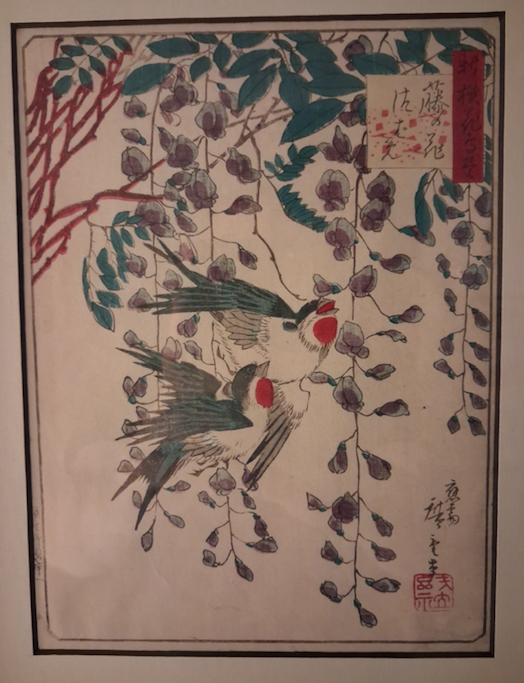
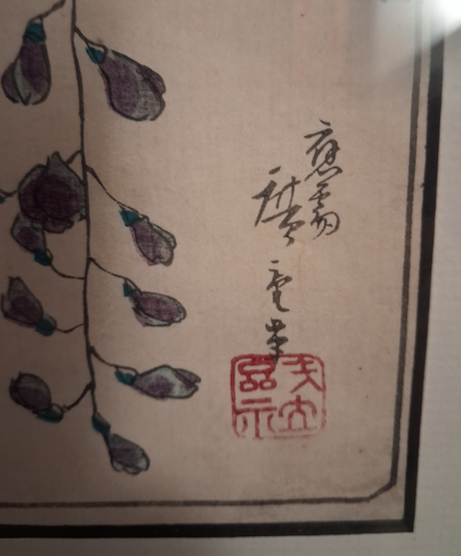
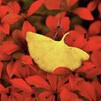
Azalea and pheasants? The second one seems to read Quail in Chrysanthemums. Kiku Uzura Some kind of red-throated birds in Wisteria flowers.(?) Just off the top of my head in order to get the ball rolling!3 points
-
Correct. Only items of significance are stored, and usually not lower end items or tosogu etc unless the buyer/seller requests it We also tend to archive sword sales and better items of Gold members, one of the little "perks" of Gold membership. I don't archive everything. You guys would need to fund waaaay more storage space if we did3 points
-
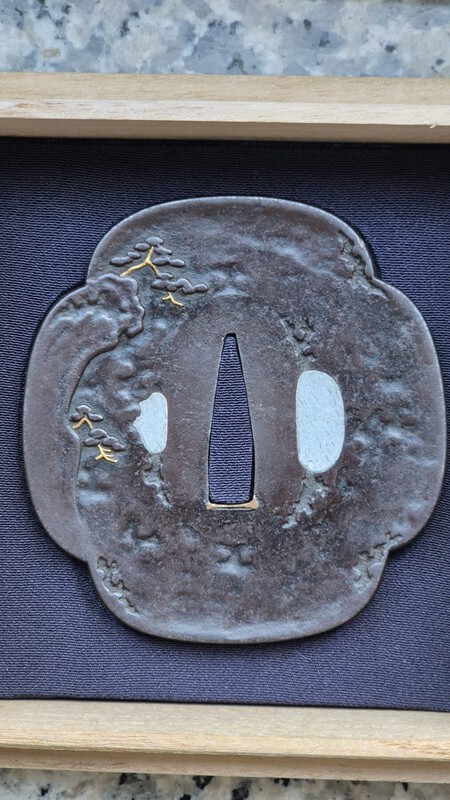
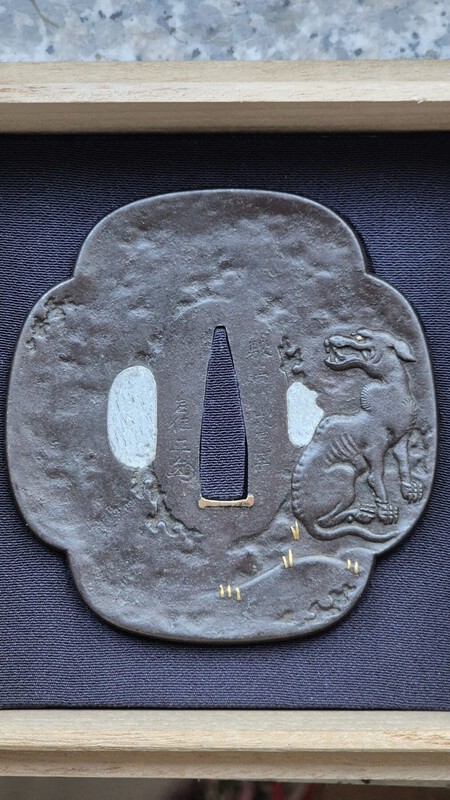
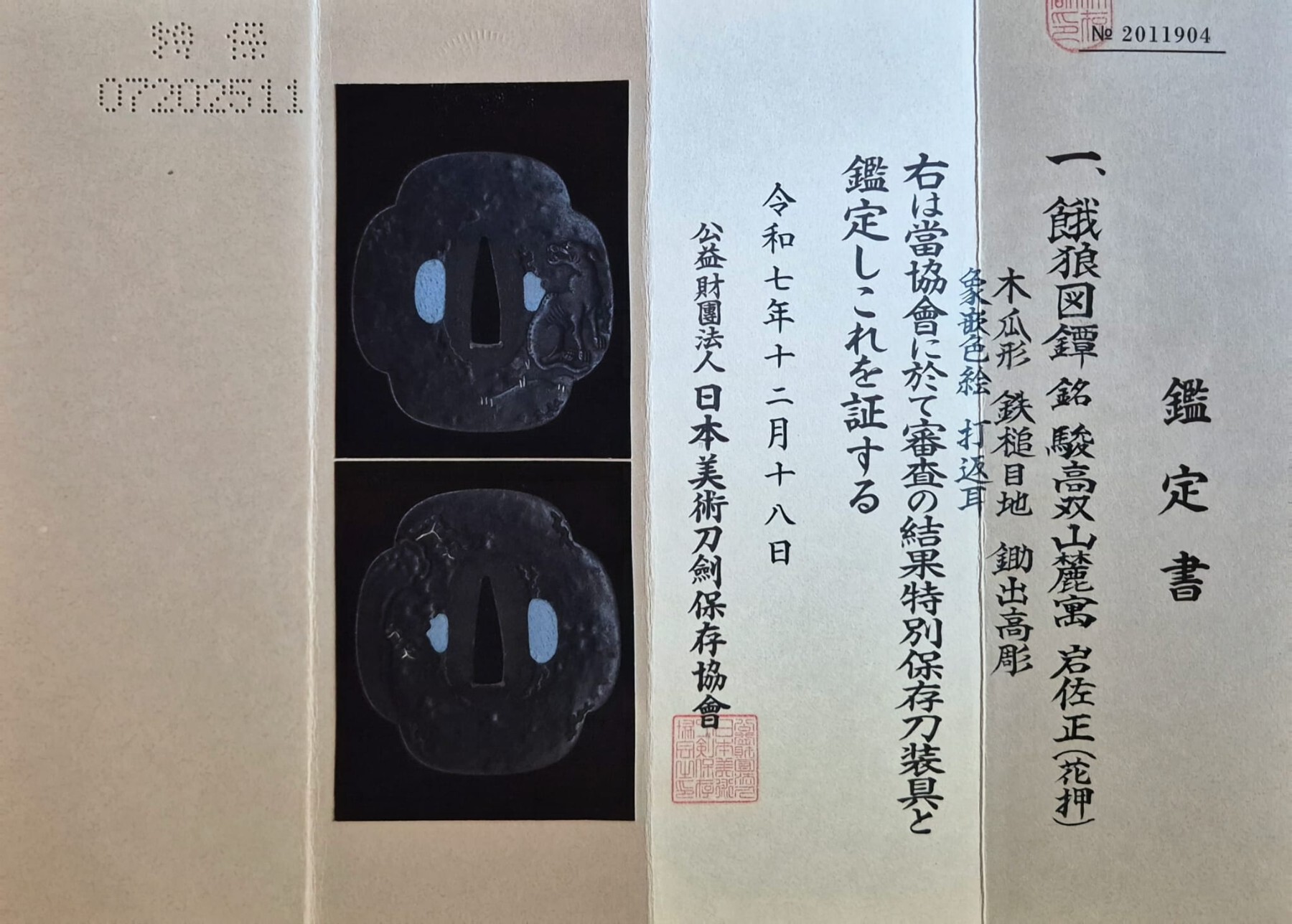
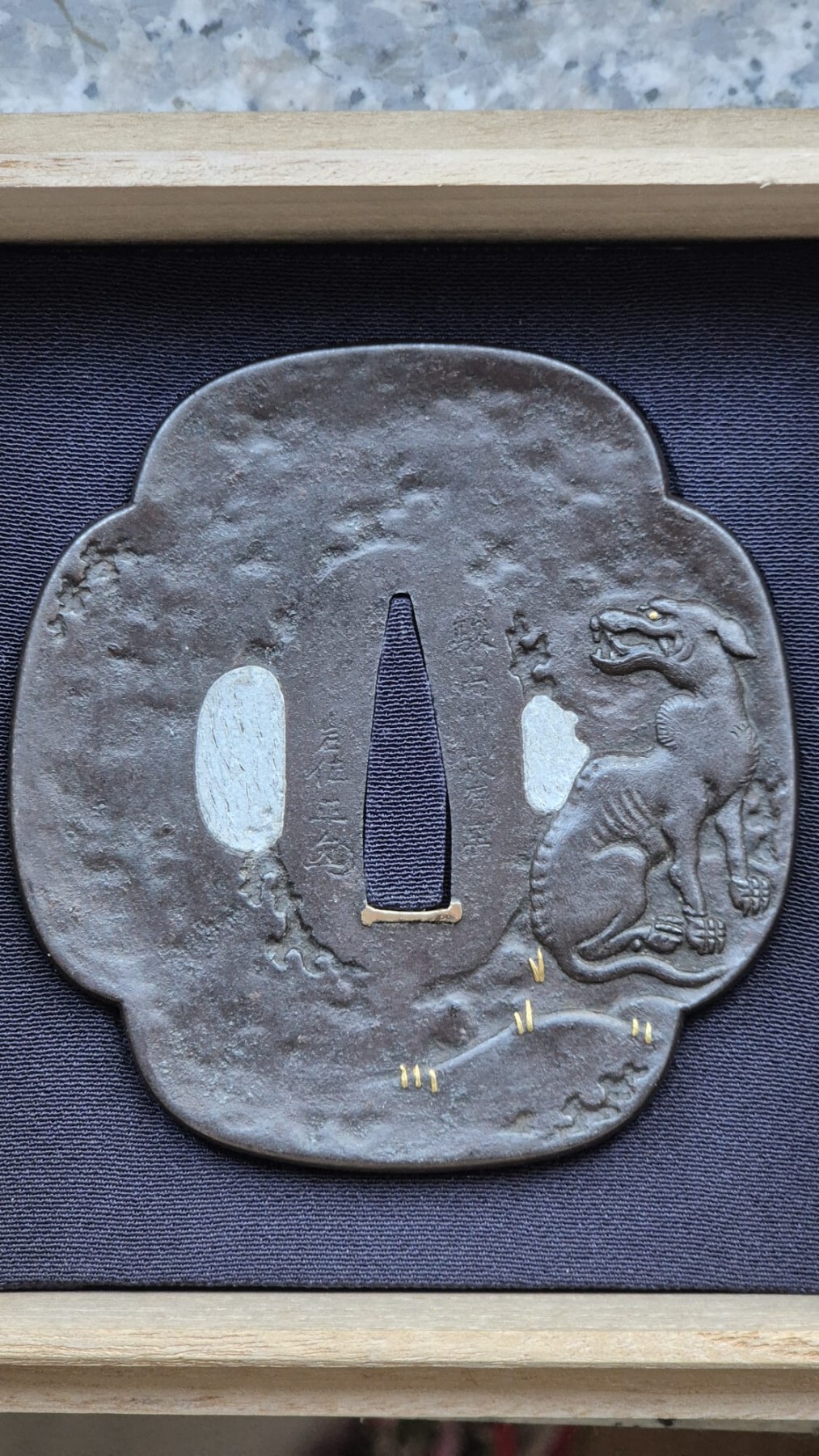
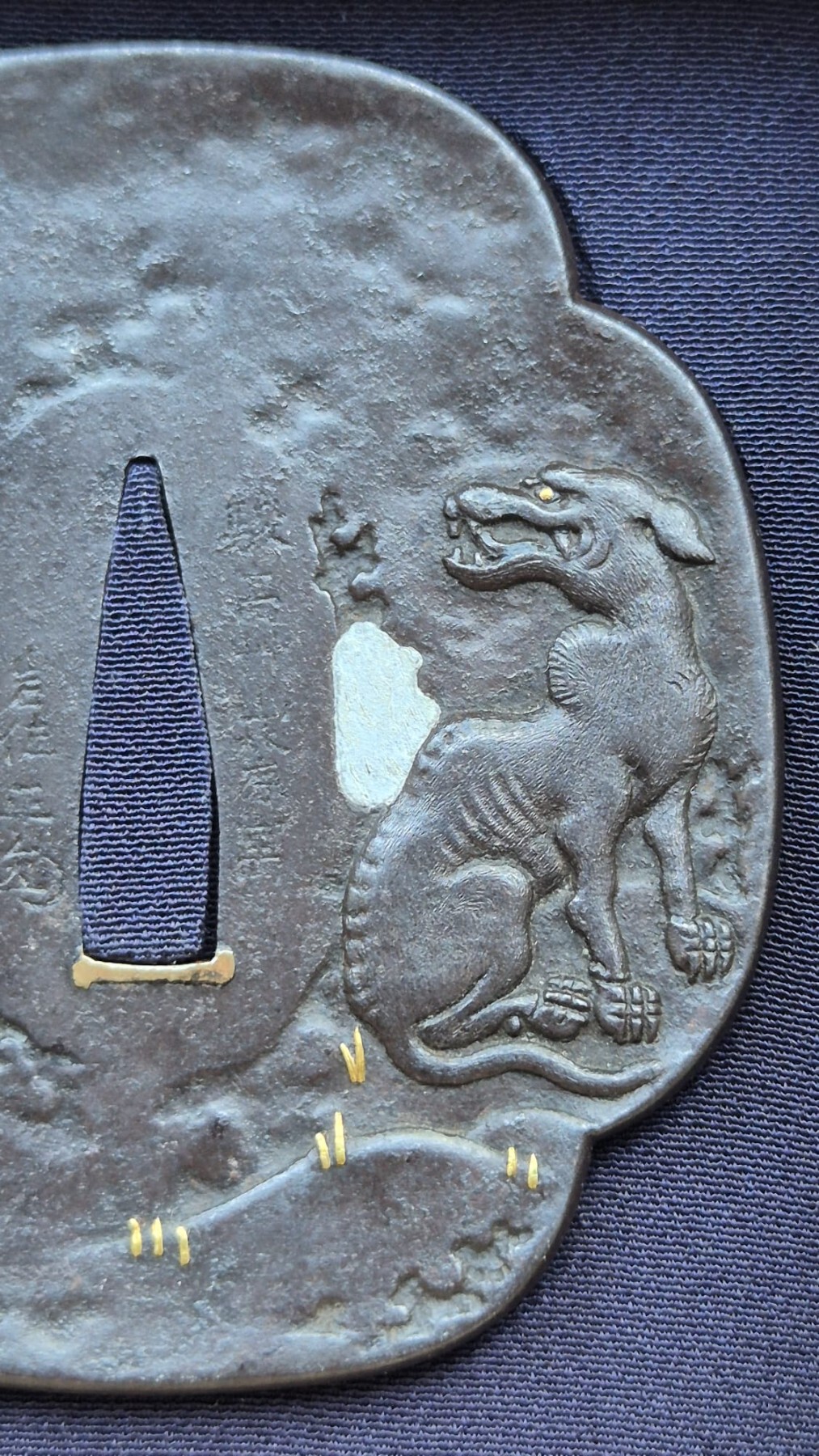
I recently received results from the NBTHK shinsa but it lef me puzzled. So I would like to ask the community for any information on the maker and school of one of the pieces, which came back Tokubetsu Hozon. The piece: Iron mokko-gata tsuba with a starving wolf (餓狼図, garō-zu) in sukidashi takabori. Kin-zōgan for the eye and claws, shirogane-zōgan and lead(?) Ategane. Tsuchime-ji ground, uchikaehi mimi. The composition reads as a two-sided landscape, the wolf inhabiting the terrain implied by the omote. Signature: Two columns beside the nakago-ana on the ura: Right column: 駿高双山麓寓 Left column: 岩佐正 (花押) I read this as: "Residing at the foot of the twin mountains in Suruga Iwasa Masa [kao]." Or is there another reading? The 駿 abbreviating 駿河国 (Suruga province, present-day Shizuoka). The 双山麓 as a geographic locator, can only be Fuji-san or do know other twin mountains? What I am trying to establish: The Iwasa school in metalwork does not appear in the principal English-language references I have access to, and I have not found 岩佐正 in auction records or published catalogues. I would be grateful for any of the following: Has anyone encountered signed work by 岩佐正, or other Iwasa-signed tosogu? Any Haynes Index entries for Iwasa metalworkers would be particularly useful. Thanks everyone. Cheers, Alex

 3 points
 -
Without good relationships, you won't see 10 TJs on the table even at the best dealer in Tokyo Probably not one Utrecht is honestly mostly about average quality blades But it's an opportunity to see dozens of blades in one place and start training his collector's eye. Elias is in a euphoric state where he is willing to spend a significant amount for average Juyo level blades I also think he would do best not to rush and if he has the opportunity to travel to Utrecht, let him do it - not to buy anything. It's only a few hundred kilometers from Germany and the atmosphere is much more homely compared to DTI3 points
-
The tag looks questionable to me. The town’s name Miyajima-cho (宮島町) was used after 1950. If the tag was written just after the end of WWII (1945), the town’s name should be Itsukushima-cho (厳島町). At the time, Hiroshima-ken was most likely written as 廣島縣. There are three 島 kanji on the tag. They are all wrong characters. 宮 looks strange. It looks like 官3 points
-
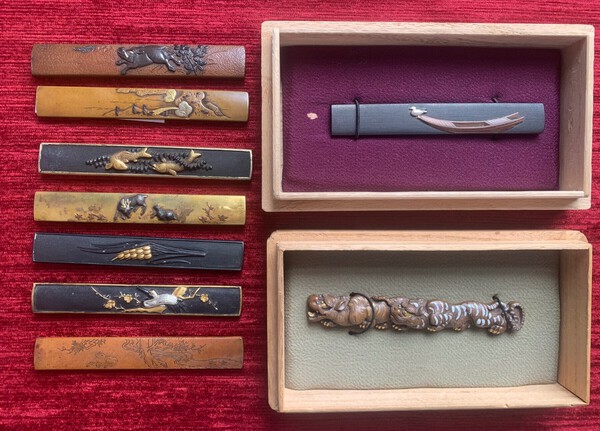
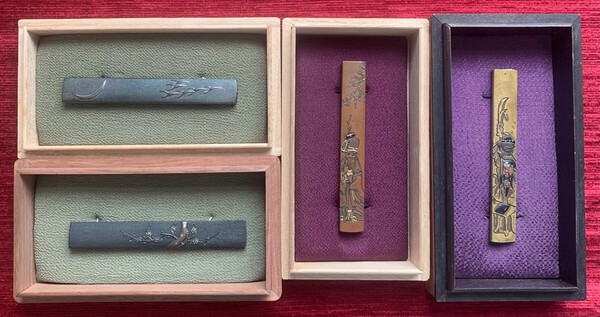
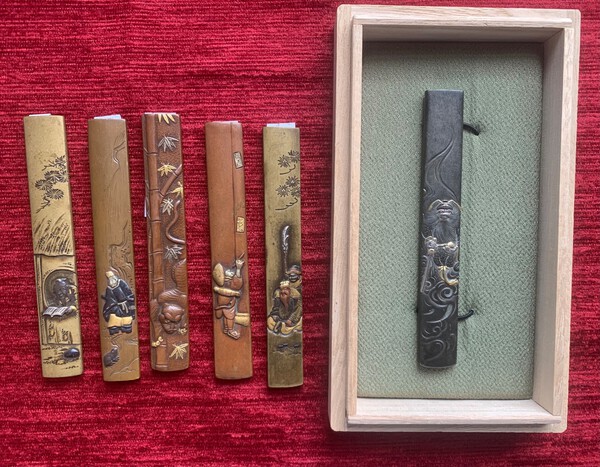
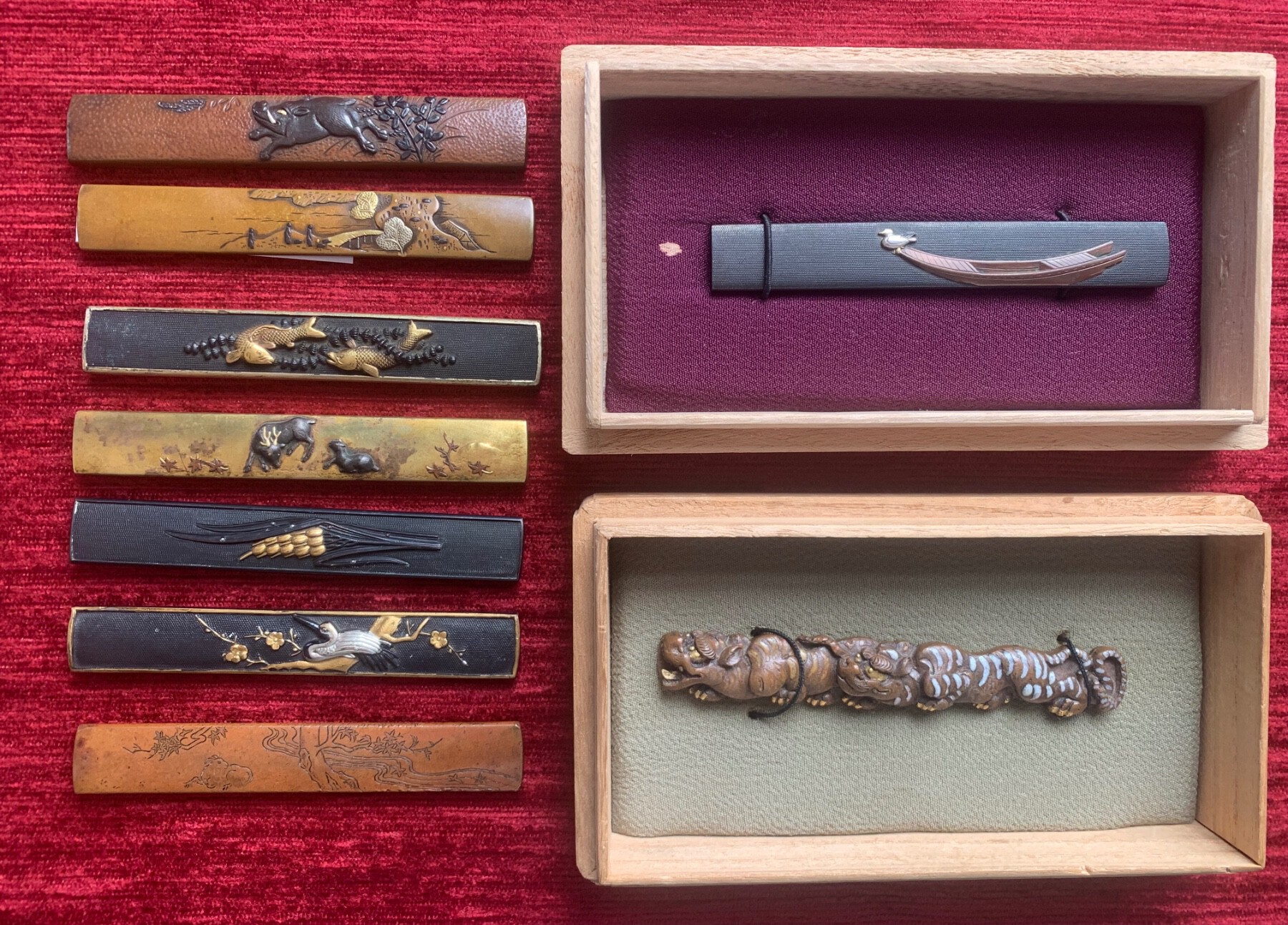
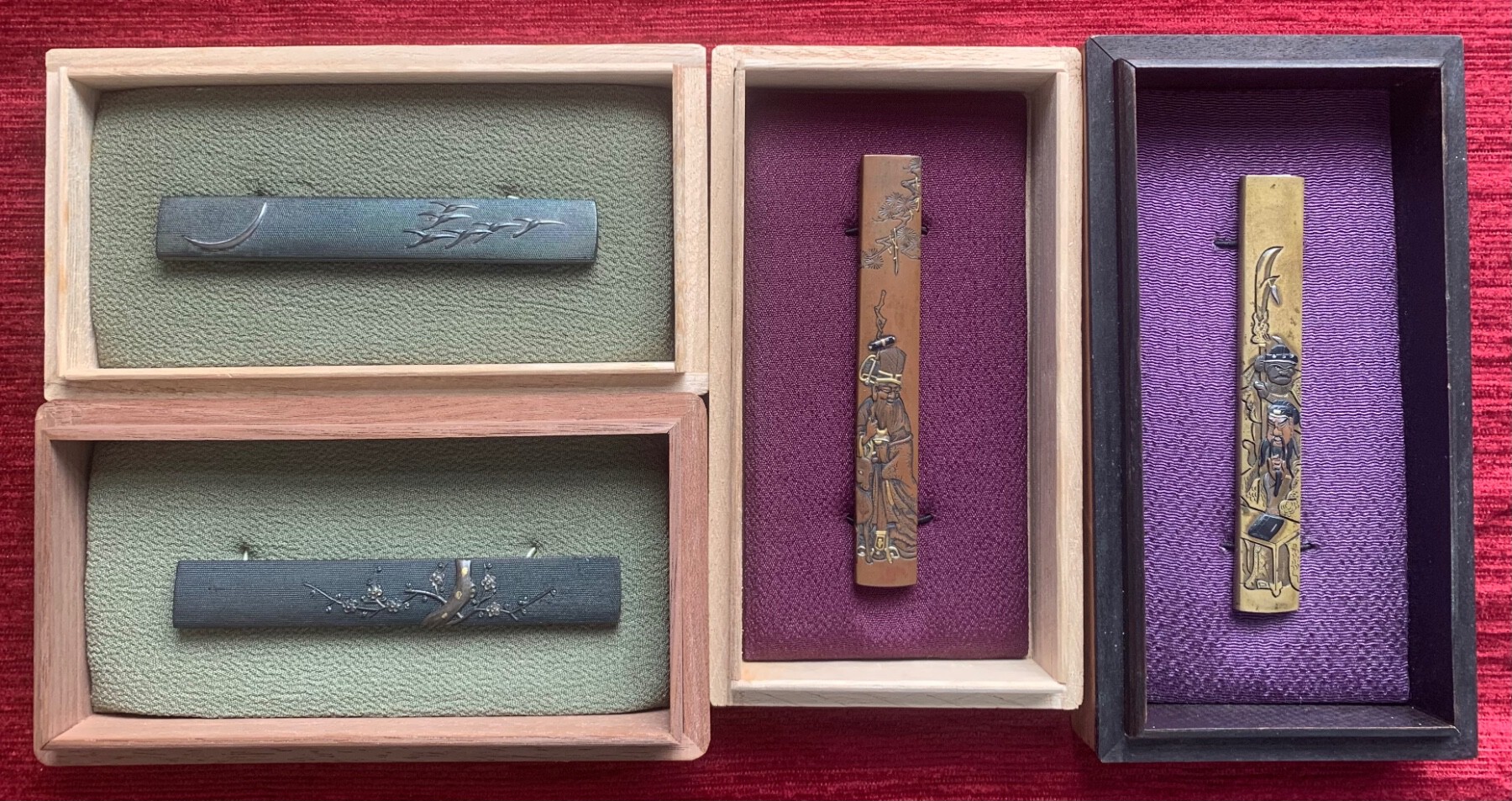
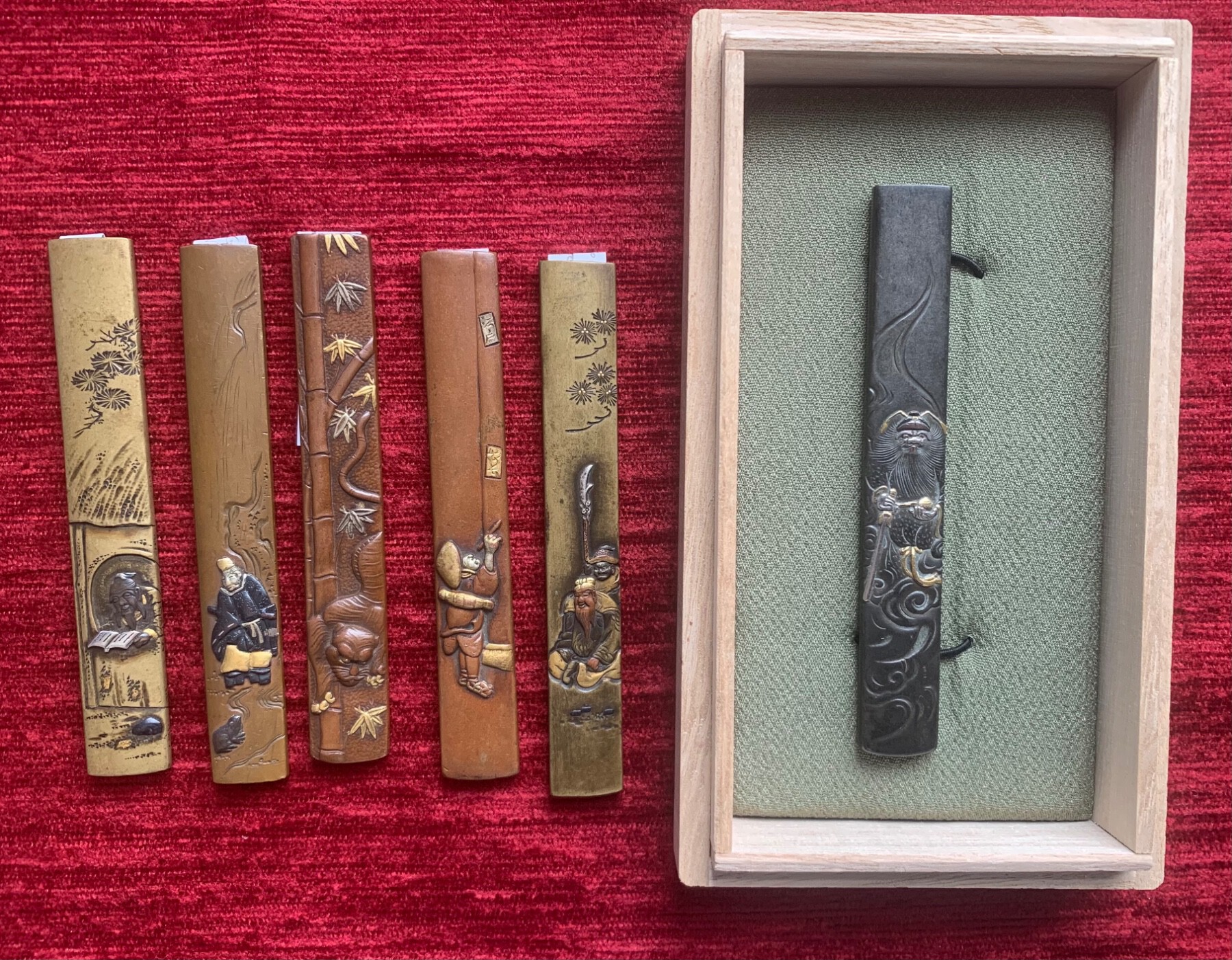
The Birmingham Arms Fair is coming up (14th June) so here are some poor images of assorted kozuka that I will be taking (Table 81) Mei include Goto, Hamano, Issando Joi, Hirata (the incredibly rare enamelled tigers) etc. Quality ranges from “OK” to very fine (imo🙂) Hope to see some of you there. All the best. Colin
 3 points
 -
Here's the only 2nd ever koa isshina mantetsu sword I've ever seen with a gunome temperline: https://www.jauce.com/auction/b1230588478?allow=1 The other one I've seen is one that I owned, and I sold it in 2021 for only $2500. I should have found a way to sell it in the Japanese market, where koa isshin mantetsu blades apparently command exorbitant prices!2 points
-
@Esaiah1391 Your other thread can be found here where people offered input, had questions, and some requests were made for more images2 points
-
Well, you know my default setting is to assume the best unless it's obvious, like some of the fakes truly are. But you may be right. But for a fake, it's an odd one. They must have used some real parts, like the koiguchi (perfect) and tsuka wooden parts (ever see workman's writing on the end of a fake tsuka?). The ito looks new, yet most metal parts appear heavily worn. The same' looks new. The undrilled sarute ana doesn't bother me, by itself as we've seen this on other legit gunto. The blade and kissaki are better than most fakes, but the nakago, while much better than most fakes, is still off. Drew, it's your sword. Guess you'll have to decide what you want to call it.2 points
-
Hi Steve, welcome! Ian is right. Yours originally came with a leather saya (scabbard) cover) and a belt loop hanger. They often go missing after the war. You can see how it would have looked on this page on Ohmura's site: Type 98 Informal Mounts, Sesko listed two Kaneshige working during the war, so don't know which was your guy: "KANESHIGE (兼重), Shōwa (昭和, 1926-1989), Ise – “Fujiwara Kaneshige” (藤原兼重), he lived in Kuwana (桑名) KANESHIGE (兼重), Shōwa (昭和, 1926-1989), Kumamoto – “Higo-jū Kaneshige” (肥後住兼重), “Kaneshige” (兼重), family name Kimura (木村) but it is said that Kaneshige had been his first name too, he lived in Yatsushiro (八代), the Kimura had been smiths in the service of Higo’s Hitoyoshi fief (人吉藩) since the Edo period, Kaneshige studied from 1942 under Kurihara Akihide (栗原昭秀) and worked then as a guntō smith until the end of World War II (see picture right)" Care and Cleaning: Japanese Sword Care.2 points
-
I mistyped - you are absolutely right. I was thinking Katayama. Norifusa is the founder of Katayama Thanks for pointing the silly mistake out!2 points
-
Kirill, please understand. He is from Germany. At museum You can’t hold one in hand, same with online sellers. Utrecht allows him to see irl some good blades. Fresh to hobby?, I don’t expect from him to spend 3k to fly to Japan just to try to speak with natives. I understand that You are seasoned nihonto scholar. He is beginner wanting to start collecting after 2 months in Japan. Utrecht is easy and safe for guy like him or even me. In states You have more of everything. Try to be more favorable. He want to buy Porsche, You advise him to take a trip to Sweden to look at Koenigsegg? Marcin2 points
-
I always have issue with studying and learning before buying, because paying tuition is something that makes a lot of difference. And always like to be a bit contrarian-controversial. It took me a year of owning and studying some blades to realize their potential or my understanding of them. DTI. Prices are Tokyo retail. You hear about great deals from people who make a living buying there, adding 25% and selling worldwide, but to do so you need to have clientelle and established brand. Selection. I still remember my first DTI. After three days I became convinced - there was only one A+ blade. TJ Shintogo. Amazing piece. There were at least nine Rai Kunitoshi (later ones) in suguha which were mostly boring, some great tosogu, typical Shinkai (yes good, but typical), some other stuff. I think there was signed dated early Yamato tanto but again, signed but jigane was sort of rough. Hiromitsu, not the best. The idea that you'll see Sadamune, or first tier Sa - its possible, especially if you go there for years. At the same time you can walk into Sokendo with an introduction, ask for two great Sa blades and you'll have them in front of you in 10 minutes. There are quite a few collectors who can do the same. So, why DTI? Its like I constantly hear "Ultricht, Ultricht", but why? Ten TJ on a table? Twenty?2 points
-
It is a Shin gunto or army sword rather than a kai gunto which is a naval sword . You can tell this by the handle mountings. The blade is signed Kaneshige and is most likely made during the war years2 points
-
Hi Lewis, it is just the opposite. The long KITAE WARE are incomplete welding spots, mostly caused by insufficient temperature in the folding/fire-welding stages. They are often seen on the MUNE as results of the composite construction2 points
-
Andrew, I can't add anything about the tag that hasn't already been said, but would love to see more of the kaigunto, fittings, blade, and nakago! There are guys on a couple other forums that know how to look up WWII personnel. Try Warrelics - Japanese Militaria and Wehrmacht-awards - Japanese Military Forum2 points
-
The Iwato Ichimonji has passed through several dealers after passing the Jūyō shinsa. 2021 - https://web.archive.org/web/20210612111517/https://katananokura.jp/SHOP/2105-K02.html (without koshirae) 2025 - https://web.archive.org/web/20250322181409/https://www.samurai-nippon.net/SHOP/V-2114.html 2025 - https://www.toukentakarado.com/item-tk017-juyo-den-iwato-ichimonji 2026 - https://www.aoijapan.com/katana:mumeiunsigned-den-iwato-ichimonji-65th-juyo-token/2 points
-
As others have said, you need to determine your aesthetic preferences first and then also fine tune your technical knowledge. I would not be too harsh on you here as both swords have similarish notate hamon outline (at least the Kesho outline) but Ichimonji has more choji and slanting gunome. That aside, it is clear to me you like robust-looking (both have very similar moto/sakihaba) older swords (14 century Koto). Look at how healthy the Iwato is. It is 50% heavier for only 10% more length. Also look at the jigane. While the setsumei (narrative) of the Juyo certificate of the Sa comments about it being kenzen (well preserved and healthy), I would say the Iwato seems healthier and also the jigane is tighter. The koshirae are both average (at best) typical Aoi add-ons, adduced by Aoi to make the “packages” more attractive to a foreigner. Don’t be skewed by them. Utrecht is helpful but don’t expect heaven and earth. After all, it is only 8-9 dealers. And if you can, visit Utrecht, visit collectors, go to the DTI. The latter is the real eye opener as that is where you see the top quality which Utrecht cannot give you (you will see JuBi and if you are lucky the occasional JuBu, lots of TokuJu and countless Juyo). Tune your eye and understanding.2 points
-
Hello, I have these 3 woodblock prints for years and never had them translated. I would appreciate any infos on the kanji meaning. I will post close up if needed. Thank you


 1 point
 -
I appreciate directness of the responses. One of the books on investment I've read suggested setting up a training account with 1,000$ total expenditure cap. Why not just simulate purchases and sales? The argument is that the sense of ownership is a great motivator to study companies. More so with swords. An expensive motivator, but a substantial one. The danger of going to a sword show is you have a feeling you must purchase something to justify the time and expenses, as a newbie you show the blades to ten people who reply "where you got it" and then some become very enthusiastic about this prospective purchase... because yes its a social event. With all the consequences. Sword shows expose you to very many very average blades and if you don't have the resistance build in there is an urge to find some hidden greatness there. And frankly you would be much better off with either of the two blades being shown than 95% of the stuff you see at the show. Its a great place to look at blades, and if you are very experienced it can be a great place to buy, but if you new and want to make a purchase.... I would suggest looking at these two blades in real life by flying to Japan, visiting couple of other stores, since there are plenty in Tokyo and making a purchase. 6 million yen budget justifies that.1 point
-
Small correction: “義臣” (Yoshiomi).1 point
-
I presume any modern engraving machine/device can do this. The IJA may well have made use of such a device, but certainly Iga-no-kami Kinmichi did not.1 point
-
Good afternoon Sam & Sky. Thank you so much for your confirmation, I really appreciate it. It moved to the end of November a few years back as I recall. Being utterly selfish, such a shame, as it was a great combination of the Meiji Jingu Embu and Dai Token Ichi over the same weekend. A Brief moment of pause to remember Guido, who made DTI, DTI De Luxe with his wry humour. Sadly missed.1 point
-
Are you sure? I know there were several Norifusa working in the 13th century but none are mentioned in eSwordsmiths as having migrated to Sagami. A generation moved to Bitchu and established the Katayama Ichimonji school in Bitchu province but the attribution is further complicated by a different Katayama village near Fukuoka in Bizen with the 2 centres of production generating slightly different styles of Fukuoka Ichimonji. Kunzan suggesting the Katayama differentiation should be dropped altogether as being unhelpfully confusing.1 point
-
Excerpts from a Gen AI research response (not verified or validated): "The mountain 双子山 (Futagoyama / Sōzan) is a real, named twin-peak feature on the slopes of Mt. Fuji itself, in Suruga province, on the Gotenba route at about 1,800–1,929 m elevation. It consists of two peaks (上塚 Kamizuka / Upper Mound at 1,929 m, and 下塚 Shimozuka / Lower Mound). It is also called 二ツ塚 (Futatsuzuka). This is exactly what 駿高双山 ("Suruga's High Twin Mountain") refers to — the twin peaks high on Mt. Fuji's eastern flank in Suruga province. The signature is saying: "Residing at the foot of the High Futagoyama in Suruga" — meaning the artist lived in the Gotenba / Subashiri region at the eastern foot of Mt. Fuji. This is a wonderfully specific and poetic location claim. The Gotenba / Subashiri area was in Suruga province and was part of the Odawara domain's territory at various points, and the foot of Mt. Fuji had a culture of mountain ascetics, literati, and craftsmen drawn by the sacred geography. The signature 駿高双山麓寓 — "residing at the foot of the high Futagoyama in Suruga" — points to the Gotenba / Subashiri area at the eastern foot of Mt. Fuji, on the Suruga side. The character 寓 (gū, "temporary lodging") implies the artist considered himself a sojourner there rather than a hereditary native — perhaps a ronin, retired samurai, or literati-craftsman who relocated to this scenic, semi-rural area. Name: 岩佐正 + kaō. With the kaō immediately following, the given name is a single character 正. The most likely readings are Iwasa Tadashi or Iwasa Masa(shi). Single-character art names with kaō were a common late-Edo / Bakumatsu literati affectation, modeled on Chinese-style scholar-artist signatures. The honest reality: This artist does not appear in the major standard references (Haynes, Wakayama, Sesko's Genealogies). The NBTHK Tokubetsu Hozon paper attests that this is a genuine and important work, but the artist is what specialists call a "rare master" or unrecorded smith — a skilled independent craftsman whose oeuvre is too small or too localized to have entered the major published indexes. The high quality of the work (Tokubetsu Hozon for an unrecorded maker is uncommon) suggests he was a serious artist, possibly: A samurai-amateur from the Odawara, Numazu, or another local domain, working in metal as a refined avocation A late student of one of the Nara-school descendants (Hamano, Yokoya, Yanagawa lineages) who left Edo to retire to the Mt. Fuji foothills A Bakumatsu literati craftsman who consciously cultivated obscurity as part of a wabi/recluse aesthetic — the elaborate poetic residence inscription is consistent with this" I'm not sure if this helps, or how accurate it is, but it sounds plausible and may provide some direction for additional research. Damon1 point
-
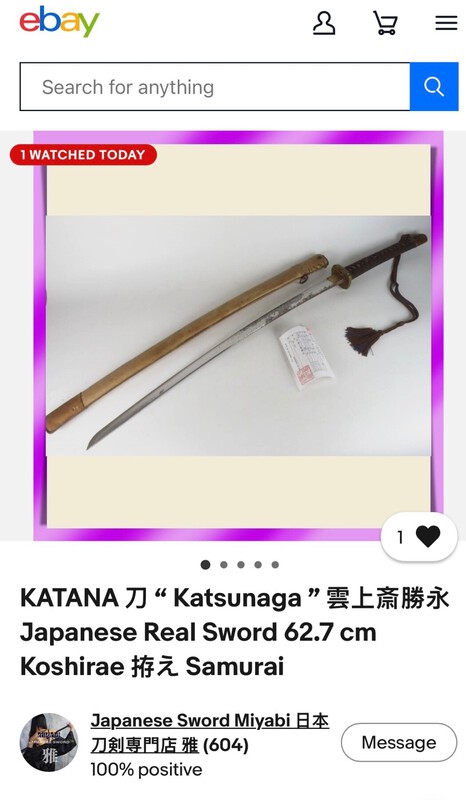
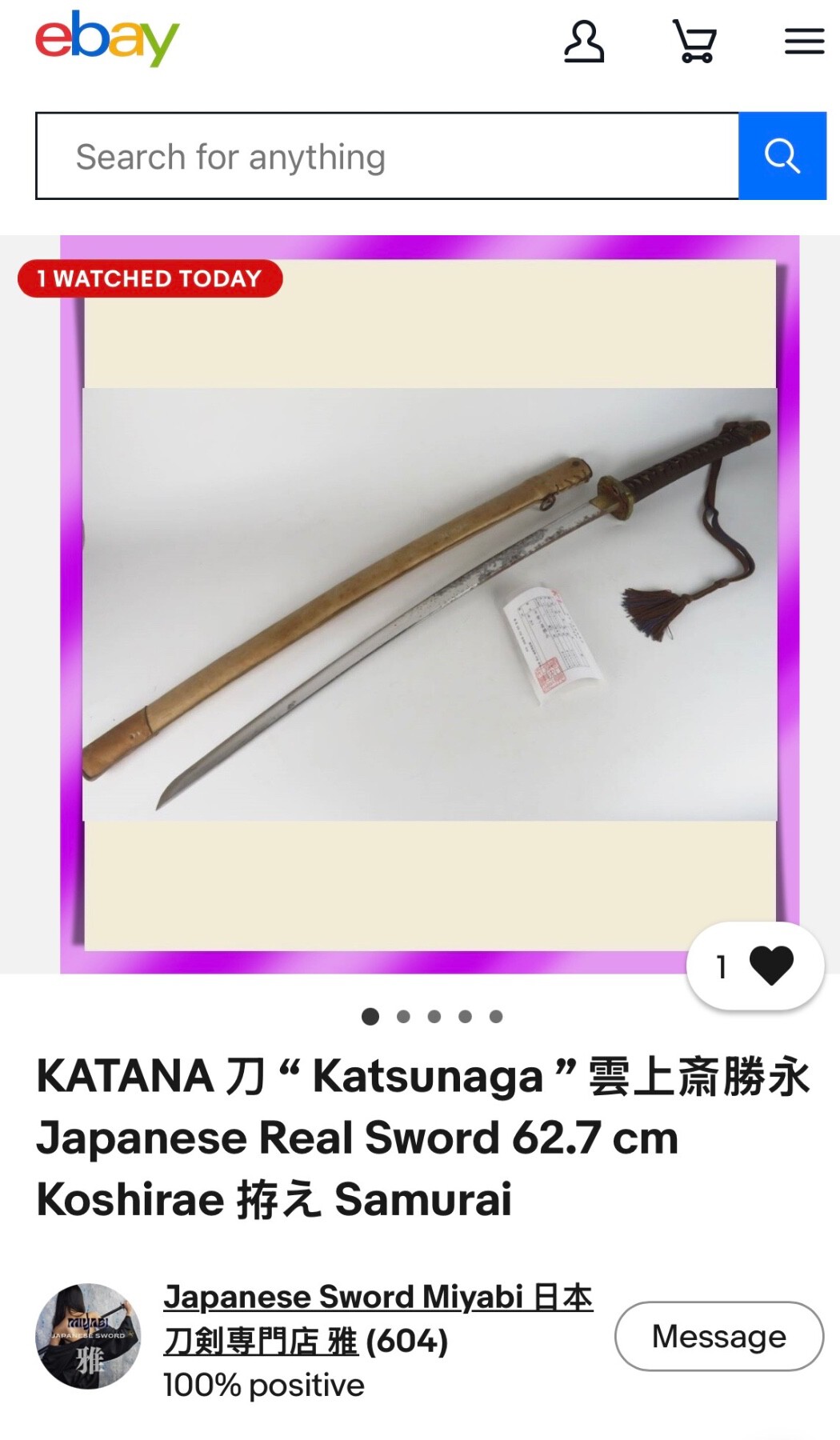
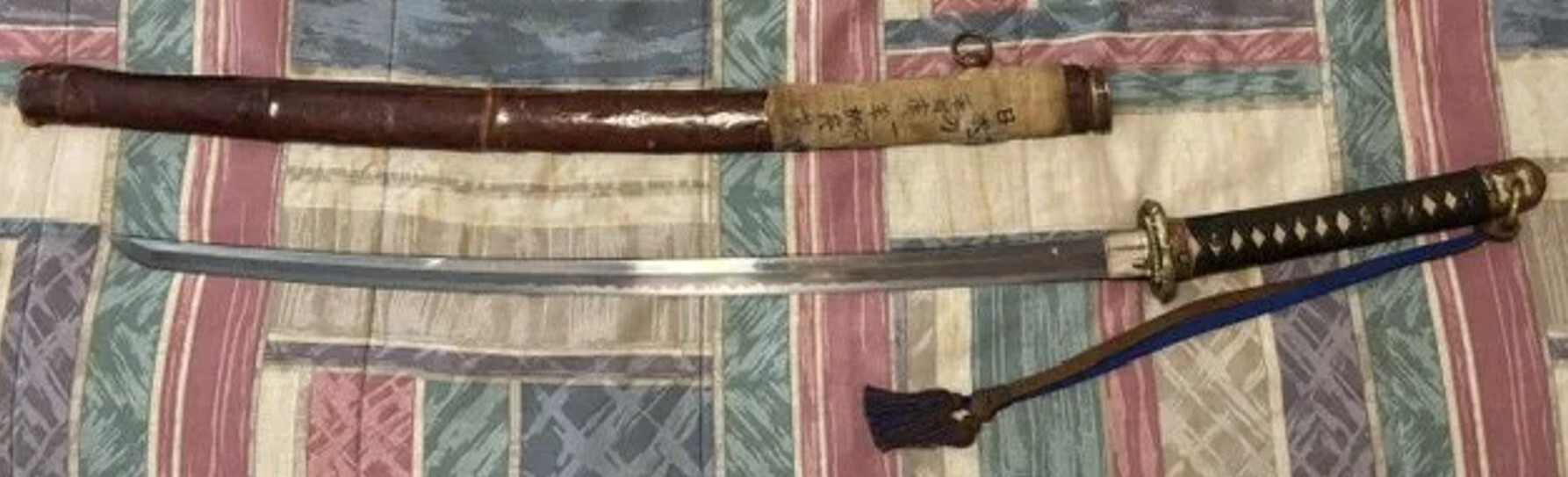
Resurrecting this one rather than starting new. One more Katsunaga blade to add to the list just popped up on EBAY. Too old and technologically challenged to copy and paste the direct link.. but here is a screenshot of the site/blade.
 1 point
 -
I think Sam is right on the mark with his assessment. For me, the artificial rust on the nakago and the freshly drilled mekugi ana scream fake. Tom1 point
-
Michael, As usual, I agree with you wholeheartedly but I'm not sure I concur 100% on the above point. There are some ware in the Ichimonji hamon, small indeed, but pitting and openings in the ha kinda drive me crazy even on almost 700-year-old blades. Can't always be avoided and I get that. It's a purely personal thing. And when you say the Iwato jigane is tighter, I would argue that Bizen jigane is almost always going to be tighter than Sa School work, with the exception of maybe Yasuyoshi whose work appears to have been influenced by the Bizen school. The Iwato has flashes of brilliance but never quite gets there for my taste, but that's Iwato, I guess. It just doesn't have that "oomph" that the other Ichimonji schools have. Likewise, the Sa blade is well above average with a nice thick nioiguchi, but it's nowhere close to the top of the Sa School pile.At the same time neither of them are priced like they are national treasures. And I agree that by and large they on equal footing, both being stout Nanbokucho works done in notare, offering the qualities of their respective traditions. The ask isn't huge, but it is a big leap for most people. But I am with you in that Elias should walk away at this point and study until he knows what his heart desires, and a trip to DTI would be mind-opening. In fact, I need to go one of these years before I am a fully petrified fossil. PS: I am trying not to be a victim of my own Sa School fanboy inclinations but it's hard not to love what you love and not be swayed by that.1 point
-
@TLD Where did you find this sword? There’s a new grifter on eBay selling swords out of CA, but the seller is actually based in China. Looks like it could have come from this seller.1 point
-
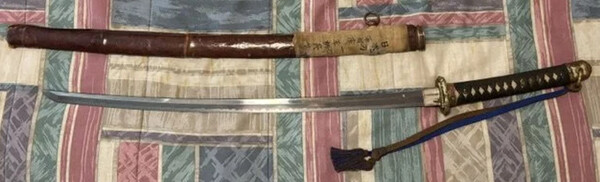
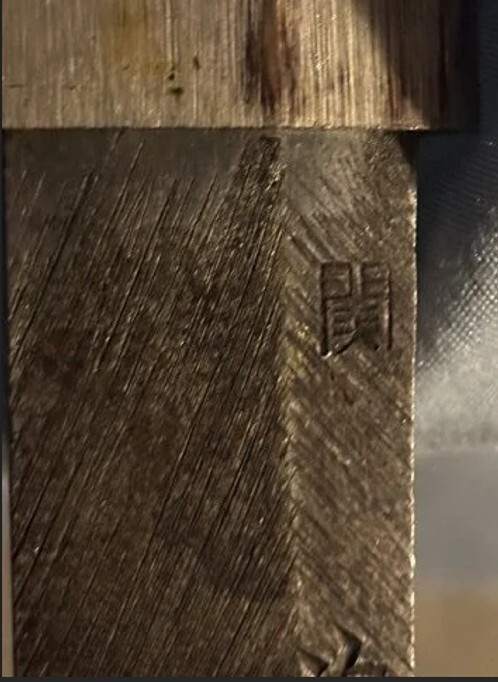
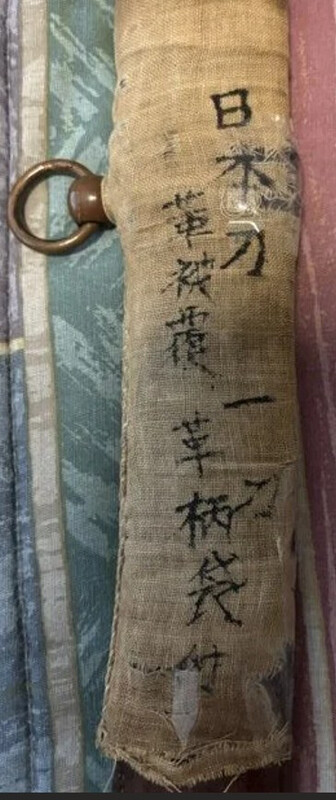
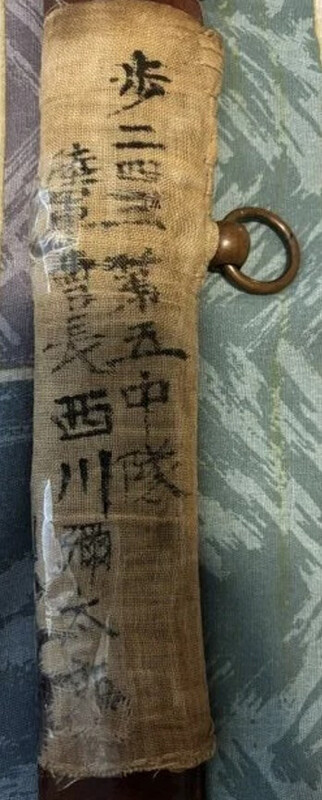
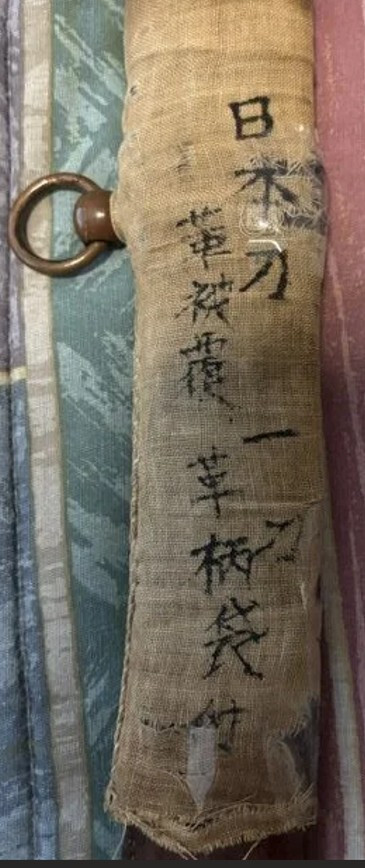
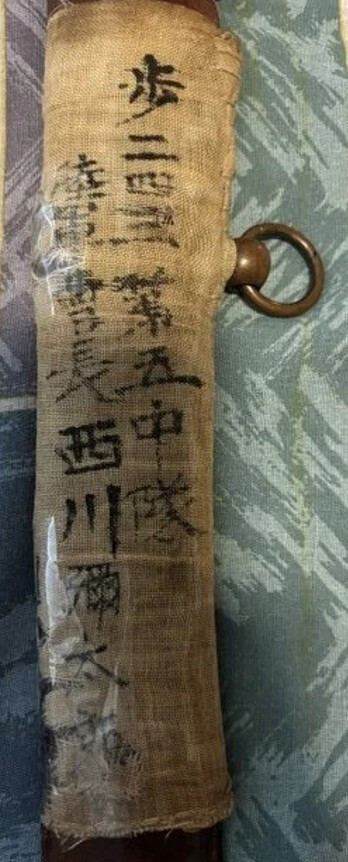
I think we have a couple photos showing NCOs with officer gunto. If anyone knows where they are, please add to the thread. But what I found today is an officer gunto with a wrapped surrender cloth of a Sergeant Major. Found on this Gunboards Thread. The cloth says: ""243rd Infantry Reg., 5th Co., Army Sgt Maj. Nishikawa Yataro" with the flip side reading "One Nihonto sword including leather scabbard cover and handle cover" - translation by Edokko, Gunboards. The blade is an undated, large Seki stamp, Kanemasa. I mention that because later in the war, the uniform regulations were amended to allow NCOs to carry civil swords. This one is in a leather covered wooden saya, but there's nothing about the blade nor fittings that says "civilian sword refitted for war." The company grade tassel could easily have been added by an owner over the past 80 years, but if original, would be another one of those mysteries. Was the Sgt Major being promoted to officer rank? Who knows. My Army son-in-law said "Sgt Majors are at the top of the food chain, like a General or Admiral. They do whatever the fxxx they want to do."

 1 point
 -
So cool Jussi, in 2021 valued at 5,5 million then 6.5 with koshirae. Maybe kissaki scares peps here.1 point
-
I am not trying to be difficult here but the questions really don't make a lot of sense to me. For example, please define what you mean by "history" of the blade? Are you talking provenance? The history of the period when it was made? How the smiths and schools were seen by history? Given that one sword is attributed to a smith who was the son of one of the most important sword makers in Japan, and the other is broadly attributed to a school, is that the kind of historical touchstone you are referring to? These decisions for many collectors are normally based on their own interests and collections. If you collect Nanbokucho Soshu, then the Sa blade fits. If you collect Kamakura Bizen then Ichimonji would be the way to go. Other collectors just buy what moves them. Some just buy Juyo. Some want blades w/cutting tests or battle damage. Some want swords from particular time periods or schools. Now, broadly speaking Iwato Ichimonji is viewed as the least prestigious of the four Ichimonji traditions, the others being Ko-Ichimonji, Fukuoka Ichimonji and Yoshioka Ichimonji. Hard core Ichimonji fans love the first two. But it ultimately depends on the sword, because even the worse Ichimonji can be great. That said I have seen MANY ho-hum Ichimonji. In fact, I was kind of unimpressed with the hype surrounding Ichimonji swords until seeing Paul Davidson's Yoshioka Ichimonji two years ago at Sothebys. It was like a revelation, like seeing a sword for the first time: a brilliant habuchi with choji that looked almost three dimensional; layers of floating utusuri like the clouds a plane passes through on its way to a landing. Never handled one like that before. I've seen some nice ones but this was the first and only one I ever handled where I remember thinking: "So this is what all the Ichimonji excitement is about." So, If my pocket were full of change, and if I were hunting for an Ichimonji blade, I would want something at least which approaches that. But that's aesthetics, not history. Elias, while I appreciate your desire to touch history, my recommendation is almost like a mantra or broken record on this board: keep your money in your pocket. Study. Look at as many swords as you can. And when you decide what school or time period moves you, then go shopping. Until then, keep your powder dry and your mind open. Buying swords is easy. Buying the right sword takes study. Best of luck.1 point
-
I have to agree with the above assessments on the tag. My initial thoughts were that it looks too new. The ink looks like it was from a Sharpie rather than brushed. Can you tell up close? I guess it could be original IF it is brushed/ink pen AND were kept in a sealed box for the last 80 years. Not even a speck of dust on the cloth. But I would question it. John C.1 point
-
I spent two months in Japan, and during that time I developed a real fascination with Japanese culture and history. Because of that, I’m willing to invest a certain amount of money in a historical sword. For me, owning and admiring a genuine piece of Japanese history on a daily basis is something very special. However, I’m an absolute beginner. I don’t want to lose money unnecessarily, and I know I currently lack the experience and trained eye to recognize an exceptional blade. I hope that will change over time as I continue learning. At the moment, I’m mainly trying to gather information and avoid paying expensive “tuition fees” through bad decisions. I’ve learned a lot over the last few weeks, but I still don’t want to buy a katana without a clear understanding of what I’m purchasing. For me, the history and quality of the blade are more important than appearance alone. I would really appreciate any advice or opinions from more experienced collectors.1 point
-
The blades are radically different — different traditions, different aesthetics, different emotional impact. In some ways, asking whether the Jūyō Iwato Ichimonji or the Jūyō Sa Yoshisada is “better” is like asking which classic Hollywood star was more beautiful. There is no objective answer. The real question is: what are YOU looking for? Do you want the flamboyant, aristocratic elegance and luminous choji of Ichimonji? Or the darker, more intense, more inwardly powerful atmosphere of late-Soshu Sa work? Those are fundamentally different experiences. At the Jūyō level, you are already operating in rare air. Many collectors on this board have never even handled a Jūyō blade, let alone had the opportunity to choose between two. Is this an investment question? A market-value question? A “best bang for the buck” question? A school popularity question? Or is it about which sword actually moves you when you hold it? Because ultimately, that is the only thing that matters. The sword you keep coming back to in your mind — the one that pulls at you a little — is probably your answer. On the matter I will say only this: there appears to me to be no shortage of Ichimonji or Rai school blades out there in the market. If you miss one, another one will come along, both better and worse. The same can't be said for blades directly attributed to Sa School smiths. But, again, it all comes down to what moves YOU. Nobody here can answer that but YOU.1 point
-
I believe that signature is on the kogatana.1 point
-
https://iidakoendo.com/16843/1 point
-
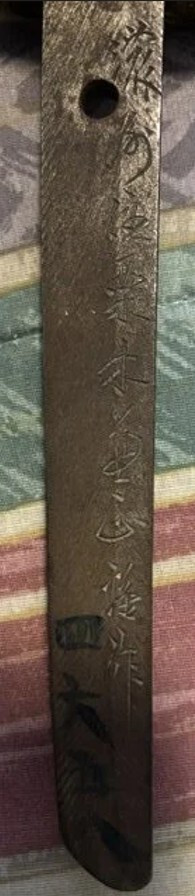
関住兼松一則作 – Seki ju Kanematsu Kazunori saku (Kazunori’s family name is Kanematsu.)1 point
-
With that many sales listings you would hope for a gold membership to support the forum.....1 point
-
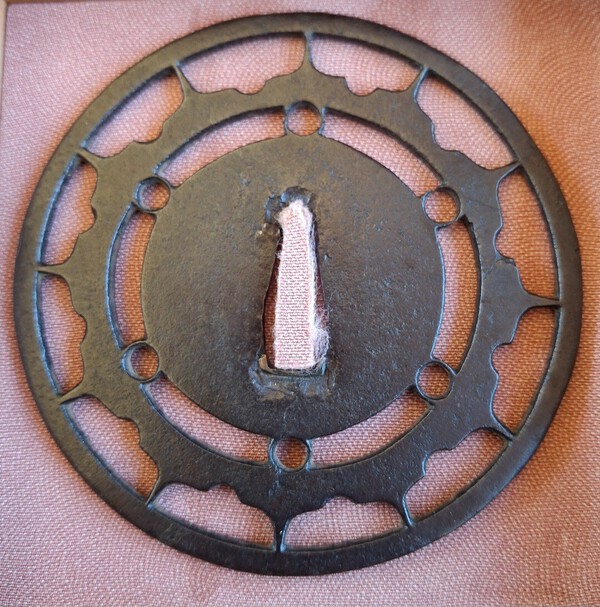
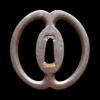
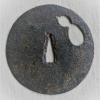
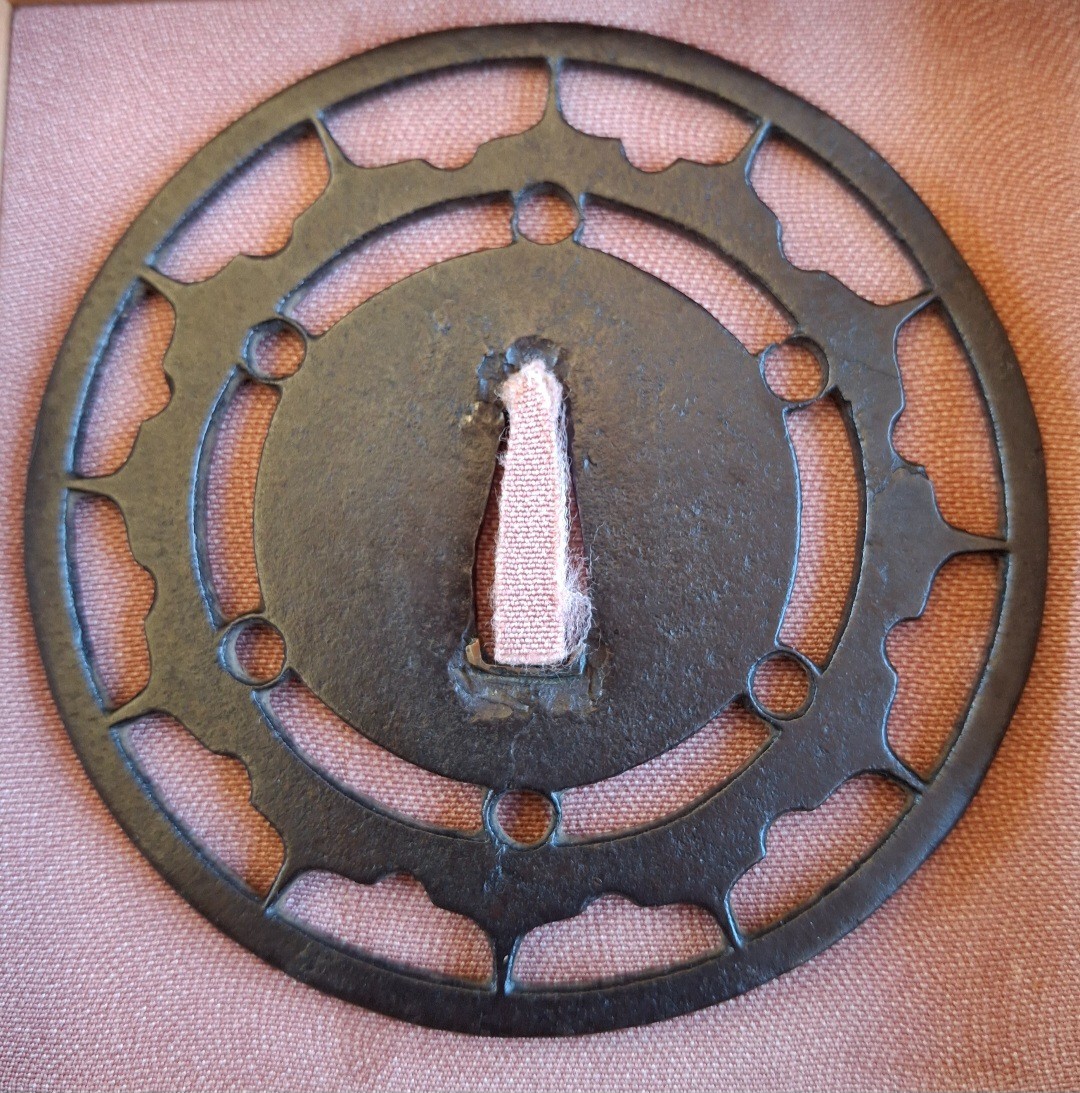
Hi, I have purchased this so called "Ko Katchushi" tsuba at a flea Market in Tokyo and was wondering if it dated from Momoyama or Muromachi aera? What are your views? Thanks
 1 point
 -
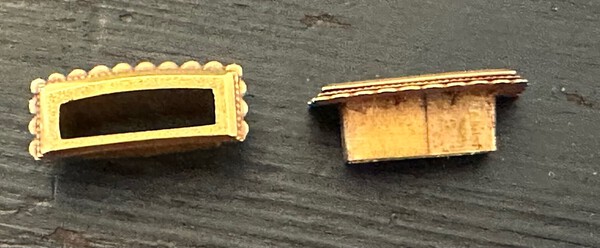
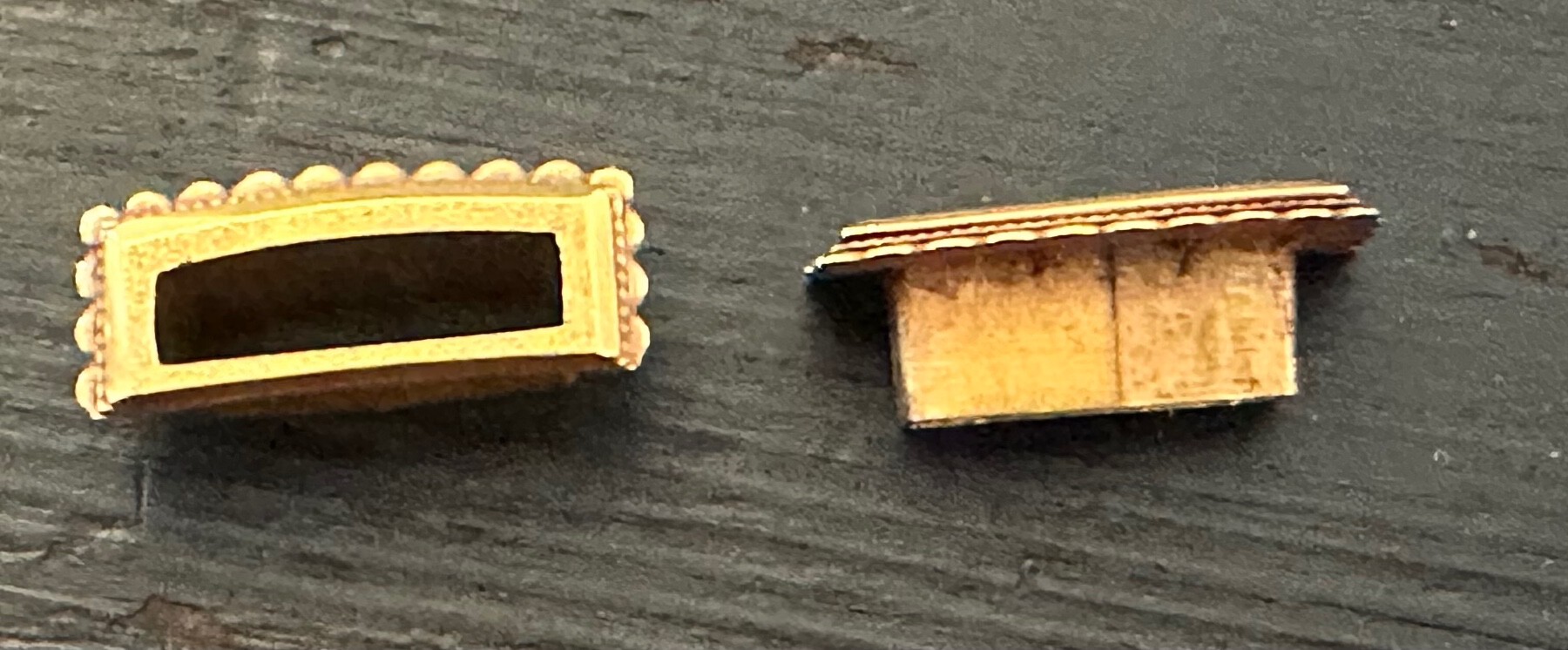
rare but they do exist. The photo shows a pair. Solid gold with nice “gold rust”, mid Edo.

 1 point
 -
The days when you could buy something cheaply at a flea market that turned out to be a treasure are, unfortunately, over. Even in Japan.1 point



















This leaderboard is set to Johannesburg/GMT+02:00