
Leaderboard


Popular Content
Showing content with the highest reputation on 04/19/2026 in all areas
-
I got informed that the tsuba i submitted to the 2026 NBSK tsuba contest ranked Nyusen. It was my first time attending this competition so overall it's a positive result. Let me introduce my work: The omote depicts plum blossoms, traditional symbols of resilience and elegant beauty, as they are the first to emerge at winter’s end, often pushing through the lingering snow. On the ura, I have engraved the haiku: 見らわても 見らわなくとも 花は咲く Mirawetemo / Mirawanakutomo / Hana wa saku (Whether seen or unseen, the flowers bloom) This serves as a gentle reminder to the bearer: one should act with integrity not for the sake of recognition, but because it is one’s nature—just as a flower blooms to fulfill its purpose, regardless of an audience. The intentionally naive, almost childlike rendering of the blossoms and calligraphy creates a deliberate juxtaposition against the raw strength of the iron and the tsuba's martial function.

.thumb.jpeg.6a267b6df7c353e51d1e00dc76404d6f.jpeg)
.thumb.jpeg.154d86ce5811ce42d0b41bd8866d3b40.jpeg) 12 points
12 points -
8 points
-
I have done a three book set on the subject, along with five others centering on specific collections from the 19th century and early years of the 20th. Plus a few related design references - the books mentioned concentrate only on tsuba other objects from those collections are not included. Total pages 934 1924 100 pages 1894 > 1902 88 pages 1916 98 pages 1911 68 pages 1884 and 1898 82 pages I did the Wrangham collection along with the Hartman collection for my own study source. A thick book of 415 pages [I guess it is a "pirate book" as it is the only one in the world ] The Georg Oeder collection was translated from German to English - the original German is here: https://archive.org/details/japanischestichb00vaut/mode/2up Willkommen bei NMB, Alexander!
 5 points
 -
Hello, Which school for this Tsuba ? It looks like Ko kinko style but ... Any opinion welcome Thanks Sebastien

 4 points
 -
Both Aoi's Japanese and English websites are mistaken. The Japanese website claims the sayagaki and polish were done by "the famous Hon'ami Kōkei", but Hon'ami Kōkei died in 1800 or thereabouts. And...I don't think he was particularly famous. He seems to be a bit obscure. The English website is completely lost in translation, as it says the sayagaki and polish were done by Hon'ami Kōson. Anyway, the sayagaki has a date of 1990, so it couldn't have been written by either Hon'ami Kōkei or Hon'ami Kōson. The sayagaki isn't signed by the author. The sayagaki does say that the polish was done by "Kōkei" (光敬), who I presume refers to the living national treasure sword-polisher Ono Kōkei (小野光敬), who died in 1994. No idea about the condition of the blade. Looks OK from the photos. Ubu, signed, published in a very old book (Muromachi-era "Ōsekishō" 往昔抄), validated by the NTHK in 1980, and by NBTHK in 2020. One worth looking at in hand. The timing of the NBTHK papers makes me wonder if this sword maybe never quite got the approval of the old guard at the NBTHK.4 points
-
Hi, I recently purchased this Kashira & was surprised to see this on the side! I instantly knew it was special! Looks exactly the same as an earlier post & pic of a Tsuba. In all the years I've been collecting & studying Japanese Swords I've never seen anything like it before. If looked at in detail it has Christ on the cross which has been etched in gold with the cross outline etched in silver. The etching is very detailed & you can even make out the eye's ? The Kashira appears to be made of iron for the banding & copper/brass for the face. It appears to be Edo period?? When positioned on the handle the hand definitely covers the symbol hidden at all times. It may have been etched on after the ban on Christianity was lifted at the end of the Edo Period??? But I still think it's Special & is a welcome addition to my collection & a great conversation piece!? Any information would be appreciated. Cheers. Shawn.
 4 points
 -
Hi Markus, Yes; cleaning the nakago can remove patina, which is important. Don't do it. Your nakago has been shortened but it is much more likely that the rest of it was lost centuries ago when last shortened than that it is stuck in the bottom of your handle. Get an ice pick and see if you run into metal or wood when you tap it inside the handle. From what I know about your sword, I can tell you that it is somewhere between hopelessly compromised and an important, valuable relic badly in need of competent restoration. No body can know for sure just where it falls from a few photos online. Seriously, it may be much better than it seems. I repeat: you would be smart to find honest, knowledgeable advise from in-hand examination before doing anything to change the sword. Grey3 points
-
Congrats Manuel! Being recognized even with Nyusen means your work is accepted as traditional and of a certain standard. We all wish you congratulations.3 points
-
When I look at this, I get an immediate feel of wartime Showato, the nakago emphasizes that. It's not so much a "because of this and this and this..." but a general gut feel you get over time. I honestly think this is wartime and oil quenched, but could be wrong. The thing to look for is nie and activity. That said, oil quenched still comes in many forms, there are hybrid construction methods that are in between, forged and folded but from mill steel, or semi handmade or a bit of both etc etc. So it could easily be one of these, and lately it is not unusual to find them in Japan, with torokusho...sort of a "don't ask, don't tell" thing that is becoming more prevalent.3 points
-
Deleting the pics renders this thread pretty useless. It would be nice if you would upload at least 1 or 2 pics of each here directly. Not because anyone thinks any less of someone with fakes, but because it may help someone down the line looking at something similar. We have a nice reference library growing here, and I am sure we have saved more than a handful of people from wrong purchases.3 points
-
https://www.ebay.com.au/itm/137238358374 looks like top of the range!3 points
-
In the auction it will go higher... However the prices of signed Ichimonji in suguha-like execution, tired - were never super-high. This one is not really suguha, there is definitely plenty of choji and activity but its probably still not the most active blade in hand. It may sound conspirational but I was always surprised by how large percentage of signed Ichimonji blades are actually less active compared to an average suriage one... or is it just my impression. I am not sure its a great Juyo candidate, could be, but it looks like a nice blade anyway.2 points
-
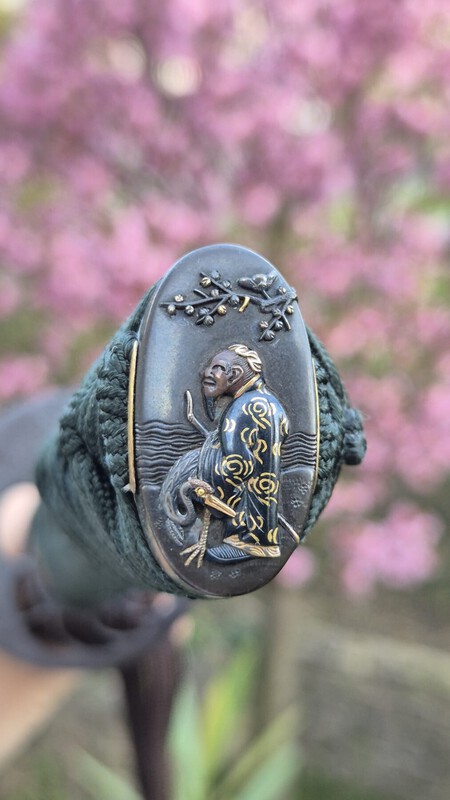
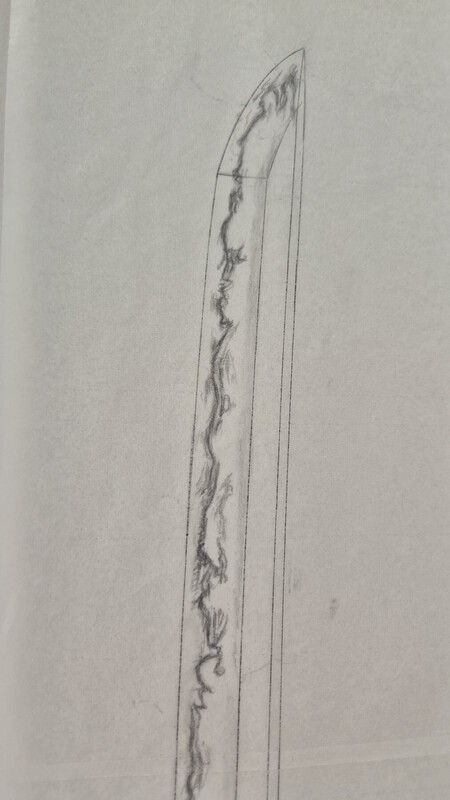
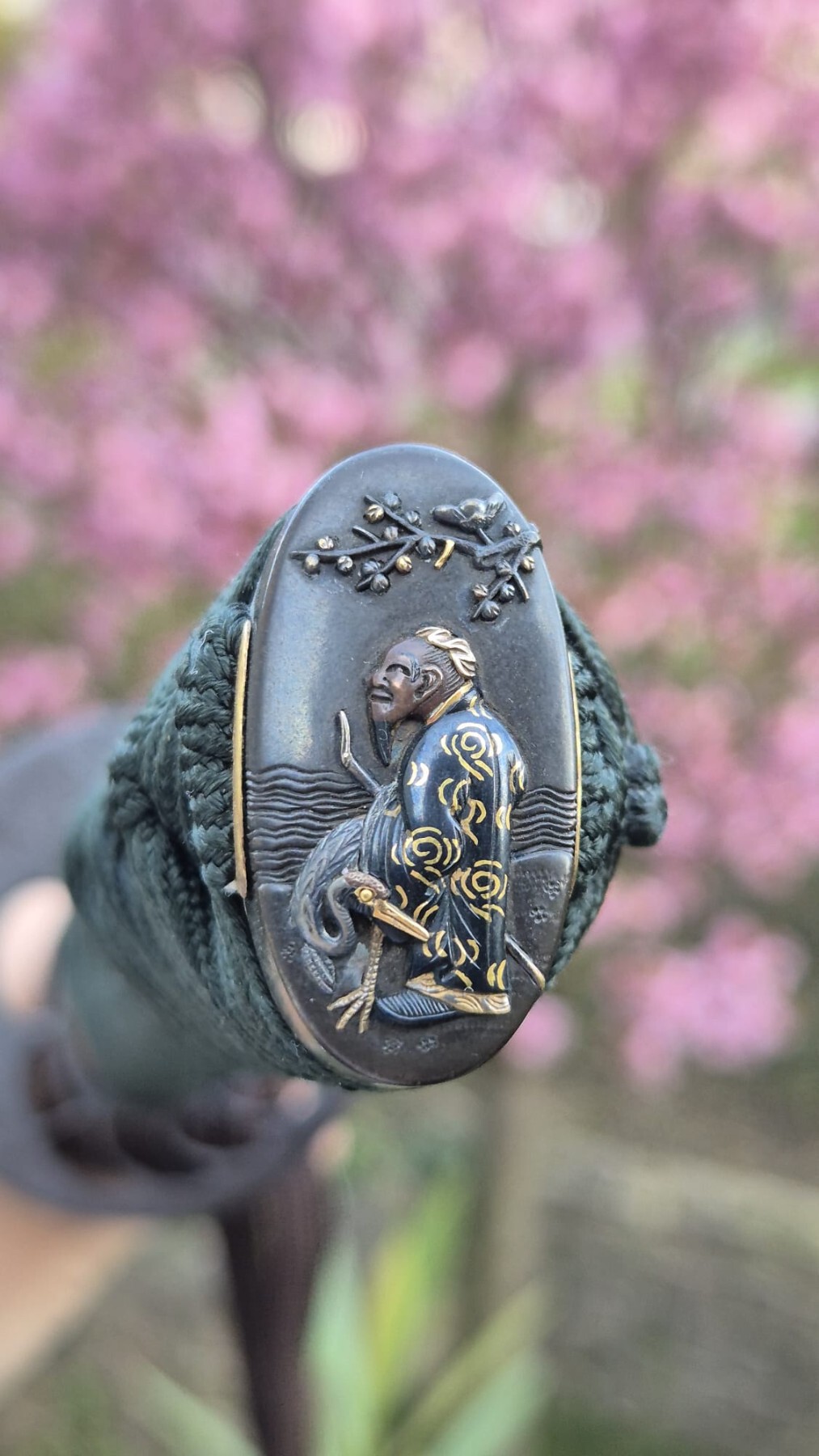
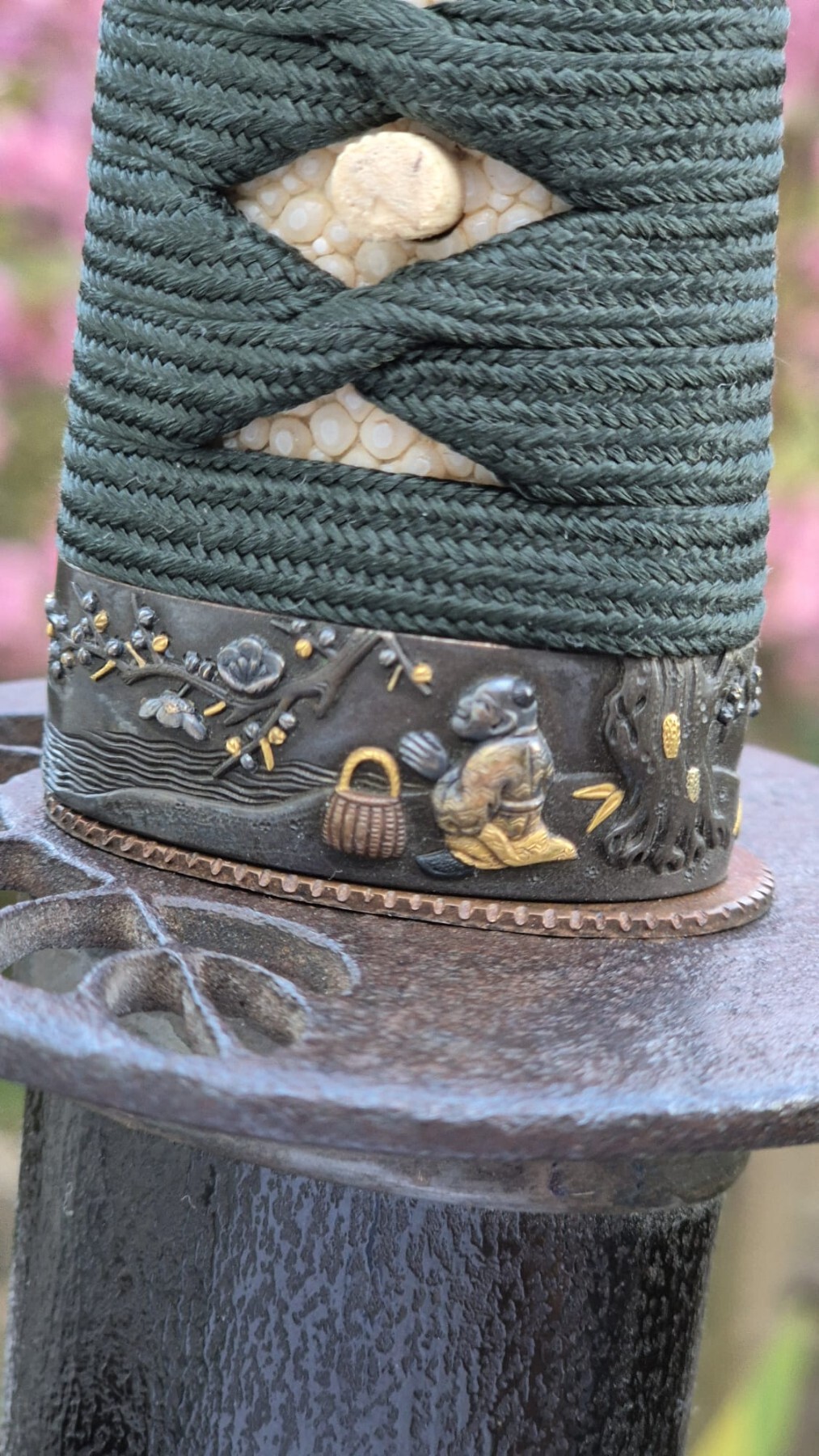
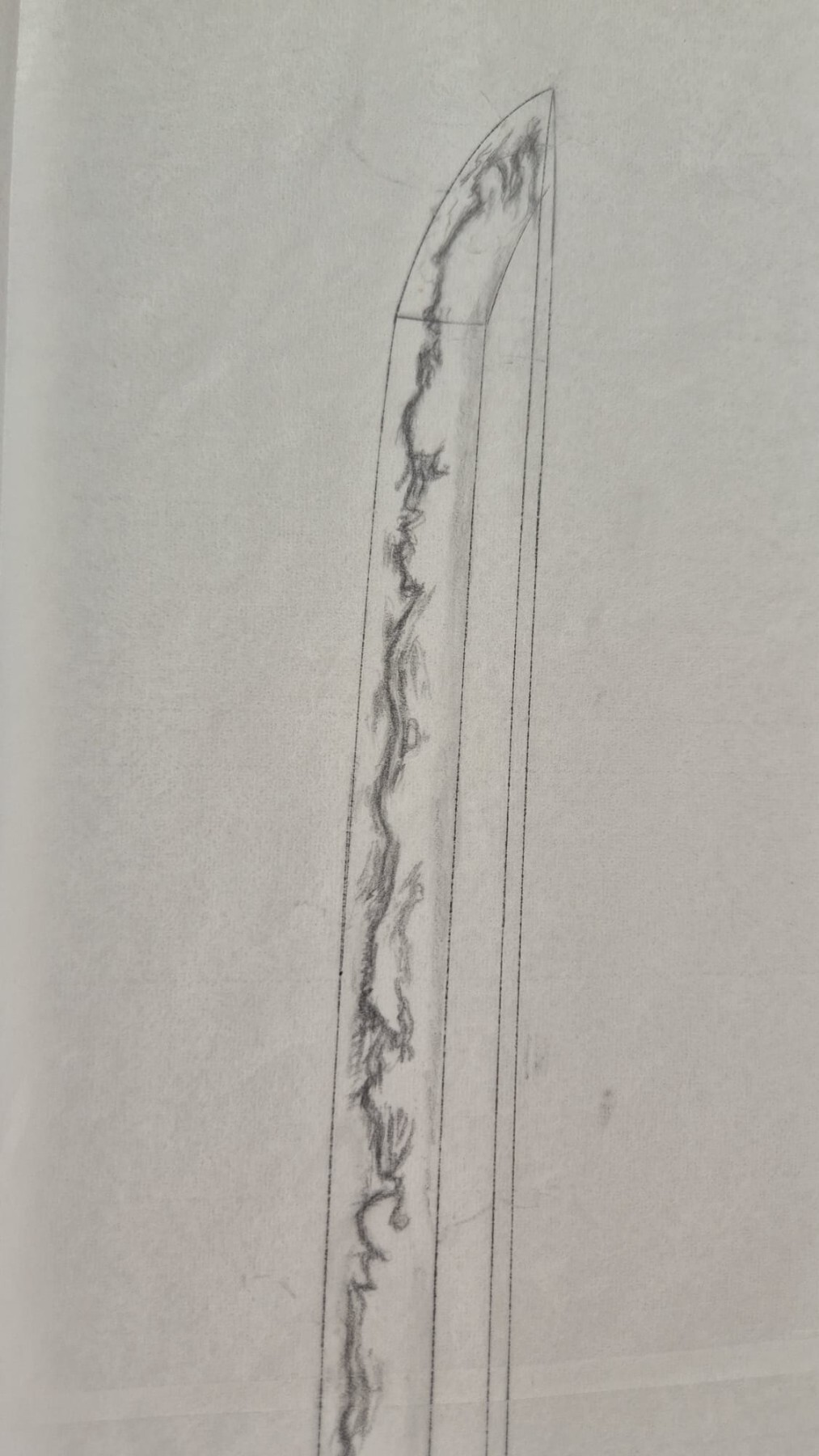
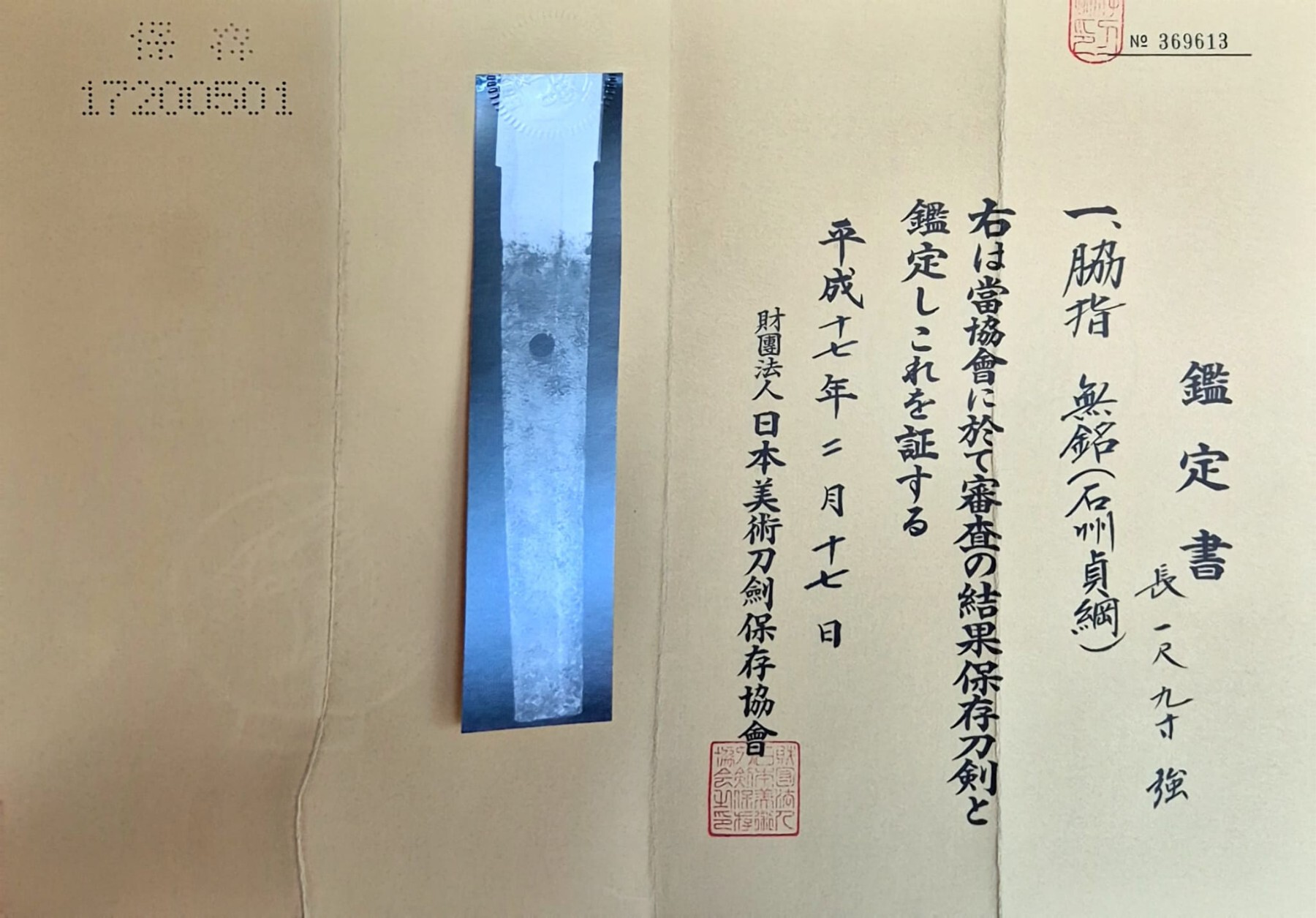
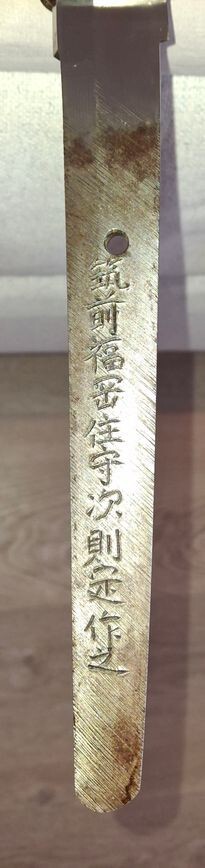
Currently in the process of focusing my collection more in tosogu. So a few nihonto will have to find new homes... Offered for sale is a well-preserved Nanbokucho-era wakizashi. Just shy of 60cm. It's attributed to Sekishu Sadatsuna. As the son of Sekishu Naotsuna (one of the Masamune-jutetsu), this smith’s work carries a distinguished lineage. The blade is ranked Jyo Jyo Saku and comes with NBTHK Hozon papers. Blade Specifications: Signature: Mumei (attributed to Sekishu Sadatsuna) Length (Nagasa): 57.6 cm Sori: 0.8 cm Shape: Oo-suriage, wide and thick construction with an elongated O-kissaki. Jigane: Itame hada, well-grained with visible jinie. Hamon: Nie-deki, gunome-midare with abundant ashi, yo, sunagashi, and kinsuji. Tons of activities. Boshi: Midarekomi with kinsuji. Koshirae: The blade comes in shirasaya (in mint condition) accompanied with a quality koshirae featuring a black ishimeji saya, a round iron Tosho tsuba with openwork plant motifs, dragon menuki, and shibuichi fuchi kashira depicting an Ume tree. The fuchi kashira is signed "Shokatei Motohiro Kao" 松下亭元廣(花押. Also the Habaki is very high in quality and nicely designed. Price: €4,900 Transaction & Viewing: I am available to bring the sword for inspection at upcoming NBTHK European branch meetings in Munich/Manchingen or Solingen. Please feel free to reach out via PM if you are interested or have further questions. Cheers from Frankfurt, Alex

 2 points
 -
Brian that is a good point, I didn't think about the reference aspect, that was selfish of me. I have replaced the original link in the katana post and it seems to be working and here are the other 2 links to the albums. Officer sword NCO sword I hope these can help others in the future! Cheers, Gregg2 points
-
very very nice Brian rarely found a Gunome choji hamon like this one for a Gendaito looks like a shin shin to blade
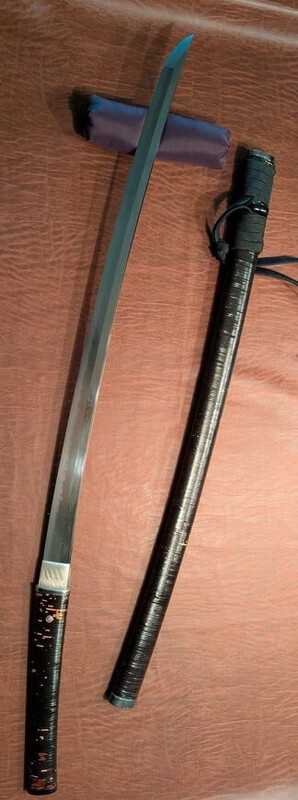 2 points
 -
I absolutely love my Norisada. Some excellent work, and I remember reading on a site somewhere how highly regarded he is. Definitely one of my keepers. Unfortunately my nakago took a lot of rust or wear at some point, as it almost looks Koto, but enough remains that it was readable.

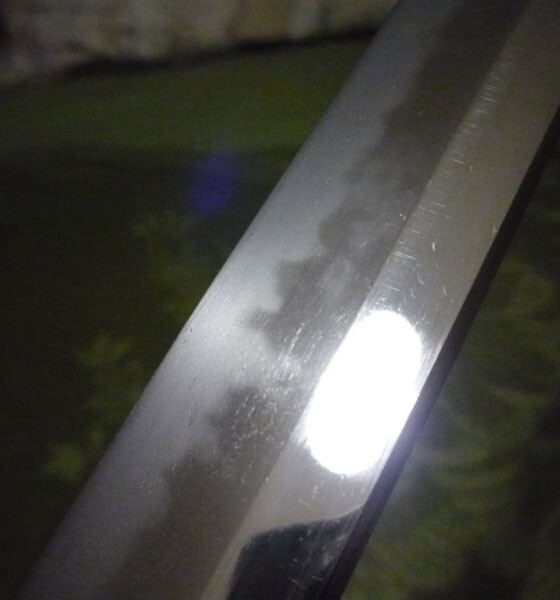 2 points
 -
The blade looks like a good reference for a Yoshimochi signature but the blade itself looks quite tired. It looks like a lot of material has been lost on this blade near the motohaba which at first may appear as funbari, but I believe it is just lost material due to a lot of polishes. But as a historical piece, if you can live with the tiredness, you do get an ubu, zaimei tachi that is almost 800 years old.2 points
-
Sure; I am collecting for almost a decade now. Mostly bought in auctions across Europe and from Japan directly. Have a lot of contact with people from nmb - but on other channels and in person. Nbthk EB, Nihonto Club Germany, Japanese Art Fair in Utrecht...2 points
-
I thought maybe it was 貴良作 (Takayoshi-saku), but I couldn't find anything online that might corroborate this. I did find one 貴宗 that has a similar chippy "taka", but it is just a wild guess because yours doesn't really look like mune. So... I ran out of ideas at that point.2 points
-
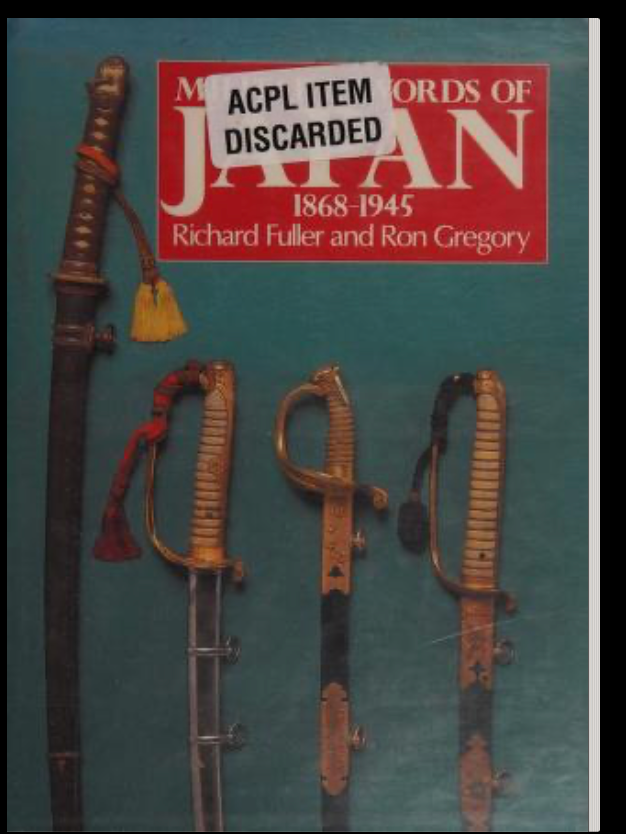
double publication of a blade by Moritsugu Norisada Besides the illustration in John Scott Slough's Book "Modern Japanese Swordsmith 1868 til 1945 Oshigata Book on pages 137 u. 138 here in in Fuller&Gregory Oshigata book 106 Oshigata from 1985 on page 113 u. 114 an interesting oshigata of a gift sword to the governor of Burma


 2 points
 -
another great early book by Fuller&Ron Gregory with an interesting categoriziation of significant signatures 106 Oshigata Gift signatures information on materials unsed and production processs location's Miscellaneous saying and phrases Awards special orders Tameshigiri ect
 2 points
 -
One of the earliest german collections: the Alexander Mosle collection. From the Baden-württembergische Landesbibliothek: https://www.transfernow.net/dl/20260419JxVfaYEM The whole catalogue Verlag E. A. Seeman, Leipzig 1914 Btw: don' the forget Gustav Jacoby, Otto Kümmel, Oskar Münsterberg...2 points
-
盡忠報國 on the tang
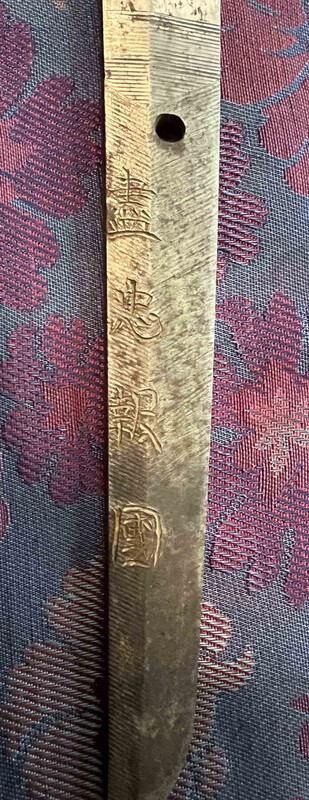 2 points
 -
Love it. Congratulations!2 points
-
Hizen (no) kuni Tadaaki saku kore, dated 1943.2 points
-
Oh man... I hope the old man was better at his main line than he was in his trades! Thanks for your time guys.2 points
-
Kyō-kinkō?
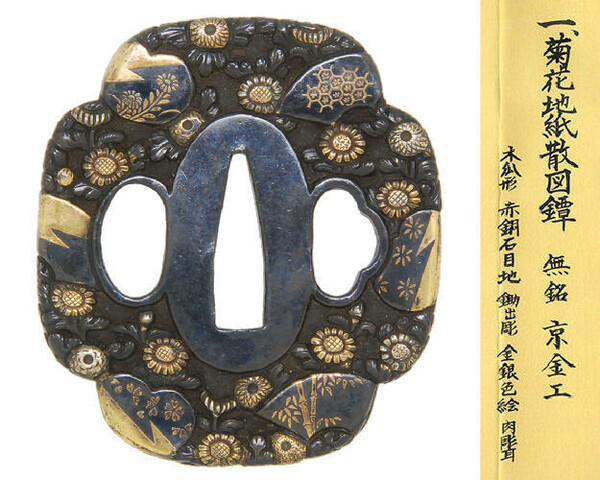 2 points
 -
The sword was part of the Tsukamoto Sozan museum collection and had an historical attribution to Go. The excerpt you highlighted gives some credence to that possibility. The more I study the few early Go pieces with Yamato (Senjuin) and Soshu influence, the more I think it has a chance.2 points
-
I find it interesting when Tanobe sensei deviates from his normal format. For example, his kao is normally at the end of his commentary. In some cases, his commentary takes up the entire omote of the shirasaya and continues to ura, so his kao is on the ura. On this Yukimitsu sayagaki, it first appears that everything is on the omote since it includes his kao. But the bulk of the commentary is actually on the ura. I suspect he did it this way because the blade and the koshirae are together on the same NBTHK origami, so he used the omote to reference both and then he used the ura to describe the blade.

 2 points
 -
Hi @Lukrez, your post put this book on my radar, and after reading the other reviews here on the forum as well, I decided to buy it too. Since I’m based in Europe, the easiest option for me was to contact Dmitry directly and get a copy from him that way. He was very kind, and the whole process was a pleasant experience. And what can I say — this book really is one of a kind. I’m already looking forward to diving into it properly. Best regards, Faustus2 points
-
Same elongated habaki guys. Same ware. It sold for 950$. Bruce You killed it right away.2 points
-
if you compare the Tachi omote signatur the firdst kanji is somewhat a very little shortened with the hole,(Mekugi ana) it looks like this blade

 1 point
 -
Suspect it may have been dumped by someone who was hoping it could go Juyo, being ubu zaimei Ichimonji, and decided to cut their losses when it failed a couple of times. But for someone who cares more about the historical value/significance, it could be a good pick up - assuming there aren't bigger flaws being hidden by the photography.1 point
-
I’m in for $20 for Book 1 - Ro No Cho1 point
-
@ Faustus: Gutes Gelingen!1 point
-
I even tried to resist but it came in nice,cheap and well preserved company.
.png.84c2a9c1b8f09e3ead258b631053fe6f.png) 1 point
1 point -
For anyone that doesn't have the F&G Military Swords of Japan and just needs to look something up, it's on Internet Archive here: https://archive.org/details/militaryswordsof0000full/mode/2up John C.
 1 point
 -
Hello, I've named this wakizashi "testamentary blade." The nakago (handguard) is signed and dated, as is the shirasaya (handguard). Ama Hide, 8th month of Bunsei 7. Suishinshi Masa Hide passed away on the 27th day of the 9th month of Bunsei 8. Here is a modern translation of the engraved text: The principle of sword making is clear, and I am not afraid to measure myself against the swordsmiths of old, but that doesn't mean I despise them. This art simply consists of bringing the iron to a perfect state by eliminating impurities through forging, and there's no point in obsessing over the temper line (the hamon). There is no doubt that the harmony of Yin and Yang makes the blade pure and sharp, and difficult to break. I've attached another photo found online of his signature, Ama Hide, placed in the same spot and truncated by the mekugi ana (handguard). It would be interesting to learn why he made this (these) blade(s)..
 1 point
 -
Great tsuba1 point
-
Dear Dean. Just in case you don't know it is in Naval or Kaigunto mounts. I am sure we would all like tosee some more images, perhaps posted in the Military Swords section. All the best.1 point
-
Jonathan, a BOSHI is never burnished, and yours looks o.k. The blade is generally in fine condition. The HAMON looks like an oil quenched one, so if I am correct, it is a machine-made WW II military blade.1 point
-
The mei is Mitsunaga1 point
-
NMB Cross-Reference Shinogi ji inscription Gunto1 point
-
Glad it's not yours or that you did the cleaning. And it really isn't critical. I'm just sitting with nothing better to do at the moment. Look at the 2 ware on the edges:
 1 point
 -
Hi @Lewis B I did notice that one. Very active and attractive blade. This is the one I am currently considering. Theres a lot I love aboug it. Tsukada san did confirm a Tanobe sayagaki can be ordered. I keep going back and forth on pulling the trigger everyday 😄 https://www.toukenkomachi.com/index_ja_tachi&katanaA070425.html1 point
-
Hi Kevin, Not a Ko Mihara but a very nice Mihara signed Masachika. Kanzan liked it a lot. Very unusual vermillion lacquered Hi. https://www.toukenkomachi.com/index_ja_tachi&katanaA060426.html1 point
-
I've seen some real dogs in my time studying/collecting wartime blades... This one is something new. So ugly it might be a whole new specie! (of fake)1 point
-
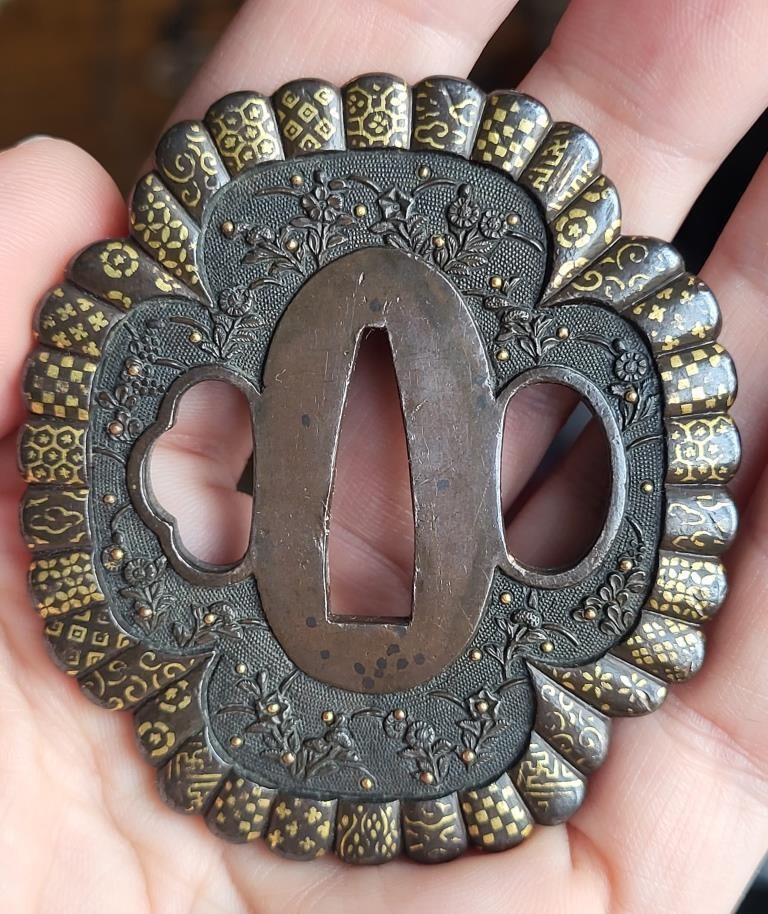
Everyone’s talking about the recent Haynes auction and the high prices a lot of the tsuba went for, especially the Tanaka school tsuba, which went for €5000 and €12000 respectively. This is your chance to own a wonderful Tanaka-style tsuba for a fraction of that. This wonderful piece has the characteristic sekigane and the wabi-sabi style iron and nunome-zogan. In hand, the surface treatment looks so smooth I first thought it was kinko, but it is in fact iron. It also has a great theme of a dragon, and a very good size (85x80mm). Comes in a delux kiri box with trim around the edge. £1200 ono If you wish for additional images or a video, I'll be happy to email them to you
.thumb.jpg.52c6f56cea34697b793dcf3c2f7f664a.jpg)
.thumb.jpg.74d390857fdf22853f34c61593cc1ae1.jpg) 1 point
1 point -
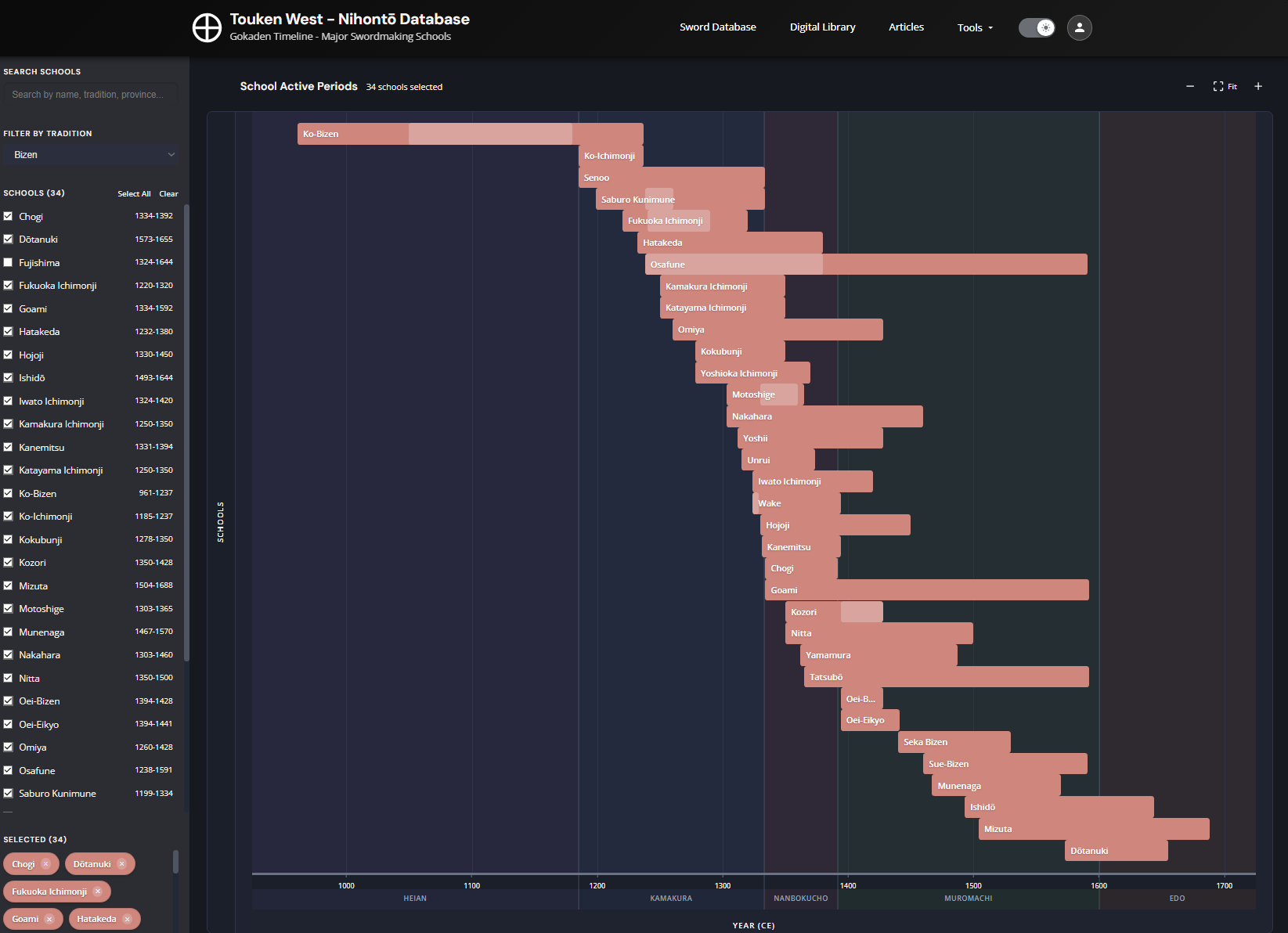
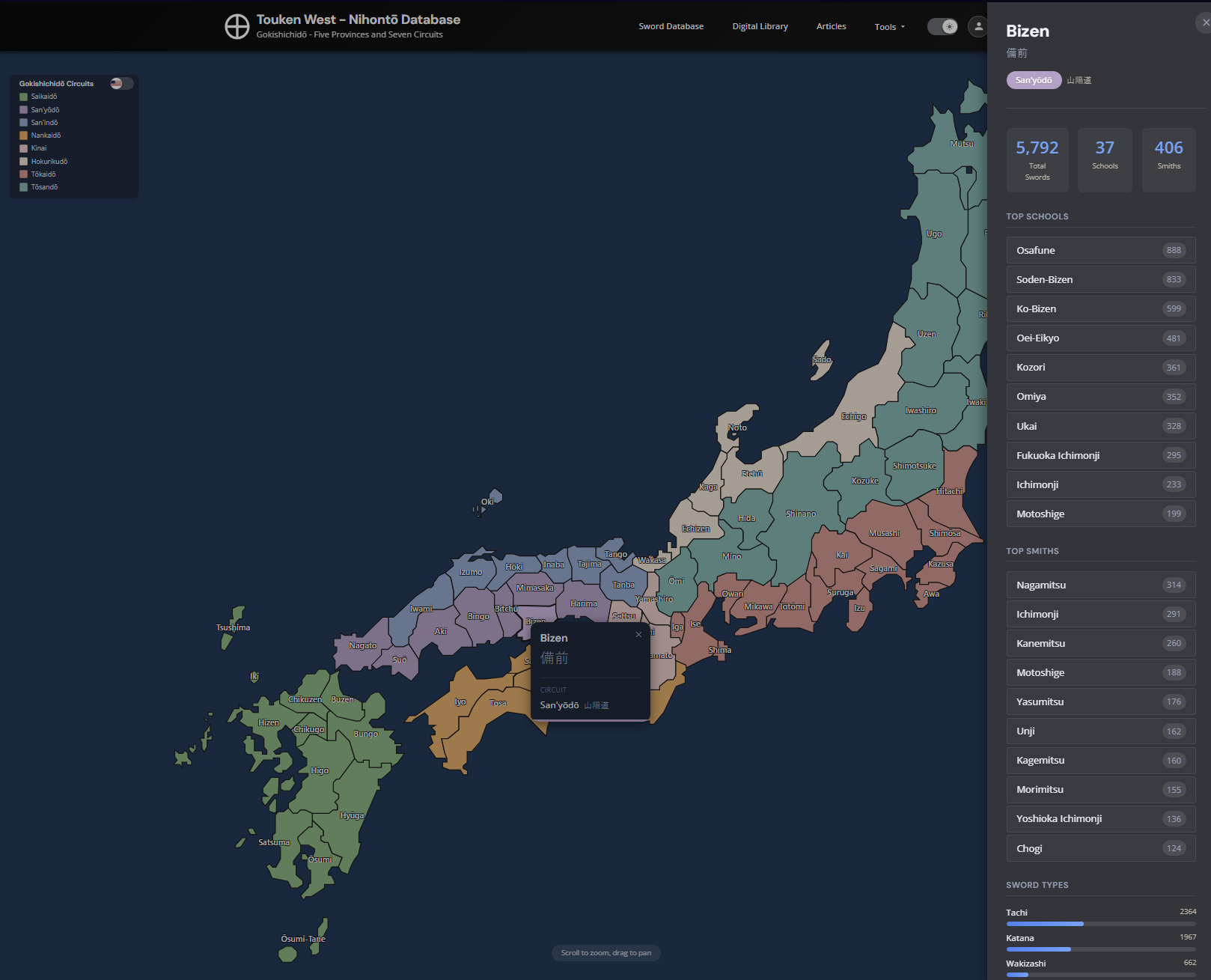
Hey everyone, I feel like its finally time to share a project that I've been working on for a while now. Not because it is finished but because my first child was just born a few days ago and development on this project will likely slow down for a bit as I navigate the new phase of life that is fatherhood! Anyways, I've been building a website https://nihonto-db.com for some time now and wanted to present it here. At the core, it is an interactive and searchable version of @Jussi Ekholm's Koto sword index he's so graciously shared with the NMB. I can't begin to state how incredibly powerful Jussi's research has been and without his tireless efforts and collaboration, this wouldn't have been possible. So at the core, the "Sword Database" portion is a simple searchable database that allows you to search from over 16,000 swords. There are filters and advanced filters available to allow you to search, filter, and compare works by many smiths with as narrow or broad of a search breath as you wish. Additionally, I've created a few other tools that I find useful. Namely an interactive Province Map of Japan showing the old swordmaking provinces which allows you to click on each province and see associated schools, swordsmiths, and other details of the schools and smiths of that province. Clicking on any province will pull up all of the swords in the database for that school and scrolling down you can view additional stats such as Kokuho, JuBun, JuBi, counts, counts of documented swords by type (Yari, naginata, katana, tachi, tanto, etc.) and other stats for each sword making region. There is also a Japanese/English toggle available which will show the circuits and provinces in Japanese rather than English which can be helpful when researching Japanese resources and sites. Thirdly, there is Gokaden Timeline which is built upon a Google Sheet collaboration that some of the members here helped with a few weeks ago. It is as the name suggests, a simple plotting tool that allows you to plot and view the various swordmaking schools broken down by their tradition, and the timeframe in which those schools spanned. Currently this is limited to mostly mainline and some obscure Koto schools. Shinto and Shinshinto aren't appropriately represented at this point and will be a future addition. Finally, there is an articles section where I have been posting various articles, photos, and zufu translations for the main Gokaden schools. Currently Soshu mainline and Yamashiro mainline are finished and Yamato and Bizen are in the works. The current selection of articles come from the Nihonto Taikan lectures from Honma Junji, Hiroi Yuichi, Numata Kenji, and other Japanese sword scholars and contain detailed genealogies, kantei points for grandmaster smiths, and the evolution of traditions, schools, and lineages of swordsmiths of the koto era. Each article goes into great detail and I've provided images when available of all of the swords (or an appropriate substitute) mentioned by the authors as well as translations of the various zufu used (when available). They are quite lengthy articles which provide a great deep dive into the prolific schools for each of the gokaden. I have many more plans for this site to hopefully become another helpful resource in the world of nihonto study and also be a place where swords can be researched in detail with photos, descriptions, and other additional information. I also would like to expand this into including many more shinto and shinshinto blades but as I'm a 1 man operation and now have a 1 week old baby, slow and steady is the key! There is a registration and sign-up option available, currently free users (there are no paid for options at this time) will also gain access to the Digital Library, an online encyclopedia of Japanese swords including some selected zufu, images of famous shrine swords, and translations when available. The current free digital library has ~2500 images of just over 500 swords. Feel free to make a free account and sign up with Google, Facebook, or register an email and password and take a look! I hope this site serves as a resource for all and if anybody has any comments or things the community would like to see, feel free to let me know and I will do my best to work on them as time allows. Thanks again to the NMB community and everyone here who has given their knowledge, time, and previous resources to make this all possible.
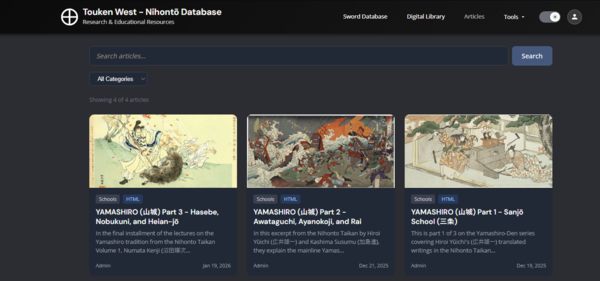


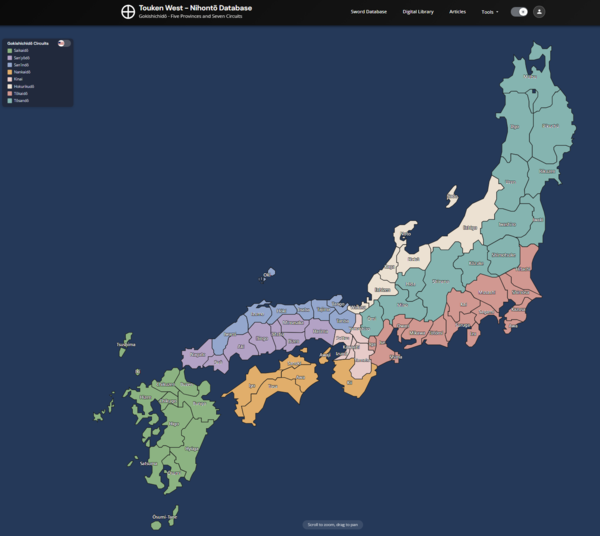
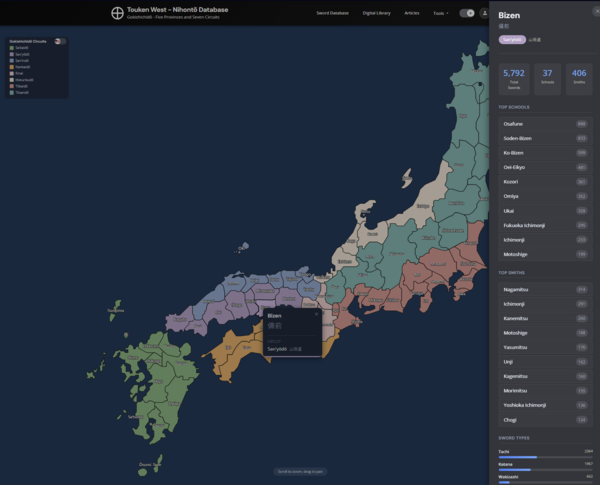
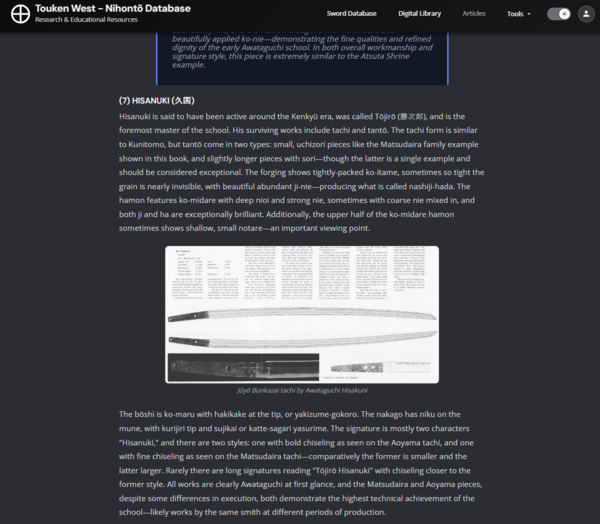 1 point
 -
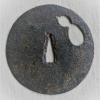
Here a quite common religious theme (well, it takes a little bit of explanation...). The theme is obviously 茗荷 - myōga (Japanese ginger). But 茗荷 is perfectly homophonous with 冥加 (myōga) meaning divine protection or divine blessing. This kind of pun is not uncommon (e.g. budō meaning both grape and martial arts).
 1 point

.jpeg.4e16c39b6827a677e21e09738fef701c.jpeg)
.jpeg.cca0442d0354a4a734df49be7effda0b.jpeg)
.jpeg.807b0562f52a48a238a0a5dc2f70e616.jpeg)
.jpeg.ecd6bf5ecd2a3428da5d9df6442f7116.jpeg)



























.jpg.6f3bc36a89309bac16cd83bdba9b37c1.jpg)
.jpg.0e0b61696da4c1c66c00f50cb96b84cf.jpg)




This leaderboard is set to Johannesburg/GMT+02:00